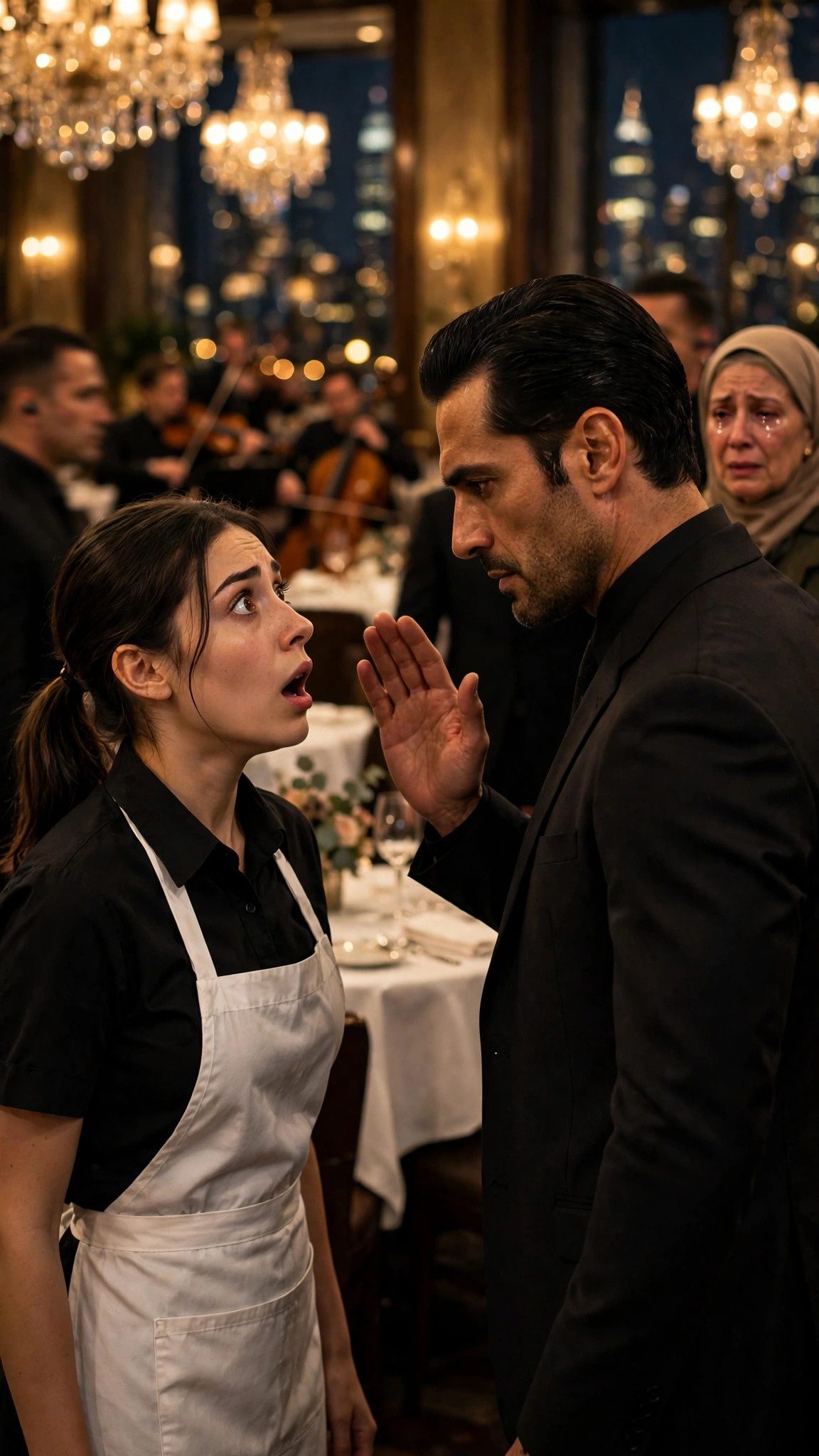
The limousine crossed the bridge into Brooklyn, and the streets grew quieter, lined with brownstones and trees, and the driver turned onto a street where the houses stood close together behind small iron fences, and he slowed, and stopped, in front of a brownstone with a garden in front and warm light in every window, and I sat very still, because I knew, without anyone telling me, that this was the house. This was where my mother had grown up. This was where she had laughed like a bell, and sung in the kitchen, and chased birds on the balcony, and where she had walked out one day with a saxophone case in her hand, and never come back.
The driver opened the door, and the smell of jasmine and cardamom came out to meet us, and I stood on the sidewalk for a moment, breathing it in, and I thought of my mother, and I thought of the little apartment in Queens where I had grown up, with its clanging radiator and its window that looked out over a parking lot, and I thought of how strange it was that a smell could feel like coming home to a place I had never been.
I had just left my job, my tips, my little notebook, and my whole life, and I was standing on a sidewalk in Brooklyn Heights with the most feared man in New York, and I did not know if I was safe or in danger, and I did not know which one frightened me more. But Amina took my hand, and her hand was warm and old and shaking, and her fingers were thin, and she wore a plain gold ring on her wedding finger, worn smooth by seventy years of wear, and she looked at me, and her eyes were wet, and she said, "You look like him, child. You look just like your grandfather. The same eyes. The same mouth. Oh, my Layla. Oh, my baby girl. You brought her back to me."
"Who is him?" I whispered. "Who is my grandfather?"
"His name was Yusuf Rahal," she said, "and he was the head of our family, and he was a hard man, and he loved his children more than he loved his own life, and he could not forgive your mother for loving an American, and he cast her out, and he died without ever seeing her again, and that was the greatest sorrow of his life, and of mine."
Kareem sat on my other side, staring out the window at the city sliding past, his hands folded in his lap, his face very still. He did not speak for a long time. The car moved through the streets, past the lit windows and the late-night crowds, and the silence in the back seat was so deep I could hear my own breathing.
"Where are we going?" I asked, finally, because the silence was worse than any answer.
"Home," Kareem said, without turning from the window. "To my house. To your grandmother's house. It was your mother's house once, too, before she left it. You should see it. You should sit in it. And then my mother will tell you everything, and you will decide what you want to do."
"Decide?" I said. "Decide what?"
"Whether you want to be part of this family," he said, and he turned to look at me then, and his dark eyes were not cold at all. They were tired. They were the eyes of a man who had carried too much for too long. "I will not force you, Nia. Your mother chose her own life. You can choose yours. But you should know the truth first. You have carried our family's words in your chest for nineteen years without knowing what they were. You deserve to know what they mean."
The house was in Brooklyn Heights, a brownstone with a garden in front and warm light in every window, and when the driver opened the door, the smell of jasmine and cardamom came out to meet us, and I stood on the sidewalk for a moment, breathing it in, and I thought of my mother, and I thought of the little apartment in Queens where I had grown up, and I thought of how strange it was that a smell could feel like coming home to a place I had never been.
Inside, the house was warm and full of soft rugs and dark wood and photographs in silver frames, and Amina led me to a sitting room with a fireplace, and she sat me down on a couch covered in embroidered cushions, and she brought me tea, vanilla-scented, the way Kareem drank it, the way my mother must have drunk it, and she sat across from me, and she folded her hands in her lap, and she began to tell me the story of my mother.
"Layla was my youngest," she said. "She was born in Beirut, in the house where I was born, and she was the light of our family. She laughed like a bell. She sang all the time. She sang in the kitchen, she sang in the garden, she sang to the birds on the balcony, and her father, Yusuf, would pretend to be annoyed, but I saw him smile when he thought no one was looking. She was his favorite. Everyone knew it. Even Kareem knew it, and he never once resented her for it."
She paused, and her eyes went far away, to a place I could not follow.
"When she was twenty-two, she came to New York with us, and she heard your father play the saxophone in a little club in Brooklyn, and she came home that night with stars in her eyes, and she said, 'Mama, I have heard the most beautiful sound in the world.' And I knew. I knew before she said another word. She had fallen in love with an American musician, a man with no family and no money and nothing but a saxophone and a kind heart, and I knew what her father would say, and I was afraid."
"What did he say?" I whispered.
"He said no," Amina said, and her voice was very quiet. "He said that a Rahal does not marry outside the family, and that a Rahal does not marry a man who plays music in bars for coins, and that if she married him, she would no longer be his daughter. And Layla, my brave, stubborn girl, she looked at her father, and she said, 'Then I am no longer your daughter,' and she walked out of this house with a saxophone case in her hand, because your father had left it here by accident, and she never came back."
I felt tears running down my face, and I did not wipe them away.
"She married your father in a courthouse on a rainy Tuesday," Amina went on. "Two strangers as witnesses. She wrote to me once, a letter, telling me she was happy, telling me she was pregnant, telling me she was going to name the baby Nia, after my mother. I wrote back. I told her I loved her. I told her the door was always open. But her father found the letter, and he burned it, and he told me that if I ever wrote to her again, he would send me back to Lebanon alone. So I stopped writing. And then, nine years later, a lawyer's letter came, telling me that my daughter had died in a hospital in Queens, and that she had left behind a little girl, and that the little girl's father did not want anything from us, and did not want us to come near her, and I obeyed, because I thought it was what Layla would have wanted, for her child to be safe, and far away from our world."
She stopped, and she put her hands over her face, and her shoulders shook, and Kareem, sitting beside me, reached out and took his mother's hand, and held it, and for a moment he did not look like the most feared man in New York. He looked like a son.
"And you?" I said to him, when Amina had composed herself. "You were there. You watched her go. Why didn't you stop her? Why didn't you say anything?"
He was quiet for a long time. The fire crackled in the fireplace. The tea in my cup had gone cold.
"I was seventeen years old," he said at last, "and I stood in the doorway, and I watched my sister walk out with a saxophone case in her hand, and I did not say a word, because I was afraid of my father, and I was afraid of losing my place in the family, and I was afraid of being cast out beside her. And I have carried that silence for twenty-five years, Nia. Every day. Every night. I have carried it the way a man carries a stone in his shoe, and it has cut me with every step."
He looked at me, and his eyes were shining.
"And then tonight, you spoke the words. The words my mother said to my father, the night he was about to kill a man who had insulted our family. The words Layla said to me, when I was twenty years old and full of rage and about to do something I could never undo. 'Ya habibi, la tuqatiluh. Ya habibi, ruuh ahlaykum.' My love, don't kill him. My love, go home to your family. Those words have stopped a killing three times in our family, Nia. Three times. And tonight, they stopped a fourth."
"A fourth?" I said. "Who were you going to kill tonight?"
He looked at Nabil, and Nabil nodded, slowly, and Kareem said, "My cousin. Tariq Rahal. He has been selling our family's shipping routes to Vincent Castellano, an Italian who has been trying to push us out of the docks for five years. I was on my way to the docks tonight to give the order. I was on my way to have him killed. And then you spoke, and my driver turned the car around, and here we are."
I sat very still. The fire crackled. Amina held my hand.
"So the sentence saved his life," I said.
"It saved his life," Kareem said. "And it may have saved mine. Because a man who orders the death of his own cousin does not come back from that unchanged. Your mother knew that. That is why she taught you those words. She knew that one day, you would need them. She just did not know that the person who needed them would be me."
Nabil, who had been silent until then, leaned forward, and placed his hand on my shoulder, the way he had in the restaurant, gently, like touching something precious.
"Amina is your grandmother now," he said. "Kareem is your uncle. I am your family, too, if you will have me. And there is one more thing you should know, Nia. The man who has been stealing your tips at the Bellweather Room, Marcus Hale, he is not only a thief. He sells information about who dines in that restaurant to Castellano's men. He told them Kareem would be there tonight. He told them where Kareem sits, and when he leaves, and which car he drives. That is why Tariq knew. That is why Castellano knew. Your manager has been feeding them for months."
I stared at him. The envelope. The little notebook. The numbers that never matched. It had never been only about the money. It had been about something much bigger, and I had been standing in the middle of it for two years, counting dollars, while men I had never met decided whether I would live or die.
"Then the three of us need to talk," Kareem had said in the restaurant. "Grandma, baby, and me."
I understood now. Grandma was Amina. Baby was me, his sister's child, the baby of the family, the one they had lost and found again. And he was Kareem, the man who had spent an hour studying my face, trying to decide whether he had seen it before.
He had seen it before. He had seen it in his sister's face, twenty-five years ago, on the night she walked out of this house with a saxophone case in her hand.
And now, somehow, impossibly, she had come back.
I sat there for a long time after they finished speaking, with the fire crackling in the fireplace and the tea gone cold in my cup, and I looked around the sitting room at the photographs in their silver frames, at the dark wood and the soft rugs and the embroidered cushions, and I tried to imagine my mother here, as a little girl, singing in the kitchen, chasing birds on the balcony, laughing like a bell, and I tried to imagine her as a young woman, standing in this very room, telling her father that she loved an American musician, and walking out the door with a saxophone case in her hand, and I felt her presence so strongly that I half expected to turn around and see her standing in the doorway.
Amina saw me looking, and she stood up, slowly, with her cane, and she said, "Come, habibti. Let me show you her room."
She led me up the stairs, past photographs of people I did not know, men with stern faces and women in head-covers, generations of Rahals looking down from the walls, and she opened a door at the end of the hallway, and inside was a small bedroom with blue walls and a window that looked out over the garden, and a bed with a white coverlet, and a desk with a music box on it, and on the wall, a poster of a jazz club in Brooklyn, faded with age, the edges curling.
"This was her room," Amina said, very quietly. "I have kept it as it was. I dust it every week. I change the flowers on the desk. I have waited twenty-five years for someone to sleep in it again."
I walked to the window, and I looked out over the garden, where jasmine grew along the fence, and I thought about my mother, standing at this same window when she was my age, looking out at the same garden, dreaming about a life beyond these walls, about a man who played the saxophone in a little club in Brooklyn, and I understood, for the first time, that she had not left this house because she did not love it. She had left because she loved something more. And now, somehow, impossibly, I had come back to the place she had left, and I was standing where she had stood, and the circle was closing.
"Will you sleep here tonight?" Amina asked.
"Yes," I said. "Yes, Grandma. I will."