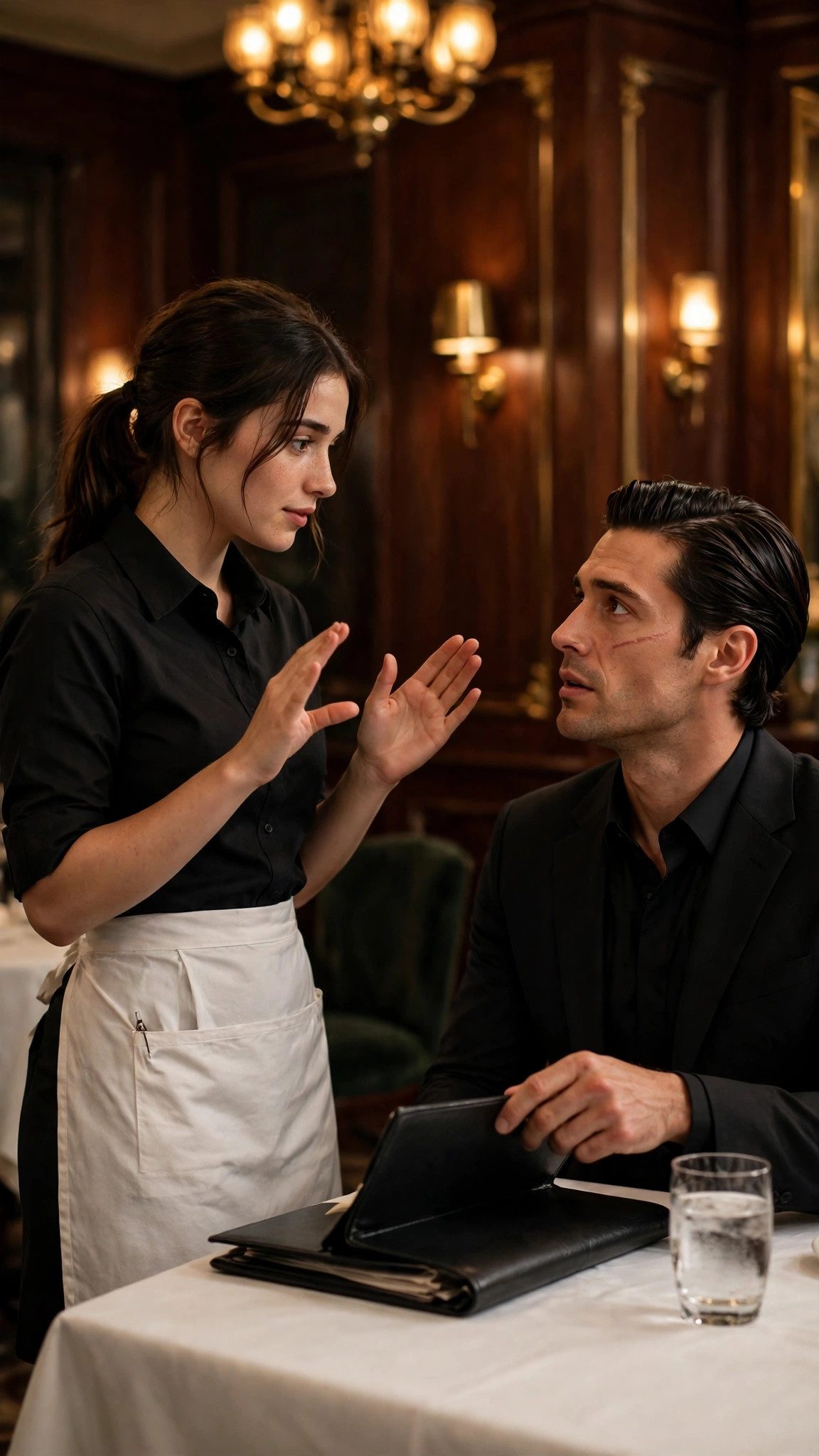
Noah was nine years old when the fever took his hearing. I was twelve, and I remember the hospital hallway better than I remember anything else from that year: the green linoleum, the smell of disinfectant, the way my mother held my hand so tightly her nails left little crescents in my skin. The doctor used words like "meningitis" and "sensorineural" and "permanent," and my father nodded like a man who understood, and then we went home and nobody said anything at all for a very long time.
That was the worst part. Not the illness. The quiet that came after it.
Noah came home from the hospital with a hearing aid that whistled and a speech therapist's card on the refrigerator, and for months he was angry in a way I had never seen a child be angry. He threw his hearing aid across the room. He refused to go to school. He stopped talking, because he could not hear himself, and when you cannot hear yourself, your own voice becomes a stranger, and strangers are frightening.
I did not know how to help him. I was twelve. I did what twelve-year-olds do: I sat outside his bedroom door and talked to him through the wood, even though I knew he could not hear me, because silence felt like abandonment and I refused to abandon him.
Then, one Tuesday in October, my mother came home with a library book. It was thick and clumsy, with photographs of hands in every position, and a title that promised nothing: "American Sign Language for Beginners." She set it on the kitchen table and said, "We are going to learn this. All of us. Tonight."
My father learned first, because my father learns everything first, stubbornly and badly and then all at once. My mother learned second, patiently, the way she did everything. I learned third, and I learned the way I have always learned everything that mattered: obsessively, furiously, as if the world might end before I finished.
At first it was clumsy. My fingers felt like they belonged to someone else. I mixed up signs. I forgot the grammar, which runs backward from English in ways that made my head hurt. But Noah watched us. He watched us from the doorway with his arms crossed, pretending not to care, and one evening, when I signed "I love you" for the tenth time that week, getting the handshape wrong again, he walked into the kitchen, took my hands in his, and fixed my fingers himself.
That was the first time he had touched me voluntarily in months.
After that, everything changed. Noah started signing back. Slowly at first, then faster, then faster than any of us, because he had a reason to learn that we did not have: it was his language now, not a hobby. Within a year he was fluent. Within two, he was correcting my grammar. Within three, he was the one teaching us.
He went back to school. He made friends, the kind of friends who learned to sign because they wanted to talk to him, not because an adult told them to. He discovered he could draw — not well at first, but with a patience that came from living in a world that moved too fast for him and learning to slow it down. By the time he was twenty, he was working at a print shop on the West Side, designing posters and menus and wedding invitations, and his boss told my mother he was the best designer she had ever hired, deaf or hearing.
I was proud of him in a way that made my chest ache. But I was also afraid, in a way I never told anyone, not even Noah. Because I had seen what the world did to people it could not be bothered to understand. I had seen waiters talk about my brother like he was not in the room. I had seen teachers speak to my mother instead of to him. I had seen strangers raise their voices at him, as if volume were a translation, as if shouting could cross the distance between his world and theirs.
So when I was nineteen and needed a job, I did not go looking for something impressive. I went to Bellini House because it was hiring, because the pay was decent, and because the work was simple: carry things, smile, do not drop anything. I told myself it was temporary. I told myself I would go back to school one day, that I would study something useful, that I would become an interpreter or a teacher of the deaf.
Four years later, I was still carrying trays.
It was not a bad life. It was a small one. I had my apartment above the laundromat, my Wednesday evenings at the community center, my Sunday dinners with my family, and my brother, who lived two blocks away in a building with a landlord who had learned to knock loudly and wait. I had enough. I had told myself I had enough so many times that I almost believed it.
The community center was the one place where I felt like myself. Every Wednesday at six, I walked across town to a brick building with a faded mural of children holding hands, and I taught American Sign Language to parents whose children had just been diagnosed as deaf. The parents came in terrified, the way my mother had been terrified, and I taught them the alphabet first, then the words for "hungry" and "tired" and "I love you," and I watched their faces change the way my mother's face had changed all those years ago, from fear to something that looked like the beginning of hope.
Noah came with me most Wednesdays. He sat at the back with the youngest children, the four- and five-year-olds, and he taught them the signs for animals, making his hands into a lion's mane or a rabbit's ears, and the children laughed so hard they fell off their chairs. He was good at it. He was better at it than I was, because he never once made a child feel broken. He made them feel like they were joining a secret club, and the secret was wonderful.
One Wednesday, about a month before the night in the private dining room, a mother came to the class with her little girl, maybe six years old, with hearing aids that whistled the way Noah's used to. The mother was crying before she even sat down. "She thinks she's stupid," the mother whispered to me. "She thinks nobody will ever want to talk to her."
I looked at the little girl, who was staring at the floor, and I thought about Noah at nine, throwing his hearing aid across the room. I knelt down in front of her and signed, "Hello. My name is Tessa. What is your name?"
Her eyes went wide. She signed back, slowly, "Maya."
"That is a beautiful name," I signed. "Do you want to learn a secret?"
She nodded. I signed the word for "butterfly," my hands fluttering, and she laughed, a real laugh, the kind that comes from somewhere deep, and her mother started crying all over again, but this time she was smiling.
That was the work that mattered to me. Not the trays. Not the thousand-dollar bottles. That.
At Bellini House, though, I was nobody. The regulars did not know my name. The managers did not know my name until they needed someone to blame. My coworkers knew my name, but they used it the way people use a word they find funny. "Tessa doesn't stay after shifts." "Tessa doesn't flirt." "Tessa doesn't have a life." They said it like a diagnosis.
Brett was the worst of them, and he was the worst of them because he was charming about it. He was thirty-one, handsome in the way men who know they are handsome always are, and he had worked at Bellini House for six years, which in restaurant time made him something close to royalty. He decided who got the good tables. He decided who got the private room. He decided who got humiliated, and when.
He had decided, months before that night, that I was strange. He had watched me leave every Wednesday at exactly six o'clock, and he had decided that I was hiding something. He had watched me refuse to laugh at his jokes about the customers, and he had decided that I thought I was better than everyone else. He had watched me eat lunch alone, reading a book about sign language grammar, and he had decided that I was a joke waiting to happen.
He was not entirely wrong. I was hiding something. I was hiding the fact that I had a life that mattered more than his, and I had never once felt the need to prove it to him.
The night he handed me the ticket for the private dining room, I had already decided I was going to quit. I had not told anyone. I had not even told Noah. But I had been carrying the decision around for weeks like a stone in my pocket, heavy and certain. The tips were not enough. The hours were not enough. The humiliation was too much. I was going to finish the month, collect my last paycheck, and find something else, anything else, even if it paid less, even if it meant giving up the apartment above the laundromat.
Then Brett smiled that smile, and tapped the ticket against my shoulder, and told me to give the guest my famous personality, and I picked up the tray, and I walked into the private dining room, and everything I had planned for my life fell apart in the best possible way.
I did not know that yet, of course. I thought I was walking into a trap. I was. I just did not know that the trap had been set for the wrong person, and that the man waiting inside that room had been living in a silence far deeper than my brother's, and that he had been waiting, for six years, for someone to walk through his door and speak his language.
I thought I was the joke. I was not the joke. I was the answer.
There was one customer at Bellini House who had always been kind to me, and I thought about her often in those years when I was deciding whether to quit. Her name was Mrs. Whitfield, and she was eighty-four years old, with white hair pinned up in a bun and a diamond brooch she wore every single time she came in, which was every Friday at noon, always alone, always ordering the same thing: tomato soup, grilled fish, and a glass of white wine she never finished.
Most of the staff ignored her, because she tipped little and talked a lot, and Brett had once called her "the ghost table" because she sat so quietly in the corner. But I liked her. I liked the way she asked me how my week had been, as if the answer mattered. I liked the way she remembered that my brother's name was Noah, even though I had mentioned him only once, months earlier, in passing.
One Friday, about a year before the night in the private dining room, Mrs. Whitfield did not come. I noticed immediately, the way you notice when a clock stops ticking. I asked the manager, and he shrugged and said she had probably gone to visit her daughter. She did not come the next Friday either. Or the Friday after that. On the fourth Friday, I did something I had never done before: I asked Mr. Delgado for her address, and I went to see her.
She lived in a small apartment above a bakery on the North Side, and when she opened the door, she was thinner than I remembered, and her hands shook, and she looked at me as if I were a ghost.
"You came," she said.
"Of course I came," I said. "You missed four Fridays."
She invited me in, and she made tea with shaking hands, and she told me she had been in the hospital, that her heart was weak, that her daughter lived in California and called once a week, and that she had stopped coming to Bellini House because she did not want to be a burden, because she did not want anyone to see her like this.
"You are not a burden," I told her, and I meant it with everything in me. "You are the only person in that restaurant who ever asked me how my week was."
She laughed then, a thin, papery laugh, and she reached across the table and took my hand, and her hand was cold and light as a bird.
"My husband died ten years ago," she said. "He was deaf in one ear, did you know that? From the war. People used to shout at him, as if shouting would help. I learned to sign for him, just a little, just enough. He used to say that the loneliest thing in the world was sitting in a room full of people who loved you and not knowing what they were laughing about."
I stared at her. I had never told her about Noah. I had never told anyone at Bellini House about Noah. But she had seen it anyway, the way kind people sometimes see things.
"How did you know?" I asked.
She smiled. "Because you watch people's hands when they talk, dear. The way my husband used to watch mine. You have the look of someone who has learned to listen with her eyes."
I went to see Mrs. Whitfield every Friday after that, for the rest of the year. I brought her soup from the restaurant, and I sat with her, and we talked, and sometimes I signed for her, the signs I had learned for Noah, and she would sign back, clumsily, the signs she remembered from her husband, and we would laugh at how bad we both were. She died in the spring, quietly, in her sleep, and her daughter called me to tell me, because Mrs. Whitfield had written my name in her address book, under "Tessa, the nice waitress."
I went to her funeral. I was the only person from Bellini House who did. And as I stood in the back of the little church, I thought about what she had said to me that first afternoon in her apartment, about the loneliest thing in the world, and I understood that she had been teaching me something I would need to know, even though neither of us had known it at the time.
She had been teaching me that the people who seem the smallest, the quietest, the easiest to overlook, are often the ones carrying the deepest truths. She had been teaching me to look for them. She had been teaching me to see them.
I never forgot her. And on the night I walked into Salvatore Marquetti's private dining room, I thought about her, just for a second, before I raised my hands. I thought about what she would have said, if she had been there. I think she would have said, "Speak, dear. Speak with your hands. Someone in that room needs to hear you."
She was right. Someone did.