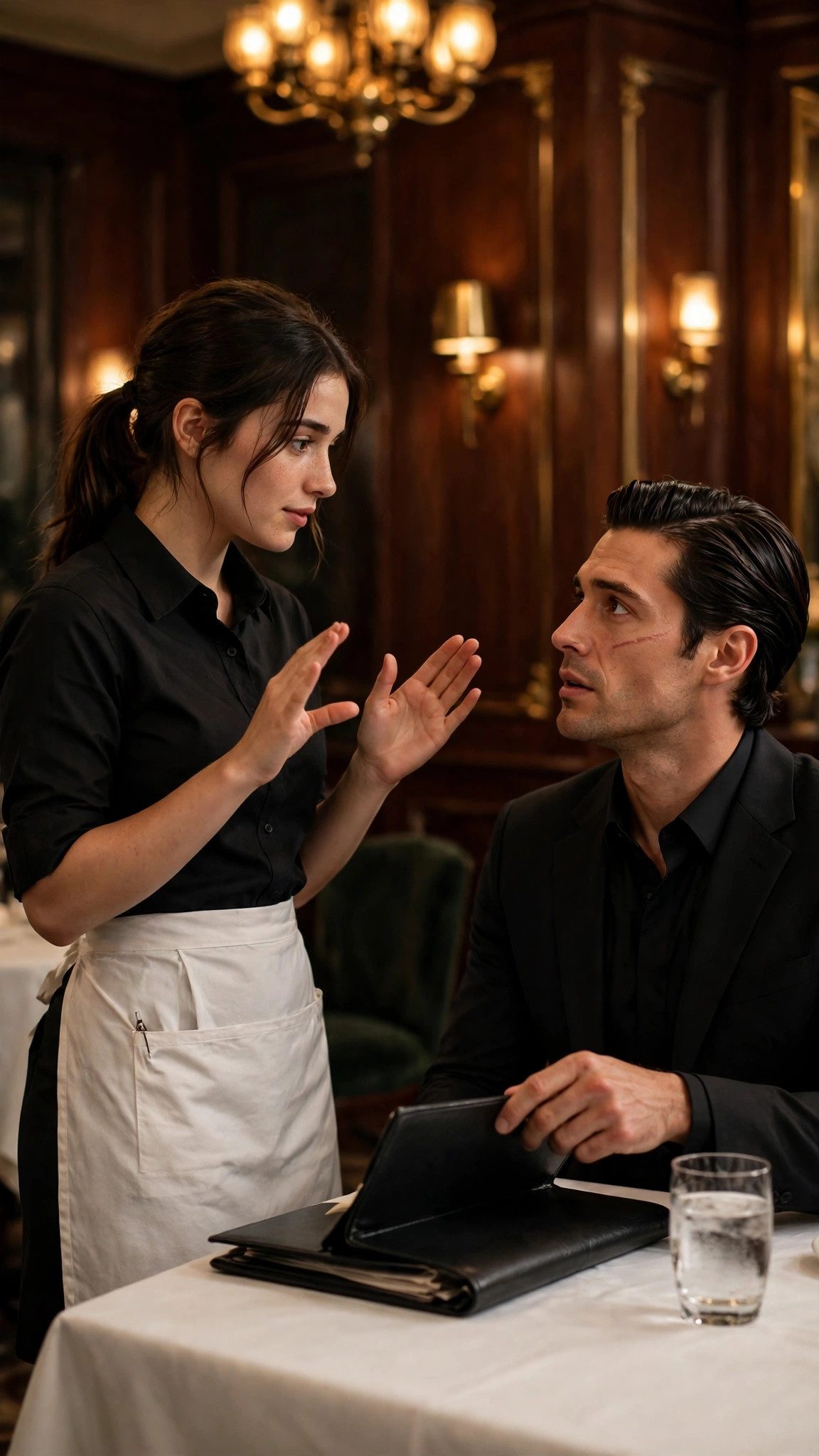
The next morning, Salvatore called a meeting at his house. Not at the office. Not at Bellini House. At his house, a tall stone building on the lake with windows that looked out over gray water, and a piano in the living room covered in dust.
Noah was there. Rocco had picked him up at dawn and brought him to the house before the sun was fully up, and Noah was sitting on the couch with a cup of coffee he had not touched, his hands folded in his lap, trying very hard not to look frightened. When I walked in, he stood up and signed, "Are you all right?"
"I'm all right," I signed back. "Are you?"
"I'm all right," he signed, but his hands were shaking, and I knew he was lying, and he knew I knew.
Salvatore came into the room, and he looked at Noah, and he did something I did not expect. He walked over to my brother, and he signed to him directly, slowly and clearly, "Thank you for protecting your sister. You are a brave man."
Noah stared at him. Then he signed back, "She protected me first. She always does."
Salvatore nodded, and for a moment, the most feared man in Chicago and my little brother looked at each other like two men who understood something no one else in the room could understand. Then Salvatore turned to Marco and Dante, and his face went hard.
"Tell me everything," he signed.
Marco laid it out. Brett had been talking in bars for three weeks. At first, no one believed him. Then he started telling a specific story: the private dining room, the waitress, the sign language, the three men. He told it to a man named Eddie Marcone, who worked for Castellano. Eddie paid him five thousand dollars. Then Brett told him more: the Thursdays, the black car, the way Salvatore never answered when spoken to from behind. Eddie paid him another five thousand. Then Brett told him about me. About Noah. About the community center.
"Castellano thinks he has a weakness," Marco signed. "He thinks he can use the girl to get to you. He thinks he can use the brother to get to the girl."
"He's right," Salvatore signed, and the room went very quiet. "He can use them. That's why we're going to let him try."
I stared at him. "What do you mean?"
"I mean," Salvatore signed, his hands moving with cold precision, "that Castellano is going to hear something tonight. He's going to hear that I'm meeting a shipment at the old grain docks at midnight. He's going to hear that I'm bringing only two men. He's going to hear that I'm deaf and alone and afraid. And he's going to come, because men like Castellano always come when they think they smell blood."
"And then?" I signed.
"And then," Salvatore said, "he's going to find out what happens when you hunt a man who has been listening with his eyes for six years."
The plan was simple, and it was terrifying. That night, at midnight, Salvatore would go to the grain docks with Rocco and Dante, exactly as Castellano expected. Marco would stay behind with Noah and me, at the house, with the doors locked and the lights off. And when Castellano's men arrived, they would find not a frightened deaf man, but a trap that had been six years in the making.
But there was one part of the plan Salvatore did not tell me until we were alone, standing by the piano in the living room, the dust thick on the keys.
"I need you to be there," he signed. "Not at the docks. At Bellini House. Castellano will send someone to watch the restaurant, to make sure you're not with me. I need you to be visible. I need you to serve dinner in the main room, where everyone can see you, so Castellano thinks you're safe and I'm alone."
"That's dangerous," I signed.
"Everything is dangerous now," he signed back. "But if you're at Bellini House, in a room full of people, with Mr. Delgado and the staff watching, Castellano won't touch you. He needs you alive. You're his leverage. He won't waste his leverage."
I wanted to argue. I wanted to tell him I was not a piece on a chessboard. But I looked at his face, and I saw something I had never seen there before: fear. Not for himself. For me. And I understood that he was asking me to trust him, the way I had asked him to trust me on the night in the private dining room, and I nodded.
"All right," I signed. "But you come back. Do you understand? You come back."
He looked at me for a long moment, and then he reached out and touched my face, very gently, with the back of his hand, the way you touch something precious and fragile.
"I always come back," he signed. "It's the only thing I'm good at."
That night, I went to Bellini House, and I served dinner in the main room, and I smiled at the customers, and I carried trays, and I pretended that my heart was not pounding so hard I thought everyone could hear it. Mr. Delgado watched me from the bar, his face tight, and I knew he knew something was wrong, and I knew he was not going to ask.
At eleven-forty, a man walked into the restaurant. He was tall, with a scar on his hand, and he sat at the bar and ordered a drink, and he watched me. I knew who he was. He was one of the men who had come to the community center. He was Castellano's man, and he was there to make sure I was where I was supposed to be.
At midnight, my phone buzzed. It was Marco. One word: "Done."
I did not know what "done" meant. I did not know until an hour later, when Rocco came to the restaurant and walked straight through the main room, past every table, and stopped in front of the man at the bar, and said, in a voice loud enough for the whole room to hear, "Mr. Marquetti would like a word with you."
The man went white. Rocco took him by the arm and led him out, and the whole restaurant went silent, and I stood there with a tray in my hands, and I understood that something had happened at the grain docks, and that whatever it was, it was over.
Salvatore came to Bellini House at one in the morning. He walked into the main room, and every person in the restaurant turned to look at him, and he walked straight to me, and he took the tray out of my hands, and he set it down on the nearest table, and he signed, in front of everyone, "It's over. Castellano is finished."
Later, Marco told me what had happened. Castellano had come to the docks with twelve men, expecting to find Salvatore alone and afraid. Instead, he had found Salvatore waiting, with twenty of his own men hidden in the grain silos, and the police — not the police Castellano had paid, but federal agents Marco had been feeding information to for months — waiting on the road. Castellano's men had been arrested. Eddie Marcone had been arrested. And Vincent Castellano himself had been taken into custody with a ledger in his briefcase, a ledger that detailed six years of bribes, bombings, and murders, including the bomb that had killed Enrico Marquetti.
Brett had been arrested too. He had been found in a bar on the South Side, drunk, counting his money, and when the agents took him away, he had screamed that he had only been telling the truth, that he had only been trying to make some money, that he had not meant for anyone to get hurt.
Salvatore had let him live. That was the most merciful thing Salvatore Marquetti had ever done, and I knew it, because I had asked him to, on the night in the private dining room, when I had signed, "Firing him is enough."
He had remembered. He remembered everything I ever signed to him.
That night, after the restaurant closed, Salvatore took me home. Not to my apartment. To his house on the lake. And as we stood in the living room, looking out at the gray water, he signed to me, slowly, the way a man signs when he has been practicing something for a very long time.
"Tessa," he signed. "For six years, I have lived in silence. Not the silence of not hearing. The silence of not being known. You are the first person who has ever known me, all of me, and stayed. I don't know how to ask for what I want, because I have never asked anyone for anything. But I am asking you now. Stay. Stay with me. Not as my interpreter. Not as my server. As my wife."
I looked at him, and I thought about the Thanksgiving joke, and the smile that came a second too late, and the library book on the kitchen table, and the community center, and the little girl named Maya, and the word for "butterfly," and I thought about everything I had ever learned about silence, and about what it meant to break it.
"Yes," I signed. "Yes. I will stay."
But staying meant waiting, and waiting was the hardest part. The hours between that moment in the living room and midnight stretched out like a road with no end, and I spent them at Bellini House, carrying trays and smiling at customers, while every nerve in my body screamed at me to run to the docks, to be there, to see with my own eyes that he was safe.
Mr. Delgado found me in the kitchen at ten o'clock, during a rare quiet moment, and he closed the door behind him, the way he had closed it the morning after the private dining room night.
"Tessa," he said, and his voice was low and careful, "I don't know what's happening tonight. I don't want to know. But I want you to know something. In twenty years of running this restaurant, I have never seen a man look at a woman the way Mr. Marquetti looks at you. Not with wanting. With gratitude. Like you gave him something he thought he'd lost forever. Whatever happens tonight, you did a good thing. Don't forget that."
I stared at him. Mr. Delgado had never said anything kind to me in four years. He had barely said anything to me at all. And now, on the worst night of my life, he was telling me I had done a good thing, and I felt tears come to my eyes, and I blinked them back, because I was working, and waitresses do not cry on the floor.
"Thank you," I said.
He nodded, and he opened the door, and he went back to the dining room, and I stood in the kitchen for a moment, holding a tray, breathing slowly, the way Noah had taught me to breathe when I was frightened: in for four, hold for four, out for four. In for four, hold for four, out for four.
At eleven o'clock, Noah texted me. He was at Salvatore's house with Marco, and he was safe, and he wanted me to know that he was thinking of me, and that he loved me, and that whatever happened, he was proud of me. I texted him back with shaking fingers: "I love you too. Stay inside. Don't open the door for anyone."
At eleven-thirty, my mother called. She never called during my shift. "Tessa," she said, "your father and I are praying for you. We don't know what's happening, but Noah called us, and he told us you're in the middle of something, and we want you to know that we love you, and that whatever it is, you are braver than you think."
I had to hang up before I started crying. I put my phone in my pocket, and I picked up my tray, and I went back to work, because work was the only thing I knew how to do when the world was falling apart.
The man with the scar on his hand arrived at eleven-forty, just as Marco had said he would. He sat at the bar and ordered a whiskey, and he watched me, and I served him the way I served everyone, with a smile that did not reach my eyes, and I thought about how strange it was that my life had become a play, and I was an actress in it, and the audience was a man who wanted to destroy the person I loved.
At midnight, my phone buzzed. One word from Marco: "Done."
I did not know what "done" meant. I stood in the middle of the dining room with a tray in my hands, and the word echoed in my head, "done, done, done," and I thought about all the things it could mean, good and bad, and I felt my knees go weak, and I had to set the tray down on the nearest table before I dropped it.
Then Rocco walked in, and the whole restaurant went silent, and he took the man at the bar by the arm, and he led him out, and I knew. I knew that Salvatore was alive. I knew that the trap had worked. I knew that Castellano was finished. And I knew that the waiting was over.
I did not cry then either. I waited until the restaurant closed, until the last customer had left, until Mr. Delgado had locked the front door, and then I sat down at the bar, and I put my head in my hands, and I cried for a very long time, for the fear, and for the relief, and for the sheer impossible luck of having survived a night that could have ended so differently.
And when I finally looked up, Salvatore was standing in the doorway, watching me, and he walked over, and he did not say a word, signed or spoken. He just held out his hand. And I took it. And we walked out into the cold Chicago night together, and the city was quiet around us, and the lake was dark, and the stars were out, and I thought, for the first time in my life, that the silence between us was not something to be afraid of.
It was something to be grateful for.