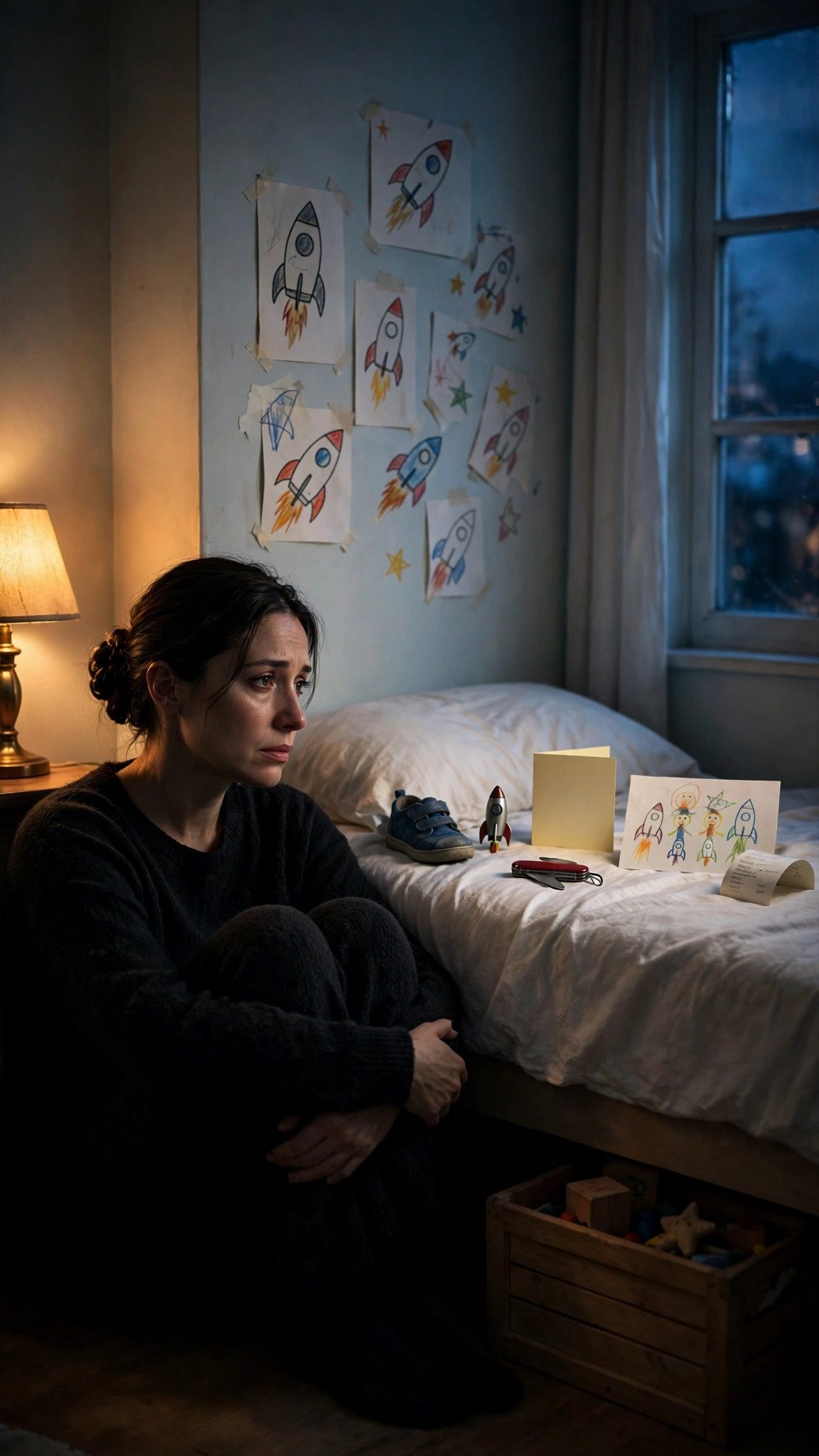
Noah got sick on a Tuesday. It started small, the way these things always start small, so small that you tell yourself it is nothing. A headache after school. A fever that would not come down. He said the lights hurt his eyes, and then he said the room was spinning, and then he was sick in the bathroom, and then he could not remember what day it was.
I took him to the hospital that night. I am a nurse. I knew what I was seeing, and I knew it was bad, and I knew it faster than I wanted to know it. The triage nurse took one look at him and called for a doctor. The doctor took one look at him and called for a scan. The scan took one look at him and told us everything we did not want to hear.
Acute fulminant encephalopathy. A storm in the brain. The swelling was pressing on everything that made him Noah, and there was no surgery that could stop it, and no medicine that could slow it down. The doctors used words like "rare" and "aggressive" and "we will do everything we can," and I heard every word, because I am a nurse and I know what those words mean when they are put together in that order.
They mean: we are going to lose him.
I called Marcus from the hallway outside Noah's room. It was nine in the morning. He did not answer. I called again. He did not answer. I sent a message: "Noah is in the hospital. It is bad. Come home now."
He did not answer that either.
Frank drove me back to the house to get Noah's things, his pajamas, his stuffed rocket, the wooden box, because Noah had asked for the box, even through the fever, even through the confusion. "Bring my box, Mommy," he had said. "Daddy will want to see it when he gets here."
Frank did not speak on the drive. He kept his eyes on the road, and his hands on the wheel, and every few minutes he would glance at me in the mirror, the way a father glances at a daughter who is about to hear bad news.
"Frank," I said. "Where is he?"
Frank was quiet for a long time. Then he said, "Mrs. Vale. I have driven for your husband for eleven years. I have never once told you something he asked me not to tell you. But I am going to tell you this, because you are Noah's mother, and you have a right to know."
He told me that Marcus had flown to Zurich the night before, on the private jet, with Rebecca. That he had booked the restaurant himself, a place on the lake, candlelight, a table for two. That he had told Frank to say he was in New York on business, if anyone asked. That he had left his phone on silent, because he did not want to be disturbed.
I sat in the back seat of the car, holding Noah's stuffed rocket, and I felt something inside me go very quiet. Not angry. Not yet. Just quiet, the way the world goes quiet right before a storm breaks.
"Thank you, Frank," I said.
"Mrs. Vale," he said. "I am sorry. I am so sorry."
The pediatrician, Dr. Alvarez, called Marcus twice that day. She sent six messages. She used words like "urgent" and "critical" and "please call back immediately." Marcus did not call back.
I sat beside Noah's bed and held his hand, and I watched the machines breathe for him, and I thought about the man in Zurich, sitting at a candlelit table, raising a glass to another year of a marriage he had already left, and I thought about the boy in the bed, who had once said his father was his hero just because he always came back.
I thought about the zoo trip, a month before he got sick. It had been a perfect day, the kind of day you remember forever because you do not know, while you are living it, that it is going to be one of the last perfect days. Noah had worn his favorite shoes, the ones with the mud still on them from the elephant enclosure, and he had pointed at the elephants with his whole arm stretched out, as if he could touch them from across the fence, and Marcus had lifted him up onto his shoulders so he could see better, and Noah had laughed, that big, open laugh that made everyone around him smile, even the strangers.
On the way home, Noah had fallen asleep in the back seat, with his head against the window, and Marcus had driven slowly, so as not to wake him, and I had watched the two of them in the mirror, my husband and my son, and I had thought, this is happiness. This is what happiness looks like. A tired boy, asleep in the back seat, and a man driving slowly so as not to wake him.
I held onto that memory, there in the hospital, while the machines breathed for my son. I held onto it like a rope. And I promised myself, whatever happened next, whatever the doctors said, whatever Marcus did or did not do, I would hold onto that day, and I would never let it go.
That night, Noah opened his eyes. They were clear for a moment, clearer than they had been all day, and he looked at me, and he said, very quietly, "Mommy. Is Daddy coming?"
"Yes, baby," I said. "Daddy is coming. He is on his way."
It was a lie. I knew it was a lie when I said it. But I said it anyway, because he was eight years old, and he was dying, and he deserved one true thing, and the only true thing I could give him was the belief that his father was coming.
He nodded, and he closed his eyes, and he squeezed my hand twice, the way we had always done it, two squeezes for yes, and I understood. He was telling me that he believed me. He was telling me that he trusted me. He was telling me that he was not afraid, as long as I was there.
I stayed with him all night. I did not sleep. I watched the numbers on the monitors go up and down, and I counted his breaths, the way the machine counted them, in and out, in and out, and I held his hand, and I talked to him, softly, about the rockets, and about the stars, and about the zoo, and about the elephants, and about all the things we were going to do when he got better, because I had to believe he was going to get better, even though the doctors had told me he would not, even though I knew, in the part of me that was a nurse, that he would not.
At three in the morning, Sofia came in to check his lines, and she stood beside me for a while, and she said, "Mrs. Vale. You should try to rest. Even a little. He needs you strong."
"I am strong," I said. "I am as strong as I know how to be."
"I know you are," she said. "I can see it. But even strong mothers need to breathe."
She brought me a cup of tea, and I drank it, and it was warm, and for a moment, just a moment, I felt almost human again, almost like a woman sitting beside her sleeping son, instead of a mother watching her son die. I watched the numbers on the monitors go up and down, and I prayed, though I had not prayed in years, and I thought about every single thing I had ever done wrong, and every single thing I had ever done right, and I bargained with a God I was not sure I believed in, and I said, take me, take me instead, take anything, just not him, just not my boy.
The second day was worse. Noah's fever climbed, and the swelling in his brain pressed harder, and the doctors brought in a specialist from another hospital, a thin man with grey hair who looked at the scans for a long time and then shook his head, very slightly, the way doctors do when they have run out of things to try.
I called Marcus's office that afternoon. I did not call his phone, because his phone was on silent, and I knew it. I called the office, and a man I did not know answered, and when I told him who I was, he went quiet, and then he said, "Mrs. Vale. Mr. Vale is not available. He is in a meeting. Can I take a message?"
"This is not a meeting," I said. My voice was shaking. "This is my son. He is dying. I need his father. I need him now."
"I understand, Mrs. Vale," the man said, and he sounded genuinely sorry, and that made it worse, because it meant he knew, and he still would not help me. "I will pass the message along. I promise you. The moment Mr. Vale is available, I will tell him."
I hung up, and I sat down in the hallway, on the cold floor, with my back against the wall, and I cried for the first time since we had arrived at the hospital. Not loud. Just quiet tears, running down my face, while the nurses walked past, pretending not to see, because they see mothers crying in hallways every day, and they know that sometimes the kindest thing you can do is pretend not to notice.
Grace came that evening. She had driven straight from work, still in her scrubs, and she took one look at me, and she sat down beside me on the floor, and she put her arm around me, and she said, "Tell me everything."
So I told her. I told her about the scan, and the swelling, and the ventilator, and the phone calls that went unanswered, and the messages that went unread, and the man in Zurich, and the woman with him, and the promise that had been broken, and the boy in the bed who kept asking when his daddy was coming.
Grace listened without interrupting, the way she had listened in the maternity ward seven years earlier, when I had held Noah for the first time and told her that I was afraid, and she had said, "You are going to be a wonderful mother. I know it. I have always known it."
When I finished, she was quiet for a long time. Then she said, "Claire. I am going to stay here tonight. I am going to sit with you, and I am going to hold your hand, and I am going to be here when the doctors come in the morning. And Marcus can go to hell, as far as I am concerned, because a man who is not here for this does not deserve to be called a father."
She stayed. She sat with me all night, in the plastic chairs beside Noah's bed, and she held my hand, and when I finally fell asleep, just before dawn, she was still there, awake, watching over us both, the way she had always done, the way a best friend does when the world is falling apart and there is nothing else to do but sit in the dark and wait for morning.
In the morning, Dr. Alvarez came in with two other doctors, and they stood at the foot of the bed, and they looked at the charts, and they looked at each other, and then Dr. Alvarez came and sat beside me, and she took my hand, and she said, "Claire. We need to talk about what happens next."
She told me that Noah's brain was swelling faster than they could control. That the ventilator was the only thing keeping him alive. That without it, he would stop breathing within minutes. That with it, he would linger, in pain, in fear, without ever waking up again, for hours, or days, and that there was nothing they could do to change that.
"The law needs a consenting parent's signature to withdraw life support," she said, very gently. "Under any other circumstances, it would be his father's signature. But his father is not here. And you are. And I need you to understand, Claire, that there is no wrong choice here. There is only the choice that lets him go with dignity, and the choice that makes him suffer longer. And you are the only person who can make it."
I looked at Noah. I looked at his face, which was so pale it was almost transparent. I looked at his hands, which were so small. I looked at the rocket drawing taped to the wall above his bed, the one he had drawn in school, with the stars connected by wobbly lines, and I thought about the boy who had once asked if he could connect the dots of the stars to draw a rocket on the ceiling.
"Mommy's here," I whispered. "Mommy's here. Thank you for being brave."
At 8:42 P.M., I took the pen, looked at Noah's face one more time, held his chest, and signed it.
The machines went quiet, one by one. The nurses stood back. Frank stood in the doorway, his cap in his hands, his head bowed. And Noah, my beautiful boy, my rocket boy, my hero's son, stopped breathing, and the room went still, and the whole world went still with it.
I did not cry. I could not cry. There were no tears left in me. There was only a hollow place where my heart had been, and the sound of my own breathing, and the knowledge that I had just done the hardest thing any mother has ever had to do, alone, because the man who had promised that no harm would ever come to his son was in Zurich, eating dinner by candlelight, with the woman who had stolen his heart.
Fourteen hours later, Marcus Vale came home. But by then, it was already too late. It had been too late for a very long time. It had been too late since the night he first smiled at Rebecca the way he used to smile at me, and I had chosen not to see it.
Now I saw it. Now I saw everything. And I was never going to unsee it again.