The text on my phone said: I know about the boy.
No name. No number I recognized. Just seven words on a lit screen between us on the table at Sofia's, and the smell of garlic and bread suddenly seemed very far away.
Dante saw my face change. He leaned forward, and his hands went flat on the table, palms down, fingers spread, the way a man holds himself down when everything in him wants to reach across and take hold of something.
"You need to tell me," he said. "Tell me."
I looked down at Leo, asleep against my shoulder, his small hand curled around my thumb, his dark hair falling across his forehead, and I thought about the promise I had made to myself in that little Swiss clinic, and I thought about the man in the grey coat on the bench across from the park, and I understood that the promise had been broken a long time ago, not by me, but by him.
"How long have you known?" I asked.
Dante closed his eyes for a second, and when he opened them, something in his face had changed, the careful control slipping, just a little, just enough for me to see the man underneath the boss.
"Two years," he said.
Two years. The words sat between us like stones.
"Two years," I repeated.
"I was in a meeting when the first one arrived," Dante said. "About the docks. Twelve men in a room, arguing about tariffs, and my phone buzzed, and I looked down, and there was my son on a swing in Geneva, and I stood up in the middle of the meeting, and I walked out, and I went to my office, and I closed the door, and I sat there for an hour, looking at that photograph. Twelve men waited for me. I did not care. I have never cared about a meeting less in my life."
"Go on," I said.
"There was a man in Geneva," he said. "Not to watch you. To watch over you. I told him never to approach you, never to speak to you, only to make sure you were safe. And then one day he sent me a photograph, and in the photograph you were holding a little boy in the park, and the boy had my eyes, and my hair, and my chin, and I knew."
He reached into his jacket and took out his phone, and he turned it toward me, and on the screen was a photograph of Leo and me in the park in Geneva, Leo on the swing, me pushing him, both of us laughing, and I stared at it and I could not breathe, because someone had been standing close enough to take that photograph, and I had never seen them.
"Every month," Dante said, his voice low and rough. "Every month he sent me a photograph. I have them all in my desk drawer. I have watched my son grow up in photographs, Elena, and I have never once held him, and I have never once been able to tell anyone that he exists."
"Why didn't you come?" I whispered. "Why didn't you come to Geneva?"
"Because you left," he said. "Because you chose to leave, and I told myself that if you wanted me to know, you would have told me. And because I was married to your sister, and I had made a promise, and I am a man who keeps his promises even when they are killing him."
"Then why are you here now?" I asked. "Why the airport? Why tonight?"
He looked down at his hands on the table, and for a moment he was silent, and I could see the struggle in his face, the boss and the man fighting for the same mouth.
"Because Victoria told me to come," he said.
The room tilted. I gripped the edge of the table.
"What?"
"Victoria knows," he said. "She has known for a year. I told her myself, the night the photograph of Leo's second birthday arrived. I could not carry it alone anymore. I went to her, and I told her everything, and I waited for her to destroy me, because she had every right to. And do you know what she did, Elena? She sat very still for a long time, and then she said, 'He has a son. Go to him.' And I said I couldn't, because of the marriage, because of the alliance, because of everything, and she said, 'Dante, I married you to save my father's company. You married me to save your docks. We have been business partners for three years, not husband and wife. Go to your son.'"
I stared at him. "That's not true. Victoria loves you."
"Victoria loves the idea of being loved," Dante said, and there was no cruelty in it, only a tired honesty. "She loved the wedding, and the house, and the name. But she never loved me, Elena. She told me so herself, a year ago, when she filed for divorce. Six months ago, the papers were ready. We have been living separate lives in the same house for a year, waiting for the right time to end it cleanly, without destroying the alliance, without destroying the company. She has been waiting for me to be brave enough to go to Geneva. And I wasn't brave enough. I was a coward, Elena. I sat in my office and looked at photographs of my son, and I did nothing."
"Then why tonight?" I asked. "What changed tonight?"
"The text," he said, and he nodded at my phone. "That message didn't come from me. It came from someone else. Someone else knows about Leo, Elena. Someone who is not my man in Geneva. Someone who wants me to know that they know."
My blood went cold. "Who?"
"I don't know yet," Dante said. "But I have a man inside my organization who has been selling information for months, and I think he sold this one too. And if the wrong people know about my son, then my son is in danger, and I will not sit in my office and look at photographs while my son is in danger. That is why I came to the airport. That is why I am begging you."
"Begging me for what?" I asked.
"Ten minutes," he said. "That's all I'm asking for. Ten minutes to tell you the truth, all of it, and then you can decide what happens next. Ten minutes, Elena. I've waited three years for ten minutes."
I looked at him, this man who had never begged anyone for anything in his life, sitting across from me with his hands flat on the table and his eyes wet, and I thought about the eight years behind closed doors, and the ivory invitation, and the dressing room, and the little Swiss clinic, and the boy asleep in my arms, and I knew that whatever I decided in the next ten minutes would decide the rest of all our lives.
"Talk," I said.
He took a breath, and he began, and what he told me was worse, and better, than anything I had imagined.
He told me about the marriage, the truth of it, not the story the newspapers had printed. He had married Victoria to save the Moretti docks, yes, but he had also married her because he believed, in that terrible winter after I left, that if he could not have the woman he loved, he would at least do his duty, and duty was something he understood. He had thought that marrying my sister would kill what he felt for me. It had not. It had only buried it, and buried things do not die. They wait.
He told me about the divorce papers, signed six months ago, waiting in his lawyer's safe, and about the agreement he and Victoria had made: she would take Carter Freight back, free and clear, with enough money to rebuild it on her own terms, and he would take nothing from her, and they would tell the world that the marriage had simply run its course, and no one would ever know that it had never truly begun.
He told me about the mole, the man inside his organization who had been selling information to Vincent Castellano, the head of the rival family, the man who had wanted the Moretti docks for twenty years and who would use anything, anyone, to get them. "Castellano has wanted my empire since before you were born," Dante said. "And now he knows I have a son, and a son is a weakness, and Castellano collects weaknesses the way other men collect art."
He told me about the man in Geneva, whose name was Paolo, who had been his driver's cousin, a good man, a quiet man, who had watched over us for two years and had never once been seen, until the day he stopped reporting, three weeks ago, and Dante's people had found his car empty on a road outside Geneva, and Paolo had not been seen since.
"Paolo is dead," Dante said, very quietly. "Or he is being held. Either way, someone took him, and someone took his photographs, and someone knows about Leo. And that is why I am here, Elena. Not to take him from you. Not to claim him like property. To protect him. To protect both of you. Because I have spent two years watching my son grow up in photographs, and I will not lose him to Castellano the way I lost Thomas on Mulberry Street."
Thomas. The driver who had died taking a bullet for Dante. The man whose grave Dante visited every March fourteenth, alone, with a bottle of whiskey he never opened.
"I know how you took your coffee," I said, and my voice was shaking. "I know which scars hurt during Chicago winters. I know how quiet you become when something goes wrong. But I don't know if I can trust you, Dante. You married my sister. You stayed away for three years. How do I know you won't stay away again?"
"You don't," he said. "You can't know. All I can do is sit here and tell you the truth, and ask you for ten minutes, and then ten more, and then ten more after that, until you believe me. And if you don't believe me, then I'll stand outside your hotel every night until you do, because I have waited three years, Elena, and I am done waiting."
"Let me tell you about the photographs," Dante said, and his voice dropped lower, and he looked down at his hands, and I saw that his hands were trembling, just slightly, the hands of a man who had held a city in his grip for twenty years and could not hold his own son.
"The first one came in the spring, two years ago," he said. "You were in the park, and Leo was on the swing, and you were pushing him, and he was laughing, and I sat in my office and looked at that photograph for an hour, and I could not work, and I could not think, and I could not do anything except look at my son's face. The second one came a month later. He was taking his first steps, holding on to a chair, and Marta was behind him with her arms out, and I thought, he is walking, and I am not there, and I will never get that moment back. There was one of his first birthday, with the cake and the one candle, and one of him on the little red bicycle, and one of him asleep in the car, with his lion tucked under his arm. I have them all, Elena. Every single one. In my desk drawer, in a folder, in order, by date. Two years of my son's life, in photographs, and I have never once held him, and I have never once been able to tell anyone that he exists, and there are nights when I sit in my office and I take out that folder, and I look at those photographs, and I think about what kind of man watches his son grow up in photographs."
Sofia came out of the kitchen then, with a bowl of soup, the soup Dante's mother used to make, garlic and basil and bread, and she set it down in front of me, and she put her hand on my shoulder, and she looked at Dante, and she said, "I always knew, you know. From the first night you brought her here. I knew. A woman can tell. And I have waited three years for this night, and I am glad it has finally come."
She went back to the kitchen, and Dante and I sat in silence for a moment, and the soup steamed between us, and the candle in the red glass flickered, and I thought about the hundred quiet dinners we had eaten at this table, and how this one was different from all of them, because this time, for the first time, there was nothing left to hide.
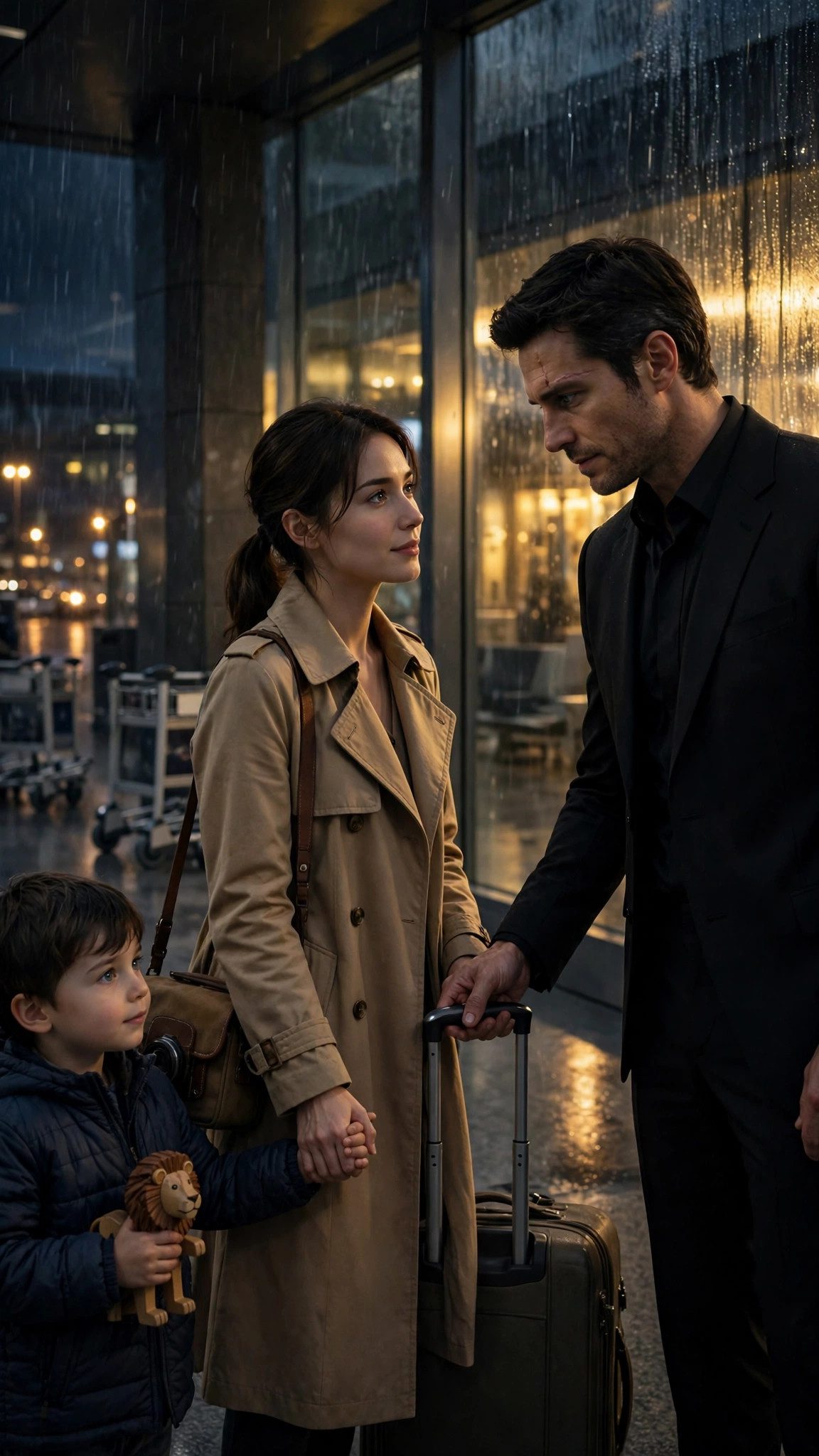
Leo stirred in my arms then, and opened his grey eyes, and looked up at Dante, and said, in his small, clear voice, "Mama, who is that man?"
Dante looked down at him, and his face broke open, all the control gone at once, and he said, very softly, "I'm your father, Leo. My name is Dante. And I have been waiting a very long time to meet you."
Leo studied him for a moment, the way he studied everything, with that grey, watchful gaze, and then he reached out one small hand, and he touched Dante's scar, the one through his left eyebrow, with one careful finger, and he said, "You have a boo-boo."
And Dante Moretti, the most feared Mafia boss in Chicago, the man who had never cried in front of anyone in his life, closed his eyes, and a single tear ran down his face, and he whispered, "Yes. I do. And you just fixed it."