
Story Genres: MAFIA BOSS

  • Chapter 1: Eleven Minutes to Midnight

    Chapter 1: Eleven Minutes to Midnight

    My name is Lena Morales. I'm twenty-six years old, and I clean offices at night in one of the most expensive corporate towers in Manhattan — forty-one floors of glass and marble owned by a man whose face I'd only ever seen in business magazines.

    That Thursday started the way most of my Thursdays started: at a clinic in the Bronx, holding my mother's hand while a nurse explained, in the gentle voice people use when the news is bad, that her heart medication had gone up in price again.

    "Take one in the morning now instead of two," the nurse said. "We'll stretch it until the assistance program answers."

    My mother, Rosa, smiled like she hadn't just been told to ration her own heartbeat. "See? Everything works out, mija."

    Nothing was working out. The assistance program had been "reviewing our file" for five months. The bills were stacked beside her bed in a pile I organized by color — white for the ones I'd partly paid, pink for the ones I hadn't opened, because opening them didn't make money appear. I cleaned offices ten hours a night, six nights a week, and took every extra shift the agency offered, and somehow the pile still grew faster than I did.

    I left her with a kiss on the forehead and a promise I'd be home by two.

    "Eat something real tonight," she called after me.

    "I will," I lied.

    Dinner was a packet of crackers from the vending machine on the thirty-ninth floor, eaten at 9:15 while my cart's wheel squeaked down a corridor lined with photographs of men shaking hands over buildings they'd bought. By 11:30 my feet were aching inside my shoes, my shoulders burned, and all I wanted in the world was to finish the last room on my list — the boardroom on the forty-first floor — and go home.

    The night crew was small: me, an old porter named Gus who'd worked the building thirty years, and two women from Queens who did the lower floors and gossiped in the service elevator like it was a kitchen table. We knew the tower's real life — which executives cried in their offices after the markets closed, which offices kept framed photographs of families they never went home to, whose desks held wedding rings in the drawer during late meetings. We knew everything about the people upstairs except their names for us. To them, we were a service, like the elevators. You only noticed us when something went wrong.

    My supervisor, Marta, had one rule carved above all others: the forty-first floor — the executive floor, Julian Vale's floor — was finished by midnight, spotless, no exceptions, because Mr. Vale sometimes worked through the night and could not be disturbed by cleaning carts in the morning. I'd never once seen the man. I knew his office the way you know a church you've only ever dusted: the single photograph on the desk, face-down more often than not; the decanter never touched; the chair positioned to face the door like a man expecting an enemy or a debt collector.

    The boardroom was supposed to be empty. It wasn't.

    A meeting had run late. Eight executives sat around a table long enough to land a plane on, with laptops and crystal glasses and the exhausted patience of people who are rich enough to be annoyed professionally. I should have come back later. But the shift supervisor had a rule about the forty-first floor — it got done by midnight, no exceptions — so I slipped in quietly, kept to the edges, and started on the carpet near the windows, on my knees, working a stain out of the wool with a cloth and a spray bottle.

    That's where I was — on my knees, at 11:47 P.M. — when the woman in the designer dress stopped beside me.

    She'd come in late with two of the executives, all diamonds and perfume, laughing at something on her phone. She paused next to me like I was furniture she hadn't expected.

    "Excuse me!" Her voice rang across the table. "You almost touched me with that filthy cloth."

    I looked up. There were two full feet of carpet between my cloth and the hem of her dress.

    "I didn't touch you, ma'am," I said.

    Her smile tightened. "Are you arguing with me?"

    One of the executives — silver hair, cufflinks, a laugh like a door closing — chuckled into his glass. "Just apologize and get back to work."

    Every instinct I had said to do it. Apologize. Shrink. Keep the job. I needed the job the way my mother needed her medication — completely, and without any real alternative. My fingers tightened around the cloth until my knuckles went white.

    But something in me had been bending for a long time — through the pink envelopes, through the clinic, through the nurse's gentle voice — and that night, at 11:47, on my knees, it reached the place where bending becomes breaking.

    "I'm trained to clean offices," I said, and my voice only shook a little. "Not apologize for things I didn't do."

    The room went silent. Even the air conditioning seemed to stop.

    The woman stared at me like a painting had spoken. The silver-haired executive set his glass down. I was already composing the phone call to my mother — I lost the job, Mama, I'm sorry — when a deep voice spoke from the head of the table.

    "She's right."

    I turned.

    Julian Vale sat at the far end, in the chair nobody else would have dared to take, a contract open in front of him and a pen resting untouched beside it. Thirty-eight years old. Tall, dark-haired, with the kind of face magazines put on covers with words like EMPIRE underneath. He owned this building, and the hotels, and the investment firms, and half the photographs in the corridor downstairs.

    I'd never spoken to him. I'd never expected to.

    He looked directly at the woman. "She didn't touch you."

    "Julian, I was only—"

    "If you have a complaint, take it to facilities tomorrow." His voice stayed perfectly calm, which somehow made it worse for her. "Don't entertain yourself by humiliating someone who's working at midnight."

    Nobody laughed. The silver-haired executive suddenly found his laptop fascinating. The woman — Vivienne Cross, I would learn later, heiress to Cross Industries and, until that spring, the woman every magazine in New York assumed Julian Vale would marry — sat down with her smile nailed back in place and murder in her eyes.

    The meeting limped to its end within minutes. The executives filed out. Vivienne left with them, her heels striking the marble like punctuation. And I went back to the stain on the carpet, because stains don't care about dignity, and neither does a shift supervisor.

    Julian remained.

    For several minutes, neither of us spoke. The city glittered forty-one floors below. The wall clock ticked with a sound I'd never noticed in that room before.

    "You didn't have to do that," I said quietly.

    He looked up from the contract. "Yes, I did."

    I didn't know what to say to that. Men like Julian Vale didn't notice women like me — especially not when we were kneeling on their carpets holding spray bottles. I gathered my supplies and stood, deciding that the most professional thing I could do was disappear before the strangeness got any stranger.

    Then his phone rang.

    He answered, listened, and his expression turned to ice.

    "No," he said. "That's not acceptable."

    A pause. Whoever was on the other end kept talking.

    "I said no. Do not sign anything. Do not speak to the trustees. Buy me—" He stopped. Looked at the wall clock. "Just hold them off."

    He ended the call. And then Julian Vale — billionaire, empire, magazine cover — stared at the clock on his own boardroom wall like it was a countdown on something dangerous.

    11:47 P.M.

    "You look nervous," I said, before I could stop myself.

    He turned toward me with an expression I couldn't read. "Are you married?"

    I stopped, cloth in hand. "What?"

    "Engaged?"

    "No."

    "Living with someone? A boyfriend, a partner, anyone with a legal claim—"

    "No," I said, bewildered. "Mr. Vale, why are you asking me these questions?"

    He looked at the clock again. Then back at me, and something in his face settled, the way a man's face settles when he has run out of options he likes and chosen the only one he has.

    "I need to be legally married," he said. "By midnight."

    For a moment I was sure I'd misheard. Then I laughed — one short, disbelieving sound. "Congratulations?"

    He didn't smile. "I'm serious, Lena."

    "Mr. Vale, it's almost midnight."

    "I know."

    "And you're asking the woman cleaning your conference room?"

    "Yes."

    I stared at him. "Have you been drinking?"

    "No." That made it worse. He stood and came toward me — not threatening, just certain, a man accustomed to making impossible things happen by deciding they would. He stopped a respectful distance away. "I'll pay you six hundred thousand dollars. In exchange for a legal marriage. Tonight."

    My mouth fell open. "What?"

    "Six hundred thousand dollars. Transferred to any account you name, the moment the license is filed."

    I looked at the cloth in my hand. Then at the watch on his wrist, which cost more than my mother's house would have, in a life where she'd ever been able to buy one. Six hundred thousand dollars. That was the bills — all of them, even the pink ones. That was the cardiologist who didn't ration medication by the pill. That was a ground-floor apartment where my mother wouldn't have to climb two flights of stairs on a heart that was failing by percentages. That was sleep. That was breathing room. That was a life.

    But something about it was wrong, and the wrongness had a shape: a man this rich, this connected, this planned — a man with a fiancée in diamonds who'd been sitting across his table ten minutes ago — did not propose to the night cleaner unless every door he trusted had already slammed in his face.

    "Why me?" I asked.

    Julian hesitated. He glanced at the closed boardroom doors, as if the answer might be listening on the other side.

    "Because the people I normally trust," he said at last, "have already made it very clear what they want from me. I don't need a wife who will pretend to love me for my money, Lena. I need a wife who won't."

    I almost laughed again. "You're literally offering me money to marry you."

    For the first time that night, Julian Vale smiled — a small, tired, honest smile that made him look less like a magazine and more like a man. "Fair point."

    He glanced at the clock. 11:48 P.M.

    "Will you do it?"

    I stared at him. "How do you know my name?"

    "It's on your employee badge."

    Of course it was. I looked down at the plastic rectangle on my chest — LENA MORALES, ENVIRONMENTAL SERVICES — and at the ringless hands beneath it, and I took a breath that hurt. My mother. The prescriptions. The stairs. The pile of pink envelopes growing like a garden beside her bed.

    I was actually considering it. God help me, I was standing in a billionaire's boardroom at 11:48 P.M. with a cleaning cloth in my hand, actually considering it.

    "I have one condition," I said.

    He nodded instantly. "Name it."

    I looked straight into his eyes so there could be no misunderstanding, no fine print, no renegotiation later. "My mother comes first. If she needs me, I go to her. No permission. No arguments. And no amount of money — not six hundred thousand, not six million — gives you the right to keep me away from her. Ever."

    His expression changed. The tiredness went out of it; something like genuine surprise came in. Whatever counteroffer he'd been braced for — more money, jewelry, a car, an apartment, all the things people apparently asked Julian Vale for — this wasn't it.

    "You're not asking for a bigger payment?"

    "No."

    "Jewelry? A car? A home?"

    I shook my head. "I don't need you to buy me a life, Mr. Vale. I need you to understand that I already have one."

    For several seconds, the most powerful man I'd ever met said absolutely nothing. The clock ticked. 11:49 P.M. When he finally looked back at me, something in his expression had softened in a way I didn't have a word for then.

    "Lena," he said quietly, "nobody has ever negotiated with me like that."

    My heart was hammering hard enough that I was sure he could hear it. "Is that a yes?"

    Julian reached for his phone. Then he paused — and didn't dial.

    "Before you answer me," he said, "there's something you need to know about what happens if we're not married by midnight."

    My stomach tightened. Because suddenly I understood: this wasn't a strange proposal from a desperate billionaire. Someone had given Julian Vale a deadline. And whatever he stood to lose at midnight was frightening enough to make him offer a stranger six hundred thousand dollars — for eleven minutes of trust.
  • Chapter 7: The Emerald Bride

    Chapter 7: The Emerald Bride

    He asked me on a Tuesday, in his office, at 2 a.m., over cold coffee and the quarterly lake shipping settlements — which is to say, he asked me in the exact place and manner of our real life together, and I have never heard of a better proposal.

    There was no audience. There was no gunfire. There was Cosimo Ferraro with his sleeves rolled once, precise as ever, sliding a reconciliation report across the conference table and saying, without preamble, "The month is up, Francesca. The books balance. I'm asking."

    I said yes before he'd finished the sentence, which ruined his composure entirely and remains one of my favorite memories.

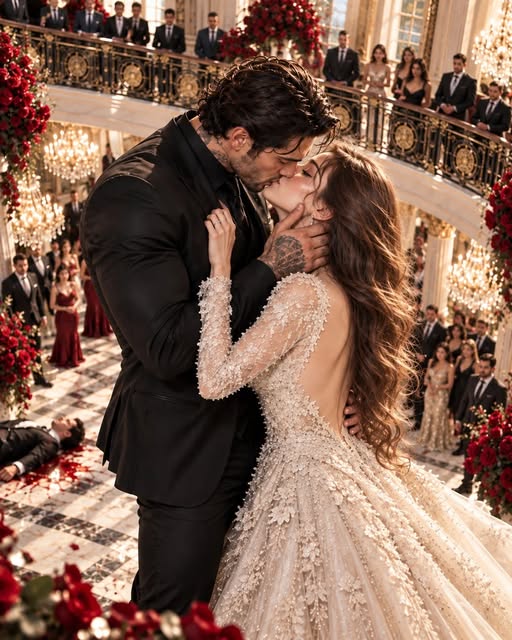
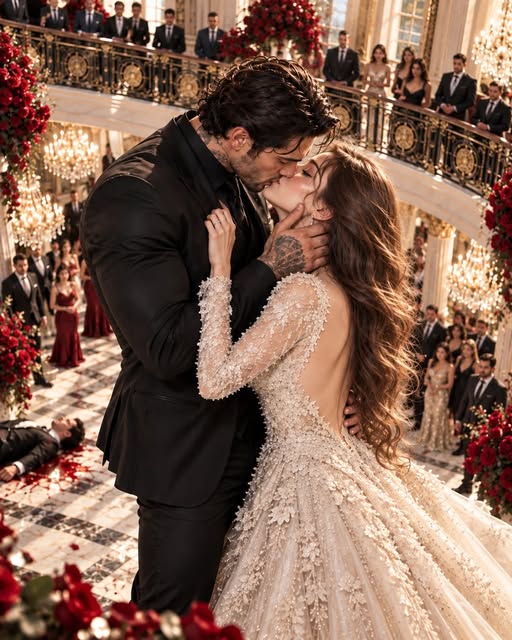
    We were married three months later, in the grand ballroom of The Drake Hotel.

    It was my idea. It scandalized everyone — my mother-in-law-to-be wept about omens, my sisters wept about romance, my father simply looked at me for a long moment and said, "You always did insist on balancing the ledger in the same book where the debt was made." The Drake it was. I wanted to stand in the exact center of the room where four hundred people had watched me be weighed and found worthless, and I wanted to be weighed there again — accurately, this time, in front of all of them.

    I wore emerald. Of course I wore emerald — a new gown, cut like the first one, because the dress was never the problem. The problem had only ever been the arithmetic of the people looking at it.

    Bianca was my maid of honor. She had spent the spring learning to read a balance sheet at my kitchen table, twice a week, with the fierce concentration of a woman retraining for a war she intended to win, and she had turned out to have a real gift for forensic accounting — a jeweler's eye for the one stone in the setting that's paste. "It's the same as men," she told me, the night before the wedding, over wine. "You just look for the one whose numbers don't match his story." Sofia sang at the ceremony — actually sang, the sweet voice put to its true use at last — and half the Syndicate wept into their programs and will deny it until they die.

    The morning of the wedding, my sisters came to my room at the Lombardi house with coffee, chaos, and a garment bag, and for two hours the three of us were simply what we had never been allowed to be when it might have saved us trouble: sisters, in a sunlit room, preparing for a wedding.

    Sofia did my hair — the same careful pins as the night of my engagement, and we both noticed, and neither of us pretended not to. "Last time I pinned you up," she said quietly, working, "I cried in the corridor afterward because I knew what Dominic was, and I didn't say anything, because Father had decided and I didn't know how to be the one who speaks." Her hands stilled. "Say it now, then," I told her. "Whatever it is. For the rest of our lives, in this family, we say it now." She nodded, fierce and tearful, and pinned the last pin like a soldier planting a flag.

    Bianca brought the something-borrowed: our grandmother's rosary, which she had taken from the family chapel that morning without asking anyone, on the grounds that Nonna had kept the Lombardi books through two wars and would have wanted representation. "She ran the money for thirty years and grandfather got the statue in the cemetery," Bianca said, fastening it around my wrist. "The women in this family have always been the treasury, Franny. You're just the first one whose name is on the door." Then she checked my gown's train with a tactician's eye and delivered her final report as my deputy and my maid of honor: "The cathedral length is a liability in a firefight. Otherwise — acceptable losses. You look like a hostile takeover in a dress."

    I laughed until I cried, which cost Sofia twenty minutes of repairs, and I did not mind at all. A year before, I had gotten ready for my engagement in that same room, alone, in silence, like a document being prepared for signing. This time the room was loud with women who had learned to speak — and I understood that this, more than the ballroom downstairs or the man waiting at the end of the aisle, was the actual restitution. The empire could have survived without me marrying Cosimo Ferraro. My family could not have survived without learning how to love its daughters out loud. We managed both, in the end, but only just, and only because the arithmetic finally shamed us into it.

    My father walked me down the aisle.

    Halfway down, in the precise spot where Dominic had stood to raise his glass, the old Don stopped — stopped the whole procession, stopped the music — and turned to the assembled families of Chicago, and he said, in a voice built to carry ballrooms: "One year ago, in this room, I stood by while my daughter was called worthless. I will not make the walk twice in the same silence. This is Francesca Lombardi. She holds this family's books, its future, and its honor — she has held them since she was nineteen years old. Any house that marries into ours today marries up." Then he looked at me, and his eyes were wet, and he finished the walk.

    Cosimo was waiting at the end of it, healed and straight and smiling the real smile, the brief warm one I'd first seen through gunsmoke. When the officiant asked who gave this woman, my father said, "No one gives her. She was never ours to give. She comes as she chooses" — and the ballroom made a sound I will hear on my deathbed, half gasp and half roar.

    We said our vows where the ice sculpture had stood.

    I will not pretend I wasn't afraid walking the last steps — not of him, never of him, but of the room itself, of the ghost of a year ago that stood in this ballroom with her hands empty and her chin up while everyone waited for her to cry. Grief like that doesn't evaporate because a story ends well; it takes its seat among the guests and watches. So I looked for her deliberately, that girl, as I crossed the marble where Dominic's blood had dried under the polish — and I made her a promise, there in front of two families and God: that no daughter of mine, no niece, no quiet girl in any house our money touches, would ever again have to learn her own worth from a whispered confession in the middle of a war. She would be taught the books. She would be told, early and often and in public, exactly what she was.

    Then I reached Cosimo, and put my hand in the hand he offered — palm up, still waiting, still a choice — and the ghost took her seat, and quieted, and stayed only as a witness.

    I remember the light through the tall windows, gold as poured honey. I remember my sisters' faces, and the captains standing at the walls in their black suits like a punctuation of old wars, and Dominic — invited, at my insistence, with his healed shoulder and his strange new dignity — raising his glass to me from the back of the room in a toast that this time cost him nothing and meant everything: to the bride. I remember the emerald on my hand catching the light.

    And I remember that at the reception, when the quartet was playing and the champagne had loosened even the Moretti patriarch into something resembling warmth, Cosimo drew me out onto the terrace above Michigan Avenue, into the cold clean Chicago night, and held me the way a man holds the thing he has chosen every day since the day he first offered his hand and waited.

    "They think you're the daughter nobody wanted," he murmured, an echo, a quotation, a debt being closed in the same book where it was made.

    "I remember," I said.

    He turned me gently in his arms so I could see the ballroom through the glass — my father laughing, actually laughing, with his arm around Bianca; Sofia dancing with a blushing Vitale captain; the whole glittering machinery of our world turning, for once, in the light. "What do they know now?"

    I thought about being nineteen, invisible, in an office above a restaurant on Taylor Street, reading ledgers nobody else could untangle, building an empire in the dark for people who called me a disappointment at dinner. I thought about a retired key in a sealed envelope, and a fountain pen from a false uncle, and a whisper in a ballroom full of blood and broken glass. I thought about the rule — my choice, always my choice — and about all the years it had taken the world to learn arithmetic.

    "They know now," I said, "that the daughter nobody wanted was the one holding up the house."

    Cosimo kissed me then — gently, deliberately, the way he had the first time, with the whole of Chicago as witness and not one person in it left who doubted what I was worth.

    Behind us, the music rose. The Lombardi books were balanced. The Ferraro books were balanced. And for the first time in my life, standing in the light in my emerald dress, with my hand in the hand of the man who had seen me first as a mind — I was not invisible at all.

    I was the headline.

    Six months later, on a bright morning in early spring, I opened the new joint office of Lombardi–Ferraro Financial Oversight on Wacker Drive — forty-first floor, windows over the river, my name in brushed steel on the door, and Bianca's on the door beside mine. The Syndicate's quarterly settlements now run through a table where nine captains can read their own routes in clean columns, and at the first quarterly review, the eighty-one-year-old Vitale patriarch studied the report I'd prepared for a long time before announcing to the room, "The girl keeps books like her grandmother's God is auditing." It remains the highest compliment our world possesses, and I have had it framed.

    Salvatore writes me a letter every month from Arizona. They are checked, of course. They are also — this is the strange part, the part no ledger predicted — almost entirely about the weather, and about a garden he has been permitted to keep, and about the tomatoes failing in the desert soil. He has never apologized. I have never asked him to. I send him, each Christmas, a packet of seeds suited to dry climates, and my father pretends not to know, and some accounts, I have learned, are never meant to balance. They are simply closed, and the loss is carried forward, quietly, by everyone.

    My father comes to the office on Thursdays. He sits in the visitor's chair — the Don of the Lombardis, in the visitor's chair, by his own insistence — and Bianca walks him through the quarterlies while I pretend not to listen, and afterward he takes his three daughters to lunch and pays court to us one by one like a man making up a debt in installments he fully intends to complete. He is not a good man, my father. He is becoming, late and at cost, an honest one, and I have made my peace with the difference.

    And Cosimo — Cosimo keeps the rule. In the office, in the marriage, in every ledger there is, my choice stands first, and he has made a kind of religion of it, so that now the captains of two families ask my consent before they ask my opinion, and mean both. At night he sometimes finds me at the desk long after the building empties, the way I have worked since I was nineteen, and he sets down coffee he poured himself, and reads over my shoulder, and says nothing he doesn't need to say.

    On the wall behind my desk there hangs a framed photograph: the Drake ballroom, one year ago, a ring on a table and a girl in an emerald dress standing alone in a circle of space while four hundred people waited for her to cry. I keep it where I can see it from my chair. Underneath it, in my own hand, I have written the only caption a photograph like that will ever need:

    She wasn't worthless. She was unaudited.

    Now the whole city has read the audit.

    THE END

  • Chapter 6: The Reckoning

    Chapter 6: The Reckoning

    Cosimo Ferraro survived, which surprised no one who had ever tried to negotiate with him.

    The bullet had passed through his side below the ribs, missing everything a man cannot spare — "a through-and-through insult," his surgeon called it — and by the fourth day he was conducting Syndicate business from a hospital bed with a phone in his good hand and an expression that made the nurses rotate in shifts of decreasing seniority. I visited every day, because I told myself the investigation required it. He allowed this fiction with great courtesy and absolutely no belief.

    The families' judgment, when it came, was delivered in the same ballroom where the trap had sprung, and it was total. The trace from Zurich — my dead man's ledger, opened voluntarily for the first time in its existence, by my hand, on my terms — was read into the record by auditors from three neutral families. It showed everything: the eleven-month siphon in my stolen handwriting, the Naperville terminal, Harborline Motors, the LaSalle law firm, the whole patient architecture of Salvatore Lombardi's treason. My uncle did not rage or beg. He sat very straight while his world was read aloud in figures, and when the Moretti patriarch asked him if any of it was false, he said, "The girl was supposed to be an accountant. Accountants don't fight wars." And then, after a pause: "I underestimated the merchandise."

    It was the last Lombardi mistake where I was concerned. The families stripped him of his seat, his territories, his name-rights within the organization — he would live, the council decided, because Carlo asked for his brother's life with a formality that froze the room, and even in ruin Carlo Lombardi's ask carried weight. Salvatore would live in exile in a house in Arizona with an allowance and a guard he was meant to understand was also a jailer, and he would never touch a Lombardi ledger, a Lombardi dollar, or a Lombardi daughter again.

    Aldo Ricci was not given exile. Aldo Ricci had fired a weapon at a sit-down — a crime our world ranks somewhere below murdering a priest. He was handed to the federal authorities along with a curated selection of his own paper trail, enough for money laundering, attempted murder, and conspiracy charges to bury the rest of his natural life, and the families considered this merciful, because it was.

    What no council saw — what I did in the two weeks that followed, in the office above the restaurant on Taylor Street where it had all begun — was rebuild. A lattice that a traitor has breathed inside cannot simply be swept; it has to be dismantled beam by beam and raised again with new locks, new routes, new names. I worked the way I had always worked, at night, alone — except that on the fourth night, the door opened and Bianca came in with two coffees and a notebook, and sat down without asking permission, which in our family is a form of kneeling.

    "Teach me," she said. "Not someday. Now. If anyone ever tries to use this family again, I want there to be two of us who can see it coming. Sofia's memorizing the safe combinations and Rosa's teaching her to shoot; this one is mine."

    So I taught her — the way Aldo had once taught me, minus the poison. She was quick in the way she'd always been quick with people: she read a ledger the way she read a room, for the thing that didn't belong. On the ninth night, it was Bianca who caught a residual ghost account Aldo had seeded a year earlier, a sleeping little siphon-in-waiting buried in a catering company's books, and she sat back in her chair pale and triumphant, and said, "He left a spare key under the mat. For later. For after he was done with you." And I understood that my uncle's accountant had planned to go on stealing from whoever won the war, forever, in my handwriting — and that my sister had just ended that too. I put her name into the new lattice that night as a second authorized mind. The Lombardi books would never again live inside one person's head. That was the last lesson of the old architecture, and I wrote it into the new one's foundations like a cornerstone.

    Cosimo, from his hospital bed, reviewed the new structure page by page as I sent it. "You're making it transparent," he said on the phone, one night near the end of his stay. "Windows everywhere. Any captain can reconcile his own routes now. Francesca, this is — do you understand — this is the opposite of how our world keeps its money."

    "Our world keeps its money the way that let Aldo Ricci happen," I said. "A system only one person understands is a system one person can betray. I built the old one to be invisible because I was invisible in it. I'm not invisible anymore. So the money doesn't have to be."

    There was a silence on the line, and then the head of the Chicago Syndicate said, quietly, "My grandmother used to say the books should be kept so that God and the taxman could both read them, and only one of them would understand." A pause. "Run it your way. The Syndicate will adapt. I'll make them adapt."

    Dominic came to see me on the ninth day, at my father's house, where I had — at my father's request, which is to say, at my father's plea — taken up residence again while the lattice was rebuilt. Dominic's shoulder was in a sling. He looked older and, for the first time in the whole miserable story, honest.

    "The gunman at the Drake," he said, standing in my father's study doorway, hat in his good hand. "They told me he was aiming at your father and I stepped into it. I keep thinking about that. All night I was trying to be somebody in that ballroom. Turns out the only useful thing I did was get in the way of a bullet by accident." He managed a thin smile. "I said I'd rather take a bullet than marry you. The universe has a sense of humor, Francesca."

    "Dominic—"

    "Let me finish, I rehearsed this with the morphine wearing off, it's now or never." He straightened. "I was a drunk and a coward and I said what I said because diminishing you was the only way I knew to feel taller than my own life. There was no engagement to release — you released yourself, in front of four hundred people, and it was the finest thing I've ever seen anybody do. But for the record, and for your father's paperwork: it's released, from my side, completely, and I'm sorry. You're—" he searched for the word and found an honest one, "—you're the most formidable person I've ever met, and your father should have built the family's future on you instead of trying to trade you away. I've told him so. It was a short conversation, because he agreed with me."

    He left with his sling and his strange new dignity, and I stood in the study window for a long time watching Chicago do its glittering, indifferent evening — and thinking that the strangest fruit of the whole war was this: men kept confessing to me now. It was as if my visibility had become a kind of weather other people had to dress for.

    My father's confession came the following Sunday, and he made it in public, because he understood — better late than never, but he understood — that a debt incurred in public had to be paid in public.

    The Lombardi family dinner that week was the largest in a decade: all the allied families, my sisters in their jewels, captains ranked along the walls of the great dining room of the Lombardi house. I sat where I had always sat, down the table, near the middle, in the seat reserved for the daughter who was neither jewel nor heir.

    My father stood with his glass, and the room quieted, and Don Carlo Lombardi — who did not apologize, who had not apologized at a table in forty years of power — looked the length of that table at me and said:

    "For twenty-four years, this family has spoken of my daughter Francesca as a disappointment. I permitted it. I led it. I arranged to marry her to a man beneath her because I measured my children by what they reflected of me, and she reflected nothing I understood — so I concluded she was worth nothing." His voice did not waver, and that cost him more than the words. "Here is what I did not know, because I never looked: since she was nineteen years old, my daughter has been the Lombardi family's treasurer, architect, and shield. Every dollar this house has spent in five years moved by her hand. Every debt survived, she survived it for us. When treason came for this family — from inside my own blood — it was not my captains who found it. It was the daughter I was trading away for a mid-level enforcer's loyalty." He raised his glass. "The Lombardi accounts, the Lombardi companies, and the Lombardi future are hers to direct, by my word, from tonight. She sits at my right hand. Any man who has a problem with that has a problem with me — and I advise him, from experience, that underestimating her is the most expensive mistake in Chicago."

    The room rose. Bianca and Sofia were both crying, openly, the jewels applauding the bookkeeper. My father's eyes found mine across the candles and the silver, and he did the small thing I had waited twenty-four years to see him do in front of witnesses: he inclined his head to me, first, before I could incline mine.

    I stood. I thanked the room. I said something gracious and brief about ledgers and loyalty that I do not remember, because my whole attention was on the door of the dining room, where Cosimo Ferraro had just arrived — upright, pale, one hand pressed discreetly to his healing side, in defiance of three doctors and one surgeon — because he had heard there was a toast, and he had a contribution to make to it.

    He did not make it that night. He waited — the man had the patience of deep water — until I came out to the terrace for air, where the city spread below like a second, fallen sky.

    "Your father gave quite a speech," he said.

    "He's been practicing humility. It's new. He's very proud of how well he's doing it."

    Cosimo laughed, then winced, and pressed his side. "Worth it." He looked at me for a moment, and his face changed into the seriousness I had first seen in the Drake ballroom. "Francesca. The war is over. The books are yours. You're free of the engagement, the frame, the house — free of all of it. Which means that for the first time since we met, there's nothing forcing either of us to be anywhere." He paused. "I find I don't care for it. I liked having a reason. So I'm manufacturing a better one." From his pocket he took a small box — not a ring box, I registered, with some distant part of my mind; a plain, worn leather box, older than both of us. "This was my grandmother's. She ran my grandfather's books during Prohibition, and the Ferraro family exists because the feds never once out-counted her. My mother told me to give it to the woman who ran the numbers of my life better than I could." He opened it. Inside was a simple gold band set with a single emerald. "I'm not asking tonight. Asking tonight would make it part of the war, and you are not a spoil of war. I'm telling you that when you're ready — in a month, a year — I intend to ask, properly, with no gunfire and no audience and no reason in the world except that you are the most extraordinary person I have ever met, and I'd like to spend my life being your partner in every ledger there is."

    The terrace was very quiet. Chicago breathed below us.

    "You manufactured all of that," I said, "very carefully, so that it would still be my choice."

    "Everything about you," said Cosimo Ferraro, "will always be your choice. That was the rule before it was a romance."

    I looked at the emerald, dark and deep as the dress I'd worn when my life split in two. "In a month, then," I said. "Ask me in a month. And Cosimo—" I smiled, and felt five years of invisibility lift off my shoulders like a coat I'd forgotten I was wearing, "—you should know. I've already run the numbers on you. I've been running them since the Drake. Your books balance."

    "What does that mean, in accountant?"

    "It means," I said, "ask me in a month."

  • Chapter 5: The Trap Springs

    Chapter 5: The Trap Springs

    Cosimo hosted the dinner himself, which was the boldest part of the design.

    The official purpose, whispered through every family in Chicago within a day, was a "resolution summit": the Syndicate would air its grievance against the Lombardi family before the assembled heads of the five families, and terms would be set. It was theater, and every guest knew it was theater, and that was precisely why it worked — Salvatore Lombardi could not afford to be absent from the meeting that decided his brother's fate, and neither could he afford to let the evening end with the Lombardis intact. If he was going to strike, he would strike during the summit, when the theft of two million Syndicate dollars would detonate in front of the maximum number of witnesses, at the maximum possible temperature.

    The trap needed the money to move while all the principals sat in one room, watched by one another. What it also needed — and this was my contribution, the part Cosimo called jeweler's work — was for me to be sitting at that table, visibly unarmed, visibly nothing but a daughter in an emerald dress, with a tablet in my evening bag that was mirroring the lattice in real time.

    "You're sure he'll take it tonight," my father said, in the car on the way to the Ferraro estate in Lake Forest. He had insisted on coming — on sitting beside me, in fact, which was a first in the history of our family. "Salvatore is many things. He is not careless."

    "He's not careless, Father. He's hurried, and hurried is what I made him. Aldo ran to him six days ago. He knows I burned the old siphon. He knows you know. His entire design required you dead and me framed, and both halves failed. The settlement moves tonight because I scheduled it tonight — and if he lets two million dollars pass untouched, the moment closes, and he spends the rest of his life waiting for me to find him. Men like Uncle Salvatore don't wait, Father. Waiting is a tax on men who believe they're owed."

    My father was quiet for a moment. Then he said, with an effort that cost him more than money ever had: "When you were nine, you corrected your tutor's arithmetic in front of the whole lesson. He complained to me. I told you to apologize for shaming him." He looked out the window at the dark lake. "I have been apologizing to the wrong people my whole life, Francesca. It appears it runs in the family. Your uncle apologizes to no one. Remember that difference tonight. It may be the difference that saves us."

    The estate ballroom was smaller than the Drake's and infinitely more dangerous. The five families sat at a crescent of tables — Ferraro, Lombardi, and the heads of the Moretti, Castellano, and Vitale organizations, with their captains ranked behind them. Salvatore arrived with Aldo.

    I will admit my heart stopped when I saw Aldo walk in at my uncle's shoulder — composed, silver-haired, in a dark suit, playing the role of the loyal family accountant wrongly accused. It was a brilliant gambit. By bringing him openly, Salvatore was daring us: produce your proof in front of the families, or watch the "wronged old man" take his place as a victim of the unstable daughter's delusions. My uncle smiled at me across the room, avuncular and warm, and raised his glass in a small, private salute.

    He had given me that smile my entire life. I had just never before understood it was the smile of a man looking at a tool he'd already priced.

    Cosimo opened the proceedings with a courtesy so cold it frosted the glassware. The grievance was stated. The theft was described. My father, beside me, sat through a public accounting of Lombardi failures with his jaw set and his hands flat on the table — a Don absorbing humiliation in silence because his daughter had asked him to. I will remember that he did it. Whatever else is true of Carlo Lombardi, that night he held his pride still and let me work.

    Salvatore spoke for our side — for the family, he said, with sorrow in his voice. Mistakes had been made. The Syndicate's losses would be made whole, with interest, from Lombardi funds. And — here his voice softened with poison — the family had recently discovered irregularities in its own books, structures built without authorization by a junior member of the household staff of accounts, structures which the family was prepared to submit to a full audit, with names named, if the Syndicate wished it. He did not look at me. He didn't have to. Every head in the room was turning toward the daughter in the emerald dress.

    The Vitale patriarch — eighty-one years old, a man who had buried three rivals and two sons — leaned forward then and addressed the room with the weariness of a man reading weather. "We have heard grievances and we have heard sorrows. What we have not heard is a number. The Syndicate claims a theft. The Lombardis claim a frame. In my experience, both things are usually being said by the same mouth." He looked at Salvatore with eyes like wet stones. "Your brother sits silent, Salvatore. You speak beautifully for a man whose family stands accused. I find I am tired of beautiful. I want the arithmetic."

    "Old friend," Salvatore said, "the arithmetic is precisely what I offer. Our house will submit to—"

    "—an audit conducted by whom?" the Castellano head asked silkily. "Your own accountant? The one sitting at your shoulder like a second soul? Carlo, old friend, forgive me — but Chicago has noticed your brother keeps your family's conscience in his own breast pocket these days."

    A ripple went around the crescent — not laughter; something colder. I kept my face arranged in the expression I had worn at every family dinner of my life: pleasant, quiet, underestimated. But I marked what the room was doing, because it mattered for the minutes ahead. The families were not Salvatore's audience anymore; they were becoming his jury, and juries resent being performed at. My uncle felt it too. His smile thinned by a degree no one else would have caught. Beneath the table, my father's hand found the edge of his chair and gripped it until the knuckles whitened — he was watching his brother dismantle thirty years of Lombardi standing, one polished sentence at a time, and doing the hardest thing I have ever seen Carlo Lombardi do: nothing, because I had asked him for nothing, and he had finally learned to trust the asking.

    Cosimo, across the crescent, appeared entirely at ease — a host at a pleasant dinner, a man without a wound in the world. Only I knew that his left hand rested below the table's edge with two fingers extended in the direction of his captains, an old field signal, and that the room's exits were already held. And only I knew what was moving, that very second, through the dark circuitry of the lattice: two million dollars, arriving at the clearing accounts on schedule, gleaming, irresistible — the fuse I had lit at dawn, burning quietly toward my uncle.

    I checked the time on the small clock above the sideboard, the way any bored daughter might.

    It was nine forty.

    "Nine forty-one," Cosimo said quietly, not to Salvatore — to me.

    On the tablet in my bag, vibrating once against my ribs, the lattice lit up like a struck match.

    The bait moved.

    It moved beautifully — I will give my uncle's people that. A terminal in Naperville, a fresh credential cloned from a Lombardi treasury login, two million dollars peeling away from the settlement flow in four tranches toward Harborline Motors and a brand-new shell beyond it. Every hop signed itself. Every signature streamed to Zurich, to Cosimo's analysts, and to the little tablet in my evening bag, where I watched my uncle steal two million dollars in the middle of his own speech about family honor.

    I stood up.

    The room quieted the way rooms do when the person nobody expected to speak rises. Salvatore paused mid-sentence, his smile still in place, and I watched it die as I set the tablet on the table and turned it toward the crescent of families.

    "You were saying, Uncle," I said, "that the family discovered irregularities." My voice did not shake. Five years of invisible work had bought me this one moment, and I spent it carefully. "Let me save the audit some time. At this moment — right now, while you've been speaking — two million dollars of the Syndicate settlement is being stolen out of the clearing flow through a terminal in Naperville, by a credential cloned from our own treasury, into the same Cicero dealership that laundered the last theft." I let my eyes travel the room. "Eleven months of skimming wore my fingerprints, because my retired key was used from Aldo Ricci's home. I proved that to my father six days ago, which is why Aldo fled — and why he is sitting beside the man he fled to." I looked at Salvatore then, directly, for the first time as what I was. "You told Bianca, Uncle — last spring, in your study — 'When my brother falls, the Ferraro dog will do the falling for us, and no one mourns an accountant.' You built this whole war out of me. But you made one error in your arithmetic." I slid the printed trace across the table toward the Moretti patriarch, whose auditors were already leaning in, hungry. "You assumed the accountant would stay invisible. She declines."

    What happened next took perhaps twenty seconds, and men will tell it in Chicago for fifty years.

    Salvatore stood. He did not rage. He smiled — the true smile, at last, the surveyor's smile — and said, "The girl is hysterical, and her numbers are theater," and Aldo Ricci, beside him, moved his hand in the small, economical motion I had seen him make a thousand times reaching for his peppermints.

    He was not reaching for peppermints.

    Cosimo was already moving. I have no clear memory of the sequence — only impressions: the table going over, crystal in the air like a burst of weather, my father's voice shouting my name, Aldo's gun coming up not at Cosimo, not at Carlo, but at me, because I was the ledger, I was the proof, I was the thing that had to be subtracted for any of it to still work — and then the world narrowed to Cosimo Ferraro's body arriving in front of mine like a door closing, and the flat, deafening crack of the shot, and his weight driving us both to the floor behind the overturned table.

    He landed hard, half over me, and for a moment I thought the gasp he made was only the fall. Then I felt the warmth spreading through his shirt under my palm.

    "Cosimo—"

    "Stay down," he said, through his teeth. "Stay — down, Francesca." Around us the ballroom had become a storm: his captains had Aldo on the floor with the gun kicked away; Salvatore was being held in his chair by two Vitale men — because the families had all seen it, every patriarch at that crescent had watched Salvatore Lombardi's accountant try to murder a Lombardi daughter for presenting a bank trace, and no code in our world survives the things men witness with their own eyes. My uncle's face, as they bound his hands with a napkin cord, was not furious. It was astonished. As if the column had come out wrong in a way he had never once imagined possible.

    I had Cosimo's blood on both hands. I got my palms pressed hard against the wound in his side — below the ribs, right side — and shouted for the house doctor with a steadiness I did not feel, and he looked up at me from the floor of his own ballroom with an expression of perfect, infuriating calm.

    "You're pressing too hard," he informed me.

    "I'm pressing exactly hard enough. That's the rule with bleeding."

    "Ah." His hand came up, weakly, and covered mine where it pressed his side, holding it there — holding me there. "Francesca. The families saw. The trace is — Zurich has it?"

    "Zurich has everything," I said. "It was always going to have everything. You're the one who's bleeding, Cosimo, stop conducting business."

    "One item." His voice was fainter, and his eyes were losing focus in a way that terrified me more than the gun had. "Whatever happens — the choice rule. It stands. Even after tonight. Especially after tonight. Nothing about you is anyone's to decide. Not your father's. Not mine. Promise me you'll—"

    "Don't you dare make deathbed speeches," I said fiercely, pressing harder. "You promised me a partnership. Partnerships require two living partners. Stay awake, Cosimo Ferraro. That's not a request — that's me using my choice."

    He smiled — the real one, brief and warm — and stayed awake, by main force of will, all the way until the doctor reached us.

    Behind us, in the wreckage of the crescent tables, the five families were already doing the arithmetic of the new world. My father stood over his bound and ruined brother and looked down at him for a long time, and then he turned and looked at me — his daughter, on her knees in a bloodied emerald dress, holding the Syndicate together with two hands — and he bowed his head to me.

    In front of everyone.

    The way you bow to an equal. The way you bow to a Don.

  • Chapter 4: Bait

    Chapter 4: Bait

    "You built a dead man's switch," Cosimo said. "Explain it to me again. Slowly. I want to enjoy it."

    It was the second night after the sit-down, and we were in his office at 2 a.m., surrounded by the wreckage of forty-eight hours of work — bank records, dealership filings, trust documents, and a wall of monitors showing the Lombardi lattice in light. Aldo Ricci had vanished into the city. His Oak Park house was empty, his accounts drained, his car found at Midway with the keys in it, which meant he wanted us to believe he'd flown and therefore had not. Men like Aldo don't run toward airports. They run toward their patrons.

    "It's not complicated," I said. "When I rebuilt the lattice at twenty-one, I understood something no one else in my family would ever understand: I was building the evidence of all our crimes, and I was the only one who knew where it lived. If anything ever happened to me — if I became inconvenient, if I disappeared the way inconvenient people in our world disappear — the whole structure would belong to whoever killed me." I turned my screen toward him: a plain, unremarkable interface, five years old, patient as a held breath. "So I built a ledger that copies itself. Every transaction, every authorization, every name. It's held in escrow by a law firm in Zurich that has never heard my voice and doesn't know my name. If I fail to enter a code every thirty days, the escrow releases the ledger simultaneously to the FBI's Chicago field office, the Illinois Attorney General, and four journalists." I met his eyes. "I've renewed it every month for three years. The thief doesn't know it exists. Nobody knows it exists. Until now."

    Cosimo was quiet for a moment. Then he did something I did not expect from the most feared man in Chicago: he laughed, genuinely, with delight, like a man who has been handed a gift he actually wanted. "Francesca Lombardi. Your father was going to marry you to a mid-level enforcer because he thought you weren't valuable enough." He shook his head slowly. "If the Syndicate had known what you were at nineteen, we'd have started a war just to recruit you."

    "You couldn't have afforded me," I said, and he laughed again, and I discovered I had been waiting my whole life to be spoken to exactly like this — as a mind first, a force second, and a disappointment never.

    The Cicero dealership gave us the thread we needed. Harborline Motors — a gleaming lot full of trucks nobody bought, washing the siphon's money through fictitious sales. Its corporate filings led to a holding trust, and the trust's legal work had all been done by one boutique firm on LaSalle Street. Cosimo's people pulled the firm's client history with the delicacy of surgeons. The firm had exactly four clients in our world. One of them — through two intermediaries, but unmistakably — was the private family office of Salvatore Lombardi.

    My father's younger brother. My uncle.

    I sat with that for a long time. Uncle Salvatore, who had given me a fountain pen for my sixteenth birthday and inscribed it — for the only Lombardi who reads the fine print. I had thought it was the one kind thing an uncle ever said to me. Sitting in Cosimo's office at 3 a.m., I understood it had more likely been a surveyor's mark. Aldo reported to Salvatore. Salvatore had known for years exactly what I was — possibly the only member of my family who did — and he had waited, patiently, for the moment when the invisible daughter's fingerprints could be turned into a weapon: steal from the Syndicate in her handwriting, kill her brother the Don at a public celebration, and let Cosimo Ferraro's war do the rest. When the Lombardis fell, Salvatore — grieving, reasonable, untouched — would gather the pieces as the family's surviving elder, with Aldo at his side and me in a prison cell or a grave.

    "He's been planning this since before I rebuilt the lattice," I said. "He didn't corrupt Aldo last year. He bought him years ago and aimed him like a gun he never had to hold."

    "Yes," Cosimo said. "And now Aldo has run to him, which means Salvatore knows the frame failed and knows you're hunting. He'll accelerate. Whatever his endgame was, he'll compress it." He leaned forward. "So we don't chase Aldo. We do something better. We make Salvatore come to us — and we make him do it in the open, in front of witnesses he cannot kill."

    The next morning, I did something neither Cosimo nor my father approved of, which is how I knew it was necessary: I went to see Dominic.

    He was in a private room at Northwestern under a false name, with one of Cosimo's quiet men in the corridor pretending to read a newspaper. The bullet had gone through his shoulder and out again, missing the artery by a distance the surgeon described as "the width of God's thumb." Dominic was awake, pale, and visibly furious at being alive in a hospital gown.

    "You," he said. "Tell me this is a dream brought on by the good drugs."

    "It's not." I sat down in the visitor's chair, which no visitor had used. "I need to know what you remember about the party. About the hour before the shot. About anyone who talked to you that night — anyone who asked about me, or about my father's house, or about when the engagement would be official."

    He stared at me for a long moment, and something shifted in his face — the performance draining out of it, the way it had at the Drake when he looked at the blood. "You think somebody used me."

    "I think somebody aimed at my father and you were in the way. I think your being drunk and loud made you a convenient piece of scenery. I want to know who arranged the scenery."

    He was quiet. Then he said, slowly, like a man paying a debt in a currency that embarrassed him: "Aldo." My heart stopped. "Three weeks before the party. He found me at the card room on Cermak. Bought me a bottle. Asked after you — real casual. When did the girl work, was she ever at the house alone, did your father keep his office locked when she was in it. I thought—" he laughed, a raw sound, "—I thought the old man was vetting me. Doing his duty by the family. Looking into the husband for the boss's daughter. I told him everything. Your hours. Your office. The envelope in your desk — I'd seen it once when I came to the house, you took it out in front of me to check a key before you locked up. I told him about that too. I bragged about it. My fiancée, the clever girl with her sealed envelopes." He turned his face to the window. "He smiled at me like I'd given him a gift. I suppose I had."

    I sat very still, because if I moved I would have to feel it all at once, and I needed the information more than I needed the grief. Aldo hadn't broken into my office at the end, desperate. He had cased it for a month, over a bottle, through the mouth of the man I was supposed to marry. The frame hadn't just been built around me. It had been built through everyone who'd ever stood near me and thought I was too quiet to be worth lying to carefully.

    "Dominic," I said at last. "When this is over, men are going to ask what you knew. Tell them exactly this. All of it. The bottle, the questions, the envelope."

    "Why?" His voice was rough. "It makes me an accomplice."

    "It makes you the only man in Chicago who told the truth about that night without being tortured for it. In our world, Dominic, that's rarer than innocence." I stood to go. At the door, I added the thing I'd actually come to say — the thing underneath the questions. "You were aimed at by accident and used on purpose. So was I. That's the whole list of what we have in common. It's enough. Don't die of the shoulder. It would complicate my paperwork."

    His laugh followed me down the corridor, rusty and real.

    That was when Bianca called.

    My younger sister had never phoned me in her life — we communicated at family dinners in glances and at holidays in tolerable silence — and her voice on the line was shaking so hard I barely knew it. "Franny. Dad told us. About Aldo, about the money, about— he told us everything, and he's been sitting in his study for two days, and Sofia's been crying, and I— I need to tell you something I never told anyone." She took a breath. "Last spring. I was at Uncle Salvatore's house in Lake Forest, for his wife's birthday. I went looking for a bathroom and I heard him in his study with Aldo. I didn't understand it then. He said — he said, 'When my brother falls, the Ferraro dog will do the falling for us, and no one mourns an accountant.' I thought it was politics. I thought all of it was just the ugly way men talk." Her voice broke. "Franny, 'no one mourns an accountant' — he meant you. He always meant you. I should have— I'm so sorry. All those years, we let them— I'm sorry."

    I closed my eyes. Twenty-two years of Bianca looking away at the moments that mattered — and now this: the vain, golden sister, standing in the wreckage of our family's mythology, handing me the one piece of evidence that turned suspicion into shape.

    "Bianca," I said gently, "you just gave me more than our father gave me in twenty-four years. You gave me the truth when it cost you something." I let her hear my smile. "When this is finished, you and Sofia and I are going to have dinner. Just us. I'm going to teach you both how to read a balance sheet, and you're going to teach me whatever it is you do with your hair."

    She laughed through her tears, and when I hung up, Cosimo was watching me with an expression I was beginning to recognize — the one he wore when the numbers people surprised him.

    "Your uncle's endgame needs one more piece," I said, pulling my laptop toward me, the plan assembling itself in my mind with the terrible clarity of a column about to balance. "He needs the Syndicate's money to actually move — a big, provable theft, discovered at the worst moment — to ignite the war. Aldo can't run the siphon anymore; I've burned every route he used. So Salvatore needs a new door, and he needs it fast, before we close the net." I began to type. "So I'll build him one. A Syndicate settlement — two million dollars, the real quarterly lake payment — is due to pass through our clearing accounts in forty-eight hours. I'll construct a beautiful, tempting flaw in the routing. A flaw only visible to someone watching the lattice from inside, the way Aldo taught— the way Aldo watches. When Salvatore's people take the bait and move that money, the movement will sign itself: terminal, credential, destination, everything, logged on three continents in real time. And you'll be sitting in the room — metaphorically — when it happens."

    "A trap," Cosimo said, "built out of arithmetic."

    "All traps are built out of what the animal wants," I said. "Salvatore wants my father's empire and your war to deliver it. I'm just going to let him reach for it."

    Cosimo stood and walked to the windows, looking out at the river and the sleeping city he half-owned. "Two million dollars of Syndicate money as bait," he said. "If your trap fails, I lose two million and my captains call for war anyway, because the Lombardis will have been caught stealing twice. You understand what you're asking me to risk."

    "I do."

    "And you understand that when Salvatore reaches for it, he'll reach with everything — men, guns, all of it. The last forty-eight hours have been the quiet part, Francesca."

    I thought about my father's face in the ruined dining room. About Bianca crying on the phone. About an inscription on a fountain pen, from an uncle surveying his mark.

    "I understand," I said. "Set the settlement in motion. And Cosimo —" he turned, "—thank you. For the rule. The choice thing. Nobody ever—" I stopped, because some sentences can't be finished without crying, and I had work to do.

    He crossed the room, and this time he did touch me — one hand, briefly, over mine where it rested on the keyboard, warm and gone before I could decide how to feel about it. "Renew your Zurich code before we start," he said. "If anything happens to either of us this week, I want your switch to be the last word."

    "It will be," I said.

    I built the flaw that night like a jeweler setting a stone — invisible, perfect, irresistible — and at dawn I watched the two million dollars of Syndicate money enter the Lombardi lattice like a lit fuse entering a dark room.

    Then we waited for my uncle to reach for it.

  • Chapter 3: The Sit-Down

    Chapter 3: The Sit-Down

    The sit-down took place three days later, in a private dining room above a restaurant in Little Italy that has never once appeared in any health inspection record, because no one has ever been foolish enough to file one.

    I had spent those three days in Cosimo's office suite — a guarded floor, a borrowed wardrobe delivered without comment, and more coffee than any human should survive — tracing Meridian Freight through the lattice. By the morning of the sit-down I had mapped nine months of the siphon to the dollar: $612,400 stolen from Ferraro settlements, routed through four shell companies, washed through a car dealership in Cicero, and landed in an account whose final beneficiary was still behind one last wall of paper. I had also done something the thief had not anticipated. I had rebuilt the audit trail he believed he had dissolved, pulling fragments from bank-side logs he could not touch.

    "You're certain?" Cosimo asked, watching me print the dossier.

    "I'm certain about the money," I said. "Money is honest. It's people I can't audit."

    He almost smiled. "Then let's go and watch the people."

    My father arrived with six men and the expression of a man walking into his own sentencing. He had aged visibly in three days. When he saw me — seated at Cosimo's right hand, in a black suit I'd chosen myself, with the dossier in front of me — he stopped in the doorway, and I watched twenty-four years of not seeing me collide with the sight of me at that table.

    "Francesca," he said. "You will come home. Today. This ends today."

    "No," I said pleasantly. "Sit down, Father. You're a guest in this meeting, and the meeting is about your money."

    He stared. Cosimo, beside me, said nothing at all — deliberately, I understood. He was letting the room learn what I was at the same speed my father was learning it.

    Carlo Lombardi sat.

    Aldo Ricci came in last, carrying his leather ledger case, silver-haired and soft-voiced, smelling faintly of the peppermint he always kept in his breast pocket. He had been my father's accountant for twenty years and my secret mentor for eight. When he saw me at the table his face lit with genuine warmth, and he did the thing that nearly broke my nerve entirely: he looked relieved.

    "Francesca, thank God. We've been frantic. Your father hasn't slept." He set his case down and turned his gentle eyes on Cosimo. "Mr. Ferraro, whatever misunderstanding has occurred, I'm sure the Lombardi books can resolve it. I've brought the settlement accounts for the lake shipping contracts, fully reconciled—"

    "Not those books, Aldo," I said.

    He paused. "I'm sorry?"

    "The books you brought are the books you prepared. I'd rather we used mine." I opened the dossier and slid the first page across the table to my father — not to Aldo. That was deliberate, and everyone at the table felt it. "Father. For eleven months, someone has been skimming six-tenths of a percent from Ferraro shipping settlements as they pass through our clearing accounts. The money moves through a vendor called Meridian Freight. It ends in an account in the name of a trust. The trust's paperwork was authorized using a credential that was retired two years ago." I let my voice stay level, almost gentle. "My credential. Sealed in my desk. In my office, which three people in this world can enter."

    My father's face drained of color by degrees. "You're accusing—"

    "I'm not finished." I turned a page. "Cosimo's auditors found the discrepancy six weeks ago. His organization believes — believed — that the Lombardis were stealing from them. On the night of my engagement, a gunman fired at you in the Drake ballroom, Father. Dominic took the bullet stepping into its line. Do you understand the design yet? You dead. The theft exposed. Me — the secret daughter with the secret ledgers — holding every fingerprint. The Syndicate takes our family apart piece by piece, and the man who actually built this inherits whatever's left, or sells it to our enemies while we bleed."

    The room was utterly silent. My father looked at Aldo Ricci the way a man looks at a floor giving way beneath him.

    Aldo smiled. It was a beautiful smile — patient, sorrowful, the smile of a man who has comforted this family at funerals. "Carlo. Old friend. The girl is brilliant, I've always said so — brilliant and unstable. She's been running unauthorized structures in your accounts for years without your knowledge. Did she tell you that part, Mr. Ferraro? Her encrypted network. Her secret companies. She built a shadow empire inside this family, and now that it's unraveling, she's pointing at the loyal old man who taught her arithmetic." He shook his head slowly. "I kept her secret because I pitied her. I see now that was a mistake."

    It was masterful. I want to be honest about that. For a moment — watching my father's face turn toward me with doubt rising in it like tidewater — I felt the whole room tilt his way. Twenty years of loyalty against a daughter the family had already decided was strange and cold and difficult. Aldo knew exactly which daughter my father believed in. He'd helped raise the other two, in a sense. He'd been counting on this moment for eleven months.

    "I wondered which defense you'd choose," I said.

    I took the second folder from my case — bank-side logs, printed raw, ugly, undeniable — and laid the pages out one by one, the way you lay out cards you cannot lose with.

    "You dissolved your routing records, Aldo. You were meticulous. But the banks keep their own, and you never had my access to the bank side because I never trusted any single point of failure — not even you. This log shows the Meridian siphon executing at 2:13 a.m. on March the ninth. This one shows it again on April the second. And this—" I put my finger on the third page, "—shows the authorizing terminal. Not my desk, Aldo. I decommissioned my key but I also logged it. Every time that key breathes, it reports where it breathed from." I looked up and met his eyes, and I kept my voice soft, because I had promised myself I would do this the way he'd taught me to do accounts: without anger, without waste. "The key has been used forty-one times in eleven months. Every single use came from the terminal in your home study in Oak Park. The one under the window. The one where you made me tea and told me that numbers people see the world as it really is."

    His face did not change at first. That frightened me more than rage would have. Then, slowly, the gentleness went out of it, like heat leaving a room, and I saw — for the first time in my life — the actual man who had lived behind my mentor's eyes.

    "You always were the brightest of my students," he said. "So bright you never learned the second half of bookkeeping." He folded his hands on the table, calm as a priest. "The second half is this: a ledger is only as true as the man the room decides to believe. And in this room, Carlo, sit down — in this room, old friend, who have they believed for twenty years?" He spread one hand, almost apologetic. "I am the man who found the errors in your father's books before you knew what books were, Francesca. I am the man who carried this family's accounts through two federal investigations without a single indictment. If it becomes my word against the secret notebooks of a girl who hid a shadow empire from her own father—" he let the sentence trail off, and shrugged, gently, "—then Mr. Ferraro will have a problem. Because no auditor in this room can verify a single page she's shown us. Her evidence lives on her screens, in her codes, in her word. Mine lives in twenty years of being believed."

    It was, I understood in that instant, the true second half of his design. The frame had never been only for the police or the Syndicate. It had been built for this room — for the moment when belief itself was the only currency, and he held all of it.

    Cosimo spoke for the first time since my father sat down. "Aldo," he said mildly, "I don't decide things by belief. I employ ninety men because I decide things by counting. And my counting says—" he nodded toward me, "—her pages reconcile with my own auditors' red flags, drawn six weeks ago, before she knew my name. Two sets of books, drawn by enemies, agreeing to the dollar. That's not belief, accountant. That's corroboration." He let the silence do the rest of the work.

    I took the third folder from my case — the one I had hoped not to need — and set it in front of my father.

    "One more thing, Aldo. You taught me redundancy when I was seventeen. 'A good accountant keeps the copy she hopes to burn,' you said. I listened." I watched his hands, flat on the table, go still. "Copies of everything on this table exist outside my control — outside anyone's control in this room. If anything happens to me, or to my father, or to the man sitting beside me, those copies stop being copies and start being mail. You built a frame that requires me alive and guilty. Unfortunately for you, I built an insurance policy that only requires me truthful." I sat back. "So let's all sit very quietly, and talk about who has been paying you, and we will see which of us the room believes by the end of the hour."

    "Sentiment," he said quietly. "I warned myself about it. I should have used a cut-out for the terminal."

    "You did," I said. "You used me."

    My father made a sound I had never heard from him — not a word, just a sound, like something tearing. "Aldo." He stood up so fast his chair went over. "Aldo, tell me she's lying. Tell me—"

    The doors burst open.

    It happened so fast that the sequence reassembles itself in my memory only in pieces: Cosimo's men moving; a waiter who was not a waiter dropping a tray and coming up with a gun; Aldo Ricci, twenty years a shadow at my father's elbow, suddenly very fast for a man of sixty, driving backward toward the service entrance with his hand inside his jacket. The room exploded into shouting and overturned furniture. Cosimo's arm came around me like a wall and put me on the floor behind the table with his own body between me and the room, and I heard shots — two, three — flat and enormous in the small space, and the crash of glass.

    When it stopped, Aldo was gone through the service corridor. The false waiter was down and disarmed, bleeding from the leg, one of Cosimo's men kneeling on his back. My father was on his knees beside his overturned chair with his hands in the air where Cosimo's people had put them — and Don Carlo Lombardi was weeping, openly, in front of his enemies and his daughter, saying his old friend's name over and over like a man saying the name of the dead.

    Cosimo helped me up. His hand was unsteady. I had never seen it unsteady.

    "Are you hit?" he demanded.

    "No. You?"

    "No." He looked at the shattered doorway, and his face was the face the city feared. "He ran. He'll run to whoever's been paying him — because six hundred thousand dollars doesn't buy a man like Aldo Ricci, Francesca. Aldo Ricci doesn't steal for money. Aldo Ricci steals for a patron. Someone promised him something worth twenty years of loyalty." He turned to me, and his voice dropped. "The car dealership in Cicero. The trust behind the paper wall. We find who Aldo serves, or this ends in a real war."

    Behind us, my father had gotten to his feet. He stood among the wreckage of the dining room, an old lion with blood on his sleeve that wasn't his, and he looked at me — truly looked at me, perhaps for the first time since I was a small child — and what he said was not an apology, because Carlo Lombardi had never learned how apologies worked.

    "Your office," he said hoarsely. "The accounts. All these years — it was you. All of it. The family stood because of—" He stopped. He could not finish the sentence.

    "Yes, Father," I said. "It was me."

    He nodded once, slowly, like a man signing a document he should have read years ago. "Then finish it," he said. "You have the Lombardi name behind you. Whatever you need. Whoever you need." He looked at the doorway where his oldest friend had fled. "Bring me the man who bought him. And Francesca—" his voice cracked, "—come home when it's done. Your sisters have been asking. The house is… the house has been asking."

    Outside, sirens were beginning, far away, and Cosimo's hand found mine — steady again, warm, certain — and squeezed once.

    "Now we hunt," he said.

  • Chapter 2: The Ledger in the Dark

    Chapter 2: The Ledger in the Dark

    Cosimo's car was a black Maybach with windows like one-way mirrors, and for the first four minutes neither of us spoke. Chicago slid past in ribbons of light. His driver never looked back. His right hand, Matteo — a broad, silent man with a scar through one eyebrow — sat in the front passenger seat and spoke once, into a phone, in a tone that suggested doors were being opened and questions were being discouraged.

    "You don't have to do this tonight," Cosimo said at last. "There's a suite at the Peninsula with your name on it. A doctor, if you want one. Clothes. Quiet. The books can wait until morning."

    "The books can't wait," I said. "If someone is moving your money through my father's accounts, they're moving it tonight. Chaos is cover. A shooting at the Drake, every family in the city on the phone — if I were stealing, this is exactly when I'd run the biggest transfer of the year."

    He studied me for a moment, and something in his face shifted — not surprise, exactly. Recognition. "The office, Matteo," he said. "And coffee. The strong kind."

    His Chicago office occupied the top two floors of a building on Wacker Drive that officially belonged to a logistics company. The elevator opened onto dark wood, low light, and a wall of windows over the river. It did not look like the office of a criminal. It looked like the office of a man who had decided, some years ago, to become untouchable, and had succeeded.

    He poured the coffee himself. I noticed that. Men like my father never poured anything themselves.

    "Start from the beginning," I said, and opened my laptop on his conference table. "What did you find, and when did you find it?"

    "Six weeks ago, my auditors flagged a discrepancy in the lake shipping settlements." He sat across from me, jacket off, sleeves rolled once, precise. "Small. Four hundred thousand across three months, routed through a Lombardi clearing account that shouldn't have touched those settlements at all. My people followed it. It didn't behave like an error. It behaved like a design." He slid a folder across the table — printed statements, his auditors' annotations in red. "We pulled the thread for a month. The design led back through fourteen shell companies to one architecture. One mind. The routing patterns, the timing conventions, the way the accounts breathe — my analysts said it was the most elegant laundering structure they'd ever audited." He paused. "They also said whoever built it was either our thief, or the only person alive who could find our thief."

    "So you came to my engagement party to arrest me or hire me."

    "I came to watch you," he said simply. "I'd been watching the numbers for a month. I wanted to see the person. And then your fiancé stood up in front of four hundred people and told the world you were worthless, and your father let him — and I understood the situation better than any audit could have told me." His voice cooled. "A man does not ignore a weapon like you unless he doesn't know he's holding it. Your father doesn't know. Which means the theft isn't his. Which means it's someone close enough to use his accounts and careful enough to hide behind his ignorance — and behind you."

    That landed like a stone in still water. Because he was right, and worse than right. I had built the Lombardi lattice to be invisible. If someone was operating inside it, there were only two possibilities: they had found a door I didn't know existed, or they had been given a key.

    I pulled up the encrypted core of the network on my screen and began, layer by layer, to walk the Ferraro settlements backward. Cosimo watched in silence. He asked three questions in two hours, and all three were the questions a very intelligent man asks — the kind that prove he understands the answer before you finish giving it.

    At 1:40 in the morning, I found it.

    "There," I said, and my own voice sounded strange to me. "Meridian Freight Services. It's a vendor in the lattice — it clears Ferraro shipping payments and takes a handling fee of one point eight percent." I turned the screen toward him. "The real fee, the one I set, is one point two. The extra point six has been diverted, transfer by transfer, for eleven months. It's small enough to hide inside the noise of the settlements. Six hundred thousand dollars, Cosimo. Maybe more. I haven't finished the trace."

    His face went still. "Who controls Meridian?"

    "On paper? A holding company in Delaware. Under that, another in Nevada." I was already digging, my fingers flying. "Under that—" I stopped.

    "What?"

    "Under that, the beneficial owner's filing was authorized with a credential from my father's office." I stared at the authorization record until the letters stopped making sense and then made a worse kind of sense. "Cosimo. The access key that opened Meridian's accounts is a retired key. My key. I decommissioned it two years ago when I rebuilt the lattice, and I kept the only copy in a sealed envelope in my own desk, because a retired key that still works is the kind of thing you never leave lying around—"

    "Someone used your key," he said, "to build a siphon inside your system, stealing from me, wearing your fingerprints."

    We kept digging. Men like Cosimo do not sleep when there is a number unaccounted for, and neither do I, and by three in the morning the trace had given up its full shape. The siphon did not only touch the lake settlements. It breathed — that was the only word for it — in a slow rhythm that matched the lattice's own traffic, swelling on the heavy settlement days and going silent during the audits I ran each quarter, as if it knew my calendar from the inside. Whoever operated it had studied my habits the way you study a person you eat dinner with. Forty-one uses of my retired key. Each one at hours when the Lombardi house was dark. Each one small enough to be mistaken for my own maintenance work, because the thief had copied not just my credential but my style: my transaction sizes, my pauses, my preference for round numbers broken at the last digit so they would look human. It was a forgery of me, executed by someone who had watched me work for years.

    "Six hundred and twelve thousand, four hundred dollars," I said at last, and wrote it on the whiteboard in his office in figures an inch high. "That's confirmed. There may be more beneath the dealership layer — I'd estimate another hundred thousand I can't yet prove. He used my architecture to wash it, too. The shells resolve in layers, and the bottom layer is a trust. The trust is where he's hiding."

    "Can you open the trust?"

    "Not from outside. Its paperwork sits with a law firm, and the firm won't move without a court order or a family signature." I capped the marker. "But here's what I know that he doesn't: the money has to land somewhere a human being can spend it. Stolen money in a sealed trust is just numbers. Sooner or later someone reaches for it — and reaching leaves marks."

    Cosimo stood looking at the whiteboard for a long time — at my number, in my handwriting, in his office. "Eleven months," he said. "Eleven months of your own house reaching into mine, and my auditors — good men, expensive men — found a rounding error and a smell. You found the whole animal in two hours." He turned to me. "Do you understand what you are, Francesca?"

    "A liability my father was about to marry off," I said, and was startled by my own bitterness.

    "No." He said it flatly, as fact. "You are the most dangerous person in the Lombardi family. Possibly in this city. The only reason you're alive is that the man who knows it decided to use you as a frame instead of a grave — and he made that choice because a frame was worth more to him. The day you stop being worth more as a frame, he revises the decision." Something in his face hardened into the expression that had emptied ballrooms. "So. My men are on your sisters' doors as of an hour ago. Quiet ones. Your father's house detail is doubled. And you do not go back to that house, or anywhere near it, until this is finished. That's not the choice rule, Francesca. That's arithmetic."

    The room seemed to tilt. Because that was the design, suddenly obvious and horrifying: if the theft were ever discovered, every trail would end at Francesca Lombardi — the invisible daughter, the one with the secret double life in the ledgers, the one her own father would believe capable of it because he had never believed her capable of anything else. The thief hadn't just stolen money. The thief had built me a gallows and put my name on it, plank by plank, over eleven months.

    "Who has access to your desk?" Cosimo asked.

    "My father's office is a fortress, but my desk—" I stopped again, because the list was so short it was obscene. "Three people can enter my office when I'm not there. My father. His housekeeper, Rosa, who's been with us thirty years and can't read a computer screen without her glasses. And—"

    I couldn't say it. Cosimo said it for me, gently.

    "And?"

    "And Aldo Ricci." The name came out of me like something pulled from a wound. "Our chief accountant. He's been with the family for twenty years. He taught me double-entry bookkeeping when I was sixteen, before I surpassed him. He brings me tea when I work late. He's—" My voice broke, traitorously. "He's the only person in that house who ever told me I was brilliant. He said it quietly, so my father wouldn't hear. He said people like us, the numbers people, we see the world as it really is."

    Cosimo was silent for a long moment. Then he stood, came around the table, and — without touching me, I noticed; he had learned in one evening how I needed to be approached — he set his hand flat on the table beside my laptop, close enough to be an anchor.

    "Listen to me," he said. "Tonight a man was shot at your engagement party. My people have already identified him from the hotel cameras. He wasn't aiming at Dominic, Francesca. He fired from behind the gift display, and Dominic stepped into the line of it chasing his own drunken pride. The shot was meant for your father."

    The coffee went cold in my stomach. "For my father?"

    "A warning, or a first attempt — we don't know yet. But consider the shape of it. Someone is stealing from the Syndicate through Lombardi accounts, wearing your fingerprints. Your father is targeted at a public celebration. If Carlo Lombardi dies tonight and the theft surfaces tomorrow, what happens?" He answered his own question. "I go to war with a leaderless family. The Lombardis shatter. And whoever framed you inherits the pieces — or sells them." He straightened. "Dominic will live, by the way. The bullet went through his shoulder. My surgeon is with him, and my men are on his door, because until we know who sent that gunman, your ex-fiancé is a witness."

    "You put a guard on Dominic?" I said. "He humiliated me in front of—"

    "He's a fool who got shot at your party. Fools who get shot know things, even when they don't know they know them." Something almost like amusement crossed his face. "Also, you set his ring on a table and walked out on your own terms. He can live with a guard. Consider it your engagement gift to him."

    I laughed — actually laughed, a startled, exhausted sound — and then, to my horror, the laugh cracked open into something else, and I pressed both hands over my face. Five years of silence. A father who never saw me. A thief wearing my fingerprints. A gunman in the ballroom. I had held all of it together until the one moment someone stood next to me instead of across from me, and then my composure simply gave out.

    Cosimo Ferraro, head of the Chicago Syndicate, waited. He did not reach for me. He refilled my coffee. When I finally lowered my hands, he said, as if we were discussing nothing more dramatic than the weather: "You have two choices, Francesca. I can put you somewhere safe and handle this my way — which will be thorough, and loud, and final. Or you can stay at that computer and hunt with me, and we do it your way — quietly, precisely, with numbers. I will not pretend I don't want the second. You're the only mind I know that can follow this trail. But it will be your choice. It will always be your choice. That's not a courtesy. From tonight, it's a rule."

    I looked at the screen, where Meridian Freight's stolen point six percent glowed like an ember.

    "My way," I said. "Quietly. And Cosimo — when we find him—" I met his eyes. "Aldo Ricci taught me bookkeeping. If it's him, I want to be the one who shows him the column that doesn't balance. I want him to watch me do it."

    "Agreed," he said, and extended his hand across the table like a contract. "Partners, then."

    I shook it. His grip was warm and careful. "Partners."

    Beyond the windows, Chicago glittered, indifferent and beautiful. Somewhere across the city, my father was learning that his daughter had left her own engagement party with the most dangerous man in Illinois. Somewhere closer, a thief was counting stolen money and believing, still, that the invisible girl would take the fall for all of it.

    He had eleven months of head start.

    He had no idea what was coming for him.

  • Chapter 1: The Daughter Nobody Wanted

    Chapter 1: The Daughter Nobody Wanted

    At 9:17 P.M., in the grand ballroom of The Drake Hotel, my fiancé raised a glass of champagne in front of every powerful mafia family in Chicago and announced that he would rather die than marry me.

    My name is Francesca Lombardi. I am twenty-four years old, and I am the eldest daughter of Don Carlo Lombardi — which, in our world, should have made me a prize. Instead, it made me a problem nobody knew what to do with.

    I have two younger sisters. Bianca is twenty-two, all golden hair and laughter, the kind of girl who walks into a room and every head turns before she has said a word. Sofia is twenty, softer, sweeter, with a voice that makes dangerous men lean closer. My father parades them at every gala like jewels in a case. Suitors line up. Offers arrive. He treats them the way a careful man treats his finest investments, and they reward him by shining exactly when he asks them to shine.

    And then there is me.

    I am the quiet one. The bookish one. The one who would rather read a financial report at midnight than dance at a party until two. I do not flirt with dangerous men to make my father proud. I do not lower my eyes and pretend to be less intelligent than the loudest fool in the room. I never learned how, and somewhere around my sixteenth birthday, I stopped trying to learn.

    "Francesca," my father has said to me a thousand times, in tones ranging from weary to disgusted, "why can't you be more like your sisters?"

    Here is what my father never says, because he does not know it — or because knowing it would shame him in ways he cannot afford: I am the reason the Lombardi family still has an empire at all.

    When I was nineteen, I began staying late in the office above my father's restaurant on Taylor Street, reading the ledgers his accountants swore could not be untangled. They could be untangled. They simply could not be untangled by men who were skimming from them. I found the leaks one by one. I found the debts my father did not know he owed and the debts owed to him that had been quietly forgiven in exchange for bribes. By twenty-one, I had rebuilt the family's entire financial structure from the inside — an encrypted lattice of accounts, holding companies, and clean-looking businesses that moved millions of dollars of criminal revenue through Chicago without leaving fingerprints. By twenty-four, I was the one who kept the whole machine running. Every transaction crossed my desk. Every suspicious transfer lit up on my screens. Every debt, every secret, every number my father could not afford to have exposed — I carried all of it, alone, in silence, because the day anyone understood what I actually did was the day I stopped being invisible, and invisible was the only safe thing I had ever been.

    My father thanked me for this by arranging my marriage.

    Dominic was a mid-level enforcer in my father's organization — thirty-one, handsome in the way a knife is handsome, ambitious in the way a fire is ambitious. He did not want a wife. He wanted a promotion, a territory of his own, and the Lombardi name close enough to warm his hands on. My father promised him influence in exchange for taking the difficult daughter off his hands. Nobody asked me whether I loved Dominic. Nobody asked me whether I wanted him. I was told to wear something nice.

    So that night I stood in the ballroom of The Drake in an emerald satin gown, my dark hair pinned up, a diamond ring I had never chosen burning cold on my finger, while hundreds of mobsters, capos, and polished wives drank my father's champagne at my engagement celebration.

    It did not feel like a celebration. It felt like an auction where the merchandise had already been marked down.

    Dominic had been drinking since eight. By nine he was loud. By 9:17 he was standing near the ice sculpture with his crew around him, and he lifted his glass, and the musicians trailed off, and every face in that glittering room turned toward him.

    "You know what?" he said. "I'm not marrying her."

    The laughter around him died. My father turned slowly. "Dominic."

    But Dominic was past hearing anyone. He pointed his glass at me, swaying slightly, his smile wide and cruel. "You think I'm going to spend the rest of my life with a woman who cares more about spreadsheets than her husband? She barely speaks. She doesn't know how to have fun." A few of his men chuckled into their drinks. "I'd rather take a bullet than be stuck with her."

    The sound that went through the ballroom was not quite laughter and not quite a gasp — it was the sound of four hundred people deciding, all at once, that what they were watching was entertainment.

    I looked at my sisters. Bianca stared at the floor. Sofia's eyes filled with tears, but she said nothing. I looked at my father — my father, who had built his name on the principle that an insult to a Lombardi was an insult answered in blood. He stood frozen beside the head table, his jaw tight, his hand white around his glass, and he did not defend me. Not one word. Not one step forward. In the arithmetic of Don Carlo Lombardi, I was not worth a scene.

    Every eye in the room settled on me, waiting. They wanted tears. They wanted me to run from the ballroom with my hands over my face. They wanted the unwanted daughter to beg the drunk enforcer to reconsider, so the story would be complete.

    Instead, I felt something inside me go very quiet and very clear, the way numbers go clear when a column finally balances.

    "Then don't marry me," I said.

    My voice carried further than I expected. Dominic blinked. "What?"

    "You heard me." I slid the engagement ring off my finger, crossed the two steps to the nearest table, and set it down on the white linen beside a stranger's untouched dessert. "You don't want this marriage. Neither do I."

    His smile vanished. My father came alive at last. "Francesca. Enough."

    I turned to him, and for the first time in my life, I did not lower my eyes. "For once, Father, I agree with you."

    The ballroom went completely silent.

    And then, at 9:19 P.M., the great oak doors at the end of the room swung open — and every conversation, every string of the quartet, every thought in every head simply stopped.

    Cosimo Ferraro had arrived.

    He was thirty-six, tall, dark-haired, with the kind of face that made people use the word dangerous as a compliment. He was the head of the Chicago Syndicate, the man who controlled the shipping routes on the lake, half the casinos in three states, and construction contracts worth more than some countries. Bosses who feared nothing negotiated carefully with Cosimo Ferraro. His men filed in behind him in black suits, expressionless, and took the walls of the room the way weather takes a coastline.

    Cosimo's gaze moved across the ballroom — past my father, past Dominic, past the ice sculpture and the champagne and the four hundred held breaths — and stopped on me. On the ring lying abandoned on the table. On my father's face. On the circle of space around me, where I stood alone.

    "What's going on?" he asked, quietly.

    Nobody answered.

    Dominic cleared his throat. "Just a family disagreement."

    Cosimo looked at him the way a man looks at a stain. "I wasn't asking you." He turned to me. "Francesca Lombardi?"

    My stomach tightened. "Yes."

    "Your father tells me you're good with numbers."

    I almost laughed — in shock, in bitterness, in disbelief. "My father tells people a lot of things."

    Someone in the crowd gasped aloud. The corner of Cosimo's mouth lifted. "Apparently."

    My father hurried forward, palms up. "Cosimo, this isn't the time—"

    "I decide what time it is, Carlo."

    Silence fell again, heavier. And then Dominic — drunk, humiliated, and too stupid to understand that he was standing at the edge of a cliff — laughed. "Come on, boss. You don't want to get involved with her."

    Cosimo turned his head slowly. "Why not?"

    Dominic shrugged, grinning at his crew. "She's hardly worth the trouble."

    Something changed in Cosimo's expression — something small and lethal. He took one step closer. "Careful."

    "I'm just saying—" Dominic spread his hands, performing for the room, "—nobody here wants her."

    Cosimo looked at me. Then back at Dominic. "You speak for everyone in this room?"

    Dominic's smile faltered.

    What happened next happened in less than three seconds, and I have replayed it ten thousand times since. Near the far end of the ballroom, where the engagement gifts were displayed, there was a sudden movement — a man rising too fast from a chair that wasn't his. A weapon appeared in his hand. A gunshot shattered the music like a stone through glass.

    People screamed. Crystal burst somewhere. I ducked on instinct, my hands over my head, my heart slamming. When I forced myself to look up, the ballroom was chaos — men shouting, wives dragged behind pillars, my father's captains surging toward the sound with their own weapons drawn.

    And Dominic was on the marble floor.

    Blood was spreading beneath him, dark against the white stone, blooming at his shoulder. His crew was on its knees around him, pressing a napkin to the wound, shouting for a doctor. He was alive — I could hear him cursing through his teeth — but the sight of that blood, in that room, at my engagement party, made the whole night tilt sideways.

    Cosimo Ferraro did not move toward the chaos.

    He moved toward me.

    "Are you hurt?" he asked, and his voice was so steady that the screaming seemed to fade behind it.

    I shook my head. "No."

    He took my hand — my hand, which was trembling so badly I hadn't realized it — and held it still in both of his. "Look at me, Francesca."

    I did.

    "You're not going to stand here another second," he said, low enough that only I could hear, "while these people decide what you're worth."

    My heart was pounding so hard I thought he must feel it through my fingers. "What are you saying?"

    He glanced at my father, standing stunned among his captains. Then at the ring on the table. "I'm saying Carlo Lombardi has been offering the wrong daughter to the wrong men."

    Every remaining conversation in the ballroom stopped. My father went pale. "Cosimo…"

    But Cosimo was watching me. "Tell me something, Francesca. Did you ever want to marry Dominic?"

    "No."

    "Do you want to leave with him?"

    "Absolutely not."

    For the first time that evening, Cosimo Ferraro smiled — a real smile, brief and warm and gone in a moment. Then he held out his hand to me, palm up, in front of my father, my sisters, his captains, and every family that had spent years dismissing me.

    "Come with me."

    I stared at his hand. "Why?"

    He leaned closer, and his voice dropped to something meant only for me. "Because I think you're the only person in this ballroom who understands what your father's money is actually doing."

    My breath caught. Nobody knew that. Nobody. I had made sure of it for five years.

    Behind us, my father found his voice. "She belongs to the Lombardi family."

    Cosimo's eyes turned to ice. "She's a woman, Carlo. Not one of your warehouses."

    Then he looked back at me, and he waited. He did not grab my arm. He did not order me. The most feared man in Chicago stood in a ballroom full of blood and broken glass and simply offered me his hand — and for the first time in my entire life, a powerful man was giving me a choice.

    So I chose.

    I placed my hand in his.

    The entire room watched as Cosimo drew me close. His gaze searched my face — giving me one last moment, unmistakably, to pull away. I didn't. And then, in front of my father, my sisters, and the whole Syndicate, he kissed me.

    It was gentle. That was the thing nobody in that room understood but me. It was gentle, and deliberate, and it said everything his hand had said: this is your decision, and I am making it mine in front of all of them.

    When he pulled back, the ballroom was silent as a church.

    He leaned to my ear, and what he whispered turned my blood to winter water.

    "They think you're the daughter nobody wanted. I know you're the reason the Lombardis are still standing."

    My heart stopped. I looked up at him. "How do you know that?"

    "Because I've been following the financial trail you built." His expression turned grave, and his next words were the most frightening thing anyone had ever said to me. "And Francesca — someone has been using your father's accounts to steal from my organization."

    The noise of the ballroom came back all at once — Dominic moaning, captains shouting, someone calling for the house doctor — but it sounded very far away. Five years of invisible work. Five years of carrying an empire's secrets alone. And the man holding my hand knew all of it, and had walked into my engagement party not to rescue me — but because my father's accounts were concealing a theft from the Chicago Syndicate, and a theft like that, discovered the wrong way, meant war.

    I looked at my father, pale and frozen. I looked at the ring on the table, and the blood on the marble, and Dominic's crew lifting him toward the doors.

    Then I looked at Cosimo Ferraro, and I made the second choice of my life.

    "Then show me everything," I said.