Story Genres: MAFIA BOSS

  • Chapter 5

    Chapter 5

    The Night Everything Fell Apart

    Betrayal looked surprisingly ordinary.

    That was the first thing I thought.

    Two men I had seen drinking coffee in Orson's kitchen that morning now stood behind Kellen with guns in their hands.

    No masks.

    No dramatic speeches.

    Just familiar faces making different choices.

    Orson didn't flinch.

    “How many?”

    Kellen smiled.

    “Enough.”

    “You bought my men.”

    “I paid men you forgot to value.”

    Orson's voice remained calm.

    “You always needed people to believe your greed was philosophy.”

    Kellen's smile vanished.

    There it was.

    For the first time, I saw what lived beneath his control.

    Resentment.

    Old and deep.

    “You inherited everything,” Kellen said. “A name. A city. Loyalty you never earned.”

    “I earned enough to make you wait nine years.”

    Kellen's jaw tightened.

    I realized what Orson was doing.

    Keeping him talking.

    Buying time.

    I looked toward the desk.

    My toolbox sat on the floor.

    Inside were files, pliers, a torch lighter, blades.

    Nothing useful against guns.

    Then I remembered the panic button Orson had shown me.

    Under the desk.

    Three feet away.

    Kellen looked at me.

    “Don't.”

    I froze.

    “You're not as unreadable as you think, Miss Fenimore.”

    “Neither are you.”

    He almost laughed.

    “You have your grandfather's mouth.”

    My fear became anger.

    “You knew him.”

    “Yes.”

    “You went to the hospital.”

    “Yes.”

    “Did you kill him?”

    Orson's head turned slightly.

    Kellen watched me.

    Then he shrugged.

    “I gave an old man a choice.”

    My throat tightened.

    “What choice?”

    “Forget what he knew.”

    “And?”

    “He refused.”

    Something inside me went cold.

    “You killed him.”

    “I didn't touch him.”

    “Then what did you do?”

    Kellen's silence answered enough.

    Orson's voice changed.

    Only slightly.

    “Kellen.”

    Kellen looked at him.

    “You're going to regret answering her.”

    “I'm past regret.”

    “No,” Orson said. “You're just finally out of places to hide.”

    Kellen lifted the gun.

    “You still think you're leaving this room.”

    Orson moved closer to me.

    Subtle.

    Protective.

    Kellen noticed.

    His eyes narrowed.

    “This is interesting.”

    Orson said nothing.

    “The jeweler.”

    Kellen smiled.

    “All these years, women came and went and you looked at them like furniture. Three days with her and you're standing between her and a gun.”

    My face heated despite the danger.

    Orson remained still.

    Kellen laughed softly.

    “That hand wasn't the weakness after all.”

    “Leave her out of this.”

    There was something in Orson's voice I'd never heard before.

    Not authority.

    Fear.

    Not for himself.

    For me.

    Kellen heard it too.

    His expression changed.

    “No.”

    He pointed the weapon toward me.

    Orson stepped directly in front of the barrel.

    My heart slammed against my ribs.

    “Kellen.”

    “Move.”

    “No.”

    “After everything we've done together?”

    “Move the gun away from her.”

    “Or what?”

    Orson looked at him.

    “I'll show you exactly why you were never fit to replace me.”

    The words landed.

    Kellen's face twisted.

    That was the truth.

    This had never been only about money.

    He wanted Orson's place.

    His power.

    His name.

    His loyalty.

    Everything.

    And Orson surviving the assassination had trapped Kellen beside him for nine years.

    Waiting.

    Pretending.

    Saving his life so he could control what remained.

    Kellen gestured.

    One of the guards grabbed me.

    I fought.

    Hard.

    I drove my elbow backward.

    The man cursed.

    Orson moved.

    Everything happened at once.

    He hit the first guard with his left hand.

    Kellen shouted.

    I dropped.

    A gun fired.

    Wood exploded beside my head.

    Orson slammed into Kellen.

    The second guard rushed forward.

    I grabbed the nearest object.

    My metal toolbox.

    And swung.

    It hit his knee.

    He went down.

    I ran.

    Not away.

    Toward the desk.

    My hand found the panic button.

    I hit it.

    A deafening alarm erupted.

    Kellen stared at me.

    “You stupid—”

    Orson punched him.

    Kellen fell backward.

    More footsteps thundered down the hallway.

    Kellen recovered fast.

    Too fast.

    He fired toward the ceiling.

    Glass shattered.

    Then he ran.

    His two men followed.

    Orson started after them.

    I grabbed his shirt.

    “No!”

    He turned.

    “Mara.”

    That stopped him.

    We found her ten minutes later in a locked storage room.

    Alive.

    Bruised.

    Furious.

    “I told Kellen his accounting was sloppy,” she said.

    I stared at her.

    “That was your response to being kidnapped?”

    “He hates criticism.”

    Orson almost smiled.

    Then pain crossed his face.

    His right wrist.

    He'd hit it during the fight.

    I noticed immediately.

    “Sit.”

    “I'm fine.”

    “Sit.”

    Mara looked at me.

    Then at him.

    “You should probably listen to her.”

    Orson glared.

    But sat.

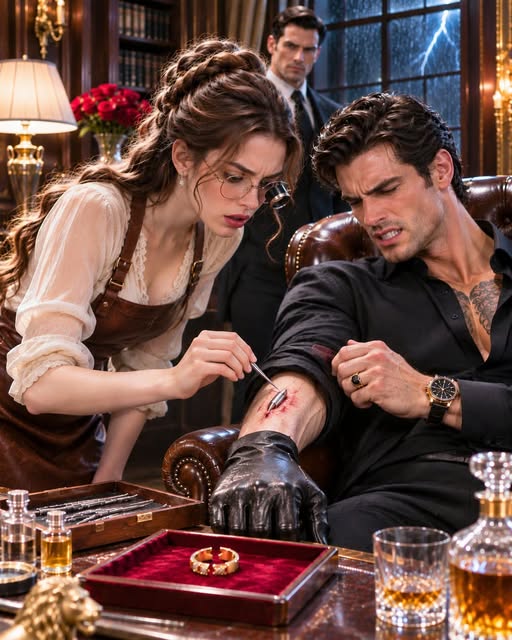
    I removed his glove carefully.

    The scar was swollen.

    Not badly.

    But enough.

    “Can you feel this?”

    I touched his index finger.

    “Yes.”

    “This?”

    Thumb.

    “Yes.”

    Middle finger.

    “No.”

    “Same as before?”

    “Yes.”

    I exhaled.

    He watched me.

    “You were scared.”

    “Obviously.”

    “For my hand.”

    “I can be scared about more than one thing.”

    Something softened in his face.

    Then the security chief entered.

    “We lost Kellen.”

    Orson became the boss again instantly.

    “Cars?”

    “One missing.”

    “Phones?”

    “Burners.”

    “Find him.”

    “Yes, sir.”

    The man left.

    I stood.

    “I need to go to the shop.”

    “No.”

    “Orson—”

    “No.”

    “Kellen knows everything.”

    “Exactly.”

    “Which means if there is anything else Grandpa hid, he'll destroy it.”

    “Rosie.”

    “I am not sitting in this mansion while you hunt him.”

    His eyes hardened.

    “You almost got shot.”

    “So did you.”

    “This is different.”

    “Why?”

    “Because I chose this life.”

    The words stopped me.

    He stood.

    “You didn't.”

    “I chose to help.”

    “You chose to repair a ring.”

    “I chose everything after that.”

    His jaw tightened.

    “You don't understand what happens if he takes you.”

    “Then don't let him.”

    “I may not be able to.”

    Silence.

    That was the first time Orson Dramore admitted there was something he couldn't control.

    I stepped closer.

    “You can't lock me in a room because you're afraid.”

    “I can lock anyone in a room.”

    “That is not helping your argument.”

    His mouth twitched despite himself.

    Then he looked away.

    “I don't want to lose you.”

    The words were so quiet I almost missed them.

    My anger disappeared.

    I had imagined our first honest conversation differently.

    Less gunfire.

    More wine.

    Maybe a chair that hadn't recently been hit by bullets.

    But there we were.

    I reached for his left hand.

    He looked down at our fingers.

    “I don't want to lose you either.”

    He looked at me.

    Something changed.

    No joke.

    No threat.

    No Mafia boss.

    Just a man who had spent nine years refusing to show anyone a damaged hand because the world might use it against him.

    He touched my face.

    I leaned into his palm.

    Then he kissed me.

    Softly.

    Nothing dramatic.

    No desperate movie kiss.

    Just a quiet question.

    I answered.

    For one impossible moment, everything else disappeared.

    Then I pulled back.

    “Kellen is going to ruin this, isn't he?”

    Orson rested his forehead against mine.

    “He ruins most things.”

    I smiled.

    Then my phone rang.

    Unknown number.

    I answered.

    Silence.

    Then Kellen's voice.

    “Touching.”

    Orson's face hardened.

    “You have cameras here?”

    Kellen laughed.

    “No.”

    My stomach dropped.

    “Then how—”

    “You're predictable, Rosie.”

    I went cold.

    “What do you want?”

    “The ring.”

    “No.”

    “Your grandfather left one more thing.”

    “What?”

    “You know where it is.”

    “I don't.”

    “He always told the truth when someone he loved was in danger.”

    I looked at Orson.

    Kellen continued.

    “Ask yourself why he taught you the combination to the basement cabinet.”

    My breath stopped.

    The basement cabinet.

    I hadn't thought about it in years.

    Grandpa kept old tools beneath the shop.

    Orson shook his head.

    Don't go.

    Kellen heard my silence.

    “Midnight.”

    The line died.

    I looked at the clock.

    11:14.

    “No,” Orson said.

    “He knows about the cabinet.”

    “I don't care.”

    “I do.”

    “Rosie.”

    “What if Grandpa left proof?”

    “Then we retrieve it safely.”

    “Kellen is waiting.”

    “Exactly.”

    A plan formed.

    A bad one.

    Possibly a stupid one.

    But mine.

    “I'll go.”

    “No.”

    “He expects me.”

    “No.”

    “You follow.”

    His eyes narrowed.

    “I don't like this plan.”

    “You don't have to.”

    “I can forbid it.”

    “You can try.”

    He stared at me.

    Then, unexpectedly, he smiled.

    “Your grandfather must have been exhausted raising you.”

    “He loved every minute.”

    At 11:52, I entered Fenimore Jewelry alone.

    Orson's men surrounded the block.

    Orson waited across the street.

    The basement smelled like dust.

    I turned on the light.

    The old steel cabinet stood against the wall.

    Combination.

    My birthday again.

    Inside were tools.

    Files.

    A velvet box.

    And a tiny cassette recorder.

    I pressed play.

    Grandpa's voice filled the basement.

    “Rosie, if you're hearing this, then Kellen came back.”

    My knees nearly gave out.

    “I was afraid,” he continued. “I helped make the punch because I needed money. I told myself I wasn't responsible for what men did with metal after it left my shop.”

    His voice broke.

    “I was wrong.”

    Tears blurred my vision.

    “Kellen used the ammunition in the attack on Orson Dramore. When I discovered it, I copied his freight records. He threatened you. That's why I stayed quiet.”

    I covered my mouth.

    “He said if I spoke, he'd kill my granddaughter.”

    Footsteps sounded upstairs.

    No.

    Too early.

    I grabbed the recorder.

    Grandpa's voice continued.

    “The man who pulled the trigger was never the important one. Kellen paid him. Kellen ordered it. And Kellen—”

    The basement door opened.

    I turned.

    Kellen stood at the top of the stairs.

    Alone.

    He looked tired.

    Almost sad.

    “You should have stayed at the mansion.”

    I backed away.

    “You killed him.”

    “He killed himself by refusing to forget.”

    “You're a coward.”

    Kellen descended.

    “I protected an empire.”

    “You protected yourself.”

    His expression hardened.

    “Give me the recorder.”

    “No.”

    “Rosie.”

    “No.”

    He reached for me.

    I threw a tray of metal parts.

    He flinched.

    I ran.

    He caught my coat.

    I twisted free.

    The recorder fell.

    Kellen grabbed it.

    I reached for the basement door.

    A hand covered my mouth.

    Then everything went dark.

    When Orson entered the basement four minutes later, all he found was my broken necklace.

    And a pool of blood beside the stairs.

    Not enough to know whose.

    Enough to make him believe the worst.

    —
  • Chapter 4

    Chapter 4

    The Secret Behind the Gold Ring

    My grandfather had died in his sleep.

    That was what the hospital told me.

    That was what the death certificate said.

    Heart attack.

    Natural causes.

    He was seventy-eight.

    He had high blood pressure.

    I had never questioned it.

    Until now.

    “Anonymous messages aren't evidence,” Orson said.

    We were back at the mansion.

    I paced across his office.

    “You believed Kellen when he told you Grandpa tried to kill you.”

    “I was wrong.”

    “You think?”

    His eyes hardened.

    I stopped.

    “Sorry.”

    “No, you're not.”

    “No.”

    For once, he didn't argue.

    I held the phone.

    “Whoever is sending these knows too much.”

    “Yes.”

    “Could it be Kellen?”

    “No.”

    “How can you be sure?”

    “Because every message damages him.”

    “Unless he wants us chasing ghosts.”

    “That is possible.”

    I hated how many things were possible.

    Orson poured whiskey into a glass.

    He offered me one.

    I shook my head.

    “I need my brain.”

    “So do I.”

    “You're drinking.”

    “I've had years of practice.”

    I almost smiled.

    Then the reality returned.

    “Can we find out whether Grandpa's death was natural?”

    “Yes.”

    “How?”

    “Medical records.”

    “That could take weeks.”

    “Not for me.”

    I looked at him.

    “You say things like that and then wonder why people think you're terrifying.”

    “I don't wonder.”

    Within an hour, Orson had the records.

    I didn't ask how.

    I didn't want to know.

    The hospital report showed cardiac arrest.

    But one detail stood out.

    A toxicology panel had been requested.

    Then canceled.

    The cancellation authorization carried the initials K.P.

    I stared at it.

    “Why would Kellen have anything to do with my grandfather's hospital records?”

    Orson's face hardened.

    “He shouldn't.”

    A second document arrived.

    Security log.

    Someone visited my grandfather's room the evening before he died.

    Kellen Price.

    My knees weakened.

    Orson caught my elbow.

    “I've got you.”

    Three words.

    Simple.

    They shouldn't have affected me.

    They did.

    His grip was careful.

    Left hand only.

    I looked at his face.

    “Did you send him?”

    “No.”

    The answer came instantly.

    I believed him.

    “Then why was he there?”

    “To keep a secret.”

    My eyes filled.

    I hated it.

    I hadn't cried when my landlord threatened eviction.

    I hadn't cried when the shop's polishing motor burned out.

    I hadn't even cried when I discovered someone had broken into the workshop.

    But the idea of my grandfather lying in a hospital bed while Kellen stood beside him—

    That broke something.

    I turned away.

    Orson didn't tell me not to cry.

    Didn't touch me again.

    He simply stood close enough that I knew I wasn't alone.

    Eventually, I wiped my face.

    “I want proof.”

    “We'll get it.”

    “I don't want revenge.”

    He looked at me.

    “Good.”

    “I want the truth.”

    “So do I.”

    “Even if it makes you look bad?”

    His eyes narrowed.

    “What does that mean?”

    “You're a Mafia boss, Orson.”

    “I had noticed.”

    “People don't hide evidence for nine years because everyone involved is innocent.”

    He looked toward the window.

    “I never claimed innocence.”

    “If your organization helped Kellen—”

    “Then they answer for it.”

    “To you?”

    “To whoever deserves the answer.”

    That surprised me.

    “Police?”

    “If necessary.”

    “You would cooperate with police?”

    “I didn't say I'd send them a Christmas card.”

    Despite everything, I laughed.

    His mouth shifted.

    For a few seconds, the pressure in my chest eased.

    Then someone knocked.

    A woman entered carrying a laptop.

    Her name was Mara Hale, Orson's financial controller.

    She was in her forties, sharp-eyed, elegantly dressed, and apparently one of the few people who spoke to Orson without fear.

    “I found the old freight books.”

    Orson gestured toward me.

    “Mara, Rosie. Rosie, Mara.”

    Mara looked at me.

    “The jeweler.”

    “The terrifying one,” I said.

    Mara blinked.

    Then smiled.

    “I like her.”

    Orson looked unimpressed.

    Mara opened the laptop.

    Kellen had controlled freight security nine years ago.

    Three routes had generated millions in unreported cash.

    Money Orson never saw.

    After the shooting, those routes shut down.

    But the money didn't disappear.

    It moved.

    Shell companies.

    Private accounts.

    One account had received regular deposits for nine years.

    Price Holdings.

    The same company that paid my rent.

    “He's still using the old system,” I said.

    Mara nodded.

    “He got careless.”

    “Or he thinks nobody can touch him,” Orson said.

    Mara's expression changed.

    “There is something else.”

    She turned the screen.

    A document listed monthly payments to a private clinic.

    One doctor's name appeared repeatedly.

    Dr. Everett Sloan.

    Orson went still.

    “My surgeon.”

    “The first one?” I asked.

    “Yes.”

    “The one who treated your hand?”

    “Yes.”

    Mara nodded.

    “Kellen has been paying him since the shooting.”

    My stomach dropped.

    Orson didn't move.

    I had learned his quietest moments were his most dangerous.

    “What did Sloan tell you?” I asked.

    “That removing the remaining fragments would risk permanent nerve loss.”

    “Maybe that was true.”

    “Maybe.”

    “But Kellen paying him doesn't look good.”

    “No.”

    Orson called someone.

    “Bring Sloan to me.”

    I grabbed his arm.

    “No.”

    His eyes snapped to mine.

    “Excuse me?”

    “You can't drag a doctor into a basement.”

    “I don't have a basement.”

    “That is not the reassuring part of that sentence.”

    Mara covered a smile.

    Orson looked irritated.

    “We need answers.”

    “Then ask questions.”

    “He's been paid by Kellen for nine years.”

    “And if you frighten him badly enough, he'll say whatever makes you stop.”

    Orson stared at me.

    I stepped closer.

    “You want precision?”

    His expression shifted.

    I knew I'd won.

    “Fine.”

    Dr. Sloan arrived voluntarily two hours later.

    Mostly voluntarily.

    He looked terrified anyway.

    Orson sat behind his desk.

    I sat beside him.

    Sloan looked at me twice.

    “You shouldn't be here.”

    “Neither should nine-year-old bullet fragments.”

    His face lost color.

    Orson spoke softly.

    “Tell me why Kellen Price pays you.”

    Sloan's hands shook.

    “He didn't pay me to hurt you.”

    “What did he pay you for?”

    Silence.

    Orson leaned forward.

    “Doctor.”

    Sloan broke.

    “To keep you from seeking another surgical opinion.”

    My stomach tightened.

    “Why?”

    “He said another operation would destabilize the organization.”

    Orson's face became stone.

    “Medical advice from Kellen.”

    “He threatened my family.”

    The doctor looked genuinely sick.

    “The first surgery was too risky. That part was true. The damage was severe. But years later, new techniques became available.”

    “You never told me.”

    “No.”

    “Why?”

    “Kellen paid me not to.”

    I looked at Orson.

    Nine years.

    Nine years wearing the glove.

    Nine years believing nothing could be done.

    All because the man closest to him needed the evidence to stay buried in his body.

    “What about the fragment?” I asked.

    Sloan swallowed.

    “We never identified the alloy.”

    “Would that help?”

    “Yes. If we know composition and exact location, a specialist could assess removal.”

    I thought of the casing.

    The broken crown.

    Metal remembers.

    Grandpa's words.

    “I can identify it.”

    Orson looked at me.

    “If I can compare the casing with imaging of the fragment, maybe I can narrow down the alloy.”

    Sloan nodded.

    “It could help.”

    Orson's eyes held mine.

    Something passed between us.

    Hope.

    Dangerous, fragile hope.

    After Sloan left, Orson stood near the fireplace.

    I joined him.

    “You could get movement back.”

    “Maybe.”

    “You don't sound excited.”

    “I stopped expecting that a long time ago.”

    “You don't have to expect it.”

    He looked at me.

    “But you can let it be possible.”

    Silence.

    Then his left hand lifted.

    His fingers brushed a loose curl from my cheek.

    The gesture was so gentle that I stopped breathing.

    He seemed surprised by himself.

    So was I.

    His hand lingered for half a second.

    Then dropped.

    “Rosie.”

    I knew what he was about to say.

    This is dangerous.

    You should leave.

    We shouldn't—

    So I saved him the trouble.

    “Don't.”

    His brow furrowed.

    “Don't what?”

    “Tell me this is a mistake before anything has even happened.”

    His gaze dropped briefly to my mouth.

    Then back to my eyes.

    “Something has happened.”

    My heartbeat stumbled.

    “What?”

    “I care whether you walk out of this alive.”

    “That sounds romantic coming from a Mafia boss.”

    “It wasn't meant to.”

    “Too late.”

    For a second, neither of us moved.

    Then his phone rang.

    Reality returned.

    Orson answered.

    His expression changed immediately.

    “What?”

    He listened.

    “Lock the gates.”

    He hung up.

    “What happened?”

    “Mara is missing.”

    The warmth vanished.

    “Missing?”

    “She left twenty minutes ago.”

    “Maybe she went home.”

    “Her car is still here.”

    A security alarm sounded somewhere downstairs.

    Then the lights went out.

    Darkness swallowed the room.

    Emergency lights flickered red.

    Orson moved instantly.

    “Stay close.”

    A gunshot cracked from the hallway.

    I flinched.

    Orson pulled me behind the desk.

    Another shot.

    Shouting.

    Footsteps.

    Then the office door opened.

    Kellen stepped inside.

    A gun hung loosely in his hand.

    His expression was calm.

    Almost disappointed.

    “Orson,” he said.

    Orson stood between us.

    “Kellen.”

    Kellen's eyes moved to me.

    “You should have repaired the ring and gone home, Miss Fenimore.”

    My blood went cold.

    Orson's voice dropped.

    “Put the gun down.”

    Kellen smiled.

    “You still don't understand.”

    “Try me.”

    Kellen's gaze returned to him.

    “I wasn't trying to kill you nine years ago.”

    The room went silent.

    He lifted the weapon slightly.

    “I was trying to save the organization from you.”

    And behind him, two of Orson's own security men stepped into the doorway.

    Their guns were pointed at us.

    —

  • Chapter 3

    Chapter 3

    The Man Who Never Left His Side

    I didn't sleep that night.

    Orson insisted that returning to my apartment was unsafe.

    I insisted that staying at his mansion sounded like the opening scene of every bad decision a woman ever made.

    He won.

    Mostly because two unidentified men had been caught on camera entering my building fifteen minutes before we arrived.

    So at one in the morning, I found myself standing barefoot in a guest bedroom larger than my entire apartment, wearing a borrowed robe while rain streaked the windows.

    I should have been terrified.

    I was.

    But beneath the fear was something worse.

    Curiosity.

    The message wouldn't leave my mind.

    Ask her what her grandfather hid inside the ring.

    The ring sat downstairs in Orson's office.

    We had examined it for almost an hour.

    Nothing.

    No opening.

    No hollow section.

    No obvious compartment.

    The band was solid gold.

    Or at least it appeared to be.

    At two seventeen, I gave up pretending I could sleep.

    I went downstairs.

    The mansion was quiet.

    Two security men nodded as I passed.

    Orson's office door was open.

    He was inside.

    Alone.

    He had removed his black glove.

    I stopped.

    He didn't notice me immediately.

    His right hand rested beneath the lamp.

    The damage was worse than I'd realized.

    Scar tissue crossed the back of his hand and wrist. His ring finger curled inward. The middle finger barely moved.

    The skin looked tight over old injuries.

    For the first time, Orson Dramore didn't look dangerous.

    He looked tired.

    Human.

    He noticed me in the doorway.

    His instinct was immediate.

    He reached for the glove.

    “Don't.”

    His eyes narrowed.

    I almost regretted saying it.

    Then I stepped closer.

    “You don't have to hide it from me.”

    “I don't hide it.”

    “You literally wear a glove every waking minute.”

    A pause.

    “Fair point.”

    I sat opposite him.

    The ring lay between us.

    “Does anyone else see your hand?”

    “Doctors.”

    “That's not what I meant.”

    “No.”

    “Why?”

    He looked at the scars.

    “People stare.”

    “So?”

    “People who fear you look for weakness.”

    The answer was so simple that it hurt.

    I touched the magnifying loupe hanging around my neck.

    “My grandfather lost two fingers in a machine accident.”

    Orson looked up.

    “He still worked?”

    “Until he died.”

    “How?”

    “Badly, at first.”

    That almost-smile again.

    “He designed his own tool grips. Changed the angle of his bench. Learned to hold things differently.”

    I watched Orson's thumb move.

    “He used to say damage changes the job, not the value of the hand.”

    Orson was quiet for a long moment.

    “You loved him.”

    “Very much.”

    “And now he may have helped someone shoot me.”

    The words hit hard.

    “He didn't know.”

    “You don't know that.”

    I stiffened.

    “No.”

    Orson leaned back.

    “I'm not accusing him.”

    “It sounded like it.”

    “I'm reminding you that we don't know the whole truth.”

    I hated him for being right.

    The grandfather I remembered had been patient and gentle.

    But people were more complicated than memory.

    Maybe Arthur Fenimore had made mistakes he'd never confessed.

    Maybe guilt had been part of the reason he raised me so carefully.

    I picked up the ring.

    “Let's find out.”

    For the next hour, I studied every millimeter.

    Inside surface.

    Outer engraving.

    Old solder seam.

    New break.

    Then I noticed something.

    The ring weighed too much.

    Not much.

    Maybe half a gram.

    But enough.

    I fetched a small digital scale from my toolbox.

    Orson watched.

    “What?”

    “The density is wrong.”

    “Meaning?”

    “Either the gold isn't the purity it appears to be, or there's another metal inside.”

    I tapped the band.

    A faint sound.

    Not solid.

    My pulse quickened.

    “I need heat.”

    “No.”

    I looked up.

    “No?”

    “It was my mother's.”

    “I know.”

    “And you want to burn it.”

    “I want to soften one old solder seam.”

    “No.”

    “You hired a jeweler.”

    “I hired you to repair it.”

    “This is part of the repair.”

    “It sounds like destruction.”

    I stared at him.

    “Do you interrogate your doctors like this?”

    “Yes.”

    “That explains why six of them gave up.”

    For three seconds, we stared at each other.

    Then Orson laughed.

    Actually laughed.

    Low.

    Brief.

    Almost rusty, as if he hadn't done it often.

    It changed his entire face.

    I forgot what I was saying.

    That annoyed me.

    “Stop distracting me.”

    “I didn't do anything.”

    “You laughed.”

    “Terrible crime.”

    “Coming from you, probably.”

    His smile disappeared slowly.

    But the warmth stayed in his eyes.

    “Do it.”

    I heated the seam carefully.

    The old solder softened.

    A section of the inner band shifted.

    My breath caught.

    A thin gold strip lifted.

    Inside was a hollow channel no wider than a matchstick.

    And inside that—

    A piece of rolled paper.

    Orson stopped breathing.

    I removed it with tweezers.

    The paper was brittle.

    Nine years old, maybe older.

    I unfolded it.

    Numbers.

    Dates.

    Names.

    Payments.

    One set of initials appeared repeatedly.

    K.P.

    Beside them were freight route numbers.

    Halstead.

    South Dock.

    West Rail.

    And a word written in my grandfather's hand.

    POISON.

    Orson's face changed.

    “You recognize this.”

    “Yes.”

    “What?”

    “The freight numbers.”

    His voice went cold.

    “They were the routes I shut down.”

    I looked at the page.

    “Kellen was moving drugs.”

    “Looks that way.”

    “And Grandpa found out.”

    Orson stared at the ring.

    “How did this get inside my mother's ring?”

    That was the question.

    The ring had been in Orson's possession.

    My grandfather had repaired it long before the shooting.

    Unless—

    “When did your mother die?”

    “Twenty-two years ago.”

    “When did my grandfather repair this?”

    “We need to find the repair record.”

    We returned to my shop at dawn with security.

    I found it within twenty minutes.

    Dramore, Evelyn.

    Twenty-three years ago.

    Simple band repair.

    But a second entry was attached.

    Nine years ago.

    Private adjustment.

    Client initials: K.P.

    My hands went cold.

    “Kellen brought your mother's ring to my grandfather nine years ago.”

    Orson stared at the page.

    “That ring was in my safe.”

    “Who had access?”

    “Three people.”

    “Kellen?”

    “Yes.”

    The truth assembled itself piece by piece.

    Grandpa had discovered what Kellen was doing.

    He needed a place to hide evidence.

    Something Kellen would never destroy because it belonged to Orson's dead mother.

    So he placed the ledger fragment inside the ring.

    Then returned it.

    Kellen probably never knew.

    Until the ring broke.

    And then he panicked.

    That explained why I had been brought to the mansion.

    Kellen knew Fenimore Jewelry had once handled the ring.

    He wanted me away from the shop while his men searched for my grandfather's records.

    He probably expected me to repair the band and leave.

    Instead, I noticed Orson's wrist.

    And the whole plan began to collapse.

    Orson looked toward the front window.

    “He chose your shop.”

    “Yes.”

    “He had you brought to me.”

    “Yes.”

    “To control what you might find.”

    “And because he assumed I was stupid.”

    Orson looked at me.

    “No.”

    I frowned.

    “He assumed you were desperate.”

    That hurt more.

    Because it was true.

    I had accepted a suspiciously high payment because I needed money.

    Kellen had seen my overdue rent.

    My failing business.

    My empty bank account.

    He'd calculated my vulnerability like a number.

    Orson noticed my expression.

    “What?”

    “Nothing.”

    “Rosie.”

    “I hate that he was right.”

    “About what?”

    “That I'd come for the money.”

    “You repair jewelry for money.”

    “You know what I mean.”

    He stepped closer.

    “Kellen paid attention to your circumstances.”

    “Yes.”

    “He did not understand you.”

    I looked at him.

    “How do you know?”

    “Because if he had, he never would have brought you near me.”

    The words settled between us.

    Something shifted in my chest.

    I looked away.

    Orson's phone rang.

    He answered.

    His face became colder with every second.

    “Where?”

    Pause.

    “How many?”

    Another pause.

    “Don't touch anything. I'm coming.”

    He hung up.

    “What happened?”

    “One of my warehouses was hit.”

    “Kellen?”

    “Maybe.”

    “What kind of hit?”

    “Records stolen. Two guards injured.”

    My stomach tightened.

    “The freight records?”

    “That would be my guess.”

    He reached for his jacket.

    I caught his arm.

    “Wait.”

    His eyes dropped to my hand.

    I released him immediately.

    “Sorry.”

    “You don't have to apologize for touching me.”

    The statement was too personal.

    Too quiet.

    I pretended not to notice.

    “If Kellen is destroying records,” I said, “then the paper from the ring matters even more.”

    “I know.”

    “So don't take it with you.”

    “Where should I leave it?”

    “With me.”

    “No.”

    I stared at him.

    “You trust me enough to keep me in your house.”

    “I trust you enough to know you're becoming a target.”

    “I already am.”

    “Exactly.”

    “Then let me help.”

    His jaw tightened.

    “This isn't your world.”

    “No. But the evidence is.”

    That stopped him.

    I pointed toward the workbench.

    “You know guns, warehouses, money, loyalty. I know metal, marks, repairs, hidden compartments, and my grandfather.”

    Orson watched me for several seconds.

    Then he took out his phone.

    “What are you doing?”

    “Changing your security.”

    “I didn't agree to security.”

    “You also didn't agree to armed men searching your apartment.”

    “Fair.”

    He made the call anyway.

    Two hours later, we were at the Halstead warehouse.

    The place smelled of wet concrete and diesel.

    One guard had blood on his shirt but insisted it wasn't serious.

    A steel filing cabinet had been forced open.

    Papers covered the floor.

    Orson walked through the damage silently.

    People moved differently around him here.

    No one joked.

    No one questioned him.

    A man twice my size stepped aside when Orson looked at him.

    That was the feared Mafia boss everyone talked about.

    But now I had seen him laugh.

    That was dangerous knowledge of a different kind.

    I crouched beside the broken cabinet.

    Something glinted beneath it.

    A small brass disc.

    I picked it up.

    Broken crown.

    My pulse jumped.

    “Orson.”

    He came over.

    The symbol matched.

    Exactly.

    Someone had left it deliberately.

    A message.

    Or a warning.

    On the back were scratched four numbers.

    11-19.

    Orson's expression changed.

    “What?”

    He didn't answer.

    “Orson.”

    “Nine years ago, November nineteenth was the date I was supposed to meet Kellen after the shooting.”

    “About what?”

    “The name of the man he claimed had ordered the hit.”

    My skin chilled.

    “Who?”

    “He never showed.”

    “Why?”

    “Kellen told me the man was killed.”

    “Convenient again.”

    “Yes.”

    I turned the brass disc over.

    “What was his name?”

    Orson looked toward the dark warehouse.

    “Arthur Fenimore.”

    For a moment, the world stopped.

    “My grandfather?”

    “Kellen told me your grandfather arranged the shooting.”

    I couldn't breathe.

    “You believed him?”

    “I had no reason not to.”

    My eyes burned.

    “All these years?”

    “Yes.”

    “You thought my grandfather tried to kill you.”

    “Yes.”

    “And you still let me into your house?”

    His voice softened.

    “You are not your grandfather.”

    I stepped back.

    The floor felt unstable.

    Then another thought hit me.

    “If Kellen blamed Grandpa nine years ago, why didn't you kill him?”

    Orson's face became unreadable.

    “Because Arthur Fenimore disappeared before I could find him.”

    I stared.

    “He didn't disappear.”

    Orson frowned.

    “He moved to Milwaukee for eighteen months after my grandmother got sick.”

    Something dark passed through Orson's eyes.

    “Kellen told me he'd fled the country.”

    My anger turned cold.

    “He lied.”

    “Yes.”

    “About everything.”

    “Looks that way.”

    My phone buzzed.

    Unknown number.

    One photograph.

    My grandfather.

    Taken through a window.

    He looked older than in the workshop photo.

    The timestamp was three weeks before his death.

    Below it was a message.

    YOUR GRANDFATHER DIDN'T DIE OF A HEART ATTACK.

    I stared at the screen.

    Orson read over my shoulder.

    Then another message arrived.

    KELLEN MADE SURE HE COULDN'T TALK.

    My hands began shaking.

    For the first time since this started, I didn't feel curious.

    I felt rage.

    And beside me, Orson Dramore became terrifyingly still.

    —

  • Chapter 2

    Chapter 2

    The Bullet in My Grandfather’s Drawer

    The handle moved again.

    Slowly.

    Once.

    Twice.

    Someone was trying not to make noise.

    Orson stepped in front of me.

    It should have looked ridiculous.

    He was a feared crime boss in a tailored black shirt standing in my grandfather's cramped workshop between a polishing wheel and a stack of old repair boxes.

    Instead, he somehow made the room feel like his.

    His left hand moved beneath his jacket.

    I whispered, “You said everyone in your house was armed.”

    His eyes stayed on the door.

    “I wasn't talking about the house.”

    Under different circumstances, I might have laughed.

    Then the door opened.

    One of Orson's men appeared.

    “Clear.”

    Orson didn't relax.

    “What broke?”

    “Back window. Whoever was inside left before we arrived.”

    My stomach twisted.

    “They were here.”

    “Yes,” Orson said.

    I turned toward the open safe.

    My grandfather's letter was still in my hand.

    “They were searching for this.”

    “Probably.”

    “Then why didn't they open the safe?”

    “They tried.”

    I looked closer.

    Fresh scratches marked the lock plate.

    Orson reached past me and touched them.

    “They ran out of time.”

    I looked at him.

    “Because we came back.”

    “Because someone warned them we were coming back.”

    Kellen.

    Neither of us said the name.

    We didn't need to.

    Orson took the letter from my hand.

    “May I?”

    “You already read it.”

    “That isn't what I asked.”

    I looked at him.

    It was such an unexpectedly polite question that for a moment I forgot who he was.

    Then I nodded.

    He read the letter again.

    Slowly.

    His face gave away nothing.

    But I noticed his injured right hand curl slightly inside the glove.

    Not enough to form a fist.

    Enough to show pain.

    “Your grandfather made an engraving punch,” he said.

    “Apparently.”

    “For Kellen.”

    “We don't know that.”

    His gaze rose.

    “The letter names him.”

    “It says not to trust him. It doesn't say Kellen commissioned the punch.”

    Orson studied me.

    “You're defending him?”

    “No. I'm being precise.”

    “Why?”

    “Because precision matters.”

    I lifted the casing.

    “In my work, being almost right ruins expensive things.”

    Something shifted in his expression.

    Approval, maybe.

    “Good,” he said. “Then let's be precise.”

    We spent the next two hours going through my grandfather's records.

    I had never realized how much he'd kept.

    Every repair.

    Every custom commission.

    Every strange favor.

    Everything was written by hand in ledgers that smelled like dust and old leather.

    Orson sat opposite me at the workbench.

    His men remained outside.

    At some point, he took off his suit jacket and rolled his left sleeve.

    The black glove stayed on.

    I tried not to stare at it.

    I failed.

    “You can ask.”

    I looked up.

    “Ask what?”

    “Whatever you've been trying not to ask for twenty minutes.”

    I hesitated.

    “Does it hurt?”

    His eyes dropped to the glove.

    “Sometimes.”

    “How much movement do you have?”

    “Almost none.”

    “Can you feel your fingers?”

    “Two of them.”

    “Which two?”

    “Thumb. Index.”

    “Temperature?”

    “Sometimes.”

    I leaned closer without thinking.

    “Has anyone done new imaging?”

    “Several years ago.”

    “And?”

    “Too much scar tissue. Nerve damage. Bone fragments. Metal fragments.”

    “You said six surgeons refused.”

    “They didn't refuse.”

    His voice became flatter.

    “They told me surgery was more likely to make it worse.”

    I looked at the glove.

    “Because they didn't know exactly what was still inside.”

    “Among other reasons.”

    A thought occurred to me.

    “If the fragment has an unusual alloy, identifying it could matter.”

    “Are you a surgeon now?”

    “No.”

    “Good.”

    “But I know metal.”

    That almost-smile appeared again.

    It made him look younger.

    Less like the man newspapers described.

    More like someone who hadn't always been feared.

    I looked away first.

    That bothered me.

    I returned to the ledger.

    Twenty minutes later, I found the entry.

    November 14.

    Nine years ago.

    ARTHUR FENIMORE — PRIVATE TOOL FABRICATION.

    No client name.

    Only a payment number.

    $8,000.

    My grandfather would never have charged eight thousand dollars for a simple punch.

    I showed Orson.

    He leaned over the ledger.

    His shoulder nearly touched mine.

    “Cash?”

    “Looks like it.”

    “That's a lot of money for him?”

    “Back then? Yes.”

    The next page had been cut out.

    Cleanly.

    With a blade.

    Orson's face hardened.

    “Whoever searched the shop may have taken it.”

    “No.”

    I ran my thumb along the inner binding.

    “The cut is old.”

    “How can you tell?”

    “Paper discoloration.”

    I looked at him.

    “Grandpa removed it himself.”

    We searched the surrounding pages.

    Nothing.

    Then I noticed a tiny notation hidden beneath the spine.

    AP-17.

    I knew what it meant.

    “Apothecary cabinet.”

    “What?”

    “My grandfather labeled storage in the most annoying way possible.”

    I crossed the workshop to an old wooden cabinet with dozens of tiny drawers.

    AP-17.

    Inside were polishing stones.

    Under them was a folded repair envelope.

    I opened it.

    A photograph slipped out.

    Orson caught it before it hit the floor.

    The picture was nine years old.

    My grandfather stood beside a man wearing a dark coat.

    The man's face was partially turned away.

    But there was no mistaking him.

    Kellen Price.

    Younger.

    Less gray at the temples.

    Same eyes.

    On the back, Grandpa had written:

    K.P. collected custom punch. Said it was for brass collector's ammunition. Asked me not to record his name.

    Three days later, another note:

    Saw report about Dramore shooting.

    Mark in photograph looked familiar.

    Need to confirm.

    And then:

    Confirmed.

    God forgive me.

    My throat tightened.

    “My grandfather thought he helped make the bullet.”

    Orson stared at the photograph for a long time.

    “He made the tool,” he said.

    “That's enough to destroy a man with guilt.”

    “Did he ever tell you?”

    “No.”

    “Why show you the casing?”

    “I don't know.”

    Then I remembered.

    I had been sixteen.

    Grandpa had placed it beneath the loupe.

    “Never trust a mark just because someone tells you what it means,” he'd said.

    “Metal remembers the hands that touched it.”

    At the time, I thought he was teaching me about forgery.

    Maybe he had been trying to prepare me for this.

    Orson turned the casing beneath the light.

    “How did your grandfather get it?”

    I searched the envelope again.

    Another slip of paper.

    Found outside Halstead freight yard, three days after shooting.

    Not police evidence.

    Unused casing from same custom batch.

    Someone discarded box.

    I read the words aloud.

    Orson's jaw tightened.

    “Halstead.”

    “You know it?”

    “I owned three warehouses there.”

    “Owned?”

    “They burned two years after the shooting.”

    I looked at him.

    “Accident?”

    “No.”

    He said it without hesitation.

    The story was growing larger.

    I hated that.

    I wanted one villain.

    One explanation.

    One neat chain of evidence.

    Instead, every answer seemed to expose another hidden layer.

    “What happened the night you were shot?”

    Orson was silent.

    Then he stood.

    For a moment, I thought he wouldn't answer.

    He walked toward the shop window.

    Rain slid down the glass.

    “My father had been dead six months,” he said. “I had taken control of the organization. Half the older men believed I was too young.”

    “You were thirty-seven.”

    “In my world, that was young.”

    “What were you changing?”

    His reflection stared back at me.

    “Things that made people money.”

    “That isn't an answer.”

    “No.”

    I crossed my arms.

    He glanced over his shoulder.

    “You don't give up easily.”

    “Occupational hazard.”

    His gaze returned to the rain.

    “There were businesses my father tolerated that I wouldn't.”

    “Drugs?”

    He didn't answer immediately.

    That was enough.

    “Yes,” he said eventually. “Among other things.”

    That surprised me.

    “A Mafia boss with principles.”

    “Don't romanticize me.”

    “I wasn't.”

    “Good.”

    His voice was colder now.

    “I've done things you would hate me for.”

    I believed him.

    Strangely, that honesty made me trust him more than if he'd tried to pretend otherwise.

    He continued.

    “Someone was moving narcotics through three freight routes using my name. I ordered it stopped. Money disappeared. Men lied. I scheduled a private meeting with four people I trusted.”

    “Kellen?”

    “One of them.”

    “What happened?”

    “The meeting location changed at the last minute.”

    “Who knew?”

    “Five people.”

    “Then?”

    “I arrived first.”

    His left hand flexed.

    “The shooter was across the yard. First round hit the car. Second missed. Third—”

    He looked at his glove.

    “I saw the muzzle flash.”

    “You raised your hand.”

    “I was reaching for the door.”

    The story people told had been wrong.

    He hadn't tried to catch a bullet.

    He'd simply been caught in a fraction of a second where instinct and bad luck collided.

    “The bullet shattered two bones,” he said. “Fragments tore through tendons. I returned fire.”

    “Did you hit the shooter?”

    “No.”

    “Kellen?”

    “Arrived ninety seconds later.”

    My skin prickled.

    “How convenient.”

    “Yes.”

    “Did you suspect him?”

    “Not then.”

    “Why not?”

    “Because he carried me to the car.”

    The room became very quiet.

    “He saved your life.”

    “I believed so.”

    “And now you think he arranged the shooting.”

    “I think both can be true.”

    I understood.

    If Orson died immediately, Kellen might become a suspect.

    If he survived badly injured, Kellen became the loyal man who saved him.

    A hero.

    A trusted adviser.

    The person closest to the throne.

    I looked back at the photograph.

    “That is terrifyingly smart.”

    Orson's expression hardened.

    “Kellen is terrifyingly smart.”

    My phone rang.

    I jumped.

    Tessa.

    I answered immediately.

    “Hey.”

    “Rosie, where are you?”

    “At the shop.”

    “With your mystery rich person?”

    I looked at Orson.

    “Yes.”

    “You sound weird.”

    “Long day.”

    “Your landlord called me.”

    My stomach dropped.

    “Why?”

    “He couldn't reach you. Said somebody paid your overdue rent.”

    I stared at the wall.

    “What?”

    “Six months.”

    I slowly looked at Orson.

    His face changed.

    He shook his head once.

    Not him.

    “Who paid it?”

    “I don't know. He said a wire came through this afternoon.”

    “From who?”

    “Some company. Price Holdings.”

    My blood went cold.

    Orson heard.

    He took the phone gently from my hand.

    “Ms. Fenimore is safe,” he said.

    Tessa went silent.

    Then, very faintly:

    “Who the hell is this?”

    “Someone who needs you to forget this conversation.”

    I snatched the phone back.

    “You cannot threaten my friends.”

    “I wasn't threatening her.”

    “You sounded exactly like a man threatening her.”

    Tessa whispered, “Rosie, are you being kidnapped?”

    “No.”

    Orson looked mildly offended.

    “Technically,” I added, “I'm not sure.”

    He almost smiled.

    I told Tessa I would call later and hung up.

    Then I faced him.

    “Why would Kellen pay my rent?”

    “To make it look like he bought your cooperation.”

    The meaning hit me.

    “If anyone finds out—”

    “They'll think you're working for him.”

    “Or that my grandfather was.”

    Orson's expression turned grim.

    Someone hadn't just searched my shop.

    They were creating a story.

    A version of events where Arthur Fenimore helped engineer the assassination.

    And his granddaughter was still being paid.

    I looked down at the casing.

    “Orson.”

    “Yes?”

    “If Kellen knows we found this…”

    “He'll move faster.”

    “Against me?”

    “Against both of us.”

    A car door slammed outside.

    One of Orson's men entered.

    “Boss.”

    Orson turned.

    “What?”

    “We have a problem.”

    The man held out a tablet.

    Security footage filled the screen.

    Timestamped nine years earlier.

    Halstead freight yard.

    The image was grainy.

    A dark figure crossed between two warehouses.

    Then another figure stepped into view.

    Kellen.

    He handed something to the first man.

    The video ended.

    I looked at Orson.

    “Where did that come from?”

    His man hesitated.

    “Anonymous email.”

    Orson's face became stone.

    Someone was feeding us evidence.

    Which meant Kellen wasn't the only person who knew what had happened.

    And whoever had waited nine years to speak had finally decided to stop hiding.

    The tablet chimed.

    A second message appeared.

    One sentence.

    IF ROSIE FENIMORE REMEMBERS THE CASING, ASK HER WHAT HER GRANDFATHER HID INSIDE THE RING.

    I turned toward the red velvet box.

    Toward Orson's mother's broken gold ring.

    And suddenly, repairing it no longer felt like the reason I had been brought into his life.

    It felt like the key to everything.

    —

  • Chapter 1

    Chapter 1

    The Mark Beneath the Glove

    “I know that mark.”

    The words escaped my mouth before I could stop them.

    For half a second, no one in the room moved.

    Not me.

    Not Orson Dramore.

    Not the tall man standing behind me.

    Rain hammered the windows of the mansion outside Chicago, and somewhere beyond the dark glass, thunder rolled low across the November sky.

    My magnifying loupe was still pressed near Orson's wrist.

    His black leather glove had been pulled back less than an inch.

    That was all I needed.

    Beneath a pale ridge of scar tissue, something metallic caught the warm light from the brass desk lamp.

    A silver fragment.

    Small.

    Jagged.

    Buried under his skin.

    But the metal wasn't what made my breath stop.

    It was the mark cut into it.

    Three narrow lines forming a broken crown.

    Tiny enough that most people would never have noticed it.

    My grandfather had taught me to notice things most people missed.

    That was how I survived as a jeweler.

    And right then, I wished I hadn't noticed anything.

    Orson's gray eyes locked on mine.

    “From where?”

    His voice was quiet.

    Too quiet.

    I swallowed.

    “A bullet casing.”

    Behind me, fabric shifted.

    Barely a sound.

    But Orson heard it.

    His gaze moved past my shoulder.

    I started to turn.

    His left hand closed around my wrist.

    Not violently.

    Firmly.

    “Rosie.”

    The way he said my name froze me harder than a shout could have.

    “Don't turn around.”

    Every muscle in my body tightened.

    I could feel someone standing behind me.

    Kellen Price.

    The man who had escorted me into the mansion.

    The man who had handed me the confidentiality agreement.

    The man who had watched every movement I made since I stepped through the front door.

    My heart started pounding.

    Orson didn't look at me anymore.

    He looked over my shoulder.

    At Kellen.

    “He arranged the shooting.”

    The room seemed to shrink.

    I stared at Orson.

    Nine years ago, somebody had fired a bullet into his right hand.

    The injury had become almost legendary in Chicago.

    People whispered that Orson Dramore had survived an assassination attempt that should have killed him.

    They said he had taken a bullet while reaching for his weapon.

    Others claimed he'd caught the barrel of a gun with his bare hand.

    Half the stories probably weren't true.

    What everyone agreed on was simpler.

    After that night, Orson started wearing a black glove.

    He never took it off in public.

    Never shook hands with his right hand.

    Never allowed photographs of the scars.

    And no surgeon had ever repaired the damage.

    Now the man Orson had trusted for years was standing behind me with one hand beneath his jacket.

    I could hear my own breathing.

    Kellen spoke first.

    “Sir, I think Miss Fenimore is confused.”

    Orson's grip on my wrist didn't change.

    “Take your hand out of your jacket.”

    Kellen paused.

    “Orson—”

    “Slowly.”

    That was when I understood something about power.

    Real power didn't need volume.

    Orson remained seated in the brown leather chair.

    His black shirt was open slightly at the collar. His gold watch caught the light. His injured hand rested beside mine on the desk.

    He looked almost relaxed.

    Yet the temperature of the entire room seemed to change around him.

    Kellen slowly removed his hand.

    Empty.

    At least, it looked empty.

    Orson's expression remained unreadable.

    “Leave.”

    Kellen stared at him.

    “We need to discuss this.”

    “We will.”

    “Privately.”

    Orson finally released my wrist.

    “She stays.”

    My stomach dropped.

    Kellen looked at me.

    The friendliness he'd shown when I arrived was gone.

    His eyes had become flat.

    Cold.

    Then he smiled.

    Not warmly.

    “As you wish.”

    He left.

    The door clicked shut behind him.

    I didn't breathe until I heard his footsteps fade.

    Then I pulled away from Orson.

    “What the hell was that?”

    His gaze returned to me.

    “Sit down.”

    “No.”

    One eyebrow moved slightly.

    I pointed toward the door.

    “You just told me the man standing ten feet behind me arranged an assassination attempt against you, and now you want me to sit?”

    “Yes.”

    “You people have a strange idea of hospitality.”

    For the first time since I'd met him, something almost like amusement appeared in his eyes.

    It vanished quickly.

    “Sit, Rosie.”

    I should have left.

    Every instinct told me to grab my toolbox and run back to my tiny jewelry shop where the biggest threat in my life was the landlord changing the locks.

    Instead, I sat.

    Mostly because my knees had started shaking.

    Orson pulled his glove back over the scar.

    Watching him do it felt strangely intimate.

    He was hiding something he'd hidden from the world for nine years.

    Something I'd seen by accident.

    “I didn't say Kellen pulled the trigger,” he said.

    “You said he arranged it.”

    “I said that's what I believe.”

    “You've believed it for nine years?”

    “No.”

    That surprised me.

    “When did you start believing it?”

    “About thirty seconds ago.”

    I stared at him.

    “Because of me?”

    “Because Kellen reached for his jacket when you recognized the mark.”

    I looked toward the closed door.

    “Maybe he was reaching for a phone.”

    “Men like Kellen don't keep phones under their left shoulder.”

    My skin went cold.

    I looked at Orson again.

    “You knew he was armed.”

    “Everyone in this house is armed.”

    “That isn't comforting.”

    “It wasn't intended to be.”

    I rubbed my hands together.

    They smelled faintly of polishing compound and metal.

    Normal things.

    Safe things.

    I wanted desperately to be back in a normal world.

    Orson leaned forward.

    “Tell me about the casing.”

    My grandfather's workshop came rushing back to me.

    The cramped back room.

    The ancient safe.

    The smell of coffee, solder, machine oil, and pipe tobacco he never actually smoked but kept around because he liked the smell.

    I remembered being sixteen, sitting beside him while he showed me strange metals beneath a magnifying lens.

    Gold.

    Platinum.

    Palladium.

    Cheap brass pretending to be something better.

    Then, one night, he'd shown me something that had nothing to do with jewelry.

    A spent bullet casing.

    Brass.

    Darkened with age.

    There had been a symbol near the base.

    A broken crown.

    “Grandpa kept one,” I said.

    Orson's face sharpened.

    “Where?”

    “I don't know.”

    “You just said—”

    “I said he had one. That was fourteen years ago. He died three years ago.”

    Something in Orson's expression changed at that.

    Only slightly.

    “I'm sorry.”

    I hadn't expected sympathy from him.

    That made it harder somehow.

    “He kept strange things,” I continued. “Old watches. Stones people never picked up. Broken clasps. Metal samples. He taught me to recognize tool marks.”

    “And the crown?”

    “He told me it wasn't decorative.”

    “What was it?”

    “I don't remember.”

    Orson's jaw tightened.

    “I need you to remember.”

    “Well, staring at me like you're deciding where to bury my body isn't helping.”

    Silence.

    Then he leaned back.

    “I don't bury people who repair my mother's ring.”

    My eyes dropped to the red velvet tray.

    The gold ring I'd been repairing rested beneath the light.

    Simple at first glance.

    But handmade.

    Old.

    The band had fractured beside a tiny row of engraved leaves.

    “You said it was yours.”

    “It is.”

    “But it belonged to your mother.”

    “Yes.”

    There was no emotion in his voice.

    But he had brought an armed security team into a room to protect a broken ring.

    That told me enough.

    I picked up my loupe.

    “Your mother must have worn it for years.”

    “She did.”

    “The gold has been repaired before.”

    His eyes shifted.

    “What?”

    I lifted the ring.

    “There are two solder lines. One is old. Very old.”

    “Can you tell who repaired it?”

    “Not normally.”

    I rotated the band.

    Then my heart stopped again.

    There, inside the ring, almost erased by decades of wear, was a tiny stamped letter.

    F.

    Not a factory mark.

    Not a purity mark.

    A repair signature.

    My grandfather's.

    I looked at Orson.

    He noticed immediately.

    “What?”

    “My grandfather worked on this ring.”

    He went perfectly still.

    “That isn't possible.”

    “Why?”

    “My mother died twenty-two years ago.”

    “My grandfather's shop has been open since 1968.”

    Orson stared at the ring.

    I could almost see the calculations happening behind his eyes.

    “Do you have his records?”

    “Some.”

    “Where?”

    “At my shop.”

    His gaze flicked toward the door.

    Then to me.

    “Who knew you were coming here today?”

    “No one.”

    “Family?”

    “I don't have much family.”

    “Employees?”

    “Can't afford any.”

    “Friends?”

    “My friend Tessa knows I had a private job, but not where.”

    “Did Kellen contact you?”

    “No. A man named Mr. Reeves called.”

    Orson's expression darkened.

    “I don't employ anyone named Reeves.”

    My stomach turned.

    The generous payment.

    The strange confidentiality contract.

    The choice of my shop.

    Suddenly none of it felt random.

    “You think Kellen brought me here.”

    “I think someone wanted you out of your shop for several hours.”

    I stood so fast the chair scraped across the floor.

    “My shop.”

    Orson was already reaching for his phone.

    I grabbed my toolbox.

    “Rosie.”

    “My grandfather's records are there.”

    “Exactly.”

    “So I'm going.”

    “No.”

    I stopped.

    He stood.

    That changed the room.

    Orson was taller than I'd realized when he was sitting.

    Broader too.

    He stepped around the desk.

    “If Kellen arranged today's appointment, your shop may not be safe.”

    “You don't get to order me around.”

    “No.”

    He put on his black glove.

    “But I can keep you alive long enough for you to argue about it later.”

    I hated how calm he was.

    I hated even more that he had a point.

    Ten minutes later, I was inside a black SUV with Orson sitting beside me and two silent men in the front.

    Chicago lights blurred across the rain-slicked windows.

    I kept thinking about my grandfather.

    Why had he repaired the Dramore ring?

    Why had he kept a casing marked with the same symbol as the metal buried in Orson's hand?

    And why, after all these years, had someone made sure I walked into Orson Dramore's mansion today?

    When we reached Fenimore Jewelry, the front door was locked.

    For one hopeful second, everything looked normal.

    Then I saw the scratch marks beside the lock.

    My chest tightened.

    Orson's men entered first.

    Drawers had been opened.

    Cabinets searched.

    The back office was a mess.

    Someone had gone through everything.

    “Grandpa's safe.”

    I ran toward the workshop.

    The old green safe stood behind the bench.

    Closed.

    I dropped to my knees.

    My hands shook as I turned the dial.

    My grandfather had never changed the combination.

    My birthday.

    The lock clicked.

    Inside were old envelopes, ledgers, repair tickets, and small metal boxes.

    At the very back sat a faded blue jewelry case.

    I remembered it.

    My fingers went numb.

    I opened it.

    Inside lay the casing.

    The broken crown still visible near the base.

    Beside it was an envelope.

    My name was written across the front in my grandfather's handwriting.

    ROSIE.

    Orson stood behind me.

    I opened it.

    Inside was one sheet of paper.

    Only six lines.

    My grandfather's handwriting became shakier toward the end.

    Rosie,

    If anyone ever comes asking about the crown mark, do not trust the man who says he is protecting the Dramores.

    I made the engraving punch.

    I did not know what they planned to use it for.

    When I learned the truth, it was too late.

    Keep the casing.

    And remember the name:

    KELLEN PRICE.

    I couldn't move.

    Orson read the final line over my shoulder.

    His breathing changed.

    Not much.

    But enough.

    Nine years of loyalty had just collapsed in six handwritten lines.

    Then a sound came from the front of the shop.

    Glass breaking.

    Orson's left hand immediately moved in front of me.

    “Stay behind me.”

    A shadow crossed beneath the workshop door.

    And someone tried the handle.

    —

  • Chapter 7: The Family He Chose to Keep

    Chapter 7: The Family He Chose to Keep

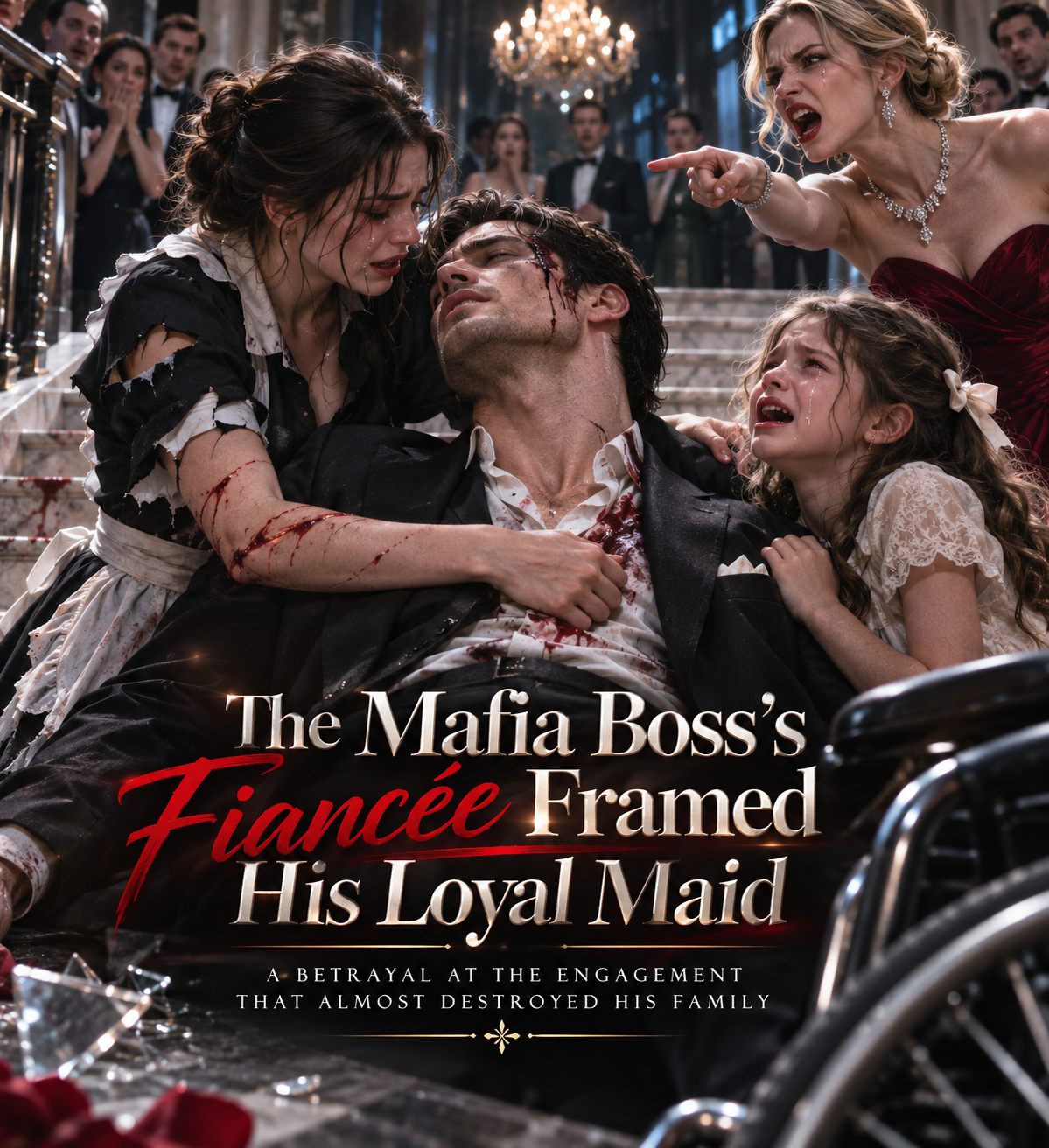
    Six months later, Luca walked down the staircase. Slowly. One hand on the railing. A cane in the other. Sophie stood at the bottom. “Come on, Daddy.” “I’m coming.” “You’re slow.” “I was shot once and complained less.” Hannah—me—stood beside her. “Don’t encourage him.” “I’m nine.” “I noticed.” Luca reached the final step. Sophie threw her arms around him. “You did it!” He kissed her hair. “I did.” The same staircase that had nearly destroyed the family became the place where Luca reclaimed something Vanessa had tried to take from him. Not power. Not money. Not reputation. Confidence. The glass railing had been replaced. But one small section of the original cracked panel remained framed on the wall nearby. Luca wanted to remove it. Sophie refused. “Why keep something ugly?” he had asked. “Because Miss Hannah saved you there.” So it stayed. Vanessa was serving her sentence. Adrian had accepted responsibility and testified fully. Luca never visited him. He received one letter. He read it. Then placed it in a drawer. He didn’t forgive Adrian. Not yet. Maybe not ever. But hatred no longer ran his life. That mattered. My mother recovered fully. She visited the mansion every Sunday and criticized Luca’s kitchen. Apparently no amount of money could protect a man from my mother telling him his olive oil was overpriced. Sophie loved it. And Luca? He pretended to hate it. Which meant he loved it too. Dinner with Luca became another dinner. Then another. He never rushed me. Never used his position. Never assumed. The first time he kissed me, three months after the staircase, he asked. We had been standing beneath the lights in the garden. Sophie was asleep upstairs. Luca looked nervous. I had never seen Luca Moretti nervous. “Can I kiss you?” I stared at him. “You’re asking?” “Yes.” “Why?” “Because I’d like to survive the evening.” I laughed. Then kissed him first. From that night, everything changed slowly. Carefully. I moved out of the staff wing. Not into Luca’s room. Into a guest suite. I stopped being Sophie’s housekeeper. I became something harder to define. Friend. Protector. Family. One morning, Sophie found me making pancakes. She climbed onto a stool. “Are you going to marry Daddy?” I almost dropped the spatula. “Sophie.” “What?” “We’ve been dating three months.” “That’s a long time.” “No, it isn’t.” “It is when you’re nine.” Luca entered. “What’s a long time?” “Dating Miss Hannah.” He stopped. I pointed the spatula at him. “Don’t.” He sat down. “I haven’t said anything.” Sophie looked between us. “When are you getting married?” “Sophie.” She sighed. “Adults make everything complicated.” Luca took coffee. “She’s right.” I stared at him. “Do not encourage her.” He looked innocent. Another impossible expression on a dangerous man. A year after the staircase, the Moretti mansion hosted another party. Smaller. No press. No politicians. No business associates Luca didn’t trust. Only family. Friends. Employees. Mrs. Carter cried before anything even happened. Daniel pretended not to. My mother arrived wearing blue and immediately started reorganizing flowers. I thought it was Sophie’s birthday dinner. It wasn’t. After dessert, Luca asked me to walk into the ballroom. The chandelier glowed above us. The staircase rose behind him. I looked around. Everyone had disappeared except Sophie. She stood near the piano. “Hannah,” Luca said. My stomach flipped. “What are you doing?” “Something I should have done in private.” “Then why is Sophie here?” “She threatened me.” “I did not!” Sophie said. Luca looked at her. “You gave me a schedule.” “That’s helping.” I laughed. Then Luca took my hand. The humor left his face. “You entered this house as an employee.” My eyes burned. “You stayed because my daughter needed someone kind.” Sophie smiled. “You protected her when I didn’t understand she needed protecting.” I squeezed his hand. “And when I fell…” His voice changed. “…you ran toward me.” I whispered, “I’d do it again.” “I know.” He reached into his pocket. My breath stopped. “Hannah Collins, I don’t want you beside me because you saved my life.” He lowered himself carefully. Not on one knee. His leg still didn’t allow that easily. Instead, he sat in a chair Sophie had secretly placed behind him. I laughed through tears. He smiled. “I planned this realistically.” “Good.” He opened a small box. Inside was a simple diamond ring. Elegant. Nothing enormous. Nothing designed to impress strangers. Exactly right. “I want you beside me because you made me understand what kind of life was worth saving.” I couldn’t speak. Sophie started crying before I did. Luca continued. “You taught Sophie she didn’t have to earn love by being quiet.” My tears fell. “You taught me needing someone isn’t weakness.” His thumb brushed my hand. “And you turned a house I controlled into a home I actually wanted to return to.” He took a breath. “Marry me.” I laughed and cried at the same time. “That wasn’t technically a question.” He closed his eyes. “Hannah.” “Yes.” His eyes opened. “Yes?” “Yes.” Sophie screamed. “YES!” Everyone poured into the ballroom. Apparently nobody had gone far. Mrs. Carter cried. My mother hugged Luca before she hugged me. Daniel shook his head like he had known all along. Luca slid the ring onto my finger. Then he stood. Still using the chair for support. I put my hands against his chest. “You okay?” “No.” I panicked. “What?” He smiled. “I’m terrified.” “Of what?” “Marriage.” I hit his shoulder lightly. He caught my wrist. Then kissed me. Not dramatically. Not for the room. For us. Later, when the guests were gone, Sophie found us sitting on the lower staircase. The same landing where I had caught Luca. She sat between us. “Daddy?” “Yes, sunshine?” “Are you happy?” He looked at me. Then at her. “Yes.” She leaned against him. “Me too.” I rested my head on Luca’s shoulder. For a while, none of us spoke. The mansion was quiet. No accusations. No secrets. No footsteps behind curtains. No woman planning to send a frightened child across the ocean. No old friend waiting to steal a family he envied. Just us. Luca’s hand found mine. A year earlier, I had looked up that staircase and watched his life fall toward me. I had thought I was saving a man. I didn’t understand then that the moment would change all three of us. Sophie had saved the truth. Luca had saved me from living in fear. And somehow, after betrayal, blood, lies and everything that followed, we had built something none of us expected. A family. Luca kissed the top of Sophie’s head. She yawned. “Bed,” he said. “No.” “Yes.” “Five minutes.” “Two.” “Four.” “Three.” “Deal.” I laughed. Sophie looked at me. “You’re going to be my stepmom.” My eyes filled again. “If you’re okay with that.” She wrapped both arms around me. “I’ve been okay with it forever.” Luca smiled. That rare smile. The one I had once seen for only a second across a breakfast table. Now I saw it every day. He stood with his cane. I took his free hand. Sophie took the other. Together, we climbed the staircase. Slowly. The same staircase that had once been the scene of the worst night of our lives. This time, nobody fell. And nobody let go.

  • Chapter 6: The Night Every Lie Finally Broke

    Chapter 6: The Night Every Lie Finally Broke

    Adrian called Luca the next morning. Daniel traced the number. Burner phone. No location. Luca put him on speaker. “Talk.” Adrian’s voice sounded tired. “I didn’t throw the brick.” “You paid for it.” “I wanted Hannah scared.” I felt Luca’s anger before he spoke. “Careful.” Adrian went silent. Then said, “Vanessa has evidence that can destroy both of us.” “You already destroyed yourself.” “You think you understand what she was doing?” “I understand enough.” “No.” Adrian breathed heavily. “She was moving money through your companies.” Luca’s eyes sharpened. “How much?” “Millions.” Daniel immediately began typing. “Where?” “I can show you.” “Tell Daniel.” “No.” “Then we’re finished.” “Luca, listen to me.” “No. You listen.” His voice dropped. “You helped a woman prepare to take my daughter. You slept with her in my home. You signed papers against me. You paid to frighten Hannah after she saved my life.” Silence. Then Adrian said, “I loved you like a brother.” Luca’s face changed. Not softer. Sad. “You should have remembered that sooner.” The call ended. Daniel traced nothing. But Adrian had made one mistake. He mentioned money transferred through a warehouse company. Daniel knew the company. By evening, police found a private office connected to Adrian. Inside were hard drives and printed records. The financial scheme became clear. Vanessa had been moving funds slowly for months. Not enough to attract immediate attention. She planned to marry Luca, expand her access, then use his physical recovery as evidence he was too impaired to manage affairs. Adrian would take operational control. Sophie would be removed. And Hannah would become the convenient witness who “proved” Luca’s instability. Except I refused to sign. So Vanessa changed the plan. The staircase became the answer. If Luca died, the situation became simpler. If he survived badly injured, easier still. And if I could be blamed? Perfect. The entire scheme broke because Sophie had a phone. A nine-year-old girl destroyed months of planning with one recording. Vanessa eventually agreed to speak. Not because she felt guilty. Because Adrian had betrayed her too. She learned he was negotiating separately with prosecutors. That was enough. Her statement confirmed the financial scheme. Confirmed the school plan. Confirmed the false medical documents. Confirmed she had intended to frame me. She denied intending to kill Luca. Nobody believed her. Two days later, Adrian surrendered. Luca refused to see him at first. Then changed his mind. They met in a secure interview room with attorneys present. I wasn’t supposed to be there. But Luca asked me to come. Adrian looked smaller without the suits and confidence. He stared at Luca’s cane. “You’re walking.” “A little.” “I’m glad.” Luca sat. “Don’t.” Adrian looked down. “I deserve that.” “Yes.” “I never wanted Sophie hurt.” “You sent her away.” “I thought it would be temporary.” “You signed guardianship papers.” “I was stupid.” “No.” Luca’s expression was cold. “You were ambitious.” Adrian swallowed. “Maybe.” “You wanted what I had.” “I wanted you to see me as equal.” “You were my brother.” “That was the problem.” Luca went still. Adrian continued. “You never understood what it was like standing next to you.” “Then you should have left.” “I should have.” “Instead you took Vanessa.” Adrian gave a bitter laugh. “She took me too.” “No.” Luca leaned forward. “You’re a grown man. You chose.” Adrian’s eyes filled. “I know.” The room stayed silent. Finally, Adrian looked at me. “I’m sorry.” I didn’t answer. He looked at Luca again. “Protect her.” Luca’s face hardened. “She protected me.” Adrian nodded. “I know.” That was the end. No gunfire. No revenge. No dramatic execution. Just consequences. Vanessa accepted a plea agreement that included prison time and restitution. Adrian faced conspiracy, fraud and intimidation charges. His cooperation reduced the sentence he might receive, but it did not erase what he had done. The money was recovered. Sophie’s travel authorization was voided. The guardianship papers were destroyed. The boarding school reservation was canceled. And for the first time in months, the Moretti mansion became quiet. But peace created a different problem. There was no longer danger to hide behind. No reason to avoid what Luca had said on the terrace. If you still want distance, I’ll give it to you. And if I don’t? Then I’ll ask you properly. Three weeks later, I found an envelope on the kitchen table. Inside was a letter. Not romantic. An employment agreement. I stared at Luca when he entered. “What is this?” “A new contract.” “My salary doubled.” “Yes.” “My mother’s insurance is included.” “Yes.” “There’s a college fund listed for employees’ dependents.” “Yes.” “I don’t have children.” His mouth moved slightly. “It applies broadly.” I narrowed my eyes. “Luca.” “What?” “Are you trying to buy my affection?” His expression changed instantly. “No.” “Good.” “I’m trying to correct what should have been corrected long ago.” I looked at the contract again. “You don’t owe me this.” “I know.” “Then why?” “Because loyalty should never require desperation.” That silenced me. He stepped closer. “And because I don’t ever want anyone threatening your mother’s medical care to control you again.” My eyes stung. “Thank you.” “You’re welcome.” He turned toward the door. “That’s it?” He stopped. Slowly looked back. “What else were you expecting?” My face warmed. He almost smiled. “You said you’d ask me properly.” “I did.” “No, you didn’t.” “I’m waiting.” “For what?” “For you to sign the contract.” I blinked. “You’re impossible.” “Yes.” I signed it. He took the paper. Placed it aside. Then looked at me. No Mafia boss. No employer. Just Luca. “Hannah Collins.” “Yes?” “Would you have dinner with me?” I smiled. “I make your dinner every night.” “Not as my employee.” My heart pounded. “Then as what?” His voice softened. “As the woman I haven’t been able to stop thinking about since she nearly broke both arms saving my life.” “They were already injured.” “That does not improve the story.” I laughed. He stepped closer. “Dinner?” I looked toward the hallway. Sophie was pretending not to listen behind the corner. I could see her curls. “Yes.” Sophie jumped out. “Yes!” I covered my face. Luca closed his eyes. “Were you listening?” “No.” “You shouted.” “I got excited.” I started laughing. And Luca did too. For the first time, the mansion sounded like a home.

  • Chapter 5: When Protecting Hannah Became Personal

    Chapter 5: When Protecting Hannah Became Personal

    The police took the second phone. By noon, Vanessa faced additional charges. Fraud. Forgery. Conspiracy. Witness intimidation. Investigators also reopened questions surrounding Luca’s car accident. No evidence yet connected Vanessa to it. But Luca stopped treating anything as coincidence. Security doubled. Sophie was never alone. Neither was I. At first, I hated it. “Daniel, I’m going to the grocery store.” “No.” “I wasn’t asking.” “Neither was I.” I stared at him. “Do all Moretti employees become this annoying?” “Only the ones trying to remain alive.” Luca appeared behind him. “Where are you going?” “Apparently nowhere.” “Correct.” I folded my arms. “My mother needs groceries.” “I’ll have someone deliver them.” “She doesn’t like strangers.” “I’ll go.” I stared at Luca. “You?” “Yes.” “In a wheelchair.” His eyebrow rose. “You think wheelchairs prevent grocery shopping?” “No.” “Then we’re done.” We went together. It was absurd. The most feared man I knew sitting in the produce aisle arguing with my mother about tomatoes. “These are too soft,” Mom said. “They look fine.” “You don’t cook, do you?” Luca looked at me. I covered my mouth. He frowned. “That’s irrelevant.” My mother liked him immediately. That terrified me more than Vanessa ever had. On the ride home, Luca was quiet. Then he said, “Your mother thinks I’m your boyfriend.” I nearly dropped my phone. “What?” “She asked.” “What did you say?” “That I’m your employer.” “Good.” He looked out the window. “Was it?” I stared at him. He didn’t look back. Something had changed between us. Maybe it had started on the staircase. Maybe earlier. Maybe the day I found Sophie crying in the library. I only knew I felt it now. Every quiet glance. Every pause. Every time Luca asked whether my arms hurt. Every time I adjusted the blanket over his recovering leg and realized his eyes were on me. But everything was complicated. He was my employer. He was grieving betrayal. His daughter needed stability. And I had no intention of becoming another woman who entered Sophie’s life and disappeared. So I ignored it. Until the night someone threw a brick through my mother’s apartment window. The brick carried a note. STOP TALKING. Daniel arrived within fifteen minutes. Luca arrived ten minutes later. He looked at the broken window. Then at me. “Pack a bag.” “No.” “Hannah.” “My mother lives here.” “She’s coming too.” Mom stepped from the hallway. “I’m not leaving my home because somebody threw a brick.” Luca turned to her. “With respect, Mrs. Collins, yes, you are.” She stared at him. Then at me. “I see why people listen to him.” “Mom.” “What?” We relocated to one of Luca’s secure properties outside the city. A large lakeside house. Not a mansion. But close. Sophie came too. For three days, the world became strangely small. No reporters. No guests. No Vanessa. No Adrian. Just security. Therapy. Cooking. Homework. And too many quiet moments. One evening, I found Luca outside on the terrace. He stood with his cane. No therapist. I hurried forward. “What are you doing?” “Standing.” “Alone?” “Yes.” “You shouldn’t.” “Everyone keeps saying that.” “You could fall.” His eyes met mine. “You’d catch me.” My heartbeat stumbled. “That’s not funny.” “I know.” He took one slow step. Then another. I stayed beside him without touching. He reached the railing. Breathed out. “I used to think strength meant never needing anyone.” I looked at him. “And now?” “Now I think that was arrogance.” The lake was dark beyond us. “Vanessa hated the wheelchair,” he said. I stayed quiet. “She never said it directly.” “She didn’t have to.” “She touched me less. Spoke for me more. Made decisions before asking.” “You noticed.” “I ignored it.” “Why?” He stared across the water. “Because losing the ability to walk felt like losing control of everything. I didn’t want to admit I might also be losing control of my home.” “You didn’t cause what she did.” “No.” He turned. “But I allowed silence to grow where there should have been questions.” The wind moved through my hair. His gaze followed it. Then dropped to the scars on my arms. “I keep thinking about the staircase.” “So do I.” “You could have died.” “So could you.” “You always answer like that.” “Because it’s true.” He stepped closer. “Hannah.” My breath caught. “What?” “I don’t know what this is.” Neither did I. “But I know I notice when you leave a room.” I couldn’t move. “I know Sophie sleeps better when you’re near.” His voice lowered. “I know my house stopped feeling like a house before you came into it.” “Luca…” “And I know that when that brick came through your mother’s window, I felt something I haven’t felt in years.” “What?” “Fear.” Not for himself. For me. That realization terrified me. I stepped backward. “We can’t.” His expression closed. “You’re right.” The quickness of his answer hurt. Then he continued. “Not now.” I looked up. “Sophie comes first.” “Yes.” “And you’re dealing with Vanessa.” “Yes.” “And I work for you.” His jaw tightened. “That can change.” “I’m not quitting.” “I didn’t say you had to.” “Then what are you saying?” He looked at me for a long time. “That when this is over, if you still want distance, I’ll give it to you.” My heart twisted. “And if I don’t?” His eyes softened. “Then I’ll ask you properly.” Before I could answer, Daniel opened the terrace door. His expression killed the moment. “Boss.” “What?” “Adrian made a deal with prosecutors.” Luca’s face hardened. “What did he give them?” “Everything.” Daniel handed him a phone. There were messages. Bank transfers. Audio files. Vanessa planning to establish control after marriage. Vanessa discussing Sophie’s removal. Vanessa ordering Adrian to destroy copies of documents. And one final message. Sent four days before the engagement party. If Hannah refuses to sign, I’ll make sure she becomes the reason Luca falls. I read it twice. My knees went weak. Luca took the phone from me. His face became terrifyingly calm. “She planned to blame you before she ever touched my wheelchair.” Daniel nodded. “There’s more.” “What?” “The brick at Mrs. Collins’s apartment.” My mother stepped into the doorway behind him. Daniel continued. “Police arrested the man who threw it.” “Who paid him?” “He says he was contacted through an intermediary.” Luca’s eyes narrowed. “Vanessa?” “No.” A pause. “Adrian.” The room went silent. Luca looked toward the dark lake. I could see the last piece of hope leaving his face. Adrian had claimed regret. Claimed he never wanted anyone hurt. But even after Vanessa’s arrest, he had tried to frighten me into silence. Luca turned back. “Where is he?” Daniel hesitated. “He disappeared before officers could pick him up.” For the first time, I understood something. Vanessa had started this war. But Adrian was no longer simply caught inside it. He had chosen a side. And now nobody knew where he was.

  • Chapter 4: The Man Whose Name Was on the Guardian Form

    Chapter 4: The Man Whose Name Was on the Guardian Form

    Adrian disappeared that night. His attorney claimed he had gone somewhere to clear his head. Daniel called it running. Luca called it confirmation. Police issued a request for him to surrender his passport. Meanwhile, Vanessa continued insisting the staircase had been an accident. Her lawyer claimed the video lacked context. That was almost insulting. But the financial investigation changed everything. The engagement had been scheduled for Saturday. The wedding was supposed to happen six weeks later. Vanessa had spent nearly a year becoming essential. She organized Luca’s medication. Managed household appointments. Attended meetings. Encouraged him to rely on her. And slowly pushed Sophie away. The boarding school wasn’t simply about removing a child. Sophie was the one person Vanessa could never control. A nine-year-old girl had seen more than any adult realized. She had seen Adrian visiting. Seen Vanessa whispering behind closed doors. Seen papers being hidden. Seen Hannah being hurt. And because adults assumed children weren’t listening, nobody had worried about her. Until she recorded them. One afternoon, I found Luca in the conservatory. He was standing. Not alone. A therapist held a support belt behind him. Luca gripped parallel bars. His face was tight with pain. “One more step,” the therapist said. “I heard you the first four times.” “Then make me stop saying it.” Luca took another step. His leg shook. He almost lost balance. I moved forward instinctively. He looked at me. “Don’t.” I stopped. “Okay.” His expression softened. “Not because I don’t want your help.” “Then why?” “Because if I fall every time you’re near me, you’ll start thinking it’s a habit.” I laughed before I could stop myself. The therapist stared at him. “I’ve been working with you three months and you’ve never made a joke.” Luca gripped the bars. “I’m not joking.” I folded my arms. “Very funny.” After therapy, I brought him water. He sat in the wheelchair again, breathing hard. “You should rest.” “So should you.” “You keep saying that.” “You keep ignoring it.” His eyes moved to the scars on my forearms. “They’ll fade.” “I know.” He looked angry anyway. At first, I thought he was thinking about Vanessa. Then he said, “I should have noticed.” “Noticed what?” “That you were afraid of her.” I sat opposite him. “She was careful.” “I’m supposed to notice things.” “You’re also human.” “People rarely accuse me of that.” I smiled. “I’ve noticed.” Silence settled. Not uncomfortable. Different. Warm. Dangerously warm. He looked at me too long. I looked away first. Then Sophie came running into the room. “Daddy!” The moment broke. She held a folder. “I found something.” Luca stiffened. “Where?” “In Vanessa’s desk.” “Sophie.” “I didn’t know I wasn’t allowed!” He exhaled. “Come here.” She handed him the folder. Inside were photographs. Vanessa and Adrian. At restaurants. In a hotel lobby. Getting into the same car. The earliest photo was dated five months earlier. Before Luca’s accident. My skin went cold. Luca stared at the date. “So it started before.” Daniel entered behind Sophie. “We think so.” “You knew?” “I suspected.” Luca looked at him. Daniel continued. “We found messages from Adrian’s second phone.” Adrian had complained for years about Luca controlling the companies. Vanessa had complained that Sophie would always come first. Together, resentment had become something else. A plan. The accident that put Luca in the wheelchair had been investigated and ruled weather-related. Now Daniel wanted it reopened. Luca didn’t speak for a long time. Finally, he said, “Was my accident caused?” “We don’t know.” That possibility changed the room. I felt cold. The staircase had nearly killed him. But what if it wasn’t the first attempt? Luca noticed my expression. “Hannah.” “I’m fine.” “You’re pale.” “I’m thinking.” “Don’t.” I almost laughed. “That’s not how thinking works.” “Try.” Sophie climbed beside him. “Daddy?” “Yes?” “Is Uncle Adrian bad?” Luca looked at her. “People aren’t simple.” “He hurt you.” “Yes.” “Then I don’t like him.” “That’s allowed.” “Do you still love him?” The question surprised everyone. Luca looked toward the windows. Then answered honestly. “Yes.” Sophie frowned. “But he betrayed you.” “You can love someone and still never trust them again.” I felt that sentence somewhere deep. Maybe because it wasn’t only about Adrian. That evening, the police found Adrian. He surrendered voluntarily. Under questioning, he admitted the affair. He admitted signing corporate documents. He admitted paying the school. But he denied planning to hurt Luca. Then he said something that changed the investigation. Vanessa had told him Luca would soon be unable to stop anything. When Adrian asked what she meant, she had answered: “Trust me. After the wedding, he won’t be a problem.” Daniel read the transcript aloud in Luca’s study. Luca said nothing. I stood near the fireplace. Sophie was upstairs. Mrs. Carter had finally convinced her to sleep. “What happens now?” I asked. Daniel looked at Luca. “Vanessa’s attorney will claim Adrian misunderstood.” “Of course.” “But Adrian agreed to cooperate.” Luca’s head turned. “Why?” “He wants a deal.” “Of course.” Daniel shut the folder. “He also says Vanessa kept a second phone.” “Where?” “He doesn’t know.” Luca stared at the fire. I said, “Maybe Sophie does.” Both men looked at me. “She noticed everything else.” We didn’t wake her. But the next morning, I asked gently whether Vanessa ever hid a phone. Sophie thought for a while. Then her eyes widened. “The blue box.” “What blue box?” “In Mommy’s old room.” Luca’s face changed. Nobody entered his late wife’s room. Not without permission. Vanessa knew that. Which made it the perfect hiding place. We went upstairs together. Luca stopped outside the door. His hand rested on the handle. He hadn’t entered in months. Maybe longer. I touched his shoulder. “You don’t have to.” “Yes.” His voice was quiet. “I do.” Inside, the room still carried the soft elegance of another life. Photographs. Books. A pale blue scarf over a chair. Sophie went to the closet. “There.” A wooden box sat on the top shelf. Daniel opened it. Inside was a phone. Vanessa’s second phone. It contained dozens of deleted messages. Financial documents. Photographs. Plans. And one audio recording. Daniel pressed play. Vanessa’s voice filled the room. “If Luca doesn’t sign, I’ll make sure the doctors believe he can’t.” Then Adrian’s voice: “And Sophie?” Vanessa answered: “She’ll be in Switzerland. Hannah will take the blame for everything else.” My breath stopped. Then Adrian said something almost too quietly to hear. “And after Luca?” A pause. Vanessa laughed. “After Luca, you and I get everything.”