They kept her in a warehouse that smelled of other people's old dinners.
It took Emma perhaps an hour, sitting in a catering chair in an office with no windows and a calendar two years dead, to understand where she was — and she understood it from the crates. They were stacked along the corridor outside the open door, stenciled in the Foundation's green: OPEN TABLE PROGRAM — HARBOR KITCHEN. This was a Moretti building. A shuttered depot of the Foundation's own, closed (the young guard told her, bored, when she asked for water) after the audit-that-wasn't, pending reallocation. Pending Webb, she translated. She was being stored in the evidence.
There were three of them. A driver with a neck like a tree stump and no conversation. A quiet one who did something with a phone every twenty minutes, on the hour, like a man feeding a meter. And a young one — twenty-two, twenty-three, with a healing split lip and the air of a boy who had been told this was security work and was beginning to suspect otherwise — who brought her water in a paper cup and said, "You want I should get you a blanket? It's cold in here. They didn't say nothing about cold."
"What's your name?" Emma said.
"People call me Beans." He said it with the resignation of a man introducing a lifelong sentence. "My ma works nights. Cleaning. Office buildings." A pause, while the job and the conscience had it out somewhere behind his eyes. "You really the waitress? From the video?"
"I'm really the waitress."
"My ma made me watch it twice." He lowered his voice. "She said, that girl's somebody's daughter doing somebody proud. She said—" He stopped, hearing himself, and the quiet one came back into the corridor and Beans became a guard again all at once, like a tide going out.
Emma Lawson had spent nine years in rooms full of people who did not say what they meant. She could read a dining room the way sailors read sky — who was about to cry into their soup, whose marriage was ending over the meatloaf, who would tip, who would bolt. A warehouse office was only a dining room with worse lighting. The quiet one's meter-feeding phone calls were reports. The driver's stillness was a budget: no one had paid for hurry. And Beans — Beans was a door that had been left, by somebody's cheapness or somebody's mercy, unlocked.
In the second hour, the quiet one — Vic, the driver called him, once, and got a look that shut the word down like a lid — took a call that lasted longer than the others, and came back in and stood looking at her for a moment with the assessment of a man checking the level in a tank.
"Gala's tomorrow night," he said. "Eight o'clock, the old man makes his announcement. You're going to be our guest until nine. Then there's a car, and a bus station in another state, and a story about a waitress who took a payoff and ran — they've already bought the ticket in your name, angel. It's a good story. It's got paperwork." He said it without pleasure, a professional describing weather. "You should know so you don't waste energy. Nobody's selling you. Nobody's ransoming you. You're just — scheduled to be absent. There's a difference. Absent doesn't make the kind of noise that—" he searched for the word, found the professional one, "—complicates."
Emma thought about the napkin folded over an old man's heart, and about a checkbook refused, and about being reclassified, in the Foundation's beautiful language, from a person into an absence. She thought: they are not afraid I'll be hurt. They are afraid I'll be present. She filed the difference away where she kept the important lists.
"You ever eat at the flagship?" she asked Vic, conversationally. "The mural place?"
The look he gave her then was not professional at all. It was the look of a man who has just heard his own house mentioned by a stranger in a locked room. "What?"
"Nothing," Emma said, mild as milk. "You just have the look of a man who counts chairs."
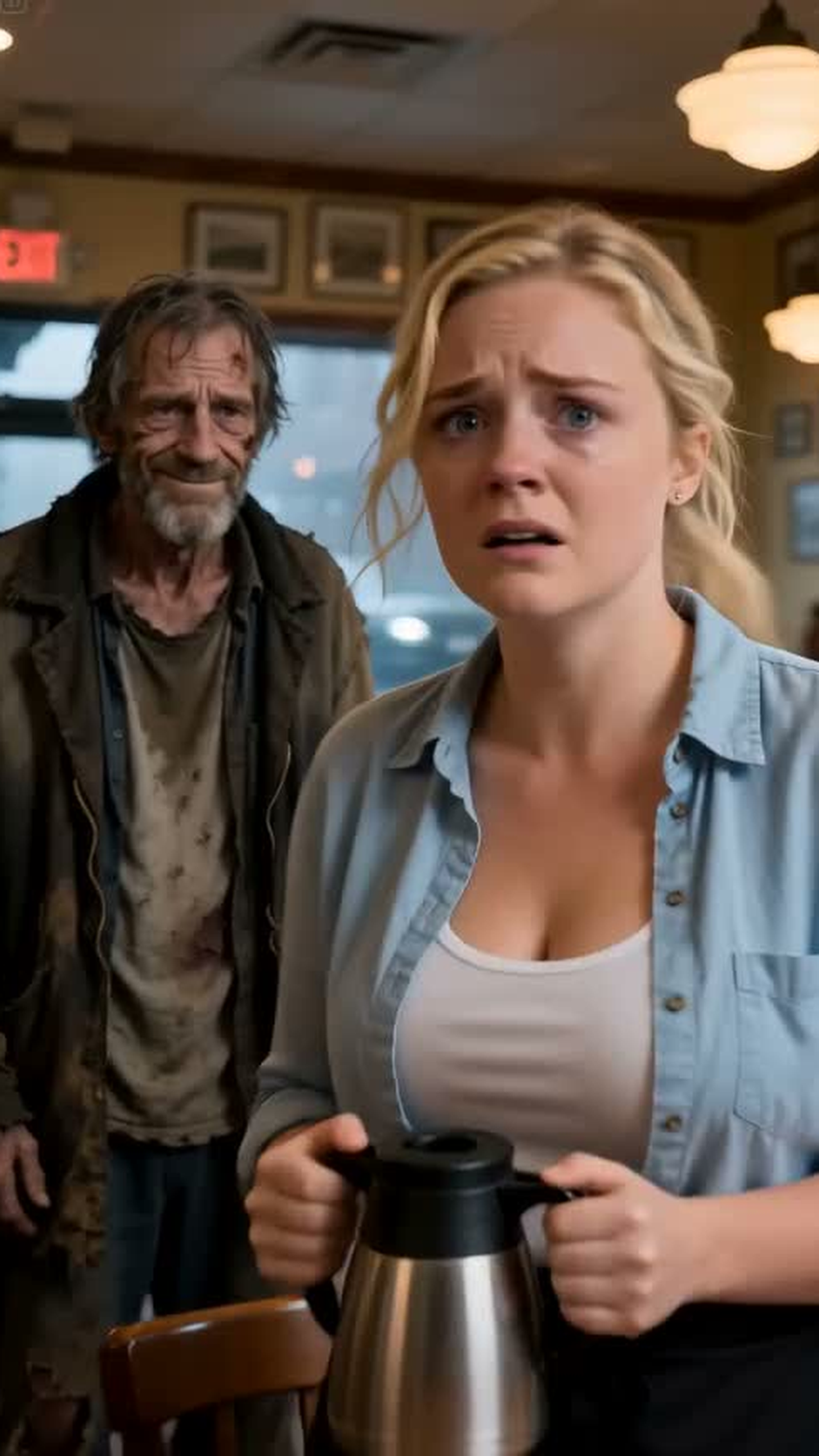
She waited until the quiet one stepped out to make his call and the driver's head had gone heavy, and then she did the thing she had been put on the earth to do: she fed people.
"There's a kitchenette," she said conversationally, to Beans. "I saw it through the door. Drove past it in the van. There's coffee in this building — I can smell old coffee, which means there's a machine, which means there's fresh in a cupboard, places like this always. Your friend out there is falling asleep on his feet and the other one is going to be making calls all night. Men who are awake are calm, Beans. Men who are calm don't make decisions everybody regrets at a trial. Let me make coffee. You'll watch me the whole time. I'll even drink first."
It was the exact voice she used on Gus during a rush, on her mother during a scare, on drunks during a snowstorm: the voice of the woman who has decided what happens next and is merely informing the room. Beans looked at the driver. Beans looked at the corridor. Beans unlocked the office door with the air of a man stepping off a curb he would never step back onto.
The kitchenette had a coffee machine, and cups, and — in a catering crate by the sink, packed for a gala that had been planned by people who did not expect her at it except as a photograph — napkins. White paper napkins, in plastic, by the hundred.
Emma made the coffee. Emma poured three cups and drank first, as promised, slow and unhurried, a woman at her own counter. And with her left hand, under the shelter of the crate, with the small brass pen she had palmed off the office desk while Beans was telling her about his mother — a good pen; some office manager's pen; the kind of pen that does not belong to a man who sleeps rough — she wrote on a napkin, in her firm waitress hand, pressing hard enough to emboss the two beneath it:
EMMA LAWSON — TAKEN — SHUTTERED OPEN TABLE DEPOT, HARBOR SIDE — GALA NIGHT IS THE TRAP — TELL SAL: ASK WHO SIGNS THE DOCK LOG. THE WAITRESS.
"Beans." She held the boy's eyes while she folded the napkin once, precisely, in half. "Your mother cleans office buildings at night. Mine counts heart pills at a kitchen table from a list I wrote. I am not asking you to be brave. I'm asking you to lose something." She put the folded napkin on the counter between them. "When they move me, or when you leave, whichever comes first — this goes in a rich man's mailbox, a priest's hand, a reporter's camera, I don't care whose. If nothing happens to me, it's litter. If something happens to me—"
She didn't finish it. She didn't have to. Beans picked up the napkin like it was warm, and put it in his inside pocket, over his heart, and said, "My ma's gonna kill me," in the tone of a man who has just found out he is alive.
While the coffee brewed she thought, with the strange clarity that comes in locked rooms, about her mother's pill organizer on the kitchen counter at home — four colors, in an order June pretended not to know — and about who would set out the water tonight, and whether Ilya's dull, reliable man had understood June's system, and the thought steadied her the way the lists always steadied her: because a life, hers included, was mostly small duties done in the right order, and hers were currently being done by other people's kindness, which meant the world's machinery had not rusted all the way through. She thought about the third stool. She thought about the man who had sat under the awning for nineteen days asking the city one question, and she decided that if she got out of this room, she would tell him the part she had not yet said out loud: that she had known who he was — not the name, never the name — but the kind of man, from the first glass of water, because nobody watches a room that carefully who isn't looking for somebody in it. She had been somebody in it. That had to count for something, even here. Especially here.
She was back in the catering chair, hands folded, coffee ring on the desk, when the quiet one's phone call ended in a different voice than it had begun — clipped, urgent — and everything in the warehouse changed key at once. The driver stood. Doors. The van being readied. They were moving her, now, tonight, ahead of schedule — because across the city, at that moment, a napkin was also traveling: out of a young man's inside pocket in a service corridor, passed hand to hand by people who owed Salvatore Moretti debts older than the boy himself, until it reached a black sedan outside a rain-wet diner where a man in a navy suit stood holding a waitress's fallen apron like a flag.
Adrian read it twice. Sal, beside him — driven there against all advice, upright as a fence post in the rain — read it once, and gave a single nod, and said: "The dock log is signed in two hands. Mine, from the old days — and Webb's, countersigning the weights. She means the log can't lie forever about whose signature blesses the theft. She's not asking to be rescued." His voice did something complicated. "She's giving evidence. From inside. My God, Adrian — she is the one."
"The depot," Adrian said, already moving. "If they've used our own shuttered building, Carlo's fingerprints are on the reallocation order. Get the fraud unit. Get everybody. And Father—"
"I'm coming."
"It isn't your—"
"It is entirely my—" The old man stopped. He looked at his son, in the rain, holding the apron; and something forty years old and unfinished stood up in his face and was, at last, finished. "No," he said quietly. "No. This part is yours. Bring my waitress home."
The rescue — though the papers would call it that, and Emma would spend a year correcting them, because rescues do not involve the rescued making coffee and gathering testimony for forty minutes — took nine minutes from the moment the first car rolled silent into the depot yard. The fraud unit came with the Morettis' quiet men the way weather comes with wind. The driver surrendered with the bewildered air of a man whose employer had not mentioned police. The quiet one ran, and learned about Ilya.
And Carlo Russo — thirty years Sal's right hand, eighteen months the warm oil on every door the truth tried to open — made the last mistake of his career in the depot doorway, with the rain behind him and the fraud unit in front of him and Emma Lawson, of all people, walking free out of his own evidence locker in front of the cameras his people had failed to account for. He went for the gun of the man beside him. It was not even aimed at Emma; it was the flailing of a drowning empire. But Adrian was between them, the way he had been built to be between everything he loved and everything that threatened it, all his life, in every room —
—and the shot, when it came, was small and flat and almost apologetic, like a cup set down too hard—
—and Adrian Moretti turned to Emma with an expression of mild surprise, and put one hand to his shoulder, where the navy wool was going dark and wet in a spreading star, and said, quite clearly, "Stay," — as if she had been about to be seated somewhere without him — and went down on one knee in the rain, holding her hand, and did not let go of it until the ambulance doors closed between them at the hospital and took him, still holding on in every way that mattered, into the white light of the surgery corridor.