The divorce was finalized on a Tuesday in July, in a lawyer's office downtown with the sun coming through the blinds in clean white lines, and there was no shouting, and no tears, and no reporters, because Victoria had insisted on that, and Dante had agreed, and the two of them signed the papers like the business partners they had always been, and shook hands, and walked out into the daylight as two free people.
Victoria took Carter Freight back, free and clear, with enough money to rebuild it on her own terms, and she did rebuild it, and within a year it was turning a profit for the first time in a decade, because Victoria Carter had always been good at business, and now she was finally doing it for herself. She sold the house on Astor Street and bought a smaller place in Lincoln Park, with a garden and a studio, and she started painting again, something she had not done since she was a girl, and in the spring she opened a little gallery in Milan, because she had always loved Italy, and she had decided that it was time to love something for herself.
She came to dinner every Sunday after that, at Sofia's, at the corner table by the window, and she brought Leo a present every time, a book, a toy, a drawing she had made herself, and Leo called her Auntie Vicky, and she called him her favorite person in the world, and the two of them would sit together after dinner and draw pictures on the paper tablecloth, and I would watch them, and I would think about how close we had come to losing each other, and how glad I was that we had not.
Castellano was dealt with the way Dante deals with things when he wants them to stay dealt with: quietly, and permanently, and without a single shot being fired in anger. The three men from the hotel gave the police everything, and the police gave the FBI Adrian Voss's phone, and the FBI gave Castellano a very bad morning, and by the end of the summer Vincent Castellano was in federal custody, charged with conspiracy and kidnapping and a dozen other things, and his organization, which had been built on fear, fell apart the way organizations built on fear always do, quickly, and completely, and without anyone left to mourn it.
Adrian Voss was found at a motel outside Gary, Indiana, trying to buy a bus ticket to Mexico with cash, and he was brought back to Chicago, and he was given a choice, and he chose to tell the truth, and the truth was enough. Dante did not have him killed. He had him exiled, which in Dante's world is worse than death, because a man without a family is a man without a name, and Adrian Voss left Chicago on a Greyhound bus with a suitcase and a one-way ticket, and no one in the organization has spoken his name since.
Paolo, the man in Geneva, was found alive, in a hospital outside Lausanne, with a broken arm and a concussion and no memory of the three days he had been missing, and Dante flew to Switzerland himself to bring him home, and Paolo's family was given a house, and a pension, and a place in the organization that no one would ever take from them, because loyalty, in Dante's world, is the only currency that matters.
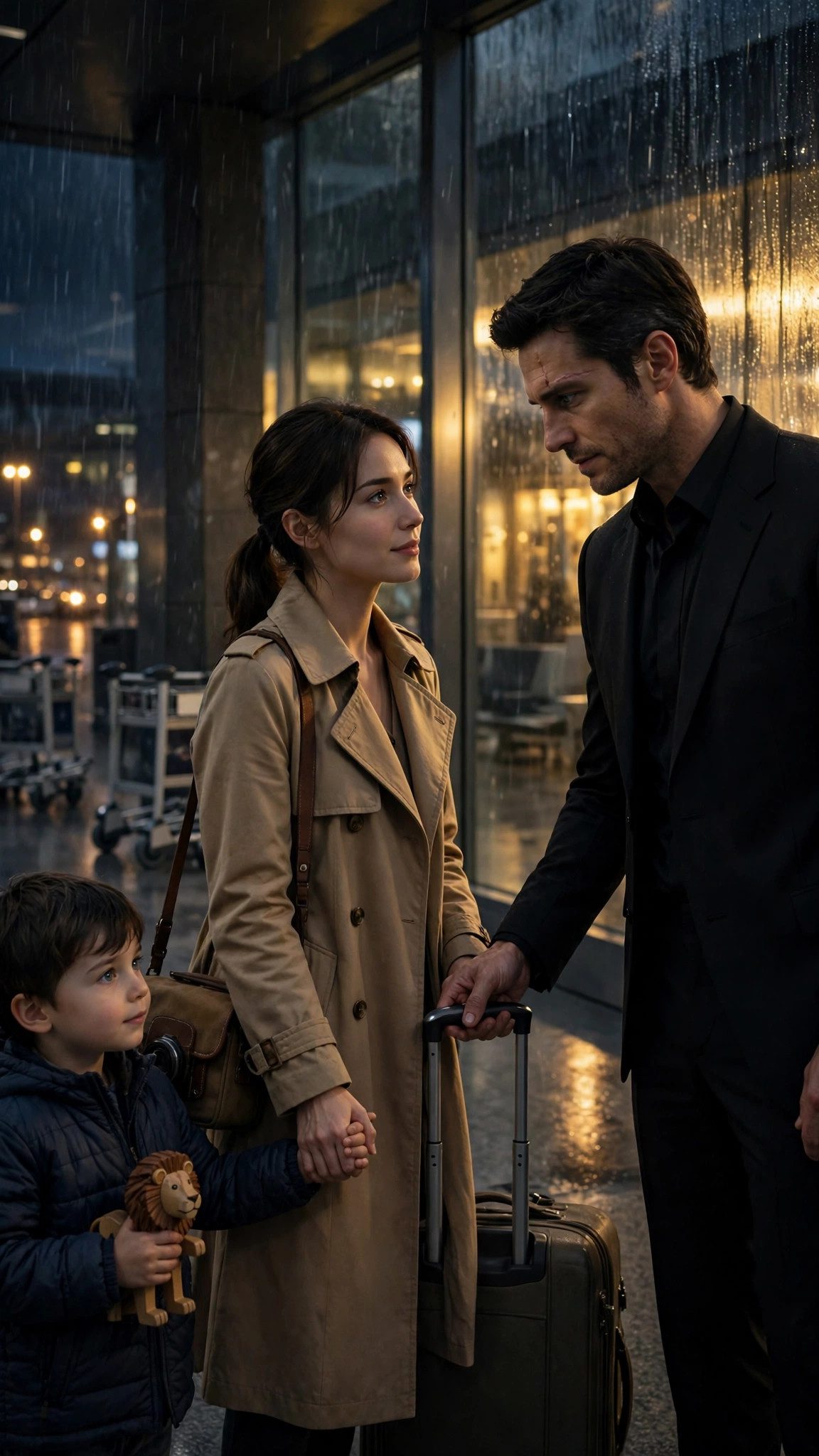
And Leo. My Leo, my almost-three-year-old son with my smile and his father's eyes, became the center of a world he did not understand and did not need to understand, because all he knew was that suddenly there were more people who loved him than he could count, and that his father was a big man with a scar through his eyebrow who let him ride on his shoulders and who read him stories in a low voice, and who took him to the park every Sunday, and who taught him to throw a baseball, badly, and to catch it, worse, and who loved him with a fierceness that made me catch my breath every time I saw it.
Dante claimed him publicly, at a family dinner at Sofia's, with the whole organization present, and he stood up, and he held Leo in his arms, and he said, "This is my son. His name is Leo Carter Moretti. He is three years old, and he is the best thing I have ever done, and anyone who has a problem with that can take it up with me."
No one had a problem with that. Or if they did, they kept it to themselves, because there are some announcements you do not argue with, and a father claiming his son in front of his whole family is one of them.
Sofia cried. Rosa, the housekeeper, cried. Marco cried, which surprised everyone, including Marco. Victoria stood up and raised her glass, and she said, "To Leo. To the boy who brought us all home." And everyone drank, and Leo, who did not understand a word of it, raised his little glass of milk and said, "To me!" and everyone laughed, and it was the happiest night of my life.
The proposal came in September, on Leo's third birthday, at the lake, at dawn, in the same place where we had scattered my father's ashes. Dante had planned it the way he plans everything, quietly, and completely, and without telling anyone, and he had brought Leo with him, and Sofia had made a cake, and Victoria had brought balloons, and Marta had flown in from Geneva, because Dante had sent a car for her, and she had cried when she saw Leo run to her across the sand.
Dante knelt down in the sand, in his black suit, with the sun coming up over the water behind him, and he held out a ring, a simple gold band with a single small diamond, nothing flashy, nothing that shouted, just a ring, and he said, "Elena Carter. I loved you behind closed doors for eight years, and I lost you for three, and I have spent every day since you came home trying to earn my way back into your life. I will not ask you to be a secret anymore. I will not ask you to wait anymore. I am asking you to marry me, in the daylight, in front of our son, and our family, and God, and everyone. Will you?"
Leo, who had been told to be quiet and who had been quiet for almost thirty seconds, which was a record for him, tugged on Dante's sleeve and said, "Mama, say yes. Say yes, Mama. Please say yes."
I looked at Dante, kneeling in the sand with the ring in his hand, and I looked at Leo, standing beside him with his father's grey eyes and my smile, and I looked at Victoria, and Marta, and Sofia, and Marco, standing in a circle around us on the beach, and I thought about the girl I had been at twenty-two, with a camera around her neck and no idea what kind of man could ruin a life just by looking at it, and I thought about the woman I was now, thirty years old, a mother, a photographer, a sister, a daughter, and I thought about my father's letter, and the promise I had made in that little Swiss clinic, and I understood that some promises are made to be broken, and some doors are made to be opened, and some men are worth waiting for, even when the waiting almost kills you.
"Yes," I said. "But on my terms."
Dante smiled, the slow smile that had always been the most dangerous thing about him, and he said, "Name them."
"One," I said. "No more secrets. Not from me, not from Leo, not from anyone. If I am your wife, I am your wife in the daylight, in front of the world, with my name on the door and my camera in my hand."
"Done," he said.
"Two," I said. "Leo's last name is Carter Moretti. Both. He is my son and your son, and his name will say so."
"Done," he said.
"Three," I said. "Victoria is family. She is at our table every Sunday, and she is Leo's auntie, and she is my sister, and nothing changes that. Not the divorce. Not the past. Nothing."
"Done," he said, and he looked at Victoria, and Victoria nodded, and she was crying, and smiling, at the same time.
"Four," I said. "I keep my work. I am a photographer, Dante. I am not a wife who sits at home and waits. I go out, and I take pictures, and I come home, and you listen to me tell you about them, the way you used to."
"Done," he said. "And I will keep a spare toothbrush for you in my bathroom, and a pair of your shoes by my door, and I will make your coffee black with one sugar, scalding hot, in a plain white mug, every morning for the rest of my life."
"Five," I said, and I took Leo's hand, and Dante's hand, and I held them both, "we tell Leo the truth. All of it. When he is old enough. Where he came from. Who his father is. What his father did, and what his father gave up to be his father. No secrets. Not ever. Not from him."
"Done," Dante said, and he slipped the ring onto my finger, and it fit perfectly, because he had measured it from the ring I used to wear on my right hand, the one he had given me years ago, in the penthouse, on a night when the snow was coming down outside, and I had kept it all this time, in a little box in Geneva, because some things you do not throw away, even when you think you have let them go.
Leo cheered, and threw his arms around both of us, and Sofia opened the champagne, and Marta danced on the sand in her good shoes, and Victoria took a photograph of the three of us, Dante and Leo and me, with the sun coming up behind us over the lake, and she showed it to me later, and I looked at it, and I thought: this is what a family looks like. Not perfect. Not simple. But real. And mine.
We were married in October, in the same church where Dante had married my sister three years before, and this time I did not stand in the dressing room. I walked down the aisle in the daylight, in a dress the color of ivory, with Leo walking beside me carrying the rings on a little pillow, and Victoria standing beside me as my maid of honor, and Dante waiting at the altar with tears in his eyes, and Sofia playing the organ, badly and beautifully, and when the priest asked me if I took this man, I said yes, and I meant it, and the doors of the church were open, and the sun was coming in, and for the first time in eight years, I was not a secret.
The first photograph I ever took of my family, my real family, was on a Sunday in November, in the garden behind the house on Astor Street, with the leaves turning gold and the light coming low through the trees. I set up my camera on the tripod, the way I had done a thousand times for other people's families, and I put Dante and Leo on the bench under the oak tree, and I told them to look at the camera, and Leo made a silly face, and Dante laughed, and I took the photograph, and when I looked at it on the screen, I saw a father and a son, laughing, with the autumn light on their faces, and I thought: this is the photograph I have been waiting my whole life to take.
I printed it large, and I hung it in the hallway, where everyone who comes into the house can see it, and underneath it I put a small brass plaque that says: The Moretti Family. And every time I walk past it, I stop, just for a second, and I look at it, and I remember the girl I was at twenty-two, with a camera around her neck, photographing other people's happiness, and I think about how far I have come, and how glad I am that I never stopped taking photographs, even when there was nothing left to photograph but the dark.
We live in the house on Astor Street now, the house Victoria sold us for a dollar, because she said a house should belong to a family, and we are a family. Leo has his own room, with his lion and his red truck and his books, and a window that looks out over the garden, and every night Dante reads him a story, and every morning I make the coffee, black with one sugar, scalding hot, in plain white mugs, and we sit at the kitchen table, the three of us, and we talk about our day before it has even begun.
My father rests at Graceland Cemetery now, beside my mother, under a stone that says Thomas Carter, Beloved Father, and I visit him every Sunday after dinner at Sofia's, with Leo holding my hand, and I tell him about our week, and about Leo's new words, and about Victoria's gallery in Milan, and about Dante, and I tell him that he was right, that love is not a crime, even when it is inconvenient, and that an empire can be rebuilt, but a family cannot, and that we are home now, all of us, together.
And sometimes, late at night, when Leo is asleep and the house is quiet, Dante stands at the window looking down at the city, the way he used to, and I come up behind him, and I put my hands over his, over the knife scar that pulls when the cold comes in off the lake, and I say, "Come to bed, Dante," and he turns around, and he looks at me, and he says, "Elena," low and soft, like a secret, except it is not a secret anymore. It never will be again.
The End.
THE END