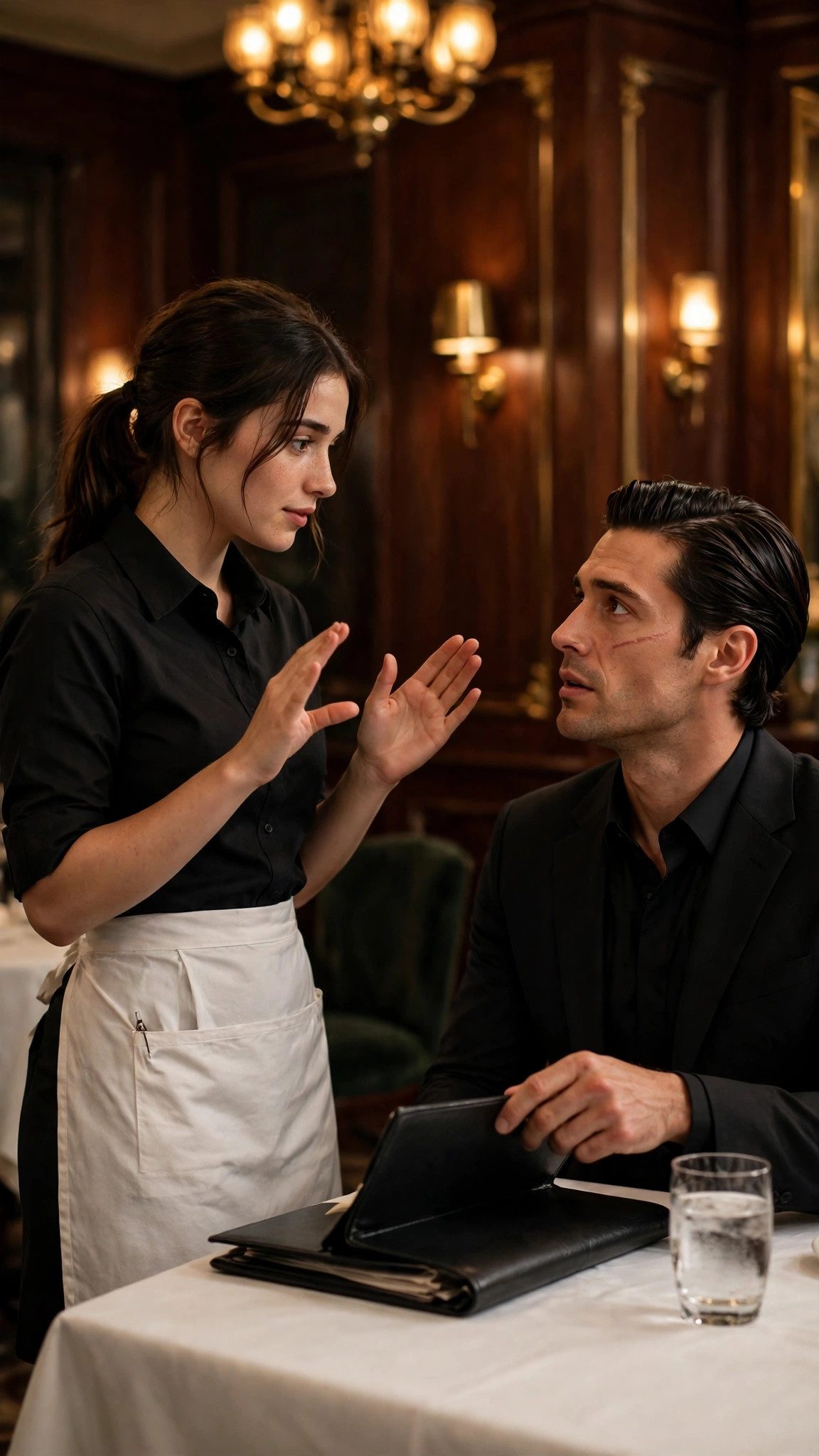
It was a Tuesday, not a Thursday, when everything changed. I was at the community center, helping a new mother learn the alphabet, when my phone buzzed. It was Rocco.
"Come to the warehouse on Fulton Street," the message said. "Now. Don't tell anyone. Bring nothing."
My hands went cold. Rocco had never texted me before. I told the mother I had an emergency, I grabbed my coat, and I ran the six blocks to Fulton Street, my heart pounding so hard I could feel it in my throat.
The warehouse was dark. Rocco was waiting by the side door, his face grim, and when he saw me he pulled me inside without a word and locked the door behind us.
"Castellano knows," he said. "Brett told him. He's been talking in bars for three weeks, and last night he told the wrong person. Castellano's men are coming tonight. There's a meeting at the docks at nine, and Castellano thinks Salvatore will be there, and he thinks Salvatore won't hear them coming."
I stared at him. "Does Salvatore know?"
"He knows," Rocco said. "He's known for two weeks. He's been letting Brett talk. He wanted to know who would buy the information. Now he knows. But the meeting tonight is real, and Castellano's men are real, and if they get close enough, it won't matter that Salvatore knows. A man who can't hear a gun cocking behind him is a dead man."
"Then why is he going?" I asked.
"Because if he doesn't go, Castellano will know he was warned, and he'll disappear, and we'll never find him," Rocco said. "Salvatore is going to walk into that meeting, and he's going to pretend he doesn't know, and when Castellano's men move, he's going to need someone who can see what he can't hear."
He looked at me. "That's you."
I wanted to say no. I wanted to run back to the community center, back to the mothers and the children and the alphabet, back to the small safe life I had lived before I walked into that private dining room. But I thought about Noah, and I thought about the Thanksgiving joke, and I thought about Salvatore sitting alone in that room for six years, and I nodded.
"Tell me what to do," I said.
Rocco drove me to the docks. It was eight-thirty, and the sky was the color of bruised fruit, purple and orange and dark. The meeting was in a small office above a freight warehouse, and when we arrived, Salvatore was already there, sitting at a long table with Marco and Dante, reading papers as if it were any other night. When he saw me, his face did something I had never seen it do before: it went completely blank, the way a man's face goes when he is trying not to feel anything at all.
"You shouldn't be here," he signed, fast and sharp. "This is not your world."
"I'm here," I signed back. "That's all that matters."
He looked at me for a long moment, and then he nodded once, and he pointed to a chair in the corner, behind him, where I could see the door and the windows and the whole room. "Sit there," he signed. "Watch everything. If you see something, sign it. Don't speak. Don't move. Just sign."
I sat down. The meeting began. Three men I did not know came in, Castellano's men, smiling and shaking hands, talking about freight routes and warehouse space in voices I could barely follow. I watched their mouths. I watched their hands. I watched the way they kept glancing at the door.
At nine-fifteen, one of them stood up to pour coffee, and as he walked past the window, I saw it: a reflection, a movement on the roof of the warehouse across the street, a man with something long in his hands. My blood went cold.
I signed, fast, my fingers flying. "Roof. Across the street. A man with a rifle."
Salvatore did not turn his head. He did not react at all. He simply set down his pen, very slowly, and signed to Dante, "Roof," and Dante stood up and walked to the window as if he were stretching, and then he nodded, almost imperceptibly, and Rocco was already moving toward the door.
What happened next happened very fast and very quietly. Dante went out the back. Rocco went out the front. Marco stayed at the table, smiling at Castellano's men, talking about freight routes as if nothing were wrong. And I sat in my chair, my hands shaking, watching the door, waiting for the sound I would never hear.
It never came. Ten minutes later, Dante came back, and he nodded, and Rocco came back, and he nodded, and Salvatore stood up and looked at Castellano's men with an expression I had never seen on his face before. It was not anger. It was something colder. Something final.
"Tell Vincent," he said aloud, his voice low and rough, "that the next time he sends a man to my roof, I will send him back in a box."
The three men went pale. They left without another word. And when they were gone, Salvatore turned to me, and his hands were shaking, and he signed, "You saved my life."
"No," I signed back. "You saved mine. A month ago. In that room."
He looked at me for a long time, and then he did something I did not expect. He reached across the table and took my hand, and he held it, and his hand was warm and steady, and I understood, in that moment, that something between us had changed forever, and that there was no going back to the way things had been.
But the night was not over. As Rocco drove me home, my phone rang. It was Noah.
"Tessa," he said, his voice shaking, and Noah never shook. "Two men came to the community center tonight. They asked about you. They asked if you worked at Bellini House. They asked if you knew Salvatore Marquetti. One of them had a scar on his hand. I told them I didn't know anything, but Tessa, they knew my name. They knew where I live."
My blood turned to ice. Castellano had not just come for Salvatore. He had come for me. And he had come for my brother.
"Stay where you are," I said. "Lock the door. Don't open it for anyone. I'm coming."
I turned to Rocco. "They went after Noah."
Rocco's face went hard. "Then it's war," he said. "And Castellano just made the biggest mistake of his life."
He turned the car around, and we drove through the dark streets of Chicago, and I sat in the back seat with my hands clenched in my lap, and I thought about the little girl named Maya, and the word for "butterfly," and the promise I had made to myself when I was twelve years old, sitting outside my brother's bedroom door.
I had promised I would never let my brother sit in a room full of people he loved and feel alone again. I had promised I would never let anyone use his silence against him.
Castellano had just threatened my brother. And I understood, in that moment, that I was no longer just a waitress who knew sign language. I was a woman who had just declared war on the most dangerous family in Chicago, and I was not afraid.
I was furious.
Rocco drove fast, too fast, through streets I had walked a thousand times, and I sat in the back seat with my hands clenched so tightly my nails cut into my palms, and I thought about Noah at nine years old, throwing his hearing aid across the room, and I thought about the men who had come to the community center, and I thought about the fact that they had known his name, and his address, and where he worked, and I understood, for the first time in my life, what it felt like to be the person the monsters were coming for.
When we got to Noah's apartment, the door was locked, and the lights were off, and for one terrible moment I thought we were too late. Then the door opened a crack, and Noah's face appeared, pale and frightened, and he pulled me inside and locked the door behind us, and he signed, fast and frantic, "They were here. Two men. They knocked for ten minutes. I didn't open the door. I called you. I called Rocco. I didn't know what else to do."
"You did exactly right," I signed back, and I hugged him, hard, the way I had hugged him when we were children and the world was too loud for him, except now the world was too dangerous, and I was the one who was afraid.
Rocco checked every room. He checked the windows. He checked the fire escape. Then he came back and said, "Pack a bag. You're both coming with me. Tonight. You're staying at Mr. Marquetti's house until this is over."
Noah stared at him. "I have work tomorrow."
"You don't have work tomorrow," Rocco said, not unkindly. "You have a war tomorrow. Pack a bag."
We packed in silence, Noah folding his clothes with shaking hands, me throwing things into a bag without looking, and all the while I kept thinking about the community center, about the mothers and the children, about Maya and her hearing aids, and I wondered if the men had gone there too, and if anyone else was in danger because of me.
"They didn't hurt anyone at the center," Rocco said, as if he could read my mind. "They asked questions. They left. They're not going to hurt children, Tessa. Even Castellano has lines he won't cross. He wants you. He wants Salvatore. He doesn't want a room full of deaf children on the evening news."
"That's supposed to make me feel better?" I asked.
"It's supposed to make you feel accurate," Rocco said. "Feelings come later. Right now, we move."
At Salvatore's house, Marco was waiting with a pot of coffee and a map of the city spread out on the dining room table, and Dante was standing by the window, watching the street, and the whole house felt like a fortress, which I suppose it was. Noah sat on the couch, and I sat beside him, and Marco poured us both coffee, and for a while nobody said anything, because there was nothing to say that would make any of it less terrifying.
Then Salvatore came in. He had been at the docks, dealing with the aftermath of the meeting, and his suit was rumpled, and there was a smudge of something dark on his sleeve, and he looked exhausted in a way I had never seen him look before. When he saw Noah and me on the couch, his face changed, and he walked over, and he knelt down in front of my brother, so that they were eye to eye, and he signed, slowly and clearly, "I am sorry. This is my fault. I brought this to your door."
Noah looked at him for a long moment. Then he signed back, "It's not your fault. It's Castellano's fault. And Brett's fault. And my sister didn't do anything wrong. She just talked to you in the language I taught her."
Salvatore stared at him. Then he did something I did not expect. He laughed. Not a big laugh. A small, surprised laugh, the kind of laugh a man makes when he has been carrying something heavy for a very long time and someone finally helps him set it down.
"Your brother is braver than most of my men," he signed to me, and I nodded, because it was true, and because I had always known it.
That night, Noah slept in the guest room, and I slept on the couch in the living room, because I could not bear to be far from him, and Salvatore sat up all night in the chair across from me, watching the door, watching the windows, watching the street, and every time I woke up, he was still there, awake, guarding us, and I understood something I had not understood before: that the most feared man in Chicago was afraid, too. He was afraid of losing us. He was afraid of the same thing I was afraid of. He was afraid that the people he loved would pay for his life.
In the morning, over coffee, he told me the whole story. He told me about the bomb, about his father, about the six years of hiding, about the uncles who tested him, about the rivals who circled him, about Mrs. Reyes and the curtains drawn and the lessons in secret. He told me everything, in sign, slowly, his hands moving through the morning light, and I listened, and I did not interrupt, and when he finished, I took his hands in mine, and I signed, "Thank you for trusting me."
"Thank you for staying," he signed back.
And that was the moment I understood that I was not going to run. I was not going to go back to my small safe life. I was going to stay, and I was going to fight, and I was going to do it with my hands, in the language my brother had taught me, in the language that had saved Salvatore's life on a rooftop across from a warehouse, in the language that was going to save us all.
Before I went to sleep that night, I did one more thing. I went to the window of the guest room, and I looked out at the dark street below, and I thought about Brett, sitting in a bar somewhere, counting his money, believing he had finally gotten his revenge. I thought about Castellano, planning his ambush, believing he had finally found the weakness he had been hunting for six years. And I thought about Salvatore, asleep in the next room, a man who had survived a bomb and six years of silence, and who was about to walk into a trap of his own making, trusting that the people who loved him would be enough to bring him home.
I raised my hands to the window, where no one could see them, and I signed, to no one and to everyone, "We are coming for you. All of us. And we are not afraid."
Then I went to bed, and I slept, and I dreamed of my brother's hands, and of paper butterflies, and of a man in a black suit, smiling a small, careful smile, in a room full of golden light.