Harper had never understood, until that week, what the docks were really worth.
She had known the numbers, of course. She had carried them for three years. The waterfront parcel was forty-seven acres of riverfront land, with three warehouses, two deep-water berths, and a rail spur that connected directly to the interstate. The Moretti bid was two hundred and forty million dollars. The Castellano bid was two hundred and ten. On paper, the difference was thirty million dollars. In reality, the difference was everything.
Because the docks were not just land. They were jobs. Two thousand longshoremen worked the river, and their union had backed Dante because Dante had promised to keep every one of them employed, and Castellano had promised nothing except that he would "modernize," which was the word rich men used when they meant they would fire people and replace them with machines.
The docks were also history. Harper's father had once told her that Chicago was built on the river, and that whoever controlled the river controlled the city, and that the men who forgot that were the men who lost. She had not understood him when she was sixteen. She understood him now.
On Sunday, two days before the vote, Dante came to the hospital with a folder.
"Chairwoman Voss sent this," he said, setting it on the tray beside her bed. "The final traffic study. She wants you to check the numbers."
Harper opened the folder with her good hand. "Dante, I am in a hospital bed with two cracked ribs. I cannot check a traffic study."
"You can," he said. "You are the only person in this city who has memorized it."
She looked at him, and then she looked at the folder, and then, despite herself, she smiled. "You are an impossible man."
"I am a practical man," he said. "And the practical fact is that Castellano stole your laptop because he thought the numbers were in it. He does not know that the numbers are in you."
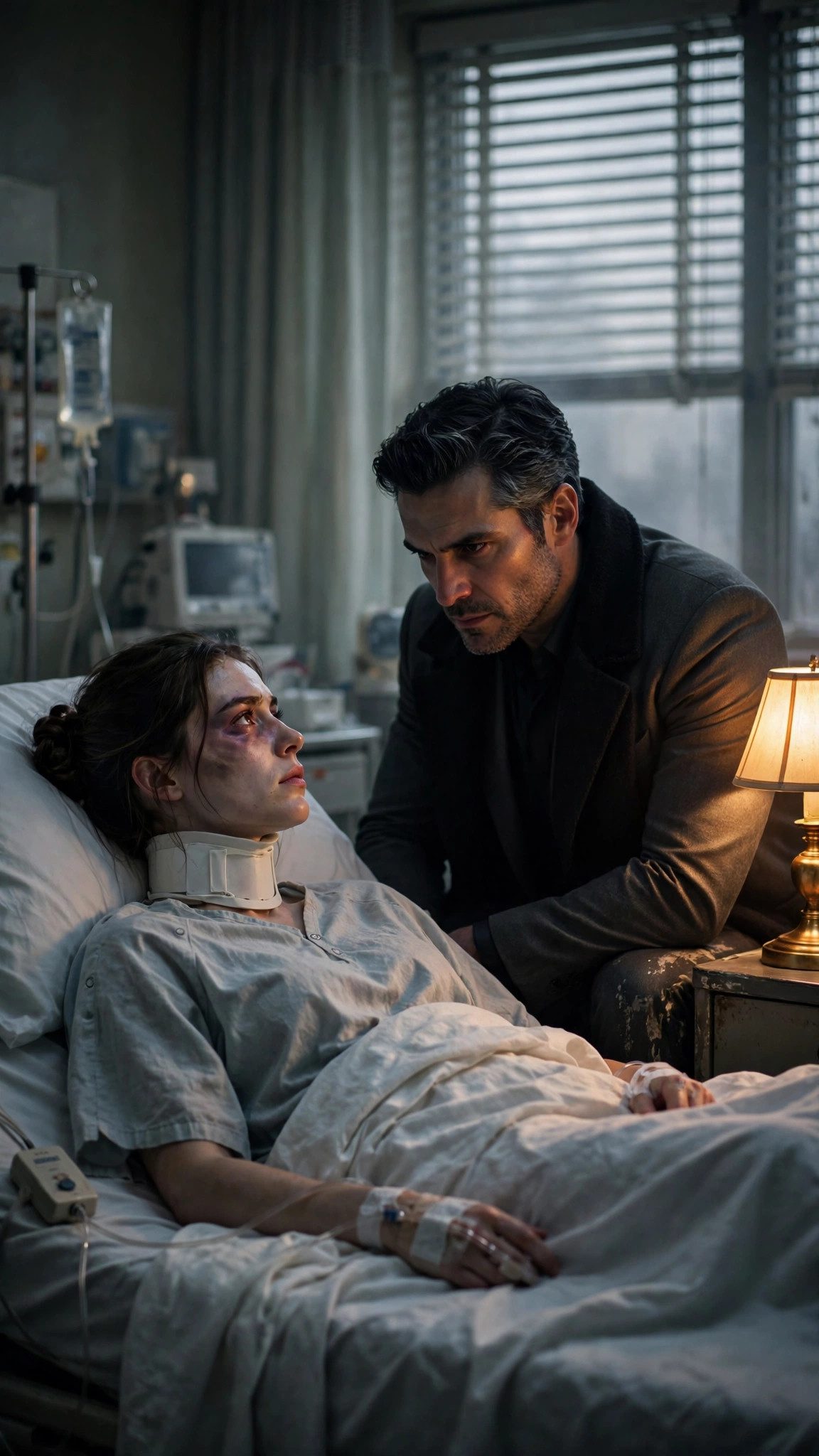
Harper spent the next three hours going through the study, page by page, with a pen in her right hand and Dante sitting in the chair beside her bed, reading over her shoulder. The room was quiet except for the beeping of the machines and the soft turning of pages, and the gray light came through the blinds, and for a little while, it felt almost normal. Almost like an ordinary Sunday in an ordinary office.
Until Harper stopped on page twelve and frowned.
"Dante," she said slowly. "This number is wrong."
"What number?"
"The truck count on the north route. It says four hundred and twelve trucks a day. It should be four hundred and twenty-one."
Dante leaned closer. "Are you sure?"
"I memorized it," she said. "Four hundred and twenty-one. Someone changed it. Someone altered the study after I submitted it."
Dante was very quiet for a moment. Then he said, "Who had access to the study after you submitted it?"
"The zoning office," she said. "Chairwoman Voss. Her assistant. And Marcus Hale."
The name hung in the air between them like smoke.
"Marcus," Dante said softly. "He changed the number. He made our bid look weaker. He did it so the vote would be closer, so Castellano would have room to argue."
Harper closed the folder. "He has been working for Castellano for how long?"
"I don't know," Dante said. "But I am going to find out."
Harper called Chairwoman Voss herself that afternoon, from the hospital phone, and her voice was steady, and she explained the error, and Voss listened without interrupting, and when Harper finished, Voss was quiet for a long moment.
"Four hundred and twenty-one," Voss said. "You are certain."
"I memorized it," Harper said. "I memorized every number in that study. Four hundred and twenty-one trucks a day on the north route."
"Then the study was altered after you submitted it," Voss said. "And I will find out who altered it. And I will submit a corrected study this afternoon, with your name on it, Miss Bennett, because you are the one who caught it."
After she hung up, Harper lay back against the pillows and thought about her father. Daniel Bennett had been a history teacher, and he had loved Chicago the way other men loved their wives, and he had once taken Harper down to the river when she was twelve years old, and they had stood on the bank and watched the ships come in, and he had said, "Harper, this city was built on this river. Whoever controls the river controls the city. Remember that."
She had not understood him then. She understood him now. The docks were not just land and warehouses and berths. They were the river. They were the city. And her father, who had taught history to teenagers for thirty years and had never owned anything more valuable than a used car, had understood that better than any of the rich men fighting over the waterfront.
She thought about what he would say if he could see her now: lying in a hospital bed with two cracked ribs, holding a traffic study in her good hand, taking on Vincent Castellano with nothing but memorized numbers and stubbornness. She thought he would laugh. And then she thought he would be proud.
That night, after Dante left, Harper lay awake and thought about Marcus Hale. She thought about the morning he had brought her coffee. She thought about the afternoon he had carried her laptop bag up the stairs. She thought about the way he had smiled at her in the parking garage, too wide, too fast, and she understood now what that smile had been.
It had been the smile of a man who was already selling her.
She thought about her mother, too. Ruth Bennett had called that afternoon from Ohio, and her voice had been thin and frightened, and Harper had lied to her, the way daughters lie to their mothers, and said that she was fine, that it was only a small accident, that she would be home for Christmas.
After she hung up, she had cried for the first time since the attack. Not because of the pain. Because she had lied to her mother, and because she was afraid, and because she was tired of being brave.
But when Dante came back the next morning, she was not crying. She was sitting up in bed with the traffic study open on her lap and a pen in her hand, and she looked at him and said, "The number is fixed. I called Chairwoman Voss myself. She is submitting a corrected study this afternoon. And I want you to know something."
"What?" he said.
"I am not afraid of Castellano," she said. "I am not afraid of Krol. I am not afraid of Marcus Hale. I am angry. And I have decided that anger is more useful than fear."
Dante studied her for a long moment. Then he did something he had never done in three years of working together.
He took her hand.
His hand was warm, and rough, and steady, and Harper, who had spent three years keeping a professional distance from this man, felt something shift in her chest, something she had been carefully not feeling for a very long time.
"Dante," she said quietly.
"I know," he said. "I know. And after Tuesday, after the vote, after Castellano, we are going to talk about it. All of it. I promise you that."
He did not let go of her hand. He sat there, holding it, and the room was quiet except for the beeping of the machines, and Harper thought about the three years she had spent watching this man call his mother every Sunday evening. She had heard his voice change on those calls, becoming softer, younger, almost like a different person, and she had once asked Rosa, the housekeeper, about it, and Rosa had smiled and said, "His mother is the only person in the world he is afraid of. She is eighty-one years old, and she still tells him to eat his vegetables."
That Sunday, Dante called his mother from the hospital hallway, and Harper could hear his voice through the door, low and gentle, and she heard him say, "Yes, Mama. I am eating. Yes, Mama. I am sleeping. No, Mama, I am not working too hard." And then he was quiet for a long time, listening, and then he said, "Mama, there is a woman. Her name is Harper. And I think you would like her." And Harper, lying in her bed with two cracked ribs and a fracture near her eye, felt her heart turn over in her chest.
"It will not go wrong," he said. "Because you are going to be there. You are going to walk into that room on Tuesday morning, and you are going to present the traffic study, and you are going to do it with two cracked ribs and a fracture near your eye, and Castellano is going to watch you do it, and he is going to understand that he did not stop anything. He only made you stronger."
Harper looked at him, and she thought about the three years she had spent managing his schedule and his companies and his meetings, and she thought about the way he had sat beside her hospital bed at six in the morning without being asked, and she thought about the way he had looked at her when she told him the message, and she understood something she had not understood before.
Dante Moretti was not just her employer. He had not been just her employer for a long time. He was the man who had sat beside her bed in absolute silence. He was the man who had gone to war for her. And she was the woman who had memorized his numbers and carried them in her head where no one could steal them.
On Monday morning, Tony arrived at the hospital carrying a thin black box, and he set it down on the tray beside Harper's bed with the care of a man handling explosives.
"Mr. Moretti asked me to bring you this," he said.
Harper opened the box. Inside was a new laptop, still in its plastic, with a small note taped to the lid in Dante's handwriting. The note said only: "The numbers are in you. The machine is just for typing."
She laughed, and then she winced, because laughing hurt her ribs, and Tony, who had known her for three years and had never once seen her laugh in a hospital, smiled.
"Thank you, Tony," she said. "Tell him I said thank you."
"I will," Tony said. "But Miss Bennett, there is something else. Mr. Moretti asked me to tell you that the FBI has a man watching this floor, and a man watching the parking lot, and a man watching the street. No one is going to get to you. Not Krol. Not anyone."
Harper nodded. Then she opened the new laptop, and she spent the next two hours setting it up the way she set up everything: with a strong password, an encrypted drive, and a backup of the zoning packet that she typed out from memory, number by number, because the numbers were in her, and no one could steal them out of her head.
At noon, she practiced her presentation. She stood beside the hospital bed, holding the folder, and she spoke aloud to the empty room, going through the traffic study from beginning to end, and Dante came in halfway through and stood in the doorway, listening, and when she finished, he said, "Again. Slower this time. Let them hear every number."
So she did it again. And then a third time. And by the third time, her voice was steady, and her hands were still, and she knew she was ready.
On Monday afternoon, Dr. Alvarez came into the room with a clipboard and a serious expression.
"Miss Bennett," she said, "I am going to tell you something, and I want you to listen to me very carefully. You have two cracked ribs, a concussion, and a fracture near your left eye. You should not be leaving this hospital. You should not be standing for more than ten minutes. You should not be speaking in public. If you leave tomorrow, you will be in pain, and you will be at risk, and I cannot stop you, but I can tell you that it is a bad idea."
Harper looked at her, and then she looked at Dante, and then she said, "Doctor, with respect, I have a zoning board to attend."
Dr. Alvarez sighed. "I thought you might say that. Then I will give you something for the pain, and I will give you a brace for your ribs, and I will tell you to sit down whenever you can, and I will pray that the man who did this to you is caught."
"He will be," Dante said quietly.
That night, Harper could not sleep. She lay in the dark hospital room and listened to the machines beeping and the nurses walking past in the hallway, and she thought about Tuesday. She thought about the podium. She thought about the numbers. She thought about Castellano sitting in the audience, watching her, and she thought about what she would say to him with her eyes when she walked into that room.
She would say: you tried to use me as an envelope. You tried to turn me into a message. But I am not a message. I am Harper Bennett. And I am still here.
And then she thought about Dante, and about the way he had held her hand, and about the promise he had made, that after Tuesday they would talk about all of it, and she fell asleep wondering what "all of it" meant, and whether she was brave enough to hear it. The answer, she already knew, was yes.