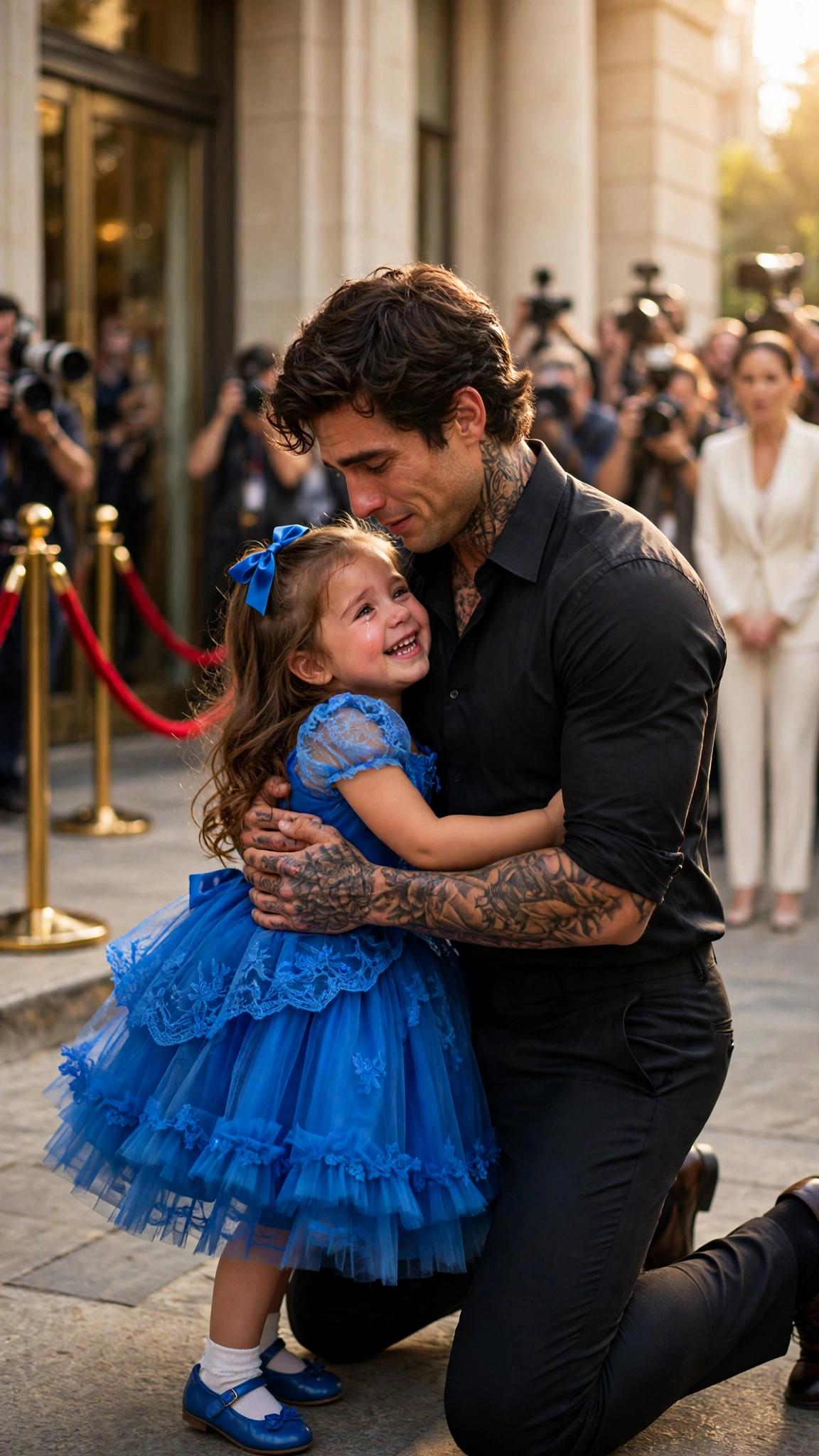
Claire Bennett was alive. But only just.
That was what Dr. Alan Weiss told Michael the next morning, in a small consultation room with a plastic model of a heart on the desk and a window that looked out over the hospital car park. Dr. Weiss was the best cardiac surgeon in the country — Michael's lawyer had found him in Boston, and he had flown in that same night — and he did not waste time on comfort.
"Her mitral valve is failing," he said, turning the model in his hands. "It's been failing for years. The heart is compensating, but it's running out of room. Without surgery, I'd give her weeks. Perhaps a month. With surgery — a valve replacement, done by a good team, in the next few days — I'd give her an excellent chance. Eighty-five, ninety per cent. She's young. She's strong in every way except this one."
Michael sat very still. "Then do it. Today. Now."
"It's not that simple, Mr. Rivers. She has to consent. And she has to be strong enough for the anaesthetic. And —" Dr. Weiss paused. "She's refused surgery twice already. She's refused it because of the cost, and because of her daughter. She won't agree to anything that leaves Emma alone."
"She won't be alone," Michael said. "I'll be with her. I'll be with both of them. Doctor, whatever it costs, whatever you need — it's done. Just tell me what she needs to hear to say yes."
What she needed to hear, it turned out, was not about money. It was about Emma.
Michael went back to room 412 and sat beside Claire's bed, and he took her hand, and he told her everything. He told her about the afternoon at Sunrise, about Emma running through the crowd in her blue dress, about the words "Daddy! I knew you'd come!" He told her about the letter, and the birth certificate, and what Helen had told him about his father. He told her he knew the truth now — all of it — and that he was sorry, and that sorry was not enough, and that he would spend the rest of his life making it enough.
Claire listened with her eyes closed and tears running down her temples into her hair. When he finished, she was quiet for a long time.
"I never hated you," she said at last, very softly. "I wanted to, sometimes. It would have been easier. But I couldn't. Because every time I looked at Emma, I saw you. And I couldn't hate the man who gave me her."
"I don't deserve that," Michael said.
"No," Claire agreed, and a faint smile touched her lips. "You don't. But you're here now. And that's what matters. That's what Emma needs. That's what I need."
"Then let Dr. Weiss operate," Michael said. "Let him fix your heart. Emma needs her mother, Claire. She needs you for a hundred more years. And I —" His voice broke. "I need you too. I have needed you for five years, and I was too proud and too afraid to say it."
Claire looked at him for a long moment. Then she nodded, once. "All right," she whispered. "All right. I'll do it. But Michael — if anything goes wrong —"
"Nothing is going to go wrong."
"If anything goes wrong," she said, stronger now, "you take care of her. You be her father. Not the man on the photograph. Her real father. Promise me."
"I promise," Michael said. "I swear it on my life."
The surgery was scheduled for the next morning. That evening, Michael brought Emma to the hospital.
It was the first time the three of them had been in a room together. Emma, still in her blue princess dress — she had refused to take it off, telling Helen it was her lucky dress — climbed carefully onto the edge of Claire's bed, and Claire wrapped her arms around her daughter, and for a moment the beeping of the monitor seemed to slow and steady, as if Claire's heart knew exactly who was holding her.
"Mama, Daddy came," Emma said, her eyes shining. "He really came, just like you said."
"I know, baby," Claire whispered, kissing the top of her head. "I know."
Emma looked at Michael, who was standing awkwardly by the bed with his hands in his pockets, afraid to touch anything, afraid to break anything. "Daddy, why are you standing over there? Come here."
He came. He sat on the edge of the bed, on the other side of Emma, and the little girl took his hand and her mother's hand and put them together over her own, like a bridge.
"There," she said, satisfied. "Now we're a family."
Claire laughed, and then she coughed, and the monitor beeped faster, and a nurse came in and said gently that visiting hours were over. Michael lifted Emma down from the bed. Emma kissed her mother goodnight — a long kiss, on the cheek, the way she had kissed the photograph every Sunday — and whispered, "I'll be waiting, Mama. Daddy and me, we'll be waiting right here."
In the corridor, Emma looked up at Michael. "Is Mama going to be all right?"
Michael knelt down so that his eyes were level with hers. He had learned, in a single afternoon, that this was the way to talk to her — not from above, but from beside. "The doctors are going to fix Mama's heart tomorrow," he said. "It's a big operation, and Mama is very brave. And you and I are going to wait right here, together, until she wakes up. All right?"
Emma thought about this. Then she nodded, and she took his hand, and she said, "All right, Daddy. But you have to promise not to go away."
"I promise," Michael said. "I'm never going away again."
That night, Michael did not sleep. He sat in the waiting room with Emma asleep in his lap, her blue dress rumpled, her bow finally slipping free, and he watched the clock, and he thought about the night five years ago when he had walked to the window and put his hands on the glass and said, "We're not ready." He thought about his father, and the lie, and the money that had never changed hands. He thought about a jar of saved dollars on a kitchen counter in Queens, and a photograph kissed goodnight, and a little girl who had waited for him every day of her life.
But before the night settled, there were hours to fill, and Emma — even half asleep — had questions.
"Daddy," she said, her voice small in the dark waiting room, "will Mama wake up after the doctors fix her?"
"Yes, sweetheart," Michael said. "She'll wake up, and she'll be stronger than before. The doctors are going to give her a new part for her heart — like fixing a watch. And then she'll be able to run and play with you again."
Emma was quiet for a moment, thinking about this. "Did you fix Mama's heart before, when you were her boyfriend?"
Michael smiled, despite everything. "I tried to. But I'm not a doctor, sweetheart. Your mama is the brave one. She's the one who has to be brave tomorrow."
"How did you meet Mama?" Emma asked. "Was it at a castle?"
"It was at a party," Michael said, "a big party full of rich people. And your mama stood up in front of all of them and told them the truth, and she wasn't afraid of anyone. And I thought — I thought she was the bravest person I had ever seen. And the most beautiful."
Emma nodded, satisfied. "That's a good story, Daddy."
"Do you want to hear another one?" Michael asked. "About the time your mama and I walked across a big bridge in the middle of the night, and I bought hot chocolate, and I got whipped cream on my nose?"
Emma giggled. "You got cream on your nose?"
"I did. And your mama laughed at me for ten minutes."
"Tell it again," Emma said, and so he did, and then he told her about the park, and the blanket, and the sun going down, and the time Claire had taught him to make pasta and he had washed the lettuce wrong, and Emma laughed, and then her eyes began to close, and her head grew heavy against his chest, and she fell asleep with her hand curled around his finger.
Michael sat in the dark and watched her sleep, and he made a promise to himself, silently, the way you make promises that matter: that he would never again be the man who walked to the window. That he would be the man who stayed in the room.
At six in the morning, the nurses came for Claire. Michael stood in the doorway of room 412 and watched them wheel her away, and she lifted one pale hand and waved at him, and mouthed two words: "Take care."
"I will," he whispered.
The surgery took four hours. Michael spent them in the waiting room with Emma, reading her picture books, playing clapping games, answering her questions with a patience he did not know he had. Every time a doctor walked past, his head snapped up. Every time the phone rang at the nurses' station, his heart stopped.
And then, at twenty minutes past ten, Dr. Weiss came out of the operating theatre in his green scrubs, and he pulled his mask down, and he smiled.
"It went perfectly," he said. "The new valve is in place. Her heart is strong. She's going to be fine, Mr. Rivers. She's going to be just fine."
Michael closed his eyes. Emma, who had been watching his face, threw her arms around his neck and said, "See, Daddy? I told you Mama is brave."
"She is," Michael said, holding her tight, his voice breaking. "She's the bravest person I know. And so are you, sweetheart. So are you."
They let him see her that afternoon, in the recovery ward. Claire was pale and still, with tubes and wires everywhere, and a bandage down the centre of her chest, and Michael's first instinct was fear — until he saw the monitor beside her bed, beeping steadily, strongly, in a rhythm he had never heard from her heart before. It was the sound of a heart that worked. It was the most beautiful sound he had ever heard.
Emma climbed carefully onto a chair beside the bed and took her mother's hand — gently, the way the nurse had shown her — and whispered, "Mama, it's me. The doctors fixed your heart. Daddy and me waited the whole time. We didn't go anywhere."
Claire's eyelids fluttered. She did not wake, not properly, but her fingers closed, very slightly, around Emma's hand. The nurse smiled and said, "She can hear you, sweetheart. Keep talking to her."
So Emma talked. She told her mother about the waiting room, and the picture books, and the clapping games, and the story about the hot chocolate and the whipped cream on Daddy's nose. She told her about the nice nurse who had given her apple juice. She told her about the clock on the wall, and how Daddy had watched it the whole time, and how he had not left, not even once.
Michael stood on the other side of the bed and listened to his daughter talk to her mother, and he thought about the letter in his pocket, and about the promise he had made — I will take care of her, I will be her father — and he knew, with a quiet certainty, that he had already begun.
Two days later, Claire opened her eyes properly for the first time. The first thing she saw was Emma, asleep in a chair beside her bed with a colouring book in her lap. The second thing she saw was Michael, asleep in the chair on the other side, his head tilted back, his jacket folded over Emma like a blanket. She lay there for a long time, just looking at them, and her new heart beat strong and steady in her chest, and she thought: this is what I waited for. This is what all of it was for.