Daniel arrived at the hospital forty minutes later in a tuxedo and an overcoat someone had thrown at him, carrying two coffees and the expression of a man who has left a string quartet playing to an empty head table and has no regrets about it at all.
He stopped in the doorway of the family room. Grace was asleep — actually asleep, the sleep of the utterly spent — curled in the vinyl chair with her stole over her like a blanket, and the triplets were asleep on the room's little sofa in a pile of blue and navy and pink, and Ryan was sitting on the floor. On the floor, in a four-thousand-dollar suit, with his back against the wall and his ruined shoes stretched out in front of him, guarding them all like a dog that has decided.
"Brother," Daniel said softly. He held out a coffee. "Tell me everything, and then tell me what to do."
Ryan told him everything. It took four minutes; grief and fury are efficient editors. When he got to the lobby, the list at the security desk, and Amelia's gentle voice saying he'd moved on, Daniel's face changed in a way Ryan had seen only twice before, both times across a negotiating table from men who were about to lose their companies.
"The photographs," Daniel said. "The ones your mother got. You still have the original envelope?"
"In a drawer in London. I never—" Ryan stopped. He looked at his hands. "I never looked at them a second time. I couldn't."
"Then you never noticed the man's watch." Daniel set down his coffee. "Or his face in the last frame, probably turned three-quarters. Ryan, I've met Grace's brother. James. He came to the Christmas party the year you got married and drank my scotch and cried laughing about the Bears. If the man in those photographs is tall with a scar through his eyebrow — it's James, man. It's her brother, in town for one day, saying goodbye at a café."
The family room was quiet except for the soft machinery of four sleeping people breathing.
"Get me the truth," Ryan said. "All of it. The photographer, whoever paid him, the lobby log, everything. I don't care what it costs. I don't care whose name is on it." He looked at the sofa, at Nick's small face slack with sleep, the port's dressing visible at the collar of his little suit jacket like a medal no child should wear. "Actually, I care about exactly one thing first. Tomorrow morning, before anything else. I want the transplant team to type me. Blood, HLA, whatever they need. If there's a chance I'm the match — I need to know before Nick does anything but get better."
Daniel looked at him for a long moment. "And your mother?"
"My mother," Ryan said, "has had three years of my obedience. She can survive a few days of my questions."
He said it bravely. It would be the thing he remembered, later, when the questions started being answered — that he had thought his voice sounded steady.
– – –
The truth, when it came, took seventy-two hours, and Daniel laid it on the hospital cafeteria table on the fourth morning in a folder, the way you lay down a weapon.
The photographer was a man named Victor Pye, a freelancer for the gossip sites, and he had been paid — through two shell invoices and one very careless personal check — out of an account belonging to Brooks Hospitality's events budget, authorized by A. Brooks. He had followed Grace for three days on instruction, and he had been told exactly what the client wanted to see. The client had reviewed eleven rolls of a sister hugging her brother, eating lunch with her brother, laughing with her forehead pressed to her brother's forehead the way the Ellis family had greeted since childhood — and had chosen the six frames that lied best, and had cropped the seventh, in which James Ellis's wife and her pregnant belly were standing two feet away holding the coffee.
The lobby log was worse. Grace had come to Mercer Tower three times, not once; Amelia had lied to her face the day she remembered, but there had been two visits before it, logged and annotated in a security supervisor's hand: Per E. Mercer — do not admit. And in the divorce file, thick as a phone book in the firm's archive, Daniel's investigator had found the thing that made Ryan leave the cafeteria and stand in the hospital's service stairwell with his forehead against the painted concrete for a long time: a letter, on the penthouse's own stationery, in Grace's hand, that Ryan had never seen.
Ryan — I am writing this because your assistant says you will not take my calls and I am out of ways to be proud. I am pregnant. Whatever you believe about me, the baby is yours, and I will have any test, sign any paper, endure any humiliation your family designs, if you will only be part of this child's life. I do not want your money. I want our baby to know your voice. Please. Please call me. — G.
It had been received by the firm's mail room, date-stamped, and routed, per the covering slip, to the attention of the family office. The family office had filed it. No one had shown it to Ryan. The covering slip bore an instruction in his mother's assistant's handwriting — and behind that, initialed in the corner in a hand Ryan recognized with a drop in his stomach like a falling elevator, was a note from Eleanor Mercer's own pen: Handle quietly. He is not to be troubled with this now.
Handle quietly. Three heartbeats, handled quietly, in a drawer, for three years.
Ryan read the letter eleven times in the stairwell. He read it standing, sitting on the cold steps, and finally aloud, in a whisper, the whole of it, because Grace had written it to be heard by him and no living person ever had. Then he took out his phone and did three things, in the order of a man defusing something.
First, he called the family office and revoked, personally and on a recorded line, every standing instruction containing Grace's name, and ordered the security lists at every Mercer property audited and burned in his presence.
Second, he called the firm's managing partner — at home, at dinner, without apology — and informed him that the contents of a certain divorce file had been concealed from a client by that client's own family office, that he expected a full accounting on his desk within a week, and that if the word leak crossed the partner's mind at any point he should replace it with the word subpoena.
Third, he sat on the steps a while longer with the letter against his heart under his coat, like a man keeping a bird warm, and he practiced the words he had never yet managed to say to Grace in the right order. Not excuses — he had forsworn those in the stairwell's concrete silence, having understood at last that an explanation is a thing you offer a judge, and Grace was not his judge. Grace was the plaintiff, the witness, the courthouse, and the city it stood in. What he owed her was not a defense. It was a surrender, unconditional and correctly addressed, and evidence — the only currency she had ever actually accepted — that the man doing the surrendering intended to be findable, every day, for the rest of the natural record.
He did not confront her. There was a part of Ryan that had been waiting his whole life for the confrontation, and it stood aside, astonished, while the rest of him did the arithmetic of a little boy's white cell counts and understood that there was no room in him, that week, for anything but Nick. The reckoning with his mother would keep. Reckonings are patient. Little boys on countdowns are not.
What he did instead was learn to be in a hospital room.
He learned that Noelle interviewed strangers — doctors, nurses, the man who mopped the corridor — with the grave focus of a tiny journalist, and kept the results in a notebook in crayon. He learned that Holly would not eat if she was frightened, and that she was frightened by raised voices, beeping that changed pitch, and the word hospital said in the wrong tone, and that she could be unfrightened, reliably, by being read to in a funny voice about a bear. He learned that Nick considered himself the family's senior officer, that he had appointed himself guardian of his sisters' snacks, and that from his bed, tethered to his button and his beeping constellation, he issued instructions for the household with the calm of a general who has never doubted he will be obeyed.
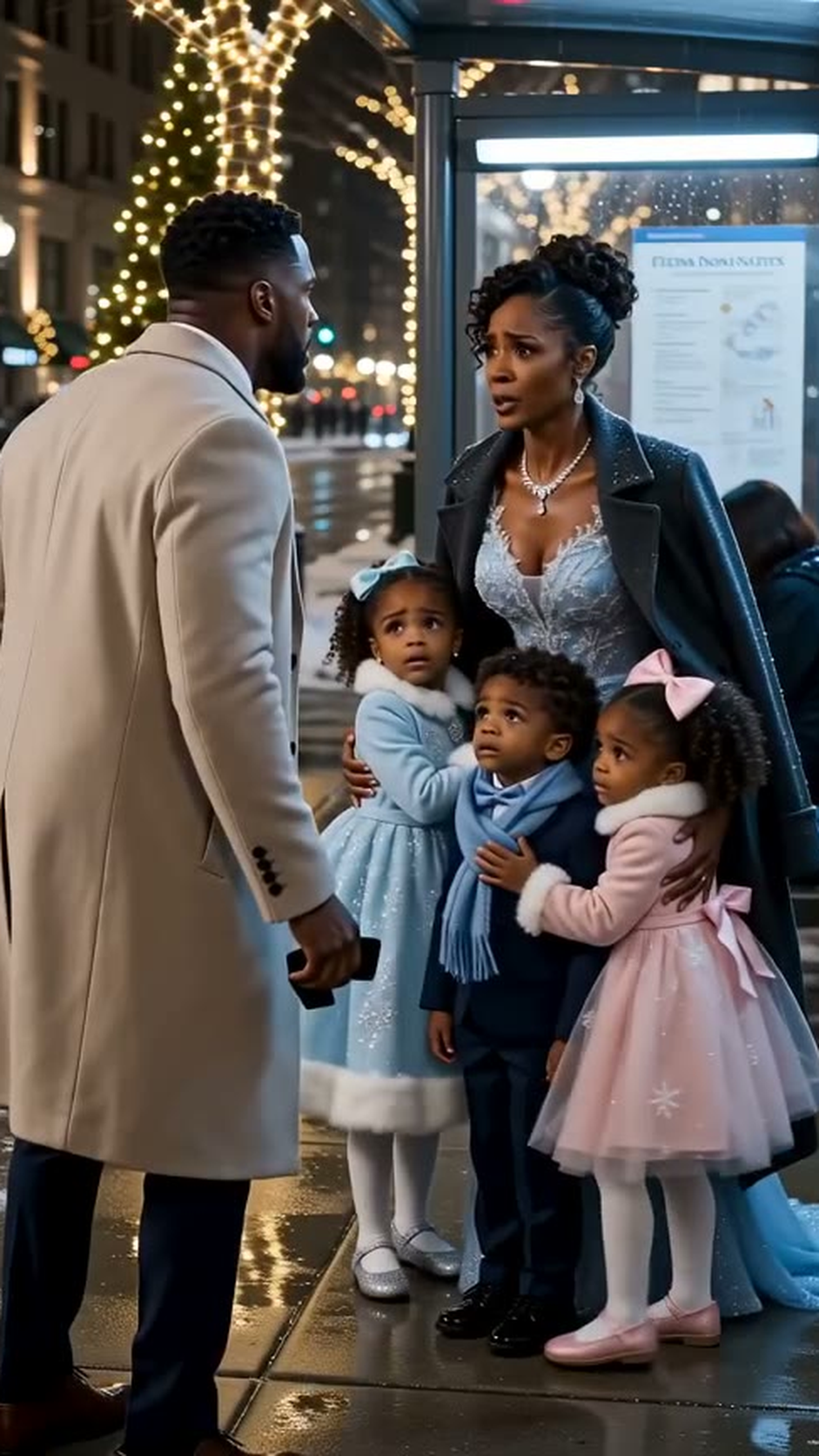
"You're the rain man," Nick informed him on the second day, studying him over a cup of ice chips. "From the bus. Mommy cried in the elevator."
"Nick," Grace said, stricken, from the doorway with the laundry bag.
"It's okay," Ryan said, and found that it was said to both of them. He sat down in the chair that had become, by some ward consensus, his. "Your mommy has had a lot of weather, buddy. Grown-ups cry about weather sometimes. It doesn't mean the house falls down."
Nick considered this with his head tilted, exactly Ryan's tilt, the one from the silver frame on his grandmother's piano. "Are you staying for the weather?"
Ryan looked at Grace. Grace looked at the laundry bag as though it might rescue her. "I'm staying," Ryan said. "For all of it."
The next morning he was interviewed by Noelle.
She arrived at his chair with her crayon notebook open to a fresh page, climbed onto the arm of it without asking, and regarded him with the calm of a census-taker. "Questions," she announced. "One: are you a doctor."
"No."
"Two: are you lost."
"No."
"Three." She wrote something down before asking, which Daniel would have recognized as a technique. "Are you ours?"
Ryan looked at the page. She had already written, in enormous green capitals, YES, and was waiting for him to catch up to the paperwork. "Noelle," he said carefully, "that's a question for your mommy and me to—"
"You came in the rain," she said, writing. "You stayed for the weather. Nick says you're the bucket man. I'm putting YES." She closed the notebook with the air of a judge who has heard enough. "You may hold Holly's bear while she naps. It's an honor. Don't lose it."
He held the bear. It was missing an ear and smelled faintly of graham crackers, and he sat in the corridor of a children's hospital holding it with both hands while his daughter-by-two-minutes slept against his shoulder in a pink dress, and the CEO of the Mercer Group, whom the business press had once called the Ice Merchant of Michigan Avenue, wept silently into the top of her curls and did not care who saw, and no one who saw said anything at all, because the ward had its own code about weather.
From the doorway, with the laundry bag on her shoulder, Grace watched her ex-husband cry into their daughter's hair while holding a one-eared bear with both hands, and she stood there long enough that the nurse had to walk around her twice. Later she would tell herself she had been deciding whether to interrupt. It was a lie, and she knew it, and she let herself keep it; she was allowed one. She had been deciding nothing. She had been memorizing it, against her will and her instructions, in the part of her memory she had sealed in November three years before and sworn, in a marble lobby, never to open again.
That was the day the transplant team called them both into the consult room with the soft chairs and the tissues placed precisely within reach, and Dr. Patel, who directed the haploidentical unit, folded her hands and told them that Ryan's typing had come back, and that he was, as expected, a haploidentical match — a parent's match, workable, real — and that the team wanted to move fast, because Nick's latest counts had come back that morning, and they were not the numbers anyone had hoped for.
"How fast?" Grace said.
Dr. Patel glanced at the chart, and then, to her credit, at Grace's face instead. "We've admitted him," she said gently. "As of an hour ago. He spiked a fever in clinic. I'm sorry — I know that's not how you wanted to hear it. But the honest answer to your question is: now. Everything is now."