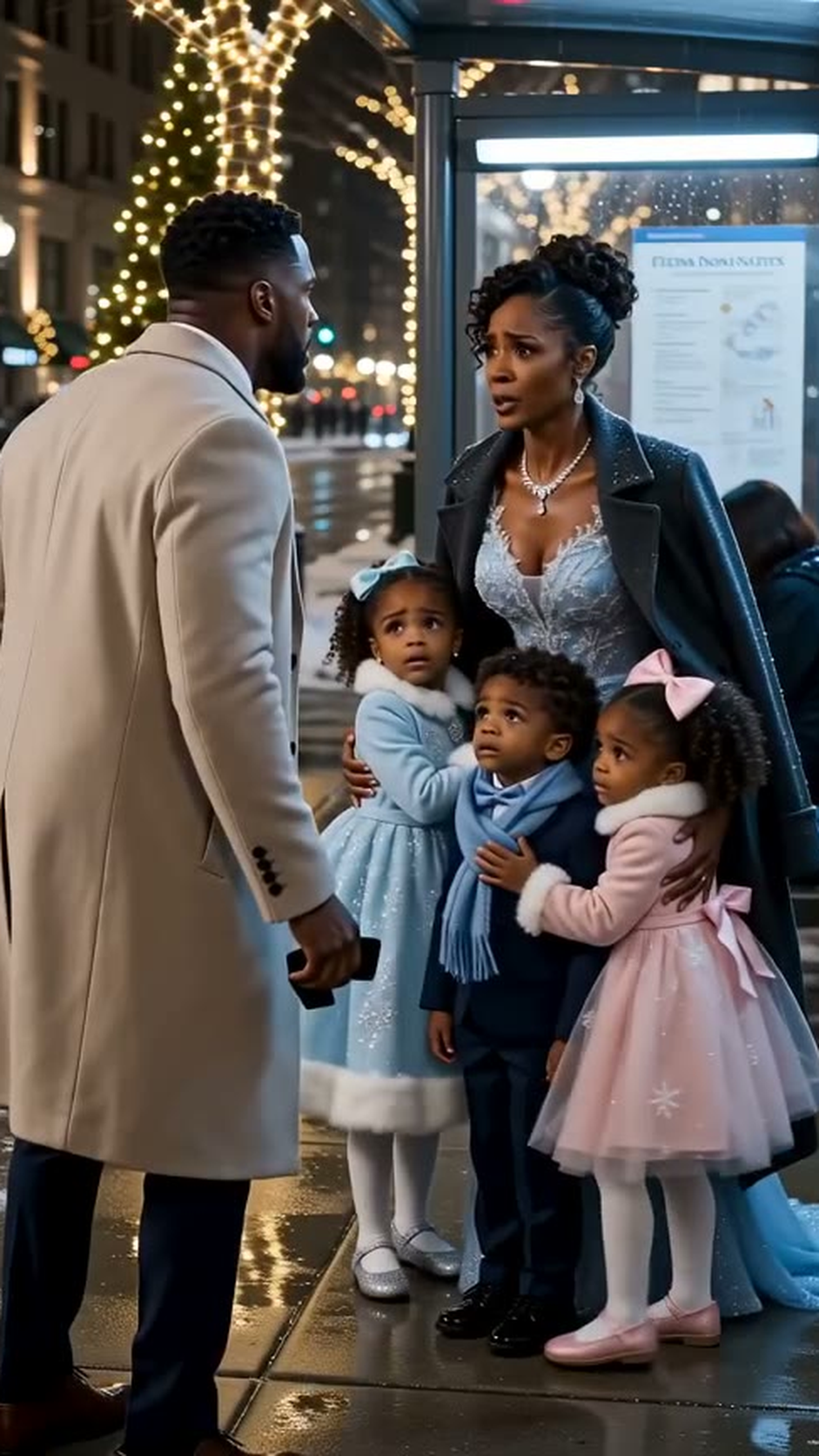
A transplant is a war fought by appointment.
Ryan learned the schedule the way he had once learned acquisition timetables, and he was better at this, because this one mattered. Five days of injections to drive his stem cells out of his marrow and into his blood, where they could be harvested — five days of an ache settling into his bones like weather, which he welcomed with a gratitude that confused the nurses. In the room down the corridor, Nick began conditioning: the careful, terrible chemistry that would empty out his failing marrow to make room for his father's. His sisters visited in masks. Noelle read him the results of her investigations ("The lady in the cafeteria says the Jell-O is red because of beets, Nick. BEETS."). Holly sat with her forehead against the glass of the isolation window and read the bear book to the window itself, so that the sound would go through.
Grace moved through the ward the way she had moved through three years: tirelessly, invisibly, knowing every nurse's name and every machine's voice. She had a cot. She had a system. What she did not have was any idea how to share the weight, and Ryan watched her refuse rest with the helpless fury of a man watching someone carry a piano up stairs alone, insisting the piano was light.
"Sleep," he said, on the third night. "Four hours. I'll sit with him. If anything changes I'll wake you before the monitor finishes beeping — I'll wake you before he does."
"And if he asks for me?"
"Then I'll tell him his mother is sleeping because his father is here." He held her gaze. "Let me be here, Grace. Not instead of you. Here. Next to you. It's a bigger chair than you're used to sitting in, but there's room."
She slept four hours in the family room with her stole balled under her head, and Ryan sat in the blue dark of Nick's room and listened to his son breathe, and at 3 a.m. Nick opened his eyes and said, with the practicality of a foreman, "You can hold the bucket if I throw up. That's a dad job. Mommy said dads do buckets."
"Your mommy is right about buckets," Ryan said, and his voice did not break, and it cost him more than the injections. "I am honored to be on bucket duty."
On the night of the third day, when the ward had gone to its blue hush and Nick slept with the bear book tent over his face, Grace found Ryan on the family kitchen's little balcony, standing in the cold in his shirtsleeves with a paper cup gone cold in his hand. The injections had put a deep, grinding ache into his bones — the nurses had warned him, marrow waking up is not quiet — and he was standing the way men stand in the cold when movement hurts less than stillness.
"You should be resting," she said. "You're the medicine tomorrow. Medicine rests."
"Is that an order from the senior officer's mother?"
"It is a report," she said, "from his press secretary. Noelle has filed it twice." She came and stood beside him at the rail. Below them Chicago ran its rivers of light through the wet streets; across the avenue the Mercer Grand wore its Christmas gold like a ship at anchor. They stood looking at the building where they had been married, neither of them saying so. "I have four photographs of their first year," Grace said suddenly. "Total. On a cracked phone. I used to apologize to them in my head for that — other children get albums. Then Nick got sick and I understood the albums aren't the record." She turned her hands over in the cold light, looking at them as if they belonged to an employee. "These are the record. Everything's in these. Every night feed, every transfusion, every time I carried all three up two flights because the elevator was out. When I'm old I'll show them my hands."
Ryan set down the cup. Very carefully — as a man handles something in a museum, or a bird — he took one of her hands and held it between both of his, which were warm from the ache in his bones, and he looked at the small scar on her thumb from a sewing needle and the permanent ink ghosts of lists written on her skin in a hundred night kitchens.
"When I was in London," he said, "the week of the photographs — I want you to hear this once, and then I'll never make you carry it again — I came home early. I flew back on the red-eye to confront you, or to forgive you, I genuinely don't know which, I was twenty-four hours without sleep and out of my mind. My mother met me at the airport. She said you'd confessed. She said the lawyers were handling it and that seeing me would only — her phrase — muddies the outcome. And I got back on a plane, Grace. I got back on a plane and I went to Singapore and I let attorneys evict my wife, and I have told myself for three years that I was the one who was betrayed." His hands tightened around hers, not hard, the way a drowning man holds a rope he doesn't believe will hold. "The photographs are still in a drawer in London. I never looked at them twice because some part of me knew. I want you to know that some part of me knew, and it changes nothing, and it's the worst of it. The part that knew just — waited. For a bus shelter. In the rain."
Grace did not take her hand back. The city moved below them, and a bus sighed somewhere, and she let the silence do what silence does when it is finally allowed in the room.
"She has your hands too," Grace said at last, quietly. "Holly. She holds things with both hands, exactly like that, like everything might be taken." She turned her hand over in his, deliberately, and laced her fingers through, once, briefly, the way you test ice. "Tomorrow you're the medicine. Go to bed, Ryan Mercer. That's a report and an order."
It was on the fourth day — the day before Ryan's harvest — that Amelia Brooks came to the hospital.
She did not come to the ward. She did not need to. Her opening move arrived as a push alert on the phone of every journalist in Chicago: MERCER HEIR'S SECRET TRIPLETS — PROPOSAL COLLAPSES AS EX-WIFE SURFACES WITH THREE CHILDREN. There were photographs of the bus shelter. There were photographs — Victor Pye's work, Ryan understood with cold clarity, some habits being hereditary in a crisis — of Grace shepherding the children through the hospital doors. By noon, two news vans were parked across Michigan Avenue in the exact spot where Ryan had sat in his car in the rain and watched his life change.
By two o'clock, the Mercer Group's stock had dipped four points, the board had convened itself, and Eleanor Mercer arrived at the Children's Medical Center in a black car with the family's senior counsel in the seat beside her and a leather folder in her hand.
Ryan met her in the corridor outside the transplant unit, where the floor was painted with a road for toy cars and the walls were the color of deep water. His mother looked at the paintings, at the small masked children being wheeled past like royalty, at her son standing between her and a set of double doors — and something in her face, for the first time in his life, looked uncertain.
"You will listen to me carefully," she said. "The board is prepared to weather this if it is handled. A statement. A settlement — a generous one — administered quietly, at a distance. The children want for nothing, ever; I am not a monster, Ryan. But you will not be photographed playing father in a hospital corridor. You will not destroy thirty years of this family's standing for a woman who—"
"For the mother of my children," Ryan said.
"You don't know that—"
"I know it." His voice stayed level. The corridor was very quiet; a nurse had paused, mid-step, and decided to be elsewhere. "I've known it since a bus shelter. But since you deal in evidence, Mother: the letter will interest you. Grace's letter. The one from three years ago, telling me she was pregnant. It was in the firm's file. Someone instructed the family office to handle it quietly. Someone initialed it." He watched the color move in her face like tide going out. "Was it handled quietly enough for you? Three grandchildren, in a one-bedroom in Indianapolis, with a port in the boy's chest. Handled beautifully. Not a ripple on the stock."
"Ryan." Counsel touched the leather folder. "There's a concern regarding custody fitness — a single mother, limited means, a seriously ill child. If this becomes contested, the family could — the children could be placed — it would be for their own protection—"
"Say that sentence again in this corridor," Ryan said, turning to him, and the man took one step back from something in Ryan's face that no boardroom had ever produced, "and I will have you removed from this hospital by security, and from my family's employ by morning, and I will enjoy both."
"Ryan!" Eleanor's voice cracked on his name. "I am trying to save you. The company, the merger — if you walk away from the Brooks alliance now, over her, the board will remove you. You will lose everything your grandfather built."
Then the double doors sighed open down the corridor, and a small procession came through: an orderly, a nurse, and a bed on quiet wheels, and in the bed, absurdly small against the white, with his sisters' crayon drawing taped to the bedrail like a flag — Nick, on his way down to begin the final preparation, with Grace walking beside him holding the rail, not looking at any of them.
Nick looked at the gathering with his grave gray-blue eyes. He looked at the leather folder. He looked at Eleanor Mercer, in her black coat, with her face like a church door.
"Grandma?" he said, without any certainty, because children are told about grandmothers. "Are you here for the weather too?"
Eleanor Mercer made a sound that she would deny for the rest of her life.
Ryan stepped forward and took his mother's hands — both of them, folder and all — and held them the way you hold something that is about to be dropped.
"Mother. Listen to me once, and then decide what you're going to be. Tomorrow they are going to harvest my stem cells and put them into that little boy, and if it works he will live, and if it doesn't he won't, and there is no version of my life after tomorrow in which I am not his father. Take the company. Take the merger, take the board's confidence, take the name off the buildings. I am not negotiating." He set the folder gently back against her chest, like returning a gift. "I'm taking my family."
He turned and walked with the bed, one hand on the rail beside Grace's, and behind them in the corridor painted for toy cars, Eleanor Mercer stood holding her leather folder with both arms, exactly the way a woman holds a child she has just realized she dropped.
The harvest was at seven the next morning. The infusion was at noon — a bag of cells, unremarkable as soup, traveling down a line into Nick's chest while Grace held one of his hands and Ryan held the other and Noelle, on a stool, read the occasion the results of her most important investigation to date: "The doctor says Daddy's blood is moving in. That's the report."
For six hours it was almost peaceful.
At 8:40 that evening, every monitor in Nick's room changed its mind at once, and the alarms began, and the corridor filled with running feet.