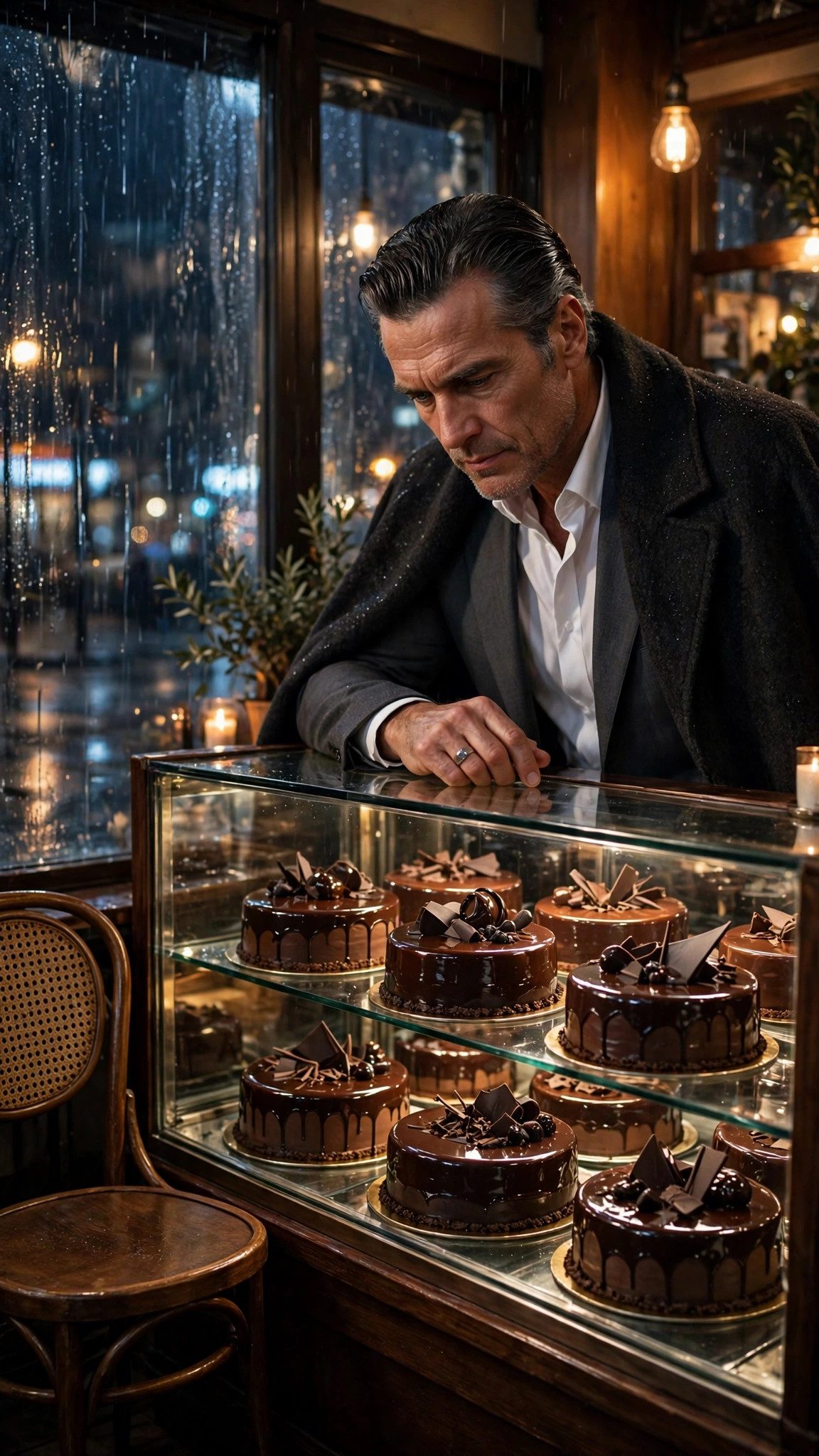
Ethan Hart came home from the hospital on a Saturday morning in early spring, when the rain had finally stopped and the sun was shining on Maple Street for the first time in weeks, and the whole neighborhood seemed to have come out to see it.
He was still small, and still pale, and still tired easily — the doctors had warned them all about that, in their gentle voices, with their careful lists of what he could do and what he could not do yet. But he was alive. He was awake. He was wearing a new blue coat that Maria had bought with money that had not come from cleaning offices at night, and he was holding his sister's hand, and his stuffed dog with one missing eye was tucked under his arm, and he was smiling.
Claraara walked beside him, her dark hair in a neat ponytail, her coat buttoned to the top, her eyes bright with a hope she had not allowed herself to feel for a very long time. She had been the one to decide the route home from the hospital. She had insisted on it, in her quiet, stubborn way. Not the short way, down the main road. The long way. Past the park. Past the school. And past the little corner cafe on Maple Street, where the windows glowed amber in the morning light, and where a new sign hung above the door, painted in cheerful yellow letters.
CLARAARA'S CORNER, the sign said. And underneath, in smaller letters: Fresh bread. Fresh cake. Everybody welcome.
Maria stopped on the sidewalk, and she looked at the sign, and she laughed — a real laugh, the first one Claraara had heard from her mother in a very long time — and then she took both of her children's hands, and she walked them through the door, and the little bell rang above their heads.
The cafe was full. Antonio was behind the counter, in his white shirt and black apron, smiling so widely that his lined face seemed ten years younger. Luca Marchetti was there too, sitting at a table by the window with his wife, home from the new life Gabriel had helped him start, come back for the opening day. The two old men from the back table were there. The woman with the newspaper was there. And in the corner booth, with his back to the wall and his face to the door, sat Gabriel Rossy, in his charcoal suit, with a cup of coffee in front of him and a small white box on the table beside it.
He stood up when they came in. He did not know what to say. He had rehearsed a dozen speeches on the drive over, and all of them had sounded wrong — too grand, too formal, too much like a man making a speech. So he said nothing. He simply stood there, looking at the little boy in the blue coat, and the girl with the bright hope in her eyes, and the mother who had cleaned offices at night and never once complained, and he felt the weight of Daniel Hart's note in his pocket, lighter now, as if some part of the debt had finally been paid.
Ethan tugged at his sister's hand. "Clara," he whispered, loudly enough for the whole cafe to hear, "is this our cafe?"
"It is our cafe," Claraara said. "Mama owns it. And I am going to bake the cakes. Just like Daddy did."
Ethan nodded solemnly, as if this were the most natural thing in the world, and then he looked at Gabriel, and he pointed at the white box on the corner table.
"Is that for me?" he asked.
Gabriel picked up the box and carried it to the boy, and he knelt down — Gabriel Rossy, the most feared man in the neighborhood, kneeling on the floor of a little cafe in his charcoal suit — so that he was at eye level with a three-year-old boy, and he opened the box, and inside was a slice of chocolate cake. A fresh slice. The big one from the middle. The frosting smooth and dark, shining like polished wood.
"It is for you," Gabriel said. "Your sister baked it this morning, in your own kitchen, with your father's recipe. It is the first cake Claraara's Corner has ever made. I think you should be the first person to taste it."
Ethan looked at the cake for a long moment. Then he looked at his sister. Then he picked up the little plastic fork that Antonio had set beside the box, and he took one small bite, and he chewed it slowly, carefully, the way you would taste something precious, something you had waited a very long time for.
And then his whole face lit up, like a lamp being switched on, and he laughed — a big, surprised, chocolate-covered laugh — and the whole cafe laughed with him, and Maria put her hand over her mouth and cried, and Claraara laughed too, and Gabriel Rossy sat back on his heels on the floor of a little cafe on Maple Street, with chocolate cake on his cuff and tears in his eyes that he did not bother to hide, because there was no one left in the room he needed to frighten.
That was the beginning. Not the end. The beginning.
On the first morning, the line stretched out the door and down the sidewalk — neighbors who had known Daniel Hart, and neighbors who had only heard of him, and people from three streets away who had heard that the best chocolate cake on Maple Street was back. Claraara stood behind the counter in her too-big apron, and she served the first slice herself, to old Mrs. Delaney, who had bought bread from her father for thirty years, and who took one bite and closed her eyes and said, "Just like Daniel's. Just like his." And Claraara smiled, and her hands stopped shaking, and she knew, in the way you know things when you are ten years old and the whole world is watching you, that she was exactly where she was supposed to be.
In the months that followed, Claraara's Corner became the heart of Maple Street again, the way Hart's Bakery had been before it. Maria ran the front of the house, greeting customers by name, remembering who liked their coffee strong and who liked it sweet. Claraara baked in the back kitchen, on a stool, in a too-big apron, with her father's recipe book open on the counter and chocolate on her nose, learning — the way her father had taught her — that you cannot rush a cake, and you cannot rush a person, and that both of them know when you are impatient.
Ethan grew stronger every week. He went back to the park, and he chased the pigeons, and he fell down and got up laughing, and on Sundays he sat on a stool in the back kitchen and watched his sister bake, his stuffed dog tucked under his arm, asking a hundred questions, the way little brothers do.
On Saturdays, Ethan sat on a stool in the back kitchen, and Claraara taught him to stir the batter, slow, because the chocolate is shy and you have to coax it, and Ethan stirred with great seriousness, his tongue stuck out in concentration, and more batter ended up on his face than in the bowl, and Claraara laughed until her sides hurt, and Maria, watching from the doorway with a dish towel in her hands, thought about her husband, and about the Saturday mornings in the old bakery, and she felt, for the first time since Daniel died, that the circle had closed — that what had been taken from them had been given back, not the same, not ever the same, but enough. More than enough.
And Gabriel Rossy came to the cafe every morning, and he sat in the corner booth, and he drank his coffee, and he watched the street come back to life — the shops reopening, the shutters coming up, the neighbors nodding to each other on the sidewalk like people who had remembered, all at once, that they belonged to each other.
He did not go back to the warehouse. He did not go back to the old ways. He kept his word to Agent Reyes, and he kept his word to himself, and one by one, over the months that followed, he did what Daniel Hart would have done: he went to the florist on Fifth Street, and the tailor, and the grocer, and all the others whose names were written in his father's ledgers, and he paid their debts, and he tore up their notes, and he told them that the Rossy family owed them an apology, and that he was there to deliver it.
Some of them slammed their doors in his face. Some of them wept. Some of them took a long time to forgive him, and some of them never did, and Gabriel understood that, and he did not argue, because forgiveness is not something you can buy, even with all the money in the world. But most of them — most of them looked at him, and they looked at the little cafe on Maple Street, and at the girl who baked the cakes, and at the boy who had come home from the hospital, and they saw that something had changed, and they gave him a chance.
The Rossy family businesses were legitimized, one by one — the shipping, the restaurants, the properties, all of it brought into the light, all of it run clean, all of it paying taxes and wages and doing honest work. Tommy Rizzo, who had kept the books for thirty years, grumbled about the paperwork and then stayed to do it, because someone had to, and because, in his careful way, he had always hoped for this. Marco stayed too, no longer a bodyguard with a gun, but a driver and a friend, the man who took Ethan to the park on Saturdays and taught him to throw a baseball.
And Danny Cole — the boy who had stood in the doorway of the closed bakery with a gun in his coat — testified against the men who had sent him, and he was given a second chance, and he took it, and he came to work at the cafe, washing dishes in the back kitchen, learning, slowly, how to be a person who was not afraid all the time.
Ethan's fourth birthday came in the spring, and Claraara baked the cake herself — a chocolate cake, of course, with four candles, and Ethan blew them out in one breath and wished, out loud, for a bicycle, and then he whispered to his sister, so quietly that only she could hear, that his real wish was that she would never stop baking cakes. She promised him she never would. And in the summer, Danny Cole wrote Gabriel a letter from the work program where he was learning to be a carpenter, and in the letter he said that his mother was doing better, and that he thought about that night on Maple Street every day, and that he would never forget the man who had talked him out of killing someone with empty hands. Gabriel kept the letter in his desk drawer, next to Daniel Hart's note, and sometimes, late at night, he took them both out and read them, and he thought about how strange it was that the two most important pieces of paper in his life were a dead man's promise and a living boy's thank-you.
On a warm evening in late summer, six months after Ethan came home, Gabriel Rossy sat in the corner booth of Claraara's Corner, watching the sun go down over Maple Street, when Claraara came out of the back kitchen carrying a white plate, and she set it down in front of him, and on it was a slice of chocolate cake. A fresh slice. The big one from the middle.
"For you, Mr. Rossy," she said. "On the house."
Gabriel looked at the cake, and then he looked at her — nine years old, no, ten now, taller than she had been in the rain, her dark hair in a neat ponytail, her quiet eyes bright with the hope she had never lost, not once, not even in the darkest days — and he thought about the night she had walked into this cafe and asked for the slice nobody wanted, and about the question she had asked him as she walked out the door with the box held tight against her chest.
You can buy the cake, but who has the money to buy you?
He picked up the fork, and he took a bite, and it was the best chocolate cake he had ever tasted in his life — dark and dense and rich, the way her father had made it, the way she made it now — and when he had swallowed, he set the fork down, and he looked at her, and he answered the question, six months late, in the only way he knew how.
"Nobody, Claraara," he said. "Nobody has the money to buy a person. Not me. Not Castellano. Not anyone. A person is not for sale. Kindness is not for sale. And a slice of chocolate cake —" He smiled, the real smile, the startled one, the one that had surprised him the night she first walked into his life. "A slice of chocolate cake is not something you buy, Claraara. It is something you give. And something you are given. That is the price of it. That is the whole price. A promise, kept."
Claraara smiled — the bright smile, the one that made strangers want to help her — and she sat down across from him in the corner booth, and she told him about the cake she was going to bake for Ethan's fourth birthday, and about the new recipe she was trying, and about the customer who had asked for a wedding cake, a real wedding cake, for his daughter —
And Gabriel Rossy listened, and the amber light of the little cafe glowed warm against the dark, and the smell of chocolate and coffee filled the air, and outside, on Maple Street, the rain had stopped, and the streetlamps were coming on, one by one, like stars.
The End.
THE END