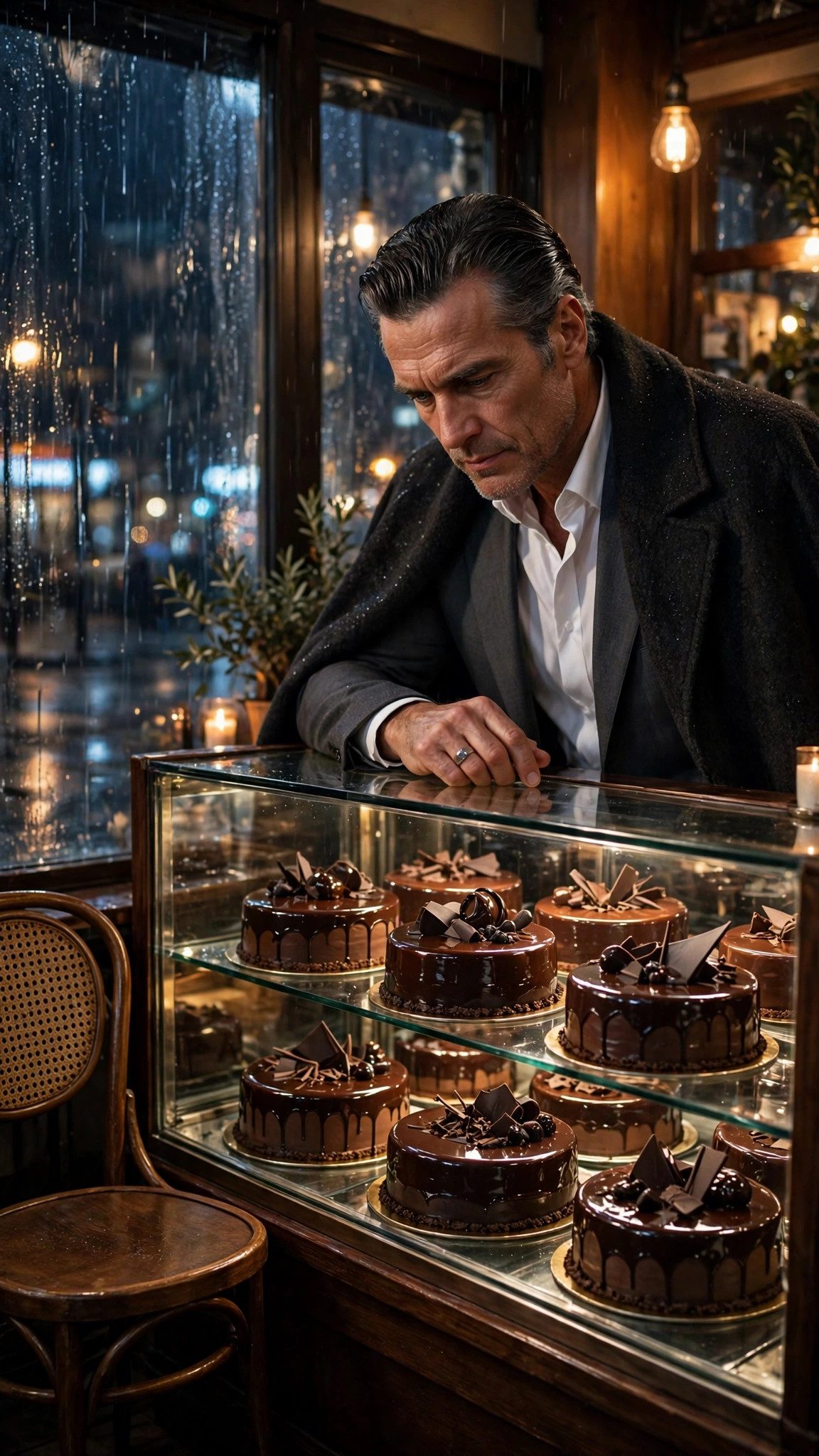
Agent Daniel Reyes had been trying to put Vincent Castellano in prison for three years, and he had gotten nowhere, because nobody on Maple Street would talk to him.
It was not that the people of the neighborhood liked Castellano. They did not. They feared him, which was different, and worse. Fear made people lock their doors and close their shutters and pretend they had seen nothing, heard nothing, known nothing. Reyes had knocked on a hundred doors, and a hundred doors had opened a crack and closed again. He had left a hundred business cards on a hundred doorsteps, and none of them had ever been answered.
So when his phone rang at eleven o'clock on a rainy Tuesday night, and the voice on the other end said, "Agent Reyes, this is Gabriel Rossy. I have a gunman for you, and a ledger, and a story you will want to hear," Reyes thought, for one wild moment, that someone was playing a cruel joke on him.
He drove to Maple Street anyway, because that was his job, and when he got there, he found Gabriel Rossy standing in the rain outside a little corner cafe, with a young man named Danny Cole sitting on the curb in handcuffs that were not police handcuffs but the plastic kind that Gabriel's men carried, crying quietly into his hands, and a gun in a paper bag on the pavement beside him.
"He was sent to kill me," Gabriel said, as if he were reporting the weather. "He has agreed to tell you everything he knows about Eddie Krol and Vincent Castellano. In return, I want your word that he will be protected, and that he will get a fair deal. He is twenty years old, Agent Reyes. He is a boy who was given a gun by men who did not care whether he lived or died. I will not have his blood on my hands."
Reyes looked at Gabriel for a long moment. He had spent three years building a picture of this man from files and photographs and whispered reports, and the picture had been simple: a dangerous man, a criminal, a boss. Now the man standing in front of him in the rain was handing him a gunman and offering to help, and Reyes did not know what to make of it.
"Why?" Reyes asked. "Why now, Mr. Rossy?"
"Because of a slice of chocolate cake," Gabriel said, and when Reyes stared at him, Gabriel almost smiled. "I will explain. But first, take the boy. Take his statement. And tomorrow morning, come to my house. I have ledgers for you. Twenty years of ledgers. And I have names."
Reyes took Danny Cole away that night, and by morning Danny had told him everything — the debts, the threats, the fires, the men who had been bought and the men who had been broken, the whole long machinery of how Vincent Castellano had taken Maple Street apart, shop by shop, family by family, buying their debts for pennies and squeezing them until there was nothing left.
And the next morning, Agent Reyes came to the big house on the hill, and Gabriel Rossy sat him down in his father's study, and he opened the ledgers, one by one, and he showed him the notes.
"This one," Gabriel said, laying Daniel Hart's note on the desk, "is a baker who signed for his friend's debt and lost everything. He died for it. His little boy is dying in St. Agnes Hospital right now. This one is a florist on Fifth Street. This one is a tailor. This one is a grocer. All of them borrowed from my father. All of them were called in. All of them lost everything. And all of them —" Gabriel set down another stack of papers, newer ones, with Castellano's name on them. "All of them had their debts bought by Vincent Castellano for pennies on the dollar, after my family had already broken them. He did not destroy them, Agent Reyes. We did. My family did. He only picked up the pieces."
Reyes looked at the papers spread across the desk, at twenty years of ruin written in neat columns, and he felt something he had not felt in three years of knocking on locked doors: hope.
"Mr. Rossy," he said slowly, "do you understand what you are giving me? These ledgers implicate your family as well as Castellano's. If I take these, I cannot protect you from what they show."
"I understand," Gabriel said. "I have spent twenty years telling myself that my father did what men in his position did. That it was business. That Daniel Hart chose to sign. It was not business, Agent Reyes. It was theft, with a kind face. And I have spent twenty years profiting from it. If there is a price to pay, I will pay it. But Castellano pays first. He pays for all of it — for the debts, for the threats, for the boy he sent to kill me last night, for the cafe he tried to burn down. He pays for all of it."
Reyes nodded, and he began to pack the ledgers into evidence bags, carefully, one by one, and as he worked, Gabriel stood at the window of his father's study, looking out at the city below, at the wet streets and the little shops and the cafes, and he thought about the long road that had brought him here — from a hungry boy on Maple Street to the most feared man in the city to a man standing in his father's study, giving away everything his father had built, because a nine-year-old girl had asked for the slice nobody wanted.
Tommy stood by the door, watching, and when Reyes had finished, Tommy said, in his careful, quiet voice, "Agent Reyes, there are other families. Other streets. Other ledgers, in other houses, belonging to other men who will not give them up as easily as the boss has. If you want them, I can tell you where to look." Reyes looked at the small, neat man with the silver hair, and he understood that the night had given him more than a case against one man — it had given him a door into a world that had been closed to him for three years. "I will take all the help I can get, Mr. Rizzo," he said. And Tommy Rizzo nodded, once, and went downstairs to make the calls.
It took three weeks. Three weeks of statements, of warrants, of arrests made quietly in the early morning, before the newspapers got hold of it. Eddie Krol was arrested first, at the warehouse, with a gun in his coat and a ledger in his office that matched Gabriel's, page for page. Then came the others — the collectors, the enforcers, the men who had delivered the threats. And then, on a grey Thursday morning, with cameras waiting outside the courthouse, Vincent Castellano was arrested as he left his house, in a suit that cost more than most people on Maple Street earned in a year, his face white with fury, his lawyers already shouting.
The charges were long enough to fill a page: extortion, fraud, arson, conspiracy, attempted murder. Danny Cole testified, his voice shaking but clear, about the night he had been sent to kill Gabriel Rossy, and about the man who had talked him out of it with empty hands. The ledgers testified too, in their neat columns, about twenty years of debts bought and sold like cattle. And when it was over, Vincent Castellano was sentenced to life in prison, without the possibility of parole, and Eddie Krol was sentenced to thirty years, and the street that Castellano had taken apart, shop by shop, began — slowly, cautiously, like a person learning to walk again — to breathe.
On the day the verdict was read, the courtroom was full of people from Maple Street — shopkeepers and waiters and mothers and old men, people who had locked their doors for twenty years and had finally come out to watch the man who had frightened them be led away in handcuffs. Antonio was there. Luca was there. Maria was there, holding Claraara's hand, and when the judge said the word "life," Claraara squeezed her mother's hand so hard that Maria winced, and then they both cried, quietly, in the back row, where no one could see them except the people who understood exactly why. Outside the courthouse, the rain had stopped, and the sun was shining, and the people of Maple Street stood on the steps for a long time, talking to each other like neighbors again, like people who had remembered, all at once, that they belonged to each other.
Gabriel Rossy was not charged. Agent Reyes had made his case, and the case was against Castellano, and Gabriel's cooperation — his ledgers, his testimony, his men standing down — was the reason the case had held together. There were questions, of course. There were always questions, when a man like Gabriel Rossy walked away from a case like that. But Reyes had his convictions, and the neighborhood had its street back, and Gabriel had something else, something he had not expected to find at the end of it.
He had a debt to pay. And for the first time in his life, he knew how to pay it.
He bought the cafe on Maple Street from Luca Marchetti — not for Castellano's price, not for a thief's price, but for a fair price, more than fair, enough for Luca and his family to start again wherever they wanted, with his blessing and his protection.
Luca tried to refuse the money. "You do not owe me anything, Mr. Rossy," he said. "My father owed your father, and my family has carried that shame for twenty years." Gabriel shook his head. "Your father owed my father nothing, Luca. My father took what was never his to take, and he called it a debt. Take the money. Start again. And if you ever want to come back to this street, there will always be a table waiting for you here, in your father's cafe." Luca took the money then, and he shook Gabriel's hand, and he went home to his wife and told her that for the first time in twenty years, the street felt like it belonged to the people who lived on it. And then he took the deed, and he had his lawyer draw up new papers, and he signed the cafe over to Maria Hart, in her name, free and clear, with a note attached that said only: For Daniel. For Ethan. For Claraara. Paid in full.
He did not tell Maria in advance. He simply had Tommy bring the papers to the hospital, on a quiet afternoon when Ethan was sleeping and Claraara was doing her homework at the little table by the window, and he watched from the doorway as Maria read them, and read them again, and then put her face in her hands and wept — not the quiet, hidden tears of the hospital stairwell, but great, shaking sobs of relief, as if twenty years of weight had come off her shoulders all at once.
Claraara looked up from her homework, and she looked at the papers, and then she looked at Gabriel, standing in the doorway in his charcoal suit, and she said, in her small, clear voice, "Does this mean we own the cafe now?"
"It means your mother owns the cafe now," Gabriel said. "And it means no one can ever take it from her. Not Castellano. Not anyone. It is yours, Claraara. It was always yours. Your father's name is on the first page of the recipe book, and now your mother's name is on the deed. That is how it should have been all along."
And then there was the matter of Ethan.
The doctors had found a donor. It had taken three weeks of searching — three weeks in which Gabriel's people had called every registry, every hospital, every foundation in the country — and in the end, the match had been closer than anyone had dared to hope. It had been sitting in the next room all along, doing her homework at a little table by the window.
Claraara was a match for her little brother.
The doctors explained it carefully, in their gentle voices, with diagrams and pamphlets: a bone-marrow transplant, a small procedure, a needle, a few days of feeling tired, and then her brother would have her strong, healthy blood inside him, fighting the sickness the way her blood had always fought for him, the way she had always fought for him, since the day he was born.
Claraara did not hesitate. She did not cry. She looked at the doctors with her quiet eyes, and she said, "When can we do it?"
They did it on a Tuesday morning, in a bright, clean room on the fourth floor, with her mother holding her hand on one side and Gabriel Rossy standing in the doorway on the other — because he had asked if he could be there, and Maria had said yes, and Claraara had said yes, and the doctors had said that a familiar face in the doorway could only help.
It went well. The doctors said it went very well. And three days later, Ethan Hart opened his eyes, and he looked around the room, and he saw his sister sitting beside his bed, pale and tired but smiling, and he said, in his small, hoarse voice, "Clara? Did you bring the cake?"
Claraara laughed, and then she cried, and then she laughed again, and Maria held them both, and Gabriel stood in the doorway with his hands in his pockets, feeling something in his chest that he had not felt in twenty years — something warm and unfamiliar, something that might have been the beginning of being a different kind of man.