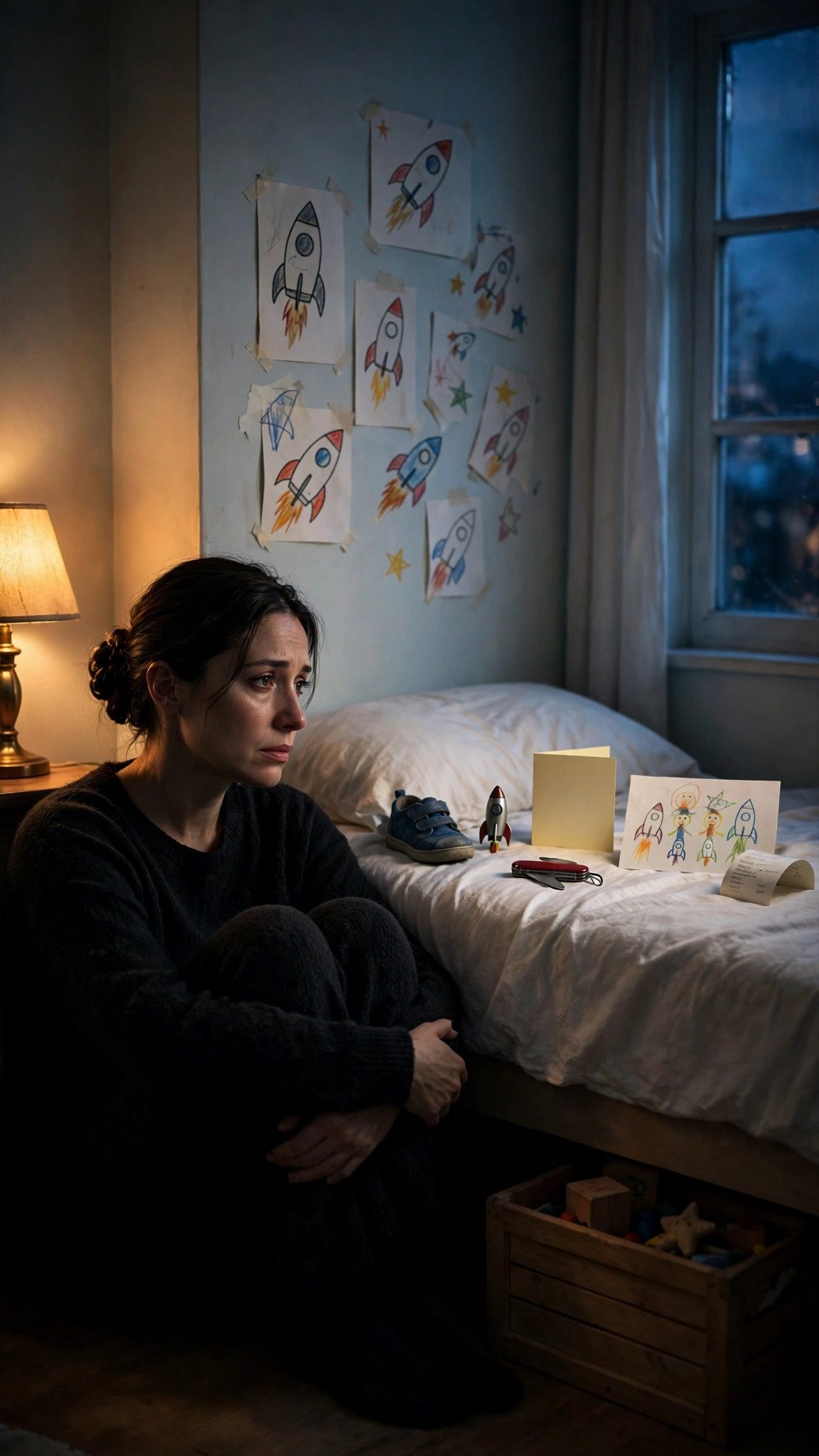
Marcus kept his word. That is the thing I have to say about him, even now, even after everything. When he said he was going to end it, he ended it.
He gave Agent Reyes everything. The ledgers, hidden in a safe behind the painting in his study, going back twelve years. The shipping manifests, with the routes and the codes and the warehouses. The names of the captains who had sold him out to Castellano, and the bank records that proved it. The recordings of Castellano's men threatening the dockworkers. All of it.
Reyes arrested Castellano on a Thursday morning, at dawn, outside his house on the lake. The news showed it on every channel. Vincent Castellano, in handcuffs, in a bathrobe, blinking in the camera lights, while FBI agents carried boxes out of his house. His underboss, Marco Benedetti, was arrested the same day. The two captains who had sold Marcus out were arrested the day after.
The trial took six months. Marcus testified for four days. He sat in the witness box, in a grey suit, with his hands folded in his lap, and he told the truth. He told the court about the shipping routes. He told them about the warehouses. He told them about the money. He told them about the men who had been hurt, and the families who had been threatened, and the things he had done that he was not proud of.
He did not ask for mercy. He did not ask for a deal. He only said, at the end of his testimony, "I did these things. I am responsible for them. And I am here because my son died, and I was not there, and I realized that a man who cannot be there for his own child has no right to call himself a man. I am not asking you to forgive me. I am asking you to believe me when I say that I am done. The Vale family is done. And if my testimony helps you put Castellano away, then at least one good thing will have come out of all of this."
Castellano got life in prison, without parole. Marco Benedetti got twenty-five years. The captains got eight years each, for testifying. Marcus got five years, suspended, with ten years of probation, because the judge said that a man who had dismantled his own empire and handed the government everything it needed to destroy a criminal organization twice his size had earned the right to try to rebuild his life outside of a cell.
I watched the trial on television, from Grace's living room. I did not go to the courtroom. I was not ready to see him in person. But I watched, and I listened, and when the verdict was read, I felt something I had not felt in months.
Not forgiveness. Not yet. But something like the beginning of it. Something like the first small crack in a wall that had been built out of grief and anger and the six items on a bed.
On the day of the sentencing, I sat in Grace's living room with the television on, and I watched Castellano stand before the judge, in an orange jumpsuit, with his hands cuffed in front of him, and I listened as the judge read the sentence: life in prison, without the possibility of parole, for racketeering, for conspiracy, for the murder of a dockworker whose name I had never known, and for a dozen other crimes that had destroyed a dozen other families.
Castellano did not react. He only stared at the floor, the way a man stares at the floor when he finally understands that the world has stopped being his. And I thought about Noah, and about the six items on his bed, and about the receipt from Zurich, and I thought that justice was not the same as healing, and that no sentence, no matter how long, would ever bring my son back, but that it was something, and that something was better than nothing, and that Marcus had done this, not with a gun, but with the truth, and that the truth had finally been enough.
While the trial was going on, I was doing my own work. I went back to the hospital, part-time at first, then full-time. I worked in the children's ward, with the sick kids, with the frightened parents, with the nurses who held hands in hallways. I was good at it. I had always been good at it. And for the first time since Noah died, I felt like I was doing something that mattered, something that was not about grief, or about Marcus, or about the past.
I started a foundation, too. The Noah Vale Children's Fund. It paid for the things insurance would not pay for: the special beds, the travel for families who lived far away, the toys for the children who were too sick to go home. Grace helped me. Frank helped me. Dr. Alvarez helped me. And every month, an anonymous donation arrived, always the same amount, always in cash, always with a note that said only, "For Noah."
I knew who it was from. Of course I knew. Marcus had sold the house on the lake. He had sold the private jet. He had sold the cars, and the boats, and the art collection, and he had given the money to the foundation, a little at a time, month after month, because he knew I would not accept it if he gave it to me directly.
I let it come. I did not send it back. Because it was not for me. It was for Noah. And Noah would have wanted the children to have their toys, and their special beds, and their trips home.
The first fundraiser for the foundation was in a church basement, with folding tables and a coffee urn and a handmade sign that said "The Noah Vale Children's Fund" in Grace's careful lettering. I had expected twenty people. Sixty came. Nurses from the hospital. Parents of children I had cared for. Neighbors. Frank, in his best suit, standing by the door like a guard. Dr. Alvarez, who gave a short speech about Noah, about his courage, about the way he had asked questions about every machine in the ward, and about how the fund would make sure that no other child had to be afraid of the machines, because they would understand them, and they would have their parents beside them, and they would have toys, and books, and rockets on the walls.
We raised eleven thousand dollars that night. It was not a lot, by the standards of the world I had come from, where men spent 3,680 Swiss francs on a single dinner. But it was everything, because every dollar had come from someone who had loved a child, or lost a child, or cared for a child, and every dollar was going to go to a child who needed it.
A month later, I met the first child the fund helped. Her name was Lily, and she was six years old, and she needed a special bed that her insurance would not pay for, a bed that would keep her comfortable while she waited for a transplant. Her mother cried when I told her the fund would pay for it. She held my hands, and she said, "Thank you. Thank you. You don't know what this means to us."
I did know. I knew exactly what it meant. It meant that her daughter would sleep in a bed that did not hurt her. It meant that she would not have to choose between her daughter's comfort and her rent. It meant that someone, somewhere, had decided that her child's life was worth more than a dinner in Zurich.
That was the day I understood what the foundation was for. It was not for Noah. Noah was gone, and no foundation could bring him back. It was for the children who were still here, and for the mothers who were still sitting in hallways, holding their children's hands, praying to a God they were not sure they believed in, and needing someone to sit beside them and say, "I am here. You are not alone."
Marcus started driving the van three months after the trial. His first day, he was so nervous that Frank had to show him how to check the oil, and how to adjust the mirrors, and how to back up without hitting the fence. He was a man who had once commanded an empire, and now he was learning how to drive a van full of sick children to their appointments, and he was terrible at it, at first, and the children teased him mercilessly, and he laughed, and he let them teach him, and by the end of the first week, he knew all their names, and all their favorite songs, and he sang along with them, badly, in the van, on the way to the hospital.
One afternoon, I watched him from the window of my office as he helped a little boy into the van, a boy with no hair and a brave smile, who was going for his last treatment. Marcus knelt down beside him, and he said something I could not hear, and the boy laughed, and Marcus laughed too, and then Marcus picked him up, very gently, and put him in his seat, and buckled him in, and checked the buckle twice, the way a father checks a buckle, and I thought about Noah, and about the way Marcus used to buckle him into the car, and about the way he had always checked the buckle twice, and I felt something in my chest loosen, just a little, just enough to let me breathe.
I went back to work full-time that winter. The children's ward needed me, and I needed the children's ward. There is something about sitting with a sick child, about holding a small hand, about reading a story in a funny voice, that reminds you why you are alive, even when you have forgotten. The children did not know about Noah. They did not know about Marcus. They did not know about Zurich, or the six items, or the receipt for 3,680 Swiss francs. They only knew that I was the nurse who read the stories, and who knew all the voices, even the dragon, and that was enough.
One of the girls, a nine-year-old named Sofia, asked me once, "Nurse Claire, why do you always look at the stars on the ceiling when you think no one is watching?"
I looked up. The playroom ceiling had glow-in-the-dark stars on it, left over from a renovation years ago. "Because my son used to draw rockets on the ceiling," I said. "He said that if you connected the dots of the stars, you could draw a rocket, and the rocket would take you anywhere you wanted to go."
"Where would you go?" she asked.
"To see him," I said. "Just for a minute. Just to tell him that Mommy is here, and that she loves him, and that she will never forget him."
Sofia nodded, very seriously, the way children do when they understand something important. "Then I think the stars are working," she said. "Because I think he can hear you."
I went home that night, to Grace's house, and I sat on the porch for a long time, looking up at the real stars, and I thought about Noah, and about Sofia, and about all the children in the ward, and about the foundation, and about the van, and about the man who drove it, and I thought that maybe, just maybe, the stars were working after all.
Every Sunday, I still went to the cemetery. I still brought white lilies. I still sat beside his grave, and I still told him about my week. And every Sunday, the black car was still there, at the far end of the cemetery, with Frank at the wheel, and Marcus in the back seat, watching from a distance.
One Sunday, in the sixth month, it rained harder than usual, and I was soaked through by the time I finished, and as I walked back to my car, I saw that the black car was still there, and I saw Marcus get out of it, and I saw him walk toward me, slowly, through the rain, with no umbrella, with his suit getting wet, and he stopped ten feet away from me, and he said, "Claire. I know I have no right. But I would like to stand beside you. Just once. At our son's grave. Not as your husband. As his father."
I looked at him for a long time. He was thinner than he had been. His hair was greyer. There were lines around his eyes that had not been there a year ago. He looked like a man who had been carrying something heavy for a very long time, and who was finally, slowly, learning how to set it down.
"All right," I said. "Just once."
We walked back to Noah's grave together, in the rain, and we stood there, side by side, not touching, not speaking, just standing, while the rain came down on the white lilies and the small stone with his name on it, and I thought about the boy who had once asked if he could connect the dots of the stars to draw a rocket on the ceiling.
"He would have liked this rain," Marcus said, very quietly. "He used to say the raindrops were racing each other."
"I know," I said. "He told me."
We stood there for a long time. And when we finally walked back to our cars, separately, in the rain, I felt something shift inside me, something I had not felt in a very long time.
It was not forgiveness. Not yet. But it was the beginning of something. And for the first time since the night I signed those papers at 8:42 P.M., I thought that maybe, just maybe, there was a way forward. Not back. Never back. But forward. One Sunday at a time.