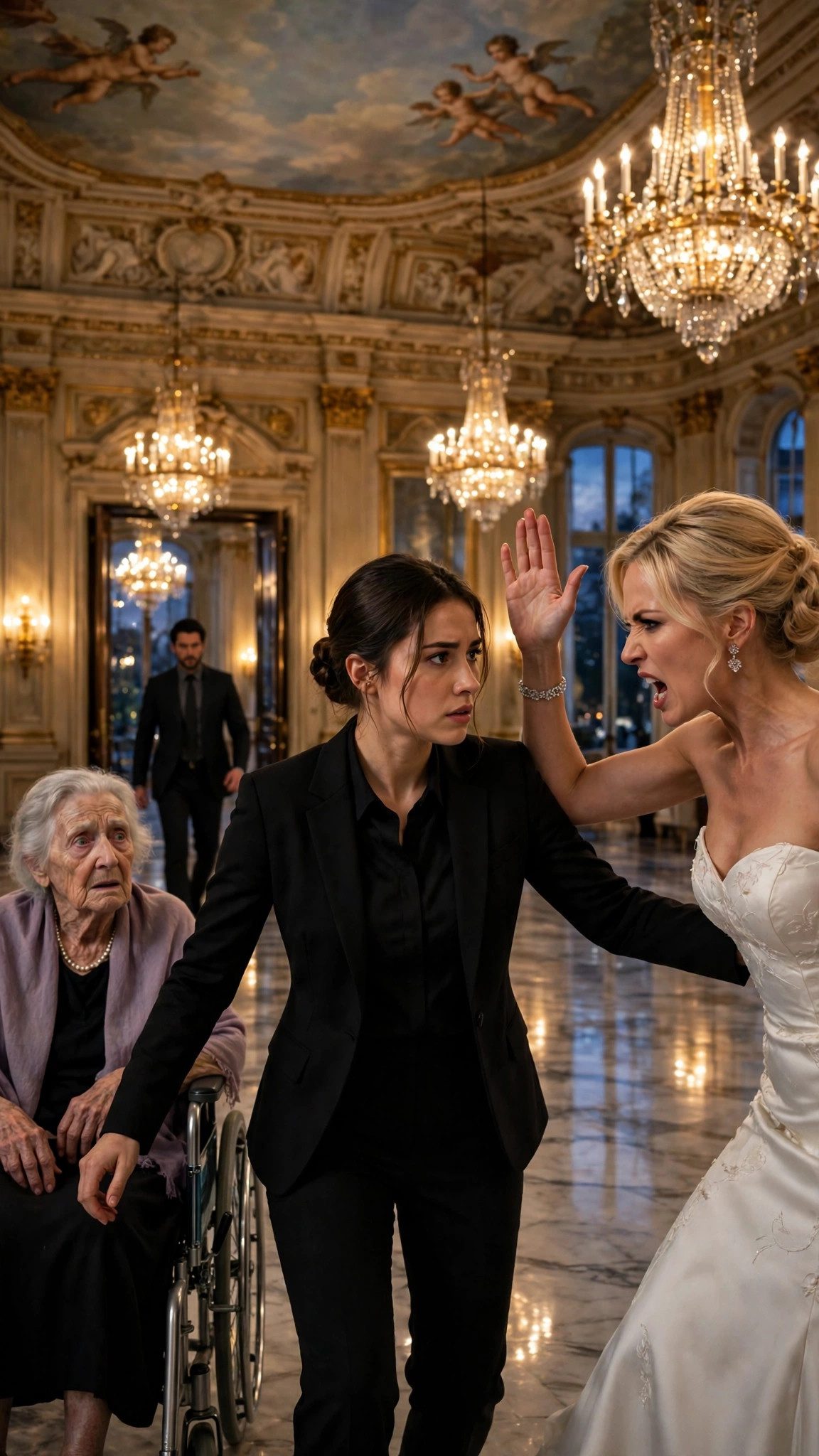
We were married in the garden of The Whitmore House, under the roses, on the first Saturday of June, one year to the day after Julian Cross bought the hotel.
My father had spent three months preparing the garden. He had pruned every rose bush with his own strong hands. He had replanted the beds where the men in the dark had trampled them. He had built an arch out of white wood and covered it with white roses and green leaves, and he had stood back and looked at it, and he had said, "It is not perfect, Emma. But it is yours. And that is better than perfect."
It was perfect. The morning of the wedding, the sun came up over the Hudson River and turned the whole valley gold, and the birds sang in the trees, and the air smelled of roses and fresh bread from the kitchen, and the house stood white and beautiful on the bluff, with its wraparound porch and its ballroom ceiling painted like a summer sky, and I stood at my bedroom window in my wedding dress, looking out at all of it, and I cried.
I cried because my mother was downstairs, in a new blue dress, with her hair done and her knees resting, because she did not have to climb the stairs anymore. I cried because my father was in the garden, in a new suit, with a white rose in his buttonhole, directing the waiters like a general. I cried because Rosa Delgado was in the kitchen, shouting orders at the cooks, the way she had shouted orders for fifty years, and the cooks were laughing, because Rosa only shouts when she is happy. I cried because Eleanor Cross was in the library, in her wheelchair, in a pale lavender dress, with her silver hair in a soft bun, waiting for me, because she had told me, months ago, that she would be there, and that she would not miss it for the world.
And I cried because, one year ago, I had been a hotel manager with a bruised cheek and a mother with bad knees, standing on a marble floor in front of three hundred people, wondering if I would lose everything I loved. And now, one year later, I was about to marry the man who owned the house, and the house was mine too, and everything I loved was safe.
My mother came upstairs then, and she stood in the doorway, and she looked at me in my wedding dress, and her hands went to her mouth, and she said, "Oh, Emma. Oh, my beautiful girl."
"Mama," I said, and I took her hands, and they were warm, and they were steady, and they were the hands that had cleaned this hotel for twenty-three years. "Thank you. For everything. For the stairs. For the bucket. For the roses. For all of it."
"Do not thank me," she said, and she wiped her eyes with her handkerchief. "Thank the house. The house brought us here. The house brought you to him. And the house will keep you safe, the way it has always kept us safe."
She helped me down the stairs, slowly, because her knees were still bad, and because my dress was long, and because neither of us wanted to hurry. The hallway was full of white roses. The lobby was full of white roses. The ballroom doors were open, and the painted ceiling glowed in the morning light, and the string quartet was playing, softly, the way they had played on the night of the engagement party, only this time the music was happy, and the champagne was cold, and no one was afraid.
I walked down the aisle in the garden, on my father's arm, past the rows of white chairs, past the staff who had become my family, past Paulie Romano in a new suit, past Agent Daniel Reyes in the back row, past Rosa Delgado dabbing her eyes with a handkerchief, past all the people who had stood by me when the whole world thought I was a thief.
And at the end of the aisle, under the arch of white roses, stood Julian Cross.
He was tall, and dark, and quiet, in a black suit with a white rose in his buttonhole, and his gray eyes were clear, and his face was open, the way it had never been open before, not in the year I had known him, not ever. The walls were gone. All of them. Every single wall he had built around himself for twenty years was gone, and there he stood, in the garden, in the sunlight, waiting for me, with his hand held out.
"Emma," he said, when I reached him, and his voice was low, and it shook, just a little, just enough for me to hear it. "You are the best thing that has ever happened to my life."
"And you," I said, "are the best thing that has ever happened to this house."
The ceremony was short. The minister said the words, and we said the words, and Julian put a ring on my finger, a simple gold band, not a diamond, not four carats, not a lie. Just gold, plain and true, the way a ring should be. And then he kissed me, in front of everyone, in the garden, under the roses, and the whole crowd cheered, and the birds sang, and the river shone in the distance, and I thought about the night I was six years old, sitting on a flour sack in the kitchen, thinking this was the most beautiful place in the world.
It still was. It always would be.
After the ceremony, we went into the ballroom, and the party began, and it was nothing like the engagement party a year ago. There were no black limousines lined up like a threat. There were no guests with cold eyes and colder smiles. There were only the people who loved us, eating and drinking and dancing under the painted sky, and the champagne flowed, and the music played, and my father danced with my mother, slowly, because her knees were bad, and because he had waited twenty-three years to dance with her in this ballroom, and he was not going to hurry.
And Eleanor Cross, eighty-two years old now, sat in her wheelchair at the head table, in her pale lavender dress, with a glass of champagne in her thin old hand, and she watched us dance, and she smiled, a small, fierce, triumphant smile, and when I came to her, and I knelt down beside her, and I took her hand, she said, in a voice that was clear and strong and not foggy at all, "I told you, Emma. I told you he would look at you the way he looks at the river. Like you are the only thing in the world that is real."
"You were right, Grandmother," I said, and I kissed her cheek. "You were right about everything."
"Of course I was right," she said, and she laughed, a small, bright laugh, like a girl. "I am eighty-two years old. I am always right. Now go and dance with your husband, Emma. Go and be happy. You have earned it. All of it."
I danced with Julian then, in the ballroom, under the painted ceiling, while the string quartet played, and the candles burned, and the whole house seemed to breathe around us, and he held me close, and he said, in my ear, so quietly that only I could hear it, "Emma, there is something I need to tell you. Something I should have told you a year ago."
"What is it?" I asked.
"This hotel," he said. "It is yours now. Not just to run. To own. I have signed the papers. Half of The Whitmore House belongs to you, Emma Hart Cross. Half of the gardens. Half of the ballroom. Half of everything. Because you are the reason this house is still standing. You are the reason my grandmother is still alive. You are the reason I am still alive. And I do not want to own this house without you. Not anymore. Not ever."
I looked at him, and I thought about the email from the bank, and the rainy Friday, and the tour of the house, and the five words he had said in the garden. Show me everything. All of it. I had shown him everything. And he had shown me everything too, in the end. His walls. His fear. His grandmother. His heart.
"Thank you," I whispered. "Thank you for the house. Thank you for my parents. Thank you for Eleanor. Thank you for all of it."
"Do not thank me," he said, and he smiled, the first real smile I had ever seen on his face, wide and open and young. "Thank the house. The house brought us here. The house brought you to me. And the house will keep us safe, the way it has always kept us safe."
After the first dance, the toasts began, and they went on for a long time, because everyone in that room had something to say.
My father stood up first, in his new suit, with his white rose in his buttonhole, and his strong hands shook around his champagne glass, and he said, "I have pruned roses in this garden for twenty-three years, and I have never once been paid enough for it, and I have never once minded, because the roses were mine, and the house was mine, and my daughter was mine. Today, my daughter married a man who tried to save this house, and who did save it, and who saved all of us. Julian, I give you my daughter, and I give you my roses, and I give you my blessing. Take care of them all."
The room cheered, and my father sat down, and my mother stood up, slowly, because her knees were bad, and she held her glass with both hands, and she said, "I have cleaned this hotel since I was nineteen years old, and I have climbed those stairs every morning, and I have never once complained, because this house gave me a home, and it gave my daughter a home, and it gave my husband a garden. Today, my daughter is the lady of this house, and she deserves it, because she has loved it longer than anyone, and harder than anyone, and she never once gave up on it. Emma, my beautiful girl, be happy. That is all I have ever wanted for you."
Then Rosa Delgado stood up, seventy-one years old and steady as a stone wall, and she raised her glass, and she said, "I have worked in this hotel for fifty years, and I have seen brides come and go, and I have seen rich men come and go, and I have never once seen a man look at a woman the way Julian Cross looks at Emma Hart. He looks at her the way a man looks at the river. Like she is the only thing in the world that is real. To the bride and groom. To the house. To all of us."
And then Agent Daniel Reyes stood up, in the back row, in a suit that did not fit him as well as Julian's suit fit Julian, and he raised his glass, and he said, "I have spent twenty years chasing bad men, and I have met a lot of brave people, but I have never met anyone braver than Emma Hart and Eleanor Cross. They stood up when no one else would. They told the truth when the truth was dangerous. And because of them, a very bad man is in prison tonight, and a very good house is still standing. To Emma. To Eleanor. To the truth."
The room rose to its feet then, all of them, and they cheered, and they raised their glasses, and Eleanor Cross, eighty-two years old, raised her glass too, with her thin old hand, and she drank, and she smiled, and she said, so quietly that only I could hear it, "To the girl who saved my life. To the woman between his ring and his family. To Emma."
One year later, on a June morning just like our wedding day, I stood at the front door of The Whitmore House in my black manager's suit, with my hair pulled back and my hands folded in front of me, the way I had been taught to stand when important guests arrived. Behind me, the whole staff stood in a line in the lobby, housekeepers and cooks and gardeners and waiters, all of us in our uniforms, all of us waiting.
The black cars came up the drive at four o'clock. Three of them, long and dark and silent. The doors opened, and two men in black suits got out first, and they looked at the house the way soldiers look at a building they are about to search. And then a young couple got out of the middle car, nervous and hopeful, holding hands, looking up at the white Victorian pile with its wraparound porch and its ballroom ceiling painted like a summer sky.
"Welcome to The Whitmore House," I said, and I smiled at them. "My name is Emma Cross. I own this hotel with my husband. My parents work here. My grandmother-in-law lives here. And if you need anything, anything at all, you only have to ask. This house takes care of its own."
The young woman looked at me, and she said, "It is beautiful. It is the most beautiful place I have ever seen."
"It is," I said. "It is the most beautiful place in the world. I have loved it since I was six years old. And I will love it for the rest of my life."
That evening, after the dinner service, I went to the library, and Eleanor was sitting by the window in her wheelchair, looking out at the river, and her silver hair was loose around her shoulders, and she held out her thin hand to me, and I sat beside her, and I opened the book, and I began to read.
And as I read, I thought about the woman I had been a year ago, standing between a slap and an eighty-one-year-old woman, on a marble floor, in front of three hundred people. I thought about the ring, and the locker, and the garden, and the trial, and the wedding, and the house, and the man who had knelt on a ballroom floor and asked his grandmother to tell him what she saw.
And I understood, at last, what it meant to be the woman between his ring and his family. It meant standing in the middle, between what a man promised and what a man loved, and refusing to move, and refusing to look away, until he could see the truth for himself.
I had stood there. I had not moved. I had not looked away. And in the end, the ring had come off, and the family had stayed, and the house had stayed, and love had stayed, and all of it was mine, and all of it was ours, and all of it was true.
The End.
THE END