Story Genres: MAFIA BOSS

  • Chapter 2: The Girl He Threw Away

    Chapter 2: The Girl He Threw Away

    New York did not care about Penelope Hart's broken heart, and that was the kindest thing the city could have done for her.

    She arrived with two suitcases, a degree, and a junior position at a catering company in Queens that a Wexford alumna ran out of a converted warehouse. The work was brutal and unglamorous — seating charts at midnight, floral emergencies at dawn, brides weeping into her shoulder over napkin colors — and Penelope was magnificent at it. She had a gift that could not be taught: she could walk into a room full of panicking people and make every single one of them feel that the evening was already saved. By twenty-four she was running the company's largest weddings. By twenty-six she had been poached by The Meridian, the most storied independent hotel on the Upper East Side, as a senior events coordinator. By twenty-eight she was the Director of Events, the youngest in the hotel's history, and the name whispered by every society hostess in Manhattan who wanted a night to go flawlessly: Get Penelope. Penelope will handle it.

    What she did not handle, ever, was her own heart. It was not that men didn't ask. It was that Penelope had organized her life the way she organized ballrooms — every element in its place, every risk assessed, every exit marked — and there was no column in the plan for hope. She kept the apartment small and the hours long. She sent money home to her mother. She volunteered at the Wexford alumni mentorship program and told nervous scholarship girls, with total sincerity, that they belonged in every room they had earned their way into. She believed it for them. Believing it for herself was a longer project.

    She did not follow Bradley Farnsworth's career. She did not have to. It pursued her in headlines — Farnsworth Capital's golden son, the London years, the engagement to Vanessa Cole announced and dissolved in the same glossy year, the return to New York, the profile pieces. New York's money world was a village, and her village kept delivering her news of him like weather reports. She read none of it twice. She had built a self out of the wreckage he left, and the self was load-bearing. She was not going to lean on it.

    It had not been a straight line. It never is, in the honest versions.

    There had been the winter of the warehouse apartment with the radiator that clanked like a dropped tray, and the year she worked three weddings a weekend and slept in her car between the ceremony and the reception with an alarm set for twenty minutes, and the boss at the catering company who put his hand where it didn't belong and learned — in front of his whole kitchen staff, from a twenty-three-year-old with a seating chart in one hand — that she had already emailed the board, the venue, and his wife a factual account of his management style, timed to arrive before he finished the sentence he was fired in. There had been the night the pipes burst over a senator's daughter's reception and Penelope had moved four hundred guests, a string quartet, and a six-tier cake across a flooded hotel in eleven minutes without a single guest getting wet shoes or knowing why the room had changed. The senator's wife had sent her a note afterward, on paper so thick it felt like a legal document: I don't know what happened. I know it was you. It became her professional obituary and her professional epitaph, in advance: no one knew what happened; everyone knew it was Penelope.

    At The Meridian, she inherited a department running on habit and fear and rebuilt it the way she rebuilt everything — quietly, completely, starting with the people at the bottom. She learned the names of the dishwashers' children. She promoted a coat-check girl with a gift for logistics into an assistantship the girl's family framed the offer letter from. She instituted the rule that made her famous among the staff and faintly notorious among the guests: no one who works an event eats last and standing up. Under Penelope, the staff ate first, seated, like people whose dignity was load-bearing. "A room can tell," she told her captains, "whether the people holding the trays have been treated like furniture. It changes the air. Fix the air and the evening fixes itself."

    Hostesses began requesting her the way they requested vintages. One of them — a grande dame of the Upper East Side with a voice like a closing door — had opened their first meeting by appraising Penelope's figure with undisguised doubt and asking whether the hotel had "someone more senior." Eleven months later, after Penelope had saved her golden anniversary from a blizzard, a blackout, and the groom-side grandfather's heart medication being locked in a car in Connecticut, the same woman took Penelope's hand at the end of the night and said, "My dear. I was a fool about you in October. I am rarely a fool twice," which from her was a papal blessing.

    Penelope kept that note too. She kept them all, in a drawer with the senator's wife's, a private archive of the truth about herself, for the 3 a.m. hours when the old voice — borrowed, she knew now, from a boy by a fountain — tried to do the room's math and found her wanting.

    The night everything changed began as an emergency.

    The Meridian was hosting the winter board dinner of Russo Holdings — forty guests, one sitting, the kind of evening where a single failure would be repeated in boardrooms for a decade. Ninety minutes before service, Penelope's executive chef took a call, went white, and informed her that the fish course — flown in that morning — had been condemned by a health inspector over a paperwork error at the supplier. Forty of the most powerful people in the city's quiet economy were arriving in an hour and a half, and the centerpiece of a seven-course menu had just become a legal liability.

    Penelope did not panic. Penelope, in fact, became very calm, in the way that deep water is calm. She called in favors from three kitchens across two boroughs, restructured the menu around a veal course her chef could execute blindfolded, had the printed menus re-struck and re-embossed in forty minutes by a stationer who owed her his business, and when the guests sat down, the evening flowed like poured silk. No one knew. That was the point of Penelope. No one ever knew.

    Except, halfway through the evening, she felt it — the particular stillness that enters a room when a person of consequence is paying attention. She looked up from the service door and found a pair of dark eyes fixed on her across the candlelit table.

    She had coordinated a hundred events where dangerous men were guests; Manhattan was full of power wearing different costumes. But this was something else. The man at the head of the table was in his late thirties, built like the door of a vault, with thick dark hair swept back, a rugged jaw shadowed with a short beard, and a stillness about him that the whole room unconsciously orbited. He had not been watching the evening. He had been watching the seams of the evening — the places where it should have failed — and he had found her standing in every one of them, holding it together.

    "Who is that?" she asked her floor captain, under her breath.

    The captain did not look up from his tray. "That's Damian Russo," he said, "and if he's looking at you like that, ma'am, you should probably just keep doing exactly whatever you're doing."

    She did. The dinner ended to the kind of applause that board dinners do not usually produce. And at 11:40 that night, as Penelope stood in the empty ballroom with her shoes in her hand and her tablet dead against her chest, congratulating herself on invisibility, the ballroom doors opened and Damian Russo walked in — alone — holding two glasses of the Barolo that had been served at his own table.

    "You fixed the menu," he said. It was not a question. His voice was low and unhurried, with the faintest Italian warmth under the New York edges. "The veal was supposed to be fish. My grandfather's company is one of your suppliers' oldest clients. I knew before the soup course."

    Penelope's stomach dropped through the marble. "Mr. Russo, I apologize, the documentation—"

    "You replaced a condemned course for forty people in under an hour and not one of my directors suspected." He held out a glass. She took it because her hands needed something to do. "I have men on my payroll whose only job is solving problems. None of them would have solved it as quietly as you did." His eyes held hers, dark and direct and entirely without the flirtation she was braced for. It was worse than flirtation. It was regard. "How long have you been invisible here, Penelope?"

    He knew her name. Of course he knew her name. She understood, in that moment, that Damian Russo was a man who arrived everywhere already knowing everything — and that he had walked into an empty ballroom at midnight to tell a woman he had never spoken to that he had seen her.

    "I'm not invisible," she said, with more defiance than she felt. "I'm staff. It's different."

    "No," he said. "It isn't. Not for you."

    He asked — he did not summon, he asked — whether she would oversee the Russo Foundation's annual gala in the spring, the largest charitable event the family held, previously run by an outside firm. The fee he named made her blink. The responsibility made her straighten. She should have said she would consider it. She said yes with the doors of the ballroom still open and the Barolo untouched in her hand.

    She called her mother on the drive home — a thing she did reflexively in any crisis, professional or otherwise, the way other people checked the weather.

    "He knew about the fish," she said, by way of hello.

    "Who knew about the fish, baby?"

    "The client. The — the head of the whole company. He knew before the soup. He watched the entire dinner knowing, and afterward he brought me a glass of wine and offered me his foundation's gala and told me I wasn't invisible." A cab cut her off; she let it. "Mom. He looked at me like—" She searched for the sentence and found it was embarrassingly simple. "Like I was the main event. I plan main events. Nobody's ever—"

    "Penelope Hart," her mother said, in the voice that had gotten a scholarship girl out of Ohio, "a man noticing that you're extraordinary is not an emergency. It's a weather report. You've just been standing in a climate that couldn't see you." A pause, warm with forty years of knowing her daughter. "Now. Are you going to take the gala?"

    "I already said yes."

    "Of course you did," her mother said. "You said yes to the work. The rest of it, you'll say yes to when it's earned. Get some sleep."

    She did not sleep that night. At 3 a.m., at her kitchen table, she did what she had refused to do for any man in eight years of careful architecture. She looked him up.

    The search results were a palimpsest: legitimate empire on the surface — shipping, hospitality, real estate, a foundation beloved by hospital boards. And underneath, in the careful language of journalists who valued their safety, the other thing. Old family. Old country roots. Territory. A grandfather who had arrived with nothing and a name that, in certain rooms in this city, ended conversations.

    Penelope closed the laptop. Her heart was beating very fast, and not entirely with fear.

    Because the truth she had never said out loud — not to her mother, not to the girls she mentored, not to herself at 3 a.m. — was that she was tired of being easy to overlook. And the man with the vault-door build and the midnight regard had looked at her, the invisible woman holding up the seams of his evening, like she was the only fixed point in the room.

    "Walk with me," he had said, at the end, setting his empty glass on a tray with the care of a man who never broke anything by accident. "Tomorrow. The foundation offices. I want to hear how you'd run my gala."

    Tomorrow, Penelope thought, staring at the ceiling in the dark. She had a feeling her life had just been quietly, permanently re-planned — by the one man in New York who planned things the way she did.

    Only better.

  • Chapter 1: Meet My Husband

    Chapter 1: Meet My Husband

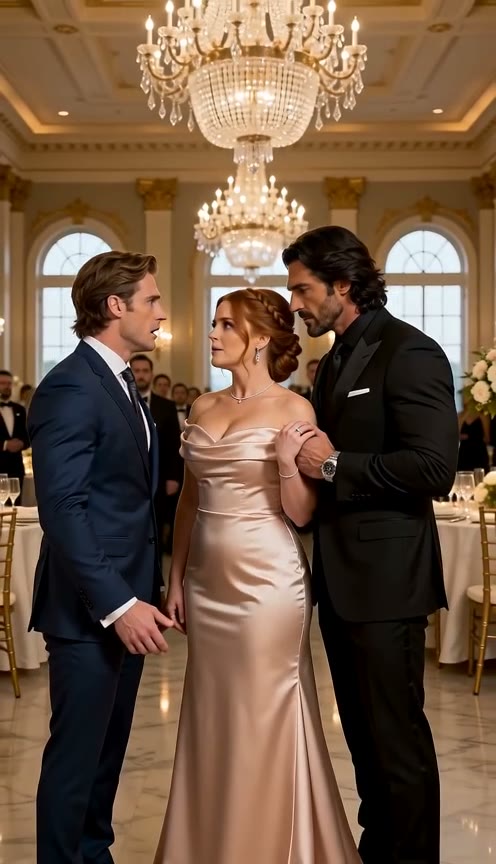
    The ballroom of the St. Regis had been built for moments that felt like history, and on that night, beneath three tiers of blazing crystal chandeliers, Penelope Russo stood very still in the center of it and tried not to let two hundred people watch her bleed.

    "Where's your husband, Penny?"

    Bradley Farnsworth said it the way he said everything — with a smile that had been polished since childhood, pitched just loud enough for the nearest tables to hear. He leaned toward her across the edge of the dance floor, navy suit immaculate, and pointed one manicured finger directly at the diamond wedding ring on her left hand, as if it were evidence in a trial he had already won.

    Penelope's fingers tightened around her glittering evening clutch. Her champagne-blush gown caught the golden light; her chestnut hair, braided up in soft romantic coils, did not move. Only her eyes moved — widening once, briefly — before she lifted her chin and held his gaze.

    "He's on his way," she said.

    It came out quiet. It came out steady. She was proud of that, in some distant corner of her mind, even as her heart slammed against her ribs hard enough to hurt.

    Bradley laughed — a short, contemptuous sound — and glanced sideways at the guests, inviting them in. A woman in emerald silk hid a smile behind her champagne flute. A man Penelope had once tutored in economics looked down at his shoes.

    "On his way," Bradley repeated, savoring it. He stepped closer, and his smile widened into something colder, something that had been waiting eight years to be said in exactly the right room. His eyes traveled over her — slowly, deliberately, the way you appraise something you have already decided is worthless. "Who would marry you?"

    The words landed the way he meant them to. Penelope felt them in her teeth. Around them the gala's music went on — strings, laughter, the bright clink of glass — but inside the small circle of Bradley's cruelty, everything had gone very quiet.

    She did not step back. That was the thing she would remember later, long after everything else: she did not step back.

    And then the great doors at the far end of the ballroom opened.

    There was no announcement. There did not need to be. Conversation thinned out along the edges of the room like a tide going back, table by table, guest by guest, as a tall figure in an immaculate black three-piece suit came through the doorway and stopped, framed for one held breath in the golden light.

    Damian Russo did not scan the room. He did not need to. His dark eyes found his wife the way a compass finds north, and the whole ballroom felt it happen.

    Guests stepped aside. Not dramatically — nothing so crude — just a subtle, instinctive clearing of the path, the way a crowd parts around deep water.

    Bradley, mid-smirk, registered the shift in the room before he understood it. He turned his head.

    Penelope watched the exact moment the blood left his face.

    Damian crossed the marble floor with unhurried, deliberate steps and stopped beside her, and his large hand settled on her shoulder — warm, certain, possessive in the way of a man closing a door against a storm. His thumb moved once, slightly, against the silk of her gown. A reassurance no one else in the room was meant to see.

    Penelope turned toward him, and the relief that broke across her face was not performance. It was eight years of being unchosen, answered in a single touch.

    Damian looked at her for one brief moment — long enough for her breathing to slow — and then he raised his eyes to Bradley Farnsworth, and the temperature of the entire ballroom seemed to drop.

    Bradley had gone the color of old paper. His pointing hand had drifted down to his side, forgotten. His lips parted.

    "Damian Russo…" he whispered.

    Damian's voice, when it came, was deep and perfectly controlled, quieter than the music, and somehow every guest within twenty feet heard it.

    "You insulted my wife?"

    Penelope placed her hand gently over her husband's, where it rested on her shoulder, and looked at the man who had once taught her what it cost to be loved by the wrong person. Her eyes were wet. Her voice was not.

    "Bradley," she said softly, "meet my husband."

    What happened in the ballroom that night would be retold at dinner tables across Manhattan for a year. But to understand how Penelope Russo came to be standing there — in a champagne-pink gown, between the boy who had discarded her and the most dangerous man in New York — you have to go back eight years, to a girl who had nothing, and a golden boy who had everything, and the night he showed her exactly what that meant.

    * * *

    Eight years earlier, Penelope Hart was twenty-two years old, graduating from Wexford University with honors, a scholarship transcript, forty-one dollars in her checking account, and a heart so full of Bradley Farnsworth that she could not imagine a world in which it wasn't returned.

    She had met him in the library her sophomore year, reaching for the same copy of a Keats anthology neither of them needed. He had laughed — that same laugh, back when it had sounded like sunlight — and let her take the book, and written his number inside the back cover while she pretended not to watch. For two years, she had been the great romantic story of his college career: the golden heir of Farnsworth Capital, dating the scholarship girl from Ohio who worked weekends in the campus café. His friends called it charming. His parents, in the beginning, called it a phase — politely, at a distance, the way you speak of weather that will pass.

    Penelope had known about the word phase. She had heard it exactly once, through a door she was never meant to be standing behind, and she had done what girls who have clawed their way out of nothing learn to do: she buried it, and she loved him harder, and she became fluent in making herself easy to love. She laughed at his friends' jokes that were not jokes. She did not mention the skipped dinners with his family, the photographs cropped just so. She told herself that graduation would fix it — that once she had the degree, the job offers, the standing, she would become a woman the Farnsworths could not call weather.

    She was wrong in the way only the very young and very hopeful can be wrong.

    And she had so much to be hopeful about — that was the tragedy of it, later. Because Bradley in private was not the Bradley of the fountain. Bradley in private had read her term paper on Keats at 2 a.m. and argued about it until dawn, badly, happily, losing. Bradley in private had driven four hours in February to sit in a hospital waiting room in Columbus because her mother had fallen, and had charmed the nurses and bullied the cafeteria into producing edible soup. Bradley in private had found her crying over a failed statistics midterm in the library stacks — convinced the scholarship was gone, convinced she was a fraud the university would eventually invoice — and had sat down on the floor between the shelves in his good coat and said, "Listen to me. You are the smartest person at this school. The rest of us are just better dressed," until she laughed through the tears and believed him enough to stand back up.

    She stored those moments the way she stored everything precious: carefully, in order, where she could keep them safe. She did not notice — because she did not yet know how to look — that every one of them had happened where no one from his world could see. The hospital, the library floor, the 2 a.m. kitchen of her dorm. Never the club. Never the family box at the stadium. Never, in two years, a single photograph on the Farnsworths' holiday card, which arrived each December addressed to him alone, with a girl cropped out of the summer-house picture so neatly that only the edge of her sleeve remained, blue against the white railing, like a rumor of a person.

    She noticed the sleeve. She wants it known, in the record of her own heart, that she noticed the sleeve. She simply filed it under things graduation would fix.

    The graduation party was held at the Farnsworth family's country club, all white roses and string quartets, and Penelope wore a blue dress she had saved four months to buy. In her purse, wrapped in silver paper, was a first-edition Keats — the same anthology, two years later — into which she had written, in her careful hand: For the boy who let me keep the book. Everything starts here.

    She never gave it to him.

    The party itself had warned her, in a hundred small courteous cuts, all afternoon. Mrs. Farnsworth had greeted her at the door with a smile that stopped at the eyes and said, "Penelope. How brave of you to come all this way," as if the country club were a war zone and she a tourist. There was no place card for her at the family table — an oversight, the coordinator murmured, blushing, while a waiter materialized a folding chair at the far end, near the kitchen doors, where the scholarship girl could watch Bradley's toast through the steam of other people's dinners. The photographer doing the class portraits had posed the golden couples on the terrace steps — Bradley and Vanessa among them, Vanessa's hand bright on his arm, an arrangement nobody corrected — and Penelope, watching from below with a glass of lemonade she didn't remember taking, had told herself it was protocol. Family friends. Optics. The things graduation would fix.

    She had even rehearsed generosity. In the mirror that morning, zipping the blue dress with hands that shook, she had practiced being gracious about London if it came — because some rumor of London had reached even her, wrapped in the plausible deniability of his friends' jokes — practiced saying we'll write, we'll visit, we'll be the story that survives the distance. She had practiced everything except the truth, because the truth had no manners and she had been raised by a mother who believed manners were a form of armor.

    She was coming down the terrace steps with two glasses of lemonade when she heard her name in the knot of Bradley's friends by the fountain — and heard, in Bradley's own voice, easy and amused above the others: "Come on. You don't marry the scholarship girl. You date her in college so you have something interesting to remember."

    The lemonade glasses did not fall. She was always, even then, a woman who did not drop things. She set them down on the stone balustrade with great care, and she stood in the shadow of the terrace column, and she listened to the man she loved explain her to his friends — a phase, a story, a kindness, really, he was doing her a kindness, she'd land on her feet, girls like that always did — and then she heard Vanessa Cole's laugh, bright as a struck bell, and Bradley saying, fond and final, "Vanessa and I leave for London on Tuesday. That's real. That's the plan. It was always the plan."

    Penelope walked back into the ballroom on legs she could not feel. She took the silver-wrapped book out of her purse and set it down on the marble gift table between a Tiffany box and a vase of white roses, exactly where he would find it. She did not write a note. The inscription was already inside, and by the time he read it — if he ever read it — it would be a relic of a girl who no longer existed.

    Then Penelope Hart walked out of the country club, down the long gravel drive, in her four-months-saved-for blue dress, into a rain that had come up off the lake without asking anyone's permission — and she made herself a promise, quietly, the way she did everything that mattered.

    She did not know it yet, but she had just walked out of the wrong man's story — and straight toward her own.

  • Chapter 7: THE HOME HE FINALLY DESERVED

    Chapter 7: THE HOME HE FINALLY DESERVED

    Warren flew back to Chicago the next morning.

    Jillian and Norah came with him.

    They went straight to Aunt Rachel's house.

    Rachel was waiting for them at the door.

    She hugged Warren tightly.

    She hugged Norah.

    She smiled at Jillian.

    "Come in," she said. "All of you."

    They sat in the living room.

    Rachel went to a drawer.

    She pulled out a small leather diary.

    She handed it to Warren.

    "This belonged to Eleanor," she said. "I found it in her old bedroom. I think you need to read it."

    Warren opened the diary.

    He read the first page.

    "Dear Diary,

    Today, Warren asked me to marry him.

    I said yes.

    I have never been happier.

    I know his life is complicated.

    I know he has made mistakes.

    But I also know he has a good heart.

    I believe in him.

    I believe he will be a wonderful father.

    I believe he will find his way.

    Love, Eleanor."

    Warren turned the page.

    "Dear Diary,

    Today, Norah was born.

    She is beautiful.

    She has Warren's eyes.

    She has my smile.

    I am so happy.

    I want to watch her grow up.

    I want to see her go to school.

    I want to see her fall in love.

    I want to be there for every moment.

    Love, Eleanor."

    Warren turned another page.

    "Dear Diary,

    Today, I found out I am sick.

    The doctors say I don't have much time.

    I haven't told Warren yet.

    I don't know how.

    I don't want him to worry.

    I don't want Norah to be scared.

    But I need to write this down.

    If something happens to me, I want Warren to know that I love him.

    I want him to know that he is a good man.

    I want him to know that he deserves to be happy.

    I want him to find love again.

    I want him to find someone who will love Norah as much as I do.

    I want him to build a home filled with laughter and love.

    That is my last wish.

    Love, Eleanor."

    Warren closed the diary.

    Tears streamed down his face.

    He had not known Eleanor was sick.

    He had thought her death was an accident.

    He had thought Marcus had killed her.

    But the truth was more complicated.

    Eleanor had been sick.

    She had known she was dying.

    She had not told Warren.

    She had wanted to protect him.

    She had wanted to protect Norah.

    Warren looked at Jillian.

    She was crying too.

    Norah was sitting beside them, holding Mr. Brown.

    She did not understand everything, but she understood that her daddy was sad.

    She hugged him.

    "It's okay, Daddy," she said. "Mommy is in heaven now. She's watching us."

    Warren held her tightly.

    "Yes, sweetheart. She is."

    Aunt Rachel sat beside them.

    "Warren," she said. "Eleanor wanted you to be happy. She wanted you to find love again. She wanted you to build a home."

    Warren looked at Jillian.

    He thought about everything they had been through.

    The flight.

    The turbulence.

    The captain's desperate request.

    The discovery of his past.

    The betrayal.

    The truth.

    He realized that Eleanor had been right.

    He deserved to be happy.

    He deserved to find love again.

    He took Jillian's hand.

    "Jillian," he said. "Will you help me build that home?"

    Jillian smiled through her tears.

    "Yes," she said. "I will."

    Warren looked at Norah.

    "Norah, what do you think? Would you like Jillian to be part of our family?"

    Norah smiled brightly.

    "Yes! I would love that!"

    Warren laughed.

    Jillian laughed.

    Aunt Rachel laughed.

    For the first time in a long time, the house was filled with laughter.

    Warren had told Jillian that what he wanted most now was not excitement or danger, but the ordinary ones — the mornings when nobody needs him to make a decision, the afternoons when Norah wants to show him a drawing, the evenings when they have dinner together and nobody is watching the clock. Jillian smiled. "You're making ordinary life sound rather wonderful." "Maybe because I've spent too many years without it." She glanced toward the kitchen. "Then I think we should practice." "Practice what?" "Being ordinary." Warren laughed. "That sounds difficult." "Fortunately, I'm an excellent teacher."

    The following Sunday morning, Warren woke before seven. For several seconds, he lay quietly in bed, listening to the house. There were no telephone calls. No urgent messages. No men waiting outside his office. Just the faint sound of rain against the windows and the distant hum of the refrigerator downstairs. He looked at the clock. 7:04 a.m. Then he remembered. Norah had asked him to make pancakes. He got out of bed, put on his black fitted shirt, leaving the top buttons slightly open, and dark trousers. He walked downstairs. Norah was already sitting at the kitchen island. She wore her cream-colored sweater, and Mr. Brown was positioned beside a small plate. "Good morning, sweetheart." "Good morning, Daddy." Warren looked at the plate. "Is Mr. Brown having breakfast?" "He's waiting." "For what?" "For pancakes." "Of course." Norah leaned forward. "Jillian said she was coming." "She is." "Are you making them?" "That's the plan." Norah looked suspicious. "Do you know how?" Warren opened a kitchen cupboard. "I can follow instructions." "That's what people say when they don't know." He laughed. "You're becoming very much like your mother." Norah smiled. "Mommy was good at pancakes." "She was." "Can you make them like hers?" Warren paused. "I'll try." Norah nodded seriously. "Okay. But don't burn them." "I'll do my best."

    The doorbell rang twenty minutes later. Norah jumped from her chair. "Jillian!" "Careful," Warren called. She stopped before reaching the hallway. Then she walked the remaining distance at a more sensible pace. Jillian stood at the entrance wearing her navy-blue flight attendant uniform, white blouse, and red, navy, and white scarf. Her blonde hair was arranged in an elegant updo, with a few loose strands framing her face. "Good morning!" Norah hugged her. "You're here!" "I promised, didn't I?" "Yes!" Jillian looked toward Warren. "Good morning." He smiled. "Good morning. You're just in time." "For what?" "Breakfast." She looked at the kitchen. Then at Warren. "Are you cooking?" "Apparently." "Should I be worried?" Norah answered before he could. "Yes." Jillian laughed. "Then I think we'd better work together."

    The kitchen quickly became a place of cheerful confusion. Warren measured the flour. Jillian prepared the eggs. Norah stood on a safe step stool at the counter, carefully stirring the mixture under Jillian's supervision. Mr. Brown watched from his chair. "Not too fast," Jillian instructed. Norah slowed down. "Like this?" "Perfect." Warren looked at the bowl. "That looks good." Jillian glanced at him. "Have you checked the recipe?" "Yes." "Twice?" "Once." "Then check it again." He raised an eyebrow. "You're very demanding." "I'm trying to protect breakfast." Norah giggled. Warren read the instructions again. "Apparently, we need more milk." Jillian handed him the carton. "See? Teamwork." He poured carefully. A little flour landed on his tattooed forearm. Norah noticed immediately. "Daddy!" "What?" "You have flour on you." He looked down. "So I do." "You're messy." "Apparently, I'm learning." Jillian smiled. "You're doing very well." He glanced at her. "Thank you for your confidence." "Don't let it go to your head."

    The first pancake was too thick. The second was slightly uneven. The third was almost perfect. Norah examined it carefully. "This one is good." Warren placed it on her plate. "Excellent. The chef approves." Jillian took a bite of her own pancake. She smiled. "Actually, these are delicious." Warren looked surprised. "Really?" "Really." Norah nodded. "Mommy's were a little better." Jillian laughed. Warren put a hand over his heart. "That's a serious criticism." Norah leaned toward him. "But yours are good too." "Thank you. I'll accept that." He made another pancake. This time, it came out beautifully golden. Jillian watched him work. There was something unexpectedly moving about seeing him in an ordinary kitchen. The same man who had once sat in a turbulent aircraft, calmly studying an emergency, was now concentrating on pancakes. He wasn't checking his telephone. He wasn't giving orders. He wasn't thinking about who might be waiting for him outside. He was simply present. And Jillian realized that this was the man she wanted to know.

    By nine o'clock, the three of them were sitting around the kitchen table. There were pancakes, strawberries, a little bowl of blueberries, and a plate of toast. Norah had arranged Mr. Brown beside her napkin. Warren poured orange juice. Jillian placed the syrup in the middle of the table. "Everyone ready?" Norah raised her hand. "Yes!" Warren smiled. "Then let's eat." They talked about ordinary things. Norah described a school project. Jillian told them about a funny incident involving a passenger who had mistaken the crew's coffee machine for something else. Warren told a story about getting lost in London because he had followed Norah's directions instead of his own. Norah laughed so hard that she nearly spilled her juice. "You're not supposed to follow me!" "Why not?" "Because I don't know where everything is!" "That's an important detail." Jillian shook her head, smiling. "I think you need a better navigator." Warren looked at Norah. "Apparently."

    When breakfast was nearly finished, Norah became unusually thoughtful. She looked at Warren. Then at Jillian. "Can I ask something?" "Of course," Warren answered. "Are we going to have breakfast like this every Sunday?" Warren stopped cutting his pancake. Jillian looked at Norah. "Would you like that?" Norah nodded. "Yes. With you both." Warren looked at his daughter. There was no complicated request hidden inside her question. She wasn't asking for a holiday. She wasn't asking for an expensive present. She simply wanted the three of them to sit around the same table again. "Would you like that too?" he asked Jillian. She smiled. "I would love that." Norah's face brightened. "Every Sunday?" Warren reached across the table and gently took her hand. "Every Sunday that I can, sweetheart. I'll make time for it." "Even when you're busy?" "Especially when I'm busy. We'll make it important." "Even if you have work?" "We'll plan around it." Norah considered his answer. Then she looked at Jillian. "Will you come too?" Jillian reached across and touched Norah's hand. "If you want me there, absolutely." Norah smiled. "Then it's a family breakfast." Warren looked at Jillian. Neither of them corrected her. He glanced toward the window. The rain had stopped. Soft morning sunlight was beginning to fill the kitchen. For years, Warren had believed that a good life was something he had to earn after finishing all his work. Now he understood that the good life was happening in front of him. A little girl with a teddy bear. A woman he was slowly falling in love with. A kitchen full of imperfect pancakes. And a promise to be there next Sunday. Norah took one last bite and leaned happily against her father's arm. Jillian smiled at them. Warren reached for her hand. And for once, there was nowhere else he needed to be. Sunday had become their favorite day — not because anything extraordinary happened, but because they finally had each other, and that was enough.

    A month later, in Chicago, Warren took Jillian to the garden behind his house.

    It was a beautiful evening.

    The sun was setting.

    The flowers were in bloom.

    Norah was inside, playing with Mr. Brown.

    Warren knelt down on one knee.

    He held out a small box.

    Inside was a ring.

    It was simple and elegant.

    "Jillian Rhodes," he said. "Will you marry me?"

    Jillian's eyes filled with tears.

    She nodded.

    "Yes," she said. "Yes, I will."

    Warren stood up.

    He put the ring on her finger.

    He kissed her.

    It was the beginning of their new life together.

    Six months later, they were married in London.

    The wedding was small and beautiful.

    It was held in the garden of Eleanor's childhood home.

    Norah was the flower girl.

    She wore a beautiful white dress.

    She carried a basket of flowers.

    Mr. Brown was dressed in a tiny suit.

    Aunt Rachel cried with happiness.

    Detective Sarah Cole was there, smiling.

    Even Marcus Bell sent a letter of apology from prison.

    He had confessed everything.

    He was serving his sentence.

    Dominic Kane was also in prison, but he had cooperated with the police.

    He had helped bring down the rest of the criminal network.

    Warren had left the mafia.

    He had started a legitimate business.

    He used his flying experience to start a small aviation company.

    He helped transport medical supplies to remote areas.

    He was finally using his skills for good.

    Jillian had left her job as a flight attendant.

    She had started working with Warren.

    Together, they built a new life.

    A life filled with love.

    A life filled with laughter.

    A life filled with hope.

    One evening, Warren sat in his garden with Jillian and Norah.

    Norah was reading a book.

    Jillian was holding Warren's hand.

    The sun was setting.

    The sky was painted with shades of orange and pink.

    Warren looked at his family.

    He thought about Eleanor.

    He thought about her letter.

    He thought about her last wish.

    He had fulfilled it.

    He had found love again.

    He had built a home filled with laughter and love.

    He had become the man Eleanor had always believed he could be.

    "Daddy," Norah said. "Tell me a story."

    Warren smiled.

    "Once upon a time," he said, "there was a man who was flying on an airplane. The airplane shook. The passengers were scared. But the man stayed calm. And he raised his hand. And that changed his life forever."

    Norah smiled.

    "Is that a true story?"

    Warren looked at Jillian.

    "Yes, sweetheart," he said. "It's the truest story I know."

    Jillian leaned her head on Warren's shoulder.

    Norah leaned against his other side.

    Mr. Brown sat between them.

    The sun set.

    The stars came out.

    And for the first time in his life, Warren Hayes felt truly at home.

    He had found his family.

    He had found his happiness.

    He had found his peace.

    And he knew, deep in his heart, that Eleanor was smiling down on them.

    THE END

  • Chapter 6: THE LAST ORDER OF WARREN HAYES

    Chapter 6: THE LAST ORDER OF WARREN HAYES

    Warren and Jillian went to the police station.

    Detective Sarah Cole was waiting for them.

    She was in her forties, with short dark hair and sharp eyes.

    She led them to a small room.

    She sat down across from them.

    "Mr. Hayes," she said. "We have been investigating your wife's death for the past eighteen months. We always believed it was a car accident. But new evidence has come to light."

    "What evidence?" Warren asked.

    Detective Cole pulled out a folder.

    She opened it.

    She showed Warren a photograph.

    It was a photograph of Dominic Kane.

    He was standing next to Marcus Bell.

    They were shaking hands.

    The photograph was taken the night Eleanor died.

    "Dominic told us he was at your house that night," Detective Cole said. "But this photograph shows him meeting Marcus two hours before Eleanor died."

    Warren stared at the photograph.

    He could not believe it.

    "Dominic was working with Marcus?" he said.

    "We believe so," Detective Cole said. "We believe Dominic helped Marcus get into your house that night. And we believe Dominic has been working with Marcus ever since."

    Warren felt sick.

    His best friend.

    The man he had trusted with his life.

    The man he had trusted with his daughter.

    Had betrayed him.

    "Why?" Warren asked. "Why would Dominic do this?"

    Detective Cole looked at him.

    "Money," she said. "Marcus promised Dominic a large sum of money. And power. Dominic wanted to take over your business."

    Warren closed his eyes.

    He thought about all the times Dominic had helped him.

    He thought about all the times they had laughed together.

    He thought about all the times Dominic had held Norah when she was a baby.

    He felt a pain in his chest.

    It was worse than any physical pain he had ever felt.

    "Where is Dominic now?" Warren asked.

    "We don't know," Detective Cole said. "He left Chicago three days ago. We believe he is in London."

    Warren stood up.

    "I need to find him."

    Detective Cole stood up too.

    "Mr. Hayes, I need you to stay here. Let us handle this."

    Warren shook his head.

    "No. This is personal. I need to find him myself."

    Jillian stood up.

    "Warren, please. Listen to the detective."

    Warren looked at her.

    "I can't. I need to protect Norah."

    Jillian nodded.

    "Then I'll come with you."

    Warren looked at Detective Cole.

    "Give me twenty-four hours," he said. "If I don't find him, I'll come back."

    Detective Cole hesitated.

    Then she nodded.

    "Twenty-four hours. But if you find him, do not confront him alone. Call us."

    Warren agreed.

    He left the station with Jillian.

    They went back to the hotel.

    Norah was waiting for them.

    She was playing with Mr. Brown.

    "Daddy! You're back!"

    Warren hugged her.

    "Hi, sweetheart."

    Norah looked at Jillian.

    "Hi, Jillian!"

    "Hi, Norah."

    Warren sat down with Norah.

    He looked into her eyes.

    "Sweetheart, I need you to stay here with Jillian for a little while. Daddy needs to go and talk to someone."

    Norah looked worried.

    "Is it the bad man?"

    Warren nodded.

    "Yes. But don't worry. I'll be back soon."

    Norah hugged Mr. Brown tighter.

    "Okay, Daddy. Be careful."

    Warren kissed her forehead.

    "I will."

    He stood up.

    He looked at Jillian.

    "Take care of her."

    Jillian nodded.

    "I will. I promise."

    Warren left the hotel.

    He went to find Dominic.

    He checked the hotels.

    He checked the bars.

    He checked the restaurants.

    He could not find him.

    He was about to give up when his phone rang.

    It was Dominic.

    "Warren," Dominic said. "I know you're looking for me. Meet me at the old warehouse near the river. Come alone."

    Warren agreed.

    He drove to the warehouse.

    It was dark and empty.

    Dominic was waiting inside.

    He was sitting on a crate, holding a gun.

    "Dominic," Warren said. "Put the gun down."

    Dominic shook his head.

    "I can't. It's too late."

    "Why did you do it?" Warren asked. "Why did you betray me?"

    Dominic looked at him.

    His eyes were filled with tears.

    "Because I was jealous," he said. "You had everything. You had Eleanor. You had Norah. You had money. You had power. I had nothing."

    Warren stepped closer.

    "Dominic, you had me. You had my friendship. That was everything."

    Dominic shook his head.

    "It wasn't enough."

    Warren looked at the gun.

    "Dominic, please. Put it down. We can fix this."

    Dominic laughed bitterly.

    "Fix this? Warren, I helped kill your wife. There's no fixing that."

    Warren's eyes filled with tears.

    "Dominic, I forgive you."

    Dominic looked at him in shock.

    "What?"

    "I forgive you," Warren said. "Eleanor would want me to forgive you. She always believed in second chances."

    Dominic dropped the gun.

    He fell to his knees.

    He cried.

    Warren walked over to him.

    He knelt beside him.

    He put his hand on his shoulder.

    "It's over, Dominic. It's over."

    Dominic looked up.

    "Will you call the police?"

    Warren nodded.

    "Yes. But I'll tell them you cooperated. I'll tell them you helped me find the truth."

    Dominic nodded.

    "Thank you."

    Warren called Detective Cole.

    She arrived with her team.

    They arrested Dominic.

    Warren watched as they led him away.

    He felt sad.

    But he also felt free.

    He had finally found the truth.

    He had finally let go of his anger.

    He went back to the hotel.

    Jillian and Norah were waiting for him.

    Norah ran to him.

    "Daddy!"

    Warren picked her up.

    He held her tightly.

    Jillian looked at him.

    "Is it over?"

    Warren nodded.

    "It's over."

    Before he went to meet Dominic, Warren called his Aunt Rachel in Chicago. She answered on the second ring, her voice sharp and loving at once.

    "Warren Hayes, it's midnight here. This had better be important."

    "It is," Warren said. "I need you to come to London. Or I need you to take Norah if something happens to me."

    Rachel was silent for a moment. "Nothing is going to happen to you. But I'll come. I'll be on the first flight."

    "Rachel, I need to ask you something," Warren said. "If I have to cooperate with the police, and if things get complicated — will you look after Norah? Not as a favor. As family."

    "Warren," Rachel said, "I have three conditions. One: you call me every day. Two: you eat a proper meal, not just coffee. Three: you stop trying to protect everyone by pushing them away. Let Jillian help you. Let me help you. That is what family is for."

    Warren swallowed hard. "I accept your conditions."

    "Good," Rachel said. "Now go and finish this. And Warren — Eleanor would be proud of you for choosing the truth over revenge."

    Warren had been away from the hotel for nearly an hour.

    He was meeting Amelia Grant and Detective Sarah Cole to discuss the next stage of his cooperation.

    Jillian had offered to stay with Norah.

    The little girl was sitting at the hotel desk in her cream-colored sweater, with Mr. Brown beside her.

    Jillian had changed out of her flight attendant uniform and was wearing a comfortable cardigan.

    Her blonde hair was loosely pinned up.

    She placed two sheets of paper on the desk.

    "Would you like to make something?"

    Norah looked at them.

    "What?"

    "Something that can fly."

    Norah's eyes brightened.

    "An airplane?"

    "Exactly."

    Jillian picked up one sheet.

    "Have you ever made a paper airplane?"

    Norah shook her head.

    "Not properly."

    "Then today is your first lesson."

    She folded the paper in half.

    "Watch carefully."

    Norah leaned forward.

    Jillian showed her how to fold the corners toward the center, then fold the wings down.

    "Like this?"

    "Very good."

    Norah copied her movements.

    Her first attempt was slightly uneven.

    Jillian smiled.

    "That's all right. The first one doesn't have to be perfect."

    "Do yours fly?"

    "We'll find out."

    Norah held up her paper airplane.

    "Mine looks like a real airplane."

    "It does."

    Mr. Brown sat beside the finished aircraft.

    Norah looked at him.

    "He wants to fly too."

    "Then perhaps we should make him a passenger."

    Norah giggled.

    Jillian moved the chair away from the desk.

    They stood in the open area near the window.

    "All right," Jillian said. "Aim toward the other side of the room."

    Norah held the airplane carefully.

    "Ready?"

    "Ready."

    She threw it.

    The paper airplane traveled a short distance before turning sideways and landing on the carpet.

    Norah looked disappointed.

    "It didn't fly."

    "It did. Just not very far."

    "Why?"

    "Maybe one of the wings needs adjusting."

    They picked it up.

    Jillian showed her how to straighten the folds.

    Norah tried again.

    This time, the airplane traveled farther.

    It landed near the armchair.

    Norah jumped.

    "It worked!"

    Jillian applauded.

    "Excellent flying."

    Norah retrieved the airplane.

    "Can we make another?"

    "Of course."

    They made a second one.

    This time, Norah chose to decorate the wings with little stars.

    Jillian drew a small heart near the nose.

    Norah looked at it.

    "That's pretty."

    "Thank you."

    "Can I write something?"

    "Certainly."

    Norah took a pencil.

    She carefully wrote:

    "FOR DADDY."

    Jillian smiled.

    "That's lovely."

    Norah hugged Mr. Brown.

    "He wants to fly too."

    "Then perhaps we should make him a passenger."

    Norah giggled.

    They sat on the carpet afterward.

    Norah placed both airplanes beside Mr. Brown.

    Jillian noticed that she had become quieter.

    "What's wrong, sweetheart?"

    Norah touched one of the paper wings.

    "Nothing."

    Jillian waited.

    After a moment, Norah spoke.

    "Sometimes I miss Mommy."

    Jillian nodded.

    "I imagine you do."

    "I miss her reading to me."

    "Was that something she did often?"

    "Every night."

    Norah looked down.

    "She made different voices for the characters."

    Jillian smiled.

    "That sounds wonderful."

    "She was very good."

    Norah paused.

    "Do you think she would have liked our airplanes?"

    "Absolutely."

    "Even though they're not very good?"

    Jillian laughed softly.

    "I think she would have loved them because you made them."

    Norah hugged Mr. Brown.

    "I wish she could see them."

    Jillian sat beside her.

    "Do you know something?"

    "What?"

    "Sometimes when we love someone, we remember the things they taught us. We can still do those things and think about them."

    Norah considered that.

    "Like reading?"

    "Exactly."

    "And making airplanes?"

    "That too."

    Norah looked toward the window.

    "Mommy wanted me to see London."

    "She must have been very excited about that."

    "She said there were beautiful gardens."

    "I've seen some of them. Your mother was right."

    Norah smiled faintly.

    "She also said there were lots of books."

    "She was right about that too."

    Norah looked at Jillian.

    "Do you think I'll be happy again?"

    Jillian's expression softened.

    "I think you'll have happy days and sad days. Both are allowed."

    "Even when I'm older?"

    "Even then."

    Norah leaned against her.

    Jillian gently put an arm around her shoulders.

    "You don't have to stop missing your mother to enjoy the things you do now."

    Norah nodded.

    "Okay."

    After a few minutes, Norah looked up.

    "Can I tell you something?"

    "Of course."

    "When Daddy is away, I sometimes worry."

    Jillian listened carefully.

    "Because of his work?"

    "Sometimes."

    Norah looked at Mr. Brown.

    "But Daddy always comes back when he says he will."

    Jillian smiled.

    "That's important."

    "He says he wants to spend more time with me."

    "Do you believe him?"

    Norah nodded.

    "Yes."

    "Why?"

    "Because he listens now."

    Jillian looked at her.

    "What do you mean?"

    "Before, he sometimes looked at his phone when I talked."

    Norah spoke without accusation.

    "Now he puts it away."

    Jillian felt a quiet warmth in her chest.

    "That's a very good thing."

    Norah picked up the first paper airplane.

    "Can I make one for Mommy?"

    Jillian nodded.

    "Of course."

    They took another sheet of paper.

    This time, Norah folded it more carefully.

    Jillian helped her straighten the wings.

    Norah drew a little heart on the side.

    Then she wrote:

    "I MISS YOU, MOMMY."

    She placed it beside the first two airplanes.

    Jillian did not say anything immediately.

    She simply stayed beside her.

    After a while, Norah looked up.

    "Can we show Daddy when he comes back?"

    "Absolutely."

    "Will he like them?"

    "I think he'll love them."

    Norah smiled.

    "Then we should make one for him too."

    Jillian laughed.

    "That's the one you already made."

    Norah looked at the airplane marked "FOR DADDY."

    "You're right."

    Warren returned just after sunset.

    He found Jillian and Norah sitting on the carpet.

    Three paper airplanes were arranged in front of them.

    Norah immediately stood.

    "Daddy!"

    Warren smiled.

    "Hello, sweetheart."

    "Look what we made!"

    He crouched beside her.

    "Those are impressive."

    Jillian looked up.

    "Your daughter is becoming an excellent pilot."

    "Should I be concerned?"

    "Only about the competition."

    Norah handed him the airplane marked with his name.

    "This one is yours."

    Warren examined it.

    "Beautiful."

    "Jillian taught me."

    He looked at Jillian.

    "Thank you."

    She smiled.

    "She did most of the work."

    Norah shook her head.

    "No. We did it together."

    Warren nodded.

    "Then it's a team project."

    He looked at the third airplane.

    "Who's that one for?"

    Norah picked it up carefully.

    "Mommy."

    Warren's expression softened.

    He read the little message on the wing.

    Then he looked at his daughter.

    "That's a lovely idea."

    Norah held it against her chest.

    "Can we keep it?"

    "Of course."

    He gently placed all three airplanes on the desk.

    Then he kissed Norah's forehead.

    "Thank you for waiting for me."

    Norah hugged him.

    "You're welcome."

    Warren looked at Jillian.

    She gave him a small smile.

    In that moment, he understood something important.

    Jillian wasn't trying to replace Eleanor.

    She wasn't trying to become the center of Norah's world.

    She was simply making room for the little girl to be happy.

    And Warren was more grateful than he could express.

    At the London police station, Detective Sarah Cole stood beside a large table covered with documents.

    Her partner, Detective James Ellis, was examining a series of shipping records.

    Several names appeared repeatedly.

    Dominic Kane.

    Marcus Bell.

    And a company called Northbridge Logistics.

    Sarah placed another document on the table.

    "Look at this."

    Ellis leaned closer.

    "What have you found?"

    "A payment made two days before Eleanor Hayes's accident."

    "To whom?"

    "Northbridge Logistics."

    He studied the page.

    "That's one of the companies connected to the shipping records."

    "Exactly."

    Sarah pointed to a date.

    "And look at the address."

    Ellis read it.

    "Warehouse seventeen. Near the river."

    "Yes."

    "Is it still operating?"

    "Not officially. The company closed the location eighteen months ago."

    Ellis frowned.

    "Then why is there a payment recorded against it?"

    "That's what I want to establish."

    He pulled another folder closer.

    "Who authorized the payment?"

    "The records identify an intermediary. The name is partially obscured."

    "Can we recover it?"

    "We're working on that."

    Sarah turned another page.

    "There's also a vehicle registration connected to the warehouse."

    Ellis looked up.

    "Same vehicle from the accident file?"

    "Possibly. The registration is incomplete, but two digits match."

    He leaned back.

    "That's interesting."

    "More than interesting."

    Sarah placed a photograph beside the documents.

    It showed a warehouse entrance beside a riverside road.

    A security camera was mounted above the door.

    "When was this taken?"

    "Six months ago, during a separate financial investigation."

    Ellis studied it.

    "Do we have footage?"

    "Not yet. The original system was replaced, but the company retained some archived maintenance records."

    "Can we get them?"

    "I've already requested them."

    Ellis opened another folder.

    "There's something else."

    Sarah turned.

    "Go ahead."

    "Marcus Bell's name appears in a visitor log."

    "At the warehouse?"

    "Yes. Two weeks before Eleanor's death."

    Sarah examined the entry.

    The handwriting was difficult to read.

    But the name was clear.

    Marcus Bell.

    She sat down slowly.

    "Did he sign in personally?"

    "That's what the record suggests."

    "Any accompanying names?"

    "Not on this page."

    Sarah looked at the date.

    Then at the financial transfer.

    Then at the photograph.

    "Dominic Kane told Warren that Marcus was already gone."

    Ellis nodded.

    "That could mean he knew Marcus was involved."

    "Or that he knew Marcus was trying to leave."

    "Either way, we need to find him."

    Sarah closed the folder.

    "Yes."

    They moved to the station's small conference room.

    Ellis placed a map of the riverside district on the table.

    The warehouse was marked near an old commercial dock.

    Several streets led toward it.

    Sarah studied the area.

    "Who owns the property now?"

    "A holding company."

    "Connected to Northbridge?"

    "Indirectly."

    She looked at him.

    "Can we establish the ownership chain?"

    "Probably. It'll take time."

    "Start with the registered directors and the last three years of transactions."

    Ellis nodded.

    "What about the building itself?"

    "Arrange a formal inspection request. We need to know whether any records remain inside."

    "Do you think Dominic is still using it?"

    Sarah considered that.

    "I think someone wanted us to believe the company had disappeared."

    Ellis looked toward the photograph.

    "Could it be connected to the payments made before Eleanor's death?"

    "That's what we're investigating."

    Ellis leaned back.

    "Dominic Kane's name appears in the records more than once."

    Sarah nodded.

    "Then we need to establish exactly what he was doing there."

    Ellis looked toward the photograph.

    "Could he have been using the warehouse to move money?"

    "Possibly. But we need evidence."

    Sarah picked up the telephone.

    She checked the number for Amelia Grant.

    Then she put it down.

    She wanted more information before contacting Warren.

    The last thing he needed was another unverified suggestion that someone had been watching his family.

    She looked again at the warehouse records.

    "James?"

    "Yes?"

    "Find out who controlled access to this property."

    "Understood."

    "And I want the original visitor log preserved."

    "I'll arrange it."

    Sarah gathered the documents.

    For the first time, Eleanor's case was beginning to form a coherent pattern.

    There were financial transactions.

    A possible connection to the accident.

    A former security chief.

    And a warehouse that had been used by a company whose records seemed to have disappeared.

    None of it was sufficient to establish the full truth.

    But it was enough to justify further investigation.

    Sarah looked at the map.

    "Dominic Kane may have believed he could hide everything behind a series of companies."

    Ellis nodded.

    "But records have a way of surviving people."

    Sarah closed the folder.

    "Then let's find out what survived."

    Later that evening, Sarah returned to her desk.

    She reviewed her notes once more.

    Warren Hayes had agreed to cooperate.

    Marcus Bell had become a person of interest.

    And the warehouse near the river might provide the missing link between the financial records and Eleanor's final days.

    Sarah picked up her phone.

    She began drafting a message to Amelia.

    There was still much to establish.

    But she now had a specific location to investigate.

    And for the first time since reopening the case, she believed they were getting closer to understanding what had happened to Eleanor Hayes.

    That night, Warren sat with Jillian on the hotel balcony.

    The city lights twinkled below them.

    Norah was asleep inside, clutching Mr. Brown.

    Warren looked at Jillian.

    "Thank you," he said. "For everything."

    Jillian smiled.

    "You're welcome."

    Warren took her hand.

    "Jillian, I need to tell you something."

    "What?"

    "I've been thinking about my life. About what I want. About what Norah needs."

    Jillian waited.

    "I want to leave the mafia," Warren said. "I want to start over. I want to be a good father. I want to be a good man."

    Jillian squeezed his hand.

    "Then do it."

    Warren looked at her.

    "Will you help me?"

    Jillian smiled.

    "Yes. I'll help you."

    Warren leaned closer.

    He looked into her eyes.

    He saw kindness.

    He saw courage.

    He saw love.

    He leaned in and kissed her.

    It was soft.

    It was gentle.

    It was the beginning of something new.

    When they pulled apart, Jillian smiled.

    "Warren Hayes," she said. "You are full of surprises."

    Warren laughed.

    It was the first time he had laughed like that in years.

    They sat together on the balcony, holding hands, watching the city lights.

    They did not know what the future would hold.

    But they knew they would face it together.

    Then Warren's phone rang.

    It was Aunt Rachel.

    "Warren," she said. "I need to tell you something. It's about Eleanor. I found her diary. And there's something in it you need to see."

    Warren looked at Jillian.

    His heart stopped.

    "What is it?"

    "I can't tell you over the phone," Rachel said. "You need to come to Chicago. Immediately."

  • Chapter 5: THE BETRAYAL INSIDE HIS OWN HOUSE

    Chapter 5: THE BETRAYAL INSIDE HIS OWN HOUSE

    Warren sat in his hotel room, staring at the phone.

    Detective Sarah Cole's words echoed in his mind.

    "Your wife may have been murdered."

    He could not believe it.

    He did not want to believe it.

    He picked up the phone and called Jillian.

    "Jillian, I need you. Now."

    Jillian arrived twenty minutes later.

    She knocked on the door.

    Warren opened it.

    His face was pale.

    "What happened?" she asked.

    Warren told her about the phone call.

    Jillian sat down beside him.

    She held his hand.

    "We need to find out the truth," she said.

    Warren nodded.

    "I know. But where do we start?"

    Jillian thought for a moment.

    "We start with Dominic," she said. "He's the only person who was there that night."

    Warren looked at her.

    "Dominic was with me that night. He was at the house."

    "Was he?" Jillian asked. "Or did he just say he was?"

    Warren frowned.

    "What are you saying?"

    "I'm saying we need to check," Jillian said. "We need to find out where Dominic really was that night."

    Warren picked up his phone.

    He called Dominic again.

    This time, Dominic answered.

    "Warren?"

    "Dominic, where were you the night Eleanor died?"

    There was a long silence.

    "Warren, what are you asking me?"

    "Answer the question."

    Dominic sighed.

    "I was at the house. With you. You know that."

    "No," Warren said. "I don't know that. I was in the study. You were supposed to be in the living room. But when I came out, you were gone."

    Dominic was silent.

    "Dominic," Warren said quietly. "Tell me the truth."

    Dominic's voice was shaking.

    "Warren, I can't."

    "Why not?"

    "Because if I tell you, you'll never forgive me."

    Warren's heart stopped.

    "What did you do?"

    Dominic took a deep breath.

    "That night, Marcus called me. He said he needed to see Eleanor. He said he had something important to tell her. I let him into the house."

    Warren stood up.

    His hands were shaking.

    "You let Marcus into my house?"

    "Yes," Dominic said. "I'm sorry. I didn't know what he was going to do. I thought he just wanted to talk."

    "What did he do?"

    "I don't know," Dominic said. "I left the room. When I came back, Eleanor was gone. Marcus was gone too."

    Warren could not speak.

    He could not breathe.

    His best friend had betrayed him.

    His best friend had let the man who hated him into his house on the night his wife died.

    "Warren, I'm sorry," Dominic said. "I've been carrying this guilt for eighteen months. I didn't know how to tell you."

    Warren ended the call.

    He sat down.

    He put his head in his hands.

    Jillian sat beside him.

    She did not say anything.

    She just held his hand.

    After a long time, Warren looked up.

    His eyes were filled with tears.

    And anger.

    "I need to find Marcus," he said. "I need to hear it from him."

    Jillian nodded.

    "Then let's find him."

    They went to Marcus's house.

    The house where Eleanor had grown up.

    The garden was beautiful.

    The flowers were in bloom.

    Warren walked through the garden.

    He remembered Eleanor telling him about this place.

    He remembered her laughter.

    He remembered her smile.

    He felt a pain in his chest.

    He pushed it away.

    He knocked on the door.

    Marcus opened it.

    He was not surprised to see them.

    "I've been expecting you," he said.

    Warren stepped inside.

    "Tell me what happened that night," Warren said.

    Marcus looked at him.

    "Are you sure you want to know?"

    "Yes."

    Marcus sat down.

    He poured himself a glass of whiskey.

    "That night, I came to see Eleanor. I wanted to tell her that I still loved her. I wanted to ask her to leave you."

    Warren's jaw tightened.

    "What did she say?"

    "She said no," Marcus said. "She said she loved you. She said she would never leave you."

    Marcus took a sip of whiskey.

    "I was angry. I was hurt. I grabbed her arm. She pulled away. She fell. She hit her head on the table."

    Warren went still.

    "She fell?"

    "Yes," Marcus said. "It was an accident. I didn't mean to hurt her. I panicked. I left. I called Dominic. I told him to say it was a car accident."

    Warren stared at him.

    "You killed her," he said quietly.

    "It was an accident," Marcus said.

    "You killed her," Warren repeated.

    Marcus stood up.

    "Warren, I'm sorry. I've been sorry every day for eighteen months."

    Warren looked at him.

    He felt anger.

    He felt grief.

    He felt pain.

    But most of all, he felt relief.

    He finally knew the truth.

    Eleanor had not been killed by him.

    She had not been killed on purpose.

    It had been an accident.

    A terrible, tragic accident.

    Warren turned to leave.

    "Warren," Marcus said. "What are you going to do?"

    Warren stopped.

    He turned around.

    "I'm going to let the police handle it," he said. "You need to tell them the truth."

    Marcus nodded slowly.

    "I will. I promise."

    Warren walked out.

    Jillian followed him.

    They walked through the garden.

    Warren stopped.

    He looked at the flowers.

    He thought about Eleanor.

    He thought about the promise he had made to her.

    He thought about Norah.

    He felt a weight lift from his shoulders.

    For the first time in eighteen months, he felt free.

    On the night Eleanor died, Marcus Bell sat alone in a hotel room in Chicago, staring at a photograph of her. He had not eaten. He had not slept. When his phone rang, he already knew who it was.

    "Dominic," he said.

    "It's done," Dominic said, his voice shaking. "She's gone. Warren thinks it was a car accident."

    Marcus closed his eyes. "I didn't mean to hurt her. I only wanted to talk to her. She pulled away, and she fell. I panicked, Dominic. I panicked and I ran."

    "Then you need to live with it," Dominic said. "And so do I."

    Marcus put the phone down and pressed his forehead against the photograph. "I'm sorry, Eleanor," he whispered. "I loved you. I loved you, and I ruined everything." He sat there until morning, unable to move, unable to undo a single second of that night. Guilt, he learned, does not fade with time. It only grows quieter — and heavier.

    The small church stood on a quiet London street.

    Its stone walls were weathered, and a narrow garden bordered the entrance.

    Warren and Jillian had spent the afternoon discussing the investigation.

    Now they sat together on a wooden bench outside.

    Warren wore his black fitted shirt beneath a dark coat. His sleeves were pushed up, revealing the tattoos along his forearms.

    His silver watch caught the late afternoon light.

    Jillian sat beside him in her navy uniform, white blouse, and red, navy, and white scarf.

    Her blonde hair remained neatly arranged.

    For several minutes, neither spoke.

    Then Jillian looked at him.

    "Can I ask you something personal?"

    "Of course."

    "How did you meet Eleanor?"

    Warren smiled faintly.

    "That's a story."

    "I have time."

    He looked toward the church garden.

    "It happened at a charity event in Chicago. I was twenty-six. She was twenty-four."

    "What kind of event?"

    "A book donation program for a neighborhood school."

    Jillian smiled.

    "That doesn't sound like something a future mafia boss would attend."

    "It wasn't my idea."

    "Whose was it?"

    "My father."

    She laughed.

    "Of course."

    Warren leaned back.

    "He had been trying to convince me that I needed to understand the legitimate businesses connected to our family. He thought attending a charity event would make me appear approachable."

    "Did it work?"

    "Not particularly."

    "What happened?"

    "I arrived late."

    "Of course you did."

    He gave her a look.

    "You're enjoying this."

    "Very much."

    Warren smiled.

    "There were tables covered with donated books. Children were running around, volunteers were arranging boxes, and Eleanor was standing behind a table trying to convince a man that an old children's book was worth keeping."

    "Was it?"

    "Apparently. He wanted to throw it away."

    "And she stopped him?"

    "She practically argued him into the floor."

    Jillian laughed.

    "What did you say to her?"

    "I asked whether the event was nearly finished."

    Jillian raised an eyebrow.

    "Romantic."

    "I was not trying to be romantic."

    "Clearly."

    "She looked at me and said, 'If you're here to help, pick up a box. If you're here to complain, the door is behind you.'"

    Jillian burst out laughing.

    "She said that to you?"

    "Without hesitation."

    "What did you do?"

    "I picked up a box."

    "Good."

    "Then I asked her whether she always spoke to strangers like that."

    "What did she say?"

    "Only the ones who looked like they needed direction."

    Jillian laughed again.

    Warren looked down at his hands.

    "I hadn't met many people who spoke to me that way."

    "Why?"

    "Most people were either afraid of my family or interested in what they could get from us."

    "And Eleanor wasn't?"

    "She didn't care about either."

    He looked toward the church.

    "She was interested in the books. The children. The people who had spent the morning carrying boxes."

    Jillian watched him.

    "What happened after that?"

    "I stayed."

    "At the event?"

    "All afternoon."

    "Because of her?"

    "Because of her."

    He smiled.

    "She made me sort books by reading level. I made a complete mess of it."

    Jillian laughed.

    "How?"

    "I put a book about advanced mathematics in the beginner section."

    "That's terrible."

    "She told me I was better suited to carrying boxes."

    Jillian shook her head.

    "I would have liked her."

    "You would have."

    Warren continued.

    "After the event, I asked her whether she wanted coffee."

    "Did she say yes?"

    "She asked whether I knew how to make it."

    Jillian smiled.

    "And?"

    "I admitted that I didn't."

    "What happened?"

    "She laughed and told me that perhaps we should start with something simple."

    Jillian looked at him.

    "She sounds like she saw through you."

    "She did."

    "What did you like most about her?"

    Warren considered the question.

    "She never treated my silence as something frightening."

    Jillian listened.

    "I used to sit with her and say nothing. Sometimes I didn't know how to explain what I was thinking. She never forced me to speak just to fill the room."

    "That's unusual."

    "Yes."

    He looked down.

    "She also challenged me. If I said something cruel, she told me. If I was being arrogant, she told me. If I made excuses, she refused to accept them."

    Jillian smiled.

    "That sounds familiar."

    Warren turned toward her.

    "Does it?"

    "Perhaps."

    He laughed softly.

    "Eleanor believed that people should be allowed to change, but she didn't believe they should be excused from their actions."

    Jillian looked at him.

    "That is a distinction worth remembering."

    "It is."

    He took a breath.

    "I fell in love with her because she made me want to become someone I could respect."

    Jillian's expression softened.

    "Did you tell her that?"

    "Eventually."

    "What did she say?"

    "She told me I was taking too long."

    Jillian laughed.

    Warren smiled.

    "She had a way of making even the most difficult conversations sound simple."

    The church bell rang in the distance.

    Jillian looked at him.

    "Do you ever feel guilty when you remember the good parts?"

    Warren thought about it.

    "Sometimes."

    "Why?"

    "Because I remember how happy we were, and then I remember what I became."

    She listened.

    "I should have left the organization when Eleanor asked me. I should have listened before she had to become frightened."

    Jillian reached for his hand.

    "You can't change the past."

    "No."

    "But you can decide what you do with what you learned."

    He looked at her.

    "That's what I'm trying to do."

    She squeezed his fingers.

    "Then keep doing it."

    Warren turned toward her.

    "I want to tell you something."

    "All right."

    "When I met you on that airplane, I wasn't looking for anyone. I was thinking about Norah, the trip, and everything I had left unfinished."

    Jillian smiled faintly.

    "I noticed."

    "But you spoke to me like I was simply another passenger."

    "You were."

    He laughed.

    "Exactly."

    She looked into his eyes.

    "I didn't know who you were."

    "And when you did?"

    "I decided I needed to know what kind of man you actually were."

    He nodded.

    "I respect that."

    Jillian looked toward the church entrance.

    "I don't want to become another person who tells you what you want to hear."

    "Please don't."

    "I'll tell you when I disagree."

    "I expect you to."

    "And I won't excuse your past."

    "I wouldn't ask you to."

    She smiled.

    "Then perhaps we can have a conversation without either of us pretending."

    Warren took her hand.

    "That sounds like a very good beginning."

    For a while, they remained on the bench.

    No promises were made.

    No future was decided.

    But Warren felt something he had not expected to feel again.

    He was comfortable.

    Not because he controlled the situation.

    Because he didn't need to.

    Chicago.

    Two years earlier, the morning after Eleanor's death.

    Dominic Kane sat alone in his office.

    The city outside his windows was beginning to wake.

    He had arrived before the other employees.

    His dark suit was immaculate, but his expression was not.

    On the desk lay a small financial envelope and a printed confirmation of a transfer.

    The money had been promised by Marcus Bell.

    It was payment for information.

    Nothing more, according to the arrangement they had discussed.

    Dominic stared at the figures.

    He had expected to feel satisfied.

    Instead, he felt sick.

    He opened the envelope.

    The money was neatly arranged.

    He counted it once.

    Then he stopped.

    Eleanor was dead.

    He knew what Marcus had been told.

    He knew what Marcus had believed.

    And he knew that the information supplied by Warren's security chief had made the events of the previous evening possible.

    Dominic leaned back.

    He looked toward the window.

    His telephone rang.

    He ignored it.

    A second call came from the office downstairs.

    He ignored that too.

    Finally, he picked up his personal phone.

    There was one number he had not called in years.

    Catherine.

    His younger sister.

    They had barely spoken since Dominic became involved in Warren's organization.

    Catherine had disliked his business associates.

    She had repeatedly told him that he was becoming someone she no longer recognized.

    He had stopped calling because he did not want to hear it.

    Now he pressed her number.

    She answered after several rings.

    "Hello?"

    "It's Dominic."

    Silence.

    Then:

    "Dominic?"

    "Yes."

    "Is something wrong?"

    He looked at the envelope.

    "I wanted to hear your voice."

    Catherine was quiet.

    "That's unusual."

    "I know."

    "Are you all right?"

    He looked at the money again.

    "No."

    "What happened?"

    "Someone died."

    Her voice changed.

    "Who?"

    "Someone who shouldn't have."

    Catherine exhaled.

    "Dominic, what have you done?"

    He closed his eyes.

    "Nothing you need to worry about."

    "That's not what I asked."

    He rubbed his forehead.

    "I made a decision."

    "Was it a bad one?"

    He looked at the transfer confirmation.

    "Yes."

    Catherine was silent.

    Then she said:

    "Come home."

    Dominic stared at the desk.

    "I can't."

    "You haven't even asked what I mean."

    "I know what you mean."

    "Then listen. Whatever happened, you can still tell the truth."

    He almost laughed.

    "You don't understand."

    "Then explain it."

    He looked toward the office door.

    "I have responsibilities."

    "Everyone has responsibilities, Dominic. That doesn't mean you get to destroy other people's lives."

    He said nothing.

    Catherine's voice softened.

    "I haven't heard from you in years. I don't know what happened to my brother."

    Dominic looked at the money.

    Neither did he.

    "I'll call you again," he said.

    "Promise?"

    He hesitated.

    "Yes."

    They ended the call.

    Dominic placed the telephone beside the envelope.

    For several minutes, he did not move.

    Then he opened a drawer and put the money inside.

    He closed it carefully.

    He told himself he had no choice.

    He told himself the organization would have collapsed without him.

    He told himself that Eleanor had been interfering with matters she didn't understand.

    But none of those explanations changed the fact that a woman had died.

    And a little girl had lost her mother.

    Dominic sat alone until the office lights automatically brightened.

    Then he began preparing for the morning meeting.

    But as they walked away, Warren's phone rang.

    It was Detective Sarah Cole.

    "Mr. Hayes," she said. "We need you to come to the station. Immediately. We have new information. And it's not about Marcus."

    Warren frowned.

    "What is it about?"

    "It's about Dominic," the detective said. "We believe Dominic Kane may have been involved in your wife's death. And we believe he may be planning something else."

    Warren looked at Jillian.

    His heart stopped.

    "What do you mean?"

    "I mean, Mr. Hayes, that your best friend may be your greatest enemy."

  • Chapter 4: THE PROMISE HIS WIFE LEFT BEHIND

    Chapter 4: THE PROMISE HIS WIFE LEFT BEHIND

    The next morning, Warren met Jillian at the café near Hyde Park.

    The café was small and cozy.

    The smell of coffee filled the air.

    Jillian was already sitting at a table near the window.

    She wore a simple blue dress.

    Her blonde hair was down, falling softly around her shoulders.

    She looked different without her uniform.

    She looked softer.

    More vulnerable.

    Warren sat down across from her.

    "What did you find?" he asked.

    Jillian took a deep breath.

    "I did some research last night. About you. About Eleanor. About Marcus."

    Warren frowned.

    "Why?"

    "Because I needed to understand," Jillian said. "I needed to know who you really are."

    "What did you find?"

    Jillian pulled out her phone.

    She showed him a photograph.

    It was a photograph of Eleanor.

    She was standing in a garden, smiling.

    Behind her was a large house.

    "Do you recognize this house?" Jillian asked.

    Warren nodded.

    "It's Eleanor's childhood home. In London."

    "Yes," Jillian said. "And do you know who owns it now?"

    Warren shook his head.

    "Marcus Bell."

    Warren went still.

    "What?"

    "Marcus bought the house after Eleanor died," Jillian said. "He's been living there ever since."

    Warren's jaw tightened.

    "Why?"

    "I don't know," Jillian said. "But I found something else."

    She showed him another photograph.

    It was a letter.

    It was handwritten.

    It was from Eleanor.

    Warren's hands trembled as he took the phone.

    He read the letter.

    "My dearest Warren,

    If you are reading this, then something has happened to me.

    I want you to know that I love you.

    I always have.

    I always will.

    I want you to take Norah to London.

    I want you to show her my garden.

    I want you to tell her about me.

    But most of all, I want you to be happy.

    Don't let the darkness consume you.

    Don't let Marcus destroy you.

    He loved me once, but his love turned to obsession.

    He will try to blame you for my death.

    Don't let him.

    You are a good man, Warren Hayes.

    You always were.

    I believe in you.

    Love, Eleanor."

    Warren stared at the letter.

    Tears filled his eyes.

    He had not cried since Eleanor's funeral.

    He cried now.

    Jillian reached across the table and held his hand.

    "I'm sorry," she said softly.

    Warren looked at her.

    "Where did you find this?"

    "In the house," Jillian said. "Marcus left it in a drawer. I went there last night."

    Warren looked at her in shock.

    "You went to Marcus's house?"

    "Yes."

    "Why?"

    "Because I needed to know the truth."

    Warren shook his head.

    "That was dangerous."

    "I know. But I had to do it."

    Warren looked at the letter again.

    He read it once more.

    He memorized every word.

    "Thank you," he said quietly.

    Jillian squeezed his hand.

    "Warren, there's something else."

    "What?"

    "Marcus is not working alone. He has someone helping him. Someone in Chicago."

    Warren frowned.

    "Who?"

    "I don't know yet. But I found a phone number in the house. It belongs to someone named Dominic."

    Warren went cold.

    "Dominic Kane?"

    Jillian nodded.

    "Yes."

    Warren stood up.

    He paced back and forth.

    "Dominic is my best friend," he said. "He would never betray me."

    "Are you sure?" Jillian asked.

    Warren stopped.

    He thought about Dominic's warning at the airport.

    He thought about the phone call.

    He thought about the way Dominic had sounded.

    He was not sure anymore.

    "I need to call him," Warren said.

    He picked up his phone.

    He dialed Dominic's number.

    It rang.

    And rang.

    And rang.

    No answer.

    Warren tried again.

    No answer.

    He looked at Jillian.

    "He's not answering."

    Jillian stood up.

    "Then we need to find out the truth another way."

    Warren looked at her.

    "We?"

    Jillian nodded.

    "Yes. We. I'm not leaving you alone in this."

    Warren looked into her eyes.

    He saw determination.

    He saw courage.

    He saw something he had not seen in a long time.

    He saw hope.

    "Thank you," he said.

    They left the café together.

    They walked through Hyde Park.

    The sun was shining.

    The birds were singing.

    Norah was waiting for them at the hotel.

    She was playing with Mr. Brown.

    When she saw them, she ran to Warren.

    "Daddy!"

    Warren picked her up.

    "Hi, sweetheart."

    Norah looked at Jillian.

    "Hi, Jillian!"

    "Hi, Norah."

    Norah smiled.

    "Are you Daddy's friend?"

    Jillian smiled.

    "Yes. I'm your daddy's friend."

    Norah nodded.

    "Good. Daddy needs friends."

    Warren laughed.

    It was the first time he had laughed in weeks.

    Jillian laughed too.

    They walked back to the hotel together.

    Warren felt something he had not felt in a long time.

    He felt like he was not alone anymore.

    That night, Jillian sat on the edge of her crew hotel bed and called her mother in Ohio. The phone rang three times before her mother answered, her voice warm and sleepy.

    "Mom, I need advice," Jillian said. "About a man."

    "Oh," her mother said. "This is serious, then. You never ask about men."

    Jillian told her everything — the flight, the turbulence, Warren's raised hand, the letter from Eleanor, and the fear that Marcus was not working alone. Her mother listened without interrupting.

    "Jillian," her mother said at last, "your uncle was in that world, and it took him from us. But this man — he saved two hundred people, and he cried over a letter from his wife. That is not the same kind of man."

    "But what if I'm wrong about him?" Jillian asked.

    "Then you'll find out," her mother said. "But if you walk away from a good man because you're afraid of his past, you'll regret it longer than any fear lasts. Go and meet him in the garden, like you planned. Gardens are where the truth grows."

    Jillian hung up, wiped her eyes, and wrote Warren a short message: "Tomorrow. The garden. I'll be there." Then she slept, for the first time in days, without dreaming of turbulence.

    The afternoon was unusually peaceful.

    Warren and Norah had left the café and walked toward Hyde Park.

    The rain had stopped, leaving the paths damp and the grass bright beneath the pale London sunlight.

    Warren wore his black fitted shirt beneath a dark coat. His sleeves were pushed up slightly, exposing the tattoos along his forearms.

    His silver watch rested against his wrist.

    Norah walked beside him in her cream-colored sweater, holding Mr. Brown by one arm.

    She had been unusually quiet since breakfast.

    Warren noticed.

    "What's on your mind?"

    She looked up.

    "Something."

    "Something important?"

    "Maybe."

    He slowed his pace.

    "Would you like to tell me?"

    Norah looked toward the trees.

    "Is Mommy's letter in your bag?"

    Warren stopped.

    He looked at the leather case hanging from his shoulder.

    "Yes."

    "Can I see it?"

    He hesitated.

    The envelope had been among Eleanor's belongings.

    He had not opened it when she first left it for him.

    Later, he had discovered that another envelope in the collection was addressed to Norah.

    He had been keeping it safe until he could find the right way to explain its contents.

    "Why do you want to see it?" he asked gently.

    "Because I think Mommy wrote it for me."

    Warren looked at her.

    "She did."

    Norah's fingers tightened around Mr. Brown.

    "Why didn't you give it to me before?"

    "Because I wanted to make sure I understood what she was trying to say."

    "Was it something sad?"

    "Not necessarily."

    "Then why did you wait?"

    He crouched so they were at the same height.

    "Sometimes when someone we love leaves us a message, we need a little time before we're ready to read it."

    Norah thought about that.

    "Are you ready now?"

    Warren looked toward the trees.

    "I think I am."

    They found a quiet bench beneath a large tree.

    Warren opened his leather case and removed the envelope.

    Norah immediately recognized the handwriting.

    "That's Mommy."

    "Yes."

    He held the envelope carefully.

    "Would you like me to read it to you?"

    She nodded.

    He opened it.

    Inside was a single sheet of paper.

    Eleanor had written it in her familiar, flowing handwriting.

    Warren unfolded it.

    "All right, sweetheart."

    He began reading.

    "My darling Norah,

    If you're reading this one day, it means you've grown a little older, and I hope you've discovered how wonderful the world can be.

    I want you to remember that you were loved before you ever knew what love meant.

    Your father loves you more than he knows how to explain.

    He may sometimes become quiet when he is worried. He may sometimes seem distracted because he carries too many things in his mind.

    But never believe that you are the reason he feels tired.

    You are one of the happiest parts of his life.

    I hope you always ask questions.

    I hope you read books, climb trees, make friends, and discover places that make you feel brave.

    And when something makes you frightened, remember that you can ask for help.

    You never have to be brave all by yourself.

    I love you more than every star in the sky.

    Mommy."

    Warren stopped reading.

    His voice had become unsteady.

    Norah stared at the paper.

    "That's all?"

    "That's all."

    She looked at him.

    "Mommy wrote that she loves me."

    "She does."

    "But she isn't here."

    Warren swallowed.

    "No, sweetheart."

    "Why?"

    He looked at her carefully.

    He had rehearsed this conversation many times.

    He had imagined the questions.

    But no amount of preparation could make them easier.

    "Your mother became very sick after an accident," he said gently. "The doctors tried to help her, but they couldn't make her better."

    Norah looked down.

    "Was she scared?"

    "I don't know everything she felt, but she knew she was loved."

    "Did she know I loved her?"

    Warren's eyes filled.

    "Yes. She knew."

    Norah held the letter against her chest.

    "Did you tell her?"

    "Every day."

    She looked at him.

    "Did she know I missed her?"

    "She knew how much you loved her."

    Norah was quiet.

    Then she asked:

    "Can we keep the letter in my room?"

    Warren nodded.

    "Of course."

    "Can I read it when I miss her?"

    "Whenever you want."

    She leaned against him.

    Warren wrapped his arm around her shoulders.

    They remained on the bench for several minutes.

    A group of children ran across the nearby path.

    Somebody laughed.

    A dog barked in the distance.

    Life continued around them.

    Norah finally spoke.

    "Daddy?"

    "Yes?"

    "Do you miss Mommy too?"

    Warren looked toward the trees.

    "Every day."

    "Does it ever stop?"

    He considered his answer.

    "No. But it changes."

    "How?"

    "At first, remembering someone can hurt so much that you don't know what to do with the feeling."

    Norah listened.

    "Later, you begin to remember the happy things too. The funny things. The things they taught you."

    She looked at the letter.

    "Like the apple tree?"

    Warren smiled.

    "Exactly like the apple tree."

    Norah giggled.

    "King Albert!"

    Warren laughed.

    "Yes. King Albert."

    She rested her head against his shoulder.

    They walked farther into the park.

    Norah stopped beside a flowerbed.

    "Can I pick one?"

    "Let's see whether there's a sign."

    They found a small notice asking visitors not to pick the flowers.

    Warren pointed it out.

    "We'll leave them here for everyone to enjoy."

    Norah nodded.

    "Then we can look."

    They stood together.

    After a while, she asked:

    "Will you tell me more stories about Mommy?"

    "Whenever you want."

    "Even if you get sad?"

    Warren looked at her.

    "Even then."

    She smiled.

    "Good."

    He placed the letter back inside its envelope.

    Then he put it carefully in his case.

    Norah held his hand.

    They continued walking.

    For Warren, the afternoon had become something more important than a sightseeing trip.

    He had finally given his daughter a piece of her mother's voice.

    And he had discovered that telling the truth gently was not the same as protecting someone from the truth.

    It was allowing them to understand it at their own pace.

    That evening, Warren returned to his hotel with Norah.

    She had spent the journey back talking about the letter.

    She wanted to put it in a special folder.

    She also wanted to draw a picture of the garden for her bedroom.

    Warren helped her arrange her pencils.

    "Would you like something to eat?"

    "Can I have soup?"

    "Of course."

    He ordered dinner.

    Then he received a message from Amelia Grant.

    "Detective Sarah Cole would like to speak with you informally. She is in London and can visit this evening if you're comfortable."

    Warren looked at the message.

    He replied:

    "Yes. Please arrange it."

    Sarah Cole arrived forty minutes later.

    She was in her early forties, with shoulder-length brown hair and a serious but approachable manner.

    She carried a small leather notebook.

    Warren greeted her in the hotel sitting room.

    "Detective Cole."

    "Mr. Hayes."

    "Please sit."

    She took the chair opposite him.

    "I appreciate you making time."

    "Amelia said you wanted to discuss Eleanor."

    "Yes."

    Warren sat down.

    Sarah opened her notebook.

    "I want to make it clear that this is an initial conversation. We are still reviewing the available evidence."

    "I understand."

    "How would you describe your wife's health in the final months of her life?"

    Warren considered the question.

    "She was generally healthy. She became anxious toward the end."

    "Anxious about what?"

    "Financial irregularities in my organization. She had discovered information that concerned her."

    "Did she tell you she felt threatened?"

    "Yes."

    Sarah looked up.

    "When?"

    "Several weeks before the accident."

    "What did she say?"

    "She told me she thought someone was following her."

    "Did she identify anyone?"

    "Not directly."

    "Did she describe a vehicle?"

    Warren shook his head.

    "She mentioned a dark car outside a building, but she wasn't certain whether it was connected."

    Sarah wrote something down.

    "Did you report that concern?"

    "No."

    "Why not?"

    Warren looked at her.

    "Because I thought I could handle it myself."

    Sarah paused.

    "That decision may be important."

    "I know."

    She closed the notebook briefly.

    "We had a file on Eleanor's case."

    Warren stared at her.

    "You did?"

    "Yes. It was initially treated as a traffic fatality. But some details did not fit neatly with the available records."

    "Such as?"

    "Conflicting witness statements. An incomplete timeline. And a discrepancy involving a vehicle that appeared in more than one account."

    Warren leaned forward.

    "Why wasn't I told?"

    "The case was reviewed at the time, but there wasn't enough evidence to support a different conclusion."

    "Did you suspect murder?"

    Sarah chose her words carefully.

    "We considered several possibilities. We did not have sufficient evidence to establish that someone had deliberately caused the collision."

    Warren looked down.

    "And now?"

    "New information has emerged. Your wife's documents, the financial records, and statements from people connected to your organization give us reasons to reopen certain aspects of the investigation."

    "Dominic?"

    Sarah did not immediately answer.

    "He's a person of interest."

    Warren's jaw tightened.

    "Marcus Bell?"

    "We are also interested in speaking with him."

    Warren nodded.

    "He was my security chief."

    "How long?"

    "Eleven years."

    "Did Eleanor trust him?"

    "Yes."

    Sarah looked at him.

    "That may be relevant."

    Warren rubbed his forehead.

    "What do you need from me?"

    "Everything you remember about Eleanor's final weeks. Even details that seem unimportant."

    He thought about the kitchen conversation.

    The travel brochure.

    The envelope.

    The promise to leave Chicago.

    Then he remembered Eleanor saying that she had noticed a car outside her office.

    "There's something else," he said.

    Sarah waited.

    "She told me someone had asked about her schedule."

    "Who?"

    "She didn't know."

    "Did she mention whether it was someone from your organization?"

    "No."

    Sarah wrote it down.

    "That is worth investigating."

    Warren looked at her.

    "Detective, I need you to understand something."

    "Go ahead."

    "If someone caused her death, I want the truth. But I don't want anyone using Norah to get to me."

    Sarah's expression softened.

    "Your daughter is not part of this investigation. We'll take appropriate steps to protect her privacy."

    "Thank you."

    She stood.

    "I'll contact you when we have something more substantial."

    Warren accompanied her to the door.

    Before leaving, Sarah turned.

    "One more thing."

    "Yes?"

    "Don't confront anyone you suspect. Let us do the investigating."

    Warren nodded.

    "I understand."

    Sarah left.

    Warren stood alone in the sitting room for several seconds.

    Then he looked toward Norah's bedroom.

    The letter from Eleanor was resting in a folder on her bedside table.

    He walked over and checked that the door was slightly open.

    Norah was drawing.

    Mr. Brown sat beside her.

    "Daddy?"

    "Yes?"

    "Look. I drew Mommy's garden."

    Warren approached.

    The picture showed an apple tree, a small bench, and a little figure beneath the branches.

    He smiled.

    "It's beautiful."

    Norah held it up.

    "I'm going to put it beside her letter."

    Warren kissed her forehead.

    "That's a wonderful idea."

    He looked at the drawing.

    And for the first time that evening, he felt that perhaps remembering Eleanor could become something that brought his daughter comfort rather than fear.

    That night, Warren received a phone call.

    It was from an unknown number.

    He answered it.

    "Hello?"

    A voice said, "Mr. Hayes, this is Detective Sarah Cole from the London Metropolitan Police. We need to talk about your wife's death."

    Warren went still.

    "What about it?"

    "We have new evidence," the detective said. "Evidence that suggests Eleanor Hayes did not die in a car accident."

    Warren's heart stopped.

    "What are you saying?"

    "I'm saying, Mr. Hayes, that your wife may have been murdered."

    Warren dropped the phone.

    He stared at the wall.

    He could not breathe.

    He could not think.

    He could only hear one word, repeating in his mind.

    Murdered.

    Murdered.

    Murdered.

  • Chapter 3: THE WOMAN WHO DISCOVERED HIS REAL NAME

    Chapter 3: THE WOMAN WHO DISCOVERED HIS REAL NAME

    The airplane landed safely in London.

    The passengers cheered.

    Some cried with relief.

    Some hugged each other.

    Warren held Norah's hand as they walked off the airplane.

    Jillian stood at the door, saying goodbye to the passengers.

    When Warren reached her, she stopped him.

    "Mr. Hayes," she said. "Can I talk to you for a moment?"

    Warren nodded.

    "Of course."

    Jillian looked at Norah.

    "Norah, would you like to wait right here with Maya? She'll show you something very special."

    Maya, another flight attendant, smiled at Norah.

    "Come with me, sweetheart. I want to show you the cockpit."

    Norah looked at Warren.

    "Can I, Daddy?"

    Warren nodded.

    "Go ahead."

    Norah walked away with Maya.

    Jillian turned to Warren.

    "I need to ask you something."

    "What?"

    "Who are you, really?"

    Warren looked at her.

    "What do you mean?"

    "I mean, a man doesn't just know how to fly a commercial airplane after twelve years. Not unless he was very, very good."

    Warren was silent for a moment.

    "I was good," he said finally.

    "That's not an answer."

    Warren looked at her.

    "What do you want to know?"

    "Everything."

    Warren sighed.

    "My name is Warren Hayes. I'm from Chicago. I used to fly for the military. That's all you need to know."

    Jillian shook her head.

    "No. That's not all I need to know. You saved this airplane. You saved two hundred people. I need to know who you are."

    Warren looked into her eyes.

    He saw sincerity.

    He saw curiosity.

    He saw something else.

    He saw kindness.

    "I'm a businessman," he said.

    "What kind of businessman?"

    Warren hesitated.

    He did not want to lie to her.

    But he could not tell her the truth.

    Not yet.

    "Let's just say, I have a complicated past."

    Jillian studied him.

    She had seen his tattoos.

    She had seen his watch.

    She had seen the way he carried himself.

    She had seen the way other passengers had looked at him with fear and respect.

    She had a feeling she already knew.

    "Are you in the mafia?" she asked quietly.

    Warren went still.

    The noise of the airport seemed to fade away.

    "Why would you ask that?"

    "Because I've seen that look before," Jillian said. "My uncle was in the mafia. I know what those men look like. I know how they walk. I know how they talk."

    Warren looked at her.

    He was surprised.

    He had not expected this.

    "Your uncle?" he said.

    "Yes. He died when I was sixteen. He was killed in a gang war."

    Warren nodded slowly.

    "I'm sorry."

    "Don't be sorry," Jillian said. "He made his choices. Just like you made yours."

    Warren looked away.

    "I didn't choose this life," he said quietly. "It chose me."

    Jillian stepped closer.

    "Then why are you still in it?"

    Warren looked at her.

    "Because of Norah. Because I need to protect her."

    Jillian nodded.

    "I understand."

    They stood in silence for a moment.

    The airport was busy around them.

    People were rushing past.

    Announcements echoed overhead.

    But Warren and Jillian stood still.

    They were in their own world.

    "Mr. Hayes," Jillian said finally. "I need to tell you something."

    "What?"

    "When I was searching the cabin, I passed over you. I didn't see you. I thought you were just a tired father."

    "You were," Warren said.

    "No. I was wrong. You were the most important person on that airplane."

    Warren looked at her.

    "Thank you."

    Jillian smiled.

    "You're welcome."

    She handed him a small piece of paper.

    It was her phone number.

    "If you need anything in London," she said. "Call me."

    Warren took the paper.

    He looked at it.

    He had not expected this.

    "Thank you," he said.

    Jillian smiled again.

    "Goodbye, Mr. Hayes."

    "Goodbye, Jillian."

    Warren walked away.

    He found Norah with Maya.

    She was smiling.

    "Daddy! I saw the cockpit! It was amazing!"

    Warren smiled.

    "I'm glad, sweetheart."

    They walked toward the exit.

    Warren looked back once.

    Jillian was still standing at the door.

    She was watching him.

    He turned away.

    He did not know it yet, but his life was about to change.

    Outside the airport, a black car was waiting.

    A man stepped out.

    He was tall and well-dressed.

    He smiled coldly.

    "Mr. Hayes," he said. "Welcome to London."

    Warren stopped.

    He recognized the man.

    It was Marcus Bell.

    "Marcus," Warren said quietly.

    Marcus smiled.

    "It's been a long time."

    "What do you want?"

    "I want to talk," Marcus said. "About Eleanor."

    Warren's jaw tightened.

    "There's nothing to talk about."

    "Oh, I think there is," Marcus said. "I think you owe me an explanation."

    Warren looked at Norah.

    She was holding Mr. Brown tightly.

    She looked scared.

    "Not here," Warren said. "Not in front of my daughter."

    Marcus nodded.

    "Of course. Tomorrow. At noon. At the hotel on Park Lane. Come alone."

    Warren did not answer.

    Marcus got back into the car.

    The car drove away.

    Warren stood still.

    He felt Norah's small hand in his.

    "Daddy, who was that man?"

    Warren knelt down.

    "Just an old friend, sweetheart."

    "Was he nice?"

    Warren paused.

    "No," he said honestly. "He wasn't nice."

    Norah looked worried.

    "Are you scared?"

    Warren shook his head.

    "No. I'm not scared."

    But he was lying.

    He was terrified.

    Not for himself.

    For Norah.

    The next morning, before Marcus's meeting, Warren took Norah to a small bookshop in Bloomsbury that Eleanor had loved. The shop smelled of old paper and rain. Norah ran her fingers along the spines while Warren stood in the doorway, remembering Eleanor reading aloud in their Chicago kitchen.

    "Daddy, look," Norah said, holding up a worn copy of a children's book about a brave little boat. "Mommy used to read this to me."

    Warren knelt beside her. "She read it to me once, too," he said. "She said the boat was brave because it kept going even when it was scared."

    Norah hugged the book to her chest. "Can we buy it?"

    Warren bought two copies — one for Norah, and one he quietly asked the bookseller to wrap. "For someone who loved this shop," he told the old bookseller. The man smiled. "Eleanor Hayes used to come here every autumn," he said. "She always bought the same book."

    Warren felt his throat tighten. He paid, took Norah's hand, and walked back into the London rain, carrying a piece of Eleanor with him.

    The following morning, Warren took Norah outside London.

    He had arranged to visit a house Eleanor had once described as the place where she spent part of her childhood.

    It stood on a quiet residential street, behind a low brick wall and an old iron gate.

    The building was modest compared with the expensive properties Warren usually occupied.

    Its pale exterior showed signs of age.

    A climbing rose covered part of the garden wall, and a narrow path led toward the front door.

    Norah stood beside Warren, holding Mr. Brown.

    "Did Mommy live here?"

    "For a while."

    "Was it her house?"

    "Her family lived here when she was little."

    Norah looked up at the windows.

    "Was she my age?"

    "She was a little younger when she first came here."

    "Did she have toys?"

    Warren smiled.

    "I imagine she had plenty."

    "Did she have a teddy bear?"

    "I don't know."

    Norah looked down at Mr. Brown.

    "Maybe she had one like him."

    "Maybe."

    A woman approached from the front entrance.

    She was in her sixties, wearing a brown coat and carrying a small set of keys.

    "Mr. Hayes?"

    Warren stepped forward.

    "Yes. Thank you for meeting us."

    "I'm Margaret Ellis. Eleanor's aunt asked me to look after the property years ago."

    Warren shook her hand.

    "It's good to meet you."

    Margaret looked at Norah.

    "And this must be Eleanor's little girl."

    Norah smiled shyly.

    "I'm Norah."

    Margaret's expression softened.

    "Your mother used to talk about having a daughter someday."

    Warren glanced at her.

    "She did?"

    "Quite often."

    Margaret opened the gate.

    "Come inside. There's something I think you should see."

    The garden was larger than it appeared from the street.

    An old apple tree stood near the back wall.

    There were flowerbeds along the edges and a small wooden bench beneath the branches.

    Norah walked slowly along the path.

    "Was Mommy allowed to play here?"

    Margaret smiled.

    "She was encouraged to play here."

    "Did she?"

    "Every day. She used to climb that tree, although her mother wasn't particularly pleased about it."

    Warren laughed.

    "That sounds like Eleanor."

    Margaret looked at him.

    "You knew she was adventurous?"

    "She once convinced me to walk through a thunderstorm because she wanted to see whether the rain would reach the river before we did."

    Margaret laughed.

    "Yes. That sounds exactly like her."

    Norah approached the apple tree.

    "Did she climb this one?"

    "That very one."

    Warren looked up at the branches.

    "How old was she?"

    "About eight when she decided she could reach the highest branch."

    "Could she?"

    "Not without getting stuck."

    Norah giggled.

    "What happened?"

    Margaret smiled.

    "Her mother had to bring a ladder. Eleanor insisted she wasn't stuck. She said she was simply waiting for someone to admire her view."

    Warren laughed.

    He could picture it.

    Eleanor with her dark hair falling around her face, refusing to admit she needed help.

    Norah looked up.

    "Was Mommy naughty?"

    "Sometimes," Warren said.

    Margaret gave a knowing smile.

    "She was determined. There was a difference."

    They sat on the wooden bench.

    Margaret had brought out a small box containing several photographs.

    Warren opened it carefully.

    The first photograph showed Eleanor standing beside the apple tree.

    She was perhaps eight years old.

    Her hair was tied into two uneven braids, and she was holding a book.

    Norah leaned closer.

    "That's Mommy?"

    "Yes."

    "She looks little."

    "She was."

    Norah touched the edge of the photograph.

    "Was she happy?"

    Warren looked at Margaret.

    Margaret nodded.

    "Very. She loved stories. She would sit under that tree and read for hours."

    "Did she like adventures?"

    "She loved them. She once told everyone she wanted to travel around the world."

    Norah smiled.

    "That's what I want."

    Warren looked at his daughter.

    "Your mother would have liked that."

    Margaret turned another photograph around.

    It showed Eleanor standing beside a little girl who appeared to be her cousin.

    "She was always trying to make people laugh," Margaret said. "Whenever someone was upset, she would invent a ridiculous story."

    "What kind of story?" Norah asked.

    "Once, she told her younger cousin that the garden gnome was secretly a king who had been turned into stone."

    Norah burst into laughter.

    "Really?"

    "She even gave him a name."

    "What name?"

    "King Albert the Magnificent."

    Warren laughed.

    "She never told me that."

    Margaret smiled.

    "Perhaps she thought you would take the story too seriously."

    Norah looked at the garden.

    "Can we call him that?"

    "Of course," Warren replied.

    Norah looked toward a small stone ornament near the flowerbeds.

    "King Albert!"

    Margaret laughed.

    "Then I suppose his royal duties have resumed."

    After Margaret went inside to prepare tea, Norah remained beside Warren.

    She looked at the old photograph again.

    "Daddy?"

    "Yes?"

    "What was Mommy like when she was little?"

    Warren considered the question.

    "She was curious. She asked a lot of questions."

    "Like me?"

    "Exactly like you."

    "Was she stubborn?"

    He smiled.

    "Very."

    "Was she good at school?"

    "She was good at reading. Mathematics was another matter."

    Norah giggled.

    "She didn't like math?"

    "She preferred stories."

    Norah thought about that.

    "Did she have friends?"

    "Lots of them."

    "Did she ever feel lonely?"

    Warren looked toward the apple tree.

    "Probably sometimes. Everyone does."

    "Even Mommy?"

    "Even Mommy."

    Norah rested her head against his arm.

    "I wish I could have played here with her."

    Warren put his arm around her shoulders.

    "I wish that too."

    She looked at the photograph.

    "Can we come back?"

    "Whenever you want."

    "Can we bring Jillian?"

    He glanced at her.

    "Would you like that?"

    Norah nodded.

    "She likes stories."

    Warren smiled.

    "I think she'd like this garden."

    Margaret returned carrying a small tray.

    She placed three cups on the bench.

    Then she handed Warren a little envelope.

    "I found this among Eleanor's old things."

    Warren looked at it.

    His wife's handwriting appeared on the front.

    "For the next generation of explorers."

    He opened it carefully.

    Inside was a small handwritten note.

    "If Norah ever visits this garden, show her the tree. Tell her that being curious is never something to apologize for. And tell her that the world is much bigger than the things that frighten us."

    Warren read it twice.

    Norah looked up.

    "What does it say?"

    He handed her the paper.

    "Your mother wanted you to know that you should always be curious."

    Norah smiled.

    "I am."

    "I've noticed."

    She hugged him.

    He kissed the top of her head.

    For several minutes, they sat beneath the old apple tree.

    Warren looked at the house.

    He had spent years thinking about the woman Eleanor had become.

    But now he was seeing something else.

    The little girl she had been.

    The child who had climbed trees, invented stories, and dreamed about traveling the world.

    And he realized that Norah had inherited more of her mother than he had ever understood.

    When they finally left, Norah waved toward the garden.

    "Goodbye, King Albert!"

    Margaret laughed from the doorway.

    "Until next time!"

    Warren took his daughter's hand.

    For the rest of the walk, Norah talked about the apple tree and the garden gnome.

    Warren listened.

    And he was grateful that, for once, a visit connected to Eleanor had ended with laughter rather than grief.

    Jillian sat alone in her crew hotel room later that afternoon.

    Her navy uniform jacket was hanging over the chair.

    Her white blouse was neatly folded beside her scarf and wings badge.

    She had changed into comfortable clothes and tied her blonde hair loosely away from her face.

    Warren's confession remained in her thoughts.

    She had been trying to separate what she knew from what she merely suspected.

    She knew he was a former military aviator.

    She knew he controlled a criminal organization in Chicago.

    She knew his wife had died under circumstances that were now being questioned.

    And she knew that someone had taken a photograph of her with Warren and Norah.

    There was another name she could not stop thinking about.

    Marcus Bell.

    Warren had mentioned him during their conversation.

    His security chief.

    A man who had worked for him for eleven years.

    Jillian remembered seeing his name in one of the documents Warren had carried.

    She picked up her telephone and searched her contacts.

    An old colleague named Peter Lawson appeared.

    Peter had worked in airline operations for years before transferring to a different department.

    They had remained friendly.

    Jillian called.

    "Peter?"

    "Jillian Rhodes. I wasn't expecting you."

    "Hello."

    "How are you?"

    "All right. How's the new position?"

    "Busy. Why?"

    She hesitated.

    "I wanted to ask you something. It's a little unusual."

    Peter laughed.

    "That's generally how your questions start."

    Jillian smiled.

    "Do you remember a man named Marcus Bell?"

    Peter became quiet.

    "That name sounds familiar."

    "He's connected to a Chicago businessman."

    "All right."

    "I wondered whether you've heard anything about him traveling to London recently."

    Peter paused.

    "Are you asking me to look up private passenger records?"

    "No. Absolutely not."

    "Good."

    "I'm not asking you to access anything you shouldn't. I just wondered whether the name had come up in any ordinary operational conversations."

    Peter considered that.

    "I remember a man fitting that description at an airport event a few weeks ago. I can't confirm it was him."

    "What kind of event?"

    "A business delegation. Several people were meeting representatives from shipping companies."

    Jillian sat forward.

    "Do you remember where?"

    "Near the international arrivals area."

    "Was he alone?"

    "I couldn't say."

    She looked toward the window.

    "Did anything unusual happen?"

    "Not that I know of. Why are you asking?"

    Jillian hesitated.

    "Someone I met is dealing with a complicated situation involving a former employee."

    Peter was quiet.

    "Are you safe?"

    "Yes."

    "Are you sure?"

    "Yes."

    He exhaled.

    "All right. Just be careful. Don't get involved in anything you don't understand."

    Jillian almost laughed.

    "That's becoming a popular piece of advice."

    "Then perhaps you should listen."

    "I will."

    After they ended the call, Jillian sat with her phone in her hand.

    Peter had not confirmed anything.

    He had not provided private information.

    But the possibility that Marcus had recently been in London was enough to make her uncomfortable.

    She opened her messages.

    Warren's name appeared.

    She began typing.

    "I think someone connected to your Chicago office may have been in London recently."

    She stopped.

    She did not want to frighten him without reliable information.

    Instead, she wrote:

    "Can we speak later? There's something I want to ask you about Marcus Bell."

    She sent the message.

    Then she placed the phone down.

    Whatever was happening, she wanted Warren to understand that she was paying attention.

    She was not going to become part of his world blindly.

    And she was not going to ignore something that might affect Norah.

    Later that day, Warren took Norah to the hotel.

    He left her with the concierge, a kind older woman who promised to watch her.

    He went to meet Marcus alone.

    The hotel on Park Lane was luxurious.

    The lobby was filled with marble and gold.

    Warren walked to the elevator.

    He went to the top floor.

    He knocked on the door.

    Marcus opened it.

    "Come in," he said.

    Warren stepped inside.

    The room was dark.

    Marcus poured two glasses of whiskey.

    He handed one to Warren.

    Warren did not drink it.

    "What do you want, Marcus?"

    Marcus sat down.

    "I want the truth."

    "About what?"

    "About Eleanor's death."

    Warren's hands clenched into fists.

    "Eleanor died in a car accident. You know that."

    "Do I?" Marcus said. "Or did you kill her?"

    Warren stood up.

    His eyes were cold.

    "Say that again."

    Marcus stood up too.

    "I said, did you kill her?"

    Warren grabbed Marcus by the collar.

    He pushed him against the wall.

    "Never say that again," Warren said quietly. "Never."

    Marcus smiled.

    He was not afraid.

    "You're proving my point," he said. "You're a violent man, Warren. You always were."

    Warren released him.

    He stepped back.

    He took a deep breath.

    "I loved Eleanor," he said. "I would never hurt her."

    "Then why did she die?" Marcus asked. "Why did she die on the night you were supposed to be with her?"

    Warren went silent.

    He had asked himself that question a thousand times.

    He had never found an answer.

    "I don't know," he said finally.

    Marcus looked at him.

    "I think you do know," he said. "I think you know exactly what happened that night."

    Warren turned to leave.

    "This conversation is over."

    Marcus called after him.

    "Warren! If you walk out that door, I'll make sure everyone in London knows who you really are!"

    Warren stopped.

    He turned around.

    "Do what you have to do," he said.

    He walked out.

    He went down to the lobby.

    He found Norah.

    She was drawing a picture.

    "Daddy!" she said. "Look! I drew Mommy's garden!"

    Warren looked at the picture.

    It was beautiful.

    He hugged his daughter.

    "That's wonderful, sweetheart."

    They left the hotel.

    Warren's phone rang.

    It was Jillian.

    "Mr. Hayes?" she said. "I need to see you. I found something. Something about Eleanor."

    Warren stopped walking.

    "What did you find?"

    "I can't tell you over the phone," Jillian said. "Meet me tomorrow morning. At the café near Hyde Park."

    Warren agreed.

    He ended the call.

    He looked at Norah.

    She was smiling.

    He wondered what Jillian had found.

    And he wondered if it would change everything.

  • Chapter 2: THE VOICE BEHIND THE COCKPIT DOOR

    Chapter 2: THE VOICE BEHIND THE COCKPIT DOOR

    The cabin was silent.

    Every passenger was looking at Warren.

    Jillian stood in the aisle, staring at his raised hand.

    Her heart was beating fast.

    She had searched the entire cabin.

    She had asked businessmen.

    She had asked older passengers.

    She had asked young couples.

    Nobody had responded.

    And now, this tired father in seat 8A was raising his hand.

    "You?" she said again, her voice barely above a whisper.

    Warren nodded slowly.

    "I used to fly," he said.

    Jillian took a step closer.

    "Are you a pilot?"

    "I was," Warren said. "A long time ago."

    "What kind of pilot?"

    Warren looked at Norah.

    She was watching him with wide eyes.

    "Military," he said quietly.

    Jillian's eyes widened.

    "How long ago?"

    "Twelve years."

    "Do you remember how to fly a commercial aircraft?"

    Warren paused.

    He thought about his training.

    He thought about the transport aircraft he had flown through hostile airspace.

    He thought about the missions he had never told anyone about.

    "I remember enough," he said.

    Jillian looked at him for a moment.

    Then she made a decision.

    "Come with me."

    Warren looked at Norah.

    "Daddy, are you leaving?"

    Warren knelt beside her seat.

    "No, sweetheart. I'm just going to talk to the captain."

    "Will you come back?"

    "Yes. I promise."

    Norah held Mr. Brown tighter.

    "Okay."

    Warren stood up.

    He followed Jillian down the aisle.

    Passengers watched them pass.

    Some whispered.

    Some stared.

    Some prayed silently.

    Jillian led him to the front of the aircraft.

    She knocked on the cockpit door.

    A voice answered from inside.

    "Who is it?"

    "It's Jillian," she said. "I found someone."

    The door opened slightly.

    A man in a captain's uniform looked out.

    He was in his fifties, with gray hair and tired eyes.

    "Who are you?" he asked Warren.

    "Warren Hayes."

    "Are you a pilot?"

    "I was. Military. Twelve years ago."

    The captain studied him.

    "What did you fly?"

    "Transport aircraft. C-130s. Mostly night missions."

    The captain nodded slowly.

    "Our first officer is unconscious," he said. "He collapsed twenty minutes ago. We don't know why. The autopilot is failing. We need someone in the co-pilot's seat."

    Warren did not hesitate.

    "Let me in."

    The captain opened the door wider.

    Warren stepped inside the cockpit.

    The instruments were glowing.

    Alarms were blinking softly.

    The first officer was slumped in his seat, unconscious.

    A flight attendant was holding an oxygen mask to his face.

    Warren looked at the controls.

    He recognized them.

    They were different from military aircraft, but the principles were the same.

    "Sit down," the captain said. "Quickly."

    Warren sat in the co-pilot's seat.

    He put on the headset.

    He looked at the captain.

    "What do you need me to do?"

    "Monitor the altitude," the captain said. "Watch the airspeed. If I tell you to take the controls, take them."

    Warren nodded.

    He placed his hands on the controls.

    His fingers remembered the feeling.

    His training came back to him.

    It was like riding a bicycle.

    He had never forgotten.

    The captain looked at him.

    "Thank you," he said quietly. "I don't know who you are, but thank you."

    Warren did not answer.

    He was focused on the instruments.

    Behind him, Jillian stood in the doorway.

    She watched Warren.

    She had never seen anyone so calm in an emergency.

    She thought about her own life.

    She thought about her training.

    She thought about the passengers in the cabin.

    She thought about Norah, sitting alone in seat 8A, clutching her teddy bear.

    She made a silent promise to herself.

    She would not leave that little girl alone.

    She walked back down the aisle.

    She sat beside Norah.

    "Hi," she said gently. "I'm Jillian."

    Norah looked at her.

    "Where's Daddy?"

    "He's helping the captain," Jillian said. "He's very brave."

    Norah nodded.

    "I know. Daddy's always brave."

    Jillian smiled.

    "Do you want to tell me about Mr. Brown?"

    Norah held up her teddy bear.

    "Mommy gave him to me."

    "Your mommy has very good taste," Jillian said.

    Norah smiled.

    "She was the best."

    Jillian felt a pang in her chest.

    She thought about her own mother, who lived in Ohio.

    She thought about the last time she had visited her.

    She thought about how much she missed her.

    She pushed the thought away.

    She needed to focus on Norah.

    "Do you like flying?" Jillian asked.

    "Sometimes," Norah said. "But I like it more when Daddy is here."

    "He'll be back soon," Jillian said. "I promise."

    In the cockpit, Warren worked with the captain.

    The turbulence continued.

    The airplane shook.

    Warren's hands were steady.

    He called out the altitude.

    "Thirty-four thousand, five hundred feet."

    "Airspeed stable," the captain said.

    "Fuel is good."

    They worked together for nearly an hour.

    The storm began to pass.

    The turbulence eased.

    The captain looked at Warren.

    "We're going to be okay," he said. "We're going to land in London."

    Warren nodded.

    He felt relief, but also exhaustion.

    He had not flown in twelve years.

    He had not expected to fly again.

    He thought about Eleanor.

    She had always believed he was more than a mafia boss.

    She had always believed he was a good man.

    He wondered what she would think of him now.

    The captain reached over and shook his hand.

    "Mr. Hayes, I don't know your story. But tonight, you saved this aircraft."

    Warren shook his hand.

    "I just did what I had to do."

    The captain smiled.

    "That's what heroes say."

    Warren did not smile.

    He was not a hero.

    He was a man with a complicated past.

    He stood up.

    He walked back to his seat.

    Norah saw him coming.

    She jumped up and hugged him.

    "Daddy!"

    Warren held her tightly.

    "I'm here, sweetheart."

    Jillian stood up.

    She looked at Warren.

    Her eyes were filled with gratitude.

    And something else.

    Something she could not name yet.

    "Thank you," she said quietly.

    Warren nodded.

    He sat down beside Norah.

    He held her hand.

    He closed his eyes.

    He was exhausted.

    But he knew, deep down, that his journey was far from over.

    While Warren waited outside the cockpit, Maya Chen, the flight attendant who had shown Norah the cockpit, pulled Jillian aside near the galley. "Jillian, listen to me," Maya said in a low voice. "The captain is frightened, and frightened captains make mistakes. If this man is who he says he is, we need him calm, not crowded."

    "He is calm," Jillian said. "Calmer than anyone on this airplane."

    "Then keep it that way," Maya said. "Stay with the girl. The passengers are watching her. If she is calm, they will be calm."

    Jillian nodded and turned back toward row eight. On her way, an elderly passenger in row ten grabbed her sleeve. "Miss, are we going to die?" he asked, his voice shaking.

    Jillian knelt beside him. "No, sir. We are going to be all right. The captain has help now."

    "But who is he?" the man asked. "He looks like—"

    "He is a father," Jillian said firmly. "And he used to fly. That is enough for tonight."

    Warren, hearing the exchange, stopped beside the man's seat. He placed a steady hand on the armrest. "Sir," he said quietly, "breathe with me. In. Out. That's it. The airplane is strong, and the captain is good at his job. You are safe."

    The man's breathing slowed. "Thank you," he whispered.

    Warren nodded and walked on. Jillian watched him go, and for the first time that night, she believed the airplane would land.

    The worst of the turbulence had finally passed.

    The aircraft continued across the Atlantic, its movements gradually becoming smoother. The seat-belt sign remained illuminated while the crew completed their checks.

    Warren stood near the cockpit doorway.

    His black fitted shirt was slightly creased from the flight, its top buttons open. Tattoos covered portions of his forearms, and his silver wristwatch reflected the subdued cockpit lighting.

    Maya Chen, the flight attendant, stood just inside the cockpit doorway, waiting for the captain's instructions and updates to relay to the cabin.

    Captain Thomas Bennett remained at the controls. He looked pale and exhausted, but he was conscious and receiving attention from a crew member.

    The first officer was still slumped in his seat, unconscious.

    "Mr. Hayes," the captain said.

    Warren turned.

    "Yes, Captain?"

    "I've been told you flew military transport aircraft."

    "That's right."

    "How long?"

    "Several years. Mostly transport operations."

    Captain Bennett studied him.

    "What made you leave?"

    Warren glanced toward the instruments.

    "Life changed."

    "That's usually the answer people give when they don't want to talk about it."

    A faint smile appeared on Warren's face.

    "Perhaps."

    Maya glanced from the captain to Warren.

    "Captain, I think he deserves at least one question that isn't about his employment history."

    Bennett laughed softly.

    "Fair enough."

    He looked at Warren again.

    "What was the most difficult flight you remember?"

    Warren considered the question.

    "One night transport mission. We were carrying medical supplies and personnel through difficult weather. Visibility was poor, and the route had changed twice before we reached the destination."

    "What happened?"

    "We lost communication with the ground team for several minutes."

    Maya listened from the doorway.

    "That must have been uncomfortable."

    "It was."

    Warren rested one hand against the back of an empty seat.

    "We had people depending on us. The crew knew the destination had limited medical supplies. Turning around wasn't something anyone wanted to do."

    "Did you continue?"

    "Eventually. But we didn't continue blindly."

    He spoke without dramatizing the memory.

    "We reviewed the information available, checked our instruments, communicated whenever the signal returned, and made the decision one step at a time."

    Captain Bennett nodded.

    "That's what experience teaches you."

    "Sometimes."

    Warren looked toward the dark windshield.

    "The hardest part wasn't the weather. It was knowing that everyone in the aircraft was waiting for someone to make a good decision."

    Maya listened carefully.

    "How did you handle the pressure?"

    Warren gave a small shrug.

    "You stop thinking about being brave. You think about the people beside you. You follow your training, listen to your crew, and don't pretend you know something you don't."

    Captain Bennett looked at him for several seconds.

    "That's a good answer."

    "It's the truth."

    The captain adjusted himself in the seat.

    "Did you ever consider returning to military aviation?"

    "I considered it."

    "What stopped you?"

    Warren's expression changed slightly.

    "Family."

    He thought about Eleanor.

    He thought about Norah.

    He thought about the years when he had been away from home more often than he had been present.

    "At some point, I realized I had spent enough time being somewhere else."

    Bennett nodded.

    "Children have a way of changing your priorities."

    "They do."

    "How old is your daughter?"

    "Seven."

    "Mine is twenty-two."

    Warren smiled.

    "Then you've had more time to practice."

    "Not nearly enough."

    Both men laughed quietly.

    Maya listened as the captain checked the flight's status. She glanced toward Warren.

    "The captain says the worst of the turbulence has passed. We're continuing to London."

    Bennett nodded.

    "Good."

    He looked at Warren.

    "Thank you for helping us."

    "You had a capable crew."

    Maya smiled.

    "I appreciate that."

    Warren continued.

    "I was there to help with what I understood. You both knew this aircraft and its procedures better than I did."

    Bennett's expression became thoughtful.

    "That distinction matters. A lot of people would have been eager to take credit."

    Warren shook his head.

    "I've learned that the person who needs to be in control isn't always the person who needs to be holding the controls."

    Maya looked at him.

    "That's probably the most useful thing you've said tonight."

    Warren glanced toward the cabin.

    "How much longer?"

    "Not long," the captain replied. "We'll be in London before long."

    "Then I'll return to my daughter."

    Captain Bennett nodded.

    "Give her my regards."

    "I will."

    As Warren turned toward the door, the captain spoke once more.

    "Mr. Hayes?"

    Warren stopped.

    "Yes?"

    "Whatever made you leave flying, I hope you found something worth coming home to."

    Warren looked at him.

    For a moment, Eleanor's face appeared in his memory.

    Then he thought of Norah waiting in seat 8A.

    "I did," he said quietly.

    The cabin was calmer when Warren returned.

    Norah was sitting beside the window, her cream-colored sweater slightly rumpled from sleep.

    Mr. Brown rested in her lap.

    She looked up immediately.

    "Daddy!"

    Warren sat beside her.

    "Hello, sweetheart."

    "Did you talk to the pilot?"

    "I did."

    "Was he nice?"

    "Very nice."

    "Did you tell him you used to fly?"

    "I did."

    Norah examined his face.

    "Did you tell him about the airplane that had no lights?"

    Warren smiled.

    "Not that one."

    "Why not?"

    "Because that story is too long for a short conversation."

    She nodded as if this made perfect sense.

    Then she looked toward the forward galley.

    "Jillian said I could ask her about her job."

    Warren turned.

    "Did she?"

    Norah nodded.

    "She said she would tell me when she had a minute."

    "Then let's ask her."

    A little later, Jillian came to their row.

    Her blonde hair remained arranged in its elegant updo, although a few strands had escaped around her face.

    Her navy uniform, white blouse, red, navy, and white scarf, and metallic wings badge were unchanged.

    "How's my favorite little traveler?"

    Norah smiled.

    "Good."

    "Did your father tell you that we're continuing to London?"

    "Yes."

    "Are you all right?"

    Norah hugged Mr. Brown.

    "Yes. Daddy said it's okay."

    Jillian looked at Warren.

    "How did the conversation go?"

    "Productive."

    "Good."

    Norah raised her hand slightly.

    "Can I ask you something?"

    "Anything."

    "What is it like to be a flight attendant?"

    Jillian smiled and pulled up the nearby jumpseat.

    "Well, it's a little like being part of a very large traveling family."

    "Do you sleep on airplanes?"

    "Sometimes, when we're traveling between places and have proper rest periods. But during a flight like this, we work."

    "Do you get scared?"

    Jillian thought about that.

    "Sometimes. But we train so we know what to do when things become difficult."

    "Even when the airplane shakes?"

    "Even then."

    Norah looked impressed.

    "How did you become a flight attendant?"

    Jillian folded her hands.

    "Would you like to hear about my first flight?"

    Norah nodded eagerly.

    "Yes!"

    Jillian smiled.

    "I was twenty-three. It was my first day after completing training, and I was assigned to a short flight from Chicago to New York."

    "Were you nervous?"

    "Very."

    "Why?"

    "Because I wanted everything to be perfect. I had checked my uniform so many times that one of the other attendants finally told me to stop looking in the mirror."

    Warren laughed.

    "Sounds familiar."

    Jillian gave him a playful look.

    "I was serious about my work."

    "Clearly."

    She turned back to Norah.

    "I remember standing in the cabin before boarding. I was looking at all the empty seats, thinking about how many people would be trusting us to take care of them."

    "Like now?"

    "Exactly like now."

    "What happened?"

    "The first passenger who came aboard was an elderly woman traveling alone. She was nervous about flying."

    "Like Mr. Arthur?"

    "Something like that."

    Jillian smiled.

    "She told me she hadn't seen her son in almost ten years. She was going to visit him in New York."

    "Did you help her?"

    "I did. I showed her where everything was, helped her put away her bag, and made sure she was comfortable."

    "Was she happy?"

    "Very. When we landed, she thanked me and said I had made her journey easier."

    Norah looked at her.

    "Did that make you happy?"

    "It made me realize that this job was about more than airplanes."

    "What else?"

    "People. Their families. Their important days. Sometimes we're helping someone get home. Sometimes we're helping someone begin a new life."

    Norah looked down at Mr. Brown.

    "Sometimes people are going to see someone they miss."

    Jillian's smile softened.

    "Yes. Sometimes."

    Norah thought about that for a moment.

    Then she asked:

    "Do you like helping people?"

    "I do."

    "Then you're good at your job."

    Jillian laughed softly.

    "Thank you. That's a very generous review."

    Warren watched them.

    He had been listening without interrupting.

    He noticed how naturally Jillian spoke to Norah. She never talked down to her, and she never dismissed a question simply because it came from a child.

    Norah looked comfortable with her.

    That mattered more to him than he could easily explain.

    Jillian glanced toward the forward cabin.

    "I should get back to work."

    Norah nodded.

    "Thank you for telling me."

    "You're welcome."

    She stood.

    "One more thing."

    Norah looked up.

    "Yes?"

    "Being brave doesn't mean you never feel frightened. It means you let the people who care about you help."

    Norah smiled.

    "Like Daddy?"

    "Exactly like Daddy."

    Warren met Jillian's eyes.

    "Thank you."

    She nodded and returned to the aisle.

    Norah rested Mr. Brown against her chest.

    "Daddy?"

    "Yes?"

    "When I grow up, maybe I want to help people too."

    Warren kissed the top of her head.

    "I think you'd be very good at that."

    The cabin crew began preparing passengers for landing in London.

    Jillian checked the overhead compartments and reminded everyone to keep their belongings secured.

    Warren helped Norah put her activity booklet away.

    A few rows ahead, Arthur was speaking quietly with another passenger.

    His earlier panic had subsided.

    When Warren passed him, Arthur looked up.

    "Excuse me."

    Warren stopped.

    "Yes?"

    "I wanted to thank you."

    "For what?"

    "For earlier. I don't know what happened to me."

    "You were frightened."

    "I haven't flown in years. I thought I was going to be fine."

    Warren nodded.

    "Sometimes the anticipation is worse than the actual situation."

    Arthur looked toward the window.

    "Are you really a military pilot?"

    "I used to be."

    "What did you fly?"

    "Transport aircraft."

    Arthur considered that.

    "My brother served in the military. He used to tell me about flying through storms."

    Warren smiled faintly.

    "Then he probably had some interesting stories."

    "He did. He died a few years ago."

    "I'm sorry."

    Arthur nodded.

    "Thank you."

    For a moment, they shared a quiet understanding.

    Then Arthur looked toward Norah.

    "That's your daughter?"

    "Yes."

    "She's lucky to have you."

    Warren looked at his little girl.

    "I think I'm the lucky one."

    Arthur smiled.

    "Fair enough."

    Warren returned to his seat.

    Norah immediately showed him a drawing.

    It showed an airplane flying above a little house.

    "That's our house," she explained.

    "Very nice."

    "And that's you."

    He pointed to a small figure.

    "That's definitely me."

    "And that's Jillian."

    Warren looked at the second figure.

    "She has a scarf."

    "Because she's a flight attendant."

    "Excellent attention to detail."

    Norah placed Mr. Brown beside the drawing.

    "And he's the pilot."

    Warren laughed.

    "Then we'd better make sure he knows what he's doing."

    Norah nodded.

    "He's very responsible."

    The aircraft began its descent preparations.

    Warren checked that Norah's seat belt was fastened.

    He tucked the blanket around her legs.

    "Ready?"

    She nodded.

    "Ready."

    He looked out the window.

    The darkness over the Atlantic was beginning to soften as the aircraft continued toward London.

    For the first time since the captain's announcement, Warren allowed himself to relax.

    He had helped where he could.

    The crew was managing the situation.

    And his daughter was safe beside him.

    That was enough for now.

    In London, a man was waiting.

    His name was Marcus Bell.

    He was sitting in a dark hotel room, looking at a photograph.

    It was a photograph of Eleanor Hayes.

    He had loved her once.

    He had lost her to Warren.

    And he believed Warren had killed her.

    His phone rang.

    He answered it.

    "Yes?"

    "It's done," a voice said. "He's on the flight."

    Marcus smiled coldly.

    "Good. When he lands, we'll be ready."

    He ended the call.

    He looked at the photograph again.

    "Eleanor," he whispered. "I'm going to make him pay."

    In Chicago, Dominic Kane sat in his office, staring at his phone.

    He had warned Warren.

    But he knew Warren would not listen.

    Warren never listened.

    Dominic picked up his phone and called someone.

    "Catherine," he said. "We need to talk. It's about Warren."

  • Chapter 1: THE MAN WHO SAID HE USED TO FLY

    Chapter 1: THE MAN WHO SAID HE USED TO FLY

    Warren Hayes leaned heavily into his leather airplane seat, his head resting against one fist.

    His eyes were closed.

    The cabin lights were low.

    The steady hum of the engines filled the air.

    A paper cup sat on the armrest beside him.

    Norah Hayes, his seven-year-old daughter, sat in the seat next to him.

    She was curled against her seat belt, her eyes half-closed with sleep.

    In her arms, she held a worn brown teddy bear.

    "Mommy gave me Mr. Brown," she said once, when she was four years old. "So I won't be scared when you're not here."

    Warren remembered that moment every single day.

    The airplane moved smoothly through the night.

    The lights above the seats glowed softly blue.

    The other passengers were quiet.

    Some were reading.

    Some were sleeping.

    Jillian Rhodes, the blonde flight attendant, walked slowly down the aisle.

    Her navy-blue uniform was neat.

    Her white blouse was clean.

    Her red, navy, and white scarf was tied perfectly around her neck.

    A small metallic airline wings badge caught the light.

    She checked the passengers, one row at a time.

    Her blonde hair was arranged in an elegant updo, with a few loose strands framing her face.

    She looked calm and professional.

    Then, without warning, the airplane lurched violently.

    The seats shook.

    The overhead compartments rattled.

    A paper cup tipped over.

    Water spilled across the armrest.

    Passengers gasped.

    Jillian lost her balance for a second.

    She grabbed the seatback in front of her.

    Norah tightened her arms around her teddy bear.

    Warren's eyes snapped open.

    The overhead speaker crackled loudly.

    "Any military pilots aboard? Identify yourself now!"

    The entire cabin became tense.

    Warren did not move.

    He did not panic.

    His eyes moved toward the flight attendant.

    He looked at the shaking cabin.

    He looked at his daughter.

    His jaw tightened.

    Jillian turned toward the front of the cabin.

    She was searching the rows.

    Her breathing quickened.

    She looked at the businessmen.

    She looked at the older passengers.

    She looked at the young couples.

    Nobody responded.

    Her eyes passed over Warren.

    She did not recognize his importance.

    She saw only a tired father in a black shirt.

    Warren remained still.

    He was thinking.

    Behind him, passengers exchanged frightened looks.

    One man gripped both armrests.

    A woman clutched her seat belt.

    Another passenger looked over the seatback toward the cockpit.

    The airplane shook again.

    It was less violent this time, but still frightening.

    Norah looked at her father.

    "Dad?"

    Warren immediately reached across and steadied her shoulder.

    He checked that her seat belt was secure.

    He met her eyes.

    His expression softened briefly.

    Then he looked toward the aisle.

    His jaw tightened.

    He understood the danger.

    But he refused to frighten his daughter.

    Jillian continued searching.

    She looked toward the forward cabin.

    A well-dressed businessman stared helplessly at her.

    Nobody responded.

    She swallowed nervously.

    Her hand tightened around a seatback.

    The cabin shook again.

    She lost half a step, then regained her balance by gripping the seat.

    Behind her, Warren watched silently.

    His exhausted posture had completely disappeared.

    His back straightened.

    His shoulders became steady.

    His eyes followed the flight attendant with disciplined concentration.

    Then, slowly, Warren raised his tattooed right hand.

    His fingers uncurled.

    His silver wristwatch caught the cabin light.

    He looked once toward Norah.

    She watched him with frightened, trusting eyes.

    Jillian was still looking toward the front of the aircraft.

    She had not seen him yet.

    For half a second, the cabin became quieter.

    Only the low engine hum and Norah's breathing remained.

    Then Jillian turned back toward his row.

    Her eyes caught his raised hand.

    She stopped abruptly.

    Her eyebrows lifted.

    Her mouth parted slightly.

    She looked at his tattooed forearm.

    Then his tired face.

    Then his raised hand again.

    "You?"

    Warren lowered his hand slightly.

    His expression stayed calm.

    He slowly met her eyes.

    Behind them, passengers began turning toward him.

    A moment of stunned silence filled the cabin.

    Norah gripped his arm.

    The aircraft rumbled beneath them.

    Warren answered in a low, controlled voice.

    "I used to fly."

    Jillian's expression changed instantly.

    Disbelief became sudden hope.

    Before she could ask another question, the airplane shuddered again.

    A sharp metallic cabin rattle interrupted the silence.

    Jillian grabbed the seatback to remain balanced.

    Warren instinctively steadied Norah with one hand.

    His eyes lifted toward the front of the airplane.

    But this story did not begin at 35,000 feet.

    It began three weeks earlier, in Chicago.

    Chicago O'Hare International Airport was crowded with holiday travelers, businesspeople, and families.

    The air smelled of coffee, jet fuel, and cold rain.

    Warren Hayes stood near the departure board with his daughter.

    He wore a black fitted shirt with the sleeves pushed up.

    The shirt was slightly unbuttoned at the collar.

    His dark trousers were clean and pressed.

    His silver wristwatch caught the light.

    His dark, slightly messy wavy hair was damp from the rain outside.

    His natural stubble made him look tired.

    But his eyes were sharp.

    Norah held his hand tightly.

    She wore a cream-colored sweater and dark jeans.

    Her small shoes clicked against the floor.

    Mr. Brown, her teddy bear, was tucked under her other arm.

    "Daddy, are we going to see Mommy's house?"

    Warren looked down at her.

    "We're going to London, sweetheart."

    "Is London far?"

    "Very far."

    "Will the airplane be scary?"

    "No," he said. "I'll be right next to you."

    Norah nodded.

    She trusted him completely.

    Warren's phone vibrated in his pocket.

    He glanced at the screen.

    It was a message from Dominic Kane.

    "We need to talk before you leave. The London deal is not what it looks like."

    Warren frowned.

    He put the phone away.

    He did not want Norah to see his worry.

    "Come on," he said. "Let's get some hot chocolate."

    They walked toward a small café near the gate.

    Warren ordered a hot chocolate for Norah and black coffee for himself.

    He sat across from her at a small table.

    Norah stirred her drink carefully.

    "Daddy, why are you sad?"

    Warren looked at her.

    "I'm not sad."

    "Yes, you are. Your eyes look sad."

    Warren smiled faintly.

    "I'm just tired, sweetheart."

    "Did you sleep last night?"

    "Not much."

    "Why?"

    Warren paused.

    He thought about his wife, Eleanor.

    She had died eighteen months earlier.

    She had been the only person who could make Warren Hayes feel like an ordinary man.

    After her death, Warren had buried himself in work.

    He had become harder.

    Colder.

    More feared.

    But Norah had kept him human.

    "I was thinking about your mom," he said quietly.

    Norah nodded.

    "I think about her too."

    "What do you think about?"

    "Her voice," Norah said. "And the way she used to read to me."

    Warren reached across the table and held her small hand.

    "She loved you very much."

    "I know."

    They sat in silence for a moment.

    The airport announcements echoed around them.

    Warren's phone vibrated again.

    This time it was a call.

    He answered quietly.

    "Dominic."

    "Warren, listen to me," Dominic said. "Marcus Bell is in London."

    Warren's expression did not change, but his grip on the phone tightened.

    "Are you sure?"

    "I'm sure. He arrived two days ago."

    "Why?"

    "I don't know yet. But he's asking questions about you."

    Warren looked at Norah.

    She was drawing a small heart on her napkin.

    "I'll deal with it when I land," Warren said.

    "Warren, be careful. Marcus is not like the others. He doesn't want money. He wants revenge."

    "For what?"

    "For what happened to Eleanor."

    Warren went still.

    The noise of the airport seemed to fade away.

    "What did you say?"

    "Warren, I think Marcus believes you were responsible for Eleanor's death."

    Warren's jaw tightened.

    "That's a lie."

    "I know. But Marcus believes it."

    Warren ended the call.

    He looked at his daughter.

    She was smiling at her drawing.

    He could not tell her the truth.

    Not yet.

    He could not tell her that her mother's death might not have been an accident.

    He could not tell her that the man who had once been his closest friend now believed Warren had killed his own wife.

    Warren stood up.

    "Come on, sweetheart. It's time to board."

    Norah took his hand.

    They walked toward the gate.

    The line moved slowly.

    Warren looked around.

    He noticed the flight crew near the entrance.

    A blonde flight attendant was checking boarding passes.

    She was beautiful, with fair skin and an elegant updo.

    Her navy-blue uniform was perfect.

    Her white blouse was crisp.

    Her red, navy, and white scarf was tied neatly.

    A small metallic wings badge shone on her jacket.

    "Good evening," she said with a warm smile. "Welcome aboard."

    Warren nodded.

    "Good evening."

    She looked at Norah.

    "And who's this?"

    "I'm Norah," Norah said. "This is Mr. Brown."

    Jillian smiled.

    "It's very nice to meet you, Norah. And Mr. Brown."

    Norah smiled back.

    Warren watched the exchange.

    For a moment, he forgot about Marcus Bell.

    For a moment, he forgot about Dominic's warning.

    For a moment, he was just a father traveling with his daughter.

    They found their seats.

    Row eight.

    Seat 8A for Warren.

    Seat 8B for Norah.

    Warren helped Norah with her seat belt.

    He placed Mr. Brown carefully on her lap.

    He sat down beside her.

    He leaned back in his seat.

    He was exhausted.

    He had not slept properly in weeks.

    He closed his eyes.

    He rested his head against one fist.

    Norah leaned against his arm.

    "Daddy?"

    "Yes, sweetheart?"

    "Will you tell me a story?"

    "Later," Warren said. "Rest now."

    Norah closed her eyes.

    Warren listened to her breathing.

    It was slow and peaceful.

    He thought about Eleanor.

    He thought about the life they had planned together.

    He thought about the house in London where Eleanor had grown up.

    He thought about the promise he had made to her.

    "I'll take Norah to London one day," he had said. "I'll show her where you grew up."

    Eleanor had smiled.

    "She'll love it," she had said. "She'll love the garden."

    Warren opened his eyes briefly.

    He looked out the window.

    The airplane was still on the ground.

    The rain was falling against the glass.

    He closed his eyes again.

    He did not know that, in a few hours, the airplane would shake violently at 35,000 feet.

    He did not know that the captain would ask for a military pilot.

    He did not know that the blonde flight attendant would search the cabin in desperation.

    He did not know that his past would finally catch up with him.

    The last evening Eleanor was truly herself, they sat on the porch of their Chicago house with two cups of tea going cold between them. Norah was asleep upstairs, Mr. Brown tucked under her chin. The garden was quiet, and Eleanor's hand was warm in Warren's.

    "Warren," she said, "if something ever happens to me, don't let the house go cold."

    "What are you talking about?" he asked.

    "I'm talking about Norah. About you. About the way you disappear into work when you're afraid."

    He tried to laugh it off, but she stopped him with a look.

    "Promise me something," she said. "Take her to London one day. Show her my mother's garden. Let her see where I learned to be brave."

    "You're going to show her yourself," Warren said.

    "Maybe," Eleanor answered. "But promise me anyway."

    "I promise," he said. "I'll take her. I'll show her everything."

    Eleanor smiled and leaned her head against his shoulder. "And Warren — don't let Marcus make you into someone I wouldn't recognize. He was your friend once. If he ever comes back angry, remember that anger is usually grief wearing a different coat."

    Warren frowned. "Marcus is gone. He made his choice."

    "People come back," she said softly. "Especially the ones who loved us."

    They sat in silence while the tea went cold. Later, when he carried her inside, she whispered, "You're a good father, Warren Hayes. Don't forget that when the world tries to tell you otherwise."

    He never forgot. Even after the funeral, even after the whispers in Chicago, even after Dominic's warnings, her words stayed with him. That promise — London, the garden, Norah — was the reason he was on the airplane at all.

    Warren looked at the flight attendant. He looked at his daughter. He understood, in that moment, that his journey had already changed. And he had no idea what would happen next.