
Story Genres: MAFIA BOSS

  • Chapter 4: What Sarah Never Told

    Chapter 4: What Sarah Never Told

    It was Sarah who put the first crack in Frank DeLuca, and she would carry the guilt of it quietly for the rest of her life, even though every soul in the house—including, in the end, Frank himself—told her not to.

    Frank was the guard she liked best. He was fifty-two, with a wedding ring he polished and a daughter in Albany whose nursing-school photographs he showed the kitchen staff with the shameless pride of a man advertising a miracle. He had a bad knee and a worse singing voice, and he had made it his personal mission, since October, to teach Leo the names of every bird that visited the frozen garden, in Italian, in a whisper, through the sunroom glass. Leo adored him with the uncomplicated adoration children keep for people who whisper.

    So when Frank stopped on the staff stairs one January morning, in the gray hour before the house woke, and asked her—casually, too casually, with his eyes on the banister and not on her—whether the boy was keeping up his painting in the afternoons, and whether it was still four o'clock, because he'd be arranging the garden patrols and wanted to be sure the little prince had his quiet—Sarah answered him warmly, and then stood in the stairwell a long time after he'd gone, with a coldness spreading through her that had nothing to do with the January air.

    Because the painting hour was not four o'clock anymore. It had not been four o'clock since October—since the black envelope. It changed daily, by Dominic's design, precisely so that no one could say what Frank had just said. And Frank knew that. Frank, whose job was the garden patrols, knew it better than almost anyone in the house.

    She told herself there were innocent explanations for a full minute, out of love for the bird names and the Albany photographs. Then she thought of a photograph with red crosshairs drawn over a six-year-old's head, and of a stranger's kind face in a ballroom saying your daddy's looking for you, kiddo. She thought: Danny let go of my hand because he trusted the house. She went down the stairs and knocked on Dominic's office door, and hated herself with every step, and knocked anyway.

    "I am probably wrong," she said. "I want to be wrong so much that I have to tell you, because if I want it this badly, I won't look at it straight. Frank asked me if painting is still at four."

    Dominic did not reassure her. He did not say Frank's name like a man discarding fifteen years; he wrote two lines in a notebook in his small, square hand, and then he did something she had never seen him do: he came around the desk and put one heavy hand briefly on her shoulder, as carefully as if she were made of the same glass as the sunroom.

    "You did the hardest part of security work just now," he said. "It's not watching the fence. It's this." He nodded at the notebook. "Go and do your morning. If you're wrong, I'll tell Frank myself that the question came from a new protocol I invented, and he'll never know. If you're right—" The hand lifted. "If you're right, Miss Collins, you may have just saved that boy's life for the third time, and this time nobody's ever going to be allowed to thank you for it."

    They caught Frank DeLuca on a Tuesday, in the village, doing nothing more sinister than buying cigarettes.

    It was Tony—his partner of six years, the mountain who carried Sarah's groceries—who noticed that Frank's lighter was new, that Frank's phone was not Frank's phone, and that Frank, a man who had taken a bullet in the shoulder outside a Brooklyn restaurant in 2019 rather than leave Gabriel Rossi's side, had begun taking his breaks out of sight of the cameras. Tony reported it with tears standing in his eyes and stood in Dominic's office like a man confessing his own crime, and by midnight Frank DeLuca was in the estate's wine cellar with his second phone open on the table in front of him, and fifteen years of loyalty were draining out of the room like heat.

    He had a daughter in Albany. He had gambling debts that had metastasized, in the efficient chemistry of such things, into the Sartore family's property. The photographs had cost him nothing to take—he had told himself that, at first; a photograph harms no one—and the schedule had cost less, and by the time the requests turned into doors left unlatched in his reports and patrol routes described in whispers, there was no version of Frank DeLuca left who knew how to climb back out of the hole by any route except the bottom.

    Gabriel questioned him personally. Sarah never learned what was said in the cellar, and Dominic, out of a respect for her that grew more complicated by the week, made sure she never did. What she learned, at one in the morning, standing in the study doorway with a cup of tea she had brought down for the men out of a servant's instinct to feed catastrophe, was the only sentence that mattered, spoken by Frank to the floor with the wreckage of a whole life in his voice:

    "Tomorrow. Four o'clock. The glass room. They know the boy paints at four—the real four, not the moved-around times. I told them. Cesare Sartore is coming himself, with everyone. He wants the boy taken in front of—" Frank's voice broke. "He wants it seen. He wants the great Gabriel Rossi to watch it on his own cameras and know his house was a door we held open."

    The study was silent. Outside, beyond the tall windows, the first serious snow of the year had begun to fall over the garden, thickening, patient, erasing the roads.

    "The convoy to the lake house leaves at dawn," Dominic said. "Roads will still be passable at dawn if the plows run all night. We move the boy at first light, full escort, decoy car on the highway. Sarah goes with him. She never leaves his side."

    "And if the roads close?" Gabriel asked.

    "Then we hold the house." Dominic's jaw worked. "We can hold the house, boss. But Cesare knows the patrol routes, the camera blind spots, the latches—everything Frank knew. Holding the house means a war in the boy's home, with the boy inside it."

    Gabriel stood at the window with his back to them all, watching the snow erase his garden, his fences, his roads, all his expensive certainties, one white hour at a time.

    "Sarah."

    She stepped forward with the tea cooling in her hands, and he turned, and for the first time since she had entered his employ he addressed her not as staff, not as an equation, but as the only other adult in his son's besieged small world.

    "Tomorrow I may have to ask you to do the thing you've already done twice without being asked. I hate that I am asking. I am asking anyway." His voice was low and stripped of everything. "Whatever happens—if it comes to the glass room, if it comes to anything—you keep him behind you. Not because you're paid. I know better than that now, God help me. Because you're the only person in this house he'd stay still for. You're the voice he obeys. Do you understand what I'm trusting you with?"

    "Yes, sir," Sarah said. "I'm trusting you with him too. That's the arrangement. It has been since October."

    What happened next was not planned by either of them, and both of them, afterward, blamed the snow—that sealed, white, end-of-the-world quiet in which the house felt cut loose from the earth and its rules. Leo was asleep upstairs. The study was lamplit and warm. Sarah set down the tea and did not leave, and Gabriel, who had not voluntarily spoken of the past in two years, found himself telling the maid the thing he had never told the priests, the lawyers, or the mirror.

    Elena had not been supposed to drive that night. The recital had ended at nine; he was to collect her at nine-thirty, himself, because she had laughed at the security detail and he had loved her laughing more than he had feared the roads. At nine-fifteen a warehouse burned on the docks—a message from the Sartores even then—and he had made a phone call instead of a journey. Elena, told he was delayed, had waved off the driver he'd sent as a substitute with the magnificent stubbornness that had made him marry her, and driven herself home through the ice with his Christmas present on the passenger seat. The present had been a first edition of a cello score. It was still, he told the fire, in the evidence bag in the precinct's property room, because he had never once, in two years, been able to make himself go and claim it.

    "I chose the docks," he said. "Every day since, I choose the docks again, in my head, at 4 a.m., and then I choose differently, and it changes nothing. That is the whole of my religion now, Miss Collins. A man is the sum of what he chose when it counted."

    Sarah was quiet for a moment. Then, because the snow had sealed the world and the hour had unsealed her, she gave him back the truth she had never given anyone in that house—not Vitale with his kind eyes, not Mrs. Greco, not Paolo.

    "My brother Danny was seven," she said. "I was fourteen. We were in foster care—the third house, the good one, the one with the garden. I was babysitting. The kitchen towel caught from the stove ring and I got him to the door, Mr. Rossi, I got him to the door, and the smoke—" Her voice held; it had had twenty years of practice holding. "He let go of my hand. He ran back for his stuffed dog. Four steps. I have measured it since, in other people's houses. Four steps back into that kitchen, and the ceiling came down between us like a curtain, and no one could hold me hard enough to keep me out of the doorway, and no one could make the firemen go in." She folded her hands. "So when people ask why I don't freeze—I did. Once. I froze for four seconds in a doorway when I was fourteen, and I have spent the whole rest of my life making sure that the four seconds never, ever happen again. Leo doesn't stay still for me because I'm brave, sir. He stays still for me because I'm the most frightened person in any room, and I have turned it into a job."

    The fire ticked. The snow fell. Gabriel Rossi crossed the room—not like a boss, not like a threat, like a man navigating toward a lighthouse—and stopped in front of her, close enough that she could see the exhaustion and the grief and something else, new and undefended, all at war in his gray eyes.

    "Then we are the same kind of coward," he said softly, "you and I. Both of us running into burning rooms for the rest of our lives to pay for a door we didn't hold." He lifted one tattooed hand, slowly, asking the question with the slowness itself—and when she did not move away, he brushed a strand of hair that had escaped her bun back from her face with a tenderness that belonged to another man entirely, a man who might have existed before the docks, before the ice. "When this is over, Sarah—when Leo is safe and this house is a home again—I am going to say something to you that I have no right to say to a woman in my employ. I want you to know it's coming. So that it doesn't frighten you."

    "It would take more than words to frighten me, Mr. Rossi," she whispered.

    "Gabriel," he said. "In this room, with the snow coming down—Gabriel."

    Upstairs, in the small hours, Sarah packed Leo's bag for the dawn convoy with her heart hammering too loudly for the sleeping house: the spare sweater, the ear defenders, the paints in their tin, the wooden train wrapped in a scarf so it would not rattle. She was zipping the bag shut when a small voice came from the doorway behind her, barefoot and solemn.

    "Sarah. Is the sky falling tomorrow?"

    She turned. Leo stood in his pajamas with the moonlight behind him, and she did what she had been hired, in every way that mattered, to do. She went down on her knees on the nursery rug so that she was smaller than the fear, and she opened her arms, and he walked into them.

    "Not tomorrow," she told the top of his head, with all the certainty she did not feel arranged carefully behind her teeth. "Tomorrow we're going on a trip before breakfast, like an adventure. And whatever the sky does—" she held him tighter "—I've got you. That's the whole job. I've got you."
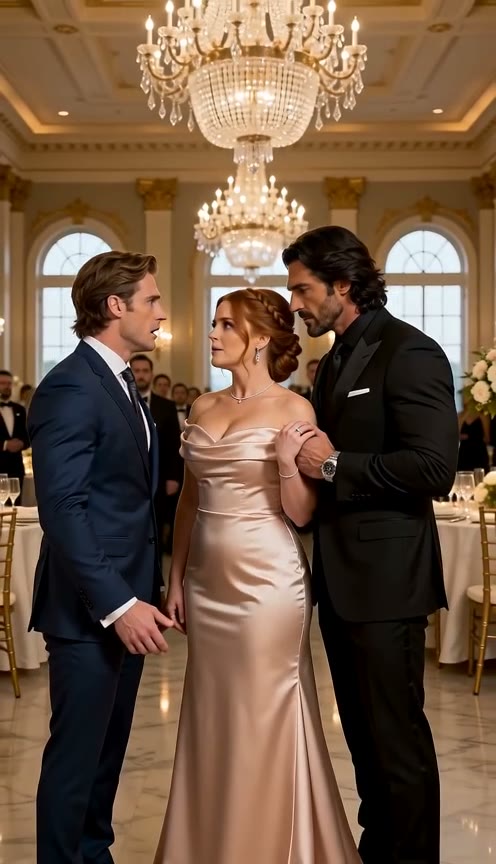
  • Chapter 3: The First Warning

    Chapter 3: The First Warning

    The gala was Gabriel's idea, which meant the whole house treated it the way sailors treat a captain's decision to sail into weather: without argument, and with quiet, thorough preparation for disaster.

    The Rossi Foundation's winter benefit filled the ballroom of the Astor Hotel every December—three hundred guests, a silent auction, a string quartet, and enough old money to ballast a ship. For two years the Rossi box had stood empty and the tabloids had dined on the absence. This year, Vitale had ruled, the family would be seen. Seen meant Gabriel. And Gabriel, in the new and terrifying arithmetic of his life, had added a term no one expected: seen meant Leo, for exactly forty minutes, at the beginning, before bedtime—because Leo had asked, at breakfast, out of nowhere, in front of six witnesses, if there would be music like Mommy's, and his father had been unable to say no to the first request his son had made of him in two years.

    Sarah rode to the city in the second car with Leo's spare sweater, his ear defenders in case the band was loud, the wooden train, and a terror she kept folded down to the size of a coin. She wore her one good dress, bought off a clearance rack for her nursing school interview three years ago, and felt like an imposter in silk. Leo, in a miniature suit that made him look like a tiny, solemn banker, held her hand in the car with the concentration of a boy holding a railing over a drop.

    "You stay where I can see you," she told him, "and I stay where you can see me. That's the whole game. If anyone is strange to you—anyone—you come to me and you don't be polite about it. Agreed?"

    "Agreed," Leo said gravely, and then, after a moment: "You look like a princess in that dress. A working one."

    The ballroom was a sea of black tie and champagne light, and for the first twenty minutes the plan held beautifully. Leo bore the quartet, bore the photographs, bore three ancient dowagers pinching his cheek with the stoicism of a small diplomat. Gabriel moved through the room the way a shark moves through water—everything parting before him, every greeting edged—and yet every few minutes his gray eyes found the corner where Sarah stood with his son, and checked, and moved on, the way a man checks a horizon.

    It happened at minute twenty-six, with the efficiency of a thing rehearsed.

    A waiter at Leo's elbow lost his tray. It was not an accident; Sarah would go over it a hundred times in the months after and she would always come back to the same detail—the man's eyes were on Leo, not on the glasses, as they went. A tower of champagne flutes hit the marble in a detonation of glass and noise, every head in the ballroom turned toward it, and in that half-second of universal distraction a second man—gray coat, kind face, a face designed in a laboratory to be trusted by children—stepped out of the crowd, took Leo by the hand as naturally as a grandfather, and said, "Your daddy's looking for you, kiddo, this way—"

    Leo froze. It was the freezing that saved him, the old ghost-stillness, because it made his weight dead and strange in the stranger's grip—and Sarah was already moving.

    She did not scream first. She closed the distance first, all six steps of it, and got her own body between the man and the boy and her arms around Leo, lifting him clean off the floor and turning her back to the stranger the way she would turn it, one day soon, to far worse. Only then did she scream—Dominic's name, once, with the full trained volume of a girl who had worked emergency wards—into a ballroom already full of noise, and the man's kind face did something terrible and efficient: it switched off. He let go of Leo's hand as if it had burned him, stepped backward into the press of bodies, and was gone between one blink and the next, while the dropped tray still rang on the marble and the quartet played on, oblivious, one violinist weeping into a waltz.

    Dominic arrived in four seconds with two men moving like a tide going out. It wasn't fast enough. It was never going to have been fast enough; that was the point of the rehearsal.

    "Window of opportunity, ninety seconds, practiced twice at least," Dominic said later, in the car, in the tone of a man reading his own failure off a card. "They weren't trying to take him tonight, Miss Collins. They were timing us."

    Sarah sat in the corner of the limousine with Leo asleep against her side—he had cried for exactly one minute in the service corridor, silently, into her dress, and then slept the boneless sleep of the rescued—and she looked across the dark car at Gabriel Rossi, who had not spoken since the hotel. He had refused the police interview, refused the manager, refused the mayor, who had been present. He had carried his son out of that ballroom himself, past three hundred guests and a forest of phones, with his body curved around the boy like a shield wall, and the photographs were already everywhere, and he did not care about any of it.

    "Tell me what you saw," he said at last. "All of it. The tray first."

    She told it plainly, the way she had been taught to hand over a patient: facts in order, no embroidery. The waiter's eyes. The gray coat. The kind face and the rehearsed sentence—your daddy's looking for you—the ninety seconds. When she finished, the car was very quiet except for the road.

    "You put your back to him," Gabriel said.

    "Yes, sir."

    "You didn't know if he had a weapon. You turned your back on a man you believed was taking my son, and you picked Leo up, and you screamed for help with your back turned. Do you understand what you are describing to me, Miss Collins? If he'd had a knife—"

    "He didn't take him," Sarah said. Her hands, she noticed, were shaking, now that shaking was permitted; she folded them hard around the sleeping boy's sweater. "That's the whole report, sir. He didn't take him."

    Dominic, from the front seat, said nothing at all, which in Dominic was a paragraph.

    Gabriel looked at his son sleeping against the maid's ruined clearance-rack dress, at the small fist still knotted in the fabric over her heart, and Sarah watched the most dangerous man in New York lose an argument with his own face. "When we get home," he said finally, roughly, "Vitale will have a document for you. A trust. For your future, your—whatever you want. Sign it or don't, but it's yours. You don't refuse this one."

    "I'll sign it if the money is for Leo," Sarah said. "A college fund. A music teacher. Something that's his."

    "It is a reward for—"

    "It's not for sale, Mr. Rossi." She said it gently, because the boy was asleep, and because she suddenly understood that she was the only person in this man's entire world who had told him no twice in one season and meant it as kindness. "What I did isn't for sale. Put it in Leo's name and I'll sign anything you like."

    The limousine climbed the long drive toward the lit house, and neither of them spoke again, and somewhere in the last mile Leo stirred against her and murmured, without waking, "Sarah's got me," and went still—and Gabriel Rossi turned his face to the window so that no one, least of all himself, would have to see what that sentence did to him.

    The house locked down the way a fist closes.

    It was done without announcements, in the Rossi manner: the gates acquired a second guard post, the woods acquired patrols, Leo's world shrank to the house and the walled garden, and the staff acquired the bright, brittle cheerfulness of people who have been told there is nothing to worry about by men carrying radios. Sarah was issued a new phone, a panic band for her wrist—"press it and think nothing, we will come"—and a bodyguard of her own for trips to the village, a mountainous young man named Tony who followed her through the grocery store like weather and carried her bags with the air of a man defusing them.

    She hated it with a purity that surprised her. Not the precautions—the precautions she understood in her bones now—but the arithmetic underneath them: that a six-year-old should need a wristband's worth of adults between himself and the world; that somewhere a man with a kind face was being paid to rehearse stealing him; that her name, her face, her working hours were now entries in a file in Dominic's office labeled THREAT SURFACE. She chopped vegetables in Paolo's kitchen with unnecessary force and said some of it aloud, and Paolo, who had buried his opinions under thirty years of service, set down his knife and said the truest thing anyone had said to her in that house.

    "Eh. You think the signor lives like this because he loves it?" He jerked his chin toward the ceiling, toward the whole golden fortress. "He was born in it, signorina. The boy too. You are the only one here who chose the cage. That is why the boy runs to you in the corridor. You are the only one who could leave."

    Thursday came anyway, because Thursdays do, even in sieges. At four o'clock Sarah set up the easel in the sunroom—the curtains open now by Gabriel's own order, defiant, with two men in the garden pretending to admire the frozen fountain—and at four-oh-two Gabriel Rossi walked into the room in a black sweater instead of a suit, with his sleeves already pushed up, looking like a man reporting for a sentence.

    "You came," Leo said, in the tone of a boy testing whether the world kept its promises.

    "I said I would." Gabriel regarded the easel, the paints, the small stool, with the wariness of a general inspecting an unfamiliar weapon. "What is my assignment?"

    "You hold the sky still, Daddy. Like the picture. So it doesn't fall." Leo considered the logistics with great seriousness. "You can sit on the floor. Sarah sits on the floor."

    And so the most feared man in New York sat down on his own sunroom floor, between the easel and the window seat, with his long legs folded and his son's paint water at his elbow, and held a jar. Sarah sat on the other side and held the brushes. Leo painted, frowning, tongue at the corner of his mouth, blue blooming across the page—and after a while, without looking up, he began, in the low earnest murmur she knew so well, to narrate.

    "This is the garden. This is the fountain being cold. This is Tony—" a large green rectangle "—he's big because he carries the bags AND me if there's trouble. This is the train." A brown line, branching: "The train goes all around the house so if anybody is sad they can ride it to the kitchen and Paolo gives them a biscuit."

    "Does the train come to the study?" Gabriel asked.

    "No," Leo said. "You have to come out for the train, Daddy. That's the rule. The train doesn't go in sad rooms."

    Gabriel was silent. Sarah watched his tattooed hand, the one that had signed orders and ended things, hold absolutely steady around a jar of blue water while his son explained the rules of the railway, and she understood that she was watching a man learn a language he had once been fluent in and had buried with his wife. When Leo, deep in concentration, leaned sideways in the absent way of trusting children and rested the whole weight of his head against his father's arm, Gabriel Rossi went utterly still—then, slowly, as if defusing the moment might kill it, he tilted his head down and rested his cheek, for one unguarded breath, against his son's hair.

    "Again next week, Daddy," Leo said, not as a question. "The sky needs a lot of holding."

    "Again next week," his father said hoarsely. "I'll hold it."

    Sarah turned her face to the windows and pretended to study the frozen garden until she could be trusted with her own expression again—and it was there, with her eyes full of the bright, cold garden, that she saw the second guard by the fountain lift his radio to his mouth and begin, very fast, walking the wrong way: toward the house, and toward them.

    It was nothing. A delivery truck at the wrong gate, a false alarm, stood down within the hour, apologized for by two different men. But Sarah's hands did not stop shaking until dinner, and Gabriel, passing her in the corridor that evening with Leo between them, said to her in an undertone meant for no other living soul: "You see it now. There is no Thursday afternoon in this house that isn't borrowed." He looked at his son, and then at her, and the gray eyes were not a boss's eyes at all. "Whatever comes, Miss Collins—keep him behind you. I'll handle the rest."

    The Christmas card arrived four days later, in the ordinary post, in an envelope addressed in a child's blocky handwriting to LEO ROSSI, PERSONAL.

    Inside was a photograph of the Astor ballroom, taken from above and behind: Sarah mid-scream, Leo in her arms, her back to the camera and to the gray-coated man whose face, in this print, had been circled in red ink with the delicate care of long practice.

    Underneath, the same block capitals as the first envelope:

    NEXT TIME, THE GIRL WON'T BE FAST ENOUGH.

  • Chapter 2: The House of Rossi

    Chapter 2: The House of Rossi

    Sarah did not sleep that first night.

    She sat on her narrow bed with the black envelope in her lap and read the line by flashlight until the words stopped meaning anything and were only shapes: THE BOY PAINTS EVERY DAY AT FOUR. WE KNOW. Then she did the thing she had been hired, in part, to do. She did not panic, and she did not hide it, and she did not tell herself it was a joke. She put on her robe, walked down the dark staff corridor, and knocked on Dominic Ferro's office door at two in the morning.

    Dominic read the photograph once. His face did not change. His face, Sarah would learn, never changed; it was the things around his face that changed—radios appearing in his hand, men appearing at doors, the whole house quietly rearranging itself into a fortress while its owner slept.

    "Who else has seen this?"

    "No one."

    "Good. That was the correct decision, Miss Collins." He slid the photograph into a clear evidence sleeve with the gentleness of a man handling a sleeping snake. "Mr. Rossi will be informed now. Not in the morning. Now."

    She expected fury. She expected shouting, broken furniture, the mafia boss of the tabloids. What she got, an hour later, standing summoned and terrified in the doorway of the study in her robe and slippers, was worse: Gabriel Rossi at his desk in the lamplight, holding the photograph in one tattooed hand, perfectly still, perfectly silent, his gray eyes fixed on the red-inked crosshairs drawn over his son.

    "Who gave this to you?" he asked at last, without looking up.

    "No one, sir. It was under the staff door."

    "And you brought it to Ferro. Not to me." Now he looked up, and Sarah understood the tabloids had undersold him; his gaze was not cruel, it was worse than cruel—it was total, the attention of a man who missed nothing because missing things got people buried. "Why?"

    "Because Mr. Ferro's job is doors and fences, sir. And because—" She swallowed. "Because it says they know when Leo paints. Four o'clock. That's my hour with him. Whoever wrote it was telling us they're watching the sunroom, and I thought the fastest pair of hands should know first."

    Something moved in his expression—not warmth. Assessment. The same look Vitale had given her, as if she were an equation being solved twice by two different men. "From tomorrow the boy paints in the east sitting room. Curtains drawn. His schedule changes every day, and no one outside this room knows it in advance, including—" his eyes held hers "—especially the staff who feel the need to inform me of procedures at three in the morning."

    "Yes, sir."

    "You are not afraid," he observed.

    "I am afraid, sir," Sarah said honestly. "I'm just not finished being useful. May I go? Leo wakes at six and he doesn't like finding the room empty."

    For the first time, something crossed Gabriel Rossi's face that had no name in the vocabulary of fear or business. He looked, for one unguarded second, like a man who had forgotten what it was to hear his son spoken of as a person instead of an asset to be defended.

    "Go," he said.

    After that night, the house changed around her in ways she wasn't meant to notice, and noticed anyway. Men doubled at the gates. The sunroom curtains stayed drawn. And Sarah, who had been hired to clean and to hold paint jars, became—without a word ever being said—the center of Leo Rossi's small, defended world.

    He began to talk.

    Not all at once. It came like spring comes to that part of New York, in false starts and sudden thaws. A word at the easel. A whole sentence at breakfast. By November he was narrating his paintings to her in a low, earnest murmur while she cleaned around him—the sky over Mommy's house was gold, it turned out, not blue; the blue was just the door—and by December he was running down the corridor to meet her at the staff stairs in the morning, the wooden train in his fist, demanding she adjudicate disputes between the engine and the caboose, who had strong opinions.

    "He laughed," Mrs. Greco reported to Vitale in the kitchen, in the tone of a woman filing a weather report from a country at war. "In the corridor. I heard it through the door. Six months I have worked in the boy's wing and I have never—" She pressed her lips together and went back to her lists, because Mrs. Greco had a horror of being caught feeling anything before lunch.

    Sarah learned the house's story in pieces, the way servants always learn it. From Paolo, that the signora—Elena Rossi, a cellist, a laughing woman who had insisted on the sunroom and filled it with plants—had died on an icy road two Decembers ago, driving back from a recital in the city, alone because she had refused, laughing, to let security follow her to buy a Christmas present for her husband. From Vitale, that Gabriel had been the one to insist the present be a surprise, and had therefore spent two years punishing himself with the thoroughness other men reserved for their enemies. From Dominic, nothing at all, which was itself a kind of information: the security chief's silence on the subject of his boss's grief was the most respectful sentence in the house.

    And she learned Gabriel himself in glimpses, the way you learn weather. The light under the study door at 4 a.m. The sound of a cello recording—always the same recording, Elena's—drifting once, only once, from the music room she was cleaning, and stopping dead when her duster touched the doorframe, as if he had been listening with his hand already on the controls, waiting to be caught. The afternoon she carried Leo, asleep and boneless as only six-year-olds can be, up from the garden, and found his father at the top of the stairs standing very still, watching his son's head resting on the maid's shoulder with an expression that made her want to look away for both their sakes.

    "He's heavier than he looks, sir," she said softly, because silence would have been an admission.

    "Everything in this house is," Gabriel said, and took the boy from her arms with a care that contradicted every story she had ever heard about him, and carried him the rest of the way himself.

    She should have been frightened of how her heart behaved in that stairwell. She filed the misbehavior away with all the other things she did not have time to feel, and went back to work.

    The summons came on a Thursday, between lunch and the newly irregular painting hour, and it terrified her more than any black envelope.

    Mr. Rossi wished to see her. In the study. Alone.

    He was standing at the window when she came in, his back to the room, watching the snow that had begun, at last, to commit itself to the garden. The desk between them held a single sheet of paper—Leo's latest painting, the gold sky finished now, with a small green figure standing beside a small dark one under it, both of them holding the edges of a jar that was bigger than either of them and painted with great seriousness.

    "He gave this to me himself," Gabriel said to the window. "He walked into this room, which he has not entered since his mother died, and he put it on my desk, and he said, 'It's Sarah and me holding the sky still so it doesn't fall.' Then he left." He turned around. "My son speaks in sentences now. He laughs in corridors. Mrs. Greco, who has buried two husbands and out-stubborned the Italian government, reports these things to Vitale like dispatches from a front line. And every dispatch has one name in it."

    Sarah stood very straight, with her hands folded in front of her apron, and waited to be fired for exceeding her station. It was the only explanation her mind could build. Men like Gabriel Rossi did not summon maids to discuss feelings.

    "What do you want?" he asked her. "Money is not an insult here, it is a language. Name the amount that keeps you in this house. A house in your mother's name. Your nursing degree, paid, with your position held. I am not a sentimental man, Miss Collins, but I am an accurate one, and I know what a thing costs when it cannot be replaced."

    "It isn't a thing, sir," Sarah said quietly. "He's a little boy."

    "That is not an answer."

    "It is the only one I have." She made herself meet his eyes, though her heart was slamming. "I took the job because I needed the wage, and I'll tell you the amount of the wage—it's in my contract, and it's fair, and it's enough. Anything more than that and it stops being a job and starts being a purchase, and Leo can tell the difference. Children always can. He'd know if I was being paid extra to love him, sir. They smell it like smoke."

    The silence that followed had a texture she could feel on her skin. Gabriel Rossi looked at her the way he had looked at the photograph at 3 a.m.—as if she were an equation two men had now solved and gotten an answer neither of them had expected.

    "He asked for you in the night," he said abruptly. "Tuesday. A nightmare. The nanny before you used to fetch me, and he would scream louder. You he asked for by name, and by the time the night guard found me in the gym, you had him back to sleep in the window seat with that ridiculous train." He stopped. When he went on, his voice had lost its polish and showed something rawer underneath. "I stood in the doorway of my son's room and I could not make myself go in. I am a man who has walked into rooms where everyone present wanted me dead, Miss Collins. I stood outside that one like a coward, because in it my son was sleeping peacefully in the arms of a girl I pay by the month, and I did not know how to be in the picture without being the thing that wakes him."

    Sarah's throat closed. She thought of her own father, gone before memory; of Danny; of every doorway she had ever stood in, wanting in. "You go in anyway, sir," she said, very gently. "That's the whole trick anyone's ever taught me. You go in anyway, and you sit on the floor so you're smaller than the fear, and you let him come to you. He will. He's been waiting to. It's the sky, sir—" she nodded at the painting, surprising herself with a smile that trembled only slightly "—it isn't falling. It just needed more hands."

    He did not answer. He looked down at the painting for a long time, and then he picked it up—carefully, by the edges, like evidence, like scripture—and carried it across the room and set it on the mantel between his father's portrait and Elena's cello, in the place of honor of the Rossi family.

    "Thursday afternoons," he said, turning back, and his voice was his own again, clipped and final. "Painting. I will be in the sunroom at four. Tell no one."

    It was, Sarah understood much later, the most vulnerable sentence Gabriel Rossi had spoken in two years. At the time she only nodded, curtsied out of old training, and fled—running straight into Enrico Vitale in the corridor, who looked at her flushed face, then at the closed study door, and smiled into his collar like a man whose long diagnosis had just been confirmed.

    It was Dominic who brought her the garden photographs, three weeks before Christmas, and by then his face had learned a new stillness that frightened her more than shouting would have.

    A man had been caught in the woods beyond the east fence at dawn, with a telephoto lens and no identification and a professional's calm when the dogs found him. He had said nothing, asked for a lawyer, and been handed to the police with a broken camera—broken, Dominic admitted, by accident, in the struggle. But the memory card had survived. Dominic laid the prints across the kitchen table in front of Sarah and Mrs. Greco while Paolo stood at the door with a dish towel forgotten in his hands.

    Leo at the easel. Leo in the garden. Leo asleep in the window seat with the train beside his cheek. Hundreds of photographs, weeks of them, patient as winter.

    And Sarah. Sarah holding the paint jar. Sarah carrying Leo up the garden path. Sarah laughing at something the boy had said, head tipped back, her hair coming loose from its bun—she stared at that one the longest, because she did not remember ever being watched while she was happy, and the knowledge that a stranger had stood in the trees and collected her happiness like evidence made her feel physically ill.

    "The police have him," Mrs. Greco said, too quickly. "It is finished."

    "It isn't," Dominic said. He turned over the last photograph, the most recent one, timestamped that morning at 7:40 a.m., and set it down in front of Sarah like the final card in a rigged game.

    It showed Leo's bedroom window. From inside the garden. Inside the fence, inside the patrol routes, inside the grounds no outsider had reached in fifteen years.

    Taken, the angle made unmistakably clear, by someone standing in the rose garden beneath the boy's window—someone who belonged there.

    "Somewhere in this house," Dominic said, "is a person who opens doors for them."

  • Chapter 1: Three Bullets

    Chapter 1: Three Bullets

    The first gunshot took the sunroom window.

    Glass exploded inward in a glittering storm, and Sarah did not think. Thinking was for people who had time. She had been kneeling beside Leo's little painting easel, holding a jar of blue paint steady while he frowned in concentration at his paper, a smear of cobalt across his cheek like war paint. Then the world cracked open—and she moved.

    She swept the six-year-old off his stool and down beneath her own body in one motion, folding herself over him the way a roof folds over a house, her arms locked around his small ribs, her back to the shattered windows and the cold winter light pouring through them.

    "Don't move, Leo. I've got you."

    Her whisper was thin and strained, pressed out of her between her teeth. Beneath her, Leo was rigid, his small hands fisted in her apron, his breath coming in terrified little gasps against her collarbone. Outside the ruined windows, somewhere beyond the snow-dusted garden, a second shot cracked. Then a third.

    She felt them rather than heard them—three brutal jolts, one after another, slamming into her shoulder, her side, her lower back, each one driving the air out of her lungs in a sound she refused to let become a scream. Leo was under her. Leo could not hear her scream. So she made no sound at all. She only tightened her arms around him while something warm began to spread, slowly and terribly, across the white lace of her apron.

    Glass kept falling, tinkling like rain on the marble. Somewhere far away a man was shouting. Leo whimpered her name.

    "Shh," she breathed. "Shh. I've got you. I've got you."

    The crunch of polished dress shoes on broken glass. Running steps. Then a shadow fell over them both, and the running stopped as abruptly as if the man had hit a wall.

    "Sarah…?"

    Gabriel Rossi stood in the wreckage of his sunroom with the winter sun behind him, and for the first time in fifteen years of ruling his world by fear, his face showed an emotion none of his men had ever seen on it. Not rage. Worse than rage. Terror.

    He dropped to his knees beside her, glass grinding under him, and with infinite care he drew Leo out from beneath her sheltering body and lifted the boy into his arms. Leo clung to his father's jacket, sobbing, blue paint and his protector's blood smeared across his cream sweater.

    "Daddy… she saved me."

    Gabriel held his son for one heartbeat—one only—before he set him gently into the arms of a bodyguard and turned back to the woman on the floor. He slid one tattooed hand beneath Sarah's head, cradling it off the cold marble, and pressed the other hard against her wounded side, against the warm, spreading stain. His commanding face, the face that had ended arguments and empires, collapsed.

    Sarah's eyes drifted open. They found him slowly, the way a swimmer finds the surface.

    "Is Leo… okay?"

    Of everything she could have said—of pain, of fear, of the blood soaking through his fingers—she asked about the boy. Gabriel's voice, when it came, was barely a voice at all.

    "He's safe. Because of you."

    Her eyes began to close. He felt the exact moment her strength started to leave her, and fear sharpened his features into something raw. He gathered her against his chest, heedless of the blood staining his black pinstripe suit, of the three guards and the silver-haired adviser frozen among the broken furniture, of the medical team pounding up the drive.

    "Stay with me, Sarah. Please."

    Then he did something no one in that house had ever imagined Gabriel Rossi doing. He pressed his forehead to hers, closed his eyes, and whispered a promise into the wreckage like a prayer:

    "Survive this… and I'll never let you face life alone again."

    Her fingers moved faintly against his jacket.

    But to understand how a twenty-four-year-old maid came to be dying in the arms of the most feared man in New York—and why he was begging—you have to go back three months, to the October morning Sarah Collins first walked up the long gravel drive of the Rossi estate with everything she owned in one suitcase, and no idea at all what waited for her behind those iron gates.

    * * *

    The gates were taller than her first apartment building.

    Sarah stood outside them with her suitcase in one hand and her phone in the other, rereading the agency's message for the tenth time. LIVE-IN MAID. PRIVATE ESTATE. EXCELLENT PAY. DISCRETION ESSENTIAL. The word "discretion" had been underlined, which in Sarah's experience meant the employers were either famous, rich, or trouble. Possibly all three.

    She needed the money too much to care. Her mother's hospital bills were paid—her mother had seen to that in the worst way, by dying in June—but the debts she'd left behind had not died with her, and Sarah's job at the diner on Route 9 was never going to outrun them. This position paid in one month what the diner paid in five. There had never really been a decision to make.

    The gates swung open before she could press the buzzer. A camera on the gatepost watched her walk the quarter-mile up the drive, past lawns so green they looked painted, past a fountain, past a garage the size of a house. The estate itself rose at the end of it—stone and glass and gold light, more palace than home, with a glass sunroom jutting from its eastern wing like a jewel in a crown.

    The housekeeper met her at the staff entrance: a formidable woman in her sixties named Mrs. Greco, with iron-gray hair, a spine like a ruler, and eyes that inventoried Sarah in four seconds flat.

    "You are small," Mrs. Greco said. "The last girl was taller. She lasted eleven days."

    "What happened to her?"

    "She cried." Mrs. Greco turned on her heel. "This way. Mr. Vitale will speak with you. After that, if he approves you, you will meet the boy. Mr. Rossi you will meet when Mr. Rossi wishes it. Do not seek him out. Do not speak to him unless he speaks to you. Do not ask questions about the family. Do not—" She stopped at a door and looked Sarah over once more, and something in her expression softened by a degree so small only another servant would have caught it. "Do not be afraid of the boy. Everyone is always afraid of the boy's father, and they waste all their fear in the wrong place. The boy is only sad. Sad is not dangerous."

    The boy. Leo Rossi, six years old. The agency file had been three lines long: mother deceased, father works long hours, previous nannies unsuccessful.

    Enrico Vitale, the family adviser, was silver-haired, soft-spoken, and had the kindest eyes Sarah had ever seen on a man in a three-thousand-dollar suit. He did not ask about her cleaning. He asked why she had left her nursing studies two semesters short of finishing.

    "My mother got sick," Sarah said. "Then the money ran out. Then she died." She kept her voice level; she had practice. "I know first aid, Mr. Vitale. I know how to stay calm when things go wrong. I don't frighten easily, and I don't quit."

    "No," he said mildly, studying her over his glasses. "I don't believe you do. That is either exactly what this house needs, Miss Collins, or exactly what it will destroy. We shall see." He closed her file. "One question more. The boy does not speak much since his mother died. The last nanny said he was like a ghost in his own home. Why do you want this job, truly?"

    Sarah thought of Danny. She thought of a hallway full of smoke when she was fourteen years old, and a small hand slipping out of hers. She did not say any of that. What she said was, "Because a house where a child feels like a ghost is a house that needs somebody to stay."

    Vitale looked at her for a long moment. Then he nodded, once, like a man confirming a diagnosis.

    She met Leo that afternoon, in the sunroom.

    He was sitting at a little easel by the towering windows, painting nothing—pushing blue paint around a page in slow, hopeless circles, flinching when the door opened. Blue eyes, dark hair, a face too pale and too serious for six. He looked at Sarah the way shelter dogs look at visitors: braced to be passed by.

    Sarah did not rush him. She set her suitcase down, sat on the floor at a careful distance—below his eye level, the way she'd been taught with frightened children in her nursing placements—and looked at the painting.

    "That's a lot of blue," she said.

    Leo said nothing.

    "Blue's my favorite," she said. "It looks like the sky right before it decides whether to rain. What were you painting?"

    A long silence. Then, so quiet she almost missed it: "The sky at Mommy's house in heaven. I forget what color it was."

    Sarah's heart cracked, quietly, in the way it had been cracking all her life at exactly this frequency. "Well," she said, "we'll figure it out together. You paint, and I'll hold the jar. That's my whole job. Holding jars and figuring out skies."

    She did not see the man in the doorway. She did not see Gabriel Rossi—returned early, stopping on his way past the sunroom at the unheard sound of his son's voice—watch them for a full minute with an expression no one could have read. She only heard, later, the soft click of the door pulling shut, and felt, without knowing why, that something in the great silent house had just shifted on its foundations.

    By dinner she had learned the shape of the house's silence.

    The estate ran on staff—fourteen of them—but it ran quietly, the way expensive engines run quietly, and everyone she met that first day had the same careful politeness, the same habit of glancing at doorways before speaking. The cook, a broad, cheerful man named Paolo, fed her staff dinner and told her she was the fifth girl in the boy's wing in two years. "The little prince, he does not sleep," Paolo said, shaking his head. "He wanders. The house is too big and his heart is too—" He searched for the word and gave up, patting his own chest. "You will see."

    The head of security she met on the stairs: Dominic Ferro, fortyish, built like a door, with a scar through one eyebrow and a voice so soft it made people lean in. He walked her through the rules without preamble. The boy never left the grounds without two men. The boy's schedule never appeared in writing anywhere outside the house. If she ever saw a vehicle she didn't recognize on the drive, a face she didn't know at the fence, anything at all that felt wrong—she was to use the panic button on her staff phone and then get the boy behind a locked door and keep him there.

    "Why are you telling the maid this?" Sarah asked.

    "Because the last four people in your job weren't told," Dominic said, "and the boy likes you already. Mrs. Greco radioed it in at five." His scarred eyebrow rose a fraction. "He spoke to you. He doesn't speak. So as of today, Miss Collins, you are part of his security whether your contract says so or not."

    Leo did not come down to dinner. Sarah took a tray up herself—Mrs. Greco pretended not to watch her do it—and found him in the sunroom again, in the gathering dusk, lining up the cars of a small wooden train on the window seat with grave precision. He let her sit. He let her hand him the red car when it rolled out of reach. When she rose to leave, his small voice stopped her at the door.

    "You'll be here tomorrow?" he asked the window.

    "Tomorrow," Sarah said, "and the day after. Holding jars. Figuring out skies."

    The train made one slow, complete circuit of the window seat before she closed the door, and she carried the sound of it with her all the way down the staff stairs like a coal in her pocket—small, warm, and entirely capable of burning the whole house of her resolve to keep this job professional.

    That night, unpacking in her small room under the eaves, Sarah found the envelope.

    It had been slipped under the staff entrance door sometime between dinner and dark. Black paper. No name. Inside was a single photograph, still warm from someone's pocket: Leo, at his easel, taken that very afternoon through the sunroom glass—framed dead-center in the crosshairs of a rifle scope that some patient hand had drawn onto the photo in red ink.

    Underneath, in block capitals, one line:

    THE BOY PAINTS EVERY DAY AT FOUR. WE KNOW.

  • Chapter 7: The Woman He Chose

    Chapter 7: The Woman He Chose

    The story the city told itself afterward was simple, and mostly wrong, and Penelope never bothered to correct it.

    The city said Damian Russo had destroyed Bradley Farnsworth in a ballroom to avenge an insult. The truth was quieter and far more total: Damian Russo had done almost nothing. He had declined a bad investment three weeks before the gala, in an office, on the merits. He had attended a party. He had danced with his wife. Everything else — the collapse, the headlines, the long public unspooling of Farnsworth Capital — Bradley had built himself, over years, out of cooked figures and contempt for anyone he thought was beneath the notice of history. The gala had simply been the first room with enough light in it.

    By December, the board of Farnsworth Capital — acting with the desperate hygiene of men saving the furniture from a fire — announced an independent audit. By January, the audit found what Damian's analysts had found. By February, Bradley Farnsworth resigned "to spend time with family," in the ancient formula of his class, and Vanessa Cole gave an interview to a society magazine in which she described herself as "a longtime friend of the family" and the engagement-that-wasn't as "a youthful misunderstanding between households." Penelope read that line twice, in her office, with her shoes off and a cup of tea going cold, and laughed until her assistant knocked.

    She did not hate him. That was the final luxury, the one she had not known she was saving for. Hate was a way of still living in his house. She had moved out so completely that when a journalist — fishing, at a foundation luncheon — asked her, sweetly venomous, whether she had "ever crossed paths with Bradley Farnsworth," Penelope smiled with total sincerity and said, "We were at school together. I hope he's well." and meant it enough that it bored the journalist into moving on.

    Her own life, meanwhile, was compounding like interest.

    The Russo Foundation's gala that spring — the first she ran as Executive Director rather than as hired hands — raised more in one evening than the previous five years combined, partly because her seating chart had become legend and partly because every hostess in Manhattan wanted to be able to say she had survived being audited by Penelope Russo's smile. She hired two of her Wexford scholarship girls into foundation fellowships. She endowed the program in perpetuity, first line of the budget, non-negotiable, and she named it with characteristic precision: The Second Look Fund, for the students everyone else had already finished seeing.

    Rosa Russo, watching her daughter-in-law work a room of donors like a woman conducting weather, pronounced the family's final verdict at Sunday dinner, to her son, in front of the whole table: "I told you. Good hands. She stays. You — you are still doing the work?" And Damian, the most feared man in three states, submitted to cross-examination by a seventy-year-old with a serving spoon and answered, meekly, "Every day, Mamma," while Penelope hid her smile in her napkin.

    There were, of course, ordinary miracles, which turned out to be the point of everything. A house in Connecticut with a library ladder, bought because Penelope had stood in the doorway of the library and gone quiet in a way Damian had learned to translate. Sunday mornings. His terrible waltzing, improving at the rate of geology. The annual argument about whether the foundation's office needed a dog (Penelope: yes; Damian: a dog is a security variable; the dog, eventually: a enormous, elderly rescue named Committee, who slept under Damian's desk and feared no one, including Damian, and was therefore the only creature in the Russo organization with total job security).

    And in the second autumn, a daughter — Sofia — born on a rainy morning that Penelope privately considered the weather apologizing, with her father's dark eyes and a grip on Penelope's finger like she was holding a railing against a spectacular view. Damian held her for the first time with the stupefied reverence of a man whose entire life's work in control had been lovingly, permanently undone, and whispered to her, in Italian and then in English, in case she had a preference: "You will never have to wonder if you are wanted. Not one day. That account is paid in full, in advance, forever."

    Rosa arrived at the hospital at dawn with soup for an army and a christening gown that three generations of Russo brides had embroidered, and she held her granddaughter with the composed ferocity of a woman receiving a head of state. "She has the hands," she announced, examining ten fingers with a jeweler's attention. "Good hands. She stays." Then she looked over the baby's head at her son, who was standing in the corner of the maternity room in a state of awed uselessness no syndicate had ever achieved, and her fierce old face softened into something Penelope had never seen directed at Damian by anyone but herself. "Your father," Rosa said, "the night you were born, tried to give the nurse instructions. A list. He had written a list of the man's duties to a son." She shook her head gently. "He loved by listing. You—" she nodded at Damian's empty, helpless, devoted hands— "you love by standing there. It is better. She will know the difference. They always know." And Damian Russo, who had ended arguments in three languages and once made a ballroom of six hundred people fall silent by entering it, stood in a room smelling of soup and new life and said, "Yes, Mamma," and cried without a sound, which his mother pretended not to see and his wife pretended not to have memorized for the rest of her life.

    The spring gala of her own — the foundation's, hers now in truth — fell that year on the first warm night of April, and it was there, if anywhere, that the story completed its circle in public. Six hundred guests again, but a different six hundred: hospital boards and scholars, donors and dishwashers' daughters, the whole improbable architecture of the life she had built, eating at the same tables. Midway through the evening she took the podium to announce that the Second Look Fund had been endowed in perpetuity — first line of the budget, untouchable, forever — and six hundred people stood up, and among them, in the third row, stood the four girls of the first graduating class, and beside them their mothers. Penelope had prepared remarks. She delivered exactly one sentence of them ("This fund exists because a room once decided I was a phase, and I have decided to spend the rest of my life out-arguing rooms") before the applause made further remarks academic, and she stepped down into the arms of a receiving line of scholarship girls like a woman being passed hand to hand across a river, laughing, entirely undignified, entirely home.

    Damian found her afterward on the terrace with her shoes off and her feet in the fountain's rim — a Director of Events to the last, cooling her heels in her own gala's water feature. "Your speechwriters are devastated," he said. "They wrote four pages." "They'll recover," she said. "Did you eat?" It was their whole marriage in one question — the checking of the furniture of each other. "Committee ate my dinner," he said. "He has developed opinions about the foundation's catering budget." Committee, asleep at that moment under the podium with a stolen bread roll, feared no auditor. "Then starve nobly," she said, and he sat down beside her on the fountain's edge in a suit that cost more than her first car, and put his shoes beside hers, and dangled his feet in the water of his own foundation's gala like a schoolboy, and the photographer who caught it sold the picture to a magazine that captioned it WRONG in every particular, and they framed it anyway, and it hung in the Connecticut library for forty years.

    The library was where he gave her the book. Their fifth anniversary fell in November, on a grey, kind afternoon, and Damian — who observed anniversaries the way he observed everything, with total preparation and minimal announcement — set a parcel on her desk wrapped in brown paper, which in that house meant the contents mattered more than the presentation. Inside, in a cloth case, was a first-edition Keats. The anthology. The same edition, the same binding, as the copy a boy had once let a girl keep in a library, and another copy a girl had once wrapped in silver paper and left on a marble table between a Tiffany box and a vase of white roses, for a boy who was already gone.

    "Open it," he said.

    On the flyleaf, in handwriting she knew better than her own — because it signed her foundation's checks and her birthday cards and, once, a marriage license — was written: For the woman who kept the book. Everything started there. It still does. — D.

    Penelope Russo, who did not drop things, held the book in both hands for a long time. "You can't replace it," she said at last. "That's not what this is. The other one— wherever it is, whoever read the inscription and wondered — it did its work. It told the truth to an empty room until the room was ready." She looked up at him, this man, this wall that had learned to be a door. "This one's for the shelf where true things live." And she stood, and put the Keats on the library shelf between the senator's wife's note — framed, because he had insisted, because he framed all evidence of her — and the photograph from the fountain, and the house in Connecticut settled around the four of them, woman and man and dog and book, like a held breath let go at last.

    A year to the night after the gala, the Wexford Alumni Association held its winter dinner — smaller, in the same ballroom, beneath the same chandeliers.

    Penelope stood at the edge of the dance floor in a midnight-blue gown, watching her mentees — fellows now, women with titles and budgets — work the room with their name tags straight and their chins at the angle she had taught them. At the champagne table, a nervous first-year scholarship girl stood alone with her clutch held like a shield, watching the room decide whether she existed. Penelope watched the girl's shoulders do the small, familiar arithmetic of making herself smaller.

    She crossed the marble floor.

    "I'm Penelope Russo," she said, and held out her hand. "Class of — a while ago. First in my family, scholarship, catering shifts, the whole blueprint." The girl's eyes widened. "You're not invisible," Penelope told her, in the tone of a woman passing on state secrets. "You're staff in your own head. It's different. Now — tell me what you're studying, and then I'm going to introduce you to the woman who runs the hospital board, and you are going to be so interesting that she forgets to eat her dinner. Ready?"

    Behind her, she felt the room change key, the way it always did — a warmth at her shoulder, a hand settling there, large and certain, a thumb moving once against silk in a signal meant for one person only.

    "Mrs. Russo," said Damian, in her ear, as the girl's face lit up like a window at dusk. "You're recruiting again."

    "Always," Penelope said. She turned her face up to her husband — the man who had walked through a ballroom and a decade of other people's underestimations and found her, every time, exactly where she had been standing all along: holding up the seams of the evening, waiting for someone to notice that the person holding everything together was the whole point of the structure. "Dance with me first. Then I'll save the university."

    "Your terms are acceptable," said Damian Russo, and offered his arm like a coronation.

    And Penelope — scholarship girl, invisible woman, phase, footnote, the girl he threw away, none of which had ever once been true — put her hand in her husband's, and walked out onto the golden floor as what she had actually been all along.

    The woman he chose. The woman who chose back. The author of the rest of the story.

    THE END

  • Chapter 6: You Insulted My Wife

    Chapter 6: You Insulted My Wife

    It took Bradley four seconds to understand, and Penelope would remember those four seconds on her deathbed.

    She watched his face change the way you watch ice go on a lake — the smirk first, still pointed in the wrong direction; then confusion, as the crowd's reaction registered; then recognition, dawning like something rising out of deep water, as the face in the doorway assembled itself into a name every man in his world knew and no man in his world said casually; and then, last, the understanding that turned his knees to water: the direction of that gaze. The fact that Damian Russo was not looking at the room, or the podium, or the money.

    He was looking at her.

    Damian crossed the floor. Guests cleared from his path with the soft inevitability of a tide, and the distance between the door and the dance floor seemed to shrink around him. He stopped beside Penelope and laid his hand on her shoulder — large, warm, absolute — and his thumb moved once against the satin, a signal meant for one person only. Her breathing, which she had been governing all evening like a budget, simply — settled. She turned her face up to him and saw, in the dark of his eyes, the thing he never showed rooms: her. Only her. The rest of the evening was administration.

    "You're late," she murmured.

    "Chicago weather," he said, for her alone. "Forgive me." Then he looked at Bradley, and the murmur was gone, and so was every degree of warmth in the ballroom.

    Bradley's pointing hand had drifted down. His glass had stopped midway to nowhere. His voice, when he found it, was barely a voice at all.

    "Damian Russo…"

    "You insulted my wife?"

    Damian did not raise his voice. He did not need volume; he had the acoustics of the room and the attention of history. The question landed in the silence like a stone in still water, and the ripples went out to the farthest tables. Penelope placed her hand over his, where it rested on her shoulder, and looked at Bradley with eyes that were wet and entirely steady.

    "Bradley," she said, softly, clearly, in front of everyone he had ever performed for, "meet my husband."

    What followed was not a scene. Scenes were for lesser men. What followed was an audit.

    "You came here tonight," Damian said, in the tone of a man reading a weather report, "hoping to meet the partners behind the syndicate considering your rescue placement." A pause. "Forty million dollars. Farnsworth Capital." Bradley's mouth opened. Nothing came out. "The lead partner in that syndicate is a Russo Holdings fund. My analysts completed their review three weeks ago." Damian's head tilted, very slightly, the way a scale settles. "Do you know what they found, Bradley?"

    "I — there — the numbers were — it was a preliminary—"

    "They found a second set of figures," Damian said. "For the bondholders. I was raised by a man who ran the kind of business where lying about money got people hurt, Bradley. I have spent twenty years building the kind where it merely gets people finished." He let that sit in the golden air. "The placement is declined. It was declined before you put on that suit. I am sorry you had to dress for it."

    Vanessa Cole had gone very still — the particular stillness of a woman recalculating her entire evening at speed. Around them, six hundred alumni stood in the wreckage of the moment, and Penelope watched her former life perform its final act: Bradley Farnsworth, who had explained her to his friends by a fountain as a phase, a story, a kindness, turned from the most powerful man in the room to the woman he had thrown away, and put out both hands like a man falling.

    "Penny— Penelope. Please. You don't understand what this means, the firm was my grandfather's, if the placement doesn't close by December the board will—" He was begging in front of the whole centennial class, and he didn't even care, and that was when she knew it was finally, completely over: because she felt no triumph. She felt the way you feel at the end of weather. "Tell him. Tell him it was one bad night, tell him we were— we were kids, Penelope, we were—"

    "We were," she agreed gently. "And then we weren't. You taught me that, in the rain, in one sentence, and it was the most valuable lesson of my education." She looked at him — really looked, the way she had not in eight years — and her voice, when it came, was kind, and the kindness was the most devastating thing in the room. "I hope someday you become the man you've been telling everyone you are, Bradley. I truly do. It's a good speech. It deserves a true story under it."

    Bradley, drowning, made the error drowning men make. He turned from her — from the woman, whom he still, in some cellar of himself, filed under persuadable — to the man, whom he filed under negotiable, and he put on the voice men of his training use in clubs and closing rooms, the voice of the fraternity beneath the world.

    "Russo. Damian. Look — as one man to another. This—" he gestured at the wreckage of the evening as if it were weather, "—this is personal business getting in the way of professional business, and professionals don't—"

    "Stop," Damian said. Not loudly. He was looking at Bradley the way an auditor looks at a page he has already finished with. "You are not speaking to me as one man to another. You are speaking to me as a man who has never paid for anything, asking the bill to be sent to the woman." He took half a step closer, and the whole ballroom leaned away. "You mocked my wife's body in front of six hundred people to feel tall at a fundraiser. Your fund lied to its bondholders. Those are the same act, Bradley. A man who takes what he hasn't earned and calls the taking charm." His voice dropped, and somehow grew. "I run clean books. I married a clean conscience. You were never going to be a partner of mine. You were only ever going to be a story she told me once — and do you know what she asked for, when she told it? Nothing. She asked for nothing to happen to you. The only mercy in this room tonight is hers, and you spent it on a toast."

    At the edge of the circle, the evening finished its own arithmetic without them. Vanessa Cole gathered her wrap from a chair with the unhurried precision of a woman exiting a position, touched Bradley's arm once — the way one touches a door to check if it's hot — and said, distinctly, in a voice meant to be carried: "Bradley. Your driver is waiting." Then she walked, alone and very upright, toward the doors, and the alumni of Wexford parted for her with considerably less reverence than they had used for Damian. Two gray-haired men at the syndicate's table — the money Bradley had crossed the city to charm — were already on their feet, already buttoning jackets, already exchanging the small, final handshakes of men closing a book. One of them, passing, paused beside Damian and said, simply, "Our report goes to the board Monday. All of it." Damian inclined his head. "Send Mrs. Russo a copy," he said. "She likes the full file." And Marcus Webb — Marcus, who had laughed by a fountain eight years ago and apologized by a dessert table one hour ago — stood in the second row of witnesses with his daughter's lesson written all over his face, and did not laugh, and did not look away, and Penelope, catching his eye across the wreckage, understood that some debts get paid in full view, in gold light, by the simple refusal to be entertained.

    Near the dance floor, her three scholarship girls stood in a row like a small honor guard, stunned and incandescent, watching the woman who funded their futures be chosen, out loud, in front of everyone — and Penelope thought: good. Let them have this story instead of the other one. Let them carry this one into their rooms.

    She turned then — not away from him, which would have been about him, but toward her husband, which was about her — and Damian, reading her the way he read everything, offered his arm with the formality of a man at a coronation.

    "My wife owes me a waltz," he announced, to no one, to everyone, "that Chicago weather tried to steal."

    The orchestra, which had been holding its breath for ten minutes, understood its cue like a living thing, and the opening bars of a waltz rose into the chandeliers as Damian Russo led Penelope onto a dance floor that emptied for them as if by royal decree. Behind them, unnoticed by either, Bradley Farnsworth lowered himself into a gold chair at an empty table, set his unfinished drink down with exaggerated care — a man being careful with glass, at last, in his life — and put his face in his hands, alone in the middle of six hundred people.

    But Penelope did not see that. Penelope was dancing — badly at first, laughing up at her husband because he counted under his breath like a man defusing something, and then not badly at all, her cheek against the black wool of his chest, in the center of the most beautiful room in New York, in front of everyone who had ever been told she was a phase.

    "You're stepping on the beat," she informed him.

    "I'm stepping where I want," Damian said. "It's my one flaw." His arm tightened around her, fractionally, and she felt his voice drop for her ears alone. "Tell me I arrived in time."

    "You arrived," Penelope said, "exactly when the story needed you. It took eight years. But then — you always did make an entrance."

    They danced the whole waltz, and then — because the orchestra had read the room the way orchestras do, and because a centennial class does not waste a floor that has just been christened by history — they danced the next one too, slower, as other couples began, cautiously and then with gathering joy, to join them. The ballroom reassembled itself around the dance, the way water closes over a stone. Professor Aldane cut in on no one and danced with the association president's wife like a man half his age. The scholarship girls were pulled onto the floor by gallant, terrified alumni sons and spun through the golden light with their name tags flying. Marcus Webb stood at the edge with his wife and raised his glass, once, in Penelope's direction — not a toast to the evening. A receipt. Paid.

    "Your girls are crying," Damian observed, steering them past the fountain of champagne glasses with a competence that flatly contradicted his counting.

    "Happy crying," Penelope said. "It's a technical category. I handle it professionally."

    "And you?" He was looking down at her with the undivided attention that had once undone her in an empty ballroom smelling of Barolo and condemned fish. "What is the technical category of you, Mrs. Russo?"

    "Also happy," she said. "With footnotes." She rested her forehead, briefly, against his shoulder, in front of everyone, because the whole point of everything was that she could. "I kept waiting — all night — to feel like her. The girl in the blue dress. I had lines prepared for her. Comforting ones. It turns out I didn't need them." She lifted her head. "She's not in the room, Damian. She didn't get an invitation. She became me years ago, in a warehouse, in the rain, on the stairs of a hotel — and tonight I finally got the memo." His arm tightened. The chandeliers turned, or the room did. "I don't feel avenged," she said wonderingly. "I feel finished. Like a building. Inspected and finished and open for business."

    "Then the evening is a success," said Damian Russo, "and Chicago can keep its weather." The music softened toward its end. He turned her once more under the lights, with terrible formality and worse counting, and the class of Wexford — the whole glittering, chastened, grown-up room of them — applauded, not the dance, not the drama, but the plain extraordinary fact of a woman entirely at home in her own story, and Penelope laughed into her husband's shoulder with the orchestra's last note still hanging in the air like something blessed.

  • Chapter 5: The Alumni Gala

    Chapter 5: The Alumni Gala

    The ballroom of the St. Regis did not know it was a battlefield. It arrived at the evening the way it arrived at every evening: chandeliers blazing, marble gleaming, white roses breathing their expensive perfume into golden air. Six hundred Wexford alumni moved through it in black tie and silk, and Penelope Russo — Director of Events by trade, survivor by experience — did what she had done in ballrooms for a decade. She read it.

    She read the seating politics in who stood where. She read the orchestra's timing. She read, with professional contempt, that the champagne was being poured too warm and the coat check was backing up. And she read the room's reaction to her — which was, for the first hour, the most interesting text of all.

    Because the alumni of Wexford University had a long memory and a short imagination. She watched it happen in stages, all evening: the double-take, the whispered conference behind a program, the recalibration. That's Penelope Hart. Is it? It is. The scholarship girl. The catering years — no, wait, she ran The Meridian's events, my cousin's wedding— and then the name that traveled faster than all of it, passed mouth to mouth with the champagne: Russo. She's a Russo. She married that Russo. The girl Bradley Farnsworth had thrown away like a library book had come back to the centennial gala as the wife of the most quietly powerful man in New York, in a gown that cost more than her entire first year of tuition, wearing a wedding ring that made the chandeliers look underdressed.

    She let them look. She had earned the looking.

    At the top of the stairs, an old man in a dean's regalia of a suit took both her hands in his and held them, beaming — Professor Aldane, emeritus, who had written her scholarship recommendation twenty years of students ago and referred to the letter ever after as the best investment of his career. "Hart," he said, which was what the room still called her, and she did not correct him, because in his mouth it was not the old name, it was the first one. "I read the foundation's annual report. Cover to cover. Twice. My wife thinks I've taken up espionage." He surveyed the ballroom with the proprietary air of a man who had sent generations into it. "I put one line in that letter, did your mother ever tell you? 'This university will spend fifty years being proud it knew her first.'" He patted her hands. "The fifty years are going well, my dear. We're ahead of schedule." And Penelope — who had come braced for ghosts, for cropped photographs, for the fountain — stood in the golden doorway of the centennial gala with her old professor's blessing ringing in her ears like a bell, and understood that she had misremembered the past in one essential way: it had never been only Bradley's. There had always been other witnesses. She had simply been too busy surviving it to collect them.

    She collected them now, all evening, like a woman harvesting. The class secretary who had worked the café shifts beside her and now ran a publishing house. The rowing captain, silver and kind, who introduced his husband. A girl — a woman, a judge now — who had once lent Penelope a statistics textbook and announced, delighted, to a circle of alumni that she had "known Penelope Hart when," and told the story of the library floor wrong, with Bradley edited entirely out, the way history improves all stories worth keeping. The room, in other words, had done what rooms do over eight years: it had grown up around the space where a cruel boy's version of events used to be, and filled it with truer furniture. She found her scholarship mentees — three of them, current Wexford girls, invited under her foundation's program, wide-eyed at the edges of the room exactly where she had once stood — and she spent twenty minutes doing the most radical thing in her arsenal: she introduced them to everyone, by name, with their achievements attached, as if their presence in that ballroom were the most natural thing in the world. Because it was. Because she had decided it would be.

    The evening had its formalities first, and she survived those beautifully.

    The association president — silver, sincere, a man who had clearly rehearsed in a mirror — gave the centennial address, and then introduced the evening's presenting donor, and Penelope watched Bradley Farnsworth take the podium in the golden light with the ease of a man being lowered into a warm bath. He was good. That was the unforgivable part; he had always been good in rooms. He thanked the university for "the best four years — the years that teach you who you are." He raised his glass. "We all had our college phases," he said, to appreciative laughter, his eyes traveling the room with a toastmaster's precision, "the causes, the crusades, the people—" a beat, a smile with a knife in it, pitched at exactly the alumni who remembered— "—we outgrow. To outgrowing."

    The glass at Penelope's table went up with all the others, because she had not survived a decade of ballrooms by making scenes at toasts. She drank. The champagne was still too warm. She thought, with a clarity so total it was almost funny: He rehearsed that. He wrote it down. Somewhere in a penthouse, that sentence had been typed, revised, and practiced — a grenade with his initials on it, aimed at a girl who no longer existed, in case she had the poor taste to still be standing somewhere in his sightline eight years later. She set her glass down and waited to feel the wound, and what she felt instead was something clean and almost tender: pity, at room temperature. The toast wasn't power. The toast was a man still fighting a girl in a blue dress — still needing her small enough to justify the size he had been then.

    Marcus Webb found her by the dessert table an hour into the evening — Marcus, who had been at the fountain. Marcus, who had laughed. He had gone soft and grey and kind in the intervening years, the way some men do when life has billed them, and he stood in front of her with his hands empty, a man without a single prop to hide behind.

    "I was there," he said. "At the club. At the— I laughed, Penelope." She waited. Letting people finish was a discipline she had learned in a Brooklyn kitchen and a parking garage. "I've thought about it — God, I've thought about it more than any grown man should think about one minute of college. I taught my daughter about it. I used it as the example. 'Don't be the man laughing by the fountain.' That's what I told her." He exhaled. "I never said it to the person I owed. I'm saying it now. I'm sorry I laughed."

    "Thank you, Marcus," she said, and meant it in a way that surprised them both, and watched him walk back into the golden crowd lighter than he'd arrived. It struck her, watching him go, that the past was not one man. It was a roomful — and the room, given eight years and enough light, was slowly, unevenly, doing its own accounting. All but one account. And that one was circling the champagne tables with a syndicate to charm and a toast already spent, looking for the money — and finding, instead of the money, her.

    Vanessa got there first. She intercepted Penelope at the mirror in the ladies' lounge with the tactical calm of a woman who had also been planning, adjusting an earring the size of a chandelier's ambitions. "You're very brave," Vanessa said to the mirror, not to her — the ancestral echo of a country-club greeting, Mrs. Farnsworth's voice through younger lips. "Coming alone. Everyone's asking where he is. The mysterious husband." Her eyes found Penelope's in the glass. "Of course, everyone's also wondering if there is one. A ring can be—" she smiled— "aspirational."

    Penelope dried her hands. She considered the girl she had been, who would have bled on this marble. She considered Rosa's voice: You do not go there to show them. You go because the room is yours.

    "Vanessa," she said pleasantly, "we've known each other eight years and you've wished me invisible in at least four ballrooms. At some point a woman has to accept the evidence." She picked up her clutch. "He's on his way. Do enjoy the orchestra. I chose them — well. I chose the firm that chose them. Close enough for our purposes."

    She left Vanessa standing at the mirror with her mouth open, and she did not hurry, and her hands — Rosa would have been proud — did not shake at all.

    She was laughing at something the association president said, at the champagne table by the dance floor, when the temperature of the air behind her changed.

    "Well. Penny Hart. As I live and breathe."

    Eight years, and her body knew the voice before her mind permitted it. It went through her like a change in the weather. She set her glass down — carefully, she never dropped things — and turned.

    Bradley Farnsworth stood in the golden light like a photograph of himself: navy suit cut to the millimeter, hair still perfect, smile deployed. But the photograph had aged in ways the magazines had airbrushed. There was a tightness at the corners of the eyes. The drink in his hand was not the first of the evening, and his performance of ease had a hairline crack in it she could see because she had once been fluent in him. Beside him, angled like a display, stood Vanessa Cole — older, sleeker, her engagement long since dissolved and her presence here plainly transactional: an ornament for the money men, a rumor of alliance. Her eyes swept Penelope's gown, her ring, her figure, and found — visibly, furiously — nothing to pity.

    "Bradley," Penelope said. Evenly. "Vanessa."

    "You look—" Bradley began, and his smile rebuilt itself into the old weapon, the one that used to fit her exactly. "Well. Expensive." His eyes moved, pointedly, to her left hand. "They told me you married. I laughed. I actually laughed out loud." He glanced around the growing edge of their audience — alumni who had slowed, turned, tuned in with the instinct of people who smell a scene — and raised his voice just enough to feed them. "Where's your husband, Penny?"

    Penelope's fingers tightened around her clutch. Her ring caught the chandelier light and threw it.

    "He's on his way," she said.

    It came out quiet, and steady, and she was proud of it — and then ashamed of being proud, because pride meant some part of her was still keeping score in a language he had taught her. Bradley heard the steadiness and disliked it. She watched him decide to escalate. It was all there, the whole architecture of the boy she had loved: he could forgive her failure, but he could not forgive her composure.

    "On his way," he repeated, and gave the small, contemptuous laugh that had been echoing in her head since a terrace in the rain. "Penny. Come on." He stepped closer, into the warmth of her personal space, the way men step when they have never been made to pay for it. "Who would marry you?"

    Somewhere across twenty feet of marble, one of her scholarship girls made a small sound. Penelope heard it. She thought of the blue dress. She thought of the lemonade glasses, set down so carefully on the balustrade. She thought of all of it arriving here, to this exact circle of golden light, in front of these exact people, eight years later — and she understood, standing there with her chin up and her heart going like a struck bell, that she had not come to this ballroom to survive Bradley Farnsworth.

    She had come to be witnessed not surviving him. There was a difference, and the difference was everything.

    "Careful," she said, very quietly, so that only he could hear. "You don't know who you're talking to."

    It was the wrong thing — or the right thing. His smile widened on the insult of it. "I know exactly—"

    The great doors at the far end of the ballroom opened.

    There was no announcement. There did not need to be. It moved through the room the way weather moves across water — conversation thinning table by table, the orchestra faltering half a beat, six hundred heads turning with one instinct — as a tall figure in an immaculate black three-piece suit stepped into the golden light and stopped, and looked across the whole expanse of the centennial gala directly at Penelope Russo, like the rest of the room was furniture.

    Damian had come for his wife.

    And Bradley Farnsworth — turning, mid-sentence, smile still armed, to see what had silenced six hundred people — saw him too.

  • Chapter 4: Mrs. Russo

    Chapter 4: Mrs. Russo

    She said yes on a Sunday, in his mother's kitchen in Brooklyn, with flour on her hands.

    It had taken her three weeks to get there — three weeks of asking every hard question out loud, in daylight, the way she had sworn she always would from now on. What did his world still contain? What would be asked of her? What happened to women who stood where she would stand? Damian answered all of it the way he had answered in the car: without decoration. The old empire was being dismantled into clean companies, and dismantling made enemies. She would have security, always, and she would have honesty, always — he swore both on his mother's name, which in that family was a contract written in blood. "The one thing I will never do," he told her, "is make you small to keep you safe. I've read your file, Penelope. The world's been doing that to you for free."

    So she said yes where it mattered — not in a restaurant, not with a ring produced like a magic trick — but standing in Rosa Russo's kitchen, learning to fold pasta from a seventy-year-old woman who had buried a husband the city once feared and raised a son it feared more, and who took one look at Penelope's hands in the flour and announced to the room at large, "This one has good hands. This one stays." Then she turned her fierce old eyes on her son. "You. You will deserve her. It is different from having her. Work."

    They were married in November, in the little stone chapel on Staten Island where Damian's parents had married, with thirty guests, no press, and a string quartet Penelope had hired for other people's weddings a dozen times. She walked herself down the aisle — her father long gone, her mother beaming from the front pew — and Damian, who had faced down syndicates without blinking, stood at the altar with his hands visibly unsteady until the moment she put hers in them. His vows were four sentences long. Hers ended with: "You saw me. I intend to spend the rest of my life being worth looking at — and so, God help you, do you." Rosa cried. The security men stationed at the chapel doors were observed, by the florist, to be pretending they had not.

    Afterward there was lunch at Rosa's house, dancing in the garden under strings of light, and Penelope Russo — who had once planned joy for a living and rationed her own — discovered what it was to be the woman in the middle of the photograph instead of the woman who made sure the photographer was fed.

    Married life, it turned out, suited her ferociously. She kept her position at The Meridian two more years, because Damian understood — as no one else ever had — that her work was not a hobby to him, it was her spine. Then the foundation's board, at the gala she had rebuilt, tripled the endowment's annual giving under her informal direction, and Damian asked her — asked, again, hat figuratively in hand — to run it properly. Penelope Russo became Executive Director of the Russo Foundation, and the society pages began, slowly, to learn her name: not as an accessory to his, but in the order she preferred. Hers first. The work first. She built a scholarship program for first-generation girls and funded it, pointedly, before every other line item.

    In May of the second year, the first class of Second Look scholars graduated, and Penelope attended the small ceremony in the foundation's atrium with a handkerchief already deployed, because she had learned things about herself. The valedictorian of the group — a girl from Toledo who had worked nights in a diner all four years of college and graduated with the kind of transcript that makes admissions officers weep in the good way — ended her speech by saying: "Everyone in my life told me to be grateful for any door that opened. Mrs. Russo is the first person who told me to check whether the door deserved me." The girl's mother, a home health aide with hands like Penelope's own mother's, held Penelope's face afterward in both palms like a blessing and said nothing at all, which said everything. Damian had stood at the back — he always stood at the back of her rooms, so as never to be mistaken for the point of them — and driving home he was quiet a long time before saying, "My grandfather stole coal money and called it empire. You've built more actual power in two years than he did in forty, and you've done it entirely by handing it away. I am taking notes, Mrs. Russo." She slept that night with her head on his shoulder and her whole life arranged around her like furniture she had chosen herself, piece by piece, in her own name.

    It was a good life. It was, in every way she measured, a healed one.

    Which is why she almost missed the shadow when it crossed the doorway, that September morning, in cream cardstock.

    The envelope came with the foundation's mail: an invitation, engraved, gold-edged, from the Wexford Alumni Association. The university's centennial gala. Black tie. The St. Regis ballroom. And on the second line of the host committee — she read it three times, with her coffee cooling forgotten in her hand — the name of the evening's presenting sponsor and keynote donor, printed in the same gold ink as her own name on the guest line: Farnsworth Capital. Keynote: Bradley Farnsworth.

    Damian found her at the window with the invitation still in her hand.

    "Wexford," he said, reading over her shoulder. "Your university. You never go to these."

    "No," she said.

    "Why not?"

    She had told him about Bradley, of course — the whole truth, the terrace, the lemonade glasses, the rain — one night in their first year, when she had decided that the man she married would get the unedited archive. He had listened the way he listened, completely, and at the end he had said only: "His loss is the cornerstone of my life. I should send him flowers." So now he looked at the invitation a moment longer, and she watched him understand, with that total attention, exactly what the gold ink said.

    "We'll go," he said.

    "Damian—"

    "We'll go," he repeated, gently, "because you have never once been in a room with that man as the woman you actually are. You've only been in a room with him as the girl he convinced you you were." He took the invitation from her hand and set it on the table, face up, in the sunlight, where it lost some of its power. "And because I find I would like to watch his face. I have some curiosity about it."

    She laughed — she couldn't help it. And then she was quiet, looking at the invitation, at eight years of her own rebuilt life, and she made a decision that felt, in her chest, like a door being unlocked from the inside.

    "Yes," she said. "We go."

    What neither of them knew — what Damian's analysts would only confirm weeks after the gala, in a report he would read with great cold satisfaction — was that Bradley Farnsworth was not coming to the St. Regis as a conqueror. He was coming as a drowning man. Farnsworth Capital's books, so glossy in the profiles, were rotting from the inside: two funds underwater, a flagship investment collapsed, and the firm's one lifeline was a forty-million-dollar rescue placement that Bradley had spent four months chasing through a discreet syndicate of private investors — a syndicate whose lead partner, behind three layers of holding companies, was a Russo Holdings fund.

    Bradley did not know that. Bradley knew only that the money men would be at the gala, that he performed brilliance best in a ballroom, and that his entire future hung on charming strangers in black tie.

    There had been one fight — one real one — in those years, and it was about the board.

    When she accepted the Executive Directorship, a Russo cousin on the foundation board — the same loud watch from the floral-contract folder — had murmured at the announcement lunch that the foundation was becoming "a family hobby with a wedding ring," and Penelope, smiling her boardroom smile, had finished her coffee and gone home and unpacked the remark at her husband like a woman unpacking a suspicious suitcase. She did not want the seat defended by him. She wanted it undefended or not at all.

    "You married me out of a ballroom at midnight," Damian said, "on the strength of being seen accurately. Let me return the courtesy." And at the next board meeting, when the cousin floated his little audit of her catering-era credentials, Damian sat at the head of the table and said nothing at all — nothing — while Penelope, who had come with the foundation's giving restructured in a binder the size of a doorstop, walked the board through three years of recovered overhead, renegotiated contracts, and doubled endowment yield, and took questions for forty minutes, and watched the cousin's motion die of loneliness without ever being seconded. Driving home, she was incandescent with leftover adrenaline. "You didn't help," she said. "It was agony to watch," Damian admitted. "You were magnificent. It was the hardest order I have ever obeyed." She laughed all the way across the bridge. It remained, for both of them, the story that defined the marriage: he had the power to clear any room for her, and he had made himself learn the discipline of letting her clear her own — standing close enough to catch her, far enough never to shadow her. Only men who had never doubted their welcome in a room failed to understand what that cost him. Penelope understood. It was why the security men called her Mrs. Russo in a tone usually reserved for heads of state.

    The week of the gala, Rosa summoned her to Brooklyn and produced, from a drawer that smelled of cedar and lavender, a pair of pearl earrings in an old Russo setting. "His grandmother wore these the night his grandfather asked the wrong man's daughter to dance, in a room exactly like the one you are walking into," Rosa said, fastening them with surprisingly steady fingers. "The room decided she was nobody. The room was incorrect. Rooms often are, the first time." She turned Penelope to the mirror and stood behind her, fierce and small. "You do not go there to show them, child. You go because the room is yours and you are checking the furniture." Then, briskly, in the manner of women who have said the important thing and intend to move on: "Also. Eat before. Never confront a past on an empty stomach. It makes the hands shake, and people read it wrong."

    September became October. The gown arrived from the atelier — champagne-blush satin, off the shoulder, made for her body with the kind of respect she had once believed tailoring couldn't feel. Damian, called to Chicago on foundation business the week of the gala, looked at her standing in it at their bedroom door and was silent so long she laughed at him. "I'll be two hours behind you," he said. "Save me a dance and don't let the room forget who you are before I get there."

    The night of the gala, Penelope got out of the car alone at the St. Regis, gathered the satin in one hand, set her chin the way she had taught herself on a gravel drive in the rain, and went up the great stairs to meet her past.

    In her clutch, her phone buzzed once. Damian: Landing at nine. Save me the waltz.

    She smiled. She had no idea that Bradley Farnsworth was already inside, already two drinks in, already scanning the room for the money — and that within the hour, the past was going to put its hand on her arm and ask her, in front of everyone, where her husband was.

  • Chapter 3: The Man in Black

    Chapter 3: The Man in Black

    She ran his gala the way she ran everything — like a woman defusing something beautiful.

    For eleven weeks, Penelope lived inside the architecture of the Russo Foundation's spring gala: six hundred guests, a silent auction, a string orchestra, a dinner for which the Governor's office, two hospital boards, and half the old money in New York were expected to sit down at the same time and behave. She rebuilt the evening from the floor up. She renegotiated vendors who had been overcharging the foundation for years because no one on the Russo side had ever cared to notice. She found the money leaks with the cold pleasure of a surgeon finding the bleed, and she stopped them. When the foundation's finance director — a Russo cousin with a loud watch and louder opinions — tried to route the floral contract to his brother-in-law at triple the market rate, Penelope put the competing bids in a folder, laid the folder in front of Damian at their weekly meeting, and said nothing at all.

    Damian looked through the folder. Then he closed it and looked at her for a long moment.

    "My family has employed forty people to protect our money," he said. "You just did it with a spreadsheet and silence."

    "Bold of you to pay the other thirty-nine," she said, and was rewarded with something she would come to treasure more than any compliment: Damian Russo, caught off guard, laughed — a real one, brief and warm and surprised out of him.

    It became, over those weeks, the most dangerous part of her week: the Tuesday meeting. Dangerous because she prepared for it like a state dinner. Dangerous because he listened to her the way no one had ever listened — completely, without glancing at a phone, without finishing her sentences, weighing every word as if her judgment were a currency he trusted. Dangerous because she learned things in the margins of agendas. That he took his coffee black and his meetings short. That he called his mother every Sunday and his voice changed when he did. That the empire's legitimate face was not a face at all — that he had spent twenty years dragging his grandfather's shadow empire into the light, contract by contract, and that the men who whispered his name in fear were increasingly men from a world he was leaving, furious at being left.

    "You're not what the articles say," she told him once, when the meeting had run long past dark and the office windows held the whole glittering city.

    "No," he agreed. "I'm worse at dinner parties and better at contracts." He turned a page of her seating plan. "The articles are written by people my enemies pay. You're the first person in years who's bothered to watch me work instead." He looked up. "It's why I trust your seating chart more than my security team's."

    She should have kept it professional. She tried. God knows, and Damian knew, that she tried.

    It was the foundation's work that kept betraying her resolve. She had expected galas and ledgers. She had not expected the children's hospital on a grey Tuesday, where the new Russo wing — imaging suites, a family residence floor, a garden — was being fitted out under her gala's endowment, and where Damian, who was supposed to tour it in twelve minutes between meetings, stayed for two hours. She watched the most intimidating man in New York sit down on a floor cushion built for a four-year-old, in a three-piece suit, and submit to a full medical examination administered by a patient named Lucia, age six, with a plastic stethoscope and absolute professional authority. "Your heart is loud," Lucia informed him. "That's because it's old," Damian said gravely, and then, at Lucia's command, breathed in and out for her three times, obedient as a altar boy, while two nurses stood in the doorway with their hands pressed to their mouths. Walking back to the car he was quiet for a block, and then said, "My grandfather built the name so men would fear it. I would like the name to retire doing this instead. That's the whole plan, Penelope. Everything else is accounting." She understood, walking beside him in the grey light, that she was being shown the actual building — not the empire, not the rumors — the plan. And that almost no one alive had been shown it.

    Nor had she expected to be defended before she was even his. At the menu tasting for the gala's patron circle — a lunch of twelve, all crystal and quiet money — a society matron at the far end of the table, a woman whose family name was on a museum wing, had studied Penelope's efficient progress through the courses and remarked, to the table at large, with a smile like a paper cut: "How refreshing that the Russo Foundation's new planner doesn't have to worry about fitting into the chairs she arranges." The table froze. Penelope, who had survived Bradley Farnsworth, did not flinch; she simply noted, with professional clarity, that the woman had confused cruelty for wit in front of the wrong audience. Damian set down his fork. He did not raise his voice. He said, "Mrs. Whitmore. The foundation thanks your family for forty years of generosity." A pause that went on until it had edges. "It will not require a forty-first." And then, turning to Penelope with the full, courteous attention of a host consulting his most valued colleague: "The veal course. Your call entirely — I trust it." The Whitmore seat at the gala, when the invitations went out, did not exist. Neither, it was noticed by everyone whose job it was to notice, did the Whitmore name on the new wing's donor wall, when the engravers' list circulated that spring.

    The night the trying ended was the night of the venue walkthrough, three weeks before the gala, at a converted bank hall in the Financial District they were vetting for the after-party. A storm had come in off the harbor; the marble hall was empty except for their small team, the rain hammering the great arched windows, when the caterer's delivery truck blocked the loading dock and Penelope — in heels, in the rain, because some things you simply do yourself — went down into the parking garage to move her own car out of the service lane.

    The man was waiting by the concrete pillar where the light didn't reach.

    She would learn later — much later, from a file Damian never meant her to see — that he was a leftover: a runner for a dock crew whose territory the Russo companies had legally bought out from under them, a man with a grudge, a knife he never got the chance to show, and a plan to take "the Russo boss's woman" and trade her for leverage. She never learned his name. She only ever knew the moment: a shape separating from the shadow, a hand closing hard around her upper arm, the smell of wet concrete and cheap cigarettes, and her own voice — startlingly calm, trained by a decade of crises — saying, "Let go of me. Right now."

    He didn't. He pulled her toward the service stairwell.

    And then, from the dark at the end of the row of cars, a voice — quiet, almost gentle, and more frightening than any shout she had ever heard.

    "Take your hand off her."

    Damian came out of the shadows the way weather comes over a harbor. He was not hurrying. He had his suit jacket over one arm, his sleeves folded once at the cuff with terrible neatness, and he walked the length of the garage as if the armed man holding Penelope were a minor scheduling error he intended to correct personally. The man's grip tightened for one second — and then, as Damian got closer and the garage lights found his face, Penelope felt the fingers on her arm begin, unmistakably, to shake.

    "You know who I am," Damian said. It wasn't a question. "Then you know there is no version of the next sixty seconds where you walk out of this garage a free man — except one." He stopped an arm's length away. "Let her go, put your hands where I can see them, and sit down against that pillar. My men are already on the stairs. If she is unharmed, you'll answer for this to the police like a citizen. If she is harmed—" He paused, and the temperature of the concrete room seemed to drop through the floor. "—then you'll answer to me like a rumor. Choose quickly. She's getting wet."

    The man let go so fast Penelope stumbled. Damian caught her — one arm, solid as a wall, never taking his eyes off the stranger — and held her against his side while his security poured down the stairwell and the whole ugly thing ended in handcuffs, rain, and a police sergeant who shook Damian's hand with both of his and called him Mr. Russo with something like gratitude.

    He drove her home himself. The car was silent for twenty blocks. Her arm bore four finger-shaped bruises, blooming purple, and every time the streetlights crossed the windshield she saw his jaw tighten at the sight of them.

    "You knew," she said finally. "In the garage. You knew he was there before you came down. That's why you came down."

    "Yes."

    "How long have you had men watching me, Damian?"

    He didn't lie to her. It was the first thing she had ever been able to count on from a man: he didn't lie to her. "Since the catering warehouse," he said. "Since a man at my own table asked who the brilliant woman running the floor was, and I realized that everyone in my world would eventually ask the same question — and not all of them to be polite." He looked at her then, fully, and in his face she saw the thing he permitted almost no one to see: fear. Not of the man in the garage. Of the bruises on her arm. Of how close a world he was trying to leave had come to touching her. "I should have told you. I told myself it was strategy. It was not strategy."

    They had reached her building. The rain had thinned to a silver mist. He walked her to her door, and in the small, bright hallway, with her keys in her hand and his body filling the doorway like a held breath, Damian Russo — who commanded rooms by entering them — asked for something, for once, instead of deciding it.

    "Marry me."

    Penelope stared at him.

    "Not tonight," he said quickly. "Not as a reaction to that garage. I've rehearsed this badly, which you should know has never happened to me before." A muscle moved in his jaw. "I've spent twenty years building walls, Penelope. You're the only person who ever walked through one carrying a seating chart. I want you where I can keep you. I want—" He stopped. Started again, simpler, and it undid her entirely. "I want to be the man standing next to you in every room. For all of it. The rest of it."

    She had a hundred questions, and she asked the only one that mattered, in a voice that shook:

    "When you look at me — what do you see? Because I've been looked at by a man who saw a phase. I need to know what you see."

    Damian's answer came without one second of hesitation, and she would carry it into every hard room for the rest of her life.

    "I see the woman who held my whole evening together and thought no one noticed," he said. "I notice. I will always notice. That's not a phase, Penelope. That's the foundation."

    And Penelope Hart, who did not drop things, who had not cried in eight years, put her forehead against the black wool of Damian Russo's chest, in her own doorway, and wept like a girl — while the most feared man in New York stood perfectly still and held her as if she were made of something the whole world should have been more careful with.