Story Genres: MAFIA BOSS

  • Chapter 6: What She Wrote on the Napkin

    Chapter 6: What She Wrote on the Napkin

    They kept her in a warehouse that smelled of other people's old dinners.

    It took Emma perhaps an hour, sitting in a catering chair in an office with no windows and a calendar two years dead, to understand where she was — and she understood it from the crates. They were stacked along the corridor outside the open door, stenciled in the Foundation's green: OPEN TABLE PROGRAM — HARBOR KITCHEN. This was a Moretti building. A shuttered depot of the Foundation's own, closed (the young guard told her, bored, when she asked for water) after the audit-that-wasn't, pending reallocation. Pending Webb, she translated. She was being stored in the evidence.

    There were three of them. A driver with a neck like a tree stump and no conversation. A quiet one who did something with a phone every twenty minutes, on the hour, like a man feeding a meter. And a young one — twenty-two, twenty-three, with a healing split lip and the air of a boy who had been told this was security work and was beginning to suspect otherwise — who brought her water in a paper cup and said, "You want I should get you a blanket? It's cold in here. They didn't say nothing about cold."

    "What's your name?" Emma said.

    "People call me Beans." He said it with the resignation of a man introducing a lifelong sentence. "My ma works nights. Cleaning. Office buildings." A pause, while the job and the conscience had it out somewhere behind his eyes. "You really the waitress? From the video?"

    "I'm really the waitress."

    "My ma made me watch it twice." He lowered his voice. "She said, that girl's somebody's daughter doing somebody proud. She said—" He stopped, hearing himself, and the quiet one came back into the corridor and Beans became a guard again all at once, like a tide going out.

    Emma Lawson had spent nine years in rooms full of people who did not say what they meant. She could read a dining room the way sailors read sky — who was about to cry into their soup, whose marriage was ending over the meatloaf, who would tip, who would bolt. A warehouse office was only a dining room with worse lighting. The quiet one's meter-feeding phone calls were reports. The driver's stillness was a budget: no one had paid for hurry. And Beans — Beans was a door that had been left, by somebody's cheapness or somebody's mercy, unlocked.

    In the second hour, the quiet one — Vic, the driver called him, once, and got a look that shut the word down like a lid — took a call that lasted longer than the others, and came back in and stood looking at her for a moment with the assessment of a man checking the level in a tank.

    "Gala's tomorrow night," he said. "Eight o'clock, the old man makes his announcement. You're going to be our guest until nine. Then there's a car, and a bus station in another state, and a story about a waitress who took a payoff and ran — they've already bought the ticket in your name, angel. It's a good story. It's got paperwork." He said it without pleasure, a professional describing weather. "You should know so you don't waste energy. Nobody's selling you. Nobody's ransoming you. You're just — scheduled to be absent. There's a difference. Absent doesn't make the kind of noise that—" he searched for the word, found the professional one, "—complicates."

    Emma thought about the napkin folded over an old man's heart, and about a checkbook refused, and about being reclassified, in the Foundation's beautiful language, from a person into an absence. She thought: they are not afraid I'll be hurt. They are afraid I'll be present. She filed the difference away where she kept the important lists.

    "You ever eat at the flagship?" she asked Vic, conversationally. "The mural place?"

    The look he gave her then was not professional at all. It was the look of a man who has just heard his own house mentioned by a stranger in a locked room. "What?"

    "Nothing," Emma said, mild as milk. "You just have the look of a man who counts chairs."

    She waited until the quiet one stepped out to make his call and the driver's head had gone heavy, and then she did the thing she had been put on the earth to do: she fed people.

    "There's a kitchenette," she said conversationally, to Beans. "I saw it through the door. Drove past it in the van. There's coffee in this building — I can smell old coffee, which means there's a machine, which means there's fresh in a cupboard, places like this always. Your friend out there is falling asleep on his feet and the other one is going to be making calls all night. Men who are awake are calm, Beans. Men who are calm don't make decisions everybody regrets at a trial. Let me make coffee. You'll watch me the whole time. I'll even drink first."

    It was the exact voice she used on Gus during a rush, on her mother during a scare, on drunks during a snowstorm: the voice of the woman who has decided what happens next and is merely informing the room. Beans looked at the driver. Beans looked at the corridor. Beans unlocked the office door with the air of a man stepping off a curb he would never step back onto.

    The kitchenette had a coffee machine, and cups, and — in a catering crate by the sink, packed for a gala that had been planned by people who did not expect her at it except as a photograph — napkins. White paper napkins, in plastic, by the hundred.

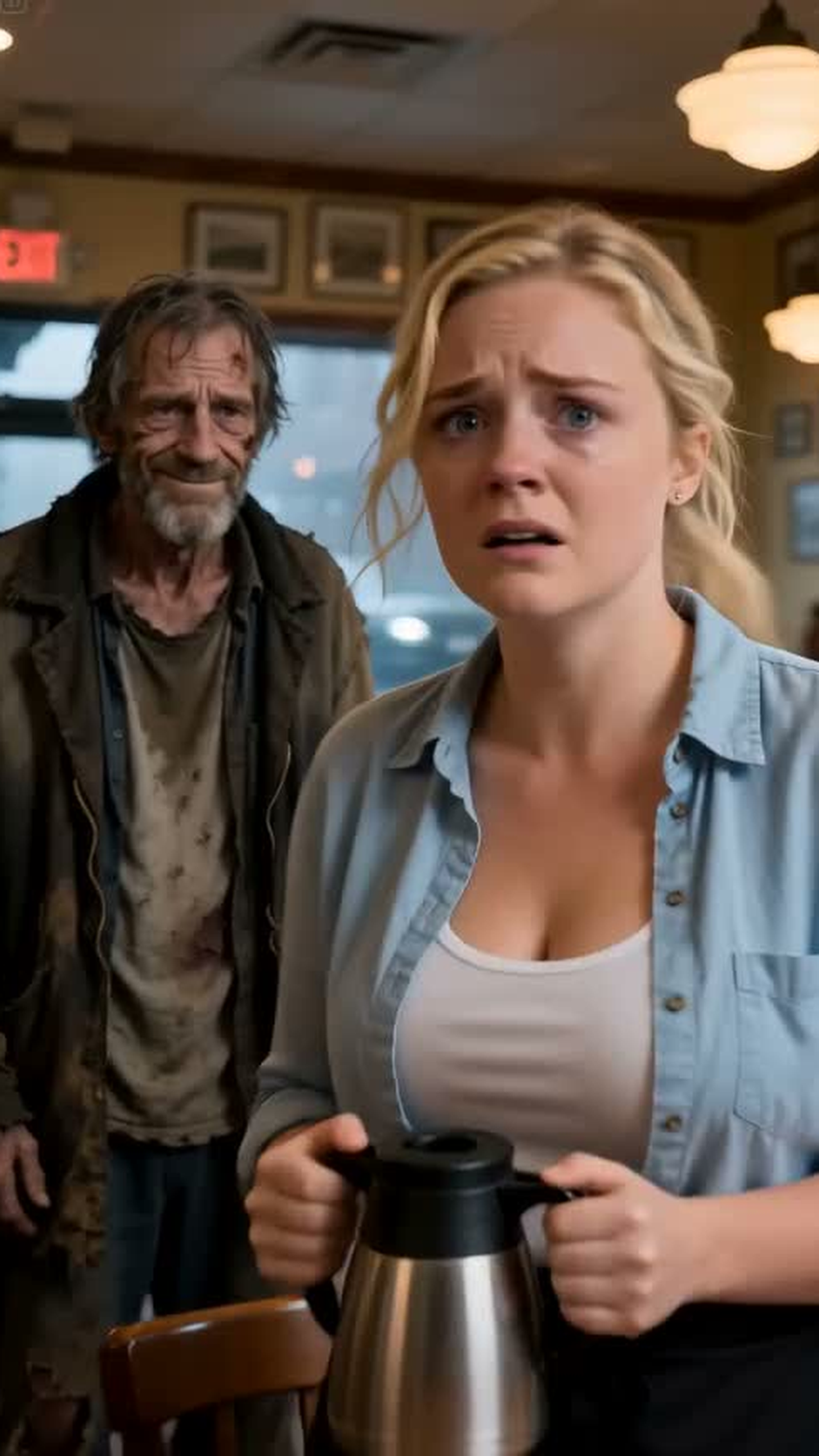
    Emma made the coffee. Emma poured three cups and drank first, as promised, slow and unhurried, a woman at her own counter. And with her left hand, under the shelter of the crate, with the small brass pen she had palmed off the office desk while Beans was telling her about his mother — a good pen; some office manager's pen; the kind of pen that does not belong to a man who sleeps rough — she wrote on a napkin, in her firm waitress hand, pressing hard enough to emboss the two beneath it:

    EMMA LAWSON — TAKEN — SHUTTERED OPEN TABLE DEPOT, HARBOR SIDE — GALA NIGHT IS THE TRAP — TELL SAL: ASK WHO SIGNS THE DOCK LOG. THE WAITRESS.

    "Beans." She held the boy's eyes while she folded the napkin once, precisely, in half. "Your mother cleans office buildings at night. Mine counts heart pills at a kitchen table from a list I wrote. I am not asking you to be brave. I'm asking you to lose something." She put the folded napkin on the counter between them. "When they move me, or when you leave, whichever comes first — this goes in a rich man's mailbox, a priest's hand, a reporter's camera, I don't care whose. If nothing happens to me, it's litter. If something happens to me—"

    She didn't finish it. She didn't have to. Beans picked up the napkin like it was warm, and put it in his inside pocket, over his heart, and said, "My ma's gonna kill me," in the tone of a man who has just found out he is alive.

    While the coffee brewed she thought, with the strange clarity that comes in locked rooms, about her mother's pill organizer on the kitchen counter at home — four colors, in an order June pretended not to know — and about who would set out the water tonight, and whether Ilya's dull, reliable man had understood June's system, and the thought steadied her the way the lists always steadied her: because a life, hers included, was mostly small duties done in the right order, and hers were currently being done by other people's kindness, which meant the world's machinery had not rusted all the way through. She thought about the third stool. She thought about the man who had sat under the awning for nineteen days asking the city one question, and she decided that if she got out of this room, she would tell him the part she had not yet said out loud: that she had known who he was — not the name, never the name — but the kind of man, from the first glass of water, because nobody watches a room that carefully who isn't looking for somebody in it. She had been somebody in it. That had to count for something, even here. Especially here.

    She was back in the catering chair, hands folded, coffee ring on the desk, when the quiet one's phone call ended in a different voice than it had begun — clipped, urgent — and everything in the warehouse changed key at once. The driver stood. Doors. The van being readied. They were moving her, now, tonight, ahead of schedule — because across the city, at that moment, a napkin was also traveling: out of a young man's inside pocket in a service corridor, passed hand to hand by people who owed Salvatore Moretti debts older than the boy himself, until it reached a black sedan outside a rain-wet diner where a man in a navy suit stood holding a waitress's fallen apron like a flag.

    Adrian read it twice. Sal, beside him — driven there against all advice, upright as a fence post in the rain — read it once, and gave a single nod, and said: "The dock log is signed in two hands. Mine, from the old days — and Webb's, countersigning the weights. She means the log can't lie forever about whose signature blesses the theft. She's not asking to be rescued." His voice did something complicated. "She's giving evidence. From inside. My God, Adrian — she is the one."

    "The depot," Adrian said, already moving. "If they've used our own shuttered building, Carlo's fingerprints are on the reallocation order. Get the fraud unit. Get everybody. And Father—"

    "I'm coming."

    "It isn't your—"

    "It is entirely my—" The old man stopped. He looked at his son, in the rain, holding the apron; and something forty years old and unfinished stood up in his face and was, at last, finished. "No," he said quietly. "No. This part is yours. Bring my waitress home."

    The rescue — though the papers would call it that, and Emma would spend a year correcting them, because rescues do not involve the rescued making coffee and gathering testimony for forty minutes — took nine minutes from the moment the first car rolled silent into the depot yard. The fraud unit came with the Morettis' quiet men the way weather comes with wind. The driver surrendered with the bewildered air of a man whose employer had not mentioned police. The quiet one ran, and learned about Ilya.

    And Carlo Russo — thirty years Sal's right hand, eighteen months the warm oil on every door the truth tried to open — made the last mistake of his career in the depot doorway, with the rain behind him and the fraud unit in front of him and Emma Lawson, of all people, walking free out of his own evidence locker in front of the cameras his people had failed to account for. He went for the gun of the man beside him. It was not even aimed at Emma; it was the flailing of a drowning empire. But Adrian was between them, the way he had been built to be between everything he loved and everything that threatened it, all his life, in every room —

    —and the shot, when it came, was small and flat and almost apologetic, like a cup set down too hard—

    —and Adrian Moretti turned to Emma with an expression of mild surprise, and put one hand to his shoulder, where the navy wool was going dark and wet in a spreading star, and said, quite clearly, "Stay," — as if she had been about to be seated somewhere without him — and went down on one knee in the rain, holding her hand, and did not let go of it until the ambulance doors closed between them at the hospital and took him, still holding on in every way that mattered, into the white light of the surgery corridor.

  • Chapter 5: The Price of a Plate of Food

    Chapter 5: The Price of a Plate of Food

    The flagship kitchen of the Moretti Family Foundation occupied a converted market hall on the harbor side, all glass and brushed steel and a mural of hands breaking bread that covered one wall in the style of a cathedral. Emma arrived Saturday at ten in her good cardigan, feeling like a spy in a novel where the spy has been cast wrong, and was received by Marcus Webb as if he had been expecting a spy and had rehearsed.

    "Our angel," he said, shaking her hand with both of his. Cufflinks. A smile calibrated to the millimeter. "Salvatore hasn't stopped talking about you. Neither has the internet. Four million people, Miss Lawson. Do you know what four million people are worth to a foundation? You may be the most valuable thing that's walked through that door all year — and I include the mayor."

    The tour took forty minutes and was, Emma would say later, the finest meal she never ate. The kitchens gleamed. The pantry was photographed more than it was stocked — that was her first thought, traitorous and immediate, waitress-trained: the shelves at the front were dressed like a shop window, full cans shoulder to shoulder, and behind them, in the working rows, gaps. Whole bays of gaps, labeled, dustless, excused by a printed sign — Deliveries Tuesday — on a day when the delivery dock, visible through the service window, stood empty as a stage after the show.

    The serving line fed a hall of perhaps two hundred. Emma took a tray — Sal's instruction, be my eyes — and ate a lunch that she assessed with forty years of family professionalism: chicken in a sauce built to survive photographs; bread with a crust like upholstery; portions weighed to the gram by a cheerful supervisor who told her, unprompted, that they served nine hundred a day here. Nine hundred. Emma counted heads in the hall, counted seatings in an hour, and did the Lawson arithmetic and came up four hundred short of the daily claim, every day, with somebody billing the Foundation for the difference in chicken.

    It was the staff who finished the picture, in the way staff always do — sideways, while working, without ever quite saying the thing. A dishwasher told her the good pans had been signed out to a catering company nobody could name and had never come back. A line cook, plating beside her while she waited for coffee, said the winter menus had been costed for fresh herbs and the trucks brought dried, and the difference went somewhere the way heat goes up a chimney, and then — hearing his own voice in the open air — went very pale and very busy. Nobody in that gleaming kitchen was stealing. Everybody in it was doing the arithmetic, alone, at their stations, and looking at the floor, because arithmetic without a witness is just another way of being afraid.

    "You're very quiet," Webb said at the door, in the tone of a man reading a gauge. "Salvatore tells me you have your grandmother's eyes. I do hope they're not tired eyes, Miss Lawson. Kitchens are complicated. Numbers are complicated. It would be a pity if enthusiasm got anyone confused."

    "Numbers aren't complicated," Emma said. "Hunger isn't complicated. I counted the chairs, Mr. Webb."

    For the first time, the smile came off him like a coat off a hook — and underneath was a face like a locked office. "Then I hope you're as exact," he said pleasantly, "about the dangers of making accusations against the man who feeds eleven thousand people a month. The city loves you this week, angel. Cities are weather." He opened the door for her with perfect courtesy. "Ask the Morettis what loyalty costs. Everyone around that family learns eventually. Tuition is steep."

    On Sunday she went back out on her own — not to the flagship, with its mural and its dressed shelves, but to the little Open Table kitchen in the Mill District that had been first on the list in Sal's notebook of doors, because it was the one kitchen in the city that had also, once, fed him.

    It fed her within four minutes of her sitting down, no form, no referral, no questions — a bowl of soup put in front of her by a woman named Petra who ran the place like a lighthouse keeper and who had the Lawson gift of reading a room at a glance. "You eat first," Petra said. "Whatever you came about keeps. Soup doesn't."

    Over the soup, doing nothing more suspicious than being a waitress at rest among waitresses, Emma learned the geography of the theft from the people who stood inside it. The flagship's numbers were the city's pride and the district kitchens' shame: their allocations arrived light and arrived late, and the paperwork said otherwise, and anyone who called the Foundation's office about it got a call back from a smooth man who explained about metrics. A driver named Okafor, eating at the staff table with his coat still on, told her the thing she had come hoping not to hear — that the harbor trucks went out heavy on the dock scale and came back too quick for the routes they were supposedly running, and that he had stopped asking about the missing miles after his schedule got cut in half for a month. "You don't bite the manifest," he said. "The manifest bites."

    "How much?" Emma asked.

    "Enough chicken," Okafor said, "to feed every man on every ledge in this city, twice a week, all winter. That's my arithmetic. I did it at this table." He looked at his hands. "Nobody asked me to do it. That's the thing about arithmetic, miss. It does itself, once somebody cares to look."

    She walked home the long way, through the early dark, with her notebook of a mind full — chairs counted, shelves weighed, a driver's conscience, a lighthouse keeper's soup — and she understood that Sal had not sent her to find a theft. The theft had been findable for eighteen months by anyone with eyes. He had sent her to find out whether there was still a single pair of eyes in his city that belonged to somebody the machine couldn't buy, frighten, or process — and to bring back, in place of an audit, a witness the whole city would believe because the whole city had watched her refuse a checkbook over a plate of chicken.

    She reported it all at the third stool on Monday, in a low voice, while Sal ate soup he didn't need as cover for the meeting and Adrian stood behind him with his arms folded and his face doing nothing at all, which she had learned was his loudest register.

    "The dock log," Adrian said.

    "There's a dock log?" Emma said.

    "There is a dock log. Trucks in, trucks out, weights, signed." He looked at his father. "If trucks are leaving half-empty, the log will lie about it, but it will lie consistently, and consistency can be audited. Webb has kept the auditors out by giving them summary sheets. Nobody has asked for the raw log in eighteen months." His mouth set. "Because somebody has been telling the auditors that the old man is retired and the young man is busy. And somebody has been telling my father—" He stopped.

    "Patience," said Salvatore Moretti, with the gentleness of a man breaking his own furniture. "Carlo's word. For eighteen months, Carlo's word. My oldest friend." He looked down at his soup. "The gala is in nine days. The Foundation names a new chair of the board — a formality, they'd arranged a puppet, a cousin of Webb's wife. Instead I will attend. I will attend, and I will name the chair myself, and before the dessert I will announce an independent forensic audit, with the FBI's charity fraud unit already briefed, and I will watch the faces at the head table like a man watching weather come in." He lifted his spoon, and set it down again, and Emma saw that the hand — the hand that had shaken in the rain with cold — was shaking now with something else entirely. "And I will not do it alone, because an old man's suspicions are called decline, and a young man's are called war. But a waitress—" The faintest ghost of the examining smile. "A waitress the whole city watched feed a stranger? She is called the truth. Emma. I am asking you to stand beside me at that gala and be my witness. In nine days. And afterwards, whatever you want — money, safety, a house for your mother, a ticket out of this —"

    "I told you about the checkbook," Emma said. "Don't make me tell you twice, it insults us both."

    "Then be my witness for free, you impossible Lawson." But he said it like a blessing, and Adrian, behind him, closed his eyes briefly, like a man whose house has just failed to fall down one more day.

    The days that followed acquired a rhythm that fooled Emma, some hours, into thinking her life might hold its new shape: the diner by day, Ilya a polite fixture by the door, the regulars fed and theatrical with pride; and late — after close, when the avenue emptied — Adrian at the counter in shirtsleeves, eating whatever Gus had overproduced and interrogating her, with the air of a man defusing her, about everything except his family. About her grandmother. About whether she had ever wanted anything besides the Kettle. About the harbor in the year he'd been eight and his mother had still been alive to throw bread to the gulls.

    "You don't talk like a—" she began once, and stopped.

    "Like a Moretti?" he said. "I talk like my mother's son. It gets me in trouble at work." He turned his coffee cup a half-turn on its saucer — his father's gesture, inherited like the eyes — and said, "For nineteen days I thought he was in a ditch, Emma. I have stood in rooms and negotiated with men I would not spit on, smiling, because Carlo said patience. And he was three miles away being fed by a waitress with more courage than my entire—" He stopped, and shook his head, and did the most un-Moretti thing she had yet seen: he laughed at himself, quietly, in the empty diner, and looked young and exhausted and entirely human. "Eat your pie," he said. "Gus made extra. He does that now. It's how he says he approves of history."

    The night before the gala, the rain came back.

    Emma closed the Kettle at ten — Gus gone home at nine with the deposit, Dana gone at nine-thirty with a warning to text when she got in, Ilya rotated off at ten to walk June's building, as he did on late nights, a precaution so routine by then that none of them heard the seam in it. The photograph had taught them to guard her mother. It had not occurred to anyone, yet, that the examination might change its subject.

    She was locking the back door, apron over her arm, keys in her fist the way her mother had taught her — between the fingers, a small bright weapon — when the van that had been idling at the mouth of the alley without lights put its lights on.

    It was done with a terrible, professional quiet. No shouting. A man at the mouth of the alley and a man by the dumpster and the simple mathematics of a woman alone in the rain between them. Someone took her phone out of her apron pocket with almost apologetic efficiency — she heard it hit the wet ground and skitter — and someone said, "Nobody's going to hurt you, angel. You're just going to miss a party," and the word angel told her everything: not rivals, not strangers. Webb's word. Family-adjacent. Hired through paper.

    She fought — she would be proud of it later, in the hospital-quiet of the aftermath: keys, elbows, her grandmother's name said like a curse — and it changed nothing except the timeline by eleven seconds, which was not nothing, and the last thing she saw before the van door closed was the back door of the Copper Kettle swinging slowly shut in the rain, and her apron on the wet pavement where it had fallen, and the black coffee pot, still warm from service, standing where she had set it down to lock up — waiting, patient as furniture, for Adrian Moretti to come out of the dark at a run six minutes too late.

  • Chapter 4: She Is the One

    Chapter 4: She Is the One

    The photograph was in the hands of Adrian Moretti's people by eight the next morning, because Emma — after a night spent listening to her building breathe — had done the thing that surprised her most in a week of surprises: she had asked for help, out loud, like a grown woman, and meant it.

    "The text was sent from a burner," said the quiet man Adrian had posted at the Kettle's door, an ex-something named Ilya whose politeness had a military finish. "The photo is from Tuesday. Before the video. Before anybody knew your name, Miss Lawson." He looked at her with professional sympathy. "Which means it isn't about fame. Somebody was already watching the diner. Watching him. And now they've seen what he thinks of you — and what he thinks of you, they're afraid of."

    "Why would anybody be afraid of me?" Emma said. "I'm a waitress. I have a bus pass and opinions about pie."

    "You also," Ilya said, "have something no one in that family has managed to buy in forty years of trying, which is why the gentleman will be at the noon service in person and why I will be at this door until he is. Your mother has a man on her building now, around the clock. He is dull, reliable, and extremely fond of her cooking shows through the wall. She has already fed him twice. I have reported this as a security concern." The corner of his mouth moved perhaps a millimeter. "She told him he looked peaked."

    "Because my father," Adrian said, arriving with the rain still on his shoulders and two coffees he had apparently bought elsewhere out of some obscure point of honor, "has spent forty years teaching this city that his favor is a fortune and his attention is a weapon. And on Thursday, in front of four million people, he looked at you and said: she is the one." He set a coffee in front of her. It was, she noted despite everything, exactly how she took it. "Every enemy he has — and he has been collecting them since before you were born — now believes you are the key to something. The tragedy, Miss Lawson, is that so does he."

    "Emma," she said. "If people are photographing me through windows, we've outgrown Miss Lawson."

    "Emma." He said it like a man accepting a treaty term. "Then I'll tell you what he won't. Come and hear it from him. He'll be here at noon. He refuses bodyguards, he refuses the car, he says a man should be able to walk three miles in his own city. My men are behind him at six hundred yards having a collective heart attack." He rose, and paused. "Whatever he asks you today — and he will ask you something; the examination is never finished with my father — you may refuse. It will not change what you did. I want that understood between us before he starts being charming. He's very good at it. It's how he built everything."

    He came at noon in a gray suit that fit him like a birthplace, clean-shaven, shod, upright — and the Kettle's lunch crowd performed the rare and beautiful maneuver of pretending, in unison, not to notice a famous man, which meant noticing him at maximum intensity with their peripheral vision. He took the third stool. He ordered the chicken.

    "Your grandmother," Salvatore Moretti said, when Emma set the plate down, "used to stand exactly where you're standing, with exactly that expression, when she thought I was lying about having eaten."

    Emma's hand stopped halfway back to the pass.

    "Spring of eighty-six. I was twenty-six years old and rich in everything except money, food, prospects, and sense. Your grandfather had just refused her — did you know that? No. Family edits. She was working double shifts here because this place—" his palm rested flat on the counter, gently, the way you touch a sleeping animal "—was new then and drowning, and her young man wanted her to quit and be sensible. She fed me nine mornings out of her own staff meal. Stood right there. Told me I had a face like a famine painting and it was bad advertising for the street."

    "She never told me she knew you," Emma said. "She told everybody she knew you. Movie stars. The Pope, once, during a documentary. Grandma said she'd fed half of history."

    "She fed one broke boy who became me." He turned his coffee cup a half-turn on its saucer, precise as the fork beside the plate in the rain. "I made her a promise when I left this street with a job and a loan she co-signed with a character reference that would have indicted her in any court — pay it forward when you're rich, handsome, she said. So I built the Foundation in my wife's name. Eleven thousand meals a month, Emma. Kitchens in nine neighborhoods. Trucks. A gala." His voice went dry as paper. "And somewhere between the brass plate and the annual report, it stopped being a promise and became a machine. Meals counted. People processed. My director speaks of hunger as 'food insecurity metrics.' Three audits postponed. Two million dollars unaccounted for in eighteen months, and my own consigliere pouring warm oil on my hands — patience, Sal, you're retired, let the machine run."

    The diner hummed around them — silverware, steam, the low music of other people's lunches — and at the third stool, in a low voice, a king described the rot in his kingdom to a waitress.

    "Someone inside is stealing food from the hungry and selling my name back to me as the receipt," he said. "I cannot trust my own house to find it. Every person I'd send is a person Carlo has poured oil on for thirty years — or a person Adrian has frightened, which amounts to the same silence. I sat out in the rain for nineteen days in the city I built, Emma, asking one question: is there anybody left who feeds a man because he is hungry?" He looked up at her, and the spring-water eyes were not cold at all. "Nineteen days. Churches. Cafés. My own foundation's flagship kitchen turned me away from its door, because I had no referral. And then there was this street. And the Lawson girl with the water, and the real mug, and half her sandwich. You are the only creature in my city who passed."

    "I'm not a detective," Emma said. "I can barely do my own taxes. My mother does my taxes. My mother has a heart condition and does my taxes, that's the level of detective you've recruited."

    "I'm not asking you to be a detective. I'm asking you to be my eyes where my eyes are no longer believed. Visit my kitchens. Eat there. Talk to people — people talk to you; it's your genius, don't argue — and tell me what's true. A waitress is invisible in rooms where my name makes everyone lie." He folded his napkin — the diner's paper napkin — once, precisely, in half. "One visit. Then refuse me, if you like, with my blessing and Adrian's car to drive you home forever. But come and see what your grandmother's nine mornings built, before the men who are stealing it finish the job."

    Emma thought of the envelope in the drawer. She thought of the photograph through her kitchen window, and the nine mornings in 1986, and the man in the doorway of the diner in the rain saying she has Rose's eyes.

    "One visit," she said. "Saturday. And you eat the chicken before it gets cold, and somebody is driving you home. Kings don't walk three miles in the rain on my shift, I don't care what the examination says."

    "She negotiates," Salvatore Moretti said to the ceiling, with the satisfaction of a man whose examination has just produced its answer. "Rose negotiated. The Pope story — she told me that one too. I believed her for a year."

    He had been gone perhaps twenty minutes when the counter produced its own, smaller weather. The man took the end stool, ordered coffee and the meatloaf, paid in advance with a bill too large and told Emma to keep the change, and asked his questions the way weather asks them — gradually, from several directions. Had the old fellow really been sleeping rough, did she think. Was it true what the news said about the napkin. Which door did the family use when they came, the front or the back. Nice people, the Morettis, whatever the papers said — a person in her position, a friend in that family, that was worth something. That could be worth a great deal, to the right person, if the right person knew things early.

    He was good. He was so good that it took Emma until the second question to hear the first one properly, and until the third to understand that she was being read the way she read a room — professionally, for leverage.

    "We don't know anything early here," she said, and set his change down in front of him in a neat stack, coin by coin, because some messages are best delivered in arithmetic. "We serve lunch. The meatloaf's better than the questions, mister. It's not close."

    Ilya, at the door, had not moved, but the room had changed temperature around him the way it does around a stove being lit. The man ate half his meatloaf with every appearance of enjoyment, left the change anyway — out of respect, she chose to believe — and went out into the wet afternoon unhurried, and Ilya followed him with his eyes all the way to the corner and then made a phone call in a language Emma didn't speak, in a tone she didn't need translated.

    "Rivals?" she asked, when the rush thinned.

    "Rivals, press, police, or family," Ilya said. "In my experience, Miss Lawson, the questions are always the same. Only the funerals differ." He considered her. "You did well. You gave him the meatloaf. Mr. Moretti the elder would approve of the method — feed people first."

    "And ask later," Emma said.

    "Later," Ilya agreed, "is taking care of itself."

    She almost laughed. It sat strangely in the day — almost laughing, beside a mafia king at the counter, with a burner-phone threat in her apron pocket like a second heartbeat.

    The laugh lasted until closing, until the bus, until the second-floor walk-up on Candler Street, where her mother's television voice came through the door before her key did, and then stopped — cut off mid-syllable in a way June Lawson's television never stopped — as Emma turned the key in a lock that turned too easily. That turned, in fact, without resistance at all, because it had already been turned by somebody else.

    The apartment was not destroyed. That was the worst of it, somehow — how tidy the violation was. Drawers opened and closed again in the wrong order. Her mother's chair moved two feet left. The RENT envelope, in the kitchen drawer, unopened, untouched, fat with money, passed over like an insult. Whoever had come had not come for money.

    June stood in her bedroom doorway with the phone in her hand and her face the color of the walls. "I was at Mrs. Abernathy's," she kept saying. "I was only at Mrs. Abernathy's. Emma — Emma, they were in my room."

    What they had taken, in the end, amounted to a single object, and it took Emma an hour to be sure of it, because it had no value anyone could pawn: her grandmother's recipe tin — green metal, dented, smelling faintly of cinnamon and other people's centuries — gone from the shelf above the stove where it had sat since Rose Lawson died.

    And what they had left, they had left on Emma's pillow, folded once, precisely, in half.

    A white paper napkin.

    There was nothing written on it. That was the message — the whole city knew a napkin was where Salvatore Moretti wrote his verdicts now — and as Emma stood holding it in the doorway of her own ransacked room, she understood that the examination was no longer his.

    It was theirs. And she was failing it simply by being the answer.

  • Chapter 3: Black Cars in the Rain

    Chapter 3: Black Cars in the Rain

    Thursday was coming down like the sky had a grudge, and Emma knew it the moment she stepped off the bus.

    The forecast had said three days of it. The avenue was running in gutters. By nine the Kettle was full of damp coats and damp tempers, the windows fogged, the grill working overtime, and Emma's section had expanded the way it always expanded — by annexation, one abandoned table at a time, until Dana started calling her "the empire."

    She did not see him arrive. She felt him, the way you feel a draft find the back of your neck — and looked up between the lunch rush and the lull to find the ledge occupied, the coat darker with rain at the shoulders, those clear eyes fixed on the windows, patient as a man waiting for a train he believes in.

    "Don't," Dana said at the pass, not looking up from the tickets. "I can hear you thinking from here. Gus is doing the books in the closet and he's in a mood with a first and last name."

    "I wasn't thinking anything."

    "You were thinking it in Lawson."

    Her staff plate came up at half past one — chicken, mash, beans, the roll — and the dining room did what it had been doing for three weeks, which was fail, spectacularly and in unison, to see the man outside. Walter the retired teacher shook the rain off his paper and folded it to the crossword. The couple at table four asked for their check without once glancing left. A man in a suit so dry it was practically a legal argument stepped around the ledge on his way in and said "excuse me" to the door.

    Somewhere in Emma, very quietly, something that had been patient for twenty-seven years stopped being patient.

    "He needs it more," she told Dana, and took her lunch out into the rain.

    What happened next the whole avenue would later claim to have witnessed, though the video — shot by a seventeen-year-old at table nine who had come in for pie and stayed for history — showed only what it showed: a waitress crouching in the rain with a plate; an old man's face changing like the weather breaking; a napkin folded away like communion. Then headlights. Then the cars.

    And then the man in the navy suit, standing in the middle of the Copper Kettle with wet eyes, saying "You fed my father," to a waitress holding a coffee pot, while his father — his father — stood in the doorway drying his hands on a dish towel Gus had handed him without a word, in the manner of a man resuming a throne.

    "Your father," Emma said. She had meant it to be a question. It came out as an accusation of the entire universe.

    "Salvatore Moretti," said the man in the suit. "Adrian Moretti." He did not offer a hand; he seemed to understand that hers were occupied and that shaking hands was a custom for people whose worlds made sense. "He's been missing nineteen days. Half this city has been looking for him. My men have checked every hospital—" His composure, which was clearly load-bearing, shifted. "He was three miles away. Eating staff meals. Under an awning."

    "Half a staff meal," Emma said, because accuracy felt like the last solid ground. "The sandwich was half."

    From the doorway, Salvatore Moretti — who had a name now, and a son, and a dry coat coming — laughed. It was not a loud laugh. It had the quality of a door opening in a house that had been shut for years. "She has always been exact," he said, to no one in particular. "Lawsons are exact. It's a defect. It's genetic."

    Now it was Gus's turn to stare. Emma watched the arithmetic move across her boss's face — Rose Lawson, 1983, a skinny kid in a doorway two streets over whom his own father had complained about for a solid month — and land, forty years later, in his dining room, wearing a fortune.

    "You," Gus said faintly. "You're little Sal."

    "I'm nobody's little Sal anymore, Gus. But I was." The old man crossed the room — slowly, because the room was letting him, because the whole diner had become an amphitheater — and put his hand on the back of the chair at the counter, the third stool, which Emma realized with a small internal lurch was where he had sat every time in her grandmother's stories about the one who got fed. "My son would like to pay you now. Let him. It helps him. He's been raised to believe gratitude is a transaction, and unlearning it will take longer than lunch."

    Adrian Moretti took a checkbook from his inside pocket — an actual checkbook, leather, which somehow made everything worse — and Gus, reviving, produced a pen from behind the register with the speed of a man who had been waiting sixty years for exactly one dramatic moment.

    "Name the amount," Adrian said. "Any amount. It's a debt."

    Emma looked at the checkbook. She looked at the man in the doorway, who was watching her the way he had watched her through the rain-streaked glass, with the patience of a man who has set an examination and is prepared to wait all day for the answer.

    In the drawer of her mind marked RENT there was an envelope two hundred and sixty dollars light, nine days from empty. There was a pharmacy list. There was a credit card charging her monthly for a dead man's last winter. The checkbook sat open on the counter like a door out of all of it, and the whole diner held its breath, and table nine's phone held steady.

    "It was a plate of food," Emma said. "Not a lottery ticket. Put that away before you embarrass us both."

    She said it clearly, because some things should be said where the room can hold them for you later. She was not brave; she was specific. A debt named is a chain, and she had watched her father's hospital bills chain her mother to a kitchen table of lists for three years, and she had fed the man in the rain for exactly the reason she had said — because he was hungry — and she was not going to let a checkbook come along afterward and re-label the one clean thing she had done all year.

    The silence that followed had a texture — like the moment after a glass breaks and hasn't yet been swept. Adrian Moretti closed the checkbook slowly, and something in his face rearranged itself into an expression she would spend weeks trying to name: not anger. Not even surprise. Something closer to a man hearing his native language spoken in a country where he'd stopped expecting it.

    "You see?" said his father, with enormous satisfaction, to the room at large. "She is the one."

    Before the room could demand the rest of it, Salvatore Moretti did something that rearranged the afternoon more quietly than the cars had: he sat down at the counter, on the third stool, and asked — in the tones of any regular, of any man — whether the kitchen was still serving the chicken, and whether it came the way it used to, with the skin in the mash.

    "You've sat here before," Gus said. It was not a question. Gus was looking at the old man the way a man looks at a photograph of his own street taken before he was born. "Sixty-two years this place has stood. My father used to talk about a kid in the eighties. A doorway kid. Rose fed him till he got work at the docks and then he vanished — and one Christmas, years later, a case of wine showed up at the back door with no card, and my father said—" He stopped, because the old man was smiling into his coffee like a man at a wedding.

    "Your father," said Salvatore, "was a terrible cook and a magnificent man, and he charged me for the wine. In installments. For six years." He raised the cup an inch. "Tell the kitchen the famine painting is back, Gus, and that he has notes."

    The whole diner laughed — the release of it rolling booth to booth — and that was when Emma saw Adrian Moretti, still standing where she had refused his checkbook, do the strangest thing yet: he sat down. Not at the counter. At the end of it, in the bad seat by the register where the draft lives, a king in a three-piece suit on a cracked vinyl stool, and he watched his father eat lunch in a diner with the expression of a man who has been carrying a stone for nineteen days and has just been told he may, finally, put it down somewhere specific. When their eyes met over the pie case, Emma did something she would think about later with disbelief: she took him the pie menu, like he was anybody.

    "He'll want the apple," she said. "He's had a month."

    "How do you know that?" Adrian said.

    "Waitress," she said, and went to get it.

    The one what, the room did not get to learn, because that was the moment the day split in two — into the hour when the Copper Kettle was merely famous on Candler Street, and the hour when the video crossed two million views and the phones began.

    By four o'clock there were three news vans double-parked in the rain. By five, a woman from a morning show was doing a stand-up under the awning — the awning — describing Emma as "the angel of Candler Street," a phrase that made Emma want to lie down on the railroad tracks of public opinion. Gus, who had declared at two o'clock that he would rather burn the diner down than talk to press, was discovered at five-thirty giving an interview in his good apron, using the words "family establishment" and "since nineteen sixty-two" in rotation, misty-eyed.

    Adrian's people handled the street the way weather handles a beach — two quiet men, suddenly everywhere, moving the vans along, answering nothing. Adrian himself stayed until the dinner crowd, sitting at the counter with coffee he nursed for two hours, watching his father eat pie at the third stool like a king in a country he'd conquered by sitting still.

    "He won't come home tonight," Adrian said at last, to Emma, low, as she refilled him. "He says the examination isn't finished. He says—" A muscle worked in his jaw. "He says there's rot in the foundation and he intends to stand in the rain until somebody around him turns out to be load-bearing. His words. He's been saying it for an hour. I believe it's a metaphor. With my father it's hard to tell — the metaphors have armed guards."

    "He'll catch his death," Emma said.

    "He's caught everything else for forty years. It bounced off." For the first time, the ghost of a smile. "Thank you, Miss Lawson. Not for the food." He searched for it, and found it, and it cost him something: "For seeing him. We've all been looking for nineteen days. You were the only one who actually—" He stopped. Set a hundred-dollar bill under the coffee cup for a two-dollar coffee, and was gone into the rain and the black cars before she could give it back.

    She worked until close. The video hit four million. Someone had already printed the still of her crouching with the plate and taped it to the register, where Gus pretended not to see it and also pretended not to dust it.

    That night, at the kitchen table, her tips totaled two hundred and twelve dollars — more than any night of her life, all of it from people who had come to eat where it happened, to be near the napkin story — and the RENT envelope, when she fed it, stood heavier and more honest than it had in months. Her mother watched the news segment twice and cried both times, holding Emma's hand hard enough to leave marks. "Your grandmother," June said, "is doing laps up there."

    Emma was brushing her teeth when her phone lit up on the bathroom counter.

    A photograph. Herself — taken that morning, through her own kitchen window from the alley behind the building: Emma in her work shirt, hair half up, reaching for the pill organizer, unaware, framed in the yellow light like something in a shop window.

    Underneath it, a message from a number with no name:

    Kindness is expensive, waitress. Ask the Morettis what it costs.

    The toothbrush stopped. The apartment, the radiator, the not-quite-closed window — all of it suddenly had ears. Emma stood in her bathroom doorway in the dark of her own home, and understood with her whole body that the whole city had seen her feed a hungry man, and that somewhere out in it, someone had liked that least of all.

  • Chapter 2: The Man Nobody Saw

    Chapter 2: The Man Nobody Saw

    By the end of the first week, the old man had become part of the avenue's furniture, which is to say he had become invisible in the particular way that only people can become invisible — deliberately, and with effort.

    Emma kept a private census. Monday: a woman in a red coat slowed, actually slowed, hand going to her purse — and then her phone lit up and the moment passed through her like light through glass. Tuesday: one of the counter regulars, a retired teacher named Walter who tipped in exact change and opinions, came in shaking his head. "Fellow out front's got a system, mark my words. They make more than you do, some of them. Tax free." Wednesday: rain in the morning, and the awning dripped on him for four hours, and no one inside so much as moved a chair.

    Emma moved through those days with a glass of water in her hand more often than the job required. Then coffee, in a real mug, because paper felt like an insult she couldn't explain. On the fourth day she brought out half a sandwich on a saucer — her own break, halved without a thought — and he took it with that same grave nod and one word, the first he had given her.

    "Name?"

    She blinked. "Emma. Emma Lawson."

    Something happened in his face then — small, and gone fast, like a fish turning under dark water. "Lawson," he repeated, as if tasting it for a lie. "Huh."

    "Huh, what?"

    But he only shook his head and ate his sandwich half with the manners of a man at a wedding, and when Gus came out with the trash and saw the saucer, the storm that had been gathering behind the counter all week finally broke.

    "Inside," Gus said. "Now. Both feet. Inside."

    The office at the Kettle was a broom closet with ambitions — mop, ledgers, a calendar from a food-service supplier stuck forever on March. Gus closed the door with care, which was worse than slamming it.

    "You feed one," he said, "you feed them all. This is not me being a monster, Emma. This is arithmetic. I got a landlord doing market potential on my roof, I got Sysco raising me eleven percent, I got a health inspector who thinks my walk-in is a confession booth—"

    "He's not them all, Gus. He's one man. An old man."

    "He is a line item I cannot see the end of." Gus rubbed his face with both hands, and when he lowered them he looked every one of his sixty-four years. "Your grandmother—" He stopped.

    "My grandmother what?"

    "Your grandmother," he said, with the air of a man laying down a card he has held for decades, "would have fed him too. That's the problem with you Lawsons. It's genetic. It's a defect." He pointed at her with a wooden spoon, which somewhat undermined the boardroom tone. "The water, fine. The coffee — fine, I'm a Christian country. But plates, Emma? Meals? That's the business. That's my chicken walking out my door on your conscience."

    "It was my break, Gus. My sandwich."

    "Half your break." A beat. "I counted." He let out a breath that was almost a laugh and waved her out of the closet. "Go. Your eggs are philosophical. And Emma — when the city or the rain moves him on, don't take it personal. They always move on."

    But the old man did not move on. He arrived before the lunch rush and left after it, unhurried as a tide, and the notebook Emma did not know about filled a page a day in copperplate handwriting.

    What no one on Candler Street knew — what precisely three people in the city knew, and two of them were paid to forget it — was that the man under the awning had walked out of the Moretti estate nineteen days earlier with nothing but the coat he was wearing and a point to prove.

    Salvatore Moretti had built an empire the way his father had taught him: with his hands, then with his name, then with the kind of silence that other men filled with obedience. Forty years of it. Ports and warehouses, restaurants and real estate, a foundation with his late wife's name on the brass plate that fed eleven thousand people a month. He had buried his wife, raised his son, buried two brothers and most of his enemies, and arrived at fifty-nine with everything he had ever wanted and one question he could not put down:

    When the name stopped working — when he was only a man, cold and hungry on a sidewalk — what was left?

    The fight with Adrian had been the match, not the fire. The foundation's audit, postponed three times. The new director, Marcus Webb, all cufflinks and reassurance, who spoke about hunger the way weather anchors speak about rain — as something that happened on a map. Carlo Russo, Sal's right hand of thirty years, counseling patience in a voice like warm oil: Let the boy run his side, Sal. You're retired. Retired. A word for furniture.

    So one night Salvatore Moretti put on the coat of a man who had nothing, walked out through the service gate his own security never watched, and went to find out what his city actually was.

    He had chosen the Copper Kettle for the oldest reason there is. In the spring of 1986 he had been twenty-six years old, broke in a way that has a smell, sleeping in a doorway two streets over with his whole future folded into a duffel bag — and a waitress at this diner, a Lawson, a girl with tired blue eyes and no reason on earth, had fed him for nine days straight out of her own staff meals and told him, the morning he finally landed work, pay it forward when you're rich, handsome.

    He had been paying it forward, or telling himself he had, for forty years. Eleven thousand meals a month. It had taken him until fifty-nine to wonder whether the machinery had eaten the mercy — whether anyone in his gleaming foundation still fed a man because he was hungry, or only because he was counted.

    Nineteen days under awnings and overpasses had given him a stomachful of answers. The notebook was a ledger of doors. Churches that cited policy. Cafés that cited liability. A bistro whose manager had called the police with the fluency of long practice. And one diner on Candler Street where the waitress had his dead benefactor's eyes and brought water without being asked, and coffee in a real mug, because paper felt like an insult she couldn't explain.

    Two streets away, the search for him was entering its third week and growing teeth.

    Adrian Moretti did not raise his voice. It was the thing the men who worked for him feared most about him — that flat, courteous calm, like deep water. He stood at the window of his office above the harbor with Carlo at his back and a private investigator's report in his hand that said, in professional language, nothing at all.

    "Nineteen days," he said. "A man of fifty-nine, with a heart condition he hides from his own doctor, vanishes from a house with eleven cameras. And your conclusion is that he's sightseeing."

    "My conclusion," Carlo said, "is that your father is the slipperiest son of a—" He caught himself, smiled, recalibrated. "—of his generation. If Salvatore Moretti doesn't want to be found, Adrian, he is not found. The Kovacs don't have him. If the Kovacs had him, we'd have heard terms by now. Terms are their love language."

    "And if it's not the Kovacs?"

    "Then it's a hospital with a John Doe, or it's him teaching us all a lesson at our expense, and either way" — Carlo spread his hands — "shouting at detectives won't shorten it. Patience."

    Adrian turned from the window. "My father used to say patience is what the trap tells the rabbit."

    Carlo's smile did not move, but something behind it did — a fraction, like the fish under dark water in the old man's face, gone before it could be named.

    The second week brought the city itself out to the ledge, in the form of a two-man outreach team with clipboards and the exhausted kindness of men who have been given a map instead of a budget. Emma watched from the pass as they crouched by the old man with the practiced choreography of concern — shelter beds, intake hours, a card with a number on it — and she watched him receive them the way he received weather: courteously, immovably, with those clear eyes taking notes of his own. When they left, the senior of the two came in for coffee and stood at the counter shaking his head.

    "He's not confused," the outreach worker said. "That's the thing. Usually there's a — you know. A fog. This one quoted the shelter's own funding statute at me. Correctly. Then he asked if I was eating enough." He turned his cup in his hands. "Nineteen years I've done this route. First time a client's ever made me feel like the intake."

    That same week, at the estate above the harbor, Adrian Moretti stood in a hospital corridor at two in the morning looking through a curtain at a John Doe who was not his father — sixtyish, gray, pulled from the river side with no name on him — while Carlo, at his shoulder, murmured the word patience like a man turning a key in a lock he owned. Adrian paid the stranger's bill on his way out. He did not examine why. He told himself it was procedure. He had begun, in the small hours, to understand that he would stand in any corridor in the city, any number of times, rather than say the thing Carlo kept almost saying — that a man of fifty-nine with enemies does not vanish by accident, and that the family should begin, quietly, to plan for the shape of the world after Salvatore.

    He went home and stood in his father's bedroom doorway and did not plan for it. He made the housekeeper cry by asking her, with great courtesy, to keep making the bed.

    On Candler Street the rain gauge of the days was the awning, and the old man beneath it had begun, without anyone voting on it, to be greeted — not by the customers, not yet, but by the street itself. The florist two doors down started leaving the ledge swept. Somebody's grandfather, passing with a cane, took to nodding at him, one veteran of the sidewalk to another. And Emma, refilling his coffee on the eleventh day, got her second sentence out of him, offered without prompting while he watched a crew repaint the crosswalk:

    "You're Rose Lawson's granddaughter."

    It wasn't a question. Her hand stopped with the pot in the air.

    "You knew my grandmother?"

    "I knew a waitress in this room," he said, "when this room had different paint." The clear eyes came up to hers and something in them was almost gentle. "You're the first person on this street who hasn't asked me my name, Emma Lawson. Did you ever notice that? Everyone wants the name. The name tells them what a man is worth. You brought water first." He folded his hands around the mug. "Ask later. Isn't that the law?"

    She went back inside with her heart slamming and told absolutely no one, because some things are too large for a shift, and because a part of her — the part that counted tips at a kitchen table and knew the weight of every envelope — already understood that the man under the awning was an exam she had not applied to sit, and that she had been taking it, question by question, for eleven days.

    That night it rained for the first time in a week, a rehearsal for Thursday. Emma, locking up, found the old man still under the awning at half past nine, an hour past his usual tide, and understood from the set of his shoulders that he was sleeping there — that the ledge was not a post but a bed.

    She stood in the doorway with the keys in her hand and her grandmother's first law standing in her throat like a supervisor.

    Feed people first. Ask later.

    She went back inside and made up the storeroom cot the night cook used on doubles — blanket, the good pillow from the office, no fuss — and held the door for him. He looked at the cot. He looked at her, and those spring-water eyes did something she would think about for a long time afterward.

    "You'll lose your job for this one day, Emma Lawson."

    "Then I'll lose it fed," she said. "In you go. Bathroom's through the kitchen. Don't touch the pies."

    He slept at the Copper Kettle for three nights, and was gone by five each morning like a rumor, and neither of them ever mentioned it again — not the next day, when Gus found the pillow and said nothing either, in a voice that fooled no one, about mice getting ideas.

    And on Wednesday night, in a black sedan parked across from the diner with its lights off and its engine ticking as it cooled, a man who did not work for Adrian Moretti lowered a camera with a long lens, and looked at the photograph he had taken of the old man asleep in the storeroom window, and made a telephone call.

    "I found him," he said. "You are not going to believe where Salvatore Moretti is sleeping."

  • Chapter 1: The Plate She Gave Away

    Chapter 1: The Plate She Gave Away

    The rain came down the front windows of the Copper Kettle in long, crooked lines, and through it, the old man was watching her again.

    He sat where he always sat now — under the narrow overhang by the entrance, where the awning kept the worst of the weather off and nothing else did. His coat was the color of wet earth, torn at one shoulder, buttoned wrong. His shoes were soaked through. Around his knees, his hands were locked together so tightly that Emma Lawson could see them shaking from twenty feet away, through glass, through rain.

    People walked past him the way water walks past a stone. A woman with a stroller angled wide. Two men in work boots split around him without breaking their conversation. A teenager looked straight at him, through him, and kept scrolling.

    The old man's eyes — pale, sharp, impossibly clear for a face that weathered — did not move from Emma.

    "Let's see who still cares," he murmured, to no one, to the rain.

    At the pass, Dana set a plate down in front of Emma with the particular clang of a woman who has been on her feet since five in the morning. Roast chicken. Mashed potatoes with the skin still in them, the way Emma liked. Green beans, a roll going golden at the edges. Steam rose off it in the cool air of the diner and fogged the edge of Emma's glasses where they hung from her apron string.

    "Eat," Dana said. "You look like a ghost with a ponytail."

    "I will. In a minute."

    "You said that yesterday. Yesterday your minute had a table of six and a birthday in it."

    Emma smiled because Dana was right and because smiling was cheaper than arguing. The plate was her staff meal — one a day, eaten standing up in the back if she was lucky, eaten cold if she wasn't. Her stomach made a small, honest sound. Through the window, beyond the counter and the booths and the framed photographs of the neighborhood as it had been forty years ago, the old man folded his shaking hands once more, tighter, and went on watching her.

    She picked up the plate.

    Dana caught her wrist — gently, the way you catch someone who is about to step off a curb. "Emma. That's your lunch."

    "I know."

    "You skipped breakfast. You told me you skipped breakfast because the milk had gone over and you weren't going to spend four dollars—"

    "He needs it more."

    Dana looked out the window. Dana looked at the plate. Dana, who had two kids and a husband on disability and understood down to the penny what a free meal was worth, let go of Emma's wrist and said nothing at all, which was the loudest thing she could have said.

    The bell over the door rang. The rain came in with Emma and then the door sighed shut behind her and it was only the two of them under the awning, in the gray hush, with the traffic hissing past on the wet avenue.

    He looked up. Close, he was older than he'd seemed through the glass and somehow less old — his eyes did the work of a younger man's eyes, measuring, unsurprised by everything except, apparently, this. He looked at the plate. He looked at her face. Something in his expression gave way, like a lock turning in a door nobody had opened in years.

    She crouched so they were level, rain spotting her shoulders through the gap where the awning ended, and held the plate out with both hands.

    "Why would you help me?" he asked. His voice was low and rough, but there was an odd care to the words, as if he had been saving the question.

    Emma shrugged, embarrassed by how simple the answer was. "Because you're hungry."

    He took the plate. His hands were still shaking, and hers were steady, and for one second both of them were holding on. Then she stood, wiped the rain off her forearms with the side of her apron, and went back inside to a dining room that had already forgotten either of them existed.

    She never saw him eat.

    What she never saw — what no one saw — was the napkin.

    He ate slowly, like a man at a table in a house he owned. When the plate was done, he set the plastic fork down parallel to the rim, exact as a place setting. Then he took the white paper napkin, folded it once with his weathered hands, and drew from an inside pocket of the ruined coat a small pen — good brass, the kind of pen that does not belong to a man who sleeps rough — and wrote, in a hand like copperplate, four words.

    She is the one.

    He folded the napkin once more and put it in his breast pocket, over his heart, and sat back to wait for the part of the day he had come for.

    It arrived twenty minutes later, out of the rain, in absolute silence.

    Emma heard it before she understood it — not an engine sound exactly, but a change in the room. The rattle of the windows. Every head turning the way sunflowers turn. She was mid-pour at table nine, the black coffee pot raised, when Marla at the register said, in the voice of a woman announcing weather from another planet:

    "Oh, my Lord. Who are those people?"

    Three black sedans had come to rest along the curb outside, one behind the other, precise as a held breath. Their headlights burned through the rain and doubled themselves on the wet pavement. Nobody in the Copper Kettle moved. The cook's spatula stopped halfway to the grill. Somewhere a phone was already up, filming.

    The door opened and the room went silent the way a church goes silent.

    He was tall — that was the first thing. Navy three-piece suit cut so well it made every other man in the room look like a rough draft. Dark hair, trimmed beard, a watch that caught the pendant lights. Two men came in behind him in black suits, took the walls without being told, and became furniture with eyes. Emma would remember later that she had been afraid, but the truth was simpler: she had been riveted. He had the kind of face that made a room behave.

    His gaze crossed the dining room once — booths, counter, pass — and stopped on her.

    "Where is the waitress who fed him?"

    The coffee pot weighed suddenly like an anchor. Table nine's refill dripped onto the saucer, unnoticed. Dana, beside the pie case, had gone the color of the pie case.

    Emma's mouth opened. Nothing came out of it that she could account for afterward.

    He crossed the room — not fast, not slow, the stride of a man who has never once had to hurry — and stopped a respectful distance from her, and she saw, up close, that his eyes were wet. That undid her more than the suit, the cars, any of it. Men like that were not supposed to have wet eyes.

    "You fed my father," he said quietly, "when everyone else looked away."

    Behind him, in the open doorway, framed by the rain and the black shine of the cars, the old man in the torn brown coat was standing — upright, composed, shoulders back, no trace of the shiver left in him — looking at her over his son's shoulder with a small, knowing smile.

    Emma turned sharply toward him. Her heart was going like a trapped bird.

    "Your — what?"

    * * *

    Three weeks earlier, Emma Lawson had been nobody at all, and glad of the arrangement.

    She lived with her mother in a second-floor walk-up on Candler Street, four blocks and one unreliable bus from the Copper Kettle, in an apartment with a radiator that sang and a kitchen window that had not fully closed since the winter of the big freeze. Every morning began the same way, in the dark, with the pill organizer.

    June Lawson's heart medication came in four colors and had to be taken in an order June pretended not to know and Emma pretended not to enforce. "You're not my mother," June would say, dry as toast, one slipper on, one slipper off.

    "No," Emma would agree, setting out the water. "I'm worse. I'm your daughter. I keep lists."

    The lists ruled the apartment. There was the list on the refrigerator (milk, beans, the cheap coffee that was also, defiantly, the good coffee). There was the list in Emma's apron pocket (ask Gus about Saturday hours, Mrs. Abernathy's decaf, table four's chair wobbles). And there was the list that lived in the back of her head and woke her up some nights at three: rent $1,150, due the first; pharmacy $86; the gas bill; the balance on the credit card that had carried her father's last winter in the hospital, three years gone and still charging her for it, month by month, like a subscription to grief.

    She was twenty-seven. She worked doubles four days a week and singles the other three at a neighborhood restaurant where she had started at nineteen, bussing, and where her grandmother had worked before her — Rose Lawson, who had tied on an apron at the Copper Kettle in 1983 and taken it off, mostly, in 2009, and who had taught Emma the two laws of the trade.

    One: everybody is carrying something heavier than their plate.

    Two: feed people first. Ask later. Later takes care of itself.

    The Copper Kettle had been feeding the neighborhood since 1962 — polished wood tables worn pale in the middle, a counter with eleven stools, pendant lights the color of late afternoon, and walls of framed photographs: the avenue before the chain stores, the flood, the championship parade, Gus's father in front of the grill in an apron that said KISS THE COOK in letters time had faded to a suggestion. Gus Papadopoulos himself was sixty-four, built like a fireplug, and spoke fluent grievance. His current grievance was the landlord, who had let it be known — through the coward's telephone of a property manager — that the building was being "evaluated for its market potential," a phrase Gus repeated the way other men repeated obscenities.

    "Market potential," he would say, sliding a ticket onto the rail. "Sixty years I feed this street, and I am market potential. Table six wants the check, sweetheart. And the gentleman at the window booth says his eggs are philosophical. I don't know what that means and neither does he."

    It was, Emma thought often and never once resented, a good life badly paid. She knew the regulars' orders, their divorces, their medications, which ones tipped in cash because "the card people take a cut, Emma," which ones were lying about being fine. She was plus-size and plain-spoken and tired in a way that sat behind her blue eyes like weather, and the diner loved her the way a house loves its load-bearing walls — without ever once saying so out loud.

    The old man appeared on a Tuesday, in the last week of September, between one breath of the day and the next.

    She noticed him because of the stillness. The sidewalk outside the Kettle was a river — school kids, dog walkers, the avenue's whole hurrying population — and he was the rock in it: seated on the low ledge beneath the entrance overhang, a torn brown coat around him like a tent, his hands folded, his head up. Not begging. No cup, no sign, no cardboard sermon. Just sitting, in the exact spot where everyone entering or leaving would have to decide, consciously, not to see him.

    "New fixture," Dana said, following her eyes, and refilled the sugar pourers with the efficiency of a woman defusing something. "Give it a week. City moves them along, mostly."

    "He's not asking for anything."

    "That'll be what makes everybody nervous."

    By closing, Emma had filled his water glass twice — set it on the ledge without ceremony, the way you'd set a thing on your own porch, and gotten, the second time, a single grave nod. She had learned nothing about him except that his shoes were falling apart and that his eyes, when they lifted, were clear as spring water and twice as cold, and that he watched the diner the way a man watches a house he used to live in.

    That night, counting her tips at the kitchen table while her mother slept, Emma got to forty-one dollars and change and stopped, because the envelope in the drawer marked RENT in her own firm hand was two hundred and sixty dollars light and the first of the month was nine days away, and because through the not-quite-closed kitchen window she could hear the rain beginning — the front that the radio had been promising all week, come to sit on the city for three days.

    She reheated tomorrow's staff plate in the oven to take the chill off the kitchen — roast chicken, mashed potatoes, green beans, a roll. Hers. Earned. The one hot meal of the day that asked nothing of her.

    Nine days, she thought, looking at the envelope. Nine days, and something has to give.

    Across town, in a house with a gate and a gravel drive and forty years of other people's fear folded into its foundations, a man in a navy suit stood in his father's empty bedroom doorway at midnight, phone in hand, listening to a detective tell him there was still no sign — no hospital, no morgue, no camera — of Salvatore Moretti.

    "Sir," the detective said carefully, "men like your father don't just vanish. Somebody has him. Or—"

    Adrian Moretti looked at the bed, made with hospital corners by a housekeeper who kept making it out of loyalty. "Find him," he said, "before whoever has him decides what he's worth."

    He did not know — neither of them knew — that Salvatore Moretti was at that moment sitting dry and wakeful under the awning of a diner across the city, rain on the pavement in front of him like scattered coins, writing in a small leather notebook by the light of the streetlamp.

    Day one, the old man wrote. The Copper Kettle. They walked past me like weather.

    Then, after a moment, in the same copperplate hand:

    The waitress brought water. She has Rose's eyes.

  • Chapter 7: His Wife

    Chapter 7: His Wife

    Gabriel did not argue with the letter. That was the first thing Sarah noticed, the next morning, and it frightened her more than argument would have, because in six months she had never once seen Gabriel Rossi accept a refusal as a final thing.

    He arrived at ten instead of nine, in the suit with the pinstripe, with his hair combed and his face shaved and the terrible composure of a man presenting a case in the last court that mattered. He had brought no flowers. He had brought, in a plain archival box that he set on her blanket with the care of a man laying down a weapon, a two-year-old Christmas present.

    "I went to the precinct yesterday," he said. "Eleventh floor, property division. I signed for it." He looked at the box, and his voice went quiet and unadorned. "Elena's score. The one from the car. I have been a coward about a cardboard box for two years, Sarah, and I had a long talk with it in the car, and I have finished. A man came to see you today who is not collecting debts, his own included. I wanted the box here so that you'd know which man."

    She was crying before he'd finished, silently, the way she did everything that mattered. "Gabriel—"

    "Not yet. Let me do this in order, because I have rehearsed it against three surgeons and a federal prosecutor and I am still not certain of the words." He drew breath. "You said I would keep the promise out of gratitude, and that it would rot. You were right to fear it. So I have spent three weeks finding out if it was gratitude, and it is not, and I can prove it the only way I know how—by telling you what gratitude would have looked like. Gratitude signs the trust and says thank you and lets you go with honor. Gratitude does not lie awake inventing reasons for the painting hour to move to a room near the study. Gratitude does not stand in a hospital corridor at midnight begging God, whom it does not believe in, with specific terms." His composure cracked, beautifully, along the lines she'd first seen in the sunroom. "I am not grateful to you, Sarah. I am in love with you. I have been—Vitale has the dates; the old fox has apparently been keeping a ledger—since a Thursday in December when you told me to sit on the floor of my own house and hold my son's sky still. Gratitude ends. This doesn't."

    "I'm the maid," she whispered. "I have debts and a dead-end degree and a room under your eaves—"

    "You are the woman my son chose before I was wise enough to. You are the only person alive who has told me no, twice, as an act of love. You are—" He stopped, and then did the thing Vitale had prescribed, the thing her own heart had taught her in a nursery doorway in October: Gabriel Rossi, in his pinstripe suit, in the middle of a hospital room, sat down on the floor beside her bed, so that he was lower than she was, smaller than the fear, and looked up at her like a man at the foot of an altar. "You do not have to hold this sky alone, Sarah Collins. That is my whole proposal. Let me hold yours. Let Leo and me hold yours. You said it yourself—it's just a jar. It just needs more hands."

    She could not answer at once, because into the silence, on cue so perfect that she would suspect Vitale of stage-managing it for the rest of her life, came a small, grave voice from the doorway: "You're doing it wrong, Daddy. You have to ask with the train."

    Leo stood there in his Sunday clothes with Vitale behind him wearing the expression of a man who has absolutely stage-managed it. In the boy's hands was the wooden engine, and tied to the engine with a ribbon from Mrs. Greco's sewing box was a small velvet box that Sarah's heart recognized before her eyes did.

    "Mommy in heaven is in my heart," Leo announced, in the memorized, careful tones of a speech rehearsed all the way down the corridor, "and she stays there, that's the rule. But Sarah is my second mommy—if she says yes—because she holds the sky AND she makes the train rules. Daddy says you're not a thing to be purchased. Daddy says I have to ask properly." He held out the train with both hands, earnest as a ambassador. "Sarah. Will you be my second mommy, and Daddy's wife, and stay in our house forever, and hold the jar with us? I can hold my part now. I practiced."

    Sarah looked at the boy she had taken three bullets for, holding out a toy train with a ring box tied to it, and at the most feared man in New York sitting on a hospital floor with his heart in his face, and at her whole life—Danny, the doorway, the four seconds; the debts, the diner, the room under the eaves—and she understood, all at once and forever, that she had not survived the sunroom in order to leave by the staff door. Danny had let go of her hand. These two were asking, with both hands, to keep hold.

    "Give me the box, love," she said to Leo, and opened it herself, because she had never in her life waited to be handed the thing she'd chosen. The ring was platinum, unshowy, warm from the boy's pocket. She put it on her own finger while Gabriel made a sound she intended to tease him about at their wedding. "Yes," she said. "Yes to the train rules, and yes to the jar, and yes to you—" to Leo, gathering him one-armed against her good shoulder "—and yes to you," and she reached down and took the hand of the man on the floor and pulled, and Gabriel Rossi rose up off the hospital tiles and kissed her with one hand cradling her head exactly as he had cradled it in the wreckage, infinite care, only this time for joy.

    "I have conditions," she said, when breathing resumed, because she was Sarah. "The room under the eaves gets given to someone who needs a start. The trust you keep waving at me goes to a fund—for the children of men who work for this family, all of them, Frank's daughter first. And the sunroom—" Her voice steadied on the last one. "We fix the sunroom. We don't close it, we don't make it a shrine. He paints there at four o'clock if he wants to, with the curtains wide open. I won't have him learn that the sky is a place that gets taken away."

    "Done," Gabriel said, "done, and done. Vitale has a pen."

    There remains the question of what an engagement looks like in a house like that one, and the answer is: like a siege lifting, in small ceremonies.

    Sarah's room under the eaves was emptied on a bright February morning, at her instruction, by Tony and Paolo under Mrs. Greco's direction, and its contents were distributed with the formality of a treaty: the good chair to the new nanny—a shy, steady girl named Ruth, hired by Sarah herself after an interview process of legendary thoroughness—the spare blanket to the night staff, the little rug to Leo, who installed it in the train fort as a railway carpet. Sarah herself moved into the blue suite in the family's wing, with a physiotherapist's rail by the bath and a window over the garden, and on the first night she stood at that window a long time, looking down at the sunroom's dark glass and the faint, kindled lights of the house, thinking about doors: the ones she'd closed, the ones that had closed on her, and the one she had finally, finally been asked to walk through as an owner rather than a guest.

    The trust was signed in Vitale's office with rather more witnesses than securities law requires, because Leo insisted on attending as the fund's first beneficiary-by-proxy and annotated the proceedings with questions until the lawyers were smiling into their collars. The fund would carry school fees, medical bills, and emergencies for the children of every family on the estate's books—cooks' and gardeners' and guards' children alike, alphabetically and without favor, Frank DeLuca's daughter's name at the head of the first year's list, because Sarah had written it there in her own hand and Gabriel, reading it, had only nodded, once, the way men do when their wives are better people than them and they have made their peace with the arithmetic.

    And there was a garden afternoon, the first of the thaw, when Sarah walked—slowly, with the frame abandoned at the door in defiance of three medical opinions—as far as the fountain and back, while Leo ran the entire railway of the house at her elbow calling the stations: Kitchen! Biscuits! Study—no stopping, sad room, express only!—and Gabriel walked on her other side with his hands ostentatiously in his pockets, proving he could let her fall-ward and catch her with his eyes alone. She did not fall. At the fountain she stopped, breathless and blazing with triumph, and looked up at the house she had entered as staff and would shortly re-enter as its mistress, and found that the fear had gone out of it entirely—leaving only the windows, the gold light, and the people leaning out of both to cheer.

    The wedding was held in the spring, in the sunroom.

    It took four months for Sarah's body to agree to a wedding dress—four months of physiotherapy she attacked like a campaign, of walking the corridor, then the garden, then the whole east wing, with Leo running the train alongside as an escort service—and by April, when the glass had been replaced and the Persian rug restored and the first green was coming up through the last of the snow, she walked into the room where she had nearly died on the arm of Enrico Vitale, in a simple white dress with no apron over it, and found the whole besieged, ridiculous, beloved household arrayed among the flowers: Paolo weeping openly into a dish towel embroidered for the occasion; Mrs. Greco in her one good hat, composed as a general and twice as moved; Dominic at the door, permitting the day a security posture of almost reckless relaxation, which the staff understood to be his wedding gift; Tony, who had carried her groceries and now carried the memory of a friend he'd reported with tears in his eyes, standing taller when she smiled at him; and at the front, beside a priest with the wise eyes of a man who has married this family before and asked no questions, Gabriel.

    And Leo. Leo came down the aisle at the precise pace he'd rehearsed forty times, carrying the wooden train on a cushion, and on the train, tied with the same ribbon, two rings—while three hundred photographs of his mother's cello music played softly from the music room's speakers, because Sarah had asked for Elena to be there, and Gabriel had stood in the doorway of the music room the night before and listened to the whole recording for the first time in two years, and come out with his eyes dry and his heart, at last, at peace.

    "Daddy," Leo said, arriving, in a stage whisper heard by the entire sunroom, "don't move. I've got you."

    The laughter that went up in that glass room was the first wholly unguarded sound it had held since before Elena died—and Sarah, watching her husband-to-be take the rings from the engine with hands that trembled only slightly, understood that the house had changed its tense at last: from was to is, from held breath to weather.

    They were married under the gold light, in front of the easel, where the finished sky painting hung now in a frame—the sky held still over the garden by three figures, green, dark, and gold, all of them with their hands on the jar. And when the priest pronounced them husband and wife, and Gabriel kissed his bride in the sunroom where he had once begged her to survive, Leo Rossi threw both arms around them at knee height and announced to the room at large, with the satisfaction of a chief engineer signing off on a bridge: "See? It doesn't fall. It just needed more hands."

    Later, after the cake and the dancing—after Mrs. Greco had danced once, scandalously, with Paolo, and Dominic had been seen to smile for a full four seconds—Sarah stood with her husband in the doorway of the sunroom and looked at the room where her life had ended and begun in the same hour.

    "What are you thinking?" Gabriel asked.

    "That I'm not frightened of this house anymore," she said. "I was, you know. Under the eaves. I used to think it would destroy me—Vitale said it might. Instead it just—" she searched for the word and found it in her son's railway "—it just needed more hands, too."

    "Stay with me," he said, softly, because some sentences become vows by repetition.

    "Forever," said Sarah Rossi, and leaned her head against the shoulder that had once, in blood and glass, been the roof over everything she loved. "I've got you. We've got each other. That's the whole job."

    Outside the tall windows, the garden was green and ordinary and safe, and the sky over the Rossi estate—blue deepening toward evening, and then gold—held perfectly, perfectly still.

    THE END

  • Chapter 6: The Vigil

    Chapter 6: The Vigil

    She woke at dawn on the third day, which everyone who was watching agreed afterward was exactly the kind of timing Sarah Collins would choose: the practical hour, the shift-change hour, the hour when the night nurse was writing up her notes and the hospital was holding its breath between dark and day.

    Gabriel was asleep in the chair beside her bed, which was to say Gabriel was performing the act called sleeping the way he performed everything since the sunroom—badly, and at a post. He had not left the floor since midnight of the first night. He had showered in the doctors' locker room and eaten what Paolo sent in a steel box and terrified three administrators into giving the room at the end of the corridor to a six-year-old boy and a silver-haired adviser, and he had sat in that chair through two nights of monitors and soft-shoed nurses, watching the numbers that meant she was still in the world.

    So he was there—unshaven, gray-eyed, his ruined suit replaced by a black shirt with her blood washed out of memory but not out of him—when her eyelids moved, and her gaze traveled, with agonizing slowness, around the ceiling, the window, the machine, and came to rest on him like a bird landing after a storm.

    "Is Leo… okay?"

    It was the second time she had woken out of darkness asking that question, and Gabriel Rossi, who had faced down the Commission at twenty-six and buried his parents and his wife without a sound anyone could remember, made a noise then that he would deny under torture—a cracked, helpless, grateful sound, somewhere between a laugh and the thing a laugh is standing in front of.

    "He's safe," he said, and leaned forward and took her hand off the blanket with both of his, like a man receiving something back from the sea. "He's safe. Because of you. He drew you a sky. He has opinions about when you are allowed to see it, and the nurses have been briefed, and one of them cried, and the sky is currently in a place of honor in the family room guarded by two of my most dangerous men." His voice failed him entirely. "Sarah. Sarah. You stopped breathing. Twice. Do you know that? Do you know what—"

    "I know," she whispered. Her fingers, papery and weak, tightened on his by a fraction. "I heard you. At the end. In the room with the glass." Her eyes shone. "You said a thing."

    "I said a great many things," Gabriel said roughly. "I'm told men do, in such rooms. Some of them I intend to stand behind."

    "We'll talk about the things when I can sit up," she said, and drifted, smiling faintly, back into sleep like a swimmer letting the current take her—this time the good current, the one that carried people home.

    While she slept and woke and slept again, in the long convalescent rhythm of the nearly lost, Gabriel did the thing no Rossi had done in forty years, and he did it deliberately, in daylight, with witnesses.

    Cesare Sartore was alive. That was Dominic's doing and Dominic's gift—when the shooting in the sunroom had ended, it had ended with Cesare in the snow of the east garden with two of Dominic's men standing over him, and every tradition of their world had dictated what happened next, in the woods, quietly, in the old manner. Dominic had instead zip-tied him, read the situation with a professional's cold eye, and called the state police himself, on an open line, with his own name attached. "The boy's world changes today, boss," he had said, when Gabriel reached the garden with Sarah's blood drying on his shirt. "Or it doesn't. Your call for the rest of his life."

    Gabriel had looked at the man in the snow, whose family's grudge had put three bullets into the woman who held his son's sky still, and he had chosen his son's world over his father's. It had cost him more than any concession of his career. The weeks that followed cost more: federal prosecutors in his study, his own ledgers opened in rooms he'd sworn they'd never see, the port contract—the crown jewel his grandfather had killed for—signed over to a Commission-brokered trust to buy the permanent, enforced peace of every family at the table. Vitale, who had drafted the surrender of an empire's worth of leverage in eleven days, remarked that Gabriel's father would have burned the city first.

    "My father," Gabriel said, signing the last page, "buried his wife at fifty and his son's childhood with her, because the world he built had no door marked exit. Leo gets a door. Whatever it costs me."

    Frank DeLuca testified from a hospital of his own, into a plea agreement that would put him in witness protection in a state with no Italians and no snow, and before they took him away he asked Dominic for one thing: to tell the maid he was sorry he'd ever learned her name. Sarah, when she heard it, cried in her hospital bed for the bird names in Italian and the photographs of a nurse in Albany, and forgave him out loud to an empty room, because she had decided long ago that forgiveness was not a verdict. It was a door she refused to be locked out of.

    The household, meanwhile, had quietly relocated its capital city to the fourth floor of St. Mary's Hospital.

    Paolo arrived daily at noon with soup in a thermos and opinions about the hospital kitchen, which he delivered to the staff canteen at a volume suggesting he considered it a rescue mission. Mrs. Greco came on Thursdays with pressed laundry and a commander’s inspection of Sarah’s color, her pillows, and the nurses’ competence, and departed each time with the announcement—addressed to Sarah but pitched for the corridor—that the house was untidy without her, which in Mrs. Greco’s language was a declaration of love so naked it embarrassed them both. Dominic’s men rotated through the family room in shifts that fooled no one; Leo, installed there each afternoon like a small visiting head of state, did his schoolwork under the guard of men who had faced down cartels and now faced down long division.

    And Gabriel learned the hospital the way he had once learned rival territories: its shifts, its coffees, the name of every nurse on the floor, the exact sound of Sarah's monitor, which he claimed—correctly—to be able to distinguish from the corridor with a door closed. The night nurse, a woman named Okafor who had buried a husband and raised four children and was therefore immune to mafia bosses, reported to Vitale that the terrifying gentleman in 412 had been caught at 3 a.m. holding the patient's hand and apologizing to her in his sleep.

    "Apologizing for what?" Vitale asked.

    "Everything, by the sound of it," said Nurse Okafor, "in alphabetical order."

    Sarah heard that story from Vitale himself and stored it where she stored all the evidence her heart was collecting against her own resolve. She did not yet know the resolve was already lost. Resolves, like skies, fall quietly, and usually because somebody kind is standing underneath them with both hands up, refusing to move.

    By the end of the second week she could sit. By the end of the third she could walk the corridor with a frame, furious at the frame, at the slowness, at her own treacherous body—while Leo, visiting under armed guard and hospital dispensation, rode the wooden train along the windowsill of her room and read her the recovery like a railway timetable. "Today you walked to the door. Tomorrow the nurses' station. It's a whole line, Sarah. You're the express now."

    The sky painting had been retrieved from the sunroom floor by Paolo, who had cleaned one careful thumbprint of blue from its corner with the side of his hand and wept into the dish towel. Leo presented it on the Sunday of the third week with the ceremony of a state visit. The sky was finished now. It held still over the garden, the fountain, the green rectangle that was Tony—and it had acquired, since October, a new population. The green figure and the dark figure stood under it holding the jar. And between them, holding the jar too, with both hands, drawn in gold with great seriousness, was a small figure Leo had not included in any version before.

    "That's me," he said. "I can hold it too now. Not just you. Because you showed me. If the sky gets heavy I can hold my part."

    Gabriel stood in the doorway with his hands in his pockets and his face turned carefully to the window, and Sarah looked at the painting and at the boy and at the man in the doorway, and she made the decision she had been making, in pieces, ever since the ambulance—made it out of love, which is the only way the worst decisions ever get made.

    She asked Vitale for paper that evening. She asked for an hour alone, which the household granted her with the uneasy obedience of people indulging a invalid. And when Gabriel came at nine, as he came every night at nine, with the steel box from Paolo and the day's intelligence from the nurses' station, she was sitting up very straight against the pillows with a letter folded in her lap, and an expression he had last seen on a girl standing in a shattered sunroom deciding where to put her body.

    "Don't," he said, before she could speak. He had read the whole of it off her face in the doorway. Men who miss nothing usually suffer for it. "Whatever that paper says, Sarah. Don't."

    "It says thank you," she said gently. "It says that when I'm discharged, I'll stay until Leo is settled with a new nanny—I'll train her myself, I'll stay as long as that takes, I would never just vanish from him. And then I'll go."

    "Go." The word came out flat and strange. "Go where. Go why. Tell me the why of it, Sarah, because I have had three weeks of surgeons and prosecutors and I am owed one plain sentence."

    "You are owed nothing; that's the disease of this house," she said, and her voice shook, and held. "Listen to me. Men came through a window to kill a child because of the name on his door, and I nearly died in front of him doing the only thing I'll ever be proud of. He has nightmares now—not of the men. Of me. Of the blood on my apron. The doctor told me. He dreams that the people who hold the sky get broken holding it, and one day soon he'll be old enough to do the arithmetic about what his world costs the people in it, and I will not be the next name in his arithmetic, Gabriel. And besides—" She stopped. The folded letter trembled. "Besides. I am the maid. I sleep under the eaves. You are—you. What happened in that room was a dying hour and a promise made in blood, and I release you from it, and if you try to keep it out of gratitude I'll know, and so will you, and it will rot. I won't be the debt this family pays forever. I've been a debt. I know how it ends."

    The corridor outside her room was very quiet. In the silence Gabriel Rossi stood with his hands empty at his sides, and the letter stayed folded in her lap like a small white flag neither of them had wanted to raise, and somewhere down the hall a nurse laughed at something ordinary, and the sound seemed to come from another planet.

    Vitale found him an hour later still standing in that corridor, staring at nothing, holding nothing, having signed nothing, agreed to nothing.

    "Well," said the old man, with the terrible gentleness of the family adviser, settling in beside him against the wall. "The maid told you in October how it's done, I believe. You go in anyway. You sit on the floor so you're smaller than the fear. And you let them come to you." He folded his hands. "She's been holding your family's sky for six months, Gabriel. Perhaps the question isn't whether you'll let her stop. Perhaps it's whether anyone in this house has ever once offered to hold hers."

  • Chapter 5: The Sunroom

    Chapter 5: The Sunroom

    The snow killed the convoy before it was born.

    By five in the morning the plows had surrendered; the county road was a white rumor under three feet of drift, and the highway patrol had closed Route 22 in both directions after a jackknifed tanker. Dominic stood in the study with slush melting off his boots onto Gabriel's Persian rug and delivered the verdict like a man reading out a casualty list: "No wheels move until the thaw, boss. Not ours. Not anyone's."

    "Anyone's includes Cesare," Gabriel said.

    "It includes the men Frank already let inside the wire," Dominic said. "The foot patrol found two sets of tracks in the east woods at three a.m., old enough to be under the new snow. They came in before the storm sealed us. They're already here, boss. They're just waiting for the hour Frank sold them."

    Four o'clock. The glass room. The whole day bent itself around that hour like iron around a magnet.

    Leo was kept in the library, which had no exterior glass, with the curtains drawn and Paolo's biscuits and a fort built out of sofa cushions and first editions. He endured it until noon. He endured the guards' soft voices and the strange, stretched quiet of the house and Sarah's too-bright smile until half past three, when the word came down that the county had opened one lane—one—and Dominic, weighing a sealed fortress against a single escorted run at the hour the enemy had purchased, made the hardest call of his career: move the boy now, at 3:40, ahead of the sold hour, through the east corridor past the sunroom to the garage court, two cars, six men, and be gone before four ever arrived.

    The hours before the move were the strangest of Sarah's life, and she would think afterward that they had the texture of the inside of a held breath.

    Leo built his fort with the concentration of an engineer who suspects his bridge will be tested. He appointed the wooden train chief of the fort's railway and ran it, solemnly, back and forth along the library rug on supply missions—biscuits in, reports out—while Dominic's men rotated through the doorway with soft updates that Sarah was not meant to hear and heard anyway. Tracks in the east woods: two men, maybe three, dug into the tree line with the patience of hunters. The west fence: clean. The service road: watched, and empty, which Dominic liked least of all. "Empty is a decision," he said in the doorway, to no one in particular. "Men who've gone home is also a decision, but not one Cesare makes."

    At two o'clock Gabriel came into the library, which he had not entered since Elena's death—it had been her room, the cello's room—and stood among the sofa cushions and the supply railway like a king visiting a country whose language he'd forgotten. Leo, who had been brave all day, took one look at his father's face and climbed down from the fort and went to him, and simply put his forehead against Gabriel's leg, the way he leaned on Sarah's arm when the world was too large.

    Gabriel's hand came down, slowly, and rested on his son's hair.

    "You'll ride with Sarah," he told the boy. "In the second car, with Dominic. I'll be in the first car, in front of you the whole way. Do you know why the first car goes first, Leo?"

    Leo shook his head against his father's leg.

    "Because anything that wants to reach the second car has to go through me first. That's the order of things. It has always been the order of things—it only took me this long to arrange my house to match it." His gray eyes lifted, over the boy's head, to Sarah, and the conversation underneath the conversation ran between them without words: I know what I'm asking. I know you know. "Sixty seconds a minute today, Miss Collins. No errands, no detours, nothing forgotten and gone back for. The boy stays in your arms or at your hand from this door to the car seat. Promise me in words."

    "In words," Sarah said. "From this door to the car seat, he's in my arms or at my hand. I promise."

    When he had gone—back to Dominic and the telephones and the hundred arrangements of a moving fortress—Leo tugged her sleeve. "Daddy looks like the sky before it decides," the boy said, with the terrible accuracy of six.

    "He does," Sarah agreed, smoothing his hair. "So we'll hold it still for him today, you and me. That's our job, remember? Holding jars. Figuring out skies."

    She kept him laughing, somehow, through the last long hour—shadow animals on the library wall, the train's biscuit economy explained in whispers, a story about a brave little engine who was frightened of tunnels and learned that the trick was to keep hold of the car behind you the whole way through. At 3:35 Dominic appeared in the doorway with the coats, and Sarah dressed Leo in his winter things with hands that did not shake, and buttoned the cream sweater over his warm heart, and settled the ear defenders around his neck, and thought: this door to the car seat. My arms or my hand. That is the whole of the law today.

    "The painting," Leo said, at the library door, with the desperation of a boy who has been brave all day and has exactly one bravery left.

    Sarah crouched. "Which painting, love?"

    "The sky one. In the sunroom. It's not finished holding." His chin shook. "If we leave it, the sky falls while we're gone. I have to roll it up. It takes one minute. Sarah. Please."

    Every adult in that doorway did the arithmetic at once—sixty seconds, the sunroom twenty steps off the corridor, the hour not yet come, the boy's heart—and Sarah heard herself, out of the deepest instinct of her life, refuse to let fear be the thing that taught this child his paintings didn't matter. "One minute," she said to Dominic. "I'll count it myself. Sixty seconds, in and out, and we're in the corridor again before the clock even thinks about four."

    Dominic's jaw worked. "Sixty," he said. "I'm counting too."

    The sunroom was full of winter light.

    That was the terrible thing she would remember afterward, more than the glass, more than the sound: how beautiful it was. The snow beyond the towering windows had turned the whole world white and silent and clean; the light came through the glass the color of weak gold; the easel stood where it always stood, and Leo ran to it on the soft feet of a child in his own home and began rolling his sky with the blue paint still fresh on the last star he had added that morning—a smear of it transferred, as he worked, to his cheek. Forty seconds. Sarah knelt beside him and held the jar, because that was her whole job. Holding jars. Figuring out skies.

    "Thirty," she said gently. "Time to go, my love."

    And the first gunshot took the sunroom window.

    Glass exploded inward in a glittering storm, and Sarah did not think. Thinking was for people who had time. She swept Leo off his feet and down beneath her body in one motion, folding herself over him the way a roof folds over a house, her arms locked around his small ribs, her back to the shattered windows and the men in the trees beyond them.

    "Don't move, Leo. I've got you."

    Beneath her, Leo was rigid, his small hands fisted in her apron, his breath coming in terrified little gasps against her collarbone. A second shot. A third. She felt them rather than heard them—three brutal jolts, shoulder, side, lower back, each one driving the air out of her lungs in a sound she refused to let become a scream. Leo could not hear her scream. So she made no sound at all. She only tightened her arms while something warm spread, slowly and terribly, across the white lace of her apron, and glass kept falling around them like rain, and somewhere Dominic was shouting, and the house's guns were answering, and the whole world had narrowed to the size of the boy beneath her heartbeat.

    The crunch of polished dress shoes on broken glass. Running steps. A shadow.

    "Sarah…?"

    Gabriel was on his knees in the wreckage with glass grinding under him, drawing Leo out from beneath her with infinite care, lifting the boy into his arms while Leo clung and sobbed, blue paint and Sarah's blood smeared across his cream sweater.

    "Daddy… she saved me."

    Gabriel set his son into Dominic's arms—Dominic, who had come through the door with his weapon still raised and the look of a man who had arrived exactly one lifetime too late—and turned back to the woman on the floor. He slid one tattooed hand beneath Sarah's head, cradling it off the cold marble, and pressed the other hard against her wounded side. His face, the face that ended arguments and empires, collapsed in front of God and his whole household.

    Her eyes drifted open and found him slowly, the way a swimmer finds the surface.

    "Is Leo… okay?"

    "He's safe," Gabriel said, and his voice broke on the words like a wave on rock. "He's safe. Because of you."

    Her eyes began to close. He gathered her against his chest, heedless of the blood, of the medics pounding in through the ruined door, of Cesare Sartore's war ending somewhere beyond the windows in shouting and snow.

    "Stay with me, Sarah. Please."

    He pressed his forehead to hers and whispered the promise into the wreckage like a prayer: "Survive this… and I'll never let you face life alone again."

    Her fingers moved faintly against his jacket. Then they stopped moving.

    The ride to the hospital was twenty-six minutes through a world plowed white, and Gabriel Rossi rode in the ambulance because no power on earth was sufficient to put him anywhere else. He held the oxygen mask steady when the paramedic needed both hands. He answered questions in a voice that did not sound like his: twenty-four years old, no medications, no conditions, her name is Sarah Collins, she is—he stopped, and the paramedic did not ask him to finish the sentence, because the heart monitor chose that moment to flatten its green line into a scream and the small space filled with urgent hands and the word clear—

    She came back. Four seconds, the paramedic said afterward, in the corridor, to a man sitting with his head in his bloodstained hands and his son asleep under a hospital blanket in the silver-haired adviser's arms. Four seconds dead, and then her heart remembered its job, the way Sarah Collins remembered all her jobs.

    At midnight the surgeon found Gabriel where the paramedic had left him, still in the ruined suit, the blood on it long dried to rust. She was a small woman with tired eyes, and she spoke to him with the respect people use for weather.

    "We got all three bullets, Mr. Rossi. Her shoulder will heal. The one in her side missed everything that can't be repaired, and the one in her back missed her spine by a distance I don't enjoy thinking about." She paused. "She lost a great deal of blood. Her heart stopped once in the ambulance and once, briefly, on my table. She is alive, and she is strong, and she is, medically speaking, exactly the kind of patient who survives things. But the next twelve hours will decide it. If she wakes by morning—"

    "And if she doesn't?" Gabriel said.

    The surgeon looked at him, and at the sleeping boy, and at the old man holding him like the last light in the building.

    "Then, Mr. Rossi," she said gently, "we start having a different conversation. Pray, if you do that."

    He sat down again in the corridor of the hospital, in the suit he'd been wearing when his world ended twice, and Gabriel Rossi—who did not pray, who had not prayed since the night of the ice and the docks—put his face in his hands and began.