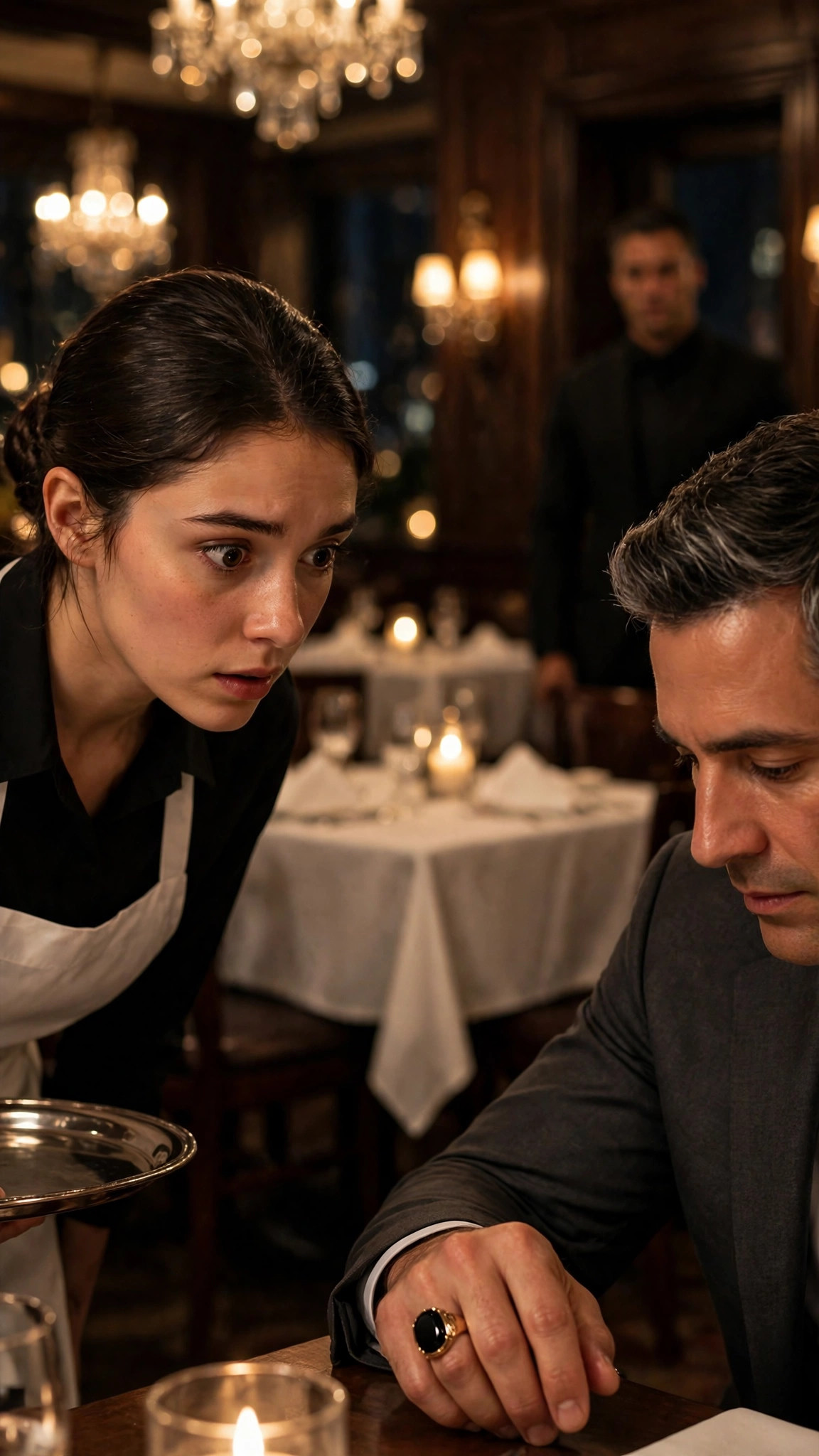
Viviana Marchetti had learned to read a room the way other people learned to read books — quickly, quietly, and all the way to the end.
She had learned it in her father's shop.
Giovanni Marchetti's jewelry shop had been no bigger than a pantry, tucked between a bakery and a barber on Hanover Street in the North End, with a bell over the door that rang every time someone walked in and a workbench by the window where Giovanni sat for forty years with his loupe screwed into one eye and his hands steady as a surgeon's. The shop smelled of metal polish and old wood and the coffee Giovanni brewed on a hot plate in the back. Viviana had grown up on a stool beside that workbench, watching her father's hands move — setting stones, sizing rings, polishing silver until it shone like water.
"People tell you who they are with their hands, Viviana," Giovanni used to say, without looking up from his work. "A nervous man turns his ring. A liar hides his left hand. A man who is about to do something he is ashamed of will not meet your eyes in the mirror. Watch the hands. The hands never lie."
She had watched the hands. She had watched the men who came into the shop with rings that cost more than her father's entire store, men who never gave their names and paid in cash and waited in silence while Giovanni worked. She had watched the women who came in with tears in their eyes and wedding rings they could no longer afford to keep. She had watched her father treat them all the same — with courtesy, with care, and with a distance so precise it was almost a kind of kindness.
Giovanni Marchetti had died three years ago, on a Tuesday in March, of a heart attack in his own shop, his loupe still screwed into his eye and a half-finished ring still clamped in his vise. Viviana had found him when she came to bring him lunch. She had been twenty-three years old, and in the space of a single afternoon she had become the head of a family that consisted of a mother with a failing heart and a brother of sixteen who wanted to go to college and had no idea how any of it would be paid for.
She had sold the shop. Not because she wanted to — God knows she had not wanted to — but because the shop had been leased, not owned, and the new landlord had tripled the rent, and the tools alone were worth enough to pay her mother's medical bills for six months. She had kept only three things: her father's loupe, his workbench lamp, and the small brass bell from over the door, which now hung in her kitchen and rang softly whenever the window was open.
She had found work at Lumière two weeks later.
Lumière was the finest restaurant in Boston, or so the guidebooks said, and the pay was better than anywhere else a waitress without a degree could hope to earn. The work was hard — twelve-hour shifts, feet that ached by midnight, customers who treated the staff like furniture — but the tips were good, and the manager, a brisk Frenchwoman named Madame Colette, ran the floor with the discipline of a general and the fairness of a judge. Viviana had worked her way up from the lunch shift to the dinner shift, from the back tables to the front room, and in three years she had become one of the best servers in the house.
She was good at it because she could read people. She knew which table wanted to be left alone and which one wanted to be charmed. She knew when a man was celebrating and when a man was saying goodbye. She knew the difference between a couple on a first date and a couple on their last. She knew all of it from the hands, the way her father had taught her, and from the eyes, which she had taught herself.
What she did not know, until the night Nathaniel Caldwell walked into Lumière, was that the skill her father had taught her in a little shop on Hanover Street would one day save her life.
Her mother, Elena Marchetti, was fifty-eight years old and had the kind of heart that had been tired for a long time. The doctors called it congestive heart failure, and they said the word "manageable" in the careful tone doctors use when they mean "not curable, but not today." Elena took seven pills a day, in a little plastic box divided into morning and evening, and she pretended, with the fierce dignity of a woman who had raised two children on a jeweler's wages, that the pills were nothing, that the shortness of breath on the stairs was nothing, that the money was nothing.
But the money was something. The medication cost more every year. The cardiologist's visits cost more every year. And Elena, who had once sewn all of Viviana's dresses by hand and taught her to make sauce from tomatoes that cost almost nothing, now sat in a chair by the window of their small apartment and watched the street below, and tried not to be a burden, and was a burden anyway, because love does not care about arithmetic.
Viviana paid for it all. She paid the rent on the apartment above the bakery, where the smell of fresh bread rose through the floorboards every morning at five. She paid for the pills. She paid for the doctor. And she paid for her brother Matteo's tuition at Boston University, where he was studying engineering and working nights in a campus cafeteria and telling his sister, every Sunday on the phone, that he was fine, that he did not need anything, that she should spend the money on herself for once.
"Matteo," she had said to him last Sunday, standing in the kitchen with the phone pressed to her ear and the chipped blue coffee pot warming on the stove, "you are nineteen years old. You are supposed to need things. That is the entire job of being nineteen."
"I need you to stop worrying," Matteo had said, and she could hear him smiling. "I need you to buy yourself something pretty. A dress. Shoes. Anything."
"I have dresses," she had said.
"You have two dresses, Viviana. I have counted."
"Then I have enough dresses."
She had laughed, and he had laughed, and for a moment the apartment had felt full instead of empty, the way it used to feel when her father was alive and the shop bell rang and her mother sang in the kitchen while the sauce simmered.
That was the life Viviana Marchetti had built from the pieces her father left behind: work, and worry, and love, measured out in envelopes on a kitchen table, counted three times a week to make sure the numbers still added up.
She had never once, in twenty-six years, been in the same room as a murder.
She had never once seen a gun that was not on a television screen.
She had never once heard the name Nathaniel Caldwell, and she had certainly never imagined that a ring — a piece of black stone set in gold, the kind of thing her father had repaired with his own hands — would pull her out of that small, careful life and into a world where men settled their arguments with five armed strangers in a dining room full of champagne and string quartets.
But her father had been right about one thing, the way he had been right about almost everything: the hands never lie.
And when she saw the black onyx ring on Nathaniel Caldwell's fourth finger, her father's voice had come back to her across three years of silence, as clear as if he were standing beside her at the workbench with his loupe in his eye.
"When you see that ring, you walk away."
She had not walked away.
She had stayed. And in staying, she had crossed a line she could not uncross, into a story that had begun long before she was born, in a world she had only ever glimpsed through the window of a little jewelry shop on Hanover Street.
The morning after her father died, Viviana had gone to the shop alone, before the landlord changed the locks, and stood in the empty room where the workbench had been. The bell over the door rang when she opened it, and then it was silent, and she had understood, for the first time, what silence really sounded like when there was no one left to fill it.
She had taken the loupe and the lamp and the bell, and she had locked the door behind her, and she had walked home through the North End with her father's tools in a paper bag, and she had promised herself two things.
The first was that her mother would never go without her medicine, and her brother would go to college, no matter what it cost her.
The second was that she would never be afraid of the men with the expensive rings — because her father had never been afraid of them. He had simply looked at their hands, done his work, and sent them on their way.
It was a good promise. It had carried her for three years.
It was about to be tested in a way she could never have imagined, by a man who wore the black onyx ring and sat calmly at the worst table in the finest restaurant in Boston, waiting for five armed men to decide whether he would live or die.
And by the bouncer named Asher, who had dragged her into a supply room and shown her a ring of his own, and whispered a warning that would change everything.
"Boss… you need to get away from that table. Now."
Viviana Marchetti did not get away from the table.
She stayed. And the story of the black onyx promise began.
Viviana remembered her first day at Lumière as clearly as she remembered her father's funeral — not because it had been happy, but because it had been the day she stopped being a girl who had lost her father and started being a woman who would keep her family alive.
Madame Colette had interviewed her in the empty dining room at ten in the morning, with the chairs still up on the tables and the smell of bleach in the air. She had looked at Viviana's hands — red, work-worn, a waitress's hands even then — and she had said, "You have worked in a restaurant before?"
"I worked in a bakery, in the North End," Viviana had said. "And I waited tables at a café, summers, when I was in school."
"Can you carry three plates?" Madame Colette had asked.
"Yes."
"Can you remember six orders without writing them down?"
"Yes."
"Can you smile at a man who is rude to you, and mean it?"
Viviana had paused. "I can smile," she had said, honestly. "Whether I mean it is my own business."
Madame Colette had laughed — a short, surprised sound, like a door opening — and she had said, "Good. You will do. You start Monday. Do not be late. Do not steal. Do not cry in front of the guests. Everything else, I can teach you."
She had taught her everything. How to hold a tray so it became part of your arm. How to pour wine without looking at the bottle. How to read a table in five seconds — who was paying, who was angry, who was in love, who was about to leave. How to disappear when you were not needed and appear the instant you were. And, most important, how to keep her dignity when a rich man treated her like furniture, because dignity was the one thing no customer could take from her unless she gave it away.
Viviana had kept her dignity. She had also kept her father's lessons, and her mother's recipes, and the small brass bell from the shop, which hung in her kitchen and rang when the window was open, and which she touched every morning before she left for work, the way other people touched a photograph, or a prayer card.
In the evenings, after her shift, she came home to her mother, and the apartment above the bakery, and the smell of bread rising through the floorboards. Elena would be in her chair by the window, with her pill box on the side table and a book in her lap, and she would look up and say, "How was tonight, my love?" And Viviana would tell her — about the anniversary couple, about the man who proposed at table four, about the woman who sent back three dishes before she found one she liked — and Elena would listen, and laugh, and shake her head, and say, "Your father would have loved these stories. He always said a restaurant is a theater, and the waitress sees the whole play."
One evening, not long before the night at Lumière, Elena had put down her book and looked at her daughter for a long moment, and said, "Viviana. You are twenty-six years old. You work twelve hours a day. You pay for my pills and your brother's school. When do you live?"
"I am living, Mama," Viviana had said.
"No," Elena had said gently. "You are surviving. There is a difference. Your father did not work himself to death so that you could do the same. He worked so that you could have a life. Promise me you will remember that."
"I promise, Mama," Viviana had said, and she had meant it, the way you mean things you do not yet know how to do.
She had not known, sitting in that small apartment with her mother, that within days she would meet a man who understood promises the way her father had — as a weight, carried every day — and that he would ask her to carry one with him.
She stayed. And the story of the black onyx promise began.