Martha did not sleep that night.
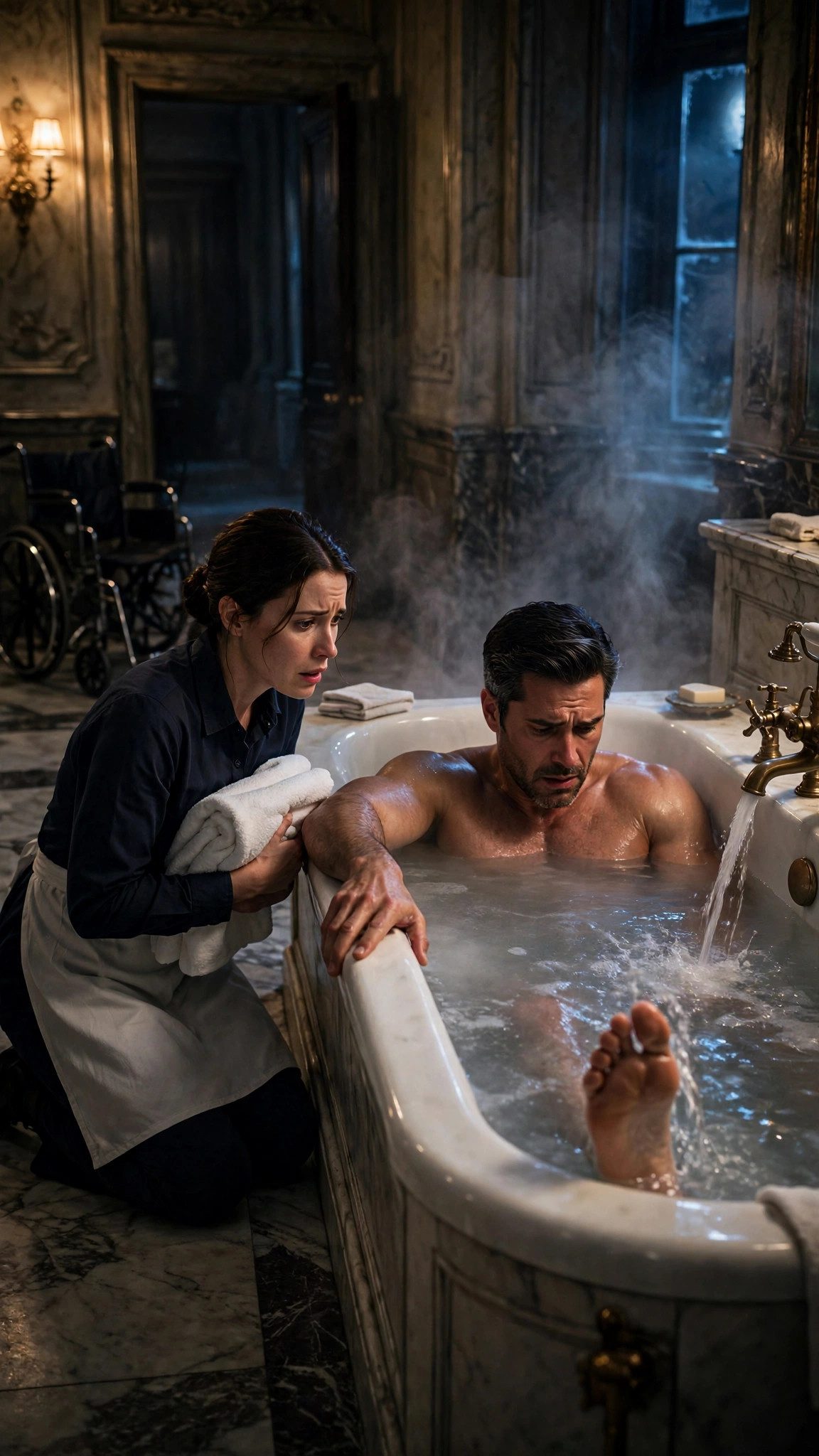
She lay in the narrow bed of her small apartment in Pawtucket and stared at the ceiling, and every time she closed her eyes she saw the same thing: a foot pulling away from cold water, six inches, maybe less, and a man's face changing from stone to fear in the space of a single breath.
She had spent six years in rehabilitation centers. She knew what a spinal cord injury looked like. She knew the difference between a reflex and a response. What she had seen in that bathroom was not a reflex. A reflex is fast and stupid and the same every time. What she had seen was a withdrawal — a deliberate, feeling movement, the kind a body makes when it knows something hurts and wants it to stop.
A man paralyzed from the chest down was not supposed to do that.
By three in the morning she was sitting at her kitchen table with a mug of tea gone cold, writing in a notebook she had bought at a drugstore on her way home. She wrote down everything she remembered, the way she had once written patient notes: time, temperature, observation, no conclusions.
Seven twenty in the evening. Third-floor bathroom. Steam so thick the mirrors were gone. Water tested with the inside of the wrist — heat that bit immediately. Cold tap opened. Right foot pulled back, toes first, then the ankle. Six inches. Patient's face: fear, not surprise.
She underlined the last line twice. Fear, not surprise. That was the part that would not leave her alone. A man who discovers he can feel his foot after fourteen months of nothing should look surprised. He should look amazed. He should weep. Maxwell Rourke had looked afraid, the way a man looks when a secret he has been guarding with his life has just been found out by a stranger.
Which meant he had known. For how long? Weeks? Months? And why would a man hide the fact that he was getting better?
There was only one reason Martha could think of, and she did not like it. A man hides his recovery when he believes the person who hurt him is still close enough to hurt him again.
She went to work the next morning with the notebook in her coat pocket and her face arranged into the expression she had worn for two years: a woman who cleans rooms and asks no questions.
Miss Delaney met her in the kitchen with a list. The library needed dusting. The dining room needed polishing. The front hall needed mopping. Nothing about the third floor. Nothing about the bath. Nothing about the towels. Martha worked through the list in silence, and while she worked, she listened.
Rosa was rolling dough at the kitchen table when Martha came in to empty the dustpan. The cook had been at Rourke House for twenty years, and she talked the way old cooks talk — constantly, and as if every sentence were a recipe.
"Mr. Bennett was late again last night," Rosa said, without looking up. "Forty minutes. He came in smelling like a brewery and went straight up to the third floor. Miss Delaney was furious, but what can she do? He is the only one Mr. Rourke trusts to help him with the bath."
Martha kept her voice even. "Mr. Bennett draws the bath every night?"
"Every night at seven-thirty. Has done since Mr. Rourke came home from the hospital. Hot water, eucalyptus oil, exactly the way the doctors wrote it down. Mr. Rourke likes it hot." Rosa slapped the dough. "Too hot, if you ask me. But he can't feel it, poor man, so what does it matter?"
"It matters," Martha said quietly, "if the water is hot enough to burn."
Rosa looked up at that, flour on her hands and suspicion in her eyes. "What do you know about it?"
"I know burns," Martha said. "I worked in rehabilitation. I have seen what hot water does to skin that cannot feel pain. It does not heal. It blisters, and then it opens, and then it gets infected, and then a man who was shot once dies of something stupid."
Rosa stared at her for a long moment. Then she wiped her hands on her apron and lowered her voice.
"Fourteen months ago," she said, "Mr. Rourke was shot on the docks. One bullet, low in the back. The surgeons said the cord was bruised, not cut. They said there was a chance. A small one. But Mr. Rourke told everyone the chance was nothing. He told the newspapers he would never walk again. He told his own uncle the same thing." She leaned closer. "But Rosa has eyes. Three months ago, I saw his toes move when Tony was lifting him into the chair. Just the big toe on the right foot. A little twitch. I told myself I imagined it."
"You didn't imagine it," Martha said.
Rosa crossed herself. "Then God help him. Because if someone in this house wanted him in that chair, and they find out he is getting out of it—"
She did not finish. She did not need to.
That afternoon, while Miss Delaney was on the telephone in the study and Tony was out with the car, Martha did something she had promised herself she would not do. She went up to the second floor, where the staff rooms were, and she found the small room at the end of the hall where Cole Bennett slept between shifts. The door was unlocked. Inside, the room smelled of whiskey and unwashed clothes. On the nightstand sat a half-empty bottle, a glass, and a small notebook with a cracked leather cover.
Martha opened it. She told herself later that she was looking for the bath schedule, and that was true, but it was not the whole truth. The whole truth was that her hands had always gone looking for answers when a patient was in danger, and her hands did not know how to stop.
The notebook was a log. Dates down the left side, times down the right, in a cramped, hurried hand. Bath 7:30. Meds 8:00. Turn 10:00. Check 2:00. The entries were regular until three weeks ago. Then the handwriting changed. The times started slipping. Bath 7:50. Bath 8:10. One night, no bath at all, with a line drawn through the entry and the word "forgot" written beside it in a different pen.
And then, on the page for last night, a single line that made Martha's blood go cold.
Bath 7:30. Extra hot. V. says it helps the circulation.
V. Victor Rourke. The uncle. The man who visited every Tuesday and closed the study door behind him.
Martha put the notebook back exactly where she had found it. She went downstairs. She finished the library. She polished the dining room table until it shone. And all the while, her mind worked the way it had worked in the rehabilitation center, sorting facts into the shape of a patient chart.
Fact one: Maxwell Rourke was regaining feeling in his right leg, and probably more. Fact two: he was hiding it from everyone, including his own staff. Fact three: his bathwater had been drawn far too hot, on the instruction of his uncle Victor, and the man who drew it had been drinking. Fact four: the shooting fourteen months ago had never been solved. The police had called it a robbery. No one had been arrested.
A robbery, Martha thought, in which the thief shot once, low in the back, and took nothing.
That evening, at seven o'clock, she was in the kitchen helping Rosa put away the dinner dishes when Miss Delaney came in with a familiar instruction.
"Mr. Bennett has called in sick," the housekeeper said. "Take the towels to the third floor. Leave them and come straight back down."
Martha took the towels. She went up the narrow stairs. Her heart beat hard against her ribs, but her hands were steady. Nurses' hands. She knocked on the bathroom door.
"Come in," Maxwell said.
He was already in the tub. The steam was thinner tonight, and she could see him clearly: shoulders above the water, one arm along the edge, his face turned toward the door. He watched her the way a man watches a door he is not sure is locked.
"Put them down," he said.
Martha put the towels on the rack. Then, instead of leaving, she took the digital meat thermometer from her apron pocket — the one she had found in the kitchen drawer on her fourth day — and she held it up so he could see it.
"One hundred and eighteen degrees last night," she said quietly. "I tested it with my wrist. A burn starts at a hundred and twenty. You were two degrees from a second-degree burn on skin you supposedly cannot feel."
His eyes did not leave her face. "You were told to say nothing."
"I am saying nothing to anyone else. I am saying this to you." She lowered her voice. "I worked six years in rehabilitation, Mr. Rourke. I know what a cord bruise looks like when it starts to heal. I know what a withdrawal response looks like. And I know what fear looks like, because I have seen it on the faces of patients who were afraid to tell me they were in pain, because pain meant the treatment was working and the treatment was the only thing keeping them alive."
Silence filled the bathroom. The water moved gently against the sides of the tub.
"Who drew the bath last night?" she asked.
"Cole."
"And who told him to make it extra hot?"
Maxwell's jaw tightened. "My uncle Victor says heat helps the circulation."
"Heat does not help circulation in a man who cannot feel it. Heat burns him. Your uncle knows that. Cole knows that. I know that." She stepped closer to the tub. "Mr. Rourke, I lost my license because a patient died and the chart said my name. I know what it is to be blamed for something you did not do. I also know what it is to watch a man die slowly because no one in the room would say what they saw. I am not going to be that person again."
He studied her for a long time. Then he did something she did not expect. He lifted his right hand from the edge of the tub and held it out toward her, palm down, fingers spread.
"Touch my leg," he said.
Martha stared at him.
"Below the knee. Right leg. Touch it, and watch my face."
She knelt beside the tub. She put her hand into the water, and she pressed her fingertips lightly against his right shin, below the knee.
His eyes closed. His breath caught. Not much. Just enough.
"I feel that," he said, so quietly she almost missed it. "Not well. Not clearly. Like a hand through a thick glove. But I feel it. I have felt it for four months."
"Four months," Martha repeated.
"I feel temperature now. I feel pressure. Two weeks ago, I moved my big toe on purpose for the first time. I have not told a soul. Not Tony. Not Delaney. Not my doctors." He opened his eyes. "Do you know why?"
"Because the man who shot you is still in your life," she said.
"Because the man who shot me eats dinner at my table every Tuesday." His voice was flat and cold. "My uncle Victor runs the illegal side of this family. He has done it for thirty years. Fourteen months ago, I told the council I was going to shut it down. I was going to take the family legitimate — all of it. The docks, the trucking, the warehouses. Clean. Two nights later, someone shot me on the docks and took nothing. The police called it a robbery."
"And you told everyone you would never walk again."
"I told everyone I would never walk again so that the man who shot me would stop watching me." He looked down at the water. "It worked. For fourteen months, it worked. Victor stopped checking. He started planning. He thinks he will inherit everything when I die, and he thinks I am dying slowly in this chair. If he finds out I am healing, he will not wait."
Martha stood up slowly. Her knees ached from the tile. Her heart ached from something else entirely — a feeling she had not felt in two years, since the day they took her license away. The feeling of being useful. The feeling of a patient trusting her with the truth.
"Then we do this properly," she said. "Like a rehabilitation plan. Quietly. Carefully. With records. You need a real assessment, and you need someone in this house who is watching the water."
"Why would you help me?" he asked. "You have been here six days. You owe me nothing."
Martha thought of Walter Abernathy, seventy-one years old, a retired schoolteacher who liked crossword puzzles. She thought of the chart with her name on it, and the night nurse who could not remember who had written what. She thought of two years of cleaning other people's rooms because no one would let her do the work she had trained for.
"Because I know what it is to lose everything to a lie," she said. "And because your foot moved, Mr. Rourke. And a foot that moves is a foot that can walk. And a man who can walk can stand up in a courtroom and point at the man who shot him."
Maxwell Rourke looked at her for a long moment. Then, slowly, the hard line of his mouth softened into something that was almost a smile.
"My name is Maxwell," he said.
"Martha," she said.
"Then we have a plan, Martha."
She picked up the thermometer and slipped it back into her apron pocket. She took the towels from the rack and folded them again, neatly, the way Miss Delaney liked them. And as she turned to leave the bathroom, she heard him say, very quietly, behind her:
"Thank you for checking the water."
Martha walked down the narrow stairs, past the second floor, into the kitchen, where the evening went on as if nothing had happened.
But something had happened. A man who had been hiding his healing for four months had just told a cleaning woman the truth. And Martha Kovak, who had spent two years believing her career was over, had just been handed the most important patient of her life.