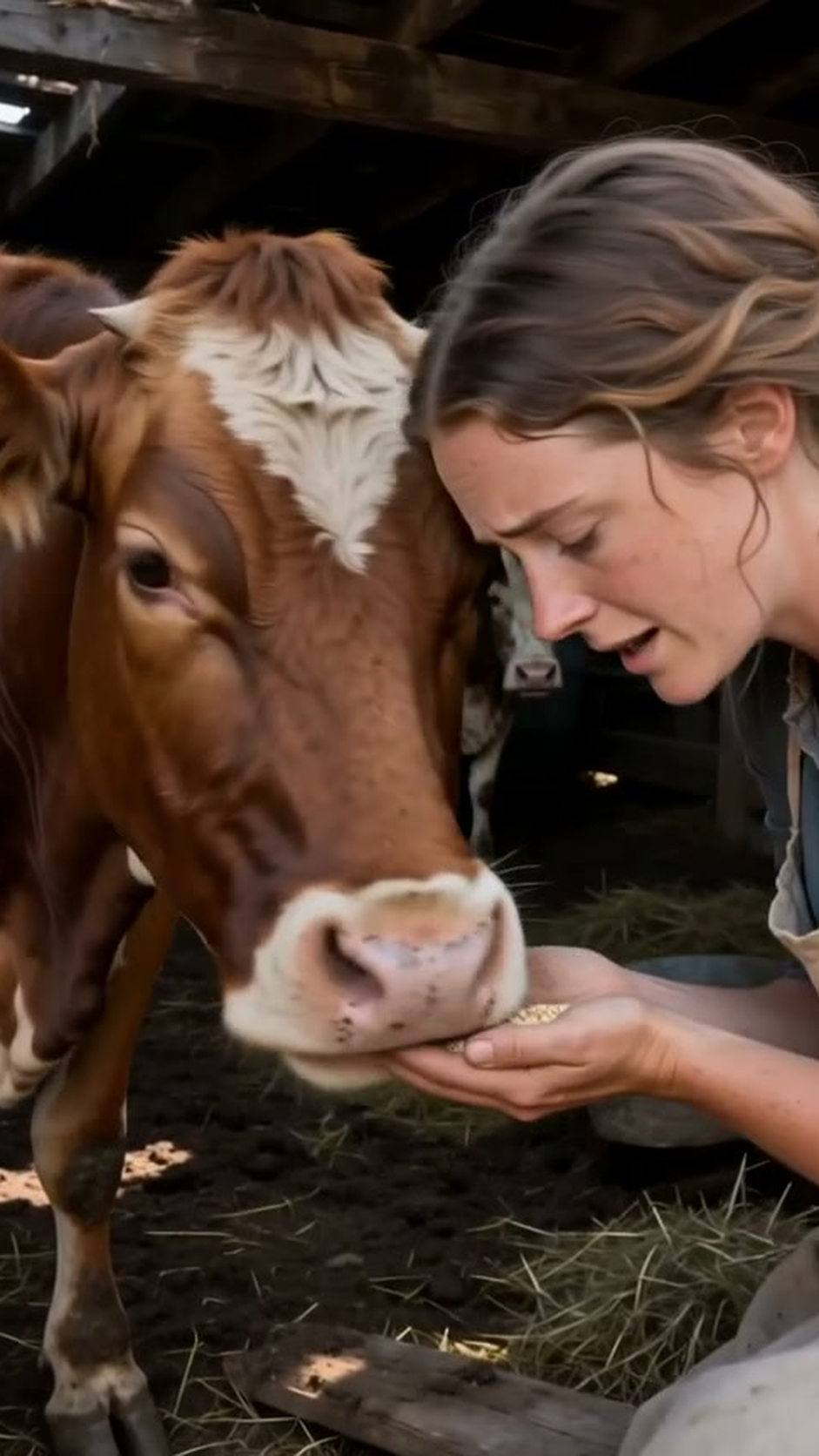
They went and looked.
It took nine days, and it took the whole hollow's worth of paper. There was Tom's grandfather's field book in Ruth's cedar chest, its pages foxed and its handwriting upright as fence posts: the Ellery survey party of 1869, hired by the county to verify the grant lines, had walked Brenner Hollow with chains and a transit and recorded what they found. There was the original 1861 plat in the courthouse vault, drawn in a dead surveyor's beautiful copperplate hand. And there was — Lenora found it on the fourth night, in the back of Amos Hart's ledger, pasted in where a lesser man would have kept recipes — a folded county map from 1874, with Amos's own annotations in pencil along the creek.
And there, on the 1861 plat itself, in the dead surveyor's copperplate, was the thing that made Lenora sit down hard on the courthouse steps with the paper shaking in her hands.
A notation, tiny and precise, at the exact spot behind where the cabin stood: SPR. HS. — and a little drawn square. Spring house. The first surveyor of Brenner Hollow, in 1861, had stood on her green patch in the summer sun and known exactly what was under it, and written it into the permanent record of the county — and the spring house, square and notation and all, sat a full forty feet inside the 1861 line of her parcel. Not on the disputed strip. Not near it. Hers, the way the creek was hers, the way the whole hollow was hers, by the county's own first and best measurement.
The Ellery book confirmed it from the other direction: the 1869 verification party had chained the same corners and found the 1861 line true to the width of a man's hand.
"Why would the Bar-T file a claim they can't win?" Tom asked, riding beside her home in the dark with both books in his saddlebags like twin infants.
"Because winning was never the only way it paid," Lenora said slowly. "If I couldn't have fought it — if I'd taken the forty dollars, or got scared at the first letter, or couldn't read a survey — they'd have had the place by default before a judge ever sat down. How many people do you think Crowe has squeezed off land in ten years with nothing but a letter and a reputation?" She looked out at the dark hollow that was hers, all hers, provable in ink. "He files the claim every time. He just never had anybody go and look before."
But the cows — the living evidence at the center of everything, the six animals whose survival had started the whole story — still had one thread hanging, and it was Ruth, in the end, who pulled it. It was Ruth who remembered that Pete Laramie's sister kept a boarding house in Cedar Flats, and that Pete, when the drink had him, talked.
They found him in the boarding house parlor on a Sunday, six days before the hearing, a ruined man in a clean shirt, and Lenora put a cup of coffee in front of him and sat down across from him and asked him about Amos Hart's cows.
He cried. That was the first thing. A grown man, a drover who had faced stampedes, sat in a boarding house parlor and wept into his hands at the mention of six cows — because he had known, you see. He had known the whole summer. He told it all in pieces, and Ruth wrote down every piece in her schoolteacher's hand, and he signed it at the bottom with a hand that shook.
The nephew had paid him to drive the herd to the railhead. He had taken the money, and the herd money too — and drunk both in Cedar Flats, telling himself he'd gather the cows next week, next week, until the weeks ran into the shameful knowledge that the herd had been left shut in a barn to die, and he could not go back and face it, and could not confess it either. And then — this was the piece that made Lenora's hands go cold around her coffee cup — Silas Crowe had come to him in July. Crowe had found out the truth somehow, the way Crowe found out everything, and Crowe had paid him twenty dollars more to keep telling the county the herd had been driven off and sold.
"Why?" Lenora said softly. "Why did he need the herd to be gone?"
"So the place would look dead, ma'am," Laramie said wretchedly. "So it would go cheap at the tax sale and nobody'd bid against the Bar-T — and so nobody'd ask questions about Amos Hart's butter, I reckon. He said — he said there was something about the Hart place he meant to have, and it wasn't cows." He raised his ruined face. "I've been seeing those cows in my sleep since April, Miss Vale. Standing in the dark. I am sorry — God knows I am sorry — and if there's a way to say it where it counts, I'll say it in front of anybody."
"You'll say it in front of Judge Alcott," Lenora said, "a week from Monday."
The hearing took four hours, and the whole of Cedar Flats seemed to fit itself into the courtroom to watch, because by then the story of the hired girl and the resurrected cows and the Bar-T had become the county's favorite entertainment. Crowe's lawyer was a smooth man from the territorial capital with a printed copy of a claim that fell apart in stages, like a fence in a flood.
The 1861 plat was produced. The SPR. HS. notation was read aloud, and the surveyor the county itself appointed stood up and confirmed the original line to the width of a man's hand, and confirmed the Ellery verification besides. Crowe's lawyer argued error; the county surveyor, with the patience of a man gutting a fish, demonstrated that the only error in the case was the Bar-T's own map, drawn in 1883 by a surveyor in the Bar-T's pay — a map that had quietly moved the creek, the pasture, and the spring forty feet west, onto company land, and had been used in at least two other "settlements" the county might now wish to examine.
Harmon testified, at his own request, with his account books carried into court in a flour sack. Twenty years of Amos Hart's butter, he told the judge, entered into those books in his own hand: pounds and prices, summer by summer, including the August of the great drought, including the July when the railroad ice failed and Cedar Flats had no cold storage at any price — and in twenty years the Hart butter had never once come in sour, short-weighted, or spoiled. "I am not a sentimental man, Your Honor," Harmon said. "I am a grocer. A grocer does not keep a delusion in his ledger for twenty years. That hollow keeps butter. It always has. Miss Vale is not the first person to prove it and I doubt she'll be the last to be fought over it."
And then the court called Peter Laramie.
He came up the aisle like a man walking into deep water, and he told it the way he'd told it in the boarding house parlor, only this time with his hand on a Bible: the nephew's money, the drunk weeks, the cows shut in the dark, the shame that kept him from going back — and Silas Crowe's twenty dollars, paid in July, in the alley behind the saloon, for one service only: to keep saying the herd was gone.
The courtroom made a sound that wasn't quite a word. Crowe's smooth lawyer objected — hearsay, relevance, a drunkard's tale — and Judge Alcott sustained none of it, only leaned forward with his chin in his hand and said, "Mr. Crowe, I find I have an interest in this part. Proceed, Mr. Laramie." And Pete Laramie, who had not slept properly since April, finished his story to the end and then turned in the witness chair and looked straight at Lenora and said, "I left them in the dark, Miss Vale, and you went in and got them out. That's the whole of it and I'm obliged to you for letting me say it where it costs me something."
"It costs you something," the judge observed, "because it is worth something. The court thanks you."
The county attorney, who had come to watch a boundary case the way a man watches weather, was writing in his notebook by then, and writing fast — about an 1883 map used in other settlements, about a brush dam Lenora described on the stand in four flat sentences that did more damage than an hour of shouting, about twenty dollars in an alley. Nobody in that room was looking at the survey anymore. They were looking at Silas Crowe, sitting very still behind his expensive lawyer, discovering what it costs when the quiet way stops working all at once — in public, on the record, with a grocer's ledger and a drover's conscience and a hired girl's ink-kept books arrayed against him like a fence line he couldn't ride around.
Judge Alcott's gavel made a sound like a hoe striking stone.
The boundary stood as surveyed in 1861. The tax sale stood. The land, the creek, the pasture, and "all appurtenances thereof, surface and subsurface" — the judge read that phrase slowly, and looked over his spectacles directly at Silas Crowe while he read it — belonged to Lenora Vale, free and entire. The Bar-T's claim was dismissed with costs, and the court would be referring the matter of the 1883 map to the county attorney, and if Mr. Crowe had anything further to say to Miss Vale about stray cattle, the judge suggested he say it through the sheriff, whose office had lately taken an interest in a sworn statement by one Peter Laramie concerning the Hart herd and twenty dollars.
Crowe stood in the aisle as the room emptied, holding his hat, with his face arranged in an expression Lenora had never seen on it before: the expression of a man whose favorite tool — other people's fear — had just been taken out of his hands in public.
"You went and looked," he said at last, almost to himself.
"Yes, Mr. Crowe," Lenora said. "It's a habit I've formed. It's how I found the cows."
Outside, on the courthouse steps, the clerk himself caught her elbow — the same clerk who had stamped her deed in April to a roomful of laughter — and put a certified copy of the judgment into her hand with something approaching ceremony. "Filed under your name, Miss Vale," he said. "Any man wants to dispute it from here out, he's got to dispute the county of record, and the county of record doesn't care for it." Harmon shook her hand with both of his and said the hotel had already asked whether the fall supply was spoken for. And Pete Laramie stood at the bottom of the steps with his hat in both hands, looking like a man who had set down a stone he'd carried for five months and didn't yet know how to walk without it.
"Come out to the hollow in October, Pete," Lenora told him. "There's hay to get in and a barn to raise, and I pay wages on Saturdays. A man who can stand up in a courtroom and tell the truth about himself can stand up anywhere."
She rode home in the late light with the deed in her apron and Ruth's written statement and the judge's words ringing in her like a bell, and Tom riding beside her not saying anything because there was nothing that needed saying, and the hollow opened below her in the last of the sun — her hollow, her creek, her six fat cows coming up to the gate — and she thought that whatever came next in her life, it would start from ground that no one's signature could move.
She was unhitching the horse in the yard, in the blue dusk, still smiling, when Button lifted her head from the trough and stared at the north ridge.
Lenora turned.
Above the ridge that shouldered her hollow against the north wind, against a sky the color of a coal stove's heart, a thin black line was rising — straight, deliberate, and growing — and the evening wind, which had been still all day, had begun to come down off the heights smelling, unmistakably, of smoke.