Story Genres: Family Drama

  • Chapter 7: The Gift He Finally Wore

    Chapter 7: The Gift He Finally Wore

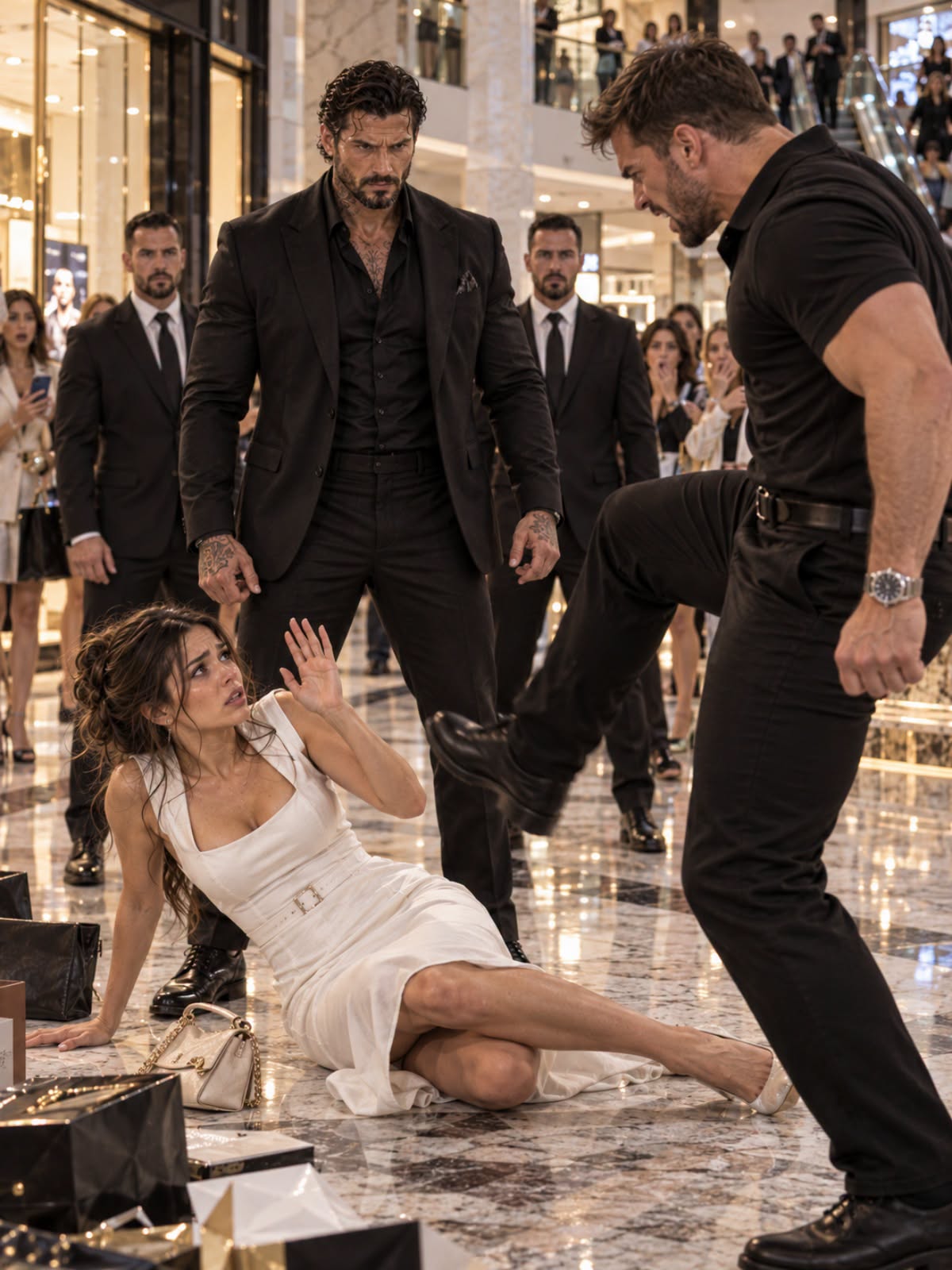
    The morning she went back, Sadi woke before the alarm and lay still in the dark, listening to Roman breathe. Five years. Five years since a man's boot had caught her ribs on the cold marble of the Galleria and the entire city had watched it happen on a phone screen. She could still feel it sometimes — not the pain, which had faded into a ghost she only noticed on rainy days, but the floor. The specific, humiliating cold of the floor against her cheek.
    She didn't wake Roman. He had a board call at seven and she had no intention of telling him where she was going until it was too late for him to stop her — exactly the kind of reasoning that had kept them married for five years.
    Twenty feet behind her, the entire way across the parking garage and through the Galleria's side entrance, walked Arthur.
    This, too, was part of the marriage.

    They'd had the fight — the real one, not a spat — about three years ago, when she went to the farmers' market alone and he found out via a security camera instead of from her.
    "I was buying tomatoes," she'd said. "Not smuggling diamonds."
    "You are worth more than my buildings," he'd said, terrifyingly calm, the way he was about everything that actually frightened him. "You don't get to be casual about it."
    "And you don't get to assign me a bodyguard like I'm luggage."
    "I'm not transformed into an optimist, Sadi. I compromised."
    The compromise, after two days of cold war that had genuinely alarmed the housekeeper, was this: Arthur would follow her at a distance of twenty feet. No closer, no conversation unless she initiated, and he was to be — Sadi's exact word — "invisible." Arthur, a former special forces man the size of a door, being invisible was the funniest thing Sadi had ever heard, and she told him so weekly.
    "Marriage means tolerating each other's irrational habits," Roman had declared, as if reciting a law.
    "You invented that rule," she'd accused.
    "Yes," he'd admitted, without shame. "I admit it."
    "That's not how rules work."
    "It is now."
    She'd allowed Arthur. Roman had allowed her to stop texting him her location every hour. Everyone was furious and nobody was dead, which by their standards was peace.

    The boutique was almost unchanged. Glass displays, low warm light, the same cedarwood scent that had once made her feel like an intruder in a temple. Different staff — the girl from that day was long gone, probably fired or promoted, Sadi never asked. She stepped inside and stood on the exact square of tile where she'd fallen.
    And it hit her — a full-body physical memory, faster than thought: cold seeping through her blouse, Trevor's voice rising sharp in the chandeliered quiet, her knee striking tile, dropped phones ringing on marble, strangers' hands doing nothing — and then Roman's hand, appearing at the edge of her vision like it had been there all along.
    She braced for sadness. It didn't come.
    She smiled. Genuinely, involuntarily, the way you smile at a scar you forgot to hate.
    "Can I help you?" asked the saleswoman.
    Sadi turned. "Yes." She pointed at the cufflink case. "Those."
    The woman opened the glass. "A gift?"
    "My husband keeps pretending he dislikes them."
    The saleswoman's eyebrows rose a fraction. "Then why buy more?"
    "Marriage is complicated."
    She chose a different pair from the rhodium ones he'd worn all these years — black onyx, square-cut, still understated, still exactly the kind of thing a man like Roman would pretend not to want. She paid without trying them on herself, which was the entire point, and slid the small box into her bag.

    Near the entrance, a young woman was standing in front of the handbag display. Mid-twenties. Cheap coat, worn shoes, the particular posture of someone trying to take up less space than physics requires. Sadi knew that posture the way you know a language you grew up speaking.
    A sales associate drifted toward the girl — smiling, but with the kind of smile that had a camera behind it. "Can I help you?"
    "I'm just looking."
    The girl lingered. Her shoulders pulled inward, old instincts, old shame, the whole private arithmetic of a woman who has already decided she doesn't belong here and is waiting for the room to confirm it. Sadi recognized it so completely it felt like being looked at in a mirror from ten years ago.
    Sadi walked over. "That bag is beautiful."
    The girl startled. "Sorry?"
    "The brown one." Sadi nodded at the display. "I've been staring at it too."
    The associate's expression shifted — suspicion dissolving into professional warmth now that a paying customer was part of the tableau. Sadi hated that. She hated that she'd ever been the girl on the wrong side of that arithmetic, and she hated that the girl knew it.
    "I'm waiting for a job interview upstairs," the girl said, a little defensively, a little proud. "I came early because I didn't want to be late."
    "Smart," Sadi said.
    "Do you work around here?"
    "Not exactly." Sadi reached into her bag. "I run a nonprofit."
    "What kind?"
    "Legal advocacy." A nervous laugh escaped the girl. "I might need that if this interview goes badly."
    "Hopefully not." Sadi handed her a card. "Keep it anyway."
    The girl read it. Her eyes widened. "Sadi Vale?"
    "Unfortunately."
    "You're the woman from that video."
    "Long time ago."
    "My mom showed me."
    "Why?"
    "She was leaving my stepdad." The girl's voice softened at the edges. "She said watching you stand up after that guy kicked you made her realize she could leave."
    Sadi's mouth opened. Nothing came out. Five years of conferences and galas had taught her to absorb applause like weather. This was different. This was a stranger in a cheap coat in a boutique Sadi had once bled in, telling her that getting up off a cold floor had been enough.
    "Is she okay?" Sadi managed.
    "Yeah." The girl smiled — a real one, the first of the conversation. "She's really okay."
    Something lodged in Sadi's throat. She swallowed it. "Tell her I said hi."
    "I will."
    The girl left for her interview, shoulders a fraction straighter than before. Sadi stood motionless among the handbags for a full minute.
    "You okay?" Arthur said from twenty feet away, closer than twenty feet, because of course he was.
    "Yes."
    "Need Roman?"
    "Always," Sadi said, and meant it in a way she didn't bother explaining.

    She was home before sunset. The house — their house, though she'd never once called it a mansion to his face — sat quiet in the late light. She found Roman in his study, the one room she'd been forbidden to redecorate, which still smelled of leather and his particular arrogance.
    He looked up over reading glasses he would deny needing until the day he died.
    "You're wearing the old cufflinks," she said.
    "They happened to be available."
    "You've worn them twelve times this year."
    "You count?"
    "Yes."
    "Disturbing."
    "Close your eyes."
    "No."
    "Roman."
    "I know you."
    "Close them."
    He obeyed — reluctantly, dramatically, like a man disarming a bomb — and she placed the new box in his palm.
    "What is this?"
    "Anniversary gift."
    "Our anniversary isn't today."
    "Mall anniversary."
    "You commemorate being assaulted?"
    "I commemorate meeting the version of you who learned not to commit felonies for me."
    "I was already learning."
    "Slowly."
    He opened the box. The onyx cufflinks caught the lamplight, dark and gleaming.
    "I like the other pair," he said.
    Sadi gasped, theatrically. "You admitted it."
    "I said no such thing."
    "You absolutely did."
    "Unrecorded conversation."
    "I have witnesses." She raised her voice. "Arthur!"
    From the hallway, without missing a beat: "I heard nothing."
    Roman looked smug. Sadi stared at the hallway.
    "Cowards," she declared. "Both of you. Cowards."

    Dinner was on the terrace. Roman had cooked — successfully, mostly: the salmon was edible and nothing had caught fire. Five years of marriage had not made him a chef. It had made him a man willing to stand in a kitchen in an apron, because even aprons, he'd decided, were beneath comment.
    Second Chance was in four cities now. Maria Velasquez directed the victim advocacy arm with a competence that had made Sadi cry exactly once, at the ribbon cutting, in front of forty people, which Roman still brought up whenever she called him the emotional one.
    Chloe Mercer had remarried — a gentle schoolteacher named Daniel who was visibly terrified of Roman and visibly devoted to Chloe, and Roman had shaken his hand at the wedding and said, very quietly, "She deserves gentleness. So does she know you'll give it," which Daniel had repeated to Sadi later with the air of a man quoting scripture.
    Trevor had never returned to law. He worked at a nonprofit — housing advocacy, unglamorous, real. He sent one letter a year to Second Chance, addressed to the organization, never to Sadi. He was sober. He was employed. He was, by all accounts, a different man than the one who'd raised a boot in a jewelry boutique. Sadi wished him well from a distance, the way you wish good weather on a country you never plan to visit again.
    Victor Marchetti was serving a long federal sentence. The details didn't matter. What mattered was the silence where his name used to be.
    Roman's old criminal partners were gone — not literally, Sadi always clarified, because Roman's face did a specific thing when people assumed literally. They were gone through sales and prosecutions and retirements and the slow, unglamorous distance that legitimate money buys. Vale International was, by every measure Sadi cared about, boring. Magazines praised his transformation. He pretended to hate the word transformation. Sadi told him regularly that boring was his greatest victory, and watched him try not to look pleased.

    After dinner, Roman stood with his hand in his pocket in a way she recognized.
    "What did you buy?" she asked.
    "Nothing."
    "That means something expensive."
    He pulled out a folded paper, soft with age, and set it on the table between them. She unfolded it.
    It was a photocopy of the diner receipt. Table twelve. Black coffee, eggs, toast. A twenty percent tip — the first tip she'd ever accepted from him, back when she'd been a waitress and he'd been a man she was determined not to need.
    "You kept this?" she said.
    "Yes."
    "Why?"
    He looked, for the first time all evening, genuinely embarrassed. "I don't know."
    "Liar."
    He sighed. "You returned the hundred dollars."
    "So?"
    "Nobody returned money to me." She laughed — a short, surprised sound. "That's depressing."
    "It fascinated me."
    She leaned forward. "You fell in love because I rejected your tip?"
    "No."
    "When, then?"
    He considered, turning his wine glass slowly. "Gradually."
    "That is not romantic."
    "I've never pretended otherwise."
    "Try."
    He looked at the city lights, then at her — and the terrifying calm gave way to something rawer. "I loved you before I understood what the feeling required," he said quietly. "I thought protecting you meant removing every danger."
    Her throat tightened. "And now?"
    "You taught me it meant standing near enough to help and far enough to let you choose." Her eyes filled. She didn't hide it. "That was better."
    "I practiced," she said, and reached her hand across the table, and he took it.

    Later, alone for a moment while he took a call he couldn't refuse, Sadi stood in the living room and looked at the shelves.
    Five years ago, the shelves in Roman's penthouse had been empty — curated, dead. Now they held photographs. Her mother, young and laughing, in a frame Sadi had carried through three apartments. Roman's old friends, the ones who'd survived the transition, grinning around a fishing boat. Maria at the first Second Chance opening, scissors in hand, mid-laugh. Chloe at a picnic, head thrown back. Their city hall wedding day — small, private, perfect. Sadi at a conference podium last spring, Roman in the front row — not center stage, not controlling anything, just watching, the way he'd learned to do.
    And beside the photographs, in a small open box: the rhodium cufflinks. The original pair. She'd bought them as a joke, half-expecting them to vanish into his dresser. Instead he wore them at every important speech and claimed it was coincidence — and she let him lie, because some lies are love letters in disguise.

    "Do you know what that woman at the mall told me today?" she said when he came back out.
    "What woman?"
    She told him. About the girl, the cheap coat, the handbag display. About the mother leaving the stepfather. About getting up off a floor and it being, impossibly, enough.
    He listened the way he listened to everything that mattered — completely still, eyes on her face.
    When she finished, he looked away.
    "What?"
    "Nothing."
    "You're doing the emotional thing."
    "I don't do emotional things."
    "You're literally tearing up."
    "Wind."
    "We're indoors."
    "Air conditioning."
    She laughed — and then, because the night was honest and the wine was good and they'd earned the question, she asked it.
    "Worth it?" she said.
    "What?"
    "The video." She held his gaze. "All of it."
    He considered — the humiliation, the pain, the headlines, the investigation, the years of being that woman to strangers. "No," he said, and she felt a jolt of surprise. "I wouldn't tell someone they need to suffer because something good might come afterward."
    She nodded slowly.
    "But since it happened—" She squeezed his hand. "I chose what to do with it."
    "That sounds like you."
    They stayed on the terrace until the city lights outshone the sky. Finally he stood.
    "Ready?"
    "For what?"
    "Bed."
    "It's nine-thirty."
    "I have a meeting at six."
    "You're becoming old."
    "So are you."
    She gasped, scandalized, and stood so fast her chair scraped. "Terrible strategic decision."
    He chased her inside, and she was laughing — actually laughing, the deep unguarded kind — as they left the terrace lights burning behind them.

    Trevor, five years earlier, had believed the worst thing that could happen to her was being left poor and alone. He had misunderstood everything.
    Poverty had never been her shame. Surviving it had built muscles that money couldn't buy — the muscle that had gotten her off a cold marble floor, the muscle that had built a legal project in four cities, the muscle that had looked at the most feared man in the city and refused, on day one, to be impressed by his money.
    Trevor hadn't ruined her. He had hurt her. There was a difference, and the difference was everything.
    And Roman hadn't saved her. He had loved her. There was a difference there too, and it was the whole story.

    Her happiest moment wasn't Roman stepping in front of her. It wasn't Trevor facing consequences. It wasn't the house, or the name on a building, or the applause at conferences.
    It was years later, on an ordinary night like this one, when Roman walked into their bedroom wearing the ridiculous new onyx cufflinks — with pajama pants.
    "What are you doing?" she demanded.
    "You said you wanted me to wear them."
    "With a suit."
    "You failed to specify."
    She burst out laughing. There were no bodyguards in the room, no enemies, no cameras, no crowd — just a husband making himself ridiculous because he knew she'd laugh.
    "Perfect," she said.
    "I look absurd."
    "Completely."
    He put his arms around her, and the city continued without them, and she rested her head against his chest, listening to his heart.
    She had once believed a happy ending meant being untouchable. She knew better now. Nobody is untouchable. People disappoint you. They leave. They lie, they betray, they threaten, they knock you down.
    A happy ending is not never falling. It's knowing who you are when you stand back up.
    Five years earlier, she had risen from cold marble. Trevor had seen the poor woman he'd abandoned. Roman had known better — he'd seen the woman who had survived him before anyone powerful arrived. And eventually, standing in boutiques and boardrooms and kitchens and bedrooms, choosing and choosing and choosing — Sadi had known it too.
    The ending that mattered was never marrying the most feared man in the city.
    It was the woman everyone underestimated finally stopping underestimating herself.
    The End

  • Chapter 6: When Roman Had to Choose His Future

    Chapter 6: When Roman Had to Choose His Future

    A year after the Galleria, Roman learned the thing his father had never taught him: the past doesn't disappear just because you want a different future. It doesn't fade politely. It waits — patiently, quietly — in paperwork, across a conference table, in the mouths of men who smile like they already know your answer.
    The three men arrived on a Tuesday afternoon. They had names, but Sadi would never bother remembering them, because men like these were never really themselves — they were the weather of his old life blowing in through a door he thought he'd sealed. They had worked with his father. They had known Roman when he was something else. They made an offer the way men like them always make offers: as if it were already decided, as if they were merely informing him of his own future.
    Access to the eastern warehouses. Just access. Just a signature, a nod, a door left conveniently unlocked.
    Roman came home late. He took off his jacket and hung it with the particular care of a man trying to make one thing in his evening feel normal. He poured whiskey. He didn't drink it.
    Sadi watched all of this from the doorway of the kitchen, her arms folded, her heart doing the slow, cold thing it did when it recognized danger before her eyes had caught up.
    "Who?" she said.
    "Who what?" Roman didn't turn around.
    "You only pour whiskey you don't drink when somebody from your old world visits."
    "That's annoyingly specific."
    "Marriage."
    Finally he looked at her. In the low light of the kitchen, the amber of the untouched whiskey caught something in his face that had nothing to do with light at all.
    "They want access to the eastern warehouses."
    "No."
    "I haven't answered."
    "You don't need to."
    "It's complicated."
    "How complicated?" She walked to the table and sat down. "Money complicated?"
    "Enough to stabilize two construction projects."
    "How much?"
    He told her the number. She nearly whistled.
    "That much?"
    "And what's moving through the warehouses?"
    "They didn't specify."
    "Which means?"
    "Nothing legal enough to specify."
    "Then no."
    "You make morality sound financially inconvenient."
    "It usually is."
    But then the part she hated — the part that lived in the air between them like smoke — surfaced. Refusing men like these was never just a no. It was a decision with a price tag that no accountant could itemize. Retaliation. Financially? Possibly. Physically? He didn't answer, and the absence of an answer was an answer, and she hated it with a clean, bright hatred.
    "What do you want?" she asked.
    "To refuse."
    "Then refuse."
    "You say that like consequence doesn't matter."
    "It matters." She put her hand across the table, palm up. An offering, not a command. "But you're asking the wrong question."
    "What question should I ask?"
    "Who do you want to be if refusing costs you something?"
    He stared at her hand like it was a foreign object he couldn't quite identify. Then he took it.
    His father had built an empire asking one question, over and over, until it became the architecture of everything: what can I take? Sadi had rebuilt herself asking a different one: what can I live with? Those two questions had shaped two people who should never have found each other — and now they sat in a kitchen at midnight, and Roman Vale, son of the man who took everything, had to choose which question was going to be his.
    He refused the offer the next morning. The men didn't argue. They just left, with the calm of people who know that a refusal is merely the opening move of a longer game.

    The consequences arrived on schedule, like guests who'd been invited but never named.
    Within weeks, two lenders withdrew. Not dramatically — no press releases, no accusations, just the sudden, surgical withdrawal of credit lines that had taken years to build, accompanied by language so polite it was almost an insult. A union contractor canceled, citing "scheduling conflicts" that nobody believed, least of all the man who'd shaken Roman's hand three days earlier with tears in his eyes about how the project would feed four hundred families.
    Then came the warehouse on Harbor Street — the suspicious electrical fire at two in the morning. Nobody was injured. Nobody was even there. The message was clear enough that it didn't need a signature: we can reach what you own.
    The board panicked. Panic, in a room full of wealthy men in tailored suits, looks remarkably like philosophy. Words like "temporary cooperation" were floated — said delicately, as if they were suggesting a new kind of organic tea rather than a return to the empire's original sin.
    One meeting, at Roman's request, Sadi attended. She sat at the far end of the long conference table in a room with floor-to-ceiling windows overlooking the harbor, and she listened as six wealthy men explained, with enormous patience, why questionable partnerships were a necessary part of doing business at their level. They used the word "practical" eleven times. She counted. It helped keep her hands still.
    One of the directors — silver-haired, with a smile he clearly believed was charming — leaned toward her and said, "Mrs. Vale, perhaps you could help Roman understand the practical reality."
    Roman's face darkened in the particular way it did when violence was being considered and discarded. His hand found hers under the table, squeezed once — not a warning, an anchor.
    "What reality?" Sadi asked.
    "That ideals are expensive."
    "They are," she agreed pleasantly. The director looked pleased with himself, the way a man does when he believes a woman has just surrendered to his logic. "So is prison."
    Silence. Roman hid a smile so successfully that only Sadi — who knew the exact corner of his mouth where his restraint lived — saw it.
    "And funerals," she added.
    Nobody smiled after that.
    The board approved selling the vulnerable assets instead. It cost hundreds of millions — a number so large it made the financial press lose its composure. The coverage called the move "baffling." Competitors called him weak, said it behind their hands at dinners, then louder, in print. His old associates — the ones who'd been waiting — called him finished.
    Six months later, Vale International was smaller, cleaner, and more profitable than anyone had predicted. The numbers came in quietly, without fanfare, the way truth usually arrives: unglamorous and undeniable. Roman stared at the quarterly report for a long time in his office, late at night, and Sadi — who had come to take him home — watched him from the doorway and thought about how happiness, for a man like him, would never arrive as celebration. It would arrive as proof, and he still wouldn't quite trust it.

    It was a Friday evening in early autumn when Roman came home carrying two grocery bags.
    "What happened?" Sadi said.
    "Nothing."
    "You bought groceries."
    "Yes."
    "You don't buy groceries."
    "I am capable of buying groceries."
    She looked in the bags. Three bottles of wine. Pasta. Tomatoes. Bread. Six lemons, for no apparent reason whatsoever.
    "What is this?"
    "Dinner."
    "Are we dying?"
    "I thought we could cook."
    "You threatened an international smuggling network more convincingly than you just said that."
    Roman Vale, a man who could silence a boardroom with a single look, stood in his own kitchen holding a lemon like it might detonate, and Sadi laughed — she laughed so hard she had to lean against the counter — and something in his face did the thing it did now, the thing she'd spent three years earning: it softened without permission.
    Two hours followed that neither of them would ever describe accurately to anyone else. The sauce burned — genuinely burned, black at the bottom of the pan, setting off the smoke detector twice. The pasta was dropped on the floor and salvaged with the kind of moral flexibility only private kitchens allow. He opened the wrong wine. She ate some of the burned sauce to spare his feelings and made a face that betrayed her immediately, and he looked so crestfallen that she laughed until her ribs hurt.
    Midway through the disaster, his phone rang.
    The old reflex arrived in both of them at once — the tightening in the chest, the shared understanding that a ringing phone at this hour meant emergency, meant power, meant responsibility, meant the world reaching in to take him back. She watched it happen: his hand started toward the phone on pure instinct, the body remembering a life the mind had left.
    Then he silenced it.
    She stared at him. "What?"
    "You didn't answer."
    "Arthur can handle it."
    "Who are you?"
    He smiled — a real one, small and unguarded — and went back to destroying the pasta.
    The dinner was terrible. Sadi ate every bite. They took what remained of the wine to the balcony, where the city spread out below them in its autumn glitter, and she leaned against the railing and watched the man beside her — this man who had chosen quiet over empire — and asked, "Happy?"
    "I don't know."
    "Useful answer."
    "I spent my entire life expecting happiness to feel like victory." He looked out at the city, and for a moment she saw the boy he'd been, raised in a house where love was a transaction and joy was weakness. "And?"
    "This doesn't."
    "What does it feel like?"
    He looked back through the glass at their disastrous kitchen — the burned pan still smoking faintly in the sink, the lemon rolling lonely on the counter.
    "Quiet."
    "Maybe that's happiness," she said, and he put his arm around her, and they stood there in the cool air, and the city roared beneath them, and it was quiet.

    A week later, the news came through Chloe, because news like this always comes through a friend first, softened, before it arrives as paperwork.
    Trevor was eligible for early release. Extensive cooperation with authorities. Restitution paid. Evidence provided against what remained of Victor's network. The system, in its slow and bureaucratic mercy, had decided he had served enough of who he'd been to be allowed to try being someone else.
    Roman's response, delivered without heat, without drama, was: "He should finish the sentence."
    "Probably," Sadi said.
    "He hurt you."
    "Yes."
    "He stole from people."
    "Yes."
    "He nearly got you killed indirectly."
    "Also yes."
    "Why aren't you angry?"
    "I was."
    "Past tense?"
    "Mostly."
    He studied her face the way he studied contracts — looking for the clause that changed everything. "You know what happens if Trevor leaves prison?"
    "What?"
    "My life continues." She said it simply, the way you'd state the weather. "I don't need his punishment to organize my future."
    He was quiet for a long time. Then he nodded — not agreement, exactly, but recognition. He had, after all, spent a year learning that the past doesn't disappear because you want it to. It had to be outlasted, outgrown, outlived. And nobody understood that better than the woman in front of him.
    Trevor was released four months later. He didn't call — which was, Sadi thought, the first wise decision he'd made in years.
    One letter arrived. It was short. There was no request in it, no manipulation, no performance of remorse designed to open a door. Just facts, stated plainly: he was working at a nonprofit, helping former inmates understand financial paperwork — budgets, debt, the small print of starting over. The irony was enormous. Roman called it suspicious. Sadi called it appropriate.
    The last lines were the ones she read three times:
    You were right. Forgiveness isn't another chance. Thank you for giving me neither hatred nor access. Both helped.
    She put the letter in a drawer. Not framed — he didn't get to be a monument. Not burned — she didn't need the ceremony. Just placed in a drawer, among ordinary things, where finished things go.
    Finished.

    Their third wedding anniversary arrived on a night that smelled of rain and expensive perfume.
    Roman wore the cufflinks. He complained about fastening them — muttered darkly at the tiny mechanisms as if they were a board of directors being deliberately difficult — and Sadi pretended not to hear him, because some things between them had become rituals, and rituals don't need acknowledgment.
    The fundraiser for the Second Chance Legal Project filled the ballroom of the Grand Meridian. Twelve hundred people had been helped now — twelve hundred lives rerouted, twelve hundred futures rewritten. Maria Velasquez gave the keynote, and her voice shook only once, at the end, when she talked about the first client who'd ever trusted her. Chloe announced a new housing program, and the applause went on so long that the event coordinator started checking her watch.
    Backstage, before Sadi's speech, Roman handed her an envelope.
    "Open it later."
    "Why?"
    "Because if you open it now, you'll cry before your speech."
    "I don't cry."
    He raised one eyebrow.
    She gave the speech she'd been writing in her head for a year. Eight minutes. She talked about poverty as context, not tragedy — the thing that had shaped her without defining her. She talked about abuse as survivable, not as identity — the thing that had happened to her without becoming her. And she closed with the lesson she'd learned on the floor of the Galleria, with glass under her feet and a choice in her hands:
    "Power isn't valuable because it can punish the person who hurt you. Punishment is the smallest thing power can do. Power matters when it gives someone the freedom to choose what happens next."
    The room stood. The ovation rolled through the ballroom like weather. And Roman Vale — feared, formidable, terrifyingly calm Roman Vale — stayed seated.
    Not from indifference. From pride so large it had nowhere to go. From fear, still, that happiness this complete was something the world might notice and take. From love — the kind that had learned to sit still and let the woman it adored have the whole room.
    Back in the car, she opened the envelope.
    It was a deed. The deed to the community building the Second Chance Legal Project had been renting for two years — the brick building on Carpenter Street with the good light and the reception desk where Maria kept the good pens.
    "You bought the building." Her voice did something she didn't authorize.
    He looked nervous, which was possibly the rarest thing she'd ever seen. "You said donations were acceptable."
    "This is not a donation."
    "It is legally."
    "Roman."
    "You needed permanent space."
    The tears came anyway, exactly as predicted. "I predicted this."
    "I hate you."
    "No, you don't."
    "Why put it in the organization's name?" She was crying harder now, laughing through it, furious at both. "Why not — "
    "Whose name should it be in?"
    She looked at him. Really looked. Not his. Not hers. The organization's.
    The man who had been raised to own everything — every room he entered, every person who owed him, every piece of ground he stood on — had learned to give without possessing. Had learned that some things are more yours when you refuse to put your name on them.
    She cried until she laughed, and then she laughed until she cried, and he held her in the back of the car on their third anniversary, and outside the window the city kept turning, indifferent and beautiful.

    His past had tried, one more time, to make him choose between who he'd been and who he wanted to be. It had offered him money. It had threatened him with fire. It had sent its lawyers and its lenders and its quiet men with quiet warnings.
    And Roman Vale had chosen — not once, in a dramatic moment, but every day since: in the refusal, in the burned sauce, in the silenced phone, in the deed with someone else's name on it.
    Whatever his past had made him no longer controlled his future. It couldn't. Because he wasn't building that future alone anymore — and the woman beside him had never once asked him to be anything but the man he was choosing to become.
    Tomorrow, there would be new paperwork. New threats, maybe. New choices. That was the nature of the world they'd survived.
    But tonight, there was this: a building that belonged to everyone, a letter in a drawer that belonged to no one, and a marriage that belonged — finally, entirely — to the two people inside it.
    The future was theirs to build. Together.

  • Chapter 5: The Woman Who Refused to Be His Excuse

    Chapter 5: The Woman Who Refused to Be His Excuse

    Trevor survived.
    That was the strange part. After the kick, after the camera, after the whole ugly scene in the boutique — Trevor walked away breathing. Sadi hadn't touched him. Roman hadn't either, though God knew he'd wanted to. Trevor's body was fine.
    His reputation did not survive. Nothing else did, either.
    Within two months, the indictment landed like a second kick — this one aimed at everything he'd built and it hit. Misappropriation of client funds. Fraud. Obstruction. Financial misconduct, stacked like charges of a grenade. The assault case — the one with her name on it — was comparatively small. Almost absurdly small, the kind of misdemeanor footnote that sat at the bottom of a document full of felonies. One kick had opened up years of secrets, and the secrets were doing the real damage.
    Sadi read the news the way you read about a storm in another country. Attentive, distant, a little guilty for being distant. Then she set the phone down and went back to her life, and the strangest thing was how easy that was becoming. The not-thinking-about-him. The days where his name didn't cross her mind once, not even as a reflex. She'd spent years where Trevor was the weather — every morning started with checking which direction he was blowing. Now he was just a headline she didn't click.
    Roman noticed. Of course he noticed. Roman noticed the way she stopped flinching at restaurant menus and the way her shoulders had unknotted themselves sometime around spring, and he catalogued it the way he catalogued everything: quietly, completely, with the calm of a man who had once made a profession of reading rooms and now only ever read one.
    "You don't hate him anymore," Roman said one evening. They were in the kitchen of the townhouse, and he was attempting to chop an onion, which he did with the precision of a man disarming something and roughly the same success rate.
    Sadi watched him from the doorway, amused. "I never hated him, exactly. Hate takes energy. I'm tired, Roman. That's different."
    "Exhaustion is underrated." He squinted at the onion. "It's the only honest state."
    "Are you crying?"
    "No."
    "Your eyes are watering."
    "The onion is wrong."
    She laughed — really laughed, the kind that came from somewhere low and easy — and crossed the kitchen to take the knife from him. "Sit down, terrifying husband. I'll finish."
    He sat. He watched her hands, the efficient practiced way they moved, and something in his face went soft in a way it only ever did when he thought she wasn't looking. She was always looking. She just let him think otherwise, because some things were better kept unexamined, like the exact number of times he'd checked the locks that night or the way he always positioned himself between her and the door of any restaurant.
    That was the evening the letter arrived. Roman got to it first — the mail, the screening, all of it still ran through him like a security protocol he'd never quite retired — and Sadi watched his expression change the moment he recognized the name on the return address. He didn't open it. He just stood there in the hallway holding it, very still, like it might detonate.
    "No," he said.
    "You didn't even read it."
    "I recognized his name." He set the envelope on the console table like it was contaminated. "No."
    Sadi picked it up. The envelope was plain, prison-system plain, the kind of paper that had never been expensive and never would be. Her name was written in handwriting she hadn't seen in years and recognized instantly, the way you recognize a smell from childhood. It opened something cold in her stomach. Not fear. Something older. Something she thought she'd buried under two years of good lighting and a husband who made her tea exactly the way she liked it.
    "He wants to apologize."
    "No."
    "Roman."
    "No."
    "Third time."
    "Would you like to meet with him?" Roman asked. His voice had gone very level, the way it did when he was working hard not to feel something. "Think before you answer. He gets one answer and then I never discuss it again."
    "Maybe," Sadi said.
    "I think it's a bad idea."
    "Better."
    "I also reserve the right to complain continuously."
    "Expected."
    He looked at her for a long moment, and she saw the whole argument happening behind his eyes — the protective instinct, the memory of her on that boutique floor, the iron discipline it had taken him not to put Trevor through the wall — and then he did the thing he always did. He chose her. Over his instinct, over his anger, over the entire architecture of who he used to be. He chose her, and he made it look easy, and she knew exactly how hard it was, and she loved him for the cost of it.
    "Your attorney goes with you," he said finally. "And I wait outside."
    "Deal."
    He exhaled through his nose. "I want it noted that I said no three times."
    "Noted. Overruled."
    "Democracy is a failed experiment."
    She kissed his cheek on her way past, and he caught her wrist — gently, always gently, his thumb finding the inside of it the way it always did — and held her there for one second too long. "Sadi."
    "I know."
    "You don't know what I was going to say."
    "You were going to say be careful, and then you were going to say you love me, and then you were going to pretend you didn't almost say the first one."
    A pause. "Accurate."
    "I'm always careful. It's my defining trait, right after excellent taste in husbands."
    "Debatable." But he let her go, and his fingers lingered half a second on her sleeve, and that was the whole conversation.

    The meeting wasn't in a prison. That was the first surprise — some procedural mercy, or some calculation by Trevor's lawyers. A courthouse conference room on the fourth floor, beige walls, a table scarred with other people's negotiations, a window that looked out over a parking lot and offered nothing. Fluorescent light that made everyone look slightly unwell.
    Trevor was already there when she came in. County-issued clothing under a jacket that didn't fit him — the shoulders wrong, the sleeves too long, like he'd borrowed someone else's life and it hung off him. He'd lost weight. His hair was longer than she remembered, grayer. The confidence was gone, and without it, his face was just a face — ordinary, tired, a little puffy. It was startling, how unremarkable he looked. She'd spent years bracing against a man who turned out, in the end, to be entirely braceable.
    "Sadi," he said, and stood up too fast, then sat back down, then stood again. "Sorry. Sit. Please."
    She sat. Her attorney — a woman named Priya with the bearing of a chess grandmaster — took the chair beside her and opened a folder she had no intention of reading, just to establish that this was a proceeding and not a reunion.
    Trevor folded his hands on the table. Unfolded them. "I rehearsed this," he said.
    "That sounds like you."
    A ghost of something crossed his face. Almost a smile. "I was awful to you."
    Silence. The fluorescent light hummed. Somewhere down the hall, a door closed.
    "I keep trying to explain why," Trevor said.
    "You don't need to."
    "I do."
    "For yourself."
    Silence again, longer this time. He looked at his hands — the nails bitten down, she noticed, a habit he'd supposedly broken a decade ago — and when he spoke again his voice had dropped.
    "You always saw through me," he said.
    "No." Sadi leaned back in her chair. She felt strangely calm, like she was watching this from the far end of a long hallway. "I spent years believing your explanations, Trevor. That's not seeing through someone. That's standing in front of them with your eyes closed, hoping."
    "I hated being poor."
    "So did I."
    "But you could survive it." He said it like an accusation and a confession at once.
    "What choice did I have?"
    "You never acted ashamed."
    "I was ashamed constantly." She watched it land. The shock on his face — genuine, unperformed — was almost satisfying, and then it wasn't, because satisfaction would have meant she still needed something from him. "You didn't show it," he said.
    "You weren't paying attention."
    He absorbed that the way you absorb a blow you've been expecting for years. Nodded slowly. "I thought if I became successful, everything would stop hurting."
    "And?"
    "It didn't." His voice cracked on the two syllables, and he cleared his throat hard. "So I started needing everyone around me to look less successful."
    There it was. Not an excuse — the truth, finally, stripped of the varnish he'd spent a decade applying. He'd needed her smaller. Not because she was small, but because she made his bigness feel borrowed, and he couldn't stand the interest payments.
    "You worked harder than me," he said quietly.
    The diner came back to her uninvited — the smell of coffee grounds and industrial cleaner, the 2 a.m. regulars, Maria laughing behind the counter with flour on her sleeve, Sadi on her feet for nine hours with her tips counted twice and her dignity counted once. Trevor had come in sometimes, back then, in his new suits, and sat in her section like a tourist visiting a country he'd emigrated from.
    "And I hated you for making me know it." His voice broke properly this time. He pressed the heel of his hand against his eye, hard, like he could push the feeling back in. "God. I hated you for making me know it."
    "You didn't have to become cruel," Sadi said.
    "I know."
    "You didn't have to take the rent money."
    "I know." Barely audible.
    "You didn't have to convince me I was the reason you were unhappy."
    "I know." A whisper now.
    She let the silence sit. Let him sit in it. This was the part no one had ever made him do — not his lawyers, not his partners, not Chloe, not the mirror. Just sit inside the shape of what he'd done, without a story to climb out on.
    "When I saw you," he said finally, "in the boutique — I thought you were still where I left you."
    "And that made me feel powerful." He said it flat, like reading his own autopsy. "That's the ugly part. That's the useful part, my lawyer says. The part where I stop lying. I kicked you because I thought I could."
    "Yes."
    "I didn't know Roman was your husband."
    "I know."
    "That's the worst part." He looked up, and his eyes were wet, and for the first time in the entire conversation he looked like the boy she'd met at nineteen, before the suits, before the hunger curdled. "I cared because I found out who you married. I should've cared because you were you."
    The fluorescent light hummed. Priya turned a page she wasn't reading.
    "I'm sorry," Trevor said.
    Sadi looked at him for a long time. She thought about the girl she'd been — the one who'd believed his explanations, who'd counted tips twice and apologies never, who'd flinched at raised voices in grocery stores for a year after leaving him. She thought about that girl the way you think about a house you used to live in: with recognition, without residence.
    "I forgive you," she said.
    "Really?"
    "Yes." She held up a hand before he could do anything with it — before he could turn it into absolution, into a door, into a story where they were fine now. "But I need you to hear what that means, because I think you've misunderstood forgiveness your whole life. It doesn't mean you're in my life. The charges don't disappear. I don't trust you, and I'm not going to. Forgiveness isn't another chance, Trevor."
    He nodded, tears moving freely now, making no move to wipe them.
    "Sometimes forgiveness," Sadi said, "is just deciding I don't want to carry you anymore."
    She stood. Priya closed her folder with the crisp finality of a judge's gavel. At the door, Sadi stopped — not because she had more to say, but because he spoke, and his voice had gone very quiet, the way people's do when they're saying the one true thing.
    "Roman loves you."
    She turned. He was looking at the table, not at her, and he was smiling — a sad, wrecked, honest smile, the most honest expression she'd ever seen on his face.
    "I saw his face when he entered the boutique," Trevor said.
    "So?"
    "I spent years pretending loving someone meant they owed me." He finally looked up. "That man looked like loving you terrified him."
    Sadi held his gaze. Thought of Roman in the kitchen with the onion. Roman checking the locks. Roman choosing her, over and over, at cost, every single day, like it was a discipline and a devotion at once.
    "It does," she said.
    And she walked out.

    Roman was in the corridor, in a black suit, arms folded, leaning against the wall like he'd been carved there. He straightened the moment he saw her — one step forward, eyes doing the full inventory: her face, her hands, her breathing. Whatever he found there seemed to release something in his shoulders.
    "What did he say?" he asked.
    "That you're terrifying."
    "Accurate." His mouth almost smiled. Then: "Did he—"
    "He apologized." Sadi took his hand — his fingers, tattooed, the platinum band cool against her palm — and started walking toward the elevators, pulling him with her. "Properly. No performance."
    Roman's jaw tightened as they walked. "I don't like him."
    "You don't have to."
    "I never will."
    "Also acceptable."
    At the elevator, she stopped and turned to face him, and he went still in that way he had — full attention, the rest of the world demoted to background noise. She loved that about him and was, on occasion, slightly unnerved by it. Mostly she loved it.
    "I want to do something," she said.
    He eyed her with immediate suspicion. "That sentence has cost me money before."
    "I want to open a legal advocacy fund."
    "A fund." The elevator arrived with a soft chime. Neither of them moved. "For abuse survivors?"
    "And low-income clients cheated by professionals. People who get hurt by the people they're supposed to trust — partners, lawyers, accountants, landlords." She thought of Maria, working double shifts with a sick kid and a landlord who'd once "lost" her deposit. Thought of the girl she'd been, who wouldn't have known where to go. "People like Maria shouldn't need viral videos to make somebody listen."
    Roman was quiet for a moment. Then: "I'll fund it."
    "No."
    "Why not?"
    "Because it's mine." She stepped into the elevator and he followed, because of course he did. "You can donate."
    "How much?"
    "I haven't created a budget."
    "I'll double it."
    "Roman."
    "Fine." A beat. "What do you need?"
    "That."
    "What?"
    "For you to ask." She looked at him — really looked, at the man who had once tried to solve every problem she had by absorbing it into himself, who was learning, slowly and at great personal cost, to stand beside her instead of in front of her. "I want something I build."
    "You already have things you've built."
    "No." The elevator doors closed, and it was just the two of them in the small mirrored space, and her reflection looked back at her — steady-eyed, unflinching, a woman she was still getting used to being. "I want something with my name on it because of what I did. Not because I'm Mrs. Roman Vale."
    He was silent for a long moment. The elevator descended. Somewhere above them, the courthouse went on with its beige, humming business.
    "Okay," Roman said quietly.
    "Okay?"
    "Okay." He took her hand again, laced their fingers, and she felt the platinum band press against her knuckle — not a claim, she'd finally understood. An anchor. Something to hold onto in rough water, not something to tie you to the dock. "Tell me what you need, and I'll ask how to help, and then I'll do exactly what you tell me, and complain continuously."
    "That's all I want."
    "Liar. You also want me to double the budget."
    "That too."
    The elevator opened onto the lobby, and they walked out into the late-afternoon light together, and Sadi felt something settle in her chest — not triumph, not closure, nothing as tidy as that. Just the quiet, unglamorous feeling of a door closing because she'd chosen to close it, not because someone had locked her out.
    Choice. Her word. Her anchor. Hers.

    Six months later, the Second Chance Legal Project opened its doors in a renovated storefront on Halsted — legal assistance, emergency housing referrals, financial counseling, all of it free, all of it for abuse survivors and exploited clients who'd been failed by the systems that were supposed to protect them. The waiting room had real chairs and a coffee machine that worked and a children's corner with picture books, because Sadi had insisted that dignity started with the furniture.
    Maria was on the advisory board. She'd cried when Sadi asked her — standing right there in the diner, apron on, flour on her sleeve, the 2 a.m. regulars pretending not to watch — and then she'd said yes before Sadi finished the sentence, and then she'd made everyone pie.
    Chloe volunteered. That surprised everyone, including Chloe, who showed up to the first planning meeting in a blazer that cost more than the coffee machine and sat very straight and said, "I've spent years designing my life around appearances, and I'd like to do something real for once," and then proceeded to organize the intake system with terrifying efficiency. Sadi watched her across the conference table and thought about how many ways there were to survive a man like Trevor, and how Chloe's way — the performance, the polish, the perfect life as armor — had been just as costly as her own. They never talked about him. They didn't need to. Some sisterhoods are built on the thing you don't say.
    Even Trevor joined restitution programs from prison after his conviction — financial literacy workshops for other inmates, victim-impact panels, the slow unglamorous work of paying back in installments what he'd stolen in lump sums. Sadi heard about it through Priya and felt nothing in particular, which felt like its own kind of mercy.
    "People don't change that easily," Roman said one night, reading the program report over her shoulder.
    "You did," Sadi said.
    "I was always charming."
    "You once threatened a florist."
    "The flowers were wrong."
    "Exactly."
    He set the report down and looked at her — at his wife, who was busier than she'd ever been, who traveled for the Project without him sometimes, who'd built a thing with her name on it and let him donate to it and only it — and he hated the traveling, and he was learning to tolerate it, and the learning was the love. That was the part Trevor had never understood and never would: love wasn't the feeling. It was the practice. It was choosing, daily, at cost.
    The marriage had shifted, the way living things shift. Sadi was independent now in a way that had nothing to do with money and everything to do with authorship — she was writing her own days. Roman had restructured Vale International in parallel, selling off the questionable businesses one by one, expanding the legitimate ones, taking the losses on the chin. He'd lost money. He'd lost enemies, which turned out to be a kind of loss too — influence, leverage, the old currencies. He'd gained sleep. He slept now, deeply, with one arm thrown over her waist like a seatbelt, and she lay awake sometimes just listening to him breathe, amazed at the ordinariness of it. This terrifying man. This calm, ridiculous, onion-murdering man, breathing evenly beside her like the world wasn't burning anywhere.

    It was a Thursday evening in October, rain needling the windows of the townhouse, when Roman came home with a small velvet box.
    Sadi looked at it, then at him. "If that's jewelry, I don't want it."
    "It's not."
    She opened it. Inside, on the dark velvet, sat a pair of cufflinks — rhodium, understated, the ones from the Galleria. The ones she'd picked out for him months ago, on the day that had started with promise and ended with Trevor's kick and a viral video and everything changing. She'd never gotten to give them to him. The day had swallowed the gesture whole.
    "You bought them?" Her voice came out smaller than she intended.
    "You never got to." He was watching her face with that total, unnerving attention. "I thought perhaps we could finish the day properly."
    Her eyes filled. She didn't fight it — she'd stopped fighting tears somewhere along the way, stopped treating them as surrender. "I thought you hated accessories."
    "I do."
    "Then why?" She looked up at him.
    He extended his wrist toward her, the white cuff crisp against his black sleeve. "Because you chose them."
    She fastened the first one, her fingers a little unsteady, the small mechanism fiddly and precise. Then the second. They caught the lamplight — quiet, elegant, completely impractical.
    "They're impractical," she said.
    "Completely."
    "Overpriced."
    "Definitely."
    "I like them."
    "I know."
    He kissed her then — slow, unhurried, the kiss of a man with nowhere else to be and nothing left to prove. The rain kept needling the windows. The cufflinks glinted at his wrists. And Sadi stood in the circle of her husband's arms and thought about the girl who'd once believed love was something you earned by being smaller, quieter, easier — and how far that girl had traveled to arrive here, in this room, fastening cufflinks onto the wrist of a man who had learned the one thing Trevor never had.
    Not how to win her. Not how to protect her. Not how to buy her anything, though God knew he could.
    He had learned to pay attention. To ask what she needed instead of deciding for her. To stand beside her — terrifying, calm, patient — while she built a life where being seen did not mean being controlled, and being loved did not mean being owned.
    Love is not possession. It is attention.
    And Sadi Vale — who had chosen, and chosen, and chosen again — was finally, completely, her own.

  • Chapter 4: The Man Roman Thought Was Dead

    Chapter 4: The Man Roman Thought Was Dead

    The photograph arrived inside a plain envelope with no stamp, no return address, and her name written in a hand she didn't know — and Sadi Vale knew, the way a woman who grew up poor in a city of wolves knew, that the people who send you pictures of your own husband in an unmarked envelope never do it to wish you well.
    It had been slipped under the front door of the penthouse sometime before six in the morning. Arthur found it on his first sweep. He'd brought it to Roman without a word, his face the particular shade of gray that Arthur's face only turned when something had gone wrong beyond his ability to fix it with more men or more steel, and Sadi had watched from the kitchen doorway as her husband turned the envelope over once in his long fingers, slid out the single glossy print, and went utterly, completely still.
    Not angry. Not calm. Still. Like a held breath.
    "Don't," Roman said quietly, and Sadi was already crossing the room because there were some verbs Roman Vale could not use on his wife, and she took the photograph out of his hand with the same easy authority with which she'd once taken a lighter away from him at a dinner party — you'll set the linen on fire — and looked down.
    A man, caught mid-stride on a street she didn't recognize. Forty-ish. Scar bisecting his left eyebrow. Smiling at the camera like he knew he was being watched and found the whole idea of it amusing.
    "Who is he?" she asked.
    Roman didn't answer for a long time. Long enough that Arthur quietly left the room and closed the door, which told Sadi everything she needed to know about how bad this was going to be. Then Roman said, in a voice so low she had to lean in to hear it: "Study. Now."

    The curtains were closed. That was the first wrong thing. Roman's study faced the river, and he kept the blinds open on principle — a man who had spent his whole life being watched by enemies had decided long ago that he would do his watching back. But today the curtains were drawn, the air thick with the ghost of his coffee and the heavier ghost of something else, something metallic that Sadi had smelled before in this room and had chosen, every time, not to name.
    Four security officers stood outside the door. Not two. Four.
    And Roman was pacing.
    Sadi stopped just inside the doorway, one hand on the frame, and felt something cold walk slowly up her spine. In four years of marriage — four years of boardroom wars and hostile takeovers and men in expensive suits saying expensive lies across expensive tables — she had never once seen Roman Vale pace. He was the stillest man she had ever known. He could sit through a three-hour deposition without shifting his weight. He could read a threat letter without changing his breathing. Pacing was for people who couldn't contain what they felt, and Roman Vale always contained everything.
    So when he paced, Sadi understood that she was not looking at the terrifyingly calm businessman who ran a legitimate empire. She was looking at the man underneath, the one who had grown up in a house where violence was furniture, and the sight frightened her more than shouting ever could.
    "You know him," she said. It wasn't a question.
    The photo lay on the desk between them like a land mine.
    "Victor Marchetti," Roman said. "Victor worked for my father."
    Sadi picked up the photograph. The paper was warm from his hand. "What kind of work?"
    "The kind nobody put on payroll."
    A beat. The radiator ticked. Somewhere far below, a car horn bleated twice.
    "Violence?" she said.
    "Yes."
    She turned the photo over. Nothing written on the back. She looked at the man's face again — the scar, the smile — and tried to find something in it she recognized. She had spent two years of her life, before Roman, being photographed by a man who had wanted proof of ownership, and she knew the way cameras lied. The smile here wasn't warm. It was a man posing next to a cage he intended to open.
    "How old is this?" she asked.
    "Five years. Maybe six."
    Before the marriage, then. Before Trevor had left her standing in that airport with a dead phone and a suitcase full of clothes that weren't good enough. Before Roman had walked into her life in a tailored coat and an unreadable expression and asked her — not told her, asked her — if she wanted dinner. All of it compressed into a handful of years that now felt, looking at this stranger's face, like a different lifetime.
    "He vanished," Roman said, still pacing, still not looking at her. "After my father died. Four years ago. Victor belonged to one of my father's crews, and I—" He stopped. Forced his feet to stop. "My father kept multiple crews. Victor belonged to one I deliberately dismantled."
    "Why?"
    "They were involved in trafficking."
    The word sat in the room like a second presence. Sadi set the photograph down very carefully, the way she might set down something that could cut her.
    "People?" she said.
    A nod. Once.
    "I shut it down," Roman said. "All of it. The routes, the accounts, the front companies. Whatever my father had built, I burned it out of the organization within eighteen months of his death. I did it because—" He stopped again. His jaw worked. "I did it because I was trying to be a different man than he was. Victor ran before the dismantling reached him. He went dark. We believed—" A breath. "I believed he was dead. A man I trusted found his car burned out on a coastal road two years ago. No body. We assumed."
    "And now he's sending you photographs of himself."
    "He's sending us photographs," Roman said, and his eyes came to hers at last, and in them Sadi saw something she had seen only once before — on the night he'd told her his mother died when he was twelve — a raw, unguarded terror that he would have rather died than let anyone see, and that he let her see anyway. "This isn't a hello, Sadi. It's a warning."
    Roman explained it the way he explained everything dangerous — flat, precise, as if the facts were a handrail he could hold onto while the ground moved underneath him. Northstar Consulting, the firm Trevor had looted so thoroughly and so stupidly, had once been linked to a shipping company. A shipping company Victor Marchetti had controlled. Trevor, hiding stolen client money in shell accounts and desperate offshore wires, had stumbled — blind, greedy, ignorant — into the plumbing of a network far larger and far darker than his own small, squalid fraud.
    "So when law enforcement started following Trevor's transactions—" Sadi said.
    "They started following Victor's transactions too," Roman finished. "Or close enough that Victor noticed. The money my investigators are digging up, the accounts the federal agents are tracing — all of it runs near operations Victor spent five years rebuilding in the dark. Every step closer to Trevor is a step closer to him."
    Sadi picked up the photograph again. The scar. The smile. "And this is him telling us to back off."
    "It's him telling you," Roman said, "that if I don't back off, you'll be the price."
    The air left the room. Sadi had been threatened before — by Trevor, mostly, with smaller and pettier things, the kind of threats a man makes when he needs you afraid to keep you obedient — but this was different. This wasn't a man who wanted her scared. This was a man who wanted her useful. A piece on a board. Leverage.
    "Victor ran a trafficking crew," Roman said quietly. "He doesn't send warnings twice."

    The security escalation took exactly fourteen minutes. Sadi knew, because she'd watched the clock on the study wall with the grim satisfaction of a woman setting a timer on her own surrender.
    It went like this: Roman said twenty-four-hour detail, and Sadi said absolutely not; Roman said no public outings without clearance, and Sadi said I have a community center schedule; Roman said armored vehicle, and Sadi said do I look like a head of state; Roman said then don't act surprised when I treat you like the thing I can't afford to lose, and Sadi felt her throat close up treacherously and said that isn't fair and Roman said it was never going to be fair, Sadi, that's the entire point of this.
    Fourteen minutes. They'd both been counting, she was certain.
    "Two bodyguards," she said finally. "One vehicle. And it has to be one I can actually drive out of a parking garage without demolishing the ceiling."
    "The car is armored. It will be heavy."
    "I'll adapt."
    "And I want Arthur briefed daily—"
    "Reasonable," she cut in. "The word we agreed on was reasonable, Roman."
    He looked at her for a long moment, and something in his face softened by exactly one degree — the most affection he would allow himself to show in front of an enemy he couldn't see.
    "You once owned a helicopter," she said, "because traffic irritated you."
    "I sold it."
    "After it caught fire."
    "Technicality."
    "You called the fire department from the helipad, Roman. You were the emergency."
    "I was decisive under pressure."
    She laughed despite herself — a short, startled sound — and the laugh did what four years of marriage had taught it to do: it found the seam in his armor and slipped through, and for one second he was just her husband, ridiculous and beloved, and the photograph on the desk was just paper.
    Then Arthur knocked, and it was paper again. Paper with a man's face on it. A man who had come back from the dead to look at her.

    That afternoon, in the bright clean kitchen with the river light slanting across the countertops, Sadi laid it out for Roman the way she laid out everything that mattered — plainly, with no space left for him to negotiate her out of it.
    "I'm not disappearing," she said.
    "You could—"
    "No. Listen to me." She set her coffee down so she wouldn't throw it. "I keep my shifts at the community center. I keep meeting Maria for our Tuesday lunches. I keep taking the clients who actually need the help — the women who come in because they heard I listen and don't pity them. I am not going to let some man I've never met turn me into a rumor. A ghost in my own life."
    Roman's jaw did the thing it did when he was losing. "Sadi—"
    "And another thing." She held up a finger. "You don't get to retaliate privately. I know what you're thinking when you get that look. I know where your men go when you stop saying call the police and start saying handle it. I'm not asking you to be helpless. I'm asking you to be the man you promised you'd try to be."
    He watched her for a long time. The platinum band on his finger caught the light as he turned it once — an old habit, the only fidget he allowed himself, the one Sadi had learned to read like weather.
    "One condition," he said.
    "Name it."
    "You tell me everything. Every call, every message, every wrong-number hang-up. No protecting me from the bad news, Sadi. That's my job."
    She crossed the kitchen and stood in front of him, close enough to smell the bergamot in his soap, close enough to see the exhaustion in the lines around his eyes that he never let anyone else see. "Deal," she said. "I won't protect you from the bad news."
    "Liar," he murmured, and pulled her in, and for a moment — one held-breath moment — the world was only this: his arms, her kitchen, the impossible ordinary miracle of a Tuesday.
    Evening fell like a held breath finally let go. The penthouse went quiet — the kind of quiet that comes with four men in the hallway and one woman in the kitchen who is pretending she isn't listening for footsteps that don't belong. Sadi sat at the island with her laptop and a community-center roster she couldn't focus on, watching the light die over the river, when Roman came out of the study with a manila folder in his hand.
    The study was dark behind him. He'd been in there for hours.
    "Sit down," he said.
    She sat. He set the folder on the marble between them and slid it toward her, and Sadi opened it with fingers that had gone cold without her noticing.
    Photographs. A warehouse, squat and gray, surrounded by fencing, somewhere outside the city — a grainy aerial shot, a license plate, a man at a loading dock who might have been anyone but who Sadi knew, with a sinking certainty, was not anyone. A surveillance log in terse handwriting. An address.
    "Victor," she said. "Located."
    "Located," Roman said. "Not arrested. Located."
    "How?"
    "My men." He said it the way other men said my team or my department. My men. The ones who didn't show up on payroll. The ones her husband had inherited along with a name he'd spent four years trying to scrub clean. "He's been operating out of that warehouse for months. Rebuilding. Quietly, this time. No more coastal roads and burned cars."
    Sadi closed the folder. Her hands were shaking; she folded them in her lap so he wouldn't see. "What are you planning?"
    "Nothing."
    "Roman."
    Silence. He stood by the island, perfectly still, his face in the half-dark, and Sadi realized that the terror she'd seen in his eyes that morning had calcified into something harder. Something with edges.
    "I could end this tonight," he said.
    "How?"
    "You know how."
    The words landed between them like a third person in the room. Sadi felt something in her chest crack — not break, crack, a hairline fracture she could hear in the quiet. Because here was the line. The one she had always known existed. The one she'd traced with her finger in the dark during the worst nights of their marriage, the nights when Roman woke sweating and wouldn't say from what, the line she'd drawn around them both and told herself was a boundary and not a cage.
    Years of moving away from violence, she understood in that moment with terrible clarity, was not the same thing as being incapable of it. Her husband had not become a gentle man. He had become a restrained man. And restraint, she was learning, was a thing that could snap.
    "You promised me," she said.
    "I promised I would try."
    "You promised I would never have to wonder," she said, and her voice was shaking now, and she didn't care, "whether somebody disappeared because they threatened me."
    He was quiet for a long time. The city hummed below them, twenty stories down, indifferent.
    "He threatened you," Roman said.
    "So call the police."
    "They might lose him."
    "Then let them."
    "I can't."
    "Why?"
    And then — the one time. The single time in all their years together that Roman Vale raised his voice, and it was so sudden, so foreign, so utterly wrong in his mouth that Sadi physically flinched:
    "Because I spent my whole life losing people!"
    Silence. It shocked them both. Sadi stood frozen by the island, her heart hammering against her ribs, and Roman stood across from her breathing like a man who'd been hit, staring at his own hands as if they belonged to someone else.
    "My mother died when I was twelve," he said, very quietly now, into the ringing aftermath of his own voice. "And my father turned his grief into cruelty. Everything I cared about became a handle he could use to move me. A friend. A tutor. Once, a dog." His laugh was a terrible, broken thing. "Everyone became leverage. I learned to care about nothing, Sadi. I learned it the way you learn to hold your breath. And then—" He looked up at her, and his eyes were wet, and Roman Vale never cried, not ever, and the sight of it undid her more than the shouting had. "Then you happened."
    Sadi came around the island. He didn't move. She took his face in her hands — the tattooed fingers, the platinum band cold against her cheek — and held him there, eye to eye, the way she held him when the nightmares came.
    "They don't stop because lawyers send letters," he whispered.
    "He'll try again," she whispered back.
    "Maybe."
    "I can't live with maybe."
    "And you think killing him would make you safe?" She felt his jaw tighten under her palms. "It would make you safe."
    "No." Her voice was fierce, sudden, certain. "It would make me afraid of what protecting me turns you into." She held his gaze and didn't look away, because this was the whole of it, the whole of them, the thing she had married and the thing she refused to let die. "I married the man trying to become better than his father. Not the man pretending his father never existed."
    He closed his eyes. When he opened them, the hardness had gone out of them — not the resolve, the hardness — and what was left was grief, and love, and a kind of exhausted surrender.
    "Give this to the police," she said, and tapped the folder.
    "What if they fail?"
    "Then we deal with what happens."
    "I hate that answer."
    "I know."
    He called his attorney from the study at 9:14 p.m. Sadi heard him through the closed door — flat, precise, giving the folder's contents to people with badges and warrants — and she stood in the kitchen with her hands wrapped around a cold mug and listened to her husband do the hardest thing he'd ever done: ask for help, and trust the system he didn't believe in, because she had asked him to.
    The feds raided the warehouse at dawn.
    Victor was gone.
    Three quiet days followed. They were the worst kind of quiet — the held-breath kind, the quiet of a house with four men in the hallway and a woman who checked the locks twice and told herself she was being sensible. Sadi kept her shifts at the community center. She met Maria for lunch on Tuesday and let her old friend talk about her son's college applications and the diner's new fryer, and she laughed in all the right places, and she did not mention the photograph, or the warehouse, or the way Roman had started standing between her and every window without seeming to realize he was doing it.
    On the fourth morning, her phone rang at 7:40 a.m., and it was Chloe Mercer, and Chloe was crying.
    Chloe had been Trevor's ex-fiancée — the woman he'd left Sadi-adjacent wreckage for, the woman who'd called Sadi once, months ago, in a voice full of static and shame, to say I'm sorry, I didn't know he was like that when I said yes — and Sadi had forgiven her before she'd finished the sentence, because there were some debts that could only be paid in understanding. Now Chloe was sobbing so hard Sadi could barely make out the words.
    "He's gone. Sadi, he's gone. The monitor— the police called me, they said the ankle monitor went dead at 2 a.m. near a parking garage downtown, and they found his car, Sadi, they found his car with the door open and there's blood—"
    "Slow down." Sadi was already moving, coat over her pajamas, bare feet on the cold floor. "Chloe. Breathe. What did the police say?"
    "They found the car in a structure off Ninth. Door open. Blood on the steering wheel. No body. No — no Trevor. Sadi—" A ragged inhale. "Do you think Roman—"
    "No."
    It came out immediate. Automatic. Certain. Sadi heard her own voice say it before she'd even thought it through, and she realized with a shock that ran all the way to her bones that she believed it — not as a hope, not as a wife's blind loyalty, but as a fact, as solid as the floor under her feet. Roman had stayed in the study and made a phone call at 9:14 p.m. because she had asked him to. He had chosen the folder over the gun. He had chosen her version of him.
    "No," she said again, and Chloe believed her. Sadi could hear it in the way Chloe's breathing steadied, the way the sobbing thinned into shaky silence. "Roman didn't do this, Chloe. I promise you."
    The study door opened. Roman stood there in a shirt with the sleeves rolled up, his phone in his hand, his face unreadable — and then he saw her face, and it rearranged itself into something alert and dark.
    "What happened?" he said.
    "Trevor's missing."
    A stillness came over him. Not calm — stillness, the predatory, total attention of a man who had just heard the shape of the thing he'd been waiting for.
    "When?"
    "Last night. Ankle monitor died at two. They found his car on Ninth. Blood on the wheel, no body."
    Roman was already dialing. Arthur picked up on the first ring — Arthur always picked up on the first ring — and Roman spoke in a low, clipped voice Sadi couldn't quite hear, and within minutes the house went operational. That was the word Arthur used, later, apologetically, as if it explained anything: operational. Men in the hallway. Calls made. A map Sadi wasn't shown.
    When Roman came back to her, she was standing by the window — the window he'd been standing between her and for three days — and she said, without turning around: "Victor."
    A nod, though she couldn't see it. She heard it in his silence.
    "Likely," he said.
    "Why take Trevor?"
    "Cleanup." The word was flat and ugly. "Trevor's cooperating. The shell companies, the payments, the cooperation agreement — every deposition makes Victor's network more visible. Victor needs him silent. Or useful. Or gone."
    The police searched the places police search. Roman's people searched the places police don't know exist. Sadi sat in the kitchen and watched her husband coordinate a shadow operation from his phone with the same terrible efficiency he'd once used to run a legitimate company, and she hated — hated — the hot, guilty wave of gratitude that rose in her chest every time Arthur reported back, because this was the other side of the line she'd drawn. This was the husband she'd married. The one who could find a missing man in a city of eight million before the police finished their coffee.
    She hated being grateful for it. She was grateful anyway.
    Forty-eight hours later, at 11:07 p.m., Sadi's phone rang with a number she didn't know, and a voice she knew better than her own said: "Sadi."
    She froze. Roman looked up from his laptop across the living room, and something in her face made him set it down very slowly.
    "Where are you?" she said.
    "I don't know." Trevor's voice was wrecked — hoarse, thin, breathing wrong, like every inhale cost him. "Sadi. They're going to kill me."
    Roman was already moving. He crossed the room in three strides, mouthed speaker, and Sadi thumbed it on with a hand that had gone numb.
    "Trevor," Roman said, his voice low and steady, a lifeline thrown across whatever dark Trevor was drowning in. "Listen to me. Keep him talking. What can you see?"
    "I didn't know who they were," Trevor gasped. "Sadi, I swear to God, I didn't know. The money — I just needed somewhere to put it, and this man, this accountant, he said the shipping company was clean—"
    "What can you see?" Roman repeated, relentless and calm. "Trevor. Focus. What do you hear?"
    "Concrete. It's— it's a big room. Concrete floor. There's machinery, something humming. One window, high up. There's water somewhere, I can smell it. And—" A pause. In the background, faint and mournful, a ship's horn sounded twice. "A ship. I heard a ship."
    "Waterfront," Roman said quietly, already texting Arthur with his free hand. "The horn — which direction? Trevor, which side is the sound coming from?"
    "I don't— east? I think east—"
    "Stay with us. Stay alive, Trevor."
    A sound on the line — not quite a sob, something rawer. "Sadi?"
    "I'm here."
    "I'm sorry." A whisper now, threadbare. "For what?"
    "Everything." The breathing hitched. "I thought— God, Sadi, I thought if I made you small, I'd feel bigger."
    And there it was. Finally. Not an insult, not a manipulation, not one of the thousand small cruelties he'd dealt her across the years like cards from a stacked deck. The truth. The ugly, simple, finally true thing — and it hurt worse than every insult he'd ever thrown at her, because insults she could armor against, but this, this was a dying man handing her the key to every room he'd ever locked her out of, and she didn't want it, she had never wanted it, she wanted—
    "Stay alive," she said fiercely, her voice cracking. "Trevor. Stay—"
    "They're coming."
    The call ended.
    Silence. Then Sadi was on her feet, her coat in her hands — when had she grabbed it? — and the words were out of her mouth before she could stop them: "Pier seventeen. The horn, the water, the warehouses — the old freight piers past the container terminal, pier seventeen's been half-abandoned for years, Roman, I know where he is—"
    "No."
    Roman was in front of the door. She hadn't seen him move. He stood there with his arms at his sides, perfectly still, and his face was the face she'd seen in the dark study four nights ago — the man underneath, the one who did not pace and did not shout and did not move when it mattered most.
    "I know where—"
    "No."
    "Roman." She was shaking. The coat slipped from her fingers. "Roman, he's going to die—"
    "This isn't choice." His voice was quiet. Devastatingly quiet. Then he corrected himself, because words mattered to him, because her word mattered to him — Choice, the anchor she'd given him on their wedding day, the word engraved inside his platinum band: "This is an active hostage situation."
    "Fine." She stepped forward and he didn't move, and she put her hands flat against his chest and felt his heart hammering under her palms — fast, too fast, the stillest man she knew with his heart running like a frightened animal. "Fine," she said again, softer. "Go."
    He kissed her forehead. His lips were warm. His hands, when they cupped her face for one brief second, were shaking.
    "I'll call," he said.
    "Police?"
    "Already moving." Arthur's voice crackled from his phone — teams rolling, ETA twelve minutes — and Roman was already pulling on his own coat, already the stillness, already gone in every way that mattered except the one that kept him standing in front of her for one more second.
    "Roman."
    "No heroics."
    "You married the wrong man for that."
    "Roman."
    He stopped at the door. Looked back at her — his wife, barefoot in the hallway, coat abandoned on the floor, the bravest person he had ever known and the only thing in the world he was afraid of losing.
    "I promise," he said.
    And he was gone.

    The twenty-three minutes that followed were the longest of Sadi's life. She knew, because she watched the clock — the same clock she'd watched during the fourteen-minute security negotiation, the clock that had become the metronome of this entire nightmare — and she learned that night that time is not a river but a room, and that you can be locked inside it.
    She paced. She, who never paced. She understood, finally, what it had cost Roman to pace in the study that morning — understood that pacing was what happened when love outgrew the container you'd built for it and started spilling out through your feet.
    At 11:30 p.m., the phone rang. Arthur.
    "It's done," he said. "Police have the warehouse surrounded. Victor tried to run for a boat — they took him at the dock. He's in custody." A pause. "Trevor's alive. Tied to a chair in the back office. Fractured rib, concussion. He's at St. Agnes now. He's going to make it."
    Sadi slid down the wall and sat on the floor and cried — not pretty crying, not the crying of heroines, but the ugly, gasping, whole-body crying of a woman who had been holding the sky up for four days and had just been told she could put it down.
    And Roman — Roman never entered the building.
    He stayed outside with the investigators. In the cold, in the dark, twenty feet from the man who had threatened his wife, twenty feet from the warehouse where the worst version of himself had once operated — and he stood there, still, calm, lawful, while the police did what police do. He watched Victor Marchetti led out in handcuffs. He watched the paramedics carry Trevor out on a stretcher. He did not cross the line. Not once.
    Keeping his promise. Keeping her promise — the one she'd made him make in the kitchen with her hands on his face: be the man trying to become better than his father.
    It was, Sadi would think later, lying awake in the blue hours before dawn, the hardest thing he had ever done. Harder than dismantling the crews. Harder than the shouting. Harder than the phone call to the attorney at 9:14 p.m. Standing outside in the cold and not going in.

    He came home before dawn. Sadi heard the door — the real sound of it, not the operational choreography of the last four days, just her husband coming home — and she was in the kitchen before she knew she'd moved, and then his arms were around her, and his face was in her hair, and he was breathing her in like a man surfacing from deep water.
    "You stayed outside?" she whispered into his coat.
    "Yes."
    "Really?"
    "I hated every second."
    She laughed — a wet, wrecked, wonderful sound — and pulled back just enough to see his face. Exhausted. Unshaven. Alive. Hers.
    "Growth," she said.
    "Still hate it," he said, and kissed her, and the sun came up over the river, and for the first time in four days, the quiet in the penthouse was just quiet — not held breath, not a room full of waiting, just morning, just them, just the impossible ordinary miracle of another day.
    But underneath the relief, coiled quiet and patient, Sadi felt the truth she would carry into whatever came next: tonight, for the first time in his life, Roman Vale had defeated an enemy without becoming one. He had stood outside the warehouse in the cold and chosen the harder thing — chosen her version of him — and won.
    And as she held him in the pale kitchen light, his heart slowing against her cheek, she understood something that rearranged everything she thought she knew about their marriage: all these years, she had believed she was the one being protected. The poor girl the feared man had chosen to shelter. But tonight he had protected her by letting himself be restrained by her — by her faith, her line, her no — and she had protected him right back, from the man he was afraid of becoming.
    Maybe, she thought, they had been protecting each other all along.

  • Chapter 3: The Story Trevor Tried to Rewrite

    Chapter 3: The Story Trevor Tried to Rewrite

    Trevor Whitmore had always been good at exactly one thing: deciding who Sadi Vale was, and making the whole room agree with him.
    On Monday morning, he bought a bigger room.
    At 6:12 a.m., Sadi was barefoot in the kitchen, one hand wrapped around a mug of coffee that had gone cold while she read the same paragraph of the morning brief three times, when Roman's phone lit up on the counter between them. Arthur had forwarded a link. Roman read it, and his face went so still that Sadi set her mug down and reached for the phone.
    "No," he said.
    "I didn't say anything."
    "Your face did."
    "My face is neutral."
    "Your face is planning felonies."
    Roman exhaled through his nose. "I resent how well you know me."
    She took the phone anyway.
    The headline read: SOURCES CLAIM VIRAL MALL INCIDENT PART OF BITTER EX-GIRLFRIEND'S YEARS-LONG OBSESSION.
    Trevor had hired a crisis-management firm sometime over the weekend. The article was the first shot of a coordinated campaign, and it was a masterpiece of careful, deniable cruelty. Anonymous sources close to the lawyer described a young woman who had "never recovered from the end of the relationship," who had "strategically positioned herself" at the Galleria that Saturday, who had married Roman Vale "under circumstances that raised questions among those who knew her circumstances." The kick — the kick that half a million people had watched — was described, with surgical delicacy, as "an unfortunate contact during a tense encounter."
    Sadi read it twice. Then she laughed, one short bark of disbelief that startled the housekeeper in the hallway.
    "Apparently I spent three years secretly planning to stand near cufflinks," she said.
    She kept reading. They had her eviction history — the address in Queens, the winter the radiators died and she wore two coats to bed. They had her father's debt, the numbers laid out like evidence. They had the motel. They had found the motel where she and her mother had lived for four months when she was nineteen, and there was a photograph of it, gray and sagging, like the building itself had done something wrong.
    "They crossed a line," Roman said quietly.
    "Don't."
    "I haven't done anything."
    "Yet."
    He looked at her. She looked back, and something passed between them that had no words in it, and she won, because she always did when the stakes were him.

    Trevor appeared on a morning business show at nine, via remote, from what looked like a lawyer's office — borrowed gravitas, mahogany and glass.
    "What idiot told him television was a good idea?" Sadi said.
    "Possibly someone who hates him," Roman replied, and poured more coffee.
    Navy suit. The wounded expression Trevor had always been able to put on like a second skin, the one that used to make Sadi apologize for things she hadn't done. He looked into the camera the way men look at mirrors they like.
    "I regret that the situation escalated," he said.
    "Escalated itself, apparently," Sadi murmured.
    "Context matters," Trevor went on. "This was a difficult relationship. And I think it's important to remember that Ms. Vale—" he paused, as if the name cost him something, "—has struggled emotionally with our separation."
    Roman's jaw tightened. Sadi could see it from three feet away, a muscle in his cheek doing something it had no business doing.
    "I believe powerful interests are using a private misunderstanding to destroy my career," Trevor said. "That's all I'll say."
    "Are you referring to Roman Vale?" the host asked.
    A theatrical pause. Trevor let it breathe. "I won't speculate."
    Roman picked up the remote and turned off the television.
    "I was watching that."
    "No," he said. "You were letting him reopen wounds because he found a camera."
    She opened her mouth. Closed it. He was right, and she hated it when he was right, which was — according to her private accounting — approximately always, except for the eleven months it had taken him to convince her to marry him, during which he had been completely wrong about her answer every single time until he wasn't.

    This was the thing about Trevor that no one on television would understand, because you couldn't capture it in a sound bite.
    Rewriting was his native language. If he screamed, she had provoked him. If he broke something — a plate, a door frame, once, her wrist, though he would never say that part — she had made him lose control. If he vanished for a night and came back smelling of someone else's perfume, she had been too demanding. If she cried, she was manipulative. If she stayed quiet, she was cold. Every version of every argument ended the same way: Trevor as the reasonable one, Sadi as the problem, and the apology was always hers to deliver.
    He was doing it now on a national stage, with lighting.
    But the woman watching wasn't the woman he'd married in his head anymore. She was no longer trapped inside his version of her. That was the one thing his crisis firm hadn't factored into the strategy: that Sadi Vale had already read every draft of this story, and she had stopped believing them years ago.
    Choice, she thought, the word she had chosen for herself the winter she left, the word taped to her bathroom mirror in three apartments since. Choice.
    She chose not to cry. She chose, instead, to go upstairs and dress for a war.

    The unknown number called at 11:40.
    Sadi almost didn't answer. Roman was in his office, the door closed, on a call that sounded — from the single syllable she caught passing — like it concerned Trevor's firm. She picked up the phone on the fourth ring because something in her, some old waitress instinct for a table that needed her, told her to.
    "Sadi? It's Maria. Maria Velasquez."
    The name landed like a dropped tray. Maria Velasquez — who had worked the diner's morning shift beside Sadi for two years, who had a son with a gap-toothed grin and an laugh like a struck bell.
    Maria was crying.
    "I saw the video," Maria said. "Sadi, I didn't know who to call. Luis — Luis died. Eight months ago. The accident at the warehouse."
    Sadi closed her eyes. She remembered Luis: quiet, gentle, a man who brought Maria lunch on Sundays.
    "There was a settlement," Maria said. "A hundred and forty thousand dollars. That's what the papers said. But Trevor — Mr. Whitmore was the lawyer, Sadi, your — he handled everything. He said the legal costs and the medical liens took almost everything. He said — I got thirty-two thousand. Thirty-two." Her voice cracked. "The liens were seventy thousand. He showed me the numbers. I signed. I signed because he's a lawyer and I'm — who am I? I'm a waitress. Who was I to question him?"
    Sadi's hand tightened on the phone. Somewhere in the back of her mind, a small cold door opened.
    "Maria," she said carefully. "Do you still have the documents? The settlement papers, anything he gave you?"
    "Yes. Everything. In a folder."
    "Don't send them to me," Sadi said. "I want you to speak with investigators directly. I'll give you a name. Today."
    "He's a lawyer."
    "I know."
    "He knows people, Sadi."
    Sadi looked through the doorway toward Roman's office. Toward the man with the platinum band and the tattooed fingers who had gone so still that morning that she'd had to take his phone away.
    "So do I," she said.
    She gave Maria the number of the investigator Roman's team had quietly engaged. She stayed on the line until Maria's breathing steadied. When she hung up, her hands were shaking — not with fear, with the particular fury of a woman who had just understood the scale of a thing.
    Five more former clients called before the afternoon was out. Six total, by dinner.

    The pattern, when the investigator laid it out that evening in Roman's office — Sadi standing in the doorway, refusing to leave, Roman refusing to make her — was simple and hideous.
    Trevor had been diverting portions of client settlements through a network of shell companies, invoiced as "consulting fees" that no one had consulted on and no one could find. The victims were people who couldn't afford to ask questions: an elderly woman whose husband had died on a construction site. Two immigrant families with a dead breadwinner between them. A twenty-year-old construction worker with a crushed leg and a baby on the way. The diverted total was estimated at two million dollars, and climbing.
    Bradford & Keller had terminated him. The partnership revoked. A formal investigation opened.
    Sadi should have felt triumph. Instead she felt sick, because while the law was finally doing its work, the publicity attack on her was only intensifying.
    Photographers appeared at the end of the driveway. Former coworkers were contacted — she got three texts from the diner alone, one of them from a line cook who said they offered me two hundred bucks to say you were trouble. A cable commentator ran the cheap motel photograph under a chyron and mused, on air, about Sadi's "dramatic rise in social class," as if marrying well were a crime she'd committed against the natural order.
    Roman turned off the television. Without asking.
    "Stop deciding what I'm doing," she said.
    "Fine." He turned it back on.
    She stared at him. Then, despite everything, she laughed — the tired, frayed laugh of a woman at the end of a very long Monday. "I knew this would happen," she said. "The minute that video went anywhere, I knew. People asking why you married me. People doing the math on me like I'm a problem to solve."
    "I've never wondered."
    "That's because you have poor judgment."
    He looked at her then, really looked at her, and the terrifying calm she had once been afraid of settled over his face like something gentle. "Tell me what's actually wrong."
    And because he had asked — really asked, the way he always did, like her answer was the only intelligence that mattered — she told him the truth she hadn't said out loud to anyone.
    "I still check restaurant prices," she said. "Every menu. I do the math before I order, and then I order what I want, but I do the math first. I hide cash. In the house. In places you'd never find."
    "Where?"
    "Do you really want me to answer that?"
    "No."
    "I wake up," she said, "and for about four seconds I feel like someone's going to come in and tell me there's been a mistake. That this — all of this — was filed under the wrong name."
    Roman was quiet for a moment. Then he reached out and touched her cheek, his thumb warm against her skin, the platinum band cool where it brushed her jaw.
    "There has," he said.
    She blinked.
    "I should have found you sooner."
    "That was terrible."
    "I thought it was good."
    "Awful."
    He almost smiled. Then the almost-smile faded, and he was serious in the way that meant he was about to say something he couldn't take back.
    "I don't want people thinking you saved me," Sadi said, before he could. "That's what they'll say, if I let this keep going. Poor girl. Lucky girl. Rescued."
    She stepped back, out of his reach, because she needed the space to say it straight.
    "Because I saved myself before you arrived," she said. "I worked. I found the apartment. I paid the debts. Every single one of them, I paid. I survived before you ever loved me."
    "I know."
    "Then I want people to know." She lifted her chin. "I want to speak publicly."
    "Yes."
    She blinked. "What?"
    "No," he said.
    "Sorry. Instinct."
    "Try again."
    He was quiet for a long moment. She could see him doing it — visibly, physically restraining the part of him that solved problems by removing them from the board. When he spoke, his voice was careful, measured, like a man translating from a language he didn't like.
    "I think speaking publicly could expose you to more attacks."
    "Better."
    "I'll support you. Whatever you decide. I'll be in the room, or out of it, whichever you want."
    "See?" she said. "Growth."
    "I hate growth."

    The interview happened Thursday, at a community center three blocks from the diner where she'd once worked double shifts — her choice, her terms, her ground.
    No mansion tour. No jewelry; she left the diamonds in the safe and wore a plain sweater and the small gold hoops she'd owned since she was twenty-two. No Roman — he waited in the car outside, because she'd asked, because this was hers.
    The reporter was younger than Sadi expected, and sharper. The cameras were already rolling when Sadi sat down, and she decided, in that first second, that she would not perform grief or gratitude or any of the emotions the internet had already assigned her. She would just tell the truth, and let the truth be sharp enough.
    "I won't discuss pending investigations," she said, before the first question. "Anything else is fair."
    "Did you stalk your ex-boyfriend to the Galleria?"
    "The boutique has video," Sadi said. "I've seen it. I was buying a birthday gift for my husband's business partner. I was there for eleven minutes. If that's stalking, the bar is on the floor."
    A beat. The reporter almost smiled.
    "Did you marry Roman Vale for financial security?"
    "I married Roman," Sadi said, "because he annoyed me for eleven months until I realized I'd miss being annoyed."
    That one got a real laugh, from the crew.
    Then Sadi leaned forward, and the laughter settled, because her voice had changed — not louder, just truer.
    "Of course financial security is attractive when you've been poor," she said. "I'd be lying if I said otherwise, and I'm done lying about what poverty is like to make comfortable people comfortable. But money and love aren't the same thing, and anyone who thinks they are has never been loved and has probably never been poor."
    She looked straight into the lens.
    "I had survived poverty before I met my husband. I had survived being abandoned by a man who was supposed to love me, and then I had survived him trying to rewrite me into someone small enough to control. I worked. I paid my debts. I built a life with my own hands. I don't think women should have to become connected to powerful men before the world believes they deserve basic respect."
    The reporter opened her mouth. Sadi wasn't finished.
    "The disturbing part of the mall video," she said, "isn't that Trevor Whitmore insulted the wife of Roman Vale. The disturbing part is that he thought it was safe to mistreat me — because he believed I was still poor, and still alone."
    Silence in the room. The kind of silence that means something has landed.

    The quote spread faster than the video had.
    It was clipped, captioned, translated into eleven languages by morning. Advocates reposted it — domestic-violence organizations, legal-aid societies, women who wrote this happened to me in comments that ran to thousands. Chloe Mercer, Trevor's ex-fiancée, released a supporting statement through her own lawyer: brief, dignified, devastating. I believe Sadi Vale. I know the man she describes.
    And the question changed. It was no longer what did she do to deserve it — it was how many others did he mistreat, with no cameras there to see?
    Trevor's crisis firm went quiet. The morning shows stopped calling him. Somewhere, Sadi imagined, a very expensive strategist was staring at a whiteboard and realizing the client had lied about the one thing you can never lie about: who the other woman is when she finally speaks.
    Sadi should have slept well that night. She didn't. She lay awake listening to Roman breathe beside her, and thought about Maria Velasquez's voice on the phone, and the six callers after her, and the twenty-year-old with the crushed leg, and she understood something that settled into her like a stone: Trevor hadn't just rewritten her story. He'd been rewriting everyone's. She'd just been the only one who got out early enough to notice.
    Choice, she thought, in the dark. I chose to leave. Now I choose to speak. Let him try to rewrite that.

    Three days later, a plain envelope arrived at the community center. No return address. The director called Sadi herself, voice hushed, and said I think you should see this in person.
    Inside was a photograph. Old — the colors faded at the edges, the paper soft with handling. Sadi, twenty-three, outside the diner, laughing at something out of frame. And beside her, his arm around her shoulders like he owned the air she breathed: Trevor, younger, hungrier, before the suits and the polish.
    On the back, in handwriting she didn't recognize — blocky, deliberate, pressed hard enough to dent the paper:
    Tell your husband to stop digging.
    Sadi stared at it for a long time. Then she did what she always did now: she brought it to Roman.
    He looked at the front. He turned it over and read the back. His expression didn't change — and that was how she knew something was wrong, because Roman's face only went that still when something had gone past feeling into a place with no words.
    Then his eyes moved back to the front of the photograph. To the background. To the diner entrance, the glass door, the street beyond — and a man standing near the doorway, half-turned away from the camera, caught by accident in the edge of the frame.
    Roman went pale.
    Sadi had never seen that. Not when the articles came out. Not when Trevor went on television. Not when the photographers lined the driveway. In all the months she had known him — the terrifyingly calm man who never raised his voice, who planned everything three moves ahead — she had never seen the color leave his face.
    "Who is he?" she whispered.
    Roman looked at the photograph for another long moment. When he finally spoke, his voice was barely audible.
    "Someone," he said, "I thought was dead."

  • Chapter 2: The Life Trevor Never Saw

    Chapter 2: The Life Trevor Never Saw

    The last thing Trevor saw of me before security arrived was me standing.
    I want that written down, because the camera footage tells a different story — a woman's knee folding under a kick, her body hitting polished marble, a coffee cup exploding brown across the floor like something from a crime scene. But the footage doesn't show what happened after, when the room tilted and the pain arrived in a white wave and I heard Roman's voice cut through the noise, flat and cold as a blade being drawn, saying, "Touch her again."
    Trevor never touched me again.
    That's the part I want written down.

    The emergency clinic smelled like industrial disinfectant and old coffee, and I hated every second of the fluorescent lights humming over my head. Roman sat beside the exam table with his hands folded, platinum wedding band catching the light, tattooed fingers still, and he watched the doctor's hands the way other people watch approaching weather — calculating, certain it would turn bad.
    The doctor — young, efficient, already a little afraid — wrapped the blood pressure cuff around my arm and said, "Let's start with—"
    "Walking?" Roman said.
    The doctor blinked. "Excuse me?"
    "Walking," Roman said. "Tonight. Will she walk."
    This was how Roman handled fear. Other people fidgeted or cried or called someone to talk them through it. Roman turned it into a briefing.
    "She can walk with support," the doctor said carefully. "Limited tonight. She needs to stay off—"
    "Permanent damage?"
    "Highly unlikely."
    "Pain?"
    "Moderate, I'd say. Manageable with—"
    "Medication?"
    "I can prescribe something—"
    "I'll take the details of that in a moment." Roman's eyes never left the doctor. "Brace?"
    "A stabilizing brace for the knee. Several days, at least."
    The doctor glanced at me, then back at Roman, then said with the exhausted courage of a man who had clearly dealt with worse patients and worse fathers-to-be, "She can answer too."
    "Apparently I'm still conscious," I said.
    "I noticed," the doctor said, and smiled at me — a small, conspiratorial smile that said we're in this together — and for the first time since my knee folded under Trevor's shoe, something in my chest loosened.
    Roman's mouth twitched. Almost a smile. Almost.
    The X-ray came back clean — no fracture. The doctor pressed his fingers along the curve of my knee and calf with gentle precision, and I learned the anatomy of what Trevor had done: deep bruising, a swelling knee, a minor ligament strain, the kind of damage that heals if you respect it and festers if you don't. "Ice. Elevation. The brace for several days," the doctor said. "Call if the swelling gets worse."
    "I should've broken his leg," Roman said on the drive home, the city sliding past the tinted windows in ribbons of light.
    "We've been over this."
    "His wrist."
    "No."
    "Two fingers?"
    "Roman."
    "One finger."
    I laughed — a short, surprised sound that hurt my ribs more than my leg — and then I looked at him and realized he was entirely serious. He was genuinely sitting there calculating which bone to take as an offering to the universe for what had happened to me.
    That is the thing nobody tells you about Roman Vale. He terrifies rooms. I have watched board members go pale when he goes quiet. I have watched men twice his size find urgent reasons to be somewhere else. But he has never once raised his voice at me. Never. His calm is terrifying to everyone except the one person it was built for, and I have decided, over two years of marriage, that this is my greatest accomplishment in life — bigger than anything else, because it was never the loud thing that mattered. It was the fact that he chose not to be loud with me.

    Home smelled like the expensive candles I buy and the rain that had started somewhere over the hills. Arthur helped me to the couch — gently, like I was something expensive — and Roman stood in the middle of the living room with his hands in his pockets, looking at me the way he'd looked at the doctor: calculating, certain something would turn bad.
    "You could have let Arthur stop him earlier," he said.
    "I wanted to handle it."
    "You were on the floor."
    "I got up."
    "He assaulted you."
    "I know."
    A pause. The rain whispered against the windows.
    "That's not what's actually bothering you," I said.
    He didn't answer. His jaw worked. Roman Vale, who could reduce a hostile board to silence with a look, stood in our living room unable to form the sentence.
    "I'll say it for you," I said. "It bothers you that you couldn't control it. That for thirty seconds you weren't there, and something happened to me, and there was nothing — no money, no security, no phone call — that could have changed it. Power protected you for so long that the things you can't control feel like failures."
    "Come here," he said, and his voice had dropped to something rough underneath the calm.
    I stood — carefully, brace and all — and crossed the room to him. He folded me against his chest with the precise gentleness of a man handling a bomb, and I felt his heartbeat through his shirt, fast, too fast for Roman, who was never too fast for anything.
    "You arrived," I said into his shoulder.
    "Too late."
    "You arrived before the second time."
    "You have unreasonable standards."
    "For you? Always." I pulled back just enough to see his face. "Roman. I spent most of my life without bodyguards. I walked home from the diner at two in the morning through streets where the lights were broken. I don't want to become someone who thinks safety means never standing alone."
    He looked at me for a long moment — that flat, unreadable stare that made strong men nervous — and then something in him gave, the way ice gives in the first warm hour.
    "You gave me something Trevor never did," he said quietly.
    "What?"
    "Choice."
    The word sat between us like a hand on a table — offered, not taken.

    Roman entered my life on a Tuesday at table twelve.
    Black coffee, no sugar. Eggs over medium. Toast burned slightly — not ruined, just past golden, the way people who've eaten in diners their whole lives like it because it reminds them of their mother's kitchen. I remember because I have the kind of memory that files things away: the way some people remember birthdays, I remember orders.
    He was cold coffee and a complaint. "This is cold," he said when I set it down, and I said, "You ordered it five minutes ago, it was hot when I—" and he looked at me with the five-second stare that I would later learn had ended careers, and I finished the sentence anyway because I was twenty-four and stupid and I refused pity.
    The second day was worse. The coffee sat untouched while he talked to someone on the phone in a voice so low I could only catch the rhythm of it, and when he finally drank it, he said, "Cold again."
    "Then learn to make your own," I said.
    Another five-second stare. Longer this time. The armed men three tables behind him — I had noticed them, of course; I wasn't blind, they were just furniture, like the jukebox and the pie case — shifted slightly.
    Roman left a hundred-dollar bill on a fifteen-dollar check.
    I chased him to the sidewalk. The bell over the door was still jingling when I caught up to him.
    "You forgot this."
    "I didn't."
    "You paid fifteen dollars."
    "I know."
    "Then this is ridiculous."
    "Keep it."
    "No."
    "You refuse money?"
    "I refuse pity."
    The next day, the tip was exactly twenty percent. To the penny. I respected that more than the hundred dollars — the hundred was a power move, and I knew it, and he knew I knew it. The twenty percent was an apology, and that took more.
    Months of ordinary talk followed. The weather. Books — he read everything, crime novels and history and, once, a poetry collection he claimed was "research." Terrible music — we agreed on this one easily, his taste being, in my professional opinion as a woman who worked in a diner with a jukebox, criminally bad. He never asked about my two jobs. I never asked about the men three tables behind him. We had an unspoken agreement that the space between table twelve and the counter was a country with its own laws, and neither of us would invade the other.
    What he didn't see — what Trevor never saw — was what the rest of my life looked like. Trevor left that winter. He left with the kind of casual cruelty that's worse than the loud kind: he just stopped trying. Stopped calling. Stopped pretending the waitress with the college degree she couldn't afford to use was worth the effort. I missed three shifts at the diner in the weeks after, sitting in my apartment staring at the wall, and then I lost the apartment — the eviction notice taped to my door like a verdict — and I understood, finally, what it meant to be completely alone in a city that did not care.
    The diner's landlord announced redevelopment that same spring. Condos, probably. Something glass and soulless. Maria Velasquez — my coworker, single mother, the only person in that kitchen who knew I was running on four hours of sleep and spite — squeezed my hand and said, "We survive. We always survive."
    The new owner called a meeting. A man in a suit that cost more than our entire year's tips stood in front of the grill and said the lease had expired and the building was being sold, and I remember the grease smell and the way Maria's hand went white around the dish towel, and I said — because someone had to — "You're evicting us?"
    "The lease expired."
    "People work here."
    "People work everywhere."
    I recognized the voice before the face. It was table twelve. It was five-second stares and exactly twenty percent.
    I hated him for three days. A clean, righteous hatred, the kind that feels good going down. And then I learned — from the new manager, from the other servers, in the way news travels through a diner kitchen like a gas leak — that he had offered every single employee a job at his other properties. Better pay. Real benefits. The kind of package people cry about in break rooms.
    Everyone took it except me.
    He called me into what used to be the manager's office, and he looked annoyed in a way I'd never seen — the five-second stare was gone, replaced by something almost human — and he said, "Why did you refuse."
    "Because you didn't ask me," I said. "You announced. You decided. That's what people like you do — you decide, and the rest of us get to be grateful."
    "People like me."
    "People with buildings."
    He laughed. It startled both of us, I think. The laugh of a man who hadn't done it in a while.
    That was the beginning of the friendship, and then — slowly, the way weather changes and you only notice when you need a coat — it was more. He told me, one night in his car after the dinner rush, the truth about his family: that they'd built their power through violence decades earlier, that the name Vale carried history he didn't choose, that he operated in the narrow space where the law and loyalty weren't always the same thing. He said it flatly, without self-pity, watching the road.
    I almost walked away. I had my hand on the door handle.
    "If you need to," he said, "you should."
    That's when I trusted him. Not the confession — the permission. He gave me the door and didn't block it.
    Trevor came back that month, the way exes do when they smell happiness like sharks smell blood. He begged forgiveness. He cried. He swore he'd changed. And then, within a week, the cruelty returned — the small cruelties, the ones he thought didn't count: correcting me in front of friends, "forgetting" to pick me up, the way his voice changed when he was tired.
    Roman never said a word against him. He just showed me, day after day, what it looked like to be treated like someone whose choices mattered. And one night, lying awake in my new apartment — the one Roman had helped me find, not given me, never given me, because he understood the difference — I finally saw it. Trevor wasn't offering me a life. He was offering me a cage with better furniture.
    I was choosing. That was the whole of it. I was choosing.
    City hall. Four witnesses — Maria cried; Arthur pretended not to. Blue dress, because white felt like a lie and I was done with lies. Roman forgot his vows — he'd assumed they were optional, which I have teased him about for two years and will tease him about until we are old — and the judge said, "You may kiss the bride," and he did, carefully, like I was something he'd waited a long time to be allowed to touch.

    I woke to Arthur's voice in the hallway, low and urgent, and the particular quality of light that meant morning had arrived without asking my permission.
    Arthur stood in the doorway holding his tablet the way bomb technicians hold questionable packages.
    "We have a problem," he said.
    Roman was already up, already dressed, already calm — Roman had a setting for mornings that involved other people's emergencies, and it was prepared. "Show me."
    Arthur handed over the tablet. Roman read. His face didn't change. It never changed, which is how you knew it was bad.
    "How bad," I said.
    "The mall video passed ten million views overnight," Arthur said.
    I stared at him. "Ten — that's not possible, it was just — last night—"
    "The internet moves fast when it's angry." Arthur swiped. Headlines filled the screen, ugly and bright:
    LAWYER KICKS WOMAN IN LUXURY MALL—THEN HER HUSBAND ARRIVES
    PARTNER AT BRADFORD & KELLER CAUGHT THREATENING EX-GIRLFRIEND
    WHO IS SADI VALE?
    "Who is Sadi Vale," I repeated. "That's a headline now."
    "They found old photos," Arthur said. "High school yearbook. The diner uniform — someone from the neighborhood posted it. Your driver's license photo. The eviction notice." He paused. "Trevor's social media. Old posts."
    Roman took the tablet and set it face-down on the table with the careful precision of a man disarming something.
    "No intimidation," he said.
    "I wasn't going to intimidate anyone," Arthur said.
    Arthur coughed. Arthur studied the wall with great interest.
    Roman's phone rang. He answered on the second ring, listened for thirty seconds, said "Understood," and hung up.
    "Trevor's firm suspended him," he said. "Bradford & Keller issued a statement. Internal review, effective immediately. No mention of me by name."
    "You asked for privacy," I said. It wasn't a question.
    "I asked for privacy," he confirmed. "For you. The firm agreed — they're terrified enough of the publicity without adding my name to it."
    I sat with that. Ten million views. Headlines. My face — my high school face, my diner face, my worst year — passed around by strangers.
    Three years ago, I fantasized about this. I would lie awake in the apartment with the eviction notice on the door and imagine Trevor losing everything — the firm, the reputation, the smug certainty. I rehearsed it like a prayer. Let him know what it feels like.
    "And now?" Roman said quietly, reading my face the way he read everything.
    "Now it feels…" I searched for the word. "Small."
    "Small."
    "Revenge occupied space when Trevor still mattered. It was a room I kept furnished in my head. But he's — " I gestured at the tablet, at the headlines, at all of it. "He's just a man who kicked a woman in a mall. The room's empty now. I don't want to live in it anymore."
    Roman looked at me for a long moment, and then he did something he almost never did in front of Arthur: he came and sat beside me and took my hand, the brace on my knee between us like a small white flag.
    The gate intercom buzzed.
    Arthur checked his phone. His eyebrows went up — Arthur's version of a gasp. "Chloe Mercer is at the gate."
    Roman's expression flattened. "No."
    "Let her in," I said.
    "No."
    "Roman."
    "She tried to stop him." I stood, carefully. "She contradicted him in front of the police."
    "You're doing the control thing."
    "I am protecting you."
    "Choice."
    A pause. The rain had stopped; the morning was doing that clean, bright thing it does after.
    "Five minutes," he said.
    "Ten."
    "Seven."
    "Fine."

    Chloe Mercer arrived transformed, and I almost didn't recognize her.
    I'd seen her before — at Trevor's side in photographs, at charity events in the society pages, always polished to a high shine: the hair, the makeup, the kind of dress that said I belong here. The woman who stepped through our door wore jeans and a sweater. No makeup. Her hair pulled back like she hadn't had the energy for anything else.
    She was holding an envelope. Both hands. The way you hold something that might detonate.
    "I ended the engagement," she said. No preamble. No hello. "I should have done it before yesterday."
    "You didn't know," I said.
    "I knew enough." Her voice was steady, but her hands weren't. "Trevor gets angry."
    Something in my chest recognized the rhythm of those three words — the careful neutrality of them, the way you say it when you're testing whether the person across from you will flinch or nod.
    "He never hit me," Chloe said quickly.
    "Throws things?" I asked.
    "Sometimes."
    "Blocks doorways?"
    "Yes."
    "Checks your phone?" A nod. "Explains afterward that you made him angry?"
    Tears now, silent, tracking down the un-made-up face. "Yes."
    I sat down on the couch and patted the cushion beside me, and she came — carefully, like a stray — and I thought: different woman. Same architecture. The same house built on the same foundation, and I knew every room in it because I'd lived there once.
    "Why are you here, Chloe?"
    She held out the envelope. "Because yesterday, watching him kick you, I realized — " Her voice broke. "I realized it was never going to be different. It was only ever going to be a matter of time."
    Roman took the envelope. Arthur was already moving, already in motion the way security men are when something shifts from social to operational. Roman opened it.
    Bank statements. Client files. Payment records. Handwritten names in a neat, unfamiliar hand.
    Arthur leaned over Roman's shoulder. "Run these companies," Roman said quietly, and Arthur was already photographing pages with his phone, already sending.
    One name repeated. Northstar Consulting. Monthly transfers, regular as a heartbeat.
    And then a name I knew. Maria Velasquez.
    I went very still. "What does it say about Maria?"
    Roman's eyes scanned the page. "Immigration dispute. Trevor represented her. Pro bono — 'for free.'" He looked up. "Twenty-eight thousand dollars moved out of her settlement account."
    "Maria didn't have twenty-eight thousand dollars," I said. My voice sounded far away. "Maria had — she had the diner, and her kids, and a landlord who — she didn't have—"
    "More names," Arthur said, flipping pages. "All modest incomes. Legal aid referrals, mostly. Settlements — small ones, a few thousand here and there — and then money leaving the accounts after the cases closed."
    Roman went very cold. I knew that cold. It was the cold from the mall, the cold that had made Trevor take a step backward.
    "He's stealing settlement funds," Roman said.
    "You're sure?" I asked.
    "Not yet." A pause. "Arthur. Northstar is a mailbox. Beneficial owner hidden through two LLCs." Another pause. "Have legal trace it. Quietly."
    "Already on it," Arthur said, and left the room with his phone to his ear.
    Silence. Chloe sat with her hands twisted in her lap, crying quietly, and I put my arm around her shoulders and felt her shake — the particular shaking of a woman who has just burned her old life down and hasn't decided what to build in its place.
    "What do we do?" Chloe whispered.
    Roman looked at me.
    Not at Arthur. Not at Chloe. At me.
    And I understood, with a clarity that felt like the morning light through the windows, what he was doing. This was mine. The choice was mine. He would burn the world down or he would call the lawyers or he would do nothing at all — whatever I decided, he would make it happen. But the deciding was mine.
    Yesterday, Trevor had been exposed in public — ten million people watching him kick a woman in a mall. Today was going to expose what he did in private — the quiet thefts, the small accounts, the women who trusted him because he wore a suit and said I'll help you for free.
    And I realized, sitting there with Chloe's tears on my shoulder and Roman's eyes on mine, that I didn't need Roman to destroy Trevor.
    Trevor had been destroying himself for years. Methodically. Patiently. Stealing from the people who trusted him most, one settlement at a time, building a collapse so thorough that no one would need to push him.
    All I'd ever done was stop protecting him from the truth.
    "We call the police," I said. "And the state bar."
    Chloe looked up. Roman nodded once — the smallest movement, a king receiving orders.
    And somewhere across the city, in an office that was already emptying his name off the door, Trevor had no idea that the woman he'd kicked in a mall was about to become the least of his problems.

  • Chapter 1: The Woman Trevor Thought Was Still Powerless

    Chapter 1: The Woman Trevor Thought Was Still Powerless

    The thing about marrying a dangerous man is that you stop fearing the ordinary ones.
    Sadi Vale discovered this the way she discovered everything worth knowing in her life: all at once, in public, on a cold marble floor, with a cracked knee and a man she used to love standing over her.
    She had come to the Galleria for a pair of cufflinks.
    It was their third wedding anniversary tomorrow, and Roman Vale — feared businessman, dark-eyed mystery, the man whose name made lawyers at Trevor's firm sit straighter — owned nothing decorative and accepted nothing decorative, and buying him a gift was an annual exercise in losing. He had given her a house on a cliff, a kitchen with a stove she didn't know how to use for two months, a life so plush it still felt like it was happening to somebody else. She wanted to give him something back. Something small. Something he would actually wear.
    So: rhodium cufflinks. Simple. Silver, not flashy. The kind of thing a man like Roman could wear without feeling like a display case.
    The boutique was quiet and warm and smelled of cedarwood and money, the kind of store where the lights were arranged like stage lighting and the saleswoman looked at you once, head to toe, and knew your credit limit before you opened your mouth. Sadi wore a simple white dress with no logos, no monogram, nothing that announced a price. Her hair was up. Her shoes were flat. She carried a small clutch and looked, to anyone watching, like a woman waiting for her husband to finish a phone call.
    The saleswoman, who had learned this particular wife's habits three anniversaries in a row, smiled and turned the velvet tray. "The rhodium pair, Mrs. Vale?"
    Sadi looked down at the cufflinks — plain, elegant, the weight of them exactly right — and then, because old habits are the last things to die, she checked the price tag before she allowed herself to breathe.
    Four years of plenty. Four years of a husband who said take whatever you want, it's all yours, I mean all of it and meant it so completely it frightened her. And still, the girl who measured grocery money by the day, who knew which laundromat dryer gave you nine extra minutes on the timer if you kicked it just right, who had slept in her car twice — twice, and told no one — still lived somewhere inside her. She had loved that girl, once, for how hard she fought. Now she just checked the tags and let herself smile.
    "These," she said. "I'll take these."
    And then someone behind her said, in a voice like a door slamming in a house she used to live in:
    "I said move."
    She didn't move fast enough. Or he didn't want her to. A body — large, impatient, expensive-smelling — slammed into the back of her calf at full stride, and the world tilted, and the next thing she knew she was on the floor of the boutique, cheek an inch from cold marble, her knee cracked hard against the stone, the velvet tray gone, a dozen shoppers gasping in a ring around her like she was a scene in a movie they'd paid for.
    "Seriously?" the man said. "People are walking here."
    And Sadi looked up, and looked up, and thought: oh. Of course. It would be today.
    Trevor.
    Trevor in a suit that cost more than her old car. Trevor with an oversized watch on his wrist like a trophy bolted there. Trevor, who had just made partner at Bradford & Keller — she would learn that shortly, though she didn't know it yet — looking down at her with the same expression he'd worn the night he'd stolen six hundred dollars of their rent savings and left a note on the kitchen counter in handwriting she'd once found beautiful.
    I need a different life.
    She was twenty-three. She had worked double shifts — breakfast at a diner on the east side, evenings at a diner on the west side — so he could finish school. She had sold her father's necklace, the only thing she had left of him, to pay his tuition. And he'd taken the rent money and left her a sentence, and she'd spent three nights in her car, parking under the brightest streetlight she could find, folding her jacket into a pillow, telling herself that crying was a luxury she couldn't afford because she had to be awake at five.
    Beside him now: a blonde woman in silk and diamonds, hand tucked possessively around his elbow. Chloe Mercer. His fiancée. Sadi knew her from the engagement announcement — the kind of announcement that travels.
    He recognized her the same moment she recognized him. She watched the arrogance come back into his face like water filling a glass — first surprise, then the old satisfaction, then the particular smile he used to wear when he had an audience.
    "You kicked me," he said.
    "I nudged you," Sadi said, from the floor.
    "You kicked me." He looked around at the gathering crowd, already performing. Phones were appearing. Of course they were. "Everybody saw it. She kicked me."
    "Who is she?" the blonde said, silk whispering as she leaned in.
    "Nobody," Trevor said.
    And Sadi — Sadi sitting on the marble with a bleeding knee and her anniversary cufflinks scattered somewhere under a glass case — felt almost nothing. That was the strangest part. Not numbness. Something cleaner. His insults used to land like fists. Now they landed like rain on a roof she no longer lived under. They seemed small. He seemed small. The suit was big; the man inside it was the same size he'd always been.
    She got slowly to her feet, testing the knee. It held, shakily. Blood welled through the torn skin — not much, a graze, but the marble was cold and unforgiving and the boutique lights were too bright and she could feel the whole store watching her decide what kind of woman she was going to be today.
    "You look," Trevor said, looking at the white dress, at the absence of logos, at the plain clutch, "exactly the same."
    She did not. But Trevor had never recognized quiet money. In his world, wealth announced itself or it wasn't real. The idea that a woman could own nothing with a name on it and still be richer than his entire partnership track was a geometry his brain couldn't do.
    "I suppose you heard," he said, straightening the cuff of that expensive suit, "that I made partner."
    "No," Sadi said honestly. She hadn't. She didn't read the Bradford & Keller newsletter. She had other reading material.
    He smiled the smile of a man being generous to someone beneath him. "It's a big deal. Youngest in the firm's history." He let it sit. "I assume you've been — following things. After the announcement."
    "The announcement," Sadi said.
    "Our engagement." He slid an arm around the blonde's waist, pulling her in for the audience. "You must have seen it."
    She had. She had seen it the way you see a weather report for a city you don't live in anymore: noted, filed, forgotten. "Congratulations," she said, and meant it the way you'd congratulate a stranger — warmly, impersonally, and entirely without wanting to be them.
    His face changed. It was the one thing she could still do to him: be genuinely kind and watch it register as an attack.
    "Don't," he said.
    "Don't what?"
    "Don't pretend you're happy for me."
    "I don't have to pretend," Sadi said. "I am."
    "You stalked me here. Admit it. You saw the announcement and you — what, hoped I'd see you? Hoped I'd remember?"
    Sadi laughed. She couldn't help it. It came out light and short and it made two shoppers lower their phones, uncertain what kind of scene this was now. "Trevor. You're at the Galleria. People shop here. It isn't a shrine."
    His jaw worked. The old expression was coming back now — the one that used to precede slammed doors, broken mugs, the punishing silences that lasted three days and always ended with her apologizing for something she hadn't done. "You always did have no ambition," he said, quieter now, for her and the front row only. "No drive. You were comfortable being poor. Remember? I used to tell you that. You could have been anything and you were — comfortable."
    She remembered. Oh, she remembered. She remembered being comfortable the way a person is comfortable in a burning building — by never stopping moving. Breakfast at one diner, evenings at another. She remembered handing him tuition money she'd gotten from a necklace her father had given her on her sixteenth birthday. She remembered being comfortable.
    "Trevor," she said. "Don't."
    But he was tapping the glass case now with one knuckle, tap tap tap, the rhythm of a man who believed every surface in the world was his to touch, and she said, without thinking, "Don't touch the case."
    Silence. A small one. The kind with teeth.
    He turned slowly. "Excuse me?"
    "The case," Sadi said. "Don't touch it. It smudges."
    And there it was — the full return of the old Trevor, the one she'd lived with at twenty-three: the pointing finger, the dropped voice, the fury that never raised itself because it never had to. Stay away from my office, he said, loud enough for the ring of shoppers to hear it now, loud enough for it to be on half a dozen recordings. Stay away from Chloe. Stay away from me. And then, pointing the finger an inch from her face: "I could destroy whatever little life you have left. Do you understand me?"
    Across the boutique, thirty feet away, near the entrance: Arthur and Malik. Roman's men. They'd been there the whole time, of course — they were always there, quiet and enormous and easy to mistake for furniture if you didn't know what to look for. Arthur's head tilted, a fraction of an inch. The smallest question in the world: Intervene?
    Sadi gave the smallest shake of her head. Not yet.
    She wanted — God help her, she wanted to see how far he'd go. Not because she enjoyed it. Because she needed to know, once and for all, whether the man in front of her was the whole of her past or just a ghost of it.
    He reached for her shoulder. The shove was already beginning — she could see it in the set of his arm, the old choreography.
    "Trevor," she said quietly. "You're making a mistake."
    "The only mistake I made," he said, "was wasting years on you."
    His hand came down.
    And a tattooed hand closed around his wrist in midair.
    The boutique went silent in a way that had weight, like a held breath. The hand on Trevor's wrist belonged to an arm in a black suit sleeve, and the arm belonged to shoulders broader than the doorway, and the shoulders belonged to a man with dark hair and a face that wasn't angry at all — which, Sadi had learned over four years of marriage, was precisely what made Roman Vale terrifying.
    He didn't look angry. He looked interested. Like a man reading the last page of a contract he'd already decided to burn.
    "Do not touch her," Roman said. Barely above conversation level. The words landed harder than a shout would have. "Let go."
    Trevor tried to pull free. Couldn't. The tattooed fingers — ink winding across every knuckle, the platinum band catching the boutique light — did not move.
    "Step away," Roman said.
    He released Trevor's wrist. Trevor stumbled back a half step, cradling the wrist like it had been burned, and Roman had already turned, the danger draining out of him the instant his eyes found Sadi, the way a storm drains out of the sky when it moves past you.
    "Are you hurt?" he said.
    "My knee."
    "Did he do that?"
    She nodded.
    Thirty feet away, Arthur and Malik were already moving — not running, just arriving, the way security arrives when it was always going to arrive. More men in dark suits materialized at the boutique entrance. The manager appeared, frozen, hands fluttering. The shoppers with their phones had gone very still. Chloe Mercer had taken two steps backward and then stopped, her silk dress catching the light, her diamonds suddenly looking like costume jewelry.
    "Who the hell are you?" Trevor said.
    Roman bent and helped Sadi to her feet — one arm around her waist, careful of the knee, his other hand steadying her elbow like she was the only thing in the room. And Trevor, staring, saw what he should have seen from the beginning: the platinum band on Roman's finger. And then its twin, on Sadi's.
    "No," Trevor said.
    "You want to leave?" Roman asked Sadi, quietly.
    "In a minute," she said.
    "You know her?" Trevor said. He was rebuilding the world in real time and it kept collapsing. "Who —"
    "She is my wife," Roman said.
    Chloe inhaled sharply enough to be audible.
    And Sadi watched it happen — the most delicious and the most terrible thing she'd seen all year: Trevor reassembling reality around a single impossible fact. The abandoned waitress. The girl who'd slept in her car. Married to Roman Vale. The developer. The investor. The whispered name. His own firm — Bradford & Keller — had been chasing Vale International contracts for two years, and Trevor had once bragged at a dinner party, loudly, about shaking Roman Vale's hand at a charity gala, about being this close to the inner circle.
    "Mr. Vale," Trevor said. The arrogance drained out of his voice like water from a sink. "Mr. Vale, it was — it was a misunderstanding."
    "A misunderstanding," Roman said.
    "You tripped," Trevor said to Sadi, desperate now, performing for a different audience. "Tell him. You tripped."
    "I saw you kick her," Chloe said.
    Trevor turned on her. "Don't."
    "No," Chloe said, and Sadi almost liked her in that moment, almost, because there was steel under the silk. "I saw what you did."
    "I didn't know who she was," Trevor said to Roman. Fast. The words of a drowning man grabbing at rope. "Mr. Vale, I swear, I didn't know —"
    And that — that — was worse than the kick. Worse than the finger in her face. Worse than every slammed door of her twenty-third year. Sadi felt it land in her chest like a stone dropping into deep water.
    Roman went very still. When he spoke, his voice was the quietest it had been all day.
    "So hurting her would have been acceptable," he said, "if she belonged to no one powerful." He took a step forward. Trevor took a step back. "You thought she was poor. You thought nobody would defend her." A pause, heavy as marble. "That's what I wanted to know."
    The boutique was so quiet Sadi could hear the hum of the display lights.
    "What happens now?" Trevor said. His voice had gone thin.
    Roman didn't look at his lawyers — didn't look at Arthur, didn't look at Malik, didn't look at the manager who was now visibly sweating. He looked at Sadi.
    "What do you want?" he said.
    He asked. He didn't choose for her. Four years of marriage and he still did this — still stopped at the edge of her and waited. Choice. Her anchor word, the one she'd carried out of poverty like a passport. He knew it. He'd built their whole life around it.
    She thought about the girl in the car. She thought about the necklace. She thought about three nights under a streetlight and the note on the counter and I need a different life.
    "I want the security footage preserved," Sadi said.
    "Done," Arthur said from somewhere behind her.
    "I want the police called."
    "Don't," Trevor said. "Sadi. Don't."
    "No threats?" Roman said quietly.
    "No."
    "No private punishment?"
    "No."
    "Don't," Trevor said again, and this time he was talking to Roman, to the men, to the universe. "Fine. Fine."
    "You're seriously going to report me?" Trevor said to Sadi. "After everything — you're going to — you're enjoying this."
    "No," Sadi said. And for the first time all day, her voice shook — not with fear, not with anger, but with the weight of finally saying the truest thing she owned. "I don't need you to suffer for me to know I survived you."
    The police came in eleven minutes. By then the videos were already spreading — she could see it happening in real time, phones lifting, thumbs moving, the particular electricity of a crowd that knows it's holding something valuable. Every word recorded. You don't belong here. I can ruin whatever pathetic life you have left. I didn't know who she was.
    She sat on the boutique's velvet bench while the manager fussed over her knee with a first-aid kit, and Roman stood beside her with one hand resting lightly on her shoulder, and Arthur murmured into his cuff that the footage was secured, and Malik stood at the door like a wall with opinions, and Chloe Mercer — blonde, silk, diamonds — came over before the police arrived and said, very quietly, "I'm sorry. I didn't know he was like that," and Sadi said, "Most people don't, until they do," and Chloe nodded and walked away and did not look back at Trevor, not once.
    Trevor sat on the other bench, alone, holding an ice pack the manager had given him out of pure reflex, staring at nothing. Every few seconds his eyes flicked to Roman. Roman didn't look at him. Roman looked at Sadi's knee, at the saleswoman wrapping her purchase — the rhodium cufflinks, simple, silver, the weight of them exactly right — and when the box was handed over he took it himself and slipped it into his inner pocket like it was something precious.
    Which, Sadi thought, it was.
    The first officer took her statement. She gave it clearly: the shove, the fall, the threats, the finger an inch from her face, the hand raised to push her. She did not exaggerate. She did not need to. The videos would do the rest.
    And as the officer wrote, Sadi looked past him — past the lights, past the crowd, past Trevor with his ruined suit and his ruined afternoon — and met Roman's eyes, and he gave her the smallest nod, the one that meant I'm here, I've got you, take your time, and she thought about tomorrow, their anniversary, and the cufflinks in his pocket, and the strange arithmetic of her life: that she had measured grocery money by the day and now she was measuring something else entirely.
    By sunset, millions of people would know her name.
    By morning, Trevor's firm would know his.
    And Roman — Roman, who had stepped between her and the world without raising his voice, without lifting a hand in anger — would learn, in the days to come, that protecting her was going to take something harder than violence.
    It was going to take letting her fight.