
Story Genres: MAFIA BOSS

  • Chapter 7: Reserved

    Chapter 7: Reserved

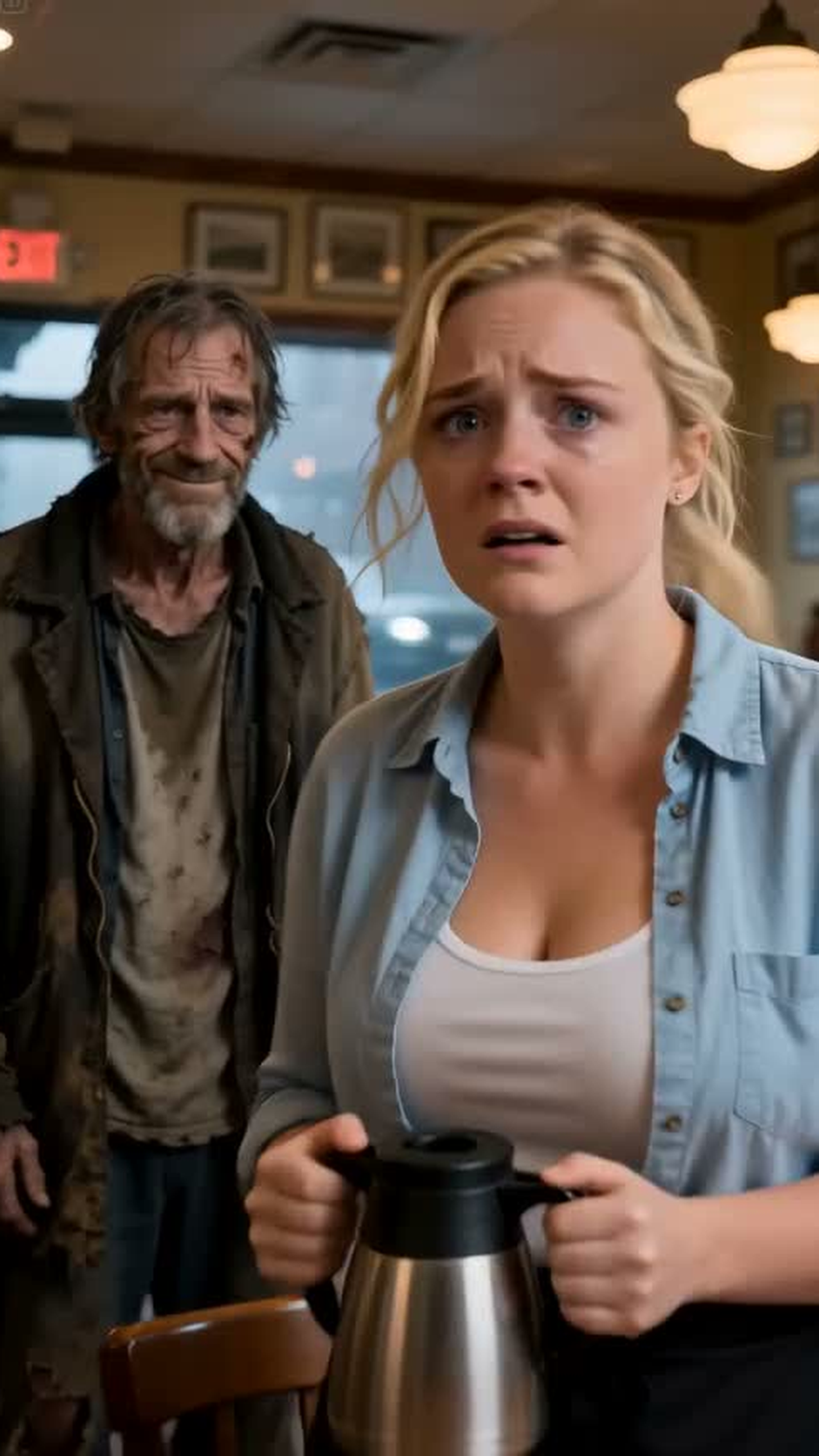
    She said yes at seven o'clock the next morning, to the counter stool, and he sat there like a man in church — jacket off, sleeves down, hands around a coffee he actually drank — while Walter Grady pretended, with enormous transparent effort, not to watch the most feared man in Chicago being taught the Kedzie rail dip by a retired mechanic, and failing, twice, to work the espresso machine during the 8:15 rush because the director of the Founders' Table informed the owner of the building that the counter was a workplace, not a viewing gallery, and if he was going to occupy it during service he could steam milk.

    He learned to steam milk. Carlo told that story for the rest of his life, and always ended it the same way: "The boss said it was like defusing something. He respected it."

    The plaque went up in October, on the wall beside the window table, in brass letters Elena had proofread four times:

    RESERVED 7:00–8:00 A.M.
    FOR THE PEOPLE WHO BUILT THIS EMPIRE

    Under it, in smaller letters, the names of the first council: Walter Grady, Hank Pruitt, Sal Marchetti, Joe Kowalski — and, by unanimous vote of the four, over the written objection of the honoree, a fifth line: Keeper of the List: E. Brooks.

    The west warehouse wall took longer, because the drivers' committee got involved and drivers' committees do nothing quickly and everything permanently. In November, on a gray morning with the first edge of lake ice in the wind, three hundred people stood in the west warehouse while a cloth came down off a bronze plate beside the clock-in station:

    FRANK BROOKS — FOREMAN — 31 YEARS
    HE NEVER SENT A MAN OUT ON A ROAD HE HADN'T DRIVEN IN HIS HEAD.
    THE LIST IS KEPT.

    Elena's mother stood in the front row holding the thermos, and did not cry until the drivers began, one by one, on their way past, to touch the edge of the plate the way men touch a coffin or a christened hull — and then she cried, and Walter held her hand in both of his, exactly as he had at the funeral, except that this time the account was settled, and everyone there knew it, and the knowing was the whole ceremony.

    The Frank Brooks Stop-the-Line Award was given for the first time at the company dinner in December. Elena accepted it in a dark green dress, with her hair down for once, in front of six hundred people and a board of directors, and she said, in its entirety: "This belongs to a table. It sits by a window. It's reserved from seven to eight, and it always will be. If you ever need to know what this company is, come down before the building wakes up, and don't talk, and take notes." Then she went back to her seat, where Matteo Bellini — who had watched her the way he had once watched a map, like a man memorizing the only copy — stood to pull out her chair, and thirty-eight tables of Bellini employees revised several long-held opinions at once.

    Danny Reyes finished his first year with the highest safety record of any analyst in the company's history, and was promoted, and requested — formally, in writing, through channels, with the memo attached — that his new office not be an office at all, but a desk within earshot of a certain table between the hours of seven and eight. The request was granted by the director of the Founders' Table and counter-signed, in red pencil, W.G.

    Gregory Vance pleaded to the fraud counts in the spring. The nurse from the Cermak underpass — her name was Diane, and she was back at work by Thanksgiving — sent Elena a photograph at Christmas: a baby, her granddaughter, born in November, with a middle name. The photograph lived on the café counter under the glass, where Sal Marchetti informed every new hire, personally, that the woman in the apron over there had held the rope.

    And the mornings continued, the way mornings do when somebody keeps them. The storm protocol — the manual ladder, the red pencil, the two waters — went into the company training system with the old men's names on every page, and the optimization software was quietly re-taught the shape of the real city by the only faculty qualified to teach it. The plan still saved its eleven percent in the end, which Elena maintained was the funniest part of the entire story. It just saved it on roads that existed.

    In January, the tradition survived its first succession, which Elena had always privately understood was the real test — not whether she could hold the table, but whether the table could hold itself. A new café hire, a nineteen-year-old named Marisol with her hair in a braid and a spine the hiring manager had described, accurately, as "a lot," was working the 6:30 shift when a client executive — a man accustomed to rooms rearranging themselves around his calendar — informed her that he would be taking the window table at seven for a call, and she could move "the gentlemen" somewhere less visible.

    Marisol, who had been trained for eleven days, looked at the man, looked at the clock (6:52), looked at the white card in her hand that she had not yet written, and said, in the tone of a woman reading a law she intends to enforce personally: "That table is reserved from seven to eight, sir. It's reserved every day. It's reserved in the founding documents, actually. There's a plaque." She set the card on the table. "I can seat you at the counter. The owner's usually there. He steams the milk."

    Elena, arriving through the service door in time to hear only the last sentence, had to go into the back among the coffee beans and stand there for a moment with her hand over her mouth, laughing silently and entirely without permission, while Paula — reopened, reinstated, and promoted over the ashes of the old floor administration, and now the café's general manager and the Founders' Table's fiercest customs officer — said through the doorway, dry as gin: "Don't encourage her. She's already written to ask if the card can get its own pension."

    The pension corrections had, in fact, gone out at Christmas — forty-one letters to retired Bellini employees and widows, each reviewed by the council, each recomputed the way Walter insisted such things be recomputed: generously, and to the person, not the hour. Elena's mother's letter had come with a second envelope inside the first. It contained no form and no figures she hadn't already been told. It contained a photocopy of a yard log page from a February night three years gone, and on the photocopy, in a hand her mother recognized before her eyes did, seven words in red pencil: FRANK WAS RIGHT. THE LIST IS KEPT. Walter Grady had driven over in the snow to deliver it himself, and had stayed for dinner, and had been observed by the neighbors to laugh at the table like a man thirty years younger, which the neighbors reported to Elena for a week.

    In February, on the third anniversary of the ice, Elena took him to meet her father.

    She had not planned it as a test, but it was one, and they both knew it. The cemetery was white and quiet, the stones of the working dead in their long rows, and she led him without hurry to a granite marker that said FRANK BROOKS, BELOVED HUSBAND AND FATHER, and underneath, in the smaller line her mother had fought the funeral home to include: HE KEPT THE LIST. Matteo stood in the snow in his black coat with his hat in his tattooed hands — a man who commanded rooms full of dangerous people, standing in front of a stone like a schoolboy at a door — and he read the marker twice.

    "I never thanked him," he said at last. "He died keeping my company off a frozen bridge, in my building's yard, and my company sent his widow a form letter computed to the hour. I was thirty-five and three floors above the room where that letter was signed, and I will carry that, Elena. I want you to know that I intend to carry it where I can see it."

    "You didn't sign it," she said.

    "I owned the building it was signed in. That's the same signature, in my family." He turned to her, and the snow was coming down in the slow, vertical way it does when the wind gives up. "Your father kept a list of every man he trained. I've started keeping one too. Carlo thinks it's sentiment. It isn't. It's the first honest accounting this company's had in three years — and it starts with a foreman I never met, because the woman who pours my coffee taught me that a company is just the list, kept or not kept."

    She put her hand in the crook of his arm, for the first time in daylight, in front of a witness who could not object, and they walked out of the cemetery together through the snow like people in an old photograph — the kind families keep on the piano, of the day everything quietly changed direction.

    The first council session of the spring seated six: the four old men, Danny Reyes with his notebooks, and Priya — the load planner from the Calumet bridge autumn, now the company's youngest safety director — who had requested the seat formally, in writing, through channels, with the bridge survey attached. Walter reviewed her application the way he reviewed routes. "She picks the door with her eyes open," he said. "Seat her." She arrived at seven with her own red pencil, and if the old men's gruffness around her had a quality of men straightening their jackets, nobody commented, and Hank made her coffee himself, badly, in the established tradition of the house.

    On a Tuesday in April, a year to the week after the rain, Matteo came down at 6:55 and stood at the window table, looking at the card — which Elena still wrote by hand, every morning, although the charter had made it law and the plaque had made it history, because some things in that company ran on the old schedule. The retirees had gone at eight. The café hummed with the ordinary morning. He had a small box in his pocket and flour on his sleeve from the milk he had steamed, badly, during the rush, and he was — Carlo would confirm this under no duress whatsoever — nervous.

    "Who reserved my table?" he asked.

    It was, by then, an old joke between them, worn soft as the map's creases, and she answered it the way she always answered it, because rituals are just promises with good attendance.

    "I did," Elena said. "And you can't sit there."

    "I know." He took the box out of his pocket. "That's not why I came down. Elena — I have been refused by you in front of my entire company, taught by you at my own counter, saved by you in a river, and managed by you, at steadily decreasing distance, for a year. My grandfather built this family on knowing the value of what can't be bought." He opened the box on the table that was not his, in the hour that was not his either, eight-oh-one by the café clock, in the first minute of the day that belonged to everybody. "Marry me. The table's yours. The hour's yours. I'm just asking for the rest of the day."

    She looked at the ring, and at the card, and at the man — tall, tattooed, flour on his sleeve, standing in the wreckage of every intention he'd had a year ago about what this café was for — and Elena Brooks, who had protected an hour for three years against the whole weight of a tower, said the shortest sentence of her life.

    "Yes. But you still can't sit there."

    He sat at the counter. He was, the staff agreed, getting better at the milk.

    And the card went up the next morning, and the next, in her careful upright handwriting —

    RESERVED 7:00–8:00 A.M.

    — while the empire, at last, ran on the people who built it.

    THE END
  • Chapter 6: Who Really Built Bellini

    Chapter 6: Who Really Built Bellini

    The board of Bellini Logistics met at noon in a room with no windows that anyone looked out of, at a table long enough to land aircraft on, and Gregory Vance arrived with a leather folder and the calm of a man who has counted the chairs and found them all facing his way.

    He presented beautifully. That had to be said. He had the timestamps, the access log, the protocol citations. A café employee — terminated, he noted, with regret, the previous day, for an unrelated pattern of insubordination — had gained access to a sealed launch system at 11:48 p.m.; had participated in an unauthorized overnight disruption that had cost the company a full launch cycle, emergency labor, and incalculable scheduling damage; and had, he suggested, almost certainly acted out of a documented grievance. There were photographs. The photographs, blown up on the boardroom screen, showed four old men around a small table, and a white card, and a map.

    "Line fourteen," Vance said gently, "and the liability Legal flagged. I am sorry it has come to the board in this form. It should never have been allowed to become—"

    "Gregory." Matteo, at the head of the table, in a fresh black suit, with white bandages wrapped around both palms like a boxer between fights, did not raise his voice. He rarely had to. "You've shown the board your paper. Now they'll see mine."

    Carlo stood, and the room learned what Elena, at the back wall where she had been placed like evidence, already knew: that Carlo Russo did not do paperwork the way other men did paperwork. Carlo did paperwork the way his boss's grandfather had done collections.

    Item one, said Carlo, was the access log — the real one, pulled not from the summary Vance's office had circulated but from the server itself, at the board's standing request procedure, which Carlo had filed at 7:00 that morning. The credentials that had entered the dispatch system at 11:48 p.m. were indeed Elena Brooks'. The terminal they had been entered from was not in the café. The terminal was on the thirty-eighth floor, in the Office of the Vice President of Operations, and the credentials had been cloned from the employee file that office had assembled, over three years, on the young lady — the same file, Carlo noted, that contained her written warning, her schedule history, and the termination letter drafted, as the metadata showed, eleven days before the cause it cited had finished occurring.

    Item two was a memorandum, two pages, slightly foxed at the edges from fourteen days in a drawer under some binders. Routing safety memorandum, Reyes, D., with hand-written appendix, Grady, W. Receipt logged by the Office of the Vice President of Operations. No action recorded. No response recorded. "The board will note," Carlo said, "the red mark on the map section, which Mr. Grady's predecessor crew began using in 1974. Red means the road lies."

    Item three was a nurse's statement, taken at 5:40 that morning at Northwestern Memorial, where she was being treated for exposure and shock, and where she had asked, three times, whether the woman who held the rope had a name, because she would like to give her daughter a middle one.

    Item four — Carlo set it on the long table alone, the way you set down something with a fuse — was a personnel determination, three years old, one page, with a signature the whole room could read from six chairs away. Determination that one Frank Brooks, foreman, thirty-one years of service, had died off the clock, of natural causes, engaged in activity outside his assigned duties. Signed, Gregory Vance, Junior Operations Supervisor. Attached, because Carlo was Carlo: the yard log from that night, in Frank Brooks' own hand, timestamped 1:40 a.m., re-routing a convoy by hand around an iced bridge; and the incident report from the following morning, listing the six vehicles and the jackknifed rig on the road Frank Brooks had refused; and the names — Carlo read them aloud, all of them, slowly — of the four drivers who had come home on the road he chose instead.

    Item five, Carlo said, was money, because in the end it is always money, and because Gregory Vance had made the oldest mistake in his profession: he had believed that being the man who filed the paper made him the owner of the paper. The optimization plan's software vendor — selected by Vance, championed by Vance, its eleven percent modeled by Vance — paid a quarterly "implementation success" consulting fee to a two-man firm registered in Delaware. The two men were Gregory Vance and Gregory Vance's brother-in-law. The fee scaled with the savings. The savings scaled with the routes. And one line in the vendor's own onboarding deck, which Carlo projected onto the boardroom screen in letters a foot high, read: LEGACY REVIEW HOLD POINTS (RET. STAFF CONSULTS) TO BE ELIMINATED Q1 TO PROTECT TIMELINE. The old men at the table had not merely been an aesthetic problem for the plan. They had been a line item in its sales pitch.

    "The fee for the first year alone," Carlo said, "was projected at one point nine million dollars. The memo in the drawer threatened the timeline. Mr. Vance protected the timeline."

    Director Alvarez looked down the long table with the expression of a woman who has found a snake in a drawer of linen. "And the termination of the young lady, Mr. Vance? Eleven days before its own cause?"

    "A pattern," Vance said, and heard himself, and stopped — because even he could hear that the room had begun, chair by chair, to sound like weather.

    Matteo raised one bandaged hand, slightly, and the room settled. He looked, for the first time in the meeting, directly at Elena, standing at the back wall where they had placed her like evidence.

    "Miss Brooks. The board has heard a great deal about you today, from paper. The floor is yours, if you want it."

    Elena stepped forward. She had rehearsed nothing; three years of 6:30 mornings had been the rehearsal. "I don't have a presentation," she said. "I have a list. In three years, the table by the window made eleven saves this company never counted — the Dock Six floor, the Calumet bridge at thirty-two tons, the watered diesel, the quarry road, nine others. The men who made them asked for coffee and to be left in peace to work. The memo Mr. Vance kept in his drawer was the twelfth save, arriving two weeks early, through proper channels, the way this company says it wants things done." She looked at the photograph still glowing on the screen — four old men, a map, a white card. "You keep asking what the liability at that table is. The liability is that it works, and it works because the men at it can't be promoted, can't be fired, and can't be paid a bonus for lying about a road. That's the whole technology. You've been trying to buy it for a hundred years. It only rents by the hour, and the hour is seven to eight."

    She stepped back to the wall. Her hands were shaking, so she folded them over her apron — she was still wearing the apron, she realized; she had faced the board of Bellini Logistics in her café apron — and decided that her father, who had faced his whole career in a foreman's jacket, would have considered it correct attire.

    The boardroom had a quality of silence that Elena recognized. She had heard it in a café, at 7:06 in the morning, across three years of other men's weather. It was the sound of a room re-counting something it had counted wrong.

    "Mr. Vance," said the oldest director, a woman named Alvarez who had known Antonio Bellini and buried him, "you've had a busy three years, keeping this company's memory in your drawer."

    Vance stood. He did not run, and he did not beg; whatever else he was, he was a man who understood seating arrangements, and he could read this room. "Everything I did," he said, with a dignity that was almost real, "I did to make this company legible. Measurable. Your father—" he looked at Matteo "—ran this place on handwriting and favors and men like that—" a gesture toward Walter's photograph on the screen, toward the old men, the card, the map "—on ghosts. I was making it modern."

    "No," Matteo said. He stood, and set both bandaged hands flat on the table, and the room felt the temperature change the way a café once had. "You were making it forget. And forgetting, in our business, is not efficiency. Forgetting is a flooded underpass at five in the morning. Forgetting is a man dying in a tractor cab with his name computed to the hour. This company was not built by the Bellini family, Gregory. It was built by the list. My grandfather knew it. My father knew it. I—" and here, for the first time in Elena's hearing, Matteo Bellini's voice did something human and unpracticed "—I had to be taught it by a café worker with a pen and a card, at seven in the morning, in my own building. The lesson is concluded. So are you."

    The board voted in four minutes. The fraud referral took six. Security — not Carlo; Carlo did not trouble himself with finished men — walked Gregory Vance out past the café at 12:40, and if he looked in at the little table by the window as he passed, none of the four old men sitting there so much as raised their heads from the map.

    Matteo found Elena afterward, in the café, because of course he did; she had gone back downstairs at one o'clock out of a gravity she no longer bothered to disguise, and was standing at the window table with her apron still on, straightening chairs that did not need straightening.

    "The board has created a program," he said. "The Founders' Table. A standing council — the retirees, paid, properly, as consultants of record. Their knowledge goes into the training system; their names go onto it. The seven o'clock hour is chartered in the tower's founding documents, permanently. No vice president can line-fourteen it ever again." He paused. "The program needs a director. Someone who keeps the list."

    "I pour coffee, Mr. Bellini."

    "You held a rope in a flooded underpass at two in the morning and saved my company, my name, and a stranger's life before breakfast. You kept this firm's memory alive for three years on a waitress's wages, against a written warning, and when they fired you for it, you came in and did it again." He looked down at his bandaged palms, and then, with the air of a man stepping onto ice he has chosen to trust, he held out his hand across the little table — not over it. Across it. "Elena Brooks. Direct the program. And keep the card. I am told the card is not negotiable."

    She took his hand. His grip was careful of the bandages and not careful at all of everything else.

    "One condition," she said. "Frank Brooks gets his name back. On the record. On the wall at the west warehouse, where the drivers clock in. Thirty-one years, Mr. Bellini. Computed to the hour."

    "Matteo," he said. "And yes. The wall, the record, and the award — there will be a safety award in his name, every year, for the employee who stops the line. First recipient—" something crossed his face that was almost, almost a smile "—has already been selected by acclamation. Four old men voted. It was not close."

    The café was empty. The rain had stopped hours ago, and the light through the window had gone the gold color of evening in a city washed clean. Matteo looked at the table, and at the empty chair Walter had left pulled out, the way Walter always left it, an invitation and a test.

    "Tomorrow," he said. "Seven o'clock. If I come down — may I sit at the counter?"

    "You're learning, Mr. Bellini," Elena said.

    "Matteo," he said again, gently. "And that wasn't my question answered."

    "No," she said. "It wasn't. Ask me tomorrow. At seven. Some things in this company still run on the old schedule."

  • Chapter 5: The Underpass

    Chapter 5: The Underpass

    They worked through the night in the café, because Walter refused to work anywhere else.

    "Routes were always drawn where the coffee was," he said, taking the chair at the head of the little table like a general reclaiming a headquarters, "and I'm too old to retrain." So the tower's cleaning crew was sent home early, and the marble counter became a plotting board, and by midnight the espresso machine had produced, by Sal's count, sixty-one coffees, four of which were drunk by the man who owned the building.

    Matteo had not left. That was the thing the night staff would tell for years, in the canteen, in the yards, in the careful shorthand of people who measure a boss by where his shoes are at 2 a.m.: the boss had not left. He had taken off his jacket at nine, and his tie at ten, and at eleven he had rolled his sleeves over tattooed forearms and sat where Danny sat in the mornings, with a red pencil in his hand, being taught his own city by a seventy-year-old man who addressed him — without malice, without deference, with the pure democracy of expertise — as son.

    "Not that way," Walter said, for perhaps the fortieth time, tapping the draft re-route. "You've saved the underpass and killed them on Kedzie. Kedzie floods at the rail dip when the lake rain comes sideways, which tonight it will. Always two waters, son. The one on the map and the one the wind brings."

    "Teach me the second water," Matteo said, and wrote it down, and Carlo — standing at the counter with three phones and a face like a locked door, coordinating drivers, dispatchers, warehouse leads, waking the whole human skeleton of Bellini Logistics one phone call at a time — allowed himself, once, to look at the table and think that his boss's father, God rest him, would have paid a fortune he no longer had to witness this exact scene.

    Elena's notebook lay open at the center of the counter like a ship's log, and it became one: every route decision entered in her careful upright handwriting, timed, initialed by whichever old man had made the call, so that whatever happened tomorrow would have names on it — the first document in Gregory Vance's modernized company, Danny whispered to her at midnight, that was built to be read by the people it could kill. At eleven, the service door opened and Paula came in out of the rain in her coat over her pajamas, carrying two grocery bags of sandwiches she had made in her own kitchen, and stood in the doorway of her café looking at the maps and the old men and the tattooed owner of the building rolling his sleeves at her counter, and said, to no one, "Well. It's about time somebody fed this company," and began, with the briskness of a woman defying three years of her own fear, to make coffee. She did not ask whether Elena had her job back. She had seen Matteo Bellini take off his tie at ten o'clock, and Paula had been reading rooms since before Gregory Vance learned to laminate a smile.

    The plan they built was Frank Brooks' plan. Nobody said so until Hank said it, at 1:15, into a silence full of pencil-scratch: it was the old storm protocol, the manual ladder — warehouse to warehouse, high road to high road, every leg walked in an old man's head before a single wheel turned, convoys cut from forty-one trailers at five to staggered groups of six from 3:30, each group with a scout car ahead, each scout with a phone, a flare, and instructions older than the interstate system: you see water you cannot read, you stop, you call, you live. Danny typed as fast as four old men could talk, which turned out to be faster than he had ever typed for the front office, because the front office had never once talked like the work mattered more than the meeting.

    The drivers came in out of the rain one by one, all night, summoned by Carlo's phones — the senior men first, gray and unhurried, men who read the red pencil marks over the old men's shoulders and grunted the way craftsmen grunt at a true joint. At midnight the door opened on a man in his sixties with a limp and a Bellini jacket twenty years out of issue, and Walter Grady stood up from the table — actually stood, on his bad knees, like a flag going up.

    "Tommy Wheeler," he said. "You were the third truck on Frank's convoy."

    "I was the third truck every night for eleven years, Walt." The old driver looked around the candlelit plotting-room the café had become, at the maps, the pencils, the owner of the company with his sleeves rolled and a list in his fist. "Heard the storm protocol was running. Heard a Brooks was keeping the list." His eyes found Elena at the counter, and something in the man's seamed face rearranged itself around an old debt. "Your daddy put me on the high road the night the bridge iced, miss. Six vehicles went in the ditch on the low road by morning. I been meaning nineteen years to buy Frank Brooks a coffee." He looked at the espresso machine with the deep skepticism of his generation. "I suppose one of them fancy ones will have to do."

    Elena made it herself, and her hands were not quite steady, and nobody in the room pretended not to notice, and nobody said a word. Tommy Wheeler took the third scout run at 1:30 without being asked, the way his generation asked for nothing and volunteered for weather.

    It was Tommy's voice, at 2:00, crackling out of Carlo's phone on the counter, that changed the night from planning to war: "Cermak's going under at the mouth, and it's going fast, and boys — there's a car in it."

    At 2:00 the rain changed key.

    It came off the lake in a solid gray roar and the tower windows went white, and the café lights flickered once and held, and every phone at the counter lit at once.

    "First scout's out," Carlo said. "Kedzie rail dip is dry. Cermak corridor—" he listened "—Cermak's taking water at the mouth. Fast."

    "How fast?" Walter said.

    "Second scout confirms Tommy's call. The signs are going under from the bottom, and the car—" Carlo's face did something it rarely did. "The car's still in there. Lights still on. Somebody's still in it."

    The room went to the particular stillness of people who have all done the same arithmetic at the same time. A car. At two in the morning, in a flooding underpass eleven feet posted and ten-eight in fact, in water that rises from the bottom, filthy and black and full of everything a city washes off itself in a storm.

    Matteo was already moving. Carlo was already moving. Elena heard her own voice say "I'm coming," and heard Matteo, without turning around, without breaking stride, say the thing that undid three years of her careful invisibility and rebuilt it as something else entirely: "Yes. You know the corridor. Stay on my left." And then they were in the rain.

    The underpass at Cermak was a mouth full of black water.

    The scout car sat high on the approach with its hazards beating uselessly against the rain, and beyond it the dip had become a lake with a current, fast and muscular, pouring through from the far side. Midway down — close enough to see, too far to reach — a sedan sat with water at its windows, its lights still burning under the surface like something drowning politely. Through the rear glass, in the sweep of the scout's headlights, Elena saw movement. A hand. Against the glass. Small, and slowing.

    "Rope in the trunk," Carlo said. "Boss—"

    "I'm heavier," Matteo said, in the tone of a man discussing cargo. "I anchor. You swim the line. Elena—" and she was already kicking off her shoes on the wet concrete, already tying the café apron she still wore around her waist as a second line because three years of watching men work had taught her that the person who holds the rope on shore is not the audience, she is the mechanism, "—you hold us. Both of us. You understand me? Whatever it pulls, you hold."

    "I keep the list," she said, and wrapped the rope around the guardrail post the way her father had taught a nine-year-old Elena on a dock in Indiana, and the water took Matteo to the waist and then to the chest, black and freezing and full of the city's filth, and he went forward into the underpass with the line in his fist and Carlo beside him and the whole drowned corridor roaring like a throat.

    It took four minutes that behaved like forty. The sedan's window came down an inch — the driver, a woman, night-shift nurse by her scrubs, had climbed into the back with her phone dead and her daughter's car seat beside her, empty, God be thanked, empty — and she got her arms around Matteo's neck in the water, and the current took all three of them sideways into the rail, and Elena felt the rope go to a note she had never felt rope sing before and she dug her bare heels into the wet concrete and held, with her father's knot and her mother's stubbornness and three years of 6:30 mornings in her back and shoulders, and she held.

    They came out of the Cermak underpass like men being born — gasping, filthy, bleeding from the shins, one terrified nurse between them who was laughing and crying in the specific rhythm of the recently not-dead. Carlo got her wrapped in his own dry jacket from the car. An ambulance was already coming down the high road, because Carlo Russo did not go into water without having already arranged for what came out of it.

    Matteo stood in the rain with his ruined suit plastered to him and the rope burns across his palms, looking back at the black water that would, in three more hours, have been waiting at five a.m. for forty-one loaded trailers whose drivers trusted a screen.

    "Forty-one," he said, to Elena, quietly, in the rain, while the nurse wept into Carlo's jacket and the scouts' radios chattered the all-clear up and down the high roads. "That's what the memo was worth. Forty-one trucks. And her." He nodded at the nurse. "It would've had her by four-thirty even without us. The plan would've had the rest by five."

    "Yes," Elena said. She was shaking so hard her teeth hurt. "That's why the card."

    "That's why the card," he agreed, and then — in the rain, at two in the morning, filthy and bleeding and thirty-eight years old with an empire on his back — Matteo Bellini put his ruined hand, very briefly and very carefully, over hers where she still gripped the rope, the way you cover a flame against weather.

    "Hold on a little longer," he said. "We're not done. There's a board meeting at noon, and Gregory Vance has one more piece of paper."

    The paper arrived at 6:15 a.m., by courier, to the tower, addressed to the board of Bellini Logistics: a memorandum, signed and countersigned, documenting that a Miss Elena Brooks, café staff, had accessed live routing systems beyond her authorization and had, quote, orchestrated an unauthorized disruption of a board-approved launch — with a system access log attached, timestamped, showing her credentials inside the dispatch system at 11:48 the previous night.

    At 11:48 the previous night, Elena Brooks had been standing at a marble counter with a red pencil, pouring her sixty-first coffee, in a room containing nine witnesses and the owner of the company.

    But the log said what the log said. Paper, in Gregory Vance's world, was cleaner than people.

    "Noon," Carlo said, reading over Matteo's shoulder in the gray dawn light, while the rain eased and the city began, street by street, to discover what the storm had and had not done to it. "He's going to bury her with her own credentials, boss. And the memo, and the table, and all of it — he's going to make last night a crime scene and her the criminal."

    "I know," Matteo said. He looked down at his rope-burned hands. "Let him bring his paper, Carlo."

    "We're bringing the list."

  • Chapter 4: Longer Than Anyone Noticed

    Chapter 4: Longer Than Anyone Noticed

    Matteo did not sit at the table. Elena understood later that this was the first thing — the thing Carlo would remember, telling it months afterward in the drivers' canteen with the air of a man describing weather he'd personally witnessed change. The boss had walked into his own café, in his own tower, and been refused his own table by a café worker standing in flour dust, and instead of ending her, he had done the arithmetic of the room: an old man, a map, a boy with a pen, two cold coffees. Work. Real work, the kind his grandfather had built the name on, happening at 7:06 in the morning in a building full of people who billed by the hour and produced by the quarter.

    He took his coffee standing at the counter, where he could see the window, and he watched, and the café breathed again in careful sips around him.

    Carlo, who missed nothing, watched Elena instead — the steadiness of her hands now that the crisis was past, the way she refilled the old men's cups without being asked, the way she answered the boy Danny's whispered question with two words and a nod toward the map. He also watched the clock, because Carlo watched clocks the way other men watched doors.

    At 7:41 Walter Grady folded the map along its old creases, aligned it with the plastic sleeve by touch, and turned in his chair — turned all the way around, deliberately, like a man rotating a gun turret — and looked at Matteo Bellini for the first time.

    "You Antonio's boy," Walter said. Not a question.

    "I am."

    "Your grandfather loaded trucks with my father. Your father knew every route in this city by its first name." The old man's eyes were pale and absolutely unafraid; men who have already lost everything they were ever going to lose acquire a quality that no bodyguard can rent. "He used to sit where you're standing, son. Four in the morning, before the routes went out, with the drivers. Coffee out of a pot you could tar a roof with. He said a route you won't drink coffee over, you don't understand yet."

    Something moved through Matteo's face — not softness; Elena would have sworn it was closer to grief, arriving three years late and from a direction he hadn't guarded.

    "He died before he could teach me the routes," Matteo said.

    "He died before the company let him," Walter said, and turned back to his map, and that was all, and the hour resumed — but it was a different hour now, and everyone in the café knew it, the way everyone in a church knows when the sermon turns.

    Carlo came back to the counter at 7:52 with two coffees and the particular expression of a man who has been reading a file that reads back.

    "Brooks," he said, low, for his boss's ear only. "Elena Brooks. Twenty-eight. Café staff three years, one written warning — the table. No debts, no record, no affiliations. Lives with her mother in Pilsen. Mother's a widow." He set the coffee down. "Husband was Frank Brooks. Foreman, west warehouse, thirty-one years. Died on shift three winters back — heart attack, moving a trailer at one-forty in the morning in an ice storm, rerouting a convoy by hand so it wouldn't take the lake bridge." A pause the length of a held door. "Company ruled it off the clock, boss. Natural causes, outside assigned duties. No award, no newsletter, no pension adjustment. The determination was signed by a junior operations supervisor named Vance."

    The rain made its gray music on the window. Matteo looked at the woman behind the counter, flour on her apron, pouring coffee for old men with the concentration of a person defusing something — looked at her the way he had looked at the map: like a document he had been meant to read years ago, in a building full of people paid to keep him from reading it.

    "She's been writing that card," he said, "for the daughter's share of three years. In the lobby of the company that rounded her father down to the hour."

    "Yes, boss."

    "And this morning she stood between me and that table."

    "Yes, boss."

    Matteo turned his coffee once on the counter, precisely, the way other men crack their knuckles. "Carlo. Everything Gregory Vance has signed in five years. Everything he's buried, everyone he's separated, every memo that ever went into that office and didn't come out. By tonight."

    "Already started," Carlo said, "at seven twenty."

    At 8:00 exactly, the doors opened on Gregory Vance, arriving for his own appointment with two consultants, a tablet, and a smile laminated for the occasion.

    He saw the table first. He saw Walter, and Hank, and Sal, and Joe, and the card still standing — and Elena saw the smile take the hit and hold, the way a windshield takes a stone: a small white star of damage, professionally ignored.

    "Mr. Bellini," Vance said. "You're early. Wonderful — you've seen the floor, then. You've seen—" his eyes went to the window "—line fourteen, as it happens. The unauthorized reservation. I was going to walk you through the figures, but the situation rather presents itself. Premium window seating, occupied daily, unvetted retirees handling live routing documents — Legal has flagged the liability twice. The employee responsible has already been separated, as of yesterday, for exactly this pattern. I took the liberty—"

    "Separated," Matteo repeated.

    "Terminated. For cause. Miss—" Vance glanced at Elena for the first time, and the glance slid off her like water off glass. "—the young lady was informed Monday. Which makes her presence this morning a security matter, actually. Carlo, perhaps—"

    "She's here because I haven't told her to leave," Matteo said, in a voice so quiet that the consultants took an involuntary step back toward the espresso machine. "Sit down, Gregory."

    There was no chair. Vance stood, holding the tablet, while the café held its breath, and Elena understood that Paula had been wrong: nobody needed to save her. She had spent three years building the only weapon that could kill Gregory Vance — a room full of truth, in the open, in front of the one man he could not manage — and she had simply had to live long enough to be standing in it.

    "Elena," Matteo said. He knew her name. Carlo, of course. Carlo would have known her name, her file, and her blood type by 7:20. "He says there's a liability at that table. Live routing documents. Tell me what the liability is."

    So she told him.

    She told him about the Cermak underpass — eleven feet posted, ten-eight in fact, floods from the bottom. She told him about forty-one loaded trailers at five o'clock tomorrow morning, and the storm the size of Ohio, and the memo Danny Reyes had submitted through proper channels two weeks ago, and the handwritten appendix Walter Grady had added, and the way both had gone into the office upstairs and never come out. She took the folded safety-line ticket stub from her apron pocket and laid it on the counter. She did not raise her voice once. Three years of pouring coffee in a room where powerful men talked had taught her exactly how much volume truth needs, which is none.

    Matteo listened the way he did everything: completely, without moving. When she finished, he looked at Carlo.

    "The memo," he said.

    Carlo was already on his phone — not calling, reading; Carlo had a quality of attention that made other people's systems confess. "Submission record exists," he said. "Reyes, D. Routing safety memorandum, with attachment, received by the planning office fourteen days ago. Forwarded same day to the Office of the Vice President of Operations." His eyes came up. "Receipt logged. No action recorded. No response recorded. The physical appendix—" he looked at Vance "—would be in that office. Or that drawer."

    "Gregory," Matteo said, "is there a safety memorandum in your drawer?"

    For the first time in five years of floor walks and quarterly reviews, Gregory Vance's smile ran out of cells to fill. What replaced it was worse — calculation, visible, at speed. "There are hundreds of documents in my office, Mr. Bellini. Staff submit all manner of— if the young man's memo failed to meet the escalation criteria, that's a process question, not— the optimization plan was modeled, it was reviewed, the board—"

    "The board," Matteo said, "will be fascinated by the escalation criteria for a drowning."

    He turned back to Elena, and his voice changed — not softer, exactly; a man like Matteo did not do softer in public — but lower, and stripped of audience.

    "You were terminated yesterday. You came in at six-forty-five this morning anyway. You wrote the card. You protected them in front of me knowing it cost you the last thing it could cost you." It was not quite a question. It was a man checking a sum he had already done and did not believe.

    "I protected the hour," Elena said. "The hour is where they keep the company. You asked me this morning how long. I told you the truth."

    "Longer than anyone noticed," Matteo said.

    "Yes."

    He held her gaze a moment longer than a boss holds an employee's, and something in the room's arithmetic changed again — Carlo felt it and filed it, the way he filed everything, for a future he was already quietly revising.

    "Mr. Grady." Matteo had turned, with the deliberateness of a man addressing the only other authority in the room. "The plan. If it launches tomorrow as written — tell me what happens. Not the property. The men."

    Walter took off his glasses. He had clearly been waiting all morning — all year — for someone with the power to act to ask the question in that order. "First trucks in the water by five-fifteen, son. A loaded trailer in a flooding dip doesn't float and it doesn't stop; it becomes a dam with a man in it. We'd lose drivers in the first hour — how many depends on how many scout cars the software bothered to send, which is none, because the software doesn't know there's anything to scout. After that it's not a logistics event, it's a rescue event, and then it's a funeral event, and then it's lawyers in this café drinking your coffee and explaining to widows what the word optimization means." He put his glasses back on. "Or. You let the people who know the water draw the roads tonight, and tomorrow it's a weather story on page six and nobody dies of a spreadsheet. Those are the doors, Mr. Bellini. Pick one with your eyes open."

    Matteo looked at the map for a long moment, at the red X drawn by a younger Walter in a drier century. "Tonight," he said. "Here. Your table, your rules, your map. Carlo will bring you every driver, dispatcher and phone line in this company. What do you need from me?"

    Walter considered him with the air of a man appraising a bridge. "Coffee that isn't from a machine a consultant picked. A red pencil that works. And nobody — nobody — gets told to leave my table before the work's done. Including you."

    "Agreed," said the owner of Bellini Logistics, and Carlo wrote it down like a treaty.

    Then Matteo's phone lit in Carlo's hand — Carlo carried his own and his boss's both — and the weather service banner slid across the screen, and the morning changed a third time.

    Carlo read it twice. "Storm's been upgraded," he said. "Landfall off the lake, two a.m. Flood warning now includes the Cermak corridor specifically. They're projecting standing water in the underpass by four-thirty." He looked up. "Trucks roll at five."

    "Nobody," Matteo said, "moves a truck tomorrow. Not one. Cancel the launch. Tonight, in person, in the dispatch office — Gregory, give Carlo the authorization codes."

    And Gregory Vance, standing in the wreck of his own presentation, with his tablet against his chest like a shield, did the thing Elena would remember when she remembered that good men and bad men are mostly separated by what they do in the ten seconds after they've lost: he reached for the last piece of paper he had.

    "The plan was board-approved, Mr. Bellini," he said, with enormous, ruinous calm. "The dispatch automation locked at noon today — it's a sealed launch protocol, designed by your own board precisely so that no single voice can override it in the field. There's no cancellation code in my office, or yours. The system opens for amendment at the Thursday review." His eyes moved, once, involuntarily, to the window table. "The only people alive who ever ran this company's routes around a sealed system did it by hand. On paper. With pencils."

    Every head in the café turned, slowly, toward the small wooden table by the window, where four old men sat with their cold coffee and their forty-year-old map, listening to the future arrive in the shape of an apology it hadn't made yet.

    Walter Grady took off his glasses and cleaned them, unhurried, with the corner of his handkerchief.

    "Well," he said. "Son, you'd better pour us some fresh coffee. We've got a night's work, and the young lady's going to need her job back — because nobody routes this city by hand without the person who keeps the list."

  • Chapter 3: The Last Morning

    Chapter 3: The Last Morning

    Gregory Vance requested the meeting himself. That was the part Elena would turn over later, in the night, like a stone in a pocket: he had summoned his own ending and put it on the calendar for eight o'clock Tuesday morning, in the tower, with an agenda.

    The agenda was the café. Vance's modernization review had reached the ground floor at last, and the 7:00–8:00 hour — the card, the old men, the unmonetized premium window seating in a luxury tower — was line fourteen of a seventeen-line list of inefficiencies he intended to present to Matteo Bellini personally. Floor services had received the pre-read on Friday. Paula had received it Saturday, and had stood in the back of the café with it in her hands for a long time, reading the same line over and over.

    Elena received hers on Monday.

    It came as a letter, because Vance was a man who believed that paper made things cleaner. Termination, effective immediately, for cause: recurring unauthorized reservation of premium client seating; misuse of company property; a pattern of insubordination documented across three years — he had counted the written warning, and the remodel complaints, and the morning in May, and built her a file the way you build a case, patiently, out of other people's years.

    Paula cried giving it to her, in the dry storage room, among the coffee beans, holding the letter out with both hands like it weighed something.

    "Fight it," Paula whispered. "There's a process. There's an appeal. I'll write—"

    "Paula." Elena took the letter. Her own hands were perfectly steady, which surprised her. "You've been writing my schedule for three years so I'd be here at six-thirty to open that table. Don't lose your job standing next to me at the end of it."

    "Then don't come tomorrow."

    Elena folded the letter once and put it in her apron pocket, next to her pen and a folded safety-line ticket stub. "The plan goes live Wednesday at five," she said. "Tomorrow's the last morning the table ever sits. Walter doesn't know Vance killed it — he thinks Tuesday is just Tuesday. Somebody has to write the card, Paula. Somebody has to pour the coffee and let those men have their hour, and if it's the last one, it's going to be a good one."

    "Elena—"

    "And somebody," Elena said, "has to be standing in this café at eight o'clock when Gregory Vance walks Matteo Bellini past that window to show him line fourteen. Because I read the pre-read too. And a man showing off an empty table is one thing." She pulled her apron straight. "A man showing off that table, with Walter Grady sitting at it and a safety memo buried in his office drawer, is something else entirely. I can't reach the top of this tower, Paula. But tomorrow at eight, the top of this tower is coming down to me."

    Danny found out at 4:50, from Tomás, who had it from a floor supervisor who'd seen the letter go into the system. He was waiting by the service door when Elena's shift ended, in the rain without a coat, with his tie in his pocket and three notebooks' worth of loyalty standing up in him like a dog's hackles.

    "Appeal it," he said. "Tonight. I'll write the statement — the memo exists, Elena, I sent it through the system, there's a submission record, my supervisor saw it, if they fire you the day before the go-live and something happens Wednesday, that's — that's retaliation, that's a paper trail, that's—"

    "Danny." She stood under the awning with him while the rain needled down past the light. "Listen to me very carefully, because this matters more than the job. If I appeal tonight, Vance knows I'm fighting, and a fighting employee is a managed employee. He'll have security walk me out tomorrow at the door. The table won't sit. The eight o'clock walk-through becomes a man showing an empty table to his boss, and the memo stays buried, and Wednesday still comes." She put her hand on his wet sleeve. "But if I just show up — fired, stupid, too stubborn to stay home — then at eight o'clock Gregory Vance has to explain Walter Grady to Matteo Bellini. In person. Standing next to the map. I need you there, Danny. Seven o'clock. Bring the map section. All of it. And if it goes bad—" she smiled, and it hurt, and she did it anyway "—if it goes bad, you never knew my name."

    "I knew your name before I knew the job's," Danny said, and went back out into the rain to be twenty-four and furious on her behalf all the way home.

    —

    On the thirty-eighth floor, Gregory Vance rehearsed his eight o'clock in an empty office, the way he had rehearsed every ascent of his life: aloud, to the glass, with the tablet in his hand. Line fourteen. He had the figures laminated in his head — the hourly revenue of premium window seating, the brand-consistency audit, the photograph (he had had floor services take a photograph, which he believed showed atmosphere and which in fact showed four old men and a map and a white card, and looked, to any eye that had ever been poor, like a painting of the Last Supper for the working class). He planned to be almost gentle. The hour is lovely, Mr. Bellini. It's also eleven thousand dollars a quarter in displaced client seating, and a liability exposure — unvetted retirees handling live routing documents — that Legal has flagged twice.

    Legal had flagged nothing. Vance had flagged it, in Legal's direction, twice, which in his accounting was the same thing in a better suit.

    He thought about the memo, once, the way you think about a step on a stair you've already climbed past: the Reyes boy's submission, and the hand-written Grady appendix, sitting in his drawer under the optimization binders. He had not destroyed them. Men like Vance never destroyed paper; paper was alibis, and you kept alibis the way you kept everything — filed, and under your hand. If Wednesday went clean — and Wednesday would go clean, the model said so, eleven percent said so — the memo was a relic. If Wednesday went badly, the memo was a subordinate's failure to escalate through proper channels, and he had the drawer, and the channels, and the whole architecture of blame arranged like chairs.

    "The table ends Tuesday," he told the glass, and the rain, and his own reflection, which nodded the way reflections are paid to. "Then the plan launches Wednesday, and by Friday nobody remembers there was ever a card."

    That night she did not sleep. She sat at her kitchen table with her father's thermos and the list — not Frank's list, hers, the one she had started keeping in a notebook the first year, because you cannot protect people you cannot name: every retiree, every young analyst, every save the table had ever made, dated, in her careful upright handwriting. The crushed pallets at Dock Six. The watered diesel in Indiana. The blown tires on the quarry road. Eleven saves in three years that she knew of, worth — Sal had done the arithmetic once on a napkin, disgusted — somewhere around four million dollars, none of it ever credited, all of it absorbed upward into other men's quarterly numbers.

    At the back of the notebook she had taped the forecast. A storm system the size of Ohio, arriving off the lake in the small hours of Wednesday morning, rain measured in inches, flood advisories already posted for the low corridors of the city.

    Five a.m. Wednesday. Forty-one trailers. A hole in the ground that fills from the bottom.

    She thought about calling the safety line again. She thought about the ticket stub in her apron. She thought about Carlo Russo — she had never spoken to him, but she had watched him for three years the way staff watch weather systems, and she knew what everyone knew: that Carlo was the door. Whatever reached Matteo Bellini reached him through Carlo, and Carlo decided what knocked.

    She thought about knocking.

    She thought about her father, in a tractor cab at 3:15 in the morning, off the clock, doing the job anyway because the job was the list and the list was the company.

    At 5:40 she got up, showered, put on her cream knit blouse and her black apron, and walked through the first gray spit of the rain to the tower. She unlocked the café. She started the espresso machine. She baked off the morning pastries with flour on her apron. At 6:45, in the warm empty light, she took a plain white tent card from the register and her pen from her pocket, and she wrote — the same words, the same hand, for what she believed was the last time:

    RESERVED 7:00–8:00 A.M.

    She set it on the small wooden table beside the window and smoothed it once with her palm.

    "For the people who built it," she said, to nobody, and went to make Walter's coffee.

    Walter arrived at 6:58 through the wet, leaning on the door frame a moment to get his breath, and Elena watched him take in the room — the card already standing, the map's chair pulled out the way he liked it — with the expression of a man confirming that the world, whatever else it intended today, had at least begun correctly. Joe arrived at 7:01. Hank at 7:03, with the newspaper and a scowl for the forecast. Sal at 7:04, shaking rain off his jacket directly onto the luxury floor with the serene contempt of a man who had fixed trucks in that spot when the spot was a loading dock and intended to go on behaving accordingly.

    It was an ordinary morning. That was the unbearable part. They argued about the map the way they always argued, about Danny's draft plan the way they always argued, about the price of diesel and the mayor and Sal's granddaughter's wedding. Nobody said last. Elena poured coffee nobody drank and memorized them like a woman memorizing a house she is about to lose in a fire: Hank's cap. Joe's terrible jokes. The red pencil moving, patient as a heartbeat, over a map drawn before half the tower's executives were born.

    At 7:06 the doors opened and the temperature of the room changed.

    —

    Upstairs, on the top floor, in an office the size of the café and half as warm, Matteo Bellini stood at a wall of rain-streaked glass with a report he was not reading.

    He had not slept either, though for different reasons. A meeting in Cicero the night before had run the way those meetings ran — an old debt of his grandfather's, called in by men who still believed the Bellini name paid interest in kinds other than money. Matteo had refused, in the low, final way that ended conversations and occasionally eras, and Carlo had driven him home at two through the first of the rain with the wipers beating like a pulse.

    "Tuesday," Carlo said, from the door, at 6:55. "Eight o'clock, Vance. Café efficiency review. He's bringing it downstairs to you — wants you to see the floor."

    Matteo looked at his watch. He looked at the rain. He thought about the fact that Gregory Vance, in five years, had never once wanted him to see a floor.

    "Then we'll see the floor, Carlo," he said, and went down early, the way he went everywhere — ahead of the appointment, into the room before the room was ready for him.

    He pushed through the café doors at 7:06, into warmth and amber light and the smell of coffee, with Carlo three paces behind him and the rain still on his shoulders.

    And the first thing he saw — before the counter, before the staff, before the room of employees going quiet around him like a field before weather — was a small wooden table beside the window that he had never noticed in his own building.

    There was a white card on it.

    And an old man with a map.

  • Chapter 2: The People Who Built the Empire

    Chapter 2: The People Who Built the Empire

    The table filled the way a tide comes in — one old man at a time, each with his own weather.

    Walter Grady came every morning, because the map was never finished. There was Hank Pruitt, seventy-four, who had dispatched the night fleet for twenty-six years and could still recite the axle-weight limits of every bridge between Chicago and St. Louis the way other men recited baseball lineups. There was Sal Marchetti, seventy-one, a mechanic with hands like knotted rope, who had kept Bellini trucks alive through winters that killed newer fleets, and who maintained, loudly, that every problem in the modern company began the day they stopped letting drivers carry a real wrench. And there was Joe Kowalski, sixty-nine, the youngest and therefore the errand-runner, who had worked the docks and remembered where every warehouse in the system leaked, flooded, froze, or hid a door the blueprints had forgotten.

    They were, Elena understood within the first month, a library that walked. And the company upstairs — the one with the analytics dashboards and the optimization consultants and the young men in good shoes — had thrown the library out of the building to improve the image of the café.

    So she kept the door open herself. Seven to eight. Coffee they mostly forgot to drink. The card.

    What she had not expected was that the library would start being used.

    It began with a dock supervisor named Reyes — not Danny, his uncle, a man named Tomás who had loaded under Frank Brooks and never forgot it. Tomás had a problem: a retail client kept receiving pallets crushed on one corner, and the front office's answer, arrived at by software, was to slow the line and add inspections, which cost money and fixed nothing. He mentioned it at the table at 7:20 on a Thursday, mostly to complain.

    Sal didn't look up from his coffee. "It's the turn at Dock Six," he said. "Floor's heaved there since the flood in '09. Forklift tilts two degrees on the turn, load shifts, corner takes it. We used to shim it. Some genius poured it level in the remodel and un-shimmed it."

    Tomás went and looked. The floor at Dock Six had heaved exactly two degrees. The crushed pallets stopped within the week. The front office credited the software.

    After that, they came quietly. A scheduler with a fuel mystery — Hank knew which two stations on the Indiana run watered their diesel in winter.

    The save Elena remembered best came in the second autumn, and it came at 7:40 with twenty minutes left on the clock. A young load planner — twenty-six, terrified, a woman named Priya who had been crying in the service corridor where Elena found her refilling the water cooler with shaking hands — had inherited a Friday problem: a construction client needed forty tons of steel at a site in Gary by Monday, and the system had routed her over the Calumet Avenue bridge, which the system believed had a forty-ton limit. The system was working from a survey done in 2011. Hank had driven that bridge in February.

    "Thirty-two tons since the ice winter," Hank said, without looking up, in the tone of a man commenting on the weather. "County posted it and never told the databases. Your truck goes over at forty, it might make it. It might make the news. Send her up through the old toll road and eat the forty minutes, or split the load and spend the money. Those are the doors, honey. Pick one with your eyes open."

    Priya split the load, spent the money, took a reprimand for the overage from a supervisor who never knew there had been a decision to make — and in March, when a salt truck from another company went through the Calumet Avenue bridge deck in a collapse that closed the road for five months, she came down to the café at 7:15 with her hands shaking again, and set a coffee in front of Hank Pruitt that she had made herself, badly, and said, "You saved my life in October, old man. I just found out."

    Hank had been embarrassed to the roots of his hair. "Wasn't nothing," he said. "Roads keep their own books. Somebody's gotta read 'em out loud."

    Elena wrote it in the notebook that night: Calumet Avenue bridge — 32 tons, not 40. Priya. October. And under it, because her hand needed to write something true: this is the company. This table. Not the tower. This. A safety officer with a rash of blown tires on one route — Joe remembered the quarry that had resurfaced its access road with sharp aggregate in 2016 and the deal the company had cut to keep using it anyway. Young employees with the particular desperation of people who have discovered that the dashboard doesn't know what the road knows.

    Elena poured coffee and listened and learned the real org chart of Bellini Logistics, which had nothing to do with the one upstairs. The one upstairs ended at Gregory Vance, Vice President of Operations, a neat man with a smile like a spreadsheet — every cell filled, nothing warm. Vance had come in five years ago with a mandate to modernize, and he had, the way a man remodels a house by throwing out the furniture of everyone who ever lived in it. The retirees' coffee tradition had been one of his first economies. Image, he'd said. The tower is luxury now.

    Her mother asked her once, in the careful voice of a woman choosing where to step, whether working in that tower didn't hurt — serving coffee in the lobby of the place that had rounded Frank Brooks down to the hour. Elena had thought about it honestly before answering. "It hurt worse driving past it," she said. "At least inside, I'm keeping his list." Her mother had gone quiet, and then had done something she had not done since the funeral: she had laughed, once, startled and real. "He always said you were the stubbornest thing he ever made," she said. "He said it like a man bragging about weather."

    Elena sometimes wondered what her father would have made of the card on the table. She thought he'd have laughed once, through his nose, the way Walter did. She thought he'd have understood that the card wasn't nostalgia. It was an accounts ledger. A company is just the list, kept or not kept.

    The first time somebody important noticed the table, it wasn't Matteo. It was worse.

    In the second year, on a bright morning in May, Gregory Vance came down to the café himself — he almost never came down; coffee was brought up to men like Vance — with two consultants and a tablet, doing what he called a floor walk. He stopped by the window. He looked at Walter's map. He looked at the card.

    "What's this?" he asked Elena, pleasant as a audit.

    "A reservation, Mr. Vance."

    "For staff?" He glanced at the old men, at Sal's work jacket, at Hank's cap, and his smile did the arithmetic of image. "This is a client-facing space, Miss Brooks."

    "They are staff," Elena said. "They were staff for a hundred and forty years between them."

    One of the consultants actually wrote that down, which Elena chose to believe was respect.

    Vance set the card back on the table with two fingers, precisely, the way you'd return something faintly unsanitary. "Enjoy your morning," he told Walter, and walked on, and nothing happened — nothing at all, which was its own kind of message. Her written warning arrived three days later through Paula, who slid it across the back counter without meeting her eyes: unauthorized reservation of premium seating, recurring. Elena signed it, and wrote the card the next morning, and Paula — who had known Frank Brooks, who had once danced at Elena's parents' wedding, a fact neither of them ever mentioned at work — said nothing at all, and quietly scheduled Elena for the 6:30 opening shift every single day after, so that she would always, always be there in time to write it.

    The table had survived on that: one woman's stubbornness and one manager's averted eyes.

    Then, in the third year, Danny Reyes arrived — twenty-four, six weeks into a logistics analyst job he'd gotten on a scholarship and a prayer, drowning in a routing system that assumed the world was flat, dry, and legally compliant. Tomás sent him. "Go at seven," his uncle said. "Sit with the old men. Don't talk. Take notes. And don't tell the front office, because the front office would rather be wrong expensively."

    Danny came, and didn't talk, and took notes, and filled three notebooks. He was there the morning Walter unrolled the map all the way — the whole plastic sleeve of it, the master warehouse-routing map from 1998, updated by hand for a decade after the company stopped printing them — and began, with a red pencil, to teach him the city's underside.

    "Software knows roads," Walter said. "It doesn't know water. This—" the red pencil tapped "—is the Cermak underpass. Eleven-foot clearance posted, ten-eight in fact since they repaved in '14, and it floods from the bottom, son, not the top — the drains back up before the rain even gets serious. A loaded trailer goes in at five in the morning in a storm, it doesn't come out. Your grandfather's generation dug that dip. Mine put a mark on it." He turned the map so Danny could see the mark, a red X older than Danny was. "Red means the road lies. Remember that."

    Danny wrote it down. Danny wrote everything down.

    Which is why, two weeks ago — six weeks into the job and three days after the front office announced the Vance Optimization Plan, a system-wide rerouting that promised eleven percent fuel savings and had every young analyst in the building quietly terrified — Danny had come to the table at 7:05 with his laptop and a face the color of his own printouts, and turned the screen around.

    "They've redrawn everything," he said. "Look at the west warehouse dawn run. Look at the first leg."

    Walter put on his glasses. The old men leaned in. Elena, pouring coffee nobody would drink, watched Walter Grady's finger travel the bright new line on the screen — out of the west warehouse, east on the service road, and down, straight down, into the dip of the Cermak underpass at five in the morning, with a storm system the size of Ohio already showing on the long-range forecast for Wednesday.

    Walter looked up. His face had the expression Elena had only seen on it once before, at a funeral.

    "The plan routes forty-one loaded trailers through a hole in the ground," he said, "at the exact hour it's going to fill with water."

    Danny wrote a memo. He wrote it carefully, with the map section attached, with the clearance figures, with the 2014 repaving record, with the forecast. He sent it to his supervisor, who sent it to the planning office, who sent it — as far as anyone could ever afterward determine — into the office of Gregory Vance, where it stopped the way a river stops at a dam.

    Walter wrote one too, by hand, and Danny typed it, and it went into the same dam.

    And the plan's go-live date sat on the calendar like weather nobody would say out loud: Wednesday. Five a.m. The following Wednesday — the morning after next, as Elena stood in a silent café with her arms folded and her heart going like a fist on a door, looking up at Matteo Bellini.

    She had watched the date come closer for two weeks. She had called the planning office and been thanked for her concern. She had called the safety line and been given a ticket number, which she kept, folded, in her apron pocket, next to her pen.

    What she had not done — what everyone at the table had begged her not to do, because they were old men who knew exactly what it cost people like her — was go over everyone's head to the top of the tower.

    She hadn't needed to.

    On Monday, Gregory Vance had taken care of reaching the top of the tower himself.

  • Chapter 1: The Table by the Window

    Chapter 1: The Table by the Window

    The rain came down over downtown Chicago in gray sheets, and the café on the ground floor of Bellini Tower glowed against it like a lantern — warm amber light, cream marble, the hiss of the espresso machine, and forty corporate employees pretending not to be awake yet.

    Elena Brooks had written the card at 6:45 that morning, the way she always did, in her careful upright handwriting on a plain white tent card:

    RESERVED 7:00–8:00 A.M.

    She set it on the small wooden table beside the window, the one with two chairs and the view of the wet street, and she smoothed it once with her palm like it was something that could be wrinkled by weather.

    Walter Grady was already there, shaking the rain off his worn navy jacket. Seventy years old, white hair combed neat as a ledger line, he lowered himself into his chair with the care of a man whose knees kept accounts of their own, and spread his documents across the table — company routing sheets, a young analyst's draft plan, and the old warehouse map, creased and soft as cloth, that he carried folded inside a plastic sleeve.

    "Morning, Miss Elena," he said.

    "Morning, Mr. Grady. Coffee's coming."

    "You spoil an old man."

    "I protect my investments," she said, and he laughed the way he always did, one short breath through his nose, and bent over the map.

    At 7:06 the doors opened and the temperature of the room changed.

    Nobody announced him. Nobody had to. Conversations thinned out the way a field goes quiet before weather. Matteo Bellini crossed the café floor in a black tailored suit, black shirt, black tie, rain still beaded on his shoulders, two men in black suits a measured three paces behind him — Carlo Russo, bald and thick-bearded, with the watchful stillness of a man who counted exits for a living, and a younger one whose name Elena had never learned because men like that did not offer names.

    Matteo Bellini owned the tower. He owned the café, the company upstairs, the warehouses out by the yards, and — depending on which stories you believed, and Elena had heard all of them in three years of pouring coffee — a quieter, older empire underneath the legal one, the kind built by his grandfather with fists and favors and never quite washed clean. He was thirty-eight, tall enough that the pendant lights seemed to lower the room around him, with tattoos climbing out of his collar and across the backs of his hands, and a face that would have been handsome if it had ever once been caught being kind.

    He stopped in front of the table by the window.

    His eyes went to the card. Then to Walter. Then back to the card, the way a man's eyes move over a line in a contract he does not remember signing.

    "Who reserved my table?"

    His voice was low and even and it carried exactly as far as he wanted it to, which was everywhere.

    Elena stepped out from behind the marble counter before she had decided to. Her apron was still dusted with flour from the morning pastries. Her heart was going like a fist on a door, and she folded her arms loosely over her apron so nobody would see her hands shake.

    Matteo turned that stare on her. He was a full head taller, close enough that she could see the rain drying on his jaw.

    "I did," Elena said. "And you can't sit there."

    The café went absolutely silent. Somewhere a cup settled into a saucer with a tiny porcelain click and then nothing, nothing at all.

    Matteo studied her the way he might study a lock. "You know I own this building?"

    "I do."

    "Then you know that's my table."

    Elena glanced, just briefly, toward the window — toward Walter, who had half-risen from his chair, his old hands flat on his documents, his face gone the color of wet paper because an elderly man who has been poor in front of rich men before knows exactly what it costs when the room goes quiet like this. Beside him, the young logistics analyst, Danny Reyes, twenty-four years old and six weeks into the job, had frozen with his pen in the air.

    She looked back up at Matteo Bellini.

    "That hour belongs to the people who built your empire," she said.

    Something in his face changed so slightly that if she had blinked she would have missed it. Not anger. Anger she had prepared for. This was worse — it was interest.

    Matteo turned his head toward the table. Walter's map was spread open, its old routes inked in three colors, and Danny's draft plan beside it was covered in the old man's penciled corrections. Two coffee cups sat untouched, gone cold, because the work had eaten the hour the way it ate every hour. Walter's finger rested on a section of the map marked in red — the old warehouse supervisor talking a boy through the anatomy of a city Matteo owned on paper and Walter Grady knew by heart.

    Carlo leaned in at Matteo's shoulder, quiet as a held breath. "Should I remove them, boss?"

    Matteo did not look away from the map. His jaw worked once.

    "No," he said. "Let them finish."

    He turned back to Elena, and now the whole café was watching and neither of them cared, and his voice dropped to something almost private.

    "How long have you been protecting them?"

    Elena held his gaze. She thought about the card she had written that morning. She thought about the letter she had received the day before, printed on Bellini Logistics letterhead, informing her that her employment was terminated effective immediately for cause.

    "Longer than anyone noticed," she said.

    What she did not say — what he would have to find out for himself, if a man like him bothered — was everything else.

    She did not say that she had been fired on Monday.

    She did not say that this was the last morning, that the card on the table was the last one she would ever write, that she had come in at 6:45 in the rain without a job to protect because the job had never been the thing she was protecting.

    And she did not say that in less than twenty-four hours, at five o'clock the following morning, a convoy of Bellini trucks was scheduled to roll out of the west warehouse under a brand-new routing plan — straight toward the one red-marked section of Walter Grady's map that nobody upstairs had wanted to hear about.

    —

    THREE YEARS EARLIER

    Elena's father had been dead eleven days when she first walked into the Bellini Tower café looking for work.

    Frank Brooks had worked for Bellini Logistics for thirty-one years. He started at nineteen loading trucks in the cold and finished as a warehouse foreman with a bad back, a thermos with his name etched on it by a coworker's kid, and a reputation among the drivers that no dispatcher in the front office ever matched: Frank Brooks had never once, in thirty-one years, sent a man out on a route he hadn't driven himself in his head first, weather and all.

    On the last night of his life, in February, with ice coming down over the yards, a junior supervisor wanted to send a trailer out on Route 9 to make a morning deadline in Milwaukee. Frank said no. Frank said the lake ice would be on the bridge by two and a loaded trailer on a frozen bridge is a coffin with a schedule. The supervisor — a neat, ambitious man named Gregory Vance, twenty-nine years old and already fluent in the language of quarterly numbers — told him the call wasn't his to make.

    So Frank made it differently. He stayed past his shift. He stayed past midnight. He re-routed the load himself, by hand, on paper, the old way, and drove the yard tractor out at 1:40 in the morning to move a stalled trailer off the dock approach so the rescheduled convoy could roll at dawn on the safe road.

    They found him at 3:15 a.m., sitting in the tractor cab, engine idling, gone. A heart attack, the doctor said. Fifty-eight years old, and his heart had simply finished.

    The trailer he moved was the only reason the dock was clear at dawn. The convoy he re-routed passed six cars and a jackknifed rig on the iced bridge at seven the next morning, on the road he hadn't chosen, and every one of Bellini's drivers came home.

    Bellini Logistics determined, in a memo signed by Gregory Vance, that Frank Brooks had died off the clock, of natural causes, engaged in activity outside his assigned duties.

    There was no service award. There was no line in the company newsletter. His locker was cleaned out by a temp. His widow received a form letter and a final paycheck computed to the hour — to the hour, Elena remembered, standing in the kitchen reading it, computed to the hour, as if thirty-one years could be rounded down.

    At the funeral, in a chapel that smelled of lilies and wet coats, the drivers came. Dozens of them, and the retired men too, the old warehouse crew, men Frank had trained when they were boys and cursed like sons. They filled the back rows in their one good jacket each.

    Walter Grady, who had loaded trucks beside Frank for nineteen years, held Elena's hand in both of his and said, "Your father kept a list, Miss Elena. Every man he ever trained. He said a company's just the list, kept or not kept." He pressed something into her palm — Frank's thermos, washed clean. "He'd want you to have the list kept."

    She got the café job three weeks later because the café manager, Paula, had once been a dispatcher and remembered Frank Brooks, and because Elena needed the money and did not tell Paula the rest of it, which was that she could not yet walk past the tower — past the place that had eaten her father and rounded him down to the hour — without going in.

    On her fourth morning, at 6:50, she saw Walter Grady standing outside the café glass in the rain, looking in at the small table by the window.

    He came inside slowly, the way a man enters a place he is no longer sure he owns a piece of. He asked, very politely, if the morning coffee group still met — the retired men, the old crew, seven o'clock, coffee and the paper and the routes argued over like scripture. It had been a tradition since before the tower was glass, since the café was a diner counter in the old warehouse office.

    The new floor supervisor told him, not unkindly, that corporate had ended it two months back. Image. The tower was luxury now. The table by the window was for clients.

    Walter had nodded. He had thanked her. He had turned to go back out into the rain with the particular dignity of a man who has decided not to make his humiliation anybody else's problem.

    Elena heard her own voice before she'd decided anything, the same way she would hear it three years later across a silent café.

    "Wait. Mr. Grady. Sit down."

    She took a plain white tent card from the register and a pen from her apron, and she wrote, in her careful upright handwriting:

    RESERVED 7:00–8:00 A.M.

    "Every morning," she told him, while the supervisor stared at her like she'd grown a second head. "Seven to eight. This table. Bring the others."

    "Elena," Paula said later, in the back, in the tone of a woman delivering weather. "If Bellini himself ever notices that table, I can't save you. You understand me? I can't even slow it down."

    Elena understood her perfectly.

    She wrote the card anyway. She wrote it the next morning, and the next, and for three years she wrote it — through two café remodels, three floor supervisors, and one written warning filed in her personnel record — because Walter Grady and the old men kept a different kind of account at that table, and she had her father's thermos, and his list, and a promise she'd made to an old man's hands in a chapel that smelled of lilies.

    The old men came back the way water finds a crack — Joe on the second day, pretending he'd only been passing; Hank on the third, with a newspaper he did not read; Sal on the fourth, complaining about the coffee out of pure professional obligation, and then staying two hours. By the end of the first week the table seated four, and Elena had learned the liturgy: Walter's coffee black, Hank's with one sugar he pretended not to take, Sal's espresso short enough to stand a spoon in, Joe's tea, because Joe's doctor had opinions. By the end of the first month, the window glass fogged from the inside at seven in the morning even in spring, and the young night dispatcher had started leaving the old crew a copy of the weather board "for the card lady," and it had begun — the thing Elena had not planned and would have died rather than admit she had hoped for. The tower had a heart again. It just beat before the building officially woke up.

    What she didn't know, that first morning, was that the hour she was protecting would one day be the only thing standing between Bellini Logistics and the worst morning in its history.

    What she didn't know was that Matteo Bellini would eventually notice the table.

    By the time he did, she had already lost the job.

    He just hadn't found that out yet.

  • Chapter 7: Who Still Cares

    Chapter 7: Who Still Cares

    The shoulder, the surgeons said, was a clean wound — in at the front, out at the back, through muscle and luck and nothing that could not be sewn. Adrian Moretti came out of the anesthesia at four in the morning asking, in order, whether Emma was safe, whether his father had eaten, and whether anyone had told the press he had been shot by his own consigliere, because if the city was going to laugh he wanted it to laugh accurately.

    Emma, who had not left the hospital, who had charmed two nurses, terrified one administrator, and fed Gus (who arrived at midnight with a thermos and the good pillow from the office, because "hospitals don't feed anybody right, don't argue with me") — Emma stood in the doorway with her arms folded and said, "He's fine. He's exactly fine. He's making a list in there."

    "She is the one," Sal said contentedly, from the other chair, where he had spent the night in a hospital blanket like a king in ermine. "I have been saying it for weeks. Nobody listens to the elderly."

    Carlo Russo was arrested before the rain stopped, and he did not go alone. The dock log — demanded at last, in raw form, by auditors who arrived with federal accompaniment and Sal's personal blessing — told its story in two hands and eighteen months of consistent lying: trucks signed out full and weighed in light, chicken and grain and money siphoning off the hungry in a thin, steady stream, and at the end of the stream, Marcus Webb's countersignature, and a holding company, and Carlo's warm oil over all of it. Carlo had not even needed the money; that was the ugliest part, the part Sal sat with longest. He had needed the machine to need him. He had been retiring Sal by inches for years — postponing the audits, filtering the son, herding the old man toward the furniture — because a retired Salvatore was a Salvatore whose empire ran through Carlo's hands. The examination had not been a metaphor at all. It had been a raid, conducted by its target, from underneath an awning.

    Webb confessed on the second day, comprehensively, in exchange for the hope of a shorter sentence, and named the hired paper trail that had taken Emma — all of it arranged through intermediaries, all of it traceable, all of it ending, as Emma had known in the alley from a single word, with angel.

    Beans testified first. Beans testified with his mother in the front row in her cleaning uniform, because she had refused to go home and change, and when he stepped down she held his face in both hands in the corridor in full view of the press and said something to him in a language Emma didn't know and didn't need translated. She had, however, already decided what the Open Table program's first new hire would be, if a certain young man was interested in honest work with a future in logistics. He was. His mother cried on the third stool. Gus pretended the onions were early this year.

    The gala, when it finally happened, happened three weeks late and nothing like its plan.

    There were no black cars. There was, instead, a line of them — Sal's joke, and he made the foundation's guests walk past the whole gleaming row of them on the way in, "so nobody forgets what power is supposed to look like when it arrives: it should arrive," he said in his speech, from the podium, in a suit like a birthplace, "the way help arrives. Quietly. In the rain. Before it is asked." He announced the forensic audit's findings himself, all of them, including the names, including his own failures of attention, standing straight as a fence post while the head table studied its hands. He announced the Foundation's new charter: raw logs published, auditors unannounced, every kitchen door in the city fitted with a bell and a standing order that no one who came to it hungry would be asked for a referral, a form, or a reason.

    And then he did the thing the room had come to see, the thing the cameras had been angled for all night.

    "Forty years ago," Salvatore Moretti said, "a waitress on Candler Street fed a broke boy out of her own staff meals for nine mornings, and told him to pay it forward when he was rich. Her name was Rose Lawson. I built all of this trying to keep that promise with machinery — and the machinery rusted, because a promise is not a program. A promise is a person." He turned — the whole ballroom turning with him — toward the side of the stage, where Emma stood in a borrowed dress with Dana's earrings and her grandmother's posture. "Emma Lawson has been offered this Foundation's money and refused it, its gratitude and deflected it, its witness stand and earned it. So I will not insult her with a check. I am giving her the keys. As of tonight, the Open Table program — every kitchen, every truck, every door — answers to a waitress. The only person in my city who passed the examination."

    The room rose. Emma would remember the noise more than the words, and one clear thought standing upright in it: Grandma, I hope you're watching this part. She accepted the way she had accepted everything that month — on conditions, out loud, at a microphone, while Adrian Moretti, in the front row with his arm in a sling and his delight entirely undisguised, watched her negotiate with his father in front of four hundred people.

    "Conditions," she said, and the room laughed, and Sal bowed his head like a man receiving a sacrament. "I keep one shift a week at the Kettle. I hire from the neighborhoods we feed. And the first budget line, every month, before salaries — before mine — is the doors. Nobody eats outside a window on Candler Street's money. Not in the rain. Not ever again."

    "Done," said Sal, "done, and done," and the foundation of the House of Moretti changed hands on the strength of a Lawson's terms.

    There were smaller endings, the kind that don't make speeches. Sal bought the Copper Kettle's building from its landlord in a transaction so one-sided that the property manager used the word "evaluated" only once, carefully, on his way out; the lease he handed Gus ran for twenty years and cost a dollar a year, and Gus framed the first dollar bill instead of paying it, and told every customer for a month that rent was "in arrears" and he was "living dangerously." June Lawson got a cardiologist of terrifying competence and a ground-floor apartment with a window that closed, two streets from the diner, and announced that she intended to live to one hundred out of spite and supervision of the RENT envelope, which now lived in a bank like a normal family's money. Emma's credit card — the one that had charged her monthly for her father's last winter — was paid off on a Tuesday, in full, with tips and a waitress's new salary, and she stood at the kitchen table a long time looking at the zero, which was the most beautiful number she had ever been given.

    Adrian courted her the way he did everything: without hurry, without shortcuts, and with a complete refusal to use anything he owned as an argument. He came to the Kettle on her shift like any regular. He learned the counter. He learned Dana's children's names and Gus's grievances and Walter's crossword schedule. He tipped exactly twenty percent, in cash, because the card people take a cut — a piece of intelligence he delivered to her deadpan across the counter one slow afternoon, holding her eyes, while Sal, at the third stool, pretended to read a newspaper upside down.

    "You're learning," Emma said.

    On slow afternoons he asked her to teach him the counter properly — the regulars' orders, the pass, the geography of the pie case — and submitted, with enormous dignity and a sling's worth of excuses, to being trained by Dana, who had waited thirty years to tell a Moretti that he was holding the coffee pot like a man defusing it. He burned one batch of toast. Gus framed the toast. Emma laughed until the bell over the door rang and she had to go and be a professional, and it occurred to her, wiping her eyes behind the pass, that she had not heard herself laugh like that since before her father's last winter — that happiness had crept back into her life not through the grand door of the gala but through the kitchen, carrying toast.

    "I had a good teacher." He turned his coffee cup a half-turn on its saucer. "She works here. She's very exact. It's a defect. It's genetic."

    Her first official act as director of the Open Table program took eleven minutes and made no sound at all. She arrived at the flagship kitchen at six in the morning with a screwdriver borrowed from Gus, walked to the service door — the door where Salvatore Moretti, nameless and hungry, had once been informed about referrals — and took the laminated sign off its screws. The sign had been very professional. It had listed the requirements in a friendly font. She put it in the recycling, because paper is paper, and wrote the replacement herself, in marker, on the back of a menu board, in her firm waitress hand:

    IF YOU ARE HUNGRY, COME IN. THAT IS THE WHOLE FORM.

    Petra, down from the Mill District to run the flagship's floor, read it twice and said, "The board's going to have opinions."

    "The board," Emma said, "can eat at noon like everybody else and raise them over lunch."

    She worked the line herself that first week, in an apron, to the visible confusion of three consultants and the complete lack of confusion of everyone who came through the door — because a kitchen, she kept saying to anyone who would listen, is not a metaphor, and mercy is not a metric, and a chair is a chair and you count them by feeding the people in them. The trucks went out weighed and came back weighed, and the weights were chalked on a public board by the dock where any driver, any cook, any man on any ledge could read them; and Okafor, reinstated to full routes, chalked the first honest numbers up himself with the ceremony of a man raising a flag. Somewhere in the middle of that week Emma gave her witness statement to the fraud unit in a room with bad coffee, and refused, politely, three times, to call what she had done brave. "I made coffee," she said. "And I counted chairs. If that's the bravest thing your case has got, detective, the case was never about me."

    On the first Saturday of the new Open Table season — a morning of the kind the city gives out rarely, all gold and washed blue, the avenue steaming dry after a week of rain — Emma came out of the Copper Kettle at half past ten with a plate in both hands, because old Mr. Abernathy's brother, newly arrived in town and prouder than hunger, had been sitting on the ledge under the awning for an hour insisting to the sidewalk that he was waiting for a bus that did not stop there.

    He looked up at her the way they all did the first time, wary as a stray. "Why would you help me?" he asked, because the question is always the same, in every doorway, in every year.

    "Because you're hungry," Emma said, and crouched, so they were level, and held out the plate.

    Through the window behind her — the same window, washed clean — she could see the third stool, and her king in his gray suit turning his coffee cup a half-turn; and beside the door, his son, watching, with his heart in his face and his hands kept respectfully, deliberately still, a man who had learned what it costs to see people. Salvatore Moretti lifted his cup a fraction in her direction, in a toast too small for anyone else to catch, and said to the bright and listening morning, to the avenue, to forty years:

    "Let's see who still cares."

    "She does, Pop," Adrian said quietly, from the doorway, and went out into the sunlight to hold the door for his waitress, who was coming back inside — where her whole life, enlarged and entire, was waiting at the counter with the coffee already on.

    "She always will."

    THE END