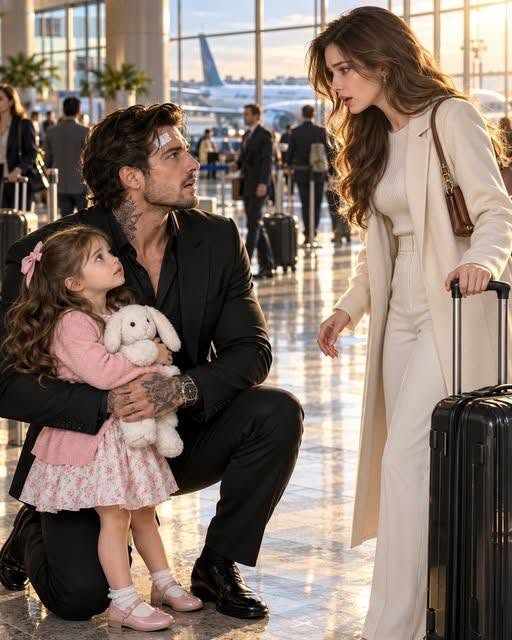
Story Genres: MAFIA BOSS

  • Chapter 2: THE MAN WHO DIDN’T KNOW HOW TO BE KIND

    Chapter 2: THE MAN WHO DIDN’T KNOW HOW TO BE KIND

    Elena spent the next twenty minutes sitting beside Mia in the staff lounge.

    She hadn't been dismissed.

    That was something.

    But she couldn't stop thinking about Vincent's expression.

    She had expected shouting.

    Perhaps a threat.

    Possibly an immediate instruction to pack her belongings and leave.

    Instead, he had crouched down.

    She kept replaying the moment in her head.

    "Mommy?"

    Elena looked down.

    Mia was coloring a butterfly.

    "Yes, sweetheart?"

    "That man is funny."

    Elena nearly dropped her coffee.

    "Funny?"

    "He has angry eyebrows."

    Elena pressed her lips together.

    "Sweetheart, we don't talk about people like that."

    "But he does!"

    "Does what?"

    "His eyebrows."

    Elena rubbed her forehead.

    "Please finish your picture."

    Mia returned to coloring.

    After a moment, she held up the drawing.

    It showed a large black figure with a square body, two enormous eyebrows, and what appeared to be a tiny red rectangle on its chest.

    "That's him."

    Elena examined it.

    "Very nice."

    "He's grumpy."

    "Maybe."

    "Can I give him a flower?"

    Elena looked at her.

    "Who?"

    "The grumpy man."

    "No, sweetheart."

    Mia frowned.

    "Why?"

    "Because he's working."

    Mia considered that answer.

    Then she carefully colored another flower.

    A few minutes later, Mia took the folded picture back out of her little purse and carefully opened it on the table. She bent over the page again, her tongue peeking out between her lips as she concentrated, and added two small black circles beneath the enormous eyebrows, then drew a straight line for a mouth and a red square on the figure's chest.

    "Is he finished?" Elena asked.

    Mia nodded. "Now he has a face."

    "That's very good, sweetheart."

    "He needs a flower."

    Mia searched through the little pile of crayons, found a yellow one, and drew a flower beside the black figure. Its stem leaned sideways, and the petals looked more like a sun, but Mia seemed satisfied.

    Elena sat beside her, trying to relax. The staff lounge smelled of coffee and lemon cleaner. A clock ticked above the refrigerator, and somewhere down the corridor a cart rattled over the polished floor.

    Mia held up the picture. "See? That's Mr. Grumpy."

    "I see him."

    "Why does he always look like that?"

    Elena chose her words carefully. "Some people have serious jobs. They think about a lot of things, and sometimes their faces look serious even when they aren't speaking."

    "Does he have a happy face?"

    "Of course he does."

    "I didn't see it."

    "Maybe you will."

    Mia looked doubtful. "Does he have a mommy?"

    Elena's expression softened. "He had a mother, sweetheart. Everybody has a mother."

    "Where is she?"

    "I don't know. She isn't here."

    Mia considered that, then tapped the yellow flower with her crayon. "Maybe he needs this."

    "Maybe."

    "Can I give it to him?"

    Elena glanced toward the lounge door. She pictured Vincent's study, the enormous desk, the black leather chairs, and the way the guards straightened whenever he appeared. She also remembered how he had lowered himself to Mia's eye level instead of shouting.

    "Not today," she said gently. "He's working, and we should let him finish."

    Mia accepted the answer without argument. She began drawing another flower, this one pink.

    "Mommy, is he mean?"

    Elena paused. "I don't know him well enough to say that."

    "But everybody is quiet when he comes."

    "People are careful around him."

    "Because he's big?"

    "Because he is in charge of a lot of important things."

    Mia studied the picture again. "I'm little, but I can be in charge of my crayons."

    Elena laughed softly. "That you can."

    Mia put the crayons into a neat row. "Then he can be in charge of his papers."

    "That's right."

    Mia leaned against her mother's arm. "Mommy, are you in trouble?"

    The question caught Elena off guard. "Why would you ask that?"

    "Your face looks worried."

    Elena brushed a loose strand of dark hair away from Mia's cheek. "I was worried because you went into a room where you weren't supposed to go."

    "I'm sorry."

    "I know, sweetheart. You didn't mean to frighten me."

    "Is Mr. Castalano going to send us away?"

    Elena looked toward the closed door. "I hope not. But whatever happens, you did nothing bad on purpose. You were curious, and you listened when he spoke to you."

    Mia thought about that. "I said he looked mad."

    "You did."

    "Was that rude?"

    Elena considered how to answer. "It might have surprised him. But you weren't trying to hurt his feelings."

    Mia nodded, reassured. "I can say sorry."

    "If you see him again and feel you should, you can."

    Mia folded the drawing carefully in half, then immediately unfolded it when Elena explained that the paper might tear. She smoothed it against the table with both palms.

    "Can we keep it?"

    "Of course."

    "For my room?"

    "Yes."

    Mia slid it into her little purse as if it were an important document. Then she looked up at her mother with a solemn expression.

    "Mommy, maybe Mr. Grumpy isn't grumpy all the time."

    Elena kissed the top of her head. "Maybe you're right."

    For the first time since entering the mansion, Elena felt her shoulders loosen. The day was still uncertain, and the strange photograph still frightened her, but Mia was safe beside her. For that moment, that was enough.

    ***

    At three o'clock, Vincent stood in his study with Renzo.

    The photograph remained on his desk.

    "Elena Ward," Renzo said. "Twenty-nine years old. Widowed. One daughter, Mia, three. No criminal record. Previous employment includes a hotel housekeeping department and several private residences."

    Vincent turned a page.

    "Before that?"

    "There's a gap."

    "How long?"

    "Almost three years."

    Vincent looked up.

    "Three years?"

    "Yes."

    "People don't disappear from employment records for three years without a reason."

    Renzo nodded.

    "I've asked someone to investigate."

    Vincent looked toward the window.

    "Who sent the photograph?"

    "We're tracing it."

    "Do it quietly."

    "Understood."

    Renzo hesitated.

    "Boss?"

    "What?"

    "About the little girl."

    Vincent turned.

    "What about her?"

    "She likes you."

    Vincent stared at him.

    "She's three."

    "Exactly."

    "She doesn't know who I am."

    "Perhaps that's why."

    Vincent returned to the documents.

    "Get out."

    Renzo smiled.

    "Yes, boss."

    ***

    At four, Elena received an unexpected instruction.

    Mr. Castalano wanted tea in his study.

    She stared at the message from the house manager.

    The study.

    Again.

    She prepared a silver tray with tea, a small pot of coffee, and two plates of biscuits.

    Mia stood beside her.

    "Mommy, where go?"

    "Upstairs."

    "To grumpy?"

    Elena nearly dropped the teapot.

    "His name is Mr. Castalano."

    "Grumpy Castalano."

    Elena looked at the ceiling.

    "Please, princess."

    They walked upstairs.

    This time, Elena knocked.

    "Come in."

    She opened the door.

    Vincent sat behind his desk.

    Renzo stood near the bookshelves, examining a folder.

    Vincent glanced at Mia.

    "She's still here."

    Elena stiffened.

    "I'm sorry, sir. The neighbor I called couldn't come."

    "I didn't ask why."

    Elena placed the tray down.

    Mia looked at the desk.

    Then at the enormous bookshelves.

    Then at Vincent.

    "Do you have cookies?"

    Vincent stared.

    "What?"

    "Cookies."

    Elena turned scarlet.

    "Mia, please."

    Vincent looked at the plate.

    There were biscuits.

    He pushed it toward the edge of the desk.

    "Take one."

    Mia looked at her mother.

    Elena nodded cautiously.

    "One, sweetheart."

    Mia took a biscuit.

    "Thank you."

    Vincent returned to his papers.

    For several minutes, the room remained quiet.

    Then Mia noticed the tattoo on his hand.

    She pointed.

    "Does it hurt?"

    Vincent followed her gaze.

    "Does what hurt?"

    "Your pictures."

    Renzo looked up.

    Vincent examined his hand.

    "Not anymore."

    "Why?"

    "Because they're old."

    Mia touched her own wrist.

    "I have a picture."

    She showed him a tiny temporary butterfly sticker.

    Vincent studied it.

    "That's a nice one."

    Mia smiled.

    "Mine is prettier."

    Renzo looked at the ceiling.

    Vincent leaned back.

    "Probably."

    Elena watched him in astonishment.

    He had spoken to her daughter for almost five minutes without raising his voice.

    Then Mia noticed something else.

    A photograph stood on Vincent's desk.

    It showed a younger Vincent beside another young man.

    Both wore black suits.

    The other man had a broad smile.

    "Who's that?"

    Vincent looked at the photograph.

    His expression changed.

    "My brother."

    "Where is he?"

    "He's gone."

    Mia frowned.

    "Where?"

    Vincent took a slow breath.

    "He died."

    Mia became quiet.

    She looked at the photograph again.

    Then she said softly, "You miss him?"

    The question seemed to reach somewhere Vincent had spent years keeping locked.

    "Yes," he answered.

    Mia nodded.

    "My daddy is gone too."

    Elena froze.

    She hadn't expected her daughter to say that.

    Vincent looked at her.

    "Her father?"

    Elena nodded.

    "He passed away when Mia was very young."

    Vincent looked at the child.

    "Do you remember him?"

    Mia shook her head.

    "Mommy has pictures."

    Vincent said nothing.

    Mia returned to her biscuit.

    And the subject ended as naturally as it had begun.

    But something in Vincent's expression remained different.

    ***

    That evening, after Mia had fallen asleep in the small staff room, Elena went to the kitchen to prepare a bottle of water.

    Renzo was there.

    He was speaking quietly on his phone.

    "No. I said not yet."

    He noticed Elena and ended the call.

    "Everything all right?"

    She nodded.

    "Yes. Thank you for earlier."

    Renzo smiled.

    "You're welcome."

    Elena hesitated.

    "Does Mr. Castalano always behave like that?"

    "Like what?"

    "With children."

    Renzo laughed softly.

    "I wouldn't know. I've never seen him around one."

    Elena looked down.

    "I thought he would fire me."

    "He considered it."

    Her stomach dropped.

    Renzo immediately raised a hand.

    "Then he changed his mind."

    "Why?"

    Renzo thought about it.

    "Perhaps he discovered that the most dangerous person in the mansion was a three-year-old girl with pink ribbons."

    Elena couldn't help smiling.

    But the smile faded when she noticed his phone.

    A notification had appeared.

    Renzo glanced at it.

    His expression tightened.

    "Excuse me."

    He walked away.

    Elena watched him disappear down the corridor.

    Something was happening.

    She could feel it.

    ***

    At eight that evening, Vincent remained in his study.

    He had received the preliminary investigation.

    Elena Ward had worked at a shipping company before her marriage.

    Vescari Maritime.

    His jaw tightened.

    That name was familiar.

    Very familiar.

    Dominic Vescari had spent years attempting to expand into territory Vincent controlled.

    Their rivalry had begun long before either man inherited his position.

    And the shipping company was connected to a warehouse fire eight years earlier.

    A fire that had killed Vincent's younger brother, Matteo.

    Vincent opened the file.

    A photograph of a young woman appeared.

    Her hair was longer.

    She wore office clothes.

    But the face was unmistakable.

    Elena.

    Renzo entered.

    "Boss?"

    Vincent slid the photograph across the desk.

    "Do you recognize her?"

    Renzo looked down.

    His expression changed.

    "That's Elena."

    "Where did you find this?"

    "Vescari's old employment records."

    Vincent stood.

    "She worked for them."

    "Yes."

    "Why didn't she tell us?"

    Renzo hesitated.

    "Maybe she doesn't know what the records mean."

    Vincent stared at him.

    "Or maybe she knows exactly what they mean."

    ***

    Elena was preparing to leave when the front entrance security guard called her.

    "Mrs. Ward?"

    She turned.

    "Yes?"

    "This arrived for you."

    He held a small white envelope.

    Elena looked at it.

    There was no return address.

    Her fingers trembled slightly as she opened it.

    Inside was a photograph.

    It showed her standing outside the mansion with Mia.

    On the back, somebody had written:

    You have kept the page long enough. Bring it to Pier 19 tomorrow night. Come alone.

    Elena stopped breathing.

    She knew that handwriting.

    She had last seen it three years earlier.

    On the day her husband died.

    A voice came from behind her.

    "Elena."

    She turned.

    Vincent stood at the foot of the staircase.

    His expression was unreadable.

    He had seen the photograph.

    He had seen the message.

    And he was holding another document.

    "Before you leave," he said quietly, "I think you and I need to discuss your previous employer."

    Elena looked at the paper in his hand.

    Then at the man standing in front of her.

    "What previous employer?"

    Vincent's eyes hardened.

    "Vescari Maritime."

    Elena's face went completely pale.

    And Vincent knew.

    She recognized the name.

    Vincent let Elena's silence settle, then told her to take Mia upstairs and wait until he called for her. Elena collected her daughter and left the entrance hall without another word. The mansion had grown quiet by the time Vincent returned to his study that night. Most of the staff had finished their shifts. The flowers in the entrance hall had been replaced, the silver trays had been polished, and the last guests had gone home.

    Renzo entered carrying a thick gray folder.

    "You asked for the Vescari file."

    Vincent gestured toward the chair opposite his desk. "Put it there."

    Renzo laid the folder down and opened it. Inside were company records, old shipping manifests, photographs, and copies of reports connected to the warehouse fire that had killed Matteo.

    Vincent stood behind his desk without sitting. "Start with the company."

    "Vescari Maritime was used as a legitimate shipping operation for years. The paperwork was clean enough to satisfy routine inspections, but some of the older manifests don't match the warehouse logs."

    "How many?"

    "At least eleven. Possibly more."

    Vincent turned a page. "And Elena Ward?"

    "Her name appears in the administration records. She was employed there before Aaron died."

    "Did she have access to the original manifests?"

    "According to the records, yes."

    Vincent's jaw tightened. "Then she may know more than she told us."

    "She may also have been a witness without understanding what she was seeing."

    Vincent looked at him. "You sound as though you're defending her."

    "I'm saying we don't know enough to accuse her."

    Vincent looked down at the folder again. A photograph slipped from between two pages. It showed Matteo standing outside the warehouse, one hand raised to shield his eyes from the sun. He was smiling at whoever had taken the picture.

    Vincent picked it up.

    For a long moment, he said nothing.

    Renzo's voice softened. "That was taken a few weeks before the fire."

    "I remember."

    "Matteo was talking about leaving then."

    Vincent's gaze remained on the photograph. "He talked about a lot of things."

    "He was serious."

    "He should have come to me."

    "He tried."

    Vincent looked up sharply.

    Renzo held his gaze. "You were busy taking over the eastern routes. He said you wouldn't listen."

    Vincent set the photograph down with deliberate care. "I was trying to keep the family alive."

    "I know."

    "Then don't tell me what I should have heard."

    Renzo fell silent.

    Vincent turned another page. A shipping manifest carried two different destination codes, one handwritten over the other. The alteration was crude, as if somebody had expected nobody to examine the original.

    "Someone wanted this shipment hidden," Vincent said.

    "Yes."

    "And Elena was in the records department."

    "Yes."

    Vincent closed the folder. "Find out whether Aaron copied anything before he died."

    Renzo nodded. "I'll ask around."

    "Quietly. If Vescari knows she has something, he may already be watching her."

    Renzo glanced toward the door. "Then she may be in danger."

    Vincent looked again at Matteo's photograph. "She brought a child into this house because she couldn't afford to miss a shift. Whatever she knows, she didn't come here looking for a fight."

    "That doesn't mean she isn't hiding something."

    "No," Vincent said. "It doesn't."

    He picked up the photograph and placed it beside the desk lamp, separate from the file.

    Renzo watched him do it. "What do you want me to do about Elena?"

    "Keep an eye on the people asking about her. Don't frighten her, and don't let anyone near the girl."

    "Understood."

    Vincent looked at the old photograph once more. "And Renzo?"

    "Yes, boss?"

    "If the woman is in danger because of something that happened to my brother, I want to know before somebody else gets to her."

    Renzo closed the folder. "I'll find out."

    When he left, Vincent remained standing beside the desk. The photograph of Matteo seemed to hold his attention more firmly than the records did. His brother had been smiling at the camera, unaware that the warehouse would soon become the place where his life ended.

    Vincent touched the edge of the photograph.

    "Why didn't you tell me?" he whispered.

    The room offered no answer.

    —
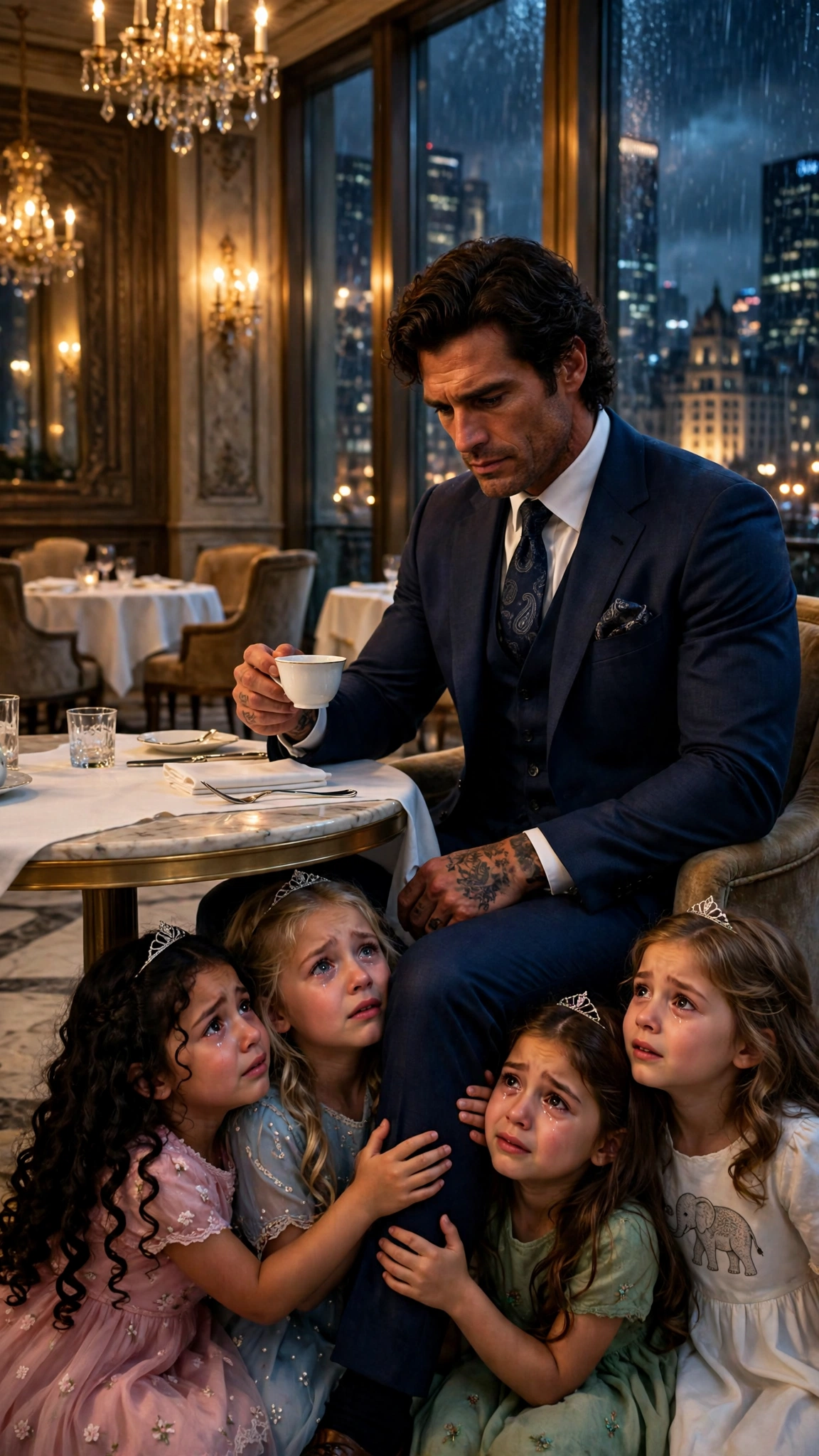
  • Chapter 1: THE LITTLE GIRL WHO WASN’T AFRAID

    Chapter 1: THE LITTLE GIRL WHO WASN’T AFRAID

    "You look mad."

    Vincent Castalano turned his head sharply.

    The three-year-old standing beside him on the luxurious cream-colored sofa stared directly into his face.

    His eyebrows lowered.

    His jaw tightened.

    His dark eyes narrowed with the kind of expression that had made grown men forget how to breathe.

    Mia studied him carefully.

    Then she crossed her little arms tightly over her pastel princess dress, lowered her eyebrows, pressed her lips together, and tilted her chin upward.

    She copied him perfectly.

    "You look mad," she repeated in a tiny but confidently serious voice.

    Vincent became motionless.

    His eyes narrowed further, not with anger this time, but with genuine disbelief.

    Behind the sofa, a woman in a black housekeeping uniform gasped.

    Both hands flew to her mouth.

    She looked as though the entire world had just ended.

    Because the little girl standing beside New York's most feared mafia boss was her daughter.

    And Vincent Castalano had forbidden children from entering his private study.

    Ever.

    ***

    Six hours earlier, Elena Ward had stood in the narrow kitchen of her small apartment, staring at her phone.

    "No, please. I understand, but I have to work today."

    She listened.

    Her expression fell.

    "Your son has a fever? Oh, I'm sorry. I hope he feels better."

    The call ended.

    Elena lowered the phone.

    Across the kitchen, Mia sat in her little chair, swinging her legs.

    Her dark brown hair was gathered into a high bun decorated with two pink ribbon bows. Her colorful princess dress had layers of pastel pink, lavender, yellow, and blue tulle, with tiny embroidered flowers and butterflies.

    She was carefully arranging three strawberries on a plastic plate.

    "Mommy?"

    Elena looked at her.

    "Yes, sweetheart?"

    "Are we going?"

    Elena forced a smile.

    "Going where, princess?"

    "Your big house."

    Elena closed her eyes.

    Her babysitter had canceled.

    Her neighbor, who occasionally helped, was visiting her sister in Connecticut.

    And Elena couldn't afford to miss another shift.

    Not this month.

    Not with the rent overdue and the electricity bill sitting unopened beside the refrigerator.

    She worked as a housekeeper at the Castalano mansion in Manhattan.

    The salary was considerably better than anything she had earned before.

    But the job came with one terrifying condition.

    Never cause trouble.

    The owner was Vincent Castalano.

    Thirty-seven years old.

    Tall, broad-shouldered, muscular, with thick dark hair swept backward and a full dark beard.

    His black-and-gray tattoos covered his hands and extended beneath his expensive open-collar shirts.

    He wore fitted black suits, dark red pocket squares, and a luxury watch that cost more than Elena's apartment furniture.

    People in New York whispered his name in restaurants.

    Businessmen lowered their voices when discussing him.

    Even men who worked for him avoided meeting his eyes when he was displeased.

    Elena had heard stories about Vincent before accepting the position.

    She had also heard that he never forgave betrayal.

    And that his private study was strictly forbidden.

    She had worked at the mansion for four months without a single serious mistake.

    She couldn't lose that job.

    Not now.

    "Mommy?"

    Elena crouched beside Mia.

    "Sweetheart, listen carefully. Your babysitter can't come today."

    Mia blinked.

    "She sick?"

    "Her little boy is sick."

    Mia considered that.

    Then she nodded solemnly.

    "Give him medicine."

    Elena smiled despite herself.

    "That's a good idea."

    "Can I come with you?"

    Elena hesitated.

    The answer should have been no.

    But the alternatives were disappearing.

    She checked the time.

    Her shift began in forty minutes.

    "I need you to promise me something."

    Mia immediately raised one hand.

    "Promise!"

    "You stay close to Mommy. You don't touch anything expensive. You don't run around, and you never enter rooms Mommy tells you are private."

    Mia nodded enthusiastically.

    "Okay!"

    "And you must listen to the security guards."

    "Okay!"

    "And please don't talk to Mr. Castalano unless he talks to you first."

    Mia frowned.

    "Why?"

    "Because he's a very important man."

    Mia looked at her mother's face.

    "Like Santa?"

    Elena almost laughed.

    "Not exactly."

    "Does he give presents?"

    "I don't know, sweetheart."

    Mia picked up her little purse.

    "Maybe he has cookies."

    Elena sighed.

    She had absolutely no idea what she was getting herself into.

    ***

    The Castalano mansion stood behind tall iron gates on a quiet Manhattan street.

    Its cream-colored exterior, enormous windows, elegant landscaping, and carefully maintained gardens looked more like a European palace than a private residence.

    Inside, an ornate black wrought-iron staircase curved toward the upper floor.

    Expensive paintings decorated the walls.

    Fresh flowers stood in crystal vases.

    Every piece of furniture looked as though nobody had ever been permitted to sit on it.

    Two security guards opened the entrance.

    "Morning, Elena."

    "Good morning, Frank."

    The older guard glanced down.

    Then he noticed Mia.

    His eyebrows rose.

    "Well, who's this?"

    Elena's face turned red.

    "This is my daughter. My babysitter canceled unexpectedly, and I couldn't find anyone else. I'll keep her with me. She won't cause any problems."

    Frank looked at the little girl.

    Mia smiled.

    "Hi!"

    "Hello, princess."

    The second guard, a younger man named Milo, crouched slightly.

    "Are you visiting?"

    Mia nodded.

    "Mommy has work."

    "That sounds important."

    "It is."

    Elena wanted to disappear.

    "Please don't mention this to Mr. Castalano," she whispered.

    Frank's expression became serious.

    "Elena, you know the rules."

    "I know. I understand. I'll take responsibility."

    Frank looked toward the staircase.

    "Stay in the service wing. Keep her away from the study and the east corridor."

    "I will."

    Elena held Mia's hand.

    For the next several hours, everything went surprisingly well.

    Mia sat in the staff break room with coloring books.

    Elena completed the morning housekeeping assignments.

    She checked on her daughter every twenty minutes.

    And Mia behaved beautifully.

    Until lunchtime.

    "Mommy?"

    Elena was polishing a silver serving tray.

    "Yes?"

    "Bathroom."

    "Okay, sweetheart. Come with me."

    Elena placed the tray down.

    But before she could reach Mia, the kitchen telephone rang.

    She answered.

    "Housekeeping."

    The head housekeeper needed her upstairs immediately.

    A guest had arrived unexpectedly, and the formal guest suite needed attention.

    Elena looked between the telephone and her daughter.

    "Can you wait just one minute, princess?"

    Mia nodded.

    Elena hurried away.

    She was gone for less than five minutes.

    But five minutes was enough.

    Mia noticed an open door.

    It was beautiful.

    A long corridor stretched beyond it, with polished wooden floors and paintings in golden frames.

    At the end stood a large double door.

    One side had been left slightly open.

    Mia walked toward it.

    She wasn't frightened.

    She was curious.

    And curiosity was something her mother had never managed to discourage.

    ***

    Vincent Castalano was having a terrible morning.

    Three shipments had been delayed.

    A business partner had disappeared.

    And somebody had apparently been using one of his legitimate companies to move money without authorization.

    He sat in his private study, reviewing documents.

    His fitted black suit was immaculate.

    His open-collar shirt revealed the black-and-gray tattoos spreading across his upper chest.

    A dark red pocket square rested neatly in his jacket.

    His expensive wristwatch reflected the daylight coming through the enormous windows.

    Renzo Moretti stood behind him.

    Renzo was Vincent's closest associate, a man who had worked beside him for eleven years.

    He wore an expensive dark business suit and maintained the calm expression expected of someone who had spent years around dangerous people.

    "Boss, the meeting has been moved to four."

    Vincent didn't look up.

    "Why?"

    "Vescari's representative requested it."

    Vincent stopped turning a page.

    "Did I ask him to move it?"

    "No."

    "Then why are we discussing it?"

    Renzo nodded.

    "Understood."

    Two security guards stood discreetly near the study entrance.

    Nobody interrupted Vincent when he worked.

    Nobody entered without permission.

    And nobody touched anything on his desk.

    That was the rule.

    Then a small voice came from beside him.

    "You look mad."

    Vincent turned.

    And found a tiny princess standing on his sofa.

    ***

    Elena reached the study doorway.

    Her blood seemed to disappear from her body.

    "Mia!"

    The little girl turned.

    "Hi, Mommy!"

    Elena nearly collapsed.

    "Mr. Castalano, I'm so sorry—"

    Vincent slowly raised one eyebrow.

    Mia immediately raised hers.

    Renzo looked down.

    His shoulders began trembling.

    He pressed his lips together, desperately attempting to control himself.

    Vincent noticed.

    "Something amusing, Renzo?"

    "No, boss."

    "Then stop shaking."

    "Yes, boss."

    Vincent looked back at Mia.

    He slowly raised one finger.

    It was a silent command for Elena to stop speaking.

    She froze.

    Then something happened that neither Elena nor Renzo would ever forget.

    Vincent slowly rose from the sofa.

    He adjusted his jacket.

    Then he slowly lowered himself into a crouch directly in front of Mia, bringing his face level with hers.

    His tattooed hand rested against his knee.

    Elena stared.

    She had watched powerful men beg Vincent for forgiveness.

    She had watched business executives tremble when he entered a room.

    But she had never seen him lower himself to anyone's level.

    Especially not a child.

    "What's your name?" he asked.

    Mia looked at him.

    "Mia."

    "How old are you?"

    She held up three fingers.

    "Three."

    Vincent nodded.

    "Why are you standing on my sofa?"

    Mia looked down.

    Then back at him.

    "Because I'm tall."

    Renzo turned toward the window.

    He was losing the battle.

    Vincent's expression remained serious.

    "Is that so?"

    Mia nodded.

    "Mommy says I'm little, but I'm big."

    "Your mother is probably right."

    Mia frowned.

    "You don't know."

    For the first time in years, Vincent Castalano almost smiled at an answer.

    He slowly raised one eyebrow again.

    Mia copied him immediately.

    He lowered it.

    She lowered hers.

    He tilted his head.

    She tilted hers.

    Renzo made a strangled noise.

    Vincent glanced at him.

    "Leave."

    Renzo straightened.

    "Of course."

    He walked out with the two guards.

    But not before Elena caught the unmistakable expression on his face.

    He was smiling.

    And that was almost as frightening as Vincent being angry.

    Elena finally found her voice.

    "Sir, I can explain everything. The babysitter canceled, and I had nowhere to leave her. I should never have brought her here. I'll take her home immediately. Please don't dismiss me."

    Vincent looked at Elena.

    Then at Mia.

    "Does she always talk this much?"

    Mia nodded.

    "Yes."

    Elena closed her eyes.

    Vincent looked back at the child.

    "Does your mother always worry this much?"

    Mia nodded again.

    "Yes."

    "Why?"

    "Because she says we need money."

    Elena wanted the floor to swallow her.

    Vincent remained quiet.

    Then he stood.

    "Your daughter stays in the staff lounge for the rest of the day."

    Elena nodded quickly.

    "Yes, sir."

    "And nobody enters my study without permission."

    "Of course."

    He looked down at Mia.

    "That includes princesses."

    Mia considered this.

    Then she pointed at him.

    "You're not a princess."

    Renzo, who had paused outside the door, covered his mouth.

    Vincent stared.

    "No," he agreed quietly. "I'm not."

    Elena gathered Mia into her arms.

    "I'm sorry again, sir."

    Vincent returned to his desk.

    "Take her downstairs."

    Elena hurried out.

    But she had barely reached the corridor when Renzo appeared beside her.

    "Mrs. Ward?"

    She stopped.

    "Yes?"

    Renzo looked toward the study.

    "Don't worry."

    Elena blinked.

    "About what?"

    He smiled faintly.

    "I've worked with Vincent for eleven years. I've never seen him crouch for anyone."

    Before Elena could respond, Renzo's expression changed.

    He had received a message on his phone.

    He read it twice.

    Then he walked back toward the study.

    Vincent looked up.

    "What?"

    Renzo closed the door.

    "Boss, somebody just asked our security office about a woman named Elena Ward."

    Vincent's expression hardened.

    "Who?"

    Renzo placed his phone on the desk.

    The message contained a photograph.

    It showed Elena standing outside the mansion with Mia.

    Underneath it was a single sentence.

    We found the woman who took the missing ledger.

    Vincent stared at the photograph.

    Then he looked toward the door through which the little girl had disappeared.

    "Find out everything about her."

    And for the first time that afternoon, the expression on his face wasn't anger.

    It was suspicion.

    Because somebody had just brought a dangerous secret into his home.

    And that somebody had a three-year-old daughter.

  • Chapter 7: The Catch That Stayed

    Chapter 7: The Catch That Stayed

    A year is a long time in the life of a child and a short time in the life of a story, so I will tell it the way Lily would: in the important parts.

    In June, my mother walked me down the aisle.

    Not an aisle, exactly — the garden path at the lake house, between the hydrangeas Vincent's gardeners had been forbidden on pain of death from making symmetrical, with the lake doing its best impression of a witness. Margaret Bennett, seventy-two, one year past a stroke that had tried to take her sentences, walked the whole length of that path on her own two feet with a cane she had decorated for the occasion with a white ribbon and an expression that dared the universe to comment.

    There were forty guests. I have performed for forty thousand and been less nervous.

    Emma was my maid of honor and cried through the entire ceremony in the front row, at professional volume, undermining fifteen years of telling me she did not cry at weddings. Dom Ricci stood as best man — a sentence I would have had committed to an asylum in any previous year of my life — and produced the rings from his breast pocket with the solemnity of a man defusing something. Nonna Giulia sat in the front row in a hat like a small architecture, holding a program she had already memorized, and every few minutes she would look at Lily — flower girl, five years old now, scattering petals with the distribution strategy of a crop duster — and her whole face would do something that eighty-one years of discipline could not prevent.

    And Vincent waited at the end of the path.

    We had written our own vows, because the traditional ones had already been said once in a chapel with a priest, and we were different people than the ones who had said them, and the promises that fit us now were not the ones in the book.

    His were short. "I promised you once that there would never be anyone else, and then I spent five years proving it in the ugliest possible direction. This time I am promising you the thing I should have promised then. Whatever comes — it comes to your face first. No arithmetic. No eleven men in a room. You will never again learn your own life from a window, Claire. I would rather lose the world with you told than keep it with you managed."

    Mine were shorter. "Twelve years I loved you, and five years I survived you, and I am standing here with both of those women in me, and they agree on exactly one thing, so it's the whole vow: stay. When it's hard, stay and tell me. When you're afraid, stay and tell me. The only unforgivable thing left in this family is silence — and Vincent, we are retired from it."

    We married each other on the path, with the lake applauding in its flat gray way and my daughter announcing, at the precise moment of the kiss, to the entire assembly, "The dragon may now be the dragon forever," which the officiant — a retired judge who had once sentenced two Moretti associates and had agreed to this as, he said, the far better story — solemnly entered into the record.

    Afterward there was cake, and dancing on the grass, and my mother teaching Dom Ricci the two-step with her cane hung over his arm like a flag of truce. And near the end of the evening, when the light went the color of the inside of a shell, Lily — full of cake, barefoot in the grass in her flower-girl dress, drunk on being five at a wedding — came pelting down the garden path toward the terrace at a speed no small body should attempt in satin.

    Her foot caught the hem. I saw it from twenty feet away, across a garden full of people, with the exact geometry of another afternoon laid over it like a transparency: a polished terminal floor, a red coat, a small body tipping toward a fall.

    Vincent caught her.

    He caught her out of a dead sideways lunge with a shoulder that still ached in cold weather and would ache, the surgeons said, politely forever — caught her, swung her up in one unbroken arc, and spun her, both of them laughing, her squeal going up over the lake like a firework while forty guests applauded a thing most of them didn't know they were applauding.

    He set her on his hip. She wound both arms around his neck. "Daddy caught me," she announced to the garden at large, in the tone of a person confirming that gravity had once again respected the rules.

    "Daddy catches you," I said, arriving, out of breath for no reason the garden could see. "That's the entire job description. Ask him. He wrote it."

    "I wrote it," Vincent agreed, and shifted our daughter to one arm so the other could come around me, and the three of us stood in the falling light above the lake while the music started again behind us.

    Here is the part the tabloids never got, and it is the only part that matters, so I will say it plainly.

    In October, my film premiered in Chicago — the one Director Park had been mailing into a wall of loyalty for six months, the one I shot for four months with my husband in the front row of the dailies room and my daughter doing her homework in my trailer and announcing to the crew which takes were "the good crying." The premiere was at the old theater on State Street, two blocks from the diner where a broke boy used to drink coffee he didn't want so he could walk a waitress to the train.

    On the red carpet, a reporter from an entertainment channel — young, kind, doing the arithmetic of my biography out loud for her viewers — asked me how it felt to make a comeback after five years away. "Do you regret the lost years?" she asked. "The career you might have had?"

    And I thought about it honestly, there under the lights, with my mother's hand in the crook of Vincent's arm on one side of me and Lily asleep already against his other shoulder in a dress with too much tulle, five years old and famous now in exactly one photograph that the Tribune had captioned, with an accuracy that made Emma frame it: MORETTI, CAUGHT.

    "No," I said. "I don't regret them. I regret how they began — I'll regret that in the right places, at the right volume, for the rest of my life, and so will he, and that's ours. But the years themselves? I raised my daughter in them. She learned the names of birds. I learned I could be a whole person in a quiet town with no cameras, which is information an actress should have and almost none of us do. And when the story came back for us—" I looked at the man beside me, who was pretending not to listen with his whole body. "—it turned out the story had been standing in a diner washing dishes, keeping the door in sight, the entire time."

    The reporter, to her credit, did not ask a follow-up. Some endings you can hear arrive.

    Twelve years I loved him. Five years I survived him. And then — the part no one warns you about, the part that is not a premiere or a wedding or a gunshot in a warehouse — an ordinary life, which we are building now the way he once built an empire and I once built a career: brick by brick, on purpose, with our hands.

    Lily is learning to whistle. Her father keeps his promises at the pace she sets, and the pace, lately, has been accelerating — he is permitted, as of this spring, to be the dragon on Sundays and Wednesdays, and to lose at memory games, and to read the story twice when the story is the good one. My mother's sentences came back to her like homing pigeons, one by one, and she uses them now almost exclusively for prophecy and bingo commentary, both of which she delivers with terrifying accuracy.

    And sometimes — not often, and never when I'm braced for it — I am standing in our kitchen in the morning with the lake flat and gray beyond the glass, and Vincent comes up behind me with two coffees the way he has done since we were broke and twenty-something and the whole world was a diner and a dream, and he sets mine down the way I take it without being asked, and says nothing at all, because there is nothing that needs saying, because everything that matters in this house now gets said out loud, in daylight, by both of us.

    In September, Lily started school — a small brick building twelve minutes from the lake house with a flag she saluted with her whole arm and a teacher named Mrs. Abernathy who possessed the only filing system in Illinois that rivaled my daughter's. Vincent and I walked her to the gate together, like millions of unremarkable parents, which was the most remarkable thing that had happened to any of us all year. He had rehearsed for it the way he once rehearsed for sit-downs: he wore the wrong shoes, corrected to loafers on my instruction; he carried the spare hair ribbons in his breast pocket where other men's intentions used to live; and when Lily, at the gate, suddenly went quiet and small and four-again in the face of the big door, he did not fix it or armor it. He crouched down in the schoolyard gravel in his good coat and he said, "Dragon's honor: I will be exactly here at three. Dragons are never late. It's the whole religion."

    "And if a meeting runs over?" she demanded, because she had inherited, from both sides, an understanding that the world runs on the fine print.

    "Then Dom comes at three and I come at three-oh-two with an apology in writing."

    She considered this contract, nodded once, hugged us both with assembly-line efficiency, and marched through the big door without looking back — which is how I learned, standing in a schoolyard in September with my husband's hand crushing mine, that children leaving is a rehearsal you never finish, and that having someone beside you whose hand crushes back is the entire difference between rehearsal and grief.

    In November, at the kitchen table, over a bowl of soup she was mostly wearing, Lily produced — after five months of lessons, two instructors (one professional dragon, one exasperated mother), and a brief scandal involving the dog next door — her first true whistle. Two notes. Wobbly, wet, unmistakable. Vincent set down his spoon with the care of a man setting down a relic.

    "Do it again," he said.

    "Can't," Lily said, with enormous dignity. "It's resting."

    He looked at me over her head with his heart entirely in his face, the face I had met in a diner and feared in an office and married twice in two different lives, and I thought: this is what the five years bought, in the end. Not the empire, not the peace, not even the truth. A man at a kitchen table, undone by two notes of a whistle, filing them somewhere holy.

    That is the catch that stayed.

    Not the airport. Not the warehouse. This: an ordinary man, in an ordinary kitchen, who learned — at the cost of everything he had — that you do not protect the people you love by hiding them from the truth. You protect them by standing where they can see you, with your hands open and your story told whole, ready to catch whatever falls.

    Starting with the truth. Starting with each other.

    Starting, every morning, with coffee.

  • Chapter 6: Terms of Surrender

    Chapter 6: Terms of Surrender

    Vincent was in the hospital for nine days, and by the third day the floor had become a small nation.

    His men rotated through the corridor in soft shoes. Dom ran an empire and a war-crimes tribunal's worth of federal gratitude from a chair outside the door — Dario Castellano, alive and talking, was trading five years of his father's sins for a cell with a window, and the last gray corners of the Moretti map were being signed over to daylight in rooms I did not enter and no longer needed described. My mother held court from the family lounge with her bell and her crossword. Emma moved Lily's entire small civilization — the purple dragon coloring book, the rabbit, the paper crown — into the hospital's family room, and the nurses, who had begun the week terrified of the name on the door, ended it bringing my daughter extra pudding cups and calling her father "Mr. M."

    Lily visited the bedside every day. She supervised the bandage. She interrogated the surgeon with the seriousness of a building inspector — "Is the dragon's wing fixed?" — and informed Vincent that whistling lessons would resume "when your ouch is closed," a medical standard of her own invention that the entire surgical team adopted without a vote.

    On the fifth day, I came in with coffee to find her asleep at last in the chair beside his bed, and Vincent awake, watching her with that coastline-memorizing look, his good hand resting on the blanket between them like a country respecting a border.

    "Dom told me the plea is done," he said quietly. "Dario signed this morning. Italy wants what's left of him after Illinois is finished. It's over, Claire. The war, the Castellanos, all of it. It's finally, actually over."

    "Good," I said. "Then hear my terms, because I have spent five days writing them in my head on this floor, and they are not a negotiation, Vincent. They are what staying looks like."

    He folded his attention to me the way he had once folded it to maps. "Say them."

    "One. There is no version of this family that runs on managed truth. Not for her safety, not for my peace, not for any arithmetic eleven men in a room can do. If something is coming for us, it comes to my face first, and we decide together. You break that once and I will take her so far that five more years of searching will read like a warm-up."

    "Agreed."

    "Two. You finish what you started in those federal rooms. The docks, the clubs, the legitimate empire — I don't care what it costs or how long the lawyers bill. Lily Moretti —" The name landed between us, spoken aloud by me for the first time, and I watched it hit him. "— does not inherit a whisper. She inherits a name that's only a name."

    "Agreed. It's already half done. Dom calls it my retirement. I call it—" he searched, and found something wry and tired and real, "— tuition."

    "Three." I sat down in the chair my daughter had vacated, and took the coffee to have something to hold. "She decides the pace of you. Not me, not you, not your mother's hopes or this city's story. If she wants Sundays, it's Sundays, until she wants more. You will be exactly as much father as she invites, and you will never — ever — make her feel the size of what you're not being given. She didn't choose any of this. She's the only one of us who didn't."

    "Agreed," he said, and his voice was wrecked and steady at once. "I had four years stolen by my own arithmetic, Claire. I'm not going to steal one day of hers making up for it."

    "And four," I said, "is mine. I'm going back to work. Not this year — she's four, and we've had a spring. But my career is not a room in your house that you're generously not entering. It's mine. It was mine when I was waiting tables and it's mine now. A director named Park has been sending Emma a script for six months and Emma has been too loyal to tell me. Tell Dom to stop frightening the mail."

    At that, the ghost of the old smile — the one from the diner on Thursdays, before empires. "Consider the mail officially unfrightened."

    "Then we're agreed," I said.

    "Then we're agreed." He looked at our sleeping daughter, and the room went quiet around the two of us and the border-respecting hand on the blanket. "Claire. What she called me. In her sleep, at the lake house. I never asked whether I was allowed to— keep that. Whether it was a door or just a dream talking."

    "I heard her," I said. "It was a door. Walk through it at her pace, like everything else."

    His mother came on the seventh day.

    Giulia Moretti was eighty-one years old, small as a bird and twice as dangerous-looking, and she had opposed my marriage for its first two years and then loved me with the ferocious completeness of a woman who had decided, and I had not seen her since the week of the divorce, when she had stood in the mansion's hall watching my suitcases and said nothing at all.

    She came into the hospital room alone and stood looking at her son — bandaged, diminished, alive — and then she turned to me, and Giulia Moretti, who had buried a husband and a son and outlived two police commissioners' ambitions, bowed her head.

    "I approved it," she said. "The priest's terms. Dom's plan. My son sat in my kitchen and told me he would have to say those words to you, and I told him a Moretti wife was a soldier or a liability, and that you had been given every chance to be a soldier. I have had five years to rehearse hating myself at the correct volume, Claire. I knew you were pregnant."

    The room stopped.

    "Not then. Later. A woman in the Michigan town — a midwife's receptionist with a brother who owed us. Four years ago, a whisper: a little girl, dark eyes, a mother who taught children's theater. I did the arithmetic my son did in that airport in three seconds, and I—" Her voice, for the first time in my knowledge of her, failed. "I said nothing. To him. To you. Because the lie was load-bearing by then, and I told myself the child was safer as a secret than as my granddaughter. I protected the family from its own heir. That is the sentence I will die with, and I came to say it to your face before I do."

    I stood up. I want it understood that I did not do what the scene wanted. I did not forgive her in a wash of violins, and I did not strike her with the words she had plainly come to be struck with. She was eighty-one, and she had carried it four years, and her son was in the bed between us with a bullet hole in him shaped exactly like the cost of the family's way of loving people.

    "You'll tell Lily stories about her grandfather when she's old enough to ask," I said. "True ones. That's your penance, Nonna. It's a long one. I expect you to live to serve all of it."

    She laughed — startled, wet-eyed, entirely undone. "Nonna," she repeated, like a woman trying a key in a door she'd built herself out of. "Yes. Yes, I can serve that."

    On the ninth day, before they discharged him, I drove across the city alone, to a small diner on Fulton Street.

    Rosa Delgado had a son of five now — Enzo, named for his father, all knees and questions — and a lease with her own name on it, because Vincent had signed the diner over to her the year the war ended and had never once come back to be thanked at a volume she was comfortable with. She knew who I was before I sat down. A famous face is a hard thing to aim at a counter, and besides, she had been expecting me for five years, in the way you expect weather you can smell.

    "He never touched me," she said, setting coffee in front of me like a verdict. "I want you to hear it from the actual woman and not from his confession, because men confess prettily when it serves them. He carried plates. He paid my landlord in cash and my hospital in full and he sat in that booth—" she pointed, third from the window, "—eating pie he didn't want so the neighborhood would see him there at closing, standing between my boy and the street. And the whole time, Mrs. Moretti, the whole time, he was looking at the door like it had stolen something from him. It had. It was me who told him once — you should hear this too — I told him, 'Whatever woman thinks you're doing this for me is a fool, because you look at me like a duty and you look at that door like a grave.' He said, 'She's not a fool. She's the only true thing I ever said no to.'"

    I sat in the third booth from the window with my coffee going cold and cried for the first time since the airport — not the breaking kind, the release kind, the kind that empties a room so something else can be built in it.

    "Thank you," I said. "For the plates. For all of it."

    "Take care of the door," she said, and refilled my cup like we were ordinary women. "It waited long enough."

    I drove back to the hospital as the light went down, and in the elevator I rehearsed nothing at all — the first honest performance of my life, no lines, no marks, no plan — and I walked into Vincent's room where my daughter was teaching her father to whistle around a hospital straw, badly, both of them helpless with it, and I stood in the doorway and let myself want the future for the first time in five years.

    On the eighth night, Dom came to the hospital room carrying a bundle wrapped in a gray cloth, which he set on the tray table with the care of a man handling either explosives or communion.

    "He never authorized this," Dom said. "I am disobeying an order of five years' standing, and I find I no longer care, which at my age is either senility or growth. These were in the desk at the mansion. Every year, on the same date. He wrote them knowing they could never be sent — a sent letter was a thread, and threads were what we had agreed to burn. So he wrote them to a woman who didn't exist anymore, in a house he'd emptied of her, and he put them in a drawer, because in our world, Mrs.—" he caught himself, and something almost like a smile crossed the old stone of his face, "—because in our world, Claire, unsent is not the same as unwritten. I thought the record should be complete. I have become devoted, late, to complete records."

    There were five letters. I read them all that night in the corridor outside my sleeping ex-husband's room, under the hospital's kind fluorescent hum, with my back against the wall and my shoes off like a teenager.

    The first was dated the anniversary of the divorce, one year out. It was three pages long and it said, among other things: Rosa's boy was born in March. He is loud. I stood in the hospital corridor there too, with cigars I was not allowed to smoke, and I understood that I had built my life into a corridor outside other people's joy, and that this was correct, and that correct was the coldest word in any language I speak. It said: You would have laughed at me today. I cleared a table for a woman whose husband died doing my job and an old man in the diner told his wife, that one's a goner for her. He was right about the shape of it and wrong about every fact, and I let him be wrong, because being wrong was keeping you alive in a town in Michigan I am not allowed to know the name of. (Dom had appended a note in pencil, in a clerk's hand: The town was known by year two. He never asked. I never offered. It was the only order of his I ever softened.)

    The fifth letter was dated ten weeks before a little girl chased a snow globe through Terminal 3. It said: I am told I am winning the peace. There is no one left to make war on, which my father would call the definition of victory and I call the discovery that an empire is just a waiting room with better furniture. If I ever stand in front of you again I will not ask for anything. I rehearsed asking for years and I have given it up as a bad production. I will only tell you the whole of it, in daylight, and then I will accept your verdict at whatever volume you choose to deliver it. You once promised to let me go if I loved someone else. I have spent five years learning the exact size of the room that promise built. Letting go is what cowards call it when they mean hiding. I hid. You went. The difference between us, Claire, is that everything you did was brave.

    I folded the letters back into their gray cloth with hands that shook only a little, and I went into his room, where the machines were drawing their green mountains and my daughter was asleep in the family chair with her mouth open, and I sat down in the chair on the other side of the bed, between my whole past and my whole future, and I took Vincent Moretti's hand — the one that had caught our daughter falling through the dark — and I held it until the nurses changed shifts and the sun came up over the lake like it had been drawn there by a child who believed in giving people weather.

  • Chapter 5: He Caught Her Again

    Chapter 5: He Caught Her Again

    I said yes.

    I said it to the mirror first, practicing, the way I used to practice acceptance speeches in the Lakeview diner bathroom — and then I said it to Vincent on the phone, in the plainest voice I owned: "I'll stand next to you. For her. Don't make me regret the geography of that sentence."

    The Moretti name had dressed me for a decade, and the machinery remembered me. A gown arrived — deep green, nothing like a costume, everything like armor. Emma flew the stylist in from Los Angeles and fired her twice before lunch on principle. My mother, from her suite, delivered the only review that mattered: "You look like a woman walking into a room she owns. Try to remember that you do."

    Lily stayed at the lake house. That was never in question — the gala was about ending her secrecy, not exhibiting her. She stayed with Emma and my mother and a rotation of men who pretended to be furniture, and she was furious about the entire arrangement because the dragon had promised, for Sunday, to teach her how to whistle.

    "Tell the dragon the gala is boring and he owes me two whistles," she instructed me at the door, in her pajamas, with the gravity of a head of state.

    "I'll tell him, baby."

    The gala was in the grand ballroom of a hotel on Michigan Avenue that the Morettis had laundered money through in another century and now merely endowed. There were marshals' wives in the front rows of the silent auction, as Vincent had promised, and two Tribune photographers at the door, and a string quartet sawing bravely under the chandeliers, and into that room, at nine o'clock on a Saturday night, walked Vincent Moretti with his divorced wife on his arm, five years after the most public romantic execution in Chicago society — and the room did what rooms do. It turned. All of it. Like wheat.

    "Smile," Vincent murmured, his hand warm over mine on his arm. "You're the only person here they believe."

    "Smile yourself. You're the one they fear."

    "I am smiling."

    "That's your indictment face, Vincent."

    The corner of his mouth moved — a fraction, a fault line — and the photographers got it, and by morning it would be on every screen in Illinois: the ice king of Chicago, caught mid-something by the woman who had left him. I did my job. I laughed at the mayor's jokes. I let the hospital's director kiss my cheek and tell me my return was the gala's miracle. I stood in the light, as agreed, as a mother and a fact and a wall made of headlines between my daughter and the dark.

    At ten forty, I saw Dom cross the ballroom at the wrong speed.

    Men like Dom never hurry in public. Hurrying is information. He was at Vincent's shoulder in seconds, his face arranged in the pleasant mask of a man delivering a toast note, and I watched Vincent read whatever was in Dom's eyes and go the color of paper under ballroom light.

    I was already moving. I have been an actress since I was nineteen; I know what a face does a half-second before it speaks.

    "The lake house," Dom said, for my ears as much as Vincent's. "Power cut at ten thirty-one. The garden contractor — hired three weeks ago, vetted by a firm that's been dead for a year. Claire." He stopped pretending the mask existed. "They took her out through the service gate in the landscaping van. Emma's with the medics. She's alive. She fought. The man on the bench took a round in the shoulder keeping the gate in sight long enough to read the plate."

    My daughter. Was in a van. In the dark. With Dario Castellano's men.

    I did not scream. I want that understood, the way I have wanted things understood at every hinge of this story. The ballroom glittered on around us — quartet, champagne, the mayor — and I stood in my green armor and felt my soul go to a place with no furniture in it at all, and I said, very quietly, "Where is he taking her?"

    And Vincent — whose face I had watched survive raids, funerals, and the arithmetic in an airport — turned to me with the look of a man who has just understood that his cleverness had been used as the murder weapon. "The gala was my idea," he said. "He read it in the papers like everyone else. He knew I'd empty the house of everyone who matters and put us both in a room with cameras. Claire — I did this. I built the window and he climbed through it."

    "Then unbuild it," I said. "Now. Where?"

    The call came at eleven fifteen, to Vincent's phone, as we stood in the hotel's service corridor with Dom and four silent men and a federal agent named Okafor who had, it turned out, been Dom's insurance policy for months — because Dom, who had built one ruinous lie in his life, had sworn a private oath about second ones, and had kept a federal task force warm on Dario Castellano all spring without telling even Vincent how warm.

    Dario's voice came through the speaker, young and shaking with triumph. Victor Castellano's youngest son, raised on a story about a stolen empire, had his enemy's whole heart in a landscaping van. The terms were not money. Men like Dario never want money. He wanted Vincent at the old Castellano cold-storage warehouse on the South Side — the building where the war had effectively ended, where Victor had signed away his docks five years ago with Vincent across the table. He wanted Vincent there alone at one a.m. He wanted to hand back a daughter and take a signature — territories, names, the Morettis' surrender read aloud — and he wanted, most of all, an audience of one man's face while he decided which of those things to actually do.

    "He'll trade," Okafor said, afterward, clipped and certain. "His profile needs the win more than the child. But our snipers need him in the open and we can't guarantee—"

    "I'll go in alone," Vincent said.

    "No," I said.

    The corridor looked at me.

    "He has spent five years," I said, "pricing a rumor. Tonight he priced wrong — she isn't a rumor, she's a little girl who thinks whistling is a Sunday sacrament, and she is terrified, and the voice she needs to hear in that warehouse is not a negotiator's and it is not a soldier's. It's her mother's. He won't expect me. I'm the soft thing in his story — the discarded actress. Let him think the soft thing wandered in." I looked at Vincent. "You hid me for five years to keep me out of your war. I'm done being hidden. She's my daughter too. I go in the front, talking, like a stupid frightened mother who drove herself because nobody could stop her — which has the advantage of being completely true — and while he's busy being underestimated by me, you come through the cold rooms with Agent Okafor's people. That's the plan. Argue with me in the car."

    Nobody argued with me in the car.

    The warehouse was a cathedral of refrigeration and rot, lit by work lamps Dario's people had strung like a parody of a film set. He stood on the loading platform where the trucks used to back in — six feet above the floor, a fact my body registered before my mind did — with four men and, at his side, in her pajamas, barefoot, clutching the stuffed rabbit she was not supposed to still need at four and absolutely still needed, my daughter.

    She saw me before anyone announced me.

    "Mommy!" It came out of her with her whole body, and Dario's hand came down on her shoulder — not rough, worse than rough: proprietary — and she went still under it the way small animals go still.

    I walked into the light with my hands open and my famous face doing the only work it was ever really for.

    "Dario," I said, and I gave him the performance of my life — not the actress, the mother, grief and reason poured into one vessel, every note pitched at the nineteen-year-old boy under the revenge. "Look at me. Not at them — at me. I know what was taken from you. I had twelve years with a man this city fears and I lost him in a parked car to a lie, so I know what a stolen life feels like from the inside, and I am telling you: there is no version of tonight where this little girl is the currency that buys your father's name back. She's four. She can't whistle yet. That's the whole of her crimes. Let the debt be between the men who made it."

    "Pretty speech." His voice cracked on the second word, and his eyes kept flicking to the shadows where he was wise enough to know Vincent would be. "He sends the actress to do his begging. The great Moretti, hiding behind—"

    "I don't hide," Vincent said, from the dark at the side of the platform, stepping into the lamplight with his hands raised and empty, alone, exactly the picture Dario had ordered. "Not anymore. You wanted my face, Dario. Here it is. Let the child walk to her mother and I'll sign anything you put in front of me — docks, names, the whole rotten map. You've won the thing you actually came for."

    What happened next happened in the grammar of accidents, the way all true violence does. Lily — who had been still under that hand for what must have been a year of her small life — heard her father's voice promise her the walk to her mother, and she took it as permission, the way children take every promise as already kept. She twisted out from under Dario's hand and ran for the platform's edge, toward me, toward the drop, in the dark, in bare feet.

    Dario lunged for her — to grab her back, not to harm her; I will believe that to my grave, because the alternative has no door back to the world — and she flinched from his reaching hand and her foot found the slick edge of the platform and went out from under her.

    She fell from six feet up, in her pajamas, in the dark.

    And Vincent Moretti caught her.

    One-handed. From a dead run, off-balance, his body twisted under her weight to take the fall into his own shoulder and side — I heard the crack of him hitting the concrete with her folded safe against his chest, and I heard the shot at the same instant, Dario's startled hand, a weapon fired at a movement nobody had planned — and the bullet that should have gone anywhere in that warehouse went into the shoulder Vincent had just turned into a wall between the world and his daughter.

    He did not let go of her. On the concrete, bleeding through his shirt in the work-lamp light, with federal agents coming through every door like weather and Dario Castellano going down under four men screaming about his father, Vincent Moretti held my daughter against his unbroken side and said, quite clearly, to the small girl whose face was buried in his neck: "Careful, sweetheart. I've got you. I've got you."

    At the hospital, an hour later, with Lily asleep in a chair between Emma and my mother — both of them transported there by Dom like royalty of a small fierce nation — a surgeon told me the bullet had missed everything that mattered by margins he described with professional awe. Shoulder. Muscle. Bone chipped, not broken through. He'd keep the arm. He'd keep everything.

    I went in to see him before the anesthesia took the rest of him. He was pale as paper and his eyes found me the way they had across the terminal, across five years, across every room we had ever been in together.

    "You caught her," I said.

    "I always will," Vincent said, with the last of his strength, and his eyes closed, and the machines beeped their steady ordinary music.

    I stood there a long time. And then — because she had asked, and because a four-year-old's instructions outrank empires — I leaned down and told him what I owed.

    "The dragon owes her two whistles," I said. "She kept the receipt."

    I swear, sedated and half gone, the man smiled.

  • Chapter 4: The Man Who Hid His Treasure

    Chapter 4: The Man Who Hid His Treasure

    We moved into the lake house in Winnetka on a Friday, in three unmarked cars, like a small embarrassed country relocating its government.

    It was Vincent's house — of course it was; everything with a lake view within forty miles seemed to be — but he did not live in it with us. That was my condition, stated once, in his office, the morning after the photograph: "You protect her from a distance. That's your penance, and your limit." And Vincent Moretti, who had overridden governments of men, accepted my terms without negotiation, installed his people in the gatehouse and the grounds, put Dom in the guest cottage like a gargoyle with a phone, and went back to the city to hunt Dario Castellano.

    He came on Sundays. Sundays were what I allowed him, and I told myself it was strategy — let the child stop flinching at strangers with cameras before she had to flinch at the concept of a father — but the truth was simpler and uglier: I needed to watch him with her before I could survive it.

    Lily, who had been told nothing except that the sad man from the airport was "an old friend of Mommy's who is helping us stay safe," assessed Vincent with the total lack of mercy of the very young. In the first ten minutes of his first Sunday she asked him why his hair had "white in it like Grandpa's," informed him that his shoes were too shiny, and assigned him to be the dragon in a game whose rules existed only in her head and changed without notice.

    He played the dragon for two hours. On his knees. In the suit.

    I stood at the kitchen window with a dish towel in my hands that I had stopped drying anything with, and I watched the most feared man in Chicago die theatrically, eleven times, clutching his chest and begging a four-year-old in a paper crown for mercy, and I felt something in my chest that I had spent five years and considerable discipline killing, stir in its grave.

    "She has your laugh," he said at the door that evening, quiet, not presuming. "I never knew what my laugh sounded like from the outside."

    "She has a lot of things of yours," I said. "She's had them all along. You just weren't there to inventory them."

    He took it. He always took it. That was the arrangement, though neither of us ever said it aloud: I was allowed to wound him with the truth as often as I needed, and he was required to stand there and bleed accurately.

    Emma arrived on the second Sunday with two suitcases, a garment bag, and the particular fury of a woman who has flown six hours to manage a crisis she was not consulted about. She hugged Lily until Lily squeaked, hugged my mother — installed in the lake house's ground-floor suite with her bell, ruling it like a dowager — and then she took me out onto the terrace with two glasses of wine and the face she had worn in my bathroom five years before, holding a pregnancy test like a live wire.

    "There's something I never told you," she said. "And before you pour that over my head, know that I have rehearsed this on the plane and there is no version where I come out of it well."

    Three years ago, at the lowest point of Vincent's search — when his men had turned over two states and a private investigator in Detroit had produced a photograph of a woman who was not me, and Vincent had sat in Dom's office and put his head in his hands in a way Dom had never seen in thirty years — Emma had done the thing she had sworn on my bathroom floor she would never do.

    She had sent one message. No name, no place, no photograph. Eight words, through a channel Dom still won't describe to me:

    She is alive. She is well. Stop looking.

    "It went quiet after that," Emma said. "The investigators vanished. The Detroit man got paid off and disappeared. I told myself I'd bought you peace, Claire. That's what I told myself for three years. But sitting on that plane today, I finally admitted the other half. He was dying of it. Not performing dying — actually doing it, in installments. And I couldn't—" Her voice went ragged. "You were my person. You are my person. But I couldn't watch a man dig his own grave with a photograph of a stranger, either. I'm sorry. I will be sorry in whatever direction you need me to be."

    I looked at my oldest friend, who had held my hair and my secrets and my daughter, in that order, for fifteen years.

    "You kept the only promise that mattered," I said finally. "You never told him where. You never told him about her. You told a drowning man the water wasn't empty. If I can't forgive that, Emma, then grief has made me into something I don't want Lily raised by."

    She cried. Emma, who negotiates with studio heads the way other people order lunch, cried into her wine on my terrace, and I held her hand and let her, because that is the other half of fifteen years.

    That night I found Vincent in the library. He wasn't supposed to be in the library — Sundays ended at seven, and it was nearly nine — but Lily had fallen asleep on the rug in front of the fireplace halfway through being read a story, and he had not been able to make himself leave a room containing her sleeping. He was sitting on the floor beside the rug, his back against the couch, the storybook still open on his knee, watching her breathe with an expression I can only describe as a man memorizing a coastline he expects to be exiled from at dawn.

    "I didn't want to wake her moving her," he said softly.

    "You'll learn. She sleeps like a felled tree. You could march a band through."

    "I don't want to learn it from a distance of one day a week, Claire." He said it without demand — a fact laid down like a card. "But I'll take what I'm given and I'll be grateful in writing if you want it."

    Lily stirred, and in her sleep reached out one small hand and found, unerringly, the cuff of his shirt, and held it. I watched him look down at those four small fingers curled into expensive wool like it was the only solid thing in the world.

    "Daddy used to be far away," Lily murmured, not waking, dreaming her four-year-old dreams out loud. "Now Daddy is here."

    Vincent Moretti closed his eyes.

    I want to tell you that my heart hardened at the sound of it — that the actress, the divorcée, the woman who had survived the parked car kept her armor polished. It would be a better story and it would be a lie, and I had promised myself, in a bathroom five years ago, which lies I was finished with.

    What I felt, standing in that doorway, was the floor of the world quietly changing its mind about what shape it was.

    "Mommy," Lily said at breakfast the next morning, drawing a purple dragon with three heads in a coloring book while the lake did its gray morning arithmetic outside the windows, "the sad man isn't sad when he's the dragon."

    "No, baby," I said. "He isn't."

    "Then he should be the dragon all the time."

    From the mouths of four-year-olds: the entire case for and against my life, in eleven words.

    Vincent called that evening — the number from the white card, which I had taken out of the kitchen drawer on the second day and put into my own phone, a fact I had confessed to no one, including myself, in any detail.

    "Dom found the photographer," he said. "A freelancer. Paid in cash through two cutouts. But he kept the original memory card, Claire, because men like that always keep the card. There were other photographs on it. Older ones."

    "How old?"

    "Five years." A pause with weather in it. "Your premiere. The Glass Hour. He's been sitting on pictures of you from the night they tried to kill you — which means he was there. Which means Dario has had eyes in rooms I believed were clean for longer than I want to say out loud." His voice hardened into the register I remembered from the bad years. "I'm ending this. Not managing it. Ending it. But I need one thing from you, and I have no right to ask it, so I'll ask it as the man on the porch, not the man in the office."

    "Ask."

    "The hospital foundation gala is in nine days. Every name in Chicago will be in that room, and every rumor with it. If Lily and I appear in that story separately — a hidden child, a secret — Dario keeps the initiative. If we end the secrecy, publicly, on our ground, with federal marshals' wives in the front row and the Tribune's cameras at the door, he has nothing left to price." A breath. "I'm asking you to stand next to me at that gala, Claire. As her parents. In the light."

    It was, strategically, impeccable. It was also the exact shape of every nightmare I had packed into two suitcases five years before.

    "I'll think about it," I said.

    "That's more than I had this morning," said Vincent, and hung up before he could ruin it by hoping out loud.

    I stood in the dark kitchen of the lake house, listening to my daughter breathe through the monitor, my mother sleep, my best friend sleep, and the lake keep its own counsel against the shore — and I thought about a man who had once hidden his treasure so deep that he had buried it in a lie, and what it cost a man like that to ask, at last, to stand in the light.

    The third Sunday, he taught her to skip stones.

    The lake at Winnetka is not generous to beginners — it was cold and choppy and the stones were the wrong shape — but Vincent had the patience of a man defusing the past, down on one knee in the wet sand in trousers that cost more than my first car, sorting flat stones into a pile for a four-year-old's inspection like a jeweler laying out stones for a queen. Lily rejected four. She launched five. Four sank with the blunt finality of small anvils, and the fifth — the fifth skipped twice, a hop and a kiss on the gray water — and she turned to him with a face like sunrise and he turned to her with the same face, built forty years apart out of the same bones, and I stood on the terrace steps with my arms crossed against the wind and understood that I was not watching a man meet his daughter. I was watching two people recognize each other, which is a different and much more dangerous event.

    "You knew she'd be like this," he said that evening, at the door, at seven, obedient as a parishioner. "When you were carrying her. Did you know?"

    "I knew she'd be stubborn," I said. "The crooked stones get rejected at a level I can only describe as inherited." I held the door, and didn't close it, and the pause became a conversation neither of us had scheduled. "She asked me yesterday if the dragon has a house. I said yes. She asked if the dragon is lonely in it. I said—" I stopped.

    "What did you say?"

    "I said dragons who are lonely should say so out loud." I looked at him steadily. "She's four and she's already better at my terms than you are, Vincent. Term one applies to you too. If something is coming, it comes to my face. If you are something — sad, or sorry, or drowning — it also comes to my face. That's not romance. That's the new filing system."

    "The new filing system," he repeated gravely, and I saw him file it, in whatever vault he kept for holy things. "Then, in compliance: I am lonely in the house. I have been lonely in it for five years, in advance, the whole time I was building it around an absence. And I am not asking it to change tonight. I am filing it."

    He drove away at seven-oh-four, four minutes into his own loneliness, on the schedule my daughter's peace required — and I went inside and found, stuck to the refrigerator under a magnet shaped like a strawberry, a new crayon document: two figures on a shore, one tall and black, one small and red, holding hands under an enormous sun, and between them on the water, drawn in wobbly triumph, two small circles.

    Ripples. She had drawn the skip.

    I left it on the refrigerator where an empire's worth of intelligence photographs had never once managed to reach, and I went up to run her bath, and all the way up the stairs I could feel the future arriving — not the gala, not Dario, just the ordinary terrifying future, in which my daughter's heart had already voted and mine was still counting ballots.

  • Chapter 3: The Night They Tried to Kill the Actress

    Chapter 3: The Night They Tried to Kill the Actress

    For three days, we lived in a held breath.

    Vincent did not come back to the porch. But his protection arrived anyway, the way his world always arrived — quietly, wearing ordinary clothes. A man I had never seen began reading a newspaper on the bench across from my mother's house every morning, and he was still there, on a different bench, when Lily and I walked to the park. A woman with a stroller appeared at the grocery store at the same odd hours I shopped. When I finally lost my temper and marched up to the newspaper man on the third morning, he folded his paper with great dignity and said, "Ma'am, I'm just supposed to be furniture. Please don't make me be bad furniture."

    I hated it. I hated that it was necessary more.

    On the fourth day, I took Lily to the lakefront park because she had been cooped up with a sick grandmother and a mother made of wire, and a four-year-old cannot live on held breath. She went down the big slide eleven times. She fed a seagull half her crackers against my express orders. For one hour, in the pale spring sun, she was just a kid and I was just a mother watching her, and I let myself believe the lie that we could have that.

    When we got back to my mother's car in the lot, there was an envelope under the windshield wiper.

    I knew before I opened it. Some part of an animal brain that five years of hiding had grown in me knew. Inside was a photograph — grainy, telephoto, timestamped in the corner with yesterday's date and the exact hour Lily had been on that same slide, her red coat bright as a flag. Taped to the back of the photograph was a strip of paper with nine words typed on it:

    THE MORETTI HEIR HAS A PRICE. ASK HER FATHER.

    I drove to his office with the photograph shaking in my hand against the steering wheel.

    Vincent kept an office above the restaurant his family had owned since before I was born — dark wood, no sign, a door you had to be expected to get through. I got through it because the man at the door had apparently been shown my photograph too, years of it, and he stepped aside from my face like it was a drawn weapon.

    Vincent was at his desk with Dom Ricci and two others. He stood when he saw me — and then he saw the photograph in my hand, and the color left his face in a way I had never seen, not at funerals, not at the airport.

    "Out," he said to the room, without looking at anyone. "Now."

    The door closed. I threw the photograph onto his desk and watched it slide across the polished wood and stop against his hand.

    "You did this," I said. "Your world found her because you couldn't stay away. Four years, Vincent. Four years she was safe, and you looked at her for three seconds in an airport and now strangers are photographing my daughter on a slide and pricing her like—" My voice broke and I hated it, hated all of it. "Like merchandise. Like a Moretti asset."

    He picked up the photograph with the care of a man handling a live wire. "Where."

    "My mother's car. Lakefront park, yesterday — the timestamp—"

    "I know when. I had a man there." His jaw worked. "He saw nothing. Which means this was taken from the water side, long lens, by someone who knew the routes." He was already reaching for the phone. "Dom. Get in here."

    What followed was ten minutes of the old world at full speed — calls in Italian and English, names I half-remembered from twelve years of dinners. When it was done, Vincent stood at the window with his back to me, and the answer lay in the room between us like a body.

    "Dario Castellano," he said. "Victor Castellano's youngest son. He was nineteen when the war ended. We believed he fled to his mother's family in Sicily. He's been back in Chicago for at least a year, rebuilding his father's debts into a knife." He turned around. "Claire. This is my fault in more ways than the airport. I need to tell you what happened five years ago, and I need you to hear all of it before you decide what I am."

    "Vincent—"

    "The night of your premiere. The Glass Hour. Do you remember the lighting rig?"

    I went cold. A rig had come down two feet from my mark during the after-party photo call — a scream of metal, a shower of sparks, a stagehand fired by morning. It had lived in my memory for five years as an anecdote I told at dinner parties. Careless crew. Lucky actress.

    "It wasn't careless," Vincent said. "And the week after, your car's brake line — the car you didn't take that night because your stylist kept you late arguing about a hem. Claire, there was no brake failure. The line was scored. You lived because a woman in a fitting room couldn't decide between two dresses."

    The room tilted. I sat down in the chair across from his desk without deciding to.

    "The Castellanos were losing the war and they knew it," he said. "So they stopped aiming at me and started aiming at the only thing I couldn't armor. You. Famous. Public. Scheduled in magazines weeks in advance. They sent terms through a back channel — through a priest, if you want the whole rotten poetry of it. End the marriage. Publicly. Cruelly. Make it so no sane person alive believes Claire Bennett still matters to Vincent Moretti, and she becomes worthless to us. No leverage. No target. The war ends, she lives." His hands were flat on the desk, white-knuckled. "Dom built the performance. And I performed it."

    "Rosa," I said. The waitress's name came out of some file Emma had kept. "The woman at the diner."

    "Rosa Delgado." His voice changed — something almost gentle, entirely grief. "Her husband Enzo drove for me for nine years. He took two bullets meant for me in a parking garage in the first month of the war, and he died with my hands on his chest trying to keep him in the world. Rosa was seven months pregnant and working double shifts at that diner on Fulton because Enzo's death benefits existed on paper and nowhere else. I paid her landlord. I paid her hospital. And at the end of her shifts, when Castellano eyes were watching her too — because she was a thread to me, and they pulled threads — I sat in her section and I carried plates and I made sure the whole neighborhood saw Vincent Moretti at that diner every day, standing between that woman and the world."

    He looked at me then, directly, without one layer of defense.

    "When Dom needed a woman the whole city would believe I had thrown you away for, she was already there. Already tender. Already true in every particular except the one that mattered. I never touched her, Claire. I never wanted to. I washed dishes in a diner on Fulton Street and I said the words 'I love someone else' to the only woman I have ever loved, in a parked car, because eleven men in a room had done the arithmetic and the arithmetic said it was the only way you survived the year."

    The silence afterward was enormous.

    "You let me believe it," I said at last. "For five years. Every day of it. Do you know what I did with that, Vincent? I built her childhood on it. I told my daughter her father was a man who chose someone else. She has a story about you, and the story is a man who carried plates for another woman and couldn't be bothered to carry his own wife's heart across one parked car."

    "I know."

    "You didn't save me," I said, standing, and my voice was shaking so hard the words came out in pieces. "You erased me. There's a difference, and the difference is that the woman who gets saved gets asked. I never got asked. I got managed. By my own husband, in my own marriage, like one of your routes or your warehouses."

    He did not defend himself. That was the unbearable discipline of the man — then, now, always: he stood in the wreckage of the thing he had done and he did not reach for one excuse, not even the true ones. "Everything" he had promised on the porch. This was everything, and it was exactly as ugly as the lie had been, in the opposite direction.

    At the door, my hand on the brass handle that forty years of Moretti palms had polished, he spoke once more, quietly.

    "Claire. The night you left. Did you know? About Lily?"

    I stopped.

    "I found out three weeks after the papers were signed," I said. "And I thanked God I hadn't known before. Because if I had known, I might have stayed. And I would have raised her inside a house where her father was already practicing lying to her mother — and calling it love."

    I walked out of his office, past his silent men, into the gray Chicago afternoon, with a photograph of my daughter in my purse and the truth in my chest like a second, broken heart.

    Behind me, I heard something in his office break against a wall — glass, wood, a man's whole composure — and I did not turn around.

    I had practice at not turning around.

    In the car, with my forehead against the cool glass of the passenger window and one of Vincent's silent men driving me home because my own hands had been judged — correctly — unfit for a steering wheel, my phone rang. Dom Ricci. Not Vincent. Dom, whose voice I had heard perhaps six times in twelve years of dinners, because Dom spoke the way other men breathed: only when it was necessary, and never for pleasure.

    "Your detail is doubled as of an hour ago," he said. "Two cars on your mother's street, one at the rehab facility, and a woman named Pruitt who will be Lily's new swim instructor if anyone asks. No one will ask. Pruitt has killed a man with a pool noodle, metaphorically, in training. I wanted you to hear the arrangements from me, Mrs. Moretti, because I am the correct address for the blame in this matter, and I have learned late in life to deliver blame to its correct address in person."

    "Bennett," I said automatically. "My name is Bennett."

    "Your name," Dom said, with the patience of geology, "is whatever keeps you alive this month, and at the moment the name on the threat assessments is the other one, so you will forgive the filing system. I designed the performance five years ago. Vincent performed it — he will carry his portion to his grave, and he will insist on carrying mine too, because that is his disease. But the design was mine. I want it in your record from my mouth: he sat in my office the night before he said those words to you, and he put his fist through my desk — this desk, I kept it, the crack is under the blotter — and then he sat down and rehearsed sounding like a man who meant them, because he understood that if he flinched in that car, you would stay, and if you stayed, you would die in his driveway inside the year."

    "Why are you telling me this?"

    "Because he won't," Dom said. "He will take the whole weight, because in his religion your hating him correctly is a form of your safety. I am an old man correcting a ledger. That is all. Pruitt will bring Lily home from the park at four. Tell her the pool noodle story is classified."

    He hung up. And I sat in the back of a dead man's empire's car, driving through the gray spring streets of my hometown, with a stranger's photograph in my purse and a crack in a desk I had never seen — under a blotter, kept for five years, by a man who never kept anything he didn't consider evidence — and I thought about the fact that the entire tragedy of my life might be measured in the things men in that world had preserved instead of said.

    At home, Lily was at my mother's kitchen table with her crayons, drawing with the ferocious concentration of a general moving divisions. When she saw me she held it up, solemn as a gallery opening.

    "It's the man who catched me," she said. "He has sad eyes so I gived him a sun."

    The drawing showed a tall black figure with two enormous blue circles for eyes, holding the hand of a small red figure, and above them both a yellow sun the size of a house, taking up half the sky, as if a four-year-old had assessed the man's situation and prescribed, with total confidence, weather.

    "That's very kind, baby," I said, and my voice held, mostly. "Why did you give him a sun?"

    "Because nobody gived him one yet," Lily said, and went back to her crayons. "His eyes said."

  • Chapter 2: The Question He Had No Right to Ask

    Chapter 2: The Question He Had No Right to Ask

    "How old is she?"

    The question hung in the terminal air between us, and I did the only thing I had ever learned to do with Vincent Moretti's questions when the answer was a weapon: I refused to hand it to him.

    "She's mine," I said. My voice came out steady, and I was proud of it, because my knees were not. "That's all she is to you. She's mine."

    "Claire—"

    "No." I gathered Lily up — all thirty-six wriggling pounds of her — and settled her on my hip, where she hid her face in my neck the way she did when strangers got loud. Over her hair, I looked at the man I had once promised forever to, and I kept my voice low and even and final. "You made your choice in a parked car five years ago. You don't get to unmake it in an airport because a little girl has your eyes."

    Something moved across his face. In the old days I would have called it pain. I had spent five years practicing not calling it anything at all.

    "At least tell me her name," he said.

    "You heard it. In the terminal. That's all you get."

    I turned and walked. Every instinct I owned screamed that he would follow — that the crowd would part, that a hand would close on my arm — because the Vincent I had married did not let things walk away from him. But the new silence at my back held all the way through the sliding doors, all the way down the taxi line, and it was only when Lily and I were inside a cab with the doors locked that I let myself look back through the glass.

    He was still standing where I had left him, in the middle of the moving river of travelers, a tall man in a black suit standing perfectly still, watching the space where we had been.

    "Mommy," Lily said, very seriously, from the car seat I wrestled out of my luggage, "that man has sad eyes."

    "Yes, baby," I said. "He does."

    The house in Evanston smelled of lemon polish and old books, exactly as it had when I was seven. My mother was home from the hospital already — discharged against the advice of half her doctors, because Margaret Bennett had never once in seventy-one years done what she was told — installed in her recliner with a blanket and a bell she rang like a duchess. She took one look at my face when I came through the door and said, "You've seen him."

    It wasn't a question. Mothers know. She had been the only person besides Emma who knew about Lily — knew, and had kept my secret in her fierce old heart through five years of Sunday phone calls conducted in careful code.

    "At the airport," I said. "He caught Lily when she tripped. Mom. He saw her face."

    Her hand found mine, thinner than I remembered, the stroke still written in the slight lag of her left side. "Then it's begun," she said, with the calm of a woman reading weather. "Whatever it is, it's begun. You can't unring it now, Claire."

    "He asked how old she is."

    "And you told him nothing, and he'll find out anyway, because men like Vincent always find out." She squeezed my fingers. "The only question left is whether he finds it out from you or from the world. And you already know which one of those is safer for that little girl."

    I did know. That was the unbearable part. I had built my daughter's whole life on a foundation of strategic silence, and I had done it well — but silence only works on men who have given up, and everything about the stillness of Vincent in that terminal told me he had never, for one single day, given up.

    He came that night.

    It was just past ten. Lily was asleep in my childhood bedroom, in the narrow bed under the glow-in-the-dark stars I had stuck to the ceiling at age eleven, most of which had long since fallen — three remained, stubborn as anything in that house. I was on the porch with a glass of wine I was using as a prop when a black car turned the corner at the end of the block, moving slowly, and stopped three houses down. Not at the curb. Not hiding. Just… present. The way weather is present.

    He got out alone. No driver visible, no men. He walked up my mother's street in the dark in his black suit, and I understood with a clarity that hurt that this was a deliberate choice: Vincent Moretti, arriving at a woman's door with empty hands and no army, like an ordinary man. Like a supplicant.

    He stopped at the bottom of the porch steps. The porch light caught the silver at his temples.

    "You followed me," I said.

    "My men followed your cab to Evanston. I had them stop at the city line." His voice was quiet. "I told myself I'd wait until morning. I told myself that for six hours, Claire. It's the longest I've lasted in five years, so you'll forgive me if I'm not proud of the margin."

    "You don't get to make jokes."

    "No," he agreed. "I don't get to make anything. I know that." His eyes went past me to the dark windows of the house, and something in them gentled and ached at once. "She's asleep?"

    "Don't."

    "Is she—" He stopped. I watched the most articulate manipulator I had ever known search for a sentence and fail. "Claire. Is she mine?"

    There it was. The real question, the one under the one in the terminal.

    "You have a gift," I said, "for asking questions you've already answered yourself. You looked at her face for three seconds and you knew. You knew in the terminal. So don't stand on my mother's porch and ask me to say it like it's news."

    "Then say it like it's mine," he said, and his voice cracked on the last word, and I hated him for cracking it, because a crack was a door and I had spent five years bricking up doors. "Say it once. I haven't heard it from anyone. Five years of looking and I haven't heard one true thing. Say it, Claire."

    "She's four years old," I said. "She was born eight months after I left Chicago. Her name is Lily. And she is the best thing I have ever done, and she has never — not one day, not one hour — been a part of your life, because you looked me in the eye and told me you loved someone else."

    He took it the way he took everything in the old days — standing still, letting it land, not flinching for anyone's benefit. But his hands, I noticed, were shaking. Vincent Moretti's hands did not shake. I had watched those hands sign things and pour things and once, at a funeral, close his own brother's coffin, and they had never once shaken.

    "Why did you search for me?" The question tore out of me before I could stop it — the question that had lived under my ribs for five years, the one I had never let myself ask Emma, ask my mother, ask the ceiling at 3 a.m. "You said you loved her. You chose her. Men who choose don't spend five years hunting the woman they threw away. So why, Vincent? Why did you search?"

    For one suspended second, I saw the truth move across his face — whole, enormous, and ready. His mouth opened.

    Then his phone rang in his pocket, and the face closed like a vault.

    He answered without looking away from me. "Dom." A pause. The blood left his face so fast it frightened me. "Where?" Another pause. "Keep them away from this neighborhood. I mean it — nothing comes near this street tonight."

    He ended the call. The man standing below my porch steps was gone, and in his place stood the other one — the one Chicago feared, all edges and cold arithmetic.

    "There are people in this city who watch me," he said. "If they saw what I saw at that airport today, Claire, then Lily is already a rumor, and rumors in my world are just targets that haven't been priced yet. I need you to let me protect her."

    "Protect her." I laughed, and it came out broken. "From your world? She's been safe for four years, Vincent. She got unsafe the day you caught her."

    "I know." He said it simply, and it was the worst thing he could have chosen, because there was no defense in it to fight. "I know that too."

    He reached into his jacket — slowly, showing me his hand the whole way, a courtesy for a woman who had flinched — and took out a plain white card. He set it on the second step between us rather than offering it to my hand. A phone number. Nothing else.

    "When you're ready to hear it, I'll tell you everything," he said. "All of it. The parts I swore I'd take to my grave. Not a word less."

    He walked back down the dark street to his car, and I stood on my mother's porch and watched the taillights go, holding a glass of wine that had gone warm, listening to my own heart misbehave.

    Inside, in my childhood bedroom, my daughter slept under three fallen-star survivors on the ceiling, in a city that had just learned she existed.

    I put Vincent's card in the kitchen drawer, under the takeout menus, where ordinary things go.

    I told myself I would never call it.

    The morning after the porch, Lily ate breakfast standing up, the way she did everything that mattered, and delivered her verdict on the situation with a jam spoon in her hand.

    "The sad man was on our porch," she informed my mother. "He has white in his hair like Grandpa. He said my name in his eyes. Grown-ups can do that, Nana. Talk in their eyes."

    "Out of the mouths," my mother said to me, over her tea, "comes the entire intelligence service of this family." She had heard everything from her recliner the night before, because Margaret Bennett's hearing had survived the stroke in considerably better shape than her left hand, and she had waited until Lily was deep in negotiations with the jam to fix me with the look she had been deploying since I was nine. "He stood on my porch and bled accurately, from the sound of it. You noticed that, even if you won't say it."

    "What I noticed," I said, "is that he left when a phone rang, and the voice he used on that phone is the voice that used to come home at 4 a.m. smelling of other people's endings."

    "And still you watched his taillights until they were gone. I heard the screen door, Claire. Screen doors in this house have been informing on you since 1998."

    Before I could construct a defense, my phone lit up with Emma's name and a Los Angeles area code and the particular doom of a manager calling before nine.

    "Tell me the airport video isn't you," she said, in lieu of hello. "There's a clip going around the group chats — shaky, far away, some tourist filming a kid tripping at O'Hare and a man catching her. It's nothing, it's fifteen seconds of nothing, except a stringer I know has started asking who the woman in the coat is, because the woman in the coat walks like a woman who used to have a stylist." Her voice dropped. "Claire. Is it you? Did he—"

    "He caught Lily when she tripped," I said. "Three seconds. That's all it took, Emma. Three seconds and five years of architecture came down like a set wall."

    The silence on the line had fifteen years in it. Then Emma — who had been present at every hinge of this story, who had held the test on the bathroom floor and the secret in her heart and had flown toward trouble her whole professional life — said the thing only she could say.

    "Tell me what you need. Not what you'll accept. What you need."

    "I need my daughter to be a secret for one more week while I figure out what kind of secret she can't be anymore," I said. "And I need you to kill that clip."

    "Consider it killed. Stringers owe me favors in four time zones." A pause, softer. "And Claire — the other thing you need, the one you won't list? You're allowed to need it too. Whatever it turns out to be."

    I hung up and stood in my mother's kitchen with the phone warm in my hand, listening to my daughter explain eye-talking to my mother in the next room, and I understood that the held breath had started — that from the moment Vincent Moretti's hands had closed around my daughter in that terminal, everything in our lives was now a countdown I couldn't read the numbers on.