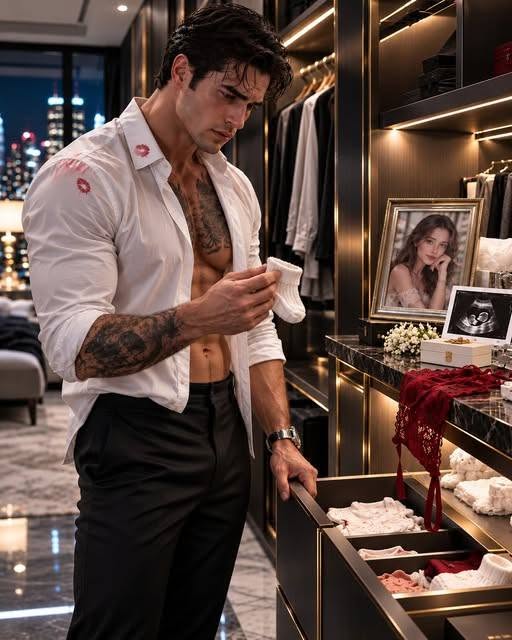
Story Genres: MAFIA BOSS

  • Chapter 1: THE RING ON THE COUNTER

    Chapter 1: THE RING ON THE COUNTER

    The helicopter set down on the rooftop pad at 1:38 a.m., and the pilot killed the engine while I was still unbuckling, because I had already seen the penthouse windows.

    Dark. Every one of them dark.

    Grace always left the kitchen light on when I traveled. Sixteen years of marriage, and it did not matter if I was coming home from Tokyo or from two blocks away — that light was her language. It said: someone is awake in the world who is glad you exist. I had flown in over the city a hundred times and found it burning, and I had never once, not once, thought about what it cost her to keep it lit.

    That night the glass was black from the forty-first floor to the roof.

    I told myself the bulb had died. I told myself she'd fallen asleep early, that the anniversary dinner had tired her, that I would find her curled on the sofa with one of her paperbacks folded against her chest. I was very good, by then, at telling myself things. It was the skill my whole life ran on.

    The elevator opened into the foyer and I knew before the doors had fully parted. Her shoes were gone from the rack — not moved, gone. The blue coat she wore in every season. The small dent in the rug where her reading chair had stood for a decade was just a dent now, the chair pushed flat against the wall like furniture in a hotel suite nobody had booked.

    "Grace?"

    My voice went down the hallway and came back to me alone.

    The dining room stopped me in the doorway. She had set the table for two. Candles — the tall ivory ones she saved for Christmas and anniversaries — had burned down into pools of wax and died in their own smoke. Her plate was full. Cold salmon, untouched. Wine poured, untouched. My plate was empty and clean, the way you set a place for a man out of habit long after you've stopped believing he'll fill it.

    On my phone, her last photograph was still open. She had sent it at 8:11 p.m.: that same table, candles lit, her smile tired and brave. *I'll wait until ten.*

    I had answered from a hotel suite across town, Vanessa's perfume still on my skin: *Don't wait. I'm busy.*

    I had spent our sixteenth anniversary in another woman's bed, and my wife had sat in candlelight until ten o'clock, and then — this is the part I could not stop seeing — she had cleared her own plate into the trash, washed nothing, and begun the last hour of our marriage with her hands steady.

    The ring was on the marble counter beside the sink.

    Not thrown. Placed. The way she'd placed everything in our life — deliberately, without drama, as if even leaving me had to be done properly. Next to it, the black credit card I had given her on our tenth anniversary, the one with no limit, the one she had used almost exclusively to buy gifts for other people. And under the ring, squared to the edge of the counter like a document awaiting signature, a letter.

    *Don't look for me. The woman who used to wait for you is gone.*

    Nine words. I read them eleven times. My name is Richard Hayes. At forty-six I was worth over three billion dollars — hotels, towers, a fleet of aircraft, companies in eleven states — and I stood in my own kitchen reading nine words over and over because they were the only thing in that penthouse I could not buy my way out of.

    Before I could make myself touch the letter again, I walked the penthouse the way you walk a house after a fire, room by room, cataloguing what the flames had taken.

    Her closet: four empty rails and a single dress left hanging — the green one she'd worn the night I closed the Meridian deal, the night she'd stood in a ballroom doorway for three hours smiling at investors while I forgot, twice, to introduce her. *Everything I'd ever bought her remained behind* — I understood it now as an inventory, not an oversight. She had taken nothing I had purchased. Not the jewelry, not the coats worked with other women's envy, not one object that carried the smell of my money. She had taken her own clothes, her mother's books, her passport, and the life she had before me, and she had left the rest exactly as a tenant leaves a landlord's furniture: without hatred, and without a forwarding address.

    Her side of the bathroom: bare marble. Mine: untouched, eleven bottles deep, a rich man's altar. The guest room where her mother used to sleep on visits: stripped. The kitchen stool where she drank coffee at dawn: pushed in, squared, aligned — even her absence had been tidied.

    Standing in that mausoleum of appliances, I finally admitted to myself that I had not lost my wife in a night. I had lost her in installments, across years of doors closing, and this — the ring, the dark windows, the cold salmon — was merely the final statement of an account she'd been settling in silence for a very long time.

    Grace had loved me when I couldn't make payroll. When my first company was dying in a rented office with a leaking ceiling, she sold the apartment her parents had left her — the only thing of value she owned in the world — and put the money into my hands. "We can buy another home," she said. "Just don't give up." In sixteen years she never asked for shares, never asked for her name on a building, never asked for the jewelry other men's wives collected like rent. She asked one question, in all those years, in a hundred small variations: *Will you be home for dinner?*

    Four months before she vanished, she'd asked a different one.

    "Do you love Vanessa?"

    We were in this same kitchen. She didn't cry. Grace almost never cried in front of me — I understand now that she'd learned crying didn't move me, and Grace never wasted a motion twice.

    "If I asked you to end it," she said, "would you?"

    I said nothing. A man like me is never more eloquent than in his silences; I'd built an empire on letting other people fill them. She looked down at her untouched wine and said, very quietly, "Remember when you promised me that no matter how rich we became, I'd never eat dinner alone?"

    I walked out of the kitchen. I want to be precise about that, because precision is the only apology I have left: I did not storm out. I did not slam anything. I simply left the room, the way a man leaves a meeting that has stopped being profitable.

    Vanessa Cole was my communications director. Thirty-two, brilliant, ruthless with a press release and gentle with nothing else. It began on a business trip — a storm, a delayed flight, a hotel bar — the oldest story rich men tell, and I will not decorate it. One hotel room became a secret apartment. A second phone. Eleven months of Tuesdays and Thursdays and lies so smooth I stopped hearing them as lies. She was the most exciting thing in my life and she was also, though it took me a year and a catastrophe to see it, the most expensive: she cost me the only person who had ever loved me when I was worth nothing.

    There was a second envelope on the counter, thick, her handwriting on the front: *For the anniversary.*

    Inside were eleven handwritten pages.

    She had documented my affair the way an auditor documents a fraud — dates, places, her own small marginalia in a hand that never shook. *Day 19: You told me not to wait for dinner. I waited anyway.* *Day 201: Today, I stopped crying.* *Day 248: I started packing.* She had known almost from the beginning. While I was congratulating myself on my discretion, my wife was keeping a ledger of her own abandonment, one entry at a time, in the blue ink she used for grocery lists.

    The anniversary page was the last, and it was short.

    *Tonight I gave you one final choice — not between two women, but between the man you were and the man you've become. You chose.*

    My hands had begun to tremble somewhere around page four. By the last page I had to set the letter down twice. But Grace was not finished with me. The gift she had left on my desk that morning was still sitting there, wrapped in silver paper, when I walked into my study like a man approaching a loaded weapon. She had touched my sleeve as she gave it to me. "Open it tonight," she'd said softly. "It's the last one."

    Inside the box, folded in tissue, were two tiny white baby socks.

    Underneath them was an ultrasound photograph.

    I think some part of me understood before my eyes finished the arithmetic printed along the edge of the image. *Nine weeks and four days.* Two dates collided in my head — the date on the photograph, and every night since that I had spent everywhere except beside my wife.

    "Grace was pregnant?" I said it out loud to the empty room, and then I was dialing our family doctor with fingers that kept missing the screen.

    Alan Weiss answered on the fourth ring, and the quality of his silence when I said my name told me he had been dreading this call for a long time.

    "Grace was pregnant?"

    "Yes, Mr. Hayes."

    "Where's our baby?"

    The silence that followed was the worst sound of my life.

    "She miscarried," he said at last. "Two months ago. There was severe bleeding. She was hospitalized for three nights." He paused, and I heard him decide to finish it. "She asked us to call you. Repeatedly. My office reached your assistant. We were told you were traveling."

    Dubai. I had been in Dubai with Vanessa — a "conference" that consisted of one beach club and her laughter in a white dress — when my wife lay in a hospital bed losing our child and asking for me. I remembered the message surfacing on my phone between Vanessa's texts: *Grace in hospital, possible complication, please advise.* I remembered what I had typed back, without a single second of thought, with my mistress's head on my shoulder.

    *If it's not urgent, handle it later.*

    There was one more letter, inside the gift box, under the socks. She had written it in the hospital, I think — the hand is smaller, less sure than her usual script, the only unsteady writing of hers I have ever seen.

    *When they told me our baby was gone, I wanted my husband. I called four times. You never answered.*

    I sank to the study floor with the socks in my fist. I don't remember deciding to sit down; I remember the cold of the marble coming through my trousers and the ultrasound photograph face-up beside me, and thinking that I had flown over a lit city in a helicopter I owned, above a fortune I had built out of her sacrificed apartment and her sixteen years of faith, and I had not been present for the single hour in which my wife had needed a person instead of an empire.

    I called her number eighty-three times in three days. I know the number because I counted, the way she had counted. I left messages that moved from command to apology to something I am not proud of — a rich man's voice cracking into a phone, begging a dial tone. Her number never rang. I don't believe it existed anymore.

    On the third night, at 1:38 a.m. — the hour seems to have marked itself on my life — a file arrived from an address made only of her initials. An audio recording. No text. Just her voice, very close to the microphone, lower than I remembered it, and steady in a way that frightened me more than tears ever had.

    "Richard, you gave me everything except the one thing I needed. You."

    A breath. I could hear her choosing the next words the way she chose everything — deliberately.

    "There's something about our baby I've never told anyone. And if you ever discover it, you'll understand why I can never come home."

    The recording ended.

    I sat in the dark of the penthouse she had emptied, with her ring in one hand and her voice still in the walls, and I whispered the question to nobody at all:

    "What about our baby, Grace?"
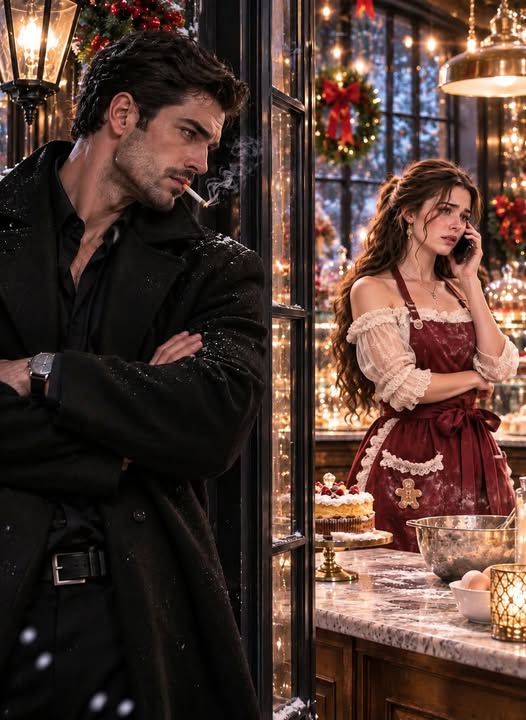
  • Chapter 7: Every Chair Full

    Chapter 7: Every Chair Full

    One year later, on the twenty-third of December, I stood behind the counter of Winter & Rye at 9:17 p.m. and looked out at my whole life, arranged in front of me like the sugared village on a cake.

    The bakery had a line to the door — it usually did now, ever since a newspaper called us "the little bakery that burned and fed Boston anyway" and a food magazine used the phrase "the plum pastry worth crossing a blizzard for," which Nico had framed, to my endless teasing, in the office. My name was on the ownership papers in the drawer and on the small brass plaque by the register: C. BENNETT, PARTNER. My hand had healed to a pale map of lines I no longer hid. Maya ran the front of house like a benevolent air-traffic controller, with bells on her shoes that nobody had the heart to regulate.

    My mother arrived at four in the afternoon — not summoned, not fetching, but arriving, with her tart in a carrier and an apron of her own folded over her arm, which she put on in my kitchen with the air of a woman enlisting. "Where do you want me?" she said. Lorraine Bennett, who had once uninvited me from Christmas over a seating chart, stood in my kitchen and asked for a job. I put her on the cranberry sauce, where she could do the least structural damage, and when the rush peaked she was out on the floor refilling cocoa for a table of foster children with her hair coming down and her good pearls still on, and a small boy in a too-big sweater — a year older now, and back for his second Christmas with us, because his foster mother had written to the foundation to request "the same bakery, the one with the soup man" — studied her with the gravity of a building inspector and announced, "You're new. Are you safe?"

    "I'm the cake lady's mother," my mother said, and I watched her decide to make it true in public. "I am learning to be safe."

    "She tastes everything first," the boy informed her. "That's the rule. So the soup man knows."

    "Then I'll taste everything twice," my mother said gravely, and did, and laughed with her mouth full like a girl, and I had to go into the walk-in and stand among the cream for a moment, holding the door, being twenty-eight and six years old at the same time.

    That was the thing about the year. It hadn't given me a different family. It had given me back the same one, repaired at the seams like a good coat — my father gone from the story, yes, but my mother relearning her own kitchen; my sister standing between me and every camera now instead of behind it; Grant, of all people, keeping the foundation's books for free because, he said, it was the first ledger he'd ever balanced that he was proud of. Even Vivian had thawed to the temperature of very expensive ice.

    And Nico moved through all of it the way weather moves through a harbor — changing the pressure of every room, impossible to ignore — except that now he did it in the open, at my side, in the light, tasting the soup first.

    Thirteen days straight, I had worked — my choice this time, my schedule, my bakery — because the twenty-third was our second Christmas Eve dinner, and this year we had two hundred and forty guests coming, and a second location opening in the spring that the papers were already calling "Vale's bakery empire," a phrase that made Nico look physically pained and me laugh every single time.

    Dinner — the first one, with no curtain — had happened in February. He had answered every question. Every one. Some of the answers were hard, and one of them made me quiet for two whole days, and on the third day I had gone to the bakery at four in the morning and baked until my head cleared, and then I had called him and said, "I don't need you to be a different man than the one who came through that window. I need you to be that man on purpose, forever" — and Nico Vale, who does not beg, had said, "Clara Bennett, that is the only prayer I know how to answer," and we had been, since then, exactly what we were: inevitable, and careful, and happy in a way that still surprised me on ordinary Tuesdays.

    Now the last customers were drifting out into the snow with their boxes, and the long tables were being set for tomorrow, and at 9:17 — the hour my life had once ended — my phone lit up on the counter.

    "Mom," I answered, smiling. "Hi."

    "Clara, sweetheart." No bright charity voice this time; just my mother, a year older and considerably more honest. "I'm confirming tomorrow. Your father— well. I've made the tart. Three layers. Mine's still lopsided, so don't set it near the window where people can compare." A pause, warm as an oven door opening. "Paige and Grant are bringing the chairs from the hall at noon. Grant measured the van. Twice. And Clara — I saved you the head of the table. Unless you'd rather—"

    "I'd rather earn it arguing with you every year until we're ninety," I said. "Head of the table is fine, Mom."

    "You'll wear the red dress?" she asked. "The one from the magazine photograph? You looked—" She stopped herself, and I heard her choose the true words over the arranged ones. "You looked like yourself in that photograph. That's why it was a good photograph. Wear the red dress."

    "I'll wear the red dress."

    I hung up and stood in the warm, cinnamon dark of the kitchen with tears in my eyes for exactly ten seconds — happy ones, which no longer required apology — and that was when I heard, from the doorway of the tasting room, a sound I had not heard in a year.

    The velvet curtain, moving.

    Nico stood there in an immaculate black suit, exactly as he had the first time — and entirely different, because now I knew the man inside it, and he was smiling in a way he reserved, I had learned, for a congregation of one.

    "You can't keep doing that," I said. "One of these days you'll give Marco a heart condition."

    "Marco is at the door turning away a food critic," Nico said. "We have approximately four minutes of privacy, which is, historically, all I have ever needed to change your life." He came toward me through my bakery — his bakery, our bakery — and stopped, and took from his coat pocket not a phone this time, but a small white bakery box. Ours. The kind we tied with string.

    "Nico—"

    "Open it."

    Inside the box, on a bed of tissue, sat a plum pastry — sour-first, sweet-late, my recipe, the one that had finally, this autumn, made him close his eyes at the counter and say, "There she is. That's her. That's my grandmother," in a voice I'd had to pretend not to hear shake. And nestled against the pastry, in a twist of the tissue, was a ring. Platinum. One dark red stone, the color of plums, the color of the curtain.

    "Sixteen Fridays I sat behind that curtain like a coward with a reservation," Nico said. "Then one Christmas I came through a window like a maniac with a sandwich board. My courtship technique is not consistent, Clara, but my intentions have been embarrassingly clear since the espresso went cold on the sixteenth Friday." He took the ring from the box with those still, careful hands — which were, I noted with a full heart, not entirely steady. "You wished, in this room, for one person who would notice if your chair was empty. I am asking to spend the rest of my life as that person — formally, publicly, in every photograph, at the head of every table, in the chair next to yours. Which will never be empty. That is the whole proposal. The rest is paperwork, and you may negotiate all of it."

    "Is this a merger, Mr. Vale?" I managed, crying and laughing in the middle of my own bakery. "Because my partner taught me to negotiate."

    "Everything is negotiable except the answer," he said. "And the answer, I should warn you, I have already heard. You said it in February. You said it in a hospital. You said it signing your name next to mine. You've been saying it all year, Clara. Say it once more, so it's in the minutes."

    "Yes," I said. "Yes. In the minutes, in the papers, in the photographs — yes."

    He slid the ring onto my finger, over the pale map of the burn, and it fit the way true things fit, and he kissed me in the kitchen of Winter & Rye with the ovens ticking as they cooled and the snow coming down over Beacon Hill like a blessing that had finally learned our address.

    Marco, returning at midnight to lock up, found us still there — Nico asleep in the tasting room chair with his jacket folded under his head like a field soldier, me with the ledgers, closing out the year of my life. Marco looked at the ring, looked at his sleeping employer, and produced from his coat a bottle of something Italian and older than my marriage prospects had been.

    "For the minutes," he said, and poured three glasses, and woke Nico with the care of a man defusing his own bomb, and the three of us drank to the bakery in the dark — to the foundation, to the ghost of a grandmother who started all of it with eleven guests and a borrowed hall, to burnt things that come back. "My grandmother," Nico said, raising his glass to the green lamp, "would have fed you all and sent the bill to God." Then he looked at me sideways, gray eyes soft in the lamplight. "She would also have said I took too long behind that curtain."

    "She'd have been right," I said, and Marco — Marco actually laughed, out loud, a sound so rare that Nico and I both stared, "and I am putting that in the minutes too."

    The next day we fed two hundred and forty people.

    My mother sat in the room I was actually in, and ate her own lopsided tart beside mine, and did not compare them aloud, which for Lorraine Bennett is a form of poetry. Paige and Grant ran the cocoa station, and Grant — who now measured vans and washed dishes and called me "boss" with genuine respect — took the family photograph himself this year, on a timer, so that no one had to stand outside it. Vivian Holloway sent a hamper and a card with a sentence in it that I choose to believe was an apology; her family's credit line, I am told, was renewed on generous terms, with one new condition involving courtesy.

    At the head of the long table, in the chair with the red cushion that Maya had embroidered with a plum when no one was looking, sat me — flour on my cheek, ring on my hand, my husband-to-be on my right and my mother on my left, in a room so full of noise and steam and candlelight that you could hardly hear the storm when it came, late, politely, as if even the weather had learned to knock.

    I looked down the whole long table — two hundred and forty chairs, and mine, and his — and I thought about the girl who had once whispered to an empty room: just one person. Just one person who would notice if my chair was empty.

    Every chair was full.

    And in the photograph — the one that ran in the paper on New Year's Day, the one my mother framed, the one where the Mafia boss of Boston is laughing with his head back and his arm around the baker — I am not cropped, or hidden, or standing behind anyone.

    I am at the head of the table, in the red dress, exactly where I belong.

    THE END

  • Chapter 6: The Price of a Chair

    Chapter 6: The Price of a Chair

    Julian Cross confessed to most of it before his lawyer arrived, which the detective described to me — visiting the hospital with terrible coffee and evident satisfaction — as "the smoke talking." Arson. Breaking and entering. Three years of theft, with Brenda Mercer as his partner and, it turned out, his predecessor — she'd been skimming Winter & Rye since long before Julian learned where the stockroom was, and she had already retained a lawyer of her own and a great deal of sudden, total recall about Julian. They would both plead. They would both serve time. The recovered money — the bakery's money, some of it — would come back through the courts like a slow river.

    My $4,800 was in my account before New Year's. Nico's attorneys sent it with a note so dry it made me laugh in my hospital bed: Debt recovered in full. Plum pastry obligation: outstanding.

    The bakery was another matter. Fire is a thorough editor. The kitchen was gutted; the shop floor survived under an inch of soot; the ovens — my ovens — were pronounced salvageable by a man Nico flew in from Chicago who spoke about cast iron the way priests speak about relics.

    Insurance would take months. So Nico didn't wait for insurance.

    On the twenty-seventh, against medical advice I pretended was a suggestion, Nico took me back to see it. He went with me the way you accompany someone to a grave — beside, not in front — and he held the ruined door for me and said nothing at all while I stood in my own shop and cried at the smell of it. Char and sugar. My village cake still in its case, gray as a photograph of itself. The tree black on one side and green on the other, like a year half-lived.

    "Don't look at all of it," Nico said at last. "Look at one true thing."

    So I looked at the ovens. They stood in the gutted kitchen like two old soldiers, soot-blackened, doors hanging — and when I put my good hand on the nearest one it was still, faintly, warm from the sun through the broken window, and I understood they were iron and iron survives, and so did I. Then Karl came out of the office carrying the metal cash box we'd kept under the counter since before I was born at that job, warped and smoke-stained — and inside it, untouched, was the reservation book. Three years of Fridays in Brenda's hand and mine. Vale. Vale. Vale. Sixteen entries, then a seventeenth I had never seen — written in a hand I knew by now, dated Christmas Eve, one word longer than all the others:

    Vale — and guest.

    "He made a reservation," I said, "for the night he fed two hundred people. He booked a table at a dinner he was hosting."

    "He also paid for it," Marco said from the doorway, deadpan, carrying a crate of salvaged jars. "Full price. The foundation audited him. He argued about the oranges."

    I laughed, standing in the ashes of my kitchen, with tears running through the soot on my face, and Nico took the reservation book from Karl and put it in my good hand like a deed.

    "One true thing," he said. "Start there. We will rebuild the rest around it."

    I was discharged on the twenty-eighth with a bandaged hand and strict instructions, and by the time Marco drove me past Winter & Rye that evening, there were already work lights in the windows and a crew I'd never seen working in the snow-dusted dark like it was noon. A hand-painted sign hung in the blackened window, in Maya's unmistakable lettering:

    BURNT. NOT CLOSED. SEE YOU NEW YEAR'S DAY.

    The staff came back before they were asked to. That is the part I tell people now, when they ask what kind of place Winter & Rye is. Luis arrived with his brother and two buckets. The dishwashers arrived. Old Mr. Abernathy arrived with a shop vacuum and his late wife's recipe box "for morale." Maya held a meeting on the sidewalk — in the snow, with a clipboard, because some part of Brenda's training had apparently been useful to someone — and assigned shifts for the cleanup like a general with glitter on her boots. Every one of them refused overtime pay for the rebuilding days, in writing, with signatures, which Nico accepted with a bow and then secretly doubled in their January checks, because the Vales and the Bennetts are apparently in an arms race of stubborn generosity and I am doomed to live between them forever.

    I supervised from a stool with my bandaged hand in my lap, and handed out coffee with the other, and watched my people sweep my bakery out of its own ashes, and I understood something about the tart and the pajamas and the chair that I had never understood in Lorraine Bennett's dining room: a family is not the people who photograph you. It is the people who show up with buckets.

    "You'll bankrupt yourself," I said to Nico, standing on the sidewalk with my coat over my shoulders and my heart somewhere in my throat. "Crews around the clock. In a blizzard. For a bakery."

    "I have been bankrupt," Nico said, watching a man carry out a charred shelf, "in every way that matters, for about twenty years. Money was the one currency I had too much of." He turned to me. "Besides. It isn't a bakery, according to my grandmother's standard. It is a place where people are fed at Christmas whether or not they can pay. Those are load-bearing walls, Clara. I am simply maintaining the structure."

    Paige came that night to my apartment with soup she'd made herself — badly; it was wonderful — and sat on my couch and cried in the un-elegant, mascara-running way she had never once allowed herself in front of Vivian Holloway.

    "Grant confronted his mother," she said. "At the dinner. After you— after Mr. Vale— Grant stood up in front of everyone and told her that if the engagement announcement required my sister to be erased, she could announce his resignation from the family instead." She wiped her face with her sleeve, completely unphotogenic, and I loved her more in that moment than I had since we were nine. "The engagement's not off. It's— postponed, while Grant and his mother renegotiate what kind of family they are. He asked me to tell you he's sorry he ever let you be talked about that way in a room he was sitting in. And Clara— I let it happen for years. At every table. I was so afraid of being the one moved out of the photograph that I held the camera." She took my good hand. "Never again. If there's no chair for you, there's no chair for me. That's the whole negotiation."

    My mother came on the thirtieth.

    She stood in my little kitchen in her good coat with a tin in her hands — almond tart, her own making, from my grandmother's recipe. Lorraine Bennett had not baked, to my knowledge, since I was twelve years old. The tart was slightly lopsided. It was the most beautiful thing she had ever given me.

    "I am not good at this," she said, in the doorway, not sitting down. "Your father used to say I could arrange a table for forty and not see a single person at it." She set the tin down like an offering. "I saw you, Clara, on Christmas Eve. In that room. With that man looking at the Holloway woman like— and the children, and the cake, and you said no to me. You said no, and the room stayed standing, and I understood—" She stopped. Her hands were twisting. I'd never seen my mother's hands do anything unplanned. "I understood that I had been making you smaller to keep my own chair comfortable. A mother should be the one who notices. I made myself the one who looked away." A long breath. "I am not asking you to forgive me tonight. I am asking whether I may come on New Year's Day. To the bakery. If there is a chair."

    I should tell you I was gracious and wise. In fact I cried into my mother's shoulder like I was six years old, and she held me the way she must have before I got tall enough to measure, and the tart was dry on one side and perfect on the other.

    "There's a chair," I told her. "There's been a chair the whole time, Mom. You just have to sit in the room I'm actually in."

    Which left one negotiation, and it was waiting for me on New Year's Eve morning in the bakery office — new drywall, new desk, smell of paint and cinnamon — in a folder with my name on it, in Nico's handwriting.

    "Partnership papers," he said. "Fifty-one percent of Winter & Rye, transferred to Clara Bennett, effective tomorrow. Before you argue—"

    "No." I closed the folder. "No, Nico. I won't be given a bakery. That's just another kind of chair somebody can pull out. I'll buy in — from my salary, from the recovered money, over time, at a real price with real paperwork. I want it to be mine because I earned it in the open. That's the entire— that's everything. Don't you see?"

    He looked at me for a long moment. Then the glacier did something it had never done in my presence: Nico Vale smiled, fully, like a man whose test has been passed by the only examiner he respects.

    "My attorneys predicted you'd say that. Word for word, in Marco's case." He took a pen from his pocket and struck a clause with one line. "Then: manager's salary, doubled, backdated. A purchase plan at the independent valuation, payments from your share of profits, interest-free because I am not a bank and I dislike the comparison. Five years to full ownership of the fifty-one percent, Clara, and in the meantime a partner's vote from day one — that part is not for sale, because the shop already runs on your judgment and I am tired of pretending otherwise." He slid the folder back. "Sign, partner."

    I signed with my good hand, the bandaged one resting on the desk between us like a witness.

    "And now the other matter," Nico said, in a tone so carefully neutral that my heart immediately began to pound. "I am aware that I am your employer, your partner, your creditor in plum pastries, and — according to three newspapers — a figure of significant public concern. Courtship, in such circumstances, requires more transparency than is customary." He folded his hands. "So, transparently: when the partnership is settled and the shop is open and Julian Cross is a memory this city is done with, I would like to take you to dinner. Somewhere with no curtain. I would like to sit across a table from you in the light, and be looked at by you while I eat, and answer every question you have, including the ones about my other business. If the answer to any of them makes you leave, I will have Marco drive you home and I will never darken your Fridays again." His gray eyes held mine, steady as a held breath. "But I don't think you'll leave."

    "No," I said, and my smile hurt my face. "I don't think I will either. Dinner, Nico. When the shop opens."

    "Then we have two deadlines," he said, rising, and offering me his hand to shake like a partner, which I took, and which neither of us let go of for slightly longer than partnership required. "New Year's Day. And dinner."

    Outside, Boston was doing its last day of the year under a sky like polished steel, and the work lights burned in my bakery windows, and Maya was painting a new sign in the glass with her tongue between her teeth in concentration.

    SEE YOU TOMORROW, it said. EVERYONE.

  • Chapter 5: Fire in the Snow

    Chapter 5: Fire in the Snow

    I went to the bakery at four in the morning on the day after Christmas because I couldn't sleep, and because a bakery at four a.m. is the most honest place on earth.

    That was my reasoning. It was not Nico's reasoning, and when he found out — later, in the hospital, in a voice so quiet the nurse pretended not to hear — he informed me that my reasoning was a crime against his protocols, his blood pressure, and several laws he had personally decided to enforce.

    But at four a.m., none of that had happened yet. There was just the dark street, the sleeping city, and Marco's man Karl asleep in a car across the road — a detail I learned afterward, and one Karl paid for, though not as much as Julian did.

    I let myself in the back, the way I had a thousand times. I hung my coat on the hook. I tied my apron. I put the first trays in to proof and started the coffee the way we always did, and I stood in the warm, yeasty dark of the kitchen I had nearly lost, and I let myself be happy for one whole minute about the shape my life was taking.

    Then, from the office doorway, Julian said, "You kept a copy, didn't you?"

    He was standing in the dark with his coat still on and snow melting off him, and he looked like a man who had been awake for all of it — every hour since the cuffs came off me and went onto him the second time. His eyes were red-rimmed and bright. In one hand he held my office keys. In the other, a red plastic fuel can, the kind you fill at a gas station, and the smell of it rolled across the kitchen like a weather front.

    "Julian." I put the counter between us. It was instinct, not strategy. "The police are looking for you. Karl is right outside. Put that down and walk out and this is still just a bad night."

    "Karl is asleep." He smiled, and it was the worst thing I'd ever seen on a face I once kissed. "I watched him. An hour. Vale's great security, sleeping in a car like a mall cop. That's what your life is worth to the great Nico Vale, Clara. A sleeping mall cop."

    "The notebook," I said, because understanding is a kind of armor. "You think there's a copy of my records in the office."

    "Three years I ran money through this place," he said. "Three years, and it was clean, it was invisible, and then he buys the building and his auditors start reading your little logs. Your handwriting, Clara. Your little 'staff meal' lies. The detective told my lawyer the December footage isn't the worst of it — the worst of it is your records. The dates. The changed orders. Everything traces through everything, and it all starts in that office." He lifted the fuel can slightly. "So. The office burns. The server's in there, the paper's in there. And you—" his voice cracked, hideously, into something almost like grief "—you could have just signed what I told you to sign. You could have been nobody. Nobody was safe. Nobody had Fridays with the devil behind a curtain."

    "He was investigating theft, Julian. You were the theft."

    "I was surviving!" The shout knocked a pan off a hook somewhere and we both flinched. "You think Brenda found me? I found her. Six years skimming cream of her own, that woman, and I gave her a system. And you— flour on your face, crying over Christmas— you were the lock on the door, Clara. The patsy. Every bad bakery has one. The one nobody believes." He stepped forward. "But Vale believes you. Vale does paperwork for you. So the paperwork burns."

    He threw the fuel can.

    He didn't throw it at me — I need to be clear about that, because later it mattered to the lawyers and it mattered to Nico. He threw it at the office door, over my head, and it hit the doorframe and split and sprayed, and some of it hit the range where the pilot lights burned blue and patient.

    Fire does not start the way it does in films. There is no dramatic bloom. There is a soft, almost disappointed whoomph, and then the world is orange and wrong.

    The towels went first. Then the wooden shelves. Then the office door itself, a sheet of flame, and the smoke came down off the ceiling in a rolling black ceiling of its own, and Julian — Julian stood in the middle of it with his hands up in front of his face, screaming my name, because whatever he had planned in the cold, he had not planned on being inside it.

    "Down!" I shouted. "Get down, get DOWN, Julian—" Smoke kills at standing height; thirty years of fire-drill posters live in a baker's bones. I dropped and crawled, and I could have gone for the back door — it was twelve feet, it was right there, Karl outside, air outside — but Julian was coughing in the middle of the floor, frozen, a man in a coat full of gasoline fumes, and I did the stupidest, most Clara Bennett thing in the world.

    I crawled back and got hold of his sleeve and pulled.

    He came — terror makes people light. We got as far as the ovens when the shelf above the office door gave way in a roar of sparks, and the way to the back door became a curtain I could not pass twice. The heat was a hand on my face. Julian was on the floor making a sound like tearing paper. My apron had caught at the hem; I beat it out against the tiles with my bare hand and felt the burn bloom across my palm like a brand.

    Front, I thought. The shop. The windows.

    We crawled through the swinging door into the shop on our hands and knees, under the smoke, past the cake case, past the tree, and I got my good hand under the front door handle and pulled, and the door — the beautiful old door with the silver bell — was locked, because I had locked it behind me at four in the morning like a careful manager, and the key was in my coat, and my coat was in the back, in the fire.

    I beat on the glass with my burned hand and screamed for Karl.

    What I saw through that glass is the thing I will keep when everything else about that night eventually fades: headlights, swinging wild across the snow as a car mounted the curb — and Nico Vale coming out of it before it had fully stopped, in a coat thrown over what he'd slept in, bareheaded in the storm, looking up at his burning bakery and my face in the window.

    He didn't hesitate. That's the part the firefighters commented on later, at the hospital, with professional admiration. He took the cast-iron sandwich board from the sidewalk — forty pounds of advertising for soup — and he put it through the window in one swing, and the glass came down like a frozen waterfall, and the smoke rolled out over his head as he stepped through the wreckage calling my name.

    "Here!" I screamed. "Here — Nico, Julian's down, I can't—"

    He found us by sound. He got Julian first — dragged him by the coat to the broken window and handed him out to Karl like cargo, because Nico Vale, even burning, does triage — and then he came back through the smoke for me, and I remember his hand closing around my arm, and his voice, raw and stripped of every glacier I'd ever heard in it:

    "I have you. I have you. Clara — I have you, hold on to me."

    The cold outside was the sweetest thing I have ever breathed. I sat on the curb in the snow in my apron, coughing until my ribs ached, watching my bakery burn orange against the white street while Nico knelt in the slush in front of me holding my burned hand very carefully in both of his, not letting the snow touch it, saying my name like a man checking, over and over, that a thing is still true.

    Julian, handcuffed to a paramedic's gurney with an oxygen mask on his face, was shouting something hoarse through the mask as they loaded him in — about Brenda, about lawyers, about how it wasn't supposed to— and Nico didn't even turn his head.

    Maya arrived at the hospital an hour after I did, in her coat over her pajamas, carrying my phone and my purse and the expression of a woman who had driven through a blizzard on pure spite. She took one look at my bandaged hand and burst into tears, and then — because she is Maya, and grief and competence run in her in equal measure — she dried her face on her sleeve and started reporting.

    "The firefighters said the kitchen's bad but the ovens might make it. The shop floor's mostly smoke. Your cake—" she stopped. "Your cake was in the case, Clara. The case held. It's smoked, it's— the village is gray. I told them not to throw it out until you say. And your coat—" She was fumbling in my purse. "Your coat's gone, but your phone was in it, and Karl got it out of the locker room before— anyway. It works. And Clara." She held the phone out like an offering. "Your notebook app. The photos. Tell him about the photos, because the detective's downstairs saying the office server is charcoal and I watched you go white."

    It took me a moment, through the smoke still in my head, to understand what she meant — and then I did, and a laugh came up out of me that startled the nurse.

    "Two years ago," I said to Nico, "Brenda lost a page of the delivery log. Not stole — lost, in those days I still thought losing was the worst of it. After that I started photographing every page of my notebook, every Sunday, on my phone. It backs up to the cloud. Three years of pages, Nico. Every delivery, every change, every initial. Julian burned an office." I lifted my good hand, phone and all, and let it fall back to the blanket. "He never touched the records. The records were never in the building. They were in my apron pocket the whole time he was tearing pages out of my hands."

    Nico stared at me. And then — there in the hospital, in front of Maya and the nurse and a paramedic pretending to check a monitor — the most feared man in Boston put his face in his hands and laughed, once, like a man who has been handed back something he thought was ash.

    "Of course they were," he said. "Of course. Sixteen Fridays and I still underestimated you. Marco will want a copy for the detective, and the detective will want to kiss you, and I will have to allow it because it will be professionally justified."

    At the hospital, with my hand wrapped like a white parcel and the doctors using words like superficial and lucky, Nico sat in the plastic chair beside my bed in a coat that smelled of smoke, and he took my good hand, and he said:

    "When Marco called, he said 'the bakery.' And I knew — before he finished the sentence, I knew where you would be. Four in the morning, Clara. Protocols." His voice broke — actually broke, the glacier calving at last. "You wished for one person who would notice if your chair was empty. Do you understand that I have noticed nothing else since? Your chair at that counter. Your absence from a room I pay men to watch. If I had been four minutes later—"

    "You weren't," I whispered. "You weren't, Nico. You came through the window."

    "Yes," he said, and pressed his forehead, very briefly, to my bandaged hand, like a man at an altar. "And I will keep coming through windows, and doors, and whatever else this world puts between us. That is the other thing I should have said on one of those Fridays."

    Outside my hospital window, Boston was white and gold and beginning again. Somewhere across the city, my bakery was a blackened shell cooling in the snow.

    Nico looked at it — no. He looked at me, and corrected himself before he even spoke, as if he'd caught himself valuing the wrong thing.

    "The bakery will reopen by New Year's Day," he said. "That's a Vale promise, and I keep those. But Clara—" his thumb moved once, gently, across my knuckles "—buildings are paperwork. You are not."

  • Chapter 4: Sixteen Fridays

    Chapter 4: Sixteen Fridays

    "The police are aware he is out," Nico said, in the voice he used for weather reports and executions. "He is a thief with a court date, Clara, not a ghost. Marco will drive you home. A man will be on your street tonight — you won't see him, and you don't need to. Go home. Sleep. Tomorrow the bakery serves Christmas breakfast to whoever knocks, the way it has for forty years. I would not have that tradition interrupted by Julian Cross."

    I wanted to argue. But Ana's mother was waiting to take her home, and my mother was still sitting in the borrowed chair eating a second slice of her own tart with the expression of a woman solving an equation, and exhaustion had begun to hum in my bones like a struck bell.

    So I went home. I slept, eventually, in the strange new quiet of a life that had changed shape in thirty hours.

    I dreamed about the notebook. Three pages, tearing.

    Christmas morning I was at the bakery by seven, and Maya by seven-fifteen, and by eight the windows were fogged and the line of regulars and strangers and one very apologetic Paige — who had shown up with Grant, both of them in aprons, demanding to be put to work — stretched to the corner. Grant Holloway washed dishes for three hours and was, I discovered, almost likable when stripped of his mother's lighting. Paige burned one tray of rolls and cried over it and then laughed, and it was the first time we'd laughed together since we were children.

    But before the rush — in the blue, early quiet, with the first trays in the ovens and Maya still tying her shoes — I did something I had never done in three years. I went into the tasting room.

    I told myself I was checking the radiators. The truth is that I wanted to see the place where he had sat, all those Fridays, six feet and one curtain away from my whole life. It was smaller than I'd imagined. One round table. Two chairs. A lamp with a green glass shade, like a banker's lamp in a film. On the sideboard, a single espresso cup on a saucer, washed and set upside down to dry — yesterday's, or the sixteenth Friday's; the staff knew better than to clear Mr. Vale's table. Brenda had made that a rule with real fear in it, and now I finally understood the fear and the rule both.

    I stood in that little room and I tried to see my bakery the way he'd seen it: through the gap where the curtain didn't quite meet the wall. You could see the counter from there. You could see the window, and the ovens' glow when the doors opened. You could hear everything — the bell, the radio, Maya laughing, me singing, off-key, to songs about silver bells. Sixteen Fridays he'd sat in that chair and listened to a life he wasn't in, and chosen, week after week, to stay behind the curtain rather than risk darkening it.

    The chair was pulled out slightly, the way you leave a chair when you mean to come back to it.

    I left it exactly as it was. Some things you don't tidy. Some things are a message, and the message was: he had always intended to come back.

    Then the ovens dinged, and Maya called my name, and Christmas morning began in earnest.

    Nico arrived at ten with a box under his arm.

    He waited until the rush thinned, until it was just the two of us and the smell of cinnamon, and then he set the box on the counter and opened it. Inside, on a bed of tissue, sat a plum pastry — small, burnished, perfect, identical to the one he ordered every Friday.

    "You made this?" I said.

    "God, no." He looked genuinely alarmed, and it startled a laugh out of me. "I have many skills, Clara. Pastry is a form of honesty I have never mastered. No — I had it made by a bakery in the North End that has tried for thirty years to get this right. I want you to tell me if they are close."

    I tasted it. It was good. It was not the same.

    "Close," I said. "Too much sugar. The plums should be sour first — the sweetness should arrive late, like it's apologizing." I stopped. "Why does this matter so much? Sixteen Fridays, Mr. Vale. Espresso and a plum pastry. A man like you could have a chef flown in."

    He was quiet for a long moment, looking at the little pastry like it was a photograph of someone dead.

    "My grandmother," he said at last, "came from a village you have never heard of, with nothing. She baked a plum pastry every Christmas of my childhood — sour plums, hard years, that taste. She died when I was nineteen, and the recipe died with her, because boys like me do not write things down." His mouth twisted. "I have eaten in the finest restaurants on four continents, looking for that taste without admitting I was looking. Three years ago, my work brought me to Boston. Sixteen weeks ago, I walked past this bakery and smelled the ovens." He looked up at me. "Yours was the closest. Not perfect. But close enough that I came back on Friday. And then — I kept coming back on Fridays."

    "She sounds formidable," I said, because my throat had closed around anything larger.

    "She fed eleven people at her first Christmas in this country, in a hall she borrowed from a church that didn't share her language, because a notice at the shelter said no one should eat alone on that day and she considered the notice addressed to her personally." Something moved in his face that might, in a less guarded man, have been a smile. "The foundation was her idea. The money became mine; the obligation stayed hers. Every Vale since has understood: the fortune is hers, held in trust, and Christmas is when the accounts are audited." He turned the little pastry a quarter-turn on its plate, precisely, the way he did everything. "You asked why you, yesterday. Why I stepped out. Clara — a man can sit behind a curtain for a pastry. He can sit there for the ghost of his grandmother. But I stepped out because a woman was being thrown into a storm by thieves, in my bakery, in front of my grandmother's portrait — metaphorically speaking — on the one week of the year my family is forbidden to look away." He paused. "Also because it was you. The order of those reasons is a matter I am still considering."

    "The investigation," I said slowly. "The purchase. That came later, didn't it? You were coming here before you ever bought this place."

    "I bought the bakery," Nico said, "because the chain's owners planned to sell the building to developers in January. The shop would have been gutted. Your ovens — scrapped. And then my auditors found the inventory discrepancies in the due diligence, and the investigation began, and I—" He paused, and this man who never paused searched for the honest sentence the way other men search for exits. "I found that the purchase had two purposes, and I had only admitted to one of them. A man in my position does not sit in a curtained room for sixteen Fridays for a pastry, Clara. He does it because at four o'clock on Fridays, a woman with flour on her cheek sings to the radio and gives the burnt loaves to a homeless man and writes 'staff meal' in the log so no one will make her stop."

    The bakery was very quiet. Somewhere out front, Maya was explaining to a customer, with great authority, that we were absolutely a five-generation bakery now.

    "You should have said something," I managed. "Sixteen weeks. You never said one word to me."

    "What should I have said?" He spread his hands — those still, careful hands. "'Good evening, I am the man from behind the curtain, I have memorized your shifts?' In my world, Clara, attention from me is not a gift. It is a risk I place on a person's door. Men have tried to reach me through people I— through people near me." His jaw set. "So I watched the door instead. I made sure the delivery trucks came on time. I had Marco learn the names of the men who walk your route home. I told myself it was strategy." A breath. "It was not strategy."

    My phone buzzed on the counter and shattered the moment like a dropped plate.

    Unknown number. Four words.

    You took everything. Christmas isn't over.

    Under it, a photograph. My building. My street, my windows, taken from across the road — recently, because the snow on the sill was fresh.

    Maya found me standing very still with the phone in my hand, and by the time she'd read it over my shoulder, Nico was already on his feet with his own phone at his ear, and his voice had gone somewhere arctic.

    "Marco. The South Boston address. Now. And call the detective — Julian Cross has decided to make this simple for everyone." He ended the call and looked at me, and if I had ever doubted what the papers meant when they called him feared, I stopped doubting at the look on his face. "Clara. You will stay where my people can see you. That is not a request I will negotiate."

    "My home," I said. "He's at my home, Nico. Mrs. Abernathy on the first floor is eighty-six, she feeds everyone's cats, if he goes into that building—"

    "Marco is four minutes away and the police are three. Julian is a coward who sends photographs. He is not in your apartment, Clara; he is across the street in the cold, congratulating himself." Nico came around the counter and — deliberately, giving me every second to step back, which I did not do — took my cold hands in his warm ones. "Listen to me. This is the part of my life I kept behind the curtain. It is not a kind world, and it does not forgive debts. But you are not in it alone anymore. That is the entire sentence. You are not in it alone."

    The police found Julian's rental car empty two streets from my building, engine warm. They did not find Julian.

    Marco doubled the watch, the detective used words like "escalation" and "pattern," and Nico — over my loud objections, in front of two officers and my entire staff — cancelled nothing.

    "The breakfast ends at noon," he said. "Then the bakery closes for two days, and Clara Bennett goes nowhere that is not lit, staffed, and known to me." He turned to me and, in front of everyone, gentled his voice by that fraction again. "You wished for one person who would notice if your chair was empty. I am establishing protocols, Clara. That is how I notice."

    I should have been frightened that night, alone in my apartment with a guard in the street and a madman unaccounted for. And I was — but underneath the fear, like a pilot light, burned the strangest, steadiest warmth I had ever felt.

    Somebody had noticed my chair.

    I took a shower and stood in the steam until the water ran cold, washing other people's flour out of my hair, and when I came out my phone was lit with a message from Paige — a photograph, sent at midnight, of my mother's kitchen table back home. The tart I'd baked sat at its center, cut, with one slice gone, and beside it, folded with terrible care, was a pair of reindeer pajamas in my size. My little sister had driven them back from the house and laid them on the table where I would have sat, like a place setting for a ghost she refused to accept.

    Under the photograph: *She ate a slice standing up in the kitchen, Clara. In her coat. I think she's in there feeling it. Don't give up on her.*

    I didn't answer right away. I sat on the edge of my bed in my small, lamplit apartment, with a guard in the street below and a city hunting my ex-boyfriend on my behalf, and I looked at that empty chair my sister had set for me — and understood that noticing, once it starts, spreads.

    Somebody had noticed my chair.

    Somebody had been noticing it for sixteen Fridays.

  • Chapter 3: Christmas Eve, With Witnesses

    Chapter 3: Christmas Eve, With Witnesses

    Nico's question, when it came at nine the next morning, was not the one I expected.

    I arrived at Winter & Rye on Christmas Eve in falling snow, braced for spreadsheets and a shuttered shop. Instead I found the ovens already warming, Marco unloading crates of oranges and pine branches, and Nico Vale standing in the middle of my bakery in shirtsleeves, reading a list.

    "For eleven years," he said, without preamble, "my family's foundation has held a Christmas Eve dinner. It began with my grandmother. Two hundred guests — foster children, shelter families, the people this city seats in its emptiest chairs." He looked up. "The hotel that hosted it lost its kitchen to a burst pipe on Monday. So it will be here. Tonight. And I am asking you to run it."

    "Me?" I said. "Mr. Vale, I've never run an event in my life. I'm the girl with the notebook."

    "You are the manager of this bakery," he said. "And the only person in this building I trust with food." He folded the list once. "You will be paid for the event separately. Maya and the staff have already agreed — at double rate, before you ask. Say yes, Clara."

    I thought about my empty apartment. I thought about the tart in my fridge and the pajamas in a gift bag by my door and my mother's voice saying narrow seats.

    "Yes," I said. "Yes. Let's feed two hundred people."

    We worked like a small army all day. Maya arrived with bells actually tied to her shoes. The ovens never cooled. By five o'clock the bakery had been transformed — long tables where the cases had been, candles in jars, oranges studded with cloves, a tree in the window that Marco produced from somewhere and pretended he hadn't carried in personally, because apparently terrifying men have dignity to protect.

    And the cake — my Christmas cake, the one with the sugared village — stood at the center of the dessert table, because Nico had found it in the display case and simply said, "That one stays."

    At six, the first guests arrived, stamping snow off their boots, and the room filled with the specific, beautiful chaos of children who have been told there is cake.

    I had run a bakery counter for three years, but I had never run a room like that, and I will tell you honestly: for the first ten minutes I was terrified. Two hundred people. Foster kids who'd been promised, in writing, a Christmas dinner with cake. Shelter families who arrived in the careful, apologetic way of people who have been moved along from too many doorways. Grandmothers. Teenagers pretending not to care and caring enormously.

    Then the food started moving, and terror turned into choreography. Maya on the door with a list and a smile like a sunrise. Paige's rolls — no, Paige wasn't there yet; it was Luis from the morning shift on rolls, and old Mr. Abernathy — no relation to my neighbor, though Boston is a small town wearing a big coat — carving the hams with the concentration of a surgeon. And Nico Vale, the most feared man in Boston, in his shirtsleeves, carrying a tureen of soup to a table of eight-year-olds with the grave focus of a man defusing something, because a small boy in a too-big sweater had looked at the tureen, looked at Nico's face, and announced to the table at large: "That's the soup man. He looks scary but the soup is safe. I checked."

    "You checked," Nico said.

    "I watched you taste it," the boy said. "If it was poison you'd be dead. You're not dead. It's safe."

    Something happened to Nico's face then that I had never seen on it — not the glacier, not the sea under the glacier, but a plain, helpless, human crack down the middle of it, there and gone. "Sound reasoning," he said gravely, and ladled the soup like it was communion.

    A girl of about ten with braids like ropes followed me through three refills of cocoa before she finally asked, in the tone of a journalist, "Are you the cake lady?"

    "I suppose I am," I said.

    "My foster mom said this dinner is put on by a foundation." She pronounced it like a spell. "Is the foundation a person?"

    "The foundation is a family that lost somebody," I said, because Nico had told me that much over the list that morning — his grandmother started it, the year she arrived, with eleven guests and a borrowed hall. "And the somebody believed nobody should sit alone at Christmas. So now there's soup. And cake."

    "Good," the girl said, with enormous satisfaction, and took her cocoa back to her table, where she reported to a jury of other children: "The cake lady says the foundation is real."

    I laughed until my eyes watered, alone by the ovens, and then I went and checked the dessert table for the fourth time — the tarts, the trifles, the rows of shining eclairs — and at the center, in the place of honor I'd chosen at five o'clock: my cake. White icing. Sugared cranberries. The little village, with its tiny lampposts and its dusting of sugar snow. I had made it for a family photograph I wasn't allowed in. It was feeding two hundred people instead. There was a lesson in that so large I couldn't look at it directly, so I looked at the cake, and I was still looking at it when the smallest guest of the evening — Ana, four years old, all curls and exhaustion — climbed me like a tree and fell asleep on my shoulder with her fist in my apron strings.

    It was at half past six, with a little girl named Ana asleep against my shoulder and powdered sugar on my sleeve, that the bell over the door rang in its polite register, and my mother walked in.

    The Aspen flight had been grounded by the storm; that much I learned later. What I learned in the moment was that Vivian Holloway did not cancel Christmas for weather — she relocated it. She had taken a private room at the Beacon Hill hotel across the street, summoned my family like staff, and then — because fate has a sense of humor that borders on cruelty — her pastry order had fallen through, and someone had told her that the little bakery across the street had the best Christmas table in Boston this year.

    So she sent my mother to fetch it. And Vivian, curious about the place everyone at her party was suddenly discussing, came herself, in diamonds and impatience, with Paige trailing behind looking like a hostage in a cashmere coat.

    My mother saw me across the room — me, with a sleeping child on my shoulder and a serving spoon in my hand — and her face did something complicated.

    "Clara," she said. "There you are. We need the almond tarts, and the large cake, the one in the window, and whatever else you can box quickly. Vivian's dinner is at seven and the hotel's pastry chef has simply vanished, it's a crisis—"

    "Mom." I kept my voice low. Ana slept on. "That cake is promised. Everything on that table is promised. Two hundred people are eating here tonight."

    "Don't be selfish, Clara, not tonight. Vivian is waiting." She glanced around the room — at the foster kids in their donated coats, at the shelter families, at the tree, at me — and I watched her decide that all of it was somehow less real than a hotel dining room. "This is very sweet, sweetheart, but the Holloways are important. Paige's engagement announcement is tonight. Please don't make a scene about dessert."

    "I'm not making a scene," I said. "I'm working. This is my bakery tonight. The answer is no."

    Vivian Holloway had drifted closer, the way weather drifts in. She was sixty, silver-haired, flawless, with the serene cruelty of a woman who has never once been refused cake. Her eyes traveled over me — slowly, completely, in the way I had been looked at my whole life, the measuring look — and she smiled the smile I knew from every photograph I'd ever been cropped out of.

    "Ah," she said pleasantly. "You must be the other daughter." She turned to my mother. "Lorraine, you didn't mention she works here. How fortunate — she can pack the boxes herself." Then, to me, with the warmth of a woman addressing a coat rack: "The large white cake, dear. And do try not to touch the icing with your fingers. We've had quite enough improvisation this evening."

    The room didn't go silent the way it had for Nico. Worse — it went ordinary. People kept eating. A child laughed. My mother's eyes dropped to the floor, and Paige's face was a mask of horror she was too well-trained to act on, and I understood with a clarity that burned like swallowing ice: this was the whole thing. This was every Christmas. Not hatred. Just this — the assumption, flowing downhill forever, that I would be the one to step aside, pack the box, carry the chairs out of my own photograph.

    My hand was shaking around the serving spoon.

    "Mrs. Holloway." My voice came out quiet, and then, to my own astonishment, steady. "That cake was promised to the little girl asleep on my shoulder before it was promised to anyone. She has waited a year for a Christmas somebody meant. So no. I won't pack it. I won't pack any of it. This dinner is not your pantry, and I am not—" I had to stop and breathe. "I am not the other daughter. I am Clara Bennett. I manage this bakery. And you are welcome to buy a ticket to our New Year's gala like everyone else."

    "Lorraine," Vivian said, in the tone of a woman noting a stain, "control your—"

    "She isn't required to."

    Nico's voice. From the doorway to the tasting room, where he stood with a crate of candles in his hands and Marco behind him, and I swear the candles were shaking, just slightly, because Nico Vale's hands were not entirely steady, and his hands were never unsteady.

    "Mrs. Holloway." He set the crate down with care. "What a coincidence of venue. My office spoke with your family's bank this morning — a courtesy call, about the Holloway Group's credit line, which my holding company acquired last month." He straightened his cuffs. "I had planned to discuss the renewal after the holidays. Generously." The gray eyes came up. "I find my generosity is very responsive to how my manager is spoken to in her own shop."

    Vivian Holloway's face changed the way a building changes when the lights go out floor by floor.

    "Mr. Vale," she said. "I had no idea the girl was— I mean, I didn't realize—"

    "That she was under my protection?" he said. "You do now. Lorraine." My mother flinched as he addressed her, gentle as a blade. "Your daughter made you an almond tart. Three layers. She told me so in my car last night, while I drove her home from the job her own family would have let her lose." He let that sit. "She is the finest baker in this city and the only person at this address whose opinion of her I require. The cake stays."

    Then he did something I will remember on my deathbed. He took the serving spoon from my shaking hand — carefully, around Ana's sleeping head — and he held out his hand to my mother.

    "There is an empty chair at the long table," he said. "It has been empty all evening, because its owner was working. Sit down, Mrs. Bennett. Eat something your daughter made. It is, I am told, your favorite."

    My mother looked at the chair. She looked at me. And for the first time in my life, I watched Lorraine Bennett not know what she was worth in a room.

    She sat down. Slowly. Like the chair might refuse her.

    Paige came and stood beside me, out of Vivian's orbit for the first time all evening, and whispered, "Clara. I'm so sorry. For Aspen. For all of it. I knew, and I just— I'm so sorry," and I put my free arm around my little sister, and Ana slept through all of it, breathing warm against my neck, while Vivian Holloway made a phone call in the corner in a voice like a shutter coming down.

    It should have been a perfect night. It nearly was.

    At nine, as the last families were bundling into coats and Marco was handing out oranges like a general distributing medals, his phone buzzed. He read it, looked at Nico, and said one sentence that pulled the warmth out of the room by the roots.

    "Julian Cross posted bail an hour ago."

  • Chapter 2: What the Cameras Saw

    Chapter 2: What the Cameras Saw

    For a moment, nobody in the bakery breathed.

    Julian recovered first — he was always fastest with his mouth. "This is absurd," he said, and laughed, but the laugh came out thin and wrong. "Recordings? Brenda, tell him. Clara's the one with the stockroom keys. Clara signs the delivery sheets. If something's missing, there's only one person it can be."

    "Sixty seconds," Nico said mildly, glancing at a watch that probably cost more than the building. "You are using them poorly."

    "You can't just—" Brenda stepped forward, her white coat swinging, her voice climbing into the tone she used on difficult customers. "Mr. Vale, I have managed this bakery for six years. Six years. Clara Bennett has a—a notebook full of grievances, she's emotional, she's unstable, she comes in crying about her family—"

    "Marco."

    The word was quiet. From the back hallway, beyond the ovens, a man appeared — I had never seen him before, which meant he had come in through the service entrance, which meant he had been there a while. He was built like a door and dressed like an undertaker, and he carried a slim tablet in one hand.

    "Show them the twelfth," Nico said.

    Marco turned the tablet around.

    The footage was gray and grainy, the way all security footage is, but it was clear enough. The stockroom. 11:48 p.m., December 12. A man in a Winter & Rye jacket wheeled a dolly stacked with crates — the imported chocolate, the vanilla cases, the saffron tins, the specialty flour that had supposedly never arrived — out the back door to a white van with its plates conveniently muddy. He made four trips. On the fourth, he paused, looked directly up at the camera, and smiled.

    Julian's face. Unmistakable. Smiling.

    And behind him, holding the service door open with one hand and a clipboard in the other — checking off the crates as they left — was Brenda Mercer.

    "That's— that's edited," Brenda whispered. "That's not— I was doing inventory. I was—"

    "You were holding the door," I said. My voice didn't sound like mine. It sounded like it was coming from somewhere deep and frozen. "You were holding the door while he robbed us. And then you stood here tonight and called me a thief."

    Julian took a step backward and knocked into the pastry case. The little Christmas cake trembled in the window.

    "Okay," he said. "Okay, wait. Let me explain. It wasn't theft, it was— there was a buyer, a restaurant in the South End, they pay cash for surplus, every bakery does it, it's practically— Brenda said the write-offs would cover it, Brenda said—"

    "Brenda said?" Brenda shrieked. "You came to me! You said the girl was so desperate to keep this job she'd sign anything, you said her little notebook didn't matter because nobody believes the fat girl who cries—"

    She stopped. Too late. The words hung in the air of my bakery, in front of Maya, in front of Marco, in front of Nico Vale.

    I felt something give way in my chest — not break. Give way, the way ice on a river gives way in spring. Because it wasn't shock. It was confirmation. Every small cruelty of the last three years suddenly had a shape, and the shape was this: they had chosen me to be the thief long before anything went missing. The girl nobody would believe. The girl whose chair could be quietly removed from any room.

    Nico finally looked at Julian, and his voice dropped so low I felt it in my ribs.

    "You tore pages from her notebook," he said. "In front of me. Did you believe I was blind, or did you believe she was worthless? I am genuinely deciding which answer will cost you more."

    Julian's mouth opened and closed. Then his nerve broke entirely, and he lunged — not at Nico, he wasn't suicidal — at the tablet, at Marco, at the evidence. Marco shifted half a step, caught Julian's wrist and the front of his coat, and set him down into a chair the way you set down a bag of flour. Not violently. Almost gently. Julian stayed in the chair, breathing like a bellows, and didn't try again.

    "Here's what's going to happen," Nico said, in the tone of a man reading a grocery list. "The Boston Police Department received copies of this footage forty minutes ago, along with my auditors' report on three years of inventory discrepancies at this location. Three years, Brenda. Six thousand this month. My people estimate considerably more in total. You will both wait here, in these chairs, until the officers arrive. If you stand up, Marco will be disappointed, and Marco's disappointment is a serious matter."

    On cue — and to this day I believe Nico timed it, because Nico Vale times everything — the bell over the door chimed, and two uniformed officers came in out of the snow, followed by a detective in a wet overcoat who nodded at Nico with the wary respect you give a loaded weapon.

    The next half hour happened to me more than I participated in it. I remember the detective asking me questions with unexpected kindness. I remember Maya's hand clamped around my wrist like a lifeline. I remember Julian shouting, as they cuffed him, that I'd regret this, that I was nothing, that nobody would ever — and Nico, without looking up from signing something for the detective, saying, "One more word about her and you will explain it to me instead of them." Julian went silent as if he'd been switched off.

    I remember Brenda crying in her beautiful white coat, saying she'd only ever taken what she was owed, saying six years, six years, as they walked her out into the snow she'd shaken off her shoulders an hour before.

    Before they took Julian out, the detective — whose name was Okafor, and who had the tired, decent eyes of a man who has arrested too many people in December — asked me to walk him through the twelfth, one more time, slowly.

    "I flagged the flour that morning," I told him, and my voice only shook a little. "Thirty kilograms on the order, none on the shelf. I wrote it in my notebook and I told Brenda. She said I'd miscounted. She said—" I had to stop. "She said, 'Numbers are hard for you, aren't they, sweetheart?' And I believed her. I went home and counted my own notebook again, like the mistake had to be mine."

    "It wasn't," Detective Okafor said, writing nothing, because Marco had already handed him a folder thick enough to stop a door. "Mr. Vale's auditors have been through three years of this location's books. The pattern starts small — a case here, a write-off there — and it grows. Our working figure is a little over sixty thousand dollars, Ms. Bennett. The six thousand this month was simply the largest single bite. It appears Ms. Mercer and Mr. Cross intended this month's to be the last one charged to someone else's name." He glanced at the envelope on the counter. "Yours. There was a termination letter in that envelope, pre-written, dated January second, citing theft. They were going to let you work the whole Christmas rush first. Then fire you in the new year, quietly, with the story already told."

    Thirteen days straight. Double shifts. My mother's tart, my pajamas, my empty chair — and all of it had been scheduled around a bonfire with my name on it.

    "One more thing," the detective said, and reached into an evidence bag with two fingers and drew out three torn, wrinkled pages, smoothed flat under a clear sleeve. My handwriting. December, in my neat, careful columns. "Recovered from Mr. Cross's coat pocket at booking. Pages from a notebook, torn out in front of — how many witnesses?" He looked around at Maya, at Marco, at Nico, with the faintest professional relish. "Four. He carried the evidence out of the room in his own pocket. In eleven years, Ms. Bennett, I have never had a suspect gift-wrap the corpus delicti."

    Maya made a sound that was either a laugh or a sob and pressed her face into my shoulder, and I put my arms around her, and I understood that I was not shaking anymore.

    Nico had been silent through all of it, standing where the curtain met the wall, watching me the way he'd watched from behind that curtain for sixteen weeks — as if I were the only evidence that mattered.

    And then the bakery was quiet. Just the tick of the cooling ovens, the radio playing something soft, and the snow erasing the street outside.

    Nico stood at the counter where the envelope still lay. He picked it up, looked at it with distaste, and put it in his coat pocket.

    "Your overtime," he said. "Thirty-one hours. Approved by Brenda, according to the scheduling system she apparently forgot I could read." He took out his phone, tapped twice. My phone buzzed in my apron. "Paid. At the holiday rate, which she also failed to apply. And the wages for your thirteen days posted early — tonight, not Friday."

    I stared at my phone. The number on the screen was more money than I had seen in my account in two years.

    "And Julian's debt," Nico went on. "Four thousand eight hundred dollars. He mentioned it himself, in front of witnesses, which saves paperwork." A ghost of something crossed his face — not quite a smile. "My attorneys will recover it from his assets. In the meantime—" he tapped his phone again. My phone buzzed a second time. "—consider it settled."

    "Sir— Mr. Vale— I can't— that's your money, I can't take—"

    "It is a debt purchased at a discount from a man who no longer has use for his credit rating," he said. "You will repay me in plum pastries. I understand the rate is one per Friday. I calculate you will be free of me in approximately ninety-two years." He said it entirely straight-faced, and then, seeing my expression, something in his gray eyes warmed by one degree. "That was a joke, Clara. Breathe."

    I laughed. It came out half a sob, but it was a laugh, and it shocked me more than anything else that night.

    "Now." He buttoned his coat. "Brenda Mercer is finished here. This bakery needs a manager — one who records every delivery by hand and notices when thirty kilograms of flour vanish from an invoice." He held my gaze. "The position is yours, if you want it. Acting manager from tonight. We will discuss salary after Christmas, and Clara — you will negotiate. That is an instruction."

    "Why me?" I whispered. "You don't know me."

    For the first time, Nico Vale looked almost uncomfortable. It was there and gone in a second.

    "I know you sing to the radio when you think the tasting room is empty," he said. "I know you give the burnt loaves to the man who sleeps by the church and you've never once written it in the waste log as anything but 'staff meal.' I know your work, Clara. It is the rest of the world that hasn't been paying attention." He turned toward the door. "The bakery is closed tomorrow and Christmas Day — paid, for all staff. I will have that put in writing by morning."

    Marco was already holding the door. The storm had swallowed the street; the gas lamps were halos in the white.

    "One more thing," Nico said, pausing. "You live in South Boston. The trains will stop within the hour. My car will take you home."

    "I couldn't possibly—"

    "Clara." He said it the way he'd said Marco's name — a word that rearranged the room. "You were prepared to throw a woman into a blizzard for the crime of being accused. That was their plan for you." His eyes held mine, and for a moment the glacier showed the sea underneath. "It is not mine. Get your coat."

    I got my coat.

    In the car, with the snow whispering against the windows and Boston sliding past in white and gold, I held my mother's almond tart on my lap — I'd grabbed it from the back fridge without thinking — and Nico Vale sat across from me in the warm dark and asked me, very quietly, what it was.

    "My mother's favorite," I said. "She won't be eating it this year."

    "No," he said, after a moment. "I don't suppose she will. More fool her."

    And I should have known then. I should have known by the way he said it — as if my mother's loss were a fact of arithmetic — that Nico Vale had already decided something about me, standing behind that curtain, long before he ever stepped into the light.

  • Chapter 1: The Night Nobody Wanted Me

    Chapter 1: The Night Nobody Wanted Me

    At 9:17 p.m., two days before Christmas, my mother called to tell me I wasn't welcome at our family celebration because I didn't look good enough for the photographs.

    Twenty minutes later, my manager accused me of stealing six thousand dollars, my ex-boyfriend tore the evidence out of my hands, and both of them threw me out into a Boston blizzard.

    What none of us knew — what I wouldn't understand until the velvet curtain moved — was that the most feared man in the city had been sitting six feet away the entire time, listening to every single word.

    My name is Clara Bennett. I'm twenty-eight years old, and I have spent most of my life apologizing for existing. Apologizing for my size. Apologizing for my laugh being too loud, my appetite too honest, my body too much for the narrow, elegant world my mother wanted to live in. If there was a family photograph, I was the one asked to take it. If there was a chair that didn't match the set, it was mine that got moved out of frame.

    I worked at Winter & Rye, a bakery on a cobblestone side street in Beacon Hill, the kind of place with fogged windows, brass fixtures, and a bell over the door that sounded like a small silver laugh. I had worked thirteen days straight — thirteen — because Brenda, our manager, kept promising that if I covered the holiday rush, I could have Christmas Eve and Christmas Day with my family.

    I wanted that Christmas more than I had ever wanted anything. I had baked my mother's favorite almond tart from scratch, three layers, the way my grandmother taught me before she died. I had bought matching flannel pajamas for all of us — my mother, my sister Paige, and me — the silly kind with reindeer on them, because when we were little, before everything became about appearances, we used to wear them and drink cocoa and watch the snow come down over the Charles River.

    I had decorated a Christmas cake that afternoon, too. White icing. Sugared cranberries. A tiny winter village piped along the base. My coworker Maya stood beside me while I worked and said it was the prettiest thing the bakery had ever put in the window.

    And then, at 9:17, my phone lit up on the counter.

    "Mom?" I said, wiping my hands on my apron, smiling before I even knew why. "Hi. I'm just finishing—"

    "Clara, sweetheart, I need to tell you something, and I need you not to make it a scene." Her voice had that bright, careful tone she used at charity luncheons. "There's been a change of plans. Grant's family has invited us to Aspen."

    Grant Holloway was my sister Paige's fiancé — old money, ski chalets, a mother who collected Christmas like it was a competitive sport.

    "That's wonderful," I said slowly. "So when do we leave? Do I need to pack tonight? I can be ready—"

    The silence on the line stretched one second too long.

    "Clara." She sighed. "It's a small private plane. And Vivian — Grant's mother — she has this lovely idea of elegant family photographs at the lodge. For the engagement announcement. You understand."

    "I don't think I do."

    "I think you'd be more comfortable staying home this year. That's all. It's just one Christmas."

    I looked at the cake in the window. My own reflection floated in the glass in front of it, flour on my cheek, hair escaping its knot.

    "It's because of how I look," I said.

    "Don't be dramatic."

    "Mom. Say it plainly. You're ashamed of me."

    "Those airplane seats are narrow, Clara. And the photographs— Vivian is very particular. I am trying to spare your feelings."

    I closed my eyes. Behind me, the ovens ticked as they cooled. Somewhere out front, Maya was humming along to the radio, something old and warm about silver bells.

    "It's not one Christmas," I said quietly. "It's every Christmas. Every photograph since I was fourteen. This is just the first time you've stopped pretending."

    "Clara—"

    "I baked your tart," I said. "Three layers. Grandmother's recipe. And I bought pajamas. Matching ones. Like when we were kids." My voice cracked, and I hated that it cracked. "Forget it. Have a beautiful Aspen Christmas, Mom."

    I hung up before she could answer.

    I stood behind the counter with the phone in my hand and fought the tears with everything I had, because crying at work felt like one more thing to apologize for. Maya came around the counter without a word and hugged me — flour, vanilla, and kindness, that's what Maya smelled like — and I let myself lean on her for exactly ten seconds.

    "Are you okay?" she whispered.

    I shook my head. Then I looked out the window at the snow coming down over the gas lamps, at couples walking arm in arm with their collars up and their heads together, at the whole soft, lit-up world that seemed to belong to other people.

    "I wish I had someone for Christmas," I whispered. "Not a prince. Not a millionaire. Just one person. One person who would notice if my chair was empty."

    I didn't know anyone had heard me.

    I should explain about the tasting room. Winter & Rye had a small private room at the back, separated from the main floor by a heavy burgundy velvet curtain, where wealthy clients held quiet meetings over coffee. For sixteen Fridays, the same man had reserved it. He arrived at four, alone, in a black coat. He ordered an espresso and a plum pastry. He never brought a laptop, never raised his voice, never stayed past seven. His name, according to the reservation book, was Mr. Vale, and I had decided he was some kind of banker — rich, private, and allergic to small talk.

    I didn't know his first name was Nico. I didn't know that men who controlled entire ports went quiet when he entered a room. I didn't know that politicians returned his calls before their own wives'. And I certainly didn't know that for sixteen Fridays, he had been sitting behind that curtain, close enough to hear me sing along to the radio, close enough to hear me tell Maya about the tart, the pajamas, and the chair.

    The bell over the door rang hard — too hard.

    Brenda Mercer came in out of the snow wearing her white designer coat, shaking flakes from her shoulders like the weather had personally offended her. And right behind her, brushing snow from his sleeves with a familiar, lazy grin, was Julian Cross.

    Julian. My ex-boyfriend. The man who had ended things eight months earlier with the words, "You don't really fit my lifestyle anymore, Clara," as if I were a jacket he'd outgrown.

    "Brenda?" Maya said. "We were just closing—"

    "We're missing almost six thousand dollars in inventory," Brenda announced, and slammed a thick envelope down on my clean counter. "Imported chocolate. Vanilla. Saffron. Specialty flour. Gone. And you—" her eyes landed on me like a verdict "—are responsible."

    The room tilted. "What?"

    "You're the one who signs for deliveries," Julian said, smooth as oil. "You're the one with the keys to the stockroom. It isn't complicated, Clara."

    "That's ridiculous. I record every delivery. Every single one, by hand, the day it comes in." I was already moving, pulling my worn black notebook out from under the counter, the one with the cracked spine and three years of my handwriting in it. "Look. Look right here. December twelfth — thirty kilograms of specialty flour on the purchase order. The truck never brought it. I noted it. I noted it twice. Someone changed that purchase order after I flagged it, using an administrator account. Your account, Julian. It has your login on the change log."

    Something moved across Julian's face — quick, ugly, gone.

    Then he snatched the notebook out of my hands.

    "Stop making accusations," he snapped, and before I could grab it back, he tore out three pages — tore them clean out, the sound like a small scream — and crushed them in his fist.

    "Those are my records!" I cried. "Julian, give them back—"

    "Clara Bennett," Brenda said, folding her arms, her voice going flat and official, "you are fired. Effective immediately. Clear out your locker and go."

    "You can't— I haven't done anything— you still owe me thirty-one hours of overtime! Thirteen days straight, Brenda. You promised me that time was approved."

    "You'll receive whatever payroll decides after our investigation." She pointed at the door. "Get your things and leave."

    "Outside?" I looked past her at the window, where the snow was no longer falling so much as attacking. "In this? It's a blizzard. The trains will stop. I live forty minutes away."

    Julian laughed. It was a soft, pleased sound, and it hurt worse than the rest of it combined. "What's wrong, Clara? Nobody wants you at Christmas, and now nobody wants you here either?" He leaned closer, and his voice dropped into the register he used to use for secrets. "Maybe you should've thought about that before you started stealing."

    Something in me — some small, tired, buried thing that had been apologizing for twenty-eight years — stood up.

    "You borrowed four thousand eight hundred dollars from me when we were together," I said, and my voice shook but it held. "For your car. For your 'business opportunity.' You never paid back one cent. Don't you dare stand there and call me a thief."

    His smile vanished.

    Brenda pointed at the door again. "Out. Now. Or I call the police and you can explain the missing six thousand to them."

    I reached for my coat with hands that wouldn't stay steady. Maya was crying silently behind the pastry case. The cake sat in the window with its little sugared village, and the snow hammered the glass, and I thought: this is it. This is the whole of my life. Empty chair. Empty bakery. Empty—

    "That's enough."

    The voice came from behind the velvet curtain. It was low, and quiet, and it stopped the room the way a hand stops a bell.

    The curtain moved.

    Nico Vale stepped out into the light in an immaculate black suit, tall, broad-shouldered, with cold gray eyes that went to Julian and stayed there. He didn't look angry. That was the frightening part. He looked the way a glacier looks — ancient, patient, and absolutely immovable.

    Brenda's face drained of color. "M-Mr. Vale? I didn't realize anyone was still in the— this is a private employment matter, sir, if you'll just give us a moment—"

    He ignored her completely. He walked past her and past Julian as if they were furniture, and he stopped in front of me, and his voice — that terrifying voice — gentled by some fraction I would think about for days.

    "Clara." My name in his mouth sounded like something valuable. "Did you really work thirteen days without a day off?"

    I blinked up at him. "Y-yes, sir."

    "And they haven't paid your overtime."

    "No, sir."

    A muscle moved in his jaw. He turned then, slowly, toward Brenda and Julian, and the temperature of the room seemed to drop ten degrees.

    "You have sixty seconds," Nico Vale said, "to explain why you accused an innocent woman of theft."

    Julian swallowed so hard I heard it. "Sir. With respect. This is an internal matter. You don't know the full—"

    Nico took his phone from his pocket with unhurried fingers. "Not anymore."

    Then he looked at me — only at me, as if the other two had ceased to exist — and said the words that split my life into a before and an after.

    "Clara, there's something you should know about this bakery." His gray eyes held mine. "I purchased it three weeks ago. And I have been investigating the missing money ever since."

    My breath stopped.

    "And the security recordings from December twelfth," he said, turning his head just enough to watch the color leave Julian's face, "show exactly who took it."