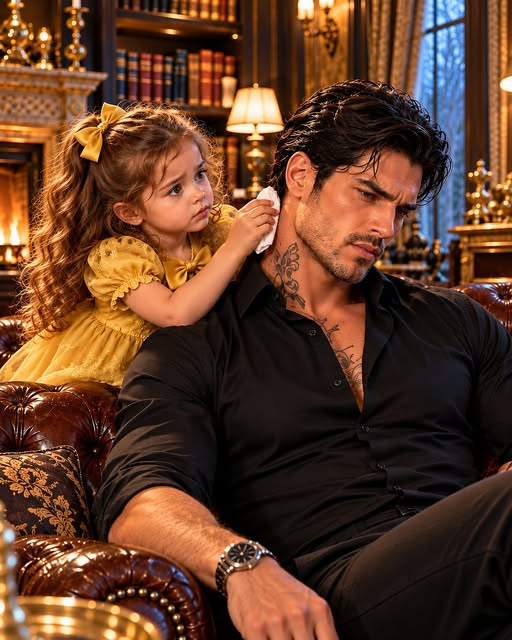
Story Genres: MAFIA BOSS

  • Chapter 3: The Engagement Dinner

    Chapter 3: The Engagement Dinner

    The dining room at the Moretti estate had hosted treaty dinners, a senator, two funerals, and one wedding that ended with the bride's uncle being carried out through the kitchen by four men, and it had never once looked inadequate to the occasion.

    Friday night, it gleamed.

    Forty guests. The Romano family down one side of the long table like a visiting monarchy, the Morettis and their allies down the other, candles in cut glass, the engagement portrait of Dante and Isabella propped on an easel by the doors, smiling with the polished, varnished happiness of a merger announcement.

    Anna Miller had not been meant to work the dinner.

    The catering staff had it. But at five o'clock, Victor Hale had appeared in the service corridor with his clipboard and his mild, immovable smile and informed her that the house staff would assist after all — "Mr. Moretti prefers familiar faces around him at stressful events, Mrs. Miller" — and that Sophie could wait in the old servants' pantry off the kitchen, where the thick stone walls had once kept butter cool and now kept a five-year-old quiet with a coloring book and a plate of cut fruit.

    Anna had not liked it.

    She had liked even less the way he said it: *familiar faces*. As though he were arranging furniture.

    Now she stood against the wall with a water pitcher in her hands, invisible the way staff are invisible, and watched the head of the table the way you watch a man walk a roofline.

    Dante had been magnificent for two hours. That was the cruelest part, and Anna understood later that it was meant to be cruel, that the height was part of the design of the fall. He had been funny. He had been precise. He had remembered the name of Salvatore Romano's youngest grandson and asked after the boy's boat. Isabella, beside him, had begun to glow with something that was not performance — relief, arriving like spring — and had twice touched his hand on the table, and he had turned his hand over, both times, and held hers.

    At nine o'clock, Salvatore Romano rose with his glass, and the room rose with him, and the old lion made his speech about two families and one future and the port contracts that would be signed at the wedding like a sacrament.

    Then he sat, and forty glasses turned toward Dante, and Dante stood.

    Anna saw it before anyone else did because she was the only person in the room who was watching Victor.

    Victor Hale sat four chairs down, in the seat of honor that advisers grow into like trees through fences. His hands were in his lap, below the table's edge. He was smiling up at Dante with the fond pride of a father.

    His right thumb moved.

    It was nothing. A small motion, under the table, against something he held in his palm — the way a man clicks a pen, or presses the button of a thing. Less than a second.

    Isabella saw it too. She would deny it to herself for a week, but she saw it: her eyes flicked to Victor's lap and back to Dante, quick as a bird startling.

    And at the head of the table, in the middle of the sentence — "My family has kept this harbor for sixty years, and tonight—" — Dante Moretti stopped.

    The color went out of his face the way light goes out of a house, floor by floor.

    He put one hand flat on the table.

    "Tonight," he said again, and the word came out thick, wrong, dragged sideways. His other hand rose, shaking, toward the back of his neck, and stopped halfway, as if the arm had forgotten its instructions. "Tonight, I — I want to—"

    The glass in front of him went over. Water ran across the contracts folder.

    "I can't—" he said. "The words. Where are the—"

    Forty people watched the most controlled man in Chicago come apart at the head of his own table in the space of twenty seconds. It was not noisy. That was the horror of it. It was a drowning performed in perfect silence, in evening dress, under candlelight.

    Victor was on his feet. Victor was at his side, a hand under his elbow, a handkerchief appearing, his voice pitched low and ringing with practiced sorrow.

    "Forgive us. Forgive him. The old injury — the doctors warned of episodes. He has overtaxed himself. Bruno, the car. Dr. Webb is waiting."

    And Isabella — Isabella was standing too, white to the lips, and Salvatore Romano was looking at his daughter's fiancé the way a man looks at a foundation crack in a house he has just agreed to buy, and the whispers started at the far end of the table and ran up it like fire in grass.

    *Episodes. Doctors. Is he sound? Is the family sound? Who actually runs the Morettis these days?*

    Dante heard all of it through the fog, through the gray weather that had swallowed the room's edges, and the worst of it — the part he would carry like shrapnel, real shrapnel, for the rest of his life — was the last thing that happened before Bruno took his other arm.

    Sophie had come out of the pantry.

    She must have heard the silence, the strange heavy silence, and come to the kitchen door in her socks with her hands over her ears — Anna saw her there at the exact moment Dante, turning blindly, also saw her, small and scared at the wrong end of a room full of gowns.

    And the fog spoke with his mouth.

    "Get that child—" Dante heard his own voice, ragged and furious and terrified, say, "Get that child away from me. Away. I don't want it near me, I don't—"

    Sophie's face crumpled.

    Anna crossed that dining room faster than she had ever moved in her life, in front of both families, in front of the portrait and the candles and the ruined contracts, and she scooped her daughter up and carried her out with the child's face buried in her neck, and she did not look back at the head of the table.

    If she had looked back, she would have seen Dante Moretti's face in the second after the fog released him — the horror arriving, the understanding — a man watching himself commit a crime from the bottom of a well.

    The doctor — Victor's doctor, Dr. Webb, a soft man with soft hands who had been flown in like a part for a machine — pronounced exhaustion and over-stimulation and administered a sedative that Dante, in the three minutes of clarity he had left, did not resist, because Victor was holding the syringe, and forty guests were downstairs writing the story of the evening in their heads, and resistance would only have been more story.

    He slept for eleven hours.

    He woke at noon to a silent house, an ache behind his eyes like a kicked door — and a drawing, slipped under the library door sometime in the night by a small hand, waiting on the carpet where his foot would find it.

    Sophie had drawn him.

    A stick figure man at a long table, with the oval on his neck drawn big and black and the red eye open wide. And beside him, in purple crayon, a tall thin figure with gray hair, smiling, holding a small black box with a red dot on it — and from the box, a line of red dots running across the page, through the air, into the oval on the man's neck.

    She had written along the bottom, in her new kindergartner capitals, with the letters getting bigger as she ran out of room:

    THE BUG'S DADDY MAKES IT SING.

    And under that, smaller, in pencil, in the hand of a woman who had not slept — Anna's hand, steady and furious and precise:

    *They moved us out of the cottage at 8 a.m. Mr. Hale says staff with children are a "distraction risk." We are at the Starling Motel on Route 41 until Friday. I am not asking for anything. I just thought you should know what she drew. — A.*

    Dante read it four times.

    Then he did something he had never done in three years of fog. He did not ask Victor what had happened at the dinner. He did not ask Victor what he had said, or to whom, or what should be done about it, or whether an apology was advisable, or what the Romanos thought, or whether he was fit to run his own family.

    He put the drawing in the drawer with the first one. He washed his face in cold water until his hands stopped shaking. He wrote, on the fresh sheet, in block capitals: ROUTE 41. STARLING MOTEL. FRIDAY. SHE DREW THE REMOTE. HE CAME WITHIN INCHES, IN FRONT OF EVERYONE, BECAUSE NOW HE NEEDS THEM TO BELIEVE I AM BROKEN. THE CLAUSE. ASK BRUNO ABOUT THE CLAUSE.

    Then Dante Moretti dressed in the rain, declined the car and the umbrella and the driver with a politeness that frightened the staff considerably more than shouting would have, and drove himself, alone, for the first time in three years, down the lake road to a motel with a flickering sign, where a woman who owed him nothing opened the door of room 6 on its chain and looked at him through the gap.

    "You said it," Anna said. Her eyes were dry and exhausted and utterly without mercy. "In front of everyone. She cried for an hour."

    "I know," Dante said. "I heard myself say it. That's why I'm here and not him. Anna — I know what it is. I know what it does. I know whose hand is on it." Rain ran off the awning in a bright curtain between them. "I can't ask you to come back to that house. I'm asking you to let me fix what I said to her. And then I'm asking—" he stopped, and began again, choosing the words the way you choose footing on ice, "—I'm asking you to help me take my life back from the man who stole it, because your daughter is the only witness I have, and you are the only person I trust to tell me when I'm lying to myself."

    The chain stayed on for a long moment.

    Then Anna Miller closed the door.

    Dante stood in the rain and thought, with the clarity of the ruined: *Of course. Of course. Why would she—*

    The chain rattled. The door opened wide.

    "One condition," Anna said. "Sophie is never — never — alone in a room with Victor Hale. Not for one second. Not for any reason. If I ever find that rule broken, I will take her so far that your money and your name will never find us. Do you understand me, Mr. Moretti?"

    "Completely," Dante said.

    "And if you're wrong?" Anna said. "If it's scar tissue and a little girl's imagination and a sick man who shouldn't be driving in the rain? What happens to us then, Mr. Moretti? Because I have stood in exactly one doorway like this before, in another man's house, being told I was valued, and I know how the story goes for the staff when the master changes his mind. We end up in rooms like this one. We end up with our things in bags. I can't afford your delusions, even kind ones."

    "You can't afford them," Dante said. "That's why I'm not asking you to believe me. I'm asking you to look at the evidence and tell me what *you* see. Nobody in my life says no to me, Anna. It's the loneliest thing in the world, and it's how he did it — a whole house that can't say no is a cage with good furniture. I need one person who can. Sophie did it with a crayon. I'm asking you to do it with your eyes open."

    Through the gap in the door came the small sounds of room 6: a television murmuring to no one, a child's crayon working steadily against paper, pausing, working. Sophie was drawing. She was always drawing now, Anna would tell him later — drawing the same thing the way other children draw the sun, as a fact of the visible world.

    "Then come in," said Anna, "and tell me everything. From the beginning. And this time—" she stepped aside, and over her shoulder he could see a small girl at a motel table, frozen mid-crayon-stroke, watching him with enormous eyes, "—you can start by telling *her* you're sorry. If she'll listen."
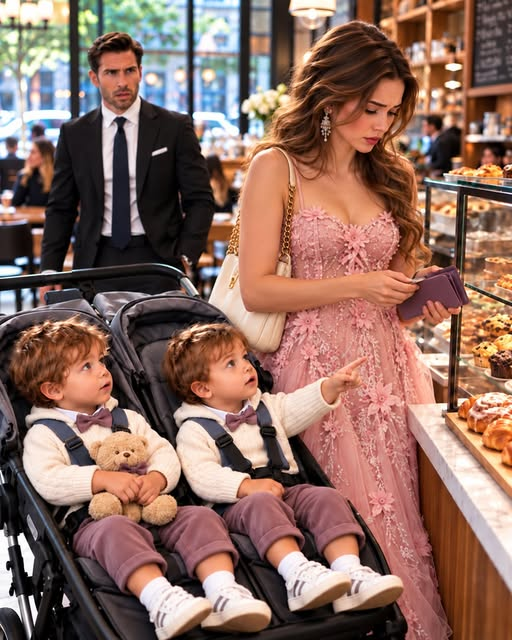
  • Chapter 2: The Wrong Side of the Scar

    Chapter 2: The Wrong Side of the Scar

    Dante did not sleep that night.

    He sat in the leather chair in his study with the child's drawing open on the desk and a glass of scotch going warm and untouched beside it, and he did something he had not done in three years.

    He made a list, in his own hand, of everything he could not remember.

    It was a short list to write and a terrible one to read.

    He could not remember agreeing to sell the Hammond Street warehouses. He could not remember the meeting at which the family had supposedly voted to take on the Romano partnership, though his signature — his real signature, he'd had it verified twice — sat at the bottom of the resolution. He could not remember three separate afternoons in the spring of last year at all; they were simply not there, like pages razored out of a book so cleanly that you only noticed when the story stopped making sense.

    Against every blank, in the margin, the same handwriting, patient as scripture: Victor had explained each one.

    You were in pain. You were tired. The doctors said this might happen.

    He went back further, because the list had a logic and the logic demanded it. He could not remember the day he had agreed to the engagement. He remembered the announcement — the photographs, the ring already chosen, Isabella's hand cool in his — the way you remember a film you once slept through. Of the conversation in which he had supposedly proposed the match, chosen the woman, set the date: nothing. Victor had described it to him over breakfast with tears of genuine pride in his eyes. *You were very clear, Dante. It was the most lucid I'd seen you in months. She said yes before you'd finished the question.*

    He could not remember signing the port authority framework. He could not remember the winter he had supposedly spent deciding to retire Bruno's predecessor — a man who had served his father for thirty years and who had left the estate, Dante now realized, with a speed and silence he had never once questioned.

    Every blank had a chaperone. Every missing hour wore Victor Hale's voice like a coat.

    At two in the morning, Dante opened the bottom drawer of the desk and took out a phone that almost no one knew existed — a plain phone, bought for cash in another state by a man who no longer worked for him, kept charged and silent for the day he might need to make a call that Victor Hale did not know about.

    It shamed him, how his hands shook.

    It shamed him worse that he understood, dialing, why he had bought the phone two years ago and never once used it. Some part of him — the part that the fog could not reach — had been waiting for a reason.

    He called Bruno Keller.

    Bruno had run Moretti security for eleven years. He answered on the second ring, fully awake, the way soldiers and fathers of newborns answer phones at 2 a.m.

    "Sir."

    "I need an MRI," Dante said. "Head and neck. Tomorrow. Not at St. Aurelia. Not booked by the house, not paid by the house, and not one word of it in any log you keep. Can you do that?"

    A pause that was not hesitation. Bruno was deciding what kind of problem this was, and therefore what kind of man to be about it.

    "There's an imaging center in Waukegan that does cash work for fighters," he said. "No names if the money's right. I can have a car that isn't ours at the service gate at six."

    "Six," Dante said.

    "Sir." Bruno's voice lowered. "Is this the part where I ask if you're in trouble?"

    "This is the part where you don't ask me anything until I've seen the pictures."

    "Understood."

    Dante set the phone down. Then, because the fog had taught him humility the way fire teaches it, he took a fresh sheet of paper and wrote, in block capitals, everything he had just decided — the center, the time, the car, Bruno's name — and signed it and dated it, and put it in the drawer under the drawing.

    If the morning came and he didn't remember, the morning would have instructions.

    The morning came clear.

    That frightened him more than the fog ever had, because it made him wonder how many of the lost days could have been clear too, if something — or someone — hadn't wanted them otherwise.

    The imaging center smelled of floor cleaner and other people's fear. The technician was a tired woman with kind eyes who called him "Mr. D" because that was the name Bruno had given her, and if she recognized the most written-about face in Chicago's crime columns, she kept it to herself for the excellent reason that Bruno had paid her to.

    The scan took forty minutes.

    The radiologist took eleven minutes to come back, and he came back the way men come back from rooms where they have seen something they cannot un-see — slowly, and carrying the films like evidence.

    "Mr. D," he said, "I want to be careful here, because I don't know your history. But whatever this is—" he clipped the image to the light box, and there it was, at the base of Dante's skull, an oval of clean white geometry against the gray weather of his brain, "—that is not shrapnel."

    Dante stood very still.

    "Shrapnel is ugly," the radiologist said. "It's torn, it's random, it's got no manners. This has manners. This is a capsule. Manufactured. Machined edges, a casing, what looks like a coil assembly, and unless I miss my guess, a power cell." He turned. "Somebody put that there, Mr. D. Somebody with a surgical team and a very good reason. And it is not — I want to be precise — it is not in the location your chart describes. Your chart says left of C3. This is midline, at the foramen, and it has leads."

    "Leads," Dante repeated.

    "Two of them. Running down toward the cord." The man's face did something complicated. "I'm not your doctor and this isn't my business. But if that thing is what I think it might be, then in my professional opinion, sir, you don't have an old injury in your neck."

    He took the films down and slid them into an envelope.

    "You have an installation."

    In the car, Bruno drove with both hands at ten and two and said nothing for six miles, which for Bruno was a speech.

    "How long," Dante said at last, "have you thought something was wrong?"

    Bruno's eyes stayed on the road. "Sir, I run your security. I don't think things about your health."

    "Bruno."

    "…You stopped finishing your own sentences in meetings, about two years ago. You'd start a thought and then you'd look at Mr. Hale, and he'd finish it, and you'd nod like he'd said what you meant." The big man's jaw worked. "I told myself it was the injury. A man gets his car blown up, it changes him. That's what I told myself."

    "And the rules about my neck? The library? The doctors, the appointments — who built all that?"

    "Mr. Hale wrote the protocols the week you came home from St. Aurelia. For your protection." Bruno said it the way you hand someone a loaded fact. "Every one of them came from him."

    Dante looked out at the lake going iron-gray under the rain.

    "I see," he said.

    At the house, the day proceeded exactly as days had proceeded for three years, and for the first time, Dante watched it the way you watch a card trick after someone has shown you where the mirror is.

    Victor brought the pills at four. White, two, on the silver tray, with water. Victor set them down. Victor waited — that was the thing Dante had somehow never let himself notice in three years. Victor always waited, pleasantly, folder under his arm, while Dante swallowed. A servant would have left. A friend would have trusted.

    A keeper watches the animal eat.

    Dante swallowed the water. The pills went where pills had been going, he decided, for exactly one more day — into his cheek, and then, when Victor turned to the contracts, into the soil of the potted olive tree beside the desk.

    "There's a good fellow," Victor said, without turning around, and Dante felt the old man's approval wash the room like a tide, and hated — hated — how some exhausted animal part of his brain still wanted to bask in it.

    Isabella came at six with her driver and her perfume and her wedding planner's binder, which had grown to the size of a phone book. She was beautiful in the way of women who have been beautiful professionally since childhood, and cleverer than her father allowed anyone to say at dinner.

    "You're looking at me like a contract," she observed, sitting down.

    "I'm looking at you like a man who's been rude all week and is deciding whether to apologize or double down."

    She considered him. "Apologize. It suits your face better." Her smile faded at the edges. "Dante. The dinner is Friday. Both families. My father is bringing the contracts for the port authority—"

    "I know what your father is bringing."

    "Then you know he expects a fiancé who can stand up and give a speech without—" She stopped. Too late. The words had already left her mouth and were standing in the middle of the room, unable to be called back. Without going gray. Without losing the thread. Without needing Victor Hale to lean in and finish his sentences like a translator for the deaf.

    "I'll be there," Dante said quietly. "And I'll stand up."

    After she left, he wrote that down too. The binder. The dinner. The contracts. Stand up.

    Then he went down the back stairs to the staff corridor, a thing the head of the Moretti family had not done in living memory, and knocked on the door of the little office where the housekeeper kept the linen rosters.

    Anna Miller opened it with a pencil behind her ear and fatigue in her face, and for a moment neither of them said anything, because there is no etiquette for this: the master of the house, in the servants' corridor, smelling of rain and secrets.

    "Sophie," Dante said. "I need to know exactly what she said. All of it. Word for word, if you can."

    Anna's hands tightened on the roster book.

    "With respect, sir — she's five. She had a nightmare last night about a spider with a red eye, and this morning she asked me if the bug was angry at her for telling. Whatever you think she saw—"

    "Anna." He said her name the way he'd said it in the library, like a man holding something level. "I'm not going to punish her. I'm not going to call her a liar, and I'm not going to let anyone else do either. I need to know what she said because I think—" The sentence cost him. Three years of practice at being the man who knew things rose up in his throat and he pushed through it. "I think she might be the only person in this house who has told me the truth in three years."

    Anna Miller looked at him for a long time. She was a woman who had buried a husband, who worked sixty hours a week in another family's house, who had learned the exact market price of dignity — and she decided, visibly, the way people decide to step onto thin ice.

    "She said it had little legs," Anna said. "She said it was looking at her. And last night, before she slept, she said one more thing. She said the bug has a light, Mr. Moretti. A tiny red light. And it only comes on—" Anna's voice dropped, "—when it's listening."

    Dante stood in the servants' corridor with the rain coming down beyond the windows and the smell of clean linen all around him, and he felt the fog at the edges of his mind like hands at a curtain.

    "Thank you," he said.

    "Sir." Anna's voice stopped him at the door. It was not soft. It was the voice of a woman setting down a condition. "If this puts her in danger — if whatever this is comes near my daughter — I will take her and I will run, and I do not care whose house this is."

    It was the second true thing anyone had said to him in three years, and the bravest, and it came from a housekeeper with a pencil behind her ear.

    "I know," Dante said. "That's why I came to you."

  • Chapter 1: The Library at Four O’Clock

    Chapter 1: The Library at Four O’Clock

    "There's something behind your neck, mister."

    The whisper came from behind the leather sofa, so soft it barely rose above the rain tapping the tall library windows.

    Dante Moretti did not answer.

    He was asleep.

    That alone would have frightened most adults in the Moretti mansion more than the words did. People knew better than to approach Dante when he slept. His staff knew not to enter the library between three and five unless summoned. Security knew to keep the hall outside clear. Even Isabella Romano, the woman he intended to marry in seven weeks, usually left him alone during what she called his "bad afternoons."

    Sophie Miller was five.

    Five-year-olds were not impressed by protocols.

    She crouched beside the sofa in a navy jumper and white socks, her coloring book forgotten on the rug behind her. Her mother, Anna, was dusting shelves on the other side of the room, unaware that Sophie had noticed something adults had spent three years explaining away.

    Dante's head had fallen sideways against a velvet cushion.

    A leather-bound ledger rested upside down on his chest.

    Dark hair brushed the back of his collar.

    And right at the hairline, where the neck met the skull, Sophie saw a tiny raised shape beneath the skin.

    Not round like a mole.

    Not smooth like a scar.

    An oval.

    Hard-looking.

    Almost silver when the lamplight touched it.

    She leaned closer.

    "There's a metal bug in your neck."

    Still nothing.

    Sophie lifted one finger.

    Touched the spot.

    Across the library, Anna turned.

    The dust cloth fell from her hand.

    "Sophie."

    The child looked around.

    Anna crossed the room in three quick steps.

    "What are you doing?"

    "I found something."

    "Come away."

    Anna caught her daughter's wrist gently and pulled her back.

    Sophie frowned.

    "Mommy, look."

    "No."

    "It has little legs."

    Anna froze.

    "What?"

    "The bug."

    She whispered the next words into her mother's ear.

    "It was looking at me."

    Anna stared at Dante.

    Rain streaked the windows behind him.

    His breathing stayed slow.

    For one moment, fear was not about the rule they had broken.

    It was about the shape beneath his skin.

    Anna had worked at the Moretti estate for only three months, but she knew enough.

    Never touch the back of Mr. Moretti's neck.

    Everyone had heard the explanation.

    Three years earlier, an explosion had torn through one of his cars. Surgeons removed pieces of glass and metal from his shoulder, upper back, and scalp. One fragment near the cervical spine had supposedly been left because taking it out carried more risk than leaving it.

    That fragment, according to Victor Hale, was the reason Dante hated anyone touching that area.

    Anna had never questioned it.

    Why would she?

    Victor Hale had been beside the Moretti family longer than half the staff had been alive.

    He knew every doctor.

    Every security protocol.

    Every private appointment.

    Every rule.

    Anna picked Sophie up.

    "Not another word."

    "But—"

    "Not another word."

    Behind them, Dante moved.

    His eyes opened instantly.

    His hand shot out.

    It closed around Anna's wrist — not hard, not hurting, but with the speed of a man who had survived by reflex for a decade — and all three of them stopped breathing.

    "Don't," Dante said.

    His voice was rough with sleep and something older than sleep, some deep tiredness that lived behind his eyes. He looked at his own hand on Anna's wrist as if it belonged to someone else. Then, deliberately, finger by finger, he let go.

    "I don't—" He pressed the heel of his palm against his temple. The headache was already arriving, the familiar gray weather rolling in behind his eyes. "I don't like to be touched when I sleep. I could have hurt her."

    "You didn't," Anna said. Her heart was slamming. "Sir, I'm sorry. It won't happen again. Sophie, tell Mr. Moretti you're sorry."

    But Sophie was not looking at her mother.

    She was looking at the back of Dante's neck, over his shoulder, with the terrifying focus of a child who has seen a spider on a wall and cannot understand why the adults are talking about manners.

    "It moved," she said.

    Dante went very still.

    "What moved?"

    "The bug." Sophie pointed. "When I touched it. It moved a little bit. Like this." She wiggled two fingers of each hand, tiny legs, and then pressed her own small fingertip against the side of her neck, at the hairline. "Right there. Yours is right there."

    For a long moment, the only sounds in the library were the rain and the fire settling in the grate.

    Dante Moretti had been shot at twice, blown up once, and had sat across negotiating tables from men who smiled while they priced his funeral. He had not been afraid in that room in years.

    He was afraid now — not of the child, and not even of the thing she was describing.

    He was afraid of how much he wanted it to be true.

    Three years of headaches that arrived like weather and left like theft. Three years of mornings where whole conversations were missing, of signing pages he could not remember reading, of Victor's patient voice saying, *You were tired, Dante. We discussed it Tuesday. You agreed.*

    Three years of depending on the people closest to him to tell him what he had said, what he had decided, who he had been.

    If there was something in his neck that was not supposed to be there — if a five-year-old with crayons could see what his doctors had missed — then the fog had a shape.

    And anything with a shape could be fought.

    "Sophie," he said quietly, "can you draw it?"

    "Dante—" Anna began.

    He held up one hand. Not a command. A request. She stopped.

    "Can you draw the bug for me? Exactly what you saw. Nothing pretend added. Just what you saw."

    Sophie considered this with enormous seriousness.

    "With the red part?"

    "The red part," he agreed, and felt the hair rise on his arms. "Especially the red part."

    Anna set her daughter down with hands that shook. Sophie ran to her coloring book, dragged it back across the rug, and knelt at the low table beside the sofa. She chose her crayons the way surgeons choose instruments. Black. Gray. Red. She bent over the page, tongue caught between her teeth, and drew.

    Dante did not watch her draw.

    He watched the door.

    Because he had already done the arithmetic that Anna was doing now, standing white-faced with her daughter's other hand still held in hers. If the child was right, then somewhere in this house was a man who had lied to him every day for three years — a man who had stood at his hospital bed, who had read him his own signature on documents he couldn't remember, who had built the rules of this house like walls and called them care.

    The library door opened.

    Victor Hale came in with a leather folder under one arm and a glass of water and two white pills on a small silver tray, the way he did every afternoon at four, the way he had done every afternoon for three years.

    "Your medication, Dante," he said. "And the Romano contracts for—"

    He stopped.

    He had seen the child at the table. He had seen the drawing.

    And Dante, watching the door, saw the thing he would remember later, in the dark, when everything else about that afternoon had been argued away.

    Victor Hale smiled.

    It was the right smile. Warm, grandfatherly, indulgent. It arrived exactly on time.

    But his eyes went to the drawing first — before the child, before Dante — and his free hand, the hand not holding the tray, closed slowly into a fist at his side, the way a man closes his hand around something he intends to keep.

    "What have we here?" Victor said. "A masterpiece?"

    "It's a bug," Sophie said, without looking up. "It's not finished."

    "Ah." The smile stayed where it was. "Children and their imaginations. When I was a boy, I was certain there was a crocodile in the Arno." He set the tray down. His voice softened into the register he used for fevers and bad news. "Dante. Your pills. The doctor was very clear about the schedule."

    "Leave them."

    "Of course." Victor set the pills beside the ledger. But he was still looking at the drawing, and Sophie, with the instincts of a creature much smaller than everyone in the room and therefore much better at reading them, turned the coloring book around so the page faced Dante instead of Victor.

    "Done," she announced.

    Dante took the book.

    An oval, drawn in gray, with a hard black outline. Around its lower edge, short black strokes — legs, or the suggestion of legs, more like the stitches on a baseball. At its center, a red dot inside a red ring, careful, pressed hard enough to dent the page.

    An eye.

    She had drawn it at the exact place she had touched. The hairline. The center of the neck, where it met the skull.

    Dante had read his own surgical report so many times that grief had worn the words smooth. *One fragment, approximately eleven millimeters, lodged left of the C3 vertebra. Removal risk judged unacceptable.*

    Left.

    His hand rose, slowly, and his fingers found the back of his own neck — the spot a five-year-old had touched, dead center, where the hair began.

    The shape was there.

    Oval. Hard. His fingers knew it the way tongues know a broken tooth.

    It was not on the left.

    It had never been on the left.

    He could tell, standing in his own library with a child's drawing going damp in his other hand, that whatever lay beneath his skin sat in the exact middle of his neck — and that three years of medical charts had described something somewhere else.

    "Mr. Moretti?" Anna said. "Sir? Are you—"

    "Anna." He kept his voice level with an effort that cost him more than she would ever know. "You and Sophie will finish your shift in the east wing today. Not the library. If anyone asks, I sent you. And—" He looked down at the drawing, at the red eye pressed into the paper. "—if anyone asks about this, she was drawing a spider. From a book. Do you understand me?"

    Anna understood several things at once, the way mothers do. She understood that he was protecting them. She understood that he thought he needed to.

    "Yes, sir."

    "And Sophie." Dante crouched, slowly, the way you approach a deer, until his eyes were level with hers. A five-year-old girl in a navy jumper regarded the most feared man on the lake shore without flinching, because nobody had yet taught her that she should. "You did exactly right, telling me. Can you keep it a secret just a little while? A real secret. The important kind."

    Sophie nodded.

    "The bug keeps secrets too," she informed him. "That's why it hides."

    Victor laughed, softly, from behind him. "Well. We shall have to keep our imaginations on shorter leashes, all of us."

    Dante stood.

    He folded the drawing once, carefully, along a line that did not cross the oval, and put it in the inside pocket of his shirt, over his heart.

    "Victor," he said, "cancel my afternoon calls."

    "All of them? The Romano—"

    "All of them." He picked up the silver tray and set it, untouched pills and all, on the mantel, out of the lamplight. "I'm going to rest. No one comes in. Not even you."

    For one second — one only — the warm smile slipped, and Dante saw the thing beneath it: not cruelty, not triumph. Irritation. The look of a man whose clock has been stopped mid-swing by a child's crayon.

    Then it was gone, and Victor Hale was bowing his head, solicitous, devoted, the oldest friend his family had.

    "Of course, Dante. Rest. I'll handle everything."

    He always had. That was rather the point.

    Dante waited until the door had closed. Until Anna had gathered Sophie and the coloring book and gone, with one last wide-eyed look over her mother's shoulder. Until the house settled into its rainy afternoon hush and the only heartbeat in the library was his own.

    Then he took the drawing out and smoothed it flat on the ledger.

    He pressed two fingers to the back of his neck.

    And beneath his fingertips, faint as a moth against a window, the thing under his skin answered — once, and then once more.

    Tap.

    Tap.

    Like something in there was awake.

    Like something in there had been listening all along.

  • Chapter 7: The Friday Special

    Chapter 7: The Friday Special

    The audit closed on a Tuesday, in a letter so dry it took Emma three readings to understand that she had won everything.

    No finding of misconduct. No impropriety. Reinstatement effective immediately, the district wrote, with full back pay and a formal correction entered into her personnel file — and, buried in the final paragraph in the bloodless language of institutions, an apology. She read it standing in her kitchen at six in the morning with the kettle going and the boys still asleep, and she laughed once, out loud, in disbelief, and then she cried for about ninety seconds with her hand over her mouth so as not to wake them, and then she washed her face and made oatmeal, because that was the kind of morning it was. That was the kind of life it was. It did not stop for vindication.

    By Friday she was back in her classroom. Her students had made a banner — WELCOME BACK MS. PARKER, in glitter glue, with a rocket drawn in the corner by a twelve-year-old who did not know why he had drawn it, only that she liked rockets now. Her principal shook her hand like a colleague. The lab went forward with a different, smaller, ordinary grant that took eleven months and four committees, and Emma found she preferred it that way. Some things should arrive slowly, she thought, and be nobody's secret.

    The garnishment took longer to kill. Hospital billing departments do not surrender the way panels do; they merely pause, and recalculate, and send the same threat in a new envelope. For six weeks Emma carried those envelopes to school unopened in the bottom of her bag, the way you carry a stone in your shoe.

    Nathan did not pay it. That was the thing she had to explain to people later, and most of them never quite believed her: Nathan Harrison did not pay it.

    He asked.

    It happened on her porch, on a gray evening three weeks after the hearing, with the boys inside doing a puzzle loudly enough to constitute a contact sport. He did not come in a suit. He came in a jacket with his hands visible and empty, and he stood one step below her on the steps, and he said: "I've set up a trust. For Ethan and Noah. It's theirs — legally, irrevocably, theirs. You're the trustee, Emma. Sole trustee. Not me. I fund it; I don't touch it, I don't see the statements, I don't get a vote. The first thing it can do, if you say yes — only if you say yes — is clear the medical debt. All of it. The hundred and twenty. It's their money being spent on their own beginning, and the decision is yours, in writing, whenever you're ready. If you're never ready, it sits there and waits and that's fine too."

    He held out a folder. Not a gift. A document. Terms she could read, refuse, amend — all the things he had never once offered her in their marriage: information, and time, and a genuine no.

    Emma took the folder. She read it that night at her kitchen table after the boys were asleep, every page, twice, with a pencil. She called the attorney whose name was on it — her own call, her own questions — and then she called a second one, whose name was not, just to hear it confirmed by someone who owed Nathan Harrison nothing.

    "A parent funding a trust for his children and putting the other parent in sole control," the second attorney said, "is either the most honest structure I've seen all year, or he's very sick. Is he sick?"

    "Not anymore," Emma said, surprising herself, and signed the consent on a Thursday.

    The debt died the way it had lived: in paperwork. A zero balance letter arrived in a plain envelope, and Emma stood in her kitchen holding proof that the number which had shadowed every decision of her adult life — every counted coin, every refused pastry, every no said to herself so the boys could hear yes — was gone. The collectors withdrew the garnishment filing the following week. She framed nothing. She put the letter in the drawer with the good scissors and the spare batteries, because that was where a woman keeps the tools of a working life, and she got on with hers.

    Nathan, meanwhile, was doing something nobody on the business pages could make sense of: telling the truth at scale.

    Harrison Development did not survive the Whitmore ballroom. It wasn't meant to, in the end. The board removed him within the month — fiduciary, they said, and the papers said king no more, and for a while the towers he'd built seemed to stand over the city like evidence. What rose in its place was smaller in every way except one. He started again with eleven people in a borrowed office over a warehouse: Harrison & Field, though there was no Field; he'd liked the honesty of admitting the second name was a hope, not a person. They took the jobs the big firms disdained — a clinic on the South Side, priced at cost; a school roof; housing that working families could actually rent, built to the standard he'd once reserved for penthouses. He paid his crews what he'd once paid his lobbyists. He signed less. He read everything.

    "We'll never be kings," Marcus told him once, happily, sorting contracts at a desk made from a door. Marcus had followed him out of the glass tower with his Rolodex and his ulcer and a look of profound relief, like a man who had left a casino an hour before it burned.

    "I know," Nathan said. "Isn't it restful?"

    Weekends rewired themselves, slowly, the way true things do. Saturday mornings at first: the bakery, because Ethan had decreed that a man who had been given a drawing of that importance owed the bakery his Saturdays, and Noah had seconded the motion on medical grounds — "Mr. Russo's rolls are my medicine," he announced, four years old and shameless, and Mr. Russo, wiping his hands on his apron, had nodded with the gravity of a pharmacist and said, "The boy understands dosage."

    So it became a ritual, and rituals are load-bearing. Nathan arrived at nine with the newspaper he never read. Emma arrived at nine-oh-five with the boys already arguing about whether the moon counted as a planet's house. The boys got cinnamon rolls — Ethan — and whatever Noah's current research required — and Nathan drank bad coffee he had developed a sincere fondness for, and learned the names of everyone in the neighborhood, and was, to his lasting astonishment, teased. Mr. Russo teased him. The retired ladies at the corner table teased him. He had been feared on three continents and he sat in a Chicago bakery being teased about his parking, and it was the happiest his face had ever been allowed to be in public.

    The boys had a word problem to solve that spring, and they solved it the way they solved everything: directly, out loud, in front of witnesses.

    They had known, since the hospital, that the tall man was theirs in some specific way that the word friend did not cover. Emma had told them on a quiet Sunday, simply, sitting on the floor of their room at eye level, because she had decided her sons would get the truth the way everything else in that house got handled: plainly and early and without decoration. "Nathan is your father," she said. "He made a mistake a long time ago, before you were born, and he didn't know about you, and that's why he wasn't here. He's sorry. He's learning."

    Ethan had nodded like a magistrate. Noah had asked whether fathers were allowed to see the notebook, and upon learning that they were, had presented it for formal review.

    But father is a title, and Dad is a job, and the boys — who did not deal in unearned promotions — spent two months conducting what could only be described as an evaluation period. Nathan was tested on rocket facts (he studied; Marcus confirmed he kept index cards in his coat). He was tested on cinnamon roll fairness arbitration, on nightmare response time, on whether he would sit through the whole of Ethan's forty-minute presentation on bridges without looking at his phone. He passed, mostly, with one documented failure on the planet Pluto, about which Noah remained vocal.

    The moment, when it came, was small. That was how Emma knew it was real.

    A Tuesday evening, nothing special — rain, homework at her kitchen table, Nathan washing up a saucepan because he had learned that in this house you did not sit while others worked. Ethan, without looking up from his worksheet, in the tone of a boy asking for the stapler, said: "Dad, what's nine and six?"

    The saucepan stopped.

    Nathan stood at the sink with his hands in the water and did not turn around, because he was doing arithmetic of his own — the kind where getting it wrong was not an option and the answer, arriving all at once and four years late, was fifteen, and also everything, and also please God let me not be loud about this. "Fifteen," he said, and his voice held, mostly. "Nine and six is fifteen, buddy."

    "Okay," said Ethan, and wrote it down, and kicked his feet against the chair leg, and the world went on being ordinary, which is to say it went on being miraculous.

    Emma, in the doorway with the laundry basket, said nothing at all, and smiled into the folded towels like a woman keeping a confidence for the universe.

    So the year turned the way years do when people have decided, daily, to be decent inside them. Noah's lungs grew with him — the attacks came further apart, then rarely, then as stories the boys told about the brave chair and the man who wasn't sad loud. Nathan's small company acquired a reputation as the firm that read everything and built things that lasted, which turned out, to everyone's surprise including his, to be a viable strategy for a man who no longer needed to be a king. Emma taught, and graded, and was — there is no smaller or larger word for it — happy, in the sturdy unspectacular way of women who have come through.

    And then it was a Friday again.

    The bakery did what it always did on Fridays: steamed at the windows, smelled of cinnamon and yeast and sugar, filled up by nine-thirty with the neighborhood. The boys were at the pastry case — their case, in the proprietary sense that four-going-on-five-year-olds own the geography of their joy — with their noses at the glass, conducting the week's inspection. Nathan stood where he had stood a year and a lifetime ago, by the door, watching his ex-wife count out coins at the register out of pure habit — she still counted carefully; some disciplines you keep, not from need but from respect for the woman who needed them — and he thought, not for the first time, that everything he had ever actually owned fit in this one warm room.

    He almost didn't notice the boys conferring. Ethan was whispering with the intensity of a tiny conspirator. Noah was holding something in both hands, against his chest, the way he held the teddy bear, the way he held anything that mattered — and when Emma turned from the register, the boys advanced on the two of them in formation, with the solemnity of an honor guard, and stopped exactly in front of the pastry case where a man in a suit had once frozen and lost everything and found it.

    Noah opened his hands. In them, a little worn, a little crooked from being carried in a pocket for what was clearly several days of security breaches, was a small ring box.

    "We catched it," Ethan announced to the room at large, "when Dad was hiding it in his coat at our house. We are giving it back so he can do it RIGHT THIS TIME."

    "Ethan," Nathan said faintly, "we discussed the plan."

    "The plan had too much waiting," Noah explained, with deep sympathy. "You wait a lot. It's your main problem."

    Emma was laughing already — she had seen the box, and done her own arithmetic, and arrived, counting carefully, at her answer long before he asked. But she let him ask. Some things should be given the dignity of their moment, and she had learned, the hardest way there is, that Nathan Harrison could be trusted to finally, finally learn a thing all the way through.

    He went down on one knee on the bakery floor, in front of the pastry case, in his good suit, in the sawdust-and-sugar grit of a Friday morning, and he did not make a speech. He had prepared one — Marcus had heard three drafts and wept at the second, for reasons he declined to specify — but in the event he set it all aside and said the plain thing, the way everything true in that family got said.

    "Emma Parker. I signed the wrong papers once because I wasn't paying attention. I have been paying attention every day since. I will pay attention for the rest of my life. Will you marry me — again, and this time on purpose?"

    Mr. Russo, behind the counter, said, "Friday special," in a voice not entirely steady, and slid two pastries across the counter into a bag that nobody would be permitted to pay for. "On the house. For the table. Don't anybody argue with me today."

    "Yes," Emma said. She said it clearly, for the room, for the record, on purpose. "Yes. But I pick the date, and you read everything they put in front of you at that wedding, Nathan Harrison, every single word."

    "I'll have Marcus notarize my attention," he said, and the ring — hers, the original, kept five years in a drawer by a man who had told no one — went onto her hand in front of the cinnamon rolls, and the bakery applauded, and the boys applauded loudest and longest, and Noah informed the retired ladies that this was his doing, medically, and Ethan said it was a group project.

    The King of Concrete put his forehead against his wife's — his wife's, again, nearly, soon, already, in every way that the paperwork merely confirmed — amid the steam and the sugar and the applause of twenty neighbors, and he understood at last what the deal had never been able to tell him. A man could sign his name on a skyline and own nothing that mattered. Or he could stand in a little bakery on the North Side, holding a woman who counted carefully and two boys who had drawn him nearer, richer than any crown had ever promised to make him — richer than the deal would have made him, by exactly the sum of everything it would have cost.

    "Stay for the second coffee," Emma said, against his shoulder, smiling. "It's terrible."

    "It's my favorite thing in the world," said the King of Concrete, and stayed.

  • Chapter 6: The Day He Walked Away

    Chapter 6: The Day He Walked Away

    The nebulizer hissed in the dark, and Emma counted her son's breaths the way she had once counted coins on a bakery counter — carefully, because getting it wrong was not an option.

    Noah slept propped against two pillows in the pediatric ward, a clear mask fogging and clearing over his small face. Every breath in sounded like it had to climb over something. Every breath out whistled, thin and tired. The monitor beside the bed drew its green mountains and valleys, and Emma watched the valleys, because the nurse had told her, gently, an hour ago, that what mattered was that the valleys kept coming back up.

    It was a little past three in the morning. Ethan was asleep in the vinyl chair beside her, curled around his brother's teddy bear, one shoe off, his cheek marked with the seam of the chair. He had refused, with the absolute moral certainty of a four-year-old, to go home with their neighbor. "Noah stays, I stays," he had announced, and then fallen asleep mid-sentence with his hand stretched toward the bed rail, as if he could hold his brother in place by wanting it hard enough.

    Emma had not slept. In six hours she was due in a hearing room downtown, where a panel of district officials would decide whether she had corruptly steered a five-million-dollar donation to her own school — a donation she had never asked for, never known about, and would have refused with both hands if anyone had offered it to her out loud. Her suspension letter was folded in her purse. Her union representative had told her to bring documentation, to stay calm, to answer only what was asked.

    She had no documentation. She had a four-year-old who could not breathe properly and a phone with eleven percent battery and a lawyer she could not afford, and at three in the morning, in the blue hum of the ward, Emma Parker did the arithmetic she had been doing for four years and got the same answer she always got: there was not enough of her to cover all of it.

    She leaned forward and rested her forehead, very lightly, against the cool rail of her son's bed.

    "Okay," she whispered. "Okay. We just have to count carefully."

    Across the city, in a glass office forty floors above the river, Nathan Harrison stood in front of a wall of windows with a phone in his hand and did not call her.

    Marcus had sent the message at midnight, flagged urgent, and Nathan had read it standing in his kitchen in the dark. Noah Harrison — the report used the surname the boy didn't carry, the one Nathan had no right to yet — admitted overnight. Severe asthma exacerbation. Stable, the message said. Stable was doing a great deal of work in that sentence, and Nathan knew it, because he had spent three days reading everything that existed about his sons, and he knew what premature lungs at thirty-two weeks meant, and he knew what "overnight observation" meant when a child's oxygen would not stay where it belonged.

    He had a car downstairs. He had a driver. He had no invitation, no standing, no place in that hospital room that he had not forfeited five years ago at a closing table, with a pen in his hand and a merger on his mind.

    At nine o'clock he was due at the district hearing — not as a party. As a witness who had volunteered, which his lawyers had called, in escalating language, inadvisable, catastrophic, and career-ending. At two o'clock, in the ballroom of the Whitmore Hotel, the Crown Meridian merger would be signed in front of four hundred guests and the financial press — forty-one towers, three cities, the deal that would put his name on the skyline of half the country. The deal that would make him a king.

    His board had a word for today too. They called it the most important day in the company's history.

    Nathan looked at his reflection in the black glass — a man in a perfect suit who had signed away a marriage without reading it and tried to buy back a family without asking — and he thought about a small boy in a bakery saying, If there's not enough money, I don't need any bread.

    He picked up the phone and called Marcus.

    "Move the car to seven," he said. "And Marcus — whatever happens today, don't let anyone sign my name to anything."

    "Sir," Marcus said carefully, "the board—"

    "I know what the board said." Nathan's voice did not rise. It never rose. That was the terrible thing about it, Emma could have told him. "I know exactly what the board said."

    The hearing room was smaller than Emma expected, and colder, and it smelled of old paper. She sat at a bare table with her union representative beside her and her hands folded so tightly her knuckles showed white, and she listened to a man she had never met read aloud, in a flat voice, the timeline of a crime she had not committed: the anonymous donation, the contractor's phone call, the lab with her name proposed for the door. Somewhere in the middle of it her phone buzzed against her leg — the hospital, she thought, her whole body going cold — but it was only the ward's automated message: Patient resting. Vitals holding.

    She breathed. She answered what was asked. No, she had not solicited the donation. No, she had not known its source. No, she had no contact with Harrison Development. That last one caught in her throat, because it was a lie shaped exactly like the truth: she had no contact with the company. She had had a life with the man, which was a different thing, and the panel did not ask about that, and she did not offer it.

    Then the door at the back of the room opened, and every head turned, the way heads turn for weather.

    Nathan Harrison walked the length of the hearing room in a black suit, unhurried, and took the witness chair the way other men took thrones, and the chair of the panel — who had been bored for an hour — sat up very straight.

    "Mr. Harrison. You understand you're appearing voluntarily, and on the record."

    "I do."

    "State your relationship to the donation in question."

    Nathan looked at Emma once — once only, level and brief, an apology and a promise in the same glance — and then he looked at the panel, and he did the thing that no lawyer he employed had been able to talk him out of.

    "The five million dollars was mine," he said. "I made the donation personally, anonymously, and unilaterally. Ms. Parker did not solicit it, did not know about it, and did not learn where it came from until it had already damaged her. She has spent her entire career refusing advantages she didn't earn. I'm the one who put her in this room. Not her."

    The room made a sound. The panel chair asked, with care, whether Mr. Harrison understood that he was describing a serious breach of district ethics policy by a donor with commercial interests before the city.

    "I understand exactly what I'm describing," Nathan said. "Put my name on it. All of it. Hers shouldn't be anywhere near it."

    He answered their questions for forty minutes. He did not qualify, deflect, or hide behind counsel. He named the intermediary. He named the dates. He said, on the record, into a microphone, that a suspended middle-school science teacher with two sick children and a hundred and twenty thousand dollars of medical debt had more integrity in her refusal of a free pastry — the panel looked up at that; he did not explain it — than his entire industry had shown in a decade. By the time he stood to leave, three journalists who had come to cover a school scandal were instead covering something much bigger, and Emma's union representative was gripping her arm hard enough to bruise, whispering, "It's over. Emma. It's over. He just ended it."

    Emma sat very still. She should have felt rescued. What she felt was fury and grief in equal measure, and underneath both, traitorous and enormous, relief — because her name was clear, and because Noah was upstairs across the city breathing, and because the man walking out of the hearing room had finally, finally understood what he had done: not the donation. The deciding for her. And he had just undecided it in the most public way a man like him could — by taking the whole cost onto his own name and leaving hers clean.

    She found her voice when he reached the door.

    "Nathan."

    He stopped. He did not turn around right away, and she understood that he was afraid to, and that, too, was new.

    "Noah was admitted last night," she said. The room had gone quiet in the way rooms do. "He's stable. He's at St. Brigid's, room 412." She swallowed. "Ethan won't leave the chair next to his bed. In case—" Her voice failed, briefly, with a precision that hurt. "In case his brother needs a hand to hold."

    Nathan turned then. His face did what it had done in the bakery, the thing she had seen only twice in nine years of knowing him.

    "Thank you," he said, like a man who had been handed something precious and breakable. "Emma — thank you."

    The Whitmore ballroom was set for four hundred: ice sculptures, skyline renderings, a forty-one-tower model under glass with a river of blue light running through it. At one forty-five, the Crown Meridian principals were seated. At one fifty, the pens were laid out — Nathan had once, at twenty-six, thought a signing pen was a stupid ceremony; at thirty-eight he knew ceremony was the whole point, the photograph was the product, the photograph was what made it real and permanent and his.

    At one fifty-five, Nathan Harrison stood up from the head of the table.

    He did not make a speech. Men who make speeches are asking to be stopped, or forgiven, or admired, and he wanted none of the three. He set his pen down — gently, precisely, parallel to the edge of the table, the way he had set down every pen at every closing of his life — and he said, to the room, in the even voice that had built an empire, "I won't be signing today. I'm sorry. There's somewhere I have to be, and it has waited five years already."

    Somebody laughed, uncertainly, the way people laugh when they think a powerful man is joking. The chairman of Crown Meridian said his name in a tone that had ended careers. His own board chair stood so fast his chair fell. Marcus, at the wall, closed his eyes — and then, to his own visible astonishment, smiled, very slightly, like a man setting down something heavy he had carried for someone else for a very long time.

    Nathan walked the length of the ballroom, past the towers under glass, past the cameras finding him now, past the doors, and out into the afternoon. Behind him, the deal that would have made him a king began, audibly, to die.

    His phone started ringing before he reached the car. It did not stop. He turned it face down on the seat beside him — all the way to St. Brigid's, past every call from every furious man in a suit in Chicago, it rang face down and unanswered, and it was the easiest decision of his entire life.

    Room 412 was dim and warm and smelled of antiseptic and the faint sweetness of the juice box Ethan had spilled at noon. Noah was awake — barely, surfacing and sinking, the mask replaced now by the small prongs in his nose, his breathing still labored but slower, steadier, the valleys coming back up. Ethan sat in the chair pulled flush against the bed, swinging his legs, telling his brother a story about a rocket in a voice meant to be a whisper and not succeeding.

    Emma stood in the doorway with two paper cups of tea she had forgotten she was holding. She looked at Nathan for a long moment. Then she handed him one of the cups — an act of such ordinary mercy that his hand shook taking it — and said, "You can pull the other chair up. On his other side. He likes—" She stopped. Started again, quieter. "He likes to know where everybody is."

    Nathan pulled the chair up on Noah's other side, and sat, and did not reach for the boy, because he had learned that much. He sat the way you sit in a church you have no right to be in: still, and grateful, and prepared to be asked to leave.

    He was not asked to leave.

    Near midnight, the ward settled. Noah surfaced properly for the first time all day, blinking slow and heavy-lidded, and his eyes moved from his mother to the man on his other side and stayed there, considering, with the deep seriousness of the very young and the very tired.

    "You're the man from the bakery," Noah said. His voice was a thread. "You were by the door. You looked sad like a rain cloud."

    Something in Nathan's chest simply gave way. "I was," he managed. "I did. I'm sorry I looked sad in your bakery, buddy."

    "You can stay," Noah informed him, with great generosity, and then his eyes were closing again, "if you don't be sad loud."

    "I'll be quiet," Nathan whispered. "I promise."

    Ethan, who had been pretending to be asleep for a full four minutes with the transparency of a stage actor, sat up and produced, from behind the teddy bear, a page torn from his brother's notebook. He held it out to Nathan with both hands, formal as a contract.

    On it, in crayon, were two rockets and three figures holding hands under a wobbly planet — a tall one, a medium one, and two small ones the same size. One of the small ones had a mask on, like Noah's. The tall figure had been drawn, erased, and drawn again closer.

    "That's us," Ethan said. "I drawed you nearer this time. You can keep it. I have the whole book."

    Nathan took the drawing in both hands. Forty-one towers were going dark across the river in a ballroom full of men shouting his name into phones; his board was, at that moment, drafting words like fiduciary and removal; the photograph of his empty chair would be in the financial papers by morning. He knew all of it. He had built the machine that would now turn on him, gear by gear, and he could hear it turning.

    He looked at the crayon rockets, and the four figures, and the boy asleep on either side of him — one with a hand still stretched toward his brother, one breathing, finally, like the sea going out and coming in — and Nathan Harrison, the King of Concrete, discovered that he did not care at all.

    "Thank you," he said to Ethan, very quietly, so as not to be sad loud. "This is the best deal I ever got."

    Ethan considered this with the gravity it deserved. Then he climbed, without asking anyone, into the narrow space at the foot of his brother's bed, arranged the teddy bear between them like a border guard, and went to sleep holding the rail — leaving Nathan in the chair on the other side, keeping the watch, all night long.

  • Chapter 5: The Week the Walls Came In

    Chapter 5: The Week the Walls Came In

    By Monday, Emma's suspension had a face, and the face was hers, taped to a sheet of printer paper in the Whitfield Middle School office window.

    STUDENT PICKUP CHANGES DURING STAFFING REVIEW, it said, in the cheerful font the district used for bake sales. Parents read it while their children pressed against the glass of the front doors. By Tuesday a mother Emma had tutored after hours for free — a boy named DeShawn who now understood the water cycle better than most adults — stopped her on the sidewalk outside the gates she was no longer permitted to walk through as a teacher, and said, "Miss Parker, my mom says don't worry, everybody knows you didn't steal nothing," and Emma smiled and thanked him and walked the two blocks to the bus stop with her tote bag cutting into her shoulder, and only cried when the bus doors closed, because the driver was a stranger and the back rows were empty.

    The district had taken her classroom keys. It had not taken her rent, or the twins' tuition at their little preschool two mornings a week, or the letter from the law firm that now sat under a magnet on the refrigerator — a rocket magnet, Noah's favorite — informing her that a hearing on the garnishment had been scheduled and that her employer had been served with the order to withhold.

    She did the math on the back of a grocery receipt, standing at the counter after the boys were asleep. It was an old skill. She was very good at it. The math said: preschool or the electric bill, not both; the nebulizer's replacement filters or the pharmacy copay, not both; and underneath all of it, ticking like a second heart, the suspended salary that had stopped arriving while men in a downtown office decided whether she was corrupt.

    She called her union rep. She called the legal aid line and stayed on hold for forty-one minutes and reached a kind man who used the phrase document everything so many times she understood it was all he had. She ironed the one good blouse she owned for a hearing that was still days away, and she did not call Nathan Harrison. That was the line she had drawn in her own kitchen, and she was going to hold it if it cost her everything, because the moment she called him she became the story the auditors were telling: the teacher with the billionaire, reaching for the money.

    On Wednesday, the reporter found her.

    He was young, which made it worse somehow — twenty-six, twenty-seven, with a recorder already in his hand and a smile that had been practiced in a mirror. He waited outside the preschool, which meant he had followed her, which meant he knew where the boys were, and something in Emma went cold in a way that had nothing to do with the audit.

    "Ms. Parker? Dan Kessler, Chicago Ledger. I'm doing a piece on the Whitfield lab donation — five million, anonymous, and you at the center of it. People are calling it the Secret Donor story."

    "I have no comment."

    "Is it true the donor is your ex-husband? Because if it is, that's not a scandal, Ms. Parker, that's a love story. Readers would eat it up. The King of Concrete, the teacher ex-wife, secret twins—"

    "There are no—" She stopped herself with an effort that hurt. Ethan was tugging her sleeve. Noah had gone quiet in the way he went quiet when adults' voices changed shape. She crouched down, right there on the sidewalk, and zipped Ethan's coat with hands that were not quite steady, and stood, and said, very clearly, "If you print my children's names, I will spend the rest of my life making sure your editor knows your face. No comment."

    She walked home the long way, doubling back twice like a woman in a film, and that night she sat on the bathroom floor with her back against the tub while the boys slept, and she shook for a full minute without sound.

    It had been an ordinary evening until then, which was the cruelty of it — the week kept insisting on containing ordinary evenings, as if her life were still a life. She had made pasta shapes in tomato sauce and Noah had sorted his into planets by size before eating them, Saturn first because it was the biggest and Ethan said that was showing off. Ethan wanted to know when she was going back to school, because her being home in the daytime had begun to register on him as a wrongness he couldn't name, and she had said soon, baby, Miss Parker has meetings, and hated the lie and loved him for believing it. Noah had shown her his notebook: a new rocket, carefully crayoned, with four windows. "One for you, one for me, one for Ethan, one for the bear," he had explained, and she had kissed the top of his head and said it was the best rocket in the fleet. She had read them the library book about the moon. She had checked the nebulizer tubing and laid out tomorrow's clothes and done all the small, load-bearing tasks of the world she had built, and the whole time the reporter was standing in it somewhere, and the auditors were standing in it, and the garnishment was standing in it, like water rising around furniture.

    The shaking was still in her hands at two in the morning, when Noah started to cough.

    It was not his ordinary cough. She knew the taxonomy of her son's breathing the way other mothers knew faces: the dry one that meant nothing, the wet one that meant a cold was coming, and this one — the one that started small and then could not find its way out, each breath a little door closing. She was out of bed before the second one ended. The nebulizer was already in her hands; four years of nights had built the choreography into her arms. Mask. Seal. The machine's patient, rattling hum. Noah sat against her chest, small and hot, his teddy bear crushed between them, working for air with a concentration no four-year-old should ever have had to learn.

    For a while the medicine did what it was supposed to do. Then it didn't. His lips had a grayness at the edges that she had seen exactly twice before, both times in the NICU, and she was already moving — Ethan asleep and then not asleep, standing in the doorway in his pajamas holding his brother's notebook like a shield — coat, shoes, the folder with the insurance card she kept by the door for exactly this, a neighbor's sleepy face, Mrs. Abernathy from 2B saying yes, yes, of course, keep him, go.

    The emergency room at St. Brigid's received them the way emergency rooms did at 3 a.m., with light like a slap and a kindness so procedural it felt like weather. A nurse got the mask on Noah fast — faster than Emma could have, with bigger equipment and oxygen that hissed — and a respiratory therapist said words like responsive and good catch, Mom, and Emma stood with her back against the wall of the bay because if she sat down she would not be able to stand again. A woman with a clipboard arrived, eventually, the way weather arrives. Insurance verification. The suspended policy — because of course the district coverage had frozen with her pay, a detail so perfect in its cruelty that Emma laughed once, out loud, in a sound that made the nurse look up. Estimated responsibility. A number with a comma in it, laid gently beside the number she already owed, while her son breathed through a mask three feet away and turned, slowly, back toward pink.

    Noah slept at last, worn out and medicated, one hand still fisted in the front of her sweatshirt. Ethan, delivered by Mrs. Abernathy at dawn with his backpack and his brother's notebook, climbed onto the end of the bed and arranged himself like a guard dog. Emma sat between her sons in the blue plastic chair and did not sleep, and watched the sky go gray over the hospital parking lot, and thought about the hearing, and the reporter, and the math on the grocery receipt, and she held all of it off by main force, the way she had held everything off for four years — alone, because alone was the arrangement, because alone was what she had chosen when a man signed her away between a valuation call and lunch.

    She never knew that Nathan Harrison was in the building.

    He had been there since twenty minutes after she arrived.

    Marcus had the hospital notifications because Marcus had, on his own initiative and against every instruction Nathan had given him about distance, quietly flagged the twins' names with a service the firm used for executive security. Marcus had called at 3:20 a.m. with the particular flatness he used for building collapses and deaths in the family, and Nathan had been dressed and in the car before the call ended, and he had stood in the St. Brigid's parking lot in the rain he hadn't noticed, looking up at the lit windows, calculating which floor was pediatrics the way he had calculated load-bearing walls for twenty years, hating the arithmetic in himself.

    He did not go to the desk. He did not give his name. He had been told — She had told him, in a room with planet magnets on the refrigerator — exactly what his presence cost, and for once in his life he obeyed an order he had not given. He sat in the family waiting area on the wrong floor, where a vending machine hummed, and he bought a coffee he did not drink, and he listened to other people's worst nights happen in low voices behind curtains he couldn't see, and twice he stood up when a small shape went past the doorway, and twice it was not his son, because he did not know his son's shape. That was the thing he could not get past. Four years old, and he did not know the shape Noah made walking away from him, or the sound of him. He knew the square footage of forty-one buildings in this city, and he did not know that.

    Around five, a man in work boots carried a sleeping girl past him toward the elevators, her head on his shoulder, one of her shoes dangling from his free hand by its lace. The man was nobody — a roofer, a warehouse picker, some night-shift father with nothing — and he carried his daughter the way you carry a thing you have carried ten thousand times, without looking, without thinking, and Nathan understood that the man possessed the entire fortune. Not some of it. All of it, the whole estate, and Nathan Harrison, who could have bought the hospital's parking structure before breakfast, sat in his wet coat with a paper cup going cold in his hand, bankrupt.

    At seven, Marcus came in person, carrying a dry coat and the face of a man who has been awake managing a crisis he is not allowed to solve. He sat down across from Nathan and did not waste words, because Marcus never did.

    "The hospital will release him this afternoon if his oxygen holds. Observation only. He's all right, Nathan." A pause. "He's all right."

    Nathan nodded at the floor.

    "Second thing, and I need you to hear it properly." Marcus took out his phone and turned it so Nathan could see the calendar entry, as if the seeing mattered. "Crown Meridian signed off on the final structure an hour ago. The signing ceremony is Thursday. Eleven a.m., the Meridian ballroom, their board, our board, the press wall — everything you've built toward for two years. The towers, the riverfront, all of it. It's the deal that makes the company. It's the deal that makes you—"

    "I know what it makes me."

    "Thursday at eleven," Marcus said gently, "is also Emma's audit hearing. Same morning. Downtown, room 4, the notice was in the packet she showed you. Two buildings apart, Nathan." He put the phone away. "I am not telling you what to do. I am telling you that you cannot be in both rooms, and that everyone in both rooms knows exactly which room you're supposed to be in."

    The vending machine hummed. Somewhere a child cried and then, gradually, stopped.

    Nathan went home at noon with the rain still coming down and stood in his glass office above the city he had rebuilt in his own image, and his chief counsel put the Crown Meridian documents in front of him — two years of his life, leather-bound, a pen laid across them like a scalpel — and while he stood looking at his name in gold on the cover, his phone lit up on the desk with a news alert, because he had set one, weeks ago, in a moment of weakness he had not admitted to: a local outlet had picked up the Secret Donor story, and there was Emma's name in the headline, and the word suspended, and the word twins, and his own name spelled correctly.

    He picked up the pen. He put it down. He stood between the documents and the window with his city below him and her name glowing up at him from the desk, and for the first time since he was a boy, Nathan Harrison could not make the numbers come out.

  • Chapter 4: The Cost of Your Rescue

    Chapter 4: The Cost of Your Rescue

    The stairwell smelled of bleach and other people's dinners.

    Nathan Harrison climbed three flights in a suit that cost more than the building's monthly rent roll, and he counted every step the way he had counted everything for five years — precisely, and as a way of not feeling it. Marcus had offered to wait in the car. Nathan had not answered him, which Marcus, after eleven years, understood to mean stay, and also meant go. The car was gone by the time he reached the second landing.

    Emma's door was the color of weak tea. The paint had been touched up so many times the brush strokes stood out like scar tissue. From inside came the low hum of a refrigerator and nothing else. The boys were asleep. She had told him that on the phone — come up, they are asleep, keep your voice down — in the tone of a woman issuing terms to a head of state.

    He knocked once, quietly, with two knuckles.

    She opened the door before the sound had finished traveling. She must have been standing behind it. She was barefoot, in a faded university sweatshirt and leggings, her hair loose and damp at the ends, and she looked at him the way she might look at a weather report she already knew was bad.

    "You came up fast," she said.

    "You said come up."

    "I said it ten minutes ago. You've been standing in the stairwell."

    He had no defense for that, so he stepped past her when she moved aside, and the door closed behind him with a soft, careful click that told him more about her life than anything else had yet. People with sleeping four-year-olds learned to close doors like that. He had never closed a door like that in his life.

    The apartment was small and aggressively clean. A couch with a fitted sheet over worn upholstery. A kitchenette with two stools. On the refrigerator, held by magnets shaped like planets, were drawings — rockets, rings of Saturn, a sun with a face — and two appointment cards and a school lunch menu annotated in pencil. On the narrow counter beside the sink sat a nebulizer, its mask coiled neatly in a zip bag, next to a row of small amber bottles with pharmacy labels.

    Nathan's eyes went to the closed door at the end of the short hall and stayed there.

    "Don't," Emma said.

    "I wasn't—"

    "You were deciding whether you could look. You can't. Sit down."

    He sat on the couch, which received him with the resignation of furniture that had held many worse men, and Emma did not sit. She went to the kitchenette, took a thin folder from the top of the refrigerator — she had to rise on her toes for it, and he remembered, suddenly and completely, her reaching for the high shelf in their first kitchen, laughing — and she came back and laid three documents on the coffee table in front of him, one at a time, like a dealer who is very sure of her cards.

    "Read," she said.

    The first was on district letterhead. It used words like anonymous benefaction and irregular procurement and conflict-of-interest review. It informed Ms. Emma Parker that, pending an ethics audit into the five-million-dollar donation that had funded the Whitfield Middle School science laboratory, and into her relationship, if any, with the donor, she was suspended from teaching duties, with pay withheld pending the outcome, effective immediately.

    The second was from a law firm whose name Nathan recognized because his own company had once used them for collections, years ago, before he had decided he did not enjoy knowing about it. It notified her that her creditor, acting on newly verified employment and address information, had filed for wage garnishment in the matter of an outstanding medical balance of one hundred nineteen thousand, six hundred and forty dollars.

    The third was not a letter. It was a printout of the audit hearing notice. A date. A room number downtown. Ten days from now.

    Nathan read them all twice. His face did what it had been trained to do in a thousand negotiations, which was nothing.

    "Now," Emma said, in a voice so level it frightened him more than shouting would have, "explain to me again how you were helping."

    "Emma. The donation went to the school's foundation. It was structured—"

    "It was structured by you, which is the problem." She sat at last, in the chair opposite, as far from him as the room allowed. "Five million dollars does not fall out of the sky into a public school in the poorest district in this city without someone asking where it came from. A reporter asked. A board member asked. The district opened an audit, and the audit needed a thread to pull, and the thread was the teacher whose classroom the lab was built around. Me. They think I solicited it. They think there may have been — the word they used was consideration. They are deciding whether I am a woman who traded something for five million dollars for her school."

    "That's insane. There's a paper trail. The foundation—"

    "And the paper trail has your name on it now, Nathan, which is worse." Her hands were folded so tight the knuckles had gone white. "Do you understand what you did? You didn't just give money. You lit a lamp over my life. The district found me. The newspaper found me. And then — this is the part I need you to hear — the hospital's lawyers found me. I have kept that debt in a box for four years. I paid what I could, when I could, and they left me alone because I was a substitute's salary and a forwarding address that went nowhere. Your donation put my name, my school, and my address in a public filing. They garnished me in nine days. Nine. It took you nine days to spend five million dollars loudly enough to cost me my job and my paycheck at the same time."

    The refrigerator hummed. Down the hall, behind the closed door, one of the boys made a small sound in his sleep and then was quiet.

    "How much do you need," Nathan said, "to make the garnishment go away. All of it. Tonight. I'll pay the entire balance, I'll retain counsel for the audit, I'll—"

    "No."

    "Emma—"

    "No." She said it without heat this time, which was worse. "Listen to me very carefully, because this is the part you have never once understood. You do not get to fix this the way you fix a zoning problem. My name is in an audit because of money I did not ask for. If you pay my debt tomorrow, the auditors will find that too — a six-figure personal debt, erased, the same week. What does that look like, Nathan? What does 'consideration' look like, if not that? Every dollar you throw at this makes the story they are telling about me more true."

    "I'll make a statement. I'll go to the district myself—"

    "And say what? That my ex-husband felt guilty? That will read beautifully in the hearing." A sound escaped her that was almost a laugh. "You still think this is a problem of amounts. It was never a problem of amounts. It was a problem of you deciding, alone, in your office, what my life needed — exactly the way you decided, alone, in your office, that our marriage was an acceptable loss during a merger."

    There it was. He had known it was coming the way you know a floor is coming.

    "Say it, then," he said quietly. "All of it. I came up the stairs. Say it."

    Her eyes changed — not softening; focusing. "I found out I was pregnant two weeks after the divorce was final. Two weeks, Nathan. I sat on the bathroom floor of a studio apartment I could barely afford and I did the math on a napkin, because that is what my life had become, math on napkins. They were conceived before you signed. They were born seven months after. I want you to have the dates exactly, because I know you will check them, and I want you to know that when you check them, they will hold."

    "Why didn't you tell me."

    "Because you had already told me." She leaned forward. "Not in words. You told me in a signature. You signed divorce papers between a valuation call and a site walk, Nathan. Your assistant put them in a folder with the Hartman contracts and you signed the whole stack standing up. I know because I asked him, later, whether you had hesitated. Do you want to know what he said? He said you asked if there was anything else that needed a signature before lunch." Her voice did not rise. It lowered, which was somehow unbearable. "So no. I did not call the man who had already filed me under 'anything else' and tell him I was carrying his children. I decided my sons would not grow up as a line item someone signed for between meetings."

    He could not speak. The room seemed to have lost a dimension.

    "They came at thirty-two weeks," she went on, because she had clearly decided, long before tonight, exactly how this would be said if it was ever said, and she was going to finish it. "Noah first, then Ethan, four minutes apart, and they were so small the nurses used words like if for the first three days. I was alone for most of it. My mother drove down from Milwaukee for the first month and then she had to go back to work, because everyone in my life has to go back to work. Noah's lungs — you saw the nebulizer. That is premature birth, Nathan. That is a machine my son breathes through when the air turns on him, possibly for years, and it is a bill, and the bill became a hundred and twenty thousand dollars because I had a teacher's insurance plan and a complicated delivery and two infants in intensive care for six weeks. I have paid it down, slowly, out of a salary you could lose in a coat. I was managing. Do you hear me? I was managing. My sons eat. They have a school they love. They have a mother who is not a scandal. And then you walked into Russo's bakery, and you saw us, and you could not leave it alone, because leaving things alone is the one deal you have never been able to close."

    "I know their names," Nathan said, very quietly. "Ethan and Noah. I know Noah has the asthma. I know where they go to school. I paid for a report, Emma. Before the donation. I told myself it was due diligence."

    Something in her face closed like a door. "Due diligence," she repeated. "Four years they existed in this city, breathing the same air as you, and you never once knew — and the moment you did know, you did to them what you do to a parcel of land. You ordered a survey." She shook her head slowly. "Ethan is the loud one. He points at things and demands the world explain itself. Noah watches first. He draws — planets, rockets, he draws Saturn with eleven rings because he says ten is showing off. He has a bear with one ear half gone and he sleeps with it against his chest because the weight helps him breathe easier, or he believes it does, which at four is the same thing. That is what a father knows, Nathan. Not a file. You bought the file because the knowing would have required you to be somewhere, every day, being bored and tired and present, and you have never once in your life chosen present over important."

    "I saw my sons eating bread I couldn't—" He stopped. Started again. "I saw you counting coins, Emma. Coins. For rolls. You were married to me. Do you know what that did—"

    "Yes," she said. "I know exactly what it did. It hurt your pride. It made the King of Concrete feel poor in the one currency he actually keeps." She stood up, and he understood the conversation had reached the part she had built the whole night around. "Here are my terms, and they are the only ones on the table. Ethan and Noah do not know you exist. You are not a story I have told them yet, because I have not decided what kind of story you are — and after this week, Nathan, you have not improved your application. You will not come near them. Not the school, not the bakery, not this building. Not until I decide. If you break that, I will take the audit, the garnishment, and the restraining order, and I will still have lost less than I would lose letting you buy your way into their lives on your schedule instead of mine."

    "Emma. Please."

    "The hearing is in ten days." She walked to the door and opened it, and the stairwell air came in, bleach and other people's dinners. "Whatever you are going to do about the wreckage, you will do it where I cannot see it, and it will not have my name or my boys' names anywhere near it. Goodnight, Nathan."

    He stood on the landing for a long time after the door closed — softly, carefully, the way people with sleeping children close doors — and his phone lit up in his pocket with three messages from Marcus about the Crown Meridian term sheet, and he read none of them.

  • Chapter 3: The Gift With No Name

    Chapter 3: The Gift With No Name

    On Monday morning, Nathan Harrison did the largest kind thing of his life with the cold precision of a hostile takeover.

    Marcus had the lawyers on a conference line by eight. By nine there was a structure: the money would move from a Harrison holding entity into an independent educational foundation with no Harrison branding, no Harrison board seat, no Harrison name anywhere in the paper trail that a school, a reporter, or a determined ex-wife could follow. The gift would be restricted — that was the one place generosity had to wear a uniform — restricted to the design and construction of a state-of-the-art science laboratory at one specific public middle school on Chicago's South Side.

    Five million dollars.

    "For the record," said the senior lawyer, a man who had papered over Nathan's sins for a decade and billed accordingly, "a donor of this size customarily—"

    "The record," Nathan said, "is that there is no donor. If my name appears anywhere, in any system, in any email, in any man's memory after this call, I will consider it a breach of every agreement we have. Are we clear?"

    The line was very clear. Men who built towers understood load paths; Nathan had just explained that his name was not to be one.

    "Why the school, if I can ask?" the lawyer said. "For the memo."

    "You cannot ask," Nathan said, "and there is no memo."

    By noon the foundation's director was in a cab to the South Side with a letter. By one o'clock the letter was in the hands of a principal who read it three times standing up in a hallway, because her office chair had a broken wheel and she did not trust it with the moment.

    Marcus stayed on the wall phone in Nathan's office until the last confirmation came back, reading out the chain like a man defusing something. "Holding entity to the foundation. Foundation's board approved by phone — they think it's a legacy donor out of Ohio, which the director believes because I told him to believe it, which he will go on believing, because I have never once given him a reason to check. The school gets a letter and a wire schedule. No press release. No naming rights. I asked about naming rights twice, very loudly, like a man whose client wanted them, and then let myself be talked out of it."

    "Why?" Nathan said.

    "Because no one hides a thing they never asked for," Marcus said. "Anyone who ever looks will find a donor who wanted his name on a building and got outvoted. It's a better story than a blank. Blanks get investigated. Stories get repeated."

    Nathan looked at him with something that, in another man, would have been gratitude and in Nathan was structural respect. "And the contractor?"

    "Bids through the foundation's program manager. Crew's told it's a community foundation job, donor's an estate, paperwork's sealed." Marcus paused. "The crew chief's a Harrison man from the old days, though. He knows your voice. I'll handle him."

    "Handle him how?"

    "I'll remind him," Marcus said, "that the last man who said your name in the wrong room now pours concrete in another state."

    By two o'clock, the school knew.

    Schools are rumor's native country, and five million dollars is not a rumor that walks. It ran. It hit the teachers' lounge before the copier had finished its morning warmup; it hit the cafeteria by lunch; by the last period there were students — eighth graders, who feared nothing — explaining compound interest to each other in the stairwell, incorrectly, at top volume. The science wing, such as it was — two tired rooms with cloudy aquariums and faucets that hadn't run since the previous administration — acquired, by three o'clock, the hushed glow of a cathedral awaiting a relic.

    Emma heard it the way everyone heard it: in fragments, at speed, none of them sane. *Five million. Anonymous. The lab. The LAB, Emma. It's for the lab. It's restricted to the lab.*

    She was writing the week's objectives on a whiteboard that had been ghosted by a decade of markers when Dana from English appeared in her doorway holding a printout like a winning lottery ticket and already crying a little.

    "Tell me that's your room," Dana said. "Tell me the new lab goes in your room."

    "The district doesn't have five million dollars to give me a room," Emma said, because her disbelief had seniority. "The district owes our copier money."

    "Not the district. A foundation. Anonymous donor, restricted gift, science lab, this school, *your* wing. Principal's got the letter. Emma. Emma." Dana seized her by both shoulders with the authority of a woman delivering prophecy. "You are getting a lab with faucets that work."

    Emma sat down in a student desk, because her knees had filed a protest.

    She thought about the condemned back room with its dead burners, where she had taught chemical reactions using vinegar, baking soda, and pure theater for six years. She thought about Noah — no. She stopped that thought with the discipline of long practice and thought instead about twenty-six eighth-graders and a volcano that would no longer have to be a metaphor. Working faucets. Vent hoods. Microscopes that had been manufactured in this century. A periodic table with the noble gases present and accounted for, like guests who had finally accepted an invitation.

    "It doesn't happen," she said, to Dana, to the printout, to the universe generally. "Things like this do not just happen."

    "They just did," Dana said.

    That was the moment — brief as a struck match — when suspicion moved in her. Because Emma Parker knew the exact market price of miracles; she had been paying one off at $310 a month for four years, and she knew that five million dollars did not fall out of the sky onto a South Side middle school without a hand somewhere above it, opening. The timing. The restriction. A science lab — not a gym, not a library, not the roof that actually leaked. A science lab, at *her* school, in *her* wing, one week —

    She stopped. One week after what? She had seen no one. Nothing had happened. She had counted coins in a bakery and taken home bread, and the world had not changed — she would have noticed the world changing; noticing was her whole job.

    Coincidence, she decided, with the sternness of a scientist discarding a beautiful hypothesis. Rich people gave money away in October the way geese flew south. It meant nothing about her. She would not make it about her. She had survived five years by refusing to make anything about him.

    "When do they start?" she asked, and Dana screamed a little, and the day went on being impossible.

    There was an assembly last period, because the principal was not a woman to let five million dollars go un-assembly'd. Six hundred students in a gym that smelled of floor wax and adolescence, and the woman stood under the basketball hoop with the letter held up like a treaty and said the words *five million dollars* into a microphone that fed back, proudly, at exactly the wrong moment, and the sound the children made was the sound of a building deciding to be happy all at once.

    Emma stood at the back with her homeroom, where teachers stand, and watched her students lose their minds with professional envy and personal joy in about equal measure. A girl in the third row — one of hers, a volcano enthusiast, a future engineer if the world behaved — turned around in her seat, found Emma's face over the crowd, and mouthed, with enormous clarity: *MISS PARKER. THAT'S YOUR LAB.*

    Emma laughed, out loud, in public, with her hand over her mouth. She could not remember the last time joy had arrived without paperwork attached.

    That night she told the boys at dinner, because some news is too big to grade quizzes through.

    "Somebody gave my school a present," she said. "A big one. A whole new science room, with — " she counted on her fingers the way they liked, " — faucets that work, and microscopes, and a table that goes *whoosh* so the smoke goes away."

    "Who gave it?" Noah asked, around a mouthful of rice.

    "Nobody knows, baby. A person who didn't say their name."

    "That's the best kind," Ethan declared. "Like Mr. Russo's special bread. You just get it and you say thank you to the air."

    "Out of the mouths," Emma said softly, "of astronaut-bakers."

    She said thank you to the air that night, at the kitchen table, alone with the lesson plans. Under her breath, so the universe wouldn't hear her being superstitious, she thanked whoever it was — some estate in Ohio, the foundation woman had said, some dead rich man's last good idea — and she meant it completely, which is the detail that would matter later. She meant it completely for three days.

    —

    The contractors walked the science wing on Thursday with clipboards and laser measures, already arguing happily about demolition.

    Emma was in the hall outside her classroom between periods, holding a stack of quizzes and a cup of tea gone cold, when one of them — a big man in a Harrison-era hard hat, though she did not know enough about hard hats to know that, and would have minded very much if she had — stepped half out of the condemned lab doorway with his phone to his ear and said, in the clear carrying voice of a man who spends his life in loud places:

    "Yes, Mr. Harrison. Ms. Parker loved the new lab. Nobody knows you paid for it."

    Emma went completely still.

    The quizzes did not fall. She was proud of that later, remotely, the way you are proud of a dog that didn't bark. The tea did not spill. The hallway went on being a hallway — lockers, bells, somebody's lost shoe — and she stood inside it holding her entire ordinary Thursday while the sentence reassembled the world around her.

    *Mr. Harrison. Ms. Parker loved the new lab. Nobody knows you paid for it.*

    Friday. The bakery. She had known — she had *known*, with the part of her that had been keeping her children fed and hidden and safe for five years, that the coins had been witnessed. She had told herself the bakery was anonymous, that the man in the good coat by the pastry case was nobody, that she had imagined the shape of a familiar shoulder in the corner of her eye because she was tired. Because she was always tired.

    He had been there. He had watched her count coins. And then — this was the part her hands were doing something about, crushing the quizzes slowly against her ribs — he had done what Nathan Harrison had always done instead of the thing that was asked of him. He had not come to her. He had not knocked. He had not said *Emma.* He had gone home and moved money, the way weather moves, from very high up, and arranged for her to be grateful to nobody.

    *You still have absolutely no idea what you've done.*

    She thought it then, in the hallway, before she ever said it. She thought it with total clarity, the way she had once, at twenty-six, understood an exam question all at once. Because what he had done — the gift, the beautiful anonymous gift — was drag his money, and with it anyone who ever came looking for his money, into the one life in Chicago that could not afford to be looked at. He had aimed five million dollars at her hiding place and called it mercy.

    She got through the school day the way she got through everything: by continuing. She taught the volcano. She graded at the kitchen table that night with Noah's inhaler in her eyeline and the boys asleep behind the thin wall, and the arithmetic on the page in front of her was not sums. It was what a traced gift did to a woman with an old hospital debt and two sons whose father's name was nowhere. It was what *found* meant, when you had spent five years being unfindable.

    Once, in the hall by the water fountain, the crew chief — the big man with the phone, gray at the temples, a face like a closed door — had passed her and nodded, polite as anything, and said, "Afternoon, Ms. Parker," in a voice pitched carefully at nothing, and she had understood, with the cold clarity she trusted most, that he had been told to say exactly that much and no more. Men did not handle Emma Parker with that kind of care by accident. They handled her that way on instructions. She had been an instruction in somebody's briefing, in some office, attached to a plan.

    She had been, for three days, the happiest she could remember being. She held that up in her mind next to the crew chief's careful nod, and hated how well the two things fit together.

    At nine-forty, with the boys asleep, her phone rang.

    She knew before she answered. She had known, if she was honest, since the bakery — since the shoulder in the corner of her eye — that this call had been coming for five years and had only been waiting for him to be brave enough to dial.

    "Nathan," she answered coldly.

    "Emma," he said. "We need to talk."

    She glanced toward the apartment door. Almost as if she already knew he was downstairs.

    "Come up," she replied. Then her voice hardened. "But understand something first."

    "What?"

    "You still have absolutely no idea what you've done."

  • Chapter 2: The Life in the File

    Chapter 2: The Life in the File

    By Saturday morning, Nathan Harrison knew the square footage of his ex-wife's apartment.

    Six hundred and forty square feet. Second floor of a brick walk-up on the South Side, one bedroom, a kitchen with a stove that had to be lit with a match, a bathroom with a window that didn't close all the way and a curtain Emma had sewn herself — the investigator had noted the curtain, in passing, as evidence of what he called *pride of occupancy*, and Nathan had read that phrase eleven times.

    He read the whole weekend like that. The full dossier lived on his kitchen island in his penthouse, forty-one floors above a city that was having a bright, ordinary October weekend, and Nathan moved around it the way you move around something unexploded. He would read a page standing up. Sit down. Stand up again. Read the page again, as if repetition might file it under a different name.

    The debt schedule was the worst of it, worse even than the number itself. Emma owed, as of the first of the month, $118,340. She paid $310 a month, on the ninth, never late — the hospital's collection notes used the phrase *religiously punctual*, which Nathan found he could not read without putting the page down for a while. At $310 a month, with interest eating a third of it, the debt would outlive the boys' childhood. It would be standing there, patient as furniture, when they started high school.

    There was a payment plan document. There was a letter from the hospital's financial office, courteous and implacable. There was a summary of the birth: labor at thirty-two weeks, an emergency, two boys under three pounds each, twenty-six days in the neonatal intensive care unit. Noah's lungs. Noah's asthma, mild, managed with an inhaler that cost $46 a month after the pharmacy discount card Emma had applied for twice.

    Nathan read the birth summary with his coffee going cold, and did the only math that mattered. Thirty-two weeks. Seven months after the divorce. She had labored early and alone — no, not alone, her sister had flown in, the file said, for the first week — and she had sat in a hospital for twenty-six days watching two boys the size of her two hands learn to breathe, and the entire Harrison empire, with its jets and its lawyers and its forty-one floors, had been eleven miles away and entirely unaware.

    The file said she had listed no father on the intake forms. The file said, in the flat voice of forms, *father: not involved.* Nathan read that until the words stopped making sense, which took a long time.

    Marcus called at noon, as if summoned by the reading.

    "You're going to ask me how I got the preschool records," Marcus said. "Don't. You asked for everything. This is everything."

    "She pays the hospital three hundred and ten dollars a month," Nathan said. "She has never once been late."

    "I know."

    "There was a payment in March — two payments. She paid double in March. Do you know why a person pays double in March, Marcus? Tax refund. She gets a refund from the government of the United States and she sends it to a hospital. For my sons."

    The line was quiet a moment. "What are you going to do?" Marcus asked.

    "Nothing she can see."

    "Then do it properly," Marcus said, in the tone of a man who had stage-managed a decade of Nathan's weather. "Foundations. Lawyers. Paper between you and it, thick enough to stand on. If there's a thread back to you, she'll find it. You know she will. She found a way to have your children for four years without you, Nathan. Hiding things is the one sport she's better at than you."

    Nathan looked at the preschool summary again — *no complaints* — and at the two bus routes printed in the appendix, the 6:10 and the 6:47, the long dark haul across the city she made twice a day with a tote of ungraded quizzes.

    "I know," he said. "That's why it has to be perfect."

    He spent the afternoon with the appendix the way other men spend it with scripture. The boys' preschool: a church basement with a waiting list Emma had joined while still in the hospital, because even then, broke and stitched and terrified, she had been planning four years ahead. Noah's inhaler technique, initialed by three different teachers. A photograph, taken from across a playground fence by a man Nathan was paying, of two small boys on a climbing frame and a woman on a bench below them with her face tipped up to the sun, laughing at something, entirely unguarded — the only photograph in the file in which Emma Parker looked her age.

    He kept that one out when he closed the folder. He did not put it with the others. He told himself it was because it was the clearest image of the boys, and his hands believed him about as much as Emma would have.

    —

    On Saturday morning, in a second-floor walk-up on the South Side, Emma Parker made pancakes from a box mix that was mostly flour and optimism, and Ethan informed her, standing on a chair in his pajamas, that he was going to be an astronaut *and* a baker, both, and Noah said he would be the one who drew the maps for Ethan's rockets, because somebody had to know where the planets were.

    "Statistically," Emma said, flipping a pancake shaped like a failing continent, "most astronauts do not also run bakeries."

    "Mr. Russo does both," Ethan said.

    "Mr. Russo does not go to space, baby."

    "He *could*," Ethan said, with the absolute confidence of a man who has never been wrong about anything important. "He has the special bread."

    Emma laughed and put the failing continent on his plate anyway, because in her house you ate the mistakes first and saved the good ones for company that never came. The rent was paid. The light bill was paid. The hospital got its $310 on the ninth, religiously, a word her mother would have used and which Emma preferred to think of as *the deal she had made with the universe*: you can have the money, but you cannot have my panic. The boys ate. Noah ate slowly, saving his cinnamon — a pinch from the little jar, Friday's treasure carried home like communion — for last, with the ceremony of a priest.

    After breakfast there was the library, because the library was free and warm and had a rug shaped like the solar system, and Noah Parker's entire soul lived on that rug. Ethan endured the rug for Noah's sake and then dragged everyone to the window to watch a crane on a construction site two blocks over, narrating its operations like a sportscaster. Emma let him. She sat with her tote in her lap and a stack of ungraded quizzes inside it and graded exactly four of them before Ethan required arbitration in a dispute with a stuffed bear over who was captain of the rug.

    She did not think about money that morning, which was the point of Saturday mornings. Saturday morning was the one shift the universe worked for her. The money thoughts were scheduled for Sunday night, at the kitchen table, where they belonged.

    Sunday was groceries, and groceries was arithmetic with a live audience.

    "Can we get the cheese with the holes?" Ethan asked, in the tone of a diplomat opening negotiations.

    "The cheese with the holes costs more because of the holes," Emma said. "We are not paying extra for missing cheese."

    This was, Noah explained to his brother on the bus home, actually fair, because the holes were where the cheese wasn't, and Mom said you shouldn't pay for things that weren't there. Ethan considered this and announced that when he was an astronaut-baker he would sell the holes separately, to rich people, and buy Mom a school. Emma carried the bags up the stairs with her sons orbiting her like small, argumentative moons, and did not let either of them see her face until she had arranged it back into its daytime expression.

    In the afternoon she mended the knee of Noah's trousers at the kitchen table while the boys built a space station out of every cushion she owned, and Ethan, from inside the station, asked the question that arrived about once a season, always from Ethan, always in a voice of pure scientific inquiry.

    "How come Marcus's dad picks Marcus up, and Lily's dad, and our dad is a star?"

    "Because some dads live far away," Emma said, keeping her needle steady, "and yours lives the farthest. But he gave you your good hair and your arguing, so you carry him around all day anyway."

    "I'm the best at arguing," Ethan said, satisfied, and the station required his attention, and the moment passed the way she had built her whole life to let it pass: quickly, and at cost only to her.

    That night, when the boys were asleep in the bedroom — Noah's notebook on the pillow, the inhaler on the nightstand, Ethan starfished across three-quarters of the mattress — Emma sat at the kitchen table in the quiet with the bills in their order. Rent: covered. Light: covered. Hospital: the ninth, $310, religiously. Groceries for the week: $84 and change, if she was careful, and she was always careful. Preschool snacks for Friday. One bus pass, renewed. She did the arithmetic twice, out of respect, and then she opened her lesson plans and began, with a red pen and total absorption, to design a volcano that would erupt on Tuesday for twenty-six South Side eighth-graders, in a science lab where half the faucets didn't run and the periodic table on the wall was missing the noble gases.

    She had given up many things in five years. She had not given up the volcano.

    —

    Nathan drove out at two o'clock, telling himself nothing, because there was no version of the sentence that survived being said aloud.

    He drove past Russo's bakery first. It was busy — Saturday, families, a line — and he sat across the street in a car that cost more than the building and watched the door. He did not know what he was waiting for. She didn't come. Of course she didn't come; Friday was bread day, the file said so, the file knew her week's whole skeleton, and he sat there anyway like a man standing in the rain of his own surveillance.

    Then he drove south, eleven miles that took him through four different Chicagos, and parked half a block from a brick walk-up with a curtain in the bathroom window that a woman had sewn herself.

    He knew the windows. Second floor, left. The file had photographs — discreet, professional, obscene in their discretion — and he had memorized them the way he memorized load tolerances. A light was on in the kitchen. Somewhere in there, a boy was drawing a planet. Somewhere in there, a boy was explaining space travel to a woman flipping a pancake.

    Nathan put both hands on the steering wheel and did not get out of the car.

    He had a speech. He had had a speech since Friday, several drafts of it, all of them beginning with her name and all of them ending, if he was honest, with him writing a check — because a check was the only fluency he had left. And the check was an obscenity too, he understood that now, sitting in the darkening street. She had counted coins in a bakery rather than call him in four years. She had paid $310 a month for four years rather than call him. Emma Parker would experience his money arriving uninvited exactly the way she experienced everything from him: as weather. As something to endure with her chin up.

    What she could not endure — what no one could take from her — was not knowing. If he did it right, she would never know.

    He drove home through the lit city. On Sunday he read the file twice more, and the preschool summary undid him worst of all: *Ethan: leader, shares eventually. Noah: gentle, advanced vocabulary, carries notebook everywhere, uses inhaler with assistance, no complaints.* No complaints. The investigator had underlined nothing. Nathan underlined it himself, with a pen that shook, and then sat in his glass tower with his sons described to him in the third person and understood that he was going to do this, and that he was going to do it the only way it could be done.

    Money, given openly, would be a claim. Money, given as Nathan Harrison, would be a door kicked in.

    Money given by nobody — by a foundation, by a stranger who did not exist — could simply be a fact. A lab could be built. A debt could quietly stop existing someday, when he figured out how. A woman could stand in a room built by a miracle and never have to thank the man who'd failed her for it.

    On Sunday night, while Emma Parker sat at her kitchen table eleven miles away with the bills arranged in their weekly order and her chin up, Nathan opened his laptop and began, very carefully, to design a miracle with no name on it.