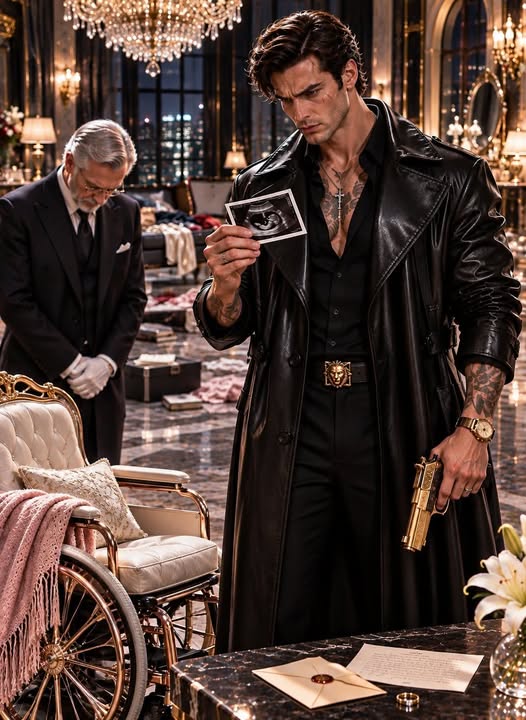
Story Genres: Family Drama

  • Chapter 5: The Price of a Vale

    Chapter 5: The Price of a Vale

    The hematoma shrank slowly, the way dangerous things retreat — grudgingly, on their own schedule. By the end of the second week the doctor used the word *resolving*, and scheduled me for a follow-up ultrasound at the clinic two blocks from Lena's building, close enough that I'd insisted on taking myself, chair and all, with the detail trailing at their professional distance like weather.

    "You're a terrible protectee," Lena informed me, walking beside me anyway, because Lena's love language was refusing to leave. "Most women in hiding at least have the decency to be bored."

    "I am bored. I'm bored out of my mind. If one more person tells me to rest, I'm going to—"

    The arrangements, as Lena called them, arrived on a schedule so regular it could have been tide tables. Groceries I had not ordered, in brands I would have chosen, left at the clinic desk by a delivery service that did not exist in any directory. A doctor — Dr. Marsh, an obstetrician with a waiting list like a royal succession — who began, mysteriously, to hold a Thursday slot at the little clinic two blocks away, and who examined me with a respect for my privacy so total it could only have been purchased at a terrifying price. A new cushion for my chair, the exact model, in the exact firmness, appearing in Lena's storeroom with no card at all.

    He never once came himself. That was the arrangement that undid me, slowly, the way water undoes stone. Adrian Vale, who could have parked an army in the clinic courtyard and called it Tuesday, had reduced himself to groceries and a good doctor and a cushion — to *care*, delivered at the exact distance I had demanded, with his name scrubbed off every box. I would sit in the courtyard with my tea and watch his men change shifts across the street, two shadows handing over to two shadows, and I would think: *he is showing me. This is what showing me looks like from a man who doesn't talk.*

    It did not make me ready. But it made me honest, which in my experience is ready's older sister. On the morning of the follow-up ultrasound I did a thing I had not planned: I asked Marcus — who materialized at the courtyard gate with the air of a man who had merely been passing, every day, at tea time, for two weeks — whether his employer was sleeping.

    "Ma'am," Marcus said, "the boss is sleeping the way Chicago is sleeping. Technically, and with one eye open. I'll tell him you asked."

    "You'll tell him nothing," I said.

    "Ma'am," said Marcus, with the ghost of something that on another man's face would have been a grin, "I already have."

    The ultrasound tech printed four copies this time without being asked, because by now the whole clinic knew the shape of my story, if not its names. Seven weeks and six days. The flicker was a drumbeat now. I held the strip of photographs in the elevator going down and tried, experimentally, to think the words *our daughter* — the tech had said *girl, best guess, don't paint a room yet* — and the words fit, which frightened me more than the bleeding had.

    The parking garage under the clinic was concrete, echoes, and one flickering tube of light. The detail's car was at the far ramp, engine on, exactly where professional weather stands. The man who stepped out from behind the pillar by the elevator bank was young, neat, and holding nothing at all, which was somehow the worst of it.

    "Mrs. Vale." He said it pleasantly, like a valet. "There's a car waiting. Mr. Kade would like a conversation about your husband's shipping routes. It goes easier if—"

    I don't remember deciding to shout. I remember the shout — Lena's name, the alarm word Adrian's world uses, anything — and then the garage became a place of terrible speed. The young man lunged for my chair's push handles, to wheel me like luggage; Lena, fifty-two years old and built entirely of conviction, went at him with her bag and her voice; the chair rocked hard against the curb stop and Marcus's hand arrived out of nowhere and clamped the frame, holding me upright by main strength, his other hand doing something I didn't see that made the young man's grip simply stop mattering.

    And Adrian came out of the stairwell door at a dead run.

    I had never seen him run. In six years of marriage I had seen him stride, advance, withdraw, and once — memorably — descend a staircase in a way that ended a negotiation, but I had never seen the most composed man in Chicago run flat-out with his coat flying, and I understood in that suspended second that I was watching what Adrian Vale looked like when the composure finally cost more than it bought.

    The second man came from the far side of the pillar. I saw the gun the way you see things in dreams, in pieces: the hand, the metal, the angle — the angle that ended at me, because I was the leverage, I was the conversation Mr. Kade wanted to have. I heard myself say my baby's nonexistent name. I heard Lena scream.

    Adrian didn't slow down. He crossed in front of my chair — deliberately, the way I'd crossed in front of a car six years ago on a wet pavement, with the same terrible clarity of decision — and the shot, when it came, took him high in the left side, spun him half around, and put him down on one knee with his hand pressed to the wound and his other hand reaching back, blind, until it found my chair's wheel and *held*.

    "Gia." Blood was coming through his fingers with a steadiness I recognized from trauma bays and tried not to. "Gia, are you— look at me. Are you hit? Is the baby—"

    "I am looking at you," I said, and my voice was doing something wild and broken, "you absolute idiot, I'm looking right at you—"

    "Good," he said, with enormous satisfaction, as Marcus and the second guard finished the business of the garage in the efficient, awful way of men in their profession, and the young man with the pleasant valet voice discovered what the floor tasted like. "Good. Then we're even."

    "*Even?*" Something in me went incandescent through the terror. "You think this is arithmetic? You think you just paid—"

    "I think—" He was going gray at the edges, and still talking, the stubbornness of him like a structural feature. "I think I finally understand the pavement. Why you didn't hesitate. It isn't debt, woman. It isn't even choice. There just isn't a version where you're in front of me and I'm anywhere else."

    "Check her first." It was the first order Adrian Vale gave from the concrete floor of that garage, with Marcus's jacket balled against his side and Marcus himself saying *sir* in the tone men use on the dying, and it was obeyed with the speed usually reserved for his angrier instructions. A paramedic — the first ambulance had come in hot behind the second guard's call — knelt by my chair and did the liturgy: pressure, pulse, the Doppler wand skating over my belly through the gel she'd warmed in her own fist, while the garage held its breath, and then — there, unmistakable, 158 and furious — the little drumbeat filled the concrete space and every armed man in it sagged by exactly one degree, like a field after wind. Adrian's eyes closed. His hand found my wheel again and held on with the last of the strength he was spending, and I heard him say, to no one, to the concrete, to God, whom he did not generally consult: "*There* she is."

    Then the ambulance, and Lena's hand in mine all the way, and a trauma bay that received the most feared man in Chicago and processed him with the gorgeous indifference of medicine: *male, thirty-nine, GSW, left upper quadrant, through-and-through, missed everything that matters by a centimeter of mercy.* The bullet had gone in and out without kissing an organ. Surgery to clean it, a night of watching, and the surgeon — who had clearly been briefed by someone — said the words *he'll be fine* directly to me, and then, after a pause, *they both were extremely lucky,* and I knew she'd seen the ultrasound strip still crushed in my hand.

    The hours between the garage and that waking had their own grim liturgy, most of which was performed on my behalf by people who refused to let me perform any of it. Detectives came and went with their careful questions; Marcus stood in every doorway like a change in the weather and the questions stayed careful. The young man with the valet voice, it emerged, had a phone, and the phone had a number, and the number had a cousin's name attached to it that made Marcus go quiet in a way I was learning to translate: *Rowan.* Celeste had sold the clinic's address out of the wreckage of her position, forty-eight hours before, for cash and spite. I received this news sitting in a family waiting room with a paper cup of water going warm in my hand, and I discovered that my feelings about Celeste Rowan had completed some final evolution: she had become, in my mind, simply a problem that had been solved by the wrong people in the wrong order — and the bill for the solving had come, as bills in that world always came, addressed to the person standing closest to me.

    Lena, who had thrown her bag and her whole body into that garage, sat beside me with a butterfly bandage on her forehead and her arm around my shoulders and said, "When you write your memoirs, nurse, I want it noted that I fought a gunman with a handbag."

    "A *gunman*, Lena. You fought a gunman with a handbag and a fifty-two-year-old's opinions."

    "And I was winning," Lena said, "on points."

    He woke at 3 a.m. in a private room with his side stitched and his empire standing in the corridor in the shape of Marcus, and I was there because there had never, at any point in that entire day, been an actual decision to make about where I would be.

    "Tell me the baby's all right," were his first words.

    "One hundred fifty-eight beats a minute," I said. "She's furious at the noise. Like her father."

    "*She.*"

    "Best guess," I said. "Don't paint a room yet." And then, because he was looking at me with six years in his face and a hole in his side that I had, in every way that mattered, put there by leaving — and because he had put himself in front of a bullet the way I once put myself in front of a car, without arithmetic, without hesitation — I took his hand off the blanket and held it with both of mine, and I said the truest thing I owned:

    "When you get out of this bed, Adrian Vale, you and I are going to talk about the stillness. About Celeste in our house, and the audit, and what happens to her. About your doors being open and your sentences being finished in front of me from now on. About all of it. Slowly. Like adults. Like a marriage."

    "A marriage," he repeated, hoarse.

    "But the arithmetic is finished," I said. "There's no ledger. There was never a ledger. I didn't save a stranger's life so he'd owe me a wedding, and you didn't take that bullet so I'd owe you a return. We're just two people who keep stepping in front of things for each other. The only question left is whether we can learn to stand *next* to each other instead." I squeezed his hand. "That's the work. If you want it."

    His eyes were wet. Adrian Vale, in a hospital bed, with half of Chicago's law enforcement quietly terrified to interview him in the morning, wept without bothering to hide it, and said: "Name the terms. Whatever they are. Name them and watch me sign."

    "The first term is that you stop bleeding on my account."

    "Done," he said instantly. "Marcus, tell the surgeons the terms are accepted."

    And from the corridor came Marcus's voice, dry as a martini: "Sir, the surgeons have requested you stop giving orders through the wall."
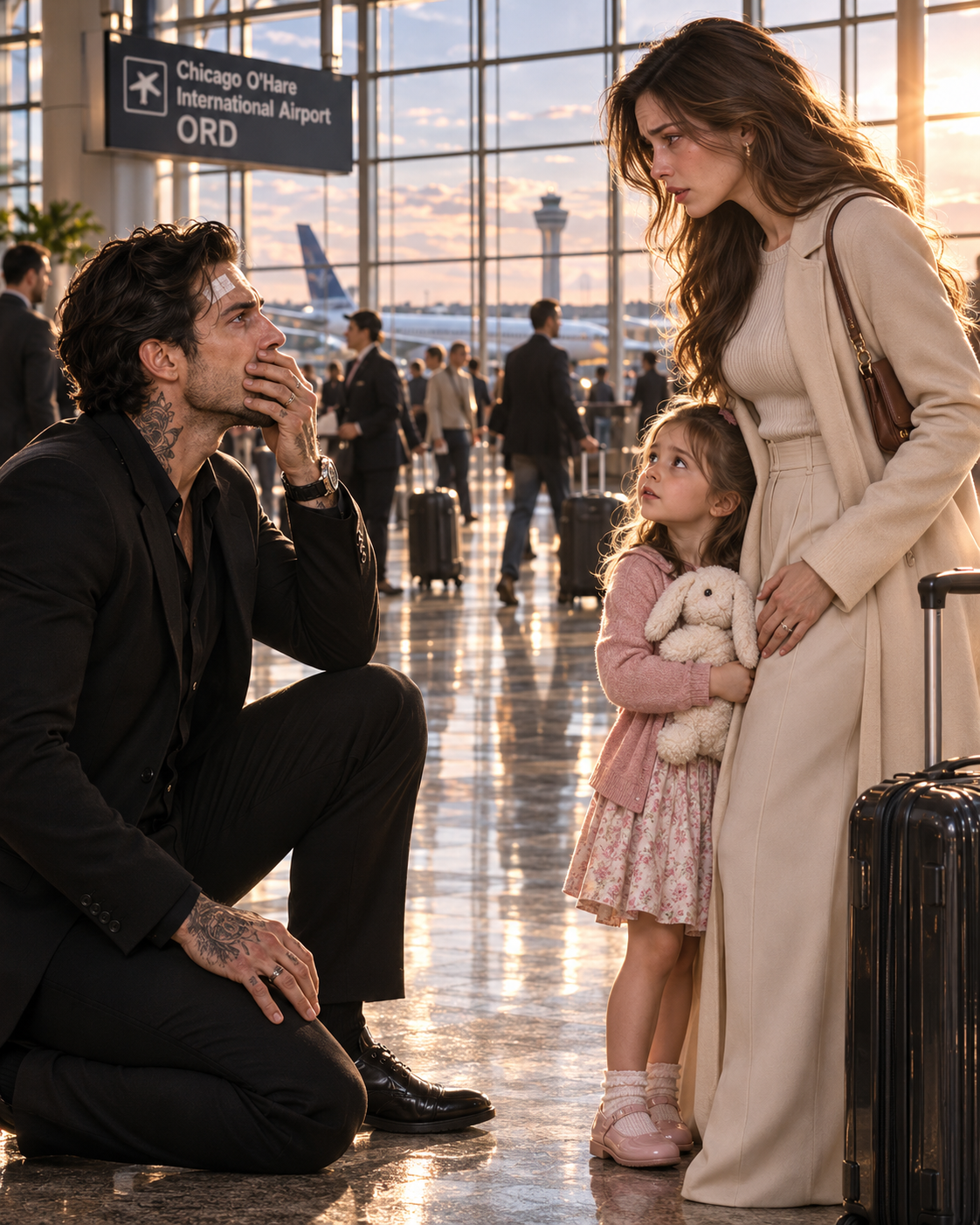
  • Chapter 4: What Celeste Rowan Wanted

    Chapter 4: What Celeste Rowan Wanted

    Marcus delivered the recording the next morning in a plain envelope, hand-carried to the clinic's front desk with the ceremony of a man defusing ordnance: a USB drive, a printed transcript, and a note in his own square capitals. *FULL FILE, UNEDITED. CHECKSUM ON REVERSE. M.*

    I read the transcript first, because paper felt like something I could survive, and I got exactly as far as the first page.

    There it was in black and white, Marcus's capitals marching down the margin with timestamps. 14:02 — Mrs. Vale's medical appointment confirmed via foundation calendar. 14:31 — C. Rowan enters office. 14:44 — *If you don't love your wife, Adrian, why are you still married to her?* I read my husband's answer on paper, in a hospital-quiet room, with the lake-gray light coming through the blinds, and I put the page face-down on the tray table with a hand that was not steady, and I did not turn it over again. A transcript can be misread as easily as a doorway; I knew that, and knowing it didn't help. Words on paper are just the skeleton. I needed the thing itself — the pauses, the temperature, the part of the sentence I had fled from. I needed to know if there *was* a part of the sentence I had fled from, because if there wasn't, the laptop was going to finish what the hallway started.

    So I spent the day the way I'd spent the first weeks in rehab: negotiating with a machine. I catalogued the drive's weight. I rehearsed verdicts. I told Lena absolutely nothing, which told Lena everything, and she responded by bringing soup at six and soup again at nine and not once looking at the laptop, which in Lena's personal system of ethics constituted a heroic act of restraint.

    "For when the patient is ready," she said, setting the second bowl down, "the gym is open."

    At midnight, the patient was ready.

    I held out for eleven hours.

    I told myself it was dignity. I told myself it was the hematoma — stress was forbidden, the doctor had used the phrase *strict rest* as if it were law. I ate Lena's soup and played chess badly and lost, and at midnight, in the dark of that kind little room, I put the laptop on the tray table and plugged in the drive.

    The office camera looked down from a corner. I saw the desk, the slice of room I had glimpsed through the door gap — and I saw, with a stranger's terrible clarity, the whole stage I had only ever had a keyhole view of.

    Celeste, arriving with a folder. Celeste, setting her phone face-down on the desk — no. Face-*up*. Screen lit. Whatever else she was doing in that room, she had wanted a witness of her own choosing. (Marcus's investigators would confirm within the week that the phone had been live-streaming audio to a number registered to Celeste's cousin; she had wanted Adrian's voice saying certain words, out of context, for use in a family argument about the foundation's future. She had been building a file. She had, investigators believed, been building it for months.)

    On the screen, Celeste smiled her syrup smile. "If you don't love your wife, Adrian, why are you still married to her?"

    And I saw what the door had hidden from me. Adrian wasn't looking at her. He was looking at the photograph on his desk — me, in the garden, laughing, in a frame Rosa had given us — with the expression of a man being read his own obituary by a fool. "Because she saved you?" Celeste pressed. "You stay because she saved your life?"

    "I owe her my life, not my love—" Adrian said, and my whole body flinched, and then he *kept talking*, and the door and the hallway and my breaking heart had stolen every word of it:

    "—is that really the story you've been telling my father's old friends, Celeste? Because I've heard it at three dinners now, in your exact phrasing, and I want you to hear how it ends. I didn't marry my wife out of debt. Debts I pay in money. I married her because she's the only person on this earth who ever looked at me and saw a man instead of a weapon — and if I owe her anything, it's thanks, every morning, on my knees, that she was standing on that pavement and I wasn't." On the recording, he stood. He came around the desk. His voice went down into the register that had ended arguments across three states. "The foundation audit starts Monday. Your access to this house ends today. And if you ever again say my wife's name in the shape of a bargain, Celeste, there won't be a family treaty in the world thick enough to stand between you and the consequences. Are we finished?"

    *That* was when she lunged.

    On the recording you could see it plainly, with hindsight's x-ray: her eyes flicked — not at him. At the door. At the thin bright line beneath it, where a wheelchair's shadow cut the light. She knew. She had known the whole time — she'd seen my appointment come through the foundation's medical calendar that morning, five weeks and four days, and she had timed her little performance the way other people time trains.

    She stepped into him, arms around his neck, and Adrian — whose hands came up, whose hands *started* to set her back the way you handle something contaminated — froze for one half-second of pure political calculation, forty years of alliance between the families in the balance of a shove, and that half-second, through a door gap, from a hallway, had looked exactly like surrender.

    Then he stepped back, removed her arms like gloves, and said, "Get out of my house."

    And then — this was the part that undid me, at midnight, with the laptop hot against my blanket — he didn't follow her. He stood in the middle of his office for a full minute, alone, looking at the door. And he said, to the empty room, to the door, to me and not to me, in a voice I had heard exactly twice in six years, both times in the dark:

    "God, let her never learn to doubt it. Everything I have is just… everything she has."

    He picked up the garden photograph and stood there holding it like a man holding a hand.

    I watched it four times.

    Then I did the thing I'd been refusing to do since the driveway: I grieved correctly, for the right reasons. Not because my marriage was a lie — because it wasn't, and I'd nearly buried it alive on ninety seconds and a keyhole. Because he'd let that woman poison the air of our house for months with her insinuations at dinners while I'd smiled and passed the wine. Because the half-second of calculation existed. Because *I* existed in a world where another woman could stand close enough to my husband to weaponize his stillness.

    I watched the embrace nine times before I could look at it steadily, the way you press on a bruise to map its borders. Each time, the same evidence assembled itself a little differently: his hands rising — not to hold, to *handle*, the way you take hold of something that has been thrust at you and must not be dropped in company; his weight shifting back even as hers came forward; the exact frame where his eyes went to the door. And under the video, Marcus had filed the rest of the architecture: a screenshot of the foundation calendar with an access stamp at 09:12 that morning — *C. Rowan viewed appointment: Vale, G. — OB intake, Dr. Patel, 11:30* — four hours before she sat down in that office and asked her syrup questions to a live microphone. She had known there was a baby before Adrian did. She had known there was a *door* before I ever reached it. The performance had been staged for an audience of one, in a wheelchair, in a hallway, and the cruelty of its craftsmanship took my breath away more completely than the words ever had.

    Lena watched it with me the last time, arms folded, saying nothing until the screen went dark. Then she delivered the verdict of a woman who has supervised a thousand recoveries and knows a viable limb when she sees one.

    "The marriage isn't the injury, Gia. The injury is that he kept a snake in the house because the treaty said so, and you nearly paid for the treaty. That's fixable. Bones knit. Snakes, however—" she nodded at the frozen frame of Celeste's smile, "—snakes have to actually be thrown out of the house. By him. In writing. That's your physical therapy plan. Make him do the reps."

    Love, it turned out, had survived the tape. Trust was going to be a longer rehabilitation. I knew about rehabilitation. It begins with telling the truth about what's broken.

    In the morning I called the number Marcus had left — not Adrian's. Marcus answered on the first ring, which suggested a number of things about how the Vale organization was currently spending its time.

    "Tell him I watched it," I said. "Tell him the words are… Tell him I know what he said. All of it."

    A pause, careful as footsteps. "And will you see him, Mrs. Vale?"

    "Tell him there's a difference between a debt and a choice, and he made his choice standing still for half a second while another woman hung on him like a coat. Tell him that's the part we have to talk about. Not the sentence. The *stillness*. Tell him—" My voice threatened me; I disciplined it. "Tell him the baby is strong, and that when I'm ready to talk, *I'll* send for him. I'm not his obligation, Marcus. If I come back to that house, it will be because I chose it. Not because he owes it. That's the whole point of me. It's always been the whole point of me."

    "I'll tell him exactly that," Marcus said, and I heard, absurdly, something like respect settle into his voice. "Word for word."

    He did. I know he did, because that afternoon the watchers across the street changed — not removed; I hadn't asked for that, and Adrian was done pretending my wishes were the only variable; the baby had changed the mathematics for both of us — but doubled, professionalized, and rotated with the quiet rhythm of a protective detail on a head of state. And a box arrived: my prenatal vitamins in the good brand, my blanket from the reading chair, folded with a care that had Rosa's fingerprints all over it, and on top, the garden photograph from his desk in its frame.

    No note. There didn't need to be. He'd said it to a door.

    Marcus carried the answer to the mansion in the small hours and found his employer exactly where the watchers had reported: in the bedroom that wasn't his anymore, in the reading chair that wasn't built for him, with the soul record turning and the garden photograph in his hand.

    "She watched it, sir. All of it. She knows what you said."

    Adrian closed his eyes. For a moment the room held nothing but the record's soft crackle. "And the rest of her message?"

    "Word for word, she said you'd know it wasn't the sentence. It was the stillness." Marcus, who had delivered casualty reports with less care, set the words down gently. "She said the baby's strong. She said she'll send for you when she's ready. And she said if she comes back to this house, it'll be because she chose it."

    "Then we wait to be sent for," Adrian said, and stood, and did a thing Marcus had never seen in eleven years of service: he put the garden photograph back in its place on the desk, squared it precisely, and left the room without giving a single order — a general dismissed by his own decision, walking out of the headquarters of his own war.

    What none of us knew — what Marcus would piece together later from a cousin's phone, a sold secret, and a terrified rideshare dispatcher — was that Celeste Rowan, expelled and audited and watching forty years of family position burn, had made one final transaction before she left Chicago.

    The Kade family had been waiting six years for Adrian Vale to have something he couldn't protect from inside his fortress.

    She told them where it was sleeping.

  • Chapter 3: Where She Went to Disappear

    Chapter 3: Where She Went to Disappear

    Dr. Lena Ortiz had exactly one rule, and she announced it while helping me out of the van and into the service elevator of her clinic, with my suitcase balanced on her hip like a woman carrying groceries instead of my entire life.

    "In this building, you are not Mrs. Anybody. You're Gia, my most stubborn former patient, and you owe me a rematch at chess. That's the whole biography. Sit. Breathe. When did you eat last?"

    Lena had been my physical therapist for fourteen months after the accident. She had taught me every transfer, every pressure relief, every undignified mechanical trick by which a woman rebuilds a life at sitting height, and she had never once, in all that time, allowed me to say the words *I can't* in her gym. She was fifty-two, silver-threaded, and entirely immune to both my self-pity and my husband's money — a combination so rare in my life that I had held onto her with both hands long after the therapy ended.

    The apartment above the clinic was meant for out-of-town patients' families: one room, a kitchenette, a bathroom built wide and kind, with bars where bars should be. Lena had put flowers on the table. She had also put a chess set, a kettle, and a laminated card that said, in her handwriting, *The baby is the boss now. Eat.*

    "The baby," I said, and my composure finally cracked, there in that little room, with the rain starting against the window. "Lena, I haven't told— I was going to tell him that day. I had the keychain in my bag. *Daddy.* I bought a keychain."

    She held me the way she'd once held my weight in the parallel bars — without comment, without flinching, for exactly as long as required.

    "Then you'll tell him when you're ready," she said. "Or you won't. Both are survivable. Eat first."

    I tried to rebuild a life in that room the way I'd once rebuilt my body: mechanically, by schedule. Prenatal vitamins from the pharmacy two doors down, paid in cash. Crackers against the nausea. Sleep in careful shifts, because my body had rules now that had nothing to do with grief: pressure checks, position changes, the mathematics of a pregnancy conducted from a chair, which my obstetrician had once described — back when Adrian and I discussed *someday* — as *high-risk but absolutely doable with monitoring.* Monitoring. I had left the finest medical fund in the Midwest in a bedroom drawer, next to a safe full of emergency cash, because all of it had his name on it and I was trying to find out what of me had mine.

    On the second day, the message came. Not to my phone — mine was off, in a drawer, a stone. Lena appeared in the doorway holding a florist's card between two fingers like it was evidence.

    "He found the building in under a day," she said. "Give the devil his due, the man's logistics are flawless. Two men across the street, very polite, very obvious to anyone who's ever watched a gangster film. And this." She read the card aloud. "*I didn't finish the sentence. Please let me finish the sentence. — A.*"

    My heart did something I refused to name. "Burn it."

    "Already memorized it, though, didn't you?" Lena set it on the table next to the flowers, not in the bin. "That man's never begged for anything in his life, Gia. I checked with God; She confirmed it."

    "A sentence can be finished a hundred ways, Lena. I heard the part with the meaning in it."

    "Did you?" She said it gently, which was worse. "Stayed to the end of a lot of executions, have you?"

    I didn't answer. But that night I took the card out of the drawer where I'd put it — not burned, whatever I'd said — and I read it again in the dark, and hated my own hands for how carefully they smoothed it flat.

    The days acquired their own small liturgy while I waited for my courage to finish whatever it was doing. Lena's clinic had a courtyard with a ramp and a fig tree, and I took my tea there in the mornings and watched her patients arrive — stroke survivors, amputees, a teenage gymnast with a spine like a question mark — and felt the specific humility of being one small story among many. I helped where I could. I showed a new patient the trick of the transfer board that took me three weeks to master. I lost at chess with great consistency. I drafted eleven messages to Adrian and sent none of them; they lived in my notebook in handwriting, which felt safer than a phone, drafts of everything from *I hope you're ashamed* to one terrible, treacherous page that began *the baby kicked the envelope today — no. The baby can't kick yet. But I felt something, and it was yours too.*

    At night I lay awake doing the arithmetic of single motherhood with the thoroughness of a woman pricing a house she cannot afford: the cost of an accessible apartment, a pediatrician, a van of my own, help I would need and hate needing. I was a trauma nurse with a settlement I had never touched — *blood money,* I had called it, in the years before I forgave the concept — and hands that still knew their trade, and a spine that had ended my shifts on a ward. There were answers. None of them had Adrian in them, and I would get to the middle of planning one and find myself listening, like an idiot, for a key in a door that was not mine anymore.

    Lena watched all of this the way she'd once watched my gait training: without rescue and without looking away. "For the record," she said on the third evening, dealing out the chess pieces, "I have buried one husband and divorced a better one, and I have never seen a woman more found than you are while claiming to be lost. When you're done punishing the both of you to a schedule, you might ask yourself one question, nurse. Not *what did he say.* Not even *what did he mean.* Ask what you'd need to *see* — not hear, see — to know it in your bones. Then check whether he's showing you. Men like yours don't talk, Gia. They arrange. Watch the arrangements."

    I said something cutting about chess. She beat me in eleven moves.

    On the fourth day, my body ended the argument about schedules.

    The cramping started at dawn — deep, wrong, a fist closing low in my belly — and by the time Lena got me downstairs and into her car there was spotting on the sheet, and I was making a sound I had not made since the operating table, a high thin keening through my teeth, one hand pressed so hard over my stomach that my fingers went white. *Not this. Not the one thing I carried out of that house. Please, please, not this too.*

    The emergency department at Northwestern was all light and velocity. They were kind in the way of people who have decided you are one of their own and in trouble. A triage nurse named Becca, who had done a rotation under me six years and one lifetime ago, took one look at the chair and the blood and my face and moved me past two waiting rooms of lesser emergencies with a hand on my shoulder the whole way, saying, "We've got you, Gia, we've got you," in the tone we use when it is not yet certain that anyone has got anyone. Lena gave the history better than I could have: dates, medications, the spine, the surgical history, the whole architecture of risk, while a resident young enough to be my student did the scan and kept his voice level by main force. I lay there doing the thing patients do that nurses pretend not to notice — reading faces like monitors, translating every flicker. *There. That pause. That's the pause before bad news or before a heartbeat, and God in heaven, let it be the second one.*

    Subchorionic hematoma, the doctor said, words I translated automatically from the nurse I used to be: a bleed between the uterine wall and the membranes, frightening, common, survivable — *if* I rested, *if* I was monitored, *if* I was lucky. They put the wand on my belly and the room filled with that frantic galloping flicker, 158 beats a minute, and I wept with my whole body while a nurse held my hand and pretended it was routine.

    "Strong," the doctor said. "Stubborn, apparently. Like somebody else in the family."

    I was in the wheelchair bay by the discharge doors, wrapped in a blanket, when the temperature of the room changed.

    I knew before I turned. Six years teaches a body things. The nurses' chatter thinned. A security guard straightened. And Adrian Vale walked through the sliding doors in a black coat wet with rain, with Marcus two steps behind him and his face — his controlled, carved, unreadable face — doing something I had never seen it do in public.

    It was afraid. Openly. For anyone to see.

    He stopped six feet from me. A man who owned half the docks in Chicago stood in a hospital doorway with his hands visibly empty at his sides, like a man approaching a wild animal, and said my name the way you'd say it to someone standing on a ledge.

    "They told me bleeding," he said. "They told me *emergency*. Gia. Tell me—" He looked at the blanket, at my hands crossed over my stomach like a barricade. "Tell me if the baby—"

    "The baby is fine," I said. My voice came out flat and freezing, and I was proud of it and ashamed of it in the same breath. "How did you find me?"

    "The rideshare company. The clinic. I—" He took one step. Stopped when my whole body tightened. A muscle moved in his jaw. "I've had men across the street since yesterday. For protection. Nothing else. I swear it on—" He stopped. Started again, quieter, like a man defusing something. "You don't have to see me. You don't have to come home. But you need a doctor who knows your history, and money is not— Gia, let money not be the thing that—"

    "You finished your sentence just fine in your office, Adrian."

    His face changed. "No. I didn't. That's what I've been— Celeste asked her questions and I gave her the answer the whole world gives, the one she wanted in the air, and I was about to take it apart when—"

    "When she put her arms around you." I heard my voice shake and despised it. "And you let her. I was *there*, Adrian. I watched you let her. So don't come to a hospital with your hands empty and your conscience full and tell me I left before the end of the sentence. I stayed for the whole marriage. I know how it ends."

    "Then let me show you the tape."

    "The *tape*?"

    "My office has a security recorder. Audio and video. Everything that was said in that room, all of it, including what came after you—" He swallowed. "Including what I said when you were already gone. It's yours. Not to forgive me. Just to *have*. A woman leaving should leave with the whole truth in her hands, not half of it. That was my failure. Not—" his voice cracked, actually cracked, there in the discharge bay, and two nurses suddenly found the ceiling fascinating, "—not the words, Gia. That you only had half of them. That's mine."

    I should have said no. Every sensible, scarred, self-respecting part of me stood up in a row and said no.

    But the part of me that had ironed his shirts on a lap board because he liked the smell of the steam, the part that had chosen the keychain's font — that part heard *including what I said when you were already gone*, and I discovered I was exactly as human as I'd been afraid I was.

    "Marcus can give it to Lena," I said. "I won't promise to watch it."

    "That's enough," Adrian said. "That's more than I—" He stopped. He looked at my hands, barricaded over the baby, and something in him surrendered with enormous dignity. "Rest. Please. Whatever you decide, rest."

    He turned to go. At the doors he paused, rain beyond him, and said without turning around: "She's fired, by the way. Celeste. The foundation's under audit. Whatever else you believe — believe she will never be in a room with me again."

    Then the doors took him, and Lena appeared at my elbow with my discharge papers and one raised eyebrow.

    "That," she said, "was the most polite war I've ever watched."

  • Chapter 2: The Man Who Owed Everything

    Chapter 2: The Man Who Owed Everything

    Adrian did not sleep. Men like him were trained out of panic the way soldiers are trained out of flinching, but there is a specific and ancient terror reserved for the moment a man discovers that the person who anchors his entire life has removed herself from it surgically, silently, and with better planning than any of his enemies had ever managed.

    He began with Celeste, because she was there, and because a woman does not appear in a man's bedroom doorway at midnight with a eulogy prepared unless some part of her has rehearsed the evening.

    "Talk," he said.

    Celeste composed herself the way she did everything — beautifully, and a half-second too late to be believed. The foundation's quarterly review had run long. She'd been working in the library. She'd only come upstairs because she'd heard shouting and been concerned.

    "You heard a silent house," Adrian said, "and came to my bedroom to be concerned."

    "Adrian, you're distraught. You're not thinking—"

    "I am thinking with perfect clarity for the first time in months." He set the ultrasound photograph on the desk between them like a drawn weapon. "My wife heard something in my office today. Something that ended my marriage in ninety seconds. You were the only other person in that room. Begin again."

    Her eyes flicked to the photograph. Whatever she saw in his face then ended her performance; her shoulders came down a fraction. "I asked questions any friend would ask. *You* answered them, Adrian. If your words drove her away, perhaps you should examine your words."

    It was, Marcus would tell him later, the moment Celeste Rowan made her fatal error — not lying, but telling a sliver of truth and trusting it to hold. Adrian went very still. She saw it. She gathered her bag and left with her head high, and the door had barely closed behind her before Adrian turned to Marcus and said, "Everything. Her calls, her calendar access, her movements for a month. Quietly."

    Then he did something Chicago's underworld would not have believed: he walked into his office, closed the door, and sat in the dark in the chair where his wife had nearly knocked, and he replayed it. Celeste's syrup questions. His own voice. *I owe her my life, not my love.* Standing alone in the room, he could hear what Gia had heard — the flat finality of it, amputated from everything that came after. His stomach turned over. He had spoken the first half of a sentence like a man reading from a script someone else had written for him, and the other half — the half that mattered, the half that had been aimed like a blade at Celeste and everything she'd been implying for months — had still been in his mouth when Gia's world ended on the other side of the door.

    He found the exact place on the hallway runner where her chair had stopped. He stood there a long time.

    By dawn the machinery of the Vale organization was turned, all of it, to a single purpose. Not retaliation. Not a rival. A five-foot-four trauma nurse in a wheelchair with one suitcase and a four-word grievance, who had committed the most successful extraction from Adrian Vale's territory that anyone had ever performed.

    The rideshare company surrendered its records to a phone call. Walter, the driver, was located by nine. He described the passenger who had paid in cash and cried without making a sound, and the drop-off: a brick building in Pilsen, a wellness clinic with a blue awning, an address he remembered because she'd asked him twice to confirm it had a ramp.

    "She kept saying the number," Walter told Marcus, in a coffee shop, with his cap in his hands. "Like she was memorizing being somewhere else."

    Adrian was already in the car.

    But Pilsen was only the first thread, and Gia — who had planned her exit with a nurse's precision — had not stopped moving. The clinic belonged to Dr. Lena Ortiz, her physical therapist from the rehabilitation years, the woman who had taught her to transfer from chair to bed and bed to chair and who had once, famously, thrown a sponge at Adrian for hovering. Lena's staff were loyal and unimpressed by money. The clinic's manager informed Marcus, with enormous pleasure, that patient information was confidential, that Mrs. Vale was not a patient, and that if Mr. Vale wished to leave a message he could write it on the card provided.

    Adrian wrote on the card. His hand — the hand that had signed a thousand ruinous documents — was not entirely steady.

    *I didn't finish the sentence. Please let me finish the sentence. — A.*

    It was, in its way, the most honest document Adrian Vale had ever produced, because the whole six years sat inside it. He had met his wife as a stranger's hands shoving him out of a car's path and a woman's body going under the lights in the rain. He had sat beside her hospital bed through the first surgery, and the second, and had read the surgeons' faces when they came out the second time and understood, before anyone said a word, the size of the bill the universe had handed her for his life. He had done the arithmetic a thousand times, in the small hours: her legs, her career, her whole first life, for his. And he had done the other arithmetic too, the one nobody believed: he'd have married her if she'd saved a kitten. He'd have married her if she'd never saved anything at all, if she had simply been the furious, funny trauma nurse who'd spent her unconscious weeks being described to him by her colleagues — *Gia would hate this music, Gia would have opinions about that surgeon* — until he was half in love with a woman he had never had a conversation with, and entirely unable to leave the building.

    The proposal in the hospital garden had not been guilt. He had rehearsed it for a month. He had terrified a jeweler. He had stood in that garden with his heart slamming like a boy's and asked, and she had cried and said yes, and then immediately made him promise never to bring her white roses again because they reminded her of the hospital gift shop, and he had laughed with his face wet and thought: *there it is. That's the whole rest of my life, and it just laughed at me.*

    He thought of that afternoon, standing in Pilsen with the card in his hand. He thought: *if she never reads another word from me, let it be the true ones.*

    He left instructions that the building was to be watched from a distance great enough to honor the word *space* and close enough that nothing on earth would reach her. "Nothing touches her," he told the two men he trusted most. "Nothing frightens her. If she so much as looks cold, I want to know before she does."

    Before the card, before the search widened, he had done the first and worst of the work himself: the footage, frame by frame, in the security office at 4 a.m., with the night operator dismissed and the monitors washing him blue. He watched his wife cross the hall he'd walked a thousand times. He watched her stop at a door he had forbidden her — his own rule, his own architecture of secrecy, indicted in silence. He watched her face at the moment of the sound he could not hear on the recording, watched her hand come up off the wheel rim, watched the exact frame where six years ended. He watched her turn the chair with a precision that broke him more than any tears could have: no fumbling, no collapse. A woman withdrawing from a position she had concluded was untenable. *Military,* some trained part of him noted. *She did it like a retreat under fire.* He made the operator — recalled, trembling — burn him a copy, and then he asked the question that started the second investigation, the one that would eventually unmake Celeste Rowan: "Her appointment that morning. The prenatal clinic. Who in this house, besides me, could see her calendar?" The answer was a list of four names. One of them was the foundation's.

    Then he went home and did the rounds of a man auditing the wreckage of his own house. The financial manager's report lay on his desk, and he read it three times: *no transactions.* She had left tens of millions unguarded within arm's reach and taken a suitcase of clothes. Rosa, dry-eyed with fury, served him coffee he didn't drink and said the thing nobody else in his employ would have dared.

    "You kept that Rowan woman in this house like a snake in the linen closet, Mr. Vale, begging your pardon. Mrs. Vale fed this family with her own hands and I've watched that woman watch her. Cats look at birds, sir, with more charity."

    "Noted, Rosa."

    "And you let her *hug* you." Rosa set the pot down with a crack. "In fourteen years of service I have never once seen you let anyone but that girl within arm's reach. If I'd been in that hallway—" She stopped. "Well. I wasn't. More's the pity for all of us."

    The search, meanwhile, had the flavor of a siege conducted against a ghost. Her phone stayed dark. Her old colleagues at the hospital, canvassed with exquisite discretion, reported a beloved former nurse who had sent Christmas cards and attended no reunions. A college roommate in Milwaukee took Marcus's call, listened to the carefully edited version of events, and said, "If Gia left, she had a reason, and if you find her before she's ready, I will personally drive down there and sit on you," and hung up. Adrian, informed of this, had remarked that his wife had always collected formidable women the way other people collected stamps, and to leave the roommate alone and send her flowers.

    Hospitals were checked, quietly, in widening rings — because the other fear, the one beneath the search, was of a call that would begin with *we regret.* Twice that first night Adrian had his coat on for unconfirmed reports; twice he came back up the stairs alone and stood in the bedroom doorway looking at the desk he could not stop looking at. He had the note framed. Not displayed — framed, in a plain black sleeve, and put in his desk drawer on top of the ultrasound report, because he said the two documents belonged together and because, as he told Marcus in the only explanation he ever offered, "A man should keep the worst thing he's ever read where he keeps his orders. So he reads it before he gives any."

    That night, at 10:18 precisely, Adrian did something he would do every night for as long as she was gone, though no one told her for a long time. He went to the bedroom where her records were still stacked by the turntable, and he put on the soul album she'd been playing the evening before she left, and he sat in her reading chair, which was built for a woman a foot shorter than him, with his knees up like a boy, and he listened to the whole thing in the dark.

    He read the note again by the turntable's amber light. *Your debt is paid.* He turned the ring over and over in his fingers, and he made a decision that would have terrified the men who feared him, had any of them understood it.

    "Whatever it takes," he told the empty room. "Whatever she asks. Whatever I have to burn."

    He did not yet know that across the city, in a small accessible apartment above a blue-awninged clinic, Gia was lying awake with one hand on her stomach and her phone face-down in a drawer — and that she had already heard, on the clinic's old television, a local news alert about a black-market ultrasound clinic raid that had nothing to do with her at all, and had still begun, immediately, to be afraid of what her husband's world might do now that she was outside its walls.

    Fear, as it turned out, was justified. But not in the way she expected — because Adrian's men weren't the only ones who had noticed that the Vale boss's wife had vanished.

    Someone else had been counting the cars at the gate.

    And that someone had already sold what they knew.

  • Chapter 1: Five Weeks and Four Days

    Chapter 1: Five Weeks and Four Days

    The cruelest words a wife can hear did not come from an enemy. They came from my husband's mouth, in his own house, on the happiest day of my life — and he said them to another woman while I sat outside his office door with our baby's first picture resting in my lap.

    That morning, Dr. Patel had turned her monitor toward me and smiled. "Five weeks and four days, Mrs. Vale. Small, but strong. See that flicker? That's the heartbeat."

    I stared at the tiny pulsing grain of light until my eyes blurred. Six years of marriage. Six years of Adrian and me telling each other that children simply weren't part of the plan we'd been given, that we were enough. And all that time, some quiet part of me had been grieving a door I believed was locked — locked by the same accident that had taken my legs and rearranged my entire life.

    Now the door was open.

    I asked the nurse to print three copies of the ultrasound. I held the warm envelope against my heart the whole drive home, planning. I would not text him. I would not call. Adrian Vale, thirty-nine years old, the most feared man in Chicago, a man who could walk through a room of armed rivals without changing expression — I wanted to see his face when I put that picture in his hands. I wanted to watch the ice crack.

    On the way, I made the driver stop at a little engraving shop on Michigan Avenue, the kind with brass bells over the door. I bought a plain silver keychain, heavy in the palm, and had them stamp one word into the metal.

    DADDY.

    I laughed in the back seat like a teenager. I cried a little, too. The envelope and the keychain box rode side by side on my lap, and I rehearsed sentences all the way up the long private drive. *Adrian, we're having a baby. Adrian, in about seven months— Adrian, look. Just look.*

    Our mansion sat behind gates and old trees, more fortress than home, and I had spent six years softening it — music in the mornings, flowers Rosa the housekeeper pretended not to buy with her own money, a garden I'd redesigned so every path fit my wheelchair. It was mine as much as his. I believed that. I believed it right up until the last ninety seconds of my marriage.

    "Mr. Vale is in his office, ma'am," Rosa said, meeting me in the hall. Her eyes dropped to the envelope. Rosa missed nothing. Her whole face changed. "Oh, Mrs. Vale. Oh, my dear."

    "Don't you dare cry before he does," I whispered, and she pressed both hands over her heart and nodded like a co-conspirator.

    The west wing of the house was the old part, all dark wood and tall windows, and my wheels knew every board of it. I had designed my routes through that house the way generals design campaigns — the kitchen at seven, the library after his meetings, the garden doors thrown open whenever the weather allowed — and Adrian, who had built his fortune reading terrain, had learned them all in the first month of our marriage and arranged his life around them without ever being asked. His office door was the one threshold in the house I never crossed uninvited. That was his rule, made after a rival once tried to reach him through a secretary: *business stays behind that door, so that everything outside it stays clean.* In six years I had honored it so completely that stopping outside it that afternoon felt, even to me, like a small ceremony.

    I had the whole announcement rehearsed. Not in the office — I wasn't a fool, and I knew Celeste or someone was always drifting through his workdays — but at lunch, in the garden, at the little iron table where he'd once taught me to play chess and lost with extremely poor grace. I would put the envelope in his hands. He would open it. And then I would watch the most guarded face in Illinois learn that it was allowed to be happy in public. I had even chosen my sentence. *Adrian, the doctor says five weeks and four days. Look — that's the heartbeat. That's ours.*

    Outside the office, the corridor was quiet in the particular way of rooms where sound is being kept in. I could hear the low murmur of a meeting winding down — papers, the click of a pen, Celeste's laugh doing its bright, social work. I raised my hand to knock with the envelope balanced on my knees and a smile already forming, the way you smile a half-second before a door opens on people you love.

    It is astonishing, the rest of my life will always insist, how much can be on one side of a door.

    "He has Miss Rowan with him," she added. "Foundation business."

    Celeste Rowan. Thirty-six, polished as glass, daughter of the man whose family had kept the Vale books for forty years. Celeste ran our charitable foundation, which gave her a key to the house's calendar, a seat at our table, and — I understood much later — a map of every door in my life. That afternoon she was just an inconvenience. I decided not to wait. I would knock, she would leave, and Adrian would learn he was a father before lunch.

    The office door was half closed. I stopped my chair outside it, one hand raised to knock, the ultrasound envelope balanced on my knees.

    Celeste's voice reached me first, low and sweet as syrup. "If you don't love your wife, Adrian, why are you still married to her?"

    My hand froze in the air.

    "Because she saved you?" Celeste went on, gentle as a knife sliding between ribs. "Is that it? You stay because she saved your life?"

    Then my husband answered. Calmly. Clearly. The way he answered everything.

    "I owe her my life, not my love."

    The hallway tilted. Not metaphorically — my body actually swayed, and my fingers clamped so hard around the envelope that it bent. Through the narrow gap of the door I could see a slice of the room: the edge of his desk, his hand flat on the wood, and Celeste rising from her chair and coming around it. She moved into the slice of my vision and did the thing I had never once, in six years, seen another woman do.

    She put her arms around my husband.

    And Adrian — who had broken a man's wrist for touching his sleeve without permission — did not push her away.

    Every insecurity I had buried under six years of being loved, I had thought, rose up in one suffocating wave. Because wasn't it possible? Wasn't it the story everyone in his world already whispered? The boss married the cripple who'd jumped in front of a car for him. A debt with a wedding ring. He'd stayed because honor demanded it, paid the bill every day with patience and ramps and a ground-floor bedroom, and counted the cost in silence. Six years of wishing he were free.

    I thought of the night it happened. A restaurant valet stand, rain on the pavement, headlights swinging wrong. I was a trauma nurse coming off a double shift, nobody to him, and I saw the car before he did and I moved — I remember deciding, clearly, in one bright second, that the stranger in the black coat was not going to die in front of me. I woke in a hospital three days later with a spine that had finished its work. Two surgeries. Fourteen months of rehabilitation. Learning to dress, to transfer, to live at a different height from the world.

    Adrian had visited every day. Adrian had filled my room with ridiculous flowers and sat through my rages and my grief without flinching, and eight months later, in the hospital garden, with my chair decorated in white roses, Adrian Vale had asked me to marry him. I had believed the garden. I had believed all of it.

    Maybe the garden had been a receipt.

    I did not knock. I did not confront him. I had survived an operating table twice and rebuilt my body from nothing, but I was not strong enough to sit in that doorway and watch my husband explain to me, kindly, that I had misunderstood the arrangement. I turned my chair around. The wheels made no sound on the runner. The envelope stayed in my lap, and the silver keychain in its little box felt like it weighed twenty pounds.

    In our bedroom I packed one suitcase. Clothes for a week. My medication. My wheelchair charger. Nothing else — not the jewelry he'd given me, not the cards with his name embossed under mine, not the dresses bought for a life of galas. A woman leaving a marriage built on pity does not take the pity with her.

    On his desk I placed three things in a row, neat as an accounting.

    My wedding ring.

    A cream envelope containing the ultrasound photograph and the printed report: *pregnancy, five weeks and four days.*

    And a folded note with four words inside.

    Your debt is paid.

    Forty-seven minutes later, an accessible transport van pulled quietly to the mansion's side entrance — the entrance with my ramp, the one his men never watched because nothing dangerous was ever expected to come or go through it. The driver, a kind-eyed man named Walter, helped secure my chair and glanced at the single suitcase.

    "Are you sure you've got everything, miss?"

    I looked back at the house — the windows lit gold, the garden I'd planted at knee height so I could reach the soil, the whole beautiful fortress of my supposed life. Then I rested my palm flat against my stomach, where a heartbeat the size of a grain of rice was flickering away, strong and entirely unaware.

    "No," I whispered. "But I have what matters."

    At 10:18 that night, Adrian Vale came home and knew within four steps that his house was wrong.

    No music. Gia always played music in the evenings — old soul records, low — and the silence had a texture he felt in his teeth. Her blanket was gone from the reading chair. Her charger was gone from the wall. The bedroom door stood open on a room that looked, somehow, already like a photograph of somewhere he used to live.

    Then he saw the desk.

    He picked up the ring first, because it made the least sense. Then the note. Four words, in her handwriting, the handwriting that labeled his tea tins and left notes on his pillow when she fell asleep before he came home.

    *Your debt is paid.*

    The envelope was last. He opened it standing up, and the ultrasound photograph slipped out of the report and into his hand, and the most feared man in Chicago sat down very suddenly in his desk chair because his legs had simply stopped consulting him.

    Five weeks and four days. A heartbeat. A date circled in the nurse's handwriting. And at the bottom of the report, in the space for the patient's name: *Gianna Vale.*

    He called her phone eleven times in nine minutes. Every call went to voicemail. Her voice, bright and recorded, said *Hi, you've reached Gia — you know what to do,* and he stood in the middle of the silent room saying her name to a machine.

    Within minutes he was downstairs with his jaw set like a man going to war, demanding that security explain how his wife had walked out of a guarded house. Marcus, his head of security, pulled the footage with white knuckles: the side entrance, the van, his wife alone, lifting her chin at the gate camera in a way that made Adrian's chest seize — she'd *known* it was there. She'd wanted him to see that she left on her own power, under her own flag.

    His financial manager, woken and terrified, confirmed the rest like a man reading a eulogy. She had touched nothing. Not the joint accounts. Not the medical fund. Not the emergency cash in the bedroom safe, the money he'd put there years ago *in case she ever needed to run from his world.*

    She'd run from *him* instead, and she hadn't taken a single dollar of his with her.

    Adrian stood in the doorway of the empty bedroom, the ultrasound photograph crushing slowly in his fist, when a soft voice spoke behind him.

    "Maybe you should let her go."

    Celeste Rowan stood in the doorway of his bedroom — his *bedroom* — in the middle of the night, composed as a portrait, and something in Adrian finally looked at her properly, the way he looked at things he was about to take apart.

    "Did you know she was pregnant?" he asked.

    Celeste went the color of paper. "No."

    "Did you know she was leaving?"

    "No."

    His voice dropped to the register that had emptied rooms across three states.

    "Then why the hell are you here?"

  • FIVE YEARS AFTER I LEFT THE MAFIA BOSS, HE FOUND THE DAUGHTER I NEVER TOLD HIM ABOUT

    FIVE YEARS AFTER I LEFT THE MAFIA BOSS, HE FOUND THE DAUGHTER I NEVER TOLD HIM ABOUT

    An emotional Mafia romance about betrayal, a hidden daughter, dangerous secrets, and a love that must be earned a second time.

  • Chapter 7: THE FAMILY HE FINALLY DESERVED

    Chapter 7: THE FAMILY HE FINALLY DESERVED

    Fourteen months after Vincent Moretti discovered our daughter at Chicago O'Hare Airport, I stood backstage at the Chicago Theater wearing a midnight-blue evening gown while our five-year-old daughter carefully adjusted a tiny diamond hairpin in my hair.

    "Mommy, don't move!"

    I smiled at my reflection.

    "I'm trying, sweetheart."

    Lily frowned in concentration.

    "There."

    She stepped back proudly.

    "Now you're beautiful."

    I turned and kissed her cheek.

    "Thank you, baby."

    She wore a pale pink dress and matching shoes.

    Her long brown hair fell in soft curls down her back.

    She looked so much like Vincent that sometimes it startled me.

    "Mommy?"

    "Yes?"

    "Is Daddy coming?"

    I smiled.

    "He promised."

    Lily nodded seriously.

    "Daddy always keeps his promises now."

    I felt something warm settle inside my chest.

    Because she was right.

    A year earlier, I had been certain Vincent and I would never find our way back to each other.

    But the man who once missed every important occasion had become the man who arrived twenty minutes early.

    He attended Lily's preschool performances.

    He learned the names of her teachers.

    He helped her build a birdhouse in the garden.

    He let her paint his fingernails bright pink during a rainy Sunday afternoon.

    When she had nightmares after the kidnapping, he sat beside her bed until she fell asleep.

    Sometimes he stayed there all night.

    He never complained.

    And he never asked me to praise him for doing what a father should do.

    He simply showed up.

    Again.

    And again.

    And again.

    That consistency changed something between us.

    Not quickly.

    Not magically.

    But slowly, like sunlight returning after a long winter.

    Vincent and I had been dating for almost ten months.

    Our first dinner had been a disaster.

    He tried cooking pasta.

    Burned the sauce.

    Set off the smoke detector.

    And accidentally dropped an entire bowl of grated Parmesan cheese onto the kitchen floor.

    I laughed so hard I cried.

    Vincent stood in the middle of the kitchen, looking horrified.

    "I used to negotiate with men who controlled half the city," he muttered. "How is pasta harder?"

    I wiped my eyes.

    "Because pasta doesn't care how rich you are."

    He looked at me.

    Then laughed.

    We ordered pizza.

    Ate it on the living room floor.

    And talked until two in the morning.

    Not about Marco.

    Not about Sophia.

    Not about the years we'd lost.

    About ordinary things.

    Movies.

    Books.

    Childhood memories.

    The ridiculous things Lily said at breakfast.

    The places we wanted to visit.

    For the first time in years, we were simply Claire and Vincent again.

    Not a Hollywood actress and a Mafia boss.

    Not a betrayed wife and her guilty husband.

    Just two people learning how to know each other.

    Again.

    We went on more dates.

    Sometimes dinner.

    Sometimes walks beside the lake.

    Sometimes nothing more than drinking coffee together while Lily played nearby.

    Vincent never rushed me.

    When I told him I wasn't ready to move into the same house, he stayed in the guesthouse.

    When I said I wanted to return to acting, he encouraged me.

    Not because it benefited him.

    Because he'd finally learned that loving me meant supporting the things that mattered to me.

    He helped me read scripts.

    Listened to my concerns.

    And when I accepted the leading role in a new film, he celebrated with Lily by baking a cake.

    The cake collapsed in the middle.

    Lily declared it perfect anyway.

    I agreed.

    That evening at the Chicago Theater was my first major public appearance since returning to acting.

    My new film was premiering.

    For months, reporters had speculated about my disappearance.

    They wanted to know why I'd left Hollywood.

    Whether I had secretly remarried.

    Whether I was returning permanently.

    But I had agreed to speak only about the film.

    My private life belonged to my daughter.

    Not the public.

    Emma, fully recovered, stood beside me backstage.

    "You look nervous," she said.

    I smiled.

    "I haven't done this in years."

    She squeezed my shoulder.

    "You'll be wonderful."

    Lily tugged my dress.

    "Mommy, look!"

    I turned.

    Vincent stood in the doorway.

    He wore a perfectly tailored black tuxedo.

    His dark hair was neatly styled.

    The tattoo along his neck was partly visible above his collar.

    And in his hands, he carried a bouquet of white roses.

    For a moment, I forgot how to breathe.

    Vincent looked at me.

    His expression softened.

    "Claire."

    I smiled.

    "Vincent."

    He approached slowly.

    "You're beautiful."

    I lowered my eyes.

    "Thank you."

    Lily threw herself at him.

    "Daddy!"

    He scooped her into his arms.

    "There's my princess."

    She wrapped her arms around his neck.

    "Did you bring Mommy flowers?"

    He nodded.

    "Of course."

    "Good."

    Vincent raised an eyebrow.

    "Good?"

    Lily nodded solemnly.

    "Mommy says flowers are better when you don't have to ask for them."

    Emma burst out laughing.

    I covered my face.

    "Lily!"

    Vincent looked delighted.

    "Your mommy is very wise."

    He handed me the flowers.

    I accepted them.

    "Thank you."

    Our fingers brushed.

    Something passed between us.

    Something familiar.

    And new.

    After the premiere, we returned home.

    Lily fell asleep in the car, clutching Mr. Buttons.

    Vincent carried her upstairs.

    I followed quietly.

    He laid her in bed, removed her shoes, and tucked her beneath the blankets.

    Then he kissed her forehead.

    "Goodnight, princess."

    Lily opened one sleepy eye.

    "Daddy?"

    He paused.

    "Yes?"

    "Are you staying?"

    Vincent glanced at me.

    I felt my heart tighten.

    "Not tonight, sweetheart. I have my own house."

    Lily frowned.

    "But your house is right next to ours."

    He smiled.

    "That's true."

    She considered this.

    Then asked, "Why don't you live with Mommy?"

    Silence.

    Vincent looked at me.

    I stepped forward and sat beside her.

    "Because grown-ups sometimes need time to figure things out."

    Lily sighed.

    "That's silly."

    I smiled.

    "Maybe."

    She looked at Vincent.

    "Daddy?"

    "Yes?"

    "Do you love Mommy?"

    Vincent went still.

    I felt my cheeks grow warm.

    He looked at me.

    Then back at Lily.

    "More than anything."

    She smiled.

    "Then you should marry her."

    I laughed nervously.

    "Lily—"

    She raised one small hand.

    "Mommy, I'm talking to Daddy."

    Vincent laughed so hard he had to turn away.

    Lily folded her arms.

    "I'm serious."

    He crouched beside the bed.

    "I know, sweetheart."

    "Then do it."

    He brushed a curl from her face.

    "That's something your mommy has to decide too."

    Lily looked at me.

    "Mommy?"

    I kissed her forehead.

    "Go to sleep, little matchmaker."

    She giggled.

    "Okay."

    Within minutes, she was asleep.

    Vincent and I stood beside her bed.

    He looked down at her.

    "She gets that stubbornness from you."

    I raised an eyebrow.

    "Really?"

    He smiled.

    "Maybe a little from me."

    I laughed softly.

    Then we turned out the light and stepped into the hallway.

    Outside, snow had begun falling.

    The first snowfall of December.

    I found Vincent standing on the back terrace, looking toward the lake.

    He was holding something small in his hand.

    I approached.

    "What's that?"

    He turned.

    For a moment, he looked almost nervous.

    Then he opened his palm.

    My wedding ring.

    The one I'd left in his car five years earlier.

    I stared at it.

    "Vincent…"

    "I kept it."

    My throat tightened.

    "All these years?"

    He nodded.

    "I tried to give it back once."

    "When?"

    "After the divorce. I drove to your apartment in Los Angeles."

    I stared at him.

    "You never told me."

    "You weren't there. I learned later you'd left the city."

    He looked down at the ring.

    "I couldn't throw it away."

    I swallowed.

    "Why are you showing me now?"

    Vincent took a deep breath.

    "Because I don't want to keep living inside the past."

    He looked at me.

    "I know I can't give you back those five years."

    Tears filled my eyes.

    "I know I can't erase what I said in that car."

    He stepped closer.

    "I know I don't deserve a second chance simply because I've changed."

    My voice trembled.

    "Vincent…"

    "But I love you, Claire."

    He lowered himself onto one knee.

    My heart stopped.

    The snow fell gently around us.

    For a moment, I saw the boy I'd loved when we had nothing.

    The young man who promised me the world.

    The husband who broke my heart.

    The father who learned how to become the man our daughter needed.

    All of them existed inside the person kneeling before me.

    "Claire Bennett."

    His voice cracked.

    "Five years ago, you walked away because I made you believe our love meant nothing."

    I began crying.

    "I spent years wishing I could go back and stop myself from hurting you."

    He swallowed.

    "But I can't change the past. All I can do is choose you now, every day, for the rest of my life."

    He lifted the ring.

    "I'm not asking you to forget."

    His eyes glistened.

    "I'm asking whether you'll let me spend the rest of our lives proving that I've learned how to love you properly."

    I covered my mouth.

    Vincent smiled through his tears.

    "Will you marry me again?"

    For a long moment, I couldn't speak.

    I looked toward the house.

    Through the window, I could see the little pink shoes Lily had left beside the sofa.

    Her drawings covered the refrigerator.

    Her stuffed animals filled the living room.

    And beside the fireplace stood a photograph taken three months earlier.

    Lily sitting on Vincent's shoulders.

    Me laughing beside them.

    A family.

    Not perfect.

    Not untouched by pain.

    But real.

    I looked down at Vincent.

    "Do you remember what you said to me in that car?"

    His smile faded.

    "Every word."

    "You told me you didn't love me."

    He nodded.

    Tears slipped down his face.

    "I know."

    "I believed you."

    His voice broke.

    "I know."

    I knelt in front of him.

    Vincent looked startled.

    I took his face between my hands.

    "For five years, I thought that was the end of our story."

    He closed his eyes.

    "But then our daughter ran into you at an airport."

    A shaky laugh escaped him.

    "And you caught her."

    I smiled through my tears.

    "And somehow, you caught a piece of me that I thought was gone forever."

    He opened his eyes.

    "Claire?"

    I rested my forehead against his.

    "Yes."

    He stopped breathing.

    I smiled.

    "Yes, Vincent Moretti. I'll marry you."

    He stared at me.

    Then his face crumpled.

    He pulled me into his arms, careful with the shoulder that still occasionally ached in cold weather.

    I wrapped my arms around his neck.

    And for the first time in five years, I kissed the man who had once been my husband.

    Not because I had forgotten what he'd done.

    Not because I was afraid to be alone.

    But because he had spent more than a year giving me reasons to believe our future could be different.

    We married six months later.

    Not in a cathedral filled with powerful businessmen.

    Not at a mansion surrounded by security.

    But in a small garden overlooking Lake Michigan.

    Emma stood beside me.

    Gus stood beside Vincent.

    And Lily walked down the aisle wearing a white dress, carrying a basket of pink roses.

    Halfway down, she forgot to throw the petals.

    Instead, she ran toward Vincent.

    "Daddy!"

    He laughed and caught her.

    "Hey, princess."

    She whispered something into his ear.

    He smiled.

    Then looked toward me.

    "What did she say?" I asked.

    Vincent's eyes filled with tears.

    He turned Lily toward me.

    "Tell Mommy."

    Our daughter grinned.

    "I said don't mess it up this time!"

    Everyone laughed.

    Vincent laughed too.

    Then he kissed her forehead.

    "I won't, sweetheart."

    He looked at me.

    "I promise."

    And when he said those words, I believed him.

    Not because promises were magic.

    But because I'd watched him keep the small ones, day after day.

    One year after our second wedding, we welcomed a baby boy.

    We named him Henry.

    Lily was fascinated by her little brother.

    She insisted on helping choose his clothes.

    She sang him lullabies.

    And she proudly told everyone at school that her daddy was the best daddy in the whole world.

    Vincent pretended not to hear her.

    But I always noticed the way his eyes filled with tears.

    He had sold or shut down his remaining criminal interests and focused on legitimate businesses while cooperating with the authorities and fulfilling the legal obligations of his past.

    Our life was quieter now.

    There were still difficult days.

    Occasionally, we disagreed.

    Sometimes old wounds resurfaced.

    But we learned to speak instead of retreat.

    To apologize instead of defending ourselves.

    And to protect our marriage with the same determination we once used to protect everything else.

    One Sunday morning, I found Vincent asleep on the living room sofa.

    Henry rested against his chest.

    Lily was curled beside him, hugging Mr. Buttons.

    A children's movie played quietly on the television.

    Vincent's expensive watch lay forgotten on the coffee table.

    His phone was switched off.

    For once, nothing in the world was more important than the two little people sleeping in his arms.

    I stood in the doorway for a long time.

    Then Vincent opened one eye.

    "Claire?"

    I smiled.

    "Go back to sleep."

    He shifted carefully.

    "Come here."

    I approached.

    He held out his free hand.

    I took it.

    "Happy?" I whispered.

    Vincent looked at our children.

    Then at me.

    His eyes softened.

    "More than I ever thought I deserved."

    I kissed his forehead.

    "Then don't waste it."

    He smiled.

    "Never again."

    And as I settled beside him, I thought about that afternoon at O'Hare Airport.

    The little girl running through the terminal.

    The stranger who caught her.

    The moment their eyes met.

    The terrified woman who realized her past had finally found her.

    For five years, I believed leaving Vincent Moretti was the end of our love story.

    But I had been wrong.

    Sometimes the person who breaks your heart doesn't deserve another chance. And sometimes, after real change, accountability, and years of patient love, two people choose to build something new from what was lost.

    I hadn't returned to Vincent because he was rich.

    Or powerful.

    Or because he had once been the most feared Mafia boss in Chicago.

    I returned because he had learned how to be present.

    How to tell the truth.

    How to love without trying to control.

    And how to become the kind of man our daughter could trust.

    Five years earlier, he'd looked into my eyes and told me he loved another woman.

    Now, every morning, he looked into those same eyes and showed me that he loved the family we'd built.

    And the little girl who had unknowingly brought us back together?

    She never stopped telling people the story.

    "My daddy found me at the airport," Lily would say proudly.

    "He caught me before I fell."

    Then she would grin.

    "And Mommy found him too."

    THE END.

  • Chapter 6: THE FIRST TIME SHE CALLED HIM DADDY

    Chapter 6: THE FIRST TIME SHE CALLED HIM DADDY

    I spent four years wondering how I would explain Vincent Moretti to our daughter. I imagined waiting until she was older, until she could understand divorce, betrayal, and the complicated ways adults hurt one another. But life didn't give me that choice. Instead, I found myself kneeling beside a hospital bed while my four-year-old daughter looked at the injured man who had saved her life and asked why his eyes looked exactly like hers.

    I took a slow breath.

    "Lily, every child has a mommy and a daddy, even if they don't live together."

    She nodded.

    "Like Sophie at school. Her daddy lives in Texas."

    "That's right."

    Lily glanced at Vincent.

    I squeezed her hand.

    "Your daddy and I used to live together."

    "Really?"

    "Yes."

    "Did you have a big house?"

    I smiled through my tears.

    "A very big house."

    Lily considered this.

    Then she looked at Vincent.

    "Was Mr. Vin there?"

    I nodded.

    "Yes, sweetheart."

    Her eyes widened.

    She looked at him.

    Then at me.

    Then back at him.

    "Wait…"

    Vincent held his breath.

    Lily leaned forward.

    "Are you my daddy?"

    The words were so small.

    So innocent.

    Yet they seemed to fill the entire hospital room.

    Vincent closed his eyes.

    When he opened them, tears were streaming down his face.

    "Yes, princess."

    His voice broke.

    "I'm your daddy."

    Lily stared at him.

    For several seconds, she said nothing.

    Then her lower lip trembled.

    "Really?"

    He nodded.

    "Really."

    "Then why weren't you at my birthday parties?"

    The question struck him harder than the bullet had.

    I saw it in his face.

    Vincent swallowed.

    "Because I didn't know about you."

    Lily frowned.

    "How come?"

    I gently brushed her hair behind her ear.

    "Because Mommy and Daddy made some mistakes, sweetheart."

    She looked at me.

    "Bad mistakes?"

    I nodded.

    "Yes."

    Lily's eyes filled.

    "Did I do something wrong?"

    My heart shattered.

    "No!"

    I pulled her into my arms.

    "Oh, baby, no. You never did anything wrong."

    Vincent leaned forward despite the pain in his shoulder.

    "Lily."

    She looked at him.

    His voice trembled.

    "Listen to me, sweetheart. You are the best thing that has ever happened to me."

    She sniffled.

    "Really?"

    "Really."

    "Then why didn't you come?"

    He swallowed hard.

    "Because I didn't know where you were. But now that I've found you, I want to be part of your life."

    Lily looked thoughtful.

    "Will you come to my birthday next time?"

    Vincent's face crumpled.

    "If your mommy says it's okay, I'll be there."

    She looked at me.

    "Mommy?"

    I nodded.

    "Yes, sweetheart."

    Lily smiled.

    "Okay."

    Then she reached for Vincent's uninjured hand.

    "Can I call you Daddy?"

    He made a sound I'd never heard from him before.

    Half laugh.

    Half sob.

    He pressed his lips together, trying desperately to control himself.

    "Yes," he whispered.

    "Of course you can."

    Lily climbed carefully onto the edge of the bed.

    "Daddy?"

    Vincent bowed his head.

    "Yes, princess?"

    She wrapped her little arms around him, avoiding his bandaged shoulder.

    "I missed you."

    Vincent began crying openly.

    He held her with his good arm.

    "I missed you too."

    I stood beside them, tears running down my face.

    Because for the first time, Lily was hugging her father.

    And for the first time, Vincent was holding his daughter knowing exactly who she was.

    Three days later, Vincent was discharged from the hospital.

    I expected him to return to his enormous mansion and surround himself with security.

    Instead, he asked to stay in the guesthouse near our lakeside property.

    "I want to be close to Lily," he explained.

    I studied him.

    "And what about me?"

    His expression softened.

    "I'll respect whatever boundaries you set."

    "Separate houses."

    "Of course."

    "No bringing armed men into the kitchen."

    He almost smiled.

    "I'll tell Gus."

    "No making decisions about Lily without discussing them with me."

    He nodded.

    "Agreed."

    "And no trying to buy her love with expensive presents."

    Vincent looked almost offended.

    "Claire, I'm her father."

    "Exactly."

    He lowered his eyes.

    "You're right."

    I hesitated.

    Then added, "She likes strawberries more than diamonds anyway."

    Vincent laughed.

    A real laugh.

    And for one brief moment, I saw the nineteen-year-old boy I'd fallen in love with.

    The following weeks were unlike anything I'd expected.

    Vincent learned how to braid hair.

    Badly.

    He learned that Lily refused to eat carrots unless they were cut into stars.

    He discovered that putting a four-year-old to bed was more complicated than negotiating a multimillion-dollar business agreement.

    One evening, I found him sitting on the living room floor surrounded by dolls.

    Lily was standing in front of him wearing a plastic crown.

    "No, Daddy!"

    Vincent looked confused.

    "What did I do?"

    "You're supposed to be the dragon!"

    He glanced at the pink plastic tea set in his hands.

    "I thought I was the king."

    "You were the king yesterday."

    "Oh."

    "Today you're the dragon."

    Vincent nodded seriously.

    "Of course."

    She handed him a purple blanket.

    "This is your dragon cape."

    He accepted it.

    "Understood."

    I stood in the doorway, trying not to laugh.

    Vincent noticed me.

    His eyes narrowed playfully.

    "Don't say a word."

    I smiled.

    "I wouldn't dream of it."

    Lily turned.

    "Mommy! Daddy's a dragon!"

    I folded my arms.

    "Is he a scary dragon?"

    She shook her head.

    "No. He's a nice dragon."

    Vincent looked at me.

    For some reason, those words made his smile disappear.

    He lowered his head.

    I understood why.

    In Lily's world, he wasn't a dangerous Mafia boss.

    He wasn't the man who broke her mother's heart.

    He was simply Daddy.

    A nice dragon who wore purple blankets and drank imaginary tea.

    And Vincent wanted desperately to deserve that name.

    But Marco Bellini was still free.

    The attack at the lakeside estate had given investigators enough evidence to arrest Darius Kane, the man who'd tried to take Lily.

    Darius eventually agreed to cooperate.

    He identified Marco as the person who ordered the kidnapping.

    Sophia testified about the threats against her brother.

    Rebecca Shaw handed over the financial records proving Marco had been moving illegal funds through shell companies.

    For weeks, federal investigators worked to build a case.

    Vincent gave them everything he had.

    Names.

    Accounts.

    Documents.

    Details about the criminal operations he'd once helped run.

    Some of those disclosures exposed him to legal consequences too.

    He didn't ask Rebecca to hide them.

    "I spent too many years pretending I could control everything," he told me one night. "I'm done living that way."

    I studied him.

    "Even if you lose your businesses?"

    He nodded.

    "Yes."

    "Even if you lose your money?"

    "Yes."

    "Even if you have to answer for things you did years ago?"

    He was quiet for a moment.

    Then he said, "Especially then."

    I looked away.

    The Vincent I married would have ordered somebody else to solve the problem.

    The Vincent standing before me was finally learning to accept responsibility.

    It didn't erase our past.

    But it mattered.

    The case against Marco reached its turning point on a rainy Tuesday evening.

    Federal investigators arranged to arrest him after confirming his location through surveillance and evidence supplied by Darius.

    Vincent wasn't permitted anywhere near the operation.

    I made sure of it.

    He spent the evening at our house, helping Lily build a tower from wooden blocks.

    His phone rested on the kitchen counter.

    At 8:42 p.m., it rang.

    Vincent answered.

    I watched his expression.

    Then his shoulders slowly relaxed.

    "Thank you, Rebecca."

    He ended the call.

    I stood.

    "Vincent?"

    He looked at me.

    "Marco's in custody."

    For a moment, I didn't understand.

    "He's been arrested?"

    Vincent nodded.

    "So have several of his associates. They recovered additional records from his properties."

    I covered my mouth.

    "Is it over?"

    "The immediate threat is."

    He approached slowly.

    "There will be hearings. Trials. Investigations. But Marco won't be coming near Lily."

    My knees weakened.

    Vincent caught me before I could fall.

    I pressed my forehead against his chest.

    For weeks, I'd been living with constant fear.

    Fear of strangers.

    Fear of cars following us.

    Fear of losing my daughter.

    And now, for the first time since returning to Chicago, I could breathe.

    Vincent held me gently.

    Neither of us spoke.

    After a while, he whispered, "I'm sorry I brought this danger into your life."

    I lifted my head.

    "You didn't know Marco would do this."

    "No."

    He brushed a tear from my cheek.

    "But I built a world where men like him could become powerful."

    I stared at him.

    "And now?"

    His expression was steady.

    "Now I want to build something different."

    That night, after Lily fell asleep, Vincent and I sat together on the terrace.

    The sky was clear.

    The lake was still.

    He brought me a cup of hot chocolate.

    I smiled faintly.

    "You remember."

    He looked surprised.

    "Of course."

    I used to drink hot chocolate whenever I couldn't sleep.

    Vincent would make it for me in our first apartment, adding too many marshmallows because he knew it made me laugh.

    For years, I'd tried not to remember those moments.

    Now they returned without asking permission.

    We sat in silence.

    Finally, I spoke.

    "Vincent?"

    "Yes?"

    "Do you still love me?"

    He didn't answer immediately.

    Instead, he placed his cup on the table.

    Then turned toward me.

    "I never stopped."

    My throat tightened.

    "That's not true."

    He lowered his head.

    "You're right."

    I looked at him.

    "There was a time when I convinced myself I didn't love you. I treated you like you were replaceable."

    Tears filled my eyes.

    He continued.

    "Whatever I feel now doesn't undo what I did then."

    I swallowed.

    "Then what do you feel?"

    Vincent looked directly into my eyes.

    "I love you."

    My heart stumbled.

    "Not because you're Lily's mother. Not because I regret losing you. Not because I want our old life back."

    He moved closer.

    "I love the woman who kept going after I hurt her. I love the woman who raised our daughter to be kind and brave. I love the woman who still makes hot chocolate taste like home."

    Tears slipped down my face.

    "And I love you enough to let you go if that's what you need."

    For a long time, I couldn't speak.

    Then I whispered, "I don't know how to trust you again."

    Vincent nodded.

    "I know."

    "What if you change your mind?"

    "Then I keep showing up until you believe that I won't."

    "What if I never do?"

    His voice softened.

    "Then Lily still gets a father who loves her, and you still get a life you chose."

    I looked at him.

    Something inside me finally loosened.

    For five years, I'd believed forgiveness meant surrender.

    That opening my heart again would make me weak.

    But perhaps forgiveness wasn't about pretending nothing had happened.

    Perhaps it was about deciding whether the person standing in front of me had become someone different from the person who caused the pain.

    I reached for his hand.

    He stared at our joined fingers.

    "Claire?"

    I swallowed.

    "I'm not ready to be your wife again."

    He nodded quickly.

    "I understand."

    "But…"

    His breath caught.

    "Maybe we could start with dinner."

    He looked at me.

    "Dinner?"

    "Just us."

    His eyes widened.

    "No guards at the table. No business calls. No disappearing halfway through."

    A smile slowly spread across his face.

    "I can do that."

    "And Vincent?"

    "Yes?"

    "You have to ask me properly."

    He laughed softly.

    Then he stood, straightened his sweater, and offered me his hand.

    "Claire Bennett."

    I looked up at him.

    "Would you do me the honor of having dinner with me on Friday evening?"

    I pretended to consider it.

    "That depends."

    "On what?"

    "Are you cooking?"

    His expression became serious.

    "I can learn."

    I laughed.

    And Vincent looked at me as though he'd just witnessed a miracle.

    "Then yes," I whispered.

    "I'd love to."

    He lifted my hand and kissed my knuckles.

    Nothing more.

    No pressure.

    No assumptions.

    Just a promise of dinner.

    And somehow, after everything we'd survived, that felt more romantic than any grand gesture he'd ever made.

  • Chapter 5: THE NIGHT THE MAFIA BOSS ALMOST LOST EVERYTHING

    Chapter 5: THE NIGHT THE MAFIA BOSS ALMOST LOST EVERYTHING

    The sound of breaking glass came from the second floor.

    Vincent grabbed my arm.

    "Claire, stay behind me."

    I pulled away.

    "My daughter is upstairs!"

    "Claire—"

    I was already running.

    The alarm screamed throughout the house.

    Red emergency lights flashed along the hallway.

    I raced up the stairs, barely noticing the two guards who hurried past me.

    "LILY!"

    No answer.

    My heart hammered so violently I thought I might faint.

    I reached her bedroom.

    The door was open.

    Her pink blanket lay crumpled on the floor.

    The bedside lamp had fallen.

    And her little white rabbit was missing.

    "Lily?"

    I rushed toward the bed.

    Empty.

    The bathroom.

    Empty.

    Then I noticed her nanny lying on the carpet near the doorway, conscious but dazed.

    "Oh, my God!"

    I knelt beside her.

    "Where is Lily?"

    The woman blinked.

    "Someone came in. He said there was a fire."

    "What?"

    "He was wearing a security uniform. I thought he worked for Mr. Moretti."

    My blood turned to ice.

    "Where did he take her?"

    "He said he was evacuating her through the service stairs."

    I staggered backward.

    Vincent appeared behind me.

    One look at the empty bed told him everything.

    "Where?"

    "The service stairs," I whispered.

    For a single second, his expression emptied.

    Then he pulled out his phone.

    "Gus. Lock down the entire property. Nobody leaves. Find the man dressed as security."

    He turned toward me.

    "Claire, look at me."

    I couldn't stop shaking.

    "She's gone."

    "We're going to find her."

    "Vincent, she's four years old!"

    "I know."

    "She's going to be scared!"

    His jaw tightened.

    "I know."

    I grabbed the front of his shirt.

    "Bring me my baby!"

    For the first time since seeing him again, Vincent didn't look like a Mafia boss.

    He looked like a father whose entire world was collapsing.

    "I will," he whispered.

    Then he ran.

    I refused to remain in the bedroom.

    While Vincent and Gus coordinated the search, I followed the guards downstairs.

    Security monitors showed multiple camera feeds.

    The front gate.

    The garden.

    The garage.

    The lakeside road.

    Nothing.

    Then one camera captured a man wearing a dark security jacket carrying a small girl toward a delivery van parked beside the service entrance.

    Lily.

    Her pink pajamas.

    Her little white rabbit.

    My knees almost gave out.

    "There!" I screamed.

    Gus leaned closer.

    "East service entrance."

    Vincent was already moving.

    I followed him.

    He tried to stop me.

    "Claire, stay with Gus."

    "No!"

    "Claire—"

    "That is my daughter!"

    He looked at me.

    Then he nodded once.

    "Stay beside me."

    We ran into the cold night.

    The alarm was still ringing.

    Somewhere beyond the garage, a vehicle engine started.

    I heard a child crying.

    "Mommy!"

    My heart stopped.

    "LILY!"

    We rounded the corner.

    A white van was parked near the service gate.

    A large man held Lily against his chest.

    She was struggling.

    "Put me down!"

    "Be quiet," he hissed.

    Then he saw us.

    Vincent stopped several feet away.

    His voice was terrifyingly calm.

    "Put the little girl down."

    The man tightened his grip.

    "Back off, Moretti."

    I recognized him from one of the photographs in Rebecca's files.

    A man who had worked for Marco for years.

    Darius Kane.

    He pulled a handgun from beneath his jacket, keeping Lily in his other arm.

    I froze.

    Vincent immediately raised his hands.

    "All right."

    The man pointed the weapon toward him.

    "Marco wants the drive."

    Vincent nodded slowly.

    "You'll have it."

    "And the records."

    "All of them."

    "And you stop cooperating with the federal investigators."

    Vincent looked at our daughter.

    Lily was sobbing.

    "Mr. Vin!"

    His expression broke for a heartbeat.

    "I'm here, princess."

    She reached toward him.

    The man jerked her backward.

    "Don't move!"

    Vincent didn't.

    He lowered himself onto one knee.

    "Look at me, Darius."

    The man hesitated.

    "Whatever Marco promised you, I can give you more."

    "Shut up."

    "I have money. Property. Accounts you don't know about."

    "I said shut up!"

    "Take everything."

    I stared at him.

    Vincent's voice cracked.

    "Take every dollar. Every company. Every car. I don't care."

    Lily cried harder.

    "Mommy!"

    I stepped forward instinctively.

    The gun shifted toward me.

    Vincent immediately moved between us.

    "Don't point that at her."

    His voice was suddenly sharp.

    Darius looked nervous.

    "Tell your wife to stay back!"

    "She's not my wife anymore."

    Vincent spoke slowly.

    "But that's our daughter."

    The words struck me.

    Our daughter.

    He said them without hesitation.

    Without shame.

    Without asking for anything in return.

    Then he added, "If you hurt either of them, Marco won't be able to protect you from what happens next."

    Darius tightened his grip on the weapon.

    "You're not in charge anymore, Moretti."

    "No."

    Vincent lowered his head.

    "You're right."

    He looked directly at Lily.

    "Princess, remember the bridge?"

    She sniffled.

    "What?"

    "The bridge in the garden."

    She nodded through her tears.

    "Remember what I told you?"

    Her lower lip trembled.

    "Brave people can be scared."

    Vincent smiled faintly.

    "That's right."

    Darius became distracted by the exchange.

    It lasted only a second.

    But a second was enough.

    A security vehicle approached from the other side of the driveway, its headlights washing across the van.

    Darius turned toward the light.

    Vincent moved.

    He stepped forward and caught the man's wrist as Gus and two guards rushed in from the side.

    The gun discharged.

    The sound shattered the night.

    I screamed.

    Vincent twisted the weapon away as the guards forced Darius to the ground.

    Lily stumbled free.

    I ran.

    "LILY!"

    She threw herself into my arms.

    "Mommy!"

    I fell to my knees, holding her so tightly that she began crying harder.

    "Oh, baby. Oh, sweetheart."

    I kissed her forehead.

    Her cheeks.

    Her hair.

    "Are you hurt?"

    She shook her head.

    "That man was mean!"

    "I know."

    "He said I couldn't see you!"

    "I'm here now."

    I pressed her against my chest.

    "No one is taking you away."

    Behind us, someone shouted.

    "Boss, you're bleeding!"

    I looked up.

    Vincent stood near the van.

    One hand pressed against his left shoulder.

    Blood had soaked through his gray sweater.

    My breath caught.

    "Vincent?"

    He looked at me.

    Then at Lily.

    "She's okay?"

    I nodded frantically.

    "Yes."

    He exhaled.

    And collapsed.

    The ambulance arrived eight minutes later.

    I remembered almost none of it.

    Only Vincent lying on the driveway.

    Only the blood.

    Only Lily crying as Gus carried her away from the scene.

    Only the awful fear that the man I'd once loved was about to die because he had tried to save our child.

    At the hospital, doctors rushed Vincent into surgery.

    The bullet had passed through his shoulder, damaging tissue but missing the major arteries.

    He would survive.

    But I didn't know that when the doors closed.

    I stood in the hallway with blood on my hands.

    His blood.

    For five years, I had imagined a hundred different ways Vincent and I might meet again.

    I had never imagined waiting outside an operating room, praying for the life of a man who had broken my heart.

    Emma arrived in a wheelchair accompanied by a nurse, despite her doctor's objections.

    Lily was asleep in Gus's arms.

    Her cheeks were swollen from crying.

    Emma reached for my hand.

    "Claire."

    I shook my head.

    "I can't do this again."

    She looked at me gently.

    "Do what?"

    "Love someone I might lose."

    The words escaped before I could stop them.

    Emma went still.

    I covered my face.

    "I hate him for what he did."

    "I know."

    "I hate that he made me believe twelve years meant nothing."

    "I know."

    "And now…"

    My voice broke.

    "Now I don't know what I'll do if he dies."

    Emma pulled me into her arms.

    I cried against her shoulder like I hadn't cried since my divorce.

    Vincent survived the operation.

    When he woke, I was sitting beside his hospital bed.

    The room was dim.

    His left shoulder was bandaged.

    A heart monitor beeped steadily beside him.

    His eyes opened slowly.

    "Claire?"

    I leaned forward.

    "Don't move."

    He blinked.

    "Where's Lily?"

    "She's safe."

    His eyes closed in relief.

    "Thank God."

    I stared at him.

    "You could have died."

    "I know."

    "What were you thinking?"

    He looked confused.

    "Claire—"

    "You ran toward a man with a gun!"

    "He had Lily."

    His voice was weak.

    I wiped my cheeks angrily.

    "You could have left it to your guards."

    He looked at me for a long moment.

    Then he whispered, "Would you have?"

    I couldn't answer.

    Vincent managed a faint smile.

    "Neither would I."

    My throat tightened.

    He tried to lift his hand.

    I took it before he could hurt himself.

    His fingers closed around mine.

    "Is she frightened?"

    "A little."

    "Did he hurt her?"

    "No."

    He nodded.

    "Good."

    Then he closed his eyes again.

    I thought he had fallen asleep.

    But a moment later, he whispered, "Claire?"

    "Yes?"

    "Can I ask you something?"

    I brushed the hair away from his forehead.

    "What?"

    "If something happens to me…"

    My heart clenched.

    "Don't."

    "Please."

    I looked at him.

    He swallowed.

    "Will you tell her I loved her?"

    Tears blurred my vision.

    "Vincent—"

    "I know she doesn't understand yet. But someday, when she's older…"

    He struggled to continue.

    "Tell her that the moment I saw her face, I knew."

    I covered my mouth.

    His eyes glistened.

    "Tell her I would have chosen her. Every time."

    I leaned forward and pressed my forehead against his.

    "You're going to tell her yourself."

    His breath trembled.

    "Claire?"

    "You're going to recover. You're going to learn what she likes for breakfast. You're going to attend her school plays. You're going to embarrass her when she's a teenager."

    A broken laugh escaped him.

    I began crying harder.

    "And you're going to stay alive long enough to do every single one of those things."

    Vincent squeezed my hand.

    "I'd like that."

    I closed my eyes.

    For the first time in five years, I allowed myself to say something I'd kept buried.

    "I don't want to lose you."

    He went still.

    I pulled back.

    His eyes searched mine.

    "Claire…"

    "Don't make me regret saying that."

    He looked at me for several seconds.

    Then his lips trembled.

    "I won't."

    The following morning, Lily entered his hospital room carrying Mr. Buttons.

    I stood near the doorway.

    Vincent was awake.

    When he saw her, his entire face changed.

    "Hey, princess."

    Lily approached cautiously.

    "Are you broken?"

    Vincent smiled.

    "A little."

    She looked at his shoulder.

    "Does it hurt?"

    "Not as much now."

    She climbed carefully onto the chair beside his bed.

    "Mommy said you saved me."

    Vincent looked at me.

    Then back at Lily.

    "You were very brave."

    She shook her head.

    "I was scared."

    "Being scared doesn't mean you weren't brave."

    Lily considered this.

    Then she placed Mr. Buttons beside his pillow.

    "You can borrow him."

    Vincent stared at the rabbit.

    "Are you sure?"

    She nodded solemnly.

    "He helps when you're sad."

    Vincent's eyes filled.

    "Thank you, princess."

    Lily looked at him for a long moment.

    Then she asked the question that changed our lives forever.

    "Mr. Vin?"

    "Yes, sweetheart?"

    "Why do you look like me?"

    Vincent went completely still.

    Lily tilted her head.

    "Mommy says I have pretty eyes. But your eyes are the same."

    I moved toward the bed.

    My heart pounded.

    This was the moment I'd feared.

    The moment I'd delayed.

    The moment my daughter deserved.

    I knelt beside her.

    "Lily, sweetheart, do you remember asking me about your daddy?"

    She nodded.

    "Yes."

    I glanced at Vincent.

    Tears were already sliding down his cheeks.

    I took Lily's little hand.

    "I think it's time I told you something."

  • Chapter 4: THE SECRET BEHIND THE OTHER WOMAN

    Chapter 4: THE SECRET BEHIND THE OTHER WOMAN

    The woman my husband left me for appeared at my door five years later with bruises around her wrist, a frightened expression, and a confession that changed everything.

    "I never wanted Vincent to fall in love with me," Sophia Rossi whispered. "I was supposed to distract him. That's all. But Marco told me if I didn't keep Vincent away from you, my little brother would die."

    I stood frozen in the doorway.

    For five years, I had imagined confronting Sophia.

    Sometimes I thought I'd scream.

    Sometimes I'd slap her.

    Sometimes I'd simply ask whether she was happy with the life that had once belonged to me.

    But I had never imagined the woman standing before me would look so frightened.

    She was thirty-two now.

    Still beautiful, with dark blonde hair and delicate features.

    But the carefree waitress I'd once seen laughing with Vincent had disappeared.

    Her eyes were tired.

    Her hands trembled.

    And when she looked past me toward the security guards standing near the driveway, she flinched.

    "Please," she whispered. "I need to speak to you."

    I blocked the entrance.

    "Why?"

    "Because Marco knows about your daughter."

    My blood went cold.

    "How do you know that?"

    "He told me."

    I stepped outside and closed the door behind me.

    Lily was inside watching cartoons with her nanny.

    I wouldn't let Sophia anywhere near her until I understood what was happening.

    "Start talking."

    Sophia swallowed.

    "Five years ago, my brother Daniel borrowed money from one of Marco's companies. He thought he was taking out a business loan."

    "What kind of loan?"

    "An illegal one. The interest doubled every few weeks. By the time he realized what he'd signed, he owed more than seventy thousand dollars."

    I said nothing.

    "Marco came to me. He knew I was working at that restaurant. He told me Vincent had been eating there lately."

    "Why?"

    "Vincent was investigating missing money from one of his companies."

    I remembered those months.

    Vincent had spent endless nights staring at financial documents.

    He'd grown distant.

    Angry.

    And I'd assumed it was the pressure of running his empire.

    Sophia continued.

    "Marco said if I could distract Vincent, he would erase Daniel's debt."

    I stared at her.

    "So you seduced my husband."

    Her face crumpled.

    "At first, I just talked to him. I listened when he complained about work. I told him he deserved to be happy."

    A bitter laugh escaped me.

    "How generous."

    "I know how it sounds."

    "Do you?"

    Tears filled her eyes.

    "He started coming back. Sometimes he brought me coffee. Sometimes he helped close the restaurant."

    I remembered the plates.

    The apron.

    His hand around her waist.

    My stomach twisted.

    "Did you sleep with him?"

    Sophia closed her eyes.

    "No."

    I stared at her.

    "Don't lie to me."

    "I'm not."

    "Vincent left me because he loved you."

    "I know."

    "Then what happened?"

    She looked down.

    "Three weeks after your divorce, he asked me to move into his house."

    The world seemed to stop.

    For a moment, I couldn't breathe.

    Then Sophia continued.

    "I refused."

    "Why?"

    "Because he talked about you."

    I stared at her.

    "Every day," she whispered. "He'd come to the restaurant and tell me he was happy. Then he'd ask whether I'd seen your latest movie. Whether I'd heard from anyone who knew you."

    My throat tightened.

    "That doesn't mean anything."

    "I know."

    "He made his choice."

    "Yes."

    Sophia's voice broke.

    "He did."

    For the first time, she looked directly at me.

    "Marco told me to make Vincent feel understood. He gave me information about his childhood, his businesses, even the things he liked to eat. I used everything."

    My stomach turned.

    "So your whole relationship was manufactured?"

    "Not entirely."

    She wiped her cheeks.

    "Vincent was lonely. He was angry. He believed you loved Hollywood more than him. I encouraged him to believe that."

    I wanted to laugh.

    Because I had given up a movie role in London to be home for our anniversary.

    An anniversary he had forgotten.

    "I loved him," I whispered.

    Sophia nodded.

    "I know."

    "No, you don't."

    My voice rose.

    "I loved that man when we had nothing. I slept on hospital floors while he recovered from gunshot wounds. I defended him when everyone told me to run. I waited through birthdays, holidays, anniversaries, all because I thought one day we'd finally have the life we'd worked for."

    Sophia began crying.

    "And then he told me he loved you."

    I stepped back.

    "You took the last piece of happiness I thought I had."

    She didn't argue.

    "I'm sorry."

    I shook my head.

    "Sorry doesn't give me those years back."

    "No," she whispered. "It doesn't."

    Vincent arrived twenty minutes later.

    When he saw Sophia standing in the living room, his face hardened.

    "How did you get here?"

    She flinched.

    "I needed to talk."

    "Marco sent you?"

    "No."

    "Don't lie."

    I stepped between them.

    "She already told me what happened."

    Vincent looked at me.

    Then at Sophia.

    "What exactly did she tell you?"

    "That Marco paid her to distract you."

    His jaw tightened.

    "And that she never loved you."

    Vincent closed his eyes.

    For several seconds, he said nothing.

    Then he opened them and looked at Sophia.

    "Did you know he was watching Claire?"

    Sophia shook her head.

    "Not at first."

    Vincent stepped forward.

    "When did you find out?"

    "A few weeks after she left."

    My pulse quickened.

    "Explain."

    Sophia took a folded photograph from her purse.

    It was the same picture of me outside the clinic in Maine.

    Pregnant.

    I stared at it.

    "Where did you get that?"

    "Marco showed it to me."

    Vincent went rigid.

    "When?"

    "Almost five years ago."

    Silence.

    Then Vincent said something so quietly that I barely heard him.

    "You knew."

    Sophia's eyes filled.

    "He told me if I mentioned it, Daniel would disappear."

    Vincent's expression turned terrifying.

    "You knew my wife was carrying my child."

    "Yes."

    "And you said nothing."

    She began sobbing.

    "I'm sorry."

    Vincent turned away, one hand pressed against the back of his neck.

    I could see his body shaking.

    Not with fear.

    With rage.

    For a moment, I thought he might destroy something.

    Instead, he took a deep breath.

    Then another.

    Finally, he asked, "Why tell us now?"

    Sophia reached inside her purse.

    She removed a small silver flash drive.

    "Because Marco is planning something."

    She placed it on the table.

    "Daniel worked in one of his offices. Before he escaped, he copied financial records, messages, and security schedules."

    Vincent stared at the drive.

    "What kind of messages?"

    "Instructions. Payments. Names of people he ordered followed."

    She looked at me.

    "Claire, your name appears dozens of times."

    I felt my heart stop.

    "Why?"

    Sophia hesitated.

    "Marco knew Vincent would eventually regret losing you."

    Vincent's jaw tightened.

    "He expected me to come after her."

    "Yes."

    Sophia nodded.

    "And he wanted to know where she was."

    She looked toward the hallway where Lily had disappeared with her nanny.

    "He knew about your daughter before either of you knew he was watching."

    My stomach twisted.

    "Why didn't he tell Vincent?"

    Sophia swallowed.

    "Because he was waiting."

    "For what?"

    "For Vincent to become vulnerable enough that Marco could take control of everything."

    Vincent stared at the flash drive.

    Then he slowly looked at me.

    I could see the realization spreading across his face.

    For years, he'd believed his divorce was simply the consequence of his own betrayal.

    But Marco had been using the wreckage of our marriage to prepare something worse.

    That evening, Vincent's lawyer and a former federal investigator named Rebecca Shaw examined the files.

    There were bank transfers.

    Encrypted messages.

    Photographs of me.

    Photographs of Emma.

    And records of payments made to people who had followed me across three states.

    I sat in the study, staring at a computer screen.

    One photograph showed me leaving a grocery store in Maine with baby Lily asleep against my shoulder.

    Another showed her first day at preschool.

    Someone had been there.

    Watching.

    I covered my mouth.

    "Oh, God."

    Vincent stood behind me.

    He looked as sick as I felt.

    "How long?" I whispered.

    Rebecca scrolled through the records.

    "At least four years."

    I shook my head.

    "Why?"

    She hesitated.

    "Marco appears to have been collecting leverage."

    Vincent swore under his breath.

    Rebecca opened another folder.

    Inside were dozens of photographs of Vincent attending business meetings.

    Some showed him entering federal buildings.

    Others showed him meeting attorneys and investigators.

    Rebecca turned toward us.

    "Mr. Moretti, this isn't just about your daughter."

    Vincent looked at her.

    "What do you mean?"

    "Marco knew you were planning to leave the criminal organization. He began moving money and acquiring influence years before you noticed."

    Vincent's expression darkened.

    "He was preparing to take control."

    "Yes."

    "And Claire?"

    Rebecca looked uncomfortable.

    "She was his insurance policy."

    I stared at the woman.

    "What?"

    Rebecca chose her words carefully.

    "Marco seems to have believed that if Vincent ever tried to expose him, threatening someone Vincent loved would force him to cooperate."

    I felt cold all over.

    "Me?"

    Rebecca glanced at the image of Lily.

    "Originally."

    My fingers gripped the edge of the desk.

    "And now?"

    Nobody answered.

    They didn't have to.

    That night, after everyone else had gone to bed, I found Vincent standing outside beside the lake.

    He wasn't wearing a jacket.

    The November wind whipped through his dark hair.

    I approached quietly.

    "You're going to freeze."

    He didn't turn.

    "I've survived worse."

    I stood beside him.

    For a long time, we watched the moonlight moving across the water.

    Then I asked, "Did you really love her?"

    Vincent closed his eyes.

    "Claire."

    "I need to know."

    He looked at me.

    "I thought I did."

    "Why?"

    He swallowed.

    "Because she made me feel like someone I used to be."

    I looked away.

    "Someone who wasn't married to me?"

    "No."

    His voice cracked.

    "Someone who wasn't drowning."

    I folded my arms.

    "I was drowning too."

    "I know that now."

    "You never asked."

    "I know."

    "You never looked at me."

    He turned fully toward me.

    "Claire, I have spent five years trying to understand how I became the kind of man who could hurt you the way I did."

    My eyes burned.

    "Have you figured it out?"

    He nodded slowly.

    "I was selfish."

    I stared at him.

    "I was afraid I wasn't enough for you anymore. You were becoming this extraordinary actress, and everyone in the world adored you."

    I shook my head.

    "Vincent—"

    "I convinced myself you were leaving me behind. Instead of telling you how I felt, I pulled away. Then Sophia came along and made me feel important without asking anything difficult of me."

    He lowered his head.

    "I chose what was easy over what was real."

    Tears slipped down my cheeks.

    "Was I that hard to love?"

    His face crumpled.

    "No."

    I looked at him.

    "Then why?"

    "Because loving you required me to be a better man than I was willing to become."

    I couldn't speak.

    He stepped closer but kept his hands at his sides.

    "I don't expect you to forgive me."

    "Good."

    "But I need you to know something."

    His voice trembled.

    "When you left, I thought I was finally free to be happy with Sophia."

    I stared at him.

    "Instead, the first night you were gone, I came home and found your coffee mug in the kitchen."

    My throat tightened.

    "I picked it up. It still had your lipstick on the edge."

    He laughed bitterly.

    "I stood there for an hour, holding a stupid coffee mug, and I realized the house was silent."

    I remembered that mug.

    White ceramic.

    A tiny blue flower painted near the handle.

    I'd bought it during our first vacation.

    Vincent wiped his face.

    "I went to your dressing room. Your clothes were gone. Your photographs were gone. Even the perfume you wore wasn't there anymore."

    He looked at me.

    "I told myself you'd come back."

    I shook my head.

    "I wasn't going to."

    "I know."

    "And you still stayed with Sophia?"

    "For three weeks."

    My heart twisted.

    "Why?"

    "Because I was too ashamed to admit I'd destroyed my marriage for something that wasn't even love."

    The words hurt.

    But they were finally true.

    I took a breath.

    "Vincent, I don't know if I can ever love you again."

    His eyes glistened.

    "You don't have to."

    "Then what do you want from me?"

    He looked toward the house.

    Through the windows, I could see Lily's small pink jacket hanging near the door.

    "I want to be her father."

    I swallowed.

    "And if I never become your wife again?"

    Vincent looked at me.

    "Then I'll spend the rest of my life being the best father I can be, even if you never love me again."

    Something inside me softened.

    Not enough to forgive him.

    Not yet.

    But enough to believe he meant it.

    Then my phone rang.

    It was Emma.

    Her voice was frantic.

    "Claire, where's Lily?"

    I frowned.

    "She's asleep upstairs. Why?"

    "Go check. Right now."

    My blood turned cold.

    "Emma?"

    "I just got a call from the hospital security desk. Someone came asking which room Lily Bennett was staying in."

    I looked at Vincent.

    His expression sharpened.

    "Who?" I whispered.

    Emma began crying.

    "A man claiming to be her father."

    Vincent went completely still.

    Then, from inside the house, an alarm began screaming.