Story Genres: Family Drama

  • Chapter 3: THE FATHER SHE NEVER KNEW

    Chapter 3: THE FATHER SHE NEVER KNEW

    The first time Vincent Moretti asked permission to hold his own daughter's hand, I almost cried.

    It happened the following morning.

    We were staying in a secluded estate outside Chicago, a property Vincent had acquired years earlier but rarely used.

    I had refused to return to the Moretti mansion.

    That house held too many memories.

    Too many empty dinners.

    Too many nights spent waiting for a man who no longer wanted to come home.

    Vincent hadn't argued.

    Instead, he arranged for us to stay in a smaller lakeside property with a kitchen, a garden, and enough security to make the place feel like a military installation.

    He stayed elsewhere.

    That had been my condition.

    He could visit during the day.

    He could help protect Lily.

    But he would not suddenly become part of our lives simply because he'd discovered we existed.

    To my surprise, he agreed.

    "I don't want to frighten her," he said.

    He didn't specify whether he meant Lily or me.

    Perhaps he meant both.

    The next morning, Lily woke before sunrise.

    She found me in the kitchen making pancakes.

    "Mommy, does Mr. Vin live in the big house?"

    "Sometimes."

    "Is he rich?"

    I nearly dropped the spatula.

    "Why do you ask?"

    "Because he has lots of cars."

    I smiled.

    "Yes, sweetheart. He has money."

    "More than Auntie Emma?"

    "Probably."

    Lily considered this.

    "Can he buy the moon?"

    "No."

    "Then he's not that rich."

    I laughed for the first time since arriving in Chicago.

    When Vincent appeared at nine o'clock, he carried a small paper bag.

    No guards came inside.

    No expensive gifts.

    Just a man wearing dark jeans, a gray sweater, and an expression that suggested he'd spent hours deciding whether he was welcome.

    Lily ran toward the door.

    "Mr. Vin!"

    He stopped so suddenly that I thought he'd forgotten how to move.

    "Good morning, princess."

    "Did you bring presents?"

    I gave her a warning look.

    "Lily."

    Vincent smiled.

    "Actually, I did."

    He reached into the bag and removed a small plastic container.

    Inside were six strawberries dipped in chocolate.

    Lily gasped.

    "My favorite!"

    "I was told."

    She looked suspiciously toward me.

    I lifted both hands.

    "Don't look at me."

    Vincent's smile deepened.

    "Gus has excellent research skills."

    I raised an eyebrow.

    "Tell Gus that investigating a four-year-old's favorite snacks is considerably more acceptable than investigating my personal life."

    Vincent looked at me.

    "I will."

    Lily reached for the strawberries.

    Then she paused.

    "Mr. Vin?"

    "Yes?"

    "Can you open it?"

    Vincent crouched and carefully removed the lid.

    She took one.

    Then offered him another.

    "You can have one because you saved me at the airport."

    Vincent stared at the chocolate-covered strawberry.

    It was such an ordinary gesture.

    So small.

    Yet his hands shook when he accepted it.

    "Thank you, Lily."

    "You're welcome."

    She climbed onto a kitchen chair.

    "Mommy makes the best pancakes. You should eat some."

    I opened my mouth.

    Vincent looked at me.

    He didn't assume.

    Didn't demand.

    Just waited.

    I sighed.

    "There's enough."

    He sat at the far end of the table.

    And for the first time in five years, I watched my former husband eat breakfast with me.

    Except this time, there was a little girl between us.

    A little girl who didn't understand why her mother kept looking away.

    Or why the man across from her sometimes forgot to swallow.

    After breakfast, Lily wanted to explore the garden.

    I wrapped her in a pink jacket.

    Vincent stood by the doorway.

    "Claire, may I walk with her?"

    I hesitated.

    "Only if I come too."

    "Of course."

    Outside, the air was cool and smelled of damp leaves.

    The property overlooked a quiet stretch of Lake Michigan.

    Lily immediately discovered a stone pathway winding through the garden.

    She ran ahead.

    "Look! A bridge!"

    It was a narrow wooden bridge over a shallow decorative pond.

    Vincent followed at a safe distance.

    "Careful, princess."

    Lily stopped halfway across.

    Then she turned.

    "Mr. Vin?"

    "Yes?"

    "Can you hold my hand? The bridge is scary."

    Vincent looked back at me.

    A simple question.

    A silent request.

    I nodded.

    He stepped forward and held out his hand.

    Lily placed her tiny fingers inside his enormous palm.

    And something happened to his face.

    I couldn't explain it.

    His entire expression softened.

    The hard lines around his mouth disappeared.

    He looked down at her as if she were something fragile and miraculous.

    They crossed the bridge together.

    I followed several steps behind.

    Lily talked about her preschool teacher, her favorite cartoon, and how she'd once swallowed a watermelon seed and worried a tree would grow inside her.

    Vincent listened to every word.

    He asked questions.

    Remembered details.

    Laughed when she explained that Mr. Buttons was afraid of thunderstorms.

    Watching them hurt more than I expected.

    Because Vincent was good with her.

    Naturally good.

    The same man who once intimidated entire rooms of grown men patiently listened to a four-year-old describe why butterflies deserved birthday parties.

    He had never been given the chance to learn how to be her father.

    And I was responsible for that.

    The realization unsettled me.

    It didn't erase what he'd done to me.

    But Lily hadn't divorced Vincent.

    I had.

    She had lost something without ever knowing it existed.

    Later, while Lily played in the living room under the supervision of a trusted nanny, Vincent and I sat on the back terrace.

    He held a cup of coffee he hadn't touched.

    "Tell me about her," he said.

    "What do you want to know?"

    "Everything."

    I looked at him.

    "Everything?"

    "Every birthday. Every first step. Every word. Every time she was sick. Everything I missed."

    There was no accusation in his voice.

    That somehow made it harder.

    I took out my phone.

    Opened an album.

    And showed him the first photograph.

    Lily, minutes after birth.

    Tiny.

    Pink-faced.

    Wrapped in a hospital blanket.

    Vincent stared.

    "That's her?"

    I nodded.

    "Six pounds, eleven ounces."

    His lips moved silently.

    I swiped to the next picture.

    Lily at three months, smiling in her crib.

    Then six months, covered in mashed sweet potatoes.

    Then her first birthday, sitting in front of a cake decorated with strawberries.

    Vincent covered his mouth.

    I continued.

    Her first steps.

    Her first Halloween costume.

    Her first Christmas.

    A video of her standing in our kitchen at eighteen months, proudly shouting, "Mama!"

    Vincent asked me to play that one again.

    Then again.

    On the third time, I noticed tears rolling down his cheeks.

    I lowered the phone.

    "Vincent…"

    He shook his head.

    "Please."

    His voice broke.

    "Just one more time."

    I pressed play.

    Lily's baby voice filled the terrace.

    "Mama!"

    Vincent closed his eyes.

    I realized then that I wasn't only showing him our daughter's childhood.

    I was showing him everything he'd lost.

    Finally, he whispered, "I wasn't there."

    "No."

    "I should have been."

    I looked toward the lake.

    "Yes."

    He accepted the answer.

    After several minutes, he asked, "Did she ever get sick?"

    I nodded.

    "She had pneumonia when she was two."

    His head snapped toward me.

    "How bad?"

    "Bad enough that she spent four nights in the hospital."

    He stared at me.

    "Four nights?"

    I nodded.

    "I was terrified."

    "Why didn't you—"

    He stopped himself.

    I looked at him.

    "Go ahead. Say it."

    His jaw tightened.

    "Why didn't you tell me?"

    "Because I was afraid."

    "Of me?"

    "Of what you might do to her heart."

    He looked away.

    I took a breath.

    "You told me you didn't love me anymore, Vincent. You made it sound so easy. I couldn't stop wondering what would happen if you looked at our daughter one day and decided you didn't love her either."

    His face went white.

    "Claire."

    "You don't understand what it felt like."

    "No," he whispered. "I don't."

    I stood.

    "I was there when she cried at night. When she wanted to know why other children had fathers picking them up from school. I had to explain why there was no man coming to our house on Father's Day."

    Vincent rose slowly.

    "I would have come."

    "You don't know that."

    "I do."

    "You said you didn't love me."

    "That doesn't mean I wouldn't have loved her."

    I stared at him.

    He stepped closer but stopped before entering my space.

    "I failed you as a husband. I won't argue about that. But you never gave me the chance to be her father."

    The truth struck painfully.

    I wanted to fight.

    To tell him he had no right to criticize me.

    But beneath my anger, I knew he was right about one thing.

    I had decided for all three of us.

    "I'm sorry," I whispered.

    He looked startled.

    I wiped my face.

    "I'm not sorry for leaving you. I never will be."

    He nodded.

    "But maybe I was wrong to hide Lily."

    Vincent's eyes filled.

    "I don't want to take her from you, Claire."

    I met his gaze.

    "I wouldn't let you."

    "I know."

    "She's my whole life."

    He looked through the glass doors, where Lily was arranging stuffed animals on the carpet.

    "She's becoming mine too."

    That afternoon, Vincent received a call from Gus.

    He moved into the hallway to answer it.

    I wasn't trying to listen.

    But when I heard him say Marco's name, I stopped.

    "How much does he know?"

    A pause.

    "Who sent it?"

    Another pause.

    Vincent's voice hardened.

    "Find out."

    When he returned, I was waiting.

    "What happened?"

    He hesitated.

    "Someone accessed an old security archive belonging to my organization."

    "What kind of archive?"

    "Personal files. Photographs. Information about people connected to me."

    I felt sick.

    "About Lily?"

    "Not yet. But there's something else."

    He handed me a printed photograph.

    I looked at it.

    It showed me outside a medical clinic in Maine.

    Pregnant.

    My stomach visibly rounded beneath a blue sweater.

    The photograph had been taken from across the street.

    I stared at it in horror.

    "When?"

    "Four years and ten months ago."

    I could barely speak.

    "Someone knew?"

    Vincent nodded slowly.

    "Someone knew you were pregnant before Lily was born."

    I looked up.

    "Who?"

    His face was grim.

    "That's what I'm trying to find out."

    Then he showed me the back of the photograph.

    Written in black ink were six words.

    SHE DIDN'T LEAVE ALONE, DID SHE?

    My knees weakened.

    Vincent caught my arm.

    "Claire?"

    I stared at the photograph.

    For nearly five years, I had believed nobody knew where I was except Emma.

    But someone had watched me.

    Someone had followed me.

    Someone had known about my pregnancy.

    And they'd kept that secret from Vincent.

    "Why would someone do this?" I whispered.

    Vincent looked toward the living room.

    Lily was singing to her stuffed rabbit, unaware that the adults around her were growing terrified.

    "Because," he said quietly, "someone wanted us separated."

    Then his phone rang again.

    He answered.

    Listened.

    And went completely still.

    "Gus, repeat that."

    A pause.

    Vincent's expression turned murderous.

    "Are you certain?"

    He ended the call.

    I grabbed his arm.

    "What?"

    He looked directly into my eyes.

    "The security archive was accessed using an authorization code belonging to someone I trusted."

    "Who?"

    Vincent swallowed.

    "Someone who was there the day I told you I loved Sophia."

    I felt the floor tilt beneath me.

    "Vincent?"

    He spoke the name slowly.

    "Marco Bellini."
  • Chapter 2: THE WOMAN HE CHOSE OVER TWELVE YEARS

    Chapter 2: THE WOMAN HE CHOSE OVER TWELVE YEARS

    Five years before Vincent discovered our daughter in an airport, I watched him carry dirty dishes through a crowded restaurant for another woman. It was such a small thing, almost ridiculous, but it broke me more completely than finding lipstick on his shirt ever could have. My husband had always been too busy to help me with anything at home. Yet for a waitress named Sophia, the most powerful Mafia boss in Chicago was willing to roll up his expensive sleeves, carry plates, and smile like a man in love.

    I remembered every detail of that afternoon.

    The smell of rain against the pavement.

    The red sign above the restaurant window.

    The way Vincent had laughed when Sophia touched his arm.

    I hadn't heard him laugh that freely in months.

    At home, our conversations had become lists of appointments and apologies.

    He missed my birthday.

    He canceled our anniversary dinner.

    When I returned from filming in Los Angeles after six exhausting weeks, he greeted me with a distracted kiss and asked if I'd remembered to bring home a document his accountant needed.

    I told myself he was stressed.

    That his businesses demanded too much.

    That marriage wasn't always romantic.

    Then Emma called.

    "Claire, I don't know how to tell you this."

    "Tell me what?"

    "I saw Vincent."

    "Where?"

    "At a restaurant downtown. He's with a woman."

    I laughed nervously.

    "Vincent meets women for business all the time."

    "Claire."

    Something in her voice made my stomach tighten.

    "He was wearing an apron."

    I drove there myself.

    For three hours, I watched through the restaurant window as my husband helped a beautiful waitress with dark blonde hair and a warm smile.

    He lifted heavy boxes for her.

    Fixed a loose shelf behind the counter.

    Brought her coffee.

    And when she nearly slipped on the wet kitchen floor, he caught her by the waist.

    She laughed.

    He smiled.

    It was the smile I remembered from our first apartment, when we lived above a noisy laundromat and dreamed about buying a house with a garden.

    I stood outside in the rain until my clothes were soaked.

    When Vincent finally emerged, I asked him to sit with me in his car.

    "Who is she?"

    He didn't pretend not to understand.

    "Sophia Rossi."

    "Do you love her?"

    His silence answered before his mouth did.

    "Claire, do you remember what you promised me when we got married?"

    Of course I remembered.

    We were young and foolish, sitting on the floor of our unfinished first house, drinking cheap wine from paper cups.

    I'd told him I never wanted to become a woman her husband stayed with out of obligation.

    "If you ever stop loving me," I'd whispered, "promise you'll tell me. I won't make you stay."

    I'd believed love like ours couldn't die.

    So I made a promise I never expected to keep.

    "Yes," I said inside the car. "I remember."

    "I think I've fallen in love with someone else."

    I waited for him to take it back.

    He didn't.

    "Do you still love me?"

    "No."

    His answer was immediate.

    I nodded.

    "Then I want a divorce."

    Vincent looked startled.

    "Just like that?"

    "What did you expect me to do? Beg?"

    "That's not what I meant."

    "Would begging make you love me again?"

    He said nothing.

    I looked out at the rain.

    "Then there's nothing left to discuss."

    I removed my wedding ring and placed it in the center console.

    That night, I returned to the mansion, packed two suitcases, and left.

    Vincent wasn't home when I departed.

    He sent me a message at 11:43 p.m.

    I'm sorry, Claire.

    I stared at those words until the screen went dark.

    Then I deleted the message.

    The divorce was finalized six weeks later.

    I accepted the settlement because I had helped build his legitimate businesses and was entitled to my share.

    I kept my own earnings from acting.

    I kept my grandmother's necklace.

    And I kept a small photograph of Vincent and me standing outside our first apartment, smiling like two people who believed nothing could separate them.

    Everything else stayed behind.

    Three weeks after the divorce became final, I discovered I was pregnant.

    Emma found me crying in my bathroom.

    She knelt beside me.

    "Claire, you have to tell him."

    "I can't."

    "He has a right to know."

    "I know."

    "Then call him."

    I stared at the test in my hand.

    "And what happens when he tells me he doesn't want this baby either?"

    Emma went silent.

    That was the fear I never admitted aloud.

    Vincent had rejected me.

    I couldn't survive watching him reject our child.

    I made a selfish decision and called it protection.

    For years, I told myself it was the right one.

    But standing inside O'Hare Airport five years later, looking at the tears on Vincent's face, I was no longer certain.

    "Mommy?"

    Lily's small voice brought me back to the present.

    We were inside a black SUV with tinted windows.

    Vincent sat opposite us.

    Two security vehicles followed behind.

    I hadn't wanted to get into his car.

    But after Gus showed me a photograph on his phone of a man outside the terminal pointing a camera directly at Lily, fear overruled my pride.

    Vincent had promised to take us straight to the hospital where Emma was recovering.

    He'd also promised not to touch Lily, question her, or introduce himself as her father without my permission.

    For the moment, he was keeping his word.

    "Mommy, why are we riding in this man's car?"

    I tucked a strand of hair behind her ear.

    "He's helping us get to Auntie Emma."

    Lily looked across the vehicle.

    "Do you have a name?"

    Vincent's eyes softened.

    "Vincent."

    "That's a long name."

    He almost smiled.

    "You can call me Vin."

    She considered it.

    "Do you like bunnies, Mr. Vin?"

    "Very much."

    "Really?"

    "Absolutely."

    She held up Mr. Buttons.

    "This is my best friend."

    Vincent leaned forward slightly.

    "He looks very important."

    "He is. He sleeps beside me every night."

    "Does he protect you?"

    Lily nodded.

    "Mommy says brave people can be scared sometimes."

    Vincent's gaze shifted toward me.

    For a brief moment, his expression became almost unbearably tender.

    "Your mommy is right."

    Lily smiled proudly.

    Then she asked him something neither of us expected.

    "Do you have children?"

    The SUV seemed to fall silent.

    Vincent's hand tightened against his knee.

    He looked at me.

    I couldn't speak.

    Finally, he answered.

    "I recently found out that I do."

    Lily's eyes widened.

    "Really? Is it a boy or a girl?"

    "A girl."

    "How old?"

    "About your age."

    Lily gasped.

    "That's so cool! What's her name?"

    Vincent closed his eyes briefly.

    When he opened them, there were tears in them again.

    "Lily."

    My daughter giggled.

    "That's my name!"

    "I know," he whispered.

    She leaned closer.

    "Maybe we can be friends."

    Vincent looked away toward the window.

    "Maybe," he said hoarsely.

    I felt my throat tighten.

    I had spent four years believing Vincent didn't deserve to know our daughter.

    I had never considered how cruel it might feel to watch a child unknowingly offer friendship to her own father.

    At the hospital, Emma was awake.

    Her room smelled of disinfectant and fresh flowers.

    When she saw Lily, her face lit up.

    "My little princess!"

    "Auntie Emma!"

    Lily climbed carefully onto the edge of her bed.

    "I brought you a drawing!"

    Emma laughed.

    But when Vincent stepped through the doorway behind us, every trace of color vanished from her face.

    "Oh, God."

    Vincent stopped.

    "Hello, Emma."

    She stared at him.

    Then at me.

    "Claire?"

    I shook my head slightly.

    Not now.

    Emma understood.

    She'd been my manager for twelve years and my best friend for considerably longer.

    After Lily became distracted by the flowers, Emma asked a nurse to take her to the children's play area down the hall.

    Gus followed at a discreet distance.

    Only then did Emma speak.

    "How much does he know?"

    "Everything," I whispered.

    Vincent stood near the window.

    "Not everything."

    Emma folded her arms.

    "You have some nerve coming here."

    "Emma—"

    "No, Claire. I watched her fall apart because of you."

    Vincent lowered his head.

    "I know."

    "She stopped eating. Stopped sleeping. She abandoned a career she spent her whole life building."

    "I know."

    "And while she was learning how to survive without you, she was carrying your child."

    Vincent's shoulders stiffened.

    Emma's voice broke.

    "Do you know how many nights she cried because Lily had a fever and there was nobody to help her?"

    "Emma," I whispered.

    "Do you know what it feels like to watch a woman put herself back together one piece at a time?"

    Vincent didn't defend himself.

    He stood silently, absorbing every word.

    Then he asked me a question.

    "Was she healthy?"

    I blinked.

    "What?"

    "When Lily was born."

    His voice was barely audible.

    "Was she healthy?"

    I stared at him.

    "Yes."

    "Did you have complications?"

    "No."

    "Did someone stay with you?"

    "Emma did."

    Vincent turned toward my friend.

    "Thank you."

    Emma looked startled.

    He swallowed.

    "Thank you for being there when I wasn't."

    For the first time since seeing him at the airport, I felt something shift inside my chest.

    Not forgiveness.

    Not love.

    Something more dangerous.

    Sympathy.

    Later that evening, Emma fell asleep.

    Lily was curled up in a chair beside her, exhausted from traveling.

    Vincent and I stood in the quiet hospital corridor.

    He'd removed his suit jacket.

    The bandage on his forehead was stained faintly pink beneath the edge.

    "Who hurt you?" I asked.

    He touched the dressing.

    "Someone put a bomb beneath one of my cars. I wasn't inside when it exploded, but I was close enough to be injured."

    My stomach turned.

    "Why?"

    "Because Marco Bellini wants control of the businesses I refused to hand over."

    "Marco was your cousin's business partner."

    "He was. Then he decided I was an obstacle."

    I shook my head.

    "Your world hasn't changed at all."

    "It has."

    "Men are still trying to kill you, Vincent."

    His jaw tightened.

    "I've spent the last three years dismantling the criminal side of my organization."

    I looked at him skeptically.

    "That's supposed to make me feel better?"

    "No. It's supposed to explain why Marco wants me dead."

    He leaned against the wall.

    "I sold the gambling operations. Closed the illegal lending businesses. Gave federal investigators information about men I used to protect."

    I stared at him.

    "Why?"

    Vincent looked toward the hospital room.

    Then back at me.

    "Because one day I realized I had everything I ever wanted except the woman I wanted to share it with."

    My heart twisted.

    "Don't."

    "I'm not asking you to forgive me."

    "Good."

    "I'm telling you the truth."

    I folded my arms.

    "What happened to Sophia?"

    His face changed.

    "She left."

    The answer surprised me.

    "When?"

    "Three months after our divorce."

    I laughed bitterly.

    "So twelve years of marriage for three months with another woman."

    Vincent looked down.

    "Yes."

    I waited.

    "What happened?"

    He was silent for a long time.

    Then he said something that made me feel strangely cold.

    "Sophia wasn't in love with me, Claire."

    I looked at him.

    "And?"

    "She was terrified of someone."

    "Who?"

    Vincent lifted his eyes.

    "Marco Bellini."

    Before I could ask another question, his phone vibrated.

    He read the message.

    The muscles in his jaw tightened.

    "What is it?"

    He showed me the screen.

    A photograph had been taken less than an hour earlier.

    It showed Lily standing beside me inside O'Hare Airport.

    Her face was clearly visible.

    Underneath was a message from an unknown number.

    SHE HAS MORETTI EYES. HOW MUCH IS HIS LITTLE PRINCESS WORTH?

    I couldn't breathe.

    Vincent immediately called Gus.

    "Put two guards outside Emma's room. Nobody enters without clearance."

    I grabbed his arm.

    "Vincent, what does this mean?"

    He looked at me.

    The remorseful man from moments earlier was gone.

    In his place stood someone I remembered from another life.

    Someone whose enemies rarely survived underestimating him.

    "It means Marco has figured it out."

    He took my trembling hand.

    "And it means we have to stop pretending that keeping Lily a secret will keep her safe."

  • Chapter 1: THE LITTLE GIRL WHO STOPPED THE MAFIA BOSS’S HEART

    Chapter 1: THE LITTLE GIRL WHO STOPPED THE MAFIA BOSS’S HEART

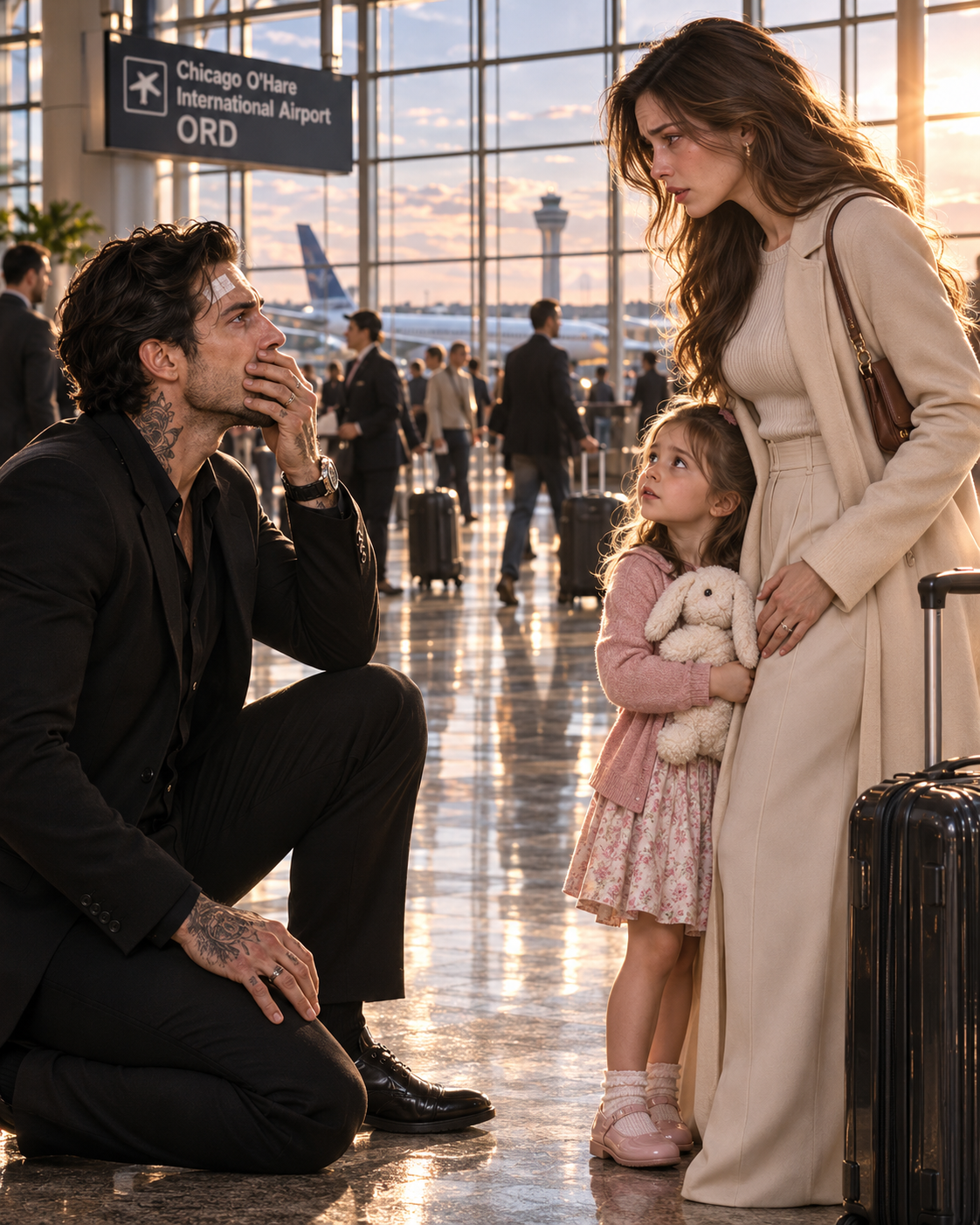
    Five years after my Mafia boss husband looked me in the eyes and admitted he loved another woman, he caught a little girl who nearly fell at Chicago O'Hare Airport. He smiled at her, brushed the hair from her face, and asked where her parents were. Then he noticed her eyes, and the smile disappeared. When I screamed, "Lily!" from across the terminal, Vincent Moretti turned toward my voice. The most feared man in Chicago went completely pale. He had spent five years searching for the wife who vanished after their divorce. What he didn't know was that the little girl standing in front of him was his daughter—and that I had spent four years teaching her how to live without a father.

    My name is Claire Bennett.

    I was thirty-four years old when the past finally caught up with me.

    Once, Hollywood magazines called me America's sweetheart. My face appeared on billboards, movie posters, and the covers of magazines sold in every airport across the country.

    I had an Academy Award nomination, two Golden Globes, and a career most actresses would have sacrificed everything to possess.

    But none of those things mattered the afternoon I watched my husband smile at another woman.

    Vincent Moretti and I had been together for twelve years.

    I met him when I was seventeen, before the expensive suits, before the black armored cars, before powerful men lowered their voices whenever someone mentioned his name.

    Back then, he was a stubborn nineteen-year-old boy with bruised knuckles, dangerous ambitions, and exactly forty-three dollars in his wallet.

    I fell in love with him anyway.

    When his enemies came looking, I hid him. When he lost his first business, I spent my savings to help him start another. When I auditioned for roles in Hollywood, he drove me across the country because neither of us could afford plane tickets.

    We built our dreams side by side.

    And somewhere along the way, we forgot how to live inside them.

    Five years earlier, Vincent had told me he loved someone else.

    Not during an argument.

    Not in a moment of drunken anger.

    He told me calmly, inside his car, as though discussing a business arrangement.

    "I love her, Claire."

    I remembered staring at his wedding ring.

    "Do you love me?"

    "No."

    One word.

    Twelve years.

    That was all it took.

    I divorced him, disappeared from Hollywood, and rebuilt my life in a quiet coastal town in Maine.

    Three weeks after signing the divorce papers, I discovered I was pregnant.

    I sat on the bathroom floor for nearly an hour, staring at the positive test, unable to decide whether to laugh or cry.

    Eventually, I did both.

    I considered calling Vincent.

    I even dialed his number once.

    But when I remembered how easily he had told me he didn't love me anymore, my courage disappeared.

    I couldn't bear the thought of hearing him discuss our child with the same cold detachment he'd shown when ending our marriage.

    So I kept my pregnancy secret.

    Nine months later, Lily Bennett was born.

    And for four beautiful, exhausting years, she became my entire world.

    She had Vincent's dark eyes, my curly brown hair, and a stubbornness that belonged entirely to herself.

    She loved strawberries, fairy tales, rainy afternoons, and the stuffed white rabbit she'd named Mr. Buttons.

    She asked questions constantly.

    Why was the moon following our car?

    Why couldn't fish sleep in beds?

    Why did grown-ups cry when they were happy?

    And, eventually, the question I had dreaded most.

    "Mommy, why don't I have a daddy?"

    I told her that families came in different shapes.

    That some children had two parents living together, some had grandparents, and some had a mother who loved them enough for a hundred people.

    It was true.

    But it wasn't the whole truth.

    I had never told her that her father lived in Chicago.

    Or that he was one of the richest and most dangerous men in America.

    Or that he had once loved her mother more than his own life.

    Until he didn't.

    Our return to Chicago wasn't planned.

    My former manager and closest friend, Emma Collins, had suffered a medical emergency.

    She had been there when my marriage collapsed.

    She had held my hand during my pregnancy.

    And when Lily was born, Emma had been the first person to hold her after me.

    Two days earlier, she'd called from a hospital bed.

    "I'm fine," she insisted.

    But her voice trembled.

    Emma had undergone emergency surgery, and although the doctors expected her to recover, I couldn't stay away.

    I booked the next available flight.

    I told myself Chicago was a big city.

    Millions of people lived there.

    The chances of running into Vincent were practically nonexistent.

    That was what I believed until 4:17 p.m. on a Thursday afternoon.

    O'Hare Airport was crowded with travelers rushing toward connecting flights.

    Sunlight streamed through the enormous glass windows, reflecting off the polished marble floors.

    Lily walked beside me in her pink cardigan and flowered dress, clutching Mr. Buttons against her chest.

    "Mommy?"

    "Yes, sweetheart?"

    "Is Auntie Emma going to have a big bandage?"

    "Probably."

    "Can I draw a princess on it?"

    I smiled.

    "We'll have to ask her doctor."

    She considered that answer seriously.

    "Doctors like princesses?"

    "Some of them."

    Lily giggled.

    For one precious second, everything was ordinary.

    Then she spotted a little boy carrying a balloon shaped like a pink elephant.

    "Mommy, look!"

    Before I could tighten my grip, her small hand slipped from mine.

    "Lily, wait!"

    She darted around a group of tourists.

    I hurried after her, pulling my black suitcase.

    Then I heard a sharp gasp.

    Lily had collided with a tall man dressed entirely in black.

    He reacted instantly, catching her beneath the arms before she could tumble backward onto the hard floor.

    "Whoa, little one."

    The voice was deep.

    Rough.

    Familiar in a way that made my blood turn cold.

    "Careful, sweetheart. Airports aren't racetracks."

    Lily looked up at him.

    "I'm sorry, mister."

    The man crouched in front of her.

    "It's all right. Are you hurt?"

    She shook her head.

    "Only Mr. Buttons."

    The stuffed rabbit had fallen to the floor.

    The stranger picked it up, dusted off one floppy ear, and handed it back.

    "There. Good as new."

    Lily smiled.

    And the man's expression changed.

    I saw the moment it happened.

    His gaze lingered on her face.

    On the shape of her nose.

    The curve of her mouth.

    Then her eyes.

    Especially her eyes.

    Eyes that were unmistakably his.

    A faint line appeared between his eyebrows.

    "What's your name, princess?"

    "Lily."

    His fingers tightened slightly around the rabbit.

    "Lily," he repeated.

    My heart slammed against my ribs.

    I recognized the dark, wavy hair.

    The broad shoulders.

    The expensive black suit.

    The tattoos climbing the side of his neck.

    Even the small white bandage near his forehead couldn't disguise the man I had once known better than myself.

    Vincent Moretti.

    My former husband.

    The man whose name I had spent five years trying not to say.

    "LILY!"

    My voice echoed across the terminal.

    Vincent went completely still.

    Slowly, he lifted his head.

    And saw me.

    For several seconds, neither of us moved.

    His eyes widened.

    His lips parted.

    "Claire?"

    Hearing my name in his voice nearly broke something inside me.

    I had imagined this moment hundreds of times.

    Sometimes I pictured myself walking past him without speaking.

    Other times I imagined confronting him, demanding to know how a man could throw away twelve years of marriage for someone he'd known a few months.

    But I had never imagined meeting him with our daughter standing between us.

    Lily ran toward me.

    "Mommy!"

    I dropped my suitcase and pulled her close.

    "It's okay, baby. I've got you."

    Vincent rose slowly to his full height.

    At thirty-nine, he looked even more intimidating than he had five years earlier.

    His face was leaner.

    His jaw sharper.

    There were faint silver strands near his temples that hadn't existed when we were married.

    But his eyes were exactly the same.

    And they were fixed on Lily.

    "Claire," he whispered again.

    I tightened my arm around my daughter.

    "Hello, Vincent."

    His gaze moved from me to Lily.

    Then back again.

    "You're here."

    It sounded less like a statement than a prayer.

    "I'm passing through."

    "Where have you been?"

    "That isn't your concern anymore."

    He flinched.

    I had once seen this man sit calmly through negotiations with criminals who threatened to kill him.

    I had watched him survive a gunshot wound without letting a single groan escape.

    Yet four ordinary words from me seemed to hurt him more.

    "Mommy?"

    Lily tugged my coat.

    "Do you know the nice man?"

    I looked down.

    "Yes, sweetheart."

    "Is he your friend?"

    I couldn't answer.

    Vincent's expression shifted.

    He crouched again, bringing himself closer to Lily's height.

    "How old are you?"

    "Four!"

    She proudly lifted four fingers.

    "Four and three months. Mommy says I'm getting very big."

    The color drained from Vincent's face.

    He looked at me.

    Four years and three months.

    Five years since our divorce.

    The arithmetic was simple.

    Brutal.

    Impossible to ignore.

    "Claire."

    I shook my head.

    "Don't."

    His voice dropped.

    "Is she—"

    "Not here."

    "But—"

    "Vincent. Please."

    For the first time, he seemed to notice the hundreds of strangers moving around us.

    Two men in dark suits approached from behind him.

    I recognized one immediately.

    Gus Ferris.

    Vincent's most trusted security chief.

    Gus stared at me in disbelief.

    "Mrs. Moretti?"

    "It's Bennett," I replied.

    "Of course. I'm sorry."

    His eyes shifted to Lily.

    Something flickered across his expression.

    Recognition.

    Understanding.

    Then alarm.

    Vincent raised one hand.

    "Give us some space."

    Both men retreated.

    He looked at me again.

    "I searched for you."

    I swallowed.

    "You shouldn't have."

    "Five years, Claire."

    "That's how long it's been."

    "I thought—"

    He stopped.

    For a moment, his control slipped.

    "I thought you might be dead."

    Lily looked up at him curiously.

    "Mommy isn't dead."

    Vincent stared at her.

    Then, unexpectedly, he laughed.

    Not a happy laugh.

    Something broken and breathless.

    "No, sweetheart," he murmured. "She isn't."

    I reached for my suitcase.

    "We need to go."

    "Claire, please."

    I walked past him.

    Lily waved.

    "Bye, mister! Thank you for saving Mr. Buttons!"

    Vincent didn't wave back immediately.

    He stood frozen, watching his daughter walk away.

    Then I heard his voice.

    "Claire."

    I stopped despite myself.

    "Just tell me one thing."

    I closed my eyes.

    "Please."

    There was no command in his voice.

    No trace of the powerful Mafia boss who once controlled half of Chicago's criminal underworld.

    Only a man standing inside an airport, terrified of the answer to a question.

    "Is Lily my daughter?"

    I turned.

    His eyes glistened.

    For five years, I'd rehearsed lies.

    I'd practiced telling him she belonged to someone else.

    I'd imagined denying everything until he finally walked away.

    But when I looked at the little girl holding my hand, I realized I couldn't make her first conversation about her father begin with a lie.

    "Yes," I whispered.

    Vincent staggered backward as though someone had struck him.

    I had seen him bleed.

    I had seen him furious.

    I had never seen him look this devastated.

    "She's yours."

    He pressed one trembling hand over his mouth.

    "Dear God."

    Then his knees bent.

    And Vincent Moretti, the man who never bowed to anyone, sank onto the airport floor.

    He looked at Lily with tears running silently down his face.

    "Four years," he whispered.

    I held my daughter closer.

    "Vincent—"

    "She has my eyes."

    His voice cracked.

    "Claire, she has my eyes."

    Lily stared at him, confused.

    "Mommy, why is the nice man crying?"

    I couldn't answer.

    Vincent looked up at me.

    "Does she know?"

    I shook my head.

    His face crumpled.

    And then he asked the question I had feared for five years.

    "Why didn't you tell me I had a daughter?"

    Before I could answer, Gus hurried toward us.

    His phone was pressed against his ear.

    "Boss."

    Vincent didn't look away from Lily.

    "Not now."

    "Boss, you need to hear this."

    Something in Gus's voice made Vincent straighten.

    "Someone just photographed you with the child."

    My stomach dropped.

    Gus lowered his voice.

    "And Marco Bellini's men were spotted outside the terminal ten minutes ago."

    Vincent's expression changed instantly.

    The devastated father vanished.

    The dangerous Mafia boss returned.

    "Get Claire and the girl somewhere secure."

    I stepped backward.

    "No."

    Vincent looked at me.

    "Claire—"

    "You don't get to order me around anymore."

    He approached slowly, his expression grave.

    "I know."

    "Then stay away from us."

    He looked past me, scanning the crowded terminal.

    For the first time, I noticed the way his security guards had positioned themselves between us and the nearby exits.

    My pulse quickened.

    "What's happening?"

    Vincent's voice was barely audible.

    "There's a reason I have this bandage on my forehead."

    I glanced at the white dressing.

    "What happened?"

    "Someone tried to kill me three nights ago."

    The airport suddenly felt much colder.

    "And now," he continued, looking at Lily, "someone may have discovered I have a daughter."

    He met my eyes.

    "Claire, whether you hate me or not, I need you to understand something."

    "What?"

    "If Marco Bellini finds out who Lily is, he won't see a four-year-old girl."

    Vincent's jaw tightened.

    "He'll see the one thing in this world I would surrender everything to protect."

    And that was when I realized the secret I had kept to protect my daughter might have just placed her in greater danger than anything I had ever imagined.

  • Chapter 7: ENOUGH FOR EVERYONE

    Chapter 7: ENOUGH FOR EVERYONE

    Eighteen months after Roman Castellano walked into a federal building to answer for his crimes, my daughter asked why the kitchen table had four chairs when only three people lived in our apartment. I looked at the empty chair across from her and smiled. 'Because sometimes you leave room for somebody who's still learning how to come home,' I said. Evie thought about that. Then she asked whether the chair could be purple. I told her we could paint it any color she wanted. That was the thing about children. They didn't care much about symbols if a bucket of paint and a free afternoon were available. The apartment looked different now. The stove worked. The ceiling no longer leaked. The radiator warmed every room, and the kitchen window had a new latch that kept the snow out. Our building had been transferred into a community land trust after the court invalidated the fraudulent ownership claims. The tenants voted on repairs, budgets, and the use of the ground-floor space. Nina Park had helped organize the trust, and I worked part-time as a tenant advocate, guiding other families through notices and hearings that once would have terrified me. The pay wasn't enormous. It was steady, honest, and mine. On the first day of every month, I paid the housing contribution from my own account. I never forgot the pride of that small act. Dad had undergone a cardiac procedure that helped him breathe more easily. He still insisted on putting too much salt in everything and pretending he'd already eaten if someone else needed seconds. Now Evie called him out on it. 'Grandpa, we've got enough,' she would say, pointing to the refrigerator. 'You can have some too.' He always laughed, then took a proper plate. We kept Noah's blackened notebook in a protective case at the community center, where the names of the Fenwick families were displayed beside a wall of photographs. His work had helped secure restitution for residents who had lost homes and savings. Victor Castellano was awaiting the outcome of his criminal case, with trial preparations continuing on the most serious charges. Detective Pike had been removed from duty and was under investigation for his role in suppressing evidence. Not every guilty person had been punished, and not every family had recovered what was stolen. Justice, I learned, was a series of doors people kept pushing open together. Some days it moved too slowly to notice. Other days a grandmother returned to the apartment where she'd raised her children and you felt the whole world shift an inch. Roman's part in the story had been harder to explain to Evie. He had pleaded guilty to financial crimes tied to his family's illegal collections and had received a prison sentence. Before he went away, he sold his interest in the mansion and other legitimate assets to support restitution and legal settlements. His old crew split apart, and the operations he controlled came under investigations and new management. He didn't call himself a businessman misunderstood by the courts. In his first letter to me, he wrote, I don't want you to teach Evie that a man becomes good because he says he is sorry. I want to live in a way that gives her a reason to believe people can change. I didn't write back for three weeks. I had a daughter to raise, tenants to help, and a life that no longer revolved around whether a powerful man approved of me. When I finally answered, I told him about Evie's science project, Dad's awful jokes, and the fact that the community center had reopened. I didn't write that I missed him, even though sometimes I did. Our letters continued slowly. He never asked for forgiveness. He asked questions about the housing trust, about Dad's recovery, and whether the people displaced by the Fenwick fire had found permanent homes. I told him when he was being self-important and when he had said something worthwhile. Some months I visited. Other months I didn't. I made sure Evie knew she could care about someone and still be angry about things they had done. She sent him a drawing of the purple chair after he wrote that he'd begun teaching reading classes to other inmates. He sent a note back saying her spelling was better than his. She declared him hopeless but promised to help him. By the time Roman was released under supervision, I had built a life I was proud to invite someone into. That mattered more to me than any grand romantic gesture. On the day he came out, I didn't bring Evie to a prison gate or let reporters turn his release into a spectacle. I met him two days later at a small diner near the water. He wore a plain coat and carried no entourage. There was gray at his temples I hadn't noticed before. He stood when I walked in, then seemed uncertain whether to offer his hand. I solved it by sitting down. 'You look tired,' I said. 'I am.' 'Good. I didn't want some dramatic speech about how prison made you a new man overnight.' A corner of his mouth lifted. 'I was planning to complain about the coffee.' 'That's more believable.' We talked for two hours. He told me about the reading program, the work placement he had arranged through a nonprofit, and the restrictions that came with his release. He had no intention of rebuilding the criminal organization that once bore his name. 'I don't know how to do ordinary life very well,' he admitted. 'Neither did I when Noah died,' I said. 'You learn. You apologize when you fail. You show up again.' He looked down at his hands. 'I wrote you a hundred letters I never sent.' 'That's probably for the best. I don't have room for a hundred letters.' He laughed, and it sounded so unguarded that my chest hurt. There was affection between us, grown quieter and steadier through time. But I had promised myself never to mistake affection for a debt. 'I don't need you to rescue me, Roman,' I said. 'I know.' 'I need you to be truthful, even when the truth makes you look bad.' 'I'm learning that.' 'And Evie gets to decide how much of you she wants in her life.' 'Of course.' Outside the window, fishing boats rocked in a cold gray harbor. He watched them for a moment, then looked back. 'Can I ask you something without expecting an answer today?' 'You can ask.' 'Would you let me take you to dinner sometime? Just you. Not because I own the place or know the owner. I'd like to learn what you order when you aren't trying to feed everyone else first.' For a moment I could see him as he'd stood in our doorway, a man in a black suit staring at three chipped plates. He was no longer that man. I wasn't the woman who had stood behind the chain, either. 'Maybe next Friday,' I said. His smile was small and genuine. 'Friday works.' We dated slowly. On our first proper evening, we bought tacos from a street cart and ate on a bench because neither of us wanted to sit in a restaurant full of people who remembered his old name. On our fourth, he brought Dad a secondhand book about the history of Brooklyn and spent an hour listening to him complain about the author's mistakes. On our sixth, Evie invited him to help with her school project, which involved building a model house from cardboard and testing whether a paper roof could withstand a cup of water. Roman tried to improve the structure. Evie informed him that he was not the boss of the roof. He apologized and handed her the glue. Dad laughed so hard he needed to sit down. There were difficult moments too. Roman sometimes recognized people from his old life on the street and went quiet. Once he snapped at a volunteer who questioned a budget decision, using the sharp, commanding voice that had once made entire rooms fall silent. I took him aside afterward. 'You don't get to scare people into agreeing with you anymore,' I said. He returned to the meeting and apologized in front of everyone. The next time, he asked questions instead of giving orders. Change wasn't a single beautiful speech. It was a thousand unglamorous choices, many of them made when nobody was watching. The winter after his release, the community center held a holiday dinner for every resident in the land trust. Dad organized seating. Evie insisted on stars made from blue paper, just like the one Noah had hung over our kitchen table. Roman volunteered to wash dishes. When the first trays arrived, I watched families carry full plates to the tables. Nobody asked whether they deserved seconds. A woman who had once lost her apartment in the Fenwick fire came over and showed me the keys to her new home. I thought of Noah and stepped into the hallway for a moment because I needed to cry without making everyone else cry too. Roman found me there. He didn't ask whether I was all right as though tears required fixing. He stood beside me until I was ready to speak. 'He should have seen this,' I said. 'Noah.' Roman looked toward the bright room where Evie was laughing with her grandfather. 'He should have.' 'Sometimes being happy feels like leaving him behind.' 'I don't think he wanted you to stop living,' Roman said. 'Everything he did was so you could keep living here, safely, with Evie.' I reached for his hand. I did it because I wanted to, not because I needed a man to hold me upright. 'I love you,' I said. The words surprised us both. Roman swallowed. 'Mara, I love you too. I've been afraid to say it because I didn't want it to sound like a demand.' 'Then don't make it one.' 'I won't.' We walked back inside holding hands. Dad saw us and pretended not to. Evie saw us and made no effort to be subtle. She pushed the purple chair between ours and said, 'See? I told you there was room.' Much later, after the dishes were done and the guests had gone home, we returned to my apartment. The little brass house with its blue window hung near the kitchen sink now, beside the photograph of Noah holding baby Evie. I would never stop loving him. Loving Roman didn't require me to. Dad warmed the leftover soup. Evie set out four plates, then a fifth small plate for the neighbor's child who might come over in the morning. Roman reached for the smallest portion out of habit, and Evie caught him. 'No,' she said. 'Everyone gets a real dinner here.' He laughed and accepted a full bowl. Outside, snow began falling over Brooklyn. The crooked paper star turned slowly above our table. There was enough soup for everyone, enough light to fill the room, and an empty chair ready for anyone who needed one. The man who had once followed me home looking for a thief had learned the only lesson that mattered: a home wasn't something he could buy, control, or take. It was something people built together. And that night, when Evie asked whether Roman would come back for breakfast, I didn't look to him for the answer. I smiled and said, 'Yes, sweetheart. This time, he's been invited.'

  • Chapter 6: A NAME IS NOT A HOME

    Chapter 6: A NAME IS NOT A HOME

    At five-thirty the next morning, the street outside our building filled with headlights. Two construction trucks pulled up behind a temporary fence. Men in reflective jackets began setting out orange cones while most of the neighborhood was still asleep. From my window, I saw the red word UNSAFE pasted across our front door. It felt like watching strangers write an ending to a story we hadn't finished telling. Dad was making tea. Evie stood beside him in her pajamas, clutching the brass house charm I had finally let her wear on a ribbon for one night. 'Are they knocking our house down?' she asked. I wanted to promise her they wouldn't. I had learned the difference between a promise and a hope. 'We're going to make sure everyone is safe,' I said. 'And we're going to fight the notice.' Mrs. Alvarez took Evie to her sister's apartment several blocks away while Dad helped me wake the people on our floor. We didn't stay inside to be dramatic. We knocked because several elderly residents couldn't hear the construction noise and a man upstairs used a wheelchair. Every person deserved time to leave safely if the building truly was dangerous. By six, Nina Park was on the sidewalk in a coat thrown over her pajamas, speaking to a city emergency judge by phone. The request Victor had filed was marked for expedited demolition on grounds of imminent structural collapse. A private engineer's letter supported the claim. When Nina checked the engineer's license, she discovered the man had surrendered it four years earlier. At seven, the judge issued a temporary stop order until a court could examine the building. The workers stood down. I should have felt triumphant. Instead I stared at the construction trucks and thought about how close they had come to destroying our home because of a document somebody had signed without asking who lived inside. Roman arrived at eight with his attorney. His face was pale, and he carried an original file in a plain paper folder. Nina led him into the hearing room at the courthouse. The public gallery was packed with tenants, reporters, and people who had survived the Fenwick fire. Victor's lawyers sat in the front row, their client nowhere to be seen. When the judge asked about the demolition request, Roman stood and admitted that he had signed the underlying authorization eighteen months earlier. His father had told him the block was vacant and structurally unsound. Roman had approved demolition if a legitimate inspection confirmed it. 'Did you verify that it was vacant?' the judge asked. 'No, Your Honor.' 'Did you check the inspection?' 'No.' The judge looked over her glasses. 'You are asking this court to believe that a company you controlled obtained authorization to destroy occupied residences without your knowing their condition.' Roman's voice was quiet. 'I'm asking the court to believe I neglected my responsibility. I am not asking the court to excuse it.' Behind me, someone let out a bitter laugh. I didn't turn around. I understood the feeling. Roman supplied records showing Victor had substituted a fraudulent engineering report and reused the valid authorization despite knowing people still occupied the properties. Nina submitted Noah's notebook, the resident testimony, and the chain of title connecting Harbor Mercy to the shell companies. The judge extended the stop order, ordered an independent structural assessment, and referred the apparent fraud to investigators. It wasn't a final victory. It was enough to keep our building standing. When we emerged from the courthouse, dozens of people were waiting on the steps. Rachel Keene was there with a camera. Roman stepped forward before anyone could ask a question. 'My name is on the documents that harmed these families,' he said. 'I allowed people in my organization to intimidate residents, and I approved money transfers I knew were connected to illegal activity. I have given investigators the records and will cooperate with every charge they bring. No one in this neighborhood owes me gratitude.' I watched the crowd respond with silence. It was not forgiveness. It was attention, and he had finally earned the right to be heard only by telling the truth. I should have gone home after that. Dad needed rest, and Evie wanted her blue ribbon back. Instead I stopped at the community center where Nina had organized an emergency meal for families displaced by the fraudulent notices. There were folding tables, paper cups, and three steaming pots of soup. I carried boxes of bread into the kitchen, grateful for the simple work. Around noon, a smoke alarm began chirping in the rear corridor. At first I thought somebody had burned lunch. Then I smelled something bitter and chemical. A volunteer ran past me shouting that the basement door was hot. Within seconds, smoke climbed the stairs. The building had been one of Harbor Mercy's properties, and a contractor linked to Victor had retained access to its utility room. Someone had come to destroy the files in a locked basement cabinet, not realizing Nina had already moved them. The fire department would later find evidence of a deliberately started blaze. In that moment, none of those details mattered. What mattered was that thirty people were inside, including two children and an elderly man who couldn't walk without a cane. I pulled the alarm, shouted for everyone to use the front exit, and ran back for the volunteer who had gone downstairs looking for a fire extinguisher. I found him coughing beside the stairwell. We helped each other toward the door, bent low beneath the smoke. At the entrance I ran into Roman. He had been driving past when the alarms began and had stopped to help direct people away from the building. For an instant our eyes met through the gray haze. 'Everyone out?' he asked. 'One person still in the rear hall, I think.' 'The firefighters are going in,' he said, and he held the door for the last evacuee instead of charging inside like some man who believed his own bravery mattered more than training. I was grateful for that. The fire was contained within minutes. No one died. A volunteer was treated for smoke inhalation. Later I learned that Mateo had recognized one of Victor's security contractors leaving the center with a gasoline can, and had photographed his license plate before calling the police. Investigators located the truck near the waterfront. Victor was heading for a private boat. Roman could have gone after him with the men who still answered his calls. Instead he gave Mateo's footage to the police and stayed at the center, carrying bottled water and blankets. I heard his phone ring three times. He ignored it until the evacuation was complete. When he finally answered, Victor's voice was loud enough for me to hear. 'You think you're a hero now? You think that woman will want you when they take your house, your companies, and your freedom?' Roman put the call on speaker and nodded to the prosecutor's investigator standing beside him. 'Where are you, Victor?' he asked. Victor laughed. 'You know where I am. Come stop me if you've got the guts.' 'I'm not coming.' The silence at the other end was almost satisfying. 'You used to understand how the world works,' Victor snapped. 'You take what you need, and the weak move aside.' 'No,' Roman answered. 'That's how you and my father wanted it to work.' Victor's voice sharpened. 'Your father knew about the inspector. He came to the crash because I called him. I told him the brakes had been fixed so the man would be scared, not dead. By the time he arrived, it was too late.' I had to grip the edge of the table. The investigator made a signal to a colleague, who began recording the call under their case procedures. Roman's voice didn't rise. 'You arranged the crash.' 'Don't act shocked. Your father left him there. What does that make your family?' Roman looked toward me, and the grief in his eyes was so stark that I had to look away. 'It makes us responsible for what we did,' he said. 'I won't help you hide it.' Victor disconnected. The investigator hurried outside, passing the location details to officers already searching the marina. Thirty minutes later, Nina called to tell me Victor had been arrested on the dock while trying to board a boat under a false name. The charges would take months to sort out: fraud, arson, witness intimidation, and the suspected killing of Noah. But the man who had threatened my child was finally in custody. I should have felt the world right itself. Instead, I sat on the community center steps and cried so hard that Dad had to hold my shoulders. Noah wasn't coming back. An arrest could not give him the years he had missed. It could only stop other people from losing the ones they loved. That evening Roman found me alone in the courtyard behind the courthouse. The first winter snow had melted into gray slush. He stood a respectful distance away. 'I saw the judge's order,' he said. 'The tenants can stay while the ownership case proceeds.' 'Because dozens of people fought for it,' I replied. 'Yes.' He looked relieved that I had corrected him. 'The prosecutor has asked me to come in tomorrow. There are charges they can bring against me for the money transfers and the business I ran. My attorney thinks a guilty plea and cooperation may reduce the sentence. I told him I won't lie to get out of it.' I closed my eyes. I had grown to care about him despite myself. I wanted him to be good. It was painful to discover that wanting could never replace the work of becoming. 'I'm afraid for you,' I admitted. 'I'm afraid too,' he said. The honesty between us felt more intimate than any kiss. 'I care about you, Mara. I won't ask you to wait for me, and I won't make you responsible for who I become.' I thought about Noah, my father, Evie, and the neighbors who had taught me that love was a verb before it was a declaration. 'Become someone you can respect,' I said. 'Then we'll see.' Roman nodded. Before leaving, he took the heavy family ring from his finger. It had a black stone and a carved crest. He studied it briefly, then slipped it into his pocket. 'For most of my life,' he said, 'I believed this name meant I could own anything.' He looked at the lit windows of the courthouse. 'I was wrong.' The next morning I stood outside the federal building with a paper cup of coffee while Roman walked through the entrance beside his lawyer. He did not look back. I didn't call after him. For the first time, we were each walking toward a future the other could not choose for us. In my pocket, Evie had left a crayon drawing: four people at our kitchen table, a huge pot of soup, and a purple star. Underneath, in uneven letters, she had written, THERE IS ROOM FOR ONE MORE.

  • Chapter 5: THE MEN WE CHOOSE TO BELIEVE

    Chapter 5: THE MEN WE CHOOSE TO BELIEVE

    The photograph of Roman's father beside Noah's wrecked car should have been enough to make me hate every Castellano forever. In the harsh hospital light, I looked at the timestamp, then at Roman's face, and realized there was something worse than discovering a lie. It was discovering that someone had been standing close enough to the truth to help you and had chosen not to. 'How long have you had this?' I asked. Roman didn't look away. 'Since my father died eight months ago. It was in a drive I inherited. I knew the picture was connected to an accident, but I didn't look for the name.' 'You knew an inspector had come to you and died three days later.' 'Yes.' 'And you still didn't look?' 'No.' My throat tightened so badly I could barely speak. For two years I had carried Noah's death like a stone in my chest. Roman had possessed a piece of the answer and left it in a locked folder because opening it might have changed his life. 'You don't get to stand in my kitchen,' I whispered, 'and promise answers when you've been too afraid to read the ones you already have.' He accepted that without trying to touch me. 'You're right.' 'Don't call me. Don't send anything. Send the file to Nina and the prosecutor. If you actually want to help, tell the truth when it costs you something.' I walked away before he could answer. I expected to feel powerful. Instead I felt empty, as though the small warmth I'd allowed myself around him had been a trick of the winter light. In the waiting room, Dad sat with a blanket over his knees and Evie asleep against his shoulder. He asked what happened. I told him enough. He closed his eyes. 'Noah wasn't a saint, Mara. He was stubborn and proud and kept secrets because he thought he could protect us. But when he found people being pushed out of their homes, he couldn't make himself ignore them.' I wanted to be angry at Noah for leaving me with a mystery instead of a life. I couldn't. He had tried to do the right thing in a world that punished people for it. 'Roman had a choice,' I said. 'He still does,' Dad replied. 'And so do you.' The next morning I went back to Nina's office, not to Roman's mansion. She had already obtained an emergency court order preventing lockouts at our building while ownership records were examined. She had also filed a demand to preserve communications from Castellano Urban Renewal and Harbor Mercy. Within hours, families began arriving with their own notices. A grandmother brought a bill for twenty thousand dollars in invented 'structural relocation fees.' A bus driver had lost his lease after he refused to sell. A nurse had been told her daughter's wheelchair made the building unsafe. Nina asked me to help organize their paperwork because I could understand the forms and because, after years of being ignored, the tenants trusted someone who lived under the same threat. I spent the afternoon making folders and tea. It was the first work I'd done in months that didn't involve cleaning up after people with more money than they could count. My old neighbor Mrs. Alvarez took charge of Evie's after-school time. Dad began calling other retired residents to ask about notices they had received. Everyone had a job. For once, our survival wasn't resting on one rich man's decision. Meanwhile, Roman did something nobody in his family expected. He gave the prosecutor full access to his father's drive, his company's acquisition ledgers, and the private accounting system Victor had controlled. Nina told me about it because the disclosure included records useful to our case. Roman's lawyer warned that the material could expose Roman himself to financial charges. He turned it over anyway. He also resigned as head of the development group and placed its disputed properties under temporary independent management. That didn't erase the harm. It did stop Victor from using Roman's office to issue more threats. I tried not to care how much that choice cost him. Three days later, I received a large envelope at Nina's office. Inside was an old drawing made by a child in blue crayon: a house, a crooked tree, and a man holding a little girl's hand. I recognized Evie's earliest attempt at drawing Noah. Beneath it lay a notebook, black around the edges from smoke. A typed note explained that a retired fire investigator had found it in the debris of the Fenwick building and had kept it after his supervisor ordered it destroyed. When he heard about the tenant case, he mailed it anonymously. Nina handled it carefully. Page after page contained Noah's sketches of blocked fire exits and notes about inspection numbers that had been altered after approval. But at the back was something more intimate: a list of names, each followed by a small detail. Mrs. Alvarez, third floor, uses a cane. The Hernandez twins, six years old, scared of alarms. Mr. Okafor, basement apartment, keeps extra blankets for neighbors. Noah hadn't collected names only to prove fraud. He had wanted every person displaced by the fire to be remembered. On the final page, he had written, No building is empty when somebody calls it home. I pressed the notebook against my chest. Then I made copies for Nina and took the original to the evidence technician. The notebook did not belong in my drawer, no matter how badly I wanted to keep it. That evening a woman named Rachel Keene, a local investigative reporter, interviewed several of us in Nina's office. She agreed not to publish Evie's school, our exact address, or anything that could interfere with the investigation. I spoke on camera about the notices, the soup, and the feeling of having to prove my family deserved a roof over our heads. I didn't mention Roman's groceries. This wasn't a story about one man's kindness. It was about a system that made kindness seem like a substitute for justice. When the interview ended, Rachel asked what I wanted most. I thought of Noah's notebook. 'I want people to be able to stay in their homes without begging a powerful man for permission,' I said. The clip went online the next morning. By lunch, dozens of former Fenwick residents had contacted Nina. By evening, three city employees had offered to testify about altered inspections. And by nightfall, Victor had gone on television to call us opportunists. He said the whole scandal was a personal revenge campaign designed by a dishonest housekeeper. Then he played a security video of me carrying the paper bag of rolls out of Roman's kitchen and claimed it proved I had been stealing from the mansion for months. The clip made me sick, not because it was convincing, but because I could imagine people watching only the first ten seconds. The internet had never required much evidence to punish a woman with little money. The mansion cook, Mrs. Delaney, called Nina at once. She signed a statement that she had personally given me the rolls, and she supplied records showing the food would otherwise have been discarded. Mateo produced the full security recording, unedited, including Victor entering the library after I had left and carrying a black leather envelope. Roman could have released it to humiliate Victor privately. Instead the full footage went directly to the prosecutor and the public correction. When Rachel aired the real sequence, Victor's carefully controlled expression collapsed in front of the camera. He had been the thief all along. Forty thousand dollars had never been his main objective. The accusation had been a way to remove a housekeeper whose family held Noah's records. Later, Nina told me the prosecutor had secured a warrant for Victor's financial accounts. A court hearing on the emergency tenant injunction was scheduled for the following afternoon. For the first time, I let myself imagine walking Evie to school without looking over my shoulder. Then Roman came to the legal-aid office, accompanied only by his lawyer. He waited outside until Nina asked whether I wanted to speak with him. I did, but not alone. 'I gave them everything,' he told us. 'The property records, the photo, the money trail. But there is one thing I haven't said publicly.' Nina folded her arms. 'Then say it now.' Roman took a long breath. 'Before my father died, he asked me to approve a transfer of money into the Harbor Mercy accounts. I knew the money had come from illegal collections in the businesses my family controlled. I signed the transfer anyway. Victor used those accounts to fund the property purchases.' He was not saying he had merely failed to notice. He was admitting he had participated in the crimes that made this possible. I felt sick. 'You helped them take those homes.' 'I didn't know what Victor would do with the money,' he said, then shook his head. 'That doesn't excuse where it came from. I've told the prosecutor. I'll accept the consequences.' 'Even if you go to prison?' I asked. He looked at me with an exhausted steadiness. 'Especially then. I've spent my whole life acting as if my name put me above consequences.' I wanted to believe him. I wasn't ready. I told him to speak in court, where the truth would reach people who needed it. He nodded and left. Ten minutes later, Nina's computer chimed with an urgent message from the district attorney. The warrant for Victor's accounts had been served, but he had emptied two offshore funds before the freeze. He was gone. Attached to the message was a scanned document the investigators had found in his desk: a demolition request for our entire block, dated the next morning. The signature was Roman's. And this time, the forensic examiner was certain it was real.

  • Chapter 4: WHAT THE FIRE COULDN’T TAKE

    Chapter 4: WHAT THE FIRE COULDN’T TAKE

    There are moments when fear doesn't make you scream. It makes you frighteningly practical. When I saw my father tied to a chair in a warehouse, I didn't collapse. I wrote down the phone number, forwarded the video to Nina, and asked Mrs. Alvarez to take Evie somewhere crowded and safe. Then I walked into the nearest coffee shop because I needed a place with working cameras and people who would remember seeing me. Roman followed without a word. He had the power to send ten armed men into a room. I had the power to refuse to let my father's life become another private war between members of his family. I chose mine. 'We need the police,' I told him. 'Not Detective Pike.' 'Agreed.' 'And I don't go alone, no matter what the message says.' 'Agreed.' 'Stop agreeing like I'm about to fall apart.' Roman pulled out a chair and sat across from me. 'Then tell me what you need.' I hated how close that simple question came to breaking me. I needed Noah alive. I needed my daughter to have a childhood. I needed Dad home in time to complain that the coffee was too strong. Instead I said, 'Find out where Victor keeps his storage properties. The walls in the video look like the Fenwick basement.' Roman studied the clip and noticed a yellow safety stripe behind Dad's chair. Mateo identified the kind used in an old produce distribution warehouse on the waterfront. Nina contacted a supervisor in the district attorney's office who wasn't connected to Pike and sent him the threat, the evidence inventory, and the recorder files. Officers were assigned, but locating the right building would take time. We didn't have much of that. Victor sent another message: NOON. ORIGINALS OR HE DOESN'T WALK OUT. It was 11:14. Nina said the evidence was already secured and would not be traded. 'We can give Victor copies that look convincing,' she suggested, 'but we need a plan to keep Walter alive and establish exactly who's inside.' Roman watched her with an expression that suggested he was unused to being directed by anyone. 'My cousin always chooses a location with two exits,' he said. 'He can't stand feeling trapped.' I looked at him. 'How many times have you helped him trap someone else?' His face hardened with shame rather than anger. 'Enough times that I know I never want to do it again.' Nina didn't let the moment turn into a confession. She coordinated with the prosecutor's team while Roman provided property records and a map. I agreed to go to the outer entrance with officers stationed nearby and hidden body cameras recording. The originals stayed under seal. It was a risk. All of it was. But it was an informed one, and for once every person in the room had to tell me the whole plan. At 11:57, snow drifted through a gap in the fence of the abandoned warehouse. The water beyond it was black. I walked through the outer gate with a cardboard document box in my arms and Roman three steps behind me. 'I said come alone,' a voice called from the loading dock. Victor appeared wearing a camel-colored coat and the same polished smile he had worn in Roman's library. He looked almost offended to see his cousin. 'Really, Roman? Over the housekeeper?' 'Where's Walter?' I asked. Victor glanced at me as though I were a stain on the concrete. 'You know, my people offered your family a very generous chance to leave quietly. But you had to be difficult.' 'You mean we refused to disappear.' 'Call it what you like. The city changes. Some people move. That's life.' He nodded toward the doorway. Dad sat inside on a chair, his wrists tied, looking pale but alert. I heard him call my name. My entire body tried to run to him. Roman caught my sleeve for one second, then released it when I looked at his hand. Victor smiled. 'Still playing the gentleman? You followed her like a stray dog.' 'I followed her because you told me she'd stolen my money,' Roman said. Victor's smile slipped. 'And you were willing to believe it. Don't pretend you're better than me.' I had thought about that sentence since the night Roman stood in our hallway. Part of it was true. Roman had believed a convenient accusation because the accused was someone with less power than he had. But what happened next mattered. 'The police have the evidence,' I said. 'You can't take back what's already been copied.' Victor laughed. 'Police? I have a detective who can make the whole thing disappear.' 'You did,' Roman answered. 'Not anymore.' For the first time Victor glanced toward the road. It was a tiny movement, but I knew Nina had been right: he feared being cornered. He ordered a man at the doorway to take the box. The man stepped toward me. I refused to let go. 'Dad first.' Victor's face went cold. He gestured, and Dad was shoved forward. He stumbled down the loading ramp and fell hard on one knee. I dropped the box and caught him. His wrists were raw, but he was breathing. Behind us, Victor reached inside his coat. Roman moved between us, and a gunshot cracked across the dock. It hit a metal beam. In the sudden confusion, Dad cried, 'Mara, the red lever!' I saw the emergency alarm handle beside the door. Noah used to teach Evie that red meant stop and yellow meant wait. I pulled it. A shrill siren filled the warehouse. Steel shutters along the loading bay began to descend. Victor's men ran toward the rear exit, colliding with the officers coming through the service gate. Roman pushed Dad and me behind a concrete pillar. Something struck Roman's shoulder. He stumbled but stayed on his feet. For one terrifying second I thought he'd been shot. Then I saw blood spreading through his coat from a graze along his upper arm. He pressed his hand to it. 'Go,' he said. I didn't go because he ordered me. I went because Dad could barely stand and an officer was waving us to safety. Outside, I helped Dad onto the ambulance cot, gave the paramedic his medication list, and asked three times whether his heart was steady. Roman emerged a few minutes later with Mateo and a police officer. Victor had fled through a maintenance tunnel before the shutters closed. Two of his men were arrested. The document box lay ripped open on the dock, its contents only photocopies. Nina arrived breathless and held my shoulders while the paramedics worked. 'The evidence is safe,' she told me. 'We got Walter out.' Dad reached for my hand. 'I heard him say something,' he whispered. 'Victor told the other man he didn't mean for Noah to die. He said the fire was supposed to scare him, not kill him.' I had imagined hearing those words for two years. They gave me no relief. They turned my grief into a sharper kind of pain. At the hospital, Dad was treated for dehydration, stress, and a minor wrist injury. Roman needed stitches. I found him in the emergency department standing beside a vending machine, holding a useless cup of terrible coffee. 'You should sit down,' I told him. 'You sound like Mateo.' 'Mateo seems sensible.' He smiled faintly, then grew serious. 'Your father will be okay.' I nodded. 'Thank you for helping us get him out.' 'You don't have to thank me.' 'I know. I'm doing it because I want to.' We stood in the ugly fluorescent light without moving. The distance between us was no longer only fear. There was attraction there, and anger, and the memory of a man who had turned Noah away. None of those feelings canceled the others. 'I didn't know how much I had allowed Victor to do,' Roman said. 'I put him in charge of the projects because it made my own life easier. Every bill I didn't read, every complaint I ignored, every man I let intimidate someone for me—it all made what he did possible.' 'Then stop being that man.' 'I'm trying.' 'Trying isn't enough if the next family still loses its home.' He looked at me for a long moment. 'Then help me find a way that actually changes things.' I wanted to say yes. I wanted to lean against him and forget the last forty-eight hours. Instead I said, 'Ask Nina. Ask the tenants. Don't turn this into a favor for me.' He took the answer as if it were a gift he hadn't deserved. That night, Evie came to the hospital with Mrs. Alvarez. When she saw the bandage on Roman's arm, she stared. 'Did you get hurt helping Grandpa?' 'A little,' he admitted. 'You need a sticker,' she told him solemnly. She pressed a glittery purple star onto the edge of his bandage. The most feared man in New York looked down at it as though it were a medal. Dad laughed until he coughed. For one brief moment, it felt possible that we might all survive this. Then Nina called. The prosecutor had reviewed the first recorder file, and the good news was that it could support a criminal investigation. The bad news was that the warehouse's security system had been wiped before officers arrived. Victor's face wasn't on any usable camera. Worse, the technician who had serviced the Fenwick building's fire system two years earlier had died that morning in what police were calling an accidental fall. He had been scheduled to meet Nina tomorrow. Roman listened as she spoke. When she finished, he reached into his pocket, took out his phone, and opened a file he had kept locked away for years. 'There's something I have to show you,' he said. On the screen was a photograph of Noah's wrecked car. At the edge of the frame stood Roman's late father, staring at the damage. The photograph was time-stamped twenty minutes before the first emergency call. 'My father was there,' Roman whispered. 'And someone erased his name from the official report.'

  • Chapter 3: THE HOUSE WITH THE BLUE WINDOW

    Chapter 3: THE HOUSE WITH THE BLUE WINDOW

    For a few seconds after Noah's voice came out of my phone, I forgot where I was. The little brass house lay open in my palm. My father was crying silently. Roman Castellano stood by Nina Park's office window with the expression of a man who had just heard a verdict. The recording ended. Nobody moved. Then Evie tugged my sleeve and asked the only question that mattered to her. 'Is Daddy coming home?' I knelt in front of her. My knees hurt against the floor. 'No, sweetheart. That's an old message.' 'He sounds sad.' 'He was worried about us.' She touched the charm hanging from my neck and said, 'He still found a way to talk to you.' I pressed my forehead to hers until I could trust my voice. When she had gone into Nina's side office with a coloring book, I turned to Roman. 'You knew Noah came to you.' He didn't deny it. That should have been some comfort. It wasn't. 'Two years ago,' he said, 'a man waited outside my father's old club in the rain. He said he worked for the city and had proof that one of our development companies was paying inspectors to condemn occupied buildings. I thought he was trying to get money from us.' 'Did he show you the proof?' 'He tried.' 'And?' Roman looked me straight in the face. 'I told him to leave before my guards removed him.' I felt as though he had reached across the room and slapped me. 'He died three nights later.' 'I know.' 'You knew?' 'I learned it after the funeral. His name was in a report I didn't finish reading. I should have asked questions.' The room narrowed to the space between us. I had spent two years wondering whether one phone call, one different road, or one lucky minute could have kept Noah alive. Now I was standing across from a man who had dismissed him while he was still breathing. 'You don't get to make yourself the tragic hero of this story,' I said. Roman flinched, barely. 'I'm not trying to.' 'Good. Then don't ask me to trust you. Help us uncover the truth because it is the right thing to do, not because you want forgiveness.' He nodded. I turned back to Nina. She had written down the number on the key. It corresponded to an old commercial storage company near the Red Hook ferry terminal, one that had shut its offices after a warehouse fire. Its underground units were still listed as privately owned. Nina said we should ask for a warrant or at least an independent witness before opening anything. Roman agreed to cover the cost of a licensed locksmith and a neutral evidence technician. 'No one goes into an abandoned building with a child,' I added, looking at him. 'Agreed,' he said. It was almost absurd to find myself setting rules for a mafia boss, but that night I needed control over something. Nina arranged for Evie and Dad to stay with my neighbor Mrs. Alvarez, who had known me since I was a teenager. The following morning, with a tenant organizer as witness and a camera recording our entry, Nina, Roman, Mateo, and I went to the warehouse. It sat between two empty storefronts, its windows covered with soot and plywood. Roman had exchanged his suit for a dark coat and looked no less intimidating. I carried the brass key. The stairwell smelled of damp concrete. On the basement level, metal doors lined a corridor lit by temporary lamps. Unit 17 stood at the end. The key fit so neatly that I wanted to cry. Inside sat an old metal filing cabinet, two cardboard boxes, and a folded child's blue raincoat. I recognized the raincoat from a trip Noah had planned for Evie when she was still a toddler. He had taken it to the office because she liked wearing it while she visited him. I picked it up, and a forgotten memory struck me: Noah kneeling on our floor, telling Evie that every little house deserved a safe roof. She couldn't have understood his fear. Neither had I. Nina photographed the cabinet before opening it. Its drawers held copies of inspection reports, deeds, bank transfers, and photographs of occupied apartments marked as vacant. At first the pattern looked like a maze. Then Nina placed three documents side by side. Each building had been bought by a new shell company after its residents received impossible bills. Each shell company was funded by Harbor Mercy. And all three eventually transferred ownership to a trust controlled by Victor Castellano. The charity that claimed to help poor families was being used to push them out of their homes. 'How many buildings?' I asked. Nina checked the index in Noah's handwriting. 'At least forty-one.' Forty-one buildings meant hundreds of people. Hundreds of kitchens like mine. Roman stood motionless. 'Victor told me Harbor Mercy was renovating abandoned properties,' he said. 'You signed off on the budgets,' Nina replied. It wasn't a question. 'I signed the annual budget for the parent company. I didn't examine individual acquisitions.' 'Then your negligence had victims,' she said. He gave a single, stiff nod. I watched him accept the sentence without reaching for excuses. It didn't fix anything, but it made me willing to stay in the room. At the back of the second drawer we found a small digital recorder. Its screen lit up when Nina connected a portable battery. There were several files, labeled by date. On one, a man with Victor's unmistakably smooth voice said, 'Don't worry about the Fenwick families. A winter fire makes people grateful for any place they can go.' Another voice asked about Noah. Victor responded, 'He'll learn when to stop asking.' Nina stopped the recording. 'We need an expert to authenticate this. A copy is not enough to prove everything, but it is a serious lead.' I stared at the little machine. Somewhere in that warehouse, two years earlier, Noah had sat alone and listened to people discuss destroying homes. He had known he might be next. I hated that he had carried the fear by himself. We made two evidence copies with recorded chain-of-custody notes and sealed the originals. Roman offered one of his private facilities for storage. Nina refused. 'Nothing goes into a room controlled by someone whose family is under investigation,' she said. To his credit, he didn't protest. Outside, the wind off the harbor cut through my coat. Roman stood beside me while Mateo loaded the cases into Nina's car. 'You were right about me,' he said. 'That night at the club, I could have listened. I chose not to. I can't undo that.' 'Then make sure no one else gets ignored.' He looked across the street at a row of aging apartment buildings. 'My father taught me that property was power. I don't think he ever asked who paid the price.' I wanted to tell him I didn't care what his father had taught him. Then I remembered the way he had looked at Evie's plate and understood that he was beginning to learn something new. We drove to the legal-aid office separately. I was almost at the entrance when Nina called and told me not to come inside. 'Someone has been through my files,' she said. Her voice was steady but thin. 'The lock isn't broken. The room was opened with a key.' She had spent the previous night backing up every document to an independent service, so the intruder had gotten nothing essential. But a manila folder sat on her desk that hadn't been there before. It contained an old photograph of Noah outside the Castellano club, speaking to Roman in the rain. Under it was a city accident report for Noah's death. The investigating officer's name was Detective Caleb Pike. My stomach dropped. 'Pike is the detective you called when Evie got the note,' I said. 'Yes,' Nina replied. I gripped the phone. 'You told him where the evidence was.' 'I told him enough to open an investigation,' she said. 'I didn't tell him about the warehouse.' 'Victor knew about the key. He may know more.' There was a short silence. Then Nina said, 'Don't go home until I find a different investigator.' I called Mrs. Alvarez, who was supposed to be watching Evie and Dad. She answered at once. Evie was safe and painting at the kitchen table. Dad, however, had left half an hour earlier. He told her a man from the housing office wanted to ask him about Noah's old documents and that he would be back before lunch. My father had never learned to say no when someone claimed to be from the city. I asked whether he'd taken his phone. 'He left it charging,' Mrs. Alvarez said. Roman was standing a few feet away. He saw my face change and reached for his own phone, but I shook my head. 'No more secret calls,' I said. 'We call Nina first. We call someone who isn't Pike.' Even as I spoke, a text arrived from Dad's phone. The message was only a photograph: his familiar gray cardigan tied around the back of a chair in an empty warehouse. Beneath it were seven words. BRING THE ORIGINALS. COME ALONE. NO POLICE. I showed Roman the screen. His face turned hard, but his first words weren't a threat. 'Where is Evie?' 'Safe.' 'Then we start by keeping her that way.' I was already dialing Nina when a second message arrived. This one contained a short video. My father sat under a bare light, alive, looking straight into the camera. And behind him, visible for less than a second before the frame cut to black, stood a man wearing the same silver cuff links I had seen on Victor Castellano at the mansion.

  • Chapter 2: THE PRICE OF A PROMISE

    Chapter 2: THE PRICE OF A PROMISE

    The morning after Roman Castellano found us eating watered-down soup, my daughter woke up to a bag of groceries outside our apartment door. There were eggs, bread, fresh fruit, the heart medicine my father had been cutting in half, and a small packet of yellow crayons. There was no cash and no note. I knew who had sent it, and that made me angrier than I expected. I couldn't return the food without punishing Evie, but I refused to let a dangerous man turn breakfast into a favor I would owe him. So I sent Roman one message using the number he had left on our table: Thank you for the groceries. I will repay the cost. Please never come to my home uninvited again. His reply came almost immediately. Understood. I owe you an apology. I read it twice. Apologies were uncommon in my world, especially from men who expected doors to open before they reached them. But an apology wasn't trust. I still went to the mansion because my shift started at eight and the electricity bill was due. At the gate, Roman's security chief, Mateo Alvarez, asked me to wait in the front office. He wore an earpiece, a winter coat, and the expression of someone trained not to waste words. He gave me a printed document. My wages would continue, but I was being placed on paid leave until the missing money was investigated. I stared at the paper. 'Is that a polite way of firing me?' 'No. Mr. Castellano doesn't want you questioned by Victor while the cameras are reviewed.' 'Then he can say that himself.' Mateo's mouth moved almost into a smile. 'He said you might.' Roman arrived a minute later. He looked as though he hadn't slept. There was a new bruise on one knuckle, but his voice remained controlled. 'You were right,' he said. 'About what?' 'Following you. It was wrong.' I hadn't expected those words, and I was irritated that they affected me. 'Did you find your money?' 'Not yet. The footage Victor showed me was edited. Someone removed seventeen minutes between your shift and the supposed theft.' 'And the eviction?' 'The document was generated by a subsidiary I didn't authorize to issue notices. The deadline is suspended while we verify every account.' Suspended. Not canceled. He saw my expression and didn't dress the answer up. 'I'm having the building records pulled. I won't promise something I haven't done.' It was the first thing he'd said that sounded worth hearing. I took my coat off. 'If I'm being paid, I can still work.' 'You shouldn't have to work while someone inside my house is trying to frame you.' 'I work because I need the money, Roman. I don't need to be protected from a mop.' For a second he looked almost amused. Then his phone rang and the expression vanished. He stepped away, answered quietly, and returned with a question. 'Did your partner ever speak about a company called Harbor Mercy?' My stomach tightened. Harbor Mercy was the nonprofit that had offered Noah a cash settlement after his death. They called it humanitarian assistance. The paperwork required me to sign a statement that the crash had been an accident and that I would never make a claim against any associated property owners. I'd refused. Weeks later, our rent went up. 'How do you know that name?' I asked. 'The subsidiary that issued your eviction is funded by Harbor Mercy.' I felt cold in the heated office. 'That company visited my apartment after Noah died.' Roman said nothing for a moment. Then he asked if I would meet an attorney who was not employed by him. I said yes, but only after I chose the attorney myself. By noon, I was sitting in a small legal-aid office with Nina Park, a tenant-rights lawyer whose walls were covered with case files and children's drawings. She listened without interrupting, checked the eviction form, and made three calls. 'This notice is unenforceable as written,' she told me. 'It lists charges not recorded in your original lease and threatens a lockout without proper proceedings. Keep it. Don't sign anything.' For the first time in weeks, I could breathe without counting hours until we would be homeless. But Nina had worse news. Harbor Mercy had purchased liens on at least twenty-three occupied buildings across Brooklyn in the previous year. Most residents were elderly or families with young children. Many received the same frightening notices. Some left before a judge ever heard their cases. 'Someone is making money by convincing people they have no choice,' Nina said. 'And the person signing the letters appears to be Roman Castellano.' I told her about Roman's denial. She didn't laugh, but she gave me a sober look. 'A signature can be forged. An owner can also claim ignorance. The records will tell us which.' That afternoon Dad insisted on joining us, despite the stairs and the cold. He brought the old photograph from Noah's envelope. Nina placed it beside a recent street image of the Fenwick building. The roofline matched, but the new property had been rebuilt and listed under a different name. 'People were forced out after that fire,' Dad said. 'Noah said the building was safe enough to repair. Then someone marked it for demolition.' 'Why didn't he take it to the city?' Nina asked. 'He tried.' Dad stared at his hands. 'His supervisor told him to stop, so he kept copies. Then he died.' I watched my father fold inward. For two years, I'd been furious he kept secrets. Now I began to understand how fear could make silence feel like survival. Nina made copies of the documents and promised to secure the originals. She also recommended we speak with other tenants, carefully, instead of letting Roman's men do it for us. By evening, the first ordinary day after the most extraordinary night of my life was almost over. I picked Evie up from school. She showed me a drawing of three people at our kitchen table and one tall man standing awkwardly in the doorway. 'That's the serious-name man,' she explained. 'He forgot to smile.' I was halfway through telling her that strangers weren't friends simply because they bought groceries when she pulled a folded paper out of her pocket. 'A man gave me this when the bell rang,' she said. My heart lurched. The paper had no writing inside, only a little black square cut from a photograph of our apartment window. On the back were four words: TELL YOUR MOTHER TO STOP. I took Evie straight to Nina's office. She contacted a detective she trusted, and Roman sent Mateo to wait across the street, not inside, because I asked him to. I hated needing help. I hated far more that someone had approached my child. Roman arrived after dark. When I showed him the paper, his face went utterly blank. 'Victor knows about the report,' he said. 'Then let the police do their job.' 'I intend to.' That surprised me. I had imagined a mafia boss would react by sending men with guns into the night. Instead he asked Nina to photograph the evidence, gave the detective the security feed from the mansion, and told Mateo to arrange a temporary hotel room under my name if I wanted it. I didn't. I wanted my father and daughter in our own beds, even if our beds were under a leaking ceiling. He accepted my decision. Then he said, 'You asked to repay the groceries. Don't. Put that money toward whatever Evie needs.' 'That would still make me owe you.' He hesitated. 'Then let me owe you. I brought danger to your door by following you. I can at least help keep it away.' It was an imperfect answer, but a human one. Dad had been quiet throughout the meeting. As we left, he touched my arm. 'Mara, Noah gave you a necklace the week before he died. The little brass one.' I felt for the chain beneath my sweater. It carried a flat brass house charm with a tiny blue window. Noah had said he'd found it at a flea market because I always wanted a place with a porch. I hadn't taken it off since his funeral. 'What about it?' Dad looked sick. 'He told me you would keep it safe because you never took it off. He said if we ever had to leave home, that little house would lead us back.' Under the office light, I turned the charm over. The back wasn't solid. There was a seam around the roof. Nina brought a magnifying glass. Roman stood several steps away, watching without moving. I pressed the ridge with a thumbnail, and the roof slid sideways. A tiny metal key fell into my palm. Evie gasped. For the first time in two years, something Noah had said made sense. It wasn't jewelry. It was a hiding place. I looked at Roman. 'What does it open?' He didn't know. Neither did Nina. But Dad was staring at the number engraved along the key's edge, his eyes filling with tears. 'Noah rented a storage room near the old ferry terminal,' he whispered. 'He told me no one would ever look there because the building was supposed to have burned down.' Before we could ask another question, my phone lit up with an unknown number. A voice message waited. I pressed play and nearly dropped the phone. It was Noah. His voice was tired but unmistakable. 'Mara, if you're hearing this, the fire was set, and I didn't die because of bad brakes. There's something I should have told you about the Castellano family. Whatever happens, do not trust Roman until you know what he did the night I came to him for help.'