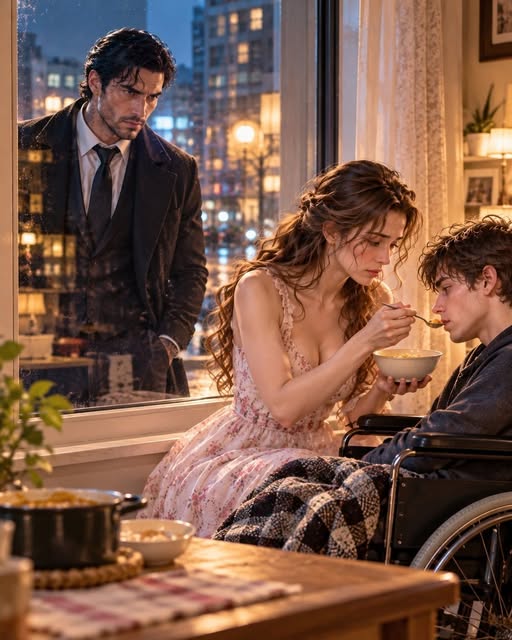
Story Genres: MAFIA BOSS

  • Chapter 1: The Suitcase and the Sunflower

    Chapter 1: The Suitcase and the Sunflower

    Three days before our marriage contract expired, I told New York's most feared mafia boss that I was pregnant with his child, and Miguel Vasquez stared at me and whispered, "That's impossible."

    My name is Catherine Bennett. Everyone calls me Cat. I am twenty-seven years old, and one year ago I married a man the entire city was afraid of.

    Miguel Vasquez. Thirty-eight. Tall, dark-haired, dangerously handsome, with the kind of stillness that made rooms go quiet when he entered them. He controlled shipping terminals along the Hudson, luxury hotels with no signs on the doors, private security companies that guarded people whose names never appeared in newspapers, and an underground empire that made even dangerous men lower their voices. His phone calls could move millions. His orders could empty a room. Nobody dared question him.

    Except, occasionally, me.

    But our marriage did not begin with love. It began with a contract.

    Miguel needed a wife to secure an alliance between his family and the Castellanos, the second most powerful family on the East Coast. The old men who ran both organizations believed a marriage made paper promises real. I needed something simpler and sadder: money. My mother had died two years earlier after an illness that ate every dollar I had and several I didn't, and I was working sixty-hour weeks coordinating charity events for rich people while debt collectors learned my schedule better than my friends did.

    So Miguel's attorneys prepared an agreement, and I read every page of it in a conference room with floor-to-ceiling windows, while a lawyer named Harrington waited with a pen.

    One year of marriage. Public appearances together — galas, dinners, photographs. Separate bedrooms. No romantic expectations on either side. Generous financial compensation, paid in full on the day the marriage ended. And a quiet, uncontested divorce when the alliance was secure and the term expired.

    I signed. I knew exactly what I was agreeing to. What I didn't know was how easy it would be to fall in love with a man who had never promised to love me back.

    At first, our marriage was precisely what the contract described. We attended charity events with my hand resting formally on his arm. We hosted dinners where I smiled at men whose smiles never reached their eyes. We posed for photographs. Then we came home to his silent penthouse above the Hudson and went to our separate bedrooms at opposite ends of a hallway that felt a mile long.

    Miguel was always working. Meetings. Security briefings. Phone calls in Spanish and Italian at two in the morning. Sometimes he disappeared for two days at a time, and I learned not to ask where he had been. His right hand, Rafael, would simply say, "He'll be back Thursday, Mrs. Vasquez," as if that explained anything.

    But little things began to change, the way seasons change — too slowly to notice until suddenly the light is different.

    He noticed when I skipped breakfast and had the kitchen send up toast without a word. He asked why I was still reading at two in the morning, standing in my doorway in a shirt with the sleeves rolled up, looking more tired than any man who owned half a port had a right to look. And one Friday he came home carrying sunflowers — huge, ridiculous, golden sunflowers — because I had mentioned, once, weeks earlier, to someone else entirely, that they were my favorite flower.

    He had been listening. Miguel Vasquez was always listening. That was the first dangerous thing I learned about him.

    The second dangerous thing I learned at the Hartwell Foundation dinner in September, when a trustee's wife — a woman lacquered within an inch of her life — smiled at me across the table and said, loudly enough for the whole setting to hear, "It's so refreshing, Catherine. Most girls in your… position… try to hide where they came from." The table froze. I had grown up poor enough to know exactly what *position* meant, and I was deciding which of my three prepared smiles to die behind when Miguel set down his glass.

    "Mrs. Hartwell," he said, in the voice he used for weather and war, "my wife coordinated the benefit that rebuilt your husband's children's hospital wing. She did it in six weeks, under budget, while people like you were choosing napkins. If her position is unclear to anyone at this table, I am happy to clarify it personally." He picked up his glass again. "She is the only person in this room I am afraid of disappointing."

    He never mentioned it again. He never mentioned any of it — that was the agony and the glory of that year. The coat that appeared over my shoulders at rooftop events before I knew I was cold. The car that began waiting outside my mother's old neighborhood on the anniversary of her death because, the year before, he had found me crying in the back of one and had simply never allowed it to be a journey I made alone again. A hundred kindnesses, delivered in silence, by a man who would rather have been thought cold than be caught being tender. I catalogued every one. I told myself they were the habits of a meticulous man. I told myself that right up until the bathroom floor, and the two pink lines, and the understanding — too late, in the worst hour — that I had been cataloguing a love language.

    The second was the night I found him in the kitchen. Music was playing from the little portable speaker I carried everywhere, some old soul song my mother used to hum, and Miguel was standing in the middle of his own marble kitchen at midnight looking completely lost.

    "What is this?" he asked.

    "Music."

    "I can hear that."

    I smiled. "Then why are you asking?"

    He almost laughed. It crossed his face like weather — brief, surprised, gone. And for a moment he looked nothing like the feared mafia boss everyone described. He looked like an ordinary man who had forgotten how to enjoy an ordinary life, standing in his own kitchen in the dark.

    That was the Miguel I fell in love with. Not the billionaire. Not the crime boss. Just Miguel — the one who ate toast standing up, who went quiet at loud noises in restaurants and scanned every exit without knowing he was doing it, who brought me sunflowers and pretended it meant nothing.

    Somewhere in the middle months, our marriage stopped feeling like an arrangement. We talked late into the night about nothing important. We shared quiet mornings. And after the Whitmore gala in October — after the rain, the broken car, the long drive home with my shoes in my hand and both of us laughing about the ambassador's terrible speech — we crossed the one boundary the contract had drawn in its firmest ink.

    Neither of us mentioned it the next morning. We never spoke of it again. I told myself it was a mistake we were both too proud to name.

    Then, eleven months into our one-year marriage, I stood in my bathroom staring at a plastic test until my hands shook too hard to hold it. Two pink lines. A baby. Our baby — the baby of a man who had spent our entire marriage telling me, in every way except words, that attachments made people vulnerable, and vulnerable people got hurt.

    I took a second test. Two pink lines again.

    I waited four days to tell him. I rehearsed in mirrors. I rehearsed in the shower. In the end there was no version of the sentence that sounded safe, so I simply stood in his study doorway on a gray afternoon and said it plainly.

    "Miguel… I'm pregnant."

    He went completely still. The pen stopped in his hand. Then he looked up at me, and his face did something I had never seen it do in a year of dinners with killers and kings.

    It emptied.

    "That's impossible."

    My heart sank through the floor. "I've taken two tests."

    "Cat…"

    "I know it wasn't part of the agreement."

    His jaw tightened. For one terrible moment I was certain he would tell me I had ruined everything — the alliance, the timeline, the clean, quiet ending. Instead he sat down slowly, like a man twice his age, and asked, very quietly, "Are you sure?"

    "Yes."

    He looked at my stomach. Then back at my face. For once in his life, Miguel Vasquez had no orders to give. I tried to smile, because smiling was the only weapon I had ever been allowed to carry in that house.

    "You don't have to change our arrangement," I said. "The baby doesn't have to change anything between us. You'll always be the father. But I know you never wanted a real marriage."

    He opened his mouth. Then he closed it.

    And somehow, that silence hurt more than anything he could possibly have said.

    Over the following days, I did what practical women have always done with broken hearts: I made a plan. My friend Elena found me a small apartment three streets from hers — a little kitchen, two bedrooms, sunlight through real windows, and space in the second room for a crib. I signed the lease with hands that only shook a little. Then I went home and began packing quietly, the way I had lived in that penthouse all year: without making a sound that might inconvenience Miguel Vasquez.

    My clothes. My books. My little speaker. And last, wrapped in tissue paper, the dried sunflower I had saved from the first bouquet he ever brought me — pressed flat, brittle, foolish, and the single most valuable thing I owned.

    Three days before the contract expired, Miguel came home early.

    He stopped in my bedroom doorway. His eyes moved over the open suitcase on the bed, the folded dresses, the neat stack of books, the tissue-wrapped sunflower lying on top like something being buried with honors.

    "What are you doing?"

    "Getting ready."

    "For what?"

    I swallowed. "The agreement ends Monday."

    "Where are you going?"

    "I found an apartment near Elena. It's small," I said, and attempted a smile, "but there's plenty of sunlight. And enough room for a crib."

    His gaze went back to the suitcase. To the little speaker on the floor — the speaker that had filled his silent mansion with music for a year. To the books I had read while waiting up for him. To the sunflower.

    "You're really leaving?"

    My fingers tightened around the scarf in my hands. "Miguel, we agreed to one year."

    He stepped closer. "And the baby?"

    "You'll always be part of our baby's life. But I can't stay married to someone who only wants me here because of an obligation."

    He didn't answer. Tears burned behind my eyes, and then the truest thing I owned finally escaped before I could stop it.

    "I love you, Miguel."

    He froze.

    I gave him a small, broken smile. "I know that wasn't part of the contract either."

    For several seconds, neither of us moved. Then Miguel Vasquez turned around and walked out of my bedroom without a single word.

    I stood there holding my scarf, trying very hard not to cry, because I had finally told the most powerful man in New York the truth — and the truth had not been enough to make him stay in the room.

    I knelt beside the suitcase. I placed the scarf inside. I reached for the sunflower.

    That was when footsteps sounded in the hallway.

    Miguel was standing in the doorway again. But this time he wasn't empty-handed. He was carrying a cream-colored folder — thick, formal, tied with a faded ribbon.

    Our marriage contract.

    My stomach tightened. "What's that?"

    He stepped inside. He closed the door behind him — Miguel never closed doors; closed doors, in his world, meant conversations that could end careers or lives. He placed the folder on the bed between us like it weighed fifty pounds.

    "You said the agreement ends Monday," he said.

    "It does."

    He opened the folder. He turned past page after page that I recognized — my signature, his signature, Harrington's neat attestations — until he reached the final page. Then he looked directly at me, and for the first time since I had met him, Miguel Vasquez looked afraid.

    "Cat, do you know why I agreed to marry you?"

    I frowned. "To secure your family's alliance."

    "That's what my attorneys told you."

    My heart began to pound. "What does that mean?"

    Miguel looked down at the contract. Then, slowly, he slid out a document I had never seen before — a separate page, on different paper, bearing his signature and a date from before our wedding. He held it like a man holding the pin of a grenade he had carried in his own chest for a year.

    "Miguel… what is that?"

    He looked at me for a long moment. Then he said, quietly:

    "There's something about our marriage I should have told you a year ago."
  • Chapter 7: The Sound of Home

    Chapter 7: The Sound of Home

    Lucia Romano announced herself at four in the morning on a Tuesday in late spring, with the rain coming down on the garden in sheets and Emma standing in our bedroom doorway saying my name in a voice I had never heard from her — a voice with its feet planted.

    The labor took eleven hours. I know because I counted it, the way I count everything that matters, in other people's sounds: in Emma's breathing, which I timed with my own until the nurses stopped telling me to sit down; in Dr. Marsh's voice, calm as a lighthouse, calling measurements like stations on a line we were both determined to reach; in the rattle of equipment and the soft percussion of a dozen competent strangers moving around the woman at the center of my world. I held Emma's hand through the worst of it. I have been shot at, blown up, and sat in judgment in rooms where one wrong word was a death sentence, and I tell you that nothing in my life has required of me what those eleven hours required: to be *useless*, and to stay. Men like me solve pain by applying force to its source. There was no source. There was only my wife, doing the bravest and most ordinary thing in the world, and my whole empire of fear could not buy her one contraction's relief — so I learned, at thirty-eight years old, with my hand being crushed in hers, how to simply be a witness, and to let being a witness be enough.

    And then, at three seventeen in the afternoon, the room changed its music entirely.

    A cry. Thin, furious, outraged at the lighting, the temperature, the management of the universe in general — the loudest and most beautiful sound I have ever heard in a life that has been, by necessity, an education in sound. I have heard my child's heartbeat through a door, galloping and secret. I had never imagined her *voice*, arriving all at once in person, with opinions.

    "A girl," Dr. Marsh said, laughing, breathless. "Mr. Romano, you have a daughter. She's — oh, she's perfect. She's furious, but she's perfect."

    They wrapped her and they put her in my arms with the solemnity of people handing over a reliquary, and she weighed almost nothing and everything, and she was warm, and her heartbeat — against my chest this time, not through a door, not through a speaker — her heartbeat was right there under my palm, too fast and too steady, the bravest sound in the world, keeping time against mine. I stood in that delivery room in my ruined shirt with my face wet and I said, to my daughter, the first words she ever heard from her father:

    "There you are. I have been listening for you for a very long time."

    The first weeks home ran on a schedule set by a person seven pounds in weight who could not yet hold up her own head, and the Romano empire — what remains of it — adjusted without a murmur.

    I learned her the way I learn everything: by ear, and then by hand, and then by heart. I learned the cry that meant hunger — a rising, indignant siren that started in her toes — from the cry that meant a wet injustice, and both from the gray, overtired wail that only walking would cure, so that at three in the morning the corridors of my house hosted a slow procession: a blind don in a dressing gown, pacing the exact fourteen steps between the nursery door and the stairs he had once counted for other reasons, with his daughter on his shoulder conducting her grievances into his ear until they thinned, and slowed, and stopped, and her whole warm weight went slack in the particular way that is the only true peace treaty I have ever signed. Rosa found us like that once at dawn, asleep nearly standing — me with my back against the wall and Lucia anchored in the crook of my arm like small, smuggled cargo — and she took her from me without fully waking either of us, and said, in the tone of a woman delivering a verdict on a whole sex, *Your father was the same. Useless and perfect.*

    She knew my voice first. That is the fact I would keep, if I could keep only one. Before her eyes learned faces — before, God help me, she could be certain of anything in the wide bright world she had been born into — Lucia knew my voice, and turned for it, and quieted for it, in the dark of her crib, the way a compass needle finds its pole. The doctors called it recognition. Emma called it inevitable. I called it, in the privacy of my own chest, the single greatest promotion of my life: a person for whom my voice was not a warning, but a home.

    They baptized her in the small chapel on the estate in June, with the garden doors open and the bees auditing the lilies. Marco stood godfather in a suit he had complained about for a week, and wept in it without a word of complaint — I heard it, and I will carry the knowledge to my grave as my most treasured piece of intelligence about him. The families sent their respects in the forms the families use: Castellano, a silver rattle heavy enough to stun an ox, engraved with a single word — *Avanti*. Benedetti, the deed to a small grove of olive trees outside Palermo that have, he wrote, *outlived every Romano quarrel and intend to outlive this peace as well*. Emma cried over the olive trees. Then she dried her eyes and hung, in the place of honor in the hall where my aunt's portrait used to watch the door, the first work of her own she had ever put her name to: the Flemish landscape she had restored in exile, in a widow's front room, with our daughter growing under her heart — three dark hills and a river of pale light, and in the corner, so small you must be told it is there, a house with one window lit.

    "A self-portrait," she told the guests, demurely, when they asked. "The artist as a fugitive."

    The house keeps the painting. So do I, in the way I keep things: I go and stand before it sometimes, and put my hand flat against its frame, and think about the woman at the widow's table, scraping varnish by the hour, keeping a light on in one window for three people, two of whom did not yet know the third existed.

    She is six months old now, as I tell this, and she has reorganized the government of my house more thoroughly than any council of families ever dared. She rules from a blanket in the drawing room, where Rosa holds court and narrates her doings in Italian like a commentator at a royal progress. Marco Vitale — acting head of the Romano operations, a man who has faced down two wars and one federal task force without blinking — is her godfather, and I have heard him, in my own hall, making a sound at her that I will describe only as deeply classified. The ports go legitimate by slow, clean degrees. The archive of my voice sits in a vault with a new ledger and a new lock, and no man opens it alone, ever again. The piano is played daily, badly at first and then better; Emma is teaching herself a lullaby her mother sang, and Lucia, who is her mother's daughter, shouts commentary through the difficult passages.

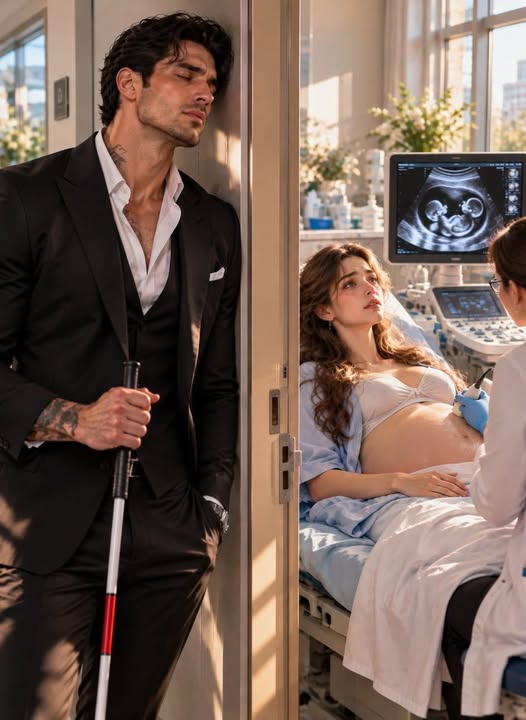
    In the summer I took them back to the clinic — Lucia's checkup, Dr. Marsh, six months of measurements all where they should be, a heartbeat still strong, still galloping, the sound that started everything. The checkup itself I remember in sounds, the way I remember everything that has ever mattered: Dr. Marsh's voice, unhurried, calling the measurements like stations on a line we had already safely traveled — weight, length, a heart examined and pronounced *boringly magnificent*, which from Dr. Marsh is a love letter. Lucia, who fears nothing, grabbed the stethoscope and attempted to eat it. I held her while the doctor listened — held her openly, in a lit room, with my wife beside me and a nurse cooing nonsense at my daughter in a tone I would once have paid men to use about me in public — and I thought about the first time I had heard that heartbeat, pressed against the wrong side of a door, a thief at the threshold of my own family. There are no doors between us now. That is the whole of the miracle. The rest is paperwork and rain.

    On our way out, my cane tapping the marble corridor, Emma's hand on my arm and our daughter asleep against her shoulder, I stopped walking. Emma knew the place before I spoke; her step faltered exactly where mine had, all those months ago.

    "Here," I said. "It was here. The door was open a crack, just — here."

    She was quiet a moment. Then she moved — I heard the small shift of her weight, the freed hand finding the examination-room door and easing it open, just a crack, the way it had been. "For old times' sake," she said, and her voice was doing the complicated thing again, the one it does when laughter and grief arrive together. "Stand there, Luca. Stand there and listen to how different it sounds."

    I stood in the corridor where I had stood in the worst hour of my life, and I listened. From behind me came the sounds of my whole delivered world: my wife's breathing, unhurried now; my daughter, sighing in her sleep, small as a moth; Marco at the elevators, politely pretending this was a normal place to stop; the clinic going about its healing business all around us. And in front of me, through the crack of the door, nothing terrible at all — just some other family's beginning, muffled, private, none of my business, the way beginnings should be.

    It had taken me six years of darkness, nine weeks of silence, a forged voice, a garage full of gunfire, and a bullet through a council room to learn the geography of the place I actually lived. It had been under my feet the whole time. It is measured, like everything in my life now, in heartbeats.

    And Emma finished the lullaby. All summer it had come in pieces — a verse at the piano on good mornings, a hummed correction while Lucia fed — until one evening in August she played it through whole for the first time, with the windows open and the garden going gold beyond them, and the baby, who by then had developed the family talent for ruining solemn occasions, chose the final chorus to laugh — her first real laugh, sudden and helpless, at nothing any adult could identify. Emma stopped playing. The silence in the drawing room lasted one second and then filled with women crying and one don standing in the doorway holding a bottle of milk gone lukewarm, laughing like a man reprieved. I have heard many sounds worth a fortune in my life. I would trade the whole catalogue for that one, and throw in the house.

    That night the house settled the way it settles now: Rosa's radio low in the kitchen, the clock in the library keeping its honest time, rain done and the garden dripping beyond the glass. Lucia slept in her crib in the east room — the painted room, the waited-for room — and Emma and I stood a while in its doorway, my arm around my wife, her head against my shoulder, both of us listening to our daughter breathe: in, out, the smallest tide in the world, pulling everything it touched toward morning.

    For nine weeks, I had listened every night for footsteps that never came.

    Now I fall asleep counting heartbeats — my wife's beside me, slowing into sleep, and my daughter's down the hall, fast and steady and brave — and the silence that once haunted my house is only a room we pass through on our way to bed, with the lights, which I no longer need, burning warm in every window.

    The dark was never empty. I was only ever listening for the wrong things. Now I know what home sounds like.

    It sounds like this.

  • Chapter 6: What the Dark Taught Me

    Chapter 6: What the Dark Taught Me

    The door opened at last on soft shoes, and a woman's voice I knew — Dr. Marsh, who did not waste other people's time with weather — said: "Mr. Romano. Your wife is stable. The bleeding was a threatened miscarriage, and 'threatened,' tonight, is the word you get to keep. The baby's heartbeat is strong. Would you like to hear it?"

    I have been offered many things in my life — money, territory, mercy, men's lives in both directions — and I tell you honestly that no offer ever made my knees unreliable. I followed her voice down twenty feet of corridor like a man being led out of a burning building.

    Emma's hand found mine in the dark by the bed and put it, without ceremony, against the warm slope of her belly, and the nurse set the little speaker where it belonged, and there it was again: that galloping, impossible, brave-hearted sound — but this time I was *invited*, this time my palm was on the door instead of my ear, and Emma's fingers were laced through mine holding me there like an anchor holds a ship. My child. Running toward me through the dark, exactly as she had the first time, in a corridor, when she was a secret and a scandal and a reason for men to die. She was, Dr. Marsh informed us, a girl. The measurements were where they should be. Sixteen weeks, and furious about something, from the sound of her.

    "A girl," Emma said, and I could hear the exhausted wonder in it, the whole nine weeks cresting and breaking at once. "Luca, I have a name. I've had it since the third week, since before — I used to say it in that room in Astoria so she'd know somebody was glad. Lucia."

    "Lucia." Light. She had named our daughter Light, in a one-room exile, while married to a man who lived in darkness, and the joke of it — the grace of it — went through me so completely that I laughed out loud in that hospital room, with a bullet-graze wrapped on my shoulder and six years of night behind me, laughed like a boy. "Lucia Romano. Let her be light for all of us. God knows the family has the darkness covered."

    Later — much later, when the monitors had settled into their slow green patience and Emma slept with her hand still trapping mine against her like a bookmark — Marco came in and stood where I could hear him, and gave me the rest of it, quietly, the way you read a will.

    The council had decided before dawn. In our world there are sentences worse than death and Dante, I think, would have voted for death by the end. He was stripped of the name Romano — struck from the family's rolls, his accounts seized, his men reassigned and his mother's portrait, my aunt's portrait, taken down from the gallery wall in a ceremony of silence none of my people will describe to me. He was put on a plane to Palermo with one suitcase and a sum of money calculated by Castellano himself to be exactly enough to live on and never enough to build with, and armed men of the families — not ours; that was deliberate, and everyone understood it — would know his face at every port and airport on two continents for the rest of his life. He would grow old in exile, a man with my father's surname struck off him like a burned brand, listening for footsteps of his own. I found I could not hate him in that hospital room, with my daughter's heartbeat still echoing in my palm. Hate is a lamp; it burns the oil a man needs for other things. I let it go out.

    The leak, Marco had found too — how the gunmen had known Emma's pharmacy, her stairwell, her garage. A receptionist at the clinic, a woman with a brother's debts, had sold Dante the day's appointment lists for cash across nine weeks, watching for a name: a wife registered under her maiden name, paying cash, always alone. She had flagged Emma's file the afternoon of my own quarterly appointment — the collision of our two schedules in that corridor, which had felt to me like God's hand, had been arranged by nobody. It was chance. Dante's woman merely reported that the runaway had surfaced, and the rest followed. I ordered the receptionist handled the new way: no visit in the night, no fear for her family. A word to the clinic's board, evidence of the sales, her license and livelihood gone by paperwork — ruin by daylight, in documents, the kind of ruin a person survives. Emma, when I told her, was quiet a long moment and then said, "Who taught you that?" and I said, "A heartbeat, mostly."

    The two weeks of bed rest that followed were their own small war, fought in whispers and won by Rosa.

    Emma was sentenced to the sofa in the drawing room by day and our room by night — *our* room; the migration of her things back across the corridor had happened while she slept in the hospital, directed by Rosa with the quiet ruthlessness of a general relocating a capital, and Emma, presented with the accomplished fact, had only said, *Well. I suppose the rooms are warmer on that side.* She hated the idleness the way I hate a locked door. She was allowed books, and visitors, and rage in moderation. She was not allowed the stairs alone, the garden in the rain, or news of Dante, and on the fourth day she threw a paperback at the wall and announced to the house at large that captivity had been more comfortable in Astoria, where at least the warden had the decency to be imaginary.

    I did the one useful thing I have ever learned to do in a sickroom. I read to her. It is an arrangement with a long memory in our marriage: in the first year after the explosion, when my eyes were bandaged and then unbandaged into nothing, Emma had read me the whole of the Sunday papers, the contracts I pretended not to need, three novels, and once, memorably, the manual for a boat neither of us owned. Now the debt came due. She chose the books — her childhood copy of a fat Italian novel, a biography of a woman restorer in Florence, the letters of a painter — and I read with pages a company in Boston prints for me, the raised dots flowing under my fingertips, my voice doing the work my eyes used to do. She listened with her head on the arm of the sofa and her feet in my lap, and sometimes she fell asleep mid-chapter, and I would finish the page anyway, quietly, for the baby — who had strong opinions about my voice by then, and voted for it with her whole body whenever I began.

    On the ninth night a car backfired on the avenue beyond the garden wall — one flat, ugly crack — and I was out of the chair before the echo finished, and Emma's hand was around my wrist hard enough to bruise, and her breathing had gone back to the place it lived in the garage. It took twenty minutes to bring her down, both of us sitting on the bedroom floor like shipwrecked people, her back against my chest, my voice in her ear counting the real sounds of the house one by one — the clock, the radiator, Rosa's radio, the rain starting — until the city's lies ran out of ammunition. *It isn't finished in me,* she said at last, furious at herself. *You finished it in a room full of men and it's over, and I'm still in the garage.*

    "It finished in that room because I had six years of practice at being afraid in the dark," I told her. "You've had nine weeks. The debt isn't comparable, Emma. Take the time. The house has nowhere to be."

    She slept, eventually, with her head on my shoulder and her hand fisted in my shirt like a child's, and I sat awake until the rain stopped, being a wall — the only trade, in the end, that I have ever been any good at — and I thought about how love, in my old life, had been a thing I *provided*, like security, like money, like fear. It turns out it is mostly a thing you *withstand*, in a room, at floor level, in the rain.

    I stepped back from the chair, in the end, the way a man steps back from a ledge he has stood on too long — not off it, but back, into the house, into the light I couldn't see and intended to live in. The families were called again, to a room where I did not bleed, and I told them: the Romano operations would be run, day to day, by Marco Vitale, whose name I will put against any man's in this city; the ports would go legitimate inside five years or go to whoever wanted the smell of them; and my daughter would inherit an empire of clean paper or she would inherit a house and a name and nothing else, and either way the choice would be hers at twenty-five, sworn in front of witnesses, because no Romano child of mine would ever be a piece on anyone's board. Castellano, who is old enough to have buried every principle he ever had and grown new ones, laughed into his wine and said the blindness had made me the only honest thief in New York. It was, from him, a blessing. It held.

    Emma's recovery was measured in small sounds coming back. First her laugh, in the garden, at something Rosa said in Italian that Rosa will not translate. Then the piano — I came down one morning in the seventh month and stopped on the stairs with my hand on the rail, because the drawing room was full of Chopin again, slightly rusted, entirely unrepentant, and underneath it Rosa was humming in the hall and would not stop when she heard me, and that, in my house, was a greater treaty than the one the families had signed. Then, one night, Emma moved her things back across the corridor — not with a speech; I woke at three in the morning to the small negotiations of a woman settling into the other side of a bed she had left nine weeks and a lifetime ago, and I lay perfectly still, the way you do when a deer comes into a clearing, until her hand found my chest in the dark and her head came down beside mine, and the untouched pillow was untouched no longer.

    "What did the dark teach you?" she asked me once, in that bed, in the last weeks, when her belly was a hill between us and Lucia practiced her whole future against my palm. "Six years of it. You never say."

    "It taught me that a voice is a face, if you listen properly," I said. "That men lie with their mouths and tell the truth with their feet. It taught me the exact sound of a house with no love in it — I never want to be able to recognize it again. And it taught me—" I found her face in the dark, the way I have a thousand times, by the geography my hands learned years ago. "It taught me that I stopped seeing you long before the explosion, Emma. I saw the Don's wife. I saw the chair's ornament. The woman I married was standing in my house playing Chopin at seven in the morning and I was already in three meetings in my head. The dark gave you back to me. I would not trade— no. I won't make poetry of it. It cost too much. But I will say this: whatever I am now, I am awake in it, and I was not awake before."

    She was quiet. Then she took my hand and set it high on her belly, where our daughter obligingly kicked, hard, a whole opinion, and Emma said, "She's awake too. God help us both, Luca. She's going to be exactly like you."

    "Then let her be like you where it counts," I said, "and we'll survive her."

    The room smelled of rain coming through the garden window, and the long-case clock in the library struck one, and my house — my tomb that served dinner, my fortress, my battlefield — ticked and breathed and settled around us like what it had finally, finally become again. A home, rehearsing.

  • Chapter 5: The Summit of Families

    Chapter 5: The Summit of Families

    The families meet, when they must, in the back room of a social club on Mulberry Street that has no sign, no windows, and a kitchen that has fed sixty years of men deciding other men's fates over food none of them remembers eating. The rules of that room are older than I am: no phones, no recording devices, no weapons at the table, and no blood on the floor — a man who draws at a sit-down signs his own sentence before the smoke clears, and everyone in that room has buried someone who learned it.

    We arrived the way men arrive at that room: early, quiet, and one at a time.

    The club keeps a doorman named Enzo who has admitted three generations of us and forgotten, professionally, every face. He took my coat. He did not offer me his arm — I had made that correction in 2019, in front of witnesses, gently — and as Emma passed him he said, *Signora Romano*, with the grave pleasure of a man returning something lost to its shelf, and I heard her hand tighten on my arm in surprise that the world still had her name ready.

    The room smelled of cigar smoke a hundred years deep, of lemon oil and strong coffee and the faint iron tang of the radiators. Dinner first — it is always dinner first; men who have already decided to kill each other have, in that room, finished their pasta like gentlemen, because the ritual is the leash that keeps the animal a negotiator. I listened to the seating arrange itself by footsteps and chair-legs: Castellano at the head, his breathing heavy with the asthma he hides from everyone but the dark; Benedetti on his right, wearing the same aftershave he had worn at my father's funeral; Greco, whose rings clicked against his glass every time he drank; Serra, young enough for his chair to fidget. And Dante at my right hand, close enough that the tick of his watch stitched itself into the meal — his watch, a thin gold thing our grandfather had left to *the sons of Aldo*, which Dante had worn, unchallenged, for six years, because I had let a great many small thefts pass as family.

    Emma ate little. Under the table her knee touched mine and stayed, the way her foot used to under our kitchen table — the old signal, which I now understood had never been casual. When the plates went out and the door shut on the last waiter, Castellano folded his hands, and the room changed its pressure the way a room does when prayer ends and business begins.

    They had called the summit because of the garage. Shots fired in a civilian borough, a wounded man, sirens — heat, in the old language, and heat is everyone's business. But there were two other questions under the table like dogs under a feast, and I could hear them breathing: the question of the Romano succession, and the question of whether a blind don dragging a runaway wife and a whisper of an heir behind him was still fit to hold his chair. Dante had fed both dogs for weeks, in other men's gardens, kindly. I knew. I had let him. A snake you watch is a snake you can catch — and a man should be allowed to finish building his own gallows before you show him the rope.

    Emma came with me. That had been her condition, and mine, and for once we did not argue about the same thing in opposite directions. She sat at my left, in a chair Marco placed where the wall was at her back, and her hand rested on the table where I could find it. The room held Castellano, old as Rome and twice as hard; Benedetti, who had been my father's friend; Greco, who wanted my port contracts and made no secret of it; Serra, young for the chair and hungry in a way that made him honest. And Dante, at my right, where he had sat for six years, close enough that I could hear the tick of his watch.

    Castellano opened it, the way a priest opens a mass. The garage. The wounded man. The police, bought and quiet, but for how long. I answered what was asked, with the truth, in order. When he sat back, it was Dante who sighed — theatrically, sorrowfully, a man carrying a burden the room should admire him for carrying.

    "My cousin has been… under a strain," Dante said. "We are family here, so let it be said with love. His wife left him — no one knows why, she returns with no explanation the council has been given — there are stories of a child, a pregnancy no one has verified, nine weeks unaccounted for in a stranger's keeping. I have defended Luca in rooms like this one for six years. But a chair is not a charity. The Romano family must ask itself—"

    "Ask," I said. "Ask everything, cousin. You've rehearsed it so beautifully. Don't stop at the overture."

    The room shifted. Chairs. Breath.

    "Very well." His voice hardened — the kind voice going into its case like a violin. "Is the child yours, Luca? Can you swear it in this room? Because a succession built on a—"

    "Before I swear anything," I said, "the room will hear a recording. It's why I asked Gus Ferro to wait in the kitchen, and why Benedetti's man holds a drive that was couriered to my wife three days after she learned she was carrying my child." I turned my face, slowly, toward the table at large. "My wife received my voice, ordering her to end our child's life. *End the arrangement before it complicates the succession.* Play it, Emma."

    She played it. My puppet voice, in that stone-walled room, out of her telephone: a dead thing walking. When it finished, nobody moved.

    "I never said those words," I said. "Gus Ferro wired my father's office in 1987. He will tell you that every word was cut from a different room, a different year, and pinned in a row — and that the library it was cut from is my own archive, which three men on this earth can open." I let the silence work. Silence is my country; I am its king. "The archive keeps its own ledger. On the night three days before my wife fled her home, it was opened for two hours and nine minutes, and eleven years of my voice was copied out of it. The credentials, my friends, were Dante Romano's."

    The sound a room makes when it turns — I wish I could give it to you exactly. It is not a gasp. It is the small, final settling of a dozen large men recalculating a decade. Dante's chair scraped.

    "Credentials can be stolen—"

    "They can," I agreed. "So I brought more than credentials. Marco."

    Marco set it out the way he sets out everything, like a man dealing cards he has already counted. The gunman taken alive in the garage, his statement, recorded in a hospital with a lawyer of Benedetti's choosing present — I had made sure of that; my evidence would arrive in that room wearing other men's credibility like a good suit. The money trail: five thousand in cash, and a promise of twenty more, routed through a holding company called Vero Holdings, whose accounts were kept by a bookkeeper named Ferro — no relation to Gus, a symmetry that had grieved me — and whose sole signatory authority rested with a management firm Dante had owned, through straw, for four years. The attempt on my wife's building after the garage: the same car, the same cut-out. And last — because a man should always walk into that room carrying one thing he has never told a living soul — the matter of my father's death, and mine that failed.

    "Six years ago a bomb took my father's life and my eyes," I said. "This spring I had the case read to me again, every page, because a number in it had begun to itch at me in the night. The timer was a model this family's enemies have never used. It was ours. I found the man who built it — he died in April, in a prison hospital, with the thing on his conscience like a stone in his shoe, and before he died he named the man who paid him to a priest and to the lawyer who holds his confession in escrow. I have heard it. Benedetti has heard it. The name he named, my friends, was Salvatore Romano."

    "My father—" Dante's voice cracked, truly cracked, the polish gone. "My father has been dead five years, he cannot answer—"

    "No," I said. "He can't. And God forgive me, cousin, I believe he acted from a grievance he thought was justice — his father's will, the chair that passed him by. I might have stood in this room and forgiven a dead man his war." I turned my head until I faced the sound of his breathing, and I let six years of darkness look at him. "But you finished it. You took his war out of its grave and you aimed it at a woman carrying a child, in a garden, kindly. You cut my voice out of my walls and told my wife to kill my heir with it. You paid strangers to make sure — I have the words from your own man's mouth, cousin — *the kid never gets born*."

    "You were supposed to die in that car!"

    He said it the way a dam says water — all at once, and forever unrecoverable. And then, because ruins make sounds, I heard what I had been waiting six years of nights to hear without knowing it: the scrape of his chair going over, and the small, unmistakable, mechanical click of a hammer being drawn back, in a room where no man draws.

    A gun makes many sounds before it speaks. I have catalogued them all; it was my education, after the dark. I heard the click, and I heard the shift of his weight, and I knew the geometry of that room the way I know my own hands — he was two feet from Emma, and a man aiming at the future of my house does not aim at the don.

    I moved. I do not remember deciding. The table's edge found my hip, a chair went over, and I put my body where the sound said the bullet would travel, and the gun spoke — deafening in that stone room, a white flower of pain opening in my shoulder — and then there were hands everywhere, and shouting, and the gun skittering across the floor, and Castellano's voice, old and iron, pronouncing the oldest sentence there is: "He drew at a sit-down. Take him. The council will decide before dawn."

    Dante was still screaming when they took him out — about his father, about the chair, about a blind thief on a stolen throne — a voice coming apart at the seams, every room in it showing at once. I sat on the floor of the council chamber with my back against the wall and Emma's hands pressed over the hole in my shoulder, her voice in my ear saying my name like a rope she was hauling me up on, and I thought, with a clarity that pain sometimes lends a man: *it is finished; whatever the council decides, it is finished.*

    "Luca." Her hands tightened. Her voice changed — a new note under the fear, low and wrong. "Luca, something's— I'm—" The wet warmth through my shoulder was mine. But her grip, suddenly, was not about my wound at all. "It hurts. Not — not like that. Lower. Luca, it's too early, it can't—"

    Marco carried her to the car himself. I know because I heard his breathing the whole way, fast and controlled, and because Emma's hand never let go of mine — across the back seat, through the sirening streets, my blood and her terror mingling in the weave of her coat — until the hospital doors took her from me on a gurney with a doctor running alongside calling out words I will hear in my sleep until I die.

    And then there was a corridor. Marble under my shoes. A cane somebody put back into my hand. And I stood outside a closed door, bleeding quietly into a bandage someone had slapped on me in the car, listening for a sound I could not make come faster — waiting, as I had waited nine weeks and one lifetime, for someone to tell me whether my family still existed on the other side of a door.

  • Chapter 4: The Nursery He Built in Secret

    Chapter 4: The Nursery He Built in Secret

    Emma came home the way treaties get signed: with conditions, witnesses, and everybody's weapons technically still on the table.

    She took her old rooms — *her* rooms, she corrected me, standing in the doorway with her bag in her hand; our bedroom she walked past the way you walk past a church you no longer attend. She would have her own doctor continue at the clinic, Dr. Marsh, with Marco's people on the door. She would have the freedom of the house and the garden and the city by daylight with one guard in sight and no debate. She would not be announced — no word to the families, no word to the council — until the men who had paid for her child's death were named in the open and finished. And when I had proven my voice innocent to more ears than hers, she said, we would talk about the rest of it. The marriage. The future. Whether there was one.

    "You negotiate like a don, Emma," I told her.

    "I was married to one for four years," she said. "I took notes."

    I gave her everything she asked for, and Rosa — who had received her at the door with a sound I have heard exactly twice in my life, once when my father came home from a war everyone said would kill him — Rosa set about feeding her like a woman fattening a calf for a festival she intended to survive to see. The house changed its acoustics within a day. Doors opened without dread. Somebody — I never found out who, and I never asked twice — set the piano tuner an appointment, and the drawing room filled one afternoon with those long, wandering, single notes, a man feeling his way up the keys. I stood in the hall and listened to my house learning music again, and I did not go in, because some mercies you don't interrupt.

    On the second morning I found her in the kitchen — or rather I heard her there: Emma's laugh, small and surprised, riding over the hiss of the espresso machine, and Rosa in full sail. I stood in the doorway unashamedly and listened to my housekeeper inform my wife that she was too thin, that the baby would need a mother with hips, that in Rosa's village a pregnant woman who refused soup was committing a crime against three generations. Then the talk went quieter, and I heard Rosa tell it — the thing I had never asked anyone to tell her — in her plain, unadorned English: the note. The study. The tray she had held for an hour afterward because her hands needed a job. *He stood at your piano the first night, signora. Not playing. Just standing, like a man at a grave that isn't dug yet. Every night the first week he asked me the same thing — Rosa, did she take her warm coat. That was his whole war, signora. The coat.*

    "I took the coat," Emma said, very quietly.

    "I know, tesoro," said Rosa. "He knows too. It's why he slept."

    I went away down the corridor before they could discover me committing the crime of hearing my own defense, and I ate the soup that appeared in my study an hour later without being asked, every spoonful, like a penance and a sacrament.

    Only one cloud crossed that first week, and it wore my cousin's face.

    Dante came to dinner on the Sunday, as invited, with flowers for Emma and a bottle for me and his grief at the garage attack arranged handsomely across his features. I have known that voice since we were boys. I have heard it lie about stolen cigarettes and stolen money and, once, memorably, about a girl in Bayonne. It had grown up into an instrument of real polish. But a voice is a room, and I have lived in the dark with rooms for six years, and under the polish of Dante's sorrow I could hear something else moving, the way you hear a second heartbeat under a first: *impatience*. He asked after the investigation once too often. He asked whether the families would need to be told about the child "for her safety, cousin — the council protects what it knows exists" — he asked, twice, where Emma meant to deliver.

    "You're solicitous, cousin," I said, over the brandy.

    "She's family," said Dante. "The child is the future of this house. Forgive me for thinking ahead."

    "Thinking ahead," I repeated. "Yes. It's what you've always done for us."

    He left early, citing business, and I stood at the window I could not see out of and listened to his car go down the drive, and I thought about two hours and nine minutes in the dark of my own archive, and I said nothing to anyone, because Emma had begun, that week, to sleep through the night — and there is a kind of peace in a house that a man will feed his suspicions slowly to protect.

    I should have known Dante would not leave her peace alone. A man who has built a bomb out of a husband's voice does not abandon the wreckage; he returns to make sure it burns.

    He found her in the garden, on the Thursday, where the old roses grow over the wall. I know the conversation only as she reported it to me later, word for word, in the small hours — but I will set it down as she gave it, because Emma's memory is a ledger and she keeps it honestly.

    He was kind. That is the detail to hold. He did not threaten; he *worried*, aloud, in the sunshine, with the gardener's shears going snip, snip beyond the hedge. He worried that Luca's love — "and it is love, Emma, I have never doubted it, whatever you heard on that recording" — he worried that love and the family were two different countries, and the child would belong to the family. There was paperwork, he said. There always is, with an heir. Instruments prepared by the family counsel, years old, standard — a petition, in draft, naming the mother as guardian of the child's *person* but the family trust as guardian of the child's *interests*, with residence provisions. "It isn't Luca," he said. "It's the machine he's the head of. When the baby comes, the machine will present its papers, and Luca will sign them, because the alternative is the families questioning his fitness to hold the chair — a blind don, a runaway wife, a contested heir. He'll sign, Emma. And they'll let you visit."

    "Why are you telling me this?" she asked him.

    "Because someone in this family should have told you the truth in time," said Dante, "and because I cannot watch it happen twice."

    Then he showed her the photograph on his phone: a document, a petition, and at its foot a signature — flowing, confident, the signature of a man who could see what he was signing.

    She packed at two in the morning. I know the sounds of packing the way I know the sounds of weather: the suitcase zipper's bright snarl, drawers, the little pause where a woman stands in a room deciding what of her life fits in a bag. I was in the hall before she reached the stairs, in my dressing gown with my cane in my hand, and I did not reach for her.

    "Going somewhere, Emma?"

    "Don't." Her voice was wreckage. "Don't use the voice. Don't — Luca, I saw it. The petition. Your signature. You'd let them take— residence provisions, it says the child resides with the family trust, it says— don't tell me it's forged, don't insult me, I saw your name in your hand—"

    "My hand," I said. "Yes. That's exactly it, Emma. Come here." I held out my own hand, palm up, in the dark of the hall. "Marco — the desk in the study. The seal card and the pen. Now."

    Marco came with them at a run. I signed my name on the card, there in the hall at two in the morning, with Emma's breathing ragged in front of me — and then I held the card out toward her voice.

    "Look at it," I said. "Look at what my hand makes now. Six years of signing blind, Emma. I sign like a man stamping a crate — a straight line and a hook. The lawyers call it my mark; the banks have it on file; every contract this family has executed since the explosion carries that ugly, honest scratch. The signature in Dante's photograph flows like a river in spring. It's the hand of a man who could *see* the page. I haven't signed like that since I was thirty-two years old — and the man who forged that petition didn't know it, because in six years he has never once watched me sign anything. He's been too busy standing at my right hand being trusted."

    The hall was silent. The zipper of her suitcase, half-closed, ticked once against the stair rail.

    "He said it wasn't you, it was the machine," Emma whispered. "He said it kindly. He stood in the sun and he said it *kindly*, and I—" A sob broke out of her like something escaping. "I believed him for a whole day. I packed my bag in the house of the man I— Luca, when does it stop? When do I stop being a door everyone walks through to get at you?"

    "When I finish it," I said. "In the open, in front of the families, the way it has to be done, so that no kind voice in any garden can ever do this to you again. Give me the summit, Emma. Give me three days."

    She didn't answer. But the suitcase, in the morning, was back in her room, unpacked — Rosa reported the drawers full again with the satisfaction of a general reporting a retaken hill — and at dawn I found Emma standing in the doorway of the east room.

    I had never told her about the east room.

    In the last week before she left — in the days when she was pale at breakfast and waved it away, when she fell asleep in the afternoons like a girl and woke furious at herself — I had known, the way you know rain coming in an old wound. I had said nothing, because a suspicion is not a gift you hand a woman; you wait to be told. But I had given Marco an order I gave no one else a whisper of: the east room, the one with the garden windows, was to be emptied, painted, and made ready. Quietly. Cash. Men who didn't gossip. A crib of pale wood. A chair that rocked. Shelves. A mobile of small glass stars that a craftsman in Red Hook made to my description, so that when the light came through the windows — light I would never see, meant for eyes I would never meet — it would fall in colors on the walls.

    After she left, I never had it undone. Nine weeks, and I passed that door every day and did not open it, because hoping hurt less than not hoping, and I am not a brave man in the ways that matter; I am only a stubborn one.

    "It smells of paint still," Emma said, from the doorway. "And cedar." I heard her go in, step by step, her hand trailing — the crib rail, the chair setting itself rocking under her touch, the small chime of the glass stars as her sleeve brushed them. "Luca. The summit is in three days. What if you're wrong about all of it — about him? What if I cost you your cousin and your chair and the truth stays buried?"

    "Then I'll be a blind man with a wife and a child and no chair," I said, "and I will count myself the richest man in New York. Emma — I have been a don for six years in the dark. Let me finally be a husband in it."

    She crossed the room and took both my hands and put them, gently, against the warm curve of her belly, and we stood in the painted, waiting room while the sun came up on a child neither of us could see — and under my palms, faint as a moth against a window, I felt my child move for the first time.

  • Chapter 3: Shots in the Dark

    Chapter 3: Shots in the Dark

    Gus Ferro had wired my father's office in 1987, my office in 2015, and half the rooms in New York where powerful men said things they later denied. He was seventy-three years old, dying by inches of something he refused to name, and he worked the way surgeons and safecrackers work — without hurry and without mercy. Marco brought him to the house at midnight, through the service entrance, with his cases of equipment smelling of hot dust and old cigarettes.

    He listened to the recording twice through headphones before he said a word. Then he took the headphones off, and I heard him sit back, and the chair leather sighed.

    "Luca," he said. "Every word of this is you. And you never said it."

    "Tell me how you know."

    "Reverb." I heard the smile in his voice, the old craftsman pleased with the flaw in another man's work. "Every room a voice is recorded in signs its name on the sound. Your voice saying *liability* was recorded in a small room with carpet — your study, probably, years back. *If a child comes* — that was spoken in a car, I can hear the cabin of it. *It changes nothing* — that's the council room, marble, I know that echo like my own kitchen. Somebody went through a library of your voice like a man going through a dictionary, Luca, cutting out words and pinning them in a row. Word by word. It took weeks. It took love, almost." A pause. "And the raw material — there's only one place on earth that holds that much of your voice, indexed, going back years."

    "My own archive," I said.

    "Your own archive," Gus agreed. "The office recordings. Which means the man who made this either has your credentials, Marco's, or—" He stopped, because we were all standing in the same room with the third name, and nobody wanted to be the first to say it into the air.

    Marco said it. Marco always says it, in the end; it is why he is worth more than my money. "The access logs. I pulled them before Gus came." Papers, a laptop's small chime. "Ninety days. Every entry is accounted for — yours, mine, the quarterly audits. Except one. Eleven forty-seven p.m., three nights before Emma left. The archive was opened for two hours and nine minutes, and eleven years of your voice was copied out of it. The credentials were Dante's."

    The clock in the library ticked on, very loud, the way clocks get when a room is deciding what it believes.

    Dante. My cousin. My father's brother's son, raised at my father's table after his own father — my uncle Salvatore — died the year after the explosion, raised in my house, seated at my right hand in every council since I took the chair I could not see from. Dante, who had brought me the news of two wars and stood godfather-straight at my wedding. Dante, who in the weeks after Emma left had come to this study with a bottle of my father's brandy and said, *She made her choice, cousin. A man doesn't chase. It's beneath the name.* Dante, who had told me not to look for her — and had needed me not to look, because a man who is looking finds things, and the first thing he finds is a wife three weeks pregnant, and the second thing he finds is a recording that doesn't survive questions.

    "Cousin," I said, quietly, "you have been very patient with me."

    "Boss." Marco's voice, careful. "What are the orders?"

    That was the moment to be the Don. I felt the old machinery of it engage — the cold, the arithmetic, the clean, terrible simplicity of an order given in this room and a car leaving in the night with no plates. Dante's throat, Dante's hands that had copied my voice out of my own walls to unmake my family. Two hours and nine minutes. I could have it finished before the clocks finished striking.

    And then, from the pocket of my jacket where it lay against my ribs, Emma's gift of the day before came back to me — not a thing, a sound: a heartbeat, galloping through a clinic door, too fast and too steady, the bravest sound in the world. My child had survived nine weeks in hiding with a terrified mother. My child did not need a father who fed it a war in its first hour home.

    "No blood," I said. "Not yet, and maybe not by my hand at all. A snake you watch is a snake you can catch, and I want him *caught*, Marco — caught in the open, in front of the families, with his hand in the machinery, so that no one in this city ever stands up afterward and says Luca Romano murdered his cousin on a suspicion. I want the truth to do the killing. Double the watch on Emma instead. Two more men, invisible ones. And Dante—" I smiled, and felt it come out wrong, the way smiles do when they are made of grief. "Dante gets invited to Sunday dinner. I want to hear him breathe in my house while he still thinks he's safe."

    For three days, we watched, and Dante breathed easy, and Emma kept her phone on, and twice — twice — she called me for no reason she would name, and we talked about nothing: the weather in Astoria, a painting she was restoring, the price of peaches. Her voice did something to the silence of the house that I refuse to describe, except to say the staff began, quietly, to hum again in the corridors.

    On the fourth evening she called me and her voice was wrong.

    "Luca." Low, fast, the words tripping. "There's a gray car. It's passed the building four times since I came down. I'm at the pharmacy on the corner — I needed— Salvo's across the street but the car's coming around again and I don't—"

    "Stay inside the pharmacy. Behind the counter if they'll let you. I'm coming. Emma — stay on the phone with me. Do not hang up. Count for me."

    I was already moving; a man who lives by sound lives fast when it matters, and Marco had the car around before I'd finished crossing the hall. I counted with her the whole way across the river — her voice in my ear counting ceiling tiles, prescriptions called, a child crying two aisles over — while Marco drove the way he drives when I have given him permission to break the world, and the city's noise tore past the windows.

    We were four minutes out when I heard it through the phone: a door chime, and Emma's breath, and then a man saying something low — and Salvo's voice, suddenly, shouting, and the line went to screaming and glass.

    The parking garage under her building. That is where they made their try — Salvo had gotten her down the service stairs and into the garage toward his car when they came out of the concrete dark between the pillars, three of them, and the first shot took Salvo in the shoulder and spun him down. Marco brought our car in through the exit ramp against the arrows with the lights off and the engine screaming, and the garage erupted.

    People who can see imagine the dark as an absence. For me there is no absence; there is only the room, telling me everything. A garage tells you a great deal. It told me the wet slap of a shoe changing direction by the third pillar. It told me a safety clicking off, left side, high. It told me Emma's breathing — I will always, always be able to find Emma's breathing in any noise on this earth — behind an SUV, and a man moving toward that sound with his boots scuffing the painted concrete, announcing himself with every step to the one man in the building who did not need to see him.

    "Emma," I said, and my voice went out flat and carrying, the Don's voice, "get down and stay down." And I fired at a scuffing boot and a held breath, twice, and the garage rang like a bell, and a man fell making the sounds men make.

    The second one ran — for the ramp, for the light, a mistake; running men are metronomes. The third had the sense to freeze, and freezing saved his life, because Marco was already on him out of the dark with the car door's edge and then his hands, and it was over in the time a heartbeat takes — my child's heartbeat, galloping in my memory, setting the tempo of the whole filthy scene.

    Marco dragged the frozen one to the SUV and put him against the wheel with his hands where he could keep them honest, and then he went to Salvo, and I went where I was needed, which was down on the concrete beside Emma, who had got Salvo's head into her lap and her scarf wadded hard against the hole in his shoulder, talking to him in a voice like a hand on a child's back. *Stay. Stay, you hear me? I did not run nine weeks to lose the first friendly face. Stay.*

    Salvo, who is sixty-one years old and has been shot at in four decades, made a sound that in a healthier man would have been a laugh. "Signora," he said, "tell Rosa… I missed dinner. She'll kill me worse than this."

    "She'll have to queue," Emma said, and her hands did not shake while she said it — I could hear that too. Terror and competence are not enemies in some people, and my wife, it turns out, is built the way my best soldiers are built.

    I put my coat under Salvo's head. I told Marco the ambulance would come to the street entrance and he was to meet it. I told the man against the wheel, conversationally, in the voice men lower their conversations for, that his friends had made a poor bargain and that his own portion of it was still, unusually, negotiable. He was already talking before I had finished — prices, a cut-out, instructions passed through a barber in the Bronx — the cheap music of a man selling what he has before it devalues. Marco recorded all of it on his phone, standing in the ringing concrete dark.

    Police sirens, far off and coming. Marco bundled the living one into our trunk with the efficiency of a man packing luggage. Emma — I found her by her breathing, crouched behind the SUV with her arms wrapped around her belly and Salvo's blood on her sleeve where she'd dragged him behind a wheel with her, my wife, eleven weeks a fugitive, hauling my wounded man to cover under fire. She was shaking so hard her teeth knocked. I got my arms around her and she came apart against my chest, fists in my coat, and I stood in the smell of cordite and gasoline and held the mother of my child while she shook, and I made her a promise out loud, so the concrete and the dark and God could all witness it:

    "It's finished running. You come home tonight. Not because I order it — because the next man who comes for you comes through me, and I am very tired of being easy to get past."

    The one in the trunk talked before we reached the river. Men in trunks usually do; Marco has a gift for the conversation. He'd been paid in cash through a cut-out, five thousand now and twenty when it was done, and the instructions had not been *kidnap* and had not been *ransom*, and I made Marco repeat them to me word for word so that there would be no mistake in me later:

    "We were told the kid never gets born," Marco said. "That was the whole of the job. The woman didn't matter except she was carrying it. Boss — they were sent to kill the baby."

    Emma, asleep at last in the back seat with her head on my shoulder, did not hear it. I sat in the moving dark with her weight against me and my hand resting, weightless, over the place where my child was, and I understood the war completely now, perhaps for the first time.

    It had never been about Emma leaving me. It was about my heir never existing at all.

  • Chapter 2: The Voice on the Recording

    Chapter 2: The Voice on the Recording

    "Not here," Emma said.

    Her hand closed around my sleeve — not my arm, my sleeve, the way you take hold of something you are afraid of breaking or being broken by — and she led me down the corridor. I let her. The most powerful man in the Romano family let a woman eleven weeks gone lead him by the sleeve like a child, past the nurses' station — I heard the small, startled hush as we passed — and into what she told me was a small consultation room. The door closed. The air smelled of antiseptic and the faint, warm dust of a room the sun reached.

    "The baby is yours," she said, before I could speak. "That's not the secret, Luca. I need you to hear that first, because everything else is going to sound like a lie, and that part is the truth. The baby is yours."

    Some knot in my chest loosened — and instantly another tightened in its place. "Then why—"

    "Three days before I left, I got my answer from a home test in our bathroom. Two lines. I stood there holding it, and I cried, and then I laughed, because we'd talked about it for two years like it was weather — someday, someday. I was going to tell you that Friday. I had it all planned. The dinner at Aurelio's. The stupid little box I bought to put the test in." Her voice frayed. "That afternoon a courier came to my studio. No name, no return mark. An envelope with a drive inside it, and a printed card. Six words on the card: *Ask him about the succession.*"

    "The succession," I repeated. I could feel the room tilt, very slightly, on its axis.

    "I told myself it was a threat, or a joke, or one of your enemies trying to rot the house from inside. I told myself to bring it to you." A breath. "And then I listened to it, Luca. I listened to it eleven times."

    She took out her phone. I heard the small sounds of her thumb on glass, and then — my voice. My own voice, out of a telephone speaker, flattened and intimate and utterly unmistakable:

    *Emma is a liability. If a child comes, it changes nothing. End the arrangement before it complicates the succession.*

    The recording ended. The room was very quiet. Somewhere beyond the door a cart went past, wheel squeaking, ordinary as sin.

    "Play it again," I said.

    She did. *Emma is a liability. If a child comes, it changes nothing. End the arrangement before it complicates the succession.*

    Every word of it was mine. The vowels were mine, the cadence was mine, the particular way I clip the end of a sentence when I am done permitting discussion — mine, mine, mine, assembled into sentences I had never spoken, in service of a cruelty I had never thought. I stood in that little room with my dead eyes open and listened to myself order the destruction of my own family, and I understood, with a coldness that went all the way down, that someone had built this thing the way you build a bomb: patiently, and with access.

    "Emma." I had to clear my throat. "I have never said those words. Not in that order, not in any order, not about you, not about any child. If you believe one thing I have ever said in your life, believe that I did not know about this baby until eleven minutes ago, standing in a corridor, and that the man on that recording is a puppet made out of my voice by someone who wants us destroyed."

    "You think I don't know how it sounds?" she said, and now she was crying in earnest, the words coming apart in her hands. "It's your voice, Luca. I slept beside that voice for four years. I would know it in hell. And they knew about the baby — *if a child comes* — three days, Luca, three days after I found out, before I'd told a soul on this earth, someone knew, and they sent me your voice telling me to end it. What was I supposed to do? Come down to dinner and ask you? If it was true, I'd have been asking the man who ordered it. If I ran, and it was a lie, at least the baby lived. A mother—" She stopped. "I chose the baby. I would choose the baby again. That's what you need to know."

    The terrible thing was that I understood her. That was the wound under the wound: in her place, with my child inside her and my voice on that drive, I would have run too. I would have burned the city down behind me to put distance between that voice and my baby.

    "Who else knew?" I asked. "About the pregnancy. Think, Emma. Three days. You took a test at home. Who—"

    "No one. No one, that's what has kept me awake for nine weeks. I bought the test with cash at a pharmacy in Queens so it wouldn't touch our accounts. I told no one. Not my sister, not Rosa, not God." Her footsteps paced, three steps and back, three steps and back — the room was small. "Unless they were watching the house. Unless someone inside—"

    "Stop." I said it gently. I reached out — carefully, the way you move around a bird with a broken wing — and found her hand in the air between us, and she let me hold it. Her pulse was hammering. "Listen to me. Somewhere there is a seam in that recording. There has to be. Voices can be cut, Emma, like film. Men in my world have done worse with less. Give me the drive — give me the chance to find the seam before you decide what I am."

    "And if there is no seam?"

    "Then you'll have lost nothing. You'll be exactly where you are now, except you'll know." I turned her hand over in mine and laid my palm against the back of it, and I felt her wedding ring — she still wore her ring. Nine weeks gone and she still wore her ring, and the discovery went through me like light through a crack. "You kept the ring," I said, before I could stop myself.

    "So did you." Her thumb brushed the band on my finger. "Don't make it mean more than habit, Luca."

    "Habit." I almost laughed. "Emma, I don't have habits. I have rituals and I have wars. You're the only habit I ever kept."

    She withdrew her hand, slowly, and I let her, because letting her was the whole of my penance and we both knew it.

    Before we negotiated, she told me where she had been. Not the address — the shape of it. I think she needed one person on the earth to know what the nine weeks had cost, and I was, by bitter default, the only candidate.

    She had rented a room in Astoria under her maiden name, Sullivan, from a widow who asked no questions of women who paid three months in cash and cried quietly. She had money of her own — the proceeds of two paintings she had restored before we met, sitting in an account I had insisted she keep separate in the early days, when I still believed my world might one day require her to run from it. The irony of that prudence was not lost on either of us; I heard her smile when she said it, the tired kind. She worked at a table by the widow's window, restoring a Flemish landscape for a dealer who paid in envelopes, scraping varnish with a scalpel for six hours a day to keep her hands too busy for terror. She ate what the nausea allowed, which at first was little and then, traitorously, everything. She kept the ultrasound appointments at this clinic because Dr. Marsh had been recommended by a college friend who did not know the whole story and had been told none of it. She had a bag packed by the door for nine weeks. She had three routes out of the building rehearsed. She had my number half-dialed a hundred times — a hundred times, Luca, she said, in elevators, at three in the morning, in the pharmacy line with the vitamins in her hand — and a hundred times she had heard my voice on that drive instead, and put the phone away, and chosen the baby over the truth.

    "I hated you at night," she said, matter-of-factly, the way you report weather you have survived. "In the day I mostly hated myself. At night it was you. It made it easier. Hating you was a kind of company."

    "And now?" I asked.

    "Now you've been standing in a hospital corridor for twenty minutes working out how to ask me questions without touching me," she said, "and it's ruining my system."

    I laughed — a short, startled sound that hurt coming up — and after a second she laughed too, and for one moment the consultation room held nothing but two people laughing in the ruins, and it was the best sound my ears had been given in nine weeks. It was not forgiveness. It was the ground forgiveness might one day stand on, cleared of rubble, waiting.

    In the end, this is what we agreed, standing in a consultation room that smelled of antiseptic, with our child's heartbeat still ringing in my ears: she would not come home. Not yet, not on my word alone. But she would let Marco drive her back to where she was staying — "a room in Astoria, don't ask me to say the address out loud in a clinic, I'm not a fool" — and she would accept one man outside the building, one, whose name she would be given, and she would keep her phone on, and when the analysis of the recording was done, whatever it said, she would sit in a room with me and hear it. It was not trust. It was the shape trust leaves when it leaves a room. I took it like a starving man takes bread.

    In the car, Marco driving, Emma beside me in the back in a silence that was almost companionable, she said, very quietly, "Why didn't you look for me? Eleven words and the Don obeys? No one who knows you believes that."

    "I looked for you every night," I said. "I stood in the drawing room and listened to the whole house, the way a man listens to weather. Rosa thinks I don't know she cried in the pantry the first week. Your sister called the house twice — I know because the calls stopped when I picked up, both times, because she heard my voice and hated me too much to speak. I could have found you, Emma. I have found men in cities that don't appear on maps. But you'd written *not this time, I mean it*, and you have never in your life said a thing you didn't mean. If I had dragged you home by force, I would have had your body in my house and lost you forever. I chose the only version of the future where you might come back on your own feet." I turned my face toward her voice. "Today you did. One corridor's worth. I'll take it."

    She said nothing. But when the car turned onto the expressway, I heard her crying, very quietly, into her hands — and she did not move away when my shoulder brushed hers and stayed there.

    Marco dropped her at a corner in Astoria, the way she'd asked — a block from her door, no escort to the step, the guard, a man named Salvo, already in place across the street with a coffee and a newspaper like a piece of street furniture. I sat in the car a long time after she got out, listening to her footsteps go away from me, softer and softer, until the street swallowed them.

    "Home, boss?" Marco said.

    "Home," I said. "And Marco. Wake Gus Ferro. Tell him the thing he's been waiting six years to be needed for has arrived. And then pull the archive access logs for my office recordings — all of them, back ninety days. Nobody knows. *Nobody*, Marco. Not the council, not the staff."

    "Not Dante?" Marco asked, in the neutral tone he uses for landmines.

    I listened to the city move around the car — horns, a siren far off, the whole loud living beast of New York — and I thought about the little printed card. *Ask him about the succession.* Whoever made the recording knew my family's pressure points. Knew about the baby before the mother had told a living soul. Knew my voice well enough to carve it.

    "Especially not Dante," I said. "Until I know why that hurts to say."

  • Chapter 1: The Heartbeat in the Silence

    Chapter 1: The Heartbeat in the Silence

    For nine weeks, my house had been a tomb that served dinner.

    I knew it by sound, the way I know everything now. I knew the exact hush that fell over the entrance hall when I came down the stairs in the morning, the staff drawing their breath in like congregants in a church. I knew Rosa's footsteps — soft, brisk, a heel that clicked slightly on the marble because she favored her left knee — and I knew the pause she made outside my study door, tray in hand, deciding whether the boss wanted coffee or wanted to be left alone with his ghosts. I knew the tick of the long-case clock in the library, the sigh of the radiators, the muffled thud of the front door when the evening papers came in. I knew the sound of a full house doing its best to be quiet around a man who had too much quiet already.

    What I did not hear, in nine weeks, was the piano.

    Emma used to play in the mornings, before the house was properly awake — Chopin on the good days, and on the bad ones whatever her hands found first. She played the way she argued: precisely, and with more feeling than she would ever admit to out loud. After she left, the piano stood in the drawing room with its lid down and its keys gathering dust, and I forbade anyone to open it. Some nights I stood in the doorway of that room and listened to the shape of its silence, and I hated myself for it, because a man like me is not supposed to stand in doorways like a dog waiting for a whistle.

    My name is Luca Romano. In New York's criminal underworld, men feared me enough to lower their voices when I entered a room — a habit I could hear, every time, the conversation thinning out like water finding a crack. I ran an empire my father built, in a city that eats the weak and invoices the strong. None of that power could bring Emma home. None of it could tell me why she had gone. And I had refused — refused, with a discipline that cost me more than any war I ever fought — to send my men after the woman who had chosen to leave me. She had left a note. Eleven words, in her own hand, left on my desk where Rosa found it and read it to me in a voice that shook: *Don't look for me, Luca. Not this time. I mean it.*

    So I didn't. Every night I lay beside an untouched pillow and listened for footsteps that never came, and every morning I got up and was the Don, and counted the cost in a currency nobody could audit.

    Blindness had taught me to recognize people by their footsteps, their breathing, the smallest changes in their voices. It had been six years since the world went dark for me — six years since an explosion I still hear in my sleep took my sight. I had rebuilt my life out of sound and memory and other men's fear. I could tell a liar by the half-second his breath snagged before he answered. I could tell which of my men had been drinking by the drag of a shoe. I could hear a room the way other men see one.

    But I could not hear Emma, because Emma was gone.

    That afternoon I had an appointment of my own, at a private medical clinic on the Upper East Side where my physicians have examined me, quarterly, for six years, and told me, quarterly, in kinder and kinder language, that nothing has changed. Dr. Park was gentle about it. The nerves were what they were. Medicine advances, Mr. Romano. We remain hopeful, Mr. Romano. I thanked him the way I thank everyone who lies to me professionally — politely, and without believing a syllable.

    Marco waited by the elevators, as he always did, leaving me the dignity of walking the corridor alone. I prefer it. A white cane in a man's fist marks him, in other men's eyes, as diminished; I have spent six years teaching this city that the cane is the least dangerous thing about me. My cane tapped against the polished marble floor — tap, tap, the small bright sound bouncing off walls I remembered from a sighted life — and I was counting my steps to the elevator bank when a voice stopped my heart.

    "Are the measurements where they should be?"

    It came through a partially open examination-room door, on my left. A woman's voice, low, and trembling beneath an attempt at calm.

    My entire body went rigid.

    I know voices the way jewelers know stones. I had heard that voice laugh in my kitchen at midnight, whisper against my shoulder, read me the Sunday papers in the years when reading my own mail was a fresh wound. I had heard it say my name in anger and in tenderness and in the dark.

    Emma.

    "Everything we're seeing looks appropriate for approximately twelve weeks," a second voice replied — a woman doctor, gentle, practiced. "The baby's heartbeat sounds strong. Would you like to hear it again?"

    I should have walked on. I want it understood that I understood that. The door was not mine. The room was not mine. The woman inside it had written me eleven words and vanished out of my life, and every code I lived by said a man does not press his ear to the doors of people who have left him.

    I stopped walking anyway.

    Then I heard it.

    A heartbeat — tiny, rapid, impossibly fast and steady, galloping out of the little speaker like something running toward me through the dark. It filled the corridor. It filled my chest. Something inside me, some load-bearing wall I had been maintaining for nine weeks at enormous expense, cracked clean through.

    Twelve weeks, the doctor had said.

    Twelve weeks.

    Emma had left nine weeks earlier.

    I did the arithmetic the way men in my trade do casualty counts — again, and then again, desperate to have misunderstood. Three weeks before she packed a bag and wrote me eleven words, she had conceived our child. While I ate dinner alone in a silent house, while I slept beside an untouched pillow and wondered whether she ever missed me, our baby had been growing inside her. Every lonely night, every unanswered question, every hour I had spent honoring her note and not sending my men into the city to drag her home — all of it suddenly carried a different kind of pain. She had not left me empty-handed. She had left me a father, and taken the knowledge of it with her.

    I took two steps toward the examination-room door before I stopped myself.

    For all the authority my name commanded, I could not cross that doorway without her permission. I had one rule left that I had not broken in nine weeks, and I was not going to break it in a hospital corridor with a cane in my hand and my heart slamming against my ribs. So I stood there, in the middle of the marble corridor, and I waited — the most feared man in three boroughs, waiting outside a door like a schoolboy, while my child's heartbeat faded behind it and the doctor's voice murmured on.

    Minutes passed. A cart rattled somewhere. The elevator chimed, far away, and Marco did not come — he would have heard nothing, seen nothing, and Marco knows when a closed hand means stay back; my whole posture must have been screaming it.

    I thought, standing there, of the morning she left — the last morning of the old world, though neither of us knew its name yet.

    I had been at the docks before dawn, settling a dispute between two of my captains in the way such disputes get settled, with voices kept low and consequences kept lower. I came home at nine to a house performing normality a half-second too slowly, the way an orchestra performs when the conductor's baton has slipped. Rosa met me in the hall with my coffee and did not say *good morning*, and in six years she has never once forgotten to say good morning. I heard her breathing — too careful — and I heard the paper in her hand before she told me about it.

    *There's a note, Luca. On your desk. In her hand.*

    Eleven words. Rosa read them twice, because I asked her to, and then she stood in my study doorway holding the tray and crying in the disciplined silence of a woman who has served a family through three wars and two funerals, and I sat behind my father's desk and did the arithmetic of blame the way men like me do everything: by inventory. Had I raised my voice that week? No. Had I been cruel? Not in any way I could find, and I searched like a prosecutor. We had eaten dinner the night before at the small table in the kitchen, the way we did when the house felt too large, and she had laughed at something — I can still hear it — and her foot had found my ankle under the table and stayed there, warm through my sock, while we talked about nothing. A woman does not do that on the eve of an execution. Unless she is saying goodbye in the only language she trusts not to betray her.

    By noon I had men in three boroughs standing by for a word I refused to give. By nightfall I had read the note so many times in Rosa's voice that the words had worn smooth, and I understood that searching for her would be the first selfish act of our marriage — the one where I put my terror above her stated will — and that I would not do it. Marco argued, once, in this same study, with the door closed. *Boss. People talk. A don's wife doesn't walk out into the weather. Let me just confirm she's alive.* I told him if he sent so much as a shadow after her, I would know by the sound of his conscience before the man reached the corner. He never raised it again. That is the kind of loyalty money cannot buy and fear cannot counterfeit, and I have never forgotten it.

    Nine weeks. Sixty-three nights of counting the house's sounds like a miser counting coins that buy nothing.

    And now the examination-room door in front of me was doing the small, final sounds of an appointment ending — the doctor's chair rolling back, water running in a little sink, the snap of a chart closing, and underneath it all, her voice, low, asking one more question, something about *folic* and *again in four weeks* — an ordinary sentence in an ordinary room, the sound of a future being quietly maintained by a woman who believed she was maintaining it alone.

    Then, footsteps. Hers. I would know them in a crowd of ten thousand: a short stride, the right foot landing a fraction softer than the left, a rhythm I had listened to across six years of mornings. They came toward the door, unhurried — and stopped, abruptly, on the threshold.

    The sharp breath she drew told me she had seen me.

    "Emma," I said.

    "Luca." A whisper. Barely a word at all.

    I had imagined our reunion hundreds of times in nine weeks. Sometimes it ended in anger — my anger, rehearsed and magnificent. Sometimes it ended with her crying in my arms, in the version I permitted myself only after midnight. Never once had I imagined standing outside a doctor's office with my cane in both hands, discovering I was about to become a father.

    "Twelve weeks?" I asked, and barely recognized my own voice.

    Silence stretched between us, full of everything.

    "I heard the doctor," I said.

    "I know." Her voice did something complicated. "I heard the cane."

    My fingers tightened around the cane until they ached. "Were you ever going to tell me?"

    Emma inhaled slowly, and for a moment I thought she might cry — I know the sound of Emma gathering tears; it is one of the sounds I have catalogued most carefully in this world. Instead her footsteps moved closer, brisk suddenly, a woman deciding to walk past her past. Instinctively I shifted toward her — and then forced myself aside, cane and all, making a road of the corridor, unwilling to become one more reason she wanted to run.

    But she didn't leave.

    She stopped right beside me, close enough that I caught the familiar scent of her perfume — the same one, she had not even changed her perfume — and close enough that I could hear her breathing, fast and shallow, a woman standing at the edge of something.

    "Emma," I whispered, and my voice broke on her name like a wave on a rock. "Is that baby mine?"

    For several agonizing seconds, she said nothing. The corridor hummed with fluorescent light. Somewhere a phone rang twice and stopped.

    Then I heard her trembling breath, followed by words that made my blood run cold.

    "Luca… there's something you need to know."