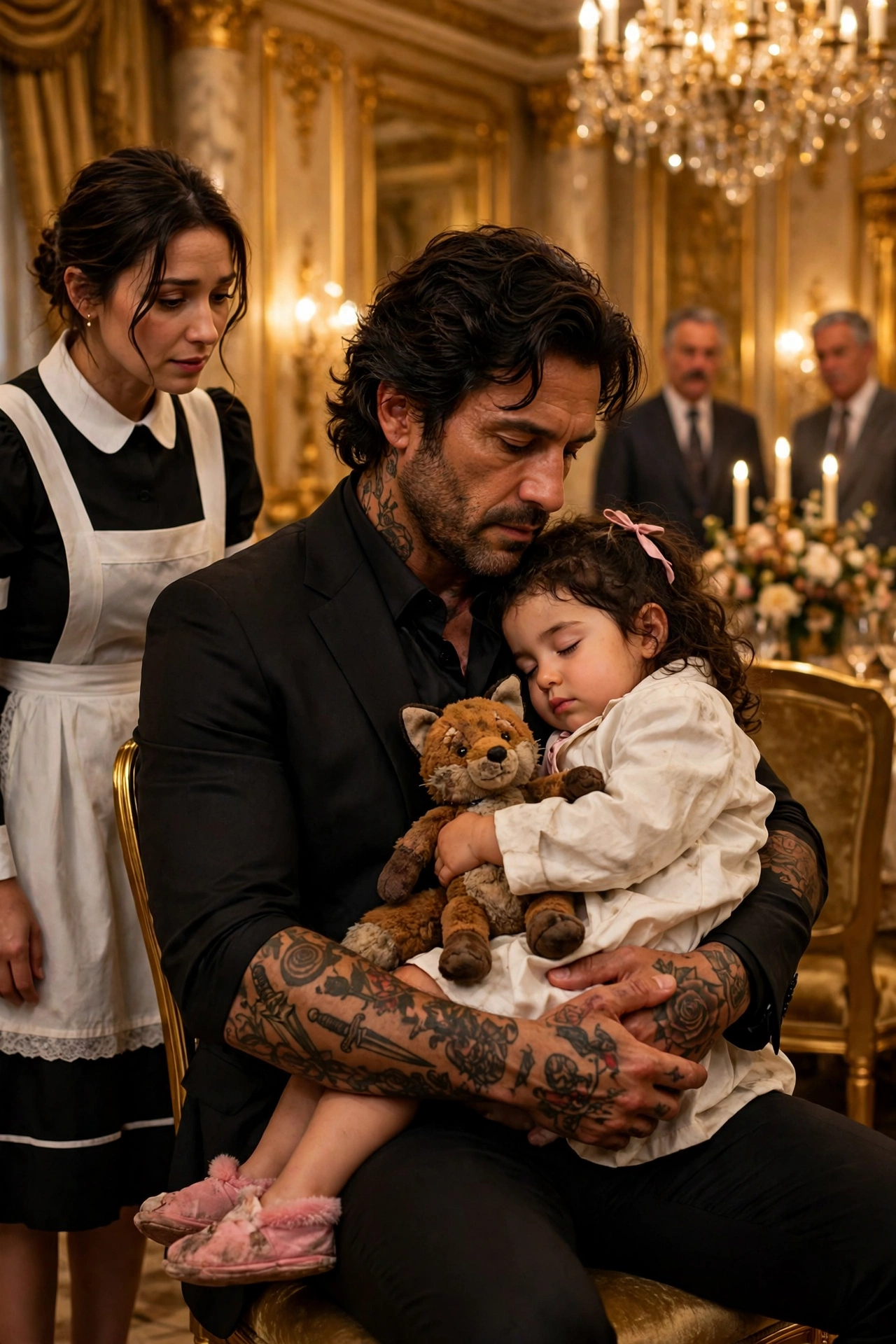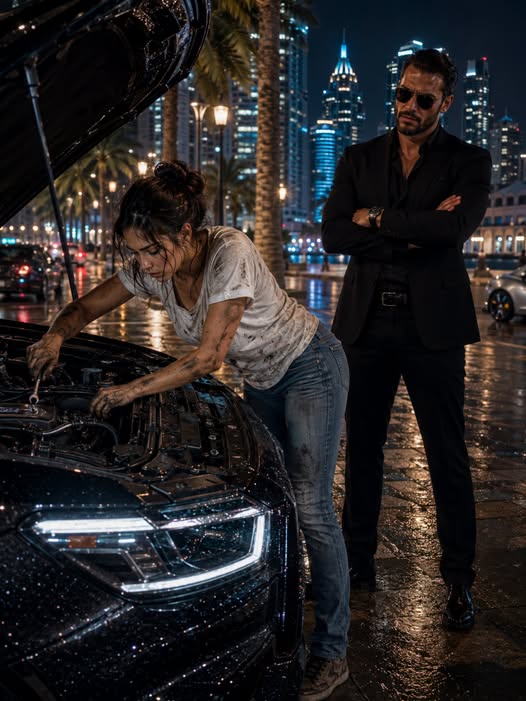
Six months later, on a Saturday morning in early spring, Emma Carter woke to the smell of coffee and the sound of lake water moving against the shore outside a modest house with white window frames and a small porch that caught the morning sun. It was not a mansion. There were no gates, no guards at the door, no long driveway designed to impress anyone. It was a two-bedroom house on a quiet street near the lake, with a kitchen just big enough for four people to cook in at once and a garage where Emma kept her tools in the same battered red toolbox her father had used. Luca had offered her something grander, once, early on, and she had laughed and said she would rather have a house where she could hear the rain on the roof. So this was the house they had chosen together, and Emma loved it the way she loved all honest, ordinary things: completely, and without apology.
Luca was already up, standing at the kitchen counter in a plain shirt with his sleeves rolled up, pouring coffee into two mugs. He looked different than he had on the night they met, though Emma could not always say exactly how. He was still tall, still broad-shouldered, still dark-haired, but there was a looseness to him now that had not been there before, as if some weight he had carried for years had finally been set down. He ran legitimate businesses now: the Romano hotels, where the staff knew him by name and the books were audited without anyone flinching; the restaurants, where he ate at a corner table like any other customer; the construction crews, who built things people could point to with pride. It was good work, and it was busy work, and it left him tired at the end of the day in the ordinary way that honest work leaves a person tired. Emma liked that kind of tired. It was the kind that slept well.
"Morning," Luca said, handing her a mug. "Your mother called. She wants to know if we are still coming for Sunday dinner tomorrow, and she wants to know if Sofia is bringing her lemon cake."
"Tell her yes to both," Emma said, smiling into her coffee. "And tell her she does not need to clean the whole apartment before we get there. She always does, and then she is exhausted by the time we sit down."
"I have told her that three times," Luca said. "She cleans anyway. I think it is her way of saying she is still in charge of her own home, and I respect that."
Diane Carter was doing well. That was the honest word for it, and Emma used it carefully, because she had learned not to dress the truth up in prettier clothes than it could wear. Her mother's kidney disease had not gone away. It would not go away. She was still on the transplant waitlist, still went to her regular appointments, still had good weeks and tired weeks, and still took her medication with the same stubborn discipline she brought to everything else. But her treatment was stable now. Her numbers were steady. The dialysis sessions came on a predictable schedule, the medication costs were covered by the transparent foundation grant Emma had accepted openly, and the fear that had once sat at their kitchen table like an uninvited guest, the fear of an unpaid bill arriving at the worst possible moment, had finally lifted. Diane coped well at home. She cooked her own meals, she kept her little apartment tidy, she called Emma every morning to ask about the weather, and on the days when she was tired she said so plainly and rested without apology. That, Emma thought, was not a miracle. It was something better. It was a life, lived steadily, with dignity intact.
Emma still worked at the Sunrise Diner, and she did it by choice. Three mornings a week she tied on her apron, pinned her hair back, and walked through the same door she had walked through for years, and Rick Dawson still greeted her the way he always had, with a nod and a gruff, "Morning, Emma," and a list of the regulars who were already waiting. She did not need the money the way she once had, not desperately, not with rent and bills no longer a nightly worry, but that was not the point. The point was the work itself: the coffee poured the same way for the same people, the jokes with the truck drivers at the counter, the feeling of being useful in a room full of neighbours. She chose her shifts now. She did not take the punishing doubles anymore, and she did not work evenings when Diane needed her or when Luca came home late from a hotel inspection. She worked the mornings she wanted, and she left at noon with her apron folded neatly and her day still her own, and that freedom, earned and chosen rather than given, tasted sweeter than any luxury Luca could have bought her.
But the best part of her week, the part she looked forward to more than anything, was Saturday morning in the garage.
It had started small, the way good things often do. A neighbour, a single mother named Rosa with an old sedan that rattled every time it turned left, had asked Emma to listen to it one Saturday, and Emma had looked under the hood, found a loose belt, tightened it, and refused to take any money for it. Rosa had told another neighbour, who had told another, and within a month there was a quiet line of cars outside Emma's garage on Saturday mornings: neighbours, single mothers, older folks on fixed incomes, people who could not afford a dealership and did not trust a shop that charged them for work they did not need. Emma called it her Saturday car-check morning. There were no signs, no fees, no appointments. She checked oil and tyres, tightened loose connections, topped up fluids, listened to engines the way her father had taught her to listen, with her head tilted and her hands still, and she told people honestly what needed fixing right away and what could wait. When something was beyond a Saturday-morning fix, she wrote down the name of an honest mechanic and sent them on their way with a clear explanation, not a frightening one.
Her father would have loved it. Emma thought about him every Saturday, the mechanic who had died six years ago and left her his tools, his patience, and his belief that a car was not a mystery but a machine that would tell you what was wrong if you listened properly. She kept his photograph on the garage wall, tucked beside the shelf of wrenches, and sometimes, when she was under a hood with grease on her hands, she could almost hear his voice saying, "Slow down, Em. Look again. It is always simpler than it looks." It was her way of honouring him, not with a grand gesture but with a useful morning, week after week, and it made her feel closer to him than any speech ever could.
This Saturday was no different, except that Luca was there too, which had become its own kind of tradition. He had learned, over the months, to be useful in the garage without getting in the way: he held the flashlight, he fetched tools, he kept a list of the cars in a little notebook, and he made coffee for the people waiting. He was not a mechanic, and he did not pretend to be one, but he had good hands and a willingness to learn, and Emma liked having him there, liked the easy rhythm they had found together in a place that smelled of oil and coffee and spring air.
The first car that morning was an old blue hatchback belonging to Mrs. Alvarez, a widow from two streets over, who worried about her brakes every time she drove to the shops. Emma slid under the front of the car with a torch, checked the pads, checked the fluid, and came out smiling.
"Your brakes are fine, Mrs. Alvarez," she said, wiping her hands on a rag. "Good for months yet. But your front tyre is low, so let me top that up before you go."
Mrs. Alvarez beamed. "You are a blessing, Emma. Your father would be so proud."
Emma felt the words land, warm and true, and she nodded, because she believed them. "Thank you," she said quietly. "I hope so."
The next car was Rosa's sedan again, and this time the rattle was a heat shield that had worked itself loose. Emma tightened it, Rosa laughed with relief, and Luca handed Emma a wrench without being asked, holding it out handle-first the way she had taught him, and Emma took it with a grin that said she had noticed, and that she was pleased.
"You are learning," she said.
"I have a good teacher," Luca said, and he meant it, and the ordinary sweetness of the exchange, a wrench passed between two people in a garage on a Saturday morning, felt to Emma like the truest kind of romance. Not a grand gesture. Not a display of power. Just a man who had learned to hand her the right tool, at the right moment, without making a performance of it.
By noon the cars were gone, the garage was tidy again, and Emma and Luca walked back into the house hand in hand, grease still under Emma's fingernails and coffee still warm in the pot. They ate lunch at the kitchen table, simple food, bread and soup and fruit, and talked about the week ahead: Emma's diner shifts, Luca's hotel inspections, Diane's appointment on Tuesday, Sofia's lemon cake on Sunday. It was the kind of conversation married couples had in kitchens all over Chicago, and Emma loved it precisely because it was unremarkable. No threats. No rivals. No late-night phone calls about freight schedules or informants. Just a life, planned together, one ordinary week at a time.
Sunday dinner was at Diane's apartment, as it had been for the last few months, because Diane liked hosting in her own home and Sofia liked being a guest who brought cake and did not fuss. Sofia Romano arrived first, warm and direct as always, carrying the lemon cake in a tin and kissing Diane on both cheeks as if they had been friends for years instead of months. "Diane, you look wonderful," she said, and she meant it, and Diane laughed and said, "Sofia, you say that every week, and every week I believe you a little more."
Emma and Luca arrived with salad and bread, and the four of them sat down at Diane's small table, which was barely big enough for four plates but somehow always managed, with a little shuffling and a lot of laughter, to hold everything. They talked about the diner, about the hotels, about Mrs. Alvarez's brakes and Rosa's heat shield, about the spring weather and the lake and the price of lemons, which Sofia insisted had gone up unfairly and Diane insisted was worth it for a good cake. Those things were over, settled in daylight months ago, and they did not belong at this table. What belonged here was simpler: four people who had chosen each other, in different ways, eating together on a Sunday evening while the light faded outside the window.
After dinner, Sofia helped Diane clear the plates, refusing to let her do it alone, and Luca washed up while Emma dried, and the kitchen filled with the comfortable clatter of people who were at ease with each other. When it was time to go, Diane hugged Emma tightly at the door, the way mothers do when they want to say everything at once without saying anything at all.
"You look happy, sweetheart," Diane said quietly. "Really happy. Not the brave kind of happy you used to wear when things were hard. The real kind."
"I am, Mum," Emma said. "I really am."
On the drive home, with the Chicago skyline lit up ahead of them and the lake dark beside the road, Luca reached over and took Emma's hand. They did not speak for a while, and they did not need to. The silence was comfortable, the way silence is between people who have nothing left to prove.
When they got home, Emma went out to the garage, not because anything needed fixing, but because she liked to end the day there sometimes, checking that the tools were put away and the door was locked, the way her father had always done. Luca followed her, and together they stood in the doorway of the little garage, looking at the red toolbox and the photograph on the wall and the clean, empty space where the morning's cars had been.
"You know what I was thinking about today?" Emma said, leaning against the doorframe. "That first morning. In the rain. Your car would not start, and I was just a waitress with grease under her nails, and you offered me money and a ride, and I said no to both."
Luca smiled. "I remember. You were the first person in years who looked at me and did not see what I could give them. You just saw a man with a broken car."
"And you were the first person who came back the next day and listened when I said no again," Emma said. "That was the beginning, really. Not the car. The listening."
Luca took her hand, and for a moment they stood there in the quiet garage, two people who had come a long way from a rainy Chicago street, not through power or money or grand gestures, but through the slow, ordinary work of choosing each other, day after day, and telling the truth.
Then Emma laughed, a small, happy sound in the evening air. "Come on," she said, pulling him gently toward the house. "Dinner is simple tonight, just what we have in the fridge, and I am hungry. And tomorrow I have the diner in the morning, and you have a hotel to run, and Mum has her appointment on Tuesday, and life goes on, the way it should."
Luca followed her inside, and Emma closed the garage door behind them, and the house glowed warm against the darkening sky, a modest lake-view house full of ordinary things: coffee mugs in the sink, a red toolbox in the garage, a photograph on the wall, and two people sitting down to a simple home dinner together, not because they had conquered anything, but because they had learned, at last, that love is not power. Love is showing up, handing over the wrench, and staying for dinner.
Story Genres: MAFIA BOSS
-

Chapter 7: Home, Not a Mansion
-
Chapter 6: Choosing Each Other, Out Loud
The morning Luca Romano decided to give up the north-side freight contract, Chicago was doing its best impression of an ordinary city. Rain had washed the streets clean overnight, the lake was flat and silver under a thin sky, and the traffic on the Kennedy moved the way traffic always moved, slow and impatient and entirely uninterested in the Romano family.
Luca stood at the window of his office above the hotel on Wabash and watched it for a long time before he picked up the phone.
"Marco," he said when his security chief answered, "book the dining room at the Palmer House for lunch. Not a private room. The main room, near the windows, where people can see us. And call Judge Harlan's office about the arbitration panel. Tell them the Romano Group is ready to hand over the north-side contract today, in full, with every document they ask for."
There was a pause on the other end of the line. Marco Bellini had worked for Luca for a decade, had stood beside him through funerals and police visits and the worst nights of his life, and he did not startle easily. He startled now.
"Luca," he said carefully, "are you sure? That contract is worth millions. Voss has been trying to take it for two years. If you hand it to arbitration, you might lose it entirely."
"I know," Luca said. "That is the point."
He was done with it.
"Call the men," he told Marco. "Not all of them. The ones who run the hotels, the restaurants, the construction crews, the freight office. Tell them I will speak to them this afternoon, after lunch, and that I want them to hear it from me before they hear it anywhere else."
"What do I tell Voss?" Marco asked.
"Tell him I want to meet him at lunch," Luca said. "In public. With witnesses. Tell him I am bringing an offer he will not have to fight me for."
Emma was at the Sunrise Diner when he called her, wiping down the counter between the breakfast rush and the lunch crowd, her apron still tied at her waist and a pencil tucked behind her ear. Rick Dawson, her manager, was in the back counting the till, and the smell of coffee and bacon hung in the air the way it always did, warm and familiar and safe.
"I am doing it today," Luca said, without preamble. "The meeting with Voss. The arbitration. All of it."
"Are you scared?" she asked.
"Yes," he said, and the honesty of it steadied her more than any reassurance could have. "I am scared of losing money I built my life around, and I am scared of what some of my own people will say. But I am more scared of the alternative, Emma. I am more scared of another Adrian. Another night where I wonder if someone I trust is selling the schedule of the woman I love."
"Then do it properly," she said. "No secret deals. No handshake in a parking lot. If you are giving something up, give it up where people can see you do it."
"That is exactly what I am doing," he said. "Will you come? Not to the table. I do not want you anywhere near Voss. But will you be nearby? In the hotel lobby, with Marco's people around you, so that when it is over I can walk out and find you?"
"I will be in the lobby," she said. "Not at the table. And when you come out, you tell me the truth about how it went, all of it, even the parts that went badly."
"I promise," he said.
At noon, in the main dining room at the Palmer House, with other diners at nearby tables as witnesses, Voss arrived with Nathan Reyes. Voss smiled the way men like him smile when they think they have already won. "Romano," he said, settling into his chair. "I hear you have something for me."
"I do," Luca said. He did not stand. He did not raise his voice. He spoke the way he had learned to speak in rooms where every word would be remembered. "I am renouncing the north-side freight contract. Today. I am handing it, with all supporting documents, to an independent arbitration panel chaired by Judge Harlan's office. They will decide, on the merits and on the law, who should hold it, and under what terms. I will accept their decision, whatever it is, and I will not contest it through any other channel."
Voss stared at him. For a moment the smile did not move, as if his face had not yet caught up with what he had heard. "You are giving it away."
"I am giving up the fight over it," Luca corrected him. "There is a difference. The contract has become a reason for men to threaten waitresses in diners and buy informants inside my own company. I will not pay that price anymore. If the panel awards it to you, you will have it lawfully, and you will run it lawfully, because the panel's terms will require it. If they award it to someone else, I will accept that too."
"And the cash route?" Voss asked, his voice lower now. "The shadow payments your people have used to move freight off the books for years?"
"Closed," Luca said. "As of this morning. My accountants have the instruction in writing. Every Romano freight movement from now on goes through lawful contracts, declared revenue, and audited books. If any of my people cannot live with that, they are free to leave. I would rather run a smaller company honestly than a large one that needs men like Adrian Cole to keep its secrets."
"You are doing this for a girl," Voss said at last. It was not quite a question, and not quite an insult. It was the closest thing to curiosity Luca had ever heard from him.
"I am doing this because it is right," Luca said. "But yes. I am also doing it because I want to build a life that does not require the woman I love to be afraid in her own workplace. If you want to call that weakness, you are welcome to. I call it the first honest decision I have made about my business in ten years."
Voss was quiet for another moment. Then he nodded, once, slowly. "I will appear before the panel," he said. "And I will abide by its terms. You have my word, in front of these witnesses."
When he walked out into the lobby, Emma was there, exactly where she had promised to be, sitting in a chair near the fountain with a cup of coffee she had barely touched. Marco stood a respectful distance away, and when he saw Luca he gave a small nod and stepped back to give them room.
"Well?" Emma asked, standing up.
"It is done," Luca said. "The contract goes to arbitration. The cash route is closed. Voss agreed, in front of witnesses, to abide by the panel. It is over, Emma. Not perfect, not painless, but over."
She searched his face, and what she found there seemed to satisfy her, because she took his hand and held it tightly. "And the cost?" she asked.
"Real," he said honestly. "We will lose money. Maybe a lot of it, at least at first. Some of my people will be angry. Some will leave. The company will be smaller and quieter for a while."
"And you are all right with that?"
"I am," he said. "A quieter life is not a smaller life. I think I am finally learning that."
The meeting with his own people that afternoon was harder than the meeting with Voss. It took place in the conference room above the hotel, around a long table, with the men who ran the Romano hotels, restaurants, construction crews, and freight office sitting in front of him, some confused, some openly furious. One of the older freight managers, a man named Sal who had worked for Luca's father, slammed his hand on the table.
"You are throwing away everything Antonio built!" Sal shouted. "Your father would never have given Voss an inch!"
"My father built hotels and restaurants and a construction company that employed hundreds of people," Luca said, evenly. "He did not build a shadow cash route. That came later, and it came with a price we have all been paying, whether we admitted it or not. Adrian Cole sold our schedules because the system gave him something to sell. I am closing that system. From now on, the Romano businesses run legitimately. Hotels, restaurants, construction, and freight through lawful contracts. Declared, audited, open. If you want to stay and build that with me, I want you here. If you cannot, I will help you find work elsewhere, and I will not hold it against you. But I will not go back."
"I have been head of your security for ten years," Marco said. "If the company is going legitimate, then my job changes too. I want to run legitimate estate security. Licensed guards, proper training, no off-the-books arrangements, protection that follows the law. That is what I am offering, and that is what I will do."
Luca gripped his hand. "Then you are head of legitimate estate security, Marco. Starting today. And thank you for staying."
That evening, Luca went to Emma's apartment. Diane was already asleep in her room, the apartment quiet except for the hum of the refrigerator and the distant sound of traffic outside. Emma made tea, and they sat at the small kitchen table where they had sat so many times before, and Luca finally said the thing he had been rehearsing all day, not as a speech but as a simple truth.
"Emma," he said, "I spent years believing that power would keep the people I love safe. I thought if I controlled everything, if I had enough men and enough money and enough leverage, nothing bad could touch us. I was wrong. Power made us a target. Today I chose your safety over my pride, and over my power. I gave up a contract worth millions, and I closed a route that made my company rich, because I would rather have an ordinary life with you than an empire that puts you in danger. I am not saying this to impress you. I am saying it because it is the truest thing I know."
Emma listened, and when he finished she reached across the table and took both his hands in hers. Her eyes were bright, but her voice was steady.
"Luca, I need you to hear me too," she said. "I am choosing you. Not your protection. Not your money. Not the guards or the SUVs or the lake estate. You. The man who sat in my diner and listened when I said no, and who kept listening. But choosing you does not mean I stop being me. I am not going to quit work outright, and I am not going to be kept. I like my job at the diner. I like the regulars, and I like earning my own money, and I like being the person my mother can count on without feeling like a burden. If we are going to do this, we do it on terms that let me keep that."
"I would never ask you to give it up," Luca said. "I tried to protect you once by deciding things for you, and look where that got us. I will not do it again."
"Good," Emma said. "Because I have a plan, and I want you to hear it before you agree to anything. I will keep the diner shifts I choose. Not every shift, not the ones that exhaust me, but the ones I want. And my mother's care, we discuss it openly, together, from now on. No more secret arrangements. If there is help, I want to know about it, and I want to decide about it with you, not find out about it afterwards."
Luca nodded. "Agreed. And I have something to put to you, openly, the way it should have been done the first time. The Romano Family Foundation can fund a specific treatment for your mother. Not a blank cheque, not a secret. A defined grant, in writing, for a specific course of care: her regular nephrology appointments, her dialysis sessions, and her medication costs for the next year, budgeted and accounted for, with reports you can read any time you want. You would know exactly what it covers, and exactly what it does not. It would not cure her. Nothing can promise that, and I will not pretend otherwise. But it would make her care stable and predictable, and it would take the fear of an unpaid bill away from both of you. Will you consider it, knowing everything, and deciding for yourself?"
Emma was quiet for a long time. She thought about Diane, about the careful way her mother managed her illness, about the appointments and the numbers that went up and down and the transplant waitlist that was still, always, a waiting game. She thought about the first grant, the secret one, and how angry she had been, not because help was offered but because it had been hidden from her. This was different. This was a man sitting at her kitchen table, telling her the truth, and asking her to choose.
"Yes," she said at last. "I accept it. Knowingly, and openly, and for that specific treatment only. Not because I need rescuing, Luca. Because it is a sensible thing, discussed honestly, and because it lets my mother get the care she needs without either of us lying awake worrying about the cost. And because I trust you to keep it transparent, the way you promised."
"Then that is what it will be," Luca said, and he felt something settle in his chest, something that had been tight for weeks finally loosening. "Transparent, specific, and open. Always."
When Luca finally left, walking out into the cool Chicago night, the city felt different to him. Smaller, in a good way. Quieter, in a good way. He had lost a contract, and he had lost some men, and he had lost a certain kind of power he had once mistaken for safety. What he had gained, walking home under ordinary streetlights with Emma's words still in his ears, was something he had never had before: a future he did not have to defend with fear, because it was built on something that could not be taken away by a rival, a contract, or a threat. It was built on a choice, made openly, by two people who had both learned how to say no, and who had finally, freely, said yes to each other. -
Chapter 5: The Night the Lake House Went Dark
Emma had not come to the Romano lake house that evening as bait, or as a witness, or as anyone's plan. She had come for a simple dinner, because Sofia had invited her, because Luca had asked her openly if she would like to come, and because she had said yes. She wore an ordinary dress, she brought a small box of pastries from a bakery near the diner, and she arrived while the light was still soft over the water, thinking about nothing more dramatic than whether Diane had remembered to eat lunch before her evening rest.
The house was warm and calm when she arrived. Sofia greeted her in the hallway and took the pastries with delight. Luca came downstairs loosening his tie, smiling when he saw her, and for a few minutes the evening felt like exactly what it was supposed to be: a visit, a meal, people who were learning to be honest with each other.
Then Adrian Cole arrived, and the evening changed its shape, quietly at first, the way a tide changes before you notice the water is higher.
Adrian was Luca's logistics manager, a man who had worked for the family for nine years, polite and efficient, with a tablet in one hand and a folder of freight papers in the other. He apologised for interrupting dinner, but he said there was an urgent freight meeting that could not wait, something about contracts and a delivery window that would close by morning. Luca frowned, because an urgent meeting at the lake house in the evening was unusual, but Adrian was a trusted colleague, and the papers looked real, and Luca invited him into the study to talk it through while Sofia and Emma waited in the next room.
Emma did not follow them. She stayed with Sofia, helping set the table, listening to the low murmur of men's voices from the study. She was not eavesdropping. She was simply a person who noticed things, the way she had always noticed things: a loose battery terminal in the rain, a regular customer who always took sugar but that day did not, a pill organiser with one compartment still full when it should have been empty.
The first thing she noticed was small, and it stopped her with a spoon in her hand.
From the study, she heard Adrian say, quite casually, something about Emma's changed diner shift. He mentioned that she was no longer on the early shift that week, that she had swapped to a later pattern. Emma froze. She had changed her shift only two days before, and she had told almost no one. She had told Rick, because he was her manager, and she had mentioned it to Luca in passing, and Luca had mentioned it to Marco Bellini, because Marco was in charge of security and Luca had wanted him to know Emma's movements only in the most general sense, after Emma had agreed to that. No one else should have known. Certainly not Adrian, who had no reason to know which hours a waitress at Sunrise Diner was working.
She put the spoon down carefully and kept listening, her heart beating faster but her hands steady. Years of working in a busy diner had taught her to stay calm when the room got loud. Calm, she thought, was a skill, not a feeling.
The second thing she noticed came a little later, when Adrian stepped out of the study to take a phone call in the hallway. Emma was carrying glasses to the table, and she passed close enough to see his phone screen light up. She did not mean to look, but the name was there, plain as day, and the number beneath it was one she recognised from the story Luca had told her, and from the card Nathan Reyes had left at the diner. It was a message from Voss. Damian Voss, the rival freight operator who wanted Romano freight contracts, the man behind Reyes and his veiled threats. Adrian's phone showed a recent message from Voss, and Adrian glanced at it, then put the phone away quickly, as if he had not wanted anyone to see.
Emma did not gasp. She did not confront him in the hallway. She walked on to the table, set the glasses down, and went to find Marco.
The third thing she noticed was outside, when she slipped out to the driveway for air and saw Adrian's car parked with its door slightly open. On the passenger seat, in plain view, was a printed freight schedule. Emma had not intended to look inside anyone's car, but the paper was face up, and her name was circled on it in pen. Emma Carter. Circled, next to a time and a location: the lake house, that evening. Her name should not have been on a freight schedule at all. She was not freight. She was not a delivery. She was a dinner guest. The sight of her name, circled like an item on a list, made her stomach turn, but it also made something else clear. This was not a coincidence. This was a plan, and she was part of it on paper even if she had not agreed to be part of it in life.
The fourth thing was the one that made her act.
She came back inside, and Adrian was standing near the study door, speaking to Luca in a low voice. Emma heard him say, almost offhandedly, "Well, when the lights go out, we'll have to finish this in the morning."
When the lights go out.
Emma looked up at the lights. They were on. The house was bright. The evening was calm. There was no storm, no flicker, no reason for anyone to talk about the lights going out as if it were already decided. Adrian had spoken about it as a certainty, in the future tense of a man describing something he had already arranged.
Emma understood, all at once, that the power outage Adrian was predicting was not a prediction. It was cover. It was the moment when something was supposed to happen, when doors would be confused, when strangers could move in the dark.
She did not run. She did not scream. She walked, quietly and quickly, to Marco Bellini, who was standing near the front hall, alert in the way a good security chief is alert without looking alarmed.
"Marco," she said, keeping her voice low and steady, "I need you to listen to me, all of it, before you act. Adrian knew my changed diner shift, and only you and Luca knew that. His phone just showed a message from Voss. There is a printed freight schedule in his car with my name circled for tonight, at this house. And he just said 'when the lights go out' before anything has happened to the lights."
Marco looked at her for one long second, and Emma saw the moment he believed her, not because she was Luca's guest, but because her details were too specific to be invented, and too calm to be panic.
"Thank you," Marco said quietly. "Stay with Sofia. Do not go near the study. I will handle this."
What happened next happened quickly, but without chaos, because Marco had been warned in time. He spoke quietly into his radio. Doors were secured. Staff were moved calmly to safe rooms, as if this were a drill they had practised. Sofia took Emma's hand and led her to an inner room, and Emma went willingly, because she had done her part, and her part was to see and to speak, not to fight.
Sure enough, not long afterwards, the lights did go out. The house fell dark, but it was not the confused darkness Adrian had counted on. It was a darkness Marco's team was ready for. In the hallway, low voices and the sound of a door being held firm told Emma that intruders had tried to enter, and had been stopped at the door by Marco's security. No one was beaten in front of her. There was no blood, no shouting match that turned violent, no weapon pointed at Emma or at Luca where she could see it. The intruders were blocked, turned back, and removed from the property by security, firmly and without a scene Emma had to witness. The danger passed at the threshold, because it had been expected.
When the lights came back on, Adrian was still in the study, and Luca was standing, pale and furious, but controlled. Marco brought the evidence into the open, calmly, like a man laying cards on a table.
"Adrian," Marco said, "Emma noticed your shift comment. Only Luca and I knew her new hours. Your phone shows a message from Voss. There is a freight schedule in your car with Emma's name circled for tonight. And you told Luca the lights would go out before they did."
Adrian tried, for a moment, to explain it away. He said the shift was a guess, the message was business, the schedule was a mistake, the lights were a joke. But the four pieces together left no room for coincidence, and his voice faltered as he listed them, because each explanation contradicted the last. Then, confronted verbally with the phone log and the schedule and his own slip, he broke, not violently, but in the tired way of a man who has been carrying a secret too long.
"I fed Voss information," he admitted, his head bowed. "I have debts. Big debts. Voss offered to clear them if I told him about freight movements, about meetings, about Luca's plans. I didn't want anyone hurt. I just wanted the debts gone. Tonight was supposed to be a meeting, a message, not… I didn't think it would go this far."
Luca stared at the man he had trusted for nine years, and Emma saw grief in his face alongside anger. "Nine years, Adrian," Luca said quietly. "You could have come to me about the debts. You could have asked."
"I was ashamed," Adrian said.
Marco stepped forward then, steady and professional. "You will come with us, Adrian. You will be handed to security, and this will be dealt with properly. No more running, no more messages."
Adrian did not resist. He was led away by Marco's security team, removed from the house, and the intruders who had come with Voss's plan left with the knowledge that their cover had failed. Voss's men left the property. No one was killed. Emma had not fought anyone, and she had not needed to.
In the quiet that followed, Luca found Emma in the inner room with Sofia. He looked shaken in a way Emma had never seen him: not angry, not controlling, but shaken, as if the floor under a belief he had held for years had shifted.
"Emma," he said, and his voice was rough, "you saw what I missed. Nine years I trusted him, and I missed it, because I was looking at freight and contracts and loyalty as a length of service. You looked at a shift change, a phone screen, a circled name, a sentence said too soon, and you put them together. You saved us tonight. You saved me."
Emma took his hand. Her own hands were still steady, and she was a little surprised at herself. She had not been brave in the way films show bravery. She had not fought, had not chased, had not raised her voice. She had noticed, she had remembered, and she had spoken quietly to the right person at the right time.
"I did what I always do," she said softly. "I pay attention. In the rain, I noticed a loose terminal because I looked closely instead of assuming the car was broken in some big, expensive way. Tonight I noticed small things that didn't fit, and I said them out loud. That's not special, Luca. That's just… paying attention to details, and trusting what you see."
"Then thank God for your attention," Luca said, and he held her hand tighter. "I spent years trying to control everything so no one I loved would be lost, and tonight I learned that control blinded me. You, who I wanted to protect by deciding things for you, protected me by seeing clearly and speaking plainly. From now on, Emma, I listen first. I promise you that."
Sofia, standing nearby, put a hand on each of their shoulders. "Then we are all learning," she said gently.
Emma looked around the lake house, lights back on, dinner still waiting on the table, the evening not ruined but changed, made honest by what had been revealed. She realised, with a quiet certainty that settled deep in her chest, that her ordinary attention to detail, the same quality that had fixed a loose terminal in the rain, that had kept track of her mother's pills and a diner's orders and a changed shift, was what had protected Luca tonight. She did not need to become someone else to be safe in his world. She needed to remain exactly who she was: a woman who noticed, who remembered, who refused to look away, and who spoke the truth calmly when it mattered most. And that, she thought, was enough. -
Chapter 4: The Woman Who Would Not Be Bought
The morning after the lunch rush at Sunrise Diner, Emma Carter woke before her alarm, the way she always did when something was unresolved. Diane was already in the kitchen of their small apartment, moving slowly but steadily, a mug of tea in her hands and her pill organiser open on the counter. The morning light was thin and grey through the window, and the radiator clicked as it warmed up.
"You're up early," Diane said, looking at her daughter over her glasses.
"I'm up on time," Emma said, and kissed her mother's cheek. "Your appointment is Thursday. I put it on the fridge."
Diane smiled, a little tired, a little amused. "You put everything on the fridge."
"That's how nothing gets lost," Emma said.
It was an ordinary exchange, and Emma held on to it on purpose. The last few days had not been ordinary at all. A man she had met in the rain had turned out to be Luca Romano, and his world had arrived at her diner with four SUVs and an invitation to dinner. A charitable grant had appeared, quietly, for Diane's specialist consultation, and Emma had confronted Luca about it outside the diner and made him promise no more secret help. A stranger named Nathan Reyes had come into the diner during a lunch rush and tried to use her as a messenger, and Luca had faced him down in public with words, not fists. Emma had refused a bodyguard. She had told Luca he could not decide her safety without her.
Now she had to decide what came next, and she was determined to decide it herself.
At the diner, Rick Dawson was already counting the till and checking the specials board when Emma tied on her apron. He looked at her the way a manager looks at an employee he is fond of and slightly worried about.
"You're all right?" he asked.
"I'm all right," Emma said. "Busy, but all right."
"Good. Because we're short on the lunch shift Thursday, and I was going to ask if you could cover, but only if you want it. No pressure."
Emma almost laughed. That was the difference, right there. Rick asked. He did not arrange her life behind her back.
"I'll cover Thursday if my mum's appointment finishes in time," she said. "I'll let you know Wednesday night."
"Deal," Rick said.
The morning passed in the familiar rhythm Emma trusted: coffee refills, orders called back to the kitchen, plates cleared, a regular who wanted extra toast, a child who spilled orange juice and looked up at her, terrified, until Emma winked and said accidents happened to the best of us. Her hands knew this work. Her feet knew the floor. Nobody here needed her to be protected from her own life. They just needed her to show up and do her job well, and she did.
Luca came in the late afternoon, after the rush, when the diner was quiet enough for conversation. He did not bring SUVs this time. He came alone, in his perfectly tailored black suit, and he took the booth by the window the way a man takes a seat he is not sure he is welcome in. Marco Bellini waited outside, visible through the glass but not hovering, and Emma appreciated that small distance more than she could say.
"Hi," Luca said when she came over with coffee she had not been asked to pour but poured anyway, because that was her job.
"Hi," Emma said. She sat down opposite him, because this was not a conversation to have standing up with a tray in her hands. "We need to talk about what you offered yesterday. Or what you were about to offer."
Luca looked at her carefully. "I was going to offer you something comfortable," he said honestly. "A place where you wouldn't have to work two jobs. Security, quiet, people to help with your mother. Protection. You could leave the diner and the cleaning shifts and just… breathe."
Emma felt the offer land, heavy and tempting, and she recognised the temptation for what it was. She was tired. She had been tired for years, in the way people who work two jobs and care for a sick parent are tired. A comfortable life, handed to her, would be easy to say yes to. And that was exactly why she had to think about it clearly.
"Luca," she said, "I know you mean that kindly. But if I quit my jobs and move under your protection, then my life stops being mine. My work is not just money to me. It's how I know who I am. The diner is where people know my name and I know theirs. The cleaning shifts are mine, too, even when my feet ache at the end of them. And my mother…" She paused, glancing toward the window as if Diane might hear her from across the city. "My mother is not a problem for you to solve. She's my family. I take care of her, and she takes care of me in her own way. That's ours."
Luca did not interrupt her. He listened the way he had listened in the rain, when she had told him she did not want his money. That, Emma thought, was a good sign. The old Luca, the one Sofia would later describe to her, might have solved the problem before she finished the sentence.
"I understand," he said at last. "I don't like it, because I want you safe, but I understand it."
"It's not about liking it," Emma said gently. "It's about terms. If we're going to try this, whatever this is, I need terms. Honesty first. No secret decisions, no quiet arrangements, no help I find out about from someone else. If you want to help, you ask me, out loud, and I get to say yes or no, and no has to be a complete answer. My work stays mine. My mother stays mine. And you don't decide my safety without me in the room."
Luca nodded slowly. "Honesty. No secret decisions. Your work and your mother stay yours. And I ask before I help."
"And you accept the answer," Emma added.
"And I accept the answer," he repeated, as if he were learning a language. "Even when it's hard."
"Especially when it's hard," Emma said, and for the first time that day, she smiled at him properly.
He smiled back, a little ruefully. "My mother says I treat love like a locked door. I want to keep everyone I love on the safe side of it. I'm trying to learn that a locked door can also be a cage."
"Then we'll learn together," Emma said. "But I stay at the diner."
"You stay at the diner," Luca agreed.
Later that week, Sofia Romano invited Emma for tea at the lake estate. It was not a grand formal dinner this time. It was a quiet afternoon, just the two of them in a sunlit room with a view of the water, a teapot between them, and no staff hovering. Sofia poured with steady hands and looked at Emma with the frank warmth Emma had come to trust.
"Luca told me about your terms," Sofia said. "Good. Hold him to them."
Emma laughed, a little surprised. "You don't think I'm being difficult?"
"I think you're being wise," Sofia said. "My son loves deeply, Emma. That is his best quality, and it is also the one that can hurt people if no one holds him to honesty. Let me tell you why, so you understand the man you're dealing with, not just the suit."
Sofia set her cup down and folded her hands.
"Luca's father, Antonio, died of a heart attack when Luca was twenty-two," she said. "One morning he was there, and by the evening he was gone. There was no warning, no time to prepare, no goodbye that felt finished. Luca inherited the businesses overnight. He was barely more than a boy, and suddenly everyone was looking at him to be steady, to be strong, to make decisions that kept a whole family, and many other families, safe. He did it. He learned fast. But he learned the wrong lesson along with the right one."
"What lesson?" Emma asked softly.
"That if he controlled everything tightly enough, no one else would be lost," Sofia said. "He equated control with safety. If he could see every risk, arrange every detail, keep everyone close, then maybe the next loss would not happen. It is an understandable mistake, and it is still a mistake."
Emma thought of Luca in the diner, offering her a protected life as if protection were a gift with no cost. She understood him a little better now, and understanding did not mean surrendering.
"There was more," Sofia went on, her voice quieter. "Years later, a trusted friend of Luca's, Matteo, died in a car crash linked to rival intimidation. I will not give you details, because the details are not the point. The point is that Luca lost someone he trusted to the same world that had already taken his father, and after that, his fear hardened. He began to believe that loving someone meant guarding them, even from their own choices, if that was what it took to keep them alive."
Sofia looked directly at Emma.
"So when Luca loves you, and he does, Emma, I can see it plainly, it may look like control. He will want to decide for you. He will want to move you somewhere safer, quieter, further from risk. He will call it protection. Sometimes it will be protection. Sometimes it will be fear wearing protection's clothes. Your job, if you choose him, is to tell the difference out loud, and to hold him to honesty even when he is afraid. That is not unkind. It is the kindest thing you can do for him, because a man who is never told no will never learn that love can be safe without being a cage."
Emma felt tears prick at her eyes, and she did not hide them. "Thank you for telling me," she said. "I needed to hear that from you, not guess it."
"You are welcome here, Emma," Sofia said, reaching across the table and squeezing her hand. "Not as a guest to be guarded. As a person to be listened to. Come for dinner when you wish. Leave when you wish. That is my invitation, and it will not change."
On Thursday, Diane's appointment arrived, and Emma's ordinary life pressed in with its ordinary demands. The diner shift and the appointment overlapped awkwardly, and for a few hours Emma was caught between two responsibilities she refused to drop. She did not call Luca. She made her own plan: she asked a neighbour to sit with Diane in the waiting room, she told Rick she would be late but would still cover the end of the lunch shift, and she carried it all with the practical calm she had practised for years.
It was Luca who called her, that morning, and this time he asked.
"Emma," he said, "I know today is difficult. Would it help if I drove your mother to her appointment? Only if you want me to. You can say no, and I will understand. I am not arranging it. I am asking."
Emma stood in her kitchen, phone in her hand, Diane putting on her coat by the door, and she felt the difference between this offer and the last one like a door opening. He had asked. He had left room for no. He had not already sent a car.
"Yes," she said, surprised at how easy the yes felt when it was truly hers to give. "Yes, that would help. Thank you. But you drive her, you wait, you bring her home, and you tell me how it went. No extra doctors, no extra arrangements unless I ask."
"Agreed," Luca said. "Just the drive. Just what you asked for."
And that was what happened. Luca drove Diane to the appointment in a quiet, ordinary car, not a convoy. He waited. He brought her home. He told Emma, plainly, that the specialist had said Diane's condition was stable, managed, and needed continued care, not miracles. Diane came home tired but cheerful, and told Emma that Luca had been polite, had not fussed over her, and had let her choose the radio station. Emma laughed at that detail more than anything else, because it told her Luca had listened.
That evening, Adrian Cole stopped by the estate office briefly while Luca was finishing some paperwork. Adrian was Luca's logistics manager, a man Emma had met once at the dinner, polite and efficient, with a stack of freight schedules under his arm. He greeted Emma warmly when they crossed paths in the hallway, asked after Diane with ordinary kindness, and carried on with his work, helpful and unremarkable. Emma thought nothing more of it. There was no reason to. He was simply a colleague doing his job, and Emma had other things on her mind.
Later, Emma and Luca walked together by the lake as the evening light turned the water gold. The estate was quiet. The city felt far away, and the diner felt like another life, though Emma knew she would be back there in the morning, apron on, coffee in hand, and she was glad of it.
"So," Luca said, "do we try? On your terms?"
Emma looked at him, at the tall man in the tailored suit who had learned, slowly, to ask instead of arrange. "We try," she said. "On equal terms. Honesty, no secret decisions, my work and my mother stay mine. You offer openly. I say yes or no. And I still work at the diner."
"I can live with that," Luca said. "I can more than live with that. Emma, I would rather have you beside me, free and choosing this, than kept safe somewhere and unhappy."
"Then we're agreed," Emma said, and she took his hand. It was not a surrender. It was a choice, made in the open, by two people standing side by side, neither one locked behind a door the other had built. She would go back to Sunrise Diner in the morning, and she would come back here when she chose to, and that balance, fragile and honest, was the beginning she was willing to trust. -
Chapter 3: The Price of Kindness
The lunch rush at Sunrise Diner was in full swing when the stranger walked in.
Emma noticed him first because he did not look like a regular. The regulars came in hungry and a little rumpled, with newspapers or work boots or grandchildren in tow. This man came in neat and unhurried, in a grey suit that was expensive without being showy, his hair combed back, his smile polite in a way that never reached his eyes. He did not look at the menu. He looked at Emma.
"Miss Carter," he said, sliding into a stool at the counter while the diner buzzed around them. "My name is Nathan Reyes. I work with Damian Voss."
Emma kept her hands busy with the coffee pot. She had heard the name Voss only once, in passing, from Luca — a rival freight operator who wanted Romano freight contracts and did not like being told no. She had not paid much attention at the time. She was paying attention now.
"I'm in the middle of a rush, Mr. Reyes," she said. "If you want lunch, I can take your order. If you want something else, you'll have to be quick."
"Oh, I won't take much of your time," Reyes said, still smiling. "Mr. Voss admires people who work hard. He admires loyalty, too. He asked me to tell you that Mr. Romano's protection — well, protection has a price. And sometimes the people standing closest to a powerful man end up paying it."
The words were soft, almost friendly. That was what made them frightening. He had not raised his voice. He had not touched her. He had simply spoken, in a busy public diner, where everyone could hear the shape of a threat even if they could not quite prove it was one.
Mrs. Patel looked up from her crossword. Mr. Alvarez, at his usual table by the window, stopped mid-sentence, his coffee cup halfway to his mouth. A young mother with a toddler in a high chair pulled the child a little closer. Emma felt the whole room tilt toward listening, and she understood, with a sick clarity, that this was the point. Reyes wanted witnesses. He wanted Emma to feel watched in her own workplace.
"I'm not a messenger," Emma said, keeping her voice steady. "If Mr. Voss has something to say to Luca Romano, he can say it to him himself. I'm a waitress. I serve coffee and pie. I don't carry messages about freight contracts."
Reyes reached into his jacket — slowly, so everyone could see — and set a folded note and a plain business card on the counter. He did not slide them toward her. He left them there, like an offering, or a trap.
"Just read it when you have a moment," he said. "And think about it. Mr. Voss would hate for anything unpleasant to happen to such a hardworking young woman. Or to her mother, who I understand is not well."
Emma's blood went cold. Diane. He had brought her mother into this, casually, as if it were small talk. Her hands tightened around the coffee pot, and for a second she wanted to throw it, to shout, to do something loud and furious. But her father's voice was in her head again — steady hands fix things faster than shaking ones — and Mr. Alvarez was watching her with frightened eyes, his old hands trembling on the table.
She set the coffee pot down carefully. She walked around the counter, not toward Reyes, but toward Mr. Alvarez, and she put a hand lightly on his shoulder.
"It's all right, Mr. Alvarez," she said, loud enough for the room to hear, warm and ordinary. "Just a customer who got a little confused about what we serve here. Your toast is coming right up, and I'll bring you an extra cup, on the house."
Mr. Alvarez nodded, his breathing easing a little. The young mother relaxed, just slightly. Emma turned back to Reyes, and her voice was no longer warm.
"Pick up your card," she said. "And leave my diner."
Reyes studied her for a moment, as if he were reassessing her. "You have spirit, Miss Carter. Mr. Voss likes spirit. He also knows that spirit doesn't pay hospital bills."
"Get out," Emma said. "Now. This is my workplace, and you are not welcome in it."
Rick Dawson appeared from the kitchen doorway, his face flushed, a dish towel over his shoulder. "Is there a problem out here, Emma?"
"Mr. Reyes was just leaving, Rick," Emma said, without taking her eyes off Reyes.
Reyes picked up the folded note and the card with unhurried fingers and tucked them back into his jacket. "As you wish," he said. "But do think about the message, Miss Carter. For your own sake. And for Mr. Romano's."
He was still standing by the counter when the bell over the diner door rang again, and the whole room seemed to hold its breath.
Luca Romano walked in.
He was not with four SUVs this time, at least not visibly. He was alone in the doorway, in his tailored black suit, tall and broad-shouldered, his dark hair neat, his face calm in a way that was more alarming than anger would have been. His eyes found Emma first — checking, quickly, that she was unharmed — and then they moved to Reyes, and the temperature in the room seemed to drop.
"Mr. Reyes," Luca said, his voice level and quiet. "I don't believe you have business in this diner."
"Mr. Romano," Reyes said, turning with that same polite smile. "What a pleasant surprise. I was just having a friendly chat with Miss Carter about the freight business. Mr. Voss feels there is room for a better arrangement. One that would benefit everyone, including the people you care about."
"There is no arrangement," Luca said. He did not step closer. He did not raise his voice. He stood where he was, between Reyes and the counter, his posture straight, his hands at his sides. "And there will be no conversation about my contracts through Miss Carter. She is not part of that world. She does not carry messages for you, or for Voss, or for anyone."
"Everyone is part of it, once you care about them," Reyes said softly. "That's the price of having something to lose, isn't it? Mr. Voss simply wanted her to understand that."
Luca's jaw tightened, but his voice stayed controlled. "Then let me make something clear, so there is no misunderstanding for you to carry back. If Voss wants to talk about freight, he talks to me, directly, in a room where we can speak plainly. He does not send men to frighten waitresses during lunch. He does not mention mothers who are ill. And he does not come back to this diner. If he does, the next conversation will not be a friendly one."
It was a threat, but it was a verbal one, delivered without a raised fist, without a weapon, without anyone being touched. The diner watched, silent except for the hiss of the coffee machine and the clink of a spoon someone had dropped. Mrs. Patel had stopped pretending to do her crossword. The toddler in the high chair banged a plastic cup, oblivious, and the sound made everyone jump a little.
Reyes held Luca's gaze for a long moment, then nodded, as if a point had been made and filed away. "I'll pass along your message, Mr. Romano. Word for word." He turned to Emma, inclining his head with false courtesy. "Miss Carter. A pleasure."
And then he walked out, the bell ringing behind him, leaving the folded note and the business card behind on the counter — no, Emma realised, he had taken them with him. The counter was empty except for a faint ring where his coffee cup had never been filled. The diner exhaled.
For a few minutes, everything was noise and kindness at once. Rick clapped Emma on the shoulder and told her she had handled it well. Mrs. Patel squeezed her hand. Mr. Alvarez asked, shakily, if his toast was still coming, and Emma laughed — a real, shaky laugh — and said yes, of course, right away. She moved through the rest of the rush on autopilot, refilling cups, clearing plates, smiling at people who smiled back a little too hard, as if they were all pretending the last ten minutes had been normal.
Only when the rush thinned, and Luca was still there, waiting in booth six with a cup of coffee he had not touched, did the shaking catch up with her. She slid into the booth across from him, and for a moment she could not speak.
"Are you all right?" Luca asked quietly.
"No," Emma said honestly. "I'm not. A man just walked into my diner, in front of my regulars, and told me my kindness toward you has a price. He mentioned my mother, Luca. My mother, who is sitting at home doing a crossword and trying not to be a burden. Do you understand what that feels like?"
"I do," Luca said, and his face was grim. "And I am going to fix it. From now on, you will not be alone in this. I'll have Marco with you — at the diner, on your evening shifts, everywhere. Guards who know what to look for. No one will get near you again."
Emma shook her head, hard. "No."
"Emma —"
"No, Luca. Listen to me. I just told a man to leave my diner because I will not be used. I will not trade that for being watched at work by a bodyguard. I won't have my regulars whispering about why the waitress needs a guard, and I won't have Rick wondering whether his diner is safe. I won't quit my shifts, and I won't hide at home while you decide what's safe for me."
Luca stared at her. "Then what do you propose? Because I cannot sit by and wait for Voss to send someone else."
"A middle path," Emma said. "Marco checks in discreetly. Not standing over my tables, not following me into the kitchen. He can be nearby, he can call me, he can walk me to my car after a late shift if I'm worried. But he is not my shadow, and he is not my keeper. I keep my shifts. I keep my life. And you do not make decisions about my safety without me. Not again. Not after the grant, not after this. We decide together, or we don't decide at all."
There was a long silence. Luca looked down at his untouched coffee, and Emma saw, for the first time, not the mafia boss who could fill a street with SUVs, but a man who was genuinely afraid and did not know how to turn that fear into something useful without turning it into control.
"Agreed," he said at last, quietly. "Marco, discreetly. You keep your shifts. And I will not decide for you. But Emma — please, if you feel unsafe, you call me. Day or night. Promise me that much."
"I promise," Emma said. "If you promise to keep yours."
He nodded. Outside, the afternoon light was fading over the Chicago street, and the diner was settling back into its ordinary rhythm — clinking cups, murmured orders, the smell of pie from the kitchen. It should have felt safe. It did not, quite.
As Emma stood to clear the next table, a thought settled over her, cold and clear, and she could not shake it: she had fixed a stranger's car in the rain because it was the right thing to do, and she had refused his money because she wanted to stay free. But kindness, she realised now, had put her in the middle of Luca's world anyway — a world where a polite man in a grey suit could walk into her diner and mention her mother as if she were a bargaining chip.
And Luca, watching her move between the tables with steady hands and a brave face, realised something just as cold: he could buy buildings, command men, and fill a street with black cars, but he could not control his way out of this. He could not guard Emma into safety without losing her trust, and he could not leave her unguarded without losing sleep. For the first time in his life, power was not the answer, and the woman he cared about was standing in the very place where that truth hurt most.
That evening, after her office-cleaning shift, Emma found Marco Bellini waiting not inside the building, but across the street, beside an unremarkable car, exactly as they had agreed. He did not approach her or make a scene. He simply nodded once, walked her to the bus stop, and said, in his quiet, efficient way, that he would be nearby tomorrow, and that she only had to call if anything felt wrong. It was discreet, and it was respectful, and Emma was grateful for both — even though part of her hated that gratitude, because it meant the threat had already changed the shape of an ordinary day.
At home, Diane was asleep on the couch with her crossword unfinished and a blanket over her knees, and Emma stood in the doorway for a long moment, just watching her breathe. Her mother was stable, the doctors had said so, but stable was not the same as safe, and it was not the same as cured. Emma still had two jobs to work, bills to pay, and a mother to protect — and now, on top of all of that, a rival freight operator who knew her name, her workplace, and her mother's illness. She locked the door twice, made tea she did not drink, and sat by the window until the street outside grew quiet.
Neither of them said it aloud. They did not need to. The tension stayed in the room like the smell of coffee after closing — familiar, and not quite gone, and promising that the next visit would not be a friendly chat. -
Chapter 2: Dinner at the Romano Estate
The morning after dinner at the Romano estate, Emma Carter woke to the sound of her own alarm and the smell of weak coffee from the kitchen of their small apartment. For a moment, lying under the thin blanket, she was not sure whether the previous evening had really happened. The lake house with its warm lights, Sofia Romano laughing at the head of a long table, the food that had tasted like someone had cooked it with patience instead of hurry — all of it felt like a dream she had borrowed for one night.
Then Diane called from the kitchen, her voice thin but cheerful, and the ordinary world came back into focus.
"Emma, honey, your toast is getting cold. And don't tell me you forgot your apron again."
Emma smiled, swung her feet onto the cold floor, and pulled her dark hair into its usual messy bun. The apartment was small, the paint a little faded around the windows, the couch worn where Diane liked to sit with her feet up in the afternoon. It was not grand. It was theirs. Emma liked that. She liked knowing exactly which floorboard creaked and which burner on the stove took too long to heat.
At the kitchen table, Diane was already dressed, her reading glasses perched on her nose, a crossword half-finished beside her plate. She looked tired in the way she always did now, since the kidney disease had settled into their lives like an unwelcome houseguest — managed, stabilised by her doctors, but never gone. Emma watched her mother stir sugar into her tea with careful, steady hands and felt the familiar squeeze in her chest: love, and worry, and the determination not to let either one turn into panic.
"So," Diane said, with the bright, too-casual tone she used when she was fishing for news, "how was dinner with the nice young man and his mother?"
Emma laughed. "Mom, you make it sound like a school dance."
"Well? Was he polite? Did his mother like you?"
"He was polite," Emma said. "His mother liked me a little too much, I think. She kept refilling my plate and telling stories about him when he was a boy. He pretended to be embarrassed, but he wasn't very good at it."
Diane's eyes softened. "Good. A man should be a little embarrassed by his mother sometimes. It means he still listens to her."
Emma did not say the rest of it — that she had sat in a house by the lake and felt, for an evening, as if she belonged somewhere larger than her own life, and that the feeling had frightened her almost as much as it had warmed her. She had refused Luca Romano's money under a broken hood in the rain because she did not want to owe anyone. A dinner invitation was different. A dinner was just a dinner. She told herself that firmly as she kissed her mother's cheek and headed for the door.
Sunrise Diner was already humming when she arrived. Rick Dawson, her manager, was behind the counter with a coffee pot in one hand and a frown that meant the lunch delivery was late again.
"Emma, thank goodness," he said. "Booth six is yours, and the Hendersons want extra toast, and don't let Mr. Alvarez talk you into a third cup before his pills."
"Yes, boss," Emma said, tying on her apron.
The diner was her place in a way the lake house could never be. The vinyl seats were cracked in familiar places. The regulars knew her name and she knew theirs: Mrs. Patel with her crossword and her decaf, old Mr. Alvarez who tipped in exact change and told the same joke about the weather every Tuesday, the truck drivers who came in loud and left quiet after a plate of eggs. Emma moved between the tables with the easy rhythm of someone who had done this a thousand times, refilling cups, remembering orders, listening to half a dozen conversations at once.
It was ordinary. It was hers. And for most of the shift, that felt like enough.
Luca did not come to the diner that morning. Emma told herself she was relieved. She also caught herself glancing at the door every time the bell rang, which annoyed her so much that she scrubbed booth six twice just to have something to do with her hands.
In the afternoon, after her shift, she walked to the hospital with Diane for a routine check. It was not an emergency visit, just one of the regular appointments that had become part of their calendar, like rent and laundry and the electric bill. Diane chatted with the nurse about the weather. Emma sat in the waiting room with a magazine she did not read, thinking about the stack of bills at home and the way the numbers never quite added up, no matter how many evening office-cleaning shifts she took on.
That was when the billing clerk called her name.
"Miss Carter? Could I speak with you for a moment?"
Emma followed her to a small desk by the window. The clerk, a kind-faced woman with a name tag that read Janice, smiled in a way that was meant to be reassuring and somehow made Emma nervous instead.
"I just wanted to let you know," Janice said, lowering her voice, "that your mother's next specialist consultation has been covered. In full. And part of the current treatment bill as well. It came through as a charitable care grant."
Emma stared at her. "A grant? From whom?"
"From the Romano Family Foundation," Janice said. "It's a legitimate charity, Miss Carter. They fund care grants for patients in the area. The paperwork came through this morning. You don't owe anything on those items."
For a second, Emma felt nothing but relief, so sudden and complete that her knees nearly gave way. A consultation covered. Part of a bill gone. That was real money, real breathing room, the kind of help she had dreamed about on nights when she added up her two jobs and still came up short.
Then the name caught up with her.
Romano.
She thought of Luca sitting in booth six for forty minutes, patient and quiet, watching her work. She thought of Sofia refilling her plate and saying, with warm directness, that she liked people who were interesting. She thought of the several hundred-dollar bills Luca had tried to press into her hand in the rain, and how she had refused them, clearly, twice.
He had listened to her refusal. And then he had found another way around it.
"Thank you," Emma said to Janice, because the clerk had done nothing wrong and did not deserve her anger. "Thank you for telling me."
She walked back to Diane with a smile pinned to her face and said nothing about the grant until they were home. Diane was delighted, of course — she talked about how lucky they were, how some charities really did change lives — and Emma nodded and made tea and waited until her mother was settled on the couch before she slipped out of the apartment with her phone in her hand and her jaw set.
She did not call Luca. She texted him, short and plain: I need to talk to you. Outside the diner. After my evening shift. Not inside.
He replied within a minute: I'll be there.
The evening office-cleaning shift dragged. Emma vacuumed empty rooms and wiped desks and tried not to rehearse the conversation too many times, because every rehearsal made her angrier, and she did not want to be angry. She wanted to be clear. There was a difference, and her father had taught her that difference a long time ago, in the garage, when a bolt would not move and shouting at it never helped but a steady hand did.
Her father had been a mechanic. He had died six years ago, and Emma still kept his tools everywhere — in a drawer at home, in a bag by the diner door, in the glove box of any car she borrowed. He had taught her how to fix things herself. He had not taught her how to accept help she had not asked for.
By the time she walked back to Sunrise Diner, the sky was darkening and the streetlights were coming on. Luca was waiting outside, as promised, not inside where the customers could stare. He was in his perfectly tailored black suit, tall and broad-shouldered, his dark hair neat despite the evening breeze. Marco Bellini stood a little way off, discreet and watchful, the way a good security chief is watchful without making a show of it. Luca's phone buzzed once; he glanced at it, said something brief about a freight delivery to the caller — Adrian Cole, his logistics manager, Emma heard him say the name — and then put the phone away entirely, as if to prove he was listening.
"Emma," Luca said. "Thank you for meeting me."
"I found out about the grant today," Emma said. She did not raise her voice. She did not need to. "From the hospital, not from you. The Romano Family Foundation covered my mother's consultation and part of her bill."
Luca did not pretend not to know. That, at least, was honest. "Yes."
"Luca, I refused your money in the rain for a reason. It wasn't a game. I don't want to be bought. I don't want to feel like every kind thing you do comes with a price tag I can't see, or a debt I'm supposed to repay later with gratitude."
"I know," he said quietly.
"Do you? Because this felt like the same thing, just wearing nicer clothes. A charity grant sounds clean. But you didn't ask me. You didn't tell me. You decided what my family needed and you fixed it from a distance, and then you waited for me to be grateful. That is not help, Luca. That is control with good manners."
The words landed. She saw it in his face — not anger, not the cold pride she had half expected from a man used to being obeyed, but something quieter and more uncomfortable. He looked down at the pavement for a moment, and when he looked up, his eyes were serious.
"You're right," he said. "About the method. I won't argue with that."
Emma blinked. She had expected a defence.
"I told myself I was being respectful," Luca went on. "You refused cash, so I thought — find a proper channel, a real foundation, something that wouldn't embarrass you. But I didn't ask you because I was afraid you would say no, and I didn't want to hear no. That is not a good reason to do something for someone. I'm sorry for the method, Emma. I'm sorry I went around you."
"But not for caring?" she asked, testing him.
"No," he said, and there was a firmness in it that she respected, even as she held her ground. "Not for caring. I won't apologise for caring about you, or about your mother. I will apologise for doing it in secret, and I will promise you this: no more secret payments. No grants you don't know about, no bills quietly settled, no help that arrives before a conversation. If I want to help, I will ask first, openly, and you can say no, and I will accept it."
Emma folded her arms, then unfolded them, because she did not want to look like she was closing a door she was actually trying to keep open. "That's the only way this works," she said. "Help has to be honest and asked-for. Otherwise I spend all my time wondering what I owe, and I can't — I won't live like that. I work two jobs because I want my mother cared for by my own hands, not because I enjoy being tired. My dignity isn't for sale, Luca, not even to a nice man with a foundation."
"I understand," he said. "I think I'm beginning to, anyway. My world runs on favours and debts, Emma. Everyone owes someone. You are the first person in a long time who looked at what I offered and said, no, I will do this myself. I didn't know what to do with that. So I tried to be clever instead of being honest."
"Don't be clever with me," Emma said, and despite herself, a small smile touched her mouth. "Be honest. It's harder, but it lasts longer."
Luca nodded slowly. Then, after a pause, he asked, "May I ask you something else? Not as a benefactor. As myself."
Emma waited.
"Will you let me take you for coffee? Just coffee. No foundation, no SUVs if you don't want them, no fixing anything. Just you and me, talking, like two ordinary people. If you say no, I will go home and leave you in peace."
Emma looked at him — really looked at him. Not the suit, not the name that made other diners whisper, not the four black SUVs that had once filled the street outside. Just a man standing outside a diner in the evening, waiting for an answer he could not buy.
"Tentative yes," she said at last. "Coffee. As yourself. And if you ever try to pay for my mother in secret again, I will find out, and we will have this conversation again, only louder."
"I believe you," Luca said, and he smiled, a real smile this time, relieved and a little rueful. "Thank you, Emma."
She walked back toward her apartment with the streetlights buzzing overhead and her mother's crossword waiting at home, and she felt something she had not expected: not victory, not surrender, but a truce she had made on her own terms. She would consider any future help only if it was offered openly. She would keep her jobs, her apartment, her name, and her stubbornness. And she would have coffee with Luca Romano, not because he could pay for things, but because, for once, he had listened.
That, she thought, was a beginning she could live with. -
Chapter 1: The Stranger Beneath the Broken Hood
Emma Carter had learned a long time ago that trouble rarely arrived at a convenient hour.
Sometimes it came in the form of an overdue electricity bill wedged beneath the apartment door, the paper damp at the edges, the amount printed in a typeface that seemed designed to look calm while it delivered bad news. Sometimes it arrived as a phone call from her mother's doctor explaining that another prescription had changed, which usually meant another expense Emma had no idea how to cover, and another careful conversation in which Emma said, "We'll manage," because there was no other sentence that helped. And sometimes, apparently, trouble looked like a black luxury sedan steaming beneath an open hood on the side of a rain-soaked Chicago road.
It was close to midnight when Emma noticed the car.
She had just finished fourteen hours at the Sunrise Diner and still had another office-cleaning shift waiting for her the following evening. Two grocery bags hung from her aching fingers, the plastic handles cutting thin lines into her skin. Her sneakers were soaked through, and she could feel the cold water moving with every step. Her dark hair, twisted into a messy bun before sunrise, had surrendered completely to the rain, strands sticking to her neck and her forehead. The streetlights on this stretch of road were broken in places, so the rain fell through cones of yellow light and then disappeared again into the dark.
She should have kept walking.
Every practical part of her knew that. She was tired enough that her thoughts were coming a half-second late. She had groceries to put away, a mother waiting at home, an alarm that would ring far too early, and no room in her evening for a stranger's car. A sensible woman would have looked at the open hood, looked at the empty road, and kept her head down.
Instead, she saw the man standing beside the car.
Tall. Broad-shouldered. Expensive black suit ruined by the weather, the shoulders dark with rain, the trousers sticking to his legs. Dark hair plastered back by rain. A dead phone rested in one hand, its screen black no matter how he turned it, while the expression on his face suggested he was accustomed to having problems disappear before they became inconveniences. He did not look like a man who waited. He looked like a man for whom waiting was an insult.
Emma slowed.
The stranger looked toward the empty road, as if a solution might still arrive from that direction if he stared hard enough. For one brief moment, his frustration disappeared, the way a mask slips when no one important is watching.
What replaced it surprised her.
Loneliness.
It was not the loneliness of a man who was merely alone on a road. It was older than that, quieter, the kind that lives behind a face that is used to being obeyed. Emma recognised it because she had seen a version of it in her own mirror on nights when the apartment was quiet and her mother was asleep and the bills were still waiting on the table.
"Car giving you trouble?" Emma called.
The man turned sharply, his whole body shifting toward the sound, alert in a way that had nothing to do with surprise and everything to do with habit.
His eyes studied her with the alertness of someone who did not enjoy being approached unexpectedly.
"You could say that."
Emma walked closer and glanced beneath the raised hood. Steam was still rising in the cold air, and the smell of hot metal and rain filled the small space under the metal.
"What happened?"
"If I knew, I probably wouldn't still be standing here."
She looked at him.
"You don't know anything about cars?"
His expression tightened.
"I employ people who do."
Emma gave a tired laugh. It was not a polite laugh. It was the laugh of a woman who had been on her feet for fourteen hours and had just met a man who could buy a garage and still could not find his own battery.
"Looks like they took tonight off."
A tiny change passed across his face.
Not quite a smile.
But close.
"What’s your name?" she asked.
"Lucas."
Emma had no reason to doubt him. He said it easily, the way people say a name they have used before, and she filed it away without suspicion. She could not have known that Lucas was only half a truth.
His real name was Luca Romano.
And men with considerably more power and money than Emma had ever seen changed their behaviour when Luca entered a room. The Romano name appeared on hotels, restaurants, construction projects, freight companies, and charitable foundations throughout Chicago. But there were other businesses carrying no signs at all, businesses discussed in whispers and handled behind locked doors, businesses whose names were never printed on anything a waitress would hold.
Emma knew none of that.
At that moment, Luca was simply a stranded man who clearly had no idea where his battery was.
"Move over, Lucas."
His eyebrows lifted.
"Excuse me?"
"You’re blocking the engine."
Few people spoke to Luca Romano that way. People asked him for things. People waited for him to speak first. People measured their words before they offered them to him, and then measured them again.
Emma did not know enough to be afraid.
And Luca, strangely, moved.
She set her grocery bags near the curb, carefully, so the eggs would not roll and the bread would not get soaked, and leaned beneath the hood. Within seconds, grease streaked her fingertips, dark against her skin, familiar in a way that made her chest ache for a half-second before she pushed the feeling aside.
Luca watched her inspect the connections, his rain-wet suit forgotten, his dead phone forgotten, his attention fixed on her hands as if she were doing something he had never actually watched anyone do.
"You do this often?"
"My dad was a mechanic."
"Was?"
Emma paused.
Only for a moment. It was the kind of pause people learn when a question touches something that still hurts, a pause just long enough to choose the shortest true answer.
"He died six years ago."
Something in Luca’s expression softened, not into pity, which Emma would have hated, but into something quieter and more respectful.
"I’m sorry."
"Thanks."
She did not elaborate.
Emma had spent years learning how to move past questions that hurt. She had learned it at the diner, where customers asked cheerful questions and expected cheerful answers, and at home, where her mother asked careful questions and Emma gave careful answers so neither of them would have to say the hardest things out loud at midnight.
She touched the battery connection, wiggled it gently, and felt the looseness at once. It was the kind of small failure that could stop a whole machine, the kind her father would have found in under a minute and then explained while he worked, his hands sure, his voice patient.
"There."
"What?"
"Loose terminal."
"That caused all this?"
"It can."
Emma opened one grocery bag and removed a compact wrench from the bottom, where it had been sitting beneath the milk and the bread, wrapped in a cloth so it would not tear the bag. She had carried it the way other people carried a phone charger: without thinking, because it belonged with her.
Luca stared.
"You keep tools with your groceries?"
"I keep tools everywhere."
"Why?"
"My father believed depending completely on strangers was a dangerous habit."
Luca almost laughed at the irony. If only she knew who she was speaking to. If only she knew that the man standing in the rain beside her was the kind of stranger other people were warned not to depend on, and also the kind of stranger who could make a problem vanish with a phone call, if his phone had not died.
"Hold this cable," Emma said.
He did. He held it the way she told him to hold it, his large hand steady, his expensive sleeve brushing the wet metal, and for a moment the strangeness of it struck them both: a man who commanded rooms, holding a cable in the rain because a tired waitress had told him to.
She tightened the connection while rain struck the metal hood above her, a sharp, constant sound, and water ran down her arms and into her sleeves. Neither of them noticed the black SUV turning onto the road several blocks away, its headlights cutting through the rain, moving slowly, searching.
Luca’s security team had finally located him.
Emma stepped back, wiped her hands on the cloth, and nodded toward the driver's seat.
"Try starting it."
Luca climbed behind the wheel.
The engine struggled once, a rough, unhappy sound that made Emma hold her breath.
Then it came alive, steady and strong, and the headlights illuminated the rain, turning the falling drops into bright, falling lines.
Emma gave a satisfied nod.
"See? Not dramatic."
Luca stepped out again, rain still falling, his suit still ruined, his expression changed in a way Emma could not quite name. He reached for his wallet.
"How much?"
Emma frowned.
"For what?"
"For fixing it."
"You don’t owe me anything."
He removed several hundred-dollar bills, folded, clean, the kind of money Emma handled only when she counted a till at the end of a shift and then locked it away.
Emma stared at them.
Then at him.
"You’re serious?"
"You helped me."
"That doesn’t mean I’m sending you an invoice."
"Take it."
"No."
Luca was not accustomed to hearing that word.
Especially when money was involved. In his world, money solved the awkwardness after a favour. Money closed the conversation neatly. Money made sure no one could later say he owed them anything, or that they owed him.
He extended the bills again.
Emma pushed his hand gently away, not roughly, not angrily, just firmly, the way she might push a plate back across a counter.
"I stopped because you needed help. That’s all."
For a moment, Luca said nothing.
In his world, generosity almost always carried conditions. Every favour created debt. Every gift demanded loyalty. Every handshake concealed calculation. People smiled while they counted what they would get back. People remembered exactly what they had given, and they expected to be remembered in return.
Yet Emma looked genuinely confused by the idea that kindness should be purchased. She did not look proud, or defiant, or clever. She looked like a woman who had simply done the obvious thing and could not understand why it needed a price.
Luca slowly returned the money to his wallet.
"Then let me drive you home."
"No."
His eyebrows rose again.
"It’s pouring."
"I noticed."
"It isn’t safe for you to walk alone."
Emma picked up her grocery bags, adjusting her grip, feeling the weight settle back into her tired hands.
She looked at his car.
His watch.
His suit.
Then his face.
"With respect, mysterious rich men on empty roads aren’t exactly considered safe either."
Luca laughed.
Actually laughed, a real, startled sound that cut through the rain, and the sound surprised him more than it surprised her. He had not laughed like that in a long time, not without first deciding whether laughter was appropriate, useful, or safe.
Emma turned away.
"Good night, Lucas."
"Emma."
She looked back, sharply.
She had never told him her name. She was certain of that. She had told him about her father, about tools, about loose terminals, but she had never said Emma.
Her expression changed, wariness returning all at once.
Luca immediately realised his mistake.
One of the grocery bags had a diner receipt stapled near the top, the paper damp but still readable, the ink a little blurred by rain.
Employee: Emma C.
He nodded toward it.
"Receipt."
Emma relaxed, a small breath leaving her, her shoulders dropping a fraction.
"Right."
Then she disappeared beneath the broken streetlights, her soaked sneakers making soft sounds on the wet pavement, her grocery bags swinging, her dark hair dripping, until the rain and the dark took her shape apart piece by piece.
Luca remained beside his car, standing in the rain long after he needed to, staring at the empty road in the direction she had gone, as if he were trying to memorise something he had only just seen.
The SUV finally stopped behind him, its engine low, its headlights washing over the wet road.
Three men stepped out.
His security chief, Marco Bellini, approached quickly, his face tight with relief and professional worry.
"Boss, are you hurt?"
"No."
"We lost contact for forty-three minutes."
"My phone died."
Marco looked at the repaired engine, then at Luca, then back at the car, putting the facts together the way a security chief does.
"You fixed it?"
Luca stared toward the direction Emma had gone, his voice quieter than usual.
"No."
Marco followed his gaze into the empty, rain-washed street.
"Who did?"
"A woman."
Marco waited.
Luca offered nothing more.
That usually meant the conversation was finished, and Marco, who had worked for Luca long enough to understand his silences, did not press him.
But twenty minutes later, inside the back of the SUV, the city sliding past the rain-streaked windows, Luca asked, "Find out where the Sunrise Diner is."
Marco looked at him.
"The what?"
"Sunrise Diner."
"Why?"
Luca turned his head, just slightly, just enough.
Marco immediately corrected himself.
"I’ll find it."
Yet Luca did not sleep much that night. In the quiet of his apartment, with the rain still tapping at the windows, he kept remembering grease on Emma’s hands, dark lines on tired fingers that knew exactly what they were doing. He kept remembering the holes beginning to form in her sneakers, the way her shoulders had sagged under the grocery bags, her exhausted eyes that had still managed to be kind. And he kept remembering the way she had refused enough money to cover groceries for weeks without hesitating, as if the money had been the strangest part of the whole encounter.
At 5:45 the next morning, Emma’s alarm rang, harsh and familiar in the small, dark apartment.
She dragged herself out of bed inside the small apartment she shared with her mother, her body protesting every movement, her feet finding the cold floor.
Her mother, Diane, was already awake, sitting at the kitchen table with a cup of tea going cold, her face pale in the early light but her eyes watchful.
"You’re exhausted," Diane said.
"So are you."
"That isn’t an answer."
Emma poured coffee, the smell filling the small kitchen, and leaned against the counter for a moment, gathering herself for the day.
"It’s the answer we have."
Diane Carter had kidney disease, and although she tried desperately not to become a burden, every medical bill seemed determined to remind Emma how expensive illness could be. The numbers arrived in envelopes Emma opened at the kitchen table after her mother was asleep, and she paid what she could, and worried about the rest in the hours when she should have been sleeping.
"You’re working too much."
"I’m twenty-four. I’m supposed to be tired."
"At twenty-four, you’re supposed to stay out too late because you’re having fun."
"I stayed out late."
"Cleaning offices doesn’t count."
Emma smiled, a real smile this time, and kissed her mother’s forehead, breathing in the familiar smell of tea and the apartment.
"I’ll be home tonight."
At 6:33 a.m., she arrived at Sunrise Diner, pushing through the door with the bell ringing above her, the smell of coffee and bacon and cleaner wrapping around her like a second uniform.
Her manager, Rick Dawson, checked the clock dramatically, pointing at it as if the clock itself were a witness.
"Three minutes late."
"Good morning to you too."
"Table four."
"Coffee first."
"Table four first."
Emma grabbed menus, tied her apron, and fell into the rhythm she knew by heart: coffee, orders, refills, smiles that were real even when she was tired, because the regulars deserved that much.
By eight, the diner was packed.
Truck drivers coming off long hauls, their jackets smelling of diesel and cold air. Night-shift nurses still in their scrubs, drinking coffee like it was medicine. Construction workers with dust on their boots. Retirees who treated a cup of coffee as permission to occupy a booth until lunch, reading newspapers slowly, arguing gently about sports.
Emma moved quickly between them, balancing plates, remembering who took sugar and who did not, who wanted the corner booth and who wanted to be left alone.
The stranger from the night before had almost disappeared from her thoughts.
Almost. In the quiet seconds between orders, she found herself remembering the rain on a black hood, and a laugh that had sounded surprised at itself, and she pushed the memory aside and went back to work.
At 8:07 a.m., Mr. Harrison looked toward the front windows, his coffee cup stopping halfway to his mouth, his newspaper forgotten.
"Emma?"
"Yeah?"
"You expecting somebody?"
She turned.
One black SUV had stopped outside.
Then another.
A third.
A fourth.
The diner slowly became silent, the way a room does when everyone notices the same thing at the same time and no one wants to be the first to say it. Forks paused. Coffee cups hovered. Conversations thinned to whispers and then to nothing.
Doors opened.
Men in dark suits stepped out, moving with the practised ease of people who were used to being noticed and used to not caring.
Rick appeared from the kitchen, his face flushed, his apron still on.
"What in God’s name is this?"
Emma felt something cold settle in her stomach, a weight that had nothing to do with tiredness.
The final SUV door opened.
The man from the rainy road stepped onto the sidewalk.
Only now he looked nothing like Lucas. His suit was perfectly tailored, every line clean, every fold deliberate. His coat was dark and immaculate. Men positioned themselves around him instinctively, not because he had told them to, but because that was what they did when he moved.
Power moved with him, the way weather moves ahead of a storm.
Someone near the counter whispered a name.
"Romano."
Another customer immediately lowered his voice, as if even repeating the name required care.
Emma stared.
Luca entered the diner.
The bell above the door gave one cheerful little ring that felt absurdly out of place, a bright sound in a room gone suddenly quiet.
His eyes found Emma immediately, across the tables, across the staring customers, as if there had never been anyone else in the room.
Rick hurried forward, his voice too loud, too eager.
"Mr. Romano, sir, welcome. Anything you need."
Luca walked past him.
He stopped directly in front of Emma.
She still held the coffee pot, her fingers tight around the handle.
"You lied about your name."
"Only slightly."
"You said Lucas."
"My mother calls me Lucas when she’s angry."
"That does not make it your name."
Another flicker of amusement crossed his face, there and gone, familiar now, the same almost-smile from the rainy road.
"You left before I could thank you properly."
"I thought we finished that conversation."
"We didn’t."
Emma glanced outside at the line of black SUVs, at the men standing on the sidewalk, at the customers pretending not to stare.
"So you brought an entire motorcade to continue it?"
One of Luca’s guards looked down to hide a smile.
Luca ignored him.
"My mother would like to meet you."
Emma nearly dropped the coffee pot.
"Your mother?"
"Yes."
"Why?"
"I told her what happened."
"You told your mother about me?"
"Yes."
"That is extremely strange."
"Possibly."
Rick leaned toward Emma, his voice low and urgent.
"Would you stop talking to him like that?"
Luca turned his head, slowly, and Rick went pale, his words drying up in his throat.
Emma immediately stepped between them, not because she was afraid for herself, but because she was not going to let Rick be frightened on her account in her own diner.
"I’m working."
"I can wait," Luca said.
"You?"
"Yes."
"You wait?"
Luca walked toward booth six, his coat moving with him, his men settling at a respectful distance.
"Apparently I do now."
And for the next forty minutes, one of Chicago’s most intimidating men sat beneath a faded advertisement for blueberry pancakes while Emma refilled coffee, cleaned syrup from tables, and argued with a toaster that had decided to burn one side of everything. She tried not to notice him watching, tried to keep her attention on plates and orders and the regulars who needed her.
But Luca noticed everything.
He saw Emma quietly pay for an elderly customer’s breakfast when the man came up short, slipping the money to the till without making a show of it, without letting the man feel small.
He watched her hand a bag of food to a homeless woman outside, quickly, kindly, as if it were the most normal thing in the world.
He saw Rick snap at her twice, sharp words born of stress, and Emma never complained, never answered back in kind, just kept working, her shoulders steady, her voice even.
Finally she approached booth six, coffee pot in hand, her heart beating faster than she wanted to admit.
"Your mother really wants dinner with me?"
Luca nodded.
"She believes anyone willing to refuse my money is either reckless or interesting."
"Which one does she think I am?"
"She hasn’t decided."
Emma narrowed her eyes.
"And what do you think?"
Luca held her gaze, steady, serious, without the armour of amusement.
"Interesting."
The word landed differently than she expected. It did not feel like flattery. It felt like a conclusion someone had reached after thinking, and that made it harder to dismiss.
Emma looked away first.
Against every instinct she possessed, against every sensible voice in her head telling her to stay in her own world, she agreed to dinner.
That evening, a car carried her through iron gates toward the Romano estate, the gates opening smoothly, the driveway curving through grounds Emma had never imagined.
The mansion overlooked the lake, all white stone, warm lights, and intimidating security, the kind of house that looked beautiful in photographs and a little frightening in person, because it was too large and too quiet and too perfect.
Emma had never seen anything like it. She had seen houses on television, and houses in magazines left in the diner, but she had never stood in front of a house that seemed to have its own weather.
She expected Luca’s mother to be cold. She expected a woman in pearls and judgement, a woman who would look at Emma’s simple dress and her tired eyes and decide she did not belong.
Instead, Sofia Romano walked directly toward her, took both her hands in warm, steady hands, and smiled, a smile that reached her eyes.
"So you’re Emma."
Emma glanced toward Luca.
"That depends. What exactly did he tell you?"
"That you saved my stubborn son."
"I tightened a battery connection."
Sofia laughed, a full, delighted laugh that filled the entrance hall.
"In this family, we prefer dramatic versions."
Dinner was surprisingly normal.
Sofia asked about Emma’s father, and Emma found herself talking about a man who had taught her to listen to an engine the way other people listened to music. Sofia asked about her childhood, about the diner, about things she loved and things she missed, and Emma answered honestly, because Sofia asked honestly.
Eventually, the conversation reached Emma’s mother.
"She has kidney disease," Emma admitted, the words coming out more quietly than the rest.
Sofia’s expression changed, warmth deepening into sympathy.
"I’m sorry."
"We manage."
"You work at the diner to support both of you?"
Emma hesitated, then told the truth, because Sofia deserved the truth and because Emma was tired of pretending her life was simpler than it was.
"And I clean offices."
Across the table, Luca stopped moving, his fork halfway to his plate, his attention suddenly complete.
"You clean offices after working at the diner?"
Emma looked at him, steady, unashamed, a little defiant.
"Some people don’t have four SUVs, remember?"
Silence followed, the kind of silence that can mean offence or awe, and Emma held her breath, waiting to see which one it would be.
But Luca was not offended.
He was staring at Emma as though, for the first time in years, something had entered his life that he did not know how to control, something that could not be bought, or ordered, or protected by a line of black SUVs, and he did not know whether to be frightened or grateful.
And Emma had no idea that before the week ended, helping a stranger beneath a broken hood would place her directly in the center of Luca Romano’s dangerous world. -

Chapter 7: Home
The morning after the night of truth dawned clear and cold, as if the rain had washed the house clean. I woke early, as I always did, and for a moment I lay still, listening to the quiet of the estate, trying to believe that what had happened in my study was real. Vittorio had confessed. Salvatore had written it down. The secret that had poisoned my family for three years was no longer a secret. It was a fact, spoken aloud, and facts, once spoken, cannot be unspoken. That should have felt like an ending. Instead, it felt like a beginning, because I still had the most important part of the story to finish, and it had nothing to do with Vittorio or with Carmine Falcone or with shipments or ledgers. It had to do with a little girl and her mother, and with what kind of home I was going to make for them.
I found them in the kitchen, where the morning light came through the tall windows and made the room feel warm in a way the rest of the house rarely did. The girl was sitting at the table in her blue dress, the one from the cover of her story in my mind, with her blue bow neatly tied and her fox toy beside her plate. Her mother was beside her, in her maid's uniform, though she was no longer only a maid in this house, and we both knew it, even if neither of us had said it aloud yet. The girl was eating toast, slowly and carefully, as if she were concentrating very hard on not dropping it, and when she saw me, her whole face lit up.
"Renzo!" she said, clear and happy, without fear and without sleepiness, and she held out her arms to me.
I knelt beside her chair, as I had knelt in the meeting room on the day she first walked in, and I let her wrap her arms around my neck. Her mother watched us, her hands folded in her lap, and I saw tears in her eyes, but they were not the tears of a woman who was afraid. They were the tears of a woman who had waited a long time to see her daughter safe.
"Good morning, sweetheart," I said. "Did you sleep well?"
She nodded, and she pointed at her fox. "Foxy slept well too," she said, very seriously, as if this were important news that I needed to know. "He was not scared. Not at all."
"Good," I said. "Then today will be a good day."
Her mother smiled, a small, careful smile, and I knew that she was waiting for me to speak first, because she had learned, over years of working in other people's houses, that it was safer to wait. I did not want her to wait anymore. Not in my house. Not ever again.
"Come and sit with me," I said to them both, and we moved to the small table by the window, where the light was best, and where no one would interrupt us. Salvatore had already taken Vittorio to a room where he would wait until Carmine arrived, and the house was quiet, in the way a house is quiet when something important is about to be decided, and everyone in it is holding their breath.
I looked at the mother first, because she deserved to hear this before anyone else. "You told me the truth," I said, "when it would have been easier and safer to stay silent. You gave me Matteo's letter. You trusted me with your daughter, even though this house had not earned that trust. I want you to know what I am going to do, and I want you to be able to say no, if you want to. You are not a servant to be ordered around in this. You are a mother, and you are the person who kept Matteo's promise alive when no one else did."
She shook her head slowly. "I did not keep it alive," she said. "Matteo did. He was kind to us when no one else was. He told me that if anything happened to him, I should find his brother, because his brother would understand. I did not believe him, not really, not until my daughter walked into your meeting and you picked her up instead of sending her away."
"I understand," I said. "And I am asking you now, not as your employer, but as a man who has lost his brother and found, in your daughter, a reason to be better than I was. Will you stay here, with me, as family? Not as staff who must be invisible. As family. You will have your own rooms, your own life, and no one in this house will ever make you feel small again. And your daughter—" I paused, because this was the part that mattered most, and I wanted to say it right. "Your daughter will be my daughter, in every way that matters. Not to replace Matteo, and not to replace you. You will always be her mother. But I want to be her guardian, her father in this house, the man she can call when she is afraid, and the man who will sit beside her bed at night and tell her that she is safe."
The mother covered her mouth with her hand, and for a moment she could not speak. The little girl, who had been listening with great seriousness, looked from her mother to me and back again, and then she said, in the clearest voice I had ever heard from her, "Can I call you Papa?"
I felt my throat tighten, and I had to swallow before I could answer. "Yes," I said. "Yes, sweetheart. You can call me Papa, if you want to. And you can still call me Renzo, too. Renzo is the name Matteo gave me, and it is the name you gave back to me. It will always be yours to use."
"Papa Renzo," she said, trying the words out, as if she were tasting something sweet. "Papa Renzo, can Foxy live here too?"
"Foxy can live here forever," I said, and everyone at the table laughed, even her mother, even me, and the laughter felt strange and wonderful in a house that had forgotten how to laugh.
Later that morning, Carmine Falcone arrived. He came alone, without his men, which was a sign of respect I had not expected, and he sat in my study with Salvatore as witness while Vittorio confessed again, calmly and fully, what he had done. Carmine listened without interrupting, his face hard, and when Vittorio finished, Carmine was silent for a long time. Then he looked at me, and he said, "Three years ago, I believed your family had betrayed me. Now I know the betrayal was inside your own house, and that you have paid for it with your brother. There will be no war, Lorenzo. Not over this. Not ever, if you keep your word that no child will be touched in this fight again."
"I keep my word," I said, and we shook hands, two men who had spent years as enemies, agreeing, at last, on something that mattered more than territory or money. Vittorio would leave the estate that same day, under escort, and he would face the family's justice, not in secret and not with violence, but in the open, with his confession written down and his fortune returned. He would live, but he would live without the house, without the name, and without the power he had betrayed his nephew to keep. It was a hard justice, and a just one, and it was enough.
When Carmine left, I walked back to the east wing, where the girl was playing on the floor with her fox, building a small house out of cushions, and her mother was watching her with a peace I had never seen on her face before. I sat down beside them, on the floor, in my suit, without caring about the dust or the formality of it, and the girl immediately climbed into my lap, as she had climbed into my arms on the first day, and she leaned her head against my chest.
"Are you my home now, Papa Renzo?" she asked, sleepily, as the afternoon light grew soft.
"Yes," I said. "This is home. You are home. Your mother is home. Foxy is home. And no one is going to take that away."
She yawned, and her eyes began to close, and her mother reached out and took my hand, briefly, in gratitude, and then let it go, because we did not need grand gestures. We had something better. We had a quiet room, a child asleep in my arms, and a house that was finally, after three long years, beginning to feel like a place where good things could happen.
That evening, we ate dinner together, just the three of us, at the small table by the window, and the girl told us a long, winding story about Foxy and a dragon and a castle, and she laughed so hard at her own story that she nearly fell off her chair, and I caught her, easily, as I had caught her on the first day, and I held her close for a moment longer than I needed to, because I could.
Before bed, I carried her to her room, a room that was no longer a servant's spare room, but her own room, with blue curtains and a small bed and a shelf for her fox, and I tucked her in, and her mother kissed her forehead, and I kissed her forehead too, and she looked up at me with those trusting brown eyes that had changed everything.
"Good night, Papa Renzo," she whispered.
"Good night, sweetheart," I said. "Sleep well. I will be right here in the morning."
"Promise?" she asked.
"I promise," I said, and I meant it, in a way I had never meant a promise before. "I will never leave you. Not in the morning, not at night, not ever."
She smiled, and she closed her eyes, and her breathing softened, just as it had on the day she first slept on my chest in the meeting room, and I stood in the doorway for a long time, watching her, with her mother beside me, and I thought of Matteo, not with the sharp pain of his funeral, but with a quiet gratitude. He had called me Renzo, and he had warned me not to trust the people who only called themselves family. He had also, without knowing it, sent me a little girl who would teach me what family really meant.
The next morning, I woke to sunlight and to the sound of small feet in the hallway, and for a moment I thought I was dreaming. Then the door opened, just a little, and a small face appeared, with a blue bow slightly crooked and a fox tucked under one arm.
"Papa Renzo, are you awake?" she whispered, as if waking me were a great adventure.
"I am awake now," I said, sitting up and smiling, and she ran to me and climbed onto the bed beside me, very carefully, as if she were afraid I might disappear if she moved too fast. I did not disappear. I stayed, and I listened while she told me, in great detail, about a dream in which Foxy had learned to fly, and about how, in the dream, she had flown with him over the gardens, and how they had seen the whole estate from above, and how it had looked small and safe from up there.
After breakfast, we walked together in the gardens, her hand in mine, her mother walking beside us, and Salvatore following at a respectful distance, not as a guard, but as a friend of the family. The girl stopped at every flower, and she named them, inventing names when she did not know the real ones, and her mother laughed, and I laughed, and the gardens, which had once felt like a place for secret meetings and whispered warnings, felt like a place for a family walk.
"This is what Matteo would have wanted," Salvatore said quietly, when the girl ran ahead to chase a butterfly. "Not a bigger empire. Not a harder house. This. A child laughing in the garden, and a man who is not afraid to be gentle."
I nodded, because he was right, and because I had spent three years believing that strength meant never bending, never softening, never letting anyone close. Matteo had known better. He had been gentle, and he had been brave, and the two had not been opposites in him. They had been the same thing. I was only now learning that lesson, from a three-year-old girl who had taught it to me simply by trusting me.
That afternoon, her mother and I sat together and made plans, real plans, not promises made in a moment of feeling. She would learn to read the letters Matteo had left, if she wished. She would choose her own rooms, and her own work, if she wished to work at all, and no one would call her only a maid again unless she chose that name herself. Her daughter would go to school when she was ready, and she would have friends, and birthdays, and ordinary days, and she would never again have to walk into a room full of dangerous men to find someone to hold her. She would have a home that came to her, instead.
When evening came again, and the light grew soft, we sat together once more, and the girl fell asleep in my arms, just as she had on the first day, and I carried her to her bed, and I knew that this was not a single happy day. This was the beginning of a life, built slowly, day by day, on truth and on care.
Outside, the estate was dark and still, and the house that had once been ruled by fear was, at last, a home. Not because the past was erased, because it was not, and it never would be. But because the truth had been spoken, justice had been done without more blood, and a three-year-old girl who had walked into the wrong room had, in the end, walked into exactly the right one. She had found a father, her mother had found safety, and I, Lorenzo Moretti, a man who had once made a rule that no child should ever enter his estate, had learned that sometimes the bravest thing a man can do is to open his arms, and let a child in, and never let her go. -
Chapter 6: The Night of Truth
I had waited three years for the truth, and when the night finally came, it did not arrive with shouting or with guns. It arrived quietly, in my own study, with rain against the windows and a fire burning low in the grate. I had asked Salvatore to bring Vittorio to me alone, and I had asked the girl and her mother to stay in the east wing, where the doors were locked from the inside and where no man in my house would dare to enter without my word. That was the first decision of the night, and it was the most important one. Whatever happened between Vittorio and me, the child would not hear it. She would not be a witness, and she would not be a weapon. She was three years old, and she had already carried more of my family's history than any child should ever have to carry.
Salvatore stood by the door, his face pale but steady. He had served my father, and then me, for longer than I had been alive in this house as its head, and I trusted him in a way I had stopped trusting almost everyone else. On my desk lay the things that had brought us to this night, arranged in a straight line the way Matteo used to arrange his papers when he wanted me to listen. There was the ledger from the missing shipments, with Vittorio's handwriting in the margins, careful and neat, the handwriting of a man who believed no one would ever look closely enough. There was the letter Matteo had written to the maid, a letter I had not known existed until she gave it to me herself, folded and worn from being kept close. And there was a small photograph, taken years before, of Matteo and me standing in this same room, Matteo laughing, his arm around my shoulders, calling me Renzo as if it were the easiest word in the world.
Vittorio entered slowly. He was an old man now, and the years had not been kind to him, though he still carried himself as if the house owed him respect. His suit was dark, his hair silver, and his hands, which had once been so steady at a table, were shaking. I saw it at once, and I did not look away. For three years I had told myself that his shaking was grief, that we had all shaken after Matteo died, that an uncle who had lost a nephew might tremble for a long time. Now I knew better, and the knowledge sat heavy in my chest, not with triumph, but with a grief that felt fresh again.
"Sit down, Uncle," I said. My voice was calm. I had practiced that calm all day, while the girl napped in the next room and her mother sang softly to her, because I did not want anger to do my thinking for me. Anger had ruled this house for too long. It had ruled me since the night Matteo died, and it had made me a man who could sit at a table with twelve dangerous men and feel nothing at all. The child had changed that. She had walked into my meeting and asked to sleep on me, and in doing so she had reminded me that there were still things in this world worth protecting without destroying everything around them.
Vittorio sat. He looked at the desk, at the ledger, at the letter, and then at me, and I saw the moment he understood that this was not a family dinner and not a negotiation. This was an accounting, and he had run out of excuses.
"You know why I called you here," I said.
He tried to smile, the way he always had when he wanted to make a difficult conversation go away. "Renzo, I am an old man. If this is about the shipments—"
"Do not call me Renzo," I said, and my voice did not rise, but something in it made him stop. "Only Matteo called me Renzo. And my mother. And my father, when we were alone. You have not earned that name, Vittorio. Not tonight."
He flinched. For a moment I thought he might stand and leave, and part of me almost wished he would, because then I could tell myself that I had been wrong, that the trembling was only age, that the dropped glass in the meeting room had only been an accident. But he did not leave. He stayed, and his hands folded together on his lap, and he looked down at them as if they belonged to someone else.
Salvatore closed the door quietly behind him and took his place by the wall. He did not speak. He did not need to. His presence was a reminder that this was not a private quarrel between two men in a house. This was a matter for the family, and the family would remember what was said here.
I picked up the ledger first. "Three years ago, the shipments began to go missing," I said. "Not all at once. A little at a time, so that no one would notice the pattern. Matteo noticed. He kept his own notes. He told me, the night before he died, that someone inside our own house was selling us to the Falcones, piece by piece, and that he was going to prove it."
Vittorio's eyes flickered to the ledger. "Matteo was young. He imagined things."
"He was not imagining the money," I said. "The money went somewhere. It went to accounts that were opened in your name, Uncle. Not in the family name. In yours. Salvatore found them. He found them because you taught him how to look, years ago, when you thought no one would ever look at you."
A silence followed that was longer than any silence I had known in that room. Outside, the rain grew heavier, and the fire crackled, and somewhere far away in the east wing, I imagined the girl was asleep, her fox tucked under her arm, safe from all of this. That thought steadied me more than anything else could have.
Then I set the ledger down and picked up Matteo's letter. I did not read it aloud at first. I held it, feeling the creases where the maid had folded it again and again, and I thought of what she had told me in private, in a voice that shook but did not break. Matteo had found her crying in the kitchen, years before, when she was new to the house and afraid and alone. He had not turned away. He had sat with her, he had listened, and he had promised her that no one in this house would hurt her or her daughter while he lived. When he died, she had believed that promise died with him. She had hidden the letter because she was afraid that whoever had killed Matteo would come for her next, and she had taught her daughter to be quiet, to be small, to be invisible. Until the day the little girl walked into my meeting, too tired and too trusting to be invisible anymore.
"Matteo wrote to her," I said, "because he knew she was afraid. He told her that if anything happened to him, she should find me, and she should tell me the truth. He told her that family was not only blood, Vittorio. Family was the people you protected, even when it cost you something."
Vittorio's face went white, the same white I had seen in the meeting room when the child whispered my name in her sleep. "I did not kill him," he said quickly. "I did not. You must believe me, Lorenzo. I was there that night, yes, but I did not—"
"You were there," I said. "That is the part you have never told me clearly. You told me you arrived after. You told me you found him. But the maid saw you leave with him that night, Vittorio. She saw you, and she remembered, because she was afraid, and afraid people remember everything."
He shook his head, but the shaking in his hands had grown worse. "I was trying to protect him. The Falcones—"
"The Falcones did not kill Matteo," I said. "Carmine Falcone told me himself, and for once I believe him, because he had nothing to gain by telling me the truth. He said you came to him. You offered him the shipments, and you offered him Matteo's silence, because Matteo was going to tell me what you had done. You did not pull a trigger with your own hand, Uncle. You do not need to. You arranged the meeting. You told Matteo it was safe. You left him there alone."
The words hung in the air, and for a long time Vittorio said nothing. Salvatore shifted slightly by the door, but he did not move toward us. This was not his confrontation to finish. It was mine, and I would finish it with words, because Matteo deserved a truth spoken aloud, not another secret buried in this house.
At last Vittorio spoke, and his voice was thin and tired, the voice of a man who had carried a lie for three years and could no longer carry it cleanly. "He was going to ruin us," he whispered. "He was going to tell you, and you would have cast me out, and I had given my life to this family. I panicked. I told the Falcones where he would be, and I told myself it would only frighten him, that they would only warn him. I did not think they would—" He stopped, and he put his face in his hands. "I did not think they would kill him. I swear it on my own life, Lorenzo. I did not think they would kill him."
I felt something break inside me then, not with rage, but with a terrible, quiet sorrow. For three years I had imagined a monster, a man who had planned my brother's murder coldly and without feeling. What I found instead was a frightened old man who had chosen himself over his nephew, and who had lived with that choice ever since, trembling every time the past came near him. It did not make what he had done forgivable. It made it human, and therefore more painful, because I could see how easily fear could turn a man who called himself family into a man who betrayed family.
"You called yourself family," I said softly. "Matteo warned me about that, the night before he died. He said, 'Renzo, if anything happens to me, don't trust the people who call themselves family.' I did not understand him then. I understand him now."
Vittorio looked up, tears in his eyes. "What will you do with me?" he asked. "Will you have me killed? Is that what this house has become?"
I shook my head. "No," I said. "That is what this house was, and it is why Matteo died. I will not answer his death with another death. You will confess what you did, in front of Salvatore and in front of Carmine Falcone, so that the war between our families can end. You will give back every cent you took. You will leave this estate, and you will never return. And you will live with what you did, Vittorio, in the open, where everyone can see it. That is your punishment. Not a grave. A life spent knowing the truth."
He stared at me as if he had not expected mercy, even a mercy as hard as this one. "And Carmine?" he asked. "Will he accept that? He has wanted war for years."
"He will accept it," I said, "because I will give him something better than war. I will give him the truth, and I will give him a promise that the shipments will stop disappearing, and that no child in either family will ever be used as a message again. Carmine is a father. He understands that, even if he has forgotten it at a table."
Salvatore stepped forward then, and for the first time that night he spoke. "I will witness it," he said. "And I will write it down, so that no one can change the story later."
Vittorio nodded slowly, and the fight went out of him all at once, like air leaving a room. He was not a dangerous man anymore. He was only an old man who had finally told the truth, and who would have to live with it.
I stood, and I walked to the window, looking out at the rain and at the dark gardens where Matteo and I had played as boys, where he had called me Renzo and I had called him Matty, and where nothing had seemed as complicated as it did now. Behind me, Vittorio wept quietly, and Salvatore waited, and the fire burned low. I thought of the little girl asleep in the east wing, of her mother sitting beside her, of the fox toy tucked under her arm, and I knew, for the first time in three years, what I was going to do next. I was not going to spend the rest of my life guarding a house full of secrets. I was going to make a home inside it, for the people who had been brave enough to tell the truth.
"Tomorrow," I said, turning back to them, "we will tell Carmine. Tonight, you will stay here, under guard, not as a prisoner to be hurt, but as a man who will answer for what he did in the morning. No one will touch you, Vittorio. That is my word. And my word, from tonight onward, will mean something different than it did before."
He nodded, and Salvatore led him out, gently, without force, without anger. I stayed in the study alone for a while, with Matteo's photograph in my hand, and I whispered the name he had given me, not in grief, but in promise. "Renzo," I said to the empty room, and for the first time since his funeral, the name did not feel like a wound. It felt like a beginning.
TITLE: A three-year-old maid's daughter walked into my private mafia meeting, climbed into my arms, and called me by a name nobody had dared speak since my brother's murder