The wooden box was smaller than I expected.
Elena brought it to my study the next morning, wrapped in a plain cloth, her hands steady now that she had decided to trust me. Sofia was in the next room with Salvatore, building a tower out of wooden blocks and knocking it down with great seriousness. I could hear her laughing through the wall, and that sound made it easier to open something I was afraid to read.
Inside the box was a letter, folded twice, in Matteo's handwriting. I recognized it at once. He had always written quickly, his letters leaning to the right, as if they were in a hurry to get somewhere.
The letter was short. It did not name a killer. It did not accuse Vittorio directly. It said, in Matteo's plain way, that shipments had been going missing for months, but the shipments were not really missing. They were being rerouted, sold quietly, and the money was being moved through a company that did not exist on any of our books. He had followed the paper trail to a warehouse outside the city, and he had found his own signature forged on a delivery sheet for a shipment he had never approved.
He wrote, "Renzo, if you are reading this, it means I could not finish this myself. Start with the shipments. Follow the money, not the men. Men lie. Money leaves a trail."
At the bottom, in smaller writing, he had added, "Tell Elena and Sofia I am sorry I could not stay. I promised Sofia a fox that would never get lost. I hope she still has it."
I folded the letter again, very carefully, and put it back in the box. My hands were shaking, but my mind was clear. Matteo had not died because of a rival family. He had died because he had found a theft inside our own house, and someone had needed him to stop looking.
"Salvatore," I said, when Elena had gone back to Sofia, "I want every record for the shipments from the six months before Matteo died. Not the summaries. The originals. Delivery sheets, driver logs, warehouse receipts. Everything."
Salvatore did not ask why. He just nodded and left. He knew, as I did, that this was no longer about grief. It was about evidence.
We spent the next two days in the study, going through boxes of old paper. It was slow work, and it was boring in the way that real investigations are boring. Most of the sheets matched. Most of the drivers had done their jobs. Most of the warehouses had signed for what they received.
But on the third box, Salvatore found it. A shipment of olive oil, of all things, ordinary and unremarkable, that had been listed as lost on the road between the port and the city. The driver had reported a breakdown. The company had written it off. And yet, three weeks later, the same shipment number appeared again, on a delivery sheet for a different warehouse, signed in Matteo's name, in handwriting that was close to his, but not quite his.
"The signature is wrong," Salvatore said, holding the two sheets side by side. "Look at the M. Matteo always made his M with a sharp point in the middle. This one is rounded. Someone copied it, but they did not copy it well."
"Who had access to these sheets?" I asked.
"Only a few people," Salvatore said. "You. Me. Matteo. And Vittorio, because he was in charge of the warehouse accounts at that time."
Vittorio again. Not proof, but another crack, in the same wall.
That afternoon, I did something I had not done in three years. I went to the warehouse myself, with Salvatore and two men I trusted completely, and I asked to see the old logs. The manager, an older man who had worked for my father, looked nervous when he saw me, but he brought out the books without arguing.
In the back of one ledger, in a different ink, someone had written a series of numbers. They were account numbers, for a company I had never heard of. Salvatore copied them down. When we checked them later, they led to a small office in the city, rented under a false name, paid for in cash, month after month, even after Matteo died.
"Who paid the rent after Matteo died?" I asked Salvatore that night.
He looked at the paper in his hand. "The payments continued for six months after his death, and then they stopped, suddenly, as if someone had decided the risk was no longer worth it. The last payment was made by a man who gave the name of Vittorio's driver."
The driver's name was the same as the driver from the Naples trip, the one who had died in a car accident two years ago. A dead man cannot pay rent, but a living man can use a dead man's name.
I sat back. I was not angry in the way people expect a mafia boss to be angry. I was cold, and clear, and very tired. For three years, I had believed a simple story because it was easier than asking who in my family had benefited from my brother's death. Now the money was telling me a different story, and money, as Matteo had written, does not lie the way men do.
While Salvatore followed the account numbers, I turned my attention to the other half of the problem: protecting Elena and Sofia. Vittorio had seen Sofia in the meeting. He knew she existed now. He knew she had said Renzo. He would be wondering what else she might say, and what her mother might know.
I moved Elena and Sofia to a larger room on the second floor, near my own study, where the guards could see the hallway from both ends. I told the staff, plainly, that Elena and Sofia were under my personal protection, and that anyone who tried to move them, question them, or take them anywhere without my word would answer to me directly.
Elena was grateful, but she was also frightened. "Will Vittorio be angry?" she asked me one evening, while Sofia was playing with her fox on the rug.
"Probably," I said honestly. "But he will be more afraid than angry, if he knows I am watching him. Fear makes men careful, and careful men make mistakes."
Sofia looked up from her fox. "Is Uncle Vitty a bad man?" she asked, using the name she had heard the adults say.
I knelt down beside her, so I was at her level. "Uncle Vittorio is a grown-up who has made some very bad choices," I said, choosing my words carefully. "You do not need to worry about him. That is my job. Your job is to play, and to eat your dinner, and to sleep well."
She thought about that, and then she nodded, as if that was a fair division of work. "Okay, Renzo," she said. "I will play."
That night, Falcone sent another message, more urgent this time. He wanted a meeting, and he wanted it now, because the missing shipments were affecting his family too, and he was tired of waiting. I almost refused again, but Salvatore stopped me.
"Let him come," Salvatore said. "Not to the house. To a neutral place. If Falcone is also losing money from these rerouted shipments, then he is not the thief. He is another victim. And a victim who is angry can be useful, if you point him in the right direction."
I thought about that. For three years, I had blamed Falcone for Matteo's death, because that was the story Vittorio had given me. If Falcone was innocent of that, then I owed him an apology I would never fully be able to give. But I also owed Matteo the truth, and the truth was more important than my pride.
"Set the meeting for tomorrow," I said. "Neutral ground. No weapons in the room, except for the guards outside. And tell Falcone I want to talk about shipments, not about war."
The next day, before the meeting, I sat with Elena and Sofia for breakfast. It was a small, ordinary thing: toast, eggs, juice in a plastic cup with a lid, because Sofia liked to spill things. Elena watched me as if she was still trying to decide if I was the Renzo from Matteo's stories.
"Matteo used to eat breakfast like this," she said quietly. "Not fancy. Just toast, and talking about ordinary things. He said that was when he felt most like himself."
"I remember," I said. "He always burned the toast, and then he pretended he liked it that way."
Sofia giggled. "Burnt toast is yucky," she said.
"Yes, it is," I said, and I laughed, for the first time in what felt like a very long time.
After breakfast, Salvatore came in with one more piece of paper. It was a bank statement, for the false company, showing a large payment made the week before Matteo died, to an account in Vittorio's name. Not a driver. Not a false name. Vittorio himself, in his own name, as if he had stopped being careful at the very end.
"This is it," Salvatore said softly. "This is not a crack anymore. This is a door."
I looked at the statement, and then at Sofia, who was drawing a picture of a fox with a crayon, her tongue stuck out in concentration. I thought about what Matteo had written: follow the money, not the men.
"Keep this safe," I said to Salvatore. "Make three copies. Put one in the safe in my study, one with a lawyer we trust outside the family, and one where only you and I know it is. Do not show it to Vittorio yet. Do not show it to Falcone yet. I want to be ready, with everything, before I confront anyone."
Salvatore nodded and left. I stayed with Sofia and Elena for a little while longer, watching a child draw, listening to ordinary talk about toast and foxes and bedtime stories. It was the most peaceful hour I had spent in my house in three years, and it was also the hour when I finally understood what Matteo had been trying to protect.
He had not just been trying to protect money, or shipments, or the family name. He had been trying to protect a mother and a little girl who had no one else, and a brother who was too busy being feared to notice what was happening in his own house.
I was not going to make that mistake again. Vittorio would face what he had done, with evidence, not with violence, and in a way that did not put Sofia or Elena in danger. Falcone would learn the truth about the shipments, and the war he had been expecting would not happen, because there was no war to fight. There was only a theft, and a lie, and a brother who had tried to stop both.
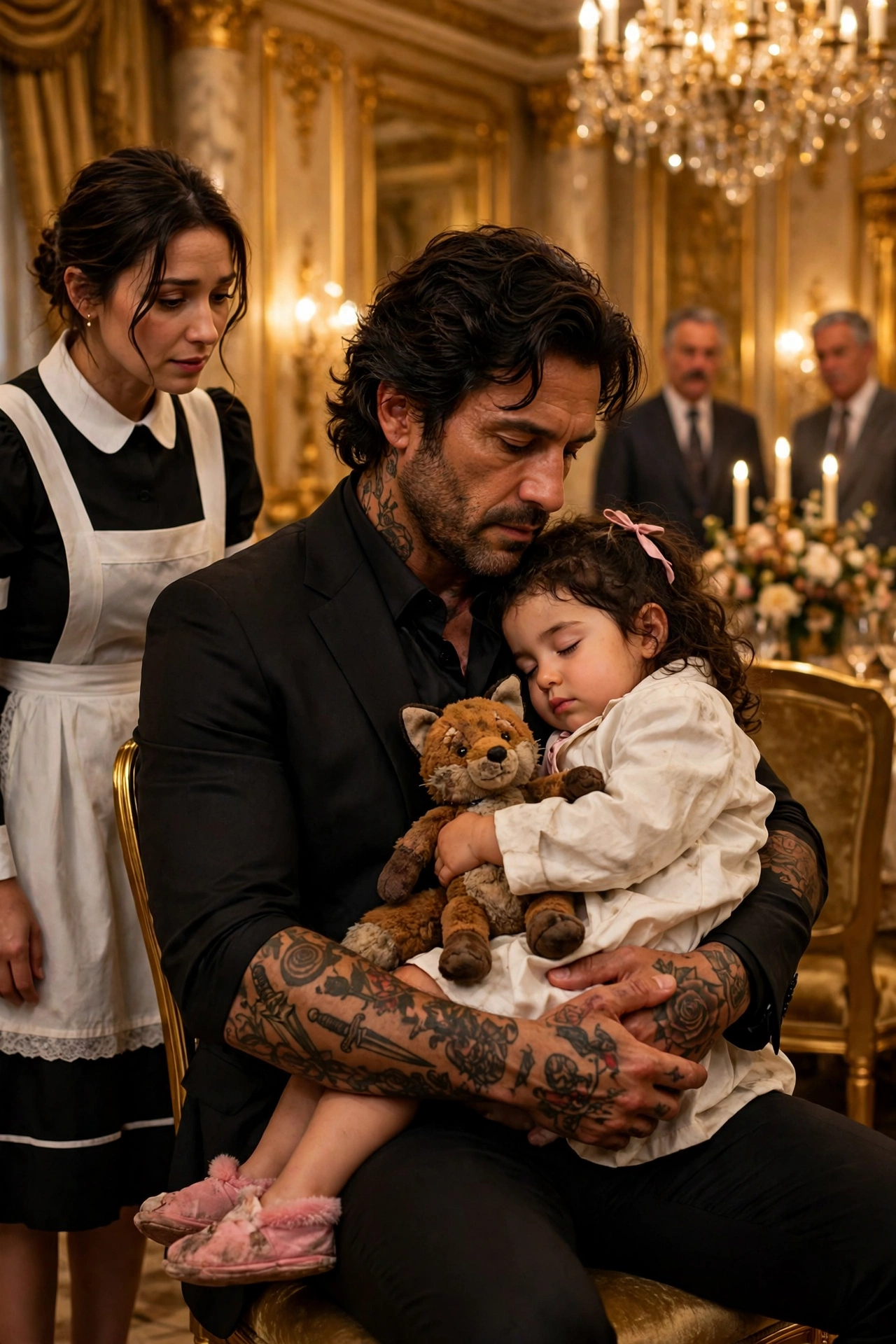
That evening, as Sofia was getting ready for bed, she climbed into my lap, just as she had climbed into my arms in the conference room. She was heavier than she looked, and warm, and sleepy. She pressed her fox against my chest and whispered, "Renzo, will you stay?"
"Yes," I said. "I will stay. I am not going anywhere."
She fell asleep like that, trusting me completely, and I sat there, holding her, thinking about shipments and signatures and bank statements, and about how a three-year-old girl had walked into my meeting and changed everything, not with a weapon, or with a threat, but with a name, and with trust.
Before I went to Sofia's room that night, Salvatore came back with news about the copies. He had done exactly what I asked, and he looked relieved to have the papers out of his hands and into safe places.
"The lawyer outside the family has one copy," he said. "He does not know what it is yet, only that it is to be opened if something happens to you or to me. The safe in your study has the second. The third is where only you and I know, and I will not write that place down anywhere."
"Good," I said. "That means Vittorio cannot make this disappear by taking one paper from one room. He would have to find all three, and he does not know where all three are."
Salvatore hesitated, and then he said something I had not expected. "Lorenzo, I have worked for your father, and then for you, for twenty years. I have seen men do terrible things for money, and I have seen men lie to their own brothers. I have never seen a man change the way you have changed in the last few days. Sofia did that. Not the shipments. Not the papers. A child who trusted you."
I did not know what to say to that, so I just nodded. Salvatore was right, in a way I had not wanted to admit. Before Sofia walked into my meeting, I had been content to live with a simple, sad story about my brother, because asking questions would have meant admitting that someone I trusted might have betrayed us. After Sofia, I could not live with that story anymore, because she had given me a reason to look again, and because Matteo had clearly wanted me to look again, through Elena, through the letter, through the fox.
Elena found me in the hallway a little later, while Sofia was brushing her teeth with great concentration and a great deal of toothpaste on her chin. Elena looked calmer than she had the day before, but still careful, the way a person looks when they are learning to trust a new room.
"Will it be dangerous tomorrow?" she asked. "When you speak to Vittorio?"
"I will not let it be dangerous for you or for Sofia," I said. "You will stay in this part of the house, with guards I trust, and you will not be in the room when I speak to him. You will not have to hear it, and Sofia will not have to hear it. That is my promise, and it is separate from everything else."
She nodded, and for the first time, she smiled without looking away. "Matteo would be glad," she said. "Not about Vittorio. About you. About the way you are with Sofia."
I thought about that as I walked to Sofia's room. Matteo would be glad. That was a strange thought, and a comforting one, after three years of thinking only about how Matteo had died. Perhaps, in the end, the best way to honor him was not to find a perfect punishment for the man who had hurt him, but to become the kind of man Matteo had believed I could be, the kind of man who keeps a promise even when it costs him something.
Tomorrow, I would confront Vittorio. Tonight, I would just sit here, and keep a promise I had made to a brother who was gone, and to a little girl who was still here.
TITLE: A three-year-old maid's daughter walked into my private mafia meeting, climbed into my arms, and called me by a name nobody had dared speak since my brother's murder
Story Genres: MAFIA BOSS
-

Chapter 5: The Missing Shipments
-
Chapter 4: The Maid’s Story
I waited until the little girl was asleep before I asked her mother to come to my study.
It was late afternoon, and the light in the study was soft. I did not sit behind my desk. I sat in one of the chairs by the window, so she would not feel like she was being questioned. I poured her a glass of water and set it on the small table between us. She did not drink it at first. She held it with both hands, as if she needed something to hold.
"I don't know your name," I said. "I should have asked sooner. I am sorry for that."
She looked down. "My name is Elena," she said quietly. "Elena Rossi. My daughter is Sofia."
Sofia. I repeated it in my mind, so I would not forget it again. Sofia, three years old, dark curls, a stuffed fox, pink slippers. A name that fit her, soft and clear.
"Elena," I said, "I am not going to hurt you, and I am not going to send you away. But I need you to tell me the truth about Matteo. About Matty. Sofia said he tells you not to cry. I need to know what that means."
She was quiet for a long time. I could see her trying to decide how much was safe to say to a man like me, in a house like this, where her daughter had just slept in my arms in front of twelve dangerous men. I understood that fear. I had spent three years building a house where people were afraid to speak plainly, and now I needed plain speech more than anything.
"Take your time," I said. "Sofia is safe. Salvatore is with her, reading her a story. No one will come in here unless I call them."
Elena took a slow breath. "I met Matteo four years ago," she said. "Not in this house. In a small town, before I came to work here. I was working in a cafe, and I had just had Sofia. I was alone. Her father had left when he found out I was pregnant. I was young, and I was tired, and I did not know how I was going to pay for anything."
She paused, and her voice grew steadier, as if telling the story in order helped her stay calm.
"Matteo came into the cafe one afternoon. He was not like the other men who came in. He did not look at me like I was a problem to solve. He asked about Sofia. He asked if she was sleeping well. He came back the next day, and the next. He brought milk, and bread, and once, a small blanket, because he said the nights were getting cold."
I listened without interrupting. This was not the Matteo I had known in meetings, the Matteo who argued about shipments and laughed too loudly at family dinners. This was a quieter Matteo, a kinder one, and I realized I had only known half of my brother.
"He never said who he was, not at first," Elena said. "He just said his name was Matty. He said his family was complicated. He said he understood what it was like to feel alone in a house full of people."
She smiled, just a little, at the memory. "When Sofia was a baby, she cried a lot at night. I would walk with her, back and forth, and I would cry too, because I was so tired. One night Matteo was there, late, and he said, 'Shh, little one, shh. Don't cry, Elena. It will be all right.' He said it the way you would say it to a sister. He held Sofia for a little while so I could rest. That was the first time I slept through a night in months."
My throat felt tight. I thought about Matteo as a boy, the way he would sit with our mother when she was sad, the way he would make up silly songs to make her laugh. He had always been the soft one in our family, the one who noticed when someone was hurting. I had been the hard one, the one who learned to hide it.
"Why did you come here?" I asked. "To this estate, to work as a maid, where no children are allowed? That seems like the last place you would choose."
Elena looked at the window. "After Matteo died, I was afraid," she said. "I did not know he was dead at first. He just stopped coming. I waited. I wrote letters to an address he had given me, but no one answered. Then I heard his name on the news, in connection with your family, and I understood. I understood who he really was, and I understood that the people who had hurt him might still be looking for anyone he cared about."
She set the glass down, her hands shaking a little. "I needed work, and I needed a place where Sofia would be safe. I thought, if I worked inside the estate, inside the walls, no one outside would find us. I did not know about your rule about children. When I was hired, I told them Sofia stayed with a cousin during the day. It was not true. Most days, I kept her in a small room near the kitchen, quiet, with her fox and her books. I told her to be very quiet, to never go near the big rooms."
"But yesterday, she did," I said gently.
"Yesterday, she heard music, or voices, and she followed them," Elena said. "She is three. She does not understand rules about estates and meetings. She slipped out while I was cleaning a hallway. By the time I found her, she was already in your arms."
I nodded. I had seen the maid in the cover of my memory, standing at the edge of the room in her uniform, watching with her hands clasped, afraid to move. That was Elena. She had watched her daughter climb into the arms of the most feared man in the house, and she had not known whether to run forward or to run away.
"Why did Sofia call me Renzo?" I asked. "Did Matteo teach her that name?"
Elena shook her head. "No. Matteo never said Renzo to Sofia. He said it to me, once, when he was talking about his brother. He said, 'My brother Renzo is the only person I trust completely. If anything ever happens to me, find Renzo. He will protect you.' I did not understand then. I thought it was just a name he used when he was sad."
She looked at me directly for the first time. "Sofia heard me crying one night, after I learned Matteo was dead. I was whispering his words to myself, trying to remember them. I said, 'Renzo, Renzo,' because I was trying to hold on to the promise. Sofia was half asleep in my arms. She must have kept the sound in her head, the way children keep sounds, without knowing what they mean. When she saw you, and you were kind to her, she must have thought you were the Renzo from the story."
I sat very still. Matteo had told Elena to find me. He had trusted me to protect her, and I had not even known she existed. For three years, she had been working in my house, hiding her daughter in a small room, while I sat in meetings talking about loyalty and family, and I had never once looked closely enough to see her.
"Did Matteo tell you anything else?" I asked. "About why he was afraid? About Vittorio?"
Elena hesitated. "He said his uncle was asking too many questions about money. He said shipments were going missing, but not the way everyone thought. He said someone inside the family was selling information, and that when he tried to stop it, he was told to be quiet. He did not name Vittorio to me. He only said, 'Don't trust the people who call themselves family.' The same words he said to you."
It was the same warning, given to two different people, in two different places. That made it real in a way it had not been before. Matteo had not been dramatic. He had been trying to leave a trail, in case something happened to him. He had left one piece with me, and one piece with Elena, and neither piece alone was enough to see the whole picture. Together, they pointed in the same direction.
"Why didn't you come to me sooner?" I asked, not in anger, but because I needed to understand. "Why didn't you tell me who you were, the day you started working here?"
"Because I was afraid you were one of them," Elena said simply. "I did not know if Renzo was a good man or a dangerous man. I only knew his name. And I had a daughter to protect. I thought it was safer to be invisible."
I understood that, too. In my world, invisible is often the only safe way to be.
"Elena," I said, "you are not invisible anymore. Sofia walked into my meeting, and now everyone in this house knows she exists. That means I have to protect both of you properly, not in secret, not in a small room near the kitchen. You will have a proper room, with a door that locks from the inside, and Sofia will have a bed, and books, and a place to play where she does not have to be quiet all the time."
Her eyes filled with tears, but she did not look away. "You believe me?" she asked.
"I believe Sofia," I said. "And I believe Matteo. He would not have given you that fox, and he would not have told you my name, if he did not mean for you to find me."
She cried then, quietly, the way people cry when they have held something in for a very long time and finally feel safe enough to let it go. I did not try to comfort her with words I did not have. I just waited, and when she was ready, I poured her more water.
"There is one more thing," Elena said, wiping her eyes. "Matteo left something for Sofia. Not money. A small wooden box, with a letter inside. He gave it to me a week before he died and told me not to open it unless something happened to him. I have kept it hidden ever since, because I did not know who I could give it to. I still have it. It is in my room, under the floorboard, where Sofia cannot reach it."
My heart beat faster, but I kept my voice steady. "Do you want to show me?" I asked.
She nodded. "I think that is why Matteo wanted me to find Renzo. I think the letter is for you."
We did not go to get the box right away. It was getting dark, and Sofia would be waking up soon, and I did not want Elena to feel rushed. But before she left my study, she stopped at the door and said something I will never forget.
"Matteo told me once that you were the only person in your family who kept a promise, even when it cost you something," she said. "He said, 'Renzo does not forget.' I hope that is still true."
"It is," I said. "I do not forget. And I will not forget you, or Sofia, either."
After Elena left, I sat alone in the study for a long time. Outside, the estate was quiet. Inside, my mind was loud with questions I had avoided for three years. Who had Matteo been, really, when he was not sitting at my table? Who had he tried to protect, and why had he not trusted me enough to tell me everything while he was alive?
Maybe he had trusted me. Maybe he had left me just enough to find the rest, if I was willing to listen to a maid and a three-year-old girl instead of only to men in suits.
The next morning, Elena would bring me the wooden box. I did not know what was inside it yet. I only knew that whatever Matteo had written, it would change the way I saw my family, and that once I read it, I could not go back to believing the simple story Vittorio had told me on the morning my brother died.
For now, I went to check on Sofia. She was asleep again, her fox tucked under her arm, her breathing slow and even. Salvatore was sitting in the chair beside her bed, reading quietly, as if guarding a child was the most natural job in the world.
"She asked for you," Salvatore whispered. "She said, 'Where is Renzo?'"
I knelt down beside the bed, careful not to wake her, and whispered back, "I am here, Sofia. I am not going anywhere."
And for the first time since Matteo died, saying that did not feel like a lie.
TITLE: A three-year-old maid's daughter walked into my private mafia meeting, climbed into my arms, and called me by a name nobody had dared speak since my brother's murder -
Chapter 3: Don’t Trust Family
I did not sleep that night. I sat in the chair beside the guest room bed and watched a three-year-old girl breathe.
She had fallen asleep in my arms in the conference room, and I had carried her myself, because no one else in that house was going to touch her while I was still trying to understand what had just happened. Her stuffed fox was tucked under her chin. Her dark curls had come loose from the ribbon. Her pink slippers were on the floor beside the bed, neatly side by side, as if someone small had tried very hard to be tidy.
Outside the door, two of my men stood guard. Not because she was a prisoner. Because I did not know yet who in my own house could be trusted, and I was not going to take a chance with a child who had said my brother's name in her sleep.
Renzo.
I kept hearing it. Not loud. Not clear, the way a grown person says a name. Just soft, the way a child says a word she has heard in a lullaby. Renzo. And then, when I asked who taught her, she said Matty.
Matty was what Matteo called himself when we were children. He was six and I was nine, and he could not say Matteo properly yet, so he shortened it and then refused to give it up. Our mother laughed about it. Our father pretended to be annoyed and then used it himself when no one else was listening. After Matteo died, I made sure no one used Renzo again either. It was not a rule I announced. It was a rule people learned by watching my face.
And now a maid's little girl, who was not supposed to be anywhere near my estate, let alone my conference room, had said both names in one evening.
I stood up quietly when the first gray light came through the curtains. The girl did not wake. Her mother was asleep in the chair on the other side of the room, her head tipped back, her maid's uniform still on, her hands folded in her lap like she was afraid to relax even in sleep. I did not wake her. I did not know her name yet, and that shamed me. She had worked in my house, and I had never asked.
Salvatore was waiting for me in the hallway. He looked like he had not slept either. His tie was loose. His eyes were red. He held a thin folder against his chest as if it might bite him.
"Lorenzo," he said, very quietly, "we need to talk before Vittorio wakes up."
I nodded toward my study. We walked without speaking. The house was still quiet in that early way it gets before the staff starts moving. The conference room door was closed. Someone had cleaned up the broken glass from Vittorio's drink, but I could still see the faint wet mark on the rug where it had fallen.
Salvatore closed the study door behind us and set the folder on my desk. He did not open it right away.
"I have been thinking about what Matteo said to you," he said. "The night before he died."
I sat down slowly. "He said, Renzo, if anything happens to me, don't trust the people who call themselves family."
Salvatore nodded. "He said it to you alone, in this room. You told me the next morning, after the funeral arrangements had started, because you did not know what else to do with it. I have remembered it every day since. I just never had a reason to say it out loud again."
"And now you do?" I asked.
"Now a child has said his name, and Vittorio dropped his glass," Salvatore said. "That is a reason."
I leaned back. "Vittorio has an alibi for the night Matteo died. He has always had one. He was in Naples. He had dinner with two men from the port. He called me from there the next morning to tell me what had happened, before anyone else in the family knew."
"I know what he said," Salvatore said. "I am the one who wrote it down."
He opened the folder. Inside were copies of old notes, in his own handwriting, and a few pages of travel records he had pulled from our files during the night. He pushed one page toward me.
"Vittorio said he left Rome at seven in the evening and arrived in Naples at ten. He said his driver took him straight to the hotel. But the driver's log from that night says something different."
I looked at the page. It was a simple log, times and places, the kind of thing drivers keep because they are paid by the hour. The entry for that night showed a stop I did not recognize, a small town halfway between Rome and Naples, at eight forty-five. The driver had written a single word beside it: waiting.
"Waiting for what?" I asked.
"That is the question," Salvatore said. "The driver is dead now. A car accident, two years ago. Convenient, if you want a story to stay simple."
I did not answer right away. I was thinking about Matteo, about the way he had looked the night before he died. He had come to my study late, after everyone else had gone to bed. He was restless. He kept checking the window. He told me he had found something he did not like, something about money moving in the wrong direction, and about a shipment that was supposed to be lost but was not lost at all.
I had told him to be careful. I had told him to wait until morning and we would look at it together. He had smiled at me, the way younger brothers smile when they think you are being too serious, and he had said, "Renzo, if anything happens to me, don't trust the people who call themselves family."
I had thought he was being dramatic. I had thought he was tired. The next morning, he was dead, and the story we were given was simple: a rival family, a bad meeting, a wrong place at the wrong time. The Falcone name was mentioned, as it always was when we needed someone to blame. We accepted it because grief does not leave much room for questions, and because Vittorio was the one who told us the story first, calmly, like a man who had already made his peace with it.
"Vittorio was the first person to call you that morning," Salvatore said, as if he were reading my thoughts. "Before the police. Before the hospital. He said he had heard it from a friend in Naples. How would a friend in Naples know before we did?"
My hands were very still on the desk. That was the kind of detail you miss when you are grieving. You hear a voice you trust, and you hold on to it, because the alternative is to stand alone in a room full of people who might be lying to you.
"There is more," Salvatore said, and he looked unhappy about it, the way a loyal man looks when he has to tell his boss something that will hurt him. "I spoke to one of the men who was at dinner with Vittorio in Naples. Last night, after the meeting, I called him. He remembered the dinner, but he said Vittorio arrived late. Not at ten. Closer to midnight. And he left early, before dessert. He said Vittorio kept checking his phone."
"That does not prove murder," I said, because I needed to hear myself say it. I needed to be fair, even to a man I was beginning to suspect. "It proves he lied about the time. Men lie about times for many reasons."
"I know," Salvatore said. "But it is a crack. And cracks are how you find the rest of a wall."
Before I could answer, there was a knock at the study door. One of my men stepped in, his face tight.
"Carmine Falcone is asking for a meeting," he said. "Today. He says the shipments cannot wait, and he says your house is distracted."
I almost laughed. Distracted. A child had walked into my meeting and said my dead brother's name, and Falcone thought that was a distraction. He did not know that it was the first clear thing I had seen in three years.
"Tell him I will meet him tomorrow, not today," I said. "And tell him the shipments will be discussed when I am ready, not when he is impatient."
The man nodded and left. Salvatore watched me.
"You are going to make Falcone angry," he said.
"Falcone is always angry," I said. "Let him be angry tomorrow."
After Salvatore left to make the calls, I went back to the guest room. The little girl was awake now, sitting up in bed, rubbing her eyes with her fists. Her mother was awake too, smoothing the blanket, whispering something soft. When the girl saw me in the doorway, she smiled, as if seeing me was the most normal thing in the world.
"Mister," she said, "did I sleep good?"
"You slept very well," I said.
She held up her fox. "Foxy slept good too."
I knelt down beside the bed, the way I had knelt in the conference room. I kept my voice low, so I would not frighten her.
"Can you tell me about Matty?" I asked. "Is Matty a friend?"
She thought about it very seriously, the way three-year-olds do when you ask them a grown-up question. "Matty tells Mommy not to cry," she said. "He says, shh, little one, shh. And he gives me Foxy."
Her mother went very still. She did not look at me. She looked at her hands.
"When did Matty give you Foxy?" I asked gently.
"A long time," the girl said. "Before the big house. Before Mommy worked here."
Before the big house. Before her mother worked here. That meant Matteo had known them before he died. That meant my brother, who I thought had lived only in my world of meetings and shipments and family dinners, had a second life I knew nothing about, a life where he comforted a crying mother and gave a little girl a stuffed fox.
I did not press the child further. She was three. She did not need to be a witness. She needed breakfast, and a warm room, and a mother who was not afraid.
But as I stood up, I understood something clearly for the first time since Matteo's funeral. His warning had not been about strangers. It had not been about the Falcone family, or about rivals, or about men with guns. It had been about family. About the people who sit at your table and call themselves yours, and who know exactly where you will be on a given night, and exactly what story you will believe when you are too tired and too sad to ask for proof.
Vittorio was still asleep upstairs. Or he was awake and pretending to sleep, listening for footsteps in the hallway. I did not know which, and I did not go to see him yet. I was not ready to look him in the eye and ask him where he really was on the night my brother died, because once I asked that question out loud, there would be no way to take it back.
Instead, I went to the window in my study and looked out at the grounds. The estate was quiet. The guards were at their posts. The garden was still wet from the night. Somewhere in this house, a little girl was eating toast with jam on it, and her mother was watching her as if she might disappear.
Matteo had told me not to trust family. He had not told me not to trust anyone. There was a difference, and I was going to hold on to that difference.
Salvatore came back an hour later with another piece of paper. It was not proof. It was not a confession. It was a receipt for a car repair, dated the week after Matteo died, for Vittorio's car. The front bumper had been replaced. The mechanic had noted damage consistent with a collision, but the owner had paid in cash and asked for no report.
Salvatore set it down without a word. He did not need to say what we were both thinking. A man who had been in Naples all night, at a quiet dinner, should not have needed a new bumper the next week.
I folded the receipt and put it in my desk drawer, next to Matteo's last note to me, which I had kept for three years and never shown to anyone.
"Keep watching Vittorio," I said to Salvatore. "Quietly. No questions to his face yet. I want to know who he calls, where he goes, and who he meets. And keep Falcone away from this house until I say otherwise."
Salvatore nodded. "And the girl? And her mother?"
"They stay here," I said. "In this house, under my protection, where I can see them. No one takes them anywhere without my word. Not Vittorio. Not Falcone. Not anyone who calls himself family."
That night, when the girl was back in bed, I sat in the chair again for a little while. She was already half asleep when she whispered, without opening her eyes, "Renzo."
This time I did not flinch. I just said, very quietly, so only she could hear, "I am here."
She sighed and slept. And I thought about Matteo, and about the warning he had left me, and about how a three-year-old girl had walked into my meeting and, without knowing it, had given me back the one thing I had lost three years ago: a reason to ask questions again.
TITLE: A three-year-old maid's daughter walked into my private mafia meeting, climbed into my arms, and called me by a name nobody had dared speak since my brother's murder -
Chapter 2: Matty
I did not end the meeting with a speech. Men like the ones around my table do not need speeches to understand when something has changed. I stood up slowly, the little girl still asleep against my chest, her stuffed fox tucked between us, and I looked at Falcone.
"We will continue this tomorrow," I said. My voice was calm. It was the voice I used when a decision had already been made and there was no point in arguing about it. "Salvatore will contact you."
Falcone nodded. He did not protest, which told me more than any argument would have. A rival who has just watched you hold a sleeping child in the middle of a negotiation does not know whether he has seen weakness or strength, and Falcone was wise enough not to guess out loud. He stood, buttoned his jacket, and left with his men, glancing back once at the doorway where the girl had appeared, as if he expected her to still be standing there.
The other men followed, quietly, one by one, until only Salvatore and Vittorio remained. Salvatore was gathering his files with hands that were not quite steady. Vittorio was still standing near his chair, staring at the broken glass on the floor as if it might explain itself. A member of staff came in with a cloth and began to clean it up, carefully, without looking at anyone.
"Uncle," I said, "you look unwell. Perhaps you should rest."
Vittorio looked up at me, and for a moment his face was almost normal again, the familiar, confident uncle who had taught me to play chess and who had sat beside my father at family dinners for as long as I could remember. Then his eyes flicked to the child in my arms, and the fear was back, quick and unguarded, before he smoothed it away.
"It was only a glass, Lorenzo," he said, too lightly. "And a long meeting. I am tired."
He left without another word. Salvatore watched him go, then looked at me, and I saw the question in his eyes that he was too loyal to ask out loud: what had just happened, and what were we going to do about it?
"Find out who she is," I said quietly, so as not to wake her. "Quietly. No one outside this house. Start with the staff. Someone must know which maid has a three-year-old daughter."
Salvatore nodded and slipped out. I was left alone in the conference room with a sleeping child, a broken glass already cleaned away, and a name echoing in my head.
Matty.
I carried her out of the conference wing and into the quieter part of the house, where the afternoon light came through tall windows and the air smelled of polish and fresh flowers instead of smoke. I did not hand her to a guard. I did not call for a nanny, because there was no nanny in this house, not since I had made my rule. I carried her myself, down the hallway, past portraits of my father and my grandfather, men who had also believed that a house like this was no place for softness, and I found myself wondering what they would have thought of a boss who could not put down a child who had fallen asleep on his chest.
Her mother found us before I found her.
She was standing in the doorway of the staff corridor, in a black and white maid's uniform, her hands clasped tightly in front of her, her dark hair pulled back, her face pale. She was young, younger than I had expected, and she looked the way a mother looks when she has lost sight of her child in a crowd and has just found her again in the arms of a stranger. Relief and terror were fighting each other on her face, and terror was winning, because the stranger holding her daughter was me.
"Mr. Moretti," she whispered. "I am so sorry. She slipped away while I was working. I turned around for one moment, and she was gone. Please, I did not mean for her to disturb you. I will take her now, and it will never happen again."
She reached out, very carefully, as if she were afraid that any sudden movement might make me angry, or make the child wake up crying. I looked down at the girl, still asleep, her ribbon now completely loose, her curls falling over her forehead, her fox still clutched in one small hand. I looked back at her mother, and I saw the same brown eyes, the same dark curls, the same gentle shape of a face. There was no doubt that this was her daughter.
"What is her name?" I asked.
The maid hesitated. It was a simple question, but she answered it as if it were a test she was afraid of failing.
"Sofia," she said softly. "Her name is Sofia."
Sofia. I repeated it silently, and it felt right in a way I had not expected. A small, ordinary, beautiful name for a child who had just walked into the most dangerous room in my house and asked to sleep on a mafia boss.
"And you?" I asked.
"Elena," she said. "Elena Rossi. I have worked here for four years, sir. In the kitchens and the guest rooms. Sofia stays with me in the staff quarters when I am on duty, but today she was supposed to be with the other children, and she must have followed me when I came to clean the hallway near the conference wing."
I nodded, but I was not really listening to the explanation about hallways and schedules. I was listening for something else, for the part of the story that would explain the names.
"Elena," I said, keeping my voice low and steady, "your daughter called me Renzo. She said a man named Matty taught her that name. She said Matty is the man who tells you not to cry."
Elena went very still. Her hands, which had been clasped in front of her, tightened until her knuckles were white. Her eyes filled with tears, but she did not look away, and that took courage, because she must have known who I was and what I was capable of.
"Please," she whispered. "Please do not be angry with her. She is only three. She does not understand. She heard the name once, and children remember the strangest things."
"Where did she hear it?" I asked. "From you?"
Elena shook her head, slowly, and then she did something I did not expect. She looked down the hallway, as if to make sure no one was listening, and then she looked back at me and spoke in a voice so quiet I had to lean in to hear her.
"From him," she said. "From Matteo."
The name hung between us in the hallway, and for a moment I could not breathe. Matteo. Not Matty, the childhood nickname, but Matteo, the full name, spoken by a maid in my own house as if he were a person she had known, not a story she had heard.
"My brother has been dead for three years," I said, and my voice was harder than I intended. "Sofia is three years old. She cannot have known him."
"I know how it sounds," Elena said quickly. "I know you will think I am lying, or confused, or trying to gain something. But I am not. Matteo was kind to us before Sofia was born. He found me when I had nowhere to go, and he helped me find work here. He would visit the staff quarters sometimes, not as a boss, but as a friend. He would sit on the floor and talk to Sofia when she was a baby, and he would tell her stories, and he would tell me not to cry when I was afraid."
She stopped, and tears slipped down her cheeks, but she did not wipe them away, as if she had cried so many times before that it no longer embarrassed her.
"He called you Renzo," she said. "He talked about you all the time. He said his big brother Renzo would protect us if anything ever happened to him. He said Renzo was the only person he trusted completely. Sofia must have heard him say it, over and over, when she was very small. Children remember voices, Mr. Moretti, even when they do not remember faces."
I stared at her, and grief hit me in a way it had not hit me in a long time. Not the clean, controlled grief of a funeral, where you stand straight and accept condolences and make decisions about flowers and burial plots. This was messier, more personal. Matteo had a life I had not known about. Matteo had friends I had not met. Matteo had sat on the floor of the staff quarters and talked to a baby and promised a frightened young mother that his brother would protect her, and I had not known any of it, because I had been too busy running an empire to notice that my brother was building a quieter, kinder life on the edges of it.
"Why did you never tell me?" I asked. "After he died, why did you stay silent?"
Elena's answer was simple, and it broke my heart a little, because it was the answer of someone who had learned to be afraid.
"Because I was told not to," she said. "After Matteo died, a man came to me and said that if I ever spoke about Matteo and Sofia, if I ever told you, Sofia would not be safe. He said it would be better for everyone if I kept working quietly and forgot that Matteo had ever known us. I believed him, because I had a baby and nowhere else to go."
"Who was the man?" I asked, though I already feared the answer.
Elena shook her head. "I do not know his name for certain. He was older, well-dressed, and he spoke like family. He said he was looking out for the family name. I was too frightened to ask questions."
Older. Well-dressed. Speaking like family. Vittorio's face, white with fear over a broken glass, rose in my mind uninvited, and I pushed it aside for the moment, because I did not want to accuse my uncle on the word of a frightened maid and a sleeping child. But I could not unhear it either.
"Elena," I said, "I need you to listen to me very carefully. No one is going to hurt you or Sofia while you are in this house. Not a stranger, not a member of staff, and not a member of my family. Do you understand me?"
She nodded, but she did not look convinced, and I understood why. Promises are easy. Safety is harder, especially in a house where a man could be threatened into silence and a child could wander into a meeting about war.
"Then why did Sofia come to me today?" I asked, more gently. "Why did she walk into that room, of all rooms?"
Elena looked at her daughter, asleep in my arms, and her expression softened, even through her tears.
"Because she has been asking about you," she said. "Not about Mr. Moretti the boss. About Renzo. She asks when Renzo is coming to visit, the way other children ask about a favorite uncle. She saw a picture once, in an old album Matteo left behind, of you and Matteo together when you were boys. She pointed at you and said, 'Renzo.' I told her you were very busy and very important, and that she must not disturb you. But today she must have heard the meeting, or seen the door open, and she simply went to find you."
I looked down at Sofia again. Her breathing was slow and even. Her fox was still in her hand. In the late afternoon light, her blue dress, which she must have changed into after the meeting, or which I had only just noticed in the soft light of the hallway, caught the light and shimmered. She looked peaceful, and for the first time since the meeting, I felt something other than anger or suspicion. I felt protective, in a way that had nothing to do with business or territory or reputation. I felt like a man who had been given a second chance to keep a promise his brother had made, and who did not intend to waste it.
"Matteo told me something the night before he died," I said, almost to myself. "He said, 'Renzo, if anything happens to me, don't trust the people who call themselves family.' I thought he was being dramatic. I thought he was tired. Now I am beginning to think he was trying to warn me, and I was too busy to listen."
Elena did not answer. She did not need to. The warning and her story fit together too well to be a coincidence.
Salvatore returned then, quietly, from the end of the hallway. He looked at Elena, at Sofia asleep in my arms, and at me, and he understood, in the way loyal men do, that the afternoon had changed everything and that we would not be discussing shipments again today.
"Sir," he said softly, "I have found what you asked for. Elena Rossi, maid, four years. Sofia, three years old. No record of any complaint, no record of any trouble. And sir, there is one more thing. The staff rota for the day Matteo died shows that Vittorio was the last member of the family to see him alone. No one has ever asked about that rota since."
I nodded slowly. I did not want to jump to conclusions. I wanted evidence, and I wanted the truth, not revenge dressed up as justice. But I also wanted Elena and Sofia safe, and I wanted answers about Matteo, and I knew, with the same clarity I had felt in the conference room, that those two things were now connected.
"Elena," I said, "from tonight, you and Sofia will not stay in the staff quarters alone. You will have rooms in the main house, near mine, where my own guards can watch the doors. Sofia will have proper clothes, and food, and a safe place to sleep, and no one will threaten you again. I am not asking you to trust me all at once. I am asking you to let me keep the promise Matteo made to you."
Elena stared at me, and then she began to cry in earnest, quietly, her hands over her mouth, as if she had been holding those tears back for three years and they had finally found a way out.
"Thank you," she whispered. "Thank you, Renzo."
She said my name the way Matteo must have said it, not as a title, not as a warning, but as a name belonging to a person, and for the first time since my brother's funeral, I did not flinch when I heard it.
I held Sofia a little closer, and I thought about the man who tells Mommy not to cry. I did not know yet whether Matty was alive, or whether Matteo had simply left behind a story that a child had carried for him. But I knew that Sofia had brought him back into my house, in the only way a three-year-old could, by walking into the wrong room and asking to sleep on a stranger.
And I knew that, whatever the truth was about Matteo's death, I would not find it by ignoring a child who called me Renzo. I would find it by protecting her, by listening to her mother, and by asking the questions I should have asked three years ago, starting with the man who had dropped his glass when he heard a dead brother's name spoken aloud.
TITLE: A three-year-old maid's daughter walked into my private mafia meeting, climbed into my arms, and called me by a name nobody had dared speak since my brother's murder -
Chapter 1: The Girl in the Doorway
The conference room had always obeyed me. That was the point of it. The long table was polished until it reflected the chandelier, the curtains were heavy enough to keep the afternoon out, and the men who sat around that table knew better than to speak out of turn. I had built my life on that kind of order. At thirty-nine, I controlled an empire built on fear, loyalty, and blood, and I did not allow surprises inside my own house.
That afternoon, the surprise walked in wearing pink slippers.
We were in the middle of a conversation that could have started a war. Twelve dangerous men sat around my conference table, and the air was thick with cigar smoke, coffee, and the kind of tension that makes even experienced men choose their words carefully. Carmine Falcone was across from me, his hands flat on the table, his voice low and reasonable in the way that dangerous men use when they are trying not to threaten you outright. We were discussing betrayal, missing shipments, and whether the Falcone family had finally pushed us too far. My adviser, Salvatore, sat to my right with a file open in front of him, his pen hovering over a page he had already read three times. The other men watched Falcone, watched me, and waited to see which of us would blink first.
I had one absolute rule, and everyone in that room knew it. No children inside my estate. Not since my younger brother, Matteo, was murdered three years earlier. I had made the rule the week after his funeral, when the house still felt full of his laughter in the hallways and empty in all the wrong places. Children made you soft, I told myself. Children made you hesitate. Children reminded you of what you had lost, and I could not afford to be reminded in front of men like Falcone. So the staff knew. The guards knew. The doors to the conference wing were kept closed during meetings, and no one, for any reason, was supposed to open them.
That was why, when the door opened, every man at the table turned at once.
She was very small. That was the first thing I noticed, because the doorway was tall and she barely reached the handle she had somehow managed to pull. She wore a crooked white coat that was too big for her, pink slippers that made almost no sound on the polished floor, and a ribbon that was barely holding back her dark curls. A battered stuffed fox dangled from her hand, its ears flopped forward, its fur worn thin in the places where small fingers had held it for a long time. Her brown eyes were wide and trusting, and she did not look frightened at all, which was strange, because twelve dangerous men were staring at her as if she had appeared out of nowhere.
My guards stood frozen behind her. I could see them in the hallway, their hands half-raised, their faces caught between duty and disbelief. They had not let her in. She had slipped past them, the way only a very small, very determined child can slip past people who are looking for threats and not for pink slippers.
"Can I sleep on you, mister?"
The tiny voice interrupted a conversation that could have started a war, and for a moment, no one seemed to know what to do with it. Falcone's mouth opened and then closed. Salvatore's pen stopped in midair. One of the younger men at the far end of the table actually leaned back in his chair, as if distance might make the situation make more sense.
I should have called security. That was the rule. That was what a man in my position was supposed to do. I should have stood up, pointed at the door, and told the guards to take her back to wherever she belonged, quietly, before this became a story that men would repeat in bars and back rooms for years. A mafia boss does not hold children in the middle of a meeting about missing shipments and betrayal. A mafia boss does not kneel in front of a stranger's daughter and ask if she is sleepy.
Instead, something about her trusting brown eyes made me kneel.
She walked straight toward me. She did not hesitate at the table, she did not look at Falcone, she did not seem to notice the guns that some of the men wore under their jackets or the way the room had gone completely still. She walked around the corner of the table, her stuffed fox bumping against her leg with each step, and she stopped in front of my chair.
"Up, please," she whispered, lifting her tiny arms.
Nobody moved. I could feel the whole room holding its breath. Salvatore made a small sound in his throat, like a man who wanted to speak and had forgotten how. Falcone watched me with an expression I had never seen on his face before, something between disbelief and curiosity, as if he were witnessing a different kind of negotiation entirely.
I looked down at her. She was three years old, perhaps. Her coat was crooked, one button undone, and her ribbon was coming loose. Her cheeks were round, her eyelids were already heavy, and she looked at me the way a child looks at someone she has already decided to trust. It was not the look people gave me in business. People in business looked at me and calculated. This child looked at me and simply waited to be picked up.
The moment I picked her up, she wrapped her arms around my neck. It was not tentative. It was complete, as though she had been waiting for me, as though my arms were a place she already knew. Her weight was light and warm, her hair smelled faintly of soap and something sweet, and her stuffed fox pressed against my chest between us.
"Are you sleepy, sweetheart?" I asked, and my voice sounded strange to my own ears, softer than it had been all afternoon, softer than it had been in years.
She nodded and pressed her cheek against my chest. Within seconds, her breathing softened. Her little body grew heavier against me, the way sleeping children do, and her fingers, which had been tight around my collar, loosened just a little. I sat back down very slowly, careful not to jolt her, and I realized that I was holding her the way you hold something fragile and important at the same time, one arm under her legs, one hand steady against her back.
I looked around the room. Carmine Falcone stared in disbelief. My adviser Salvatore looked ready to faint, his file forgotten, his pen now lying on the table where he had dropped it. The other men exchanged glances they did not bother to hide. One man cleared his throat. Another looked down at his hands. No one dared to laugh, and no one dared to speak first, because no one knew what the rules were anymore.
But my uncle Vittorio was watching the child with an expression I could not understand. He was an older man, silver-haired, his suit immaculate as always, his hands usually steady around a glass. Now his hands were not steady. His eyes were fixed on the little girl in my arms, not with the surprise the other men showed, but with something sharper, something that looked a great deal like fear. He did not look at me. He did not look at Falcone. He looked only at her, as if she were a problem he had not expected to walk into this room.
I filed that look away. In my business, you learn to notice the one man who does not react the way the others do.
Then the little girl stirred. Her breathing changed, her tiny fingers tightened around my collar again, and she made a small, sleepy sound against my chest. I thought she was waking up, and I was about to ask Salvatore to find out quietly who she was and where she belonged, when she murmured a single word.
"Renzo."
My blood turned cold.
That name had not been spoken in years. My mother used it when I was little, in the kitchen, when she called me in from the garden. My father whispered it during our rare moments together, when business was put aside and we were simply father and son for an hour. And Matteo? Matteo called me Renzo every single day. Especially when he wanted something, especially when he was grinning and already knew I would say yes. After his funeral, I made certain nobody used it again. Not my men, not my family, not even in stories about the old days. Lorenzo was the name of the boss. Renzo belonged to a boy who no longer existed, and to a brother who was gone.
I stared at the child. She was still mostly asleep, her cheek against my chest, her fox tucked under her chin, but her lips had formed that name as naturally as breathing.
"Who taught you that name?" I whispered, and I did not care that Falcone could hear me, or that Salvatore was staring, or that the meeting had completely fallen apart. "Who taught you to call me that?"
She rubbed her sleepy eyes with one small fist, not quite waking, not quite asleep, and she answered in the same tiny, trusting voice she had used at the door.
"Matty."
My heart slammed against my ribs.
Matty. That was what Matteo had called himself when we were children. Not Matteo, the name on his birth certificate and, later, on his grave. Matty, the boy who climbed trees he was not supposed to climb, who stole sweets from the kitchen and blamed me with a straight face, who whispered plans to me at night when we were supposed to be asleep. No one outside our family had ever called him that. No one in this room, except me and Vittorio, should have known it at all.
"Who is Matty?" I whispered, because I needed to hear her say it again, because I needed to be sure I had not imagined it in a room full of smoke and tension and grief.
She hugged her stuffed fox tighter and pressed her face a little closer to my chest, as if the answer were simple and the question were strange.
"The man who tells Mommy not to cry."
Across the room, glass shattered.
Uncle Vittorio had dropped his drink. The glass hit the polished floor and broke into pieces that scattered under the table, and the sound was shockingly loud in a room that had gone silent. Wine, or whiskey, I did not notice which, spread in a dark stain across the floor. Vittorio was trembling. His face, usually ruddy and confident, had gone white. He stared at the child, then at me, then down at the broken glass at his feet, as if he could not decide which of those things frightened him more.
I looked up sharply. My guards moved at last, stepping forward, but I held up one hand, and they stopped. I did not want noise. I did not want a scene that would turn this into gossip before I understood it. I wanted to watch Vittorio, and I wanted to remember exactly how he looked in that moment, because men like Vittorio do not tremble without a reason.
And suddenly, I remembered something Matteo had told me the night before he died. We had been alone, late, in a room not unlike this one, and he had been serious in a way he rarely was. He had looked at me, not as a younger brother looking up to an older brother, but as a man who knew something he could not yet prove.
"Renzo, if anything happens to me, don't trust the people who call themselves family."
I had dismissed it at the time. Matteo worried too much, I had thought. Matteo saw enemies everywhere. I had told him to be careful, to come to me if he needed help, and then I had gone back to business, because business was always waiting. Three years later, I was holding a three-year-old girl who had just spoken his childhood name, and my uncle was trembling over a broken glass, and Matteo's warning was no longer something I could dismiss.
I held the little girl closer. Her breathing had softened again. Her fox was warm against my chest. The meeting was over, even if no one had said so out loud. Falcone was watching me now with a different expression, less like a rival and more like a man who understood that something private and important had just happened in front of him. Salvatore was quietly closing his file, as if he already knew that the shipments and the betrayal would have to wait.
Because for the first time in three years, I wondered whether my brother's death had been a lie. Not the fact of it, which I had mourned and buried and carried like a weight, but the story of it, the neat explanation I had been given, the people who had told me to accept it and move on. I wondered whether someone had arranged it, whether someone had wanted Matteo silent, and whether that someone was sitting right in front of me, trying very hard not to look at a sleeping child.
I did not know her name yet. I did not know her mother's name, or how she had gotten into my house, or why she knew the names that only my dead brother should have known. But I knew one thing, with a clarity that cut through three years of grief and discipline and rules.
I was not going to hand her back to the hallway and pretend this had not happened. I was going to find out who Matty was to her, who her mother was, and why my uncle looked afraid of a three-year-old girl in pink slippers.
And I was going to do it before anyone in that room had a chance to decide, for me, what this meant.
TITLE: A three-year-old maid's daughter walked into my private mafia meeting, climbed into my arms, and called me by a name nobody had dared speak since my brother's murder -

Chapter 7: Home
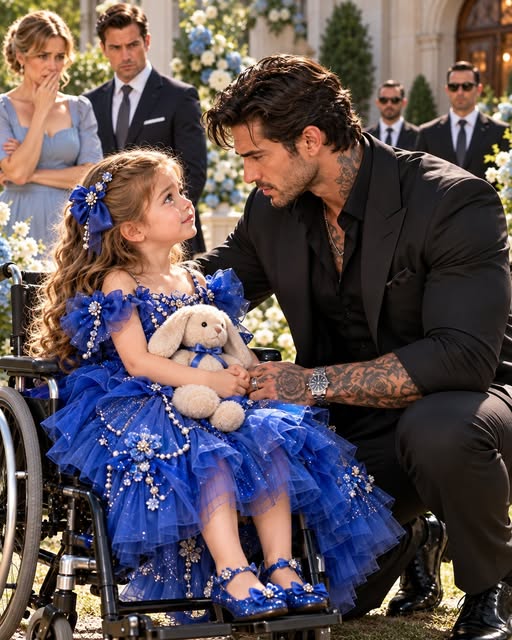
Adoption day began the way all important days in Lily's life seemed to begin: with Mrs. Bell fussing over a dress, Marco fussing over a car, and Enzo fussing over everyone else, because fussing was how Enzo showed he was nervous.
"You are twisting, sweetheart," Mrs. Bell said, kneeling beside Lily's wheelchair in the bedroom, smoothing the sparkling royal-blue dress with its pearl buttons. "Stand still. Or sit still, rather. You know what I mean."
"I am still," Lily said, although she was not still at all. She was bouncing a little in her seat, the way she did when she was excited and trying to be polite about it. "Is my bow straight?"
"Your bow is perfect," Mrs. Bell said, adjusting the large blue bow in Lily's long curly brown hair for the tenth time. "Your shoes are perfect. Mr. Bear is perfect, although he is looking a little smug, if you ask me."
Mr. Bear sat on Lily's lap, his blue ribbon fresh and tied in a neat bow of its own. He had been brushed until his cream fur was soft, and he looked, Lily thought, like a bear who knew he was going to a very important place and intended to behave himself.
Outside, three black SUVs waited in the driveway, polished until they shone. Lily laughed when she saw them. The first time those cars had come, she had been alone in a courtyard, wondering if anyone would ever choose her. Now they were just cars, and the people inside them were family, and the journey they were about to make was not toward a stranger's house. It was toward a courtroom where a judge would say, in official words, what Lily already knew in her heart.
Dominic waited by the front door in a black suit that Mrs. Bell had made him press twice. His dark wavy hair was combed, his stubble was neat, and his tattooed arms were hidden under his sleeves, except for the edge of ink at his wrist, which Lily liked because it reminded her that he was still the same man who had knelt in the courtyard, even in a suit. He looked at Lily in her blue dress and his eyes went wet, and he did not try to hide it.
"You look beautiful," he said, simply.
"You look nervous," Lily said, and he laughed, because she was right, and because she was the only person in the world who could say that to Dominic Moretti and make it sound like a compliment.
"I am nervous," he admitted, kneeling down, just as he had on the first day, so he was at her eye level. "Important things should make you nervous, I think. It means you care about getting them right."
"Are you scared the judge will say no?" Lily asked, because she asked direct questions, and because she had promised herself she would not pretend she was not wondering.
Dominic took her hand. "I am not scared of the judge," he said. "I am scared of getting this speech wrong, because I want to say it right for you. But whatever the judge says today, Lily, you are already my daughter in every way that matters. A piece of paper does not make that true. You made it true, the day you asked me if I would leave you too, and I answered by staying, every day since."
Lily nodded, and squeezed his hand, and thought about all the days since. The trial weeks. The school mornings. The cooking disasters, including the famous soup that Enzo had burned and then pretended was smoked on purpose. The blue step Marco had built. The night under the garden tree, when she had almost left and Dominic had found her and told her the truth, slowly, until she believed it. All of those days had led here, to this morning, to this dress, to this car ride.
The courtroom was smaller than Lily had imagined, and kinder. It did not look like the courtrooms in movies, with shouting and banging. It looked like a quiet room with wooden chairs and a large window, and a judge with kind eyes who smiled at Lily when she wheeled herself in. Mrs. Bell sat on one side of her. Marco and Enzo sat behind her, in suits, trying very hard not to look like bodyguards and failing, in a loving way, because they kept checking the doors out of habit.
The social worker who had once warned them was there too, and she smiled at Lily, and Lily smiled back, because the social worker had come to their house many times during the trial, and had seen the blue step, and the low bed, and the way Dominic read slowly, finger on the words, and she had written in her report that this was a home, not a house.
When it was Dominic's turn to speak, he stood up, and for a moment Lily thought he might be the feared mafia boss again, tall and stern and untouchable. Then he looked down at her, and his voice softened, and he was just a father, trying to say something true in front of strangers.
"Your Honor," he said, "I came into this child's life as a man who had everything except a family. I had money, and power, and people who obeyed me, and I was alone. I lost my little daughter years ago, and I thought grief was something you carried quietly and never spoke about again. Then I met Lily, in a courtyard, in a blue dress, holding a teddy bear, and she asked me five words that changed my life. 'Would you leave me too?' I have spent every day since then trying to answer that question with my life, not just my words."
He paused, and took a breath. "I will not pretend I am a perfect man. I have made choices I am not proud of, and I am stepping back from the business that caused this family trouble, because Lily deserves a father who is present, not just powerful. What I can promise this court, and what I promise Lily, is this: I will be here in the morning. I will be here when she is sick, and when she is happy, and when she is angry at me, which she will be, because she is six and brave and honest. I will never leave her. That is not a line in a paper. That is my life now."
The judge nodded. Mrs. Bell wiped her eyes with a handkerchief. Marco cleared his throat very loudly, and Enzo pretended he had something in his eye, which made Lily giggle, because grown men in suits are not supposed to cry in court, and hers did anyway.
Then it was Lily's turn. The judge asked her, gently, if she wanted to say anything, and if she wanted this adoption to happen. Lily wheeled herself forward a little, Mr. Bear on her lap, and looked up at the judge, and then at Dominic, and then at Mrs. Bell, who nodded encouragingly.
"I want to say something," Lily said, in her clear, brave voice. "People used to say I was a burden. They wanted a normal child, whatever that means. I am not normal, I think. I am Lily. I use a wheelchair, and I like blue dresses, and I ask a lot of questions, and I have a bear who is very wise. Dominic did not choose me because I was easy. He chose me because he knelt down and listened. He put his jacket on the ground so he could see my eyes. He stayed for dinner. He stayed for school. He stayed on the night I almost left, and he found me under a tree and told me the truth."
She took a breath, and smiled, because the next part was the part she had practiced in her room, whispering to Mr. Bear, until it felt right.
"I want to be Lily Moretti," she said. "Not because someone tells me I have to change my name, but because I want to. I want my name to say who my family is. Dominic is my papa. Mrs. Bell is my family too. Marco and Enzo are my uncles, even if they pretend they are just bodyguards. This is my home, and I choose it. I choose all of you, on purpose."
There was a silence in the courtroom, the good kind, the kind that happens when everyone is feeling the same thing at once and no one wants to break it. Then the judge smiled, and signed the papers, and said the words Lily had been waiting to hear, in a voice that was official and warm at the same time.
"Then it is done. Lily Moretti, you are legally and forever a part of this family."
Dominic knelt beside her wheelchair, right there in the courtroom, and hugged her gently, the way a father hugs a daughter, careful and proud and a little overwhelmed. Mrs. Bell hugged them both. Marco and Enzo cheered, quietly at first, then not so quietly, until the judge laughed and told them, kindly, to save the celebration for outside.
Outside, the sun was golden, like the light in the courtyard on the first day. White flowers lined the courthouse steps, and Lily thought that was a lovely coincidence, or perhaps Mrs. Bell had arranged it, which would also be a lovely explanation. Dominic pushed her wheelchair slowly down the ramp, and everyone walked together, not in a line with bodyguards in front and behind, but as a family, side by side.
That evening, back at home, there was no big party, because Lily had asked for a quiet one. There was soup, the good kind, not the burned kind, and bread, and a small cake with blue icing that Enzo had made himself and was very proud of, even though the icing was a little crooked. Mrs. Bell stayed for dinner, and Marco told a story about the first day Dominic had tried to cook, and everyone laughed until their sides hurt.
After dinner, Dominic carried Lily, carefully, to the garden, and set her back in her wheelchair under the tree he had planted for her. The evening air was soft. The tree's leaves moved in the breeze. Lily held Mr. Bear, and Dominic sat on the ground beside her, not kneeling for a dramatic moment this time, just sitting, like a father sitting with his daughter at the end of a long, good day.
"Do you remember what you asked me?" Dominic said, quietly.
"Which time?" Lily asked, smiling. "I ask a lot of questions."
"The first time," he said. "In the courtyard. You asked if I was dangerous, and if I had a daughter, and if I would like one. And then you asked the five words."
"Would you leave me too?" Lily said, softly.
Dominic shook his head. "No," he said. "I never will. Not on good days, and not on hard days, and not when the papers are signed or when they are not. I am your papa, Lily Moretti, and you are my daughter, and this is our home."
Lily leaned her head against his shoulder, and looked up at the tree, and thought about the orphanage courtyard, and the oak tree there, and the white flowers, and the three black cars, and the man who had taken off his jacket and put it on the ground so he could look her in the eye. She thought about Mrs. Bell, who had kept her safe until family found her. She thought about Mr. Bear, who had been with her for all of it, and who was now sitting on her bed at home, waiting for bedtime.
"I am not afraid anymore," she said, and it was true, in the deep, quiet way that true things are true. "I used to be afraid everyone would leave. Now I know what home feels like. It feels like this. Like you, and Mrs. Bell, and Marco, and Enzo, and soup, and a blue dress that fits, and a bear with a new ribbon, and a tree that is ours."
Dominic put his arm around her shoulders, gently, and they sat there until the stars came out, and the house lights glowed warm behind them, and the garden smelled of flowers and evening air. Inside, her room waited, with its low bed and its blue step and its window over the garden. Outside, the world was still big, and sometimes it would still be hard, but Lily was not alone in it anymore, and she never would be again.
Later, when she was tucked into bed, Mr. Bear beside her, Dominic checked her door twice, just to be sure, just as he always did. He paused in the doorway, as he always did, and said, "Good night, my daughter."
"Good night, Papa," Lily said, sleepy and happy. "See you in the morning."
And in the morning, he was there, as he promised, with the kettle clicking in the kitchen, and the house waking up around them, and a whole life ahead of them, together, at home. -
Chapter 6: The Night She Almost Left
The trial weeks had taught Lily the small, ordinary sounds of a house that was learning to be a home. In the morning, the kettle clicked in the kitchen before anyone spoke. In the afternoon, Marco hummed while he polished the front steps, and Enzo argued with the television about soccer as if the players could hear him. At night, the house settled the way a tired person settles into a chair, with creaks and sighs and, from the room across the hall, the soft sound of Dominic checking the lock on her door twice, just to be sure.
Lily had a room with a window that looked out over the garden. Her wheelchair fit through the doorway without scraping. The bed was low enough that she could climb into it herself, with a little help from the step Marco had built and painted blue because, he said, everything in this house that belonged to Lily had to be blue. On her bedside table sat Mr. Bear, his blue ribbon new and neat, and a drawing she had made of the orphanage courtyard, with the oak tree in the middle and white flowers all around it. She had drawn three black cars too, because that was how the story had started, and a small figure in a black suit kneeling on the ground. She had not drawn his face very well. Dominic said it looked exactly like him, which made her laugh, because she knew it did not, and she knew he knew it too.
For the first time in her life, Lily stopped counting the days until someone changed their mind. She did not count the plates at dinner to see if there would still be one for her tomorrow. She did not fold her blue dress away at night as if she might need to leave in a hurry. She let herself believe, a little at a time, that this was not a visit. This was her life.
That was why the letter hurt so much when it arrived.
It came on a Tuesday, in a plain white envelope with no return address, and Dominic read it at the kitchen table while Lily was supposed to be doing her schoolwork in the next room. She was not supposed to hear him, but houses are not good at keeping secrets from children who are listening for them. She heard the paper rustle. She heard Marco say a word she was not allowed to repeat. She heard Enzo say, quietly, "We can handle this. We have handled worse."
Then she heard Dominic's voice, low and steady, the voice he used when he was trying not to frighten anyone. "Not in front of Lily," he said. "Not ever in front of Lily."
But Lily had already heard enough to be afraid. Later, when the adults thought she was asleep, she heard more. She had woken up thirsty and wheeled herself toward the kitchen, and the study door was open just a crack. Inside, Dominic and Marco and Enzo were talking, and Mrs. Bell was there too, because Dominic had called her. Mrs. Bell never raised her voice, but that night her voice was sharp with worry.
"They have filed another challenge," Mrs. Bell said. "They are saying the trial period should end. They are saying a man in your position cannot keep a child safe."
"It is not about safety," Marco said. "It is about the story in the papers. Someone is paying for those headlines. 'Boss Buys Himself a Family.' That is what they wrote today."
Lily pressed her hands over her mouth. She had seen that headline that morning, folded under Dominic's coffee cup. She had pretended not to read it, because the words had made her stomach hurt. Now she understood what it meant. People were saying Dominic only wanted her to look kind. People were saying she was a project, not a daughter.
"It is the rival," Enzo said. "He wants the deal you walked away from, Dominic. He thinks if he makes this messy enough, you will choose the business over the girl."
There was a long silence. Lily held her breath in the hallway, waiting for Dominic to say the words that would prove them all wrong. Waiting for him to say, "I will never choose the business. I will never choose anything over Lily."
Instead, Dominic said, very quietly, "If keeping her puts her in the middle of this, then I have to think about what is best for her. Even if it breaks my heart."
Lily did not wait to hear the rest. She did not wait for the part where Dominic surely meant that he would protect her, or fight for her, or change everything to keep her safe. She heard only the sentence that sounded like all the other sentences she had heard before, in other rooms, from other adults who had looked at her wheelchair and decided she was too much trouble.
The third family had called her a burden. They had wanted a normal child. Now, in her own head, the words rearranged themselves into a new, terrible logic: if she stayed, Dominic would lose his business, and his safety, and his peace. If she stayed, the bad men in the papers would keep coming. If she stayed, she would be the reason everything fell apart.
She wheeled herself back to her room in the dark, her hands shaking on the wheels. She did not cry, not at first. Crying felt like something that would make noise, and noise would bring Dominic, and Dominic would try to talk her out of it with kind words, and kind words were exactly what she was afraid to believe anymore. She sat in the dark and made a plan, the way a brave person makes a plan when they are scared and trying not to show it.
She would leave. Not forever, she told herself, and not because she did not love this house. She would leave to protect him. She would go back to the orphanage, where Mrs. Bell would understand, where the oak tree was, where she had been before and had survived. If she was not here, the headlines would stop. If she was not here, the rival would have nothing to use. If she was not here, Dominic could go back to being safe and strong and feared, the way he had been before she asked him that question.
She packed a small bag the way a six-year-old packs for a very serious journey. Mr. Bear went in first, because Mr. Bear had been with her for every hard night and could not be left behind. Then her blue ribbon, the spare one Mrs. Bell had sewn for her, and the drawing of the courtyard, folded carefully so the oak tree would not crease. Then a sandwich she had saved from dinner, wrapped in a napkin, because runaways in stories always needed food, and a bottle of water, and her favorite book, the one Dominic read to her when she could not sleep, with his finger following the words slowly, as if he were learning them for the first time too.
She waited until the house was quiet. She waited until Marco's humming stopped and Enzo's television went silent and Dominic's footsteps passed her door and paused, the way they always paused, as if he wanted to come in and say good night again. She held her breath until his footsteps moved on. Then she opened her door and wheeled herself down the hall, past the kitchen where the letter still sat on the table, past the study where the voices had been, and out through the side door that Marco always left unlocked for the garden.
The night air was cold. The garden smelled of wet grass and late flowers. The path to the gate was gravel, and her wheels crunched on it, loud in the quiet. She winced at every sound, but she kept going, because stopping would mean thinking, and thinking would mean crying, and crying would mean turning back.
She did not get to the gate. Halfway down the path, under the big tree Dominic had planted for her in the garden because she had said she missed the oak tree at the orphanage, she stopped. She was tired. Her arms ached from pushing. Her sandwich was squashed in her bag, and her book was heavy, and the night was much bigger and darker than it had looked from her window. She sat there under the tree and finally let herself cry, quietly, into Mr. Bear's soft ear.
"Lily?"
The voice was not loud. It was not angry. It was Dominic, standing a few steps behind her in his shirtsleeves, without his jacket, without his bodyguards, just a man in the dark who had clearly run out of the house without his shoes properly on. He did not rush at her. He did not grab her wheelchair. He did what he had done on the very first day, in the orphanage courtyard. He knelt down on the ground, so his eyes were level with hers, and he waited.
"Are you going somewhere, sweetheart?" he asked, very gently.
Lily wiped her face with her sleeve. She tried to sound grown up. She tried to sound sure. "I am going back," she said. "So they will leave you alone. So you will not have to think about what is best for me anymore. I heard you. I heard Marco. I heard about the letter and the papers and the headlines. I am the problem, Dominic. I was always the problem. The third family said so."
Dominic closed his eyes for a moment, as if her words had hit him somewhere he could not hide. When he opened them again, they were wet, and he did not try to hide that either.
"No," he said. "No, Lily. Listen to me, please. Really listen, because I am going to say this slowly, and I am going to say it true."
He took a breath. "The letter is from a man who is angry because I walked away from a deal that would have hurt people. The court challenge is from people who do not know me, and who think a man like me cannot change. The headlines are from people who sell papers by making kind things look small. None of that is because of you. None of that is your fault. Do you understand? The trouble was already there, long before you came. You did not bring it. You are the reason I finally wanted to leave it behind."
Lily shook her head, because she had practiced this argument in her head all the way down the hall, and she was not ready to give it up. "But if I go, it stops. If I go, you are safe."
"If you go, I am not safe," Dominic said. "If you go, I am alone again, in a big house with no kettle in the morning and no blue step by your bed and no one to draw me badly and tell me it looks exactly like me. That is not safe, Lily. That is empty. I have been feared, and I have been rich, and I have been powerful, and none of it ever felt like this house feels now, with you in it."
He reached out, slowly, so she could pull away if she wanted to, and took her small hand in his large, tattooed one. His hand was warm. Hers was cold from the night air.
"When I said I had to think about what is best for you," he said, "I meant I would give up the business. I meant I would walk away from all of it, from the deals and the headlines and the men who think a child will slow me down. I meant I would choose you, even if it costs me everything I built before you. I did not mean I would give you up. I will never give you up. Do you hear me? I will never leave you. I said it before, and I am saying it now as your father, not just as a man who knelt in a courtyard. I will never leave you."
Lily looked at him for a long time. She looked at his wet eyes and his kneeling knees, muddy now from the garden path, and his hand holding hers as if she were something precious and not something heavy. She thought about the third family, and the word burden, and how it had lived in her chest for so long that she had started to believe it was her name. She thought about Mrs. Bell, who had told her again and again that she was not too much. She thought about Marco painting a step blue, and Enzo learning to make her favorite soup, and Dominic reading slowly, finger on the words, because he wanted to get her story right.
Slowly, she nodded. Then she leaned forward, just a little, and rested her forehead against his, the way they did when she was tired and he was trying to make her laugh. "I do not want to go back," she whispered. "I want to stay. I just did not want to be the reason you lose everything."
"You are the reason I found everything," Dominic said, and his voice broke a little on the last word, but he smiled through it. "Come back inside, sweetheart. It is cold, and Mr. Bear looks cold too, and I think we both need hot chocolate and a proper talk with Mrs. Bell in the morning, where everyone says what they mean out loud, so no one has to guess in the hallway at night."
Lily laughed, a wet, hiccuping laugh, and let him push her wheelchair back up the path, slowly, while she held Mr. Bear and her squashed sandwich and her folded drawing. Behind them, the garden tree stood quiet in the dark, and the house lights were warm in the windows, and for the first time that night, the house did not feel like a place she might lose. It felt like a place she had chosen, and that had chosen her back.
The next morning, Dominic did something Lily had never seen him do before. He did not hide the letter, and he did not hide from the reporters, and he did not let Marco and Enzo answer for him. He stood on the front steps with Mrs. Bell beside him, and Lily beside him in her wheelchair, in her blue dress, with Mr. Bear on her lap, and he spoke plainly, in front of everyone who had come to watch.
"This is my daughter," he said. "Not a project. Not a headline. My daughter. I am asking the court to make our family permanent, and I am stepping back from the business that brought this trouble to our door. If anyone wants to challenge that, they can challenge me. They will not challenge her."
Mrs. Bell took Lily's hand. Marco and Enzo stood behind them like uncles at a wedding. Lily, who had almost left in the night to protect this man, looked up at him and smiled through her tears, because she finally understood what family meant. It was not about being easy. It was not about being normal, whatever that word meant. It was about two people, on a cold night under a tree, choosing each other, and then choosing each other again in the morning, in front of everyone.
That night, Lily did not pack a bag. She put Mr. Bear on her bed, smoothed her blue dress over the chair for tomorrow, and fell asleep to the sound of the house settling, and Dominic checking her door twice, just to be sure. She was not almost gone anymore. She was home, and she was staying.
TITLE: A Feared Mafia Boss Knelt Before My Wheelchair, But My Five-Word Question Broke His Heart -
Chapter 5: Learning to Be a Family
Dominic's house was not what I expected. I had imagined something dark and grand, with long hallways and men whispering in corners, because that was how houses of feared men looked in stories. His house was grand, yes, with high ceilings and a garden full of flowers, but it was also warm in a way I had not expected. Someone had already changed it for me before I arrived. There was a ramp at the front door, smooth and wide, and the kitchen table had a space where my wheelchair fit without anyone having to move a chair. The bathroom had bars I could hold, and my bedroom had a low bed, a bookshelf, and a window that looked out over the garden.
"It is not perfect yet," Dominic said, standing in the doorway of my room, looking nervous in a way that made him seem younger. "If something does not work, tell me, and we will change it. A house should fit the person, remember?"
"I remember," I said. "You said that under Mr. Oak."
He smiled, and I could tell he was pleased that I remembered. Grown-ups like it when you remember their good sentences.
The first week was a week of learning. I learned where the light switches were, and which floorboard creaked, and that Marco snored if he fell asleep on the couch, which he denied completely. Dominic learned how I liked my toast, which was not too brown, and that I needed help reaching the top shelf but not the middle shelf, and that Mr. Bear had to sit on my pillow at night, facing the door, because Mr. Bear was on guard duty.
Marco and Enzo changed, too, in the trial weeks. At first they were bodyguards, standing by doors and speaking in low voices. Then, slowly, they became something softer. Marco learned to make my favorite soup, after asking Mrs. Bell for the recipe three times and writing it down very carefully, as if it were a secret code. Enzo learned to read stories in funny voices, and he was terrible at it in the best way, making the dragon sound like a grumpy old man and the princess sound like a mouse. I started calling them Uncle Marco and Uncle Enzo in my head, and then, one day, out loud, by accident.
"Uncle Marco, can you pass the bread?" I said at dinner, and then I froze, because I had not meant to say Uncle, and I did not know if bodyguards were allowed to be uncles.
Marco did not freeze. He passed the bread, and he said, "Of course, little one," and his ears went a little bit pink. Enzo looked at his plate and smiled. Dominic looked at me, and then at Marco, and he did not correct me. He just said, "Bread is important. Uncles should always pass the bread."
After that, they were Uncle Marco and Uncle Enzo, and no one argued about it. It felt right, like a name that had been waiting to be used.
School was a new part of the trial, too. Dominic drove me himself some mornings, or Marco drove us, and I went to a school with a ramp and a teacher who knew my name on the first day. I liked school, mostly, except for math, which I liked less, and for the days when other children stared at my wheelchair. On those days, I would sit a little straighter and pretend I did not notice, and then I would tell Dominic about it at dinner, and he would listen without trying to fix it right away.
"Do you want me to talk to the school?" he asked once.
"No," I said. "I want you to listen first. Listening is fixing, sometimes."
He nodded, and he listened, and that was enough. Later, he did talk to the school, quietly, about ramps and about kindness, but he did it in a way that did not make me feel like a problem. He did it the way a father would, I thought, although I did not say that word out loud yet. The word father was still a big word, and I was still getting used to it.
We cooked together, too, which was messy and wonderful. Dominic was a terrible cook at first. He burned the toast, and he put too much salt in the soup, and he looked at a recipe as if it were a map to a country he had never visited. I was a better cook, because Mrs. Bell had taught me to stir slowly and to taste before adding more. So I became the teacher, and Dominic became the student, and he was a very serious student, which made it even funnier.
"Stir slowly, Dominic," I would say, in my best teacher voice. "Slowly. You are not in a race with the soup."
"I am not in a race," he would say, stirring very, very slowly, with his tongue sticking out a little in concentration. "I am winning the race by going slowly."
We laughed a lot in that kitchen, and laughter made the house feel less grand and more like a home. Even Mr. Bear got a small apron, which Enzo made out of a napkin, and Mr. Bear supervised from the counter, which was a very important job.
Therapy was part of the trial weeks as well, but not in a scary way. A kind therapist came to the house and helped me with exercises to keep me strong and comfortable, and she talked to me about feelings, too, in a gentle way. She asked me what worried me, and I told her the truth, which was that I worried about being too much. Too much work, too much noise, too much sadness on bad days. She said that was a normal worry for a child who had been told she was a burden, and that a family was not a place where you had to be easy to be loved. A family was a place where you could be difficult and still be loved.
I thought about that for a long time, and then I had a bad day to test it on.
It started with rain. Rain made the garden gray, and it made my wheelchair wheels squeak, and it made my legs ache in a dull way that I did not like to talk about. At school, a boy had asked me why I was in a wheelchair, in a loud voice, and I had answered politely, but inside I had felt small. At home, I spilled my juice, and Dominic tried to help, and I snapped at him, "I can do it myself," in a voice that was sharper than I meant it to be.
Dominic stepped back, and he did not look hurt, but I could tell he was surprised. I went to my room, and I closed the door, and I cried, not because of the juice, but because I was afraid I had been too much. Too grumpy, too loud, too difficult. The third family's words came back, like a cold wind: burden, burden, burden. I hugged Mr. Bear and whispered, "I am sorry I am too much," and Mr. Bear, being a very good bear, did not answer, but he also did not leave.
After a while, there was a soft knock on my door. It was Dominic, and he did not come in right away. He waited, the way Mrs. Bell had taught him, I think, by example.
"Lily," he said through the door, "may I come in? I brought tea, and I am not going to fix anything unless you ask me to."
I wiped my face with my sleeve. "You may come in," I said.
He came in, carrying two cups, one for me and one for himself, and he sat on the floor beside my bed, because the chair was too far away and the floor was closer to me. He did not say "do not cry" or "it is fine" or any of the quick sentences grown-ups say when they want crying to stop. He said, "Bad days are allowed here. You are allowed to spill juice and to be grumpy and to need help and to not need help, all in the same afternoon. That does not make you a burden. That makes you six."
I stared at him. "Are you sure?" I asked. "Because the third family said—"
"The third family was wrong," Dominic said, firmly but gently. "They wanted a child who was easy. I want a child who is you. You are not easy all the time. Neither am I. I burn toast. I am grumpy in the morning. I worry too much. If being difficult meant being unlovable, neither of us would have anyone, and we have each other, so that cannot be true."
That made me laugh through my tears, which is a strange feeling, like sunshine and rain at the same time. Dominic handed me the tea, and I drank it, and he told me about a bad day he had once, when he was young, when he had broken something important and thought his father would never forgive him. His father had forgiven him, he said, and that was how he learned that love was not about being perfect. It was about staying after the mess.
"Staying after the mess," I repeated. "That is a good sentence. You should write it in pen."
"I will," he said. "In the letter, maybe. The letter is getting longer."
After the bad day, something shifted. I stopped testing Dominic quite so hard, not because I trusted him completely all at once, but because trust was growing like a plant, a little bit every day, with water and light and patience. He stopped trying to be perfect, too, and he let me see him tired, and confused, and funny, and that made him easier to love.
Later that week, my blue dress tore. It was my favorite dress, the sparkling royal-blue one with pearl buttons, and I had worn it so many times that the seam at the side gave way. I was upset, because the dress was part of my story, part of who I was when Dominic first knelt before me. I thought it might be ruined, and that made me feel as if a piece of my beginning was breaking.
Dominic did not buy me a new dress right away, which is what I expected a rich man to do. Instead, he sat with me at the kitchen table, with a needle and thread, and he mended it, slowly and carefully, with big, clumsy stitches that were not perfect but were strong. Marco held the fabric, Enzo found the right blue thread, and I watched, holding Mr. Bear, whose blue ribbon was fraying at the edges.
"When the dress is done," Dominic said, "we will fix Mr. Bear's ribbon too. We do not throw away things we love because they are worn. We mend them. That is what family does."
He mended the dress, and then he replaced Mr. Bear's ribbon with a new blue one, tying it in a neat bow, and Mr. Bear looked very smart indeed. I put the dress on, and I twirled, as much as I could twirl in a wheelchair, which is a special kind of twirl, and everyone clapped, and I felt like a princess and a regular girl at the same time, which is the best way to feel.
That evening, at dinner, with the soup steaming and the bread warm, Dominic asked me about my day, and I started to answer, and the word slipped out before I could catch it.
"Today was good, Papa," I said.
The table went quiet. Marco stopped chewing. Enzo stared at his soup. Dominic stared at me, his spoon halfway to his mouth, and his eyes went shiny. I felt my face go hot, because I had not meant to say Papa. Papa was a big word, bigger than Dominic, bigger than Mr. Moretti, bigger than guardian. Papa meant father, and father meant forever, and I was not sure I was ready for forever, even though I wanted it very much.
"I am sorry," I said quickly. "I did not mean— I mean, I did mean, but I did not plan—"
Dominic put his spoon down, very gently. "Lily," he said, "you do not have to be sorry for a true word. You can call me whatever feels right, whenever it feels right. Dominic, Mr. Moretti, Papa, all of them are me, and I will answer to all of them, because I am here."
I took a deep breath, and I looked at him, really looked at him, at the tired eyes and the gentle smile and the hands that had mended my dress, and I said it again, this time on purpose, slowly, so there would be no mistake.
"Thank you, Papa," I said. "Today was good."
He reached across the table, and he took my hand, and he did not say anything for a moment, because sometimes words are too small. Then he said, in a voice that was rough with feeling, "Today was good, my girl. And tomorrow, we will try again."
Marco wiped his eyes with his napkin and pretended it was the steam from the soup. Enzo cleared his throat very loudly. Mr. Bear sat on the table, in his new blue ribbon, supervising, as always.
That night, as I lay in my low bed, with Mr. Bear on my pillow facing the door, I thought about the trial period, and the judge, and the headlines, and the third family, and all the small promises that had led to this one big word. I was still Lily, still in my wheelchair, still in my blue dress, still holding Mr. Bear. But I was also, now, a daughter in a house that fit me, with uncles who passed the bread, and a father who mended dresses and stayed after the mess.
I fell asleep thinking about tomorrow, and about the garden, and about what we would cook next, and I was not afraid of the next chapter. I was ready for it, because for the first time, I knew that home was not a place you waited to be chosen for. Home was a place where someone chose you, day after day, and you chose them back.
TITLE: A Feared Mafia Boss Knelt Before My Wheelchair, But My Five-Word Question Broke His Heart -
Chapter 4: The Hearing and the Headlines
The social worker did not stay long that first day, but her visit changed the air in the orphanage. She walked through the dining room and the bedrooms and the courtyard, she wrote in her notebook, she asked Mrs. Bell questions in a low voice, and she smiled at me in the way grown-ups smile when they are trying not to look like they are judging you. I smiled back, because Mrs. Bell had told me to be myself, and being myself included being polite to visitors, even when my stomach felt wobbly.
"She will write a report," Mrs. Bell told Dominic after the woman left. "The report will go to a judge, and the judge will decide whether you can be a temporary guardian while a longer decision is made. It will not be a simple yes. There will be a hearing, Mr. Moretti, and people will be allowed to speak against you."
Dominic nodded, as if he had expected this. "Let them speak," he said. "I would rather be judged in a courtroom than in a newspaper."
That was a brave thing to say, and it turned out to be a little bit too brave, because the newspaper came anyway.
Two days later, a man with a camera and a notebook was waiting outside the orphanage gate. He was not a social worker. He was a reporter, and he had a question that was not really a question. He wanted a photograph of the feared mafia boss and the little girl in the wheelchair, and he wanted a story that would make people gasp.
"Is it true," he called out, when Dominic arrived with Marco and Enzo, "that you are using this child to clean up your image?"
Dominic stopped. I could see his jaw tighten, and I could see Marco step forward, the way a bodyguard steps forward when he thinks someone might be a threat. But Dominic put a hand up, just a small movement, and Marco stopped.
"I am not going to answer questions about a child to a man with a camera," Dominic said, in a voice that was quiet and very firm. "If you want to write about me, write about me. Leave Lily out of it."
The reporter did not leave Lily out of it. The next morning, there was a story, and Mrs. Bell tried to hide the paper from me, but I saw the headline anyway, because I was good at seeing things grown-ups tried to hide. It said something about a mafia boss and an orphan, and it made it sound as if I were a prize, or a trick, or a sad story someone could sell. I did not like being a headline. Headlines do not have feelings, and I had a lot of feelings.
But the headline was not the only problem. Dominic's own world had a problem with me too. His consigliere, the older man who advised him on business and who had known him for many years, came to the orphanage one afternoon and asked to speak to Dominic alone. I listened from the hallway again, because listening was my special skill, and because this was about me.
"A child will slow you down," the consigliere said. He did not sound cruel. He sounded worried, in the way of a man who thinks worry is the same as wisdom. "Your rivals will see a soft spot. Your business partners will ask questions. A girl in a wheelchair needs doctors, and school, and time, and you do not have time, Dominic. You have enemies, and you have deals, and you cannot be in two places at once."
"I have been in two places at once for years," Dominic said. "I have been in my office and in my grief, and neither one made me a better man. Lily is not a soft spot. She is a reason to be careful, and I have not had a good reason to be careful in a very long time."
"And if the court says no?" the consigliere asked. "What then? You will have made a public promise and failed a child in public. That will hurt her more than if you had never come."
Dominic was quiet, and I held my breath, because this was the question I had been afraid to ask out loud. What if he tried and failed? What if the court said no, and he went away, and I was left with another goodbye?
"I would rather try and fail in the open," Dominic said at last, "than never try and wonder for the rest of my life whether I could have been a father again. And if the court says no, I will still come to visit, if Lily wants me to, and I will still be someone she can count on. A court can decide where a child lives. It cannot decide whether a man keeps his word."
I wheeled back to my room very quietly after that, and I thought about his words for a long time. They were not perfect words. They did not promise that everything would work out. They promised that he would stay, even if it did not work out the way we wanted. That felt more honest than a perfect promise.
The hearing was set for the following week, in a courtroom that was smaller than I expected. It did not look like the courtrooms on television. There was no big crowd, and no dramatic music. There was a judge in a plain robe, a long table, chairs that squeaked, and a window that let in pale morning light. Mrs. Bell sat beside me, holding my hand, and Dominic sat on my other side, straight-backed and nervous in a way he tried very hard to hide. Marco and Enzo waited outside, because the judge said only people directly involved should be inside, and they were not happy about it, but they waited anyway.
The social worker spoke first. She was fair, I thought, even though I was scared of her notebook. She talked about my life at the orphanage, about Mrs. Bell's care, about my schoolwork and my health and my wheelchair, and she said I was a bright, funny, brave child who needed a stable home. Then she talked about Dominic, and her voice became careful.
"Mr. Moretti has wealth and a home," she said. "He also has a public reputation that raises questions. The court must ask whether a child would be safe, not only from harm, but from attention, from headlines, from the pressures of his work. We are not here to punish Mr. Moretti for his past. We are here to protect Lily's future."
Then the consigliere spoke, not unkindly, but firmly. He talked about Dominic's work, about rivals, about the risk of a child being seen as a weakness. He did not say Dominic was a bad man. He said Dominic was a busy man, and that a child needed more than money. I wanted to be angry at him, but I also understood, in a small way, why he was worried. Grown-ups worry in strange ways, and sometimes worry sounds like saying no.
Then Mrs. Bell spoke, and her voice did not shake at all. "I have known Lily since she was a very small girl," she said. "I have watched three families turn away from her, and I have watched her keep hoping anyway. I have also watched Mr. Moretti come back, day after day, without being asked. He has eaten our soup. He has sat under our oak tree. He has listened to Lily's questions and answered them honestly, even when the honest answer made him look foolish. He has not tried to buy her love. He has tried to earn her trust, one small promise at a time. That is not nothing. In my experience, that is everything."
I squeezed her hand, and she squeezed mine back.
Then the judge looked at me. "Lily," she said, gently, "would you like to speak? You do not have to. But if you want to, the court would like to hear your words, in your own voice."
My heart was beating so loudly I was sure everyone could hear it. I had practiced what I might say, in my room, to Mr. Bear, but practicing to a teddy bear is very different from speaking to a judge. I took a deep breath, and I remembered what Mrs. Bell had told me: tell the truth, even when it is not pretty.
"I am Lily," I said. "I am six. I use a wheelchair, and I like my blue dress, and I like my teddy bear, Mr. Bear. Three families did not choose me. The third family said I was a burden, and they wanted a normal child. That hurt, but it also taught me something. I do not want a family that wants a normal child. I want a family that wants me."
I looked at Dominic, and he was looking at me, and his eyes were wet, but he did not look away.
"Mr. Moretti knelt down so he could see my face," I said. "He did not look over my head. He asked me why I was alone, and I asked him if he would leave me too. He did not answer right away, because he was thinking, and I liked that. He did not promise me a perfect life. He promised me small things, and he kept them. He came back. He ate soup. He listened to Mr. Oak. He said a house should fit the person, not the other way around. That is how I know he is not pretending. Pretending people say big, shiny things. He says small, true things."
The judge nodded, and wrote something down, and I felt a little bit braver.
"I am not asking the court to make him perfect," I said. "I am asking the court to let him try. If he fails, I will still have Mrs. Bell, and I will still have Mr. Bear, and I will still be me. But if he is not allowed to try, I will always wonder what would have happened if someone had finally chosen me back."
There was a long silence after that, the kind of silence that feels full instead of empty. Dominic reached over, very slowly, and I put my hand in his, because I wanted to, not because anyone told me to. His hand was big and warm, and it had a tattoo on it, and it did not shake.
Then Dominic spoke, and his voice was low and steady. "Your Honor," he said, "I have made many deals in my life, and I have always known what I would gain from them. This is not a deal. I stand to gain nothing except a chance to be a father again, and to lose a great deal, including my privacy and my pride, if I fail. I have already turned down a business meeting this week because it would have taken me away on a day I promised Lily I would be here. I will do it again, as many times as I need to. A child is not a distraction from my life. She is the reason I want a better life."
He paused, and then he said something I did not expect. "If the court grants me temporary guardianship, I will accept every condition. I will accept visits, and reports, and checks, and I will not complain about them, because they protect Lily. I would rather be watched and trusted slowly than be trusted quickly and fail her."
The judge listened to everyone, and then she took a long time to think. The clock on the wall ticked, and Mrs. Bell's hand was warm in mine, and I tried not to fidget, because fidgeting is what I do when I am nervous, and I was very nervous.
At last, the judge spoke. "This court has heard a great deal about Mr. Moretti's reputation," she said. "It has also heard a great deal about his conduct in recent weeks, and about Lily's own wishes, which the court takes seriously. A child is not property, and a guardian is not a reward. A guardian is a responsibility."
She looked at Dominic, and then at me. "Temporary guardianship is granted, with conditions. There will be regular visits from a social worker. There will be a trial period. Lily will continue her schooling, and her care will be reviewed. Mr. Moretti, you will report any significant change in your circumstances. Mrs. Bell, you will remain a trusted contact for Lily. If any condition is broken, this order can be changed. Do you both understand?"
"I understand," Dominic said.
"I understand," I said, and my voice came out a little squeaky, but it was clear.
Outside the courtroom, the reporter was waiting again, with his camera, but this time Marco and Enzo stood in front of us, not in a scary way, just in a steady way, like a wall that moves, and Dominic did not stop to answer questions. He wheeled me, slowly and carefully, to the black SUV, and he helped me in, and Mrs. Bell kissed my forehead and whispered, "You did beautifully, my brave girl. Now the real work begins, and you will not do it alone."
As the car pulled away, I looked back at the courthouse, and I thought about what the judge had said: a trial period. That meant we had a chance, but we also had a test. We would have to learn how to live together, not just visit together, and I was not sure what that would look like. I was excited, and I was scared, and I was holding Mr. Bear very tightly, and Dominic, sitting beside me, reached over and gently fixed Mr. Bear's blue ribbon, which had slipped again.
"You did beautifully too," I told him.
He smiled, and it was not his public smile. It was a small, tired, happy smile, the kind you wear when you have just been given something precious and you are afraid to drop it.
"We have a trial," he said. "Let us make it a home."
And as we drove toward his house, with the city passing by the window, I realized the hearing was over, but the story was only just beginning, and the next chapter would not be decided in a courtroom at all. It would be decided in a kitchen, and a bedroom, and a garden, where a little girl and a feared man would have to learn, day by day, how to be a family.
TITLE: A Feared Mafia Boss Knelt Before My Wheelchair, But My Five-Word Question Broke His Heart