Story Genres: Mafia Romance

  • Chapter 4: The Man Behind the Name

    Chapter 4: The Man Behind the Name

    By eight the next morning, the photograph was everywhere.

    Maya sent it to me first, at 7:42, with seventeen exclamation points. There we were, Luca and I, on the dance floor at the Bellagio, his hand at my waist, my head tilted back, laughing at something he had said. I looked radiant. I looked like a woman who had never once been betrayed in her life.

    *You are on three gossip sites,* Maya wrote. *THREE. People are saying Luca Moretti has a new girlfriend and she is GORGEOUS. Ryan's sister just called me asking if it's true. I told her to ask Ryan.*

    Then the texts started coming in from numbers I did not recognize, and from numbers I did, and by nine o'clock my phone was a nonstop buzz of congratulations and questions and thinly disguised shock. I turned it off and went to work, where my boss pulled me aside and told me, with the careful expression of a man who does not want to pry, that the client from Tuesday had called to say how much they admired my "grace under pressure."

    I did not correct him. Let him think the grace was about the campaign.

    At lunch, my phone buzzed with a message from an unknown number. A photo. Vanessa, sitting alone at a café table, staring at her phone. The caption underneath, from a gossip account: *Vanessa Moretti, spotted alone after her husband was photographed dancing with a mystery brunette at the Bellagio gala.*

    I deleted it. I did not feel as good as I thought I would. I felt something closer to pity, and that frightened me, because pity meant I was already moving on, and moving on meant the revenge was working, and the revenge working meant the six weeks were ticking down.

    That afternoon, Luca called.

    "Have you seen the photo?" he asked.

    "Everyone has seen the photo."

    "Good," he said. "That is the point. But I called for another reason. My aunt is having Sunday dinner at her house, and she has asked to meet you."

    "Your aunt," I repeated. "You want me to meet your family."

    "I want you to see my world," he said. "The real one. Not the ballroom. If we are going to do this for six weeks, you should know what you are walking into."

    Sunday dinner was at a house in Summerlin, a sprawling ranch-style place with a garden full of roses and a kitchen that smelled like Sunday sauce. Luca's aunt Rosa was seventy-two years old, four foot eleven, with iron-gray hair and hands that had been making pasta since before I was born. She took one look at me, put both hands on my face, and said, "So. You are the one who made my nephew smile in a photograph. I have not seen him smile like that since his mother died."

    "Aunt Rosa," Luca said, warning in his voice.

    "What? I am old. I say what I want." She turned back to me. "Come. You will help me with the salad. Luca, go away. Men are useless in a kitchen."

    I spent the next hour in Rosa's kitchen, tearing lettuce and listening to her talk about Luca as a boy — how he had been serious even then, how he had taken over the family at twenty-six when his father died, how he had never once complained, how Vanessa had never understood that the family was not a business to him, it was a promise he had made to his dying father.

    "He works too much," Rosa said, chopping tomatoes with a speed that made me nervous. "He carries too much. His mother used to say: Luca, you cannot save everyone. And he would say: I can try, Mama. That is the boy. That is the man. Vanessa wanted a husband who would take her to Paris. Luca gave her a house and a name and protection, and she called it a prison."

    "Did she ever love him?" I asked quietly.

    Rosa stopped chopping. "I think she loved the idea of him. The power. The money. The name. But love?" She shook her head. "Love is staying when it is hard. Vanessa never stayed for anything hard."

    Dinner was loud and warm and nothing like the ballroom. Cousins argued about football. Someone's toddler ran through the house with sauce on his face. Enzo told a story about Luca at sixteen, trying to fix a car and making it worse, and Luca laughed — a real laugh, deep and unguarded, the kind of laugh I had never heard from him.

    I watched him across the table, surrounded by people who loved him, and I understood something I had not understood before. Luca Moretti was not a monster. He was a man carrying a weight so heavy it had bent his whole life around it, and no one had ever once offered to help him carry it.

    After dinner, he drove me home himself. No driver. Just the two of us, in the dark car, the city lights sliding past.

    "Thank you for coming," he said.

    "Thank you for asking me."

    "Claire." He stopped at a red light and looked at me. "I need to tell you something. About Vanessa. About why she left."

    "You don't have to."

    "I want to. Rule one. No lies between us."

    He told me then, in the quiet car, that Vanessa had been unhappy for years, and that he had known it and had done nothing, because he did not know what to do. He told me that the night she left, she had said to him: "You love your family more than you love me." And he had said: "My family is my life." And she had said: "Then live it alone."

    "I should have fought for her," he said. "I should have tried harder. I was too proud. I thought providing was enough."

    "It isn't," I said softly. "But it's not nothing, either. Ryan provided nothing, and he still left."

    Luca laughed, a short, surprised sound. "You are very direct, Claire Bennett."

    "I have learned that being indirect gets you betrayed in an airport."

    He pulled up in front of my building and turned off the engine. We sat there for a moment, neither of us moving.

    "Can I ask you something?" I said.

    "Anything."

    "Why me? You could have chosen anyone for this. A model. An actress. Someone who does this kind of thing for a living."

    "Because you are the only person in this city who looked at me and saw a man, not a name," he said. "At the restaurant, that first morning, you looked at me like I was just a man whose wife had left him. Nobody has looked at me like that in years."

    I did not know what to say to that. So I said goodnight, and I went upstairs, and I stood in my kitchen for a long time, thinking about Rosa's kitchen and the toddler with sauce on his face and the way Luca had laughed at Enzo's story.

    The next morning, my office phone rang. I almost didn't answer it — I was in the middle of a budget review, and the number was blocked. But something made me pick up.

    "Claire." Ryan's voice. Low. Furious. "I saw the photo. You and Luca Moretti. Dancing. Are you out of your mind?"

    "Good morning to you too, Ryan."

    "Don't do that. Don't be clever. Do you have any idea who that man is? Do you have any idea what he does?"

    "I have a better idea than you do," I said, keeping my voice level, because my assistant was at the next desk and I did not want a scene. "You ran away with his wife, Ryan. You don't get to have opinions about who I dance with."

    "I'm worried about you," he said, and the lie was so obvious it was almost funny. "Vanessa says he's dangerous. She says he ruins people."

    "Vanessa says a lot of things," I said. "She said she was my best friend for ten years. She said you loved me. Forgive me if I don't take her word for much anymore."

    "Claire, please. I'm serious. Whatever this is, whatever game you're playing, stop. Come back. We can fix this. We can go to counseling. I'll end it with Vanessa. I already told her—"

    "Stop," I said. "You don't get to call me from a blocked number and rewrite the last five days. You left me, Ryan. You left a letter on my nightstand and you went to the airport with my best friend in my coat. You don't get to be worried about me now. You gave up that right at Harry Reid International."

    There was a long silence. Then, quietly: "I miss you."

    "I know," I said. "I miss the man I thought you were, too. Goodbye, Ryan."

    I hung up, and my hands were shaking, and Maya appeared at my desk with a coffee and a look that said she had heard every word.

    "That was him, wasn't it?" she said.

    "Yes."

    "And?"

    "And I told him goodbye," I said, and I took the coffee, and I realized my hands had stopped shaking. "It felt good, Maya. It felt like closing a door I should have closed a long time ago."

    That afternoon, my father was discharged from the hospital. I picked him up with my mother, and we drove him home slowly, and he complained the whole way about the hospital food and the nurses and the fact that nobody would let him carry his own bag.

    At the house, over my mother's soup, my father looked at me across the table and said, "You look different."

    "Different how?"

    "Like you did when you were seventeen and you got into college," he said. "Like someone just told you the world is bigger than you thought."

    I smiled, and I did not tell him about the kiss that had not happened yet, or the man who had cooked me terrible pasta in a warm kitchen. I just said, "I'm happy, Dad. For the first time in a long time, I'm happy."

    "Good," he said, and he went back to his soup. "Hold on to that. Whatever it is. Hold on to it."

    The next evening, Luca cooked for me. At his house. In the warm kitchen with the bookshelves and the photograph of his mother on the mantel.

    He made pasta the way Rosa had taught him, he said, and he was terrible at it in the specific way of a man who had been taught properly once and had never practiced since. The sauce was too salty. The pasta was slightly overcooked. I ate two helpings anyway, because he had made it with his own hands, and because he looked so proud of it that I could not bear to tell him the truth.

    "You are a terrible cook," I said, taking a third helping.

    "I know," he said. "My mother used to say the same thing. She said I was good at everything except the things that mattered."

    "She was wrong," I said. "You are good at the things that matter. You are just bad at pasta."

    He laughed, and then he poured more wine, and then we were sitting on the terrace, and the desert was going dark, and he was telling me about his mother — about the garden she had kept, about the roses, about how she had made him promise, on her deathbed, that he would not let the family eat him alive the way it had eaten his father.

    "I promised her," he said quietly. "And then I spent fourteen years breaking that promise, one day at a time."

    "You can stop," I said. "Promises can be remade. My father says the only promise that matters is the one you keep tomorrow."

    Luca looked at me for a long moment, and the terrace was quiet, and the city was far away, and there was nothing between us except the wine glasses and the desert dark.

    "Claire," he said, "I need you to know something. This arrangement. The six weeks. The revenge. I agreed to it because I wanted Vanessa to hurt. But somewhere between the gala and Rosa's kitchen, it stopped feeling like revenge to me."

    My heart was beating so hard I was sure he could hear it.

    "It stopped feeling like revenge to me too," I whispered.

    He leaned across the table, slowly, giving me time to pull away, and I did not pull away. His hand came up to my face, his thumb brushing my cheekbone, and then he kissed me.

    It was not the kiss of a man pretending. It was not the kiss of a man performing for an audience. It was slow and careful and real, and it tasted like red wine and salt and fourteen years of loneliness finally ending.

    When he pulled back, his forehead rested against mine.

    "Tell me to stop," he said. "Rule two. One word."

    "Don't stop," I said.

    And he didn't.

    The next morning, I woke up in my own bed, alone, and for a moment I thought I had dreamed the whole evening — the pasta, the terrace, the kiss. Then I saw my phone on the nightstand, and the message waiting on it.

    *Good morning, Claire. Last night was real. In case you were wondering.*

    I smiled at the phone like an idiot, and then I got up and went to work, and the whole day felt different, like the world had tilted two degrees and everything was suddenly in sharper focus. Maya took one look at me and said, "Oh no. You have that look."

    "What look?"

    "The look of a woman who is in trouble," she said, grinning. "The good kind of trouble. Tell me everything."

    So I told her. Not everything — some things were mine alone. But enough. And Maya, who had known me for six years, who had seen me through every bad day and every good one, put her hand over mine and said, "It's about time, Claire. It's about time someone looked at you the way you deserve to be looked at."

  • Chapter 3: The Gala

    Chapter 3: The Gala

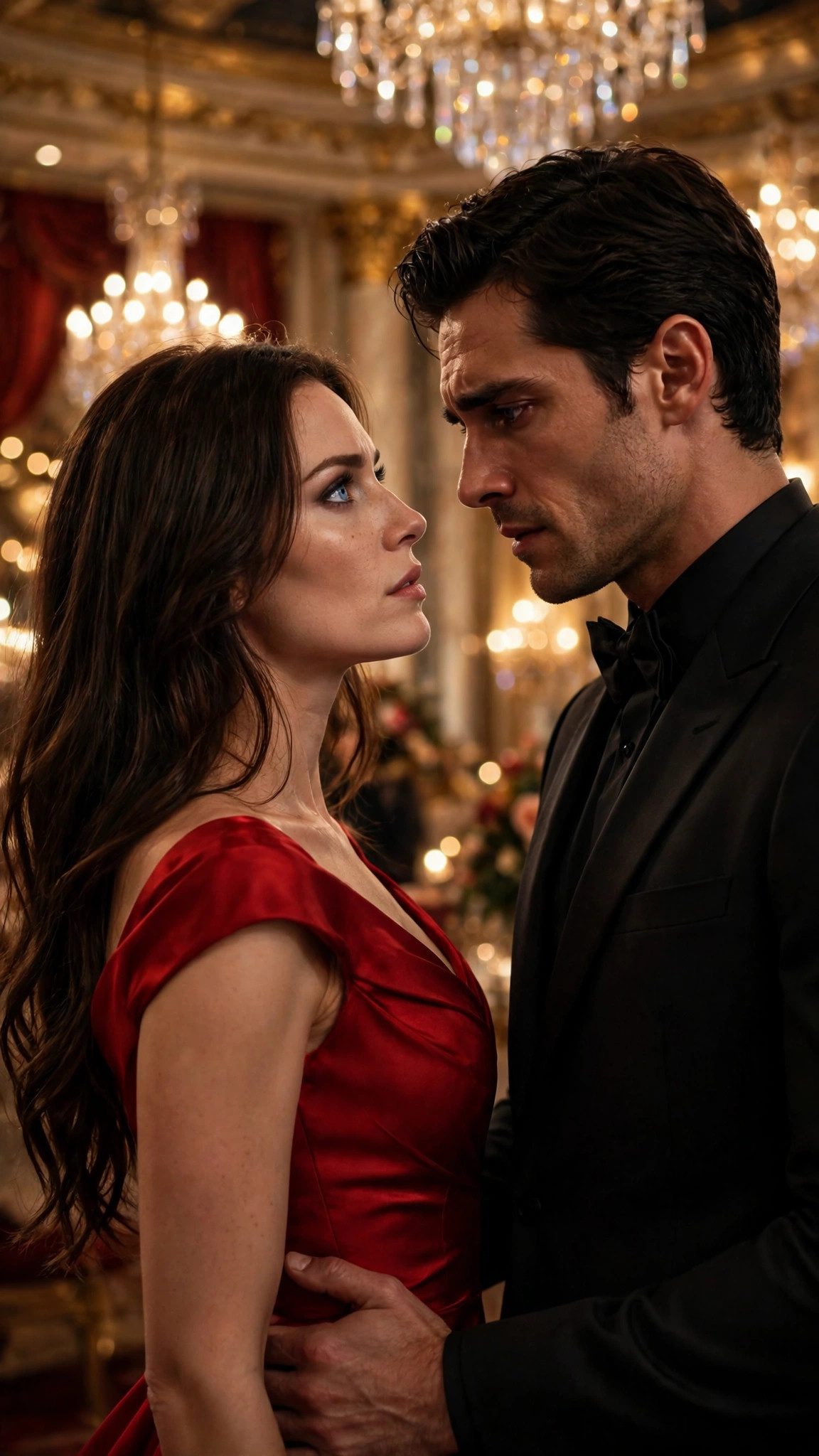
    The Bellagio ballroom was the kind of room that made ordinary people feel like impostors. Chandeliers like frozen waterfalls. A string quartet in the corner. Waiters moving through the crowd with trays of champagne, silent as ghosts. Two hundred of Las Vegas's richest people, all dressed like they had never once worried about a bill.

    Luca and I entered through the main doors, and the room did something I had never seen a room do before. It paused. Conversations faltered. Heads turned. Not because of me — because of him. Luca Moretti did not walk into rooms. He arrived in them, the way weather arrives.

    And then, because I was on his arm in a red dress with my hair up and my chin high, the room looked at me too. I could feel it, the weight of two hundred pairs of eyes, and for one terrible second I wanted to turn around and run back to the car.

    Luca's hand covered mine where it rested on his arm. Just for a second. Just enough pressure to say: I am here.

    "Smile," he murmured. "You look like a woman who has never been happier in her life."

    "That's because I am an excellent liar," I murmured back.

    "No," he said. "That's because for the first time in five years, no one in this room is asking you to be smaller."

    A photographer drifted toward us, and Luca turned me gently toward him, his hand settling at the small of my back. The flash went off. I smiled, and it was not entirely pretend.

    "There," Luca said quietly. "By midnight, that photo will be everywhere Ryan and Vanessa look."

    We moved through the room. Luca introduced me to people whose names I had seen in the news — a casino owner, a hotel magnate, a woman who ran three charities and a fourth one just for fun. Every one of them was polite to me, and every one of them watched Luca's face while they did it, the way you watch a man who could end your evening with a single sentence.

    "You're good at this," I said during a pause, accepting a glass of champagne I did not intend to drink.

    "I have been doing it since I was sixteen," he said. "My father used to bring me to these things and stand me in the corner and tell me to watch. Watch who talks to whom. Watch who leaves with whom. Watch who is afraid. Information is the only currency that never loses its value."

    "And what did you learn from watching me?"

    "That you straighten your spine when you are nervous," he said. "And that you are nervous right now, but you are doing it anyway."

    Before I could answer, the air in the room changed. I felt it before I saw her — the way you feel a storm coming, a pressure dropping somewhere behind your eyes.

    Vanessa Moretti stood across the ballroom in a cream gown, her blonde hair swept up, the pearl necklace glinting at her throat. My pearl necklace. Ryan's mother's pearls, on the neck of my best friend.

    Ryan stood beside her, in a suit that did not fit him as well as it should have, holding a drink too tightly, smiling too hard. He looked smaller than I remembered. Or maybe I had just stopped making him look big.

    Vanessa saw us. I watched her face do three things in three seconds: surprise, fury, and then a smile so bright and false it could have cut glass.

    She crossed the room toward us with Ryan trailing behind her, and the crowd parted for her the way crowds part for beautiful women who are about to cause a scene.

    "Claire!" she cried, arms opening wide, as if we were old friends meeting by chance. "Oh my God, look at you. Red! How brave."

    She leaned in to kiss my cheek, and I could smell her perfume — the same perfume I had given her for her birthday last year.

    "Vanessa," I said, and my voice was steady. I was proud of how steady it was. "You look lovely. Cream suits you. It always did."

    Her smile tightened, just a fraction. "And Luca," she said, turning to him, her voice going soft in a way I recognized, the way she used to talk to him when she wanted something. "You look wonderful. I hardly recognized you without me beside you."

    "Vanessa," Luca said. His voice was level and cool, and it did not invite anything. "I see you brought Ryan. How generous of you to share him."

    Ryan's face went red. "Luca, come on. We don't have to do this here."

    "Do what?" Luca asked mildly. "I am having a conversation with my wife. Or my soon-to-be-ex-wife. The paperwork will be ready next week."

    Vanessa's smile did not move, but her eyes went hard. "Claire," she said, turning back to me, "I hope you're not doing anything foolish. Luca is a complicated man. You wouldn't understand his world. I lived in it for six years, and it nearly broke me."

    "Did it?" I asked. "Or did you break it?"

    The silence that followed was so complete I could hear the string quartet three rooms away.

    Vanessa leaned closer, her voice dropping to a whisper meant only for me. "You think he cares about you? He is using you, Claire. The same way Ryan used you. The same way everyone uses you. You're too successful, too confident, too capable. Men don't want that. They want a woman who needs them."

    I looked at her for a long moment. Ten years of Sundays. Ten years of birthday calls and hospital waiting rooms and shared secrets. Ten years, and this was what had been underneath it all along: a woman who had never once been happy for me.

    "Vanessa," I said, just as quietly, "the difference between you and me is that I never needed a man to feel like a woman. You did. That's why you took mine."

    Her hand came up — I don't know if she meant to slap me or just to push me back, but Luca's hand closed around her wrist before it got anywhere near me. Not hard. Not cruel. Just firm, and final.

    "Don't," he said. One word. Quiet as a closing door.

    Vanessa pulled her wrist free, her face burning. "This isn't over, Luca."

    "It is," he said. "It has been over since the day you chose a man who could not afford you over a man who gave you everything. Go enjoy your evening, Vanessa."

    She turned and walked away, Ryan hurrying after her like a dog on a short leash. The crowd, which had been watching with the open fascination of people at a tennis match, slowly turned back to its champagne.

    My hands were shaking. I hid them by folding them around my glass.

    "Are you all right?" Luca asked, low.

    "No," I said honestly. "But I'm glad I came."

    He looked at me for a moment, and then he did something I did not expect. He took the glass out of my hand, set it on a passing tray, and held out his hand to me.

    "Dance with me," he said.

    "I don't know how to dance," I said.

    "I do," he said. "Follow me."

    The quartet was playing something slow, and Luca led me to the floor, and his hand settled at my waist, and mine on his shoulder, and we moved. He was right — he did know how to dance. He moved like a man who had been taught properly and had never forgotten, and after a few steps, my feet stopped fighting him.

    "You're shaking," he said quietly.

    "I just faced down my best friend in front of two hundred people."

    "You faced down a woman who betrayed you," he corrected. "There is a difference. And you did not raise your voice once."

    "I wanted to."

    "I know. I could see it. That is why it was impressive."

    We danced through the whole song, and then another, and by the third I had stopped counting the steps and started noticing other things: the way his hand fit at my waist. The way he smelled, like cedar and clean soap. The way he looked at me, not at the room, not at the photographers, not at Vanessa across the floor. At me.

    "Luca," I said, and then I stopped, because I did not know what I was going to say.

    "I know," he said, and that was worse, because it meant he knew too.

    The song ended, and I stepped back, suddenly aware of how close we had been standing, and of the fact that my hand was still in his. I pulled away gently and went to the bar for water, needing a moment to breathe, needing a moment to be a woman alone in a crowded room instead of a woman in Luca Moretti's arms.

    I had just lifted the glass to my lips when Ryan appeared beside me.

    "Claire," he said. "Can we talk? Just for a minute. Please."

    He looked worse up close. His tie was loosened. His eyes were bloodshot. He had the look of a man who had been drinking since noon and calling it confidence.

    "There's nothing to talk about, Ryan."

    "There is," he said, and he leaned in, lowering his voice. "I made a mistake. Okay? I made a mistake. Vanessa and I, it's not what you think. It's not… it's not like it was with us. She's not you. She never shuts up about the money, Claire. She wants things. She wants a house in Henderson and a car and a trip to Monaco, and she looks at me like I'm supposed to provide all of it. I can't. I'm drowning."

    I stared at him. "You left me five days ago. Five days. And you're already drowning?"

    "I thought it would feel different," he said. "I thought leaving would feel like freedom. It feels like I cut off my own arm and I'm standing here bleeding, asking you to sew it back on."

    "Ryan," I said, and my voice was colder than I expected, "you told me I made you feel inadequate because I was too successful. You wrote it in a letter. You left it on my nightstand like a receipt. You don't get to come back now and tell me you're drowning in the choices you made."

    "I know," he said. "I know what I wrote. I was a coward. But Claire, I miss you. I miss our life. I miss the way you used to look at me before you stopped."

    I set my glass down carefully, because my hands were shaking again, and I did not want to throw it at him in front of two hundred people.

    "You stopped looking at me first, Ryan," I said. "A long time ago. I just didn't notice, because I was too busy building the life you were living in. Go back to Vanessa. She's your choice. Live with it."

    I turned and walked away from him, back toward Luca, back toward the dance floor, back toward the man who had stood in my parking garage and offered me something no one else had offered me in days: a choice.

    When the music ended, a man approached us. He was in his sixties, silver-haired, with a smile that did not reach his eyes and a suit that cost more than my car.

    "Luca," he said warmly, as if they were old friends. "And who is this lovely creature?"

    "Dominic Falcone," Luca said, and his voice changed, just slightly, going cooler and flatter. "This is Claire Bennett."

    Falcone took my hand and kissed it, his eyes never leaving mine. "A pleasure, my dear. I have heard so much about you. All of it interesting."

    "All of it true, I hope," I said, because I did not like the way he looked at me, like a man appraising something he might want to buy.

    "Oh, I doubt that," Falcone said, smiling. "The truth is always more interesting than what people say. Isn't that right, Luca?"

    "We were just leaving," Luca said, and his hand tightened at my waist.

    "So soon?" Falcone said. "The night is young."

    "The night is old enough," Luca said, and he steered me away, through the crowd, toward the doors.

    In the car on the way home, the silence was different from the silence on the dance floor. It was heavier.

    "Who was that?" I asked.

    "Dominic Falcone," Luca said. "He runs the family that has wanted mine gone for twenty years. He smiles like that when he smells blood."

    "Whose blood?"

    "Anyone's," Luca said. "Tonight, probably mine. He saw you. He saw what happened with Vanessa. He will use it."

    I looked out the window at the lights of the Strip sliding past. "I'm sorry. If I hadn't come—"

    "Don't," Luca said. "You did nothing wrong. Falcone would have found another excuse. He always does."

    He dropped me at my building and walked me to the door, the way a man does at the end of a first date, and I realized with a shock that that was what this had been. A first date. A pretend first date, at a gala, in front of two hundred people and my cheating husband and his cheating wife.

    "Thank you," I said. "For tonight. For the dancing. For stopping her."

    "You don't have to thank me," he said. "I told you. No lies between us. So here is a true one: tonight, for the first time in a long time, I enjoyed myself. That had nothing to do with revenge."

    He leaned down and kissed my cheek, lightly, briefly, and then he was gone, back to the car, back to his world.

    I went upstairs, took off the red dress, and stood in front of the mirror in my slip, looking at the woman staring back at me.

    She did not look like a woman who had been betrayed. She looked like a woman who had just danced with a mafia boss in front of the whole city and won.

    And that frightened me more than anything Vanessa had said all night.

  • Chapter 2: The Rules of Revenge

    Chapter 2: The Rules of Revenge

    Luca chose the restaurant. Of course he did. It was the kind of place with no sign on the door and a host who knew his name, a long room with dark wood and low light, where the tables were far enough apart that no one could hear you unless you wanted them to.

    He was already there when I arrived, sitting at the same booth as the day before, a cup of black coffee in front of him, untouched. He stood when he saw me. I had not expected that. Men like Luca Moretti were not supposed to stand for anyone.

    "You came," he said.

    "I said I would." I slid into the booth across from him. I had chosen my dress carefully that morning, a dark navy sheath, simple and sharp, the kind of dress that said I was not a woman to be pitied. My hair was down. My lipstick was red. If I was going to sit across from a mafia boss and negotiate revenge, I was going to look like a woman who could hold her own.

    The waiter appeared, and Luca ordered for both of us without asking me, which should have annoyed me and somehow did not. "She'll have the salmon," he said. "And bring the good bread."

    "You don't know what I like," I said when the waiter left.

    "I know you haven't eaten a real meal in two days," he said. "I know you drink your coffee black when you're stressed and with cream when you're not. I know you straighten your hair when you have a presentation and leave it down when you don't. Your hair is down today."

    I stared at him. "Have you been watching me?"

    "I have known who you are for years, Claire. Your husband and my wife have been best friends with each other for a decade. I notice things. It is my business to notice things."

    "That is either the most romantic thing anyone has ever said to me or the most terrifying."

    "Both," he said, and for the second time, amusement crossed his face. "Probably both."

    The bread arrived. I tore off a piece because my hands needed something to do.

    "Rules," I said. "You said rules."

    Luca leaned back. "Six weeks. We are seen together in public, often enough that word gets back to Ryan and Vanessa. Dinners. A charity event. The kind of places where people talk. We are warm with each other. We are happy. We are, in every way that matters to an audience, a couple."

    "And in private?"

    "In private, we are two people who were betrayed, having dinner. Nothing more. No pretending between us. That is the first rule: no lies between us. We have both had enough of those."

    I nodded slowly. That, at least, made sense.

    "Second rule," he said. "You can end this at any time. One word, and it stops. No questions, no arguments. The same goes for me."

    "Third rule?"

    "Your father and your job come first. I will not ask you to miss a hospital visit or a meeting for this. And I will not involve your family. Your parents never meet my world unless you decide otherwise."

    "Fourth rule," I said, surprising myself. "No violence. I don't want anyone hurt because my husband is a coward."

    Luca was quiet for a moment. "I can promise you that no one will be hurt on your account," he said carefully. "That is a promise I can keep."

    "And what do you get out of this?" I asked. "Besides the satisfaction?"

    "Vanessa left me for a man who sells software and plays golf on Sundays," he said, and his voice went flat in a way that told me this was the wound. "She told me I was married to my family and my name, and that she was lonely. She was right about the lonely part. I was never home. I was building an empire and I thought providing was the same as being present. It is not. I know that now."

    He looked down at his coffee. "I want her to see what she threw away. And I want to feel, for once, like a man a woman actually chooses. Even if it is pretend. Even if it is only for six weeks."

    Something in my chest shifted. I had come here expecting a cold man with a cold plan. I had not expected honesty.

    "Six weeks," I said. "And then we walk away, and we never speak of it again."

    "Six weeks," he agreed. "And then we walk away."

    We shook on it, across the white tablecloth, like two people signing a contract. His hand was warm and steady, and it swallowed mine completely.

    The salmon arrived, and for the first time in two days, I ate. Really ate. Luca watched me with something that might have been approval.

    "Tell me about your father," he said.

    So I told him. About Robert Bennett, sixty-one years old, a high school history teacher for thirty-five years, a man who still graded papers at the kitchen table and called his students "young citizens." About the heart attack, and the hospital, and my father's stubborn promise to live long enough to meet his grandchildren.

    "He sounds like a good man," Luca said.

    "He is the best man I know," I said. "Which is probably why I married the worst one."

    "Ryan is not the worst man," Luca said, and I looked up, surprised. "He is a weak man. There is a difference. Weak men do the most damage because they never mean to, and so they never stop."

    I thought about that all the way home.

    That afternoon, my phone rang. Maya Chen, finally getting through.

    "Claire Bennett, you are going to tell me everything right now or I am coming to your apartment with ice cream and a crowbar."

    I laughed, and then I told her. All of it. The texts. The photo. The coat. The pearls. The letter. My father. And Luca Moretti, sitting in my parking garage with three black SUVs and an offer.

    There was a long silence on the other end.

    "Okay," Maya said at last. "Okay. First of all, Ryan is dead to me. Second of all, Vanessa is dead to me. Third of all, your father is going to be fine, because he is Robert Bennett and he does not quit. And fourth of all… Claire, are you sure about this Luca thing? He is a mafia boss. An actual mafia boss. People whisper his name."

    "I know what he is," I said. "But Maya, he was the only person yesterday who looked at me like I mattered."

    "Then be careful," she said. "Promise me you'll be careful."

    "I promise."

    That evening, Luca sent a car for me. Not one of the black SUVs — a simple dark sedan, with a driver who opened my door and did not speak unless spoken to. The car took me to a house on the edge of the city, behind high walls and a gate that opened without anyone visible.

    Luca's house was not what I expected. I had imagined something cold and grand, marble and chandeliers. Instead, it was warm. Wood floors. Bookshelves full of actual books, worn at the spines. A kitchen that smelled faintly of garlic and coffee. A photograph on the mantel of a woman with Luca's eyes, smiling in a garden.

    "My mother," Luca said, following my gaze. "She died when I was twenty-four. She was the only person in this family who ever told me no."

    "And your father?"

    "Gone longer. The family was his life, and it killed him the way it kills everyone who gives it everything."

    He poured two glasses of wine and led me out to a terrace overlooking the desert, where the sun was going down in bands of orange and purple.

    "Tomorrow night," he said, "there is a charity gala at the Bellagio. The Moretti Foundation hosts it every year. Ryan and Vanessa will be there. Vanessa never misses it. She likes being photographed."

    My stomach tightened. "Tomorrow?"

    "You don't have to," he said. "Rule two. One word."

    I thought about Vanessa in my coat, smiling at the airport. I thought about Ryan's letter, about being too successful, too confident, too capable. I thought about my father in his hospital bed, telling me to find someone better.

    "No," I said. "I want to go. What do I wear?"

    Luca looked at me, and something in his expression changed, just slightly, like a door opening a crack.

    "Something red," he said. "Vanessa always wears cream. Let her look washed out next to you."

    He walked me back through the house, and on the way I met Enzo Vitale, Luca's right hand, a broad man in his fifties with gray at his temples and kind eyes that did not match the rest of him. He was carrying a stack of files, and when he saw me, he stopped dead.

    "Enzo," Luca said, "this is Claire Bennett."

    Enzo set the files down slowly, like a man handling something fragile. "Mrs. Bennett," he said, and his voice was respectful in a way that made me stand up straighter. "I have heard a great deal about you. All of it good."

    "Thank you," I said, and I meant it, because no one had said anything good about me in days.

    "Enzo has been with my family since before I was born," Luca said as we walked to the door. "He taught me to drive. He also taught me that a man who cannot admit he is wrong will die wrong."

    "Is that why you keep him around?"

    "That is one of the reasons."

    At the door, Luca stopped. "Claire. One more thing. Tomorrow night, Vanessa will try to get to you. She will say something designed to make you feel small. She has done it before, to other women. She is very good at it."

    "And what do I do?"

    "You do nothing," he said. "You smile. You hold my arm. You let her watch you be happy. That is the whole revenge. You do not have to say a single cruel word. Happiness is crueler than any insult, because she cannot argue with it."

    I nodded, and then, before I could think better of it, I said, "Why are you being so kind to me? You don't owe me anything."

    Luca was quiet for a moment, looking out at the desert dark beyond the gate.

    "Because yesterday morning," he said, "I stood in a restaurant and watched a woman I had just met laugh for the first time in a day, and it was the first honest thing I had seen in weeks. My world is full of people who want something from me. You wanted nothing. You just wanted to stop hurting. That is worth being kind to."

    The car took me home through the bright, indifferent city. My mother called while I was in the elevator.

    "Your father sat up today," she said. "He ate half a bowl of soup. The doctor says he is doing better than expected."

    "That's wonderful, Mom."

    "Claire." Her voice dropped. "Are you all right? Really?"

    I thought about lying. I thought about saying I was fine. But my mother had held my father's hand through a heart attack without crying, and she deserved the truth.

    "No," I said. "I'm not all right. But I'm doing something about it. I'll tell you everything when Dad is stronger. I promise."

    "Okay, baby," she said softly. "Okay. Just remember who you are. You are Claire Bennett. You built your whole life with your own two hands. No man gets to take that from you. Not Ryan. Not anyone."

    "I know, Mom. I love you."

    "I love you too."

    The next morning, before the gala, I went to the hospital. My father was sitting up in bed, eating toast with the slow concentration of a man who had been told to take it easy and resented every minute of it.

    "Well, look at you," he said, eyeing my work clothes. "You look like you're going to close a deal."

    "I'm going to a gala tonight," I said, and I sat on the edge of his bed the way I had when I was small. "A charity gala. The Moretti Foundation."

    My father went very still. "The Moretti Foundation," he repeated. "Claire. That's Luca Moretti's family."

    "I know, Dad."

    "And you're going with him."

    It wasn't a question. I nodded anyway.

    My father was quiet for a long moment, looking at his hands. "Your mother told me about the card. About the offer." He looked up at me. "I want you to be careful, baby girl. Men like Luca Moretti don't live in our world. Their world has rules I don't understand."

    "I know that," I said. "But Dad, he's been kinder to me in two days than Ryan was in five years. And it's just a gala. It's just one night."

    My father studied my face the way he used to study my report cards, looking for the truth underneath the grades.

    "Then go," he said at last. "And wear something that makes you feel like yourself. Not like someone trying to impress anyone. Yourself."

    "I will, Dad."

    "And Claire?" He caught my hand as I stood to leave. "Whatever happens tonight, remember: you are not the woman Ryan left. You are the woman he was lucky to have. Don't you ever let him forget it."

    I kissed his forehead and left, and all the way to the office, his words sat in my chest like a warm stone.

    I went home that night and stood in front of my closet for a long time. Then I pulled out the red dress I had bought for a work awards dinner and never worn, because Ryan had said it was "a bit much."

    It was, I decided, exactly enough.

    When the car came for me the next evening, I was ready. Red dress. Hair up. The pearl necklace — no. Not the pearls. Ryan's mother had given me those, and Vanessa was wearing them in the airport photo. I wore nothing around my neck at all, and my collarbones caught the light like something sharp.

    Luca was waiting at the bottom of the steps in a black tuxedo, and when he saw me, he stopped walking.

    "Claire," he said quietly.

    "Is it too much?" I asked.

    "It is perfect," he said, and he offered me his arm. "Shall we go make them regret everything?"

    "Yes," I said, and I took his arm. "Let's."

  • Chapter 1: The Offer in the Parking Garage

    Chapter 1: The Offer in the Parking Garage

    "Why don't you and I get together?"

    The man who said it was standing in my parking garage at nine in the morning, flanked by three black SUVs, looking like he had not slept in days. He wore a tailored black suit and a white shirt with no tie, and he said it the way another man might say, "Let's get coffee," calm and reasonable, as if he had not just proposed the most outrageous thing anyone had ever said to me.

    "Let's see how they feel," Luca Moretti went on, "when the two people they betrayed end up happier without them."

    My name is Claire Bennett, and at 3:17 on a Tuesday afternoon, my life split in half.

    I was standing in a glass conference room on the twenty-second floor of a downtown Las Vegas office building, presenting a campaign to one of our biggest clients, when my phone began vibrating beside my laptop. I ignored it. I had trained myself to ignore it. The client was watching the screen, my boss was watching the client, and I was in the middle of the sentence that was supposed to close the deal.

    The phone vibrated again. And again. And again.

    By the fourth buzz I could feel the room noticing, so I glanced down, just for a second, just to silence it.

    The messages were from my husband, Ryan.

    *Claire, I'm sorry.*
    *I'm leaving with Vanessa.*
    *Please don't come looking for us.*

    I read them three times because the words refused to arrange themselves into sense. Ryan. Leaving. Vanessa. Vanessa Moretti, my best friend of ten years, the woman who had been my maid of honor, who had held my hand in the hospital waiting room when my grandmother died, who had called me every Sunday for a decade.

    Then I opened the photo.

    Ryan was standing inside Harry Reid International Airport with Vanessa, their fingers intertwined, smiling like newlyweds. Vanessa was wearing the cream coat I had bought the week before, the one I had shown her over lunch, the one she had said looked better on me. Around her neck was the pearl necklace Ryan's mother had given me on our wedding day.

    I do not remember finishing the presentation. I do not remember what I said to the client or how I got out of the conference room. I remember the hallway tilting, and the stairwell door, and then I was sitting on the concrete steps between floors with my knees pulled up to my chest, crying until my chest hurt.

    I replayed every dinner. Every argument. Every time Vanessa had hugged me and said, "Claire, Ryan loves you. Don't give up on your marriage." Now I understood why she had always defended him. She had not been defending my marriage. She had been defending her access to it.

    Ryan didn't answer his phone. Vanessa didn't answer hers.

    When I finally got home that evening, half of Ryan's clothes were gone. His suitcase, his razor, his toothbrush, everything. There was a letter on my nightstand, folded neatly, as if neatness could make it kind.

    He wrote that he loved Vanessa. He said being married to me had made him feel inadequate because I was too successful, too confident, too capable. He said he needed a woman who needed him.

    Then came the sentence that made me tear the letter into pieces.

    *Vanessa understands me in a way you never did.*

    Before I could even process it, my mother called.

    "Claire, your father had a heart attack."

    I spent the night at the hospital pretending my marriage hadn't just collapsed, because my father was lying beneath an oxygen tube telling me he planned to live long enough to meet my future children. My mother held his hand and did not cry, and I held her hand and did not tell her that there would be no future children, not with Ryan, not ever again.

    The next morning I returned home exhausted, hollowed out, running on hospital coffee and shock. Three black SUVs were waiting beneath my building.

    Then Luca Moretti stepped out.

    Vanessa's husband.

    Everyone in Las Vegas knew his name. Luca was the head of the Moretti family, a man whose quiet reputation frightened people more than shouting ever could. He did not raise his voice. He did not need to. Rooms went still when he entered them, and men who had never met him lowered their voices when they said his name.

    But that morning, he looked exhausted. There were shadows under his eyes, and his suit, perfect as it was, hung on him like something he had put on in the dark.

    "Your husband ran away with my wife," he said. "We need to talk."

    Twenty minutes later, we were sitting across from each other in a private restaurant booth, a place with white tablecloths and a waiter who did not ask why two strangers were having breakfast at nine in the morning with the faces of people at a funeral.

    "She told me they found true love," Luca said bitterly.

    I almost laughed. "We both married terrible people."

    For the first time, amusement flashed across his face. It was gone in a second, but I saw it, and something in my chest loosened a fraction.

    Then he leaned back in the booth, folded his arms, and looked at me the way a man looks at a problem he has already decided how to solve.

    "Why don't you and I get together?"

    I stared at him. "Are you insane?"

    "No."

    "You want us to date because our spouses cheated with each other?"

    "Yes."

    "That's revenge."

    "Absolutely."

    Despite everything, I laughed. It was the first laugh I had managed since seeing that airport photo, and it came out raw and surprised, like a sound I had forgotten how to make.

    I still told him no.

    Luca stood, reached into his jacket, and placed a black card on the table between us. Just a name and a phone number, in plain silver letters.

    LUCA MORETTI.

    "When you get tired of lying awake wondering where Ryan is and what he's doing with my wife," he said, "call me."

    I did not go back to the office that day. I could not have presented a grocery list, let alone a campaign. I drove home instead, and sat in the underground garage of my own building for twenty minutes with the engine off, staring at the concrete wall, because going upstairs meant walking into the apartment where half of Ryan's life had already been packed away.

    My phone buzzed. Maya Chen, my best friend at work, the only person in the office who had seen my face when I left the conference room.

    *Are you okay? You left so fast. The client signed, by the way. You closed it before you walked out.*

    I stared at the message for a long time. The client had signed. The campaign I had built for six weeks had closed while my marriage was ending in a stairwell. I typed back: *My husband left me for Vanessa. My father had a heart attack. I will be in tomorrow.*

    Maya called within seconds. I let it ring. I could not say it out loud yet. Saying it out loud would make it real in a way the photo had not, and I was not ready for real.

    Upstairs, the apartment was too quiet. Ryan's shoes were gone from the rack by the door. His coffee mug was still in the sink, the one with the chipped handle, and I stood there looking at it for a full minute, furious at a mug for still being here when he was not.

    I went into the bedroom. The closet was a mouth with half its teeth pulled. His suits were gone. His winter coats were gone. The drawer where he kept his watches was empty except for the one I had given him for our third anniversary, a plain silver watch with his initials engraved on the back. He had left that one behind. I picked it up and held it in my palm, and for one wild second I wanted to throw it through the window.

    Instead, I put it in the drawer and closed it.

    On the nightstand, where the letter had been, there was a faint rectangle in the dust. I wiped it away with my sleeve.

    My phone buzzed again. A voicemail this time, from Vanessa. I should not have listened to it. I listened to it twice.

    "Claire, please don't hate me. I never meant for this to happen. Ryan and I, we just… we found something real. I know how this looks. I know I was your best friend. But you have to understand, I was dying in my marriage too. Luca is never there. He is married to his family, to his business, to his name. I was lonely for years. Please try to understand."

    I deleted it. Then I sat on the edge of the bed and cried again, quietly this time, the way you cry when you are too tired to make noise.

    My mother called at six. "Your father is asking for you."

    I drove back to the hospital. The corridors smelled like disinfectant and old coffee. My father was awake, propped up on pillows, his face gray but his eyes clear. My mother sat beside him, holding his hand, her own face drawn tight with a worry she would not name.

    "Dad," I said, and my voice broke on the single word.

    "Come here, baby girl." He patted the bed with his free hand. "Your mother told me about Ryan."

    I had not told her. She had known anyway. Mothers know.

    "He's a fool," my father said, and then he had to stop to breathe, and the oxygen tube hissed softly. "A man who leaves a woman like you for someone else's wife is a fool, Claire. Don't you ever forget that."

    "I won't," I whispered.

    "And Vanessa." He shook his head slowly. "Ten years she sat at our table. Ten years. Some people show you who they are slowly, so you don't notice until it's too late."

    He squeezed my hand, and his grip was weaker than I remembered, and that frightened me more than anything Ryan had done.

    "I am going to live long enough to meet my future grandchildren," he said, stubborn as ever. "So you are going to have to find someone worth having them with. Not Ryan. Someone better."

    I laughed through my tears, because that was my father, bargaining with a heart attack.

    "I'll work on it, Dad."

    "Good." He closed his eyes. "Now go home and sleep. You look terrible."

    I kissed his forehead and drove home through streets lit orange by the Las Vegas night. The city did not care that my life had ended. The billboards still flashed. The traffic still moved. Somewhere above the desert, an airplane was climbing toward the sky, and I wondered, stupidly, if Ryan and Vanessa were on a plane like that one, smiling, holding hands, wearing my coat and my pearls.

    When I got home, I stood in the doorway of the bedroom for a long time. Then I went to the kitchen, poured a glass of water, and sat at the table with Luca Moretti's black card in my hand, turning it over and over.

    A mafia boss. A revenge date. An offer so outrageous I had thought I misheard him.

    And yet.

    Ryan had looked at me for five years and seen a woman who was too much. Too successful. Too confident. Too capable. Vanessa had looked at me for ten years and seen a best friend she could rob blind.

    Luca Moretti had looked at me for twenty minutes and seen a woman who deserved to be happy without them.

    That night, I lay alone in the bed Ryan and I had shared for five years. I kept seeing Vanessa in my coat. Ryan holding her hand. Both of them smiling.

    I kept seeing my father's face in the hospital bed, gray and frightened, telling me he would live long enough to meet my future children. I kept hearing my mother's voice on the phone. I kept hearing Vanessa's voice, ten years of Sundays, telling me Ryan loved me, telling me not to give up.

    Sometime after midnight, I finally sat up.

    Luca's card was still in my purse.

    "This is insane," I whispered.

    Then I dialed.

    The phone rang once.

    Twice.

    A deep voice answered.

    "Claire."

    I froze.

    He already knew it was me.

    "How did you know?" I whispered.

    "Your number has been on my phone since this morning," he said. "I have been waiting for it to light up since I left that restaurant."

    There was a silence on the line, but it was not an empty silence. I could hear him breathing, slow and steady, and somewhere behind him the low murmur of a television, or a radio, turned down so far it was almost nothing.

    "I don't know what I'm doing," I said.

    "Yes, you do," he said. "You are calling the only person in this city who understands exactly how you feel right now."

    "That doesn't make this sane."

    "No," he agreed. "It makes it honest."

    I closed my eyes. The bedroom was dark. The city glowed orange beyond the window. My father's voice was in my head, telling me to find someone better than Ryan. My mother's voice was telling me to be careful. And underneath both of them, quiet and steady, was my own voice, the one I had been ignoring for five years of marriage to a man who needed me to be smaller.

    "What happens now?" I asked.

    "Now," Luca said, "you get some sleep. Tomorrow, we have lunch. We talk about the rules. And then, Claire Bennett, we make your husband and my wife regret every choice they made."

    "Rules," I said. "You have rules for revenge?"

    "I have rules for everything," he said. "It is why I am still alive."

    And then, to my own surprise, I laughed again. A real laugh this time, small but real.

    "Tomorrow," I said. "Lunch."

    "Tomorrow," he said. "Sleep well, Claire."

    He hung up. I set the phone down on the nightstand, lay back against the pillows, and stared at the ceiling. For the first time since 3:17 that Tuesday afternoon, the tight knot in my chest loosened, just a little.

    I had no idea what I was walking into. I only knew that lying awake wondering where Ryan was had already cost me one night, and I was not going to give him another.

  • Chapter 7: Awake

    Chapter 7: Awake

    Spring came to the mountain like a held breath finally let go.

    The snow melted off the fountain first, and then the ice cracked on the pond, and then the crocuses came up along the drive in purple and white, and the house on the hill — which had stood silent and shuttered for two years — filled up with light.

    Victor was gone. He had left that Sunday night in a black car, with two of Sal's men riding beside him to make sure he reached the airport, and a one-way ticket in his pocket, and nothing else. The council had been thorough: his accounts frozen, his properties seized, his deals voided. The Castellanos, finding that their partner had been exiled and their contracts were worth less than the paper they were written on, quietly withdrew from the docks and sent a letter of apology that no one in the family bothered to answer. The senator resigned the following month, citing health reasons, and was never heard from again.

    The money came back slowly, the way a tide comes back — a pier here, a license there, a hotel mortgage paid off, a foundation account refilled, dollar by dollar, until Mr. Patel could look at his ledgers without his hands shaking. It would take years to undo all of it. Dante said he did not mind. "I have years," he said. "I slept for two of them. I'm not wasting another one."

    Dante recovered the way he had walked — one step at a time, and then faster than anyone expected. By March he was walking the grounds without a cane. By April he was swimming in the estate pool, slow, careful laps that left him breathless and grinning. By May, June the physical therapist told him she had nothing left to teach him, and she shook his hand, and she shook mine, and she said, "Take care of him. He'll try to run before he can walk for the rest of his life."

    Tommy's medicine arrived every month in a plain bag, from a man who never gave his name, and the hold on the insurance account disappeared one Friday morning as if it had never existed. The landlord, who had once taped notices above our broken buzzer, now knocked politely and called me Miss Bennett and asked after my brother's health. Six months' rent, paid in advance, has a way of changing a man's manners.

    But I did not go back to our apartment. Not really. I kept it — Tommy kept his room there, and his drawings, and the sketchbook under his pillow — but I spent my days at the estate, and then my nights, and then, one morning in April, I woke up in the east wing and realized I had not thought about the landlord's notice in weeks, and that the pill organizer on the refrigerator had been replaced by a calendar full of things that were not emergencies.

    Mrs. Alvarez taught me to cook.

    Not catering food — not the trays and the chafing dishes and the canapés arranged like soldiers — but real food. The family's food. Her grandmother's recipes, written in a notebook with a cracked spine, in a handwriting that slanted downhill. She taught me to make the roast the way Dante's father had liked it, and the soup Elena asked for when it rained, and the bread that had to rise twice or it wasn't worth eating. "A house is not a house without a kitchen that smells like something," she said. "And a family is not a family without someone to feed it."

    By June, I was running the estate kitchen. Not as a waitress. As its head. I hired two girls from the village, and I paid them properly, and I told them on their first day what Mrs. Alvarez had told me on mine: you carry, you serve, you do not speak unless spoken to. And then, when they had learned that rule, I told them the second rule, the one Mrs. Alvarez had never told anyone: if you see something wrong in this house, you say so. Out loud. To me. To Sal. To Dante. Because silence is how this family almost died.

    And then, in July, Dante did something I had not expected. He bought me a shop.

    Not a big shop. A small one, on the main street of the village at the foot of the mountain, with a cracked tile floor and a window that faced the morning sun and a kitchen barely bigger than a closet. It had been a bakery once, and then a florist's, and then nothing at all for three years, and Dante bought it outright, in my name, and handed me the keys on a Tuesday morning with no ceremony at all.

    "It's yours," he said. "Bennett's. Your name on the window. Your recipes. Your rules. No trays for strangers unless you want them. No dispatcher. No triple overtime in the freezing rain."

    I stood in the empty shop with the keys in my hand, and I cried — not because I was sad, but because for the first time in my life, someone had given me something that was mine, and only mine, and no one could take it away with a phone call or a notice taped above a broken buzzer.

    We opened in August. Mrs. Alvarez came down from the estate every morning for the first week to supervise, and then she declared me competent and went back to her own kitchen, and the village came — at first out of curiosity, and then out of hunger, and then out of habit. Tommy drew the sign for the window himself: BENNETT'S, in letters so careful they looked printed, with a little coffee pot underneath. The catering work came back, too — the dispatchers called again, once they understood that Victor was gone and the name they had been told to blacklist belonged to the woman who ran the Marchetti kitchen — but I only took the jobs I wanted, and I charged what I was worth, and I never again drove through freezing rain for a man who would not give his name.

    On the wall of the shop, next to the register, I hung the yellow note. Framed. The nurse's quick, slanted script: Changed IV bag 6pm per Dr. V. — C. Customers ask about it sometimes, and I tell them it's a reminder. I don't tell them what it reminds me of. Some things are only for the people who were there.

    Tommy came to the estate on weekends. He drew the fountain, and the pines, and Biscuit the cat, who had adopted him the way he had adopted Dante — by sleeping on his chest and refusing to move. Elena read to him in the library, and Sal taught him to play chess, and Dante took him down to the docks one Saturday and showed him the ships, and told him how the family had built them, and how the family was going to build them again, honestly this time.

    "He's good with him," Elena said to me one afternoon, watching them from the library window. "Dante. He never had a son. He never thought he would. And now there's a boy in his house who draws him pictures and beats him at chess, and he doesn't know what to do with himself."

    "He'll figure it out," I said.

    "Yes," Elena said. "He will. Men like my son always figure it out in the end. They just need someone to fall on them first."

    On the last Saturday in June, Dante asked me to walk with him in the garden.

    The garden was Elena's — roses, mostly, and lavender, and a stone path that wound down to a pond where the frogs had come back with the spring. We walked slowly, because Dante still tired easily, and because neither of us was in a hurry. Biscuit followed us at a distance, the way cats do, pretending he wasn't following us at all.

    At the pond, Dante stopped. He looked out at the water for a long moment, and then he turned to me, and he took my hands in his, and his hands were warm and steady, and they did not shake at all.

    "Mia," he said. "I told you once that I would ask you something, and that I would ask it standing. So here I am. Standing."

    He went down on one knee. Right there on the stone path, in the garden, with the roses behind him and the pond in front of him and Biscuit the cat watching from the lavender. And he took a small box out of his pocket, and he opened it, and inside was a ring — a simple gold band, with a single diamond, and an inscription inside it that I would read later, when my hands had stopped shaking.

    "I woke up because you fell on me," he said. "Because a waitress carrying a tray slipped in spilled coffee and landed on a man who had been asleep for two years, and he opened his eyes, and he saw his brother standing in the doorway, and he knew. I owe you my life, Mia. But I don't want to marry you because I owe you. I want to marry you because, in two years of dreams, I never saw my brother — but in three months awake, I have seen your face every single day, and I don't want to spend another day without it. Will you marry me?"

    I looked at him — at the man who had been asleep for two years and had woken up to find his world stolen, and who had taken it back one step at a time, and who was now kneeling in a garden asking a waitress to marry him — and I thought about my mother, and the rules of other people's houses, and the rope thrown down the well, and the three days of pills, and the landlord's notice, and the black car, and the yellow note, and the table set for twenty, and the kiss that had started all of it.

    "Yes," I said. "Yes. Yes."

    He stood up — on his own two feet, without a cane, without anyone holding his arm — and he slipped the ring onto my finger, and he kissed me. Not the way I had kissed him, by accident, in the dark, with monitors shrilling and nurses shouting and a vase of lilies spilling across the floor. But properly. Deliberately. In the sunlight, in the garden, with the roses behind us and the pond in front of us and a cat watching from the lavender.

    And this time, I kissed him back.

    We were married in September, in the garden, under the roses. I wore a simple white dress — not a gown, not a costume, just a dress I had chosen myself, because I had spent enough of my life wearing uniforms other people had picked for me. Dante wore a black suit, and he stood on his own two feet through the entire ceremony, and when the time came for the vows, he looked at me and said, "I was asleep for two years, and I dreamed of nothing. Then a waitress fell on me, and I woke up, and I have been awake ever since. I promise to stay awake, Mia. For you. For Tommy. For this family. For the rest of my life." And I said, "I promise to catch you if you fall," and the whole garden laughed, and Biscuit the cat slept through the entire ceremony on Elena's lap. Elena cried. Sal cried — he denied it afterward, but I saw it. Mrs. Alvarez cooked for two hundred people and then sat down at the head of the table and ate with us, because Dante insisted, and because she had set that table for two years and it was time someone set a place for her. Tommy was the ring bearer, and he drew the whole wedding in his sketchbook, and the drawing now hangs in the library, next to the portraits of the Marchetti men in their dark suits.

    Victor sent a letter. It came from a city far away, in an envelope with no return address. It said only: I am sorry. I don't expect you to believe me. I just wanted you to know. Elena read it once, folded it, and put it in the fire. "He is sorry," she said. "Maybe. But sorry does not undo two years. Let him be sorry somewhere else."

    The family is legitimate now. The shipping company, the hotels, the docks — all of it, clean, on paper, paying taxes, hiring from the village. Dante runs it the way his father dreamed of running it, and I run the kitchen, and Tommy — Tommy is going to be an artist, he says, and then a doctor, and then an artist again, and we let him change his mind as often as he likes, because he has time now. He has all the time in the world.

    Sometimes, late at night, when the house is quiet and the snow is falling on the frozen fountain — or the rain, in summer, soft on the roses — Dante wakes up and reaches for me, and I wake up and reach for him, and he holds me, and he says, "I dreamed I was asleep again."

    "You're awake," I tell him. "You're awake, and I'm here, and the house is full, and the table is set."

    And he kisses me — properly, deliberately, in the dark, with no monitors shrilling and no one shouting — and I think about a tray, and a maid's elbow, and a glass of wine sliding across a table, and a fall that was an accident, and a kiss that was an accident, and a miracle that was not an accident at all.

    I fell on a mafia boss in a two-year coma, and he opened his eyes, and he stared at the brother who had poisoned him, and he chose to live. And then he chose me. And I chose him. And that is the whole story.

    The End.

    THE END

  • Chapter 6: The Council

    Chapter 6: The Council

    On Sunday, at seven o'clock, the black cars began to arrive.

    I watched them from my window in the east wing — one after another, pulling up the long drive through the snow, their headlights sweeping across the frozen fountain. Twenty cars. Twenty men. The capos, the lawyers, the old men. Some I recognized from the portraits in the library, older now, grayer, walking more slowly. Some I had never seen. All of them walked into the house the way men walk into a church: quietly, with their hats in their hands.

    Mrs. Alvarez had been cooking since dawn. The kitchen smelled of roast and rosemary and fresh bread, and the long table in the dining room — the table she had set and cleared every night for two years — was set one final time, with the candles lit and the silver out and twenty places laid with a precision that looked like prayer.

    At eight o'clock, the council sat down.

    Upstairs, in his bedroom, Dante stood in front of the mirror in a black suit, adjusting his tie with hands that had finally stopped shaking. June stood behind him with her arms folded.

    "Forty-seven steps," she said. "From this room to that dining room. No cane. No wall. No one holding your arm. Are you sure?"

    "I'm sure," Dante said.

    "You fall in front of twenty men, and the story of tonight changes," June said.

    "Then I won't fall," Dante said, and he smiled at his reflection — a tired smile, but a real one. "June, I was asleep for two years. I have already fallen as far as a man can fall. There is nowhere left to fall to."

    Elena came in then, and she straightened his tie herself, the way she had done when he was a boy, and she looked at her son — standing, dressed, alive — and her eyes filled, and she said, "Your father would be proud of you tonight."

    "Would he?" Dante said.

    "He would," Elena said. "Now go. They're waiting. And Dante — whatever happens in that room, remember who you are. You are the head of this family. You are the man who woke up. Act like it."

    Dante nodded. He walked to the door. He paused, his hand on the frame, and he looked back at his mother, and at June, and at Sal, who was waiting in the hallway with his arms folded and his face unreadable.

    "Forty-seven steps," Dante said.

    "Forty-seven steps," Sal agreed. "I'll count them with you."

    I stood in the doorway with Sal, watching them take their seats. They were old men, most of them, with lined faces and heavy rings and the careful eyes of men who had survived by never speaking first. At the head of the table sat an empty chair — Dante's father's chair, left empty for two years. Beside it sat Elena, straight-backed in black, her knitting nowhere in sight. And at the far end, near the door, sat Victor, in a charcoal suit, smiling the way a man smiles when he has already decided how the evening will end.

    The doors at the far end of the dining room opened.

    Dante walked in.

    He walked on his own two feet. No wheelchair. No cane. No one holding his arm. June had wanted him to use a cane, and he had refused, and he had walked the length of the hallway from his bedroom to the dining room — forty-seven steps, I counted them later, because I could not stop counting — and he walked into the room full of twenty men who had not seen him standing in two years, and the room went silent, and every man at that table rose to his feet.

    "Dante," said the oldest man at the table, a capo named Aldo Ferro, whose hands shook when he stood. "Dante Marchetti. God be praised."

    "God be praised," Dante said, and he walked to the head of the table, to his father's chair, and he stood behind it, and he looked down the length of the table at the twenty men, and at his mother, and at Sal, and at me, standing in the doorway.

    "Thank you for coming," he said. His voice was stronger than it had ever been — not hoarse anymore, not a whisper, but a man's voice, a leader's voice, the voice I had heard in the bedroom the night he woke up, the voice that could stop a room full of shouting people dead. "Two years ago, I fell at this table. Tonight, I am standing at it. And I am standing here to tell you what was done to me, and who did it, and what I intend to do about it."

    He nodded to Sal. Sal stepped forward and laid the evidence on the table, piece by piece, the way a dealer lays out cards.

    First, the yellow note. Sal held it up, and read it aloud, and passed it down the table, hand to hand, so every man could see the nurse's quick, slanted script: Changed IV bag 6pm per Dr. V. — C.

    "There is no Dr. V.," Dante said. "There never was. There is only my brother, who called himself a doctor on the telephone, and a nurse who believed him, and a poison that kept me asleep for two years."

    Carla Reyes came in then, escorted by one of Sal's men, her hands shaking, her face white. She stood at the end of the table and told them everything — the phone calls, the envelopes, the bags, the eighteen months. She cried when she spoke, and she did not stop crying, and not one man at that table looked away from her.

    Then Rosa came in, with her son beside her, and she told them about the men in the loose jackets, and the service entrance, and the night she was told to keep everyone out of the room. And her son stood beside her with his hand on her shoulder, and he did not cry, and he did not look away either.

    Then Mr. Patel came in with his ledgers, and he walked the council through the numbers — the forty-one million dollars, the piers, the licenses, the senator, the foundation. He read each figure in a voice that got quieter the worse it got, and by the time he finished, the room was so silent I could hear the candles burning.

    Then Dr. Ortiz came in with the vial, and he told them about the sedative, and the dose, and what it would have done, and how the bag from last night had been disposed of fifteen minutes after it was hung.

    And then Dante looked down the table at his brother, and he said, "Victor. Do you have anything to say?"

    Victor stood up. He was still smiling. It was the most terrible smile I had ever seen — a smile that had been rehearsed in a mirror for two years, and that had never once reached his eyes.

    "Brother," he said, "you've been asleep for two years. You're confused. You're listening to a nurse who was stealing from the house, and a maid who was paid to lie, and an accountant who can't add. These people —" he waved a hand at Carla, at Rosa, at Mr. Patel, at me, standing in the doorway — "these people are using you. They want money. They want revenge. They want—"

    "They want the truth," Dante said. "And the truth is in your own hand."

    He nodded to Sal. Sal laid a second piece of paper on the table — a bank statement, with Victor's name on it, and a transfer of two thousand dollars a month to a nurse named Carla Reyes, and a transfer of four hundred thousand dollars to a consulting firm with one employee and no office.

    Victor's smile faltered. Just for a second. Just long enough for every man at the table to see it.

    "Where did you get that?" Victor said, and his voice was no longer warm. "Who gave you that?"

    "My brother gave it to me," Dante said. "By being careless. By being greedy. By believing I would never wake up." He stepped around the table, slowly, on his own two feet, and walked the length of the room toward his brother, and every man at the table watched him come, and no one moved, and no one spoke. "Two years, Victor. Two years, you stood in my doorway and waited for me to die. Two years, you sold my family's docks to our enemies. Two years, you emptied my father's foundation. And last night — last night you were going to finish it. One more dose. One more bag. And then the papers, and the signatures, and the family would have been yours."

    Victor's face had gone white. "Dante, listen to me—"

    "No," Dante said. "You listen to me. I have dreamed for two years. And in those dreams, I never saw my little brother. Do you know why? Because my little brother died a long time ago. The boy who followed me everywhere, who wore my jackets, who wanted to be me — he died the day our father chose me to lead this family. And what replaced him was a man who would poison his own blood for money. So I am not speaking to my brother tonight. I am speaking to a stranger. And I am telling that stranger what the family has decided."

    He turned to the council. "Gentlemen," he said. "I put it to you. Victor Marchetti poisoned me. He stole from this family. He sold our docks to the Castellanos. He emptied our father's foundation. I ask you — what is the family's judgment?"

    The silence lasted one heartbeat. Two. Three.

    Then Aldo Ferro, the oldest man at the table, the capo with the shaking hands, rose to his feet. "The family has heard the evidence," he said, and his voice was old and heavy, like a door closing. "The family has heard the witnesses. And the family finds that Victor Marchetti has betrayed his blood, his brother, and his name. He is stripped of his position. He is stripped of his share. His assets are seized. His deals are void. And he is exiled from this family, from this house, and from this city, on pain of death. He leaves tonight. He does not come back."

    Victor stared at him. "You can't—" he began. "I am a Marchetti—"

    "You were a Marchetti," Aldo said. "Not anymore."

    Victor turned to the table, to the twenty men, looking for one friendly face, one ally, one man who would speak for him. He found none. He turned to his mother. "Mama," he said, and his voice cracked, and for one second he sounded like a boy again. "Mama, please."

    Elena looked at him. She did not rise. She did not reach for him. She looked at him the way she had looked at me on the first day — turning him over, checking for flaws, deciding what he was worth.

    "I have two sons," she said. "One of them is standing at the head of this table. The other one died a long time ago, and I have been grieving him for years. Go, Victor. Go, and do not come back. And pray that God is kinder to you than you were to your brother."

    Victor stood there for a long moment, his drink still in his hand — no, there was no drink. There was nothing in his hands at all. He stood empty-handed in the middle of the room he had run for two years, and he looked at his brother, and he looked at me, standing in the doorway, and the look in his eyes was the look of a man memorizing a face for later — but this time, there would be no later.

    "Fine," he said, very quietly. "Fine. Take it all. Take the house, take the family, take the girl." He looked at Dante. "But remember this, brother. You woke up because a waitress fell on you. A waitress. That's your miracle. That's what saved you. Not your strength. Not your family. A girl carrying a tray."

    "I know," Dante said. "And I will spend the rest of my life being grateful for it. That's the difference between us, Victor. I know what I'm worth. You never did."

    Sal's men stepped forward and took Victor by the arms — not roughly, but firmly, the way men escort someone who is no longer welcome — and they walked him out of the dining room, past the long table, past the candles, past the twenty men who did not watch him go. The door closed behind him. The house exhaled.

    Dante stood at the head of the table, looking down its length at the twenty men, at his mother, at Sal, at me. And then he did something no one expected. He pulled out his father's chair, and he sat down in it, and he said, "Mrs. Alvarez. Bring the dinner."

    Mrs. Alvarez, who had been standing in the kitchen doorway with tears running down her face, laughed — actually laughed, a sound like a door opening — and she turned and shouted into the kitchen, and the staff flooded in with trays, and the candles burned, and the silver gleamed, and for the first time in two years, the table set for twenty was full.

    I stood in the doorway, watching them eat, watching them talk, watching the old men lean across the table to clasp Dante's hand, and I felt Sal come to stand beside me.

    "You did this," he said quietly. "You know that, don't you? A girl carrying a tray."

    "I fell," I said.

    "You fell," Sal agreed, "and the whole world changed. That's how it works, sometimes. The smallest thing. A glass of wine. A maid's elbow. A kiss." He looked at me. "He's going to ask you something, you know. Soon. And I want you to know — whatever you say, this family will take care of you and your brother. That's a promise. From me, and from him."

    I looked across the room at Dante, sitting at the head of the table, laughing at something Aldo had said, the candlelight moving across his face, and I thought about the night I had fallen on him, and the morning I had woken Tommy up coughing, and the landlord's notice, and the three days of pills, and the rope thrown down the well.

    And I thought: I am not a waitress anymore. I am a witness. And the truth has been told. And the table is full. And whatever he asks me, I already know my answer.

  • Chapter 5: The Table Set for Twenty

    Chapter 5: The Table Set for Twenty

    The money was worse than anyone had feared.

    Sal brought the accountant on the third day — a nervous little man named Mr. Patel who had done the family's books for twenty years and who had been waiting two years for someone to ask him the questions he had been too frightened to answer.

    We sat in the library, a room lined with leather and lamplight, and Mr. Patel opened his ledgers on the long table and walked us through it, page by page, in a voice that got quieter the worse the numbers got.

    "Forty-one million dollars," he said. "Moved out of the shipping company in the last twenty months. Through shell companies in Panama and Cyprus. Some of it came back as loans. Most of it didn't come back at all."

    "And the docks?" Dante asked. He was sitting in a wheelchair now — June's orders, not his preference — and his hands were folded in his lap, and his face was very still.

    "Pier Nine is gone," Mr. Patel said. "Sold to a Castellano holding company for a third of its value. Pier Eleven is under contract. The import licenses for the southern routes were transferred to a firm that doesn't exist on paper. And the senator — the one whose car you saw — he was paid four hundred thousand dollars over eighteen months, in cash, through a consulting firm that has one employee and no office."

    "Four hundred thousand," Dante repeated. "To look the other way while my brother sold my family's docks to our enemies."

    "There's more," Mr. Patel said, and he turned a page, and his hands were shaking. "The hotels. Two of them have mortgages they never had before. The money went to a casino in Atlantic City that Victor owns through a cousin. And the foundation — the children's hospital foundation your father started — Victor emptied it. Three million dollars. Gone."

    Elena, who had been sitting by the window with her knitting, set her needles down. "The children's hospital," she said, very quietly. "Your father built that foundation with his own hands. He put his name on it. And your brother emptied it."

    "He emptied everything," Sal said. "That's the pattern. He wasn't running the family. He was liquidating it. He was selling it off as fast as he could, because he knew — he always knew — that the day you woke up, it was over. So he took what he could take, as fast as he could take it, and he planned to be gone before anyone added it up."

    Dante was quiet for a long time. The fire crackled in the library fireplace. The snow fell outside the tall windows. And then Dante said, in a voice so calm it frightened me more than shouting would have, "Then we call the council."

    "The council?" Mr. Patel said.

    "The family council," Dante said. "The twenty men. The capos, the lawyers, the old men. Mrs. Alvarez has been setting that table for two years, and nobody has come. It's time somebody came."

    "The council won't meet without—" Sal began.

    "They'll meet if I call them," Dante said. "I'm the head of this family. I'm awake. And I have something to show them." He looked at me. "Mia. The note. Carla. The ledgers. That's the case. We lay it out on that table, in front of twenty men, and we let them decide what happens to my brother."

    "And if they decide to protect him?" I asked.

    "Then they'll have to explain it to my mother," Dante said, and Elena picked up her knitting needles again, and the click of them sounded, in that quiet room, like a countdown.

    Rosa talked on the fourth day.

    She came to my room at dawn, before the house was awake, and she knocked so softly I almost didn't hear her. She was a small woman with graying hair and hands red from years of hot water, and she had been crying, and she had brought her son with her — a boy of seventeen, tall and frightened, standing behind her in the hallway like a shadow.

    "They came to my house last night," she said. "Two men. They didn't hurt us. They just stood in my kitchen and told my son about the schools he would never get into, and the jobs he would never get, if his mother remembered things that never happened. They were very polite. They were very clear."

    "I'm sorry," I said. "I never meant—"

    "You didn't do anything," Rosa said. "I did. The night you fell — I bumped you on purpose. Not to hurt you. To keep you out of that room. Victor's men told me to keep everyone out of that room that night. They said the boss was getting his last dose, and no one was to disturb him. I thought — I thought they meant the doctors. I thought they meant medicine. I didn't know they meant murder."

    Her son put a hand on her shoulder. "Tell them, Mama," he said. "Tell them everything."

    So she did. She told us about the men in the loose jackets who had been coming to the house for months, always at night, always through the service entrance. She told us about the phone calls Victor made from the study, about the envelopes of cash, about the night she saw Carla Reyes crying in the laundry room with an empty IV bag in her hands. And she told us about the senator — how Victor had entertained him in the dining room, at the long table, with the candles lit and the silver out, and how the senator had left with a briefcase that was heavier going out than coming in.

    "Will you tell the council?" Dante asked her.

    Rosa looked at her son. Her son nodded. "Yes," she said. "I'll tell them. I'm done being afraid."

    That night, Dante walked twenty steps.

    June had set up the parallel bars in the library, and the whole household gathered — Elena, Sal, Mrs. Alvarez, Rosa, the nurses, even the tabby cat with the torn ear, who sat on the windowsill and watched with the air of a creature who had seen everything and was mildly impressed. Dante gripped the bars, hauled himself up, and walked. One step. Two. Five. Ten. Fifteen. Twenty. His legs shook, his face was white with effort, and his arms trembled so hard the bars rattled — but he did not stop, and he did not fall, and when he reached the end of the bars he turned, slowly, and walked back.

    "Twenty steps," June said, and her voice was rough with pride. "Tomorrow, thirty."

    Dante lowered himself into his chair, breathing hard, sweat running down his face. He looked at me across the room, and he smiled — the same small, tired smile I had seen the first day — and he said, "By the time the council meets, Mia, I will walk into that dining room on my own two feet."

    Later, after the house had gone quiet, I found him in the library, sitting by the fire in his wheelchair, staring into the flames. The cat, Biscuit — Elena had told me his name that afternoon, and that he had been Dante's father's cat, and that he had slept on Dante's bed every night for two years, waiting — was curled on his lap, purring.

    "Can't sleep?" I asked.

    "Two years of sleep is enough for one lifetime," he said. "Sit with me."

    I sat. The fire crackled. Biscuit purred. Outside, the snow fell on the frozen fountain.

    "Tell me about your life," Dante said. "Before the trays. Before the fall. Who is Mia Bennett when she's not carrying dinner into other people's houses?"

    So I told him. I told him about my mother, and the rules of other people's houses, and the diner, and Denise, and Tommy's drawings, and the landlord's notice, and the pill organizer on the refrigerator. I told him about the night our mother died, and how I had held Tommy's hand in the hospital corridor and promised him that I would never let anything happen to him, and how I had been keeping that promise ever since, one tray at a time.

    He listened the way Elena listened — without interrupting, without looking away, as if my ordinary life were the most interesting thing he had heard in two years.

    "You're braver than I am," he said, when I finished. "I had a family and a fortune and an army, and I still let my brother put me to sleep. You had nothing, and you kept a boy alive on trays and tips."

    "I had Tommy," I said. "That's not nothing."

    "No," he said. "That's everything." He reached out, and his hand found mine on the arm of my chair, and his fingers closed around mine — warm, steady, no longer shaking. "When this is over, Mia — when the council has met, and Victor has answered for what he did — I'm going to ask you something. And I want you to know, before I ask it, that you can say no. That whatever you say, Tommy's medicine is paid for, and your rent is paid for, and you will never carry another tray for another stranger unless you want to."

    "Ask me now," I said, before I could lose my nerve. "Don't make me wait for it."

    He looked at me, and the firelight moved across his face, and Biscuit purred on his lap, and he said, "Not yet. Not until I'm standing. A man should ask that question on his feet."

    I did not know what question he meant. But my heart knew. My heart had known since the moment his eyes opened and looked past me at his brother, and I had understood that I was not looking at a victim. I was looking at a man who had been wronged, and who intended to set it right, and who had chosen me — a waitress, a girl with a tray — to stand beside him while he did it.

    The next morning, my phone rang. It was the dispatcher — the metronome voice — and she was calling to tell me that the estate job was finished, and that there was no more work for me, and that she was sorry, but the clients had complained.

    "Complained?" I said. "About what?"

    "They didn't say," she said, and the metronome skipped a beat, the way it had skipped when I asked about the research team. "They just said they don't want you back. And Mia — I shouldn't tell you this, but the other dispatchers got the same call. All of them. Nobody's going to book you for a while."

    I understood. Victor had not needed to touch me. He had only needed to touch my name. In a world where I lived on trays and tips, my name was my livelihood, and he had poisoned it the same way he had poisoned his brother — quietly, through channels, with money changing hands in rooms I would never see.

    I sat on the edge of the four-poster bed and stared at my phone, and I thought about the diner, and Denise, and whether Victor's reach extended that far, and I felt the walls closing in the way they had closed in the night my mother died.

    Elena found me there an hour later. She did not knock. She simply came in, sat down on the bed beside me, and took my hands in hers — the same cold, strong hands that had held mine the first day.

    "He took your work," she said. It was not a question.

    "Yes," I said.

    "Good," she said.

    "Good?" I said.

    "Good," Elena said, "because now you know what he is. He is a man who fights women and children because he is afraid to fight men. My husband used to say that you can tell everything about a man by who he chooses to frighten. A strong man frightens his enemies. A weak man frightens waitresses." She squeezed my hands. "You are not afraid of him, are you?"

    "I am terrified of him," I said, honestly.

    "Good," she said again. "Terror is useful. It keeps you awake. It keeps you careful. And it reminds you why you're fighting." She stood up, smoothing her shawl. "Come. Dante is walking today. Thirty steps, June says. He wants you there to count them."

    I went. Dante walked thirty steps, and then thirty-one, because he refused to stop on an even number when he was angry, and June pretended not to notice, and the whole household pretended not to notice, and Biscuit the cat watched from the windowsill with the air of a creature who had seen everything and was mildly impressed.

    Afterward, Elena took me into the library and showed me the portraits — generation after generation of Marchetti men in dark suits, their eyes following me around the room.

    "That one," she said, pointing to a portrait of a young man with Dante's jaw and Victor's smile, "is Dante's grandfather. He came to this country with nothing but a suitcase and a knife, and he built all of this. And that one is Dante's father. He spent his life trying to make the family legitimate. He died believing his son would finish the job." She looked at me. "Dante will finish it. But he will need someone beside him who is not afraid of this house, and not afraid of this family, and not afraid of him. Do you understand what I am telling you, child?"

    "I think so," I said.

    "Good," Elena said. "Then stop counting your pills and your rent, and start counting your steps. You're walking with him now."

    The next morning, the summons went out.

    Sal's men delivered them by hand, to twenty addresses across three states: the capos, the lawyers, the old men. A single sheet of heavy paper, in Elena's handwriting, because Dante had insisted his mother write it. It said only this: The head of the Marchetti family is awake. The council will meet on Sunday, at eight o'clock, in the dining room. The table is set. Come.

    By noon, the replies had started coming back. Yes. Yes. Yes. Twenty yeses, one after another, like a tide coming in.

    And in the study, behind a door I was not supposed to hear through, Victor was on the phone, his voice low and fast, saying words I could not make out — but I could hear the fear in them, clear as a bell.

    The council was coming. The table was set. And for the first time in two years, the house on the hill was going to be full.

  • Chapter 4: The Yellow Note

    Chapter 4: The Yellow Note

    Dr. Ortiz came back at four o'clock with a face like a man who had just read his own obituary.

    He closed the door of Dante's room behind him, checked twice that it was shut, and then he stood there holding a small plastic vial as if it might bite him.

    "The IV bag," he said. "I tested it myself. Twice. I didn't trust the lab. I didn't trust anyone in this house to run it, so I ran it in my own kit, in my car, like a criminal."

    "What did you find?" Dante asked. He was sitting up again, stronger than the day before, his color better, his voice less like sandpaper.

    "A sedative," Dr. Ortiz said. "A heavy one. Midazolam, mixed with something else I can't identify yet — something that keeps a patient under without suppressing the breathing enough to trigger the alarms. In the dose that bag would have delivered over twelve hours, it would have kept you asleep for another week. In a slightly larger dose, it would have stopped your heart so quietly that the monitors would have called it natural causes."

    "And the bag from last night?" Sal asked.

    "Gone," Dr. Ortiz said. "Disposed of, per protocol, at six forty-five. By Carla Reyes. Fifteen minutes after she hung the new one."

    "The same Carla who wrote the yellow note," I said.

    "The same Carla," Dr. Ortiz said, and he looked at me as if he were seeing me for the first time. "Miss Bennett, do you understand what you are holding in your pocket? That note is the only piece of paper in this house that connects Victor Marchetti to the poison in his brother's veins. Without it, we have a sedative in a bag and a nurse who says she was following a doctor's orders. With it, we have a pattern. A handwriting sample. A time. A name that doesn't exist."

    "Then we use it," Dante said.

    "We use it carefully," Sal said. "Victor has been running this house for two years. The staff, the phones, the gatehouse — half of them report to him. If he knows we have the note, the note disappears, and so does Carla, and so does the girl." He looked at me. "No offense, Miss Bennett."

    "None taken," I said, although my stomach had gone cold.

    "Then what do we do?" Dante asked.

    "We build the case before we show it to anyone," Sal said. "We flip Carla. We follow the money. We find out who supplied the drug, and who paid for it, and how long this has been going on. And we do it quietly, while Victor thinks his brother is still too weak to be a problem."

    Victor, as if summoned by the sound of his own name, chose that exact moment to knock on the door.

    He came in carrying flowers — white lilies, the same as the ones on the table by the door — and a smile so warm and so practiced that for one terrible second I almost believed it.

    "Brother," he said. "You look better. The color is coming back. The doctors say it's a miracle."

    "Do they?" Dante said.

    "They do," Victor said, and he set the lilies down and pulled a chair to the side of the bed, the way a loving brother would. "I came to tell you the good news. The council is meeting next week. The family is so relieved, Dante. Everyone has been praying. The capos have been calling all morning. They want to see you. They want to know you're really back."

    "Do they?" Dante said again.

    "Of course they do," Victor said. "And I want you to know — whatever you need, whatever the doctors say, it's done. You just rest. You just get strong. I'll handle everything. The business, the family, the house. The way I have for two years."

    His eyes flicked to me, standing by the window, and the smile did not move, but something behind it did. "And Miss Bennett," he said. "I hear you're staying. How kind. How generous of my brother. I do hope you'll be comfortable. This is a big house, and accidents happen in big houses. A girl could get lost. A girl could fall."

    "She's not going to fall," Dante said. "She's staying in the east wing, next to my mother's rooms. Sal's men are on the doors. You won't need to worry about her, Victor."

    "Oh, I'm not worried," Victor said, and he rose, smoothing his suit. "I'm delighted. Truly. A miracle worker in the house. What a blessing." He paused at the door, his hand on the frame, and looked back at his brother. "Rest well, Dante. We have so much to catch up on."

    The door closed. The room exhaled.

    "He's frightened," Elena said from her chair. She had not moved during the whole visit, and her knitting needles had not stopped once. "I have known that boy since he was born, and I know when he is frightened. He came here to see if Dante remembers. And to see if the girl remembers."

    "I remember everything," Dante said.

    "Good," Elena said. "Then remember this, too. Your brother was not always like this. When you were boys, he followed you everywhere. He wore your jackets. He copied your walk. He wanted to be you so badly it made his teeth hurt. Your father used to say that Victor loved you too much, and that too much love, left to rot, turns into something else."

    "What did it turn into?" I asked, before I could stop myself.

    Elena's needles stopped. "Envy," she said. "And then hunger. And then, when your father chose Dante to lead the family and not him, it turned into a plan."

    That night, I moved into the east wing.

    My room was bigger than our entire apartment. It had a four-poster bed and a fireplace and a window that looked out over the frozen fountain, and a bathroom with a tub deep enough to drown in. Mrs. Alvarez brought me fresh towels herself, and a tray of soup, and stood in the doorway for a long moment looking at me the way Elena had looked at me — turning me over, checking for flaws.

    "You're the girl who woke him," she said.

    "Yes, ma'am."

    "My husband died in that bed," she said, so quietly I almost didn't hear her. "Not that bed. A bed like it. In a hospital, twenty years ago. He went to sleep and he never woke up. I have set that table for twenty people every night for two years, and every night I have cleared it, and every night I have thought — this family is finished." She set the tray down. "You woke him. Whatever happens now, you woke him. So you'll eat, and you'll sleep, and if anyone in this house gives you trouble, you come to me. Do you understand?"

    "Yes, ma'am," I said. "Thank you."

    She nodded once, and left, and I sat on the four-poster bed in my uniform and ate soup out of a porcelain bowl, and I thought about Tommy, and his pills, and the black car that had followed me halfway home the night before.

    The next morning, Sal took me to see Carla Reyes.

    She was a small woman, forty or so, with tired eyes and a nurse's practical shoes, and she was sitting in the estate's laundry room with a cup of tea gone cold in her hands, crying without making any sound at all.

    "I didn't know," she said, before Sal had even asked her anything. "I swear to God, I didn't know what was in those bags. Dr. V. — he called himself Dr. V. on the phone. He said he was a consultant from Geneva. He said the medication was a new protocol, and that the family had approved it, and that I was never to discuss it with anyone, not even Dr. Ortiz. He paid me in cash. In envelopes. Left in my locker."

    "How much?" Sal asked.

    "Two thousand a month," Carla whispered. "My daughter is in college. My husband lost his job. Two thousand a month was the difference between keeping the house and losing it. I didn't ask what was in the bags. I didn't want to know. And then last night, when the man woke up, I understood. I understood what I had been doing for eighteen months."

    "Will you help us?" Dante asked. He had insisted on coming downstairs for this, leaning on Sal's arm, his face pale but his eyes steady. "Will you tell the truth, Carla? All of it? To the family council?"

    Carla looked at him — really looked at him, the man she had been keeping asleep for eighteen months — and her face crumpled.

    "Yes," she whispered. "Yes. I'll tell them everything. I'm sorry. God forgive me, I'm sorry."

    Dante reached out and took her hand. His hand was still shaking, but his grip was firm. "Then you're forgiven," he said. "And you're protected. Sal's men will watch your house tonight. Your daughter, too. No one will touch you. I promise you that."

    As we walked back upstairs, Dante leaning heavily on Sal, he looked at me and said, "One piece down. Now the money."

    "The money?" I said.

    "Victor didn't pay for the drug with his own money," Dante said. "He paid for it with family money. And family money leaves a trail. Sal — I want the accounts. All of them. The shipping company, the hotels, the docks. I want to know exactly how much my brother has stolen from me while I was asleep."

    Sal nodded. "It'll take a few days. The books are… creative."

    "Then take a few days," Dante said. "But take them fast. Because Victor knows I'm awake now, and a frightened man with two years of theft to hide is the most dangerous animal in the world."

    The next afternoon, I watched Dante take his first steps.

    It was not dramatic. There was no music, no crowd, no applause. Just a physical therapist named June, a woman built like a fireplug with hands like warm iron, and a parallel bar set up in the middle of his bedroom, and Dante gripping that bar so hard his knuckles went white, and his legs shaking like a newborn foal's as he hauled himself upright for the first time in two years.

    "Easy," June said. "Easy. Your body forgot how to be a body. We're going to remind it, one inch at a time."

    Dante's face was soaked with sweat by the third step. His arms trembled. His breath came in ragged gasps. But he did not stop. He took four steps, and then five, and then his legs gave out and June caught him under the arms and lowered him back into the chair, and he laughed — actually laughed, a hoarse, rusted sound, like a door opening for the first time in years.

    "Five steps," he said, looking at me. "Two years asleep, and I can walk five steps. Did you see that, Mia?"

    "I saw it," I said, and my throat was tight, because I had never watched a man come back from the dead before, one inch at a time.

    "Tomorrow, ten," he said. "And the day after that, twenty. And by the time the council meets, I will walk into that dining room on my own two feet, and my brother will see me coming."

    June packed up her bars and her bands and left a sheet of exercises on the bedside table. As she passed me in the doorway, she paused. "You're the girl," she said. "The one who woke him."

    "Yes," I said.

    "Then stay close to him," June said, very quietly. "Men who come back from the dead have a habit of trying to run before they can walk, and this one is worse than most. He'll push too hard. He'll fall. Someone needs to be there to catch him."

    "I will," I said, and I meant it, although I did not yet know how much it would cost me.

    That evening, my phone rang. It was the pharmacy — Tommy's pharmacy, the one on the corner with the green cross and the pharmacist who knew my name and Tommy's face and the exact sound of my voice when I was counting pills.

    "Miss Bennett," the pharmacist said, and his voice was careful in a way I had never heard it be careful before. "I'm calling about your brother's prescription. There's been a flag on the account. A prior authorization hold. I've never seen this hold before. It came from the insurance company this morning, and it says the medication is under review, and I can't fill it until the review clears."

    "Under review?" I said. "For how long?"

    "I don't know," he said. "Days. Maybe weeks. I've called twice. No one will tell me anything."

    Three days of pills. I did the math in my head, the way I did it every morning, and this time the math came out different, because three days was no longer three days. Three days was a countdown.

    I stood in the hallway with the phone against my ear, and I understood, with a clarity that made my hands stop shaking and my spine go straight, that this was Victor. This was the brother in the doorway, reaching past the gates and the guards and the mountains, reaching all the way into a corner pharmacy in my neighborhood, and putting his hand around my little brother's throat.

    I went to find Sal. I found him in the kitchen with Mrs. Alvarez, drinking coffee out of a chipped mug, and I told him what the pharmacist had said, and I watched his face go still in the way it had gone still the night Dante woke up.

    "He's testing us," Sal said. "He wants to see if you'll run home to fix it. If you leave this house, you're unprotected, and he knows it."

    "Then what do I do?" I said. "My brother has three days of pills."

    "You stay," Sal said. "And I fix it. I have a doctor — a real one, not a Dr. V. — and a pharmacy that doesn't answer to insurance companies. Tommy's medication will be at your apartment by morning, in a plain bag, from a man who will not give his name. And the hold on the account will disappear by Friday, because I know a man at the insurance company who owes me a favor from a long time ago."

    "And the landlord?" I said. "The notice?"

    "Paid," Sal said. "This morning. Six months, in advance, in cash, with a receipt. Your landlord thinks you won the lottery. Let him think that."

    I stared at him. "Why are you doing this?"

    "Because Dante asked me to keep you safe," Sal said. "And because the girl who woke my boss does not lose her brother's medicine on my watch. Now go upstairs. He's asking for you. He does that now, you know. Every hour. 'Where's Mia? Is Mia all right? Has anyone seen Mia?' The nurses think it's sweet. I think it's the first time in two years he's had something to worry about besides himself."

    I went upstairs, and Dante was sitting by the window in his chair, watching the snow, and when I came in he turned and looked at me, and his face did what it had done the first time he opened his eyes — it went still, and then it went soft, and then it looked like a man coming home.

    "You're here," he said.

    "I'm here," I said.

    "Good," he said. "Then let's find out what my brother did to me."

    That night, I stood at my window and watched the snow fall on the frozen fountain, and I thought about the yellow note in my pocket, and the vial in Dr. Ortiz's car, and the nurse crying in the laundry room, and the brother who had come to my doorway with flowers and a threat dressed up as a blessing.

    And I understood, for the first time, that I was not a guest in this house. I was a witness. And witnesses, in families like this one, did not get to leave until the truth was told.

  • Chapter 3: The Man Who Never Visited

    Chapter 3: The Man Who Never Visited

    Sal came for me at nine the next morning, in a black car with tinted windows that pulled up outside our building like a period at the end of a sentence.

    Tommy was at school — I had walked him there myself, holding his hand the whole way, checking twice that his pill organizer was in his backpack. The landlord was nowhere in sight. The snow from last night had turned to gray slush on the sidewalk, and Sal stood beside the car in a wool coat, holding the door open, looking up at our building with an expression I could not read.

    "Your brother's at school," he said. It was not a question.

    "Yes," I said.

    "Good. He'll be watched today. Discreetly. A man will be outside the school until three. He won't approach him. He won't speak to him. He'll just be there."

    My stomach dropped. "Watched by whom?"

    "By me," Sal said. "By us. By the people who want you alive, Miss Bennett. After last night, there are two kinds of people in this world. The ones who want to thank you, and the ones who want to make sure you never tell anyone what you saw. I intend to make sure you only ever meet the first kind."

    He held the car door open wider. I got in.

    The drive back up the mountain was different in daylight. The pines were heavy with snow, and the road wound past frozen streams and stone walls, and the estate, when it appeared, looked less like a dream and more like a fortress — which, I was beginning to understand, was exactly what it was.

    "Mrs. Alvarez told me not to ask questions," I said, as the gates swung open.

    "Mrs. Alvarez is a good woman who has worked in that house for thirty years," Sal said, "and she has survived by not asking questions. You are not Mrs. Alvarez. You are the woman who woke him up. You get to ask."

    "Then who is he?" I said. "The man in the bed. Who is he, really?"

    Sal was quiet for a long moment, watching the road. "His name is Dante Marchetti," he said at last. "He is thirty-eight years old. He is the head of the Marchetti family. And two years ago, someone poisoned him and told the world he would never wake up."

    The name meant something to me, though I did not know why at first. Then I remembered — the news, two years ago, a line at the bottom of a broadcast I had half-listened to while wiping down the diner counter. A shipping magnate in a coma. A family in mourning. A brother stepping in to run the business. I had not paid attention. I had been nineteen then, and my mother had just died, and the whole world had been a broadcast I was only half-listening to.

    "The Marchetti family," I said slowly. "The shipping company. The hotels."

    "And the docks, and the import licenses, and the parts of the business that never appear on paper," Sal said. "Dante built the legitimate half with his own hands. He went to school for it. He wanted the family out of the old life. His father died believing Dante would finish the job. And then, two years ago, Dante collapsed at a family dinner. Just fell forward into his soup. The doctors called it a stroke. Then a hemorrhage. Then, when he didn't wake up, they called it a coma, and then they called it permanent."

    "And Victor?" I asked.

    Sal's hands tightened on the steering wheel. "Victor is Dante's little brother. Thirty-five. He was always the charming one. The one who could talk a priest out of his collar and a banker out of his vault. When Dante fell, Victor stepped in. He said he was keeping the seat warm. He said he was protecting the family. And for two years, he has been selling it off, piece by piece, to the people our father spent his life keeping out."

    "The people in the loose jackets," I said. "The men opening gates."

    "The Castellanos," Sal said. "A rival family. Victor has been doing business with them since the month Dante fell. And the senator's car you saw last night — that was a man Victor pays to look the other way while the docks change hands."

    I thought about the long table set for people who had not arrived. "The family dinner," I said. "The table was set for twenty."

    "The family council," Sal said. "Dante's council. The capos, the lawyers, the old men who have been with the family since Dante's grandfather. Victor cancelled the council two years ago. He said there was nothing to discuss while Dante slept. But the table is still set every night, by Mrs. Alvarez, because she refuses to believe the family is over. She sets it, and nobody comes, and she clears it, and she sets it again the next night."

    We pulled up to the house. The fountain was still off. The senator's car was gone. The tall silhouette was not at the eastern windows.

    "One more thing," Sal said, as he cut the engine. "Elena Marchetti. Dante's mother. Seventy-one years old. She has lived in this house since she married Dante's father, and she has not left it in two years. She sits by his bed every afternoon from three to five, and she reads to him, and she talks to him, and she has never once believed he would not wake up. She asked to meet you."

    "Me?" I said. "Why me?"

    "Because you did what twenty doctors and two years of praying could not do," Sal said. "And because she wants to look into the eyes of the girl who kissed her son awake."

    The words landed like a slap. "I didn't kiss him," I said. "I fell on him. It was an accident."

    "Tell that to the monitors," Sal said, and for the first time, he smiled. It was a small smile, and it did not reach his eyes, but it was real. "Come on. He's waiting for you."

    Inside, the house was quieter than it had been the night before. The staff moved through the halls like shadows, and the smell of lilies was stronger, and the portraits on the walls seemed to watch me with even more interest than before. We climbed the stairs to the second floor, and Sal stopped outside the rear room and knocked twice, softly, on the open door.

    "Come in," said a voice from inside. Hoarse. Tired. But stronger than last night. Stronger by a mile.

    Dante was sitting up in bed.

    It was a small thing — a man sitting up in his own bed — and it hit me harder than anything that had happened the night before. Propped against three pillows, an IV still in his arm, his dark hair damp with sweat, his face thinner than it should have been, his eyes fixed on the door. He was watching for me. He had been waiting for me.

    "Mia Bennett," he said, and my name sounded different in his mouth — careful, like something fragile he did not want to drop.

    "Mr. Marchetti," I said.

    "Dante," he said. "Please. After last night, I think we are past last names."

    There was a woman sitting in the chair beside his bed. She was small and straight-backed, with silver hair pulled into a knot and a black shawl around her shoulders and a face that had been beautiful once and was now only formidable. She looked at me the way a jeweler looks at a stone — turning me over, checking for flaws, deciding what I was worth.

    "This is my mother, Elena," Dante said.

    Elena Marchetti rose from her chair and took my hands in hers. Her hands were cold and strong, and her eyes were the same dark brown as her son's, and they did not blink.

    "You fell on my son," she said. It was not a question.

    "Yes, ma'am," I said. "I'm sorry. I slipped in the coffee and—"

    "Do not apologize," she said, and her voice was steel wrapped in velvet. "Do you know how many people have walked through this house in two years, child? Doctors from Geneva. Priests from Rome. Specialists with machines that cost more than your building. Not one of them woke him. And you — a girl carrying a tray — you fell, and he opened his eyes." She squeezed my hands. "God does not work in straight lines. He works in accidents. Remember that."

    She sat back down, and Dante looked at me, and for a moment the room was just the three of us and the beeping of the monitor and the lilies on the table by the door.

    "I need to tell you what happened to me," Dante said. "Or what I remember of it. It isn't much. Two years is a long time to be asleep, and sleep is not kind to memory. But I remember the dinner. I remember the soup. I remember the taste of metal on my tongue, and I remember thinking, very clearly, that my brother had poisoned me. And then I remember nothing — nothing at all — until I felt your mouth on mine, and I heard the monitors, and I opened my eyes and saw Victor standing in my doorway, and I knew."

    "Knew what?" I whispered.

    "That he had been waiting for me to die," Dante said. "That he had been standing in that doorway for two years, waiting. And that the only reason he was still standing there was that he needed me alive."

    "Why would he need you alive?" I asked.

    "Because the family won't follow him while I'm breathing," Dante said. "The council, the capos, the old men — they follow the bloodline, and I am the bloodline. Victor can sell the docks and take the money, but he can't sign the papers. Only I can sign the papers. So he kept me alive and asleep, and he waited for the doctors to give up, and for my mother to give up, and for the family to give up. He was patient. Victor is very good at being patient."

    "And the note?" I said. "The yellow note. Changed IV bag, six p.m., per Dr. V. What does it mean?"

    Dante's eyes moved to Sal. "Tell her," he said.

    Sal stepped forward, his voice low. "There is no Dr. V.," he said. "But there is a nurse named Carla Reyes. She has been on Dante's night rotation for eighteen months. She was hired by Victor. Last night, at six o'clock, she changed Dante's IV bag. The bag she took away has already been disposed of. The bag she put up is still hanging there." He nodded toward the IV pole. "Dr. Ortiz is testing it now. Quietly. If it contains what I think it contains, then Victor has been keeping Dante under with a slow poison for two years, and last night's dose was meant to be the last one."

    "The last one," I repeated.

    "Victor was going to finish it last night," Sal said. "The family council was supposed to meet next week to declare Dante legally incapacitated. Once that paper was signed, Victor could sign everything else. He didn't need Dante alive after that. He needed him gone."

    I thought about the glass of wine sliding across my tray. About the maid's elbow. About the coffee on the floor. About the fall. If I had been one second earlier or one second later, if the maid had not brushed past me, if I had not slipped — Dante Marchetti would have died last night, and Victor would have signed the papers, and no one would ever have known.

    "The maid," I said suddenly. "The one who bumped me. Was she—"

    "Rosa," Sal said. "She's worked here twelve years. She swears it was an accident, and I believe her. But Victor's men questioned her this morning, before I could get to her, and now she's too frightened to speak. We'll get to her. In time."

    Dante reached out — slowly, with enormous effort — and took my hand. His hand was warm, and it was shaking, and it was the hand of a man who had been asleep for two years and had woken up to find his world stolen.

    "Mia," he said. "I am going to ask you for something, and it is not fair, and you can say no. But I need you to stay in this house. Not as a waitress. As a witness. You saw him in my doorway. You heard what he said. You have the note. If you leave now, Victor will find you, and he will take those things away from you, and then he will come back here and finish what he started. If you stay, Sal can protect you. I can protect you. Will you stay?"

    I thought about Tommy. About his pills. About the landlord's notice. About the black car that had followed me halfway home last night before turning off at the highway — a car I had told myself was nothing, and which I now knew was everything.

    I thought about my mother, who had taught me that other people's houses had rules. She had never told me what to do when the house was a crime scene and the rules were written by a murderer.

    "Yes," I said. "I'll stay."

    Dante closed his eyes, and for the first time since I had met him, he smiled. It was a small, tired smile, and it changed his whole face.

    "Good," he whispered. "Then let's find out what my brother did to me."

    Outside the window, the snow had started again, soft and silent, covering the mountain in white. And in the room below, the long table stood set for twenty people who had not arrived — and for the first time in two years, it felt like they might be coming back.