Story Genres: Mafia Romance

  • Chapter 6: The Truth in Court

    Chapter 6: The Truth in Court

    The night after the gala, Vincent sat in his study with Cole Ramsey, and they talked about Elena Marchetti.

    She was in custody, but she had not been charged with anything. The police had taken her statement, and then they had let her go home with her daughter, who had come to the station in the middle of the night, crying, holding her mother's hand.

    "She didn't hire the shooter," Cole said. "Not directly. She gave Silas Kane twenty thousand dollars. That was all she had. Her savings. Six years of sewing, six years of saving, every penny she could put aside. She gave it to Kane, and she told him she wanted Vincent Corvino dead."

    "And Kane took the rest of the money from someone else," Vincent said.

    "Yes," Cole said. "Kane charged fifty thousand dollars for the job. Elena paid twenty. The other thirty came from a man named Adrian Voss."

    "Who is Adrian Voss?" Vincent asked.

    "A developer," Cole said. "He wanted the Corvino freight contracts. He wanted the docks. He wanted the warehouses. He has been trying to buy you out for three years, and you have refused every time. So he found Elena, and he found her grief, and he used it. He gave Kane the money. He gave Kane the information about the restaurant. He gave Kane the schedule. All Elena had to do was agree."

    Vincent sat in silence for a long time. He thought about Elena Marchetti, in her black dress, in the third row, watching him. He thought about the twenty thousand dollars, saved penny by penny over six years. He thought about Adrian Voss, a man he had met at a dozen charity events, a man who had shaken his hand and smiled and called him a friend.

    "Where is Voss now?" Vincent asked.

    "In custody," Cole said. "He was arrested an hour after the gala. He had a plane ticket to Zurich in his pocket. He was going to run."

    "And Marcus Hale?" Vincent asked. "The coffee guy?"

    "Also in custody," Cole said. "He planted the listening devices. All three of them. He was paid by Kane. He was the one who photographed you outside the restaurant. He was the one who cut Lauren's call. He has been cooperating with the police since the moment they put the handcuffs on him. He is terrified, Vincent. He is twenty-four years old, and he thought he was going to make enough money to buy his mother a house. He did not know he was part of a murder."

    Vincent nodded slowly.

    "And Elena?" he asked.

    Cole looked at him carefully.

    "That depends on you, Vincent," he said. "The prosecutor wants to charge her with conspiracy to commit murder. She gave Kane twenty thousand dollars. She told him she wanted you dead. That is a crime. But she is fifty-eight years old. She has never been in trouble before. She lost her husband. She grieved for six years. And you are the victim. If you ask the prosecutor to show leniency, they will listen. If you ask them to throw the book at her, they will listen to that too."

    Vincent thought about it for a long time. He thought about Frank Marchetti, the dockworker who had died in the fire. He thought about the trial. He thought about the eleven weeks in the courtroom, and the woman in the third row, and the way she had looked at him.

    He thought about his own father, who had believed that respect was more valuable than money and fear was more reliable than either. His father had taught him to be strong. His father had taught him to be feared. His father had never taught him to be merciful.

    But his father had never sat in a wheelchair, either. His father had never had to learn what it felt like to be helpless. His father had never had a nurse tell him that angry men miss things.

    "I want to see her," Vincent said.

    Cole raised an eyebrow.

    "Are you sure?"

    "I'm sure," Vincent said. "Arrange it. Not at the police station. At her house. I want to see where she lives. I want to see how she lives."

    The next afternoon, Vincent went to the small house on the South Side where Elena Marchetti had lived for thirty years. It was a narrow, two-story house with a small front yard and a garden full of tomatoes, just like Daniel Hart's house. The paint was peeling. The steps were cracked. But the windows were clean, and there were curtains in them, and a small wooden cross hung beside the front door.

    Elena opened the door herself. She was wearing the same black dress. Her gray hair was pulled back into the same tight knot. Her hands were folded in front of her, the way they had been in the courtroom.

    She looked at Vincent in his wheelchair, on her front steps, and her face did not change. She did not smile. She did not cry. She simply stepped aside and let him in.

    The house was small and clean and full of photographs. Frank Marchetti, smiling, in a work shirt, holding a fishing rod. Frank Marchetti with his children, at a birthday party. Frank Marchetti with Elena, on their wedding day, both of them young and laughing.

    Elena made tea. She moved slowly, carefully, the way a woman moves when she has been carrying something heavy for a long time. She put the cups on the table, and she sat down across from Vincent, and she waited.

    "I didn't come to hurt you," Vincent said. "I came to understand."

    Elena looked at him for a long time. Then she began to talk.

    She talked about Frank. She talked about the way he laughed. She talked about the way he came home every night smelling of diesel and sawdust, and how she would make him dinner, and how they would sit on the porch and talk about their children.

    She talked about the fire. She talked about the phone call from the hospital. She talked about the funeral, and the way the Corvino company had sent flowers, and the way no one from the family had come to the service.

    "I waited for someone to come," she said. "I waited for someone to say they were sorry. I waited for someone to tell me it was an accident and that they cared. No one came. So I went to the trial. I went every day. I sat in the third row, and I watched you, and I waited for you to look at me. You never did. Not once. You never looked at me."

    Vincent felt something in his chest tighten. He had never looked at her. He had been too busy defending himself. He had been too busy being innocent.

    "I'm looking at you now," he said.

    Elena's eyes filled with tears.

    "I know," she said. "And I'm sorry. I'm sorry I wanted you dead. I'm sorry I gave that man my money. I'm sorry I let my grief turn into hate. Frank wouldn't have wanted that. Frank was a kind man. He would have been ashamed of me."

    Vincent reached across the table and took her hand. It was small and rough from years of sewing, and it trembled in his.

    "Frank died in my warehouse," Vincent said. "I was acquitted. But I was responsible. I owned the building. I owned the company. I owned the system that put him there. And I never came to your house. I never said I was sorry. That was my failure, and I have carried it for six years without knowing it."

    He looked around the small, clean house, at the photographs on the walls, at the tomatoes in the garden outside the window.

    "I'm going to make it right," he said. "Not with money. Not with a check. With something real. The Corvino Foundation is going to build a community center on the South Side, in Frank's name. It will have a job training program for dockworkers. It will have a scholarship fund for their children. And your daughter — I understand she wants to go to nursing school. The foundation will pay for it. All of it."

    Elena stared at him. Tears ran down her face, and she did not wipe them away.

    "Why?" she whispered. "After everything I did? After what I tried to do to you?"

    "Because someone has to stop," Vincent said. "Because if I punish you, then your children will hate me, and their children will hate my children, and it will never end. Because Frank was a good man, and you are a good woman, and this has to stop somewhere. It stops here. With us."

    Elena nodded slowly. She squeezed his hand.

    "Thank you," she said. "Thank you for coming to my house. Thank you for looking at me."

    Vincent went home that evening, and Lauren was waiting for him in the study. She had been waiting for hours, and her face was pale with worry.

    "How did it go?" she asked.

    "It went well," Vincent said. "Better than I expected. Better than I deserved."

    He told her everything. He told her about the house, and the photographs, and the tea, and the community center, and the nursing school. And Lauren listened, and when he finished, she took his hand, and she said, "I'm proud of you."

    Vincent had not heard those words in a long time. He had heard them from his father, once, when he was a boy. He had heard them from his captains, when he closed a deal. But he had never heard them from his wife, in this way, with this meaning.

    That night, something happened that had not happened in six months.

    Vincent was lying in bed, listening to the quiet of the house, when he felt it. A tingle. A small, faint, electric tingle in his left foot. So faint he thought he had imagined it. So small he was afraid to believe it.

    He did not say anything. He did not call Tessa. He did not call the doctor. He simply lay there in the dark, feeling the tingle come and go, come and go, like a light flickering at the end of a long hallway.

    And for the first time in six months, Vincent Corvino allowed himself to hope.

    The next morning, Vincent asked Cole Ramsey to take him to the cemetery where Frank Marchetti was buried. It was a small, quiet place on the South Side, with old trees and weathered stones, and Frank's grave was near the back, beneath a maple tree, with a simple granite marker that read "Frank Marchetti, 1979–2020, Beloved Husband and Father."

    Vincent sat in his wheelchair beside the grave for a long time, and he did not speak. He did not pray. He simply sat there, looking at the name on the stone, thinking about the man he had never met and the fire he had never caused and the widow who had spent six years believing he was a murderer.

    "I didn't kill you," he said quietly, to the stone, to the maple tree, to the morning air. "But I owned the building you died in. And I never came here. I never said I was sorry. I'm saying it now. I'm sorry."

    He stayed for an hour. When he finally left, he felt lighter, as if he had put down something heavy that he had been carrying without knowing it.

    That afternoon, Elena Marchetti's daughter came to the mansion. Her name was Maria, and she was twenty-six years old, with her father's dark eyes and her mother's gray-streaked hair. She had just started nursing school, and she was nervous, and she held her purse in both hands the way her mother held her hands in her lap.

    "I wanted to thank you," she said to Vincent, sitting in the chair across from his desk, her voice shaking. "For what you said at the gala. For what you're doing for my mother. For the scholarship. No one has ever done anything like this for our family."

    "Your father was a good man," Vincent said. "He worked for my family for eleven years. He deserved better than what happened to him. And your mother deserved better than six years of grief with no one to listen to her."

    Maria cried then, quietly, the way her mother cried, and Lauren came in with tea and sat beside her, and the two women talked for a long time about nursing school, and about Frank, and about what it meant to lose someone you loved.

    Before Maria left, she hugged Vincent. It was awkward, because of the wheelchair, because of the history, because of everything. But it was real.

    "My father would have liked you," she said. "If he had known you. If things had been different."

    "Thank you," Vincent said. "That means more than you know."

    That evening, Cole Ramsey came to the study with his final report. Adrian Voss had been charged with conspiracy to commit murder, and the prosecutor was confident of a conviction. Silas Kane had agreed to testify against Voss in exchange for a reduced sentence. Marcus Hale had been given probation and community service.

    "And Elena?" Vincent asked.

    "The prosecutor has decided not to charge her," Cole said. "She gave Kane twenty thousand dollars, but she was manipulated. Voss found her grief and used it. The prosecutor believes she has suffered enough. And your statement helped. You told them she deserved mercy, not punishment. They listened."

    Vincent nodded slowly.

    "Good," he said. "That's good. That's how it should be."

    Cole packed his files and stood up to leave. At the door, he turned back.

    "Vincent," he said, "I've been doing this work for thirty years. I've seen a lot of men in your position. Most of them choose revenge. Most of them choose blood. You chose something else. You chose the truth. And you chose forgiveness. I don't know if you understand how rare that is. But I do. And I wanted you to know."

    After Cole left, Vincent sat alone in his study, and he thought about the tingle in his left foot. It was still there. Faint, but there. Like a light flickering at the end of a long hallway.

    He did not know if he would ever walk again. The doctors could not promise anything. But for the first time in six months, Vincent Corvino allowed himself to hope.
  • Chapter 5: The Trap

    Chapter 5: The Trap

    The plan was simple, which was why Vincent liked it.

    In three days, the Corvino Foundation was holding its annual charity gala at the Drake Hotel, in the grand ballroom on the second floor. Vincent had not attended a public event since the shooting. He had not left the mansion except for doctor's appointments and the visit to Daniel Hart's house. The world believed he was broken, hidden, afraid.

    The plan was to let the world keep believing that — until the night of the gala, when Vincent Corvino would roll into the grand ballroom in his wheelchair, in front of five hundred of Chicago's richest and most powerful people, and give a speech about the foundation's new hospital wing.

    It was bait. Vincent knew it. Lauren knew it. Cole Ramsey knew it. Tessa knew it.

    And Silas Kane would know it too. That was the point.

    "A man who has waited six years for revenge will not wait for a seventh," Cole Ramsey said, standing in Vincent's study with a map of the Drake Hotel spread across the desk. "He will see the announcement in the newspapers. He will see your name on the guest list. He will think this is his second chance. And he will take it."

    Cole Ramsey was forty-seven years old, with gray hair and a face that looked like it had been carved out of granite. He had been a Chicago detective for twenty years before he left the force, and he had the calm, unhurried manner of a man who had seen everything and was surprised by nothing.

    He pointed to the ballroom on the map.

    "The room has four exits," he said. "Two on the north side, one on the east, one on the south. The stage is at the west end. Vincent will be on the stage, in his wheelchair, in front of everyone. That makes him a target. But it also makes him the center of attention, which means everyone will be looking at him, and no one will be looking at the exits."

    "That's the problem," Lauren said. She was sitting in the chair by the window, her hands folded in her lap, her face pale but determined. "If everyone is looking at Vincent, then no one will see the shooter until it's too late."

    "That's why we won't be looking at Vincent," Cole said. "My men will be at every exit. Your husband's men will be in the crowd, dressed as guests. Tessa will be on the stage with Vincent, as his nurse. And I will be in the balcony, watching the whole room."

    "And me?" Lauren asked.

    "You will be in the front row," Cole said. "Where Elena can see you. Where Silas Kane can see you. You are the other half of the bait."

    Lauren nodded slowly. She had been afraid for weeks. She had been afraid in her own house, in her own bedroom, in her own bed. But now, sitting in the study with Vincent and Cole and Tessa, she did not look afraid. She looked angry. And anger, Vincent thought, was better than fear. Anger was something you could use.

    "What about Elena?" Vincent asked. "Will she be there?"

    "She will be there," Cole said. "She has to be. She has waited six years to watch you die. She will not miss it. She will be in the crowd, or in the balcony, or in the lobby. She will be somewhere she can see it happen."

    "And when it happens?" Vincent asked.

    "When it happens," Cole said, "we take the shooter alive. We take Silas Kane alive. And we take Elena Marchetti alive. No one dies at the gala. Not tonight. Tonight, we end this with the truth, not with blood."

    Vincent looked at Cole for a long moment.

    "You've done this before," he said.

    "I've done this many times," Cole said. "And the one thing I have learned is that the truth is more powerful than a bullet. A bullet ends one life. The truth ends a war."

    The next three days passed slowly. Vincent spent them in his study, going over the plan again and again, until he knew every exit, every hallway, every blind spot in the ballroom. Lauren spent them at the foundation office, making sure the gala would be perfect, making sure the guest list was exactly right, making sure the newspapers knew that Vincent Corvino would be there.

    Tessa spent them with Vincent, running through the physical therapy exercises that kept his upper body strong, and watching the house for any sign of Marcus Hale. Marcus had not been seen since the day Lauren confronted him in the hallway. His room in the staff quarters was empty. His belongings were gone. But Tessa knew he was still out there, somewhere, waiting for his orders.

    The evening before the gala, Lauren came into Vincent's study carrying the red silk dress on a hanger, and she held it up against herself and turned slowly, the way she used to do when they were young and she wanted his opinion.

    "What do you think?" she asked.

    "I think you're beautiful," Vincent said. "I think you've always been beautiful. I think the dress is the least interesting thing about you."

    Lauren laughed, and the sound of it surprised them both, because neither of them had laughed like that in months.

    Tessa came in then, carrying a small medical bag, and she checked Vincent's blood pressure and listened to his heart.

    "Your heart is racing," she said.

    "I'm nervous," Vincent admitted.

    "Good," Tessa said. "Nervous means you're alive. Nervous means you care. The day you stop being nervous is the day you stop being human. Now breathe. Slowly. In through your nose, out through your mouth. Tomorrow night, you are not going into battle. You are going to a party, and you are going to tell the truth, and the truth is going to set you free."

    "Is it?" Vincent asked.

    "It is," Tessa said, packing her bag. "I've seen it happen a hundred times in hospital wards. The truth doesn't always heal the body. But it always heals something."

    After she left, Lauren sat beside Vincent's wheelchair and took his hand.

    "Whatever happens tomorrow," she said, "I want you to know that I'm proud of you. I'm proud of the man you were, and I'm proud of the man you are now. And I'm proud that you chose to ask instead of accuse."

    Vincent squeezed her hand.

    "Tomorrow," he said, "we finish this. Together."

    "Together," Lauren said.

    On the night of the gala, Vincent dressed carefully. A black suit, tailored to fit a man in a wheelchair. A white shirt. A dark tie. He looked at himself in the mirror, and for a moment, he saw the man he had been six months ago — the headline, the king, the man who never doubted anything.

    Then he looked again, and he saw the man he was now. The chair. The strong arms. The face that had learned what fear felt like.

    He liked the second man better. The second man had something the first man never had. The second man had a reason to be careful.

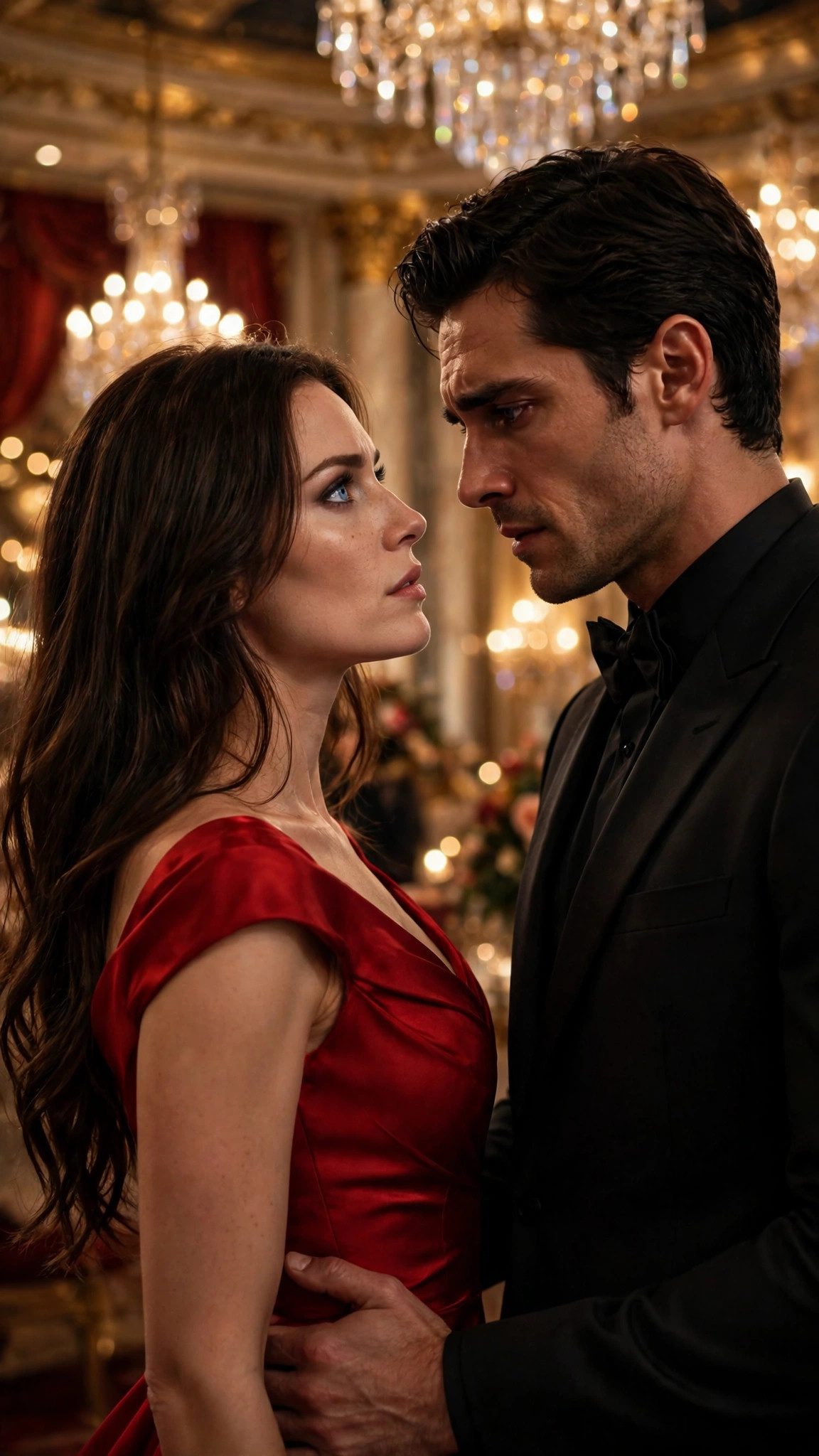
    Lauren came into the room wearing a red silk dress. Not the same dress from the motorcycle, all those years ago. A new one. But the same color. The same fire.

    "You look beautiful," Vincent said.

    "You look like a king," Lauren said. "Even in that chair. Especially in that chair."

    They went to the Drake Hotel in the black van, with Cole Ramsey following in a second car, and Vincent's men spread out in four more cars around them. The streets were quiet. The night was warm. The city lights blurred into gold, just like they had on the motorcycle all those years ago.

    The grand ballroom was everything Vincent remembered. Chandeliers. White tablecloths. Five hundred people in evening dress, turning to stare as he rolled through the doors. The orchestra stopped playing. The conversations stopped. For a moment, the whole room was silent.

    Then someone started to clap. Then another. Then the whole room was on its feet, applauding, and Vincent felt something in his chest that he had not felt in six months. It was not pride. It was not power. It was gratitude. These people had come to see him, not because they feared him, but because they wanted him to be all right.

    He rolled to the stage, and Tessa helped him into position behind the podium, and Lauren took her seat in the front row, and Cole Ramsey took his place in the balcony, and Vincent began to speak.

    He talked about the foundation. He talked about the new hospital wing. He talked about the children who would be treated there, and the families who would not have to choose between medicine and rent. He talked about the future, and his voice was strong, and the room listened.

    And then, halfway through the speech, he saw her.

    Elena Marchetti. In the third row. Wearing black. Her hands folded in her lap. Watching him.

    She looked older than she had in the courtroom, but it was her. The same gray hair. The same tight knot. The same patient, terrible stillness.

    Vincent did not stop speaking. He did not flinch. He simply looked at her for one second longer than he looked at anyone else, and he saw her eyes widen, just slightly, as if she had not expected him to see her.

    And then he saw the man.

    He was standing near the south exit, half hidden behind a curtain, wearing a waiter's uniform that did not quite fit. He was holding a tray in one hand. His other hand was inside his jacket.

    Vincent knew, in the same instant, what was about to happen.

    He did not think. He did not hesitate. He did the only thing he could do from a wheelchair on a stage, in front of five hundred people.

    He shouted Lauren's name.

    "Lauren! Down!"

    Lauren dropped to the floor. The room erupted. People screamed. Chairs fell over. The orchestra stopped mid-note.

    The man by the south exit pulled a gun from inside his jacket and raised it toward the stage.

    But before he could fire, three men in evening dress were on him. One grabbed his wrist. One took his legs. One drove a fist into his stomach. The gun clattered to the floor and slid across the marble.

    At the same moment, Cole Ramsey's voice came over the ballroom's speaker system, calm and clear.

    "Everyone, please stay where you are. The situation is under control. No one is in danger."

    It was not true. Not yet. Because in the third row, Elena Marchetti had stood up.

    She was holding something in her hand. A small, dark object. For a terrible second, Vincent thought it was a gun.

    It was a photograph. The same photograph Cole had taken of her, outside her house. The one with her face cut off.

    She held it up, high, so the whole room could see it, and her voice, when she spoke, was loud and clear and shaking with six years of grief.

    "My husband died in his warehouse!" she shouted. "And this man walked free! This man, who sits in that chair and gives speeches about children, killed my husband, and no one did anything!"

    The room went silent. Five hundred people stared at her. Five hundred people stared at Vincent.

    And Vincent, in his wheelchair, on the stage, in front of everyone, did the most difficult thing he had ever done in his life.

    He told the truth.

    "Elena Marchetti," he said, and his voice carried across the silent ballroom. "Your husband's death was an accident. The fire was an accident. The jury found me not guilty because I was not guilty. But I understand why you don't believe that. I understand why you have waited six years. And I am sorry. I am sorry for your loss. I am sorry for your pain. And I am sorry that no one ever came to your house and said those words to you before tonight."

    Elena stared at him. The photograph trembled in her hand.

    "You killed him," she whispered.

    "No," Vincent said. "I didn't. But I owned the warehouse. I owned the company. I owned the system that put him in that building on that day. And for that, I am responsible. Not guilty. But responsible. And I will spend the rest of my life making it right."

    He looked at Lauren, who was getting up from the floor, her red dress dusty, her face pale but fierce.

    "And the man who shot me," Vincent said, "was not hired by my wife. He was hired by Silas Kane, who used your grief to make money. He is in this room right now. And he is going to be arrested tonight."

    At that moment, Cole Ramsey's men brought Silas Kane out of the crowd in handcuffs. He was a tall man in a gray suit, with cold eyes and a thin smile, and he did not struggle. He simply looked at Vincent, and then at Elena, and then at the floor.

    Elena Marchetti looked at Silas Kane. She looked at the photograph in her hand. She looked at Vincent.

    And slowly, very slowly, she lowered the photograph, and she began to cry.

    Not the loud, angry crying of a woman in a ballroom. The quiet, exhausted crying of a woman who had carried something too heavy for six years and had finally been allowed to put it down.

    Lauren walked to the stage and took Vincent's hand. Tessa stood behind them, her face calm, her hands steady.

    And in the grand ballroom of the Drake Hotel, in front of five hundred of Chicago's richest and most powerful people, Vincent Corvino did something he had never done before.

    He asked for forgiveness. And he offered it in return.

    The ballroom was silent for a long moment after Vincent finished speaking. Five hundred people stood frozen, holding their breath, waiting to see what would happen next. Then someone in the back began to clap. Slowly at first, and then faster, and then the whole room was applauding, not for a speech, but for a man who had chosen the truth over revenge.

    Cole Ramsey's men led Elena Marchetti gently from the ballroom, not in handcuffs, not as a prisoner, but as a woman who had finally been heard. She did not resist. She walked with her head high, and as she passed the stage, she looked up at Vincent and nodded once, a small, tired nod that said more than words ever could.

    Lauren took Vincent's hand, and together they rolled down the ramp from the stage, through the crowd, toward the doors. People stepped aside to let them pass. People reached out to touch Vincent's shoulder. People whispered his name, not with fear, but with respect.

    And as they left the grand ballroom of the Drake Hotel, Vincent felt something he had not felt in six months. He felt free.

  • Chapter 4: Fifty Thousand Dollars

    Chapter 4: Fifty Thousand Dollars

    Lauren Corvino came home from her charity meeting at four o'clock in the afternoon, and Vincent was waiting for her in the study.

    He had chosen the study deliberately. It was his room, the room where he did business, the room where men came to report to him and to ask for his decisions. It had a desk, two chairs, and a window that looked out over the garden. It was a room for truth, or at least for the kind of truth that men told each other when there was nowhere left to hide.

    Lauren stood in the doorway for a moment, holding her purse in both hands, and Vincent saw her the way he had seen her that first night at the gala, in the red silk dress, arguing about martinis. She was still beautiful. She was still the woman who had climbed onto the back of his motorcycle and laughed at the city lights. But she was thinner now, and there were lines around her eyes that had not been there six months ago, and she held herself the way people hold themselves when they are expecting bad news.

    "Sit down," Vincent said.

    Lauren sat. She put her purse on the floor beside her chair, very carefully, the way a woman puts down something fragile.

    Vincent placed the plain white envelope on the desk between them. He did not open it. He did not need to. He had memorized everything inside it.

    "Tessa found something under the mattress this morning," he said.

    Lauren's face did not change. Not at first. Then, very slowly, the color left her cheeks, and her hands, which had been resting calmly in her lap, began to tremble.

    "Under the mattress," she repeated. Her voice was very quiet.

    "A listening device," Vincent said. "A photograph of me outside the restaurant, moments before I was shot. A receipt for fifty thousand dollars with your signature on it. And a photograph of a woman from my trial, with a note that says, 'She didn't hire the shooter. Ask her who did.'"

    Lauren closed her eyes. For a long moment, she did not speak. The study was silent except for the ticking of the clock on the wall and the soft sound of the garden outside the window.

    Then she opened her eyes, and she looked at Vincent, and the look on her face was not guilt. It was relief. It was the look of a woman who had been carrying something too heavy for too long and had finally been allowed to put it down.

    "I was wondering when you would find it," she said.

    Vincent stared at her.

    "You knew it was there?"

    "I put it there," Lauren said. "All of it. The device, the photograph, the receipt, the third photograph. I put them under the mattress three weeks ago."

    "Why?" Vincent asked. His voice was very steady. He had promised himself he would not shout. He had promised Tessa he would not do this angry.

    "Because I didn't know where else to put them," Lauren said. "And because I was afraid."

    She told him everything then, and she told it the way a woman tells a story she has rehearsed a hundred times in her head but never said out loud. She told it slowly, stopping sometimes to breathe, sometimes to wipe her eyes, sometimes to look at the window because looking at Vincent was too hard.

    It had started two months ago, she said. She had been in the bedroom, straightening the pillows, when she noticed something strange about the lamp on the nightstand. The cord was loose. Not broken, just loose, as if someone had pulled it out and pushed it back in a hurry. She reached behind the lamp to fix it, and her fingers brushed something small and hard taped to the back of the nightstand.

    A listening device. Just like the one Tessa had found under the mattress.

    Lauren had stared at it for a long time. She had not touched it. She had not removed it. She had simply stood there, in her own bedroom, understanding for the first time that someone had been listening to her sleep, listening to her talk to her husband, listening to her cry in the dark when she thought no one could hear.

    "I was terrified," she said. "Not for me. For you. If someone was listening to us, then someone was watching us. And if someone was watching us, then the shooting wasn't an accident. It wasn't a robbery. It was planned. And if it was planned once, it could be planned again."

    She had not told Vincent. She had wanted to. She had stood outside his door a dozen times, her hand on the knob, ready to walk in and tell him everything. But every time, she stopped herself.

    "Because you were in that chair," she said, her voice breaking. "Because you had already lost so much. Because I didn't want to be the person who told you that the nightmare wasn't over. I wanted to protect you. I know how that sounds. I know it sounds stupid. But I wanted to protect you, and I didn't know how."

    So she had done what she could. She had hired a private investigator. His name was Cole Ramsey, a former Chicago detective who had left the force after twenty years and now worked for people who needed answers the police could not give.

    "I paid him fifty thousand dollars," Lauren said. "That was his fee. He was expensive because he was good, and because he was discreet, and because I told him I needed to know who was watching my husband and I needed to know it without anyone finding out I had asked."

    Cole Ramsey had gone to work. He had swept the house for listening devices and found three: one behind the nightstand, one under the mattress, and one in the study, hidden inside a hollowed-out book on the shelf. He had traced the devices to a supplier in Nevada who sold them to a man named Silas Kane, a fixer who worked for anyone with enough money.

    Cole had followed Silas Kane. He had photographed him meeting with a woman in a black dress, in a small café on the South Side, on a Tuesday afternoon. The woman was Elena Marchetti.

    "I didn't believe it at first," Lauren said. "A fifty-eight-year-old seamstress. What did she want with us? What had we ever done to her?"

    Cole had found out. He had gone through the court records from Vincent's trial. He had found Elena Marchetti's name on the witness list, in the gallery, every day, for eleven weeks. He had found Frank Marchetti's death certificate. He had found the fire report. He had put the pieces together the way a detective puts pieces together, slowly, carefully, until the picture was clear.

    "She believes you killed her husband," Lauren said. "She has believed it for six years. And someone — Silas Kane, or someone who hired Silas Kane — found her grief and used it. They gave her a plan. They gave her a shooter. They gave her a way to finally have her revenge."

    "And the photograph?" Vincent asked. "The one of me outside the restaurant?"

    "Cole found it," Lauren said. "It was in Silas Kane's car. He took it the night you were shot. He was across the street, in a parked car, watching you. He took the photograph to prove to Elena that the job was done. Or to prove to whoever paid him."

    "And the third photograph? The woman from the courtroom?"

    "Cole took that one too," Lauren said. "He followed Elena for a week. He photographed her outside her house, outside the church, outside the café where she met Silas Kane. He cut off her face in that photograph because he didn't want to frighten me. He said, 'You don't need to see her face. You need to know she exists.'"

    "And the note?" Vincent asked. "The note that says you didn't hire the shooter?"

    Lauren looked down at her hands.

    "Cole wrote it," she said. "He left it with the third photograph. He said, 'If Vincent ever finds these things, he needs to know the truth right away. He needs to know you didn't do this. He needs to know before he does something he can't take back.'"

    Vincent sat in silence for a long time. He thought about the white roses, replaced every three days. He thought about the way Lauren had stopped speaking to him. He thought about the vial, and the broken phone, and the disconnected call.

    "The vial," he said.

    Lauren nodded.

    "It was my sleeping pills," she said. "I hadn't slept properly in weeks. I was taking them every night, and they weren't working. That morning, my hand froze because I was so tired I could barely hold anything. I dropped the vial. It didn't break. I lied and said I'd broken a phone because I didn't want you to know how bad it was. I didn't want you to know I was falling apart."

    "And the phone?" Vincent asked.

    "The disconnected call from my watch," Lauren said. "That was Marcus. The coffee guy. He was in the hallway, and I caught him listening at the door. I told him to leave. He grabbed my wrist and cut the call. He said, 'It's just the coffee guy,' and he smiled at me, and I knew then that he was one of them. He was Silas Kane's man, planted in our house to watch us."

    Vincent's hands curled into fists on the armrests of his wheelchair.

    "Marcus Hale," he said. "Tessa found out who he is. He's not staff. He's not anyone. He appeared three months ago, after the old maintenance man retired. He said he was sent by an agency. There is no agency."

    Lauren reached across the desk and took Vincent's hand. Her fingers were cold, but her grip was strong.

    "I'm sorry," she said. "I'm sorry I didn't tell you. I'm sorry I hid it. I'm sorry I let you think I didn't love you anymore. I do love you. I've always loved you. I was just scared, and I didn't know what else to do."

    Vincent looked at her hand in his, and he thought about the woman in the red silk dress, laughing at the city lights, and he thought about the woman in front of him now, tired and frightened and brave enough to tell the truth.

    "You're not the one who should be sorry," he said. "I should be sorry. I spent six months thinking you had given up on me. I spent six months feeling sorry for myself. I never once asked you how you were doing. I never once asked you what you were carrying."

    He squeezed her hand.

    "We're going to fix this," he said. "Together. Not with fear. Not with hiding. Together."

    Lauren nodded, and for the first time in six months, she smiled. It was a small smile, tired and fragile, but it was real.

    "What do we do?" she asked.

    Vincent wheeled himself to the window and looked out at the garden. The late afternoon light was soft and golden, and the roses were blooming along the fence.

    "We find Silas Kane," he said. "We find Elena Marchetti. And we make them come to us. We give them exactly what they want — a chance to finish what they started. And when they come, we will be ready."

    Lauren stood up and came to stand beside his wheelchair. She put her hand on his shoulder, the way she used to, before the bullet, before the silence, before the fear.

    "Together," she said.

    "Together," Vincent said.

    And in the study, in the house that had been listening to them for months, they began to plan.

    Later that evening, after Vincent had gone to bed, Lauren sat alone in the study and thought about the day she had hired Cole Ramsey. It had been a Tuesday, three weeks earlier, raining hard, and she had driven herself to a small office on the West Side, above a dry cleaner, with a sign on the door that said "Ramsey Investigations" in plain black letters.

    Cole had been sitting behind a desk covered in files, drinking coffee from a chipped mug, and he had looked up at her with eyes that had seen too much to be surprised by anything.

    "You want me to find out who is watching your husband," he had said. It was not a question.

    "Yes," Lauren had said. "And I want you to do it without anyone knowing. Not my husband. Not his men. No one."

    "That's the hardest kind," Cole had said. "And the most expensive."

    "Fifty thousand dollars," Lauren had said. She had taken the checkbook out of her purse and written the number without hesitating. It was almost everything she had in her personal account, money her grandmother had left her, money Vincent had never touched and never asked about.

    Cole had looked at the check for a long time.

    "You're sure?" he had asked.

    "I'm sure," Lauren had said. "My husband was shot six months ago, and everyone told me it was a robbery. But I don't believe it was a robbery. I believe someone planned it. And I believe someone is still watching us. And I would rather spend every penny I have than sit in that house and wait for them to finish what they started."

    Cole had taken the check. He had shaken her hand. And he had said, "I'll find them. I promise you that."

    He had kept his promise. In three weeks, he had found the listening devices, the supplier, the fixer, and the widow. He had photographed Elena Marchetti outside her house. He had followed Silas Kane to the café. He had done everything Lauren had asked, and he had done it quietly, without anyone knowing.

    Lauren had not told Vincent because she was afraid of what he would do. She knew her husband. She knew that if he found out someone had been listening to them, he would tear the house apart. He would call his men. He would find Silas Kane and do something terrible to him. And then the police would come, and the newspapers would come, and the whole terrible story would be public, and Vincent would be back in the headlines for all the wrong reasons.

    She had wanted to protect him. She had wanted to handle it quietly, the way a wife handles things, by finding the truth first and then deciding what to do with it.

    Now, sitting alone in the study, Lauren understood that she had been wrong to hide it. Not because Vincent was angry — he was not angry, and that surprised her more than anything. He was calm. He was patient. He was the man she had married, the man who had laughed at the gala and ridden a motorcycle along the lakefront with her arms around his waist.

    She had spent weeks thinking her husband had given up on her. She had spent weeks thinking he did not love her anymore. But the truth was simpler and sadder than that. They had both been afraid. They had both been hiding. And they had both been waiting for the other one to speak first.

    Lauren stood up and walked to the window. The garden was dark, and the roses along the fence were black in the moonlight. Somewhere in the house, a clock ticked. Somewhere outside, a car passed on the street.

    She thought about the white roses, replaced every three days. She had started bringing them because she did not know what else to do. She had thought that if she kept the room beautiful, if she kept everything clean and fresh and perfect, then maybe Vincent would get better. Maybe the nightmare would end.

    It had not worked. But something else had. The truth had worked. Telling Vincent the truth, all of it, even the parts that made her look foolish and afraid, had worked. Because now they were planning together. Now they were fighting together. Now they were a team again, the way they had been on the motorcycle, all those years ago, with the city lights blurring into gold.

    Lauren went upstairs and stood in the doorway of Vincent's bedroom. He was asleep, his breathing slow and even, his strong arms resting on the blanket. She watched him for a long time, and then she whispered, so quietly that only she could hear it, "I'm sorry. And thank you. And I love you."

    Then she went to her own room, and for the first time in weeks, she slept through the night.

  • Chapter 3: The Woman in the Gallery

    Chapter 3: The Woman in the Gallery

    Vincent did not sleep that night.

    He lay in the enormous bed in the second-floor master suite, staring at the ceiling, listening to the quiet of the house. Every sound seemed louder now. The ticking of the clock on the wall. The soft hum of the refrigerator downstairs. The distant sound of a car passing on the street outside. The house had always made these sounds. He had never listened to them before.

    Now he listened to everything, because everything might be a threat.

    Beside the bed, on the nightstand, was a plain white envelope. Inside it were the listening device, the photograph of him beneath the restaurant awning, the receipt for fifty thousand dollars with Lauren's signature, and the photograph of the woman from the courtroom with the note on the back.

    "SHE DIDN'T HIRE THE SHOOTER. ASK HER WHO DID."

    Vincent had read the note a dozen times. Each time, he noticed something new. The handwriting was small and neat, but the pressure on the pen had been hard enough to leave indentations in the paper. Whoever had written it had been angry. Or afraid. Or both.

    He thought about the woman in the photograph. The face was cut off, cropped just below the eyes, but Vincent remembered her anyway. He remembered the black dress. He remembered the gray hair pulled back into a tight knot. He remembered the way she sat in the third row of the gallery, her hands folded in her lap, watching him the way a farmer watches the sky before a storm.

    Elena Marchetti. Frank Marchetti's widow.

    Vincent had not thought about her in six years. He had not thought about the trial in six years. He had put it behind him, the way he put everything behind him, by refusing to look at it.

    But now he looked at it. He looked at it the way a man looks at a wound he has been ignoring, and he saw that it had never healed.

    The fire had been an accident. He knew that. The investigators knew that. The jury knew that. But Elena Marchetti did not know that, or did not believe it, and belief was stronger than evidence. Vincent understood that better than anyone. His entire empire was built on belief. Men believed he was untouchable, and so he was. Men believed he was dangerous, and so he was.

    Elena Marchetti believed he had killed her husband. And a woman who believes that for six years does not forget. She waits.

    In the morning, Vincent called his lawyer. Not the young men who handled his contracts now, but the old man who had defended him at the trial. Daniel Hart. Seventy-one years old, retired, living in a house by the lake with a garden he tended himself.

    "Daniel," Vincent said, when the old man answered the phone. "I need to ask you about the trial."

    There was a long pause on the other end of the line.

    "Vincent," Daniel said. "It has been six years. Why are you asking about the trial now?"

    "Because someone shot me six months ago," Vincent said. "And I think it might be connected."

    Another pause. Longer this time.

    "Come to my house," Daniel said. "Not on the phone. Come to my house."

    Vincent went that afternoon, in the black van with the lift that his driver used to take him anywhere he needed to go. The van was new, fitted with everything he needed, and Vincent hated it with a passion that surprised even him. He hated the ramp. He hated the way people looked at him when the lift lowered him to the sidewalk. He hated the way the world had rearranged itself around his chair.

    But he went. Because he needed answers, and Daniel Hart was the only man who had all of them.

    Daniel's house was small and quiet, with a garden full of tomatoes and a porch that faced the lake. The old lawyer met Vincent at the door, shook his hand, and wheeled him into the study himself, past shelves of law books that had not been opened in years.

    "You look tired, Vincent," Daniel said.

    "I am tired," Vincent said. "I have been tired for six months. Tell me about Elena Marchetti."

    Daniel sat down slowly, the way old men do, and folded his hands on the desk.

    "Elena Marchetti," he said. "Fifty-eight years old now. Her husband Frank died in the warehouse fire. She has two children, a son and a daughter, both grown now. She lives in a small house on the South Side, the same house she has lived in for thirty years. She works as a seamstress. She goes to church every Sunday. She has never remarried."

    "Did she ever threaten me?" Vincent asked.

    "No," Daniel said. "Not in any way the law would recognize. She never wrote a letter. She never made a phone call. She never came to your office. She simply came to the trial every day and watched you. And after the trial, she went home, and she was quiet."

    "Quiet," Vincent repeated.

    "Quiet is not innocent, Vincent," Daniel said. "You know that better than anyone. The quiet ones are the ones you have to watch."

    Vincent told Daniel about the listening device, the photograph, the receipt, and the third photograph with the note. He did not tell him about Lauren. Not yet. He was not ready to say his wife's name in connection with any of this, even to a man he trusted.

    Daniel listened without interrupting, the way he had listened in the courtroom, and when Vincent finished, the old lawyer was silent for a long time.

    "The note is the most important thing," Daniel said finally. "Whoever wrote it wants you to ask your wife a question. That means whoever wrote it believes your wife knows something. And it means whoever wrote it does not want to tell you themselves. They want you to find out from her."

    "Why?" Vincent asked.

    "Because the truth is always more powerful when it comes from the person you love," Daniel said. "Or because the person who wrote the note is afraid of what will happen if they tell you directly."

    Vincent thought about that. He thought about the small, neat handwriting, and the hard pressure on the pen.

    "There's something else," Daniel said. "The woman in the photograph. The face is cut off. That is deliberate. Whoever took that photograph wanted you to recognize her without seeing her face. They wanted you to remember the courtroom. They wanted you to connect the shooting to the trial."

    "So the shooter was hired by Elena Marchetti," Vincent said. It was not a question.

    "That is the obvious conclusion," Daniel said carefully. "But obvious conclusions are not always correct. Elena Marchetti is a fifty-eight-year-old seamstress. She does not know how to hire a professional shooter. She does not know where to find one. She does not have the money. A professional hit costs fifty thousand dollars, Vincent. Does that number sound familiar?"

    Vincent felt the floor shift under his chair again. Fifty thousand dollars. The receipt. Lauren's signature.

    "Someone gave Elena the money," Daniel said. "Or someone hired the shooter on her behalf. Someone with money, and connections, and a reason to want you dead that has nothing to do with a warehouse fire."

    "Who?" Vincent asked.

    Daniel shook his head.

    "I don't know. But I know where to look. The shooter was a professional. He knew where you would be. He knew when you would be there. He knew you would be standing under the awning, alone, checking your phone. That kind of information does not come from a seamstress on the South Side. It comes from inside. From someone who knew your schedule. From someone who was in the restaurant that night."

    Vincent thought about that night. Lauren had been inside, already seated, already ordering a drink. His driver had been outside with the car. His bodyguard had been at the bar. The restaurant had been full of people.

    "Marcus," Vincent said suddenly.

    "Who?" Daniel asked.

    "The man by the elevator. The coffee guy." Vincent's voice was low. "Tessa told me about him. He was in the hallway the morning Lauren's hand froze on the vial. He said he was just the coffee guy. But I never hired a coffee guy. We have a kitchen. We have staff. There is no coffee guy."

    Daniel's eyes narrowed.

    "Find him," he said. "Quietly. Don't scare him. Just find out who he is and who he works for."

    Vincent went home that evening and called Tessa to his study. He told her what Daniel had said, and he watched her face as she listened. Tessa did not flinch. She did not gasp. She simply nodded, the way she always did when a patient told her something she already suspected.

    "I'll find him," she said. "I know the staff better than you do. I know who talks to whom. I'll ask the housekeeper. She notices everything."

    "Be careful," Vincent said.

    "I am always careful," Tessa said. "It's my job."

    That night, Vincent sat in his study and went through the trial in his mind, piece by piece. The warehouse supervisor who had lied. The lock that had never existed. The fire that had been an accident. The jury that had found him not guilty. And Elena Marchetti, in the third row, in the black dress, watching.

    He had been acquitted. But acquittal was not the same as innocence, not in the eyes of a widow. Vincent understood that now. He had spent six years believing that the trial was over. It had never been over. It had simply been waiting.

    And somewhere in Chicago, a fifty-eight-year-old seamstress had spent six years saving money, making contacts, and waiting for the right moment. Or someone had found her, and used her grief the way a man uses a loaded gun, and pointed her at Vincent.

    Either way, the bullet had come from the past. And the past, Vincent was learning, did not stay in the past. It waited. It watched. It listened.

    It hid things under mattresses.

    Vincent thought about his father then, as he often did when he was afraid, though he would never have admitted to anyone that he was afraid. Antonio Corvino had been a small man with large hands and a voice that could fill a warehouse without shouting. He had built the family business out of nothing but a truck, a warehouse, and a reputation for keeping his word, and he had taught Vincent everything he knew about power.

    He had taught him on the docks, when Vincent was sixteen, standing beside him in the rain while a truck driver explained why a shipment was late. Antonio had listened to the whole story without interrupting, and then he had said, very quietly, "A man who lies to me once will lie to me twice. A man who tells me the truth, even when the truth is bad, is a man I can work with." He had paid the driver in full that day, and the driver had never been late again.

    He had taught him in the office, when Vincent was nineteen, going over the books with a pencil and a ledger. "Respect is more valuable than money," Antonio had said, tapping the ledger with the pencil. "Money can be stolen. Money can be lost. But if men respect you, they will follow you through a fire. And fear — fear is more reliable than either. A man who fears you will never betray you. A man who loves you might. Remember that."

    Vincent had remembered it. He had built his life on it. He had ruled his empire with respect and fear, the way his father had taught him, and it had worked. It had worked for fifteen years.

    But his father had died when Vincent was twenty-eight, of a heart attack in the same office where he had taught him about respect and fear, and Vincent had taken over the empire the next morning, without a ceremony, without a pause, because empires do not pause. He had buried his father on a Tuesday. He had been back at his desk on a Wednesday.

    He had never once doubted that his father was right. Not until the bullet. Not until the chair. Not until Tessa Morgan told him that angry men miss things.

    Now, sitting in his wheelchair in the second-floor master suite, Vincent wondered what his father would have done about the listening device under the mattress. Antonio would have called his men. Antonio would have found the person who planted it and made an example of them. Antonio would have acted with rage and certainty, and the empire would have gone on exactly as before.

    But Vincent was not his father. Vincent had a bullet in his spine and a wife who barely spoke to him and a nurse who told the truth. And for the first time in his life, Vincent understood that his father's way had a cost. The cost was that no one ever told Antonio Corvino the truth when the truth was painful. They told him what he wanted to hear. They told him what would keep them safe. And so Antonio had died believing his empire was built on respect, when some of it had been built on fear, and fear, Vincent was learning, was a foundation made of sand.

    He would not make the same mistake. He would ask. He would listen. He would find out the truth, whatever it cost him.

    Because the truth was the only thing that could set him free. And Vincent Corvino intended to be free.

    Before he left Daniel Hart's house that evening, Vincent called his driver, Tony, and asked him a question he had never asked before. "Tony," he said, "on the night I was shot, who was in the restaurant with Lauren?" Tony was quiet for a moment, and then he said, "A waiter I didn't recognize, boss. Young. Nervous. He kept looking at the door. I thought he was new. I didn't think anything of it until now." Vincent thanked him and hung up, and he wrote the waiter's description in a small notebook: young, nervous, always looking at the door. Another piece. Another thread. He would follow them all, one by one, until they led him to the truth.

  • Chapter 2: Six Months Ago

    Chapter 2: Six Months Ago

    Vincent Corvino was not a man. He was a headline.

    Chicago developers returned his calls before their wives'. Union representatives remembered his birthday. Men who controlled warehouses, trucking companies, construction crews, and half the freight moving through the South Side never sat down at Vincent's table until he did.

    At thirty-four, he had inherited a complicated empire from a father who believed respect was more valuable than money and fear was more reliable than either. His father, Antonio Corvino, had built the family business out of nothing but a truck, a warehouse, and a reputation for keeping his word. Vincent had taken that business and turned it into something larger and colder. He owned the freight. He owned the docks. He owned the men who moved the goods and the men who guarded the goods and the men who decided which goods moved first.

    He had never once doubted that the empire would be his forever. Men like Vincent did not doubt. Doubt was for other people.

    Lauren had been the only person who ever made him doubt anything, and she had done it by making him laugh.

    He met her when he was twenty-six, at a charity gala his father had forced him to attend. She was standing by the bar in a red silk dress, arguing with a bartender about whether a martini should be stirred or shaken, and she was losing the argument with such confidence that Vincent had to walk over and watch.

    "You stir a martini," she said, without looking at him. "Shaking it bruises the gin. Anyone who shakes a martini is a barbarian."

    "I shake mine," Vincent said.

    She turned and looked at him then, really looked at him, and her eyes were the color of dark honey and absolutely unimpressed.

    "Then you're a barbarian," she said. "A well-dressed one, but a barbarian."

    Vincent Corvino, who had never been spoken to that way in his entire life, laughed. He laughed so hard that the men at the next table turned to stare, and his father's old friends whispered to each other that the boy had finally met someone who was not afraid of him.

    That night, Lauren climbed onto the back of his motorcycle wearing that red silk dress, and she laughed at the city lights as they rode along the lakefront. She wrapped her arms around his waist and pressed her cheek against his back, and the whole city seemed to belong to them. The wind was cold and the engine was loud and the lights of the skyline blurred into gold, and Vincent thought, for the first time in his life, that he wanted something more than power.

    He wanted her.

    They married a year later, in a small church on the North Side, with only family and a few old friends. Lauren wore white. Vincent wore a suit his father had bought for him. His father cried during the vows, which surprised everyone, including his father.

    For seven years, the marriage worked the way good marriages work. Not perfectly. Not without fights. Lauren hated the empire. She hated the late nights, the guarded phone calls, the men in dark suits who came to the house at midnight. She hated the way Vincent's name made people lower their voices. She wanted him to sell the docks and buy a vineyard in California. Vincent wanted to keep the empire and give her everything it could buy.

    They fought about it. They made up. They fought about it again. That was marriage. That was normal.

    What was not normal was the trial.

    Six years ago, a fire broke out in a Corvino warehouse on the South Side. A dockworker named Frank Marchetti died in that fire. He was forty-one years old. He had a wife named Elena and two children, a boy and a girl, and he had worked for the Corvino family for eleven years.

    The fire was an accident. A faulty wire, a spark, a pallet of chemicals stored too close to a heater. The investigators said so. The insurance company said so. The fire department said so.

    But the prosecutor said otherwise. The prosecutor said Vincent Corvino had ordered the warehouse locked from the outside during a union dispute, and that Frank Marchetti had burned to death because of it. The prosecutor had a witness, a warehouse supervisor who had been fired for stealing, who swore he had seen the lock.

    Vincent went to trial for murder.

    For eleven weeks, he sat in a courtroom on the twenty-third floor of a downtown building, wearing a suit and a tie, listening to men in suits describe him as a monster. Lauren sat beside him every day, holding his hand under the table, her face pale and furious.

    And in the gallery, in the third row, sat a woman in black.

    Vincent noticed her on the third day of the trial. She was fifty-two years old, with gray hair pulled back into a tight knot, and she wore the same black dress every single day. She never spoke. She never took notes. She simply sat there, her hands folded in her lap, watching him.

    He asked his lawyer who she was.

    "Elena Marchetti," the lawyer said. "Frank's widow. She comes every day. She has not missed a single session."

    Vincent looked at her again, and he understood something he had never understood before. To the rest of the world, he was a headline, a name, a man in a suit. To this woman, he was the man who had killed her husband. It did not matter what the investigators said. It did not matter what the fire department said. It mattered what she believed, and she believed he was guilty.

    The jury found him not guilty. The warehouse supervisor admitted on the stand that he had been paid to lie. The lock had never existed. The fire had been an accident, exactly as the investigators said.

    Vincent walked out of the courtroom a free man, and Lauren cried in the car all the way home, and his father opened a bottle of champagne that had been waiting in the cellar for ten years.

    But Elena Marchetti was still there, in the third row, watching him walk out. And Vincent never forgot her face. He never forgot the way she looked at him — not with hatred, exactly, but with something worse. With patience. With the look of a woman who had decided that the law had failed her and that she would have to wait for justice somewhere else.

    He did not think about her again for six years. He had no reason to. The empire was growing. Lauren was happy, or happy enough. The world moved on.

    Then, on a warm evening in late spring, Vincent stood outside a restaurant beneath the awning, moments before he walked toward a car where a shooter was waiting for him.

    Lauren had been inside, already seated, already ordering a drink. They were celebrating. Vincent had just closed the biggest freight deal of his career, a contract that would put Corvino trucks on every highway in the Midwest, and Lauren had suggested dinner at the restaurant where they had their first date after the wedding.

    Vincent remembered standing under the awning, looking at his phone, checking a message from his driver. He remembered the warm air and the smell of rain that had not yet fallen. He remembered thinking that he should buy Lauren something nice, something to make up for the late nights.

    He did not remember the shot.

    He remembered the sound, a crack that was too sharp to be a firework and too close to be thunder. He remembered the pavement coming up to meet him, hard and fast. He remembered Lauren's voice, screaming his name from inside the restaurant, and the way the world went white and then black and then white again.

    He woke up in a hospital, three days later, with a tube in his throat and Lauren holding his hand. The doctors told him a bullet had struck his T12 vertebra and damaged a nerve. The injury was permanent. He would never walk again.

    Vincent Corvino, who had never once doubted anything, learned what doubt felt like in a hospital bed, staring at a ceiling that never changed.

    His upper body remained powerful. Years of training and the relentless rehabilitation exercises the doctors ordered kept his arms and shoulders strong. But the legs stayed still. They did not respond. They did not twitch. They did not even ache. They were simply gone, as if they belonged to someone else.

    Everything changed. The empire did not stop — empires never stop — but Vincent had to run it from a wheelchair, from a desk, from a room. His captains came to him now. His lieutenants reported to him in his study. The men who had once feared him still feared him, but Vincent could see the question in their eyes. How long could a king rule from a chair?

    Lauren changed too. At first, she was everything. She slept in the hospital chair for two weeks. She learned to change his dressings. She held his hand through the physical therapy sessions that left him sweating and cursing.

    But slowly, quietly, something shifted. She stopped sleeping in his room. She started spending more time at charity meetings. She brought white roses and replaced them every three days, and she spoke to him less and less, as though the words had run out.

    Vincent told himself it was grief. He told himself it was exhaustion. He told himself that a woman could only watch her husband suffer for so long before she had to look away.

    He did not let himself think the other thing. He did not let himself think that she might have been relieved.

    Then Tessa Morgan arrived.

    She was twenty-seven, though exhaustion occasionally made her look older. Brown hair was twisted into a knot. She wore a white coat over a black shirt and white trousers. Her movements were efficient and precise. She did not soften her voice when she spoke to him. She did not pity him. She did not flinch when his strong hands grew frustrated and tried to push the limits of his legs.

    "You're not a patient," she told him on her first day. "You're a man in a chair. There's a difference. Patients wait to be fixed. Men in chairs decide what happens next."

    Vincent had not laughed in six months. He laughed that day.

    Tessa handled him carefully but confidently, like his body remained a body instead of becoming a medical exhibit. That alone made the two hours of that Tuesday morning bearable.

    And then she slipped one hand beneath the mattress while she was changing the sheets, and she stopped, and everything Vincent thought he knew about the last six months fell apart.

    He had been assured repeatedly that the injury was permanent. He had been assured repeatedly that the shooting was a random act, a robbery gone wrong, a man who had panicked and fired.

    But a listening device under his mattress was not random. A photograph of him about to be shot was not random. A receipt for fifty thousand dollars with his wife's signature was not random.

    Someone had planned the shooting. Someone had watched him. Someone had listened to him. And someone was still watching, still listening, still waiting.

    Vincent sat in his wheelchair in the second-floor master suite, and he thought about the woman in the third row of the courtroom, in the black dress, with her hands folded in her lap, watching him.

    He had forgotten her. She had not forgotten him.

    And he understood, with a clarity that was almost peaceful, that the bullet in his spine had not been the end of something. It had been the beginning.

    The beginning of what, he did not yet know. But he knew it had started long before the bullet. It had started in a courtroom, six years ago, with a fire and a widow and a verdict that had satisfied the law but satisfied no one else.

    In the hospital, in those first weeks, Vincent had learned what it meant to be helpless. He had learned what it meant to need someone to lift you, to turn you, to wash you, to feed you. He had learned what it meant to lie in a bed and listen to doctors talk about you as if you were not in the room.

    "The damage is at T12," the surgeon had said, standing at the foot of the bed with a chart in his hand. "The bullet struck the vertebra and damaged the nerve. The injury is permanent. He will never walk again. He will need a wheelchair. He will need full-time care."

    Lauren had been standing beside the bed, holding Vincent's hand, and she had not cried. Not then. She had simply nodded, the way a woman nods when she is given terrible news and has decided, in that moment, that she will not fall apart.

    She did not leave his side. She ate her meals in that chair. She read to him from the newspaper when he was too tired to hold it himself. She learned to check his blood pressure and the names of every medication, and she wrote them all down in a small notebook she kept in her purse, in handwriting so neat it looked printed.

    The nurses were amazed. "Most wives go home at night," one of them told Vincent, when Lauren was out of the room. "Your wife doesn't leave. She hasn't left since you got here."

    Vincent had believed, in those first weeks, that Lauren would never leave. He had believed that the shooting had brought them closer together, that the shared suffering had made their marriage stronger. He had believed that love was enough.

    He had been wrong. Love was not enough. Love needed truth, and truth needed courage, and courage was something Vincent had not yet learned to ask for.

    But he was learning. Slowly. Painfully. One day at a time.

    And on this Tuesday morning, with a listening device on his bed and a photograph in his hand, Vincent Corvino began to learn the most important lesson of his life: that the past does not stay in the past, that it waits and watches and listens, and that the only way to defeat it is to face it, head on, with your eyes open.

  • Chapter 1: The Thing Beneath the Mattress

    Chapter 1: The Thing Beneath the Mattress

    The thing beneath the mattress was the size of a matchbox, and it was listening.

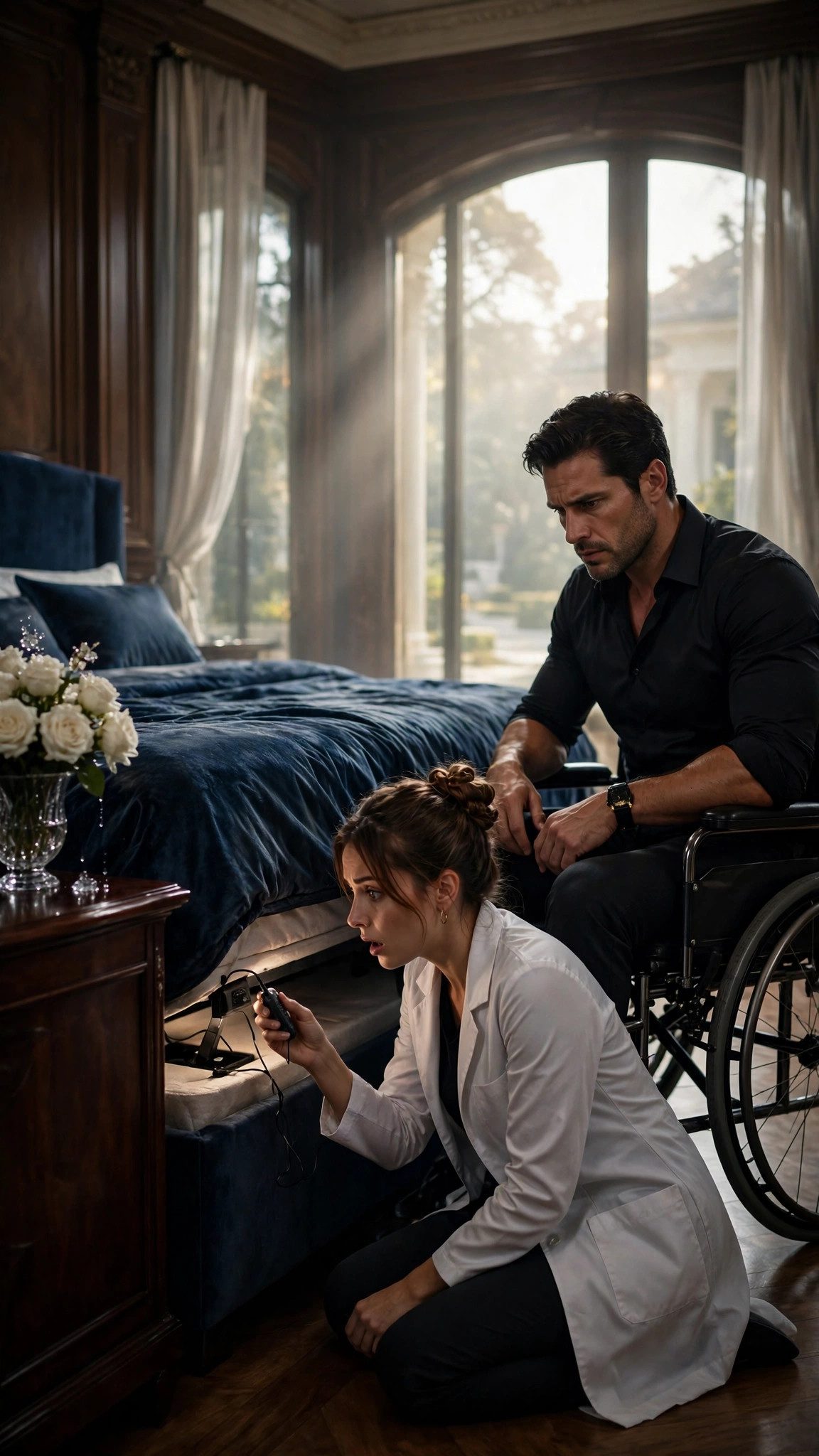
    Tessa Morgan found it on a Tuesday morning, six months after the bullet, while she was changing the sheets in the second-floor master suite of Vincent Corvino's Gold Coast mansion. She had one hand under the mattress, smoothing the fitted sheet over the corner, when her fingers brushed something hard and flat that did not belong to a bed.

    She stopped.

    Vincent watched her from his wheelchair beside the bed. He had learned to read people the way other men read newspapers, and the change in Tessa's face told him everything before she said a word. The color drained from her cheeks. Her jaw tightened. Her hand, which had been moving with the quick, careless efficiency of a woman who had changed a thousand beds, went very still.

    "Vincent," she whispered.

    She lifted the object out and held it up between two fingers. It was a listening device. Small, black, rectangular, with a seam along one side where it had been pressed deep between the mattress and the bed frame, so deep that only a hand changing the sheets would ever find it.

    Vincent did not speak. He stared at the little black rectangle as if it were a snake coiled on his bed, and the fragments came flooding back to him all at once, the way memories do when a single object unlocks a door you thought you had sealed.

    He remembered the way Lauren's perfect hand had frozen on a small glass vial that morning, her fingers trembling, while she argued that she had only broken a phone.

    He remembered the man beside the elevator, who had smiled and promised, "It's just the coffee guy," when Vincent asked who he was.

    He remembered the disconnected call from Lauren's watch, the line going dead in the middle of her sentence, and the way she had laughed it off a second too late.

    Below the device, caught inside the seam of the mattress, was an envelope. Tessa's fingers curled cautiously around it and pulled it free.

    Inside was a photograph.

    It showed Vincent standing outside a restaurant, beneath the awning, moments before he walked toward the car where a shooter was waiting for him. The photograph had been taken from across the street, from a parked car, from a distance that meant the photographer had known exactly where he would be and exactly when.

    A note was clipped to the photograph. The handwriting was not Lauren's. It was small and neat and furious.

    "He trusts you. Don't let that change."

    Vincent felt something far worse than anger. Anger he understood. Anger was a tool, a weapon, a thing he had carried in his pocket since he was sixteen years old. This was something colder and heavier. It was the feeling of a floor giving way under a chair he had been sitting in for years.

    He felt betrayed.

    Tessa waited for him to speak. She stood beside the bed with the photograph in one hand and the listening device in the other, and she did not soften her voice the way everyone else in this house did. That was why Vincent trusted her. Tessa Morgan never softened anything. She said what she saw, and she saw everything.

    Vincent waited a long moment. Then he nodded once, and Tessa handed him another envelope. It was thicker than the first. She lifted the flap and opened it, and inside was a payment receipt for fifty thousand dollars.

    The signature at the bottom was Lauren's.

    The recipient was a name Vincent recognized.

    His jaw stiffened. His hands, the strong hands that had built an empire and held a motorcycle steady through a Chicago winter, curled into fists on the armrests of his wheelchair.

    Tessa stopped at the edge of the bed. She placed a careful hand on the envelope, as if it might bite her, and pulled out a third object.

    It was a photograph of a woman Vincent had never seen. Except once. In a courtroom, during his trial, years earlier. She had sat in the gallery every day, in the third row, wearing black, her face half hidden behind a veil of gray hair. He had never learned her name. He had never asked.

    Her face was cut off in this photograph, cropped just below the eyes, as if the person who took it had wanted to hide her and identify her at the same time.

    A note was attached to the back. The same small, neat, furious handwriting.

    "SHE DIDN'T HIRE THE SHOOTER."

    "ASK HER WHO DID."

    Vincent sat in his wheelchair beside the enormous bed in the second-floor master suite of his Gold Coast mansion, and he looked at the three objects laid out on the white sheets like evidence on a courtroom table. A listening device. A photograph of himself about to be shot. A receipt for fifty thousand dollars with his wife's signature on it. And a photograph of a woman he had seen once, years ago, in a courtroom, with a note telling him that his wife was innocent and that he should ask her who was guilty.

    Outside the tall windows, the morning light fell across the lake in long, clean lines. Inside the room, the air smelled of expensive wood, fresh flowers, medication, and the faint sterile scent of the equipment the nurses left after their visits. White roses stood in a crystal vase near Vincent's bed. Lauren replaced them every three days, as though fresh white roses could disguise the fact that she barely spoke to him anymore.

    Vincent thought about the woman who had once climbed onto the back of his motorcycle wearing a red silk dress and laughing at the city lights. He thought about the way she had wrapped her arms around his waist and pressed her cheek against his back, and how the whole city had seemed to belong to them that night.

    He wished he could see her again.

    But the woman who lived in this house now was someone else. She moved quietly. She spoke softly. She brought roses and left them like offerings at a grave.

    Tessa was still standing beside the bed, watching him. She had not moved. She had not spoken. She was waiting for the order, the way a soldier waits for an order, and Vincent understood suddenly that this was the moment everything would change. Whatever he said next would decide whether his marriage survived the morning.

    He could call his men. He could have Lauren brought to him and demand the truth with a gun on the table. That was the old way. That was the way his father had taught him, the way the empire had always worked. Fear first. Questions later.

    But the note said, "ASK HER WHO DID." Not "punish her." Not "destroy her." Ask her.

    And Tessa, who never softened her voice for anyone, said quietly, "Whatever you're about to do, don't do it angry. Angry men miss things."

    Vincent looked at her. Then he looked at the receipt with Lauren's signature on it, and at the photograph of the woman from the courtroom, and at the little black device that had been listening to him sleep for God knew how long.

    "Find out who planted the device," he said. His voice was low and steady, the voice of a man who had just decided something. "Don't tell anyone. Not my men. Not the housekeeper. Not Lauren. Just you and me, for now."

    Tessa nodded once, the way she always did when a patient gave her an order she agreed with.

    "And Tessa," Vincent said.

    "Yes?"

    "If someone has been listening to this room for months, then someone knows everything. Every word Lauren and I have said. Every word the doctors have said. Every word you have said." He paused. "That means the person who shot me is not finished. They are still here. Or they are still watching."

    Tessa's face did not change. She had seen worse things than this in hospital wards, and she had learned not to flinch.

    "Then we should be careful," she said.

    "Yes," Vincent said. "We should be very careful."

    He wheeled himself to the window and looked out at the lake. Six months ago, a bullet had shattered his spine in a restaurant parking lot, and he had believed that was the worst thing that would ever happen to him. He had been wrong. Losing the use of his legs had been terrible. But this — this slow, quiet discovery that his own bedroom had been bugged, that his wife had paid fifty thousand dollars to someone he knew, that a stranger from a courtroom years ago was somehow connected to the bullet that put him in this chair — this was worse.

    Because a bullet you could see coming, even if only for a second. This had been happening in the dark, for months, while he slept, while he healed, while he trusted the people closest to him.

    And the worst part was that he did not know who to trust anymore.

    He thought about Lauren, upstairs, getting ready for her charity meeting. He thought about the way her hand had frozen on the vial. He thought about the disconnected call. He thought about the roses, replaced every three days, bright and perfect and meaningless.

    He thought about the note. "SHE DIDN'T HIRE THE SHOOTER. ASK HER WHO DID."

    Someone out there knew the truth. Someone had left that note for him, knowing he would find it, knowing he would read it, knowing he would have to choose between rage and patience.

    Vincent Corvino had spent thirty-four years choosing rage. It had built him an empire. It had also put him in a wheelchair.

    Today, for the first time in his life, he chose patience.

    "Tuesday," he said to Tessa, without turning from the window. "Lauren said she needed to attend a charity meeting this morning. Find out if there really is a charity meeting. And find out who the man by the elevator is. The coffee guy."

    Tessa nodded. She gathered the listening device, the photograph, the receipt, and the third photograph, and she put them carefully into a plain white envelope. She did not ask what he planned to do with them. She did not need to ask.

    "Vincent," she said, at the door.

    "Yes?"

    "For what it's worth," she said, "I don't think your wife hired the shooter."

    Vincent turned his wheelchair around slowly and looked at her.

    "Why not?"

    "Because a woman who hires a shooter doesn't bring white roses every three days," Tessa said. "A woman who hires a shooter doesn't stay. She leaves. Your wife is still here. She's scared, not guilty. There's a difference. You should learn it before you lose her."

    She left the room, and Vincent sat alone beside the enormous bed, in the second-floor master suite of his Gold Coast mansion, with the morning light falling across the lake and the smell of white roses in the air.

    He had six months of anger in him. He had six months of pain and humiliation and helplessness. He had a bullet in his spine and a bug under his mattress and a wife who barely spoke to him.

    But he also had a note. And a nurse who told the truth. And a decision to make.

    He would ask Lauren who hired the shooter.

    And he would find out the truth, whatever it cost him.

    After Tessa left, Vincent sat alone in the room for a long time, and the silence of the house pressed in on him from every side. He had lived in this mansion for nine years, and he had never once felt alone in it. There had always been someone in the next room, someone on the stairs, someone in the kitchen, someone guarding the door. An empire does not leave its king alone.

    But now he was alone, and the aloneness felt like a kind of truth. All those people, all those guards and drivers and housekeepers, and someone had still managed to put a listening device under his mattress. Someone had still managed to photograph him outside a restaurant. Someone had still managed to watch him for months without him ever knowing.

    He wheeled himself to the dresser and opened the top drawer. Inside, beneath a stack of folded shirts, was a small wooden box his father had given him on his twenty-first birthday. Antonio Corvino had carved it himself, out of a single piece of walnut, and inside it were three things: a silver coin from the year the family came to America, a photograph of his mother, and a small brass key that opened nothing Vincent had ever found.

    Vincent took the box out and set it on the dresser. He opened it and looked at the photograph of his mother. She had died when he was nineteen, of a sudden illness that the doctors never fully explained, and Vincent had never forgiven the world for taking her. He had built the empire partly to prove that the world could not take anything else from him. It could not take his father. It could not take his name. It could not take his life.

    But the world had taken his legs. And now it was trying to take his wife.

    He thought about Rosa, the housekeeper, who had worked in the mansion for twenty years and who had cried when Vincent came home from the hospital. Rosa had made his favorite soup every day for a month. Rosa had changed his bandages when the nurses were late. Rosa had prayed for him every night, and Vincent knew it because he had heard her through the open door of her room, her voice low and steady, asking God to heal the young master.

    Could Rosa be part of this? Vincent did not want to think it. But the listening device had been under his mattress, in his bedroom, in the most private room in the house. Whoever had planted it had access. Whoever had planted it knew the house. Whoever had planted it knew when the room was empty.

    Upstairs, he could hear Lauren moving around. The soft sound of a drawer opening. The quiet click of a closet door. She was getting ready for her charity meeting, or pretending to. Vincent listened to those sounds, and he wondered how many of them were real and how many of them were a performance for whoever was listening.

    He picked up the phone on the nightstand and called Daniel Hart. The old lawyer answered on the third ring, and Vincent told him he needed to come to his house that afternoon. He did not say why. He did not need to. Daniel Hart had known Vincent since he was a boy, and he knew the sound of a man who had found something terrible under his bed.

    When he hung up, Vincent sat in his wheelchair and looked at the white roses in the crystal vase. Lauren replaced them every three days. She had replaced them yesterday. They were fresh and white and perfect, and they smelled of nothing at all.

    He thought about the note again. "SHE DIDN'T HIRE THE SHOOTER. ASK HER WHO DID."

    Someone had left that note for him. Someone who knew the truth. Someone who wanted him to find it. And Vincent understood, sitting alone in his bedroom with a wooden box and a photograph of his dead mother, that whoever had written that note was either his greatest ally or his most dangerous enemy.

    Either way, he was going to find them. And he was going to find the truth. Because the truth was the only thing that could save his marriage, and his marriage was the only thing that could save him.

  • Chapter 7: Forever, For Real

    Chapter 7: Forever, For Real

    We were married three months later, in Rosa's garden, under the roses.

    It was a small wedding. Forty people, not four hundred. No ballroom, no chandeliers, no photographers from gossip sites. Just the people who mattered: my mother and father, Maya in a blue dress that made her cry before the ceremony even started, Rosa in the front row with a handkerchief already in her hand, Enzo standing beside Luca, looking prouder than any best man I had ever seen.

    My father walked me down the aisle.

    He had recovered. Not completely — he tired more easily now, and he carried a little pillbox in his pocket, and my mother watched him the way a hawk watches a field — but he was there, and he was strong, and when he took my arm at the top of the garden path, he leaned down and whispered in my ear:

    "Remember what I told you in the hospital, baby girl. Find someone better than Ryan. Well." He looked ahead, at Luca waiting for me under the roses in a black suit, his face lit up like the sun coming out. "You found him."

    "Dad," I said, and my voice wobbled.

    "Don't cry," he said. "You'll ruin your makeup. Your mother will kill me."

    I laughed, and I cried a little anyway, and my father walked me down the aisle, and every step felt like walking out of one life and into another.

    Luca took my hands, and the minister — a kind-faced man Rosa had known for forty years — asked us to speak our vows.

    Luca went first. He had written them himself, on a piece of paper he kept folded in his jacket pocket, and his hands shook a little when he unfolded it, which made me love him even more, because Luca Moretti never shook.

    "Claire," he said, "I met you in a parking garage, and I offered you revenge. You took my offer, and you turned it into something I never expected. You turned it into a home. You turned it into laughter in my kitchen. You turned it into my aunt's approval, which is harder to earn than any business deal I have ever closed. You turned it into a future."

    He looked at me, and his eyes were bright.

    "I promise you this: I will never ask you to be smaller. I will never make you feel inadequate for being brilliant. I will never leave, and I will never lie to you. Whatever comes — and in my world, things will come — we will face it together. You are my wife. You are my family. You are my forever."

    Then it was my turn.

    "Luca," I said, "a year ago, my husband left me for my best friend, and I thought my life was over. I thought I would never trust anyone again. I thought I would never be happy again. And then a man I barely knew stood in my parking garage and asked me to help him get revenge, and I said yes, because I was angry, and because I was hurt, and because I had nothing left to lose."

    I squeezed his hands.

    "But somewhere between the gala and the garden, the revenge became something else. It became Sunday dinners. It became terrible pasta. It became a man who stands between me and the world and asks for nothing in return. Luca, you did not save me. I saved myself. But you were there, holding the door open, and that made all the difference."

    I took a breath, and I said the words I had been waiting my whole life to say to the right man.

    "I promise you this: I will be your partner. Not your possession. Not your revenge. Your partner. In everything. For as long as we both shall live."

    Rosa cried. My mother cried. Maya cried so hard she had to sit down. Even Enzo, who had seen everything in his fifty years with the family, wiped his eyes with the back of his hand and pretended it was allergies.

    We kissed under the roses, and the garden erupted, and my father shouted something about grandchildren that made everyone laugh, and for one perfect moment, the whole world was gold and green and full of people I loved.

    The reception was in Rosa's backyard, with long tables and string lights and more food than forty people could ever eat. Luca danced with me to the same slow song from the gala, and this time, there were no photographers, no audience, no revenge. Just the two of us, moving slowly under the lights, while Rosa clapped along off-beat and my father pretended not to cry.

    "You know," Luca said, as we danced, "a year ago, I thought I would die alone in a big empty house, married to a name."

    "And now?" I asked.

    "Now I have a wife who is smarter than me, braver than me, and a much better cook than me," he said. "And I have a garden full of roses. And I have a future. I have everything."

    Later that night, after the last guest had gone and the string lights were still glowing, Luca and I sat on the terrace of our house — our house now, the warm one with the bookshelves and his mother's photograph — and we talked about the future the way people talk about it when they finally believe it is real.

    The family was changing. Luca had announced it the week before the wedding, standing in front of his cousins and his captains and Enzo, telling them that the Moretti family was going legitimate. All of it. The hotels, the restaurants, the construction company — clean, legal, above board. The old ways were over. Anyone who wanted to stay was welcome. Anyone who wanted to leave could leave with his blessing and a severance that would keep them comfortable for a year.

    Half of them had stayed. Enzo had been the first to shake his hand.

    "It won't be easy," Luca said that night on the terrace. "Falcone's people will test us. The old world doesn't let go quietly."

    "Then we'll hold on tighter," I said, and I took his hand. "Together."

    He smiled, and he kissed my knuckles, one by one, the way he had started doing, a habit I had come to love more than I could say.

    We honeymooned in Positano, on the Amalfi Coast, in a small white house above a sea so blue it did not look real.

    Luca had never taken a real holiday in his life. He did not know how to do nothing. On the first day, he checked his phone forty times before lunch. On the second day, twenty. On the third day, I took his phone, put it in the safe, and told him he could have it back when we got home.

    "What am I supposed to do all day?" he asked, genuinely bewildered.

    "Nothing," I said. "You are supposed to do nothing, with me, in Italy."

    So we did nothing. We ate long lunches. We walked the steep streets. We swam in the sea. We sat on our terrace in the evenings and watched the sun go down over the water, and Luca learned, slowly, day by day, how to be still. How to be a man on holiday with his wife, instead of a man running an empire.

    On our last night, we sat on the terrace with a bottle of wine, and he said, "I have been thinking about what my mother would say if she could see this. Me, in Italy, doing nothing, with a beautiful wife."

    "What would she say?" I asked.

    "She would say: finally," he said. "Finally, my son learned to live."

    When we came home, life did what life does: it went on, but better. I went back to work, and three months after the wedding, my boss called me into his office and offered me a promotion — vice president of accounts, the youngest VP in the firm's history.

    "You're the best closer we have," he said. "And frankly, Claire, you have been different this year. Happier. Sharper. Whatever you're doing, keep doing it."

    I accepted, and I did not apologize for it, and I did not make myself smaller for it. Luca took me out to dinner that night to celebrate, and he raised his glass and said, "To my wife. Too successful, too confident, too capable. And mine."

    Our daughter was born on a clear morning in October, in the same hospital where my father had had his heart attack, in a room full of flowers from Rosa's garden.

    Isabella Moretti. Seven pounds, four ounces, with dark hair like her father's and blue eyes like mine, and a grip so strong the nurse laughed when she wrapped her tiny fingers around Luca's thumb and refused to let go.

    Luca held her for the first time with tears running down his face, and he whispered to her, in Italian, words I did not understand but felt in my chest anyway. Then he looked up at me, and he said, "She has your eyes."

    "She has your stubbornness," I said. "She's been kicking me for three weeks straight."

    My father came to the hospital that afternoon, walking slowly with his cane, my mother fussing beside him. He stood at the foot of the bed, looking at his granddaughter, and he cried — openly, unashamedly, the way only a man who has nearly died can cry at the sight of a new life.

    "Well, baby girl," he said, looking at me, "you kept your promise. You found someone better than Ryan. And now look." He touched Isabella's tiny hand with one finger. "Now look what you built."

    Rosa came the next day with four hand-knitted blankets and a pot of soup and a lecture about how I needed to rest, and Enzo came with a teddy bear the size of a small child, and Maya came with pickles and ice cream and a card that said *Congratulations, Mama* in glittery letters.

    That night, in the quiet hospital room, with Isabella asleep in the bassinet beside my bed and Luca asleep in the chair with his hand resting on my blanket, I lay awake for a while, thinking about everything that had brought me here.

    The stairwell. The letter. The heart attack. The parking garage. The black card. The red dress. The dance. The photograph in the envelope. The terrible pasta. The kiss on the terrace. The roses.

    Every step of it. Every terrible, wonderful step.

    Two years later, on a Tuesday afternoon at 3:17, my phone rang.

    I was sitting at my desk, in the same office, in the same glass conference room where my life had split in half. On my desk, beside my laptop, was a photograph of Isabella on her first birthday, covered in cake, laughing so hard her whole face scrunched up. Rosa had knitted her a new blanket for the occasion. My father had built her a little wooden rocking horse, in his garage, complaining the whole time about the instructions.

    I looked at the phone. Luca's name on the screen.

    "Hello?" I said.

    "Claire," he said, and his voice was warm and deep, the voice I had fallen asleep to every night for two years. "I just wanted to tell you something."

    "What?"

    "I love you," he said. "I know I tell you every morning. But I wanted to tell you at 3:17, on a Tuesday, because that is the exact moment, two years ago, that my life split in half too. And I wanted you to know that I would live that day a thousand times over, just to end up here. With you. With our daughter."

    Our daughter. Isabella. One year old, at home with Rosa, probably covered in flour from helping her great-aunt bake, probably asking for her father in the two-word sentences she had just learned.

    "I love you too," I said, and I looked at the photograph on my desk, at her cake-covered face, and I smiled. "Come home soon. Your daughter has been asking for you all day. She learned a new word this morning. Guess what it is."

    "What?"

    "Papa," I said. "She said Papa. Clear as anything."

    There was a silence on the other end of the line, and then Luca laughed, a deep, delighted sound that made my whole chest warm.

    "I am already on my way," he said.

    I hung up, and I sat in the glass conference room, and I looked out at the city, at the lights and the towers and the desert beyond, and I thought about the woman I had been a year ago, sitting on concrete steps in a stairwell, crying over a photograph of her husband and her best friend.

    I wished I could tell her what I knew now.

    That betrayal is not the end of a story. It is the beginning of a different one. That the worst day of your life can be the first day of your real life, if you are brave enough to walk through it. That revenge, done right, doesn't destroy you. It frees you. And that sometimes — if you are very lucky, and very brave — the revenge becomes something else entirely.

    It becomes Sunday dinners and terrible pasta and a garden full of roses. It becomes a man who holds the door open while you save yourself. It becomes a little girl with dark hair and blue eyes, learning to say Papa in a house full of love.

    It becomes forever.

    My name is Claire Moretti, and at 3:17 on a Tuesday afternoon, two years ago, my life split in half.

    And then, piece by piece, with the help of a man I never expected and a love I never saw coming, I put it back together again.

    Better than it was before. Stronger than it was before. Because this time, it was built on truth — on two people who chose each other with open eyes, who had seen each other at their worst and loved each other anyway, who had walked through fire and come out the other side holding hands.

    Forever.

    The End.

    THE END

  • Chapter 6: What Was Never True

    Chapter 6: What Was Never True

    The news broke on a Tuesday, exactly three weeks after Ryan left me.

    I was at my desk when Maya came running over with her phone in her hand, her face lit up like a Christmas tree.

    "Claire. Look. LOOK."

    The headline read: *FEDERAL RAID ON LAS VEGAS LAW OFFICE LINKED TO ORGANIZED CRIME INVESTIGATION.*

    Below it, in smaller print: *Sources say the investigation centers on Dominic Falcone, 64, and a network of payments made through a local attorney's office to informants inside rival organizations.*

    No names. No mention of Vanessa. No mention of Luca. But I knew. Angela Price had done exactly what she said she would do, and she had done it cleanly, quietly, with paper instead of blood.

    Luca called me that afternoon. "It's done," he said. "The first part, anyway. Falcone's lawyer is cooperating. The payments are documented. It will take months, maybe longer, but his network is finished. He will spend the rest of his life looking over his shoulder, and he will never come near you again."

    "And Vanessa?" I asked.

    "She came home yesterday," he said. "She went to the FBI this morning. She told them everything. Angela is with her now."

    I was quiet for a moment. "Is she safe?"

    "She is," Luca said. "I made sure of it. Whatever she did, whatever she sold, she is still the mother of no one and the wife of no one now, and she is alone. I would not wish that on anyone. Not even her."

    That evening, Vanessa asked to see me.

    We met at a coffee shop on the edge of town, a neutral place with bad lighting and worse coffee, the kind of place where no one would recognize either of us. She looked smaller than I remembered. Her hair was pulled back. She wore no makeup. The pearl necklace was gone — sold, probably, along with everything else.

    "Thank you for coming," she said.

    "I almost didn't," I said honestly.

    "I know. I wouldn't have blamed you."

    She wrapped her hands around her coffee cup like it was the only warm thing in the world.

    "I told them everything," she said. "About Falcone. About the money. About Ryan. About all of it. The FBI agent said I might get immunity, because I cooperated. Because I came forward."

    "That's good," I said. "That's the right thing."

    "Claire." She looked up at me, and her eyes were red. "I need you to know something. The affair with Ryan — it started because I was lonely, and because he made me feel wanted. But it kept going because Falcone wanted it to keep going. He told me that if I kept Ryan close, if I kept the scandal alive, it would hurt Luca more. And I listened to him. I did what he said. I don't know when I stopped being a person and started being a weapon. Maybe I never was a person. Maybe I was always just…"

    She stopped, and she cried, quietly, into her hands.

    I sat there, watching the woman who had been my best friend for ten years cry into a paper cup in a bad coffee shop, and I felt the last of my anger drain out of me. Not because she deserved it. But because holding on to it was only hurting me.

    "Vanessa," I said, "I forgive you."

    She looked up, startled. "What?"

    "I forgive you," I said again. "Not because what you did was okay. It wasn't. You broke my marriage and you broke my trust and you sold Luca's secrets to a criminal. But I forgive you because I am done carrying it. I am done being angry. I have a life now, a real one, and I am not going to let you, or Ryan, or Falcone, take up any more room in it."

    "Does that mean—" she started.

    "It means I forgive you," I said. "It does not mean we are friends again. It does not mean I trust you. It means I am letting go. The rest is up to you. Be better, Vanessa. For your own sake. Be better."

    She nodded, wiping her eyes. "I will try," she whispered. "I promise I will try."

    I reached into my purse and took out a card — not Luca's black card, but a plain white one with the name and number of a women's shelter across town, the one Maya volunteered at on weekends. I slid it across the table to her.

    "If you need help starting over," I said, "these people help women who have nowhere else to go. No questions. No judgment. Just help. You don't have to use it. But keep it. In case."

    Vanessa stared at the card for a long moment, and then she picked it up with both hands, carefully, like it was something precious. "Thank you," she whispered. "For this. For not hanging up. For coming here at all."

    "Goodbye, Vanessa," I said. "I hope you find whatever it is you're looking for. I really do."

    I left her there, in the bad coffee shop, and I drove home, and I felt lighter than I had in weeks. Lighter than I had in years.

    The next day, Ryan's lawyer sent the divorce papers.

    I read them at my kitchen table, all twelve pages, twice. They were fair. Fairer than Ryan deserved, probably. He was not contesting anything. He was not asking for the house, or the money, or anything except his clothes and his car.

    I signed them on a Thursday afternoon, in Angela Price's office, with Luca waiting in the hallway. When I came out, he was standing by the window, looking out at the city, and he turned when he heard me.

    "It's done," I said.

    "How do you feel?" he asked.

    "Free," I said. "I feel free."

    He walked me to the car, and on the way, he was quiet in a way that told me he was thinking about something important.

    "Claire," he said, when we were standing beside the car, "there is something I need to say to you. And I need you to hear it properly."

    My stomach tightened. "Okay."

    "When I made you that offer in the parking garage," he said, "I meant it as revenge. I won't pretend otherwise. I wanted Vanessa to hurt. I wanted Ryan to hurt. And you were the perfect weapon for that, because you are beautiful and brilliant and anyone would be lucky to have you."

    "Luca—"

    "Let me finish," he said. "Somewhere along the way, it stopped being revenge. I don't know exactly when. Maybe at the gala. Maybe at Rosa's kitchen table. Maybe the night I cooked you terrible pasta and you ate three helpings anyway. But it stopped. And what replaced it is the most real thing I have felt in fourteen years."

    He took my hands in his.

    "So here is the truth, Claire Bennett. I love you. Not as revenge. Not as a game. Not as an arrangement. I love you, and I am asking you — not telling you, asking you — if you will stay. Not for six weeks. Not for revenge. For real. For as long as you want. And if the answer is no, I will walk away, and I will never bother you again, and I will be grateful for the weeks you gave me."

    I looked at him standing there in the parking lot, the most feared man in Las Vegas, asking me a question with his whole heart in his hands, and I thought about everything that had happened since 3:17 that Tuesday afternoon.

    I thought about the stairwell. About my father's hospital bed. About the red dress and the dance floor. About Rosa's kitchen and the terrible pasta and the kiss on the terrace. About the photograph in the envelope and the fear, and the way Luca had stood between me and all of it without ever once asking me to be smaller.

    "Yes," I said.

    "Yes?"

    "Yes," I said, and I laughed, because it felt so simple and so enormous at the same time. "Yes, Luca. I will stay. Not for revenge. For real. For as long as you'll have me."

    He pulled me into his arms, right there in the parking lot, and he kissed me, and it was not the kiss of a man pretending. It was the kiss of a man who had just been given the one thing he had never thought he would have again: a future.

    When we finally pulled apart, he was smiling. Really smiling. The kind of smile Rosa had talked about, the one she had not seen since his mother died.

    "Come on," he said, taking my hand. "There's somewhere I want to show you."

    He drove me to his mother's garden — the one in the photograph on his mantel, behind the house where he had grown up, a small walled garden full of roses that someone still tended with love.

    "My mother planted these," he said, kneeling down to touch a white rose. "She said roses were the only thing in this world that didn't care who your family was. They just grew, if you took care of them."

    He stood up, and he took both my hands, and the desert sun was going down behind the wall, painting everything gold.

    "I don't have a ring yet," he said. "I didn't want to presume. But I have this garden. And I have this question. And I have the rest of my life, if you want it."

    "Luca Moretti," I said, "are you proposing to me in a rose garden?"

    "I am trying to," he said. "I'm not very good at it. I've only done it once before, and I did it badly."

    "Then do it properly," I said, smiling through my tears. "Ask me properly."

    He went down on one knee, right there among the roses, and he took my hand, and he looked up at me with those weary, honest eyes.

    "Claire Bennett," he said, "will you marry me? Not for revenge. Not for anyone else. Just for us. Just because I love you, and because I want to spend the rest of my life trying to deserve you."

    I looked down at him, at the man who had walked into my parking garage with an outrageous offer and turned it into the truest thing that had ever happened to me, and I said the only word there was to say.

    "Yes."

    He stood up and pulled me into his arms, and he kissed me there among the roses, and the sun went down behind the garden wall, and the whole world smelled like white roses and desert rain.

    The next day, he took me back to the garden, and this time he brought a small velvet box.

    "It was my mother's," he said, opening it. Inside was a ring — not flashy, not enormous, just a perfect oval sapphire, deep blue as a desert night, set in a thin band of white gold. "Isabella Moretti. She wore it for thirty years. My father gave it to her when they were twenty-two and had nothing. She told me once that it was the most valuable thing she owned, not because of the stone, but because of the promise that came with it."

    He took my hand and slid the ring onto my finger. It fit perfectly, as if it had been waiting for me all along.

    "Isabella," I whispered. "Your mother was Isabella."

    "She was," he said. "And she would have loved you, Claire. She would have taken one look at you and said: finally. Finally, my son found a woman who is stronger than he is."

    I looked down at the sapphire on my finger, catching the light, and I thought about the woman in the photograph on the mantel, smiling in her garden, and I made her a silent promise of my own. I would take care of her son. I would take care of her roses. I would take care of the family she had loved.

    That evening, we drove to my parents' house to tell them. My mother opened the door, took one look at my face, one look at the ring, and burst into tears before I could say a single word.

    "Oh, thank God," she said, pulling me into a hug so tight I could barely breathe. "Oh, thank God, Claire. I have been praying for this."

    My father was sitting in his armchair, reading the paper, and he lowered it slowly and looked at Luca over the top of his glasses.

    "So," he said. "You're the mafia boss."

    "Dad," I said.

    "It's all right," Luca said, and he stepped forward and offered my father his hand. "I am, Mr. Bennett. Or I was. I'm trying to be something better now. And I would like your permission to marry your daughter."

    My father looked at Luca's hand for a long moment. Then he looked at me. Then he stood up — slowly, carefully, the way he did everything now — and he took Luca's hand in both of his.

    "My daughter has been hurt enough," he said. "If you ever hurt her, I will come for you myself, heart condition or no heart condition. Do you understand me?"

    "I understand completely, sir," Luca said. "And I give you my word. I will never hurt her. I will spend the rest of my life making sure no one else does, either."

    My father held his gaze for another second, and then he nodded, once, and he pulled Luca into a hug that surprised all three of us.

    "Then welcome to the family, son," he said gruffly. "Now sit down. Diane is making pot roast, and you look like a man who could use a good meal."

    We stayed for dinner, all four of us around the small kitchen table, and my mother told embarrassing stories about me as a teenager, and my father told Luca about the time he tried to fix the roof and fell through it, and Luca laughed, and I sat there between the two most important men in my life, wearing my future mother-in-law's sapphire ring, and I thought: this. This is what a family is supposed to feel like.

  • Chapter 5: The Price of the Game

    Chapter 5: The Price of the Game

    The first sign that something was wrong came on a Thursday, in an envelope with no return address.

    It was waiting on my desk when I got to the office, a plain white envelope, the kind you can buy in any drugstore. Inside was a photograph. Me and Luca, on Rosa's front porch, laughing at something Enzo had said. It had been taken from the street, through the gate, with a long lens.

    On the back, in neat block letters: *SHE DOESN'T BELONG IN HIS WORLD. SEND HER BACK BEFORE SHE GETS HURT.*

    My hands went cold. I read it twice, and then I put it in my drawer and locked it, and I sat at my desk for a full minute, staring at my computer screen without seeing it.

    Maya found me there. "Claire? You look like you've seen a ghost."

    I showed her the photograph. She read the back, and her face went white.

    "We're calling the police," she said.

    "No," I said. "Not yet. Let me call Luca first."

    Luca arrived at my office within the hour, which should have been impossible — his office was across town, and traffic on the Strip at noon was a nightmare. He came straight to my desk, and he did not care who was watching. He took the photograph out of my drawer and looked at it for a long time, his face going still in that particular way I had learned to recognize, the stillness that meant he was thinking very fast.

    "Where did this come from?" he asked.

    "It was on my desk when I got in. No return address. The mailroom says it came in the regular post."

    He turned the photograph over and read the back. "Falcone," he said quietly. "This is Falcone's work. He had someone watching Rosa's house. He wants me to know he can reach you."

    "Reach me?" My voice came out smaller than I wanted it to. "What does that mean?"

    "It means he wants me afraid," Luca said. "And he wants you afraid. Fear is his favorite weapon. It costs him nothing and it does more damage than anything else."

    He put the photograph in his jacket pocket and looked at me, and for the first time since I had met him, I saw something in his face that frightened me. Not anger. Fear. Not for himself. For me.

    "Claire, I need to tell you something, and I need you to hear all of it before you decide anything."

    He told me then, in my office, with the door closed and Maya standing guard outside like a soldier, that Dominic Falcone had been trying to destroy the Moretti family for twenty years. That Falcone had started with Luca's father, and had moved to Luca when his father died. That Falcone's method was always the same: find the crack, and widen it.

    "And Vanessa," Luca said, "was the crack."

    He told me that Vanessa had been passing information to Falcone for over a year. Schedules. Names. The locations of meetings. Small things, at first — when Luca would be out of town, which restaurants he favored, who he was meeting. Falcone had paid her for it, quietly, through a lawyer's office, in amounts small enough not to notice.

    "She told me she was lonely," Luca said. "And she was. But she was also selling me, piece by piece, to a man who wants me dead."

    "And Ryan?" I asked. "Was he part of it?"

    Luca shook his head. "Ryan was not part of the plan. Ryan was an accident. Vanessa wanted out, and Ryan was her way out. Falcone didn't plan the affair. But when it happened, he saw the opportunity, and he took it. A public scandal. A humiliated Luca. A family in chaos. That is worth more to him than any information Vanessa ever sold him."

    I sat down slowly, because my legs had gone weak.

    "So this whole thing," I said. "The revenge. The gala. All of it. We've been playing into his hands."

    "No," Luca said firmly. "We have been doing the opposite. Falcone expected me to fall apart. He expected me to rage, to make mistakes, to chase Vanessa and beg her to come back. Instead, I showed up at a gala with a beautiful, brilliant woman on my arm, and I looked happy. That is the one thing he did not expect. And now he is trying to frighten you away, because you are the reason his plan is failing."

    He took my hands in his. "Claire, listen to me. I will not ask you to stay in this. Rule two. One word, and it ends. I will put men on you for as long as you need, whether we continue or not. Your safety is not conditional on this arrangement. Do you understand me?"

    I looked at him — at the man who had stood in my parking garage and offered me revenge, who had danced with me at the Bellagio, who had cooked me terrible pasta in his mother's kitchen — and I understood, all at once, that this was the moment everything changed. This was the moment I had to decide whether Luca Moretti was a game I was playing, or a man I was choosing.

    "I understand," I said. "And I'm staying."

    "Claire—"

    "I'm staying," I said again. "Not for revenge. Not anymore. I'm staying because I am not going to let Dominic Falcone, or Vanessa, or Ryan, or anyone else, decide who I get to love. I choose you, Luca. Not the arrangement. You."

    He closed his eyes for a second, and when he opened them, something in his face had shifted, like a weight coming off.

    "Then we do this properly," he said. "No more games. No more pretending. From now on, whatever this is between us, it is real. Agreed?"

    "Agreed," I said.

    That evening, Ryan came to my apartment.

    He was waiting in the hallway when I got home, sitting on the floor outside my door like a man who had run out of places to go. His suit was wrinkled. His eyes were red. He looked like he had not slept in days.

    "Claire," he said, scrambling to his feet. "Please. I need to talk to you. I need your help."

    I should have walked past him. I should have gone inside and locked the door. But he looked so broken that something in me — the part of me that had loved him for five years, the part that had believed in him — made me stop.

    "Five minutes," I said, and I let him in.

    He stood in my living room, looking around like a stranger, like a man visiting a house he used to live in.

    "Vanessa left me," he said. "Three days ago. She took the money — all of it. My savings. The money from the house. She said she was going to Monaco. She said I was a mistake. She said—" He stopped, his voice breaking. "She said I was never the man she thought I was."

    I felt nothing. That was the strangest part. I had expected anger, or triumph, or pity. I felt nothing at all, just a distant sadness, like hearing about a stranger's bad luck.

    "I'm sorry, Ryan," I said, and I meant it, in the way you mean it when someone's house burns down and you never liked the house anyway.

    "I need money," he said. "Just enough to get back on my feet. Just a loan. I'll pay you back. I swear."

    "No," I said.

    "Claire, please—"

    "No," I said again, and my voice was steady. "You left me for my best friend, Ryan. You wrote me a letter telling me I was too much for you. You don't get to come back now and ask me to save you from the consequences. Vanessa used you. I know that now. She used you the way she used everyone. But you let her. You chose her. And now you get to live with that choice, the same way I had to live with mine."

    He stared at me for a long moment, and then he nodded slowly, like a man accepting a verdict.

    "You're different," he said. "You're stronger than you were. He did that, didn't he? Luca."

    "No," I said. "I did that. Luca just showed me I could."

    Ryan left, and I locked the door behind him, and I stood in my quiet apartment, and I realized that I had just closed the last door on my old life.

    An hour later, my phone rang. A number I did not recognize, with a Monaco country code.

    "Claire." Vanessa's voice, thick and unsteady, like she had been drinking for hours. "Claire, please. I need to talk to you."

    I almost hung up. I should have hung up. But something in her voice — not the manipulation, not the performance, but something underneath it, something frightened — made me stay on the line.

    "What do you want, Vanessa?"

    "I made a mistake," she said. "I know. I know I did. Ryan was a mistake. All of it was a mistake. Falcone — he paid me, Claire. He paid me to tell him things about Luca. About his schedule. About his meetings. I thought it was harmless. I thought it was just information. But it's not harmless, is it? He used it. He's using it now. He's going to hurt Luca, and it's my fault, and I don't know how to stop it."

    "Why are you telling me this?" I asked.

    "Because you're the only person who ever really knew me," she said, and her voice broke. "And because I'm scared. Falcone's people are here, in Monaco. They follow me. I think he wants the money back. I spent it, Claire. I spent all of it. On hotels and clothes and a car I can't even drive. And now I don't know what to do."

    I closed my eyes. Ten years of Sundays. Ten years of birthday calls. And here she was, on the other end of the world, frightened and alone, asking the best friend she had betrayed for help.

    "Vanessa," I said slowly, "you need to go to the police. In Monaco. Tell them everything. Tell them about Falcone, about the payments, about all of it. It's the only way to be safe."

    "I can't," she whispered. "He'll know. He always knows."

    "Then come home," I said. "Come back to Las Vegas. Luca will protect you. I know you don't believe that, but he will. He's not the man you think he is. He never was."

    There was a long silence. Then, very quietly: "Thank you, Claire. For not hanging up."

    She hung up first. I stood in my kitchen, holding the phone, thinking about the woman I had known for ten years and the stranger she had become, and I felt something I had not expected to feel again: pity. Not forgiveness. Not yet. But pity.

    The next morning, Luca took me to his office — a real office, in a real building, with a receptionist and a conference room and a view of the whole city. He introduced me to his lawyer, a sharp-eyed woman named Angela Price, and to his accountant, a nervous man named David who handled the legitimate businesses: the hotels, the restaurants, the construction company.

    "This is the part of my world no one talks about," Luca said, showing me the files, the contracts, the payroll records for three hundred employees. "The part that pays taxes and follows the law. My father built an empire on both sides of the line. I have spent fourteen years trying to move it all to this side. Falcone wants to drag it back."

    Angela laid out the plan. The evidence of Vanessa's payments — the lawyer's office, the amounts, the dates — would be handed to the federal authorities. Falcone's network would be exposed, not by violence, but by paper. By records. By the law.

    "It will take time," Angela said. "But it will work. Men like Falcone always leave a trail. He left one here."

    Luca looked at me across the conference table, and I understood what he was doing. He was showing me his world — all of it, the good and the bad — and he was letting me decide, with open eyes, whether I wanted to stay in it.

    I did. I already knew I did.

    My phone buzzed. A message from Luca: *Enzo is outside your building tonight. And tomorrow night. And every night until Falcone is dealt with. You are safe, Claire. I promise you.*

    I looked out the window. Sure enough, there was a black sedan parked across the street, and in it, a man I recognized — one of Luca's men, reading a newspaper, watching the building the way a man watches something precious.

    I texted back: *Thank you. Come for dinner tomorrow? I'll cook. I'm better at it than you.*

    His reply came a second later: *I am counting on it.*

    I went to bed that night and slept better than I had in weeks. Not because the danger was gone. It wasn't. Falcone was still out there, and Vanessa was still out there, and the world Luca lived in was still a world with rules I did not fully understand.

    But for the first time since 3:17 that Tuesday afternoon, I was not afraid of what came next.

    I was ready for it.

    The next morning, I woke to the smell of coffee and the sound of someone moving quietly in my kitchen. For one panicked second, I thought someone had broken in. Then I heard the clink of a mug, and Luca's voice, low and calm, talking on the phone in the other room.

    He had let himself in with the key I had given him the night before — the spare I had kept in the drawer since Ryan left, the one I had handed him without thinking twice.

    "Good morning," he said, when I appeared in the doorway in my robe. "I made coffee. It's terrible, but it's hot. Enzo is downstairs, and there are two more men on the street. You're safe."

    I took the coffee. It was terrible. It was also the kindest thing anyone had done for me in a week.

    "Stay for breakfast?" I asked.

    "Try and stop me," he said, and he kissed the top of my head, and for a moment, standing in my small kitchen in the morning light, everything felt almost normal. Almost ordinary. Almost like the beginning of a life I actually wanted.