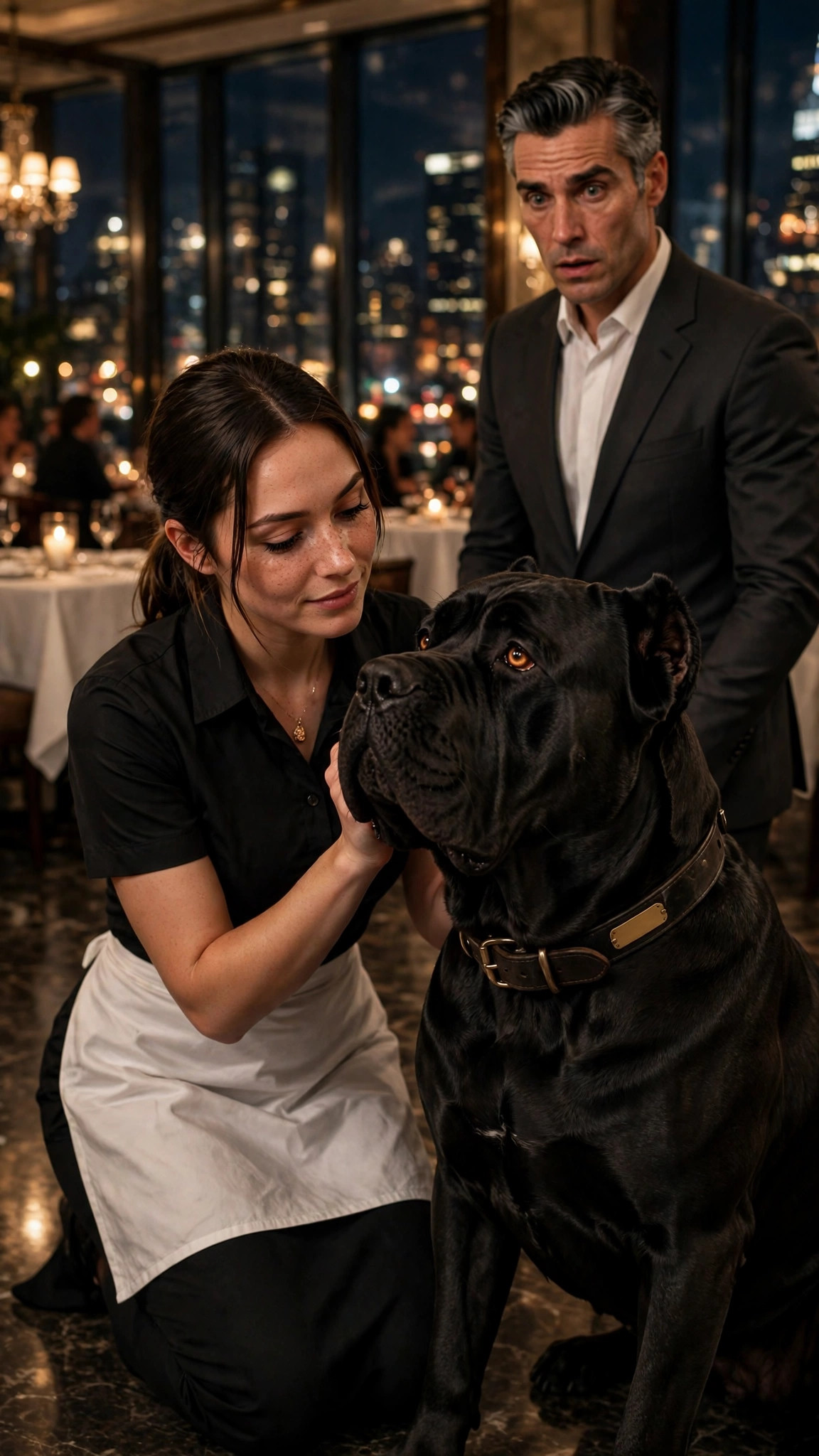
Story Genres: Mafia Romance

  • Chapter 7: Home

    Chapter 7: Home

    The vet's name was Dr. Patel, and she had kind eyes and a voice that sounded like she had delivered bad news many times before. She sat with us in her small office, Orion lying on the floor between Dante and me, his huge head on his paws, and she told us that Orion was nine years old, which for a dog his size was already a long life, and that his kidneys were failing, and that his hips were worse than we thought, and that he probably had six months. Maybe a year, if we were lucky and careful.

    "He's not in pain right now," Dr. Patel said gently. "But he will be, eventually. When that time comes, you'll know. Dogs tell you. They stop eating. They stop getting up. They look at you a certain way, and you understand."

    Dante didn't say anything. He stared at the floor, and his hands were clenched into fists on his knees, and I could see the muscle jumping in his jaw.

    Orion lifted his head and looked at Dante, and then he looked at me, and he heaved a great sigh and put his head back down, as though to say, it's all right, I've had a good life, don't make a fuss.

    On the drive home, Dante was silent. When we got to the penthouse, he went to the window and stood there for a long time, looking out at the park, and I stood beside him, and Orion lay down at our feet, and none of us said anything.

    Finally, Dante spoke. "My mother bought him when he was eight weeks old. She raised him. When she died, he sat by her door for three days. And when I found you — when he chose you — I thought it was a sign. I thought my mother was telling me something. That it was time. That I was allowed to be happy."

    "It was a sign," I said. "It still is. He's not gone yet, Dante. He's here. He's with us. And we have six months, or a year, and we're going to make them the best months of his life."

    Dante looked at me, and his eyes were wet, and he didn't try to hide it. "What do we do?"

    "We do what my mother would have done," I said. "We take care of him. We give him the softest bed and the best food and long slow walks in the park. And we give him a family. Because that's what he's been waiting for, all these years. Not a master. A family."

    And so we did. The next six months were the happiest of my life, and I think they were the happiest of Dante's too. I started culinary school in September, and Dante drove me there every morning, and Orion came with us, sitting in the back seat with his head out the window, his ears flapping, looking for all the world like the happiest dog alive. In the evenings, I cooked in Dante's kitchen — real food, the kind my mother used to make, and the kind his mother used to make — and Dante sat at the small table and watched me, and Orion lay between our chairs with his head on both our feet.

    Dante kept his promise. He started selling the businesses that needed guns and guards, and he kept the ones that didn't — the restaurants, the hotels, the shipping company that ran on contracts instead of fear. It took months, and it cost him more money than I could count, and twice men came to the penthouse to argue with him, and twice Dante sent them away with a look. But he did it. He walked away from the empire his father had built, and he built something else instead: a life.

    In November, I graduated from culinary school — top of my class, because I had been cooking in restaurant kitchens since I was seventeen and I knew things the other students didn't. Dante was in the front row, wearing a suit that probably cost more than the school, and Orion was asleep under his chair, and when they called my name, Dante stood up and clapped so hard that everyone in the room turned to look at him, and he didn't care at all.

    Before December, there was the autumn — the hardest and best season of my life. The restaurant, Orion's Table, opened in October, and the first month was chaos. A food critic came on the third night and ordered everything on the menu and wrote a review that called my cooking "honest and unafraid," which made me cry in the kitchen. A customer sent back a sauce and said it was too salty, and I stood in the walk-in refrigerator for ten minutes, breathing hard, before Dante came in and said, "Fix it and move on. Every chef has a bad sauce. The good ones learn from it." A regular — an old woman named Mrs. Chen, who came every Tuesday — told me my dumplings reminded her of her grandmother's, and that was the best compliment I had ever received in my life.

    Dante's transition took longer. In September, he called a meeting with his capos — the men who had run his businesses for years — and he told them he was going legitimate. Old Vinnie, who had been with Dante's father before Dante was born, stood up and said, "You can't walk away from this life, Dante. It doesn't let you walk away." And Dante said, "Watch me." And Vinnie said, "They'll kill you. The Castellanos, the others — they'll see it as weakness." And Dante said, "Let them try. I have something worth more than territory now." He bought Vinnie out — paid him enough to retire to Florida and never think about New York again — and he bought out two others, and the rest stayed, because they were loyal to Dante, not to the life, and they followed him into the legitimate businesses: the restaurants, the hotels, the shipping company that ran on contracts instead of fear.

    And Orion — Orion had the best autumn of his life. In October, Dante rented a beach house in the Hamptons for a long weekend, and we took Orion to the ocean for the first time. He had never seen the sea. He stood at the edge of the water and stared at it, and then he ran straight in, all four legs churning, his ears flapping, barking with joy, and Dante laughed so hard he had to sit down in the sand. Orion chased seagulls up and down the beach until his legs gave out, and then he lay in the sun and let the waves wash over his paws, and Dante carried him up the stairs to the house that night because his hips were too stiff to climb, and Orion didn't even pretend to mind. He just rested his head on Dante's shoulder and sighed, the way he always did, like the world was exactly as it should be.

    In December, Dante gave me a gift. It was a small restaurant on the ground floor of a brownstone in the West Village, with a kitchen in the back and six tables in the front and a window that looked out onto a street full of trees. The first night I cooked in that kitchen, my hands were shaking so hard I could barely hold the knife. Dante stood in the doorway and watched me, and he didn't say anything, and then he came in and he rolled up his sleeves and he washed the lettuce, and he chopped the onions the way his mother had taught him, crying a little from the onions and pretending he wasn't, and Orion lay on the kitchen floor with his head on his paws, watching us both. I made the pasta sauce — his mother's sauce, with the basil torn by hand and the pinch of sugar — and Dante tasted it, and he closed his eyes, and he said, "That's it. That's her sauce. That's exactly it." And I cried, standing there in my own kitchen, with flour on my apron and a mafia boss washing lettuce beside me, and I thought about my mother, and Mrs. Delgado, and Teresa, and every woman who had ever taught me that food is love you can taste, and I knew that this — this kitchen, this man, this dog — was home. He had bought the building, and he had renovated the kitchen, and he had put my name on the lease.

    "It's yours," he said. "Not a debt. Not a favor. A gift. Because you told me you wanted to be a chef, and a chef needs a kitchen."

    I cried. I cried for a long time, and Orion put his head in my lap, and Dante held my hand, and I thought about my mother, who had believed in small kindnesses, and my father, who had pulled a boy out of a river and died for it, and I understood, finally, what my mother had meant all those years ago. Be kind. You never know what someone is carrying. You never know what your kindness will do.

    I named the restaurant Orion's Table. The first night we opened, the dining room was full, and Dante sat at table twelve — because of course he did, because some jokes write themselves — and Orion lay beside his chair with his gray muzzle on his paws, and every person who walked in the door stopped and stared at the enormous black dog, and then they smiled, because he was the gentlest animal they had ever seen.

    On Christmas Eve, after the last customer had gone and Rosa had gone home and the kitchen was clean, Dante took my hand and led me to table twelve. Orion was asleep under the table, snoring softly. The restaurant was lit by candles. Outside, snow was falling on the street.

    "Olivia Marshall," Dante said, and he went down on one knee, and he took a small box out of his pocket, and inside the box was a ring — simple, gold, with a single diamond that caught the candlelight. "I have spent nineteen years looking for you. I found you because my dog chose you. I stayed because you chose me. Will you marry me? Properly. Not because of a debt, not because of a dog, not because of anything except that I love you, and I want to spend the rest of my life coming home to you."

    I looked at him — at the gray eyes, at the silver at his temples, at the man who had once been the most feared in New York and was now kneeling in front of me in a restaurant I owned, with a ring in his hand and hope on his face — and I said yes. I said yes before he had finished the question.

    Orion woke up then, and he lifted his head, and he looked at us, and his tail thumped once against the floor, and Dante laughed, and I laughed, and the ring went on my finger, and it fit perfectly.

    But before the wedding, there was the first anniversary of Orion's Table — one year after we opened, and the dining room was full, and Dante stood up in the middle of dinner and made a speech. He was terrible at speeches. He said, "A year ago, my wife opened this restaurant, and I thought she was crazy, and I was right, but it turns out crazy was exactly what this place needed." And everyone laughed, and then he got serious, and he said, "This restaurant is named after a dog who taught me that love doesn't ask permission. He just walks up to you and puts his head on your knee, and you can either push him away or you can let him stay. I let him stay. And then I let her stay. And I have never been happier." There wasn't a dry eye in the room. After dinner, we hung a portrait on the wall by the door — a painting a local artist had done of Orion, enormous and black and beautiful, with his amber eyes looking straight at whoever walked in. Underneath it, Dante had a small brass plate made. It said: "Orion — he chose us." Every guest who came in stopped to look at it, and every guest asked who Orion was, and I told them, every time, the whole story: the restaurant, the dog, the waitress, the mafia boss. And every time, they said the same thing: "That can't be a true story." And I said, "Every word of it is true."

    We were married in the spring, in a small ceremony in the restaurant, with Rosa crying in the front row and Rocco standing at the door in a suit that didn't quite fit and Miso the cat asleep in a sunbeam on the windowsill. Orion walked down the aisle beside me, wearing a bow tie that Dante had tied around his collar with great ceremony and very little skill, and when the minister asked if anyone objected, Orion barked once, loudly, and everyone laughed, and Dante said, "That's his blessing. That's the only one I need."

    Orion lived for eleven more months after our wedding. He died in his sleep, on a soft bed in our room, with his head on Dante's foot and his paw on mine, on a quiet night in October, nineteen years to the month after the night my father pulled Dante out of the river. The vet said he hadn't suffered. The vet said he had simply gone to sleep and not woken up, the way old dogs do when they have had a good life and they know they are loved.

    We buried him in the garden behind the restaurant, under the oak tree, and Dante carved his name into a stone himself: ORION — HE CHOSE US.

    I still work at the restaurant. Dante still sits at table twelve. And sometimes, when the dining room is quiet and the candles are lit and the snow is falling outside, I look at the empty space beside his chair, and I swear I can feel a huge, warm head pressing against my leg, and I hear a tail thump once against the floor, and I remember the night a dog chose a waitress, and a waitress chose a mafia boss, and a mafia boss chose to become a man who could be loved.

    My mother was right. Be kind. You never know what someone is carrying. And you never know what your kindness will do.

    It might just save your life. It might just give you a home.

    The End.

    THE END
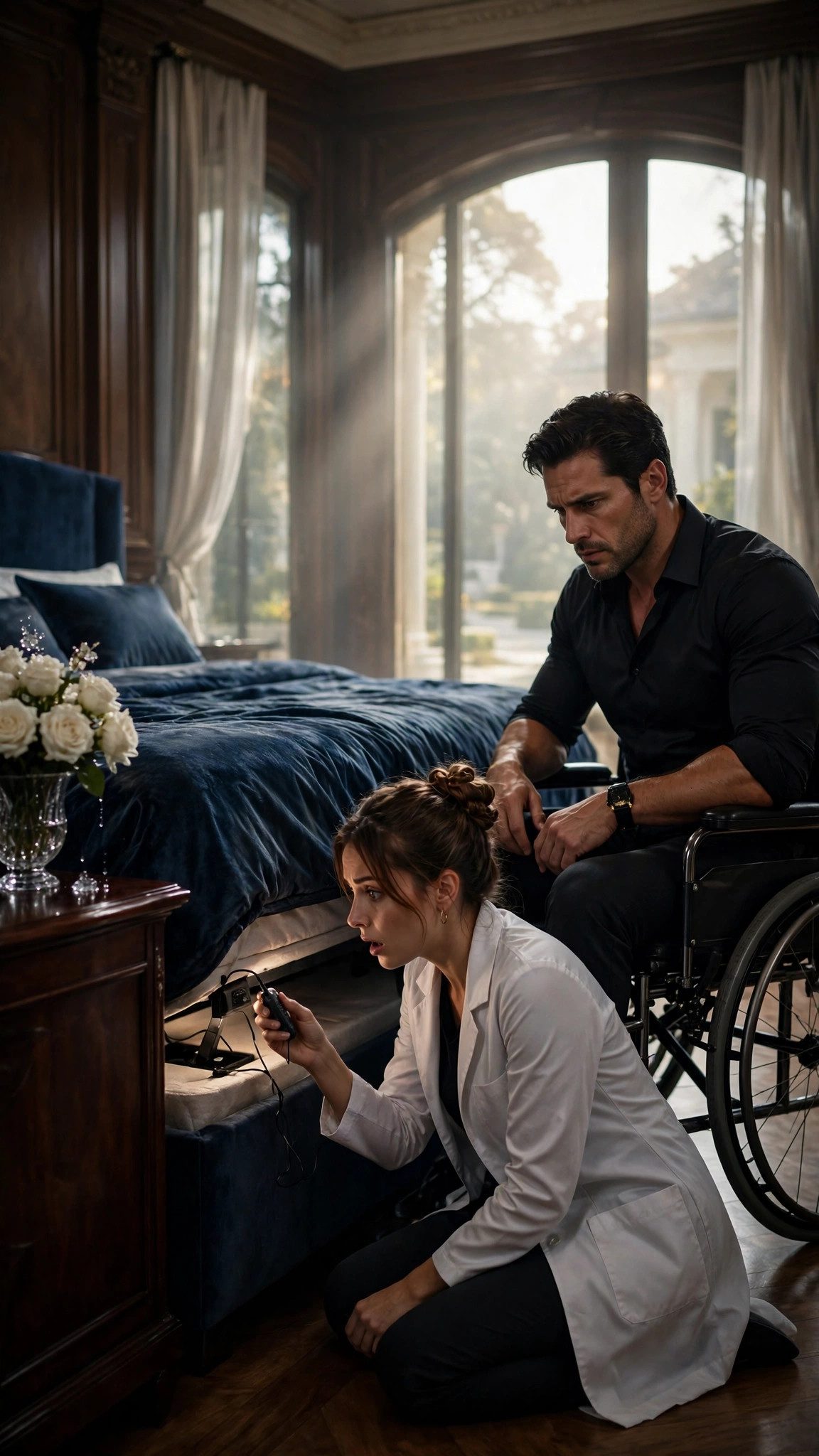
  • Chapter 6: What the Dog Knew

    Chapter 6: What the Dog Knew

    The warehouse at the docks smelled of salt and diesel and old rope.

    Vincent Castellano was waiting for us in the middle of the empty floor, sitting on a wooden crate like a king on a throne, with four of his men standing behind him and a fifth man I didn't recognize standing at his shoulder with a briefcase.

    " Dante," Castellano said, spreading his hands wide. "You came. I knew you would. You're a sentimental man, for a Moretti. Your father would be ashamed."

    "My father is dead," Dante said. "And you're the reason my best friend's daughter grew up without a father. So let's not talk about shame."

    Castellano's smile didn't reach his eyes. "I want the docks, Dante. The shipping contracts. The union. I want what your father took from mine. And you are going to give it to me, because I have something you want."

    He nodded, and the man with the briefcase opened it. Inside was a stack of papers, and on top of the stack was a photograph of my apartment building in Queens, with a red circle drawn around my window.

    "You have one hour," Castellano said. "Sign the papers, or my men pay a visit to the girl's home. And to the restaurant. And to the cat."

    I felt Dante go very still beside me. It was the stillness I had seen in the restaurant on the first night — the stillness of a man deciding whether to be patient or to be dangerous.

    Then Orion moved.

    He walked forward, slowly, his massive head low, his amber eyes fixed on Castellano, and every man in the warehouse went rigid. One of Castellano's men reached for his jacket. Orion's head swung toward him, and the man froze with his hand halfway inside his coat.

    "Call him off," Castellano said, and for the first time his voice had an edge in it. "Call your dog off, Dante."

    "I don't control him," Dante said quietly. "Nobody does. He goes where he wants."

    Orion stopped three feet from Castellano and sat down. He didn't growl. He didn't bare his teeth. He just sat there, staring at Castellano, and the whole warehouse seemed to hold its breath.

    And then the doors at the far end of the warehouse burst open, and FBI agents poured in — twenty of them, in vests and helmets, shouting for everyone to put their hands up — and I understood, finally, what Dante had really been planning all along.

    He hadn't come to negotiate. He had come to make Castellano show his hand in front of witnesses. The papers, the photograph, the threats — it was all on tape. Dante's men had been recording everything from the cars outside, and Agent Dana Cole, who had been building a case against the Castellano family for three years, had been waiting for exactly this moment.

    Castellano was arrested on the spot. His men were arrested. The man with the briefcase tried to run and was tackled by two agents before he reached the door. And Dante Moretti, the most feared man in New York, stood in the middle of a warehouse full of federal agents and didn't say a word, because he didn't have to.

    On the drive home, I sat between Dante and Orion in the back seat, and I didn't speak for a long time. My hands were shaking. My whole body was shaking. Dante took my hand — gently, as though he were afraid I might break — and he held it all the way back to the penthouse.

    The morning after the warehouse, I went home for the first time in a week. Rocco drove me to Queens in the morning, and Orion came with us, sitting in the back seat with his head out the window, and when we pulled up outside my building, Mrs. Alvarez was waiting on the stoop in her housecoat, and she ran to the car before I could even open the door.

    "Mija!" she cried, and she hugged me so hard I couldn't breathe. "Are you all right? Are you hurt? I saw the black car, and I was so worried, and I prayed, I prayed every night."

    "I'm all right, Mrs. Alvarez," I said, and I hugged her back, and I meant it. "I'm all right. And thank you. Thank you for feeding Miso. Thank you for everything."

    Miso was hiding under my bed when I went inside, and he came out slowly, sniffing the air, and when he saw me, he ran to me and climbed into my lap and purred so loudly I could feel it in my chest. I packed a bag — clothes, my mother's photograph, the cookbook Mrs. Delgado had given me when I left St. Mary's, the one with her handwriting in the margins — and I looked around the little apartment, at the chipped nightstand and the radiator that clanked and the kitchen the size of a closet, and I felt a strange pang. This was my home. It was small and shabby and mine. And I was leaving it, maybe for good, for a penthouse with a fireplace and a view of the park. I didn't know whether to be sad or relieved. I was both.

    Mrs. Alvarez stood in the doorway as I left, and she held my hand, and she said, "Your mother would be proud of you, Olivia. She always said you were going to do something special with your life. She just didn't know what it would be." And I kissed her cheek, and I got into the car, and Miso meowed from his carrier, and Orion sniffed the carrier with great interest, and Miso hissed, and Orion backed away with an expression of such offended dignity that Rocco laughed out loud.

    Back at the penthouse, I introduced Miso to his new home. He explored every room with his tail held high, and he claimed the sunniest windowsill in the living room, and Orion watched him from a respectful distance, as though he understood that the cat was now part of the family too. That night, Miso slept on my bed, and Orion slept on the floor beside it, and I lay awake listening to them both breathe, and I thought about how strange life was — how a week ago I had been a waitress with forty-one dollars in her bank account, and now I was living in a penthouse with a mafia boss, a guard dog, and a cat, and I was about to apply to culinary school.

    The application took me three days to write. The essay question was simple: "Why do you want to be a chef?" I wrote about my mother, who had believed in small kindnesses. I wrote about Mrs. Delgado, who had taught me that food is love you can taste. I wrote about the night I had made Dante's mother's pasta sauce, and the way his face had changed when he tasted it, and how I had understood, in that moment, that cooking was not about feeding people. It was about telling them that they mattered. I wrote seven pages. I cried twice while writing them. When I finished, Dante read the essay, and he didn't say anything for a long time, and then he said, "If they don't accept you, I'll buy the school." I laughed, and I told him he couldn't buy everything, and he said, "Watch me," and I laughed harder, because I knew he was joking, and I knew he wasn't.

    The interview was the following week. The admissions director was a woman named Chef Moreau, with a French accent and a sharp eye, and she asked me to cook something on the spot — anything I wanted, with whatever was in the pantry. I made my mother's tomato soup, the way she used to make it, with basil torn by hand and a pinch of sugar and a swirl of cream, and I served it with bread I toasted in olive oil. Chef Moreau tasted it, and she was quiet for a moment, and then she said, "Where did you learn to cook like this?" And I said, "From a woman who ran a group home kitchen and believed that food is love you can taste." And Chef Moreau said, "Then she taught you well. You're in."

    That night, after the adrenaline faded and the shaking stopped, Dante came to my door. He was still in his suit, and his tie was loose, and he looked exhausted in a way that had nothing to do with sleep.

    "Can I come in?" he asked.

    I nodded, and he sat down on the edge of the guest room bed, and Orion lay down between us, and Dante told me the truth. All of it. The parts he hadn't told me before.

    "I was afraid," he said. "Not of Castellano. I'm never afraid of men like him. I was afraid of what would happen to you. I spent nineteen years looking for Thomas Marshall's family, and when I found you, I realized that the debt wasn't the point. The debt was just the reason I kept looking. The point was you. The point was that you walked into my restaurant and you were kind to my dog, and nobody has been kind to me in a very long time without wanting something in return."

    "I'm not kind," I said. "I'm just tired. I was tired, and the dog was warm, and for one second I forgot to be afraid."

    "That's what kindness is," Dante said. "Forgetting to be afraid, for one second, and reaching out your hand."

    He looked down at his hands. "My mother used to say that Orion could tell a good heart from a bad one. I never believed her. Dogs are dogs. But that night, in the restaurant, when he pressed his head against your leg — I believed her. And when I found out who your father was, I thought it was fate. But it wasn't fate, Olivia. It was you. It was always you."

    I reached out, slowly, and I took his hand. His fingers were rough and scarred, and they were warm.

    "I'm not a debt," I said. "I'm not a mission. I'm not a girl you have to protect because my father saved your life. I'm a person. And if you want me in your life, it has to be because you want me — not because you owe my father anything."

    "I know," Dante said. "I know that. And I'm telling you now, as a man, not as a Moretti, not as a boss, not as a debtor: I want you in my life. I want to wake up and know you're in the next room. I want to eat pasta with you in my kitchen. I want to watch Orion follow you around the apartment like you're the sun. I want all of that. And if you don't want it, I'll let you go. I'll drive you home tonight, and I'll never bother you again, and I'll make sure Castellano's people never come near you. But I had to tell you. I had to say it out loud, once."

    I looked at him — at the gray eyes, at the scars, at the man who had spent nineteen years carrying a stone in his pocket — and I thought about my mother, who had told me to be kind because you never knew what someone was carrying.

    "I'm not going anywhere," I said. "But I have conditions."

    He almost smiled. "Conditions."

    "One: I keep working. I don't want to be a woman who sits in a penthouse and waits for a man to come home. I want to work. I want to be a chef, actually. I've wanted it since I was seventeen, and I never had the money for school."

    "Done," Dante said. "Culinary school. The best one. Starting whenever you want."

    "Two: you go legitimate. No more docks, no more contracts, no more men with guns in your garage. You have enough money. You sell what you can, you walk away from the rest, and you build something that doesn't need a bodyguard at the door."

    Dante was quiet for a moment. "That will take time. And it will cost me. But yes. I'll do it. For you, and for me. I'm tired of being feared, Olivia. I'm so tired of it."

    "Three," I said, and I scratched behind Orion's ear, and his tail thumped once against the floor. "Orion sleeps in our room. Not in the hallway. In our room. He's old, and his hips hurt, and he deserves a soft bed."

    Dante laughed — a real laugh, the second one I had ever heard from him. "Agreed. He'll take the whole bed. He already does."

    "Then we have a deal," I said.

    Dante leaned forward then, slowly, giving me time to pull away, and he kissed me. It was gentle and careful and it tasted like the pasta sauce his mother had taught him to make, and Orion sighed in his sleep, and outside the window the city glittered like it had been made just for us.

    But there was one more thing I didn't know yet. One more thing Dante hadn't told me. And it would change everything about the way I understood Orion — and the way I understood why he had chosen me.

    That first quiet evening after the warehouse, Dante woke up shouting. I heard him from the guest room — a raw, wordless sound — and I found him sitting up in bed, his hands over his face, Orion pressed hard against his side. "The pier," he said, when he could speak. "I dream about the pier. The water. The cold. For nineteen years, I have dreamed about it, and I always wake up just before I hit the water." Orion had climbed onto the bed and laid his enormous head across Dante's lap, and Dante was holding on to him like a man holding on to a rope. I sat down on the other side of the bed, and I didn't say anything, and after a while Dante's breathing slowed, and he said, "Do you dream about your mother?" And I said, "Every week. She's always in the hospital, and she's always busy, and I keep trying to get her attention, and she keeps walking away." And Dante said, "Grief is a room you never really leave. You just learn to live in it." We sat there until the sun came up, the three of us, and nobody said anything else, and it was the most honest night I had spent in a very long time.

    The next morning, we took Orion for a walk in the park, just the three of us, and Dante bought coffee from a cart, and we sat on a bench and watched the city wake up, and Dante said, "The war is over, Olivia. Castellano is in custody. The mole is gone. You are safe." And I said, "Then what happens now?" And he said, "Now we find out who we are when nobody is trying to kill us." And I laughed, because it was the strangest question anyone had ever asked me, and also the best one.

    The vet called the next morning. Orion's bloodwork had come back. And the news was not good.

  • Chapter 5: The Price of a Debt

    Chapter 5: The Price of a Debt

    The trap was set for a Thursday. Dante told Enzo — and only Enzo — that I would be at a small café in Brooklyn at three o'clock in the afternoon, to meet a friend from my old life. He told Rocco nothing. He told me everything, and he made me promise to stay in the penthouse with the doors locked and Orion beside me.

    "The café is a lie," Dante said. "There is no friend. There is no meeting. But Castellano's men will go there if Enzo tells them. And when they do, my men will be waiting, and we will know."

    "And if they don't go?" I asked.

    "Then Enzo is innocent, and the leak is somewhere else." Dante's voice was flat. "But they will go."

    Thursday came. Three o'clock came and went. At four o'clock, Rocco came to the penthouse with a report: three of Castellano's men had been seen outside the café in Brooklyn. They had waited for an hour, then left. Dante's men had followed them. Enzo was the mole. It was confirmed.

    Dante's face went very still. "Bring him to me," he said to Rocco. "Alive. I want to hear it from him."

    Rocco left. Dante stood by the window, his hands behind his back, looking out at the park. Orion lay at his feet. I sat on the couch with a book I wasn't reading, and I tried not to think about what would happen to Enzo when Rocco brought him back.

    "He has a sister," Dante said, without turning around. "Enzo. She's sick. Leukemia. The treatment costs more than he makes in a year. Castellano has been paying her medical bills."

    "That's why he did it," I said.

    "Yes. That's why he did it." Dante turned around, and his eyes were dark. "And that is why I will not kill him. But he will never work for me again, and he will never come near you again."

    I nodded. I didn't know what to say. The world Dante lived in had rules I didn't understand — rules about loyalty and debt and what you owed a man who betrayed you and what you owed a man whose sister was dying.

    At six o'clock, the phone rang. It was Rocco, and his voice was tight with panic.

    "Mr. Moretti," he said. "Enzo is gone. He ran. And — sir, Castellano's men are at the penthouse garage. They didn't go to the café. They went to the real address. They knew where she was all along."

    Dante moved so fast I barely saw him. He was across the room and had my arm in his hand, pulling me toward the interior hallway, away from the windows, and shouting at Rocco through the phone. Orion was on his feet, his hackles up, a low growl rolling in his chest like thunder.

    "How did they know?" Dante said. "Enzo only knew the café. How did they know the penthouse?"

    "They didn't need Enzo, sir," Rocco said. "They've been watching the building. They've been watching since the night at the restaurant. They followed the car. They knew the whole time."

    The elevator dinged.

    Dante shoved me behind him and drew a gun from inside his jacket — I hadn't known he carried one, and I wished I still didn't — and Orion went rigid, every muscle in his enormous body coiled, his amber eyes fixed on the elevator doors.

    The doors opened. Two men stepped out, both in dark suits, both with their hands inside their jackets. Behind them, a third man stayed in the elevator, holding the doors.

    "Mr. Moretti," the first man said, and his voice was polite, almost bored. "Mr. Castellano sends his regards. He'd like to have a word with the girl."

    "No," Dante said.

    "Mr. Castellano was afraid you'd say that." The man smiled. "He asked me to tell you that if you don't hand her over, he'll burn down the restaurant where she works. And then he'll burn down the building where she lives. And then he'll find the cat."

    My blood went cold. Miso. Mrs. Alvarez. The little apartment in Queens with the chipped nightstand and the radiator that clanked all night.

    "Don't listen to them," I whispered to Dante. "Don't —"

    But Dante was already moving. He didn't raise his gun. He didn't shout. He did something much more frightening: he smiled.

    "Tell Vincent Castellano," he said, very quietly, "that if he touches one hair on her head, or one brick of her building, or one whisker of her cat, I will burn down every warehouse, every casino, every restaurant, and every house he owns, starting with the one his mother lives in. And then I will come for him myself."

    The man in the doorway hesitated. Just for a second. Just long enough for Orion to move.

    I don't know what Orion did, exactly, because it happened so fast. One moment the man was standing in the elevator doorway, and the next moment Orion was between us and him, his teeth bared, his growl shaking the floor, and the man was backing into the elevator with his hands up, and the doors were closing, and the elevator was going down.

    The second man followed. The third never got out.

    Dante lowered his gun. His hands were shaking — the only time I ever saw them shake.

    "They'll be back," he said. "Castellano doesn't give up. He'll try again, and next time he won't send two men to talk."

    "Then what do we do?" I asked.

    "We end it," Dante said. "Tonight. I go to him, and I end it, one way or another."

    "No," I said. "You don't go alone. You don't —"

    "I have to," Dante said. "It's the only way. He wants me, not you. If I go to him, he lets you go. That's the deal I will offer him."

    "Dante," I said, and it was the first time I had used his first name. "If you go alone, he'll kill you."

    "Maybe," Dante said. "But he won't touch you. And that's what matters."

    He turned to go, and I grabbed his arm, and Orion pressed himself against my leg, and for a moment the three of us stood there in the hallway of the penthouse — a mafia boss, a waitress, and a dog — and I understood, finally, what this story was really about. It wasn't about a debt. It wasn't about a dog. It was about a man who had spent nineteen years carrying a stone in his pocket, and a girl who had spent her whole life being invisible, and the fact that they had found each other in the last place either of them expected: a restaurant, at table twelve, because a dog had decided to love her.

    "I'm coming with you," I said.

    "No, you're not."

    "Yes, I am," I said, and my voice didn't shake at all. "You don't get to decide that for me. My father died for you. My mother hid me for nineteen years. I have spent my whole life being protected by people who wouldn't tell me the truth. I'm done with that. If you go to Castellano, I go with you. And Orion goes with us."

    Dante looked at me for a long time. Then he looked at Orion, who was watching him with steady amber eyes. Then he nodded, once, the way a man nods when he has lost an argument he knows he should have won.

    "All right," he said. "But you stay behind me. And you do exactly what I say. And if I tell you to run, you run."

    "Deal," I said.

    But before we ever got to the warehouse, there was the war council. That was what Dante called it, though it took place in his living room, around the coffee table, with Rosa bringing in coffee and sandwiches as though we were planning a dinner party instead of a confrontation with a rival mafia family.

    Agent Dana Cole was there. She was a woman in her forties with short gray hair and a voice like gravel, and she had been building a case against the Castellano family for three years. She laid out photographs on the coffee table — Vincent Castellano at a restaurant, Vincent Castellano at a casino, Vincent Castellano shaking hands with a union official — and she explained, in plain language, what she needed from us.

    "I need him to threaten you on tape," she said, looking at Dante. "I need him to say, in his own words, that he will hurt this girl if you don't sign over the docks. That's extortion. That's conspiracy. That's enough to put him away for twenty years. But he has to say it himself, and I have to hear it."

    "And if he doesn't say it?" Dante asked.

    "Then we try again," Cole said. "But he will say it. Men like Castellano can't help themselves. They love the sound of their own threats." She opened a case on the table and took out a small black device, no bigger than a matchbox, and she held it up. "This is a wire. Rocco will wear it. Every word in that warehouse will be recorded, and my agents will be listening from the cars outside. If Castellano so much as raises his voice at the girl, we come in. And the cars have cameras. And the warehouse has a camera we installed last week, in the rafters, while his men were drinking at a bar across the street." She looked at me then, and her gravel voice went almost gentle. "Miss Marshall, I know this is frightening. But I want you to know that you will not be alone in that room. Not for one second. There will be twenty agents outside, and a dog inside, and a man who would burn down the city for you. You are the safest person in New York tonight."

    Dante's lawyer, a thin man named Adler who had been silent until then, cleared his throat. "For the record, Mr. Moretti, I advise against this. If anything goes wrong, the liability —"

    "Adler," Dante said, without looking at him. "Shut up." And Adler shut up.

    "Then we try again," Cole said. "But he will say it. Men like Castellano can't help themselves. They love the sound of their own threats."

    Rocco was there too, and two other men whose names I didn't catch, and they spread a map of the docks across the table and pointed at the warehouse and the exits and the places where Cole's agents would be hidden. Dante listened without interrupting, his arms crossed, his face unreadable. When they finished, he looked at me.

    "You stay in the car," he said. "With Rocco. You don't get out. You don't follow me inside. Do you understand?"

    "No," I said. "I don't understand, and I don't agree. I'm not sitting in a car while you walk into a warehouse full of men who want to kill you. I'm coming inside."

    "Olivia —"

    "No," I said, and my voice was steady, and I was surprised at how steady it was. "My father died for you in an alley nineteen years ago, and my mother spent her whole life hiding me, and I have spent my whole life being protected by people who wouldn't tell me the truth. I'm done with that. If you walk into that warehouse, I walk in with you. And Orion walks in with us."

    Dante looked at me for a long moment. Then he looked at Orion, who was sitting by the door with his leash in his mouth, as though he had already decided he was coming. Then Dante nodded, once, the way a man nods when he has lost an argument he knows he should have won.

    "All right," he said. "But you stay behind me. And you do exactly what I say. And if I tell you to run, you run."

    "Deal," I said.

    Agent Cole cleared her throat. "For the record, I don't love this plan. The girl is a civilian. If anything happens to her —"

    "Nothing will happen to her," Dante said, and his voice was so cold that the whole room went quiet. "I give you my word."

    The drive to the docks took forty minutes. I sat between Dante and Orion in the back seat, and I watched the city change outside the window — the glass towers giving way to brick warehouses, the bright streets giving way to dark ones, the air smelling more and more of salt and diesel. Dante held my hand the whole way. He didn't say anything. He just held my hand, and his thumb moved back and forth across my knuckles, slow and steady, like a heartbeat.

    When we pulled up outside the warehouse, Rocco got out first, and he scanned the street, and he nodded, and Dante got out, and I got out, and Orion got out, and the six black cars behind us emptied, and Dante's men fanned out across the yard with their faces set, and I realized that I was walking into a war.

    But I wasn't afraid. Not anymore. Because the dog at my side had chosen me, and the man in front of me had spent nineteen years looking for me, and for the first time in my life, I was not alone.

    When the meeting ended, Dante stood up, and he checked his gun, and he looked at me, and he said, "It's time." Rocco was already at the door with Orion's leash in his hand. My hands were shaking, but only a little. I thought about my father, who had walked into danger for a stranger, and my mother, who had hidden me for nineteen years, and I thought about the dog who had chosen me in a restaurant. And I walked to the elevator with my head high, because whatever happened next, I was not going to hide. Not anymore.

    We went down in the elevator together — Dante, Rocco, Orion, and me — and the doors opened onto the garage, where six black cars were waiting, and Dante's men stood in a line with their faces set, and I realized that I was walking into a war. Rocco opened the back door of the first car for me, and Orion jumped in after me, and Dante slid in beside us, and the convoy pulled out of the garage in perfect formation, six black cars moving through the night like a single animal. Nobody spoke. Rocco drove with both hands on the wheel and his eyes on the mirrors. Dante stared out the window at the city sliding past, and his jaw was set, and I could see the weight of nineteen years sitting on his shoulders. I reached over and took his hand, and he looked at me, surprised, and then he squeezed my fingers, once, hard, the way a man holds on to the only solid thing in a storm.

    But I wasn't afraid. Not anymore. Because the dog at my side had chosen me, and the man in front of me had spent nineteen years looking for me, and for the first time in my life, I was not alone.

  • Chapter 4: Under His Roof

    Chapter 4: Under His Roof

    Living in Dante Moretti's penthouse was like living inside a museum that someone had forgotten to put ropes around. Everything was beautiful and expensive and silent. The woman in the gray uniform — her name was Rosa, and she had worked for Dante's family for thirty years — cooked meals I didn't recognize and left them on the table without a word. The windows looked out over the park. The fireplace was always lit. And everywhere I went, Orion went too, his massive body moving silently behind me like a shadow that had decided to love me.

    I hated it. Not the beauty — the beauty was fine. I hated the waiting. I hated sitting in a stranger's living room while my life went on without me. I hated that my shifts at Aurelia were covered by other girls and my manager had stopped calling and Mrs. Alvarez was feeding Miso and watering my plants and I had no idea when I would be allowed to go home.

    On the third day, I exploded.

    "I can't just sit here," I said to Dante at breakfast. He was reading a newspaper in Italian, and Orion was asleep with his head on my foot, and Rosa had made eggs I hadn't asked for. "I have a life. I have a job. I have a cat. I can't stay locked in your apartment forever because some men want to kidnap me."

    Dante folded the newspaper with deliberate care. "You can go home when it's safe."

    "When will that be?"

    "When I find the man inside my organization who is feeding Castellano information, and when Castellano is no longer a threat." He said it the way other men might say "when the rain stops."

    "And until then I just… what? Sit here? Eat your food? Wear your clothes?" I gestured at the sweater I was wearing — it was Dante's, a soft gray cashmere, because my own clothes were in a bag in the guest room and the penthouse was cold in the mornings. "I'm not a pet, Mr. Moretti. I'm not Orion."

    "No," Dante said, and his eyes flicked to the dog. "You're not. Orion chose you. I didn't get a choice."

    The silence that followed was so loud I could hear the clock ticking.

    Then Dante stood up, and he did something I had not expected. He took off his watch — a heavy silver thing that probably cost more than my apartment building — and he set it on the table between us.

    "My mother gave me this watch the day I turned eighteen," he said. "She told me that a man is measured by what he does when no one is watching. She died six months later. Aneurysm. The same thing that took your mother, I believe. She was forty-four years old."

    I stared at him. "I'm sorry."

    "She used to say that the house was too quiet. That a home needed a dog, and a dog needed a person, and a person needed someone to come home to. She bought Orion when he was a puppy, eight weeks old, and she raised him herself. She taught him to sit and to stay and to be gentle with her hands. When she died, he sat by her bedroom door for three days and wouldn't eat. The vet said he was grieving." Dante's voice was steady, but his hands were not — they were gripping the edge of the table hard enough that his knuckles had gone white. "I have never seen him choose anyone since. Not my father. Not my men. Not anyone. Until you."

    I didn't know what to say. So I said the truest thing I could think of. "I miss my mother too. Every day. I miss the way she used to hum while she cooked. I miss the way she knew when I was lying. I miss her hands."

    Dante looked at me for a long moment, and something in his face shifted — the cold gray eyes warmed, just a fraction, like clouds breaking over water.

    "Your mother was a nurse," he said. "My mother used to say that nurses were the only truly brave people in the world, because they walked into suffering every day and chose to stay."

    We didn't say anything else. Rosa came in and cleared the plates. Orion sighed in his sleep. And I realized, with a shock that went all the way down to my bones, that I was beginning to understand the man behind the monster. He was not a legend. He was a son who had lost his mother, a boy who had been thrown off a pier, a man who carried a nineteen-year-old debt like a stone in his pocket and had no idea how to put it down.

    That afternoon, Dante took me to the kitchen. Not Rosa's kitchen — his kitchen, the small one off the living room, where he cooked for himself when he was alone. He rolled up his sleeves, and I saw the scars on his forearms — thin white lines, old, from a life I couldn't imagine — and he showed me how to make his mother's pasta sauce, the way she had taught him. Tomatoes, garlic, basil, olive oil, salt. Nothing fancy. The kind of food that poor people in Sicily had been making for a hundred years.

    "My mother said a sauce should taste like the person who made it," he said, stirring slowly. "Hers tasted like home. Mine tastes like… I don't know. I've been trying for twenty years."

    I took the spoon from him, tasted it, and added a pinch more salt and a handful of basil torn by hand, the way my mother used to do it. "There," I said. "Now it tastes like someone who cares."

    He looked at the pot, and then at me, and he laughed — a real laugh, low and surprised, the sound of a man who had forgotten he knew how. Orion lifted his head, startled, and then put it back down with a sigh, as though to say, finally.

    That evening, before dinner, Dante showed me something he had never shown anyone. He took a small wooden box from the top shelf of the library, and he opened it, and inside were letters — dozens of them, tied with ribbons, in his mother's handwriting. "She wrote to her sister in Sicily every week," he said. "After she died, my father put the letters in this box and never opened it. I found it when I was twenty-five, cleaning out his study after the funeral." He took out one letter and read it aloud, translating as he went. It was about an ordinary day — the price of tomatoes, a neighbor's new baby, a recipe for lemon cake — and it was the most beautiful thing I had ever heard, because it was a woman writing about her life as though her life mattered, as though the small things were the big things. Dante's voice caught on the last line, and he folded the letter carefully and put it back, and he said, "She would have liked you, Olivia. She would have liked you very much." And I didn't know what to say, so I just took his hand, and we sat there in the library with the box between us, and the fire crackling, and Orion asleep at our feet, and for a little while the past didn't hurt quite so much.

    That evening, we ate the pasta together at the small table in the kitchen, and Dante told me about his mother, and I told him about mine, and Orion lay between our chairs with his head on both our feet, and for one hour the world outside the penthouse — Castellano and his men and the mole inside Dante's organization — did not exist.

    Later that afternoon, Rosa found me standing in the doorway of the penthouse library, staring at the shelves. It was a beautiful room — dark wood, a fireplace, a leather chair by the window — and the shelves were full of books in Italian and English, old leather-bound volumes and paperbacks with cracked spines. On the lowest shelf, there was a row of cookbooks, and one of them was open, face-down, as though someone had been reading it and walked away in the middle of a recipe.

    "Those were Mrs. Moretti's," Rosa said, appearing beside me so quietly I jumped. "She loved to cook. She had a book for every occasion. That one — " she pointed at the open cookbook — "that one has her notes in the margins. In Italian. She wrote down what she changed and why."

    I picked up the cookbook carefully. The pages were yellowed, and the margins were full of small, neat handwriting. I couldn't read Italian, but I could read the numbers — a little more salt here, a little less garlic there, a pinch of sugar in the tomato sauce. "She was a good cook," I said.

    "The best," Rosa said. "Mr. Dante used to sit on the floor in the kitchen and watch her. He was a little boy then, maybe six or seven. He would ask a hundred questions, and she would answer every one of them. She told him that a man who could cook would never be lonely, because he could always feed himself and feed the people he loved." Rosa smiled, and her eyes went soft. "After she died, he stopped cooking. He stopped going into the kitchen at all. For twenty years, I cooked for him, and he ate what I put in front of him, and he never once asked me how I made it."

    I looked at the open cookbook, and then I looked at Rosa, and I understood what she was telling me without saying it: that the pasta sauce Dante had made with me that morning was the first time in twenty years he had cooked his mother's food, and that it mattered, and that I mattered, even if neither of us knew how to say it yet.

    That evening, I made breakfast for dinner — pancakes, the way Mrs. Delgado had taught me, with blueberries folded into the batter and butter melting on top. Dante sat at the small kitchen table and watched me cook, and Rocco stood in the doorway with his arms crossed, and Orion lay on the floor with his head on his paws, and when I set the plates down, Dante took one bite and closed his eyes.

    "My mother used to make these," he said. "On Sundays. With the same blueberries. She said blueberries were the only fruit worth waking up for."

    "My mother said the same thing about strawberries," I said, and I sat down across from him, and for a few minutes we just ate, and it was the most normal thing that had happened to me in days.

    After dinner, I called Mrs. Alvarez from the penthouse phone. She told me Miso was fine, that he had eaten his dinner and was asleep on my bed, and that a black car had been parked across the street for two days, and that she had written down the license plate number, just in case. I told her to be careful, and to lock her door, and to call me if she saw the car again, and she said, "Mija, don't worry about me. Worry about yourself. You sound different. You sound like someone who finally knows where she belongs." I didn't know what to say to that, so I said goodnight, and I hung up, and I stood by the window for a long time, looking out at the city, thinking about a woman in Queens who watered my plants and fed my cat and knew me better than I knew myself.

    Later, when I went to bed, I found a note slipped under my door. It was written in a neat, careful hand I didn't recognize.

    "Miss Marshall — Mr. Moretti does not cook for anyone. In thirty years, I have never seen him make his mother's sauce for a guest. — Rosa"

    I folded the note and put it in the pocket of my jeans, next to my mother's photograph, and I lay awake for a long time, listening to Orion breathing at the foot of my bed, thinking about a man who had spent nineteen years looking for me and a dog who had found me in a single evening.

    The next morning, Dante came to my door with a look on his face I had not seen before. It was the look of a man who had made a decision.

    "I've been thinking," he said. "About the leak. About who would know your schedule. Only four people knew you were going to Aurelia that night, and only two of them knew which alley you used. One is Rocco, and I would trust Rocco with my life. The other…" He stopped. "The other is Enzo. The younger guard. The one with the scar through his eyebrow."

    "The man in the car," I said, remembering. "The one who drove me here the first day."

    "Yes," Dante said. "And I think I know how to prove it."

    He explained his plan. It was simple, and it was cruel, and it was exactly the kind of thing a mafia boss would think of. He would tell Enzo — and only Enzo — that I was going to a particular place at a particular time. A false location. A trap. And then he would wait and see who showed up.

    "If Castellano's men come to the false location," Dante said, "then Enzo is the mole. And then I will deal with him."

    "And if they don't come?"

    "Then I was wrong, and I owe Enzo an apology." Dante's eyes were cold again. "But they will come. I'm sure of it."

    He was right. That was the worst part. He was right about almost everything.

    What he was wrong about was how much it would cost. He was wrong about how far Castellano was willing to go. And he was wrong about what would happen to me when the trap was sprung — because Castellano didn't send his men to the false location at all.

    He sent them to the real one. He sent them to me.

  • Chapter 3: The Man Who Saved Him

    Chapter 3: The Man Who Saved Him

    The first thing Dante did after I said yes was to assign me a guard. His name was Rocco, and he was built like a refrigerator and had the gentlest voice I had ever heard on a man his size. He drove me home in a car with windows so dark I couldn't see out of them, and he waited in the hallway while I fed Miso and packed a bag, because Dante had decided I would not be sleeping in my apartment that night.

    "He says it's not safe," Rocco explained, as though this were the most normal thing in the world. "Not until we know who knows."

    I packed clothes and my toothbrush and the small framed photograph of my mother that sat on my nightstand. I left a note for Mrs. Alvarez, my neighbor, asking her to feed Miso. Rocco carried my bag down the four flights of stairs like it weighed nothing.

    On the drive back to the penthouse, I watched the city go by and thought about my father. Thomas Marshall. A dockworker. A man who had pulled a bleeding nineteen-year-old out of a river and hidden him for three days and died for it. I tried to remember his face and couldn't. I remembered his hands, rough and warm, and his laugh, and the way he used to lift me onto his shoulders. That was all. My mother had taken the rest of him with her when she ran.

    After my mother died, I went to live with my aunt Carol in Brooklyn. She was kind, but she had five children of her own and a husband who worked two jobs, and there was never quite enough room, or enough food, or enough time. I slept on a couch in the living room, and I learned to be quiet, and I learned to make myself small, and I learned that the best way to survive in a crowded house was to be useful. I washed dishes. I folded laundry. I watched the younger kids while my aunt was at work. I was twelve years old, and I was already a second mother to children who weren't mine.

    When I was fourteen, my aunt's husband lost his job, and the house got smaller, and one day a social worker came and said I would be better off in a group home, where there were resources and counselors and a structured environment. I didn't cry. I had learned by then that crying didn't change anything. I packed my things in a garbage bag — that's what you did, in those days, you packed your life in a garbage bag — and I went to St. Mary's, a gray building in the Bronx with a chain-link fence and a house mother named Mrs. Delgado who had a voice like a drill sergeant and a heart like a warm oven.

    Mrs. Delgado taught me to cook. She ran the kitchen at St. Mary's, and she believed that every girl in that house should know how to feed herself and feed others, because nobody else was going to do it for them. She taught me to chop an onion without crying, to season a soup by taste instead of by measuring, to make a meal out of almost nothing — a can of tomatoes, a handful of pasta, a heel of bread. "Food is love you can taste," she used to say, wiping her hands on her apron. "Never forget that, Olivia. A person who can cook will never be alone in this world."

    I held on to that. In my first week at St. Mary's, Mrs. Delgado let me help her make soup for thirty girls. I stood on a stool to reach the counter, and she showed me how to peel carrots without taking off half the carrot with the peel, and how to taste a broth and know what it needed. That night, when the girls sat down to eat, one of them — a girl named Teresa, who never spoke to anyone — looked up at me and said, "This is good." It was the first time anyone had ever praised something I made. I carried that sentence with me for years, the way other people carry photographs. Whenever a shift got hard, whenever a customer was cruel, whenever the rent was due and my bank account was empty, I thought about Teresa's voice saying, "This is good," and I kept going. Years later, when Mrs. Delgado died, I went to her funeral, and I cooked for the girls at St. Mary's afterward — a big pot of soup, the way she had taught me — and Teresa was there, all grown up, a nurse now, and she hugged me and said, "You still cook like her." And I said, "She taught us both." And we stood in that kitchen and cried, and the soup was good, and it tasted like love you could taste, and I knew that Mrs. Delgado would have been proud. When I turned seventeen, I left St. Mary's with a duffel bag and a dream I was too embarrassed to say out loud: I wanted to be a chef. Not a waitress. Not a girl who carried plates for rich people. A chef. I wanted a kitchen of my own, and I wanted to cook food that made people feel the way Mrs. Delgado's soup had made me feel — like someone cared. But culinary school cost money I didn't have, so I took a job at a diner in Brooklyn, working the breakfast shift, and I saved every dollar I could, and I told myself that one day, when I had enough, I would go to school. One day. Someday. The day never came. The rent always came first. The shoes always came first. Life always came first.

    And now, sitting in a car with a man built like a refrigerator, driving through the city to a penthouse owned by a mafia boss, I understood something I had never understood before: my mother hadn't just been hiding me from Castellano's men. She had been hiding me from my own history. She had been trying to give me a normal life — a life without guns and debts and men who threw boys off piers. And she had almost succeeded. If I had never reached out my hand to a dog at table twelve, I might have gone my whole life without knowing who my father was, or what he had done, or why we had run.

    I didn't know whether to be grateful to her or angry with her. I was both. I was so much of both that I couldn't tell where one feeling ended and the other began.

    That night, Dante told me the whole story. We sat in the penthouse living room after dinner — dinner that a quiet woman in a gray uniform had cooked and served without a word — and Orion lay between us on the rug, his head on his paws, his eyes half closed. The fire was lit. The city glittered beyond the glass. And Dante Moretti, the most feared man in New York, told me about the night he was nineteen years old.

    "I was stupid," he said. "I thought being my father's son made me untouchable. I went to a meeting at the docks without enough men, because I wanted to prove I could handle it alone. Vincent Castellano's people were waiting. They shot me twice — once in the shoulder, once in the side — and they threw me off Pier 41 like I was garbage."

    He touched his left shoulder, unconsciously, the way people touch old scars when they talk about them.

    "I woke up in your father's apartment. He had dragged me out of the water. He had a wife and a little girl sleeping in the next room, and he risked all of it for a stranger. He told me his name was Thomas, and he told me to shut up and let him work, and for three days he kept me alive with boiled water and bandages and a doctor he trusted. On the third night, he heard them coming. He pushed me out the back window and told me to run and not to look back. I ran. I heard a gunshot. I kept running."

    Dante looked into the fire. "My father sent men for your family the next day. Your mother was already gone. She had taken you and vanished. My father searched for years, and then he died, and I kept searching, and after a while the trail went cold and I told myself that maybe it was better that way. Maybe you were safer lost."

    "My mother never told me," I said. "She never told me anything about that night. She just… she worked double shifts at the hospital, and she came home tired, and she told me to be kind to people because you never knew what someone was carrying. That was her whole philosophy. Be kind. You never know."

    "She was right," Dante said quietly. "Look at what your kindness did last night. You reached out your hand to a dog, and the whole world changed."

    I looked at Orion, asleep on the rug, and felt something shift in my chest — a grief I hadn't known I was carrying, for a father I barely remembered and a mother who had hidden the truth to keep me safe.

    "Why would Castellano still care?" I asked. "It's been nineteen years."

    "Because Vincent Castellano is losing," Dante said. "His family is weaker than mine now. The docks, the shipping contracts, the unions — they all come to me. He has been looking for a weakness for years, and now he has one: the daughter of the man who saved me. If he takes you, he can make me give him anything. The docks. The contracts. My territory. Or he can kill you, and make me carry that for the rest of my life."

    He said it plainly, without drama, the way a man might describe the weather.

    "So I'm bait," I said.

    "No," Dante said, and his voice hardened. "You are the daughter of the man who saved my life. You are under my protection. There is a difference."

    The next morning, I insisted on going to work. I had a shift at Aurelia, and I had rent to pay, and I was not going to hide in a penthouse while my life fell apart. Dante argued. I argued back. In the end, he compromised: Rocco would drive me, Rocco would wait outside, and I would call him the moment anything felt wrong.

    "Anything," Dante said, holding my gaze. "A wrong look. A familiar face in the wrong place. A car you've seen before. You call."

    The shift was ordinary until it wasn't. At seven o'clock, I went out the back to take the trash to the alley, the way I did every night, and a hand closed around my wrist.

    I didn't scream. I had no time. A man I had never seen before — short, wiry, with a scar across his knuckles — pulled me toward a dark van with its engine running, and his other hand came up to cover my mouth, and I thought, this is it, this is how it ends, in an alley behind a restaurant, because I petted a dog.

    Then the alley exploded.

    Orion came over the fence like a black wave. I didn't know how he had gotten there — Rocco must have brought him, or Dante had sent him, or the dog had simply known — and he hit the man holding me with the full weight of his enormous body and drove him to the ground. The man screamed. The van door slammed. The driver shouted something, and the van peeled out of the alley with its tires shrieking, and the man on the ground scrambled up and ran after it, clutching his arm, while Orion stood over me, his chest heaving, his teeth bared, his amber eyes fixed on the mouth of the alley until the sound of the van was gone.

    Then he turned to me, and his whole body changed, and he pressed his head against my leg, and he whined, low and anxious, as though he were asking if I was all right.

    Rocco came running from the front, his gun in his hand, his face white. "Are you hurt? Did they touch you?"

    "I'm fine," I said, and my voice shook. "Orion — Orion saved me."

    Rocco looked at the dog, and then at me, and something in his expression changed, the way Dante's had changed in the restaurant. "He's never done that before," Rocco said quietly. "He's a guard dog, Miss Marshall. He guards Mr. Moretti. That's all he's ever done."

    I scratched behind Orion's ear, and his eyes closed, and his tail thumped once against the concrete.

    "Maybe he guards more than Mr. Moretti now," I whispered.

    That night, Dante did not sleep. I know because I didn't either. I lay in the guest room of the penthouse with Orion asleep across the foot of my bed — he had refused to leave my side — and I listened to Dante pacing in the living room, his voice low on the phone, giving orders in a tone I had never heard before. When the sun came up, he knocked on my door, and his face was gray with exhaustion and fury.

    "They tried to take you," he said. "Castellano's men. They knew your schedule. They knew which alley you used. Someone inside my organization told them."

    "Inside?" I said. "One of your own men?"

    "Yes," Dante said. "And I will find out who. But until I do, you don't go anywhere without me or Rocco or Orion. Do you understand?"

    I understood. I understood that the world I had lived in — the world of double shifts and rent notices and cheap black shoes — was gone. I understood that I was now a piece on a board in a war I had never asked to join, between men who killed each other over shipping contracts and old debts.

    What I didn't understand yet was that Dante Moretti was not just protecting me because of a debt. I didn't understand that the way he looked at me when he thought I wasn't watching had nothing to do with my father and everything to do with me.

    I would understand that soon enough. First, I had to survive the week.

  • Chapter 2: Questions About You

    Chapter 2: Questions About You

    The SUV smelled of leather and cold air and something faintly metallic, like a gun safe. I sat in the back seat between two men who did not introduce themselves, my hands folded in my lap, my waitress apron still tied around my waist because no one had given me time to take it off. The city slid past the tinted windows in gray and gold, and I tried to count the blocks to keep my breathing steady, the way my mother used to count my breaths when I was small and afraid of thunderstorms.

    One. In. Two. Out.

    It didn't work. My heart was hammering against my ribs so hard I was sure the men could hear it.

    "Where are you taking me?" I asked, and was proud of how steady my voice sounded.

    The man on my left — the younger one, with a scar through his left eyebrow — glanced at me. "Mr. Moretti wants to talk to you. That's all."

    "Talk about what?"

    "He'll tell you himself."

    The other man said nothing at all. He stared out the window with the stillness I was beginning to recognize as the particular stillness of men who had been trained to wait for orders and to carry them out without questions. It frightened me more than any threat would have.

    We drove to a glass tower on the Upper East Side, the kind of building with a doorman who did not ask questions and an elevator that opened directly into a private floor. The men walked on either side of me through a marble lobby, and I was acutely aware of my cheap black shoes squeaking on the polished floor and the apron strings dangling at my waist and the fact that I had not had time to wash the smell of the kitchen out of my hair.

    The elevator doors opened onto a penthouse that looked like a photograph from a magazine — floor-to-ceiling windows, a fireplace that was lit even though it was barely autumn, dark wood and cream leather and a view of Central Park turning gold in the morning light. And there, standing by the window with his back to us, was Dante Moretti.

    He turned slowly. He was wearing a dark suit now, no coat, and without the coat he looked even bigger, his shoulders filling the doorway of the window light. His gray eyes found mine and held them, and I had the strange feeling of being looked at by someone who already knew things about me that I didn't know myself.

    "Miss Marshall," he said. His voice was low and even, the voice of a man who never needed to raise it. "Thank you for coming. Please, sit."

    There was a chair. I sat. The two men took up positions by the door, and I tried not to look at them.

    "You had my people ask questions about me," I said, because fear had always made me bold in exactly the wrong moments. "Your manager said you discovered something impossible in my background. I don't know what that means, but I didn't do anything wrong. I petted your dog. That's all I did."

    "That's all you did," he repeated, and something moved in his face — not quite a smile. "Do you know what Orion did to the last man who touched him without permission?"

    I shook my head.

    "He put him in the hospital for three weeks. The man was a bodyguard. He had worked for me for two years. He reached for Orion's collar during a walk, and Orion decided he was a threat." Dante took a step closer, and I had to fight the urge to lean back. "Orion has never — not once, in seven years — allowed a stranger to touch him. He does not like people. He tolerates me. He tolerates two of my men. Everyone else, he watches like they might be a problem."

    "Then why did he let me?" The question came out before I could stop it.

    "That," Dante said quietly, "is what I intend to find out."

    He moved to a desk and picked up a thin folder. He opened it and laid it on the low table between us, turning it so I could see. Inside were pages of printouts — my name, my address, my employment history, my bank balance, which was forty-one dollars and seventeen cents. There was a copy of my birth certificate. A copy of my mother's death certificate. And a copy of my father's death certificate, which I had not looked at in years.

    "Olivia Marshall," Dante read, "born March 14th, in Queens. Mother: Sofia Marshall, nurse, deceased. Father: Thomas Marshall, dockworker, deceased." He looked up at me. "Your father died on October 3rd, nineteen years ago. Do you know how he died?"

    "The official story was an accident at the docks," I said. My throat was dry. "A crate fell. My mother never wanted to talk about it."

    "There was no accident, Miss Marshall."

    The room seemed to tilt. I gripped the arms of the chair.

    "Your father pulled me out of the Hudson River on the night of October 3rd," Dante said. His voice had changed — quieter, rougher, as though the words were being dragged out of him. "I was nineteen years old. Men had shot me twice and thrown me off a pier because my father refused to give up a shipping contract to the Castellano family. I should have drowned. Your father was working the night shift. He heard the splash. He pulled me out, hid me in his apartment for three days while I bled, and called a doctor he trusted instead of an ambulance, because an ambulance would have meant questions. He saved my life."

    I stared at him. "That's not possible."

    "Three days later, the men who shot me found out where I was. They came to your father's apartment. He got me out through the back, and he stayed behind to slow them down." Dante's jaw tightened. "They killed him, Miss Marshall. There was no falling crate. He died because he chose to save a nineteen-year-old boy he didn't know. And I have spent nineteen years trying to find his family to repay that debt. Your mother took you and disappeared the week after the funeral. My people searched for years. We never found you."

    "Why are you telling me this?" My voice sounded far away, like it belonged to someone else.

    "Because last night," Dante said, "my dog — a dog that has never trusted a stranger in his life — pressed his head into your hand like he had been waiting for you. And this morning, my investigator found your father's name in my own file, and I understood that the girl my dog chose is the daughter of the only man who ever saved my life without asking for anything in return."

    I looked down at the folder. At my father's name. Thomas Marshall. I had carried that name my whole life and never known what it meant.

    "That's the impossible thing," Dante said. "I have been looking for you for nineteen years. And you walked into my restaurant and put your hand on my dog."

    For a long moment, neither of us spoke. Somewhere in the penthouse, a clock ticked.

    Then Dante reached into the folder and took out a photograph, and he slid it across the table toward me. It was old and creased, the colors faded to a soft yellow. It showed a man standing on a pier at sunset, his arm around a woman with dark hair, and a little girl perched on his shoulders, laughing, her hands in his hair. The man was broad and strong, with a face I almost recognized. The woman was beautiful in a tired, ordinary way. The little girl was me.

    "Where did you get this?" I whispered. My hands were shaking so hard the photograph trembled.

    "It was in my father's file," Dante said. "He kept a file on your family for nineteen years. Photographs, addresses, names of schools. He never stopped looking. When he died, the file came to me, and I kept looking. But after your mother moved you the third time, the trail went cold. She was very good at disappearing."

    I touched the photograph with one fingertip, tracing the outline of my father's face. "I don't remember this day. I don't remember the pier. I don't remember him lifting me up."

    "You were four years old," Dante said gently. "You wouldn't remember."

    "My mother never showed me this photograph. She never showed me any photographs of him. I thought there weren't any." I looked up at Dante, and my eyes were burning. "Why did she hide him from me? Why did she hide all of it?"

    "Because she was afraid," Dante said. "Castellano's men came to your apartment the week after the funeral. They asked questions. They wanted to know where I was, and what your father had told your mother before he died. Your mother packed a bag that night and took you to a shelter in New Jersey, and then to a cousin in Brooklyn, and then to Queens, and every time she thought they had found her, she moved again. She wasn't hiding your father from you, Olivia. She was hiding you from them."

    I thought about my mother — about the way she had worked night shifts at the hospital and come home with her shoes in her hand so she wouldn't wake me, about the way she had taught me to lock the door twice and never to open it for strangers, about the way she had gone quiet whenever I asked about my father. I had always thought she was just a private person. I had never understood that she was a frightened one.

    "Can I call my neighbor?" I asked suddenly. "Mrs. Alvarez. She feeds my cat when I'm away. She'll be worried. She'll think something happened to me."

    Dante nodded and handed me his phone. I dialed the number from memory, and Mrs. Alvarez answered on the second ring, and her voice was sharp with worry until she heard mine, and then it went soft with relief. I told her I was safe, and that I would be staying with a friend for a few days, and that Miso needed food and fresh water, and she said, "Mija, of course, of course, don't worry about the cat," and then she said, "Are you in trouble, Olivia?" and I said, "No, Mrs. Alvarez. I'm not in trouble. I'm just… I'm finally finding out who my father was." And she was quiet for a moment, and then she said, "Your mother would be glad. She always wanted you to know. She just didn't know how to tell you."

    When I hung up, Dante was watching me, and his expression was unreadable. "Your mother was brave," he said. "Bravest woman I never met."

    "She was," I said. "And now I know why."

    For a long moment, neither of us spoke. Somewhere in the penthouse, a clock ticked. Outside the window, the city went on being the city.

    Then a sound came from the hallway — a low whine, and the heavy pad of paws on marble. Orion appeared in the doorway, enormous and black and beautiful, and the moment he saw me his whole body changed. His tail began to move. He crossed the room in three strides and pressed his massive head against my knee, exactly the way he had in the restaurant, and heaved a sigh so deep and contented that something in my chest cracked open.

    Dante watched us, and his face did something I had not expected. It softened. Not much — just enough that for a moment he looked like a man instead of a legend.

    "He hasn't eaten since you left," Dante said quietly. "He wouldn't sleep. He sat by the door all night."

    I scratched behind Orion's ear, and his eyes closed, and his tail thumped once against the polished floor.

    "I don't want your money," I said. "If that's what this is — if you think you owe my father something, I don't want it. I don't want to be a debt."

    "I'm not offering you money," Dante said. "I'm offering you the truth. And I'm offering you protection, because the men who killed your father are still out there, and now they will know that I found you."

    "The Castellanos," I said, remembering the name.

    "Vincent Castellano runs the family now. He ordered the hit on me nineteen years ago, and he ordered your father's death. If he learns that the Marshall girl is alive and that I have found her, he will try to use you against me." Dante crouched down then, so that his eyes were level with mine, and for the first time I saw something in them that was not cold at all. It was something much more dangerous. It was grief. "I will not let that happen. Not to Thomas Marshall's daughter. Not to you."

    I looked at Orion, who had fallen asleep with his head on my foot. I looked at the folder with my father's name in it. I thought about my mother, who had hidden me for nineteen years and died without ever telling me why. I thought about the rent and the double shifts and the eleven hundred dollars a month and the fact that I had nothing and no one in the world except a cat named Miso and a neighbor who watered my plants when I was away.

    "I don't know what to say," I whispered.

    "Say you'll let me keep you safe," Dante said. "That's all I ask. For now."

    And because I had no one else, and because the dog at my feet had chosen me, and because the man in front of me was looking at me like my father's ghost had walked into his restaurant, I said yes.

    I didn't know then that saying yes would change everything. I didn't know that one of the men standing by the door had already sent a text message to Vincent Castellano, telling him that Dante Moretti had found the Marshall girl. I didn't know that by nightfall, my address would be in the hands of men who wanted me dead or taken, and that the only thing standing between me and them would be a mafia boss, his guards, and a dog who had decided I was his.

    I only knew that for the first time in my life, someone was looking at me like I mattered. And that terrified me more than anything else in that room.

  • Chapter 1: The Dog Who Chose Her

    Chapter 1: The Dog Who Chose Her

    The moment I touched the enormous black dog, a glass shattered behind me.

    Every conversation in the Manhattan restaurant stopped. A woman froze with her wineglass halfway to her lips. Two men guarding the entrance moved their hands toward their jackets. And the stranger seated beside the dog stared at me as though I had just crossed a line no one had ever survived crossing.

    I was only trying to be kind. I didn't know the dog belonged to New York's most feared mafia boss. I didn't know people had been badly hurt for getting that close to him. All I knew was that his huge, warm head had pressed against my leg — and for one exhausted second, he had made me feel less alone.

    My name is Olivia Marshall. I'm twenty-six, and that evening I'd been on my feet so long that every step sent pain up my calves.

    But that was later. That was after. To understand why a waitress would reach out her hand to a stranger's dog in the most expensive restaurant in Manhattan, you have to understand the day I'd already had — and the life I'd already lived — before I ever reached table twelve.

    The morning had started at five forty-five, with the alarm on my phone buzzing against the chipped nightstand and my cat Miso kneading my ribs as though he were trying to wake the dead. My apartment was a fourth-floor walk-up in Queens, one room and a kitchen the size of a closet, and the radiator clanked all night in winter and the pipes groaned all summer, but it was mine. The rent was eleven hundred a month, which was exactly two hundred more than I could comfortably afford, and the landlord had taped a notice to my door the week before reminding everyone that the rent was due on the first and late fees started on the third. It was the twenty-seventh.

    I made coffee in the pot with the cracked handle, fed Miso, and stood under a shower that took three minutes to run warm. My mother used to say that a person could tell everything about a life by the way they started their mornings. My mother had been dead for fourteen years. She had been a nurse, and she had believed in small kindnesses the way other people believed in God — a hand on a shoulder, a glass of water for a stranger, a name remembered. She had died of an aneurysm on a Tuesday, in the middle of a shift, in the middle of saving someone else's life, and I had learned at twelve years old that the world did not reward goodness. It just kept turning.

    My father had died when I was eight. Thomas Marshall. A dockworker. A good man with rough hands and a laugh that could fill a room. I remembered almost nothing about him except the smell of sawdust and coffee on his jacket, and the way he used to lift me onto his shoulders so I could see over the crowds at the pier. The official story was that he had been killed in an accident at the docks. My mother never talked about it. When I asked, her mouth would go thin and she would change the subject, and after a while I stopped asking. Children learn what not to ask the way they learn what not to touch.

    After my mother died, I lived with my aunt for two years, then in a group home, then on my own at seventeen with a job at a diner in Brooklyn and a mattress on the floor of a room I shared with three other girls. I had worked in restaurants ever since. I knew how to carry four plates on one arm and a tray of drinks on the other. I knew how to smile at people who never looked at me. I knew how to say "certainly, sir" and "right away, ma'am" in a voice that sounded like I meant it, even when my feet were screaming and my back was on fire and all I wanted was to sit down for five minutes and close my eyes.

    The restaurant where I worked that night was called Aurelia. It sat on the fifty-second floor of a glass tower in Midtown, and the dining room looked out over the whole glittering city, and a single plate of pasta cost more than I spent on groceries in a week. The clientele were the kind of people who arrived in black cars and left in black cars, who ordered wine by the vintage and never looked at the prices. The waitstaff were not allowed to eat in the dining room, not allowed to sit, not allowed to take breaks longer than ten minutes, and not allowed — this was a rule the manager repeated every single night — to speak to a guest unless spoken to first.

    I had worked a lunch shift that day at a café in Queens, then taken the subway to Manhattan for the dinner shift at Aurelia, and by the time the evening crowd arrived I had been on my feet for eleven hours. My shoes were the cheap black ones with the soles worn thin. My calves burned with every step. But I kept clearing tables and smiling until the smile didn't feel like mine anymore.

    My friend Jasmine worked the same shift, and she caught my eye across the room and mouthed, "You okay?" Jasmine was twenty-four, from the Bronx, and she had been working at Aurelia for three years, which in restaurant years was practically a lifetime. She knew all the regulars by name, and she knew which ones tipped and which ones didn't, and she had taught me, on my first week, that the trick to surviving a double shift was to never look at the clock. "The clock is the enemy," she had said. "You look at it once, and the night gets twice as long."

    There was a regular at table four that night — old Mr. Whitfield, who came every Thursday and ordered the same thing, the duck and a glass of red wine, and who always tipped in cash and always asked me how my day was, and actually waited for the answer. He was the only guest in the whole restaurant who looked at me like I was a person. When I cleared his plate that night, he pressed a folded twenty into my hand and said, "For the girl who never stops smiling," and I almost cried, because I had stopped smiling hours ago and he was the only one who hadn't noticed.

    In the kitchen, the heat was a wall. The line cooks shouted in Spanish and English. The dishwasher, a boy named Luis who couldn't have been more than nineteen, handed me a tray of drinks with a look of sympathy. "Double shift?" he asked. I nodded. "You should sit down for a minute," he said. "Just one minute. Nobody will notice." But I didn't sit down. I had learned a long time ago that if you sat down, you might not get back up. So I picked up the tray, and I went back out into the dining room, and I kept going, because that was what I did. I kept going.

    Then I reached table twelve.

    The dog was enormous, with midnight-black fur, intelligent amber eyes, and a heavy, expensive collar. He sat perfectly still, as though the crowded restaurant meant nothing to him. Beside him sat a man I had not noticed before, tall and broad-shouldered even sitting down, dressed in a charcoal coat that looked impossibly expensive. Dark hair framed a face with sharp, severe features. But it was his eyes I remembered most: cold gray, steady, and impossible to read.

    I approached with my tray, ready to clear the plates. Before I could reach for a glass, the dog moved his massive head and gently rested it against my leg.

    I looked down, startled. His eyes lifted to mine. Just waiting.

    Maybe exhaustion made me foolish. But I smiled for the first time all night without forcing it.

    "Oh, you sweet boy," I whispered. I bent and scratched behind his ear.

    He leaned his whole enormous head into my palm. For half a second, I forgot the aching in my feet.

    Then the room changed. The soft murmur of conversation disappeared. A sharp crash rang out behind me, followed by the sound of glass scattering over the floor. When I straightened, nearly every face in the restaurant was turned toward me. Nobody looked amused. They looked frightened. Near the entrance, two men stood rigidly, hands hovering inside their jackets. One watched the dog. The other watched me.

    My stomach tightened. What had I done?

    I pulled my hand away so quickly that the dog lifted his head after it. "I'm sorry," I whispered, heat rushing to my face. "I thought he wanted me to pet him."

    The man at the table rose slowly. He was tall and broad-shouldered, dressed in a charcoal coat that looked impossibly expensive. He didn't raise his voice. He didn't need to. The space around us seemed to contract as he stood. For one terrible moment, I thought he was going to have me fired. I imagined my manager apologizing to him, my name disappearing from the schedule, the rent coming due with nothing in my bank account to cover it.

    Instead, the stranger studied the dog and said quietly, "You didn't disturb him."

    Relief should have followed. It didn't. Because no one else in the restaurant had started breathing normally again. I glanced toward the guests. A woman quickly lowered her eyes. One of the guards was still watching my hands.

    "Then why is everybody looking at me?" I asked.

    The man's gaze moved across the room. Every person who caught it looked away. I had never seen a room obey someone without a single spoken order.

    Then he looked back at me. "Because Orion doesn't allow strangers to touch him."

    I stared at the dog. Orion. Even his name sounded powerful. At that very moment, he leaned against my leg again, perfectly content, as though he hadn't just frightened an entire restaurant.

    "Really?" I said before I could stop myself. "He seems like a sweetheart."

    "No," the man answered immediately. "He isn't."

    His certainty should have warned me. He spoke as though I'd mistaken something deadly for something harmless. But Orion nudged my hand again. I hesitated, aware of the silent crowd and the hard gray eyes watching me. Then, slowly, I scratched behind his ear a second time. His eyes closed. His massive tail thumped once against the polished floor. Someone nearby drew in a sharp breath.

    I should have stopped. I knew that. But the dog looked so ridiculously pleased that a nervous laugh escaped me. "Well," I murmured, "maybe he just has good taste."

    Something flickered across the stranger's face. Almost a smile, gone before I could be sure. For an instant, he looked like someone witnessing the impossible.

    I didn't know his name then. Dante Moretti. I would learn that he controlled a terrifying part of New York's criminal underworld. That the men at the door weren't restaurant security; they were his personal guards. And that Orion had once attacked a man who approached his owner without permission. Had I known any of that, I might never have bent down.

    But standing there, I couldn't make the gentle animal against my knee fit the danger everyone else seemed to see.

    "Good night, handsome," I whispered to Orion, giving him one final scratch. I picked up my tray and hurried toward the kitchen, my hands shaking. I just wanted my shift to end — and the awful feeling of being watched to disappear.

    Just before the kitchen doors swung shut, I looked back. Orion was standing. His huge body faced the kitchen. The contented stillness was gone from him, replaced by an almost desperate attention. Then a low, heartbreaking whine slipped from his throat. It wasn't loud. Somehow that made it worse.

    I looked toward the stranger, expecting him to call the dog back. But Dante Moretti wasn't looking at me. He was staring at Orion. The expression on his face stayed with me long after I got home: not anger, not annoyance, but something so close to disbelief that I wondered if I'd imagined it.

    By morning, I'd convinced myself it was nothing. A dog had liked me. A stranger had been surprised. I still had bills to pay.

    Then I arrived at the restaurant and saw my manager waiting for me. He was pale. His mouth looked dry, and he kept glancing toward the front windows instead of meeting my eyes.

    "Olivia," he whispered, pulling me aside, "what exactly did you do to Mr. Moretti's dog last night?"

    My heart gave a hard, confused beat. "I petted him. Why?"

    My manager swallowed. "Because Mr. Moretti's people have been asking questions about you."

    The restaurant suddenly seemed too quiet again. "What kind of questions?"

    He opened his mouth, then stopped. Outside the window, a black SUV rolled to a halt. Two men in dark suits stepped out and remained beside it. I recognized the stillness in their posture. It was the same stillness I'd seen near table twelve.

    My manager's phone rang. He looked at the screen and answered immediately. I couldn't hear the person speaking, only the thin sound of a voice. My manager's face drained of what little color it had left.

    "Yes," he said. "She's here." He listened. His eyes flicked toward me, then toward the SUV. When he lowered the phone, his hand was trembling.

    "Olivia… Mr. Moretti wants to see you."

    "Why?" The word came out barely louder than a breath.

    My manager looked at the waiting men as though they might hear us through the glass. "Apparently, his dog hasn't eaten, slept, or stopped staring at the door since you left."

    I felt a cold pressure settle beneath my ribs. I could picture Orion's amber eyes and the way he'd pressed his head into my palm. None of it explained why a mafia boss would send men to find a waitress the following morning.

    "That's not possible," I whispered.

    My manager didn't disagree. He looked down at the phone in his hand, then back at me. For the first time, he seemed frightened of what he had to say next.

    "And Mr. Moretti just discovered something in your background that he says is impossible…"

  • Chapter 7: Standing

    Chapter 7: Standing

    Three months after the gala, Vincent Corvino stood up.

    It was not a miracle. It was not sudden. It was slow, and painful, and frustrating, and it happened one small step at a time, the way all important things happen.

    It started with the tingle in his left foot. Then it spread to his right foot. Then to his ankles. Then, one morning, to his calves. The doctors were cautious. They said the nerve had been damaged, not severed, and that the swelling had finally gone down enough for signals to get through. They said it might continue. They said it might stop. They said no one could promise anything.

    Vincent did not need promises. He needed work.

    He worked harder than he had ever worked at anything in his life. He did physical therapy for four hours a day, every day, with Tessa standing over him, telling him to push harder, telling him not to quit, telling him that a man in a chair who decides what happens next does not give up.

    Tessa was different now. She still did not soften her voice. She still said what she saw. But there was something new in her face when she looked at Vincent. It was respect. It was the look of a woman who had watched a man decide to live, and had decided to help him do it.

    "You are the most stubborn patient I have ever had," she told him one afternoon, as he gripped the parallel bars and tried to shift his weight from one foot to the other. "Most people would have quit by now. Most people would have accepted the chair and moved on."

    "I'm not most people," Vincent said, sweating, his arms shaking.

    "No," Tessa said. "You're not. You're the man who chose patience over rage. You're the man who went to a widow's house and said he was sorry. You're the man who is going to walk again, because you have decided to walk again. And when you do, I want to be there to see it."

    Lauren was there for every session. She sat in the corner of the therapy room, reading, watching, waiting. She brought white roses, still, every three days. But now she brought them because she loved him, not because she was afraid. And she spoke to him now. She spoke to him all the time. About the foundation. About the community center. About the scholarship fund. About Elena Marchetti's daughter, who had started nursing school and who sent Lauren a letter every week, thanking her.

    "She writes beautiful letters," Lauren said one evening, as they sat on the porch of the mansion, watching the sun set over the lake. "She wants to work in a trauma ward. She wants to help people who have been hurt the way her father was hurt. She wants to make something good out of something terrible."

    "She will," Vincent said. "She's strong. Like her mother."

    Lauren looked at him.

    "Are you strong?" she asked.

    Vincent thought about it. He thought about the bullet. He thought about the chair. He thought about the listening device under the mattress, and the photograph, and the receipt, and the note that had told him to ask instead of accuse.

    "I am learning to be," he said.

    The community center opened in the spring, on the South Side, in a building that had once been a warehouse. It was named the Frank Marchetti Community Center. There was a job training program for dockworkers. There was a scholarship fund for their children. There was a garden in the back, full of tomatoes, just like the one at Elena Marchetti's house.

    Elena came to the opening. She wore a gray dress, not black, and her hair was pulled back, and she stood beside Vincent as he cut the ribbon. The newspapers took photographs. The television cameras filmed it. And for the first time in six years, Elena Marchetti smiled in public.

    "You did this," she said to Vincent, as they stood together in the new building, surrounded by children and workers and neighbors.

    "We did this," Vincent said. "All of us. Together."

    Adrian Voss was sentenced to fifteen years in prison. Silas Kane was sentenced to twenty. Marcus Hale, the coffee guy, was given probation and community service, and he spent it working at the community center, sweeping floors and planting tomatoes, trying to make up for what he had done.

    Elena Marchetti was not charged. The prosecutor, after hearing Vincent's statement, decided that justice had already been served. She had lost her husband. She had almost lost her soul. That was punishment enough.

    On the first anniversary of the shooting, Vincent and Lauren went back to the restaurant where it had happened. They sat at the same table, in the same seats, and they ordered the same dinner. Lauren wore a red silk dress. Not the same one from the motorcycle, all those years ago. A new one. But the same color. The same fire.

    "I was sitting right here," Lauren said, "when I heard the shot. I ran outside, and you were on the pavement, and I thought you were dead. I thought I had lost you. And in that moment, I understood something I had never understood before. I understood that I loved you more than I loved anything in the world. More than my pride. More than my fear. More than my own life."

    Vincent took her hand across the table.

    "I was standing under the awning," he said, "checking my phone, thinking about work. I was thinking about a freight contract. I was thinking about money. And then the world went white, and I woke up in a hospital, and you were holding my hand, and I understood something too. I understood that the empire didn't matter. The money didn't matter. The power didn't matter. The only thing that mattered was you. And I almost lost you, not because of a bullet, but because I stopped asking you how you were doing."

    Lauren smiled. It was the smile from the gala, all those years ago, the smile of a woman who was not afraid of anything.

    "Ask me now," she said.

    "How are you doing?" Vincent asked.

    "I'm happy," Lauren said. "For the first time in a long time, I'm happy. Are you?"

    Vincent thought about the chair, and the bars, and the long, slow road back to standing. He thought about Elena Marchetti, and the community center, and the scholarship fund. He thought about Tessa, and Cole Ramsey, and Daniel Hart, and all the people who had helped him find the truth.

    "I'm happy," he said. "And I'm standing."

    He was not standing at the table. Not yet. But he was standing in the way that mattered. He was standing up for the truth. He was standing up for his marriage. He was standing up for a widow he had never looked at, and for a dockworker he had never met, and for a future that was better than the past.

    Three months later, on a warm evening in late summer, Vincent Corvino stood up for real.

    It happened in the therapy room, with Tessa on one side and Lauren on the other, and the parallel bars in front of him. He gripped the bars. He took a breath. He shifted his weight. And he stood.

    Not for long. Not steadily. His legs shook. His arms burned. Sweat ran down his face. But he stood, on his own two feet, for the first time in nine months.

    Tessa cried. She had never cried in front of a patient before, and she did not apologize for it.

    Lauren cried too. She put her arms around him, carefully, so as not to knock him over, and she whispered in his ear, "You did it. You did it."

    Vincent laughed. It was the laugh from the gala, all those years ago, the laugh of a man who had finally met someone who was not afraid of him. Except this time, he was laughing at himself, at the chair, at the bullet, at the whole terrible, wonderful year.

    "I did it," he said. "We did it."

    That night, Vincent and Lauren went for a ride on the motorcycle. Not far. Just along the lakefront, the way they had done all those years ago. Vincent drove, slowly, carefully, with Lauren's arms around his waist and her cheek pressed against his back. The wind was warm. The engine was loud. The lights of the skyline blurred into gold.

    And as they rode, Vincent thought about the thing beneath the mattress. The listening device. The photograph. The receipt. The note.

    He thought about how a small black rectangle, hidden under a bed, had nearly destroyed his marriage. And how the truth, spoken out loud in a study on a quiet afternoon, had saved it.

    He thought about Elena Marchetti, and Frank, and the fire, and the trial. He thought about Silas Kane, and Adrian Voss, and Marcus Hale. He thought about Cole Ramsey, and Daniel Hart, and Tessa Morgan, who had never softened her voice for anyone.

    And he thought about Lauren, in her red silk dress, laughing at the city lights, holding on tight as the motorcycle carried them home.

    Vincent Corvino had spent thirty-four years believing that respect was more valuable than money and fear was more reliable than either. His father had taught him that.

    But Vincent had learned something his father never knew. He had learned that the truth was more valuable than respect, and that love was more reliable than fear.

    And as the motorcycle rolled along the lakefront, with the city lights blurring into gold and Lauren's arms around his waist, Vincent Corvino finally understood what it meant to stand.

    It did not mean standing on two feet. It meant standing up for the people you loved. It meant standing up for the truth, even when the truth was painful. It meant standing up for a future that was better than the past.

    Vincent Corvino was standing. And he would never sit down again.

    Six months later, on a warm evening in early autumn, Vincent and Lauren renewed their vows in the garden behind the mansion. It was a small ceremony, just family and a few old friends, with white roses everywhere and a string quartet playing softly in the corner.

    Lauren wore white. Not the white of a bride, but the white of a woman starting over. Vincent wore a dark suit, and he stood beside her with the help of two braces and a cane, and he did not sit down once, not even when the minister told him he could.

    "I take you again," Vincent said, holding Lauren's hands, "not because I have to, but because I choose to. I choose you. I choose us. I choose the truth. And I choose to spend the rest of my life proving that I am worthy of you."

    Lauren cried. She had cried a lot that year, but these were happy tears, the kind that come when something broken has finally been mended.

    "I take you again," she said, "because you are the man who chose patience over rage. Because you are the man who went to a widow's house and said he was sorry. Because you are the man who stood up, when everyone told you that you never would."

    Tessa was there, standing at the back of the garden, watching with her arms folded. She had stayed with Vincent for nine months, longer than any nurse ever stays with a patient, and she had become something more than a nurse. She had become a friend. She had become family.

    After the ceremony, she came up to Vincent and shook his hand, the way she had shaken it on her first day.

    "You're not a patient anymore," she said. "You're a man who can stand. There's a difference. Men who can stand decide what happens next. And I think you've decided well."

    "Where will you go?" Vincent asked.

    "Back to the hospital," Tessa said. "There's a trauma ward that needs a nurse who doesn't soften her voice. There are patients who need someone to tell them the truth. I'll be fine. And you," she said, looking at him, "you'll be fine too. You don't need me anymore. You have Lauren. You have your legs. You have your life back."

    She hugged him then, briefly and fiercely, and then she walked to her car and drove away, and Vincent watched her go, thinking about how a blunt, exhausted nurse with brown hair in a knot had changed his life by refusing to lie to him.

    That night, at the Corvino Foundation's annual gala, Vincent danced with Lauren for the first time in a year. It was not a waltz. It was not graceful. His legs were still weak, and he leaned on her more than he wanted to admit. But they moved together, slowly, across the floor, while the orchestra played and five hundred people watched, and Lauren laughed, and Vincent laughed, and the chandeliers shone above them like stars.

    Elena Marchetti was there too, sitting in the front row, wearing a gray dress, smiling. Her daughter Maria was beside her, in her nursing school uniform, holding her mother's hand. The community center was thriving. The scholarship fund had already sent three young people to college. The garden behind the center was full of tomatoes.

    And as Vincent danced with his wife, in the grand ballroom of the Drake Hotel, with the city lights shining through the tall windows and the music playing softly, he thought about the thing beneath the mattress. The listening device. The photograph. The receipt. The note.

    He thought about how a small black rectangle, hidden under a bed, had nearly destroyed everything he loved. And how the truth, spoken out loud in a study on a quiet afternoon, had saved it all.

    He thought about his father, who had believed that respect was more valuable than money and fear was more reliable than either. And he thought about how wrong his father had been, and how right he had been, all at the same time. Respect was valuable. Fear was reliable. But neither of them could save a marriage. Neither of them could heal a bullet wound. Neither of them could bring a widow's husband back to life.

    Only the truth could do that. Only the truth, and love, and the courage to ask instead of accuse.

    Vincent Corvino was standing. And he would never sit down again.
    The End.
    THE END