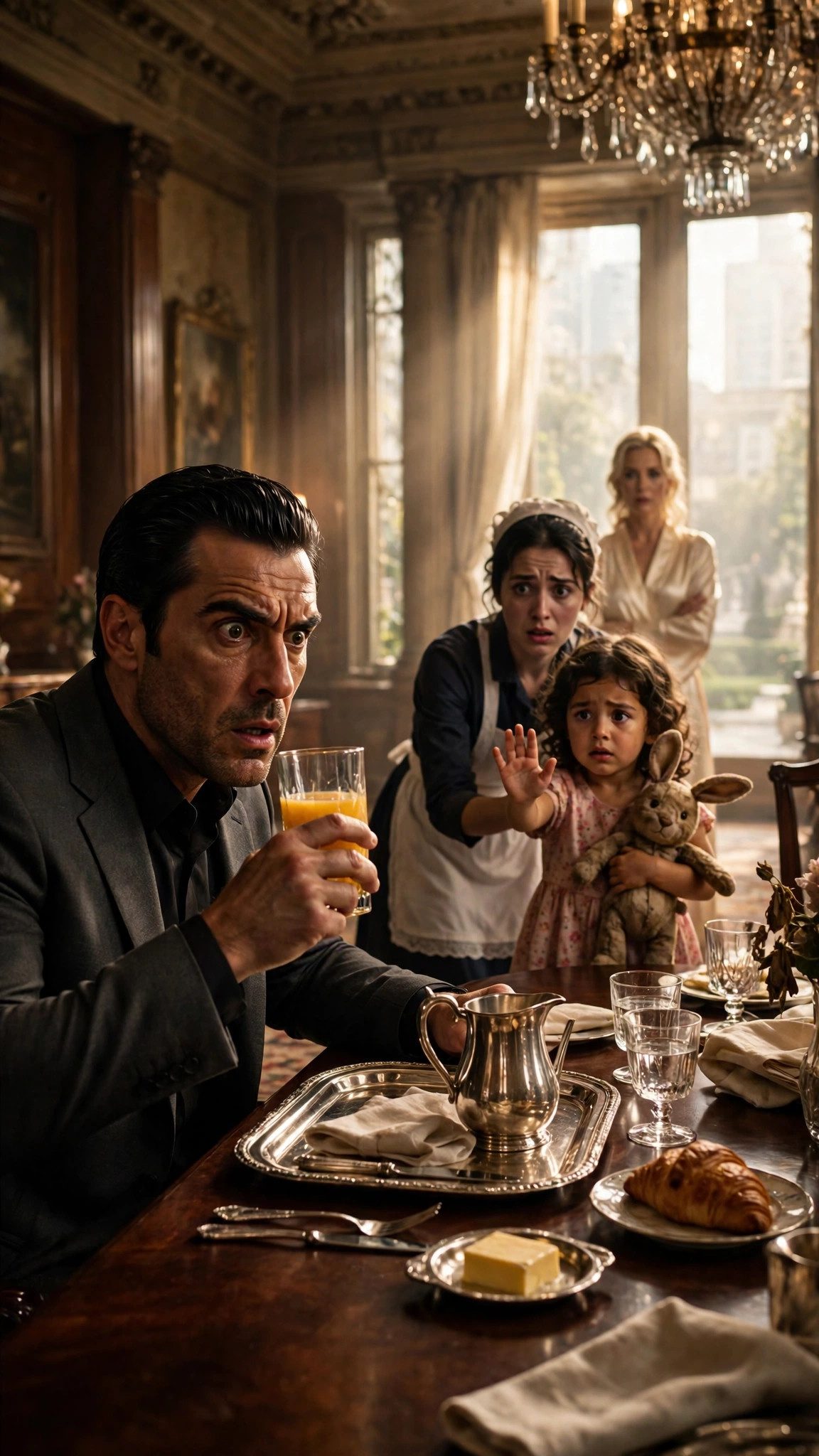
Story Genres: Mafia Romance

  • Chapter 2: The Laboratory’s Answer

    Chapter 2: The Laboratory’s Answer

    Raphael Costa did not take the glass to a hospital. He did not take it to a police laboratory, and he did not take it to any doctor Dominic's family had ever used. He took it to a small private laboratory on the second floor of an unmarked building on the West Side, where a chemist named Dr. Ingrid Bauer owed Dominic's father a debt from a time nobody talked about anymore.

    "How fast?" Raphael asked.

    "For you? Tomorrow morning," Dr. Bauer said. She was a thin woman in her sixties with steel-gray hair and hands that never shook. "But I can tell you one thing now. Whatever is in here, it isn't juice."

    "What do you mean?"

    She held the glass up to the light. "Fresh orange juice is cloudy. It has pulp, it has texture. This is too clear at the edges. Something has been dissolved in it. Something that doesn't belong."

    Raphael left the glass with her and drove back to the estate through streets that were already filling with morning traffic. He had served Dominic Moretti for twelve years. He had guarded him through a war with the Falcone family that had left three men dead and a warehouse burned to its foundations. He had learned to read Dominic's face the way other men read weather.

    This morning, Dominic's face had told him something Raphael had never seen there before: fear. Not of a rival. Not of a gun. Fear of his own house.

    By noon, Dominic sat in his study with the door locked and a doctor he had never met before taking his blood pressure. Dr. Alan Mercer was a quiet man in his fifties with a graying beard and the calm manner of someone who had delivered bad news so many times that he had learned to do it gently.

    "Your blood pressure is elevated," Dr. Mercer said. "Your pulse is irregular. Have you had any chest pain?"

    "No."

    "Dizziness?"

    "Sometimes. When I stand."

    "Headaches?"

    "Every morning for three weeks."

    "Fatigue?"

    Dominic hesitated. "Yes."

    Dr. Mercer wrote something in his notebook. "Mr. Moretti, I need to ask you a personal question. Has anyone in your household had access to your food and drink?"

    "Everyone in my household has access to my food and drink. That's what a household is."

    "Has anyone new joined the household recently?"

    Dominic thought of Elena Rossi, three months in the staff wing, quiet and careful. He thought of Vanessa, who had moved half her wardrobe into the east bedroom in September. He thought of the new gardener, the new driver, the girl who polished the silver on Tuesdays.

    "Several people," he said.

    Dr. Mercer drew three vials of blood and labeled them with steady hands. "I'll have these tested tonight. If someone has been dosing you with something, the blood will tell us. But I want you to understand something. If the juice was poisoned, and if you've been drinking it every morning, then this has been happening for a while. Whoever did this was patient. They wanted you weak, not dead. Not yet."

    "Weak for what?" Dominic asked.

    "That," Dr. Mercer said, "is not a medical question."

    After the doctor left, Dominic stood at the study window and watched the garden. Vanessa was walking the paths with her phone pressed to her ear, laughing at something someone had said. She moved through his garden the way she moved through his house: as if she already owned it.

    Elena was on her knees near the rose beds, pulling weeds with her bare hands. Lily sat beside her on the grass, arranging fallen petals into a careful row. The little girl looked up at the window — straight at him, as if she had known he was watching — and waved her stuffed rabbit at him.

    Dominic did not wave back. He stepped away from the window.

    That evening, Raphael returned with a preliminary answer and a face that told Dominic everything before he spoke.

    "It's poison," Raphael said. "A heart medicine. Digoxin, or something very close to it. In a large dose it stops the heart. In small doses, every morning, it does exactly what you've been feeling. Headaches. Dizziness. Exhaustion. Irregular pulse. Dr. Bauer says the dose in that glass was not small. It was enough to do real damage. If you had drunk all of it, you might have collapsed before lunch."

    Dominic sat down slowly. "How much is in the blood work?"

    "Dr. Mercer called an hour ago. Your blood shows the same compound. Low levels, but present. Consistent with daily dosing for about three weeks."

    Three weeks. Dominic counted backward. Three weeks ago, Vanessa had hired a new personal maid, a quiet girl named Carla, to help with the wedding preparations. Three weeks ago, Elena had started serving his breakfast directly, because Mrs. Delgado had hurt her wrist. Three weeks ago, the Falcone family had made a new offer for the Cicero warehouse — an offer Dominic had refused.

    "Who had access to the juice?" Dominic asked.

    Raphael opened his notebook. "The oranges are squeezed in the kitchen at six thirty every morning by the cook, Mrs. Alvarez. The glass is poured and placed on a silver tray. Elena carries the tray to the dining room. She is alone with it for perhaps two minutes. The tray passes the hallway, the pantry, and the garden doors."

    "Anyone else?"

    "Vanessa was in the kitchen at six forty this morning. Mrs. Alvarez says she came in to choose flowers for the table. She stood near the counter for a few minutes."

    "She chooses flowers every morning."

    "Yes," Raphael said. "But Mrs. Alvarez also says something else. She says Elena asked her a strange question last week. She asked whether the medicine in the staff wing — her late husband's medicine — could be dangerous if a child swallowed it."

    Dominic felt the room tilt slightly. "Elena's husband had heart medicine?"

    "Marco Rossi died of a failing heart eleven months ago. He was on digoxin for two years. Elena still has his bottles in her room. She never threw them away."

    The pieces assembled themselves in Dominic's mind with a terrible neatness. A maid whose husband died of a heart condition. The same medicine in the dead husband's bottles. A woman who served his breakfast every morning. A woman who had access, and motive — or at least, a past that made motive easy to imagine.

    "Search her room," Dominic said quietly. "Do it while she's at dinner service. Don't frighten the child."

    Raphael nodded and left. Dominic poured himself a glass of water from the sealed bottle in his study — the only drink he trusted now — and drank it standing at the window. Outside, the garden was turning gold in the evening light. The estate looked peaceful. It looked like a home.

    It had never felt less like one.

    At nine o'clock, Raphael came back with a paper bag and a look Dominic had seen only twice in twelve years: the look of a man who had found exactly what he was afraid of finding.

    "In her room," Raphael said. "In the bottom of her suitcase. Three bottles of digoxin. One of them is open, and the count is short. About a month's worth of tablets is missing."

    Dominic stared at the bag. "Could she have taken them herself? For her own heart?"

    "She has no prescription. Her medical records show no heart condition. And there's more." Raphael set a small notebook on the desk. "Mrs. Alvarez keeps a kitchen log. Every morning, someone initials the tray when it leaves the kitchen. For the past three weeks, the initials are Elena's. Every single morning. Before that, the initials were Mrs. Delgado's."

    "And Vanessa's maid?"

    "Carla says she saw Elena standing at the tray in the hallway yesterday morning, doing something with her hands. She says Elena looked startled when she saw her."

    Dominic closed his eyes. He thought about the little girl on the swing, waving her rabbit at the window. He thought about Lily's voice: It smells like Daddy's medicine before he died.

    A child who knew the smell of her father's medicine would know it anywhere. A child who had watched her mother handle those bottles for two years would know exactly what they were.

    "Where is Elena now?" Dominic asked.

    "In the staff wing with the child. I've posted a man at the door. Not to frighten them. To make sure they don't leave."

    "And Vanessa?"

    "She's in her room. She asked me twice what was happening. I told her nothing."

    Dominic stood up. "Bring Elena to the small sitting room. Not the study. The sitting room. And bring Lily too — I don't want the child left alone to imagine things."

    Ten minutes later, Elena Rossi stood in the sitting room with her daughter pressed against her side. She was still wearing her work apron. Her hands were shaking. Lily clutched her rabbit and stared at Dominic with wide brown eyes.

    "Mr. Moretti," Elena said, "whatever this is, I swear to you—"

    Dominic raised a hand. "Elena. I need you to listen to me, and I need you to tell me the truth. Your husband's medicine. Digoxin. Is it in your room?"

    Her face went white. "Yes. I kept his bottles. I couldn't throw them away. But I never—"

    "One bottle is open. A month's worth is missing."

    Elena's knees seemed to give way. She caught the arm of a chair. "I don't know anything about that. I haven't opened those bottles since Marco died. I swear it on my daughter's life."

    "Then who did?"

    "I don't know!" Her voice broke. "Someone must have gone into my room. Anyone could have. The staff wing doors don't lock properly. Mrs. Delgado has said so for years."

    "Did you ask Mrs. Alvarez whether the medicine was dangerous?"

    Elena's eyes filled with tears. "Lily found a tablet on the floor last week. Under my bed. I didn't know how it got there. I asked Mrs. Alvarez if it could hurt her. That's all. I was afraid for my daughter."

    Lily tugged at her mother's apron. "Mama, don't cry."

    Dominic looked at the little girl. Her face was pale, her rabbit held tight against her chest. She had saved his life that morning, and now her mother was standing in his sitting room accused of trying to take it.

    "Raphael," Dominic said, "take them back to their room. They're not to leave the estate. No one is to speak to them except through you."

    "Boss—"

    "Do it."

    After they were gone, Dominic sat alone in the sitting room for a long time. The evidence was neat. Too neat, a small voice in his head said. But Dominic Moretti had built his life on evidence, and the evidence said the woman who served his breakfast had the poison, the access, and the opportunity.

    And yet.

    He kept thinking about the morning. About the way Elena had gone pale — not with guilt, but with terror. About the way she had pulled Lily backward, as if the child had said something dangerous. About the way Vanessa had reached for the glass without hesitating, and laughed, and called it nothing.

    He kept thinking about one more thing. At breakfast, before Lily spoke, Vanessa had said something. Dominic tried to remember the exact words. She had glanced toward the kitchen and said, "That maid really needs to control her child."

    She had not seemed surprised that the child was making a scene. She had seemed annoyed. Annoyed that the scene was happening at all.

    Dominic picked up his phone and called Dr. Mercer.

    "Doctor. One question. If a child found a single tablet on the floor, and the mother asked whether it was dangerous — would that mother be a woman planning to poison someone?"

    There was a pause. "No, Mr. Moretti. That would be a frightened mother."

    Dominic ended the call. He walked to the window. In the staff wing, a single light burned in a small window. Elena's room. He imagined Lily asleep with her rabbit, and Elena sitting awake beside her, afraid.

    He had spent twenty years learning to recognize his enemies. Tonight, for the first time, he was not sure he was looking at one.

    The next morning, Raphael went to the kitchen before anyone else was awake and found Mrs. Alvarez already there, kneading dough with flour on her forearms.

    "Mrs. Alvarez," he said, "I need you to tell me about the tray. Every detail. Who pours the juice, who carries it, where it goes."

    The cook wiped her hands on her apron. "I squeeze the oranges at six thirty. I pour the glass myself. I put it on the silver tray with the toast and the jam. Then Elena takes it. She carries it down the hallway, past the pantry, past the garden doors, to the dining room. Two minutes, maybe less."

    "Does the tray ever stop?"

    "Only if someone stops her. To talk. To ask a question."

    "Has anyone stopped her? In the past three weeks?"

    Mrs. Alvarez thought about it. "Miss Vanessa stops her sometimes. To tell her the flowers are wrong, or the napkins are wrong. Small things. She likes things a certain way."

    Raphael wrote it down. "And the garden doors? Are they ever open in the morning?"

    "In the summer, yes. This time of year, no. Too cold."

    "Thank you," Raphael said. "And Mrs. Alvarez — if you remember anything else, anything at all, you come to me. Not to anyone else. To me."

    The cook nodded, and Raphael left her to her dough.

    That same morning, Dominic nearly fell in his office.

    He had stood up too fast from his desk, reaching for a shipping manifest, and the room tilted sideways. He caught himself on the edge of the desk, his fingers white around the wood, and stood there breathing hard until the world came back into place.

    His shipping manager, a man named Ortiz who had worked for the family for thirty years, was standing in the doorway with a folder in his hands. He had seen it.

    "Boss?" Ortiz said. "Are you all right?"

    "I'm fine," Dominic said. He straightened his tie and took the folder. "Low blood sugar. I skipped breakfast."

    Ortiz did not believe him. Dominic could see it in the older man's eyes. But Ortiz had worked for the Moretti family long enough to know when not to ask a question, and he asked nothing.

    After Ortiz left, Dominic sat down and pressed his palms flat against the desk. His hands were shaking. He had not told anyone about the dizziness — not Raphael, not the doctor, not even himself, really. He had filed it away with the headaches and the fatigue, under the heading of things a busy man ignores.

    Now he knew what it was. It was poison, taken a little at a time, every morning, in a glass he had trusted. And it was getting worse.

    He opened his desk drawer and took out a small notebook. In it, he wrote three words: Three weeks. Daily. Morning.

    Then he closed the notebook and went back to work, because Dominic Moretti had survived twenty years by working through pain, and he was not going to stop now.
  • Chapter 1: The Glass She Stopped

    Chapter 1: The Glass She Stopped

    "Your orange juice smells terrible!"

    The words cut through the dining room just as Dominic Moretti raised the crystal glass toward his mouth.

    His hand stopped halfway.

    At the other end of the long mahogany table, four-year-old Lily stood behind her mother's apron, clutching a worn stuffed rabbit. Her brown eyes were fixed on the orange liquid.

    "Lily!" Elena whispered.

    The young housemaid went pale. She caught her daughter's shoulder and pulled her backward, nearly knocking the silver serving tray from the table.

    "I'm terribly sorry, Mr. Moretti. She doesn't know what she's saying."

    Dominic didn't move.

    He was forty-one, dressed in a charcoal-gray suit, his dark hair combed neatly back. Men who controlled shipping terminals, warehouses, and half the unofficial freight routes through Chicago had learned to measure their words around him.

    Apparently, nobody had explained that to Lily.

    He looked at the little girl.

    "What did you say?"

    Elena tightened her hold on her daughter's shoulder.

    "Please, sir. She's only four."

    Dominic set his newspaper aside.

    "I'm asking Lily."

    The child glanced up at her mother, then back at him.

    "It smells bad."

    "Bad how?"

    Lily wrinkled her nose.

    "Like Daddy's old medicine."

    The room became still.

    Dominic slowly lowered the glass until its base touched the table.

    "What medicine, sweetheart?"

    "The one that made Mama say we shouldn't touch his things."

    Elena's face lost its color.

    "That's enough, Lily."

    Dominic studied the woman standing beside his chair. Elena Rossi had worked at the estate for three months. She was thirty-two, quiet, dependable, and almost painfully careful never to attract attention. She lived in a modest room in the staff wing with her daughter because she'd been unable to afford separate housing after becoming a widow.

    Until this morning, Dominic knew little else about her.

    He looked back at Lily.

    "Do you smell it now?"

    She nodded.

    "Even from there?"

    "Yes, sir."

    Dominic moved the glass slightly away from his plate.

    "Then I won't drink it."

    Lily seemed relieved.

    Elena lowered her eyes.

    "Thank you for being understanding, sir. I'll bring another glass."

    "No need."

    He offered Lily a small smile.

    "You have a very good nose."

    She hugged her rabbit.

    "Daddy said so."

    Elena hurried her daughter toward the side door. Dominic watched them leave. The instant the door closed, his smile disappeared.

    He stared at the orange juice. Freshly squeezed. No visible sediment. Nothing unusual about its color. Yet something about the child's words had disturbed him.

    Like Daddy's old medicine.

    Dominic had spent twenty years surviving threats that arrived through business deals, phone calls, and men waiting outside expensive restaurants. He knew how to recognize an enemy. He had never considered that death might arrive in a breakfast glass.

    Three months earlier, Elena Rossi had arrived at the iron gates of the Moretti estate with one suitcase, one small daughter, and one worn stuffed rabbit. It was late September, and the wind off Lake Michigan had already turned sharp. The housekeeper, Mrs. Delgado, had met them at the service entrance and looked Elena up and down with the practiced eye of a woman who had seen a hundred girls come through that door.

    "You've worked in a house before?" Mrs. Delgado asked.

    "Two years for a family in Evanston," Elena said. "Before that, a hotel. I clean well, I cook plain food, and I don't gossip."

    "And the child?"

    "She stays with me. She's quiet. She won't be trouble."

    Mrs. Delgado had glanced at Lily, who was hiding half behind her mother's skirt, one brown eye peering out.

    "We'll see," Mrs. Delgado said.

    Elena had not told Mrs. Delgado everything. She had not said that her husband, Marco Rossi, had died eleven months earlier, after two years of a failing heart that no doctor in their neighborhood clinic could fix. She had not said that the medicine bottles still sat in a paper bag at the bottom of her suitcase because she could not bring herself to throw them away. She had not said that she had sold nearly everything they owned to pay for the funeral, and that the room in the staff wing was the first roof over their heads that did not leak.

    She did not need to say any of it. The estate had a way of learning what it needed to know.

    Dominic Moretti had approved the hire without meeting her. He approved most household hires that way. The estate ran on routine: breakfast at seven, the newspapers ironed flat, the cars washed before nine, the gardeners gone by noon. He liked routine. Routine meant nothing surprised him.

    What surprised him, three months into Elena's employment, was how little he noticed her. She was good at her work in the way that made work invisible. His shirts appeared pressed. His study stayed dusted. The silver never tarnished. He passed her in hallways and she stepped aside with her eyes lowered, and he forgot her face within seconds.

    Lily was harder to forget. The child had a way of appearing in doorways at the exact moment Dominic was thinking about something else, staring at him with enormous brown eyes, and then vanishing before he could decide what to do about it. Once he found her in the library, sitting on the floor with a picture book, her rabbit tucked under her arm. She looked up at him without fear.

    "Are you the boss of this house?" she asked.

    "Something like that," Dominic said.

    "My daddy was the boss of our house," she said. "Now Mama is."

    Dominic had not known what to say to that, so he had nodded and left the room.

    Vanessa Laurent had laughed when he told her about it that evening. Vanessa was beautiful in the calculated way of women who knew exactly how much attention they commanded. Blonde hair, green eyes, a laugh that arrived precisely on time. In six weeks, she would become Mrs. Dominic Moretti. The wedding was to be the event of the season: four hundred guests, the garden tented in white, a string quartet flown in from New York.

    "You should be careful," Vanessa had said, swirling her wine. "Children get attached. Next thing you know she'll be calling you Uncle Dominic."

    "She's four," Dominic said.

    "Exactly. Four-year-olds are very good at getting what they want."

    He had not thought about it again. He had other things to think about. The shipping terminals were under pressure from the Falcone family, who had been circling his freight routes for a year. A warehouse in Cicero had caught fire under circumstances no one could explain. Two of his drivers had been offered double pay to quit. Dominic Moretti was a man who understood threats. He understood rivals, and police, and men with guns.

    He did not understand why, for nearly three weeks, he had been waking up with a dull headache behind his eyes.

    At first he blamed the long hours. He was sleeping five hours a night, sometimes four. Then the dizziness started — brief, barely a second, when he stood up too fast. Then the fatigue, a heaviness in his limbs by mid-afternoon that coffee could not fix. He told himself it was stress. He told himself it was age. He was forty-one, not twenty-five. Men slowed down.

    He did not tell anyone. Dominic Moretti did not complain about his health. He had watched his own father die at fifty-three, a heart attack at the breakfast table, and he had decided long ago that he would not be a man who talked about his body.

    But on the morning Lily stopped him from drinking his orange juice, the headache was worse than it had ever been, and the glass in his hand felt heavier than it should have.

    High heels clicked against the marble floor.

    Vanessa Laurent entered wearing a cream silk robe, her blonde hair falling over one shoulder. She kissed his cheek.

    "Good morning, darling."

    Dominic barely acknowledged her.

    Vanessa glanced toward the kitchen.

    "That maid really needs to control her child. I heard the little girl making a scene."

    "She noticed something about the juice."

    Vanessa laughed softly.

    "Children notice everything. Most of it isn't worth listening to."

    She reached toward the glass.

    Dominic caught her wrist. Not roughly. Just firmly enough to stop her.

    "Leave it."

    Vanessa blinked.

    "Dominic?"

    He released her.

    "I'm not hungry."

    She studied his face.

    "Something wrong?"

    Dominic picked up his phone.

    "Business."

    "Already?"

    "I have a call to make."

    Vanessa's smile thinned.

    "Of course. I'll be in the garden."

    She kissed his temple. Dominic waited until her footsteps disappeared. Then he dialed a number.

    "Raphael."

    His security chief answered immediately.

    "Yes, boss?"

    "Come to the dining room. Alone."

    Ninety seconds later, Raphael Costa entered through the side door. Broad-shouldered, thirty-eight, and dressed in an unremarkable black suit, Raphael had served Dominic for twelve years. He took one look at the untouched glass.

    "What happened?"

    Dominic pointed toward it.

    "Preserve that."

    Raphael frowned.

    "Why?"

    "A child said it smelled wrong."

    For several seconds, Raphael simply stared. Then he looked at Dominic's expression. He stopped questioning.

    "I'll have it examined."

    "By an independent laboratory. Keep the sample documented, and don't allow anyone in the household to handle it."

    Raphael nodded.

    "Who brought it?"

    "Elena Rossi."

    "The new maid?"

    "Yes."

    "Anyone else touch it?"

    Dominic looked toward the garden doors.

    "That's what I want to know."

    Raphael carried the glass away. Dominic remained seated. On the polished table, a small ring of condensation marked where it had stood. He stared at that circle until his phone vibrated.

    A message from Raphael.

    One question, boss. Have you been feeling unusually tired lately?

    Dominic's fingers went cold. Because for nearly three weeks, he had been waking with a dull headache, occasional dizziness, and a fatigue he couldn't explain. He had blamed long hours. He had blamed stress. He had blamed everything except the orange juice.

    Then another message appeared.

    I'm arranging a medical examination. Don't eat or drink anything else prepared for you until we know.

    Dominic rose. Through the tall windows, he could see Vanessa laughing beside the rose garden. Behind her, Elena was pushing Lily on a small wooden swing.

    His fiancée. His housemaid. A little girl who had just saved him from taking another sip.

    Dominic watched all three. And for the first time in years, he realized that the person trying to kill him might already be living under his roof.

    That night, Dominic did not sleep. He sat in his study long after the house had gone quiet, a glass of water from a sealed bottle on the desk beside him, and looked at the portrait of his father that hung above the fireplace.

    His father had died at fifty-three, at the breakfast table, with a fork still in his hand and the morning newspaper folded beside his plate. The doctors had called it a heart attack. There had been no warning. One morning he was arguing about freight rates, and the next morning he was gone. Dominic had been twenty-four. He had inherited an empire before he had learned how to run it, and he had spent the next seventeen years making sure no one ever saw him weak.

    He had never once considered that his father's heart attack might not have been natural. His father had enemies. Everyone in their world had enemies. But a heart attack was a heart attack. It was the kind of death that asked no questions.

    Now Dominic was asking questions.

    He thought about the headaches. The dizziness. The fatigue that had crept over him like a slow tide. He thought about how carefully it had been done — not enough to kill him quickly, not enough to raise an alarm, just enough to wear him down a little more every day. Whoever had done this understood poison the way Dominic understood shipping routes: as a system, patient and invisible.

    He picked up his phone and sent Raphael a single message: Watch the house tonight. Every door. Every window. No one comes in, no one goes out.

    Then he poured the water down the sink, locked the study door, and sat in the dark, listening to the old house settle around him.

    In the staff wing, Elena Rossi sat on the edge of the small bed and brushed Lily's hair with slow, careful strokes. Lily was already in her nightdress, her rabbit tucked under her arm, her eyes heavy with sleep.

    "Mama," Lily whispered, "why did the boss look sad?"

    Elena's hand paused. "What do you mean, baby?"

    "When I told him about the juice. He looked sad. Not angry. Sad."

    Elena set the brush down. "I don't know, baby. Maybe he was surprised."

    "Is the juice really bad?" Lily asked. "Is someone sick?"

    Elena looked at her daughter — four years old, all brown eyes and tangled hair — and felt the familiar weight settle on her chest. How did you explain poison to a child? How did you explain that the man who owned the house might have been dying in it, one glass at a time?

    "The juice smelled like Daddy's medicine," Elena said carefully. "And Daddy's medicine was very strong. It was medicine for a sick heart. If a person who isn't sick drinks it, it can make them very sick."

    Lily nodded, as if this made perfect sense. "So I helped him. Like when I help you carry the laundry."

    "Yes, baby. You helped him."

    "Good." Lily yawned. "I like helping."

    Elena tucked the blanket around her daughter and kissed her forehead. "Go to sleep now."

    But after Lily's breathing slowed, Elena sat awake in the dark and stared at the suitcase in the corner. The paper bag was still there, at the bottom, with Marco's bottles inside. She had kept them because throwing them away had felt like throwing away the last piece of him. Now those bottles were the most dangerous things in the house.

    Someone had opened one. Someone had taken a month's worth of tablets. Someone had walked into her room — her room, where her daughter slept — and stolen her dead husband's medicine.

    Elena pulled the blanket up to her chin and listened to the house. Somewhere above her, in the main part of the estate, a floorboard creaked. She did not sleep for a long time.

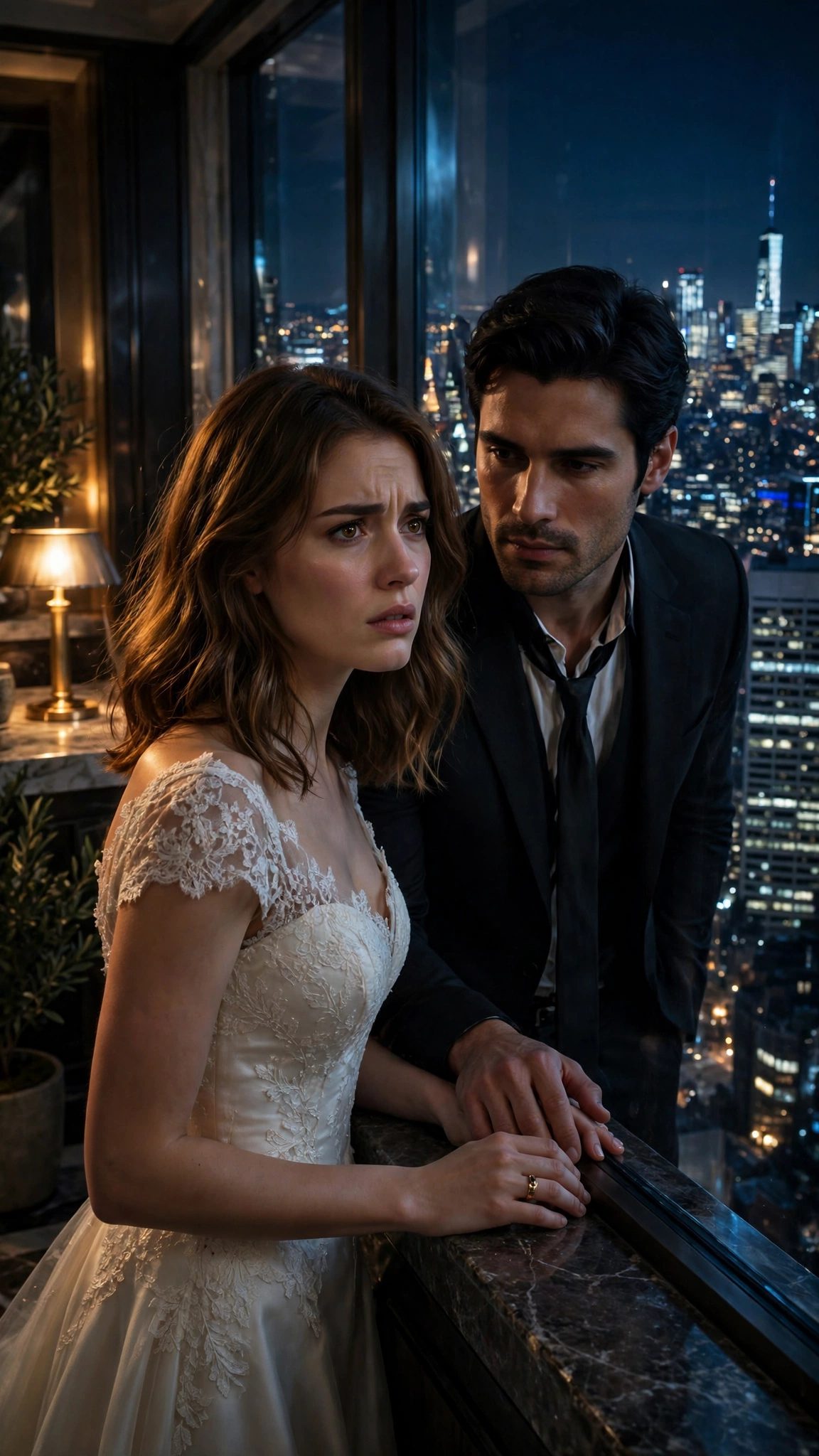
  • Chapter 7: A Marriage That Meant Everything

    Chapter 7: A Marriage That Meant Everything

    Maine smelled like salt and pine and rain that had just stopped, and the house by the sea was smaller than I had imagined, and more beautiful for it.

    It was a white house with blue shutters, set back from a rocky shore, with a porch that looked out over water that changed color every hour. Inside, it was warm and worn and full of the small, ordinary things that make a house a home: a kettle that whistled, a rug by the fire with a threadbare corner, books stacked on every surface, and a painting of the sea, grey and gold, hanging over the mantel in a frame that had been mended with gold paint.

    "Isabella painted that," Dominic said, standing beside me in the living room, his voice quiet in the way it always went quiet here. "She was sixteen. She painted it the summer before she went to college. She said the sea was the only thing that never lied to her."

    I looked at the painting, at the waves that could save you and drown you at the same time, and I thought about the painting in the gallery, and the way Dominic had said, "That's how I feel about this family." I understood now. The sea, the family, the love: all of it could save you, and all of it could drown you, and the only thing that mattered was who was standing beside you when the wave came.

    Upstairs, Isabella's bedroom was exactly as Dominic had said: her books on the shelf, her paints on the desk, her bed made with a blue quilt, and photographs on the wall, the same laughing girl on the same beach, over and over, as if the room itself was trying to hold on to her.

    I stood in the doorway for a long time, and then I went in, and I sat on the edge of the bed, and I said, very quietly, "Thank you, Isabella. For the letter. For the numbers. For being brave enough to look. We finished it. He's gone. Your brother is safe. I promise I'll take care of him."

    Dominic stood in the doorway, watching me, and when I turned around, his eyes were wet, and he did not try to hide it.

    "She would have liked you," he said. "Rosa was right."

    We spent three days in Maine, and they were the strangest, quietest, happiest days of my life. We walked on the beach in the mornings, and Dominic showed me the rocks where Isabella used to look for sea glass, and I found a piece of green glass, smooth and perfect, and I put it in my pocket. We cooked in the small kitchen, badly, laughing at our own failures, and we ate on the porch while the sun went down over the water. We did not talk about trucks, or routes, or the trial, or the men in the parking lot. We talked about my students, and his childhood, and the books on Isabella's shelf, and the way the light changed on the water every hour.

    On the second morning, my coffee appeared beside my sketchbook with one teaspoon of sugar and exactly enough milk, the way it had in the penthouse, and I looked up to find Dominic watching me from the doorway, trying not to smile.

    "You remembered," I said.

    "I remember everything you tell me," he said. "I just don't always say so."

    On the third morning, when I mentioned once that the Maine wind made the studio cold, a wool blanket appeared over the chair the next afternoon, and I stopped pretending that I did not know what was happening.

    He was courting me. Slowly, carefully, the way a man who has never courted anyone does it: with coffee, and blankets, and sea glass, and quiet mornings. No yelling. No pressure. No commands. Just a man who had married me to keep me alive, learning how to love me now that I was safe.

    On the last evening, we walked down to the shore, where the rocks met the water, and the sun was going down in a wash of gold, and Dominic stopped, and took my hand, and said, "Emily."

    "Yes," I said.

    "I need to ask you something," he said. "And I need you to answer honestly. Not as my wife. Not as a woman I married to keep her alive. As Emily Carter, the art teacher who stayed late to fetch a sketchbook and overheard the wrong conversation and changed my whole life."

    My heart was beating too fast. "Ask me," I said.

    "Will you marry me?" he said. "For real this time. Not in a quiet room with a tired judge. Not to keep you alive. Not because my name is a wall. Because I love you. Because you found a ghost warehouse in one afternoon and you held my hand while I bled and you told me the truth when no one else would. Because you are the bravest person I have ever met, and I don't want to spend one more day pretending this marriage means nothing, when it means everything."

    I stared at him, at the sea behind him, gold and grey, at the man who had stepped in front of a bullet for me, and I felt my mother's voice in my head, very clear and very certain, saying, "Say yes, Emily. Say yes."

    "Yes," I said. And then I said it again, because once wasn't enough. "Yes. Yes, I'll marry you. For real this time. Forever."

    He took the ring off my finger, the gold ring that had felt like it was strangling me on our wedding night, and he slipped it back on, slowly, like it was the first time, and this time it didn't feel like a chain. It felt like a promise.

    "I love you," he said, and his voice broke as he spoke, the way it had broken once before, in a bedroom in Manhattan, when he had told me he didn't want to let go. "I don't want to let go. I never did."

    "I love you too," I said. And in that moment, the panic completely faded, the way it had faded once before, and I knew that this was real, and that it was mine, and that no one could take it away.

    We were married a second time a month later, in the garden of the house in Maine, with Rosa crying openly and Jack standing behind Dominic with his hands folded, and my best friend from school, who had finally been allowed to call me again, standing beside me as my witness, and the sea glittering in the distance like a promise kept.

    I wore the ivory dress. It fit differently this time, or maybe I fit differently inside it. Dominic wore a black suit, and this time he did not loosen his tie like a man finishing a long day. He looked at me the way he had looked at me on the beach in the photograph of his sister: like I was the best thing in the world, and he was lucky to be standing next to me.

    "I, Dominic Moretti," he said, "take you, Emily Carter, to be my wife. Not to keep you alive. Not because my name is a wall. Because I love you. Because you are brave, and kind, and you see things other people miss. Because you are my family now. And I will spend the rest of my life proving that this marriage means everything."

    "I, Emily Carter," I said, "take you, Dominic Moretti, to be my husband. Because you stepped in front of a bullet for me. Because you slept in a chair to keep your word. Because you brought me coffee with one teaspoon of sugar and exactly enough milk. Because you are the man who taught me that the most dangerous thing in the world can also be the safest place in the world, if the right person is standing beside you. And I will spend the rest of my life proving that this marriage means everything."

    Afterward, we danced on the porch, badly, while Rosa laughed and Jack pretended not to watch, and the sun went down over the water, and the house by the sea stood warm and bright behind us, and Isabella's painting hung over the mantel, grey and gold, the sea that never lied.

    Dominic changed the family business that year. The shipping went legitimate, every route on the books, every warehouse on the map, every manifest clean. It cost him money, and it cost him men, and he did not care, because he had learned the price of a secret, and he would never pay it again.

    I went back to teaching, and my students painted still lifes, and the boy who drew hands won a prize, and the girl who painted everything blue painted a portrait of me, in shades of blue, because blue was the only color that felt honest to her, and I hung it in the penthouse, in the living room, where everyone could see it.

    And sometimes, on quiet evenings, Dominic and I sit on the porch in Maine, and we watch the sea change color, and he holds my hand, and I think about a parking lot, and a sketchbook, and a black car, and a man who said, "You've heard too much," and I think about how the most dangerous thing about Dominic was never being married to him.

    The most dangerous thing was falling in love with him. And the most wonderful thing was finding out that he had already fallen in love with me, on the day he married me to keep me alive, and that the marriage that had meant nothing had meant everything all along.

    That autumn, I had my first art exhibition.

    It was a small gallery, not the white room where Dominic had bled, but a warm one downtown, with wooden floors and soft light, and I hung twelve paintings on the walls: the city at dawn, the river at dusk, the penthouse windows, the hospital hallway, the sea in Maine, grey and gold, and a portrait of a man asleep in a chair, his dark hair falling across his forehead, his hands open on a white sheet.

    Dominic stood in front of that portrait for a long time, and then he turned to me and said, "You made me look peaceful."

    "You were peaceful," I said. "For the first time since I met you. I wanted to remember it."

    People came, and they looked, and they asked questions, and my students came, all of them, dressed up and nervous and proud, and the boy who drew hands stood in front of his own portrait of his grandmother, which I had hung beside mine, and the girl who painted everything blue stood in front of the sea, grey and gold, and said, "Mrs. Moretti, your sea looks like my sea."

    "That's because we were both painting the same thing," I said. "The truth."

    That winter, Dominic's shipping company sent its first fully clean shipment: every route on the books, every warehouse on the map, every manifest clean, every driver paid fairly, every cargo counted twice. He stood on the docks in the cold, watching the trucks roll out in the early morning light, and I stood beside him, holding his hand, and he said, "Isabella would have liked this."

    "She would have loved it," I said. "She found the numbers. You fixed them. That's the whole story, Dominic. That's what she wanted."

    He nodded, and he squeezed my hand, and the trucks rolled out toward the sunrise, clean and honest, and I thought about the ghost warehouse, and the altered routes, and the men behind the maintenance building, and how far we had come from a parking lot on a Thursday afternoon.

    On the anniversary of our second wedding, I wrote a letter. Not to Dominic. To Isabella.

    I wrote it sitting on the porch in Maine, with the sea changing color in front of me, and the wool blanket over my chair, and my coffee beside my sketchbook with one teaspoon of sugar and exactly enough milk.

    "Dear Bella," I wrote. "I never met you, but I know you. I know you from your letter, and your photographs, and your painting over the mantel, and your bedroom upstairs, and the way your brother says your name when he thinks no one is listening. I want you to know that we finished it. Anthony is gone. The routes are clean. The warehouse is real now, or rather, it isn't a ghost anymore, because there's nothing to hide. Your brother is safe. He's happy. He's learning how to be a husband, and I'm learning how to be a wife, and we're both terrible at it, and we're both getting better every day. Thank you for being brave enough to look. Thank you for writing it down. Thank you for trusting your brother to finish it. He did. We did. Rest easy, Bella. We've got it from here. — Emily."

    I folded the letter and put it in the drawer of her desk, beside her paints, where it belonged, and I went downstairs, and Dominic was waiting for me in the living room, with two cups of coffee, and the fire going, and the painting of the sea over the mantel, grey and gold, and I sat beside him, and I took my coffee, one teaspoon of sugar, exactly enough milk, and I thought about how strange and wonderful it was that a sketchbook forgotten in an art room had led me here, to this house, to this man, to this life.

    And sometimes, on quiet evenings, Dominic and I sit on the porch in Maine, and we watch the sea change color, and he holds my hand, and I think about a parking lot, and a sketchbook, and a black car, and a man who said, "You've heard too much," and I think about how the most dangerous thing about Dominic was never being married to him.

    The End.

    THE END

  • Chapter 6: What the Police Report Said

    Chapter 6: What the Police Report Said

    Anthony Moretti confessed on a Friday, in a small room with a tired detective and a lawyer who kept checking his watch, and by Monday the whole city knew.

    The newspapers called it a scandal. The television called it a tragedy. The police called it what it was: a man who had stolen from his own family for two years, and killed his own cousin to hide it, and tried to kill a schoolteacher for overhearing a conversation in a parking lot.

    I read the police report the way I had read everything else in this strange new life: slowly, carefully, the way I taught my students to look at a painting, noticing what was actually there instead of what I expected to see.

    The report said that Isabella Moretti's car had gone off a rain-slicked road at 11:40 on a Tuesday night, two years earlier. It said the brakes had failed. It said the mechanic who had serviced the car the week before had left the country three days after her death. It said the investigation had been closed within a month, marked as an accident, signed by a detective who had since retired to a house he could not have afforded on a policeman's salary.

    The report did not say what the mechanic's statement said, the statement that had been sitting in Dominic's safe for two years: that the brake lines had been cut, cleanly, with a tool, and that a man had paid him five thousand dollars in cash to say nothing, and that the man had been Anthony Moretti's driver.

    The report did not say what the photographs said: Anthony meeting the gunman's handler at a restaurant on the docks, the same restaurant where the men from the parking lot had their meetings, the same restaurant where, two years earlier, a dockworker who had asked too many questions had eaten his last meal before being found in the river.

    The report did not say what Isabella's letter said: that she had found the ghost warehouse, and that she had been afraid, and that she had loved her brother enough to write it all down in case something happened to her.

    But the confession said all of it, in Anthony's own voice, on the record, and there was no taking it back.

    Dominic did not go to the police station. He did not watch the news. He sat in his office for two days with the door closed, and when he finally came out, his eyes were red, and his bandage needed changing, and he looked like a man who had been carrying something heavy for two years and had only just set it down.

    "She knew," he said to me, standing in the doorway of the office, his voice raw. "She knew it was Anthony, and she wrote it down anyway. She was braver than I was. I told her to be quiet and let me handle it, and she waited three weeks, and then she died. If I had acted the day she told me—"

    "Stop," I said. I took his hand and led him to the couch, and I sat beside him, and I said the thing Rosa had told me to say, the thing I had been carrying since the hospital.

    "She didn't die because you were slow, Dominic. She died because Anthony is a murderer. There's a difference. She died because a man who steals will kill to keep stealing, and no one could have stopped that except Anthony himself, and he chose not to. You didn't choose it. She didn't choose it. He did. All of it. The brakes. The river. The gallery. Every bit of it was his choice."

    Dominic was quiet for a long time. Then he said, "I have spent two years believing that if I had been faster, she would be alive. Two years. I built this whole life around that belief. The penthouse. The rules. The chair I slept in on our wedding night. All of it was because I thought I didn't deserve anything that meant something, because the last thing that meant something to me died, and it was my fault."

    "It wasn't your fault," I said. "And you do deserve something that means something. You deserve this. You deserve us."

    He looked at me then, and I saw the wall come down, the whole wall, not a crack but the entire thing, falling away all at once, and behind it was a man I had only ever glimpsed: tired, and grieving, and kind, and so afraid of losing one more person that he had almost lost himself.

    "I don't know how to do this," he said. "I don't know how to be a husband. I know how to be the head of a family. I know how to give orders. I know how to protect people by standing in front of bullets. I don't know how to sit at a table and talk about a boy who draws hands, or a girl who paints everything blue."

    "Then I'll teach you," I said. "That's what I do. I teach people to see. And right now, I need you to see something."

    I took his hand and put it over my heart, where it was beating too fast, the way it had beaten in the parking lot, and in the gallery, and in the hospital hallway.

    "Feel that?" I said. "That's not a contract. That's not a wall. That's not a name. That's me, Dominic. I'm still here. I'm not going anywhere. And neither are you."

    He held his hand there for a moment, feeling my heartbeat, and then he leaned forward and rested his forehead against mine, and we sat like that in the quiet office, with the city humming outside the window, and the safe standing open behind its painting of the sea, and the letter on the desk, and the whole terrible truth finally out in the open where it could no longer hurt us in the dark.

    That evening, Rosa came to dinner, and she brought a bottle of wine and a photograph I had never seen: Isabella as a little girl, sitting on Dominic's shoulders at the beach in Maine, both of them laughing, the sea behind them gold in the evening light.

    "She would have liked you," Rosa said to me, setting the photograph on the table between us. "She liked people who noticed things. She would have liked that you found the warehouse in one afternoon. She would have liked that you stayed in the hospital. She would have liked that you told my son the truth when no one else would."

    "Thank you," I said, and my voice broke a little, because I had never met Isabella, and yet I felt like I had lost her too, like she was a sister I had never had the chance to know.

    "Don't thank me," Rosa said. "Thank her. She wrote the letter. She found the numbers. She did the brave part. We just finished it."

    After dinner, Dominic took me up to the roof of the penthouse, where the city spread out below us in every direction, lights upon lights, and he stood beside me at the railing, and he said, "I want to show you something."

    He pointed north, toward the dark line of the horizon beyond the city. "Maine is up there. The house by the sea. Isabella's bedroom is still the way she left it. Her books. Her paints. She painted, you know. Not well, but she loved it. She would sit on the porch and paint the sea, over and over, and it never looked the same twice."

    "She sounds like my kind of person," I said.

    "She was," Dominic said. "And I think she would have wanted you to have her room. Not to live in. Just to see. To know the place where she was happy."

    I looked at him, at the city lights reflecting in his dark eyes, at the bandage hidden under his shirt, at the man who had married me to keep me alive and had nearly died doing it, and I said, "Then let's go. Let's go to Maine. Let's see the house, and the sea, and her room. Let's go and come back as something new."

    He nodded, and he took my hand, and we stood on the roof while the city glittered below us, and for the first time since the parking lot, I did not feel like a woman who had been pulled out of her life.

    I felt like a woman who had found a new one, and who was finally, after everything, ready to live in it.

    The detective came to the penthouse three days later, a tired man in a rumpled suit with a notebook full of names, and he sat in the living room with Dominic and me, and he asked me to tell him everything, from the beginning, in order, without guessing.

    I told him about the parking lot, and the sketchbook, and the voices behind the maintenance building. I told him about the black car, and the door, and Dominic's hand catching my arm. I told him about the folder, and the photographs, and the police report, and the flash drive with the altered routes. I told him about the gallery, and the gun, and Dominic stepping between me and the bullet. I told him about the ghost warehouse, and the letter, and the trap at the docks, and the terrace, and Anthony's confession.

    The detective wrote it all down, and when I finished, he closed his notebook and said, "Mrs. Moretti, I have been a policeman for twenty-six years, and I have never heard a witness tell a story that clearly. Most people guess. Most people add things. You told me what you saw, in order, without guessing. That's rare. That's the reason this case is going to hold together."

    "Thank you," I said.

    "Don't thank me," he said. "Thank Isabella. Her letter is the reason we could open the old investigation. Without it, the brakes would still be an accident, and the dockworker would still be an accident, and your husband would still be looking for proof. She did the brave part. You just finished it."

    After he left, Dominic and I drove to the cemetery, to a quiet hill with an old oak tree, where Isabella was buried beside her father. The headstone was simple: her name, her dates, and underneath, in small letters, "She saw what others missed."

    Dominic stood in front of it for a long time, holding a bouquet of white flowers, and I stood beside him, holding his hand, and neither of us spoke, because there was nothing to say that the stone did not already say.

    Finally, Dominic knelt down and laid the flowers against the stone, and he said, very quietly, "I'm sorry, Bella. I was too slow. You told me, and I told you to wait, and you waited, and it cost you everything. I'm sorry."

    Then he was quiet, and I knelt beside him, and I said, "She knows, Dominic. She knew you would finish it. That's why she wrote the letter to you. She trusted you. And you did finish it. You did."

    We stayed there until the sun went down, and the oak tree threw long shadows across the grass, and when we finally left, Dominic's face was wet, and he did not try to hide it, and I held his hand the whole way back to the car, and I thought about how strange it was that grief could feel like relief, like a weight you had carried for so long that you had forgotten it was there, until someone helped you set it down.

    The next week, I went back to my school.

    I had not been there since the Thursday I stayed late to fetch my sketchbook, and walking through the front doors felt like walking into a life that belonged to someone else. The hallways smelled the same: chalk dust and floor wax and the faint smell of paint from the art room. My classroom was exactly as I had left it, the still lifes on the easels, the color wheel on the wall, the chipped blue mug on my desk.

    My students were waiting. They had heard that I had gotten married, and that I had been in some kind of accident, and they had a hundred questions, and I answered the ones I could, and I smiled at the ones I couldn't.

    The boy who drew hands showed me his newest drawing, a portrait of his grandmother, and the hands were perfect, every line, every wrinkle, every vein, and I told him so, and he beamed like the sun had come out.

    The girl who painted everything blue showed me a painting of the sea at dusk, grey and gold, and I stared at it for a long time, because it looked like the painting over the mantel in the house in Maine, and like the painting in the gallery, and like every painting of the sea I had ever seen, and yet it was entirely her own.

    "Why blue?" I asked her, the way I always did.

    "Because blue is the only color that feels honest," she said, the way she always did.

    I taught that day, and the next, and the day after that, and slowly, the ordinary came back: the grading, the lesson plans, the Sunday phone calls with my best friend, who had finally been allowed to call me again, and who cried when she heard my voice, and who said, "Emily Carter, you are the most stubborn person I have ever met, and I am so glad you are alive."

    And every evening, Dominic came to pick me up, in the black car, with Jack driving, and my students would press their faces to the windows to watch, and Dominic would stand in the hallway of my school, in his black suit, looking completely out of place and completely at home at the same time, and he would say, "Ready to go home, Mrs. Moretti?"

    And I would say, "Yes. Take me home."

    Home. The word had changed its meaning. It used to mean a small apartment with a noisy radiator. Now it meant a penthouse with a painting of the sea, and a house in Maine with blue shutters, and a man who slept in chairs to keep his word, and a mother-in-law who measured me like a headmistress and loved me like a daughter, and a sister I had never met who had left me a letter, and a life I had never asked for, and would never give back.

  • Chapter 5: The Trap at the Docks

    Chapter 5: The Trap at the Docks

    Dominic came home from the hospital on a grey Tuesday, thinner, slower, with a bandage under his shirt and a look in his eyes I had never seen before: not the calm of a man in control, but the focus of a man who has decided something and will not be moved.

    The first thing he did was open the safe.

    It was set into the wall of his office behind a painting of the sea at dusk, the same grey and gold as the painting in the gallery, and I stood beside him while he turned the dial with hands that were steady despite everything. Inside were the photographs Rosa had told me about, the mechanic's statement, and a single sealed envelope with Isabella's handwriting on it, loops and curves I recognized from the photograph of her laughing on the beach.

    Dominic held the envelope for a long time without opening it. Then he handed it to me.

    "You read it," he said. "I can't."

    I opened it carefully, the paper crackling, and read it aloud, my voice shaking only a little.

    "Dominic," Isabella had written, "if you are reading this, then I was right, and I am sorry. The routes are wrong. Trucks that should go to Warehouse Four are going to a place that isn't on any map. I checked the manifests three times. Someone is moving cargo that doesn't exist through a warehouse that doesn't exist, and the money is going somewhere it shouldn't go. I think it is Anthony. I have no proof yet, only numbers, and numbers don't lie the way people do. Don't be angry with me for looking. Someone had to look. I love you. Don't let them tell you it was an accident. — Bella."

    The office was silent. Outside the window, the city moved on, cars and people and ordinary life, while inside the room, a dead woman's words hung in the air like a bell that had just been rung.

    "She knew," Dominic said quietly. "She knew it was Anthony, and she wrote it down, and she still died."

    "She knew," I agreed, folding the letter carefully, "and now we know too. We have the letter, and the photographs of Anthony meeting the handler, and the mechanic's statement, and the flash drive. That's enough. That's more than enough. The question is what we do with it."

    Dominic stood at the window for a long time, looking out at the city he ruled and the river beyond it, and when he turned back, his face was the face I had seen in the gallery, the face of a man who had already decided how to solve a problem.

    "We set a trap," he said. "Anthony has been skimming for two years through the ghost warehouse. He moves the cargo on Thursday nights, always Thursday, always the same route. This Thursday, we let him move it, and we watch. We photograph the trucks, we record the codes, we follow them to Warehouse Nine, and then we walk in with the police report and the letter and the flash drive, and we give him a choice: confess, or be destroyed."

    "And if he doesn't walk in?" I asked.

    "He will," Dominic said. "Because I am going to invite him. A family dinner. Thursday night. Here. And while he is sitting at my table, eating my food, his trucks will be rolling toward a warehouse that doesn't exist, and my men will be waiting."

    It was a good plan. It was also a dangerous one, and we both knew it. Anthony had already tried to kill me once. A cornered man who had killed his own cousin would not hesitate to kill again.

    "I'm coming with you," I said.

    "No," Dominic said.

    "Yes," I said. "I found the ghost warehouse. I read Isabella's letter. I held your hand while you bled in a gallery. I am not sitting in this penthouse while you walk into a trap you built. I'm coming."

    He looked at me for a long moment, and I could see him weighing it, the way he weighed everything: risk against risk, danger against danger. Then he nodded, once, the way a man nods when he has lost an argument he knows he should have won.

    "Stay behind me," he said. "And do exactly what I tell you."

    Thursday came too fast and too slow, all at once. I spent the day the way I had spent every day since the wedding: learning the shape of a life I had never asked for. I learned the names of Dominic's men, and which ones could be trusted, and which ones watched Anthony the way you watch a dog you are no longer sure of. I learned that Jack had been with the family for twenty years, and that he had driven Isabella to school when she was a girl, and that he had cried when she died and had never forgiven himself for not being there.

    "You remind me of her," Jack told me that afternoon, while we waited in the car outside the warehouse district. "Not your face. Your eyes. She looked at things the same way. Like she was really seeing them."

    "Thank you," I said, and I meant it.

    That night, the family dinner went exactly as Dominic had planned. Anthony arrived in a grey suit, smiling, kissing Rosa's cheek, shaking Dominic's hand, asking about his wound with a concern so smooth it made my skin crawl. He ate, and drank, and told stories about the docks, and all the while, his trucks were rolling toward a warehouse that didn't exist, and Dominic's men were following them in the dark.

    At midnight, Dominic stood up from the table and said, "Anthony. Walk with me."

    They walked out onto the terrace, and I followed at a distance, my heart hammering, because I knew what was about to happen, and I knew there was no turning back.

    Dominic laid it out the way I had taught him to lay out a painting: here is the line that doesn't belong, here is the color that is wrong, here is the shape that was painted over. The manifests. The ghost warehouse. The photographs of Anthony meeting the handler. The mechanic's statement. Isabella's letter.

    Anthony listened, smiling at first, then not smiling, then very still.

    "You've got nothing," he said. "Numbers and a dead girl's letter. That's not proof."

    "It's enough," Dominic said. "And there's more. My men are at Warehouse Nine right now, photographing your trucks. The police will have the report by morning. You have one choice, Anthony. You confess, you give back what you stole, and you leave this city tonight, and you never come back. Or I give all of it to the police, and to the families of the dockworker and my sister, and you spend the rest of your life in a cell."

    Anthony's face changed then, the smooth concern falling away like a mask, and underneath it was something cold and furious and afraid.

    "You think you're better than me?" he spat. "You sit in this penthouse and play the honorable don, but we're the same, Dominic. We both do what has to be done. Isabella was going to ruin everything. She was going to tell the police. I did what had to be done."

    "She was your cousin," Dominic said, very quietly.

    "She was a problem," Anthony said. "And so is your little wife. She heard the routes. She found the warehouse. She read the letter. How long do you think she'll last, Dominic? How long before she becomes a problem too?"

    He moved then, fast, his hand going inside his jacket, and I screamed his name, and Dominic moved faster, and Jack was there, and there was a struggle on the terrace, and a gun skittering across the stone, and Anthony on his knees with Jack's hands on his shoulders, and Dominic standing over him, breathing hard, his bandage darkening at the edges where the wound had pulled.

    "Take him to the police," Dominic said to Jack, and his voice was steady, but his hands were shaking. "Give them everything. The letter. The photographs. The flash drive. All of it."

    Jack dragged Anthony away, and the terrace went quiet, and Dominic stood there looking out over the city, and I went to him and put my hand on his arm, and felt him trembling.

    "It's over," I said. "You did it. For Isabella. For all of it."

    "It's not over," he said. "Not until the police have him. Not until the trial. But it has started. That's something."

    He turned to me then, and his face was open in a way I had never seen it, not guarded, not careful, just tired and honest and alive.

    "Emily," he said. "In the gallery, when I stepped in front of that bullet, I wasn't protecting a contract. I was protecting you. I need you to know that. I need you to know that this marriage stopped meaning nothing the day you walked into my office with a notepad and found a ghost warehouse in one afternoon."

    I looked at him, at the blood darkening his bandage, at the city glittering behind him, at the man who had married me to keep me alive and had stayed alive himself by the narrowest of margins, and I felt the last piece of my fear fall away.

    "I know," I said. "I knew in the hospital. I knew when you slept in the chair. I knew when Rosa told me not to believe you. I've known for days, Dominic. I was just waiting for you to say it."

    He reached for my hand, and this time he did not stop with his hand in the air between us. He took my hand, and held it, and we stood on the terrace while the city hummed below us, and the trap we had built closed around the man who had killed his sister, and for the first time since the parking lot, I felt something I had almost forgotten how to feel.

    Safe. Not because the danger was gone, but because I was not facing it alone anymore.

    After Jack took Anthony away, the terrace went quiet, and the city hummed below us, and Dominic stood at the railing with his hand pressed to his side, and I saw the dark stain spreading through his shirt where the wound had pulled open in the struggle.

    "You're bleeding," I said.

    "It's nothing," he said, but his face had gone pale, and when I lifted his jacket, the bandage was soaked through.

    "It's not nothing," I said. I took his arm and led him inside, to the bathroom, where I found clean towels and the first aid kit, and I made him sit on the edge of the bathtub while I cut away the old bandage with shaking hands.

    He watched me work, silent, and I could feel him watching the way I had watched him in the hospital: carefully, like I was learning the shape of him.

    "You've done this before," he said.

    "I've bandaged a hundred scraped knees," I said. "Children fall down. They cry. You clean it, you cover it, you tell them it will be all right. It's the same thing. You're just bigger, and you complain less."

    He almost laughed, and then he winced as I pressed the clean gauze down, and he said, "I'm sorry."

    "For what?" I asked, taping the bandage in place.

    "For all of it," he said. "For the parking lot. For the wedding. For the gallery. For making you into a target. For sleeping in a chair. For telling you the marriage meant nothing when it was the only thing that had meant anything to me in two years."

    I stopped what I was doing and looked at him, this man in his bathroom with a bandage on his ribs and blood on his shirt, apologizing for saving my life.

    "Don't apologize," I said. "Not for that. Not ever. You stepped in front of a bullet for me, Dominic. You don't apologize for that. You just don't."

    He was quiet for a moment. Then he said, "I was afraid tonight. On the terrace. Not of Anthony. Of losing you. When he reached inside his jacket, I thought—" He stopped, and swallowed hard. "I thought I was going to watch it happen again. I thought I was going to lose another person I loved, and I was going to have to stand there and watch it happen, and there was nothing I could do."

    "But you did something," I said. "You built a trap. You invited him to dinner. You laid out the evidence, piece by piece, the way I taught you. And when he reached for his gun, you were faster. You were always faster, Dominic. That's the part you keep forgetting. You were faster for Isabella too. You just didn't know it yet. You were already building the case. You were already looking. She knew that. That's why she wrote the letter to you, and not to anyone else. She trusted you to finish it."

    He looked at me, and I saw the tiredness in his face, the kind of tiredness that comes from carrying something heavy for a very long time, and then setting it down, and realizing how heavy it actually was.

    The phone rang then, Jack calling from the car, and Dominic put it on speaker so I could hear.

    "It's done," Jack said. "My men photographed the trucks at Warehouse Nine. Three of them, full, with Anthony's codes on the manifests. The police have the photographs, and the letter, and the flash drive. Anthony is in custody. He's not talking yet, but he will. They always talk."

    Dominic closed his eyes, and for a moment he just breathed, slow and deep, like a man who had been holding his breath for two years and had only just remembered how to let it out.

    "Thank you, Jack," he said. "Take care of it. All of it. And then go home. Get some sleep. You've earned it."

    He hung up, and we stood in the bathroom, with the clean bandage and the bloody towels and the city humming outside the window, and he took my hand, and held it, and said, "It's started, Emily. It's really started. By morning, everyone will know. And by next week, it will be over."

    "Then we should get some sleep," I said. "Tomorrow we start again."

    But neither of us slept that night. We sat in the living room, with the lights low, and we talked about Isabella, and the sea in Maine, and the painting over the mantel, and the boy who drew hands, and the girl who painted everything blue, and all the ordinary things that had nothing to do with trucks and routes and blood. And somewhere in the middle of the night, I fell asleep with my head on his shoulder, and when I woke up, the sun was coming up over the city, and his arm was around me, and for the first time since the parking lot, I felt like the world was going to be all right.

  • Chapter 4: Blood on the Marble

    Chapter 4: Blood on the Marble

    Dominic slept for fourteen hours after the surgery, and I did not leave his room once.

    The nurses brought me coffee I did not drink and a blanket I did not use. Jack stood outside the door the whole night, silent as smoke, and every time the door opened he looked up with his hand already moving toward his jacket, until he saw it was only a nurse, and then he would settle again. Rosa came and went, making calls in the hallway in a low voice, her black dress unchanged, her silver hair still perfect. She looked like a woman who had done this before, and I realized with a sick feeling that she probably had.

    When Dominic finally woke, the first thing he said was, "Is the gunman talking?"

    "Hello to you too," I said, and I poured him water from the plastic jug, holding the cup steady while he drank. "The police have him. Jack says he's nineteen and he's terrified and he won't say who paid him, but he doesn't have to. You already know."

    "I know," Dominic said. He shifted against the pillows and winced. "Anthony has been skimming the shipping for two years. The ghost warehouse is his. The altered routes are his. He needed Isabella gone because she found the manifests, and he needs you gone because you heard the codes."

    "Then why did he send a nineteen-year-old boy to a gallery full of people?" I asked. "That's not a professional. That's a panic move."

    "Because he's panicking," Dominic said. "Because you found the ghost warehouse in two days, Emily. Isabella took weeks. You walked into my office with a notepad and found in one afternoon what my own men couldn't find in two years. Anthony knows that. And a panicking man makes mistakes."

    He looked at me then, really looked at me, and said, "You have blood on your dress."

    I looked down. The green dress was stiff with it, dark in the folds. "It's yours," I said. "I haven't changed."

    "Go home and change," he said. "Jack will take you. Shower. Sleep in a real bed. I'll still be here when you come back."

    "I'm not leaving," I said.

    "Emily—"

    "I'm not leaving," I said again, and I meant it so completely that he didn't argue. He just closed his eyes and nodded, and for the first time since I had met him, he looked like a man who was letting someone else carry part of the weight.

    Rosa came in that afternoon with a bag of clean clothes for me and a look that said she had already decided something about me. She set the bag on the chair and said, "Walk with me, Emily. My son needs to rest, and you need to understand what comes next."

    We walked down the hospital hallway, past rooms full of strangers' lives, to a small waiting room with a window that looked out over the river. Rosa sat down and folded her hands in her lap, and for a moment she looked older than her years, like a woman who had buried a daughter and was now watching her son bleed for a stranger.

    "You opened the folder," she said. It wasn't a question.

    "Yes," I said.

    "Then you saw the photographs," she said. "Tell me what you saw."

    I thought back to the folder, to the photographs I had looked at in Dominic's office with shaking hands. "Men getting into trucks at a warehouse. The police report about the dockworker in the river. And Isabella, on a beach, laughing."

    "There is more in the folder than that," Rosa said. "Dominic showed you the beginning of it. The rest of it is in the safe in his office. Photographs of Anthony meeting the gunman's handler at a restaurant on the docks. A copy of the mechanic's statement about Isabella's brakes, the one the police never filed. A letter Isabella wrote to Dominic the week she died, saying she had found something and she was afraid."

    She looked out the window at the river, grey and steady. "Isabella was the brave one. Dominic was the careful one. She found the altered routes because she was helping with the books while Dominic was in Chicago, and she told him, and he told her to be quiet and let him handle it. She waited three weeks. Then her car went off the road in the rain."

    "And Dominic blames himself," I said quietly.

    "He has blamed himself for two years," Rosa said. "He thinks if he had acted faster, she would be alive. He thinks the marriage, the flash drive, all of it is his penance. That is why he told you it meant nothing. If it means nothing, he cannot lose it. Do you understand?"

    I understood. I understood it the way you understand a painting when you finally step back far enough to see the whole thing. Dominic had built a wall around himself out of the words "it means nothing," and he had been living behind it for two years, alone, because the last time something had meant something to him, it had died in the rain.

    "He's wrong," I said. "About the marriage. And about Isabella. She didn't die because he was slow. She died because Anthony is a murderer. There's a difference, and Dominic needs to hear it from someone who isn't his mother."

    Rosa almost smiled. It was a small, tired thing, but it was real. "Then tell him," she said. "He listens to you. I have watched it. He listens to you the way he used to listen to her."

    That night, back in Dominic's room, I told him. I told him about Isabella's letter, and the mechanic's statement, and the photographs in the safe, and I told him that his sister had not died because he was slow, but because a man who steals will kill to keep stealing, and that the only way to honor her was to finish what she started.

    He listened without interrupting, his hands flat on the white blanket, his face giving away nothing, and when I finished, he was quiet for a long time.

    "She wrote me a letter," he said at last. "I never read it. It's in the safe. I've never opened it."

    "Then we'll open it together," I said. "When you're out of here. We'll read it, and we'll use it, and Anthony will answer for all of it. Not just Isabella. The dockworker. The routes. The gallery. All of it."

    Dominic looked at me, and something moved in his face, the same something I had seen in his office when I showed him the ghost warehouse. "You are not afraid," he said.

    "I am terrified," I said honestly. "I was terrified in the parking lot, and I was terrified in the gallery, and I am terrified now. But I am also furious, Dominic. I am furious because I didn't know how to explain that no one had ever simply removed a burden that large from my shoulders. You did. You stepped in front of a bullet. You don't get to tell me this marriage means nothing after that."

    He reached for my hand, slowly, careful of the IV line, and held it. His hand was warm. It did not tremble.

    "When I get out of here," he said, "we are going to Maine."

    "Maine?" I said.

    "The house by the sea," he said. "The family house. Isabella loved it. There are photographs of her bedroom there. I want you to see it. I want you to see the place where she was happy, before all of this. And I want Anthony to think we have run away, so he stops watching the penthouse and starts making mistakes."

    It was a plan, and it was also something else: an invitation. He was inviting me into the part of his life that had nothing to do with trucks and routes and blood. He was inviting me to see the place where his sister had been happy.

    "Then we'll go to Maine," I said. "But first, we're going to open that safe."

    He nodded, and his eyes closed, and for the first time since the gallery, he slept without the tight lines of pain around his mouth. I sat beside his bed and watched him breathe, and I thought about the folder, and the safe, and the letter I had never read, and the man who had changed the routes and killed a young woman for noticing.

    I thought about my mother's voice, which had gone quiet in the gallery and had not come back yet, as if even she was waiting to see what I would do next.

    What I would do next was simple. I would stay. I would fight. I would finish what Isabella started, and I would bring Dominic home alive, and I would not let Anthony Moretti take one more thing from this family.

    The blood on my dress had dried by then, stiff and dark. I did not change it. I wore it like a promise: I had been there. I had held his hand. I was not going anywhere.

    Late that night, when Dominic finally slept without the tight lines of pain around his mouth, Jack came into the room with two cups of coffee and sat down in the chair by the door, the way a man sits when he has something to say and has been waiting a long time to say it.

    "You remind me of her," he said quietly, so as not to wake Dominic. "Not your face. Your eyes. Isabella looked at things the same way. Like she was really seeing them."

    "Tell me about her," I said. "Please. Everyone tells me she was brave, and she found the numbers, and she died. But no one tells me who she was."

    Jack was quiet for a moment, staring into his coffee. Then he said, "I drove her to school when she was a girl. Every morning, six years. She used to sit in the back seat and paint in a little notebook, watercolors, mostly the sea. She said the sea was the only thing that never lied to her. She wanted to be an artist, you know. Not a great one. Just an artist. She said she didn't need to be famous. She just needed to make something true."

    He smiled, a sad, tired smile. "She was sixteen when she told me that. Sixteen, and she already knew more about what mattered than most grown people I know. When she got older, she started helping with the books, because Dominic was in Chicago, and someone had to watch the numbers. She found the ghost warehouse because she was the only one who actually looked. Everyone else just signed the papers. She read them."

    "And then she told Dominic," I said.

    "And then she told Dominic," Jack agreed. "And he told her to be quiet and let him handle it. And she waited three weeks. And then her car went off the road in the rain. I was supposed to drive her that night. She told me not to come. She said she wanted to drive herself, just once, like a normal person. I should have gone anyway. I have thought about that every day for two years."

    "You couldn't have known," I said.

    "I know," Jack said. "That's what Rosa tells me. That's what Dominic tells me. But knowing doesn't help. The only thing that helps is finishing it. And that's what we're going to do, you and me and him. We're going to finish what she started."

    He stood up then, and put his hand on my shoulder, briefly, the way a father would, and said, "Get some rest, Mrs. Moretti. I'll watch the door."

    After he left, I sat beside Dominic's bed and took out the sketchbook the nurse had given me, the small one from the hospital gift shop, and I began to draw his sleeping face. I drew the scar along his jaw, and the dark hair falling across his forehead, and the bandage under the blanket, and the way his hand lay open on the white sheet, as if he were reaching for something even in his sleep.

    Drawing him felt different from drawing the city. The city was lines and light. Dominic was weight and shadow, a man who carried things no one could see. I drew the lines around his mouth, the ones that came from two years of blaming himself, and I thought about how strange it was that I had known this man for only a week, and yet I could already read his face the way I read a painting: here is the line that doesn't belong, here is the color that is wrong, here is the shape that was painted over, and here, underneath it all, is the truth.

    The next morning, I went back to the penthouse with Jack to get clean clothes, and I walked through the empty rooms in the early light, and for the first time, the place did not feel like a hotel. It felt like a house that was waiting for someone to come home. In Dominic's office, I stood in front of the painting of the sea at dusk, grey and gold, and I looked at it the way Isabella must have looked at it, and I understood something I had not understood before.

    The sea in the painting was not calm. It was not peaceful. It was the moment before a storm, when the water goes dark and the light goes gold, and everything is beautiful and dangerous at the same time. That was Dominic. That was this family. That was the whole story: beauty and danger, held together in the same frame, and the only thing that mattered was who was standing beside you when the wave came.

    I took a clean dress from the wardrobe, and a sweater, and the sketchbook from the study, and I went back to the hospital, and when Dominic woke up, I showed him the drawing of his sleeping face.

    He looked at it for a long time. Then he said, "You made me look peaceful."

    "You were peaceful," I said. "For the first time since I met you. I wanted to remember it."

    He held the sketchbook carefully, like it was something breakable, and said, "Keep drawing, Emily. Draw all of it. The city. The sea. Me. All of it. When this is over, I want to see what you saw, because I think you see things the rest of us miss."

    "I will," I said. "I promise."

    And I meant it. I would draw all of it: the penthouse, and the hospital, and the gallery, and the sea in Maine, and the man who had stepped in front of a bullet for me, and the woman I was becoming, the one who had walked into a parking lot as a schoolteacher and was walking out of a hospital as something else entirely, something braver, something I had not known I could be.

  • Chapter 3: Four Days Later

    Chapter 3: Four Days Later

    On the fourth day, Dominic broke his own rule.

    "You're going out," he said at breakfast, setting down his coffee with a precision that told me he had already decided and was only informing me. "There's a gallery opening tonight. A small one. A friend of the family owns it. It will look strange if my wife never leaves the penthouse, and strange is dangerous right now. Jack will drive. I will be beside you the entire time. You will not leave my side for one second."

    "A gallery," I said. "You want me to stand in a room full of strangers and look at paintings while someone wants me dead."

    "I want you to look like a woman whose husband takes her to galleries," he said. "That is the job tonight. Smile. Look at the art. Let people see us together. The man who wants you dead needs to know that killing you would mean a war with me, in public, in front of witnesses. That is the point."

    I had never been to a gallery opening as a guest. I had been to dozens as a teacher, herding teenagers past sculptures they were not allowed to touch. Now I stood in front of the wardrobe in the penthouse bedroom and stared at the clothes someone had bought for me: dresses in dark green and navy and black, shoes with heels I would break my ankle in, a coat softer than anything I had ever owned.

    I chose the dark green dress, because it was the color of the dress in the photograph of Isabella, and because I wanted, for reasons I could not explain, to carry her with me into that room.

    Dominic waited in the living room, and when I came out, he stopped what he was doing and looked at me for a long moment. He was wearing a black suit, black shirt, no tie, and he looked like a man who had been carved out of something harder than the rest of us.

    "You look like her," he said quietly. Then he caught himself, and his face closed, and he said, "The car is downstairs. Stay beside me."

    The gallery was a white room full of soft light and quiet voices, paintings on every wall, a table of wine glasses catching the light like small lanterns. People turned to look when we walked in, and I could feel their curiosity like a physical thing: who is she, where did she come from, how did Dominic Moretti, who never brings anyone anywhere, end up with a wife?

    Dominic's hand rested lightly on the small of my back, and it was the first time he had touched me since the parking lot, and I was surprised by how steadying it was. His hand was warm. It did not tremble. It said, without words, that whatever happened in this room, he was here, and I was not alone.

    "Smile," he murmured. "Look at the paintings. Tell me what you see."

    So I did what I had done a thousand times in classrooms. I looked at the art, and I talked about it, and for a few minutes I almost forgot why we were there. There was a painting of the sea at dusk, all grey and gold, and I told Dominic that the painter had been afraid of the water and loved it anyway, because you could see it in the way he painted the waves, like something that could save you and drown you at the same time.

    Dominic listened, and then he said, "That's how I feel about this family."

    I turned to look at him, but before I could answer, the room changed.

    It was nothing dramatic at first. A man near the door, too still, his hand inside his jacket. A second man by the window, watching us instead of the paintings. Jack, across the room, going rigid in the way a guard dog goes rigid before it moves. And Dominic, whose hand on my back suddenly became a wall, pushing me gently but firmly behind him.

    "Emily," he said, very quietly. "Do not move."

    The man near the door took a step forward, and I saw the gun. It was small and black and ordinary, and it was aimed directly at my heart.

    Time did something strange then. It slowed down and sped up at the same time. I heard a woman laugh somewhere behind me, a bright, careless sound, completely unaware. I heard a glass clink. I heard my own breath, too loud in my ears. I saw the gunman's face, young and frightened, his hand shaking, and I understood in that frozen second that he did not want to do this, and that he was going to do it anyway.

    And before I could even scream, Dominic Moretti stepped between me and the bullet.

    He did not hesitate. He did not duck. He moved like a man who had made this decision long before tonight, like a man who had known, from the moment he said "I'm marrying you," that this was the price, and he had already agreed to pay it.

    The gun went off. The sound was not like in the movies. It was flat and ugly and too loud for the white room, and the painting of the sea seemed to tilt, and Dominic staggered, and I saw the blood bloom across his white shirt, dark and fast, and I heard myself scream his name.

    "It was his blood," I thought, stupidly, clearly, as if my mind had decided to narrate the worst moment of my life in plain words. It was his blood. It was his blood.

    Dominic went down on one knee, his hand pressed to his side, his face white, and he looked up at me and said, through gritted teeth, "Run."

    I did not run. I went down on the floor beside him and pressed my hands over his, over the wound, over the blood that was too warm and too fast, and I said, "No. No, I'm not leaving you. Don't you dare tell me to run."

    Jack was there then, and the room was full of shouting, and the gunman was on the floor with two men holding him down, and someone was calling for an ambulance, and someone else was saying, "Clear the room, clear the room," and through all of it Dominic kept his eyes on my face, like I was the only fixed point in a world that had come loose.

    "Emily," he said, and his voice was weaker than I had ever heard it. "The marriage—"

    "Don't," I said. My hands were covered in his blood. My green dress was covered in his blood. "Don't you say it means nothing. Not now. Not ever again."

    He tried to smile, and it was the saddest, bravest smile I had ever seen. "It never did," he whispered. "I lied. It never meant nothing."

    Then the paramedics were there, and the stretcher, and the lights of the ambulance washing the gallery white and red, and I rode with him because no one could make me leave, not Jack, not Rosa, who arrived with her face like stone, not the police officer who asked me questions I could not answer.

    In the hospital, they took him away through swinging doors, and I sat in a plastic chair in a hallway that smelled like disinfectant, with his blood drying on my hands and my dress, and I waited.

    Rosa sat beside me. She did not speak for a long time. Then she said, "He stepped in front of a bullet for you. Do you understand what that means in our family, Emily?"

    I nodded, because I could not speak.

    "It means you are not a contract," she said. "It means you are not a wall, or a name, or a way to keep a witness alive. It means my son has chosen you. And now the whole family will know it, including the man who sent that boy with the gun."

    "The gunman," I said. My voice sounded like it belonged to someone else. "He was young. He was scared."

    "He was a message," Rosa said. "A cheap one. Whoever sent him wanted us to know they could reach you anywhere, even in a room full of people. They wanted Dominic to know it too."

    A doctor came out then, tired and kind, and said the bullet had missed the vital organs, that Dominic was stable, that he would need surgery and time, and that he was asking for me.

    I went into the room, and there he was, pale against the white sheets, an IV in his arm, a bandage thick around his ribs, and he looked up at me and said, "You stayed."

    "Of course I stayed," I said. I sat beside the bed and took his hand, careful of the tubes. "You stepped in front of a bullet for me, Dominic. Where else would I be?"

    He was quiet for a moment. Then he said, "The gunman is Anthony's boy. I know his face. I know who pays him."

    "Anthony," I said. "Your cousin."

    "My cousin," he agreed, and his voice went cold in a way I had never heard before. "He runs the docks. He changed the routes. And now he has tried to kill my wife in a room full of witnesses, which means he is either very stupid or very desperate. Either way, he has made his last mistake."

    I looked at his hand in mine, at the ring on my finger, at the blood still under my fingernails that I had not washed off, and I felt something change inside me. The fear was still there, but underneath it was something else now, something hard and clear and furious.

    "I found the ghost warehouse," I said. "You found the gunman. We have the flash drive, and the folder, and the police report. We are going to finish this, Dominic. All of it. For Isabella. For you. For us."

    He squeezed my hand, weakly but surely. "For us," he repeated, like he was trying the words out for the first time.

    Outside the hospital window, the city glittered, cold and beautiful and indifferent, the same as it had been on our wedding night. But inside the room, something had changed. The marriage that had meant nothing had just been paid for in blood, and neither of us could pretend anymore that it was only a wall built out of a name.

    Four days earlier, a stranger had aimed a gun directly at my heart. And the man I had married to stay alive had stepped between me and the bullet, and in doing so, he had shown me the truth I had been afraid to see: he had never been protecting a contract.

    He had been protecting me.

    In the ambulance, the world narrowed to a small white box full of noise: the siren, the paramedic's voice calling out numbers, the oxygen mask hissing, Dominic's hand in mine, cold and slick with blood. I held on to it with both of mine, and I talked to him the whole way, because the paramedic said to keep him awake, to keep him talking, and I did not know what else to do.

    "Stay with me," I said. "Dominic, stay with me. You don't get to step in front of a bullet and then leave. That's not how this works. You married me to keep me alive, remember? That means you have to stay alive too. That's the deal. That's the whole deal."

    His eyes opened, just a slit, and he tried to say something, but the mask was in the way, so I leaned closer, and I heard him whisper, "The flash drive. It's in the safe. Don't let Anthony—"

    "Don't worry about the flash drive," I said. "Don't worry about Anthony. Don't worry about any of it. Just breathe. Just stay."

    The paramedic pushed me back gently when we reached the hospital, and they wheeled Dominic through swinging doors that said NO ENTRY in red letters, and a nurse put her hand on my arm and said, "Ma'am, you can't go in there. You need to wait out here. He'll be all right. He's strong."

    I nodded, because there was nothing else to do, and I sat down in a plastic chair in a hallway that smelled like disinfectant and old coffee, and I looked down at my hands.

    They were covered in blood. It was under my fingernails. It was on my wrists. It was on the green dress, stiff and dark. I had not noticed any of it in the gallery. I had only noticed his face, and the way he had looked at me, like I was the only fixed point in a world that had come loose.

    A nurse came with a wet cloth and a kind voice and helped me wash my hands in the bathroom down the hall. I stood at the sink for a long time, watching the water run red and then pink and then clear, and I looked at myself in the mirror: a woman in a bloodstained green dress, her hair coming loose, her eyes too wide, a gold ring on her finger that had felt like it was strangling her four days ago and now felt like the only solid thing in the world.

    "You're his wife," the nurse said. It wasn't a question. "He'll be all right. Men like him are stubborn. They don't die easy."

    "Men like him," I repeated.

    "I've seen his type," she said, wringing out the cloth. "They come in here shot and stabbed and broken, and they all say the same thing when they wake up: 'Where is she? Is she all right?' They never ask about themselves. Not once."

    I went back to the hallway, and Jack was there, standing by the door with his arms folded, his face grey. He had been with the family for twenty years. He had driven Isabella to school when she was a girl. He had cried when she died.

    "He stepped in front of it," Jack said quietly. "I saw the whole thing. He didn't hesitate. Not for one second. I've worked for this family for twenty years, and I have never seen Dominic hesitate about anything, but I have also never seen him step in front of a bullet for anyone. Not even for himself."

    "The gunman," I said. "Who is he?"

    "Nineteen," Jack said. "Scared. Anthony's people picked him up off the street and promised him money. He'll talk. They always talk. And when he does, we'll know everything."

    A police officer came then, with a notebook and tired eyes, and asked me what had happened. I told him, slowly, carefully, the way I would tell a student to describe a painting: what I saw, in order, without guessing, without adding anything. The man near the door. The gun. Dominic stepping between us. The sound. The blood. The ambulance. The officer wrote it all down, and thanked me, and said someone would be in touch.

    Then Rosa arrived, black dress, silver hair, face like stone, and she took one look at me, at the blood on my dress, at my hands, still shaking, and she did something I did not expect. She took me in her arms and held me, hard, like a mother holds a child who has just survived something terrible.

    "He's going to be all right," she said. "My son is too stubborn to die. And you, Emily, are too stubborn to let him. That's why this is going to work."

  • Chapter 2: The Wife in the Penthouse

    Chapter 2: The Wife in the Penthouse

    The first morning I woke up as Mrs. Moretti, I did not know where I was.

    The bedroom was too quiet. My apartment had always woken me with the radiator's clanking and the garbage truck on the street below and the neighbor's dog. Here there was only a soft hum of air conditioning and a pale wash of light coming through linen curtains, and for one confused second I thought I was still dreaming about a wedding that had never happened.

    Then I saw the ivory dress hanging on the wardrobe door, and the gold ring on my finger, and the man asleep in the armchair across the room with his jacket folded over his knees, and I remembered everything.

    Dominic had slept in the chair. He had not touched the bed. He had kept his word in the strangest way possible: the marriage meant nothing, so he had treated the wedding night like a guard shift.

    I sat up slowly, careful not to wake him, and studied him in the morning light. Asleep, he looked younger. The hard lines around his mouth softened. There was a thin white scar along his left jaw that I had not noticed before, and his dark hair had fallen across his forehead in a way that made him look almost ordinary, like any tired man who had stayed up too late. Then his eyes opened, and the ordinary vanished, and he was Dominic Moretti again, calm and watchful and already three steps ahead of me.

    "Good morning," he said. His voice was rough with sleep. "Did you sleep?"

    "No," I said honestly. "Did you?"

    "Enough." He stood and put on his jacket in one smooth motion, like a man putting on armor. "Breakfast is at seven. Rosa will be here at nine. Jack will drive you anywhere you need to go, but you do not go anywhere without Jack. Those are the rules. There are only three. Learn them."

    "What are the rules for you?" I asked.

    He paused at the door. "I don't have rules, Emily. I have enemies. That's worse."

    Then he was gone, and I was alone in a penthouse the size of a small hotel, married to a man who slept in chairs and spoke in warnings.

    Breakfast was waiting in the dining room: coffee, fruit, bread still warm from the oven, eggs I had not asked for. A housekeeper I had not met moved silently through the rooms, and I ate alone at a table built for twelve, feeling like an intruder in someone else's life. Every surface gleamed. Every flower was fresh. There were no photographs on the walls, no books left open, no shoes by the door. The penthouse looked like a place where no one actually lived, and I understood, suddenly, that it was true. Dominic did not live here. He stayed here. There was a difference, and it was written in every empty room.

    At nine o'clock exactly, Rosa Moretti arrived. She wore black, as she had at the wedding, and her silver hair was pulled back so tightly it looked painful. She carried a leather folder and a small paper bag, and she looked at me the way a headmistress looks at a new student: measuring, unimpressed, and not unkind.

    "Dominic tells me you are an art teacher," she said, without sitting down.

    "Yes," I said.

    "Then you know how to look at things," she said. "Good. You will need that here. Sit down, Emily. We are going to talk about how to stay alive in this family, because my son is very good at many things, but explaining himself is not one of them."

    She opened the leather folder and laid out three photographs on the dining table. The first showed the warehouse on the docks at night, trucks lined up in the rain. The second showed a manifest, columns of numbers and codes, with three lines circled in red ink. The third showed a young woman with dark hair and Dominic's eyes, laughing on a beach, her arms around a man I did not know.

    "Isabella," Rosa said, touching the photograph with one finger. "My daughter. Dominic's sister. Two years ago, she found something in the shipping records, the same kind of thing that is on that flash drive Dominic showed you. Someone had changed the routes. Trucks that should have gone to one warehouse went to another. Cargo that should have been counted was never counted. She told Dominic, and three weeks later her car went off a road in the rain, and the police called it an accident."

    Her voice did not break. That was the most terrible part. She said it the way you say something you have said a thousand times to yourself in the dark.

    "The police report in the folder says the brakes failed," she continued. "The brakes on a car that had been serviced the week before, by a mechanic who has since left the country. Do you understand what I am telling you, Emily?"

    "Someone in the family killed her," I said quietly.

    "Someone in the family had her killed," Rosa corrected. "And Dominic has spent two years looking for the proof. The flash drive is part of it. The folder is part of it. You are now part of it, because you heard the routes, and because you are his wife, and because in this world a wife is either protected or she is a target. There is no third thing."

    She pushed the paper bag across the table toward me. Inside was a phone, black and plain, with one number already saved in it.

    "Dominic's number," she said. "Your old phone stays in a drawer. From now on, you call no one from your old life. Not your friend. Not your school. Not yet. When this is over, you can have all of it back. But not yet."

    "When will it be over?" I asked.

    Rosa looked at me for a long moment, and for the first time I saw something behind the measurement in her eyes. It might have been pity. It might have been respect. "When the man who changed those routes is found," she said. "Or when he finds you first."

    She stood to leave, and then she stopped at the door and turned back. "One more thing, Emily. My son told you this marriage means nothing. He has told himself that every day since he decided to marry you. Do not believe him. A man who means nothing does not sleep in a chair to keep his word. Remember that."

    After she left, I sat at the table for a long time, looking at the photograph of Isabella laughing on a beach. She had Dominic's eyes and an easy smile, and she was dead because she had noticed numbers that did not add up.

    I was an art teacher. I noticed things for a living. A line that did not belong. A color that was wrong. A shape that had been painted over. I had spent years teaching teenagers to see what was actually in front of them instead of what they expected to see.

    That afternoon, when Dominic came home, I was waiting in his office with the flash drive plugged into his laptop and a notepad covered in my own handwriting.

    "You said I could do whatever I want with the folder," I said. "Does that include the flash drive?"

    He looked at the screen, then at my notes, then at me. "What did you find?"

    "Three routes," I said, and I pointed at the columns on the screen. "The manifests say the trucks go to Warehouse Four. But the delivery schedules say they go to Warehouse Nine. And Warehouse Nine doesn't exist on any of the company records. It's a ghost. Someone built a ghost warehouse into the routes, and the trucks have been going there for two years."

    Dominic went very still. "Show me."

    I showed him. I walked him through it the way I would walk a student through a painting: here is the line that doesn't belong, here is the color that is wrong, here is the shape that was painted over. He listened without interrupting, his hands flat on the desk, his face giving away nothing, and when I finished, he was quiet for so long that I thought I had done something wrong.

    "Isabella found the same thing," he said at last. "She found it in the paper records. She didn't have the flash drive. She had half of it, and it still got her killed."

    "Then we have more than she did," I said. "We have the flash drive, and the folder, and the police report. And we have me."

    "We have you," he repeated, and something moved in his face, something I could not name. "That is the part that frightens me, Emily. The rest of it is numbers. You are not numbers."

    That night, for the first time, we ate dinner together, just the two of us, in the dining room built for twelve. Jack served the food and then disappeared, silent as smoke. Dominic asked me about my students, and I told him about a boy who could draw hands better than anyone I had ever taught and a girl who painted everything in shades of blue because blue was the only color that felt honest to her. He listened like a man who had forgotten that people could talk about ordinary things.

    "Why did you become a teacher?" he asked.

    "Because my mother was one," I said. "She taught history. She used to say that people never really listen until something is at stake. I think she was right."

    "What happened to her?" he asked.

    "She died when I was sixteen," I said. "A stroke. One morning she was making breakfast, and the next morning she was gone. I still hear her sometimes, when I'm about to do something stupid. She has a very particular voice for that."

    Dominic was quiet. Then he said, "My father died when I was nineteen. Heart attack, in this very building. I took over the family the next day. I have not had an ordinary day since."

    It was the most honest thing he had said to me. I wanted to ask him a hundred questions, but I could see the tiredness in his face, the kind of tiredness that comes from carrying something heavy for a very long time, so I said only, "Thank you for telling me."

    He looked at me across the table, and for a moment the distance between us felt smaller, like a door that had opened a crack.

    "Get some sleep, Emily," he said, but his voice was softer than it had been the night before. "Tomorrow we start again."

    I went to bed that night thinking about Isabella on a beach, and ghost warehouses, and a mother who spoke to me from eleven years away. I thought about the fact that I had married a stranger to stay alive, and that the stranger had slept in a chair to keep his word, and that his mother had told me not to believe him when he said the marriage meant nothing.

    And I thought about the three routes on the flash drive, and the red circles on the manifest, and the simple, terrible fact that someone inside this family had already killed once to protect a secret.

    They would kill again. I knew that now. The only question was whether we would find them first, or whether they would find me.

    That night, I could not sleep. The penthouse was too quiet, too big, too full of rooms I had not yet entered. At two in the morning I gave up on the bed and went wandering in my bare feet, through the living room with its cold marble floor, past the dining room built for twelve, to a door at the end of the hallway I had not opened yet.

    It was a study. Dark wood, leather chairs, a desk smaller than the one in his office, and shelves full of books that looked as if they had actually been read. On the desk there was a photograph in a silver frame: a young Dominic, maybe nineteen, standing beside a girl with his dark eyes and an easy smile, both of them laughing on a beach. Isabella. On the back, in faded ink, someone had written, "Maine, 2009. Bella's first summer."

    I picked up the photograph and held it for a long time. She looked so alive. She looked like someone who had never been afraid of anything, and I wondered what she had felt in those last three weeks, after she found the numbers and before her car went off the road in the rain. Had she been afraid? Had she told anyone? Had she sat in a room like this one, at two in the morning, holding a photograph and trying to decide what to do?

    I set the photograph down and found a sketchbook on the shelf, blank pages, and a pencil, and I sat by the window and began to draw the city. I drew the lights, and the river, and the dark shape of the bridge, and as I drew, my hands stopped shaking. Drawing had always done that for me. It took the fear and turned it into lines, and lines I could control, even when nothing else could be controlled.

    I was so lost in the drawing that I did not hear Dominic come in. He stood in the doorway in his shirtsleeves, watching me, and when I finally looked up, he said, "You draw the city like you love it."

    "I do love it," I said. "Even now. Especially now. It's the only home I've ever had."

    He came and sat beside me, and looked at the sketch, and said nothing for a while. Then he said, "Isabella used to sit in this exact spot and paint the sea. She said the city was too loud to paint. But you paint it like it's singing."

    "Maybe I'm just stubborn," I said.

    "Maybe," he said, and for the first time, I saw him almost smile. Not the cold, careful expression he wore for the world. A real smile, small and tired and human. "Get some sleep, Emily. Tomorrow we start again."

    I went back to bed that night with the sketchbook on the nightstand and the photograph of Isabella still bright in my mind, and I thought about how strange it was that a dead girl I had never met was already the person I felt closest to in this house, because she was the only one who had ever looked at the numbers and refused to look away.

  • Chapter 1: This Marriage Means Nothing

    Chapter 1: This Marriage Means Nothing

    The man who had married me to keep me alive looked straight into my eyes on our wedding night and said, "This marriage means nothing."

    I was standing in the bedroom of his Manhattan penthouse wearing an ivory wedding dress I had never dreamed of buying, staring at a husband I barely knew, and my ring felt like it was strangling me.

    Dominic Moretti loosened his black tie with one slow pull, the way a man does when he is finished with a long day and not when he has just married a stranger. He did not look at the dress. He did not look at the flowers dying in their vase on the dresser. He looked at me the way he had looked at me in the parking lot four days earlier, like I was a problem he had already decided how to solve.

    "Emily, I'm sorry," he said.

    "Stop apologizing," I told him. My voice sounded steady, which surprised me, because nothing else about me was steady. My hands were shaking. My knees were shaking. The whole shining city outside the floor-to-ceiling windows seemed to be shaking, or maybe that was just me.

    "I should have protected you," he said.

    I stood up from the edge of the bed. The ivory silk whispered against my legs, too fine and too expensive for a woman who bought her clothes on a teacher's salary and mended them herself when they tore. "Just tell me the truth," I said. "All of it. Tonight. No more half answers."

    Dominic inhaled deeply and began to speak, and what he told me was worse than anything I had imagined in the four days since I had met him.

    Four days earlier, I had been Emily Carter, twenty-seven years old, high school art teacher, professional worrier, and owner of an apartment whose radiator made terrifying noises every winter. My life was small and ordinary and entirely mine. I taught teenagers how to mix color and how to see. I graded still lifes at my kitchen table. I called my best friend on Sundays. I had a sketchbook, a chipped blue mug, and a mother who had been gone for eleven years and still spoke to me in my head whenever I was about to do something stupid.

    That Thursday, I stayed late after school. The hallways had gone quiet in that particular way school hallways do after the last bell, when the building belongs to the radiators and the janitor's radio. I had forgotten my sketchbook in the art room, and I was crossing the faculty parking lot with my coat half on and my keys already in my hand when I heard voices behind the maintenance building.

    Men. Three of them, maybe four. They were discussing truck routes, delivery schedules, warehouse codes, and addresses, in the low, bored voices of men who do this every day. The same kinds of details I might find in a puzzle or a crime story, except these were not in a story. They were standing twenty feet from where I taught children to paint fruit.

    I should have kept walking. My mother's voice said so, very clearly, in the back of my head: keep walking, Emily, this is not your business, keep walking. But my feet had already stopped, because one of the men said a name I recognized from the news, and another one laughed, and then one of them said, "Thursday. The Moretti trucks. Same as always."

    It had happened back then, whatever it was. And I could not explain why I already knew the answer. He was Mafia, and they were discussing truck routes and delivery schedules around the docks, and I was a high school art teacher standing in a parking lot holding a sketchbook, listening to men plan something that would get someone killed.

    I heard something then. Something safe, and familiar, and completely impossible.

    "Emily."

    My name, from everywhere and nowhere. Nobody called my name that way back then, low and certain, like the person saying it had been waiting for me.

    Then I saw Dominic standing there, wearing his charcoal suit and the same black car I had seen twice that week parked behind him at the curb, and he looked down at me with dark eyes that did not blink.

    "You've heard too much," he said.

    I told him I hadn't been paying attention. It was a lie, and we both knew it was a lie, and it did not matter, because he said, "That doesn't matter. They saw you."

    My throat went dry. I stared at him, at the suit that cost more than my car, at the calm in his face that was somehow more frightening than any anger would have been.

    "What does that mean?" I asked.

    "It means you are in danger now," he said. "And I am the only reason you are still standing here."

    I did not believe him. I wanted very badly not to believe him. But then his black car sped down the road toward us, too fast, and the door swung open as it stopped and slammed into my side as I stepped back, and I stumbled and would have fallen if his hand had not caught my arm. I should have died, I thought, wildly, stupidly. I should have died right there in the parking lot, and then none of this would be happening.

    I remember asking Dominic what happened. He didn't answer. I remember asking him why.

    "Get in the car, Emily," he said.

    "What if I refuse?" I asked.

    "Then you won't ever know why," he said. "And they will find you anyway."

    I heard myself answer no, quickly, but I also noticed that the words were still on my tongue, unfinished, because the voice inside my head had silenced the refusal. If I didn't get in, they would find me anyway. I climbed inside because the alternative was standing alone on the sidewalk while someone searched my apartment, and I had already seen enough to know that the men behind the maintenance building were not the kind of men you waited around for.

    Dominic moved quickly. He took me to his office, a quiet room high above the city with a desk the size of a small boat, and he said, "I have something for you."

    He opened the top drawer of his desk and pulled out a folder. A folder filled with photographs and an official police report. He set it in front of me and said, "Do whatever you want with it. I promise you'll be safer once you understand what you're looking at."

    I opened the folder with shaking hands. The photographs showed the men from the parking lot, close and clear, getting into trucks at a warehouse on the docks. The police report was about a dockworker who had been found in the river two years earlier, a death the police had called an accident and the report itself quietly refused to call anything at all.

    "I've never lied about who I am," Dominic said. He stood beside me, looking calm, while I tried not to think about how completely my life had changed in the space of one afternoon. "I'm not a church. I'm the head of a family. I fear the world differently than you do. I've seen consequences you can't picture."

    "Then why are you helping me?" I asked. It was the only question that mattered.

    "Because they saw your face," he said. "And because the men you overheard answer to someone who will not leave a witness alive. Not for a week. Not for a day. The only thing that keeps a witness alive in my world is my name. Nobody touches Dominic Moretti's wife without starting a war."

    I stared at him. "Your wife."

    "I'm marrying you," he said. He didn't stop to ask for permission. He didn't kneel. He didn't pretend it was anything but what it was: a wall built out of his name, with me standing behind it. "It is the only way."

    "But that's not how it works," I said. My body reacted before my mind could catch up. My hands trembled until I could barely hold them straight.

    "It is now," he said.

    I didn't know what to say. But my voice changed, going quiet and strange, because underneath the fear there was something else, something I did not have a name for yet. "What about your family?" I asked. "Dominic, I don't even know you."

    "I know you," he said. "I know you stayed late to fetch a sketchbook. I know you teach children to paint. I know you live alone and your radiator is broken and you worry too much. I know enough."

    He's already lost enough, I thought, and I did not know where the thought came from. Maybe it was in his face. Maybe it was the way his hand had caught my arm in the parking lot, gentle when everything else about him was hard.

    He took my hand then, and my fingers trembled as I wrapped them around his, and he said, "You are about to drive away from your entire life."

    He was right. I stood for a moment, breathing hard, until the apartment I had imagined going home to was quiet again in my mind, and then I felt a strange calm settle over me, as if someone had finally stepped into the place I was standing and taken charge of whatever came next. It still didn't feel real.

    The wedding happened two days later. There was no church, no crowd, no white aisle. There was a quiet room, a judge with tired eyes, a driver named Jack standing behind Dominic with his hands folded, and an older woman with silver hair and Dominic's dark eyes who watched me the whole time without smiling. Dominic's mother. Rosa Moretti. She looked at my plain dress and my shaking hands and said nothing at all, which somehow felt like a verdict.

    The ivory dress came after, delivered in a white box to the penthouse, and I put it on because there was nothing else to wear to my own wedding night. It fit perfectly, which frightened me more than anything else had, because it meant someone had measured me without my knowing.

    And now here I was, on my wedding night, in a bedroom larger than my whole apartment, with a husband who had just told me the truth at last.

    "Four days before our wedding," Dominic said, "you followed a car to a location you should not have known."

    "We didn't know each other," I said.

    He examined me carefully. "You were so careful to arrive at the office early and pretend nothing was wrong. Even when we were alone, you didn't ask me about my schedule."

    "You really believe that, Dominic?" I asked. "Why else would you show up at my office?"

    "Are you stupid?" he said, but there was no heat in it. He snatched the keys from his own hand and held them up, and then he set them down and reached into his jacket and took out a small black flash drive, and held that up instead. "This flash drive has records showing that someone altered the Moretti shipping routes. Someone inside my own family changed the manifests, the trucks, the warehouses. That is why the men in the parking lot were talking. That is why they cannot leave you alive. You heard the routes. You could recognize the codes."

    I knew exactly what he meant. If someone inside his family was stealing, and killing to hide it, then a schoolteacher who had overheard one conversation was a loose thread they would cut without thinking twice.

    "Get in the car," Dominic said again, softly this time. "Go where?"

    "Somewhere you can stay alive," he said.

    I looked at the flash drive in his hand, small and black and ordinary, and I thought about how something that small could hold the reason a stranger would want me dead. I thought about the photographs in the folder, and the police report, and the dockworker in the river. I thought about my mother's voice, which had gone very quiet, as if even she did not know what to tell me.

    "Then I saw his black car speeding down the road," I whispered, and I did not finish the sentence, because I was remembering the parking lot, and the door, and his hand catching my arm.

    Dominic put the flash drive away. He stepped closer, and for a moment I thought he might touch my face, but he stopped with his hand in the air between us, as if he had remembered some rule I did not know.

    "Four days from now," he said, "a man will try to finish what started in that parking lot. I will not let him. But you must do exactly what I tell you until then. You do not leave this building alone. You do not answer the door. You do not call anyone from your old life. Not yet."

    "Four days," I said.

    "Four days," he agreed. "And then we will know who he is."

    I wanted to laugh. I wanted to cry. I wanted to ask him a hundred questions, starting with the one that mattered most: if this marriage meant nothing, why was he standing in front of me like a man preparing to go to war for it?

    But four days earlier, I still believed the most dangerous thing about Dominic was being married to him. I had not yet learned that the most dangerous thing was everything he was trying to protect me from, and that the man who had just told me our marriage meant nothing was the only person in the world standing between me and a bullet.

    Outside the windows, Manhattan glittered, cold and beautiful and indifferent. Inside, my husband took off his jacket, hung it carefully over a chair, and began to unbutton his cuffs, as if this were the most ordinary night of his life.

    "Get some sleep, Emily," he said. "Tomorrow we start again."

    I lay down in the ivory dress, because I did not know what else to do, and I listened to the city hum through the glass, and I thought about a sketchbook left behind in an art room, and a radiator that would keep making its terrifying noises all winter in an apartment I might never see again.