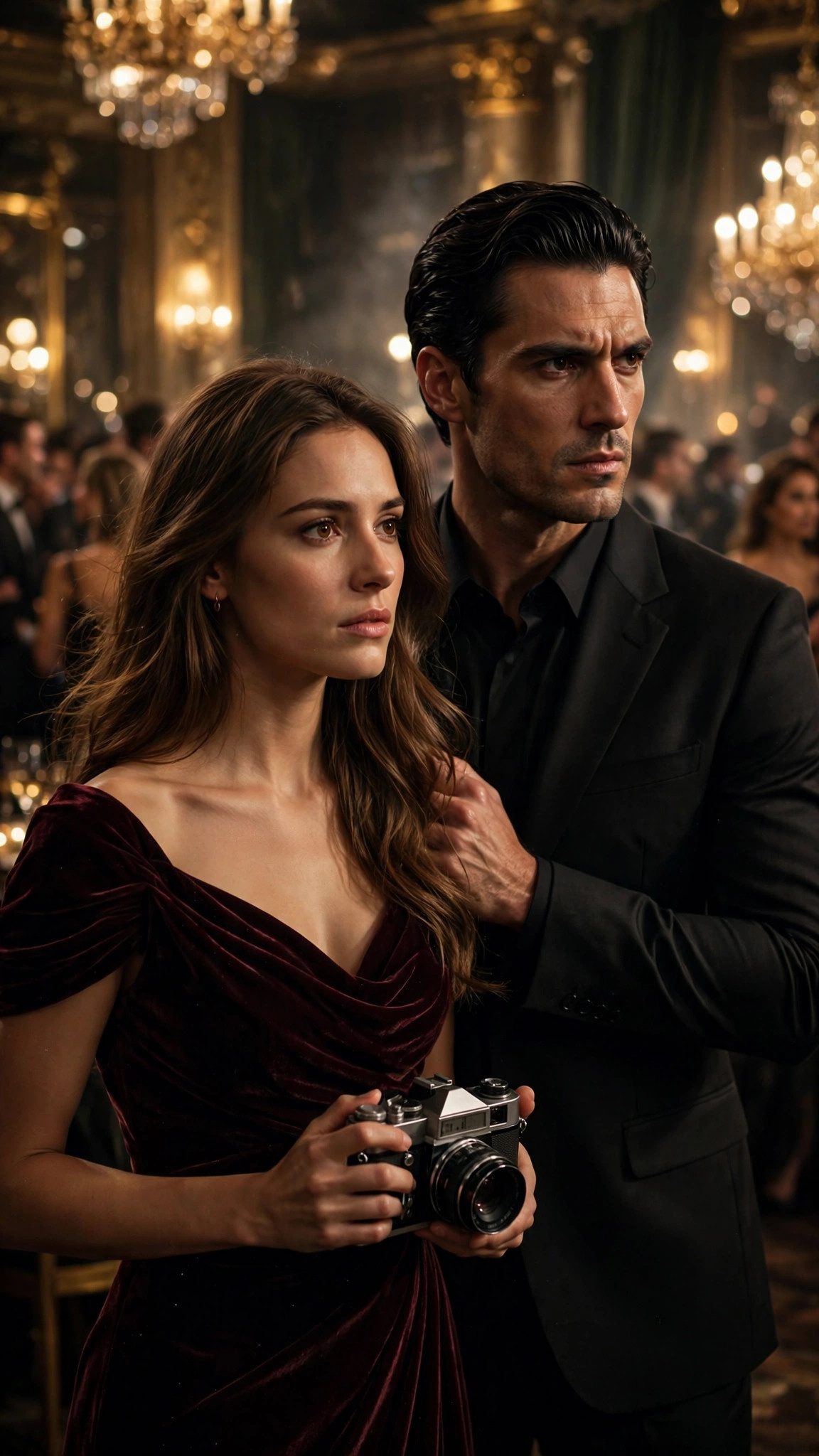
Story Genres: Mafia Romance

  • Chapter 6: The Ledger

    Chapter 6: The Ledger

    The morning after the bottling plant, I woke up in the guest room at the brownstone, in the bed with the window that looked out over the small garden, and for a moment, I did not know where I was. Then I smelled coffee and fresh bread, and I heard Rosa singing in the kitchen, an old Italian song I did not know the words to, and I remembered everything, and I got up, and I went downstairs, and King was sitting at the kitchen table with a bandage above his eye and a cup of coffee in his hands, and he looked up at me, and he smiled, and it was the best morning of my life.

    "Good morning, photographer," he said.

    "Good morning," I said. "How is your head?"

    "It has been worse," he said. "Sit. Eat. Rosa made too much food, as always."

    I sat, and I ate, and Vera came in, and she hugged me, and she told me she had slept for the first time in two days, and Enzo came in with a newspaper, and Sal came in with the news.

    "They found the ledger," Sal said. He put the newspaper down on the table, and the headline said, in big black letters, "BUSINESSMAN ARRESTED IN KIDNAPPING CASE," and underneath, in smaller letters, "Photographer's evidence leads police to hidden records."

    Alvarez had gotten the warrant at dawn. She had searched Blake's office and his apartment, and in a safe behind a painting in his office, she had found the black ledger, thick and worn, with the gold crest stamped on the cover. Inside were twenty years of records, every dollar Blake had stolen, every bribe he had paid, every name, every date, every amount, written down in his own hand. And there were photographs too, photographs Blake had taken of his own crimes, because men like Blake always need proof of how clever they were.

    "He is finished," Sal said. "Kidnapping, extortion, embezzlement, money laundering. Alvarez says he will never see the outside of a prison again. And his men are talking. All of them. They are telling the police everything, because they know Blake is finished, and they want deals."

    "And Derek?" I asked.

    "Derek testified this morning," Enzo said. "He told the police everything. How Blake found him, how much he was paid, what he did in the warehouse, what he did in the van. He cried through most of it. Alvarez says he will get a deal, but he will still serve time. Two years, maybe three. He asked about you. He asked if you hated him."

    I thought about that for a moment. "I don't hate him," I said. "I pity him. He sold everything he had for fifty thousand dollars, and he ended up with nothing. I hope prison teaches him what I learned in Detroit. That you cannot blame other people for your life forever. Sooner or later, you have to look at yourself."

    King reached across the table and took my hand. "You are a better person than I am," he said. "I would not have been so generous."

    "You would have," Vera said. "You spared Blake once, remember? You gave him a chance, and he threw it away. You are more generous than you think, brother."

    In the weeks that followed, my life changed in ways I had never imagined. I moved out of the little apartment above the bakery, and I moved into a bigger apartment, a bright place with big windows and a darkroom, paid for with the money King insisted on giving me for the photographs I took of the family. I did not want his money. He insisted. "You work for this family now," he said. "And this family pays its people properly."

    I photographed everything. I photographed Rosa in her kitchen, flour on her hands, singing her old Italian songs. I photographed Sal fixing a broken chair in the garden, his wedding ring catching the light. I photographed Enzo and his wife and their three children at Sunday dinner. I photographed Vera at her shelter, with the women she helped, women who had run from men who hurt them, women who were learning, the way I had learned, how to stand up.

    And I photographed King. I photographed him in the morning, drinking coffee at the kitchen table. I photographed him in the evening, standing by the window, looking out at the city he ruled. I photographed him laughing, which was rare, and I photographed him thinking, which was not rare at all, and I photographed him the day he took me to the lake, and we sat on a bench, and he told me about his father.

    "My father was a hard man," King said, looking out at the water. "He believed that fear was the only thing that kept people loyal. He was wrong. Fear keeps people quiet. It does not keep them loyal. I learned that when I was twenty-four, and he died, and I took over the family, and I looked at the men around me, and I realized that half of them were only there because they were afraid to leave. So I changed the rules. I told them they could leave, any time, no punishment, no revenge. Most of them stayed. Not because they were afraid. Because they wanted to be here. Because this family, for all its faults, takes care of its own."

    "Is that why you stood up for me in the nightclub?" I asked. "Because you take care of your own?"

    "No," King said. "I stood up for you because you were alone in a room full of people, and no one else was going to do it. And because, when I looked at you, I saw someone who had already decided she was not going to be afraid anymore, even if she didn't know it yet. I saw Vera's eyes. And I saw something else. I saw a woman who looks at the world and sees what is actually there. I have spent my whole life surrounded by people who see what they want to see. You see the truth. That is a rare thing, Harper. That is a precious thing."

    We sat on the bench for a long time, watching the boats on the lake, and I thought about the photograph I had taken of Marcus Blake, and the ledger, and the van, and the warehouse, and the bottling plant, and all the things that had happened since the night with the cake, and I understood something.

    I had come to Chicago to start over. I had thought starting over meant forgetting the past, leaving it behind in Detroit, in a refrigerator with a cake no one ate. But starting over did not mean forgetting. It meant taking what you had learned and building something new with it. I had learned to see. I had learned to stand up. I had learned that a photograph could be a weapon, and a promise could be a shield, and a family could be the people who choose you, not just the people who are born to you.

    In November, the trial began. Blake pleaded not guilty, and his lawyers tried everything, and none of it worked, because the ledger was too complete, and the photographs were too clear, and Derek's testimony was too detailed. On the third day of the trial, Blake changed his plea to guilty, and the judge sentenced him to thirty-five years in prison, and Alvarez shook my hand outside the courthouse, and she said, "You did this, Miss Bennett. You and your camera. Three years I chased this man, and you caught him in one afternoon."

    "It wasn't just me," I said. "It was King. It was Vera. It was Sal and Enzo and Rosa. It was a whole family."

    "Then it was a family that did it," Alvarez said. "And that is how it should be."

    Derek was sentenced the same week. Two years, with time served, and a promise to testify in any future case, and when he was led away, he looked at me, and he mouthed two words. "Thank you." Not for the deal. Not for the mercy. For the truth. For the fact that someone had finally told him the truth about himself, and he had finally listened.

    In late November, Vera asked me to come to her shelter, and I went, and I understood why she had spent ten years of her life there. The shelter was a big old house on a quiet street, with a garden in the back and a kitchen that always smelled like soup, and inside were twelve women, women who had run from men who hurt them, women who were learning, the way I had learned, how to stand up.

    Vera introduced me, and she said, "This is Harper. She is a photographer. She is going to teach you to take photographs. Not because you need to be photographers. Because taking a photograph is a way of saying, 'I was here. I saw this. This is the truth.' And when you have spent years being told that what you saw didn't happen, that is the most important thing in the world."

    So I started a class, every Tuesday and Thursday afternoon, in the garden of the shelter, and I taught the women how to hold a camera, how to find the light, how to look at the world and see what was actually there. One woman, a girl really, only nineteen years old, named Ana, took a photograph of her own hands, and she looked at it for a long time, and she said, "I didn't know my hands could look like that. I thought they only looked like fists."

    Another woman, Maria, forty years old, took a photograph of the garden gate, and she said, "That gate is the first thing I saw when I ran here. I thought it was the most beautiful thing I had ever seen, because it meant I was safe."

    I took a photograph of all of them together, standing in the garden, twelve women and Vera, with the late autumn light on their faces, and I printed it, and I hung it in the hallway of the shelter, and Vera cried when she saw it, and she said, "This is the best photograph anyone has ever taken of us. Because you didn't photograph us as victims. You photographed us as women."

    King came to the shelter one Tuesday, and he stood in the back of the garden, watching the class, and afterward, he said to me, "You know what you are doing, don't you? You are doing what Vera does. You are giving them a way to see themselves. That is what you did for me, too. You looked at me, and you didn't see a mafia boss. You saw a man."

    I thought about that for a long time. I had spent my whole life thinking my camera was a way of looking at other people. I was beginning to understand that it was also a way of showing people to themselves.

    That same week, Enzo came to me with an idea. "You should have an exhibition," he said. "A real one. In a real gallery. Your photographs of the city, and the family, and the shelter. We will pay for it. We will invite everyone. The newspapers will come. And you will call it whatever you want."

    I called it "The Man Who Stood Between Me and the World." It was not just about King. It was about all of them. About Sal, who had come to my apartment in eleven minutes. About Rosa, who had put her arms around a stranger. About Vera, who had gone looking for her brother. About the twelve women in the garden. About every person who had ever stood between someone else and the world, and refused to move.

    We hung the photographs in a small gallery on Michigan Avenue, thirty-two photographs in all, and on the opening night, the gallery was full, and King stood beside me in his black suit, and he did not say much, because King never says much, but he held my hand, and that was enough. Vera cried. Rosa cooked for everyone, even though there was no kitchen in the gallery, and somehow she still managed to feed a hundred people. Sal pretended not to cry, and failed. And Detective Alvarez came, in her sharp suit, and she looked at the photograph of Marcus Blake taking the cash, the one that had started all of this, and she said, "That photograph put a criminal in prison for thirty-five years. That is not a photograph. That is justice."

    A man from a newspaper asked me what the exhibition was about, and I said, "It is about a woman who learned to stand up, and a man who stood up for her, and a family that taught her what family means." And the man wrote it down, and the next day, it was in the paper, and people came to see the photographs, and some of them cried, and some of them called their sisters, and some of them went home and looked at their own lives and decided to change them.

    That night, King took me to dinner, to the same restaurant on the river where we had first met, where I had raised my camera and he had looked up and smiled. We sat at the same table by the window, and the light was the same, gold and low, and the city was the same, shining and dark at the same time, and King reached across the table and took my hand, and he said, "Christmas is in three weeks."

    "I know," I said.

    "And I made you a promise," he said. "I said I would ask you properly, at Christmas, with a real dinner and a real question. I am telling you now so you are not surprised. I am going to ask you to marry me. And I am telling you now because I want you to have time to think about it, and I want you to know that whatever you say, nothing changes. You are part of this family. You will always be part of this family. The ring is just a symbol. The family is the real thing."

    I looked at him, at the man who had stood between me and the world, at the bandage long gone from above his eye, at the scar that would always be there, a thin white line, like a signature, and I said, "I don't need three weeks to think about it. But I will let you ask me properly at Christmas, because Rosa deserves to cook for a hundred people, and Vera deserves to cry, and Sal deserves to pretend not to cry. And when you ask me, I will say yes."

    King smiled, the small, careful smile, and he kissed my hand, and the waiter brought our dinner, and outside the window, the river went on shining, and the city went on turning, and I thought about the woman I had been in Detroit, carrying a birthday cake through the rain, and I thought about the woman I was now, sitting across from a man who had stood up for a stranger, and I knew, with a certainty I had never felt about anything in my life, that I had finally come home.
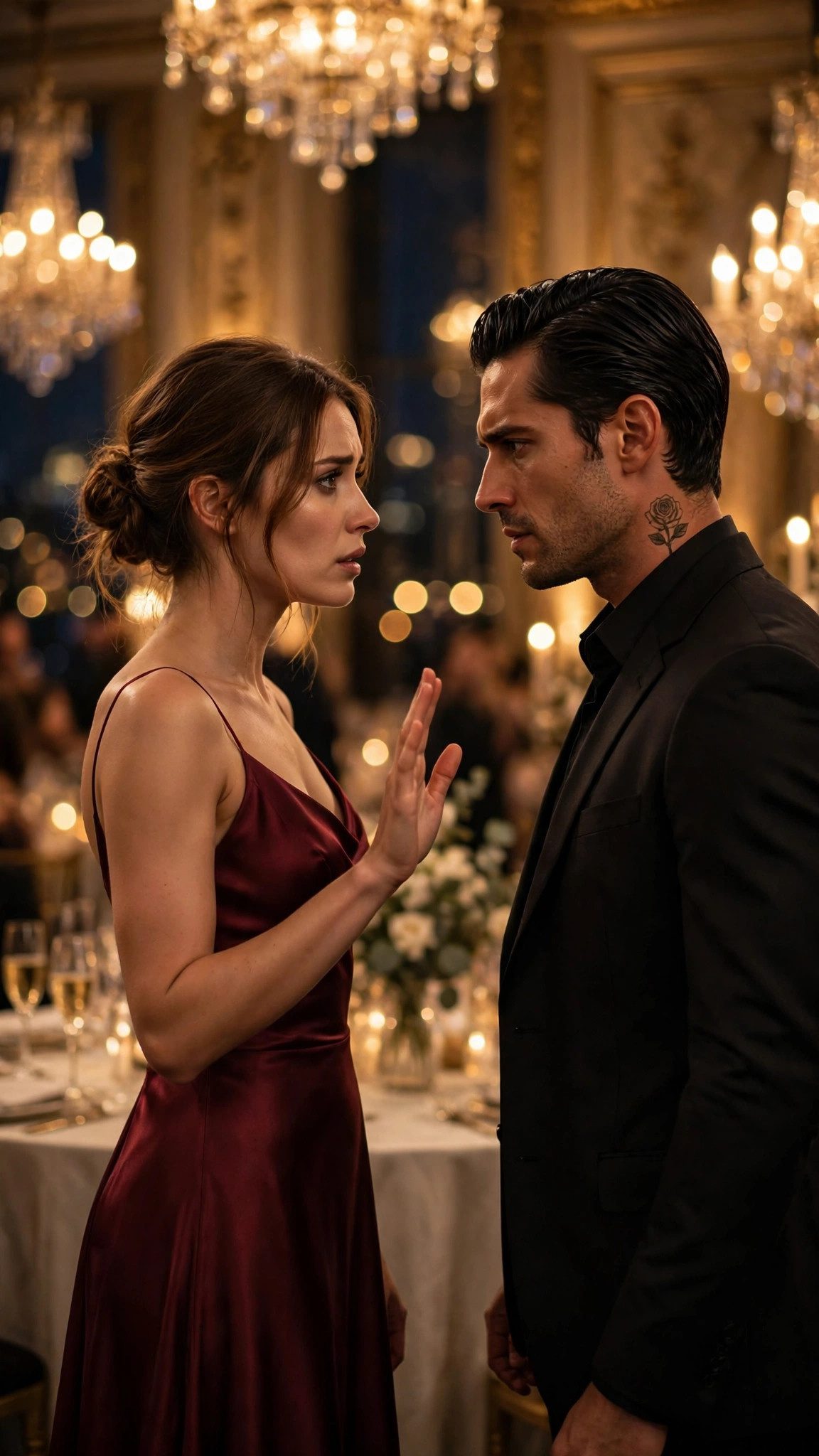
  • Chapter 7: Will You Marry Me — Properly

    Chapter 7: Will You Marry Me — Properly

    Gabriel came home from the hospital three days later, with his shoulder bandaged and his arm in a sling and strict instructions from his doctor — a doctor who was not me, because I had refused to be his doctor, and his nurse, and his girlfriend, all at the same time.

    "I need rest," he told Enzo, on the morning he was discharged. "And I need to learn to do something I have never done before."

    "What is that, sir?" Enzo asked.

    "Ask," Gabriel said.

    He started small. That was the first thing I noticed. Small questions, asked quietly, like a man learning a new language one word at a time.

    The first one came on a Tuesday, a week after the docks. I was coming off a twelve-hour shift, and the black sedan was waiting outside the hospital, as it always was. The driver rolled down the window. But this time, Gabriel was sitting in the back seat, and he leaned forward, and he said, "Hannah. Would you like a ride home?"

    Would you like. Three small words. The first question he had ever asked me about what I wanted.

    "Yes," I said. "I would like that. Thank you."

    The second question came two days later. Coffee on the nurses' station, black, one sugar, exactly the way I liked it — and beside it, a note in his strong, slanted hand: "Is this still how you take it? — G."

    I wrote back on the same note, in my own handwriting: "Yes. It is perfect. — H."

    The third question came on a Sunday. He called me — he called, he did not send a message through Rosa or the driver — and he said, "Would you like to have dinner with me tonight? Not the break room. A real restaurant. If you want to. If you don't want to, that's all right too."

    I said yes. We went to the little Italian place on Fifth Street, and he asked me what I wanted to order, and I ordered the pasta, and he ordered the same, and we talked for two hours, about the hospital, and the city, and the rain, and nothing important at all. And when he walked me home, he stopped at my door, and he said, "May I kiss you good night?"

    May I. He asked. And I said yes. And he kissed me — gently, carefully, like a man who had waited six weeks and fourteen years for permission — and it was the first kiss of my life that felt like a question and an answer at the same time.

    After that, the questions came more easily. "Would you like to walk?" "Shall we sit here?" "Do you want coffee, or tea?" "Is this all right?" Small questions. Ordinary questions. The kind of questions most people ask without thinking. For Gabriel Veseri, each one was a small revolution.

    And the board — the board took care of itself, in the end. Mr. Whitfield called me into his office two weeks after the docks, and I went, expecting another warning, or worse. But Whitfield was different this time. He was quiet. He was almost humble.

    "Miss Mercer," he said, "I owe you an apology."

    I waited.

    "The police came to see the board," he said. "They told us about Mr. Rinaldi. About the threats. About the rose. About the parking lot. And Mr. Veseri — Mr. Veseri came to see me himself, the day after he was discharged. He told me that if the board took any action against you, he would withdraw his donation, and he would also tell the press exactly why. But he also told me something else. He told me that you had saved his life twice, and that you had saved the hospital's reputation by refusing to be intimidated, and that the board should be thanking you, not warning you."

    Whitfield opened a drawer and took out a letter. My warning letter. He tore it in half, slowly, and put the pieces in his wastebasket.

    "Your record is clear, Miss Mercer," he said. "And the board would like to offer you the position of charge nurse on the night shift, if you want it. With a raise. If you want it."

    If you want it. Even Whitfield was asking now.

    "Thank you, Mr. Whitfield," I said. "I'll think about it."

    I did think about it. I thought about it for a week. And then I accepted — on my own terms, in my own time, because it was what I wanted, not because anyone had decided it for me.

    Rinaldi's trial came and went. The evidence was overwhelming — the gun, the men, the shipment, the recordings from Gabriel's man inside his organization. Dominic Rinaldi was sentenced to twenty-five years in prison. His lawyers appealed. The appeal failed. The city, which had once whispered his name with fear, stopped whispering it at all.

    And Gabriel healed. The shoulder took six weeks — the same six weeks, almost to the day, as the first time. He did his exercises. He took his medicine. He slept, for the first time in years, through the whole night, without waking. And when I asked him how much it hurt, he told me the truth.

    "It doesn't hurt anymore," he said, one evening, sitting beside me on the balcony of his apartment, looking out at the city lights. "Not the shoulder. Not the silence. Not any of it. You asked me how I felt, Hannah, and I told you, and the world didn't end. I don't know why I waited fourteen years to learn that."

    "Because you were afraid," I said. "And afraid is not the same as weak."

    He took my hand. "Come with me tomorrow," he said. "There's somewhere I want to show you. Somewhere I haven't been in a very long time."

    "Where?"

    "My mother's garden," he said. "In the old neighborhood. Behind the house where I grew up. She grew roses there. I've kept the house all these years, but I haven't been back since she died. I want to go back. And I want you to come with me."

    I said yes. Of course I said yes.

    The house was small and white, with blue shutters and a garden behind it that had gone wild in the years since his mother died. Roses grew everywhere — climbing the fences, spilling over the stone walls, red and pink and white, with thorns, honest thorns, exactly the way his mother had said.

    Gabriel stood in the middle of the garden, in the late afternoon light, and he looked around at the roses, and for a moment he was nineteen years old again, and his mother was alive, and the world was simple.

    "She would have liked you," he said quietly. "My mother. She liked people who asked questions. She used to say that a person who asks you how you feel is a person who loves you, even if they don't know it yet."

    I took his hand. "I'm glad I came."

    "Hannah," he said, and he turned to face me, and his voice was steady, and his eyes were clear, and there was no audience, and no crisis, and no one watching — just the two of us, alone, in a garden full of roses. "I came here to ask you something. Not in front of a crowd. Not because I ran out of other things to decide. Because I want to know the answer."

    He took a breath.

    "Will you be my girlfriend?"

    I laughed. I couldn't help it. I laughed, out loud, in the middle of the rose garden, because after everything — the gunshot, the car, the coffee, the gala, the terrace, the proposal, the docks, the blood — Gabriel Veseri, the most powerful man in the city, was standing in his mother's garden asking me, properly, the question he had never asked.

    "Yes," I said. "Yes, Gabriel. I will be your girlfriend."

    He smiled — really smiled, the way he had almost smiled in the break room, only this time he didn't stop halfway. His whole face changed, and he looked younger, and lighter, and more alive than I had ever seen him.

    "Good," he said. "Because I have one more question."

    He went down on one knee, in the grass, among the roses, and he took a small box out of his pocket, and he opened it. Inside was a ring — simple, gold, with a single diamond, and beside the diamond, set into the band, a tiny rose, carved in gold.

    "Hannah Mercer," he said, "will you marry me?"

    This time, I didn't say "not like this." This time, there was no ballroom, and no audience, and no fight. There was only a man on his knees in a garden, asking me the question properly, because he wanted to know the answer, not because he was afraid of it.

    "Yes," I said. "Yes, I will marry you."

    He stood up. He put the ring on my finger. And he kissed me, in the rose garden, in the late afternoon light, and the roses were all around us, red and pink and white, with thorns, honest thorns, exactly the way his mother had said.

    We were married three months later, in the little garden behind the white house, because it was the only place that made sense. Maya was my maid of honor. Enzo was Gabriel's best man, and he cried, and he pretended he didn't. Rosa came, and the nurses from the night shift came, and even Mr. Whitfield came, in a grey suit, and he danced with Maya, and he told me afterward that the hospital had never looked better.

    I wore the burgundy satin gown. It was the same gown I had worn to the gala, the night I told Gabriel Veseri to stop calling me his girlfriend. Only this time, when he looked at me coming down the little path between the roses, he didn't call me anything at all. He just looked at me, and his eyes were wet, and he said, very quietly, so only I could hear it, "You look beautiful."

    "I know," I said. "You told me. The first time, you told me. And the second time, you asked me. And that's the difference."

    After the wedding, we danced in the garden, under the string lights Enzo had hung from the trees, and the nurses danced, and the men in dark suits danced, and even the city, far away beyond the garden walls, seemed to be dancing too.

    Late that night, when the guests had gone and the lights were low and the roses were dark against the night, Gabriel and I sat together on the little stone bench where his mother used to sit, and he put his arm around me, and I put my head on his shoulder — his good shoulder, the one that had healed — and we listened to the quiet.

    "Are you still breathing?" I asked him.

    "Yes," he said. "Because of you."

    "And how much does it hurt?"

    He was quiet for a moment. Then he said, "It doesn't hurt at all. Not anymore. Not since you asked me."

    I smiled, and I closed my eyes, and I thought about the first night, six weeks — no, a lifetime — ago, when they wheeled a dying man into my trauma bay and I put my hands on his chest and refused to let him go. I thought about the coffee, and the car, and the dinners, and the night neither of us slept. I thought about the gala, and the terrace, and the question he had never asked, and the question he had finally asked, properly, in a garden full of roses.

    And I thought about the thing my grandmother had taught me, all those years ago, in a little clinic a long way from here: that the first thing you do with a frightened person is ask them how they feel. Not because you don't know, but because asking is how you tell them they matter.

    Gabriel Veseri had spent fourteen years believing that asking was dangerous. It had taken a nurse, and a gunshot wound, and a ballroom full of powerful people, and a garden full of roses, to teach him the truth.

    Asking is not dangerous. Asking is how you tell someone they matter. Asking is how you tell someone you love them. And the only question that was ever worth asking was the one he had been afraid to ask all along.

    Will you marry me?

    I had said yes. And I would say it again, every day, for the rest of my life.

    One year later, I stood in the lobby of St. Catherine's General Hospital, in my charge nurse's uniform, and I watched a little girl in a pink coat walk through the doors of the new children's wing, holding her mother's hand, staring up at the sign over the entrance.

    "The Rose Garden Wing," the little girl read aloud, slowly, sounding out the words. "Why is it called that, Mommy?"

    Her mother smiled. "Because a kind man built it for his mother, who loved roses. And because the nurse who runs it loves roses too."

    The little girl looked at me. "Are you the nurse?"

    "I am," I said, kneeling down so I was at her eye level. "My name is Hannah. What's yours?"

    "Lily," she said. "Is the man with the rose on his neck your husband?"

    I laughed. "Yes, Lily. He is."

    "Is he scary?" she asked, very seriously. "Mommy says he used to be scary."

    I thought about Gabriel — about the man who had walked into my trauma bay bleeding, and the man who had knelt on a terrace, and the man who now asked me every morning whether I wanted coffee or tea, and who still sometimes forgot, and caught himself, and smiled, and asked again.

    "No," I said. "He's not scary. He's just a man who had to learn to ask. And do you know what? He's very good at it now."

    Lily considered this, and then she nodded, satisfied, and she took her mother's hand, and she walked into the Rose Garden Wing, where the walls were painted with roses, and the windows looked out over a little garden, and where every child who came through those doors would be asked, first thing, how they felt.

    Gabriel was waiting for me by the garden door, with two cups of coffee in his hands. "How do you take it?" he asked, holding them out. "Black, one sugar? Or did you change your mind?"

    "Black, one sugar," I said, taking the cup. "I never change my mind about the important things."

    He kissed me then, in the lobby of the hospital, in front of the nurses and the visitors and the little girl in the pink coat, and he didn't care who was watching. Because some questions, he had learned, don't need to be asked in private. Some questions are meant to be asked out loud, in front of the whole world.

    And the answer, I had learned, is always yes.
    THE END

  • Chapter 5: Midnight at the Bottling Plant

    Chapter 5: Midnight at the Bottling Plant

    The bottling plant on Canal Street was four stories of broken windows and rusted iron, and the sign above the door, "Royal Crown Bottling," hung crooked, one letter missing, the way a smile looks when it is missing a tooth. The green side door was open, and a single light burned above it, and as I walked toward it at midnight, with my camera in my hand and the wire under my sweater and Sal's voice in my ear, I thought about every photograph I had ever taken, and I thought about the man in the basement, and I thought about the woman on the third floor, and I did not stop walking.

    "You're doing fine," Sal said in my ear. "Slow and steady. We are right behind you. Two cars on the street, four men at the back, Alvarez at the front. You are not alone."

    A man was waiting inside the green door. He was tall, with a shaved head and a scar on his neck, and he held a gun, not pointed at me, but held where I could see it, which was the same thing.

    "Give me the camera," he said.

    "No," I said. "The camera stays with me until I see King and Vera. That was the deal."

    He looked at me for a moment, and then he nodded toward the stairs. "Second floor," he said. "Blake is waiting."

    I climbed the stairs, and my footsteps echoed, and the air smelled like dust and old sugar and something else, something sweet and rotten, the way abandoned buildings smell. On the second floor, there was an office with a desk and a lamp, and behind the desk sat Marcus Blake, in a suit that cost more than my rent for a year, with his silver hair combed back and a glass of whiskey in his hand, looking like a man who had already won.

    "Miss Bennett," he said, and he smiled. "Thank you for coming. I knew you would. Women like you always come. You care too much. That is your weakness."

    "Where are they?" I asked.

    "All in good time," Blake said. "First, the camera."

    "No," I said. "First, King and Vera. Then the camera. That was the deal you made on the phone."

    Blake's smile faded. He put his glass down. "You are in no position to make demands, Miss Bennett. I have your mafia boss in my basement, and his sister on the third floor, and I have six armed men in this building. You have a camera and a brave face. Do not mistake courage for power."

    I thought about Derek, in the small room at the back of the brownstone, crying into his coffee. I thought about Vera, who ran a shelter for women who were running. I thought about King, who had stood up in a nightclub for a stranger. And I looked at Marcus Blake, and I said the words I had been saving since the night with the cake.

    "I am not afraid of you."

    Blake laughed. It was a short, ugly laugh. "We will see," he said. He picked up a phone on the desk and spoke into it. "Bring them up."

    Two men brought King up from the basement, and two more brought Vera down from the third floor, and when I saw them, my heart stopped and then started again, too fast.

    King was hurt. His face was bruised, his shirt was torn, and there was a cut above his left eye that had bled down his cheek and dried there. But he was standing. He was standing on his own two feet, and when he saw me, he smiled, a small, careful smile, the same smile from the restaurant.

    "Harper," he said. "I told you not to come."

    "I don't listen very well," I said.

    Vera was beside him, thirty-four years old, dark-haired, with the same brave eyes Rosa had told me about, and she was holding King's arm, and she was looking at me with an expression I could not read at first, and then I understood it. It was gratitude. And it was something else. It was recognition, the way you recognize someone you have been waiting to meet.

    "You're the photographer," Vera said. "Rosa told me about you. She said you have my eyes."

    "I have your bracelet too," I said, and I touched my pocket, where I had put the silver bracelet with the tiny camera charm. "I found it in the mud by the warehouse. I kept it safe."

    Vera's eyes filled with tears. "Thank you," she said.

    Blake stood up from behind the desk. "How touching," he said. "A family reunion. Now, Miss Bennett, the camera. Give it to me, and I will let them walk out of here with you. Refuse, and I will hurt them, starting with the sister."

    He nodded to one of his men, and the man stepped toward Vera, and I saw King's whole body go tense, the way a rope goes tense before it snaps.

    "Wait," I said. I held up the camera. "I'll give you the camera. But first, I want you to look at something. I want you to look at the last photograph on it. The one you wanted so badly. The one of you taking cash in the alley."

    Blake frowned. "I have seen it. It proves nothing. A man taking an envelope. It could be anything."

    "Look closer," I said. "Look at the background. Look at the table behind you. Look at what is sitting on it."

    I turned the camera around and held it up, and Blake leaned in, and his face changed, the way a man's face changes when he realizes he has made a terrible mistake.

    The ledger. The black ledger with the gold crest. He saw it, and he knew, in that moment, that I had not just photographed a bribe. I had photographed his entire criminal life, written down in his own hand, sitting on a table behind him while he counted his money.

    "That photograph is already with the police," I said, and my voice was steady, and I was proud of how steady it was. "Detective Maria Alvarez has a copy. So does the FBI. So does a cloud account that will send it to three newspapers if I don't check in by morning. You can take my camera, Mr. Blake. You can smash it. You can burn it. It won't matter. The photograph is already out there. And so is the ledger, because your men left it in the alley, and Sal's men found it an hour ago."

    That last part was a lie. Sal's men had not found the ledger. But Blake did not know that. And in the second that he believed it, in the second that his face went white and his hands started to shake, I said the words.

    "The light is good here."

    The door behind me burst open, and Sal came in, and Enzo came in, and four more men came in, and Alvarez's detectives came in from the front stairs, and the room filled with shouting and movement, and Blake's men raised their guns, and Sal's men raised their guns, and for one terrible moment, I thought someone was going to die in that office, in front of the desk, in front of the lamp.

    Then Alvarez's voice cut through the noise, clear and certain, the way a police officer's voice cuts through a crowd.

    "Marcus Blake, you are under arrest for kidnapping, extortion, and embezzlement. Put your hands where I can see them."

    Blake looked at the guns, and he looked at Alvarez, and he looked at me, and he understood that he had lost. He put his hands up. Slowly. His men did the same. And as the detectives put handcuffs on him, he looked at me, and he said, "You. You did this. A photographer with a camera. You ruined everything."

    "No," I said. "You ruined everything. Twenty years ago, when you started stealing from the family that trusted you. I just took a photograph."

    King was beside me then, and his hand was on my shoulder, and his voice was in my ear, low and warm.

    "Harper," he said. "You came. I told you not to come, and you came anyway."

    "Of course I came," I said. "You stood between me and the world. Now I stood between you and the world. That is how this works."

    He looked at me for a long moment, and then he did something I had never seen him do. He laughed. It was a real laugh, rough and surprised, the laugh of a man who had been in a basement for two days and had just been set free by a woman with a camera.

    "Rosa was right," he said. "You do have Vera's eyes."

    Vera was beside us then, and she put her arms around both of us, and she was crying and laughing at the same time, and she said, "Thank you, Harper. Thank you for coming for us. Thank you for not running."

    "I don't run anymore," I said. And it was true. I had run from Detroit. I had run from the alley. I had run from my own life for years. But I was not running anymore. I was standing still, in an office in a bottling plant at midnight, with a mafia boss on one side and his sister on the other, and I had never felt more like myself in my entire life.

    The detectives took Blake's men out one by one, and Alvarez took Blake himself, and I watched her put the handcuffs on him, and I thought about the night in the Velvet Room, and the man who had said I didn't belong there, and how small that moment seemed now, compared to this one. Blake had spent twenty years believing that money and fear made him powerful. It had taken one photograph to prove him wrong.

    A paramedic came up the stairs and looked at the cut above King's eye, and he cleaned it and put a bandage on it, and King sat still for it, the way a man sits still when he is used to being hurt and not complaining about it. Vera sat beside him, holding his hand, and she told the paramedic that she was fine, that she was just tired, that she had been more frightened than hurt, and I believed her, because Vera did not look like a woman who frightened easily.

    Alvarez came over to me with a notebook in her hand. "I need your statement," she said. "Everything. From the nightclub to the phone call. And I need a copy of every photograph on that camera, and the cloud backup, and the memory card you gave Sal. I will get a warrant for Blake's office and his apartment in the morning, and when we find that ledger, and we will find it, your photograph will be the thing that ties it all together."

    "You'll find it," I said. "Blake is the kind of man who keeps records. He can't help himself. He wants proof of how clever he was."

    Alvarez smiled. "Then he kept his own prison sentence in a book, and you took a picture of it. That is the best kind of evidence there is."

    She went back to Blake, and I stood by the window, looking out at the canal, at the police lights flashing red and blue across the water, at the cars arriving and the men being led away, and I felt something I had not felt in a very long time. Not fear. Not anger. Relief. The kind of relief that makes your knees weak, that makes you want to sit down and cry and laugh at the same time.

    King came and stood beside me at the window. He did not say anything for a while. He just stood there, with the bandage above his eye and his torn shirt and his quiet, steady presence, and then he said, "Rosa told you about the ring."

    It was not a question. I nodded.

    "I was going to ask you at Christmas," he said. "I know it is too soon. I know we have only known each other for three weeks. I know that is not enough time. But I also know that I have lived thirty-nine years, and I have never met anyone who looked at the world the way you do, and I have never met anyone who stood up the way you stood up tonight. You walked into a building full of armed men, with a camera and a brave face, for me. For Vera. For people you barely knew. That is not something you do for a stranger. That is something you do for family."

    I looked at him, and I thought about the ring in my pocket, next to the rosary, and I thought about the promise he had made in the dining room, and I thought about the night in the nightclub, and I said the truest thing I had ever said to anyone.

    "I am not ready to be engaged," I said. "Not yet. Ask me again at Christmas, and I will say yes. But tonight, I will say this. I am not going anywhere. Not back to Detroit. Not away from Chicago. Not away from you. I am staying. That is my answer for tonight."

    King smiled, the small, careful smile from the restaurant, and he took my hand, and his hand was warm and strong, and he said, "Then that is enough for tonight. And at Christmas, I will ask you properly, with a real dinner and a real question, and you will say yes, and Rosa will cook for a hundred people, and Vera will cry, and Sal will pretend not to cry, and it will be the best Christmas this family has ever had."

    "And what about Blake?" I asked. "And Derek? And the ledger?"

    "Tomorrow's work," King said. "Tonight, we go home. Rosa is waiting with dinner. And Harper, there is one more thing. From now on, you don't photograph strangers on the street anymore. You photograph this family. Our weddings, our birthdays, our children, our lives. You are our photographer now. That is your job, if you want it."

    "I want it," I said.

    Outside, the police cars were arriving, and the lights were flashing red and blue across the canal, and Derek was already in custody, telling the truth for the first time in his life, and the ledger, the real ledger, was still out there somewhere, in Blake's office or his apartment, waiting to be found. But that was tomorrow's work. Tonight, we were alive. Tonight, we were together. Tonight, the man who had stood between me and the world was standing beside me, and I was standing beside him, and the world could do its worst.

  • Chapter 4: The Ledger and the Phone Call

    Chapter 4: The Ledger and the Phone Call

    We took Derek to the brownstone, and Sal put him in a small room at the back of the house, with a guard at the door and a cup of coffee on the table, and Derek told us everything.

    He told us how Blake had found him. Three weeks after I left Detroit, Derek had lost his job at the car dealership, and Tessa had left him, and he had been drinking too much and sleeping on a friend's couch. A man had come to the bar where Derek drank every night, a man with a silver watch and a quiet voice, and the man had said he worked for a businessman in Chicago who needed someone to keep an eye on a woman. The woman's name was Harper Bennett. The pay was fifty thousand dollars. Derek had not asked any questions. He had not wanted to know the answers.

    "He gave me a phone," Derek said, staring into his coffee. "A second phone. He said to call a number every night and report where you went, who you talked to, what you photographed. I did it for two weeks. Then Blake called me himself. He said you had photographed something you shouldn't have, and he said he needed me to help him take King Moretti. He said it would be easy. He said King wouldn't fight, because King would be worried about you. He was right. King didn't fight. When we took him, he just looked at me, and he said, 'You must be Derek.' He knew my name. He knew who I was. And he wasn't afraid. He was just… disappointed. Like a teacher looking at a student who failed a test he could have passed."

    "Where is the bottling plant?" Sal asked.

    "On the south side, by the canal," Derek said. "Canal Street, past the rail yard. It's an old building, four stories, with a green door on the side and a broken sign that says 'Royal Crown Bottling.' Blake owns it through a shell company. He has six men there, maybe seven. He has King in the basement, and Vera on the third floor. He is going to call Harper tonight, at nine o'clock, and he is going to tell her to bring the camera to the plant at midnight, alone, and if she doesn't come, or if she brings the police, he is going to hurt them."

    Sal wrote it all down, and Enzo made phone calls, and I sat in the kitchen with Rosa, who made me tea and did not ask me any questions, which was exactly what I needed.

    "Tell me about Vera," I said to Rosa, after a while. "King's sister. What is she like?"

    Rosa smiled, a sad smile. "Vera is thirty-four years old, and she is the bravest person I know. She runs a shelter for women in the city, women who are running from men who hurt them. She has been doing it for ten years. She is the reason King has his rule, you know. His rule about never hurting women. He made that rule because of Vera. When they were young, their father was a hard man, and Vera protected King, and King protected Vera, and they promised each other that no woman would ever be afraid in their family. Not ever. That is why he stood up for you in the nightclub. That is why he took your camera and told Marcus Blake he would pay for it. You reminded him of Vera. A woman standing alone in a room full of men, refusing to be afraid."

    I thought about that for a long time. I thought about Vera, a woman I had never met, who ran a shelter for women who were running, and who had gone looking for her brother and been taken. I thought about King, who had made a rule when he was a boy and kept it for his whole life. And I thought about myself, a woman who had spent years trying to please a man who had never appreciated her, and who had finally learned to stand up.

    "Harper," Rosa said, and she put her hand over mine. "You are part of this family now. Whether you want to be or not. King chose you the moment he stood up in that nightclub. That is how it works in this family. You stand up for someone, and they are yours, and you are theirs. Forever."

    At six o'clock, Enzo came into the kitchen with a woman I had never seen before. She was in her forties, with short dark hair and a sharp suit, and she carried herself like someone who was used to being listened to.

    "This is Detective Maria Alvarez," Enzo said. "Chicago Police, Organized Crime Division. She has been investigating Marcus Blake for three years. She is the only police officer we trust."

    Detective Alvarez shook my hand, and her grip was firm. "Miss Bennett," she said. "Enzo tells me you have a photograph of Marcus Blake taking a bribe, and a photograph of a ledger with the Moretti crest on it. Is that true?"

    I showed her the photographs on my camera, and she looked at them for a long time, and then she smiled, a slow, satisfied smile.

    "Three years," she said. "Three years I have been trying to prove that Blake has been skimming from Moretti businesses and laundering the money through his own companies. Three years, and no one would talk, and no paper trail would hold. And you walked into an alley with a camera and got it all in one afternoon."

    "It was luck," I said.

    "No," she said. "It was a photographer's eye. Luck is when you win the lottery. This is work. Now, here is what we are going to do. I cannot send a police team into that bottling plant. Blake has people inside the department. If I call it in, he will know before we get there, and he will move King and Vera, or worse. So we do this quietly. You take the call at nine o'clock. You agree to the exchange. You go to the plant at midnight, and you wear a wire, and Sal's men and my two best detectives will be in position, and when Blake shows you King and Vera, we move in. And when this is over, you give me a copy of every photograph you have, and I will make sure Marcus Blake spends the rest of his life in prison."

    "And Derek?" I asked.

    "Derek cooperates, and he testifies, and he gets a deal," Alvarez said. "He helped kidnap two people. He does not walk away clean. But if he tells the truth, and he helps us, he will not spend the rest of his life in prison. That is the best I can do."

    I nodded. It was more than Derek deserved, and less than he feared, and it was fair, which was more than he had ever given anyone.

    After Alvarez left, Sal took me into the study and opened a drawer, and inside the drawer was a small black case, and inside the case was a wire, a listening device no bigger than a button, and a tiny earpiece.

    "This goes under your sweater," Sal said, fitting it carefully, his hands gentle and professional. "It will pick up everything Blake says, and everything you say, and it will send it to us, in the cars outside. And this," he tapped the earpiece, "will let you hear me. If I tell you to leave, you leave. If I tell you to stay, you stay. If I tell you to say something, you say it. Do you understand?"

    "I understand," I said.

    Enzo spread a map on the desk, a hand-drawn map of the bottling plant, with the green side door marked in red ink and the basement stairs marked in blue.

    "Blake will bring you in through the green door," Enzo said. "He will take you to the second floor, where he has an office. King is in the basement. Vera is on the third floor. There are two staircases, one at the front and one at the back. Sal's men will be at the back staircase, and Alvarez's detectives will be at the front. When you see King and Vera, when you know they are alive, you say the words, 'The light is good here.' That is the signal. And then we come in."

    "The light is good here," I repeated. "I can remember that."

    "Good," Enzo said. "And Harper, one more thing. Blake is going to try to frighten you. He is going to tell you that he will hurt them if you don't do what he says. He is going to tell you that no one is coming to help you. He is lying. We are coming. We are always coming. You just have to hold on until we get there."

    I nodded, and I thought about my father, who had left when I was twelve years old, who had walked out of our house in Detroit one morning and never come back, and who had taught me, without meaning to, that the only person you can truly count on is yourself. And then I thought about Rosa, who had put her arms around me as if we had known each other for years, and Sal, who had come to my apartment in eleven minutes, and Enzo, who had drawn me a map in red and blue ink, and King, who had bought me a ring after knowing me for less than a week, and I understood something my father had never understood.

    You can count on yourself. But you do not have to count only on yourself. Sometimes, if you are lucky, and if you are brave, you find people who will stand beside you. And that is not weakness. That is family.

    Rosa came into the study then, with a dark sweater, soft and warm, and she helped me put it on over the wire, and she braided my hair back from my face, the way a mother braids a daughter's hair, and she looked at me in the mirror, and she said, "You look like Vera. Did you know that? The same eyes. The same brave eyes. King saw it the first night. He told me. He said, 'Rosa, she has Vera's eyes.'"

    I looked at myself in the mirror, at the woman in the dark sweater with the wire under it and the rosary in her pocket and the camera in her hand, and I did not recognize her at first. She did not look like the woman who had carried a birthday cake through the rain in Detroit. She looked like someone else. Someone stronger. Someone who had learned to stand up.

    At eight o'clock, I backed up every photograph on my camera to three places: a cloud account, a memory card I gave to Sal, and a small drive I put in Rosa's kitchen drawer, because Rosa was the most trustworthy person I had met in Chicago and her kitchen was the safest place I knew. I checked the camera's battery. I cleaned the lens. I put on the dark jeans and the dark sweater Rosa lent me, and I put the rosary in my pocket, and I waited for nine o'clock.

    The phone rang at exactly nine. The number was blocked. I answered it, and Marcus Blake's voice came through, smooth and calm, the way a man speaks when he believes he has already won.

    "Miss Bennett," he said. "I believe you have something of mine. A camera. And a photograph. And I believe I have something of yours. Two somethings, actually. A man, and a woman. I would like to make a trade."

    "Let me talk to them," I said. My voice was steady. I was proud of how steady it was. "Let me hear their voices, or there is no trade."

    There was a pause. Then a woman's voice came on the phone, clear and strong, without a trace of fear. "Harper, this is Vera. I am all right. King is all right. He is hurt, but he is all right. Don't do what he says. Don't come alone. Promise me."

    Then King's voice, low and calm, the same voice from the nightclub. "Harper. Listen to me. Do not come. I will get out of this. I always get out. Go to the police. Go to Alvarez. Do not trade yourself for me."

    Blake came back on the line. "Touching, isn't it? Midnight. The bottling plant on Canal Street. Come alone. Bring the camera. If I see police, if I see Sal's men, if I see anyone at all, you will never see them again."

    The line went dead.

    I put the phone down. Sal was standing in the doorway. Enzo was standing behind him. Rosa was standing in the kitchen, holding a wooden spoon like a weapon.

    "I am going," I said. "At midnight. Alone, as far as Blake can see. And you will be there, in the dark, where he cannot see you. That is the plan. That has always been the plan."

    Sal nodded. "Then we have three hours to get ready," he said. "And Harper, there is one more thing. Mr. Moretti left something for you, before all of this. He left it with Rosa, in case anything ever happened to him. She was supposed to give it to you when the time was right."

    Rosa went to the kitchen drawer, the same drawer where I had put the small drive, and she took out a small velvet box. Inside was a ring. Not a diamond. A simple gold band, with a tiny camera engraved on the inside, so small you could barely see it unless you looked closely.

    "He bought it the day after the family dinner," Rosa said. "He told me he had never met a woman who looked at the world the way you do, and he said he wanted to spend the rest of his life watching you look at it. He was going to ask you at Christmas. He wanted it to be a surprise."

    I held the ring in my hand, and it was warm from the drawer, and I thought about the man in the basement of a bottling plant, hurt but alive, who had bought me a ring after knowing me for less than a week, and I thought about the promise he had made in the dining room, and I understood, finally, what it meant.

    "I won't let anyone hurt you or the people you love." He had meant it. He had meant every word of it. And now it was my turn to mean it back.

    I put the ring in my pocket, next to the rosary, and I said, "Let's go get him."

  • Chapter 3: Warehouse Seventy-Three

    Chapter 3: Warehouse Seventy-Three

    The industrial district by the river smelled like rust and rain and diesel, and the warehouses stood in long gray rows like tired giants, their windows broken, their painted numbers faded by decades of weather. Warehouse seventy-three was at the end of a dead-end street, its big sliding door half open, a dark van parked outside it with no license plate, the same van from the photograph.

    Sal stopped our car two blocks away, in the shadow of a grain silo, and he turned around in his seat to look at me.

    "Stay in the car," he said. "Enzo and I will go in first. If anything goes wrong, you drive. Do you understand? The keys are in the ignition. If you hear shooting, you do not wait for us. You drive."

    I nodded, because I knew he needed me to nod, but we both knew I was not going to stay in the car. I had not come this far to sit in the back seat while other people risked their lives for the man who had stood up for me.

    Sal and Enzo got out, and four more men got out of the other cars, and they moved toward the warehouse the way men move when they have done this before, spread out, quiet, watching the windows and the roofline. I waited until they were almost at the door, and then I got out of the car, and I followed them, my camera in my hand, my heart beating so hard I was sure they could hear it.

    The inside of the warehouse was dark and cold, and it smelled like oil and old rope. Sunlight came through the broken windows in long dusty bars, and for a moment, I could not see anything at all. Then my eyes adjusted, and I saw the van, parked inside, its back doors open, and I saw a chair in the middle of the floor, a wooden chair with rope on it, and I saw blood on the concrete, not much, a few drops, dark and old.

    King was not there.

    "He was here," Enzo said, kneeling beside the chair. "The rope is still warm. They moved him. Recently. Within the hour."

    Sal was looking at the ground, at the tire tracks in the dust, at the footprints. "Three men," he said. "And King. They took him out the back. There is a second van. The tracks go that way, toward the service road."

    I was standing by the van, and I saw something on the floor of the van, something small and red, and I bent down and picked it up. It was a phone case. A red phone case. Derek's phone case. But the phone was not in it.

    "Derek was here," I said, and my voice sounded strange in the empty warehouse, too loud, too certain. "This is his. He was here, in this van, with King."

    Enzo took the case from me and turned it over in his hands. "Then he dropped it when they moved in a hurry," he said. "Or he left it on purpose."

    "On purpose?" I asked.

    "As a message," Sal said. "Or as a mistake. Either way, it tells us he was here, and it tells us they left in a hurry, and people in a hurry make mistakes."

    We followed the tire tracks out the back of the warehouse, to a service road that ran along the river, and there, in the mud by the side of the road, I saw something else. A footprint, clear and fresh, and beside it, the print of a watch. No, not a watch. A bracelet. A thin silver bracelet, pressed into the mud, as if someone had dropped it and stepped on it.

    I bent down and picked it up. It was a woman's bracelet, delicate, with a small charm on it, a tiny camera. I had never seen it before. But I knew, with a certainty that made my hands shake, that it belonged to someone who had been here, someone who had fought, someone who had tried to leave a sign.

    "Sal," I said. "This isn't Derek's. This is a woman's bracelet. With a camera charm. Someone else was here. A woman."

    Sal took the bracelet and looked at it for a long time. "King's sister," he said quietly. "Vera. She has a bracelet like this. She wears it every day. If Vera was here, then she came looking for him too, and they took her as well, or she followed them."

    "Then we have two people to find," I said.

    Enzo was already on the phone, calling the house, and his face went pale as he listened. He lowered the phone and looked at Sal.

    "Vera is gone," he said. "She left the house an hour ago. She told Rosa she was going to the store. She never came back."

    The warehouse went very quiet. Outside, a barge sounded its horn on the river, long and low, and a flock of pigeons burst out of the broken windows and scattered across the gray sky.

    "Blake has them both," Sal said. "He has King, and now he has Vera. He is going to use them to get what he wants."

    "What does he want?" I asked.

    "Your photograph," Sal said. "And your silence. He wants the proof destroyed, and he wants you to disappear. He thinks that if he has King and Vera, you will give him what he wants."

    I looked at the red phone case in Enzo's hand, and the silver bracelet in Sal's hand, and the blood on the concrete floor, and I thought about the night in the Velvet Room, and the man who had stood up and said, "She's with me," and I thought about Vera, a woman I had never met, who had gone looking for her brother and been taken, and I understood something.

    Blake did not just want my photograph. He wanted me afraid. He wanted me to run, the way I had run from the alley behind the hotel, the way I had run from Detroit. He was counting on it. He was counting on me being the woman who ran.

    I was not going to run. Not this time.

    "We need to find Derek," I said. "He is the weak link. Blake's other men are professionals. Derek is not. Derek is a coward who cheated on his girlfriend and blamed her for it. He is the one who will make a mistake. He is the one who will talk."

    Sal looked at me, and for the first time, I saw something in his eyes that had not been there before. Respect. Real respect, not the polite kind.

    "How do you want to find him?" he asked.

    "His phone is still on," I said. "You said you were tracking it. Where is it now?"

    Enzo checked his own phone. "It stopped moving twenty minutes ago," he said. "It is at a motel on the south side. The Blue Star Motel. Room twelve."

    "Then that's where we go," I said.

    Sal shook his head. "It could be a trap. Blake could be waiting there with ten men."

    "Then we don't walk in the front door," I said. "We watch. We wait. Derek will come out eventually. Men like Derek always come out eventually, because they get hungry, or they get scared, or they get bored. And when he comes out, I will be the one to talk to him."

    "Absolutely not," Sal said.

    "Yes," I said. "Because Derek knows me. He knows my face, my voice, the way I talk. He will not shoot a woman he used to live with. He will talk to me. And when he talks, he will tell me where King and Vera are, because Derek has never been able to keep a secret in his life. He told Tessa about our anniversary plans before I even knew them. He told his friends about my photographs before I had shown them to anyone. He will tell me where they are."

    Sal and Enzo looked at each other, and I could see them deciding, and I could see that neither of them liked it, and neither of them could think of a better plan.

    "One hour," Sal said finally. "We watch the motel for one hour. If Derek comes out, you talk to him, and we are right behind you, and if he so much as raises his voice, we take him. If he doesn't come out, we go in together, and you stay in the car."

    "Deal," I said.

    The Blue Star Motel was the kind of place that rented rooms by the hour and did not ask questions. The paint was peeling, the sign buzzed, and the parking lot was full of cars that had seen better decades. We parked across the street, in the lot of a closed laundromat, and we waited.

    For forty minutes, nothing happened. A man came out of room nine with a duffel bag and drove away. A woman came out of room four and smoked a cigarette and went back inside. The door of room twelve stayed shut.

    And then, at exactly forty-three minutes, the door of room twelve opened, and Derek Lawson walked out.

    He looked terrible. He had not shaved in days. His shirt was wrinkled. He kept looking over his shoulder, the way a man looks when he is afraid of being followed. He walked to the vending machine at the end of the walkway, and he put coins in, and he stared at the machine like he had forgotten what he was doing.

    I got out of the car before Sal could stop me. I crossed the street. I walked up behind him, and I said his name, the way I used to say it in the morning, when we were still pretending to be happy.

    "Derek."

    He turned around, and his face went white. The coins fell out of his hand and scattered across the concrete.

    "Harper," he said. "Harper, what are you doing here? How did you find me?"

    "I found your phone case," I said. "In the warehouse. With the blood on the floor. You left it behind, Derek. You always did leave things behind."

    He looked around wildly, and I could see him calculating, the way he always calculated, whether to run, whether to lie, whether to beg.

    "Harper, you don't understand," he said. "Blake made me do it. He said he would pay me fifty thousand dollars. Fifty thousand. I needed the money. I lost my job. Tessa left me. I had nothing. He said all I had to do was watch you and tell him where you went. I didn't know he was going to take King. I didn't know about Vera. Harper, I swear, I didn't know."

    "Where are they?" I asked. I did not raise my voice. I did not need to raise my voice. I had learned that from King. "Where are King and Vera, Derek?"

    He looked at the ground. "There's a place," he said. "An old bottling plant, on the south side, by the canal. Blake owns it through a shell company. He took them there this morning. He is going to call you tonight. He is going to tell you to bring the camera and the photograph, and if you don't, he is going to hurt them. Harper, I'm sorry. I'm so sorry. I never meant for any of this to happen."

    I looked at him, at the man I had once loved, at the man who had destroyed my life in Detroit and then followed me to Chicago to destroy it again, and I felt something I had not expected to feel.

    Pity. Not love. Not hate. Pity. Because he was small, and he was afraid, and he had sold everything he had for fifty thousand dollars, and he had still ended up here, in a motel parking lot, shaking in front of the woman he had betrayed.

    "Derek," I said. "You are going to help us now. You are going to tell Sal everything. Every address, every name, every phone number. And then you are going to turn yourself in to the police, and you are going to tell them what Blake did. Because that is the only way you are ever going to be free of him."

    He nodded, and he started to cry, and Sal and Enzo came across the street, and they took him by the arms, gently, the way you take a man who has already surrendered.

    As they put him in the car, Derek turned back to me, and he said the last thing I ever expected him to say.

    "Harper," he said. "The photograph. The one of Blake taking the cash. I saw it. On your camera, at the dinner. It wasn't just cash. There was a ledger. In the background, on the table behind him. A black ledger with the Moretti crest on it. Blake's records. Everything he stole, written down. If you have that photograph, you have everything."

    I stood in the motel parking lot, holding my camera, and I thought about the photograph I had taken without thinking, the photograph that had started all of this, and I understood, finally, what King had seen in it.

    It was not just proof. It was everything.

    I lifted the camera to my eye, right there in the parking lot, with Sal watching me and the motel sign buzzing overhead, and I scrolled back through the photographs to the one of Marcus Blake in the alley behind the hotel. I had looked at that photograph a dozen times since I took it. I had seen the cash, the envelope, the restaurant employee's frightened face. But I had never looked at the background. I had never looked at the table behind him.

    I zoomed in, as far as the camera would go, and there it was. On a small metal table behind Blake's left shoulder, half hidden by a stack of boxes, sat a black ledger, thick and worn, with a gold crest stamped on the cover. Even at that distance, even through the grain of the zoom, I could make out the shape of the crest. A crown. The Moretti crown.

    "Derek was right," I said, and I showed the screen to Sal. "There it is. The ledger. Blake's records. Every dollar he stole, written down in his own hand."

    Sal looked at the screen for a long time, and then he looked at me, and he said, "Miss Bennett, do you understand what you have? With that ledger, we don't just free Mr. Moretti. We destroy Blake. Completely. The police, the FBI, the tax people, all of them will want that book. Blake has been stealing from this family for twenty years, and he wrote it all down, because men like Blake always write it down. They can't help themselves. They want a record of how clever they were."

    I lowered the camera, and I felt the weight of it in my hands, the familiar weight, the weight I had carried through Detroit and Chicago and every street in between, and I understood something I had never understood before. My camera had never just been a way of seeing the world. It had always been a way of telling the truth. And the truth, it turned out, was the most dangerous thing I owned.

  • Chapter 6: The Price of Silence

    Chapter 6: The Price of Silence

    The morning after the gala, I woke up to silence.

    No car outside my building. No coffee on the nurses' station. No note. No driver. No message. For the first time in six weeks, Gabriel Veseri had not decided anything for me — and the silence was louder than anything he had ever done.

    I told myself this was what I had asked for. I had told him to stop deciding. I had told him to ask. And now he was doing what I had asked — he was giving me space, and letting me decide, and not acting at all.

    It was terrible. I hated it. I stood in my kitchen, holding a mug of coffee I had made myself, and I thought: this is what I wanted. Why does it feel like he has already left?

    At the hospital, the silence followed me. The other nurses were polite, and careful, and a little bit afraid to look at me. Rosa squeezed my arm when she saw me and said, "Are you all right?" and I said, "Yes," and we both knew I was lying.

    Mr. Whitfield did not call me into his office. That was worse than being called in. It meant the board was deciding something about me, behind a closed door, without asking me — the same way Gabriel had always decided things about me, without asking.

    At noon, Maya found me in the break room, staring at a sandwich I had not eaten.

    "You're an idiot," she said, sitting down across from me. "Both of you are idiots. Do you know what he did last night, after you left?"

    "What?"

    "He stayed on the terrace for an hour," Maya said. "Alone. In the dark. One of the waiters told Rosa, and Rosa told me. He just stood there, looking out at the city. And then he went home. And this morning, he called the hospital administrator and he told them that if anyone so much as looks at you the wrong way, he will pull every dollar of his donation and take it to another hospital."

    I stared at her. "He did what?"

    "He protected you," Maya said. "In the only way he knows how. By deciding. By acting. By throwing his weight around. It's not the way you wanted, Hannah. But it's the way he loves you. And you have to decide whether that's enough, or whether you need him to learn a new way."

    "I'm not asking him to be a different person," I said. "I'm asking him to ask me one question."

    "Then go tell him that," Maya said. "Because right now, he's sitting in his apartment thinking you left him, and you're sitting here thinking he left you, and you're both wrong, and you're both too stubborn to pick up the phone."

    She was right. She was always right. I finished my shift, and I was going to go to his apartment, and I was going to tell him exactly what I needed, in plain words, without pride and without fear.

    I never got the chance.

    My shift ended at 7 p.m. I walked out of the hospital into the parking lot, where the evening light was fading and the air smelled like rain, and I was reaching into my bag for my keys when a hand closed around my arm.

    "Miss Mercer," a voice said. "Come with us. Quietly."

    I turned. There were two of them. The driver from the black SUV — the shaved head, the scar through his eyebrow — and another man, bigger, with a dark jacket and a gun in his hand, held low, where no one else could see it.

    "Let go of me," I said, and my voice was steady, because six years of trauma nursing had taught me that panic kills faster than anything else.

    "Mr. Rinaldi wants to talk to you," the scarred man said. "That's all. A conversation. Get in the car."

    "No."

    The bigger man pressed the gun against my ribs, through my coat. "Get in the car, Miss Mercer. Don't make this difficult."

    I thought about screaming. The parking lot was not empty — there were cars, and people, and a security guard at the gate. But the gun was against my ribs, and the men were calm, and I knew that calm men with guns were the most dangerous kind.

    Then, from behind me, a voice said, "Let her go."

    Enzo. He was standing at the edge of the parking lot, in the shadow of a pillar, with his hands at his sides, looking at the two men the way a man looks at a problem he has already decided how to solve.

    "Walk away, old man," the scarred man said.

    "No," Enzo said. And then he moved.

    I have seen a lot of violence in the emergency department. I have seen what fists and knives and bullets do to the human body. But I had never seen a man like Enzo move before. He was fifty-five years old, with grey at his temples, and he moved like water — fast, smooth, unstoppable. The bigger man's gun was on the ground before I understood what had happened. The scarred man was on the ground beside it, holding his arm, gasping.

    Enzo took my arm, gently. "Are you hurt, Miss Mercer?"

    "No," I said. My voice was shaking now. "No, I'm all right."

    "Good. Come with me. Mr. Veseri is on his way."

    Gabriel arrived five minutes later. He came in the black sedan, and he got out before it had fully stopped, and he crossed the parking lot toward me, and his face was white — white with fear, white with rage, white with something I had never seen in him before.

    He stopped in front of me. He looked at me the way he had looked at me in the trauma bay — head to toe, assessing damage, looking for blood.

    "Are you hurt?" he asked.

    "No."

    "Did they touch you?"

    "One of them grabbed my arm. That's all."

    He closed his eyes. When he opened them, the fear was still there, but underneath it was something else — something cold and final, like a door closing.

    "Rinaldi," he said. "He's done. Tonight."

    "Gabriel, no." I grabbed his arm. "Don't. Don't go after him. That's what he wants. He wants you to do something that will put you in prison, or get you killed."

    "He put his hands on you," Gabriel said, and his voice was very quiet. "He came to your hospital. He left a rose on your pillow. He sent men to take you from a parking lot. He is done, Hannah. Tonight. I will end this."

    "Then end it the right way," I said. "Not with a gun. Not with your men. With the police. With evidence. You have the license plate. You have the intruder. You have the parking lot cameras. You have me, as a witness. End it so that it stays ended."

    He looked at me for a long time. I could see the war inside him — the man who solved problems with power and fear, against the man who had spent six weeks learning, slowly, painfully, to listen to a nurse who asked him how he felt.

    "All right," he said finally. "The right way. But if the police are too slow—"

    "They won't be," I said. "Because I'm going to call them myself. Right now."

    I called the police from the parking lot, with Gabriel standing beside me and Enzo watching the two men on the ground, and I gave my statement, calmly, clearly, the way I gave reports in the trauma bay. Names. Times. The license plate. The rose. The gun. The officer who came was young and thorough, and he took notes, and he took the gun, and he took the two men away in handcuffs.

    And then Gabriel said, "There's one more thing. Rinaldi will be at the docks tonight. He has a shipment coming in — the one he needs my licenses for. If the police go now, they will catch him with it. With the cargo. With the men."

    "How do you know that?" I asked.

    "Because I have a man inside his organization," Gabriel said. "I have had one for two years. Rinaldi doesn't know. Tonight, at midnight, the shipment arrives at Pier 9. If your police are there, it ends."

    It was a trap. I could see it. Rinaldi would be there, with his men, and Gabriel would be there, and the police would be there, and something would go wrong. Something always went wrong when powerful men arranged midnight meetings at docks.

    "You're going, aren't you?" I said.

    "Yes."

    "Then I'm going with you."

    "No, Hannah—"

    "Yes," I said. "You don't get to decide this one, Gabriel. I'm a witness. I'm the person he tried to take. And I'm a nurse. If someone gets hurt tonight, they'll need me."

    He looked at me, and I saw the argument die in his eyes before it reached his mouth. He had learned, finally, that some things were not his to decide.

    "All right," he said. "You come with me. But you stay in the car. With Enzo. No matter what happens, you stay in the car."

    "All right," I said. "I'll stay in the car."

    I lied. I knew I was lying, and he knew I was lying, and neither of us said so. Because we both knew that if Gabriel Veseri got hurt that night, I would be the first person to reach him, and the only person who could keep him alive. The same way I had been the first time.

    Pier 9 was dark and cold and smelled like diesel and salt water. The rain had started again, thin and steady, and the cranes stood against the sky like sleeping giants. Gabriel's car stopped at the edge of the dock, and Enzo turned in his seat and looked at me.

    "Stay in the car, Miss Mercer," he said. "No matter what you hear. Mr. Veseri's orders."

    "All right," I said. Again, I lied.

    Gabriel got out of the car. He was wearing a black coat over his black suit, and his hair was slicked back, and in the dark, with the rain on his shoulders, he looked like a man walking into a storm he had been expecting for a long time.

    I watched him walk toward the warehouse, toward the lights, toward the men waiting there. I watched Enzo get out and follow him at a distance. And I sat in the car, in the dark, with my hands clenched in my lap, and I waited.

    It lasted four minutes. Four minutes of silence, and rain, and the sound of my own breathing. And then the silence broke.

    A gunshot. Then another. Then shouting — men shouting in the dark, and the sound of running feet, and a crash of metal, and then more shouting, and then the wail of police sirens, coming closer, and closer, and closer.

    I was out of the car before I knew I had moved. Enzo shouted my name. I didn't stop. I ran toward the warehouse, toward the lights, toward the shouting, and my nurse's hands were already reaching for gloves I didn't have, and my mind was already doing the work it had been trained to do: assess, stabilize, keep them alive until morning.

    Gabriel was on the ground outside the warehouse, leaning against a crate, with his hand pressed to his left shoulder. Blood was coming through his fingers, dark and steady. His face was pale, but his eyes were open, and focused, and furious at his own body for failing him — the same way he had looked six weeks ago, in the trauma bay.

    "You're hurt," I said, kneeling beside him.

    "It's nothing," he said. "A graze. The bullet went through the shoulder. It missed everything important."

    "Let me see." I pulled his hand away. The wound was clean — a through-and-through, the bullet had gone in the front of his shoulder and out the back, missing the bone, missing the artery. It was bleeding, but it was the kind of bleeding I knew how to stop.

    "You're lucky," I said, pressing my scarf against the wound, hard. "An inch lower and it would have hit the artery. An inch to the right and it would have shattered the bone."

    "I know," he said. "I was lucky the first time, too. The bullet missed my heart by an inch. I keep getting lucky."

    "You keep getting shot," I said. "That's not luck. That's a problem."

    He almost smiled. Even bleeding, in the rain, outside a warehouse at midnight, Gabriel Veseri almost smiled.

    "Are you still breathing?" I asked him.

    "Yes," he said.

    "Good. Keep doing that."

    The police came then — four cars, lights flashing, officers running toward the warehouse with their weapons drawn. I heard shouting inside, and then silence, and then the officers came out with Dominic Rinaldi in handcuffs, his grey suit wet with rain, his calm, pleasant face finally showing something other than a smile. He looked at Gabriel, bleeding on the ground, and he looked at me, kneeling beside him with my scarf pressed to his shoulder, and he said, "You got lucky, Veseri."

    "No," Gabriel said. "I got a nurse."

    The paramedics arrived. They took Gabriel on a gurney — the same way they had taken him six weeks ago, only this time I was the one holding his hand, and this time he was looking at me, and not at the ceiling.

    "Stay with me," he said, as they lifted him.

    "I'm not going anywhere," I said.

    At the hospital, it was my turn to be the one waiting. I sat in the corridor outside the treatment room, in my wet clothes, with blood on my hands — his blood, this time, not a stranger's — and I waited while the doctors cleaned the wound and stitched it closed, and I thought about the first night, six weeks ago, when I had stood in the trauma bay with my hands in his blood and told myself it meant nothing.

    It had never meant nothing. It had meant everything. From the first night, it had meant everything.

    When they let me in to see him, he was sitting up in bed, a bandage across his shoulder, an IV in his arm, looking like a man who had been shot twice in six weeks and was already furious about the inconvenience of it.

    "You're the nurse," he said.

    "That's me," I said.

    "How is the pain?"

    "You're the one in the bed, Gabriel. I'm asking the questions."

    He was quiet for a moment. Then he said, "It hurts. Not the shoulder. The waiting. I waited all day for you to call me, and you didn't. And I thought I had lost you. And that hurt more than the bullet."

    I sat down beside his bed. I took his hand — the hand that had caught my wrist in the ballroom, and held it for one second, and let it go.

    "I didn't call you," I said, "because I was afraid. I was afraid that if I called you, I would forgive you too easily. And I was afraid that if I didn't call you, I would lose you. And I didn't know which fear was worse."

    "And now?"

    "Now I know," I said. "Now I know that Rinaldi is in police custody, and his men are in police custody, and the shipment is seized, and the detective told me they have enough evidence to keep him in prison for a very long time. And I know that you went to the docks tonight knowing you might get shot, and you went anyway, because a man threatened me. And I know that you are lying in this bed, bleeding, because of me."

    "Not because of you," he said. "For you. There's a difference."

    I looked at him — really looked at him, the way I had looked at him in the break room, and on the terrace, and in the dark apartment where he couldn't sleep — and I saw the man underneath the power and the fear and the fourteen years of never asking. I saw a man who had finally learned that the most dangerous thing in the world was not a bullet, and not a rival, and not the silence. The most dangerous thing was loving someone and never asking them if they loved you back.

    "Gabriel," I said. "When you're out of this bed — when you're healed, and Rinaldi is gone, and the board has forgotten my name — come and find me. Come alone. No car. No guards. No audience. And ask me."

    "Ask you what?" he said.

    "You'll know," I said. "When the time comes, you'll know."

    He held my hand a little tighter. "All right," he said. "I will. I promise."

    And for the first time in six weeks, I believed that he would. Because for the first time in fourteen years, Gabriel Veseri had made a promise that began with the word "I" — not a decision, not an order, not a plan. A promise. To me. And a promise, I was beginning to understand, was the closest thing to a question a man like him knew how to ask.

  • Chapter 5: The Question He Never Asked

    Chapter 5: The Question He Never Asked

    Three days after Rinaldi came to my hospital, I stood in front of the mirror in my little apartment and pinned my brown hair into a low loose bun, and I put on the burgundy satin gown, and I looked at myself for a long time.

    The gown was the nicest thing I owned. I had bought it on sale three years ago for a cousin's wedding, and I had worn it twice since, and both times I had felt like a woman pretending to be someone richer and more elegant than she was. Tonight, looking at myself in the mirror, I did not feel like I was pretending. I felt like a woman going into battle.

    Maya had called me that afternoon. "Are you sure about this?" she had asked. "The gala? With Whitfield there? With the whole board there?"

    "I have to go," I had said. "My supervisor insisted. And Whitfield will be watching to see if I behave."

    "And Gabriel?"

    "Gabriel will be there," I said. "He's the hospital's biggest donor. Of course he'll be there."

    "Then be careful, Hannah," Maya had said. "Because a man like Gabriel Veseri in a room full of powerful people is a man performing. And you are the only person in that room who knows what he looks like when he's not performing. That's dangerous. For both of you."

    I had not known what she meant, then. I know now.

    The Whitfield Hotel ballroom was everything I had expected and nothing I was prepared for. Crystal chandeliers hung from a ceiling painted with clouds. White tablecloths stretched across round tables, each one set with tall champagne glasses and small cards with donors' names written in gold ink. A string quartet played in the corner. Waiters in black jackets moved through the crowd with silver trays. The air smelled like lilies and money.

    I found my table — the nurses' table, at the back, near the kitchen doors — and I sat down, and I smiled at the other nurses, and I tried to be the decoration I had been invited to be.

    It lasted about twenty minutes.

    Gabriel arrived, and the room changed, the way it always changed. Conversations lowered. Shoulders straightened. The mayor, who had been telling a loud story about his golf game, went quiet in the middle of a sentence. Mr. Whitfield, standing near the stage in his black tuxedo and bow tie, straightened his shoulders and smoothed his grey hair and put on his most welcoming smile, and he went to greet Gabriel like a man greeting a king.

    Gabriel did not look at Whitfield. He looked across the ballroom, past the tables and the champagne and the string quartet, and he found me. His eyes settled on mine, dark and steady, and he crossed the room toward me, and the crowd parted for him the way water parts for a ship.

    He stopped beside my table. He put his hand at the small of my back — warm, familiar, possessive — and he smiled at Mr. Whitfield, who had followed him across the room, and at the other donors who had gathered to see what Gabriel Veseri would do next.

    "Miss Mercer," Whitfield said, with his polite board-chairman smile. "How good to see you. And how do you know Mr. Veseri?"

    It was an innocent question. It was also a trap. Whitfield knew exactly how I knew Gabriel Veseri. He had called me into his office. He had written me a warning letter. He was asking the question in front of the whole ballroom because he wanted to see what I would say, and what Gabriel would say, and whether the nurse would remember her place.

    Gabriel answered before I could.

    "My girlfriend."

    The word landed in the silence like a stone in still water. I felt it ripple outward — the donors' eyebrows rising, the nurses at my table going still, Whitfield's smile freezing on his face.

    My girlfriend. The third time in six weeks. Without ever asking me. Without ever kissing me. Without ever calling what we were anything, in private, where it mattered.

    Something in me snapped. Not loudly. Not dramatically. Quietly, the way a thread snaps when you have pulled it too tight for too long.

    I stepped away from his hand at my back.

    "I'm not your girlfriend."

    The silence spread. I could feel every eye in the ballroom on us — the mayor, the donors, the board members, the waiters frozen with their silver trays. Nobody corrected Gabriel Veseri publicly. Everyone in that room knew it. And I was doing it anyway.

    Gabriel's eyes settled on mine. "Hannah—"

    "No." My voice did not shake. I was proud of that, because everything else in me was shaking — my hands, my knees, the champagne glass I had set down so hard it nearly tipped. "You don't get to act like we had a conversation that never happened."

    "Hannah." His voice was low. Warning, or pleading — I couldn't tell which. "Not here."

    "Where, then?" I said. "Because you've had six weeks to ask me anywhere, Gabriel. Six weeks of coffee and cars and dinners. Six weeks of deciding everything for me. And you never once asked me a single question."

    The room was so quiet I could hear the string quartet in the corner, still playing, because nobody had told them to stop.

    "You decide where the car waits," I said, and my voice was rising now, and I didn't care. "You decide when security follows me home. You decide I need dinner. You decide I need coffee exactly the way I like it. You keep doing things that feel like questions without ever asking one."

    "You usually do need dinner," he said quietly.

    "That's not the point!"

    He reached for my hand. His fingers closed around my wrist — warm, sure, familiar — and he held it for one second, and I could feel my pulse hammering against his thumb, and for a moment I thought he was going to pull me toward him, the way he always did, the way he had always decided.

    But he didn't pull. He just held my wrist, and he looked at me, and something in his face changed. The mask — the calm, powerful, untouchable mask — slipped, just a fraction, and underneath it I saw the man from the dark apartment, the man who couldn't sleep, the man who had said, "I'm trying."

    "Hannah," he said, and his voice was rougher than I had ever heard it. "You're my favorite nurse."

    It was the wrong thing to say. It was also the truest thing he had ever said to me. And the whole ballroom heard it.

    I pulled my hand free.

    And then Gabriel Veseri did something no one in that room had ever seen him do. He turned to face the ballroom — the donors, the board, the mayor, all of them — and he said, in a voice that carried to the edges of the room, "She's right."

    The silence deepened. Mr. Whitfield's mouth opened, and then closed.

    "She isn't my girlfriend," Gabriel said. "I never asked her."

    I stared at him. My heart was beating so hard I was sure the whole ballroom could hear it.

    "I wanted the answer," he said, looking at me and only at me, "so I behaved like I had received it."

    Something in my chest cracked open. All the anger, all the six weeks of swallowed words, all the fear and the longing — it all came rushing up at once, and I didn't know whether I wanted to slap him or kiss him or cry.

    "I didn't tell you no," I whispered. "I said I wasn't your girlfriend. That's different."

    "Is it?" he asked.

    And I had no answer for him, because I did not know anymore. I did not know what we were. I only knew that the whole ballroom was watching us, and that Mr. Whitfield was staring at me like I had just set fire to the hospital, and that my burgundy gown suddenly felt too tight, and that I needed air.

    I turned and walked away from the table, through the ballroom, past the staring donors and the frozen waiters, and out onto the terrace, where the night air was cool and the city lights spread out below us like a field of stars.

    I gripped the stone railing with both hands and I breathed. In. Out. In. Out. The way I breathed with frightened patients. The way I had breathed with Gabriel in the trauma bay, six weeks ago, when he was bleeding and I was the only person in the world who could keep him alive.

    Behind me, the terrace door opened. I didn't turn around. I knew who it was. I could feel him the way you feel a change in the weather.

    "Hannah."

    "Go away, Gabriel."

    "No."

    I turned then. He was standing in the doorway, backlit by the ballroom, his black suit dark against the light, his face in shadow. He stepped out onto the terrace and closed the door behind him, and the music and the voices cut off, and suddenly it was just the two of us, alone for the first time since I had told him to stop calling me his girlfriend.

    For the first time since I told him to stop calling me his girlfriend, we were completely alone.

    "I meant what I said in there," he said. "You were right. I never asked you. I behaved like I had the answer because I wanted it so badly I couldn't bear to hear anything else."

    "That's not an excuse," I said.

    "I know. It's not an excuse. It's the truth." He came closer, slowly, the way you approach a frightened animal. "Hannah, you saved my life. And then you kept saving it, every day, in a hundred small ways. You asked me if I was still breathing. You asked me how much it hurt. You're the first person to actually ask me if I'm still breathing. You're the first person to ask me how much it hurts. You're the first person to actually listen. You're the first person to care. You're the first person I've ever trusted with my life."

    He stopped in front of me. The city lights were behind him. His face was close to mine. I could see the scar on his jaw, and the rose tattoo on his neck, and the dark eyes that had looked at me in the trauma bay and said, I'm breathing.

    "You're the first person I've ever loved," he said.

    The words hung in the night air between us. I felt tears sting my eyes, and I hated them, because I did not want to cry, not now, not here, not when I had just found my voice in front of the whole city.

    "Then ask me," I whispered. "Ask me, Gabriel. Ask me the question. Any question. Just ask me something, for once in your life, instead of deciding."

    He looked at me for a long moment. I could see him struggling — fourteen years of never asking, fourteen years of Marco dying in the rain, fourteen years of a rule that had kept him alive and kept him alone, all of it rising up in him at once.

    And then he did something I had never seen him do. He went down on one knee.

    On the terrace of the Whitfield Hotel, in his black suit, with the city lights below us and the ballroom behind us, Gabriel Veseri knelt in front of me, and he took my hand, and he said, "Then marry me."

    The world stopped. The city lights blurred. The music from the ballroom faded to nothing. All I could hear was my own heartbeat, and his voice, saying the words I had never expected to hear from him, in the last place I had expected to hear them.

    "Marry me, Hannah," he said. "Not because I decided. Because I'm asking. I'm asking you right now. Will you marry me?"

    I looked down at him — this powerful, feared, untouchable man, on his knees in front of a nurse in a burgundy satin gown — and I felt everything I had ever felt for him rise up in me at once. Love. Anger. Fear. Hope. And underneath it all, one clear, quiet thought.

    Not like this.

    "Gabriel," I said, and my voice was shaking now, but it was steady underneath the shaking, the way it had been in the trauma bay. "Get up."

    He didn't move. "Hannah—"

    "Get up." I pulled my hand free, gently. "I love you. I have never been in love with anyone in my life, and I am in love with you. But I will not marry you like this. Not on a terrace, in front of a ballroom full of people who just watched me humiliate you. Not as an answer to a fight. Not as a question you ask because you ran out of other things to decide."

    He stood up slowly. His face was unreadable. "Then what do you want?"

    "I want you to ask me," I said. "Really ask me. Not in front of a crowd. Not because I cornered you. I want you to come to me, alone, when there is no audience and no crisis and no one watching, and ask me the question — the real question — because you want to know the answer, not because you're afraid of it."

    "And if I do?"

    "Then I'll answer you," I said. "But not tonight. Tonight, I need to go home."

    I walked past him, back through the ballroom, past the staring donors and Mr. Whitfield and the nurses at my table, and out into the night, where the black sedan was waiting, as it always was. I got in. I told the driver to take me home. And all the way home, I stared out the window at the city lights, and I thought about a man on his knees on a terrace, and a question he had finally asked, and the answer I had not given him.

    Not yet.

    I didn't know, then, that Dominic Rinaldi was done waiting. I didn't know that the rose on my pillow had only been the beginning. And I didn't know that before Gabriel Veseri could ask me anything properly, someone was going to try to take me away from him — and that this time, it would be my turn to save his life, in a way neither of us had expected.

    In the car on the way home, Enzo was driving. He didn't say anything for the first ten minutes. Then, at a red light, he looked at me in the rearview mirror, and he said, "He stayed on the terrace a long time, Miss Mercer. I've worked for Mr. Veseri for eleven years. I have never seen him kneel for anyone."

    "He knelt?" I said.

    "On the terrace," Enzo said. "After you left. I saw it from the ballroom door. He stayed on his knees for a full minute, looking at the place where you had been standing. And then he stood up, and he straightened his jacket, and he walked back inside, and he thanked Mr. Whitfield for the evening, as if nothing had happened."

    I stared out the window at the city lights, and I thought about Gabriel Veseri on his knees on a terrace, in front of no one, asking a question to an empty room. And I thought about how much it must have cost him — a man who had never asked anyone for anything in fourteen years — to kneel, and to ask, and to be told no.

    Not yet, I had told him. Not like this.

    I hoped he had heard the "not yet." I hoped he understood that it wasn't a no. It was a promise — that one day, when the time was right, when there was no audience and no crisis, I would give him my answer. I just needed him to ask me properly first.

  • Chapter 4: The Things He Decides

    Chapter 4: The Things He Decides

    The morning after the rose on my pillow, I went to Gabriel's building and I did something I had never done before.

    I walked past his men in the lobby. I walked past the front desk. I took the elevator to the top floor, and I knocked on his door, and when he opened it, I said, "We need to talk."

    He looked at me — really looked at me, the way he had looked at me in the trauma bay, like he was assessing damage — and he stepped aside to let me in.

    "Someone was in my apartment," I said. "They didn't take anything. They moved my grandmother's pin and they left a rose on my pillow. A message. From Rinaldi, I assume."

    Gabriel's face went very still. It was the stillness I had seen in the ballroom when powerful people lowered their voices. It was not anger. It was something colder and more frightening than anger. It was a man deciding what to do about a problem, and the problem was a man who had threatened what was his.

    "Enzo is doubling the guard," he said. "From tonight, there will be two men outside your building, and one in the lobby, and your windows will be fitted with new locks by noon. I have already called the locksmith."

    I stared at him. "You already called the locksmith."

    "Yes."

    "Before I even told you."

    "I knew before you called," he said. "Enzo's man saw the intruder leave. He followed him for six blocks before he lost him in traffic."

    "And you didn't think to tell me?"

    "I am telling you now."

    "Gabriel." I took a breath. I could feel the six weeks of swallowed words rising in my throat again, the same feeling I would later feel in the ballroom, only smaller, only the beginning. "You sent a guard. You called a locksmith. You decided everything. And you never once asked me if I was all right."

    He frowned. "You are all right. That is the point. You are safe."

    "Am I?" I said. "Or am I just guarded? Because there is a difference, Gabriel, and you don't seem to know it."

    He was quiet. He stood by the window, with the city spread out below us, and his hands were in his pockets, and for a moment he looked like a man who had been given a question in a language he did not speak.

    "I kept you safe," he said finally. "That is what matters."

    "No," I said. "What matters is that someone walked into my home and touched my grandmother's pin and put a flower on my pillow, and I was not there, and I did not know, and the first I heard of it was from you, after you had already decided what to do about it. I am not a problem to be solved, Gabriel. I am a person. And people ask each other how they feel."

    He turned away from the window. "Hannah—"

    "Don't." I held up my hand. "Don't say my name like that. Don't say it like it's an answer, when it's just a word."

    I left his apartment. I took the elevator down. His men in the lobby watched me go, and I could feel their eyes on my back, and I thought: this is what it is to be loved by Gabriel Veseri. Guards in the lobby. Locks on the windows. A car in the rain. And never once a question.

    That afternoon, I had lunch with Maya.

    Maya Chen had been my best friend since nursing school. She was a pediatric nurse, small and fierce, with a laugh that could be heard from three rooms away, and she had no patience for men who were complicated, which was why she had been married and divorced twice before she was thirty and swore she was done with all of them.

    "You're in love with him," she said, before I had even finished telling her about the rose. She said it the way she said everything — directly, without mercy, and usually right.

    "I am not—"

    "You are. You're sitting here picking at a salad you haven't eaten, talking about a man who sends you cars and coffee and guards, and your eyes go soft every time you say his name. You're in love with him, Hannah. Admit it so we can move on to the useful part."

    "The useful part?"

    "The useful part is what you're going to do about it." Maya leaned forward. "Because here is what I know about men like Gabriel Veseri, and I know this from watching my mother marry one, and my aunt marry one, and my sister almost marry one. Men like that don't bring you pasta, Hannah. They don't notice how you take your coffee. They don't sit in the dark and tell you they can't sleep. They do those things for exactly one person in their whole life, and they do it because they love her, and they are terrified of saying it out loud, because saying it out loud would mean they could lose her."

    "He's never asked me anything," I said. "Not once. Not to dinner. Not to be his girlfriend. Nothing."

    "Of course he hasn't," Maya said. "Men like that don't ask. They decide. My mother used to say: a man like that will move heaven and earth for you, and he will never once ask you if heaven and earth are what you wanted. You have to tell him. You have to say the words out loud, because he never will."

    "And if I tell him, and he doesn't hear me?"

    "Then you walk away," Maya said simply. "And he will either come after you, or he won't. And then you'll know."

    I thought about that all afternoon. I thought about it while I changed dressings and checked IV lines and held a frightened old woman's hand while the doctor explained her test results. I thought about it while I watched the sun go down over the city from the break room window, and I thought about Gabriel sitting alone in his dark apartment, looking out at the same city, unable to sleep.

    And I thought about the night I had stayed with him, and how he had said, "You're the first person to actually ask me how much it hurts." And I thought about how much it must hurt, to be a man who could have anything in the world except the one thing he wanted most — the courage to ask for it.

    That evening, Gabriel's world came to my hospital.

    It was 9 p.m., and I was finishing my charts, and Rosa came to find me with a strange look on her face. "Hannah," she said. "There's a man in the waiting room asking for you. He says his name is Rinaldi."

    My blood went cold. "Dominic Rinaldi?"

    "The same. He's very polite. Very well dressed. He says he only wants a minute of your time."

    I went to the waiting room. Dominic Rinaldi was sitting in one of the plastic chairs, in a grey suit that probably cost more than my car, reading a newspaper, looking like a man waiting for a dentist appointment. He was younger than I expected — maybe forty-five, with silver at his temples and a calm, pleasant face. He did not look like a man who had ordered someone shot. That was the worst thing about him. He looked ordinary.

    "Miss Mercer," he said, standing up, smiling. "Thank you for seeing me. I know you're busy. I'll be brief."

    "What do you want, Mr. Rinaldi?"

    "Only to give you some advice," he said. "Woman to — forgive me, person to person. Gabriel Veseri is a dangerous man to be near. He has many enemies. His last associate is in prison. His brother is dead. The people around him have a way of getting hurt. I would hate for that to happen to a young woman who has done nothing but her job."

    "Is that a threat?"

    "It's a warning," he said, still smiling. "A friendly one. Gabriel will tell you he can protect you. He cannot. He could not protect his own brother. He could not protect himself — you saw the hole in his chest. Walk away, Miss Mercer. Before you become another person he failed to keep safe."

    He folded his newspaper, tucked it under his arm, and walked out of the waiting room, past the security guard, past the reception desk, and into the night, as calmly as if he had just asked for directions.

    I stood there for a long time, shaking, and Rosa came and put her hand on my arm, and she said, "Hannah, who was that?"

    "A man who wants Gabriel dead," I said. "And who wants me to know it."

    That night, I did not answer Gabriel's call. He called three times. I watched the phone ring, and I thought about what Rinaldi had said, and I thought about Marco Veseri dying in the rain, and I thought about the rose on my pillow, and I thought about Whitfield's office and the board and my job, and I felt the walls of my life closing in from every side.

    At midnight, there was a knock on my door. Not Enzo's knock — Enzo knocked twice, firmly. This knock was softer. Hesitant. Almost shy.

    I opened the door. Gabriel was standing in the hallway, in the dark, without his men, without his suit jacket, with his shirt sleeves rolled up and his hair falling across his forehead, looking less like a powerful man and more like a man who had walked across the city alone in the middle of the night because he could not stay away.

    "You didn't answer the phone," he said.

    "I know."

    "Are you all right?"

    It was the first time he had ever asked me that. The first time, in six weeks, that Gabriel Veseri had asked me a question — a real question, about how I felt — and I stood there in my doorway, looking at him, and I felt my heart crack open, because it was such a small thing, and such a enormous thing, all at once.

    "No," I said. "I'm not all right. Rinaldi came to my hospital today. He told me to walk away from you. He told me you couldn't protect your own brother."

    Gabriel went very still. "He came to your hospital."

    "Yes."

    "Did he touch you?"

    "No. He just talked. He was very polite."

    Gabriel closed his eyes. When he opened them, there was something in them I had never seen before — not anger, not power, but fear. Real fear. The fear of a man who has already lost one person he loved and is terrified of losing another.

    "Come here," he said quietly.

    And I went to him. I stepped into the hallway, and he put his arms around me, and I put my face against his chest, against the scar where the bullet had gone in, and I could feel his heart beating, fast and hard, and I thought: this man is afraid. This powerful, feared, untouchable man is afraid of losing me. And he doesn't know how to say it, so he stands in my hallway at midnight, holding me, hoping I will understand.

    "I understand," I whispered. "I do. But Gabriel, you have to learn to ask. Because I can't keep guessing what you need. And you can't keep deciding everything for me."

    He was quiet for a long time. His arms tightened around me, just slightly.

    "I'm trying," he said. It was so quiet I almost didn't hear it. "I am trying, Hannah. I don't know how. But I am trying."

    I believed him. That was the problem. I believed him, and I loved him, and I knew that trying might not be enough. But I let him hold me in the hallway, and I let myself believe, for one night, that it could be.

    The next morning, there was an envelope on my desk at the hospital. Inside was a formal letter from the hospital board, on heavy cream paper, with Mr. Whitfield's signature at the bottom. It was not a dismissal. It was a warning. A written warning about "professional boundaries" and "the appearance of impropriety" and "the reputation of the institution." It said that any further "incidents" would result in a formal review.

    I folded the letter and put it in my pocket, and I went to work, and I did not tell Gabriel about it. Because I knew what he would do. He would call Whitfield. He would threaten him, or buy him, or ruin him. He would decide. And I was tired of him deciding.

    I would handle Whitfield myself. I would handle Rinaldi myself. And when the time came — at the donor reception, in front of the whole city — I would handle Gabriel Veseri myself, too.

    I just didn't know, then, that the donor reception was only three days away.

    The next morning, Maya found me in the hospital cafeteria, staring into a cup of coffee I hadn't touched.

    "You look terrible," she said, sitting down across from me with a tray of toast and eggs. "Did you sleep at all?"

    "An hour," I said. "Maybe two. He came to my apartment at midnight. He stood in my hallway and held me. And he said he's trying."

    Maya stopped buttering her toast. "Trying to do what?"

    "Trying to ask," I said. "Trying to learn how. He said he doesn't know how, but he's trying."

    Maya was quiet for a moment, which was unusual for Maya. Then she said, "Do you know what my mother used to say about men like him? She said a man who has never learned to ask is like a man who has never learned to swim. You can't teach him in a day. You have to stand in the shallow water with him, and hold his hand, and let him get used to the feeling. And some days he'll panic, and he'll grab onto you too hard, and you'll both go under for a second. But if you keep holding on, he'll learn."

    "And if he doesn't learn?"

    "Then you get out of the water," Maya said simply. "But Hannah — he's in the water. He's trying. That's more than most men ever do."

    She was right. She was always right. And that afternoon, when I came home from my shift, there was a package waiting outside my apartment door. Inside was a book — a first edition of my favorite novel, the one with the cracked spine I kept on my nightstand, the one I had mentioned once, in passing, six weeks ago, in the break room, while we were eating pasta out of paper containers. I had told him it was the first book my grandmother had ever given me, and that I had read it so many times the pages were falling out.

    There was a note inside the front cover, in his strong, slanted hand: "You said you liked this author. I had my assistant find it. I hope the pages stay in. — G."

    He had listened. He had remembered something I said once, weeks ago, in a conversation I had barely remembered myself. He had noticed. He always noticed. And for the first time, I understood that noticing was his way of asking. He didn't ask with words. He asked with coffee, and cars, and books, and roses. He asked the only way he knew how.

    It wasn't enough. I knew it wasn't enough. But it was a beginning. And a beginning, I was learning, was the hardest part of all.

  • Chapter 2: The Men Who Watch the Doors

    Chapter 2: The Men Who Watch the Doors

    Sal arrived at my apartment in eleven minutes. I know because I counted them, standing at the window with the photograph in one hand and my phone in the other, watching the street below for a black car I did not recognize. When the knock came, three short raps, I almost did not open the door. Then Sal's voice came through the wood, calm and low, the way a man speaks when he does not want to frighten anyone.

    "Miss Bennett. It's Sal. Mr. Moretti told me to come the moment you called. Open the door."

    Sal was not what I expected. I had pictured a bodyguard, all muscle and menace, the kind of man who stands in doorways and says nothing. Sal was fifty-six years old, short, gray-haired, with a kind face and hands that looked like they had spent a lifetime fixing things. He wore a plain dark suit and a wedding ring, and when he came into my apartment, the first thing he did was look at the locks on my door and nod, as if approving of them.

    "Good," he said. "Three locks. Mr. Moretti will be glad to hear that."

    "Is he alive?" I asked. It was the only question that mattered, and I did not bother with pleasantries. "The photograph. The van. Is he alive?"

    "We believe so," Sal said. "We have people looking. Now show me the photograph, and tell me everything, from the beginning, and do not leave anything out. Not the small things. The small things are usually the ones that matter."

    I showed him the envelope, the photograph, and the camera, and I told him everything. I told him about Detroit and the birthday cake and Derek. I told him about the restaurant and the drink and the photograph of Marcus Blake taking cash from a restaurant employee. I told him about the family dinner and the way Marcus had pointed at my camera and the way King had said a single name, Blake, and the whole room had gone silent.

    Sal listened without interrupting. When I finished, he picked up the photograph with two fingers, the way you pick up something that might be evidence, and he held it under the light of my kitchen lamp.

    "Your ex-boyfriend," he said, looking at Derek's face. "You're certain."

    "I lived with him for two years," I said. "I know his face. I know the way he stands. I know that watch. I gave him that watch for his twenty-ninth birthday. He is wearing it in this photograph."

    Sal nodded slowly. "Then Mr. Moretti was right about you," he said. "He said you see what is actually there. Most people don't."

    "Where is he?" I asked. "King. Where would they take him?"

    "We are working on that," Sal said. "But I need you to come with me now. This apartment is not safe. Blake's men know where you live. They left this envelope here to frighten you, and frightened people make mistakes. You will stay at the house tonight, where we can protect you, and you will help us find him, because you are the only person who has seen the whole picture, literally."

    "The house" turned out to be a brownstone on a quiet street in Lincoln Park, behind a high wall and a gate that opened without a sound. Inside, the house was warm and old and full of books, and it did not look like the home of a mafia boss at all. It looked like the home of a family. There were photographs on the walls, a piano in the corner, a kitchen that smelled like garlic and fresh bread. A woman in her sixties came out of the kitchen wiping her hands on an apron, and when she saw me, she put her arms around me as if we had known each other for years.

    "I'm Rosa," she said. "I cook for this family. You are the photographer. King told me about you. He said you were brave. Come, eat something. You look like you haven't eaten all day."

    I had not eaten all day. I sat at the kitchen table while Rosa put a plate of pasta in front of me, and I ate it, and I did not realize how hungry I was until I was halfway through. Sal sat across from me with a cup of coffee, and a younger man came in, tall, dark-haired, with a scar through his left eyebrow, and Sal introduced him as Enzo, King's cousin, the man who ran the family's legitimate businesses.

    "Tell me about the photograph," Enzo said. "Not the story. The photograph itself. The light, the angle, the background. You are a photographer. You see things the rest of us don't."

    I laid the photograph on the table, and I looked at it the way I had been trained to look at photographs, not as a frightened woman but as a professional. The van was dark, unmarked, with no license plate visible. King was being pushed toward the open doors, his hands bound in front of him, his head down. There were two men with him. One was Derek. The other I did not know.

    "The light is late afternoon," I said, pointing. "See the shadows? They fall to the east, long and low. That means the sun is in the west, so this was taken between five and six in the evening. And look here, in the background, behind the van. There is a sign, half out of frame. You can only see three letters, but the shape of the sign, the color, the way it is mounted on the wall, that is a warehouse sign. And here, on the ground, there is a puddle, and the puddle is reflecting a number painted on the wall. I can see a seven, and maybe a three."

    Enzo leaned in closer. "A warehouse," he said. "In the industrial district, by the river. There are only a few warehouses with painted numbers that big. Sal, get the list."

    Sal was already on the phone. Rosa refilled my coffee. And for the first time since I had found the envelope, I felt something other than fear. I felt useful. I felt like the thing I was good at, the thing I had always been good at, might be the thing that saved him.

    "There's something else," I said, and I pointed at Derek's wrist. "The watch. I gave it to him for his twenty-ninth birthday. It is a cheap watch, but it has a distinctive face, and I can see it clearly in this photograph. And look at his other hand. He is holding a phone. The case is red. Derek always had a red phone case. If his phone is on, if he has it with him, you might be able to find it."

    Enzo looked at me for a long moment, and then he smiled, a real smile, the first one I had seen since I arrived.

    "Mr. Moretti was right," he said. "You do see what is actually there."

    That night, I slept in a guest room with a window that looked out over a small garden, and I did not sleep well. I kept thinking about King, about the way he had stood up in the nightclub and said, "She's with me," without hesitating, without calculating the cost. I kept thinking about the promise he had made in the dining room, his voice steady and certain: "I won't let anyone hurt you or the people you love."

    I had never had anyone say that to me before. Not Derek. Not my father, who had left when I was twelve. Not anyone. And now the man who had said it was in a van somewhere, and I was the only person who had seen his face in that photograph and recognized the man beside him.

    In the morning, Sal came to my door with coffee and news. "We found the warehouse," he said. "Number seventy-three, on the river, in the industrial district. The van was seen there yesterday evening. And we found something else. Your ex-boyfriend's phone. It is still on. It is moving. We are tracking it."

    "Then let's go," I said.

    Sal shook his head. "You stay here. This is dangerous work, Miss Bennett. Mr. Moretti would never forgive us if something happened to you while he was gone."

    I looked at him, and I thought about the cake in the refrigerator in Detroit, and the two suitcases, and the three weeks of learning how to look at the world again, and I said the truest thing I had ever said to anyone.

    "Mr. Moretti stood between me and the world," I said. "Now it is my turn to stand between him and the world. I am not staying here. I am coming with you. I am the one who recognized Derek. I am the one who can recognize him again. You need me."

    Sal studied my face for a long time. Then he nodded, once, the way a man nods when he has decided to trust someone.

    "Then you stay beside me," he said. "You do what I say, when I say it. And if I tell you to run, you run."

    "Deal," I said.

    Before we left, Enzo asked me to wait in the study, and he told me the story I had not known. He told it plainly, the way a man tells a story he has told too many times to people who did not understand it.

    "Marcus Blake used to be one of us," Enzo said. He stood by the window with his hands in his pockets, looking out at the garden. "Twenty years ago, he ran the family's money through his businesses, restaurants, hotels, import companies. He was good at it. Too good. He started taking a little for himself. A little became a lot. When King found out, he gave Blake a choice. Prison, or the family. Blake chose prison. He served six years. When he came out, King let him live, let him rebuild a small business, on one condition. Never touch the family's money again. Never come near the family again."

    "And the photograph?" I asked. "The cash from the restaurant employee?"

    "That was Blake going back to his old game," Enzo said. "Skimming from a Moretti restaurant. The employee was his inside man. Your photograph proved it. That is why he wanted your camera. That is why he wants you quiet. And that is why King said what he said in the dining room. 'Do you now understand why you should have stayed in jail?' King was telling him that he had already been given one chance, and he had thrown it away."

    "And Derek?" I asked. "How does my ex-boyfriend fit into this?"

    Enzo turned from the window. "We don't know yet. But men like Blake always need men like Derek. Men who are desperate. Men who will do anything for money and tell themselves it isn't really a crime."

    I thought about Derek then, and I had not let myself think about him properly since the night with the cake. I thought about how we had met, in college, in a photography class, of all places. He had been charming then, funny, full of plans. He had told me he wanted to open a restaurant one day. He had told me he loved the way I saw the world. And slowly, year by year, the plans had faded, and the charm had turned into something else, something small and mean. He had lost his job at the car dealership six months before my birthday. He had blamed me for that too. He had blamed me for everything, in the end, because blaming me was easier than looking at himself.

    The watch I had given him for his twenty-ninth birthday had cost me two hundred dollars, money I had saved for months, and he had worn it for a week and then put it in a drawer and forgotten about it. The red phone case he had bought himself, because he said it made his phone easier to find. Small details. I had spent two years collecting small details about a man who had never bothered to collect any about me.

    "He followed me to Chicago," I said, and the words felt strange in my mouth, like something I had known without knowing. "He must have followed me. He knew where I lived. He knew about the photograph. Blake paid him to watch me."

    "Probably," Enzo said. "We will find out. And when we do, he will answer for it."

    Rosa came in then, with a small bag, and she pressed it into my hands. Inside were a bottle of water, a sandwich wrapped in paper, and a rosary, old and wooden, the beads worn smooth by years of hands.

    "For luck," she said, and she kissed my cheek. "My son was taken once, a long time ago, by men like these. The family brought him home. They will bring King home too. You be brave, photographer. You be brave, and you come back to me for dinner."

    I put the rosary in my pocket, and I did not tell her that I was not sure I believed in luck anymore. But I believed in Sal, and I believed in Enzo, and I believed in the photograph in my bag, and that was enough.

    We left the brownstone in three black cars, and I sat in the back seat of the middle car with my camera in my lap, and as we drove toward the river, I thought about the photograph I had taken of Marcus Blake, the photograph that had started all of this. I had taken it without thinking, the way a photographer does. Now I understood what King had understood the moment he saw it. A photograph is not just a picture. A photograph is proof. A photograph is a weapon. And I was going to use mine to bring him home.

    Sal drove in silence for a while, and then, without taking his eyes off the road, he said, "Mr. Moretti talks about you, you know. Not much. He is not a man who talks much about anything. But he said you have the kind of eyes that make people tell the truth, even when they don't want to. He said that the first night, after the restaurant. He said, 'That woman looks at the world like it owes her an explanation.'"

    I did not know what to say to that. I looked out the window at the city going past, at the warehouses getting closer, at the river shining gray under a gray sky, and I held my camera a little tighter, and I thought about the man who had stood up in a nightclub for a stranger, and I knew, with a certainty I had never felt about anything in my life, that I was going to bring him home, or I was going to die trying.