Story Genres: Mafia Romance

  • Chapter 7: The Message She Answered

    Chapter 7: The Message She Answered

    The wedding was held one year later, in the garden behind Dante's house on the lake.

    It was a small wedding. Harper had insisted on that. No four hundred guests. No politicians. No cameras. Just the people who mattered: her mother, Ruth, who had flown in from Ohio and who cried through the entire ceremony; Priya, her best friend, who had dared her to apply for the job three years earlier; Tony Mercer, who stood beside Dante as his best man and who had never once looked prouder; Rosa, Dante's housekeeper, who had cooked for three days straight and who wept into her apron when Harper walked down the aisle; and Dr. Alvarez, who had come because she had been there on the worst morning of Harper's life and wanted to be there on the best one.

    Harper wore a simple white dress, with her dark brown hair down around her shoulders for the first time in years, and she carried a bouquet of white roses, and when she walked down the aisle between the rows of white chairs, Dante Moretti, the most feared man in Chicago, stood at the altar with tears in his eyes.

    The ceremony was short. The vows were simple. Harper promised to stand beside him, in good times and in bad, and to never let him forget that the world was bigger than a boardroom. Dante promised to protect her, to honor her, to listen to her, and to never again let anyone in his world believe that she was only a secretary.

    When the minister said, "You may kiss the bride," Dante did, and the small crowd cheered, and Harper laughed, and for a moment, the whole world was nothing but sunlight and white roses and the sound of her mother's crying and the smell of Rosa's cooking drifting out from the kitchen.

    After the ceremony, they danced in the garden, under strings of small white lights, while the sun went down over the lake and the music played soft and slow. Dante held her carefully, the way he had held her in the hospital, as if she were something precious and breakable, and Harper leaned her head against his chest, and she thought about everything that had happened in the last year.

    The honeymoon was a week at the lake house, with no phones, no meetings, no lawyers, and no one but the two of them and the water and the trees. They cooked together, badly, and they laughed about it. They walked along the shore in the mornings, and they read in the afternoons, and in the evenings they sat on the porch and watched the stars come out, and Dante told her stories he had never told anyone: about his father, about the day he took over the family, about the night he decided he wanted a different life, and about the morning he sat beside her hospital bed and understood that she was the reason.

    On the third day, it rained, and they stayed inside, and Harper found an old piano in the corner of the living room, covered in dust, and she sat down and played the only song she knew, a simple piece her father had taught her when she was a girl, and Dante sat beside her and listened, and when she finished, he said, "Play it again." So she did. And then he said, "My mother used to play that song." And Harper understood, in that moment, that the house on the lake was not just a house. It was the place where Dante had been a boy, and where his mother had played the piano, and where, now, his wife was playing it too.

    When they came home, Harper hired her own assistant. Her name was Ana Morales, and she was twenty-four years old, and she had just graduated from college, and she was smart, and stubborn, and not afraid of powerful men, and on her first day, Harper handed her an emergency contact form, and Ana stared at it for a long time, and then she wrote down a name, and Harper did not ask whose name it was, because she already knew what it felt like to write down the only name you trusted.

    The foundation office opened that autumn, in a bright room on the second floor of the Moretti Building, with a sign on the door that said "The Moretti Foundation" and a desk, and a phone, and a window that looked out over the river. Harper sat at that desk every morning, and she read applications, and she met families, and she signed checks, and she built the program she had dreamed about in the hospital: free legal help, free counseling, free medical care, and a safe place to stay for anyone who had been hurt the way she had been hurt. On the first day, a young woman came in with a bruised face and a baby in her arms, and she would not look Harper in the eye, and Harper took her hand, and she said, "You are safe here. No one is going to hurt you. I promise." And the woman cried, and Harper held her hand, and she thought about Grace the nurse, and about the night she had lain awake in the hospital, and about how far she had come.

    She thought about the night of the attack, and the black Lincoln, and the man who had whispered in her ear. She thought about the hospital room, and the gray morning light, and Dante sitting beside her bed in absolute silence. She thought about the zoning boardroom, and the numbers, and the vote. She thought about the trap, and the trial, and the ledger, and the day Castellano was sentenced to life in prison.

    And she thought about the message.

    Tell Moretti the docks are Castellano's. He pulls his bid before the zoning vote on Tuesday, or next time we don't stop at his secretary.

    Castellano had sent that message through her. He had used her body as an envelope and her pain as the ink. He had believed that fear would do what votes could not.

    He had been wrong.

    Because the message had not frightened Dante. It had not frightened Harper. It had done something Castellano had never expected: it had shown them both what they were to each other. It had stripped away the three years of professional distance, and the rules, and the job titles, and it had left only the truth: that Dante Moretti loved Harper Bennett, and that Harper Bennett loved him back, and that no beating, no threat, no stolen laptop, and no red rose could change that.

    A year after the wedding, Harper stood on the waterfront at dawn, watching the sun come up over the river, and the docks stretched out in front of her, alive with cranes and ships and longshoremen, and she held a hard hat in one hand and a set of plans in the other, and her name was on every document.

    The community center opened that spring, on a bright Saturday morning, with children running across the new playground and the smell of fresh paint in the air. Harper cut the ribbon herself, with a pair of oversized scissors, and the crowd cheered, and the library inside was named after her father: the Daniel Bennett Reading Room. There was a plaque on the wall, with his name on it, and a photograph of him standing by the river when he was young, and Harper stood in front of it for a long time, touching the frame, thinking about the history teacher who had taught her that whoever controlled the river controlled the city, and who would have been so proud to see his name on a library by the water.

    Dante's mother came to the opening. She was eighty-one years old, small and sharp-eyed, with white hair and a cane she refused to use properly, and she took one look at Harper, and she took one look at the library, and she said, "So. You are the woman my son would not stop talking about." And Harper, who had faced down Vincent Castellano and a courtroom full of lawyers, felt her knees go weak, because there are some audiences no amount of preparation can ready you for. But then Dante's mother smiled, and she took Harper's hand, and she said, "He chose well. His father would have liked you. I like you. Now come and have lunch with me, and tell me everything about the docks, because my son never tells me anything."

    The library's first story hour was held on a rainy Saturday, and Harper read to a room full of children, sitting cross-legged on the rug in front of them, with a picture book open on her lap. She read about a river, and a city, and a girl who was not afraid, and the children listened with their mouths open, and when she finished, a small boy in the front row raised his hand and asked, "Miss, were you ever scared?" And Harper thought about the alley, and the hospital, and the courtroom, and she said, "Yes. I was very scared. But being scared does not mean you stop. It only means you keep going anyway." The boy nodded, as if that were the most sensible thing he had ever heard, and Harper knew, in that moment, that the library was the best thing she had ever built.

    The Moretti Waterfront Project had broken ground that spring. Two thousand jobs. Forty-seven acres. Three warehouses. Two deep-water berths. A rail spur that connected directly to the interstate. And a community center at the heart of it, with a library, and a clinic, and a job training program for the children of the longshoremen, because Harper had insisted, and Dante had agreed, and no one in the city had argued with either of them.

    Her mother called every Sunday. Priya visited every month. Tony still drove, and Rosa still cooked, and Dr. Alvarez still sent a card every Christmas. And every morning, Harper woke up beside Dante Moretti, and she made coffee in the chipped blue mug her mother had mailed her from Ohio, and she stood at the window while the city woke up below her, and she thought about how strange life was, and how a terrible night could become the beginning of everything good.

    On the first anniversary of the attack, Harper did something she had been planning for months.

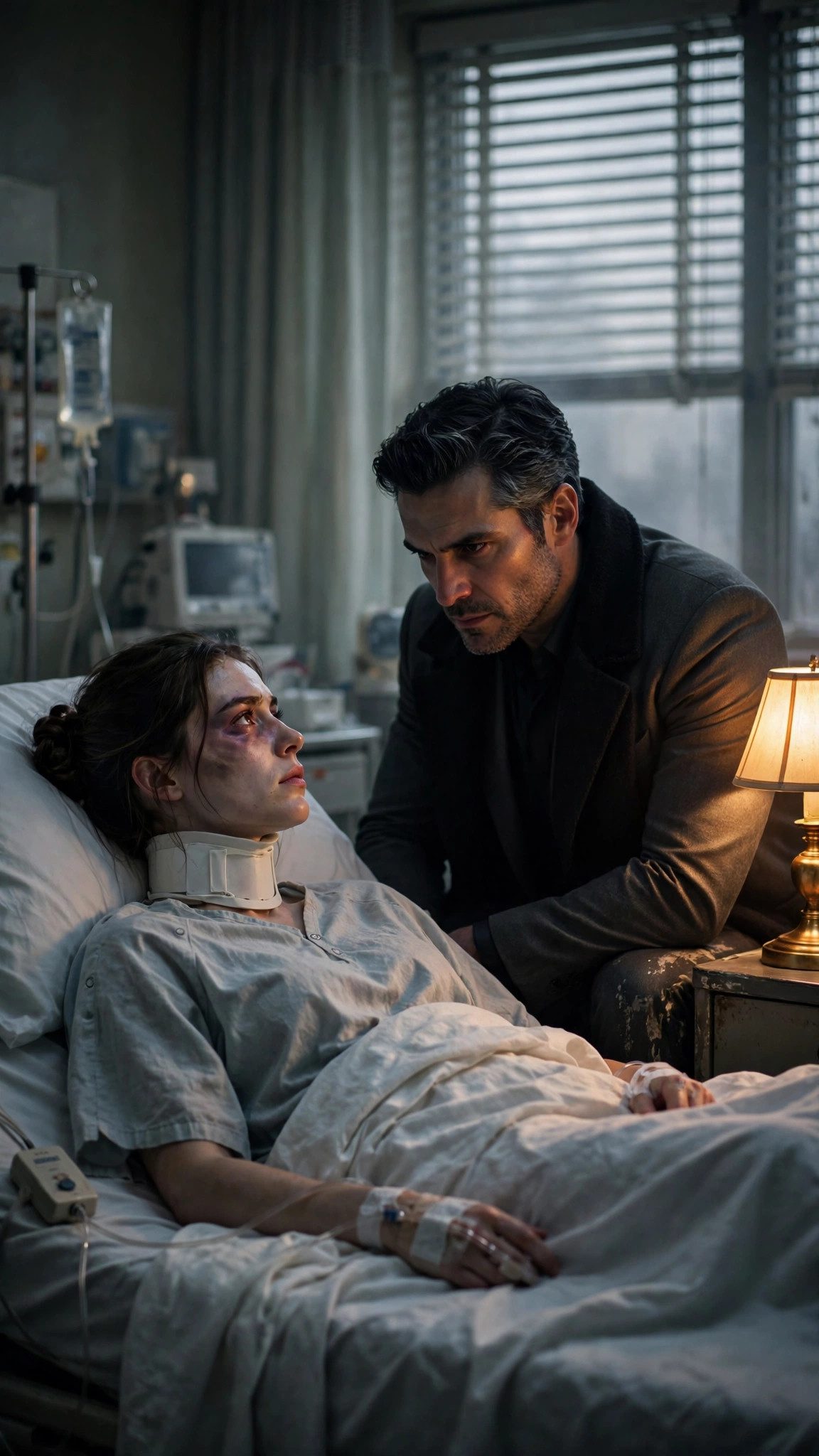
    She drove to West End General Hospital, and she walked into the room where she had woken up with two cracked ribs and a fracture near her eye, and she stood beside the empty bed, and she looked out the window at the gray morning light, and she thought about the woman she had been that morning: frightened, hurt, alone, and certain that her life had been broken.

    Then she walked downstairs to the hospital's foundation office, and she signed a check for one million dollars, from the Moretti Foundation, to fund a new program for victims of violent crime: free legal help, free counseling, free medical care, and a safe place to stay while they healed.

    She named it after no one. She did not need to. Everyone who mattered already knew what it was for.

    That evening, she came home to the house on the lake, and Dante was waiting for her in the garden, and there was a letter on the table, and he handed it to her with a small smile.

    "What is this?" she asked.

    "Read it," he said.

    She opened the envelope. Inside was a single sheet of paper, in a handwriting she recognized immediately, because she had seen it on a hundred birthday cards and a thousand grocery lists.

    It was from her mother.

    "My dearest Harper," it read. "Your father used to say that Chicago was built on the river, and that whoever controlled the river controlled the city. He was wrong about one thing. He thought the river was the most important thing. It isn't. The most important thing is the person who stands beside you when the river rises. I am so glad you found yours. I love you. Mom."

    Harper folded the letter carefully and put it back in the envelope, and she looked at Dante, and he looked at her, and neither of them said anything, because there was nothing left to say.

    Later that night, after dinner, they sat on the porch and watched the stars come out over the lake, and Dante took her hand, and he said, "Do you ever think about the message?"

    "Every day," she said.

    "And?" he asked.

    "And I think about the answer," she said. "Castellano sent a message through me. He told you the docks were his. He told you to pull your bid, or next time they wouldn't stop at your secretary."

    She turned to look at him, and the starlight caught her face, and she smiled.

    "But here is what he did not understand," she said. "I was never just his message. I was always your answer. And my answer was this: the docks are ours. The vote is won. I am still here. And I am not a secretary anymore. I am your wife."

    Dante leaned over, and he kissed her, soft and slow, under the stars, and the lake moved dark and quiet below them, and the house behind them was warm and lit, and Harper Bennett Moretti closed her eyes and thought about the long road that had brought her here: the alley, the hospital, the courtroom, the garden, and all the mornings in between.

    A year ago, three men had beaten her in an alley and told her to deliver a message.

    She had delivered it.

    And then she had spent the rest of her life answering it.

    And somewhere far away, in a small gray cell, Vincent Castellano read about the waterfront in a newspaper, and he understood, too late, that the secretary he had tried to use as an envelope had become the one person in Chicago he could never frighten again.

    The End.
    THE END
  • Chapter 6: What the Law Could Do

    Chapter 6: What the Law Could Do

    His name was Daniel Reyes, and he was the first FBI agent I had ever met who didn't look like a man in a movie.

    He was forty years old, with tired eyes and a cheap suit and a notebook that was falling apart at the spine, and he met me at a diner in Cambridge on a rainy Tuesday morning, two weeks after the night Castellano's men came to my kitchen. Graham sat beside me. Owen was at the studio with Margaret. My father had flown in from Chicago and sat across from us, his hands wrapped around a cup of coffee he wasn't drinking.

    "Tell me everything," Agent Reyes said. "From the beginning. Take your time. I've got all day."

    So I told him everything. The marriage. Arthur's arrangement. Vanessa. The hospital. The divorce. Boston. The men in my kitchen. Graham told him the rest: the missing millions, the shell companies, Vanessa's bank statements, the messages on her second phone, the warehouse codes she had given Castellano, the nights Graham had been away and the doors that had been left unlocked.

    Agent Reyes wrote it all down in his falling-apart notebook, nodding, asking quiet questions, never once looking surprised.

    "Vincent Castellano," he said, when we had finished. "We've been building a case on him for four years. He's careful. He's smart. He's never left us enough to take to a grand jury. But what you've just given me — the wire transfers, the schedules, the codes, the attempt on a child — that's enough. That's more than enough. If Vanessa will testify, we can put him away for the rest of his life."

    "Will she?" I asked.

    "She's already talking," Reyes said. "We picked her up in Miami last week, trying to board a flight to a country with no extradition treaty. She had forty thousand dollars in cash in her suitcase and a passport in a name that isn't hers. She's scared, Mrs. Mercer, and scared people talk. She's given us the ledgers. She's given us the account numbers. She's given us Castellano's entire network, from the docks to the warehouses to the men in your kitchen."

    Graham was quiet for a long time. Then he said, "What do you need from me?"

    "Your testimony," Reyes said. "Your records. Every document Arthur ever signed, every contract, every account. And your word that you'll stay in Boston until this is over, where my people can watch you. Castellano doesn't like to lose, Mr. Ashford. And he has nothing left to lose now."

    "What about Audrey?" Graham asked. "And Owen?"

    "They'll have protection," Reyes said. "Around the clock, until the trial is over. And after that, Castellano will be in a federal prison, and his organization will be in pieces, and your family will be free of him. That's what the law can do, Mr. Ashford. It can't give you back the last two years. But it can make sure the next two years belong to you."

    The trial took seven months. Seven months of my life, lived in a strange kind of waiting — not hiding anymore, but not free yet either.

    Graham stayed in Boston for all of it. He rented a small apartment three blocks from mine — not close enough to be intrusive, not far enough to be absent. He came to the studio every morning at nine, the way he had promised, and he took Owen to the park, and to the children's museum, and to the duck pond in the Public Garden, where Owen fed the ducks and named every single one of them after superheroes.

    He learned to be a father the way a man learns anything worth learning: slowly, clumsily, and with his whole heart. He learned to change a diaper. He learned to make spaghetti without setting off the smoke alarm. He learned that a two-year-old's favorite question is "why," and that the only acceptable answer is another question. He learned to read bedtime stories in three different voices, and Owen laughed so hard at the dragon voice that milk came out of his nose.

    And he learned to be patient with me.

    He didn't ask me to take him back. Not once. He didn't ask me to forgive him. He didn't ask me to love him again. He showed up, every day, at nine o'clock, and he did what he said he would do, and he went home at night, and he did it again the next day. And slowly, without me noticing it happening, I started to trust him. Not all at once. In small pieces. The way you trust a bridge: one step at a time, testing the boards under your feet.

    He wrote me letters, too. Not emails. Not texts. Real letters, on real paper, in his own handwriting, left in my mailbox every Sunday night. I read them after Owen was asleep, sitting at the kitchen table with a cup of tea, and they were the most honest things Graham Ashford had ever written.

    "I was a coward," one letter said. "I let my grandfather choose my life, and then I blamed you for the choice he made. You deserved better. Owen deserved better. I'm going to spend the rest of my life trying to be the man you both deserved from the start."

    Another said: "Owen told me today that his dinosaur's name is Barnaby and Barnaby is afraid of the dark. I told him Barnaby is lucky, because he has Owen to protect him. Owen said, 'And I have you, Daddy.' I had to go into the bathroom and cry for ten minutes. I have never been so happy in my life."

    I kept every letter. I put them in the wooden box with my father's letters, in the back of the closet, next to Owen's first blanket and my mother's photograph.

    In Chicago, the case moved forward. Vanessa testified for three days, in a federal courtroom, in front of a jury that listened to every word. She told them about the money. She told them about the schedules. She told them about the night she had stood beside Graham in the penthouse while I lay bleeding in a hospital bed, and how Castellano had called her the next morning and offered her fifty thousand dollars for the information that Graham had a son.

    She got eight years, in exchange for her testimony. She cried when the sentence was read. I didn't feel sorry for her. I didn't feel angry, either. I felt nothing at all, which was its own kind of freedom.

    Graham testified for two days. He gave the jury Arthur's records, the account numbers, the contracts, the whole history of how the Ashford organization had been built and how Castellano had tried to hollow it out from the inside. He didn't hold anything back. He didn't protect anyone, including himself.

    And then he did the thing that surprised everyone in the courtroom, including Agent Reyes.

    He announced, on the record, that he was dismantling the Ashford organization. Not selling it. Not passing it to a cousin. Dismantling it. The warehouses would be sold. The trucking companies would be sold. The legitimate businesses — the ones Arthur had wanted my family's connections to protect — would be kept, restructured, and run cleanly, with audited books and a board of directors and no shadows anywhere. The rest would be gone.

    "My grandfather built an empire," Graham said to the jury, "and my father maintained it, and I inherited it. But an empire built on fear isn't worth keeping. I'm going to build something else. Something my son can be proud of. Something his mother can be proud of. It will be smaller. It will be slower. But it will be clean."

    Vincent Castellano was convicted on all counts. Conspiracy. Racketeering. Attempted kidnapping. Money laundering. The judge sentenced him to life in federal prison, without the possibility of parole, and when the verdict was read, Castellano looked across the courtroom at Graham and smiled — a cold, thin smile — and Graham looked back at him and didn't smile at all.

    It was over. The law had done what the law could do.

    My father came to Boston the week the trial ended. He sat in my kitchen, at the same table where I had once sat with a phone in my hand and a teacup going cold, and he watched Owen play with his toy dinosaur on the floor, and he watched Graham come through the door at nine o'clock with a bag of groceries and a new book about dinosaurs, and he watched me look up from my laptop and smile at both of them without even thinking about it.

    "You did it," my father said quietly, when Graham had taken Owen to the park. "You built a life, Audrey. Out of nothing. And you did it without me, without Graham, without anyone. I'm proud of you."

    "I had help," I said. "I had you. I had Margaret. I had Priya. I had Owen."

    "And now you have him," Dad said, nodding toward the door Graham had just walked through. "The question is, what are you going to do with him?"

    I thought about it for a long time. I thought about the hospital bed. I thought about the phone call. I thought about the two years in Boston, and the studio, and the letters in the wooden box, and the man who had learned to change a diaper and make spaghetti and read bedtime stories in three different voices.

    "I don't know yet," I said honestly. "But I'm not afraid of the answer anymore. Whatever it is."

    My father smiled. "Good," he said. "That's all I ever wanted for you. Not a husband. Not a house. Not a name. Just that. Not being afraid."

    One Saturday, about halfway through the trial, Graham took Owen to the aquarium. I went with them — I wasn't ready to let Owen out of my sight for a whole day yet — and I watched from a bench while Graham lifted Owen up to the glass of the big shark tank, and Owen pressed his small hands against the glass, and his eyes went wide.

    "Are the sharks bad, Daddy?" Owen asked.

    Graham thought about it for a moment, the way he thought about everything Owen asked him, seriously, as if a two-year-old's question deserved a real answer.

    "Some sharks are bad," he said. "But most of them are just trying to live, the same as us. The trick is knowing which ones to stay away from. And having people around you who help you stay safe."

    "Like you?" Owen asked.

    "Like me," Graham said. "And like your mama. And like Grandpa Daniel, and Margaret, and Barnaby the dinosaur. You've got a whole team, Owen. The sharks don't stand a chance."

    Owen nodded, satisfied, and went back to pressing his hands against the glass.

    I sat on that bench, watching the two of them — my son, and the man who had once told me to disappear — and I realized that Graham was doing something I had never seen him do before. He was telling the truth. Not the polished, businesslike truth he had told in boardrooms. The simple truth. The kind you tell a child. And it was the same truth, I realized, that he had finally started telling himself.

    Later that week, my father asked to speak to Graham alone. I left them at the kitchen table with a pot of coffee, and I took Owen to the studio, and I tried not to listen through the wall, and I listened through the wall anyway.

    "You hurt my daughter," my father said. His voice was low and steady, the way it gets when he is angriest. "You told her to take her baby and disappear while she was bleeding in a hospital bed. I want you to know that I have not forgotten that. I will never forget that. If you hurt her again, I will spend every dollar I have making sure you regret it."

    "I know," Graham said. "I deserve that. I deserve worse than that."

    "Do you love her?" my father asked. It was the simplest question in the world, and the hardest.

    There was a long silence. Then Graham said, "I think I always did. I just didn't know what love was. I thought it was what I felt for Vanessa — fast, and easy, and exciting. But that wasn't love. That was wanting. Love is what Audrey did. She stayed for three years with a man who didn't love her back, and she tried anyway. She carried my son and she protected him and she built a life for him out of nothing. That's love. I didn't understand it until I lost it. And now I'm trying to learn it. From her. From Owen. Every day."

    My father was quiet for a moment. Then he said, "Good. Then learn it. And don't ever make my daughter cry again."

    "I won't," Graham said. "I promise you, Mr. Mercer. On my son's life. I won't."

    When I came home, my father was gone — flown back to Chicago that afternoon — and Graham was sitting on the porch steps, waiting for me, with Owen asleep on his shoulder and Barnaby the dinosaur tucked under his arm.

    "He's a good man, your father," Graham said. "He told me exactly what he thought of me. He was right about all of it."

    "He usually is," I said.

    That night, after Owen was asleep, Graham came to the door. He didn't come in. He stood on the porch, in the cool October air, with his hands in his pockets, looking like a man who had rehearsed a speech a hundred times and still wasn't sure how to start.

    "Audrey," he said. "I know I don't have the right to ask you anything. But I want you to know — whatever you decide, about us, about Owen, about any of it — I'll respect it. I owe you that. I owe you everything."

    I looked at him for a long moment. And then I said the words I had been carrying around for seven months, since the night he came through my front door.

    "Come inside, Graham. It's cold out there. And we need to talk."

  • Chapter 6: What the Law Could Do

    Chapter 6: What the Law Could Do

    Daniel Reyes arrived at Rourke House on a Friday morning, in a gray suit that did not fit him quite right and with a leather folder that had seen better days. He was forty-two, with tired eyes and the patient manner of a man who had spent years waiting for people to tell him the truth.

    He did not start with Maxwell. He started with Martha.

    They sat in the library, at the long table where no one had sat for months, and he put a small recorder on the table between them and said, "Miss Kovak, I need you to tell me everything. From the beginning. Slowly. Leave nothing out."

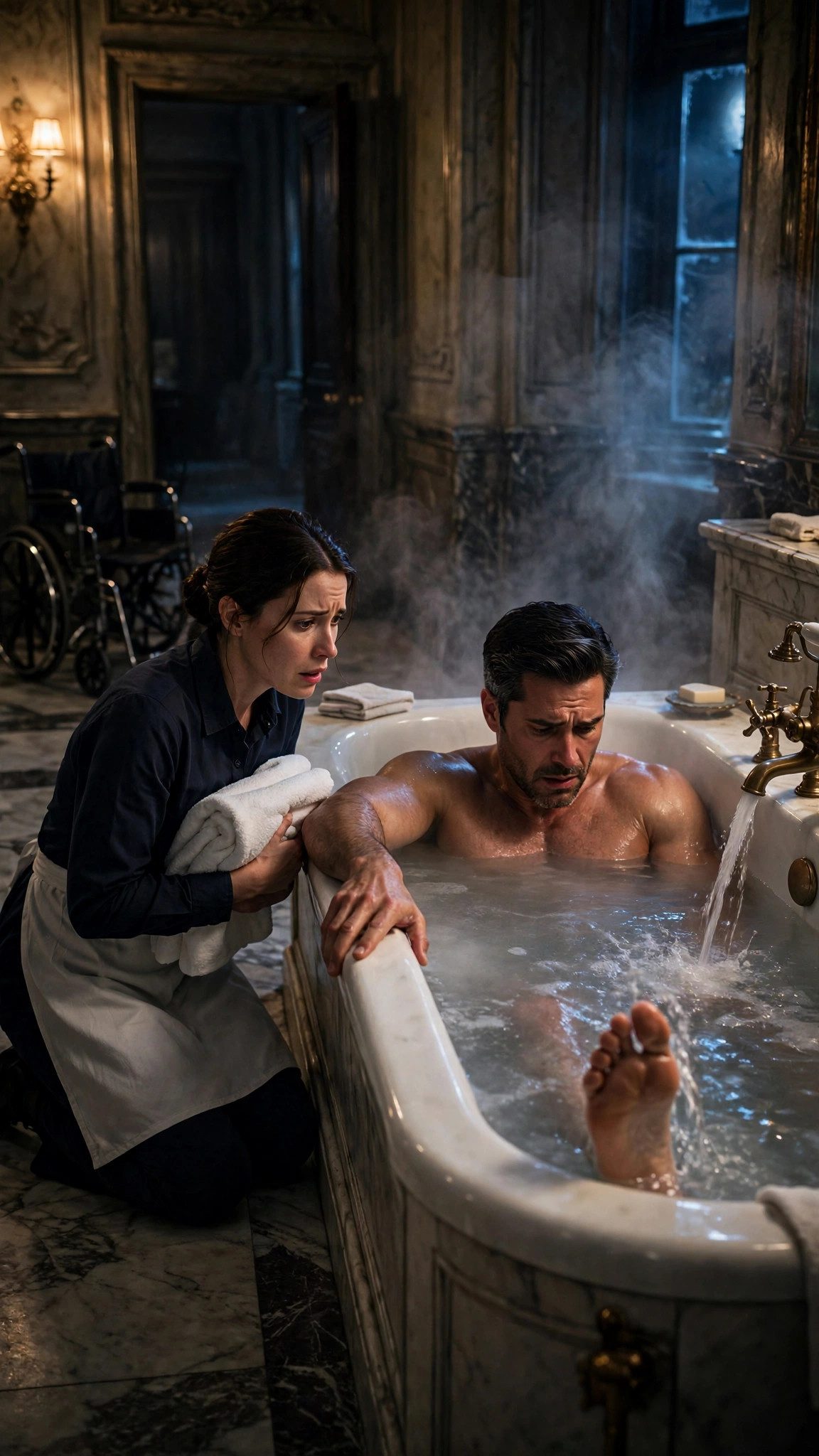
    So Martha told him. She told him about the towels, and the steam, and the water that was too hot. She told him about the cold tap, and the foot that pulled away, and the fear on Maxwell's face. She told him about the thermometer, and the notebook, and the map of his legs she had drawn in blue ink. She told him about Cole Bennett's log, and the line that said "Extra hot. V. says it helps the circulation." She told him about the man with the pillow, and the bite on his hand, and the phone in the jacket pocket with Victor's number in it.

    Reyes listened without interrupting. When she finished, he was quiet for a long moment. Then he opened his folder and took out a photograph.

    "Do you know this man?" he asked.

    It was Eddie Krol. Shaved head. Tattoo on the neck. The same face Martha had seen in the doorway of Maxwell's bedroom.

    "That is the man who tried to smother Mr. Rourke," she said.

    Reyes nodded. "Eddie Krol. We have been watching him for eighteen months. He works for your Mr. Victor Rourke, and Victor Rourke works for Vincent Castellano. Krol was on Pier Nine the night Maxwell was shot. We could never place him there — until last night, when he left his jacket in your house with his phone in the pocket."

    He put the photograph away and took out another piece of paper. A bank statement, with lines highlighted in yellow.

    "Victor Rourke has been moving money through a holding company called Bellini Holdings for three years. The money goes to Castellano. Some of it comes back as payments to men like Krol, and to men like Cole Bennett." He looked at Martha. "Cole Bennett has been receiving two thousand dollars a month, in cash, in envelopes, for six months. We found the envelopes in his room this morning. He is downstairs right now, telling my partner everything, because he is more afraid of prison than he is of Victor Rourke."

    "Will he testify?" Martha asked.

    "He already is," Reyes said. "He told us Victor ordered the hot baths. He told us Victor said, and I quote, 'A man who cannot feel his legs will not notice when the water is too hot, and a man who dies of an infection does not get a murder investigation.' Cole drew the baths because he was afraid, and because he was paid, and because he told himself it was not really killing anyone. He is wrong about that last part, and he knows it now."

    Reyes closed the folder. "Miss Kovak, I need to ask you something, and I need you to answer honestly. Why did you check the water? You were hired to clean downstairs rooms. You were told not to go to the third floor. Why did you kneel beside that tub and put your wrist in the water?"

    Martha thought about it. She thought about Walter Abernathy, seventy-one years old, a retired schoolteacher who liked crossword puzzles. She thought about the chart with her name on it. She thought about two years of cleaning other people's rooms.

    "Because I am a nurse," she said. "They took my license, but they did not take the training out of my hands. I walked into a bathroom that was too hot, and a man was sitting in water that could burn him, and my hands knew what to do before my head had finished deciding. That is all. That is the whole reason."

    Reyes studied her for a long moment. Then he said, "Tell me about the medication error."

    So Martha told him that, too. She told him about Walter Abernathy, and the dose that was ten times too strong, and the chart that had been corrected at two in the morning, four hours after the patient died, from a terminal on the night shift. She told him about Denise Fallon, crying at the hearing, saying she could not remember who had written what. She told him about the board, and the revocation, and the two years of cleaning rooms.

    Reyes wrote it all down. When she finished, he put his pen down and looked at her.

    "Miss Kovak, I am going to tell you something I do not usually tell witnesses. The FBI does not forget a name once it is in a file. Your name is in a file, because of the Abernathy case. But files can be reopened. And when we subpoena Harborview's records for the Rourke investigation — because we will need the hospital's records to establish your training and your credibility as a witness — we will also subpoena the audit logs for the night Mr. Abernathy died. If that chart was edited at two in the morning from a night-shift terminal, the log will show it. And if it shows it, your case gets reopened."

    Martha stared at him. "You would do that?"

    "I would do it because it is the truth," Reyes said. "And because a witness who has been wronged by a lie is the most dangerous witness in the world to a man like Victor Rourke. He needs you to be quiet. I need you to be loud."

    That afternoon, Reyes took Maxwell's statement. Martha was not in the room, but she heard the raised voices through the study door — Maxwell's voice, flat and cold, laying out fourteen months of silence in careful, measured sentences — and she heard Reyes's quieter voice, asking questions, writing things down.

    When it was over, Reyes came out of the study and shook Maxwell's hand.

    "We will move on Tuesday," he said. "Victor comes every Tuesday. We will be waiting."

    Tuesday came, as Tuesday always did, with Victor Rourke.

    He walked through the front door at eleven o'clock, silver hair combed straight back, suit immaculate, and he went into the study where Maxwell sat in his wheelchair by the window, exactly where he had sat every Tuesday for fourteen months. Miss Delaney brought coffee. Rosa stayed in the kitchen. Martha dusted the library, her hands steady, her heart beating hard against her ribs.

    At eleven-twenty, the front door opened again. Daniel Reyes walked in with four agents behind him. He did not knock. He walked straight to the study, opened the door, and said, very calmly, "Victor Rourke, you are under arrest for the attempted murder of Maxwell Rourke, conspiracy to commit murder, racketeering, and money laundering."

    Martha heard the cup hit the floor. She heard Victor's voice, high and furious, saying this was a mistake, saying his nephew was confused, saying a cleaning woman had filled his head with nonsense. She heard Maxwell's voice, quiet and steady, saying, "I can feel my right leg, Victor. I have been able to feel it for four months. You shot me because I was going to shut you down. You tried to scald me because I was healing. You sent a man with a pillow because I was still alive. It is over."

    They took Victor away in handcuffs. Eddie Krol was arrested the same day, at a bar on the waterfront, with a gun in his waistband and Victor's money in his pocket. The money trail led from Bellini Holdings to Vincent Castellano, and Castellano was arrested two weeks later, in New York. The trial would take months. The waiting would take longer.

    The trial began in late autumn, in a courtroom in Providence with high windows and hard wooden benches, and Martha testified on the third day.

    She wore the only good dress she owned, a plain navy dress she had bought for her mother's funeral five years earlier, and she sat in the witness box with her hands folded in her lap, and she told the truth the way she had written it down: slowly, in order, leaving nothing out.

    The prosecutor, a young woman named Alvarez with a calm voice and a sharp mind, walked her through it. The towels. The steam. The water that was too hot. The cold tap. The foot that pulled away. The thermometer. The notebook. The map of Maxwell's legs. Cole Bennett's log, and the line that said "Extra hot. V. says it helps the circulation." The man with the pillow. The bite on his hand. The phone in the jacket pocket.

    Then Victor's lawyer stood up. He was a tall man in an expensive suit, with a voice like oil, and he smiled at Martha the way men like him smile at women they intend to destroy.

    "Miss Kovak," he said. "You were fired from your last job, were you not?"

    "I lost my license," Martha said. "I was not fired. I resigned while the hearing was pending."

    "You lost your license because a patient died, did you not? A patient in your care?"

    "A patient died," Martha said evenly. "The dose on the chart was ten times what the doctor ordered. The chart was corrected four hours after he died, from a night-shift terminal. My name was on the chart. That is why I lost my license."

    "So you are a woman who was found responsible for a man's death," the lawyer said, "and now you expect this jury to believe your testimony about bathwater and thermometers?"

    Martha looked at him. She looked at the jury. She looked at the judge. And then she did the thing she had rehearsed in her head a hundred times on the bus to the courthouse: she opened her bag, and she took out the blue notebook, and she held it up.

    "This is my record," she said. "Every bath. Every temperature. Every test. Every movement. Dates, times, numbers, in order. I wrote it down the night it happened, every night, for six weeks. You can check the dates against the house logs. You can check the temperatures against the thermometer I used. You can ask the doctors at Harborview whether a pinprick on a right calf means what I say it means." She set the notebook down on the rail of the witness box. "I lost my license because someone else lied on a chart. I am not going to lose this case because someone else is lying in this courtroom."

    The courtroom was silent. The lawyer looked at the notebook. He looked at Martha. He asked three more questions, and each one was weaker than the last, and then he sat down.

    Cole Bennett testified the next day, and he cried on the stand, and he told the jury that Victor had ordered the hot baths, and that he had drawn them because he was afraid and because he was paid, and that he had known, every night, that what he was doing could kill a man. Eddie Krol did not testify — he took a plea, twenty-five years, in exchange for naming Victor as the man who had ordered the shooting on Pier Nine.

    The jury deliberated for six hours. When they came back, the foreman stood up, and the courtroom held its breath, and he said the word Martha had waited fourteen months to hear — not for herself, but for Maxwell, and for Walter Abernathy, and for every patient whose chart had ever been lied about.

    "Guilty."

    Victor Rourke was sentenced to life in prison, no parole. Vincent Castellano, tried separately in New York, received the same. Cole Bennett, for his cooperation, received eight years.

    In the weeks after the trial, a letter arrived at Martha's apartment in Pawtucket. It was from the state nursing board. It was short, and formal, and it changed everything.

    The audit logs from Harborview had been subpoenaed. The logs showed that the Abernathy chart had been edited at two-fourteen in the morning, four hours after the patient died, from a terminal on the night shift — a terminal logged in under the name Denise Fallon. The board had reopened Martha's case. The revocation was reversed. Her license was restored. Denise Fallon, the night nurse who had cried at Martha's hearing and said she could not remember who had written the dose, was charged with falsifying a medical record, and she pleaded guilty, and she told the board, in her own words, that she had swapped the charts to cover her own error, and that Martha Kovak had done nothing wrong.

    Martha sat at her kitchen table and read the letter three times. Then she put her head down on the table and cried — not the quiet, controlled tears she had cried for two years, but great, shaking sobs, the kind that come when a weight you have carried for so long finally lifts and you realize how heavy it was.

    That evening, she went to Rourke House, and she found Maxwell in the library, in his wheelchair, with her blue notebook open on his lap. He was looking at the map she had drawn of his legs — the sharp pinprick on the right calf, the dull pressure on the left thigh, the toe that moved on command.

    "They gave it back," she said. "My license. They gave it back."

    Maxwell looked up at her, and for the first time since she had met him, he smiled — a real smile, wide and unguarded, the smile of a man who had spent fourteen months pretending to be broken and was finally allowed to stop pretending.

    "Then we both got something back," he said.

    Martha sat down beside him. She took the notebook from his lap and turned to a fresh page. At the top, in her clear, careful handwriting, she wrote a new heading.

    Rehabilitation plan, week eight. Right leg: sensation to the knee. Left leg: sensation to mid-thigh. Standing: with support, two minutes. Walking: with a walker, ten steps.

    She looked at the page. She looked at Maxwell. And she thought about the foot that had pulled away from cold water six weeks ago, and the man who had been afraid, and the woman who had checked the water, and how the two of them had ended up here — in a library, in a house that was finally safe, writing down the facts in a blue notebook, in handwriting so clear and careful that no one would ever be able to call them a lie.

  • Chapter 5: The Trap at the Huntington Deal

    Chapter 5: The Trap at the Huntington Deal

    The morning after the Huntington dinner, I woke up to the smell of toast and coffee, and for one confused, wonderful moment, I thought I was nineteen years old again, in my father's house, and Daniel was downstairs burning the toast the way he always did.

    Then I remembered where I was. I was in the house on Lake Shore Drive, in a bed the size of a small boat, beside a husband who had held my hand in the car the night before, and downstairs, someone — Julian, I realized, with a jolt — was making breakfast.

    I went downstairs in my robe, my hair still tangled from sleep, and found Julian in the kitchen, standing at the counter in a black shirt with the sleeves rolled up, staring at a toaster as if it had personally insulted him.

    "You are making breakfast," I said.

    "I am attempting to make breakfast," Julian said. "The toaster has opinions."

    Daniel came in behind me, already dressed, already grinning. "He burned the first two slices," he said. "I watched. It was magnificent. He stood there for a full minute, holding the burnt toast, looking at it the way he looks at men who disappoint him."

    Julian set down the third slice — golden, perfect — and put strawberry jam on it, and set it in front of me on a plate, with a cup of coffee beside it. Too much coffee, the way I liked it. He had remembered. He had asked me the night before, and he had remembered.

    "Toast with strawberry jam," he said. "And too much coffee."

    I sat down. I took a bite. It was the best toast I had ever eaten in my life, and I knew it was not because of the toast.

    "Thank you," I said.

    Julian nodded. He sat down across from me, and Daniel sat beside him, and for the first time in six months, the three of us ate breakfast together like a family — a strange, broken, newly assembled family, but a family nonetheless.

    It lasted exactly eleven minutes.

    Julian's phone rang. He looked at the screen, and his face changed — the warmth draining out of it like water from a sink — and he stood up and walked into the next room, and Daniel and I sat at the table listening to his voice through the wall, low and hard and clipped, saying words like "when" and "where" and "how many."

    When he came back, he was the mafia boss again, not the man who had made toast.

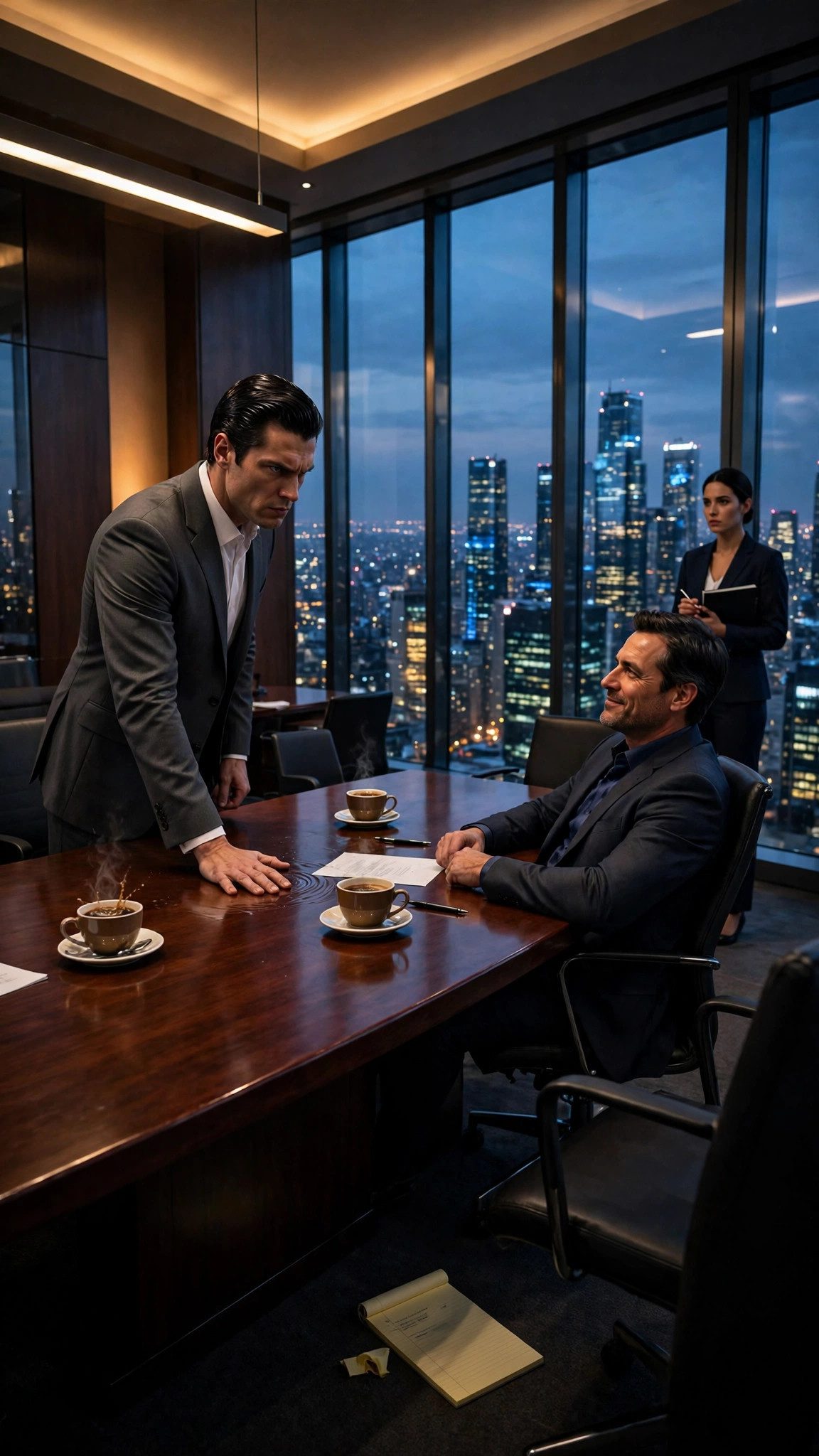
    "Castellano has moved," he said. "He has filed an injunction against the Huntington agreement. He is claiming that the Sterling organization obtained the mall chain contract through coercion. He has three witnesses — three shop owners in the Huntington malls — who are prepared to say that my men threatened them."

    "Did your men threaten them?" Daniel asked.

    "No," Julian said. "But Castellano has paid them to say that we did, and the hearing is on Friday, and if the injunction holds, the Huntington family will walk away, and the agreement will be dead, and Castellano will have won without firing a single shot."

    "Friday," I said. "That is three days."

    "Three days," Julian agreed. "And Castellano knows that three days is not enough time to prove that three witnesses are lying, especially when two of them have already left the state."

    Daniel put down his coffee cup. "What do you need?" he asked.

    Julian looked at him, and for a moment, I saw the surprise on his face — the surprise of a man who had never once been asked, by anyone in his own family, what he needed.

    "I need to find the third witness," Julian said. "Her name is Rosa Delgado. She owns a flower shop in the Huntington mall on Michigan Avenue. She is seventy-one years old, and she has run that shop for forty years, and Castellano's men went to her yesterday and told her that if she did not testify against me, her grandson would have an accident. She has not left her apartment since."

    "Then we go to her," I said. "Today. You and me and Daniel. We go to her apartment, and we tell her the truth, and we ask her to tell the truth."

    Julian shook his head. "It is too dangerous. Castellano's men are watching her building."

    "Then we go anyway," I said. "Julian, you told me last night that you were done being a man who does not know his own wife. Well, I am done being a wife who sits at home while her husband fights alone. Rosa Delgado is seventy-one years old, and she is frightened, and someone needs to go to her and tell her that she is not alone. I am going. Daniel is going. You can come with us, or you can stay here and worry about us, but we are going."

    Julian looked at me for a long moment. Then he looked at Daniel. Then he laughed — that same short, rusty laugh I had heard in his study — and he said, "My wife. My brother-in-law. Both of you are insane. Fine. We go. But we go my way. We go with six men, and we go through the back, and if anyone so much as looks at you the wrong way, Audrey, we leave immediately."

    "Agreed," I said. "But we are going."

    Rosa Delgado lived on the fourth floor of a brick building on the West Side, in an apartment full of plants and photographs and the smell of coffee and roses. She opened the door on the third knock, peered out through a gap no wider than my hand, and said, "I am not testifying. I have told them already. I am not testifying against anyone."

    "Mrs. Delgado," I said, "we are not here to ask you to testify against anyone. We are here to ask you to tell the truth."

    She opened the door wider. She looked at Julian — tall, dark, dangerous, standing in her hallway with six men behind him — and she looked at Daniel, and she looked at me, and she said, "You are the Sterling wife. The one from the video."

    "I am," I said. "And that video was a lie. The man I was laughing with was my brother. The man who filmed it works for Vincent Castellano. And Castellano is the man who sent people to threaten your grandson."

    Rosa Delgado's face changed. She stepped back. She let us in.

    For the next two hours, sitting at her kitchen table, drinking coffee from chipped mugs, Rosa told us everything. She told us about the two men who had come to her shop on Tuesday, about what they had said, about the photograph of her grandson they had shown her — a photograph taken outside his school. She told us about the envelope of cash they had left on her counter, and about the phone number they had given her, and about the voice on the other end of that phone, which she recognized, because she had heard it before, twenty years ago, when Vincent Castellano had tried to buy her shop and she had refused.

    "He never forgets a refusal," Rosa said. "That is what people say about him. He tried to buy my shop in 2006. I said no. He has hated me ever since. And now he is using me to hurt your husband."

    Julian leaned forward. "Mrs. Delgado, if you testify — if you tell the court what those men said to you, and show them the photograph, and the envelope — Castellano's injunction falls apart. But I will not ask you to do it if it puts your grandson in danger."

    Rosa Delgado looked at him for a long moment. Then she stood up, walked to a drawer, took out a small notebook, and set it on the table. "I have kept a record," she said. "Every visit. Every threat. Every phone call. For twenty years. I kept it because I knew that one day, someone would come and ask me for the truth, and I wanted to be ready. I am ready now."

    On the way home, Julian was quiet, but it was a different kind of quiet than the silence I had lived with for six months. It was the quiet of a man thinking, planning, turning something over in his mind.

    "She is brave," he said, finally. "Braver than most of my men."

    "She is seventy-one years old," Daniel said, "and she kept a notebook for twenty years, waiting for someone to ask her for the truth. That is not bravery, Julian. That is patience. And patience is more dangerous than bravery, because it does not go away."

    Julian nodded. "Castellano does not understand patience. He understands fear. He understands money. He does not understand a woman who keeps a notebook for twenty years."

    That night, Julian called his lawyer, and his lawyer called the FBI, and the FBI — a man named Agent Daniel Reyes, who had been building a case against Castellano for two years — came to the house the next morning, sat in the library, drank Mrs. Okafor's coffee, and listened to everything Rosa Delgado had told us.

    And then, on Friday morning, three hours before the injunction hearing, Castellano made his last move.

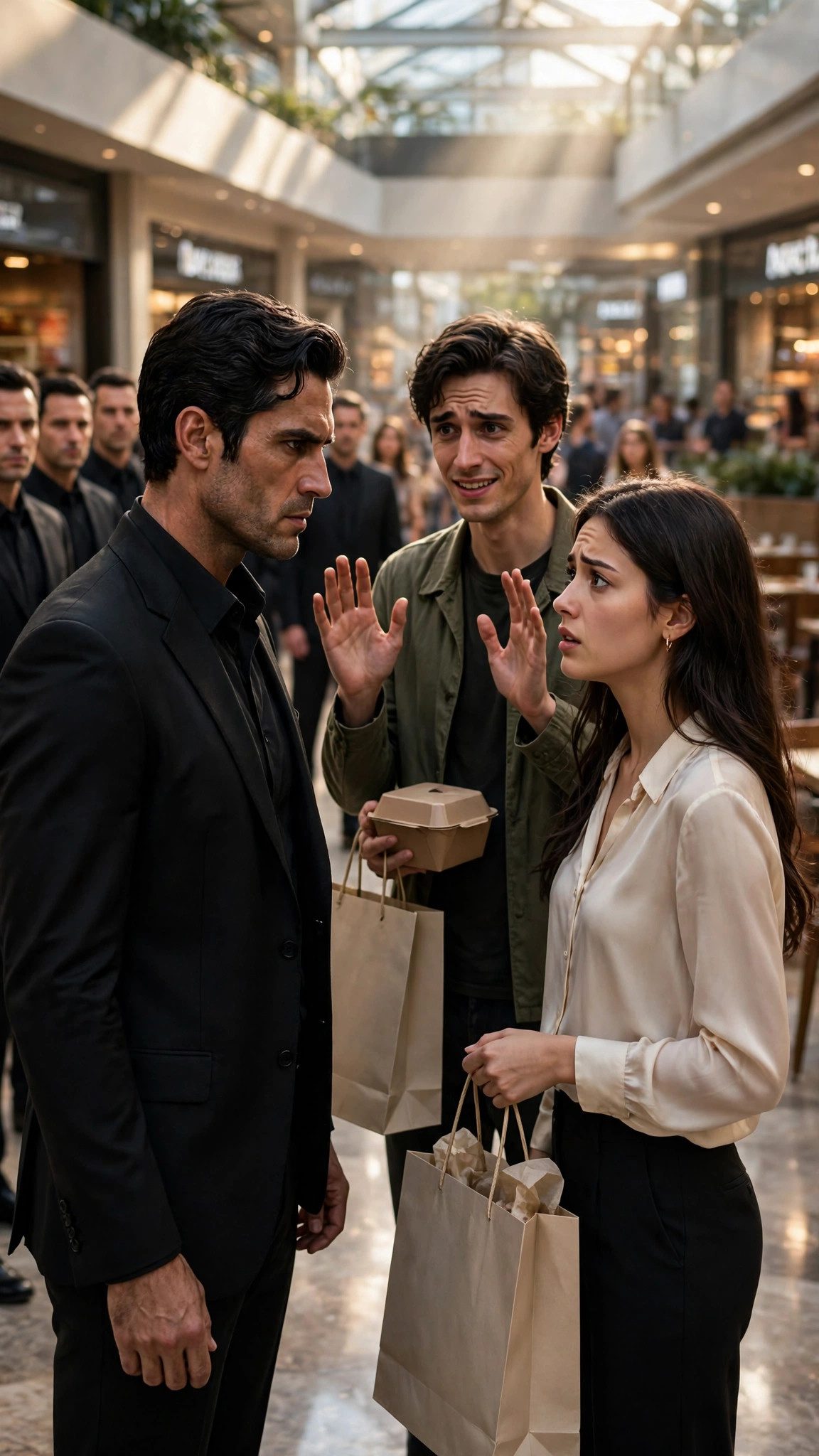
    It came as a phone call to Julian's office, from a number no one recognized, and the voice on the other end said, "Your brother-in-law is at the farmers' market on Division Street. He is alone. It would be a shame if something happened to him before the hearing."

    Julian went very still. He looked at me. He looked at Daniel, who was standing in the doorway, holding a shopping list, about to leave for the market.

    "Do not go," Julian said to Daniel.

    "I am going," Daniel said. "I am not going to hide in this house while Castellano threatens me. I am a surgeon. I do not hide."

    "You are my brother-in-law," Julian said. "And if anything happens to you, my wife will never forgive me. Stay here."

    Daniel looked at me. I looked at him. And then I said, "We all go. Together. Julian, you said last night that we tell the truth, all of it, together. So we go together. Six men. The back way. And if Castellano's men are there, they will see all three of us, standing together, and they will understand that this family does not break."

    Julian stared at me. Then he laughed — the rusty laugh, the door opening — and he said, "My wife is insane. My brother-in-law is insane. Fine. We all go."

    We went to the farmers' market on Division Street, all three of us, with six of Julian's men walking a careful distance behind, and Daniel bought apples, and I bought flowers, and Julian stood beside us, tall and dark and watchful, and nothing happened. No one approached us. No one threatened us. The market was full of ordinary people doing ordinary things, and the sun was shining, and for one hour, it felt almost normal.

    On the way home, Julian's phone rang. It was Agent Reyes.

    "We have them," Reyes said. "Two of Castellano's men, outside the market. They had a knife and a photograph of Dr. Bennett. We have them on camera, and we have their phones, and their phones have Castellano's number on them. The injunction is dead, Julian. You can tell Huntington to sign on Monday."

    Julian closed his eyes. He leaned his head back against the seat. And then he opened his eyes, and he looked at me, and he said, "It is over."

    But it was not over. Not quite. Because Castellano himself was still free, and a man like Castellano, cornered, was more dangerous than a man like Castellano with an army. And on Monday, when the Huntington agreement was signed, Castellano would know that he had lost — and a man who has lost everything has nothing left to lose.

    I did not say that out loud. I sat in the back of the car, holding my husband's hand, holding my brother's hand, and I thought about the fact that three days ago, I had been a stranger in my own marriage, and now I was sitting between the two men I loved most in the world, and both of them were alive, and both of them were mine.

    That was enough, for that moment. It had to be enough. Because Monday was coming, and Castellano was coming with it.
    The morning after Rosa Delgado's visit, I went into the garden with Mrs. Okafor, and for the first time, she let me help her plant. We put in herbs — basil, rosemary, thyme — in a small bed by the kitchen door, and Mrs. Okafor showed me how deep to dig, and how much water to give them, and she said, "A garden is like a marriage, Mrs. Sterling. You cannot plant something and then walk away and expect it to grow. You have to come back every day. You have to water it. You have to pay attention."

    "I am learning that," I said.

    "I know," Mrs. Okafor said. "I have worked in this house for eleven years, and I have never once seen Mr. Sterling make breakfast. And this morning, he burned two slices of toast for you. That is a man who is learning."

    Later that day, one of Julian's men came to the house with a report — a quiet man named Paulie, who had worked for the Sterling family for twenty years, and who had tears in his eyes when he told Julian that he had seen Marcus Hale meeting a stranger in a parking garage three weeks earlier, and that he had said nothing, because he had been afraid, and because Marcus had been his friend. Julian listened without interrupting, and then he said, "Thank you for telling me, Paulie. It took courage. You are not in trouble. You are family." And Paulie cried, openly, in Julian's study, and Julian put a hand on his shoulder, and I stood in the doorway watching, and I thought about the fact that my husband was learning to be a different kind of boss — the kind who listened, and forgave, and kept his family close — and that it was the same lesson he was learning with me.

    That night, Daniel cooked dinner — real dinner, pasta with a sauce he had learned from a nurse in London — and we ate in the kitchen, the three of us, at the small table by the window, not in the dining room at the table that could seat twenty-four people, and it was the best meal I had eaten in that house, because it was the first meal that felt like it belonged to us.

  • Chapter 6: What the Law Could Do

    Chapter 6: What the Law Could Do

    Eddie Krol talked within four hours.

    He talked because Agent Daniel Reyes put him in a small white room with a tape recorder and a cup of coffee, and told him that he was facing twenty-five years for assault, conspiracy, and attempted murder, and that the only way to make that number smaller was to give Reyes the name of the man who had paid him.

    Krol gave him two names. Vincent Castellano, who had paid him fifty thousand dollars. And Marcus Hale, who had given him Harper's schedule, her Tuesday routine, and the knowledge that she would be walking alone to her car at nine forty with the zoning packet in her bag.

    Danny Cole talked within six hours. He was twenty years old, and he was frightened, and he told Reyes everything: the diner on Cicero, the stolen Lincoln, the plan to take Harper's bag and scare her badly enough that she would not present the traffic study on Tuesday. He cried when he talked about his mother, and Reyes, who had a daughter of his own, listened without interrupting.

    Tommy Falco talked within eight hours. He told Reyes about the rose. He told Reyes that Castellano left a red rose for the people he was about to destroy, and that Marcus Hale had left the rose outside Harper's hospital door because Castellano had told him to, because Castellano wanted Harper frightened, and wanted Dante frightened, and wanted them both to understand that no hospital, no locked door, no bodyguard could keep Castellano away.

    Marcus Hale talked last, and he talked the longest. He sat in the same small white room, and he told Reyes about two years of payments. Fifty thousand dollars a year, in cash, delivered in an envelope at a diner on the South Side. He told Reyes about the traffic study number he had changed, four hundred and twenty-one to four hundred and twelve. He told Reyes about the rose. He told Reyes about the phone call he had made from Harper's apartment, the message he had sent to Krol, the plan to take her a second time.

    And then he told Reyes the one thing that made the whole case unbreakable.

    He told him about the ledger.

    Vincent Castellano kept a ledger. It was a black leather book, and it held the names of every politician he had bribed, every union official he had paid, every judge he had threatened, and every crime he had ordered for the last fifteen years. Marcus Hale had seen it once, in Castellano's office, and he knew where it was kept: in a safe behind a painting in Castellano's house on Astor Street.

    Reyes got a warrant within the hour. The FBI searched the house at dawn. They found the safe. They found the ledger. And they found Vincent Castellano sitting in his study in a silk robe, drinking coffee, looking at them the way a man looks at the rain: as if it were an inconvenience, and nothing more.

    "Mr. Castellano," Reyes said, "you are under arrest for conspiracy, assault, attempted murder, bribery, racketeering, and fifteen years of crimes I have not finished listing yet."

    Castellano set his coffee cup down carefully. "You have no proof," he said.

    "We have Krol," Reyes said. "We have Cole. We have Falco. We have Hale. We have the ledger. We have the traffic study. We have the security footage from the hospital, and the security footage from Wabash, and the phone records, and the bank records, and the fifty thousand dollars in cash that Hale kept in a shoebox in his closet because he was too stupid to spend it all."

    Castellano was quiet for a long moment. Then he said, "I want a lawyer."

    "You will have one," Reyes said. "You will need a very good one."

    The trial took four months.

    Harper testified on the third day. She walked into the courtroom in a navy suit, with her hair in a low bun, and her ribs healed, and her left eye clear, and she sat in the witness box, and she told the jury everything: the dinner, the walk, the black Lincoln, the three men, the beating, the message. She told them the exact words Krol had whispered in her ear. She told them about the rose outside her hospital door. She told them about Marcus Hale standing in her apartment with his hand moving toward his gun.

    When the defense lawyer asked her if she was certain, if she was sure, if she might be mistaken, she looked at him, and she said, "I am certain. I remember every word. A woman does not forget the words a man whispers to her while he is hurting her."

    The jury believed her. The jury believed Krol. The jury believed Hale. And when Reyes held up the black leather ledger, and read the names aloud, one by one, the courtroom went so quiet that Harper could hear her own breathing.

    The verdict came on a Friday afternoon. Vincent Castellano was found guilty on every count. He was sentenced to life in prison, without the possibility of parole. Marcus Hale was sentenced to eight years, in exchange for his testimony. Eddie Krol was sentenced to fifteen years. Danny Cole was sentenced to six years. Tommy Falco was sentenced to six years.

    Harper sat in the back of the courtroom with Dante beside her, and when the judge read the sentence, she felt something loosen in her chest, something that had been tight since the night of the attack, and she took a deep breath, and it did not hurt.

    That was when she knew she was healed.

    The weeks after the trial were quiet, and Harper learned to love the quiet. She went to physical therapy twice a week, in a small bright room with a therapist named Ana who had kind hands and no patience for self-pity. "Again," Ana would say, and Harper would lift her arm, and it would hurt, and Ana would say, "Good. Pain means it is working." By the end of the first month, Harper could lift both arms above her head. By the end of the second, she could carry a bag of groceries. By the end of the third, she could run, slowly, for one whole block, and she came home breathless and laughing, and Dante, who had been waiting on the porch, looked at her the way he had looked at her in the courtroom: like she was the most remarkable thing he had ever seen.

    Rosa came to the apartment twice a week with soup. She made chicken soup, and vegetable soup, and a thick bean soup that Harper's mother had once made, and she would sit at the kitchen table and tell Harper stories about Dante when he was a boy: how he had once tried to cook and set fire to a dish towel, how he had hidden a stray dog in his bedroom for a week, how he had cried when his mother told him his father was not coming home. Harper listened to every story, and she stored them away, the way she stored everything, because these were the pieces of the man she loved that no one else knew.

    Dante visited every day. Not in the mornings, when he had meetings, but in the evenings, after the office closed, and he would sit on the couch with a cup of coffee, and they would talk. They talked about the docks. They talked about the trial. They talked about the press conference Dante was planning, and about what it would mean to take the family businesses legitimate, and about the men who would fight him on it, and the men who would support him. And slowly, without either of them quite noticing it happening, they stopped talking about business, and they started talking about other things: about books, and about music, and about the house on the lake, and about the future, and about what it would be like to build a life that was not defined by fear.

    One evening, Dante brought a folder, and he set it on the coffee table, and he said, "I want you to look at this."

    Harper opened it. Inside were the plans for the waterfront project: the terminal, the warehouses, the rail spur, the community center, the library, the clinic. And on the cover page, under the title, was a line she had not expected to see.

    "Project Director: Harper Bennett."

    She looked up at him. "Dante, I am a secretary."

    "You were a secretary," he said. "You are not a secretary anymore. You are the woman who took the docks from Vincent Castellano with a traffic study and two cracked ribs. If anyone in this city can run a waterfront, it is you."

    Harper looked at the plans for a long time. Then she said, "All right. But I have conditions."

    "Name them," he said.

    "First," she said, "the community center stays. The library, the clinic, the job training program. All of it. Second, the longshoremen keep their jobs. Every one of them. Third, I hire my own assistant, and I pay her what she is worth, and no one ever calls her 'just a secretary.'"

    Dante smiled. It was the first real smile she had ever seen on his face, wide and unguarded and young, and it changed him completely.

    "Agreed," he said. "All three."

    Her first day back at the office was a Monday. She walked into the Moretti Building in a navy suit, with her hair in a low bun, and Ray the security guard stood up when he saw her, and he said, "Welcome back, Miss Bennett," and the whole lobby seemed to go quiet, and then someone started clapping, and then everyone was clapping, and Harper stood in the middle of it with tears in her eyes, because she had not expected to be missed, and she had been missed, by everyone.

    Her first meeting as project director was that same afternoon. The architects spread the terminal designs across the conference table, and Harper studied every line, and she asked questions no one had thought to ask: about the width of the loading bays, about the drainage on the north side, about the bus stop for the night-shift workers. The lead architect, a woman named Sarah Kim, stared at her for a moment, and then she smiled, and she said, "You read the whole file, didn't you?" And Harper said, "I always read the whole file." And from that day on, the architects never came to a meeting unprepared.

    After the trial, Dante did something no one in Chicago had ever expected him to do.

    He called a press conference.

    He stood in front of the cameras in the lobby of the Moretti Building, in a charcoal suit, with Harper standing beside him, and he announced that the Moretti family businesses were going legitimate. All of them. The shipping company. The construction firm. The warehouses. The docks. Every contract, every deal, every dollar, from that day forward, would be clean, and legal, and open to inspection.

    A reporter asked him why.

    "Because," Dante said, "a man came after my secretary to stop a zoning vote, and he failed, and I have decided that I would rather build something that cannot be taken away in an alley than something that has to be defended with fear. The docks are ours now. The vote is won. And from today, the Moretti name will stand for something else."

    Another reporter asked him about Harper.

    "Miss Bennett," Dante said, "is the woman who walked into a zoning boardroom with two cracked ribs and took the docks from Vincent Castellano. She is not my secretary anymore. She is my partner. And the waterfront project will carry her name on every document, because she earned it."

    Harper stood beside him, and she felt the cameras flashing, and she felt Dante's hand brush against hers, very lightly, and she understood that everything had changed, and that nothing would ever be the same again.

    That evening, they went to dinner. Not a business dinner. Not a meeting. Just dinner, at a small restaurant on the river, with candles on the table and the water moving dark and slow outside the windows.

    "I have something to ask you," Dante said, after the plates had been cleared. "And I have been waiting to ask it until Castellano was finished, and the trial was over, and you were healed, because I did not want you to think it was gratitude, or guilt, or anything except what it is."

    Harper's heart was beating very fast. "What is it?"

    He reached across the table and took her hand. His hand was warm, and rough, and steady, the same hand that had held hers in the hospital, and he looked at her, and his gray eyes were direct and entirely without warmth, except that now, for the first time, they were warm.

    "Harper Bennett," he said, "will you marry me? Not because I need a wife. Not because the family needs an alliance. Because for three years, you have been the person who keeps my world standing, and for three months, you have been the person I think about when I wake up, and I am tired of pretending that you are only my secretary."

    Harper looked at him for a long moment. Then she smiled, and her eyes filled with tears, and she said, "Yes. Yes, Dante. Yes."

    He stood up, and he came around the table, and he knelt beside her chair, and he took a small box out of his pocket, and inside it was a ring: a simple band of white gold, with a single diamond, and Harper, who had never wanted jewelry in her life, looked at it and thought it was the most beautiful thing she had ever seen.

    "My mother wore this," Dante said quietly. "She died when I was nineteen. I have kept it in my desk for twenty years, waiting for the right woman. I did not know, until the morning I sat beside your hospital bed, that I had already found her."

    Harper held out her hand, and he slid the ring onto her finger, and it fit perfectly, as if it had been waiting for her all along.

  • Chapter 5: The Second Attempt

    Chapter 5: The Second Attempt

    It happened on a Thursday night, three weeks after Martha had started drawing the bath.

    She had stayed late. Miss Delaney had gone home with a headache, Rosa had left after dinner, and Tony had driven to the airport to pick up a shipment of parts for the Meridian Terminal — a job that would keep him out until midnight. Martha was in the kitchen, wiping down the counters for the third time, because she had learned that a house this big always gave a woman a reason to stay if she wanted one.

    At eleven-forty, she heard the front door open downstairs.

    She froze, the cloth in her hand. Tony was not due back until midnight. Miss Delaney had gone home. Cole Bennett was supposed to be on duty, but Cole had not come in at all that day — he had called in the morning, his voice thick, and said he was sick, and no one had questioned it, because Cole called in sick the way other men called in dead.

    Footsteps crossed the hall below. Slow. Careful. Not Tony's heavy tread. Not Delaney's quick click. These footsteps were trying not to be heard.

    Martha put the cloth down. She took the kitchen thermometer from her apron pocket — the only thing in her hands that could pass for a weapon — and she moved to the foot of the stairs, keeping to the shadows the way she had learned to move in hospital corridors at night, when patients were sleeping and every sound mattered.

    The footsteps went up. Past the second floor. To the third.

    Martha followed. Her heart beat so hard she was certain the whole house could hear it. At the top of the stairs, she saw the door to Maxwell's bedroom standing open a crack, and a thin line of light from the hall falling across the floor inside.

    She pushed the door open.

    A man stood beside Maxwell's bed. He was broad and dark, with a shaved head and a tattoo crawling up the side of his neck, and he was holding a pillow in both hands. Maxwell lay in the bed, his eyes open, his face white, his arms braced against the mattress as if he were trying to push himself upright — and failing, because his legs would not help him and the man was already leaning over him.

    Martha did not think. Thinking was for later. She did what nurses do when a patient is in danger: she made noise.

    She screamed. Not a polite scream. A full, raw, hospital-corridor scream, the kind that brings orderlies running from three wards away.

    The man with the pillow jerked around. His eyes found her. For a second, Martha saw the calculation in them — the pillow, the bed, the woman in the doorway — and then he dropped the pillow and came at her.

    She threw the thermometer at his face. It missed. She grabbed the heavy ceramic vase from the hall table and swung it with both hands. It caught him on the shoulder and shattered against the wall. He swore and grabbed her wrist, and his grip was strong, and for a terrible moment Martha thought about Walter Abernathy and about the chart and about how she had spent two years believing her life was over, and she thought, not this time, not this man, not tonight.

    She bit his hand. Hard. He yelled and let go. She ran down the stairs, screaming, and hit the panic button by the front door — a small red button she had noticed on her first day and never asked about — and the alarm went off like a air-raid siren, filling the whole house with sound.

    The man came down the stairs behind her. He was fast, but Martha was faster, because fear is faster than anything, and she was already at the front door, pulling it open, when headlights swept across the driveway and Tony Ferraro's car screeched to a stop.

    Tony came out of the car with a tire iron in his hand. The man in the hall saw him, turned, and ran for the back door. Tony chased him through the kitchen, across the garden, to the low wall at the back of the property. Martha heard shouting, and a crash, and then silence. Tony came back alone, breathing hard, the tire iron still in his hand.

    "He went over the wall," Tony said. "I got his jacket." He held it up. A black windbreaker, torn at the shoulder. In the pocket was a phone.

    Martha was shaking. She sat down on the bottom step of the stairs and put her head between her knees, the way she had once told panicking patients to do.

    "Upstairs," she managed to say. "Mr. Rourke. Check him."

    Tony went up. Martha followed, her legs unsteady. Maxwell sat on the edge of his bed, his hands gripping the mattress, his chest heaving. His eyes found her face, and the fear in them was gone, replaced by something harder and colder.

    "Are you hurt?" he asked.

    "No," Martha said. "Are you?"

    "No." He looked at the pillow on the floor. "He was going to smother me. A man in a wheelchair, in his own bed, in the middle of the night. It would have looked like a heart attack. Or a stroke. Or a man who simply stopped breathing in his sleep."

    Tony came back into the room, holding the phone. "I know this man," he said. "Eddie Krol. He does jobs for Victor. He was on the docks the night you were shot, Mr. Rourke. I saw him there, but I could never prove it."

    Maxwell took the phone. He turned it over in his hand. "Whose number is in it?"

    Tony scrolled. "Victor's. Three calls this week. The last one was an hour ago."

    Silence filled the bedroom. Outside, the alarm was still ringing, and somewhere in the distance, a dog was barking.

    Martha did what her training told her to do before anything else: she checked her patient. She knelt beside the bed and ran her hands over Maxwell's shoulders and arms, looking for injuries, for bruises, for any sign that the man had hurt him before she screamed. His breathing was fast but steady. His pulse, when she pressed two fingers to his wrist, was strong.

    "Can you feel your legs?" she asked quietly. "Right now. Can you feel them?"

    Maxwell closed his eyes and concentrated. "My right foot," he said after a moment. "I can feel the sheet against it. And my left thigh — pressure, where the blanket is." He opened his eyes. "He did not hurt me. He did not have time."

    "Good," Martha said. "That is good. Fear makes the nerves go quiet sometimes, after a shock. I wanted to be sure the feeling was still there."

    "It is still there," Maxwell said. "And it is not going anywhere. Not now. Not ever again."

    Martha stood up and stepped back, and her hands were shaking again, but only a little, and only where no one could see them.

    "That is enough," Maxwell said quietly. "No more hiding. No more waiting. We go to the law."

    Martha looked at him. "The law? The police closed the file in six weeks."

    "Not the police," Maxwell said. "The FBI. There is an agent who has been watching the Rourke docks for two years. Daniel Reyes. He came to see me in the hospital, fourteen months ago, and he told me that if I ever wanted to take my family legitimate, he would help me do it. I told him to leave. I was wrong."

    He looked at Martha. "You will have to tell him what you saw. All of it. The bath. The foot. The notebook. Everything."

    Martha nodded. Her hands had stopped shaking. "I will tell him. I have been writing it all down."

    Tony looked at the two of them — the man in the wheelchair on the edge of the bed, and the cleaning woman standing in the doorway with a torn apron and blood on her knuckle where she had bitten a hitman's hand — and he shook his head slowly.

    "Fourteen months," he said. "Fourteen months, and the whole thing changes because a maid checked the bathwater."

    "She is not a maid," Maxwell said. "She is a nurse. And she is the reason I am still alive."

    The next morning, Martha came downstairs to find Miss Delaney standing in the hall with the police on the telephone, her face gray, her hands shaking as she tried to explain that yes, there had been an intruder, and no, nothing had been stolen, and yes, Mr. Rourke was unharmed, and no, she did not know who the man was.

    When she hung up, she turned to Martha, and her voice was sharp with fear. "You were here last night. You saw him. The police will want to talk to you."

    "Then I will talk to them," Martha said.

    "Do you understand what you are involved in?" Miss Delaney asked. "This is not a cleaning job anymore, Miss Kovak. A man came into this house last night to kill Mr. Rourke. If you stay, you are in danger too."

    Martha thought about it. She thought about the two years of cleaning rooms, and the hearing, and the chart, and the night nurse who could not remember. She thought about the blue notebook in her bag, and the map of a man's legs, and the toe that moved on command.

    "I understand," she said. "I am staying."

    Miss Delaney looked at her for a long moment. Then she did something Martha had never seen her do. She reached out and took Martha's hand, and her grip was strong and warm.

    "My sister was in Harborview," she said again, quietly. "After her hip. The nurses there were kind to her. I have watched you in this house for three weeks, Miss Kovak. You clean well. You ask no questions. And last night, when a man came to kill Mr. Rourke, you screamed loud enough to wake the dead, and you bit his hand, and you did not run." She let go of Martha's hand. "Whatever you are doing on that third floor, I do not need to know. But if you need anything — anything at all — you come to me."

    That afternoon, while Tony was out with the car and the house was quiet, Maxwell asked Martha to come to the study. He sat in his wheelchair by the window, the way he always did, but his face was different — harder, more focused, the face of a man who had stopped pretending and started planning.

    "I need to tell you about the council," he said. "There are five men. My uncle Victor. Three captains who have been with the family for twenty years. And me. Fourteen months ago, I told them I was shutting down the illegal side. Victor laughed. The captains said nothing. Two of them came to see me in the hospital, and they told me, privately, that they agreed with me — that the family was rotting from the inside, that Castellano owned too much of us. The third captain, Sal Ferrante, said nothing at all, and I have not trusted him since."

    "Where do they stand now?" Martha asked.

    "Two with me, one with Victor, one waiting to see who wins." Maxwell looked out the window. "When Reyes arrests Victor, the captains will have to choose. If they choose me, the family goes legitimate, and I can keep the docks and the trucking and the warehouses without the blood on them. If they choose Victor, the family splits, and there will be a war, and men will die." He turned to look at her. "I am telling you this because you are in it now, Martha. You were in it the moment you checked the water. If anything happens to me, you need to know who to trust. Tony. Delaney. The two captains — Marco Bellini and Frank DeLuca. No one else. Not Cole. Not Sal. Not anyone who comes to the door after dark."

    Martha wrote the names in her notebook. Tony Ferraro. Agnes Delaney. Marco Bellini. Frank DeLuca. She underlined them twice.

    "And what about me?" she asked. "What do I do now?"

    "You do what you have been doing," Maxwell said. "You draw the bath. You test the water. You write it down. And you keep that notebook somewhere no one can find it, because that notebook is the only record in this house that tells the truth."

    That evening, Martha took the blue notebook home with her for the first time. She did not leave it in the staff room, or in her canvas bag, or anywhere in Rourke House. She carried it in her coat pocket, against her chest, all the way to Pawtucket, and she put it in the drawer of her kitchen table, under a stack of old magazines, where no one would think to look for it. Then she sat at the table and wrote down everything that had happened since the night of the attack, in order, in handwriting so clear and careful that no one would ever be able to call it a lie.

    Eleven-forty. Front door. Footsteps to the third floor. Man with a pillow. Eddie Krol. Phone with Victor's number. Three calls this week. Last call one hour before.

    She underlined the last line twice. Then she wrote the names of the people she could trust, and she underlined those twice, too.

    Tony Ferraro. Agnes Delaney. Marco Bellini. Frank DeLuca.

    Then she turned the page, and she wrote a new heading at the top, in the same clear handwriting.

    Rehabilitation plan, week four. Right big toe: moves on command. Right ankle: moves on command, small range. Right knee: bends with assistance. Left leg: pressure only. Standing: not yet. Walking: not yet.

    But soon, she thought. Soon.

    That night, Martha did not go home. She stayed in the small staff room on the second floor, with the door locked and the lights off, listening to the house settle around her. The blue notebook was safe in her kitchen drawer in Pawtucket, where no one in Rourke House could find it. She lay on the narrow bed and stared at the ceiling, and she thought about the names she had written in it, and the numbers, and the map of a man's legs, and she thought about how strange it was that a notebook full of bath temperatures had become the most important thing in her life.

    Down the hall, behind a locked door, Maxwell Rourke lay in his bed and stared at the ceiling, and for the first time in fourteen months, he was not afraid of the dark. He was angry. And anger, Martha knew from six years in rehabilitation, was the first thing that came back when a man decided he was going to live.

  • Chapter 5: The Night They Came for Him

    Chapter 5: The Night They Came for Him

    It was a Thursday in October, two years and four months after Owen was born, when they came for my son.

    I remember the evening clearly, because it had been an ordinary one. Owen was two and a half, all knees and elbows and questions, and we had spent the afternoon at the studio, where he had appointed himself my assistant and spent an hour handing me fabric samples in the wrong order and telling my clients, with great seriousness, that the blue one was better. Margaret had taken him home at five, as she often did, so I could finish a proposal. I locked the studio at seven, walked the four blocks home in the cool autumn air, and found them in the kitchen: Margaret at the table with a cup of tea, Owen in his high chair, smearing spaghetti sauce across his face like war paint.

    "How was the proposal?" Margaret asked.

    "Sent," I said. "And the hotel wants us for all forty rooms."

    "Good girl," Margaret said, and she kissed Owen's head and went home, and I gave Owen a bath, and I read him three stories, and I put him to bed with his toy dinosaur, and I sat at the kitchen table with my laptop and my tea, and I thought about how ordinary happiness was. How quiet. How easy to mistake for something that would last.

    At eleven o'clock, I heard a sound at the back door. Not a knock. A scrape. Metal against metal, soft and deliberate, the sound of someone working a lock.

    I froze. My hand stopped halfway to my teacup. The apartment was dark except for the kitchen light. Owen was asleep down the hall. Margaret was gone. My father was six hundred miles away.

    I stood up slowly. I picked up my phone. And then the back door opened, and two men walked into my kitchen.

    They were big men, in dark jackets, with the calm, unhurried movements of men who had done this before. The first one had a scar through his eyebrow. The second one was younger, with a shaved head and a gold chain at his throat. Neither of them raised his voice. Neither of them hurried. That was the worst part. They acted like they belonged in my kitchen, like they had an appointment.

    "Mrs. Ashford," the scarred one said. "We're here for the boy."

    My blood turned to ice. "My name is Mercer," I said. "And you need to leave my house."

    The younger one smiled. "Mr. Castellano sends his regards. He'd like to meet your son. Just for a little while. Just long enough for his father to understand the situation."

    I didn't scream. I didn't run. I did the only thing I could think of: I stepped between them and the hallway to Owen's room, and I planted my feet on the kitchen floor, and I said, "You will not touch my son."

    The scarred man took a step toward me. "Lady, don't make this hard—"

    And then the front door exploded inward.

    I don't mean it opened. I mean it came off its hinges — wood splintering, the chain snapping, the whole door crashing into the hallway — and Graham Ashford came through it like a storm.

    I hadn't seen him in two years and four months. He was thinner. There were lines around his eyes that hadn't been there before. His suit was rumpled, as if he had driven all night. And he had a gun in his hand — not pointed at anyone, held down at his side — and three men behind him, men I recognized from the old days, from Arthur's organization, men who had once stood outside ballrooms and looked at nothing.

    "Get away from her," Graham said. His voice was quiet. It was the quietest voice I had ever heard from him, and it was the most frightening sound in the world.

    The scarred man turned. "Ashford. We were just—"

    "I said get away from her." Graham's gun came up, steady as a rock. "You have three seconds to walk out of this house. If you're still here in three seconds, you won't walk out at all."

    The two men looked at each other. They looked at Graham's men filling the hallway behind him. They looked at me, standing between them and my son's bedroom with a phone in my hand and no fear left in my body at all, because fear had burned away and left something harder underneath.

    They left. They walked out the back door the way they had come in, and they didn't run, but they didn't walk slowly either.

    And then Graham lowered the gun, and his men melted back into the hallway, and he stood in my kitchen — my small, ordinary kitchen in Somerville, with the spaghetti sauce still on the high chair and my tea going cold on the table — and he looked at me, and I looked at him, and for a long moment neither of us said anything at all.

    "How did you find us?" I asked finally.

    "Castellano's men led me here," he said. "I've had someone watching them for a month. When they moved, I moved. I drove all night from Chicago. I got here twenty minutes before they did."

    "You've been searching for us."

    "For a year," he said. "Since Arthur died. Since I found out what Vanessa did. I've been looking for you for a year, Audrey. I went to your father's office. I hired investigators. I checked every record I could reach. I was going to come here tomorrow and knock on your door like a civilized person and ask you to talk to me. Then Castellano moved first."

    "Why?" I asked. "Why now? Why after two years of silence? You told me to disappear, Graham. You told me to stay out of your life. Why are you standing in my kitchen?"

    He was quiet for a long moment. He looked at the high chair. He looked at the crayon drawings taped to the refrigerator. He looked at the small shoes by the door, lined up in a neat row.

    "Because I was wrong," he said. "About everything. About you. About Vanessa. About what mattered. Arthur died, and Vanessa turned out to be a thief, and I was alone in a penthouse that had never been a home, and I finally asked myself what I had actually lost. And the answer was you. And a son I've never held. And a family I threw away over the phone while you were bleeding in a hospital bed."

    His voice cracked on the last word. Graham Ashford — the man who had never raised his voice to me, never apologized, never explained — stood in my kitchen with tears in his eyes.

    "I don't expect you to forgive me," he said. "I don't expect you to let me stay. I just needed you to know that I'm here, and that Castellano's men won't come back tonight, because my men are outside, and they'll stay outside until I tell them to go. And I needed to ask you one thing."

    "What?"

    "Can I meet him? Just once. Just for a minute. I've never seen my son, Audrey. I've never held him. I've never heard his voice. Please. Just once."

    I stared at him. Two years and four months of anger, of grief, of building a life out of nothing, all rose up in me at once. I wanted to throw him out. I wanted to scream at him. I wanted to ask him where he had been when Owen took his first steps, when he said his first word, when he had a fever of a hundred and three and I sat up all night with a cold cloth on his forehead, alone.

    But then I thought about Owen, asleep down the hall with his toy dinosaur, and I thought about what was best for him. Not for me. Not for Graham. For Owen. And I knew that a boy deserved to know his father — if his father had finally become a man worth knowing.

    "He's asleep," I said. "Come back tomorrow morning. Nine o'clock. You can meet him then. And Graham — if you hurt him, if you scare him, if you make him one promise you don't keep, I will make you disappear the way you once told me to disappear. Do you understand?"

    "I understand," he said.

    He left. His men left. The front door hung crooked on its broken hinges, and I spent the night sitting in a chair in Owen's doorway, watching him sleep, listening to every sound the old building made, holding the phone in my hand with my father's number already dialed.

    I called Margaret first. She came in ten minutes, in her coat over her nightdress, with a baseball bat in one hand and no questions at all until she had checked every lock in the apartment and looked in on Owen herself.

    "Tell me everything," she said, sitting down at the kitchen table with me, and I did. The scrape at the back door. The two men. Castellano's name. Graham coming through the front door like a storm.

    Margaret listened without interrupting, which was the kindest thing anyone had done for me all night. When I finished, she poured us both fresh tea with hands that didn't shake at all.

    "Do you know what I think?" she said. "I think a man who drives all night to stand between your son and two men with bad intentions is a man who has finally learned what a father is. That doesn't erase what he did. It doesn't buy him a place at your table. But it's a start, Audrey. It's a real start. And starts are rare. Most men never even get that far."

    "I'm afraid," I said. It was the first time I had said it out loud. "I'm afraid to let him in, and I'm afraid to keep him out. I'm afraid Owen will love him and he'll leave again. I'm afraid I'll love him again and he'll leave again. I'm afraid of all of it."

    "Of course you are," Margaret said. "You'd be a fool not to be. But fear isn't a reason to say no, dear. It's a reason to be careful. Let him meet Owen tomorrow. Watch him. Watch how he is with the boy. A man can lie to a woman, Audrey. He can't lie to a two-year-old. Children see straight through us. Owen will tell you everything you need to know."

    She stayed until two in the morning, and then she went home, and I sat in the chair in Owen's doorway, watching him sleep, and I listened to the old building settle and creak around us.

    At three in the morning, I heard footsteps on the porch. I stood up, my heart hammering, and I looked out the front window — and I saw one of Graham's men, a broad-shouldered man in his fifties with gray at his temples, standing by the steps with his hands in his pockets, keeping watch.

    He saw me at the window and he nodded, and then he walked up to the door and knocked softly, so as not to wake Owen.

    "Mrs. Ashford," he said when I opened the door a crack. "I'm sorry to bother you. My name's Eddie. I've worked for Mr. Ashford for twenty years. I just wanted you to know — the boss has been looking for you for a year. I've watched him do it. He fired three investigators for not finding you fast enough. He went through every record himself, night after night, in that empty penthouse. He stopped going to the club. He stopped going to the races. He sold the apartment in River North — Vanessa's apartment — and he gave the money to a women's shelter. He did all of that before he ever found you. I don't know what that means to you. But I thought you should know it before you decide anything tomorrow."

    "Thank you, Eddie," I said.

    "He's a different man than he was," Eddie said. "I wouldn't say it if it weren't true. I've known him since he was a boy. Losing you changed him. Losing the boy changed him more. Whatever you decide, Mrs. Ashford — he'll respect it. He told us that on the drive here. 'She owes me nothing,' he said. 'I'm asking, not taking.' That's not the Graham Ashford I used to work for."

    He went back to the porch. I closed the door. I sat down in the chair in Owen's doorway again, and I thought about what Eddie had said, and about what Margaret had said, and about the man who had come through my front door with a gun in his hand and tears in his eyes.

    At dawn, I called my father and told him everything. He was silent for a long time.

    "Do you want me to come?" he asked.

    "No," I said. "I need to do this myself. But Dad — he saved Owen. Whatever else Graham is, whatever he did, he drove all night and he got here in time. Castellano's men were in my kitchen, Dad. If Graham hadn't come through that door—"

    "I know," my father said quietly. "I know, sweetheart. Be careful. That's all I ask. Be careful."

    At nine o'clock the next morning, the doorbell rang. I opened the door, and Graham stood there in a clean suit, holding a small stuffed bear in one hand, looking more nervous than I had ever seen him.

    Owen came out from behind my legs and stared up at him.

    "Who are you?" Owen asked.

    Graham knelt down, slowly, until he was at Owen's eye level. He held out the bear.

    "I'm your daddy," he said, and his voice shook. "I've been looking for you for a very long time."

    Owen took the bear. He looked at it. He looked at Graham. And then, with the fearless honesty of a two-year-old, he said, "Mama says my daddy lives far away. Are you far away?"

    "Not anymore," Graham said. "Not if you'll let me stay close."

    Owen considered this. Then he held out the bear and said, "His name is Barnaby. He sleeps with me. Do you want to see my room?"

    And Graham Ashford — heir of the Ashford organization, the most feared man in Chicago, the man who had told me to take the baby and disappear — followed his two-year-old son down the hallway to look at a bedroom with crayon drawings on the walls, and I stood in the doorway of my kitchen, and I watched him go, and I felt something I hadn't felt in two years and four months.

    I felt hope. Stupid, stubborn, unreasonable hope. The same hope I had felt in the hospital, holding a test with two pink lines.

    And this time, I decided to let it live.

  • Chapter 7: The Answer

    Chapter 7: The Answer

    The question came on a Tuesday morning, in the conference room on the thirty-fourth floor, at exactly eight o'clock.

    It was the same room where Vincent Calder had asked his question, two years of silence ago. The same mahogany table. The same polished glass walls. The same view of the city and the river below. But everything else was different. The table was not covered in contracts. There were no investors, no attorneys, no men in expensive suits. There was only a single white lily in a glass vase, standing in the center of the table, and Adrian Vescari, standing at the head of it, in a perfectly tailored suit, holding a small black box in his hand.

    "Tessa," he said, "come here."

    I walked to the head of the table. My notebook was in my hands. My pen was in my pocket. I had been his secretary for two years, and I had carried that notebook into a thousand meetings, and I had never once imagined that I would carry it into this one.

    Adrian opened the black box. Inside it was a ring — simple, elegant, a single diamond on a band of white gold. It was not the kind of ring a man like Adrian Vescari would buy to impress anyone. It was the kind of ring a man buys when he has thought about it for a very long time, and when he wants the woman he loves to wear it every day for the rest of her life.

    "Two years ago," he said, "a man asked me a question in this room, and I ended a forty-million-dollar deal because I could not bear to hear the answer. That man was Vincent Calder, and his question was, 'Does your secretary have a boyfriend?' And I have spent two years being grateful that he asked it, because it was the question that ended the deal, and started everything else."

    He took my hand. His fingers were warm. His palm was rough. And his gray eyes were looking at me the way they had looked at me in the reflection of the glass, two years ago, when I thought I had imagined it.

    "Tessa Morgan," he said, "I have asked you one question in this room. 'Are you seeing someone?' And you said no. Now I am going to ask you another one. And I need you to know, before you answer, that there is no wrong answer. If you say no, I will understand. I will go back to my office, and you will go back to your desk, and we will be what we have always been — a boss and his secretary, and two people who loved each other in silence for two years and were too afraid to say it out loud."

    He took a breath. His voice was low and steady, the way it always was when he was saying something that mattered.

    "But if you say yes —" He stopped. He looked down at the ring. He looked back up at me. "If you say yes, then I promise you this. I will never call you Miss Morgan again. I will never keep three feet of distance between us. I will never let you walk to your car alone in the dark. I will never let a man like Vincent Calder frighten you again. I will spend the rest of my life making sure that you are safe, and that you are happy, and that you never, ever have to wonder whether you are loved. Because you are. You are loved more than I have ever loved anyone in my life. And I have waited two years to tell you that properly."

    He knelt down. Adrian Vescari — the most feared man in the city, the man who had never knelt before anyone in his life — knelt down on the carpet of the conference room, in front of the mahogany table, holding a small black box in his shaking hands.

    "Tessa Morgan," he said, "will you marry me?"

    I looked at him. I looked at the ring. I looked at the white lily in the glass vase, and at the glass walls, and at the city below, and at the two years of my life that had led me to this room, to this morning, to this man kneeling in front of me with his heart in his hands.

    And I thought about my mother, and about Sunday dinner, and about the blue scarf, and about the coffee in the blue cup, and about the photograph on the shelf behind his desk, and about the woman in the silver frame who had loved him first and taught him how.

    And I thought about the question my mother had asked me on the phone: don't be busy, my love. Be happy.

    "Yes," I said. "Yes, Adrian. Yes."

    He stood up. He slipped the ring onto my finger. It fit perfectly — as if it had been made for me, as if he had known, all along, exactly who it was for. And then he took me in his arms, and he kissed me, and the conference room on the thirty-fourth floor, where a forty-million-dollar deal had died, became the place where the rest of our lives began.

    We were married three months later, in a garden behind a small church on the edge of the city, with white lilies on every table and the late afternoon sun coming through the trees. My mother was there, in a new dress, crying happy tears and holding my hand so tightly I thought she would never let go. Ruth was there, in a hat she had bought specially for the occasion, telling everyone who would listen that she had known all along. Salvatore was there, old and shaking and smiling, leaning on his cane, and he danced with me once, slowly, and whispered in my ear, "He is a good man, my dear. He was always a good man. He only needed someone to remind him."

    Adrian's whole company was there — all two hundred of them, from the dockworkers to the executives, standing in the garden in their best clothes, applauding when I walked down the aisle in a white dress, applauding when Adrian took my hand, applauding when the priest said, "You may kiss the bride," and Adrian did, right there in front of everyone, without a moment of hesitation.

    After the ceremony, we danced under the trees while the sun went down and the lights came on in the garden. Adrian held me close, and he said, very quietly, so only I could hear, "Do you remember the first rule of working for me? Be early, be exact, and be invisible."

    "I remember," I said.

    "I am changing the rules," he said. "From now on, the first rule is this: be happy. Be loved. And never, ever be invisible again."

    I laughed. I cried. I danced with my husband in the garden while two hundred people cheered, and I thought about how strange life was — how a single question, asked by the wrong man at the wrong time, could end a forty-million-dollar deal and start a whole new life.

    The morning of the wedding, I woke up in my mother's house, in the bedroom where I had grown up, with the sun coming through the curtains I had chosen when I was sixteen years old. My mother was already awake. She was in the kitchen, making coffee, humming an old song my father used to sing, and when I walked in, still in my pajamas, she took one look at me and started to cry.

    "Don't cry, Mama," I said. "You'll make me cry, and then my makeup will run, and Ruth will kill both of us."

    "I'm not crying," my mother said, wiping her eyes. "I'm just happy. Your father would have been so proud of you, Tessa. He used to say that one day, a good man would see what I saw in you. And he was right. He was always right about you."

    Ruth arrived at nine o'clock with the dress — white, simple, elegant, the kind of dress that does not need diamonds or lace to be beautiful — and she helped me into it with the same efficient hands that had run the thirty-fourth floor for nineteen years. "Stand still," she said. "Chin up. Shoulders back. Breathe. Good. Now look in the mirror."

    I looked. And for a moment, I did not recognize myself. The woman in the mirror was not a secretary. She was not invisible. She was a bride, in a white dress, with a ring on her finger and tears in her eyes, and she looked — I hardly dared to think it — happy. Truly, deeply, completely happy.

    "You look beautiful," Ruth said, and her voice was rough, the way it got when she was trying not to cry. "Now let's go. Your husband is waiting. And Adrian Vescari does not like to be kept waiting — except today. Today, he told me, he would wait forever."

    At the reception, after the ceremony, after the toasts, after the cake had been cut and the music had started, Adrian did something no one expected. He walked across the dance floor, took my mother's hand, and asked her to dance. My mother — sixty-two years old, in a new dress, with her hair done specially for the occasion — put her hand in his, and they danced together, slowly, while the whole garden watched, and the musicians played an old song, and my mother laughed, and Adrian smiled, and I stood at the edge of the dance floor with tears running down my face, thinking about my father, and about how he would have loved this moment, and about how life had a way of giving you back, in the end, everything it had taken away.

    Later that night, when the guests had gone home and the garden was quiet and the lights were still on in the trees, Adrian and I sat together on a bench under the stars, in our wedding clothes, holding hands, not speaking, just listening to the crickets and the wind in the leaves. And Adrian said, very quietly, "Tessa. Thank you for saying yes."

    "Thank you for asking," I said.

    "No," he said. "Thank you for waiting. For two years, you waited. You were patient. You were kind. You never pushed. You never demanded. You simply stayed, and you did your job, and you loved me in silence, and you waited for me to be brave enough to speak. I will spend the rest of my life making it up to you."

    "You don't owe me anything," I said. "You gave me everything. You gave me a life I never thought I would have. You gave me a home. You gave me a family. You gave me yourself. That is enough. That is more than enough."

    He kissed me then, under the stars, in the garden, in our wedding clothes, and the crickets sang, and the wind moved through the trees, and I thought about the morning in the conference room, and the question, and the hand slamming against the table, and how a single question could end a forty-million-dollar deal and start a whole new life.

    One year later, I sat in the office on the thirty-fourth floor — not at my old desk, but in the office next to Adrian's, the one with the glass wall and the view of the river — and I looked at the ring on my finger, and at the photograph on my own desk, a photograph of my husband and me on our wedding day, dancing in the garden, and I thought about everything that had happened.

    Vescari Holdings was a legitimate company now. The warehouses were clean. The shipping routes were legal. The men who worked for us went home to their families every night without fear. Adrian had kept his promise. He had rebuilt the empire in the light, and he had done it with his own hands, and with the help of two hundred people who believed in him.

    My mother was well. Her medicine was paid for. She came to dinner every Sunday, and she told Adrian stories about my father, and Adrian listened, and he laughed, and he held my hand under the table, and my mother looked at us the way mothers look at their children when they are finally, truly happy.

    Ruth still worked in the building. She was the office manager, and she ran the thirty-fourth floor the way she had always run it — with sharp eyes and a kind heart — and she told every new secretary who walked through the door the same thing she had told me on my first day: "Mr. Vescari hates shaking hands. But Mrs. Vescari — she shakes everyone's hand. She says it's the polite thing to do."

    And Vincent Calder — Vincent Calder was in prison, where he would stay for the rest of his life, and the city had already forgotten his name. The newspapers had moved on. The men who had once feared him had found other men to fear. And the lilies he had sent, white and terrible, were nothing now but a memory, fading a little more with every year.

    On the fourteenth of March, Adrian and I drove together to the cemetery, and we stood in front of Sofia's grave, and we put down fresh white lilies, and Adrian said, very quietly, "Thank you, Sofia. For everything. For loving me first. For teaching me how. I am happy now. I hope you know that. I hope you are at peace."

    And I stood beside him, holding his hand, and I said, "Thank you too, Sofia. For making him the man he is. For leaving behind a space in his heart that was big enough for me to fill."

    We walked back to the car together, through the falling leaves, and Adrian opened the door for me, the way he always did, and I got in, and he got in beside me, and we drove home through the city, past the river, past the docks, past the building with the glass walls where it had all begun.

    That night, as we sat together in our kitchen, drinking coffee — black, no sugar, in the blue cup, never the white one — Adrian looked at me across the table and said, "Tessa. Do you remember the question that ended the deal?"

    "How could I forget?" I said. "'Does your secretary have a boyfriend?'"

    "And do you remember my question?" he asked. "'Are you seeing someone?'"

    "I remember," I said.

    "Well," he said, and he smiled — the small, tired, true smile I had loved for two years, and would love for the rest of my life — "I have one more question for you."

    "What is it?" I asked.

    He reached across the table and took my hand. His fingers were warm. His palm was rough. And his gray eyes were looking at me the way they had looked at me in the reflection of the glass, two years ago, when I thought I had imagined it.

    "Are you happy?" he asked.

    I looked at him. I looked at the ring on my finger. I looked at the kitchen, and the coffee, and the life we had built together out of a question, and a deal, and two years of silence.

    "Yes," I said. "Yes, Adrian. I am happy."

    And I was. I was happy. And I would be happy for the rest of my life.

    The End.

    THE END

  • Chapter 4: The Man Who Raised His Phone

    Chapter 4: The Man Who Raised His Phone

    The Huntington dinner was held in a private room at the Drake, the same hotel where Julian and I had first met, in a private dining room where he had looked at me for four seconds and said, "She will do." I remembered that room. I remembered the chandelier, and the white tablecloths, and the way the waiters moved without making a sound. I remembered sitting across from a stranger and thinking, this is the man I am going to marry, and I know nothing about him except that he is dangerous and that my father trusts him with our family's future.

    Now I was going back to that hotel with my brother on one side and my husband on the other, to tell a room full of powerful men that the video they had all seen was a lie, and that the man who had filmed it was a traitor, and that the woman at the center of it was not a faithless wife but a sister who had laughed at her brother's joke in a food court.

    Daniel spent the afternoon getting ready, which mostly meant standing in the guest room arguing with his own reflection about whether to wear a tie. "I am a surgeon," he said, when I knocked on his door. "I have not worn a tie since my fellowship interview. Do I have to wear a tie to dinner with mafia bosses?"

    "Yes," I said. "Wear the tie. They will respect you more if you look like you belong in the room."

    "I do not belong in the room," Daniel said. "I belong in an operating theater, where the problems are honest and the bleeding stops when you do your job right."

    "Tonight you belong in the room," I said. "You are my brother. That is the whole point."

    Julian, meanwhile, had spent the afternoon in his study with the door closed, and when he came out, he looked like a man going to war. He wore a black suit, a black shirt, no tie — the same armor he always wore — and he carried a folder under his arm, thick with paper. I did not ask what was in it. I had learned, in the last few days, that Julian told me things when he was ready, and that pushing him only made him close the door again.

    In the car, on the way to the Drake, Julian said, "Marcus Hale will be at the dinner. I want you both to act as if nothing is wrong. Do not look at him. Do not speak to him unless he speaks to you. Let him think he is safe."

    "Is he dangerous?" Daniel asked.

    "He is a coward," Julian said. "Cowards are the most dangerous kind of traitor, because they will do anything to avoid being caught. But tonight, he is useful. He is going to walk into a room full of men who have seen that video, and he is going to watch me tell them the truth, and he is going to wonder, all evening, whether I know. That wondering will make him careless. Careless men make mistakes."

    The private dining room was full when we arrived. I counted twenty-three men and four women, all of them dressed as if they were going to a wedding, all of them turning to look when Julian walked in with me on his arm and Daniel two steps behind. The silence was immediate and total. I could feel every eye in the room moving from Julian's face to mine to Daniel's, doing the arithmetic, matching the man from the video to the man standing in front of them.

    Mr. Huntington himself came forward — a tall, silver-haired man in his sixties, with the careful manners of a man who had built a mall empire by never raising his voice. "Julian," he said. "Mrs. Sterling. And this is…?"

    "This is my brother-in-law," Julian said, in a voice loud enough for the whole room to hear. "Dr. Daniel Bennett. My wife's brother. He has just returned from two years in London, where he was saving lives in a hospital while the rest of us were arguing about shopping malls. Daniel, this is Mr. Huntington, whose mall chain agreement I am supposed to sign next week."

    Mr. Huntington shook Daniel's hand. He looked at Daniel's face — the same dark hair, the same brown eyes, the same shape of the jaw that I had, the family resemblance that anyone who had ever seen us together would recognize in an instant — and I saw understanding cross his face like a cloud moving off the sun.

    "Of course," Mr. Huntington said. "The resemblance is remarkable. Your sister has your eyes, Doctor."

    "She has our mother's eyes," Daniel said. "I have our father's. We argue about which is better."

    A few people laughed. The tension in the room loosened, just a fraction, like a knot beginning to come undone.

    Dinner was served. The food was excellent, and I barely tasted any of it. I spent the meal watching Marcus Hale, who sat four chairs down from Julian, smiling and nodding and eating his salmon as if he had nothing in the world to worry about. He was a man in his forties, with thinning hair and a pleasant face and the kind of easy manners that made people trust him, and I thought about the fact that this man had stood six feet behind my husband in a food court, raised his phone, and filmed my humiliation for money. I thought about the eleven months of betrayal, the schedules and routes and meeting places he had sold to Vincent Castellano, and I felt something cold and steady settle in my chest. It was not fear. It was anger, clean and clear, and it surprised me, because I had not felt truly angry in six months. I had felt sad, and lonely, and tired. But anger — anger was new. Anger meant I had something worth defending.

    After the main course, Julian stood up. He tapped his glass once, and the room went quiet, and he opened the folder he had carried in under his arm.

    "Gentlemen," he said. "Ladies. Most of you have seen a video this week. A video of my wife, laughing with a man in a shopping mall. A video that has been edited to make it look like something it is not. I am here tonight to tell you what it is."

    He held up a photograph. It was an old photograph, the edges worn, the colors faded. It showed two children on a beach — a boy of about ten, grinning, holding a bucket, and a girl of about seven, laughing, her hair full of sand. I recognized it instantly. It was Daniel and me, at the lake house, the summer I was seven and Daniel was ten and our mother was still alive and the world was still simple.

    "This is my wife," Julian said, holding the photograph up so the room could see it, "at seven years old. And this is the man in the video. Her brother. They have been laughing together since before either of them could read. The video was filmed by a man in my organization, and it was edited by a man who wants my harbor, my agreement, and my marriage. His name is Vincent Castellano. And the man who filmed it for him is sitting in this room."

    The silence that followed was so complete that I could hear the ice shifting in someone's glass.

    Julian set the photograph down. He took a second paper from the folder. "This is a bank record," he said. "It shows eleven months of payments from a shell company owned by Castellano to an account held by Marcus Hale. The first payment was for my warehouse schedule. The second was for my meeting places. The last payment — the largest one — was for a video of my wife."

    Marcus Hale stood up. His chair scraped against the floor, loud in the silence. His face had gone white.

    "Julian," he said. "Boss. This is a mistake. I can explain—"

    "Sit down," Julian said, very quietly.

    Marcus sat down.

    "I am not going to kill you tonight, Marcus," Julian said. "I am not going to have my men take you out of this room. I am going to do something worse. I am going to let you walk out of this hotel, and I am going to let every man in this room watch you walk out, and I am going to let them all know that you are finished. No one in this city will do business with you. No one will take your calls. You will be a man with no family, no protection, and no future. And then, tomorrow morning, I am going to hand this folder to the FBI, and you are going to spend the next ten years explaining yourself to men who do not laugh at your jokes."

    Marcus Hale looked around the room. No one looked back at him. Mr. Huntington was studying his wine glass. The other men were studying their plates. Daniel was watching Marcus with the cold, steady gaze of a surgeon looking at something that needed to be cut out.

    Marcus stood up again, more slowly this time. He walked out of the dining room without a word, and the door closed behind him, and the room stayed silent for a long moment, and then Mr. Huntington cleared his throat.

    "Julian," he said. "The agreement. I will sign it on Monday."

    Julian nodded. "Thank you, Mr. Huntington."

    "And Doctor Bennett," Mr. Huntington said, turning to Daniel, "it was a pleasure to meet you. Your sister is fortunate to have a brother who flies across an ocean for her."

    "She is fortunate," Daniel said, "to have a husband who finally asked who I was."

    That night, in the car on the way home, Julian took my hand. It was the first time he had ever held my hand when no one was watching. His hand was warm, and large, and calloused in places I had never noticed, and I thought about the fact that this was a hand that had thrown men across rooms, and that it was now holding mine as gently as if I were something breakable.

    "Did you mean it?" I asked. "About the FBI? About handing them the folder?"

    "I meant every word," Julian said. "Castellano has been at war with me for years, Audrey. But tonight, he made it personal. He used my wife to hurt me. And he used my own man to do it. That is not business. That is something else. And it ends now."

    "What happens next?" I asked.

    "Next," Julian said, "we find out how deep the rot goes. Marcus was not the only one. A man does not take eleven months of payments without someone else in my organization noticing. Someone else saw something. Someone else stayed quiet. I need to find them before Castellano does."

    He looked at me then, and his dark eyes were serious, and tired, and something else — something I had not seen before, something that looked almost like hope.

    "And then," he said, "I am going to learn everything about my wife. Starting tomorrow. Starting with breakfast. I want to know what you eat for breakfast, Audrey. I have been married to you for six months, and I do not know what you eat for breakfast."

    "Toast," I said. "With strawberry jam. And too much coffee."

    "Toast with strawberry jam," Julian repeated, as if he were memorizing it. "And too much coffee. Good. That is a start."

    It was a start. But as we drove home through the dark streets of Chicago, I could not stop thinking about Marcus Hale walking out of that dining room, and about the look on his face — not fear, not shame, but something else. Something that looked like a man who had already been paid for his next betrayal, and who was already planning it.

    The rot went deeper than one man. I was sure of it. And Vincent Castellano was not a man who lost one battle and went home. He was a man who lost one battle and came back with a bigger army.

    Tomorrow, we would find out how big.
    On the drive home from the Drake, Julian was quiet, but it was a thoughtful quiet, not the cold silence of the first six months. He held my hand the whole way, and Daniel sat across from us, looking out the window at the city, and after a while Julian said, "Tell me about the photograph. The one on the beach. Where was it taken?"

    "The lake house," I said. "The summer I was seven and Daniel was ten. Our mother was still alive then. She took the photograph. She used to say that the lake was the only place in the world where our family was just a family, not a shipping company and not a name."

    "What happened to the lake house?" Julian asked.

    "My father sold it after my mother died," I said. "He said it hurt too much to go back. Daniel and I never went back either. But I kept the photograph. It has been in my dresser drawer since the day I married you, under the sweaters I never wear."

    Julian nodded slowly. "I want to buy it back," he said. "The lake house. If it is for sale. I want to buy it back, and I want to take you there, and Daniel, and I want to see the place where you were seven years old and laughing on a beach with your brother. I want to see the place where you were happy before you ever met me."

    I stared at him. "You would do that?"

    "I would do that," Julian said. "I have spent six months not knowing my wife. I intend to spend the next sixty years making up for it. Buying back a lake house is a good place to start."

    Daniel laughed from across the car. "He is learning," he said. "Slowly, but he is learning."

    "I am learning," Julian agreed. "And I have excellent teachers."