Story Genres: Mafia Romance

  • Chapter 2: The Warning

    Chapter 2: The Warning

    I met Damian Moretti at a charity gala three years ago, and I did not know who he was.

    That sounds impossible now. Everyone in Chicago knew who Damian Moretti was. He controlled warehouses, shipping routes, luxury properties, and a criminal empire that stretched across the city like a second set of streets underneath the real ones. He had hundreds of loyal men. Private jets. More money than most families could spend in generations. His name made powerful people go quiet.

    But I was a pediatric nurse at St. Agnes Children's Hospital, and my world was small and bright and smelled of antiseptic and baby lotion, and I had spent the evening at that gala hiding behind a potted palm with a glass of champagne I did not want, because my friend Grace had dragged me there and then abandoned me to talk to a cardiologist. A man in a black suit came and stood beside me, and he did not look at me the way men at galas usually looked at me. He looked at the room the way I did, like it was a performance he was tired of watching.

    "You look like you'd rather be anywhere else," he said.

    "So do you," I said.

    He laughed, and the laugh changed his whole face. Later I would learn that almost no one in Chicago had ever heard Damian Moretti laugh like that. Later I would learn that his men traded stories about it, the way people trade stories about eclipses.

    We talked for two hours. He asked me about the children at the hospital. I told him about a little girl named Rosa who had been in my ward for three weeks with pneumonia, and how her mother slept in the chair beside her bed every single night, and how Rosa had finally gone home that morning. He listened the way almost no one listens, with his whole body turned toward me, his phone face down on the table, his eyes never leaving my face. When the night ended, he walked me to my car, and he said, "Can I see you again, Claire Bennett?" And I said yes before I had time to be sensible about it.

    I learned who he was a week later, from a newspaper, and I almost ended it. I sat in my kitchen with the article spread out on the table and my tea going cold, and I thought about everything I knew about men like Damian Moretti. I thought about the danger. I thought about the lies. I thought about what my mother would say. My mother, Margaret Bennett, had raised me alone in a small house in Lake Geneva, Wisconsin, after my father died, and she had taught me that a man shows you who he is in the small moments, not the grand ones.

    But Damian kept showing up in the small moments. He brought coffee to the hospital at the end of my night shifts. He remembered the names of my patients. He sat with me in the hospital cafeteria at three in the morning and listened to me talk about a baby who hadn't made it, and he did not try to fix it or buy it away. He just sat there. When Rosa's mother needed money for medicine, a check arrived with no name on it, and Damian never mentioned it, not once, even when I asked him directly and he only shrugged and said, "Someone should have helped her."

    Six months after the gala, he proposed to me in the hospital parking lot, of all places, at the end of a twelve-hour shift, with a ring in a small velvet box and his hands shaking. "I know what I am," he said. "I know what my name means in this city. But with you, I want to be a different man. Marry me, Claire. Let me try."

    We were married three months later, in a small ceremony in Lake Geneva, in my mother's garden, beneath the rosebush my father had planted. There were only forty people there. My mother cried through the whole ceremony. Damian wore a gray suit instead of black, and he looked younger in it, and softer, and when the minister asked him if he took me as his wife, he said, "I do," in a voice so quiet I almost didn't hear it, and then he laughed, and he said it again, louder, "I do." We spent our honeymoon in Positano, in a small hotel with blue shutters, and Damian turned his phone off for five whole days, and we ate pasta, and we walked along the cliffs, and he told me he had never been happy before me, and I believed him, because I had never been happy before him either.

    I said yes. I said yes because I believed him. I believed that love could be stronger than an empire. I believed that the man who sat with me at three in the morning was the real Damian, and the man in the black suit with hundreds of loyal men was only a suit he wore.

    For two years, I was almost right. Damian was not perfect. He was gone too often. His phone rang at hours when no one's phone should ring. There were nights when he came home with blood on his cuff and would not tell me whose it was. But he was present in the ways that mattered. He came home for dinner. He remembered my birthday. He held my hand at my mother's sixtieth birthday party in Lake Geneva and danced with her in the kitchen, and my mother, who had been so afraid for me, whispered to me later, "He looks at you the way your father looked at me."

    Then, eight months ago, Alessia Romano appeared.

    I first saw her at a restaurant on Rush Street. Damian had taken me to dinner for our anniversary, and she was sitting two tables away with a group of people I did not know, laughing too loudly, wearing a red dress that seemed to glow in the candlelight. Damian went very still when he saw her. He recovered quickly, too quickly, and he said, "An old friend. Alessia Romano. Her father used to do business with my father." But he did not look at her like she was an old friend. He looked at her like she was a door he had closed and was afraid might open again.

    After that night, the trips started. Two days in New York. Three days in Miami. A week in Capri. Always business. Always urgent. Always at the last minute. He stopped coming home for dinner. He stopped asking about my day. His phone, which had once been face down on the table when we talked, was now face up, and he checked it constantly, and when it buzzed he would stand up and walk into another room to answer it.

    I asked him once, directly, sitting across from him at our kitchen table on a Sunday morning, "Are you seeing someone else?"

    He looked at me for a long moment, and I saw something move behind his eyes, something that might have been guilt or might have been fear, and then he said, "Alessia is nothing more than a friend, Claire. You have nothing to worry about."

    I wanted to believe him. I had built my whole life on believing him. So I told myself that a man who had sat with me at three in the morning would not lie to me across a kitchen table on a Sunday morning. I told myself that the late nights were business, that the trips were business, that the way his face changed when her name came up was only the discomfort of an old friendship.

    I was wrong. I know that now. But at the time, I chose to believe him, because the alternative was admitting that the man I loved had already started leaving me, one trip at a time.

    I found out I was pregnant four months ago, on a Tuesday morning, in the bathroom of our house, holding a small white stick with two pink lines on it. I sat on the cold tile floor for twenty minutes, crying and laughing at the same time, because a baby changes everything. A baby was supposed to bring him home. A baby was supposed to remind him what mattered. I imagined telling him that night, imagined his face, imagined him picking me up and spinning me around the way he used to spin me around in our kitchen when we were first married. I imagined the empire shrinking and our family growing, and for the first time in months, I felt hopeful.

    When I told him, he did cry. He held me so tightly I could barely breathe, and he whispered, "A baby, Claire. Our baby." For a few weeks, it was like the old days. He came home early. He put his hand on my stomach when we watched television. He painted the nursery pale yellow with his own hands, on a Saturday, in an old T-shirt, with paint on his cheek. He hung the mobile with the wooden stars above the crib. He read books about pregnancy and asked me questions about vitamins and ultrasounds, and I thought, this is it, this is the man coming back to me.

    Then the trips started again. Shorter this time, but more frequent. Two days in Capri. Three days in Capri. A week in Capri. And every time he came home, he smelled faintly of salt water and expensive perfume that was not mine.

    At twenty-seven weeks, I went to see Dr. Hayes for a routine appointment, and routine ended. He did an ultrasound, and his face changed, and he asked me to lie still while he measured something twice. Then he sat down beside me and said the words I still hear in my sleep.

    "Claire, your cervix is shortening. Your body is showing signs that it wants to deliver this baby early. If he comes now, at twenty-seven weeks, his chances are very poor. We need to buy time. I need you on bed rest. No work. No stress. No long days on your feet. And I need you to understand something: stress is not a small factor here. Stress can be the factor that starts labor."

    I went home and told Damian that night. I told him exactly what Dr. Hayes had said. I told him the baby could come early. I told him the baby might not survive if he did. I told him I was scared.

    "I need you here," I said. "Not just your money. Not just your men. You."

    Damian nodded. He held my hand. He said all the right words. And three days later, he flew to Capri.

    That was the warning. I had warned him this would happen. I had told him, clearly, in our own living room, with the nursery painted pale yellow down the hall, that our baby was in danger and that I needed him. And he had gone anyway.

    There was one more thing I knew, one more thing that mattered more than anything else in those twelve hours, and it was something Damian had given me seven months earlier, in a moment I had almost forgotten until the night I needed it.

    Seven months ago, on a rainy evening in October, I had gone to dinner with my friend Grace at a restaurant on Rush Street. Damian's men were with me, as they always were, two of them, sitting at a table near the door, pretending to read the menu. When I came out of the restaurant, a black car pulled up to the curb, and three men got out. I did not know them. They were not Damian's men. One of them grabbed my arm and said, "Your husband owes our boss a conversation, Mrs. Moretti. You're coming with us."

    I screamed. Damian's men stood up. And then they hesitated. I saw it happen, the way you see everything clearly in a moment of terror. They looked at each other. They looked at their phones. They were waiting for an order. They were waiting for Damian to tell them what to do, and Damian was in a meeting across the city with his phone off, and for eleven seconds, nobody moved.

    Eleven seconds. That was all it took for one of the men to drag me three steps toward the car before a waiter ran out of the restaurant shouting, and the men let go of me and got back in their car and drove away. The police came. Damian came, white-faced and shaking with rage, and he fired both guards on the spot. But that night, after the police left and the house was quiet, he sat on the edge of our bed and said something I have never forgotten.

    "They hesitated because they were waiting for me," he said. "And if I had been five minutes later, you would have been gone. I will never let that happen again."

    The next morning, he called every man in his family to the warehouse. I was not there. I heard about it later from Tony Russo, his consigliere, who told me the story with a kind of awe, the way men talk about orders that become legend.

    Damian stood in front of all of them, and he said: "From this day on, this is my standing order, and it stands above every other order I will ever give you. If my wife ever says she is leaving, you let her go. No one stops her. No one follows her. No one reports where she went. Not even if I tell you otherwise later. A man in anger is not the man who gave this order. Do you understand?"

    And every man in that room said yes. Tony told me Damian made them repeat it back to him. He made it a rule of the family, written down, signed, the way he signed everything that mattered. He told me about it that night, sitting on the edge of our bed again, and he said, "No one will ever hesitate with you again, Claire. No one will ever stand between you and your freedom. Not even me."

    I had thought it was a romantic gesture. I had thought it was Damian's way of saying he loved me more than he loved control. I had almost forgotten about it entirely, the way you forget a promise made on a quiet night when nothing is wrong.

    But I remembered every word of it on the day our son died. And that forgotten command, given seven months earlier by a man who loved me, was the reason I was able to walk away from Chicago's most feared mafia boss without a single guard following me.
  • Chapter 1: Twelve Hours and Six Minutes

    Chapter 1: Twelve Hours and Six Minutes

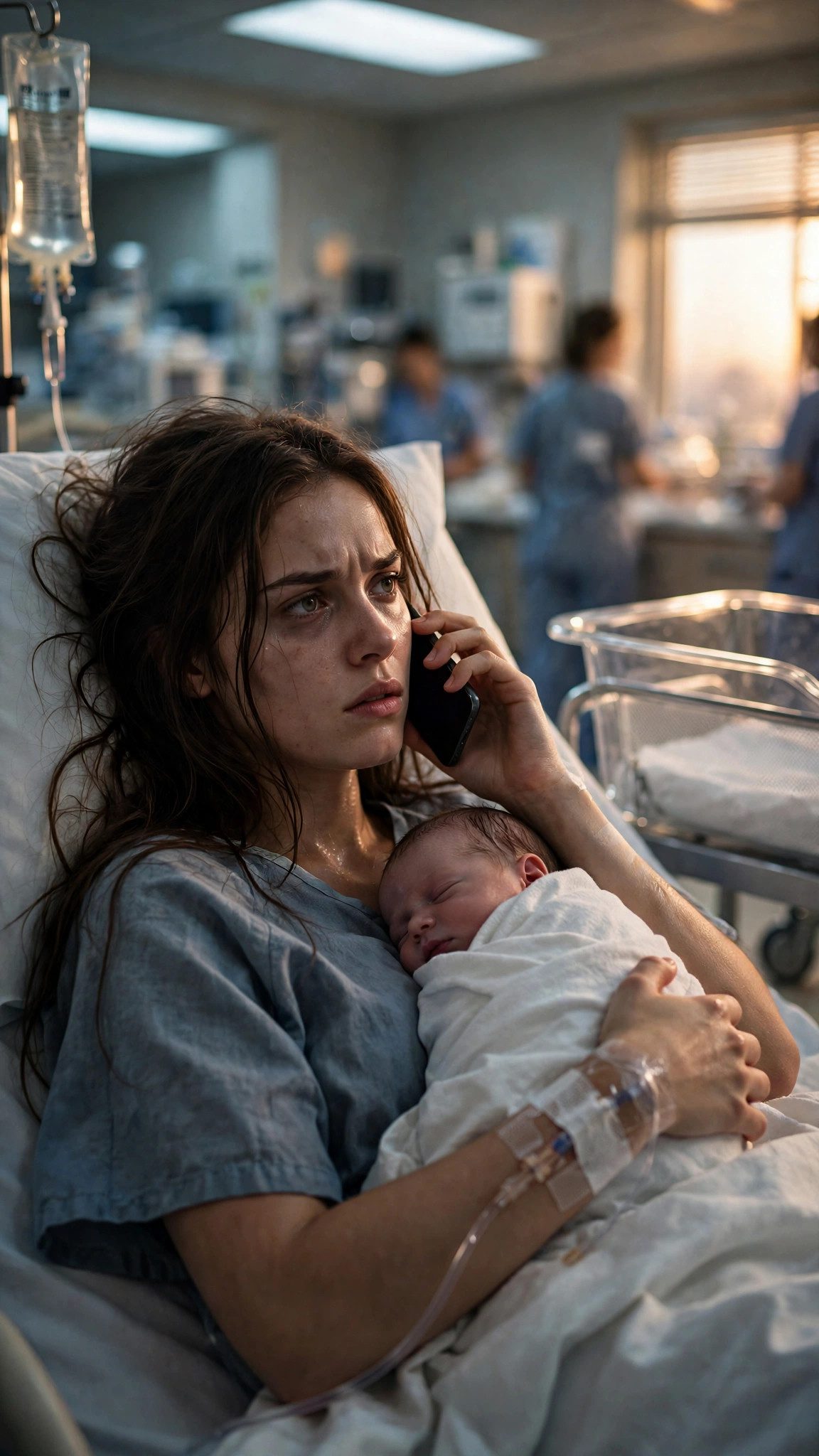
    At 1:07 in the morning, a sharp pain tightened across my stomach, and I knew, the way a mother knows, that something was wrong.

    I was twenty-nine weeks and four days pregnant. Our baby was not supposed to arrive for another ten weeks. I had spent the last two months doing everything the doctor told me to do. I rested. I drank water until I was sick of the taste of it. I stayed off my feet. I did all of it because Dr. Hayes had looked me in the eye at twenty-seven weeks and said the words no pregnant woman wants to hear: your body is trying to end this pregnancy early, and if it does, your baby may not survive.

    I told myself the pain was nothing. I told myself it was a cramp, a false alarm, my body complaining about the weight it was carrying. Then another contraction came, harder than the first, and it squeezed the air out of my lungs.

    At 1:19, my water broke.

    At 1:24, I saw blood.

    My hands shook so badly that I nearly dropped my phone. The bedroom was dark and too big and too empty. My husband's side of the bed was cold. It had been cold for three nights. Damian was in Capri. He had told me it was business. I had known for eight months that it was not business.

    I called Damian eight times.

    Seven calls went unanswered. On the eighth, he finally picked up.

    "Claire?"

    Behind his voice, I heard music. Ocean waves. Then a woman's laughter, light and careless, the kind of laughter that belongs to someone who has never once been afraid of losing anything.

    My blood went cold. I recognized that laugh.

    Alessia. The woman Damian had spent eight months insisting was nothing more than a friend.

    "Damian," I whispered, gripping the edge of the bed so hard my knuckles went white. "I think I'm having the baby."

    His voice immediately sharpened. "What? How many weeks?"

    "Twenty-nine. Damian, there's blood."

    "Where's the doctor?"

    "Coming. Please, I'm scared."

    For a moment, he said nothing. Then a woman's voice floated through the phone, bright and unbothered. "Damian, darling! Your champagne is getting warm!"

    I closed my eyes. My husband wasn't attending some dangerous business meeting. He wasn't negotiating with enemies. He was in Capri, enjoying champagne with his mistress, while I was fighting to keep our child alive.

    "Come home," I whispered.

    "Claire, I'll call the pilot."

    "Now, Damian."

    "I need a little time."

    Something inside me cracked. It was not a loud break. It was quiet, the way ice cracks on a lake in the middle of the night, a thin sound that means everything underneath is about to give way.

    "You once woke fourteen men at three in the morning because a shipping container was delayed," I said.

    Silence.

    I swallowed against the pain. "I'm not asking for a mafia boss. I'm asking for my husband."

    His breathing changed. I heard it catch, the way it used to catch when he looked at me across a crowded room and forgot, for one second, that he was supposed to be the most feared man in Chicago.

    "I'll be there within eight hours. I promise."

    I looked at the clock. 1:43 A.M. Then I looked down at my stomach, at the life moving inside me, too early, too small, too soon.

    What if our baby didn't have eight hours?

    By 2:58 A.M., doctors were rushing me into emergency surgery. Bright lights passed above my head. Someone told me to breathe. Someone else kept checking a monitor. I remember asking one question over and over, the same question, until my voice went hoarse.

    "Is my baby going to live?"

    Nobody gave me the answer I wanted.

    At 3:17 A.M., my son was born. Two pounds, nine ounces. So tiny that I could hardly believe he was real. He didn't cry. I waited desperately for that first beautiful sound, the sound every mother waits her whole pregnancy to hear. Instead, I heard urgent instructions and hurried footsteps. They took him straight to the neonatal intensive care unit.

    I hadn't touched his face. I hadn't kissed his forehead. I hadn't even seen his eyes. And his father was still somewhere across the ocean.

    At 7:40 A.M., they finally allowed me to see my little boy. Nothing could have prepared me. He lay inside an incubator beneath a tiny white hat. A breathing tube covered part of his face. Thin wires surrounded his impossibly small body. I slipped one finger through the opening. His little hand curled weakly around it. I started crying.

    "Hi, sweetheart. It's Mommy."

    His fingers barely moved. But to me, that tiny movement meant everything.

    I called Damian on video. When he answered, I turned the camera toward our son.

    "Look at him, Damian. He looks just like you."

    For several seconds, my husband couldn't speak. Then I heard him whisper, "Oh, God."

    "He's beautiful, isn't he?"

    "Claire…"

    "Please hurry."

    "I'm coming. I swear."

    I wanted to believe him. I needed to believe him. Because every time I looked at our son's fragile chest rising and falling, I wondered how many breaths he had left.

    At 11:08 A.M., his oxygen levels began dropping. A nurse gently moved me aside while the medical team worked around his incubator. I stood against the wall, pressing my hands over my mouth. I had never felt so helpless in my life.

    At 12:22 P.M., a doctor explained that his lungs were dangerously weak. I asked whether he could survive. The doctor's expression told me more than his words ever could.

    At 1:03 P.M., I called Damian again.

    "Where are you?"

    "The plane just took off."

    For a moment, I thought I'd misunderstood. "Just took off? Damian, you promised you'd be here hours ago!"

    "Claire, there were complications."

    "What complications?"

    Silence. Then I asked the question that had been burning inside me all day.

    "Was it Alessia?"

    He didn't answer. Not immediately. Not after I asked again. And somehow, that silence hurt worse than any confession. While our son was struggling to breathe, Damian had still been caught up in his life with another woman.

    I slowly ended the call. For the first time in our marriage, I didn't wait for him to call back.

    At 2:46 P.M., the doctor approached me. His eyes were gentle. Too gentle.

    "Claire, would you like to hold your baby?"

    My heart seemed to stop. I knew what he was really offering me. Not an ordinary first cuddle. A goodbye.

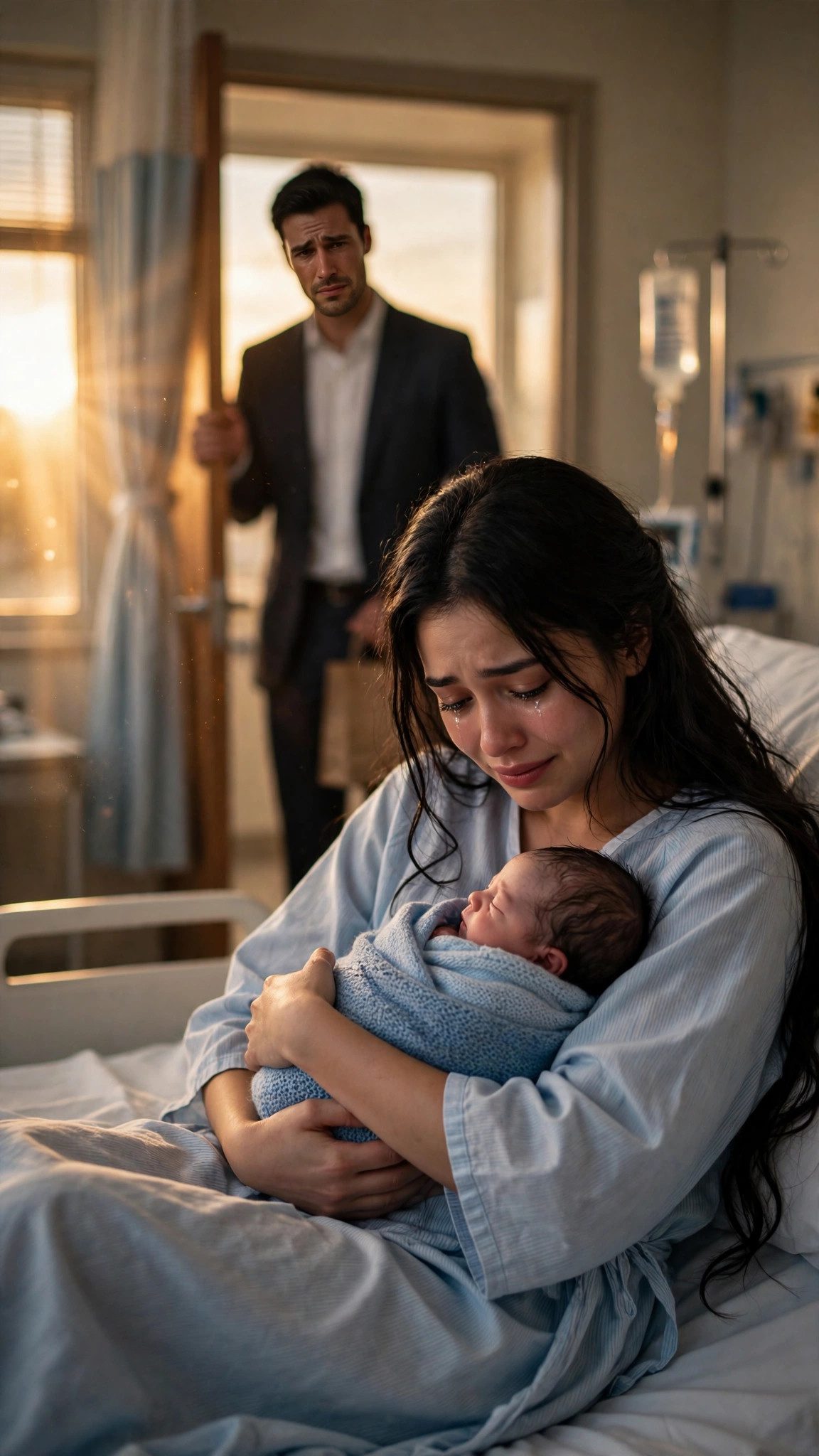
    They wrapped my little boy in a soft blue blanket and carefully placed him against my chest. He was so light. So warm. So terribly small. I kissed his forehead.

    "Hello, my beautiful boy."

    My tears fell onto the blanket. "Mommy's here."

    I rocked him gently, afraid that even the smallest movement might hurt him. Then I made the promise I had been making all morning.

    "Daddy's coming home, sweetheart. He's just a little late."

    At 3:16 P.M., I called Damian one last time.

    "How much longer?"

    "About two hours."

    I looked toward the monitor. My throat tightened. "You're not going to make it."

    "Claire, don't say that."

    "Please. Just talk to your son."

    I held the phone close to our baby's ear. Damian's voice trembled.

    "Hey, little man. It's Daddy."

    There was a pause.

    "Just wait for me a little longer, okay?"

    I closed my eyes. I wanted to scream at him. I wanted to beg. Instead, I whispered, "He can hear you."

    But my son was slipping away.

    At 3:23 P.M., the monitor changed. The doctor stepped closer. And the tiny heartbeat I'd spent months loving inside my body disappeared.

    My son died in my arms. Twelve hours and six minutes. That was his entire life.

    I held him long after the room became quiet. I kissed his forehead again and again. Then I whispered the words I knew his father would never hear him answer.

    "I'm sorry, sweetheart. Mommy tried."

    Nurse Elena Ruiz stayed with me. She was the same nurse who had moved me aside so gently at 11:08, the same nurse who had shown me how to slip my finger through the incubator's opening without disturbing the wires. She did not rush me. She did not use the bright, empty voice people use when they are afraid of grief. She sat down in the chair beside my bed and waited, and when I finally looked at her, she said, "Would you like to name him?"

    I had not named him. Damian and I had argued about names for months, the way couples do, lightly, as if we had all the time in the world. Damian wanted a strong name, a family name. I wanted something soft. We had never decided. And now there was no more time to decide, and that felt like the cruelest part of all of it, that my son had lived twelve hours and six minutes and died without a name anyone had spoken out loud.

    "Elias," I whispered. "Elias Moretti."

    Elena wrote it down on the card, in careful, steady handwriting. Elias Moretti. Born 3:17 A.M. Died 3:23 P.M. Two pounds, nine ounces. Twelve hours and six minutes.

    Dr. Hayes came in a little while later. He was the doctor who had warned me at twenty-seven weeks, the doctor who had told me to rest, who had looked at my chart and said, "Your body is trying to end this early, Claire. We need to buy time." He stood at the foot of my bed with his hands clasped in front of him, and he told me, in the quiet, precise voice of a man who has delivered this news too many times, that Elias's lungs had simply been too small, that his heart had worked as hard as a heart that size could work, that nothing I did or did not do in those twelve hours would have changed the ending. I wanted to believe him. Part of me did believe him. But another part of me kept hearing the phone ringing eight times in the dark, kept hearing the music and the laughter from Capri, kept thinking that if his father had been in the room, if his father had held him, maybe his tiny heart would have found one more reason to keep beating.

    Elena helped me wash my face. She brought me tea I did not drink. She asked, gently, what I wanted to happen next, and I realized I had never thought about what happens next when a baby dies. There were papers. There were choices no mother should ever have to make in a hospital room while her body still ached from surgery. Burial or cremation. A service or no service. I chose cremation, because I could not bear the thought of leaving him in the cold ground of a cemetery while I went somewhere else, and I could not bear the thought of a small white coffin being lowered into the earth while his father was still somewhere over the Atlantic Ocean. I signed the papers with a hand that would not stop shaking, and Elena steadied the clipboard for me, the way she had steadied everything else that day.

    I asked for a few minutes alone in the hospital chapel. It was a small room on the second floor, with a stained-glass window and six wooden pews and a silence that felt different from the silence of the NICU. In the NICU, the silence had been full of machines and waiting. In the chapel, the silence was just silence. I sat there with the small box they had given me, and I talked to my son. I told him about the nursery Damian and I had painted pale yellow, about the mobile with the wooden stars that hung above his crib, about the tiny blue blanket his grandmother had knitted before she died. I told him I was sorry his father had not been there. I told him I loved him, and that twelve hours and six minutes had been enough for me to love him completely, and that no one could ever take that away from me.

    When I came back to Room 807, I knew what I had to do. I had spent three years waiting for Damian. I had waited through late nights and cancelled dinners and trips that stretched from two days into two weeks. I had waited while he built his empire and told me the empire was for us, for our family, for our future. And our future had lived twelve hours and six minutes and died in my arms while his father drank champagne with another woman. I was done waiting.

    I packed the paper bag slowly, the way you pack something sacred. His tiny white hat. His NICU bracelet, still warm from his wrist. The photograph Elena had taken of me holding him, my face streaked with tears, his tiny hand curled against my chest. The card with his name on it, Elias Moretti, written in Elena's careful handwriting. And my old phone, with the fourteen-second video. I had recorded it at 7:52 that morning, when the light from the window fell across the incubator and his chest was rising and falling in a steady rhythm, and I had whispered, "Daddy's coming home to you." I had believed it when I said it. I had believed it all day, even when the calls went unanswered, even when the plane had only just taken off at one o'clock, even when the silence on the other end of the line told me everything I did not want to know.

    I placed the letter underneath everything. I had written it in the chapel, on hospital stationery, in handwriting that shook so badly I could barely read it myself. I told Damian how I'd made that promise for twelve hours. How our baby had waited. How he had died without ever feeling his father's arms. And finally, I wrote: "I don't want to spend the rest of my life waiting for you, too."

    I left the hospital carrying only my handbag and a small box containing my son's ashes.

    At 6:05 P.M., Damian reached Room 807. I wasn't there. Our son wasn't there. Only the bag remained.

    I later learned that Damian watched the video repeatedly, clutching our baby's hat in his trembling hands. Then he read my letter. And immediately ordered his security team to find me.

    But something happened that Damian had never imagined possible. His own guards refused to obey him.

    When he demanded an explanation, they reminded him of an order he'd personally given seven months earlier. An order he had completely forgotten.

    But I remembered every word of it. And that forgotten command was the reason I'd been able to walk away from Chicago's most feared mafia boss without a single guard following me.
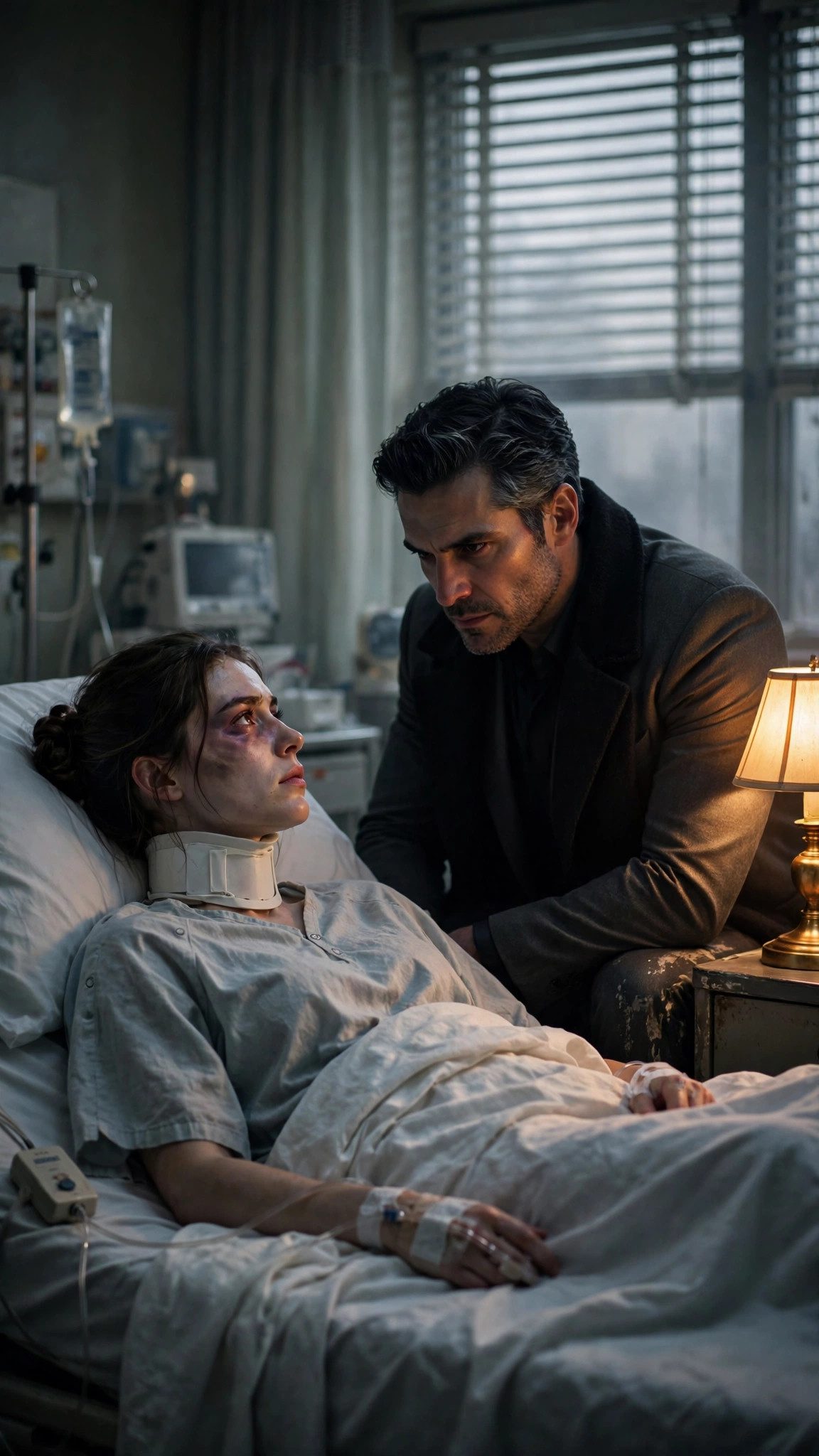
  • Chapter 7: The Wife He Finally Knew

    Chapter 7: The Wife He Finally Knew

    Six months after the day Vincent Castellano was led out of the Huntington conference room in handcuffs, I stood in the garden of the house on Lake Shore Drive, wearing a white dress, holding a bouquet of white roses, and waiting to marry my husband for the second time.

    The first time, I had married him in a cathedral full of strangers, in a dress my father's tailor had chosen, with a brother who could not come and a best friend who was told not to call and a husband who looked at me for four seconds and said, "She will do."

    The second time, I married him in a garden I had planted myself — roses along the south wall, lavender by the kitchen door, a small herb garden that Mrs. Okafor tended with great seriousness and even greater pride — in a dress I had chosen myself, with my brother standing beside me as my witness, my best friend Priya holding my bouquet before the ceremony, and a husband who had spent the morning asking me, three times, whether I was sure, whether I was happy, whether the roses were the right ones.

    "They are the right ones," I had told him, the third time. "They are white. White roses mean new beginnings. I looked it up."

    "You looked it up," Julian said, and he smiled — a real smile now, not the rusty laugh of a man opening a door that had been shut too long, but a smile that came easily, the smile of a man who had learned how to be happy in his own house.

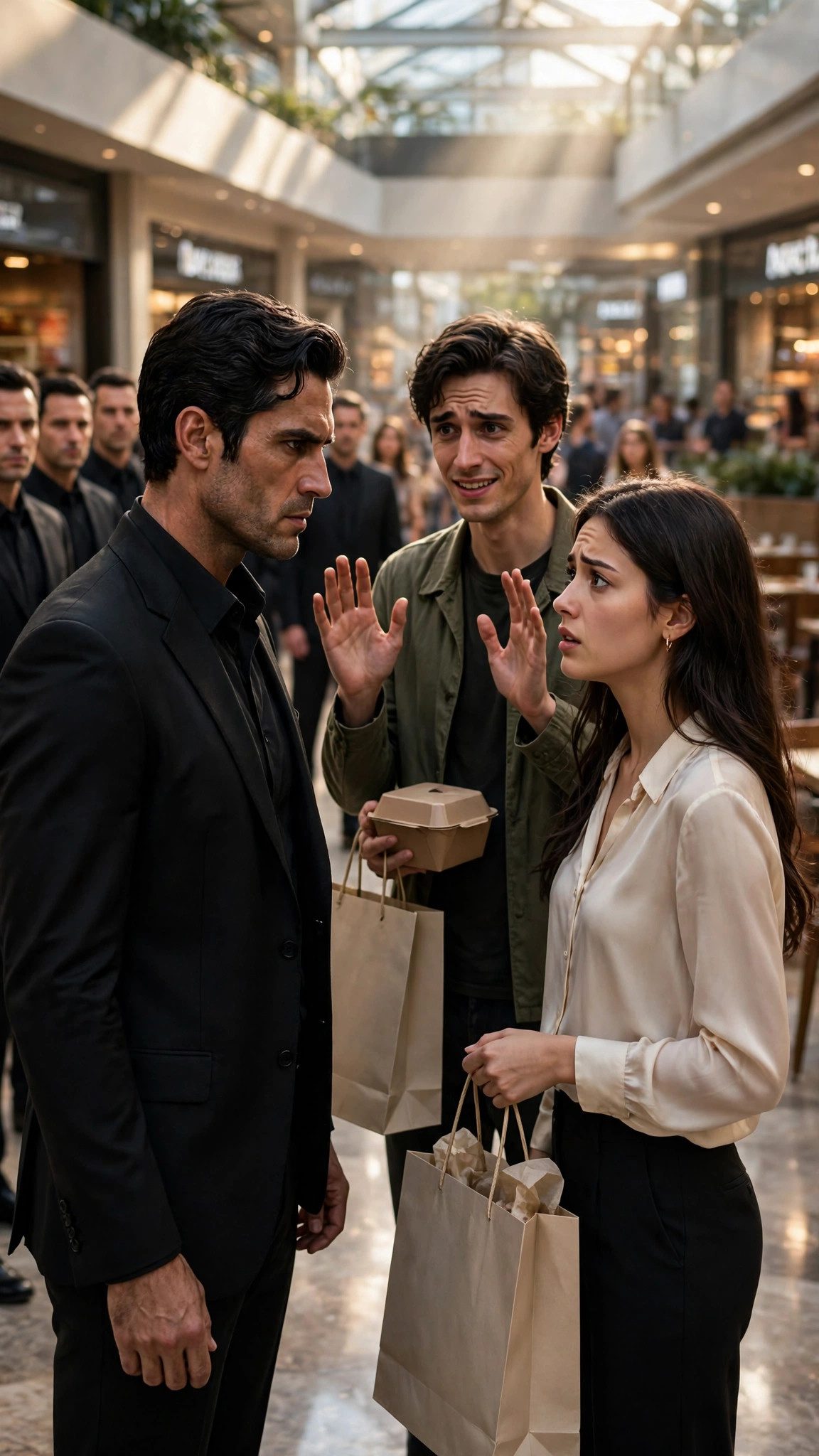
    Daniel stood at the front of the garden, in a suit that actually fit him this time, holding the rings, and when I walked down the path between the rows of white chairs, he winked at me, and I laughed — the loud, helpless, undignified laugh that had started all of this, the laugh I had not laughed for six weeks before that Tuesday in the mall — and the guests turned to look, and I did not care, because this time, the man watching me laugh was not deciding whether to kill someone. He was deciding whether to cry.

    Julian met me at the end of the path. He took my hands. His hands were warm, and large, and calloused, and they held mine gently, as if I were something precious, and he looked at me — really looked at me, the way he had learned to look at me over the past six months, the way a man looks at a woman he actually knows — and he said, very quietly, so that only I could hear it, "You look beautiful. Blue is your favorite color. Your favorite food is your mother's chicken soup. Your best friend is Priya, from Evanston. Your brother is Daniel, and he is standing right there, and he is not going anywhere. And I know all of that, because I asked."

    I laughed again, and then I cried, just a little, and then I laughed again, because that was the kind of day it was.

    The ceremony was short. We said the words — new words, our own words, not the words from the first wedding, which had been chosen by lawyers and signed by families. Julian said, "I promise to ask. I promise to listen. I promise to know you, every day, for the rest of my life." And I said, "I promise to tell you. I promise to laugh. I promise to let you know me, every day, for the rest of my life." And Daniel handed us the rings, and Priya cried, and Mrs. Okafor cried, and even Mr. Huntington, sitting in the second row, wiped his eyes with a handkerchief and pretended he had something in them.

    After the ceremony, there was dinner in the garden, under strings of lights that Daniel and Julian had hung themselves the day before — badly, both of them admitted, but with great enthusiasm — and there was dancing, and there was cake, and there was a toast from Daniel that made everyone laugh and then made everyone cry, because he said, "My sister married a man who did not know her. And then that man decided to learn. And that is the bravest thing I have ever seen anyone do."

    Later, when the guests had gone and the lights were still swaying in the garden and the night was warm and full of the smell of roses, Julian and I sat on the steps of the house, and he put his arm around me, and I leaned against him, and we looked out at the garden — my garden, our garden — and he said, "Do you remember the first time I asked you what you ate for breakfast?"

    "Toast with strawberry jam," I said. "And too much coffee."

    "And do you remember what you said to me in the mall, that first day? When I told you to stop, and you said I was very persuasive?"

    "I remember," I said.

    "I was not persuasive," Julian said. "I was terrified. I had just seen the woman I married laughing with a man I did not know, and I thought I was losing the only thing in my life that I had not chosen for business. And then I found out that the man was your brother, and that I did not know you had a brother, and that I did not know anything about you at all, and I was more terrified than I had ever been in my life. Not of losing you. Of having already lost you, six months ago, on the day I told you I did not expect conversation."

    I took his hand. "You did not lose me," I said. "You never lost me. You just had not found me yet."

    He was quiet for a moment. Then he said, "I found you in a food court. You were laughing. And I decided to kill the man who made you laugh. And that man turned out to be your brother. And your brother turned out to be the best man I have ever met. And you turned out to be the best thing that ever happened to me. That is a strange story, Audrey."

    "It is our story," I said. "And I like it."

    The next morning, I woke up early, and I went down to the kitchen, and Julian was already there, standing at the counter, making toast. The third slice was golden and perfect. He put strawberry jam on it. He set it in front of me, with a cup of coffee beside it. Too much coffee, the way I liked it.

    "Toast with strawberry jam," he said. "And too much coffee."

    "Thank you," I said.

    And then I went to the library, and I took out my sketchbook — the one I had kept since I was twelve — and I turned to a fresh page, and I drew the three of us at breakfast, eating pancakes, Daniel on his third, Julian burning the toast, me laughing. I drew it slowly, carefully, the way I drew everything that mattered. And when I was finished, I showed it to Julian, and he looked at it for a long time, and he said, "That is us. That is exactly us."

    Daniel came home for Christmas that year, and the year after that, and the year after that. Priya came for dinner every Sunday. My father came for the first time in two years, and he and Julian sat in the library for three hours, and when they came out, my father shook Julian's hand, and he said to me, "Your husband asked me about your mother. No one has asked me about your mother in seven years."

    The Sterling organization changed, too. Slowly, the way a large ship changes course — not all at once, but steadily, and then, one day, you look up and realize you are sailing in a different direction. Julian legitimized the family businesses, one by one, the shipping routes, the warehouses, the mall agreements. He kept the men who were loyal, and he let go of the men who were not. He built a foundation in my mother's name, for children who had lost a parent, and he put Daniel on its board, because Daniel understood what it meant to lose someone and keep going.

    And me? I kept painting. I kept laughing. I kept telling my husband everything — about my mother, about my childhood, about the summer Daniel nearly sank the boat, about the sketchbook, about the garden, about the things I wanted and the things I feared. And he kept asking. Every day, he asked. What did you dream about? What do you want for dinner? What are you painting today? What made you laugh? What made you sad? Small questions, careful questions, the questions of a man learning a language, one word at a time.

    People in Chicago still tell the story of the day Julian Sterling lost control in a shopping mall. They tell it as a story about a mafia boss who nearly killed a stranger over his wife. But that is not the story. That is only the first page.

    The real story is about a man who married a name, and woke up one morning to discover that the name had a brother, and a best friend, and a favorite color, and a laugh he had never heard before — and who decided, on that morning, to learn everything else.

    The real story is about a woman who laughed in a food court, and changed her husband's life with a single sound.

    And the real story ends the way all the best stories end: not with a punch, and not with a threat, and not with a man announcing to a crowd that a woman belongs to him — but with a man standing in a kitchen, making toast, and asking his wife what she wants for breakfast.

    Because that is what it means to know your wife.

    We went on a honeymoon, of sorts, a month after the garden wedding — not to Paris or Rome, but to the lake house. Julian had bought it back, as he had promised in the car that night, and Daniel came with us for the first weekend, and Priya came for the second, and Mrs. Okafor sent us off with a basket of food and strict instructions to eat properly and rest.

    The lake house was smaller than I remembered, and shabbier, and more beautiful than any place I had ever seen. The beach was still there. The water was still cold. The sun still set over the lake in a way that made the whole sky turn gold and pink and then deep, dark blue. On our first evening there, Julian and I walked down to the water, and he took off his shoes, and he stood in the shallows in his bare feet, a mafia boss in rolled-up trousers, laughing, and I laughed too, and I thought about the photograph — the boy of ten with the bucket, the girl of seven with sand in her hair — and I thought about how strange and wonderful it was that a life could come full circle like that, that a woman could stand on the same beach where she had been a happy child, holding the hand of a man who had once been a stranger, and feel, for the first time in her adult life, completely at home.

    On the first anniversary of the garden wedding, Daniel gave a toast that made everyone cry. He said, "A year ago, my sister married a man who did not know her. Today, that man knows her favorite color, her favorite food, the name of her best friend, and the fact that she burns toast when she is nervous. He knows that she laughs too loudly and cries at sad movies and talks to her plants. He knows her. And she knows him — that he is stubborn, and proud, and afraid of toasters, and that he loves her more than he loves his own pride. That is not an arranged marriage. That is a real one."

    And on the second anniversary, I finished the sketchbook — the one I had kept since I was twelve — with a drawing of the three of us at breakfast, eating pancakes, Daniel on his third, Julian burning the toast, me laughing. I showed it to Julian, and he looked at it for a long time, and he said, "That is us. That is exactly us." And then he took out a new sketchbook, blank pages, and he set it on the table beside the old one, and he said, "Start another one, Audrey. We have a lot of years left to draw."

    We did. We are still drawing it, one page at a time, one breakfast at a time, one question at a time. And every morning, Julian makes the toast — golden and perfect now, he has learned — and he sets it in front of me with strawberry jam and too much coffee, and he says, "Toast with strawberry jam. And too much coffee." And I say, "Thank you." And that is how every day begins, in a house with eleven bedrooms, and a garden full of roses, and a family that finally, finally knows each other.
    In the third year of our marriage — our real marriage, the one that began in a garden under strings of lights — Julian gave me a gift. It was not jewelry, although he had given me jewelry before, and it was not a house, although he had already bought back the lake house. It was a small, leather-bound book, and inside it, on the first page, in his own handwriting, were the words: "Everything I know about my wife." And on the pages that followed, in his careful, blocky handwriting, were the facts he had learned, one by one, over three years: her favorite color is the blue of the lake before a storm; her favorite food is her mother's chicken soup; her best friend is Priya, from Evanston; her brother is Daniel, and he is a surgeon, and he makes terrible toast; she laughs too loudly and cries at sad movies and talks to her plants; she is afraid of thunderstorms and loves the rain; she paints the lake when she is happy and the sea when she is sad; she is brave in a way that frightens me, and kind in a way that humbles me, and she is mine, and I am hers, and I know her.

    I read the whole book in one sitting, crying, and when I finished, I closed it, and I held it against my chest, and I said, "You know me." And Julian said, "I know you. Finally. I know you." And that was the best gift anyone had ever given me — not the book, but the knowing.
    The End.

    THE END

  • Chapter 7: The Life She Chose

    Chapter 7: The Life She Chose

    "Come inside, Graham. It's cold out there. And we need to talk."

    He came inside. He sat at the kitchen table, in the same chair where I had once sat with a phone in my hand and a teacup going cold, and he folded his hands on the table, and he waited. He didn't try to fill the silence. He had learned, finally, how to wait for me.

    I sat across from him. I looked at him — really looked at him, the way I hadn't looked at him in years. He was thinner than he had been in Chicago. There were lines around his eyes. His hair was a little grayer at the temples. He looked like a man who had been through something hard and come out the other side changed. Not broken. Changed.

    "I've been thinking about what you asked me," I said. "A year ago, you asked if you could meet him. Just once. Just for a minute. And I said yes. And then you stayed. And you showed up every day at nine o'clock. And you learned to change a diaper, and you learned to make spaghetti, and you learned to read bedtime stories in three different voices. And you wrote me letters. And you testified. And you dismantled an empire because you wanted our son to be proud of you."

    "I did all of that because it was the right thing to do," he said. "Not because I expected anything in return."

    "I know," I said. "That's why I'm saying this now. I don't want to be married to the man you were, Graham. That man told me to take the baby and disappear. That man chose Vanessa over his wife and his son. That man is gone, and I don't miss him. But the man sitting across from me — the man who drove all night to stand between my son and two men with bad intentions, the man who learned to be a father one day at a time, the man who wrote me letters on real paper — that man I could love. That man I think I already do love. But I need to be sure. And I need you to be sure."

    "What do you need?" he asked.

    "Time," I said. "Not a week. Not a month. A year. A year of you showing up. A year of us being a family — not a married couple, not yet, but a family. You, and me, and Owen. Dinners together. Birthdays together. Bad days together. If, after a year, we're still standing, and we're still choosing each other, then we'll talk about what comes next."

    "A year," he repeated. "I can do a year. I can do ten years, Audrey. I'll do whatever it takes."

    "And there are conditions," I said. "Three of them. First: Owen's name stays Mercer. Not Ashford. Not hyphenated. Mercer. He was born a Mercer, and he was raised a Mercer, and if one day he wants to add Ashford, that will be his choice, not ours. Second: my studio stays mine. I built it. I run it. You don't buy it, you don't fund it, you don't put your name on it. Third: we live here. In Boston. Not Chicago. Owen's home is here. My home is here. If you want to be part of this family, you build your life here, with us, not the other way around."

    Graham didn't hesitate. Not for a second.

    "Done," he said. "All three. Owen stays Mercer. The studio stays yours. We stay in Boston. Audrey — I don't want to go back to Chicago. Chicago is where I lost you. Boston is where I found you. I want to stay here. I want to build a life here. With you. With Owen. Whatever that looks like."

    "Then we have a deal," I said. And I held out my hand, the way my father had taught me to close a deal — firmly, looking the other person in the eye.

    He shook my hand. And then he laughed, a real laugh, the first real laugh I had heard from him in years, and I laughed too, and for a moment we were just two people sitting at a kitchen table in Somerville, laughing, with a sleeping boy down the hall and a whole year stretching out in front of us.

    That year was the best year of my life.

    Not because it was perfect. It wasn't perfect. There were hard days. There were days when Graham and I argued — about money, about Owen's schooling, about the past, which neither of us could change and both of us had to live with. There were days when I woke up and looked at him across the breakfast table and felt the old anger rise up, sharp and sudden, like a wave hitting a rock. There were days when he looked at me and I could see the guilt in his eyes, the weight of what he had done, and I had to remind myself that guilt wasn't the same as punishment, and that I had already decided to let him try.

    But there were also good days. So many good days. Owen's third birthday, with a cake shaped like a dinosaur and a party in the studio, and Graham wearing a paper crown because Owen insisted that daddies had to wear crowns too. Christmas morning, with snow falling outside the window and Owen tearing open presents under a tree Graham had spent three hours decorating, badly, with lights that blinked out of order. Spring afternoons in the Public Garden, with Owen feeding the ducks and naming every single one of them after superheroes, and Graham and I sitting on a bench, holding hands, not talking about anything at all.

    And slowly, without either of us noticing it happening, the year turned into something else. Not a trial. Not a test. A life. Our life. The three of us, together, in a small apartment above a bakery in Somerville, with a design studio down the street and a little boy who called Graham "Daddy" like it was the most natural thing in the world.

    On the last day of the year — a Saturday in October, exactly three years after the night Castellano's men came to my kitchen — Graham took me to the Public Garden. Owen was with Margaret. The leaves were turning gold and red. The air smelled like autumn.

    He didn't get down on one knee. He had learned, by then, that grand gestures weren't what I wanted. He just took my hands in his, and he looked at me, and he said, "Audrey Mercer. I asked you once to disappear from my life. I'm asking you now to do the opposite. Marry me. Not because my grandfather arranged it. Not because anyone is forcing us. Because I love you. Because I love our son. Because I want to spend the rest of my life proving that to you, one day at a time. Will you marry me?"

    I thought about the hospital bed. I thought about the phone call. I thought about the three years of winter, and the two years in Boston, and the year of showing up, and the letters in the wooden box, and the man who had learned to change a diaper and make spaghetti and read bedtime stories in three different voices.

    "Yes," I said. "Yes, Graham. I'll marry you."

    We were married in a garden in Cambridge, on a Saturday in June, with fifty guests and a flower bill that cost less than a factory worker's weekly wage. I wore a simple white dress that I had chosen myself, not my mother's dress, not a dress anyone else had picked for me. My father walked me down the aisle — a path of white petals between two rows of chairs — and Owen walked beside us, carrying the rings on a small velvet pillow, wearing a tiny suit and a paper crown, because he had insisted that ring bearers had to wear crowns too.

    Graham waited at the end of the aisle in a gray suit, handsome and nervous, holding a small bouquet of white roses. When I reached him, he took my hands, and he looked at me, and he said, in a voice loud enough for everyone to hear, "Audrey Mercer. I love you. I've loved you for a long time, even when I didn't know how to say it. Thank you for giving me a second chance. I won't waste it."

    "I love you too," I said. And I meant it. Not the desperate, hopeful love of a girl who had married a stranger. The steady, grown-up love of a woman who had built a life out of nothing and chosen, with her eyes open, to share it with a man who had earned his way back.

    Owen tugged on Graham's sleeve. "Daddy," he whispered, loudly enough for the whole garden to hear, "can I have cake now?"

    The whole garden laughed. Graham picked him up and held him high in the air, and Owen laughed, and I laughed, and my father laughed, and Margaret cried, and Priya took a photograph that I still have on my desk today.

    At the reception, under strings of lights in the garden, my father stood up to give a toast. He held his glass in both hands, the way he always did when he was nervous, and he looked out at the fifty guests, and then he looked at me.

    "I gave my daughter away once before," he said, "at a wedding in a cathedral, with four hundred guests and a flower bill I don't want to think about. That time, I watched her walk down the aisle toward a man who didn't love her, and I didn't stop it, because I thought I was saving my company. I was wrong. I wasn't saving anything. I was selling the most precious thing I had."

    The garden went quiet. Even Owen stopped chasing a butterfly and came to stand beside me.

    "This time," my father said, "I'm not giving her away. I'm watching her choose. She chose this man — not because anyone arranged it, not because anyone forced her, but because he earned her. He showed up. Every day. For a year. And then for another year. And he will show up for the rest of his life, or he will answer to me."

    He raised his glass. "To Audrey. To Graham. To Owen. To second chances — and to the woman brave enough to take one."

    Margaret stood up next, dabbing at her eyes with a napkin. "I hired Audrey when she was a new mother with a baby and a portfolio and no references I could check," she said. "She told me she was starting over. I didn't ask from what. I just gave her a desk and a chance. And she built a studio, and a life, and a family, all out of nothing but stubbornness and a good eye. Audrey, my dear — you were always going to be fine. You just needed someone to get out of your way long enough to let you prove it."

    Graham stood last. He held his glass, and he looked at me, and for a moment he couldn't speak. Then he said, "I asked Audrey once to disappear from my life. It was the worst thing I have ever said to anyone. I spent two years trying to undo it, and I will spend the rest of my life making sure I never say anything like it again. Audrey — you didn't disappear. You became someone I barely recognized, someone stronger than the girl I married. And I fell in love with that woman. I fall in love with her every single day. Thank you for letting me stay. Thank you for letting me be Owen's father. Thank you for this life."

    Owen tugged on my dress. "Mama, can we dance now?"

    So we danced. Graham held Owen on one arm and me in the other, and we swayed under the garden lights while the band played something slow and sweet, and Owen sang along in a voice that was completely off-key and completely perfect, and I thought about the hospital bed in Chicago, and the phone call, and the three years of winter — and I thought about how far away all of that felt now, like a story about someone else, someone I used to be.

    One year later, I sat at my drafting table in the studio, looking out the window at the street where my life had started over, and I thought about the list I had made in the hospital bed that night. My son. My name. My promise.

    I had all three. I had more than three. I had a husband who showed up every day. I had a son who was healthy and happy and loved. I had a studio with four employees and a waiting list. I had a father who visited every month. I had Margaret, and Priya, and a whole city full of people who knew me as Audrey Mercer, the designer, the mother, the woman who had built something out of nothing.

    And I had one more thing. Something I hadn't put on the list, because I hadn't known to ask for it.

    I had a choice. Every day, I had a choice. To stay. To love. To build. To forgive — not because Graham deserved it, but because I deserved to be free of the anger. To live the life I had chosen, not the life someone else had told me to leave.

    Graham came into the studio that afternoon with Owen, who was four years old by then and taller than I could believe, and Owen ran to me and climbed into my lap, and Graham kissed my forehead, and he said, "How was your day?"

    "Good," I said. "How was yours?"

    "Good," he said. "Owen fed the ducks. He named a new one. Batman."

    "Batman the duck," Owen announced proudly. "He's the best one."

    I looked at my husband. I looked at my son. I looked out the window at the street, at the bicycles and the strollers and the people who had no idea who we were, and I thought about a hospital bed in Chicago, and a phone call, and a man who had told me to take the baby and disappear.

    He had told me to leave my life behind.

    And I had. I had left it behind, and I had built a better one, and then — when he had finally become a man worth coming home to — I had let him find me.

    That was the life he told me to leave.

    This was the life I chose.

    The End.

    THE END

  • Chapter 7: The First Step

    Chapter 7: The First Step

    Six months later, on a bright morning in late spring, Maxwell Rourke stood up.

    He did not stand up all at once. He stood up the way he had learned to do everything in the last six months: slowly, carefully, with his hands on the parallel bars in the therapy room at Harborview, with Martha beside him counting, with his jaw set and his eyes fixed on the far wall.

    "One," Martha said. "Two. Three."

    He rose. His legs shook. His right knee bent and straightened, bent and straightened, like a machine remembering how to work. His left leg trembled, but it held. Sweat ran down his face. His hands gripped the bars so hard his knuckles went white.

    "Four," Martha said. "Five."

    He stood. For ten seconds, he stood, swaying slightly, his feet flat on the floor, his weight on his own two legs for the first time in twenty months.

    Then he sat down, hard, in the wheelchair, and laughed — a great, startled, joyful laugh that filled the therapy room and brought Grace Okafor running from the next room to see what had happened.

    "He stood," Martha said. She was crying, and she did not care who saw it. "He stood for ten seconds."

    Grace looked at Maxwell, and then at Martha, and then at the blue notebook on the table, full of maps and temperatures and toe movements, and she shook her head slowly.

    "I have worked in rehabilitation for fifteen years," Grace said. "I have never seen a recovery like this. Not the legs. The legs are remarkable, but they are not the miracle." She put her hand on Martha's shoulder. "The miracle is that someone was in the room when it started happening, and she wrote it down."

    The standing became walking. The walking became a walker, and then a cane. By the end of the summer, Maxwell could walk the length of the garden at Rourke House with a cane in his right hand and Martha's arm in his left. By the autumn, he could walk it with the cane alone.

    The house changed, too. Victor was gone — sentenced to life in prison, no parole, on the testimony of Cole Bennett, Eddie Krol, and the bank records that led from Bellini Holdings to Vincent Castellano. The illegal side of the Rourke family was finished, dismantled piece by piece, the way Maxwell had promised the council it would be, fourteen months and one bullet ago. The docks were inspected now. The trucking companies paid their taxes. The warehouses held what their manifests said they held. The family was smaller, and poorer, and cleaner than it had ever been — and Maxwell, walking through the garden with a cane, said it was the first time in his life he had been proud of his own name.

    Martha's life changed, too. The Rourke family established a rehabilitation wing at Harborview, in the same building where she had worked for six years, and they named it for Walter Abernathy — the retired schoolteacher who liked crossword puzzles, the patient whose death had cost Martha her license and whose name, finally, was attached to something that healed people instead of hurting them. Martha ran the wing. She hired the therapists. She wrote the protocols. She kept the notebooks, in handwriting so clear and careful that no one would ever be able to call them a lie.

    And on the first Saturday of October, in the garden at Rourke House, under the same trees where Victor had once walked past her without a glance, Martha Kovak married Maxwell Rourke.

    It was a small wedding. Rosa cooked. Tony drove the car. Miss Delaney arranged the flowers and cried twice, once during the vows and once during the first dance. Grace Okafor sat in the front row with the blue notebook in her lap, because Martha had insisted it be there — not as a decoration, but as a witness.

    Maxwell walked down the garden path on his own two legs, with a cane in his right hand and nothing in his left, because he did not need anything in his left. He walked slowly, and his gait was uneven, and his left foot dragged just a little on the gravel, and it was the most beautiful thing Martha had ever seen.

    At the altar — a simple wooden arch covered in white roses — he stopped, and he looked at her, and he said, in a voice low enough that only she could hear it, "Six months ago, you told me a foot that moves is a foot that can walk."

    "And a man who can walk," Martha said, "can stand up in front of the people who tried to bury him and tell them the truth."

    "I did," Maxwell said. "And now I am standing here."

    They were married as the late afternoon sun came through the trees, and when the minister said, "You may kiss the bride," Maxwell set his cane aside, very carefully, and took Martha's face in both his hands, and kissed her, standing on his own two feet, in the garden of the house where he had once been a prisoner in his own chair.

    Maxwell proposed on a Tuesday evening in September, in the garden, at the end of the path where he had once sat alone in his wheelchair looking out at the water.

    Martha had come out to the garden to call him in for dinner, and she found him standing by the low stone wall, with his cane in his right hand and a small box in his left. He was standing without the cane touching the ground — just holding it, the way a man holds something he no longer quite needs but is not ready to put down.

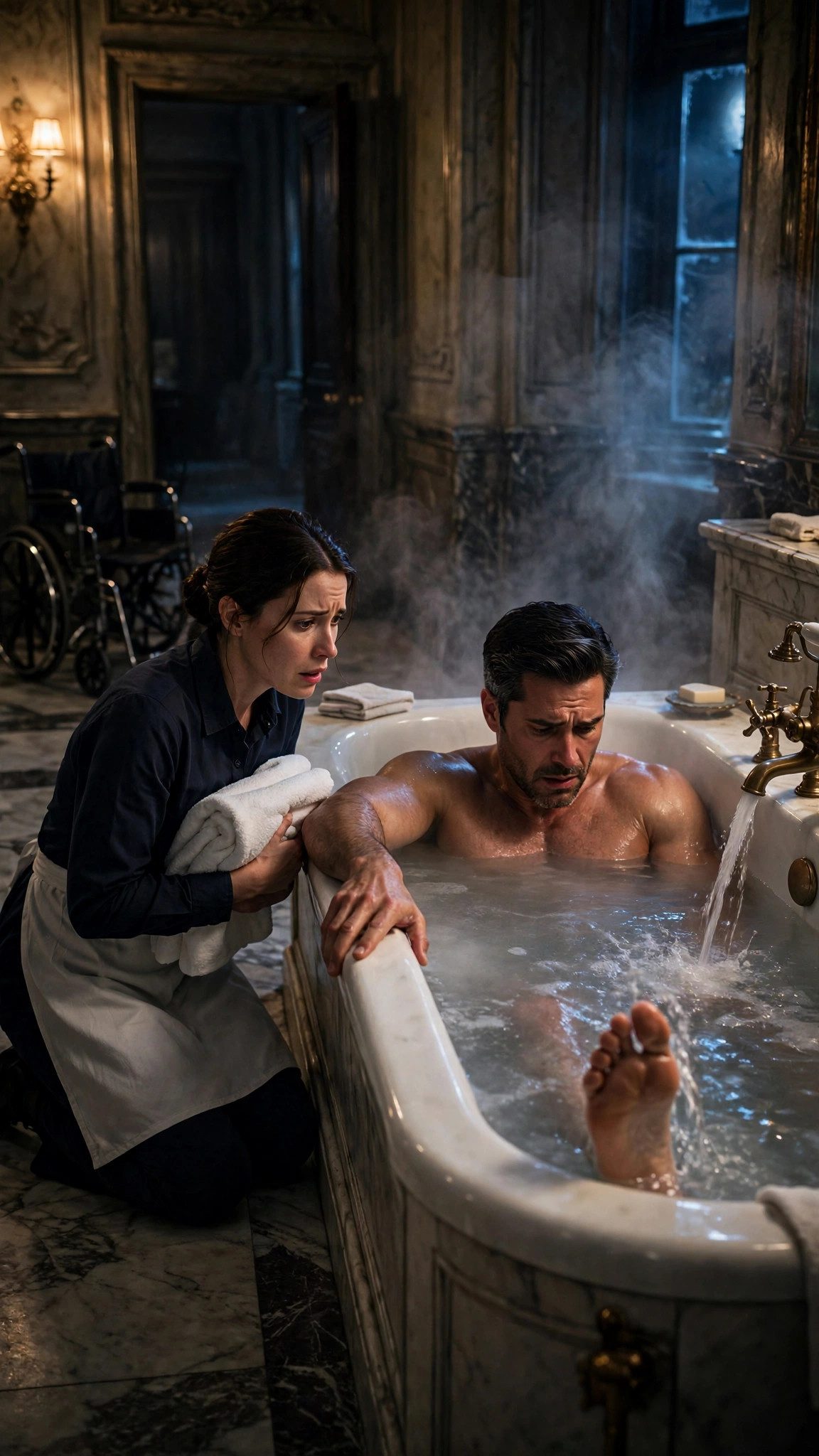
    "Martha Kovak," he said, "I have practiced this three times, and every time I have made a mess of it, so I am going to say it plainly. Fourteen months ago, I was shot for trying to make my family honest. Six months ago, a woman I had never spoken to walked into my bathroom and told me the water was too hot. Today, I can walk the length of this garden on my own two legs, and I can feel the gravel under my feet, and I can feel the cold when the wind comes off the water, and I owe all of it to you."

    He opened the box. Inside was a ring — simple, gold, with a single small diamond that caught the evening light.

    "I am not a good man," he said. "I have done things in my life I am not proud of, and I have a name that has hurt people. But I am trying to be a better one, and I would like to try for the rest of my life, with you, if you will have me."

    Martha looked at him — at the man who had once been afraid in a bathtub full of steam, who had hidden his healing for four months, who had trusted her with the truth when he trusted no one else in the world.

    "Yes," she said.

    He took her hand, and he slid the ring onto her finger, and his hands were steady, and hers were not, and they stood there in the garden as the evening darkened over the water, and neither of them said anything at all for a long time, because there was nothing left that needed saying.

    The wedding took a month to plan, and Miss Delaney planned most of it, with the brisk efficiency of a woman who had run Rourke House for thirty years and considered a wedding a small matter beside a Tuesday visit from Victor. Rosa cooked for a week. Tony polished the car until it shone like a mirror. Grace Okafor came from Harborview with the blue notebook in her bag, because Martha had asked her to bring it, and because some witnesses are more important than others.

    On the morning of the wedding, Martha stood in the small staff room on the second floor — the same room where she had once slept with the door locked, listening to the house settle around her — and she looked at herself in the mirror in a simple ivory dress, with her hair down for the first time since she had come to Rourke House, and she thought about the road that had brought her here. The hearing. The revoked license. The two years of cleaning rooms. The towels. The steam. The foot that had pulled away from cold water.

    Miss Delaney came in with a pair of pearl earrings and a look on her face that Martha had never seen before — something soft, and proud, and almost maternal.

    "My sister was in Harborview," Miss Delaney said, fastening the earrings for her. "After her hip. The nurses there were kind to her. You were kind to this house, Miss Kovak, in a way no one else has ever been. You checked the water." She stepped back and looked at Martha in the mirror. "You look beautiful. Now go downstairs and marry that man before he wears a hole in the garden path with his pacing."

    Martha went downstairs. She walked out into the garden, where the white roses were thick on the arch and the late afternoon sun came through the trees, and Maxwell was waiting for her at the end of the path, standing on his own two legs, with a cane in his right hand and nothing in his left, because he did not need anything in his left.

    The Abernathy Wing opened in January, in the same building where Martha had worked for six years, on the same floor where Walter Abernathy had once finished a crossword puzzle and held it up for her to see, proud as a schoolboy.

    Martha stood in the doorway of the new therapy room on the first morning and looked at the parallel bars, and the treatment tables, and the shelves full of notebooks — blue notebooks, all of them, because Martha had ordered blue ones, and because some habits are worth keeping — and she felt something she had not felt in two years. Not relief. Not triumph. Something quieter. The feeling of a door closing behind her, and another one opening in front of her.

    The first patient was a young man of twenty-three who had fallen off a scaffolding and could not feel his left leg. Martha sat beside him on the first day, and she took out a tuning fork, and a cotton ball, and a safety pin, and she said, "We are going to map this together. Slowly. Carefully. And we are going to write everything down, because a record is the only thing that protects both of us."

    Maxwell came to the opening ceremony in a suit, walking with the cane, and he stood beside the plaque on the wall — Walter Abernathy Rehabilitation Wing — and he read the name aloud, slowly, the way a man reads a name he wants to remember.

    "He was a schoolteacher," Martha told him. "He liked crossword puzzles. He called me 'dear.' And his death cost me my license, and his name is on this wall now, and that is how it should be. Because a man's name should be attached to something that heals people, not something that hurts them."

    Maxwell took her hand. "Then this is his room now," he said. "And it is yours. And no one is ever going to take it away from either of you again."

    In the months that followed, the wing filled up. Patients came from all over Rhode Island — from car accidents and falls and surgeries gone wrong — and Martha hired the therapists herself, and she trained them the way she had been trained, and she told them on their first day, every time, the same thing: "Write it down. All of it. Dates, times, numbers, in order. Because a record built on facts is a record no one can call a lie."

    And every evening, she went home to Rourke House, where Maxwell was waiting for her, and they ate dinner together, and they talked about the day, and the house that had once been a prison felt, more and more, like a home.

    One year later, on a bright morning in late spring, Martha stood in the therapy room at the Abernathy Wing and watched a young man take his first steps on new legs, with a therapist counting beside him and a blue notebook open on the table.

    "One," the therapist said. "Two. Three."

    The young man rose. His legs shook. His hands gripped the bars. And Martha, standing in the doorway with her own notebook in her hands, thought about a bathroom full of steam, and water that was too hot, and a foot that pulled away from the cold, six inches, maybe less.

    Enough.

    She stepped into the room then, and she put her hand on the young man's shoulder, and she said the words she had said to every patient she had ever believed in, in the same calm voice she had used in that bathroom so long ago: "Again. You can do it again. Your body remembers. You just have to give it a reason to remember."

    The young man nodded. He took a breath. He tried again. And his foot moved — just a little, just enough — and Martha wrote it down in her notebook, in handwriting so clear and careful that no one would ever be able to call it a lie.

    She went home that evening to Rourke House, where Maxwell was waiting for her in the garden, walking without the cane now, his gait still uneven, his left foot still dragging just a little on the gravel. He held out his hand to her, and she took it, and they walked together toward the house, slowly, side by side, the way two people walk when they have all the time in the world and nowhere else they would rather be.

    Behind them, the sun set over the water. In front of them, the lights of the house came on, one by one, warm and steady. And in Martha's bag, beside her lunch and her spare apron, sat a blue notebook, full of maps and temperatures and toe movements — the record of a man who had come back to life, and a woman who had gotten her life back, written down in handwriting so clear and careful that no one would ever be able to call it a lie.

    The End.

    THE END

  • Chapter 6: What the Law Could Do

    Chapter 6: What the Law Could Do

    Monday morning arrived gray and cold, the lake wind rattling the windows of the house on Lake Shore Drive, and I woke up before the alarm, before Julian, before the house itself seemed fully awake, and I lay in the dark thinking about the day ahead.

    Today, the Huntington agreement would be signed. Today, Vincent Castellano would learn that he had lost. Today, Agent Reyes would be waiting with a folder full of bank records, phone logs, Rosa Delgado's notebook, and the testimony of two frightened men who had been caught outside a farmers' market with a knife and a photograph of my brother.

    And today, I would learn whether my husband — the man I had married six months ago and met, properly, only last week — was the kind of man who could finish a war without becoming the thing he was fighting.

    Julian was already dressed when I came downstairs. He stood in the kitchen, drinking coffee, reading a newspaper, and when he saw me, he set the paper down and said, "Mrs. Okafor made pancakes. Daniel is already on his third."

    Daniel was, indeed, on his third pancake, sitting at the kitchen table in a sweater that did not match his trousers, reading a medical journal and eating with the focused determination of a man who had spent two years eating hospital food.

    "Your husband makes terrible toast," Daniel said, without looking up, "but your housekeeper makes excellent pancakes. I am staying for the pancakes."

    "You are staying," Julian said, "because your sister needs you. The pancakes are a bonus."

    We ate breakfast together — the three of us, like a family, like we had every morning for the past five days — and then Julian's phone rang, and it was Mr. Huntington's lawyer, and the signing was confirmed for eleven o'clock, and Julian stood up, and Daniel stood up, and I stood up, and we went to get ready.

    The signing was held in a conference room on the top floor of the Huntington headquarters downtown, a room of glass and steel and a view of the whole city. Mr. Huntington was there, and his lawyers, and Julian's lawyers, and Agent Reyes, sitting quietly in the corner in a suit that did not quite fit him, drinking coffee from a paper cup, watching everything.

    The documents were spread across the table. The pens were ready. Mr. Huntington picked up his pen, and he looked at Julian, and he said, "Before I sign this, I want to say something. I have done business in this city for forty years. I have seen men lie, and cheat, and steal, and call it business. Last week, I watched a man stand up in my dining room and tell the truth about his own wife, in front of twenty-seven people, when a lie would have been easier. That is the kind of man I do business with. So I am signing."

    He signed. Julian signed. The lawyers witnessed. The agreement was done.

    And then the door opened, and Vincent Castellano walked in.

    He was a man in his sixties, with silver hair and a tailored suit and a smile that did not reach his eyes, and he walked into that conference room as if he owned it, with two men behind him, and he said, "Gentlemen. I believe there has been a misunderstanding."

    Agent Reyes stood up. He set down his paper cup. He walked across the room, slowly, and he said, "Mr. Castellano. My name is Agent Daniel Reyes, Federal Bureau of Investigation. You are under arrest for racketeering, extortion, witness intimidation, and conspiracy to commit murder."

    Castellano laughed. "You have nothing. You have the word of a florist and two men who will say anything to save themselves."

    Reyes opened his own folder. "We have eleven months of bank records showing payments from your shell company to Marcus Hale. We have phone logs showing forty-seven calls between your number and Mr. Hale's number. We have Rosa Delgado's notebook, twenty years of records. We have the testimony of the two men we arrested outside the farmers' market on Friday, who have both agreed to cooperate. And we have Marcus Hale himself, who surrendered to us yesterday morning and has been talking for fourteen hours straight."

    Castellano's smile faded. He looked at Julian. "You," he said. "You did this."

    "No," Julian said. "My wife did this. She went to Rosa Delgado's apartment and asked her for the truth. My brother-in-law did this. He refused to hide when you threatened him. And an old woman with a notebook did this. I just signed a piece of paper."

    Reyes took a pair of handcuffs from his pocket. "Mr. Castellano, you have the right to remain silent."

    As the agents led Castellano out of the conference room, he turned back, and he looked at me — not at Julian, at me — and he said, "You are not what I expected, Mrs. Sterling."

    "Neither is my husband," I said. "He makes terrible toast. But he is learning."

    Castellano was taken away. The room was quiet. Mr. Huntington poured himself a glass of water with a hand that shook, just slightly. Daniel exhaled, long and slow, like a man who had been holding his breath for a week.

    And Julian — Julian stood by the window, looking out at the city, and I walked over to him, and I stood beside him, and I said, "It is over."

    "It is over," he agreed. "Castellano will go to prison. Marcus Hale will go to prison. The injunction is dead. The agreement is signed. It is over."

    "Then why do you look like that?" I asked.

    He was quiet for a moment. Then he said, "Because I spent six months being a man who did not know his own wife, and I spent one week learning who she was, and now I am afraid that I have already wasted the best part of our marriage on silence."

    I took his hand. His hand was warm, and large, and calloused, and it held mine the way it had held mine in the car, gently, as if I were something breakable.

    "You have not wasted it," I said. "You have just started it. Six months of silence, and then one week of truth. That is not a wasted marriage, Julian. That is a marriage that is finally beginning."

    He looked at me. His dark eyes were tired, and serious, and full of something I had never seen in them before — not anger, not suspicion, not the flat unreadable stare of a mafia boss deciding something. It was something softer. Something that looked almost like hope.

    "Then let us begin," he said.

    That evening, we went home, the three of us, and Mrs. Okafor made roast chicken, and Daniel told a story about a patient in London who had woken up from surgery and asked for his dog, and Julian laughed — the rusty laugh, getting less rusty every day — and I sat at the table in a house with eleven bedrooms, and for the first time, every room in it felt like it belonged to someone I knew.

    Later, after Daniel went to bed, Julian and I sat in the library, and he asked me about my sketchbook — the one I had kept since I was twelve — and I showed it to him, page after page, drawings of my mother, of Daniel, of the lake house, of the garden I had wanted to plant and never had. He turned the pages slowly, carefully, as if each one were something precious, and when he reached the last page — a drawing of a woman standing at a window, looking out at a lake, alone — he said, "Draw another one. Draw us. The three of us. At breakfast. Eating pancakes."

    "I will," I said. "Tomorrow."

    "Tomorrow," he agreed.

    We went to bed, and I lay awake for a while, listening to a man breathe beside me — a man I had married six months ago, a man I had met properly only a week ago, a man who made terrible toast and asked me what I ate for breakfast and held my hand in the car — and I thought about the fact that the law had done what the law could do. It had arrested Castellano. It had arrested Marcus Hale. It had saved the agreement and the harbor and the family name.

    But the law could not do the thing that mattered most. The law could not teach a man to know his wife. That was something Julian had to do himself. And he was doing it — one question at a time, one breakfast at a time, one page of a sketchbook at a time.

    It was enough. It was more than enough. It was a beginning.
    The trial of Vincent Castellano lasted eleven days. I did not attend every day — Julian said it was better if I stayed home, and for once, I agreed with him, because I had already told my part of the story to Agent Reyes, and because I did not need to sit in a courtroom and watch a man who had tried to destroy my family pretend that he was the victim. But I went on the last day, the day of the verdict, and I sat in the back of the courtroom beside Daniel, holding his hand, and when the foreman read the word "guilty," four times, for four separate charges, I felt something loosen in my chest that I had not known was tight.

    Marcus Hale was sentenced two weeks later. He received eight years. He wrote Julian a letter from prison, apologizing, and Julian read it once, folded it, and put it in a drawer, and he said to me, "I do not forgive him yet. But I am no longer angry. Anger is a heavy thing to carry, Audrey. I carried it for a long time. I am putting it down now."

    My father came to the house for the first time in two years, three days after the verdict. He sat in the library with Julian for three hours, and when they came out, my father's eyes were red, and he shook Julian's hand, and he said to me, "Your husband asked me about your mother. He asked me what she was like, and what she cooked, and what she sang when she thought no one was listening. No one has asked me about your mother in seven years, Audrey. Not one person. Your husband asked."

    It was then that I understood what Julian had been doing all along, in his slow, careful, stubborn way. He had not just been learning about me. He had been learning about the people who made me — my mother, my father, my brother, my best friend — because he had finally understood that you cannot know a woman without knowing the people who loved her first.

    The foundation came later, in the spring. Julian established it in my mother's name — the Elena Bennett Foundation, for children who had lost a parent — and he put Daniel on its board, and he put me on its board, and he funded it with money from the legitimized businesses, money that had once bought silence and fear and was now going to buy schoolbooks and grief counselors and summer camps by the lake. The first child the foundation helped was a girl named Sofia, nine years old, whose mother had died the year before, and who liked to draw, and who reminded me so much of myself at her age that I cried when I met her, and Julian held my hand, and he said, "This is what the money is for. This is what all of it was always supposed to be for."

    Rosa Delgado came to the foundation's opening, wearing her best dress, carrying her notebook — the twenty-year notebook, the one that had helped put Castellano in prison — and she showed it to the children, and she said, "I kept this because I knew that one day, someone would come and ask me for the truth. And someone did. And the truth was enough."

    It was enough. It had always been enough. It had just taken us a very long time to ask for it.

    In the weeks after the verdict, Julian and I began a new routine. Every morning, after breakfast, we walked in the garden together — twenty minutes, no phones, no men, no business — and Julian asked me one question about my life, and I asked him one question about his. What was your father's favorite book? What did your mother cook on Sundays? What was the first thing you ever stole? What is the one thing you are afraid of? Some days the questions were easy. Some days they were hard. Some days Julian went quiet for a long time before he answered, and I waited, because I had learned that his silences were not walls anymore. They were doors, opening slowly.

    One morning, he asked me what I had wanted to be when I was a little girl. "An artist," I said. "I wanted to paint big, wild pictures, the kind that take up a whole wall." And he said, "Then paint them. Paint the whole wall. I will buy you the wall." And I laughed, and he laughed, and the next week, a blank canvas arrived — six feet tall, four feet wide — and I stood in front of it for a whole day, terrified, and then I picked up a brush, and I painted the lake, and the beach, and two children laughing, and a woman standing at a window, looking out at the water. When it was finished, Julian hung it in the library, in the place of honor, above the fireplace, and he said, "That is the best thing in this house." And I believed him, because he had finally learned to see what was in front of him.