Story Genres: Mafia Romance

  • Chapter 4: The Agent

    Chapter 4: The Agent

    Daniel Reyes was forty-two years old, with gray at his temples and a calm voice that reminded me, oddly, of the way I used to speak to frightened patients in the emergency room. He did not raise his voice. He did not threaten anyone. He sat down in the chair beside Colton's bed, opened a thin folder, and laid out the truth the way a surgeon lays out instruments: carefully, in order, without flinching.

    "Vincent Castellano has been trying to take your husband's territory for three years," he said. "He tried money. He tried intimidation. He tried turning Colton's own men. None of it worked, because Colton's people are loyal, and because Colton is careful. So Castellano changed his approach. He stopped trying to defeat Colton. He started trying to remove him."

    He looked at Colton. "The Lisbon flight was the removal. A one-way ticket, a beautiful woman, a shipping deal that didn't exist. In Lisbon, his men were waiting. Your husband would have disappeared, Mrs. Beckett. The world would have believed he ran away with his mistress. And Castellano would have walked into Atlanta and taken everything your husband built, while you were left alone with a newborn baby and a name that no longer meant anything."

    "Why did they shoot him here, then?" I asked. "Why the parking garage?"

    "Because someone in Castellano's organization got nervous," Reyes said. "The Lisbon plan was elegant, but it was slow. Someone decided it was easier to kill him at the airport and blame it on a robbery. They didn't count on Ms. Foresight calling 911. They didn't count on her calling you."

    He turned a page in the folder. "Ms. Foresight has given us the payment records, the recordings of her conversations with Castellano's people, and the names of the two men in the garage. One of them is already in custody. The other is still out there. And Castellano himself is still free, because the recordings don't tie him to the shooting directly. They tie him to the Lisbon plan. To convict him of attempted murder, I need your husband's testimony. I need Colton to tell a court, under oath, that Castellano hired Jade Foresight to lure him to Lisbon, and that Castellano's men shot him at the airport."

    Colton was quiet. I watched his face. I had seen that face in a hundred moods: laughing, angry, tender, afraid. I had never seen it look the way it looked now. Like a man who had spent his whole life believing he was untouchable, and had just learned that he was not.

    "If I testify," he said, slowly, "Castellano's people will come for me. And for Lauren. And for Ren."

    "That's why I'm here," Reyes said. "If you testify, the Bureau will protect you. All of you. But protection comes with a price, Mr. Beckett, and you know what it is. You walk away from the life. All of it. The shipping companies stay, but they become legitimate, or they get sold. The warehouses get cleaned out. The men who work for you get a choice: go straight, or go to prison with Castellano. You don't get to keep one foot in each world. Not anymore."

    "And if I don't testify?" Colton asked.

    "Then Castellano walks free, and he tries again," Reyes said. "And next time, he won't miss. And next time, he won't aim only at you."

    There was a long silence. The monitor beside the bed beeped, steady and green. Outside the window, Atlanta moved on, cars and sirens and ordinary people living ordinary lives, unaware that in Room 412 of Grady Memorial Hospital, a mafia boss was deciding whether to give up his empire.

    "I need to talk to my wife," Colton said.

    Reyes nodded. He stood up, closed his folder, and walked to the door. "Take your time," he said. "But not too much time. Castellano's man is still out there, and he knows where your husband is. I'll have agents on this floor within the hour. Until then, don't leave this room. Don't answer the door unless it's a nurse you recognize. And Mrs. Beckett, I need you to tell me where your daughter is, so I can make sure she's safe."

    "She's with my aunt," I said. "In Decatur. Rosa Delgado."

    "Good," Reyes said. "I'll send someone to watch the house. Quietly. No one will know they're there."

    He left. The door closed. Colton and I were alone.

    "Lauren," he said. "I know what you're going to say."

    "You don't know what I'm going to say," I said. "I don't know what I'm going to say."

    He reached for my hand. His hand was cold. I let him take it, because his hand was cold and he was bleeding and he was the father of my daughter, and because some part of me, the part that had loved him for three years, was still there underneath the anger.

    "I can't ask you to forgive me," he said. "I won't ask. But I'm asking you to tell me what to do. Because every decision I've made for the last month has been wrong, and I don't trust my own judgment anymore. I trust yours."

    I looked at him for a long time. I thought about the envelope on his desk. I thought about the scarf. I thought about the photograph. I thought about thirty-one hours of labor, and his hand in mine, and his voice whispering, "You're the strongest woman I know." I thought about Ren, asleep in a laundry basket in my aunt's spare room, seventeen days old, with her whole life ahead of her.

    "Testify," I said. "Give it up. All of it. The empire, the warehouses, the men, the power. Give it up, and come home, and learn how to be a father. That's the price. That's the only price I'll accept."

    He closed his eyes. When he opened them, they were wet.

    "Then that's what I'll do," he said.

    I stayed with him that afternoon. I sat in the chair beside his bed, and I told him about Rosa's house, and about Ren's first smile, which had happened on the fifteenth day, while he was in his office talking to Jade on the phone. I told him about the nights I had spent awake, holding her, wondering whether he would ever come home. I told him about the photograph, and how I had found it the day I came home from the hospital, and how I had hidden it in a drawer because I couldn't bear to look at it and couldn't bear to throw it away.

    He listened. He did not interrupt. He did not make excuses. When I finished, he said, "I want to see her. I want to hold my daughter. Not in a photograph. Not in a story someone tells me. I want to hold her."

    I called Rosa. I told her what had happened, in short sentences, because the phone line felt too fragile for the whole story. I asked her to bring Ren to the hospital. She said she would be there in an hour, and that she was bringing the diaper bag and the blanket and the bottle, and that she would wait in the family room until I came to get her.

    While we waited, Hannah came to the hospital.

    I had not expected her. She walked into Room 412 in her dark suit, her hair pulled back, her face composed, and she stood at the foot of Colton's bed and looked at him for a long moment. Then she looked at me.

    "Mrs. Beckett," she said. "I'm sorry."

    "For what?" I asked.

    "For the phone calls," she said. "For telling you it was business. For telling you he'd come around. I knew it wasn't business. I knew something was wrong. I found the bug in his office three weeks ago. A listening device, under the desk. I didn't know who put it there. I didn't know what to do. I was afraid that if I told him, whoever put it there would know I found it. So I said nothing. And I called you every evening, and I told you he'd come around, because I didn't know what else to say, and because I thought that if I kept calling, if I kept saying it, maybe it would be true."

    She took a folded paper from her bag and handed it to me. It was a printout of an email, sent from an anonymous address, with a single line.

    The Lisbon flight is a trap. Tell his wife to get out of the house.

    "I got this yesterday morning," Hannah said. "I didn't know what it meant. I thought it was a prank. I almost deleted it. But I kept it, because something about it frightened me. And then I heard about the shooting, and I came here, because I thought you should have it."

    I stared at the paper. Someone had tried to warn us. Someone inside Castellano's organization, or someone who had seen the plan and couldn't live with it, had tried to warn us. And the warning had come too late, because I had already left the house on my own, and Colton had already gone to the airport, and the men in the garage had already fired.

    "Thank you, Hannah," I said. And I meant it. For the first time in three years, I meant it when I spoke to her.

    Rosa arrived an hour later, with Ren wrapped in her favorite blanket, asleep in the car seat. I met her in the family room, and I took my daughter in my arms, and I carried her into Room 412, and I laid her gently in the crook of Colton's good arm, the way the nurses had shown me in the hospital, seventeen days ago.

    Colton looked down at her. His face changed. All the hardness went out of it, all the calculation, all the fear. He looked at our daughter, seventeen days old, with her tiny fists curled and her breathing soft and even, and he whispered, "Hi, Ren. I'm your dad. I'm sorry I'm late."

    Ren opened her eyes. She looked up at him. And for the first time since she was born, her father looked back at her, really looked at her, and did not look away.
    That night, I stayed at the hospital. Rosa took Ren home, and I sat in the chair beside Colton's bed, and I watched him sleep, and I thought about everything Reyes had said, and everything Jade had said, and everything Colton had said, and I tried to put it together into a single story that made sense.

    It didn't make sense. Not yet. It was too many pieces, too many lies, too many people who had been afraid. But underneath all of it, there was one thing that was simple, and true, and I held onto it the way you hold onto a railing in the dark. Ren was safe. She was with Rosa. She was asleep in a laundry basket lined with blankets. And her father, for the first time in a month, was not running anywhere.

    In the morning, a nurse came in with a fresh diaper and a bottle, because Rosa had brought Ren back to the hospital, and Colton woke up, and he looked at his daughter, and he said, "Can I try?"

    The nurse showed him how. She was patient, the way good nurses are, and she did not laugh when he put the diaper on backward the first time. She helped him fix it, and he held Ren up, very carefully, and he looked at her, and he said, "There. See? I can do this. I can learn this."

    "You can," I said. "Everyone learns. No one is born knowing how."

    Reyes came back that afternoon, with a folder full of papers, and he sat down with us, and he explained the plan in detail. The FBI would put agents on the hospital floor, around the clock. They would watch Rosa's house. They would watch the shipping office. Colton would give a formal statement, on video, the next day, so that even if something happened to him, the testimony would survive. Jade would be moved to a safe location that night. And when Colton was strong enough to leave the hospital, he would be moved too, to a house the FBI had arranged, with Ren and me, until the trial was over.

    "How long?" I asked.

    "Months," Reyes said. "Maybe longer. I won't lie to you, Mrs. Beckett. This is not a short road. But it's the only road that ends with Castellano in prison and your family safe. And I promise you, I will walk it with you, every step."

    After he left, I called Rosa. I told her the plan. I told her Ren was safe, and that I was safe, and that Colton was going to testify, and that we were going to give it all up, the empire, the warehouses, all of it. Rosa was quiet for a moment. Then she said, "Good. That's the right thing. And Lauren, when this is over, when the trial is done, you come home. To my house, or to your house, or wherever you want. But you come home, and we plant that garden I've been talking about, and we watch Ren grow up, and we don't let any man, no matter how powerful, take that away from us again."

    "I will," I said. "I promise."

    That night, Colton slept, and I slept in the chair beside him, and Ren slept in a hospital bassinet at the foot of his bed, and for the first time in seventeen days, the three of us were in the same room, together, and no one was running anywhere.

    The next day, Colton gave his formal statement. Reyes set up a camera in a small room down the hall from his hospital bed, and Colton sat in a wheelchair, with his shoulder bandaged and his voice still hoarse, and he told the whole story, from the beginning, on the record. The Lisbon flight. The bugged office. The photograph. The parking garage. He did not leave anything out. When it was over, Reyes turned off the camera, and he said, "That's enough to put Castellano away for life, Mr. Beckett. You did the right thing." Colton nodded, and he looked at me, and he said, "I did it for them. For Lauren. For Ren. Everything I do from now on, I do for them."
  • Chapter 3: What Jade Knew

    Chapter 3: What Jade Knew

    Grady Memorial Hospital had been my workplace for three years. I knew its corridors the way other people know the streets of their own neighborhoods. I knew which elevator was fastest, which stairwell the orderlies used, which nurses' station kept the good coffee. I had walked out of those doors a hundred times after a shift, exhausted and proud, believing I had spent my day saving people.

    I had never walked into it as a wife.

    I parked in the visitors' garage and took the stairs to the surgical wing, because the elevators were slow and I could not stand still. My hands were shaking. My milk had come in that morning, and my breasts ached, and I had left my baby with my aunt, and I was walking toward a man who had betrayed me, and all I could think about was that he was bleeding, and that he was asking for me, and that I did not know whether I was going to save him or walk away from him forever.

    Jade Foresight was waiting for me at the end of the corridor, near the family room. I recognized her at once, from the photograph. Dark hair, pulled back. No scarf now. A plain gray coat, too big for her, as if she had grabbed the first thing she could find. She was younger than I had imagined. Twenty-eight, maybe thirty. Her hands were shaking worse than mine.

    "Lauren," she said. "Thank you for coming. Thank you."

    "Where is he?" I said.

    "Room 412. He's awake. He's stable. The bullet in his shoulder went through clean. The one in his side missed everything important by less than an inch. The doctors say he's lucky."

    "Lucky," I repeated. "My husband is lucky."

    "He is," she said, and there was something in her voice, something raw and unguarded, that stopped me from saying the next thing I had planned to say. "Lauren, I need to tell you the truth. All of it. Before you see him. Because he won't tell you. He's too proud, and too ashamed, and he thinks he can protect you by lying to you, and that is exactly how we got here."

    "Then tell me," I said.

    She looked down the corridor, both ways, the way people do when they are afraid of being overheard. Then she said, very quietly, "My name is Jade Foresight. I was hired by a man named Vincent Castellano to destroy your husband."

    The name meant nothing to me then. I had heard Colton mention it once, in passing, in a tone he used for business rivals he did not respect. Vincent Castellano. A man from New York, or Chicago, or somewhere north, who wanted Colton's shipping routes and his warehouses and his place in Atlanta.

    "Castellano hired me six months ago," Jade said. "He paid me fifty thousand dollars to get close to Colton. To become someone he trusted. To make him believe I was in love with him, so that when I told him about a shipping deal in Lisbon, a deal too good to refuse, he would get on that plane without thinking."

    "The Lisbon flight," I said.

    "It wasn't a business trip. It was an execution. Castellano's men were waiting in Lisbon. The plan was that Colton would fly there with me, and he would never come home. It would look like he ran away with his mistress. His empire would fall apart without him. Castellano would take the docks and the warehouses, and no one would ever look for a body, because everyone would believe Colton had chosen to disappear."

    "And the photograph?" I asked. "The one in Greece?"

    "I sent it to you," she said. She did not look away when she said it. "Castellano told me to. He wanted you gone. He wanted you and the baby out of that house, so that Colton would have nothing to stay for, so that he would get on that plane without looking back. I sent the photograph. I made the phone calls. I bought the scarf, and I let him buy me another one, and I wore it where you would see it. I did all of it, Lauren. I am not going to pretend I didn't."

    "Why are you telling me this now?" I asked. "Why did you call me?"

    "Because last night, in the parking garage, the plan changed." Her voice broke. "Castellano's men were supposed to wait for Lisbon. But someone got impatient. Or someone got scared. Two men came at us in the garage with guns. They shot Colton. And then one of them looked at me, and I saw it in his eyes. They were going to kill me too. I was never meant to come home from Lisbon either. I was a loose end. I was the woman who knew too much."

    She put a hand over her mouth, and for a moment I thought she was going to be sick. Then she went on.

    "Colton pushed me behind a car. He took the second bullet for me. He was bleeding, and he grabbed my arm, and he said, 'Call Lauren. If anything happens, call Lauren. She'll know what to do.' And then he passed out. I called 911. I rode in the ambulance with him. And then I called you, because he told me to, and because I knew that if I didn't, Castellano's men would find him in this hospital and finish the job, and I would be the next one they found."

    I stared at her. The woman in the photograph. The woman in the blue scarf. The woman who had spent six months destroying my marriage, standing in a hospital corridor in a coat that was too big for her, telling me she had saved my husband's life.

    "Did you love him?" I asked.

    She shook her head. "No. I never loved him. I was good at pretending. That's what Castellano paid me for. But Lauren, your husband never loved me either. I need you to know that. He was lonely. He was frightened of being a father. He was a man who had spent his whole life being feared, and suddenly there was a tiny baby in his house who was not afraid of him at all, and he didn't know what to do with that. He kissed me once, in Greece. One time. And afterward, he sat on the edge of the bed in his hotel room and put his head in his hands and said, 'I have a wife. I have a daughter. What am I doing?' He was not in love with me. He was running away from himself. That's not an excuse. I know it's not an excuse. But it's the truth."

    "And the office?" I asked. "The office his father left him. He went there every night."

    "Castellano had it bugged," she said. "Every word Colton said in that office, Castellano heard. Every schedule. Every shipment. Every name. That's how they knew about the Lisbon flight. That's how they knew when he would be at the airport. That's how they knew about you and Ren."

    I thought about Hannah then. Hannah, who had called me every evening for a month. It's business. He'll come around. I had hated her for those calls. I had believed she was covering for him, helping him lie to me. And now I wondered whether she had known. Whether she had been afraid, the way I had been afraid, and had done the only thing she could think of, which was to tell me, in her own flat and careful way, that my husband was in trouble and that I should wait.

    "Hannah didn't know," Jade said, as if she had read my mind. "She thought he was having an affair. Everyone thought he was having an affair. That was the point. Castellano wanted the whole world to believe Colton Beckett was a man who would abandon his wife and his seventeen-day-old daughter for another woman. Because a man like that has no one left to protect him."

    "And you?" I said. "What happens to you now?"

    "I go to the FBI," she said. "There's an agent, Daniel Reyes. He's been building a case against Castellano for two years. He needs a witness who was inside the plan. That's me. I have recordings. I have the payment records. I have the names of the men in the garage. But I can't do it alone, Lauren. Castellano's men will kill me before I get to the courthouse. I need Colton to testify too. And I need you to help me convince him."

    "Convince him of what?"

    "To give it all up," she said. "The empire. The shipping companies. The warehouses. All of it. Reyes will protect him if he testifies, but only if he walks away from the life. All of it. Forever. Colton won't do it for the FBI. He might do it for you."

    I looked toward Room 412. Through the small window in the door, I could see the foot of a hospital bed, and a monitor blinking green, and a nurse moving quietly around the room.

    "Go in," Jade said. "He's asking for you. He has been asking for you since he woke up."

    I walked to the door. My hand was on the handle. Behind me, Jade said, very softly, "Lauren. I'm sorry. For the photograph. For the scarf. For all of it. I know sorry doesn't fix anything. But I needed you to hear it from me before you hear it from him."

    I opened the door.

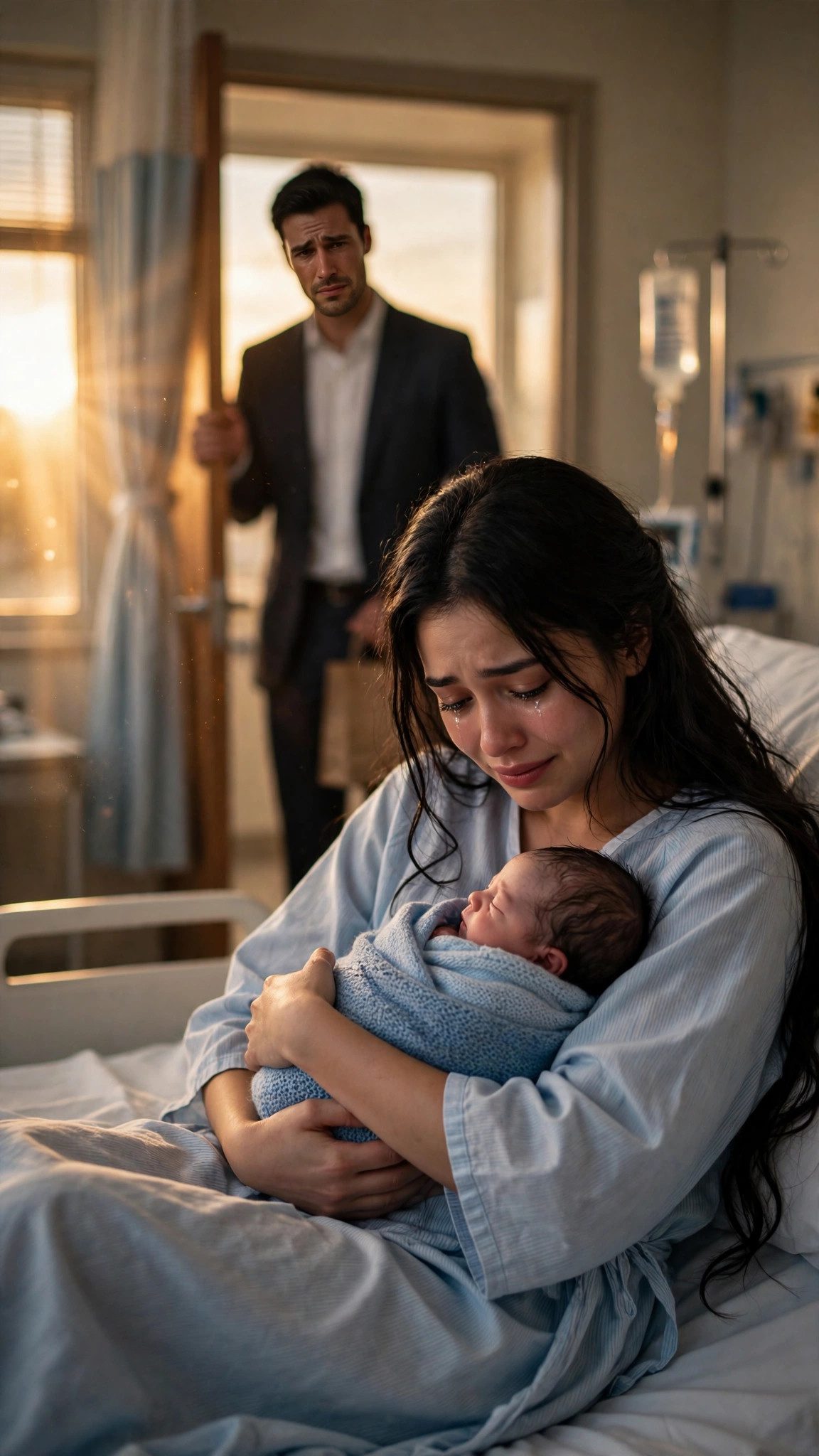
    Colton Beckett was lying in a hospital bed, pale and still, with a bandage on his shoulder and a tube in his arm and his eyes closed. He looked smaller than I had ever seen him. Not the most feared man in Atlanta. Not a mafia boss. Just a man, thirty-six years old, who had been shot twice and was lucky to be alive.

    He opened his eyes. He saw me. And for a moment, neither of us said anything, because there was too much to say and no place to begin.

    "Lauren," he whispered. "You came."

    "You told her to call me," I said.

    "I told her to call you because you're the only person I trust," he said. "I told her because you're the strongest woman I know. I told her because I was dying, and the only thing I could think about was that I had spent the last month running away from the two people I love most in the world, and I didn't want to die without telling you that I know what I did. I know. And I'm sorry."

    I stood at the foot of the bed, and I looked at him, and I thought about the envelope on his desk, with Jade Foresight's name on it, and the four lines I had written inside it. She can have the house. She can have the name. She can have the scarf. Ren is mine.

    "Tell me the truth," I said. "All of it. Not the business version. Not the version Hannah tells me. The truth."

    So he told me. He told me about the loneliness. About the fear. About the night Ren was born, when he had held her for the first time and felt, all at once, that he would do anything to protect her, and that he was not good enough to be her father. He told me about Greece, about the kiss, about the hotel room and his head in his hands. He told me about the Lisbon flight, and how Jade had made it sound like a way to save the shipping business, and how he had told himself it was business because he did not want to admit that he was running away.

    "I was going to come back," he said. "I told myself I was going to come back. But I don't know if that's true. I think I was going to keep running until there was nothing left to run to."

    "And now?" I asked.

    "Now I was shot twice in a parking garage, and the only person I wanted was you," he said. "And Ren. I want to see my daughter. I want to hold her. I want to learn how to be her father. If you'll let me."

    I did not answer him then. I could not. Because the door opened behind me, and a man in a dark suit stepped into the room, and he showed me a badge, and he said, "Mrs. Beckett. My name is Daniel Reyes, FBI. I need to talk to you and your husband. And I need to talk to the woman in the corridor. Because Vincent Castellano is not finished. And if we don't move fast, none of us are safe."
    Before I went into Room 412, Jade caught my arm, very gently, and said, "There's one more thing. You should know why I said yes to Castellano. Why I took his money."

    I waited. The corridor was quiet. Somewhere down the hall, a cart rattled, and a nurse laughed, low and tired, the way nurses laugh at the end of a long shift.

    "I have a younger brother," Jade said. "Daniel. He's twenty-three. He got into trouble, two years ago. Gambling. He owed money to the wrong people. Castellano's people. Forty thousand dollars. They told me that if I did this job, if I got close to Colton and brought him to Lisbon, they would forgive the debt. They would leave my brother alone. I said yes because I was afraid of what they would do to him if I said no. I said yes because I thought I was protecting my family. And then I spent six months destroying yours."

    She looked down at her hands. "I know it's not an excuse. I know you have a daughter, and I was willing to take her father away from her, to save my brother. I know what that makes me. But I wanted you to know that I wasn't doing it for the money. I was doing it because I was afraid. The same way Colton was afraid. Fear makes people do terrible things, Lauren. It made me do terrible things. It made him do terrible things. And I think that's the only thing he and I have in common."

    A nurse came down the corridor then, a woman about my age, with tired eyes and a kind face, and she stopped when she saw me. "Lauren?" she said. "Lauren Beckett? I worked with you in the ER. Are you all right?"

    I nodded, because I could not speak. She looked at Jade, and at the door of Room 412, and she seemed to understand something, the way nurses always understand things without being told.

    "If you need anything," she said, "I'm on this floor until seven. Come find me." And she walked on, and I stood in the corridor with Jade Foresight, and I thought about fear, and about the terrible things it makes people do, and about whether knowing why someone did something terrible made it any easier to forgive them.

  • Chapter 2: The Drive to Decatur

    Chapter 2: The Drive to Decatur

    I did not go back to the house. I did not drive to the airport. I drove to Decatur, to the small brick house on a quiet street where my mother's sister lived, because Aunt Rosa was the only person in the world who had never once asked me to be reasonable about a man.

    Rosa Delgado was sixty-one years old, a retired schoolteacher with gray hair she wore in a braid down her back and a kitchen that always smelled of cinnamon and coffee. She had raised me for two years after my mother died, when I was sixteen and angry at the whole world, and she had never once told me to calm down. She had said, "Anger is information, Lauren. Listen to it."

    I pulled into her driveway at eleven o'clock at night. Ren was awake now, fussing in her car seat, and I unbuckled her and held her against my chest, and I stood on Rosa's porch in the dark with my baby in my arms and my suitcase still in the trunk and the phone still warm in my pocket from Jade Foresight's call, and I knocked.

    Rosa opened the door in her nightgown, her reading glasses pushed up on her head, and she looked at me for exactly two seconds. Then she stepped aside and said, "Come in, baby. Bring her in."

    I did not cry until I was sitting at her kitchen table with a mug of tea in front of me and Ren asleep in the crook of my arm. Then I cried the way you cry when you have been holding yourself together for seventeen days and someone finally gives you permission to fall apart.

    Rosa did not ask questions. She put a hand on my back and waited. When I could speak, I told her everything. The Lisbon ticket. The scarf. The photograph from Greece. The whispered phone calls. The envelope with Jade Foresight's name on it. The call from the unknown number.

    "She said he's bleeding to death in a parking garage," I said. "She said I'm the only person who can save him."

    Rosa was quiet for a long time. Then she said, "Do you believe her?"

    "I don't know," I said. "I don't know what to believe anymore. Three weeks ago I believed my husband loved me. This morning I believed he was leaving me. Tonight I believe a woman I have never met is telling me the truth about a man I thought I knew."

    "Then believe this," Rosa said. "You are not going back to that house tonight. You are not driving to that airport. You are going to sleep in my spare room with your baby, and in the morning, when your head is clear, you are going to decide what to do. No decision made at midnight with a newborn in your arms is a decision you can trust."

    She was right. She was always right. I slept that night in her spare room, in a narrow bed with clean sheets that smelled of lavender, with Ren in a laundry basket lined with blankets beside me, because Rosa did not have a crib and a laundry basket was the safest thing we had. I woke every two hours to feed her, the way I had woken every two hours for seventeen days, and each time I woke, I checked my phone. There were no more calls from the unknown number. There were three missed calls from Colton's phone, all within ten minutes of each other, all just after midnight. And one text message, sent at 12:04 a.m.

    Lauren. I'm sorry. I was wrong. Please. Ren.

    I stared at the message until the words blurred. I was wrong. Please. Ren. He had not written "I love you." He had not written "Come home." He had written her name, as if her name were the whole argument, as if the fact of our daughter were enough to undo everything else.

    In the morning, Rosa made pancakes, and I ate them standing up in her kitchen while Ren slept, and I told her the story from the beginning, the way you tell a story when you need to hear it yourself to understand what happened.

    I told her about the emergency room, about the bullet in his shoulder and the calm in his voice. I told her about the lilies at the nurses' station and the dinner in Buckhead and the truth he had told me on the first date. I told her about the wedding in Savannah and the way he had met me halfway down the aisle.

    "I thought that meant something," I said. "A man who meets you halfway. I thought that was a promise."

    "It was a promise," Rosa said. "He broke it. That doesn't mean it wasn't real when he made it."

    I told her about the pregnancy. How happy he had been at first, how he had come to every appointment, how he had painted the nursery himself, a soft pale green, because he said green was the color of new things. How he had read three books about fatherhood and underlined passages and left them on the nightstand for me to find.

    "And then?" Rosa asked.

    "And then the baby came, and he disappeared. Not all at once. Slowly. First it was the late nights. Then it was the phone calls he took in the other room. Then it was the office."

    The office. Colton's father had died five years ago, of a heart attack in that very office, a small room on the fourteenth floor of a building downtown with a view of the rail yards. Colton had inherited it along with the shipping companies and the warehouses and the rest of the empire. He had always hated that office. He had told me once, in the early days, that his father had died alone in it, on the floor, and no one had found him for three hours, and that he never wanted to sit in his father's chair.

    "But for the last month, he went there every night," I said. "He said he needed to work late. He said there were shipping contracts. And every night, Hannah would call me."

    Hannah Reyes was Colton's assistant, a woman of forty with sharp eyes and a sharper tongue, who had worked for his father before him and who had never once liked me. She had called me every evening for a month, always with the same message, delivered in the same flat voice.

    "Mr. Beckett asked me to tell you he'll be late. It's business. He'll come around."

    "He'll come around," I repeated to Rosa. "As if my husband were a train that was running behind schedule."

    "Did you believe her?" Rosa asked.

    "I wanted to," I said. "I wanted to believe that he was overwhelmed. That new fatherhood had frightened him. That he would come around. Because the alternative was that he had stopped loving me, and I didn't know how to live with that while I was still bleeding and still learning how to keep a tiny human being alive."

    Rosa reached across the table and took my hand. Her hands were lined and warm, the hands of a woman who had graded ten thousand essays and held a hundred frightened children.

    "Tell me about the photograph," she said.

    It had arrived in a plain envelope, no return address, slipped under our front door. I found it the day I came home from the hospital with Ren. A photograph, printed on glossy paper, of a café patio in Greece. White tables. Blue sea in the background. And Colton, sitting at a table in a linen shirt I had never seen, leaning toward a woman with dark hair and a baby-blue scarf around her neck. His hand was on the table, inches from hers. He was smiling. Not the smile he gave in business photographs. A different smile. A private one.

    "I told myself it was a client," I said. "I told myself the scarf was a coincidence. But the scarf he brought home this morning was the same blue. The same silver thread in the hem. I held it in my hands, Rosa. I held the proof in my hands, and he stood there and told me she was just a client."

    "And the phone calls?" Rosa asked.

    "Every night, after he left for the office, his phone would ring. Not his work phone. His personal phone. And he would step into the other room to answer it, and when he came back, he would smell different. Not of perfume. Of the sea. Of somewhere far away."

    I had not told anyone about the phone calls. Not Hannah. Not Rosa. Not even myself, really. I had filed them away in the part of my mind where you put things you cannot afford to look at yet.

    "Lauren," Rosa said, very gently, "do you know what I think? I think that woman, Jade, did not send you that photograph to hurt you. I think she sent it to you because she wanted you gone. I think she wanted you and Ren out of that house before whatever is happening tonight happened. And I think that phone call, whatever it was, was not an accident."

    "You think she's trying to help me?"

    "I think she's trying to help herself," Rosa said. "And right now, her interests and yours might be the same. That doesn't make her your friend. But it doesn't make her a liar, either."

    Ren woke then, and cried, and I picked her up and held her against my shoulder, and she quieted the way she always did when she heard my heartbeat. Rosa watched us, and her face softened, and she said, "She looks like you, you know. Around the eyes."

    "She looks like him," I said.

    "She looks like you," Rosa said firmly. "And whatever you decide to do about that man, you decide it for her. Not for him. Not for the past. For her."

    My phone buzzed on the table. Unknown number. My hand shook as I picked it up.

    "Lauren," Jade whispered. "It's me. Please. He's at Grady Memorial. They brought him in forty minutes ago. Two bullets. One in the shoulder, one in the side. He's alive. He's asking for you. But Lauren, you have to listen to me. The men who shot him are still out there. They know about you. They know about Ren. If you come to the hospital, come quietly. Don't tell anyone. Don't call the police. Not yet. I'll explain everything when you get here. Please. He said you would know what to do."

    I looked at Rosa. I looked at Ren, asleep again in my arms, her tiny fist curled against my collarbone.

    "I'm going," I said.

    Rosa nodded. She did not try to stop me. She stood up and took Ren from my arms, gently, the way you take something precious from someone who is about to walk into a fire.

    "She stays with me," Rosa said. "You go. You find out the truth. And then you come back here, and we decide together what happens next. Do you understand me? I will not let anything happen to this baby. Not while I am breathing."

    I kissed Ren's forehead. I kissed Rosa's cheek. I picked up my keys, and I walked out into the morning light, and I drove toward Grady Memorial Hospital, toward the emergency room where I had once been a nurse, toward the man I had married, who was bleeding in a hospital bed and asking for me by name.
    The next morning, while Ren slept in her basket, I went through the baby's bag, the one I had packed in a hurry in the bedroom the day I left. Diapers. A spare outfit. Her favorite blanket. And at the bottom, underneath the blanket, something I had forgotten I put there: the small plastic bracelet from the hospital, the one they had put on Ren's wrist the day she was born. It said, in tiny printed letters, BABY GIRL BECKETT, and the date, and the time. I held it in my hand for a long time. Seventeen days ago, she had been Baby Girl Beckett, a name on a bracelet, a weight on a scale, a footprint on a card. Now she was Ren, with a face, and a cry, and a way of curling her fist around my finger, and I thought about how much had changed in seventeen days, and how much had been lost.

    Rosa came into the room with two cups of coffee. She set one down beside me and sat on the edge of the bed.

    "Your mother would have liked him, you know," she said. "Colton. In the beginning. She liked men who were steady. She liked men who showed up."

    "She never met him," I said.

    "No," Rosa said. "But she knew you. And she used to say, 'That girl of mine, she doesn't fall for pretty words. She falls for people who stay.' And Colton stayed, Lauren. For two years, he stayed. Remember that, when you're deciding what comes next. The man who left is real. But so is the man who stayed."

    I thought about the day I told Colton I was pregnant. It was a Tuesday, in the kitchen of our house, in the early morning, before he went to work. I had taken the test at five in the morning, and I had sat on the bathroom floor for twenty minutes, staring at it, before I walked into the kitchen and put it on the table in front of him, without a word. He had looked at it. He had looked at me. And then he had stood up, and he had picked me up, and he had spun me around in the kitchen, laughing, and he had said, "We're going to be parents. Lauren, we're going to be parents." And that night, he had come home with paint samples, six shades of green, and he had held them up against the nursery wall, one by one, until I picked the soft pale green, and he had painted the whole room himself, over a weekend, with a roller and a ladder and paint on his shirt, and he had said, "Green is the color of new things."

    I told Rosa all of this. I told her about the paint samples. I told her about the spinning in the kitchen. I told her about the way he had read three books about fatherhood and underlined passages and left them on the nightstand for me to find.

    "That man is still in there," Rosa said. "Somewhere. Underneath the fear, and the running, and the mistakes. That man is still in there. The question is whether you want to wait for him to find his way back. And there is no wrong answer to that question, Lauren. None. Whatever you decide, I will be here, and Ren will be here, and we will be all right."

    Ren woke then, and cried, and I picked her up, and I held her against my chest, and I thought about the man who had painted a nursery pale green, and the man who had folded a navy-blue suit into a suitcase, and I wondered if they were the same man at all.

  • Chapter 1: The Seventeenth Day

    Chapter 1: The Seventeenth Day

    Seventeen days after giving birth to our daughter, I discovered my husband had booked a one-way flight to Lisbon with his mistress.

    His name was Colton Beckett. He was not just a wealthy businessman. He was one of Atlanta's most feared mafia bosses, a man who could find almost anyone with a single phone call. He controlled shipping companies, commercial properties, and warehouses throughout Georgia. Behind those legitimate businesses stood a powerful criminal empire. Men twice his age lowered their voices around him. Even his enemies knew better than to threaten his family.

    And yet, somehow, the man everyone feared had become the person who hurt me most.

    Our daughter, Ren, was only seventeen days old. I had spent thirty-one hours in labor. My body still ached. During labor, he had sat beside me, holding my hand and whispering, "You're the strongest woman I know."

    Then he was gone. Before I even knew he was leaving. He had arranged a flight to another country. He had arranged to leave the country with another woman before our daughter was even a month old.

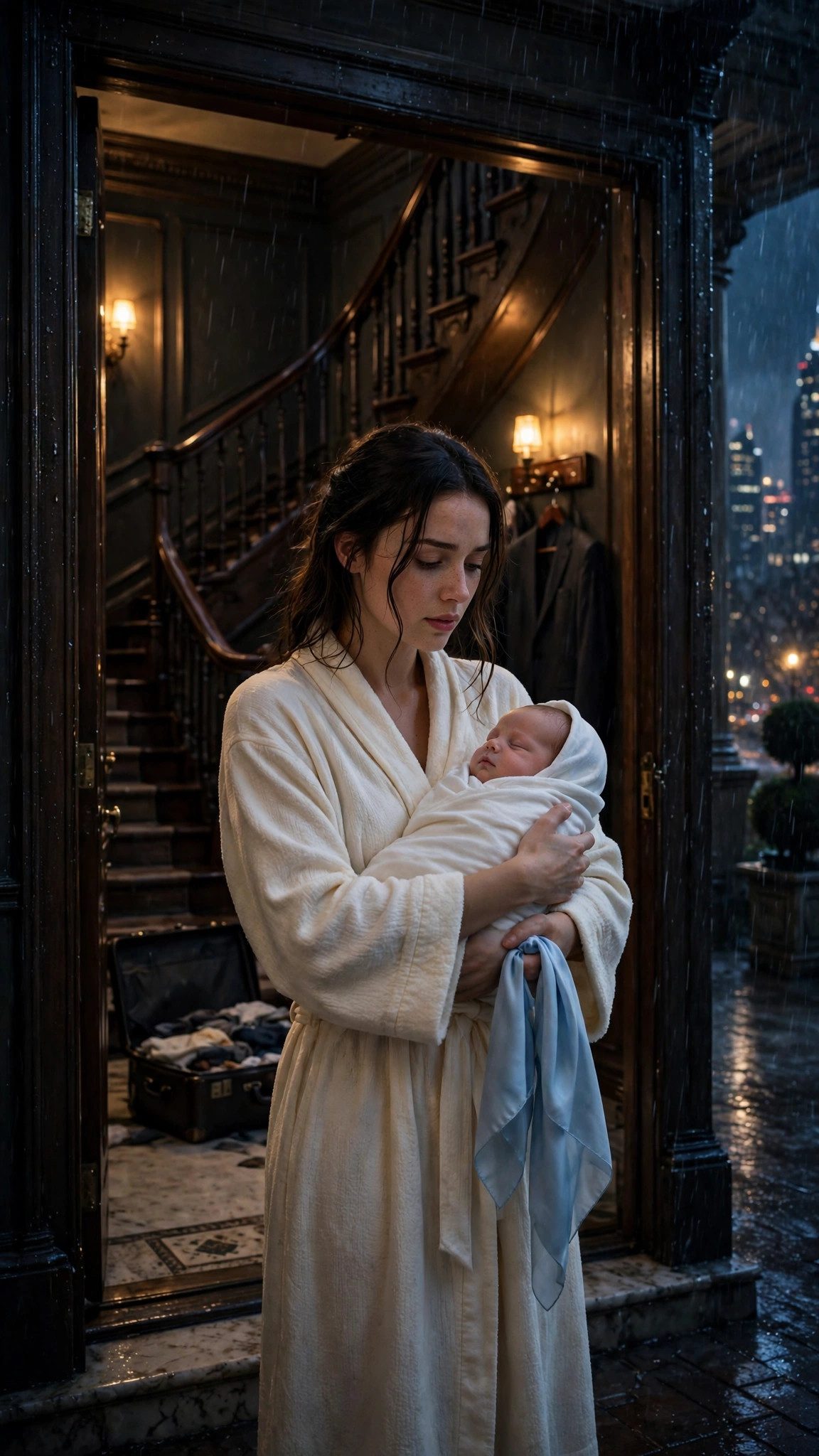
    It was the morning of the seventeenth day. Ren was asleep in her crib in the nursery, her tiny fists curled against her cheeks, her breathing soft and even. I was standing in the kitchen in my robe, one hand pressed to my still-tender stomach, the other holding a mug of tea that had gone cold, when I heard the front door open and close.

    Colton came in carrying his suitcase in one hand and a small shopping bag in the other. He set the suitcase down by the stairs. He did not look at the nursery door. He did not look at me. He looked at his phone.

    "You're home," I said.

    "Just for an hour," he said. "I need to pack. The flight leaves at noon."

    "What flight?"

    He finally looked up. For a second, something crossed his face. Not guilt. Something closer to impatience, as if I had asked him a question he had already answered in his own head.

    "Lisbon," he said. "It's business."

    I stared at him. Lisbon. A city I had never been to. A city he had never mentioned. And the shopping bag on the counter, tissue paper spilling out of the top, and the corner of something pale blue showing through.

    "What's in the bag?" I asked.

    He picked it up and held it out to me, the way a man holds out a gift he bought at the airport because he remembered, too late, that he was supposed to bring something home.

    "A scarf," he said. "Silk. I thought you'd like it."

    I took the bag. I pulled the scarf out. It was baby blue, soft as water, with a fine silver thread running through the hem. It was beautiful. It was not my color. I had never worn baby blue in my life. I wore black and cream and deep green. Everyone who knew me knew that.

    "Who is she?" I asked.

    His face did not change. That was the worst part. His face did not change at all.

    "She's just a client," he started.

    "Stop lying to me!" The words came out louder than I meant them to, and I glanced toward the nursery, afraid I had woken Ren. But Ren slept on, and the silence that followed my voice was worse than the shouting would have been.

    "I've never asked you for much, Colton," I said, quieter now. "I just wanted you here when our daughter was so small."

    "No." He placed the suitcase on the bed. "Don't make this into a fight."

    "Our daughter is seventeen days old," I said. "You're leaving to catch a plane to Lisbon with another woman."

    "I need to work."

    "No." I stood in the doorway so he would have to look at me to get past. "I am not going to pretend that it's okay that you would rather be anywhere else."

    He folded a navy-blue suit into his suitcase. His hands were steady. That steadiness was what I had loved about him once, in the emergency room at Grady Memorial, when a man with a gunshot wound had been wheeled in and the whole trauma bay had been shouting, and Colton Beckett had lain there with a bullet in his shoulder and looked up at me, the nurse, and said, "You're calm. I like calm."

    I had liked his steadiness too. I had mistaken it for safety.

    "She's just a client," he said again, and this time his voice had an edge to it, the edge men use when they want a conversation to be over.

    "I understand perfectly," I said. "I watched as you folded a navy-blue suit into your suitcase. I understand that you have already decided. I understand that our daughter is seventeen days old and you are leaving to catch a plane to Lisbon with another woman, and you want me to call it business so you don't have to call it what it is."

    "You wouldn't understand."

    "No, no, no, no, no." I heard my own voice shaking, and I hated it, because I had spent thirty-one hours in labor without making a sound like that, and I was not going to make it now for a man who had already left. "I am not going to pretend."

    At that time, I didn't realize I was fighting for a family that had already disappeared.

    He finished packing. He closed the suitcase. He kissed the top of my head the way you kiss a child you are leaving with a babysitter, and he walked out of the bedroom, down the stairs, and out the front door. I heard the car start. I heard it pull away.

    I waited until he left the house. When I heard the sound of the door closing, the anger began to disappear.

    Not anger. Something more direct. Something more decisive.

    I realized I had been waiting for Colton to return home as a husband and father. For the first time, I saw that he had never intended to return at all.

    It wasn't just about the suitcase, which continued to grow. It was that I'd seen a photograph of a woman in a scarf sitting next to Colton on a café patio in Greece. A woman I didn't know. She was wearing a baby-blue scarf. The same blue scarf he had brought home for her. And when she called on the phone, she said his name softly. In a voice that I had once thought was reserved for me.

    The photograph had arrived three weeks ago, in a plain envelope with no return address, slipped under our front door while I was in the hospital giving birth. I had found it when I came home with Ren. I had told myself it was a mistake. A business dinner. A client. I had told myself that for seventeen days, because what else do you tell yourself when you have a newborn in your arms and your body is still healing and the man you married is the most dangerous man in Atlanta?

    That was when I began to make plans for my own quiet departure. It wasn't revenge. It was self-preservation.

    Each night, after he told me he needed to work late, Colton drove to an office he'd inherited from his father. And every night in that office, he spoke to a woman from the other side of the world. I remembered the words he'd once spoken to me. And for a moment, I felt a strange hope. What if he was simply still overwhelmed by fatherhood, feelings, and attachment? He was a mafia boss with armed men, powerful connections, and a reputation for never letting anything slip beyond his control. If Ren had been injured, Colton would have personally hunted down the culprit and handled him. But for his wife and child, he had left.

    I remembered how his assistant, Hannah, had always made excuses for him. It's business. He's just overwhelmed. He'll come around. But he'd never once said it to our daughter. He didn't even look at her when she slept. I had waited for him to show up as a father and as a husband. I had waited long enough.

    I packed the baby's bag. Diapers. A spare outfit. Her favorite blanket. I hesitated before putting it down. Then I wrapped our daughter in a soft blanket. I pushed the sandals off the door, leaned on the cradle, and before I left, I stopped. I could not leave her alone. I picked her up and held her against my chest.

    I left a note on the envelope. I wrote her name across the front in my steadiest handwriting, because I wanted him to see it the moment he came home and found the crib empty and my clothes gone.

    Jade Foresight.

    Inside the envelope, on a single sheet of paper, I wrote four lines.

    She can have the house. She can have the name. She can have the scarf. Ren is mine.

    I left the envelope lying open on his desk, where he kept his keys and his phone charger and the small silver frame with our wedding photograph in it. In the photograph, I was laughing. He was looking at me the way men look at women they have just decided to spend their lives with. I did not take the photograph with me. I wanted him to see it when he came home to an empty house.

    The night was calm and quiet. For the first time in months, I finally saw a few stars over the city. I walked to the red sedan parked in the driveway. I buckled Ren into her car seat. I drove away from the house without looking back once. I was afraid that if I looked back, I would change my mind.

    I just kept driving. I ended up driving to the edge of the city. And as I walked away from Colton's home, a strange sense of security came over me. As if Colton would eventually come home from the airport, open the front door, and be relieved that I was gone.

    But something unexpected happened. Half an hour later, I received a call from an unknown number. It was a woman's voice.

    "Lauren," she whispered, "it's Colton."

    I pulled the car over to the side of the road, my hands shaking so hard I could barely hold the phone. Ren was asleep in the back seat. The city lights were behind me. Ahead of me, the highway stretched dark and empty toward the county line.

    "Who is this?" I said.

    "Please," the woman whispered. "Please don't hang up. My name is Jade. Jade Foresight. And your husband is bleeding to death in a parking garage at the airport, and you are the only person in this world who can save him."

    I met Colton Beckett three years ago, in the emergency room at Grady Memorial Hospital, on a Tuesday night in October. I was twenty-four years old, a second-year ER nurse, and I had been on my feet for eleven hours. The ambulance bay doors opened, and they wheeled in a man in a charcoal suit with a bullet in his left shoulder and blood soaking through his white shirt, and he looked up at me while the trauma team cut his jacket away and said, in a voice so calm it stopped the whole room for half a second, "You're calm. I like calm."

    I did not know then that he was a mafia boss. I knew that he was handsome, and that he was bleeding, and that he had the steady hands of a man who had been shot before and expected to be shot again. I knew that when the surgeon asked him who had done it, he said, "I don't remember," in a voice that made it clear he remembered perfectly well and would deal with it himself.

    I knew that he asked for me by name the next morning, when I came on shift, and that he asked again the morning after that. I knew that when he was discharged, he left a bouquet of white lilies at the nurses' station with a card that said only, "Thank you for the calm. — C.B."

    I knew that he waited six weeks before he asked me to dinner, because he wanted me to be sure it was not gratitude. I knew that at dinner, in a small Italian restaurant in Buckhead with candles on the tables and a violinist in the corner, he told me the truth about what he did, because he said he would not build a marriage on a lie. He told me about the shipping companies and the warehouses and the men who worked for him, and he told me about the other part, the part that made men twice his age lower their voices, and he waited while I finished my wine and decided whether to stand up and walk out.

    I did not walk out. I stayed. I told myself that a man who tells you the truth on the first date is a man who can be trusted. I told myself that the legitimate businesses were the real Colton, and the other part was something he had inherited from his father and was trying, slowly, to leave behind.

    We married two years later, in a garden in Savannah, with a hundred guests and a string quartet and a cake with three tiers. My mother had died when I was sixteen, and my father had died two years after that, and I walked down the aisle alone, and Colton met me halfway and took my hand, and I thought, this is a man who comes to meet you. This is a man who does not leave you to walk alone.

    I was wrong about so many things. But I was not wrong that he had once been the man who met me halfway. I had seen it. I had lived with it for two years. And then Ren was born, after thirty-one hours of labor, and Colton sat beside me the whole time, holding my hand and whispering, "You're the strongest woman I know," and for one hour, while I held our daughter for the first time and he leaned over the hospital bed to look at her face, I thought we were going to be all right.

    Then he stopped coming home. Then the late nights started. Then the office his father had left him, downtown, where he went every night and spoke to a woman from the other side of the world in a voice I had once thought was reserved for me.

    Now, on the side of a dark highway, with my seventeen-day-old daughter asleep in the back seat and my husband's mistress whispering into my phone, I understood something I had not understood in the kitchen that morning.

    Colton had not left us. He had been taken. And whether he deserved to be saved was a question I would have to answer in the next ten minutes, because Jade Foresight was crying now, quietly, the way people cry when they are trying not to be heard, and she was saying, "He told me to call you. He said, if anything happens, call Lauren. He said you would know what to do. He said you were the strongest woman he knew."

  • Chapter 7: Daddy’s Here

    Chapter 7: Daddy’s Here

    One year later, I stood in a garden in Lake Geneva, Wisconsin, holding my daughter in my arms, and I thought about how strange it is that a life can break apart completely and then, slowly, piece by piece, become something new.

    It had not happened quickly. It had not happened easily. There were no miracles in our story. There was only time, and presence, and a man who kept his word, one day at a time.

    Damian came to Lake Geneva the day after our conversation at my mother's kitchen table, and he stayed. He rented a small house two streets away from my mother's cottage, a house with a leaky roof and a garden full of weeds, and he fixed the roof himself, and he pulled the weeds himself, and he came to my mother's house every morning at eight o'clock, and he asked what needed doing, and he did it. He helped my mother in the garden. He fixed the fence. He painted the porch. He learned how to make my mother's soup, badly at first, and then a little less badly, and then, one day, almost well.

    He did not try to fix my grief. He did not tell me to move on. He did not buy me things. He sat with me in the garden, in the silence, and he listened when I wanted to talk about Elias, and he was quiet when I did not want to talk at all. He went with me to the rosebush every Sunday, and we stood there together, and sometimes I cried, and sometimes he cried, and sometimes we just stood there, two people who had lost the same child, learning how to carry the same grief without letting it pull them apart.

    In the autumn, we went back to Chicago together, for one day, to close the house. We walked through the rooms, and we packed the things that mattered, and we left the rest. I stood in the nursery for a long time, looking at the pale yellow walls, and the mobile with the wooden stars, and the crib that had never been slept in. Damian stood in the doorway, and he did not come in, because he understood that this was something I needed to do alone. When I came out, I took his hand, and I said, "I'm ready." And we drove back to Lake Geneva, and we did not look back.

    In the winter, Damian's testimony sent Vincent Castellano to prison for life. Tony Russo testified. Sal Ferraro testified. The trial lasted three weeks, and Damian was in court every day, and when it was over, Agent Daniel Reyes shook his hand, and he said, "You did the right thing, Mr. Moretti." Damian told me later that those were the first words of respect he had heard from a stranger in twenty years that had nothing to do with fear.

    In the spring, we sold the last of the criminal businesses. The warehouses went to a logistics company. The shipping routes went to a legitimate firm. The properties went to families who needed homes. Damian kept the restaurants and the hotels, the clean ones, the ones that had always been clean, and he ran them the way a businessman runs them, with meetings and budgets and early mornings and late nights that ended with him coming home. He came home every night. That was the rule. That was the promise he had made, not with words, but with his life: he came home every night.

    In the summer, I went back to nursing. Not at St. Agnes, not yet. At a small clinic in Lake Geneva, three days a week, with children who needed someone patient and kind. It felt good to be useful again. It felt good to hold a baby who was crying and know that I could help. It felt good to be Claire Bennett Moretti again, not just a woman defined by what she had lost.

    And in the autumn, one year and three months after Elias died, I found out I was pregnant again.

    I sat in the bathroom of my mother's cottage, holding a small white stick with two pink lines on it, and I cried. I cried because I was happy, and I cried because I was terrified, and I cried because I thought of Elias, and I wondered if it was all right to be happy when he was gone. Then I went into the kitchen, and I told Damian, and he held me, and he cried too, and he said, "We will do this together, Claire. Every appointment. Every ultrasound. Every night. I will be there. I promise you, I will be there."

    And he was. He was there for every appointment. He sat beside me in Dr. Hayes's office, and he asked questions, and he took notes, and he held my hand when the ultrasound showed a tiny heartbeat, strong and steady. Dr. Hayes, the same doctor who had warned me at twenty-seven weeks, looked at us both and said, "This is a different pregnancy, Claire. Your body is healthy. Your baby is healthy. But we will watch you closely. We will not take any chances." And Damian nodded, and he said, "Whatever it takes."

    The pregnancy was long and careful and, in the end, ordinary in the best possible way. There were no emergencies. There were no middle-of-the-night phone calls. There were only checkups, and vitamins, and a nursery painted pale yellow in the small house two streets away from my mother's cottage, and a mobile with wooden stars, and a crib that Damian assembled himself, swearing at the instructions, the same way he had done before, only this time I laughed, and he laughed, and it felt like a beginning instead of an ending.

    Our daughter was born on a Tuesday morning in May, at 8:14, after nine hours of labor, in the same hospital where Elias had been born. She weighed seven pounds, four ounces. She cried the moment she was born, loud and strong, and the sound of it filled the whole room, and I cried, and Damian cried, and Dr. Hayes smiled, and Nurse Elena Ruiz, who had asked to be there, put our daughter in my arms, and she said, "She is beautiful, Mama. She is perfect."

    We named her Elena, after the nurse who had held my hand through the worst day of my life, and who had helped Damian find me when I needed to be found, and who had stood in the delivery room and cried when our daughter took her first breath.

    Damian held her first. He took her in his arms, so gently, as if she were made of glass, and he looked down at her tiny face, and he whispered, "Hello, sweetheart. I'm Daddy. Daddy's here."

    Those were the words Elias had never heard. Those were the words Damian had spoken into a phone, across an ocean, too late. Now he was saying them in person, in a hospital room, holding his daughter, and he was not too late. He was right on time.

    We brought Elena home to the small house in Lake Geneva. My mother moved in with us, because she said a baby needs a grandmother, and she was right. Tony Russo came to visit, and he held Elena, and he cried, and he said, "She looks like her mother." Sal Ferraro came, and he brought a teddy bear almost as big as he was. Agent Reyes sent a card. Even Grace, my friend from the hospital, came all the way from Chicago, and she held Elena, and she said, "She is going to be trouble, Claire. I can tell already."

    Every Sunday, we go to the rosebush in my mother's garden. We bring flowers. We sit for a while. I tell Elias about his little sister. I tell him she has his eyes. I tell him she cries loud, the way he never got the chance to. I tell him I love him, and that I will always love him, and that twelve hours and six minutes was enough for me to love him completely, and that no one can ever take that away from me.

    Damian stands beside me, holding Elena, and he tells Elias about the garden, and the house, and the life we are building, and he says, "I am sorry I wasn't there, son. I am sorry every day. But I am here now. I am here for your mother. I am here for your sister. I am not going anywhere."

    The first night we brought Elena home, Damian was afraid to hold her. He stood in the doorway of the nursery, looking at the crib, and he said, "What if I do something wrong? What if I hold her the wrong way?" I took his hands, and I put them around her, the way Elena Ruiz had shown me in the hospital, one hand under her head, one hand under her back, and I said, "You are not going to do anything wrong. You are her father. That is enough." He held her for two hours that night, sitting in the rocking chair, not moving, just watching her breathe. Every few minutes, he put his hand on her chest, to feel her heartbeat, and every time he felt it, he closed his eyes, as if he were thanking someone.

    At her first pediatrician appointment, Damian asked the doctor seventeen questions. I counted. He asked about her weight, and her feeding, and her sleep, and whether her breathing sounded normal, and whether the little sound she made when she yawned meant anything. The doctor, a kind woman named Dr. Patel, answered every question patiently, and then she looked at me and smiled, and she said, "Your husband is very thorough." I said, "He is making up for lost time." And Damian nodded, because it was true, and he was not ashamed of it.

    When Elena was three months old, we held a small naming ceremony in my mother's garden. It was not a big event. It was my mother, and Damian, and me, and Elena, and Tony Russo, and Sal Ferraro, and Grace, and Nurse Elena Ruiz, who had driven all the way from Chicago in the rain. We stood beneath the rosebush, and my mother read the same poem she had read for Elias, and then she read a different one, about new life, about a child being a promise that the world keeps making, even after it has broken your heart. Damian held Elena up, the way fathers have held their children for a thousand years, and he said, "Elena Moretti. You are named for a woman who saved our family. You are loved. You are wanted. You are home." And everyone cried, even Tony, who pretended he had something in his eye.

    There were hard days, too. I will not pretend there were not. There were nights when Elena cried for hours and nothing would soothe her, and I would stand in the nursery, rocking her, exhausted, and I would think of Elias, and I would wonder if I was doing something wrong, if I was a bad mother, if I had failed one child and was about to fail another. On those nights, Damian would come into the nursery, and he would take Elena from my arms, and he would walk with her, up and down the hallway, singing to her in a low voice, a song his own mother had sung to him, and he would say to me, "Go to sleep, Claire. I have her. I am here." And I would go to sleep, and I would wake up to find him still awake, still holding her, still singing, and I would know that this was the man I had married, the man who had been there all along, underneath the empire and the fear and the mistakes.

    Then we go inside, and my mother makes soup, and Elena sleeps in her crib beneath the mobile with the wooden stars, and Damian sits beside me on the porch, and he takes my hand, and we watch the lake go dark, and I think about the woman I was a year ago, sitting on a train to Lake Geneva with a small box in her lap, thinking her life was over.

    My life was not over. It was beginning again, in a way I could not have imagined. I had lost a son. I had almost lost a husband. I had almost lost myself. And now I had a daughter, and a husband who came home every night, and a mother who made soup, and a garden full of roses, and a rosebush where my son's ashes rest, and a future that felt, for the first time in a long time, like something I could trust.

    When Elena was eleven months old, she took her first steps in my mother's garden, on the grass beside the rosebush. She wobbled, and she fell, and she got up again, and she walked three steps into Damian's arms, and he picked her up and spun her around, and she laughed, a bright, fearless laugh, and I thought of Elias, and I thought of how he had never taken a single step, and I felt the grief and the joy at the same time, the way a mother does, holding both in her heart, because love does not divide itself. It multiplies.

    Her first word was "Dada." Damian cried when he heard it. He had been waiting for it for months, saying her name to her every day, pointing at himself, saying, "Dada, Dada," and when she finally said it back, he picked her up and held her against his chest, and he whispered, "That's right, sweetheart. Dada's here. Dada's always here."

    That night, after Elena had fallen asleep, Damian leaned over her crib, and he kissed her forehead, and he whispered, "Daddy's here, sweetheart. Daddy's here. And Daddy is never leaving again."

    And this time, I believed him.

    THE END

  • Chapter 6: The Man Who Gave the Order

    Chapter 6: The Man Who Gave the Order

    Damian sat in his car across the street from my mother's cottage for a long time before he found the courage to knock on the door.

    I know this because my mother told me later. She had seen the car from the kitchen window. She had watched it sit there in the dark for almost an hour, and she had known who it was, because no one else would sit in a car on our quiet street for an hour in the dark, and no one else drove a car like that one. She did not tell me. She waited. She let him sit there, because she thought he deserved to sit there for a while, thinking about what he had done.

    When he finally got out of the car, he was carrying the paper bag. He walked up the path slowly, the way a man walks when he is not sure he will be welcome. He knocked on the door, three soft knocks, and my mother opened it, and she looked at him, and she did not move aside.

    "Mr. Moretti," she said.

    "Mrs. Bennett," he said. "May I come in?"

    "That depends," my mother said. "Why are you here?"

    "To see my wife."

    "My daughter is not your wife right now," my mother said, and her voice was calm, but there was steel underneath it, the kind of steel that comes from raising a child alone and burying a husband and keeping a garden alive through forty Wisconsin winters. "Right now, my daughter is a mother who buried her son four days ago. If you are here to give her orders, you can get back in your car. If you are here to apologize, you can start by telling me what you are sorry for, and I will decide whether it is enough."

    Damian stood on the porch for a moment, and I think that was the first time in his life anyone had spoken to him that way. He was Chicago's most feared mafia boss. Men crossed the street to avoid him. Men lowered their voices when he entered a room. And here was a sixty-one-year-old woman in an apron, standing in the doorway of a small white cottage, telling him he could not come in until he said the right words.

    "I am sorry," he said, "that I was in Capri when my son was born. I am sorry that I was in Capri when my son died. I am sorry that Claire called me eight times and I answered once. I am sorry that I told her I needed a little time, when what she needed was her husband. I am sorry that I warned her about nothing, and that she warned me about everything, and that I did not listen. I am sorry that our son lived twelve hours and six minutes and never felt his father's arms. I am sorry for all of it. I will be sorry for all of it for the rest of my life."

    My mother looked at him for a long moment. Then she stepped aside.

    "Come in," she said. "But you will not raise your voice in this house. You will not give orders in this house. And if my daughter tells you to leave, you will leave."

    Damian nodded. He walked into the kitchen, and he saw me sitting at the table, and he stopped, as if the sight of me had knocked the air out of him. I was wearing one of my mother's old sweaters. My hair was pulled back. My eyes were swollen. I did not look like the woman he had married. I looked like a woman who had been through something terrible, and I was.

    "Claire," he said.

    I did not get up. I did not go to him. I sat at the table with my hands wrapped around a cup of tea gone cold, and I looked at him, and I said, "You found me."

    "Elena told me about Lake Geneva," he said. "The nurse. She said you talked about your mother's cottage. She said your father planted a rosebush here."

    "She shouldn't have told you."

    "She said that part was up to you. She said she was telling me because I should know what I lost, not because I deserved to find you."

    I nodded. That sounded like Elena. She was the kind of nurse who understood that the truth and forgiveness are not the same thing.

    Damian set the paper bag on the table, very gently, between us. "I brought this," he said. "I didn't know what else to do. I watched the video, Claire. I watched it a hundred times. I read your letter. I read it until I had it memorized."

    "What did the letter say that you didn't already know?" I asked. My voice was steady. I was surprised by how steady it was.

    "It said I lost more than my child," he said. "And you were right. I lost my son. I lost my wife. I lost the man I wanted to be. I lost all of it in twelve hours and six minutes, and I did it to myself, one choice at a time."

    He sat down across from me. My mother stood in the doorway, watching, her arms crossed. She did not leave. She did not trust him enough to leave us alone, and I was glad.

    "I went to see Alessia," Damian said. "Before I came here. I went to her apartment, and I told her it was over. I told her I had chosen wrong, and that I was going to spend the rest of my life trying to make it right, and that she was not a part of that life anymore. She cried. She begged. She said she loved me. And I told her that love is not something you say. It is something you do. And what I did was leave my wife alone in a hospital while our son died."

    "She sent me a photograph," I said. "Three weeks old. She tried to make me believe you went back to her."

    Damian's face went dark. "She did that? After everything?"

    "She is afraid," I said, echoing my mother's words. "A woman who is secure does not send photographs to another woman's phone."

    "I will deal with her," Damian said. "She will never contact you again. I promise you that."

    "Don't make promises, Damian," I said. "Your promises are what got us here."

    He flinched. I saw it. The words landed the way I had intended them to land, and for a moment I felt a sharp, ugly satisfaction, and then I felt ashamed of it, because I did not want to be the kind of person who hurt people to feel better. I was not that person. Grief had made me into someone I did not recognize, and I did not like her.

    "I didn't come here to make promises," Damian said quietly. "I came here to tell you what I have done. Not what I will do. What I have done."

    He told me, then, and as he spoke, I began to understand that something in him had truly changed, not in the way a man changes when he is caught, but in the way a man changes when he has lost something he can never get back.

    He had gone to FBI Agent Daniel Reyes. I knew that name. Everyone in Chicago who followed the news knew that name. Agent Reyes had been building a case against the Moretti family for two years, and against Vincent Castellano, the man whose men had grabbed my arm on Rush Street seven months ago. Damian had walked into the federal building in Chicago, alone, without a lawyer, without his men, and he had handed Agent Reyes everything: the ledgers, the shipping routes, the names, the accounts. He had given the FBI the entire criminal empire he had spent twenty years building, and he had told them he would testify against Castellano, against his own associates, against anyone they wanted, because the empire was what had taken him away from his family, and he was done with it.

    "Castellano was arrested yesterday," Damian said. "He will spend the rest of his life in prison. Tony Russo testified. Sal Ferraro testified. The men who grabbed you on Rush Street testified. It is over, Claire. The empire is over. I am giving it all away. The warehouses, the shipping routes, the properties. I am selling everything that was built on blood, and I am keeping only the legitimate businesses, the restaurants, the hotels, the ones that were clean. I am going to be a businessman, Claire. A real one. Not a boss. Not a king. A man who comes home for dinner."

    I stared at him. I had expected many things from this conversation. I had expected begging. I had expected anger. I had expected him to tell me I was his wife and I belonged in Chicago. I had not expected him to tell me he had dismantled his own empire.

    "Why?" I asked. "Why would you do that?"

    "Because I finally understood something," he said. "On the plane, when I was flying home, I kept thinking about the nursery. I kept thinking about the mobile with the wooden stars. And I realized that I had spent three years building an empire for a family, and I had forgotten to be part of the family. I built a kingdom, and I left my wife alone in it. I am not going to do that anymore. If you come back to me, I want you to come back to a man, not a kingdom. And if you don't come back to me, I want you to know that I became that man anyway, because our son deserved a father who would have been there, and I was not that father, and I will spend the rest of my life trying to be him for someone else, even if that someone else is only his memory."

    My mother made a small sound in the doorway. I looked at her, and I saw tears in her eyes, and I realized she had not expected this either.

    "I have one more thing to tell you," Damian said. "Alessia came here. Yesterday. She drove to Lake Geneva. She stood outside this house. My men saw her. Not my men, I mean, the men who used to be my men. Tony called me. He said she was asking people in town about you. I told Tony to make sure she never came near this house again, and he did. She is gone, Claire. She will not bother you again."

    I thought about the photograph she had sent me. I thought about the lie dressed up as the truth. And I thought about how small Alessia seemed now, compared to everything else that had happened. She was not the reason my son had died. She was a symptom, not a cause. The cause was a man who had chosen his empire over his family, one trip at a time, until there was nothing left to choose.

    "I am not coming back to Chicago," I said. "Not yet. I need time. I need to grieve my son. I need to figure out who I am without him, and without you, and without the life I thought I was going to have."

    "I understand," Damian said.

    "But I am not saying never," I said, and I saw his face change, the way a sky changes when the sun comes out after a storm. "I am saying: earn me back, Damian. Not with money. Not with promises. With time. With presence. With the man you say you want to be. Come here. Come to Lake Geneva. Help my mother in the garden. Sit with me while I grieve. Don't try to fix it. Don't try to buy it away. Just be here. And we will see."

    Damian nodded. He reached across the table, slowly, giving me time to pull away, and he took my hand. His hand was warm. It was the hand that had held mine on our wedding day. It was the hand that had painted the nursery pale yellow. It was the hand that had never held our son.

    "I will be here," he said. "Every day. As long as it takes."

    And for the first time in four days, I believed him.

    The next morning, I woke up to the sound of voices in the garden. I looked out my bedroom window, and I saw Damian standing beside the rosebush with my mother, holding a pair of pruning shears the way a man holds a weapon he does not know how to use. My mother was showing him, patiently, which branches to cut and which to leave, and Damian was listening the way he had once listened to me in the hospital cafeteria at three in the morning, with his whole body turned toward her, his phone nowhere in sight.

    "Cut here," my mother said, pointing to a dead branch. "Not there. There is life in that one. You have to learn to tell the difference."

    Damian cut where she told him to cut. He was careful. He was slow. He was not the kind of man who was used to being careful and slow, and it showed in the way his hands shook, just slightly, as he worked. My mother watched him for a while, and then she said, "You are good at this, Mr. Moretti. You have gentle hands. I did not expect that."

    "I am learning," Damian said. "I am learning a great deal of things I should have learned a long time ago."

    I stood at the window for a long time, watching them, and I felt something shift inside me, something I had thought was broken beyond repair. It was not forgiveness. Not yet. It was something smaller than forgiveness, and quieter. It was the beginning of believing that a man could change, not because he said he would, but because he showed up, day after day, in a garden, with pruning shears in his hands, learning how to tell a living branch from a dead one.

    That afternoon, Damian cooked dinner. It was terrible. He burned the chicken and undercooked the potatoes, and my mother laughed so hard she had to sit down, and Damian laughed too, and for the first time in four days, I laughed as well. It was a small laugh, and it hurt a little, the way laughing hurts when you have been crying for days, but it was real. And as I sat at my mother's kitchen table, eating burned chicken with the two people I loved most in the world, I thought: this is what a family looks like. Not an empire. Not a kingdom. A kitchen table, and burned chicken, and a garden full of roses, and a man who is learning how to stay.

  • Chapter 5: Lake Geneva

    Chapter 5: Lake Geneva

    I left the hospital at 5:12 in the afternoon, carrying my handbag and a small box containing my son's ashes.

    I did not take a car. Damian's cars were everywhere in Chicago, and his drivers knew my face, and I did not want to be found. I walked out of the hospital through the emergency entrance, the way I had walked out a thousand times after night shifts, and I kept walking until the hospital was behind me. Then I took a bus to Union Station, and I bought a ticket with cash, because cash does not leave a trail, and I sat on a wooden bench and waited for the train to Lake Geneva, Wisconsin.

    Lake Geneva was where I grew up. It was where my mother still lived, in a small white cottage on a quiet street with a garden she tended the way other people tend to their children. It was the last place in the world Damian would think to look, because Damian had never really understood Lake Geneva. He had come there twice, both times for my mother's birthday, and both times he had been polite and charming and completely out of place, a man in a black suit standing in a garden full of roses, checking his phone. My mother had liked him anyway. My mother liked everyone. That was her gift and her weakness.

    The train ride took two hours. I sat by the window and watched the city turn into suburbs, and the suburbs turn into fields, and the fields turn into the small, green hills of Wisconsin. I held the box in my lap the whole way. It was so light. That was the part I could not get used to. My son had weighed two pounds and nine ounces when he was born, and now he weighed almost nothing at all, and the box sat in my lap like a secret, like something I was smuggling, and I thought about how strange it was that a whole life could fit into something so small.

    When the train stopped in Lake Geneva, I walked the twelve blocks to my mother's cottage. It was getting dark. The streetlights were coming on. The air smelled of cut grass and lake water. Before I turned onto my mother's street, I stopped at a small shop near the station and bought a cheap phone with cash, the kind that comes in a plastic package and works for a month. I did not want anyone to be able to reach me on my old number. I did not want Damian's men to find me through a signal or a bill or a name on an account. I wanted to disappear, completely, the way my mother had taught me to disappear when I was a little girl and the world was too loud: quietly, and into a garden.

    My father had planted the rosebush in my mother's garden the year I was born. He had been a schoolteacher, a quiet man with big hands and a soft voice, and he had planted it on the day he brought my mother home from the hospital, and he had said, "This rosebush will grow with our daughter." He tended it every year until he died, when I was nineteen, and after that, my mother tended it, and when I came home from nursing school, I tended it with her. It was the oldest living thing in our family, older than me, older than my marriage, older than everything except my mother's love. When I scattered Elias's ashes beneath it, I was putting him in the care of the only thing in my family that had never let anyone down.

    My mother opened the door before I knocked. She must have seen me coming up the walk. She took one look at my face, and she did not ask a single question. She opened her arms, and I walked into them, and I stayed there for a long time, crying into her shoulder the way I had cried when I was a little girl and the world had hurt me.

    "Come inside, baby," she said. "Come inside."

    She made tea. She sat me down at the kitchen table, the same table where I had done my homework, where my father had read the newspaper, where my mother had taught me how to roll out pie dough. She put the box on the table between us, very gently, and she looked at it, and she looked at me, and she said, "Tell me his name."

    "Elias," I said. "Elias Moretti."

    She nodded. She touched the box with one finger, the way you touch something holy. "Elias," she repeated. "It is a good name. A strong name."

    I told her everything. I told her about the contractions at 1:07 in the morning. I told her about the eight phone calls. I told her about the music and the laughter from Capri. I told her about the twelve hours in the NICU, and the video call, and the silence at 1:03, and the goodbye at 2:46, and the monitor changing at 3:23. I told her about the paper bag in Room 807, and the letter, and the standing order that had let me walk away. I talked until my voice gave out, and then I sat in silence, and my mother held my hand across the table, and outside the window, the lake went dark.

    That night, I slept in my childhood bedroom. The walls were still pale blue. The bookshelf still held the books I had read as a girl. The window still looked out over the garden. I put the box on the nightstand beside my bed, and I lay down, and I stared at the ceiling, and I thought about Elias. I thought about the way his tiny hand had curled around my finger. I thought about the way his chest had risen and fallen. I thought about the fourteen seconds of video on my old phone, and I was glad I had left the phone in Room 807, because if I had kept it, I would have watched it all night, and I did not think I could survive watching it all night.

    In the morning, my mother and I held a small service for Elias in the garden. It was just the two of us. My mother read a poem she had loved since she was a girl, something about a child being a gift that is lent to us for a little while and then returned. I scattered half of his ashes beneath the rosebush in the corner of the garden, the one my father had planted the year I was born. I kept the other half in the box. I did not know why. I only knew that I was not ready to let all of him go.

    After the service, my mother told me about the year my father died. She told me how she had sat in this same garden, in this same chair, for weeks, unable to do anything except watch the roses grow. She told me that grief does not ask permission, and it does not follow a schedule, and that the only thing that helped her was doing one small thing each day: watering one plant, cooking one meal, walking to the end of the street and back. "You do not have to be strong today," she said. "You only have to be here. Tomorrow, you only have to be here again. That is enough."

    "Where will you go now?" my mother asked me, as we sat on the porch with tea gone cold in our cups.

    "I don't know," I said. "I know I can't go back to Chicago. Not yet. Maybe not ever. I know I can't live in that house, in that bedroom, with the nursery painted pale yellow down the hall. I know I can't look at Damian and not see the empty space where our son should have been."

    My mother nodded. She did not argue. She did not tell me to forgive him. She did not tell me to be strong. She only said, "Then you stay here, baby. As long as you need. This house is yours. It always was."

    For three days, I stayed in the cottage and did almost nothing. I slept. I ate the soup my mother made. I sat in the garden and watched the roses. I cried, sometimes quietly, sometimes so hard my whole body shook. My mother never left me alone for long, but she never crowded me either. She understood grief the way people understand it who have lived through it themselves. She had lost my father. She knew that grief is not something you get over. It is something you learn to carry.

    On the fourth day, my phone buzzed. It was my new phone, the one I had bought with cash at the train station, the one almost no one had the number for. The message was from a number I did not recognize. It was a photograph.

    The photograph showed Damian in a restaurant in Capri, sitting across from Alessia, leaning toward her, smiling. The caption underneath said: "He came back to me the same night. Some men never change. Don't waste your time waiting for him to."

    My hands went cold. I stared at the photograph for a long time. Damian was wearing the same shirt he had been wearing on the video call. Alessia was wearing the red dress. The restaurant was the same one where he had taken me on our anniversary, two years ago, before everything went wrong.

    For a moment, I believed it. For a moment, I thought: of course. Of course he went back to her. Of course he flew to Chicago, found the empty room, read the letter, and then flew straight back to Capri, to the woman who had never asked him for anything except his time. Of course.

    Then my mother came into the room, and she saw my face, and she took the phone from my hand, and she looked at the photograph, and she said, "Claire. Look at the date."

    I looked. The photograph had been taken three weeks ago. It was an old photograph. Alessia had sent it to me to make me believe that Damian had gone back to her, when he had not. She had found my number somehow, perhaps from Damian's phone, perhaps from one of his men, and she had sent me a lie dressed up as the truth.

    "She is afraid," my mother said. "A woman who is secure does not send photographs to another woman's phone. She is afraid of losing him, and she wants you to be afraid too. Don't let her win, baby. Whatever you decide about Damian, decide it because of what you know, not because of what she tells you."

    I deleted the photograph. I blocked the number. But the damage was done. For the rest of that day, I could not stop thinking about Damian, and about whether he was searching for me, and about whether he even cared enough to search.

    He was searching. I did not know it then, but he was searching the only way he could: alone.

    Without his men, without his drivers, without his network, Damian Moretti was just a man in a black suit with a paper bag in his hand, driving his own car through the streets of Chicago, going to every place he thought I might be. He went to the hospital first. He went to Room 807, and he stood in the empty room, and he asked the nurses where I had gone. Most of them would not tell him. They had seen me leave. They had seen my face. They knew what had happened. But Nurse Elena Ruiz, the nurse who had held my hand through the worst day of my life, looked at him for a long moment, and then she said, "She talked about her mother. She talked about a cottage. She talked about Lake Geneva."

    "Lake Geneva," Damian repeated. "Wisconsin."

    "She said her mother has a garden," Elena said. "She said her father planted a rosebush there the year she was born. That is all I know. I am telling you this because I think you should know what you lost, Mr. Moretti. I am not telling you because I think you deserve to find her. That part is up to her."

    Damian thanked her. He got into his car. He drove north, out of Chicago, past the suburbs, past the fields, toward the small, green hills of Wisconsin. He drove for two hours, and he did not stop, and he did not call anyone, because there was no one to call. His men would not help him. His consigliere would not help him. The only person who could help him find his wife was his wife, and she had not left him a map.

    He reached Lake Geneva after dark. He drove slowly through the quiet streets, looking for a small white cottage with a garden. He did not know the address. He had been there twice, both times for my mother's birthday, and both times he had been driven there by someone else, and he had not paid attention to the street names. He drove in circles for an hour, past the lake, past the closed shops, past the darkened houses, and he thought about turning around and going back to Chicago, and he thought about what he would do if he never found me.

    Then he saw it. A small white cottage on a quiet street, with a garden full of roses, and a light on in the kitchen window, and a car in the driveway that he recognized as a rental, and his heart stopped, because he knew. He knew the way you know something in your bones, before your mind has time to catch up.

    He parked across the street. He turned off the engine. He sat in the dark for a long time, looking at the light in the kitchen window, holding the paper bag in his hands, and trying to find the words he would say to the woman inside.

  • Chapter 4: Room 807

    Chapter 4: Room 807

    Damian Moretti woke up in Capri at 1:07 in the morning, Chicago time, to the sound of his phone ringing.

    He did not know it was 1:07. He knew only that the phone on the nightstand was buzzing, and that the woman beside him was asleep, and that the sea was moving outside the window in the dark. He reached for the phone without opening his eyes. The screen said Claire. He let it ring.

    He let it ring seven times.

    On the eighth call, something made him answer. Later he would try to explain it to himself, and he would fail, because there was no explanation. He had ignored seven calls from his wife in the middle of the night, and on the eighth, his hand moved on its own, and he pressed the phone to his ear, and he said her name.

    "Claire?"

    He heard her breathing first, fast and shallow, and then her voice, so quiet he had to strain to hear it. "Damian. I think I'm having the baby."

    He sat up. The sheets fell away from his chest. Alessia stirred beside him and murmured something in her sleep, and he put his hand over the phone, the way a man does when he is hiding something, and he asked, "What? How many weeks?"

    "Twenty-nine. Damian, there's blood."

    "Where's the doctor?"

    "Coming. Please, I'm scared."

    For a moment, he said nothing. He was thinking about the plane, about the pilot, about how long it would take to get from Capri to Chicago, and he was doing the math in his head, the way he always did the math, the way he had done the math a thousand times for shipments and deals and problems that could be solved with money. Eight hours, he thought. I can be there in eight hours.

    Then Alessia woke up, and she sat up in bed, and her hair fell over her shoulders, and she said, in that bright, unbothered voice of hers, "Damian, darling! Your champagne is getting warm!"

    He saw the moment land on Claire's face, even though he could not see her face, even though she was five thousand miles away. He heard it in the silence that followed. He heard his wife understand, finally and completely, where he was and who he was with, and what mattered to him more than she did.

    "Come home," she whispered.

    "Claire, I'll call the pilot."

    "Now, Damian."

    "I need a little time."

    "You once woke fourteen men at three in the morning because a shipping container was delayed."

    He closed his eyes. She was right. He had done that. He had woken fourteen men at three in the morning because a container was delayed, because a delay cost money, because money was something he understood how to protect. And now his wife was bleeding in a bedroom in Chicago, and he was telling her he needed a little time.

    "I'm not asking for a mafia boss," she said. "I'm asking for my husband."

    "I'll be there within eight hours. I promise."

    He hung up and called the pilot. The pilot said the plane needed fuel, needed clearance, needed two hours before it could leave. Damian told him to hurry. Then Alessia put her hand on his arm, and she said, "Stay until morning, Damian. One more night. The plane can wait until morning. You just got here."

    He should have left then. He knew it even as he stayed. He told himself it was only a few hours, that the plane needed time anyway, that Claire was in the hospital with the best doctors in Chicago, that there was nothing he could do from thirty thousand feet in the air that he could not do from a villa in Capri. He told himself all of those things, and he believed none of them, and he stayed until morning because Alessia asked him to, and because leaving meant admitting what he had become.

    At dawn, he went to the airfield. The pilot was waiting, and the plane was ready, and Alessia had come with him, and she stood on the tarmac in her white dress, and she said, "Call me when you land." He nodded. He did not kiss her. He climbed the steps and sat down and fastened his seatbelt, and the plane taxied and rose into the sky, and he looked down at the blue water until it disappeared behind the clouds.

    He called Claire at 7:40 in the morning, Chicago time. She answered on video, and she turned the camera toward an incubator, and he saw his son for the first time.

    His son was smaller than his hand. His son was wearing a tiny white hat. His son had tubes and wires all over his body. His son's chest was rising and falling too fast.

    "Look at him, Damian. He looks just like you."

    Damian could not speak. He had spent his whole life speaking, giving orders, making threats, making promises, and now, looking at his son through a phone screen at thirty thousand feet, he could not find a single word. His eyes filled with tears. He had not cried since his father's funeral, twelve years ago, and he had not thought he was capable of it anymore.

    "Oh, God," he whispered.

    "He's beautiful, isn't he?"

    "Claire…"

    "Please hurry."

    "I'm coming. I swear."

    He spent the rest of the flight staring out the window, doing math that would not come out right. The plane was fast, but it was not fast enough. The distance was too great. The hours were too many. He thought about the nursery, painted pale yellow, and the mobile with the wooden stars, and the crib he had assembled himself on a Saturday afternoon, swearing at the instructions. He thought about the night Claire had told him she was pregnant, and how he had held her so tightly he could barely breathe. He thought about Dr. Hayes, and the warning, and the way he had nodded and said all the right words and then flown to Capri three days later anyway.

    At 1:03 in the afternoon, Chicago time, Claire called again.

    "Where are you?"

    "The plane just took off."

    He heard the silence on the other end of the line, and he knew what she was thinking, because he was thinking it too. The plane had just taken off. He had promised eight hours. It had been eleven hours since her first call. He had lied to her, not with words, but with time, with the slow, careless way he had spent the morning in Capri while his son fought for his life.

    "Claire, there were complications."

    "What complications?"

    He could not answer. The complications were a woman in a white dress on a tarmac. The complications were a glass of champagne getting warm. The complications were him, and the choices he had made, and there was no way to explain them that did not sound like what they were.

    "Was it Alessia?"

    He did not answer. Not immediately. Not after she asked again. And then the call ended, and he sat in his seat with the phone in his hand, and he understood, for the first time, that he might lose more than his son. He might lose his wife. He might lose everything.

    At 3:16, she called one last time.

    "How much longer?"

    "About two hours."

    "You're not going to make it."

    "Claire, don't say that."

    "Please. Just talk to your son."

    He heard his own voice trembling through the phone, small and far away. "Hey, little man. It's Daddy. Just wait for me a little longer, okay?"

    He heard Claire whisper, "He can hear you."

    And then the line went quiet, and he knew. He did not know how he knew. There was no sound, no alarm, no voice telling him. But he knew, the way a father knows, that his son was gone.

    The plane landed at 5:40. He did not wait for the car. He ran through the terminal, past the people staring at him, past the security guards who recognized him and stepped aside, and he got into the car, and he told the driver to go to the hospital, and he did not care about the traffic or the lights or the speed.

    Sal Ferraro was driving. Sal had been Damian's driver for fifteen years, and he had seen Damian in every kind of mood, but he had never seen him like this. Damian was sitting in the back seat with his hands pressed together, his knuckles white, his eyes fixed on the road ahead, and he was whispering something under his breath, over and over. Sal leaned closer and realized Damian was praying. Damian Moretti, who had not prayed since he was a boy in his mother's kitchen, was praying in the back of a car on the Kennedy Expressway, asking God to let him be in time, asking God to let his son wait a little longer, asking God for one more hour.

    The traffic was terrible. It was rush hour, and the highway was packed, and Sal drove the way only a Chicago driver can drive, weaving between lanes, taking exits and on-ramps that Damian did not recognize, and Damian did not say a word. He only stared out the window at the city he owned, at the buildings with his name on the deeds, at the streets his men patrolled, and he thought about how none of it mattered, how none of it had ever mattered, how he would have traded every warehouse and every shipping route and every dollar for one hour with his son. He reached the hospital at 6:05, and he ran up the stairs to the fourth floor, and he pushed open the door to Room 807.

    The room was empty. The bed was made. The machines were gone. The only thing in the room was a paper bag beside the window.

    Damian stood in the doorway for a long time. He did not move. He did not speak. He stared at the bag the way a man stares at something he does not understand, something that should not be there, something that changes the shape of the world.

    Then he walked to the window and opened the bag.

    Inside were his son's tiny white hat. His NICU bracelet. A photograph of Claire holding him, her face streaked with tears, his tiny hand curled against her chest. A card recording his birth and death. And an old phone.

    He turned on the phone. There was a fourteen-second video. He pressed play. His son was breathing inside the incubator, his chest rising and falling in a steady rhythm, and Claire's voice whispered, "Daddy's coming home to you."

    He watched it again. And again. And again. He watched it until his hands were shaking so badly he could barely hold the phone. He clutched the tiny white hat in his trembling hands, and he pressed it to his face, and he breathed in the smell of it, which was the smell of a hospital and a baby and something so small it barely seemed real.

    Then he read the letter.

    He read it twice. The first time, he read it fast, the way a man reads bad news, skimming for the worst part. The second time, he read it slowly, word by word, and every word landed like a blow. She had made that promise for twelve hours. Their baby had waited. Their baby had died without ever feeling his father's arms. And she did not want to spend the rest of her life waiting for him, too.

    He folded the letter carefully and put it in his jacket pocket, next to his heart. Then he took out his phone and called Tony Russo.

    "Find my wife," he said. "Find her now. I want every man we have looking for her. I want roadblocks. I want the airports watched. I want her found."

    There was a silence on the other end of the line. Then Tony said, "Damian. I need you to listen to me."

    "Find her, Tony."

    "Damian, I can't."

    "What do you mean, you can't? I gave you an order."

    "I know you did. And I am refusing it. We all are."

    Damian felt the floor tilt under his feet. In thirty years, no man in his family had ever refused one of his orders. Men had died for refusing his orders. Men had disappeared for less.

    "Explain yourself," he said, and his voice was very quiet, the way it got quiet right before something terrible happened.

    Tony took a breath. "Seven months ago, you gave us a standing order. You called us all to the warehouse, and you said: if your wife ever says she is leaving, we let her go. No one stops her. No one follows her. No one reports where she went. Not even if you tell us otherwise later. You said a man in anger is not the man who gave that order. You made us repeat it back to you. You signed it. It is a rule of the family, Damian. It stands above every other order."

    Damian stared at the phone. Seven months ago. The restaurant on Rush Street. The men who had grabbed Claire's arm. The eleven seconds when his guards had hesitated. He had forgotten. He had given that order in a moment of fear and love, and then he had gone back to his empire, and his trips, and his mistress, and he had forgotten it completely.

    But his men had not forgotten. And Claire had not forgotten.

    "I remember," Tony said quietly. "Every man in this family remembers. You gave that order because you loved her more than you loved control. And now you are asking us to break it, because you are angry and afraid. But the order says we don't. The order says that even you can't break it."

    Damian lowered the phone. He looked out the window at the Chicago skyline, at the city he controlled, at the empire he had built with his own hands. He had hundreds of loyal men. Private jets. More money than most families could spend in generations. And not one of those men would help him find his wife, because seven months ago, in a moment when he had been the man he wanted to be, he had told them not to.

    He put the phone in his pocket. He picked up the paper bag. He walked out of Room 807, alone, carrying his son's tiny white hat in one hand and a fourteen-second video in the other, and for the first time in his life, Damian Moretti had no idea what to do next.

  • Chapter 3: The Longest Twelve Hours

    Chapter 3: The Longest Twelve Hours

    The neonatal intensive care unit was on the fourth floor, and it was the quietest loud place I had ever been in.

    That sounds strange, but anyone who has ever sat in a NICU will understand it. The room was full of sound: the soft beeping of monitors, the rhythmic sighing of ventilators, the hushed voices of nurses, the occasional alarm that made every mother in the room look up at the same time. But underneath all of that sound, there was a silence that pressed down on you, a silence made of waiting. Every parent in that room was waiting. Waiting for numbers to go up. Waiting for numbers to go down. Waiting for a doctor to come and say a word that would change everything.

    My son was in an incubator at the far end of the room, beneath a window that looked out over the Chicago skyline. The morning light came through that window in a pale, thin stream, and it fell across his tiny white hat, and for a moment, when I first saw him, I thought he looked peaceful. I thought he looked like he was sleeping. Then I saw the breathing tube, and the wires, and the way his chest rose and fell too fast, too shallow, like a bird's chest, and I understood that peaceful was the wrong word. He was fighting. Every breath was a fight.

    Nurse Elena Ruiz was waiting for me beside the incubator. She was a small woman with dark hair pulled back in a braid and hands that moved the way good nurses' hands move, gently and without hesitation, as if they already knew what to do before her mind had finished deciding. She showed me the opening in the side of the incubator, a small round port with a soft rubber edge, and she said, "Put your finger in, Mama. Slowly. Let him feel you."

    I slipped one finger through the opening. His little hand, no bigger than my thumb, curled weakly around it. I started crying, and I did not try to stop. Elena put her hand on my shoulder and left it there, and for a long time neither of us said anything.

    "Hi, sweetheart," I whispered. "It's Mommy."

    His fingers barely moved. But to me, that tiny movement meant everything. It meant he knew I was there. It meant he was not alone. It meant that in a room full of machines, there was still a mother and a son, and that was the only thing that mattered.

    Elena explained everything to me in a low voice, the way you explain things to someone who is drowning. His lungs were underdeveloped, because he had come ten weeks early, and the tiny air sacs inside them were collapsing every time he exhaled. The ventilator was breathing for him, pushing air in, keeping the sacs open. The wires on his chest measured his heart rate and his oxygen. The tube in his arm gave him fluids and medicine. The white hat kept his head warm, because babies this small lose heat faster than they can make it.

    "Two pounds, nine ounces," she said. "He is small, Claire, but he is strong. I have seen smaller babies make it. I have seen babies surprise everyone."

    I held on to that sentence the way a person holds on to a rope in deep water. Smaller babies have made it. Babies surprise everyone. I repeated it to myself all morning, while the monitors beeped and the light moved across the floor and the nurses came and went with their quiet, efficient footsteps.

    At 8:30, Dr. Hayes came to the incubator. He was a tall man with gray hair and tired eyes, and he had the manner of someone who has spent his whole career standing in rooms like this one, delivering news that no one wants to hear. He checked the numbers on the monitor. He looked at the ventilator settings. He listened to my son's chest with a stethoscope so small it looked like a toy.

    "He is stable for now," he said. "That is the best word I can give you. Stable. His heart is strong. His lungs are the concern. We are giving him surfactant to help the air sacs stay open. We are watching his oxygen very closely. The next twelve hours will tell us a great deal."

    Twelve hours. I did the math in my head without meaning to. Twelve hours from 3:17 in the morning was 3:17 in the afternoon. I did not know then that twelve hours and six minutes would be the exact length of my son's life. I only knew that twelve hours felt both impossibly long and terrifyingly short, and that I would spend every minute of it sitting beside that incubator, holding his tiny hand through the opening, whispering to him.

    I called Damian on video at 9:15. I had already called him eight times that night, and I had spoken to him twice, and both times he had promised me he was coming. But I needed him to see. I needed him to understand that this was not a problem that could be solved with money or men or a phone call. This was our son, and he was smaller than a loaf of bread, and he was fighting for every breath.

    When Damian answered, I turned the camera toward the incubator. "Look at him, Damian. He looks just like you."

    For several seconds, my husband couldn't speak. I saw his face on the small screen, and for the first time in months, I saw the man I had married. Not the boss. Not the man in the black suit. The man who had sat with me at three in the morning. His eyes filled with tears, and his mouth opened, and nothing came out.

    Then I heard him whisper, "Oh, God."

    "He's beautiful, isn't he?"

    "Claire…"

    "Please hurry."

    "I'm coming. I swear."

    I wanted to believe him. I needed to believe him. Because every time I looked at our son's fragile chest rising and falling, I wondered how many breaths he had left.

    The morning passed slowly. Elena brought me a chair with a cushion, and a blanket for my shoulders, because I was still shaking from the surgery. She brought me water, and toast I did not eat, and she told me about the other babies in the room, the way nurses do when they are trying to keep a mother from falling apart. There was a little girl in the incubator two rows over who had been born at twenty-six weeks and was now six weeks old and gaining weight every day. There was a boy at the end of the room who had come in at two pounds even and was now almost four pounds. "They fight," Elena said. "These little ones, they fight harder than anyone. You would not believe how hard they fight."

    At 10:40, my son's heart rate dipped. An alarm sounded, soft but insistent, and Elena was at the incubator in three steps, her hands already moving, adjusting something, checking the wires. The numbers steadied. She looked at me and smiled, a small, tired smile, and said, "He is all right. That happens. His heart is still learning how to work."

    A little while later, a lactation nurse came to see me. Her name was Sarah, and she was gentle in the way that only people who do the hardest jobs in a hospital can be gentle. She explained that my body had begun producing milk, and that even though my son was too small to nurse, my milk could help him, that the doctors could feed it to him through his tube, that it was one of the best medicines they had for babies like him. She brought me a small pump, and she showed me how to use it, and she sat with me while I did it for the first time, and I cried, because it felt like the only useful thing I could do for my son, the only way my body could help him when everything else was failing. She put the tiny bottle in the refrigerator with his name on it, Elias Moretti, and she said, "You are doing something wonderful, Mama. He is getting the best of you."

    Across the room, there was another mother, a woman about my age with dark circles under her eyes, sitting beside an incubator that held twins. She had been there for three weeks. Her babies had been born at twenty-five weeks, even earlier than mine, and they were still fighting. She caught my eye at one point, and she gave me a small, tired smile, the smile of one soldier to another, and she whispered, "How old is yours?" I told her twelve hours. She nodded. "The first day is the hardest," she said. "After that, you learn the rhythm. You learn to read the numbers. You learn to hope in small pieces." I never learned her name. I never saw her again. But I have never forgotten her, or the kindness in her face, or the way she made me feel less alone in the quietest loud place I had ever been.

    My body was still recovering from the surgery. The incision ached when I stood. The nurses brought me pain medicine, and I took it, because Elena told me I needed to be able to sit beside my son without passing out, and she was right. But the pain in my body was nothing compared to the pain in my chest, the feeling that my heart had been taken out of me and put into a small plastic box with wires coming out of it, and that I could not breathe properly until it was back where it belonged.

    At 11:08, his oxygen levels began dropping. This time it was not a small dip. The alarm sounded louder, and two nurses came, and then Dr. Hayes, and they moved around the incubator with quick, practiced movements, and Elena gently moved me aside, her hand on my arm, her voice low and steady. "Stand here, Mama. Let them work. He can feel you near. That is enough."

    I stood against the wall, pressing my hands over my mouth. I had never felt so helpless in my life. I was a nurse. I had spent years in hospitals. I knew what the numbers meant. I knew what the alarms meant. I knew that the people working around my son's incubator were the best people in the city at what they did. And none of that knowledge helped me, because knowledge is not the same as power, and I had no power in that room. I could only stand against the wall and pray, and I prayed the way I had never prayed before, not with words, but with my whole body, with every breath I took.

    After a few minutes that felt like hours, the numbers steadied again. Dr. Hayes came to me and said, "He is stable again. But I need to be honest with you, Claire. His lungs are very weak. We are doing everything we can."

    At 12:22, Dr. Hayes sat down beside me and explained, in the quiet, careful voice of a man who has had this conversation a hundred times, that my son's lungs were dangerously weak, that the surfactant was helping but not enough, that his body was using all of its energy just to breathe, and that there might not be enough energy left for anything else. I asked whether he could survive. The doctor's expression told me more than his words ever could.

    At 1:03, I called Damian again. I did not want to call him. I was angry, and I was afraid, and I knew that if I heard his voice I might say something I could never take back. But I called him anyway, because our son was dying, and his father deserved to know, and I deserved to hear him say he was coming.

    "Where are you?" I asked.

    "The plane just took off."

    For a moment, I thought I'd misunderstood. "Just took off? Damian, you promised you'd be here hours ago!"

    "Claire, there were complications."

    "What complications?"

    Silence. Then I asked the question that had been burning inside me all day, the question I had been afraid to ask because I already knew the answer.

    "Was it Alessia?"

    He didn't answer. Not immediately. Not after I asked again. And somehow, that silence hurt worse than any confession. While our son was struggling to breathe, Damian had still been caught up in his life with another woman.

    I slowly ended the call. For the first time in our marriage, I didn't wait for him to call back.

    At 2:46, Dr. Hayes approached me. His eyes were gentle. Too gentle. I had seen that look before, on the faces of doctors in my own hospital, when they came to tell a family that there was nothing more to do.

    "Claire," he said, "would you like to hold your baby?"

    My heart seemed to stop. I knew what he was really offering me. Not an ordinary first cuddle. A goodbye.

    They wrapped my little boy in a soft blue blanket and carefully placed him against my chest. He was so light. So warm. So terribly small. I could feel his heartbeat against my own chest, fast and fluttering, like a moth's wings. I kissed his forehead.

    "Hello, my beautiful boy."

    My tears fell onto the blanket. "Mommy's here."

    I rocked him gently, afraid that even the smallest movement might hurt him. Elena stood beside me, her hand on my back, and Dr. Hayes stood at the foot of the bed, and the whole NICU seemed to go quiet, as if every machine and every nurse and every baby in the room understood what was happening.

    Then I made the promise I had been making all morning.

    "Daddy's coming home, sweetheart. He's just a little late."

    At 3:16, I called Damian one last time. My voice was steady now, the way a person's voice gets steady when there is nothing left to be afraid of, because the worst thing has already happened, or is about to.

    "How much longer?"

    "About two hours."

    I looked toward the monitor. My throat tightened. "You're not going to make it."

    "Claire, don't say that."

    "Please. Just talk to your son."

    I held the phone close to our baby's ear. Damian's voice trembled through the speaker, small and far away, a voice from across an ocean.

    "Hey, little man. It's Daddy."

    There was a pause.

    "Just wait for me a little longer, okay?"

    I closed my eyes. I wanted to scream at him. I wanted to beg. Instead, I whispered, "He can hear you."

    But my son was slipping away. I could feel it in the way his tiny body grew heavier against my chest, in the way his breathing slowed, in the way the room seemed to tilt. Elena leaned closer. Dr. Hayes stepped forward.

    At 3:23 P.M., the monitor changed. The doctor stepped closer. And the tiny heartbeat I'd spent months loving inside my body disappeared.

    Twelve hours and six minutes. That was his entire life.