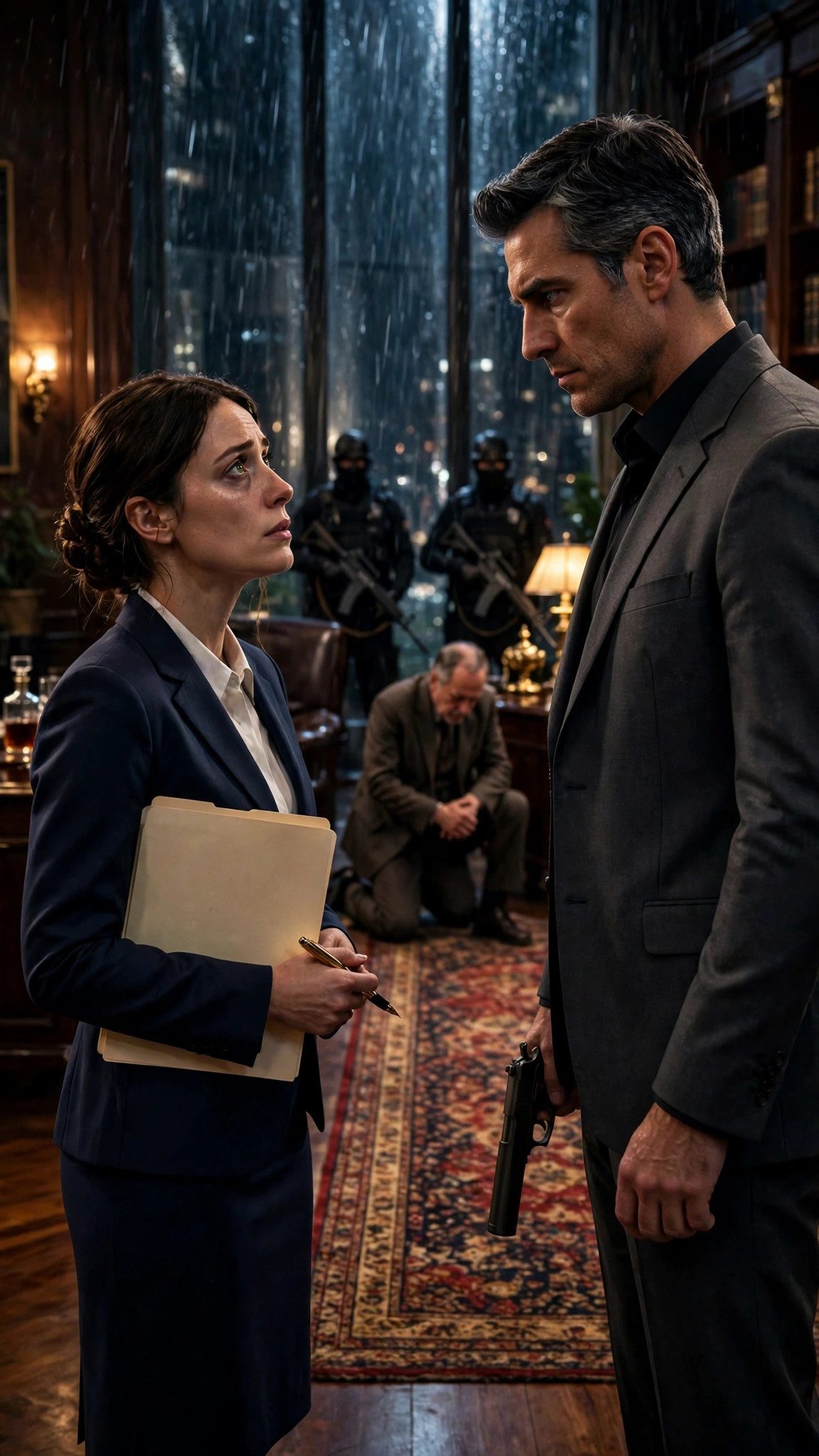
Story Genres: Mafia Romance

  • Chapter 4: The Man Who Laughed

    Chapter 4: The Man Who Laughed

    The next morning, Dante called a meeting of his captains.

    I was not invited. I sat at my desk and typed a letter I did not read and listened to the murmur of voices behind the closed door of the conference room, and I watched Tommy pace the hallway with a cup of coffee going cold in his hand.

    "He's going to kill Sal," Tommy whispered, stopping at my desk. "I can feel it. He's going to kill him in front of everyone, to make a point."

    "He's not going to kill Sal," I said, without looking up.

    "How do you know?"

    "Because he laughed," I said. "Men who laugh don't kill old men in conference rooms. Men who laugh have something to lose."

    Tommy stared at me like I had started speaking another language. "Emily, this is the Mafia. People get killed in conference rooms all the time."

    "Not today," I said.

    I was right. The meeting lasted two hours, and when it ended, Sal walked out on his own feet, pale but alive, and the other captains filed past my desk without meeting my eyes. Dante came out last. He stopped at my desk.

    "Sal Genovese is no longer a captain," he said, in a voice pitched for me alone. "He will run the family's warehouse in Milwaukee until he retires. His son's debt is paid. The money is being recovered through the courts, not through violence. And Castellano will learn, in due course, that I do not kill my own people to satisfy his appetites."

    He paused. "I called Agent Reyes at the FBI this morning. He is coming tomorrow. You will brief him."

    "Me, sir?"

    "You found the money. You found the forgery. You will brief him."

    After Dante went back to his office, I sat at my desk for a long time, and I thought about what had just happened. A Mafia boss had chosen mercy over murder, law over revenge, and a spreadsheet over a gun. And he had done it, I realized, because a secretary had made a joke about a rug, and the laugh that followed had cracked something open in him that nine years of silence had sealed shut.

    Gloria came over with a cup of tea, which was her way of saying she had heard everything and wanted details.

    "He didn't kill Sal," she whispered.

    "No."

    "He paid the son's debt."

    "Yes."

    "He called the FBI."

    "Yes."

    Gloria sat down slowly in the chair beside my desk. "Emily. In eleven years working in this building, I have never seen Mr. Marino choose mercy. Not once. Do you understand what you've done?"

    "I made a joke about a rug, Gloria."

    "You reminded him that he was human," she said. "That's not a joke. That's a miracle."

    That evening, on my way home, I stopped at a small house on the South Side with a garden full of tomato plants and a porch light that had been left on. It was Sal Genovese's house. I had looked up the address in his personnel file, which was probably an abuse of my position, but I had decided that I was done being invisible, and invisible people do not visit old men to tell them they are going to be all right.

    Sal's wife, Maria, answered the door. She was a small woman with grey hair and flour on her hands, and when I told her who I was, she pulled me inside and sat me down at the kitchen table and put a plate of biscotti in front of me before I could say a word.

    "Marco is upstairs," she said. "He hasn't come out of his room in two days. He says he is ashamed. I told him shame is good. Shame means you still know right from wrong."

    "How is Sal?" I asked.

    "He's in the garden," Maria said. "He has been in the garden since he came home. He is pulling weeds. He pulls weeds when he is thinking."

    She took my hand across the table. Her hands were warm and rough, the hands of a woman who had cooked for a family for fifty years.

    "Mr. Marino paid the debt," she said quietly. "Four hundred thousand dollars. He sent a man this afternoon with a letter that said the debt was settled and Marco was never to gamble again, and if he did, Mr. Marino would not pay it twice. Marco cried. Sal cried. I cried. We have been crying all day, Miss Davis, and I do not know how to thank you."

    "You don't need to thank me," I said. "I just balanced the numbers."

    "No," Maria said. "You saved my husband's life. In this family, Miss Davis, when a captain steals, he does not go to Milwaukee. He goes to the cemetery. Mr. Marino spared him because of you. Because you made him laugh, and because you found the truth, and because you told him the truth even though it would have been easier to let Sal die."

    She pressed a small cloth bag of biscotti into my hands as I left, and she kissed my cheek, and she said, "God bless you, child. And be careful. Men like Castellano do not forgive being beaten. He will come for you now."

    I drove home with the biscotti on the passenger seat and Maria's words in my ears, and I thought about the fact that I had spent eleven months being invisible in a building full of dangerous men, and now a woman I had never met was kissing my cheek and telling me to be careful, and that was what it felt like to matter.

    That afternoon, Agent Daniel Reyes arrived. He was a tall man in his forties with tired eyes and a suit that had seen better days, and he carried a leather briefcase that looked like it had been through a war. Dante introduced us in his office, and then he left us alone, which was the strangest thing of all, because Dante Marino did not leave people alone in his office.

    "Miss Davis," Reyes said, sitting down. "Mr. Marino tells me you're the reason we're here."

    "I found some numbers, Agent Reyes. That's all."

    "Numbers are how we catch men like Castellano," he said. "Men like him don't leave fingerprints. They leave spreadsheets. Walk me through it."

    I walked him through it. The transfers. The shell companies. The forged signatures. The gambling debt. The black car across the street, which I mentioned almost as an afterthought, and Reyes wrote down the license plate number from my grocery receipt with the care of a man handling evidence.

    "That car belongs to a man named Dominic Voss," he said. "Castellano's lieutenant. He's been watching this building for three weeks."

    My stomach dropped. "Three weeks?"

    "Since the day you made Mr. Marino laugh," Reyes said. "Castellano has informants everywhere, Miss Davis. The moment Dante Marino laughed, every rival family in Chicago wanted to know why. And the answer, it turns out, is you."

    "I didn't ask to be the answer."

    "No one ever does," Reyes said. "But you are. Castellano knows that Dante Marino cares about you. A man who hasn't cared about anyone in nine years suddenly cares about his secretary. That's a weakness, and Castellano collects weaknesses the way other men collect stamps."

    "What does that mean for me?"

    "It means you need to be careful. It means Dante will put a man on you, and you will let him, even if you don't like it. And it means you should tell your brother's facility to expect visitors."

    I went home that night and called the facility. I spoke to the evening nurse, a kind woman named Mrs. Okafor, and I told her that if anyone came asking about Daniel, anyone at all, she was to call me immediately and not let them past the front desk. She promised. She sounded frightened. I sounded frightened too.

    The next morning, there was a man at my desk when I arrived. He was tall, broad, quiet, with a scar across his left eyebrow and a suit that fit him like armor. His name was Enzo Ricci, and he was Dante's most trusted bodyguard, and he would be driving me to work and home again until further notice.

    "I don't need a bodyguard, Mr. Ricci," I said.

    "Mr. Marino disagrees," Enzo said.

    "I can take care of myself."

    "Miss Davis," Enzo said, in a voice so gentle it surprised me, "the last person who said that to Mr. Marino was his wife. He would like you to be more careful than she was."

    That stopped me. I looked at Enzo Ricci, at his scar and his quiet eyes, and I understood that he was not there to control me. He was there because Dante Marino had lost one person he loved to violence, and he was not going to lose another.

    "All right," I said. "But you have to drink the office coffee. Those are my terms."

    Enzo almost smiled. "Deal."

    The next day, Dante asked me to have lunch with him. Not a meeting. Not a working lunch. Lunch, in his office, at the small table by the window where Clara's rug lay on the floor between us like a guest at the table.

    He had ordered grilled chicken, no sauce, sparkling water. The same lunch he had eaten for six years. But there were two plates, and when I sat down, he pushed one toward me, and I realized he had ordered the same thing for me, because it was the only lunch he knew how to order.

    "You don't have to eat what I eat, Miss Davis," he said.

    "It's fine," I said. "I've had worse. The break room coffee, for example, is technically a biohazard."

    He almost smiled. Then he said, "Tell me about your parents."

    So I told him. I told him about my father, a bus driver who died of a heart attack when I was twenty, and my mother, a school secretary who worked two jobs and still found time to read to Daniel every night. I told him about the house I grew up in, small and loud, with a kitchen that always smelled like garlic and a radiator that clanged all winter. I told him about the night Daniel's car was hit, and the hospital, and the doctor who said "traumatic brain injury" like it was a weather report, and the way my mother held my hand in the waiting room and said, "We will figure this out, Emily. We always do." She died two years later, of a stroke, and I had figured it out alone ever since.

    Dante listened the way he always listened, without interrupting, without looking away. When I finished, he was quiet for a long time, and then he said, "Clara used to laugh at my lunches too. She said a man who eats the same thing every day is a man who is afraid of being surprised. She was right. I have been afraid of being surprised for nine years."

    "And now?" I asked.

    "Now," he said, "I am surprised every day, and I am still here."

    We ate in silence for a while, the good kind of silence, the kind that does not need to be filled. Outside the window, the rain had stopped, and the sun was coming out over the lake, and for the first time since I had started working in that building, the office felt less like a fortress and more like a room where two people were having lunch.

    When I went back to my desk, Gloria was waiting with her eyebrows raised so high they were practically in her hairline.

    "He ordered you lunch," she whispered.

    "He ordered me grilled chicken," I said. "It was dry."

    "He ordered you lunch," Gloria repeated, as if I had not understood. "Emily. He has never ordered lunch for anyone. Not in eleven years. Not even his own mother."

    I sat down at my desk and stared at my spreadsheet, and I thought about Maria Genovese's biscotti, and about Daniel's garden, and about the way Dante had said my mother's words back to me, and I understood, with a clarity that frightened me, that I was no longer just a secretary who balanced spreadsheets. I was becoming someone Dante Marino trusted. And trust, in his world, was the most dangerous currency there was.

    Over the next week, small things changed again, but this time they changed faster. Dante started asking me to sit in on meetings, not to take notes, but to listen, because he said I heard things other people missed. He started asking my opinion about the legitimate businesses, about the shipping schedules and the restaurant accounts, and when I told him the truth, which was sometimes that his numbers were a mess, he listened. He actually listened.

    One evening, he asked me to stay late to go over the FBI file with him, and we worked until nine o'clock, and when we finished, he walked me to the elevator himself, which he had never done, and Enzo was waiting by the car.

    "Miss Davis," Dante said at the elevator. "I want you to know something. What you did for Sal, what you did for Marco, what you are doing now, it matters. You reminded me that mercy is a choice, not a weakness. I had forgotten that."

    "You're welcome, Mr. Marino."

    "Emily," he said, and my name in his voice sounded different than it did in anyone else's. "Call me Dante. When we are alone."

    I stared at him. "That's a terrible idea, Mr. Marino."

    "Probably," he said. "But I've had nine years of good ideas, and look where they got me."

    The elevator doors opened. I stepped inside. And as the doors closed, I saw him standing there in the hallway, a man who had not laughed in nine years, and he was smiling. Not laughing. Just smiling, a small, uncertain thing, like a man trying out a language he used to speak fluently and had forgotten.

    I went home that night and I did not sleep. I lay in bed and thought about the black car, and Dominic Voss, and Vincent Castellano, and the fact that a man who collects weaknesses now knew my name and knew where my brother lived. And I thought about Dante's smile, and the way he had said my name, and the way my heart had hammered in my chest like a spreadsheet with the totals highlighted in red.

    I was in danger. I knew I was in danger. But for the first time in eleven months, I was not invisible. And for the first time in nine years, Dante Marino was not alone.

    That, I decided, was worth the risk.

  • Chapter 3: Three Million Dollars

    Chapter 3: Three Million Dollars

    The folder sat on my desk for exactly eleven minutes before Dante's office door opened.

    He stood in the doorway in his charcoal suit, his face unreadable, and looked at the folder the way a man looks at a letter he already knows is bad news.

    "Bring it in, Miss Davis," he said.

    I brought it in. He closed the door behind me, which he never did, and I understood that whatever happened next would not be witnessed by anyone, and that was either a kindness or a warning, and I did not know which.

    He sat down. He opened the folder. He read my note, and then he read the transfers, line by line, in silence, and I stood there with my hands clasped in front of me and tried to remember how to breathe quietly.

    "Three million dollars," he said at last.

    "Yes, sir. From the South Side operation, over six weeks. Routed through Bellini Holdings. Bellini was Sal Genovese's mother's maiden name. I checked the incorporation papers. The company was registered four months ago by a law firm that also handles the Castellano family's real estate."

    Dante looked up. "The Castellanos."

    "Yes, sir. And there's more. The forty thousand from last week was the same pattern, smaller. Whoever is doing this has been testing the route with small amounts before moving the larger ones. It's careful work, but the routing is sloppy. They used Sal's mother's name. That's either arrogance or desperation."

    "Or a frame," Dante said quietly.

    I blinked. "Sir?"

    "Sal Genovese has been with this family for forty years. He carried my father's casket. He carried my wife's casket. A man does not steal three million dollars and sign his mother's name to it unless he wants to be caught, or unless someone else wants him caught."

    I had not considered that. I had considered the numbers, and the routing, and the twelve minutes it took to trace them, but I had not considered that the numbers might be a message rather than a theft.

    "Find out which," Dante said. "Quietly. Do not tell anyone. Not Gloria. Not Tommy. No one."

    "How am I supposed to find out quietly, Mr. Marino? I balance spreadsheets. I don't investigate people."

    "You found three million dollars in twelve minutes," he said. "You will manage."

    He dismissed me with a nod, and I went back to my desk and sat down and stared at my screen until the cursor blurred, and then I did the only thing I knew how to do. I followed the money.

    It took me the rest of the day. Bellini Holdings had received eleven transfers in six weeks, and every one of them had been forwarded within forty-eight hours to a second company, a gambling operation on the West Side called Meridian Entertainment, and Meridian Entertainment was owned, through three more layers of shell companies, by a man named Vincent Castellano.

    Vincent Castellano. The name Gloria had whispered on my first day. The rival. The man who had been circling the Marino empire for nine years, waiting for a weakness.

    The money trail told a story, and the story was this: someone inside Dante's family was feeding Castellano three million dollars, and they were doing it through Sal Genovese's name.

    But when I dug deeper, the story changed. The transfers out of the South Side account had been authorized by a signature I recognized, because I filed it every week: Sal's signature, yes, but the handwriting on the authorization forms was wrong. Sal's handwriting was shaky and old-fashioned, the handwriting of a man who had learned to write with a fountain pen. The handwriting on these forms was younger, hurried, and it slanted the wrong way.

    I pulled Sal's personnel file. I compared the signatures. They did not match.

    Someone had forged Sal's signature. Someone had used his mother's maiden name to register the shell company. Someone wanted Dante to believe that Salvatore Genovese, his oldest captain, had stolen three million dollars.

    And the only person with both the access and the motive, I realized with a cold feeling in my stomach, was someone who wanted Sal dead, because Sal was the one man in the family who would never betray Dante, and a dead loyal captain would leave a hole nothing could fill.

    I printed everything. I put it in a second folder. I wrote on the top sheet: "The signatures do not match. Someone forged them. — E.D."

    It was nearly eight o'clock by then, and the office had gone quiet. Gloria had left at six. Tommy had gone home to his mother, or so he claimed. The cleaning crew worked two floors down, and the only sounds on the fourteenth floor were the rain and the hum of my computer and the occasional murmur of Dante's voice through his office door, low and steady, talking to someone on the phone in a language I did not recognize.

    I was packing my bag to leave when his door opened.

    "Miss Davis," he said. "Come in. Bring the folder."

    I brought the folder in. He had loosened his tie, which I had never seen him do, and there were two cups of coffee on his desk, one of them clearly meant for me, because it had milk in it, and Dante Marino drank his coffee black.

    "Sit," he said.

    I sat. It was the first time I had ever sat in the chair across from his desk. It was a good chair, leather, the kind that costs more than my monthly rent, and I tried not to look impressed.

    "Tell me about your brother," he said.

    I stared at him. "Sir?"

    "Daniel. The facility. The standing frame. Tell me."

    So I told him. I told him about the accident, about the drunk driver who walked away with a suspended sentence, about the five years Daniel had spent learning to do everything differently, about the garden and the morning sun and the red truck. I told him about the eight thousand dollars a month, and the way the facility raised its prices every January, and the way I had learned to cook exactly seven cheap meals so I could send every spare dollar north.

    Dante listened without interrupting. When I finished, he was quiet for a long moment, and then he said, "My mother used to say that a family is only as strong as its weakest member. She said it after my father died, when the family was falling apart and everyone was looking for someone to blame. She was right."

    "Your mother sounds like a wise woman, Mr. Marino."

    "She was," he said. "She died three years ago. She never forgave me for Clara, and she never forgave herself for raising a son who could not protect his wife."

    I didn't know what to say to that. So I said the only true thing I could think of. "My mother used to say that guilt is just love with nowhere to go."

    He looked at me for a long time. Then he picked up the folder and opened it, and we went through the transfers together, line by line, until nearly ten o'clock. He asked sharp questions. I gave sharp answers. Twice he almost smiled, and twice he caught himself, and the second time I said, "You know, Mr. Marino, smiling won't kill you. I checked. There's no medical literature on it."

    "Miss Davis," he said, in a voice that was almost warm, "you are going to get yourself fired."

    "You can't fire me," I said. "Who else is going to find your three million dollars?"

    He actually laughed then. Just once, short and surprised, like a man who had been ambushed by his own happiness. And for a moment, sitting in that quiet office with the rain against the windows and two cups of coffee going cold on the desk, I forgot that he was the most feared man in Chicago. He was just a man, tired and lonely, who had not laughed in nine years and was learning how again.

    When I finally left the building that night, I noticed a black car parked across the street with its lights off. I noticed it because I notice everything now; it is a habit I developed somewhere between the rug and the laugh. The car stayed there until I turned the corner, and when I looked back, it was gone.

    I told myself it was nothing. A man waiting for someone. A driver on a break. Nothing.

    But I wrote down the license plate anyway, on the back of a grocery receipt, because spreadsheets had taught me that small discrepancies matter, and a black car with its lights off, parked across from a Mafia boss's office at ten o'clock at night, was a discrepancy.

    I put the receipt in my pocket and drove home through the rain, and I did not sleep well that night.

    That evening, Dante summoned Sal to the office.

    I was not invited in. I sat at my desk and listened to the murmur of voices through the door, and I watched Tommy pace the hallway, and I watched the rain start again outside the windows. After an hour, the door opened, and Sal came out. He looked older than he had that morning. His shoulders were bent. He stopped at my desk.

    "Miss Davis," he said quietly. "Mr. Marino told me what you found. The signatures."

    "I'm sorry, Sal."

    "Don't be sorry." He took a breath. "I need to tell you something, and I need you to tell Mr. Marino, because I am too ashamed to say it to his face. My son, Marco, he owes money. Gambling. Four hundred thousand dollars to Castellano's men. They came to my house last month. They said if I did not help them move money through the South Side accounts, they would break Marco's legs. Then they said they would do worse."

    He looked down at his hands. "I did not steal the money, Miss Davis. But I gave them my mother's name. I told them Bellini, because they asked for a name that would look like family business, and I was frightened, and I am an old man who loves his son more than his own honor. They forged my signature. They moved the money. And I let them, because I was afraid."

    "Sal," I said softly, "why didn't you tell Mr. Marino?"

    "Because Mr. Marino's wife died nine years ago, and the men who killed her were never found, and I was afraid that if I told him Castellano was inside his house, he would burn the whole city down looking for him." Sal's voice broke. "And I was afraid he would kill Marco for the debt. Marco is a fool, Miss Davis, but he is my son."

    I put my hand over his, just for a moment, because he was an old man crying at my desk and I did not know what else to do.

    "Go home, Sal," I said. "I'll tell him."

    He nodded and walked to the elevator, and I carried the second folder into Dante's office.

    Dante was standing at the window again, looking out at the rain. He did not turn around.

    "Well?" he said.

    I told him everything Sal had told me. The debt. The threats. The name. The forged signatures. When I finished, Dante stood very still for a long time, and I watched his reflection in the window, and I saw something in his face I had never seen before. Not anger. Not silence. Grief, maybe. Or the look of a man who has just understood that the war he thought ended nine years ago never ended at all.

    "Castellano," he said.

    "Yes, sir."

    "He killed my wife. I have always believed it, but I could never prove it. And now he is inside my house, using my oldest captain's son to steal from me, and he thinks I will kill Sal for it. He thinks I will do his work for him."

    "What will you do, Mr. Marino?"

    Dante turned from the window. His eyes were grey and cold and absolutely clear.

    "I will not kill Sal," he said. "Sal is a frightened old man who loves his son. I will not give Castellano what he wants. Tomorrow morning, I am going to call the FBI agent who has been trying to build a case against Castellano for three years, and I am going to give him everything. The transfers. The signatures. The shell companies. And then I am going to pay Marco Genovese's debt myself, because a man who owes Castellano four hundred thousand dollars is a man Castellano owns, and I do not let other men own my people."

    He paused. "And you, Miss Davis, are going to help me, because you are the only person in this building who sees the numbers clearly."

    "Me, sir?"

    "You found three million dollars in twelve minutes," he said. "You found a forgery no one else noticed. You made me laugh. I have decided that you are the most dangerous person in this office, Miss Davis, and I would rather have you on my side than against me."

    I should have been frightened. I should have asked to go back to my spreadsheets and my twelve-hour days and my quiet, invisible life. But I looked at Dante Marino standing in the rain-light of his office, a man who had not laughed in nine years and had just chosen mercy over murder, and I heard myself say the most honest thing I had said in years.

    "All right, Mr. Marino," I said. "But if I'm going to help you catch a man who killed your wife, I'm going to need better coffee."

    His mouth twitched. Just once. Like a muscle remembering an old habit.

    "Done," he said.

    And that was how I, Emily Davis, a thirty-one-year-old secretary who had walked into an execution with paperwork in her hand, became the woman who was going to help Chicago's most feared Mafia boss take down the man who had destroyed his life.

    I just didn't know yet that Castellano already knew my name.

  • Chapter 2: Nine Years of Silence

    Chapter 2: Nine Years of Silence

    The laugh did not stop right away.

    It rolled out of Dante Marino in waves, rough and broken, like a man coughing up nine years of silence, and for a moment nobody in the office knew what to do. The guards froze with their hands half on their weapons. Sal stayed on his knees, his face wet, his mouth open. Tommy, who had been summoned and then forgotten in the corner, pressed himself against the wall as if the wall might open up and take him somewhere safer.

    I stood there holding the Montblanc pen like it was the only solid thing in the room.

    Dante laughed until his shoulders shook. Then he stopped, abruptly, the way a man stops when he realizes he has done something he cannot take back. He wiped his mouth with the back of his hand. He looked at the gun in his hand as if he had forgotten it was there, and he set it down on his desk with a care I had never seen him use for anything.

    "Get up, Sal," he said.

    Sal got up slowly, like a man whose legs had forgotten how to work. His suit was creased at the knees. His tie was crooked. He looked at Dante the way a man looks at a judge who has just read a sentence he does not understand.

    "Go home," Dante said. "Do not leave Chicago. Do not touch the money. Do not speak to anyone about this. We will discuss your future tomorrow."

    Sal nodded. He could not speak. The guards escorted him out, and Tommy followed, and the door closed, and suddenly it was only Dante and me and the rain against the windows and the Persian rug that had survived the morning.

    "Sign the folder," I said, because my mouth had apparently decided to keep working even though my brain had gone on strike.

    Dante picked up the pen. He signed without reading, which was the first time I had ever seen him do that, and he set the pen down and looked at me for a long time.

    "Emily Davis," he said.

    "Yes, Mr. Marino."

    "Do you have any idea what you just did?"

    "I saved you a biohazard fee," I said.

    He stared at me. Then his mouth twitched again, just once, like a muscle remembering an old habit, and he turned back to the window.

    "Go back to work," he said.

    I went back to work. My hands were shaking so badly I misfiled three letters before lunch, and Gloria kept looking at me over the top of her glasses like I had grown a second head. At noon, Tommy came to my desk with two coffees from the good place on the corner and set one down in front of me without a word.

    "You're alive," he said finally.

    "So far," I said.

    "Sal's alive too," Tommy said. "Nobody's alive in that office by noon. Not usually."

    "Maybe today is a special occasion."

    Tommy leaned closer. "Emily. He laughed. I heard it from the hallway. Nine years, and he laughed at a joke about a rug."

    "It wasn't a joke," I said. "The rug really was cleaned Tuesday."

    That afternoon, the federal auditors arrived downstairs, and I spent four hours handing them folders and smiling politely while they asked questions I was not allowed to answer. Dante stayed in his office with the door closed. At five o'clock, he came out, put on his coat, and left without a word, the way he always did. But at the elevator, he paused. He looked back at my desk.

    "Good work on the spreadsheets, Miss Davis," he said.

    It was the first compliment he had ever given me. Gloria dropped a stapler.

    That night, I drove to the facility to see Daniel. It was a Thursday, not a Sunday, and the evening nurse raised an eyebrow when I signed in, but she let me through. Daniel was in the common room, watching a game show with two other residents, and when he saw me, his whole face lit up.

    "Em! You came on a Thursday!"

    "I had a strange day," I said, sitting beside him. "I need to tell someone."

    I told him about the rug. I told him about the laugh. I told him about Sal on his knees and the gun and the Montblanc pen and the ten seconds that felt like a year. Daniel listened with his mouth open, and when I finished, he laughed so hard one of the nurses came over to make sure he was all right.

    "See?" he said, wiping his eyes. "I told you. Someone just needed to be funny at him."

    "He's still a very dangerous man, Daniel."

    "Yeah," Daniel said. "But now he's a dangerous man who laughs. That's better. Laughing people are harder to be scared of."

    I drove home that night thinking about Clara Marino.

    I had never met her, but I knew her story the way everyone in Chicago knew it. Clara Marino had been twenty-nine years old, a schoolteacher, funny by all accounts, the kind of woman who left notes in her husband's coat pockets. She had married Dante when he was twenty-nine and still trying to be two men at once: the legitimate shipping heir and the son of a Mafia boss. She had known what he was. She had married him anyway.

    Nine years ago, on a Tuesday night in November, Dante had been fifteen minutes late to the parking garage because a meeting ran long. Clara had gone down to the car first. The bomb had been wired to the ignition, meant for Dante, and it killed her instantly. The police called it a professional hit. The men who planted it were never found. Some people in the building whispered that it was the Castellanos, the rival family that had been circling the Marino empire for years. Some people said it was an inside job. Nobody said it to Dante's face.

    What everyone agreed on was this: the day they buried Clara, something in Dante Marino went quiet, and it never came back. He stopped smiling. He stopped joking. He stopped raising his voice, because shouting would have meant feeling something, and feeling something would have meant remembering. He ran his empire in silence, and silence, it turned out, was more terrifying than gunfire, because a man who shouts is a man you can predict, and a man who says nothing is a man who might do anything.

    I thought about that as I drove home through the rain. I thought about the way his chest had moved when he laughed, once, like a door opening in a house that had been locked for nine years. And I thought about the fact that I had done it with a joke about a rug, which was either the bravest or the stupidest thing I had ever done, and I was too tired to decide which.

    The following Monday, Gloria caught me at the coffee machine and dragged me into the break room with the air of a woman who had been waiting all weekend to say something.

    "Tell me everything," she said. "Every word. I was in the bathroom when it happened and Tommy's version makes no sense."

    I told her. She listened with her hands pressed to her cheeks, and when I got to the part about the rug, she actually gasped.

    "The rug," she whispered. "Emily. Do you know what that rug is?"

    "A rug," I said.

    "It was Clara's," Gloria said. "She picked it out herself, from a shop in Istanbul, before they were married. Dante had it cleaned every month for nine years, even though nobody was allowed to walk on it. The cleaners come on Tuesdays. They have a special code for the biohazard fee because one of the guards bled on it in 2019 and Dante nearly fired the entire cleaning company."

    I stared at her. "You're telling me I made a joke about his dead wife's rug."

    "I'm telling you," Gloria said slowly, "that you are the first person in nine years who treated that rug like a rug, and he laughed. Do you understand what that means?"

    "No," I said honestly. "And I don't want to."

    Gloria lowered her voice. "I was here the day of the funeral. I watched him come back to this office the next morning and sit at that desk for fourteen hours without speaking to anyone. His mother came up in the elevator, crying, and he looked at her and said, 'Don't.' Just that one word. Don't. She left. She never came back to this floor again. For nine years, Emily, that man has been a locked room. And you just walked in with a folder and opened a window."

    I didn't know what to say to that. I went back to my desk and stared at my spreadsheet until the numbers blurred, and I thought about Daniel, and about the facility, and about how my life was built on being invisible in a building full of dangerous men. Invisibility had kept me safe. Invisibility had kept Daniel safe. And now, because of a joke about a rug, I was visible.

    That Sunday, I went to the facility early and took Daniel out to the garden. The morning sun was warm, and the nurses had put a blanket over his legs, and he was in a good mood, which meant he talked twice as fast as usual.

    "Tell me about the laughing gangster again," he said.

    "There's nothing more to tell."

    "There is always more to tell. Does he have a dog? Gangsters in movies always have dogs."

    "He doesn't have a dog, Daniel."

    "Does he have a favorite food?"

    "I don't know. He eats lunch at his desk. It's always the same thing. Grilled chicken, no sauce, sparkling water. Gloria says he hasn't ordered anything different in six years."

    Daniel thought about this with great seriousness. "That's sad, Em. A man who eats the same lunch for six years is a man who forgot how to want things."

    "Maybe," I said.

    "You're going to fix him," Daniel said, with the absolute confidence of a twenty-four-year-old who has never been wrong about his sister in his life. "You're good at fixing things. You fixed my wheelchair when the wheel came off. You fixed the television when the remote broke. You're going to fix him."

    "I'm not going to fix anyone," I said. "I'm going to balance his spreadsheets and pay your bills and mind my own business."

    Daniel grinned. "That's what you said about the wheelchair."

    I drove home that night thinking about Clara Marino, and about the rug, and about the fact that a locked room, once opened, does not close again just because you ask it to.

    The next morning, Friday, I arrived at seven forty-five and found a white envelope on my desk. Inside was a handwritten note in a precise, slanted hand I recognized as Dante's, because I had seen it on a hundred signed documents.

    "Miss Davis. The rug will be cleaned again on Tuesday. Please make sure the cleaners do not overcharge us. — D.M."

    I stared at the note for a full minute. Gloria peered over my shoulder and read it twice.

    "He wrote you a note," she whispered. "He has never written anyone a note. He doesn't even write birthday cards. His own mother gets a phone call."

    "It's about the rug," I said.

    "It's not about the rug," Gloria said.

    She was right, and I knew she was right, and that frightened me more than the gun had.

    Over the next two weeks, small things changed. Dante started taking his coffee from my hand instead of letting me set it on his desk. He started saying "good morning" when he passed, in a voice so quiet I almost missed it the first time. He asked me once, on a Wednesday, whether Daniel was doing well, and I nearly dropped the folder I was carrying, because I had never told him Daniel's name, which meant he had read my file, which meant he had been paying attention to me in a way I had not expected.

    "Daniel is doing well," I said carefully. "His physiotherapist says he's making progress with the standing frame."

    "Good," Dante said. And then, after a pause: "If the facility ever gives you trouble about the bills, tell me."

    "I can handle the bills, Mr. Marino."

    "I know you can," he said. "That wasn't what I asked."

    I went back to my desk with my heart hammering, and I told myself to be careful. Men like Dante Marino did not notice secretaries. Men like Dante Marino did not write notes about rugs. And if he was noticing me, it was because I had made him laugh, and making a dangerous man laugh was not the same as being safe around him. It was, if anything, more dangerous, because now I mattered, and people who mattered to Dante Marino had a way of becoming targets.

    I was right to be careful. I just didn't know how right yet.

    On the third Friday after the laugh, my spreadsheet showed me the first sign of trouble. A payment from one of the South Side warehouses had been routed through three different accounts and arrived forty thousand dollars short. It was a small discrepancy, the kind of thing most people would miss, but I balanced spreadsheets for a living, and forty thousand dollars does not simply wander off.

    I traced it. It took me an hour. The money had gone to a company called Bellini Holdings, and Bellini Holdings had no office, no employees, and no reason to exist except to receive money that did not belong to it.

    Bellini. Sal Genovese's mother's maiden name.

    I sat back in my chair and stared at the screen. Sal had been on his knees in Dante's office three weeks ago. Sal had been told to go home and wait. And Sal, or someone using Sal's name, was still moving money.

    I printed the transfers. I put them in a folder. I wrote a note on the top sheet in my own neat handwriting: "For Mr. Marino. Three million dollars, South Side operation, routed through Bellini Holdings. Traced in twelve minutes. — E.D."

    And then I sat at my desk with my hands folded, watching the rain against the windows, and waited for the door to Dante's office to open, because whatever happened next, I knew one thing for certain: the laugh had changed everything, and there was no going back to the way it was before.

  • Chapter 1: The Rug

    Chapter 1: The Rug

    Nine years had passed since anyone heard Dante Marino laugh, and in his world, silence was more terrifying than gunfire.

    Men lowered their voices when he entered a room. They avoided jokes at all costs. They knew better than to surprise him, better than to stand too close, better than to breathe too loudly in his presence. And yet somehow, on a rainy Thursday in October, I walked into an execution with paperwork in my hand and told Chicago's most feared Mafia boss not to ruin a freshly cleaned rug.

    My name is Emily Davis, and at thirty-one, exhaustion had destroyed whatever instinct for self-preservation I was supposed to have.

    I worked as Dante Marino's personal secretary because his company paid me twelve thousand dollars a month, and eight thousand of that went directly toward the private residential facility caring for my younger brother. Daniel was twenty-four years old and had not walked unassisted since a drunk driver hit his car when he was nineteen. The facility on the North Side had gardens and nurses who knew his name and a room with a window that faced the morning sun, and it cost more every month than most people in Chicago earned in three. I paid it because Daniel was the only family I had left, and because when he smiled at me on Sunday afternoons, the whole broken world made a little bit of sense again.

    Dante was thirty-eight and controlled an empire hidden behind legitimate shipping companies, restaurants, gambling operations, warehouses, and enough shell corporations to make an accountant cry. Nine years earlier, a car bomb meant for him had killed his wife, Clara, and according to everyone around him, whatever humanity Dante had possessed was buried with her.

    He never smiled.
    Never joked.
    Never raised his voice.
    That frightened people more than shouting ever could.

    Most secretaries lasted three weeks. I lasted because fear required energy, and between my brother's medical bills, terrible coffee, and twelve-hour workdays, I didn't have any left.

    The morning I was hired, eleven months before the rainy Thursday, I sat in the waiting room of Marino Shipping's downtown office with a résumé that listed three failed office jobs and a degree in English literature I had never used. The receptionist, Gloria, looked at my cheap navy suit and my scuffed shoes and whispered that the last secretary had left after nineteen days and the one before that after twelve, and that Mr. Marino did not tolerate mistakes, lateness, or questions.

    "Does he tolerate breathing?" I asked.

    Gloria stared at me. "Try not to do it loudly."

    Dante interviewed me himself. He sat behind a desk the size of a small boat and read my résumé without expression, and when he finally looked up, his grey eyes were the coldest thing I had ever seen.

    "Why do you want this job?" he asked.

    "Because it pays twelve thousand a month," I said. "And my brother lives in a facility that costs eight."

    He did not react. Most employers would have called that oversharing. Dante Marino simply set the résumé down and said, "You will work twelve hours a day. You will not ask questions about the business. You will not repeat anything you hear in this office. If you do, you will not be fired. Do you understand?"

    "Perfectly," I said. "Being fired would be the least of my problems."

    Something moved in his face then, so briefly I almost missed it. Not a smile. Just a pause, like a man who had expected a different answer and did not know what to do with the one he got.

    "You start Monday," he said.

    I learned the rules quickly. The coffee had to be black, scalding, and on his desk at exactly eight in the morning. The spreadsheets had to balance to the cent. The door to his office was never to be opened without knocking, unless the building was on fire, and even then Gloria suggested knocking first. The men who came to see him were to be announced by first name only, never by title, and if any of them raised their voice, I was to press the small white button under my desk and say nothing at all.

    I broke the knocking rule within the first week, because a delivery man had left a box of printer paper in the hallway and I tripped over it carrying a stack of files, and the files went everywhere, and I pushed the door open with my elbow to catch myself. Dante looked up from his desk. The room went cold. I stood there with papers stuck to my skirt and said, "I apologize, Mr. Marino. The printer paper attacked me first."

    He stared at me for five seconds. Then he said, "Clean it up."

    I did. I kept the job. Three weeks passed, then three months, then six, and somewhere along the way the office stopped holding its breath every time I walked past Dante's door. Tommy, one of his enforcers, started bringing me coffee from the good place on the corner instead of the burnt sludge from the break room. Gloria started saving me the good parking spot. Even the guards at the elevator nodded at me in the mornings, which Gloria told me was the closest thing to a promotion anyone in that building ever got.

    But Dante never smiled. He never joked. He never raised his voice. He signed papers, took phone calls in a voice so quiet I had to strain to hear it through the door, and looked out the rain-covered windows of his office like a man watching a country he no longer lived in.

    I knew about Clara. Everyone in the building knew about Clara. She had been twenty-nine when the car bomb went off, nine years ago, in a parking garage downtown. The bomb had been meant for Dante. He had been fifteen minutes late that night because a meeting ran long, and Clara had gone down to the car first. The men who planted it were never found. Dante had not laughed since the day they buried her, and the people who loved him had stopped expecting him to.

    I did not expect him to either. I expected to keep typing his letters, balancing his spreadsheets, and paying Daniel's bills until I was old and grey and the facility sent me a nicer Christmas card. That was the plan. It was a small plan, and a tired one, but it was mine.

    Then came the rainy Thursday.

    It started like any other day. I arrived at seven forty-five with wet hair and a coffee that tasted like burnt toast, and Gloria told me Mr. Marino had already been in his office for an hour, which meant something was wrong, because Dante Marino was never early unless someone was about to have a very bad day.

    At nine, Tommy came up the elevator looking like a man walking to his own funeral. He stopped at my desk and whispered, "Is he in a bad mood?"

    "He's always in a bad mood," I said, without looking up from my spreadsheet. "It's his resting state. Like a statue, but with more paperwork."

    "If I don't come back out—" Tommy began nervously.

    "I'll cancel your dentist appointment Tuesday," I told him, still typing. "And I'll mail your final check to your mother."

    His face went blank. "You don't even know my mother."

    "I know her address. It's in your file. I file everything, Tommy. It's literally my job."

    He swallowed hard and knocked on Dante's door. The door opened. The door closed. I went back to my spreadsheet, because spreadsheets do not care about fear, and numbers are the only honest things in a building full of men who lie for a living.

    Three minutes later, something heavy crashed inside Dante's office.

    I moved my coffee farther from the edge of my desk.

    Then my spreadsheet showed me something far worse: three million dollars missing from a South Side operation.

    I stared at the numbers. I ran them again. I checked the transfers, the dates, the accounts, and the routing, and the hole was still there, neat and undeniable, three million dollars gone from a South Side warehouse account into a shell company I had never seen before. The thief had been embarrassingly careless. He had routed the money through a company registered under his own mother's maiden name, Bellini Holdings, and I found it in twelve minutes, because whoever did it had apparently never met a woman who balanced spreadsheets for a living.

    The name on the transfers was Salvatore Genovese, one of Dante's oldest captains. A man who had known Dante's father. A man who had carried Clara's casket.

    At 11:45, I grabbed the folder Dante needed to sign before the federal auditors arrived downstairs and walked straight into his office without knocking.

    Sal was on his knees.

    Two guards stood behind him.

    Dante faced the rain-covered windows with a suppressed pistol hanging loosely from one hand.

    Every person in that room looked terrified.

    Except me.

    "Mr. Marino," I said, placing the folder on his desk. "I need your signature."

    Dante slowly turned. "I am handling a personnel issue."

    "The IRS arrives in two hours. If these forms aren't signed, payroll gets frozen, and your employees become extremely unpleasant when direct deposit fails."

    Sal looked at me desperately. "Emily, please tell him—"

    "Sal, we are not friends."

    The guards stared at me like I had volunteered to die.

    Dante's eyes narrowed. "Leave."

    "I will after you sign."

    I extended his Montblanc pen toward him. "I already traced Sal's theft. He used his mother's maiden name. It took twelve minutes. Honestly, that's insulting."

    Silence swallowed the room.

    Dante stepped toward me.

    His gun was still in his hand.

    Then I noticed the Persian rug beneath Sal's knees and sighed.

    "Actually, one more thing."

    Dante stopped. "What?"

    "Please shoot him at the warehouse."

    Every face turned toward me.

    "We had these rugs professionally cleaned Tuesday," I continued. "They charge double for blood. I spent forty minutes arguing about the biohazard fee last month, and frankly, Sal is not worth the surcharge."

    For ten unbearable seconds, Dante simply stared at me.

    Ten seconds is not a long time. I know this because I have timed it: ten seconds is how long the elevator takes from the lobby to the fourteenth floor, and ten seconds is how long Daniel's smile lasts when I walk into his room on Sundays before the nurses wheel him to the garden. But standing in Dante Marino's office with a gun in his hand and a thief on his knees, ten seconds felt like a year of Sundays.

    My mind, unhelpfully, chose that moment to run through my entire life like a spreadsheet with the totals highlighted in red. The facility bill was due on Friday: eight thousand dollars, and my salary would not arrive until Monday, and I had already moved money from my own food budget to cover the gap. Daniel's physiotherapist had called on Tuesday to say he was making progress with the standing frame, and I had cried in the supply closet for three minutes before wiping my eyes and going back to my desk. My mother had died when I was twenty-two, my father two years before that, and Daniel was the only person in the world who still said my name like it meant something good.

    I thought about the morning I had driven to the facility in the rain and found Daniel sitting by the window with a blanket over his legs, watching the traffic on the highway. He had pointed at a red truck and said, "Em, look. That one's fast." He was twenty-four years old and he still got excited about trucks, and the nurse had told me his memory was coming back in pieces, little bright fragments surfacing like fish in dark water. He remembered the car accident in flashes. He remembered our mother singing in the kitchen. He did not remember that he would never walk unassisted again, and some days I was grateful for that, and some days it broke my heart so cleanly I could hear it.

    I thought about the first time I brought him a photograph of the office, because he asked me what my days looked like, and I told him about Gloria and Tommy and the terrible coffee, and he laughed and said, "You work for a gangster, Em. That's the coolest thing anyone in our family has ever done." I had not corrected him. I had not told him that the gangster in question was the most feared man in Chicago, or that I filed paperwork for men who disappeared, or that my hands shook every time I carried a folder into Dante's office. I had told him the coffee was terrible, which was true, and that my boss never smiled, which was also true, and Daniel had said, "Maybe he just needs someone to be funny at him," and I had laughed so hard the nurse came in to check on us.

    Ten seconds. I thought about all of that in ten seconds, while Dante Marino stared at me, and I decided that if I was going to die in that office, at least I would die having said something honest about the rug. The rug really had been cleaned on Tuesday. The biohazard fee really was double. Sal really was not worth the surcharge. If those were my last words, they were at least accurate, and accuracy had always been the one thing I could offer the world.

    Tommy's face, from the corner of my eye, had gone the color of old paper. One of the guards had his hand on his weapon. Sal was crying silently into his own hands, and I remember thinking, with a strange detached clarity, that Sal had been the one to carry Clara's casket nine years ago, and that Dante remembered that too, and that maybe that was the only reason Sal was still breathing.

    Then something happened to his face.

    His mouth twitched.

    His chest moved once.

    A strange, broken sound escaped his throat.

    The guards reached toward their weapons.

    Sal stopped crying.

    And I suddenly realized that the sound coming from Dante Marino, the man who had not laughed since his wife died nine years ago, was getting louder.

    He was laughing.

    And in that moment, with a gun still in his hand and a thief on his knees and the rain hammering the windows, I understood two things with perfect clarity. The first was that I had just done something no one in Chicago had managed in nine years. The second was that my life, which had been small and tired and carefully balanced like one of my spreadsheets, was never going to be small again.

  • Chapter 7: The Answer

    Chapter 7: The Answer

    They were married in the garden, under the oak tree, on the first Saturday in May.

    It was not the wedding Arthur Voss had planned. There was no cathedral. There was no guest list of three hundred people. There was no red dress, and no council vote, and no alliance sealed in blood and paperwork. There was a garden behind a small house on the edge of the city, and an oak tree that had stood there for a hundred years, and thirty chairs borrowed from a church down the street, and a string quartet that Elena's mother had hired because she had always wanted a string quartet at a wedding, and a cake that Elena's father would have loved, if he had been there to taste it.

    He was not there. But he was there, in the ways that mattered. Elena carried his photograph in her bouquet, tucked between the white roses, where only she could see it. She wore her mother's pearls. She wore a dress the colour of morning, simple and plain, the way she had always dressed, and she walked down the aisle on Charles DeLuca's arm, because Charles had known her since she was nineteen years old and frightened in a hallway, and because he had told her, that morning, that he was proud of her, and because she had cried, and because he had pretended not to notice, the way good men pretend not to notice when a woman cries.

    Dante was waiting under the oak tree in a charcoal suit, with his hands shaking, and when he saw her coming down the aisle, he forgot every word he had rehearsed, and he forgot the vows he had written, and he forgot everything except the fact that she was walking toward him, and that she was smiling, and that she was his.

    "I have waited ten years to say this to you," he said, when she reached him, and his voice shook, and he did not care that it shook, because he had spent his whole life believing that a man who showed nothing could lose nothing, and he had finally learned that the opposite was true. "Elena Marchetti. I love you. I have loved you since the day you walked into my office with a résumé in your hand and a look on your face that said you were not afraid of me, even though you were. I love the way you keep my calendar. I love the way you keep my books. I love the way you answer three phone lines at once without losing your place. I love the way you are calm when the whole world is shouting. I love you, Elena. I will love you for the rest of my life. And I will answer the phone. Every time. I promise you. Every time."

    Elena cried. She did not try to stop crying. She stood under the oak tree in a dress the colour of morning, with her father's photograph in her bouquet and her mother's pearls around her neck, and she cried, and Dante Moretti held her hands, and the string quartet played, and the thirty people in the borrowed chairs cried too, and Helena Marchetti, sitting in the front row in her grey suit, cried harder than anyone, because she was a prosecutor and a mother and a widow, all at the same time, and because her daughter was marrying the man she had spent years trying to put in prison, and because it was the right thing, and because it was the only thing, and because her husband would have wanted it this way.

    They were married under the oak tree. They danced to the string quartet. They ate the cake. They cut it together, the way married people cut cakes, and Dante got frosting on his suit, and Elena laughed, and he laughed too, and for the first time in three years, or maybe for the first time in his whole life, Dante Moretti smiled, really smiled, the way a man smiles when he is exactly where he is supposed to be.

    The baby was born seven months later, on a cold morning in December, at St. Margaret's Hospital, in the same building where her grandfather had died, and Elena held her daughter in her arms and looked down at her tiny face, and she thought about the fact that the baby had held on, through everything, through the bleeding and the fear and the hospital corridors and the phone call at 2:19 in the morning, and that she was here now, healthy and strong, and that she was going to grow up in a world where her father answered the phone.

    They named her Helena Rose Moretti. Helena, after her grandmother, the prosecutor, the woman who had chosen her daughter over her case. Rose, after the white roses in Elena's bouquet, and after the garden, and after the oak tree, and after everything that had grown out of the hardest year of their lives.

    The morning of the wedding, Elena had woken up in her mother's house, in her old bedroom, with the white roses on the dresser and her mother's pearls laid out on the pillow beside her, and her mother had come in with a cup of tea and sat down on the edge of the bed, and the two of them had sat there in silence for a while, the way mothers and daughters sit in silence when there is too much to say and not enough words to say it with. And then her mother had said, very quietly, "Your father would have walked you down the aisle today. He would have been so proud of you, Elena. Not because you are marrying a Moretti. Because you are marrying a man who finally learned to see you. That is the only thing that matters." And Elena had cried, and her mother had cried, and they had held each other, and then her mother had helped her into the dress the colour of morning, and fastened the pearls around her neck, and tucked her father's photograph between the white roses, and said, "Now. Go and marry him."

    After the wedding, Dante took Elena and the baby to the cemetery on a Sunday afternoon in the spring, to the place where Marco Marchetti was buried under a plain stone with his name and his dates and nothing else, because Marco had never wanted anything fancy, and Dante stood beside the grave with his daughter in his arms, and he said, very quietly, "Mr. Marchetti. Sir. I did not know you well. I wish I had. I wish I had been there, that night, when you needed me. I was not. I will not make that mistake again. Your daughter is my wife. Your granddaughter is my daughter. I will take care of them. I promise you. Whatever it takes. Whatever it costs. I promise you." And Elena stood beside him with her hand on his arm, and she cried, and he cried too, and the baby slept in his arms, peaceful and warm, and the sun came out from behind a cloud, and the cemetery was quiet, and the world went on, the way the world always goes on, one promise at a time.

    Dante learned to be a father the way he had learned everything else in his life: by doing it, and by failing at it, and by doing it again. He learned to change diapers at two in the morning, with the baby crying and Elena asleep beside him, and he learned to warm bottles, and to sing lullabies in a voice that was terrible and that the baby loved anyway, and to answer every cry, no matter what time it was, no matter how tired he was, because answering was the promise he had made, and because he had learned, finally, what Elena Marchetti had known all along: that the most important thing in the world is not the family, or the business, or the docks, or the money, or the power. The most important thing in the world is the person who needs you, at 2:19 in the morning, saying, "I need to tell you something." And the only wrong answer is silence.

    He kept his phone charged. He kept it on his desk, and on his nightstand, and in his pocket, and he answered it every time it rang, no matter who was calling, no matter what time it was, no matter what room he was in. He answered it in meetings. He answered it at dinner. He answered it in the middle of the night. And every time he answered it, he thought about the night he had not answered it, and about the voice he had silenced, and about the price of silence, and he understood that the phone was not just a phone. It was a promise. It was the promise he had made under an oak tree, in front of thirty people in borrowed chairs, to a woman in a dress the colour of morning: I will answer the phone. Every time.

    One night, a year after the wedding, the phone rang at 2:19 in the morning.

    Dante was asleep. Elena was asleep beside him. The baby was asleep in her crib across the hall. The house was quiet, and the city was quiet, and the phone rang, and Dante sat up in bed, and his heart pounded in his chest, because 2:19 in the morning was the time when everything had gone wrong, and because some part of him would always be afraid of that hour, and because some part of him would always hear a machine beeping in a rhythm that was too slow and too careful.

    He picked up the phone. He looked at the screen. It was the hospital. St. Margaret's. And for one long moment, he did not move, because the last time the hospital had called him at 2:19 in the morning, he had said, "I'm sorry, Elena. I can't," and he had hung up, and he had spent a year trying to live with that, and he was afraid, suddenly and terribly, that history was going to repeat itself.

    But Elena was awake now, sitting up beside him, and she put her hand on his arm, and she said, very quietly, "Answer it, Dante."

    And Dante Moretti, who had spent his whole life believing that a man who showed nothing could lose nothing, and who had finally learned that the opposite was true, picked up the phone and said, "Hello. This is Dante Moretti. I am here. Tell me what you need."

    The voice on the other end was a nurse's voice, calm and professional, and she said, "Mr. Moretti, this is St. Margaret's Hospital. Your wife's mother, Mrs. Marchetti, was brought in an hour ago. She is asking for you. She says she needs to tell you something."

    Dante looked at Elena. Elena looked at him. And the two of them got out of bed, and they dressed in the dark, and they drove to the hospital together, through the quiet city, past the bridge, past the river, past the lights coming on in the windows of a thousand apartments, and they walked through the sliding doors into the lobby, where a nurse was waiting for them, and she took them to a room on the fourth floor, where Helena Marchetti was lying in a bed with a blanket pulled up to her chin, looking smaller than Elena had ever seen her, and looking, for the first time in Elena's life, afraid.

    "Mama," Elena said, and she went to the bed, and she took her mother's hand, and her mother squeezed it, and Dante stood in the doorway, and Helena looked at him, and she said, very quietly, "Mr. Moretti. Dante. Come here."

    Dante went to the bed. He stood beside Elena. He took Helena's other hand, and she held it, and she looked at the two of them, and she said, "I have spent my whole life building cases against men like you. I have spent my whole life believing that men like you do not change. And I was wrong. You changed. Not for a deal. Not for me. For her. And I want you to know, before I say anything else, that I am proud of you. Not as a prosecutor. As a mother. As a grandmother. I am proud of you."

    Dante did not say anything. He stood beside the bed with Helena Marchetti's hand in his, and he thought about the conference room on the twenty-third floor, and the file folder open on the table, and the deal, and the council, and the wedding under the oak tree, and the baby named Helena Rose, and he understood that the woman lying in the bed in front of him had given him everything, even though she had every reason to take it all away, and that he was going to spend the rest of his life trying to be worthy of it.

    Helena smiled then, a small smile, the first smile Elena had seen on her mother's face in a long time, and she said, "Now. The reason I called you here at two nineteen in the morning. The doctors tell me I am going to be fine. A scare, nothing more. But it made me think, and I want you both to hear this, because I do not say it often enough: I love you. Both of you. And I am glad. I am glad it was you, Dante. I am glad it was you who answered the phone."

    Elena cried. Dante cried. Helena cried. And the three of them sat in the hospital room together, holding hands, while the machine beside the bed beeped in a steady rhythm, and the sun came up over the city, and the hospital woke up around them, and the world went on, the way the world always goes on, one phone call at a time.

    That is the story of the call Dante Moretti should have answered. He did not answer it the first time. He answered it the second time. And the third time. And every time after that. Because he had learned, finally, what Elena Marchetti had known all along: that the most important thing in the world is not the family, or the business, or the docks, or the money, or the power. The most important thing in the world is the person on the other end of the phone, at 2:19 in the morning, saying, "I need to tell you something."

    And the only wrong answer is silence.

    The End.

    THE END

  • Chapter 6: The Woman on the Other Side

    Chapter 6: The Woman on the Other Side

    The indictment came on a Tuesday morning, three weeks after Marco Marchetti died.

    Elena was at her desk at seven, the way she always was, laying out the morning's files in the order he liked them, when the girl at the front desk came running down the hall with a face the colour of paper, and said, "Miss Marchetti, there are men in the lobby. Men with badges. They are asking for Mr. Moretti."

    Elena stood up very slowly. She put down the file she was holding. She looked at the girl, and she said, very calmly, "Tell them Mr. Moretti is in a meeting. Tell them to wait." And the girl ran back down the hall, and Elena walked into Dante's office without knocking, and she closed the door behind her, and she said, "It is happening. My mother's case. The indictment. They are in the lobby."

    Dante looked up at her. He was holding a cup of coffee, black, the way he took his, and he set it down very slowly, and he said, "How do you know?"

    "Because I know my mother," Elena said. "And because I know that she would not send them on a Tuesday morning unless she was ready. And because I have known for six years that this day was coming, and I have spent six years pretending it was not."

    He stood up. He walked around his desk. He stopped in front of her, and he looked at her, really looked at her, the way he had looked at her in the hospital lobby, and in the car at the red light, and he said, very quietly, "What do you want me to do?"

    Elena looked at him for a long time. She thought about her mother, sitting at a kitchen table with a file folder closed in front of her, saying, "I need you to choose a side." She thought about her father, lying in a hospital bed, saying, "Live. Not careful. Live." She thought about the baby inside her, ten weeks old and growing, and about the man standing in front of her, and about the family he had built, and about the family she had come from, and she understood that she was the only person in the world who stood between them, and that the only way forward was through the middle, and that the middle was the most dangerous place in the world to stand.

    "I want you to tell the truth," she said. "All of it. To my mother. To the men in the lobby. To the council. To everyone. I want you to tell them what the family is, and what it has done, and what you are going to do about it. And then I want you to let the law do what the law does, and I want you to stand beside me while it happens, and I want you to not run, and I want you to not hide, and I want you to not be silent. Not this time. Not ever again."

    Dante nodded. He did not argue. He did not bargain. He walked past her, out of his office, down the hall, past the girl at the front desk, and into the lobby, where the men with badges were waiting, and he said, "I am Dante Moretti. I will come with you. But first, I would like to speak to United States Attorney Helena Marchetti."

    Helena Marchetti was waiting in a conference room on the twenty-third floor, in her grey suit, with her silver-streaked hair, and a file folder closed in front of her, and when Dante Moretti walked in, she looked up at him the way a prosecutor looks at a man she has spent years building a case against, and then she looked at Elena, who had followed him in, and her face changed, the way a mother's face changes when she sees her daughter standing beside the man she is trying to put in prison.

    "Mama," Elena said, and her voice was steady, and calm, and it was the voice she used for everything. "He wants to talk to you. Not as a defendant. As a man. Listen to him."

    Helena looked at her daughter for a long time. She looked at Dante. She looked at the file folder on the table. And then she said, very quietly, "Sit down, Mr. Moretti. Both of you. Sit down."

    Dante sat down. Elena sat down beside him. And Helena Marchetti opened the file folder, and she laid out the case, piece by piece, the way she had laid it out a hundred times in her own head: the shipping manifests, the bank transfers, the captains who had been approached, the docks that had been bought, the men who had been paid, the whole architecture of the Moretti family, laid out in her careful handwriting. And Dante listened. He did not interrupt. He did not argue. He listened the way a man listens when he is hearing the truth about himself for the first time, and when she was finished, he said, very quietly, "What do you want from me?"

    "I want Vincent Castellano," Helena said. "He is the real target. He has always been the real target. Your family is the road to him, Mr. Moretti, and I will take the road if I have to, but I would rather take the man at the end of it. Help me take him, and I will help you."

    "Help me how?" Dante said.

    "Legitimise the family businesses," Helena said. "All of them. The docks. The warehouses. The shipping companies. Open the books. Pay the taxes. Fire the men who will not come with you. Testify against Castellano, and against the men who took his money, and against the captains who sold you out. Do that, and I will recommend a sentence that lets you walk out of a courtroom and into a life with my daughter and your child. Do not do that, and I will take the family apart, piece by piece, and I will take you with it, and I will do it with a clear conscience, because that is my job."

    Dante looked at Elena. Elena looked at him. And in that moment, in a conference room on the twenty-third floor, with a prosecutor's file folder open on the table between them, Dante Moretti understood that the woman sitting beside him had just given him the one thing nobody had ever given him before: a choice. Not a threat. Not an ultimatum. A choice. And he understood, with a clarity that frightened him, that he had spent his whole life believing that a man who showed nothing could lose nothing, and that the opposite was true: a man who showed nothing had already lost everything, and the only way to get any of it back was to start telling the truth.

    "I will do it," he said. "All of it. The books. The taxes. The testimony. All of it. But I have conditions."

    Helena raised an eyebrow. "Conditions?"

    "Elena stays out of it," Dante said. "She is not a witness. She is not a source. She is not a part of this case. She keeps the books, and she knows everything, and she has never told anyone, not even you, and that is going to stay that way. And the baby—" He stopped. He looked at Elena. He looked at Helena. "The baby stays out of it, too."

    Helena looked at her daughter. Elena nodded, very slightly, and Helena understood, in that moment, that her daughter had already chosen, and that she had chosen the man sitting beside her, and that the man sitting beside her had chosen her daughter, and that there was nothing left for a prosecutor to do except be a mother.

    "Agreed," Helena said, very quietly. "Elena stays out of it. The baby stays out of it. And you, Mr. Moretti, will do everything you just promised, and you will do it with my office watching every step, and if you lie to me once, if you hide one thing, if you protect one man who should not be protected, the deal is over, and I will come for you myself."

    Dante nodded. "Agreed."

    That afternoon, Dante called the council. Twelve men sat around the long table in the penthouse dining room, and Dante stood at the head of it, and he told them the truth. All of it. The indictment. The deal. The legitimisation. The testimony against Castellano. The end of the family as they had known it. And the room went very quiet, the way rooms always went quiet when Dante Moretti spoke, and then Arthur Voss stood up, and his face was red, and he said, "You cannot do this. You cannot sell the family to a prosecutor because of a secretary."

    "She is not a secretary," Dante said, and his voice was low and flat, the voice he used when a man at the table had just made a mistake he would not be allowed to make twice. "She is the woman I love. She is carrying my child. And she is the reason this family is still standing, because she has kept it alive for six years while the rest of you were busy being afraid of Vincent Castellano. The family is changing, Arthur. It is changing now, with me, or it is ending, without me. Choose."

    The council voted. Eleven men voted with Dante. One man did not. Arthur Voss walked out of the penthouse without a word, and Alexandra Voss walked out with him, and Dante stood at the head of the table and watched them go, and he thought about the wedding in May, and about the red dress, and about the woman who had stood in front of his desk and told him to choose, and he understood that he had chosen, and that the choosing was the hardest thing he had ever done, and that it was also the easiest.

    Alexandra came to see Elena the next day. She came to the office, in a cream-coloured suit, and she stopped at Elena's desk, and she looked down at her, and Elena looked up at her, and the two women stood there for a long time, looking at each other, and then Alexandra said, very quietly, "He chose you. I hope you know what that cost him."

    "I know," Elena said.

    "Take care of him," Alexandra said. "He does not know how to be taken care of. He never has. That is the one thing I could never teach him, and it is the one thing you already know how to do." And she walked out, her heels clicking on the grey carpet, and Elena sat very still at her desk for a long time after that, looking at the plant on the filing cabinet and the files laid out in the order he liked them, and understanding that Alexandra Voss, who had been her enemy for months, had just given her the only blessing that mattered, and that she was going to carry it with her for the rest of her life.

    The week after that, the FBI came for Vincent Castellano.

    It happened on a Tuesday morning, the way these things always happen on Tuesday mornings, at the Castellano offices downtown, and Dante Moretti was there, sitting in a conference room with two federal agents and a stack of ledgers, telling them everything he knew: the captains who had taken the money, the docks that had been bought, the men who had been paid, the whole architecture of the Castellano family, laid out in his careful voice, the voice he used when a thing had to be said exactly right. Elena was not there. She was at her desk, laying out the morning's files in the order he liked them, and answering three phone lines at once without losing her place, and she was calm, the way she was always calm, and she did not know, until Charles came into her office at noon with a face that told her everything before he said a word, that it was over.

    "They have him," Charles said. "Castellano. Life, no parole. The two men from the hospital testified. The captains testified. Dante testified. It is over, Elena. It is really over."

    Elena sat very still at her desk for a long time after that, looking at the plant on the filing cabinet, and thinking about the fact that the man who had sent two men to a hospital lobby to take her was going to spend the rest of his life in prison, and that the man who had come to that lobby to save her was the man she loved, and that the world, which had seemed so dark and so dangerous for so long, was finally, finally starting to get lighter.

    That evening, her mother came to her apartment. Helena Marchetti did not knock. She walked in with a bottle of sparkling water and two glasses, and she sat down at Elena's kitchen table, and she looked at her daughter for a long time, and she said, very quietly, "He did it. All of it. The books. The taxes. The testimony. I have been a prosecutor for twenty years, Elena, and I have never seen a man give up everything the way he gave it up. Not for a deal. For you."

    Elena nodded. She did not say anything. She poured the sparkling water into the two glasses, and she handed one to her mother, and her mother took it, and they sat there in silence for a while, the way mothers and daughters sit in silence when there is too much to say and not enough words to say it with.

    "He asked me to marry him," Elena said, finally. "Or he is going to. I can feel it coming. And I do not know what to say."

    Her mother looked at her for a long time. "Say yes," she said. "Say yes, Elena. Your father would have wanted you to say yes. Not because Dante Moretti is a good man. He is not a good man. He is a man who did bad things and is trying to do better, and that is the only kind of man worth marrying. Say yes. And live. Not careful. Live."

    That night, Dante came to Elena's apartment. He did not knock. He stood in the doorway with his hands in his pockets, and he looked at her, really looked at her, and he said, very quietly, "I told the council. I told my mother-in-law, or whatever she is going to be. I told everyone. There is nothing left to hide. Except one thing."

    "What is the one thing?" Elena said.

    He got down on one knee, in the doorway of her apartment, in his charcoal suit, with his hands shaking, and he said, "Elena Marchetti. Will you marry me? Not because the council voted. Not because your father is gone. Not because of the baby. Because I love you. Because I have loved you for ten years and I did not know how to say it. Because you are the only person in the world who has ever seen me, really seen me, and stayed. Will you marry me?"

    Elena looked down at him. She thought about the hallway, ten years ago, when he had pushed past her without looking at her. She thought about the night his father died, when she had stayed until midnight. She thought about the resignation letter, and the hospital corridor, and the phone call at 2:19 in the morning, and the car at the red light, and the baby inside her, and her father's last words: Live. Not careful. Live.

    "Yes," she said. "Yes. I will marry you."

  • Chapter 5: What Silence Costs

    Chapter 5: What Silence Costs

    Dante Moretti learned that Marco Marchetti was dead from Charles DeLuca, at eight fifteen in the morning, in his office, with the door closed.

    Charles did not knock. Charles never knocked. He walked in with a file folder under his arm and a face that told Dante everything before he said a word, and he set the folder down on the desk and said, "Elena's father died last night. Three oh four in the morning. St. Margaret's Hospital. Heart failure."

    Dante looked at the folder. He did not open it. He looked at the clock on the wall. He looked at the window. He looked at everything in the room except Charles DeLuca, because Charles DeLuca was the only man in the family who had ever told him the truth to his face, and Dante did not want to hear the truth right now.

    "She called you," Charles said. It was not a question. "At two nineteen in the morning. From the hospital. And you hung up on her."

    Dante said nothing.

    "Dante," Charles said, and his voice was very quiet, the way a man's voice goes quiet when he is about to say something that cannot be taken back. "I have known you since you were a boy. I held your father's hand when he died. I have watched you build this family into what it is. And I am telling you now, as your consigliere and as the only friend you have left in this world: go to her. Go to her now. Before it is too late. Before the silence costs you more than you can afford to pay."

    Dante stood up. He walked to the window. He looked out over the city, and he thought about the phone in his pocket, and about the voice he had silenced, and about the fact that he had spent his whole life believing that a man who showed nothing could lose nothing, and he understood that Charles was right, and that he had already paid more than he could afford, and that the only question left was whether he was going to keep paying.

    He went to Elena's desk. She was there, in her navy blouse and her grey skirt, with her hair in its usual low bun, laying out the morning's files in the order he liked them, and she looked up at him when he stopped in her doorway, and her eyes were red, and her face was pale, and she was calm, the way she was always calm, and Dante Moretti, who could silence a room full of powerful men with a single look, could not find a single word to say to her.

    "Elena," he said.

    "Mr. Moretti," she said, and her voice was steady, and professional, and it cut him deeper than any knife ever had, because she had called him Dante once, in the dark, in his office, on the night his father died, and now she was calling him Mr. Moretti, and he understood that she had already left him, in the only way that mattered, and that she was only still sitting at that desk because she did not know where else to go.

    "I'm sorry," he said. "About your father. I—"

    "Thank you, Mr. Moretti," she said. "Is there something you need? A file? An appointment? I would be happy to help you."

    He stood there for a long time, looking at her, and then he walked back into his office and closed the door, and he sat down at his desk, and he put his head in his hands, and for the first time in his life, Dante Moretti did not know what to do.

    Alexandra found him there an hour later. She came into the office without knocking, the way she did everything, and she stood in front of his desk in a cream-coloured suit, and she said, "We need to talk about the wedding."

    Dante looked up at her. "Not now, Alexandra."

    "Yes, now," she said, and her voice shook, and she hated that it shook, because Alexandra Voss did not shake, not ever, not for anyone. "I know about the call. I know it was her. I know her father died last night, and I know you hung up on her, and I know you have been standing in her doorway all morning like a man who has lost something he cannot name. So I am going to say this once, Dante, and I am going to say it clearly: marry me in May, the way the council voted, the way my father expects, or do not marry me at all. But do not stand there and pretend that you do not have to choose. You have to choose. You have always had to choose. And if you choose her, you will lose everything. The council. The alliance. My father. All of it."

    Dante looked at her for a long time. He thought about the wedding in May. He thought about the council. He thought about Arthur Voss and the northern docks and the alliance that had taken him two years to build. And then he thought about a woman crying alone in a hospital corridor because he had been too proud, and too afraid, to say the one word that would have changed everything, and he understood, with a clarity that frightened him, that he had already chosen, and that he had chosen a long time ago, on the night his father died, when he had looked at Elena Marchetti across his office and said, "Stay," and she had stayed.

    "I need time," he said.

    "You do not have time," Alexandra said. "None of us have time. Vincent Castellano is moving on the docks, and the council is frightened, and frightened men do stupid things. Choose, Dante. Choose now."

    She walked out. Dante sat at his desk for a long time after that, looking at the file Charles had left there, and thinking about the fact that he had spent his whole life believing that a man who showed nothing could lose nothing, and understanding, finally, that the opposite was true: a man who showed nothing had already lost everything, and he just had not known it yet.

    An hour later, Arthur Voss came to the office. He did not knock. He walked in with two of his captains behind him, and he stood in front of Dante's desk, and he said, "The wedding date will be announced on Friday. The first Saturday in May. My daughter has waited long enough, and the council has waited long enough, and Vincent Castellano is watching us, and a family that cannot even announce a wedding is a family that is falling apart."

    Dante looked up at him. "The wedding will be announced when I announce it."

    "You are not the only man in this family, Dante," Arthur said, and his voice was heavy, the way a heavy man's voice goes heavy when he is trying not to shout. "The council voted. The alliance is the future. Your father understood that. Your father would have married Alexandra himself if he had been given the chance. Do not throw away everything he built because you are distracted by a secretary."

    Dante went very still. He looked at Arthur Voss for a long time, and he thought about the fact that the man standing in front of him had just called Elena Marchetti a distraction, and that the woman he had dismissed as a distraction was the only person in his life who had ever told him the truth, and he understood that Arthur Voss was wrong about everything, and that the council was wrong about everything, and that the only thing he had ever been right about was the night his father died, when he had looked at Elena Marchetti across his office and said, "Stay."

    "Get out of my office," Dante said, very quietly.

    Arthur Voss stared at him. The two captains behind him shifted on their feet. And then Arthur turned and walked out, and Dante sat at his desk for a long time after that, looking at the file Charles had left there, and thinking about the fact that he had just told the most powerful man in the northern docks to get out of his office, and that there was no going back from that, and that he did not want to go back.

    Charles came in after that, and he closed the door, and he said, very quietly, "Castellano's men are watching the hospital. They know about Elena. They know about her mother. They know she keeps the books. If she goes back there alone tonight, they will take her."

    Dante stood up. He did not say anything. He took his coat from the hook by the door, and he walked out of his office, past Elena's desk, past the girl at the front desk, past the men in the lobby, and he got into his car, and he drove to St. Margaret's Hospital, because for the first time in his life, Dante Moretti was going to be on time for the thing that mattered.

    That afternoon, the phone on Elena's desk rang, and she answered it in her calm voice, and the voice on the other end was a man's voice she did not recognise, and he said, "Miss Marchetti, this is Dr. Sharma's office at St. Margaret's. We have some of your father's personal effects here. Could you come by this evening? Before six?"

    Elena said yes, of course, and she hung up, and she went back to her typing, and she did not think about it again until five o'clock, when she packed her bag and told the girl at the front desk that she was leaving for the day, and drove to the hospital, and parked in the visitor's lot, and walked through the sliding doors into the lobby, where two men were waiting for her.

    They were not doctors. They were not nurses. They were the kind of men Elena had spent six years learning to recognise from across a room: dark suits, dark eyes, hands that stayed very still at their sides, the way a man's hands stay still when he is waiting to be told what to do. One of them stepped forward, and he smiled, a thin smile that did not reach his eyes, and he said, "Miss Marchetti. Mr. Castellano would like a word with you. About your mother. About the books you keep for Mr. Moretti. About the indictment that is coming. Come with us, please. It will only take a moment."

    Elena did not scream. She did not run. She stood very still in the hospital lobby with her bag in her hand and her heart pounding in her chest, and she thought about the baby inside her, and about her father, and about her mother, and about the man who had hung up on her at 2:19 in the morning, and she understood that Vincent Castellano had chosen this moment, this hospital, this lobby, because he knew she was alone, and because he knew that the woman who kept Dante Moretti's books was the one person in the world who could bring him down, and because he knew that her mother, the prosecutor, was the other person who could bring him down, and that Elena Marchetti, standing between them, was the perfect leverage.

    She took a step back. The second man moved to block the door. And then, from behind her, a voice said, very quietly, "Let her go."

    Dante Moretti was standing in the lobby in his charcoal suit, with Charles DeLuca beside him and two of his own men behind him, and he was looking at the two Castellano men the way a man looks at something he is about to destroy, and the lobby went very quiet, the way rooms always went quiet when Dante Moretti entered them.

    "Mr. Castellano has no business with Miss Marchetti," Dante said, and his voice was low and flat, the voice he used when a man at the table had just made a mistake he would not be allowed to make twice. "And if he sends his men to a hospital again, I will come to his house, and I will not bring a lawyer."

    The two men looked at each other. They looked at Dante. They looked at Charles. They walked out, slowly, the way men walk out when they have been told to leave by a man they are afraid of, and the lobby stayed quiet for a long time after that, and Elena stood very still with her bag in her hand, and Dante walked over to her, and he stopped in front of her, and he looked at her, really looked at her, for the first time in ten years, and he said, very quietly, "I should have answered the phone."

    Elena looked at him. She did not raise her voice. She did not cry. She folded her hands in front of her, the way she had folded them a thousand times before, and she said, "Yes. You should have."

    And Dante Moretti, who had spent his whole life believing that a man who showed nothing could lose nothing, stood in a hospital lobby with the woman he loved and understood, finally, that the only way to keep her was to stop pretending, and to start telling the truth, and to do it now, before it was too late.

    He drove her home. He did not ask. He simply walked her to his car, and opened the door for her, and she got in, because she was too tired to argue, and because the hospital lobby had gone quiet, and because the man beside her was the only person in the world who had come for her when she needed him. They drove through the city in silence, past the bridge, past the river, past the lights coming on in the windows of a thousand apartments, and Elena looked out at the city and thought about the fact that she had spent ten years waiting for this man to see her, and that he was seeing her now, and that it had taken her father's death and a hospital lobby and two men in dark suits to make it happen.

    "I need to tell you something," she said, when they stopped at a red light, and her voice was steady, and calm, and it was the voice she used for everything, the voice that had made her indispensable to a man who ran an empire on fear.

    Dante looked at her. "Tell me."

    "I am pregnant," she said. "Ten weeks. It is yours. I have known for three weeks, and I have not told you, because I did not know how to tell you without losing everything. And I have written a resignation letter, and I have been carrying it in my bag for three weeks, and I was going to give it to you on Monday, and then my father—" She stopped. She put her hand on her stomach, very gently, the way a woman touches something precious and fragile. "I do not want to lose this baby, Dante. I have already lost my father. I will not lose this baby."

    Dante sat very still in the driver's seat with his hands on the wheel and the traffic light turning green in front of him, and he did not move, and he did not speak, and Elena sat beside him with her hand on her stomach, waiting, and the city went on around them, and the light turned red again, and still he did not move.

    Then he reached across the car, very slowly, the way a man reaches for something he is afraid of breaking, and he put his hand on top of hers, on her stomach, and he said, very quietly, "You will not lose this baby. I promise you. Whatever it takes. Whatever it costs. You will not lose this baby."

    And Elena Marchetti, who had spent ten years waiting for Dante Moretti to see her, sat in a car at a red light in Manhattan with his hand on hers, and understood that he was finally seeing her, and that it was not too late, and that the waiting, which had been the one thing she had always been good at, was finally over.

  • Chapter 4: The Call

    Chapter 4: The Call

    The council was meeting in the penthouse when Elena called.

    Twelve men sat around the long table in the dining room, and Dante Moretti sat at the head of it, and Alexandra Voss sat beside him in a red dress, and the room smelled of cigar smoke and old wood and money. Charles DeLuca, fifty-five years old, consigliere, the only man in the family who had ever told Dante the truth to his face and lived to tell about it, was reading from a ledger in a low voice, and the other men were listening the way men listen when the numbers are bad and the news is worse.

    "The Castellano family has moved on the northern docks," Charles said. "Three of our captains have been approached. One of them took the money. The other two are waiting to see what we do."

    Dante said nothing. He was looking at the ledger, but he was not seeing the ledger. He was seeing a navy blouse and a grey skirt and an envelope lying on a marble floor, and he was hearing a voice say, "I don't want to lose this baby," and he was wondering whether he had imagined it, because he had been turning away when she said it, and he had not been sure whether she had said it to him or to herself or to nobody at all.

    "Vincent Castellano is testing us," said Arthur Voss, Alexandra's father, a heavy man with a heavy voice, and he looked at Dante the way a man looks at a son-in-law he has not yet decided to trust. "He wants to know if the family is still strong. The answer is the wedding. The wedding in the spring will show him, and everyone else, that the Moretti family and the Voss family are one family now. That is the answer."

    Dante nodded, because that was what you did when a man like Arthur Voss said a thing like that in a room full of men. He nodded, and he thought about the wedding in the spring, and about the red dress, and about the woman in the bedroom, and about the woman who had walked out of the penthouse two hours earlier with a resignation letter in her bag, and he understood, with a clarity that frightened him, that he did not want the wedding in the spring, and that he had not wanted it for a long time, and that he had said yes to it because saying yes was easier than saying no, and because a man who said no to a council vote had to be prepared to live with what came after.

    His phone buzzed in his pocket. He did not look at it. The council was still talking. Charles was still reading from the ledger. Arthur Voss was still talking about the wedding. And then his phone buzzed again, and then again, and Dante looked down, very slowly, the way a man looks down when he already knows what he is going to see, and there it was: Elena's name, lit up on the screen, at 2:19 in the morning.

    He stood up. The room went quiet. Twelve men stopped talking in the middle of a sentence, and Alexandra looked up at him, and Charles DeLuca looked up at him, and Dante walked out of the dining room and onto the rooftop patio, and he closed the glass door behind him, and he stood at the edge of the terrace with a glass of whiskey warming between his fingers, and he looked out over a city that belonged to him in the ways that mattered and did not belong to him at all in the ways that did not.

    The phone rang again. He answered it on the fourth ring.

    "Elena," he said.

    Her voice came through thin and far away, the way a voice sounds when it is travelling through a hospital corridor at two in the morning. "I need to tell you something."

    He waited. The whiskey glass was cold now against his palm. He did not know what he was waiting for her to say, and that was the worst of it, because he knew exactly what he was afraid she would say, and he had spent six years training himself not to hear it.

    "Dante," she said, and then she stopped, and in the silence he could hear a machine somewhere behind her, beeping in a rhythm that was too slow and too careful, the way machines beep when they are keeping a person alive by agreement rather than by certainty.

    "I'm sorry, Elena," he said. His voice sounded lazy in his own ears, the voice of a man who was sitting in an empty penthouse with nothing more urgent than a glass of whiskey. "I can't. I—"

    He did not finish the sentence. He pressed the red button and ended the call, and the terrace went quiet except for the wind and the distant buzz of the hotel doors and the sound of his own breathing, which was suddenly too loud.

    He stood there for a long time after that, holding the dead phone, and he thought about the fact that he had just done the one thing he had sworn, on the night his father died, that he would never do. He had left someone who needed him to face it alone. He thought about the council in the dining room, and about Alexandra in the red dress, and about the wedding in the spring, and about the ledger, and about Vincent Castellano, and about all the things that had seemed so important an hour ago, and he understood that none of them mattered as much as the voice he had just silenced.

    He went back inside. The council was still there. Alexandra was still there. Charles DeLuca looked at him, and Charles was the only man in the room who could read his face, and Charles said, very quietly, "Dante. What happened?"

    "Nothing," Dante said. "It was nothing."

    And Charles DeLuca, who had known Dante Moretti since he was a boy, looked at him for a long time and said nothing, because Charles knew that when Dante Moretti said a thing was nothing, it was the most important thing in the world.

    The council meeting went on for another hour, but Dante was not in it anymore. He sat at the head of the table and nodded when he was supposed to nod, and he signed the paper Charles put in front of him, and he agreed to the wedding date Arthur Voss proposed, the first Saturday in May, and he did all of it the way a man does things when his body is in the room and his mind is somewhere else entirely. Alexandra watched him the whole time. She watched the way his hand kept going to his pocket, to the phone that was no longer ringing, and she watched the way his eyes kept going to the glass door that led to the terrace, and she understood, with a clarity that frightened her, that the call had not been nothing, and that whatever it had been, it had been more important than she was.

    Later, in the bedroom, she stood in front of him in her red dress and said, "Who called you?"

    "Nobody," Dante said.

    "Do not lie to me," Alexandra said, and her voice shook, and she hated that it shook, because Alexandra Voss did not shake, not ever, not for anyone. "I saw your face. I have never seen your face like that. Who was it?"

    Dante looked at her for a long time. He thought about telling her the truth. He thought about saying: it was Elena, and her father is dying, and I hung up on her, and I do not know why I did it, and I do not know how to live with it. He thought about saying all of it, and then he did not say any of it, because saying it would have meant admitting that the woman in the red dress standing in front of him was not the woman he wanted, and that the woman he wanted was crying alone in a hospital corridor because of him, and he was not ready to say that yet.

    "It was business," he said. "Go to sleep, Alexandra."

    She went to sleep. He did not. He stood at the window in his shirtsleeves and looked out over the city, and he thought about the phone in his pocket, and about the voice he had silenced, and about the fact that he had spent his whole life believing that a man who showed nothing could lose nothing, and he understood, for the first time, that he had already lost the only thing that mattered, and that he had lost it not to an enemy, not to a rival, not to a bullet, but to his own silence.

    Across the city, at St. Margaret's Hospital, Elena Marchetti stood in the corridor with a dead phone in her hand and her tears flowing, and she did not know that Dante Moretti was standing on a rooftop patio two miles away, holding his own dead phone, and thinking about her. She knew only that she had called him, and that he had said he could not, and that he had hung up, and that she was alone.

    She went back to her father's room. Dr. Priya Sharma was there, a woman with steady hands and a tired face, and she was standing beside the bed with a chart in her hand, and she looked at Elena the way doctors look at daughters when they are about to tell them something they do not want to hear.

    "Your father is failing," Dr. Sharma said, very gently. "His heart is giving out. We are doing everything we can, but I need you to understand that the next few hours will decide it. And Elena—" She stopped. She looked at Elena's face, at the tears, at the hand pressed to her own stomach, and her voice softened. "You are bleeding. Sit down. Let me look at you."

    Elena sat down. She had not realised she was bleeding until the doctor said it. She had felt a cramp, low and deep, an hour ago, and she had told herself it was nothing, the way she told herself everything was nothing, and now the doctor was looking at her with steady hands and a tired face, and Elena understood that the baby, the ten-week-old secret she had carried for three weeks without telling anyone, was in danger.

    "The baby is holding on," Dr. Sharma said, after a long time. "But you need to rest. You need to stop running. You need to let someone take care of you for once, Elena. You cannot carry everyone."

    Elena nodded. She did not say anything. She sat in the chair beside her father's bed and took his cold hand in both of hers, and she waited, because there was nothing else to do, and because waiting was the one thing she had always been good at.

    At 3:04 a.m., Marco Marchetti opened his eyes one last time.

    "Elena," he said, and his voice was thin, but it was his voice, the voice that had read her bedtime stories and taught her to tie her shoes and told her, when she was nineteen and frightened on her first day of work, that a Marchetti never lets a Moretti see her afraid.

    "I'm here, Papa," she said. "I'm right here."

    "Live," he said. "Not careful. Live."

    And then he was gone. The machine beside the bed went flat and steady, and the nurse came running, and Dr. Sharma came running, and Elena sat very still in the chair beside the bed with her father's cold hand in both of hers, and she did not cry, because she had spent six years not crying, and because crying would have meant that it was real, and because she was not ready for it to be real yet.

    She sat there until the morning. She sat there while the nurses came and went, while the sun came up over the city, while the hospital woke up around her. And when the morning finally came, she stood up, very slowly, and she put her hand on her own stomach, and she felt the smallest flutter, so small she might have imagined it, and she understood that the baby was still there. The baby had held on. Her father was gone, but the baby was still there, and she was still there, and that was enough, for now, to keep going.

    Before she left, she called her mother. She had not planned to call her. She had planned to drive home and shower and go to the office and pretend that nothing had happened, the way she always did. But she dialled the number, and her mother answered on the first ring, and Elena said, "Mama. Papa is gone," and her mother said nothing for a long time, and then she said, "I am coming," and she hung up, and twenty minutes later Helena Marchetti walked into the hospital in her grey suit with her silver-streaked hair, and she was not a United States Attorney in that moment. She was a widow. She was a mother. She put her arms around her daughter and held her, and Elena cried, really cried, for the first time in six years, and her mother held her and did not say anything, because there was nothing to say.

    "I need to tell you something," Elena said, when the crying stopped, and her mother said, "Tell me," and Elena said, "I am pregnant. Ten weeks. It is Dante Moretti's child." And her mother went very still, and she looked at her daughter for a long time, and she said, very quietly, "Does he know?" And Elena said, "No. I was going to tell him. I tried to tell him. And then Papa—" And her mother put her hand on Elena's stomach, very gently, the way a woman touches something precious and fragile, and she said, "Then we will protect this baby. Whatever it takes. Whatever it costs. We will protect this baby." And Elena understood, in that moment, that her mother, the prosecutor, and her mother, the mother, were the same woman after all, and that the woman had just chosen her daughter over her case, and that the choice had cost her more than Elena would ever know.

    She drove home as the city woke up. She showered. She dressed in her navy blouse and her grey skirt. She put her hair in its usual low bun. She went to the office at seven, the way she always did, and she laid out the morning's files in the order he liked them, and she answered three phone lines at once without losing her place, and she was calm, the way she was always calm, and nobody in that building had any idea that the woman at the desk outside Dante Moretti's office had buried her father that morning and nearly lost her baby that night and been hung up on by the man she loved at 2:19 a.m.

    Nobody had any idea. Except Dante Moretti, who stood in his doorway at eight o'clock and looked at her, really looked at her, for the first time in ten years, and saw, in the set of her shoulders and the shadows under her eyes, that something had broken in her, and that he was the one who had broken it.

  • Chapter 3: The Letter on His Desk

    Chapter 3: The Letter on His Desk

    The resignation letter sat on Elena Marchetti's desk for three weeks before she picked it up.

    She had written it on a Sunday night, sitting at her kitchen table with a cup of tea going cold beside her and the sonogram photograph propped against the sugar bowl where she could see it. Dear Mr. Moretti, it began, because she could not bring herself to write his first name, not on paper, not in a letter that would sit in a file for someone else to read. I am writing to inform you of my resignation from my position as your executive secretary, effective two weeks from the date of this letter. I am grateful for the opportunity to have served the family for six years. She had stared at the word "served" for a long time. It was the wrong word and the right word at the same time, and she had left it there, because there was no better word for what she had done.

    Every morning for three weeks, she came into the office at seven and laid out the morning's files in the order he liked them, and the letter sat in the top drawer of her desk, and every morning she told herself that today would be the day, and every evening she went home with the letter still in the drawer. She told herself that she was waiting for the right moment. The truth was that there was no right moment, and she knew it, and the letter kept growing heavier all the same.

    On a Thursday in late October, her father called her from the hospital. His voice sounded like a man apologising for being a burden, and he told her that the doctors wanted to keep him overnight, just to be safe, just to watch the numbers, and Elena said, "I'm coming, Papa," and he said, "No, no, don't rush, your work is important," and she said, "Nothing is more important than you," and she meant it, and she hung up the phone and sat very still at her desk for a long time, looking at the drawer where the letter was, and understanding that she had run out of time to be careful.

    That evening, she drove to the penthouse. She had not been to the penthouse at night in months, not since Alexandra had moved in, and the doorman looked at her the way doormen look at people they have not seen in a while, with a small nod that said he remembered her and that he was sorry. She went up in the private elevator with the letter in her bag and her heart pounding in her chest, and she told herself that she would hand him the letter and tell him about the baby in the same breath, cleanly, the way you pull a bandage off, and then she would walk out and drive to the hospital and sit beside her father's bed and the rest of her life would begin.

    Alexandra opened the door before she could knock.

    She was barefoot on the marble floor in a red dress, holding a glass of wine, and she looked at Elena the way a woman looks at a piece of furniture she has decided to have removed. "What is this supposed to mean?" she said, and Elena understood, with a sinking feeling, that Alexandra was not talking about the letter. She was talking about Elena. About the fact that she was standing there at nine o'clock at night, in a navy blouse and a grey skirt, with her hair in its usual low bun, daring to come to the penthouse as if she belonged there.

    "He asked me to bring the files," Elena said, and it was a lie, and she hated herself for it, but it was the only lie that would fit through the door.

    Alexandra smiled, a thin smile that did not reach her eyes. "He did not ask you to bring anything. He is with me tonight. Go home, Elena. Go home and be a secretary in the morning, the way you are a secretary every morning. That is what you are. That is all you will ever be."

    Dante came out of the bedroom then, in his shirtsleeves, and the room changed the way rooms always changed when he entered them. He looked at Alexandra, and then he looked at the envelope in Elena's hand, because she had taken it out of her bag without quite deciding to, and his face went very still.

    "You're not leaving," he said. "And you already know why."

    He crossed the room and took the envelope from her hand and threw it back at her, and the envelope hit the marble floor and slid a little, and Elena looked down at it and thought about how strange it was that a piece of paper could weigh so much. She had been about to say she was carrying a child. The words were right there, behind her teeth. I am pregnant, Dante. It is yours. But Alexandra pushed past her on her way back to the bedroom, close enough that Elena could smell her perfume, and everything Elena had been about to say dissolved into a whisper.

    "I don't want to lose this baby," Elena whispered, to the marble floor, to the envelope, to nobody, because Dante was already turning away.

    She picked up the envelope. She walked to the elevator. She pressed the button. And as the doors closed, she understood that she had just left the resignation letter and the child behind her in that room, in the only way that mattered, because she had not said the words, and now the words would have to wait.

    She drove to the hospital with the letter on the passenger seat and her hands shaking on the wheel. Her father was asleep when she arrived, his breathing shallow, his hand cold in hers, and she sat beside his bed and told him about her day in the careful voice she used for everything. She did not tell him about the letter. She did not tell him about the baby. She did not tell him about the man whose name she had carried in her heart for ten years.

    At midnight, her phone buzzed. A text from her mother: Come to the house tomorrow. We need to talk. No greeting. No explanation. Helena Marchetti did not waste words on text messages, and Elena sat in the dark hospital room with her father's hand in hers and understood that the conversation she had been dreading for six years had finally arrived.

    She went to her parents' house the next morning, before the office, and her mother was waiting at the kitchen table with a file folder closed in front of her and a pot of coffee that had gone cold. Helena Marchetti was fifty-eight years old, silver-streaked hair, grey suit, the kind of woman who could make a room full of lawyers go quiet with a single look, and she looked at her daughter the way a prosecutor looks at a witness who has just told her something she already knew.

    "The indictment is coming," Helena said, without preamble. "Six months, maybe less. The Moretti family is the target, Elena. I am the one holding the pen. I need you to understand what that means."

    Elena sat down very slowly. "It means you are going to put the man I work for in prison."

    "It means I am going to put a criminal organisation in prison," her mother said. "And I need you to choose a side, Elena. Not today. Not tomorrow. But soon. Because when it comes, you will not be able to stand in the middle anymore, and I would rather you chose now, with your eyes open, than later, when someone else chooses for you."

    Elena looked at the file folder on the table. She did not open it. She did not need to open it. She knew what was inside it: names, dates, shipping manifests, bank transfers, the whole architecture of the family she had spent six years keeping alive, laid out in her mother's careful handwriting.

    "Mama," she said, and her voice shook, and she hated that it shook, "do you know about the baby?"

    Her mother went very still. "What baby?"

    And Elena understood, in that moment, that her mother did not know. Her mother, who knew everything about the Moretti family, who had spent years building a case against them, did not know that her own daughter was carrying the child of the man she was trying to put in prison. And Elena understood something else, too: that she was going to have to tell her mother, and that she was going to have to tell Dante, and that she was going to have to tell them both soon, because the secrets she had been carrying for six years had grown too heavy to carry any longer, and because her father was dying in a hospital bed, and because the baby inside her was ten weeks old and growing, and because time, which had always been on her side, had finally run out.

    She drove to the office after that, and she laid out the morning's files in the order he liked them, and she answered three phone lines at once without losing her place, and she was calm, the way she was always calm, and nobody in that building had any idea that the woman at the desk outside Dante Moretti's office was carrying three secrets that could bring down everything they had built.

    At ten o'clock, Alexandra Voss walked into the office.

    She was not supposed to be there. Alexandra did not come to the office. Alexandra came to the penthouse, and to restaurants, and to parties, and to the kinds of places where women in red dresses belonged. She did not come to a grey-carpeted office with a filing cabinet and a dying plant. But she came that morning, and she stopped at Elena's desk, and she looked down at her the way a woman looks down at something she has decided to throw away.

    "I know what you are doing," Alexandra said, very quietly, so that nobody else in the office could hear. "I know you have been in love with him for years. I know you think that if you are patient enough, and quiet enough, and useful enough, he will one day look at you and see you. He will not. Do you know why? Because men like Dante do not marry women like you. They marry women like me. Women who belong in the room. Women whose fathers own docks. You are the help, Elena. You have always been the help. And the help does not get to keep the man."

    Elena looked up at her. She did not raise her voice. She did not stand up. She folded her hands on her desk, the way she had folded them a thousand times before, and she said, very calmly, "Is there something you need, Miss Voss? A file? An appointment? I would be happy to help you."

    Alexandra's face went very still, and for a moment Elena thought she might slap her, and then Alexandra smiled, a thin smile that did not reach her eyes, and said, "No. There is nothing I need from you. There never will be." And she walked out, her heels clicking on the grey carpet, and Elena sat very still at her desk for a long time after that, looking at the plant on the filing cabinet and the files laid out in the order he liked them, and understanding that Alexandra was wrong about one thing and right about another. Alexandra was wrong that Dante would never see her. Alexandra was right that Elena had spent six years waiting to be seen, and that waiting was not the same as living.

    That afternoon, Dante stood in her doorway for a long time without speaking. He was holding a file, and he was not reading it, and Elena knew, the way she always knew, that he had come to say something and did not know how to say it. She kept typing. She did not look up. She was afraid that if she looked up, he would see everything, and she was afraid that if she looked up, he would see nothing, and she did not know which fear was worse. After a while, he set the file down on her desk and walked away without a word, and Elena picked up the file and read it, and it was the shipping manifest for the Genoa run, and it had nothing to do with anything, and everything to do with everything, because it was the only way he knew how to come to her.

    That night, her father collapsed. The nurse called her at eleven, and Elena drove to St. Margaret's with the resignation letter still in her bag and her mother's words still ringing in her ears, and she sat beside her father's bed and held his cold hand and waited for the morning, because there was nothing else to do, and because waiting was the one thing she had always been good at.

    She sat beside her father's bed through the long hours of the night, and she watched the machine beside the bed beep in its slow, careful rhythm, and she thought about all the things she had not said. She had not told her father about the baby. She had not told him about the resignation letter. She had not told him that his daughter, the careful girl who had spent her whole life being careful, was carrying the child of the most feared man in New York, and that the child's grandmother was the woman building the case to put him in prison. She took her father's cold hand in both of hers and she whispered, very softly, so that only he could hear, "Papa, I am going to be all right. I promise you. Whatever happens, I am going to be all right." And she did not know whether she was making a promise or a prayer, and she did not know whether anyone was listening, but she said it anyway, because saying it was the only thing she had left.

    At 2:19 a.m., her father opened his eyes. And Elena, with her phone in her hand and her heart breaking, dialled the one number she had told herself a hundred times she would never dial at two in the morning.