Story Genres: Mafia Romance

  • Chapter 7: Home Before Dark

    Chapter 7: Home Before Dark

    I said yes.

    Not right away. I took three days to think about it, because I had spent nine years making every decision for myself and for Caleb, and I was not going to hand those decisions to a man, no matter how rich he was or how sorry he was, without thinking it through. I talked to Mrs. Alvarez, who told me that I was a fool if I said no and a fool if I said yes for the wrong reasons, and that the right reason was Caleb, and only Caleb, and that I should ask myself one question: would this make his life better? I talked to Caleb, who said, "Does the cottage have a garden? Can Barnaby come? Is there a window I can wait by?" And I laughed, and I said yes, and yes, and yes, and I understood that the answer had been yes all along.

    We moved on a Saturday morning in late November, when the air was cold and clear and the sky was the color of clean glass. Mrs. Alvarez helped us pack, and Marcus Hale drove the van, and Caleb sat in the front seat with his tin box in his lap and Barnaby tucked under his arm, and he talked the whole way, about the garden, and the school, and the room that was going to be his own, and the bed that was going to be his own, and Marcus, who had a daughter in Ohio and a soft spot for small boys with big questions, answered every single one of them.

    The cottage was behind the gardens, exactly as Roman had described it, with two bedrooms and a kitchen of its own, and a fireplace, and windows that looked out over the grounds toward the harbor. Caleb ran from room to room, shouting, and I stood in the doorway of the kitchen, which was bigger than our entire apartment on Fayette Street, and I put my hand over my mouth, because I was afraid that if I opened it, I would start crying, and I had done enough crying to last a lifetime.

    That first night, I cooked dinner in the cottage kitchen. Roast chicken, the way Roman liked it, and mashed potatoes, and green beans, and bread I tore with my hands instead of cutting. Caleb set the table. He put a fork on the wrong side, and I did not correct him, because it did not matter. What mattered was that we were sitting at a table in a kitchen that was ours, in a house that was warm, and the window was not taped, and the refrigerator did not hum like a third roommate, and the pipes did not rattle, and my little brother was safe, and I was home before dark.

    Roman came to dinner that night. He knocked on the cottage door, which was strange, because it was his estate and his cottage, and he did not need to knock, but he knocked anyway, and he stood on the doorstep with a bottle of wine and a look on his face that I had never seen before. It was the look of a man who is nervous, and Roman Calder was never nervous, except, apparently, when he was standing on the doorstep of a cottage behind his own gardens, holding a bottle of wine, hoping he would be invited in.

    "Come in, Mr. Calder," I said.

    "Roman," he said. "Please. Call me Roman. You have earned the right."

    He came in, and he sat at the table, and Caleb served him a plate of chicken, very seriously, like a waiter in a fine restaurant, and Roman ate it, and he said, "This is the best meal I have had in five years," and he meant it, and Caleb beamed, and I felt something in my chest loosen, something that had been tight for a very long time.

    After dinner, Roman helped Caleb with his homework, which was the strangest and most wonderful thing I had ever seen. Roman Calder, Baltimore's most feared man, sitting at a kitchen table with a nine-year-old boy, patiently explaining fractions, and Caleb, who hated math, actually listening, because Roman explained it the way he explained everything, slowly and clearly, like a man who had learned to be patient the hard way.

    When Caleb went to bed, Roman stayed. He sat at the kitchen table with a cup of chamomile tea — my tea, the tea he had told me never to make again, the tea his mother used to make — and he looked at me, and he said, "I have something to tell you, Maya. And I want you to hear me out before you answer."

    "What is it?" I asked.

    "I am in love with you." He said it flatly, like a man reading a report, but his hand was on the scar along his jaw, and his eyes were on mine, and he was not reading a report. He was telling me the truth. "I have been in love with you for a long time, I think. Since the morning in the library, when you covered me with a blanket and made me my mother's tea, and I woke up feeling safe for the first time in twenty-eight years. I did not know what it was, then. I thought it was gratitude. I thought it was respect. But it was love, and I was too afraid to name it, because the last time I loved someone, I was ten years old, and she died, and I have spent my whole life making sure I never loved anyone again, because loving someone means they can be taken from you."

    He stopped, and he took a breath, and he said, "I am not asking you to marry me. Not yet. I am asking you to let me court you. Properly. Slowly. The way a man should court a woman he respects. I am asking you to let me take you to dinner, and to walk with you in the gardens, and to learn who you are, beyond the kitchen, beyond the coffee, beyond the woman who has fed me for five years without me ever learning her name. I am asking you to give me the chance to earn what you have already given me freely, which is your kindness, and your trust, and your time."

    I looked at him, and I thought about the five years I had spent being invisible in his house, and the six days I had spent in the dark, and the steel door exploding inward, and the light coming through, and the promise he had made to a nine-year-old boy, and the promise he had kept, and I thought about Caleb, asleep in his own bedroom in a cottage behind the gardens, with his tin box on his nightstand and Barnaby tucked under his arm, and I thought about the note I would leave beside his breakfast bowl in the morning, and I said the only word that mattered.

    "Yes."

    He courted me. Slowly, the way he had promised. He took me to dinner, in a small restaurant by the harbor, where no one knew who he was, or pretended not to. He walked with me in the gardens, in the evenings, when the light was gold and the air smelled like roses. He asked me about my mother, and about the years I had spent raising Caleb, and about the dreams I had given up, and the dreams I still had. He listened. Roman Calder, who had spent his whole life giving orders, listened, and he remembered everything I told him, and he never once made me feel small.

    And in the spring, three weeks before my birthday, Caleb came to me with his tin box, and he shook it, and it rattled, and he said, "It's ready," and I said, "What's ready?" and he said, "Your present. I counted it. Forty-seven dollars and thirty-five cents, and then Roman gave me a job, sweeping the stables on Saturdays, and now it's eighty-three dollars and ten cents, and I bought you something beautiful."

    On my birthday, he gave me a small silver locket, on a fine silver chain, and inside the locket, on one side, there was a tiny photograph of our mother, and on the other side, there was a tiny photograph of Caleb, and I cried, and he said, "Don't cry, Maya. It's supposed to make you smile," and I laughed through my tears, and I put the locket on, and I have never taken it off since.

    That summer, Evelyn Sterling was sentenced to twenty years in federal prison. Her father was sentenced to life. Danny Cole received a reduced sentence for his cooperation, and Eddie Marcone, the man with the scar through his eyebrow, received five years, and when he was released, Roman gave him a job in the shipping office, because Roman believed that a man who tells the truth deserves a second chance. Agent Reyes closed the Sterling case, and he sent me a letter, thanking me for my courage, and I put the letter in the shoebox under Caleb's bed, next to the notes, because courage is something worth keeping.

    And in the autumn, on a clear evening in October, Roman Calder knelt in the garden behind the cottage, in front of Caleb and Mrs. Alvarez and Marcus Hale and Mrs. Delaney, and he held out a ring, and he asked me to marry him, and Caleb shouted "Say yes!" before I could open my mouth, and I said yes, and Roman stood up, and he kissed me, and the garden smelled like roses, and the harbor glittered in the distance, and I thought about the morning I had found him asleep in the library, whispering "Mom, get down," and I thought about the blanket, and the chamomile tea, and the six days in the dark, and the steel door exploding inward, and the light coming through, and I understood, finally, what the whole story had been about.

    It had never been about a mafia boss and his cook. It had been about a promise. A promise I made to a nine-year-old boy, on a cold Baltimore morning, before the sun came up.

    I will be home tonight. Before dark.

    We were married in the garden, in June, under an arbor covered in white roses. Caleb carried the rings, in his tin box, because the tin box was the most important thing he owned, and he wanted the rings to be safe. Mrs. Alvarez cried. Marcus Hale cried, though he would deny it to his dying day. Roman wore a black suit, and I wore a white dress, and when the minister asked if I took this man to be my husband, I said, "I do," and when he asked Roman the same question, Roman looked at me, and he looked at Caleb, and he said, "I do," and his voice did not shake at all.

    That night, after the wedding, after the dancing, after Caleb had fallen asleep in the cottage with Barnaby tucked under his arm, Roman and I walked through the gardens, and the moon was up, and the harbor glittered, and he took my hand, and he said, "Thank you."

    "For what?" I asked.

    "For the tea," he said. "For the blanket. For the notes in the shoebox. For the tin box. For Caleb. For teaching me that a man can be strong and kind at the same time. For showing me that home is not a house, or an estate, or an empire. Home is a person. And you are my home, Maya Hart. You and Caleb. You are my home."

    I leaned my head against his shoulder, and I looked up at the stars, and I thought about the note I would leave beside Caleb's breakfast bowl in the morning. Eat everything. Pack your lunch. I love you more than all the stars. And I thought about the shoebox under his bed, and the locket around my neck, and the ring on my finger, and the cottage behind the gardens, and the man beside me who had finally learned to say thank you.

    And I knew, with all my heart, that I was home. And I was home before dark.

    Caleb started at his new school the following Monday, and he came home that afternoon with a bruise on his knee from soccer and a grin on his face, and he told me that his teacher had asked the class what they wanted to be when they grew up, and he had said, "A chef, like my sister," and the whole class had laughed, because boys are supposed to want to be football players or astronauts, and Caleb had said, "My sister makes the best oatmeal in Baltimore, and one day I'm going to make it better than her," and I had laughed until I cried, and then I had taught him to make the oatmeal himself, standing on a stool in the cottage kitchen, stirring slowly, the way my mother had taught me.

    Roman hired a tutor for him, a retired teacher named Mr. Okafor — no relation to anyone, though Caleb insisted they must be cousins — and the tutor told me, after a month, that Caleb was bright, and stubborn, and kind, and that he would go far, and I believed him, because I had always believed it, and now someone else believed it too.

    In the spring, I planted a garden behind the cottage, tomatoes and herbs and roses, because my mother had always said that a woman who can grow her own food will never be hungry, and Roman helped me dig the beds, in his shirtsleeves, with dirt on his hands, and Mrs. Alvarez came to visit every Sunday, and she sat in the garden and told Caleb stories about the old neighborhood, and the cottage filled with the smell of fresh bread and cut grass, and the taped window on Fayette Street became a story we told sometimes, at dinner, like a fairy tale about a place far away.

    And every morning, without fail, Roman Calder came to the cottage kitchen for his coffee, black, two cups, no sugar, and every morning, he said, "Thank you, Maya," and every morning, I said, "You're welcome, Roman," and Caleb, from his place at the table, would roll his eyes and say, "You two are weird," and we would laugh, because we were weird, and we were happy, and we were home.

    The End.
    THE END

  • Chapter 7: Night Wishes and Morning Songs

    Chapter 7: Night Wishes and Morning Songs

    Six months later, on a Saturday in April, the Rossi estate smelled like rain and lilacs, and the garden was full of white chairs, and the oak tree at the far end had new leaves on it, green and bright, and a small boy in a dark suit was running down the path with a wooden train in one hand and a small oak box in the other, shouting, "Hannah! Hannah! It is time! It is time!"

    Hannah Collins stood under the oak tree, in a white dress she had bought with her own money, with her brown hair loose down her back for the first time since she had come to the house, and she watched Leo run toward her, and she thought about how much had changed in six months, and how much had stayed the same, and how a life can turn, completely, in the space of a single night, and never turn back.

    Leo was healthy. Dr. Marsh had said so, three times, in three different checkups, with a smile that grew wider each time. The concussion had healed. The bruise on his forehead had faded. The nightmares had stopped, slowly, a little at a time, the way nightmares do when a child feels safe again. He still carried his gray blanket, but he did not clutch it anymore. He still carried his oak box, but he had started letting Hannah hold it sometimes, when his hands were full, and that, Adrian said, was the greatest compliment Leo had ever paid anyone in his life.

    Tony Falco had gone to prison. The trial had lasted three weeks, and Hannah had testified, in her quiet, steady voice, and the jury had believed her, because she had no reason to lie, and Tony had been sentenced to life in prison without the possibility of parole. The two men from the basement had testified, too, and they had received twenty years each. And Vincent Castellano — the man who had paid Tony, the man who had tried to take the Rossi family apart from the inside — had been arrested two months later, on the evidence Adrian had given the FBI, on the phone records, and the bank records, and the metal box from the pool house, and he was awaiting trial, and Agent Reyes had called Adrian personally to tell him that the case against Castellano was the strongest the FBI had built in twenty years.

    Adrian had kept his promise. He had changed the family. He had spent six months taking the Rossi businesses apart, piece by piece, and putting them back together as something clean — shipping, freight, warehouses, restaurants, all of it legitimate, all of it on the books, all of it paying taxes. It had cost him money. It had cost him men — men who had not wanted to be legitimate, men who had left, men who had gone to work for other families. But it had not cost him his son. And it had not cost him Hannah. And Adrian Rossi, who had spent twenty years earning men's loyalty with fear, had discovered something he had never expected to discover: that there were men who would stay, not because they feared him, but because they respected him. And that was a different kind of loyalty, and a stronger one, and it did not need a gun to protect it.

    Livy had changed, too. She had apologized to Hannah, not once, but many times, in small ways — a hand on her shoulder in the hallway, a cup of tea left on her desk, a word of praise in front of the staff. She had taught Hannah how to run the house, the way Rosa had taught her, forty years ago, and she had told Hannah stories about Adrian when he was a boy, and about Isabella, and about the family, and she had said, one evening, sitting in the garden with Hannah, "Rosa would have liked you. She told me so, the week before she died. She said, 'That girl has her mother's hands.' I did not understand what she meant then. I understand now."

    They had buried Rosa in the family plot, beside Adrian's father, with a stone that said, "Rosa Benedetti. She kept this house. She kept this family." Adrian had paid for the stone himself. He had stood at the funeral with Leo on one side and Hannah on the other, and he had said, in front of everyone, "Rosa Benedetti raised me. She raised my son. She died protecting my family. There is no higher honor than that." And Leo had put a white flower on her grave, and he had whispered, "Thank you, Rosa. Thank you for telling Papa the truth."

    And now, on a Saturday in April, under the oak tree where Leo had once called himself a bird, Adrian Rossi was going to marry Hannah Collins. Not in a church. Not in a ballroom. In the garden, under the tree, with white chairs, and lilacs, and a small boy in a dark suit carrying the rings in a small oak box that had held the Rossi family crest for three generations.

    Adrian stood under the tree, in a charcoal suit, with his hair graying at the temples, and his hands — his hands that had never shaken, not once in his life — were shaking. He saw Hannah walking down the path toward him, on Livy's arm, in her white dress, with her brown hair loose, and he thought about the first time he had seen her, a year ago, in his office, a thin girl from Ohio with a suitcase and a paperback book, and he thought about the night he had pointed a gun at her, and the morning he had asked her to stay, and he thought about how a man can spend his whole life building walls, and then one day a woman walks through them like they were never there, carrying a book and a gray blanket, and reading to his son about a fox.

    Hannah reached the tree. Livy kissed her cheek, and stepped back, and took her seat. Leo ran forward, holding out the oak box, and Adrian knelt down, and he opened it, and inside, beside the silver crest, were two rings — one for Hannah, and one for him. And Leo said, very loudly, so everyone could hear, "Papa! The rings! I kept them safe! I did not tell anyone!"

    Everyone laughed. It was a small laugh, a gentle laugh, the kind of laugh that sounds like a window opening in a house that has been locked for years. And Adrian took the rings out of the box, and he took Hannah's hand, and he said, in a voice that was slow, and calm, and almost gentle, but this time it was the calm of a man who had finally learned how to be happy, "Hannah Collins. A year ago, you came into my house with nothing but a suitcase and a book, and you sat on the floor of my son's nursery, and you read to him, and you made him laugh, and you saved his life. Twice. You saved his life in the woods, and you saved his life in his own bedroom, and you saved my life, too, although I did not know it at the time, because you taught me that loyalty is not earned with fear. It is earned with love. And I love you. I love you for your hands, and your voice, and your courage, and your patience, and for the way you read to my son about a fox. Will you marry me? Will you be my wife? Will you be Leo's mother? Will you be the woman who makes this house a home?"

    Hannah looked at him. Her eyes were full of tears. She looked at Leo, standing beside them with the oak box, and at Livy, sitting in the front row with her hands folded, and at the garden, and the lilacs, and the oak tree, and she thought about her mother, in the hospital in Ohio, who had taught her that a woman's hands were for holding children and healing the sick. And she said, in a voice that shook, and then steadied, "Yes. Yes, Adrian. I will marry you. I will be your wife. I will be Leo's mother. I will stay."

    Adrian put the ring on her finger. Hannah put the ring on his. And Leo, who could not contain himself any longer, threw his arms around both of them, and shouted, "Now we are a family! Now we are a real family!"

    In the first month after the wedding, Hannah learned what it meant to be Mrs. Rossi. She learned it slowly, the way she had learned everything in that house — carefully, and completely, and without fuss. On her first morning as a married woman, she woke up in Adrian's room, in a bed bigger than any bed she had ever slept in, and Leo climbed in between them with his gray blanket, and he said, "Mama Hannah, can we have pancakes? Triangles, not squares." And Hannah laughed, and Adrian laughed, and they went down to the kitchen together, all three of them, and Hannah made pancakes, and she cut them into triangles, and Leo ate three of them, and Adrian ate two, and it was the most ordinary morning in the world, and it was the happiest morning Hannah had ever known.

    Leo started school in September, a small private school ten minutes from the estate, and on his first day, Hannah walked him to the gate, holding his hand, and he was wearing his new backpack and carrying his oak box in his pocket, and he turned to her at the gate and said, "Mama Hannah, will you be here when I come out?" And Hannah said, "I will be right here, Leo. I will always be right here." And she was. She stood at the gate for six hours, reading her mother's book of poems, waiting, and when Leo came out, he ran to her, and he told her everything — about his teacher, about the boy who sat next to him, about the drawing he had made of a fox — and Hannah listened to every word, the way she had always listened, carefully and completely.

    One evening in October, a year to the day after Tony had taken Leo to the woods, Adrian sat with Leo in the library, and he opened the oak box, and he took out the silver crest, and he told his son, for the first time, what it meant. "This eagle," he said, "has been in our family for three generations. Your grandfather carried it. I carried it. And one day, you will carry it. But I want you to understand something, Leo. The crest does not make you a Rossi. Being a Rossi is not about the box, or the name, or the house. It is about who you protect. Your grandfather protected this family with his life. I failed to protect it, once, and a good woman died because of it. But you — you protected Hannah, with your eyes, on the night I pointed a gun at her. You told me the truth. And that is what makes you a Rossi. Not the crest. The truth." Leo listened, very seriously, and then he took the crest, and he put it back in the box, very carefully, and he said, "Papa, when I am big, I am going to protect Mama Hannah, too. Just like she protects me." And Adrian, who had not cried since his wife's funeral, felt his eyes fill with tears, and he pulled his son close, and he said, "I know you will, Leo. I know you will."

    On a Sunday in November, the three of them drove to the family plot, and they stood at Rosa's grave, and Hannah laid white lilies on the stone, and Leo laid a small wooden train beside them, and Adrian stood with his arm around Hannah, and he said, very quietly, "Rosa. You told me, the week before you died, that Hannah had her mother's hands. You were right. She has her mother's hands, and her mother's heart, and she has made this house a home again. Thank you, Rosa. Thank you for seeing what I could not see. Thank you for telling me the truth, with your last breath." And Leo, in his small, clear voice, said, "Thank you, Rosa. Thank you for the whistle. I still have it." And he took the small silver whistle out of his pocket — Rosa's husband's whistle, the one she had given Hannah on the night of the woods — and he blew it, three times, soft and clear, into the autumn air. Three blasts. I found him. I am safe. I am home.

    That night, after the guests had gone, after the chairs had been folded, after the lilacs had been gathered into vases and set on the kitchen table, Hannah sat in the nursery with Leo, the way she had sat a hundred times before, with Leo in her lap and his gray blanket wrapped around them both, and she read to him from her mother's book of poems. And when she finished, Leo looked up at her, and he said, "Hannah — Mama Hannah — will you sing me the song? The song my first mama used to sing?"

    Hannah took a breath. She had never sung it before. She had only hummed it, very quietly, when she thought no one was listening. But now, in the nursery, with Leo in her lap, and Adrian standing in the doorway, watching them, she sang it. She sang about night wishes and morning songs, about asking God to keep the people you love safe while you sleep, about the moon coming up over a field, and the fox going home to its den, and the morning coming, always, no matter how dark the night had been.

    Leo closed his eyes. He smiled. And as he drifted off to sleep, he whispered, "Mama Hannah. My first mama asks God to feed me night wishes and morning songs. And you sing them to me. So now I have two mamas. One in heaven, and one here. And that is the best thing in the whole world."

    Adrian came into the room, very quietly, and he sat beside them, and he put his arm around Hannah, and he looked down at his son, asleep in her lap, with his gray blanket and his oak box beside him on the bed, and he thought about everything that had happened — the gun, the woods, the tree, the night the gatehouse fell, the blood, the trial, the prison, the change — and he thought about what his wife had tried to teach him, eight years ago, and what his son had tried to teach him, with his eyes, on the night he almost made the worst mistake of his life.

    He had been a lone wolf. He had been a man who could not help but devour the wreckage of his own life. He had been a boss who pointed a gun at the only woman his son trusted. And now he was a husband, and a father, and a man who had learned that the most dangerous thing in his house had never been a maid from Ohio. The most dangerous thing in his house had been his own blindness. And the only thing that had saved him — the only thing that had saved his son — was a woman who had stayed, and read, and held, and stood between a boy and a gun, and never once stepped aside.

    "Hannah," Adrian whispered, so as not to wake Leo. "Thank you. Thank you for my son. Thank you for this house. Thank you for staying."

    Hannah leaned her head against his shoulder, and she smiled, and she said, "I will always stay, Adrian. That is what family does. That is what love does. It stays."

    And outside the nursery window, the moon came up over the garden, and the oak tree stood dark against the sky, and the house was quiet, and it was the kind of quiet that comes after a storm, when everyone is safe, and the lights are on, and no one is waiting for another one to come.

    The End.

    THE END

  • Chapter 6: What the Law Could Do

    Chapter 6: What the Law Could Do

    I stayed in the hospital for four days. The doctors said I was lucky, and I kept telling them I didn't feel lucky, and they kept telling me that lucky and feeling lucky are two different things. They gave me fluids through a needle in my arm, and they gave me small meals every few hours, and they told me to rest, and I tried, but resting is hard when your mind keeps going back to a dark warehouse and a single hanging bulb and a woman with diamond earrings asking you for your last wish.

    Caleb stayed with me. Mrs. Alvarez brought him every morning and took him home every night, and during the day he sat in the chair beside my bed with his homework spread out on his lap and Barnaby tucked under his arm, and he read me his schoolbooks out loud, and he told me about his teacher, and about the boy in his class who had stolen his pencil, and about the math test he was worried about, and he did not once ask me what had happened in the warehouse. He was nine years old, and he understood, in the way children understand things adults spend years learning, that some things do not need to be talked about to be true.

    On the second day, a man in a dark suit came to my room and introduced himself as Special Agent Daniel Reyes of the Federal Bureau of Investigation. He was in his forties, with greying hair and tired eyes and a voice that sounded like he had spent his whole career listening to people lie to him. He sat down in the chair beside my bed, and he took out a notebook, and he asked me if I felt well enough to tell him what had happened.

    I told him everything. I told him about the van, and the warehouse, and the man with the scar through his eyebrow, and the water and the bread, and the six days, and Evelyn Sterling in her cream coat, and the last wish, and the door exploding inward. I told him about the shell company, Bellini Holdings, because Roman had told me about it, and I told him about the lawyer who signed the lease, and I told him about the money that came from an account in Evelyn's name. Agent Reyes wrote it all down, and he did not interrupt me once, and when I finished, he closed his notebook and looked at me for a long moment.

    "Miss Hart," he said, "you are a very brave young woman. And I want you to know something. We have been building a case against the Sterling family for two years. Charles Sterling has been using his real estate empire to launder money for organized crime, and Evelyn Sterling has been his right hand. Your kidnapping gave us the thread we needed to pull the whole thing apart. Danny Cole has given a full statement. Eddie Marcone has given a full statement. The warehouse lease, the payments, the phone records — it all connects. Evelyn Sterling is going to prison, Miss Hart. And so is her father. I promise you that."

    "How long?" I asked.

    "For Evelyn? Kidnapping, attempted murder, conspiracy. Twenty years, at least. For her father? The fraud alone is enough for the rest of his life." He stood up. "Mr. Calder did the right thing, calling us. A lot of men in his position would have handled this themselves, quietly, in a way that left no witnesses and no paperwork. He chose the law. That took more courage than you might think."

    After he left, I lay in the hospital bed and thought about that. Roman Calder, Baltimore's most feared man, had chosen the law over revenge. He had chosen to let Evelyn Sterling live, and to let a courtroom decide what happened to her, and to let the FBI take down her father with paperwork instead of with a quiet conversation in a locked room. And I understood, for the first time, that the man I had worked for for five years was not the man the city thought he was. The city thought he was a monster. The truth was more complicated. The truth was that he was a man who had been ten years old once, watching his mother die, and he had spent twenty-eight years making sure no one else's mother, no one else's sister, no one else's little brother, would ever have to feel what he felt.

    On the third day, Charles Sterling himself came to the hospital. I did not see him — the nurses would not let him past the front desk — but Mrs. Alvarez told me about it, because she had been in the lobby when it happened, and she had heard every word.

    He arrived in a black car with two lawyers, and he demanded to see me, and when the nurse told him that I was resting and could not have visitors, he demanded to see Roman Calder, and when the nurse told him that Mr. Calder was not at the hospital, he lost his temper, and he said, very loudly, in front of everyone in the lobby, that this was all a misunderstanding, and that his daughter was a good girl, and that the cook was obviously lying for money, and that he would sue the hospital, and the police, and everyone else, and Mrs. Alvarez, who is sixty-seven years old and five feet tall and afraid of absolutely nothing, stood up from her chair and walked over to him and said, "Sir, that girl in there raised her little brother since she was seventeen years old, and she has never told a lie in her life, and your daughter tied her up in a warehouse for six days, and if you say one more word against her, I will hit you with my purse."

    Charles Sterling left. He did not sue anyone. He went home, and the next morning, the FBI raided his offices, and his lawyers, and his bank, and by the end of the week, he was in custody too, and the newspapers were full of the story, and Evelyn Sterling's face was on the front page, and the headline said, "Heiress Arrested in Kidnapping of Baltimore Cook."

    I did not read the newspapers. I did not want to see her face. I did not want to think about her at all. I wanted to think about Caleb, and about going home, and about the note I would leave beside his breakfast bowl the next morning, and about the fact that I was alive, and he was safe, and we were together.

    On the fourth day, Roman came to see me. He came in the evening, after visiting hours were officially over, because Roman Calder did not observe visiting hours, and the nurses did not argue with him. He stood in the doorway for a moment, looking at me, and then he came in and sat in the chair beside my bed, and Caleb, who had fallen asleep in the other chair with his homework on his lap, did not wake up.

    "How are you feeling?" he asked.

    "Better," I said. "Tired. But better."

    He nodded. He looked out the window for a moment, at the harbor in the distance, and then he looked back at me.

    "I broke the engagement," he said. "Publicly. This morning. I called Charles Sterling myself, and I told him that there would be no wedding, and no alliance, and no merger, and that if he ever came near you or Caleb again, I would forget that I had chosen the law, and I would remember who I used to be. He understood."

    "I'm sorry," I said. "About the alliance. I know it mattered to you."

    "It didn't matter," he said. "It was business. It was never anything more than business. Evelyn was never anything more than business. I thought I needed her family's money and their connections to keep the empire together. I was wrong. What I needed was someone in my house who would make me chamomile tea when I couldn't sleep, and cover me with a blanket when I was cold, and tell me the truth when I was lying to myself."

    He was quiet for a moment, and then he said, "I am going to make you an offer, Maya. And I want you to think about it before you answer, because it is not an order. It is a request. From a man who owes you a debt he can never repay."

    "What is it?" I asked.

    "I want you and Caleb to come and live at the estate. Not as staff. As family. There is a cottage on the grounds, behind the gardens, with two bedrooms and a kitchen of its own, and a garden where Caleb can play, and a school nearby that is better than the one he goes to now. I want him to have a room that is his own, and a bed that is his own, and a life that does not depend on a taped window and a humming refrigerator. And I want you to have a life that does not begin at 4:35 in the morning and end when you fall asleep on a pullout couch. You would still cook, if you wanted to. You are the best cook I have ever had, and I am not saying that to flatter you. But you would cook because you chose to, not because you had to. And Caleb would go to a good school, and he would have a tutor, and he would have everything he needs, and you would never have to worry about the rent again."

    I stared at him. I had spent five years being invisible to this man, and now he was offering me a cottage and a garden and a new life, and I did not know what to say.

    "Why?" I asked. It was the only word I could manage. "Why would you do that for us?"

    He looked at me, and his hand went to the scar along his jaw, and he rubbed it, the way he always did when he was thinking about his father, or his mother, or the night that had shaped his whole life.

    "Because six days ago," he said, "a nine-year-old boy sat by a window with a tin box in his lap, and he waited for his sister to come home, and he believed, with all his heart, that she would come home, because she had promised. And I made him a promise too. I promised him his sister was coming home. And I kept that promise. But a promise is not a debt paid in full, Maya. A promise is a beginning. And I intend to spend the rest of my life making sure that boy never has to wait by a window again, wondering whether the person he loves most in the world is ever coming back."

    He stood up. He looked at Caleb, asleep in the chair, and he looked at me, and he said, "Think about it. Take your time. There is no rush. And whatever you decide, you will always have my protection. You and Caleb. That is not an offer. That is a fact."

    He left, and the room was quiet, and Caleb slept on, and I lay in the hospital bed and thought about the cottage behind the gardens, and the two bedrooms, and the kitchen of my own, and the school nearby, and the life that did not begin at 4:35 in the morning, and I thought about the tin box with forty-seven dollars and thirty-five cents in it, and the birthday in three weeks, and the present Caleb wanted to buy me, and I thought about the note in the shoebox under his bed, and I thought about the promise I had made him that morning, six days ago, before the world turned upside down.

    I will be home tonight. Before dark.

    I had kept it. It had taken six days, and a broken steel door, and a man who had finally learned to say thank you. But I had kept it.

    And now, lying in that hospital bed, I understood that keeping a promise is not the end of a story. It is the beginning of a new one.

    On the last morning in the hospital, Mrs. Delaney came to see me, carrying a thermos of soup and a small potted plant, and she sat in the chair beside my bed and told me things about the estate that I had never known. She told me that the staff had been praying for me, every one of them, and that the kitchen had been silent for four days, because no one wanted to cook in a kitchen where Maya's apron still hung on its hook by the door. She told me that Roman had not slept since the night I disappeared, and that he had stood in the kitchen on the third morning, looking at the cold stove, for a very long time, and that Marcus had found him there and had said, "Boss, we'll find her," and Roman had said, "We'd better. Because I have never once told that woman thank you, and I intend to."

    She told me, too, about the day Evelyn had first come to the estate, and how Mrs. Delaney had watched her walk through the house, touching the furniture, opening the drawers, asking questions about the staff, and how she had known, from that first day, that the woman was not there to be a wife, but to be an owner. "I have worked for the Calder family for thirty years, Maya," she said, "and I have seen wives and fiancées and girlfriends come and go, and I can tell you this: the good ones ask how you are. The bad ones ask how much you cost. Evelyn Sterling never once asked me how I was."

    Before she left, Mrs. Delaney put her hand over mine, and her hand was warm and rough from thirty years of work, and she said, "Whatever you decide about the cottage, dear, know this: you belong here. Not because Mr. Calder says so. Because we say so. The kitchen is yours. It always was."

    That afternoon, the doctor told me I could go home the next day, and I stood up for the first time in four days, with the nurse holding my arm, and I walked to the window, slowly, one step at a time, and I looked out at the harbor, and the sun was setting, and the water was gold, and I thought about the warehouse, and the dark, and the single hanging bulb, and I thought about how far I had come, from a concrete floor to a hospital window with the sun on my face, and I cried, just a little, and the nurse pretended not to notice, and I was grateful for that, too.

  • Chapter 6: The Man Who Was Dangerous

    Chapter 6: The Man Who Was Dangerous

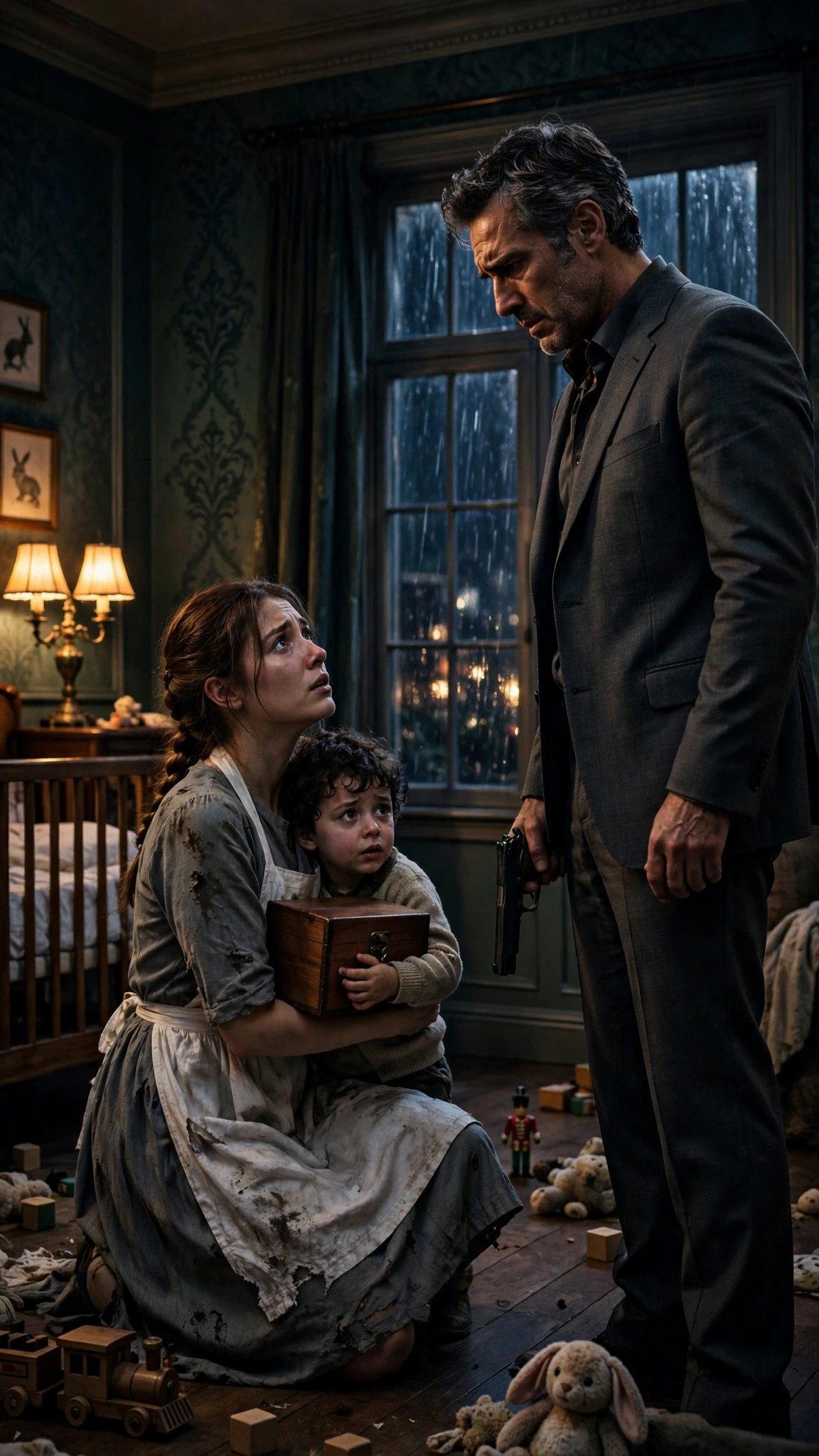
    They brought Tony Falco to Adrian's office three days after the hospital. Not to the basement. Not to a warehouse. To the office. Adrian wanted it done in the light, in the room where Tony had sat a hundred times and called him boss, in the room with the oak box on the desk and the photograph of Isabella on the wall. He wanted Tony to see what he had thrown away. He wanted Tony to understand, before the FBI took him, exactly what he had done, and to whom.

    Reyes was there, with two agents by the door. Livy was there, sitting in the corner in her black dress, her hands folded in her lap, her face like stone. Hannah was not there. Adrian had told her to stay with Leo in the nursery, and she had obeyed, because she was still a maid in that house, and because she did not want to see what was about to happen. But Leo was there. Adrian had brought him in, and Leo sat on his father's lap, holding his oak box, watching Tony with wide, dark eyes. Adrian had thought about it for a long time, and he had decided: his son deserved to see this. Not the violence. There would be no violence. But the truth. His son deserved to see the truth, and to see his father face it, and to see that the law was stronger than a gun.

    Tony came in in handcuffs, with an agent on either side of him. He looked smaller than Adrian remembered. He had always been a big man, built like a wall, with a voice like gravel and a laugh that filled a room. Now he looked like a man who had shrunk, like a balloon with the air let out. His suit was wrinkled. His face was gray. His eyes moved around the room, looking for something — an exit, a friend, a way out — and finding nothing.

    "Sit down, Tony," Adrian said. His voice was slow, and calm, and almost gentle, the way it always was when he was most dangerous. "We need to talk."

    Tony sat. The agents stayed by the door. Reyes stood beside the desk with his arms crossed. Livy did not move. Leo did not move. The room was so quiet that Adrian could hear the clock on the wall, ticking, one second at a time.

    "You told me she was harmless," Adrian said. He was not looking at Tony. He was looking at his son, at Leo's small hands holding the oak box. "A year ago, when I asked you about Hannah Collins, you told me she was harmless. Just a girl from Ohio. Do not worry about her. Do you remember saying that?"

    Tony nodded. He did not speak.

    "And then you went to my mother," Adrian said, and now he looked at Livy, and Livy's face did not change, but her hands tightened in her lap. "You went to my mother, and you told her the opposite. You told her Hannah was dangerous. You told her Hannah was here for the house, for the name, for the boy. You told her to watch the girl. You told her to make me doubt her. And my mother believed you, because you had been in this family for twenty years, and because you had never lied to her before. Is that right, Tony? Is that what you did?"

    Tony swallowed. "Boss—"

    "Is that what you did?" Adrian said, and his voice did not rise, but the room got colder. "Answer me. My son is listening. My mother is listening. The FBI is listening. Answer me."

    Tony looked at the floor. "Yes," he said, very quietly. "Yes, boss. I did that."

    "Why?" Adrian said. "Twenty years, Tony. Twenty years I trusted you. My father trusted you. You stood beside me when they carried my father out of a restaurant in a body bag. You stood beside me at my wedding. You held my son when he was a baby. Why?"

    Tony was quiet for a long time. Then he lifted his head, and his eyes were wet, and he said, "Because I was afraid, boss. Because the Castellanos came to me a year ago, and they said, 'Tony, the Rossi family is weak. The boss is soft. He has a son, and a maid, and a mother who runs his house. He is not his father. Help us, and we will make you a boss. Refuse us, and we will kill you.' And I believed them. I believed them because I had watched you, boss, and I had seen you change. After Isabella died, you changed. You went quiet. You went soft. You let a maid raise your son. You let your mother run your house. And I thought — I thought the family was finished. I thought I had to save myself."

    "You saved yourself," Adrian said, "by tying my four-year-old son to a tree in the dark. By killing my guards. By beating a sixty-one-year-old woman to death on my hallway floor. By pointing a gun at the woman who saved my son. That is how you saved yourself, Tony."

    Tony's face crumpled. "I did not want Rosa to die," he said. "I told them not to touch her. I told them—"

    "You told them," Adrian said. "You told them, and they did it anyway, because that is what happens when you sell your family to men like Vincent Castellano. They do not listen to you. They own you. And now you are owned, Tony. You are owned by the Castellanos, and you are owned by the FBI, and you are owned by me. And I am going to tell you what is going to happen to you, because you deserve to hear it from me, and not from a judge."

    He leaned forward, and his voice dropped, and Leo, sitting on his lap, felt his father's chest move as he spoke, and he listened, very carefully, the way he listened when Hannah read to him.

    "You are going to prison, Tony. For the rest of your life. Agent Reyes has your phone records. He has your bank records. He has the metal box from the pool house. He has the two men in the basement, who have already told him everything. He has Hannah Collins, who will tell a jury everything she saw and heard, in that quiet, steady voice of hers, and a jury will believe her, because she has no reason to lie. And he has me. I will testify. I will stand in a courtroom, in front of a judge, and I will tell them what you did to my son. And when it is over, you will go to prison, and you will die there, and you will never see the outside again. That is what is going to happen to you."

    Tony did not speak. He sat in his chair, in his handcuffs, and he looked at Adrian, and then he looked at Leo, and his face changed, and for the first time since Adrian had known him, Tony Falco looked afraid. Not of Adrian. Not of the FBI. Of the small boy on Adrian's lap, holding an oak box, looking at him with his mother's brown eyes.

    "Leo," Tony said, very quietly. "I am sorry. I am sorry for the woods. I am sorry for the tree. I was wrong. I was wrong about everything."

    Leo looked at him for a long time. Then he said, in a small, clear voice, "My mama said that sorry is only a word if you do not change. Did you change, Uncle Tony?"

    Tony closed his eyes. "No," he said. "No, Leo. I did not change. I am sorry."

    Leo nodded, very slowly, like a small judge delivering a verdict. "Then sorry is only a word," he said. And he turned away, and he buried his face in his father's chest, and he did not look at Tony again.

    Reyes stepped forward. "Take him," he said to the agents. They took Tony by the arms, and they led him out of the office, and as he went through the door, he looked back, one last time, at Adrian, and he said, "Boss. Take care of the boy. Take care of him better than I did."

    And then he was gone. And the room was quiet. And Adrian sat in his office with his son on his lap, and his mother in the corner, and an FBI agent by the desk, and he felt something he had not felt in two years. He felt clean. Not happy. Not at peace. But clean, the way a house feels clean after you have thrown out something rotten that was hiding in the walls.

    Livy stood up. She walked across the room, slowly, like an old woman — and Adrian realized, for the first time, that his mother was an old woman, that she had been old for a long time, and that he had never really seen it before, because she had always been so strong, so certain, so sure of everything. She stopped in front of him, and she looked down at Leo, and then she looked at Adrian, and she said, "I was wrong."

    It was the first time Adrian had ever heard his mother say those three words. In thirty-eight years, he had never heard Livy Rossi say she was wrong. Not once.

    "I was wrong about Hannah," Livy said. "Tony came to me, and he told me she was dangerous, and I believed him, because I wanted to believe him. Because it was easier to blame a girl from Ohio than to admit that the danger was already inside our house, wearing a familiar face. I told you to doubt her. I told you to watch her. I told you she would take something from us. And the only thing she took, Adrian, was my grandson out of the dark. She took him out of the woods. She took him out of a room with a gun in it. She took him, and she held him, and she did not let go. And I owe her an apology. And I owe you an apology. And I owe Leo an apology."

    She knelt down then, slowly, painfully, in front of Leo, and she took his small hands in hers, and she said, "Leo. I am sorry. I was wrong about Hannah. She is not a stranger. She is family. She has been family since the day she sat on the floor of your nursery and read to you about a fox. Will you forgive me?"

    Leo looked at his grandmother for a long time. Then he nodded, and he threw his arms around her neck, and Livy Rossi, who had not cried in forty years, cried. She cried quietly, into her grandson's hair, while Adrian watched, and Reyes watched, and the clock on the wall ticked, one second at a time, and the house, for the first time in a very long time, felt like a home.

    After Reyes left, after Livy went to her wing to rest, after Leo fell asleep in the nursery with his gray blanket and his oak box, Adrian went to find Hannah. She was in the kitchen, washing dishes, because that was what she did when she did not know what else to do — she worked. Her arm was still bandaged. Her dress was still torn. She had not changed it. She had not slept. She had not eaten. She was standing at the sink, washing a plate that was already clean, and when Adrian came in, she did not turn around.

    "Miss Collins," Adrian said. "Hannah."

    She turned. Her face was pale. Her eyes were red. She looked at him, and she waited, and Adrian saw, in her face, the same thing he had seen in his son's face in the bedroom that night: fear. Not fear of a gun. Fear of him. Fear of what he was going to say.

    "Hannah," Adrian said, and his voice was slow, and calm, and almost gentle, but this time it was not the calm of a man about to kill someone. It was the calm of a man who had finally learned how to tell the truth. "You told me she was harmless. That is what Tony said about you, a year ago. He told me you were harmless. And he was right, in a way he never understood. You are harmless, Hannah. You are the most harmless person I have ever met. You have never hurt anyone. You have never lied to anyone. You have never taken anything that was not yours. And the only thing dangerous about you — the only thing dangerous about you in this whole house — was that you made my son laugh. You made him trust again. You made him live again. And that frightened men like Tony, because men like Tony do not understand love, and they fear what they do not understand."

    He stopped. He took a breath. And then he said the words he had been practicing in his head for three days, since the night he lowered his gun, and he said them badly, and honestly, and all at once.

    "I was wrong about you. My mother was wrong about you. This whole house was wrong about you. And I am sorry. I am sorry I pointed a gun at you. I am sorry I believed Tony over you. I am sorry I let my mother tell me to doubt you. I am sorry for all of it. And I know that sorry is only a word if you do not change. So I am going to change. I am going to change this family. I am going to change this house. And I am going to start by asking you something I should have asked you a year ago, the night you saw the blood on my sleeve."

    Hannah looked at him. She did not speak. She waited.

    "Will you stay?" Adrian said. "Not as a maid. Not as a girl from Ohio who reads books. As family. As Leo's family. As my family. Will you stay?"

    Hannah stood at the sink, with a clean plate in her hands, and she looked at Adrian Rossi, the most feared man in New York, standing in her kitchen, asking her to stay, and she thought about her mother, in the hospital in Ohio, who had taught her that a woman's hands were for holding children and healing the sick. And she thought about Leo, asleep in the nursery with his gray blanket and his oak box. And she thought about Rosa, lying on the hallway floor, saying, "She did it for you." And she said, in a voice that shook, and then steadied, "Yes. I will stay."

  • Chapter 5: What the Blood Said

    Chapter 5: What the Blood Said

    The morning after the night the gatehouse fell, the Rossi house was full of people who did not belong there. Police officers in the hall. Detectives in the library. A doctor in the nursery. And in Adrian's office, sitting in a chair that was too big for her, with a blanket around her shoulders and a bandage on her arm, was Hannah Collins, telling the truth for the first time to a man who was finally ready to hear it.

    Adrian sat across from her. He had not slept. His shirt was still dark with Rosa's blood. His hands were still shaking — not from fear, but from something he had never felt before in his life. Shame. He had pointed a gun at this girl. He had believed his mother over her. He had believed Tony over her. And she had sat in his office, with a bandaged arm and a blanket around her shoulders, and she had not cried, and she had not shouted, and she had not asked him for anything. She had simply told him the truth, in that quiet, steady voice of hers, the way she read books to his son.

    "Start from the beginning," Adrian said. "Tell me everything. Do not leave anything out. Not one thing."

    So Hannah told him. She told him about the blood on his sleeve, that evening in September, when she was reading to Leo and she saw the smear of dark red on his white cuff. She told him about the pool house, and Tony's voice through the open window, and the words she had heard — "the pool plan," "Tuesday," "the docks," "make sure the boy is asleep." She told him about the garden, and the car, and the lie about Adrian calling Tony. She told him about the library, and Tony on the phone again, saying, "He talked. The boy talked. We have to know what he said." She told him about the new guards at the gate, men she did not know, men who answered to Tony and not to Adrian. She told him about Rosa, and what Rosa had told her that last night in the kitchen — to take Leo to the nursery and lock the door and not open it for anyone but Rosa or Adrian. She told him everything, in order, without exaggerating, without guessing, the way a nurse's daughter tells a doctor about a patient's symptoms: carefully, and completely, and without fear.

    When she finished, Adrian sat in silence for a long time. Then he stood up, and he went to the window, and he looked out at the garden, where his son had climbed the oak tree and called himself a bird, and he said, very quietly, "The pool house. I never used the pool house. It has been empty for three years, since Isabella died. She used to swim there in the mornings. After she died, I locked it. I told everyone it was closed." He turned around. "Tony used it as a drop point. He used my dead wife's pool house to pass money and information to the Castellanos. And my son heard him. And my son told him about his mother's lullaby. And Tony tied a four-year-old boy to a tree in the dark because he was afraid of what a child might have heard."

    Hannah nodded. She did not speak. There was nothing to say.

    Adrian went to his desk, and he opened a drawer, and he took out his phone, and he called a number he had not called in two years. "Daniel," he said, when a man answered. "It is Adrian Rossi. I need you to come to my house. Now. Bring your men. Bring a warrant. I have something for you, and it is bigger than anything you have been building for two years."

    Daniel Reyes was an FBI agent, forty years old, with a calm face and a patient voice, and he had been building a case against the Rossi family for two years, and against the Castellanos for longer than that. He arrived within the hour, with four agents and a warrant and a face that said he had been waiting for this phone call for a very long time. Adrian met him in the hall, and he said, "I am not asking for a deal, Agent Reyes. I am not asking for protection. I am giving you a man. His name is Tony Falco. He has been working for Vincent Castellano for at least a year. He killed my guards. He beat my housekeeper to death. He tied my four-year-old son to a tree. He used my house to pass information to the Castellanos. I have his phone records, his bank records, and two men in my basement who will tell you everything, if you ask them the right way. Take him. Take all of it. I only ask one thing: that you do it by the law. Because my son is watching. And I want him to see that the law is stronger than a gun."

    Reyes looked at him for a long moment. Then he nodded. "Show me," he said.

    Adrian showed him. He showed him the pool house, with the lock broken and the floorboards loose, and the hollow space underneath where Tony had hidden a metal box full of cash and a burner phone and a list of names. He showed him Tony's phone records — forty-seven calls to a number that belonged to a Castellano lieutenant, all in the last three months, all late at night. He showed him the bank records — money moving from Rossi accounts into a shell company, and from the shell company into Castellano accounts, a little at a time, for over a year. He showed him the two men in the basement, Tony's men, who had killed the guards, and who were now sitting in chairs with their hands tied, looking at the floor, waiting to see what would happen to them. And he showed him Hannah.

    "This is Hannah Collins," Adrian said. "She is the woman who saved my son. Twice. Once in the woods, and once last night. If you need a witness, she is your witness. If you need the truth, she is the truth. Do not frighten her. Do not threaten her. She has been frightened enough."

    Reyes talked to Hannah for an hour. He was gentle with her, the way good agents are gentle when they know they are talking to someone who has done nothing wrong. She told him everything she had told Adrian. She told him about the pool house, and the garden, and the woods, and the nursery, and the night the gatehouse fell. When she finished, Reyes closed his notebook, and he said, "Miss Collins. You are a very brave young woman. Your mother would be proud of you." And Hannah cried, then, for the first time since the night began, because no one had said that to her since her mother died, and she had not known how much she needed to hear it.

    But Tony was not finished. Men like Tony Falco do not go quietly. That afternoon, while Leo was in the hospital — Dr. Marsh had taken him in for observation, for the concussion, for the bruise on his forehead, for the night in the woods that had left him shaking — Tony escaped. He was being held in the basement, waiting for the FBI to take him, and one of the guards — one of Tony's men, a man Adrian had not yet identified — slipped him a key, and Tony walked out of the basement, and out of the house, and he drove to the hospital, because he knew that the only witness who could destroy him was a twenty-four-year-old maid from Ohio, and he knew that if he could silence her, the case would fall apart, and the Castellanos would protect him, and he would live.

    Hannah was sitting beside Leo's hospital bed, reading to him, when the door opened. She looked up, and she saw Tony standing in the doorway, with a gun in his hand, and a smile on his face, and he said, "Hannah. We need to talk."

    Leo woke up. He saw Tony, and he screamed. It was a small scream, a child's scream, but it was enough. The nurse in the hallway heard it. The orderly heard it. And Adrian, who had been sitting in the waiting room down the hall, drinking coffee he did not want, heard it, and he ran.

    He ran down the hallway, and he burst into the room, and he saw Tony with a gun pointed at Hannah, and Hannah with her body between Tony and Leo, again, always between them, and Adrian did not think. He did not reach for his own gun. He did not shout. He simply moved. He crossed the room in three steps, and he took Tony's gun hand in both of his, and he twisted, and the gun fell to the floor, and Adrian drove his fist into Tony's face, once, twice, and Tony went down, and Adrian stood over him, breathing hard, with blood on his knuckles, and he said, very quietly, "You touched my son. You tied my son to a tree. You killed Rosa. You pointed a gun at the woman who saved him. And you thought you could walk into a hospital and finish it. You are finished, Tony. You are finished."

    The FBI agents came running. They took Tony away in handcuffs, and Reyes looked at Adrian, and he said, "You know, Mr. Rossi, most men in your position would have shot him. In that room. In front of your son."

    Adrian looked at Leo, sitting up in his hospital bed, holding Hannah's hand, watching him with wide eyes, and he said, "My son is watching. I want him to see that the law is stronger than a gun. I want him to see that his father can be angry, and still choose the law. That is the only way he will ever believe that this family can be something other than what it was."

    Reyes nodded. "Then you have my respect, Mr. Rossi. And you have my word: Tony Falco will never see the outside of a prison again. And Vincent Castellano — we will get him, too. With what you gave us today, we will get him."

    The next morning, while Leo slept in the hospital under Dr. Marsh's watch, Adrian stood in the pool house with Agent Reyes, looking at the place where his wife used to swim. The lock was broken. The floorboards were loose. Reyes lifted one of them with a crowbar, and underneath, in the hollow space, there was not only the metal box of cash and the burner phone. There was a second phone, smaller, older, wrapped in a plastic bag, and a notebook, full of names and dates in Tony's handwriting — deliveries, drop-offs, payments, all in code, all going back more than a year. Reyes bagged them both, and he said, "Mr. Rossi, this notebook is worth more than the cash. This notebook puts Castellano's whole network on paper. Tony was not just skimming. He was the bridge. Without him, Castellano cannot move anything through your docks."

    Adrian looked at the empty pool, at the pale blue tiles, at the place where Isabella used to do her laps in the early morning, before Leo woke up, before the house woke up, and he thought about how Tony had turned his dead wife's sanctuary into a hiding place for stolen money. He thought about how many times he had walked past the pool house in the last year, and never once opened the door, because it hurt too much to look inside. And he understood, with a clarity that felt like a wound opening, that grief had made him blind. He had locked the pool house because he could not bear to remember Isabella there. And Tony had used that locked door — his grief — as a cover.

    Later that day, Reyes asked Hannah to walk him through the pool house, step by step. She showed him where she had stood when she heard Tony's voice through the open window. She showed him the path she had taken with the tray. She told him the exact words she had heard — "the pool plan," "Tuesday," "the docks," "make sure the boy is asleep" — and she told him the date, and the time, and the weather, because she remembered all of it, the way she remembered everything about the house, carefully and completely. Reyes wrote it all down, and when she finished, he said, "Miss Collins, do you know how rare it is for a witness to remember this much? Most people remember feelings. You remember facts. That is going to put a very bad man in prison for a very long time."

    In the afternoon, Adrian arranged Rosa's funeral. He did it himself, in his office, on the phone, with a voice that did not shake, because Rosa would have wanted it done properly, and done quickly, and without fuss. He chose the family plot. He chose the stone. He called the priest. He called the florist, and he ordered white lilies, because Rosa had always said that white lilies were the only flowers fit for a church. And when it was done, he sat in his office alone, and he looked at the photograph of Isabella on his desk, and he said, out loud, to no one, "I am sorry, Rosa. I am sorry I did not see it. I am sorry I let him into our house. I am sorry you died for my blindness." And then he went to the hospital, and he sat beside his son's bed, and he held Leo's small hand, and he did not let go, not once, all night.

    That night, in the hospital room, with Leo asleep in his bed and Hannah asleep in the chair beside him, Adrian sat in the corner, and he watched them, and he thought about what the blood had said. The blood on his sleeve. The blood on Hannah's dress. The blood on the hallway carpet, where Rosa had died. The blood had told him everything, if he had only known how to read it. It had told him that his house was rotten from the inside. It had told him that the man he trusted most was the man who was destroying him. It had told him that the woman he had almost shot was the only person in his house who had been telling the truth.

    And it had told him one more thing, the most important thing of all: that his son had chosen. Leo had chosen Hannah. Not because she was rich, or powerful, or born into the family. Because she had stayed. Because she had read to him. Because she had held him in the dark. Because she had stood between him and a gun, twice, and never once stepped aside. And Adrian Rossi, who had spent twenty years earning men's loyalty with fear, finally understood what his son had known all along: that loyalty is not earned with fear. It is earned with love. And love, unlike fear, does not need a gun to protect it. It needs only someone willing to stand in front of it, and say, "No. Not him. Not while I am here."

  • Chapter 5: Tell Him I Didn’t Leave Him

    Chapter 5: Tell Him I Didn’t Leave Him

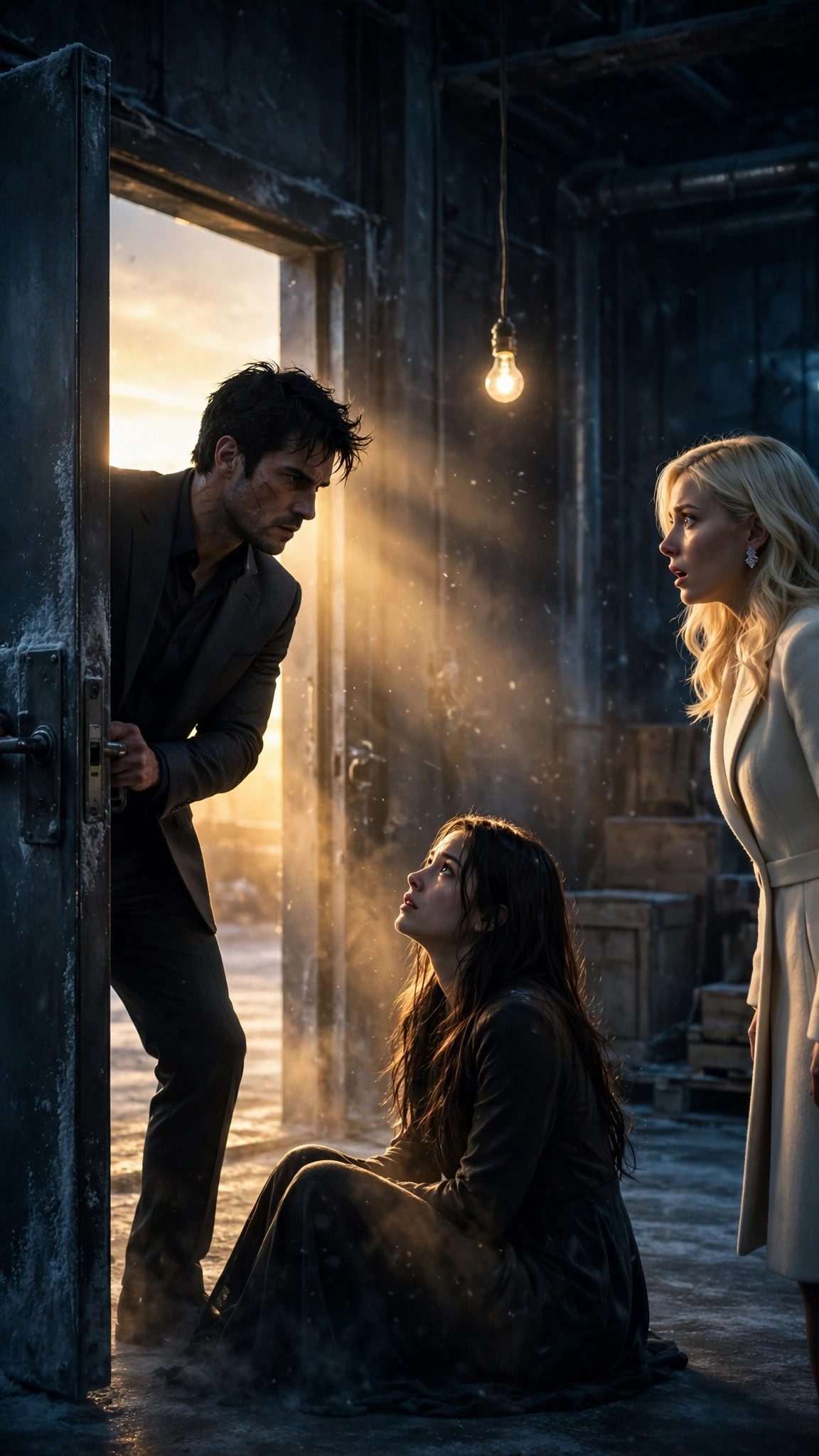
    The door did not open. It exploded.

    I had spent six days in the dark, and I had forgotten what light looked like, and when the steel door came off its hinges and the evening light came flooding into the warehouse, it hurt. It hurt my eyes so badly that I squeezed them shut, and I heard Evelyn scream, and I heard the man with the scar through his eyebrow shout something, and I heard footsteps, fast and heavy, crossing the concrete floor toward me, and then I heard a voice I knew better than my own heartbeat, even though I had barely ever heard it speak to me at all.

    "Maya."

    Roman Calder knelt beside me on the freezing warehouse floor, and his hands were on the ropes around my wrists, and his hands were shaking. I had never seen Roman Calder's hands shake. I had seen those hands sign contracts and hold a whiskey glass and rest flat on a table while men in dark suits told him things that would have made other men flinch, and those hands had never once shaken. Now they shook, and he could not get the knot undone, and he cursed, quietly, under his breath, and he pulled a knife from his pocket and cut the rope, and the rope fell away, and the blood came rushing back into my hands, and it hurt so much that I cried out.

    "I'm here," he said. "You're safe. I've got you."

    He cut the rope around my ankles, and he picked me up, and I weighed almost nothing after six days of bread and water, and he carried me like I was something breakable, like I was made of glass, and I put my face against his shoulder, and his suit smelled like rain and cold air and something else, something I recognized after a moment as the smell of the library, of old leather and wood smoke, and I started to cry.

    I had not cried in six days. I had been too thirsty to cry, and too cold, and too afraid. But in his arms, with the light coming through the broken doorway and the warehouse suddenly full of men I did not know, I cried, and I could not stop, and Roman held me tighter, and he said, "It's all right. It's over. You're safe now."

    Evelyn was standing ten feet away, still crouched where she had been, her cream coat arranged around her, her diamond earrings catching the light, and her face was white. Not pale. White, the way paper is white, the way a person looks when the blood has left their face all at once and has not come back.

    "Roman," she said. "Roman, darling, I can explain."

    He looked at her. He did not put me down. He looked at her over my head, and his eyes were the eyes I had seen in the library that morning, the eyes of a man who had once been a ten-year-old boy watching his mother die, and there was nothing in them at all. No anger. No hatred. Nothing. Just a flat, cold emptiness that was more terrifying than any shouting I had ever heard.

    "You asked her for her last wish," he said. His voice was quiet. It was the quietest voice I had ever heard from him, and it filled the whole warehouse. "You stood over a woman you had starved for six days, and you asked her for her last wish, and you told her that by tomorrow, everyone would believe she had abandoned her little brother. Do you know what I heard, Evelyn? I heard my mother. I heard a woman begging for someone she loved, and I heard another woman deciding whether she deserved to live. And I have spent twenty-eight years becoming the kind of man who can stop that from happening."

    "Roman, please." Evelyn's voice cracked. The polish was gone. The cut-glass coolness was gone. She was just a frightened woman in an expensive coat, standing on a concrete floor. "You don't understand. I did this for us. For you. She was a threat, Roman. She was getting close to you. I saw it. I saw the way you looked at her that morning in the library. I saw the blanket. I saw the tea. I have given you two years of my life, Roman. Two years of dinners and galas and being perfect, and you looked at a cook the way you have never once looked at me. I did this because I love you."

    "You did this," Roman said, "because you wanted to be Mrs. Roman Calder, and you were willing to kill a woman and destroy a nine-year-old boy to get there. That is not love, Evelyn. That is ambition wearing love's clothes. And I have seen enough of that to last me a lifetime."

    He turned away from her, and he carried me toward the door, and behind us, I heard his men moving, and I heard Marcus Hale's voice, calm and professional, saying, "Miss Sterling, you need to come with us," and I heard Evelyn say, "Don't touch me. Do you know who my father is?" and I heard Marcus say, "Yes, ma'am. That's why the FBI is on its way."

    The FBI. Not Roman's men. Not a quiet conversation in a locked room. The FBI.

    I lifted my head from Roman's shoulder. "What did you do?"

    "I called Agent Reyes," he said. "Daniel Reyes. He has been building a case against the Sterling family's real estate fraud for two years. Your kidnapping gave him what he needed. Evelyn's father signed the warehouse lease. Evelyn's money paid for it. Danny Cole has already given a statement. The man with the scar — his name is Eddie Marcone, and he has a daughter in Ohio, and he has already told the FBI everything."

    He carried me out of the warehouse and into the cold evening air, and the sky was the color of bruised plums, the same color it had been on the night they took me, and I breathed it in, and it was the sweetest air I had ever breathed in my life.

    An ambulance was waiting. Roman set me down on the stretcher, gently, like I was made of glass, and the paramedics put a blanket over me, and one of them put an oxygen mask on my face, and I pushed it away.

    "Caleb," I said. "I need to see Caleb."

    "He's at the hospital," Roman said. "Mrs. Alvarez brought him. He's been waiting for you for six days. He's sitting in the waiting room with his tin box in his lap, and he has not left that chair except to use the bathroom, and he told the nurse that his sister promised she'd be home before dark, and he intends to hold her to it."

    I started to cry again, and this time I did not try to stop, because crying meant I was alive, and being alive meant I was going home.

    The ride to the hospital was a blur of lights and sirens and the paramedic's voice asking me questions I could barely answer. What is your name? Maya Hart. How old are you? Twenty-six. Do you know what day it is? No. Do you know where you are? A warehouse. Do you know who did this to you? Evelyn Sterling.

    When we arrived, they wheeled me into a bright room that smelled like antiseptic, and a doctor with kind eyes told me I was dehydrated and malnourished and that my wrists would heal and that I was very lucky, and I told her I didn't feel lucky, I felt like I had been asleep for six days and woken up in a different world, and she said, "That's normal. Rest. Your brother is here."

    And then the door opened, and Caleb came in, and Mrs. Alvarez was behind him, and Barnaby the one-eyed dog was tucked under his arm, and his tin box was in his other hand, and he stopped in the doorway and looked at me, and his face did something I had never seen it do before. It crumpled, all at once, like a piece of paper, and then he was running across the room, and he was on the bed beside me, and his arms were around my neck, and he was crying, and I was crying, and he kept saying the same thing over and over again.

    "You came back. You came back. You came back."

    "I never left you," I whispered into his hair. "Not for one second. Not in my heart. I never left you, Caleb."

    "I know," he said, and he pulled back just enough to look at me, and his eyes were red, and his nose was running, and he was the most beautiful thing I had ever seen in my life. "I knew. Mrs. Alvarez said maybe you left, and the police said maybe you left, but I knew. You left me a note. You always leave me a note. And there was no note. So I knew."

    He held up the tin box. "I saved it," he said. "I counted it. Forty-seven dollars and thirty-five cents. I was saving it for your birthday. It's in three weeks. I wanted to buy you something beautiful."

    I took the box from him, and I held it in my hands, and it was dented and covered in faded baseball stickers, and it rattled when I shook it, and it was the most valuable thing in the entire world.

    Roman was standing in the doorway. I had not noticed him come in. He was standing very still, watching us, and his hand was on the scar along his jaw, and his eyes were wet.

    I had never seen Roman Calder cry. I did not see him cry then, either. But his eyes were wet, and he looked at my little brother holding his tin box, and he looked at me holding my little brother, and something in his face changed, the way a door changes when it opens after being locked for a very long time.

    "Mr. Calder," Caleb said, and he turned to look at Roman, and he did not look afraid at all. "Did you find her?"

    "I did," Roman said.

    "Thank you," Caleb said, very seriously, like a man thanking another man for a debt paid in full. "She makes the best oatmeal. And she always leaves me a note. And she loves me more than all the stars."

    Roman nodded. He did not speak for a moment. Then he said, "She told me." And he looked at me, and for the first time in five years, he looked at me like I was a person, and not a function, and not a cook, and not a problem to be solved.

    "I know your name now," he said. "Maya Hart. And I know your brother's name. And I know about the notes, and the shoebox, and the tin box. And I am sorry, Maya. I am sorry that it took me six days to notice you were gone. I am sorry that I never once, in five years, said thank you. And I am sorry that the woman I was going to marry tried to kill you in my name."

    I did not know what to say. I had spent five years being invisible to this man, and now he was standing in my hospital room, apologizing to me, and my little brother was asleep on my chest with his tin box in his lap, and the world had turned upside down, and I was too tired to understand any of it.

    So I said the only thing I could think of. "Thank you," I said. "For finding me. For bringing me home."

    He shook his head. "Don't thank me," he said. "Not yet. There's more to do. Evelyn is in custody. Her father is going to try to make this disappear. And I am going to make sure he can't. But first, you rest. And Caleb stays with you. And no one — no one — is going to take you away from him again. Not while I'm alive."

    He turned to leave, and then he stopped in the doorway, and he looked back at me, and he said, very quietly, "The tea helped, by the way. The chamomile. My mother used to make it. I hadn't slept through the night in twenty-eight years. That morning, in the library, I slept."

    And then he was gone, and the room was quiet, and Caleb was breathing softly against my chest, and I closed my eyes, and for the first time in six days, I slept without dreaming of the dark.

    In the ambulance, on the way to the hospital, I had asked the paramedic if Evelyn was going to be all right, and the paramedic, a young woman with kind eyes, had looked at me like I was delirious, and said, "Miss, she tied you up in a warehouse for six days," and I had said, "I know. But I don't want anyone else to die because of me. Not even her." The paramedic had not answered. She had just checked my pulse again, and written something on her chart, and I had understood, in a hazy way, that forgiveness is not the same as forgetting, and that I could want Evelyn to face the law without wanting her to suffer the way I had suffered. Roman rode in the ambulance with me, sitting on the small bench beside the stretcher, holding my hand, and he did not let go until the doctors took me into the bright room that smelled like antiseptic. His hand was warm, and steady, and it did not shake anymore, and I held on to it the way a drowning person holds on to a rope, because for six days, the dark had been the only thing holding me, and now there was a hand, and a voice, and a promise, and I was not alone anymore.

  • Chapter 4: The Man Who Never Said Thank You

    Chapter 4: The Man Who Never Said Thank You

    Roman told me later that he did not notice I was gone until the third day. He told me this the way he told me everything that mattered: flatly, without looking at me, like a man reading a report about someone else's life.

    "The first day, I thought you were sick," he said. "The second day, I thought you had quit. The third day, I went down to the kitchen myself, and the stove was cold, and the coffee wasn't made, and I stood there for a long time, and I understood that something was wrong, because you had never once, in five years, failed to make the coffee."

    He did not say what he felt in that kitchen. He did not have to. I had seen his face in the library that morning, when he whispered "Mom, get down" in his sleep, and I knew what fear looked like on Roman Calder, even if he would never call it fear.

    What he did, on the third day, was call Mrs. Delaney into his office and ask her where I was. Mrs. Delaney told him that I had not called, and I had not come, and no one had heard from me. He asked her if I had a family. She told him about Caleb. She told him about the apartment on Fayette Street, and the neighbor, Mrs. Alvarez, and the little boy who was nine years old and had no one else in the world.

    Roman sent his driver, Marcus Hale, to the apartment. Marcus was a big man with a shaved head and a quiet voice, and he had worked for Roman's father before he worked for Roman, and he was the only man in the organization who was allowed to disagree with Roman to his face. He knocked on the door of the apartment, and Mrs. Alvarez opened it, and behind her, sitting by the window with a dented tin box in his lap, was Caleb.

    Marcus told me later that the boy did not cry. He just looked up and said, "She promised she'd be home before dark. That was three days ago. Is she dead?"

    Marcus said no. He said it firmly, the way you say something when you need it to be true. Then he went back to the estate and told Roman what he had found, and Roman Calder, who had not left his house for anything but business in six years, got into his car and drove to Fayette Street himself.

    Caleb told me about that visit, much later, sitting on the edge of his bed with Barnaby the one-eyed dog in his lap, and he told it the way a nine-year-old tells a story that is too big for him, in short sentences, with long pauses.

    "He came to the door," Caleb said. "He was tall. He had a scar on his face. Mrs. Alvarez was scared of him. I wasn't scared. I asked him where Maya was. He said he didn't know, but he was going to find out. I told him she makes the best oatmeal. I told him about the notes in the shoebox. I told him about the tin box. He asked me what I was saving for, and I said it was classified, and he almost smiled. Then he said, 'Your sister is coming home, Caleb. I promise you that.' And I believed him, because he said it the way you say it when you mean it."

    Roman did not tell Caleb then what he already suspected. He did not tell him that a woman does not simply vanish from a job she has held for five years, from a brother she has raised since he was a baby, without someone making her vanish. He did not tell him that the first person he suspected was the woman he was engaged to marry.

    He suspected Evelyn from the beginning. He told me that, too, later, in the same flat voice, staring out at the harbor.

    "She asked about you," he said. "The week before you disappeared. She asked Mrs. Delaney how long you had worked here. She asked the driver what time you left at night. She asked the housekeeper whether you had any family. I thought she was being kind. I thought she was taking an interest in the staff, the way a future wife of the house should. I was wrong. She was doing reconnaissance."

    He started with her driver, a man named Danny Cole, who had worked for the Sterling family for twelve years and had a gambling problem and a daughter in college in Ohio. Roman's men found Danny in a bar in Fell's Point on the fourth night, and they brought him to a room in the back of a restaurant Roman owned, and Roman asked him, very quietly, where Maya Hart was.

    Danny Cole did not answer at first. He said he didn't know anything. He said he just drove the car. Roman asked him again. And Danny Cole, who had a daughter in college and a gambling problem and a conscience he had been trying to drown for twelve years, told him about the warehouse.

    It was a warehouse on the edge of the old industrial district, leased three months earlier through a shell company called Bellini Holdings, a company with no office and no employees and no reason to exist except to hold a lease on a building where a woman could be kept for six days without anyone noticing. The lease had been signed by a lawyer who worked for Charles Sterling. The payments came from an account in Evelyn Sterling's name.

    Roman told me he sat in that room for a long time after Danny left, with his hand on the scar along his jaw, and he thought about his mother.

    His mother had been named Elena Calder, and she had been a schoolteacher before she married Vincent Calder, and she had hated the life, and she had stayed in it because she loved her husband and her son, and she had died when Roman was ten years old, on a Tuesday night in November, in the parking garage beneath their building, because a bomb had been wired to the ignition of her husband's car, and she had gone down to the car first.

    "Mom, get down," Roman had whispered in his sleep, in the library chair, with a blanket around his shoulders. He had been ten years old, standing at the top of the stairs, watching his mother walk down to the garage. He had seen the men. He had seen the car. He had shouted, and she had turned, and the bomb had gone off, and the scar on his jaw was from a piece of flying glass, and he had carried it for twenty-eight years, and he had never once talked about it to anyone.

    Not to his father, who went to prison two years later and died there. Not to his men, who would have died for him without a word. Not to Evelyn, who had asked him once, at a dinner party, where he got the scar, and he had looked at her for a long moment and said, "I don't remember," and changed the subject.

    He told me. He told me on the fifth night, sitting beside my hospital bed, while I was still too weak to sit up on my own, and he told me because he needed me to understand why he had come for me himself, instead of sending his men.

    "When I heard her ask you for your last wish," he said, "I heard my mother. I heard a woman begging for someone she loved, and I heard another woman deciding whether she deserved to live. And I understood that I had spent twenty-eight years becoming the kind of man who could stop that from happening, and I had almost failed, because I was too blind to see what was happening in my own house."

    On the fifth day, Roman's men watched the warehouse. They watched the van come and go. They watched the man with the scar through one eyebrow carry water and bread inside. They watched Evelyn's white car arrive, and they watched her walk in alone, and Roman, who had been waiting in a black car two streets away, got out and walked to the steel door and pressed his hand flat against the cold metal, and he listened.

    He heard Evelyn ask me for my last wish. He heard my voice break. He heard me say, "Tell him I didn't leave him." He heard Evelyn say, "By tomorrow, everyone will believe you did."

    And something inside him shattered. Not loudly. Not the way a man's heart shatters in the movies. Quietly, the way a lock breaks when the key finally turns.

    He did not wait for his men. He did not call for backup. He put his shoulder to the steel door and drove it inward, and the light came flooding into the warehouse, and the six days of darkness ended all at once.

    That is what Roman told me. And Caleb told me the other half, the half Roman left out, because Roman would never tell it himself.

    Caleb told me that on the sixth day, while I was lying on the warehouse floor, he had sat by Mrs. Alvarez's window with his tin box in his lap, and he had counted the coins in it, one by one, and he had told Mrs. Alvarez that he was saving the money to buy Maya a birthday present, because her birthday was in three weeks, and she never bought anything for herself, and he wanted to buy her something beautiful, something she would never buy for herself, something that would make her smile the way she smiled when he got a good grade.

    He had been saving for eleven months. There were forty-seven dollars and thirty-five cents in the box.

    And when Roman Calder came to the apartment on the third day, and asked him what he was saving for, Caleb had said it was classified, because a birthday present is classified until the birthday. And Roman, who had almost smiled, had gone back to his car and sat there for a long time with his hand on the scar along his jaw, thinking about a ten-year-old boy who watched his mother die, and a nine-year-old boy who was waiting by a window for his sister to come home before dark.

    That was the man who broke down the steel door of the warehouse. Not Baltimore's most feared man. A man who had made a promise to a nine-year-old boy, and who had never once, in his entire life, broken a promise he made to a child.

    There were other parts of the search that Roman did not tell me, and that I only learned later, piece by piece, from Marcus Hale, and from Mrs. Delaney, and from Agent Reyes, and I keep them here because they belong to the story, and because they explain how a man who barely knew my name found me in a city of six hundred thousand people.

    On the fourth day, Marcus went back to the estate and checked the gate cameras. The estate had cameras at every entrance, and Marcus watched six nights of footage, hour by hour, until he found it: my bus, late, and me getting off two stops early and walking, and then, at the corner of Charles Street, a white van with no plates pulling up beside me, and a door sliding open, and me gone in four seconds. Four seconds. That was all it took to erase a woman from the world.

    Marcus took the footage to a man he knew in the city traffic department, and the man traced the van through three more cameras, to a gas station on the edge of the industrial district, and then the trail went cold, because the van had no plates and the driver wore a cap, and the gas station camera had been broken for a month. But Marcus had the district, and he had the time, and he started with the warehouses, one by one, checking leases, asking questions, paying for answers in cash, the way Roman's men had always done.

    At the same time, Caleb's teacher, a kind woman named Mrs. Okafor — no relation to the old cook, though Caleb liked to pretend they were cousins — called Mrs. Alvarez and said that Caleb had not been himself at school, that he sat by the window during recess and did not play, and that he had told another boy that his sister was gone and the police did not care. Mrs. Alvarez went to the school and sat with Caleb in the principal's office, and she told the principal that Maya Hart had raised that boy since he was a baby, and that she would never leave him, and that if the school did not help, she would go to the newspapers. The principal called the police again, and the police, this time, took a report, and the report sat on a desk for two days, and nothing happened.

    But Mrs. Alvarez did something else, too. She went to the estate, and she asked for Mrs. Delaney, and she told her everything, and Mrs. Delaney, who had worked in that house for thirty years and had seen things she would never speak of, went straight to Roman's office and knocked on the door, and she told him about the boy by the window, and the tin box, and the shoebox full of notes, and she said, "Mr. Calder, sir, that girl has never once been late in five years, and if she is gone, then someone has taken her, and you are the only man in this city who can find her."

    Roman listened. He did not interrupt her. And when she finished, he said, "Thank you, Mrs. Delaney," and she told me later that it was the first time he had ever said thank you to her, in thirty years, and she cried in the hallway afterward, because she knew, in that moment, that he was going to find me or die trying.

    The last piece came from Danny Cole, in the bar in Fell's Point, and it came the way truths usually come in Roman's world: not from kindness, but from fear, and from a man who had a daughter in college and a conscience he could no longer drown. Danny told Roman's men about the warehouse, and about Bellini Holdings, and about the lawyer who signed the lease, and about the account in Evelyn Sterling's name, and he begged them not to tell Evelyn that he had talked, because he was afraid of what she would do to his daughter. Marcus told him, "Son, Evelyn Sterling is finished. The only person you need to be afraid of now is the law. And the law is going to be kinder to you than she ever was."

    That was the search. Six days of cameras and cash and phone calls and a housekeeper who finally said what she had been thinking for thirty years, and a neighbor who refused to be ignored, and a little boy who would not stop waiting by a window. It was not one man who found me. It was all of them, together, each doing the small thing they could do. And Roman Calder, standing in front of that steel door with his hand pressed flat against the cold metal, was only the last of them, and the loudest.

  • Chapter 4: The Night the Gatehouse Fell

    Chapter 4: The Night the Gatehouse Fell

    Three days after the woods, the house was quiet in a way Hannah had never heard it quiet before. It was the kind of quiet that comes after a storm, when everyone is waiting to see if another one is coming. Leo would not leave his father's side. He slept in Adrian's bed. He ate at Adrian's table. He carried his oak box everywhere, and he would not let it out of his sight, and when Hannah came into the room, he would run to her, and throw his arms around her waist, and whisper, "Hannah, stay." And she stayed. She stayed even though Livy would not look at her. She stayed even though Adrian would not speak to her. She stayed because a small boy had asked her to, and because she had made a promise in the dark, and because she knew, with a cold certainty in her stomach, that Tony Falco was not finished.

    Tony came to the house every day. He came in the morning, and he drank coffee in the kitchen with Rosa, and he asked her about her knees, and he asked Hannah about Ohio, and he smiled, and he was the same Tony he had always been — the big man with the gravel voice and the laugh that filled a room. But Hannah watched him now. She watched the way his eyes moved when Adrian was not looking. She watched the way he stood too close to the door of Adrian's office, listening. She watched the way he checked his phone, again and again, like a man waiting for a message. And she watched the way the guards at the gate had changed — two new men, men she did not know, men Tony had brought in himself, men who did not nod to Rosa when she passed.

    She told Rosa. She told her in the kitchen, late at night, when the house was asleep, in a voice so quiet it was barely a whisper. "Something is wrong with the guards, Rosa. The new men. They are Tony's men. They do not answer to Mr. Rossi. They answer to Tony."

    Rosa listened. Rosa had run the Rossi house for forty years, and she had seen men come and go, and she had seen what happened to men who forgot who they served. She put down her dish towel, and she looked at Hannah for a long time, and she said, "You are a smart girl. Smarter than I thought. Listen to me now, and listen carefully. If anything happens in this house — anything — you take Leo, and you go to the nursery, and you lock the door, and you do not open it for anyone but me or Mr. Rossi. Not Tony. Not the guards. Not anyone. Do you understand?"

    "Yes," Hannah said. "But Rosa — what if something happens to you?"

    Rosa smiled then, a small, tired smile, and she said, "I am sixty-one years old, girl. I have been in this house for forty years. I have buried a boss and a wife, and I have raised a boy who became a boss, and I am not afraid of anything in this house. You worry about Leo. I will worry about the rest." She paused, and her eyes softened, and she said, "And Hannah — your mother would be proud of you. A nurse's daughter. You have her hands. I can tell."

    Hannah went to bed that night with Rosa's words in her ears, and she slept with her door open, the way she always did, so she could hear Leo if he cried in the night. She did not know that it would be the last night Rosa Benedetti would ever speak to her. She did not know that Tony had already made his decision. She did not know that the men at the gate had already been paid, and that the plan was already in motion, and that the only thing standing between Tony Falco and what he wanted was a twenty-four-year-old maid from Ohio, a sixty-one-year-old housekeeper, and a four-year-old boy with an oak box.

    It happened at half past eleven. Hannah was in the nursery, reading to Leo — he had fallen asleep in her lap an hour earlier, with his head on her shoulder and his gray blanket wrapped around them both — when she heard it. A sound from downstairs. Not loud. A thump. Then another. Then silence. Then the sound of the front door opening, very slowly, and footsteps on the stairs, too many footsteps, too heavy, too fast.

    She did not think. She did what Rosa had told her to do. She picked Leo up, blanket and all, and she carried him into the small bathroom off the nursery, and she locked the door, and she sat on the floor with her back against it, holding Leo against her chest, with one hand over his mouth, very gently, and she whispered, "Shh, baby. Shh. It is a game. We are playing the quiet game. Do not make a sound."

    Leo did not make a sound. He was awake now, his eyes wide, his small hands clutching her dress, and he understood, the way children understand danger without being told, that this was not a game.

    The footsteps came down the hallway. They stopped outside the nursery door. Hannah heard a man's voice, low and rough, say, "Check the nursery. The boy is in there. The girl too. Tony wants them both." And then the door opened, and a man came in, a man she did not know, with a gun in his hand, and he looked around the empty nursery, and he said, "They are not here. Check the bathroom."

    Hannah held Leo tighter. She could feel his heart beating against her chest, fast, like a small bird. She could feel her own heart beating, too, and she thought about her mother, in the hospital in Ohio, who had once told her that the bravest thing a person can do is to stay still when every part of them wants to run. So she stayed still. She stayed still while the man tried the bathroom door. She stayed still while he kicked it, once, twice, and the lock held. She stayed still while he swore and went back down the hallway, shouting, "They are locked in! Get Tony!"

    And then she heard Rosa's voice. Rosa, in the hallway, shouting, "Get away from that door! Get away from my boy!" And then a sound Hannah would never forget — the sound of a body hitting the floor, hard, and a cry, cut short, and then silence. And then Tony's voice, very calm, very close, saying, "Rosa. Rosa, Rosa. You should have stayed in the kitchen. You always did love this house too much."

    Hannah could not stay still anymore. She unlocked the bathroom door, and she stepped into the nursery, holding Leo, and she saw Rosa lying on the floor of the hallway, her dress dark with blood, her body broken, and Tony standing over her, and two men behind him, and Tony looked at her, and he smiled, and he said, "Hannah. There you are. Give me the boy."

    "No," Hannah said. Her voice shook. Her whole body shook. But she did not move. "No. You will not touch him."

    Tony laughed. It was a soft laugh, almost gentle. "Hannah, Hannah. You are a brave girl. I will give you that. But you are a maid, and this is not your house, and that boy is not your son. Give him to me, and I will let you walk out of here alive. That is more than I am offering anyone else tonight."

    "Why?" Hannah said. "Why are you doing this? Mr. Rossi trusted you. He trusted you with his life. With his son's life."

    Tony's smile faded. "Mr. Rossi trusted me," he said. "And Mr. Rossi is a fool. He sits in his office and he thinks he is a boss, but he does not see what is happening in his own house. The Castellanos see it. They see that the Rossi family is weak. A boss who cannot control his own men. A boss who lets a maid raise his son. A boss who lets his mother run his house. They paid me to fix it. They paid me to take the boy, and to make it look like the maid did it, and to hand the family to them on a plate. And you, Hannah — you made it easy. You were always in the nursery. You were always holding him. All I had to do was wait for the right night."

    He took a step toward her. Hannah backed away, toward the window, holding Leo against her chest. Leo was crying now, very quietly, into her shoulder, and his small hands were twisted in her dress, and Hannah thought, very clearly, that she was going to die in this room, and that Leo was going to die with her, and that the last thing she would ever see would be Tony Falco's smile.

    And then the front door crashed open downstairs, and a voice roared through the house, a voice Hannah had never heard before, a voice like thunder, and it said, "TONY!"

    It was Adrian. He had come home early. His meeting had ended, and he had driven home through the rain, and when he turned into the driveway, he had seen the gatehouse dark, and the gate standing open, and he had known, the way he had known three nights before, that something was wrong. He had run from the car to the front door, and the front door had been open, and he had seen the bodies of his guards in the hall, and he had taken the stairs three at a time, and now he was standing at the top of the stairs, with a gun in his hand, and his face was white, and his eyes were black, and he was looking at Tony Falco, and at Hannah, and at Leo, and at Rosa, lying broken on the floor.

    For one terrible moment, nobody moved. Tony stood in the hallway, smiling. Hannah stood in the nursery doorway, holding Leo, her dress torn and dark with blood — Rosa's blood, and her own, from where one of Tony's men had grabbed her arm and cut it. Leo clung to her, pale and shaking. And Adrian stood at the top of the stairs, and he looked at the scene, and he did what any man would do when he walks into his house and finds his guards dead and a stranger holding his son. He did the wrong thing. He pointed his gun at the person holding his son.

    "Hannah," he said, and his voice was slow, and calm, and almost gentle, in the way that Adrian Rossi's voice was always calm and gentle right before he killed someone. "Put my son down. Step away from him. Now."

    "Mr. Rossi—" Hannah said. "Please. Please, it was Tony. Tony did this. He killed the guards. He—"

    "Put him down," Adrian said. His finger tightened on the trigger. "I will not say it again."

    And then Rosa moved. Rosa, lying on the floor with her body broken, with blood on her dress, with her life running out of her onto the hallway carpet, lifted one hand, and she reached for Adrian's ankle, and she said, in a voice so quiet he had to kneel to hear it, "She did it for you."

    Adrian froze. He looked down at her. Rosa's eyes were open, and they were fixed on his face, and she said, very slowly, very clearly, "She shielded him. With her body. She did it for you. For Leo. Do not shoot her, Adrian. Do not shoot the only one who stayed."

    And then Leo spoke. Leo, who had not said a word since the woods, who had barely spoken in three days, lifted his head from Hannah's shoulder, and looked at his father, and said, in a voice that shook, with lips so pale they were almost white, "Hann… Hannah. Don't hurt Hannah. Papa. Don't hurt Hannah."

    Adrian looked at his son. He looked at Hannah. He looked at Tony, standing in the hallway with his hands up now, smiling, saying, "Boss, boss, it is not what it looks like, she did this, she let them in, I came to stop her—" And Adrian looked at Rosa, dying on the floor, and he understood, all at once, everything he had been too blind to see. The blood on his sleeve. The pool plan. The woods. The tree. The hour in the dark. The lie in the garden. The men at the gate. The way his mother had whispered in his ear for a year. The way Tony had told him Hannah was harmless, and then told his mother that Hannah was dangerous, and played them both like instruments, while he sold the family to the Castellanos piece by piece.

    He lowered the gun.

    "Tony," he said, very quietly. "Get on your knees."

    Tony's smile vanished. "Boss—"

    "Get on your knees," Adrian said. "Now. Before I change my mind and do this the way my father would have done it."

    Tony got on his knees. Adrian did not look at him. He went to Rosa, and he knelt beside her, and he took her hand, and Rosa looked up at him, and she smiled, a small, tired smile, and she said, "Your mother would be proud of you. A nurse's daughter. You have her hands." And then she closed her eyes. And she did not open them again.

    Adrian sat beside her for a moment, with her hand in his, and then he stood up, and he went to Hannah, and he took Leo from her arms, very gently, and he held his son against his chest, and Leo wrapped his small arms around his father's neck, and he whispered, "Papa. Hannah saved me. Hannah saved me."

    "I know," Adrian said. His voice broke. For the first time since his wife's funeral, Adrian Rossi's voice broke. "I know, Leo. I know."

    He looked at Hannah. She was standing in the doorway, shaking, her dress torn, her arm bleeding, her face white, and she was still standing between Leo and Tony, even now, even after everything, still standing between them. And Adrian Rossi, the most feared man in New York, the lone wolf who had never needed anyone, looked at a twenty-four-year-old maid from Ohio, and he said the only words he could find.

    "Thank you," he said. "Thank you for my son."

    And then he turned to the men behind Tony, and he said, "Call Dr. Marsh. Call the police. Call the FBI. Call everyone. And Tony — you do not move. You do not speak. You do not breathe loudly. Because the next sound you make might be your last."

    The doctor came. The police came. The night went on, and the house filled with people, and with lights, and with questions, and Hannah sat in the nursery with Leo, holding him, while the doctor checked his breathing, and his pulse, and the bruise on his forehead where he had been struck when he tried to run to Rosa. And Adrian stood in the doorway, watching them, with Rosa's blood on his hands, and his son alive in a maid's arms, and he understood, finally, what his wife had tried to teach him eight years ago, and what his son had tried to teach him with his eyes: that the most dangerous thing in his house had never been Hannah Collins. The most dangerous thing in his house had been the man he trusted most. And the only thing that had saved his son was the woman he had almost shot.