
Story Genres: Mafia Romance

  • Chapter 2: The Woman Nobody Sees

    Chapter 2: The Woman Nobody Sees

    Ten years ago, Elena Marchetti was nineteen years old, frightened, and standing in the hallway outside Dante Moretti's office with a temporary badge clipped to her blouse and a résumé in her hand that she had typed three times because the first two copies had spelling mistakes.

    She had come because her father had lost two shifts at the docks and her mother had said, very calmly, the way Helena Marchetti said everything, that a girl with a good head and a steady voice could always find work, and that the Moretti offices were hiring a temporary girl for the front desk. Elena had not known then what the Moretti family was. She had known only that the building was tall and cold and that the men in the lobby wore suits that cost more than her father's car, and that she was not supposed to be afraid.

    Dante Moretti came out of his office then, twenty-eight years old and already the kind of man who made rooms go quiet, and he pushed past her in the hallway without looking at her. Not rudely. Not cruelly. Simply the way a man pushes past a piece of furniture when he is thinking about something else, and Elena stood there with her résumé in her hand and her body went numb with the news that she was invisible, and she decided, in that moment, that she would never be invisible again.

    She got the job. She got it because the woman at the front desk quit on a Tuesday and the office manager was desperate and Elena could type ninety words a minute and answer three phone lines at once without losing her place, and because she had the one quality that nobody in that building had thought to look for in a nineteen-year-old girl from a dockworker's family: she was calm. When men shouted, she did not shout back. When a shipment was seized at the port and a captain was screaming into the telephone in Italian, Elena translated, slowly and clearly, and wrote down every word, and by the time the shouting stopped, she was the only person in the room who knew exactly what had happened.

    Within a year, she was no longer the girl at the front desk. Within two years, she was the woman who ran Dante Moretti's day. She kept his calendar. She kept his books. She kept the names of every captain, every dock foreman, every customs officer, every judge who owed the family a favour and every judge who did not. She learned to read his moods the way sailors read weather: the tightness in his jaw before a bad meeting, the way he loosened his tie when a negotiation was going well, the silence that meant a man was about to lose everything. She learned that he took his coffee black and his whiskey neat and his meetings short, and that he never, ever thanked anyone, because thanking a person meant admitting that you had needed them, and Dante Moretti did not need anyone.

    That was the lie they all lived with. Elena knew better. She knew that without her, the family would have fallen apart within a month. She knew it the way she knew her own name, and she never said it out loud, because saying it out loud would have been the same as asking for something, and Elena Marchetti did not ask for things.

    She had a secret, and the secret had a name, and the name was Helena Marchetti.

    Her mother was a United States Attorney. Her mother had spent twenty years building cases against men like Dante Moretti, men who ran docks and warehouses and shipping companies that moved more than shipping containers, and her mother had done it with a patience that Elena recognised in herself every time she sat down at her desk and opened the morning's files. Helena Marchetti had never once asked her daughter what she did at the Moretti offices. Elena had never once told her. It was an unspoken agreement between them, built the way such agreements are built in families where everyone knows the truth and nobody says it: her mother pretended not to know, and Elena pretended not to know that her mother knew, and her father, Marco, pretended not to notice either of them pretending.

    But the secret was growing. In the last year, her mother's office had begun to move. Elena had seen it in the small ways that a daughter sees things: the late nights, the locked briefcase, the phone calls her mother took in the garden where she thought Elena could not hear. The Moretti family was the target. A RICO case, years in the building, and Helena Marchetti was the woman holding the pen. Elena had not told Dante. She had not told her mother. She had carried the secret the way she carried everything: quietly, and alone, and without asking anyone to help her carry it.

    She fell in love with Dante Moretti the way a person falls in love with a storm: slowly, and then all at once, and then it was too late to get out of the way.

    It was not one moment. It was a hundred small ones. The night the warehouse on Pier Nine caught fire and he stood in the rain for four hours while the firemen worked, refusing to leave until every man was accounted for, and then came back to the office at dawn with soot on his shirt and sat down at his desk and worked, because that was what he did. The morning a dockworker's widow came to the office with three children and no money, and Dante wrote her a cheque without looking up and told Elena to make sure the rent was paid every month, and to never put it in the books. The afternoon she found him in his office with his head in his hands, the day his father died, and she closed the door and sat down across from him and said nothing at all, and he looked up at her after a long time and said, "Stay," and she stayed.

    She stayed until midnight that night. She stayed until the city went quiet. She stayed until he looked at her the way no man had ever looked at her, and she understood that the thing she had been carrying for ten years was not going to stay quiet any longer. That was the night. That was the only night. He came to her office the next morning with coffee, black, the way he took his, and he set it on her desk without a word, and she understood that he did not know how to say what had happened either, and that they were going to pretend it had not happened, the way people pretend when the truth is too large to hold.

    The morning after, Elena arrived at the office at seven, the way she always did, and she opened the windows and watered the plant on the filing cabinet and laid out the morning's files in the order he liked them, and when Dante came in at eight, he stopped in her doorway for one second longer than usual and looked at her, really looked at her, the way he had never looked at her in ten years. She kept typing. She did not look up. She was afraid that if she looked up, he would see everything, and she was afraid that if she looked up, he would see nothing, and she did not know which fear was worse.

    The days after that were the strangest of her life. Nothing changed, and everything changed. He still took his coffee black. He still loosened his tie when a negotiation was going well. He still never thanked anyone. But sometimes, when she brought him a file, his hand would brush hers, and he would go very still, the way a man goes still when he has just realised that he is standing at the edge of something he cannot control. And sometimes, when the office was empty and the city was quiet, she would catch him watching her from his doorway, and he would look away, and she would go back to her typing, and the two of them would go on pretending, because pretending was the only language they had ever shared.

    On Sundays, Elena went to her parents' house for dinner, and her mother cooked the way she always had, and her father told stories about the docks, and the three of them sat around the table like a normal family, which was the strangest performance of all, because none of them were normal and all of them knew it. One Sunday, her mother put down her fork and looked at her across the table and said, "You look tired, Elena. Is everything all right at work?" and Elena said, "Everything is fine, Mama," and her mother said, "You have been saying that for six years," and Elena said, "Because it has been true for six years," and her mother picked up her fork again and said nothing, and her father changed the subject to the price of fish, and Elena understood that her mother knew more than she was saying, and that her mother was waiting, the way Elena was waiting, for someone to say the first true thing.

    That Sunday, after dinner, her father walked her to her car and put his hand on her shoulder and said, "Your mother worries about you. She worries about the men you work for." And Elena said, "Papa, I am careful," and he said, "I know you are careful. That is what worries me. A careful girl can spend her whole life being careful and never once live." And she kissed his cheek and drove home, and she thought about what he had said all the way across the bridge, and she thought about it again the next morning when she stood in a pharmacy on a Tuesday with a small white stick in her hand and her heart pounding so hard she thought the whole store could hear it.

    Three months later, Alexandra Voss arrived.

    She arrived the way a storm arrives when the weather has been calm for too long: with a council vote and a marriage contract and a father who ran the family's northern docks and wanted his daughter to be the next Mrs. Moretti. Alexandra was beautiful in the way expensive things are beautiful, and she knew it, and she moved into the penthouse within a week, and she looked at Elena the way a woman looks at a piece of furniture she has decided to have removed.

    Elena said nothing. She kept his calendar. She kept his books. She kept the names of every captain and every judge. She kept the secret about her mother, and she kept the secret about the night, and she kept the secret about the baby, when she learned about it three weeks later, standing in a pharmacy on a Tuesday morning with a small white stick in her hand and her heart pounding so hard she thought the whole store could hear it.

    Ten weeks. That was how far along she was when she stood in the penthouse with the resignation letter in her bag and understood that she had been planning to leave for months, not because she wanted to leave, but because staying had become the one thing she could no longer do.

    She had not counted on the fact that leaving would be harder than staying. She had not counted on the fact that Dante Moretti, who had pushed past her in a hallway ten years ago without looking at her, would look at her now and say, "You're not leaving. And you already know why."

    Two weeks after the pharmacy, Elena sat in a small clinic on the Upper East Side with her hands folded in her lap and listened to a doctor with kind eyes tell her that she was ten weeks pregnant, that the baby was healthy, that she should rest more and worry less, and that she should tell the father soon, because these things were easier when they were shared. Elena nodded at all of it. She thanked the doctor. She walked out into the afternoon with a pamphlet in her bag and a sonogram photograph folded into her wallet, and she stood on the sidewalk for a long time, watching the traffic go by, and she thought about the fact that she was carrying the child of the most feared man in New York, and that the child's grandmother was the woman building the case to put him in prison, and that her own father was lying in a hospital bed with a heart that was giving up, and that she was the only person in the world who knew all three of those things at the same time.

    She went back to the office that afternoon. She laid out the evening's files in the order he liked them. She answered three phone lines at once without losing her place. She was calm, the way she was always calm, and nobody in that building, not even the man whose child she was carrying, had any idea that anything had changed. That was the day she started writing the resignation letter in her head. Not because she wanted to leave. Because she had finally understood that the only way to protect the baby, and her father, and her mother, and herself, was to walk away from the one man she had spent ten years walking toward.

    And she had not counted on the fact that she did know why. She had always known why. She had known it since the day she was nineteen years old and standing in a hallway with a résumé in her hand, watching a man walk past her without seeing her, and deciding, in that moment, that she would make him see her if it took her the rest of her life.

    It had taken her ten years. And now, standing in a hospital corridor at two in the morning with her father dying behind a door and a baby growing inside her that nobody knew about, she understood that ten years had not been enough. She needed one more thing. She needed him to answer the phone.

    And he had not.
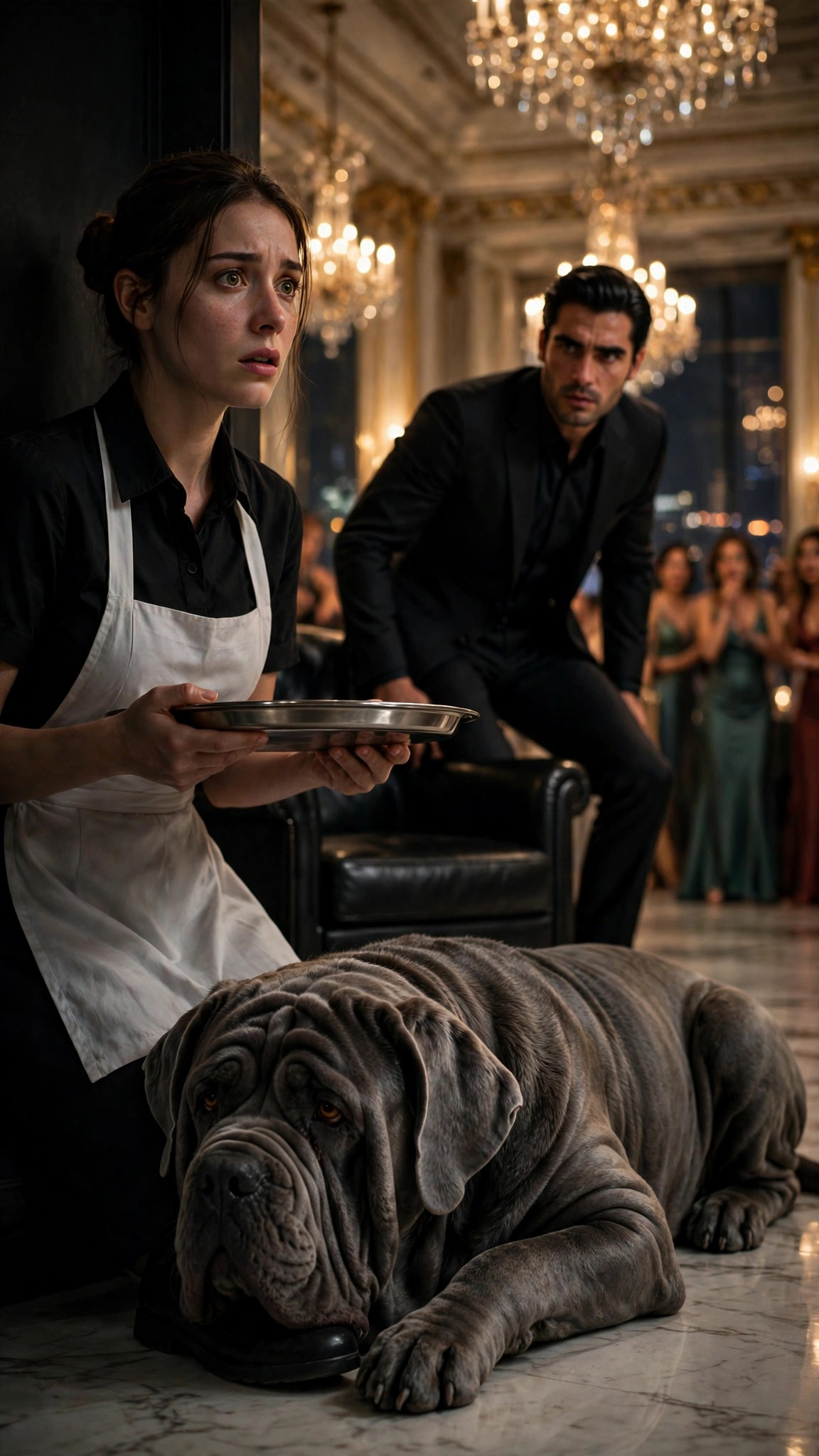
  • Chapter 1: Two Nineteen in the Morning

    Chapter 1: Two Nineteen in the Morning

    The clock on the rooftop patio struck 2:19 a.m., and the phone in Dante Moretti's hand began to ring.

    He was standing at the edge of the terrace with a glass of whiskey warming between his fingers, looking out over a city that belonged to him in the ways that mattered and did not belong to him at all in the ways that did not. Two hours earlier, Elena Marchetti had walked out of his penthouse carrying a resignation letter he had thrown back at her, and he had told himself that the matter was closed. He had told himself that she would be at her desk at eight in the morning, the way she had been at her desk at eight in the morning for six years, and that the night would sort itself out the way nights always did when you were Dante Moretti and the world was arranged to bend around you.

    The phone rang again. Elena's name lit the screen.

    Dante stared at it. Below him, the doors of a midtown Manhattan hotel buzzed in the distance as the rooftop patio lit up around him, and for one long moment he did nothing at all. He could silence a room full of powerful men with a single look. He had done it that very evening, in the room directly beneath his feet, where twelve men who ran half the docks in New York had waited for him to speak and then waited some more. But he could not make himself answer a telephone.

    He answered it anyway, on the fourth ring, because not answering was worse than answering, and because some part of him had been waiting for the sound since the moment the penthouse door closed behind her.

    "Elena," he said.

    Her voice came through thin and far away, the way a voice sounds when it is travelling through a hospital corridor at two in the morning. "I need to tell you something."

    He waited. The whiskey glass was cold now against his palm. He did not know what he was waiting for her to say, and that was the worst of it, because he knew exactly what he was afraid she would say, and he had spent six years training himself not to hear it.

    "Dante," she said, and then she stopped, and in the silence he could hear a machine somewhere behind her, beeping in a rhythm that was too slow and too careful, the way machines beep when they are keeping a person alive by agreement rather than by certainty.

    "I'm sorry, Elena," he said. His voice sounded lazy in his own ears, the voice of a man who was sitting in an empty penthouse with nothing more urgent than a glass of whiskey. He refused to let anyone know he was sitting in the empty penthouse. He refused to let her know, most of all. "I can't. I—"

    He did not finish the sentence. He pressed the red button and ended the call, and the terrace went quiet except for the wind and the distant buzz of the hotel doors and the sound of his own breathing, which was suddenly too loud.

    He stood there for a long time after that, holding the dead phone, and he thought about the fact that he had just done the one thing he had sworn, on the night his father died, that he would never do. He had left someone who needed him to face it alone.

    Two hours earlier, Elena Marchetti had arrived at the penthouse for a night that never happened.

    She had come up in the private elevator with the resignation letter in her bag and a plan in her head that she had rehearsed for months. She would hand him the letter on Monday morning, the way people hand in resignation letters in normal offices, with a thank-you and a two-week notice and a clean, professional ending. But Monday had kept moving further away, and the letter had kept growing heavier, and that evening, after her father had called her from the hospital with a voice that sounded like a man apologising for being a burden, she had decided that she could not wait until Monday. She would tell him tonight. She would tell him everything tonight, or she would tell him nothing at all, and either way she would walk out of the penthouse a free woman.

    She had not counted on Alexandra.

    Alexandra Voss was standing in the living room when Elena stepped out of the elevator, barefoot on the marble floor in a red dress, holding a glass of wine the way women hold a glass of wine when they are waiting for a man to come back to bed. She looked at Elena the way a woman looks at a piece of furniture she has decided to have removed, and she did not bother to hide her disappointment.

    "What is this supposed to mean?" Alexandra said, and for one confused second Elena thought she was talking about the resignation letter, until she realised that Alexandra was talking about Elena herself. About the fact that she was standing there, in the penthouse, at nine o'clock at night, in a navy blouse and a grey skirt, with her hair in its usual low bun and her hands folded in front of her the way a secretary folds her hands.

    Elena said nothing. She had learned, over six years, that silence was the only answer that could not be used against her.

    Dante came out of the bedroom then, in his shirtsleeves, with his tie loosened and his hair still damp from the shower, and the room changed the way rooms always changed when he entered them. He did not raise his eyes to Elena at first. He looked at Alexandra, and then he looked at the envelope in Elena's hand, because Elena had taken the resignation letter out of her bag without quite deciding to, and his face went very still.

    "You're not leaving," he said, and his voice was a warning, low and flat, the voice he used when a man at the table had just made a mistake he would not be allowed to make twice. "And you already know why."

    He crossed the room and took the envelope from her hand and threw it back at her, not hard, not cruelly, but the way a man throws something back when he is refusing to accept it. The envelope hit the marble floor and slid a little, and Elena looked down at it and thought about how strange it was that a piece of paper could weigh so much.

    She had been about to say she was carrying a child. The words were right there, behind her teeth, ready to come out in one clean sentence that would change everything. She had practised them in the car on the way over. I am pregnant, Dante. It is yours. It has been ten weeks and I have known for three of them and I have not told you because I did not know how to tell you without losing everything.

    But Alexandra pushed past her then, on her way back to the bedroom, close enough that Elena could smell her perfume, and everything Elena had been about to say dissolved into a whisper as her heart pounded in her chest.

    "I don't want to lose this baby," Elena whispered, but she whispered it to herself, to the marble floor, to the envelope lying there with her name on it, and not to Dante, because Dante was already turning away, and Alexandra was already calling his name from the bedroom, and the moment had closed the way moments close when you have waited too long to speak.

    A tear fell from her cheek, and then another, and she did not wipe them away, because she had spent six years wiping away tears before anyone could see them, and she was tired of it. She picked up the envelope. She walked to the elevator. She pressed the button. And as the doors closed, she understood that she had just left the resignation letter and the child behind her in that room, in the only way that mattered, because she had not said the words, and now the words would have to wait for a moment that might never come.

    Her father was in the hospital. That was the other thing, the thing underneath all the other things, the thing she had been trying not to think about while she stood in the penthouse with a resignation letter in her hand. Marco Marchetti, sixty-seven years old, retired dockworker, the man who had carried her on his shoulders through the fish market when she was small enough to fit in the crook of his arm, was lying in a bed at St. Margaret's Hospital with a heart that was giving up on him one beat at a time. The doctors had called her that afternoon. They had used the careful words that doctors use when they are telling you that a man has days, not weeks, and that you should come, and that you should bring anyone he might want to see.

    Elena drove to the hospital with the resignation letter on the passenger seat beside her and her hands shaking on the wheel, and when she walked into the cardiac ward, the nurse at the desk looked up and said, "He's been asking for you," and Elena thought, he has been asking for me, and Dante Moretti has never once asked for me, not in six years, not in any way that mattered.

    She sat beside her father's bed and held his hand, and his hand was cold, and the machine beside the bed beeped in its slow, careful rhythm, and she told him about her day in the careful voice she used for everything, the calm voice that had made her indispensable to a man who ran an empire on fear. She told him about the traffic and the weather and the new girl at the front desk who kept misfiling the shipping manifests, and she did not tell him about the resignation letter, and she did not tell him about the baby, and she did not tell him about the man whose name she had carried in her heart for ten years without ever saying it out loud.

    At 2:19 a.m., her father opened his eyes.

    "Elena," he said, and his voice was thin, but it was his voice, the voice that had read her bedtime stories and taught her to tie her shoes and told her, when she was nineteen and frightened on her first day of work, that a Marchetti never lets a Moretti see her afraid.

    "I'm here, Papa," she said. "I'm right here."

    "I couldn't be with you," he said, and she did not know whether he meant that he could not stay with her, or that he had not been able to be with her enough, or that he was sorry for all the years on the docks, and she squeezed his hand and told him it was all right, that it was all right, that she was here now.

    The machine picked up then, sharp and fast, a pulse sounding dangerously close, and the nurse came running, and then a doctor, a woman with steady hands and a tired face, stood by the bed at 2:19 a.m., and Elena was pushed gently back from the bed, and she was standing in the corridor with her phone in her hand before she knew what she was doing, and she was dialling the one number she had told herself a hundred times she would never dial at two in the morning.

    The call went on hold with nothing but elevator music after dialling her personal number. She waited. She listened to the music. She thought about the fact that she had never once called him on his personal number in six years, not when the warehouse burned, not when the shipment was seized, not when his father died, and now she was calling him because her father was dying and her body was weak and her heart was breaking and she needed to tell him something, and she was not quite sure, when her voice finally broke through the hold, whether the poor man's voice on the other end was Dante's or a devil's.

    "I need to tell you something," she said.

    And Dante Moretti, standing on a rooftop patio two miles away with a glass of whiskey warming between his fingers, said, "I'm sorry, Elena. I can't. I—"

    And then he hung up.

    Elena stood in the corridor at St. Margaret's Hospital with the dead phone in her hand and the elevator music still playing in her head, and her tears kept flowing as the hours of nurse duty passed away around her, and she thought about the fact that the man she had loved for ten years had just told her, in the moment when she needed him most, that he could not.

    She went back to her father's room. The doctor was still there. The machine was still beeping, slower now, careful again, and Elena sat down in the chair beside the bed and took her father's cold hand in both of hers and waited for the morning, because there was nothing else to do, and because waiting was the one thing she had always been good at.

    Somewhere across the city, Dante Moretti stood on a rooftop patio and stared at a phone that would not ring again, and for the first time in his life, he understood what it felt like to be the man on the other side of a door that had just closed.

    He thought about the room beneath his feet, where twelve men had sat waiting for him to speak, and about the weight of his own desk, which had never felt as heavy as it felt tonight. He thought about Alexandra asleep in the bedroom below, and about the council's vote, and about the wedding they had planned for the spring, and he understood, with a clarity that frightened him, that none of it mattered as much as the voice he had just silenced. He had spent his whole life believing that a man who showed nothing could lose nothing. Tonight he had learned the price of that belief, and the price was a woman crying alone in a hospital corridor because he had been too proud, and too afraid, to say the one word that would have changed everything. Come.

    In the corridor at St. Margaret's, the nurse touched Elena's shoulder and told her, very gently, that the doctor would like a word. Elena nodded. She wiped her face with the back of her hand. She stood up straight, the way she had stood up straight a thousand times before walking into rooms full of dangerous men, and she followed the nurse down the hall, carrying her father's cold hand in her memory and her own unspoken secret in her body, and wondering how long a person could keep waiting before the waiting itself became the answer.

  • Chapter 7: The Bride He Chose

    Chapter 7: The Bride He Chose

    They were married in the garden of the old Ashford townhouse, on a morning in late September when the light was the color of honey.

    It was not a large wedding. Penny had insisted on that. No fifteen heiresses. No diamonds the size of peas. No ballroom on the eighty-eighth floor. Just the garden, and the fountain where a boy had once taught a girl to skip stones, and the people who mattered.

    Rosa was there, in a blue dress, crying happily into her handkerchief. Mrs. Alvarez was there, in her best shawl, telling everyone within earshot that she had always known. Don Enrico Moretti was there, in his white suit, nodding his approval like a king at a coronation. The capos were there, in their dark suits, standing a little awkwardly in the sunlight, holding their hats in their hands.

    Mia was the flower girl. She wore a white dress with a pink sash, and she carried a basket of white rose petals, and she took her job very seriously, scattering exactly one petal at a time, all the way down the garden path, while the guests tried very hard not to laugh and failed.

    Titan carried the rings.

    Kendrick had tied them to a blue ribbon around the great dog's neck, and Titan had walked down the garden path with the slow, stately dignity of a king processing to his throne, and he had stopped in front of Penny and Kendrick, and he had sat down, and he had waited, patient as a mountain, while Kendrick untied the ribbon and took the rings.

    Penny wore a simple white dress. She had bought it herself, with money she had saved, because she had insisted on that too. She wore her mother's recipe book in her bouquet — wrapped in the same faded blue dish towel with the strawberry embroidered in one corner, the one Elena had used to wrap the tea tin in the library. And around her neck, she wore a small gold locket that Rosa had given her that morning, with a photograph inside: Elena, young and laughing, standing in the kitchen of the old townhouse, flour on her hands.

    When the minister asked if she took this man, Penny looked at Kendrick — at the boy who had shown her a drawer full of peppermints, at the man who had knelt on a marble floor to ask a dog why it loved her — and she said, "I do," in a voice that did not shake at all.

    When the minister asked if he took this woman, Kendrick looked at Penny, and at Mia, and at Titan, and at the garden, and at the fountain, and he said, "I do," and for the first time in twelve years, Kendrick Ashford smiled — really smiled, the way he had smiled when he was fifteen years old and the world was still simple.

    After the wedding, there were changes.

    Barrett Ashford was sentenced to life in prison, without the possibility of parole. He wrote Kendrick one letter, from his cell, and Kendrick read it once and burned it, and never spoke of it again.

    Vincent Castellano was sentenced to life as well, on the evidence in the ledger and in Elena's notebook and in his own daughter's testimony. Vivian Castellano testified against her father, and then she left New York, and the last anyone heard, she was living quietly in California, working in a flower shop, a long way from red silk gowns and diamond bracelets.

    The syndicate changed too. Kendrick kept his word — the word he had given his mother, in a letter she had written nineteen years ago and never lived to see delivered. He began, slowly and carefully, to take the family legitimate. The docks stayed. The routes stayed. But the money that had once flowed through shell companies and paper firms began to flow through real businesses, with real books, and real taxes, and real employees who went home to their families at night.

    Not everyone approved. Some of the old men grumbled. Some of the capos left. But Don Enrico Moretti, seventy years old and white-haired and the most respected man in the room, stood beside Kendrick at the first meeting after the wedding, and he said, "A family that cannot change is a family that will die. This family will live." And that was the end of the grumbling.

    And Penny — Penny, who had once carried silver trays in rooms full of people who did not see her — opened a kitchen.

    She called it Elena's Kitchen, after her mother, and she opened it in the old neighborhood in Queens, in a storefront with a cracked window and a stove that rattled, and she cooked there every day: the Sunday sauce from tomatoes crushed by hand, the bread that made grown men close their eyes, the recipes from her mother's book, the ones Elena had taught her at the kitchen table while the house ran on her cooking like a body runs on a heartbeat.

    The kitchen was free. Anyone could come. Anyone could eat. Old men with nowhere to go. Mothers with children and no money for dinner. Men who had lost their jobs and their pride in the same week. Penny fed them all, and she never asked for anything in return, and she never turned anyone away, because her mother had taught her that a kitchen is not a business. A kitchen is a promise.

    Mia worked there too, on Saturdays, standing on a stool in her little apron, stirring the sauce with a wooden spoon almost as tall as she was, telling the customers, very seriously, that her mommy was the best cook in the whole world and her daddy was the boss of everything.

    And Kendrick — Kendrick came to the kitchen every day at noon, and he sat at the small table by the window, and he ate whatever Penny put in front of him, and he talked to the old men, and he listened to the mothers, and he learned the names of the children, and Titan lay at his feet, as always, his great gray head on his paws, watching the room the way a soldier watches a battlefield.

    In the evenings, they went home — to the townhouse, the old one, the one Kendrick had bought back the week after the wedding, the one with the garden and the fountain and the library with the third shelf and the drawer full of peppermints that was still there, after all these years, waiting.

    Mia did her homework at the kitchen table, the same table where her mother had done her homework, and where her grandmother had cooked for twenty years. Penny cooked dinner. Kendrick read the newspaper. Titan slept by the fire.

    And sometimes, on quiet nights, when Mia was asleep and the house was still, Kendrick would take Penny's hand, and he would lead her out into the garden, to the fountain, and he would pick up a flat stone, and he would show her, again, how to skip it across the water.

    "Like this," he would say, and the stone would skip once, twice, three times, and Penny would laugh, and he would laugh too, and Titan would watch them from the doorway, his amber eyes soft in the dark.

    "Do you ever think about it?" Penny asked him once, on one of those nights, when the moon was high and the fountain was silver. "The ballroom? The night he chose me?"

    "Every day," Kendrick said.

    "Do you ever wish it had been different?" she asked. "Do you ever wish you had chosen one of them? One of the fifteen?"

    Kendrick was quiet for a moment. Then he shook his head.

    "A man does not choose his bride," he said. "Not really. A man waits, and he hopes, and if he is very lucky, his dog finds her for him."

    He put his arm around her, and they stood together in the garden, and the fountain sang, and the moon shone down on the old townhouse, and on the kitchen where Elena had cooked, and on the library where a tea tin had waited twelve years to tell the truth, and on the bedroom upstairs where a five-year-old girl slept with a wooden spoon from her mother's kitchen tucked under her pillow like a treasure.

    Twelve years ago, a fifteen-year-old girl had hidden a puppy under a kitchen table, and fed him bread from her mother's apron pocket, and whispered to him until he stopped trembling.

    Twelve years later, the puppy had grown into a mountain, and the mountain had walked across a marble floor, past fifteen heiresses in silk and diamonds, and knelt at her feet.

    And the man who had refused to choose a bride had finally made his choice.

    He had chosen the waitress. He had chosen the girl with the silver tray. He had chosen Penny.

    And he had never, for one moment, regretted it.

    The first year of their marriage was the happiest year of Penny's life, and it was also the hardest, because happiness, she learned, is not the absence of work. Happiness is work you love, done beside people you love, in a kitchen that smells like your mother's cooking.

    Elena's Kitchen opened on a Tuesday in October, exactly one year after the night Marcus Ashford died — Penny chose the date on purpose, because she wanted to take a day that had been about death and make it about life. The storefront was small, with a cracked window and a stove that rattled, and on the first day, only eleven people came. On the second day, twenty-three came. By the end of the first month, there was a line out the door every morning, and Penny had to hire two more cooks, and Rosa came every day to supervise, and Mrs. Alvarez came on Saturdays to tell stories and feed Mia too much rice and beans.

    There was an old man who came every day at noon, without fail. His name was Frank, and he was eighty-four years old, and he had been a dockworker for fifty years, and his wife had died the spring before, and he had not cooked a proper meal for himself since. He sat at the small table by the window — the same table where Kendrick sat — and he ate slowly, and he told Penny stories about the docks, about the ships, about the way the city used to be, and Penny listened, because her mother had taught her that listening is a kind of cooking too.

    One day, Frank brought her a photograph. It showed a young woman in a wedding dress, laughing, flour on her hands.

    "My wife," Frank said. "She cooked like your mother, I think. She would have liked this place. She would have liked you."

    Penny put the photograph on the wall by the door, next to the picture of Elena, and after that, other customers began bringing photographs too — of mothers, of grandmothers, of wives, of daughters — and soon the whole wall was covered with faces, and Elena's Kitchen became a place where the dead were remembered and the living were fed, and Penny understood, at last, what her mother had meant when she said a kitchen is a promise.

    Mia started school that September, at a small school in Queens with a garden and a library and a teacher named Miss Okafor who read stories aloud every afternoon. On the first day, Penny walked her to the door, and Mia did not cry, and Penny did not cry, and they were both very proud of themselves, and very surprised.

    "Will Titan be here when I get home?" Mia asked, as she always did.

    "Titan will be wherever you are, baby," Penny said, as she always did. "That's his job."

    And it was true. Titan went everywhere Mia went — to the park, to the kitchen, to the garden, to the library where he lay under the table while Mia did her homework, his great head on his paws, his amber eyes watching the door. He had guarded Marcus Ashford. He had guarded Kendrick. Now he guarded a five-year-old girl with flour on her nose and a wooden spoon in her hand, and he had never been happier, because a dog knows what matters, and what matters is the people who love you.

    On Mia's sixth birthday, Kendrick took her to the garden, to the fountain, and he taught her to skip stones, the way he had taught her mother twenty years earlier, when her mother was twelve and he was fifteen and the world was still simple.

    "Like this," he said, and the stone skipped once, twice, three times, and Mia shrieked with delight, and Titan barked — a great, rolling sound that shook the windows — and Penny stood in the doorway with a birthday cake in her hands, and she watched her husband and her daughter at the fountain, and she thought about the girl she had been at twelve, and the woman she was now, and the long road between them, and she was glad for every step of it. Even the hard ones. Especially the hard ones.

    On their first anniversary, Kendrick took Penny back to the ballroom on the eighty-eighth floor.

    It was empty. The chandeliers were dark. The marble floor gleamed in the moonlight. The fifteen chairs were gone. The leather chair was gone. There was nothing in the room except the two of them, and Titan, lying in the middle of the floor where he had knelt a year earlier.

    Kendrick took Penny's hand, and he led her to the exact spot where Titan had laid his chin on her shoe, and he knelt down — Kendrick Ashford, the ruler of the East Coast syndicate, in his black suit, on the marble floor of his own ballroom — and he looked up at her, and he said, "One year ago, in this room, my dog chose you. Tonight, I choose you again. And I will choose you every year, for the rest of my life, in this room, on this floor, on this spot, until we are old and gray and Titan is a legend the grandchildren tell stories about."

    Penny laughed, and she cried, and she pulled him to his feet, and she kissed him, there in the empty ballroom, with the moonlight on the marble and the dog asleep at their feet, and she thought about the silver tray she had carried in a hundred ballrooms for people who did not see her, and she thought about how strange and wonderful it was that the one ballroom where she had finally been seen was the one where she had been trying hardest to be invisible.

    "I choose you too," she said. "Every year. For the rest of my life."

    And Titan, asleep on the marble, sighed in his sleep, and thumped his tail once against the floor, as if to say: good. Good. That is how it should be.

    The End.
    THE END

  • Chapter 6: The Council

    Chapter 6: The Council

    The council met at noon the next day, in the same ballroom where it had all begun.

    The fifteen heiresses were gone. Their families were there instead: the capos, the lieutenants, the old men who had run the East Coast syndicate since before Kendrick was born, sitting in a great circle of chairs on the marble floor where Titan had knelt to a waitress three days earlier.

    Barrett Ashford stood in the center of the circle, in handcuffs, with two of Kendrick's men behind him. He did not look frightened. He looked tired, and old, and almost relieved, the way a man looks when he has carried a weight for a very long time and someone has finally taken it from him.

    Kendrick stood at the head of the circle, in his black suit, with his mother's letter in one hand and his father's ledger in the other.

    "Fourteen years," he said, and his voice carried to every corner of the ballroom. "For fourteen years, this man has been stealing from all of you. From your docks. From your routes. From your families. Millions of dollars, moved through shell companies, through a construction firm that does not exist, into the accounts of Vincent Castellano."

    He held up the ledger.

    "The numbers are here. Every dollar. Every date. Every transfer. My mother found them first, nineteen years ago, and she wrote to Elena Kendrick about it, and Elena hid the letter in my father's library, and Elena died with the secret inside her, because she was afraid for her daughter."

    He held up his mother's letter.

    "My mother is gone. Elena is gone. Thomas Kendrick is gone. My father is gone. Four good people, dead, because this man wanted the docks, and because Vincent Castellano wanted the East Coast."

    He looked around the circle, at the old men, at the capos, at the faces that had known him since he was a boy.

    "And three days ago," he said, "when my dog knelt to a waitress in this room, Barrett tried to remove her. He planted a diamond bracelet in her locker. He called the police on a woman who has never stolen anything in her life. He threatened her five-year-old daughter."

    A murmur went through the circle. One of the old men — Don Enrico Moretti, seventy years old, white-haired, the most respected man in the room — leaned forward in his chair.

    "Is this true, Barrett?" he asked.

    Barrett looked at the old man, and then at Kendrick, and then at the floor, and for a moment, Penny thought he was going to deny it. Then he lifted his head, and his voice, when he spoke, was clear and steady.

    "Yes," he said. "It is true. All of it."

    The ballroom went silent.

    "I did it because this family was dying," Barrett said. "Marcus was a good man, but he was weak. He would not make the hard choices. He would not marry Kendrick to the Castellanos. He would not take the docks from the Russians. He would not do what had to be done. So I did it. I took the money, and I gave it to Vincent, and Vincent promised me that when Kendrick was gone — when Kendrick married Vivian and the Castellanos had their seat — I would run the East Coast, and the family would be strong again."

    He looked at Kendrick.

    "You were never going to be strong enough, nephew. You were always too soft. You kept a dog. You remembered a cook's daughter. You let a waitress sleep in your tower. You are your father's son, and your father was weak, and weakness kills families."

    Kendrick listened to all of it without moving. Then he nodded, once, and he turned to the doors.

    "Agent Reyes," he said. "Come in."

    FBI Agent Daniel Reyes walked into the ballroom with four federal agents behind him, and he was carrying a folder, and he was smiling the thin, tired smile of a man who had been waiting three years for this exact moment.

    "Barrett Ashford," Reyes said, "you are under arrest for racketeering, fraud, conspiracy, and the murder of Marcus Ashford and Thomas Kendrick. You have the right to remain silent."

    As the agents moved toward Barrett, one of Barrett's men — a young lieutenant named Cole, who had been standing by the door with his hand inside his jacket — moved suddenly. He lunged across the ballroom toward Mia, who was sitting on a chair beside her mother, and his hand closed around the little girl's arm.

    "If you want the child alive," Cole shouted, "you let Barrett walk out of here!"

    Penny screamed. Kendrick moved. But Titan moved faster.

    The one-hundred-fifty-pound dog crossed the ballroom in three great bounds, and he hit Cole like a falling wall, and the young man went down on the marble with Titan's enormous paws on his chest and Titan's teeth an inch from his throat, and Cole froze, and did not move, and did not breathe.

    "Good boy," Mia said, very calmly, from her chair. "Good boy, Titan."

    Kendrick lifted Mia into his arms, and he held her close, and he looked at Barrett, who was being led away in handcuffs, and at the circle of old men, who were watching him with new eyes.

    "The Castellanos," Kendrick said, "are finished. Vincent Castellano was arrested this morning, at his home in Brooklyn, on the evidence in this ledger and in my mother's letter. His daughter Vivian has agreed to testify. The docks are ours. The routes are ours. The East Coast is ours."

    He paused, and he looked around the circle one more time.

    "And as for the rest," he said, "I have something to say."

    He set Mia down gently. He walked to the center of the circle, where Barrett had stood, and he looked at the old men, and at the capos, and at Penny, who was standing by the door with Rosa's arm around her shoulders.

    "I refused to choose a bride," he said, "because I did not believe a bride could be chosen. I believed a wife was something you found, not something you picked from a line. I believed that for twelve years. I was wrong about many things in twelve years. But I was not wrong about that."

    He turned, and he looked at Penny, and his gray eyes were no longer cold at all.

    "Three days ago, my dog knelt to a waitress in this room," he said. "He knelt because she hid him under a kitchen table twelve years ago, when she was fifteen years old and her father had just been killed, and she fed him bread from her mother's apron pocket and whispered to him until he stopped trembling. He knelt because she is the bravest person I have ever known. He knelt because she is the woman my father would have chosen for me, if he had lived to choose."

    He walked toward her, across the marble, step by step, and the whole ballroom watched, and Titan walked beside him, and Mia ran ahead of them both.

    "Penny Kendrick," Kendrick said, stopping in front of her, "I am not asking you to marry a Don. I am asking you to marry the boy who showed you a drawer full of peppermints. Will you?"

    Penny looked at him. She looked at Mia, who was beaming. She looked at Titan, who was sitting at her feet, his chin on her shoe, waiting. She looked at Rosa, who was crying quietly into her handkerchief. She looked at the ballroom, at the chandeliers, at the marble floor, at the fifteen empty chairs where fifteen heiresses had sat three days ago.

    And she thought about the two-room apartment in Queens, and the rent notice on the refrigerator, and the jar on top of the refrigerator with five dollars a week in it, and the silver tray she had carried in a hundred ballrooms for people who did not see her.

    And she thought about the girl she had been at fifteen, hiding a puppy under a kitchen table, whispering, "Shh, it's all right, I'm here."

    "Yes," she said. "Yes, Kendrick. I will."

    The ballroom erupted then — not with shouting, but with something stranger and rarer: applause. It started with Don Enrico Moretti, seventy years old and white-haired, who rose slowly from his chair and clapped his hands together, once, twice, three times, and then the capos joined him, and then the lieutenants, and then the whole circle was on its feet, applauding a waitress and a five-year-old girl and a one-hundred-fifty-pound dog, and Penny stood in the middle of it with tears running down her face, holding Kendrick's hand, holding Mia's hand, not understanding how she had gotten here, only understanding that she was here, and that it was real.

    After the applause died down, there was business to do. There is always business to do, in a family like the Ashfords, even on the happiest day of a man's life.

    Don Enrico took the floor first. He stood in the center of the circle, where Barrett had stood, and he looked around at the old men, and his voice, when he spoke, was the voice of a man who had buried three sons and two brothers and had earned the right to be heard.

    "I have known this family for fifty years," he said. "I knew Marcus. I knew Sofia. I knew the boy Kendrick was, and I know the man he is. And I tell you this: a family that chooses its future with its heart is a family that will live. A family that chooses its future with its wallet is a family that will die. Barrett chose with his wallet. Kendrick has chosen with his heart. I stand with Kendrick."

    One by one, the capos stood. One by one, they said the same thing, in their own words, in their own ways: we stand with Kendrick. We stand with the Don. We stand with the family.

    And then Kendrick spoke about the future.

    "The syndicate will change," he said. "Slowly. Carefully. But it will change. The docks stay. The routes stay. But the money that has flowed through shadows will flow through light. We will have real businesses, with real books. We will pay our taxes. We will employ people who go home to their families at night. My father built this family on loyalty. I will build it on loyalty and on law. Anyone who cannot live with that is free to leave, with my blessing and with his share. Anyone who stays will be part of something better than what we were."

    There were questions. There were arguments. One capo, a hard man named Salvatore who had run the Brooklyn docks for twenty years, stood up and said the family would be weak without its old ways, and Don Enrico stood up and said the family had been weak for fourteen years and had not known it, because Barrett had been stealing its strength, and Salvatore sat down again, and said no more.

    It took three hours. Three hours of talking, and arguing, and voting, and at the end of it, the family had a future, and the future had a name, and the name was not Castellano.

    While the council talked, Penny and Mia slipped out to the garden.

    The garden was on the roof of the tower, a small green place in the sky, with a fountain and a bench and a view of the whole city. Mia ran to the fountain at once, and Titan followed her, and Penny sat on the bench, and Rosa came and sat beside her, and the two women sat together in the late afternoon sun, saying nothing for a long time.

    "He loves you," Rosa said at last. "Did you know? He has loved you since you were twelve years old and he was fifteen, and he showed you a drawer full of peppermints. He did not know it then. Men never know it then. But he knows it now."

    "I love him too," Penny said quietly. "I think I always have. I think I loved him when I was twelve, and I forgot, because I had to forget, because girls like me do not marry men like him. But the dog remembered. And now I remember too."

    Rosa took her hand. "Your mother would be so proud of you," she said. "Elena always said you were the bravest girl she had ever known. She said you hid a puppy under a table while men with guns searched the house, and you did not make a sound. She said you were born brave, and the world would try to make you afraid, and you must never let it."

    Penny wiped her eyes. "I'm still afraid, Rosa. A little."

    "Good," Rosa said. "Brave people are always a little afraid. Only fools are never afraid. The trick is to be afraid and do it anyway. You have always done it anyway."

    That evening, after the council ended and the families went home and the tower was quiet, Kendrick took Penny to a small jewelry shop in the Diamond District — not the grandest shop, not the one with the armed guards and the velvet ropes, but a small shop with a bell over the door, run by an old man named Goldberg, who had sold rings to three generations of Ashfords.

    "I want something simple," Kendrick told him. "No diamonds the size of peas. No gold that shouts. Something quiet. Something true."

    Goldberg opened a drawer and laid out a dozen rings, and Kendrick looked at each one, and then he picked up a thin band of white gold with a single small diamond, no bigger than a grain of rice, and he held it up to the light, and he nodded.

    "This one," he said. "This is hers."

    He paid for it himself, in cash, from his own wallet, and he put the little box in his pocket, and he did not propose with it that night. He waited. He waited for the right moment, for the right place, for the kitchen where it had all begun — because some things, Kendrick Ashford had learned, should not be rushed.

    Some things should be done properly, in the place where they belong, with the people who belong there, and the dog lying at your feet.

  • Chapter 5: The Bracelet

    Chapter 5: The Bracelet

    It began with a bracelet.

    Vivian Castellano wore a diamond bracelet to the ballroom that night — a thin band of white gold with seven diamonds, each one the size of a pea, a gift from her father on her twenty-first birthday. She wore it on her left wrist, and she made sure everyone saw it, and when she lunged at Penny, Kendrick had caught her wrist, and the bracelet had been there, glittering in the light.

    Three days later, the bracelet was gone. And Vivian Castellano stood in the middle of Kendrick's ballroom, in front of six capos and two of her father's men, and pointed one perfect finger at Penny Kendrick.

    "She stole it," Vivian said. "The waitress. She was the only one near me when it happened. Search her room."

    Penny stood in the doorway of the guest suite in her black uniform, with Mia hiding behind her legs, and she felt the floor drop away beneath her feet.

    "I didn't steal anything," she said. "I swear on my daughter's life, I didn't steal anything."

    "Then you won't mind if we search," Barrett said. He was standing behind Vivian, his silver hair perfect, his charcoal suit perfect, his face full of sorrow that did not reach his eyes. "If she is innocent, the search will prove it. If she is not—" He spread his hands. "Well. We all know what happens to thieves in this house."

    Kendrick was not there. He was downtown, in a meeting with his lawyers about the ledgers, and Barrett had chosen his moment with the precision of a man who had spent fourteen years choosing moments.

    They searched the suite. They searched the closet. They searched the dresser. They searched Mia's little backpack, and Mia cried, and Penny held her and whispered, "It's all right, baby, it's all right," even though it was not all right at all.

    And then one of Vivian's men opened the locker in the staff room downstairs — Penny's locker, the one she had used for three days — and he reached inside, and he pulled out the diamond bracelet, wrapped in a white handkerchief, tucked behind Penny's spare apron.

    The room went silent.

    "I didn't put it there," Penny said. Her voice was shaking. "I never even touched it. Someone planted it. Please. You have to believe me."

    "I believe the evidence," Barrett said quietly. "And the evidence says you are a thief."

    He turned to the two men by the door.

    "Take her to the holding room," he said. "Call the police. And the child—"

    "Don't touch my daughter," Penny said, and her voice changed then, from fear to something harder, something her mother had given her. "Don't you dare touch my daughter."

    "Relax," Barrett said, smiling the thin smile of a man who has already won. "No one is going to hurt the child. The child will go to a very nice place. A very safe place. While her mother explains to the police how a waitress came to own a diamond bracelet worth eighty thousand dollars."

    That was when Titan arrived.

    Penny had not heard him come. None of them had. But suddenly the one-hundred-fifty-pound dog was standing in the doorway of the staff room, and his amber eyes were fixed on Barrett, and his great gray body was very still, and the low sound coming from his chest was not a growl. It was something older than a growl. It was the sound a mountain makes before it falls.

    "Titan," Barrett said, taking a step back. "Titan, heel. Heel, boy."

    Titan did not heel. Titan walked forward, step by heavy step, until he was standing between Penny and the two men, and then he lay down across the doorway, his enormous body blocking the only way out, and he looked at Barrett with eyes that said, very clearly: you will not take her. You will not take the child. You will have to go through me.

    And then Kendrick arrived.

    He came through the service entrance at a run, his suit jacket off, his tie loose, his face dark with fury, and behind him came three of his own men, and Rosa, and Mrs. Alvarez, who had brought Mia's daycare bag and was shouting in Spanish at anyone who would listen.

    "What is happening here?" Kendrick demanded.

    Barrett turned, smooth as oil. "Your waitress stole Vivian's bracelet. We found it in her locker. I was handling it."

    "You were handling it," Kendrick said. He walked to the locker, and he looked at the bracelet, and he looked at the white handkerchief it was wrapped in, and he picked up the handkerchief, and he held it up to the light.

    "This handkerchief," he said, very quietly, "has your monogram on it, Uncle."

    The silence in the staff room was so complete that Penny could hear the hum of the lights.

    Barrett's face did not change. It was the face of a man who had been caught and had decided, in a single second, to stop pretending.

    "Yes," Barrett said. "It does."

    "Why?" Kendrick asked.

    "Because she had to go," Barrett said. "Because a dog does not choose a Don's bride, Kendrick. Because this family cannot be ruled by a man who lets a waitress and her bastard child sleep in his tower. Because Vincent Castellano is the future, and Vivian is the price, and you were too sentimental to pay it. So I paid it for you. I would have paid it a hundred times."

    Kendrick looked at him for a long moment. Then he looked at Vivian, who was standing very still by the door, her face white.

    "Did you know?" he asked her.

    Vivian's mouth opened. No sound came out.

    "Did you know," Kendrick said, "that your father has been buying my uncle for three years? Did you know that the marriage your father arranged was not an alliance, but a purchase? Did you know that the bracelet you accused this woman of stealing was planted by the man standing next to you?"

    Vivian's eyes filled with tears. For the first time since Penny had seen her, she did not look like a queen. She looked like a girl.

    "I didn't know about the bracelet," she whispered. "I swear I didn't know about the bracelet. But the rest—" She looked at her father, who was not there, and at Barrett, who was, and at Kendrick, who was waiting. "The rest, I knew. My father told me. He said it was the only way. He said the Castellanos would finally have what they deserved."

    Kendrick nodded slowly. Then he turned to his men.

    "Take Barrett to the holding room," he said. "Take Vivian to her father's people. And get me Agent Reyes on the telephone. Tell him I have something he has been waiting three years to hear."

    He turned to Penny then, and his face softened, and he knelt down in front of Mia, who was still hiding behind her mother's legs, and he held out his hand, very slowly, the way a man holds out his hand to a frightened animal.

    "Mia," he said gently. "I'm sorry. I'm sorry men came into your home and frightened you. That will not happen again. Do you understand? That will never happen again."

    Mia looked at him for a long moment. Then she took his hand.

    "Okay," she said. "Titan scared them."

    "Titan did," Kendrick agreed, and he looked up at Penny, and his gray eyes were warm for the first time since she had known him as a man. "Titan always does."

    That night, after Barrett was locked in the holding room and Vivian was gone and the tower was quiet, Penny found Kendrick on the roof garden, standing alone in the dark, looking out over the city. Titan lay at his feet, as always.

    "Thank you," Penny said. "For believing me."

    "I didn't believe you," Kendrick said honestly. "I believed the handkerchief. And I believed the dog. The dog has never been wrong, Penny. Not once, in twelve years."

    He was quiet for a moment. Then he said, "Tomorrow, there will be a council. The families will come. Barrett will answer for what he has done. Vincent Castellano will answer for what he has done. And I will answer for what I am about to do."

    "What are you about to do?" Penny asked.

    Kendrick turned to look at her, and the city lights were behind him, and his face was in shadow, and she could not read his expression at all.

    "I am about to choose," he said.

    But before that night on the roof garden — before Kendrick arrived at a run through the service entrance, before Titan blocked the doorway with his enormous body, before the handkerchief with Barrett's monogram was held up to the light — there had been an hour in the holding room, and that hour had been the longest hour of Penny Kendrick's life.

    The holding room was small and windowless, with a single bare bulb and a table and two chairs, and it smelled of disinfectant and old fear. Penny sat in one of the chairs with her hands folded in her lap, and she tried to keep them still, and she could not. They shook, and shook, and would not stop shaking.

    She had been in a room like this once before. Not this room, but a room like it — a small room in a police station in Queens, three years ago, on the night Daniel died, when a kind officer had sat across from her and told her, very gently, that her husband was not coming home. She had sat in that room with her hands folded in her lap, and they had shaken then, too, and she had thought, I cannot do this. I cannot survive this. And then she had survived it, because Mia had needed her to, and she had gone home, and she had gone back to work on Monday, because the rent did not stop for grief.

    Now she sat in another small room, and the charge was theft, and the bracelet was worth eighty thousand dollars, and she thought about Mia, downstairs with Mrs. Alvarez, crying into the old woman's shawl, and she thought about the rent notice on the refrigerator, and the jar on top of the refrigerator, and the five dollars a week, and she thought, I cannot survive this either. And then she thought, I have to. Mia needs me to.

    The door opened, and Rosa came in with a tray — tea, and bread, and a small bowl of soup — and she set it down on the table, and she sat down across from Penny, and she took Penny's shaking hands in her own old hands, and she held them still.

    "Eat," Rosa said. "You will need your strength. Mr. Kendrick is coming. He is downtown, but my grandson works in his office, and I have telephoned, and he is coming. He will be here within the hour."

    "Rosa," Penny whispered, "they found the bracelet in my locker. I didn't put it there. I swear on Mia's life, I didn't put it there."

    "I know," Rosa said. "I know you didn't. Do you know how I know? Because I have known you since you were a baby, and you have never taken anything that was not yours. Not even a peppermint, without asking." She smiled, a little. "And because I saw the man who put it there."

    Penny stared at her. "You saw him?"

    "I saw him on the security camera," Rosa said. "This tower has cameras in every hallway, Penny. Did you think Mr. Kendrick would not watch his own house? I went to the security room when they took you away, and I asked the young man there to show me the staff hallway, and there he was — one of Barrett's men, with a white handkerchief in his hand, opening your locker at half past two, when you were upstairs serving champagne. I have the recording. It is on my telephone now. I sent it to Mr. Kendrick's lawyer before I came down here."

    Penny put her hands over her face, and she cried — not the quiet, controlled crying of a woman trying to be brave, but the great, shaking sobs of a woman who has been holding herself together for three days and cannot hold herself together for one more minute.

    Rosa held her, and the soup went cold, and the tea went cold, and outside the door, Titan lay across the hallway with his great head on his paws, guarding the room, and no one — not Barrett's men, not Vivian's men, not anyone — dared to walk past him.

    Meanwhile, downtown, Kendrick's men found the deliveryman.

    His name was Eddie, and he was twenty-three years old, and he delivered flowers to the tower three times a week, and he had been in the service elevator at half past two that afternoon, and he had seen Barrett's man go into the staff room with something white in his hand, and he had seen him come out again with empty hands, and Eddie had thought nothing of it at the time, because Barrett's men went everywhere in the tower, and it was not a deliveryman's business to ask questions.

    But when Kendrick's men asked him, very politely, if he had seen anything unusual that afternoon, Eddie remembered, and he told them, and he signed a statement, and he gave them his telephone number, and he went home to his mother in the Bronx and told her that the Don himself had shaken his hand.

    And in another part of the city, in a penthouse in Brooklyn, Vivian Castellano sat on the edge of her father's great bed, and she telephoned him, and she told him what had happened — the bracelet, the locker, the dog, the handkerchief — and Vincent Castellano listened in silence, and when she finished, he said only, "Come home, Vivian. Come home now. It is over."

    "It is not over," Vivian said, and her voice shook. "Father, I want to marry him. I have wanted to marry him since I was seventeen years old. You promised me."

    "I promised you a kingdom," Vincent said. "I did not promise you a man who loves a waitress. Come home."

    Vivian sat on the edge of the bed for a long time after her father hung up, looking at her hands — at the empty wrist where the diamond bracelet had been — and she thought about the ballroom, and the dog, and the waitress with the silver tray, and the way Kendrick had looked at that waitress, and she understood, for the first time in her life, what it felt like to want something with your whole heart and watch someone else receive it.

    She did not cry. Vivian Castellano had been raised not to cry. But she took off her diamonds, one by one, and she laid them on the bedside table, and she went to the window, and she looked out at the city, and she wondered what it would be like to be a woman who was chosen — not for her name, not for her father's money, not for an alliance, but for herself, for who she was, for the way a dog looked at her when she walked into a room.

    She would not learn the answer for a long time. But she would learn it, eventually, in California, in a flower shop, a long way from red silk gowns and diamond bracelets. That is a story for another day.

    This story belongs to Penny. And to the dog. And to the man who finally learned to choose.

  • Chapter 4: The Name on the Ledger

    Chapter 4: The Name on the Ledger

    Kendrick Ashford did not believe in fate. He believed in ledgers, and in loyalty, and in the weight of a gun in his hand. He had run the East Coast syndicate for twelve years on those three things, and they had never failed him.

    But that morning, standing in the library of his own tower with a waitress and a five-year-old girl and a one-hundred-fifty-pound dog, he felt something shift inside him — something he had not felt since he was fifteen years old, skipping stones in a garden fountain with a girl who laughed too loudly.

    "Show me," he said to Rosa.

    Rosa led them to the third shelf of the library, to the row of leather-bound books his father had kept there for as long as Kendrick could remember: law books, mostly, and a few old histories, the kind of books a man keeps to impress visitors and never reads. Rosa ran her old fingers along the spines until she found the one she wanted — a heavy volume on maritime law, its leather cracked with age — and she pulled it out, and behind it, in the hollow space between the books and the wall, was a small tin box.

    It was the kind of tin box that had once held tea. It was rusted at the corners. Elena Kendrick had wrapped it in a dish towel, and the dish towel was still there, faded blue, with a strawberry embroidered in one corner.

    Kendrick opened the box with hands that did not shake, because Kendrick Ashford's hands never shook, and inside he found three things.

    The first was a letter, written in his mother's handwriting. His mother, Sofia Ashford, had died when he was nineteen, of a illness that took her slowly and quietly, and he had not seen her handwriting in nineteen years. The letter was addressed to Elena, and it was dated three days before Marcus Ashford was killed.

    "My dearest Elena," it began, "if you are reading this, then I am gone, and Marcus is gone, and the house is in danger. I have known for some time that Barrett is not what he seems. He has been taking money from the family accounts for years. I have the records. They are in the blue folder in my desk. Marcus does not believe me. He says Barrett is his brother's son, his blood, and blood does not steal. But I have seen the numbers, Elena, and numbers do not lie. Watch over my boy. Watch over Kendrick. And if the day comes when he needs the truth, give him this."

    The second thing in the box was a small notebook, Elena's own handwriting, neat and careful. It was a record of every conversation she had overheard in the kitchen in the last month of Marcus Ashford's life: Barrett on the telephone, late at night, speaking in a low voice about "the docks" and "the Castellanos" and "when Marcus is gone." Barrett arguing with Marcus in the library, three nights before the ambush, about a marriage — about Kendrick marrying Vivian Castellano, about the alliance, about the future. Barrett's voice, cold and clear, saying, "The old man is in the way, Vincent. The old man has to go."

    The third thing in the box was a photograph. It showed a young Marcus Ashford, laughing, with his arm around a younger Thomas Kendrick, both of them in work shirts, standing in front of a car with the hood up. On the back, in Marcus's handwriting, were the words: "My brother in all but blood. — M."

    Kendrick stood in the library for a long time, holding his mother's letter, and he did not speak. Penny watched him, and she saw the stone in his face crack — just a little, just enough for a man to show through underneath.

    "My mother knew," he said at last. His voice was very quiet. "My mother knew, and she told your mother, and my mother died, and your mother died, and Barrett has been stealing from this family for twelve years, and I never saw it. I never saw it because he is my blood, and blood does not steal."

    He looked at Penny.

    "Your mother saved this," he said. "She hid it in my father's library, in a tea tin, wrapped in a dish towel, and she never told anyone, and she died with it inside her. Why?"

    "Because she was afraid," Penny said. "She was afraid for me. Barrett knew she had heard something. After my father died, Barrett came to the kitchen, and he told my mother that if she ever spoke about what she had heard, something would happen to me. She was fifteen, sir. I was fifteen. She kept her mouth shut to keep me alive."

    "And the dog?" Kendrick asked. "Why did Titan remember you?"

    Penny told him then. She told him about the night her father died, about the puppy under the kitchen table, about the bread from her mother's apron pocket, about the way the small gray puppy had pressed his head against her chest and fallen asleep while the house fell apart. She told him about the morning after, when the puppy was gone, and about the twelve years since, when she had thought about him only in the dark, when she could not sleep.

    "He was my father's dog," Kendrick said slowly. "My father brought him home the week before he died. He said the puppy would grow into a guardian. He said a man should have a dog who knows the difference between a friend and a thief."

    He looked down at Titan, who had followed them into the library and was lying at Penny's feet again, his great head on her shoe.

    "He knew," Kendrick said. "He knew you were a friend. He has known for twelve years."

    That afternoon, Kendrick did something he had not done in twelve years. He opened his father's ledgers — the real ledgers, not the clean ones his accountants kept, but the old leather books in the safe behind his desk — and he went through them line by line, with his mother's letter beside him and Elena's notebook open on the desk.

    What he found made his hands go still.

    Barrett Ashford had been stealing from the syndicate for fourteen years. Not small amounts. Not the kind of skimming a consigliere takes as his due. Millions. Money moved through shell companies, through the docks, through a construction firm in New Jersey that existed only on paper. And in the last three years, the money had been moving in only one direction: toward Vincent Castellano.

    The marriage was the final piece. If Kendrick married Vivian Castellano, the Castellano family would gain a seat at the table. And once they had a seat, with Barrett's help, they would take the table. The docks. The routes. The East Coast. All of it.

    Barrett had not organized the bride parade to find Kendrick a wife. He had organized it to hand the syndicate to Vincent Castellano, gift-wrapped, with a red silk bow.

    Kendrick closed the ledger. He sat in his father's chair, in his father's library, with his mother's letter in his hand, and he thought about the boy he had been at fifteen, skipping stones in a garden fountain with a girl who laughed too loudly. He thought about the man he had become: cold, careful, alone. He thought about the twelve years he had spent trusting the wrong man and forgetting the right girl.

    And then he stood up, and he walked to the window, and he looked out over the city that was his, and he made a decision.

    "Rosa," he said, "I want you to stay with Penny and Mia. Don't let them out of your sight. Titan stays with them too."

    "And Barrett?" Rosa asked.

    "Barrett," Kendrick said, "is going to have a very interesting week."

    He turned to Penny.

    "I need you to understand something," he said. "What happens next is not going to be quiet. Barrett has spent fourteen years building this. He is not going to give it up because I found a tea tin in a library. He will fight. And Vincent Castellano will fight with him. And Vivian—"

    "Vivian hates me," Penny said.

    "Vivian," Kendrick said, "is a twenty-six-year-old girl who was raised to believe she would be the queen of the East Coast, and a dog just told her she would not be. She is dangerous. Her father is dangerous. But they are not the ones I am worried about."

    "Who are you worried about?" Penny asked.

    "You," Kendrick said. "I am worried about you. Because Barrett knows you were in that ballroom. He knows Titan chose you. He knows you are the one thing in this house he did not plan for. And men like Barrett do not leave unplanned things alone."

    He was right. He did not know how right he was. But by the end of the week, Penny Kendrick would learn exactly how far Barrett Ashford was willing to go to remove a waitress from his nephew's house — and exactly how far Kendrick Ashford was willing to go to protect her.

    The next morning, before the sun was fully up, Kendrick went to his mother's old desk.

    It stood in a small sitting room off the library, a beautiful old desk of dark wood, and it had been locked for nineteen years, since the day his mother died. Kendrick had never opened it. He had never wanted to. His mother's things were inside, and grief had taught him that some doors were better left closed.

    Now he unlocked it with a key he had carried on his ring for nineteen years and never used.

    Inside, in the top drawer, beneath a stack of old letters and a dried rose, was a blue folder. His mother's handwriting was on the tab: "For Kendrick. When you are ready."

    He was ready now.

    The folder held bank statements, transfer records, and a list of companies — neat columns in his mother's careful hand, each one annotated with a date and a note. Seventeen shell companies. Fourteen years of transfers. Millions of dollars. And at the bottom of every page, the same name, written over and over in his mother's hand: Barrett. Barrett. Barrett.

    Kendrick sat at his mother's desk for two hours, going through the folder page by page, and with every page, the cold inside him grew deeper and harder, until it felt like a stone in his chest.

    He called his accountant then — a quiet man named O'Brien, who had worked for the family for thirty years and had never once asked a question he was not paid to ask — and he laid the folder on the desk between them.

    "Is this real?" Kendrick asked.

    O'Brien went through the pages slowly, his face growing paler with every one. When he finished, he took off his glasses and wiped them with a handkerchief, and his hands were shaking.

    "It's real," he said. "Every transfer is real. The construction firm in New Jersey — it doesn't exist. It never existed. The money went through it and came out the other side, into accounts in the Caymans, and from there to Vincent Castellano. Fourteen years, Mr. Ashford. I'm sorry. I should have seen it. I looked at these numbers for fourteen years, and I never saw it, because your uncle signed every authorization himself, and I trusted his signature."

    "You trusted his blood," Kendrick said.

    "Yes," O'Brien said quietly. "I did."

    Kendrick sent him away with instructions to copy everything, twice, and to tell no one. Then he went to the roof garden, where he could think, and he stood there for a long time, looking out over the city, remembering his father.

    Marcus Ashford had been a good man. Kendrick knew that now, in a way he had not known it when he was fifteen and his father was simply the large, laughing man who came home late and smelled of cigars and car leather. Marcus had loved his family. He had loved his dog. He had loved his driver, Thomas Kendrick, like a brother — the photograph in the tea tin proved it, the two of them laughing in front of a car with the hood up, "My brother in all but blood."

    And Barrett — Barrett had been there too, all those years, smiling, loyal, the dutiful nephew, the trusted consigliere. Kendrick remembered Barrett teaching him to shoot, when he was sixteen. He remembered Barrett sitting with him the night his mother died, pouring him a glass of whiskey he was too young to drink, telling him that a Don does not cry in front of his men. He remembered Barrett standing beside him at his father's funeral, his hand heavy on Kendrick's shoulder, his voice low and steady: "I will help you carry this, nephew. You will not carry it alone."

    Fourteen years of help. Fourteen years of theft.

    Kendrick stood on the roof garden until the sun was high, and then he went back inside, and he found Penny and Mia in the kitchen of the guest suite, where Rosa had set them up with a small stove and a pot, and Penny was teaching Mia to make her grandmother's bread.

    "Like this, baby," Penny was saying, her hands covered in flour, guiding Mia's small hands through the dough. "Push, and fold, and push, and fold. Grandma Elena said the bread knows if you're angry. You have to be gentle with it."

    Mia was laughing, flour on her nose, and Titan was lying on the kitchen floor with his head on his paws, watching them, and Rosa was standing by the door with her arms crossed, smiling the way only a woman who has waited twelve years for a thing can smile.

    Kendrick stood in the doorway and watched them, and he felt the stone in his chest crack a little more.

    "Mr. Ashford," Rosa said, spotting him. "Would you like some bread? It's not ready yet, but Penny will make you a slice with butter when it is."

    "I would like that very much," Kendrick said, and he came into the kitchen, and he sat down at the small table, and Mia climbed onto his lap without being asked, as if it were the most natural thing in the world, and she put her floury hands on his cheeks, and she said, "You have to be gentle with the bread, Mr. Kendrick. Grandma said so."

    "I will be gentle," Kendrick promised, and he meant it, and he looked at Penny across the table, with flour on her hands and sunlight in her hair, and he thought about the girl she had been at fifteen, hiding a puppy under a kitchen table, and the woman she was now, teaching her daughter to make bread in his tower, and he understood, suddenly and completely, what his father had meant when he wrote "My brother in all but blood" on the back of a photograph.

    Family was not blood. Family was the people who stayed. The people who hid the puppy. The people who kept the recipe book. The people who taught their daughters to be gentle with the bread.

    Barrett had blood. Penny had family.

    And Kendrick Ashford, who had spent twelve years trusting the wrong one, had finally learned the difference.

  • Chapter 3: The Dog Who Remembered

    Chapter 3: The Dog Who Remembered

    The ballroom did not erupt. That was the strangest thing about it. Penny had expected shouting, chaos, the capos reaching for their guns. Instead, the room went still in the way a forest goes still before a storm — every living thing holding its breath, waiting to see which way the lightning would fall.

    Titan lay at Penny's feet with his chin on her shoe, and his amber eyes were closed, and his great body rose and fell with slow, deep breaths, as if he had been waiting twelve years to sleep and had finally found the one place in the world where he felt safe.

    Mia stood beside her mother, her small hand resting on Titan's enormous head, and she was not afraid at all. Five-year-old children have not yet learned to be afraid of the right things.

    "Mommy," Mia whispered, "he likes me."

    "I know, baby," Penny whispered back. "Be very still."

    Kendrick Ashford was still standing in the middle of the marble floor, still looking at her, and Penny could not read his face at all. It was the face of a man doing arithmetic in his head, adding up numbers that did not fit.

    "Barrett," Kendrick said at last, without taking his eyes off Penny. "Clear the room."

    "Clear the—" Barrett's voice rose, sharp and disbelieving. "Kendrick, the families are here. Vivian's father is downstairs. You cannot—"

    "Clear the room," Kendrick said again, and his voice was very quiet, and very cold, and Barrett, who had known him for thirty-eight years, heard something in that quiet that made him stop arguing.

    It took ten minutes. Ten minutes of murmuring, of silk rustling, of diamonds catching the light as fifteen furious heiresses filed out of the ballroom with their mothers and their chaperones and their wounded pride. Vivian Castellano was the last to leave, and she paused in the doorway, and she looked back at Penny with eyes full of poison.

    "This is not over," she said.

    Then she was gone, and the great doors closed, and the ballroom was empty except for Kendrick, and Barrett, and Penny, and Mia, and Titan.

    "Who are you?" Kendrick asked.

    Penny swallowed. Her mouth was dry. Her hands were shaking so hard the silver tray rattled against her apron.

    "Penny Kendrick," she said. "I'm with the catering agency. Elegant Occasions. I was assigned to this event. I didn't—I didn't do anything. I swear. I was only standing there."

    "Kendrick," he repeated slowly, as if tasting the name. "Your name is Kendrick."

    "Yes, sir."

    "And the child?"

    "My daughter, Mia. She's five. I'm sorry she came in — the agency said I could bring her to the staff room, Mrs. Alvarez was supposed to—"

    "Stop apologizing," Kendrick said. It was not unkind. It was the voice of a man who had heard too many apologies in his life and was tired of all of them. "My dog has never done that. Not once. Not to my mother. Not to my sister. Not to anyone. Titan does not kneel. Do you understand? In twelve years, that dog has never knelt to a living soul."

    Penny looked down at Titan, still asleep on her shoe, and she felt tears sting the backs of her eyes, and she fought them down, because she did not cry in front of strangers, and she especially did not cry in front of men like Kendrick Ashford.

    "I don't know why he did it, sir," she said. "I don't know anything about your dog."

    "Yes," Kendrick said, very quietly. "You do."

    And then he did something Penny did not expect. He knelt down — Kendrick Ashford, the ruler of the East Coast syndicate, in his impeccable black suit, on the marble floor of his own ballroom — and he put his hand on Titan's great gray head, and he looked up at Penny from below, and his gray eyes were no longer cold.

    "Twelve years ago," he said, "on the night my father was killed, there was a puppy in the kitchen of our townhouse. A gray puppy, no bigger than a breadbox. When the house was searched that night — when men with guns came through every room looking for my father's papers — the puppy was gone. My mother told me later that the cook's daughter had hidden him. A fifteen-year-old girl had crawled under the kitchen table and held him in her lap until the men left."

    He paused. Titan lifted his head and looked at him, and then looked at Penny, and then laid his head back down on her shoe.

    "The cook's daughter," Kendrick said. "Her name was Penny."

    Penny's breath caught in her throat. The ballroom tilted. The chandeliers blurred.

    "You remember," she whispered.

    "I remember that my mother cried when she told me," Kendrick said. "I remember that she said the girl had saved the only living thing my father had loved in that house besides his family. I remember that I asked her the girl's name, and she told me, and I forgot it — because I was twenty-six years old and my father was dead and I had a syndicate to hold together, and I forgot it."

    He stood up slowly, brushing the marble dust from his knee, and he looked at her for a long moment.

    "I did not forget her face," he said. "I have been looking at it for the last ten minutes, trying to understand why it felt familiar. You were twelve years old the last time I saw you, Penny Kendrick. You taught me to skip stones in the garden fountain. I showed you a drawer full of peppermints."

    Penny's knees went weak. She set the silver tray down on the floor very carefully, because she was afraid she was going to drop it, and she pressed her hands against her apron to stop them shaking.

    "I remember," she whispered. "I remember the peppermints."

    Barrett made a sound then — a short, sharp sound, like a man who has just watched his careful plans fall off a cliff.

    "Kendrick," Barrett said, "this is a waitress. A catering girl. Whatever she was twelve years ago, she is nothing now. The families are downstairs. Vivian's father is downstairs. Vincent Castellano does not wait."

    "Vincent Castellano can wait," Kendrick said, and his voice was like ice cracking on a winter river. "My dog has waited twelve years. Vincent can wait one night."

    He turned back to Penny.

    "You will stay," he said. "You and Mia. Tonight. There are rooms in this tower. Titan clearly has opinions about where you should sleep, and I have learned, over twelve years, that Titan's opinions are worth more than most men's."

    "I can't," Penny said. "I have a job. I have an apartment. Mia has daycare tomorrow. I can't just—"

    "You can," Kendrick said. "And you will. Because I have questions, Penny Kendrick, and you are the only person alive who can answer them. And because—" He stopped, and for a moment, something moved behind his eyes, something old and tired and almost human. "Because my father loved that dog. And that dog loves you. And I would very much like to understand why."

    That night, Penny slept in a guest suite on the eighty-sixth floor, in a bed softer than any bed she had ever slept in, with Mia curled against her side and Titan lying across the doorway like a mountain that had decided to guard the pass.

    She did not sleep well. She kept thinking about the night her father died. She kept thinking about the puppy under the kitchen table. She kept thinking about the boy who had shown her a drawer full of peppermints, and the man he had become, and the way he had looked at her in the ballroom — like a man who had found something he had lost a very long time ago and did not know what to do with it.

    In the morning, she woke to a knock on the door, and an old woman standing in the hallway with a breakfast tray, and a face Penny knew better than her own.

    Rosa Benedetti had been the housekeeper of the Ashford townhouse for thirty years. She had taught Penny to fold napkins. She had bandaged Penny's scraped knees. She had been there on the night Penny's father died, and on the day Penny's mother died, and she had cried at both funerals, and Penny had not seen her in twelve years.

    "Penny," Rosa said, and her old face broke into a smile, and she set the tray down and pulled Penny into her arms, and Penny, who did not cry in front of strangers, cried in front of Rosa, because Rosa was not a stranger.

    "Rosa," Penny whispered. "What are you doing here?"

    "I never left," Rosa said. "When they sold the townhouse, Mr. Kendrick brought me here. I keep his house now. I have kept it for twelve years, waiting." She pulled back and held Penny's face in her hands. "Waiting for what, I did not know. Now I know. I was waiting for you."

    "Rosa," Penny said, "the dog. Titan. He remembered me."

    "Of course he remembered you," Rosa said simply. "Dogs remember love, Penny. Men forget it. Dogs never do."

    She sat down on the edge of the bed, and she took Penny's hands, and she told her the story of the night Marcus Ashford died — the story as Rosa had lived it, from inside the house, while Penny had been hiding a puppy under the kitchen table.

    "The men who killed your father and Mr. Marcus," Rosa said, "they were not strangers. They were sent by someone inside the family. Someone who wanted the docks. Someone who wanted Mr. Marcus gone so the syndicate would fall to a man they could control."

    "Who?" Penny whispered.

    Rosa looked toward the door, where Titan lay sleeping, and she lowered her voice.

    "Your mother knew," Rosa said. "Elena knew. She heard them talking, the night before, in the library. She told me, and she made me promise never to tell, because she was afraid for you. But Elena is gone now, and you are here, and Mr. Kendrick is asking questions, and I am an old woman, and I am tired of carrying this alone."

    She squeezed Penny's hands.

    "Ask Mr. Kendrick to look at the library," Rosa said. "Ask him to look behind the books his father kept on the third shelf. Elena hid something there, the night Mr. Marcus died. She said, 'If anything happens to me, Rosa, the truth is in the library.' I never looked. I was too afraid. But you are not afraid, Penny. You never were."

    Penny sat very still, with Mia still asleep beside her and Titan snoring softly in the doorway, and she felt the past settle around her shoulders like a coat she had outgrown and never stopped wearing.

    Twelve years ago, she had hidden a puppy under a kitchen table.

    Now, the puppy had brought her back. And the truth her mother had hidden in a library was waiting, twelve years later, for someone brave enough to find it.

    That night, after Rosa left with the breakfast tray promise for the morning, Penny sat on the edge of the great soft bed in the guest suite and watched her daughter sleep. Mia was curled on her side, one small hand tucked under her cheek, her dark hair spread across the white pillow, and she looked so small in that enormous bed that Penny's heart ached.

    "Mommy," Mia had whispered, just before she fell asleep, "is Titan going to stay?"

    "I think so, baby," Penny had said.

    "Good," Mia had said, already drifting. "I like him. He's big, but he's gentle. Like a mountain that loves you."

    Penny had smiled at that, and she had kissed her daughter's forehead, and she had whispered the bedtime story — the one about the brave little mouse — even though Mia was already asleep, because the story was as much for Penny as it was for Mia.

    When she was done, she went to the window. The suite was on the eighty-sixth floor, and the city spread out below her like a field of fallen stars, and Penny stood there for a long time, looking at the lights, thinking about how strange it was to be standing in a tower owned by a man she had known as a boy, in a room softer than any room she had ever slept in, with a one-hundred-fifty-pound dog asleep across her doorway.

    Titan had not left the doorway all evening. He had followed them from the ballroom to the suite, step by heavy step, and he had lain down across the threshold, and he had not moved since. Rosa had brought him a bowl of water and a plate of leftover roast beef, and he had eaten it politely, and then he had gone back to his post, his great head on his paws, his amber eyes half closed, guarding the door.

    Penny went to him, very quietly, so as not to wake Mia, and she knelt down beside him, and she put her hand on his great gray head, and Titan sighed — a deep, contented sound, like a man settling into his favorite chair — and he leaned into her hand.

    "Do you remember me?" she whispered. "Really? After all this time?"

    Titan's tail thumped once against the marble floor. Just once. But it was enough.

    Down the hall, behind a door that was not quite closed, Kendrick Ashford stood in the dark and watched. He had come to check on them — to make sure the suite was comfortable, to make sure Mia had what she needed, to make sure Rosa had everything — and he had found Penny kneeling beside his dog in the doorway, whispering to him in the dark, and he had stopped, and he had not gone in.

    He had stood there for a long time, watching the waitress and the dog, and he had thought about the boy he had been at fifteen, and the girl who had taught him to skip stones, and the twelve years he had spent being cold and careful and alone, and he had felt something inside him shift — something old and rusted moving for the first time in years.

    He did not knock. He did not speak. He turned, very quietly, and he walked back down the hall to his own rooms, and he sat in his father's chair, in his father's library, and he looked at the third shelf, at the row of leather-bound books his father had kept there, and he thought about what Rosa had said.

    "The truth is in the library."

    Tomorrow, he would look. Tomorrow, he would open the books and find the tin box, and read his mother's letter, and learn what his family had done. But tonight, he sat in the dark, and he listened to the silence of his tower, and for the first time in twelve years, the silence did not feel empty.

    It felt like the beginning of something.

  • Chapter 2: The Girl with the Silver Tray

    Chapter 2: The Girl with the Silver Tray

    Penny Kendrick had not always been a waitress. She had been, once, the daughter of the Ashford house.

    Not the family. Never the family. But the house. There was a difference, and Penny had learned it before she could read.

    Her mother, Elena Kendrick, had been the cook in the Ashford family's Manhattan townhouse for twenty years. Elena had ruled the kitchen the way the Don ruled the boardroom: absolutely, and with love. She made the Sunday sauce from tomatoes she crushed by hand. She made the bread that made grown men close their eyes. She knew every man's favorite dish and every child's birthday, and the house ran on her cooking the way a body runs on a heartbeat.

    Her father, Thomas Kendrick, had been Marcus Ashford's driver for twenty years. He had driven the old Don to meetings and to weddings and to funerals, and he had taught Penny to ride a bicycle in the alley behind the townhouse, and he had told her that a man's word was the only thing he truly owned.

    Penny had grown up in the staff quarters on the third floor, in two small rooms with a window that looked out over the garden. She had done her homework at the kitchen table while her mother cooked. She had stolen warm bread when Elena wasn't looking. She had known the house the way other children knew their own bedrooms: every stair that creaked, every door that stuck, every hiding place.

    And she had known the boy who would become Kendrick Ashford.

    He had been fifteen when she was twelve, tall and serious and already carrying himself like a man twice his age. He had taught her to skip stones in the garden fountain. He had shown her the secret drawer in the library desk where his grandfather kept peppermints. He had been kind to her in the absent, unthinking way of a boy who has never had to think about kindness, and she had loved him the way a twelve-year-old girl loves the sun: completely, hopelessly, and from a very great distance.

    She had not seen him in twelve years.

    Twelve years ago, on a rainy night in October, everything had ended.

    Penny was fifteen. Her father had driven Marcus Ashford to a meeting in Brooklyn, and the meeting had been a trap. Gunmen had waited in the dark. Marcus Ashford had been killed in the back seat of his own car, and Thomas Kendrick had been killed in the driver's seat, trying to drive them out.

    Penny had been in the kitchen with her mother when the news came. She remembered the sound her mother made. She remembered the way the whole house seemed to tilt sideways. She remembered Elena holding her so tightly that Penny could not breathe, and whispering, "Your father died a good man. Remember that. He died a good man."

    Two years later, Elena had died too. A stroke, sudden and quiet, in the same kitchen where she had cooked for twenty years. Penny had been seventeen, alone in the world, with two small rooms in the staff quarters and no one left to cook for.

    The new Don — Kendrick, twenty-six years old then, cold and grieving and already turning to stone — had been kind in the only way he knew how. He had paid for Elena's funeral. He had given Penny a reference letter and a month's wages. And then the townhouse had been sold, the staff dismissed, and Penny Kendrick had walked out of the only home she had ever known with a suitcase, a reference letter, and her mother's recipe book wrapped in a dish towel.

    She had not seen Kendrick Ashford since the day of her mother's funeral, when he had stood at the back of the little church in his black suit, said nothing, and left before the final prayer.

    She had not expected to ever see him again.

    She had gotten a job in a diner. Then a job in a hotel. Then a job with a catering agency, because the catering agency paid better and the hours were flexible, and flexibility mattered when you had a daughter.

    Mia had arrived five years ago, small and furious and perfect, and Penny had loved her with a fierceness that surprised even herself. Mia's father, Daniel Marsh, had been a kind man, a delivery driver with a quick laugh, and he had died in a car accident on the highway when Mia was two years old, and Penny had buried him beside her mother in the little cemetery in Queens, and she had gone back to work the next Monday because the rent did not stop for grief.

    That was Penny's life. She woke at four thirty. She took two trains and a bus. She carried silver trays in rooms full of people who did not see her. She came home, she made dinner, she read Mia a story, she fell asleep with her daughter's foot pressed against her ribs. She paid the rent. She paid the daycare. She saved five dollars a week in a jar on top of the refrigerator, for Mia's future, for the day when Mia would not have to carry trays in rooms full of people who did not see her.

    She did not dream anymore. She had stopped dreaming the year her mother died. Dreams were for people who could afford them.

    On the morning of the Ashford Tower job, she had stood in front of the cracked mirror in her bathroom and looked at herself for a long moment. Twenty-seven years old. Dark hair, soft brown eyes, the same face her mother had. The black uniform fit her well enough. The white apron was clean. She looked, she thought, like exactly what she was: a waitress.

    She had not known that the job was at Ashford Tower. The agency had only said "a private event, Midtown, formal dress." She had not known until she walked through the service entrance and saw the gold letters on the wall — ASHFORD — and her heart had stopped dead in her chest.

    For one wild moment, she had thought about turning around and leaving. She could have told Denise she was sick. She could have walked back out into the morning and taken the bus home and lost the forty dollars and been safe.

    But Mia needed the field trip money by Wednesday. And the rent was due on Friday. And Penny Kendrick had never once in her life walked away from a job.

    So she had gone up in the service elevator to the eighty-eighth floor, and she had taken her place against the wall with the other servers, and she had kept her eyes down, the way Denise had taught her, and she had tried very hard not to look at the man in the leather chair.

    She had tried very hard not to remember the boy who had taught her to skip stones in the garden fountain.

    She had failed at both.

    Because the moment Kendrick Ashford had lifted his eyes and looked down the line of women, Penny had looked up — just for a second, just one second — and she had seen him. Thirty-eight years old now. The boy gone, the man in his place. Chiseled face. Dark slicked-back hair. The same gray eyes that had once shown her a secret drawer full of peppermints, now cold and unreadable and a thousand miles away.

    And beside his chair, lying on the marble like a mountain that had decided to rest, was the dog.

    Titan.

    Penny had not known his name then. She had not known he was Titan. But she had known his eyes. She had known the gray of him, and the size of him, and the way he lay with his great head on his paws, watching the room the way a soldier watches a battlefield.

    She had seen those eyes twelve years ago, in a kitchen, in the dark.

    She had been fifteen years old, and her father had been dead for three hours, and her mother had been holding her so tightly she could not breathe, and somewhere in the house, a puppy had been whining under the kitchen table. A great gray puppy, no bigger than a breadbox then, with amber eyes and soft ears, trembling so hard his teeth chattered. Titan. Marcus Ashford's new puppy, the one the old Don had brought home the week before, the one nobody had thought to take when the house went mad with grief and shouting and men running in every direction.

    Penny had crawled under the table. She had pulled the puppy into her lap. She had fed him pieces of bread from her mother's apron pocket, and she had whispered to him, "Shh. Shh, it's all right. I'm here. Shh."

    And the puppy had stopped trembling. He had pressed his small gray head against her chest, and he had fallen asleep in her lap while the house fell apart around them.

    That was the last time Penny had seen him. The next morning, the puppy had been taken away with the rest of the old Don's things, and Penny had never asked where he went. She had had her own grief to carry.

    Now, twelve years later, the puppy had grown into a mountain. And the mountain was walking toward her across a marble floor, step by heavy step, while fifteen heiresses and a room full of the most dangerous men on the East Coast watched in silence.

    Penny tightened her grip on her silver tray.

    She did not know it yet, but her life — the small, careful, dreamless life she had built out of early mornings and silver trays and five dollars a week in a jar — was about to end. And a new one, a life she had never dared to imagine, was about to begin.

    All because a dog remembered her.

    On ordinary evenings — the evenings before the ballroom, the evenings that made up Penny's real life — she came home at seven, and she made dinner, and the apartment smelled like her mother's kitchen for one hour, and that was enough.

    She cooked from Elena's recipe book, the one wrapped in the faded blue dish towel with the strawberry embroidered in one corner. The book was old and stained, its pages soft from twenty years of use, and Penny knew every recipe in it by heart: the Sunday sauce, the bread, the soup her mother made when someone in the house was sick, the little almond cakes Elena baked on birthdays. She cooked them for Mia now, standing on a chair in the tiny kitchen in Queens, stirring with a wooden spoon almost as tall as she was, and Penny taught her the way Elena had taught her: a pinch of this, a handful of that, never measure, always taste.

    "Mommy," Mia asked one evening, while the sauce simmered and the apartment filled with the smell of tomatoes and garlic, "was Grandma Elena a good cook?"

    "The best," Penny said. "The best cook in the whole world. She cooked for a very big house, with a very big family, and everyone said her bread could make a grown man cry."

    "Did she cook for a king?" Mia asked, wide-eyed.

    "Not a king," Penny said, smiling. "A Don. Which is almost the same thing, except a Don doesn't wear a crown."

    "Did you live in the big house?" Mia asked.

    "I did," Penny said. "When I was a little girl, not much older than you. I lived in two small rooms on the third floor, and I did my homework at the kitchen table, and your grandma cooked, and your grandpa drove the Don's car, and it was the happiest time of my whole life."

    "Why did we leave?" Mia asked.

    Penny was quiet for a moment, stirring the sauce, watching the steam rise.

    "Because sometimes," she said at last, "sad things happen, and people have to leave the places they love. But the recipes came with us. And the stories came with us. And that means the big house is still with us, in a way. Every time we cook Grandma's sauce, we're home again."

    Mia considered this with the gravity of a five-year-old philosopher. Then she said, "When I grow up, I'm going to be a cook like Grandma. And I'm going to have a dog. A big dog. Bigger than me."

    Penny laughed, and she kissed the top of her daughter's head, and she thought, as she did every night, that Mia was the best thing she had ever made, better than any recipe, better than any dream she had ever given up.

    After dinner, after the dishes, after Mia's bath and her story — the one about the brave little mouse, always the same one, always requested by name — Penny sat at the kitchen table with the bills. The rent notice, still on the refrigerator, said Friday. The daycare envelope said Wednesday. The electric bill said the fifteenth. She added the numbers in her head, the way she did every night, and the numbers added up to just barely enough, the way they always did, if nothing went wrong.

    Nothing had gone wrong in three months. Penny knocked on the wooden table twice for luck, the way her mother used to, and she put the bills away, and she counted the money in the jar on top of the refrigerator. Five dollars a week, every week, for two years. The jar was nearly full. Someday, she told herself, someday there would be enough in that jar for Mia's college, or for a little house with a garden, or for a life where Penny did not have to wake up at four thirty in the morning.

    Someday. Not today. Today there was a catering job at a private event in Midtown, formal dress, forty dollars extra, and Denise had called that afternoon to say the client was the Ashford family, and Penny's hand had gone still on the telephone, and she had said, "Yes, I'll take it," before she could talk herself out of it.

    She had not told Mia where the job was. She had only said "the fancy job," and Mia had asked about a dog, and Penny had said there would be no dogs at fancy jobs, and she had smiled, and she had gone to bed, and she had dreamed — for the first time in years, she had dreamed — of a kitchen, and a puppy under a table, and a boy showing her a drawer full of peppermints.

    She had woken up at four thirty with tears on her face and no idea why.

    She had wiped them away, and she had gotten up, and she had gone to work, because that was what Penny Kendrick did. She got up. She went to work. She carried the tray. She came home. She cooked the sauce. She read the story. She counted the money in the jar.

    She had no idea that the day she had just woken up to would be the last ordinary day of her life.

  • Chapter 1: Make Your Choice

    Chapter 1: Make Your Choice

    "Make your choice."

    Barrett Ashford's command echoed across the magnificent ballroom on the eighty-eighth floor, and fifteen young women stopped breathing at once.

    Crystal chandeliers bathed the hall in golden light. The marble floor gleamed like a frozen lake. The fifteen stood shoulder to shoulder in silk gowns and diamonds, the daughters of Manhattan's most influential underworld families, each of them polished, perfumed, and perfectly silent. None of them dared to breathe too loudly. All of them were watching one man.

    Kendrick Ashford sat in an oversized leather chair at the head of the room, and he had not looked at a single one of them.

    He was thirty-eight years old, the undisputed ruler of the East Coast syndicate, and he looked bored. His long fingers tapped lazily against the armrest of the chair, one measured beat after another, and every tap said the same thing: he did not want to be here, he did not want this ceremony, and he had no intention of choosing any of them.

    "Uncle," he said, without looking up, "I have told you. I am not choosing a bride tonight."

    "You will choose," Barrett said. He stood at Kendrick's right hand, sixty-two years old, silver-haired, immaculate in a charcoal three-piece suit, his voice the gravelly voice of a man who had spent forty years giving orders in rooms like this one. "The families are waiting. The Castellanos are waiting. Vivian is waiting. Pick one, Kendrick. End this."

    Kendrick lifted his eyes at last, and his gaze moved slowly down the line of women, the way a man looks at a menu in a restaurant he did not want to enter. Blonde. Brunette. Redhead. Diamonds at every throat. Every one of them smiling the careful, practiced smile of a woman who had been trained since childhood for exactly this moment.

    He opened his mouth to refuse them all.

    Before he could speak, something enormous stirred beside him.

    Titan stood.

    The one-hundred-fifty-pound Neapolitan Mastiff unfolded from the floor like an ancient guardian waking from a thousand-year sleep. Layers of gray skin covered his massive frame. His amber eyes opened slowly and swept across the room, and several of the women instinctively stepped backward. No one wanted the dog's attention. Everyone in the syndicate knew that Titan only ever looked at two people: Kendrick, and the ghost of the man who had owned him before.

    Titan began to walk.

    Each heavy step echoed across the marble floor with unsettling authority. The chandeliers trembled faintly in his wake. The fifteen women pressed themselves together like a flock of frightened birds, and Barrett took a half step forward, his hand lifting.

    "Titan," Barrett said sharply. "Stay."

    Titan did not stay. He walked past the blonde in the red silk gown. He walked past the brunette in the emeralds. He walked past all fifteen of them without so much as a glance, and he kept walking, all the way to the far corner of the ballroom, where the catering staff stood against the wall trying to be invisible.

    Clinging tightly to her silver tray, Penny Kendrick stood frozen in the dark corner, and her five-year-old daughter hurried after the great dog with her small hand outstretched.

    "Mia, no," Penny whispered. "Mia, come back."

    But Mia did not come back. And Titan did not stop. He reached Penny's feet, and the one-hundred-fifty-pound beast who had never knelt to any living soul lowered his enormous head, folded his great gray body down onto the marble, and laid his chin on Penny Kendrick's shoe.

    The ballroom went dead silent.

    And then Vivian Castellano laughed.

    It was a sharp, brittle sound, like glass breaking. Vivian stood at the front of the line in her red silk gown, diamonds glittering at her throat, her blonde hair perfect, her face perfect, and her voice, when she spoke, was sharp enough to cut.

    "A waitress?" she said. "Are you insane? The dog chose a waitress?"

    Penny's face burned. She could feel every eye in the room turn toward her — the fifteen heiresses, the capos along the walls, Barrett with his jaw tightening, and Kendrick, rising slowly from his leather chair, his dark eyes fixed on her with an expression she could not read at all.

    "I didn't ask for this," Penny said. Her voice shook. She tightened her grip on the silver tray like it was the only solid thing left in the world. "Please. Please call him back."

    "Move away from that dog," Vivian said, and she stepped forward, her hand rising, her fingers reaching for Penny's arm — and then she lunged.

    Kendrick moved faster than anyone in the room had ever seen him move.

    He crossed the marble in three strides and caught Vivian's wrist in midair, his fingers closing hard around it, holding it there, suspended between them. Vivian gasped. The diamonds at her throat caught the light and threw it back in sharp white sparks.

    "Touch her," Kendrick said quietly, "and you leave."

    The silence in the ballroom deepened until Penny could hear her own heartbeat.

    "You're choosing her over us?" Vivian whispered. Her face had gone white under her makeup. "Over the families? Over me?"

    Kendrick did not answer her. He was still looking at Penny. At the waitress in the black uniform and the white apron, with her dark hair in a simple bun and her soft brown eyes wide with fear, and at the great gray dog lying at her feet as if he had finally come home.

    "Why her, Kendrick?" Barrett demanded. His voice cracked across the room like a whip. "Why her?"

    Kendrick released Vivian's wrist. He took one slow step toward Penny, and Titan lifted his great head and looked up at him, and for the first time in twelve years, Kendrick Ashford understood something his dog had known all along.

    "Because," Kendrick said, his voice low and steady, carrying to every corner of the silent ballroom, "she is the woman Titan recognized from the night my father—"

    He stopped.

    Penny stared at him. The silver tray trembled in her hands. And in the far corner of the ballroom, in the dark where the catering staff stood, a five-year-old girl named Mia whispered to the enormous dog at her mother's feet, "Good boy, Titan. Good boy."

    Twelve hours earlier, Penny Kendrick had woken up at four thirty in the morning in a two-room apartment in Queens, with her daughter's small foot pressed against her ribs and the rent notice still stuck to the refrigerator with a magnet shaped like a strawberry.

    She had not slept well. She never slept well the night before a big catering job. The agency paid forty dollars more for the Ashford Tower jobs, and forty dollars was forty dollars, and the rent was due on Friday, and Mia's daycare wanted the field trip money by Wednesday, and the refrigerator was nearly empty except for milk, three eggs, and a jar of pickles Mia refused to eat.

    "Mommy," Mia had said sleepily, when Penny's alarm went off, "is today the fancy job?"

    "Today is the fancy job," Penny had said, kissing the top of her daughter's dark head. "The very fancy job. Eighty-eight floors up, baby. Higher than the clouds."

    "Will there be a dog?" Mia had asked, because Mia asked about dogs the way other children asked about Santa Claus.

    "No dogs at fancy jobs, baby," Penny had said, and she had smiled, because she had no idea how wrong she was.

    She had dropped Mia at Mrs. Alvarez's apartment on the second floor — Mrs. Alvarez watched Mia for six dollars an hour and fed her too much rice and beans and told her stories about the old country — and she had taken two trains and a bus to Manhattan, and she had changed into her uniform in the staff room in the basement of Ashford Tower: black dress, white apron, hair pulled back into a simple bun, no jewelry, no perfume, nothing that could distract from the guests.

    The catering manager, a thin woman named Denise with a clipboard and no patience, had lined them up and given them their orders.

    "You are furniture," Denise had said. "You do not speak unless spoken to. You do not look any guest in the eye. You carry the tray, you serve the champagne, you disappear. The Ashford family does not notice the staff, and if they notice you, you have done something wrong."

    Penny had nodded. She was good at being furniture. She had been furniture in a hundred ballrooms, at a hundred parties for people whose shoes cost more than her month's rent. She knew how to move quietly, how to keep her eyes down, how to make herself small.

    What Denise had not told her — what no one had told her — was that this was not a party. It was a choosing.

    Fifteen young women from the most powerful families on the East Coast, lined up like jewels in a display case. And one man in a leather chair, being told to pick one of them the way other men picked a tie.

    And a dog. A dog the size of a small bear, lying at the man's feet, gray as storm clouds, with amber eyes that missed nothing.

    Penny had known that dog once. She had not realized it yet, standing there in the dark corner with her silver tray. But some part of her — some deep, buried part of her that she had locked away twelve years ago, on the worst night of her life — had recognized the shape of him the moment he unfolded himself from the floor.

    She had seen those amber eyes before. She had seen them in a kitchen, in the dark, while gunfire echoed through a house that was supposed to be safe.

    She had not thought about that night in years. She had tried very hard never to think about it. But as Titan walked toward her across the marble, step by heavy step, Penny Kendrick felt the past rise up inside her like water rising in a locked room, and she understood, with a terrible and wonderful clarity, that the night she had spent twelve years trying to forget had finally come to find her.

    And yet, standing there with her silver tray, Penny could not have said when exactly the past had started coming back. Perhaps it had started in the service elevator, on the way up to the eighty-eighth floor, when the numbers on the display had climbed past fifty, past sixty, past seventy, and her stomach had climbed with them. Perhaps it had started in the staff room, where a veteran server named Gloria — sixty years old, with hands like knotted rope and a voice like gravel — had pulled her aside and looked her up and down.

    "First time at an Ashford event?" Gloria had asked.

    "First time," Penny had said.

    Gloria had nodded, the way old soldiers nod at new recruits. "Then listen, girl. The Ashfords are not like other families. The old Don is dead twelve years, and the new one — Kendrick — he is colder than the marble in that ballroom. He has never married. He has never even looked at a woman twice. Tonight his uncle is making him choose a bride, and the whole East Coast is watching, and if you do one thing wrong, they will remember your face."

    "What could I do wrong?" Penny had asked. "I only carry a tray."

    "That's exactly it," Gloria had said. "Carry the tray. Keep your eyes down. And stay away from the dog."

    "The dog?"

    "The mastiff. Titan. One hundred and fifty pounds of bad temper. He belongs to the old Don, and now he belongs to Kendrick, and he does not like strangers. A server reached for him once, three years ago, at a Christmas party. He still has the scar." Gloria had pointed at her own forearm, where a pale line ran from wrist to elbow. "Not from Titan. From the fall, when I jumped back. But I learned my lesson. You don't touch the dog. You don't look at the dog. You walk around the dog."

    Penny had nodded, and she had promised, and she had meant it. She had no intention of going anywhere near the dog.

    Then Denise had lined them up, and the great doors had opened, and Penny had walked into the ballroom with her tray, and the first thing she had seen was the fifteen women, standing in their silk and their diamonds like a garden of expensive flowers. And the second thing she had seen was the man in the leather chair. And the third thing she had seen — the thing her eyes had gone to without her permission, the way a compass needle goes north — was the dog.

    He was lying on the marble beside the chair, his great gray head on his paws, and he was watching the room. And for one moment, as Penny took her place against the wall, his amber eyes had swept across the staff, and they had stopped on her, and they had held.

    Just for a second. Just one second. But in that second, Penny had felt something she had not felt in twelve years: recognized. Known. Seen.

    She had told herself she was imagining it. Dogs did not recognize people after twelve years. Dogs did not remember a fifteen-year-old girl in a kitchen. She had pushed the thought away, and she had lowered her eyes, and she had polished her tray with the corner of her apron, the way Denise had taught her, and she had waited for the evening to be over.

    She had watched the heiresses, because there was nothing else to watch. She had watched the blonde in the red silk gown — Vivian, the others whispered, Vivian Castellano, the favorite, the one whose father had practically bought the evening — stand a little apart from the rest, her chin high, her smile certain. She had watched the brunette in the emeralds wring her hands when she thought no one was looking. She had watched a girl no older than nineteen stare at the marble floor as if it might open up and swallow her.

    And she had watched Kendrick Ashford, tapping his fingers against the armrest, one measured beat after another, looking at none of them, wanting none of them, a man being sold a wife the way other men were sold a car.

    Penny had felt sorry for him, then. She had felt sorry for the most powerful man on the East Coast, sitting in his leather chair, bored and trapped, while his uncle sold him to the highest bidder. She had felt sorry for the fifteen women, too, standing there like jewels in a case, waiting to be picked. She had felt sorry for all of them, and a little bit grateful, in a quiet way, that no one had ever lined her up like that, that no one had ever wanted to buy her, that she was only a waitress with a silver tray, invisible and free.

    She had not known that invisibility was about to end. She had not known that in ten minutes, every eye in the room would be on her, and the most powerful man on the East Coast would be kneeling on his own marble floor, and a one-hundred-fifty-pound dog would be asleep on her shoe.

    She had not known any of that. She had only known that the dog was looking at her again, and that his amber eyes were soft, and that somewhere deep inside her, behind twelve years of locked doors, something was waking up.