Story Genres: Mafia Romance

  • Chapter 2: The Man Who Could Find Anyone

    Chapter 2: The Man Who Could Find Anyone

    The question remained in the nursery with me.

    What if the people I loved weren't missing? What if they were hiding from me?

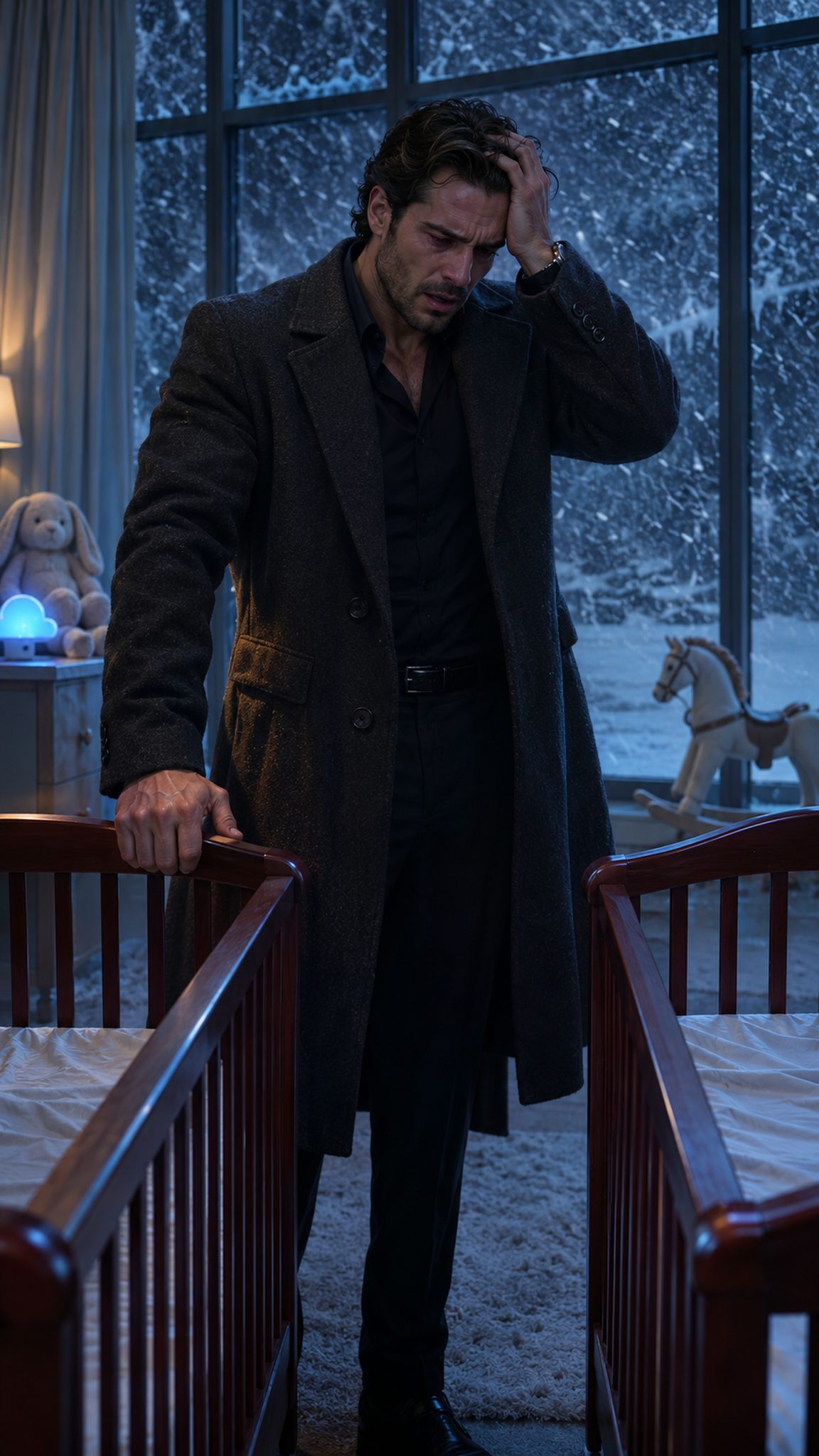
    I stood between the two mahogany cribs, listening to the storm strike the windows. The blue nightlight made a small pool of color on the carpet. Beyond it, the room was familiar down to the smallest detail, and yet nothing in it seemed to belong to the life I had believed I was living.

    I looked at the cribs again.

    I had built a reputation on finding people. Men who thought a new name would protect them learned that names could be traced. Men who crossed state lines discovered that distance was only a delay. Men who disappeared into the noise of Chicago eventually learned that someone had remembered the car they drove, the bar they visited, the cousin they trusted, or the debt they had forgotten to pay.

    I had found men in hotel rooms under borrowed identities. I had found a bookkeeper who had crossed three states with a suitcase full of cash. I had found a witness who believed a different haircut and a rented apartment made him invisible. I had found people who had spent months planning their disappearances, and I had found them because I understood how people moved when they were afraid.

    But I had never considered that the person I was looking for might be my wife.

    My gaze shifted to the empty space beside Leo's crib. I could still picture Nora standing there, one hand on the rail, her hair loose around her shoulders. She used to lean over him and speak so softly that I could barely hear her from the doorway. Sometimes she sang. Sometimes she told him what the weather was doing beyond the windows, as if he could understand the snow gathering on the glass.

    I had heard those quiet conversations and thought they were sweet. I had not understood how much of her day was made of moments like that: small, repeated acts of attention that held a fragile life together.

    I knew how to recognize a threat. I knew how to read a room when a man entered with a concealed weapon or a lie he had practiced too carefully. I could hear the change in a voice when someone was preparing to betray me. I could notice a driver taking a different route or a guard looking toward the wrong door.

    I had not noticed my wife growing lonely.

    The distinction was difficult to bear. I had spent years teaching myself to see what other people missed. I had made a profession out of details. Yet the most important changes in my own home had happened in plain sight.

    My father had taught me that information was power. He taught me to remember names, faces, habits, and debts. He taught me that a man who waited for trouble to announce itself had already lost. When I was young, I thought those lessons made him invincible. Later, I understood that they had made him feared, and that fear was the closest thing to loyalty he knew how to demand.

    I had inherited his world before I was old enough to understand what it would cost.

    At eighteen, I learned that a promise could be more dangerous than a threat. At twenty, I learned that men would smile while calculating how much they could take from you. By the time I was thirty, the Rinaldi name had become a warning in rooms where people lowered their voices when I entered.

    I did not become Chicago's most feared man in one dramatic night. There was no single moment when the city decided I was dangerous. It happened through years of decisions, each one teaching someone that I would remember an insult, a betrayal, or an unpaid debt. I learned to keep my expression still. I learned to let silence do the work of anger. I learned that a man who never had to repeat an order could make other men nervous simply by looking at them.

    My organization grew because I was patient when patience served me and relentless when it did not. I knew which businesses were legitimate and which ones were only respectable from the street. I knew which officials wanted favors, which partners wanted protection, and which rivals would wait until a weakness appeared. I had people who could tell me when a warehouse door opened after midnight or when a familiar car appeared outside a building where it did not belong.

    I had become the man people called when someone could not be found.

    The irony was so sharp that I almost laughed.

    There were men who would have given anything to have my resources. I had money in accounts across several institutions, properties under different companies, drivers, security teams, lawyers, and people who owed me favors. I could make a call and have a dozen people moving before the conversation ended.

    But I had not made a call.

    I was still standing in the nursery, because the first thing I needed to understand was what Nora had chosen to leave behind.

    The money in the biometric drawer had been a decision. Fifty thousand dollars, untouched. I could see the neat stacks in my mind, exactly where I had placed them. Emergency cash, enough to pay for a safe room, transportation, medical help, or anything a sudden crisis might require. I had put it there because I believed I could anticipate every emergency.

    Nora had known it was there. She had left it.

    That was not forgetfulness. She knew where the drawer was. She knew the code. She knew what the cash was for. She had chosen not to take it, and I could not decide whether the choice meant she had other resources or whether she simply refused to use money that came from me.

    My backup passports were still there too. Their sleeves sat beside the empty space where her passport had been. The new passports for Leo and Mia, issued after their early delivery, were gone. She had taken the documents that belonged to herself and the children. She had left mine.

    A man could build a life around the belief that every problem had a price. He could keep cash ready, maintain several identities, arrange transport, and make sure every door opened when he wanted it to. I had done all of that. Nora had looked at the same resources and decided they were not what she needed.

    I looked at the medicine pouch's empty place in the nursery refrigerator. That absence frightened me more than the missing money. The twins had been born too early. Their care required attention, not improvisation. Nora knew the instructions. She knew what needed to stay with them and what could not be left behind. She had taken the insulated pouch because the medicine mattered.

    She had taken the diapers and formula. She had taken warm clothes. She had taken two overnight bags. The practical details formed a picture I could not escape: Nora had considered the children first, then herself. She had packed for the weather. She had planned for feeding, changing, and medicine. She had not left them to chance.

    I should have been relieved by that.

    Instead, I felt the terrible weight of knowing that she had prepared to do it without me.

    My eyes returned to the fitted sheet in Leo's crib. The faint indentation remained near the center. It was barely visible, but I could not look away. A small body had rested there. A small body I had held, though not often enough. I remembered the first time Leo's fingers closed around mine. His hand had seemed impossibly small, his grip more reflex than choice. I had told Nora he was strong.

    She had smiled and said he had to be.

    Mia had arrived with a different kind of quiet. She watched faces longer. She settled when Nora spoke close to her ear. Her white stuffed rabbit had become part of the routine, and Nora had kept it within reach. The rabbit was gone now. That detail told me she had remembered the comfort Mia needed even while preparing to leave everything familiar.

    I pressed my fingers against the crib rail.

    The wood was smooth beneath my palm. I had approved the cribs because they were solid, beautiful, and made to last. I had considered the room's design, the security of the windows, the temperature controls, and the distance between the cribs. I had paid for every detail.

    Nora had made the room a nursery.

    I had made it a project.

    The difference seemed obvious now. It had not seemed obvious when the twins came home.

    Their early weeks had been a blur of hospital corridors, quiet instructions, and the strange machinery of keeping two tiny lives stable. I remembered the monitors and the soft light in the neonatal unit. I remembered standing beside the beds while nurses explained feeding schedules and warning signs. I remembered Nora listening with a concentration that made the rest of the room disappear.

    She asked questions. She wrote things down. She repeated instructions until she was certain she understood them. When a nurse showed her how to hold Leo, Nora adjusted her hands carefully and watched his face. When Mia needed attention, Nora was already leaning toward her.

    I had listened too. I had asked about their progress and signed forms. I had made sure the bills were handled and the private room was available when it was appropriate. I had arranged additional security for the family and told the hospital administrator that the twins would receive whatever care they needed.

    I had mistaken those things for being equally involved.

    The truth was that I had been present for important moments and absent from the ordinary ones that followed. I had come and gone. Nora had remained.

    At home, the days became a pattern of feeding, medicine, laundry, appointments, and attempts to sleep between cries. The twins did not understand that their father had responsibilities beyond the penthouse. They did not understand meetings or contracts. They knew hunger, discomfort, warmth, a familiar voice, and the arms that lifted them.

    Nora learned their rhythms. She could tell when Leo's crying meant he was hungry and when he needed to be held longer. She knew how Mia settled when the room was quiet. She could prepare a bottle while checking the time and listening for the other baby. She moved through the nursery at night with a tired confidence that came from repetition.

    I loved them. I did.

    But love had become something I felt when I was in the room rather than something I practiced when the room needed me.

    I remembered the first night I complained about the crying. It was after two. I had returned from a long evening of meetings and had fallen asleep only to be woken by Leo. The crying seemed endless. Nora was in the nursery, moving slowly with him against her shoulder. Mia had begun to fuss in the other crib.

    I stood in the doorway and asked whether someone could take care of it.

    Nora looked at me. “I am taking care of it.”

    “I have an early meeting.”

    “So do I,” she said.

    I had been irritated by the answer. I told myself I had spent the day handling problems that affected the family's future. I told myself that she was better at the babies' routine and that my presence would only make the night more difficult.

    I did not ask what she needed.

    I went back to bed.

    The memory was so clear that I could almost hear the nursery door closing. I had treated her exhaustion as an inconvenience because I had decided my own exhaustion mattered more.

    Another night, I had found her sitting in the chair with Mia against her chest and Leo finally quiet in his crib. The room was dim. Nora's head had tipped back against the cushion. She looked as if she had fallen asleep sitting up.

    I stood there for a few seconds. I could have taken Mia. I could have asked Nora to lie down. I could have sat beside her and watched the babies while she slept.

    Instead, I checked my phone.

    There had been a message from the office. A contract needed approval. I stepped into the hall to answer it, telling myself I would return in a moment.

    I did not return until much later.

    The nursery held every version of that failure. The chair where she had slept upright. The refrigerator where she kept the medicine. The cabinet where the diapers had been. The empty place where Mia's rabbit belonged. I could see the life she had lived in the room more clearly now that she was no longer there to move through it.

    I had believed my absence was temporary. One meeting, one night, one emergency at a time. I had not understood that a marriage could be emptied by a thousand small departures.

    My phone lay in my coat pocket. I could feel its weight, and I knew how easy it would be to use it. One call could summon my chief of security. Another could put the building's camera feeds on a screen. Another could begin the quiet process of checking hospitals and transit records.

    I did not take it out.

    Chapter 4 would begin with the search. Not yet. These minutes still belonged to the moment before I moved, when the facts had arrived but my mind had not accepted what they meant.

    I looked toward the bedroom. The bed was made. Nora's side was untouched. I remembered how she used to leave a glass of water on my nightstand when she knew I would come home late. She stopped doing that. I had noticed the missing glass once and asked the housekeeper whether the tray had been moved.

    I had not asked Nora.

    I remembered her winter coats hanging in the wardrobe. She had chosen them for warmth, not appearance. She wore practical boots when the sidewalks iced over and nursing sweaters that made it easier to feed the twins. I used to tease her about wearing the same two sweaters. She would smile and say they were comfortable.

    Now the hangers were empty.

    I had thought of those clothes as ordinary. I had never considered that they were the things she would need if she had to leave in bad weather with two infants.

    The storm outside intensified. Snow swept past the windows in thick, slanting sheets. The glass trembled faintly under the wind. I pictured Nora moving through that weather with one carrier in each hand or one against her body and another close beside her. I could not know the exact way she had managed it. The uncertainty made my mind fill with possibilities, each worse than the last.

    Were the babies warm? Had she found shelter? Was there someone with her? Had she planned the route before the snow became this heavy? Had she waited until I was gone because she believed she could not leave if I was home?

    That last question held me still.

    Had she been afraid I would stop her?

    I wanted to say no. I wanted to believe she knew I would never keep her against her will. But I had spent years making people obey me. I had built a home surrounded by guards and controlled entrances. I had treated my decisions as final. Even when I had not raised my voice, the people around me understood that refusal came with consequences.

    Nora had lived inside that world.

    Perhaps she had not feared that I would hurt her. Perhaps she had feared that I would simply decide she was not allowed to go. That I would call it protection. That I would tell her she was exhausted and upset and did not know what she was doing. That I would take the children into my arms and make the decision for her.

    I could imagine myself saying those things. I could imagine the certainty in my own voice.

    The thought made me look down at my hand on the crib rail.

    I had never struck Nora. I had never needed to. Power did not always announce itself through violence. Sometimes it was the knowledge that one person could make a hundred calls and the other person would have to live with the consequences.

    I had mistaken the absence of physical harm for proof that I was a safe husband.

    It was not proof.

    The clock on the nursery wall moved forward. The minute hand seemed louder than it should have been. I counted the seconds without meaning to, then stopped when I realized I was doing it.

    Five minutes had passed since I understood.

    Five minutes in which I had not moved beyond the nursery door.

    I thought of the first time I met Nora. I remembered the way she had looked directly at me, not at the men behind me or the car waiting outside. She had not seemed impressed by the name. She had asked me a question and waited for a real answer. I had liked that she did not rush to fill silence. I had liked that she could disagree without trying to win.

    She had made me feel that I could be a man before I was a reputation.

    I had promised her a life where she would not have to be afraid. I had promised that my work would never come before our family. At the time, I believed those promises. I had meant them.

    But meaning a promise was not the same as keeping it.

    The first years of our marriage had been easier. I came home more often. We ate late dinners in the kitchen. Nora would tell me about the clinic, about a family she had helped, or about something she had read. I would tell her about the parts of my day I could safely share. Sometimes she would sit beside me while I reviewed papers, her feet tucked beneath her, and I would reach for her hand without thinking.

    Then the organization grew. More people depended on my decisions. More rivals tested the boundaries. I began to treat every problem as urgent and every evening as available time. I missed dinners, then weekends, then small plans that Nora stopped making because she had learned not to count on me.

    I told myself she understood.

    She had never agreed to that arrangement.

    I looked at the empty cribs again. The babies had changed everything, as children do. They had made time more precious and sleep more fragile. They had made Nora's need for me impossible to mistake. Yet I had found ways to mistake it anyway.

    I had complained about the crying. I had complained about being woken. I had complained that the nursery lights were on when I came home. I had asked whether the staff could take a shift, as though the question were about staffing rather than being a father.

    Nora had listened. Sometimes she answered. More often she became quiet.

    I had taken her quiet as agreement.

    Now I wondered how many times she had wanted to tell me that she was reaching the end of what she could carry. How many times she had looked at me and decided there was no point asking again. How many times she had stood in this room, with one baby in her arms and another crying, and understood that the man who could make an entire city respond to his voice could not be counted on to answer hers.

    The thought was almost unbearable.

    I moved from Leo's crib to Mia's. The white rabbit was gone, leaving the mattress bare. I lowered my hand to the rail but did not touch the sheet. I could not bear to disturb the faint evidence that she had been there.

    I remembered the day the twins came home from the hospital. Nora had been careful at every step. She checked the carriers, the blankets, the temperature in the car. She asked the nurse one more question before we left. I had stood beside her and told her everything was ready.

    She had looked at me and said, “We have to keep being careful.”

    I had answered, “We will.”

    She had meant every feeding, every medicine dose, every night. I had meant that I had paid for the right equipment and arranged the right people.

    We had used the same word and meant different things.

    I returned to the center of the nursery. The blue light touched the front of my coat. Somewhere beneath the wool, the faint scent of cherry blossom seemed to rise again. Sylvia's lotion. A trace that had followed me home more than once.

    Nora had known.

    I could no longer pretend she had discovered the affair only when she left. She had seen the pattern before I had admitted there was one. She had watched me return late. She had heard the excuse of urgent meetings. She had noticed the smell. She had watched me complain when the twins cried and then leave her alone with them.

    She had stood barefoot in the kitchen with Mia against her chest while I told her I had an urgent meeting. She had not asked me to stay. I had read that silence as permission to go.

    Now I understood that she had already known where I was going.

    I looked at the clock again.

    The minute hand had moved, but it had not reached the hour I feared. It was still only a little after five. Five minutes had passed since I understood what the empty room meant, and I was still standing where the truth had found me.

    My hand remained on the polished rail between the two cribs. The blue nightlight washed over my fingers. Beyond the windows, snow kept striking the glass, covering the city in a white silence that made every distance seem greater.

    I thought about what I would do when I finally moved. I would need to keep the search quiet. No police broadcast, no public alert, no announcement that might expose Nora or frighten her away from the help she had chosen. I would have to remember that she had taken the twins deliberately, and that finding them did not give me the right to decide what happened next.

    But those were decisions for the next few minutes.

    For now, I could not make myself leave the nursery. I could only look at the empty mahogany cribs and imagine Nora carrying our children through the storm, prepared in ways I had never bothered to understand.

    The clock showed 5:08.

    I stood between the cribs, my hand still resting on the rail, and let the silence tell me what my pride had refused to hear: the people I loved had not simply disappeared. They had chosen to get away from me.

    And I had to face the possibility that they had good reason.
  • Chapter 7: THE FIRST DAY OF EVERYTHING

    Chapter 7: THE FIRST DAY OF EVERYTHING

    The signature looked like Damian's.

    I had seen it on contracts, birthday cards, documents that arrived at the penthouse in thick leather folders. The sharp downward stroke of the D, the narrow space between Cross and the final line, the small hook at the end. Whoever had copied it had studied it carefully.

    But Damian was looking at the photograph as if it belonged to a stranger.

    “I didn't sign that,” he said again.

    Detective Mara Collins was still on the phone. “We have the original in evidence. The signature appears on an authorization dated six months before your divorce. It grants Northstar Patient Logistics permission to receive certain household medical records and transfer retained specimens to an external research partner.”

    “I never authorized that.”

    “Then we'll establish who did.”

    Damian rubbed a hand over his jaw. “Who had access to my signature?”

    “That's what we're investigating,” Collins replied. “The document was submitted through the procurement office. The approval trail lists Martin Kessler.”

    Damian's eyes narrowed. “Kessler left the company years ago.”

    “He was still listed as a procurement consultant when the authorization was filed. We found payments from Gideon Shaw's holding company to a business registered under Kessler's wife's name.”

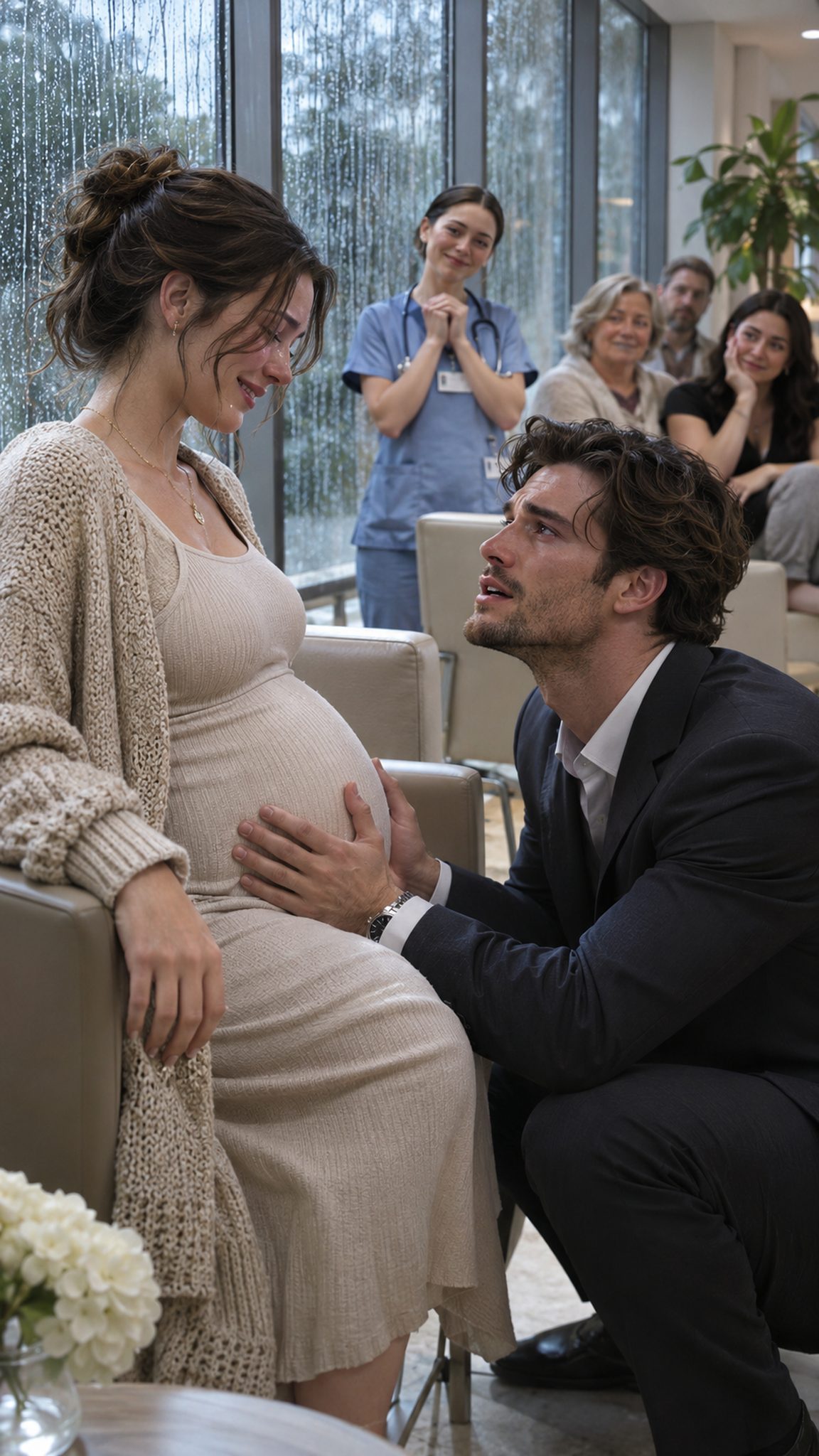
    I looked at the date again. Six months before the divorce. Before I knew I was pregnant. Before the blood sample had been collected. Before the clinic waiting room, before Damian had knelt beside my chair and felt his daughter move beneath his hand.

    “Why would someone authorize a transfer before there was a pregnancy?” I asked.

    Collins answered carefully. “The authorization was broad. It covered retained samples from household members and dependents. It was designed to look like a routine administrative agreement. The sample was collected later, then transferred under that earlier authorization.”

    “So the signature was forged to create permission in advance.”

    “Yes.”

    Damian looked at me. “I didn't know.”

    “I believe you.”

    The words surprised both of us. I did not say them to comfort him. I said them because I had begun to understand the difference between what Damian had done and what other people had done using his name. He had controlled me. He had withheld information. He had allowed a system to monitor my life. Those things were real, and they were his responsibility. But the forged signature was not his.

    Collins continued. “Kessler is in custody. He was arrested at his home an hour ago. He has agreed to speak with investigators.”

    “Why?” Damian asked.

    “He was confronted with the payment records and the original authorization. He claims he was paid to prepare the document and submit it through the old procurement system. He says Gideon Shaw's people supplied the wording and the signature sample.”

    “Which person supplied the signature sample?” I asked.

    Collins paused. “Kessler says it came from a document in the household archive. The archive was maintained by Marcus Bell's office.”

    Damian's expression darkened. “Bell gave them my signature?”

    “That's what Kessler claims. We haven't confirmed whether Bell knew the signature would be used to forge an authorization.”

    I looked at Damian. “Did you ever sign a general medical release for the household?”

    “No. I signed insurance and emergency administration documents, but never permission to transfer your samples to a private research company.”

    “Could you have signed something without reading it?”

    He considered the question rather than rejecting it. “I might have signed routine procurement paperwork. I would not have knowingly signed this.”

    Collins spoke again. “The important thing is that we have the original document, the payment trail, and Kessler's statement. We also have the laboratory records showing that Elena's specimen was transferred under the false authorization. That connects the forged document to the research company.”

    “Does it explain why Shaw wanted the sample?” I asked.

    “It does. The company was building a private database of medical and genetic information belonging to people connected to influential business figures. The stated purpose was research. The actual use included identifying vulnerabilities that could be exploited in commercial disputes.”

    Damian's voice turned cold. “They were collecting leverage.”

    “Yes,” Collins said. “Your wife's sample was initially included because she was listed in the household medical archive. Once the early pregnancy marker appeared, the company connected it to your marriage. Later, when her prenatal records showed a high-risk placental condition, they used that information to increase the pressure.”

    I felt my daughter's movement beneath my palm.

    “So the pregnancy wasn't the reason they collected the sample,” I said. “But it became the reason they targeted me.”

    “That's our conclusion,” Collins replied. “The sample was collected through a broader scheme. The pregnancy made you a more valuable target.”

    I hated how calmly the words fit together.

    “He wanted leverage over both of us,” I said.

    Damian looked at me. “Yes.”

    “And the shipment?”

    Collins answered. “The container held restricted communications and surveillance equipment. Shaw's partners wanted it returned. They believed Damian would surrender it if they threatened you. When the abduction failed, they continued using the medical information to pressure him.”

    “Will the container be returned?”

    “No,” Collins said. “It has been seized as evidence. Its ownership and customs status will be determined through the legal process.”

    Damian nodded. “I won't interfere.”

    Collins studied him. “That is important, Mr. Cross.”

    “I understand.”

    She turned to me. “The original maternal sample has also been located. It was stored at the research facility under the reference number in your file. An independent laboratory has confirmed its identity and chain of custody.”

    “I want it destroyed.”

    “We can arrange that after the forensic work is complete. You'll receive documentation.”

    “Thank you.”

    Collins closed her folder. “The hospital has revoked the external authorization. Your medical records are now restricted, and no outside request will be accepted without your direct consent. The other patient records are being reviewed with the medical regulators.”

    I looked at Dr. Lang. “Can you make sure my care stays separate from the investigation?”

    “Absolutely,” she said. “Your pregnancy and delivery decisions remain with you and your medical team.”

    For the first time in days, I felt that the walls around me were not closing in.

    The investigation had not erased what happened. It had not undone the months of fear or the years in which I had mistaken control for devotion. But the truth was finally being recorded in the right places, by people who had the authority to act on it.

    After Collins left, Damian sat beside me.

    “I should have known someone could use my systems against you,” he said.

    “You should have known the systems were already hurting me.”

    He lowered his eyes. “Yes.”

    “I don't want you to spend the rest of your life punishing yourself. I want you to change how you live.”

    “I will.”

    “You have to do it even when I'm not watching.”

    He nodded. “I know.”

    ***

    The following morning, Dr. Lang came to my room before the specialist's rounds.

    She had the latest Doppler results.

    The placental blood flow remained reduced, and the readings had become more concerning. My daughter's heart rate was still reassuring, but the team did not want to wait much longer. The specialist recommended proceeding with the planned cesarean that afternoon.

    I felt my heart begin to race.

    “Today?”

    “Yes,” Avery said gently. “The team believes this is the safest time. Your daughter has done well, but the placenta is showing signs that it may not continue supporting her reliably. We would rather deliver while her monitoring is reassuring than wait for an emergency.”

    I looked at the ultrasound image.

    Eight months of waiting. Eight months of carrying her through fear, work, exhaustion, and uncertainty. I had imagined her birth in a dozen different ways. I had imagined bringing her home in a quiet morning, hearing her cry, counting her fingers, and discovering whose eyes she had inherited.

    I had not imagined choosing an operating room.

    “Will she be all right?”

    “We cannot promise that every part of the delivery will be uncomplicated,” Dr. Lang said. “But the neonatal team will be ready. Her recent measurements are encouraging, and we have a plan for immediate assessment and support.”

    I nodded slowly.

    “I want the cesarean.”

    Avery placed a hand over mine. “All right.”

    “I want you there.”

    “I'll be there.”

    “And Damian.”

    Avery looked toward him. He had been standing near the window, giving us space.

    “If you want him present, we can arrange that,” she said.

    I turned to him. “I want you beside me. But you follow the team's instructions. You don't argue with the doctors, and you don't make decisions for me.”

    “I understand.”

    “If they ask you to step out, you step out.”

    “Yes.”

    “And if I become frightened, you don't tell me everything is fine if you don't know that.”

    He came closer. “I'll tell you the truth.”

    I nodded.

    The birth plan was reviewed one final time. I chose who could be present, what information could be shared, and how I wanted the team to communicate with me. The specialist explained the procedure and the possibility that our daughter might need help breathing or a period of observation in the neonatal unit.

    I signed the consent forms.

    This time, every signature was mine.

    ***

    The hours before surgery passed in a strange mixture of calm and fear.

    A nurse helped me change into a hospital gown. Another checked my blood pressure and placed an intravenous line. Dr. Lang returned to review the procedure and answer my final questions.

    Damian sat beside the bed.

    He had not left the room except when the staff needed privacy. He had not called Noah to arrange anything. He had not demanded to speak with the hospital director. His phone remained switched off on the bedside table.

    “You can turn it on if you need to,” I told him.

    “I don't.”

    “What if something happens?”

    “Noah knows to contact me through the hospital.”

    I smiled faintly. “You really are trying.”

    “I am.”

    He looked at my hand resting over my belly.

    “Can I feel her move?”

    I took his hand and placed it where she had been kicking.

    A moment later, she shifted beneath his palm.

    His eyes closed briefly.

    “Hello, little girl,” he whispered.

    I watched his face.

    “You've been waiting a long time,” I said.

    He looked at me. “Not as long as you.”

    There was no self-pity in his voice. No attempt to make my suffering about him. He simply acknowledged the truth.

    A nurse arrived to take me to the operating room.

    Damian stood.

    “Are you ready?” he asked.

    “No.”

    He nodded. “Neither am I.”

    I laughed softly despite the tears gathering in my eyes.

    “Come with me.”

    He walked beside the bed as the nurses moved me through the corridor. He did not reach for the rails or try to direct the staff. He held my hand when I asked him to.

    At the operating-room entrance, the anesthesiologist explained what would happen. Damian was asked to wait while the team prepared me. He kissed my forehead only after I leaned toward him.

    “I'll be here,” he said.

    “I know.”

    The doors closed.

    For a few minutes, I was alone with the medical team. They explained each step, checked my responses, and made sure I was comfortable. The anesthesiologist spoke to me throughout. Dr. Lang stood near my shoulder.

    “You're doing well, Elena.”

    I took a slow breath.

    “Is she okay?”

    “We're getting ready to meet her.”

    The procedure began.

    I felt pressure, movement, and the strange sensation of knowing that something enormous was happening while I could not see it. The anesthesiologist spoke to me throughout. Dr. Lang kept her promise and remained close.

    Then I heard a small sound.

    A cry.

    Not loud. Not strong at first. But unmistakably alive.

    My entire body seemed to release a breath I had been holding for months.

    “Is she okay?” I asked immediately.

    The neonatal specialist answered from the other side of the screen.

    “She is breathing. We're assessing her now.”

    I began to cry.

    A few seconds later, the cry came again, louder this time.

    “She has a good response,” the specialist said. “We're going to give her a little support and check her oxygen levels.”

    I turned my head toward Dr. Lang.

    “Can I see her?”

    “Yes.”

    The nurse brought her close enough for me to see her face.

    She was tiny. Her skin was warm and pink beneath the lights, her dark hair damp against her head. Her eyes were closed, and her mouth opened in a small, indignant cry.

    My daughter.

    The child I had carried through eight months of fear. The child I had protected with every choice I could make. The child who had brought the most powerful man I knew to his knees in a clinic waiting room.

    I reached toward her.

    “Hello, baby girl,” I whispered. “I'm your mother.”

    The nurse smiled. “Would you like her name recorded?”

    I looked at my daughter.

    For months, I had called her my little girl. I had imagined names while washing dishes, walking home from the café, and lying awake at night. I had wanted something gentle but strong. Something that belonged to her, not to her father's empire or the family name.

    “Amelia,” I said.

    The nurse repeated it. “Amelia.”

    “Amelia Cross.”

    The name felt right.

    When the procedure was complete and I was moved to recovery, the neonatal team explained that Amelia would need observation because she had been born early and because of the placental circulation problems. She was stable, breathing with minimal support, and responding well.

    I asked whether Damian could see her.

    The nurse smiled. “He's waiting.”

    ***

    Damian entered the recovery room a few minutes later.

    He looked as if he had forgotten how to walk.

    His eyes moved from my face to the small hospital cot beside me. He stopped several feet away.

    “Is that her?”

    I smiled through my tears. “That's Amelia.”

    He approached slowly.

    The nurse explained the monitoring equipment and showed him where he could touch her without disturbing the sensors. Damian listened to every instruction.

    Then he looked at me.

    “May I hold her hand?”

    I nodded.

    He extended one finger. Amelia's tiny hand moved, and her fingers curled around it.

    Damian's face changed.

    I had seen him in the clinic, kneeling with trembling hands. I had seen him in the hospital room, trying to understand how someone could have used his name to control my life. I had seen him admit that fear had made him controlling.

    But this was different.

    He was not looking at an heir, a bargaining chip, or a future connection to the Cross name.

    He was looking at his daughter.

    “Hello, Amelia,” he whispered.

    Her fingers remained curled around his.

    He bent his head.

    “I missed the beginning,” he said softly. “I'm sorry.”

    I reached for his hand.

    “You're here now.”

    He looked at me. His eyes were wet.

    “Thank you for letting me be here.”

    I smiled. “You asked.”

    He gave a small laugh, and for the first time in a long while, I heard the man I had fallen in love with without hearing the fear that had once hidden inside him.

    ***

    Amelia spent several days under neonatal observation.

    She needed help maintaining her temperature and feeding schedule, but her breathing improved steadily. The doctors monitored her closely, and Dr. Lang visited every day. The placental circulation problem was behind us now, but the team wanted to be certain Amelia could feed, gain strength, and maintain stable vital signs before discharge.

    I learned the rhythm of the neonatal unit.

    The quiet alarms. The soft footsteps. The nurses who explained every change before touching my daughter. The way Amelia's tiny fingers wrapped around mine when I rested my hand beside her.

    Damian came every day.

    Sometimes he stayed for an hour. Sometimes longer. He asked the nurses how to hold her, how to support her head, and how to recognize when she was tired. He wrote down feeding instructions and learned how to change a diaper without making a production of it.

    He never assumed he could take her from my arms.

    He always asked.

    “Would you like me to hold her while you rest?”

    “Would you like me to bring you something?”

    “Do you want me to stay tonight?”

    And when I said no, he accepted it.

    One afternoon, I found him standing beside the cot, reading the same children's book he had read to her before she was born.

    He was halfway through the story when Amelia made a small noise.

    He stopped.

    “What is it, sweetheart?” he whispered.

    She moved her hand.

    He smiled.

    I watched from the doorway, feeling something inside me soften.

    Not everything was repaired. The past had not disappeared because our daughter had arrived. I still remembered the locked doors, the canceled plans, the feeling of being watched. Damian still had work to do, and I still had boundaries I would not surrender.

    But he was learning.

    And I was allowing myself to see it.

    The police investigation reached another milestone before Amelia was discharged.

    Gideon Shaw was formally charged in connection with the conspiracy, unlawful medical-data acquisition, fraud, and the planned abduction. Peter Vale faced charges for his role in the surveillance operation and the false medical authorization. Marcus Bell's cooperation helped prosecutors establish the original security breach. Martin Kessler admitted forging Damian's signature under Shaw's direction.

    The original maternal sample was transferred to an independent laboratory, documented, and then destroyed at my request. The hospital received written confirmation that the external research authorization had been revoked.

    Lydia Mercer sent me a letter through Detective Collins.

    She apologized for giving away my schedule and for believing that someone else had the right to decide what protection I needed. She did not ask me to forgive her. She wrote that she understood why I might never want to speak to her again.

    I read the letter once.

    Then I placed it in a drawer.

    I was not ready to forgive her, but I no longer felt responsible for carrying her guilt.

    Detective Collins visited one final time before Amelia's discharge.

    “The medical privacy investigation will continue,” she said. “Other patients may have been affected. We have preserved the records and notified the relevant regulators.”

    “Will the research company be shut down?”

    “It's under court supervision. Its patient database has been secured. No further access is permitted.”

    “And the container?”

    “Seized. The equipment is being examined as evidence. The shipping dispute will be resolved through the legal process.”

    I looked at Damian.

    He nodded. “I won't interfere.”

    Collins gave him a measured look. “That would be wise.”

    After she left, I turned toward him.

    “You didn't try to take the container back.”

    “No.”

    “Even though it was yours.”

    “It was never worth putting you or Amelia at risk.”

    I studied him.

    “That's a new answer.”

    “It's the right one.”

    ***

    The day Amelia was discharged, the sky over Seattle was bright for the first time in weeks.

    A nurse helped me settle Amelia into her car seat. Damian checked the straps, then stepped back and waited for the nurse to confirm everything was secure.

    He had arranged transportation, but not a private convoy. There was one car, one driver approved by the hospital, and no additional security detail waiting outside.

    He had asked whether I wanted to go to the apartment or somewhere else.

    I chose the apartment.

    It was small, but it was mine. I wanted Amelia to come home to the place where I had imagined her life. I wanted her first days to be filled with sunlight, quiet mornings, and the ordinary sounds of a home.

    Damian carried the hospital bag. I carried Amelia.

    When we reached the apartment, he stopped at the doorway.

    “Would you like me to come in?”

    I looked at him.

    “Yes.”

    He entered quietly.

    The kitchen still had the chipped coffee mug where I had once counted my tips. The little yellow blanket lay folded on the sofa. The small crib stood near the window, where the morning light reached the floor.

    Damian looked around.

    “You built all this.”

    “I did.”

    He nodded. “It's beautiful.”

    “It isn't a penthouse.”

    “No,” he said. “It's a home.”

    I looked down at Amelia.

    “That's what I wanted.”

    He set the bag beside the crib and waited.

    “Would you like me to help unpack?”

    “Yes. But don't reorganize everything.”

    He smiled. “Understood.”

    We spent the afternoon putting away the baby's clothes, arranging the feeding supplies, and learning how to manage the new routine. Damian asked before moving anything. When he wasn't sure where something belonged, he asked me.

    At one point, he found the chipped coffee mug in the kitchen cupboard.

    “Do you still use this?”

    “Sometimes.”

    He turned it in his hands. “You kept it.”

    “It reminded me that I could survive.”

    He placed it back exactly where he had found it.

    “Then it stays.”

    That evening, after Amelia had been fed and settled, Damian sat beside me on the sofa.

    He looked tired. His tie was gone, his sleeves were rolled up, and his hair was slightly untidy. He looked less like the man Seattle feared and more like the man who had once made me laugh at a charity reception by asking whether I was afraid of breaking a tray of glasses.

    “I've been thinking,” he said.

    “About what?”

    “About asking you to come home.”

    I looked at him carefully.

    He continued before I could answer.

    “Not to the penthouse. Not to the life we had. I know you left for a reason, and I don't want to offer you another beautiful room with rules attached.”

    I waited.

    “I want to build something different. Somewhere we both choose. Somewhere Amelia can grow without people deciding what she is allowed to become. But I don't want to assume you want that with me.”

    “Are you asking me to move in with you?”

    “I'm asking whether you'd consider building a home together again. Slowly. With your own space, your own work, your own decisions. If you want to keep this apartment, we keep it. If you want a different place, we find it together. If you want time, I'll give you time.”

    I looked at him.

    “What happens when you're frightened?”

    “I tell you.”

    “What happens when I disagree?”

    “I listen.”

    “What happens when someone threatens our family?”

    “We talk. We involve the police when necessary. We make decisions together. I won't turn our home into a prison.”

    I felt tears gather in my eyes.

    “Those are only words, Damian.”

    “I know.”

    “You'll have to prove them.”

    “I know.”

    I looked toward the crib. Amelia was sleeping with one tiny hand beside her cheek.

    “I don't want to go back to the marriage we had.”

    “Neither do I.”

    “I want something new.”

    “So do I.”

    I took his hand.

    “Then we can try.”

    His eyes closed briefly.

    He did not pull me toward him or treat the answer as a victory. He simply held my hand, as if he understood how much trust was contained in those three words.

    ***

    Three months later, the city had begun to feel different.

    The legal proceedings continued, but the most immediate threats had been contained. Shaw remained in custody. Vale and Kessler were awaiting trial. Marcus Bell's testimony helped prosecutors establish the original security breach. The medical research company had been placed under court supervision, and the unlawfully collected records were being reviewed and destroyed where legally permitted.

    Lydia and I exchanged one final message. I told her I hoped she would learn to recognize the difference between helping someone and deciding for them. She replied that she understood.

    I did not invite her back into my life.

    That decision brought me peace.

    Damian and I moved slowly. We did not return to the penthouse. We found a house with a bright kitchen, a small garden, and enough room for Amelia to grow. I chose the neighborhood. I chose the furniture. I kept my café work part-time because I enjoyed having something that belonged to me outside the family.

    Damian continued running his businesses, but he began changing the way his security operation worked. Independent oversight replaced the old household credential system. Medical information was removed from security files. No employee could track a family member without documented consent and a legitimate safety reason.

    He also began seeing a counselor who worked with people in high-pressure leadership roles. He never announced it as a grand transformation. He simply went, listened, and returned willing to talk about things he had once refused to discuss.

    One afternoon, I found him sitting on the living-room rug with Amelia.

    She was lying on a soft blanket, waving her arms and making little sounds. Damian had placed a wooden rattle beside her.

    “She's trying to reach it,” he said.

    “Then let her.”

    He moved his hand away.

    Amelia stretched, missed, and tried again.

    Her fingers closed around the rattle.

    Damian smiled as if she had just accomplished something extraordinary.

    “She did it.”

    “She did.”

    He looked at me. “I almost helped her.”

    “I noticed.”

    “I wanted to move it closer.”

    “But you didn't.”

    He laughed softly. “I'm learning.”

    I sat beside them and lifted Amelia into my arms. She rested her cheek against my shoulder, warm and sleepy.

    Damian watched us.

    “May I hold her?”

    I smiled. “Of course.”

    He took her carefully. Amelia opened her eyes and looked at him. Her tiny fingers curled around his shirt.

    “Hello, little girl,” he whispered.

    She made a small sound.

    He looked at me. “Do you think she knows me?”

    “I think she knows your voice.”

    He bent his head and kissed her forehead.

    “Then I'll keep talking to her.”

    I leaned against his shoulder.

    Outside, the afternoon sunlight stretched across the garden. There were no guards standing inside the house. No one monitored my appointments. No one decided when I could leave or whom I could see. We had security because the world could still be dangerous, but it no longer dictated the shape of our lives.

    Damian had not become a different man overnight. He was still ambitious, still intense, still capable of frightening people who crossed him. But at home, he was learning that love did not require obedience.

    It required trust.

    That evening, we sat together at the kitchen table while Amelia slept in her crib nearby. Damian made coffee. I opened the notebook where I kept our household expenses. The numbers were ordinary. Rent, groceries, baby supplies, electricity.

    I smiled at the page.

    “What's funny?” he asked.

    “Nothing. I used to count every dollar and wonder whether I could make it through the month.”

    He sat beside me.

    “You shouldn't have had to do that alone.”

    “I know.”

    “I can't give you those months back.”

    “No.”

    “But I can make sure you never have to choose between your freedom and being loved.”

    I looked at him.

    “Don't promise me a perfect life.”

    “I won't.”

    “Promise me an honest one.”

    He reached across the table.

    “I promise.”

    I placed my hand in his.

    From the nursery came a small cry.

    We both stood.

    Damian paused at the doorway and looked at me.

    “Would you like me to get her?”

    I smiled.

    “Yes.”

    He went to the crib, lifted our daughter carefully, and brought her back into the room. Amelia settled against his chest, her tiny hand resting beneath his collar.

    I watched them in the warm kitchen light.

    Six months earlier, I had believed that leaving Damian was the only way to save myself. I had been right to leave the marriage as it was. I had been right to protect my choices. But I had not known that the truth would bring us back to the same place, not as the people we had been, but as two people who finally understood what had to change.

    Damian sat beside me with Amelia in his arms.

    “Are you happy?” he asked.

    I looked at our daughter, then at the man beside her.

    “Yes,” I said. “I'm happy.”

    He kissed my forehead.

    Outside, Seattle glittered beneath a clear evening sky. The city still knew Damian Cross as a man to fear. But inside our home, he was simply a father holding his daughter, and a husband learning how to love without closing his hands around the person he loved.

    I rested my head against his shoulder.

    Amelia slept between us, safe and wanted, with an entire life ahead of her that neither of us would try to control.

    For the first time, our future did not feel like something we had to defend.

    It felt like something we were free to choose.

    THE END

    THE END

  • Chapter 1: Five-O-Three in the Morning

    Chapter 1: Five-O-Three in the Morning

    At 5:03 in the morning, I stood between two empty cribs while the worst snowstorm Chicago had seen in years battered the windows of my penthouse.

    The blue nightlight painted the nursery walls in a color too soft for what I was seeing. Leo's mahogany crib stood to my left. Mia's stood to my right. Both were empty. Both fitted sheets were smooth except for the shallow indentation near the center of Leo's mattress, where his small body had rested hours earlier. Mia's white stuffed rabbit was gone.

    I looked at the empty spaces as if staring hard enough could make my children appear.

    “Nora?”

    My voice sounded wrong in that room. Too loud, then too small. The snow slapped the floor-to-ceiling glass. Somewhere beyond it, Chicago was disappearing beneath white, but I barely heard the storm. I could hear only the silence where my son should have been fussing and my daughter should have been breathing in her sleep.

    I checked the clock again. 5:03 A.M.

    I had come home expecting the ordinary disorder of a young family: a bottle warming on the kitchen counter, a blanket thrown over the nursery chair, Nora asleep upright because Leo had been colicky again. Maybe Mia crying before I had both shoes off. I had expected to complain about the hour, kiss my wife without really waking her, and tell myself I would make up for another late night tomorrow.

    Instead, both cribs were empty.

    I stood there in my black wool coat, the collar still carrying cigar smoke and the faint sweetness of cherry-blossom lotion. The scent had followed me from the car, from the private elevator, from the woman whose name I had no right to bring home.

    Sylvia.

    I did not let myself think about her. Not yet. I stepped backward into the hallway and called again.

    “Nora!”

    No answer.

    The nursery door remained open behind me. The soft blue light fell across the floorboards, catching the polished curve of the two mahogany cribs. I moved through the penthouse as if I had entered a house after a disaster and had not yet found the damage.

    The front door stood open four inches.

    I stopped in the marble foyer. The narrow gap showed only darkness and a slice of the private corridor. No broken lock. No splintered frame. No overturned console table. There was no sign that anyone had forced entry. I checked the biometric panel anyway, pressing my thumb against it and watching the green light confirm that the door had been opened by someone authorized to enter.

    Nora had opened it.

    The living room looked staged. The cushions were aligned. The glass coffee table was clear. The throw folded over the back of the sofa had been smoothed into a perfect rectangle. Nothing was overturned. Nothing had been dropped in a hurry. The room was clean in a way that made my skin tighten, because Nora had never cared about making the penthouse look untouched. She cared about keeping the babies fed, warm, and breathing. She cared about the next bottle and the next dose of medicine and whether Leo's breathing sounded different from the night before.

    I crossed into the kitchen.

    The refrigerator hummed. A glass sat upside down beside the sink. The counter was wiped clean. The bottle sterilizer was gone.

    I stared at the empty patch of counter where it belonged. Its absence was so domestic, so deliberate, that it unsettled me more than a broken window would have. Nora had not simply carried the babies out. She had thought about what she would need when she got wherever she was going. She had taken the equipment that made feeding two premature infants safer and easier.

    I opened the refrigerator. The formula was gone. The insulated medicine pouch that had been kept in the small nursery refrigerator was gone too. I looked at the shelves as if I might find a note tucked behind a carton, a clue that would tell me where she had taken them.

    There was nothing.

    “Nora, answer me.”

    My phone was in my hand before I remembered taking it from my pocket. I called her. The call rang once, then went to voicemail. I called again. The same result. I sent a message asking where she was, then another telling her to answer immediately.

    The words on the screen looked like orders.

    I deleted the second message before I could send it.

    I went to the master bedroom.

    The bed was made. Nora's side was untouched, the pale coverlet smooth from pillow to edge. Her winter coats were gone from the wardrobe. So were her practical boots, the nursing sweaters she wore around the apartment, and two overnight bags she usually kept on the upper shelf. The drawers had not been emptied. Her jewelry box remained. A pair of earrings lay beside the lamp. She had taken what she needed, not everything she owned.

    I opened the wardrobe again, although I had already seen the empty hangers. Her clothes had been arranged by season and weight. The gaps were unmistakable. Thick coats. Boots made for ice. Sweaters soft enough to wear while holding a baby against her chest. The things a woman would choose if she expected to be outside in a Chicago winter.

    The storm had been building all evening. Every forecast had warned that the roads would become dangerous before dawn. The city had urged people to stay indoors. Nora had taken our premature twins into it anyway.

    A cold pressure gathered beneath my ribs.

    I went to the biometric drawer beneath my nightstand. My thumb opened it. The small interior light came on, illuminating the cash bundles and document sleeves exactly where I had left them.

    Fifty thousand dollars in emergency cash remained untouched.

    My backup passports were still there.

    I checked the cash once, then again, as if a different number might appear if I counted carefully. The money was not missing. Nora had not taken it. She had left it in the drawer with the passports I kept for myself, the ones that could get me across a border if a business arrangement turned into a threat.

    Her passport was gone.

    The new passports issued for Leo and Mia after their early delivery were gone too.

    I held the empty document sleeve in my hand. The difference was plain. She had taken the papers she needed for herself and the babies. She had left the money I believed could solve almost any emergency and the documents that could protect me.

    That was when the truth settled.

    No one had taken them.

    Kidnappers did not pack infant medicine. They did not choose weather-appropriate clothes. They did not remove a bottle sterilizer, formula, diapers, and the insulated medicine pouch from a nursery refrigerator. They did not leave fifty thousand dollars behind when it was sitting in an unlocked path to a better life.

    My wife had left me.

    For several seconds I could not move. I had faced men who wanted me dead without giving them the satisfaction of seeing fear on my face. I had sat across from judges, rivals, and men who mistook my silence for hesitation. I had built an organization that could find a person in another country before the person knew anyone was looking.

    But I did not know where my wife had gone.

    I did not know where my children were.

    I looked down at my coat. The cherry-blossom scent rose from the wool when I moved. It was faint, but it was there. Sylvia. She wore it on her wrists and at the base of her throat. I had noticed it in the elevator on the way down from her apartment. I had noticed it when she leaned close to speak. I had noticed it when I told myself the night had been a mistake that could be contained.

    Now it was on the coat I had worn through my own front door.

    Nora would have smelled it.

    The thought struck harder than the discovery of the empty cribs. She would have known. Perhaps she had known for longer than I wanted to imagine.

    Memory came in pieces, each one small enough to excuse on its own and ugly when placed beside the next.

    Nora had stopped asking when I would be home.

    At first I had taken it as a blessing. I had told myself she understood the demands of my life. She no longer called at midnight to ask whether I was coming upstairs. She no longer sent messages asking me to be quiet when I entered because Leo had finally fallen asleep. When I came in after two, she would glance up from the nursery chair, check the clock, and return her attention to the baby in her arms.

    I had mistaken her silence for acceptance.

    I remembered one night when Leo cried for nearly an hour. I had stood in the doorway with my tie loosened, exhausted and irritated by a sound I could not command to stop. Nora was barefoot, her hair twisted into a loose knot, Mia tucked against her chest while she rocked Leo's crib with one hand.

    “Can you take him for a minute?” she had asked.

    “I have an urgent meeting.”

    “You just got home.”

    “It can't wait.”

    She had looked at me then. Not angrily. That would have been easier. Her eyes had moved over my face as if she were trying to recognize the man standing in front of her.

    “All right,” she had said.

    I had left the room.

    The meeting had been Sylvia.

    I pressed my palm against the edge of the dresser. The memory was so clear I could see the warm light from the nursery lamp and the tiny crease between Nora's brows. I had told myself the meeting was necessary. I had told myself I was allowed one private corner of a life that demanded everything from me. I had told myself Nora and the babies were safe, comfortable, protected.

    Protected by what? By the money in the drawer? By the guards downstairs? By the locks and cameras and men who answered my calls?

    None of those things had kept my wife from deciding that the safest place for our children was somewhere I could not reach.

    I called the head of building security.

    “Mr. Rinaldi,” he answered immediately.

    “Tell me when my wife left.”

    There was a pause. “Sir?”

    “The front door is open. The children are gone. Check every camera and every access log. I want the time, the elevator, the garage, all of it.”

    “Yes, sir.”

    “And do not send anyone after her yet.”

    Another pause. “Understood.”

    I ended the call and looked again toward the nursery. The order had come out of me before I had fully understood it. I wanted to find her. I wanted to put every available person on every road, every station, every hospital. But I also knew what the sight of my men would mean to Nora if she was already frightened enough to leave in a blizzard.

    She might run again.

    I could not let myself picture her carrying two premature infants through snow deep enough to swallow the curb. I imagined the practical boots I had seen missing from the wardrobe, the heavy coat wrapped around her, one baby secured against her chest and the other in a carrier. I imagined the wind pushing at her, the cold finding every gap in her clothes. I imagined her stopping somewhere to check a bottle or adjust a blanket while the storm thickened around her.

    I did not know if that was what had happened. I knew only that she had prepared for it.

    The nursery offered more evidence. The diapers were gone. The formula was gone. The medicine pouch was gone. Mia's white rabbit was gone. Nora had not taken the expensive things. She had taken the things that mattered to two small children who had arrived before the world was ready for them.

    Leo's fitted sheet still held the faint impression of his body. I touched it with two fingers. The fabric was cool. The indentation was already fading.

    I remembered the hospital room where the twins had first been placed in our arms. They had been so small that every movement seemed enormous. The nurses had explained feeding schedules, temperature checks, warning signs, and the medicines we had to keep close. Nora had listened to every word. She wrote everything down. She asked questions until she understood. I had signed forms, made calls, and arranged security. I had thought my part was to make sure no one could get near them.

    Nora had learned how to care for them.

    I had learned how to leave.

    The phone vibrated. Security was calling back. I answered.

    “We're reviewing the internal cameras now,” the guard said. “The storm is affecting the exterior feeds. We have a gap near the service entrance.”

    “Did she leave through the private elevator?”

    “We're checking.”

    “Check the garage too. Every vehicle that exited after midnight.”

    “Yes, sir.”

    “Do not use the word kidnapping on the radio. No police alert, no public notice, no one approaches a woman carrying two infants unless I authorize it.”

    “Understood.”

    I ended the call. I could hear the command in my voice, the familiar certainty that made people move quickly. It had worked in every room I had ever entered. It did not make the empty cribs less empty.

    I walked to the floor-to-ceiling windows. Snow pressed against the glass in thick, shifting sheets. Far below, the city lights were blurred and distant. The streets I knew by heart had become pale corridors, and the lake wind drove the storm between buildings with a force that made the towers seem to shudder.

    Somewhere in that weather, Nora was trying to keep Leo and Mia warm.

    I looked at my reflection. The man in the glass wore an expensive coat and a face trained not to reveal anything. He looked like the man Chicago feared. He did not look like a father who had come home too late.

    The cherry-blossom scent was still on me.

    I pulled off the coat and dropped it over the back of a chair. The movement did not remove the smell from the room. It did not remove the memory of Sylvia's hand resting on my sleeve or the way I had let her believe that she could have a place in my life without consequence.

    I had treated betrayal as something that happened in private, separate from the rest of my responsibilities. I had imagined I could keep it away from the nursery, away from Nora's hands and the babies' blankets. I had believed that if I never said the truth aloud, it could not become part of our home.

    But the scent had come through the front door with me.

    Nora had not needed a confession.

    I returned to the bedroom and opened the drawer again. The cash sat in neat bundles. Fifty thousand dollars. A sum that could buy transportation, shelter, food, medical care, and a dozen false explanations. It could pay people to search every road out of Chicago. It could purchase information from men who sold secrets for less than the cost of a watch.

    It could not tell me whether Mia had enough formula.

    It could not tell me whether Leo's medicine was still at the right temperature.

    It could not tell me if Nora had found somewhere warm before the storm became impassable.

    I had spent years believing that every problem had a price. If a man refused to cooperate, I found the price that would change his mind. If a door was closed, I found someone who could open it. If a threat appeared, I removed it before it reached my family.

    Now the money remained untouched, and the people I wanted most were beyond my reach.

    I sat on the edge of the bed. Nora's pillow was in its usual place. The coverlet on her side was smooth. I could not remember the last time she had slept there beside me for an entire night. I could remember her falling asleep in the nursery chair, her head tipped against the cushion, one hand resting near a baby's blanket. I could remember waking her once to tell her she should go to bed.

    She had answered, “I'm fine.”

    I had accepted that answer because it allowed me to leave again.

    I tried to remember whether she had looked at me when she said it. I could not.

    My phone lit up with a message from security. They had found no sign of forced entry. The private elevator records were being retrieved. The garage cameras were still under review. There was no confirmed route.

    No confirmed route.

    I read the words twice. The man who could find almost anyone had no direction to follow.

    I opened Nora's contact and stared at her photograph. It had been taken in the hospital after the twins came home. She was holding Mia, with Leo asleep in the crook of her other arm. Her hair was loose. Her face was tired, but she was smiling down at them. I stood beside her in the photograph, one hand on her shoulder, looking toward the camera as if the photographer had interrupted something important.

    I had saved that picture because I thought it proved I was happy.

    Now I wondered what Nora had seen when she looked at it.

    I called once more. Voicemail.

    I did not leave a message. What could I say that would not sound like another demand? Come home. Tell me where you are. Let me fix this. I could hear the words before I spoke them, and every one of them placed my need ahead of hers.

    I had no right to ask her to make me feel better.

    Still, fear kept pushing the same question through my mind: what if the storm caught them before I could find them? What if one of the babies became ill? What if Nora had nowhere to go? What if she had made this decision because she believed staying with me was more dangerous than walking into a blizzard?

    That last possibility stopped me.

    I looked at the open nursery door. I looked at the empty cribs. I thought of all the ways I had made the penthouse secure and all the ways I had made it unbearable for the woman living inside it.

    The front door remained open four inches. Cold air from the corridor moved faintly through the foyer. I crossed the room and closed it, then stood with my hand on the brass handle.

    I had always thought a locked door meant safety.

    For Nora, perhaps it had meant there was nowhere left to go.

    At 5:03 in the morning, I had come home smelling like another woman and found both cribs empty. I had lost no money, no territory, no influence. My backup passports were still in their drawer. My men were waiting for instructions. Every instrument of power I had built remained within reach.

    Only my family was gone.

    I rested my hand on the empty crib rail again, careful not to disturb the fading indentation in Leo's sheet. For the first time in my adult life, I faced a question money could not answer.

    What if the people I loved weren't missing?

    What if they were hiding from me?

  • Chapter 6: THE BLOOD THEY KEPT

    Chapter 6: THE BLOOD THEY KEPT

    For several seconds, I could not take my eyes off the words.

    PRIOR MATERNAL SAMPLE — EXTERNAL HOLD.

    The notation sat beneath a reference number and a date two weeks before I had discovered I was pregnant. I remembered that period. I had been unusually tired, blaming the long shifts at the café, and had visited a walk-in laboratory for a routine blood panel. I had not known I was pregnant. I had certainly not agreed to become part of a private research program.

    Dr. Avery Lang stood beside my bed, reading the page again. Damian was on the other side of the table, one hand braced against its edge. Detective Mara Collins had been called back to the hospital. Noah Reed was speaking quietly with the security officer outside.

    “What does external hold mean?” I asked.

    Dr. Lang took a careful breath. “It means a sample was retained outside the hospital's ordinary laboratory system. The reference number suggests it was transferred to a research repository.”

    “Who transferred it?”

    “I don't know yet. The original blood draw was processed by a contracted laboratory. The clinic used that laboratory for routine panels at the time.”

    “Did I sign a research consent form?”

    “No. I reviewed your records before your first prenatal appointment. There is no research consent under your name.”

    Damian's expression hardened. “Then the transfer was unauthorized.”

    “Almost certainly,” Dr. Lang said. “But I want the original chain-of-custody records before I make a definitive statement.”

    I looked at the date again. “I remember having blood taken around then. I thought I might be anemic. They took several tubes.”

    “Do you remember being told that one would be retained?”

    “No.”

    Dr. Lang nodded. “A portion of a routine specimen can sometimes be retained briefly for quality assurance. That does not authorize someone to transfer it to a private research company.”

    “So they took my blood, kept it, and gave it to Gideon Shaw's company?”

    “We need to verify each step,” she replied. “But that is what the records appear to indicate.”

    Damian straightened. “Who had access to the laboratory contract?”

    “The clinic's former administrator and the procurement office,” Dr. Lang said. “The contract was in place before I joined the practice.”

    “Names.”

    “I'll provide them to Detective Collins. I won't conduct an investigation inside the clinic myself.”

    I appreciated that answer. It was careful, honest, and within her responsibility.

    I touched my stomach. My daughter moved once beneath my palm.

    “Why would Shaw want a blood sample from me?”

    No one answered immediately.

    Then Damian said, “Because he wanted leverage.”

    “That doesn't explain the sample.”

    “No,” he admitted. “It doesn't.”

    The door opened. Detective Collins entered with a folder and a uniformed officer. She took one look at the page and asked Dr. Lang to explain the notation.

    Avery repeated what she had told us, adding that the original specimen had been collected through an outside laboratory before my pregnancy was confirmed. Collins wrote down the laboratory name and asked whether the sample could still exist.

    “It may,” Dr. Lang said. “The external hold reference indicates it was not destroyed under the ordinary retention schedule. But I can't tell you where it is.”

    “Can the hospital request its return?”

    “Yes, through the proper legal process.”

    Collins turned to me. “Elena, did you ever participate in a fertility study, genetic screening program, or pregnancy research project?”

    “No.”

    “Did anyone ask you to donate blood for a private study?”

    “No.”

    “Did you ever sign a broad medical-data release while you were married?”

    I thought back to the years in Damian's penthouse. There had been forms for insurance, household medical arrangements, and emergency care. I had signed some without reading every line because Damian's office had prepared them.

    “I signed routine medical and insurance forms,” I said. “But I never agreed to research.”

    “Do you remember anyone asking you to sign something about the clinic's research program?”

    “No.”

    Collins closed the folder. “Then we treat the transfer as unauthorized until the records establish otherwise. We'll obtain the laboratory's logs, the research company's contracts, and any correspondence connected to the sample.”

    Damian looked at her. “Gideon Shaw owns the research company and the medical transport company. He has been using both to reach Elena.”

    “We have evidence connecting Shaw to the transport company,” Collins replied. “We don't yet have proof that he personally ordered the sample transfer.”

    “He owns the company.”

    “Ownership is not the same as proof of an instruction. We need the records.”

    Damian's jaw tightened, but he nodded.

    Collins looked at me. “I also need to explain what we found at the storage facility.”

    She opened her folder and placed several photographs on the table.

    The first showed a long, low industrial building with a faded sign. The second showed a storage room containing medical refrigerators, locked filing cabinets, and rows of numbered containers. The third showed the metal case bearing the white circular emblem Dr. Lang had recognized.

    “The facility was operated by Northstar Patient Logistics,” Collins said. “It was listed as a medical supply storage site, but the company had no current license to store patient specimens. We obtained a warrant this morning.”

    “What was inside?” I asked.

    “Your blood sample was not there. But we found a specimen register, archived patient files, and the container connected to the waterfront shipment.”

    Damian leaned forward. “The container was still there?”

    “Yes. It had been moved into the facility under a false inventory description. We also found equipment capable of intercepting certain wireless communications and duplicating access credentials.”

    I looked at Damian. “The old security system.”

    “Potentially,” he said.

    Collins nodded. “The equipment appears to have been used to capture credential data. The forensic team is examining it now.”

    “So that's how they reactivated the old credential,” Noah said from the doorway.

    Collins turned toward him. “Possibly. The police are examining the workstation now.”

    I looked again at the photograph of the storage room. “And the research files?”

    “Some contain coded patient identifiers. Others include names. We're working with medical privacy specialists to determine which records were obtained lawfully and which were transferred without authorization.”

    “Were other women involved?”

    “Yes,” Collins said. “We found records for several hundred patients. Some were enrolled in legitimate studies. Others appear to have been included without valid consent. We are notifying the appropriate authorities and protecting the identities of those patients.”

    My stomach tightened. “Was I the only one whose records were used to track a pregnancy?”

    “We don't know yet.”

    The thought that there might be hundreds of women whose private medical information had been collected without their knowledge made me feel sick.

    “What did Shaw want with the samples?” Damian asked.

    Collins looked at Dr. Lang. “The research company was studying placental blood-flow markers and certain maternal vascular conditions. It had access to samples from patients whose pregnancies later showed complications.”

    Avery frowned. “That research could have legitimate medical value. But it requires informed consent, proper oversight, and strict privacy protections.”

    “Was the company doing legitimate research?” I asked.

    “Part of it may have been,” Collins said. “But the records show a second operation. The company was identifying patients whose medical circumstances could make them vulnerable to pressure or whose records could be used to create leverage.”

    I stared at her.

    “Explain.”

    “The company had access to information about pregnancy stage, medical appointments, and delivery planning. That information was being cross-referenced with financial and security records belonging to people connected to high-value shipping disputes.”

    Damian's face went still.

    “They were identifying leverage points,” he said.

    Collins nodded. “That's our current theory. In your case, the pregnancy sample was collected before you knew you were pregnant. Later, when your prenatal records showed a high-risk placental condition, the company could connect the earlier specimen to your current medical file.”

    I felt the room tilt.

    “So they knew I was pregnant before I told anyone.”

    “Not necessarily from the sample alone,” Dr. Lang said. “A blood specimen collected before a positive test might contain markers consistent with very early pregnancy, depending on timing and what was tested. We need the actual laboratory report to know whether it could have revealed that.”

    Collins turned a page. “The research company did run an additional assay on the retained sample. The report was dated several days after your blood draw. It identified a pregnancy-related marker.”

    I looked at her. “I was already pregnant?”

    “Yes,” Dr. Lang said gently. “The sample was taken after conception but before you knew. The test suggests the pregnancy had begun, although it was too early for you to have recognized it.”

    My hand settled over my daughter.

    The date was no longer an administrative mystery. Someone had discovered my pregnancy before I had. Someone had known that I was carrying Damian's child while I was still sitting alone in my apartment, staring at a test and deciding whether to tell him.

    “Did they know the father?” I asked.

    Collins hesitated. “The first report didn't identify him. But the research company cross-referenced your former marital records. A later file labels the pregnancy as a potential Cross heir.”

    Damian's expression changed.

    I turned toward him.

    “They knew.”

    “Yes,” he said quietly.

    “They knew I was carrying your daughter.”

    “Yes.”

    “And they watched me anyway.”

    He did not look away. “Yes.”

    I could see the anger in him, but it was not directed at me. His hands were clenched, his shoulders rigid. For a moment, I thought he might turn that anger into another order, another plan to close every door around me.

    Instead, he looked at Detective Collins.

    “What do you need from us?”

    The question surprised me.

    Collins answered. “We need Damian's business records for the container, the original security reports, and any communications involving Gideon Shaw. We also need Elena's permission to compare the sample reference with the prenatal records.”

    I looked at Dr. Lang. “What would that involve?”

    “Only the records necessary to identify the specimen and verify the chain of custody. You can authorize a limited release. You do not need to authorize access to your entire medical history.”

    “Then that's what I'll sign. Limited access only.”

    Collins nodded. “We'll prepare the form.”

    Damian did not reach for the papers. He waited while I read them, asked questions, and signed.

    It was a small decision. It felt larger than the room.

    The police interview with Gideon Shaw took place that afternoon.

    He had been arrested at the waterfront hotel. His suite contained a second phone, a set of shipping documents, and several messages from Peter Vale. He denied ordering the planned abduction. He denied knowing that the medical records had been obtained without consent. He claimed the research company had been collecting anonymized samples under a legitimate contract.

    Detective Collins played us part of the recorded interview after the investigators confirmed that doing so would not compromise the case.

    Shaw's voice was smooth and almost bored.

    “I invested in a medical research company. I did not personally manage every sample. I did not know anything about this woman's pregnancy until the dispute over the container.”

    Collins paused the recording.

    “He's lying about the timing,” Damian said.

    “How do you know?” I asked.

    “Because the messages from Peter show that the medical transport company was discussing Elena's appointment schedule before the container dispute escalated.”

    Collins nodded. “We have that evidence. We also have a payment from Shaw's holding company to Northstar Patient Logistics dated before the charity dinner.”

    She played the next segment.

    Shaw leaned back in his chair. “Cross took a shipment that belonged to my partners. I wanted the container returned. I wanted the equipment. I wanted the financial losses repaired.”

    “Why target Elena?” the detective asked.

    “I didn't target her.”

    “Your company had her medical records.”

    “I didn't know that.”

    “Your security contractor paid someone to collect her schedule.”

    “I can't answer for a contractor.”

    “Your company retained a sample from Elena's blood.”

    “That's a medical matter.”

    “Did you order the sample to be retained?”

    “No.”

    “Did you know it was being tested?”

    “No.”

    Collins placed a document on the table.

    “This is a report from your company's research director. It identifies Elena Cross as a high-risk pregnancy and labels her as a potential source of leverage against Damian Cross. The report is dated before the forged authorization.”

    Shaw said nothing.

    Then he looked directly at the camera.

    “Damian Cross has spent years making people afraid of him. You should ask him what he did to keep his wife from leaving.”

    The recording stopped.

    I felt the words settle between us.

    It was the same accusation that had appeared in the note Peter brought to the clinic. Shaw wanted to turn Damian's control into the explanation for everything. He wanted me to believe that the only reason I had been targeted was because of my marriage.

    But the evidence was more complicated.

    Damian had controlled me. He had made decisions without my consent. He had allowed a security system to monitor my life. Yet Shaw had used those weaknesses to build a separate operation around me.

    Both truths mattered.

    “He wants us fighting,” I said.

    Collins nodded. “That is one possible motive. If you and Damian distrust each other, it becomes easier to manipulate the information you receive.”

    Damian looked at me. “I won't ask you to defend me.”

    “Good.”

    “I also won't pretend my choices didn't help create the situation.”

    I held his gaze. “Then don't.”

    He nodded.

    Collins explained that the police were seeking additional warrants for the research company's offices and Shaw's financial records. The container had been seized. The medical storage facility was under forensic examination. Peter Vale was in custody, and Marcus Bell had agreed to provide a statement.

    “Do you believe the abduction plan was real?” I asked.

    “Yes,” Collins said. “The payment records and route information support it. We have identified two men who were paid to intercept your car outside the charity dinner. One has been located. The other is believed to have left the country.”

    “Was Shaw behind it?”

    “We have evidence that his business partners funded the operation. We're still establishing whether Shaw personally approved it.”

    Damian spoke quietly. “He knew enough to use the threat afterward.”

    “Yes,” Collins said. “And that may be the more important part. The plan failed, but the surveillance continued. Your medical information became another way to pressure Damian.”

    I looked at the detective. “What happens to the other patient records?”

    “We're working with the relevant medical regulators. The research company will be audited. Patients whose information was unlawfully obtained will be notified. The hospital will receive the legal orders needed to protect the original files.”

    I nodded.

    I wanted to ask whether every woman would be found. Whether every family would be told. Whether the people who had trusted their doctors would learn that someone had treated their blood like property.

    But I knew those answers would not come that day.

    Over the next several days, my pregnancy became the center of a different kind of routine.

    The security investigation continued, but Dr. Lang and the maternal-fetal medicine team remained focused on the baby. I had regular Doppler scans, fetal monitoring, blood-pressure checks, and consultations about delivery.

    The placental circulation remained reduced. It did not collapse, but it did not return to normal either. The specialists explained that the goal was to keep the baby inside long enough for further development without waiting until the placenta could no longer support her safely.

    I asked about every option.

    Could I labor naturally? Possibly, if the monitoring remained reassuring and the baby's condition allowed it.

    Would I need a cesarean? Not necessarily. But if the Doppler readings deteriorated or the baby showed signs of distress, an urgent cesarean might become the safest choice.

    Could I have a support person with me? Yes.

    Could I ask for a quiet room and limit visitors? Absolutely.

    Could Damian be present without being given authority over my medical decisions? Yes. The hospital could document that I was the patient and that all consent decisions belonged to me.

    I chose a birth plan that reflected those answers.

    I wanted Damian present if he could remain calm and follow my wishes. I wanted Dr. Lang involved in coordinating with the maternal-fetal medicine team. I wanted immediate access to neonatal support if our daughter needed it. I wanted clear explanations before procedures whenever time allowed. And I wanted the medical team to act in an emergency according to clinical need, not according to Damian's demands.

    I signed the plan myself.

    Damian read it only after I offered it to him.

    “Do you want me to agree to anything?” he asked.

    “I want you to understand it.”

    He read every line.

    When he reached the section about medical consent, he paused.

    “This says I cannot make decisions for you unless you specifically designate me.”

    “Correct.”

    He nodded. “Do you want to designate me?”

    I thought about it.

    “No. Not now. If I cannot speak, the medical team should follow the legal process and my documented preferences. I don't want you to become the automatic decision-maker.”

    He looked disappointed, but he did not argue.

    “All right.”

    “Can you accept that?”

    “Yes.”

    “Even if you're frightened?”

    He looked at the paper for a moment.

    “Especially then.”

    I believed that he was trying.

    It was not the same as knowing he would succeed. But the difference mattered.

    As the final weeks approached, I began preparing for the birth.

    My hospital bag sat beside the bed. Inside were soft clothes for the baby, a small blanket, toiletries, a phone charger, and the photograph of her latest ultrasound. I had chosen a pale yellow blanket because it reminded me of the morning sunlight in my apartment.

    Damian brought a small box one afternoon.

    “I wasn't sure whether you wanted this,” he said.

    Inside was a tiny silver bracelet with a single engraved letter.

    I looked at it.

    “It's beautiful.”

    “I thought it might be something she could keep.”

    I touched the bracelet. “We should wait until she's born before putting anything on her.”

    “Of course.”

    He did not insist. He simply placed the box beside the bag.

    Later, he asked whether I wanted him to read to her. I said yes.

    He chose a children's book with a blue cover and sat beside the bed. His voice sounded strange at first, too deep and formal for the gentle story. Halfway through, he relaxed. He turned the pages slowly, pausing when the baby moved beneath my ribs.

    I watched him.

    The man who had once made entire rooms afraid was reading about a little rabbit who could not find its way home.

    When he finished, he closed the book.

    “Do you think she'll like it?” he asked.

    “She hasn't complained yet.”

    A faint smile touched his mouth.

    For a moment, we were simply two people waiting for a child.

    Then his phone vibrated.

    He checked the screen and looked at me.

    “It's Noah. Do you want to hear the update?”

    “Yes.”

    He put the call on speaker.

    Noah explained that the police had recovered the original laboratory transfer records. The specimen had been moved from the routine testing laboratory to the research company's storage system using an administrative override. The override was authorized by a former procurement officer who had later received payments from one of Shaw's companies.

    The additional assay had identified a pregnancy-related marker. A research analyst then cross-referenced the result with my identity and marriage records.

    “They knew the sample belonged to Elena,” Damian said.

    “Yes,” Noah replied. “The report identifies her by name. It also notes the former marriage to you and estimates the pregnancy's likely timeline.”

    I looked at the hospital bag.

    “How did they get the old marriage records?”

    “Those were public and corporate records,” Noah said. “The private information came from the laboratory and the household system.”

    “Did they know about the high-risk condition before the clinic appointment?”

    “Not from the original sample. The research file was updated after the prenatal records were accessed. That's when the placental circulation issue was added.”

    So the sample had revealed the pregnancy early, and the later medical records had revealed the danger.

    They had followed the pregnancy from before I knew it existed.

    Noah continued. “We also found a message from Shaw to Peter Vale. It says the child would make Damian more likely to surrender the container. The message was sent after the clinic's first high-risk report.”

    Damian's face hardened.

    I looked at him. “They wanted to use our daughter as leverage.”

    “Yes,” he said.

    I felt the baby move.

    “They never cared whether she was healthy.”

    “No.”

    “Or whether I was frightened.”

    “No.”

    He reached for my hand, but waited. I gave it to him.

    “It's over,” he said quietly.

    I wanted to believe that too.

    Three days later, Dr. Lang came to my room with the morning scan results.

    The Doppler readings had worsened.

    Not dramatically, but enough that the maternal-fetal medicine specialist no longer recommended waiting several more weeks. The baby's heart rate was still reassuring, and there was no immediate distress. But the placental blood flow was becoming less reliable.

    “We need to prepare for delivery soon,” Dr. Lang explained. “I recommend that we plan for the next several days rather than wait until your due date.”

    I looked at the ultrasound image.

    My daughter was nearly ready.

    “Can we still try labor?”

    “We can discuss it. But given the blood-flow pattern, the team may recommend a planned cesarean if the next monitoring session shows further deterioration. If everything remains stable, there may be a narrow window for a carefully monitored attempt at labor.”

    “What would you recommend?”

    Dr. Lang explained the benefits and risks. She did not rush me. She answered my questions and invited the specialist to speak with me directly.

    I chose to prepare for a planned cesarean, with the option to reassess if the next scan improved and the team believed labor was safe. I wanted the neonatal team present, and I wanted Damian beside me if he could follow the plan.

    The decision was mine.

    After the doctor left, Damian sat quietly.

    “Are you frightened?” he asked.

    “Yes.”

    “So am I.”

    I looked at him. “You don't have to pretend you're not.”

    “I know.”

    He took a breath.

    “Would you like me to stay tonight?”

    “Yes.”

    “Would you like me to call anyone?”

    “No.”

    “Would you like me to hold your hand?”

    I smiled faintly. “Yes.”

    He took my hand.

    For a long time, we listened to the monitor.

    Then I said, “When she's born, I want you to meet her as her father. Not as the man who owns the room.”

    He looked at me.

    “I understand.”

    “She will need you to be patient. She will need you to listen. She will need to be allowed to grow into her own person.”

    “I want that for her.”

    “And if she ever tells you she feels trapped?”

    His eyes lowered.

    “I'll listen.”

    I squeezed his hand.

    That was all I could ask for tonight.

    At 2:17 the following morning, the hospital's security director called Noah.

    I woke to the sound of Damian answering his phone.

    “What happened?”

    He listened.

    Then he sat upright.

    “Are you certain?”

    Another pause.

    “Don't move anything. Notify Collins.”

    I pushed myself up against the pillows.

    “What is it?”

    He ended the call and looked at me.

    “The police found a second storage unit connected to Shaw.”

    “What was inside?”

    “Documents, backup drives, and a sealed medical case.”

    “Another sample?”

    “I don't know.”

    He looked toward the door.

    “There's something else. The case contains a list of names. Yours is at the top.”

    My stomach tightened.

    “Why?”

    “Because someone classified you as an active subject.”

    I stared at him.

    “I'm not a subject.”

    “I know.”

    “I'm a person. I'm your wife—”

    I stopped.

    The word had escaped before I could think about it.

    Damian looked at me, but he did not correct me or claim anything.

    I swallowed.

    “I'm your ex-wife. I'm the mother of your daughter. And I am not anyone's research subject.”

    “No,” he said. “You're not.”

    His phone vibrated again.

    This time, it was a message from Detective Collins.

    Damian read it silently. His expression changed.

    “What does it say?” I asked.

    He turned the screen toward me.

    The message was short.

    WE FOUND THE ORIGINAL AUTHORIZATION FOR THE SAMPLE TRANSFER. IT WAS SIGNED SIX MONTHS BEFORE THE DIVORCE.

    I stared at the date.

    Six months before the divorce.

    Back when I was still living in the penthouse. Back when I believed my medical records were protected. Back when I thought the only person making decisions about my life without asking was Damian.

    Then another message arrived.

    Collins had attached a photograph of the original authorization.

    The signature at the bottom was not mine.

    It belonged to Damian Cross.

    I looked at him.

    He went completely still.

    “I never signed that,” he whispered.

    The monitor beside my bed continued its steady rhythm.

    Our daughter kicked once, hard enough to make me gasp.

    Damian looked from the screen to my stomach.

    And suddenly, the mystery was no longer only about Gideon Shaw, Peter Vale, or the stolen medical records.

    Someone had forged Damian's signature too.

    Someone had used both our identities to authorize access to my medical records and the transfer of a specimen collected later.

    And whoever had done it had started before our marriage ended.

  • Chapter 5: THE SIGNATURE THAT WAS NEVER MINE

    Chapter 5: THE SIGNATURE THAT WAS NEVER MINE

    For several seconds, I could only stare at the forged signature.

    It looked like mine. The same slant. The same narrow capital E. Even the little mark at the end of Cross, where my pen sometimes caught against the paper. Whoever had copied it had studied my handwriting carefully.

    But I had not signed that form.

    “I want the original,” I said.

    Dr. Avery Lang kept the scanned document on her phone. “The hospital's compliance officer has secured it. The original was submitted electronically, but the authorization was accompanied by a scanned identity document and a medical transport release.”

    “Whose identity document?”

    “Yours.”

    “I haven't given anyone my identification.”

    Damian stood beside the table, his expression frighteningly still. Noah was already calling the hospital security director. Neither man spoke over me.

    That mattered. I was beginning to understand that the difference between being protected and being controlled would not be measured by what Damian promised. It would be measured by what he did when he was frightened.

    “Read the second authorization,” I said.

    Dr. Lang looked at the document again. “It grants the medical transport company permission to receive your appointment schedule, current clinical status, and planned delivery location. It also requests notification if you are transferred to another facility.”

    My hand moved to my stomach.

    “They wanted to know where I would give birth.”

    “Yes,” she said quietly.

    “And they wanted to know when I was moved.”

    “Yes.”

    Damian's jaw tightened. “Who approved it?”

    “The authorization was accepted by an automated portal using a valid patient identity token. The compliance team caught it during a routine review because the signature did not match the consent form Elena signed when she began prenatal care.”

    “Can you revoke it?” I asked.

    “Immediately. We can also place a restriction on all external record requests and require direct confirmation from you for every disclosure.”

    “Do that.”

    Dr. Lang nodded. “I will.”

    Damian leaned forward. “I want the company blocked from every hospital system.”

    Dr. Lang looked at me instead of him. “Elena, I can request a security hold and notify the relevant privacy officers. The hospital's legal team and police will handle any broader restrictions.”

    “That's what I want.”

    Damian stepped back. He had heard the decision and allowed it to stand.

    Noah ended his call. “The hospital has locked the authorization record. They're preserving the IP logs, the device certificate, and the submitted identity documents. The police are on their way.”

    “Can they tell where it came from?” I asked.

    “They're tracing the submission route,” Noah said. “The first connection came through the medical transport company's portal. The final authentication was made using a token registered to the old Cross household office.”

    Damian looked at him. “That token was supposed to be destroyed.”

    “It was. Someone kept a copy.”

    “Who had access?”

    “Marcus Bell, Peter Vale, and the administrator who managed the household's emergency identity records.”

    I turned toward Damian. “Who was the administrator?”

    He hesitated.

    “Tell me.”

    “Lydia Mercer was never an employee of the household,” he said. “But before our divorce, she was listed as an approved personal contact. She helped coordinate some of your appointments and social arrangements when you were busy.”

    I stared at him. “You knew she had access to my schedule?”

    “She was added to the contact system because you trusted her. I approved the access at your request.”

    “I asked you to let her coordinate a charity event. I didn't ask you to give her access to my medical records.”

    “I didn't authorize medical access. The old system allowed approved contacts to submit certain requests. It should never have granted her the ability to access your clinical information.”

    I remembered the printed schedules in the penthouse. The driver arrangements. The appointment reminders. At the time, I had thought Lydia was simply helping me keep track of an increasingly complicated life.

    “Why didn't you tell me she was in the system?”

    “I should have.”

    I looked away. Every answer seemed to uncover another layer of a life I had not understood while living inside it.

    Dr. Lang touched my arm. “Elena, I want to check the baby's heart rate again. The discussion has been stressful, and I don't want you sitting with unanswered medical concerns.”

    I nodded.

    She adjusted the monitor and watched the reading. The heartbeat was steady, though the Doppler assessment still required close monitoring. She explained that the forged authorization did not itself mean anyone had interfered with my treatment. The hospital had not released the records, and no change had been made to my care plan.

    I closed my eyes with relief.

    “Your daughter is still responding well,” she said. “We'll continue the monitoring schedule. If the placental blood-flow measurements worsen, we will discuss delivery. Nothing about this security incident changes that medical decision.”

    “Thank you.”

    Damian remained by the window while Dr. Lang finished. He did not ask to see the chart. He did not demand the next scan results. He waited until I looked at him.

    “May I ask you something?” he said.

    “Yes.”

    “Do you want me to stay while the police speak with you?”

    “I want you there, but I want to answer their questions myself.”

    “Of course.”

    “And I want Noah to be present only if I agree.”

    Noah nodded. “Understood.”

    Damian looked as though he wanted to object. He glanced at me, then at the papers.

    “All right,” he said. “You decide how.”

    ***

    The police arrived twenty minutes later.

    Detective Mara Collins introduced herself and explained that she was investigating the attempted access to my medical records alongside the earlier abduction plot. She was direct, calm, and careful not to treat me as an accessory to Damian's business.

    She asked me to describe every contact I had received from Lydia after the divorce. I told her about the apartment, the café, the rides home, and the phone call in which Lydia admitted giving Peter Vale my schedule.

    Then I told her about the photograph from the basement.

    “Did you recognize the woman?” she asked.

    “Yes.”

    “Are you certain it was Lydia?”

    “I'm certain it looked like her. I can't be certain of the date or what she was doing there.”

    “That's fair,” Detective Collins said. “We have a clearer image from another camera. It shows her entering the building carrying a small case. She left without it.”

    “What was in the case?”

    “We don't know yet.”

    Damian shifted beside me. “The building was a former residence connected to Elena's family. Why would Lydia have access?”

    I turned toward him. “It wasn't connected to my family. It was the building where I rented my first apartment before we met.”

    He nodded. “I understand.”

    Detective Collins continued. “We found a medical transport badge in the basement. It was issued to a company called Northstar Patient Logistics. That company submitted the forged authorization this morning.”

    “Peter Vale's company,” Noah said.

    “Vale was listed as a director,” the detective replied. “But the company's registration records show another controlling party.”

    She placed a document on the table.

    The name was unfamiliar.

    “Gideon Shaw,” she said. “He was a logistics consultant for several waterfront companies. He also had a financial relationship with one of the shell companies connected to the shipment in the original abduction report.”

    Damian's face changed.

    “Shaw worked for the people who wanted the container moved,” he said.

    “Can you identify the shipment?” Detective Collins asked.

    Damian looked at me before answering. “It was a container of restricted industrial components moving through one of the waterfront yards. The paperwork described ordinary equipment. The actual contents were more valuable, and the shipment was being disputed by two groups.”

    “Why would they need Elena?”

    “Because they believed I would surrender the container if they had leverage over my wife.”

    I looked at him. “Would you have?”

    He didn't answer immediately.

    “Yes,” he said at last. “If I believed they would hurt you.”

    The honesty hurt, but I appreciated it.

    Detective Collins made a note. “That gives us a motive. It doesn't establish that the shipment was the only objective.”

    “No,” Damian said. “It doesn't.”

    The detective turned to me. “Did Lydia know about your marriage difficulties?”

    “Yes.”

    “Did she know you were afraid of Damian's security arrangements?”

    “She knew I felt watched. She knew I wanted to leave. She didn't know the full details of the threat.”

    “Did she ever tell you that someone from the security office had contacted her?”

    “No. Not until I confronted her.”

    Detective Collins closed her notebook. “We need to speak with her. We have already requested her phone and location records. She hasn't answered our calls.”

    My stomach tightened. “Do you think she's running?”

    “We don't know. She may be frightened. She may be involved. We won't decide that until we have evidence.”

    Damian looked at Noah. “Find her.”

    Detective Collins raised a hand. “Mr. Cross, the police will locate and interview her. Your people are not to approach her.”

    Damian's expression cooled. “I wasn't going to interfere.”

    “Then we agree.”

    He nodded once.

    I watched him accept the boundary. It was not easy for him. I could see that. But he did not challenge it.

    The detective left after arranging another interview for the following morning. Noah went with her to provide the security records. Damian stayed.

    For several minutes, neither of us spoke.

    Then I asked, “What was in that container?”

    He looked at the rain beyond the window.

    “Equipment used in port operations. Some of it was restricted because it could be repurposed for surveillance and communications interception.”

    “Surveillance?”

    “Yes.”

    “Could it be used to track people?”

    “Potentially. The shipment included signal equipment and encrypted communications hardware. The buyers wanted it because it could give them access to private channels.”

    I remembered the old security system, the copied credentials, and the messages sent under my name.

    “Was the shipment connected to the system that tracked me?”

    “We don't know. But the people involved had access to both.”

    “Then the shipment wasn't just a way to make you surrender something. It may have been how they got the tools to watch me.”

    Damian looked at me. “That's possible.”

    “And the person who kept my schedule was helping them understand where I would be.”

    “Yes.”

    I pressed my hand to my stomach. “They knew where I worked. They knew when I went to the clinic. They knew when I moved. They knew when I was pregnant.”

    His expression tightened. “I'm sorry.”

    “I don't need another apology. I need to know what you're going to do differently.”

    He pulled the chair closer.

    “I will tell you what we learn. I will not use your name or your records to authorize anything. I will not send people to your apartment or your workplace without telling you. If I believe there's a danger, I'll explain it and ask what you want to do.”

    “And if I disagree?”

    “Then I'll listen. If there's an immediate threat, I'll tell you what I believe is safest, but I won't pretend that my fear gives me ownership of your decisions.”

    I studied him.

    “That's a difficult promise for you.”

    “Yes.”

    “Why?”

    “Because my first instinct is still to take control. It's what I've done for years. I have to learn that being afraid doesn't give me the right to decide for you.”

    I looked down at my wedding ring finger. I had not worn the ring in six months. The pale line had almost disappeared.

    “Then start by not hiding things.”

    “I will.”

    ***

    The next morning, Lydia Mercer was found.

    She was at a small hotel near the ferry terminal, using a reservation under her mother's maiden name. The police asked me whether I wanted to speak with her in person. I said yes, but only at the station, with Detective Collins present.

    Damian asked whether I wanted him to accompany me.

    I thought about it.

    “Yes,” I said. “But you stay beside me, not between us.”

    He nodded.

    At the station, Lydia looked smaller than I remembered. Her hair was pulled into a loose knot, and her eyes were swollen. When she saw me, she stood so quickly that her chair scraped against the floor.

    “Elena.”

    I did not hug her.

    Detective Collins explained that the interview was being recorded. Lydia agreed to answer questions.

    “Why were you in the basement?” I asked.

    She looked down at her hands.

    “Because Peter told me Marcus had been hurt.”

    “Did you know Marcus?”

    “No. I had only heard the name.”

    “Then why did you go?”

    “He said he had information about the person who had been following you. He said he needed me to bring the access badge so he could get into the building.”

    “You knew the badge was connected to the medical transport company?”

    “I thought it was a visitor badge.”

    I stared at her.

    “Lydia, you were carrying a medical access card.”

    “I didn't know what it opened.”

    “Why did you take it?”

    She began to cry.

    “Because Peter told me you were in danger. He said the people who had tried to take you before had found out about the baby. He said they were going to get your delivery location and that he needed to stop them.”

    “By giving him access to my medical records?”

    “He said the badge would let him see whether the hospital had received a request. He told me he could cancel it.”

    I felt anger rise through the shock.

    “You believed him?”

    “I wanted to.”

    “That isn't the same thing.”

    She nodded, crying harder.

    Detective Collins leaned forward. “Did Peter tell you who was paying him?”

    Lydia shook her head. “He said Gideon Shaw was involved. He said Shaw had hired people to collect information about Elena because Damian had taken something from him.”

    Damian's voice was quiet. “What did I take?”

    Lydia looked at him. “The container.”

    He stared at her.

    “He said you had changed the shipping records and kept the equipment. He said the shipment belonged to his people.”

    “The container was held because the documentation was fraudulent,” Damian replied. “It was not stolen.”

    “I don't know the details. That's what Peter told me.”

    “Did you know about the planned abduction?” I asked.

    Lydia wiped her cheeks. “Not at first. I found out after the charity dinner. Peter said the men had been paid to take you, but the plan failed. He said they would try again if Damian didn't release the shipment.”

    My throat tightened.

    “You knew someone had tried to abduct me, and you kept giving them my schedule?”

    “I thought Peter was trying to protect you from them.”

    “You gave him the exact information they needed.”

    “I know.”

    “Why didn't you tell me?”

    She looked at me, desperate. “Because I was afraid you would tell Damian. Peter said Damian would make everything worse. He said the people behind the shipment had people inside the police and the port authority. He said if Damian knew, he would start a war.”

    I looked at Damian.

    He did not move.

    “Did you believe that?” I asked.

    “I believed everyone was dangerous. I thought I could help you without making it worse.”

    “You made it worse.”

    “I know.”

    Detective Collins asked about the forged authorization. Lydia said Peter had asked her to scan an old copy of my signature from a document she had kept from the time she helped organize my appointments. She claimed she had not known the form would authorize access to my delivery location.

    “Why did you keep a copy of my signature?” I asked.

    “It was on the event paperwork. You signed the vendor agreements, and I kept the folder because I thought you might need it.”

    “You used it.”

    She covered her face.

    “I was told the form would let them confirm your records were protected. Peter said the hospital had already been compromised.”

    “You could have called me.”

    “I was ashamed.”

    I stared at her for a long moment.

    “You were my friend.”

    “I know.”

    “No. You knew my schedule. You knew where I lived. You knew when I was alone. You knew how afraid I was of being controlled. And you used that knowledge to give someone access to me.”

    “I thought I was saving you.”

    “You never asked what I wanted.”

    She had no answer.

    Detective Collins ended the interview after Lydia agreed to provide her phone, the badge, and every message she had received from Peter. She would remain available for further questioning. The police would determine whether her actions amounted to criminal involvement or whether she had been manipulated into assisting the scheme.

    Outside the interview room, I leaned against the wall.

    Damian stood a few feet away.

    “Do you want to leave?” he asked.

    “Yes.”

    “Would you like my arm?”

    I looked at him. Then I nodded.

    He offered it without pulling me toward him.

    We walked slowly through the corridor.

    “I don't know whether I can forgive her,” I said.

    “You don't have to decide today.”

    “I trusted her.”

    “I know.”

    “And she was afraid of you.”

    Damian stopped.

    I turned toward him.

    “She believed you would make everything worse. Maybe because she had seen how you treated me.”

    He looked down. “I can't blame her for recognizing what I refused to see.”

    It was the first time I had heard him acknowledge that his behavior had affected other people's judgment of him.

    “Lydia made her own choices,” I said. “You made yours. I made mine.”

    “Yes.”

    “I don't want to spend the rest of my life deciding which one of you was more afraid.”

    He nodded.

    “Neither do I.”

    ***

    That afternoon, Dr. Lang called with the latest scan results. The placental blood flow remained reduced, but the measurements had not worsened. The specialist recommended continued monitoring and another scan the next morning. If the readings remained stable, I could stay in the hospital under observation. If they deteriorated, the team would discuss delivery.

    I listened carefully, asked questions, and signed the updated monitoring consent.

    Damian waited until I finished.

    “Do you want me to call anyone?” he asked.

    “No.”

    “Do you need anything?”

    “A quiet room.”

    He almost smiled. “I can manage that.”

    “You can ask the nurses whether there's a quieter room available. Don't demand one.”

    “I'll ask.”

    He went to the nurses' station himself. When he returned, he told me the charge nurse would move me if a suitable room became available. He had not mentioned his name or his business. He had simply asked.

    I watched him sit beside the bed.

    “Thank you,” I said.

    He looked surprised.

    “For asking.”

    “I should have done it years ago.”

    “Yes.”

    He reached for my hand, then stopped.

    “May I?”

    I looked at his open palm.

    “Yes.”

    His fingers closed gently around mine. For a moment, we sat without speaking.

    I remembered the man who had proposed on the penthouse terrace, promising me a safe life. I remembered the husband who had canceled my plans, monitored my movements, and signed the divorce papers without a fight. I remembered the man kneeling on the clinic floor, trembling beneath the movement of a daughter he had never known existed.

    They were all Damian.

    I did not know which one would remain when the danger passed.

    But I knew I could not build a future with a man who only changed when he was afraid of losing me.

    “I want our daughter to know you,” I said.

    His grip tightened slightly, then relaxed.

    “I want that too.”

    “But she needs to know that love isn't ownership.”

    “I agree.”

    “She needs a father who can hear no.”

    “I'll learn.”

    “You can't promise me you'll never be afraid.”

    “No. I can't.”

    “But you can promise me you won't turn fear into rules.”

    He looked directly at me.

    “I promise.”

    I did not tell him I believed him completely. Trust was not a switch. It was something that would have to be rebuilt through ordinary moments, repeated decisions, and the freedom to disagree.

    For now, I let him hold my hand.

    ***

    That evening, Noah arrived with an update from the police.

    Gideon Shaw had been located.

    He was staying at a waterfront hotel under his own name. Investigators had obtained a warrant to search his suite and his business records. They believed he had financed the original abduction attempt and the later surveillance operation.

    But there was a problem.

    The container at the center of the dispute had never been recovered.

    The shipping records showed that it had been moved from the original yard to a temporary holding facility shortly before the charity dinner. Then the trail stopped.

    “Could the equipment still be inside?” I asked.

    Damian nodded. “Possibly.”

    “Could it be used to access the old security system?”

    “The equipment could be used to intercept communications. It wouldn't automatically grant access to the system, but it could help someone capture credentials.”

    Noah placed a second document on the table.

    “The police found a transfer order in Lydia's phone. It was sent the morning after the charity dinner. It lists a second destination for the container.”

    Damian read the address.

    His expression changed.

    “What is it?” I asked.

    “An old private medical storage facility.”

    I looked at Dr. Lang, who had just entered to check my monitor.

    “Why would a shipping container go to a medical storage facility?”

    Damian turned the paper over. “It was owned by a company that handled emergency supplies for private clinics.”

    Noah pointed to a line at the bottom.

    “The company closed two years ago. But the building is still active. Someone has been paying the utilities.”

    I felt the old fear returning.

    “Could they have been storing medical equipment there?”

    “Maybe,” Noah said. “But the police found something else in the transfer order.”

    He placed a photograph on the table.

    It showed a small metal case, the same type that had been seen in Lydia's hand outside the basement.

    Damian stared at it.

    “Where was this taken?”

    “Inside the storage facility. The police haven't entered yet. They found the image on a phone recovered from Peter Vale.”

    Dr. Lang looked closer.

    “That symbol,” she whispered.

    A small white emblem was printed on the side of the case: a circle divided by a narrow vertical line.

    “What is it?” I asked.

    Dr. Lang's face had gone pale again.

    “It's the old mark used by a private maternal research program.”

    Damian turned toward her.

    “What research program?”

    She hesitated.

    “I thought it had been closed.”

    “Dr. Lang,” I said. “What program?”

    She looked at me, then at the photograph.

    “Before I joined this clinic, I worked briefly with a private research group that studied placental blood-flow disorders. They collected anonymized patient data from several hospitals.”

    My stomach tightened.

    “Was my information part of it?”

    “I don't know. I never enrolled you in any research program.”

    Damian's voice became dangerously quiet. “Then why is that symbol connected to the facility holding the container?”

    Dr. Lang swallowed.

    “Because the company that managed the research program was owned by Gideon Shaw.”

    The room seemed to tilt.

    I looked at the photograph again. The metal case. The old medical facility. The forged authorization. The request for my prenatal records.

    Then I remembered the line from the note Peter had delivered.

    SHE DESERVES TO KNOW WHAT YOU DID TO KEEP HER QUIET.

    “Damian,” I whispered. “What if the shipment wasn't the only reason they wanted me?”

    He looked at me.

    Dr. Lang slowly opened the medical file.

    “There is one more thing I need to check,” she said. “Your pregnancy records contain a laboratory reference number I have never been able to match to our hospital system.”

    She turned the page toward us.

    The reference number was followed by a date.

    The date was two weeks before I discovered I was pregnant.

    And beneath it was a notation that had not appeared in any of my previous appointment summaries:

    PRIOR MATERNAL SAMPLE — EXTERNAL HOLD.

    I stared at the words.

    “I never gave anyone a sample.”

    Dr. Lang's face tightened.

    “Then someone collected it without your knowledge.”

    Damian rose slowly.

    Outside the window, the rain had begun again.

    And for the first time, I wondered whether the people watching me had known about my daughter before I did.

  • Chapter 4: THE WOMAN WHO KEPT MY SECRETS

    Chapter 4: THE WOMAN WHO KEPT MY SECRETS

    I did not call Lydia Mercer that night.

    I wrote her name on the back of Dr. Lang's appointment card, folded it twice, and put it in my coat pocket. The act felt absurdly ordinary. Lydia had been the person I called when a dress arrived in the wrong size, when a charity committee changed its seating plan, when Damian's schedule swallowed another weekend. She had known the names of my favorite cafés and which flowers I disliked. She had once sat on the bathroom floor with me after a migraine, holding a cold cloth against my neck while I cried because I could not explain why I felt lonely in a house full of people.

    Now I had to ask whether she had given a stranger my schedule and a copy of my signature.

    The next morning, Dr. Lang called before I had finished breakfast. The compliance officer had received the scanned authorization, but the hospital was still verifying the original and its attachments. She would not discuss its contents over the phone.

    “Come in this afternoon,” she said. “We'll review it in person. And I want to repeat your Doppler assessment.”

    “Has something changed?”

    “Not according to the latest information. I want to keep the monitoring on schedule.”

    I looked down at my stomach. My daughter shifted, a slow roll beneath my palm.

    “I'll be there.”

    I waited until the call ended before I contacted Lydia.

    She answered on the second ring.

    “Elena? Oh, sweetheart. I've been meaning to call. How are you feeling?”

    The warmth in her voice almost undid me.

    “I need to see you.”

    A pause. “Of course. Is everything all right?”

    “No. But I don't want to discuss it on the phone.”

    “Where?”

    “The café on Mercer Street. The one near the old library. Two o'clock.”

    “I can be there.”

    “Come alone.”

    Another pause, shorter this time. “All right.”

    I ended the call before she could ask anything else.

    ***

    Damian offered to drive me to the meeting. He asked rather than assumed.

    “I can take you, wait nearby, or stay away entirely,” he said. “What would make this easier?”

    “I want you there, but not in the café. You and Noah can wait outside. I need to speak to Lydia first.”

    “Understood.”

    “And if I ask you to come in, you come in. Not before.”

    “Yes.”

    Noah was standing by the car when we reached the café. He glanced at me, then at Damian.

    “I'll remain outside,” he said. “No one will enter the meeting unless Elena asks.”

    I nodded. It mattered that he said my name, not an instruction.

    The café was crowded enough to make a private conversation difficult, but I chose a small table near the back. I wanted witnesses around us. I did not want a locked room, and I did not want to feel trapped.

    Lydia arrived at two minutes past two.

    She wore a camel coat and carried the dark leather handbag I had given her for her birthday three years earlier. Her hair was pinned neatly behind her ears. She looked exactly like the friend I remembered.

    She smiled when she saw me.

    Then she noticed my expression.

    “Elena.” She set down her bag. “What's happened?”

    “Sit down.”

    She did.

    For a few seconds, I could not find the first question. I had imagined this conversation all morning. In every version, I began with an accusation. In the real room, with Lydia's familiar hands folded on the table, the words felt too sharp to lift.

    I took the clinic access record from my bag and placed it between us.

    “Do you recognize Northstar Patient Logistics?”

    Her eyes dropped to the page.

    It was a small movement. A fraction of a second. But I saw it.

    “I've heard the name,” she said.

    “Where?”

    “Through the household office, I think. They handled transport arrangements for some events.”

    “Did you give Peter Vale my schedule?”

    Lydia's face changed.

    “Who told you that name?”

    “Answer the question.”

    She looked toward the café window. Outside, Damian stood beside the car, not looking in. Noah was farther down the pavement, speaking quietly into his phone.

    Lydia lowered her voice. “Can we go somewhere private?”

    “No. We're staying here.”

    “Elena, please.”

    “Did you give Peter Vale my schedule?”

    Her fingers tightened around the edge of the table.

    “Yes.”

    The answer was so quiet I almost missed it.

    I stared at her. “What?”

    “I gave him a copy of your schedule. Not everything. Just the dates he asked for.”

    “Which dates?”

    “Some appointments. A few events. I thought he needed them to coordinate transport.”

    “You gave a stranger my medical appointments?”

    “I didn't think of him as a stranger. He said he worked with the approved transport company. He knew the household procedures. He had the right references.”

    “Did you know he could access my prenatal file?”

    “No. I swear I didn't.”

    I tried to breathe slowly. My daughter moved once, and I pressed my hand to my abdomen.

    “Why would he need my schedule?”

    “He said there had been concerns about your safety.”

    “What concerns?”

    “He said someone had been asking questions about you. He told me there might be people watching the old Cross properties and that he was trying to make sure you weren't taken by surprise.”

    “Taken by surprise where? At a doctor's appointment?”

    “He didn't put it that way.”

    “How did he put it?”

    Lydia swallowed. “He said he needed to know where you would be so the transport arrangements could be adjusted if there was a problem.”

    I leaned back. The chair creaked beneath me.

    “You believed him.”

    “Yes.”

    “Why?”

    “Because he knew details about the household. He knew your event schedule. He knew which drivers had been assigned to you before the divorce. He spoke as if he was acting with Damian's knowledge.”

    “Did he say Damian had approved it?”

    “He said the request had come through the household office.”

    “That isn't what I asked.”

    Lydia looked down. “He implied it.”

    I felt something inside me go very still.

    “Did you ask Damian?”

    “No.”

    “Did you ask me?”

    “No.”

    “Then you made a decision about my safety without asking either of us.”

    “I thought I was helping.”

    “You thought you were helping by giving a man my movements.”

    “I know how it sounds.”

    “It sounds like you gave someone a map to find me.”

    Her eyes filled. “Elena, I never wanted anything to happen to you.”

    I looked at her for a long moment. “What else did you give him?”

    She shook her head.

    “Lydia.”

    “I gave him a scanned copy of your signature.”

    The café noise seemed to pull away from us. Cups clinked behind the counter. A chair scraped against the floor. Someone laughed near the door. The ordinary world continued while I tried to understand the sentence.

    “My signature?”

    “Yes.”

    “Where did you get it?”

    “From the charity event paperwork. You had signed the vendor forms and the donor acknowledgments. I kept digital copies for the event records.”

    “You kept a copy of my signature?”

    “For the event files. It was easier when we needed to complete routine forms or correct a page that had been scanned badly. I shouldn't have sent it to him.”

    “Did Peter ask for it?”

    “Yes.”

    “What did he say he needed it for?”

    “He said the transport company needed to verify that any schedule changes or medical transport arrangements were authorized by you. He said the copy would only be used to match your existing paperwork.”

    “You gave him a copy of my signature so he could make documents look as though I had approved them?”

    “I didn't understand it that way.”

    “How else could it be used?”

    She started to cry. “He said it was an identity verification step. He said it was safer than asking you to sign more forms when you were already overwhelmed.”

    I looked away, because I could not bear the sight of her crying. It was easier to remember the paper in front of me than the woman who had once held my hand.

    “Did he tell you what the forms were for?”

    “No. He said there would be a medical transport authorization, in case you needed to be moved quickly. I thought it was a precaution.”

    “Moved where?”

    “I don't know.”

    “Did you ever see the form?”

    “No. He told me the paperwork had gone through.”

    I took the access record back and folded it carefully. My hands were shaking.

    “Did you give him anything else?”

    Lydia hesitated.

    I put the paper down again. “You have one chance to tell me everything you remember.”

    “I carried a badge.”

    “What badge?”

    “A medical transport access badge. Peter gave it to me in an envelope. He said it was for the basement entrance at the building where you used to live before you married Damian.”

    My stomach tightened.

    “The basement?”

    “He said the transport team sometimes used the service entrance. He wanted me to take the badge there and leave it with the building attendant.”

    “When?”

    “Several weeks after you moved out of the penthouse. I don't remember the exact day.”

    “Did you go inside?”

    “I went down to the basement. There was a service corridor and a locked storage room. I left the badge in an envelope where he told me.”

    “Did you meet him?”

    “No. A man collected it later. I didn't see his face clearly.”

    “Did you know why the badge was needed?”

    “He said it would let an authorized medical transport team enter without disturbing you. He said it was part of protecting you.”

    I stared at her. “You believed a man you barely knew was protecting me by giving him my schedule, my signature, and access to a building?”

    “I know how foolish it was.”

    “Did you tell Damian?”

    “No.”

    “Did you tell me?”

    “No.”

    “Did you tell anyone?”

    “No.”

    The silence between us was more painful than her confession.

    I had trusted Lydia with the little details of my life because I thought she understood the difference between helping and taking control. She had known how much I hated being monitored. She had listened to me explain why I left Damian. She had told me I deserved a life where nobody checked my location before I crossed a street.

    And then she had helped someone track me.

    “Why didn't you come to me?” I asked.

    “Because Peter said telling you would frighten you. He said you were already under stress and that you needed calm. He told me Damian had been difficult to reach, and that the safest thing was to let the transport people handle the arrangements quietly.”

    “You let him decide what I could know.”

    “I thought he was trying to keep you safe.”

    “You knew I had left Damian because I couldn't stand other people deciding what was safe for me.”

    Lydia pressed both hands over her mouth.

    I waited until she lowered them.

    “Did you know about an attempted abduction?”

    Her face drained of color.

    “I didn't know about it at the time.”

    “When did you learn?”

    “After the charity dinner.”

    “What happened after the charity dinner?”

    Lydia looked at the table. “Peter called me. He was angry. He said something had gone wrong and that people had tried to take you.”

    “Who tried to take me?”

    “He didn't tell me names. He said there had been an attempt to move you from the event, but it hadn't worked.”

    I felt the room tilt slightly. I put one hand against the table.

    “Were you there?”

    “No. I wasn't at the dinner. I was at home.”

    “Did you see anything?”

    “No.”

    “Did Peter say where it happened?”

    “He said it was connected to the service entrance. He told me not to speak about it, not to call you, and not to contact Damian.”

    “Why?”

    “He said the people involved would know I had helped with the arrangements. He said if I spoke, I could make things worse for you.”

    I stared at her. “And you obeyed.”

    “I was terrified.”

    “So was I, Lydia. I was eight months pregnant, trying to build a life on my own, and someone had access to my appointments. You knew that could happen, and you stayed silent.”

    “I didn't know about the medical access. I didn't know he had used the signature.”

    “You gave it to him.”

    “I know.”

    “You gave him the schedule.”

    “I know.”

    “You carried the badge.”

    “I know.”

    Her voice broke on the last answer.

    I wanted to ask whether she had ever cared about me. The question rose in my throat, but I could not say it. I knew she had cared. That was what made the betrayal so difficult to understand. It had not come from a stranger who hated me. It had come from someone who believed she was doing something kind.

    “Did Peter tell you who was behind the attempt?” I asked.

    “No.”

    “Did he mention Damian?”

    “He said Damian's name once. He told me not to assume Damian knew what was happening.”

    “Did he say Damian had ordered anything?”

    “No. He said the opposite. He said some people were using the old household systems without Damian's knowledge.”

    I looked at her carefully.

    “Did he give you a name other than Peter Vale?”

    “No.”

    “Did he tell you what Northstar wanted with my medical records?”

    “No. I thought they needed the appointment schedule for transport planning. I didn't know they had accessed the clinical status.”

    “Did you know anything about blood samples or research?”

    She shook her head quickly. “No. I don't know anything about that. I never saw a laboratory document. I never heard anyone mention a research program.”

    I believed that she did not know. I did not know why, but the answer had none of the careful evasiveness I had heard from Kessler.

    I looked down at my hands. My fingers had begun to tremble.

    “I'm going to ask you one last question. Did you ever use the signature you gave him yourself?”

    “No.”

    “Did you sign anything on my behalf?”

    “No. I only sent the scan.”

    “Did you keep a copy?”

    “I may still have the original event folder.”

    “Where?”

    “In my office. The digital archive.”

    “I want it preserved. Don't delete anything. Don't contact Peter. Don't warn anyone that I spoke to you.”

    Lydia nodded quickly. “I'll give you everything.”

    “You'll give it to the hospital compliance officer or the police. Not to Damian's office.”

    “All right.”

    I stood slowly. The baby shifted, and I waited until the pressure eased before reaching for my coat.

    Lydia rose too. “Elena, please. I know I don't deserve forgiveness. But I need you to understand that I never wanted you hurt.”

    I looked at the woman who had been my closest friend.

    “I understand that you believed you were helping. I don't know how to understand the rest yet.”

    “Can I call you?”

    “Not until I decide.”

    She nodded, crying silently.

    I left the café without touching her hand.

    ***

    Damian was waiting near the car. He did not ask what Lydia had said.

    “Do you want me to come closer?” he asked.

    I nodded.

    He approached slowly. “Are you all right?”

    “No.”

    He looked at my face, then at my stomach. “Would you like to sit?”

    “Yes.”

    He opened the passenger door but did not try to help me into the seat until I reached for his hand. Noah remained a few steps away, watching the pavement and the café entrance.

    When I was settled, Damian crouched beside the open door.

    “May I ask what happened?”

    “She gave Peter Vale my schedule. She gave him a scanned copy of my signature. She carried a medical transport badge to the basement of my old building.”

    Damian's expression hardened.

    “She says Peter told her it was protection. She says she didn't understand what he intended. She only learned about an attempted abduction after a charity dinner.”

    For a moment, Damian looked as if the old instincts were taking over. His jaw tightened. His eyes went distant, calculating.

    Then he looked back at me.

    “Do you want me to respond?”

    “No. Not yet.”

    He nodded.

    “Do you want Noah to speak with her?”

    “No. She has agreed to preserve her records and provide them to the compliance officer or police.”

    “All right.”

    I watched him struggle with the urge to act. It was visible in the tension of his shoulders, in the way his fingers curled against the edge of the car door.

    “Damian.”

    He looked at me.

    “This is what I was afraid of. Everyone thinks they can make decisions for me because they believe they're protecting me.”

    “I know.”

    “Lydia knew. You knew. And now Peter knows.”

    “I can't undo what happened,” he said. “But I can stop making the same mistake.”

    I looked away. I was too tired to decide whether I believed him.

    Noah approached only when Damian gestured for him to come closer.

    “Lydia is still inside,” Noah said. “She has a handbag and a phone. I haven't touched either. Would you like me to remain nearby while she leaves, to make sure she doesn't take or remove any documents connected to this?”

    I considered it.

    “Yes. Don't search her. Don't take her belongings. Just make sure she doesn't leave with any records she agreed to preserve. If she wants to collect something from her car, let her do it after the compliance officer gives instructions.”

    “Understood.”

    Noah stepped away and began a quiet call. I heard him ask for the hospital security director, then explain that there was a possible unauthorized medical access issue and a transport badge that needed to be accounted for. He did not mention my medical details where others could hear.

    Damian closed the car door gently.

    ***

    Dr. Lang was waiting when we reached the clinic.

    She had arranged for the Doppler assessment to be repeated before I went home. I was grateful for the familiar routine. The monitor, the gel, the measured movements of her hand—these were things I understood. They belonged to my daughter's care, not to the maze of old credentials and secret arrangements.

    “Tell me how she's been moving today,” Dr. Lang said.

    “More after lunch. A few stronger kicks in the car.”

    “Good. We'll check her now.”

    She performed the scan while I watched the monitor. The baby's heartbeat filled the room again, steady and insistent. Dr. Lang measured the blood flow and compared the results with the previous readings.

    “The placental resistance is still elevated,” she said after a few minutes. “But today's measurements are not showing a significant worsening. We'll continue the close monitoring plan.”

    “Does the stress affect her?”

    “Stress can affect how you feel, and I want you to rest. But today's assessment is reassuring in the ways we can measure. Keep counting her movements according to the instructions we've discussed. If you notice a reduction from her usual pattern, contact us immediately.”

    I nodded.

    Damian stood by the wall. He had asked whether he could remain in the room and had waited for my answer. Now he watched the screen with an expression I could not quite read.

    “Would you like to see the report?” Dr. Lang asked him.

    He looked at me.

    “Yes,” I said.

    She turned the page toward both of us.

    He studied it quietly. “Thank you.”

    Dr. Lang removed her gloves and returned to the desk. “The compliance officer has been coordinating with the hospital's security team. Noah's call has helped them identify the transport badge as a separate issue. We need to establish whether it was activated, who issued it, and whether it was ever used.”

    “Lydia says she left it in the basement of my old building,” I said. “She didn't meet Peter there. Someone collected it later.”

    “Did she give you a date?”

    “Not an exact one. She said it was several weeks after I moved out of the penthouse.”

    Dr. Lang wrote that down. “I'll add it to the timeline.”

    “Can the badge be traced?”

    “If it was issued through a hospital or transport provider, there should be a record. The security director will need to verify that.”

    Damian spoke carefully. “Would you like me to have Noah coordinate with the hospital security director?”

    I thought about it.

    “Yes, but only through the hospital. No private investigation, and no one approaches Lydia again without my agreement.”

    “Understood.”

    Noah, who had been waiting outside, received the instruction from Damian and nodded.

    Dr. Lang checked the time. “I have another patient to see, but I will remain responsible for your review. The scanned authorization is expected in the secure system. The compliance officer will notify me as soon as it arrives.”

    I looked at the folder on her desk.

    “Will it show the signature?”

    “It should show the document as submitted. We need to compare it with the original and the audit record before drawing conclusions.”

    I felt the muscles in my neck tighten.

    “I want to see it the moment it arrives.”

    “You will.”

    I sat in the chair beside the desk, one hand resting over my daughter. She moved again, and I counted each motion silently. One. Two. A pause. Three.

    Damian remained beside me without touching me.

    I thought about Lydia's confession. I thought about the badge left in a basement, the schedule handed to Peter Vale, the signature copied from forms I had signed without imagining they could become a tool against me. I thought about the charity dinner invitation sent to an address I had never shared.

    The pieces were beginning to form a shape, but I could not yet see the whole picture.

    Dr. Lang's phone vibrated.

    She glanced at the screen, then picked it up. Her expression changed as she read the notification.

    “It's arrived,” she said.

    I stood, one hand braced against the desk.

    “The scanned authorization?”

    She nodded.

    Dr. Lang turned the phone toward me.

    On the screen was a document bearing my name.

    And beneath it was my signature.

    The signature I had never signed.

  • Chapter 3: THE MAN WITH THE BORROWED AUTHORIZATION

    Chapter 3: THE MAN WITH THE BORROWED AUTHORIZATION

    Dr. Lang returned twenty-three minutes after promising she would get the records.

    I knew because I had watched the second hand on the clock above reception make almost six complete circles. Damian remained near the window, speaking to no one. Noah stood outside the consultation-room door, visible through its narrow glass panel. The receptionist had offered me tea twice. I had refused twice.

    My daughter moved beneath my ribs.

    I placed both hands around the curve of my stomach and counted.

    One movement. A pause. Another, softer one.

    “She's active,” I murmured.

    Dr. Lang entered carrying a thin folder and a tablet. Her expression told me the papers had not made her feel better.

    “I have the access history,” she said. “Not every underlying document, but enough to identify how the request entered the system.”

    “Then show me.”

    She pulled a chair close to the desk. Damian did not move until I looked at him.

    “Would you like to sit?” I asked.

    “If that's all right.”

    I nodded. He sat beside me, leaving the same careful space as before.

    Dr. Lang opened the folder. “The clinic's privacy officer traced the entry to an external access request. Your file was accessed using a credential associated with the former Cross household authorization system.”

    My mouth went dry. “Someone used Damian's code?”

    “A household code,” she clarified. “It was registered under the Cross household account. The audit record identifies the credential, not necessarily the individual who used it.”

    Damian leaned forward. “That credential should not have been active.”

    “Do you recognize the code?” I asked him.

    He studied the printed sequence. “Yes. It belonged to the household administrative system. It was used for approved service requests and certain records coordination. It was not a password I gave to one person. It was a controlled credential managed by the household office.”

    “Who managed it?”

    “Marcus Bell oversaw household security and credentials. The administrative side was handled through the office.”

    Dr. Lang turned the page. “The request was submitted through Northstar Patient Logistics. The contact listed on the request is Peter Vale.”

    The name struck me with the force of a door opening in a dark room.

    “Northstar,” I said. “I saw that name before the divorce. On a medical transport form.”

    Damian looked at me. “Where?”

    “In a folder at the penthouse. Lydia said it was probably an approved transport vendor.”

    Dr. Lang wrote down the detail. “The access request does not tell us why Northstar wanted the information. It does show that the request included appointment dates and a category marked clinical status.”

    “Did they actually see my records?” I asked.

    “The audit log records a successful authentication and a limited data response. It shows that appointment information and a clinical-status summary were made available. It does not show that the entire medical file was downloaded.”

    “What was in the summary?”

    “Your current pregnancy status, the clinic location, upcoming appointment dates, and a general high-risk monitoring flag. The detailed Doppler images and full laboratory notes were not included in that response.”

    I felt suddenly cold.

    “They knew I was pregnant. They knew where I was being monitored. They knew when I was coming here.”

    “Yes,” Dr. Lang said. “That is what the record indicates.”

    Damian's hands had closed into fists. He noticed and deliberately opened them.

    “Who approved the access?” he asked.

    Dr. Lang shook her head. “The record shows the credential and the submitting organization. It does not identify the person who physically entered the code. We need the original authorization and the external portal's submission metadata.”

    “Can you get it?”

    “The compliance officer is requesting it. The clinic can preserve what we have and restrict further access. We cannot compel Northstar to provide its internal records ourselves.”

    I looked at the printed line again. NORTHSTAR PATIENT LOGISTICS. PETER VALE.

    “Was this request made once?”

    “There are two related entries,” Dr. Lang said. “One initial validation and one subsequent access event. They appear to refer to the same authorization.”

    “Could there be more?”

    “We're checking. The privacy officer has placed a hold on external access while the review is underway.”

    I tried to imagine someone reading a summary of my pregnancy. A stranger learning that I was eight months along, that my daughter needed extra monitoring, that I returned to this clinic on specific days. I had thought keeping Damian uninformed would keep my life private. Instead, someone had found a way into the very records I had trusted.

    “Was the code supposed to be closed after the divorce?” I asked.

    Damian answered quietly. “Yes.”

    “Then why wasn't it?”

    “I don't know.”

    The answer was not enough. It was also the only honest one he had.

    ***

    Marcus Bell arrived forty minutes later.

    He came alone, wearing a dark overcoat and carrying a slim leather case. Noah met him at the reception desk and spoke to him briefly before allowing him into the consultation area. Marcus did not look pleased to be there, but he did not argue.

    He stopped at the open door.

    “Mr. Cross.”

    “Marcus,” Damian replied.

    I looked at the man who had once known which car I was taking before I had decided where to go. “I want you to answer my questions.”

    Marcus turned toward me. “Of course, Mrs. Cross.”

    “I'm not Mrs. Cross anymore.”

    A small pause followed. “Elena, then.”

    I gestured toward the chair opposite me. “Sit down.”

    He sat.

    Dr. Lang remained at the desk. Damian did not speak. Noah stayed outside, where I could see him through the glass.

    I placed the access record on the table. “This credential was used to access my prenatal information. It belonged to the old Cross household system. You managed that system.”

    “I managed household security and credential administration,” Marcus said. “Some administrative functions were shared with the household office.”

    “Was the credential closed when Damian and I divorced?”

    “It should have been.”

    “That isn't an answer.”

    He looked at the code. “The divorce process required the household accounts to be separated. Property access, driver assignments, personal schedules, and administrative credentials were supposed to be reviewed. Some credentials were revoked immediately. Others were placed on a closure list.”

    “Was this one on the list?”

    “I believed it was.”

    “Believed?”

    Marcus opened his case and removed a small notebook. “The household system was extensive. It covered the penthouse, two other properties, vehicles, service contractors, and several outside vendors. We used a central credential to validate certain administrative requests. During the separation, the credential was scheduled for deactivation.”

    “Scheduled isn't closed.”

    “No.”

    “Did you check?”

    “I checked the security side. The administrative account was managed separately. I should have confirmed the full closure.”

    I looked at Damian. His face was rigid, but he remained silent.

    “Who had access to it?” I asked.

    Marcus gave a careful answer. “A limited number of senior household administrators. The system also allowed approved vendors to submit requests through a linked portal, but the vendor still needed a valid credential.”

    “Could Peter Vale have used it?”

    “Not without access to the credential or an authorization passed through the household office.”

    “Who could have passed it to him?”

    “I can't identify that from this record.”

    “Could Martin Kessler?”

    Marcus's eyes moved briefly toward Damian.

    “Mr. Kessler handled procurement and authorization paperwork,” he said. “He sometimes delivered approved documents to outside vendors. He was not responsible for security credentials, but he could have been involved in the paperwork trail.”

    I leaned back, feeling the baby shift.

    “Then I want to speak to him.”

    Damian turned slightly toward me. “Would you like me to arrange that?”

    “I want him here. I want to ask him myself.”

    “I'll make the call if you want.”

    “You can ask him to come. You don't threaten him, and you don't tell him what to say.”

    Damian nodded. “Understood.”

    Marcus closed his notebook. “Elena, I want to be clear that I never intended for your medical information to be accessed.”

    “Intent isn't what I'm asking about. I'm asking why a credential that should have been closed was still active.”

    He accepted the correction with a slight nod.

    “After the divorce, I should have obtained written confirmation that every linked credential had been disabled,” he said. “I did not receive confirmation for this one.”

    “From whom?”

    “The administrative office.”

    “Which person?”

    “I'll need to review the closure file before I give you a name. I don't want to guess.”

    I disliked the caution, but I understood the need for accuracy. “Then review it now.”

    “I can have the archived closure records brought here.”

    “Do that.”

    Marcus stood. Before he left, he looked at Damian.

    “I should have caught it.”

    “Yes,” Damian said. “You should have.”

    It was the first time he had spoken since Marcus entered. His voice was low and controlled, but the disappointment in it was unmistakable.

    Marcus left.

    I looked at Damian. “You knew the system was supposed to be closed.”

    “Yes.”

    “And you didn't check whether it was.”

    “I believed the separation process had completed the closure.”

    “You believed someone else had done it.”

    He absorbed that.

    “Yes.”

    I turned back to the access record. “That's how this happened. Everyone believed someone else had checked.”

    Dr. Lang did not disagree.

    ***

    The Doppler recheck was scheduled before the afternoon ended.

    Dr. Lang wanted to make sure the stress of the discovery had not distracted us from the pregnancy. She explained each step again, then performed the scan while I lay on the examination couch. Damian waited outside until I asked him to come back in.

    The familiar sound of the baby's heartbeat filled the room.

    I closed my eyes.

    The Doppler readings remained abnormal, but there was no significant deterioration compared with the previous assessment. Dr. Lang measured the relevant vessels again and checked the baby's growth notes. She told me the monitoring plan remained unchanged for now.

    “Your daughter is moving,” she said. “Her heartbeat is reassuring at this assessment. We still need close follow-up because of the placental resistance, but I don't see a reason to change today's plan.”

    “Thank you.”

    She printed the report and placed it in my file. “Please continue to pay attention to her usual movement pattern. If you notice a clear reduction, contact us immediately. Do not wait for the next Doppler appointment.”

    I nodded.

    Damian stood near the wall. “Can I ask what support she needs tonight?”

    Dr. Lang looked at me.

    I considered it. “You can answer that.”

    “She needs rest, hydration, regular meals, and to avoid lifting heavy items. She should follow the monitoring instructions and seek urgent assessment if warning signs appear. There is no special intervention today beyond the plan we've already discussed.”

    Damian listened without interrupting.

    When we left the examination room, I checked the time. I had missed the café shift I had hoped to work. The thought of losing those hours made my stomach tighten for reasons that had nothing to do with pregnancy.

    Damian noticed.

    “Is it money?” he asked.

    I looked at him. “I can manage.”

    “That wasn't what I asked.”

    “I missed a shift. I need the wages.”

    He nodded slowly. “Would you let me help with the immediate expense?”

    “No.”

    “All right.”

    He did not argue. He did not tell me that money was irrelevant or that I was being stubborn. He simply accepted the answer.

    It unsettled me more than an argument might have.

    ***

    Martin Kessler arrived shortly before six.

    I recognized him from the penthouse office. He looked older than I remembered, or perhaps I had simply never studied his face before. His silver hair was neatly combed. He wore a navy suit and carried the same kind of leather briefcase I had seen him bring to Damian's office.

    He entered with Damian, but stopped when he saw me.

    “Elena,” he said. “I wasn't expecting you.”

    “I'm sure you weren't.”

    Damian remained near the door. Noah stood in the corridor. Dr. Lang had moved to her office, but she had agreed to remain available if I needed her.

    Kessler glanced at Damian. “I understood this was a discussion about the old household authorization.”

    “It is,” I said. “And I'm asking the questions.”

    He looked at me again. “Of course.”

    “Sit down.”

    He took the chair opposite me and placed his briefcase beside his feet.

    I laid out the clinic's access record. “A Cross household credential was used to access my prenatal information. The request came through Northstar Patient Logistics and named Peter Vale. Marcus Bell says you handled authorization paperwork for the household and sometimes delivered approved documents to outside vendors.”

    Kessler read the page without touching it.

    “I handled a great deal of paperwork,” he said. “Procurement contracts, service renewals, vendor authorizations, property documentation. The household office processed hundreds of items.”

    “Did you handle this authorization?”

    “I can't say from that summary.”

    “Why not?”

    “Because the summary doesn't include the original document, its reference number, or the date of submission.”

    I gave him the reference number Dr. Lang had copied from the file.

    He looked at it again.

    “It may have passed through my office.”

    “May have?”

    “I would need to see the original.”

    “Did you send paperwork to Northstar Patient Logistics?”

    “I don't remember every vendor. If Northstar was an approved service provider, a document could have been forwarded through the normal process.”

    “What kind of service did they provide?”

    “Transport coordination, as far as I recall. There were several vendors with similar functions.”

    “Did they have permission to see my medical appointments?”

    “Not that I know of.”

    “Did you give them the Cross credential?”

    “I did not personally operate the household security system. That was Marcus Bell's responsibility.”

    “I'm not asking who operated it. I'm asking whether you passed a credential or authorization to Northstar.”

    Kessler adjusted his cuffs. “I handled paperwork submitted to me by the household office. I did not create the security credentials.”

    “Who gave you the paperwork?”

    “The household office.”

    “Who?”

    He paused. “I would have to check the file.”

    “You keep saying that.”

    “Because I don't want to give you an inaccurate answer.”

    I felt my daughter's foot press beneath my ribs. I shifted in the chair and waited for the movement to ease.

    Kessler's gaze flickered toward my stomach, then back to the papers.

    “Did you know I was pregnant?” I asked.

    “No.”

    “Did you know my medical appointments were being accessed?”

    “No.”

    “Did you know the authorization was still active after the divorce?”

    “I understood the household credentials were being closed as part of the separation.”

    “Did you verify that?”

    “I was not responsible for the security closure.”

    “But you handled authorization paperwork.”

    “Yes.”

    “And you sent documents to vendors.”

    “When instructed by the household office.”

    “Then you were part of the process.”

    “I was an administrative consultant. I processed documents that were approved for processing. I did not make the underlying decisions.”

    The answer sounded practiced.

    “Who made them?”

    Kessler looked toward Damian.

    I followed his gaze. “Look at me when you answer.”

    He did.

    “I don't have that information with me.”

    “Then tell me what you do have.”

    “I have my old procurement files. They are archived. I can review them and provide the relevant correspondence.”

    “Will you?”

    “Yes.”

    “When?”

    “Tomorrow morning.”

    “No. I want the documents preserved now. I don't want anything deleted, moved, or altered.”

    His expression tightened. “I would never destroy records.”

    “Then you won't object to preserving them.”

    He closed his briefcase. “I can issue a preservation instruction to my office.”

    “Do it while we're here.”

    Kessler looked uncomfortable. He took out his phone and sent a message. I waited until he showed me the confirmation.

    “Thank you,” I said. “Now answer one more question. Did Damian ever authorize you to let anyone access my medical records?”

    Kessler's eyes moved to Damian again.

    Damian did not speak.

    “I don't recall such an instruction,” Kessler said.

    “That isn't what I asked.”

    “No. I have no recollection of Mr. Cross authorizing access to your medical records.”

    Damian finally moved. He took one step forward, then stopped and looked at me.

    “May I speak?” he asked.

    I nodded.

    “I never signed or authorized anyone to access Elena's medical records,” he said. “Not through the household office, not through a vendor, and not through a private arrangement. I did not know this access request existed.”

    Kessler's face remained composed. “I have no reason to dispute that.”

    “Then why was the credential used?” I asked.

    Kessler spread his hands slightly. “I can't answer that without the original authorization and the submission record.”

    “Who instructed you to handle the Northstar paperwork?”

    “I don't remember.”

    “Who did you report to?”

    “The household office.”

    “Who in the household office?”

    “I would need to consult the archived correspondence.”

    I felt anger rising, but I kept my voice level.

    “You handled paperwork that carried my former husband's household authorization. It reached a medical transport company. That company accessed my pregnancy information. And you cannot remember who gave you the documents.”

    “I understand how that appears.”

    “How it appears is not the issue. What happened is.”

    He looked down at the page.

    “I will provide the records,” he said. “I have no intention of obstructing an investigation.”

    “Then start by telling us whether you kept copies.”

    “I retained standard procurement files according to the company's record policy.”

    “Where are they?”

    “In archive storage.”

    “Who can access them?”

    “My office administrator and I.”

    “Has anyone asked you to retrieve this file before today?”

    “No.”

    I held his gaze for several seconds. I wanted to believe that his evasions were only caution. But something about the way he avoided naming the person who had instructed him made the room feel colder.

    “Do you know Peter Vale personally?”

    “I met him at least once in connection with vendor documentation. I don't have a personal relationship with him.”

    “Did he ever ask you for information about me?”

    “No.”

    “Did anyone ask for my schedule?”

    “Not that I remember.”

    The words came smoothly, but the answer did not reassure me.

    I closed the folder.

    “You will send the records to Dr. Lang's compliance officer, not to Damian's office. The clinic will preserve the originals. I want copies of anything that concerns my medical information.”

    Kessler nodded. “I can arrange that.”

    “And you will not contact anyone connected to this request to coordinate a story.”

    His expression hardened. “I am not involved in any conspiracy.”

    “I didn't say you were. I said don't coordinate a story.”

    He stood.

    Damian stayed where he was. He did not block the door or threaten Kessler. He looked at me, waiting to see whether I had another question.

    I had none.

    “That's all,” I said.

    Kessler picked up his briefcase and left.

    ***

    For a while, the room remained quiet.

    I looked at the empty chair and felt the baby shift again. The confrontation had taken more out of me than I wanted to admit. I was tired, my back hurt, and the pressure beneath my ribs had become uncomfortable.

    Damian moved toward me, then stopped.

    “Would you like to sit somewhere more comfortable?”

    “I am sitting.”

    “Would you like me to get Dr. Lang?”

    “I can ask her myself.”

    He nodded.

    I pressed the call button. Dr. Lang came in a few minutes later and checked how I was feeling. She asked about the baby's movements and whether I had experienced pain, bleeding, fluid leakage, or any other warning signs. I answered carefully. She was satisfied that there was no immediate change, but reminded me that I should report any reduction in movement or new symptoms without delay.

    “I'm tired,” I said.

    “That's understandable. We can finish the Doppler review and let you go home if everything remains stable. The records investigation can continue without keeping you here all night.”

    “I don't want to lose track of it.”

    “You won't. The compliance officer has the request. I will keep a copy of every communication, and we'll make sure you receive the records.”

    I looked at the folder.

    “Did Kessler seem familiar to you?”

    “I have never met him before today,” she said. “I can only tell you that his answers did not resolve the discrepancies.”

    “He kept saying he processed what the household office gave him.”

    “That may be true. It also means we need to identify the person who provided the paperwork.”

    Damian stood near the window. “I can find out who worked in the office.”

    I looked at him.

    “Would you like me to?” he asked.

    I considered it. “Not yet. The clinic and the police should get the records first. I don't want anyone from your old operation contacting people before we know what the documents say.”

    “Understood.”

    Dr. Lang checked the latest report. “There is one more point. The access record shows that the person or organization using the credential could see appointment dates. That means someone may have known when you were expected here. I recommend that the clinic vary the administrative details of future appointments and confirm them with you directly.”

    “Will that affect my medical care?”

    “No. Your clinical schedule will remain based on what is medically appropriate. We will simply restrict who can see the appointment information.”

    I nodded.

    As she spoke, I remembered something I had almost forgotten. A cream-colored envelope had arrived at my apartment several weeks earlier, addressed to me by name. It contained an invitation to a charity dinner. The return address was unfamiliar, and the invitation had listed a date and venue I had never discussed with anyone.

    I had assumed it was a mass mailing. I had thrown it away.

    “Dr. Lang,” I said, “can I ask something unrelated?”

    “Of course.”

    “Someone sent a charity-dinner invitation to my apartment. I never gave that address to the organization. It came a few weeks ago.”

    Damian turned from the window.

    “Do you still have it?” he asked.

    “No. I threw it away.”

    “Was there a sender's name?”

    “I don't remember. I thought it was junk.”

    Dr. Lang wrote down the detail. “It may be unrelated, but given the access issue, we should include it in the timeline. Do you remember whether it mentioned a particular event?”

    “Only that it was a charity dinner. I didn't attend.”

    Damian's expression had become unreadable.

    “Did anyone contact you afterward?” he asked.

    “No.”

    He looked as if he wanted to ask more, but waited.

    I realized that the invitation might have been nothing. It might have been a routine mailing sent to an address obtained from an old list. But I had not given that address to the people who once organized my life. Someone had known where to send it.

    The thought stayed with me.

    ***

    By the time the clinic was ready to close, the rain had eased.

    Dr. Lang completed one more review of the Doppler findings and confirmed that the readings remained stable enough for the current monitoring plan. She reminded me of the next appointment and gave me the direct number for urgent concerns. She also confirmed that the external access restriction had been requested.

    Damian offered to walk me to the entrance. I accepted, but asked him not to arrange a car.

    Noah waited near the reception desk. He did not approach until I nodded to him.

    “Everything all right?” he asked.

    “For now.”

    He looked at Damian, then at me. “I'll remain available if you need anything.”

    “You can go with Damian,” I said. “I don't need an escort home.”

    Noah accepted the instruction without argument.

    Damian looked at me. “Would you like me to call tomorrow?”

    “Yes. But call me. Don't send someone.”

    “I will.”

    I stepped toward the glass doors, then turned back. Dr. Lang was standing in the corridor with the file open in her hands. She looked more troubled than she had that morning.

    “There's an update,” she said.

    I went back toward her.

    “The hospital compliance officer has secured the original authorization record. The external portal is sending a scanned copy and its attached submission documents to our secure system. They expect it shortly.”

    “Does it show who signed it?”

    “Not yet. I haven't seen the scan. I don't want to tell you what it proves until I have the complete document.”

    “Will I be able to see it?”

    “Yes. You will see the original record and the scanned copy. We'll review them together.”

    I looked at Damian. He was watching me, but he did not speak.

    The next question had been forming in my mind since Marcus mentioned the household office. There was one person who had known the shape of my days better than anyone else. She had coordinated my appointments, arranged my charity events, kept my calendar, and helped me navigate the years when Damian's household seemed to manage every hour of my life.

    Lydia Mercer.

    I had trusted her with the ordinary details of my schedule because she was my friend. If someone had known where I would be, when I would be there, and how to reach me, Lydia might know how that information had traveled.

    I did not yet know whether she had done anything wrong. I did not want to accuse her without evidence.

    But I needed to ask her what she knew.

    “Dr. Lang,” I said, “please call me the moment the scanned authorization arrives.”

    “I will.”

    I turned to Damian. “The next person I need to speak with is Lydia.”

    His expression changed, but he did not interrupt.

    “She kept my schedules,” I continued. “She coordinated my appointments and charity events. If someone knew where I was going, she may know how.”

    “Would you like me to contact her?”

    “No. I'll decide how to approach her.”

    “All right.”

    I looked once more at the clinic file in Dr. Lang's hands. Somewhere inside the missing pages was an authorization I had never seen, attached to a credential that should have been closed. Someone had used it to learn about my pregnancy.

    I had spent six months trying to build a life beyond Damian's reach. Now I had to find out who had been watching from the edges of it.

    And the first person I needed to face was the friend who had once promised she would always know where to find me.

  • Chapter 2: THE TRUTH IN THE MEDICAL FILE

    Chapter 2: THE TRUTH IN THE MEDICAL FILE

    Dr. Lang did not ask Damian to follow her.

    She looked at me first, her fingers tightening around the medical file. The corridor behind her was bright and quiet, but I could see the strain in her face. Whatever she had found, she did not want to discuss it in front of the waiting room.

    “Elena, could we speak privately?”

    Damian was still beside my chair. He had risen from his knee, but his attention had not left me. Noah stood behind him, alert to every movement in the clinic.

    I looked at Dr. Lang. “Is something wrong with my daughter?”

    “I need to explain what I found before I can answer all of your questions. I don't want to alarm you, but I do want you to understand the medical information.”

    Damian took a breath. “I'll come with you.”

    Dr. Lang's expression stayed professional. “This is Elena's appointment, Mr. Cross. She decides who is present.”

    He looked at me.

    The old Damian would have treated the question as a formality. He would have told the doctor that he was coming, then expected the room to make space for him. This time, he waited.

    I could have asked him to leave. A part of me wanted to. Another part knew that if I was about to hear something frightening about our daughter, I did not want to hear it alone.

    “You can come,” I said. “Because I'm inviting you. Noah waits outside.”

    Damian nodded immediately. “Of course.”

    Noah did not object. “I'll stay in the corridor. I'll check with reception before I move anywhere.”

    “Don't question the staff,” I said.

    “I won't,” he answered. “I'll make sure the entrance is clear and stay out of the way.”

    He stepped back as Dr. Lang led us down the corridor. Damian walked beside me, not ahead. When I slowed because my back hurt, he slowed too. He did not reach for my arm until I held out my hand.

    The consultation room was small, with a desk, two chairs, an examination couch, and a monitor mounted on the wall. Rain tapped against the narrow window. Dr. Lang closed the door and placed the file on the desk.

    “Before we begin,” she said, “I want to be clear about something. Your care is still being directed by your medical team. Nothing in this file changes the plan without a discussion with you. If there is a record you don't recognize, we will investigate it. We won't assume it is valid simply because it appears in the system.”

    I sat down carefully. Damian remained standing until I looked at the empty chair beside me.

    “You can sit,” I said.

    He took it, leaving a little space between us.

    Dr. Lang opened the file. “First, I want to review the pregnancy itself. We need to separate what we know medically from what we have found in the administrative record.”

    I nodded.

    “Your daughter is currently measuring within a range that is encouraging overall,” she said. “Her growth has been followed through serial ultrasound examinations. We look at her estimated weight, the measurements of her head and abdomen, the length of her long bones, and the amount of amniotic fluid around her. Those measurements help us see whether she is growing consistently.”

    She turned the monitor toward me and brought up the most recent scan.

    The image was familiar and strange at once. A pale curve, a blurred profile, a small shape that was somehow my child.

    “Her heartbeat has been reassuring during the assessments we've completed,” Dr. Lang continued. “But the placenta is not functioning as efficiently as we would like. The placenta is the temporary organ that connects your circulation to your baby's. It supplies oxygen and nutrients and helps remove waste products. When the blood flow through the placental circulation becomes restricted, the baby may not receive what she needs as reliably as she should.”

    I looked at the image. “Is that why you kept repeating the Doppler test?”

    “Yes. Doppler ultrasound allows us to assess the movement of blood through particular vessels. We have been measuring flow in the umbilical artery and reviewing other circulation patterns that help us understand how your daughter is responding. Some of your readings have shown increased resistance. That can be a warning that the placenta is under strain.”

    “Does that mean she's starving?”

    “No,” Dr. Lang said gently. “It does not mean that. It means we have a concern that we need to watch carefully. Her growth measurements and heartbeat matter, and we consider all of those findings together. A single Doppler result does not tell us everything.”

    Damian leaned forward, then stopped himself. “May I look at the report?”

    Dr. Lang glanced at me.

    I nodded. “Yes.”

    She turned the page so both of us could see it. Damian studied the numbers without touching the file.

    “What happens if the resistance increases?” he asked.

    “We repeat the assessment, compare it with previous readings, and look for changes in the baby's growth and wellbeing. Depending on the pattern, we may increase monitoring or recommend hospital observation. If placental blood flow worsens enough that remaining in the uterus becomes less safe than delivery, we would discuss delivering earlier.”

    “Would that be a cesarean?” I asked.

    “Not automatically. The safest method depends on the circumstances at the time, the baby's condition, your condition, and how urgently delivery is needed. We would explain the options and recommendations. No delivery decision is being made today.”

    I let out a breath I had not realized I was holding.

    “So we're not scheduling anything now?”

    “No. We're continuing close monitoring. We may need to repeat the Doppler studies more frequently. We will also continue checking growth, fluid levels, and the baby's heart rate. If anything changes, we will explain what it means and what choices are available.”

    She showed me the written warning signs again. I was to contact the clinic or seek urgent assessment if I noticed a significant reduction in my daughter's usual movements, vaginal bleeding, leaking fluid, severe abdominal pain, a persistent severe headache, visual disturbances, or any symptom that made me feel acutely unwell. If I could not reach the clinic in an emergency, I should go directly to the hospital.

    “I've been counting her movements,” I said. “Some days she's very active. Other days she seems quieter.”

    “Babies have patterns, and you are the person most familiar with hers. If you notice a meaningful reduction from her usual pattern, don't wait until the next appointment. Call us immediately.”

    I nodded and repeated the instruction under my breath so I would remember it.

    Dr. Lang closed the scan report but left the file open. “There is another medical detail I want you to understand. We have discussed the placenta and the umbilical blood flow. I also want you to know what happens after birth, if we need to deliver before your due date.”

    She explained that the neonatal team would assess the baby immediately, paying attention to breathing, temperature, blood sugar, and feeding. If the baby needed additional support, the team could provide it. She also explained that cord blood would be handled according to the hospital's routine procedures and any specific consent I gave. If there were a medical reason to collect or test cord blood, the team would explain what was being collected, why it was needed, and how the information would be used.

    “Would they take it without asking me?” I said.

    “Not for an optional purpose. Any non-routine collection or research use would require the appropriate consent. Routine clinical testing is different, and we would explain it as part of your care.”

    Damian's gaze moved to me. “You should have been told all of this clearly from the beginning.”

    “I was told the pregnancy was high-risk,” I said. “I wasn't told there were questions about my records.”

    His expression tightened. “I meant the medical information.”

    “I know.”

    Dr. Lang waited until our eyes returned to her. “I want you to have the information in language you understand. If something I say isn't clear, stop me. You don't need to agree to anything simply because it is written in a medical file.”

    I appreciated that she said it while looking directly at me.

    Then she turned several pages.

    “This is where the administrative concern begins.”

    The page she placed in front of me contained a list of entries, dates, and reference numbers. Some were familiar: blood pressure checks, ultrasound appointments, blood tests, and notes from earlier visits. Others were not.

    I scanned the page slowly.

    “What is this one?”

    Dr. Lang leaned closer. “A blood sample entry from earlier in the pregnancy.”

    “I don't remember that.”

    “It may have been collected during a routine visit. Let me check the date and the associated laboratory record.”

    She followed a line with her finger. The date was several weeks earlier than I expected. I remembered a morning when I had been tired and late for work, a nurse taking several tubes of blood while I answered questions about supplements and nausea. I had assumed all the samples were for ordinary prenatal testing.

    “Was that the day they checked my iron?” I asked.

    “Possibly. The record lists routine prenatal testing, but there is also a separate reference number attached to the sample. I can't tell from this page alone what that reference represents.”

    “Was the sample sent somewhere?”

    “I don't know yet.”

    Damian's posture changed. “Can you check?”

    “I can request the laboratory chain-of-custody record and the complete accession history,” Dr. Lang said. “I won't speculate until I have those documents.”

    I looked at the date again. “Did I agree to anything?”

    “The file contains a reference to an access authorization. I need to see the original record before I can tell you what it covers.”

    She turned another page.

    There it was: a line marked CROSS AUTHORIZATION, followed by a reference code and a date. Beneath it were fields for the type of access, the submitting office, and a status marker.

    I stared at it.

    “What does Cross authorization mean?”

    “It appears to be an authorization associated with the Cross household record,” Dr. Lang said. “But the entry is incomplete in the copy I have. I can't tell whether it was intended to authorize access to appointment information, clinical status, or something else. The scope field refers to a separate document.”

    “I never signed that.”

    Dr. Lang looked at me carefully. “You don't remember signing it?”

    “I know I didn't. I never saw this page. I never agreed to let anyone access my medical file through Damian's household office.”

    Damian did not move.

    I looked at him. “Did you authorize this?”

    “No,” he said. “I never asked anyone to access your medical records.”

    “Could someone have done it through your office?”

    His jaw tightened. “I don't know. But if a record was created under my name or the household authorization system, I want to know how.”

    Dr. Lang raised a hand slightly. “We need to be precise. This entry says Cross authorization. It does not establish who requested it, who approved it, or whether it was valid. We need the original document and the audit history.”

    Damian looked at the page. “May I see it more closely?”

    I considered the question, then nodded.

    He leaned forward, careful not to move the file toward himself. His eyes followed the reference code.

    “This isn't one of my current company authorization numbers,” he said. “It may be from the household system we used before the divorce.”

    “Could it be connected to Marcus Bell's security office?” I asked.

    “Possibly. The household office maintained credentials and administrative records. But I don't know whether that system had any legitimate connection to your clinic file.”

    “Would Lydia have been able to see my appointments?”

    Damian paused. “She coordinated some of your appointments and charity events. She had access to the calendar you shared with her. That doesn't mean she had access to your clinical records.”

    “But the clinic knew where I was going.”

    “Some appointments were coordinated through the household office,” he said. “I don't know what information was passed between the office and the clinic.”

    I looked back at Dr. Lang. “Has someone been seeing my appointments?”

    “The record suggests that at least one outside access request may have been logged. I can't yet tell whether the request was completed or exactly what information was viewed. The audit history should show whether someone opened or downloaded any part of your record.”

    My mouth went dry.

    “Could they see the Doppler results?”

    “That's one of the questions we need to answer. The access record may identify the categories of information requested. We should not assume that every part of your file was exposed, but we also should not dismiss the possibility.”

    I pressed my palm against my belly. Our daughter moved gently beneath it.

    “Someone could know where I go, when I have appointments, and how the pregnancy is going.”

    “Yes,” Dr. Lang said. “That is why I am treating this seriously.”

    Damian's hands closed once, then opened again on his knees. He looked as if he wanted to reach across the desk and take the file away from the world.

    Instead, he looked at me.

    “May I ask you something?”

    I nodded.

    “Do you want me to contact the clinic's security director?”

    “Not yet. I want Dr. Lang to get the original record first.”

    “All right.”

    “And I don't want you calling anyone from your old household office until we know what this is.”

    He nodded. “I won't.”

    It was a small agreement, but I noticed the effort it took him not to act immediately.

    Dr. Lang turned the file toward herself. “There are safeguards we can put in place while we investigate. I can ask the clinic's privacy officer to restrict outside access to your record. We can require direct confirmation from you before any non-routine release. We can also review the list of people and organizations that have requested information.”

    “Can you do that now?”

    “Yes. I can start the request before you leave.”

    “Do it.”

    She made a note.

    Damian glanced at the page again. “If the authorization was entered through the old Cross system, it may have used a household credential. Marcus Bell managed those credentials.”

    “Was he still managing them after the divorce?” I asked.

    “No. The household system should have been closed or separated when we divided the properties and accounts.”

    “Should have been?”

    “I'll need to check the closure records. But I won't contact him unless you agree.”

    I looked at him. “I want to know whether my information was exposed. I don't want you turning this into a reason to put guards outside my apartment.”

    “I understand.”

    “Do you?”

    He held my gaze. “I am trying to.”

    For once, he did not add that he was only doing what was necessary. He did not tell me what I should want. He let the answer remain unfinished.

    A soft knock came at the door.

    Dr. Lang opened it a few inches. Noah stood outside, leaving space between himself and the doorway.

    “Everything is quiet,” he said. “Reception has confirmed that no one has requested access to the consultation corridor. I haven't spoken to any patients or looked at their records.”

    “Thank you,” Dr. Lang said. “Please continue waiting outside.”

    Noah glanced toward me. “Are you all right, Ms. Cross?”

    “I am.”

    He nodded and stepped back.

    Damian looked at me before speaking. “Would you like Noah to remain outside, or would you prefer that he leave?”

    “Outside is fine. He doesn't come in unless I ask.”

    “Understood.”

    Dr. Lang closed the door.

    The room felt smaller now. The file lay open between us, filled with dates and abbreviations that had once seemed ordinary. I had come for a prenatal appointment. I had expected another Doppler check, another explanation of how to monitor my daughter's movements, perhaps a reminder to rest more and carry less at work.

    Instead, I was looking at a record that suggested someone had been able to see parts of my medical life without my knowledge.

    I turned back to the sample entry.

    “Could the earlier blood sample have anything to do with the placenta problem?”

    “I don't know,” Dr. Lang said. “The sample reference may be routine, or it may be connected to a separate process. The current Doppler findings are clinical measurements that we can assess independently. I won't connect them to that entry without evidence.”

    “Could someone have used the sample for research?”

    “Research use requires the appropriate consent and documentation. If the sample was collected for routine clinical testing, it should have been handled according to the laboratory's policies. If it was transferred or retained for another purpose, there should be a separate record explaining the basis for that action.”

    “And if there isn't?”

    “Then we would have a serious issue to investigate.”

    I looked at the authorization again. “What does the status say?”

    “Pending verification,” she replied. “That may mean the system flagged it for review. I need the audit log to understand the status.”

    “Why didn't anyone tell me?”

    “I don't know. I only found the entry when I reviewed the complete prenatal summary before today's appointment. The copy in the ordinary visit notes did not display the linked authorization record.”

    “Why were you reviewing the complete summary?”

    “Because of the high-risk monitoring. I was reconciling the laboratory results with the Doppler history. When I saw the reference number, I requested the administrative attachment. That is when this entry appeared.”

    She spoke carefully, but I could hear something beneath the clinical explanation. She was frightened—not of the pregnancy itself, but of what the file might contain.

    “Dr. Lang,” I said, “what aren't you telling me?”

    She looked down at the papers.

    “I'm telling you what I can establish from what I have. I don't want to make a claim and then discover the record means something different. The sample entry is incomplete. The authorization points to a document that isn't attached. I need the full laboratory record and the original authorization.”

    “Do you think someone did this deliberately?”

    “I think the discrepancies deserve an investigation. I don't yet know who created them or why.”

    Damian's voice was low. “Could the original be stored in the clinic's archive?”

    “It may be in the central records system or in the external access portal. I have already requested the compliance officer's assistance, but I need to make a formal request for the full audit trail.”

    “Then make it,” I said.

    “I will.”

    “Today.”

    Dr. Lang met my eyes. “Today.”

    I looked at Damian. “I need you to understand something.”

    He turned fully toward me.

    “I didn't hide the pregnancy because I wanted to punish you. I hid it because I was afraid that if you knew, every part of my life would become an operation. My appointments, my food, my apartment, the people I spoke to. I was afraid I would no longer be allowed to make a decision without someone checking whether it was safe enough for you.”

    He did not interrupt.

    “I know you wanted to protect me,” I continued. “But I couldn't breathe. I needed to know that my body belonged to me.”

    His eyes lowered briefly.

    “I understand more than I did,” he said. “Not enough. But more.”

    “Then don't take this file and make it yours.”

    “I won't.”

    “Don't decide what happens next without asking me.”

    “I won't.”

    “Don't call your people and tell them to find everyone who ever worked for you.”

    He took a slow breath. “I won't do that either.”

    I wanted to believe him. I was not ready to trust the promise simply because he had made it.

    Dr. Lang closed the file and gathered the pages into a neat stack. “I want to repeat the Doppler assessment before you leave. The discussion has been stressful, and we should make sure the baby's current condition remains reassuring. That is separate from the records investigation.”

    I nodded. “Yes.”

    She stood, then paused. “Elena, I also want to say that you did the right thing by asking questions. This is your medical information. You are entitled to understand what is recorded, who has access, and why.”

    I felt the pressure behind my eyes ease a little.

    “Thank you.”

    Damian rose when I did. He offered his hand but did not touch me until I took it.

    We returned to the examination room. Dr. Lang repeated the Doppler study and checked the baby's heartbeat. The numbers remained concerning but had not changed enough to alter the plan that day. She explained that we would continue monitoring closely and that no delivery decision had been made. I would contact the clinic immediately if my daughter's movements decreased or if I developed any of the warning signs we had discussed.

    When the examination was finished, I sat up slowly and adjusted my coat.

    Damian waited near the door.

    “Would you like me to arrange a car?” he asked.

    “No. I'll take the bus.”

    He looked as though he wanted to argue, then nodded. “All right. Would you like me to walk you to the entrance?”

    “Yes. Just the entrance.”

    He accepted the limit.

    Noah was still outside the consultation corridor. He moved aside as we approached and did not ask questions. At reception, Dr. Lang told me she would call as soon as she had the complete record and the original authorization.

    I stopped.

    “Not just a summary,” I said. “I want to see the actual documents.”

    “You will,” she promised. “I'll request the complete laboratory record, the access history, and the original authorization with its attachments.”

    “And I want to know whether anyone viewed my appointments or clinical status.”

    “We'll ask for that specifically.”

    Damian stood beside me, silent.

    Dr. Lang looked between us. “I will contact you as soon as I have the records. In the meantime, the clinic will restrict external access to your file and require your direct confirmation for any non-routine disclosure.”

    “Thank you.”

    I walked toward the exit, but stopped before reaching the glass doors.

    Rain continued to run down the windows. Beyond them, Seattle moved through the afternoon as if nothing had changed. Cars passed. People hurried beneath umbrellas. Somewhere across the city, my small apartment waited with its chipped mug and secondhand crib.

    I had come to the clinic to check on my daughter.

    Now I knew there was something in my own medical file that I had never seen, something connected to a Cross authorization I had never signed or approved. I did not know whether the entry was a mistake, an old administrative record, or evidence that someone had been watching my pregnancy.

    I only knew that I would not let anyone explain it away without showing me the proof.

    I turned back toward Dr. Lang.

    “I'm not leaving until I see what's in my file,” I said. “The complete record. The original authorization. Everything.”

    Dr. Lang's face tightened, but she nodded.

    “Then I'll get it.”

    Damian looked at me. He did not tell me to go home. He did not order Noah to take me somewhere safe. He simply waited for my next decision.

    For the first time that afternoon, I felt certain of one thing.

    Whatever the file contained, I would face it with my eyes open.

    And no one—not even Damian Cross—would decide what I was allowed to know.