Story Genres: Mafia Romance

  • Chapter 6: THE CLINIC IN SOUTH BOSTON

    Chapter 6: THE CLINIC IN SOUTH BOSTON

    The words G.V. — MEDICAL EXPENSES stayed in my mind long after everyone else had stopped discussing the second book.

    Graham Vale.

    Medical expenses.

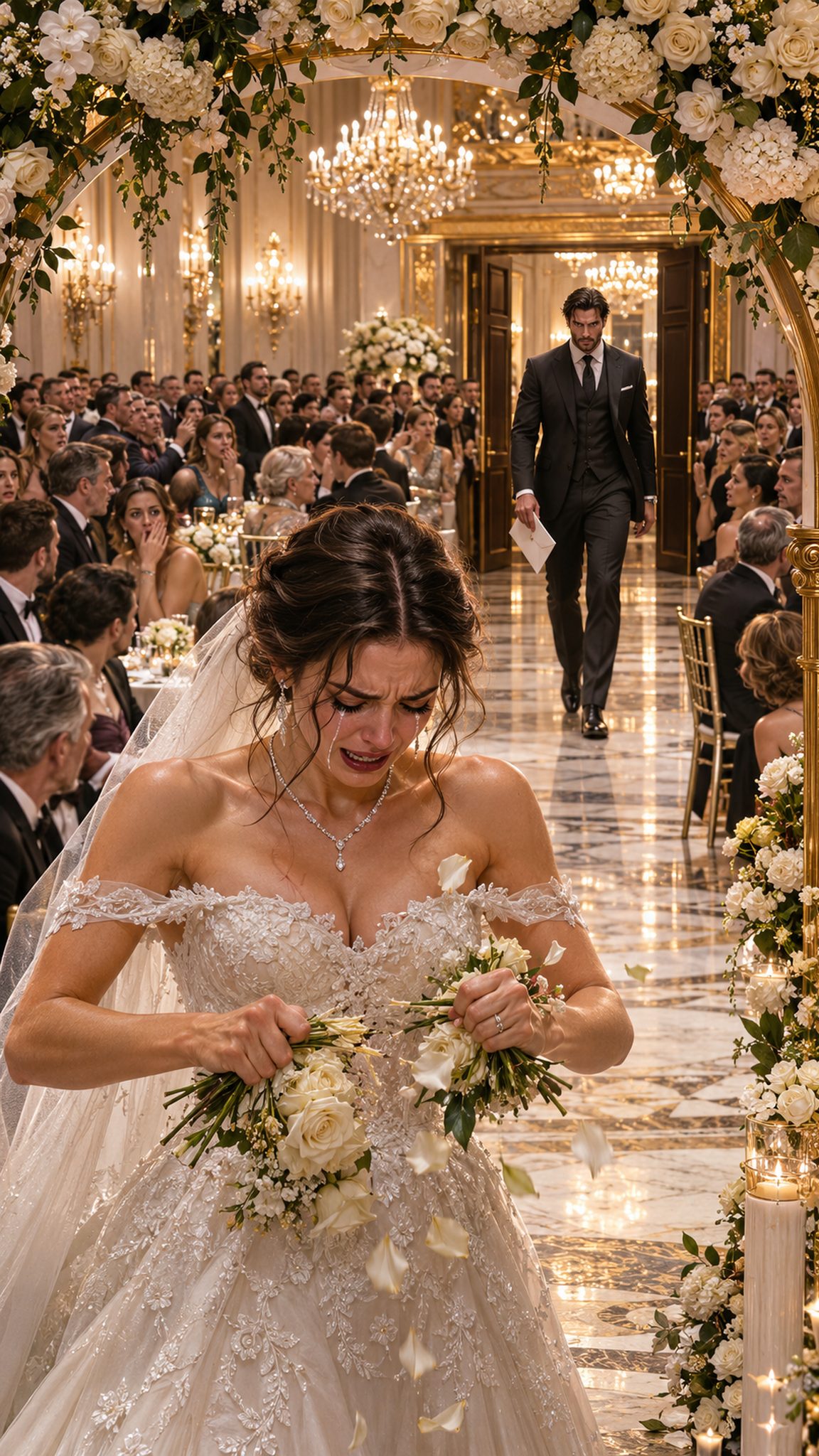
    A man who had disappeared on the morning of our wedding, leaving me beneath a floral arch while nearly two hundred people watched my humiliation, was apparently receiving money through the same network that had attempted to take control of Bellamy Blooms.

    I sat at the dining table in Alessandro Moretti's brownstone, staring at the handwritten notation.

    “Could he be sick?” I asked.

    Melissa Grant adjusted her glasses.

    “Possibly. But these entries don't establish that he was receiving treatment. They only show that money was allocated under that description.”

    “Could someone else have used his initials?”

    “Yes.”

    I looked at Alessandro.

    “Then we need to find out.”

    He was standing beside the fireplace, speaking with Daniel. When he heard me, he ended the conversation and approached.

    “We have a lead.”

    I straightened.

    “What kind?”

    “Three payments were made to a private medical clinic in South Boston. The dates correspond with the entries in Graham's notebook.”

    “Do they have his name?”

    “One payment was processed under Graham Vale. The other two used a private account reference.”

    I felt my chest tighten.

    “Is he there?”

    “We don't know.”

    “Then let's go.”

    Alessandro pulled out the chair opposite me.

    “June, we need to approach this carefully.”

    “I know.”

    “Graham may be accompanied by people working for Sloane.”

    “I know.”

    “He may not want to see you.”

    I looked at him.

    “He left me standing alone at my wedding. He doesn't get to decide whether I deserve an explanation.”

    Alessandro held my gaze.

    “No. He doesn't.”

    Rachel Kim arrived with a folder just before noon. She had been reviewing the documents recovered from Unit 214 and had prepared a preliminary notice identifying the suspected fraudulent use of Bellamy Blooms' business information.

    She placed the folder in front of me.

    “The bank has acknowledged our notice,” she said. “The disputed authorization has been flagged, and no representative will be permitted to use the business accounts under that document while the investigation is underway.”

    I let out a breath.

    “Does that mean the shop is protected?”

    “It means we have taken an important step. We still need the original banking records and formal confirmation that no other authorization exists.”

    “Can they take money from my account?”

    “Not under the document we have identified. We are also requesting a complete review of recent account activity.”

    I nodded.

    “Thank you.”

    Rachel looked at Alessandro.

    “Are you taking her to the clinic?”

    “Yes.”

    “I want the address and the names of everyone accompanying her.”

    Alessandro raised an eyebrow.

    “You're giving me instructions now?”

    “I'm giving my client legal advice.”

    I almost smiled.

    It was reassuring to see someone speak to him without fear.

    Rachel turned toward me.

    “June, if Graham is there, don't sign anything. Don't agree to any financial arrangement. Don't accept documents without having them reviewed.”

    “I won't.”

    “And if anyone attempts to prevent you from leaving, call me immediately.”

    Alessandro's expression darkened.

    “She won't be left alone.”

    Rachel closed her folder.

    “I'm sure you believe that. But I want her to have her own protection.”

    I appreciated her more with every conversation.

    Before leaving, I asked Melissa to make copies of the medical entries and the related payment references. I wanted the evidence preserved, not merely remembered.

    Then I went upstairs to collect my coat.

    My mother's photograph was still inside my handbag.

    I took it out and looked at her face.

    She had been smiling in the picture, standing behind the counter of Bellamy Blooms with a bouquet of yellow tulips in her arms. The photograph had been taken during one of the last spring seasons when she was still healthy enough to work full days.

    I remembered how she used to tell me that flowers could not solve every problem, but they could make a difficult day feel less lonely.

    I wondered what she would say if she knew that the little shop she had left me had become part of a financial conspiracy.

    Perhaps she would tell me to close the door, turn off the lights, and call the police.

    Perhaps she would tell me to fight.

    I placed the photograph back into my handbag.

    Today, I needed answers.

    Alessandro was waiting by the front door.

    “You ready?”

    “No.”

    He nodded.

    “Neither am I.”

    It was an unexpectedly honest answer.

    We drove toward South Boston with Daniel behind the wheel and Marco following in another vehicle.

    Alessandro sat beside me.

    For the first several minutes, I watched the streets pass outside.

    Then I asked the question I had been avoiding.

    “What if Graham tells me he never loved me?”

    Alessandro did not answer immediately.

    “What if he says the entire relationship was part of the plan?”

    I looked down at my hands.

    “What if every memory I have is something he invented?”

    “You'll still have your own memories.”

    “That doesn't make them true.”

    “It makes them yours.”

    I turned toward him.

    “You always answer questions like that?”

    “Like what?”

    “Like you've already considered every possible disaster.”

    He looked through the windshield.

    “I have spent a long time learning what people are capable of.”

    “Does that make it easier to trust anyone?”

    “No.”

    The answer was quiet.

    I understood more from that single word than I had from many of his longer explanations.

    The clinic stood on a narrow street in South Boston, between a small office building and a pharmacy. It had no large sign, only a discreet nameplate beside the entrance.

    Harbor Medical Associates.

    A private medical practice.

    The windows were tinted, and a security camera covered the front entrance.

    Daniel parked across the street.

    “Two vehicles in the rear lot,” he reported.

    Alessandro looked at him.

    “Recognize them?”

    “One belongs to the clinic. The other is registered to a company associated with a North Quay address.”

    My stomach tightened.

    “So they know he's here.”

    “Possibly,” Alessandro said.

    I looked at the entrance.

    “Could Graham be inside?”

    “Yes.”

    “Then I want to go in.”

    Alessandro opened his door.

    “Stay beside me.”

    We crossed the street.

    A receptionist sat behind a glass partition. She looked up when we entered.

    “Good afternoon. Do you have an appointment?”

    “We're looking for Graham Vale,” Alessandro said.

    Her expression changed.

    “I can't discuss patients.”

    “I'm not asking you to discuss his medical condition.”

    “Then I'm afraid I can't help you.”

    I stepped forward.

    “My name is June Bellamy. Graham Vale is someone I know personally. I believe he has been using my business in a financial arrangement without my permission. I need to speak with him.”

    The receptionist looked at Alessandro.

    Then she glanced toward a door behind the desk.

    “I'll contact the administrator.”

    “Please do,” I said.

    A few minutes passed.

    A man in a white coat appeared. He was in his late fifties, with grey hair and a tired expression.

    “I'm Dr. Lang. Who is looking for Mr. Vale?”

    “I am.”

    He looked at me carefully.

    “Are you family?”

    “No.”

    “Then I cannot disclose confidential information.”

    “I understand. I'm not asking you to reveal his medical records. I only want to know whether he is willing to speak with me.”

    Dr. Lang studied my face.

    “Has someone told you that he is here?”

    “We traced payments connected to a business investigation.”

    The doctor's expression became more guarded.

    Alessandro stepped forward.

    “We're not here to cause trouble for your patients or staff. We need to establish whether Graham Vale is present and whether he is willing to speak with June.”

    Dr. Lang looked at him for a long moment.

    Then he turned to the receptionist.

    “Please check whether Mr. Vale is available.”

    The receptionist disappeared through the rear door.

    I felt my heartbeat in my throat.

    What would I say?

    Would I shout?

    Would I demand to know why he had left?

    Would I ask whether he had ever intended to marry me?

    I had rehearsed a hundred questions during the drive, but now that I was standing inside the clinic, every sentence seemed inadequate.

    A door opened.

    And there he was.

    Graham Vale.

    He looked thinner than I remembered. His dark hair was uncombed, and there were shadows beneath his eyes. He wore a pale blue shirt and dark trousers. His left hand rested against the doorframe as if standing required more effort than it should.

    For one moment, neither of us spoke.

    Then he said my name.

    “June.”

    I had imagined hearing that voice again.

    I had not imagined how much I would hate the relief that came with it.

    I took one step forward.

    “You're alive.”

    His eyes lowered.

    “Yes.”

    I laughed, but there was no humor in it.

    “That's wonderful. I spent our wedding day wondering whether you had been killed, arrested, or simply decided that disappearing was easier than speaking to me.”

    “June, I—”

    “Don't.”

    He stopped.

    I looked at him.

    “You don't get to start with an apology.”

    His face tightened.

    “Can we talk somewhere private?”

    “No. I want Alessandro here.”

    Graham looked at the man beside me.

    Something like fear crossed his face.

    “Moretti.”

    Alessandro did not respond.

    Graham swallowed.

    “You brought him?”

    “He brought me the truth you were too frightened to tell.”

    Graham looked down.

    Dr. Lang quietly suggested that we use a consultation room. I agreed, provided Alessandro came with me.

    The room was small, with a desk, three chairs, and a window overlooking the parking area.

    Graham sat down slowly.

    I remained standing.

    “Why?”

    He looked up.

    “June—”

    “Why did you leave me?”

    His eyes filled with something I could not immediately identify.

    “Because I was afraid.”

    “Of marrying me?”

    “No.”

    “Of spending your life with me?”

    “No.”

    “Then what?”

    He rubbed his forehead.

    “Of what would happen if I stayed.”

    I looked at him.

    “Start from the beginning.”

    He took a long breath.

    “I met Victor Sloane through a business contact about four years ago. At first, he presented himself as someone who could help companies manage investments and financial obligations. He had connections, access to private capital, and people who could move money quickly.”

    “And you agreed to work for him?”

    “I thought I was handling legitimate transactions.”

    “Did you?”

    “Not all of them.”

    I folded my arms.

    “When did you realize?”

    “About two years ago.”

    I stared at him.

    Two years.

    I had known him for three.

    He had been hiding something for most of our relationship.

    “What did you discover?”

    “Some of the funds were connected to illegal operations. Money moved through companies that existed only on paper. Elias Voss controlled the accounts. Sloane managed the transactions and the relationships with businesses.”

    “And Richard Cross?”

    Graham closed his eyes.

    “Richard was above them.”

    “Richard Cross of Red Crown Advisory?”

    “Yes.”

    My hands tightened.

    “What did he want with my shop?”

    Graham looked at me.

    “He wanted a legitimate business that could support a larger financial structure. Bellamy Blooms had years of normal transactions, supplier payments, customer receipts, and a clean commercial history.”

    I felt sick.

    “So you chose my mother's shop.”

    “I didn't choose it at first.”

    “But you agreed to use it.”

    He nodded.

    “Cross wanted a business that wasn't already connected to their companies. Sloane knew I was engaged to you. He suggested Bellamy Blooms.”

    “And you said yes.”

    “I thought I could control what happened.”

    I almost laughed.

    “You thought you could control it?”

    “I thought I could move the money, keep your name out of the operation, and get away before anything became permanent.”

    “By hiding the money in my refrigerator?”

    Graham looked down.

    “Yes.”

    I stared at him.

    “Do you understand what you did?”

    “I do.”

    “No, you don't. That refrigerator was there when my mother was alive. I have spent years keeping that shop open. You knew how much it meant to me.”

    “I know.”

    “You knew I had debts.”

    “Yes.”

    “You knew I was trying to repair the roof.”

    “Yes.”

    “And you still used my business as a hiding place.”

    He covered his face with one hand.

    “I am sorry.”

    I stepped closer.

    “Why the contract?”

    Graham looked up.

    “The Business Transfer and Authorization Agreement was prepared so that an appointed representative could access the shop's accounts. It would have allowed them to use Bellamy Blooms as a financial channel.”

    “Without telling me?”

    “They wanted your signature.”

    “Did you intend to ask me?”

    He hesitated.

    “I intended to tell you it was routine paperwork.”

    The room seemed to tilt.

    I stared at him.

    “You were going to lie to me on our wedding morning.”

    “I thought I could explain afterward.”

    “You thought I would sign something that gave strangers access to my business because you told me it was ordinary marriage paperwork?”

    “I thought you trusted me.”

    I looked at him for a long time.

    “That was the problem, Graham. I did.”

    He looked away.

    “I know.”

    “No. I don't think you do.”

    I pulled out the chair opposite him and sat down.

    “Tell me about the wedding morning.”

    Graham's expression changed.

    “I had received a message from Sloane the previous night. He said Cross wanted the authorization completed before the afternoon. He knew we were getting married. He knew I would have access to you before the ceremony.”

    “So he planned to use the wedding.”

    “Yes.”

    “And you went along with it.”

    “I had already moved the money. The black case was in the refrigerator. The second book was in Unit 214. I had copies of the agreement and the instructions. I thought I could complete the paperwork, get the money released, and disappear before anyone understood what had happened.”

    I felt cold.

    “You planned to disappear after marrying me?”

    He hesitated.

    “I wasn't sure what I would do.”

    “That isn't an answer.”

    “I didn't know whether I could come back.”

    I stared at him.

    “You invited nearly two hundred people to watch us get married, and you didn't know whether you would ever come back?”

    “I thought I could fix it.”

    “You keep saying that.”

    “I know.”

    “You thought you could fix everything by lying to me.”

    Graham lowered his head.

    For several seconds, the only sound in the room was the faint hum of the ventilation system.

    Then Alessandro spoke.

    “Tell her what happened upstairs.”

    Graham looked at him.

    “I don't want to discuss that with you.”

    “You don't have the luxury of deciding which parts of the truth are convenient.”

    I looked between them.

    “What happened upstairs?”

    Graham rubbed his hands together.

    “Sloane was at the hotel that morning.”

    I remembered Alessandro's words in the ballroom.

    I saw him upstairs.

    “And you met him?”

    “Yes. He had arranged for documents to be delivered to a private room. I went up to retrieve them.”

    “What documents?”

    “The final authorization instructions. There was another set of account details, and a list of transfers Cross wanted completed.”

    Alessandro's expression remained cold.

    “Continue.”

    Graham swallowed.

    “When I entered the room, Cross was already there.”

    I looked at him.

    “Richard Cross was at my wedding?”

    “He wasn't invited to the ceremony. He came because he wanted to make sure I completed the agreement.”

    “And Alessandro saw you?”

    Graham nodded.

    “He arrived while Cross was discussing the final release. I didn't know he was nearby. Moretti recognized the documents and understood what was happening.”

    I turned toward Alessandro.

    “You saw the agreement?”

    “I saw enough to recognize the operation,” he said. “I also saw Graham with the money transfer instructions.”

    Graham continued.

    “Cross told me to finish everything. Moretti told him the arrangement was exposed. I panicked.”

    “So you ran.”

    “I was told to leave.”

    “By whom?”

    Graham looked down.

    “Cross.”

    I stared at him.

    “He told you to abandon me?”

    “He said the wedding could not go ahead once Moretti knew what we were doing. He said I needed to disappear before anyone could connect the money to Bellamy Blooms.”

    “And you obeyed.”

    “Yes.”

    I felt my eyes burning.

    “You could have come downstairs and told me.”

    “I couldn't.”

    “You could have called.”

    “I was being watched.”

    “You could have sent one message.”

    “I thought they would trace it.”

    “You could have asked for help.”

    Graham's voice broke.

    “I was afraid they would hurt you.”

    I leaned forward.

    “You should have thought about that before you used my business.”

    He had no answer.

    I looked at his left hand.

    There was a hospital identification band around his wrist.

    “Are you ill?”

    He looked at it.

    “I was injured.”

    “How?”

    “After I left the hotel, I met with someone who was supposed to help me get out of the operation. He had been arranging payments for Cross. I thought I could hand over the records and negotiate my way out.”

    “And?”

    “He betrayed me.”

    Graham looked toward the window.

    “Two men came to the apartment where I was staying. I managed to escape, but I was hurt. A doctor who owed someone a favor arranged treatment here.”

    “Were Sloane and Voss involved?”

    “They knew where I was. They wanted the records.”

    “Did they hurt you?”

    Graham nodded.

    I looked at Alessandro.

    His expression had become dangerously still.

    “Who authorized the attack?” he asked.

    “I don't know.”

    “Was it Sloane?”

    “I think so.”

    “Was Cross aware?”

    Graham hesitated.

    “I believe he was.”

    Alessandro leaned forward.

    “You believe?”

    “Cross gave the instructions. Sloane arranged the people.”

    I felt my stomach turn.

    “And all this time, you let us think you had simply disappeared.”

    Graham looked at me.

    “I couldn't risk contacting you.”

    “You could have contacted the police.”

    “They were watching the people I knew. I didn't know who I could trust.”

    “Did you trust me?”

    He looked stricken.

    “More than anyone.”

    “Then why didn't you tell me?”

    He did not answer.

    I stood and walked toward the window.

    Outside, a nurse was helping an elderly man into a vehicle. Someone was carrying a paper bag from the pharmacy. A delivery driver was unloading boxes.

    Ordinary people.

    Ordinary lives.

    I wondered how many of them had ever realized that a business could become part of a criminal operation without its owner knowing.

    I turned back.

    “What happened to the money?”

    Graham glanced at Alessandro.

    “The case in the refrigerator contained the funds I had diverted from the operation. I moved it because Cross was demanding the final release. I wanted to keep enough evidence to protect myself.”

    “You stole from them.”

    “I moved money that was already being used illegally.”

    “That doesn't make you innocent.”

    “I know.”

    “Why didn't you destroy the agreement?”

    “Because I needed proof that they had instructed me to do it. The second book contains the original transaction references and the correspondence.”

    “And the copies at Unit 214?”

    “Those were supposed to be insurance.”

    “Insurance against whom?”

    “Everyone.”

    I stared at him.

    “You were protecting yourself from the people you worked for, while leaving me exposed.”

    “Yes.”

    His admission was so simple that it hurt more than another excuse would have.

    I looked at Alessandro.

    “Did you know about the clinic before today?”

    “No. We found the payment references last night.”

    “Could they have been monitoring him?”

    “Possibly.”

    I turned back to Graham.

    “Do Sloane and Voss know we found Unit 214?”

    “Yes.”

    “Do they know we recovered the second book?”

    He hesitated.

    “They probably do.”

    “Then why are you still here?”

    Graham looked down at his hands.

    “Because I don't have anywhere else to go.”

    I felt anger rising again.

    “You had somewhere to go three years ago. You had a home with me. You had someone who trusted you. You had a chance to tell me the truth.”

    He closed his eyes.

    “I know.”

    “No. You had a choice. You chose them.”

    “I chose fear.”

    “You chose yourself.”

    The words hung between us.

    Alessandro moved closer to me.

    “June, we need to establish what evidence he can provide.”

    I nodded.

    I was not finished with Graham, but I understood that the conversation had to become more than an argument about the wedding.

    “Tell us about Richard Cross.”

    Graham took a long breath.

    “Cross controls Red Crown Advisory. The company has legitimate clients, legitimate employees, and legitimate financial operations. That's what makes it useful. The illegal transactions are buried beneath ordinary business activity.”

    “Is North Quay Holdings one of his companies?”

    “It's an intermediary. It holds accounts and manages transfers between several entities.”

    “And Voss?”

    “Elias controls the accounts. He knows where the money moves and which records can be changed.”

    “Sloane?”

    “He recruits businesses, manages the people involved, and makes sure the paperwork looks legitimate.”

    I looked at the table.

    “And me?”

    Graham's voice became quieter.

    “You were supposed to be the owner on paper.”

    I felt sick.

    “Explain.”

    “The agreement would have authorized a representative to access Bellamy Blooms' accounts. The money would move through transactions that appeared to be ordinary business payments. The account would remain under your business name, but the people controlling the transfers would be Cross's representatives.”

    “And if someone investigated?”

    “They would find your name.”

    I stared at him.

    “So I would have been blamed.”

    He nodded.

    “Your shop would have been the visible business. The real people behind the money would have been hidden.”

    I looked at Alessandro.

    He was watching Graham with an expression I could not read.

    “Could they have taken the shop?” I asked.

    “Not directly through that agreement. But they could have created liabilities, manipulated the accounts, and made the business financially responsible for transactions it never authorized.”

    I thought of the sentence Rachel had read in the recovered email.

    The existing liabilities should remain attached to the original business entity.

    My mother's debts.

    The leaking roof.

    The refrigerator.

    They had not intended to rescue Bellamy Blooms.

    They had intended to use it and leave me with the damage.

    I turned back to Graham.

    “Who created the forged signature?”

    “Sloane's administrative team.”

    “Did you give them a copy of my signature?”

    He hesitated.

    I understood.

    “You did.”

    “I had signed some documents for the wedding arrangements. They already had samples.”

    I closed my eyes.

    I remembered signing supplier invoices at the shop. I remembered signing the hotel paperwork and the florist contracts. I remembered leaving documents on the kitchen table.

    Graham had access to all of it.

    “You gave them my signature.”

    “I didn't think they would forge it.”

    “You gave them the means.”

    “Yes.”

    I stepped away from the table.

    “I don't want to hear another apology.”

    Graham looked at me.

    “June, please.”

    “No.”

    “I need you to understand that I never wanted you hurt.”

    I looked directly at him.

    “You wanted the money. You wanted to escape. You wanted to keep the people above you satisfied. You wanted to use my name. You wanted all of those things more than you wanted to protect me.”

    He started to speak.

    I raised my hand.

    “Stop.”

    For the first time, he obeyed.

    Alessandro moved toward the door and spoke quietly to Daniel, who had been waiting outside.

    “Get Rachel on the phone. We need a formal statement and a secure record of everything Graham has said.”

    Graham looked alarmed.

    “Wait. You can't take me anywhere.”

    “No one said anything about taking you anywhere,” Alessandro replied.

    “Cross will find out.”

    “He already knows.”

    Graham looked at me.

    “You don't understand what he'll do.”

    I felt exhausted.

    “Then tell us.”

    Graham leaned forward.

    “Cross has another set of instructions. The final release is scheduled soon. Sloane and Voss were supposed to remove the remaining records from Unit 214, then transfer the outstanding money through North Quay Holdings. Once that happened, the connection to Bellamy Blooms would be difficult to establish.”

    “Why?”

    “Because the agreement would make it appear that the business had authorized the transactions. They could argue that you had appointed a representative and accepted the financial responsibility.”

    “But I never signed.”

    “I know.”

    “And you have proof?”

    Graham nodded.

    “The original email instructions. The payment records. The account references. I have copies of the messages between Sloane and Cross.”

    “Where?”

    He looked at Alessandro.

    “Not here.”

    Alessandro's expression hardened.

    “Where are they?”

    “I kept them separate.”

    “Where?”

    Graham hesitated.

    “On an encrypted drive.”

    I felt another wave of frustration.

    “Of course you did.”

    “I was keeping it as protection.”

    “Against Cross?”

    “Against everyone.”

    Alessandro stepped closer.

    “Who else knows about the drive?”

    “Only me.”

    “Does Sloane know?”

    “No.”

    “Voss?”

    “No.”

    “Cross?”

    Graham looked away.

    “He suspects.”

    I looked at Alessandro.

    “Can we recover it?”

    “If Graham cooperates.”

    Graham nodded.

    “I will give it to you.”

    “Why should we believe you?” I asked.

    He looked at me for a long time.

    “Because I have nothing left.”

    I shook my head.

    “You still have choices. You can cooperate, tell the truth, and accept the consequences. Or you can keep hiding behind fear. But I'm not going to help you escape what you did.”

    He lowered his eyes.

    “I understand.”

    “No, Graham. This time you will have to prove it.”

    Dr. Lang returned to the room shortly afterward. Rachel spoke with him by telephone and arranged for Graham's statement to be documented without interfering with his medical care.

    The doctor explained that Graham was stable enough to speak with investigators, although he still required follow-up treatment.

    I asked whether the clinic had received any unusual visitors.

    Dr. Lang hesitated.

    “Two men came yesterday asking whether Mr. Vale was still receiving treatment.”

    “Did you tell them?”

    “No. We don't disclose patient information.”

    “Did they identify themselves?”

    “One said he was from a financial consulting firm. The other refused to give his name.”

    I looked at Alessandro.

    “Cross's people.”

    “Probably.”

    Dr. Lang continued.

    “They left a telephone number and asked us to contact them if Mr. Vale requested a transfer.”

    “Did you call?”

    “No.”

    I nodded.

    “Thank you.”

    Alessandro spoke quietly to him.

    “Please preserve the visitor records and any available security footage. Rachel Kim will contact you through the proper channels.”

    Dr. Lang agreed.

    When we finally left the consultation room, I felt as though I had been holding my breath for hours.

    The receptionist looked at me as we crossed the waiting area.

    I wondered whether she knew that the man who had been sitting behind that door had once promised to build a life with me.

    Outside, the afternoon had turned grey.

    Daniel opened the vehicle door.

    Alessandro waited until I was seated before getting in beside me.

    For several minutes, I said nothing.

    Then I asked, “Do you think he's telling the truth?”

    “Some of it.”

    “Which parts?”

    “The parts supported by the records.”

    “And the rest?”

    “We verify them.”

    I nodded.

    “I don't want him to escape responsibility just because he finally decided to cooperate.”

    “He won't.”

    I looked at him.

    “You sound certain.”

    “Rachel will make sure the evidence is preserved. Melissa will trace the transactions. Daniel will secure the additional records. Graham's statement can be compared with everything we already recovered.”

    “And Cross?”

    Alessandro looked out of the window.

    “Cross is the next problem.”

    I leaned back.

    I had finally heard why Graham had left.

    The truth was uglier than I had imagined.

    He had not simply been frightened by an unexpected discovery. He had knowingly helped prepare a plan that could have destroyed my business, used my signature, and left me responsible for the consequences.

    Yet he had also been afraid of the people controlling the operation.

    Both things could be true.

    Neither excused him.

    When we reached the brownstone, Rachel was already waiting in the office. Melissa had arranged the records in separate folders, and Daniel had secured the copies recovered from Unit 214.

    I sat down and listened as Graham's statements were relayed to them.

    Rachel wrote down the key admissions.

    “He confirms that the Business Transfer and Authorization Agreement was intended to give an appointed representative access to Bellamy Blooms' accounts?”

    “Yes,” Alessandro answered.

    “He confirms that his signature samples were supplied to Sloane's administrative team?”

    “Yes.”

    “He identifies Richard Cross as the person controlling Red Crown Advisory?”

    “Yes.”

    Melissa opened the second book.

    “His explanation matches several entries. The medical payments are consistent with the clinic records, and the North Quay references appear throughout the correspondence.”

    I looked at the papers.

    “Can we prove the agreement was forged?”

    Rachel nodded.

    “We have your genuine signatures from older business records. We can obtain a handwriting examination. We also have Graham's admission that he supplied samples without your permission.”

    “Will that clear the shop?”

    “It will help establish that you did not authorize the transactions. Combined with the bank records and the correspondence, we have a much stronger case.”

    I looked at Alessandro.

    “What happens now?”

    He rested his hand on the back of the chair.

    “Now we secure the remaining evidence and make sure Cross cannot erase the trail.”

    “Will Sloane and Voss know Graham has spoken?”

    “They may already suspect it.”

    “And what about the encrypted drive?”

    “Daniel will arrange to recover it.”

    I took a breath.

    There was one final question I needed to ask.

    “Alessandro, if this ends tomorrow, what happens to you?”

    He looked at me.

    “What do you mean?”

    “You've been involved in this operation for years. You know these people. They fear you. I know you have reasons for wanting Cross stopped, but I don't know what comes after.”

    He was quiet for a moment.

    “After this, you get your business back.”

    “And you?”

    “I deal with what remains.”

    “That isn't an answer.”

    He gave me a faint, tired smile.

    “You've become very demanding.”

    “I've had a difficult week.”

    “You have.”

    I looked at him.

    “I don't want to owe you my life.”

    “You don't.”

    “I don't want Bellamy Blooms to become part of your business.”

    “It won't.”

    “And I don't want you deciding what happens to me.”

    His expression softened.

    “I would never ask you to surrender your choices.”

    I believed him.

    That frightened me more than I expected.

    Because somewhere between the ballroom, the safe house, the refrigerator, and the storage unit, I had begun to trust him.

    Not completely.

    Not blindly.

    But enough to care what happened when all this was over.

    That evening, I returned to the office alone.

    Graham's second book lay open beside the recovered correspondence. I turned to the final page and looked again at the notation.

    R.C. — FINAL RELEASE PENDING.

    For the first time, I understood that the initials were not simply a name we needed to identify. They represented the person who had designed the arrangement, the person who had brought Sloane and Voss together, and the person who had expected my signature to make everything appear legitimate.

    Richard Cross had not finished.

    Neither had we.

    I opened my notebook and wrote three names.

    Victor Sloane.

    Elias Voss.

    Richard Cross.

    Beneath them, I wrote:

    Bellamy Blooms belongs to June Bellamy.

    I underlined my name.

    Alessandro appeared in the doorway.

    “Still working?”

    “One more thing.”

    He approached and read the page.

    “Tomorrow will be difficult.”

    “I know.”

    “Cross has resources that Sloane and Voss don't.”

    “Then we'll need more than their names.”

    “We have the second book, the agreement, Graham's statement, and the transaction records.”

    “And the encrypted drive.”

    “If we recover it, we'll have the correspondence connecting them.”

    I closed my notebook.

    “Then tomorrow we finish this.”

    Alessandro looked at me.

    “Tomorrow we make sure they cannot do this to you or anyone else.”

    I stood beside him, looking through the window at the Boston skyline.

    Somewhere in the city, Richard Cross was still making decisions. Somewhere, Victor Sloane and Elias Voss were discovering that the evidence they had tried to erase was now in our hands.

    And somewhere, Graham Vale was finally facing the consequences of the choices he had made.

    I had gone to the clinic wanting an explanation for why my groom had abandoned me.

    I had left knowing something much worse.

    He had intended to make me the innocent face of a criminal operation.

    But I would not carry his guilt.

    I would not surrender my mother's shop.

    And I would not let anyone write another signature in my name.

    The final battle would not be fought over Graham's wedding promise.

    It would be fought over the truth.

    And this time, I would be standing on my own feet when it began.
  • Chapter 5: CONFRONTATION AT UNIT 214

    Chapter 5: CONFRONTATION AT UNIT 214

    The request to remove everything from Unit 214 had been submitted at 9:17 that morning.

    I knew the time because Melissa Grant had printed the access record three times, checked the account reference against the documents in Graham's notebook, and finally placed the page in front of me with a serious expression.

    Someone wanted the storage unit emptied before we could get there.

    And whoever had made the request knew exactly what was inside.

    I stood beside the dining table in Alessandro's Beacon Hill brownstone, reading the same line for the fourth time.

    AUTHORIZED REMOVAL: 9:00 A.M. NEXT BUSINESS DAY.

    ACCOUNT ADMINISTRATOR: ELIAS VOSS.

    ACCESS REQUESTED BY: VICTOR SLOANE.

    The words seemed to become darker each time I read them.

    “They're clearing the evidence,” I said.

    “That's one possibility,” Melissa replied.

    “What is the other?”

    “They may be moving something before we can establish exactly what is stored there.”

    “Something connected to Graham?”

    “Almost certainly.”

    I looked at Alessandro.

    He stood near the window, one hand in his trouser pocket, listening while Daniel spoke quietly into his phone.

    “How long until nine tomorrow?”

    “Less than twelve hours,” Alessandro answered.

    “Then we go tonight.”

    He looked at me.

    “No.”

    I placed the access record on the table.

    “That wasn't a question.”

    “June, Unit 214 is connected to people who have already threatened you.”

    “They threatened me because I found their money.”

    “And you think walking into their storage facility will make them reconsider?”

    “I think waiting until tomorrow morning will leave us with an empty unit and another missing piece of evidence.”

    Alessandro's expression hardened.

    “We can reach the facility without putting you inside.”

    “Then you'll find the things you want and leave me with another collection of explanations.”

    “That's not what I'm suggesting.”

    “It's exactly what you're suggesting.”

    Melissa quietly gathered her papers. Rachel Kim, who had been reviewing the legal notices, looked between us but did not interrupt.

    I took a breath.

    “I am not asking to lead your men. I am not asking to handle anything dangerous. But Graham used my business, my accounts, and my name. I have the right to see the place where he kept the rest of his records.”

    Alessandro approached the table.

    “You have the right to be alive when this is finished.”

    “And I intend to be.”

    For several seconds, neither of us moved.

    Then Rachel spoke.

    “There's a reasonable compromise. June can accompany you, but only if we establish a controlled entry, document everything, and have an independent legal representative available.”

    Alessandro looked at her.

    “You're suggesting I take her into a facility where Sloane may be waiting?”

    “I'm suggesting that if she is going, she should have legal protection and a clear plan.”

    I looked at Rachel.

    “Thank you.”

    Alessandro exhaled slowly.

    “Daniel and Marco will accompany us. June stays with me. She does not approach anyone without my approval.”

    “I will stay where you tell me to stay as long as I can see what's happening.”

    “June.”

    “I mean it.”

    He studied my face.

    Finally, he nodded.

    “We leave in twenty minutes.”

    I went upstairs to change.

    The wedding dress was still hanging inside the wardrobe. I looked at it briefly, then chose dark trousers, a cream blouse, and a black coat. I tied my hair back and put my mother's photograph into the inside pocket of my handbag.

    Before leaving, I checked that I had my notebook, phone, and the copies of the documents Rachel had prepared.

    The ring Graham had given me remained inside a small pouch.

    I had not decided what to do with it.

    Perhaps I would sell it someday and use the money to repair the shop. Perhaps I would throw it into the harbor. For now, I wanted to keep it as a reminder of how carefully someone could construct a lie.

    When I returned downstairs, Alessandro was waiting.

    He looked at my handbag.

    “What did you bring?”

    “My notes, the documents, and my phone.”

    “Nothing else?”

    “My mother's photograph.”

    He nodded.

    “Stay close tonight.”

    I looked at him.

    “I know.”

    His gaze remained on mine for a moment longer than necessary.

    “Good.”

    The drive to East Boston took less than half an hour.

    The city changed as we approached the industrial waterfront. The streets became wider in some places and narrower in others. Warehouses stood behind fences, loading areas were illuminated by harsh security lights, and the distant harbor reflected the scattered glow of the buildings.

    I had lived in Boston for years, but I had never visited this part of the waterfront at night.

    I pressed my hand against the window.

    “Is Unit 214 inside that building?”

    Alessandro followed my gaze.

    “Yes.”

    The storage facility was a large industrial structure with a blue metal entrance and rows of numbered doors. A sign identified the business as an independent commercial storage operation.

    Nothing about it looked unusual.

    That was the unsettling part.

    People stored furniture, old files, business equipment, and household belongings in places like this. Somewhere inside, a man had apparently hidden records connected to a financial operation large enough to frighten a mafia boss.

    Our vehicle stopped outside the entrance.

    Daniel got out first. Marco followed, speaking into his phone.

    Alessandro opened my door.

    “Stay beside me.”

    I stepped onto the pavement.

    A cold wind came off the harbor.

    Inside the facility, a security employee sat behind a glass partition. He looked up when we entered, then glanced at Alessandro.

    His face changed.

    “Mr. Moretti.”

    Alessandro did not greet him.

    “Unit 214.”

    The employee swallowed.

    “Do you have authorization?”

    Alessandro placed a document on the counter.

    “We have a legitimate reason to inspect material connected to an investigation. Your management has been notified.”

    The employee examined the paper.

    “I'll have to contact the account administrator.”

    “Do that.”

    The man picked up the telephone.

    I stood beside Alessandro, looking at the corridor beyond the security desk.

    Rows of storage doors stretched into the distance. Each one had a number. Some were secured with heavy padlocks; others had electronic access panels.

    I imagined Graham walking through this same corridor.

    Had he come here after visiting my shop? Had he carried documents in the same briefcase he used for business meetings? Had he stood in front of Unit 214 while calling me to ask what I wanted for dinner?

    The employee finished his call.

    “Mr. Voss says the unit is under his administration.”

    Alessandro's expression did not change.

    “Tell him we're here.”

    “He wants to speak to you directly.”

    “Then put him on.”

    The employee handed over the telephone.

    Alessandro listened for several seconds.

    Then he said, “You have until I reach the unit to decide whether you want to explain this in person.”

    He ended the call and returned the receiver.

    “Come on.”

    We walked down the corridor.

    My footsteps sounded unusually loud against the concrete floor.

    Unit 208.

    Unit 210.

    Unit 212.

    Then 214.

    The door was painted grey. A small electronic panel was fixed beside it, and a second metal lock had been attached to the handle.

    Daniel examined the lock.

    “Someone changed this recently.”

    Alessandro looked at him.

    “How recently?”

    “The metal is new. The surrounding paint is scratched.”

    I stepped closer.

    “Could Graham have changed it?”

    “Possibly,” Daniel replied.

    Marco checked the corridor behind us.

    “We have company.”

    I turned.

    Two men had entered through the main doors. One wore a dark overcoat and carried a leather folder. The other was broader, with a shaved head and an expression that suggested he was accustomed to intimidating people.

    The man with the folder approached.

    “Mr. Moretti.”

    Alessandro looked at him.

    “Victor Sloane.”

    I recognized the name immediately.

    This was the man who had repeatedly appeared in Graham's second book.

    Sloane was perhaps fifty, with silver at his temples, an expensive dark suit, and a carefully maintained appearance. He looked more like a corporate executive than someone involved in the movement of hidden money.

    His eyes moved to me.

    “And you must be June Bellamy.”

    I did not answer.

    He smiled faintly.

    “I've heard quite a lot about you.”

    “Then you know why I'm here.”

    “I suspect you have been given an incomplete explanation.”

    “I've been given enough.”

    Sloane glanced at Alessandro.

    “May we speak privately?”

    “No,” I said.

    His attention returned to me.

    “Excuse me?”

    “I want to hear everything.”

    Alessandro remained beside me.

    Sloane's smile disappeared.

    “Very well.”

    He opened his folder and removed a sheet of paper.

    “The storage account belongs to a commercial client. Whatever you believe you have discovered, the contents of Unit 214 are not yours.”

    “I didn't say they were.”

    “Then perhaps we can avoid an unnecessary confrontation.”

    I looked directly at him.

    “Why did Victor Sloane request permission to empty this unit tomorrow morning?”

    He paused.

    “Routine administrative activity.”

    “Why now?”

    “Business arrangements change.”

    “Why did Graham Vale hide money in my flower shop?”

    Sloane's expression changed for the first time.

    Only slightly.

    But I saw it.

    He knew exactly who Graham was.

    And he knew what I was talking about.

    “Graham made certain decisions without informing everyone involved,” he said.

    “Everyone involved?”

    I took a step forward.

    “I was not involved. My mother was not involved. Bellamy Blooms was not involved. You used my business without permission.”

    “I wouldn't characterize it that way.”

    “Then tell me what you would call it.”

    He closed the folder.

    “A misunderstanding.”

    I laughed once.

    “A misunderstanding is when someone sends the wrong flowers to the wrong address. Hiding money in my refrigerator and preparing a contract to access my accounts is something else.”

    Sloane's eyes narrowed.

    “You should be careful about making accusations you cannot support.”

    I lifted the copy of the Business Transfer and Authorization Agreement.

    “Would you like to explain this?”

    He looked at the document.

    Then he looked at me.

    “Where did you obtain that?”

    “From the evidence Graham left behind.”

    “That's not a complete agreement.”

    “It's enough to establish that someone intended to use my name.”

    He extended his hand.

    “Let me see it.”

    “No.”

    His expression hardened.

    “Miss Bellamy, you're making this considerably more difficult than it needs to be.”

    “Good.”

    Alessandro stepped forward.

    “Don't ask her again.”

    For a moment, the corridor seemed to become smaller.

    Sloane closed his folder.

    “You're making a mistake, Moretti.”

    “Then you'll have plenty of time to explain it.”

    A door opened farther down the corridor.

    Another man appeared.

    He was thinner than Sloane, with dark hair, a narrow face, and a pale complexion. He wore a charcoal coat and carried a tablet.

    I recognized the name before anyone said it.

    Elias Voss.

    He looked at Alessandro, then at me.

    “June Bellamy.”

    I was beginning to dislike the way these men said my name.

    “Elias Voss?”

    He nodded.

    “You have something that belongs to us.”

    I held his gaze.

    “I have something that belongs to an investigation.”

    “Those records are confidential.”

    “Then you should have kept them out of my refrigerator.”

    Voss's eyes flickered toward Sloane.

    I saw the exchange.

    They were worried about what I knew.

    Alessandro noticed it too.

    “Open the unit,” he said.

    Voss did not move.

    “I can't authorize that.”

    “You control the account.”

    “Under a corporate arrangement.”

    “Then contact the people who gave you the authority.”

    Voss glanced toward the security desk.

    Sloane stepped between him and the unit.

    “This is not the appropriate place to discuss the matter.”

    Alessandro's voice became colder.

    “It is exactly the appropriate place. The unit is where the records are.”

    I looked at Voss.

    “Is there another book inside?”

    He said nothing.

    “Graham kept a second set of records. We found one notebook at Bellamy Blooms. But he asked my assistant whether we had another ledger.”

    Voss's expression changed.

    I continued.

    “What is inside Unit 214?”

    He looked at Sloane.

    That was his answer.

    Alessandro turned to Daniel.

    “Document the lock.”

    Daniel took photographs.

    Marco moved toward the corridor entrance.

    I could feel tension building around us.

    The two men who had arrived with Sloane were watching Alessandro's associates. The security employee had disappeared behind the partition. Somewhere in the building, a telephone rang repeatedly.

    Then Sloane spoke.

    “Perhaps we should discuss compensation.”

    I stared at him.

    “What?”

    “You have suffered inconvenience. Your wedding was disrupted. Your business has been exposed to circumstances you did not understand. We can arrange financial compensation.”

    I felt something cold settle inside me.

    “Are you offering to pay me to stop asking questions?”

    “I'm offering a practical solution.”

    “How much?”

    Sloane named an amount.

    It was more money than Bellamy Blooms had earned in several years.

    For a second, I could not speak.

    I thought about the leaking roof.

    The refrigerator.

    The unpaid supplier invoices.

    The months I had worried about making payroll.

    I thought about my mother counting coins behind the counter and telling me that a business survived because its owner respected every dollar.

    The amount could have changed everything.

    I looked at Sloane.

    “You think I'm going to sell my name for that?”

    “Everyone has a price.”

    “Then you haven't met everyone.”

    I turned toward Alessandro.

    “Open the unit.”

    He looked at me for a moment.

    Then he nodded to Daniel.

    Daniel produced the necessary documentation and called the facility's management. After several minutes of discussion, the security employee returned with an override device.

    Voss protested.

    “This is unauthorized.”

    Rachel's voice came through the phone Daniel had placed on speaker.

    “Mr. Voss, any attempt to remove or destroy materials after notice of their evidentiary relevance may create additional legal exposure. We are recording this interaction.”

    Voss stared at the phone.

    Alessandro looked at him.

    “Open it.”

    The employee activated the panel.

    A small light turned green.

    Daniel removed the new lock.

    The door rolled upward.

    And I saw the first thing Graham had left behind.

    A desk.

    A metal filing cabinet.

    Several sealed boxes.

    And a second black notebook lying in the middle of the desk.

    For a moment, I forgot to breathe.

    It was larger than the notebook we had found in the refrigerator. Its cover was worn, and a strip of white tape had been placed across the spine.

    Written on the tape were two words.

    SECOND BOOK.

    I stepped forward instinctively.

    Alessandro caught my arm gently.

    “Wait.”

    I stopped.

    The unit smelled of cardboard, dust, and something faintly metallic. There were shelves along the walls, each holding boxes marked with dates and account references.

    I recognized several numbers from the first notebook.

    North Quay Holdings.

    Several references to Voss.

    And one repeated notation:

    R.C.

    I looked at Sloane.

    “What is this?”

    He said nothing.

    “What are you keeping here?”

    Still nothing.

    Alessandro entered the unit first, followed by Daniel.

    Marco remained outside with his attention fixed on Sloane and Voss.

    I waited until Daniel confirmed the space was clear.

    Then I stepped inside.

    The second book lay on the desk.

    I looked at it without touching it.

    “Graham wrote this?”

    Sloane answered.

    “Some of it.”

    I turned toward him.

    “So you admit he worked for you.”

    “I admit he handled financial documentation.”

    “Money laundering?”

    His jaw tightened.

    “Be careful.”

    “That's what this was, wasn't it?”

    Alessandro moved closer.

    “Answer her.”

    Sloane looked at him.

    “You don't control this conversation.”

    “No,” Alessandro replied. “But I control whether you leave this building comfortably.”

    I looked down at the notebook again.

    “Did Graham hide the money because he was stealing from you?”

    No one answered.

    “Did he hide it because someone was going to take it?”

    Voss spoke at last.

    “Graham was not authorized to move all those funds.”

    “Then why did you let him?”

    “We trusted his judgment.”

    I stared at him.

    “You trusted him with money but not enough to tell me what he was doing?”

    Voss looked away.

    The answer was obvious.

    I walked toward the filing cabinet.

    Inside were folders arranged by date. Daniel photographed the contents before removing anything. One folder contained printed transfers linked to North Quay Holdings. Another held copies of corporate correspondence.

    I saw a familiar name.

    Bellamy Blooms.

    My heart began pounding.

    I pointed.

    “That's mine.”

    Daniel carefully opened the folder.

    Inside were documents carrying my business name, my address, and the account references associated with the shop.

    I recognized my signature on one page.

    Except it was not my signature.

    It was an imitation.

    The loops were almost right. The final letter had been drawn too carefully, and the angle of the first stroke was wrong.

    I felt sick.

    “That's forged.”

    Rachel's voice came through the phone.

    “Don't touch it. Photograph the page exactly as it is.”

    I stared at the signature.

    Graham had known how I signed my name.

    He had seen it on invoices, supplier orders, and birthday cards. He had watched me sign the wedding documents we had prepared.

    Someone had copied it.

    Someone had prepared a version of the Business Transfer and Authorization Agreement that appeared to carry my approval.

    I looked at Sloane.

    “Did you do this?”

    He did not answer.

    “Did you?”

    Sloane's face remained controlled.

    “Documents are prepared by administrative personnel. I don't personally handle every signature.”

    “That wasn't my question.”

    He glanced toward Voss.

    Alessandro stepped closer.

    “Who authorized the agreement?”

    Voss swallowed.

    “Graham brought it to us.”

    “Who instructed him to prepare it?”

    “I don't know.”

    Sloane interrupted.

    “This discussion is over.”

    I looked at him.

    “No. It isn't.”

    I lifted my eyes to the forged signature.

    “Graham used me. But you were prepared to accept this document because it gave you access to a legitimate business.”

    Sloane's silence was more revealing than any confession.

    I understood then that the agreement was not an unfortunate mistake.

    It was a plan.

    A plan that had required Graham's knowledge of me, my trust, and my business.

    And they had nearly succeeded.

    “There's more,” Daniel said.

    He had opened another folder.

    Inside were copies of correspondence between Victor Sloane and an address associated with Red Crown Advisory. Several pages carried the name North Quay Holdings. Others contained payment instructions and references to accounts that Melissa had identified in the first notebook.

    Then he found a printed email.

    The sender was listed as an administrative account connected to Red Crown Advisory. The recipient was Graham Vale.

    I read the subject line.

    BELLA​​MY BLOOMS — FINAL AUTHORIZATION.

    My throat tightened.

    Daniel photographed the page and turned it toward me.

    The email referred to the Business Transfer and Authorization Agreement. It instructed Graham to obtain my signature before the wedding and confirmed that the business accounts would become accessible to an appointed representative once the authorization had been accepted.

    There was another sentence beneath it.

    The existing liabilities should remain attached to the original business entity.

    I read it twice.

    “They intended to leave the debts with me.”

    Rachel answered through the phone.

    “That appears to be what the wording says.”

    I looked at Sloane.

    “You wanted the accounts without the responsibility.”

    He did not answer.

    “You wanted the money to move through my business, but you wanted me to keep the debts, the creditors, and the legal consequences.”

    Sloane finally spoke.

    “You don't understand the structure of the arrangement.”

    “Then explain it.”

    “It was a corporate transaction.”

    “It was a fraud.”

    His face tightened.

    I pointed at the email.

    “You knew exactly what you were doing.”

    Sloane's silence was more revealing than any confession.

    I turned to Voss.

    “Who is R.C.?”

    Voss's expression became guarded.

    “I don't know.”

    I almost laughed.

    “His initials are on half the documents.”

    “Those are internal references.”

    “Then tell me what they refer to.”

    Sloane stepped forward.

    “Richard Cross is not someone you should be discussing without understanding the implications.”

    I looked directly at him.

    “So R.C. is Richard Cross.”

    Neither man denied it.

    “Richard Cross of Red Crown Advisory?”

    Sloane closed his eyes briefly.

    “You should leave that matter to people who understand it.”

    “I understand enough. His company was involved in a plan to use my business without permission.”

    “You have no idea how many people are involved.”

    “Then perhaps you should start telling the truth.”

    Alessandro moved beside me.

    “Victor, I suggest you answer her.”

    Sloane looked at him with open hostility.

    “You think this woman changes anything?”

    “No,” Alessandro said. “I think she has changed everything.”

    For the first time, Sloane seemed uncertain.

    Marco entered the unit.

    “Boss, we have movement outside.”

    Alessandro turned.

    “What kind?”

    “Two vehicles have arrived. Three men are approaching the building.”

    Voss looked toward the corridor.

    Sloane's expression changed.

    I saw it.

    He had not expected anyone else to arrive.

    “Who are they?” Alessandro asked.

    Marco checked his phone.

    “Not ours.”

    Alessandro's voice became quiet.

    “Daniel, secure the evidence. Marco, keep the corridor clear. June stays with me.”

    My heart began beating faster.

    I looked at the filing cabinet.

    “What about the second book?”

    “Daniel has it.”

    “What about the other documents?”

    “We'll preserve what we can.”

    I looked at Sloane.

    “Did you call them?”

    He said nothing.

    I looked at Voss.

    “Did you?”

    Voss backed away from the door.

    The first sound came from the corridor.

    A heavy impact.

    Then another.

    Someone shouted.

    Alessandro moved in front of me.

    “Stay behind me.”

    I stepped back, but I did not look away.

    Two men appeared at the entrance. One was carrying a metal tool. The other wore a dark jacket with a small insignia I did not recognize.

    “Step away from the documents,” the first man ordered.

    Alessandro did not move.

    “You're interrupting a documented inspection.”

    “We're here to collect company property.”

    “Then show your authorization.”

    The man raised the tool slightly.

    I felt Alessandro's arm move across my path.

    Daniel was already securing the notebook inside a protective case.

    Marco positioned himself near the doorway.

    The men looked toward Sloane.

    “Mr. Sloane, we need to leave.”

    Sloane did not move.

    “Who sent you?” Alessandro asked.

    “Not your concern.”

    “Everything in this room is my concern now.”

    The second man stepped forward.

    Daniel closed the evidence case.

    The first man lunged toward him.

    Alessandro intercepted him, forcing him away from the desk. Marco caught the second man's arm before he could reach the cabinet.

    A metal object struck the concrete floor.

    I flinched.

    For a few seconds, the room became a confusion of movement and shouted instructions.

    I backed toward the wall, holding my handbag against my chest.

    Then I saw something.

    One of the sealed boxes had been pushed beneath the desk. Its lid had shifted, revealing several envelopes with my business name printed on them.

    I crouched and pulled one free.

    “June, don't!”

    Alessandro's voice cut through the noise.

    But I had already seen the label.

    BELLAMY BLOOMS — ACCOUNT AUTHORIZATION.

    I held the envelope against my chest.

    A man turned toward me.

    “Give that here.”

    I stepped back.

    “No.”

    He advanced.

    Alessandro saw him.

    He crossed the space and blocked the man's path, giving Daniel enough time to move between us.

    “Get her out,” Alessandro ordered.

    Daniel guided me toward the corridor.

    I resisted for one second.

    “The envelope!”

    “I have it,” Daniel said.

    He had taken the document from my hand only after photographing the front.

    I followed him out.

    The corridor was crowded with security personnel. Marco emerged moments later, followed by Alessandro.

    Sloane and Voss were still inside the unit.

    “Are they coming?” I asked.

    Alessandro looked back.

    “They aren't going anywhere.”

    I wanted to ask what that meant, but another security employee approached with a tablet.

    “Mr. Moretti, the facility manager is requesting that everyone leave the premises.”

    Alessandro looked at him.

    “Tell the manager the evidence has been documented and the relevant authorities have been notified.”

    The employee hesitated.

    Then he stepped aside.

    We moved toward the main entrance.

    Outside, the cold air hit my face.

    I realized my hands were shaking.

    Alessandro noticed.

    “Are you hurt?”

    “No.”

    “Look at me.”

    I did.

    “Are you certain?”

    “Yes.”

    He studied my face before releasing a breath.

    I looked down at the evidence case Daniel was carrying.

    “Did we get the second book?”

    “Yes.”

    “The agreement?”

    “Several copies.”

    “And the other documents?”

    “Enough to establish what they were trying to do.”

    I closed my eyes.

    For the first time that night, I felt that we had taken something important away from them.

    Not the money.

    Not their accounts.

    Their control over the story.

    The drive back was different from the journey to East Boston.

    Nobody spoke for the first ten minutes.

    Daniel sat in front with the evidence case secured beside him. Marco was following in another vehicle. Alessandro sat next to me, his jacket slightly disordered for the first time since I had met him.

    I looked at his hands.

    There was a small cut across one knuckle.

    “You're bleeding.”

    “It's nothing.”

    “That's what people say when they don't want anyone asking questions.”

    He glanced at me.

    “Are you going to lecture me about taking care of myself?”

    “Possibly.”

    A faint expression crossed his face.

    It was almost a smile.

    I looked out of the window again.

    “Thank you.”

    “You don't need to thank me.”

    “I do.”

    He said nothing.

    “I know you have your own reasons for wanting the money and the documents,” I continued. “I know this isn't just about protecting a flower shop.”

    “No. It isn't.”

    “But you could have left me out of it.”

    “Yes.”

    “Why didn't you?”

    He looked toward the passing streets.

    “Because Graham used your name without your permission. And because someone decided your life was an acceptable price for their arrangement.”

    I turned toward him.

    “That still doesn't explain why you care.”

    He was silent for several seconds.

    “Perhaps I don't like seeing someone punished for a crime they didn't commit.”

    It was not a declaration of affection.

    It was not a romantic promise.

    But I believed him.

    When we reached the brownstone, Melissa and Rachel were waiting.

    Daniel carried the evidence case directly into the office. Rachel immediately began arranging the documents for proper preservation. Melissa examined the second book and compared its references against the financial records we already had.

    I stood beside the desk.

    “Did we find enough?”

    Melissa turned several pages.

    “We found a substantial amount of information. The second book appears to contain transaction references, payment instructions, and a record of transfers connected to North Quay Holdings.”

    “And the agreement?”

    Rachel opened the folder.

    “We have evidence of an attempted authorization using a forged signature. We still need the original filing records, but this is a significant development.”

    “Can they still access my accounts?”

    “We will contact the bank first thing tomorrow. We will also issue formal notices identifying the suspected fraudulent agreement.”

    I nodded.

    “Do whatever is necessary.”

    Melissa turned another page.

    “There is something else.”

    She pointed to an entry near the back of the second book.

    It contained a date, a payment reference, and a handwritten note.

    G.V. — MEDICAL EXPENSES.

    I stared at it.

    “Graham?”

    “Possibly,” Melissa said. “There are several transfers associated with that notation.”

    Alessandro came closer.

    “Is there an address?”

    Melissa examined the next page.

    “Not here.”

    I looked at the entry again.

    “Could he be receiving treatment somewhere?”

    “It's possible,” she replied. “But we shouldn't assume.”

    Alessandro took the notebook and studied the reference.

    “Daniel.”

    Daniel approached.

    “Find out whether Graham has been using any medical facilities connected to these accounts.”

    Daniel nodded.

    I felt a strange mixture of anger and relief.

    Graham was still somewhere in Boston.

    He had not disappeared into another country. He had not simply vanished without leaving a trace.

    He was somewhere.

    And eventually, I would hear the truth from him.

    I returned to the dining room and sat down.

    My hands were finally steady.

    I opened my notebook and looked at the list I had written the previous evening.

    Bellamy Blooms is not theirs.

    Beneath it, I added another sentence.

    My signature belongs to me.

    When Alessandro entered, he found me writing.

    “What are you doing?”

    “Making sure I remember why we started.”

    He read the two sentences.

    Then he pulled out the chair opposite mine.

    “You did well tonight.”

    “I was terrified.”

    “Both things can be true.”

    I looked at him.

    “Victor Sloane offered me money.”

    “I heard.”

    “A lot of money.”

    “I know.”

    “I thought about the roof. The debts. The refrigerator. I thought about how much easier everything could become if I accepted.”

    “And?”

    “I realized that accepting would mean allowing them to decide what my mother's shop was worth.”

    Alessandro nodded.

    “You made the right choice.”

    I looked toward the office.

    “Did we actually hurt them?”

    “We interrupted something they were trying to finish.”

    “Is that enough?”

    “For tonight.”

    I leaned back.

    “Then tomorrow we continue.”

    He looked at me for a long moment.

    “You're becoming difficult to protect.”

    “I'm becoming difficult to control.”

    This time, he did smile.

    “There's a difference.”

    “Yes,” I said. “And I intend to keep it.”

    At eleven thirty, Rachel finally finished documenting the first group of recovered records. Melissa had identified additional account references, and Daniel had confirmed that the second book contained information not present in the first.

    But one thing bothered me.

    The last page.

    It contained a handwritten notation:

    R.C. — FINAL RELEASE PENDING.

    Beside it was a date that had not yet arrived.

    I pointed it out to Melissa.

    “What does final release mean?”

    She examined the entry.

    “It could refer to the release of funds, the release of documents, or a final authorization.”

    “Can we determine which?”

    “Not from this page.”

    Alessandro studied the notation.

    “Richard Cross may still be waiting for something.”

    I looked at the name.

    “So this isn't finished.”

    “No,” he said. “Not yet.”

    I thought about Sloane's face when I had confronted him. I remembered Voss looking toward the corridor, and the men who had arrived to collect the documents.

    They had not come because they wanted to negotiate.

    They had come because someone wanted the evidence gone.

    And someone above them had the authority to make that happen.

    I closed the notebook.

    “Then we find Richard Cross.”

    Alessandro looked at me.

    “We will.”

    “And we find Graham.”

    His expression changed slightly.

    “Yes.”

    I stood and walked toward the window.

    Outside, Boston was quiet. The streets were almost empty, and the lights of the neighboring buildings reflected in the glass.

    I thought of Bellamy Blooms.

    The cream sign.

    The gold bell.

    The rows of flowers waiting for customers who had no idea what had happened behind the shop's back wall.

    I thought of Nora, who had trusted me with her work and her future.

    I thought of my mother, who had built the business with her own hands.

    I had spent years believing that the hardest thing I would ever have to do was keep her shop alive.

    I had been wrong.

    Now I had to save it from people who believed that money and influence gave them the right to take whatever they wanted.

    I turned back toward Alessandro.

    “Tomorrow, I want to visit the shop.”

    “We'll see what the security report says.”

    “I want to see it with my own eyes.”

    “I understand.”

    “And I want Nora there when it's safe.”

    “We'll arrange it.”

    I nodded.

    For the first time, I felt that I was no longer simply being carried through someone else's dangerous world.

    I was making decisions inside it.

    The wedding had ended without a groom.

    The money had been found.

    The second book had exposed a network of people who had treated my mother's business like an empty shell they could fill with their secrets.

    But the man whose initials appeared throughout the records was still out there.

    Richard Cross.

    And somewhere in Boston, Graham Vale knew exactly why I had been left standing alone beneath that floral arch.

    I was going to find out.

    Whatever it cost.

  • Chapter 4: SAFE HOUSES AND SECOND BOOKS

    Chapter 4: SAFE HOUSES AND SECOND BOOKS

    The safe house did not look like a place where a man like Alessandro Moretti would hide anyone.

    It was an old brownstone on a quiet street in Beacon Hill, with dark green shutters, a narrow staircase, and a brass door knocker shaped like a lion. There were no armed guards standing outside, no black vehicles parked in front, and no obvious signs that the building belonged to someone whose name made hotel employees straighten their backs.

    That made me more nervous, not less.

    Alessandro walked ahead of me while Daniel unlocked the front door. Marco remained outside, speaking quietly into his phone. I carried my mother's photograph, the white envelope, and a small handbag containing the few personal things I had managed to collect from Bellamy Blooms.

    I still wore the wedding dress.

    At some point during the drive, Alessandro had offered to have someone bring me clothes. I had refused. I could not explain why. Perhaps I was not ready to take off the last thing I had worn before my life changed. Perhaps removing the dress would mean accepting that Graham was never coming back to marry me.

    Or perhaps I simply did not want another person deciding what I should do.

    Inside, the brownstone was surprisingly comfortable. There was a sitting room with tall windows, a fireplace, and shelves filled with books. A kitchen occupied the rear of the first floor. Upstairs, a bedroom had been prepared with clean sheets and a bathroom.

    A small vase of white flowers stood on the dining table.

    I stopped when I saw them.

    They were white garden roses.

    “Who put those there?”

    Daniel glanced toward the vase.

    “Someone from the house.”

    “Can you remove them?”

    He looked uncertain.

    “Please,” I added.

    He picked up the vase and carried it into the kitchen.

    Alessandro watched me.

    “Too much?”

    “Not today.”

    He nodded without asking further questions.

    I appreciated that.

    “Is this your house?” I asked.

    “One of them.”

    “How many do you have?”

    “Enough.”

    “That isn't a number.”

    “You ask a lot of questions.”

    “I'm beginning to think I should have asked more of Graham.”

    For a moment, Alessandro said nothing.

    Then he pulled out a chair.

    “Sit down, June.”

    I lowered myself into it. My feet hurt, my back ached, and my head felt heavy. The wedding dress was no longer beautiful. Its skirt had collected dirt, and one side of the hem was torn.

    Alessandro placed a glass of water in front of me.

    “Drink.”

    “I can get my own water.”

    “I know.”

    “Then why do you keep giving me instructions?”

    “Because you haven't eaten since breakfast.”

    I looked at the glass.

    He was right.

    I drank.

    A few minutes later, Daniel brought a plate of food from the kitchen. There was soup, bread, and a small salad. I stared at it for a moment before picking up the spoon.

    “Where is Marco?” I asked.

    “Checking the street,” Daniel replied.

    “And the shop?”

    “Two men are watching it.”

    “Did they go inside?”

    “No. We secured the doors after the evidence was documented.”

    I put down my spoon.

    “Did anyone touch the refrigerator?”

    “Only the people who photographed it.”

    “Did they move the case?”

    “No.”

    I looked toward Alessandro.

    “I want to go back tomorrow.”

    “We'll discuss that.”

    “I don't want to discuss it. I want to go back.”

    “You can go back when we know the people searching for the money cannot reach you.”

    “That could take days.”

    “It could take longer.”

    I leaned back.

    “Bellamy Blooms cannot stay closed indefinitely.”

    “Your safety comes first.”

    “My business is part of my safety. It pays my bills. It is the only thing my mother left me.”

    Alessandro studied me.

    “Then we'll protect both.”

    I could not tell whether he meant it as reassurance or a commitment. With him, the difference was not always obvious.

    After dinner, he showed me a small office on the second floor. There was a desk, a computer, and a cabinet containing several folders. He had arranged for someone to bring the evidence recovered from the shop after the initial documentation.

    The black notebook was already there.

    So was the folded card with the initials R.C.

    I sat down and opened the notebook.

    The handwriting was Graham's.

    I recognized the narrow letters, the way he crossed his sevens, and the small loops he made when writing the letter G. I had seen the same handwriting on birthday cards and shopping lists.

    It was strange to see it filling pages of numbers.

    “What does he call this?” I asked.

    Alessandro stood beside the desk.

    “The second book.”

    “Why?”

    “Because it appears to record transactions that don't match the official accounts.”

    I turned a page.

    There were dates, account numbers, initials, and short descriptions. Some entries had amounts beside them. Others had arrows connecting one line to another.

    “Is this a ledger?”

    “More like a private record.”

    “Why would he keep one?”

    “People who move money illegally often maintain separate records. They need to remember what they have moved, who received it, and what they still owe.”

    I looked at him.

    “You sound very familiar with the process.”

    “I have spent years dealing with its consequences.”

    I continued reading.

    A name appeared repeatedly.

    Victor Sloane.

    I pointed at it.

    “Who is he?”

    Alessandro pulled out the chair beside mine.

    “Victor Sloane handles financial arrangements for several groups operating around Boston. He is careful, well connected, and very good at making suspicious transactions look ordinary.”

    “Is he Graham's employer?”

    “Not exactly.”

    “Then what is he?”

    “Someone who appears to have helped Graham move the money.”

    I looked at another page.

    “Elias Voss.”

    Alessandro nodded.

    “He controls the accounts and intermediaries used in the operation.”

    “Does he work with Sloane?”

    “They have worked together.”

    I turned another page.

    The initials appeared again.

    R.C.

    Beside them was a company name.

    North Quay Holdings.

    I read it aloud.

    “North Quay Holdings.”

    “It's a corporate entity used in several of the transfers.”

    “Who owns it?”

    “We're checking.”

    “Does Graham own it?”

    “I don't believe so.”

    I stared at the notebook.

    “So Graham moved money for Sloane, Voss, and someone behind them?”

    “That is what the entries suggest.”

    “And my shop was supposed to become part of the arrangement.”

    “Yes.”

    I felt my stomach tighten.

    “Why would they need Bellamy Blooms?”

    “Because a small business with ordinary customers and legitimate deposits can be useful for disguising the movement of money.”

    I shook my head.

    “My customers buy flowers. They pay for funeral wreaths, birthday bouquets, wedding arrangements. There is nothing suspicious about them.”

    “Exactly.”

    I looked at him.

    “What?”

    “That's what makes the business attractive. It has a legitimate history. Regular transactions. A real storefront. People who can confirm that it operates normally.”

    I looked back at the notebook.

    Graham had not chosen Bellamy Blooms because it was large or powerful.

    He had chosen it because it looked harmless.

    My mother's little shop had been valuable to him precisely because it was ordinary.

    I felt a new wave of anger.

    “Could the agreement have transferred ownership?”

    “Possibly. But from what we have seen, it was more likely designed to authorize a representative to use the business accounts.”

    “Without me knowing?”

    “With your signature, yes.”

    I closed the notebook.

    “I never signed it.”

    “That matters.”

    “Can they still use my business?”

    “Not legally, if the authorization was never executed. But we need to verify that no other documents were filed.”

    “Then we need a lawyer.”

    “I have someone.”

    “I want my own lawyer.”

    Alessandro nodded.

    “That's reasonable.”

    I was surprised he agreed so quickly.

    “I don't want someone who answers to you.”

    “Then choose someone independent.”

    “Someone who represents me. Not your interests.”

    “Understood.”

    For the first time since entering the brownstone, I felt that I had made a decision rather than simply reacted to one.

    The following morning, I met Melissa Grant.

    She was in her early forties, with short dark hair, rectangular glasses, and the focused expression of someone who had spent years dealing with complicated financial records. Alessandro introduced her as an accountant who had helped investigate irregular transactions connected to several businesses.

    I told her immediately that I wanted an independent review.

    She smiled slightly.

    “Good. That's exactly what I would recommend.”

    We sat around the dining table. Melissa had brought a laptop, printed bank records, and a stack of documents. Daniel placed coffee nearby before leaving us alone.

    I opened the notebook.

    “Can you explain this?”

    Melissa studied the pages.

    “Some of it.”

    She compared the handwritten entries with the printed transaction summaries from the envelope.

    “Graham was tracking several accounts. These references appear to connect to transfers through North Quay Holdings.”

    “Can you tell where the money went?”

    “Not completely. But there are repeated payments to an account associated with a storage operation in East Boston.”

    I leaned forward.

    “A storage facility?”

    Melissa nodded.

    “There is a reference to Unit 214.”

    “Who owns it?”

    “The account appears to be controlled by Elias Voss.”

    Alessandro looked up.

    “Are you certain?”

    “Not yet. The records show an account administrator associated with Voss, but we need the underlying documents.”

    I wrote the information in my own notebook.

    North Quay Holdings.

    Unit 214.

    Elias Voss.

    Victor Sloane.

    R.C.

    The names were beginning to form a pattern, but the person behind the initials remained hidden.

    “Can we identify R.C.?” I asked.

    Melissa examined the page again.

    “Not from this alone.”

    Alessandro leaned back.

    “Richard Cross is one possibility.”

    Melissa looked at him.

    “Richard Cross from Red Crown Advisory?”

    “Yes.”

    I repeated the name.

    “Red Crown Advisory?”

    “It's a financial consulting firm,” Melissa explained. “At least that's how it presents itself publicly. It has been associated with corporate restructuring, private investments, and asset management.”

    “Is Richard Cross the owner?”

    “I'm not certain. He is a senior figure.”

    I looked at Alessandro.

    “You think he's the person behind the initials?”

    “I think we should investigate him.”

    Melissa turned her laptop toward us.

    “I can check the company filings and compare them with the transactions in the notebook. But I don't want to make an identification based on initials alone.”

    “Good,” I said. “I don't want guesses.”

    Alessandro glanced at me.

    “You're learning quickly.”

    “I had to learn how to keep a business alive with unpaid invoices and a refrigerator that sounds like it's dying. Reading suspicious paperwork is not going to defeat me.”

    Melissa laughed softly.

    It was the first time anyone had laughed in the house without making me feel that my life was being treated as entertainment.

    Later that morning, Rachel Kim arrived.

    She was a lawyer in her late thirties, wearing a navy suit and carrying a leather briefcase. Unlike Alessandro's associates, she did not seem intimidated by him. She greeted me first and asked whether I wanted to speak privately before reviewing the documents.

    I agreed.

    We went into the office.

    Rachel listened while I explained the wedding, the envelope, the hidden case, and the discovery of the Business Transfer and Authorization Agreement fragment.

    When I finished, she placed her pen on the desk.

    “Have you signed any authorization allowing Graham Vale to access Bellamy Blooms' accounts?”

    “No.”

    “Have you signed any power of attorney?”

    “No.”

    “Have you agreed to transfer ownership or management?”

    “No.”

    “Have you given him your banking credentials?”

    “No.”

    “Have you allowed him to make deposits or withdrawals?”

    “No.”

    She nodded.

    “Then we have a starting point.”

    “Can they still put my name on something?”

    “Someone can forge a signature. That doesn't make the document valid. But we need to check whether anything was submitted to a bank, registry, or financial institution.”

    I felt a small measure of relief.

    “What happens if something was submitted?”

    “We challenge it. We notify the relevant institutions, preserve the original records, and establish that you did not authorize it.”

    “Can I lose my shop?”

    “Not simply because someone placed your name on a fraudulent agreement. But we need to act quickly.”

    I looked at the wedding ring on my finger.

    I had not removed it.

    Rachel noticed.

    “You don't have to decide what to do with that today,” she said gently.

    I looked down.

    “I don't know why I'm still wearing it.”

    “Because this happened yesterday. You are allowed to take time.”

    Her kindness almost made me cry.

    I removed the ring and placed it in my handbag.

    It did not make the hurt disappear.

    But it felt like the first thing I had chosen for myself since Graham walked away from my apartment.

    When we returned to the dining room, Alessandro was speaking with Daniel. Marco had joined them, carrying a folder.

    “We have a problem,” Marco said.

    Alessandro turned.

    “What?”

    “Victor Sloane accessed something this morning.”

    Melissa looked up from her laptop.

    “What kind of access?”

    “An account connected to North Quay Holdings.”

    “Which one?”

    Marco placed the folder on the table.

    “The storage account.”

    I felt the room become quiet.

    “Unit 214?”

    “Yes.”

    “Did he take something?”

    “We don't know yet.”

    Alessandro opened the folder.

    “Who authorized the access?”

    “The account administrator.”

    “Voss?”

    Marco nodded.

    Melissa examined the papers.

    “The timing is significant. Someone accessed the account less than twenty-four hours after the case was discovered.”

    I looked at Alessandro.

    “Does that mean they know we found the money?”

    “It means they are checking their records.”

    “Could they be looking for the second book?”

    “Possibly.”

    I turned toward Melissa.

    “Is the notebook enough to prove what happened?”

    “Not by itself. It helps establish a pattern, but we need supporting records.”

    “What about the documents from the refrigerator?”

    “They may be more useful.”

    Rachel joined the conversation.

    “We need to preserve everything through a proper chain of custody. If this reaches a court, we cannot afford gaps.”

    I nodded.

    “Then let's do it properly.”

    I opened my notebook and began listing the items.

    The black waterproof case.

    The money bundles.

    The account summaries.

    The handwritten ledger.

    The folded card.

    The fragment of the Business Transfer and Authorization Agreement.

    The photograph from the hotel.

    I wrote each item separately.

    For years, I had maintained records because I was afraid of losing the shop. Now I was doing it because someone had tried to use the shop to hide a fortune.

    The difference was enormous.

    And yet the instinct was the same.

    Do not lose the paperwork.

    Around midday, Nora arrived.

    She was twenty-two, slim, with dark hair tied into a loose ponytail. She had worked at Bellamy Blooms for almost a year, helping with deliveries, preparing arrangements, and handling the occasional busy Saturday when I could not be in two places at once.

    I stood when I saw her.

    “Nora?”

    She looked at my dress and then at my face.

    “Oh, June.”

    She came toward me and hugged me carefully.

    “I heard what happened.”

    I held her for a moment.

    “I'm sorry you had to hear it from someone else.”

    “Are you okay?”

    I almost said yes.

    Instead, I shook my head.

    “Not really.”

    She stepped back.

    “I went to the shop this morning. The door was locked, and there were two men outside. They told me not to go in.”

    I looked at Alessandro.

    He nodded.

    “That was necessary.”

    Nora looked between us.

    “Is the shop in trouble?”

    “Someone used it without my knowledge,” I said. “We're trying to understand what happened.”

    “Did Graham do something?”

    I hesitated.

    “Yes.”

    Her expression changed.

    “I never liked him asking about the delivery records,” she said.

    I looked at her.

    “What?”

    “He asked me once where we kept the old invoices. He said he wanted to help you organize everything before the wedding.”

    “When?”

    “About two weeks ago.”

    I felt a chill.

    “Did he go into the office?”

    “Yes. He said you had given him permission.”

    I closed my eyes briefly.

    I had never given him permission.

    “Did he take anything?”

    “I don't know. I was preparing an order in the back. When I came out, he was closing the bottom drawer.”

    I looked at Alessandro.

    He said nothing, but I could see his attention sharpen.

    “Nora, did he say anything else?”

    “He asked whether we had a second set of records.”

    The room went silent.

    “A second set?” I repeated.

    She nodded.

    “He said something about an older ledger. I thought he meant the supplier book.”

    I looked toward the black notebook on the table.

    The second book.

    Graham had asked about it before the wedding.

    Perhaps he had not hidden everything in the refrigerator.

    Perhaps the notebook was only part of what he had been keeping.

    “Did you tell him where it was?” I asked.

    “No. I didn't know what he meant.”

    I reached across the table and took her hand.

    “You did nothing wrong.”

    Nora looked relieved.

    “I was worried I had helped him.”

    “You didn't.”

    She looked at the notebook.

    “Is that what he was looking for?”

    “Maybe.”

    Alessandro turned to Daniel.

    “Find out whether the office was entered before the wedding.”

    Daniel nodded and left.

    I looked at Nora.

    “Are you safe?”

    “I think so.”

    “Don't go back to the shop alone. If anyone contacts you about Graham or the records, call me.”

    She nodded.

    Then she looked at me again.

    “June, I want to help.”

    “You already have.”

    “No. I mean properly. I know the delivery routes, the old customer files, and the suppliers. If someone has been asking questions, I might remember.”

    I squeezed her hand.

    “Then we'll go through everything together.”

    For the first time, I realized how much my decisions affected the people who depended on Bellamy Blooms.

    Nora was not simply an employee. She was a young woman who had trusted me to give her work, paid her fairly, and treated her as part of the shop.

    I would not let Graham's actions put her in danger.

    That evening, the brownstone became quieter.

    Melissa had confirmed that North Quay Holdings appeared in several financial records connected to Victor Sloane. Rachel had begun preparing formal notices to protect Bellamy Blooms' accounts. Daniel and Marco were checking the storage facility records and trying to establish who had accessed Unit 214.

    But the initials R.C. remained a problem.

    I sat in the office with Graham's notebook open in front of me.

    The more I studied it, the more I noticed that his handwriting changed in certain places. Some entries were neat and carefully spaced. Others were hurried, with numbers crossed out and rewritten.

    There were dates beside several transactions.

    I recognized one of them.

    It was the day Graham had taken me to dinner to celebrate the anniversary of our first meeting.

    I remembered that evening clearly. He had brought me a small arrangement of pale roses and told me he wanted to make the coming year special. We had talked about the wedding, the shop, and the possibility of taking a short holiday afterward.

    That same date appeared beside a transfer from North Quay Holdings.

    I turned another page.

    Another transaction had occurred on the night he drove across Boston during the thunderstorm when my back-door lock jammed.

    I stared at the entry.

    The man who had stood beside me in that dark alley, promising I would never have to wait alone, had apparently been conducting business connected to the money hidden in my refrigerator.

    I closed the notebook.

    Alessandro entered carrying two cups of coffee.

    “You're still working.”

    “I can't stop thinking about the dates.”

    He placed one cup beside me.

    “What did you find?”

    I showed him the entries.

    He studied them.

    “These transactions were taking place while Graham was with you.”

    “Yes.”

    “Did he ever leave during those evenings?”

    “Sometimes.”

    “Did he explain where he was going?”

    “He said work.”

    Alessandro pulled out the chair opposite me.

    “June, I need you to understand that he may have been using ordinary moments to cover his movements.”

    I looked at the notebook.

    “I understand.”

    “Are you sure?”

    “No,” I admitted. “But I understand that I cannot pretend otherwise.”

    He sat quietly.

    After a moment, I asked, “Do you think he ever intended to tell me?”

    “I don't know.”

    “Would you?”

    He looked at me.

    “If I had done something that could destroy your life, I would have to tell you.”

    “That isn't quite the same as asking whether you would.”

    “No,” he said. “It isn't.”

    I looked at him more closely.

    There was something difficult about Alessandro. He did not pretend to be innocent, and he did not try to convince me that his world was safe. Yet when he spoke about protecting people, he seemed to mean it.

    I wondered how much of his life had been spent making promises he could not afford to break.

    Before I could ask, Marco knocked and entered.

    “We have something.”

    Alessandro stood.

    “What?”

    Marco placed a printed photograph on the desk.

    It showed Bellamy Blooms.

    The picture had been taken from across the street, probably that afternoon. The shop's cream sign was clearly visible. The front door was closed. One of the security men could be seen near the neighboring building.

    I recognized the angle immediately.

    It was taken from the same position where the black sedan had been parked.

    I picked it up.

    There was writing on the back.

    STOP LOOKING FOR WHAT DOESN'T BELONG TO YOU.

    My fingers tightened around the photograph.

    For several seconds, I could not speak.

    Alessandro took it from my hand.

    “Who delivered this?”

    “It was left at the front door of the building,” Marco replied. “The courier was gone before Daniel could reach him.”

    I looked at the photograph again.

    “They're threatening me.”

    “Yes,” Alessandro said.

    “Because I found the money?”

    “Because they believe you have information.”

    I stood.

    “Then they should understand something.”

    Alessandro looked at me.

    “What?”

    “I am not giving them anything.”

    “June—”

    “No. They used my shop. They put my name on papers I never signed. They hid money in a refrigerator my mother bought before she died. And now they think they can frighten me into walking away?”

    I placed the photograph on the desk.

    “They have no idea what they're dealing with.”

    Alessandro watched me for a long moment.

    “Anger can make people careless.”

    “So can fear.”

    He nodded slightly.

    “That's true.”

    Rachel entered shortly afterward. I showed her the photograph and the message.

    She examined it carefully.

    “This is important,” she said. “We'll document it and preserve the original.”

    “Can it help prove harassment?”

    “It can help establish a pattern. We should also notify the police.”

    Alessandro did not object.

    That mattered to me.

    I had expected him to insist that everything remain within his control. Instead, he instructed Daniel to preserve the photograph and gave Rachel the information she needed to make the appropriate report.

    Then he turned to Marco.

    “Double the watch around the shop. Nobody approaches Nora or June without being identified.”

    Marco nodded.

    I looked at him.

    “And the neighboring businesses?”

    “What about them?” he asked.

    “They shouldn't be frightened because of something Graham did. If you place people outside Bellamy Blooms, make sure they don't interfere with my neighbors.”

    Marco glanced at Alessandro.

    Alessandro answered before he could.

    “Do what she asks.”

    I looked down at the photograph.

    The threat was intended to make me feel small. It was meant to remind me that people with money and influence could reach places I thought were safe.

    But it had also confirmed something.

    They were worried.

    They knew I had found something important.

    And they were afraid I might understand what it meant.

    Later that night, I went upstairs to the bedroom prepared for me.

    I finally changed out of my wedding dress.

    I folded it carefully and placed it in the wardrobe rather than throwing it away. I did not know whether I would ever look at it again, but I was not ready to destroy it.

    Then I washed my face and stood by the window.

    Boston glittered beyond the glass.

    Somewhere across the city, Bellamy Blooms was locked and dark. The old refrigerator was still sitting against the rear wall, its hidden compartment exposed. My mother's photograph was beside my bed, and the black notebook remained downstairs.

    I thought about the names.

    Victor Sloane.

    Elias Voss.

    Richard Cross.

    North Quay Holdings.

    Red Crown Advisory.

    Unit 214.

    They were no longer random entries in Graham's handwriting. They were pieces of a structure, and I was beginning to see how my shop had been positioned inside it.

    I had no idea how dangerous the next few days would become.

    But I knew I could not turn away.

    Before going to bed, I returned to the office and wrote one final sentence in my notebook.

    Bellamy Blooms is not theirs.

    I underlined it twice.

    When Alessandro came to check the office, he noticed the words.

    “That's your plan?”

    “It's my decision.”

    He read the sentence again.

    “Then we'll make sure you have the evidence to defend it.”

    I closed my notebook.

    “And Alessandro?”

    “Yes?”

    “If Graham calls, I want to speak to him.”

    He held my gaze.

    “If he contacts us, you will.”

    I nodded.

    For the first time, I believed we might actually be working toward the same goal.

    But as I returned upstairs, Daniel's phone rang downstairs.

    I heard him answer.

    Then his voice changed.

    “Boss. We have another problem.”

    I stopped on the staircase.

    Alessandro turned toward him.

    “What happened?”

    Daniel looked at the photograph of Bellamy Blooms lying on the desk.

    “Someone has accessed the storage account again.”

    “Who?”

    “Victor Sloane.”

    “And Unit 214?”

    Daniel hesitated.

    “Someone has requested permission to remove its contents tomorrow morning.”

    My stomach tightened.

    Alessandro looked toward me.

    The second book had given us names, accounts, and a location.

    Now someone was moving before we could understand everything inside it.

    And I had a terrible feeling that whatever was waiting at Unit 214 would be far more dangerous than the money Graham had hidden in my refrigerator.

  • Chapter 3: THE HIDDEN MONEY

    Chapter 3: THE HIDDEN MONEY

    The first thing I noticed when I returned to Bellamy Blooms was that someone had been inside.

    It was not immediately obvious. The front door was locked, the display window was intact, and the small gold bell above the entrance hung exactly where I had left it. The arrangements in the window had begun to wilt, but that was expected. I had been away since the morning, and nobody had come in to replace the water.

    Yet something felt wrong.

    I stood on the pavement outside my mother's shop, still wearing the wedding dress I had refused to change out of. The skirt was gathered in one hand, and the thick white envelope Alessandro Moretti had given me was tucked beneath my arm.

    A black sedan was parked across the street.

    It had been there when our car turned onto the block.

    I looked at it through the reflection in the shop window. Its windows were tinted. The engine was running, although nobody appeared to be getting out.

    “Don't go inside yet,” Alessandro said behind me.

    I turned.

    He had followed me from the Harbor Crown Hotel, accompanied by two men who had remained several steps away throughout the drive. He had changed nothing about his appearance. His charcoal suit was still immaculate, his expression unreadable.

    “I need to check my shop.”

    “I know.”

    “Then why are you telling me not to enter?”

    “Because someone may be waiting.”

    I looked at the black sedan again.

    “Do you recognize it?”

    “No.”

    “That's reassuring.”

    “It wasn't intended to be.”

    I was beginning to understand that Alessandro Moretti did not waste words making people comfortable.

    I turned toward the shop. “I have a key.”

    “And I have people who can check the entrance.”

    “It's my business.”

    “I know.”

    “My mother's business.”

    His expression changed almost imperceptibly.

    “Then let's make sure it's safe before you walk inside.”

    He signaled to one of his men. The man crossed the street without hurrying, approached the sedan, and looked through the driver's window. A few seconds later, he returned.

    “Empty,” he said.

    Alessandro glanced toward the vehicle.

    “Engine still running?”

    “Yes.”

    “Check the registration.”

    The man nodded and walked away.

    I tightened my grip on the envelope.

    “Someone left a car outside my shop with the engine running?”

    “Someone may have.”

    “Do you always assume the worst?”

    “When money disappears, I assume somebody wants it back.”

    I looked at him.

    “What money?”

    He did not answer immediately.

    “The money Graham was carrying.”

    I felt the familiar coldness return to my stomach.

    “Are you saying he brought it here?”

    “I'm saying we need to find out.”

    I unlocked the front door.

    The bell above it gave its usual little chime.

    For one second, everything seemed normal.

    The familiar scent of roses and eucalyptus greeted me. The counter stood beneath the narrow window. My mother's old pruning shears rested beside the wrapping paper. Buckets lined the back wall, and the small office door was slightly open.

    Then I noticed the overturned chair.

    It lay near the office entrance.

    I had not left it there.

    “Stay behind me,” Alessandro said.

    “I know where everything is.”

    “June.”

    There was something in his voice that made me stop.

    He stepped inside first. One of his men followed, checking the narrow corridor leading to the storage area. Alessandro moved through the shop with the confidence of someone accustomed to entering places where danger might be waiting.

    I hated that I needed him to do it.

    I hated even more that I was grateful.

    “Whoever came in wasn't looking for flowers,” I said.

    He glanced toward the counter.

    “No.”

    The cash drawer was open. It contained a few small bills and coins, but nothing else had been disturbed. The display arrangements were untouched. The expensive imported ribbons remained stacked neatly in their drawers.

    Someone had gone straight to the office.

    I walked toward it.

    Alessandro caught my attention with a look.

    “Let me check.”

    “I am not going to stand outside while someone searches my mother's desk.”

    He moved aside but stayed close.

    The office smelled faintly of paper, old wood, and the coffee I had forgotten to finish that morning. My mother's photograph remained on the desk. Beside it, the folders I kept for invoices had been pulled from their shelves and scattered across the floor.

    The top drawer was open.

    The bottom drawer had been forced.

    I knelt and picked up a supplier statement.

    “Do you see anything missing?” Alessandro asked.

    “My records.”

    “Anything valuable?”

    I looked at the desk.

    “My mother's watch is in the small drawer.”

    “Is it still there?”

    I checked.

    It was.

    The watch lay inside its velvet box, untouched.

    I looked around the office again.

    Whoever had entered had not wanted jewelry or cash from the register.

    They had wanted information.

    Or something hidden.

    “Graham was here recently,” I said.

    Alessandro looked at me.

    “Why do you think that?”

    “Because he knew the layout. He knew where I kept the business records. He knew which drawers I used.”

    “You think he came here before the wedding?”

    “I don't know.”

    I picked up a folder and saw a torn corner of paper caught beneath it. The paper was thick, almost like the stock used for formal contracts.

    I pulled it free.

    There were three words printed across the top.

    Business Transfer and Authorization.

    My fingers went cold.

    Alessandro came closer.

    “Let me see.”

    I handed it to him.

    He examined the fragment, then looked at me.

    “That's what he wanted you to sign.”

    I stared at the words.

    “Business transfer?”

    “Possibly the document he mentioned that morning.”

    “What would it have transferred?”

    “That depends on the complete agreement.”

    I looked toward the office door.

    “He wanted my shop.”

    “He wanted access to something connected to it.”

    “That's my shop.”

    “I understand.”

    “No, you don't. He knew what it meant to me. He knew what my mother left me. He knew I was still paying the debts.”

    Alessandro placed the fragment on the desk.

    “That's why we need to understand the document before anyone destroys the remaining evidence.”

    I looked at the photograph of my mother.

    For seven years, I had protected that little shop from creditors, leaking pipes, broken equipment, and every unexpected expense that threatened to close its doors. I had turned down opportunities elsewhere because I could not bear the thought of someone removing the sign my mother had chosen.

    Graham had known all of that.

    He had sat in the office and listened to me talk about the roof.

    He had held my hand while I explained why I could not afford a new refrigerator.

    He had promised that one day I would not have to worry so much.

    And all that time, he might have been planning to use the business as a hiding place.

    I stood.

    “Show me what he left.”

    Alessandro studied me.

    “First, we establish whether anyone is still inside.”

    One of his men returned from the storage area.

    “Clear.”

    “Back entrance?”

    “Locked. No one there.”

    Alessandro nodded.

    I moved toward the old refrigerator.

    It stood against the rear wall, behind the flower-preparation counter. Its white enamel had yellowed with age, and a strip of tape covered a crack near the bottom. The motor was making its familiar uneven noise.

    Rattle.

    Pause.

    Low groan.

    Then silence.

    I had complained about that refrigerator for years. Graham had heard every complaint. He had once joked that the machine deserved a retirement party.

    I opened the door.

    Cold air rolled over my hands.

    Inside were buckets, wrapped stems, and a few containers of floral preservative. Everything appeared ordinary.

    Then I noticed that the bottom shelf was not sitting properly.

    I crouched.

    “Alessandro.”

    He came beside me.

    “What is it?”

    “The shelf.”

    I pulled out the containers and moved the bucket of white roses. Beneath the shelf, a dark rectangular edge was visible behind the inner panel.

    It did not belong there.

    I touched it.

    Metal.

    I looked at Alessandro.

    “Help me.”

    He examined the refrigerator before reaching into the narrow gap. A small panel shifted under his fingers. It had been fitted carefully, but the screws were newer than the rest of the appliance.

    He removed them one by one.

    Behind the panel was a black waterproof case.

    For several seconds, neither of us spoke.

    I recognized the case from the photograph Alessandro had shown me at the hotel.

    It was the same rectangular shape Graham had been carrying upstairs.

    My throat tightened.

    “He brought it here.”

    Alessandro looked at the case.

    “Apparently.”

    “Was it here before the wedding?”

    “I don't know.”

    I touched the handle.

    “Don't open it yet,” he said.

    “Why?”

    “We don't know whether it contains anything dangerous.”

    I stared at him.

    “It's a waterproof case.”

    “That doesn't mean it cannot contain something designed to hurt someone.”

    He examined the latches, then checked the edges. After a moment, he nodded.

    “Step back.”

    I did.

    He opened the case carefully.

    Inside were tightly packed bundles of cash, several sealed envelopes, and a small collection of documents protected by plastic sleeves.

    The money was real.

    I could see the paper bands around the bundles. I could see the printed denominations. There was far more money than I had ever handled in my life.

    I put one hand against the refrigerator door.

    “Oh my God.”

    Alessandro did not look surprised, but his expression had become harder.

    “Don't touch anything else.”

    I stared at the case.

    “How much?”

    “Enough.”

    “That isn't an amount.”

    “More than your business could reasonably generate in a lifetime.”

    I looked at him.

    “And he hid it in my refrigerator?”

    “Yes.”

    “Inside my flower shop?”

    “Yes.”

    I began laughing.

    It was not a happy sound. It came out too quickly, almost like a cough.

    For three years, Graham had brought me coffee, helped me carry planters, and kissed me goodnight. He had stood beside my mother's photograph and listened to me talk about how much it cost to keep Bellamy Blooms open.

    And somewhere in that time, he had decided my old refrigerator was a suitable place to hide a fortune.

    I covered my mouth.

    “He knew I would never throw that refrigerator away.”

    Alessandro looked at me.

    “Why?”

    “Because I couldn't afford to replace it.”

    The answer sounded pathetic, but it was true.

    I had complained about the refrigerator every week. I had told Graham I wanted a new one. I had shown him the estimates. I had even joked that the machine would outlive me.

    He had known.

    He had known exactly how much I struggled to keep the shop running, and he had used that struggle to make his hiding place secure.

    My eyes filled.

    I turned away before Alessandro could see.

    But he had already noticed.

    “June.”

    “Don't.”

    “I haven't said anything.”

    “I don't need you to tell me how foolish I was.”

    “I wasn't going to.”

    I wiped my face.

    “I loved him.”

    “I know.”

    “I thought he was helping me.”

    “I know.”

    “He knew my mother was dead. He knew what this shop meant.”

    Alessandro's voice became quieter.

    “That's why what he did matters.”

    I looked at the case again.

    “Is this your money?”

    “Not all of it.”

    “Whose is it?”

    “That's what we're going to establish.”

    I crouched beside the case and examined the documents without removing them.

    There were account summaries, handwritten notes, and several pages with signatures. One envelope carried a printed reference number. Another contained a small black notebook.

    I pointed to it.

    “What is that?”

    “Possibly a record of the transactions.”

    “Can we look?”

    “Not until we've photographed everything.”

    He called one of his men and instructed him to bring a secure evidence bag and a camera. The man moved quickly.

    I watched Alessandro examine the papers.

    He seemed to recognize some of the names.

    “Who are they?” I asked.

    “People connected to the accounts.”

    “Do you know them?”

    “Some.”

    “Are they dangerous?”

    “Yes.”

    I stood.

    “Then why is this still in my shop?”

    “Because Graham put it here.”

    “Can you move it?”

    “I can arrange to have it secured.”

    “No.”

    He looked up.

    I surprised myself with the firmness in my voice.

    “No one takes anything from this shop without documenting it. I want a record of every paper, every bundle, and every object.”

    “That's sensible.”

    “And I want copies.”

    “Of course.”

    “I want to know exactly what Graham did with my name.”

    Alessandro held my gaze.

    “You will.”

    I looked at the case again.

    I had spent years keeping careful records because I knew what happened when a small business could not prove what it had paid. Every invoice mattered. Every receipt mattered. If a supplier disputed a delivery, I had the paperwork. If a customer questioned a charge, I could find the transaction.

    I would not allow Graham to make my business look like a criminal operation simply because he had hidden something inside it.

    The man who had promised to marry me had used my trust.

    He would not get to use my silence too.

    The first sign that we were no longer alone came from the front window.

    One of Alessandro's men appeared in the doorway.

    “Boss.”

    Alessandro straightened.

    “What?”

    “There's a vehicle outside. The same one we saw earlier. Someone has returned.”

    My stomach dropped.

    “Is it the black sedan?”

    “Yes.”

    Alessandro closed the case.

    “Get June away from the windows.”

    I stepped toward the front of the shop.

    “Who is it?”

    “June, move.”

    “I want to know who's looking for the money.”

    “You will. But not while you're standing in front of the window.”

    I reluctantly followed him into the narrow preparation area behind the counter. He positioned himself between me and the front of the shop.

    Through the gap between the shelves, I could see a man entering the store.

    He was wearing a dark jacket and carrying a phone. He did not look like a customer. He did not glance at the flower arrangements or the price cards. His eyes went directly toward the office.

    Then he stopped.

    He had seen the open refrigerator panel.

    “That's not a customer,” I whispered.

    “No.”

    The man turned toward the front entrance.

    “Where is it?” he called.

    Nobody answered.

    He took another step.

    “I know someone found it. I just want the case.”

    Alessandro stepped out from behind the counter.

    “You're in the wrong shop.”

    The man looked at him.

    For the first time, his confidence faltered.

    “Moretti.”

    “Do we know each other?”

    The man did not answer.

    “Who sent you?” Alessandro asked.

    “I don't know what you're talking about.”

    “Then you won't mind explaining why you're searching a flower shop.”

    The man glanced toward the refrigerator.

    That was enough.

    Alessandro moved slightly, blocking his view.

    “Leave.”

    “I came for something that doesn't belong to you.”

    “And you thought you'd collect it from a woman who has no idea what you're carrying?”

    The man looked toward me.

    I stepped back instinctively.

    “She's not supposed to be involved,” he said.

    Alessandro's expression hardened.

    “Then you should have remembered that before someone put her name on the paperwork.”

    The stranger reached inside his jacket.

    Everything happened quickly.

    Alessandro crossed the space between them and caught his wrist before he could pull anything free. He twisted the man's arm away from his body and pushed him against the counter. A metal bucket toppled, scattering white roses across the floor.

    I gasped.

    The stranger struggled.

    Alessandro did not raise his voice.

    “Take your hand out slowly.”

    One of his men appeared behind the stranger and removed a folded object from his jacket. It was a small device, not a weapon, but I could not tell what it was.

    “Phone,” the man said.

    Alessandro released the stranger only after his hands had been secured behind his back.

    “Who sent you?”

    The man remained silent.

    Alessandro looked toward his employee.

    “Get him outside. Keep him away from the shop.”

    The stranger twisted his head toward me.

    “You don't understand what you're holding.”

    I froze.

    “What did you say?”

    He looked directly at me.

    “Graham was supposed to keep you out of this.”

    Alessandro stepped between us.

    “That's enough.”

    The man was escorted through the front entrance.

    I heard the bell above the door ring as they left.

    For several seconds, I could not move.

    Then I looked at Alessandro.

    “Who was that?”

    “Someone who wanted the money.”

    “Do you know him?”

    “Not personally.”

    “Then how do you know he wanted the money?”

    “Because he came directly to the refrigerator.”

    I looked at the open panel.

    “He knew where it was.”

    “Or he knew enough to search here.”

    I felt sick again.

    Someone had known about the hiding place. Someone had been willing to enter my shop, search my office, and confront us to retrieve the case.

    This was no longer a problem between Graham and Alessandro.

    It was happening inside my mother's business.

    “Did he know I would be here?”

    “I don't know.”

    “Was he waiting for me?”

    Alessandro looked toward the door.

    “Possibly.”

    I sat down on the small stool beside the preparation counter.

    My wedding dress had become dirty at the hem. A crushed rose was caught beneath one shoe. My hair had begun falling out of its carefully arranged style.

    I looked nothing like the bride who had entered the Harbor Crown Hotel that morning.

    “I'm scared,” I admitted.

    Alessandro crouched slightly so that he was looking at me rather than down at me.

    “You should be careful. Fear is not a weakness in this situation.”

    “I don't know what I'm supposed to do.”

    “First, we secure the evidence. Then we get you somewhere safe.”

    “And the shop?”

    “It will be watched.”

    “By your men?”

    “Yes.”

    I hesitated.

    “Can I trust them?”

    “You can trust them to follow my instructions.”

    “That isn't the same thing.”

    “No,” he said. “It isn't.”

    I appreciated that he did not pretend otherwise.

    I looked at the refrigerator again.

    “My mother used to stand here every morning.”

    Alessandro followed my gaze.

    “She would check the roses first. Then the lilies. She always said the cooler was the heart of the shop.”

    I swallowed.

    “She would have hated this.”

    “Then we won't let it remain this way.”

    I looked at him.

    “You say that as though you can make everything right.”

    “I can make sure nobody takes anything else from you today.”

    It was not a promise about tomorrow. It was not a promise about the past. It was simply what he could offer.

    For the moment, that was enough.

    One of his men returned with the evidence equipment. Together, they photographed the case from every angle, the documents, the refrigerator compartment, and the damaged office drawers. They recorded the money in the case without moving it unnecessarily.

    I insisted that the photographs include the shop's interior and the original position of the hidden compartment.

    “Why?” Alessandro asked.

    “Because if anyone later claims I knew about this, I want proof of where it was found.”

    He nodded.

    “Good thinking.”

    I looked at him.

    “I run a business. I know what documentation is for.”

    “I haven't forgotten.”

    The notebook was photographed and placed in a separate protective sleeve. The loose papers were numbered. Every item was recorded.

    Then I noticed something tucked beneath the bottom of the case.

    A small folded card.

    I pointed toward it.

    “That wasn't visible before.”

    Alessandro examined the space.

    He removed the card with gloved fingers and opened it.

    There were several handwritten entries. Most were short combinations of numbers and letters. One line contained the name of a storage facility and a reference I did not recognize.

    Another contained a pair of initials.

    R.C.

    “Do you know what that means?” I asked.

    Alessandro studied the writing.

    “Not yet.”

    “Is it another person?”

    “Possibly.”

    He folded the card again.

    “Why would Graham leave it here?”

    “Perhaps he thought nobody would look beneath the case.”

    “Or perhaps he wanted someone to find it.”

    Alessandro looked at me.

    “That is possible too.”

    I considered the idea.

    Graham had not simply hidden money. He had hidden records. He had left fragments of information in places where someone might eventually find them. Perhaps he had been preparing an escape route. Perhaps he had been keeping evidence against the people he worked with.

    Or perhaps the card was nothing more than a reminder of another transaction.

    I could not tell.

    But I knew that the initials mattered.

    “Keep that separate,” I said.

    Alessandro nodded to his man.

    The card was placed in its own sleeve.

    By then, the afternoon light had begun fading through the front window. The shop looked different with the office drawers open and the refrigerator panel removed. My mother's familiar workspace had become an evidence scene.

    I walked toward the front counter.

    The wedding flowers had been delivered to the hotel that morning. The white roses in the cooler were leftovers from the same order. I picked up one of the stems and turned it between my fingers.

    A few petals had bruised.

    I thought of Graham's mother, who had received flowers from him three years earlier. I wondered whether he had chosen them himself or whether he had simply selected something expensive enough to create the impression of thoughtfulness.

    I wondered whether he had ever loved anyone honestly.

    Then I thought of the contract.

    He had not merely wanted access to money. He had wanted a legal route into my business. He had wanted my signature, my accounts, and the credibility of a small company that had never done anything more dangerous than deliver flowers to a hospital.

    My anger became clearer.

    It was no longer only about being abandoned.

    It was about the possibility that he had intended to leave me holding the consequences.

    Alessandro approached.

    “We need to leave.”

    I looked at the shop.

    “For how long?”

    “Until we know who else has the hiding place.”

    “I can't leave it unattended.”

    “It won't be unattended.”

    “I need to close the shop properly.”

    “We can do that.”

    I walked through the front area, turning off the display lights and checking the door locks. I covered the remaining flowers and moved the most delicate arrangements away from the window.

    Then I went to the office and retrieved my mother's photograph.

    I held it for a moment.

    Her smile was as bright as ever.

    “I'll come back,” I whispered.

    I placed the photograph inside my handbag.

    Alessandro waited by the entrance.

    “Ready?”

    I looked at the old refrigerator one final time.

    The motor rattled again.

    For the first time, the sound made me angry instead of frustrated.

    Graham had hidden a fortune inside the machine I had been too poor to replace. He had taken the weakest part of my business and turned it into the strongest hiding place he could find.

    I would never look at that refrigerator the same way again.

    I walked toward the door.

    But before leaving, I turned to Alessandro.

    “One condition.”

    “What?”

    “From now on, nothing happens to Bellamy Blooms without my knowledge. No one removes documents, moves equipment, or changes the locks without telling me.”

    He studied me.

    “Agreed.”

    “And I want the complete financial records. Not selected pages. Everything.”

    “Agreed.”

    “And if Graham contacts me, I hear what he has to say before anyone decides what happens next.”

    Alessandro's expression became unreadable.

    “That last condition may be difficult.”

    “It's still my condition.”

    He considered me for a moment.

    “Then we will discuss it when he contacts you.”

    I did not like the answer, but I accepted it.

    We stepped outside together.

    The black sedan was gone.

    In its place, a dark vehicle waited at the curb. One of Alessandro's men opened the rear door. I looked back at Bellamy Blooms, at the cream sign and the small gold bell above the entrance.

    I had spent seven years keeping that door open.

    I was not going to let Graham's lies close it.

    The drive away from the shop was quiet.

    I sat beside Alessandro, holding my mother's photograph in one hand and the envelope in the other. My wedding dress filled the space around my legs. Every time the car turned, the damaged hem shifted against the seat.

    I watched Boston pass through the window.

    “What happens to the money?” I asked.

    Alessandro looked toward me.

    “It becomes evidence.”

    “Whose evidence?”

    “Everyone's, if we handle this correctly.”

    “And if we don't?”

    “Then the people who want it will keep coming.”

    I looked down at the envelope.

    “Graham must have known this would happen.”

    “He knew the money was dangerous.”

    “Then why leave it in my shop?”

    “Perhaps he believed nobody would look there. Perhaps he believed you would protect the refrigerator without realizing what it contained.”

    I thought about that.

    Graham knew my habits. He knew I checked the cooler every morning. He knew I complained about the noise but never stopped using it. He knew I would not let a repairman remove it without comparing the replacement cost against the shop's other expenses.

    He had turned my responsibility into an opportunity.

    “Do you think he planned to come back for it?”

    “Yes.”

    “When?”

    “I don't know.”

    “Was he going to marry me and then disappear?”

    Alessandro looked ahead.

    “That may have been the plan.”

    I closed my eyes.

    For three years, I had believed Graham was building a future with me. Now I could not separate the memories from the possibility that he had been calculating how to use me.

    The flowers he brought. The questions about my accounts. The offer to help organize the office.

    Even the proposal.

    Had he meant any of it?

    I opened my eyes.

    “I'm going to find out.”

    Alessandro turned toward me.

    “That's why we need to keep the evidence safe.”

    “I don't want revenge. I want my name cleared. I want my mother's shop protected. And I want to know why someone thought he could turn my life into a hiding place.”

    “You will have the opportunity to ask him.”

    “And until then?”

    “Until then, you stay somewhere secure.”

    I looked at the envelope one last time.

    Graham Vale.

    The name that had once belonged on wedding invitations now appeared beside money, suspicious accounts, and documents I had never agreed to sign.

    I had entered the Harbor Crown Hotel expecting to become someone's wife.

    I had left carrying evidence of a betrayal that reached far beyond a failed wedding.

    And now, somewhere beneath the ordinary streets of Boston, people were searching for money hidden inside the refrigerator of a flower shop.

    They had underestimated me.

    They had underestimated what Bellamy Blooms meant.

    And they had made one mistake I would not forgive.

    They had brought their business into my mother's house.

    I tightened my grip on the envelope.

    Whatever happened next, I would not surrender the shop, my name, or the truth.

    Not to Graham.

    Not to Alessandro Moretti.

    And certainly not to the people who had sent someone through my front door looking for a fortune that had never belonged there.

  • Chapter 2: THE MAN BEHIND THE ENVELOPE

    Chapter 2: THE MAN BEHIND THE ENVELOPE

    For several seconds, I could not make myself move.

    The stranger stood before me with the envelope held at his side. Behind him, the ballroom had become so quiet that I could hear the faint mechanical hum of the hotel’s ventilation system. Nearly two hundred people were watching us. The same people who had whispered about Graham’s absence were now waiting to discover what the stranger knew.

    I wanted to ask him to leave. I wanted to demand that he explain himself. Most of all, I wanted to take the envelope from his hand and find out why my groom’s name was written on it.

    Instead, I looked at the man’s face.

    He was around forty-five, perhaps a little older. His dark hair was neatly styled, with a trace of silver near the temples. His features were composed and severe. He had the kind of stillness that made other people seem restless by comparison. His suit was dark charcoal, perfectly fitted, and there was nothing flashy about it. He wore no visible expression of anger, but I had the uncomfortable feeling that anger would be the least frightening thing he could show.

    “Who are you?” I asked.

    He did not answer immediately. His eyes moved briefly over my face, taking in the tears I had not managed to wipe away, the crushed bouquet, and the petals scattered across the front of my dress.

    “Alessandro Moretti.”

    The name meant nothing to me. The reaction it caused in the room meant something else.

    A hotel employee near the wall lowered his head. One of the security guards took a careful step backward. The banquet manager, who had spent the afternoon avoiding my questions, suddenly appeared beside the ballroom entrance and looked as though he wished he were somewhere else.

    I had never met Alessandro Moretti. But everyone else seemed to know exactly who he was.

    “Why are they looking at you like that?” I asked.

    “Because they know me.”

    “That isn't an answer.”

    “No,” he said. “It isn't.”

    His voice was low and controlled. He did not raise it to be heard. The room seemed to arrange itself around his words.

    I looked at the envelope again. “What's inside?”

    “Evidence.”

    “Evidence of what?”

    “Of what Graham Vale was doing upstairs before he disappeared.”

    My stomach tightened. “You said you saw him.”

    “I did.”

    “Then tell me where he is.”

    “I don't know where he is now.”

    “You expect me to believe that?”

    “I expect you to understand that if I knew, I would not be standing here.”

    I hated how calm he was. I hated that he seemed to have entered my wedding and taken control of the only conversation that mattered. I hated that the guests were still watching, as though my humiliation had become a performance and Alessandro was the man who had bought a better seat.

    “Open it,” I said.

    He glanced toward the guests.

    “Not here.”

    “Why not? You already announced that my fiancé never intended to marry me in front of everyone.”

    “I told you the truth.”

    “You don't know me. You don't know what he intended.”

    “I know what he was carrying.”

    “Then show me.”

    Alessandro looked at me for a long moment. Then he placed the envelope on the small table beside the altar. His hand remained over it.

    “Before I do, you need to understand something. What is inside may change what you believe about the last three years.”

    “I think my beliefs have already changed.”

    “Not enough.”

    I reached for the envelope. He moved his hand aside.

    The flap had been opened and resealed. Inside were several sheets of paper, a printed photograph, and a folded document held together with a narrow black clip. Alessandro removed the photograph first and turned it toward me.

    It showed Graham.

    I recognized him immediately. He was standing in a corridor I did not know, wearing the dark suit he had worn that morning. His head was turned toward someone outside the frame. One hand held a rectangular case. The other was close to his jacket.

    He looked nothing like the man who had kissed my cheek before leaving my apartment.

    “Where was this taken?” I asked.

    “Upstairs in the hotel.”

    I stared at the photograph. “Which floor?”

    “An upper floor reserved for private meetings.”

    “What was he doing there?”

    “Meeting people he had no reason to meet if he was preparing to marry you.”

    “That doesn't prove anything.”

    “No. The documents do.”

    He placed the photograph on the table and unfolded the first sheet. It was a printed transaction summary. Several figures had been highlighted. There were dates, account references, and names I did not recognize. I saw Graham’s name more than once.

    The numbers were large enough to make my mouth go dry.

    “What is this?”

    “Part of a financial trail.”

    “His business?”

    “Not exactly.”

    I studied the page. I was familiar with invoices, supplier statements, rent payments, and tax forms. I knew how to read a balance sheet well enough to run a small business. But this document was different. It contained transfers through several accounts, with descriptions that seemed deliberately vague.

    I found one figure and read it twice.

    “That's more money than Bellamy Blooms makes in years.”

    “Yes.”

    “Why would you bring this to my wedding?”

    “Because your name appears in the paperwork connected to it.”

    I stopped breathing for a moment.

    “My name?”

    He turned another page. There it was, typed in a section near the bottom. June Bellamy. The address of Bellamy Blooms appeared beneath it.

    I gripped the edge of the table.

    “What is this?”

    “A draft authorization. It was among the papers Graham brought to the hotel.”

    “I never signed this.”

    “I know.”

    “I've never seen it.”

    “I know that too.”

    “Then why is my name on it?”

    “That is one of the questions we need to answer.”

    I looked at him sharply. “We?”

    “You are involved whether you choose to be or not.”

    “I am not involved in whatever this is.”

    “Your name is on a document intended to connect your business to money that does not belong to you.”

    I shook my head. “No. Graham would never do that.”

    Alessandro's expression did not change.

    “You were about to marry a man who left you at the altar without a call or a message. I would be careful about deciding what he would never do.”

    The words struck harder than I wanted them to.

    I looked down at the paper again. The typed address was correct. Bellamy Blooms. The little storefront where my mother had spent most of her adult life, where I had learned to wrap flowers, where I still counted every dollar before paying a supplier.

    My name sat beside it like a stain.

    “Why would he use my shop?”

    “I don't know yet.”

    “You must know something.”

    “I know he was moving money through arrangements designed to hide its origin. I know that the papers were intended to give someone access to an account connected to your business. And I know Graham was not working alone.”

    “Who was he working with?”

    “That is not something I can prove from these pages.”

    “Then what can you prove?”

    Alessandro tapped the photograph.

    “I can prove he came to this hotel carrying documents and money. I can prove he met with people who expected him to complete a transaction. I can prove he left the meeting in a hurry after he saw me.”

    “Why would seeing you make him run?”

    “Because Graham knows what happens when someone takes money from my world and believes he can disappear.”

    The room seemed colder.

    “Your world?”

    Alessandro folded the document with deliberate care.

    “You don't need every detail of my business to understand why he is afraid of me.”

    “Are you a criminal?”

    Several guests shifted behind him. The banquet manager stared at the floor.

    Alessandro met my eyes.

    “People have called me worse.”

    It was not a denial.

    I took a step away from the table. The train of my dress brushed against a fallen rose. I could feel the eyes of the guests on my back, and suddenly the ballroom seemed much smaller.

    “You're telling me Graham was involved with you?”

    “Graham was involved with people who moved money through channels I have spent years trying to control.”

    “Control?”

    “Keep away from people who have no part in it.”

    I laughed once, without humor. “That is supposed to make me feel safer?”

    “No. It is supposed to make you understand why I came.”

    I looked again at the photograph. Graham's face was turned away from the camera, but I knew the line of his shoulders. I knew the way he held his head when he was listening to someone. I had watched him stand across my kitchen table, tie in hand, talking about a contract as though it were a minor detail.

    A contract.

    The word seemed to echo.

    “What was the paper he went to get this morning?” I asked. “The one he said we had to sign before the ceremony?”

    Alessandro's eyes sharpened slightly.

    “He told you about a contract?”

    “He said there was one piece of marriage paperwork we should sign before the ceremony. He went to his car to get it. He never came back.”

    “Did he tell you what it was called?”

    “No. He said it was routine.”

    “Did he mention Bellamy Blooms?”

    “No.”

    “Did he ask you to sign anything in the weeks before today?”

    “No.”

    “Did he ever ask for copies of your business records?”

    I hesitated.

    There had been a conversation about the shop’s accounts several weeks earlier. Graham had asked whether I still kept paper copies of the supplier agreements. He had offered to help me organize my records before the wedding. I had laughed and told him that the office was already organized, at least according to my standards.

    He had asked about the business bank account, too. He had said he wanted to understand how the shop worked because he might help me plan for the next year.

    At the time, I had thought it was thoughtful.

    Now I could not remember exactly what I had shown him.

    “He asked about the accounts,” I admitted. “But he said he wanted to help me plan.”

    “Did you give him access?”

    “No.”

    “Passwords?”

    “No.”

    “Copies of statements?”

    I searched my memory. “I may have shown him a few things. I didn't give him anything to sign.”

    Alessandro nodded once, as though that answer confirmed something.

    “Why?” I demanded. “What does that mean?”

    “It means he may have been preparing to make your business useful to him.”

    I felt suddenly sick.

    “My mother's shop is not a tool for anyone.”

    “I understand.”

    “No, you don't. You don't know what that place means.”

    “I know it was built by someone you loved. I know you kept it open after she died. I know the roof leaks and the refrigerator is failing. I know you have spent years paying debts that were not entirely yours.”

    I stared at him.

    “How do you know that?”

    “I asked questions before I came downstairs.”

    “You investigated me?”

    “I investigated the name on the document.”

    “That is the same thing.”

    “Not quite.”

    “It feels the same.”

    He accepted the accusation without defending himself.

    I wanted to be angry with him. It was easier than thinking about Graham. It was easier than imagining my fiancé studying my business accounts while telling me he wanted a future with me.

    But Alessandro had not put my name on the papers. He had not left me at the altar. He had not gone upstairs to meet strangers while I waited in my apartment wearing a wedding dress.

    “Why did you say he never intended to marry me?” I asked.

    “Because the ceremony was part of his plan.”

    “What plan?”

    “He needed you to believe you were entering a marriage. He needed you to trust him enough to sign something you had not seen.”

    “You don't know that.”

    “I know he had the document ready. I know it was connected to your business. I know he left when the situation changed.”

    “Maybe he panicked.”

    “Perhaps.”

    “Maybe he was frightened by you.”

    “He should have been frightened by the people he was working for.”

    I looked at him. “Who are they?”

    “I am not going to give you names I cannot verify.”

    “You expect me to walk away with half a story?”

    “I expect you to leave this room alive and without signing anything.”

    The bluntness of the answer silenced me.

    A hotel employee approached cautiously. He was carrying a folded coat and looked at Alessandro rather than me.

    “Mr. Moretti, the private corridor is clear.”

    Alessandro gave a small nod.

    The employee stepped back immediately.

    I looked between them. “What private corridor?”

    “The ballroom is no longer a safe place for this conversation.”

    “I'm not going anywhere with you.”

    “Then stay here.”

    His answer was so immediate that I faltered.

    He did not reach for my arm. He did not threaten me. He simply gathered the papers and placed them back in the envelope.

    “But I should tell you,” he continued, “that the people who were expecting Graham to complete that transaction may already know he has disappeared. If they believe you have the documents, they may come looking for you.”

    I glanced toward the guests.

    “They're all looking at me now.”

    “They are not the people I'm concerned about.”

    I wanted to ask whether he was one of those people. I wanted to know whether I was safer standing beside him or farther away from him. I had no way to judge.

    My uncle moved toward us from the first row.

    “June, what is happening?”

    I opened my mouth, but no answer came.

    Alessandro turned slightly toward him. “She needs to leave through a private exit.”

    My uncle's face tightened. “Who are you?”

    “Alessandro Moretti.”

    My uncle went still. He looked at me, then at Alessandro, and his expression changed from confusion to alarm.

    “June,” he said quietly, “perhaps you should go.”

    That frightened me more than anything Alessandro had said.

    “You know him?”

    “I know the name.”

    “What does it mean?”

    My uncle glanced at the guests. “Not here.”

    I felt as though everyone in my life had suddenly learned something I had not. Graham had known. My uncle knew. The hotel staff knew. And I was standing in the middle of it wearing a dress I had spent eleven months paying for.

    I looked down at the envelope.

    “If I go with you, what happens next?”

    “We find out what Graham intended to make you sign.”

    “And then?”

    “Then we find out where he went.”

    “And if I refuse?”

    “Then I will arrange for you to leave safely. I will not force you to help me.”

    His words were not warm, but they were clear.

    I studied his face. There was no attempt to comfort me. No false promise that everything would be fine. He looked like a man who had made difficult decisions for so long that he no longer needed to explain them.

    “Why are you doing this?” I asked.

    “Because Graham took money that did not belong to him.”

    “That sounds like your problem.”

    “It is.”

    “Then why bring me into it?”

    “Because he tried to make your business part of the route. Because your name is on the paperwork. And because if I leave you here without warning, someone else may decide you are useful.”

    The word useful made my skin crawl.

    I thought of my mother's photograph near the guest book. I thought of the shop's old refrigerator, the leaking roof, the invoices in the drawer. I thought of Graham standing in my kitchen that morning, adjusting his tie and saying the contract was routine.

    I had trusted him with my home. I had trusted him with my future. I had almost trusted him with the one thing my mother had left me.

    “Did he know you were here?” I asked.

    “Yes.”

    “Did he know you would see him?”

    “I don't believe he expected me to be upstairs.”

    “What did you see?”

    Alessandro paused.

    “I saw him hand over a case. I saw him receive documents. I saw him recognize me. Then he left before the meeting was finished.”

    “What was in the case?”

    “Money.”

    “How much?”

    “Enough to make several people very angry.”

    “Was it yours?”

    “Some of it should have been under my control. Some of it may have come from accounts that were never supposed to be connected to me.”

    I searched his face for a sign that he was lying. I found nothing I could interpret.

    “And the papers?”

    “One of them had your name.”

    I closed my eyes.

    For a moment, the ballroom disappeared. I was back in my mother's shop, standing beside her as she showed me how to strip leaves from a rose stem without damaging the bloom. She had told me to be careful with anything living. You could force a flower open, she had said, but you could not make it last.

    I had not understood then how much that lesson applied to people.

    When I opened my eyes, Alessandro was waiting.

    “I want the envelope,” I said.

    He looked at me.

    “You can read it,” he replied. “But you should understand that taking it means you are carrying evidence that other people may want.”

    “I already have a name on a document I never signed. I think I'm involved whether I carry it or not.”

    For the first time, something shifted in his expression. Not quite approval. Perhaps recognition.

    He held out the envelope.

    I took it.

    It was heavier than I expected. The papers inside pressed against my palm. Graham's name was written across the front in black ink, neat and familiar. I had seen that handwriting on birthday cards, notes left beside my coffee, and the little labels he sometimes attached to flowers he brought home.

    Now the same name looked like a warning.

    Alessandro turned toward the ballroom doors. Two men in dark suits had appeared near the entrance. I did not know whether they were hotel security or his people. They did not speak. One opened a side door leading to a narrow corridor.

    “Stay close,” Alessandro said.

    “I can walk by myself.”

    “I know.”

    He did not offer his arm. He simply waited until I was ready.

    I looked once more at the ballroom. The guests had begun talking again, but their voices were lower now. Some watched me with pity. Others with curiosity. The man who had laughed earlier had turned away. The six elderly guests were still standing near the wall.

    I wanted to apologize to them. I wanted to fix their chairs. I wanted to tell the coordinator that the coffee station should remain open and that the cheesecake should not be wasted.

    Instead, I stood there with a broken bouquet and an envelope full of evidence that the man I had intended to marry had been preparing to use my business.

    I placed the bouquet on the altar.

    A few white petals fell as I let go.

    Then I followed Alessandro through the side door.

    The corridor beyond the ballroom was quiet and softly lit. The music and whispers faded behind us. One of the men walked ahead, while another remained several steps behind. Alessandro moved beside me without touching me.

    At the end of the corridor, a service elevator waited with its doors open.

    “Where are we going?” I asked.

    “To a private room where we can talk without an audience.”

    “Your room?”

    “A room the hotel has prepared.”

    “Does the hotel do whatever you ask?”

    “Usually.”

    “That isn't reassuring.”

    “It wasn't intended to be.”

    I stepped into the elevator. Alessandro followed. The doors closed, cutting off the last view of the ballroom.

    For a few seconds, neither of us spoke.

    I looked down at the envelope resting against my dress. The thick white paper had begun to bend where my fingers held it. I tried to imagine Graham writing my name on a document, deciding that Bellamy Blooms could serve some purpose I did not understand. I tried to imagine him upstairs that morning, handing over money while I waited for him to return with a contract.

    The image would not settle into something I could accept.

    “Why does Graham fear you?” I asked.

    Alessandro watched the floor numbers change.

    “Because I know what he took.”

    “And what will you do when you find him?”

    “That depends on what he has done and who else is involved.”

    “Will you hurt him?”

    He looked at me then.

    “I won't lie to you, June. I am not a gentle man.”

    The elevator continued upward.

    “But I did not come to your wedding to punish you for his choices,” he said. “And I will not let anyone use you to settle a debt you never agreed to carry.”

    I wanted to believe him. I did not know whether believing him was wise.

    The elevator stopped. The doors opened onto a quiet floor with a carpeted hallway and closed doors on either side. Alessandro led me toward a private room at the far end. A man waited outside. He opened the door without asking questions.

    Inside was a sitting room with a long table, two chairs, a sofa, and a window overlooking the city. There was water on the table and a small plate of untouched food. No guests. No music. No flowers.

    Alessandro placed the remaining papers on the table.

    “Sit,” he said.

    I remained standing.

    “First, tell me exactly what you saw upstairs.”

    He studied me for a moment, then nodded.

    “Graham was meeting two men. He had a case containing money and a set of documents. He was supposed to complete an exchange. When I entered, he recognized me. He left before the transaction was finished.”

    “Did the other men stop him?”

    “No.”

    “Why?”

    “Because they were as surprised as he was.”

    “Did you follow him?”

    “I tried. He had a head start, and the hotel has more than one exit.”

    “Then you don't know where he went.”

    “No.”

    I sat down slowly. My legs had begun to ache beneath the dress.

    “Why did you come to find me?”

    “Because I saw your name in the papers he left behind. I wanted to know whether you had signed anything.”

    “I haven't.”

    “Good.”

    “Don't say that like this is a business meeting.”

    “It is a business matter. It is also your life.”

    I looked at him. “And what happens now?”

    “Now we establish what Graham intended, what he took, and whether anyone else has access to your accounts.”

    I opened the envelope and removed the first page again. The numbers blurred slightly because my eyes were still wet.

    “I want to call the police.”

    “You can.”

    “Will you stop me?”

    “No.”

    “Will you tell them everything?”

    “I will tell them what I can verify.”

    “That sounds like a very careful answer.”

    “It is.”

    I placed the paper down.

    “Do you expect me to trust you?”

    “No.”

    The answer surprised me.

    “Then what do you expect?”

    “Pay attention. Ask questions. Do not sign anything. Do not speak to Graham if he contacts you without telling me first. And do not assume that because someone has been kind to you, they have been honest.”

    I thought of the two bites of toast. The kiss on my cheek. The way Graham had said he would explain the contract when he brought it back.

    “Was any of it real?” I asked.

    Alessandro did not answer immediately.

    “I cannot tell you what Graham felt,” he said at last. “I can tell you what he did.”

    I looked away.

    It was the first honest answer anyone had given me all afternoon, and it hurt more than a lie would have.

    Outside the window, Boston continued as if nothing had happened. Cars moved along the streets. People crossed at the lights. Somewhere, a delivery driver was probably carrying flowers into a restaurant. Somewhere, a woman was waiting for someone who had promised to come home.

    I wondered whether Bellamy Blooms had received its morning delivery. I wondered whether the refrigerator had started making its terrible noise again. I wondered whether the shop would still be there when I returned.

    I had spent years keeping it alive by refusing to let fear make my decisions.

    Now fear was everywhere.

    Alessandro slid the photograph toward me.

    “Look at his left hand,” he said.

    I leaned closer. Graham was holding the case, but a second object was visible beneath his fingers: a small folded sheet, its edge marked with a dark line.

    “What is that?”

    “I don't know yet.”

    “Can you tell from the photograph?”

    “Not clearly.”

    I turned the image over. On the back, someone had written a time and a room number. The handwriting was not Graham's.

    “Is this where he met them?”

    “Yes.”

    “Can we go there?”

    “Not tonight.”

    “Why?”

    “Because whoever was waiting for him may still be watching the hotel.”

    I stared at the photograph again. The thought of someone watching me made the room feel suddenly exposed, despite the closed curtains and the men outside.

    “Alessandro, what exactly are you involved in?”

    He sat opposite me.

    “My family has interests in several businesses. Some are legitimate. Some are not. I have spent a long time keeping the people around those businesses from making problems that reach beyond them.”

    “And Graham?”

    “He crossed a line.”

    “What line?”

    “He moved money without permission, used people who thought they could trust him, and tried to put an innocent business in the path of the consequences.”

    I swallowed.

    “Mine.”

    “Yes.”

    The word was quiet, but it landed with the weight of a verdict.

    I closed the envelope. My hands were no longer shaking as violently. That did not mean I was calm. It meant the fear had begun turning into something harder.

    Graham had left me at the altar. He had left nearly two hundred people to watch me wait. He had left me with a contract I had never seen and a business that might have been dragged into something dangerous.

    I did not know whether I would ever understand why he had done it.

    But I knew one thing.

    Bellamy Blooms was not going to become collateral for a man who had never respected what it cost me to keep it alive.

    I stood and held the envelope against my chest.

    “I want the truth,” I said. “All of it. Not the version you think I can handle.”

    Alessandro rose too.

    “Then we start with the papers.”

    “And after that?”

    “We find Graham.”

    I looked down at the name on the envelope.

    Graham Vale.

    For three years, it had meant the man I loved. That afternoon, it meant a question I could not escape.

    I had arrived at the Harbor Crown Hotel believing I was about to become a wife. I left the ballroom carrying evidence, suspicion, and the first warning that the man I had trusted had been living another life.

    The wedding was over.

    Whatever waited beyond it had only just begun.

  • Chapter 1: THE ALTAR AND THE STRANGER

    Chapter 1: THE ALTAR AND THE STRANGER

    The first flower I destroyed was the white rose at the center of my bouquet.

    I did not mean to tear it apart. My fingers had simply closed too tightly around the stems while I stood beneath the white-and-gold floral arch, waiting for a man who had promised to meet me there. The rose came loose with a small, wet snap. A petal drifted onto the front of my wedding dress.

    Nearly two hundred people watched.

    Some looked embarrassed for me. Some looked entertained. Most had discovered that pretending not to stare was harder than staring outright. Their whispers traveled across the Harbor Crown Hotel ballroom in little waves, rising whenever another minute passed without the groom.

    I could hear fragments.

    “He's not coming.”

    “Did he leave her?”

    “Imagine paying for all this.”

    A man near the third table laughed. He tried to turn it into a cough when he noticed me looking, but the sound had already reached me. It lodged somewhere beneath my ribs.

    I was thirty-seven years old. I had spent eleven months paying for that dress, and I had spent almost as long planning a wedding that would prove my life had not been reduced to the debts my mother left behind. The dress was ivory white, fitted through the waist, with a soft train that spread across the polished floor. I had chosen it because it made me feel like a woman who had finally been allowed to want something beautiful without calculating what it would cost.

    Now I was standing alone in it, crushing the flowers I had arranged myself.

    The arch above me was built from white roses, pale gardenias, and gold branches. I had designed it, ordered the materials, and spent the previous evening checking every fastening. I had wanted the flowers to look as if they had grown there naturally, as if beauty could be effortless. Nothing about that afternoon was effortless.

    The pianist had stopped playing. The guests had begun shifting in their seats. At the far wall, six elderly guests stood awkwardly because someone had moved their chairs earlier and no one had thought to bring them back. I had noticed them before the ceremony began. I had asked the banquet manager to fix it. He had nodded and disappeared into the crowd. They were still standing.

    I wanted to leave the altar and help them. I wanted to do something ordinary with my hands. Instead, I stood beneath the flowers and tried not to cry.

    The ballroom doors at the far end were supposed to remain closed until the groom arrived. The entrance for the wedding party was on the opposite side, through the gold-trimmed doors beside the musicians. That was why the sound of another door opening made several guests turn.

    A man stepped through the wrong ballroom entrance.

    He was tall, looked about forty-five, and wore a dark suit that seemed made for him rather than selected from a rack. He did not hurry. He did not look around as if he had taken a wrong turn. He entered with the calm certainty of someone who expected every room to make space for him.

    A thick white envelope rested in his right hand.

    Even from the altar, I could see that a name had been written across its front.

    Graham Vale.

    The man’s appearance changed the room. Two hotel employees near the service station straightened so quickly that one nearly knocked a tray against the wall. A security guard lowered his eyes. The pianist’s hands hovered above the keys without moving.

    I did not know the stranger. I knew only the effect he had on everyone who did.

    His gaze traveled across the ballroom and settled on me. Not on the flowers, not on the guests, not on the empty space where Graham should have been. On me.

    For a moment, I forgot the whispers.

    Then the man began walking toward the altar.

    I would learn his name later: Alessandro Moretti. I would learn that people in Boston spoke of him carefully, if they spoke of him at all. At that moment, he was simply a stranger carrying an envelope with my missing groom’s name on it.

    And I was a bride whose wedding had already become a public disaster.

    To understand why I had believed Graham would come back, I have to explain what Bellamy Blooms meant to me.

    My mother opened the shop when I was still young enough to think that flowers appeared in buckets because someone had planted them there for her. Bellamy Blooms occupied a narrow storefront on a Boston street where the brick buildings leaned toward one another and the winter wind seemed to find every gap in the windows. The sign above the door was painted cream, with green lettering and a small gold bell. My mother chose the name because she wanted it to sound welcoming.

    She said a flower shop should feel like a place where people could bring both good news and terrible news and still be met with kindness.

    She was right.

    People came in for wedding bouquets, funeral wreaths, birthday arrangements, apologies, and flowers they could not explain. Some customers knew exactly what they wanted. Others stood in front of the cooler with their hands in their pockets and admitted that they had no idea what to buy for someone they loved. My mother never made them feel foolish. She asked questions until she found the right flowers.

    She taught me to notice the small things. A customer who bought yellow roses every Friday might be visiting a hospital. A man who asked for the same arrangement every year might be remembering an anniversary. A woman who ordered white lilies but kept changing the delivery address might be trying to say goodbye without having to say it aloud.

    My mother believed flowers could carry what people could not manage to speak.

    When she became ill, I started working longer hours. At first, I told myself I was helping her. Then I began handling the invoices, the supplier calls, and the repairs. I learned which wholesalers would extend a payment deadline and which ones would not. I learned how to keep the shop open when the heating failed, how to wrap bouquets with numb fingers, and how to smile at customers after spending the morning in a hospital corridor.

    She died seven years ago.

    The shop came to me with her name over the door and a stack of debts in the office drawer. There was a leaking roof that stained the ceiling above the ribbon shelves. There were unpaid supplier accounts and a refrigerator unit that made terrifying noises every third Tuesday. It was old enough to have its own moods. Sometimes it rattled for ten minutes and stopped. Sometimes it groaned through the night. Once, it made a sound so loud that a customer asked whether something was trapped inside.

    I kept it because replacing it would have meant choosing between equipment and the money I needed to keep the doors open.

    For years, I had treated the shop like a promise I could not break. My mother had built it with her hands. I would not be the person who let it disappear.

    That was how I learned to build a life around careful decisions. I did not buy things because they were pretty. I bought them because they would last. I did not take days off unless I had someone reliable to cover the shop. I kept a notebook of expenses and another of orders. I knew which customers paid late and which suppliers would forgive a missed date if I called before they had to call me.

    I was not unhappy. I had friends, a small apartment above a bakery, and a business that was still alive. But I had become very good at not expecting anyone to carry anything heavy for me.

    Then Graham Vale walked into Bellamy Blooms.

    It was three years before the wedding, on a gray afternoon near the end of summer. He came in looking for flowers for his mother’s birthday. He was forty-one, well dressed without seeming showy, and handsome in a way that did not depend on making sure everyone noticed. His hair was neatly cut. His coat was expensive, but he did not mention the label. He listened while I asked about his mother’s favorite colors and whether she preferred a traditional arrangement or something less formal.

    “She likes things that look as though they belong in a garden,” he said. “Not too perfect.”

    I showed him a bucket of pale roses, lisianthus, and eucalyptus. He studied them as if the choice mattered.

    “It’s for her birthday,” he added. “She says she doesn’t need anything, which usually means she wants flowers.”

    I laughed. “That is a very common condition.”

    He smiled. “Is there a cure?”

    “Not one I recommend.”

    He bought the arrangement, then noticed the concrete planters near the front window. I had been trying to move them away from a draft, but each was too heavy for me to lift safely. I told him I could manage.

    He looked at the planters, then at me.

    “You can,” he said. “But you don't have to.”

    Before I could argue, he set his coat aside and helped me carry them. He did not make a performance of it. He simply lifted one end and waited for me to guide him. When we had moved the last planter, he washed his hands in the little sink behind the counter and asked whether I needed anything else moved.

    I said no. I remember that because I had wanted to say yes.

    He returned a week later to tell me his mother had loved the flowers. After that, he found reasons to stop by. Sometimes he bought a small arrangement. Sometimes he brought coffee. Once, he came in with a paper bag of pastries because he said he had passed the bakery and thought I might have forgotten lunch.

    He remembered details. He knew I liked the first quiet hour before the shop opened. He learned that my mother had started Bellamy Blooms and that I still used her old pruning shears. He never asked why I had not expanded the business or moved to a larger location. He seemed to understand that keeping one small shop alive could be a kind of ambition.

    Graham was successful. He had a reputation as a sharp businessman, and people who knew him spoke of his work as if it were proof of his intelligence. Yet he did not constantly remind me of it. He could talk about a difficult negotiation without making it sound like a victory parade. He asked about my suppliers and listened to the answers. When he visited, he did not act as if my shop were a charming little hobby.

    That mattered more than I expected.

    Our relationship developed quietly. There were dinners after closing, walks along the harbor, and Sundays when he came to the shop and helped me sort deliveries. He learned to distinguish garden roses from spray roses. He was not particularly good at arranging them, but he tried. When I teased him, he said that his talents were better suited to balance sheets.

    I told him flowers had balance sheets too. They simply wilted faster.

    He laughed, and I remember thinking that I wanted to hear that sound for a long time.

    The first time I saw how far he would go for me, the back door lock at Bellamy Blooms jammed during a thunderstorm.

    It was nearly midnight. I had stayed late to finish an order for a funeral service, and rain hammered the alley so hard that the pavement shone like black glass. I tried the key twice, then again, turning it until my wrist hurt. The lock would not move. I called a locksmith and was told the wait could be more than an hour.

    I was alone in the shop. The cooler rattled behind me. The storm shook the old windowpanes. I told myself I was safe, but the alley was dark, and the thought of standing there until someone arrived made my stomach tighten.

    I called Graham.

    I did not expect him to come. I only wanted to hear a familiar voice while I waited.

    He asked where I was, then told me to stay inside. Less than half an hour later, his car pulled into the alley. He had driven across Boston in the middle of the storm. His hair was damp, and the shoulders of his coat were dark with rain.

    “You came,” I said.

    “You called.”

    “The locksmith is on the way.”

    “Then I’ll wait with you.”

    He did not complain about the weather or the hour. He stood beside me until the locksmith arrived, and when the lock finally turned, he checked the door twice before walking me upstairs. I remember how ordinary he made it seem. As if crossing the city at midnight because I was frightened was not a grand gesture but the obvious thing to do.

    I began to trust him with the parts of my life I usually kept hidden. I told him about the debts, the roof, and the refrigerator. I showed him the old photograph of my mother standing in front of the shop on opening day. He did not offer to buy the business or solve everything with money. He asked what I needed and listened when I told him.

    He made me feel that I was not a burden.

    There was one night, months before he proposed, when I woke at two in the morning and found him standing beside the bedroom window.

    The room was dark except for the faint glow of the streetlights. Graham was facing the glass, one hand resting against the frame. He was whispering. I could not make out the words.

    “Graham?”

    He turned quickly.

    For a second, his expression looked almost startled. Then he smiled and came back to bed.

    “Sorry. Did I wake you?”

    “Who were you talking to?”

    “No one. I was thinking aloud.”

    “You sounded like you were answering someone.”

    He brushed a strand of hair from my face. “I’ve had a lot on my mind.”

    I asked if something was wrong. He said work had been complicated, but he would explain when he could. Then he kissed my forehead and turned off the bedside lamp.

    I did not press him. Everyone was entitled to private worries. I had my own. Still, I remembered the way he had been standing at the window, as if he had been trying to keep his voice from reaching someone outside.

    The proposal came several months later. It was not extravagant. Graham took me to dinner at a quiet restaurant and gave me a ring in a small velvet box. He said he wanted to build a life with me, not because he thought my life needed rescuing, but because he wanted to be part of it.

    I said yes.

    For the first time in years, I allowed myself to plan something without first listing every possible way it could go wrong.

    The wedding took eleven months to arrange. I handled most of it myself because I knew exactly what I wanted and because the budget had limits. I chose the Harbor Crown Hotel because its ballroom had tall windows, warm chandeliers, and enough room for the people Graham and I cared about. The hotel’s wedding coordinator wanted a grand entrance with a string quartet. I chose a pianist. The coordinator suggested elaborate imported centerpieces. I designed the floral arch and made the table arrangements myself.

    I planned every centerpiece, every song, and every seating chart.

    I chose warm smoked salmon on cucumber rounds for the first course. I tested a Basque cheesecake four times before settling on the version I wanted. I added a coffee station because Graham had said his family loved strong coffee. I even paid a supplement because the wedding designer insisted the aisle should be a specific shade of cream.

    I checked the seating chart until I knew where every guest would sit. I made sure older relatives were close to the doors and that people who had trouble hearing were not placed beside the musicians. I called the hotel twice about the temperature in the ballroom. I asked the florist supplier to deliver extra white roses in case any blooms bruised during setup.

    I was not trying to control every detail because I thought a perfect wedding would guarantee a perfect marriage. I simply wanted to make a beautiful day for the people who had supported us.

    And I wanted my mother to have been able to see it.

    I placed a small photograph of her in a silver frame near the guest book. It showed her outside Bellamy Blooms, smiling beneath the old sign. I did not put it on the altar. I wanted her close, but I did not want the day to become a memorial. She had taught me that flowers belonged to beginnings as well as endings.

    On the morning of the wedding, Graham and I ate breakfast together at my apartment. We sat on opposite sides of the kitchen table. Neither of us had slept much. The coffee was strong, the toast was slightly burnt, and the sunlight made a pale rectangle on the floor.

    He ate two bites of toast.

    “You should eat something,” I told him.

    “I’m not hungry.”

    “You’ll regret that when the ceremony is over.”

    He smiled faintly. “I’ll survive.”

    He looked tired. I assumed it was the same nervousness I felt. I had spent the previous evening checking arrangements and answering messages. He had been dealing with last-minute calls from work. We had both promised not to let the wedding become another task to manage.

    For a few minutes, we talked about ordinary things. The weather. The hotel. Whether his mother would cry. Whether my cousin would make a speech longer than the one she had promised. Graham reached across the table and took my hand.

    “You look happy,” he said.

    “I am.”

    He rubbed his thumb across my knuckles. “Good.”

    After breakfast, he went to get dressed. I changed into my robe and began checking the small things I had laid out: earrings, shoes, the folded note with the hotel coordinator’s number, and the envelope containing the final payment receipt. When Graham returned, he was wearing his dark suit and adjusting his tie.

    He looked at himself in the hall mirror, then glanced toward me.

    “There is one piece of marriage paperwork we should sign before the ceremony,” he said, almost casually.

    I thought I had misheard him.

    “What paperwork?”

    “Just something we need to take care of. It won't take long.”

    “What kind of paperwork?”

    He straightened his tie. “A contract. I left it in the car. I’ll get it.”

    I stared at him. “Graham, what contract?”

    “It’s routine,” he said. “I'll explain when I bring it up.”

    The words were not an answer. I knew that even then. But he spoke so calmly, as if we were discussing a delivery receipt, that I did not immediately understand how strange it was.

    We had discussed the marriage license. We had discussed insurance, the apartment, and whether I wanted to keep my surname. We had not discussed another contract. We had not discussed signing anything that involved Bellamy Blooms, my accounts, or the business my mother had left me.

    I asked if I should come with him.

    “No. Stay here. You have enough to do.”

    He leaned down and kissed my cheek. Then he picked up his car keys and walked out.

    I watched him through the window as he crossed to the car. He opened the driver’s door and leaned inside. For a moment, I could see his shoulders moving as he searched. Then he straightened, looked toward the building, and got into the car.

    I expected him to return in a minute.

    I checked my phone. I sent him a message asking whether he had found the contract. It showed as delivered, but there was no reply.

    I called. The call rang until it went to voicemail.

    At first, I told myself he was driving. Then I told myself he might have stopped to take a call. When ten minutes passed, I called again. When twenty passed, I began to feel a cold pressure beneath my ribs.

    The wedding coordinator called to ask whether the groom was on his way. I said yes, because I still believed he was. I told her there had been a small delay. She said she would hold the ceremony.

    I put on my dress. My hands shook while I fastened the buttons. I kept looking at the phone. No message. No missed call. Nothing.

    A driver had been arranged to take me to the hotel. I almost canceled. Then I thought of the guests, the staff, the money already spent, and the people who had traveled to be there. I thought that if Graham had been delayed, he would arrive at the hotel. Perhaps he had gone back to the office. Perhaps the contract had been more complicated than he expected. Perhaps there was an explanation that would sound reasonable once he stood in front of me.

    I went.

    At the Harbor Crown Hotel, the coordinator met me at the entrance and asked if I was ready. I nodded. My bouquet was placed in my hands. The white roses were cool against my fingers. I remember thinking that they smelled exactly as my mother’s shop used to smell on mornings when fresh deliveries arrived.

    The music began.

    I walked down the aisle alone for the first few steps because the coordinator had arranged for my uncle to meet me halfway. He was waiting near the first row. He smiled, but his eyes searched my face.

    “Is he here?” I whispered.

    “He'll be here,” he said.

    I wanted to believe him.

    My uncle walked me to the altar and kissed my cheek. The officiant waited. The pianist continued playing. I stood beneath the arch and watched the doors.

    One minute passed.

    Then five.

    Then ten.

    The coordinator moved discreetly toward the back of the room. Graham’s mother was not there. His brother had sent a message saying he was running late, but he had not arrived either. I looked at the front row and saw empty chairs where his family should have been.

    I called Graham again.

    Voicemail.

    I sent another message.

    Where are you? Please call me.

    No answer.

    The guests began to notice. A few exchanged looks. Someone leaned toward the person beside them. The whispers started softly, then grew. The officiant stepped closer and asked whether I wanted to pause.

    I said no.

    I did not know what else to say.

    I waited because I loved him. I waited because I had promised myself I would not let fear decide what was true. I waited because the man who had driven across Boston in a thunderstorm had not seemed like someone who would leave me standing alone in front of two hundred people.

    But he did not come.

    The whispers sharpened. A man near the gift table picked up the box he had brought, tucked it beneath his arm, and walked out. Two women I had considered friends for almost ten years slipped through the doors without saying goodbye. The six elderly guests remained standing near the wall, forgotten while everyone watched the empty entrance.

    I looked at the flowers. I had built the arch with my own hands. I had arranged the bouquet. I had chosen every detail because I wanted the day to feel like something I had made, not something I had been given.

    Now it felt as though the room was waiting for me to admit that I had been foolish.

    I began to pull the bouquet apart.

    One stem snapped. Then another. White petals fell onto the floor and caught against the lace at my waist. I could not stop. I was not trying to make a scene. I was trying to keep my hands from shaking so badly that everyone would see.

    Then the wrong door opened.

    The room changed before I understood why. Conversations stopped in uneven patches. Hotel employees straightened. The security guard near the service station shifted aside.

    A tall man in a dark suit entered carrying a thick white envelope.

    He did not belong to the wedding. I knew that immediately. His face was unfamiliar, his manner too composed for someone who had stumbled into the wrong event. He looked across the ballroom as if he were searching for one person.

    Then his eyes found me.

    He crossed the room without hurrying. I saw the envelope in his hand. My groom’s name was written across it in dark ink.

    Graham Vale.

    My heart pounded so hard that it hurt. I wanted to disappear behind the bridal party, but there was nowhere to go. I held the broken bouquet against my dress and watched the stranger approach.

    He stopped a few feet from the altar.

    “What's his name?” he asked.

    “Graham Vale,” I whispered.

    The man’s expression did not change.

    “That man never intended to marry you.”

    I stared at him.

    “What?”

    “I saw him upstairs,” he said. “And I think he left because he realized I saw something he was not expecting.”

    He lifted the thick white envelope slightly. The name Graham Vale remained visible.

    The stranger had not come to congratulate me. He had not come to explain why my groom was late. He had walked into the wrong ballroom carrying something that belonged to the man who had abandoned me.

    And as nearly two hundred guests watched us, I understood that Graham’s disappearance was not the worst thing that had happened that morning.

    It was only the first thing I did not understand.

  • Chapter 7: The Vows We Meant

    Chapter 7: The Vows We Meant

    We did not renew our vows in a cathedral. We did not invite fourteen witnesses, or a judge, or the alderman, or any of the men who had stood in that church two years earlier and watched a business transaction dressed up as a wedding. Alexander asked me where I wanted to do it, and I said, "Galena. In Marta's garden. With the people who were there when there was nothing."

    The morning of the vows, Marta woke me up at dawn and marched me into the flower shop, where she had laid out a dress on the counter — not a wedding dress, but a simple white dress, soft and light, the kind of dress a woman wears in a garden in May. Beside it was a small box, wrapped in brown paper, tied with string.

    "Open it," Marta said.

    Inside the box was a veil. Not a new veil — an old one, yellowed at the edges, made of fine lace, folded carefully in tissue paper.

    "It was my mother's," Marta said. "She wore it in 1952, in a little church outside Krakow, and I wore it in 1978, in the church down the street from this shop. It has been in that box for forty years, waiting for someone who deserved it. You deserve it, Gianna. You built a life out of nothing, and you raised a beautiful girl, and you forgave a man who did not know how to say he loved you. That is what this veil is for. Not for brides. For women who have earned it."

    I cried. I put the veil on, and Marta pinned it into my hair, and she stepped back, and she looked at me, and she said, "Your mother would be proud of you. I know she would, because I am proud of you, and I am only the woman who gave you a job."

    Ava came running in then, in her white dress, with daisies already stuck in her curls, and she climbed onto the stool beside me, and she looked at herself in the mirror next to me, and she said, very seriously, "Mama pretty."

    "You are pretty too, baby," I said.

    "We both pretty," Ava agreed, and Marta laughed, and I laughed, and the morning smelled of white roses and coffee, and for the first time since the night I walked out of the Drake Hotel, I felt like a bride — not a signature, not a transaction, but a bride.

    So on a Saturday in May, six months after the hearing, we stood in the little garden behind Marta's flower shop, under an arch of white roses I had arranged myself, and Alexander Moretti took my hands in his, and this time there was no priest reading from a script, and no judge waiting with a pen, and no grandfather's will hanging over us like a storm cloud. There was only Marta, crying into a handkerchief. There was Danny Cole, standing at the back in a suit that did not quite fit, holding a small velvet box. There was Ava, two years old now, in a white dress with a crown of daisies on her dark curls, holding a basket of rose petals and scattering them with great seriousness in entirely the wrong direction.

    And there was Alexander, looking at me the way he had looked at me on the ladder in the ballroom of the Drake Hotel, all those years ago, like I was the most interesting thing he had ever seen.

    "Gianna," he said, and his voice shook, and he did not try to hide it. "The first time I married you, I said the words my grandfather taught me to say. I said them carefully, like a contract, because I was afraid that if I said what I actually felt, you would see the fear in me and leave. I was wrong. The fear was never the problem. The silence was the problem. So I am going to say the words now, the real ones, in front of the only witnesses who matter."

    He took a breath. The garden was quiet. Even Ava stopped scattering petals.

    "Gianna Ferraro," he said, "I love you. I loved you the day you stood on a ladder in my ballroom and told me to hold it or move. I loved you the day you arranged white roses in my house and made it feel less like a museum. I loved you the day you sat beside my bed for two days with the flu and read me poetry I did not understand. I loved you every single day of our marriage, and I never once said it, because I am a man who was raised to believe that love is a weakness and a wife is a signature, and I believed it until the night you walked out of my life and I understood that I had lost the only thing that ever made me strong."

    He stopped, and he swallowed, and I saw tears on his face, and I did not look away, because looking away would have been easier and I was done doing the easy thing.

    "I am not asking you to marry me for a will," he said. "There is no will anymore. There is no empire to protect. There is only a man, and a woman, and a little girl who calls me Dada, and a garden full of white roses. Gianna, will you marry me — not because a dead man required it, but because I am asking, and because I love you, and because I will spend the rest of my life proving it?"

    I said yes. I said it before he finished the sentence, the way I had said it the first time, in the flower shop, on one knee, in front of Mrs. Deluca and a delivery man and a bucket of sunflowers. Only this time, I knew what I was saying yes to. Not a transaction. Not a signature. A man. A man who had driven through the rain to a town he had never heard of to find his wife and his daughter, and who had sat on the floor of a flower shop apartment with blood on his knuckles and cried while his daughter patted his cheek.

    Danny Cole brought the box forward. Inside it were two rings — simple gold bands, not too big, not too small. Alexander had sold the diamond ring from our first wedding. He had given the money to a foundation for children who had lost their parents to violence, in Ava's name. "The first ring belonged to the will," he told me. "These belong to us."

    He slid the band onto my finger, and I slid his onto his, and Marta sobbed loudly enough to startle a bird out of the apple tree, and Ava threw her entire basket of rose petals into the air at once, and they came down all around us like snow, and Alexander kissed me in the garden behind the flower shop in Galena, Illinois, in front of the only witnesses who mattered, and for the first time in my life, I believed a marriage was real.

    We stayed in Galena for the summer. Alexander sold the house on Lake Shore Drive — all marble and tall windows and portraits of dead men — and we bought a small house on the edge of town, with a garden big enough for roses and a room big enough for a crib and a rocking chair. He kept the shipping company and the docks, the legitimate businesses, and he ran them from an office above the flower shop, in shirtsleeves, with Ava asleep in a basket behind his desk. He went to Chicago twice a month, for meetings, and he always came home. He always came home.

    In the autumn, we started something together — the first thing we had ever built as a husband and wife, not as a don and a signature. We called it the Ava Moretti Foundation, and its work was simple: it paid the medical bills of mothers who had nowhere else to turn. The first mother we helped was Camila Duarte's mother, whose treatment had started this whole story. Alexander wrote the check himself, in the office above the flower shop, and he did not tell anyone except me. "That laugh cost us two years," he said. "This is what two years is worth. It is worth making sure no other mother has to sell her daughter's future to pay for her own."

    By the spring, the foundation had helped eleven mothers. By the summer, it had helped thirty. Marta kept the list on the wall of the flower shop, in her careful handwriting, and every time a new name went up, she made tea, and we sat at the kitchen table, and we read the names out loud, and Ava — who was learning to read — pointed at each one and sounded it out, very slowly, very seriously, like the names were the most important words in the world.

    Marta ran the flower shop until she was seventy, and then she handed it to me, and I ran it after her, and every spring I planted white roses in the garden behind the house, because white roses were the flowers I had arranged on the day I met my husband, and the flowers I had arranged on the day I married him for the second time, and the flowers I would arrange for the rest of my life.

    Camila Duarte wrote me a letter, once. She had finished her mother's treatment, and she had gone back to the theater, and she had played the lead in a small play about a woman who makes a terrible mistake and spends the rest of her life trying to make it right. "I do not expect you to forgive me," she wrote. "I only wanted you to know that I think about you every day, and that I am glad you found your way back to each other." I wrote her back. I told her I forgave her. I told her that forgiveness is not something you give to the person who hurt you. It is something you give to yourself, so you can stop carrying the weight of what happened. I meant it.

    Marcus Hale wrote to Alexander from prison, once. Alexander did not read the letter. He burned it in the fireplace, unopened. "Some doors," he told me, "do not need to be opened again."

    One year after the vows in Marta's garden, on a Saturday in May, we stood in the same garden, under the same arch of white roses, and Ava — three years old now, in a white dress with a crown of daisies — scattered rose petals in entirely the wrong direction, and Alexander held my hand, and I held his, and I looked at my husband and my daughter and my garden and my life, and I thought about the night I stood outside Room 6018 and heard another woman laughing, and I thought about the taxi in the middle of the night, and the train to a town I had never heard of, and the diner bathroom outside Rockford, and the little hospital in Galena, and the curtain of dried lavender, and the man in the wet black suit who had walked into my flower shop out of the rain and asked me why I had never knocked on the door.

    That afternoon, we had a party for Ava's third birthday, in the same garden, under the same arch. Marta made a cake with white frosting and three candles, and Danny Cole came all the way from Chicago with a stuffed giraffe nearly as tall as Ava herself, and the old ladies of Galena brought casseroles and presents wrapped in too much tape, and Alexander — the most dangerous man in Chicago, the man who had once made entire rooms go quiet just by walking into them — sat cross-legged on the grass in his good suit, helping his daughter plant a rosebush in the corner of the garden.

    "Like this, Dada?" Ava asked, patting the dirt with her small hands, her white dress already filthy, her crown of daisies sliding sideways over one eye.

    "Like that," Alexander said. "Pat it down, gentle. Roses need a firm bed and a gentle hand. Your mother taught me that."

    "Will it grow?" Ava asked.

    "It will grow," he said. "Everything your mother plants grows. That is her magic."

    "Is it your magic too?" Ava asked.

    Alexander looked at me across the garden, over the top of our daughter's dark curls, and he smiled — the real smile, the one I had seen on the ladder in the ballroom all those years ago, the one that had made me fall in love with him before I knew his name.

    "My magic," he said, "is that I found your mother. Twice. And I am never losing her again."

    Ava nodded, very seriously, like this was a perfectly reasonable kind of magic, and she went back to patting the dirt, and the sun came down through the apple tree, and the garden smelled of white roses, and I stood there with a plate of cake in my hands, watching my husband teach my daughter to plant a rose, and I thought: this is what I walked away from Chicago to find. Not a town. Not a flower shop. Not an escape. A garden. A man who plants roses with his daughter. A life that belongs to us.

    And I thought: I walked away from the Mafia King because I believed he had never loved me. And he spent two years tearing a city apart to find me, because he had loved me all along, and he had simply never learned how to say it.

    That night, after Ava was asleep in her crib with the blanket covered in yellow ducks, Alexander and I sat on the porch of our little house, and he put his arm around me, and he said, very quietly, "My wife."

    It was the first time he had ever called me that. Not Gianna. My wife. Two words, said simply, in the dark, with no one to perform for. And I leaned my head against his shoulder, and I said, "My husband."

    And the garden smelled of white roses, and the river ran slow and brown past the old brick buildings, and the town of Galena, Illinois, went quiet around us, and our marriage — the real one, the one we had chosen — began.

    The End.
    THE END

  • Chapter 6: What the Law Could Do

    Chapter 6: What the Law Could Do

    The hearing was held in a courtroom in downtown Chicago on a cold morning in November, in a building of grey stone that had seen a hundred years of men like Alexander Moretti walk through its doors — some to be judged, some to be freed, all of them carrying the weight of their family names on their shoulders.

    I was not in the courtroom. That was the condition Alexander had set with Daniel Reyes, and it was the one condition he would not bend on: his wife and his daughter would not be named, would not be called, would not be put on display for Castellano's lawyers to pick apart. I sat in a small room down the hall with Ava on my lap, drinking bad coffee from a paper cup, while Marta — who had insisted on coming to Chicago with us, because, as she put it, "someone has to watch the baby while you two go and be brave" — read Ava a picture book about a duck.

    Through the wall, I could hear nothing. Courtrooms are built to keep their secrets. But every twenty minutes, Danny Cole came out and gave me a report in his quiet, careful way, and I pieced the morning together the way you piece together a story from the people who walk out of a room.

    First, Camila Duarte testified. She was twenty-four years old, and she wore a plain grey dress, and she cried twice on the stand, and she told the truth: that Castellano's people had paid her five thousand dollars to spend one night in Room 6018 of the Drake Hotel and laugh loudly enough for a woman in the hallway to hear. That she had not known who the woman would be. That she had needed the money for her mother's medical bills. That she had thought it was a prank. The judge listened. Castellano's lawyers tried to make her sound like a liar, and she looked at them and said, "I am not a liar. I am a woman who made a terrible mistake for five thousand dollars, and I have spent two years being ashamed of it."

    Then Marcus Hale testified. He was brought into the courtroom in handcuffs, and he looked ten years older than the man I had known — the man who had guarded Alexander's life and smiled at me at family dinners and all the while been selling us to Castellano for fifty thousand dollars a month. He testified for three hours. He told the court about Bellini Holdings. He told them about the cloned phone number. He told them about the security camera he had disconnected on the sixth floor of the Drake. He told them about the night he had reported to Castellano that the marriage was broken and the will was vulnerable. He cried once, near the end, when the prosecutor asked him why he had done it.

    "Because I was afraid," Marcus said. "Castellano had photographs of my daughter at her school. He said that if I did not help him, something would happen to her. I believed him. I have believed him for four years. I am not asking for forgiveness. I am asking for the chance to tell the truth before it is too late."

    The judge sentenced Marcus Hale to eight years in federal prison, with the possibility of a reduced sentence for his cooperation. His wife wept in the gallery. His daughter was not there. I thought about the photographs Castellano had used to frighten him, and I thought about Ava asleep in the next room, and I felt something I had not expected to feel for the man who had destroyed my marriage: pity. He had been a weapon, too. Castellano was very good at finding people who loved someone and making them into weapons.

    Then Alexander himself took the stand.

    Danny came out to tell me, and I pressed my hands flat against the wall of the little room, because I knew what it cost Alexander to stand in front of strangers and tell the truth about himself. He had spent his whole life being unreadable. Now he was going to be read.

    According to Danny, Alexander walked to the witness stand in a grey suit, and he raised his right hand, and he swore to tell the truth, and then he told it — all of it, without hiding behind lawyers or careful language.

    "My grandfather wrote his will the way he did because he believed a married man is a man with something to lose," Alexander said. "He was right. I married Gianna Ferraro because the will required it. I will not lie to this court about that. The marriage began as a condition. But a marriage is not its beginning. A marriage is what it becomes. And what it became was real. I loved my wife. I loved her every day we were together, and I did not tell her, because I was raised to believe that a man who says what he feels is a man who can be hurt. I was a coward, and my cowardice cost me two years of my wife's life and sixteen months of my daughter's life, and I will carry that for the rest of my life."

    The courtroom was silent. Danny said you could hear the radiators hissing.

    "Mr. Castellano's lawyers will tell you my marriage was a sham," Alexander said. "They will tell you my wife left me because the marriage was a transaction. My wife left me because she believed I had betrayed her — because Mr. Castellano's men staged a scene in a hotel room to make her believe it. She left because she loved me and believed I did not love her. That is not a sham marriage. That is a real marriage, broken by a crime. And I am here to ask this court to see the difference."

    He stepped down from the stand, and Danny said the judge looked at him for a long moment before moving on, the way a judge looks at a man he has just decided he believes.

    Then came the evidence that ended it. Daniel Reyes, the FBI agent Alexander had called from Marta's kitchen table, laid out the case against Vincent Castellano the way a man lays out a map — carefully, patiently, piece by piece. The black leather ledger, recovered from a safe-deposit box Castellano's own accountant had been too afraid to destroy, with twenty years of payments recorded in Castellano's own handwriting. The bank records from Bellini Holdings. The phone records. The testimony of Camila Duarte and Marcus Hale and three other men who had worked for Castellano and had finally, after decades of silence, decided to speak.

    And then, the piece of evidence that mattered most to the will: the marriage certificate. Alexander's lawyers produced it — signed by a priest, a judge, and fourteen witnesses — and they produced the record showing that no divorce had ever been filed. Not by me. Not by Alexander. In two years of separation, neither of us had ever asked for a divorce. The marriage had never ended. The will's condition had never been broken. Castellano's entire challenge had been built on a marriage that was still, legally and truly, intact.

    "Your Honor," Alexander's lawyer said, "my client's wife left him because she believed — wrongly, and through no fault of my client's — that he had been unfaithful. She never filed for divorce. My client never filed for divorce. They have a daughter together, born during the separation. The marriage is real. The marriage has always been real. Mr. Castellano's challenge is not a legal argument. It is a burglary, committed with lawyers instead of guns."

    The judge ruled that afternoon. The challenge to the will was dismissed. Control of the Moretti empire remained with Alexander Moretti, married, as his grandfather had required. Vincent Castellano was sentenced to life in federal prison without the possibility of parole, on charges that included racketeering, extortion, witness intimidation, and conspiracy to commit fraud. Eddie Krol received twenty-five years for the attack in Galena and a dozen other crimes. Tommy Falco received fifteen.

    When Alexander walked out of the courtroom, the reporters were waiting on the steps, shouting questions, cameras flashing in the cold November light. He did not stop. He walked straight to the little room down the hall where I was sitting with Ava, and he picked Ava up out of my lap, and he held her against his chest, and he said to me, very quietly, "It is over. The law did what the law could do. The rest is up to us."

    Daniel Reyes followed him into the room. He was a tall man in his forties, with tired eyes and a suit that had seen better days, and he shook my hand like I was a person he respected, not a piece of evidence.

    "Mrs. Moretti," he said, "your husband kept his word. He gave us everything — the ledgers, the names, the routes, twenty years of the Moretti family's business, all of it. In return, the shipping company stays. The docks stay. The legitimate businesses stay. The rest is gone. He is done. I have been doing this job for twenty years, and I have never seen a man walk away from an empire for his family. I have seen men walk away from their families for an empire. Never the other way around."

    "Thank you," I said. I did not know what else to say.

    "Thank your husband," Reyes said. "He did the hard part."

    After Reyes left, Alexander sat down beside me, and Ava climbed from his lap to mine, and then back to his, the way children do when they are deciding where they belong, and I looked at the two of them — my husband, my daughter — and I thought about the law, and what it could do, and what it could not do.

    The law could dismiss a challenge to a will. The law could send a guilty man to prison for the rest of his life. The law could protect a marriage certificate and a little girl's name.

    But the law could not make a man say "I love you." The law could not make a woman believe it. The law could not repair two years of silence, or teach a father how to hold his daughter, or tell a wife that the man she had married in front of a priest and a judge and fourteen witnesses had loved her all along.

    That part was up to us. And it was the only part that mattered.

    We drove back to Galena that evening, all three of us, in Alexander's car, with Danny following behind in his own car, the way he always did — close enough to help, far enough to give us room. Ava fell asleep in her car seat before we reached the highway, her head tipped to one side, her blanket with the yellow ducks tucked under her chin, and I watched her in the mirror, and I watched the city fall away behind us, the grey stone buildings and the lake and the skyline I had loved and left, and I felt something I had not expected to feel: relief. Not happiness, not yet. Relief. The way you feel when a storm has passed and the roof is still on the house.

    Alexander drove with one hand on the wheel and the other resting on the seat between us, palm up, an open question. I looked at his hand for a long time — the hand that had signed orders and held guns and, gently, held my face on our wedding night — and then I put my hand in it, and he closed his fingers around mine, and he did not let go for the rest of the drive.

    "Talk to me," he said, after a while. "Tell me about Galena. Tell me about the two years I missed."

    So I told him. I told him about Marta, and the flower shop, and the apartment with the slanted ceiling. I told him about the diner outside Rockford, and the little hospital, and the Tuesday in June when Ava was born at 3:17 in the morning. I told him about her first word, and her first steps, and the winter Marta taught me to make preserves. I told him about the old ladies who brought casseroles, and the river that ran slow past the old brick buildings, and the nights I sat awake with questions that had no answers.

    He listened the way he had listened to me on the ladder in the ballroom, all those years ago — like my words were something he intended to keep.

    "And you?" I asked him. "Tell me about the two years I missed."

    So he told me. He told me about the search — twenty-three cities, and the private investigators, and the nights he sat in his study staring at the list, adding a new city, crossing off an old one. He told me about the court case, and the lawyers, and the eighteen months of waiting. He told me about the night Danny found the bank records, and the morning he learned about Marcus, and the hour he sat alone in his office and understood that the man who had guarded his life for a decade had sold it for fifty thousand dollars a month.

    "I wanted to kill him," Alexander said, very quietly, his eyes on the road. "I want you to know that. I wanted to kill him with my own hands. And Danny talked me out of it, and I am glad he did, because a dead man cannot testify, and because Ava will ask me one day what kind of man her father is, and I want the answer to be a man who chose the law over revenge."

    "That is a good answer," I said.

    "It is the only answer I have," he said.

    We reached Galena after dark. Marta was waiting on the porch of the flower shop with the lights on, and she had made soup, and she had put fresh sheets on the bed in the apartment upstairs, and she stood in the doorway with her hands on her hips and said, "Well? Is it over?"

    "It is over," Alexander said.

    "Good," Marta said. "Then come inside and eat. And tomorrow, we will talk about the wedding."

    "The wedding?" I said.

    "The second one," Marta said, like it was the most obvious thing in the world. "The real one. The one with the garden and the white roses and no judges. You two owe me a wedding, and I intend to collect."

    Alexander looked at me, and I looked at him, and Ava slept on in her car seat, unaware that the most important decision of our lives had just been made for us by a seventy-year-old florist standing on a porch in Galena, Illinois.

    "Tomorrow," Alexander said.

    "Tomorrow," I agreed.

    And for the first time in two years, the word felt like a promise instead of a threat.

  • Chapter 5: The Man Who Found Me

    Chapter 5: The Man Who Found Me

    Alexander did not leave Galena the next morning. He did not leave the morning after that, either. He rented the only motel room in town — a place called the River's Edge, with a flickering neon sign and a bed that sagged in the middle — and he came to the flower shop every day at nine o'clock, and he sat on a stool in the back room, and he learned how to be a father.

    He was terrible at it at first. That is the truth, and I will not soften it, because the truth is the only thing we have left. He held Ava like she was made of glass, stiff-armed and terrified, and Ava stared up at him with those dark serious eyes and then reached up and grabbed his tie and pulled it, hard, and he laughed — a real laugh, the first real laugh I had heard from him in years — and Ava laughed too, a bright bubbly laugh, and something in my chest that had been clenched tight for two years loosened a fraction.

    "She has your laugh," I said.

    "She has your hands," he said, looking at her tiny fingers wrapped around his tie. "Look at them. They are your hands. Small and stubborn."

    He learned to change a diaper on the third day, with Marta supervising from the doorway and offering corrections in the tone of a woman who had raised four children and buried one husband and had no patience for men who thought fatherhood was a mystery. He learned to warm a bottle without scalding it. He learned Ava's schedule — nap at ten, lunch at noon, bath at six — and he kept it the way he kept his business schedule, with the same fierce attention, as if missing a feeding were the same as missing a meeting with the docks.

    On the fourth day, he came with us to the pediatrician. Dr. Patel's office was small and bright, with a fish tank in the waiting room and a poster of a smiling giraffe on the wall, and Alexander sat in the tiny plastic chair — his knees up around his ears, his black suit completely out of place — and he held Ava on his lap while the doctor checked her ears and her heart and her reflexes, and he asked the doctor questions. So many questions. Was she eating enough? Was she tall enough? Was her cough last week something to worry about? Had she had all her shots? The doctor answered every one of them patiently, and then she said, "Mr. Moretti, your daughter is perfect. She is exactly where she should be. You are doing fine."

    Alexander looked at her for a moment, and then he looked at me, and he said, very quietly, "She said I am doing fine."

    "She did," I said.

    "I have run an empire for ten years," he said. "I have negotiated with men who would kill me for a shipping route. And no one has ever told me I am doing fine."

    After the appointment, we walked to the little park by the river, and Alexander pushed Ava on the swing — gently, carefully, one hand always ready to catch her — and Ava laughed, that bright bubbly laugh, and I watched the two of them, father and daughter, in the October sunlight, and I thought about how strange life is. Two years ago, I had walked away from this man believing he did not love me. Now he was pushing our daughter on a swing in a town he had never heard of, in a suit that cost more than Marta's car, and he looked happier than I had ever seen him.

    "Dada!" Ava shouted from the swing, pointing at him. "Dada, higher!"

    "Higher," he agreed, and he pushed her a little higher, and she shrieked with joy, and I stood on the grass with my hands in my coat pockets, and I felt something I had not felt in two years. Not anger. Not grief. Hope. Small and stubborn, like a weed growing through a crack in the pavement.

    And in the evenings, after Ava was asleep, we sat at Marta's kitchen table, and he told me what he had found.

    Camila Duarte. That was the name of the woman who had laughed in Room 6018. She was twenty-four years old, an actress from a small theater company in Pilsen, and Castellano's people had paid her five thousand dollars to spend one night in a hotel room and laugh loudly enough for a woman in the hallway to hear. She had not known who I was. She had not known what the laugh would do. She had needed the money for her mother's medical bills, and she had told herself it was only a prank, only a joke, only one night.

    Danny Cole found her in a walk-up apartment above a bakery, three weeks after Alexander learned the truth about Marcus. He did not threaten her. He sat at her kitchen table and told her what her laugh had cost — a marriage, two years, a daughter who had grown up without a father — and Camila Duarte cried for an hour, and then she signed a statement. She would testify. She would tell the court everything.

    "She was a weapon," Alexander said, "and she did not know she was a weapon. Castellano is very good at finding people who need money and making them into weapons."

    The next evening, Danny Cole himself came to Galena. He arrived after dark, in a plain car with no plates I recognized, and he carried a leather folder, and he sat at Marta's kitchen table and laid the folder open in front of me, and I read it — all of it — while Alexander held Ava asleep against his chest.

    The folder held everything. The bank records showing fifty thousand dollars a month from Bellini Holdings into an account in Marcus Hale's wife's name. The photographs of Marcus meeting Castellano's lieutenant in a restaurant on the west side. The phone records showing that Marcus's phone had sent the text to my phone on the night of Room 6018. A copy of Camila Duarte's signed statement, in her own handwriting, the letters shaky where she had cried while writing it.

    I read every page. I read it twice. And when I finished, I sat at Marta's kitchen table with my hands flat on the folder, and I said the only thing there was to say.

    "I was wrong," I said. "I was wrong about everything. I stood in a hallway and heard a laugh, and I decided I knew the whole story, and I walked away without asking a single question. Enzo warned me. Rosa warned me. You warned me. And I did all the things I promised I would never do."

    Alexander reached across the table and took my hand. His hand was warm, and steady, and it did not let go.

    "You were wrong," he said. "And so was I. I was wrong every day for fourteen months, every time I did not say the words. We were both wrong, Gianna. That is what makes us a marriage. Not being right. Being wrong together, and deciding to do better."

    Danny Cole cleared his throat, very quietly, the way a man does when he has something important to say and does not want to interrupt.

    "There is one more thing in the folder," he said. "The back page."

    I turned it over. On the back page, in Alexander's handwriting, was a list. It was a list of every city he had searched for me in. Chicago. Milwaukee. Rockford. Madison. St. Louis. Minneapolis. Indianapolis. Detroit. Twenty-three cities, written in his careful, blocky handwriting, with dates beside each one, and notes: Checked hospitals. Checked shelters. Checked train stations. No sign. Keep looking.

    At the bottom of the list, in different ink, newer, were three words: Found her. Galena.

    I looked at Alexander, and he looked at me, and neither of us said anything, because there was nothing to say that the list had not already said.

    Marcus Hale was harder. He had been careful for years. But Danny had the bank records — fifty thousand dollars a month, from Bellini Holdings, into an account in Marcus's wife's name. He had photographs of Marcus meeting Castellano's lieutenant. He had the phone records showing that Marcus's phone had sent the text to my phone on the night of Room 6018, from a cloned number that matched Alexander's.

    "We have him," Alexander said. "We have all of it. And when the time is right, Marcus will testify, or Marcus will go to prison for the rest of his life. His choice."

    But Castellano was not a man who waited quietly while his plans fell apart. On the fifth night Alexander was in Galena, the danger came to us.

    It was past midnight. Ava was asleep upstairs. Alexander was asleep on the couch in Marta's living room — he had refused the motel that night, because the rain had turned to ice and Marta had insisted — and I was awake, because mothers of sixteen-month-old babies do not sleep the way other people sleep. I heard the sound first: a car, moving too slowly down Main Street, its headlights off. Then footsteps on the gravel behind the shop. Then the back door rattling, very gently, like someone testing a lock.

    I went to the window. There were two men in the alley behind the shop, dark coats, dark hats, and one of them was holding something long and thin that caught the light from the streetlamp. I did not scream. I had learned, in fourteen months of marriage to Alexander Moretti, that screaming wastes the seconds you need to think. I went to the couch and I put my hand over Alexander's mouth, and his eyes opened instantly, and he was awake before I finished whispering.

    "Two men," I whispered. "Back door."

    He was on his feet before I finished the sentence, moving the way he moved when the world turned dangerous — fast, silent, without hesitation. He pushed me toward the stairs. "Ava," he said. "Go. Lock the door. Do not come down until I tell you."

    I ran upstairs. I locked the bedroom door. I picked Ava up out of her crib, still asleep, warm and heavy in my arms, and I sat on the floor behind the bed with her against my chest, and I listened.

    Downstairs, there was a crash — the back door giving way. There were voices, low and angry. There was a sound I recognized, the sound of a man being hit, hard, and a body falling against the counter. There was breaking glass. There were flowers everywhere, I imagined — white roses scattered across the floor of the shop, the work of my hands destroyed in seconds.

    And then there was Alexander's voice, calm and cold, the voice I had not heard in two years, the voice of the head of the Moretti family.

    "You came to my daughter's house," he said. "You came to the house where my wife and my daughter sleep, and you thought I would not be here. That was your mistake. That was your last mistake."

    I do not know exactly what happened downstairs after that. I know that Danny Cole arrived twenty minutes later with two more of Alexander's men — Alexander had called them the moment he heard the car, from a phone he kept in his boot — and I know that the two men in the alley were Eddie Krol and Tommy Falco, Castellano's men, and that Eddie Krol had a gun, and that Alexander had taken it from him before Danny arrived.

    I know that when Alexander came upstairs, his shirt was torn and there was blood on his knuckles — not his blood — and he knelt down beside me on the floor behind the bed, and he put his arms around me and Ava, and he held us both, and he said, "You are safe. I am here. No one will ever come for you again."

    Ava woke up then, and looked at him, and reached out with one small hand and touched the cut on his cheek, and said, very clearly, her first word that was not "mama" —

    "Dada."

    Alexander Moretti, the most dangerous man in Chicago, sat on the floor of a flower shop apartment in Galena, Illinois, with blood on his knuckles and his daughter in his arms, and he cried. He did not try to hide it. He cried like a man who had been holding something back for two years and finally could not hold it anymore.

    "Dada," Ava said again, patting his cheek. "Dada."

    "Yes," he whispered. "Yes, baby. Dada is here. Dada is never leaving again."

    That night, after the police had come and gone — the Galena police, confused and polite, taking a statement about a burglary gone wrong — after Marta had swept up the broken glass and put the surviving roses back in their buckets, after Ava had fallen asleep again in her crib with her father's jacket draped over the railing like a blanket, Alexander sat at the kitchen table and made a phone call.

    "Daniel Reyes," he said when the man answered. "It is Alexander Moretti. I am ready to talk. All of it. The ledgers. Marcus Hale. Castellano. Everything. But I have conditions."

    He listened for a moment, and then he said, "My wife and my daughter stay out of it. They are never named. They are never called to testify. And when this is over, the Moretti family walks away clean — the shipping stays, the docks stay, the rest is gone. I am done being the man my grandfather made me. I want to be the man my daughter calls Dada."

    He hung up, and he looked at me across the kitchen table, and he said, "Tomorrow we go back to Chicago. All three of us. It is time to finish this."