Story Genres: Mafia Romance

  • Chapter 2: Four Hundred Thousand Dollars

    Chapter 2: Four Hundred Thousand Dollars

    The car came for me at half past seven.

    It was black and long and silent, with a driver who opened the door without a word and did not look at my dress. I slid into the leather seat and watched Queens fall away behind me, the bodegas and the laundry lines and the little apartment where I had grown up giving way to bridges and then to Manhattan and then to roads I had never traveled, lined with stone walls and bare winter trees.

    I had time to think. I had too much time to think.

    I thought about Juilliard first, because that was where the story really began — not at the gala, not at the piano in the Pierre Hotel, but in a practice room on the fourth floor of a building on Broadway, where I was eighteen years old and certain that the world belonged to people who could play Chopin the way I could.

    I had won the scholarship when I was seventeen. My mother cried when the letter came. My father tuned the old upright in our living room until it sounded like a concert grand, and he told everyone in the neighborhood that his daughter was going to play Carnegie Hall. For three years, I believed him. I practiced six hours a day. I played recitals. My teachers said I had the touch, the thing you cannot teach, the thing that makes an audience hold its breath.

    Then my mother died, and everything changed. Not all at once. Grief is not a storm. It is a slow leak. My father stopped eating properly. He stopped sleeping. He kept tuning pianos because his hands did not know what else to do, but the music went out of our apartment like air out of a tire. Liam left home at twenty-one, swearing he would make money and come back and take care of us all. He came back two years later with a nice suit and a nicer watch and a story about a business opportunity that I did not believe for a single second.

    My father died in the spring of my third year at Juilliard. A customer called me from his living room, her voice shaking, and said my father had collapsed beside the piano. By the time I got there, it was over. A heart attack, the doctors said. His heart had simply stopped, the way a piano string snaps when the tension finally becomes too much.

    I buried him next to my mother in a cemetery in Queens, under a plain stone with both their names on it. Liam paid for the funeral with money I did not ask about. I should have asked. That is the thing I will regret for the rest of my life. I should have asked where the money came from.

    I went back to Juilliard because I did not know what else to do. I played my final-year recital with a hole in my chest the size of a fist, and my teachers told me it was the most honest performance I had ever given. Grief, it turned out, was good for the music and terrible for everything else.

    Then, in October of my final year, Nico Falco came to my practice room.

    I had never met him before. He was a small man with a soft voice and dead eyes, wearing a coat that cost more than my father's piano. He waited until I finished playing, and then he applauded, slowly, the way a man applauds when he is not enjoying the music but appreciating its value.

    "Your brother owes my employers four hundred thousand dollars, Ms. Gallagher," he said. "He borrowed it to cover his gambling debts, and then he borrowed more to cover the borrowing, and now the interest alone is more than he will earn in a year. He has two weeks to pay, or my employers will collect from him in other ways."

    I told him I had no money. I told him I was a student. I told him to leave me alone. He smiled and handed me a card with an address on it, and he told me that the Valenti family had need of a pianist for their private events, and that every performance would count against the interest, and that as long as I played, my brother would stay alive.

    "And if I refuse?" I asked.

    "Then your brother will be found in the East River by the end of the month," Falco said, "and no one will be surprised, because gamblers drown all the time."

    I went to Liam that night. He was living in a furnished room above a bar in Hell's Kitchen, and he looked ten years older than his age. He did not deny anything. He sat on the edge of his unmade bed and told me the whole story, how it had started with poker, how the wins had felt like proof that he was special, how the losses had felt like accidents, how he had borrowed from Falco because Falco was the only man who would lend to him, and how the debt had grown like a living thing while he slept.

    "I was going to win it back," he said. "I was so close, Jo. One good night, and I could have paid it all."

    "There is no good night," I told him. "There never was."

    I dropped out of Juilliard the next week. I gave up the scholarship and the recital hall and the future my father had dreamed about, and I went to work for the Valenti family. The first event was a birthday dinner in a private room at a restaurant in Little Italy. I wore my faded black velvet dress, and I played for three hours while men in expensive suits talked about things I was not supposed to hear, and nobody looked at me once. That was the night I made my rules. Do not make eye contact. Do not stop playing. Never speak to Carmine Valenti.

    I did not know then that Carmine Valenti had already noticed me.

    I learned that much later, from Lorenzo, on a night when the bourbon had loosened his tongue. Three years ago, Carmine's father, old Roberto Valenti, had died, and the family had hired a pianist for the funeral. A young woman from Juilliard, the agency said. She played Chopin in a small chapel in Brooklyn while the most dangerous men in New York stood with their heads bowed, and for ten minutes, nobody thought about money or territory or revenge. Carmine never forgot it. He asked the agency for her name. Josephine Gallagher. He kept it in the back of his mind like a man keeps a song he heard once and cannot get out of his head.

    When he took control of the family after the war, he put her name on the roster for his private events. He never spoke to her. He never looked at her directly. He simply listened, night after night, while she played in the corner of rooms full of men who would have killed each other over a parking space.

    He had his reasons for the silence, and they had nothing to do with me. They had to do with his uncle.

    Salvatore Valenti was sixty-three years old, Carmine's father's younger brother, and he had expected to inherit the family when Roberto died. He had spent thirty years as the second man, the one who did the dirty work and never got the credit, and he believed the seat was his by right. When the family council chose Carmine instead — younger, colder, smarter, the son Roberto had trained since boyhood — Salvatore smiled and congratulated his nephew and went home to plan his revenge.

    The war lasted eight months. It was not a war of gunfire in the streets. The Valenti family did not work that way. It was a war of warehouses burning in the night, of shipments disappearing, of men changing sides in the dark. Three of Carmine's closest friends died. Salvatore's eldest son, Marco, was shot in the leg and walked with a limp ever after. In the end, Carmine won, because he was willing to do the one thing Salvatore was not: he was willing to lose money to win loyalty. He paid his men's families. He kept his word. He never raised his voice.

    But the victory came with a condition, written into the family charter by Carmine's grandfather seventy years earlier. The head of the Valenti family had to be married by his thirty-fifth birthday, or control of the family trust — the money, the properties, the legitimate businesses that laundered everything else — would pass to the eldest Valenti male. That was Salvatore.

    Carmine's thirty-fifth birthday was January 20, 2019. Five weeks after the gala.

    He had five weeks to find a wife, or his uncle would take everything he had bled for.

    He could have married the daughter of any family in New York. There were women whose fathers would have paid for the privilege. But a wife from a rival family would have been a spy in his house, a hostage to her father's ambitions. A wife from his own family would have tied him to Salvatore's bloodline. He needed a woman with no connections, no family to use her, no reason to betray him — and he needed her quickly.

    He needed a woman he already trusted.

    And the only woman in New York he trusted was the girl at the piano who had never once looked up from the keys.

    The first time I played at the Pierre Hotel, I nearly ran away.

    It was a Valenti event, a dinner for fifty men in a private ballroom, and I arrived two hours early because I was terrified of being late. The piano was a Steinway grand, black and gleaming, and I sat down and played scales to warm up, and the sound filled the empty room like water filling a glass. For a few minutes, I forgot where I was. I forgot about Falco and the debt and Liam's face when he told me the truth. I just played.

    Then the room began to fill, and I remembered. I lowered my eyes to the keys and I did not lift them again for three hours.

    That was how it went, event after event. A wedding in Long Island. A christening in Brooklyn. A dinner in a restaurant with no name on the door. I played, and the men talked, and the women in their glittering dresses pretended not to notice the girl in the faded dress. Once, a woman in diamonds leaned close to her husband and whispered, loud enough for me to hear, "Who is the piano girl? She plays like an angel." Her husband said, "She's nobody. Don't look at her." I kept playing. I had learned that being nobody was the safest thing a girl could be in those rooms.

    But Carmine Valenti was not like the others. I learned that slowly, the way you learn the weather in a new city — not all at once, but day by day, until you know it in your bones.

    The other bosses shouted. Carmine never raised his voice. The other bosses surrounded themselves with men who flattered them. Carmine surrounded himself with men who told him the truth, and he paid them well for it. The other bosses took what they wanted. Carmine waited. I watched him at those events, always from the corner of my eye, always careful never to be caught watching, and I saw a man who treated waiters with the same courtesy he treated his underboss, a man who remembered the names of his drivers' children, a man who once sent a bottle of wine to a rival's table with a note that said, "For your mother's birthday. No hard feelings."

    That did not make him good. I knew that. Men like Carmine Valenti did not become good by being polite. But it made him different, and different was enough to keep me from hating him, which was more than I could say for most of the men in those rooms.

    There was one night, a few months before the gala, when I saw something that stayed with me. It was a dinner at a house in Staten Island, and I was playing in the corner, and an old woman came into the room — small, white-haired, leaning on a cane. The whole room went quiet. Carmine stood up, crossed the room, and took her arm, and he bent down and kissed her cheek, and he called her Mama, and his voice was softer than I had ever heard it. She was Rosa Valenti, his mother, the widow of Roberto, and she looked at her son the way my mother used to look at me — with love, and with worry, and with the knowledge that the world was going to hurt him.

    "Are you eating enough, Carmine?" she asked, loud enough for the room to hear. "You look thin."

    "I eat, Mama," he said.

    "You work too much," she said. "A man needs a wife. A man needs a family. Your father would want that."

    Carmine smiled and guided her to a chair. "One day, Mama," he said. "One day."

    I never forgot that moment. It was the first time I saw the man behind the name, the boy who still wanted his mother to be proud of him. It was also the first time I understood that Carmine Valenti was lonely, in the way that only a man at the top of a mountain can be lonely — surrounded by people, and completely alone.

    That was what I did not know, sitting in the back of that black car on the night of December 15, watching the stone walls slide past the window. I thought I was going to dinner with a man who had bought me as a joke. I did not know I was going to dinner with a man who had been listening to me play for months, who had chosen me the way a man chooses the one honest thing in a dishonest world.

    The car turned through iron gates and climbed a long drive lined with bare trees. The estate rose out of the dark like something from a dream — a great stone house with warm light in every window, gardens gone to sleep for the winter, a fountain frozen in mid-splash. A man in a dark suit opened my door. Lorenzo Ricci waited on the steps, his hands folded in front of him.

    "Ms. Gallagher," he said. "Mr. Valenti is waiting in the dining room."

    I climbed the steps on shaking legs, my faded dress whispering around my ankles, and I walked into the house of the devil to find out what he wanted from me.
  • Chapter 2: Two Shifts and a Rent Notice

    Chapter 2: Two Shifts and a Rent Notice

    The morning after my mother died, my grandmother Rosa sat me on her lap and sang me a song about a river that never ran dry. I was three years old. I do not remember my mother's face. I do not remember her voice. But I remember that song, because Rosa sang it to me every night until I was old enough to be embarrassed by it, and then she sang it anyway, because Rosa did not care about embarrassed.

    "Your mother sang it to you first," she told me once, when I asked where the song came from. "She sang it the night you were born, and she sang it every night after, until she couldn't sing anymore. Now it's mine, and one day it will be yours."

    Rosa died two years ago, on a Tuesday in February, in the same small apartment where she had raised me. The landlord painted over the water stains and rented it to someone else before the month was out. I took her photograph, her rosary, and a shoebox of letters she had never let me read, and I moved into a smaller place two streets over, where the radiator never worked and the rent was only slightly less than impossible.

    I never opened the shoebox. I told myself I would open it when I was ready. I was never ready.

    By the time I was twenty-six, my life had narrowed down to a few simple facts. I worked double shifts at Ristorante Orelio six days a week. I owed four hundred dollars in rent and had one hundred and twelve dollars in the bank. My shoes had holes in them. My brother Marco had stopped calling. And the only person who had ever loved me without conditions was buried in a cemetery on the edge of the city, under a stone that read ROSA VALDEZ, BELOVED GRANDMOTHER, in letters that were already starting to fade.

    Marco was four years older than me, and when we were children he had been my whole world. He taught me to ride a bicycle. He walked me to school. He told me stories about our mother, stories Rosa would never tell, because Rosa said the past should stay where it belonged.

    But Marco had grown up angry. Angry at our mother for dying. Angry at the world for giving us nothing. Angry at the men in suits who owned the restaurants and the buildings and the streets, while we counted coins for bread. By the time he was twenty, he was running with a crew. By the time he was twenty-five, he had stopped coming to Sunday dinner. By the time Rosa died, he had not called in eleven months, and the number I had for him went straight to a voicemail that was full.

    I did not blame him. That was the worst part. I understood him. The world had given us nothing, and Marco had decided to take something for himself. I had decided to work double shifts and hope. Neither of us was winning.

    On an ordinary night, a week before everything changed, I came home from the restaurant to find a pink envelope taped to my door. FINAL NOTICE, it said, in capital letters that seemed to shout even in the dim hallway light. Four hundred dollars, due in five days, or the locks would be changed.

    I stood in the hallway with that envelope in my hand for a long time. Four hundred dollars. I had one hundred and twelve in the bank and a shift the next day that would pay me sixty, before tips, and tips had been terrible all month because Tony had given the good tables to the new girls, the ones who laughed at his jokes.

    The next night at the restaurant, I asked Tony for an extra shift. He looked at me the way he always looked at me, like I was a problem he had inherited and could not get rid of.

    "You want more hours, Elina?" he said. "Then smile more. The customers tip girls who smile. You walk around like you're at a funeral."

    I wanted to tell him that I had buried my grandmother two years ago and my mother before I could remember her, and that smiling on command was not something I had ever learned how to do. Instead I said, "I'll smile more."

    He gave me the Sunday lunch shift, the worst shift in the restaurant, when the dining room filled with families and children who spilled juice on the floor and parents who forgot to tip. I took it anyway. Sixty dollars was sixty dollars.

    That Sunday, an old man named Mr. Kowalski came in alone, as he did every Sunday, and ordered the same thing he always ordered: soup, bread, and a glass of red wine. He had been coming to Orelio for thirty years, and he always sat at table four, and he always tipped exactly two dollars, folded neatly under his plate.

    "You look tired, child," he said to me that day, as I set his soup down.

    "I am tired, Mr. Kowalski," I said, and then I was embarrassed, because I had not meant to say it out loud.

    He nodded slowly. "My wife used to say that tired is just the body's way of telling you that you're still fighting. The day you stop being tired is the day you've given up." He pushed the two dollars across the table toward me. "Don't give up, Elina."

    I did not give up. I went home that night and counted my money again. One hundred and twelve dollars in the bank. Sixty from the Sunday shift. Two dollars from Mr. Kowalski, folded neatly in my apron pocket. It was not enough. It was never enough. But it was something, and something was better than nothing, and that was the arithmetic my whole life had been built on.

    Upstairs, Mrs. Alvarez knocked on my door with a plate of rice and beans, the way she did whenever she cooked too much, which was three times a week.

    "You eat," she said, in her firm, no-argument voice. "You are too thin, mija. A girl your age should have meat on her bones."

    "Thank you, Mrs. Alvarez," I said, and I ate standing in her doorway, because she would not let me take the plate back to my apartment until it was empty.

    "Your grandmother would be proud of you," she said, watching me eat. "She used to tell me, my Elina works so hard, my Elina never complains. She was right. You never complain."

    I thought about Rosa then, about the way she had worked in a laundry until her hands were raw, about the way she had come home every night and cooked dinner and helped me with my homework and sang me the river song, and I thought about how she had never complained either.

    "I'm trying," I said.

    "I know, mija," Mrs. Alvarez said. "I know."

    The morning after the night at the restaurant, I stood in front of my bathroom mirror and stared at my own face like I had never seen it before. Dark hair, pulled back in the same low ponytail I had worn since I was sixteen. Brown eyes. A small dimple in my left cheek when I smiled, which was not often.

    I thought about the woman in the photograph. Sofia Romano. The wife of Adrian Romano. The mother of that baby.

    She had my face. Not a family resemblance. Not a passing similarity. My face, down to the dimple, down to the shape of my eyes. Mr. Orelio had seen it. Adrian Romano had seen it. The whole dining room had seen it, even if they did not understand what they were seeing.

    How could a stranger have my face? How could a woman who had died seven months ago look like a waitress who had spent her whole life counting coins?

    I thought about Rosa's shoebox, sitting on top of my closet where it had sat for two years, unopened. I thought about the letters inside it, letters Rosa had never let me read. I thought about the things Rosa had never told me about my mother.

    My mother had died when I was three. That was the whole story, as far as I had ever known. She had died, and Rosa had raised me, and that was that. Rosa never said how she died. Rosa never said where she was buried. When I asked, Rosa would change the subject, or hum the river song, or tell me to go do my homework.

    Standing in front of that mirror, with the white card burning a hole in my apron pocket, I wondered for the first time in my life whether my grandmother had been keeping a secret.

    Across the city, in a house on a hill behind iron gates, Adrian Romano was having a morning of his own.

    He had not slept. He had not slept properly in seven months, not since the night the phone had rung at two in the morning and a voice he did not recognize had told him there had been an accident, and his wife was gone, and his son, his nine-week-old son, was somehow alive.

    Sofia had taken his car that day. His car. She had gone to pick up medicine for the baby, a ten-minute errand, and the bomb underneath the driver's seat had not cared whose errand it was. The police called it a gas leak. Adrian called it what it was. Someone had tried to kill him, and they had killed his wife instead.

    For seven months, Matteo had rejected everyone. The nannies came and went, three of them, each one lasting less than a month. His sister Giulia, who loved that baby with her whole heart, could hold him for ten minutes before he screamed. Adrian himself could hold him, but only just, and only when the baby was too tired to fight. The doctors said it was grief. The doctors said a baby who lost his mother that young could carry the loss in his body. The doctors said a lot of things, and none of them helped.

    Adrian had tried everything. He had hired the best nannies in the city. He had bought the softest blankets, the warmest bottles, the most expensive toys. He had sat in the nursery at three in the morning, holding his son against his chest, humming the only song he knew, a lullaby Sofia used to sing, and Matteo had cried until his small voice gave out.

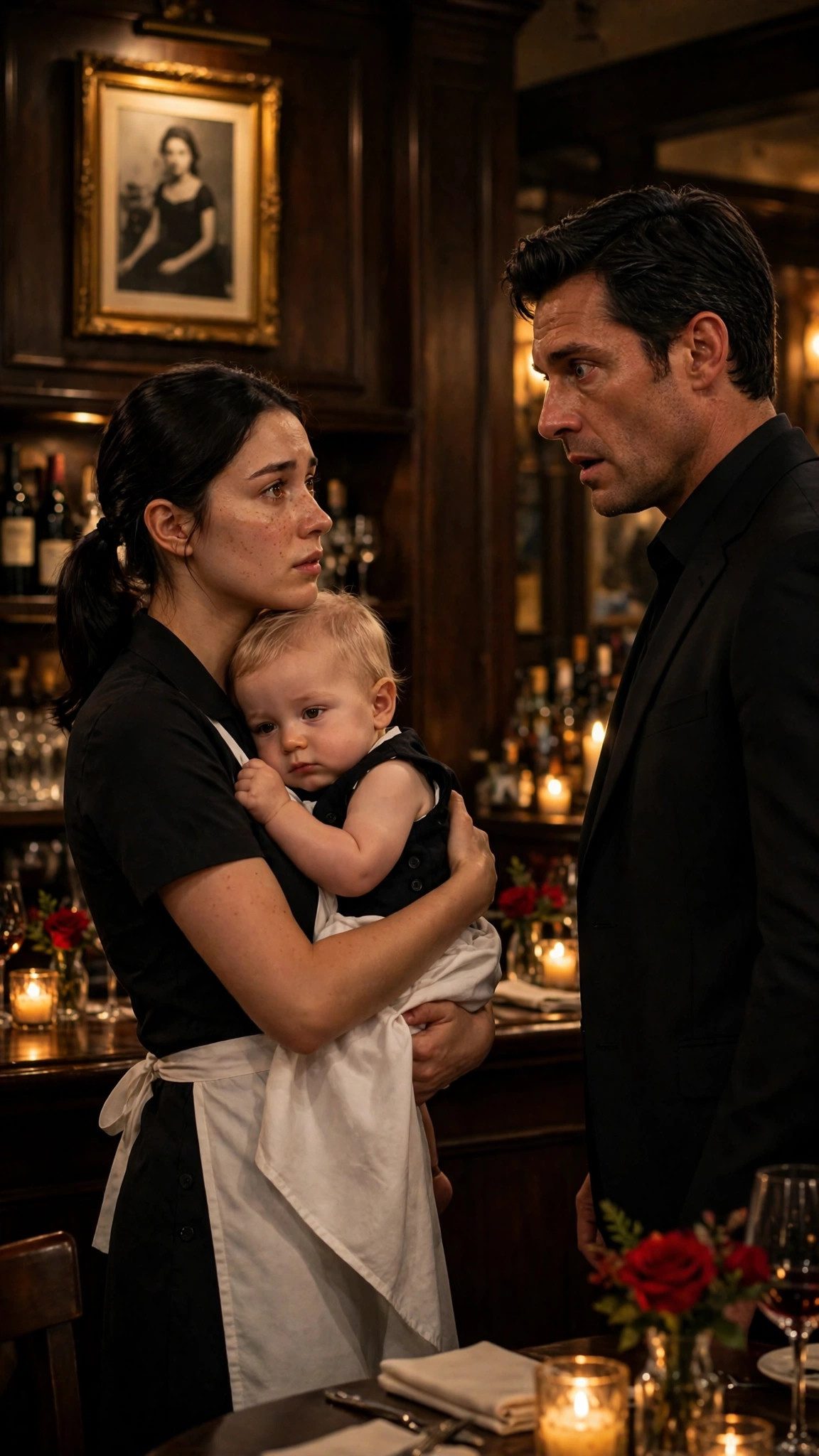
    And then last night, in a restaurant, a waitress he had never seen before had taken his son, and the baby had gone quiet in her arms like he had finally come home.

    Adrian stood at the nursery window that morning and watched Matteo sleep in his crib, his small fist curled around a blanket, his blonde hair damp with sweat. The baby's face was peaceful in a way Adrian had not seen in seven months.

    "Who is she?" he asked the empty room.

    His sister Giulia came to stand beside him. She had been up all night too. "Her name is Elina Valdez," she said. "Rocco looked into her before dawn. Twenty-six years old. Waitress at Orelio for two years. No criminal record. No family except a brother who runs with the Castellanos. Her grandmother died two years ago. Her mother died when she was three."

    Adrian had tried everything. He had hired the best nannies in the city. He had bought the softest blankets, the warmest bottles, the most expensive toys. He had sat in the nursery at three in the morning, holding his son against his chest, humming the only song he knew, a lullaby Sofia used to sing, and Matteo had cried until his small voice gave out.

    Three days before the night at the restaurant, Dr. Pierce, the pediatrician, had come to the house for Matteo's nine-month checkup. The doctor was a kind man in his sixties, with gentle hands and a voice that never rose above a murmur, and he had examined Matteo with the careful thoroughness of someone who knew he was looking at more than a medical problem.

    "He is healthy," Dr. Pierce had said, putting his stethoscope away. "His weight is fine. His reflexes are fine. There is nothing wrong with his body, Adrian. What he has is grief, and grief does not show up on a chart."

    "Then what do I do?" Adrian had asked. He hated asking that question. Adrian Romano did not ask what to do. Adrian Romano told other people what to do. But he had asked it anyway, because his son was crying, and he did not know how to make it stop.

    "You wait," Dr. Pierce had said. "You stay close. You let him know you are there. And you find someone he trusts, someone whose voice calms him, someone whose arms feel safe. Sometimes it is not the father. Sometimes it is a grandmother, or an aunt, or a nurse. The baby will choose, Adrian. You cannot choose for him. You can only make sure that when he chooses, the person he chooses is someone good."

    Adrian had walked Dr. Pierce to the door in silence. At the door, the doctor had turned back.

    "One more thing," he had said. "Sofia used to sing to him, didn't she? In the last weeks?"

    "Every night," Adrian had said.

    "Then play her voice," Dr. Pierce had said. "If you have recordings, play them. A baby remembers his mother's voice before he remembers anything else. It lives in his body, even when his mind cannot hold it."

    Adrian had recordings. He had a phone full of videos Sofia had taken, singing to Matteo in the nursery, her voice soft and warm. He had played them every night for a week. Matteo had listened, his eyes wide, his small body still, and then he had cried harder than ever, as if the sound of his mother's voice had reminded him of everything he had lost.

    Adrian had stopped playing them. He had put the phone in a drawer, and he had not taken it out since.

    Now, standing at the nursery window with his sister beside him, watching his son sleep peacefully for the first time in seven months, Adrian thought about Dr. Pierce's words. The baby will choose. You cannot choose for him.

    Matteo had chosen. He had chosen a waitress in a restaurant, a girl with his dead wife's face and his dead wife's song, and Adrian did not understand it, but he understood this: his son had stopped crying. His son was sleeping. And for the first time in seven months, the house on the hill did not feel like a tomb.

    Adrian's jaw tightened. "Her brother runs with the Castellanos."

    "Yes," Giulia said. "And before you ask, no, I don't think she's a plant. A plant would not look like Sofia. A plant would not make Matteo stop crying. Whatever she is, brother, she is not a trap."

    "She has Sofia's face," Adrian said. It was not a question.

    "I know," Giulia said softly. "I saw the photograph too. I stood in that restaurant and looked at that girl holding your son, and for one second I thought—" She stopped. She did not finish the sentence. She did not have to.

    Adrian looked down at his sleeping son. "She comes at ten," he said. "I want to know who she is. I want to know why my son chose her. And I want to know why she looks like my wife."

    Giulia put a hand on his arm. "Be careful with her, Adrian. She is not one of us. She is a girl who works double shifts and worries about rent. Whatever this is, she did not ask for it."

    "I know," Adrian said. And he did know. He knew it the way he had known, last night, that the baby reaching for a stranger was not a coincidence. Something was happening that he did not understand, and Adrian Romano had built his life on understanding everything.

    He went downstairs and stood in the doorway of the room that had been Sofia's. He had not touched it in seven months. Her dresses still hung in the closet. Her perfume still sat on the dresser. Her photograph still stood on the nightstand, smiling at a camera that no longer existed.

    He picked up the photograph and looked at it for a long time.

    Sofia had been twenty-five when the picture was taken. Dark hair. Brown eyes. A small dimple in her left cheek.

    The same face as the waitress who had held his son.

    "Who are you, Elina Valdez?" he whispered to the empty room. "And what did you do to my son?"

    At nine forty-five that morning, I stood outside the iron gates of the house on the hill, wearing my only good dress and the shoes with holes in them, holding the white card in my hand like a ticket I was afraid to use.

    The gates opened before I could knock.

    A man in a black suit stood on the other side. He was older, with grey at his temples and kind eyes that did not match the gun I could see under his jacket.

    "Miss Valdez," he said. "Mr. Romano is expecting you. My name is Rocco. I will take you to him."

    I followed him up the long driveway, past gardens that were too perfect to be real, past windows that reflected the morning sun like mirrors, and with every step I took, I felt the life I had known getting smaller behind me.

    I did not know it then, but I was walking into the house where my twin sister had lived. I was walking into the nursery where my nephew slept. I was walking into the middle of a war I did not know existed, between a man who had lost everything and a brother who blamed him for it.

    All I knew was that a baby had reached for me, and his mother had my face, and nothing in my life would ever be simple again.

  • Chapter 1: Dance with the Devil

    Chapter 1: Dance with the Devil

    The most feared mafia boss in New York asked me to marry him in front of four hundred people, and everyone in the ballroom laughed because they thought he was humiliating me.

    They were wrong. He was not humiliating me. He was claiming me, and by the next morning, a diamond ring arrived at my apartment beside proof that my brother's four-hundred-thousand-dollar debt had vanished.

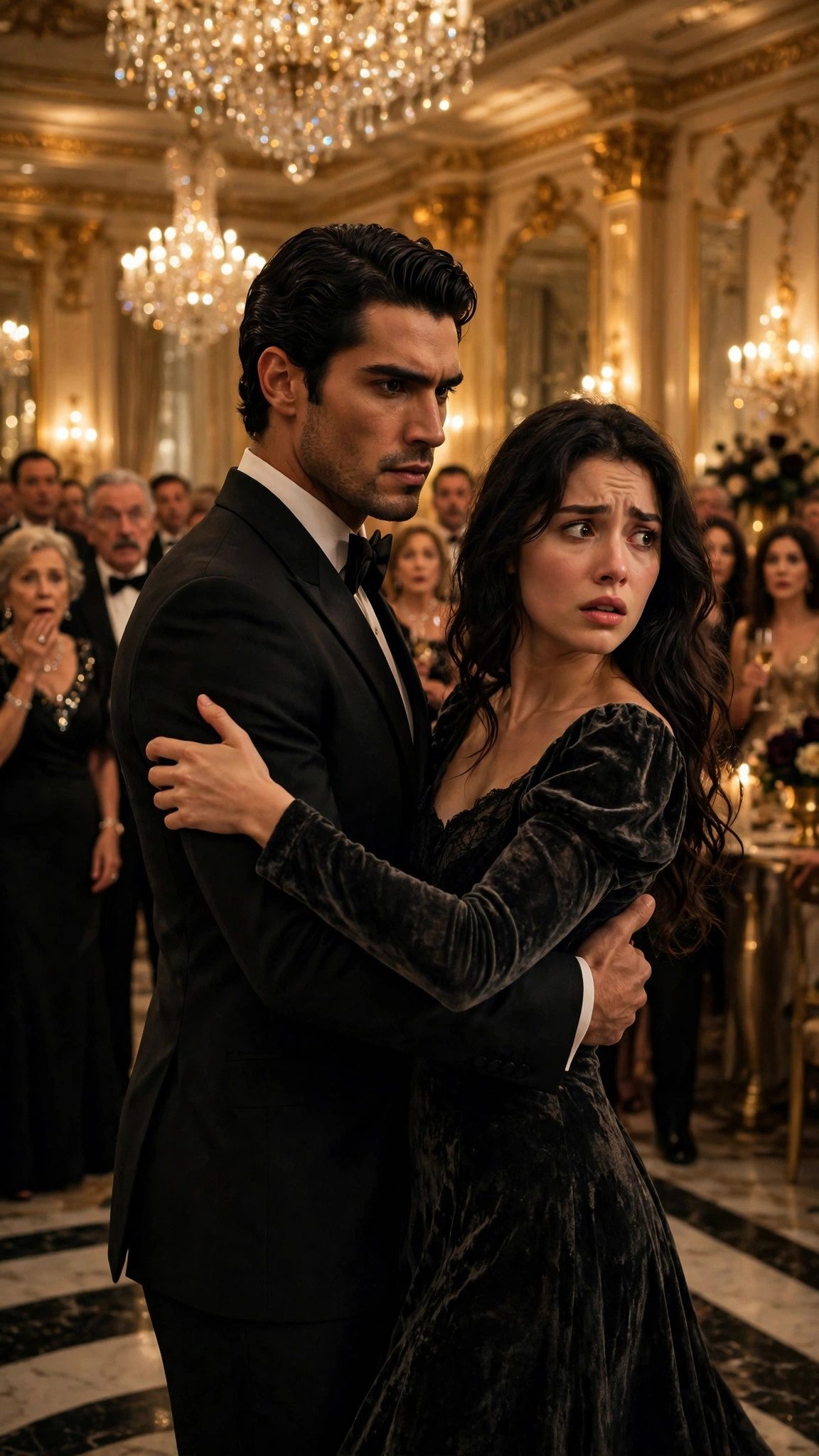
    My name is Josephine Gallagher. I am twenty-six years old, a Juilliard dropout, and on December 14, 2018, I was sitting at a grand piano in the Pierre Hotel wearing a faded black velvet dress, playing Chopin for people who did not hear a single note.

    The gala was officially a charity event for pediatric hospitals. Crystal chandeliers, white roses, men in tuxedos who smiled with their mouths and not their eyes. Everyone in that glittering ballroom knew the truth: the Valenti crime family had gathered beneath the chandeliers to conduct business no invitation would ever mention. I was not a guest. I was furniture that could play the piano.

    I had three rules. Do not make eye contact. Do not stop playing. Never speak to Carmine Valenti.

    Carmine was thirty-four, dressed in a flawless black tuxedo, and terrifying precisely because he never needed to raise his voice. Three years earlier, he had taken control of the family after a bloody internal war, and the FBI still could not connect him to a single crime. He stood in a circle of men near the bar, a glass of bourbon in his hand, and the whole room bent around him the way iron filings bend around a magnet.

    I kept my eyes fixed on the keys and played on. Chopin, then lighter music as the night grew louder and the bourbon flowed. I tried to disappear into the background, the way I always did. I was good at disappearing. I had been disappearing for years.

    Then Carmine left his circle of men and walked directly toward my piano.

    The ballroom fell silent. Conversations stopped mid-sentence. Even the waiters froze. I felt his shadow fall across the keys before I saw him, and my fingers stumbled on a note for the first time in my life.

    "Chopin is too depressing for a party, don't you think, Ms. Gallagher?" he asked.

    Hearing my name in his voice sent ice through me. He knew my name. Of course he knew my name. He knew everything about everyone in his orbit. That was the point of him.

    "What would you prefer, Mr. Valenti?" I asked, and my voice sounded steadier than I felt.

    He studied my worn dress and frightened face with a dangerous smile. "Play a waltz and dance it with me."

    My hands froze above the keys. "I can't play and dance at the same time."

    "I already have the music ready," he said. "All you have to do is stand up and dance with the devil."

    Then he raised his voice so everyone could hear. "If you dance this waltz with me, Josephine, I'll marry you."

    The room erupted in forced laughter. His underboss, Lorenzo Ricci, a broad man with silver at his temples, joked that Carmine had finally lost his mind, and the laughter spread like a wave, relieved and cruel at once. They thought it was a joke. A rich man amusing himself with the piano girl.

    My brother's life depended on my answer.

    Liam owed four hundred thousand dollars to a loan shark tied to the Valenti syndicate. I had agreed to perform at their private events, slowly paying interest on a debt I could never realistically erase, to keep my brother from disappearing into the East River. If I refused Carmine Valenti in front of his entire family, Liam would not survive the week. If I accepted, I did not know what would happen to me. But I knew what would happen to Liam if I said no.

    I stood and stepped onto the marble floor.

    Shostakovich's Waltz No. 2 filled the ballroom as Carmine took my hand and pulled me close. His grip was firm and warm, and his other hand settled at my waist with a certainty that made my breath catch. We moved beneath the chandeliers while everyone watched. To them, it looked romantic. To me, it felt like walking a tightrope over an open grave.

    "You're shaking," he whispered near my ear.

    "My brother owes you four hundred thousand dollars," I replied, and I did not know where the courage came from. "If I step on your foot, will you kill him tonight?"

    His hand tightened at my waist. "If you step on my foot, I'll marry you tomorrow instead of waiting."

    I almost laughed. It came out as a gasp. "That's not an answer."

    "It is the only answer you need," he said. "Dance, Josephine."

    So I danced. I had not danced since I was sixteen, since my mother was still alive and my father still tuned pianos in our little apartment in Queens and the world still made sense. But my body remembered what my mind had forgotten, and Carmine Valenti led like a man who had been born to lead, turning me through the light and the music and the watching eyes, and for three minutes I forgot to be afraid.

    When the music ended, Carmine released me and bowed. "A deal is a deal," he announced to the room. "Expect my ring in the morning."

    I assumed it was another cruel joke. Men like Carmine Valenti did not marry piano girls in faded dresses. Men like him married daughters of other powerful men, women with names that opened doors. I went home that night on the subway, my dress damp with sweat beneath my coat, and I told myself it was over, that I had survived another evening, that Liam was safe for one more day.

    At exactly nine the next morning, someone knocked on my apartment door.

    Lorenzo Ricci stood in my hallway carrying a black velvet box and a thick envelope. He did not smile. He did not apologize for the hour. He simply held them out to me and said, "Mr. Valenti keeps his word, Ms. Gallagher."

    Then I opened the ring box. A diamond the size of a small flame caught the morning light, and beneath it lay a handwritten card in a bold, slanted hand.

    Dinner. My estate. Eight o'clock. Come alone.

    I should explain how I got there. Not to the apartment, with a diamond ring burning a hole in my palm. To the piano. To the debt. To the night a mafia boss asked a girl nobody noticed to dance, in front of everyone, as if she mattered.

    My father, Daniel Gallagher, tuned pianos for a living. He had hands that could coax a dead instrument back to life, and he taught me to play before I could read. My mother, Anne, sang in the church choir and laughed at his terrible jokes and kept our little apartment in Queens full of secondhand sheet music and the smell of fresh bread. I was the girl with the gift, the teachers said. Juilliard at eighteen, a scholarship, a future.

    Then my mother died when I was seventeen. An aneurysm, sudden and unfair, gone between one breath and the next. My father never recovered. He kept tuning pianos and drinking whiskey and telling me to practice, but the light went out of him, and two years ago, his heart gave out in the middle of a customer's living room, his hands still on the keys.

    Liam was twenty-four when our mother died, and he took it hardest of all. He had always been the charming one, the reckless one, the boy who could talk anyone into anything and believed his luck would never run out. After our father died, the luck ran out. He started gambling to pay the rent, then gambling to pay the gambling debts, then borrowing to pay both. By the time I found out, he owed money to men whose names I was afraid to say out loud.

    Nico Falco was the worst of them. A loan shark with a soft voice and dead eyes, who worked for the Valenti syndicate and collected their debts with a smile. Liam owed him four hundred thousand dollars. Falco came to our apartment one rainy Tuesday in October and laid out my options with the politeness of a funeral director. Liam could pay, which he could not. Liam could run, which would last about a week. Or I could play the piano at Valenti family events, and every performance would count against the interest, and Liam would stay alive as long as I kept showing up and kept playing and kept my eyes on the keys.

    I agreed. What else could I do? He was my brother. He was all I had left.

    So I dropped out of Juilliard in my final year, gave up the scholarship and the recitals and the future, and I became the girl at the piano in rooms full of dangerous men. I wore the same faded black velvet dress to every event because it was the only dress I owned that looked like it belonged in a ballroom. I learned the rules and I obeyed them. Do not make eye contact. Do not stop playing. Never speak to Carmine Valenti.

    I broke the third rule the night he spoke to me first. I broke all of them by the time the waltz ended.

    That morning, after Lorenzo left, I sat on my narrow bed with the ring box open on my lap and the envelope unopened beside me. The diamond threw rainbows across my cracked ceiling. I thought about my mother, who had wanted me to play concert halls. I thought about my father, who had wanted me to be brave. I thought about Liam, asleep on my couch more nights than not, a grown man who still flinched at loud noises and called me Jo when he was scared.

    Then I opened the envelope.

    Inside were papers. Loan documents, stamped in red. PAID IN FULL. And a single sheet of heavy cream paper, the same bold handwriting as the card.

    The debt is gone. Your brother is safe. The rest is up to you. — C.

    I read it three times. The debt is gone. Four hundred thousand dollars, gone, because I had danced one waltz. I should have felt relief. Instead I felt something colder and stranger: the ground shifting under my feet, the sense that the life I had been living — the piano, the rules, the fear — had ended the moment Carmine Valenti crossed the ballroom floor.

    Liam came home just after noon, and I heard him before I saw him, the way I always did — the heavy tread on the stairs, the key fumbling in the lock, the long sigh as he dropped his jacket on the floor. He froze in the doorway when he saw me sitting on the bed with the ring box open.

    "Jo," he said. "What is that?"

    I closed the box gently and set it aside. "Sit down, Liam."

    He sat on the floor across from me, the way he used to when we were children and our mother was telling us a story. He was twenty-nine years old, tall and broad-shouldered, with our father's dark hair and our mother's green eyes, and he looked like a man who had been running for a very long time.

    "Carmine Valenti asked me to marry him last night," I said. "In front of everyone. As a joke, I thought. This morning his underboss brought me this ring. And the debt papers. Stamped paid."

    Liam stared at me. "The debt is gone? All of it?"

    "All of it. You're safe."

    He covered his face with his hands, and his shoulders shook. I had not seen my brother cry since our mother's funeral. I went to him and put my arms around him, and he held on to me like he was drowning.

    "I'm sorry, Jo," he whispered. "I'm so sorry. I never meant for any of this to touch you. I thought I could win it back. I thought I could fix it myself."

    "I know," I said. "I know."

    We sat like that for a long time, on the worn rug in the middle of our tiny apartment, while the city moved on outside the window. When he finally pulled away, his eyes were red, but his voice was steady.

    "Don't marry him, Jo. Not for me. I'll disappear. I'll go to California, to Canada, anywhere. I'll work on a fishing boat. I'll change my name. Don't sell yourself to that man because of my mistakes."

    "Liam," I said. "He didn't buy me. He made a promise in front of four hundred people, and he kept it. I danced one waltz. That's all. I haven't agreed to anything else. He invited me to dinner tonight, and I'm going, because I need to know what he actually wants. And because if I don't go, he'll come looking, and men like Carmine Valenti don't like to be ignored."

    "Then I'm coming with you," Liam said.

    "No. The card said come alone. And if anything goes wrong, I need you alive and free, not sitting in his dining room. Stay here. Lock the door. If I don't call you by midnight, you go to the police and you tell them everything."

    He wanted to argue. I could see it in his face. But he knew me, and he knew that when I made up my mind, it stayed made. He nodded slowly.

    "Jo," he said. "Whatever he wants — you don't owe him anything. You already paid enough. You gave up Juilliard for me. You gave up everything for me."

    "I didn't give up anything," I told him, and it was almost true. "I played the piano. That's what I do. Now go make coffee. I need to think."

    He went to the tiny kitchen, and I sat with the ring box in my hands, turning it over and over, watching the diamond catch the light. I thought about what my father used to say when a piano was beyond repair: sometimes you don't fix the instrument, you learn to play a different song.

    At seven o'clock that evening, I put on the faded black velvet dress again, because it was the only dress I owned. I pinned my long dark hair up the way my mother used to wear hers. I looked at myself in the cracked mirror above my sink and barely recognized the woman staring back. Her eyes were frightened. But her chin was up.

    Dinner. His estate. Eight o'clock. Come alone.

    I had no idea what waited for me at the end of that road. I only knew that my brother was safe, that the debt was gone, and that the most feared man in New York had kept his word to a girl nobody noticed.

  • Chapter 1: The Baby Who Reached for Me

    Chapter 1: The Baby Who Reached for Me

    My name is Elina Valdez, and until that night, the biggest danger in my life was missing rent.

    I was halfway through another miserable double shift at Ristorante Orelio when the entire dining room suddenly went silent. Not the polite quiet of people enjoying their food. The other kind. The kind where fifty conversations stop in the same second, like someone cut the power to the whole room.

    Two men in black suits entered first. They scanned the room the way soldiers check a rooftop, slow and thorough, and I watched our hostess take a step backward without even realizing she was doing it. Then he stepped in.

    A tall man in an expensive dark suit appeared in the middle of the room carrying a baby.

    It was the first time I had seen him in person, but his face was the one every waitress in Chicago traded like a warning. Adrian Romano. The name alone could empty a bar. People said he owned half the city and buried the other half. People said he had not smiled since his wife died. People said a lot of things, and standing there with a tray balanced on my shoulder, I believed every single one of them.

    The baby could not have been more than nine months old. Blonde hair, serious grey eyes, a tiny black vest over a white shirt, like a miniature version of the man holding him. He looked around the room with the calm, assessing stare of someone much older, and then his gaze found me.

    My manager, Tony, appeared at my elbow so fast I nearly dropped the tray. "Do not make a mistake tonight, Elina," he whispered. "That is table twelve. You take it. You smile. You do not speak unless he speaks to you. Do you understand me?"

    I understood that my rent was due in four days and I had exactly one hundred and twelve dollars in my bank account. I understood that Tony only gave the good tables to girls he liked, and he had never liked me. I understood that this was not a good table. This was a test, or a punishment, and either way I could not afford to fail it.

    "Yes," I said.

    I walked to table twelve with my order pad shaking in my hand, and I barely finished introducing myself before the baby stared at me.

    Then he reached.

    Not casually. Desperately. His little arms stretched toward me while his father tried to pull him back, and when the man tightened his hold, the baby began to cry. Not the tired cry of a hungry infant. A raw, frightened sound, like something inside him had finally broken open.

    A chill moved through me. These were not ordinary details. A baby who rejected everyone, reaching for a stranger in a restaurant. A man the whole city feared, holding his son like the child might shatter. I backed away, planning to apologize for distracting the baby and escape politely before whatever this was became my problem.

    Then the mafia boss's expression changed.

    For one second, I saw something I did not expect. Panic. Real, unguarded panic on the face of Adrian Romano, and it frightened me more than his reputation ever had.

    He turned to his men and spoke quietly, too low for me to hear. They stood and moved into the private dining area without a word, like furniture being rearranged. When they were gone, he looked directly at me.

    "Hold him."

    I stared at him. "Excuse me?"

    "My son." His voice was low and rough, like a man who had not slept properly in months. "Hold him."

    Every survival instinct I had told me this was a terrible idea. Hold the baby of the most dangerous man in Chicago. Hold him in front of a room full of witnesses. Hold him and become, in whatever way these people counted such things, involved.

    But the child would not release me. His arms were still stretched toward me, his small fingers opening and closing, and his crying had sharpened into something desperate.

    So I took him.

    The instant his body touched mine, he melted against my chest. No crying. No fear. Just a deep little sigh, as though he had finally found something he had been searching for, and then his whole small weight settled into me like he belonged there.

    The dining room had gone so quiet I could hear the ice shifting in someone's glass.

    The mafia boss stared at us like he had seen a ghost.

    "He won't let anyone hold him," he murmured. "Not the nannies. Not my sister. Nobody."

    I swallowed. My heart was beating so hard I was certain the baby could feel it. "Then why me?"

    His eyes hardened, but underneath the hardness there was something else. Something broken. "Only his mother could calm him like that."

    My stomach turned cold.

    Before I could answer, something behind him caught my attention. An old photograph hung beside the bar. I had walked past it hundreds of times in the two years I had worked at Orelio. I had never truly looked at it.

    A young woman stood in the picture wearing a black dress. Dark hair framed her face. She had a small dimple in her left cheek. My dimple. My eyes. My smile. Almost my face.

    The baby curled closer against me, his warm cheek pressed to my collarbone, his tiny fist curled into the fabric of my apron.

    His father slowly followed my stare toward the photograph.

    And for the first time that night, the most dangerous man in the room looked frightened.

    Because the woman in that picture was not me.

    But she could have been my twin.

    And judging by his face, he knew exactly who she was.

    "What is your name?" he asked. His voice had dropped even lower, and I realized the whole dining room was still watching us. Fifty people pretending not to stare at a waitress holding a mafia boss's baby.

    "Elina," I said. "Elina Valdez."

    Something moved behind his eyes at the name. Not recognition. Something closer to pain.

    "Valdez," he repeated, very quietly, like he was tasting a word he had not said in a long time.

    The baby had gone completely still against my chest. His breathing had slowed. One small hand had come to rest over my heart, and I could feel his fingers curl and uncurl in his sleep. He had fallen asleep. Just like that. In the arms of a stranger, in the middle of a crowded restaurant, the baby who rejected everyone had fallen asleep.

    "I don't understand," I whispered.

    "Neither do I," he said. "And I do not like things I do not understand."

    He reached into his jacket and took out a plain white card. No name on it. Only a phone number, written in dark ink in a careful hand. He held it out to me, and I stood there stupidly, the baby asleep on my chest, until Tony appeared at my side and took the card for me like I was a child who could not be trusted with sharp objects.

    "Mr. Romano," Tony said, bowing so low I thought he might fall over. "Please, forgive us, the girl is new, she did not mean to—"

    "She did nothing wrong." Adrian Romano did not look at Tony. He was still looking at me. At my face. At the dimple in my left cheek, I realized, because his gaze kept returning to it like a man checking a wound. "Tomorrow. Ten in the morning. Bring her to the house."

    Tony went pale. "Of course, Mr. Romano. Of course. Ten in the morning."

    "No," Adrian said. "Not you. Her." He looked at me again. "Come yourself. If you do not come, I will send a car. It is better if you come yourself."

    It was not a request. It was not quite a threat either. It was something in between, delivered in the calm voice of a man who was used to the world rearranging itself around his words.

    Then, gently, so gently it shocked me, he reached out and lifted the baby from my arms. Matteo did not wake. He only made a small sound in his sleep and turned his face toward his father's chest, and Adrian Romano held his son with both arms, the way a man holds the only thing he has left.

    He looked at the photograph behind the bar one more time. Then he looked at me.

    "Ten in the morning," he said. And he walked out of the restaurant with his men falling in around him, and the baby asleep against his shoulder, and the whole dining room exhaled at once like a held breath finally released.

    I stood there with my empty hands and my racing heart and Tony's furious whisper in my ear. "What did you do, Elina? What did you do?"

    "I didn't do anything," I said. It was the truth. I had done nothing at all, and somehow that was the problem.

    Tony shoved the white card into my apron pocket. "Ten in the morning. You heard him. You go, you smile, you do whatever he asks, and you do not make trouble for this restaurant. Do you understand me?"

    I nodded, because my throat had closed and I could not speak.

    The rest of the shift passed in a blur. I carried plates I did not remember picking up. I smiled at customers whose faces I did not see. Every time I passed the bar, my eyes went to the photograph, and every time, the woman in the black dress looked back at me with my own face.

    Dark hair. Brown eyes. A small dimple in her left cheek. My dimple. My eyes. My smile.

    I had walked past that photograph hundreds of times. Two years of double shifts, two years of carrying trays past that wall, and I had never once truly looked at it. Now I could not look away.

    At midnight, when the last customer left and the chairs were going up on the tables, I stopped in front of it. The photograph was old, the edges softened with age, the glass dusty. The woman in it could not have been older than twenty-five. She wore a black dress and a thin gold chain, and she was laughing at something outside the frame, her head thrown back, her whole face lit up with joy.

    She looked happy. She looked alive. She looked like me on the rare days when I forgot to be tired.

    "Her name was Sofia," a voice said behind me, and I jumped so hard I nearly knocked a glass off the bar.

    Old Mr. Orelio stood in the doorway of his office, leaning on his cane. He was seventy-eight years old and had owned this restaurant for forty years, and he looked at the photograph the way other men looked at church.

    "She used to sing here," he said. "Friday nights. She had a voice like warm honey, and when she sang, the whole room would go quiet, just like tonight. She was the most beautiful thing this restaurant ever held."

    "Who was she?" I asked.

    Mr. Orelio was quiet for a long moment. "The wife of Adrian Romano," he said at last. "The mother of that baby. She died seven months ago." He looked at me then, really looked at me, and his old eyes narrowed. "You have her face, child. The same face. I have been watching you work here for two years, and I never saw it until tonight, when I saw you holding her son."

    My knees went weak. I put a hand on the bar to steady myself.

    "That's impossible," I said. "I don't have a sister. I don't have anyone. My mother died when I was three. My grandmother raised me, and she died two years ago. There is no one else. There has never been anyone else."

    Mr. Orelio nodded slowly, like a man who had heard those words before and had learned not to argue with them. "Then the world is a stranger place than I thought," he said. "Go home, Elina. Sleep. Tomorrow will be a long day."

    I walked home through streets that smelled of rain and garbage and fried food from the late-night carts, and all the way home I thought about the baby's weight against my chest. The deep little sigh he had made when he found me. The way his fist had curled into my apron like he was afraid I would disappear.

    I thought about the woman in the photograph, laughing at something I could not see.

    And I thought about the way Adrian Romano had looked at me. Not like a man looking at a waitress. Like a man looking at a ghost.

    My apartment was cold when I got in. The radiator had been broken since November, and the landlord had stopped pretending he would fix it. I stood under the hot water in the shower until it ran cold, and then I sat on my bed in my towel and took the white card out of my apron pocket.

    A phone number. Nothing else. I turned it over. On the back, in the same careful hand, someone had written an address.

    I knew that address. Everyone in Chicago knew that address. A house on a hill behind iron gates, where the most feared man in the city lived with a baby who would not let anyone hold him.

    Ten in the morning. I would go, because I had no choice. Because men like Adrian Romano did not make requests, and because waitresses who missed rent did not say no to the most powerful man in Chicago.

    But as I lay in the dark, listening to the radiator clank and the city hum outside my window, one thought kept turning over and over in my mind, and I could not make it stop.

    The baby had reached for me. Not for his father. Not for his aunt. Not for any of the nannies who had tried and failed for seven months.

    He had reached for me.

    And his mother, dead seven months, had my face.

    Somewhere between exhaustion and fear, I fell asleep, and I dreamed of a woman in a black dress singing in a restaurant that smelled of garlic and red wine, and a baby in a tiny black vest reaching for me with both arms, and a man with grey eyes whispering, "Only his mother could do that."

    I woke before dawn with the card still clutched in my hand and the feeling, deep in my chest, that my life had already changed, and there was no going back to the girl who had only ever worried about rent.

  • Chapter 7: Home

    Chapter 7: Home

    Gabriel proposed to me on Eli's first birthday, in the garden behind the Lincoln Park house, under the maple tree he had planted the week after we came home from the cemetery.

    It was not a grand proposal. There were no fireworks. There was no orchestra. There was a small cake with one candle, and a baby in a blue shirt who had just learned to clap, and a man in a black suit who knelt down in the grass — ruining his trousers, Rosa would later inform him, in a tone of great suffering — and held out a ring, and said, "Claire Bennett. Will you marry me?"

    I said yes before he had finished the sentence. I said yes the way you say yes to something you have already decided, the way you say yes to the sun coming up, to the rain stopping, to the baby in your arms who has just learned to clap. I said yes, and Eli clapped, and Rosa cried, and Mason — Mason, who never cried about anything — turned around very quickly and pretended to check the locks on the garden gate.

    The ring was simple. A thin band of gold, with a single small diamond. Gabriel told me later that he had bought it the week after the warehouse, on the day Dr. Reyes told him my ribs were healing, and that he had carried it in his pocket for a month, waiting for the right moment, waiting until he was sure I was staying for the right reasons and not because I felt sorry for him.

    "I don't feel sorry for you," I told him, when he finally confessed this. "I never have. I feel —" I stopped. I didn't have the word. I had spent my whole life being good at numbers, and numbers have words for everything, but love — love doesn't fit in a ledger. It doesn't add up. It doesn't balance. It just is, the way the sun is, the way the rain is, the way a baby's hand feels when it closes around your finger.

    "I know," Gabriel said. He slipped the ring onto my finger, and it fit perfectly, the way things fit when they were always meant to be there. "I know. That's why I asked."

    We were married three months later, in the same garden, under the same maple tree, with the same small group of people: Rosa, who cried through the whole ceremony and then denied it; Mason, who stood at the back with his arms crossed and his eyes suspiciously bright; Dr. Reyes, who had been invited because Gabriel said she was the only person in the world he was actually afraid of; Harold Finch, who had worked for the company for thirty years and had never once been invited to anything, and who kept saying, "Well. Well, now. Isn't this something"; and my mother, who had taken the train from Evanston with her best dress on and her piano-student smile, and who looked at Gabriel Kane — the most feared man in Chicago — and said, "So you're the young man my daughter has been telling me about," in the exact voice she used to use when she caught me lying about practicing.

    Eli was the ring bearer. He was one year old, and he took his job very seriously, carrying the small velvet pillow with both hands, walking down the garden path with the grave concentration of a baby who knows he is doing something important. Halfway down the path, he stopped. He looked at me. He looked at Gabriel. And then he said, very clearly, in a voice that carried across the whole garden —

    "Mama."

    It was his first word.

    Not "Dada." Not "ball." Not "no." Mama. He looked at me, in my white dress, standing under the maple tree, and he called me Mama, and the whole garden went silent, and then Rosa burst into tears, and my mother burst into tears, and Gabriel — Gabriel Kane, the most feared man in Chicago — put his hand over his mouth, and his shoulders shook, and I understood that he was crying, too, silently, the way men like him cry, with their hands over their faces and their whole bodies shaking with something too big to hold.

    I knelt down in my white dress, in the grass, ruining it the way Gabriel had ruined his trousers, and I held out my arms, and Eli walked — actually walked, three wobbly steps, the first steps he had ever taken — straight into them, and I held him, and I said, "I'm here. I'm here, sweetheart. I'm your mama. I'm home."

    And that was the moment I understood what the title of this story really means. Not the title anyone else would give it. The title I would give it, if anyone asked me what happened that night in the tunnel, and in the warehouse, and in the drainage, and on the twenty-eight miles home.

    I brought his family home. Not just Eli — though Eli was the beginning, and Eli was the reason, and Eli was the baby who held my finger and wouldn't let go. I brought all of it home. I brought Gabriel home — home to himself, home to his grief, home to the man he had been before his brother died, the man who could sit on the floor and make faces at a baby and cry in a garden and not be ashamed of any of it. I brought Daniel home, too, in a way — because Gabriel goes to the cemetery now, and he doesn't just tell Daniel about the business. He tells him about us. He tells him about Eli's first word. He tells him about the wedding. He tells him that his son is safe, and loved, and growing up in a house full of people who would do anything for him. And I think — I hope — that Daniel hears it, wherever he is, and that he knows his baby is all right.

    Asher Voss went to trial in the spring. Marcus Webb testified. Eddie Marcone testified — the mechanic, who had been drinking himself to death with the guilt for eleven months, who stood in the witness box and cried and told the court everything, about the brakes, about the money, about the night Daniel Kane died on the Kennedy Expressway. Asher was convicted on every count. He will spend the rest of his life in prison, and his empire — the one he built out of small payments and bought men — is gone, dismantled piece by piece, the way I dismantled his shell companies at Gabriel's kitchen table, one invoice at a time.

    Tommy's family received a pension from the Kane family that will take care of them for the rest of their lives. Grace the nurse recovered, and she came back to work, and she still tells everyone that she was there on the night the quiet accountant from the fourteenth floor walked into a warehouse and walked out again with the baby. She tells it like a legend. She tells it like a story about a woman who was braver than she knew.

    The morning after the wedding, I woke up in a house that felt different — not because anything had changed, but because everything had, and I was only just beginning to understand it.

    Gabriel was already awake. He was standing by the window in his shirtsleeves, holding Eli, who was chewing on a wooden spoon Rosa had given him, and they were both watching the sun come up over the garden, over the maple tree, over the small white chairs that were still set out in rows from yesterday, like the garden itself hadn't quite believed the wedding was over.

    "Good morning, Mrs. Kane," Gabriel said, without turning around. He said it casually, the way a man says good morning to a woman he has known for years, and then he turned around, and he smiled, and I saw that he was nervous — actually nervous, the most feared man in Chicago, nervous on the morning after his own wedding — because he wasn't sure what came next.

    "Good morning, Mr. Kane," I said. I sat up. I put my feet on the floor. "What comes next?"

    He thought about it. He looked at Eli, who was still chewing the spoon. He looked at the garden. He looked at me.

    "Breakfast," he said, finally. "Rosa is making pancakes. Eli likes pancakes. I like pancakes. And after breakfast —" He paused. "After breakfast, we live. That's what comes next. We just live. Together. One day at a time."

    And that is what we did.

    We lived. Gabriel went to work. I went to work. Eli went to the nursery, and then to a small school, and then to a bigger school, and every day he came home with a new word, a new trick, a new story about something he had seen. Rosa cooked. Mason guarded. Dr. Reyes came to dinner once a month and told Gabriel he looked healthier than she had ever seen him, which Gabriel pretended not to hear and Rosa pretended not to notice.

    And once a year, on the anniversary of the night in the tunnel, Gabriel and I would sit in the garden after Eli was asleep, and we would talk about it — not the fear, not the blood, but the rest of it. The fire extinguisher. The drainage. The twenty-eight miles. The way Eli had held my coat and wouldn't let go. Gabriel would laugh, and I would laugh, and we would sit there under the maple tree, holding hands, and we would remember that the worst night of our lives was also the night our family began.

    My mother came to stay for a month, that first summer. She played the piano in the corner of the living room — the real piano, not the small upright she taught on — and Eli sat beside her on the bench, banging the keys with both hands, and my mother laughed, and Gabriel stood in the doorway watching them, and I knew, without anyone saying it, that my mother had finally stopped worrying about me. She had seen the house. She had seen the man. She had seen the baby. And she knew what I knew: that her quiet daughter, who had spent her whole life apologizing for existing, had finally found a place where she didn't have to apologize for anything.

    On Eli's second birthday, Gabriel gave me a gift. It wasn't jewelry. It wasn't a car. It was a small, framed photograph, taken by a surveillance camera on a wall in Hammond, on the night of the escape — a grainy, black-and-white image of a woman in a torn beige coat, holding a baby against her chest, looking straight into the camera. Me. Looking for help. Looking for someone to know we were alive.

    "I had it restored," Gabriel said. He was standing behind me, his arms around my waist, his chin on my shoulder, looking at the photograph with me. "I wanted you to have it. I wanted you to see what I saw, the first time Mason showed it to me. I saw a woman who was bleeding, and terrified, and alone — and who was still standing. Still holding the baby. Still looking for a way home. That is the woman I married, Claire. That is the woman who brought my family home."

    I hung the photograph in my office, on the wall beside my desk, where I could see it every day while I worked. Not because I wanted to remember the fear. Because I wanted to remember the rest of it — the courage, and the baby, and the twenty-eight miles, and the fact that a woman who apologized when someone bumped into her had turned out to be the bravest person in the whole story.

    And me? I still work in the accounting division. I still read invoices. I still find the gaps, and I still write them up in memos so plain and so polite that nobody can argue with them. Gabriel still reads every one of my reports all the way through. He still drinks his coffee black, with one sugar, from the same chipped mug. He still arrives at seven in the morning and leaves after dark. Some things don't change.

    But some things do. I don't apologize anymore — not when someone bumps into me, not when I walk into a room, not when I have something to say. I say it. I say it the way I said it in Gabriel's office, on the day I named the thief: plainly, and without fear, because the numbers are on my side, and the truth is on my side, and the most feared man in Chicago is on my side, too.

    My mother still calls every Sunday. She asks if I'm eating properly. I say yes, and this time it's true, because Rosa feeds me three times a day and stands there with her hands on her hips until I finish. My mother asks about Eli. I tell her he's learning new words every day — Mama, Dada, ball, no, more — and that he has Gabriel's eyes and my stubbornness, which Gabriel says is a terrible combination and my mother says is a perfect one.

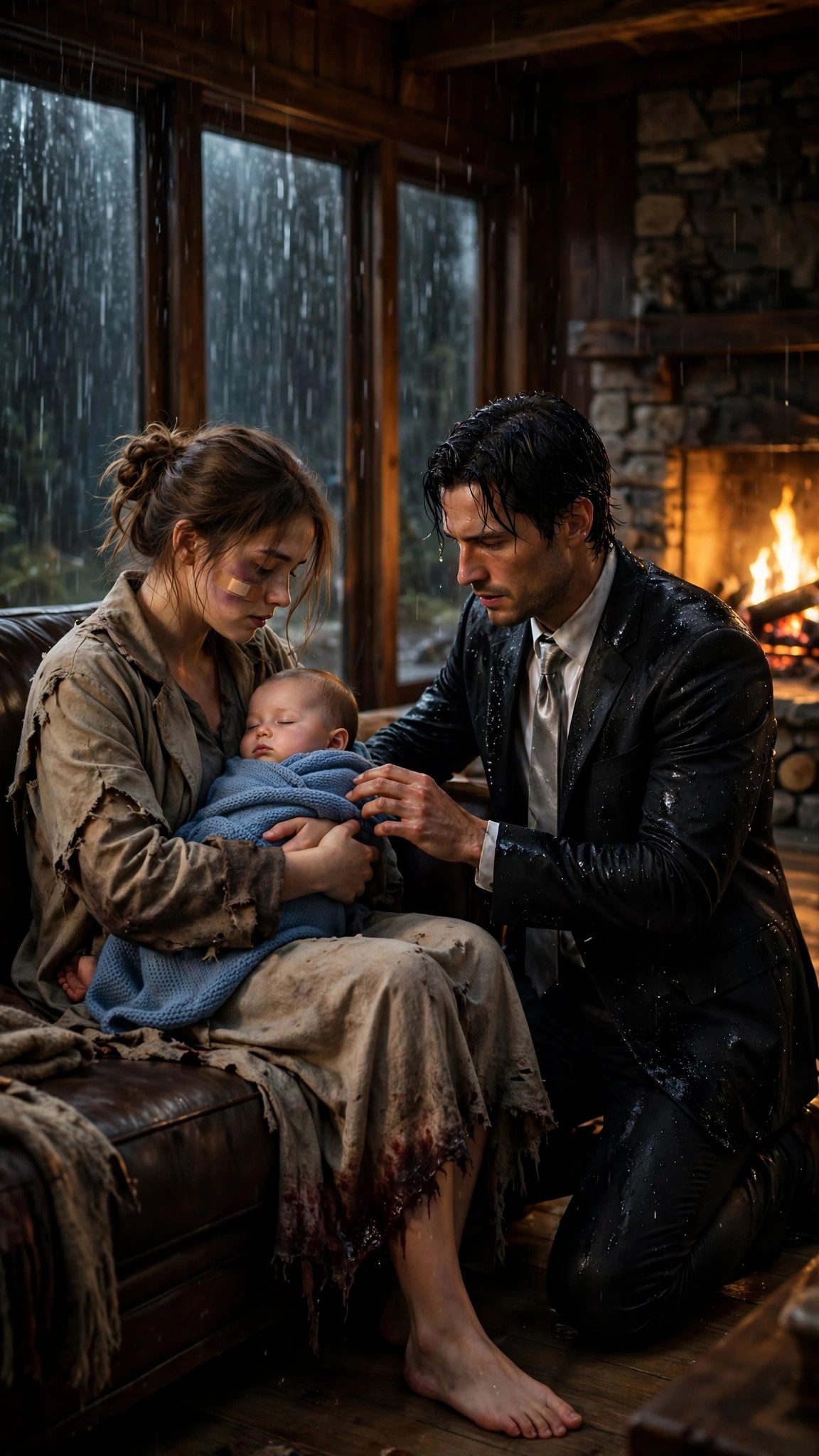
    And on quiet nights, when the house is asleep and the rain is falling on the windows, I sometimes think back to that night in the safe house — the blood on my coat, the baby asleep on my chest, Gabriel on one knee beside me, soaked from the storm — and I think about how small my life used to be, and how big it is now, and how it changed, all at once, in the space of one morning, because a car broke down and a driver offered me a ride and I said yes.

    I said yes to a ride. I said yes to a convoy. I said yes to a baby who needed me. I said yes to a man who needed me. I said yes to a family that needed me.

    And in the end, that is what this story is. Not a story about a mafia boss, or a kidnapping, or a warehouse in Hammond. A story about a woman who said yes — yes to the baby, yes to the man, yes to the family, yes to the life she had never dared to want — and who discovered, in saying yes, that she had finally found the thing she had been looking for all along, in the quiet of her office, with her numbers and her cardigans and her sensible shoes.

    Home.

    I am Claire Bennett Kane. I am an accountant. I am a wife. I am a mother — not by blood, but by choice, by courage, by twenty-eight miles in the rain with a baby who wouldn't let go of my coat. And every morning, when I wake up in a house full of people I love, and I hear Eli laughing in the nursery, and Gabriel singing to him in a voice nobody else in the world ever hears, I think the same thing I thought on the night I brought him home.

    They are not taking this baby. Not while I'm alive.

    And they never will. Because I am home now. We are all home now. And home is the one thing no one can take from us — not Asher, not the men in the tunnel, not anyone. Not ever again.

    The End.
    THE END

  • Chapter 6: Twenty-Eight Miles

    Chapter 6: Twenty-Eight Miles

    The house healed me slowly, the way houses do when they are full of people who care about you and don't know how to say it.

    Dr. Reyes came every other day. She changed my bandages, checked my ribs, told me my wrist was healing "adequately" — which, from Dr. Reyes, was practically a compliment — and warned me, every single time, not to lift anything heavier than a teacup. I obeyed her, mostly. I lifted Eli anyway, because Eli did not weigh more than a teacup in my heart, even if he weighed considerably more than one in my arms, and because every time I tried to put him down, he grabbed my finger and held on, and I had learned by then that when Eli Kane grabs your finger, you stay.

    Rosa fed me. Rosa fed everyone, all the time, as if food were the answer to every question and the cure for every wound. She made soup. She made bread. She made a chicken dish I had never heard of, with lemons and rosemary, that tasted like someone's grandmother had been cooking it for a hundred years. She put a plate in front of me three times a day and stood there with her hands on her hips until I ate it all, and when I tried to thank her, she waved me away and said, "Eat. Thanking is for people who have time. You need to heal."

    Mason guarded me. Mason guarded everyone, all the time, as if danger were a weather condition that might change at any moment. He checked the locks twice a day. He walked the garden at night. He stood in the hallway outside my room until I told him, firmly, that I did not need a man standing outside my bedroom door, and he said, "Yes, you do, Miss Bennett. You just don't know it yet," and he stayed. I got used to his footsteps. I got used to the sound of him clearing his throat before he knocked. I got used to the fact that the most dangerous house in Chicago was also the safest place I had ever been.

    And Gabriel — Gabriel courted me the way a man like Gabriel Kane courts a woman. Which is to say, awkwardly, and with great seriousness, and without ever once saying what he meant.

    He brought me books. Not flowers — books. He noticed, somehow, that I read novels on the bus, and he started leaving them on the table beside my bed: old paperbacks, mostly, with cracked spines and pencilled notes in the margins. I asked him once where he got them, and he said, "Daniel's library," in a voice that told me not to ask again, and I understood that he was giving me something he had never given anyone. His brother's books. His brother's words. His brother's quiet.

    He brought me tea. Not the tea Rosa made — his own tea, made the way he made his coffee, black with one sugar, in the chipped mug he had owned for a decade. He brought it to me in the morning, before his meetings, and he stood in the doorway of my room, holding the mug like it was a peace offering, and he said, "I made too much," which was a lie, because he had made exactly one cup, for me, and we both knew it.

    He brought me Eli. Every evening, after his work was done, he brought Eli to my room, and he sat on the floor — the most feared man in Chicago, sitting on the floor in his shirtsleeves — and he watched me hold his nephew, and he watched Eli hold my finger, and he didn't say anything at all. He just sat there, and watched, and sometimes he smiled, a small, private smile, the smile of a man who has found something he thought he had lost forever.

    It took me weeks to understand what he was doing. I was twenty-nine, and good at numbers, and terrible at understanding that I mattered to anyone. But one evening, when Eli had fallen asleep on my chest and Gabriel was sitting on the floor watching us, I looked at him, and I said, "You're not just bringing me books, are you?"

    "No," he said. He didn't look away. "I'm not."

    "And you're not just bringing me tea."

    "No," he said. "I'm not."

    "Then what are you doing?" I asked.

    He was quiet for a long time. The room was warm. The lamps were low. Eli was asleep, his fist curled in my coat — a new coat, this one, soft grey wool, that Rosa had bought for me because my beige one was ruined, and that I wore everywhere because it was the first thing anyone had bought me in years.

    "I'm trying to tell you something," Gabriel said, finally. "And I'm very bad at it. Men like me — we don't learn how to say things. We learn how to do things. We learn how to protect, and how to provide, and how to stand in a doorway so nothing gets past. But we don't learn how to say —" He stopped. He looked at Eli, asleep on my chest. He looked at me. "I don't know how to say it. So I'll say it the way I know how. You saved my nephew. You saved my family. You brought him home. And I want you to stay. Not as an employee. Not as a guest. As —" He stopped again. He took a breath. "As the woman who brought my family home. As the woman who is my family now. If you'll have me."

    I didn't answer right away. I couldn't. My throat was closed, and my eyes were burning, and Eli was asleep on my chest, and the most feared man in Chicago was sitting on the floor in front of me, asking me to stay, and I was thinking about how small my life had been — the bus, the invoices, the cardigans, the apologies — and how, in the space of a few weeks, it had become something I didn't recognize. Something bigger. Something that had a baby in it, and a house in it, and a man in it who brought me books and made me tea and sat on the floor and watched me hold his nephew like it was the most important thing in the world.

    "I don't know how to be in your world," I said, finally. "I don't know about convoys and safe houses and men with guns. I know about invoices. I know about numbers. I don't know how to be the woman in a mafia boss's house."

    "You already are," Gabriel said. "You've been her since the night you hit a man with a fire extinguisher and drove twenty-eight miles with three broken ribs. You just didn't know it yet."

    Twenty-eight miles. That was the distance from the warehouse to the safe house. Twenty-eight miles of rain and cold and fear, with a baby crying against my chest and my body giving out a mile at a time. I had driven those twenty-eight miles without thinking about it, because there was a baby who needed to get home, and I was the only one who could take him there.

    And now Gabriel was telling me that those twenty-eight miles had been the beginning of something — not the end of something. That the woman who drove them was not the same woman who had gotten into Eddie's car that morning, apologizing for the trouble. That she was someone else now. Someone who mattered. Someone who belonged.

    "I'll stay," I said. "But on one condition."

    "Anything," Gabriel said.

    "I want to keep working," I said. "I want my office. I want my numbers. I don't want to be a woman who sits in a house and waits for a man to come home. I want to be the woman who finds the thieves and names them and hands you the folder. That's who I am. That's what I do."

    Gabriel smiled. It was the first real smile I had ever seen on his face — not the small, private one, not the careful one, but a wide, genuine smile, the smile of a man who has just heard exactly what he wanted to hear.

    "Done," he said. "Your office is yours. Your numbers are yours. And if anyone in this building ever makes you feel like you are less than what you are, you tell me, and I will deal with it." He paused. "But Claire —"

    "Yes?"

    "You don't have to apologize anymore," he said. "Not to me. Not to anyone in this house. You saved my family. You don't owe anyone an apology for the rest of your life."

    I laughed. I actually laughed, out loud, in a room with a baby asleep on my chest and a mafia boss sitting on the floor, and the laugh surprised me, because it had been so long since I had laughed like that — freely, without apologizing for it first.

    "All right," I said. "No more apologies."

    "Good," Gabriel said. He stood up. He came to the chair. He knelt beside me, the way he had knelt beside the sofa on the first night, and he put his hand over mine — my good hand, the one that wasn't splinted anymore — and he said, very quietly, "Then stay. Stay, and let me love you the way you deserve to be loved. Slowly. Properly. Like a man who has finally learned what home means."

    Three weeks after I said I would stay, I went back to work.

    It was strange, going back to the fourteenth floor, to my desk with the lake view, to the grey carpet and the humming lights. Harold Finch stood up when I came in, which he had never done before, and he said, "Miss Bennett," in a voice that suggested I had been promoted again without anyone telling me. The guards at the east wing door nodded at me. The woman at the front desk smiled. And on my desk, in the middle of my keyboard, someone had left a small stack of files — the files with the gaps, the files nobody else wanted — with a note on top in handwriting I recognized.

    "Welcome back. — G."

    I sat down. I opened the first file. And for the first time in weeks, I felt like myself again — not the woman in the safe house, not the woman with the stitches and the splint, but the woman who read invoices and found the truth in them. I worked all morning. I found a duplicate payment by eleven. I found a vendor overcharging us by nine thousand dollars by noon. I wrote it up in a memo so plain and so polite that nobody could argue with it, and I sent it upstairs, and an hour later Gabriel came down to my office himself — not summoned, not announced, just there, standing in my doorway in his black suit with his silver tie — and he said, "Good catch," and then he said, "Come to dinner tonight. At the house. Rosa is making the chicken with lemons. Eli has learned a new trick, and he won't show it to anyone but you."

    I went to dinner. Eli's new trick was clapping — two small hands coming together, once, twice, with enormous concentration, followed by a look of such pride that the whole table laughed. Gabriel laughed. Mason laughed. Rosa laughed, and then she pretended she hadn't, and went back to the kitchen to get more bread. And I sat there, at a table in a house that wasn't mine, eating chicken with lemons, watching a baby learn to clap, and I thought: this is what a family looks like. Not the loud kind. Not the perfect kind. Just this — a table, and food, and people who show up, and a baby who has just discovered his hands.

    A week later, Gabriel took me to the cemetery.

    It was a Sunday, grey and quiet, and the cemetery was on a hill outside the city, with old trees and stones that had been there longer than any of us. Gabriel drove himself — no convoy, no guards, just the two of us in a black car, with Eli asleep in the back seat in his car seat, the way ordinary families drive to ordinary places on ordinary Sundays.

    He parked by the gate. He got out. He opened my door. And we walked together, between the stones, to a plot under a maple tree, where two headstones stood side by side: Daniel Kane, and Anna Kane. Beloved brother. Beloved wife. The dates were too close together. The stone was too new. Someone had left fresh flowers — white roses, in a glass jar — and I knew, without asking, that Gabriel had been the one who left them, every Sunday, for eleven months.

    "I come here every week," he said. He was standing with his hands in his pockets, looking at the stones the way a man looks at something he still can't believe is real. "I tell Daniel about the business. I tell Anna about Eli. I tell them both that I'm sorry. And then I go home, and I work until midnight, and that's how I talk about it. That's how I've always talked about it."

    He was quiet for a moment. The wind moved through the maple tree. Eli made a small sound in his sleep.

    "But today," Gabriel said, "I wanted to tell them something different. I wanted to tell them about you." He turned to me. "I wanted to tell my brother that the woman who saved his son is standing here, next to me. And I wanted to tell Anna that her baby is safe, and loved, and learning to clap, and that the woman who brought him home is going to be the one who teaches him how to be brave — because she already taught me."

    I didn't say anything. I couldn't. I took his hand — his hand, rough and scarred and warm — and I held it, and we stood there together under the maple tree, with Eli asleep in the back seat and the white roses bright against the grey stone, and I understood that Gabriel Kane had just done the bravest thing he had ever done. Not facing Asher. Not facing his enemies. Facing his grief, in front of someone else, and letting her see it.

    On the drive home, Eli woke up, and Gabriel handed him back to me, and Eli grabbed my finger, and Gabriel looked at us in the rearview mirror, and he smiled — the wide, genuine smile, the one I had seen only once before — and he said, "You know what Daniel would have said, if he could see this?"

    "What?" I asked.

    "He would have said, 'It's about time, little brother. It's about time you let someone take care of you for a change.'"

    And I laughed, and Gabriel laughed, and Eli laughed — a small, bubbling laugh, like water coming up from a spring — and the car carried us home through the grey afternoon, toward the house with the warm lamps and the piano in the corner and the nursery on the top floor, toward the family we were becoming, one mile at a time.

    And I said yes. I said yes, because how could I say anything else? I said yes, because the baby on my chest was asleep, and the man in front of me was kneeling, and the house around us was warm, and for the first time in my life, I understood what it meant to belong somewhere — not because someone had invited me, but because I had earned my place there, twenty-eight miles at a time.

  • Chapter 5: The Name Asher

    Chapter 5: The Name Asher

    Marcus Webb broke in eleven minutes.

    I know that because Mason told me, the next morning, while I was sitting in the kitchen with a cup of tea I couldn't hold properly — my wrist was splinted, my ribs hurt every time I breathed, and Rosa kept putting toast in front of me as if toast were medicine — and Mason came in with mud on his shoes and a look on his face I had never seen before.

    "He talked," Mason said. He said it to Gabriel, who was standing by the window with his back to the room, holding Eli in one arm the way a man holds something he is afraid of dropping. "Eleven minutes. He didn't even wait for the chair. He just started talking."

    "What did he say?" Gabriel asked. He didn't turn around.

    "He said Asher Voss paid him forty thousand dollars to cut the GPS and give up the convoy route," Mason said. "He said Asher has been paying him for fourteen months. He said the shell companies were Asher's idea — the payments under one hundred twenty thousand, the rotating vendor names, all of it. He said Asher wanted the family to look weak. He wanted people to think Gabriel was losing control. And then, when the time was right, he wanted the baby."

    Gabriel turned around then. His face was calm. His eyes were not.

    "Where is Webb now?" he asked.

    "In the basement," Mason said. "Tied to a chair. Crying. He says he didn't know they were going to take the baby. He says he thought it was just about the route, just about the money. He says Asher told him nobody would get hurt."

    "Nobody would get hurt," Gabriel repeated. His voice was very quiet. "Tommy is dead. Grace is in the hospital with a broken arm. Claire has three broken ribs and six stitches in her face. And Eli —" He looked down at the baby in his arms, who was chewing on his own fist with great concentration. "Eli is six months old, and he spent three hours in a warehouse with men who wanted to shut him up."

    Mason didn't say anything. He didn't need to.

    "Find Asher," Gabriel said. "Find him, and bring me everything. His houses. His men. His money. I want to know where he sleeps, where he eats, who he calls. I want to know it by tonight."

    Mason nodded and left. The kitchen went quiet, except for the sound of Eli chewing his fist and Rosa scraping toast crumbs off the counter with great determination, as if the crumbs had personally offended her.

    Gabriel came and sat down across from me. He put Eli on his knee, facing me, and Eli looked at me with his dark grey eyes and smiled — a wide, gummy, completely unafraid smile — and I felt my throat close up, because a baby who had been through what Eli had been through had no business smiling like that, and yet there he was, smiling, as if the world had never hurt him at all.

    "Tell me about Asher Voss," I said. "All of it. Not the short version."

    Gabriel looked at me for a long moment. Then he nodded, the way a man nods when he has decided to trust someone with something he doesn't trust anyone with.

    "Asher Voss grew up with Daniel and me," he said. "We were boys together, in this city, in a different time, when our fathers were still alive and the families were still one family. Asher's father and my father were partners. They built the docks together. They built the freight business together. And then, when our fathers died, the partnership was supposed to pass to Daniel and Asher, equally. That was the deal. That was the promise."

    He paused. Eli grabbed at his tie, and Gabriel let him, the way a man lets a baby do something he would never let anyone else do.

    "But Daniel was the heir," Gabriel said. "Not Asher. Daniel was older. Daniel was the one our father trusted. And Asher — Asher never forgave that. He smiled, and he shook Daniel's hand, and he said all the right things, and then he spent the next ten years building his own empire in the dark, buying people, making promises, waiting for the day Daniel would make a mistake."

    "And Daniel didn't make a mistake," I said.

    "No," Gabriel said. "Daniel didn't make a mistake. Daniel fell in love, and married a nurse, and left the business, and was happy — and Asher couldn't stand it. He couldn't stand that Daniel had everything and didn't even want it. So he took it. The crash on the Kennedy. The brakes. The rain. The curve. It was Asher. I have always known it was Asher. I just couldn't prove it, because Asher is careful, and Asher is patient, and Asher never does anything himself. He pays other people to do it. Small payments. Under the threshold. People like Marcus Webb."

    I thought about the shell companies. I thought about the seventeen small payments. I thought about the way Asher had built his whole plan out of pieces too small to see, the way a man builds a house out of bricks, one at a time, until one day you look up and there's a wall where there used to be a road.

    "And now he wants Eli," I said.

    "He wants the docks," Gabriel said. "Eli is just the way to get them. If he has my nephew, he has me. If he has me, he has the family. It's that simple. It's always been that simple."

    He stood up. He walked to the window, Eli still on his arm, and looked out at the garden, where the rain had stopped and the sun was coming through the trees.

    "I've spent eleven months waiting for him to make his move," Gabriel said. "Eleven months of convoys and guards and safe houses. And last night, he made it. And he failed — because of you." He turned around. "Do you understand what that means, Claire? He failed because of a woman in a cardigan who hit a man with a fire extinguisher. He spent fourteen months and forty thousand dollars building a plan, and you broke it in eleven minutes with a piece of safety equipment."

    I didn't know what to say to that. I had never thought of myself as someone who broke plans. I thought of myself as someone who found them, in invoices, in the quiet of my office, with a cup of tea gone cold beside me.

    "I didn't break it alone," I said. "Eli helped. He didn't stop crying. If he'd stopped crying, they might have —" I stopped. I couldn't finish the sentence.

    "I know," Gabriel said. "I know."

    That afternoon, while Gabriel was in his office making calls I wasn't allowed to hear, I did the only thing I knew how to do. I asked Mason for a laptop, and I asked Rosa for a pot of tea, and I sat down at the kitchen table with my splinted wrist and my taped ribs, and I went looking for Asher Voss in the only place I knew how to look.

    The numbers.

    Marcus Webb had given Mason names — three shell companies, a handful of account numbers, a few dates. It wasn't much. But it was enough for a person like me, because numbers are never just numbers. They are footprints. And Asher Voss, for all his patience and all his care, had left footprints everywhere.

    I started with the shell companies. I traced the payments backward, through the vendor names, through the approval signatures, through the dates. And I saw what I had seen before, only bigger this time: the same pattern, the same careful hand. Small payments, just under the threshold. Rotating names. Approvals from the same two people. It was the Aldous theft all over again, except this time the money wasn't being stolen. It was being spent — on men, on cars, on a warehouse lease near Hammond, on a mechanic named Eddie Marcone who had been paid fifty thousand dollars eleven months ago, on the same week Daniel Kane's car went off the Kennedy Expressway.

    I found the mechanic's payment at four in the afternoon. It was buried in a freight invoice for a company that didn't exist, approved by a man who had retired two years earlier, for "brake system consultation" — a phrase so bland it was almost funny, except that it wasn't funny at all, because Daniel Kane's brakes had failed on a rainy night, and a man named Eddie Marcone had been paid fifty thousand dollars to make sure they did.

    I wrote it all down. I wrote it in the plain, polite, impossible-to-argue-with language I always used, and I put it in a folder, and I carried it into Gabriel's office with my splinted wrist and my stitched cheek, and I put it on his desk, and I said, "Here. This is how you find him."

    Gabriel read the first page. He read the second. He read the third. Then he looked up at me, and his face was the face of a man who has just been handed the answer to a question he has been asking for eleven months.

    "You found the mechanic," he said. "In one afternoon."

    "I found the payment," I said. "The mechanic is just the man who took it. But the payment is the thread. Pull it, and everything comes with it — the warehouse, the cars, the men, all of it. Asher built his whole plan out of small payments, Mr. Kane. Small payments leave small trails. But they still leave trails."

    He stood up. He came around the desk. He looked at my folder, and then he looked at me, and he said, "You know what you are, Claire Bennett?"

    "An accountant," I said.

    "No," he said. "You're the woman who found my brother's killer in an afternoon, with a broken wrist and three broken ribs, sitting at my kitchen table. Do you understand what that means? It means there is nothing in this world I wouldn't do for you. Nothing."

    I didn't know what to say to that. I had never been told anything like it. I had been told my reports were accurate. I had been told my work was good. I had never been told that my work was the reason a man could finally sleep at night.

    "Then go," I said. "Go and finish it. Eli and I will be here when you get back."

    He looked at me for a long moment. Then he nodded, and he kissed Eli on the forehead, and he looked at me, and he said, "Lock the doors. Mason stays. Nobody comes in, nobody goes out. I'll be back before morning."

    That night, Gabriel went out.

    I didn't sleep. I sat in the nursery with Eli, in the rocking chair by the window, and I watched the city lights, and I listened for sounds that didn't come. Rosa brought me tea. Mason stood in the hallway. And somewhere out in the dark, Gabriel Kane was doing what Gabriel Kane does — the thing the newspapers whisper about, the thing nobody photographs, the thing that makes men like Asher Voss afraid to sleep at night.

    He came back at four in the morning. I heard the front door. I heard footsteps on the stairs. And then he was standing in the nursery doorway, in a black suit with no tie, his shirt torn at the shoulder, blood on his knuckles — not his blood, I could tell, because he was moving the way a man moves when he is unhurt and furious — and he looked at me, and at Eli asleep in my arms, and he said, "It's done."

    "What's done?" I asked.

    "Asher's houses are empty," Gabriel said. "His men are gone. His money is frozen. The police have Marcus Webb's statement, and the shell companies, and the payments, and the mechanic who cut the brakes on Daniel's car — a man named Eddie Marcone, who took fifty thousand dollars from Asher and has been drinking himself to death with the guilt ever since. Asher himself —" He paused. "Asher is in custody. He tried to run. He didn't get far."

    "In custody," I repeated. "Not —"

    "Not dead," Gabriel said. "I wanted him dead. God knows I wanted him dead. But dead men don't testify, and dead men don't give you the names of everyone they bought. So he's alive, and he's talking, and by the time he's finished, there won't be anything left of his empire but a story people tell to scare their children." He came into the room. He knelt beside the rocking chair. "Daniel is avenged, Claire. Anna is avenged. Eli is safe. And it's because of you."

    I looked at him — this man, with blood on his knuckles and a torn shirt and eyes that had seen things I would never see — and I thought about how, two years ago, I had been a woman who apologized when someone bumped into her. And now I was sitting in a nursery at four in the morning, holding a baby that wasn't mine, while the most feared man in Chicago knelt in front of me and told me I had avenged his brother.

    "You're hurt," I said. It was all I could think of. "Your shirt —"

    "It's not my blood," he said.

    "I know," I said. "That's not what I meant." I reached out, with my good hand, and touched his shoulder, gently, where the shirt was torn. "Are you hurt?"

    He looked at my hand on his shoulder like it was the most surprising thing in the world. Then he covered it with his own, and he said, very quietly, "No. I'm not hurt. For the first time in eleven months, I'm not hurt at all."

    And then, in the nursery, with Eli asleep between us and the city still dark outside the window, Gabriel Kane put his head down on the arm of my chair, and he slept — really slept, the way Dr. Reyes had said he never did — and I sat there, rocking the baby, watching the man, and I understood that something had changed between us, something I didn't have a word for yet, something that felt like the beginning of a family.

  • Chapter 4: Don’t Wake Her

    Chapter 4: Don’t Wake Her

    I woke to warmth.

    That was the first thing. Warmth, after hours of cold water and cold concrete and cold fear. Warmth from a blanket I didn't remember anyone putting over me. Warmth from a fire I could hear crackling somewhere nearby. Warmth from a small, solid weight against my chest — Eli, still asleep, still holding on to my coat collar with one tiny fist, as if he had decided that I was his now and nobody was going to argue with him about it.

    Rain was pounding against the windows. I could hear it, steady and hard, the kind of rain that makes you glad to be inside. Somewhere in the room, a man whispered, "Don't wake her."

    Another voice answered, low and lethal. "What did you say?"

    Even half-conscious, I knew that voice. Gabriel.

    His security captain, Mason, didn't back down. "I said don't wake her, boss. Doctor says she's been through enough today."

    Footsteps came closer. Then silence. I didn't open my eyes, but I felt someone kneel beside the sofa. A finger touched Eli's cheek. For one strange second, the room seemed to stop breathing.

    I knew Gabriel's older brother and sister-in-law had died eleven months earlier. Eli was all Gabriel had left. His brother had never gotten a chance to see his nephew. Tonight, someone had gotten through Gabriel's security, slipped past his drivers, and taken his nephew. And I had brought him back.

    Mason's voice came quietly from across the room. "She drove twenty-eight miles like that."

    Gabriel said nothing. Then I heard him ask, almost too softly to recognize, "With those injuries?"

    My eyelids fluttered open. Gabriel Kane was on one knee beside me, soaked from the storm, his black hair dripping rain onto his silver tie. But he wasn't looking at Eli anymore. He was looking at me. And the expression on the face of Chicago's most dangerous man made my heart stop.

    It wasn't anger. I had expected anger — the cold, quiet kind, the kind that makes a room go silent. It wasn't grief, either, though I could see the grief underneath, the way you can see the foundation of a house underneath the floorboards. It was something I had never seen on his face before, and I didn't have a word for it until much later.

    It was wonder.

    He looked at me the way a man looks at something he thought he had lost forever and has just found in the last place he thought to look. He looked at me the way he had looked at my folder in his office, that first day — like I was the first honest thing he had seen in years.

    "You're awake," he said. His voice was rough, like he hadn't used it in hours.

    "I'm awake," I said. My own voice sounded strange to me — hoarse, small, like it belonged to someone else. "Is Eli all right?"

    "He's fine," Gabriel said. "He's been asleep for two hours. He hasn't let go of your coat once. The doctor says he's unharmed. Scared. Hungry. But unharmed." He paused. "You, on the other hand —"

    "I'm fine," I said, automatically. It was what I always said. I was always fine. I was fine when my car broke down. I was fine when the tunnel filled with gunfire. I was fine when a man hit me in the face and zip-tied my hands and locked me in a warehouse.

    "You are not fine," Gabriel said. "You have a concussion. You have three broken ribs. Your left wrist is sprained. Your face —" He stopped. His hand moved, almost without him meaning it to, toward my cheek, and then stopped in the air, as if he wasn't sure he was allowed to touch me. "Your face is going to need stitches. The doctor is on her way back with supplies. She said you need rest. She said you need to stay here, where it's safe."

    "Where is here?" I asked.

    "My house," he said. "The Lincoln Park house. The safe house. It's the same thing, tonight. Nobody gets in here without going through Mason, and nobody goes through Mason."

    I looked around for the first time. The room was large and warm, with dark wood and soft lamps and a fire burning in a stone fireplace. Rain ran down the tall windows. There were books on the shelves, and a piano in the corner — a real piano, not the small upright my mother taught on — and photographs on the mantelpiece. I could see one of them from where I lay: a young man with Gabriel's face and a different smile, his arm around a woman with dark hair, both of them laughing at something outside the frame. Daniel and Anna. I knew without asking.

    "How long was I asleep?" I asked.

    "Four hours," Mason said from across the room. He was standing by the door, arms crossed, watching the windows the way a man watches for something that might come through them. "You got here at just past midnight. It's almost four in the morning now."

    "Four hours," I repeated. "And Eli —"

    "Hasn't cried once since you got here," Mason said. "He woke up once, about an hour ago, and looked around, and saw you, and went back to sleep. Like that was all he needed to know."

    I looked down at Eli. He was still asleep, his cheek against my collarbone, his fist still curled in my coat. My coat — the beige coat, torn and bloodied, the hem stiff with dried blood. Someone had tried to take it off me while I was asleep, and Eli hadn't let them. Or I hadn't let them. I wasn't sure which.

    "Tell me what happened," Gabriel said. He said it quietly, but it wasn't a request. "From the beginning. All of it."

    So I told him. I told him about the car breaking down, and Eddie, and the convoy, and the GPS going dark on Lower Wacker. I told him about the SUVs boxing us in, and the gunfire, and Tommy on the ground, and Grace trying to hold on. I told him about the warehouse in Hammond, and the zip ties, and Danny with the scar through his eyebrow, and the older man who told him to shut the baby up. I told him about the fire extinguisher, and the key card, and the service corridor, and the drainage, and the helicopter, and the name they were shouting.

    "Asher," I said. "They were looking for a man named Asher."

    Gabriel went very still. It was the stillness I had seen in his office, on the day I brought him the memo about Marcus Webb — the stillness of a man who has just heard something he already knew and hoped he was wrong about.

    "Did you see his face?" Gabriel asked. "Asher. Did you see him?"

    "No," I said. "I only heard the name. The men in the warehouse were working for him, I think. They kept looking at the door, waiting for someone. Waiting for him."

    Gabriel stood up. He walked to the window and stood there for a long time, looking out at the rain, his hands behind his back, his shoulders rigid. When he turned around, his face was calm again — the surgeon's calm, the general's calm — but his eyes were different. They were the eyes of a man who had just made a decision.

    "Mason," he said. "Find Marcus Webb. Bring him to me. Not to the office. Here. Tonight."

    Mason nodded and left the room without a word.

    Gabriel came back to the sofa. He knelt beside me again, and this time he didn't stop his hand. He reached out, very gently, and touched the edge of the bandage on my cheek — the bandage someone had put there while I was asleep, clean and white against the bruising.

    "You saved my nephew's life," he said. "Do you understand that? You saved the only family I have left in this world. There is nothing I can say to you that is big enough for that. So I won't try. I'll just tell you this instead." He looked at me, and for the first time since I had met him, Gabriel Kane looked like a man who was afraid. "You are not leaving this house until I know who did this and why. Not because I don't trust you. Because I don't trust the world outside that door. Do you understand?"

    I understood. I understood that the most feared man in Chicago was asking my permission to protect me, and that he was terrified I would say no.

    "I understand," I said.

    "Good," he said. He stood up. He looked down at Eli, still asleep on my chest, and something in his face softened, the way a wall softens when the sun hits it after a long winter. "Sleep now. I'll be right here."

    And he was. He sat in the chair across from the sofa, in his wet suit, with his tie loosened and his hair still dripping, and he watched us — me and Eli, asleep under a blanket in his safe house, while the rain pounded against the windows and the city outside went on with its business, not knowing that the most dangerous man in Chicago had just found the one thing he couldn't buy, couldn't threaten, and couldn't live without.

    A woman who had brought his family home.

    The doctor came back an hour later. Her name was Hannah Reyes, and she was small and brisk and unimpressed by everything, including Gabriel Kane, which I liked immediately. She stitched my cheek with six neat stitches, taped my ribs, splinted my wrist, and told me I was lucky in the flat, factual voice of a woman who has told a hundred people they were lucky and meant it every time.

    "Lucky," she said, "is a woman who gets hit in the face and walks away with a concussion instead of a fractured skull. Lucky is a woman who drives twenty-eight miles with three broken ribs and doesn't pass out at the wheel. You are very lucky, Miss Bennett. Don't waste it."

    "I won't," I said.

    She looked at Gabriel, who was standing in the doorway with his arms crossed, and she said, "She needs rest. Real rest. Not the kind where she wakes up every hour to check on the baby. The kind where she actually sleeps. If you want her to heal, you need to let her heal."

    "I'll take care of it," Gabriel said.

    Dr. Reyes looked at him for a long moment, and then she smiled — a small, tired smile, the smile of a woman who has seen men like Gabriel Kane before and knows exactly what they are. "I believe you will," she said. And then she left, and the house went quiet, and the rain kept falling, and I slept.

    I slept for ten hours. I slept the way you sleep when you have been holding your breath for a very long time and someone has finally told you that you can breathe now. When I woke up, the sun was coming through the tall windows, and Eli was gone from my chest, and for one terrible second I thought it had all been a dream — the tunnel, the warehouse, the drainage, all of it — until I heard a small, happy sound from across the room, and I turned my head, and I saw Gabriel Kane sitting on the floor in his shirtsleeves, holding his nephew up in the air, making a face so ridiculous that Eli was laughing, and laughing, and laughing, and I understood that I had not dreamed any of it.

    Before Dr. Reyes came back, there was a moment — I don't know how long it lasted, an hour, maybe less — when the house was quiet and Gabriel was sitting in the chair across from me, and the rain was falling, and I was half-asleep and half-awake, and he started talking.

    He didn't talk the way people talk when they want you to listen. He talked the way people talk when they have been carrying something alone for so long that they have forgotten what it sounds like to say it out loud.

    "Daniel was the good one," he said. His voice was low, and he was looking at the fire, not at me. "Everyone always said that. Daniel was the good one, and I was the one who did what had to be done. He married Anna because he loved her. He left the family business because he wanted a normal life. He was going to tell me at the dinner — that night, the night of the crash — that Anna was pregnant. She had it planned. A little box, with a tiny pair of shoes inside. She was going to open it at dessert, and Daniel was going to laugh, and I was going to pretend to be surprised, and then we were all going to be happy."

    He stopped. The fire crackled. The rain kept falling.

    "They never made it to dessert," he said. "The brakes failed on the Kennedy. That's what the report said. Brakes fail. It happens. But brakes don't fail on a car that was serviced the week before, by a mechanic Daniel trusted with his life. Brakes don't fail on a dry road, in the rain, at exactly the wrong curve. I knew it then, and I know it now. Someone killed my brother. Someone killed my sister-in-law. And someone left their baby alive, because a baby is worth more than a body. A baby is leverage. A baby is a weapon you can hold against a man until he gives you whatever you want."

    He looked at me then, and his eyes were wet — not crying, not quite, but wet, the way a man's eyes get when he is holding something back with everything he has.

    "For eleven months, I have been waiting for them to come for Eli," he said. "I have moved him between houses. I have changed his guards. I have doubled the convoy. And tonight, they came anyway. They got through everything. They took him. And the only reason he is alive right now — the only reason I have anything left in this world — is because a woman I barely know, a woman who apologizes when someone bumps into her, decided that they were not taking this baby."

    He stood up. He walked to the sofa. He knelt beside me, and he took my hand — my good hand, the one that wasn't splinted — and he held it the way you hold something fragile, the way you hold something you are afraid of breaking.

    "I don't know how to thank you," he said. "I don't know the words. Men like me don't learn those words. But I know this: you are not a guest in this house, Claire. You are not an employee anymore. You are family. My family. And I protect my family."

    I didn't say anything. I couldn't. My throat was closed, and my eyes were burning, and all I could do was hold his hand back, and think about how strange it was that the most feared man in Chicago was kneeling beside a sofa in the middle of the night, holding the hand of an accountant, and telling her she was family.

    It was real. All of it was real. And I was home — not my home, not yet, but a home, a place where the most feared man in Chicago sat on the floor and made faces at a baby, and the rain had stopped, and the sun was coming through the windows, and for the first time in my life, I didn't want to apologize for being there.

  • Chapter 3: Lower Wacker

    Chapter 3: Lower Wacker

    The morning my car died, the sky over Chicago was the colour of wet concrete, and I remember thinking — I remember this so clearly, the way you remember the last ordinary thought before everything changes — that I should have worn my heavier coat.

    The meeting was downtown, at a law firm that handled the Kane family's property filings, and I was supposed to present a summary of the logistics audit. I had the folder under my arm. I had my sensible shoes on. I had apologized to the bus driver for taking too long to find my fare card, because that is what I did. I apologized for existing, quietly, in advance, so that nobody would have to be bothered by me.

    My car coughed once at the light on Division Street. It coughed twice. Then it died, steam curling up from under the hood, and I sat there for a moment with my hands on the wheel, listening to the horns behind me, thinking about how much a tow truck would cost and whether my mother would say "I told you to get that car checked" in exactly the voice I was already hearing in my head.

    Eddie pulled up beside me before I had even unbuckled my seatbelt. Eddie, the driver, who had been waiting by the elevator with an umbrella that wasn't needed, who had started appearing in my life the way good things appear when someone has quietly arranged them.

    "Miss Bennett," he said, rolling down the window. "Get in. The convoy's leaving in ten minutes, and Mr. Kane's drivers don't wait for anyone."

    I got in. I thanked him. I apologized for the trouble. And as the car pulled into traffic, I looked out at the city going past and thought about how strange it was that my life, which had always been so small and so quiet, had somehow ended up inside a convoy of black SUVs.

    The convoy was four cars that morning. Eddie drove the last one, and I sat in the back seat with my folder on my lap, watching the city slide past. In the car ahead of us, in the middle of the formation, rode Eli — six months old, wrapped in a blue blanket, with Grace the nurse beside him and a guard named Tommy in the front seat. Gabriel was not with us. He was already downtown, in a meeting I didn't know about, with men I had never met, about things I was never told.

    We turned onto Lower Wacker Drive, and that was when I noticed it.

    The GPS on Eddie's dashboard flickered. The map froze. The little blue arrow that showed where we were stopped moving, and then the screen went black, and Eddie said, very quietly, "That's not right."

    Before I could ask what he meant, the SUVs came.

    They came from both sides, fully loaded, black, no plates I could see — three of them, boxing us in so tightly that Eddie couldn't move forward or back. The lead car braked hard. The car behind us pulled up so close I could see the driver through the rear window, his face blank, his hands steady on the wheel. And then the doors opened, and men came out, and the tunnel filled with the sound of gunfire.

    It was louder than I thought gunfire would be. In movies, it sounds clean, like a door slamming. In a concrete tunnel, it sounds like the whole world is breaking apart at once — the crack of it bouncing off the walls, the echo chasing itself, the car rocking with every shot. Eddie shouted something I couldn't hear. He reached for his radio. He reached for his gun. And then the back door of our car was torn open, and hands grabbed me, and I was pulled out into the cold air of the tunnel, my folder scattering across the concrete, my sensible shoes slipping on the wet ground.

    I screamed. I am not proud of it. I screamed, and someone hit me — a backhand across the face that snapped my head to the side and filled my mouth with the taste of blood — and then I heard Eli crying.

    Not the soft, sleepy cry of a baby waking up. A terrified, wrenching cry, the kind that comes from deep in the chest, the kind that says the world has turned upside down and nothing is safe anymore. I heard it from the middle car, and I turned toward it, and I saw a man in a black jacket reaching into the back seat, and I saw Grace the nurse trying to hold on, and I saw Tommy the guard on the ground, not moving, and I understood, all at once, that they were taking the baby.

    I ran. I don't remember deciding to run. My body decided for me. I ran toward the middle car with my hands out, and I grabbed at the man's arm, and I shouted, "No! No, you can't have him, he's just a baby, please, please —" and someone caught me from behind, and an arm went around my throat, and the world went narrow and dark around the edges.

    "Take her too," a voice said. It was calm. Bored, almost. The voice of a man who had done this before and was already thinking about lunch. "She saw the cars. She saw our faces. Take her."

    They took us to an abandoned shipping warehouse near Hammond. I know that now because Mason told me later, and because I saw the signs on the drive, half-read through a blindfold they tied too loosely. At the time, all I knew was the smell — oil and rust and cold concrete — and the sound of Eli screaming, and the sound of my own breathing, too fast, too loud, in a room that was too dark to see.

    They zip-tied my hands behind my back and sat me on the floor. Eli was in a car seat they had taken from the car, set down on a metal table a few feet away, crying so hard his whole body shook. A man stood over him — young, nervous, with a scar through his eyebrow — and he kept looking at the door, and at his watch, and at Eli, and finally he said, "Shut him up. Somebody shut him up, I can't think with that noise."

    "Then you shut him up," another voice said from the dark. Older. Tired. "You wanted this job, Danny. You do it."

    Danny — the young one with the scar — stepped toward the car seat. His hand was shaking. He reached out, and I saw what he was about to do — I saw his hand going toward Eli's face, to cover his mouth, to make the crying stop — and something in me broke open.

    I have never been brave. I have never been strong. I am a woman who apologizes when someone else bumps into her. But in that warehouse, with a stranger's hand reaching for a six-month-old baby, I understood something I had never understood before: bravery is not the absence of fear. Bravery is what happens when the fear is still there, and you do it anyway, because the alternative is worse.

    "They are not taking this baby," I said. I said it out loud, to the dark, to the men, to myself. "Not while I'm alive."

    The zip ties were loose. That was the first gift. Whoever had tied them had been in a hurry, or careless, or simply didn't think a woman in a cardigan could be a problem. I worked one hand free, slowly, while Danny argued with the older man about who was going to shut the baby up. I worked it free the way I worked everything — quietly, patiently, without anyone noticing.

    When the guard stepped inside — a big man, bored, carrying a bottle of water, not expecting anything — I hit him with a fire extinguisher.

    I had never hit anyone in my life. I had never even raised my voice at anyone, not really. But I had spent two years reading invoices, and I knew how to find the weak point in a system, and a man who isn't expecting to be hit is a system with a weak point. The extinguisher was heavy. It was red. It was sitting by the door, exactly where safety regulations said it should be, and I swung it with both hands, and I hit him hard, in the temple, and he went down without a sound.

    I didn't stop to see if he was breathing. I didn't have time. I stole his key card from his belt. I grabbed Eli out of the car seat — he was so small, so light, so warm, his whole body shaking against my chest — and I ran.

    The service corridor was long and dark and smelled of damp concrete. Alarms screamed behind me. I could hear men shouting, boots on metal stairs, a voice yelling, "She's got the kid! She's got the kid!" I ran with Eli held tight against me, one shoe gone, my coat torn, my face burning where they had hit me, and I ran until I found the maintenance drainage — a low concrete channel running along the side of the building, half full of cold water, dark enough to hide in.

    I slid into it. I held Eli against my chest and covered his head with my coat, and I whispered, "Shh, shh, it's all right, I've got you, I've got you," and he cried, and cried, and cried, and I cried with him, silently, because I was afraid that if I made a sound, they would hear us.

    We stayed there until I heard the helicopter.

    It came low over the warehouse, its searchlight sweeping across the roof, and I heard men shouting a name — a name I didn't know then, a name that would change everything.

    "Asher! Asher, where are you?"

    They were looking for a man named Asher.

    I waited until the helicopter moved away. I waited until the shouting faded. Then I climbed out of the drainage, soaked and shaking, and I ran for the nearest exit, and I found a local surveillance camera mounted on the wall by the door — a small, blinking eye — and I looked straight into it, because I wanted someone, anyone, to know we were alive.

    Before I climbed out, though, there was a moment in the drainage I have never forgotten, and I think about it still, on quiet nights, when the house is asleep and the rain is falling on the windows.

    Eli had stopped crying.

    It didn't happen all at once. It happened the way a storm passes — slowly, then suddenly, the rain thinning, the wind dropping, the world going quiet in a way that feels almost impossible after so much noise. One minute he was screaming against my chest, his whole body rigid with fear, and the next he was hiccupping, and the next he was still, his cheek pressed against my collarbone, his breathing slowing into the soft, uneven rhythm of a baby who has cried himself out.

    I held him tighter. I pressed my lips to the top of his head, to the soft, fine hair that smelled like baby soap even after everything, and I whispered, "That's it. That's it. You're safe. I've got you."

    And he believed me. A six-month-old baby, who had been stolen from his car seat and carried into a warehouse by strangers, believed a woman he had met only a handful of times when she told him he was safe. His tiny fingers found my coat collar and curled into it, holding on the way a drowning person holds on to a rope. And I understood, in that cold concrete channel with water soaking through my clothes, that trust is not something you earn with words. It is something you earn by staying. By not letting go. By being there when the shouting stops.

    I thought about Gabriel then. I thought about him sitting in his office downtown, not knowing, or knowing and tearing the city apart looking for us. I thought about the way he had looked at me in the elevator, when he said my reports were the only ones he read all the way through. I thought about Rosa, and the nursery, and the chipped mug with one sugar. I thought about my mother, in Evanston, who would be sitting at her piano right now, not knowing her daughter was hiding in a drainage ditch with a baby that wasn't hers, bleeding from a cut on her face, holding on to a child with everything she had.

    I thought about all of that, and I thought about how small my life had been — the bus, the invoices, the cardigans, the apologies — and how, in the space of one morning, it had become the only thing standing between a baby and men who wanted to use him. And I thought: if I die here, in this ditch, at least I will have died for something that mattered. At least no one will ever be able to say that Claire Bennett was only good at adding things up.

    Then I heard the helicopter move away, and I heard the shouting fade, and I knew it was time to move. I climbed out of the drainage, my legs shaking so badly I almost fell, and I ran for the nearest exit with Eli held against my chest, and I did not stop running until I saw the camera blinking on the wall, and I looked into it, and I thought: find us. Please. Find us.

    The drive to the Lincoln Park safe house took twenty-eight miles. I don't remember most of it. I remember the cold. I remember Eli's tiny fingers curled into my coat collar, as if he was afraid I'd disappear next. I remember the rain starting, and the windshield wipers of a stolen car I barely knew how to drive, and the voice in my head saying, over and over, "Keep going. Keep going. Keep going."

    When I finally reached the safe house, my body gave out. I made it through the door. I made it to the sofa. And then the world went soft and warm and far away, and the last thing I heard was Mason's voice, whispering, "Don't wake her."

    And then Gabriel's voice, low and lethal, asking, "What did you say?"

    And then silence. And then a finger, gentle as a question, touching Eli's cheek.

    And then nothing at all.