Story Genres: Mafia Romance

  • Chapter 2: Seventeen Small Payments

    Chapter 2: Seventeen Small Payments

    The promotion changed everything and nothing. My salary doubled. My office moved to the east wing, fourteenth floor, behind a door that needed a key card I had not asked for. My new desk was bigger, my window faced the lake, and Harold Finch started calling me "Miss Bennett" in a tone that suggested he had always known I was going somewhere.

    What did not change was the work. Numbers still didn't lie. People still did.

    I learned the shape of Gabriel Kane's world slowly, the way you learn a house by living in it — one room at a time, bumping into the furniture in the dark. Kane Meridian Group was the clean face of it: construction, freight, property, logistics. Behind it, in files I was never meant to see but eventually did, were the other companies, the ones with names that sounded like they had been chosen by a lawyer who charged by the syllable. I didn't ask what they did. I didn't need to. I had read enough newspapers to know that Gabriel Kane's name, when it appeared at all, appeared next to words like "feared" and "untouchable" and "alleged." I had also read the numbers, and the numbers told me something the newspapers never did: the man ran his empire the way my father ran his garage. Every bolt accounted for. Every debt paid. No shortcuts.

    The first time I saw him after the promotion, it was in the elevator. I was carrying a stack of binders and trying not to drop them, and the doors opened and there he was, alone, in a black suit with a silver tie, looking at his phone. He looked up. He held the door. He said, "Miss Bennett," the way a man says a name he has already memorized.

    "Mr. Kane," I said. I tried to sound professional. I sounded like a girl who had just been caught reading someone else's diary.

    "Your reports are the only ones I read all the way through," he said. "Do you know why?"

    "Because they're accurate?" I said.

    "Because they're honest," he said. "Everyone else in this building writes me what they think I want to hear. You write me what the numbers say. That's rarer than you think."

    The elevator stopped at my floor. He held the door again. I got out. I did not look back, because I was afraid that if I did, he would see my face, and my face would tell him something I wasn't ready to know — that nobody had ever looked at my work that way before. Not a teacher. Not a supervisor. Not anyone. And that it felt like someone had turned a light on in a room I hadn't known was dark.

    Over the next year, I learned his habits the way you learn the habits of weather. He arrived at seven in the morning, before anyone else, and left after dark. He drank his coffee black, one sugar, from the same chipped mug he had apparently owned for a decade — a detail Rosa, the housekeeper who cleaned the executive floor, told me with the air of a woman sharing state secrets. He never raised his voice. He never had to. When Gabriel Kane went quiet, the whole building went quiet with him, the way a forest goes quiet before a storm.

    And I learned, in pieces, about the family he had lost.

    His older brother, Daniel Kane, had been the heir. The golden one, people said. Daniel was the one who smiled at parties and remembered names and made the family look human. He married Anna, a nurse from a small town in Wisconsin, and for a while — people said — the Kane family almost looked like a normal family. Then, eleven months before I met Gabriel, Daniel and Anna died in a car crash on the Kennedy Expressway, on a rainy night, on their way home from a charity dinner. The official report said the brakes failed. The newspapers called it a tragedy. Gabriel never called it anything at all.

    Eli was born three weeks after the crash, in a hospital room with Gabriel standing outside the door, because Anna's doctors had managed to save the baby even though they couldn't save her. Daniel never got to see his nephew. He never even knew Anna was pregnant — she had been waiting to tell him at the dinner, a surprise, a gift. Gabriel told me none of this. I heard it from Rosa, in the kitchen on the executive floor, while she was wiping down a counter and talking to me like I was the only person in the building who would listen.

    "He never talks about it," Rosa said. "Not one word. But he goes to the cemetery every Sunday, and he comes back, and he works until midnight, and that's how he talks about it. The baby is all he has left of his brother. He would burn this whole city down for that child. Don't ever forget that, Miss Bennett. Whatever else he is, he is that."

    I didn't forget it. I filed it away with all the other things I knew about Gabriel Kane — the chipped mug, the one sugar, the seven o'clock arrival — and I went back to my numbers.

    But the numbers, it turned out, had more to say.

    It started with the freight invoices. Kane Meridian's logistics division moved freight all over the Midwest, and the invoices were supposed to be boring. Most of them were. But in the spring of my second year, I noticed a pattern I had seen before: small payments, just under the review threshold, routed through vendor names that changed every few months. Not theft this time — the money was going out to companies that existed on paper and nowhere else, for services nobody could describe. It was the opposite of the Aldous problem. Someone wasn't stealing from Gabriel. Someone was paying people Gabriel didn't know about, with Gabriel's money, in amounts small enough to hide.

    I wrote it up the way I always did: plain, polite, impossible to argue with. I put the memo in an envelope and left it on Harold's desk. Harold read it, went pale, and took it straight upstairs.

    That afternoon, Gabriel called me to his office. It was the second time I had ever been in that room. Peter Aldous's ghost still seemed to be sitting in the corner, apologizing.

    "How long has this been going on?" Gabriel asked. He wasn't angry. That was the frightening part. He was calm, the way a surgeon is calm, and I understood for the first time that his calm was not the absence of feeling. It was the shape his feeling took when it had somewhere to go.

    "Fourteen months," I said. "Roughly. The payments started six weeks after —" I stopped. I had almost said "after your brother died." I didn't know if I was allowed to say that in his office.

    "After my brother died," Gabriel finished for me. His voice didn't change. "Yes. I know. Someone decided the family was weak, and started buying people. Go on."

    "The payments go to three shell companies," I said. "They rotate. The amounts stay under one hundred twenty thousand. The approvals all come from the logistics division. The signature is —" I hesitated again. The signature belonged to Marcus Webb, the convoy dispatcher, a man I had met once in the parking garage, who had held the door for me and asked about my mother.

    "Marcus Webb," Gabriel said. "I know."

    "You know?" I said. It came out sharper than I meant it to. "Then why —"

    "Because knowing and proving are different things," he said. "And because I wanted to see how far it would go. Who he was paying. What they were planning." He stood up and walked to the window, and for a moment he looked out at the city the way a general looks at a map. "You found in a week what my own people couldn't find in a year. Do you understand what that means, Miss Bennett?"

    "It means I read invoices," I said.

    "It means you see things other people don't," he said. "And it means someone out there has already noticed that about you."

    I didn't understand what he meant. Not then. I went back to my office. I went back to my numbers. I told myself the conversation was about Marcus Webb and shell companies and nothing else. I told myself the way he had looked at me — like I was a door he hadn't known was unlocked — was about the work.

    But that night, for the first time, I locked my apartment door twice. And the next morning, when I came to work, there was a new security guard posted outside my office door, and Eddie the driver was waiting by the elevator with an umbrella, even though it wasn't raining.

    The convoy started a month later. I didn't know it was called that at first. I just knew that on the days Gabriel's drivers moved between buildings — moving documents, moving family, moving the baby between the house and the doctor — they moved in a group, three or four black SUVs, close together, the way a herd moves when it knows there are wolves. Eli travelled in the middle car, with a nurse and a guard. I travelled in the last car, when I travelled at all, because Gabriel had started sending me to meetings downtown, and because Eddie had started offering me rides, and because I had started saying yes without thinking about it.

    I should have thought about it. I should have asked why an accountant needed to ride in a convoy at all. But I was twenty-nine, and good at numbers, and terrible at understanding that I mattered to anyone — and by the time I understood, I was already in the tunnel, and the GPS had already gone dark, and men with guns were already coming from both sides.

    But that comes later. First, you need to know about Asher.

    Asher Voss. I heard the name for the first time in Gabriel's office, on the day I brought him the memo about Marcus Webb. I didn't hear it from Gabriel. I heard it from Mason Cole, the security captain, who was standing by the door with his arms crossed, listening to my report like a man listening to a weather forecast he already believed.

    "Asher," Mason said, when Gabriel had dismissed me and I was halfway out the door. "That's who Webb's paying. Asher Voss. He used to run with Daniel, back when they were young. Then Daniel became the heir, and Asher became the man who stood outside the door, waiting. He's been waiting eleven months to finish what he started."

    I didn't ask what he started. I didn't need to. I had seen the crash report in the files, the one that said the brakes failed on the Kennedy Expressway on a rainy night. I had seen the way Gabriel went quiet whenever anyone said Daniel's name. And I had seen the payments — fourteen months of small, careful payments, buying people one at a time, building something in the dark.

    Asher Voss had killed Gabriel's brother. He had tried to make it look like an accident. And now he was coming for the only thing Gabriel had left.

    Eli. Six months old. The baby who had never met his father.

    I didn't know any of that yet, not for certain. But I knew enough to be afraid, and I knew enough to understand why Gabriel had moved my office into the secure wing, and why Eddie waited by the elevator, and why the guards knew my name.

    He wasn't protecting his accountant. He was protecting the only person in his world who had ever told him the truth.

    I met Eli for the first time on a Tuesday, in the nursery on the top floor of the Lincoln Park house, because Gabriel had asked me to bring a file to his home office and the nurse was late. I had never held a baby before. I stood in the doorway holding a folder full of freight invoices, and the nurse — a kind woman named Grace who had worked for the family for twenty years — looked at me and said, "Come here, Miss Bennett. He's been asking for someone new to look at."

    I laughed, because babies don't ask for things. Then I stepped closer, and Eli turned his head, and his eyes — dark grey, exactly like his uncle's — found mine, and he reached out one tiny hand and closed his fist around my finger.

    I had spent my whole life being careful with numbers. I had never been careful with anything alive. But in that moment, standing in a nursery full of soft light and the smell of baby soap, holding a folder I had already forgotten, I understood something about Gabriel Kane that no memo could have told me. This man, who could make a room go silent by walking into it, came home every night to a baby who didn't know what fear was. He sat in that nursery after midnight, in his suit, with his tie loosened, and he held his brother's son and whispered to him in a voice nobody else in the world ever heard. Grace told me that, too. She told me he read to Eli from a book of poems Daniel had loved, and that sometimes he fell asleep in the chair beside the crib, still in his shoes, because he was afraid that if he left the room, the morning would take something else from him.

    "He doesn't sleep," Grace said, straightening the blanket. "Not really. Not since the crash. He works until he can't stand up, and then he comes here, and he sits, and he watches the baby breathe. That's his sleep now. Watching."

    I thought about that for a long time afterward. I thought about it on the bus home, and I thought about it while I was making dinner, and I thought about it while I was supposed to be reading freight invoices. I thought about a man who had lost his brother and his sister-in-law and his whole idea of what his family was supposed to be, and who had rebuilt his entire life around a six-month-old baby who couldn't even say his name yet.

    And I thought about my own family — my mother and her piano students, my father and his garage, the small house in Evanston where the loudest sound was the radiator at three in the morning — and I realized that Gabriel Kane and I had something in common after all. We both knew what it was to love a family that the world had already decided was too small to matter.

    That was the day I stopped being afraid of him. Not because he wasn't dangerous — he was, and I knew it — but because I finally understood what his danger was for. It wasn't for power. It wasn't for money. It was for the people he had left. And I had just become one of them, without anyone telling me, without anyone asking me, simply because I had held a baby's hand and he had held mine back.

    And he was about to find out just how far I would go to protect his family in return.
  • Chapter 1: The Woman in the Beige Coat

    Chapter 1: The Woman in the Beige Coat

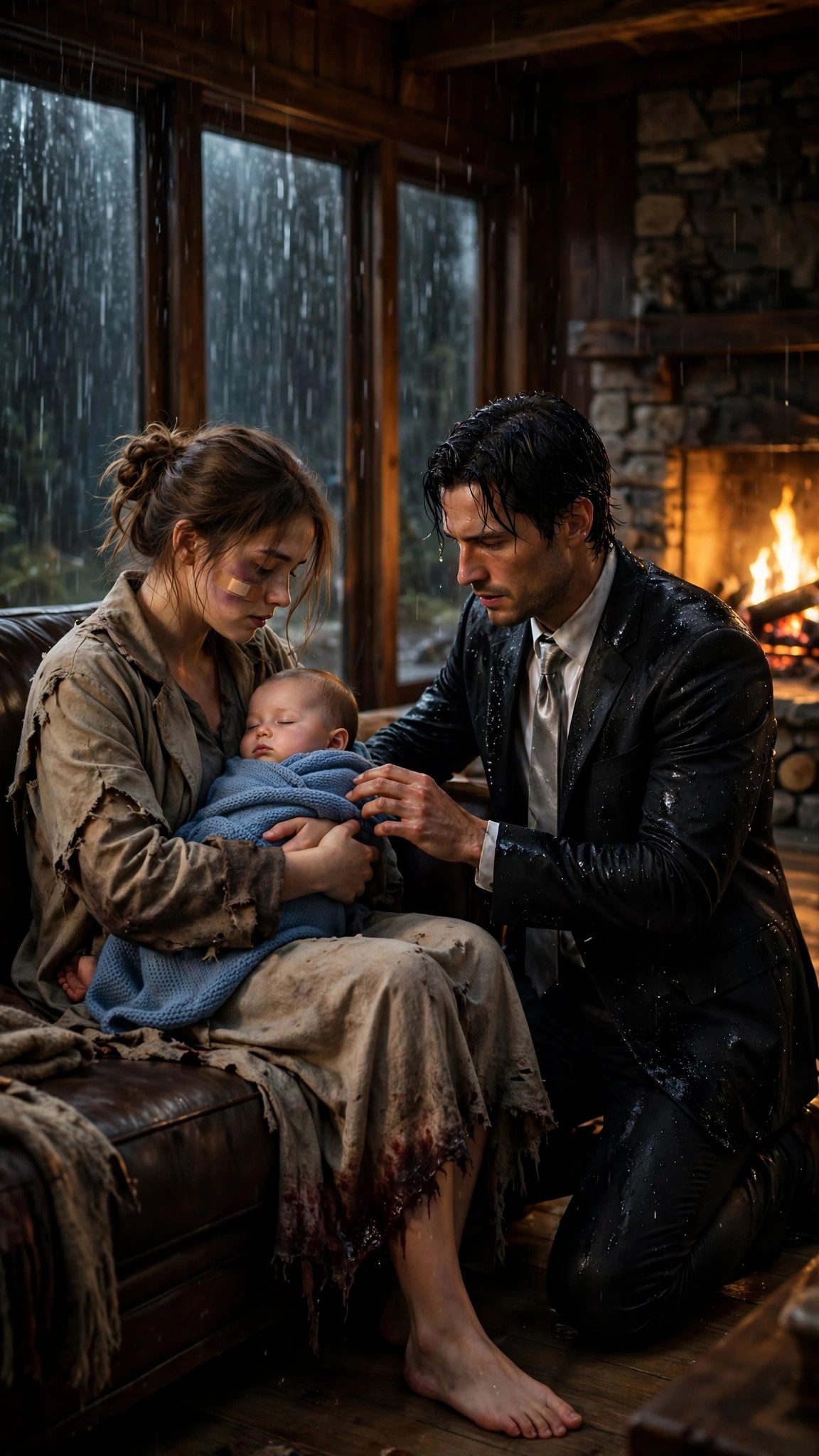
    Blood had dried almost black along the hem of my torn beige coat, one shoe was gone, and my swollen face still burned where they had hit me — but none of that mattered, because the six-month-old baby sleeping against my chest was alive.

    I had no idea that when Gabriel Kane finally walked through the safe-house door, the most feared man in Chicago would stop cold at the sight of me holding the child he had spent three terrifying hours trying to find.

    My name is Claire Bennett, and I had never belonged anywhere near Gabriel Kane's world.

    For two years, I worked quietly in the accounting division of companies he secretly controlled. Most people saw me as harmless — a soft-spoken woman in cardigans and sensible shoes who apologized when someone else bumped into her. Gabriel knew better.

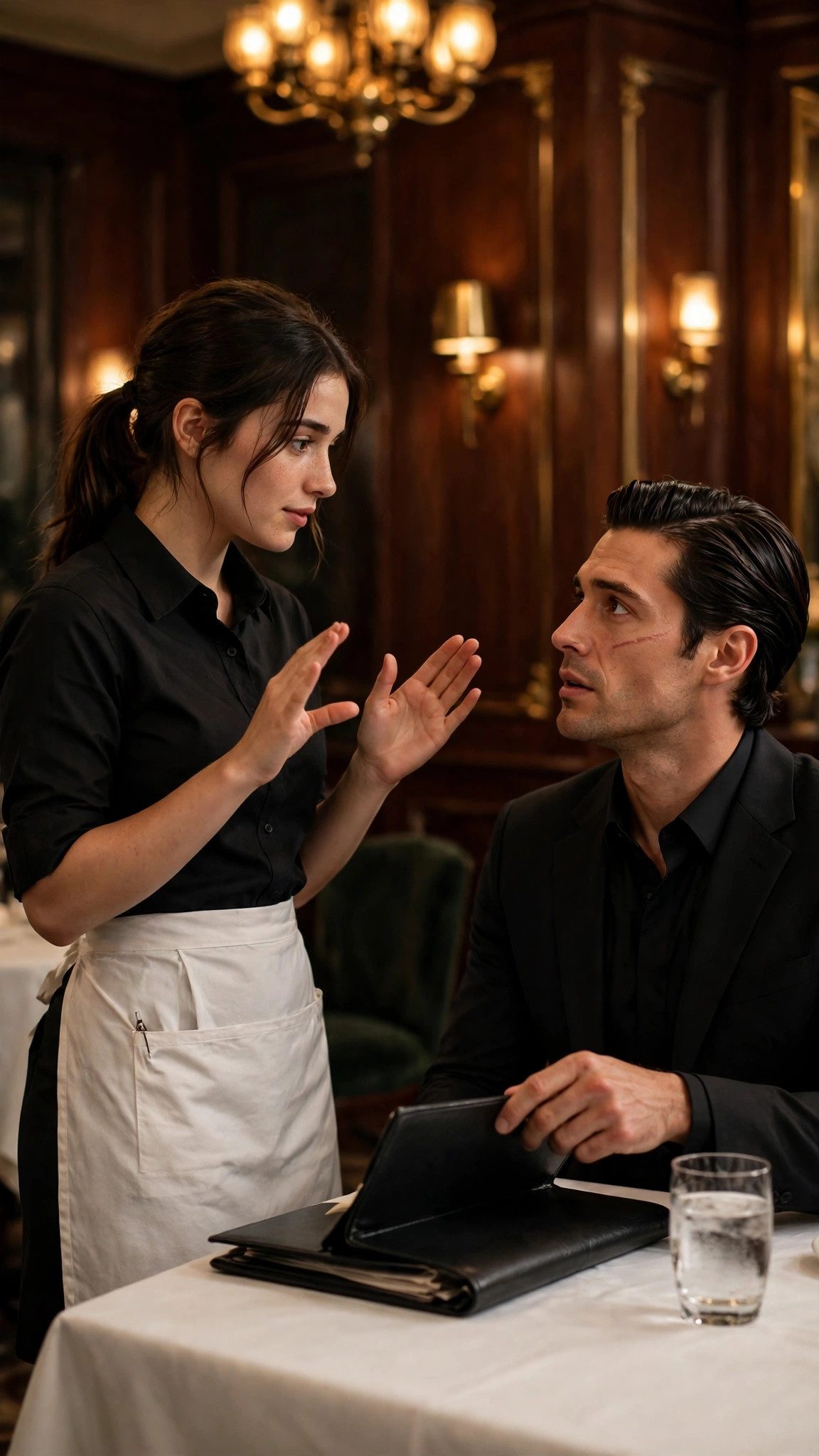
    The first time I entered his office, a senior manager had spent nearly an hour explaining how almost two million dollars had somehow "disappeared" from a construction subsidiary. I waited until he finished, slid a folder across Gabriel's desk, and said, "The money didn't disappear. Someone split it into seventeen smaller payments because they assumed nobody checks invoices under one hundred twenty thousand." I named the thief. I was right.

    Gabriel promoted me within a week, though I never understood why he also moved my office into one of his most secure buildings. I thought he valued my work. I didn't know he had been watching me far more closely than that.

    That night, none of it mattered.

    My car had broken down before a downtown meeting, so one of Gabriel's drivers offered me a ride in the convoy. I should have known something was wrong when the GPS signal cut out. Fully loaded SUVs boxed us in beneath the Lower Wacker Drive tunnel. Men came from both sides. Gunfire cracked through the tunnel. Then someone grabbed baby Eli Kane.

    They took me with him.

    I got caught in the ambush by trying to protect Eli. They took us to an abandoned shipping warehouse near Hammond and zip-tied my hands while Eli screamed. In that moment, he panicked and demanded he be shut up. Here was the moment I understood what it meant to lose everything.

    They are not taking this baby.

    The zip ties were loose enough for me to work one hand free. When the guard stepped inside, I hit him with a fire extinguisher. Hard. I stole his key card, grabbed Eli, and ran through a service corridor while alarms screamed behind me. I slid into a maintenance drainage, making sure that the kidnapper didn't find them. Eli cried all the way. I hid them under the cabin until I could hear the helicopter. They were looking for a man named Asher.

    Then I found the local surveillance camera. When I finally made it to the nearest exit, I reached Gabriel's Lincoln Park safe house. Then my body finally gave out.

    The next thing I vaguely remembered was warmth, rain pounding against the windows, and Eli's tiny fingers curled into my coat collar as if he was afraid I'd disappear next. Somewhere nearby, a man whispered, "Don't wake her." Another voice answered, low and lethal. "What did you say?"

    Even half-conscious, I knew that voice. Gabriel.

    His security captain, Mason, didn't back down. "I said don't wake her, boss. Doctor says she's been through enough today."

    Footsteps came closer. Then silence. I didn't open my eyes, but I felt someone kneel beside the sofa. A finger touched Eli's cheek. For one strange second, the room seemed to stop breathing.

    I knew Gabriel's older brother and sister-in-law had died eleven months earlier. Eli was all Gabriel had left. His brother had never gotten a chance to see his nephew. Tonight, someone had gotten through Gabriel's security, slipped past his drivers, and taken his nephew. And I had brought him back.

    Mason's voice came quietly from across the room. "She drove twenty-eight miles like that."

    Gabriel said nothing. Then I heard him ask, almost too softly to recognize, "With those injuries?"

    My eyelids finally fluttered open. Gabriel Kane was on one knee beside me, soaked from the storm, his black hair dripping rain onto his silver tie. But he wasn't looking at Eli anymore. He was looking at me. And the expression on the face of Chicago's most dangerous man made my heart stop.

    That was how it started. But to understand why a woman like me ended up on a sofa in a mafia safe house with a baby that wasn't mine and the most feared man in Chicago kneeling in front of me, you have to go back to the beginning. Not to the tunnel. Not even to the morning my car broke down. You have to go back two years, to a grey Tuesday in an office nobody important ever visited, when I walked into a room full of men who thought numbers were boring and proved that numbers never lie.

    I was twenty-seven then, and I had spent my whole life being the quiet one. I grew up in a small house in Evanston with a mother who taught piano and a father who fixed other people's cars and told me that the loudest person in the room is usually the one with the least to say. I learned to listen. I learned to watch. I learned that if you sit still long enough, people forget you are there, and when people forget you are there, they say the truth out loud.

    I studied accounting because numbers made sense in a way people never did. Numbers did not flatter you. They did not lie to your face and steal from you behind your back. They added up, or they didn't, and when they didn't, there was always a reason. I liked reasons. I liked finding them.

    My first job after college was at a mid-sized firm downtown, auditing freight companies. It was dull and honest work, and I was good at it in the way that quiet people are good at things nobody notices until something goes wrong. Then one afternoon, a recruiter called with an offer that paid almost twice what I was making, for a position in the accounting division of a holding company called Kane Meridian Group. I had never heard of it. I took the interview because the money would let my mother retire her piano students a year early, and I took the job because the man who interviewed me looked at my work the way my father used to look at an engine — like he could hear what was wrong with it before he opened the hood.

    I did not know then that Kane Meridian was one of a dozen companies Gabriel Kane controlled, or that Gabriel Kane was the man the newspapers called the most feared in Chicago and never photographed. I did not know that the quiet office on the fourteenth floor, with its grey carpet and its humming fluorescent lights, sat inside one of the most secure buildings in the city. I only knew that my desk had a window, that my supervisor left me alone, and that the ledgers they gave me were messier than any I had ever seen.

    Messy ledgers are a gift to a person like me. Most people see a mess. I see a map.

    For the first year, I did ordinary work. I reconciled accounts. I flagged duplicate payments. I caught a vendor overcharging us by eleven thousand dollars over six months, and I wrote it up in a memo so plain and so polite that nobody could argue with it. My supervisor, a tired man named Harold Finch who had worked for the company for thirty years, read my memo twice and said, "Huh." Then he started giving me the files nobody else wanted. The files with the gaps. The files where the numbers almost added up, but not quite.

    I liked those files best. A gap is a question, and I have never been able to leave a question unanswered.

    It was a Thursday in October, eighteen months into the job, when Harold put a thick folder on my desk and said the construction subsidiary was missing almost two million dollars and nobody could find it. The subsidiary's senior manager, a loud man named Peter Aldous, had already spent an hour in a meeting explaining that the money had simply disappeared — market conditions, bad quarter, accounting error, nobody's fault, certainly not his. The meeting had ended with everyone nodding, because it is easier to nod than to ask a second question.

    Harold didn't nod. He put the folder on my desk and said, "Take a look. Quietly."

    I took the folder home that night. I spread the invoices across my kitchen table. I made tea I forgot to drink. And somewhere around midnight, I saw it — not one big theft, but seventeen small ones, each just under one hundred twenty thousand dollars, each routed through a different vendor name, each approved by the same signature. Someone had split the money into pieces small enough to slip under the review threshold, because they assumed nobody checks invoices under one hundred twenty thousand.

    I checked invoices under one hundred twenty thousand. That was my whole job, as far as I was concerned.

    The next morning I walked into Gabriel Kane's office for the first time. I had never met him. I had heard his name the way you hear a storm warning — from other people, in lowered voices, with a glance toward the door. Peter Aldous was already there, mid-sentence, explaining again how the money had disappeared. He stopped when I came in, the way a man stops when a waitress walks into a board meeting. He looked at my cardigan. He looked at my sensible shoes. He smiled the way men smile when they think a woman is about to apologize for being in the room.

    I did not apologize. I waited until he finished. Then I slid my folder across Gabriel's desk and said, "The money didn't disappear. Someone split it into seventeen smaller payments because they assumed nobody checks invoices under one hundred twenty thousand."

    The room went quiet. Gabriel Kane looked at me for a long time. He was younger than I expected — thirty-six, maybe thirty-seven — with black hair, grey eyes, and a face that gave away nothing at all. He opened my folder. He read the first page. He read the second. Then he looked up at Peter Aldous, and something in his expression made Aldous take a step backward.

    "Is this true?" Gabriel asked him.

    Aldous opened his mouth. Closed it. Opened it again. "There may have been some — irregularities — in the approval process —"

    "You're fired," Gabriel said. He said it the way another man might say "the meeting is over." Then he turned back to me. "What's your name?"

    "Claire Bennett," I said.

    "You're promoted, Miss Bennett. Effective immediately." He stood up. The meeting was over. As I left, I heard him say to someone behind me, "Move her office. Fourteenth floor, east wing. The secure one."

    I thought he valued my work. I didn't know he had been watching me far more closely than that.

    I found out later, in pieces, the way you find out most things about Gabriel Kane — from other people, in lowered voices, when they thought I wasn't listening. He had been watching me for months before that meeting. Not because of the money. Because of the way I worked. Because I came in early and stayed late and never once asked for anything. Because I noticed things. Because I was the only person in the building who had ever looked at him the way you look at a problem you intend to solve, instead of the way you look at a man you intend to survive.

    He moved my office into the secure wing because he wanted me close. He told himself it was about the work. Men like Gabriel Kane are very good at telling themselves stories. But the truth was simpler than that, and I would not understand it until much later, on a rainy night in a safe house, with a baby asleep on my chest and his hand reaching for mine.

    The truth was that Gabriel Kane had been alone for a very long time, and he had just met the first person in years who was not afraid of him — because she had been too busy reading his numbers to notice she was supposed to be.

    That was the beginning. The tunnel came later. The warehouse came later. The blood on my coat came later. But the story really started in that office, with seventeen small payments and a man who looked at me like I was the first honest thing he had seen in years.

    I just didn't know it yet.

    What I knew, in those first months after the promotion, was smaller and simpler. I knew my mother called every Sunday and asked if I was eating properly, and I lied and said yes, and she pretended to believe me. I knew my apartment in Evanston had a radiator that clanged at three in the morning and a window that looked out over a maple tree I had watched change color for two autumns. I knew I took the same bus every morning, sat in the same seat, and read the same kind of novels — the ones where the quiet girl turns out to be the one who saw everything.

    I knew Gabriel Kane's name appeared in my inbox more often after the promotion. Not from him directly — never from him directly. From Harold, forwarding requests. From security, asking me to verify a signature. From a driver named Eddie, who started waiting by the elevator on the days I worked late, holding an umbrella he insisted I take, as if rain were a problem a woman in a cardigan could not solve on her own. I thought it was the company's way. I thought powerful men simply had more umbrellas.

    And I knew, without quite knowing how I knew, that the building had changed around me. The guards at the east wing door learned my name. The woman at the front desk started saving the good parking validation for me. Once, when a delivery man raised his voice at me in the lobby because I had signed for the wrong box, a man I had never seen before appeared at my elbow and said, very quietly, "Is there a problem here?" The delivery man apologized three times and left. I never saw that man again, but I saw the shape of it — the invisible hand, arranging the world so that nothing touched me.

    I should have asked questions. I should have wondered why a man like Gabriel Kane would spend that kind of attention on an accountant. But I was twenty-seven, and good at numbers, and terrible at understanding that I mattered to anyone. My mother had spent my whole childhood telling me I was too quiet for my own good. I believed her. I believed that the world belonged to loud people, and my job was to sit in the corner and add things up correctly.

    So when my car broke down on the morning of the downtown meeting — the old sedan coughing once, twice, and dying at a red light on Division Street, steam curling up from under the hood like a sigh — I did what I always did. I called the office, apologized for something that wasn't my fault, and started walking toward the bus stop with my folder under my arm. I had taken four steps when a black town car pulled up beside me, and Eddie rolled down the window and said, "Miss Bennett. Get in. The convoy's leaving in ten minutes, and Mr. Kane's drivers don't wait for anyone."

    I got in. I thanked him. I apologized for the trouble. And as the car pulled into traffic, I looked out at the city going past — the grey buildings, the grey sky, the ordinary morning — and I thought about how strange it was that my life, which had always been so small and so quiet, had somehow ended up inside a convoy of black SUVs, heading downtown with men who carried guns under their jackets.

    That was the morning everything changed. I just didn't know it yet.

  • Chapter 7: The Silence Between Us

    Chapter 7: The Silence Between Us

    The wedding was not what anyone expected. That was the first thing the newspapers said about it, and it was the only thing they got right.

    Salvatore Marquetti, the most feared man in Chicago, did not get married in a cathedral. He did not get married in a hotel ballroom. He did not get married in a room full of politicians and businessmen pretending they were not afraid of him.

    He got married in the garden of the Westside Community Center, on a Saturday afternoon in June, under a white canopy that Noah and the children had decorated with paper butterflies. There were forty guests. My parents sat in the front row, my mother crying into a handkerchief, my father holding her hand. Noah stood beside me as my best man, wearing a suit he had picked out himself, his hair combed back, his hands steady. Rocco, Dante, and Marco stood beside Salvatore, three large men in dark suits who looked profoundly uncomfortable in a garden full of children, and who kept glancing at the paper butterflies as if they might be a trap.

    The ceremony was short. The officiant was a woman named Mrs. Delgado, who ran the community center and had known me for four years, and who had cried when I told her I was getting married, and who had immediately started planning the garden.

    When it came time for the vows, Salvatore did something that made every person in that garden go completely still. He did not speak them aloud. He signed them.

    "I, Salvatore Marquetti," he signed, his hands moving slowly and clearly so that everyone could follow, "take you, Tessa Hayes, to be my wife. I promise to listen to you, even when I cannot hear you. I promise to learn your language, the way you learned mine. I promise that you will never sit in a room full of people you love and feel alone again. And I promise that our home will never be silent in the way my home was silent. It will be full of hands, and laughter, and children, and music you can feel through the floor."

    I cried. I had not meant to cry. I had told myself I would not cry. But I cried, and Noah handed me a handkerchief, and my mother cried harder, and even Rocco, the largest man I had ever met, wiped his eyes with the back of his hand and pretended he had something in them.

    Then it was my turn, and I signed my vows back to him, in front of everyone, my hands steady even though my heart was not.

    "I, Tessa Hayes," I signed, "take you, Salvatore Marquetti, to be my husband. I promise to be your ears when you need them, and your voice when you need that, too. I promise to never let anyone use your silence against you. I promise to teach our children to sign before they can speak, so that they will never know a world where hands are quiet. And I promise that the silence between us will never be empty again. It will be full of everything we have to say."

    Mrs. Delgado pronounced us married, and Salvatore kissed me, and the children cheered, and the paper butterflies fluttered in the June breeze, and for the first time in my life, I understood what it felt like to be completely, entirely, without reservation, happy.

    But the wedding was not the end of the story. It was the beginning of something neither of us had expected.

    Three months after the wedding, Salvatore did something that shocked Chicago more than the wedding had. He held a press conference. Not in a hotel. In the community center, in the same garden where we had been married, with the same white canopy and the same paper butterflies. He stood at a podium, and he looked out at a room full of reporters, and he did something no one in his world had ever done before.

    He told the truth.

    "My name is Salvatore Marquetti," he signed, and an interpreter — me, standing beside him, my hands moving in time with his — translated for the cameras. "Six years ago, a bomb planted by Vincent Castellano killed my father and took my hearing. I have been deaf ever since. I hid it, because in my world, a weakness is a death sentence. I hid it from my uncles, from my cousins, from my rivals, from everyone except three men and one teacher who is no longer with us. I hid it because I was afraid. I am done being afraid."

    The room went silent. Reporters stared. Cameras flashed. And then, slowly, a woman in the front row stood up and began to applaud. She was the mother of Maya, the little girl with the hearing aids, and she was crying, and she was clapping, and one by one, the whole room joined her.

    That night, the story was on every news channel in Chicago. "Mafia Boss Reveals Deafness." "Marquetti Breaks Silence." "The Most Feared Man in Chicago Speaks With His Hands." Some of the coverage was cruel. Some of it was kind. Most of it was confused. But none of it mattered, because Salvatore had done what he had needed to do, and he had done it in the open, and no one could use it against him anymore.

    A week later, he announced the foundation. He called it the Silence Between Us Foundation, and its mission was simple: to teach American Sign Language to the families of deaf children, for free, in every neighborhood in Chicago, and to fund hearing aids, cochlear implants, and speech therapy for children whose families could not afford them. He funded it himself, with money from his legitimate businesses, and he put Noah in charge of it, because Noah was the only person he trusted to run it the way it needed to be run: with patience, and with love, and with the understanding that a deaf child is not a broken child, but a child who speaks a different language.

    Noah took to the work the way he had taken to everything that mattered: completely. He hired teachers. He opened classes in five neighborhoods in the first year, and ten in the second. He designed the foundation's logo himself — two hands, open, reaching toward each other, with a butterfly between them. Maya, the little girl who had laughed at the word for "butterfly," was one of the first students. Her mother told me, a year later, that Maya had started talking to everyone, that she had made friends, that she had stopped believing she was stupid. "She thinks she's a butterfly now," her mother said, laughing through tears. "She says butterflies don't need to hear to fly."

    Brett Calloway was released from prison after eighteen months. He wrote me a letter. It was short, and it was clumsy, and it said, "I am sorry. I was stupid, not evil. You were right." I never wrote back. I did not need to. Salvatore had forgiven him the night in the private dining room, when he had let him live, and that was enough. Some people do not need your forgiveness. They need your indifference, and the knowledge that you have moved on to a life so full they are no longer a part of it.

    Candace and Priya, the two waitresses who had laughed with Brett, both wrote to me as well. They apologized. They asked if they could volunteer at the foundation. I said yes, because I had learned that the best revenge is not punishment, but invitation. They now teach the beginner's class on Tuesday nights, and they are good at it, and they tell every new parent the same thing I told Maya's mother: your child is not broken. Your child is waiting for you to learn their language.

    As for Salvatore and me, we live in the house on the lake now, the one he never visited because the silence there was too loud. It is not too loud anymore. We have filled it with sound we can feel: the piano, which he plays every evening, badly and joyfully, his hands finding the chords through the vibration of the wood. The children from the foundation, who come on Sundays to practice their signs in the garden. Noah, who comes for dinner every Friday, and who has started dating a woman named Sofia, a teacher at the foundation, who signs beautifully and laughs at his jokes a second before he finishes them, which is exactly the way love should work.

    And one evening, about a year after the wedding, I was standing in the kitchen, making dinner, and Salvatore came up behind me and wrapped his arms around me, and he signed, over my shoulder, where I could see his hands in the reflection of the window, "Do you remember the first night? In the private dining room?"

    "Of course," I signed back.

    "I thought you were going to humiliate me," he signed. "I thought you were going to laugh at me, the way everyone laughs at the deaf man who can't hear the joke."

    "I thought the same thing about you," I signed. "I thought you were going to humiliate me, the way everyone laughs at the quiet waitress who doesn't fit in."

    "We were both wrong," he signed.

    "We were both right," I signed back. "We were both afraid. And then we weren't."

    He turned me around, and he looked at me, and his face did the thing it had done that first night, the thing it had not done in six years before I walked into his room: it relaxed. Completely. The way a person's face relaxes when they come home.

    "I love you," he signed. "In every language I know."

    "I love you," I signed back. "In every language I know. And in the ones I'm still learning."

    Outside, the lake was gray and quiet, and the house was full of the vibration of the piano, and the smell of dinner, and the sound of Noah laughing in the next room, and I thought about the girl I had been at twelve years old, sitting outside her brother's bedroom door, talking to the wood, refusing to let silence win.

    She would not have believed this life. She would not have believed that the silence she feared would become the thing that saved her. She would not have believed that a joke meant to humiliate her would lead her to the man who would love her, and to the family she would build, and to the foundation that would teach a thousand children that they were not alone.

    But it did. And it was not a joke. It was the beginning of everything.

    The silence between us was never empty. It was full of hands, and laughter, and love, and all the things we had to say. It was full of us. And it always will be.

    One year after the wedding, on our first anniversary, Salvatore took me back to Bellini House. Not to the private dining room. To the main room, where I had served a thousand dinners, where I had been nobody, where I had carried trays for four years while the world looked straight through me. He had reserved the whole restaurant, every table, and he had invited everyone who mattered: my parents, Noah and Sofia, Rocco and Dante and Marco, Mrs. Delgado and the children from the foundation, Mr. Delgado and the staff who had stayed, and even Candace and Priya, who had learned to sign and who now taught the beginner's class on Tuesday nights.

    He stood up in the middle of dinner, and he raised his glass, and he looked at me, and he signed, in front of everyone, "One year ago, I walked into this restaurant and I was a man who ate alone. Tonight, I am a man who eats with his family. Tessa taught me that silence is not the absence of sound. It is the presence of love, waiting to be spoken. And she taught me to speak it."

    Everyone applauded. Noah stood up and signed, "To my sister, who learned my language before she knew she would need it. And to Salvatore, who learned it because he loved her. May your silence always be full."

    My mother cried. My father cried. Even Mr. Delgado wiped his eyes with a napkin and pretended he had something in them.

    After dinner, Salvatore took me out to the terrace, where the city lights stretched out below us, and he held my hands, and he signed, "I have one more thing to tell you."

    "What?" I signed back.

    He smiled, that small careful smile, the one I had first seen in the private dining room, the one that had transformed his face. "Mrs. Reyes told me, on our last lesson, that one day I would meet someone who spoke my language, and I would not have to hide anymore. She was right. But she didn't tell me the best part."

    "What's the best part?" I signed.

    "The best part," he signed, "is that you didn't just speak my language. You taught it to a whole city. You taught it to children who thought they were broken. You taught it to mothers who thought they had lost their babies. You taught it to me. And because of you, there are a thousand people in Chicago tonight who are a little less alone than they were a year ago."

    I looked at him, and I thought about the girl I had been at twelve, sitting outside her brother's bedroom door, talking to the wood. I thought about Mrs. Whitfield, and her husband, and the loneliest thing in the world. I thought about Maya, and the word for "butterfly," and the way her mother had cried. I thought about Noah, and Sofia, and the foundation, and the piano, and the paper butterflies in the garden.

    "I didn't do it alone," I signed. "You did it with me. We did it together. That's how it works. That's how it always worked. Two people, learning each other's language, one hand at a time."

    He kissed me then, under the city lights, with the restaurant full of the people we loved behind us, and the lake dark and quiet in the distance, and I understood, finally and completely, what Mrs. Reyes had meant all those years ago, in a room with the curtains drawn.

    She had meant that silence is not an ending. It is a beginning. It is the space between two people, waiting to be filled. And the only thing you need to fill it is the willingness to learn.

    We learned. And we are still learning. And we always will be.

    The End.
    THE END

  • Chapter 6: What the Silence Hid

    Chapter 6: What the Silence Hid

    The next morning, Salvatore called a meeting at his house. Not at the office. Not at Bellini House. At his house, a tall stone building on the lake with windows that looked out over gray water, and a piano in the living room covered in dust.

    Noah was there. Rocco had picked him up at dawn and brought him to the house before the sun was fully up, and Noah was sitting on the couch with a cup of coffee he had not touched, his hands folded in his lap, trying very hard not to look frightened. When I walked in, he stood up and signed, "Are you all right?"

    "I'm all right," I signed back. "Are you?"

    "I'm all right," he signed, but his hands were shaking, and I knew he was lying, and he knew I knew.

    Salvatore came into the room, and he looked at Noah, and he did something I did not expect. He walked over to my brother, and he signed to him directly, slowly and clearly, "Thank you for protecting your sister. You are a brave man."

    Noah stared at him. Then he signed back, "She protected me first. She always does."

    Salvatore nodded, and for a moment, the most feared man in Chicago and my little brother looked at each other like two men who understood something no one else in the room could understand. Then Salvatore turned to Marco and Dante, and his face went hard.

    "Tell me everything," he signed.

    Marco laid it out. Brett had been talking in bars for three weeks. At first, no one believed him. Then he started telling a specific story: the private dining room, the waitress, the sign language, the three men. He told it to a man named Eddie Marcone, who worked for Castellano. Eddie paid him five thousand dollars. Then Brett told him more: the Thursdays, the black car, the way Salvatore never answered when spoken to from behind. Eddie paid him another five thousand. Then Brett told him about me. About Noah. About the community center.

    "Castellano thinks he has a weakness," Marco signed. "He thinks he can use the girl to get to you. He thinks he can use the brother to get to the girl."

    "He's right," Salvatore signed, and the room went very quiet. "He can use them. That's why we're going to let him try."

    I stared at him. "What do you mean?"

    "I mean," Salvatore signed, his hands moving with cold precision, "that Castellano is going to hear something tonight. He's going to hear that I'm meeting a shipment at the old grain docks at midnight. He's going to hear that I'm bringing only two men. He's going to hear that I'm deaf and alone and afraid. And he's going to come, because men like Castellano always come when they think they smell blood."

    "And then?" I signed.

    "And then," Salvatore said, "he's going to find out what happens when you hunt a man who has been listening with his eyes for six years."

    The plan was simple, and it was terrifying. That night, at midnight, Salvatore would go to the grain docks with Rocco and Dante, exactly as Castellano expected. Marco would stay behind with Noah and me, at the house, with the doors locked and the lights off. And when Castellano's men arrived, they would find not a frightened deaf man, but a trap that had been six years in the making.

    But there was one part of the plan Salvatore did not tell me until we were alone, standing by the piano in the living room, the dust thick on the keys.

    "I need you to be there," he signed. "Not at the docks. At Bellini House. Castellano will send someone to watch the restaurant, to make sure you're not with me. I need you to be visible. I need you to serve dinner in the main room, where everyone can see you, so Castellano thinks you're safe and I'm alone."

    "That's dangerous," I signed.

    "Everything is dangerous now," he signed back. "But if you're at Bellini House, in a room full of people, with Mr. Delgado and the staff watching, Castellano won't touch you. He needs you alive. You're his leverage. He won't waste his leverage."

    I wanted to argue. I wanted to tell him I was not a piece on a chessboard. But I looked at his face, and I saw something I had never seen there before: fear. Not for himself. For me. And I understood that he was asking me to trust him, the way I had asked him to trust me on the night in the private dining room, and I nodded.

    "All right," I signed. "But you come back. Do you understand? You come back."

    He looked at me for a long moment, and then he reached out and touched my face, very gently, with the back of his hand, the way you touch something precious and fragile.

    "I always come back," he signed. "It's the only thing I'm good at."

    That night, I went to Bellini House, and I served dinner in the main room, and I smiled at the customers, and I carried trays, and I pretended that my heart was not pounding so hard I thought everyone could hear it. Mr. Delgado watched me from the bar, his face tight, and I knew he knew something was wrong, and I knew he was not going to ask.

    At eleven-forty, a man walked into the restaurant. He was tall, with a scar on his hand, and he sat at the bar and ordered a drink, and he watched me. I knew who he was. He was one of the men who had come to the community center. He was Castellano's man, and he was there to make sure I was where I was supposed to be.

    At midnight, my phone buzzed. It was Marco. One word: "Done."

    I did not know what "done" meant. I did not know until an hour later, when Rocco came to the restaurant and walked straight through the main room, past every table, and stopped in front of the man at the bar, and said, in a voice loud enough for the whole room to hear, "Mr. Marquetti would like a word with you."

    The man went white. Rocco took him by the arm and led him out, and the whole restaurant went silent, and I stood there with a tray in my hands, and I understood that something had happened at the grain docks, and that whatever it was, it was over.

    Salvatore came to Bellini House at one in the morning. He walked into the main room, and every person in the restaurant turned to look at him, and he walked straight to me, and he took the tray out of my hands, and he set it down on the nearest table, and he signed, in front of everyone, "It's over. Castellano is finished."

    Later, Marco told me what had happened. Castellano had come to the docks with twelve men, expecting to find Salvatore alone and afraid. Instead, he had found Salvatore waiting, with twenty of his own men hidden in the grain silos, and the police — not the police Castellano had paid, but federal agents Marco had been feeding information to for months — waiting on the road. Castellano's men had been arrested. Eddie Marcone had been arrested. And Vincent Castellano himself had been taken into custody with a ledger in his briefcase, a ledger that detailed six years of bribes, bombings, and murders, including the bomb that had killed Enrico Marquetti.

    Brett had been arrested too. He had been found in a bar on the South Side, drunk, counting his money, and when the agents took him away, he had screamed that he had only been telling the truth, that he had only been trying to make some money, that he had not meant for anyone to get hurt.

    Salvatore had let him live. That was the most merciful thing Salvatore Marquetti had ever done, and I knew it, because I had asked him to, on the night in the private dining room, when I had signed, "Firing him is enough."

    He had remembered. He remembered everything I ever signed to him.

    That night, after the restaurant closed, Salvatore took me home. Not to my apartment. To his house on the lake. And as we stood in the living room, looking out at the gray water, he signed to me, slowly, the way a man signs when he has been practicing something for a very long time.

    "Tessa," he signed. "For six years, I have lived in silence. Not the silence of not hearing. The silence of not being known. You are the first person who has ever known me, all of me, and stayed. I don't know how to ask for what I want, because I have never asked anyone for anything. But I am asking you now. Stay. Stay with me. Not as my interpreter. Not as my server. As my wife."

    I looked at him, and I thought about the Thanksgiving joke, and the smile that came a second too late, and the library book on the kitchen table, and the community center, and the little girl named Maya, and the word for "butterfly," and I thought about everything I had ever learned about silence, and about what it meant to break it.

    "Yes," I signed. "Yes. I will stay."

    But staying meant waiting, and waiting was the hardest part. The hours between that moment in the living room and midnight stretched out like a road with no end, and I spent them at Bellini House, carrying trays and smiling at customers, while every nerve in my body screamed at me to run to the docks, to be there, to see with my own eyes that he was safe.

    Mr. Delgado found me in the kitchen at ten o'clock, during a rare quiet moment, and he closed the door behind him, the way he had closed it the morning after the private dining room night.

    "Tessa," he said, and his voice was low and careful, "I don't know what's happening tonight. I don't want to know. But I want you to know something. In twenty years of running this restaurant, I have never seen a man look at a woman the way Mr. Marquetti looks at you. Not with wanting. With gratitude. Like you gave him something he thought he'd lost forever. Whatever happens tonight, you did a good thing. Don't forget that."

    I stared at him. Mr. Delgado had never said anything kind to me in four years. He had barely said anything to me at all. And now, on the worst night of my life, he was telling me I had done a good thing, and I felt tears come to my eyes, and I blinked them back, because I was working, and waitresses do not cry on the floor.

    "Thank you," I said.

    He nodded, and he opened the door, and he went back to the dining room, and I stood in the kitchen for a moment, holding a tray, breathing slowly, the way Noah had taught me to breathe when I was frightened: in for four, hold for four, out for four. In for four, hold for four, out for four.

    At eleven o'clock, Noah texted me. He was at Salvatore's house with Marco, and he was safe, and he wanted me to know that he was thinking of me, and that he loved me, and that whatever happened, he was proud of me. I texted him back with shaking fingers: "I love you too. Stay inside. Don't open the door for anyone."

    At eleven-thirty, my mother called. She never called during my shift. "Tessa," she said, "your father and I are praying for you. We don't know what's happening, but Noah called us, and he told us you're in the middle of something, and we want you to know that we love you, and that whatever it is, you are braver than you think."

    I had to hang up before I started crying. I put my phone in my pocket, and I picked up my tray, and I went back to work, because work was the only thing I knew how to do when the world was falling apart.

    The man with the scar on his hand arrived at eleven-forty, just as Marco had said he would. He sat at the bar and ordered a whiskey, and he watched me, and I served him the way I served everyone, with a smile that did not reach my eyes, and I thought about how strange it was that my life had become a play, and I was an actress in it, and the audience was a man who wanted to destroy the person I loved.

    At midnight, my phone buzzed. One word from Marco: "Done."

    I did not know what "done" meant. I stood in the middle of the dining room with a tray in my hands, and the word echoed in my head, "done, done, done," and I thought about all the things it could mean, good and bad, and I felt my knees go weak, and I had to set the tray down on the nearest table before I dropped it.

    Then Rocco walked in, and the whole restaurant went silent, and he took the man at the bar by the arm, and he led him out, and I knew. I knew that Salvatore was alive. I knew that the trap had worked. I knew that Castellano was finished. And I knew that the waiting was over.

    I did not cry then either. I waited until the restaurant closed, until the last customer had left, until Mr. Delgado had locked the front door, and then I sat down at the bar, and I put my head in my hands, and I cried for a very long time, for the fear, and for the relief, and for the sheer impossible luck of having survived a night that could have ended so differently.

    And when I finally looked up, Salvatore was standing in the doorway, watching me, and he walked over, and he did not say a word, signed or spoken. He just held out his hand. And I took it. And we walked out into the cold Chicago night together, and the city was quiet around us, and the lake was dark, and the stars were out, and I thought, for the first time in my life, that the silence between us was not something to be afraid of.

    It was something to be grateful for.

  • Chapter 5: The Price of a Secret

    Chapter 5: The Price of a Secret

    It was a Tuesday, not a Thursday, when everything changed. I was at the community center, helping a new mother learn the alphabet, when my phone buzzed. It was Rocco.

    "Come to the warehouse on Fulton Street," the message said. "Now. Don't tell anyone. Bring nothing."

    My hands went cold. Rocco had never texted me before. I told the mother I had an emergency, I grabbed my coat, and I ran the six blocks to Fulton Street, my heart pounding so hard I could feel it in my throat.

    The warehouse was dark. Rocco was waiting by the side door, his face grim, and when he saw me he pulled me inside without a word and locked the door behind us.

    "Castellano knows," he said. "Brett told him. He's been talking in bars for three weeks, and last night he told the wrong person. Castellano's men are coming tonight. There's a meeting at the docks at nine, and Castellano thinks Salvatore will be there, and he thinks Salvatore won't hear them coming."

    I stared at him. "Does Salvatore know?"

    "He knows," Rocco said. "He's known for two weeks. He's been letting Brett talk. He wanted to know who would buy the information. Now he knows. But the meeting tonight is real, and Castellano's men are real, and if they get close enough, it won't matter that Salvatore knows. A man who can't hear a gun cocking behind him is a dead man."

    "Then why is he going?" I asked.

    "Because if he doesn't go, Castellano will know he was warned, and he'll disappear, and we'll never find him," Rocco said. "Salvatore is going to walk into that meeting, and he's going to pretend he doesn't know, and when Castellano's men move, he's going to need someone who can see what he can't hear."

    He looked at me. "That's you."

    I wanted to say no. I wanted to run back to the community center, back to the mothers and the children and the alphabet, back to the small safe life I had lived before I walked into that private dining room. But I thought about Noah, and I thought about the Thanksgiving joke, and I thought about Salvatore sitting alone in that room for six years, and I nodded.

    "Tell me what to do," I said.

    Rocco drove me to the docks. It was eight-thirty, and the sky was the color of bruised fruit, purple and orange and dark. The meeting was in a small office above a freight warehouse, and when we arrived, Salvatore was already there, sitting at a long table with Marco and Dante, reading papers as if it were any other night. When he saw me, his face did something I had never seen it do before: it went completely blank, the way a man's face goes when he is trying not to feel anything at all.

    "You shouldn't be here," he signed, fast and sharp. "This is not your world."

    "I'm here," I signed back. "That's all that matters."

    He looked at me for a long moment, and then he nodded once, and he pointed to a chair in the corner, behind him, where I could see the door and the windows and the whole room. "Sit there," he signed. "Watch everything. If you see something, sign it. Don't speak. Don't move. Just sign."

    I sat down. The meeting began. Three men I did not know came in, Castellano's men, smiling and shaking hands, talking about freight routes and warehouse space in voices I could barely follow. I watched their mouths. I watched their hands. I watched the way they kept glancing at the door.

    At nine-fifteen, one of them stood up to pour coffee, and as he walked past the window, I saw it: a reflection, a movement on the roof of the warehouse across the street, a man with something long in his hands. My blood went cold.

    I signed, fast, my fingers flying. "Roof. Across the street. A man with a rifle."

    Salvatore did not turn his head. He did not react at all. He simply set down his pen, very slowly, and signed to Dante, "Roof," and Dante stood up and walked to the window as if he were stretching, and then he nodded, almost imperceptibly, and Rocco was already moving toward the door.

    What happened next happened very fast and very quietly. Dante went out the back. Rocco went out the front. Marco stayed at the table, smiling at Castellano's men, talking about freight routes as if nothing were wrong. And I sat in my chair, my hands shaking, watching the door, waiting for the sound I would never hear.

    It never came. Ten minutes later, Dante came back, and he nodded, and Rocco came back, and he nodded, and Salvatore stood up and looked at Castellano's men with an expression I had never seen on his face before. It was not anger. It was something colder. Something final.

    "Tell Vincent," he said aloud, his voice low and rough, "that the next time he sends a man to my roof, I will send him back in a box."

    The three men went pale. They left without another word. And when they were gone, Salvatore turned to me, and his hands were shaking, and he signed, "You saved my life."

    "No," I signed back. "You saved mine. A month ago. In that room."

    He looked at me for a long time, and then he did something I did not expect. He reached across the table and took my hand, and he held it, and his hand was warm and steady, and I understood, in that moment, that something between us had changed forever, and that there was no going back to the way things had been.

    But the night was not over. As Rocco drove me home, my phone rang. It was Noah.

    "Tessa," he said, his voice shaking, and Noah never shook. "Two men came to the community center tonight. They asked about you. They asked if you worked at Bellini House. They asked if you knew Salvatore Marquetti. One of them had a scar on his hand. I told them I didn't know anything, but Tessa, they knew my name. They knew where I live."

    My blood turned to ice. Castellano had not just come for Salvatore. He had come for me. And he had come for my brother.

    "Stay where you are," I said. "Lock the door. Don't open it for anyone. I'm coming."

    I turned to Rocco. "They went after Noah."

    Rocco's face went hard. "Then it's war," he said. "And Castellano just made the biggest mistake of his life."

    He turned the car around, and we drove through the dark streets of Chicago, and I sat in the back seat with my hands clenched in my lap, and I thought about the little girl named Maya, and the word for "butterfly," and the promise I had made to myself when I was twelve years old, sitting outside my brother's bedroom door.

    I had promised I would never let my brother sit in a room full of people he loved and feel alone again. I had promised I would never let anyone use his silence against him.

    Castellano had just threatened my brother. And I understood, in that moment, that I was no longer just a waitress who knew sign language. I was a woman who had just declared war on the most dangerous family in Chicago, and I was not afraid.

    I was furious.

    Rocco drove fast, too fast, through streets I had walked a thousand times, and I sat in the back seat with my hands clenched so tightly my nails cut into my palms, and I thought about Noah at nine years old, throwing his hearing aid across the room, and I thought about the men who had come to the community center, and I thought about the fact that they had known his name, and his address, and where he worked, and I understood, for the first time in my life, what it felt like to be the person the monsters were coming for.

    When we got to Noah's apartment, the door was locked, and the lights were off, and for one terrible moment I thought we were too late. Then the door opened a crack, and Noah's face appeared, pale and frightened, and he pulled me inside and locked the door behind us, and he signed, fast and frantic, "They were here. Two men. They knocked for ten minutes. I didn't open the door. I called you. I called Rocco. I didn't know what else to do."

    "You did exactly right," I signed back, and I hugged him, hard, the way I had hugged him when we were children and the world was too loud for him, except now the world was too dangerous, and I was the one who was afraid.

    Rocco checked every room. He checked the windows. He checked the fire escape. Then he came back and said, "Pack a bag. You're both coming with me. Tonight. You're staying at Mr. Marquetti's house until this is over."

    Noah stared at him. "I have work tomorrow."

    "You don't have work tomorrow," Rocco said, not unkindly. "You have a war tomorrow. Pack a bag."

    We packed in silence, Noah folding his clothes with shaking hands, me throwing things into a bag without looking, and all the while I kept thinking about the community center, about the mothers and the children, about Maya and her hearing aids, and I wondered if the men had gone there too, and if anyone else was in danger because of me.

    "They didn't hurt anyone at the center," Rocco said, as if he could read my mind. "They asked questions. They left. They're not going to hurt children, Tessa. Even Castellano has lines he won't cross. He wants you. He wants Salvatore. He doesn't want a room full of deaf children on the evening news."

    "That's supposed to make me feel better?" I asked.

    "It's supposed to make you feel accurate," Rocco said. "Feelings come later. Right now, we move."

    At Salvatore's house, Marco was waiting with a pot of coffee and a map of the city spread out on the dining room table, and Dante was standing by the window, watching the street, and the whole house felt like a fortress, which I suppose it was. Noah sat on the couch, and I sat beside him, and Marco poured us both coffee, and for a while nobody said anything, because there was nothing to say that would make any of it less terrifying.

    Then Salvatore came in. He had been at the docks, dealing with the aftermath of the meeting, and his suit was rumpled, and there was a smudge of something dark on his sleeve, and he looked exhausted in a way I had never seen him look before. When he saw Noah and me on the couch, his face changed, and he walked over, and he knelt down in front of my brother, so that they were eye to eye, and he signed, slowly and clearly, "I am sorry. This is my fault. I brought this to your door."

    Noah looked at him for a long moment. Then he signed back, "It's not your fault. It's Castellano's fault. And Brett's fault. And my sister didn't do anything wrong. She just talked to you in the language I taught her."

    Salvatore stared at him. Then he did something I did not expect. He laughed. Not a big laugh. A small, surprised laugh, the kind of laugh a man makes when he has been carrying something heavy for a very long time and someone finally helps him set it down.

    "Your brother is braver than most of my men," he signed to me, and I nodded, because it was true, and because I had always known it.

    That night, Noah slept in the guest room, and I slept on the couch in the living room, because I could not bear to be far from him, and Salvatore sat up all night in the chair across from me, watching the door, watching the windows, watching the street, and every time I woke up, he was still there, awake, guarding us, and I understood something I had not understood before: that the most feared man in Chicago was afraid, too. He was afraid of losing us. He was afraid of the same thing I was afraid of. He was afraid that the people he loved would pay for his life.

    In the morning, over coffee, he told me the whole story. He told me about the bomb, about his father, about the six years of hiding, about the uncles who tested him, about the rivals who circled him, about Mrs. Reyes and the curtains drawn and the lessons in secret. He told me everything, in sign, slowly, his hands moving through the morning light, and I listened, and I did not interrupt, and when he finished, I took his hands in mine, and I signed, "Thank you for trusting me."

    "Thank you for staying," he signed back.

    And that was the moment I understood that I was not going to run. I was not going to go back to my small safe life. I was going to stay, and I was going to fight, and I was going to do it with my hands, in the language my brother had taught me, in the language that had saved Salvatore's life on a rooftop across from a warehouse, in the language that was going to save us all.

    Before I went to sleep that night, I did one more thing. I went to the window of the guest room, and I looked out at the dark street below, and I thought about Brett, sitting in a bar somewhere, counting his money, believing he had finally gotten his revenge. I thought about Castellano, planning his ambush, believing he had finally found the weakness he had been hunting for six years. And I thought about Salvatore, asleep in the next room, a man who had survived a bomb and six years of silence, and who was about to walk into a trap of his own making, trusting that the people who loved him would be enough to bring him home.

    I raised my hands to the window, where no one could see them, and I signed, to no one and to everyone, "We are coming for you. All of us. And we are not afraid."

    Then I went to bed, and I slept, and I dreamed of my brother's hands, and of paper butterflies, and of a man in a black suit, smiling a small, careful smile, in a room full of golden light.

  • Chapter 4: Private Room, Every Night

    Chapter 4: Private Room, Every Night

    The second Thursday, I arrived at Bellini House at six o'clock and found a black car waiting at the curb. Rocco, the largest of the three men from the private dining room, was leaning against it with his arms crossed, and when he saw me he straightened up and opened the back door without a word.

    "Mr. Marquetti sent me," he said, his voice low and rough. "He says you ride with me now. On Thursdays. So nobody bothers you on the way."

    I stared at him. "Nobody bothers me on the way."

    "They will," he said. "Now get in."

    I got in. It was the first time I had ever ridden in a car that cost more than my apartment building, and I sat very still with my hands in my lap, the way I used to sit in church as a child, afraid to touch anything. Rocco drove in silence, his eyes on the road, and after a few minutes he glanced at me in the rearview mirror.

    "He doesn't talk much," Rocco said. "Not since the accident. You know about the accident?"

    "I know he can't hear," I said. "I figured it out."

    Rocco nodded slowly. "Nobody knows. You understand? Nobody. Not his uncles. Not his cousins. If that gets out, men will come for him. Men have been trying to come for him for six years."

    "I won't tell anyone," I said, and I meant it. "I know what a secret like that costs."

    Rocco studied me in the mirror for another moment, and then he nodded again, and that was the end of the conversation. But I understood, in that moment, that I had just been tested, and that I had passed, and that passing mattered more than I knew.

    Salvatore was already in the private dining room when I arrived. He was reading his papers, the same leather folder, the same untouched glass of water. When I stepped into his line of sight, he looked up, and his face did something I had not seen it do the night before: it relaxed. Just slightly. The way a person's face relaxes when they come home.

    "Hi," I signed. "How was your week?"

    "Long," he signed back. "Yours?"

    "Long," I signed. "The usual."

    He smiled, that small careful smile, and then he set his folder aside, and for the first time, he did not pretend to be working. He simply sat there, watching me, waiting for me to speak, and I realized that he had been waiting all week for someone to talk to him.

    We talked for an hour that night. Not about business. Not about the family. About ordinary things. He asked about Noah, and I told him about the print shop, about the posters Noah designed, about the way Noah's boss had once asked him to design a menu for a wedding and he had made it so beautiful the bride had cried. He asked about the community center, and I told him about Maya, the little girl with the hearing aids, and the word for "butterfly," and the way her mother had cried. He asked about my parents, and I told him about my father, who drove a bus and still called me every Sunday, and my mother, who worked in a school cafeteria and still packed me leftovers in plastic containers like I was twelve years old.

    And he told me things, too. Small things, at first. He told me he had a house on the lake that he never visited, because the silence there was too loud. He told me he missed music, which surprised me, because I had never thought about what it would be like to lose something you had once loved. He told me he could still remember the last song he had ever heard, a jazz record his mother used to play in the kitchen, and that sometimes, when he was very tired, he thought he could almost hear it again, and then he would wake up and remember.

    I did not know what to say to that. So I did the only thing I could think of. I signed the chorus of the song for him, the way I remembered it from my own childhood, my hands moving through the air, and he watched me, and his eyes went very bright, and he did not look away until I had finished.

    "Thank you," he signed, and his hands were unsteady. "No one has done that for me in six years."

    After that, the Thursdays became something I looked forward to, which frightened me, because I had learned a long time ago not to look forward to things that belonged to other people's worlds. But I could not help it. Every Thursday, Rocco picked me up. Every Thursday, I served Salvatore his dinner, and then I sat down across from him, and we talked in the language that belonged to both of us, and the rest of the world went quiet in a way that felt like peace instead of loneliness.

    He started asking me to come on other nights, too. Not to Bellini House. To other places. To a gallery opening, where he needed someone to interpret for him without anyone knowing he needed an interpreter. To a meeting with a lawyer, where he needed me to sit beside him and sign the questions he could not hear. To his house, once, on a Sunday afternoon, where he showed me his mother's piano, still sitting in the corner of the living room, covered in dust, and asked me if I thought it was too late to learn to play it again.

    I told him it was never too late. I told him my brother had taught himself to draw at twenty, and that the piano had waited this long and could wait a little longer. He looked at the piano for a long time, and then he looked at me, and he said, in sign, "Will you teach me?"

    I did not know how to play the piano. But I said yes anyway, because I had learned that sometimes the most important thing you can do for a person is agree to try.

    We spent that Sunday afternoon with our hands on the keys, and he could not hear a single note, but he could feel the vibration through the wood, and he laughed, a real laugh, low and surprised, when he played a chord and felt it travel up through his arms. I laughed too. I had not laughed like that in a long time.

    That was the night I understood that I was falling in love with him. I understood it the way you understand that you have walked too far out into the water: suddenly, and all at once, and too late to turn back.

    I also understood that it was dangerous. Not because he was a dangerous man, although he was. Because his world was dangerous, and I was not part of it, and people who were not part of it did not survive in it for long. I had seen what had happened to Brett, and Brett had only laughed at the wrong person. I knew what would happen to me if anyone found out that the most feared man in Chicago was deaf, and that I was the one who knew.

    But I went back the next Thursday anyway. And the Thursday after that. And the Thursday after that.

    Meanwhile, outside the warm light of the private dining room, the world was moving. Brett Calloway, fired and humiliated, had not gone quietly. He had gone to a bar on the South Side, and he had drunk too much, and he had told anyone who would listen that Salvatore Marquetti was not what he seemed, that there was something wrong with him, that he had seen it with his own eyes. Most people laughed at him. One person did not.

    Vincent Castellano had been waiting six years for a weakness in Salvatore Marquetti. He had planted the bomb that killed Enrico. He had watched Salvatore survive it and rebuild, stronger and colder than before. He had tried everything: bribes, spies, ambushes. Nothing had worked.

    Now a bitter, drunken waiter was telling him that the great Salvatore Marquetti could not hear. Vincent did not laugh. Vincent listened. And Vincent began to make plans.

    He did not know that Rocco's men were already watching Brett. He did not know that Salvatore had expected exactly this. He did not know that the trap he was building was a trap Salvatore had already seen coming.

    But I did not know any of that either. Not yet. All I knew was that every Thursday, a black car waited for me at the curb, and every Thursday, I walked into a room full of golden light and sat across from a man who could not hear the world, and for one hour, the world went quiet for both of us, and it felt like the most honest thing I had ever known.

    One Thursday, about a month into our dinners, Salvatore asked me to come with him to a gallery opening. It was not a date. He was very clear about that, in the way men are clear about things they are not sure of. It was business. A gallery owner named Elena Vasquez was showing a collection of photographs, and Salvatore needed to be there, and he needed someone who could interpret for him without anyone knowing he needed an interpreter.

    I wore the only dress I owned that was nice enough, a dark blue thing I had bought on sale two years earlier, and I stood beside him in a room full of people drinking champagne and talking about art, and I signed everything anyone said to him, my hands moving low and close to my body so no one would notice, and he nodded and smiled and asked questions through me, and no one in that room had any idea.

    At one point, a woman came up to him and said something I could not quite catch, and I signed, "She says your father would have loved the photographs," and Salvatore's face changed, just slightly, and he said, aloud, "My father loved everything that was beautiful and useless," and the woman laughed, and I thought about how much it must cost him, every single day, to live like this, to pretend, to perform, to be a man who heard the world when he did not.

    After the gallery, we went back to Bellini House, and he ordered dinner, and he sat across from me, and he signed, "Thank you. I have never been to a gallery before. Not since the accident. I was afraid."

    "You were wonderful," I signed back. "No one knew."

    "That's the problem," he signed. "No one ever knows. That's the whole point of my life now. No one ever knows."

    I reached across the table and took his hand, before I could stop myself, and his fingers closed around mine, and we sat like that for a long time, not signing, not speaking, just holding hands in the golden light, and I understood that some conversations do not need words at all, signed or spoken. Some conversations are just two people sitting together, refusing to be alone.

    Another night, he took me to a meeting with his lawyer, a thin man named Mr. Kowalski who talked very fast and used words like "liability" and "indemnification," and I signed everything, and Salvatore watched my hands the way a man watches a lifeline, and afterward, in the car, he said, in sign, "Do you ever get tired of being my ears?"

    "Do you ever get tired of being my voice?" I asked him, because it was true: there were rooms I could not enter without him either, rooms full of powerful men who would never have looked at a waitress twice, and he had opened every door for me simply by standing beside me.

    He thought about that for a long time. Then he signed, "No. I never get tired of it. It's the best job I've ever had."

    We laughed about that, the two of us, in the back of a black car driving through the dark streets of Chicago, and I thought about how strange it was that the most feared man in the city and a waitress from Bellini House had found each other, and how neither of us had been looking, and how the universe had a sense of humor after all, even if it was a dark one.

    The piano lessons continued, too. Every Sunday afternoon, I went to his house, and we sat at the piano, and he played chords, and I told him which ones were major and which ones were minor, and he learned to feel the difference in his chest, the way a major chord felt like sunlight and a minor chord felt like rain. He was terrible at it, honestly. He hit wrong notes constantly. But he laughed every time, and I had never seen him laugh like that, free and unguarded, and I thought about how much of his life had been spent not laughing, and how much time we had to make up for.

    One Sunday, Noah came with me. He sat on the couch and watched us, and then he walked over to the piano, and he played a simple melody, something he had learned as a child, before the fever, and Salvatore watched his hands on the keys, and then he looked at Noah, and he signed, "You play beautifully."

    Noah signed back, "I can't hear it. But I can feel it. That's enough."

    Salvatore stared at him for a long moment, and then he nodded, slowly, and I saw something pass between them, something I could not name, something that belonged only to men who had lived in silence and learned to make peace with it.

    That was the night I understood that Salvatore was not just falling in love with me. He was falling in love with my family. With Noah. With the life I had built out of small things: Wednesday evenings, Sunday dinners, paper butterflies, a piano covered in dust. He was falling in love with the idea that a life could be small and still be enough. And I was falling in love with the idea that a man could be powerful and still be gentle. That a man could be feared and still be kind. That a man could be silent and still have everything to say.

  • Chapter 3: The Man Who Heard Nothing

    Chapter 3: The Man Who Heard Nothing

    Salvatore Marquetti had not always been silent. That was the first thing people got wrong about him, and it was the mistake that shaped everything else.

    He had been born into noise. His father, Enrico Marquetti, had run the West Side with a voice that could fill a room and a laugh that could fill a street, and young Salvatore had grown up in a house where the television was always on, where the radio played in the kitchen, where men argued about football and freight routes at the dinner table in voices that rose and fell like weather. He had been a loud child, by all accounts. He had talked too much. His mother used to say that he had been born mid-sentence and had never stopped since.

    That ended on a Tuesday in November, six years before the night Tessa walked into his private dining room.

    The bomb had been planted under his father's car. It was meant for Enrico. It was meant to send a message to every family on the West Side that the Castellanos were done waiting for territory. What the men who planted it did not know — what nobody knew — was that Salvatore had borrowed his father's car that morning to drive to a meeting at the docks, and that Enrico had taken Salvatore's car instead, because his own was in the shop.

    Salvatore was standing on the sidewalk outside the docks office when it happened. He was forty feet away. He remembers the flash first, a white-orange bloom that seemed to swallow the whole street, and then the sound, a sound so enormous it did not feel like a sound at all, but like a hand closing around his head and squeezing. He remembers being thrown backward. He remembers the pavement hitting his back. He remembers opening his eyes and seeing the sky, gray and ordinary, and thinking, very clearly, that the world had gone wrong somehow, because the sky should not look that ordinary after something like that.

    He could not hear the sirens. He could not hear the shouting. He could not hear his own breathing. He could hear nothing at all.

    The doctors told him later that the blast had ruptured both eardrums and damaged the nerves beyond repair. They used words like "profound" and "bilateral" and "permanent," and he nodded the way his father used to nod when he understood something terrible, and then he went home and did not speak to anyone for three days.

    His father was dead. His mother had died years earlier, of cancer, quietly, in a white room. His uncles wanted to take over the family. His rivals were already moving. And Salvatore Marquetti, thirty-three years old, the heir to half the West Side, could not hear a single word anyone said to him.

    He had two choices. He could tell the truth and watch his family's empire collapse, because in his world, a boss who could not hear was a boss who could not survive. A boss who could not hear a whisper in a crowded room could not hear a betrayal being planned. A boss who could not hear a gun cocking behind him was already dead. Or he could lie, and lie completely, and never let a single person outside his inner circle know.

    He chose the lie.

    It was not easy. It was the hardest thing he had ever done, and he had done hard things. He learned to read lips, which meant learning to watch people's mouths the way other men watched their hands. He learned to position himself in rooms so that he could see every face, so that no one could speak behind him. He learned to nod at the right moments, to smile at the right moments, to answer questions he had only half understood with answers vague enough to pass. He learned to eat alone, because eating alone meant no one expected him to follow a conversation. He learned to arrive late and leave early, because the less time he spent in a room, the less chance someone would notice.

    And he learned sign language. That was the secret inside the secret. A retired teacher named Mrs. Antonia Reyes, seventy-two years old, with white hair and hands that moved like birds, came to his house twice a week for a year, and she taught him American Sign Language in a room with the curtains drawn, and she never told a soul. She was the only person in the world, outside his three men, who knew. When she died, two years later, he paid for her funeral himself and stood at the back of the church, and he was the only person there who signed his goodbye.

    His three men knew because they had to know. Rocco Bellini, his driver and bodyguard, a man the size of a door, who had pulled him out of the wreckage on the day of the bomb and carried him to the ambulance. Dante Falco, his enforcer, who had been his best friend since they were boys stealing cigarettes behind the church. Marco Santoro, his consigliere, who had taught him to read lips in the first three months, sitting across from him at a kitchen table, mouthing words slowly until Salvatore could follow.

    They were the only ones. Not his uncles. Not his cousins. Not the men who worked for him. Not the women he had dated, briefly, before the bomb, and not at all after it. Especially not his rivals.

    Vincent Castellano, the head of the family that had planted the bomb, had spent six years trying to find a weakness in Salvatore Marquetti, and Salvatore had spent six years making sure there was nothing to find. He was careful. He was disciplined. He was, by every measure that mattered in his world, untouchable.

    But he was also alone in a way that had nothing to do with power and everything to do with silence. He could sit in a room full of people who loved him — and there were people who loved him, in their rough and complicated way — and feel as if he were behind glass. He could watch their mouths move and understand their words and still feel as if he were watching a film with the sound turned off. He could not hear music. He could not hear laughter. He could not hear the rain on the roof of his house, or the voice of the woman he had once thought he might marry, telling him she was leaving because he had become a stranger to her.

    He had not heard that last part, of course. He had read it on her lips, in the doorway of his apartment, on a Tuesday in March, and he had nodded, and she had cried, and he had let her go, because what else could he do? He could not explain. He could not tell her the truth. The truth was a secret that kept him alive.

    So he ate alone at Bellini House every Thursday night, because Bellini House was the one restaurant in Chicago where the staff was trained to leave a man alone, and the private dining room was the one room where he could sit in silence without anyone thinking it was strange. He ordered the same thing every week. He read his papers. He ignored the servers, not because he was cruel, but because ignoring them was easier than pretending to hear them.

    And then, on a Thursday night in October, a waitress walked into his private dining room, and she did something no one had done in six years.

    She raised her hands, and she spoke to him in his secret language, and for the first time since the bomb, Salvatore Marquetti did not feel alone.

    He did not know, in that moment, that his life was about to change. He only knew that a woman he had never met had just done the most intimate thing anyone had ever done for him: she had learned his language before she ever knew he needed it. She had learned it for her brother. She had learned it out of love. And she had just offered it to him, freely, in a room full of people who had wanted to watch him humiliate her.

    He smiled at her. He had not smiled like that — a real smile, small and careful and entirely unguarded — in six years. And when he saw the faces at the service door, when he understood what had been done to her, and what had been done to him, he made a decision that would have frightened him if he had stopped to think about it.

    He decided that Tessa Hayes was going to be his. Not in the way his world usually meant that word. Not as property. Not as a possession. As a person. As the one person in Chicago who could talk to him without pretending.

    He decided that he would protect her, the way no one had ever protected him. He decided that the men who had laughed at her would never laugh again. And he decided, quietly, in the part of himself that had been silent for six years, that he was done eating alone.

    But deciding and doing were two different things, and Salvatore had spent six years learning that lesson in every room he entered. The morning after the night in the private dining room, he woke up in his house on the lake, and for the first time in years, he did not dread the day ahead. He dreaded it a little less, which was not the same thing, but it was a start.

    He had a meeting that morning with his uncles. His father's two brothers, Aldo and Franco, were men in their sixties who had never forgiven Salvatore for inheriting the family instead of them, and who had spent six years looking for a reason to take it from him. They came to his office once a month, always together, always with the same polite smiles and the same sharp questions, and Salvatore had learned to sit across from them with his face arranged in the expression of a man who was listening very carefully, while in truth he was reading their lips and hoping they did not notice how hard he was working.

    That morning, Aldo leaned forward and said, "The Castellanos are moving on the docks again. We need to answer them. We need to answer them loudly."

    Salvatore watched his uncle's mouth. He caught "Castellanos," "docks," "answer," "loudly." He nodded, slowly, the way he always nodded, and said, "We'll answer them. In our own time."

    Franco frowned. "Your father would have answered them already."

    Salvatore felt the familiar cold settle in his chest. His father would have answered them already. His father could hear. His father could sit in a room and hear a whisper from across the table and know exactly what it meant. Salvatore could not. He could only watch mouths move and pray he had not missed the one word that mattered.

    "We'll answer them," he repeated, and he stood up, ending the meeting, because standing up was the one thing he could always do when he did not know what else to say.

    After his uncles left, Marco came in, and Marco was the only person in the world, besides Rocco and Dante, who knew the truth, and Marco did not pretend otherwise. He closed the door and said, "They're testing you. They've been testing you for six years. They'll keep testing you until the day you die or the day they do."

    "I know," Salvatore signed, because with Marco, he did not have to speak aloud. "Let them test me. I have survived worse than my uncles."

    Marco sat down across from him and folded his hands. "The girl," he said. "Tessa. What are you going to do about her?"

    Salvatore was quiet for a long time. He looked out the window at the lake, gray and flat under a gray sky, and he thought about the night before, about the way her hands had moved through the air, about the way she had looked at him — not at his suit, not at his scar, not at his reputation, but at him.

    "I'm going to keep her," he signed at last. "I'm going to keep her close. I'm going to make sure no one ever laughs at her again. And I'm going to make sure no one ever finds out what she knows."

    "That's dangerous," Marco said. "The more people who know, the more people who can be used against you."

    "She's not a weakness," Salvatore signed, and his hands were very still, which was how Marco knew he was serious. "She's the first person in six years who has made me feel like a man instead of a secret. I'm not going to give that up. Not for my uncles. Not for Castellano. Not for anyone."

    Marco nodded slowly. He had known Salvatore since they were boys. He had taught him to read lips. He had sat across from him at a kitchen table for three months, mouthing words until Salvatore could follow. He had watched him become the most feared man in Chicago while living in a silence no one else could imagine. And he had never once seen him look the way he looked now, talking about a waitress from Bellini House.

    "Then we protect her," Marco said. "Rocco will drive her. Dante will watch the restaurant. And if Brett opens his mouth again, I'll handle it myself."

    Salvatore nodded. He thought about Mrs. Antonia Reyes, the retired teacher who had taught him sign language in a room with the curtains drawn, and who had died two years ago, and who had told him, on their last lesson together, "One day, Mr. Marquetti, you will meet someone who speaks your language, and you will not have to hide anymore. When that day comes, do not be afraid. Be grateful."

    He had not believed her. He had thought she was being kind, the way old women are kind to lonely men. But now, sitting in his office with the lake gray outside his window, he thought about Tessa's hands moving through the golden light of the private dining room, and he thought about the way she had smiled at him, not because he was powerful, but because she recognized something in him, and he understood, finally, what Mrs. Reyes had meant.

    He was not afraid. He was grateful. And gratitude, he was learning, was a far more dangerous feeling than fear, because it made a man want things he had trained himself not to want: a home, a family, a future, a woman who could speak to him without pretending.

    He picked up his phone and texted Rocco. One line: "Pick her up on Thursday. Every Thursday."

    Then he went back to work, and he read his papers, and he answered his uncles' questions, and he did all the things a man in his position was supposed to do. But all day long, in the back of his mind, behind the freight routes and the warehouse schedules and the men who wanted him dead, there was a pair of hands moving through golden light, and a smile that was small and careful and real, and the memory of a voice he had not heard in six years, saying, in the only language that mattered, "Hi. My name is Tessa."

  • Chapter 2: The Brother Who Taught Me to Listen

    Chapter 2: The Brother Who Taught Me to Listen

    Noah was nine years old when the fever took his hearing. I was twelve, and I remember the hospital hallway better than I remember anything else from that year: the green linoleum, the smell of disinfectant, the way my mother held my hand so tightly her nails left little crescents in my skin. The doctor used words like "meningitis" and "sensorineural" and "permanent," and my father nodded like a man who understood, and then we went home and nobody said anything at all for a very long time.

    That was the worst part. Not the illness. The quiet that came after it.

    Noah came home from the hospital with a hearing aid that whistled and a speech therapist's card on the refrigerator, and for months he was angry in a way I had never seen a child be angry. He threw his hearing aid across the room. He refused to go to school. He stopped talking, because he could not hear himself, and when you cannot hear yourself, your own voice becomes a stranger, and strangers are frightening.

    I did not know how to help him. I was twelve. I did what twelve-year-olds do: I sat outside his bedroom door and talked to him through the wood, even though I knew he could not hear me, because silence felt like abandonment and I refused to abandon him.

    Then, one Tuesday in October, my mother came home with a library book. It was thick and clumsy, with photographs of hands in every position, and a title that promised nothing: "American Sign Language for Beginners." She set it on the kitchen table and said, "We are going to learn this. All of us. Tonight."

    My father learned first, because my father learns everything first, stubbornly and badly and then all at once. My mother learned second, patiently, the way she did everything. I learned third, and I learned the way I have always learned everything that mattered: obsessively, furiously, as if the world might end before I finished.

    At first it was clumsy. My fingers felt like they belonged to someone else. I mixed up signs. I forgot the grammar, which runs backward from English in ways that made my head hurt. But Noah watched us. He watched us from the doorway with his arms crossed, pretending not to care, and one evening, when I signed "I love you" for the tenth time that week, getting the handshape wrong again, he walked into the kitchen, took my hands in his, and fixed my fingers himself.

    That was the first time he had touched me voluntarily in months.

    After that, everything changed. Noah started signing back. Slowly at first, then faster, then faster than any of us, because he had a reason to learn that we did not have: it was his language now, not a hobby. Within a year he was fluent. Within two, he was correcting my grammar. Within three, he was the one teaching us.

    He went back to school. He made friends, the kind of friends who learned to sign because they wanted to talk to him, not because an adult told them to. He discovered he could draw — not well at first, but with a patience that came from living in a world that moved too fast for him and learning to slow it down. By the time he was twenty, he was working at a print shop on the West Side, designing posters and menus and wedding invitations, and his boss told my mother he was the best designer she had ever hired, deaf or hearing.

    I was proud of him in a way that made my chest ache. But I was also afraid, in a way I never told anyone, not even Noah. Because I had seen what the world did to people it could not be bothered to understand. I had seen waiters talk about my brother like he was not in the room. I had seen teachers speak to my mother instead of to him. I had seen strangers raise their voices at him, as if volume were a translation, as if shouting could cross the distance between his world and theirs.

    So when I was nineteen and needed a job, I did not go looking for something impressive. I went to Bellini House because it was hiring, because the pay was decent, and because the work was simple: carry things, smile, do not drop anything. I told myself it was temporary. I told myself I would go back to school one day, that I would study something useful, that I would become an interpreter or a teacher of the deaf.

    Four years later, I was still carrying trays.

    It was not a bad life. It was a small one. I had my apartment above the laundromat, my Wednesday evenings at the community center, my Sunday dinners with my family, and my brother, who lived two blocks away in a building with a landlord who had learned to knock loudly and wait. I had enough. I had told myself I had enough so many times that I almost believed it.

    The community center was the one place where I felt like myself. Every Wednesday at six, I walked across town to a brick building with a faded mural of children holding hands, and I taught American Sign Language to parents whose children had just been diagnosed as deaf. The parents came in terrified, the way my mother had been terrified, and I taught them the alphabet first, then the words for "hungry" and "tired" and "I love you," and I watched their faces change the way my mother's face had changed all those years ago, from fear to something that looked like the beginning of hope.

    Noah came with me most Wednesdays. He sat at the back with the youngest children, the four- and five-year-olds, and he taught them the signs for animals, making his hands into a lion's mane or a rabbit's ears, and the children laughed so hard they fell off their chairs. He was good at it. He was better at it than I was, because he never once made a child feel broken. He made them feel like they were joining a secret club, and the secret was wonderful.

    One Wednesday, about a month before the night in the private dining room, a mother came to the class with her little girl, maybe six years old, with hearing aids that whistled the way Noah's used to. The mother was crying before she even sat down. "She thinks she's stupid," the mother whispered to me. "She thinks nobody will ever want to talk to her."

    I looked at the little girl, who was staring at the floor, and I thought about Noah at nine, throwing his hearing aid across the room. I knelt down in front of her and signed, "Hello. My name is Tessa. What is your name?"

    Her eyes went wide. She signed back, slowly, "Maya."

    "That is a beautiful name," I signed. "Do you want to learn a secret?"

    She nodded. I signed the word for "butterfly," my hands fluttering, and she laughed, a real laugh, the kind that comes from somewhere deep, and her mother started crying all over again, but this time she was smiling.

    That was the work that mattered to me. Not the trays. Not the thousand-dollar bottles. That.

    At Bellini House, though, I was nobody. The regulars did not know my name. The managers did not know my name until they needed someone to blame. My coworkers knew my name, but they used it the way people use a word they find funny. "Tessa doesn't stay after shifts." "Tessa doesn't flirt." "Tessa doesn't have a life." They said it like a diagnosis.

    Brett was the worst of them, and he was the worst of them because he was charming about it. He was thirty-one, handsome in the way men who know they are handsome always are, and he had worked at Bellini House for six years, which in restaurant time made him something close to royalty. He decided who got the good tables. He decided who got the private room. He decided who got humiliated, and when.

    He had decided, months before that night, that I was strange. He had watched me leave every Wednesday at exactly six o'clock, and he had decided that I was hiding something. He had watched me refuse to laugh at his jokes about the customers, and he had decided that I thought I was better than everyone else. He had watched me eat lunch alone, reading a book about sign language grammar, and he had decided that I was a joke waiting to happen.

    He was not entirely wrong. I was hiding something. I was hiding the fact that I had a life that mattered more than his, and I had never once felt the need to prove it to him.

    The night he handed me the ticket for the private dining room, I had already decided I was going to quit. I had not told anyone. I had not even told Noah. But I had been carrying the decision around for weeks like a stone in my pocket, heavy and certain. The tips were not enough. The hours were not enough. The humiliation was too much. I was going to finish the month, collect my last paycheck, and find something else, anything else, even if it paid less, even if it meant giving up the apartment above the laundromat.

    Then Brett smiled that smile, and tapped the ticket against my shoulder, and told me to give the guest my famous personality, and I picked up the tray, and I walked into the private dining room, and everything I had planned for my life fell apart in the best possible way.

    I did not know that yet, of course. I thought I was walking into a trap. I was. I just did not know that the trap had been set for the wrong person, and that the man waiting inside that room had been living in a silence far deeper than my brother's, and that he had been waiting, for six years, for someone to walk through his door and speak his language.

    I thought I was the joke. I was not the joke. I was the answer.

    There was one customer at Bellini House who had always been kind to me, and I thought about her often in those years when I was deciding whether to quit. Her name was Mrs. Whitfield, and she was eighty-four years old, with white hair pinned up in a bun and a diamond brooch she wore every single time she came in, which was every Friday at noon, always alone, always ordering the same thing: tomato soup, grilled fish, and a glass of white wine she never finished.

    Most of the staff ignored her, because she tipped little and talked a lot, and Brett had once called her "the ghost table" because she sat so quietly in the corner. But I liked her. I liked the way she asked me how my week had been, as if the answer mattered. I liked the way she remembered that my brother's name was Noah, even though I had mentioned him only once, months earlier, in passing.

    One Friday, about a year before the night in the private dining room, Mrs. Whitfield did not come. I noticed immediately, the way you notice when a clock stops ticking. I asked the manager, and he shrugged and said she had probably gone to visit her daughter. She did not come the next Friday either. Or the Friday after that. On the fourth Friday, I did something I had never done before: I asked Mr. Delgado for her address, and I went to see her.

    She lived in a small apartment above a bakery on the North Side, and when she opened the door, she was thinner than I remembered, and her hands shook, and she looked at me as if I were a ghost.

    "You came," she said.

    "Of course I came," I said. "You missed four Fridays."

    She invited me in, and she made tea with shaking hands, and she told me she had been in the hospital, that her heart was weak, that her daughter lived in California and called once a week, and that she had stopped coming to Bellini House because she did not want to be a burden, because she did not want anyone to see her like this.

    "You are not a burden," I told her, and I meant it with everything in me. "You are the only person in that restaurant who ever asked me how my week was."

    She laughed then, a thin, papery laugh, and she reached across the table and took my hand, and her hand was cold and light as a bird.

    "My husband died ten years ago," she said. "He was deaf in one ear, did you know that? From the war. People used to shout at him, as if shouting would help. I learned to sign for him, just a little, just enough. He used to say that the loneliest thing in the world was sitting in a room full of people who loved you and not knowing what they were laughing about."

    I stared at her. I had never told her about Noah. I had never told anyone at Bellini House about Noah. But she had seen it anyway, the way kind people sometimes see things.

    "How did you know?" I asked.

    She smiled. "Because you watch people's hands when they talk, dear. The way my husband used to watch mine. You have the look of someone who has learned to listen with her eyes."

    I went to see Mrs. Whitfield every Friday after that, for the rest of the year. I brought her soup from the restaurant, and I sat with her, and we talked, and sometimes I signed for her, the signs I had learned for Noah, and she would sign back, clumsily, the signs she remembered from her husband, and we would laugh at how bad we both were. She died in the spring, quietly, in her sleep, and her daughter called me to tell me, because Mrs. Whitfield had written my name in her address book, under "Tessa, the nice waitress."

    I went to her funeral. I was the only person from Bellini House who did. And as I stood in the back of the little church, I thought about what she had said to me that first afternoon in her apartment, about the loneliest thing in the world, and I understood that she had been teaching me something I would need to know, even though neither of us had known it at the time.

    She had been teaching me that the people who seem the smallest, the quietest, the easiest to overlook, are often the ones carrying the deepest truths. She had been teaching me to look for them. She had been teaching me to see them.

    I never forgot her. And on the night I walked into Salvatore Marquetti's private dining room, I thought about her, just for a second, before I raised my hands. I thought about what she would have said, if she had been there. I think she would have said, "Speak, dear. Speak with your hands. Someone in that room needs to hear you."

    She was right. Someone did.

  • Chapter 1: The Joke That Wasn’t Funny

    Chapter 1: The Joke That Wasn’t Funny

    The joke was supposed to end with me humiliated in front of the most feared man in Chicago. Instead, ten minutes after my coworkers shoved me into his private dining room alone, their laughter stopped, and Salvatore Marquetti looked past me at the service door like he had just decided someone was going to pay.

    I hadn't even understood what I'd done yet. All I knew was that Brett's face had gone white behind the little glass window. And Salvatore had seen him.

    "Private room. He's all yours." Those were the exact words Brett had used when he handed me the order ticket earlier that night. His smile should have warned me. Actually, it did. Brett only smiled like that when somebody else was about to become the evening's entertainment.

    Two waitresses standing near the bar immediately turned away, shoulders shaking with suppressed laughter.

    "What?" I asked.

    Brett leaned closer. "Nothing, Tessa." Then he tapped the ticket against my shoulder. "Just make sure you give our guest your famous personality."

    More laughter. I stared at him. Something was wrong. I had worked at Bellini House long enough to recognize a setup. At twenty-seven, I had spent four years carrying crystal glasses and thousand-dollar bottles between people who rarely looked directly at me. I knew which customers wanted silence, which wanted attention, and which treated servers like furniture. I also knew my coworkers thought I was strange. I didn't stay after shifts. I didn't flirt for better tips. I didn't spend breaks dissecting customers' marriages or comparing who had received the biggest phone number that week. When my shift ended, I left. Every Wednesday, I went straight to a small community center across town. Nobody at work knew why. And I preferred it that way.

    My younger brother had lost most of his hearing after a childhood illness. I still remembered the first time I realized how lonely silence could make someone feel. We had been teenagers. A relative had told a joke at Thanksgiving. Everyone laughed. My brother smiled too, a second late, because he had learned to copy the people around him when he didn't understand what had been said. That smile destroyed me. So I learned American Sign Language. At first, badly. Then obsessively. I learned because I never wanted my brother to sit in a room full of people he loved and feel alone again.

    Brett knew none of that. To him, I was simply the quiet waitress who never joined the group. And apparently, tonight, that made me useful.

    "Who's in the private room?" I asked.

    The giggling stopped for half a second. Then one of the women whispered, "You seriously don't know?"

    Brett folded his arms. "Salvatore Marquetti."

    My stomach tightened. Even I knew that name. Everybody in Chicago did. Thirty-three years old. Old money, depending on which rumor you believed. Dirty money, according to another. A scar along one cheek. A collection of businesses with menacingly clean paperwork. And a reputation that made even wealthy customers lower their voices. Some said he controlled half the West Side. Others said he had destroyed men for less than disrespect. I had no idea which stories were true. But I knew what people did when Salvatore Marquetti entered Bellini House. They noticed. They stopped laughing so loudly. Managers suddenly appeared. Nobody made mistakes.

    Except tonight, apparently, Brett wanted me to make one.

    "He's difficult," another waitress murmured.

    Brett smirked. "That's one word for it."

    "What’s that supposed to mean?" He shrugged. "He ignores staff. Doesn't answer questions. Sends things back. Makes people stand there like idiots."

    The waitress beside him covered her mouth, already smiling. That was when I understood. They weren't sending me in because they trusted me. They were sending me in because they wanted to watch him humiliate me.

    I looked at Brett. "You could assign someone else."

    His eyebrows rose. "Scared?"

    There it was. The trap inside the trap. If I refused, they would laugh. If I went in and failed, they would laugh harder. So I picked up the tray.

    "I'm working, Brett."

    His grin widened. "Good luck."

    I pushed through the private dining room door. The noise of the restaurant disappeared almost instantly. The room was elegant in that expensive, suffocating way rich places sometimes were — dark wood, polished brass, white linen, low golden light spilling from a chandelier overhead. And Salvatore Marquetti sat alone at the table. Black suit. Black shirt. No tie. Dark hair swept back. A faint scar cutting along one cheek. He wasn't looking at me. He was reading something inside a leather folder, one hand resting beside an untouched glass of water.

    I walked closer. "Good evening, Mr. Marquetti."

    Nothing.

    I waited. "Sir?"

    Still nothing. My pulse quickened. So Brett had been telling the truth. Salvatore really did ignore people. At least, that was what I thought.

    I placed his plate carefully on the table. "Tonight's special is—"

    A violent crash exploded from the corridor behind me. Someone had dropped a tray. Glass shattered. Silverware struck tile. Several voices gasped. I flinched so hard my shoulder tightened. Salvatore didn't move. Not even slightly. His eyes remained on the folder.

    And suddenly, every strange detail rearranged itself inside my head. The unanswered greeting. The silence. The reports that he ignored servers. The way he hadn't reacted to the tray.

    He wasn't ignoring me.

    I stopped breathing for a second. Then I looked at his face differently. There was no arrogance there. No mockery. No satisfaction from making me uncomfortable. He simply hadn't heard me.

    My heart pounded. Behind me, through the narrow window in the service door, I caught movement. A face disappeared. Brett. Watching. Waiting for me to fail.

    I turned back toward Salvatore. For one second, I considered doing what any other server might have done — place the food down, walk away, and let the misunderstanding continue. Instead, I stepped into his line of sight.

    Salvatore looked up. His expression was guarded. Impatient, perhaps. But mostly confused.

    I raised my hands. His entire face changed.

    "Hi. My name is Tessa. I'll be taking care of you tonight. What can I get for you?"

    His eyes dropped instantly to my fingers. Then lifted to my face. For the first time since I entered the room, Salvatore Marquetti looked completely unprepared. His hand slowly left the leather folder. Then he signed back.

    "You know sign language?"

    I smiled before I could stop myself. Not because he was powerful. Not because I wanted a tip. Because I recognized that look. I had seen it on my brother's face the first time somebody outside our family signed directly to him. Surprise first. Then relief. Then that tiny hesitation people get when they're afraid the moment might disappear.

    "My brother is deaf," I signed. "I learned because I never wanted him to feel isolated."

    Salvatore went completely still. The intimidating man from every whispered rumor vanished for half a second. Something softer appeared underneath. He studied me. Not my uniform. Not the tray. Me.

    Then something happened I absolutely had not expected. Salvatore Marquetti smiled. Not the polite smile wealthy customers gave servers before dismissing them. A real one. Small. Almost careful. It transformed his face.

    And behind the service door, I heard the faintest sound. A chair scraping. I glanced toward the window. Three coworkers were crammed behind it now. The waitress who had laughed earlier wasn't smiling anymore. Brett stood closest to the glass. His mouth was slightly open.

    Salvatore followed my gaze. The smile disappeared. His eyes narrowed. I immediately regretted looking.

    He turned his attention back to me. "Are they watching us?"

    My stomach dropped. I hesitated. That hesitation was answer enough. His jaw tightened. I tried to soften it.

    "They were curious."

    Salvatore's eyes flicked toward the door again. "Curious?"

    I swallowed. I could have lied. Maybe I should have. But years of watching people treat my brother differently had made me hate the kind of silence that protected cruelty. So I signed carefully.

    "They thought you would humiliate me."

    Salvatore stared at me. The room seemed to become quieter. For several seconds, he did absolutely nothing. Then his gaze shifted to the service door. Brett was still visible through the glass. Salvatore saw him. And Brett knew it. His face drained of color.

    Salvatore slowly turned back toward me. His hands moved with controlled precision.

    "Tell whoever is watching us that they are no longer welcome here."

    I froze. I wasn't sure I understood. "Here?"

    His eyes never left mine. "Here."

    A chill ran down my arms. This had stopped being a joke. I turned toward the service door. Brett disappeared from the window. Then I heard hurried footsteps outside. For one hopeful second, I thought he was simply running back to the kitchen. Then the handle moved. The door swung open.

    Three large men in dark suits stepped into the private dining room. Nobody spoke. One positioned himself near the doorway. Another looked toward Salvatore. The third looked directly at me. Behind them stood Brett, pale and motionless.

    And that was when I realized the prank my coworkers had arranged to humiliate me had just become something none of us were prepared for.

    Salvatore raised one hand. The three men stopped instantly. Then he looked at Brett. And whatever Brett saw in Salvatore Marquetti's expression made him stop breathing.

    The silence in that room was so complete I could hear my own heartbeat. Brett tried to speak. His mouth opened, but no sound came out, and I understood in that moment that fear can steal a voice the same way it steals everything else. One of the big men took a single step forward, and Brett flinched backward into the doorframe, his tray clattering to the floor behind him.

    Salvatore's hands moved again, slow and deliberate, and this time he signed to me alone, his eyes never leaving Brett's face.

    "Watch," he signed. "So you understand what I do to people who laugh at the deaf."

    My stomach turned. I had spent years watching my brother be treated like a joke, and I had promised myself I would never stand by while someone was punished for cruelty in a way that made me cruel too. But before I could sign a single word, Salvatore's gaze came back to me, and something in it stopped me cold. It was not rage. It was a question.

    He was waiting. For me.

    "Please," I signed, my fingers shaking. "Don't hurt him. He is stupid, not evil. Firing him is enough."

    The three men looked at their boss. Salvatore studied my hands for a long moment, and then, to my amazement, he nodded once, a short, sharp movement, as if my words had been an order he had decided to obey.

    He turned to Brett and spoke aloud for the first time since I had entered the room. His voice was low and rough, the voice of a man who rarely used it, and every syllable landed like a door closing.

    "You are finished at Bellini House. You will not work in this city again. If I hear your name in connection with my business, or with hers, I will not be this generous a second time."

    Brett nodded so fast his chin nearly hit his chest. He backed out of the room without another word, and the two waitresses who had laughed with him vanished from the window like smoke.

    The three men left as quietly as they had come, closing the door behind them, and suddenly it was only the two of us again, the chandelier humming above the white linen, the untouched plate of food going cold between us.

    Salvatore looked at me for a long time. Then he signed, "Sit down."

    "I can't," I signed back. "I'm working."

    "You are working," he agreed, and a ghost of that careful smile touched his mouth again. "You are working for me now. Every night. This room. No one else serves me. Do you understand?"

    I understood that my life had just changed in the space of ten minutes, and I had no idea whether that was a rescue or a trap of a different kind. But I understood something else, too. For the first time in four years at Bellini House, someone had looked at me and seen a person, not furniture.

    "Yes," I signed. "I understand."

    "Good." He picked up his fork at last. "Then tell me about your brother."

    So I told him. I told him about Noah, about the meningitis that stole his hearing when he was nine, about the long year after when he stopped speaking almost entirely because he could not hear his own voice anymore. I told him about the Thanksgiving joke and the smile that came a second too late, and how that smile had rearranged my whole life. I told him about the community center on Wednesdays, where I taught sign language to parents who were terrified their children would grow up lonely, and how Noah sometimes came with me and helped the youngest ones, patient in a way only someone who had lived it could be.

    Salvatore listened the way almost no hearing person ever had. He did not look away. He did not check his phone. He did not interrupt to tell me about someone he knew who had once met a deaf person. He watched my hands the way other men watched a woman's face, and when I finished, he was quiet for a long time, turning his water glass slowly between his fingers.

    "Your brother is lucky," he signed at last. "Most people never get someone who learns their language."

    "He would say the same about you," I signed back, and immediately wondered if I had gone too far. But Salvatore only nodded, as if I had said something obvious.

    He ate slowly after that, and I served him the way I would have served anyone, except that every word between us traveled through our hands, and the room felt less like a private dining room and more like the only honest room in the whole restaurant. When he finally stood to leave, he took a black card from his jacket and set it on the table beside his plate.

    "Tomorrow," he signed. "Seven o'clock. Same room. Ask for me at the door, and no one will stop you."

    Then he walked out, and I stood alone among the white linen and the low golden light, holding a tray I had forgotten I was carrying, with my heart beating so hard I was certain the whole restaurant could hear it.

    I did not sleep that night. I lay in my small apartment above the laundromat on Milwaukee Avenue and stared at the ceiling, replaying every second of the evening, and every time I reached the moment when his face changed — the moment he realized I could speak his language — I felt the same strange lift in my chest. It was not fear. I knew fear well. It was something I had not felt in a very long time, something dangerously close to hope.

    The next morning, the restaurant was already different. The manager, Mr. Delgado, called me into his office before my shift and closed the door, which he had never done in four years.

    "Brett is gone," he said, not looking at me. "Candace and Priya too. Mr. Marquetti's people delivered a letter this morning. I don't know what happened in that room last night, Tessa, and I don't want to know. But from now on, the private dining room is yours whenever he is here. No one else touches it. Those are his instructions, not mine."

    I nodded, because there was nothing else to do. But as I walked back out onto the floor, past the tables I had served for four years, past the bar where my coworkers had laughed at me the night before, I understood something that would shape everything that came after.

    Salvatore Marquetti had not saved me. He had chosen me. And in his world, being chosen was the most dangerous thing that could happen to a person.

    I went to work anyway. I had never been good at walking away from dangerous things. My brother had taught me that silence was the most dangerous thing of all.