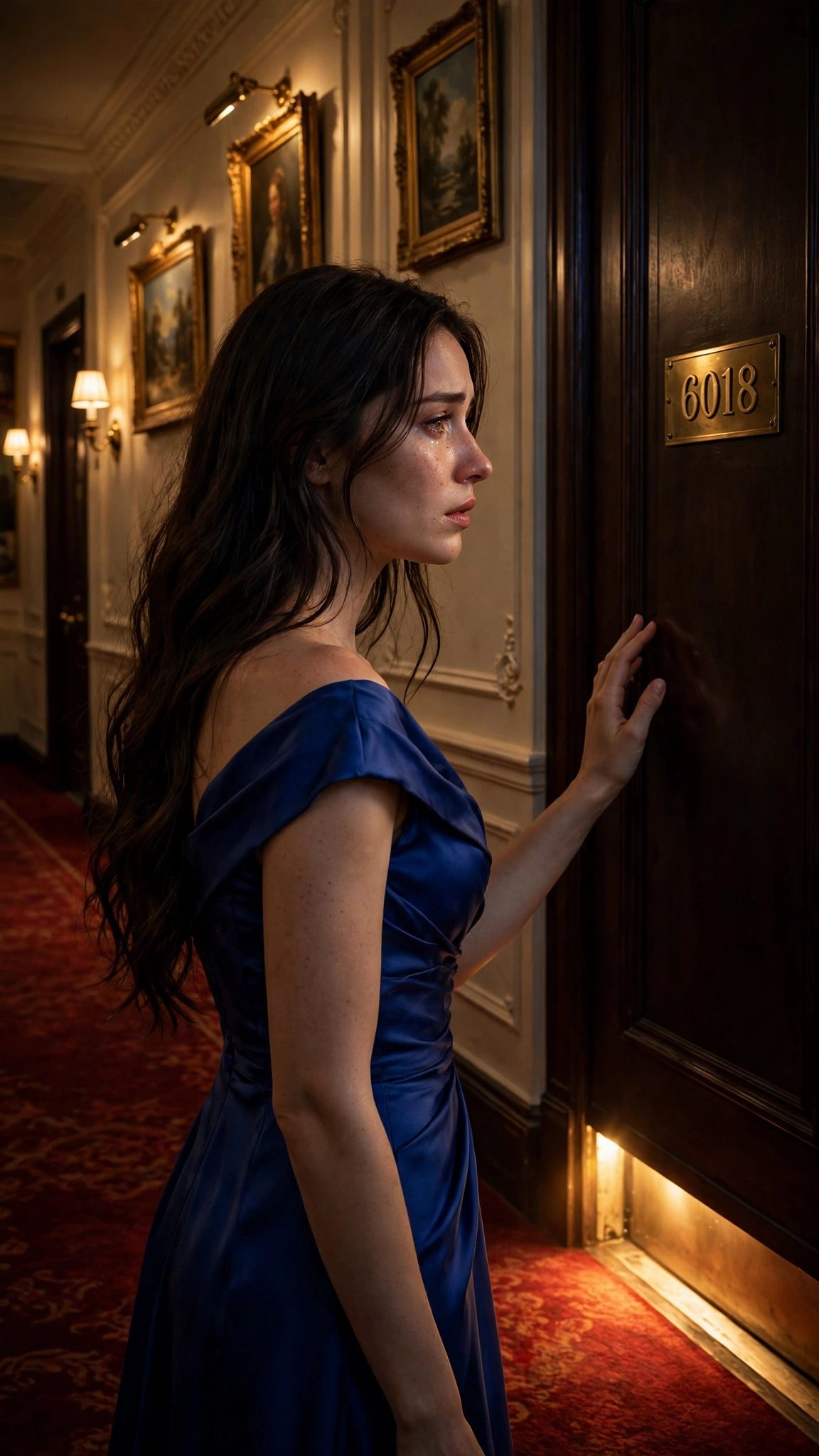
Story Genres: Mafia Romance

  • Chapter 4: The Two Years Apart

    Chapter 4: The Two Years Apart

    Galena, Illinois, is the kind of town where everybody knows your name by the end of the first week, and nobody asks you where you came from if you do good work and keep your head down.

    I found Marta Kowalski's flower shop on my second day in town. It was a small brick building on Main Street with a green awning and a window full of sunflowers, and Marta was standing in the doorway with her hands on her hips, looking at me the way a woman looks at a stray dog — deciding whether to feed it or chase it off.

    "You look like a florist," she said.

    "I am a florist," I said.

    "Then come inside," she said. "The roses in the back need someone who knows what she is doing, and I am too old to climb the ladder anymore."

    Marta was sixty-eight years old, widowed, with white hair she wore in a braid down her back and hands that had arranged flowers for every wedding and funeral in Galena for forty years. She gave me a job. She gave me the apartment above the shop, a small place with a slanted ceiling and a window that looked out over the river. She did not ask me where I had come from. She did not ask me why a twenty-six-year-old woman from Chicago was living in Galena with one suitcase and no family. She only said, "You work hard, you pay your rent when you can, and you tell me if you need anything. That is the arrangement."

    Three weeks after I arrived, I threw up my coffee in the bathroom of a diner outside Rockford and counted the days on my fingers, and I understood. I sat in that bathroom for a long time, staring at the cracked tile, and I thought about the man I had left in Chicago, and I thought about the baby growing inside me, and I thought about the fact that I had walked away from a marriage I believed was a transaction, and the transaction had left me with the one thing that was real.

    I told Marta that evening. She listened without interrupting, and then she put the kettle on, and she made tea, and she said, "Well. Then we will need a crib. And you will need to eat more. And that baby will need a name."

    "Her name is Ava," I said. I had not known I had chosen a name until I said it. "Ava."

    "Ava," Marta repeated, and nodded, like the name had already been decided by someone wiser than both of us.

    The pregnancy was hard and lonely and, in the end, the best thing that ever happened to me. I worked in the flower shop until my back ached and my feet swelled, and Marta made me sit down and put my feet up every afternoon at three o'clock, and the old ladies of Galena brought me casseroles and knitted blankets and told me stories about their own children. I had never had a family — my mother had died when I was nineteen, my father years before that — and suddenly I had a town full of grandmothers. I learned that a family is not always the one you are born into. Sometimes it is the one that brings you a casserole and does not ask questions.

    Ava was born on a Tuesday in June, in the little hospital in Galena, at 3:17 in the morning. Seven pounds, two ounces. She cried once, very loud, and then she opened her eyes — dark and serious, his eyes — and she looked at me like she was checking whether I was going to stay.

    "I will stay," I whispered to her. "I will always stay."

    Marta was there. She held my hand through the whole night, and when the nurse put Ava in my arms, Marta cried, and I cried, and the sun came up over the river, and for the first time in two years, I felt like my life belonged to me.

    I raised Ava in the apartment above the flower shop. I worked downstairs while she slept in a basket behind the counter. I learned to arrange flowers with one hand and hold a baby with the other. I learned that a child changes everything — the way you sleep, the way you spend money, the way you look at the future. I stopped thinking about Chicago. I stopped thinking about Alexander. I told myself that Ava was mine, and that her father was a man who had married me for a will, and that she was better off without him.

    Her first word was "mama." She said it on a Tuesday morning in November, when she was nine months old, sitting in her high chair in Marta's kitchen with oatmeal all over her face, and she looked straight at me and said it as clearly as if she had been practicing in secret. "Mama." Marta dropped the spoon she was holding. I burst into tears, right there at the kitchen table, oatmeal and all, because in nine months of loneliness no one had called me anything that mattered, and suddenly my daughter had given me a name that was mine.

    Her first steps came in February, in the middle of the worst winter Galena had seen in years, snow piled up against the shop windows and the river frozen solid. She took three wobbling steps from the couch to Marta's outstretched hands, and then she fell on her bottom and laughed, and Marta picked her up and swung her around, and the two of them laughed together, and I stood in the doorway with a basket of roses in my arms and thought: this is my family. A seventy-year-old florist and a baby girl and me. It is not the family I expected. It is the family I have.

    That winter, Marta taught me to make preserves. We spent Sundays in her kitchen, sterilizing jars and boiling fruit, and she told me stories about her own life — her husband, who had died twenty years earlier; her four children, scattered across the country; the flower shop, which she had built from nothing after her husband's death, one wedding at a time.

    "You know what I learned, Gianna?" she said one Sunday, wiping her hands on her apron. "I learned that a life is not what happens to you. A life is what you build after what happens to you. You came here with one suitcase and a broken heart, and you built a life. You built it out of flowers and a baby and hard work. That is not nothing. That is everything."

    "Do you ever miss him?" I asked her. "Your husband?"

    "Every day," she said. "And I would not trade one day of missing him for a life without him. That is what love is, girl. It is not the easy days. It is the missing, and the staying anyway."

    I thought about Alexander then, for the first time in months. Not with anger, but with a question I had never allowed myself to ask: if I missed him, did that mean I still loved him? And if I still loved him, what did that mean about the night I walked away? I pushed the question down, the way you push down a weed in a garden, knowing it will come back. I had a baby to raise. I had a shop to run. I did not have time for questions that had no answers.

    But the questions came back anyway, late at night, when Ava was asleep and the shop was dark and the river ran slow past the old brick buildings. They came back in the dark, and they stayed until morning, and I learned to live with them the way you learn to live with a draft in an old house — you stop noticing it, until the winter comes and you remember it was always there.

    I was wrong. I know that now. But in those two years, wrong felt like the only way to survive.

    While I was learning to be a mother in Galena, Alexander Moretti was tearing Chicago apart looking for me.

    I know this now because he told me, sitting at Marta's kitchen table on the night he found us, with Ava asleep upstairs and the rain coming down outside. He told me everything, in the flat, exhausted voice of a man who has been carrying a story for two years and finally has someone to tell it to.

    He came home from the Drake Hotel at midnight on the night of Room 6018, and he found my message on his phone — I am done. Do not look for me — and he found my suitcase gone, and the blue dress folded neatly on the bed, and the ring on the dresser. He called me fifty times. He sent his men to the train station, to the airport, to every hotel in the city. He went to the Drake himself, at two in the morning, and demanded the security tapes from the sixth floor.

    There was no tape. The camera on the sixth floor had been disconnected that night — unplugged, the hotel said, by someone who knew where the wires were. The front desk had no record of a woman checking into Room 6018. The room had been booked under a false name, paid for in cash, three days earlier.

    "I knew then," Alexander said, "that someone had staged it. Someone had put a woman in that room and sent you a text from my phone, and you had walked away believing I had betrayed you, and I had no way to prove otherwise, because the proof had been erased before I even knew I needed it."

    He searched anyway. He hired private investigators. He sent Danny Cole to every city within five hundred miles. He checked hospitals, shelters, bus stations, train stations. He offered a reward, quietly, through channels no police officer would ever hear about. And he found nothing, because I had used my maiden name on the lease in Galena, and I had paid cash for everything, and I had told no one in Chicago where I was going.

    And while he searched, Vincent Castellano moved.

    Castellano had filed his challenge to the will the week after I left, claiming the marriage was a sham, that Alexander had bought a bride to satisfy a dead man's condition, and that the bride's abandonment proved it. His lawyers argued that a marriage that lasted fourteen months and ended with the wife vanishing in the night was no marriage at all. The court case dragged on for eighteen months. Alexander spent a fortune on lawyers. He spent more on investigators looking for me, because my testimony — that the marriage had been real, that I had left because I believed he had betrayed me, not because I had been paid — was the one thing that could kill Castellano's case.

    But the worst betrayal was closer to home than Castellano.

    It was Danny Cole who found it, six months into the search. Danny had been Alexander's driver for twelve years, a quiet man who noticed everything and said very little. He noticed that Marcus Hale, Alexander's head of security — the man who had guarded Alexander's life for a decade — had bought a new house in the suburbs. Cash. He noticed that Marcus's wife had started wearing jewelry she had never worn before. He followed Marcus one night, to a restaurant on the west side, and he watched him sit down with a man Danny recognized: one of Castellano's lieutenants.

    Marcus Hale had been paid fifty thousand dollars a month by Vincent Castellano, through a shell company called Bellini Holdings, to be Castellano's eyes inside the Moretti family. It was Marcus who had given the actress, Camila Duarte, the key to Room 6018. It was Marcus who had sent the text to my phone from a cloned number, making it look like it came from Alexander. It was Marcus who had disconnected the security camera on the sixth floor. And it was Marcus who had told Castellano, the night I left, that the marriage was broken and the will was vulnerable.

    Alexander did not kill him. That surprised me when he told me. "I wanted to," he said. "God forgive me, I wanted to. But Danny talked me out of it. Danny said: dead men cannot testify. And we needed Marcus alive, because a living traitor is worth more than a dead one."

    So Marcus Hale was kept close, watched, and allowed to believe he was still trusted — while Alexander's real search went on in secret, and the case against Castellano was built, piece by piece, by men who knew how to wait.

    And then, three days before the rain in Galena, a private investigator in Chicago found a photograph. It was on the website of a flower shop in a small town in Illinois — a photograph Marta had posted to show off her new window display. In the background, behind the sunflowers, a young woman was arranging white roses. And in a basket behind the counter, half-hidden by a blanket with yellow ducks on it, a baby was sleeping.

    The investigator had almost missed it. But he had been looking at photographs of me for two years, and he knew my face, and he knew the baby's eyes — dark and serious, the Moretti eyes — and he called Alexander at midnight, and Alexander drove to Galena himself, through the rain, without telling a single one of his men where he was going.

    "I did not want to scare you," he said to me at Marta's kitchen table. "I did not want you to see a convoy of black cars and run again. So I came alone. Just me. A man who had lost his wife and did not know he had a daughter, driving through the rain to a flower shop in a town he had never heard of, to ask the only question that has mattered to me for two years."

    "Why did you never knock on the door, Gianna?" he said. "Why did you never ask me?"

    And I sat at Marta's kitchen table, with my daughter asleep upstairs, and I told him everything I had heard that night in the hallway outside Room 6018. And for the first time in two years, the story made sense to both of us.

  • Chapter 3: A Wife in Name Only

    Chapter 3: A Wife in Name Only

    The first month of our marriage, I woke up every morning in the house on Lake Shore Drive and waited for someone to tell me I did not belong there.

    No one ever did. The housekeeper, Rosa, showed me where the good plates were kept. The driver, Danny Cole, learned my schedule and never once asked where I was going. Alexander's captains nodded to me at family dinners like I had always been there. But belonging and being wanted are not the same thing, and I learned the difference slowly, the way you learn a house — room by room, until you know every corner of it and still cannot call it home.

    I tried. God, how I tried. I arranged white roses in every room, because flowers were the only thing I knew how to do, and because a house full of flowers felt less like a museum. I cooked Sunday dinners the way my mother had taught me, pasta with sauce that took six hours, and Alexander's men ate at my table and told me it was the best meal they had eaten in years, and Alexander watched me from the head of the table with an expression I could not read. I went to charity events on his arm and smiled at cameras and learned to say "the Moretti family" like it was my family too.

    And Alexander — Alexander was kind to me. That is the part that makes the story hard to tell, because kind is not the same as loving, and I did not know the difference until it was too late. He was never cruel. He never raised his voice. He never made me feel small. He brought me coffee in the morning. He asked me about my day, and he listened to the answer. He bought me a small greenhouse for the back garden, so I could grow my own roses in the winter, and he built the shelves himself one weekend, in an old shirt, with sawdust on his hands, cursing quietly in Italian when the wood split.

    But he never said the words. He never said "my wife." He never said "I love you." And when the family gathered for Sunday dinner and his aunt asked him, in front of everyone, how married life was treating him, he said, "The will is satisfied. The empire is secure." And everyone laughed, and I laughed too, because that is what you do when you are a wife in name only and the joke is about you.

    The will was everywhere in that house. Enzo Moretti had died six weeks after our wedding, and his will had been read in the library while I sat upstairs arranging flowers and pretending not to listen. The terms were simple, and everyone in Chicago knew them within a week: Alexander would take full control of the Moretti empire — the shipping, the warehouses, the docks, everything — but only if he remained married. If the marriage ended, by divorce or by abandonment, control would pass to a board of trustees, and the board was full of men who owed Vincent Castellano favors.

    Castellano. I learned that name the way you learn the name of a storm that is coming. Vincent Castellano, head of the Castellano family, sixty years old, patient as a spider, the man who had wanted the Moretti docks for twenty years. He sent flowers to our wedding — white lilies, funeral flowers — with a card that said only Congratulations. Alexander threw the card in the fire without reading it twice.

    Rosa, the housekeeper, found me in the kitchen the morning the lilies arrived, staring at the card in the trash. She was sixty years old, with grey hair in a knot and hands red from years of hot water, and she had worked for the Moretti family since before Alexander was born. She took the lilies out of the vase and carried them to the back door herself.

    "Funeral flowers at a wedding," she said, shaking her head. "That man has no shame. Listen to me, girl. I have watched this family for forty years, and I will tell you the one thing you need to know about Vincent Castellano. He does not fight with guns. Guns are for men who are in a hurry. Castellano is never in a hurry. He fights with stories. He will tell a story about your husband to the right person at the right time, and the story will do the work for him. And the story does not have to be true. It only has to be believed for one night."

    "What kind of story?" I asked.

    "The kind that makes a wife walk out of her own house," Rosa said. She looked at me for a long moment, and then she went back to her work, and I stood in the kitchen holding a dish towel, and I thought about what she had said, and I told myself I would remember it.

    I forgot that, too. Rosa warned me, and Enzo warned me, and Alexander warned me, and I forgot all three of them in the hallway outside Room 6018, because a woman's laugh behind a door is louder than three warnings, and I was twenty-six years old, and I believed what I heard over what I had been told. That is the part of the story I am least proud of. But it is the truth, and the truth is the only thing I have left to offer.

    "He will try to break the marriage," Alexander told me one night, months into our marriage, standing at the window of our bedroom looking out at the lake. It was the closest he ever came to explaining his world to me. "That is how he wins. Not with guns. With doubt. He will put doubt between us, Gianna, and doubt is quieter than a bullet and twice as deadly. If you ever hear something about me that makes you doubt me — come to me. Ask me. Do not walk away from me without asking."

    I promised him I would. I promised, with my whole heart, and I meant it. I did not know then that a promise is easy to make in a bedroom at midnight and very hard to keep in a hallway outside Room 6018.

    There was one night, a month before Room 6018, when Alexander came home at two in the morning and I was still awake, sitting at the kitchen table with a cup of tea gone cold, and I asked him where he had been. He stood in the doorway for a long time, his tie undone, his jacket over his arm, and I could see him deciding how much to tell me.

    "The docks," he said finally. "Castellano's men tried to take a shipment. Nobody was hurt. Danny handled it."

    "And you?" I asked. "Were you there?"

    "I was there," he said. "I am always there, Gianna. That is the job. I go where the danger is, so it does not come here."

    "To me," I said.

    "To you," he said, and he came to the table, and he sat down across from me, and he took my cold hands in his, and he said, "I know what this life costs you. I know you did not sign up for midnight phone calls and men at the door. If you ever want to leave — if this is ever too much — you tell me. I will not stop you. But I will ask you to remember one thing first."

    "What?" I asked.

    "That I come home to you," he said. "Every night. No matter what happens out there, I come home to you. That is the only promise I can make you, and I have never broken it."

    I believed him that night. I believed him with my whole heart, sitting at the kitchen table with my cold tea and his warm hands. And then, a month later, I stood outside Room 6018 and heard a woman laughing, and I forgot that, too. I forgot that he came home to me every night. I forgot that he had never once broken his promise. I forgot everything except the laugh.

    That is what doubt does. Rosa was right. Doubt is quieter than a bullet and twice as deadly, and it does its work in seconds, in a hallway, while you are standing with your hand raised an inch from a door.

    The fourteenth month of our marriage was the hardest. Alexander was gone more. The board was fighting him. Castellano had filed a challenge to the will in court, claiming the marriage was a sham, a piece of paper bought to satisfy a dead man's condition. His lawyers were asking questions about me — where I came from, who my family was, whether I had been paid. I sat in a lawyer's office in downtown Chicago and answered questions about my own wedding like a woman on trial, and I thought: this is what it means to be a wife in name only. Your marriage is evidence. Your love is a legal argument.

    And then came the night of Room 6018.

    It was a Friday. Alexander had been at the Drake Hotel all day, in meetings about the docks. I had spent the afternoon arranging white roses in our apartment — not the house, the apartment we kept in the city — and cooking his favorite meal, osso buco the way my mother made it, slow and rich. I put on the blue dress he had once said made my eyes look like the lake in October. I was going to surprise him. I was going to walk into that hotel and remind him that his wife was a person, not a signature, and that fourteen months was long enough to be a transaction and it was time to be a marriage.

    The text came at seven in the evening. Working late. Drake Hotel. Room 6018. Come if you want.

    I believed it. I believed it was an invitation, and I was happy, and I took a taxi to the Drake with my heart beating too fast, and I rode the elevator to the sixth floor with a smile on my face, and I walked down the long carpeted hallway past the brass lamps, and I stopped outside Room 6018, and I raised my hand to knock.

    And I heard her laughing.

    She was young. I could tell that from her laugh — bright, bubbly, the laugh of a woman who is exactly where she wants to be. She laughed, and then a man's voice said something too low for me to hear, and she laughed again, and I stood there in the hallway with my hand raised an inch from the door, and I understood.

    I understood that Alexander Moretti had never needed a wife. He had needed a wife in name only. A temporary bride to satisfy the terms of his grandfather's will, granting him control of the Moretti empire. A woman he never once loved. A woman who would not ask questions. A woman who was convenient. And when a rumor began to spread that he had been unfaithful, the Moretti family said nothing, because a perfect marriage would make a perfect empire.

    I lowered my hand. I did not knock. I did not scream. I did not demand an explanation. I thought of his words — If you ever hear something about me that makes you doubt me, come to me — and I thought of the woman laughing behind the door, and I thought: there is nothing to ask. The laugh was the answer.

    I went home. I packed one suitcase. I took the blue dress off and folded it neatly on the bed, because even then, even in that moment, I could not bear to be cruel to beautiful things. I took my mother's gold earrings, the only treasure I owned. I left the ring on the dresser, because the ring had never been mine. The ring had belonged to the will.

    "This is war," I said to my phone, to the empty apartment, to the portrait of Enzo Moretti staring down from the hallway. Then I sent Alexander one final message. I am done. Do not look for me.

    No bodyguards stopped me. No drivers. No guards. Not even an apology waited for me, because Alexander was still at the hotel, still in Room 6018, still with her. I ordered a taxi in the middle of the night. I left the city. I did not ask him for a divorce. I did not cry. I did not beg him to stay. I did not even turn around and head back to the room. I simply checked out of the hotel of my own life, and I left.

    The taxi driver asked me where I wanted to go. I said, "The train station." He asked me which train. I said, "The first one that leaves Chicago." It was the train to Galena, Illinois, a town I had never heard of, a town of three thousand people and one flower shop and a river that ran slow and brown past the old brick buildings. I got off the train at dawn, and I stood on the platform with one suitcase and my mother's earrings, and I thought: this is where my marriage ends. In a town I cannot pronounce, in a state I never planned to live in, with nothing but a suitcase and a lie I told myself — that I was free.

    I was not free. I was pregnant. I did not know it yet. Three weeks later, in the bathroom of a diner outside Rockford, I threw up my coffee and counted the days, and I understood that the night I walked away from my husband, I had already been carrying his child.

    That day, I thought my marriage was over. I was wrong about that, too. My marriage was not over. It was waiting — in a flower shop in Galena, behind a curtain of dried lavender, in a white crib with a blanket covered in yellow ducks — for the man who had spent two years tearing a city apart to find us.

  • Chapter 2: The Girl with the Flowers

    Chapter 2: The Girl with the Flowers

    I was twenty-five years old the night I met Alexander Moretti, and I was standing on a ladder in the ballroom of the Drake Hotel in Chicago, trying to hang a garland of white roses above a doorway without falling off and dying in front of two hundred of the richest people in the city.

    I was a florist. Not a fancy one. I worked for a little shop on Milwaukee Avenue called Petals & Pine, and my boss, Mrs. Deluca, had taken the contract for the Moretti Foundation charity gala because the money was very good and because she was not afraid of anyone, including the Moretti family. I was the one she sent to do the work, because I was the one with steady hands and no fear of heights, and because I could arrange white roses the way other people played the piano — without thinking, and better than anyone else in the room.

    "Careful on that ladder, sweetheart," a voice said from below me, deep and amused. "If you fall, I will have to catch you, and I am wearing a very expensive suit."

    I looked down. Alexander Moretti was standing at the bottom of my ladder, looking up at me, holding a glass of whiskey he had not drunk from. He was thirty-seven years old, tall, dark-haired, with a face that newspapers described as handsome and police files described as dangerous, and he was smiling at me like I was the most interesting thing he had seen all evening.

    "Then move," I said. "Or hold the ladder. One or the other."

    He held the ladder. For forty minutes, while I finished the garland, the most feared man in Chicago stood at the bottom of a florist's ladder in a tuxedo and held it steady, and asked me questions about roses. He asked me why white roses and not red. He asked me how long they would last. He asked me if I had arranged the flowers for my own wedding, and I told him I had never been married, and he said, "Good," in a way that made my hands stop moving for a second.

    "Good?" I said.

    "Good," he said, "because you arrange flowers like a woman who has never had to settle for less than beautiful. I would hate to think someone had already taught you to settle."

    I should have known then. I should have known that a man like Alexander Moretti does not hold a ladder for forty minutes by accident. But I was twenty-five, and I was covered in rose thorns, and no one had ever looked at me the way he was looking at me, like I was a locked door and he had all the time in the world to find the key.

    He came to the flower shop the next week. He bought twelve white roses and asked me to teach him their names. He came the week after that, and bought twenty-four, and asked me where I had learned to arrange flowers. I told him my mother had taught me, in the kitchen of our little apartment above a bakery on Taylor Street, back when my father was still alive and the world was still simple. He listened the way nobody had ever listened to me — like my words were something he intended to keep.

    By the third week, Mrs. Deluca was hiding in the back room every time his black car pulled up outside, because she said she did not want to be in the same room as a man who made the air feel heavy. "Gianna," she said to me one afternoon, "that man is the head of the Moretti family. Do you know what that means?"

    "I know what it means," I said. "It means he buys a lot of roses."

    "It means," Mrs. Deluca said, "that his grandfather built an empire on shipping and silence, and his father died in a car that exploded on the Kennedy Expressway, and the police have been trying to prove what the Moretti family does for thirty years and have never proved a thing. It means you should be careful."

    "I am careful," I said. "I am always careful."

    I was not careful. I was twenty-five and in love for the first time in my life, and Alexander courted me the way I later learned he did everything — completely, and without asking permission from anyone, including me. He sent flowers to the shop every morning, always white roses, always with a card that said only one line. You arrange flowers like a woman who has never settled. He took me to dinner at a restaurant so quiet I could hear the ice in my water glass. He took me to the lake at midnight and told me about his grandfather, Enzo Moretti, who had come to Chicago from Sicily with nothing but a suitcase and a name, and built an empire out of shipping containers and loyalty.

    "He is dying," Alexander told me that night, sitting on the hood of his car with his tie undone, looking out at the black water. "The old man. The doctors say six months. He has one condition for me, Gianna. He wrote it into his will years ago, and he will not change it. I must be married to take control of the empire. A married don is a stable don, he says. A man with a wife has something to lose, and a man with something to lose can be trusted."

    I should have heard the warning in that sentence. I heard only the rest of it: that he was telling me his secrets, that he trusted me, that I was the person he talked to at midnight on the hood of a car.

    "What happens if you are not married?" I asked.

    "Then control passes to the board," he said. "And the board is run by men who would sell the docks to Vincent Castellano before the old man's body is cold. Castellano has wanted the Moretti empire for twenty years. My grandfather's will is the only thing standing between him and it."

    "And you need a wife," I said.

    "I need a wife," he said, and he looked at me, and for a moment I thought he was going to say something else, something that would have changed everything. But he only said, "I need a wife, Gianna. And I would like it to be you."

    He proposed to me three weeks later, in the flower shop, on one knee, in front of Mrs. Deluca and a delivery man and a bucket of sunflowers. He did not have a speech. He had a ring — a simple gold band with a single diamond, not too big, not too small — and he had a question.

    "Gianna Ferraro," he said, "will you marry me?"

    I said yes before he finished the sentence.

    The wedding was the largest Chicago had seen in years. A priest. A judge. Fourteen witnesses — family, captains, lawyers, the alderman, two priests' worth of God and law standing in a cathedral while I walked down the aisle in a dress that cost more than my mother's apartment. Alexander waited for me at the altar in a black suit, and when I reached him he took my hand, and he leaned close, and he said, so carefully, like the ring on my finger was a business transaction, "This is what you want. A wife."

    I smiled. I thought he was nervous. I thought he was a man who did not know how to say the things he felt, and that the stiffness in his voice was shyness, and that the marriage would teach him how to be soft. I did not understand, not then, that he was saying the words his grandfather had taught him to say, the words of a contract, because he was afraid that if he said what he actually felt — that he had fallen in love with a florist on a ladder and could not imagine his life without her — I would see the fear in him and leave.

    We were married in front of God and fourteen witnesses, and I believed it was real. For fourteen months, I believed it was real.

    Three weeks after the wedding, Enzo Moretti sent for me. Not Alexander — me. A car came to the house at nine in the morning, and the driver said only, "The old man wants to see you," and I rode in silence to the hospital on the lakefront, where Enzo lay in a private room full of flowers I had arranged myself, white roses wilting in the dry hospital air.

    He was ninety-one years old, small in the big bed, his hands like paper over the blanket, but his eyes were still sharp, still the eyes of a man who had built an empire out of shipping containers and loyalty and had never once apologized for it.

    "Sit," he said.

    I sat.

    "You are the florist," he said. It was not a question.

    "I am," I said.

    "My grandson married a florist," he said, and he smiled, a thin, tired smile. "Do you know why I wrote the will the way I did, girl?"

    "Because you wanted him married," I said.

    "Because I wanted him human," Enzo said. "A man with no one to lose will burn the world to keep warm. A man with a wife has something to lose, and a man with something to lose thinks twice. I did not write that will to buy my grandson a wife. I wrote it to buy him a reason to come home at night." He looked at me for a long moment. "He comes home to you, doesn't he? Every night?"

    "Yes," I said. "Every night."

    "Good," Enzo said. "Then the will did its job." He closed his eyes then, and for a moment I thought he had fallen asleep, but then he said, without opening them, "Take care of him, florist. He is harder than he looks, and softer than he lets anyone see. And if Castellano ever comes to you with a smile and a story about my grandson, you come to me first. Or you come to Alexander. You do not believe a stranger about your husband. That is the whole of marriage, girl. The rest is flowers."

    He died six weeks later. I arranged the white roses for his funeral, and I stood beside Alexander in the cathedral while the priest spoke, and I held his hand, and I thought about what the old man had said to me in that hospital room, and I promised myself I would remember it.

    I forgot it in the hallway outside Room 6018. That is the part I have never forgiven myself for — not the leaving, but the forgetting. Enzo had warned me, in his own way, and I had promised, and when the moment came, I believed a laugh behind a door over the word of a dying old man and the husband who had come home to me every single night.

    The house on Lake Shore Drive was beautiful and cold, all marble and tall windows and portraits of dead Moretti men staring down at me while I learned to be a wife. I learned the names of his captains. I learned which fork to use at family dinners. I learned that the men who came to our house at midnight were not friends, and that the phone calls Alexander took in his study were not about shipping. I learned to dust the portrait of his grandfather every Tuesday, and I learned that Enzo Moretti had the same stubborn chin as his grandson, and that the old man watched me from his frame like he was still deciding whether I was good enough for his empire.

    And in between the learning, there were moments that felt like a marriage. Alexander brought me coffee in the morning, the way I liked it, with too much sugar, because he had watched me make it once and remembered. He came home early on Fridays and sat in the kitchen while I cooked, and he told me about his day in the careful, edited way a man tells his wife about a life she is not supposed to fully understand. He remembered that I loved white roses, and there were always fresh ones in the house. Once, when I was sick with the flu, he sat beside my bed for two days and read to me from a book of poetry he had found in the library, stumbling over the words, refusing to let anyone else do it.

    I held those moments like small warm stones in my pocket, and I told myself they were the proof. I told myself that a man who marries you for a will does not bring you coffee. A man who marries you for a signature does not sit beside your bed for two days.

    But there were other moments, too. The nights he came home late and would not say where he had been. The way his head of security, Marcus Hale, looked at me — like I was a problem he had already solved. The way Alexander never once called himself my husband. Not once, in all the time I knew him. Not when he introduced me at parties. Not when he signed the marriage certificate. Not even in bed, in the dark, when there was no one to perform for. He called me Gianna. Always Gianna. Never wife. Never love. Never anything that would have told me the marriage was more than a transaction.

    I told myself it was his nature. I told myself that men like Alexander Moretti do not say such things, that their love is in their actions, that the coffee and the roses and the two days beside my bed were his way of saying what his mouth could not.

    I was wrong. I know that now. Or maybe I was right, and I was wrong about which one of us was afraid. That is the question I have spent two years trying to answer, and the question Alexander drove through the rain to Galena to ask me himself.

    But on the night of Room 6018, I did not know any of that. On the night of Room 6018, I knew only one thing: I had stood outside my husband's hotel room and heard another woman laughing, and the marriage I had believed would last forever had lasted fourteen months.

    And so I walked away.

  • Chapter 1: Room 6018

    Chapter 1: Room 6018

    The night I stood outside Room 6018 and heard another woman laughing inside my husband's hotel room, I did not knock.

    I stood in the hallway of the Drake Hotel in Chicago with my hand raised an inch from the door, and I listened to a young woman laugh — bright, bubbly, the laugh of a woman who is exactly where she wants to be — and something inside me went very quiet. Not broken. Quiet. The way a room goes quiet when someone has just switched off the lights and you realize you have been standing in the dark for a long time without noticing.

    I had come to surprise him. It was the fourteenth month of our marriage, and I had spent the whole afternoon arranging white roses in our apartment, the way I used to arrange them for other people's weddings when I was still a florist and not a wife. I had cooked his favorite meal. I had put on the blue dress he once said made my eyes look like the lake in October. And then his text had come: Working late. Drake Hotel. Room 6018. Come if you want.

    I had believed it was an invitation. I had believed, for one foolish afternoon, that the man who had married me in front of a priest, a judge, and fourteen witnesses might finally want me in the room with him for a reason that had nothing to do with his grandfather's will.

    The woman laughed again behind the door, and I understood everything. Alexander Moretti had never needed a wife. He had needed a wife in name only. A temporary bride to satisfy the terms of his grandfather's will, granting him control of the Moretti empire. A woman he never once loved. A woman who would not ask questions. A woman who was convenient.

    I lowered my hand. I did not knock. I did not scream. I did not demand an explanation, because there was nothing left to explain. I turned around and walked back down that long carpeted hallway, past the brass lamps and the oil paintings of dead men who had once owned this city, and I went home and packed one suitcase. No bodyguards. No drivers. No guards. Not even an apology waited for me at home, because Alexander was still at the hotel, still in Room 6018, still with her.

    "This is war," I said to my phone, to no one, to the empty apartment. Then I sent him one final message. I am done. Do not look for me.

    I checked out of my own life the way you check out of a hotel. I ordered a taxi in the middle of the night. I left the city. I did not ask him for a divorce. I did not cry. I did not beg him to stay. I did not even turn around.

    That day, I thought my marriage was over.

    Two years later, on a Tuesday in October, the bell over the door of Marta's flower shop in Galena, Illinois, rang at four in the afternoon, and Alexander Moretti walked in out of the rain.

    I knew him before I looked up. I knew the weight of his footsteps. I knew the way the air in a room changes when he enters it, the way every conversation within twenty feet of him lowers its voice without anyone deciding to lower it. I had spent fourteen months learning the weather of that man, and two years trying to forget it, and my body remembered before my mind did. My hands stopped moving. The roses I was trimming stayed exactly where they were, half-wrapped in brown paper, and the scissors stayed open in my right hand.

    "Gianna," he said.

    He was thinner than I remembered. There were lines at the corners of his eyes that had not been there when I left, and his black suit was wet at the shoulders from the rain. He looked like a man who had not slept properly in a very long time. He looked like a man who had driven a very long way to say something he had rehearsed and already forgotten.

    "You found me," I said. My voice sounded calm. I was proud of that, and then immediately ashamed of being proud of it, because calm was the only armor I had left and he could see straight through it. He always could.

    "Two years," he said. "Two years, Gianna. Do you know how many cities I searched? Do you know how many men I sent looking for you?"

    "Then you should have looked harder," I said, "or not at all."

    He took one step toward the counter, and I took one step back, and the scissors were still open in my hand, and I realized I was holding them the way a person holds a weapon when she has already decided she will not use it but wants the other person to know she could.

    "Why did you never confront me?" he asked. His voice was low and controlled, the voice he used in rooms where other men were deciding whether to live or die, and underneath the control there was something raw and unpracticed, something I had never heard from him in fourteen months of marriage. "That night. Room 6018. Why did you never knock on the door? Why did you never ask me what happened? You sent me one message and you vanished, and I have spent two years asking a question you could have answered in ten seconds."

    "Because I heard her laughing," I said.

    "What?"

    "The woman in your room. I heard her laughing, Alexander. I stood outside your door and I heard another woman laughing inside your hotel room, and I understood. You did not need a wife. You needed a signature on a piece of paper so your grandfather's will would hand you an empire. You told me so yourself on our wedding day. 'This is what you want. A wife.' Like the ring on my finger was a business transaction."

    His face changed. I had seen Alexander Moretti angry. I had seen him cold. I had seen him the night he came home with blood on his cuff and told me not to ask. I had never seen his face do what it did then — go completely blank, the way a man's face goes blank when the floor has just disappeared under him.

    "Gianna," he said slowly, "I was never in Room 6018 that night."

    "Liar."

    "I was in the private dining room on the second floor until midnight," he said. "With the alderman and two of my captains. There were eleven people in that room, Gianna. Eleven witnesses. I never went up to 6018. I never sent you that text."

    The scissors closed in my hand. I did not remember closing them.

    "Then who sent it?" I asked, and my voice was not calm anymore. "Then who was laughing in your room?"

    "I don't know," he said. "That is what I came here to find out. Because whoever did it took my wife from me, and I have spent two years tearing this city apart looking for them, and I only found you three days ago, and I drove here the moment I knew where you were, and I need you to tell me everything you heard that night, because I have been living with a version of that night that makes no sense, and you are the only person alive who was standing in that hallway."

    Behind me, in the back room of the shop, behind the curtain of dried lavender Marta had hung there years ago, my daughter made a small sound in her sleep. A sigh. A shifting of blankets. The sound a child makes when she is dreaming and safe.

    Alexander went still. His eyes moved past me, toward the curtain, and I saw him understand that there was someone else in this shop, someone small, someone who had not been in any of his reports, because I had made very sure of that.

    "Gianna," he said, very quietly. "Who is behind that curtain?"

    I should have lied. I had lied for two years, to everyone, about everything — my name on the lease, my past, the reason a twenty-six-year-old florist from Chicago was living above a flower shop in a town of three thousand people with no family and no husband. I was good at lying by then. But my daughter sighed again in her sleep, and Alexander took one step toward the curtain, and I stepped sideways, and he stopped, and we looked at each other across three feet of flower shop floor, and I knew that the lie would not survive the next ten seconds anyway.

    "Her name is Ava," I said. "She is sixteen months old. And she is your daughter."

    He did not move. He did not speak. For a long moment he simply stood there in his wet black suit, in the rain-smelling flower shop, staring at the curtain as if it were a door he was afraid to open, and I watched the most dangerous man in Chicago try to remember how to breathe.

    Then he said, in a voice I had never heard from him, small and almost broken, "Show me."

    I pushed the curtain aside.

    Ava was asleep in the little wooden crib Marta had found at a yard sale and painted white, her cheek pressed against a blanket with yellow ducks on it, one fist curled tight against her chest the way she had slept since she was born. She had dark curls, too many of them, falling over her forehead. She had his eyes — I had known it since the day she opened them in the hospital in Galena, dark and serious, eyes that looked at the world like it owed them an explanation. She had the Moretti chin, the same stubborn line I had seen in the portrait of his grandfather that hung in the hallway of the house on Lake Shore Drive, the portrait I had dusted every Tuesday for fourteen months.

    Alexander stood in the doorway of the back room and stared at my daughter, and I watched his hands. His hands were the hands of a man who had done terrible things with them, hands that had signed orders and held guns and once, gently, held my face on our wedding night. They were shaking. He put them behind his back, like a man who does not trust himself to touch something precious.

    "Sixteen months," he said.

    "Sixteen months," I said. "I found out I was pregnant three weeks after I left Chicago. I threw up in the bathroom of a diner outside Rockford and I thought it was the coffee, and then I counted, and I knew. She was born on a Tuesday in June, in the little hospital in Galena. Seven pounds, two ounces. She cried once, very loud, and then she looked at me like she was checking whether I was going to stay."

    "And you stayed," he said.

    "I stayed."

    He turned to look at me, and his face was wet. I did not know if it was rain. I did not think it was rain.

    "Gianna, I have a daughter," he said, like he was translating a sentence from a language he did not speak. "I have a daughter, and I missed sixteen months of her life, and someone stole them from me. Someone sent you a text I never wrote and put a woman in a room I never entered, and you walked out of my life believing I had thrown you away, and I have spent two years believing you left me because you never loved me."

    "I did love you," I said, and the words came out before I could stop them, and once they were out I could not take them back, and I did not want to. "That was the problem, Alexander. I loved you, and I believed you had married me for a will, and I believed the woman laughing in your room was the proof, and I left because I could not stay in a marriage where I was a signature on a piece of paper. I left because I loved you and it was killing me."

    The bell over the shop door rang, and Marta Kowalski came in with a bag of groceries and stopped dead in the doorway, staring at the tall man in the wet black suit standing in her back room looking at a sleeping baby.

    "Gianna," Marta said slowly, in the voice of a woman who has run a flower shop in a small town for thirty years and has seen every kind of trouble walk through her door, "who is this?"

    "This is my husband," I said.

    Marta put the groceries down very carefully on the counter. "Your husband," she repeated. "The one from Chicago. The one who is a —" She stopped, because Marta knew exactly what Alexander was, and she had known for two years, and she had never once asked me to leave.

    "The one from Chicago," I said.

    Alexander turned around. He did what he always did when he met someone who mattered to the people he loved: he became polite, and formal, and suddenly very still, the way a dangerous animal becomes still when it wants you to know it is choosing not to be dangerous.

    "Mrs. Kowalski," he said. "Thank you for taking care of my wife and my daughter when I could not find them. I owe you a debt I cannot repay."

    Marta looked at him for a long moment. Then she looked at me. Then she looked at Ava, asleep in her crib, and her face softened in a way I had only ever seen when she talked about her own grandchildren.

    "Well," Marta said, "you owe me two years of rent for the apartment upstairs, because Gianna would not let me charge her full price and I charged her anyway and she paid me in flowers. And you owe this girl an explanation." She pointed at me. "And you owe that baby a father. In that order."

    "I know," Alexander said.

    He took out his phone then, and for a moment I thought he was going to call one of his men, and I felt the old fear rise in my throat, the fear of what his world did to people. But he only looked at the phone for a second, and then he put it back in his pocket without making the call, and he looked at Ava again, and then at me.

    "I am not leaving Galena tonight," he said. "I am not leaving without you. And I am not leaving without her. I will sleep in my car if I have to. I will sleep on the floor of this shop. But I am done losing the people I love to rooms I never entered and texts I never sent, and whoever did this to us is going to answer for it. Starting tomorrow."

    Outside, the rain came down harder on the roof of the flower shop, and the wind moved through the dried lavender curtain, and my daughter slept on, one fist curled tight against her chest, unaware that the most dangerous man in Chicago was standing over her crib learning how to be a father.

    "Tomorrow," I said.

    "Tomorrow," he agreed.

    And for the first time in two years, I believed him.

  • Chapter 7: The Label He Reads Twice

    Chapter 7: The Label He Reads Twice

    A month later, on a quiet morning in early summer, Vincent Moretti stood in his kitchen in a charcoal suit, holding a small orange bottle, and he read the label twice.

    It was a new bottle. A new prescription, from Dr. Cole, filled by Henry Walsh himself, delivered to the house in a sealed paper bag that Vincent had opened himself, in front of the pharmacist, with his own hands. The seal was unbroken. The pills inside were amber-colored and harmless, magnesium and melatonin, nothing strong. Vincent had checked. He had counted them. He had smelled them, the way a man who has learned to be careful smells everything now.

    He carried the bottle upstairs, and Sofia was sitting up in bed, her dark hair loose around her shoulders, the morning light coming through the tall windows, and she smiled when she saw him, and she held out her hand.

    "Four," she said. "Same as always."

    "Four," he said, and he tipped four pills into his palm, and he looked at each one of them, and then he placed them on her tongue, one by one, and he handed her the glass of water, and he watched her swallow, and he did not look away until the glass was empty and back on the nightstand.

    "You're going to do that every morning for the rest of our lives, aren't you?" she said, smiling.

    "Yes," he said. "Every morning. For the rest of our lives. I'll read the label twice, and I'll check the seal, and I'll count the pills, and I'll watch you swallow them. And you'll let me, because you know why."

    "I know why," she said, and she took his hand, and her fingers were warm, and her grip was strong. "And I don't mind. I'd rather have a husband who reads the label twice than a husband who nods without looking."

    They had breakfast in the garden that morning, at the small iron table under the oak tree, where the roses were in full bloom and the air smelled of cut grass and coffee. Rosa had made Sofia's favorite soup, even though it was summer and no one ate soup in summer, because Rosa had decided that Sofia needed soup, and no one argued with Rosa. Tomas brought a vase of fresh roses from the greenhouse, and he set them on the table, and he bowed to Sofia, the way he always did, and he called her "Mrs. Sofia," and she thanked him, and Vincent watched all of it, and he thought about how ordinary it looked, and how extraordinary ordinary had become.

    The house was different now. The locked drawer in the study was still locked, but the midazolam was gone — Vincent had given the bottle to Ortiz, and Ortiz had disposed of it, and Vincent had told his doctor that he would rather lie awake for the rest of his life than keep a bottle of sleeping pills in his house ever again. In its place, in the drawer, there was a small wooden box, and inside the box were Sofia's vitamins, and only Vincent had the key, and every morning he opened the box himself, and every morning he read the label twice.

    Marta was gone. She had left the week before, quietly, with her son Marco and her grandson, on a train to a small town upstate where no one knew her name and no one had ever heard of the Moretti family. Vincent had paid for the train tickets, and for the first three months of rent on a small house with a garden, and for Marco's enrollment in a trade school, where he was learning to be an electrician. Marta had cried when he told her, and she had tried to refuse, and he had told her it was not a gift, it was a debt — she had told the truth, and the truth had put a dangerous man in prison, and that was worth more than sixty thousand dollars.

    "Write to us," Sofia had said, standing at the gate with her, holding her hands. "When you're settled. Write and tell us how the garden grows."

    "I will," Marta had said. "And Mrs. Moretti — thank you. For asking after me. For giving me gloves. For being kind to a woman who didn't deserve it."

    "You deserved it," Sofia had said. "Everyone deserves it. That's the whole point."

    The trial was six months away, but Reyes called every week with updates, and the updates were always the same: the case was strong, the witnesses were steady, the evidence was holding, and Castellano was going to spend the rest of his life in a federal prison. Dominic Voss had taken a plea deal — eight years, in exchange for his full testimony — and Aldo Ferrante and his brother had taken deals of their own, and Carla Benedetti had been sentenced to five years, with time served, and had written Sofia a letter from prison, apologizing, and Sofia had read it twice, and had put it in a drawer, and had not answered it yet, but she had not thrown it away either.

    "She was used, the same as Marta," Sofia had said, when Vincent asked her about the letter. "Castellano found a woman with nothing and offered her everything. I don't forgive her yet. But I understand her. And maybe that's enough for now."

    On the morning of the garden breakfast, after the soup and the coffee and the roses, Sofia put her hand on Vincent's arm, and she said, very quietly, "Vincent. There's something I need to tell you."

    He looked at her, and he saw the way she was smiling, nervous and happy at the same time, the way she had smiled on their wedding day, and his heart began to beat faster, the way it had beaten in the hospital corridor, except this time it was not fear.

    "What is it?" he asked.

    "Before the pills," she said. "Before that morning. I had already suspected. I was going to tell you that night, at dinner. But then the morning came, and everything happened, and I forgot, or I put it away, because there were more important things. But Ortiz confirmed it yesterday, when he examined me. He said the baby is fine. He said the medicine didn't reach the baby. He said —" she stopped, and she took a breath, and she laughed, a small, startled laugh, "he said we're going to have a child, Vincent. In seven months. A baby."

    Vincent stared at her. He opened his mouth, and no sound came out, and then he laughed, and then he cried, and then he did both at once, and he took her in his arms, carefully, gently, as if she were made of glass, and he held her, and he felt her heartbeat against his chest, steady and strong, and he thought about the morning she had collapsed on his kitchen floor, and the car ride across the city, and the machines breathing beside her bed, and the chapel with the empty coffin, and he thought about how close he had come to losing all of it — her, and the child he had not even known existed, and the whole future that was sitting across from him at a garden table, eating soup in the summer.

    "Seven months," he said, and his voice shook. "A baby."

    "A baby," she said, smiling through her tears. "A little girl, I think. I don't know why I think that. I just do. A little girl with your eyes and my stubbornness. God help us both."

    Vincent laughed again, and he kissed her, and the roses swayed in the breeze, and Tomas, watching from the greenhouse, pretended not to see, and smiled to himself.

    Six months later, the trial ended, and the verdict came in on a Tuesday morning, while Sofia was five months pregnant and Vincent was sitting in the kitchen reading the newspaper.

    Guilty. On every count. Attempted murder. Conspiracy to commit murder. Witness tampering. Racketeering. The judge sentenced Vincent Castellano to life in a federal prison, without the possibility of parole, and when the sentence was read, Castellano did not look up, and did not speak, and the courtroom was silent, the way a room is silent when something that has gone on for a very long time is finally over.

    Reyes called Vincent that afternoon.

    "It's done," Reyes said. "Life. No parole. He'll die in that cell. Voss got eight years. The Ferrante brothers got twelve each. Carla Benedetti got five. And Marta —" Reyes paused, and Vincent could hear the smile in his voice. "Marta got probation and community service. Two hundred hours at a food bank. The judge said she'd already punished herself enough."

    Vincent thanked him, and he hung up, and he went into the garden, where Sofia was sitting in the shade with her feet up and a book in her lap, her belly round under her summer dress, and he told her, and she closed her book, and she was quiet for a moment, and then she said, "Good. It's over. It's really over."

    "It is," he said, and he sat down beside her, and he put his hand on her belly, and he felt the baby move, a small, fluttering kick, like a fish turning in deep water, and Sofia laughed, and she put her hand over his, and they sat there together in the shade, saying nothing, because there was nothing left to say.

    In the months that followed, Vincent did what he had promised the family council he would do. He began to move the family's business into the light — the shipping contracts, the warehouses, the restaurants, all of it made legal, all of it taxed, all of it clean. It was slower than the old way. It was harder. Some of the old men grumbled. But Frank stood beside him, and Enzo stood beside him, and the younger men, the ones who had grown up watching their fathers go to prison, understood, and they followed, and the family began to change, slowly, the way a river changes its course — not all at once, but steadily, and for good.

    Sofia went back to the free clinic on the South Side, two mornings a week, the way she had before the wedding, because she said a skill was a responsibility, and because the women there needed someone who would listen to them and tell them the truth. She worked until her seventh month, and then Ortiz told her to stop, and she argued with him, and he told her that even nurses have to follow doctor's orders sometimes, and she laughed, and she stopped, and she spent her mornings in the nursery instead.

    The nursery was the small room at the end of the hallway, the one with the windows facing the garden, and Sofia painted it herself, pale yellow, the color of morning light, and Vincent built the crib with his own hands, slowly, carefully, reading the instructions twice, because that was who he was now — a man who read everything twice. Tomas brought roses from the greenhouse and put them on the windowsill. Rosa knitted a blanket, white, with a border of tiny blue flowers. Frank brought a small wooden horse, carved by hand, that had belonged to his own daughter when she was a baby.

    And every morning, without fail, Vincent opened the small wooden box in the study drawer, and he took out the orange bottle, and he read the label twice, and he checked the seal, and he counted the pills, and he carried them upstairs, and he placed them on Sofia's tongue, one by one, and he watched her swallow them, and he did not look away until the glass was empty.

    It had become a ritual. A small, quiet ceremony, between a husband and a wife, that said everything they needed to say to each other: I am here. I am watching. I will never nod without looking again.

    That evening, they sat in the garden as the sun went down, and Sofia fell asleep in the lounge chair with her head on Vincent's shoulder, a real sleep, deep and peaceful, the kind of sleep she had not had in a year, and Vincent sat very still so as not to wake her, and he watched her breathe, in and out, slow and even, and he thought about the man he had been for fifteen years — the man who never made mistakes, the man who never looked away, the man who had nodded without looking on the morning that mattered most.

    He was still that man, in the ways that mattered. He was still careful. He was still precise. He still never looked away. But now he knew something he had not known before: that the most dangerous mistake a man can make is not the one he makes in a boardroom or a back alley. It's the one he makes at home, in the morning, when he is distracted and tired and certain that everything is fine.

    He would never make that mistake again. He would read the label twice. He would check the seal. He would count the pills. He would watch her swallow them, every morning, for the rest of his life. And he would hold her hand while she slept, and he would listen to her breathe, and he would be grateful, every single day, that he had been given a second chance to do it right.

    And sometimes, in the quiet of the evening, when Sofia was asleep beside him and the house was dark and safe, Vincent Moretti would think about four white pills in an orange bottle, and about how close he had come to losing everything, and about how a woman who had once told him to breathe, slowly, in through his nose, had taught him the most important thing he had ever learned:

    That the strongest thing a man can do is not to control everything.

    It's to protect the one thing that matters, and to never, ever look away.

    The End.

    THE END

  • Chapter 6: The Trap

    Chapter 6: The Trap

    The family chapel stood on the lake road, small and white, with a bell tower and a garden full of roses that Sofia had planted the spring after their wedding.

    On the morning of the funeral, the sky was gray, and a thin rain fell on the roses, and Vincent Moretti stood at the front of the chapel in a black suit, staring at an empty coffin.

    The coffin was closed. It had to be closed. A woman who had died of a heart attack in the night, the story went, was not a woman anyone needed to see. Inside the coffin, beneath the lid, there was nothing but folded blankets and a bag of sand, to give it weight when the pallbearers carried it. Vincent had stood in the chapel an hour before the mourners arrived, and he had looked at that closed coffin, and he had thought about how easily it could have been real.

    Frank stood at his side, his face a mask of grief. Enzo stood by the door, his shoulder bandaged under his suit, his eyes moving constantly across the room. The pews were filled with men Vincent trusted — his lieutenants, his captains, his lawyers — all of them playing their parts, all of them grieving for a woman who was sitting in a car half a mile down the road, listening on a phone, waiting to hear that it was over.

    Agent Reyes was not in the chapel. He was in the vestry, behind a thin wooden door, with six of his agents, all of them in dark suits, all of them with their hands near their weapons, all of them waiting for the signal. Outside, in the trees around the chapel, more agents waited, hidden, patient, the way Reyes's people always were.

    Vincent looked at his watch. Eleven o'clock. The service was supposed to begin at eleven. The priest, an old man who had buried Vincent's father and who had been told only that this was a private family matter, stood at the altar with his book open, waiting.

    At eleven-oh-four, the door of the chapel opened, and Vincent Castellano walked in.

    He was sixty years old, silver-haired, broad-shouldered, wearing a black suit that cost more than most men's cars, and he walked down the aisle with four of his men behind him, and his face was a careful mask of sympathy, the face of a man paying his respects to a rival he had never liked and had always respected.

    "Vincent," Castellano said, stopping in front of him, and his voice was low and smooth, like oil on water. "I'm sorry for your loss. Sofia was a good woman. Too good for this world, perhaps."

    Vincent looked at him, and he thought about the orange bottle on his kitchen counter, and the four white pills, and the syringe in the hospital corridor, and the woman named Carla Benedetti, and the boy at the dinner a year ago, and the glass breaking, and Sofia lying on the kitchen floor with her arms beating against the marble.

    "Thank you for coming," Vincent said, and his voice was steady, and his face was the face of a grieving man, because he had practiced it in the mirror that morning, and because a part of him was not acting at all.

    Castellano looked at the coffin, and then he looked back at Vincent, and a small, satisfied smile touched the corners of his mouth, so faint that only a man who had been watching for it would have seen it.

    "You know," Castellano said, quietly, so that only Vincent could hear him, "I always thought you were untouchable, Vincent. The man who never made mistakes. The man who never looked away. But every man has a weakness. Yours was her. And now she's gone, and you're standing here, alone, and I wonder — what are you going to do now?"

    Vincent did not answer. He looked past Castellano, toward the vestry door, and he waited.

    Castellano leaned closer. "Your father took my father's docks with a pen," he said, his voice dropping lower, colder. "Five years I've waited. Five years. And now the debt is paid. Your wife for my father's empire. That's a fair trade, don't you think?"

    The vestry door opened.

    Agent Daniel Reyes walked out, and behind him came six agents, and outside, Vincent could hear car doors slamming and voices shouting, and the chapel door opened again, and more agents came in, and Castellano's four men reached for their weapons, and found themselves staring down the barrels of a dozen FBI pistols, and they froze, their hands in the air, their faces white.

    "Vincent Castellano," Reyes said, his voice carrying clearly through the chapel, "you are under arrest for the attempted murder of Sofia Moretti, conspiracy to commit murder, and the attempted murder of a federal witness. You have the right to remain silent."

    Castellano stared at him. Then he stared at Vincent. And then he laughed — a short, disbelieving laugh, the laugh of a man who has just realized that the ground under his feet was never solid at all.

    "This is a trick," he said. "This is a trap. She's dead. I saw the reports. She died in the night."

    "She didn't die," Vincent said, and his voice was no longer the voice of a grieving man. It was his own voice, cold and clear and precise, the voice of a man who never made mistakes. "She's alive. She's sitting in a car half a mile down the road, listening to this. The pills failed. The needle failed. And you just walked into a chapel and confessed to ordering her murder, in front of a federal agent, in front of a dozen witnesses."

    Castellano's face went gray. He looked at the coffin, and at the priest, and at the men in the pews, who had all risen to their feet now, and he understood, all at once, that every one of them had been playing a part, and that he had walked into a room full of enemies believing it was a room full of mourners.

    "You set a trap," Castellano said.

    "You set the trap," Vincent said. "Five years ago, when you sent a boy with a gun to my family's dinner. A year ago, when you ordered the shooting. Three nights ago, when you sent two men to a frightened woman's apartment with a key and four pills. All I did was let you walk into it."

    Reyes stepped forward with the handcuffs, and Castellano did not resist. He held his hands out, and the metal clicked shut, and the sound of it echoed in the chapel like a bell.

    "Dominic Voss is already in custody," Reyes said, as his agents led Castellano toward the door. "He was arrested an hour ago, at the social club. He gave a full statement. He named you. He named the men who went to Marta Delgado's apartment. He named the pharmacist who — no, wait, the pharmacist was innocent. He named the woman with the syringe. He named everything, Mr. Castellano. He was very cooperative, once he understood that the alternative was spending the rest of his life in a cell next to yours."
    Castellano stopped in the doorway, and he turned, and he looked back at Vincent, and his face was no longer smooth and confident. It was the face of an old man who had gambled everything on one throw and lost it all.

    "You think you've won," Castellano said. "You think the law will keep you safe. But there are other men, Vincent. There are always other men."

    "Let them come," Vincent said. "I'll be ready. But I'll be ready the right way. With the law. With witnesses. With the truth. Because the truth is the one weapon you never learned how to use."

    Later that afternoon, in the FBI field office downtown, Reyes laid the whole case out on his desk, piece by piece, the way Frank laid out contracts — in neat rows, each one supporting the next.

    "Marta Delgado's statement," Reyes said, tapping the first folder. "She tells us about the two men, the sixty thousand dollars, the key, the paper with the instructions, the night she opened the drawer. She'll testify in front of a judge. She's scared, but she's steady. She knows what she did, and she knows why she did it, and a jury will believe her, because she's telling the truth."

    He tapped the second folder. "Carla Benedetti. The false nurse. She confessed at the hospital, and she confessed again here, on the record, with a lawyer present. Twenty thousand dollars. Potassium chloride. The funeral plan. She even kept the money — eighteen thousand of it, in a bag under her bed. We found it this morning."

    The third folder. "Dominic Voss. Arrested at the social club, one hour before the funeral. He talked for three hours straight. He gave us the prepaid phone. He gave us the names of the two men who went to Marta's apartment — Aldo Ferrante and his brother, both Castellano soldiers, both already in custody. He gave us the gate camera, or rather, he confirmed what the gate camera already showed. He gave us everything, because he knows that the man who talks first gets the best deal, and the man who talks last gets the worst cell."

    The fourth folder. "The phone records. The tower data. The prescription records from Dr. Cole and the pharmacy. The bottle, with Castellano's men's fingerprints on the cap — not Marta's, not yours, not Sofia's. Aldo Ferrante's prints, clear as day, on the inside of the cap. He handled the pills. He loaded the bottle. We have him."

    Vincent listened to all of it, and he thought about the orange bottle on his kitchen counter, and the four white pills, and the syringe in the hospital corridor, and he felt something loosen in his chest, something that had been tight since the morning Sofia collapsed on his kitchen floor.

    "Will it hold?" he asked. "In court. Will it hold?"

    Reyes nodded. "The prosecutor says it's the strongest case she's seen in five years. Four witnesses, physical evidence, phone records, a confession caught on tape in a chapel full of federal agents. Castellano's lawyer will try to say Marta acted alone, that Voss acted alone, that the nurse acted alone. But four people don't act alone in the same direction unless someone is pointing them. And the finger points at Castellano. Every time. In every piece of evidence."

    "How long?" Vincent asked.

    "Trial in six months," Reyes said. "Maybe eight. He'll be in custody until then. No bail — attempted murder of a federal witness, flight risk, a history of violence. The judge won't let him out. And when he's convicted — and he will be convicted — he'll spend the rest of his life in a federal prison. Twenty-five years, minimum. Probably life."

    Vincent was quiet for a moment. Then he said, "And Marta? What happens to Marta?"

    "She cooperated," Reyes said. "She told the truth. She'll get probation, community service, and a new start. The prosecutor is recommending leniency. She was a victim too, Mr. Moretti. Castellano used her the same way he used everyone else. The difference is, she was brave enough to tell the truth about it."

    Vincent nodded. He thought about Marta, sitting at the kitchen table in the safe house, staring out at a parking lot, and he thought about Sofia, who had asked after her, and he thought about the sixty thousand dollars he had already paid, and the two men watching her grandson's school, and he knew that Marta's story was not over, but that it was going to end better than it had begun.

    That evening, Vincent called a meeting of his family council — the lieutenants, the captains, the old men who had stood at his father's side and now stood at his. They gathered in the dining room, around the long table where the windows had shattered a year ago, and Vincent stood at the head of the table, and he told them everything. The pills. The needle. The funeral. The arrest.

    "Castellano is finished," he said. "The law finished him. Not a bullet. Not a war. The law. And I want you all to understand something. From now on, we do things differently. We have spent five years fighting a war that cost us men, and money, and sleep, and nearly cost me my wife. That war is over. Castellano's empire is going to fall apart without him, and when it does, we're not going to take it by force. We're going to take it by being better than he was. By being smarter. By being patient. By building something that doesn't need a gun to survive."

    The old men looked at each other, and then they looked at Vincent, and one by one, they nodded. Frank nodded first. Then Enzo. Then the rest. And Vincent knew, as he looked around that table, that something had changed in his family, and that it had changed because of a woman who had once told him, on a gurney in an emergency room, to breathe, slowly, in through his nose.

    The agents took Castellano away, and his men followed in handcuffs, and the chapel went quiet, and the priest stood at the altar with his book still open, and Frank came and stood beside Vincent, and they looked at the empty coffin together.

    "Open it," Vincent said. "Take it out of here. Burn it, or bury it empty. I never want to see it again."

    Frank nodded, and he signaled to the pallbearers, and they carried the coffin out, and Vincent walked out of the chapel into the gray rain, and down the road, half a mile away, a black car waited with its engine running, and inside it, Sofia sat with Enzo and a nurse, holding a phone to her ear, crying and laughing at the same time.

    Vincent opened the car door, and Sofia threw her arms around his neck, and he held her, and the rain fell on the roses, and the chapel bell rang once, low and distant, and Vincent Moretti thought about the oath he had made in the emergency entrance, with his wife's blood on his shirt.

    He had kept it. Whoever had done this had paid. Not with a bullet. Not with blood. With handcuffs, and a courtroom, and a cell smaller than a pill bottle.

    And his wife was alive, in his arms, breathing, warm, here.

    That was enough. That was everything.

  • Chapter 5: The Second Dose

    Chapter 5: The Second Dose

    Sofia came home the next day, but Vincent did not let her sleep in their bedroom.

    He moved her into the small guest room on the ground floor, the one with the windows facing the garden and the door that locked from the inside, and he posted Enzo outside the door all night, and two more men at the gate, and two more at the garden wall. Sofia laughed at him, gently, and told him he was being ridiculous, and he told her he did not care, and she let him have his way, because she could see the fear underneath his control, and she loved him for it.

    But the hospital had been the more dangerous place, and Vincent knew it, and so did Castellano.

    It happened on Sofia's last night in the hospital, at two o'clock in the morning, when the corridors were dark and the nurses' station was quiet and the only sound was the soft beeping of the machines.

    Enzo Ricci was sitting outside Sofia's room in a plastic chair, reading a newspaper he had already read twice, when a woman in a nurse's uniform came down the corridor pushing a small metal cart. She was in her forties, with her hair pulled back and a hospital badge clipped to her chest, and she smiled at Enzo the way nurses smile at tired family members at two in the morning — kindly, and without any curiosity at all.

    "Night medication for Mrs. Moretti," she said, tapping the chart on her cart. "Doctor's orders. It'll only take a minute."

    Enzo looked at her. He looked at the cart. He looked at the badge. And something in the back of his mind, the part that had kept Vincent Moretti alive for ten years, told him that something was wrong.

    The badge was real, but the photograph on it was not hers. The uniform was real, but the shoes were wrong — expensive leather shoes, not the comfortable shoes nurses wear on a twelve-hour shift. And her hands, when she reached for the door handle, were steady in the wrong way. A nurse's hands are steady because they have done a thing a thousand times. This woman's hands were steady because she was concentrating very hard on being steady.

    "What's your name?" Enzo asked.

    "Karen Doyle," she said, without hesitating. "Night shift. I've been on this floor for three years."

    "Funny," Enzo said, standing up slowly, unfolding himself from the plastic chair. "I've been sitting here for two days, and I've seen every nurse on this floor, and I've never seen you before."

    Her smile did not change. But her hand moved, very slightly, toward the pocket of her uniform.

    "Step back from the door," Enzo said.

    "I have a job to do," she said, and her voice was still kind, still professional, and her hand kept moving toward her pocket. "Mrs. Moretti needs her medication. If you stop me, you'll have to explain it to the doctor in the morning."

    "I'll take that risk," Enzo said, and he put his hand on her wrist, gently but firmly, and he felt her tense under his fingers, the way a person tenses when they have been caught and are deciding what to do next.

    She decided fast. Her other hand came out of her pocket holding a syringe, and she drove it toward Enzo's neck, and Enzo twisted sideways, and the needle caught his shoulder, tearing through his shirt, and he grabbed her arm with both hands and slammed her against the wall, and the syringe fell to the floor and rolled across the tiles, and the metal cart tipped over with a crash that echoed down the corridor.

    The door to Sofia's room flew open, and Sofia stood in the doorway in her hospital gown, barefoot, her eyes wide, and behind her, the machines beeped in alarm, and down the corridor, nurses came running, and Vincent, who had been asleep in the chair in the corner of Sofia's room, was on his feet and in the doorway in three strides, his hand already reaching for the gun he did not carry in hospitals.

    "Enzo," Vincent said. "Report."

    "She's not a nurse," Enzo said, holding the woman's arms pinned behind her back. She was struggling, kicking, spitting curses now, all the kindness gone from her face like a mask pulled off. "She came with a syringe. She was going to inject Sofia."

    Vincent looked at the syringe on the floor. It was full of a clear liquid, and the needle was long, and the label on the barrel was blank. He picked it up carefully, by the end, and held it up to the light.

    "What is this?" he asked the woman.

    She said nothing. She stared at him with pure hatred, and Vincent recognized the look. He had seen it on the faces of men he had beaten, men who had nothing left but their hate.

    "Her name isn't Karen Doyle," said a nurse who had come running from the station, a young woman with red hair, staring at the false badge. "I know every nurse on this floor. I've never seen her before in my life. And that badge — that's a day-shift badge. The night shift badges are blue. Hers is white."

    Vincent turned to the woman, and his voice was very quiet, and very cold.

    "Tell me what this is," he said, holding up the syringe. "Tell me, or I will find out from the laboratory, and then I will come back here, and we will have a different conversation."

    She laughed, a short, ugly sound. "It's potassium chloride," she said. "Concentrated. One push, and her heart stops, and it looks like a natural cardiac arrest. A grieving widow's heart giving out. That's what he wanted. That's what he paid for."

    "Who paid for it?" Vincent asked.

    "Castellano," she said, and she spat the name like a curse. "Vincent Castellano. He paid me twenty thousand dollars. He said the first try failed because the pills were too slow. He said this time, it had to be fast, and it had to be clean, and no one would ever know."

    Vincent was silent for a long moment. Then he said, "And after Sofia? What was the plan after Sofia?"

    The woman hesitated. Enzo tightened his grip, and she winced, and the words came out of her in a rush.

    "The funeral," she said. "He said you'd be at the funeral, broken, with your guard down, crying over her coffin, and his men would be there, in the chapel, waiting. He said a man at his wife's funeral is the easiest man in the world to kill, because he's already dead inside. He said he'd finish what the pills started."

    Sofia, standing barefoot in the doorway, put her hand over her mouth, and Vincent saw her shoulders shake, and he went to her, and he put his arms around her, and he held her while she cried, quietly, into his chest.

    "I'm sorry," she whispered. "I'm so sorry. I didn't mean to bring this on you. I didn't mean to be the reason —"

    "Stop," Vincent said, gently, firmly, the way she had once spoken to him on a gurney. "You are not the reason. He is the reason. And we're going to stop him. Together. The right way. Remember? You made me promise."

    She nodded against his chest, and he held her, and over her shoulder he looked at the woman pinned against the wall, and at the syringe on the floor, and at Enzo's torn shirt, and he felt the cold settle in his chest again, colder than fear, colder than anger.

    Castellano had tried to kill his wife twice. Once with pills, once with a needle. And he had a third plan waiting — a funeral, a chapel, a coffin.

    Vincent was going to give him the funeral.

    But it would not be Sofia in the coffin.

    It would be Castellano's freedom, his empire, and everything he had built, laid out in a courtroom, in front of a judge, with Marta's testimony and the false nurse's confession and the phone records and the gate camera, all of it, piece by piece, until there was nothing left.

    He called Agent Reyes from the hospital corridor, at three o'clock in the morning, and Reyes answered on the second ring, the way men answer when they have been waiting for a call.

    "She's in custody," Vincent said. "A woman posing as a nurse. She came to kill my wife with potassium chloride. She confessed. She named Castellano. She told us about the funeral."

    There was a long silence on the other end of the line. Then Reyes said, "Bring her in. Bring all of it in. The syringe, the badge, the statement. And Mr. Moretti — it's time. We set the trap now, while he's still confident, while he still thinks his nurse is going to finish the job tonight."

    "How?" Vincent asked.

    "We let him think she succeeded," Reyes said. "We let the word spread that Sofia Moretti died in the night. A quiet death. A private funeral, tomorrow, at the family chapel. And when Castellano comes to finish you at that funeral, we'll be waiting for him. All of us. With warrants."

    Vincent looked through the doorway at Sofia, who was sitting on the edge of her bed now, holding a cup of water with both hands, her dark hair falling around her face, alive, breathing, here.

    "All right," he said. "We do it tomorrow. But Agent Reyes — my wife stays in this hospital, under guard, until Castellano is in handcuffs. And if anything goes wrong, if he doesn't come, if he smells the trap — I do it my way."

    "Understood," Reyes said. "But Mr. Moretti — if this works, Castellano will spend the rest of his life in a federal prison. That's better than a bullet. A bullet is quick. Prison is forever."

    Vincent hung up, and he went to Enzo, who was sitting in the corridor with his shirt off, letting Ortiz examine the scratch on his shoulder where the needle had caught him.

    "You're lucky," Ortiz said, pressing a gauze pad to the thin red line. "The needle barely broke the skin. If she had gotten a full dose into you, your heart would have stopped in under a minute. Potassium chloride doesn't give warnings. You're a lucky man, Enzo."

    "I'm not lucky," Enzo said, wincing as Ortiz taped the gauze down. "I'm fast. There's a difference."

    "Be fast tomorrow too," Vincent said. "And be careful. Castellano has already lost twice. Men who lose twice stop being careful. They get desperate. And desperate men do stupid things."

    The police arrived within the hour, two detectives in plain clothes, and they took the false nurse away in handcuffs, and they took the syringe, and the badge, and the cart, and they took statements from Enzo, and from the red-haired nurse, and from Sofia, who sat in her bed in her hospital gown and told them, calmly and clearly, exactly what she had heard and seen, the way a nurse tells a doctor what happened to a patient.

    Her real name, the detectives said, was Carla Benedetti. Forty-six years old. A nurse once, years ago, struck off the register for stealing medication from a hospital pharmacy. Castellano had found her in a bar on the South Side, drinking away the last of her money, and he had offered her twenty thousand dollars and a new life, and she had taken it, because twenty thousand dollars is a lot of money to a woman who has nothing left.

    "He told her the first try failed because the pills were too slow," one of the detectives said, reading from his notebook. "He told her the second try had to be fast, and it had to look natural. A heart attack. A grieving widow's heart giving out in the night. He told her no one would ever ask questions, because no one asks questions when a woman dies of a broken heart."

    Vincent listened to all of it without speaking, and then he turned to Frank, who had arrived with three of his men and was standing in the corridor with his arms crossed.

    "Spread the word," Vincent said. "Quietly. Through the channels Voss listens to. Sofia Moretti died in the night. A heart attack. The family is devastated. A private funeral, tomorrow, at the family chapel on the lake road. Only family. No press. No police. Just grief."

    Frank nodded. "And Voss?"

    "Voss will hear it before noon," Vincent said. "He hears everything. And he'll tell Castellano. And Castellano will come to the funeral, because a man who has waited five years for revenge doesn't miss the moment it arrives."

    Sofia, who had been listening from the doorway of her room, came out into the corridor in her bare feet, and she put her hand on Vincent's arm.

    "You're going to stand in a chapel tomorrow," she said, "and pretend I'm dead."

    "Yes," he said.

    "And Castellano is going to walk in there with his men, believing he's already won."

    "Yes."

    "And then the FBI is going to arrest him."

    "Yes."

    She was quiet for a moment, looking up at him, and then she said, "I want to be there."

    "No," Vincent said, immediately, flatly. "Absolutely not. You stay here. Under guard. That's final."

    "Vincent," she said, and her voice was the nurse's voice, calm and certain, the voice that had told him to breathe three years ago. "I'm not asking to stand in the chapel. I'm asking to be close. In the car, down the road, where I can hear it happen. I need to hear it happen. I need to know it's over. I can't lie in this bed wondering if you're alive or dead. That's worse than being there."

    He looked at her for a long time. Then he looked at Enzo, and at Frank, and at Ortiz, who stood in the doorway of her room with his arms crossed, listening.

    "She can be in the car," Ortiz said, before Vincent could answer. "Down the road. With a nurse, and with Enzo, and with a phone. Her heart is strong. The drug is gone. She can sit in a car for an hour. But if anything happens — anything at all — Enzo drives her straight back here. Agreed?"

    "Agreed," Vincent said, and he took Sofia's hand, and he held it, and he thought about the funeral that was going to happen tomorrow, and the man who was going to walk into it believing he had already won.

    He had not won. He had only walked into the last trap of his life.

  • Chapter 4: The Thread to Castellano

    Chapter 4: The Thread to Castellano

    By morning, Frank had the phone records.

    He laid them out on Vincent's desk in the study, in neat rows, the way he laid out everything — contracts, maps, lists of men, lists of debts. Frank DeLuca had been organizing Vincent's world for twenty-five years, and he believed that every crime left a paper trail, if you knew where to look for the paper.

    "Three calls," Frank said, tapping the top sheet with one finger. "From Marta's apartment phone, in the last ten days. All three to the same number. A prepaid mobile, bought with cash, no name on it. But the tower records put that phone in two places, and both of them matter. The first time, it was outside the Castellano social club on Grand Avenue. The second time, it was outside Marta's apartment building, twenty minutes before the two men came to her door."

    Vincent studied the numbers. "And the third call?"

    "The third call was made from Marta's phone the night before it happened," Frank said. "Eleven forty at night. Two minutes long. The prepaid phone was at the end of the lake road, half a mile from our gate. Someone was sitting in a car in the dark, waiting to hear that it was done."

    Vincent was quiet for a moment. Then he said, "The gate camera."

    Frank nodded and opened his laptop. The footage was grainy, black and white, stamped with the time in the corner. Eleven thirty-seven at night. A dark sedan pulled up to the gate, stopped, and sat there with its lights off. A man got out of the passenger side, walked to the intercom, pressed the buzzer once, and spoke into it for no more than ten seconds. Then he got back in the car, and the car drove away, slowly, without ever turning its lights on.

    "Pause it there," Vincent said. "Zoom in on his face."

    Frank zoomed. The man's face was half in shadow, but Vincent knew it. He had seen it across a table, five years ago, at a meeting that had ended with a handshake and a lie.

    "Dominic Voss," Vincent said. "Castellano's lieutenant. The one who does the jobs Castellano doesn't want his own name on."

    "He's careful," Frank said. "He never touches anything himself. He uses other people's hands. Marta's hands. The boy at the dinner a year ago. He finds the frightened ones and he gives them a choice that isn't a choice."

    Vincent stood up and walked to the window. Outside, the garden was bright in the morning sun, and Tomas the gardener was cutting roses for the house, the way he did every morning, and the world looked ordinary, and Vincent thought about how strange it was that the world could look ordinary when his wife was lying in a hospital bed with poison still in her blood.

    "Tell me about Castellano," he said, without turning around. "Tell me why he wants her dead, and not me. I've been waiting five years for him to come at me directly. Why my wife? Why now?"

    Frank was quiet for a moment, choosing his words the way he always did when the truth was going to hurt.

    "Because he can't kill you," Frank said at last. "He's tried. Three times in five years, and every time your men were faster, or your luck was better, or his men were cowards. He knows he can't beat you in the open. So he changed the game. If he kills your wife, he doesn't just hurt you, Vincent. He breaks you. A man who loses his wife stops sleeping. He stops eating. He stops thinking clearly. He makes mistakes. And a man who makes mistakes is a man Castellano can kill."

    Vincent turned around. "Five years ago," he said. "The docks. Tell me again what happened at the docks."

    Frank sighed. "Five years ago, your father was still alive, and the Castellanos controlled the north docks, and the Morettis controlled the south. Castellano's father made a deal with a shipping company, and your father found out the deal was a lie, and he took the north docks in a single night — no shots fired, just paperwork and lawyers and a signature Castellano's father had forgotten he gave. Castellano's father died six months later, and Vincent Castellano has blamed your family for it ever since. He thinks your father killed his father with a pen. He has been waiting five years to pay it back."

    "And now he's paying it back with my wife's life," Vincent said.

    "With four pills," Frank said. "Because a man who poisons a woman in her own kitchen doesn't have to fight anyone. He just has to wait."

    Vincent sat back down at his desk, and he looked at the phone records, and the gate camera still frozen on Dominic Voss's face, and he thought about the boy at the dinner a year ago, and the gunman on the lawn, and the four white pills in an orange bottle, and he understood, finally, that Castellano had been at war with him for a year, quietly, patiently, and Vincent had been too busy running his business to see it.

    "Where is Marta now?" he asked.

    "Safe house," Frank said. "Two of our men with her, around the clock. She gave a full statement to the police this morning. Detective — no, Agent Reyes from the FBI was there. He took it down himself. He says her testimony is enough to open a case, but not enough to close it. He needs more. He needs the men who gave her the key. He needs Voss. He needs the link to Castellano, and right now, the link is a prepaid phone and a blurry photograph."

    "Then we get him more," Vincent said.

    He drove to the hospital at noon. Sofia was sitting up in bed, eating soup that Rosa had brought from the house in a thermos, because Sofia had told the hospital food was "an insult to the idea of food" and Rosa had taken it personally. The color was coming back to her face. Ortiz stood at the foot of the bed, reading her chart, and he looked up and smiled when he saw Vincent.

    "She's doing well," Ortiz said. "The flumazenil did its work. The drug is leaving her system. She'll be tired for a few days, and she'll need rest, but the danger has passed. She can go home tomorrow, if she wants to. But Vincent — she must not be alone for the first week. And she must not take any medicine, any medicine at all, unless you or I hand it to her ourselves."

    "I understand," Vincent said.

    Sofia put her spoon down and looked at him. "You found something," she said. It was not a question. She knew his face the way he knew hers.

    "I found the thread," he said. "It leads to Voss. And Voss leads to Castellano."

    She was quiet for a moment. Then she said, "What are you going to do?"

    "I'm going to be careful," he said. "I'm going to do this the right way. For you."

    "Vincent," she said, and she took his hand, and her grip was stronger than it had been the night before. "I meant what I said last night. Don't kill anyone for me. I don't want to be the reason a man doesn't come home to his family. Even a bad man. Even Castellano. There are other ways to stop him. You're smarter than he is. Prove it."

    He looked at her for a long time, and he thought about the oath he had made in the emergency entrance, with her blood on his shirt, and he thought about the man he had been for fifteen years, the man who solved problems with fear and with force, and he thought about the woman in front of him, who had spent her whole life keeping people alive.

    "All right," he said at last. "We'll do it your way. The law. The police. Agent Reyes. We'll give him everything we have, and we'll let him do his job. But Sofia — if Castellano comes at you again, if he comes at this house again, the law won't be fast enough. And then I'll do it my way."

    She nodded. "That's fair," she said. "That's all I ask."

    That afternoon, Vincent went to see Agent Daniel Reyes at the FBI field office downtown. Reyes was a lean man in his forties with tired eyes and a suit that had seen better days, and he had been building a case against the Castellano family for three years, one witness at a time, one paper trail at a time.

    "Marta's statement helps," Reyes said, spreading the papers across his desk. "But I need Voss. Voss is the bridge. Without him, Castellano will say he never heard of Marta Delgado, never heard of her son, never heard of any pills. And he'll be right, in the legal sense, because men like Castellano never write anything down and never make a call themselves."

    "Then we give you Voss," Vincent said.

    "How?" Reyes asked.

    "By letting him think he won," Vincent said. "Castellano thinks my wife is dead, or dying. That's what he wanted. He thinks I'm broken. He thinks I'm not thinking clearly. So we let him believe it. And when he reaches for the next piece, we catch his hand."

    Reyes studied him for a long moment. "You're talking about a trap."

    "I'm talking about justice," Vincent said. "Your kind. With warrants and handcuffs and a courtroom. But the bait has to be real enough to bring him out. And the bait is me — grieving, distracted, vulnerable, exactly the way he wants me to be."

    Reyes leaned back in his chair. "It's dangerous," he said. "If he realizes it's a trap, he'll disappear, and we'll lose him for another three years."

    "If we do nothing," Vincent said, "he'll try again. And next time, it won't be pills. It'll be a car, or a fire, or a bullet. And my wife won't be lucky twice. So we do it now, while he's confident, while he thinks he's already won."

    Reyes was quiet for a long time. Then he nodded, slowly.

    "All right," he said. "We do it your way. But we do it with my people, my rules, my warrants. And Mr. Moretti — if this goes wrong, I can't protect you. You understand that?"

    "I understand," Vincent said. "But Agent Reyes — if this goes wrong, I won't need protecting. I'll need a lawyer. And I already have one of those."

    On his way home, Vincent stopped at the safe house.

    It was a small, plain apartment on the third floor of a building no one would look at twice, and two of his men sat in a car across the street, and two more sat in the hallway, and inside, Marta Delgado sat at a kitchen table with a cup of tea she had not touched, staring out at a parking lot.

    She stood up when he came in, and her face went white, and she put her hands together as if she were praying.

    "Mr. Moretti," she said. "Is Mrs. Moretti — is she all right?"

    "She's coming home tomorrow," Vincent said. "She asked after you, Marta. She asked if you were safe. That's the kind of woman she is. Even now, she worries about you."

    Marta's face crumpled, and she sat down again, and she covered her face with her hands, and she wept, quietly, the way a woman weeps when she has already cried all the tears she has and there are somehow more.

    "I'm sorry," she said, through her hands. "I'm so sorry. I would take it back if I could. I would take it all back."

    "I know," Vincent said. He sat down across from her, and he waited until she had composed herself, and then he told her what he had come to tell her.

    "Your son's debt is gone," he said. "I bought the marker this afternoon. Sixty thousand dollars. It's paid. No one will ever come to his door about it again. And your grandson is safe. I have two men watching his school, and they will keep watching until this is over. No one will touch him. That's my word, and my word is good."

    Marta stared at him. "Why?" she whispered. "After what I did — why would you do that for me?"

    "Because my wife asked me to," Vincent said. "And because you're going to testify, and a woman who testifies against Vincent Castellano needs to know that her family is safe, or she won't say a word. And because —" he paused, and he thought about Sofia, lying in her hospital bed, asking after the woman who had nearly killed her. "Because my wife believes that people can be better than the worst thing they've done. And I believe my wife."

    Marta nodded, slowly, and wiped her eyes, and for the first time since the morning it happened, she looked like a woman who might be able to sleep again.

    "When the time comes," Vincent said, "Agent Reyes will ask you to tell the truth in front of a judge. You'll tell them about the two men. You'll tell them about the key and the paper and the pills. You'll tell them everything. And then it will be over, and you can go home, and your son can start again, and your grandson can grow up without men coming to his door. Do you understand?"

    "Yes, Mr. Moretti," she said. "I'll tell them everything. I swear it."

    He left the safe house and drove home, and the sun was going down over the lake, and the house stood quiet and locked down, and he thought about Sofia, who would come home tomorrow, and about Marta, who was sitting in a safe house waiting to testify, and about Castellano, who was sitting somewhere in the dark, believing he had already won.

    He had not won. He had only made Vincent Moretti the most dangerous thing a man like Castellano could ever face — a careful man, with nothing left to lose, who had decided to do it the right way, and who would not stop until it was done.

  • Chapter 3: The Wrong Bottle

    Chapter 3: The Wrong Bottle

    Sofia spent the night in intensive care, behind a wall of glass, with machines breathing beside her and a nurse checking her every fifteen minutes.

    Vincent did not leave the hospital until Ortiz told him, twice, that she was stable and that the worst had passed and that she would sleep now, a real sleep, under the watch of people whose only job was to keep her alive. Even then, he sat in the corridor for another hour, watching the green peaks move across her monitor through the glass, before Frank put a hand on his shoulder and said, "Vincent. The house. We need to go to the house."

    They drove home in silence. Enzo drove, and Frank sat in the front seat, and Vincent sat in the back with Sofia's blood on his shirt and her smell still on his hands, and he looked out at the city going past the windows and thought about the orange bottle on his kitchen counter.

    The house was locked down. Enzo's men stood at the gate, and more stood at the doors, and the staff were gathered in the kitchen, as Frank had ordered — Marta, the cook Rosa, the gardener, the girl who came twice a week to iron. They sat at the long table with cups of tea they had not touched, and they looked up when Vincent came in, and their faces were pale and frightened.

    "Stay here," Vincent said to them. His voice was quiet. That frightened them more than shouting would have. "No one leaves this room until I say so."

    He went upstairs to his study. The room smelled of leather and cigar smoke and old paper, the way it always had. The desk stood by the window, and the locked drawer was on the right side, and Vincent took the key from his pocket and opened it.

    Inside, beside the leather notebook and the small black box, was the brown glass bottle with the white label in his own handwriting. MIDAZOLAM — 10 MG — TAKE ONE AT NIGHT ONLY. He picked it up. It was lighter than it should have been. He unscrewed the cap and tipped the pills into his palm and counted them.

    Four were missing. Exactly four.

    He put the pills back and closed the drawer, and he stood at the window looking out at the garden Sofia had planted, row by row, with her own hands, and he felt something cold settle in his chest, something colder than fear.

    Someone had come into this room. Someone had opened this drawer with a key. Someone had taken his sleeping pills and carried them downstairs and put them into his wife's vitamin bottle, and then placed that bottle where she would find it.

    Someone in this house had tried to kill his wife.

    He went back down to the kitchen and picked up the orange bottle from the counter. It stood where it had stood that morning, alone by the coffee machine, and he turned it over in his hands. The label was Sofia's, from Dr. Cole's office, printed cleanly. The seal was broken. The cap was not quite the same shade of orange as the bottle. He unscrewed it and looked inside. Empty now, except for the faint white dust of the pills at the bottom.

    "Who filled this bottle?" he asked the room.

    No one answered. The cook Rosa stared at her hands. The gardener stared at the floor. Marta stared at the table, and her hands were shaking, and Vincent saw it, and he filed it away in the part of his mind that never forgot anything.

    He took his phone out and called Henry Walsh, the pharmacist on Taylor Street, the man who had filled Sofia's prescription himself and delivered it to the house in a paper bag three weeks ago.

    "Henry," Vincent said. "The vitamins you gave my wife. The orange bottle. Tell me exactly what was in it."

    "Vitamins, Mr. Moretti," Walsh said, and his voice shook a little, because Vincent Moretti did not call pharmacists at midnight to ask about vitamins. "Magnesium and melatonin. Harmless. I filled it myself. I remember the prescription. Dr. Cole wrote it. There was nothing else in that bottle. I swear to you, there was nothing else."

    "Thank you, Henry," Vincent said, and hung up.

    So the vitamins had been real. The bottle had been real. The swap had happened after the bottle reached the house. Inside these walls. By someone who knew where Sofia kept her vitamins, and where Vincent kept his sleeping pills, and what time Sofia took them every morning.

    He looked around the kitchen at the faces of his staff, and he thought about each of them in turn. Rosa, the cook, sixty years old, with the family for twelve years, who had wept at Vincent's wedding and who made Sofia's favorite soup every Sunday. The gardener, Tomas, seventy, who had planted the garden with Sofia and who called her "Mrs. Sofia" and brought her roses from the greenhouse. The ironing girl, barely twenty, who came twice a week and hardly knew the house at all.

    And Marta. Fifty-four. Eight months with the family. Graying hair. Work-worn hands. A son, Vincent remembered suddenly, a son she had mentioned once, in passing, in the kitchen, when Sofia had asked after her family. A son who had gotten himself into trouble. A grandson, four years old, whose name Marta had said with the particular tenderness of a woman who loved a child more than her own life.

    Vincent did not accuse her. Not yet. He had learned, over fifteen years, that a frightened person who was accused too soon would lie, and a frightened person who was given time to think would sometimes tell the truth on their own.

    "Marta," he said quietly. "Come with me."

    She stood up on shaking legs and followed him into the hallway, and he closed the kitchen door behind them, and they stood in the corridor where the morning light came through the tall windows, and he looked at her for a long time without speaking.

    "Marta," he said at last. "You have worked in this house for eight months. My wife gave you gloves when your hands were cold. She asked after your grandson by name. She has never raised her voice to you, not once. Is that true?"

    "Yes, Mr. Moretti," Marta whispered.

    "Then tell me something," Vincent said. "If someone wanted to hurt my wife, and they needed help from inside this house, who would they go to? The cook, who has been here twelve years? The gardener, who is seventy years old? Or someone new, someone with a family outside these walls, someone who could be frightened?"

    Marta's face went white. Her hands clutched at her apron. Her mouth opened and closed, and no sound came out, and Vincent saw the answer in her eyes before she said a word.

    "I didn't know," she whispered. "I swear to you, Mr. Moretti, I didn't know they would kill her. They told me they were only sleeping pills. They told me she would sleep and wake up fine. They told me my grandson would be safe."

    "Who told you?" Vincent asked, and his voice was very calm, and very cold.

    Marta told him. She told him about the two men who had come to her apartment. She told him about the sixty thousand dollars. She told him about the key and the paper with the neat handwriting. She told him about the night she had opened the drawer and counted out the pills and flushed the vitamins down the toilet, and she wept as she told it, great shaking sobs that bent her double in the hallway, and Vincent stood and listened to all of it without moving, without touching her, without saying a word.

    When she had finished, he said, "Frank will take you to a safe house tonight. You will stay there until I tell you otherwise. You will tell the police everything you just told me, and you will tell them again in front of a judge if they ask you to. Do you understand?"

    "Yes, Mr. Moretti," she wept.

    "And Marta," he said. "Your grandson is safe. I give you my word. No one will touch him. But if you lie to me again, about anything, that word is gone. Do you understand that too?"

    "Yes," she said. "Yes, Mr. Moretti. Thank you. Thank you."

    Frank took her away, gently, the way a man takes a woman who has already been punished enough by her own conscience. Vincent stood alone in the hallway for a long time, looking at the closed door of the kitchen, and then he took his phone out and called the one person he had not yet called.

    "Frank," he said, when Frank answered from the car. "Find out everything about the two men who went to Marta's apartment. I want their names. I want to know who sent them. And I want to know why my wife was the target, and not me."

    "Vincent," Frank said. "I think I already know who sent them."

    "Say it," Vincent said.

    "Castellano," Frank said. "It has to be Castellano. No one else would do it this way. No one else would kill a man's wife to break the man. That's his signature. That's how he works."

    Vincent closed his eyes. Vincent Castellano. The head of the Castellano family. His oldest enemy. The man who had ordered the shooting at the family dinner a year ago, and who had been quiet ever since, waiting, patient, the way a snake waits in the grass.

    "Then we find out how he reached her," Vincent said. "And we find out what he wants next. Because a man who tries to kill my wife once will try again. And next time, he won't use pills."

    He drove back to the hospital before dawn, because he could not sit in the dark house with the orange bottle on the counter and the empty drawer in his study. The corridors were quiet, the lights low, and the nurse at the intensive care desk looked up and nodded him through without a word, the way people nod at a man who has already lost everything once and is waiting to find out if he is going to lose it again.

    Sofia was awake.

    She lay propped up on white pillows, her dark hair spread across them, her face still pale but her eyes open and clear, and when she saw him in the doorway, she tried to smile, and the smile was weak and crooked and the most beautiful thing he had ever seen.

    "Vincent," she whispered. Her voice was rough, scraped raw by the breathing tube they had taken out an hour ago. "You're still here."

    "I'm not going anywhere," he said, and he pulled the chair close to the bed and took her hand, and her fingers were warm now, warmer than they had been in the car, and he held onto that warmth like a man holding onto a rope.

    "The doctor says I have to stay until tomorrow night," she said. "He says the medicine wears off slowly, and I might get sleepy again, and they have to watch me. He says I was lucky."

    "You weren't lucky," Vincent said. "You were strong. Your heart kept beating when it should have stopped. That's not luck, Sofia. That's you."

    She was quiet for a moment, looking at the ceiling, and then she said, "I remembered something. While I was sleeping. Or dreaming. I don't know which."

    "Tell me," he said.

    "The night before," she said slowly, thinking it through as she spoke. "I woke up in the middle of the night. I thought I heard the front gate buzzer. Just once. Very soft. I thought I imagined it. And then I heard someone in the hallway downstairs, whispering. Crying, I think. I thought it was Marta. I almost got up to check on her. But then it stopped, and I told myself it was a dream, and I went back to sleep."

    Vincent's hand tightened around hers, gently, so gently she barely felt it.

    "It wasn't a dream," he said. "Marta was downstairs that night. She was the one who put the pills in your bottle."

    Sofia's eyes widened, and she stared at him, and he saw the nurse in her wake up, the woman who assessed and understood and did not panic, even now, even lying in a hospital bed with a tube mark on her throat.

    "Why?" she asked. "Why would Marta do that? She… she brings me tea. She asks about my garden. Why would she do that?"

    "Because two men went to her apartment and told her that her son owed them sixty thousand dollars," Vincent said, "and that her grandson would pay the debt if she didn't do what they said. They gave her a key to my study drawer and four pills and told her it was only something to make you sleep."

    Sofia was silent for a long time. Then she said, very quietly, "She was crying. In the hallway. I heard her crying, and I didn't get up."

    "You didn't know," Vincent said.

    "I should have known," she said. "I was a nurse. I hear things in the night. That's my job. I hear things, and I get up."

    "Sofia," he said, and he leaned forward, and he put his forehead against her hand, the way he had done in the car, the way he had done when he thought he was losing her. "You didn't do this. Marta didn't do this, not really. Castellano did this. And I am going to make him answer for it."

    "Vincent," she said, and her voice was stronger now, the nurse's voice, the voice that had told him to breathe on a gurney three years ago. "Don't kill anyone for me. Please. I have spent my whole life keeping people alive. Don't make me the reason someone dies."

    He looked up at her, and he saw the woman he had married, plainspoken and unafraid, and he knew she meant it, and he knew he could not promise her what she was asking, not yet, not until he knew what Castellano was going to do next.

    "I won't make you a reason," he said at last. "But I will keep you safe. That's my job now. You keep people alive. I keep you alive. That's how this works."

    She smiled then, a real smile, small and tired, and her eyes drifted closed, and Ortiz came in a moment later and checked her pulse and nodded at Vincent, and said the second night was always the dangerous one, and the nurses would watch her, and Vincent should go home and sleep.

    Vincent did not sleep. He went back to the house, and he sat in his study, and he called Frank, and he told him about the gate buzzer and the whispered phone call, and Frank said he would pull the phone records from Marta's apartment and the gate camera from the night before, and by morning they would know exactly who had come to the house and who had made the call.

    "One more thing," Frank said, before he hung up. "Marta described the two men. One of them matches a man we've seen before. Dominic Voss. Castellano's lieutenant. The one who runs his errands when he doesn't want his own name on them."

    "Good," Vincent said. "Then we know the road. Voss to Castellano. And Castellano to the men who came to Marta's door. Pull every thread, Frank. Every single one."

    He hung up, and he went back upstairs, and he sat in his study in the dark, and he waited for morning, and he thought about Sofia, lying behind a wall of glass in intensive care, breathing with the help of machines, because a woman he had trusted had put four white pills into an orange bottle.

    And he thought about the fact that the pills had been his. His own medicine. His own handwriting on the label. His own locked drawer.

    His enemy had not just tried to kill his wife.

    His enemy had made Vincent Moretti himself the weapon.